The Kansas City Fed declined to comment to either The Wall Street Journal or Bloomberg on the status of Reserve Trust’s master account.
The company appears to have scaled back its footprint considerably. A Google search of the company’s name did not yield a link to its website. A link to Reserve Trust’s home page — consisting simply of an address, phone number and legal disclosures — could be found, however, through QED Investors, the firm that led Reserve Trust through a $30.5 million Series A investment round in August.
Dennis Gingold, founder and former chair of Reserve Trust, told Bloomberg he and QED Investors had differed over Reserve Trust’s path. Gingold and other board members sold their shares to QED Investors in December 2020, he told the wire service.
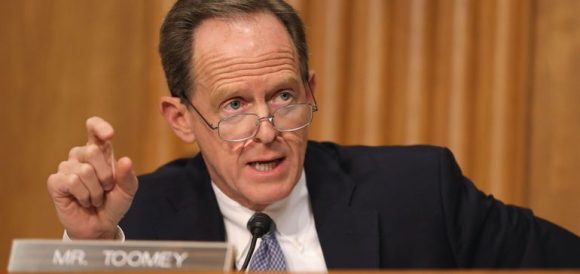
Toomey, the Senate Banking Committee’s ranking member, said in his Wednesday letter “it is critical that the Federal Reserve System be transparent with the public and Congress on all matters.
“That principle becomes even more important when serious concerns are raised that undermine the public’s faith that the Fed makes decisions when granting a public good to a private actor in a fair and consistent manner on behalf of the American people, rather than what might be best for well-connected operators,” he wrote to George, according to Bloomberg.
George is set to retire from the Kansas City Fed in January.
The Kansas City Fed denied Reserve Trust’s first application for a master account in June 2017 — a month after Raskin joined the fintech’s board. Lummis said Raskin called the Kansas City Fed in August 2017 about the denied application. Reserve Trust was granted a Fed master account in 2018. Reserve Trust’s LinkedIn page still leans into the company’s master account status as a selling point.
Raskin, meanwhile, repeatedly refused at her January hearing to say whether she called the Kansas City Fed on Reserve Trust’s behalf. She later submitted a written statement to Toomey indicating she did “not recall any communications I made to help Reserve Trust obtain a master account.”
Toomey refuted that in a February letter, claiming that George herself told him Raskin made the 2017 call directly to her.
Republicans’ misgivings over the master account issue and Raskin’s stance on climate change contributed to a boycott by the party’s 12 Senate Banking Committee members, forcing Democrats to delay votes on a full slate of five Fed nominees. Raskin withdrew her nomination in March.
The master account issue may have been personal for Lummis. Her home state of Wyoming has been a pioneer with regard to special-purpose depository institution licenses — a designation Custodia Bank received in 2020. It applied for a Fed master account in October of that year and has been waiting 19 months for its application to be approved, it said in a complaint Tuesday. The Fed’s standard form agreement states “[p]rocessing may take 5-7 business days,” Custodia Bank said.
Toomey, in his letter Wednesday, said he had been “stonewalled” when he asked the Kansas City Fed for a briefing and documents detailing why Reserve Trust had received its master account in 2018, Bloomberg reported.
The Fed, meanwhile, has been reviewing its approach to granting master accounts. The central bank in March proposed a tiered system that would give institutions with federal deposit insurance a “more streamlined level of review.”
“Those without insurance that are supervised by a federal banking agency would undergo an intermediate level of review, and those without insurance and not supervised by a federal bank regulatory agency would be subject to a stricter level,” the central bank said in March.
Six banking trade groups called on the Fed, in an April letter, to provide more clarity over the way it grants master accounts to nontraditional companies.
The purported revocation of Reserve Trust’s master account “heightens the significant concerns already surrounding the fairness, transparency and consistency of the Federal Reserve System’s approach to master account applications,” Toomey wrote Wednesday, according to The Wall Street Journal.
Get the free daily newsletter read by industry experts
An HSBC executive's comments downplaying climate risk, combined with a relatively paltry ESG fine for BNY Mellon, may show the need for regulators to stiffen their penalties.
Aside from lavishing attention on non-specialized employees, the Charlotte, North Carolina-based lender has developed a habit of rolling out perks in pairs.
Subscribe to Banking Dive for top news, trends & analysis
Get the free daily newsletter read by industry experts
Want to share a company announcement with your peers?
Share your announcement ➔
An HSBC executive's comments downplaying climate risk, combined with a relatively paltry ESG fine for BNY Mellon, may show the need for regulators to stiffen their penalties.
Aside from lavishing attention on non-specialized employees, the Charlotte, North Carolina-based lender has developed a habit of rolling out perks in pairs.
The free newsletter covering the top industry headlines