
Avid Photographer. Travel the world to capture moments and beautiful photos. Sony Alpha User
Avid Photographer. Travel the world to capture moments and beautiful photos. Sony Alpha User
Investors have long been skeptical of Spotify’s (NYSE:SPOT) business model, with good reason. Over the past few years, management have been trying to move the business beyond music, to create more value for shareholders. Investors don’t appear to be convinced though, as the stock price is at all-time lows, despite continued robust growth. Spotify appear to be growing frustrated with this situation, as they have recently made an effort to improve their communication with investors and tell their story more clearly. In the current economic environment it is difficult to see the share price moving higher until meaningful margin improvements are made.
Spotify has laid out plans to become a general audio platform, and in many ways, this is similar to a range of companies who are trying to position themselves as super apps. For example, Spotify’s ventures beyond music and podcasting are similar to Netflix’s (NFLX) foray into gaming. While this makes sense from a financial perspective, the user benefits of bundling different services into the one application should be questioned.
It is not clear that users derive significant benefits from an audio platform, outside of synchronization of the user experience across devices and greater simplicity from utilizing a single vendor. Mobile operating systems offer a platform for competing audio apps, and Spotify must create value beyond this option. Most Spotify subscribers utilize the app across multiple devices though, which is supportive of Spotify’s expansion.

Table 1: Subscribers Wo Use Spotify on Multiple Devices (source: Created by author using data from Spotify)
Table 1: Subscribers Wo Use Spotify on Multiple Devices (source: Created by author using data from Spotify)
In 2021, Spotify introduced Car Thing, a hardware device designed for vehicles. This was intended to make streaming audio in vehicles simpler, whilst also improving Spotify’s position as a platform. Spotify recently made the decision to stop manufacturing the device though as they weren’t achieving sufficient sales to make the product financially viable. This is an example of an innovation more focused on improving a company’s competitive positioning rather than attempting to meet user demands.
While Spotify’s attempt to become an audio platform has more strategic logic than moving into hardware, it is not clear how much Spotify can improve the user experience by offering a range of audio services from within the same app. The logic of this move also becomes more questionable as Spotify strays further from its core use case. New verticals that are likely to be introduced in coming years include:
Spotify recently acquired Findaway in support of audiobooks. Findaway is the world’s largest audiobook distribution platform, and also matches authors with voice actors and organizes content production. Findaway partners include Apple (AAPL), Scribd, Google (GOOG) (GOOGL), Rakuten Kobo and audible and the company has a catalog of 400,000 titles from publishers all over the world.
Books are currently a 140 billion USD market, with audiobooks having a 6-7% market share globally. In the most penetrated markets this figure is closer to 50% though, leading Spotify to believe audiobooks could be close to a 70 billion USD opportunity. Spotify’s audiobook efforts are likely to become more visible in the first half of 2023.
Spotify is also likely to pursue other audio verticals, like live events, news and education, although these initiatives may take a number of years to reach the market. Live events could be a close match for Spotify’s music business, although they appear to be struggling to find product-market fit at the moment. Management have stated that they remain optimistic due to the prevalence of the category in Asian markets. There may be a cultural component to this though, and it is not clear that this popularity can be replicated globally.
News and education both potentially stretch the strategic logic of the audio platform, as the preference is likely to include a visual component when possible. These are also more mature categories, where Spotify would be competing against strong incumbents. Education could be viewed as a complement to the audiobook category, although this may be a fairly niche market.

Table 2: Spotify TAM by Category (source: Created by author using data from Spotify)
Table 2: Spotify TAM by Category (source: Created by author using data from Spotify)
Music remains the core of Spotify’s business, and also the cause of skepticism regarding the company’s prospects. Content royalties currently limit Spotify’s gross margins, and unless user attention can be dragged to other verticals, Spotify’s margins will remain low. Even within the music category, Spotify has a number of initiatives that could be accretive to margins. For example, Spotify controls discovery and hence can charge fees to increase listens. For example, Spotify for Artists drives discovery and in return takes a commission on royalties.
Spotify’s Marquee recommendation tool has shown the ability to increase new listeners 2x and Marquee revenue is up 224% YoY. Marquee is a full-screen, sponsored recommendation of new releases to listeners who are likely to be interested in that content.
Music is an experience good, customers only know if they like a particular song once they have heard it. Unlike most forms of media, music is subject to highly repetitive consumption. Most people will only watch a movie or read a book once or at most a handful of times. People will listen to a song they enjoy dozens if not hundreds of times. Music customers are also more likely to form a lasting relationship with a band or musician in a way that also generally does not happen with most other forms of media. Spotify should therefore be viewed as a marketing channel which can increase the value of a musicians intellectual property. Even if musicians earn little directly from Spotify it has tremendous value as it can increase exposure and help musicians form a relationship with customers. This can be used to monetize IP through means like physical music (limited press LP), merchandise and concerts. Spotify are likely to capitalize on this in coming years by becoming something akin to Shopify (SHOP) for musicians.
Touring and merchandise are other areas where Spotify is offering tools that assist artists to monetize their content. Spotify has a custom integration with Shopify that enables artists to grow additional revenue streams, like merchandise. Fans First is another Spotify for Artists tool, which offers fans priority access to concert tickets as well as things like exclusive merchandise and brought in 300 million USD revenue for Spotify in 2021.
Spotify’s advertising business is still relatively small, but continues to grow rapidly. A recent third-party survey indicated that Spotify is the must buy audio ad partner in the US.
Spotify are investing to modernize audio advertising, including acquisitions like Podsights and Chartable and these efforts are leading to greater renewal rates and deal sizes. Podsights and Chartable are podcast technology companies that help advertisers measure and scale their podcast advertising. Acquisitions have generally been geared towards improving measurement and enabling more personalization to maximize the value of inventory.
Spotify’s podcast advertising innovations include streaming ad insertion, call to action cards and the Spotify Audience Network, which allows ads to be bought based on demographics (age, gender, and location), behavior and context.
Spotify like to point towards audio’s share of time spent with media to imply significant future growth in ad spend, but this is not how advertisers allocate budgets. Return on ad spend will be a far more important determinant of audio ad growth in the long run.

Table 3: US Daily Time Spend vs Ad Spend (source: Created by author using data from Spotify)
Table 3: US Daily Time Spend vs Ad Spend (source: Created by author using data from Spotify)
One area where audio advertising potentially offers an advantage is in localized advertising. People often stream audio content when they are on the move (walking, travelling by car, etc.), which provides an opportunity to reach people based on their location.

Figure 1: US Digital Audio Ad Spend (billion USD) (source: Spotify)
Figure 1: US Digital Audio Ad Spend (billion USD) (source: Spotify)
Podcasting was Spotify’s first foray outside of music, and so far has been relatively successful. Podcasting’s share of overall consumption continues to increase and Spotify now have more than 4 million podcasts on their platform, up 53% YoY, with emerging markets driving much of this growth. Spotify is also investing heavily in content and now has more than 1,150 original and exclusive shows on their platform. These efforts appear to be reasonably successful, as originals account for 15 of the top 100 podcasts on the platform. Spotify also continues to expand the functionality of their podcast platform, introducing video podcasts and interactive features.
Spotify has made a number of sizeable acquisitions over the past few years to support their podcast ambitions. They acquired the podcast creation software company, Anchor, for over 100 million USD. This acquisition appears to have been a success, as Anchors software reportedly powers 70% of Spotify’s total podcast catalog.
Spotify also acquired a number of podcast studios, including Gimlet, The Ringer and Parcast. Spotify reportedly paid 230 million USD for Gimlet in 2019, a studio known for “prestige programming”. Gimlet’s approach is labor intensive though, and it is not clear that the acquisition is living up to expectations. In comparison, The Ringer and Parcast are more focused on volume. Parcast was acquired by Spotify in 2019 and is best known for shows about true crime. The Ringer is focused on sports and pop culture and was acquired in 2020. Whooshkaa was also recently acquired for their broadcast-to-podcast technology, which enables radio broadcasters to easily convert their existing audio content into podcasts.
In 2018, less than 7% of Spotify users listened to podcasts, a figure that has since increased to approximately 30%.

Figure 2: Spotify Users Engaging with Podcast Content (source: Spotify)
Figure 2: Spotify Users Engaging with Podcast Content (source: Spotify)
Podcasts currently account for 7% of user listening time on the platform, and based on Spotify’s more mature markets and audio consumption patterns in other categories, like radio, Spotify believe that the ceiling is 2-3 times higher than current levels.

Figure 3: Spotify Podcast Listening Hours (% Total) (source: Spotify)
Figure 3: Spotify Podcast Listening Hours (% Total) (source: Spotify)
Podcasts are currently monetized through advertising, but Spotify introduced podcast subscriptions in 2021. Creators currently receive 100% of this revenue, until 2023, when Spotify will introduce a 5% fee. The combination of fees on subscriptions and shifting listener time from music to podcasts will be accretive to gross margins and should create more investor faith in the business model.
Spotify believes that podcasting could be a 20 billion USD opportunity by 2030, with 40-50% gross profit margins. Their podcast business is currently in investment mode though and hence is a drag on margins. Spotify has committed over 1 billion Euros to podcasts so far and 2021 podcast revenue was approximately 200 million Euros.

Table 4: US Annual Podcasting Ad Spend (source: Created by author using data from Spotify)
Table 4: US Annual Podcasting Ad Spend (source: Created by author using data from Spotify)
Spotify continues to achieve robust growth, although this is now moderating somewhat as the business scales. The company also likely has a long growth runway still ahead of it, with potential for both growth in user numbers and average revenue per user. A significant part of this will be continuing to improve their advertising offering, as well as marketplace revenue becoming a significant contributor. The marketplace business is still nascent, but gross profits increased from 8 million Euros in 2017 to 161 million Euros in 2021.
Spotify saw some weakness in their advertising business over the last 2 weeks of June, but still expect solid growth in Q3. This is no surprise given the recent performance of digital advertising companies, and it would not be unreasonable to expect further deterioration going forward. Advertising is a relatively small contributor for Spotify though, and provided subscriber numbers hold up, revenues should not be too negatively impacted by a recession. The large concern for investors is likely that economic weakness could increase churn, as users look to reduce their expenses. This is possible, but I think far less of a concern than for video streaming companies, which are generally at higher price points and face far more competition.
Spotify recently laid out their ambitions to reach 1 billion users by 2030, with an ARPU of 100 Euros. They also expect that ad revenue will be greater than 10 billion Euros annually. The revenue figures are aggressive and imply a substantial acceleration in growth over that period, which is unlikely.

Figure 4: Spotify Revenue Growth (source: Created by author using data from Spotify)
Figure 4: Spotify Revenue Growth (source: Created by author using data from Spotify)
Spotify’s user and subscriber numbers both continue to grow rapidly, and Spotify has now cemented itself as an audio streaming platform without peer. User growth is being driven by Spotify’s less mature markets, led by countries like Indonesia, Brazil and Mexico. While this is a positive, it is a drag on ARPU, although as Spotify have pointed out it is not really a drag on gross profit margins.

Figure 5: Streaming Subscribers by Service (source: Created by author using data from Statista)
Figure 5: Streaming Subscribers by Service (source: Created by author using data from Statista)
Spotify estimate that their penetration rate in established markets is approximately 32%, compared to an estimated 8% penetration rate in emerging markets. If these emerging markets follow the same path as the established markets, Spotify has a reasonable chance of achieving their long-term user targets.

Figure 6: Monthly Streams for India’s Top 5 Music Streaming Services (source: Spotify)
Figure 6: Monthly Streams for India’s Top 5 Music Streaming Services (source: Spotify)
Spotify’s ARPU for both subscribers and ad-supported users has been relatively flat for a number of years. This is due to increasing ARPU’s in individual markets, coupled with strong user growth in low ARPU markets. This dynamic will be the largest challenge for Spotify to achieve their long-term ARPU target.

Figure 7: Spotify ARPU (source: Created by author using data from Spotify)
Figure 7: Spotify ARPU (source: Created by author using data from Spotify)
Spotify appears to be expecting ARPU growth to come from new verticals, like audiobooks. Based on the figures given by Spotify, even modest success in new verticals could provide significant upside for the stock.

Table 5: Example ARPUs by Vertical (source: Created by author using data from Spotify)
Table 5: Example ARPUs by Vertical (source: Created by author using data from Spotify)
Another key driver of ARPU growth will be converting more ad-supported users to subscribers. This is another area where Spotify’s established markets look healthy, but rapid growth in emerging markets are making aggregate figures look bad. Approximately 61% of MAUs in established markets are subscribers.

Figure 8: Spotify Premium Users (% Total Users) (source: Created by author using data from Spotify)
Figure 8: Spotify Premium Users (% Total Users) (source: Created by author using data from Spotify)
Spotify’s gross margins are yet to show the kind of improvement that investors would like to see before buying into the company’s narrative. Much of this can be explained by the negative short-term impact of the podcasting business though. Impairment charges related to Car Thing reduced gross margin by approximately 1% in the second quarter. There has also been some volatility related to publishing royalty accruals. Outside of this, gross margins have generally been in the 25-26% range, with improvements in the music business offset by investments in other areas.

Figure 9: Spotify Gross Profit Margins (source: Created by author using data from Spotify)

Figure 10: Spotify Music Gross Profit Margins (source: Spotify)
Figure 9: Spotify Gross Profit Margins (source: Created by author using data from Spotify)
Figure 10: Spotify Music Gross Profit Margins (source: Spotify)
Ad-supported gross margins are currently near zero, as Spotify is investing aggressively in content and all of the content costs for podcasting go into the ad supported business. This could be supportive of long-term premium margins though as podcasts reduce the burden of royalties. Content costs will need to level off and podcast revenue increase before Spotify’s gross margins see the full benefit of these efforts.

Figure 11: Spotify Content Amortization Expenses (source: Created by author using data from Spotify)

Figure 12: Spotify Gross Profit Margins by Segment (source: Created by author using data from Spotify)
Figure 11: Spotify Content Amortization Expenses (source: Created by author using data from Spotify)
Figure 12: Spotify Gross Profit Margins by Segment (source: Created by author using data from Spotify)
Long-term Spotify are targeting gross margins of 30-35%, driven mainly by growth in new verticals which have more favorable margin profiles than music.

Table 6: Expected Gross Profit Margins by Vertical (source: Created by author using data from Spotify)
Table 6: Expected Gross Profit Margins by Vertical (source: Created by author using data from Spotify)
Spotify’s operating margins have been stable near 0% in recent years, due to content costs, incremental costs associated with acquisitions and growth investments (R&D and sales and marketing). If Spotify succeeds in expanding into new verticals, their operating profit margins could potentially increase into the low double digit range as growth normalizes. While this may appear poor in comparison to many tech stocks, even modest profitability will end up more than justifying the current share price.

Figure 13: Spotify Operating Profit Margins (source: Created by author using data from Spotify)
Figure 13: Spotify Operating Profit Margins (source: Created by author using data from Spotify)
Spotify has shown an ability to reduce user churn over time, which will reduce the burden of sales and marketing expenses over time. In more mature markets, Spotify’s monthly churn is approximately 2.4%, which is quite low for a consumer application. Spotify also recently pushed through price increases and saw no material change in churn.

Figure 14: Spotify Churn by Market (source: Spotify)

Figure 15: Active Monthly Churn Rate by Streaming Service (source: Spotify)
Figure 14: Spotify Churn by Market (source: Spotify)
Figure 15: Active Monthly Churn Rate by Streaming Service (source: Spotify)
Employee expenses are one of Spotify’s main costs, meaning that improvement in revenue per employee will be important component of improving margins. Spotify has historically shown an ability to improve this metric, but improvement has stalled in recent years as Spotify invests in growth initiatives which are not yet meaningfully contributing to revenue.

Figure 16: Spotify Revenue per Employee (source: Created by author using data from Spotify)
Figure 16: Spotify Revenue per Employee (source: Created by author using data from Spotify)
In particular, Spotify remains focused on R&D and content related employee costs are growing in importance.

Figure 17: Spotify Employee Costs by Function (source: Created by author using data from Spotify)
Figure 17: Spotify Employee Costs by Function (source: Created by author using data from Spotify)
Spotify has shared plans to reduce hiring by 25% going forward, in anticipation of a potential economic slowdown.
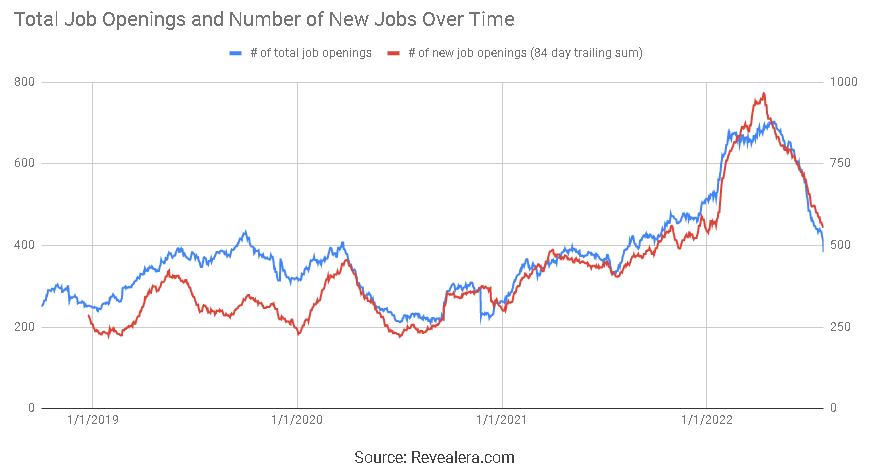
Figure 18: Spotify Hiring Trend (source: Revealera.com)
Figure 18: Spotify Hiring Trend (source: Revealera.com)
The market has not bought into the vision laid out by Spotify’s management at all, with the stock currently trading on historically low multiples. Based on a discounted cash flow analysis I estimate that Spotify is worth approximately 170 USD per share, which would put Spotify’s EV/S multiple more in line with its historical average. Due to the combination of high inflation and economic uncertainty, markets are primarily assessing companies based on profitability, with little weight given to future growth. Until economic conditions normalize, or Spotify shows an ability to improve its bottom line, the stock is unlikely to move significantly higher.
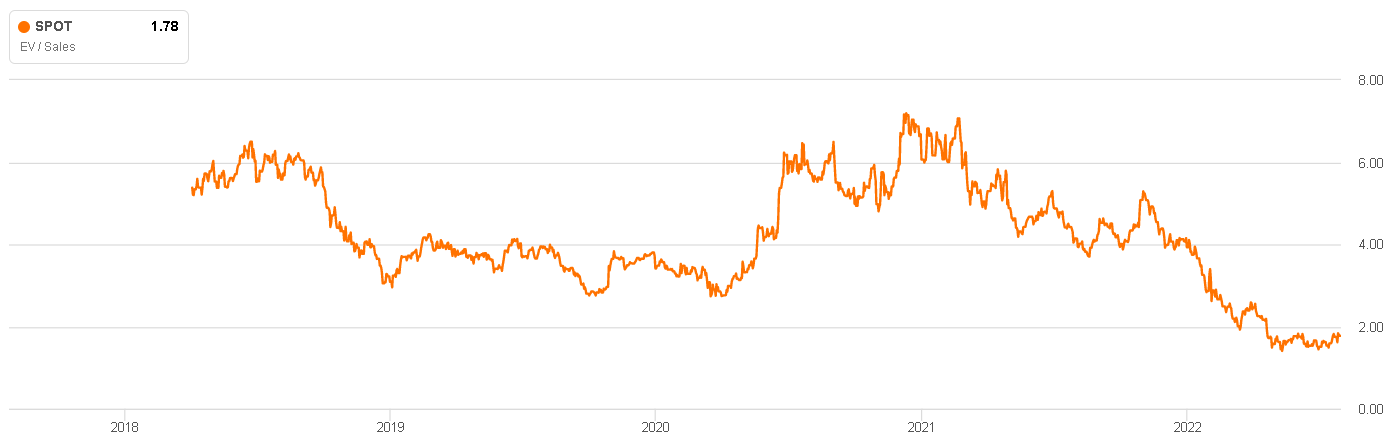
Figure 19: Spotify EV/S Ratio (source: Seeking Alpha)
Figure 19: Spotify EV/S Ratio (source: Seeking Alpha)
Spotify’s stock appears relatively inexpensive, but its future path will be highly dependent on the company’s success in audio verticals outside of music. Spotify is slowing making progress in podcasting, which should eventually lead to an improvement in profitability, but this success may be difficult to repeat. With investments in future growth likely to continue weighing on Spotify’s margins in the short-term, it is not clear what will be the catalyst to move the stock higher.
This article was written by
Disclosure: I/we have no stock, option or similar derivative position in any of the companies mentioned, and no plans to initiate any such positions within the next 72 hours. I wrote this article myself, and it expresses my own opinions. I am not receiving compensation for it (other than from Seeking Alpha). I have no business relationship with any company whose stock is mentioned in this article.