Photo by Kristen Van Zant Legendary southern country rock guitarist and founding member of Alabama, Jeff Cook, has died. He was 73 years old. His death was announced by his publicist, who shared Cook passed at his home in Destin, Fla., yesterday, Nov. 8, after a battle with Parkinson’s disease that went on for a decade. Cook was born in Fort Payne, Ala. on Aug. 27, 1949, by the time he was 13, he was playing lead guitar and keyboards for bands in the area. Just three days after his 14th birthday, Cook obtained an FCC broadcaster engineer license and worked as a DJ at Fort Payne High School. He would go on to graduate from Jacksonville State University and earn a degree in electronic technology from Gadsden State Community College. His work as a DJ from a young age foreshadowed his ownership of radio and TV stations in his later life. While he was amassing his degrees, Cook continued to hone his skills on various instruments, including guitar, piano, fiddle, bass, banjo and mandolin – he is credited for introducing the double-neck guitar into the country music world. By 1969 he began playing with his family, and in 1972 he co-founded the group Wildcountry with his cousins Randy Owen and Teddy Gentry. During their sessions, he would contribute lead vocals along with lead guitar, keyboard, fiddle backing vocals and more to the group’s productions as they rocked the bar circuit around the Southeastern United States. In 1977 they changed their name to Alabama before they landed a label deal with RCA Nashville. Alabama would go on to release more than 40 no.1 country singles over the years and amass over 75 million album sales, solidifying them as one of the best-selling country bands in American history. The band ceased active production and performance in 2004, but Cook, ever the performer, founded Cook & Glenn and the Allstar Goodtime Band and still performed. Outside of performance, Cook continued to work with Alabama, despite his health issues, until 2018. During his tenure with Alabama, Cook also delved into the business world, founding Cook Sound Studios, Inc., in his hometown of Fort Payne and establishing WQRX-AM in Valley Head, Ala., which he would later sell. Over his life, he earned spots in the Musicians Hall of Fame, Fiddlers Hall of Fame and Country Music Hall of Fame. He was also Gibson’s Guitarist of the Year and achieved many other honors. “Few bands are more ubiquitous in Country Music today than Alabama. Jeff was instrumental to Alabama’s high energy stage presence and authentic Country sound. My deepest condolences to Jeff’s family, friends and the band,” wrote Sarah Trahern, the CEO of the Country Music Association upon hearing of Cook’s death. On June 9, 1995, Cook married Lisa Williams, and the two lived in “Cooks Castle” atop Lookout Mountain in Fort Payne, Ala., Guntersville, Ala. and Destin/Miramar Beach, Fla. Together, the two launched The Jeff and Lisa Cook Foundation and The Jeff and Lisa Cook Children’s Home which house orphan children worldwide. He is survived by Lisa, to whom he was married for 27 years, his mother Betty, his brother David Cook, and many nieces and nephews. The family has asked donations be made in his memory to The Jeff and Lisa Cook Foundation in lieu of flowers. Donate here.
Bang Ye-dam, along with fellow TREASURE member Mashiho, have been on a hiatus from the group for nearly a year now. Initially, in May, their hiatus was prolonged because Bang Ye-dam wanted to focus on his studies and Mashiho on his health. However, on November 8, it was revealed that TREASURE would be reorganized as a 10 member group, with both Bang Ye-dam and Mashiho choosing to terminate their contract with YG Entertainment. The news came as a shock to most fans, as they were expecting both members to rejoin soon. However, Bang Ye-dam chose to leave the group to focus on his music production and pursue his career as a producer. Not much has been revealed about his departure, but Twitter has turned into a crying fest as he is one of the most well-loved members of the group. On the sad occasion of his departure from the group, let’s take a look at some of his memorable viral moments on Twitter that fans will enjoy. Bang Ye-dam performed Shawn Mendes’ song There’s Nothing Holding Me Back on the survival program Stray Kids and shocked everyone with his amazing vocals and powerful charisma. The original singer even praised him for his skills. The video of him singing Shawn’s song has over 676,000 views on Twitter. Ye-dam went viral yet again for another one of his performances. This time it was for his cover of the song Make Up by Sam Kim (feat. Crush) on Yoo Hee Yeol’s Sketchbook. There is not one but multiple videos on Twitter of him singing the song that have gone viral, and the main video has over 1.1 million views. Ye-dam was one of the main composers and writers for the viral hit song Darari, which was loved by the internet. Fans enjoyed it so much that they even created a dance challenge out of it that luckily reached the creator of the song as well. During a fan video call event, a fan asked him to perform the dance challenge, and he happily obliged, dancing shyly to his song. The video currently has over 304,000 views on Twitter. Bang Ye-dam has been dubbed the Korean Justin Bieber for his numerous covers of the artist’s songs. His most recent cover of Bieber’s Peaches on episode 50 of the group’s show,TREASURE Map, went viral on Twitter, with the video accumulating more than 638,000 views. Fans and his members were both shocked by how he knew all the words by heart, living up to his title. On KBS’ COOL FM, TREASURE members Ye-dam, Jeongwoo, and Jihoon performed their acoustic rendition of the popular song Can’t Take My Eyes Off You, which became increasingly popular amongst the younger generation after Heath Ledger sang it in the movie 10 Things I Hate About You. Ye-dam’s mellifluous voice tugged at the heartstrings of fans, who could not stop cooing over his impeccable vocals. His focus video on Twitter went viral and currently has over 256,000 views. The first two episodes of the second season of TREASURE Map gave fans multiple iconic moments, including one of Bang Ye-dam looking gorgeous while being frustrated and trying to convince his teammates that he wasn’t the X-man. Although it was a lie and he took down as many people as he could once he was found out, the Twitter video of him lying to his members went viral because of his looks and currently has over 2.3 million views. Bang Ye-dam is rightfully known as God Ye-dam for being the master of all trades, and despite fans being upset at his departure, they’re sure that whatever path he chooses for himself will be the most successful one for him, and all the TEUMEs wish him the best for his future endeavors. Poll :
Multi-platinum and 20x Grammy Award-winning artist Bruce Springsteen returns to 30 Rock for a Tonight Show takeover next week following the release of his highly anticipated new album, Only the Strong Survive, due this Friday, November 11th. Starting Monday, November 14th, Springsteen will appear as lead guest joining host Jimmy Fallon, and performs several times. Appearing on the show November 14-16, the Boss will debut four songs from his 21st studio album of soul music greats. His final performance will air during The Tonight Show’s special Thanksgiving episode on Thursday, November 24th. While this marks Springsteen’s third appearance on the program, it’s his first takeover and first musical performance. For the first time in six years, Springsteen will tour with his legendary E Street Band in 2023 starting February 1st in Tampa, FL. He’ll tour for much of the year in US while also hitting many European cities in the summer. Previous Tonight Show takeovers include multi-platinum singer-songwriter Demi Lovato, Grammy-winning and multi-Platinum artist Ariana Grande, global superstars BTS, Grammy-nominated singer-songwriter Miley Cyrus and legendary pop icon Cher. Springsteen is the latest in a string of A-List celebrities to join The Tonight Show’s 10th season, which has featured recent appearances by Mariah Carey, Dwayne Johnson, Lin-Manuel Miranda, Lupita Nyong’o, Tyler Perry, Taylor Swift, Miles Teller, Reese Witherspoon and more; a return to the ‘80s; and a co-hosting gig by rap superstar Jack Harlow. Taped in front of a live studio audience from Studio 6B at 30 Rockefeller Center in New York City, The Tonight Show Starring Jimmy Fallon airs Mondays through Fridays from 11:35 pm-12:35 am ET/PT on NBC and is available on demand on Peacock. Bruce @Springsteen returns to Studio 6B for a Tonight Show takeover next week! #BruceOnFallonpic.twitter.com/YEffekDiXl — The Tonight Show (@FallonTonight) November 9, 2022
By F.I.R.S.T. Institute Sponsored on Wed, Nov 9, 2022 at 12:40 am ADVERTISEMENT. Orlando Weekly news staff was not involved in the creation of this content. Please note, this report is written for informational purposes only. Florida Gov. Ron DeSantis was married at Walt Disney World By Alex Galbraith Florida Democrats need to learn that there are no more moderate voters By Alex Galbraith Subscribe now to get the latest news delivered right to your inbox. Yes, there’s a Shrek-themed Rave happening at Orlando’s Beacham in December By Matthew Moyer Orlando rapper Mave drops swaggering new single ‘Danchou’ By Bao Le-Huu Kickkone is part of a West Orlando rap scene that is getting attention far beyond Orange County By Sarah Kinbar In an age of audio-induced attention-deficit order, learn the art of ‘Slow Listening’ By Bill Forman Remi Wolf steers “Gwingle Gwongle Tour” into Orlando’s Plaza Live By Gabby Macogay Orlando, are you ready? Electric Daisy Carnival is near By Valerie Galarza Tigers Jaw to play Orlando’s Social with Heart Attack Man and Glitterer on Saturday By Gabby Macogay DJs BMF and Sleazy McQueen to whip up a raging disco inferno at Iron Cow this weekend By Bao Le-Huu View more issues Read our sister publications PO Box 953127. Lake Mary, FL 32795
ABOUT STUDIO WILDCARD Founded in 2014 by industry veterans Jeremy Stieglitz and Jesse Rapczak, Studio Wildcard’s mission is to bring AAA quality to ambitious indie titles designed for core gamers. The team emphasizes direct communication with its active community, implements player feedback into its fast, iterative dev cycle, and provides tools to drive user-generated content. Studio Wildcard includes distributed developers across multiple continents, as wherever talented developers reside, Wildcard seeks them out! www.studiowildcard.com
ABOUT GROVE STREET GAMES Located in Gainesville, FL, Grove Street Games has been an influential game developer since 2007. They have delighted fans of the world's greatest games with bold interpretations on new platforms, and have delivered fresh and original games to millions of happy players. They have grown to be a leader in the industry because of their commitment to building incredible and accessible gaming experiences. Their games can be found worldwide across all major gaming devices, including consoles, PC, and mobile. www.grovestreetgames.com
MEDIA CONTACTS Tracie Kennedy Reverb Communications [email protected]
Anthony Chau [email protected] Please log in to Games Press for the following accompaniments to this announcement: Don’t have a login? If you work within the games trade (press, influencer, developer, publisher or PR agency) you can register here.
Thanks for visiting ! The use of software that blocks ads hinders our ability to serve you the content you came here to enjoy. We ask that you consider turning off your ad blocker so we can deliver you the best experience possible while you are here. Thank you for your support!
Latest news is displayed first. For resources and information on storm preparedness and recovery, visit www.ocfl.net/storm. LAKE ADVISORY Orange County is issuing a precautionary lake advisory due to Hurricane Nicole. Keep boats at idle speed and be cautious of submerged and floating structures. The purpose of this advisory is to protect public health and property. Contact [email protected] for more information. BOAT RAMPS CLOSED UNTIL FURTHER NOTICE All public boat ramps under the control of Orange County are currently closed. Please refrain from any recreational activity in the waters and refrain from any contact with water bodies until further notice. Once the storm passes, the ramps will remain closed until Orange County Parks and Recreation Division conducts an evaluation for each ramp. Contact [email protected] for more information. GREEN PLACE CLOSURES All County-operated Green PLACE properties are currently closed. Once the storm passes, the Orange County Environmental Protection Division will evaluate each property for reopening. Contact [email protected] for more information.
Key Takeaways 11/9/2022 Weather Update As of 3 p.m. today, Orange County Government is still in a Tropical Storm Warning. Tropical Storm Nicole is estimated to produce damaging winds and approximately 4-6 inches of rain. Additional effects include: Orange County Government buildings closed at 3 p.m. today, and are scheduled to reopen on Friday, Nov. 11, 2022. Emergency Shelters Orange County Government has two general population shelters open for individuals needing to evacuate or seek shelter from Tropical Storm Nicole. Shelter locations include: Orange County residents who require a Special Needs/Medical Shelter please dial 3-1-1 or 407-836-3111. ID cards are not required to enter shelters. Individuals should come prepared with their own supplies and personal-hygiene items. For more information on what to bring with you to a shelter, visit ocfl.net/shelters. Orange County Utilities Below are service updates from Orange County Utilities. Additional updates will be announced on ocfl.net/UtilitiesStormInfo. Debris Pick Up and Road Assessment Orange County Public Works plans to resume debris removal and emergency roadway clearance activities on Friday, Nov. 11, 2022. Public Works Road and Drainage workers are stationing crews in roads where flooding has been a problem in the past – Texas and Holden, Lake Eleanor, and Rouse and Buck Roads. This is being done as a precaution. Public Works teams will begin assessing roadways as soon as winds subside. Power Outages When possible, report power outages to your electric provider in Orange County. For more preparedness and recover information, visit ocfl.net/storm. Theme Parks Our Central Florida theme parks are adjusting operating hours due to the storm. Guests are encouraged to follow up with specific theme parks on unique operating hours.
3
Update: Orange County Utilities | November 9, 2022 | 11 a.m.
Solid Waste Collection There will be no curbside garbage, recycling, yard waste and large item service for unincorporated Orange County households Thursday, Nov. 10. Customers whose regular collection day is Thursday will be picked up Friday, Nov. 11, and Friday customers will be serviced Saturday, Nov. 12. No materials should be placed curbside on Thursday. Updates will be announced on ocfl.net/UtilitiesStormInfo. Solid Waste Facilities The Orange County Landfill and transfer stations will close at or before 3 p.m. today and remain closed through Thursday, Nov. 10. The facilities will reopen when conditions are safe to do so. Reopening details will be announced on ocfl.net/UtilitiesStormInfo.
Sandbags are still available to residents preparing for the potential impacts from Tropical Storm Nicole. The county’s self-serve sandbag distribution will be open today, Wednesday, November 9, 2022, from 8 a.m. to 12 p.m. Sites may close early due to weather or if supplies run out before noon.
Tomorrow, Wednesday, November 9, 2022, at 7 a.m., Orange County Government will open two general population shelters for individuals needing to evacuate or seek shelter from Tropical Storm Nicole. Shelter locations include: South Econ Community Park (Pet friendly) 3850 S Econlockhatchee Trail Orlando, FL 32829 West Orange Recreation Center (Pet friendly) 309 SW Crown Point Road Winter Garden, FL 34787 Orange County residents who require a Special Needs/Medical Shelter please dial 3-1-1 or 407-836-3111. ID cards are not required to enter shelters. Individuals should come prepared with their own supplies and personal-hygiene items. For more information on what to bring with you to a shelter, visit ocfl.net/shelters.
Key Takeaways – News Briefing #1 – November 7, 2022 State of Emergency Orange County remains under a Local State of Emergency and is one of 34 counties in a Florida State of Emergency for Subtropical Storm Nicole. The National Weather Service issued a Tropical Storm Watch for Orange County at 11 a.m. today. A Hurricane Watch is in effect for the coastal Central Florida counties including Volusia and Brevard. Sandbags Orange County residents are urged to prepare now for this storm. The county will have four self-serve sandbag locations open on Tuesday, November 8, from 8 a.m. to 5:30 p.m. These locations are: Residents will need to bring their own shovels and will be provided up to 10 bags to fill. Residents must also provide a valid photo ID with an Orange County address. Debris Orange County Utilities and Public Works have been working around the clock since Hurricane Ian to remove yard waste and storm debris from resident’s yards. To date, more than 150,000 cubic yards of debris has been picked up in the county. There is more debris still needing to be collected. Residents are asked if they still have debris in their yards to try and keep it from washing down the storm drains. Please get debris off the streets and onto the front yards, away from the street. Schools Orange County Public Schools are closely monitoring the storm with the National Weather Service and the Orange County Office of Emergency Management. At this time, no decision has been made to cancel school or extracurricular activities. Election Day Tomorrow is Election Day. Elections Supervisor Bill Cowles is preparing all the voting sites. The impending storm will not impact your decision to exercise your right to vote.
7
Update: Sandbags | November 7, 2022 | 3 p.m.
Orange County Public Works is making sandbags immediately available to residents preparing for potential impacts from Subtropical Storm Nicole. Downey Park, located at 10107 Flowers Avenue, will open to residents at 3:00 p.m. today with three other locations opening Tuesday at 8:00 a.m. Working in partnership with the Parks and Recreation Division, Public Works will have four sites where bags and sand will be available on a self-serve basis by Tuesday. Residents will need to bring their own shovel or spade to fill their bags. The other three locations will be identified later today. Residents will need to provide proof of residency within Orange County to be provided 10 unfilled sandbags and directed to the sand pile.
Orange County Office of Emergency Management continues to monitor the shifting track of Subtropical Storm Nicole and its impact to Orange County. As of 11 a.m. this morning, a Tropical Storm Watch is in effect for Orange County. For more information visit the National Weather Services. About Orange County Government: Orange County Government strives to serve its residents and guests with integrity, honesty, fairness and professionalism. Located in Central Florida, Orange County includes 13 municipalities and is home to world-famous theme parks, one of the nation’s largest convention centers and a thriving life science research park. Seven elected members make up the Board of County Commissioners, including the Mayor, who is elected countywide. For more information, please visit www.OCFL.net or go to Orange County Government’s social media channels.
Fall 2022 COVID-19 Information Andrew Bisantz, artistic director and conductor for the Eugene Opera, is the conductor and music director for the Hillman Opera production of Lee Hoiby’s “Summer and Smoke.” Conductor Andrew Bisantz has many memorable opera credits to his name. Currently the artistic director and conductor for the Eugene Opera, he has conducted more than 60 productions for companies throughout the United States earning accolades from publications including The New York Times, The Boston Globe and The Washington Post. However, his upcoming engagement as the conductor and music director for the Hillman Opera production “Summer and Smoke” at SUNY Fredonia holds special significance. Bisantz is a 1995 graduate of Fredonia, where the seeds of his career were planted. “I really feel this is a wonderful homecoming,” Bisantz said. “It’s coming full circle. I’ve accumulated experience at some of the top opera companies in the United States. I’m now able to bring that experience to this production to help the students find what I found at Fredonia.” “It’s coming full circle. I’ve accumulated experience at some of the top opera companies in the United States. I’m now able to bring that experience to this production to help the students find what I found at Fredonia.” – Andrew Bisantz, ’95 Bisantz arrived at Fredonia in 1991 as a Piano Performance major, studying with Professor Robert Jordan. At his freshman orientation, an advisor suggested Bisantz look at courses in vocal conducting as a natural complement to his major. However, Bisantz had more interest in instrumental conducting and chose that path instead. It was a fortuitous decision, as the professor for his freshman conducting class told Bisantz he had a natural gift. That led to an independent study his sophomore year with former School of Music faculty member Grant Cooper, who is perhaps best known locally for his 16-year stint as the conductor of the Fredonia Chamber Players. “I found what I wanted to do for a career,” Bisantz said of the experience. After graduating from Fredonia, Bisantz went on to earn his master’s degree at the Cleveland Institute of Music. There, Bisantz served as assistant conductor of operas and made the decision to pursue a career as an opera conductor. His experiences at Fredonia played a major part in the decision. Bisantz had taken part in the Hillman Opera as a student, beginning with the 1991 production of Mozart’s “The Magic Flute.” “That was the first time I was part of an opera production and I was hooked,” Bisantz said. “I remember hearing the orchestra perform with those unamplified voices – it was universe warping moment.” More than two decades into his professional career, Bisantz remains committed to staying connected with today’s music students. “I try to have at least one university production on my schedule,” he said, which is in addition to teaching master classes at various university. And his connection to Fredonia has stayed strong over the years. “In 2000, I conducted Gershwin’s ‘Rhapsody in Blue’ with the Buffalo Philharmonic Orchestra,” Bisantz recalled. “When the production came to the Fredonia Opera House, the whole piano faculty came to see it. I was so flattered how they had taken an interest in my career.” Likewise, Bisantz has taken an interest in his alma mater. In 2011, he returned to campus for a teaching residency and during the pandemic-impacted season of 2020, Bisantz was an online coach for the Hillman production of “Beatrice and Benedict.” He has also conducted master classes with Fredonia’s Student Opera Theatre Association. Then came the opportunity to conduct “Summer and Smoke” this season. “When [School of Music faculty member] Joe Dan Harper called, I was thrilled,” Bisantz said. “I finally had the opportunity to come back and conduct the opera.” Bisantz is also thrilled about the work he will be conducting. Lee Hoiby’s “Summer and Smoke” is based on the 1946 Tennessee Williams play of the same title. “Some consider ‘Summer and Smoke’ to be a forgotten masterpiece and I’m thrilled Western New York audiences will have a chance to hear it live,” Bisantz said. “It has a very romantic score people will enjoy.” The Hillman Opera runs from Nov. 10 to 13 in Marvel Theatre on the Fredonia campus. Performances times are 7:30 p.m. on Nov. 10, 11 and 12 with a 2 p.m. matinee on Nov. 13. It is presented by the Fredonia School of Music in cooperation with the Department of Theatre and Dance. Tickets are available through the Fredonia Ticket Office in the Williams Center, online, and by phone at (716) 673-3501. There will also be a pre-performance talk with the directors, to be held an hour before every performance in the Costello Community Room, which is located in the Lake Shore Savings Gateway to the Arts Atrium outside the Marvel Theatre entrance. “Summer and Smoke” is sponsored by Gugino and Ryel Financial as part of the Lake Shore Savings Season.
EQ will beat out IQ every day of the week when working with clients, said Fidelity Institutional president Michael Durbin. November 9, 2022 Although long associated with math and models, in the future providing a solid financial plan will require supporting clients emotionally. “The top advisors over the next decade or two will be those who have the greatest EQ rather than IQ — like command of Greek letters,” Fidelity Institutional president Michael Durbin said at the Securities Industry and Financial Markets Association annual meeting last month. EQ is one’s emotional quotient, whereas IQ scores intelligence. “It’s going to be those who can modify behavior, coach, sell and be empathetic,” he said. Fidelity Institutional offers an outline for advisors, the Advice Value Stack, that describes how advisors can differentiate their practices, according to Fidelity’s website. The stack moves from bottom to top, starting with managing money and moving through achieving goals and peace of mind to culminate in fulfillment, according to the firm. “That foundation is managing the money; firms have to do it well,” said Durbin. That means mastering portfolio construction, manager selection, trading and billing, he said. “You have to do that extraordinarily well, and you have to always do it well. That’s the nature of a base. A customer isn’t going to allow the advisor to come up the stack with them unless that foundation is constantly performing well,” Durbin said at the conference. What comes on top, though, can help advisors stand out. Achieving goals, the second layer, includes financial and tax planning, which “most of the industry has embraced,” according to Durbin. Putting clients’ minds at ease is “the place of perhaps insurance products but it’s also putting a premium on the advisor’s EQ with the client heads of household that they’re serving … what’s keeping them up at night beyond planning and managing money, because invariably something’s keeping clients up at night,” Durbin said at the conference. Finally, the top layer — fulfillment — concerns the client’s legacy, including trust and estate planning and intergenerational wealth transfer, according to Durbin. “If you’re going to try to get yourself up the value stack, the reality is you have to employ a lot more EQ than IQ the farther you go up that stack,” Durbin said at the conference. And unlike IQ, for which questions might hinge on model construction or regression analyses, there are no outsourced EQ options for advisors, he said. “The faster an advisor or an advisory firm can get up that value stack, the quicker a sustained differentiator can emerge,” Durbin added. But advisors aren’t often comfortable broaching personal topics, separate research from eMoney Advisorssuggests. In fact, only 23% of 660 advisors surveyed by the group said they are “extremely comfortable” having personal conversations with clients. Yet 41% of the 2,800 investors eMoney asked said that they considered it important that advisors are open to sometimes difficult personal talks. In April, the Certified Financial Planner Board of Standards released “The Psychology of Financial Planning,” a six-part book intended to be a resource for financial planning professionals on the “critical competency” of psychology, according to the CFP Board’s website. The advisor-training process tends to focus on exams, acquiring clients and adding assets, but “the problem with that model is that when the advisor takes all of that knowledge and skills that they’ve learned, and their initial training, and now goes out to deal with real human beings, they confront reality,” CFP Board managing director of corporate relations Joseph Maugeritold FA-IQ in June. “They find out that not all clients have the same beliefs about money, risks, caring for their loved ones, and how to make good financial decisions,” Maugeri added.
Digital News Writer, PEOPLE The cause of death for Master P‘s daughter Tytyana Miller has been ruled as an accidental fentanyl overdose. Miller died at a private residence of fentanyl intoxication on May 27, PEOPLE confirmed Monday. She was 25. Master P first shared news of his daughter’s death via Instagram on May 29. “Our family is dealing with an overwhelming grief for the loss of my daughter Tytyana,” he said in an emotional statement. “We respectfully request some privacy so that our family can grieve. We appreciate all of the prayers love and support.” Continued the 52-year-old, “Mental illness & substance abuse is a real issue that we can’t be afraid to talk about. With God, we will get through this. #MyAngel.” Master P’s son, Romeo Miller (the rapper previously known as Lil’ Romeo), also wrote about the death of his sister on Instagram, sharing portions of the same statement. “We appreciate all of the prayers, love, and support, and although this is sad times, I’m forever grateful for the memories I did have with my amazing sister,” the 33-year-old said. He added, "Love on your loved ones, life is short. The silver lining, I know she's in a way better place and finally at peace and free. God Bless." RELATED VIDEO: Country Singer Luke Bell Died of an Accidental Fentanyl Overdose After Going Missing: Report Fentanyl overdose deaths — particularly accidental fentanyl overdoses — have become increasingly common in the U.S. in recent years. The DEA says a fatal dose of fentanyl is small enough to fit on the tip of a pencil. It is now the leading cause of overdose deaths, along with other synthetic opioids, according to the National Institute on Drug Abuse. Synthetic opioid overdoses — which includes fentanyl overdoses — increased by over 56 percent from 2019 to 2020. “We’ve seen a major increase,” Dr. Traci Green, professor and director of the Opioid Policy Research Collective at Brandeis University, told PEOPLE in September 2021. “Fentanyl has reached into communities where it hadn’t ever been before.” Typically, fentanyl overdoses occur when the user believes they’re doing heroin or cocaine but the fast-acting fentanyl is unknowingly mixed in. "If someone who's used to taking cocaine at parties who does a line of fentanyl or even cocaine that has some fentanyl in it, that can really be the difference between life and death," Green said. "It's compounded because people aren't prepared, and they're not suspecting it." If you or someone you know is struggling with substance abuse, please contact the SAMHSA helpline at 1-800-662-HELP. By clicking “Accept All Cookies”, you agree to the storing of cookies on your device to enhance site navigation, analyze site usage, and assist in our marketing efforts.
Businessman Rick Caruso held a razor-thin lead over U.S. Rep. Karen Bass early Wednesday morning in the historically expensive race for mayor of Los Angeles, with returns remaining far from definitive. Initial returns gave Bass a slight lead, but the two traded positions throughout Tuesday night, with Caruso pulling ahead slightly Wednesday morning. Caruso leads with 51.25% of the vote, with Bass trailing at 48.75%. Just under 500,000 votes have been counted. As the contest seesawed, Bass emerged at 10 p.m. to address a crowd at the Hollywood Palladium. She led Democratic stalwarts and elected officials in chants of “We will win!” and then declared: “We will win because we’re going to build a new Los Angeles!” “Together, we want to have a City Hall that serves all the people,” Bass added. “We want a City Hall that’s not just the City Hall for the powerful, not just the City Hall for the wealthy, but a City Hall that is for everyone so that we can have the quality of life that I know that we deserve.”
California Businessman Rick Caruso and U.S. Rep. Karen Bass were in a tight battle in the race for mayor of Los Angeles.
About 40 minutes later, Caruso left a reception where he had been huddling with his family and advisors, and addressed supporters assembled at the Grove, his shopping center in the Fairfax district. “We don’t know the outcome yet, but I’m happy to say that we’re starting out strong and we’re a couple thousand votes ahead,” Caruso said to raucous cheers from a crowd of about 1,500.
Caruso paid tribute to his wife and four grown children, then said he felt like his family had expanded with the many people he met during his nine-month campaign. “They believe that life can be different, that it can be better. They believe that Los Angeles is where dreams come true, just like my grandparents when they came here,” he said. “We have dreams of a better life to make come true for so many. And I come here tonight in full anticipation and excitement about what is to come and what we can do together.” California The early totals on election night may not reflect final results.
The battle between the mall developer from Brentwood and the onetime community activist from South Los Angeles offered the sharpest contrast for the city’s top job in nearly three decades. Caruso’s $100 million in spending thrust him from relative obscurity to within reach of victory, while Bass’ firm hold on the city’s liberal political base still positioned her as the candidate to beat. Tuesday’s final day of voting came with intermittent rain and with many Angelenos describing a deep malaise brought on by the COVID-19 pandemic, a spiraling homelessness crisis, an uptick in some crimes and the release a month ago of an audio recording of three City Council members engaged in a raw and sometimes racist conversation about how they planned to maintain political power. Both campaigns acknowledged that the outcome of their race might not be known for days or possibly weeks.
The inconclusive nature of election-day vote tallies was confirmed in the June primary, when Caruso jumped to a 5-percentage-point lead only to have Bass surge ahead when late mail-in votes were counted. Bass ultimately won the race by 7 points. Clad in a purple suit, the 69-year-old Bass brought her 8-year-old grandson, Henry Lechuga, with her to vote just before 9 a.m. Tuesday at the Baldwin Hills Crenshaw shopping center. Applause burst through the room after the congresswoman finished marking her ballot.
“We have run a campaign of hope,” Bass said, “a campaign that says, ‘This is the greatest city in the world, and yes, we have serious problems, but we can master those problems.’ ” A day earlier, Bass said her immediate focus if elected would be homelessness and declaring a state of emergency. She worried about the closure in recent months of hotels that are being used to shelter homeless people. That effort had been funded in part through federal reimbursements, and she wants to see the program extended. “On Day One, we will identify the most challenging encampments and we will get those people housed,” she said.
Politics Bass holds a narrow edge, but tens of millions of dollars in negative ads have powered Caruso into striking distance.
Caruso, 63, his wife, Tina, and their four children drove by the businessman’s grandparents’ onetime Boyle Heights home before arriving at a local senior center to vote. “I was just flashing back to what it must have been like: my grandfather’s gardening truck in that driveway,” Caruso said, choking back tears.
A win, he hoped, would push other people from the private sector who haven’t spent their lives in elected office to run as well. “You can actually be Jeffersonian and have a career: Go serve your city, go serve your state, go serve your country and then go back to private life,” Caruso said. “And I think that’s the best form of democracy, to be honest.” Not since Republican entrepreneur Richard Riordan’s winning bid for mayor in 1993 over Hollywood-area Councilmember Michael Woo have Angelenos been offered such a stark choice for mayor. A Bass victory would make her the first woman to serve as mayor in the city’s 241-year history. She would also be just the second Black person elected to the post, after Tom Bradley, who served five terms beginning in 1973. Caruso also would be a rarity in the mayoral suite: a onetime Republican who registered this year as a Democrat and who never previously served in elected office.
Bass pitched herself to voters as an expert at building the kind of diverse coalitions needed to govern L.A., given her nearly two decades in the state Assembly and U.S. House and her years before that founding Community Coalition, a nonprofit focused on economic justice. Caruso argued that his work in real estate development, as well as on commissions that oversee the Department of Water and Power and Los Angeles Police Department, had taught him how to buck the status quo to make real change. But despite their stark differences in presentation and partisan history, Bass and Caruso put forward broadly similar policy platforms.
Bass outlined more modest — and, she said, more achievable — proposals on the main issues: reversing homelessness and increasing public safety. She spoke of creating housing for 15,000 unsheltered people during her first year in office. Caruso promised 30,000 new beds in his first 300 days. And while Caruso said he would eventually grow the LAPD to 11,000 from its current staffing of about 9,200, Bass said she would return the force to its currently authorized level of 9,700. Caruso and Bass also confront the challenges ahead knowing that L.A. mayors famously have less power than other big-city chief executives — needing approval from the 15-member City Council to accomplish many tasks — and seldom find their way to higher office. The mayoral contest began to take shape last year, when Nury Martinez, the council president at the time, and her fellow councilmember and former county Supervisor Mark Ridley-Thomas declared they would not run. Businessman and former Los Angeles schools Supt. Austin Beutner also stayed out of the race. California Karen Bass and Rick Caruso have spent the final days of the campaign for mayor shoring up support and stumping for undecided voters.
That left a field made up mostly of veteran elected officials, including City Atty. Mike Feuer and Councilmembers Joe Buscaino and Kevin de León. They were joined by leftist activist Gina Viola, Central City Assn. President Jessica Lall and businessman Mel Wilson, among others. When Ridley-Thomas, who was a close ally of Bass’, decided to stay out, it opened up an opportunity for the congresswoman to “come home,” as she said often on the campaign trail. Voters from the start expressed the most familiarity and comfort with her, while most of the rest in the field struggled to distinguish themselves. When he entered the race this year, Caruso thrust himself from relative obscurity into contention using an unprecedented $100-million war chest, mostly of his own money. His opponents tried to slow him down by tarring him as an out-of-touch tycoon. But Caruso countered with endorsements from everyday citizens who said they benefited from his charitable giving. The two finalists took some hard shots at each other on the campaign trail. Bass repeatedly portrayed Caruso as a rich interloper, trying to buy his way into the hearts of Angelenos. She zeroed on Caruso’s long-standing ties to the Republican Party, of which he was a member as recently as 2019, and how he become a Democrat only weeks before entering the race.
Caruso often hit back by painting Bass as just another member of the city’s corrupt and insular leadership class. A pro-Caruso ad also attempted to raise doubts about Bass’ judgment, using video of her comments praising the Church of Scientology. But the harsh words never seemed to rupture an aura of goodwill between the two contenders, who often ended debates with a warm greeting and smile for each other. Bass’ strategists insisted for months that her path to the mayor’s office fit with the post’s history and demographic trends. She would be the latest in a string of Democratic elected officials to win the seat. With nearly half of L.A.’s voters self-described liberals, the progressive Bass appeared to have a built-in advantage.
Caruso’s best hope was that people who do not vote as regularly would be so energized by the city’s struggles that they would support him in disproportionate numbers. Polls in the final days of the race showed the businessman seizing a significant lead among Latino voters. The stories shaping California Get up to speed with our Essential California newsletter, sent six days a week. You may occasionally receive promotional content from the Los Angeles Times. Follow Us Julia Wick is a Metro reporter for the Los Angeles Times covering City Hall and the 2022 Los Angeles mayoral election. She was part of the team that was a 2022 Pulitzer Prize finalist in breaking news for work covering a fatal shooting on the set of the film “Rust.” Previously, she was the author of the Essential California newsletter. Before joining The Times in 2019, Wick was the editor in chief of LAist and a senior editor at Longreads. She is a native Angeleno. Follow Us Benjamin Oreskes is a general assignment reporter in the Los Angeles Times’ California section. Follow Us James Rainey has covered multiple presidential elections, the media and the environment, mostly at the Los Angeles Times, which he first joined in 1984. He was part of Times teams that won three Pulitzer Prizes.
Full live results of the Congressional midterms, seat by seat, as electors across the US vote to decide whether the Republicans or Democrats will control the House of Representatives and Senate US midterm elections 2022 – latest live news updates Many seats in United States elections always go to the same party. So control of the Senate and House of Representatives depends on a relatively small number of competitive seats, or "battlegrounds". Election experts rank the competitive seats as more or less likely to return a Republican or Democrat. This gives a clue to how the election is evolving overall; if Democrats are winning seats that were thought likely to go Republican, it may be an indication they will do well overall. Simplistically, blue shapes on the right of the following charts signal a good night for Biden and the Democrats, and red shapes on the left signal the opposite. After flipping a Senate seat in Pennsylvania, the Democrats hampered Republican hopes of controlling the upper house. This could depend on the December election in Georgia after the Senate race there advanced to a run-off. The House looks set to flip to the Republicans but a ‘red wave’ has failed to materialise. Key seats include Iowa’s 3rd district and Colorado’s 8th. All 435 seats in the lower chamber of the federal congress, the House of Representatives, are re-elected every two years. (There are no term limits, and incumbents are often returned, so there is substantial continuity in the membership). House seats are broadly proportional to population, so California has lots of seats but Montana only a few. The upper chamber, the Senate, has 100 seats; two for each state, however populous. In every even-numbered year, roughly one-third of senators are elected for a six-year term. Legislation has to pass both chambers to become law. Senators have some additional responsibilities compared with their colleagues in the House; chiefly these have to do with confirming (or not) presidential appointments. Governors are not part of Congress. Their impact is mostly local to their own state, but because they can affect electoral law or practice, they can affect future federal elections. Going into the election the Democratic party of the president, Joe Biden, controlled both chambers of Congress, but by very narrow margins. In the Senate, a 50-50 split would mean a casting vote went to the vice-president, Kamala Harris. (In practice the casting vote more often went to Joe Manchin, a Democratic senator representing a largely Republican state). These elections are called midterms because they happen in the middle of a four-year presidential term. They are difficult for sitting presidents because the presidential party often does badly in them, and because losing control of Congress makes it more difficult for the president to pursue his or her agenda. The results are provided by the Associated Press, or AP, who have rigorous criteria for “calling” election races; that is, for reporting a winner. Redrawing of House districts this year following the 2020 census mean AP is not reporting “flips”, or seats where the sitting party changes. The redistricting means that in a few seats there are two incumbent representatives competing for a new district. It may also impact the change figures seen on the House results summary bar. It is possible that some seats will count 100% of votes without a winner becoming apparent because of laws that trigger an automatic recount in races that are very close.
Going back to school for a master’s degree is often a way to advance to higher-paying roles. In computer science, a graduate degree can open the door to six-figure salaries, and that extra degree leads to a $30,000 pay bump, on average, as Fortune previously reported. Money isn’t the only reason people choose to pursue a master’s degree in computer science, however. For Sam Hays, the idea of carving out time to connect with others who shared his curiosity for technology and the role it plays in business and innovation was appealing. After more than 20 years of working in information technology and with a long established skill set as a computer scientist and systems architect, Hays enrolled in the online master’s degree program in computer science at Vanderbilt University in 2020. “I value education, and there’s always new stuff to learn,” Hays says. “I’d been thinking about a master’s for a long time and then maybe a doctorate.” The online format of the program was also an important factor, says Hays, who lives in Colorado Springs with his family. Enrolling in a more intimate program meant increased opportunity for connection and collaboration with his cohort. A relatively small program is intentional on Vanderbilt’s part, says Jules White, associate dean of strategic learning programs at the Vanderbilt University School of Engineering. “Early on, our goal was to extend the Vanderbilt model,” he says. “We aren’t looking to have 10,000 people in the program that we haven’t met. We have a really stellar body of students right now.” For Hays, that aspect of the online model only strengthened the program’s benefits and helped to further inform his decision to enroll at Vanderbilt. “I was interested in being around other people that are big fans of this kind of computer science,” he says. “I’ve worked a lot of places. The amount of people you could have a coffee or a beer with after work and talk about real cutting-edge problems was really limited. For me, it’s the love of the science…I wanted to work with people that were similarly interested. Folks choosing to go back and do more schoolwork were probably those folks.” Hays sat down with Fortune to share a bit more about his experience and offer his best advice to students interested in a similar path. The following interview has been edited for brevity and clarity. Fortune: What was your schedule like while you were studying at Vanderbilt? Hays: I was a software engineer at the time when I started. I was writing software all day. I have two children—one of whom, though, is in college. When I started, he was studying data science, but then he switched to psychology. Some of my evenings were spent discussing his work with him. I [also] did some consulting on the side. It was a pretty busy schedule. Fortune: What was your course load like? Hays: When I first joined two-and-a-half years ago, you had the option of one, two, or three classes. I ended up going with two classes. The adviser was pushing for three, but I didn’t believe, given my obligations, I could reasonably do that. I would say at the heaviest workload, I might have been putting in 20 hours a week. Fortune: How has being a part of the Vanderbilt community informed your career and life? Hays: At first blush I’d tell you, everything sort-of felt like I had more or less expected it to feel. I have done a bunch of online classes through Coursera and MIT. I was used to the cadence of those kinds of things. The material was good. There were some professors I felt were pretty exceptional. There are definitely folks in the program that seem to be in it for the love of the game. Those are the folks I became friends with. Certainly, the faculty; I have good relationships with the faculty. And I’ve now built a relationship with Vanderbilt, in general. I teach a cybersecurity class there now. I’m building good relationships. Fortune: How would you characterize your cohort? Hays: There were folks that were pretty young that maybe worked for a few years. There were folks like myself with 20 years of experience; lifelong learners. I remember having side channel conversations, particularly people who came without computer science degrees and instead maybe math degrees. There is a lot of assumed knowledge in the program, and they had to catch up. I didn’t expect that. It was a pretty wide range. There were folks that were a little out of their depth, and I saw a lot of them really turn it around. Fortune: How has your time at Vanderbilt informed your path forward? Hays: Recently, I ended up taking a new position as systems architect at another company. Now I’m still building software, building systems, and helping to drive this company’s technology stack forward. I’m also actively working on my Ph.D. now. Maybe when I do that, there might be something I look to change in my career. I’m also teaching. I’ve been in the cybersecurity space for a long time and now I do some instruction at Vanderbilt. See how the schools you’re considering fared in Fortune’s rankings of the best master’s degree programs in data science (in-person and online), nursing, computer science, cybersecurity, psychology, public health, and business analytics, as well as the best doctorate in education programs and MBA programs (part-time, executive, full-time, and online).
Advertisement Supported by U.S. manufacturing is experiencing a rebound, with companies adding workers amid high consumer demand for products. Send any friend a story As a subscriber, you have 10 gift articles to give each month. Anyone can read what you share. By Jim Tankersley, Alan Rappeport and Ana Swanson WASHINGTON — Ever since American manufacturing entered a long stretch of automation and outsourcing in the late 1970s, every recession has led to the loss of factory jobs that never returned. But the recovery from the pandemic recession has been different: American manufacturers have now added enough jobs to regain all that they shed — and then some. The resurgence has not been driven by companies bringing back factory jobs that had moved overseas, nor by the brawny industrial sectors and regions often evoked by President Biden, former President Donald J. Trump and other champions of manufacturing. Instead, the engines in this recovery include pharmaceutical plants, craft breweries and ice-cream makers. The newly created jobs are more likely to be located in the Mountain West and the Southeast than in the classic industrial strongholds of the Great Lakes. American manufacturers cut roughly 1.36 million jobs from February to April of 2020, as Covid-19 shut down much of the economy. As of August this year, manufacturers had added back about 1.43 million jobs, a net gain of 67,000 workers above prepandemic levels. Data suggest that the rebound is largely a product of the unique circumstances of the pandemic recession and recovery. Covid-19 crimped global supply chains, making domestic manufacturing more attractive to some companies. Federal stimulus spending helped to power a shift in Americans’ buying habits away from services like travel and restaurants and toward goods like cars and sofas, helping domestic factory production — and with it, job growth — to bounce back much faster than it did in the previous two recessions. Treasury Secretary Janet L. Yellen said that the recovery of manufacturing jobs was a result of the unique nature of the recession, which was induced by the pandemic, and the robust federal response, including legislation like the $1.9 trillion American Rescue Plan of 2021. “We had a huge shift away from services and into goods that spurred production and manufacturing and very rapid recovery in the U.S. economy,” Ms. Yellen told reporters during a trip to Detroit this month. The support for local economies and small businesses included in Mr. Biden’s rescue plan, she said, “has been tremendously helpful in restoring the health of the job market and given the shifting in spending patterns, I think that’s been to the benefit of manufacturing.” American manufacturers, like many industries, have struggled to find raw materials, component parts and skilled workers. And yet, they have continued to create jobs at a rate that has surprised even some longtime promoters of American factory employment. “We have 67,000 more workers today than we had in February 2020,” said Chad Moutray, the chief economist for the National Association of Manufacturers. “I didn’t think we would get there, to be honest with you.” In recessions over the last half century, factories have typically laid off a greater share of workers than other employers in the economy, and they have been slower to add jobs back in recoveries. Often, companies have used those economic inflection points to accelerate their pace of outsourcing jobs to foreign countries, where wages are significantly lower, and to invest in technology that replaces human workers. This time was different. Factory layoffs roughly matched those in the services sector in the depth of the pandemic recession. Economists attribute that break in the trend to many U.S. manufacturers being deemed “essential” during pandemic lockdowns, and the ensuing surge in demand for their products by Americans. Manufacturing jobs quickly rebounded in the spring of 2020, then began to climb at a much faster pace than has been typical for factory job creation in recent decades. Since June 2020, under both Mr. Trump and Mr. Biden, factories have added more than 30,000 jobs a month. Sectors that hemorrhaged employment in recent recessions have fared much better in this recovery. Furniture makers, who eliminated a third of their jobs in the 2008 financial crisis and its aftermath, have nearly returned to their prepandemic employment levels. So have textile mills, paper products companies and computer equipment makers. Manufacturers say the numbers could be even stronger, if not for their continued difficulties attracting and hiring skilled workers amid 3.7 percent unemployment. Fernando Torres, vice president of operations for Greene Tweed, a Pennsylvania-based manufacturer of materials and components used by the aerospace and semiconductor industries, said his company has had to become more flexible to attract new workers and offer more attractive salaries and benefits. He has been looking for employees with different backgrounds that the company can train to develop the skills to fill open jobs, and said that it has been hard to retain staff because competitors are aggressively trying to lure them away. But Mr. Torres said that Greene Tweed, which employs just fewer than 2,000 workers, did not plan to give up, considering the demand for his company’s products. “We are looking for lots of employees,” Mr. Torres said. “We are not looking at slowing down.” Chuck Wetherington, president of BTE Technologies, a manufacturer of medical devices based in Maryland, said that he was trying to expand his work force of around 40 by 10 percent. A lack of workers, he said, has become a bigger problem than supply chain disruptions. “Our backlog continues to grow,” Mr. Wetherington said at a National Association of Manufacturers briefing. “I just can’t find the employees.” Mr. Biden has pushed a variety of legislative initiatives to boost domestic manufacturing, including direct spending on infrastructure, tax credits and other subsidies for companies like battery makers and semiconductor factories, and new federal procurement requirements that benefit manufacturers located in the United States. Biden administration officials say those policies could play a decisive role in further encouraging factory job growth in the coming months and years, in hopes of continuing the expansion and possibly pushing factory employment back to pre-2008 levels. Other factors could help hasten more American manufacturing. Delayed deliveries, sky-high shipping prices and other supply chain issues during the pandemic have encouraged some chief executives to think about moving production closer to home. The average price to ship a 40-foot container internationally has fallen sharply in recent months, but it is still three times higher than it was before the pandemic, according to tracking by the freight booking platform Freightos. Businesses are also beginning to question the wisdom of producing so many goods in China, amid rising tensions between Washington and Beijing over trade and technology. The Chinese government’s insistence on a zero-Covid policy, despite the severe disruptions it has caused for the economy, has especially shaken many executives’ confidence in their ability to operate in China. Mr. Biden has also maintained many tariffs on Chinese imports imposed by Mr. Trump. “The pandemic response by China has definitely prompted more than a rethink on where to put new money. I think we are actually beginning to see action,” said Mary Lovely, a professor emeritus of economics at Syracuse University and a senior fellow at the Peterson Institute for International Economics. How much of that investment came to the United States was unclear. “I don’t think anyone really knows,” she added. Ed Gresser, the vice president of trade and global markets at the Progressive Policy Institute, a left-leaning think tank, said that the United States had seen a noticeable uptick in new manufacturing establishments since 2019, especially in the pharmaceutical sector, which might be a response to the pandemic. Food and beverage establishments have also continued to grow. But while growth in the U.S. manufacturing sector was strong last year, so were imports of manufactured goods, Mr. Gresser said. That suggests, he said, that the growth of manufacturing probably reflects strong consumer demand in the United States through the pandemic, rather than a shift to production in the United States. While attitudes toward doing business in China have quickly soured, patterns of production have been slower to change. A survey of 117 leading companies released in August by the U.S. China Business Council found that business optimism had reached record lows, but U.S. corporations remained overwhelmingly profitable in China, which is still home to the world’s most expansive ecosystem of factories and a lucrative consumer market. Eight percent of the surveyed companies reported moving segments of their supply chain out of China to the United States in the past year, while another 16 percent had moved some operations to other countries. But 78 percent of the companies said they had not shifted any business away from China. The Biden administration is hopeful that new policies — including a manufacturing competitiveness law and a climate law the president signed this summer — will encourage more companies to leave China for the United States, particularly cutting-edge industries like clean energy and advanced computing. Brian Deese, the director of the National Economic Council, said in an interview that the laws were already changing the calculus for investment and job creation in the United States. In recent weeks, White House officials have promoted factory announcements from automakers, battery companies and others, directly linked to the climate bill. “One of the most striking things that we are seeing now,” Mr. Deese said, “is the number of companies — U.S. companies and global companies — that are committing to build and expand their manufacturing footprint in the United States, and doing so based on their view that not only did the pandemic highlight the need for more resilience in their supply chains, but that the United States is creating a policy environment that makes long term investment here in the United States more attractive.” Advertisement
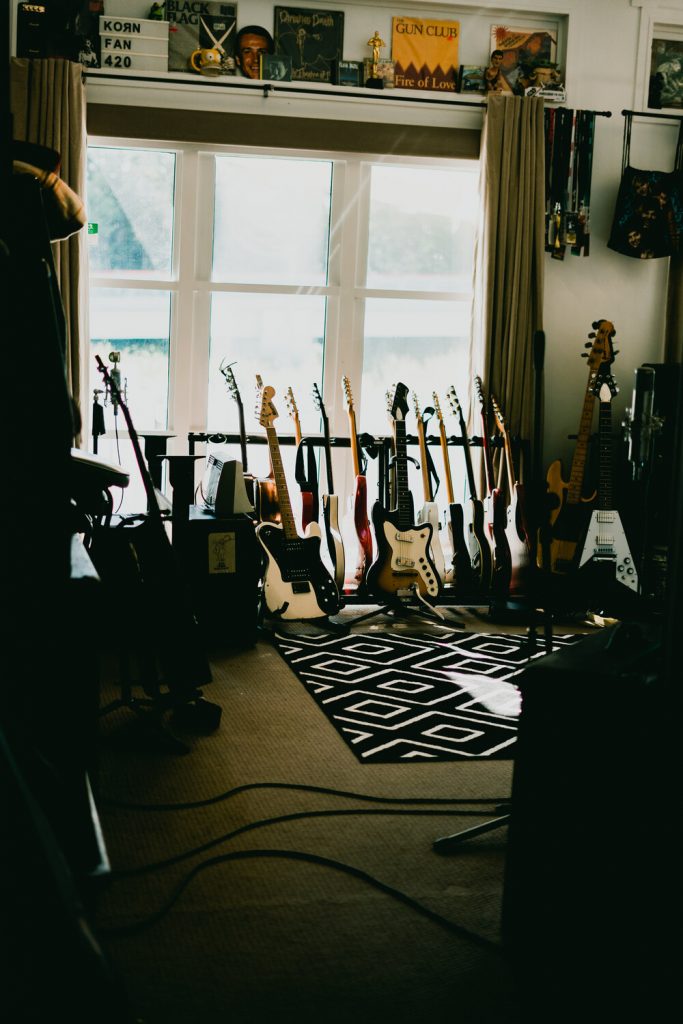
My name is Matthew Cochran and I’m a Brisbane-based Music Producer, Songwriter, and Mix Engineer – plus I’m also the lead vocalist, guitarist, and primary songwriter for the alternative rock/emo punk band Talk Heavy. For as long as I can remember, I have wanted to play guitar. In fact, one of the earliest memories I have is driving back with my Dad from a job he did at night and he showed me ‘The Real Thing’ by Russell Morris for the first time. According to my Mum, I’d been asking her for a guitar since I was three years old, because I had a toy guitar that I was inseparable from. She told me she wouldn’t let me get a guitar until I was in my teenage years and proved to her that I was still serious about it. When I was eight, my Mum made me get piano lessons for about a year, but my teacher was super mean and that upset young me a little too much, so I stopped. But even after that, my love for music kept growing. Read up on all the latest interviews here. Eventually I got a copy of Guitar Hero III: Legends Of Rock and that really pushed me to begin begging my Mum for a guitar again. I also found an old nylon-string guitar that belonged to my brother Paul and taught myself the classic incorrect rendition of ‘Smoke On The Water’ that everyone seems to know. My Mum finally caved and bought me a cheap Strat + amp combo, I immediately went on to YouTube and discovered a guitar lesson channel made by a lovely man named Bobby Crispy, and started learning Zeppelin riffs. Soon in high school I started getting more into ‘90s punk rock and pop-punk and started my own band called Minus Nine, which lasted up until a few years out of high school. After that split, I’d eventually wind up in bands like Muddy Chanter, WALKEN, and Pandamic – and that’s finally brought us to Talk Heavy, which is where I’m at now. In the latter three years of being in WALKEN, I had an itch to start demoing my own material – this forced me to learn some recording techniques and I soon realised that recording, writing, and producing were my favourite aspects of music as a whole. The next big push came in 2018 when my former Minus Nine bandmate Mitch Chen wanted me to record/produce/mix his new band Loiter’s debut EP. I basically just said ‘if you pay for my DAW, I’ll do it’ – so they paid for my Logic Pro X licence, I used Afterpay to get a new Mac, some monitors, and mics – then that was my first recording job. Since then I’ve engineered, produced, mixed and mastered multiple albums, plus I co-own and operate Birthday Boy Studios with my business partner and housemate Chris Antolak. My main project ‘Talk Heavy’ is a mixture of emo, alternative rock, pop-punk, and indie. An easy way to describe us is “Tony Hawk’s Emo Punk” apparently. I’m the lead vocalist, guitarist and primary songwriter for that project – as well as our engineer, producer, and mix engineer. We take a lot of influence from artists like Cloud Nothings, Title Fight, Modern Baseball, PUP, Jeff Rosenstock, Motion City Soundtrack, and Violent Soho. Alongside that, I put out the occasional ambient drum ‘n’ bass material under the name ‘Flight Data Recorders’ – that’s all very Aphex Twin and Vierre Cloud-inspired. I’ve also been working on a garage punk solo album under the moniker ‘peoplepleaser’ – taking a lot of inspiration from Oberhofer, Jay Reatard, Neutral Milk Hotel, and The Drums. Growing up, I was always a massive fan of anything Jerry Finn touched. Plus I’ve always loved Rob Cavallo as well. So those are two big punk/pop-rock names right there. One of my favourite artists who primarily self produces these days is Yoni Wolf from WHY? – he just always has so many insanely creative ideas, I love it. Plus WHY? are easily one of my favourite bands. I work out of Birthday Boy Studios, which is also my home. We typically keep the kit always mostly set up and mic’d up to save time, just re-tune, adjust what we need to, changeover any snare, then get going. I try not to overthink things, just make it sound as good as possible and make sure it’s performed as well as possible. A big overarching bit of equipment would be our TOFT ATB32 desk at Birthday Boy, that thing has some nice darker qualities to it and carries its own specific tone. I personally use Logic Pro and I’m a massive fan of it, because I think it’s the easiest to write/compose in as you record, which I find super convenient for striking while an idea is hot and fresh. It’s just easy, user friendly, has loads of great virtual instruments already built-in and I just know it the best, really. Headphone wise, I’m a big fan of beyerdynamic, I specifically use the DT770 Pros. As for our louder monitoring, we use a pair of Adam A7X’s and some Yamaha HS5’s to check in contrast. I don’t really have a set preference when it comes to the front end, but at Birthday Boy we used the TOFT ATB32 desk, the Orion Antelope converters are great and while we do have some nice outboard gear here and there, I tend to be pretty much all in-the-box aside from some desk EQ going in. We’ve got a lot of cool hand-built pedals laying around that add some unique tones when we need them, but for the most part we’re pretty conventional. If we ever want some lo-fi guitar or vocal sounds though, we have a little radio speaker we can plug into, as well as those little Marshall micro stacks. We actually used our Marshall MS-4 for the intro of ‘Open The Door’. From memory we had a Tele running through a Hotcake into the MS-4 and we recorded that micro amp with a mono room mic a few metres away. There are so many things I wish I could buy but obviously music gear is expensive and we work in a terribly underpaid industry. Like every guitarist though, I want more guitars and one I’ve wanted for a while is a black Peavey T-60.
When it comes to working with other clients, I’m definitely a fan of the eight hour work day – typically 10am to 6pm. However with Talk Heavy, we usually do things in short bursts – it just keeps everyone fresh and present considering the other three members work full time and have commitments outside of work as well. Plus, a lot of our songs are still super fresh to us as we record them, I think that leaves a bit more room for spontaneous creativity. Like I’ll typically have a really strong idea of where I want things to go and the other members know the parts enough to get by, but then we bounce ideas back and forth as we go to keep things exciting. In an average mix session, I find myself using a lot of Soundtoys stuff, specifically the Decapitator (as does everyone haha). Again with Soundtoys, I love the Little Plate as a basic go-to. But I also love all the Valhalla stuff. Sometimes, if I want something a bit more warped or specific, I might even use the reverb pedals in Line 6 Helix on a stereo setting.
As far as compressors go, there are so many good ones for different reasons but I guess my most used is the good ole black 1176. For EQ, it’s the FabFilter Pro-Q, all the way. If I had to use only one effect for the rest of my life though, considering most of my work is in alt rock and punk rock, I guess I could get away with super wet or wildly effected mixes if need be, so I’d probably just go with saturation. Talk Heavy recently toured Australia with Press Club which was incredible. We’ve got a few shows coming up to end the year on and we’re recording some new singles soon for next year – so keep an eye out for all of that on our socials. And yeah, in the meantime check out the debut EP Jump Into Nothing – it’s out now on all streaming platforms! My advice? Keep going. Just always keep going. There’s always something new to learn and that’s kind of the beauty of music, writing, production, etc.


Leave a Reply