Blog

‘Stranger Things 4’: Watch Joseph Quinn Rehearse Metallica’s ‘Master Of Puppets’ For Epic Finale Moment – Deadline

By Lynette Rice
Senior TV Writer/TV Editor, Awards
Thrum the hell out of that six string, Eddie!
The writers from Stranger Things paid tribute to Joseph Quinn’s fine work on the guitar by posting footage on him rehearsing Metallica’s “Master of Puppets” on Twitter. In one of the last moments from Season 4, Volume 2, Quinn’s Eddie Munson (Quinn) shreds his electric guitar in an effort to lure the demo-bats away from the Creel house and his newfound buddies.
Quinn wasn’t expected to do all the heavy lifting with the Metallica tune. Bassist Tye Trujillo, the son of Metallica bassist Robert Trujillo, helped with the solo.
practice makes perfect pic.twitter.com/yjv63A1pfp
— stranger writers (@strangerwriters) July 10, 2022

Quinn’s performance and the use of the song in the Netflix drama got a big thumbs up from Metallica.

“The way the Duffer Brothers have incorporated music into Stranger Things has always been next level, so we were beyond psyched for them to not only include ‘Master of Puppets’ in the show, but to have such a pivotal scene built around it,” the band recently wrote on Instagram. “We were all stoked to see the final result and when we did we were totally blown away. It’s so extremely well done, so much so, that some folks were able to guess the song just by seeing a few seconds of Joseph Quinn’s hands in the trailer!! How crazy cool is that? It’s an incredible honor to be such a big part of Eddie’s journey and to once again be keeping company with all of the other amazing artists featured in the show.”
In the fourth season, Quinn played a metalhead-cum-small-time-drug-dealer who runs the Hellfire Club and participates in a band called Corroded Coffin. The Dungeons and Dragons enthusiast was also wrongly suspected of murder.

Netflix Teaming With Microsoft On New Ad-Supported Streaming Tier

“It’s something we’ve always wanted to do but we teed it up at the end of Season Three,” Matt Duffer told Deadline’s Mike Fleming. “We wanted to explore the idea of “satanic panic” because we have our kids playing Dungeons & Dragons. It was just this fascinating period that seems ridiculous now looking back, but it was very serious at the time. It was like major media. We have Eddie reading Newsweek and we’re demonizing this game and people believe that it was a really bad influence on kids. Bad to the point of causing them to commit murder and all these other heinous acts.”
“We felt like because D&D was such a core part of our show and we’re set in the 80s that it was something that we needed to explore,” continued Matt Duffer. “It seemed to go really nicely hand in hand with what we thought was going to be kind of our darker horror driven sequence. When you talk about satanic panic, Damien Echols was not 80s, but we thought he was caught up in something very similar, this mass hysteria. Obviously, Damien is alive now, but his is a tragic story we’ve been obsessed with. I think we saw the HBO documentary Paradise Lost. We were in high school when we first caught those, and then, of course we saw West of Memphis. It seemed like a really great character and a means to explore satanic panic, and that’s why that character kind of had tragedy etched all over him. Even had he survived the season, you know it wouldn’t have ended well for him. He would have been demonized and blamed for all this. The minute that Chrissy died in his trailer, it was the end for a character like that. He either ends up dead or in jail, and that’s the tragedy ultimately of Eddie Munson, and there was nothing really our kids would have been able to do for him.”
Prior to Stranger Things, Quinn was best known for his work in Dickensian, Howard’s End and Les Miserables. He also played Helen Mirren’s son in Catherine the Great.

Subscribe to Deadline Breaking News Alerts and keep your inbox happy.
Broadcast networks’ fall lineups and schedules
New and returning series on broadcast, cable and streaming
Series that made it or didn’t make it in 2021-22
Signup for Breaking News Alerts & Newsletters
Get our latest storiesin the feed of your favorite networks
We want to hear from you! Send us a tip using our annonymous form.
Sign up for our breaking news alerts
Deadline is a part of Penske Media Corporation. © 2022 Deadline Hollywood, LLC. All Rights Reserved.

source

Tencent Music Entertainment Group Introduces the First Producers Alliance in China's Music Industry to Promote Music Production Quality – PR Newswire

Searching for your content…
In-Language News
Contact Us
888-776-0942
from 8 AM – 10 PM ET
News provided by
Jul 11, 2022, 23:00 ET
Share this article
SHENZHEN, China, July 11, 2022 /PRNewswire/ — Tencent Music Entertainment Group ("TME," or the "Company") (NYSE: TME), the leading online music and audio entertainment platform in China, today announced the initiation of TME Producers Alliance, the first producer alliance in China’s music industry to support full-circle high-quality music production, empowering talented producers to realize both artistic and commercial value.
The TME Producers Alliance has adopted a partnership structure to integrate resources at every stage, from music production, to promotion and distribution. Based on a professional content creation system and a healthy commercialization system, the TME Producers Alliance provides more opportunities for music producers and supports their career advancement and professional growth. It also connects producers with industry partners to create high-quality popular singles and maximize music exposure among music lovers.
In order to help producers with common challenges, such as a lack of resources or weak commercial distribution, the TME Producers Alliance has implemented financial incentives to support the career development of different types of producers.
As of the release time, around 90 talented producers from China, Malaysia, Singapore and other countries and regions have joined the TME Producers Alliance, including recent award winners of The 33rd Golden Melody Awards, such as Chris Hou, Huang Shao Yong, and Howe Chen. The alliance is now planning several initiatives, targeting to bring more superior music works from producers of different generations to all music lovers.
Going forward, TME will continue its efforts to provide platform resources to support the growth of producers and high-quality music creation, bringing music professionals a better stage and promoting the development of the original Chinese music market.
About Tencent Music Entertainment
Tencent Music Entertainment Group (NYSE: TME) is the leading online music and audio entertainment platform in China, operating the country’s highly popular and innovative music apps: QQ Music, Kugou Music, Kuwo Music and WeSing. TME’s mission is to use technology to elevate the role of music in people’s lives by enabling them to create, enjoy, share and interact with music. TME’s platform comprises online music, online audio, online karaoke, music-centric live streaming and online concert services, enabling music fans to discover, listen, sing, watch, perform and socialize around music. For more information, please visit ir.tencentmusic.com.
Media Contact
[email protected]
+1 (646) 992-2986
SOURCE Tencent Music Entertainment Group
Cision Distribution 888-776-0942
from 8 AM – 9 PM ET

source

"I have never seen that before"- xQc is shocked as Twitch age-restricts him while streaming FL Studio – Sportskeeda

While streaming FL studio on Twitch, xQc realized that the stream was age-restricted. The streamer has been trying to get better at the software since he started to get the hang of it a couple of days ago, but viewers soon alerted him to the fact that they were getting an age-restriction prompt if they tried to join his stream. Many have seen a similar prompt pop up for streamers who play a lot of gambling games such as Slots on stream:
Some in the chat even said they had seen the mature warning for other famous gambling streamers such as TrainwrecksTV. Gambling on stream has been a point of contention for a lot of people, and xQc, being one of the top streamers on the platform, is often criticized for his “gamba” streams.
Felix “xQc” is one of the top streamers on Twitch and regularly pulls over 50-70k concurrent viewers to his content. As per the latest statistics, he is currently the most-watched variety streamer on the purple platform. For this reason, many have denounced his gambling streams.
(Timestamp 15:53:01)
Being a big streamer, Felix’s audience is bound to have a lot of young viewers, and the anti-gambling advocates feel that the streams may have adverse effects on young impressionable minds. As he stopped FL studio to figure out the problem, many in the chat pointed out that this is what happens to gambling streamers. He asked them:
He then asks his viewers to take a screenshot of the popup and send it to him:
Pokelawls, who was on a call with him on stream, confirmed this too:
xQc was stunned when he saw the screenshots:
Upon hearing that it is a common thing that happens to gambling streams, xQc was annoyed because he was not gambling at the time. His fellow streamers pointed it out too:
xQc even checked other streams to see if the problem was only happening to him and found that only his channel was affected by the age restrictions. When someone in the chat pointed out that people don’t want kids to watch gambling streams, this is what he had to say:
The streamer then came up with another theory, thinking there was some beta testing going on:
However, the problem appeared to have been resolved in an hour or so.
His chat was having fun as most joked about xQc losing his viewer count and teased him about how this would hurt his streaming career. Many also joked about how people could easily fool the prompt by lying about their birthdate:
The subreddit r/LiveStreamFail also pitched in with their opinions. Many supported the mature warning as they considered Felix’s content to be for adults but remained skeptical of how much it would help moderate the streams. Some even thought that it was a pathetic attempt by Twitch to shift the blame onto streamers:
Streamers like Rothstein, Trainwreckstv, and xQc earn huge amounts of money from gambling sponsors, and they are also famous for losing large wagers on stream. There have been critics who question the ethics of showing gambling on stream, but unless Twitch takes more drastic measures, gamba is here to stay.

Quick Links:

source

Savannah GA events: Howard Jones performs new album at District Live – Savannah Morning News

Nearly 40 years after the debut of his first single, “New Song,” 80’s synth-pop icon Howard Jones is still producing incredibly moving and forward thinking music with his latest electronic album, “Dialogue.”
Having recently come off of an acoustic trio tour with his friends Nick Beggs (chapman stick, bass) and Robin Boult (guitar), Jones is now embarking on an electronic tour in support of the new record, including a highly anticipated stop at District Live on July 21.
Throughout the 80’s Jones released a steady string of chart-topping songs from his first two hit albums — “Humans Lib” (1983) and “Dream into Action” (1985) — including “Things Can Only Get Better,” “What is Love?”, “Pearl in the Shell,” and “Like to Get to Know You Well.” His songs stood out from the pack for their infectious pop melodies, thought provoking lyrics, and boundless optimism.
Recent shows:The Chameleon’s Mark Burgess performs a rare acoustic gig at Lodge of Sorrows in Savannah
Local acts:Synth-based rock band Pink Peugeot stands out with Chew at Lodge of Sorrows
For the Birds:Country-tinged indie band Neighbor Lady celebrate new album at El Rocko Lounge
Jones is considered a synth pioneer for successfully embracing new technologies in a music cultural climate that was often skeptical, or downright hostile, towards synthesizers and their legitimacy in music.
“It was painful having to defend that position at the time because it was just born out of terrible narrow mindedness and conservative thinking,” said Jones in a Zoom interview.
“It was painful having to defend it especially from things like if you used electronic instruments you could never express human emotion. I would say to people, ‘Well, have you heard of the piano? It’s got a series of switches on it and when you press the switch you get a sound. A hundred people can play that piano and they will all sound different, and some of them will sound horrible, and then one person will be playing it and you’ll cry and you will be in a state of joy.’ It was like having to explain to people the basic meaning of music.
Local musicians:You’ve seen her playing around Savannah, but you need to pay attention to Susanna Kennedy
“Now, of course, people get it, but it was painful having to explain that to practically every interview that I did. You just have to keep going, don’t you.”
Jones shutdown many naysayers when he performed his song, “Hide and Seek,” in front of the whole world at Live Aid in 1985 with only himself and a piano.
“I thought it would surprise people because they thought I was just a button pusher,” Jones said with a laugh. “Also, I thought the song was the most appropriate, because it was a song about hope, and it’s the most spiritual song from that first album. I thought that would be the bravest and the best thing to do.”
Catch her in town:Savannah-raised country singer Natalie Goodman is bringing the hits weekly to Plant Riverside
A classically trained pianist, Jones was first taken in by synthesizers when he saw Emerson, Lake & Palmer perform live.
“I was a huge Keith Emerson fan from his days in Nice,” recalled Jones. “It was at the Isle of Wight Festival I saw their first major show, and he had the big wardrobe Moog on stage, so as well as playing piano and organ, he had this incredible synthesizer as part of his arsenal and that was it for me. I could see that that’s what I wanted to do. It was two things — one, he was the frontman of the band and keyboard player, and also he was using this brand new instrument of the time, and that’s me. He grew up classically trained, so did I. I just related to him so much.”
When Jones was in his first band, the prog-rock outfit Warrior, his drummer built him a wooden synthesizer from an electronic kit magazine. Sure, it went out of tune all of the time, but Jones made it an important part of his arsenal.
Later, when his wife received a settlement from an auto accident, she purchased him his first professional synthesizer. The store accidentally sent him two, but Jones enjoyed the possibilities of playing both at the same time so much that he offered to pay for the other one, earning the nickname “Honest Howard” from the shop owners.
The Ultimate Bar Band:Savannah’s The Intracoastal Playboys make their debut
Today, you could say that Jones has entered the “I told you so” phase of his career. Synthesizers and music software are an accepted part of songwriting and music production, not to mention more accessible than ever. I mentioned to Jones that my 11-year-old son created seven “albums” worth of music playing around with a midi keyboard and Reason software with no prior training.
“When I started my career, I did predict that would happen,” said Jones. “That you would be able to create amazing music on your laptop and do it in your bedroom. Then it would be a big revolution in making music available to everyone, whereas when we started you had to go into a studio. You had to be signed to a label to be able to have access to a studio and make records. Now all those barriers have been broken down — which has it’s good points.”
“Dialogue” is the third part of a four part album cycle that Jones conceived during the pandemic lockdown. The final part, “Global Communication” is due next year.
Jones’ concept was to describe how human beings can evolve. The first album, 2015’s “Engage,” is about deciding not to be a bystander and engaging with the world around you. 2019’s “Transform” suggests that before you try to change the world, you need to work on yourself first and learn to respect other people.
‘I want to be part of music!’:Savannah singer-songwriter Anna Kellam is making music accessible
“We go on to ‘Dialogue’ where the next step is to fully communicate with people,” explained Jones. “We we as human beings can uniquely do is communicate, and talk, and express ideas. And exchange ideas. Through that we discover that we have things in common, our common humanity. I guess, ‘Global Citizen’ is putting all of that into practice and realizing we’re all totally connected, and what each person does affects everyone else. Realizing we’re all responsible for the world, we need to act accordingly.”
Jones’ new music carries many of the hallmarks of his 80s heyday, but with shimmery, beefed up modern production. “The challenge now is everyone has access to everything,” explained Jones. “If you want to create something a bit unusual, a bit different, you’ve got to put the time in, which I’m happy to do if I’ve got it.”
Much of Jones’ song ideas are inspired by Buddhism, which he has practiced for nearly three decades.
Local shows:Eastern Wharf brings a party to the park with Savannah bands Donna Savage, Little Gracie
“It’s helped me so much to really realize that it’s our actions that create the future,” said Jones. “What we do now will affect what happens tomorrow and that we’re all incredibly connected. When the spiderweb is plucked everything is affected. It’s really helped me stay in that frame of mind of make your work very hopeful and positive so that when people hear it they can get a bit of a boost of energy so that they can get through whatever difficulty or problems are coming their way.”
“Buddhism really teaches to not worry about when things go wrong. They will go wrong for everyone and difficult things will happen right up to the end of our lives, but don’t worry because hidden within that difficulty is a great silver lining. Just find what that silver lining is. I think that really helped me to power my life and career with an always forward momentum.”
Although he is best known for his synthesizer work, Jones is also a brilliant pianist and has released several solo-piano works. Even when he is just playing piano, Jones finds interesting ways to explore technology. Next year, Jones plans to release a collection of piano pieces that he wrote and edited on a computer and then will record being played back by his Steinway Spirio piano.
“It enables me to create pieces that you can’t actually play as a human being,” said Jones. “I like instrument that really push the boundaries of what’s been done in the past. The piano is sitting there at home and I can’t wait to get back to play it.”
More:From New York to Savannah, actor Bill Irwin is still waiting on Godot with ‘On Beckett’
Jones will be joined on tour by his good friend and industry legend Midge Ure. Ure has had an incredible career including playing in Silk, Thin Lizzy, Visage, fronting new wave band Ultra Vox, co-founding Band-Aid and Live-Aid with Bob Geldof, and co-writing the holiday classic, “Do They Know It’s Christmas?”
“I don’t have many famous artist friends, it’s quite hard to do that, but Midge is definitely one of them,” said Jones.
“He lives quite close to me in the southwest and comes to our house and we know his kids, our families know each other. He played on records of mine, and we’ve actually got quite a big history together, so I was so pleased when he said he would do this tour with me because he’s a proper legend with an incredible legacy”
What: Howard Jones with Midge Ure
When: Thursday, July 21 at 8 p.m.
Where: District Live, 400 W. River St.
Cost: $59.50 general admission; $184.50 for a meet and greet experience package
Info: plantriverside.com/district-live/

source

Building a Pro Mixing 5.1 Setup on a Budget – Part 1 (Choosing Equipment)

'Jane the Virgin' writer recounts growing up undocumented in 'Illegally Yours' – NPR

DAVE DAVIES, HOST:
This is FRESH AIR. I’m Dave Davies in today for Terry Gross. Our guest, Rafael Agustin, is a successful TV writer and producer, but that’s not the subject of his new memoir. It’s about his experience growing up as an undocumented immigrant in the United States. Agustin was born in Ecuador, and when he came to the United States with his parents as a 7-year-old, he was so young and naive that he thought the Fourth of July fireworks over the Los Angeles airport were there to herald his family’s arrival.
His book tells the story of his parents leaving their middle-class existence in Ecuador and working for menial jobs in America and his life of learning English, constantly moving from school to school and figuring out how to apply to college with a strong high school record but no Social Security number. There are moments of heartbreak and humor, like his dad’s exhilaration upon getting a Publishers Clearing House notice from a man named Ed McMahon that he may have won a million dollars. Rafael Agustin was a writer for the CW network show “Jane The Virgin” and is now CEO of the Latino Film Institute, where he oversees the Youth Cinema Project and the Los Angeles Latino International Film Festival. He co-created and co-starred in an autobiographical comedy stage show which toured nationally for three years. His new book is “Illegally Yours: A Memoir.”
Well, Rafael Agustin, welcome to FRESH AIR.
RAFAEL AGUSTIN: Thank you so much for having me.
DAVIES: You know, a lot of immigrants come to the United States these days from pretty desperate circumstances, you know, driven by poverty or violence or persecution. Your story is different. Tell us about your life in Ecuador.
AGUSTIN: Yeah. You know, it is different but not too different. So I had a little privileged upbringing, right? My grandfather was well known in his city of Guayaquil, Ecuador. I come from a long line of lawyers and politicians. But my mom and my dad were doctors, you know, a pediatric surgeon and an anesthesiologist who came to this country to work at a car wash and work at a Kmart. I didn’t understand why we would leave, like, our cushy existence for the hardships of Los Angeles, Calif. But when I look back, you know, as an older man and try to understand why they would make this crazy, insane journey – why would they sacrifice so much, why would they leave their livelihoods behind – I look back at, you know, when I was born, like, the democratically elected socialist president of Ecuador, his plane just miraculously blew up midair when he was trying to nationalize the country’s petroleum.
Again, this is a comedic book, but I had to really look into the hardships of what has U.S. foreign policy been doing all over Latin America that has forced these immigrants to come to this country? And while I barely touch on it in the book, conversely we get asked, like, you know, what was Eisenhower doing in Guatemala or Nixon doing in Chile or even, you know, Reagan all over Central America? I hear a lot of Americans say things like, you know, we don’t like refugees, and we don’t like undocumented workers. But, I mean, the truth is that we need to stop creating them.
DAVIES: Yeah, there’s certainly at least a 150-year history of intervention in Latin America. I mean, I’m sure you talked a lot to your parents in researching this book. Did they cite those issues as part of what made them think of coming to the United States? Were they troubled by the instability of the country?
AGUSTIN: They did, and it is the political and economic turmoil. So they came here thinking that things would be calmer, would be better, that their work can get them ahead in life. But little did they know that they would be cut up and the menial jobs and try to learn the language and the hard realization that medical licenses don’t transfer from country to country.
DAVIES: Tell us a little more about your parents’ medical careers in Ecuador, what they did.
AGUSTIN: Yeah, so my father was a pediatric surgeon, and my mother was an anesthesiologist. And one of the earliest memories I have – I must have been, like, 6 years old, 7 at most. And my mom was at the hospital operating, and my dad gets a call, like, close to midnight. And, you know, they didn’t have money for a babysitter, so my dad just took me with him to the hospital. And I remember one of the nurses put me in, like, medical scrubs and put covers on my feet, gave me a surgical mask, walked me down a long corridor and shoved me inside an operating room. And there I was watching my dad operating on a little girl my age. Her chest was completely opened by metal tongs. And she had been shot in the back with a rifle, and my dad was the only surgeon that could operate in – this very complicated surgery and hopefully save this child’s life.
And I noticed just by her kind eyes that my mom was the doctor applying the anesthesiology in the surgery. So there I was, like 6, 7 years old, watching my parents save a child’s life, which they did. And to me, it felt like 20 minutes. But when we – when my mom talks to me about it today, she’s like, I can’t believe you stood there for seven hours during one of the most complicated surgeries we ever had. That is so crazy to me.
DAVIES: Yeah. And you remember that?
AGUSTIN: Vividly. Yeah, you don’t forget something like that.
DAVIES: So when you left, as you tell the story in the book, your parents didn’t even tell you that you were moving to stay. It was just kind of for a vacation. You get there, and, you know, things are different. I mean, there’s no maid to make your lunch. I mean, you’re living in the garage apartment of some relatives who were there. You had relatives in the States already. Did you resent it? Did you – I don’t know. What was it like?
AGUSTIN: Well, you know, they did lie to me. They said we were going on vacation. And after several months, going into a year, I was like, wait, when are we – (laughter) how long is this vacation lasting? And, you know, when you pointed out at the top, I did grow up in this, you know, cushiony existence with, like, maids and chauffeurs, and then we come to the United States, and I’m like, oh, wait a minute – here, we’re the maids and chauffeurs. What’s happening?
DAVIES: Well, you know, one of the things that occurred to me was that it was clearly, you know, a different standard of living for you and a loss of income. But it’s also a loss of status. I mean, your parents were people who – you know, they saved lives in hospitals and were treated with respect as doctors. And, I mean, I certainly hold no disrespect for anybody that works in a car wash. I mean, I come from a working-class family and honor hourly work. But for them, it must have been so different to gone – to being sort of an anonymous sort of helper at so many jobs. Were you aware of that, or did they talk about it at all?
AGUSTIN: I did carry their sacrifice close to my heart ’cause I did see them be doctors, you know, one week and then work these menial jobs the next week. But the beauty of our story is how – no matter how hard things got, they tried to shield the reality of our documentation from me so that I wouldn’t have to experience that. Yeah, it was hard to come to a new country and make new friends, learn a new language. And we moved a lot, right? I didn’t know why we moved so much – because, you know, every time someone discovered their immigration problems, we had to pack up and leave and go to a different town to try to find a different job. But all of that, they withheld from me. So I was able to grow up an oblivious, stupid American kid.
And I loved my life. I loved the United States. And it was in those late nights, after my parents got from – home from work, from long days of work, and you’re just so exhausted and want to disconnect that we would start watching, like, American TV shows and American movies together. That’s where my love for the entertainment industry began. I was wow, this is the one thing I can share with my parents in this country. We didn’t have time for each other in this country. They were too busy working all the time. But we always connected late at night watching a movie or a TV show to escape our realities. And that’s when I was like, oh, I think I want to do this for a living.
DAVIES: Yeah. It’s interesting how a kid, you know, kind of takes their surroundings for granted most of the time, and you can kind of sell them for a while on a different idea. Like, your dad…
AGUSTIN: (Laughter) Only for a while though.
DAVIES: …Your dad’s special meals on Sunday – tell us about that.
AGUSTIN: OK. So my parents worked, like, seven days a week. We really didn’t see each other. They worked through holidays, too. But every Sunday, we would get together to go to ampm, which is like a convenience store attached to, like, a gas station here in the West Coast in Southern California. And it’s kind of like a 7-Eleven. And so we would go into the ampm, and it would always be the three of us – my mom and dad and me – and we would get burgers together.
And I was in love with, like, American burgers. I mean, ketchup? I had never tasted anything as good in my life. There’s no ketchup this good outside of the United States, let me tell you. They have to put some kind of drugs or crack in it ’cause it’s so freaking amazing. And then, we would go to ampm, and I would eat these burgers. And it was, like, the time of my life.
And then, a few years later – not a few years later, many years later, I asked my dad, what were your lowest points in the United States? And he said, when I had to take you and your mom to ampm ’cause I had no money then, and all I could afford was that special that they had – two burgers for 99 cents. And that nearly broke my heart. I was like, that’s, like, the highlight of my childhood. And those were his worst moments in this country.
DAVIES: We talked about how, when your parents came to the United States, they lost that status they had as medical professionals and worked other jobs. I wonder if they would offer medical advice or treatment just to friends and family. And that was a way to sort of get some of that feeling and stature back.
AGUSTIN: Well, the – because everyone in the family knew who they were, my parents became the family doctors. Everyone came to my parents for a diagnosis. Or if one of my cousins broke their arms, my dad would put a cast on them. I mean, it’s what immigrant families have to do in – when we have a health care system that doesn’t take care of everybody. I remember one of my cousins. He got injured in a snowboarding accident – snapped his arm in half and had to get a metal plate to keep his arm together. He didn’t have insurance, so he came to live with us so that my parents could heal him back to health.
That’s how my parents gave back, at least to the family and to close friends who knew them, trusted them, and searched for their medical guidance when they didn’t have money to go to the hospital. I mean, I remember one job – my dad got fired for giving a janitor’s wife a flu shot ’cause he wasn’t allowed to be giving shots.
DAVIES: Let me reintroduce you. We’re going to take a break here. We are speaking with Rafael Agustin. He is a television writer and producer. His new memoir is called “Illegally Yours.” We’ll continue our conversation in just a moment. This is FRESH AIR.
(SOUNDBITE OF DANILO PEREZ AND CLAUS OGERMAN’S “RAYS AND SHADOWS”)
DAVIES: This is FRESH AIR, and we’re speaking with Rafael Agustin, a TV producer and writer and CEO of the Latino Film Institute. He has a new memoir about growing up undocumented in the United States after emigrating with his parents from Ecuador. The book is called “Illegally Yours.”
You know, it’s interesting that you write that you never thought of yourself as having an ethnic identity. You were a white kid in Ecuador like so many others.
AGUSTIN: A white kid with a beautiful olive tan.
DAVIES: Oh, with an olive tan.
AGUSTIN: (Laughter).
DAVIES: Yeah. Yeah. So when you got to the States – I don’t know – did you become aware of ethnic and racial differences among the students? Did that kind of hit you at all?
AGUSTIN: Immediately. Immediately. And that’s, to me, more shocking than discovering that I was undocumented. It was discovering that I wasn’t white. I internalized so much of the film and TV shows that I saw from the United States as a child that I thought I looked like the people on the TV screens.
But when I get to public school here in the United States, I was surrounded by the great American diversity, right? I see the Asian American students, the African American students, and I’m like, what is this? I’ve never seen this in film and TV before. And then I saw them, the Mexican American and Central American students. That’s when I realized, oh, my God, I look more like them than the white students. So I guess I’m not white. And I’m, like, in third grade trying to figure all this out in my head.
DAVIES: You know, you write that you didn’t know it, but your parents had come on tourist visas and overstayed, which is a common experience for immigrants who end up undocumented. But they had kept this from you. They didn’t want you worrying about it. Looking back on it, I mean, did you see them behaving with exaggerated caution, that their lives were, in some ways, circumscribed because of their status?
AGUSTIN: Yeah. I mean, my dad went out of his way to make sure that he always paid his taxes ’cause he wanted to make sure that this country knew that he was a patriot, that he loved it, and he gave back. He never took, and he always gave back. And I know this because he would (laughter) – my mom and dad were always happiest when we got our tax refund checks in the mail.
And for them to hide this from me and to live a normal American existence minus one thing – and that’s our documentation and our legality – that’s what made me realize, oh, my God, like, we are American. No matter what, we are American. Like, we make our economy stronger, our workforce younger. And you can’t deny that we make our food taste better.
(LAUGHTER)
DAVIES: Right. But then there were moments that you saw things. I mean, your dad was going to get a job once. And there was an immigration raid at the place where he was going to work, which he ended up, actually, eventually working at. And then there was a moment where, I think, you were with him, and you saw some agents chase down a guy and tackle him. And your dad – you asked her dad in Spanish, you know, what’s happening here? And he said, hey, hey, don’t speak Spanish, right?
AGUSTIN: Oof. Yeah, the first story was actually a federal raid. It wasn’t even an immigration raid. It was, someone had tried to hire my dad to do some medical insurance claims but wasn’t being legit about it. And then he held my dad’s undocumented status against him so he wouldn’t say anything. But then the second story, the immigration raid at the beach, I must have been, like, fourth-grade or fifth-grade at most. And I’m walking down the beach with my parents in San Clemente, Calif., which San Clemente, by the way, has an immigration checkpoint. I don’t know how smart it was for us to go move over there. But that’s where the work was, so that’s where we went.
And when – I remember what appeared to be an undocumented worker ran past us. And then immigration officers chased him and tackled him. I turned to my dad. And in Spanish I said, (speaking Spanish) – like, what’s happening? And he turned to me with, like, fear in his eyes. And he said, don’t speak Spanish. And I had never seen my dad afraid before. So this moment really shook me to my core. And because whatever was happening put this much fear in my dad, I internalized it and thought he meant, don’t speak Spanish ever again. Looking back, I know he said, don’t speak Spanish for that moment in time until the immigration officials went away. But I didn’t speak Spanish again for several years. Like, even my parents would speak to me in Spanish, but I would reply in English. And I didn’t realize this for – until I got to, like, late in high school. And my mom told me what happened. And I was like, oh, wow. I had no idea that that was, like, the inciting incident for the fact that I was turning my back on my native tongue.
DAVIES: You got a little older and you got to high school. West Covina High, I think, right?
AGUSTIN: Correct.
DAVIES: There was diversity in the school, you say. I don’t know. What were the different cliques or crews and how did you find yours?
AGUSTIN: (Laughter) Well, the wonderful thing about growing up in San Gabriel Valley is that it is truly one of the most diverse regions in the entire United States. So I like to point out that the Asian American kids were the cool kids. And the African American kids were the nerds. And the Latin American kids were the surfers. And I was always looking for my group. I didn’t know where I belonged. I was previous – you know, I was an immigrant boy that was a wannabe little gangster. But I was studious. And I loved my mother (laughter). And I loved listening to punk rock and Spanish music. There wasn’t, like, a clique for me. And for a while, I – not knowing my place, the way that changes is when I discover that I was undocumented because when that news hits me, I mean, first, I get depressed. But then I realize, I want to become the most popular kid at school.
DAVIES: Well, now, how did you find out?
AGUSTIN: Well, all of my friends are starting to drive. And they’re starting to apply to go to colleges. So I do the same thing. And I, you know, filled out my DMV driver’s permit paperwork without telling my parents. And then I was told I needed them to sign off on it. So I come home. And I’m like, hey, I need you to sign this. And that’s when they looked at each other. And they were like, well, you need to sit down. And we had the talk. It wasn’t about the birds and the bees. It was about Uncle Sam and the United States.
Essentially, they told me that I was undocumented. They told me that they had Social Security numbers, but I didn’t. And, you know, I write that it’s like – it was, essentially, an end-of-the-world comet hitting my frosted-tipped head because I grew up watching and admiring, like, Zack Morris. I know it sounds dumb. But as a first-generation American, I felt I had no guide in the United States. So I started watching “Saved By The Bell.” And I was like, huh, that’s what I want. I don’t want to live in this broke, poor, little Hispanic barrio. I want to turn West Covina High into Bayside High.
DAVIES: Yeah. So Zack Morris is this totally cool, handsome star of the show, right? “Saved By The Bell,” right?
AGUSTIN: He is, like, not just cool, but he has that ease that white privilege gives you and that charm. And he has, like, bleached blonde hair. I mean, so I bleached my hair blond. I joined the band so I can have my own hit – “Friends Forever,” Zack Attack, if anyone remembers that. But when I discover I’m undocumented, I don’t know how to deal with it because there’s no episode of “Saved By The Bell” where Zack gets deported. So I feel all alone and completely confused by my new reality. I jokingly say that I told my parents, like, how am I supposed to join the campus Republicans now if I’m undocumented?
DAVIES: (Laughter) Let me reintroduce you. We’re going to take another break here. We are speaking with Rafael Agustin. He is a television writer and producer and CEO of the Latino Film Institute. His new memoir is titled “Illegally Yours.” He’ll be back to talk more after this short break. I’m Dave Davies, and this is FRESH AIR.
(SOUNDBITE OF DAVE HOLLAND AND PEPE HABICHUELA’S “JOYRIDE”)
DAVIES: This is FRESH AIR. I’m Dave Davies in for Terry Gross. Our guest is Rafael Agustin, a TV producer and writer and CEO of the Latino Film Institute. He has a new memoir about growing up undocumented in the United States after emigrating with his parents from Ecuador as a child. The book is called “Illegally Yours.”
You know, it’s interesting. At the end of your book, in the acknowledgements, you make the point – you tell us some interesting stories about your romantic encounters with girls in junior high and high school. But – and you’ve changed the names – because why bring them into this stuff? But in the acknowledgments, you thank a woman who you say was willing to marry you after high school to help with your immigration problem. I assume this marriage did not actually happen, right?
AGUSTIN: The marriage didn’t happen. And I – man, I’m getting teary-eyed just listening to you talk to me about it. Yeah, Jane Besara (ph) was a girlfriend at the time, and she knew – I mean, I told her my secret, and she was willing to marry me to help me. But we didn’t because it was around this time that we finally received our permanent residency paperwork. And it took nearly 13, 14 years to process. But we applied. We were just waiting. My parents had hoped that all of this would have been taken care of before I got out of high school, but it took longer than that.
DAVIES: Right. I was going to mention this, that they had, without telling you, applied for permanent residency. And so that happens. Were it not for that, you might have married her, huh?
AGUSTIN: Yes.
(LAUGHTER)
DAVIES: So you went to college, and you were in forensics debate, did really well at this. But you also got the acting bug. You – you know, you started doing plays and eventually applied to and were accepted to the UCLA School of Theater, Film and Television, majoring in theater. And when you tried out for class plays, I’m wondering what kind of roles you got and whether you felt that there was – you know, were there ethnic profiles that people were looking for for roles?
AGUSTIN: Well, it’s funny that you mention the acting part of my life because I had been acting like an American for most of it. So being on stage felt natural to me. I had been – I felt like I’ve been playing a role my whole life. And again, you can’t make this stuff up because if I write this in the script, turn it in, my producer or showrunner would be like, that’s not realistic. But I received my acceptance to UCLA and my acceptance from my permanent residency on the same day.
DAVIES: Wow.
AGUSTIN: Oh, my God. When we opened those (laughter) – that mail together, my mom, dad and I just hugged each other and cried on the floor. It was, like, 14 years of pain all gone and the promise of a new American future. So I end up at UCLA, like, on an acting scholarship. And I think, OK, this is going to be – this is it. This is my path. This is my career. But I quickly realized that there are no roles for people of color, you know, let alone, like, Latinos and Latinas. So I quickly realized that for me to have a career doing this, I had to write myself into existence. And that’s how I became – begrudgingly, became a writer.
DAVIES: So even though you, as you say, were acting white (laughter) for years and years and had dyed your hair blonde at times, you still didn’t get roles that were thought of as mainstream, slash – you know, “white,” quote-unquote, roles.
AGUSTIN: No. And I thought it was me. I was like, I’m terrible. I should switch my major to sociology or something. But then there was a production of a play called “Short Eyes,” which was a prison drama, and I got the lead role. And I was like, wait, hold on (laughter). Wait, what’s happening right now? Because I didn’t want to play stereotypical roles. I didn’t want to buy into, like, negative stereotypes just to make a paycheck. That’s why I wrote the show that I wrote, which I can’t really say the title of it, but it stands for three derogatory terms. It’s called “NWC,” and it starred my best friend, Miles Gregley, who’s African American, my other best friend, Allan Axibal, who’s Asian American, and myself.
And this little show, which was simply supposed to be a showcase for our talents because as Black and Asian American, they were feeling the same problem – they weren’t being seen, and they couldn’t get roles that can fully highlight the complexity of their existence. So we create the show. It’s supposed to be simply a showcase. And it catches fire. It becomes, like, this cult phenomenon at UCLA. Even the LA Times came and wrote about it. So we became, like, campus famous real quick. And we go from a student show to a professional run in downtown Los Angeles, thanks to the Latino Theater Company at the Los Angeles Theater Center, to a national tour in just three months. It was a crazy trajectory.
And we were selling out every night in downtown. And the only reason we put an end to the run was because we had a finals, and we were going to be, like, the first in our families to graduate from college in this country, and that meant a lot to us.
DAVIES: You know, let’s just talk a little bit more about the show. I mean, as you mentioned, it’s not a title we can say because it’s three words – the N-word and then a word – a derogatory term for Asian Americans and a derogatory term for Hispanics. And people can find this on YouTube. It’s – as you said, the abbreviation of it is “NWC.” You want to just tell us a little bit about it – about kind of what happens, what’s the feel of it, what’s the message?
AGUSTIN: Yeah. So because Miles was so big into stand-up and Allan was so big into slam poetry and I was the theater nerd, it became, like, this hybrid of a show that felt like a sketch comedy show. But because we were working with Steve and Liesel, who were professional writers, it was a three-act structured play. But the comedy of it – and because we’re such great friends, and we’re – there’s a familiarity on stage – it felt like a fresh improv every night. The LA Times compared it to the comedy of, like, Chris Rock and early Culture Clash. It was slash political statement, slash social satire, but full-on comedy.
So in the – in LA, where we first premiered, it’s strictly a comedy. But when we started performing in Ohio, in Kentucky, in Pennsylvania, it becomes so much more than just a comedy. It became known as the race show because whenever there was social unrest or a racist incident, people would pick up the phone and call us, and we would have to show up like racial superheroes and be like, OK, what’s the problem here? We’re here to clean up the mess.
DAVIES: So you would perform the show and then hold a discussion? Or is that – what…
AGUSTIN: So, well, that was it. People would bring us in not just for the show, but for the Q&A’s that we would have and for the residencies that we would do with the community, which was, at times, more powerful than the show. It was being able to bring people together through comedy – right? – ’cause laughter builds community. So we toured the show for five to six years. We went to, like, 44 states. We were famous in, like, Casper, Wyo., but in LA, no one knew who we were.
AGUSTIN: You said sometimes people would bring you and the show in when there had been an incident of racial conflict – right? – ’cause they needed to have something to address it in a hopefully constructive way. And while it’s true – comedy can bring people together – often, circumstances like that, you know, are filled with a lot of tension and sometimes hatred. And I wonder if you found situations where people weren’t ready to reconcile or really see each other and it was tense.
AGUSTIN: It – you know, I’m sorry to say that it wasn’t at first, but it got – you know when it changed, if I can be so blunt? When Obama became president. The hatred was different. The white students we dealt with were starting to feel oppressed, but they didn’t understand why they were feeling that way. To me, that was – during our tour, the first Black president of the United States in addressing the original sin of slavery in this country, that’s when things changed.
DAVIES: You know, you spent years writing for the CW series “Jane The Virgin.” What was the experience like for you? Did you feel like your experience was valued?
AGUSTIN: On “Jane The Virgin,” what I will say is that the showrunner, Jennie Snyder Urman, was really forward-thinking. I mean, she had no business embracing (laughter) a writer with no TV credits from a marginalized community. She really mentored me and took a chance on me, and I hope that I added as much authenticity to the show as she wanted. There’s a big sense of imposter syndrome for me in that room, feeling like I didn’t belong, like I didn’t fight hard enough, that I knew many other people that were more worthy to be in there than I was.
I’m in the room with these TV writers that had been doing it for 10, 20 – some even 30 years. What can I do that’s going to beat them at any TV pitch or TV idea? That’s when I had to lean in towards my cultural identity, my background. Then, when I started pitching stories about, you know, Catholic guilt or my immigration problems that I had, that’s when I started getting stories on the board, and that’s when I started feeling like I was making an impact or contributing to the show itself. But it took me a minute to get there because I still had this sense of imposter syndrome.
DAVIES: Let me reintroduce you. We’re going to take a break here. Then, we’ll talk some more. We are speaking with Rafael Agustin. He’s a television writer and producer and CEO of the Latino Film Institute. His new memoir is titled “Illegally Yours.” We’ll talk more after this break. This is FRESH AIR.
(SOUNDBITE OF ALLEN TOUSSAINT’S “EGYPTIAN FANTASY”)
DAVIES: This is FRESH AIR, and we’re speaking with Rafael Agustin. He is a television writer and producer, also CEO of the Latino Film Institute. He has a new memoir titled “Illegally Yours.”
You know, I want to bring the story back around to your parents before we say goodbye. You know, they came to the States hoping to build bright futures and eventually practice medicine. How do you think they came to view the experience? And tell us what happened later after you went to college.
AGUSTIN: My parents are a tale of two different people. My dad was a little resentful of me because I was able to dream freely and wildly while he wasn’t. And he was so prepared and so educated and so brilliant, but he could not overcome the immigration problems that we had in this country. My mom was just an optimist who always wanted to do what was best for the family. And she wanted to support my dad, and she wanted to support me.
And I didn’t know, but there were several times when my dad was like, OK, this American experiment is not working. Let’s go back. And my mom put her foot down, and she said, we’re not. We’re not going to go back until Rafa graduates. We’re not going to go back until he has accomplished everything he started here. And once I did, once they saw me become a small business owner, have a successful touring company, that – they both turned to me and said, we’re going back to Ecuador. We’re going to go back to do what God put us on this world to do, and that’s to save children’s lives.
And when they left, I like to think that they left still searching for their American dream just in a different part of America – right? – in South America. And I stayed behind to accomplish everything they set out to do. That’s how I became the American citizen that I am today.
DAVIES: You also tell us in the book that, you know, they eventually separated, and your mom returned to LA. Is that right? Are you all in touch and…
AGUSTIN: Yeah. The big secret was that I sold this book, and I got the book deal, and then, my parents got a divorce. And it just crushed me. So my mom, you know, (laughter) separated from her husband of 35 years, got COVID-19 at the start of the pandemic. And this – and Ecuador was ground zero for COVID-19 in South America. I mean, we were literally leaving our dead relatives on the street because the hospital and the morgues were overran. And my mom was fired from her work at the American consulate of over 10 years, all within three-month period. And I told my mom, no. No, no, no, no. It’s over. There’s a global pandemic happening. We cannot be separated by a continent still. I need you to come back. I’m in a good place in my life, and I want to be able to achieve this one dream I’ve had since we came to this country. And that was buying my mom a house. Oh, man, you’re getting me emotional. So I bought my mom a house, and I was able to move her back to California.
DAVIES: You know, maybe we could end with a smile here.
AGUSTIN: (Laughter).
DAVIES: You want to tell me the story of your grandmother’s ointment from Ecuador that had such healing properties?
AGUSTIN: (Laughter) Yes, yes. When my parents moved back, I realized, OK, I’m going to go back and be at the childhood home I grew up in. I’m going to see my grandparents home again. And when I get there, I have this memory of my mom and my grandmother, essentially, bringing me back to health, like, carrying me back to health. My mom was a young doctor, so she was about, like, what medicine I should take, what shots she should give me. But my grandmother, she’s a traditionalist, right? She grabbed this little container with this clear, magical ointment and started rubbing it on my chest. And I remember it so vividly as a little kid. And all my life, I was like, what was that ointment that she rubbed on me? It must be like Inca or Indigenous somehow. Maybe it was, like, somewhere in the Quechua language. I can find, like, what this magical word of Vivaporu (ph) meant because I remember she said it was Vivaporu.
So fast-forward, I’m an adult. I’m going to go get some Vivaporu in Ecuador, South America, again. And when I asked my grandma to take me on this journey to – I didn’t know if we had to go to the mountains or to some local shaman or is, like, some close friend of hers was doing brujeria in the neighborhood? But I needed to get some Vivaporu. My grandma and I leave her house. We walk down the street. We go to the local pharmacy. So I was like, OK, maybe she’s getting, like, some calcium pills or something. She waves me down the aisle and gives me the container, the same container I remember from my childhood. And when I look at it, my life came to a complete stop. When I look at this ointment and realize that Vivaporu was really Vicks VapoRub.
DAVIES: (Laughter).
AGUSTIN: And I just couldn’t believe it. I never hated my people’s lack of enunciation and pronunciation more in my life. I was like, Vicks VapoRub is Vivaporu. I had it down the street from me for nearly 20 years, and I never got it because I didn’t know it was the same thing.
DAVIES: Well, Rafael Agustin, thank you so much for speaking with us.
AGUSTIN: Thank you so much for having me. This was amazing.
DAVIES: Rafael Agustin is a television writer and producer and CEO of the Latino Film Institute. His memoir is titled “Illegally Yours.” After we take a short break, rock critic Ken Tucker will review the new album “Beatopia” by beabadoobee. This is FRESH AIR.
(SOUNDBITE OF CHARLIE HUNTER QUINTET’S “MESTRE TATA”)
Copyright © 2022 NPR. All rights reserved. Visit our website terms of use and permissions pages at www.npr.org for further information.
NPR transcripts are created on a rush deadline by an NPR contractor. This text may not be in its final form and may be updated or revised in the future. Accuracy and availability may vary. The authoritative record of NPR’s programming is the audio record.
Sponsor Message
Become an NPR sponsor

source

IN CONVERSATION : Stealing Sheep "to Be Feminist And Emotional Is A Daring Act" – God Is In The TV – God Is In The TV

Stealing Sheep’s new record Wow Machine is a conceptual computer-based work, exploring and experimenting deeper into the world of electronics than previous, honing the threesome’s sampling, splicing, looping and reversing skills. It serves as a companion piece to an audio installation created as part of the Great Exhibition of the North in Newcastle way back in 2018.

The Sheep’s – Becky Hawley, Emily Lansley, Lucie Mercer – contribution to the exhibition was part of The Hexagon Experiment, put together by Manchester equalities charity Brighter Sound. The trio thought big for the project – because why the hell not – creating a dream cake stage with flavours of Busby Berkeley, three tiers in the shape of hexagons forming a giant cog. They used robotic-style dancers too. ‘We’d been doing some residencies with dancers, creating music specifically for movement. So yeah, we just sort of went with this machine,’ says Becky.
Around the same time, the three women had been working with BBC Radiophonic Workshop, custodians of electronic pioneer Delia Derbyshire’s posthumously discovered tapes. Everything not archived by the BBC was passed it over to the Sheep, and what a curious mix of exciting oddities they were presented with – sci-fi soundscapes and sound effects, machine sounds like a car engine starting up or a laser zapper gun. In 1970, Derbyshire herself noted, ‘people seem to think I’m just working with funny noises, that it isn’t quite serious or something’. Just goes to show, you shouldn’t listen to people – the wonders she conjured up back then have inspired a plethora of artists since, from Aphex Twin, Chemical Brothers, Orbital and more – and fed into what eventually became Wow Machine.

‘Our machine is Delia Derbyshire,’ enthuses Becky. ‘She’s this Wow Machine. She was a machine. She died young but within her lifetime, she just was obsessed with making sounds. And then also we’re the Wow Machine because we’re also continuing this kind of passage of making electronic music as women. We had a resonance with her story as women.’
The black and white photo of Derbyshire we see more often than not is of a quiet, serious faced woman with lacquered 1960s hair fully engrossed in a reel-to-reel tape machine, with a suited and booted man with a clipboard looking on.  She is best known for her work on the Dr Who theme tune – although of course her contribution to electronic music is far wider reaching – and this image, as understated as it may be, subtly emphasizes an ‘if you can see it you can be it’ ethos. If women and girls can see successful respected women confidently creating in a traditionally male dominated area – in this case electronic music, boasting technical skills – it has an effect.
‘The Radiophonic Workshop was based in Maida Vale and she used to literally stay up all night making those sounds on her own, on hundreds of metres of tape. She would slice tiny sounds out of the tape and then stick them back together to make what became that the earliest form of techno music, the repetitive beats out of these sounds. A pretty incredible, unusual character. Like you say, that photograph doesn’t fully explain that story,’ says Becky, reeling off a list of inspirational women feeding into Stealing Sheep’s own confidence – Laurie Anderson, Suzanne Ciani, Daphne Oram. ‘These really resonated with us when we were younger. We were like, oh, synthesizers, oh tape machines. Let’s have a play around with those. So, it definitely has had an effect.’
The Anchoress and Jane Weaver are amongst contemporary female artists who have spoken out about personal frustrations at their own production skills and musicianship assumed bit parts in comparison to contributions from male peers. Their own creativity and innovation is they say, commonly reduced. And it’s, as Becky says, as if having any man involved at all is seen as an admittance of failure somehow.

‘People are also often disappointed if there is a man involved because they then assume that the man’s done the main bulk of the work. It’s a weird predicament. Because we like working with men, it’s a different experience. We are already three women, sometimes it’s nice to have a mixture.’

 Everyone has a different kind of offering a contribution because of their experience and their cultural bias, she adds.
‘If a man has been involved, what does it actually mean? We like the mixture, but we have been positively discriminating because we know that more women need to be involved and need more power.’

There’s a well worn trope that women create to express emotions and men create for artistic reasons and expression. What does she think of that?

‘It is a trope and in some ways we fall into that trope because we’re emotional, but I feel to be feminist and be emotional is almost like a more a daring act. Because you have to be, “yeah, I am sensitive and I am emotional and I want the music to be feminine sometimes” – our interpretation of feminine.’ It’s a common thought and somewhat of a cliché, for feminism in music being abrasive and angry – you don’t have to be The Slits for example to express yourself in an authentically feminist manner. ‘But when we have a gentle piece of music, I see a lot of bravery in it. Because it flies in the face of the trope in some sense. It’s not just punk music in feminsim is it?’
Wow Machine the record was created remotely, each Sheep in their individual home taking roughly 15 minutes or so of the album and working independently.

‘….so it sounds quite eclectic!’ Becky laughs.

It’s been on quite a journey she admits, created as it was during lockdown. She imagined the tracks floating around on hard drives wondering if they would remain there, unreleased and alone. The band unashamedly summoned the spirit of Delia Derbyshire for it, and mirrored the methods their shero used – albeit with 21st century technology. Because let’s face it, this is what Derbyshire herself would do in contemporary times, had she been around today. Made full use of what was on offer.

‘What she does with tape, cutting up and using these repetitions is what we were mirroring in our software. It was a lot easier for us because obviously we have this shortcut, the software is emulating that process.’ Where Derbyshire had tape in one hand and a razor blade in the other, they had software. ‘So I feel like the music that we made is like the modern day version of what she would have made. We definitely tried to stay true to her and did a lot of research into her methods and the effects that she was making and how we could emulate them. Within the software, you would get a plugin of like, a cassette delay, and then you customize that delay in the way that she would customize it. You fiddle with it within the software, if that makes sense.’
Can you imagine how long it would have taken if you’d done manually?
‘I know, can you imagine? And it took us a long time anyway!’

Becky describes the album as a ‘de-roading‘ in that it isn’t a continuation of their first three studio releases. But its inclusion in Stealing Sheep’s discography builds a realistic archive of the band’s trajectory and history. ‘It might be confusing for the audience because they go “oh, this band that just released a krautrock album and now electric but we’re like, well, no, we were fully electric back then. But now we’re playing guitars!” It does muddle maybe with outside perception, it’s not a steady curve of instrumentation and arrangement and process. Maybe you know, interviews like this will help people get the full story.’

Wow Machine is still unmistakably Stealing Sheep though. The fifteen-minute long ‘Don’t Think, Just Do‘ a contribution by Lucie, carries an empowering message.
‘Her art teacher used to say that to her. So I imagine it has I mean, it has lots of meanings in some senses, but I think the art teacher was sort of trying to say just yeah just let it happen.’
One can’t help but picture the spirit of Delia Derbyshire being summoned to create the track ‘Disco Italo‘. It’s proper science fiction, disco trip.

‘In that era, when Italo disco first came about in the late 70s that’s when people first got vocoders and more synthesizers. So what was hip-hop and disco melded, then became this italo disco but like with real bass, guitars and funk, so it’s sort of like, “Oh, here’s where we’ve ended up by doing this process of working on stuff in this way that this woman did in the 60s and then also merging it with our disco pop”.’
Stealing Sheep are described in so many ways – experimental pop trio, electronic modernists, electropop trio, alt pop trio all thrown at them. How do they describe themselves, with Wow Machine thrown in the mix?

‘Our constant identity crisis of what we are is the beauty and the beast of the project,’ she laughs. ‘I think it kind of works against us. After the years that we’ve been doing it and the changes that we’ve had, I think it’s a form of psychedelic music. It takes on not the stereotypes that you put with psychedelia, but what we often intend is a mind bending experience that’s immersive for the listener when we’re doing it live, enhanced often by these theatrical elements. But also the music itself, we put a lot of sound effects in, things that transport the listener. It’s visual music in some senses. I think it’s psychedelic, even when it’s not your krauty sort of psychedelic. It is a psychedelic experience. That’s what we kind of tend to imagine when we’re trying to think about the listener.’
Stealing Sheep supported OMD on a UK tour last year and Becky sees playing in historic theatres with the legendary synth pop pioneers, the perfect post-pandemic re-introduction into the real world. Last August the FestEVOL all dayer at Liverpool’s Invisible Wind Factory was a home from home. Listening to all three Stealing Sheep early one morn describing their studio at the IWF to 6 Music’s Chris Hawkins, they painted a verbal picture of rooms full of creativity and colour, from ‘haberdashery explosion’ and playground of curious instruments and oddities. They’ve kept all sort of stuff in there from their early days.  ‘So you just go down memory lane and find all of the all of the mad things like all of our memorabilia from Japan or like our old club shows or at the Kazimier. That was like mythical creatures and costumes that are on that mythical spectrum. Then there was like the pagan pop era with massive 70s dresses…’

The thing is about Stealing Sheep, they’re always up to somethin’. Whether Suffragette-themed processions or dance formations, theatrical displays, soundtracks, or organising women-friendly events. They’re back onstage at IWF in September for the one-day Sheeptopia Festival. During lockdown, they carried out the Infinite Visions music industry ecology research and development projects, collaborating with other women artists to discuss how they were going to reshape the music industry from the inside out. What’s the Sheep collective vision for utopia in the music industry? they asked themselves. Sheeptopia is the first step to finding out.
‘And also the music scene in Liverpool which we were so integral to and so engrossed in, it just seems to, like dissipated. And maybe we’re just out of touch with it. Maybe we’re also not fueling it anymore. We needed to do something that had real meaning behind it.’

Although the story and struggles of Delia Derbyshire and female trailblazers from years past might be different from those making their way in the world now, there are definite similarities. Even now women experience stumbling blocks and glass ceilings cracked but not yet smashed through.  In Derbyshire’s own words, ‘I did rebel against a lot of…ah hah. Yes, I did. I did all sorts of things I was told I couldn’t do and yes, I think I’ve always been a very independent thinker.. I think that’s a very healthy thing to do, for anyone.’
Wise advice indeed. What challenges have Becky, and Emily and Lucie faced and overcome as artists, especially when you were starting out, that you could apply to the Sheeptopia vision?
‘Part of that is getting industry attention and that would be bringing the industry to Liverpool. We’ve got contacts and bringing A&R people to the show in a kind of organic way and not in an industry festival kind of way. Just friends that might want to put their put an ear to the ground as to what’s going on. London’s where it’s at with the music scene. That’s where label people generally are and so we needed to make those connections and that’s how we started. So we’re continuing it and giving it back and asked, well, who are the new voices in Liverpool and let’s bring them together!’
In the band’s early days and since, they experienced operating in male-dominated environments, which Becky freely admits was intimidating and dropped confidence levels. Women producers, mixers, sound engineers, lighting techs, are underseen and the Sheep’s aim is to try and shine a light on them. ‘We hope that other people go “oh, there’s women doing that job. Let’s do that. I could do that job.” We’re paying attention to the environment, the space for people who are working on it, sowing new seeds of what we want the experience to be for new artists. And that applies to the audience and who we’re trying to cater for. How do we think about getting more women at gigs and feeling safe at gigs? Because women are put off by going to gigs, it’s generally just a load of blokes. And so we need to do a lot of work on how we make people feel comfortable at shows.’
It’s difficult for women to go on their own sometimes, not because all gigs are dangerous for women but perhaps of preconceptions we ourselves have.  A lot of women find the thought of heading off to a show solo, terrifying.
‘I think so. And that’s why we’ve got to kind of adjust the environment to help with that. And it’s going to be maybe a slow process. It might not be “Oh, right, we’ve nailed it” after one show. It might be a bit of an evolution. But we’re, why not? Why not? Why not? Us? Why not? Why don’t we?’

Wow Machine by Stealing Sheep is out now on Brighter Sounds’ Both Sides label.

Live dates:
21 July Bluedot
10 Sept Sheeptopia at Invisible Wind Factory Liverpool


I consent to the terms and conditions
This site uses Akismet to reduce spam. Learn how your comment data is processed.
God is in the TV is an online music and culture fanzine founded in Cardiff by the editor Bill Cummings in 2003. GIITTV Bill has developed the site with the aid of a team of sub-editors and writers from across Britain, covering a wide range of music from unsigned and independent artists to major releases.


I consent to the terms and conditions

source

Maverick Fitness, Orange Theory, to host Special Olympic Athletes – Blue Ribbon News

By on Comments Off on Maverick Fitness, Orange Theory, to host Special Olympic Athletes
90-Minute Fundraiser Class to Benefit Special Olympics Texas 
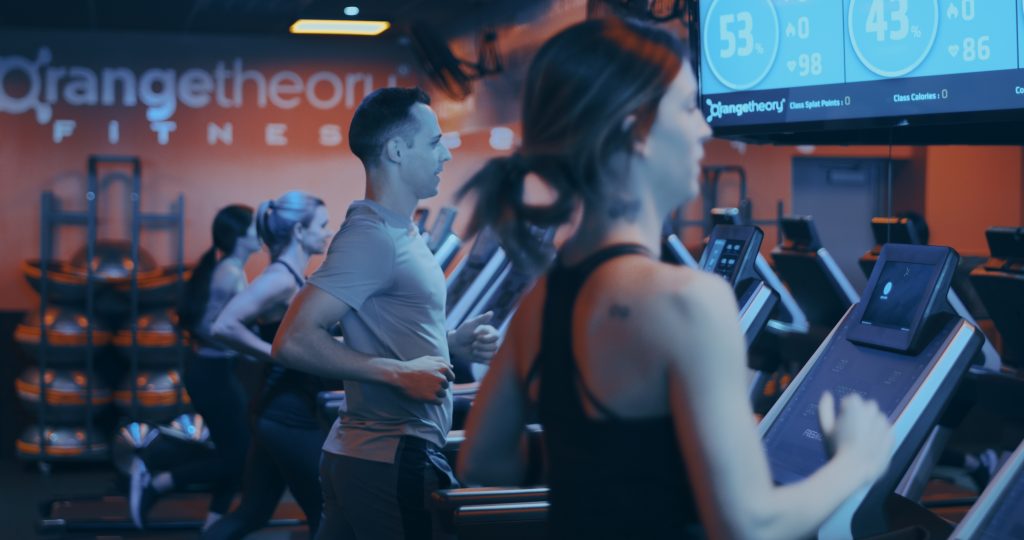
Dallas, Texas – July 12, 2022 – Maverick Fitness Holdings, owner of 34 Orangetheory® Fitness studios in North Texas, along with Orangetheory Fitness studios across the state of Texas, will host Special Olympics Texas athletes during an exclusive 90-minute class at their studios on July 23 & 24, 2022. Orangetheory members will pay $25 to participate in the class with all proceeds going to Special Olympics Texas. Normal classes at Orangetheory are 60 minutes so this class will be an extra challenge for members. They also have the option to donate money to Special Olympics Texas if they cannot make the class. 

“We are extremely excited to continue our partnership with the Special Olympics for a second year in a row and are privileged to partner on such an incredible community and health focused weekend across the Dallas – Fort Worth metroplex. Inclusivity and community are part of our core values at Maverick, and we feel honored to be a part of these athletes’ journey and look forward to our continued partnership.”, says Michael Piermarini, Chief Product Officer, Maverick Fitness Holdings. 
Since the beginning of 2020 Orangetheory Fitness has continued to expand their partnership and support of Special Olympics Texas and their athletes. What started as a way for Orangetheory employees to get involved in their local community by volunteering at different events transformed during the Pandemic as a way to keep Special Olympics athletes across the state engaged in social activities and focused on health and wellness during an extremely difficult time for everyone. 
In 2021, as more in-person began to take place again, Orangetheory expanded their partnership with Special Olympics Texas by doing more for the athletes and getting Orangetheory members involved across the entire Dallas-Fort Worth metroplex. They are continuing that initiative today. 

“We are thrilled to continue this partnership with Orangetheory again for year 2. Not only across DFW but across the entire state of Texas, thanks to Maverick Fitness. Both organizations are continuously expanding their focus on Health and Wellness and how to make fitness more accessible to all, which is exactly what we get to see from this partnership. Special Olympics athletes will be at every OTF location across the state participating in a 90-minute class with other OTF members, not only showing what quality exercise looks like, but accessibility and inclusion in every community.”, says Dalton Hill, Associate Executive Director-North Region. 
Maverick Fitness, who owns 34 Orangetheory® Fitness studios in North Texas, makes it a priority to give back to the communities they serve. In 2018, Maverick Fitness created OrangeLove, their non-profit initiative where one charity is chosen monthly to be the recipient of a cash donation. Orangetheory Fitness members are encouraged at the end of each class to check in on social media, tagging the charity. Maverick Fitness then donates up to $5,000 to the charity of choice. 
In addition, Maverick Fitness Executive office is dedicated to doing quarterly Days of Service working with local non-profits such as Habit for Humanity, The Birthday Party Project, The Salvation Army, and Irving Cares. 
Headquartered in Frisco, TX, Maverick is the second-largest franchisee for Orangetheory® Fitness, with 34 studios, over 18,000 members. 
Orangetheory® Fitness launched its first studio in Fort Lauderdale, FL in March 2010, and has transformed into one of the world’s top fitness franchises, with more than 1,300 studios in 50 states and 22 countries. The 60-minute, five zone heartrate monitored interval training concept combines a unique trifecta of science, coaching, and technology to give members More Life.
For more information on Orangetheory® Fitness, studio locations and membership packages, please visit OrangetheoryFitness.com. Follow Orangetheory Fitness on Facebook, Twitter and Instagram for the latest news and trends.
About Orangetheory® Fitness 
Orangetheory® (www.orangetheoryfitness.com) makes it simple to get More Life from your workout. One of the world’s fastest-growing franchise companies, Orangetheory has developed a unique approach to fitness that blends a unique trifecta of science, coaching and technology that work together seamlessly to elevate participants’ heart rates to help burn more calories. Orangetheory workouts incorporate endurance, strength and power to generate the “Orange Effect,” whereby participants keep burning calories for up to 36 hours after a 60-minute workout. Orangetheory franchisees have opened over 1,500 studios in all 50 U.S. states and over 23 countries. The company was ranked #60 in Inc. magazine’s Fastest Growing Private Companies list and was listed as #25 on the 2019 Entrepreneur Franchise 500 list. 
About Special Olympics Texas 
Special Olympics Texas (SOTX) is a privately funded non-profit organization that changes lives through the power of sport by encouraging and empowering people with intellectual disabilities, promoting acceptance for all, and fostering communities of understanding and respect. SOTX provides continuing opportunities for more than 58,800 children and adults with intellectual disabilities throughout the Lone Star State to realize their potential, develop physical fitness, demonstrate courage, and experience joy and friendship. To learn more, visit www.specialolympicstexas.org or call 800.876.5646. Engage with us on: Twitter @SOTexas; fb.com/SpecialOlympicsTX; youtube.com/specialolympicstexas. 
About Maverick Fitness Holdings, LLC 
Created in December 2019 due to the investment of the Halifax Group into 16 Capital Investments. Maverick Fitness is located in Frisco, TX and currently operates 34 Orangetheory® Fitness studios in the Dallas-Fort Worth area. The company vision is to provide a studio that contributes to members of the community while assisting them with accomplishing their fitness goals. Their employees strive to deliver proven fitness results for a healthier world. For more information on Maverick Fitness Holdings, please visit www.maverickfitnessholdings.com.
About The Halifax Group
Founded in 1999, The Halifax Group is a private equity firm that partners with managers and entrepreneurs to recapitalize and grow lower middle-market businesses with total enterprise values generally between $50 million and $300 million. Halifax specializes in equity recapitalizations, corporate carve-outs and management buyouts and invests across a variety of industries, including outsourced business services, health and wellness and franchising. The firm is headquartered in Washington, D.C. For more information, please visit www.thehalifaxgroup.com. 
Submitted press release and photos. 


  , ,

Maverick Fitness, Orange Theory, to host Special Olympic Athletes added by on
View all posts by Editor →

source

Lead plane and air tanker avoid falling tree branch – Wildfire Today

Wildfire Today
News and opinion about wildland fire
This article was first published at Fire Aviation
Yesterday July 9 a lead plane and a large air tanker had a close call while on a retardant dropping sortie on the Washburn Fire in Yosemite National Park.
There was virtually no wind over the fire most of the day and the area was smoked in causing very poor visibility making it impossible for air tankers to drop on the fire. But by 6 p.m. conditions had improved and at about 6:10 p.m. a lead plane was leading Tanker 103, an MD-87, over a target when they saw a falling tree branch above the lead plane. It fell between the two aircraft, in front of the tanker.
Twitter user Robert, @Rob_on_sisukas, captured an audio recording of the radio conversation. We’re not sure who the lead plane pilot was talking to, but we’ll call it “dispatcher” for now:
LEAD PLANE: Hey I just want to let you know that a branch went right over the top of us, pretty good size, probably 50 feet above us coming down and fell right in between Tanker 103 and myself.
DISPATCHER: OK. Copy. So it’s repeat of yesterday’s (unintelligible) 
LEAD PLANE: That’s exactly what I’m getting at. So if we keep seeing that we might have to knock it off. I don’t want to take a chance on busting a window in an airplane or hurting an aircraft for this. 
DISPATCHER: Absolutely. Keep me updated on this.
#WashburnFire interesting little chat. Near miss with a tree branch and Air Attack and Tanker 103. As civilians, we just see planes dropping loads. But listen to this choreography that goes on behind the scenes of fire. pic.twitter.com/Dn2CcTZ7qV
— Robert (@Rob_on_sisukas) July 10, 2022

When a fire is burning intensely in an unstable atmosphere the convection in the rising smoke column can be powered by a tremendous amount of energy. As air at ground level rushes in to take the place of the rising column, the developing horizontal wind and the fresh oxygen feed the fire, causing an even higher level of intensity. The horizontal and then vertical movement of air can sometimes transport unexpectedly large objects up into the sky. Large columns may rotate as they rise and in extreme cases can actually become a fire tornado. You don’t want to be nearby when that happens. Fire tornados are not to be confused with small dust devils or fire whirls.
What is surprising about the incident yesterday is that the fire was smoked in most of the day, and tankers could not fly until about 6 p.m. I looked at various AlertWildfire cameras a few times and did not see any smoke columns. Maybe the cameras I saw were not able to see all of the fire, but I remember that late in the afternoon fire activity increased at the Sierra Fire Watch camera below, and columns may have developed.
Firefighting aircraft being damaged by debris being lofted into the air over a fire is not unheard of. Here’s part of an article I wrote for Wildfire Today in 2018:
During the large vegetation fires in southern California in 2003 some of the convection columns were so powerful that the windshields on six air tankers were cracked by chunks of debris that were being hurled into the air (page D-6 in 2003 California Governor’s Blue Ribbon Report; huge 20 Mb file). One pilot saw a four by eight sheet of plywood sail past at 1,500 feet.
As of late morning today, July 10, the Washburn Fire has burned about 1,800 acres in Yosemite National Park. About 300 of those acres are in the Mariposa Grove of giant sequoia trees, some of them 3,000 years old.
Thanks and a tip of the hat go out to Kelly.
Typos, let us know HERE, and specify which article. Please keep in mind our commenting ground rules before you post a comment.
After working full time in wildland fire for 33 years, he continues to learn, and strives to be a Student of Fire.
i want to see a video of them dropping that low!!! that would be impressive
wIt seems that a rotating column would be necessary to lift such material into the convection column although I can imagine that branches might be lifted by ridge convection or airflow. Reviews of the flight recorders and interviews of the pilots might be revealing. The pilots’ senses would ordinarily feel red and green air changes, but they might have been too distracted to remember even significant G-forces. I’ve experienced mountain wave wind shear jolts and being lifted and dropped by ascending and descending air at in the realm of 1500 fpm despite my efforts to the contrary. Is anyone aware of any research on this? Even some hangar tales might be useful. An understanding of the total context–all contributing forces seems possible.
This is not that uncommon folks.
You are very correct.
Nobody else has said it, so…
When the complexity of managing a fire increases it is sometimes necessary for the Operations Section to expand the span of control. Maybe in this case the position of “Branch Director” should have been established.
Or the AOBD could have taken charge…
Ha Ha, yes that would have been more appropriate !
Your email address will not be published.


Have a wildland fire news tip? Click here
Enter your email address to subscribe and receive notifications of new articles by email. There is no cost, and in case you change your mind each email has an unsubscribe button.

source

Instagram tests a ‘Live Producer’ tool that lets you go live from a desktop using streaming software – TechCrunch

Instagram is testing a new Live Producer tool that allows broadcasters to go live from a desktop using streaming software, such as OBS, Streamyard and Streamlabs. The Meta-owned company told TechCrunch that the tool is still in the testing phase and is not fully rolled out yet.
“We are always working on ways to make Instagram Live a meaningful place for shared experiences,” a spokesperson for Meta said in an email. “We’re now testing a way to allow broadcasters to go Live using streaming software with a small group of partners.”
Instagram says the new integration opens up production features outside the traditional phone camera, including additional cameras, external microphones and graphics.
To use the new tool, you need to first select which streaming software you’ll be using for your live event. You can start by opening your streaming software interface and locating where to input your URL and stream key. Instagram says the URL and stream key will allow you to broadcast your streaming software setup directly to Instagram Live. Next, you need to open the desktop version of Instagram and click the “Add post” button and select “Live” from the dropdown menu.

Instagram Live Producer

Image Credits: Instagram

Image Credits: Instagram
You can then enter the title of your live video within the “Go Live” screen and select your audience. If you select “Practice,” your live video will not broadcast to anyone. If you select “Public,” you will broadcast to your followers as a normal live video would. You will then see a screen that contains your unique URL and stream key, with instructions on how to use them.
Within the Live Producer viewer on instagram.com, you’ll see a preview of what your stream will look like. The Live Producer preview should mirror what you’ve set up on the streaming software.
Instagram notes that if you end your stream in the streaming software before you end your Live Producer broadcast, the live video will continue while displaying the last frame received from the streaming software. The company encourages users to end the broadcast on Live Producer first before ending the stream on the streaming software in order to ensure their live video ends smoothly.
In addition, broadcasters will only be able to view and respond to comments within Live Producer. Other Live features, including Live Rooms, Shopping, Fundraisers, comment pinning and Q&A, are not supported by Live Producer. Moderation also isn’t supported by Live Producer at this time, the company says.
Instagram notes that you can view, share and download your completed broadcast within the Live Archive. However, you can only share and download a completed live video from within the Live Archive if you have it enabled. The Live Archive can be accessed on Instagram mobile from your profile.
The company didn’t say when it plans to roll out the tool to all users.
Instagram tests ditching video posts in favor of Reels

source

The Galaxy A73 5G Takes Multi-faceted Singer-Songwriter on an Awesome Rhythmic Journey – Samsung Newsroom Malaysia

The Galaxy A73 5G Takes Multi-faceted Singer-Songwriter on an Awesome Rhythmic Journey  Samsung Newsroom Malaysia
source

xQc gets channel age-restricted while live on Twitch – Dexerto

Trending streaming, TV, Movies and pop culture news, features and more
Twitch’s largest streamer, xQc, is no stranger to controversy, but a random age restriction on his channel seemingly came out of nowhere.
Late on July 11, xQc tweeted at YouTube alerting them he had lost the ability to post videos to his channel for two weeks. He claimed the strike he received was unjustified and requested a manual review.
YouTube responded and stated they would forward his issue to the relevant team, but no updates regarding his YouTube channel have been given.
Now, xQc is facing another dilemma on a different platform. His channel on Twitch – where all of his content is generated – has been age-restricted forcing viewers to input their date of birth before watching his stream.
Nearly 16 hours into his stream on July 12, xQc was alerted by his chat that they were being forced to enter their age before viewing his stream. A message would appear when first clicking on the stream stating viewers “must be 19 to view this content”.
Confused, xQc asked “what the f**k is this? I’ve never seen that before.” The age restriction came during a segment of the stream where X was creating music using FL Studio.
A user making music with X stated it would make sense if it appeared during a gambling stream, but xQc stated, “I’ve never had this or put this on. Apparently, it’s not on any other streams. It’s only mine. I feel like I’m being beta tested on.”
Viewers theorized that the age restriction was due to his frequent gambling as 19 is the legal age at which you can gamble in most provinces in Canada.
Others thought the restriction was a result of a beat made earlier on stream that featured the use of gunshot sound effects. xQc stated, “I’m making the beat of America” before using the gunshot sounds multiple times.

Other than the prompt when opening the stream, the repercussions of being age-restricted are unknown. This could affect the ads available to his channel like on YouTube, or it could be nothing more than a minor inconvenience to viewers.
We will keep an eye on this story and provide updates if and when more information is made available.
Subscribe to our newsletter for the latest updates on Esports, Gaming and more.

source

Adventurer, Floowandereeze cards coming to Yu-Gi-Oh! Master Duel in new Selection Pack on July 11 – Dot Esports

A Dragonmaid Structure Deck and Forbidden List update are coming to Master Duel next week too
The traditional format meta is about to cross over into Yu-Gi-Oh! Master Duel again with a new Selection Pack and Structure Deck being added to the game on July 11, following a standard maintenance period. 
Most players will focus on the new Selection Pack, Wandering Travelers, which brings Adventurer and Floowandereeze cards into the game. 
Both archetypes have been used in the Yu-Gi-Oh! TCG recently, as the Adventurer Token engine that can fit multiple decks and a standalone Floowandereeze toolkit, and will heavily impact the current meta of Master Duel. The pack will also include new support cards for the Magikey, Gunkan, Machina, and Evil Twin archetypes, with the likes of Machina Ruinforce and Magikey Fiend – Transfurlmine.
Konami is aware of this fact, so two additional cards will also be added to the game’s Forbidden and Limited Card List along with the update, making Water Enchantress of the Temple and Rite of Aramesir Semi-Limited. The response to this change from the community is mixed, with many players specifically hoping these aren’t the only changes being made to the format-defining list. 
In addition to the new Selection Pack, players are finally getting that Dragonmaid support that they have been craving in the form of a new Structure Deck: Dragonmaid to Order. 
This release is great for anyone who wants to try out Dragonmaids, but didn’t have the crafting resources to commit to building an optimized version of the deck, since many of the best cards you need to roll it out semi-competitively are Ultra Rares. Dragonmain to Order will include must-have URs like Hieratic Seal of the Heavenly Spheres and most of the core Dragonmaid cards, making it a cost-effective buy, even for people just looking to grab some key cards without crafting. 
We won’t actually know the full list of additions and changes until the maintenance on July 11 ends, but the official listing notes “campaign preparations” along with the Shop updates. 
The Master Duel management team also added Konami’s official statement regarding the sudden death of Yu-Gi-Oh! series creator Kazuki Takahashi earlier this week to the game.
© 2021 Dot Esports

source

PREMIERE: Florian Gasperini – Way To The Other World (Erdi Irmak Remix) – Magnetic Magazine

As we start the later half of the year, we've seen Erdi Irmak's already sizable discography grow by leaps and bounds in 2022–releasing with XYZ, Where The Heart Is, The Soundgarden, and others–showing no signs of stopping.
Taking inspiration at an early age by the sounds of his Turkish homeland of Istanbul, the hubbub of cosmopolitan where Asia meets Europe across the vast Bosphorous River. His cross-cultural sounds and influences are a combination of "chilled out west and far east sounds" that have become the fundamental pillars of his musical ideology that have led signings across a large swath of labels and genres. 
The 15 Best Organic House Tracks of June 2022 <<<
On remix duties for his next production, Erdi makes his mastery of the groove evident with the stems from French producer Florian Gasperini's new EP titled Way To The Other World, who returns to Univack with the follow-up to the successful 'A Man Said EP'. The EP, which also contains two originals from Florian as well, centers around the Organic House and Melodic Techno genres and exhibits the emotional and deep style of this artist.
Erdi Irmak takes the original elements of "Way To The Other World" and makes his music production knowledge evident. Bumping the BPM from the original 120 to 122, the difference in the kit is immediately recognizable with a full kick drum (even on these laptop speakers) leading the charge plus more upbeat and brighter snare, hat, and clap samples. The atmosphere nestles perfectly into the groove as the occasional vocal sample pops through, accompanied by the most tantalizing hook. Check it out below.

source

Electra’s New Townie Go! 5i EQ Keeps Things Cute And Simple – InsideEVs

Mainstream bicycle manufacturers each take different routes when it comes to the e-bike world. Brands like Nukeproof and Orbea integrate their electric bikes alongside their standard models, while brands like Specialized and Giant launched their own spinoff subsidiaries to better differentiate their affordable commuter e-bikes from their high-end performance models and standard pedal-only models.
The same is true with Trek, and its Electra brand, which has introduced a new commuter model called the Townie Go! 5i EQ. We’ve talked about the Townie model range before, and the newest addition, the 5i EQ, slots in perfectly. For starters, Trek has deigned the 5i EQ to be rather affordable—though not cheap. At $2,950 USD, the electric bike offers a lot of utility for the daily commuter, with a large dose of added style, too. Now, I’m not exactly a fan of the cruiser styling, but I know a whole lot of people who would totally rock this kind of ride.
When it comes to technology, the Electra Townie Go! 5i EQ is thoroughly impressive, and does more than justify its premium price point. For starters, we find a Bosch electric motor with a nominal output of 250W. This allows you to reach an assisted top speed of 20 miles per hour. Furthermore, a 400 Wh battery powers this e-bike, although Electra has neglected to mention claimed range, as this is one of the most difficult variables to predict, and very much a case-to-case basis.
Overall, given the bike’s electric motor and battery, it tips the scales at 25 kilograms. Not exactly lightweight, it makes for a stable ride at speed. Besides, its electric motor masks all that weight once you start moving. Plus, a Shimano Nexus 5-speed internal gear hub keeps shifts smooth and precise, and allows you to maintain maximum pedaling efficiently all throughout. Another nifty plus is how approachable it is to ride, thanks to its low-slung step through frame. While it doesn’t get any suspension, it gets a steel front fork that offers just a tad of flex when riding through the rough stuff.
More Fun On Two Wheels:
Source: AutoEvolution
Car Buying Service
Get upfront price offers on local inventory.
Search for:
Trending
About this article

source

Wimbledon 2022 LIVE: Elena Rybakina beats Ons Jabeur over three sets to land women’s singles title – The Independent

Please refresh the page or navigate to another page on the site to be automatically logged inPlease refresh your browser to be logged in
The Serbian clinched a seventh Wimbledon crown after four hard-fought sets on Centre Court
Find your bookmarks in your Independent Premium section, under my profile
Novak Djokovic withstood early brilliance from Australian showman Nick Kyrgios to secure a fourth successive Wimbledon title with a 4-6 6-3 6-4 7-6(3) victory on a sun-drenched Centre Court on Sunday.
The 35-year-old Serb stretched his unbeaten streak at Wimbledon to 28 matches as he calmly seized the initiative after being eclipsed in an opening set dominated by the Kyrgios serve.
In claiming a seventh Wimbledon crown, Djokovic took his Grand Slam singles haul to 21, one behind men’s all-time record holder Rafael Nadal.
“Thank you so much, I lost words what this trophy means to me,” Djokovic said. “I said this many times, it’s always the most special one.”
“He’s a bit of a god, I’m not going to lie,” Kyrgios said. “I want to congratulate Novak and his team, you’ve won this championship I don’t even know how many times.”
Loading….
Wimbledon ends where it began, with Novak Djokovic and a standing ovation on Centre Court, but he was not the central character here. While the records will show that Djokovic won his fourth straight Wimbledon title, adding his seventh overall and 21st grand slam, it can also be argued that it was handed away. Nick Kyrgios and his run to a first grand slam final has been captivating as well as controversial, but it was his unravelling here that will be the prevailing story of the final.
Djokovic, of course, played his part in grinding down Kyrgios and extinguishing the unique threat that he provides. It takes steel to battle from 40-0 down but it takes a champion’s timing to do it twice, and at crucial junctures in the match. Had they gone the other way, at the end of the second set and start of the third, then this may have developed into a different contest altogether.
Full report from Centre Court:
The Serbian, who won 4-6, 6-3, 6-4, 7-6 (7-3), now moves to 21 men’s singles Grand Slams, just one behind Rafael Nadal on 22
“I’ll buy you [Sue Barker] flowers after this, I’m in big trouble if I forget this [wedding anniversary].
“Darling, happy anniversary.”
“I love this place, it loves me back, the most special tennis court in the world.
“Everything is focused on the players. My daughter is there too, oh wow, OK.
“She’s not five years old yet, she wasn’t allowed to watch a match live, hopefully she can watch Daddy play live.
“My son is missing, he’s playing a set against Bob Bryan’s son. Thank you guys.”
Djokovic: “Thank you so much, I lost words what this trophy means to me.
“I said this many times, it’s always the most special one in my heart, it motivated me to play tennis in Serbia where my parents ran a restaurant.
“I saw Sampras win in 1993 my first image of tennis was grass and Wimbledon. Realising the dream.
“Every time it gets more meaningful and special. I’m blessed to be here with the trophy.”
Djokovic: “Nick, you’ll be back, not just Wimbledon, but finals.
“It’s hard to find consolation words. You showed why you deserve to be one of the best in the world. Congrats!
“I respect you a lot, a phenomenal athlete and tennis player. Everything is coming together for you. We’ll see you in the later stages of the Grand Slam. I never thought I’d say so many nice things about you, considering the relationship.
“It’s officially a bromance. I don’t know if we make it happen tonight or another night. Hopefully it’s the start of a wonderful relationship.
“I didn’t respond to that [going to a nightclub and going nuts], let’s start with dinner and drinks.”
Kyrgios: “He’s a bit of a god, I’m not going to lie. I want to congratulate Novak and his team, you’ve won this championship I don’t even know how many times.
“To the ball boys and umpires, you know we have a tough relationship, but thank you for putting up with it.
“Absolutely not [hungry to be back here again], I’m exhausted, we’ve played so much tennis. I’m happy with this result. Maybe one day I’ll be here again.”
Kyrgios, in his trademark red hat, steps up to accept his runner-up prize.
A huge ovation for Djokovic who lifts the trophy.
Serbia’s Novak Djokovic celebrates beating Australia’s Nick Kyrgios
First blood to Djokovic, a mini-break. Kyrgios’ team urging him to remain focused.
It’s 2-1 Djokovic, Krygios is still getting into it with his box.
He loses his composure mid-point, smashing a forehand long after a physical point from the baseline. 3-1.
4-1. Kyrgios: “Why are you scared? I don’t get it, any of you? Say something. All of you ain’t yourselves.”
And it’s 5-1, Kyrgios smashing into the net again. He appears to have lost control of his game.
It’s long, five championship points!
Big serve, then a forehand at the net, some character from Kyrgios, 6-2. And an ace, 6-3.
But Djokovic does it after a gutsy rally from Kyrgios, who nets, it’s seventh heaven for the Serbian in SW19.
Registration is a free and easy way to support our truly independent journalism
By registering, you will also enjoy limited access to Premium articles, exclusive newsletters, commenting, and virtual events with our leading journalists
{{#verifyErrors}} {{message}} {{/verifyErrors}} {{^verifyErrors}} {{message}} {{/verifyErrors}}

By clicking ‘Create my account’ you confirm that your data has been entered correctly and you have read and agree to our Terms of use, Cookie policy and Privacy notice.
This site is protected by reCAPTCHA and the Google Privacy policy and Terms of service apply.
Already have an account? sign in
By clicking ‘Register’ you confirm that your data has been entered correctly and you have read and agree to our Terms of use, Cookie policy and Privacy notice.
This site is protected by reCAPTCHA and the Google Privacy policy and Terms of service apply.
Join thought-provoking conversations, follow other Independent readers and see their replies
Getty Images
Want to bookmark your favourite articles and stories to read or reference later? Start your Independent Premium subscription today.
Please refresh the page or navigate to another page on the site to be automatically logged inPlease refresh your browser to be logged in
Log in
New to The Independent?
Or if you would prefer:
Want an ad-free experience?

source

5 Best Practices for Composing Production Music with Authentic Emotion – Mix

Update your browser to view this website correctly. Update my browser now
×
Home › Recording›Music Production
Sam Wale, composer / VP of Production at ALIBI Music, shares how to ensure production music you create conveys authentic emotion.
By Sam Wale ⋅

The message comes in at half past nine. It’s a trailer editor looking for music, and she has a reference track. “We love the sound of this. We love the feel of this particular track,” she tells me. “What have you got in this style?”
Authenticity is top of mind when we’re working with composers on requests like these. Are they using the right sounds? Are they producing the music using the same kind of equipment, musical structure, types of melodies or chord progressions that could make it sound like it’s part of the same world?
Being able to check all those boxes is important, but authenticity alone doesn’t make a track effective. What people often overlook in synching music to trailers, promos, commercials or content is that its sole purpose must be to change the emotion of the person who’s listening to it. And if it doesn’t do that, in my opinion, it’s kind of pointless.
A Berkeley study recently found that music was capable of triggering 13 different possible emotions, each with its own impact on listeners and their actions. That makes tapping into the right emotion critical when creating music for screen.
Yet, this can be a difficult thing to put your finger on when giving feedback to a composer because it’s not as simple as being able to say, “Can you just turn the drums up? Can you add a bit more distortion to the guitar?”
It’s harder to say, “Can you turn the feeling up?” But that IS something I find myself wanting to say at times. You can throw all the right ingredients in, mix a track to a high standard and create a piece of music that sounds stylistically quite authentic. But if it doesn’t change your emotion… if it doesn’t pull you in and take you on a journey of some kind, it’s not serving its purpose.
So how do you get there? That answer is going to be different for every artist. But in my work with the diverse array of composers from around the world at ALIBI Music, I’ve come to identify five best practices for producing music with authentic emotion:
I think a real enemy in production music is the mindset of banging out tracks. When I see those words in an email, it’s an instant red flag to me because I know that’s not the approach we want. Composing tracks infused with real emotion is not a mass-production kind of thing!
If I ask somebody to work on a certain style of music and they say, “Yeah, I’ll bang out 10 of those by the end of the week,” I’m already concerned that they’re rushing it, and I have little confidence in the emotional impact of any resulting music. Rather than banging out 10 average tracks, focus on one or two well-written, thought-out and heartfelt tracks, which will be far more useful.
On the other hand, don’t spend hours and hours and days and days adding things and changing things and replacing things because – quite often – the first idea you had was probably the best one. Sometimes, if you approach music from the mindset of having to get it done on a tight deadline (even if self-imposed), you’ll be forced to just go with your gut instinct, which can be really good for getting to the heart of music.
Music that’s from the heart can grab your attention and take you on a journey. When composers overthink things, they often end up cluttering tracks while simultaneously suffocating them of emotion. Instead, use any extra time producing the music to a high standard, not changing and adding too much from a musical composition point of view.
Get into the headspace of those artists, work out what drives them, what their influences are, and try to soak up the feeling. How do you feel when you’re listening to this piece of music? Where does it take you? Try and get into that state of mind before you start writing it, rather than just focusing on what’s happening in the track.
Believe it or not, non-musicians are the best people to test your music on. I can be working on a track that I think sounds amazing, and my wife will walk in and say, “What’s that really high-pitched sound?” Maybe it’s that the cymbals are too loud and I just didn’t notice because I’ve been listening to it for four hours, but when I turn them down, she suddenly says, “Oh, this sounds great now.”
She’s not listening to it in the same way that I am because she’s hearing one thing and I’m hearing 100 things layered on top of each other. Playing music to people who aren’t musicians is really valuable because they tend to look at how the music makes them feel, whereas a musician is often caught up in the production techniques they’re using and all these other things that the listener can’t even hear. The listener just thinks, “Does this make me feel good or not? Does it make me feel tense or not? Does it make me feel excited?”
I have always felt this, whatever style of music I’m writing in, and whether or not it’s a style that I’m even into or have ever worked in before. By the end of the composition process, I have to like it. It’s a simple mindset really, but if I don’t like my own track, how can I expect anyone else to? We’ve all got to feel it.
In the end, you feel it when it’s right. It’s not a single thing that you hear that says, “This is good because it has this and this and this in it.” It is just feeling, and we are humans. We are feeling-based creatures, and that’s kind of what music is about, what it’s for, what drives it.
As I do my job working with artists and composers across numerous genres, my own gut instinct is what I rely on most. “Does this take me somewhere or does it do nothing?”
That’s what our clients rely on us for. The whole purpose of music in any of this is to have a backdrop that tells the audience what to feel and takes them there.
Sam Wale is vice president of production at ALIBI Music, a provider of music and sound effects for license in the film, television, advertising, streaming and video game industries. A credited composer himself, based in London, he manages the ALIBI Music production team, furthering the growth and expansion of the company’s music and sound effects catalog.
Tags ⋅ ⋅ ⋅ ⋅ ⋅

© 2022 MIX is part of Future plc, an international media group and leading digital publisher. Visit our corporate site.

source

AiThority Interview with Eran Eshed, CEO and Co-Founder at Fairtility – AiThority


I am the CEO and Co-Founder of Fairtility, where we are working to power in vitro fertilization (IVF) through transparent AI to improve outcomes.  My 20-plus years of experience in tech was focused on connecting people through wireless and broadband communications – an important and useful endeavor. There came a point however, where I wanted to do something more impactful and meaningful with this tech background – make a positive change in people’s lives.  
My AI partner and I spent time researching various fields in healthcare that would most benefit from incorporating an AI intervention. While I believe there are many fields of medicine that stand to benefit, the opportunity to affect change in the stagnated field of IVF was certainly a meaningful endeavor. The type of analysis and data that is collected and reviewed in IVF and how it could be applied to improve outcomes and increase access to treatment presented a natural fit for AI technology to make a quantifiable difference. 
IVF has been around for 40 years and has seen some innovation in biotech but very little use of data science and AI. IVF and particularly processes involving the embryology lab include several critical decision points that are traditionally evaluated by IVF practitioners and in many cases, recorded by means of pen and paper. This method of assessment is variable and subjective in nature and therefore, maintains unpredictable variability as evidenced by the 30 percent success rate prospective parents achieve on the first IVF cycle.
Fairtility’s AI-powered tool can help IVF professionals make the most of data through standardized and reproducible evaluations already providing a clinically significant ~10 percent improved performance over expert embryologists. Transparent AI explains the why of the data with biological information. Knowing the ‘why’ assists and supports IVF professionals at various decision-making junctures in the IVF process, allowing for improved embryo selection and reproducible predictability, leading to improved outcomes with fewer cycles to live birth. 
Recommended: AiThority Interview with Ritu Kapoor, CMO at Lob
CHLOE EQ is an AI decision support tool that was developed to provide Embryo Quality Assessment which supports the prediction of blastulation (embryo development), the prediction of implantation and ploidy, the integrity of chromosome sets in an embryo cell. Based on this information, CHLOE EQ ranks embryos in order of priority. It also provides automatic annotations for specific changes during embryo development and pronuclei count which support fertilization assessment. 
Information provided by CHLOE EQ™ can then assist embryologists and IVF professionals in the decision of prioritizing the most viable embryo for treatment, especially when there are multiple embryos deemed suitable. CHLOE EQ™ is designed to add efficiency to embryologists’ workflow, automating manual steps, including annotation of each embryo and written daily observations into each patient’s electronic medical record (EMR). Embryologists verify the system’s automatic annotations that are then immediately integrated directly into the EMR. CHLOE EQ™ provides embryologists with previously unachievable data supporting embryo selection, creating an opportunity to clearly explain analysis results based on quantifiable biological parameters.  
Having gained regulatory acknowledgment in Europe, under the more stringent directive that the CE MDR provides, we are now commercially launching CHLOE EQ in clinics across the EU while continuing to uphold the highest standard of this classification. With the EU IVF market size estimated to reach over $2 billion by 2027, we see tremendous opportunities to demonstrate the clinical efficacy and impact of CHLOE EQ™ ahead of US market entry next year.
Recommended: AiThority Interview with Matthew Hogg, Vice President at Criteo
Data science cannot solve biological problems, but IVF is primed for optimization. Our AI solution stands to impact the field of IVF by improving access to IVF treatment and engage with transparency throughout the process.  Presenting explainable data supported by clinical evidence bridges communication and provides a foundation of trust between embryologists, clinicians, and parents.   
For embryologists, CHLOE is a trusted partner designed to add efficiency and standardization to the workflow. Through automating previously unachievable data collection and analysis based on over 5 million data points, CHOLE provides embryologists results based on quantifiable biological parameters supporting embryo selection. The key advantages that CHLOE offers are accuracy and consistency leading to uniform and accurate embryo assessment. This provides clinicians with trustworthy and comprehensive insights they can discuss with their patients, or prospective parents.  
For prospective parents, the explainable data behind the clinician recommendation reshapes the conversation and invites prospective parents to take part in the discussion and make informed decisions along with their IVF team. 
Our technology does not have any sex determination aspects – our AI-based CHLOE embryology assistant helps with embryo quality assessment, or in other words, the likelihood of the embryo to implant and create a pregnancy.
Recommended: AiThority Interview with Wendy Johnstone, Chief Operating Officer at Zendesk APAC
The area that is actually most susceptible to having implications in this regard, is genetic testing, for obvious reasons. AI today is capable of assessing the chromosomal integrity of an embryo with fairly high accuracy, but not yet anything on the genetic composition. As we gather and curate more data and enhance our AI model capabilities and predictability, we may need to address similar ethics-related paradigms. In any case, there are established precedence with rules and regulations, so this wouldn’t be a de-novo discussion.
I think there is tremendous importance in remaining realistic and honest in this industry. I would say don’t oversell or overpromise your technology’s abilities. Be transparent and focus on your customers’ needs. All too often, even in our IVF space, we see solutions looking for a problem and not the other way around.
Thank you, Eran! That was fun and we hope to see you back on AiThority.com soon.
[To share your insights with us, please write to [email protected]]
A multidisciplinary business executive and entrepreneur with over 20 years of experience spanning numerous product and business domains ranging from tactical, revenue-focused and market facing business management, to strategic product roadmap crafting and ecosystem partnership formation.
Formerly co-founder and VP of Marketing, Sales and Business Development of Altair – an LTE and IoT semiconductor company acquired by Sony in early 2016 for $212M.
Sudipto Ghosh is a tech buff with industry-recognized experience in creating B2B web and technical content for digital agencies and publishers covering the space in Automotive, Artificial Intelligence, Big Data, Shipping, Metallurgy, Textiles, Pharma and Health, Media and Entertainment. Apart from digging into MarTech, HR Tech, SalesTech AI labs and interviewing the C-suite executives, Sudipto enjoys watching nature and paintings. The darkest gym in the city’s outskirts is the next best place to track Sudipto on the weekends.
Prev Post

Next Post

TCARE Inc. Partners with Blooming Health to Proactively Engage Caregivers and Provide…
Diamond Braces Selects EOB and ERA Automation Software by Zentist
FDA Clears Eko’s Heart Disease Detection AI for Adults and Pediatrics
Digital Health Innovation: Affidea Signs Partnership With Incepto To Integrate…
Comments are closed.
Natural Language
AI21 Labs Raises $64 Million to Change the Way People Read and Write Using…
Kyndi Credited for Helping Companies Capitalize on the Potential of AI
AppTek Named a Representative Vendor in 2022 Gartner Market Guide for…
Meet DailyTalk: The Latest Conversational Text-to-Speech Dataset based…
AiThority.com covers AI technology news, editorial insights and digital marketing trends from around the globe. Updates on modern marketing tech adoption, AI interviews, tech articles and events.


Copyright © 2022 AiThority. All Rights Reserved. Privacy Policy

source

IND vs ENG Live Streaming Details- When And Where To Watch India vs England Live In Your Country? India Tour of England 2022, 5th Test – Cricket Addictor

CricketAddictor
The Home of Cricket Addicts
The 5h Test between India and England will be played at Edgbaston in Birmingham from July 1-5. The visitors are leading the series 2021 which started in 2021 and will come to an end in Birmingham in a few days. Both teams will be led by new captains from the time the fifth Test got postponed. England will be led by Ben Stokes and India by Rohit Sharma. 
This is India’s golden chance to win a test series in England for the first time since 2007. It was under current head coach Rahul Dravid that India won the series in 2007 and it is under Rohit they have a chance to script history. However, the Indian skipper coped up with covid and an update on his availability for the 5th Test is awaited.
In case he misses out Jasprit Bumrah is expected to lead India as per reports. KL Rahul who was originally in the squad will also miss out due to a groin injury. He will leave for Germany for treatment. There are no injury concerns in the rest of the squad. 
England, on the other hand, is fresh from a 3-0 series win against New Zealand at home. The series was a perfect warmup for the players ahead of the must-win Test match against India. Joe Root, Ben Stokes and Jonny Bairstow all got runs and git them in quick time.
England has taken a different method of playing Test cricket under their new coach and captain Brendon McCullum and Ben Stokes. The hosts are trailing in the series and need to win the Test match to draw the series at 2-2. 
In India and the subcontinent
India tour of England 2022 will be telecasted on Sony Sports Network in India and other subcontinent regions like Afghanistan, Bangladesh, Bhutan, Maldives, Nepal and Sri Lanka while the online streaming will take place on Sony Liv mobile application or their official website sonyliv.com.
In the UK
India’s tour of England 2022 will be telecasted on Sky Sports Cricket in the United Kingdom (UK) and the same network will live stream on the internet.
In the USA
India tour of England 2022 will be telecasted on Willow TV in the United States of America (USA).
In South Africa
India tour of England 2022 will be telecasted on the SuperSport network in South Africa and across Sub-Saharan Africa. For online streaming, one can tune into SupertSport.com.
In Australia
India tour of England 2022 will be telecasted on Fox Sports network in Australia while the online streaming will take place on Foxtel Sports digital platform. Kayo Sports, a new digital platform, will also live stream matches in Australia.
In New Zealand
India tour of England 2022 will be telecasted on SKY Sport NZ and talkSPORT will be the official radio broadcaster for the bilateral series.
In the Caribbean
India tour of England 2022 will be telecasted on Flow Sports in the Caribbean region.
In the Middle East
India tour of England 2022 will be telecasted on the beIN Sports network in the Middle East and North Africa (MENA) region in 24 countries like Algeria, Bahrain, Iran, Egypt, Iraq, Jordan, Oman, United Arab Emirates (UAE), Qatar, etc.
Also Read: ENG vs IND: Rohit Sharma Not Yet Ruled Out – Rahul Dravid; Jasprit Bumrah Front-runner To Lead If Rohit Is Unavailable


A Hardcore Cricket Enthusiast Having Previously Worked With Cricwizz, Circle of Cricket, Times Now, The Quint, Cricfit and Now With Cricket Addictor.


India National Cricket Team
Afghanistan National Cricket Team
Australia National Cricket Team
Bangladesh National Cricket Team
England Cricket Team
Ireland Cricket Team
New Zealand National Cricket Team
Pakistan National Cricket Team
South Africa National Cricket Team
Sri Lanka National Cricket Team
West Indies Cricket Team
Zimbabwe National Cricket Team
Big Bash League
Bangladesh Premier League
Indian Premier League
Pakistan Super League
India vs Sri Lanka
Australia vs New Zealand
T10 League
Women Big Bash League
Vitality T20 Blast
Caribbean Premier League
Virat Kohli
Rohit Sharma
Babar Azam
Faf du Plessis
Steve Smith
Kane Williamson
Joe Root
David Warner
Jason Roy
Quinton de Kock

source

Q&A: Xharlie Black of new Las Vegas show 'Mad Apple' – Lasvegasmagazine

Q&A: Xharlie Black of new Las Vegas show ‘Mad Apple’  Lasvegasmagazine
source

‹ Previous Next ›