EQ Accountants are a modern accounting, tax, and business advisory practice with offices in Forfar, Dundee and Glenrothes. For the second time, the firm are sponsoring the EQ Food & Drink Pavilion at the Turriff Show, which will showcase and celebrate local producers throughout Aberdeenshire and beyond.
Some Press and Journal online content is funded by outside parties. The revenue from this helps to sustain our independent news gathering. You will always know if you are reading paid-for material as it will be clearly labelled as “Partnership” on the site and on social media channels.
This can take two different forms.
This means the content has been paid for and produced by the named advertiser.
This means the content has been paid for and approved by the named advertiser but written and edited by our own commercial content team.
Their dedicated agriculture team, known as EQ Agriculture, is recognised as one of the leading providers of accountancy, taxation, and business advisory services to the Scottish rural sector. This reputation has been built up over many years and the firm continue to grow their agricultural client base through their extensive experience and knowledge of the sector.
The EQ Agriculture team understand farming and the issues affecting the industry with many of them owning and running farms themselves. They act for a range of clients including livestock and arable farmers, estates and landowners and many diversified businesses operating in the rural economy throughout Scotland. Highly regarded by their clients, they are renowned for their proactive and personal approach, getting to know their clients’ circumstances and key drivers so that they can deliver reliable tailored support and advice to help them achieve their personal and business objectives, create, and protect their wealth.
Along with general accounting support, the EQ Agriculture team regularly advise clients on several other matters to provide a proactive and comprehensive service. These include tax planning, budgetary and financial controls, growth and diversification, support with accounting software packages and farm business appraisals.
Mark Smeaton, Head of EQ Agriculture, says, “Agriculture is a prominent sector for us, and we act for a range of rural clients across Scotland with an increasing client base across the North East. We are delighted to be sponsoring the EQ Food & Drink Pavilion at the Turriff Show once again this year. It’s a fantastic way to highlight local producers with an event that the community can all get involved in. We will also have our own stand at the event and look forward to seeing clients and contacts at the show”.
You can visit the EQ team at stand 17 around the main ring of the Turriff Show and make sure to pop by the EQ Food & Drink Pavilion to see the superb showcase of local produce on offer.
For more information or to discuss your own circumstances, you can contact the EQ Agriculture team on 01307 474274 or email [email protected].
[[text]]
© Aberdeen Journals Ltd 2022. All Rights Reserved.
EQ Accountants support Turriff Show's EQ Food & Drink Pavilion – The Press & Journal
'Into the Woods' is back on Broadway – NPR
Jeff Lunden
Joshua Henry (left) and Gavin Creel in Into the Woods. Matthew Murphy and Evan Zimmerman hide caption
Joshua Henry (left) and Gavin Creel in Into the Woods.
Many fans of Stephen Sondheim and James Lapine’s musical Into the Woods, a mash up of Grimm’s Fairy Tales that is both funny and serious, just got their wish. A production of the show, starring Sara Bareilles, that had a limited run at New York’s City Center in the spring, has moved to Broadway, where it’s received rave reviews and is playing to sold out houses. For those familiar with the original, it’s a different kind of production.
Fresh off their Pulitzer Prize-winning musical Sunday in the Park with George, composer/lyricist Stephen Sondheim and librettist James Lapine wanted to write a new show together and landed on the idea of taking various fairy tales – Cinderella, Little Red Riding Hood, Jack and the Beanstalk, among them – and mixing them all together, with their own story of a childless baker and his wife.
The cast of Into the Woods. Matthew Murphy and Evan Zimmerman hide caption
The cast of Into the Woods.
“The show opens with the words ‘I wish’ and closes with the words ‘I wish,’ ” explained Sondheim in a video he recorded for Music Theatre International, the company that licenses productions of the show. “And this isn’t just because they’re fairy tale languages, but in fact, what the show is about is a group of people who have various wishes, and during the course of the show, they get their wishes. But, in so doing, upset the natural order of things and have to pay for it in the second act; become a community, submerge their individual wishes into a community wish and thereby save the world, so to speak.”
The show is probably Sondheim’s most popular musical – it ran for two years originally, was taped for PBS, has been revived on Broadway, is performed in professional and community theaters and schools around the world. In 2014 it was turned into a Disney film, starring Meryl Streep.
“Part of what is glorious about it is you can come to it at many different stages in your life and enjoy it,” says Lear Debessonet, who has directed this revival. “And also notice different things about it based on where you are.”
Sara Bareilles and Brian d’Arcy James in Into the Woods. Matthew Murphy and Evan Zimmerman hide caption
Sara Bareilles and Brian d’Arcy James in Into the Woods.
She says she listened to the cast album as a kid growing up in Baton Rouge, La. “This cast album I credit with my obsession with lyrics,” explains Debessonet. “This was the cast album that taught me what lyrics can do. And the fact that a lyric has the power to hold, not just one or two meanings, but four or five meanings. And so, I’ve loved this show deeply for a very long time.”
Debessonet says in the darkest days of the pandemic, she found herself thinking about one particular lyric, from the song “No More,” after she put her three-year-old son to bed. She quotes it: “How do you ignore all the wolves, all the lies, the false hopes, the goodbyes, the reverses, all the wondering what even worse is still in store…” She says “the precision of the emotional and spiritual insight of that question” led her to approach Sondheim and Lapine with another question: “And basically, I said, ‘Whenever theater is back, whether we come back in six months or in five years, the first thing I want to do when we’re back in a theater is direct Into the Woods.’ And they said ‘Yes.’ “
Sondheim was involved in some of the preliminary casting but passed away five months before the show was staged, says music director Rob Berman. “It really feels like we’re doing an American classic,” he says. “And to do it so soon after Steve passed away, it feels so meaningful.”
It began as part of the Encores! series at City Center, which puts on semi-staged concert versions of musicals. The orchestra is onstage and there are very few scenic elements – something director Debessonet has retained for Broadway. “In a sense, the gift of stripping away fancy stage mechanics and making it just about these words, these people and their communion with the audience,” she explains, “that’s the center of our production. And I think it’s part of what people have loved about it.”
Sara Bareilles stars in the latest revival of Into the Woods. Matthew Murphy and Evan Zimmerman hide caption
Sara Bareilles stars in the latest revival of Into the Woods.
Pop star Sara Bareilles, who penned the hit musical Waitress and stars in Girls5Eva on Peacock, says she feels the love coming from the audience. “It’s like a rock concert every night,” she says. “We really get the sense that we’re giving these audiences something they really, really want and they really need right now.”
Joshua Henry, who plays Rapunzel’s prince and has starred on Broadway in Carousel and Hamilton, says some members of the audience know every lyric and every line. But, more important, they relate to the characters. “I think a show like this that has so many complex characters that talk about the human experience,” he says. “I mean, I don’t feel like there’s one emotion or one experience that humans … experience that is not in this show.”
In the second act of the show, the characters face the existential threat of a giant, who creates chaos in the kingdom and several main characters die. In 1987, it was a metaphor for AIDs, the 2002 revival opened shortly after Sept. 11, and now this revival comes after more than a million Americans have died of COVID. Music director Berman says part of what makes the show continue to work is how – like fairy tales, with their archetypal characters, it’s all about interpretation. “In the show, the giant is just the giant,” says Berman. But “as an audience and as humans, we just we take it to these other places that make it meaningful. And we connect to it the things that are going on in real life.”
Henry says, even though Sondheim isn’t around, his spirit is. And his collaborator, Lapine, wrote the cast a letter for opening night. “And put it backstage and said that this version of the production specifically is one that Steve would be immensely, immensely proud of,” Henry says. “So, hearing him say that was like woof, you know, really hits you.”
And for those who can’t catch the limited run of Into the Woods on Broadway, a new cast recording was made this week and will be available to stream in September. Wishes do come true.
Sponsor Message
Become an NPR sponsor
Sony Xperia 1 IV review: Simply outrageous – Android Authority
Links on Android Authority may earn us a commission. Learn more.
Here it is, the latest entry in Sony’s multimedia powerhouse smartphone portfolio. The flagship Sony Xperia 1 IV is built for content consumers and creators, whether you’re taking snaps, shooting video, or streaming mobile games to viewers across the globe. But all this technology comes at a cost. The Xperia 1’s third iteration was already super expensive but the Xperia 1 IV’s $1,600 sticker price in the US seems outright bonkers. Will Sony’s patented combination of multimedia software and elite hardware be enough to overcome its increasingly expensive price tag? Find out in Android Authority’s Sony Xperia 1 IV review.
Sony is back with the fourth generation of its premium Xperia 1 line-up. For the most part, the Xperia 1 IV sticks to the same tried and tested formula as the Xperia 1 III and its predecessors. A robust camera, lightweight hardware, and multimedia-oriented features are the phone’s bread and butter. However, the Xperia 1 IV is taking a more robust approach to attract content creators this time, boasting a new variable focal length periscope zoom camera, live streaming support for gaming and video, and a host of Sony Alpha camera supporting features pinched from the ultra-premium, super-niche Xperia Pro-I.
With a Snapdragon 8 Gen 1 processor, 12GB RAM, and just one 256GB UFS storage option, state-of-the-art performance is also part of the package, but anyone with a cursory knowledge of the smartphone flagship landscape will know that you can obtain similar specifications at much lower prices. Instead, Sony is banking its value proposition on its exclusive Camera Pro, Video Pro, and new Music Pro apps, all built to empower content creators to make more out of the handset’s hardware than on other smartphones. In the same vein, Sony remains one of the few remaining companies to offer a 3.5mm headphone jack and a microSD card slot in the premium tier.
However, it’s not an all-inclusive package. Sony doesn’t include a USB-C cable or charging plug in the box, citing sustainability as the reason. Without plastic components inside, the box is 50% slimmer and saves on 36% CO2 production per unit, according to Sony. It’s happy to sell you a charger for £50/€50, but the phone charges using the widespread USB Power Delivery and PPS standard, so you have your pick of third-party plugs.
The Xperia 1 IV is available to purchase in the UK and the rest of Europe. It will arrive in the US on September 1. There are three colorways to choose from: Black, Ice White, and Purple, though availability will depend on your region.
If you’ve seen any of Sony’s Xperia 1 handsets before, you’ll know exactly what to expect from the Xperia 1 IV. We’re talking a matte finish encased in Gorilla Glass Victus on the front and back (not the latest Victus Plus grade). The metal chassis adds an extra premium touch, while the square frame, now with minimized edges for better grip, adds a substantial feel to the handset compared to curved glass models that swamp the market. The matte back is a little bit of a fingerprint magnet, but less so than glossy models.
Staples of Sony’s smartphone design remain intact in its fourth iteration. There’s a 3.5mm headphone jack for wired headphones and a microSD card slot to augment the potentially limited 256GB internal storage with up to 1TB more. The side-mounted fingerprint scanner inside the power button remains, in lieu of more modern in-display biometrics or hardware-based face unlocking. The scanner is accurate once setup correctly, but tap-to-unlock times are still on the slow side compared to the fastest options on the market, though it’s not a bad experience overall. Speaking of, the power button can be held with a long press to launch Google Assistant, removing the need for the previous generation’s dedicated button.
The Xperia 1 IV retains a front-facing stereo speaker setup that offers an expanded low-frequency range. Bass is still lackluster on some tracks, as it is with all small smartphone speakers, but it’s better than most, distortion-free, and an improvement on the Xperia 1 III. There’s also more than enough volume on offer. The front-facing setup offers a much better stereo presentation than the bottom-port arrangement popular on many other flagship phones. The overall sound is good to great, but a few tracks sound too mid-heavy to my ears, lacking the treble/presence of rival handsets. I can leave Sony’s Dynamic Vibration bass enhancement — it’s distracting rather than sound-enhancing. Overall though, this is pretty much as good as speakers get on a smartphone.
Despite the additional ports and front-facing speakers, the Xperia 1 IV offers an IP65/68 rating against water and dust resistance. The design remains distinctly Sony’s and while not much has changed in recent years, it’s as good as ever and the black monolith still stands out from the crowd.
Sony’s 4K OLED display looks great, regardless of whether you’re gaming or playing back HDR video. This is definitely one of the nicest-looking displays on the market and Sony’s suite of color and white balance options is there to further tweak the panel to your taste. The only change from the previous generation model is a 50% increase in screen brightness for better outdoor viewing. That’s enough to make a difference in bright outdoor light and plays to Sony’s advanced use cases, such as shooting video or using the phone as a monitor for your Sony Alpha camera.
Despite the robust specs, the lack of a variable refresh rate is an increasingly glaring omission compared to rival handsets. You’ll notice that the phone is locked to 60Hz out of the box, leaving users to manually set the phone to 120Hz for smoother scrolling. Once set to 120Hz the phone remains locked to it, which has a negative impact on battery life. I’d quite happily trade down the overkill 4K resolution, which is only used in very specific situations, for a variable refresh rate. Even some budget phones can switch between at least two refresh rates, let alone premium flagships with LTPO technology that can do down to as low as 1Hz to preserve battery.
Just like last year, there’s a great display on offer, but Sony’s dedication to 4K resolution and the 21:9 aspect ratio may or may not suit your particular needs. The tall 21:9 aspect ratio is great for multitasking and scrolling through social media, for instance, but makes the notification shade tough to reach with one hand and adds black bars to common 16:9 videos.
Powered by Qualcomm’s flagship Snapdragon 8 Gen 1 chipset and 12GB RAM, performance isn’t an issue for your everyday apps and multitasking scenarios. I did notice the odd stutter when the battery ran below 20% but this is likely due to the Xperia 1 IV downclocking to save as much power as possible. Day-to-day, there’s nothing glaring to complain about here.
Benchmark-wise, the Sony Xperia 1 IV hands in mixed results. Geekbench 5 CPU results are pretty much in the same ballpark as last year’s models. In fact, it’s just outscored by last year’s Xperia 1 III, however, this is a common phenomenon with 8 Gen 1 phones as the chip seems to run hot. Unfortunately, the phone is one of the lower scorers we’ve recently tested when it comes to the system-wide Antutu and PCMark benchmarks too, narrowly beating last year’s model. It appears that Sony is prioritizing temperature and power consumption over peak performance here.
Unfortunately, the phone performs even more dubiously in stress tests. 3DMark’s Wild Life showcases one of the worst GPU performances we’ve seen, with scores falling to below previous generation handsets after just a handful of runs. Sustained performance has been a major issue for phones this generation. We would certainly have preferred the more energy-efficient Snapdragon 8 Plus Gen 1 here, given the later release schedule.
This stress test is reflected in real-world gaming. The phone becomes rather hot during even moderate gaming time using Sony’s balanced performance profile, with frame rates that struggle to cap at a steady 60fps. I clocked regular dips to around 40fps during a round of Apex Legends Mobile at maximum settings. Likewise, Genshin Impact can’t hold close to 60fps maxed out during combat and particle effect-intensive scenes. Of course, these are demanding titles and can run smoother for longer with lower graphical settings and frame rate caps. But a best-in-class gaming phone this isn’t.
Related: The best Snapdragon 8 Gen 1 phones you can get
Just like previous Xperia’s, the 1 IV supports 5G networking but only on sub-6GHz bands outside of the US. The model launching in the US later in 2022 will have mmWave support. Wi-Fi 6E rounds out the blazing-fast data potential, providing you have a compatible home router.
The Xperia 1 IV also misses out on ultra-wideband support for compatible accessories, which is something you’ll find on the latest iPhones, Galaxies, and Pixels handsets. There aren’t a whole lot of use cases right now, but for a phone that’s this expensive, it’d be fair to expect complete future-proofing and parity with the very best.
With a larger 5,000mAh battery onboard (up from 4,500mAh last generation), expect a full day of use and often more from the Xperia 1 IV. Using the display’s 120Hz display mode and capturing plenty of photos and 4K video will run the battery down much faster, but the phone should still have a little left in the tank at the end of the day. It’s also noteworthy that Sony claims the battery will still have more than 80% capacity after three years of charging; a boon for long-term use.
Fast-charging at 30W using universal USB Power Delivery isn’t blazing fast, but it’s decent enough for a modern flagship. However, there are two caveats. The first is that full-charge times are still very slow. Yes, the Xperia 1 IV hits 50% in the advertised 30 minutes, but topping up to full takes one hour and 36 minutes. I also had trouble obtaining fast speeds from a few supposedly compatible plugs. Turns out the handset is somewhat particular about cables, even though all the cables I tried work just fine with other USB PD phones. I couldn’t figure out the exact issue, other than that shorter cables seem to be preferred. Without a cable and charger in the box, obtaining fast charging speeds could be a headache for some consumers.
Fortunately, the 15W Qi-compatible wireless charging had no such issues, although the lower power level makes this more suited to a short top-up than a slow full charge. There’s also reverse wireless charging for topping up Qi-enabled accessories in a pinch.
Related: The best phone charging accessories
If you’ve seen any of Sony’s recent flagships, you’ll have a good idea of what to expect from this year’s camera package, albeit with some very welcome improvements. For starters, the three rear cameras now support Sony’s absolutely superb eye-tracking and object detection auto-focus capabilities, complete with 20fps burst mode for action shots. Autofocusing is among the best I’ve seen in the business, beating out some mirrorless cameras as well, and ensuring (virtually) every snap is crystal clear.
Sony’s color processing continues to err on the side of realism, but seems a fraction punchier than last year, though skies occasionally suffer a purple tint. Best-in-class colors are augmented with AI white balance and an RGB IR sensor. There’s a generally soft presentation that aims to emulate the look of a high-end mirrorless. However, the smaller nature of Sony’s mobile sensors results in some noise and loss of detail, which some might gauge as a lack of sharpness compared to competing phones. I prefer a lighter approach to processing, so am mostly pleased with Sony’s results.
HDR processing is improved this year, both in terms of exposure and color, but you will occasionally end up with underexposed results in shadier environments. Sony still doesn’t include a dedicated night mode, preferring automatic low light detection tied to a long exposure time which makes it vulnerable to blurring. That said, the phone’s improved HDR capabilities cut down on this exposure time and result in better low-light shots than in previous years. Even so, the ultrawide and periscope cameras aren’t great in low light without a tripod and manual configuration.
Related: The best camera phones you can get
The big talking point with the Xperia 1 IV’s camera is the new variable focal length zoom. Taking the last generation switchable focal length a step further, the Xperia 1 IV moves seamlessly through 85 to 125mm — the equivalent of 3.5x and 5.2x zoom — without digital zoom. That’s nice coverage for optical zoom clarity, but doesn’t translate into a particularly large change in the field of view. You can get away with just a single lens to cover this range without issue, such as the 4x lens in the Pixel 6 Pro, and the setup can’t provide the long-distance coverage of the Galaxy S22 Ultra’s 10x lens. Don’t attempt to extend this lens beyond 10x — it doesn’t hold up well.
In terms of image quality, the level of sharpness is not quite as good as the 24mm or other periscope cameras I’ve used. That said, Sony’s image processing is much lighter than virtually every other phone on the market, and this soft natural look can pay off when cropping in and editing your pictures. Thankfully, color reproduction is as robust as the main camera, providing consistency as you move between lenses. The periscope camera can’t focus at close distances, making the lens so-so for macro. Overall, it’s a tantalizing taste of the future of smartphone photography, but given the limited utility in this variable focal length, it isn’t a must-have feature in its current form.
That said, Sony’s choice of flexible focal length is built with portraits in mind, with 50 to 85mm being ideal for portrait shots, the latter being available on the Xperia’s zoom lens. I’d steer clear of the 125mm option, though, as this leads to a compression effect that pushes features unnaturally towards the center of the face. Sony includes the option to add software blur to emphasize depth of field, which provides a lovely soft bokeh and light circles, but is overly rough when it comes to edge detection (see the crop below) and tends to blow out highlights. The results are serviceable for social media but betray the phone’s pro-level aspirations. Nevertheless, skin tones and details are excellent.
If you’re looking for macro capabilities, the 16mm ultrawide camera isn’t capable of that either, so you’re stuck with digital zoom. But for fitting more in the scene, the Xperia 1 IV has you well covered. Its ultrawide lens is reasonably distortion-free at the edges, but there is a small loss in detail and increased noise. Even so, the lens provides solid colors and exposure. Thankfully the phone doesn’t oversharpen details, like so many other implementations, and Zeiss’ T-coating helps reduce most signs of chromatic aberration. Outside of the Basic mode, Sony gives you the option to switch between prioritizing image quality (HDR) or reducing lens distortion (default), which you can see in the comparison below.
The Xperia 1 IV packs a larger 12MP 1/2.9-inch front-facing camera this year which certainly boosts selfie image quality. The harsh, oversharp images of yesteryear are gone, replaced by softer, more natural-looking snaps with far better dynamic range. The camera holds up OK in lower light too (but not in the dark), although you’ll notice a fair bit of noise creeping into darker areas of the scene. It’s a pretty decent upgrade on the whole that stacks up pretty well with the best in the business.
Sony still hasn’t completely fixed its Portrait Selfie app though, which houses functions for bokeh blur, skin tone, and face shaping. It still struggles to accurately pick out and blur subjects with anything other than a flat background. The overall selfie experience is functional and decent looking, but not as comprehensive as other models.
Each of the three rear cameras supports 4K/120fps video recording via the Video Pro app (you’re capped at 4K/30 or 1080p/60 in the camera app), although you can’t switch lenses in 120fps mode. Video quality exceeds expectations, offering a wide dynamic range, excellent exposure, and smooth stabilization that you don’t have to wrestle with. However, you will spot some noise from the periscope camera in low light and there’s a skip and switch in perspective when switching lenses (though no blackouts this time). Really creative types will get even more out of the Video Pro app’s object tracking, manual focus, and custom white balance options.
The Photo Pro app retains the Basic and advanced A/P/S/M options as last year, keeping everything neatly in one place. The basic mode offers bokeh, multi-frame, and color balance settings, while the manual controls grant greater flexibility with ISO, shutter, EV focus area, metering, HDR, and assorted other options. Sony’s Video Pro has a revamped user interface that makes it much simpler to find common controls for frame rate and resolution, as well as instant access to focus and focal length sliders. Both apps are very powerful yet aren’t too difficult to master.
Overall, Sony’s camera setup is built to emulate the Alpha experience, complete with the pros and cons of mirrorless cameras. Amazing autofocus, superb colors, and variable focal lengths are all wonderful to have, and the phone takes some scintillating snaps. However, the package doesn’t fully embrace powerful computational photography HDR, portrait, and night shooting tools that have made other smartphones the point-and-shoot masters we’ve become accustomed to.
You can check out the full-resolution camera samples in this Google Drive folder.
Sony keeps it simple in the software department — arguably too simple. Xperia UI is a stock Android-like experience with Android 12’s bubbly, curvy notification shade and minimalist settings menu. It’s as Pixel-like as it comes, at least in terms of appearances. The Xperia 1 IV doesn’t feature a number of Google’s Pixel-exclusive features but Sony packs a slew of display, battery, and audio toggles to help set the phone up just how you like it. Similarly, Sony hasn’t implemented Material You‘s dynamic theming, meaning you’re stuck with the default light blue skin that only complements a handful of wallpapers. Sony relies on a host of Google apps for basic services too, such as Photos for the gallery and Chrome as the default browser.
There are a few pre-installed apps that I could do without — including Amazon Shopping, Prime Video, Facebook, Netflix, Tidal, LinkedIn, Booking.com, and YouTube Music. While most of these can be uninstalled, Facebook, LinkedIn, and Tidal can only be disabled — not a very premium experience. Sony also bundles its Bravia Core application complete with one year of free content to stream, including the latest blockbuster movies. The only caveat is that you’re limited to five blockbuster releases, but can enjoy unlimited streaming of classic shows. This is the sort of cross-company Sony tie-in we’ve been longing for, but without the ability to subscribe, it’s not a substitute for other streaming services.
Sony’s mostly hands-off approach at the OS level allows the company to focus on its assorted “Pro” multimedia apps, and there have been some notable changes this generation.
For starters, Video Pro has a revamped interface (pictured below) that increases the size of the viewfinder and makes it much easier to access the important manual focus and lens zoom control. Unfortunately, there’s still a momentary skip when moving between the camera lenses but it’s improved on over last year. The app also includes new settings to configure live streaming to your YouTube channel or RTMP URL service, such as Twitch. Overall the app is much easier to use in general while the live streaming use case opens the door to a few more niche use cases.
Similarly, Sony’s Game Enhancer introduces live streaming support to the same services. It can also support customizable image layouts, chat, and sound settings for streaming. You can also record through your PC via USB-C, complete with separate channels for game and voice audio. Otherwise, the app still features the same game customization options, including performance settings, RAM release, audio EQ, brightness, and notification toggles.
Photo Pro and Video Pro (previous Cinematography Pro) are now joined by Music Pro — a music recording DAW of sorts. It’s a reasonably basic piece of kit, supporting up to 10 tracks, although Sony only recommends it for vocals and guitar. The app lacks essential features like volume mixing, panning, or any form of plugins — it’s a fancy recorder, really. Instead, the selling point is cloud-based automatic “studio tuning” that applies de-noise, de-verb, audio separation, and mic/studio simulation designed to emulate recording in a professional space. The app includes a rather limited 100MB free trial, which is enough for a track or two. There’s a basic plan that ups this to 1GB with additional 200MB chunks, but we don’t know the pricing and those allowances seem rather small. Although handy in a pinch, I doubt any serious musician will benefit from the limited nature of the app or expensive subscription price.
Overall I’m positive but not completely sold on Sony’s software proposition. While the multimedia apps are better than ever, they’re increasingly focused on rather niche features when the phone could probably do with being friendlier to general consumers. How many customers are really going to stream their games? Although it’s fine to appeal to a niche, Sony is putting a lot of attention into features that consumers may never use while neglecting a few common quality-of-life OS features.
What isn’t fine, however, is Sony’s offer of only two years of OS updates and three years of security patches, which is below average for a phone this expensive. It’s certainly not as good as promises from Google and Samsung flagships, or even their budget devices. This just isn’t a great look for a phone that costs more than three times the asking price of phones like the Galaxy A53 5G and the Pixel 6a, both of which will still be getting security patches five years after launch. With even brands like Oppo, Vivo, and Xiaomi starting to up their long-term software support for flagship phones, Sony’s basic pledge doesn’t cut it anymore.
The obvious talking point here is that the Xperia 1 IV is one of the most expensive phones on the market. Priced at $1,599, you probably did a spit-take well before reaching this part of the review. That’s steeper than the Xperia 1 III, which launched for a whole $300 less at $1,299, and remember, there’s no charger included this year. The US is hit particularly hard by a major price hike and delayed launch, which is set for September 1. US Sony fans would arguably be better off grabbing the Xperia 1 III ($1,299) on sale, or if you’re really keen on pro-level photography, the Xperia Pro-I ($1,799), which shares many of the same features (plus some extras) and can be found at a cheaper price these days. Otherwise, there’s not a huge amount of competition for US consumers at these prices, and for good reason — it’s a starting price point no others have dared to attempt.
Samsung’s premium Galaxy S22 Ultra ($1,199) is one of the more noteworthy competitors. Boasting a competitive camera setup, comparative performance, excellent display, wireless charging, and a host of other comparable features, the handset is an equally solid all-around purchase. It’s a no-brainer at $400 less in the US, especially when you consider Samsung’s four OS and five-year security update pledge. Alternatively, for the same price as the Xperia 1 IV you could get the top model Galaxy S22 Ultra with a whopping 1TB storage. Either way, it’s a far better long-term investment. Feeling really exotic? If you really want to spend top dollar with Samsung, the Galaxy Z Fold 3 ($1,799) or upcoming Z Fold 4 aren’t far off the Xperia 1 IV’s asking price and offer genuine design innovation in the smartphone space.
More ideas: The best Android phones you can buy
Other ultra-premium handsets include the Oppo Find X5 Pro (£1,049), which boasts exceptional display, charging, and low-light photography capabilities. If you’re happy with the Apple ecosystem, the iPhone 13 Pro Max ($1,099) offers a robust camera setup, videography-focused features, powerful and sustainable performance, and long-term updates. Of course, there’s much better value to be had out there too. Google’s Pixel 6 Pro ($899) might not have all the Xperia’s multimedia features, but its camera system gives Sony’s a run for its money at a fraction of the price, and it’ll receive security updates for five years too.
Is the Sony Xperia 1 IV a good phone? Absolutely. So should you buy it? Not unless you’re after something very specific and are prepared to pay for it.
As we’ve come to expect from Sony, the Xperia 1 IV is a multimedia powerhouse — packed with sought-after audio and video features, bundled together in a lightweight software shell. 2022’s model leans heavily into the content creator angle in a bid to set itself apart from its predecessor. There are plenty of nice touches to its revamped apps that finally allow them to reach their potential, and a free year of Bravia Core is a positive sign of the sort of tie-ins Sony should be leveraging to add value. This is the best Xperia ever, but it’s only a small upgrade and the phone isn’t alone in vying for your hard-earned cash.
Sony clearly has a very specific target market in mind but focusing on a small user base leaves the broader package struggling against experiences available elsewhere. For instance, serious gamers will be left wanting by the lackluster sustained performance, the brand’s computational photography smarts still lag behind for quintessential point-and-shoot use cases, and Sony’s two OS/three-year security update pledge is not great. We’d expect at least another year of support, if not two, when paying top dollar.
In the end, the Sony Xperia 1 IV is even harder to justify than its already pricey predecessor. There are plenty of little quality-of-life improvements, from live streaming to camera eye-tracking and a variable focal length zoom, but they’re not fundamental enough to warrant yet another price increase — let alone such a sharp one in the US. You don’t have to be a Sony fan to appreciate this is a lovely phone, but the lack of major changes makes a discounted Xperia 1 III a better pick today.
Yes, the Sony Xperia 1 IV has a microSD card slot for expanding the storage by up to 1TB beyond the base 256GB internal storage.
Yes, the Xperia 1 IV supports sub-6GHz networking globally and the US version will support mmWave 5G technology.
Yes, the Xperia 1 IV has an impressive camera setup. However, the camera hardware and software are geared more towards experienced photographers, and less towards casual point-and-shoot use.
Yes. The Xperia 1 IV supports 15W Qi-compatible wireless charging.
The Sony Xperia 1 IV is priced at £1,299 in the UK, €1,399 in Europe, and a much steeper $1,599 in the US. The US also has a delayed launch date of September 1.
Yes, the Xperia 1 IV has support for eSIM and nano-SIM.
Novation have unveiled the FLkey range – Mixdown
Novation has announced the FLkey range, a pair of MIDI controllers with full integration with FL Studio.
Read all the latest product news here.
The range includes the FLkey 37 and the FLkey Mini and comes as Novation’s first dive into FL Studio dedicated controllers, offering seamless integration with the popular DAW.
It allows users control over a wide range of functionalities straight from the faceplate controls, limiting the need for a mouse and improving workflow.
The FLkey range allows for users to control FL Studio’s set sequencer, the ability to select plugin and presets, navigate the screen, mixer controls for easy tactile mixing, scale and chord modes, and instrument and automation control, all of which are immediately accessible from the FLkey faceplate controls. The pads and knobs are also assignable, allowing users to customise their own workflow to best suit their needs.
Both units include 16 RGB pads, eight knobs, velocity-sensitive keys, pitch and mod wheels, MIDI out, and are powered over USB.
The FLkey 37 features 37 full size velocity-sensitive keys, and more faceplate controls, such as chord mode, scale mode and quantise. It also has a small screen for real time feedback on adjustable parameters. The pitch and mod wheels are traditional mechanical wheels, whereas the FLkeys Mini has touch sensitive strips. The FLkey 37 would be right at home in any studio.
The FLkey Mini features many of the same components, only in a more compact form factor. It features 25 velocity-sensitive mini-keys and fewer faceplate buttons. It’s more suited for the traveling producer or for those with limited studio space.
The FLkey Mini will price at $149 whereas the FLkey 37 will come in at $299
Head to Novation for more information. For local enquiries, get in touch with Focusrite Australia.
Free plug-ins: Explorer, Ambience Enhancer Lite, Quantize – Gearnews
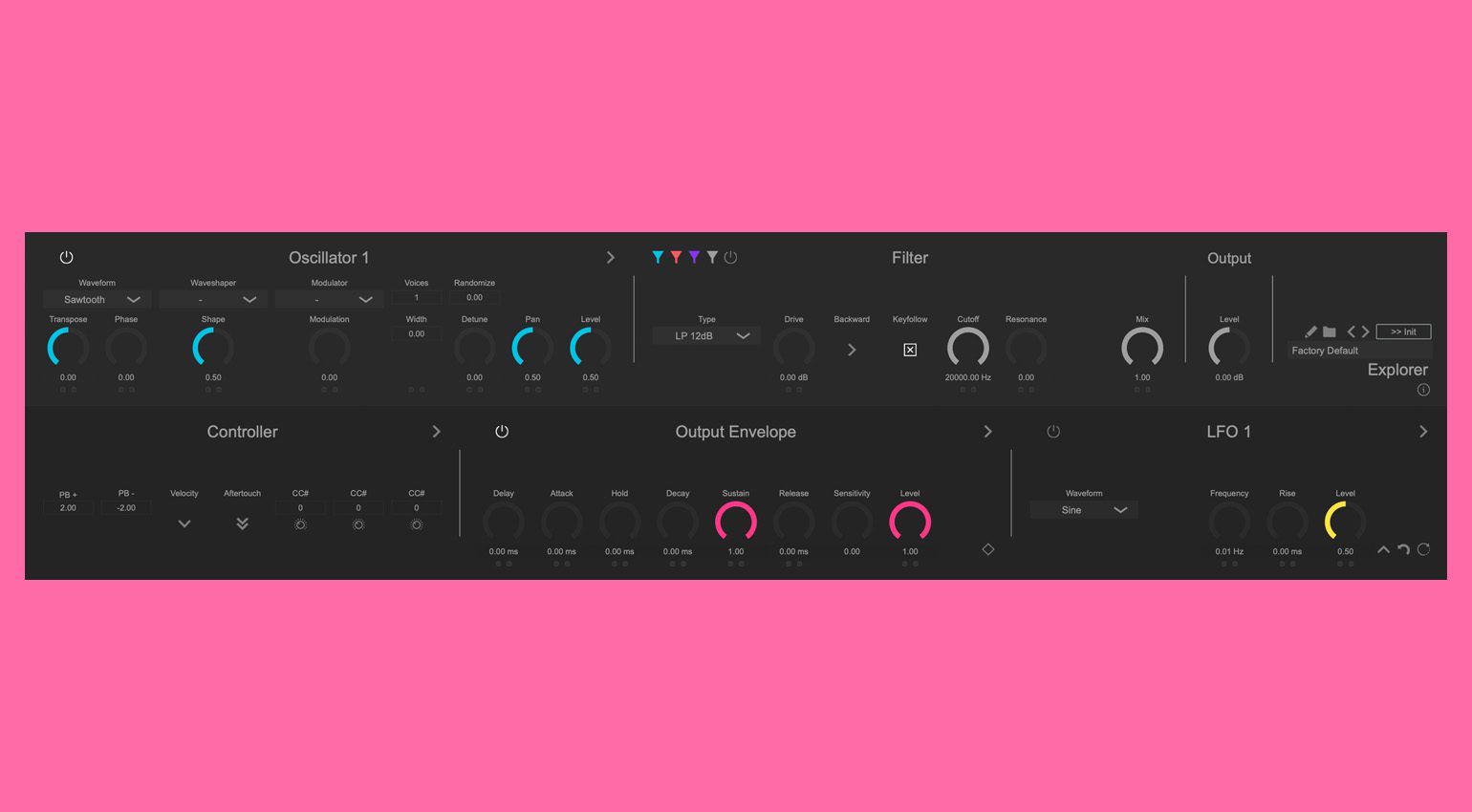
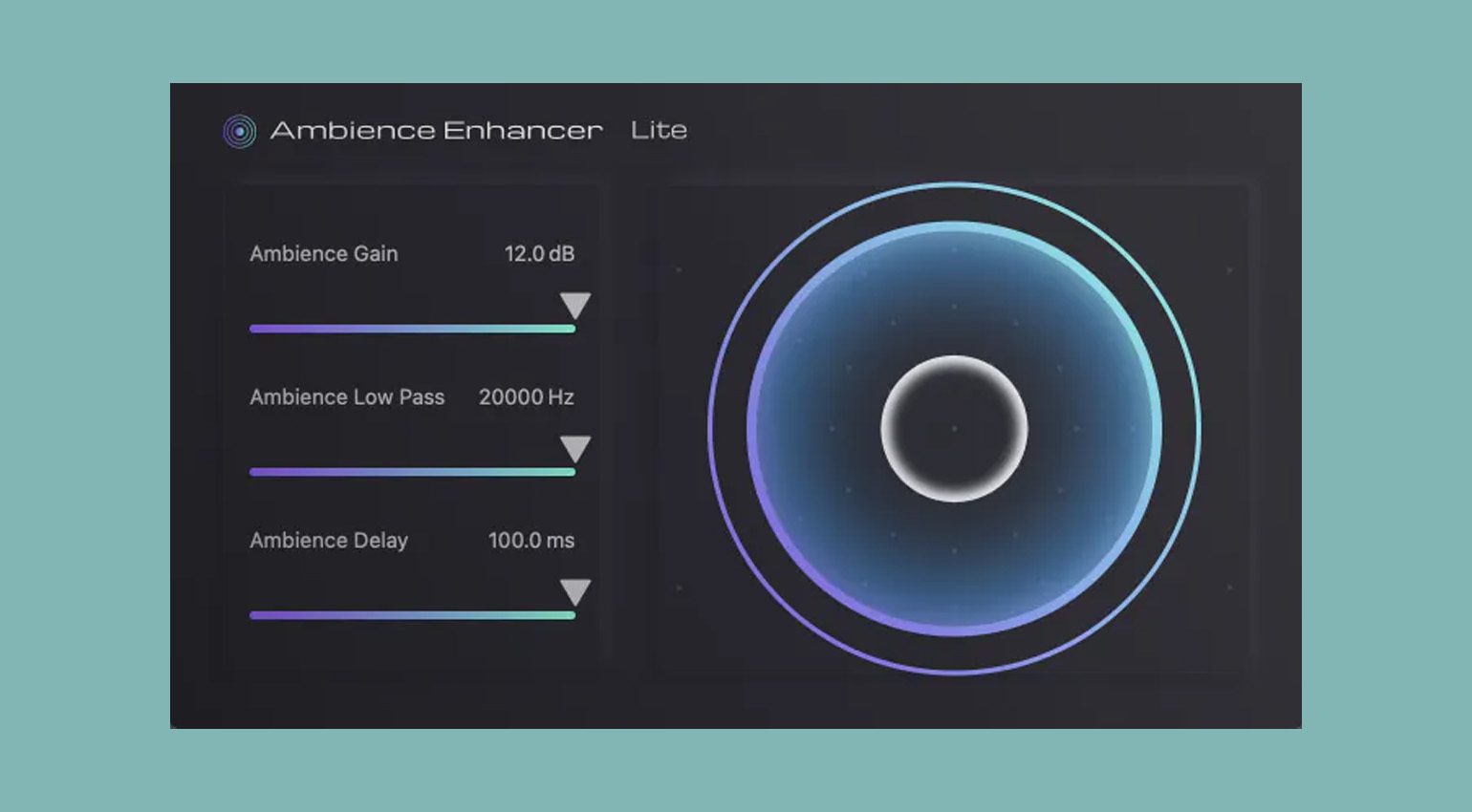
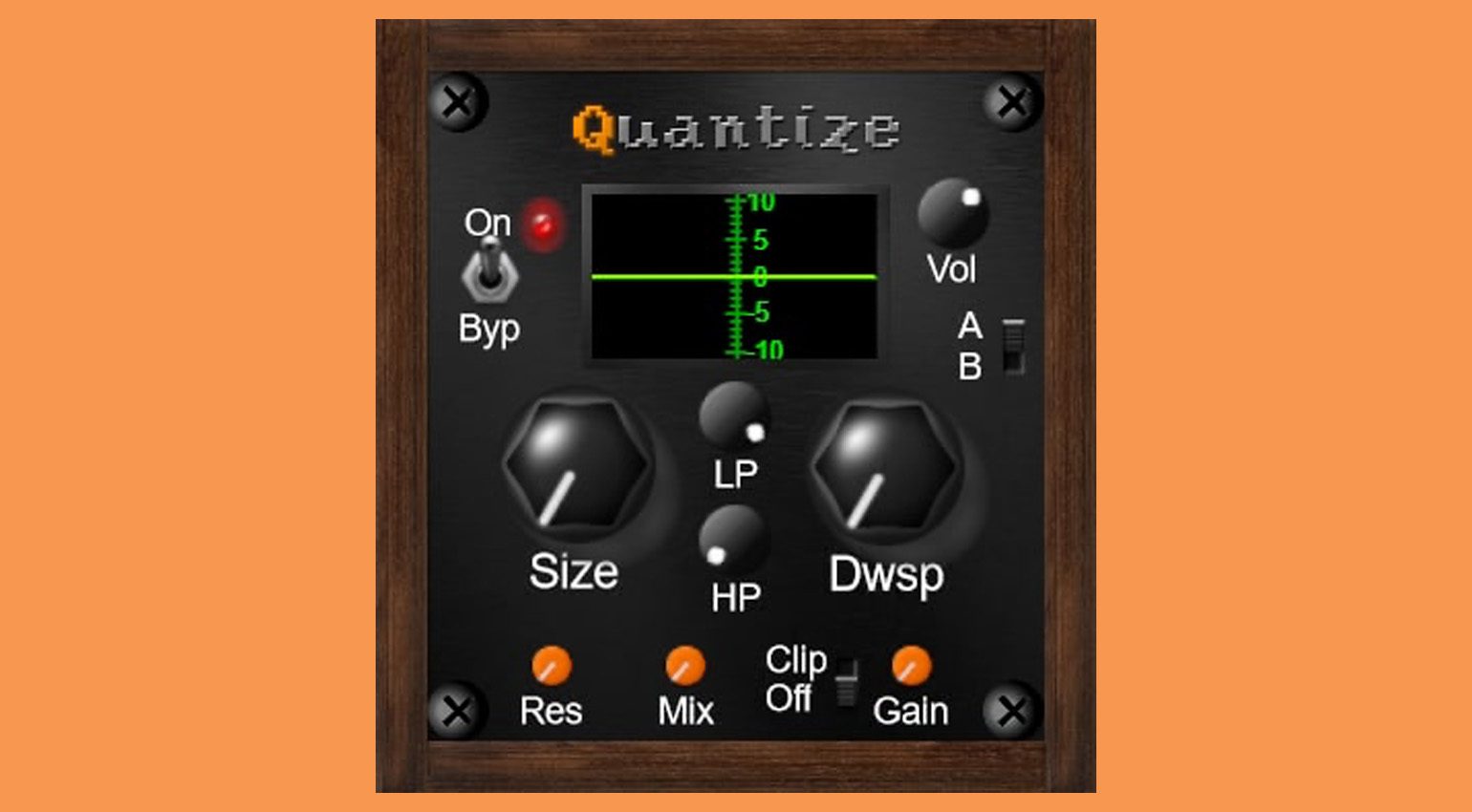
Best free plug-ins this week: Explorer, Ambience Enhancer Lite, and Quantize · Quelle: Fabric 70, Gearnews
This week’s roundup of the best free plug-ins includes a versatile polyphonic synth, a very cool little tool for adjusting the ambience level, and a lo-fi toolkit with a bitcrusher, clipper, and more. Here’s Explorer, Ambience Enhancer Lite, and Quantize.
What’s the best place to look for free plug-ins? That’s right – our archives!
Explorer by Fabric 70 is a polyphonic software synthesizer with three oscillators and a multi-mode filter per voice. It’s also got three envelopes, three LFOs, a waveshaper, and oscillator modulation. Besides velocity and aftertouch, you can assign three additional MIDI CC controllers for real-time control. I kinda like the GUI on this one; Explorer seems like a versatile synth and a great way to get into synthesis and sound design. Hence the name!
Explorer is available for macOS and Windows in VST3 and AU formats.
Get Explorer here
Ever needed to adjust the ambience or reverb level after recording? Ambience Enhancer Lite by Novo Notes lets you do just that. The developer says that it analyzes the incoming audio and divides it into direct and ambient components. You can then adjust the ambience level (like a dry/wet knob in reverse) and shape the sound with a low-pass filter. The plug-in also lets you apply a delay to the ambience. The free version works in stereo; a paid version ($88) for surround applications is coming soon.
Ambience Enhancer Lite is available for macOS 10.15 or higher in AAX, VST3, and AU formats.
Get Ambience Enhancer here
Now for something a bit more rustic. Quantize by SR Musics is a complete toolkit for a variety of tasty lo-fi effects. Besides a bitcrusher, the plug-in includes lowpass and highpass filters, and two circuit emulations. There’s also a hard clipping function. The developer says that Quantize delivers everything from 8-bit sounds to the edgy sounds of early digital samplers. It even has an oscilloscope, so you can see how the lo-fi treatment affects your audio signals.
Quantize is available for Windows 7 or higher as a VST3 plug-in (64 bit).
Get Quantize here
Click on the button to load the content from SoundCloud.
Load content
Wie findest du diesen Beitrag?
Your email address will not be published.
· As editor of Gearnews, my apologies for your disgust at this superbly written article. We have never hidden our affiliation with Thomann and neither do we force our readers to purchase via the …
· The thing about stands that bounce… velocity is calculated from the speed of the key vs. the keybed. If the keybed is moving in any way whatsoever, you lose the accuracy of how it responds to your …
· And that will take the creeses out of your playing
Fox News Will Not Carry Thursday’s Jan. 6 Hearing Live – The New York Times
Advertisement
The wall-to-wall cable news and network coverage of Thursday’s prime-time Jan. 6 committee hearing will once again have a notable gap: Fox News.
Fox will not carry the hearing live, instead reserving what are typically its highest-rated hours for its usual programming lineup of Tucker Carlson, Sean Hannity and Laura Ingraham. Its sister network, Fox Business, will take the hearing live starting at 8 p.m., the company said in a statement.
Viewers of Fox News, the country’s most-watched cable news network, will probably have to wait until midnight for any lengthy discussion of the evening’s events. The anchor Shannon Bream will devote her nightly show at that time to the topic.
The committee’s other prime-time hearing last month was also not carried live by Fox News. The network aired its usual prime-time lineup then, too. Mr. Carlson explained to his audience, as he has many times before, that he wasn’t going to indulge the committee’s “lying.” Mr. Hannity dismissed the hearing as a “sham.”
Fox News has aired the hearings that have taken place during the day, when millions fewer viewers are watching. But those days were hardly big for the network. It was eclipsed in the ratings by CNN and MSNBC, something that rarely happens.
Advertisement
Former NC NAACP president Anthony Spearman has died – Raleigh News & Observer
Former NC NAACP president Anthony Spearman has died Raleigh News & Observer
source
Woh Beetey Din is first Indo-Turkish musical collaboration – newsindiatimes.com
Pop queen Tanya Singgh has brought to us the soulful single Woh beetey din after many songs like Janam kuch toh bolo, Chupke chupke, Baahon mein teri, Piya piya, Ankhiyan mila le and many more.
Tanya said, “It is because of my wish and motive of bringing back pop culture to the industry that I came up with Woh beetey din. The song’s look and feel was revitalized because this is the first time designer Nikhil Thampi has styled for a music video.”
Added Prem Raj Soni, who is directing a music video for the first time, “The song is so soothing that it will definitely touch everyone’s heart, and shooting with Tanya Singgh was an inspiring journey! Tanya also mentioned that this song is very close to her heart as it was composed by her father and the lyrics were given by her mother. Maybe that’s why she felt a strong connection with it when shooting for the song.”
Woh beetey din is a mixture of both modern and retro music. It also features Turkish superstar Ugur Gunes. The original composition is by Indipop 1970s pioneer Ajit Singh with lyrics by Gittanjali Singh and Music Production by Jeff Hunt. The song was released on T-Series’ YouTube channel. This is probably the first Indo-Turkish musical collaboration.
While little is known about Ugur, he is a superstar and an influential personality in Turkey. As he enjoys a huge female fan following in his country, he is all set to take over India with his upcoming Hindi music video.
Yes, I would like to receive emails from DESI TALK Headlines!. Sign me up!
Parikh Worldwide Media is the largest Indian-American publishing group in the United States. The group publishes five periodicals – “News India Times,” a national weekly newspaper; “Desi Talk in New York,” a weekly newspaper serving the New York-New Jersey-Connecticut region; and “Desi Talk in Chicago,” a weekly newspaper serving the Greater Chicago area and the Midwestern states; and “The Indian American,” a national online quarterly feature magazine, and the Gujarat Times, a Gujarati language weekly. The combined circulation and readership of these publications make the media group the most influential in the ethnic Indian market.
'The Sound of Music' comes to Aspen – The Aspen Times
News News |
“La… a note to follow so!”
“LA… a note to follow SOOOOO!”
Six children, one conductor as pianist and one acting Liesl von Trapp gather around a circle of chairs in a rehearsal space at the Red Brick Center for the Arts in downtown Aspen. These exuberant voices float out into the hallway as the team conducts rehearsals for the upcoming “Sound of Music” in Concert at the Benedict Music Tent on July 25-26.
“I am definitely feeling like the older sister with this group of kids,” said the aforementioned Liesl, as played by Theatre Aspen apprentice Sydney Borchers, who spent the rehearsal session playing both her performing role and filling in as Maria for all of the other numbers with the younger performers.
Conductor Andy Einhorn played the piano and kept the energy upbeat in the light-filled rehearsal space. This is his fifth time teaching the show. The performers playing the remaining von Trapp children are all locals, many of whom, while they’ve participated in singing and performing activities in the past, such as previous summers’ Theatre Aspen Camps, have never performed onstage in a concert of this magnitude.
“What’s really exciting about this is that it’s the prototype production of doing ‘The Sound of Music’ in Concert with an orchestra,” Einhorn said. “Adding children to the show adds another level of complexity, but also excitement.”
It’s “the ultimate ‘musical in the mountains,’” said Theatre Aspen producing director Jed Bernstein.
The production, a joint venture between Theatre Aspen and the Aspen Music Festival and School, “is a special event three years in the making,” said Einhorn, who originally set out to helm the production in 2020, on the heels of the success of “South Pacific” in 2019 in the Benedict Music Tent.
“Our collaborations with Theatre Aspen are a chance to combine their reach and expertise in casting and theater with our superb orchestras,” said Alan Fletcher, president and CEO of the AMFS.
And in those performances, practice makes perfect. The children are required to sing in three-part harmonies regularly throughout the show. Making sure they have the fundamentals down, the rehearsal, and repetition, continue.
“When the dog bites, when the bee stings, when I’m feeling sad!”
“When the DOG BITES, when the BEE STINGS, when I’m feeling SAAAAD!”
“This is always the title that people want to do,” Einhorn said. “It’s a beloved show. Everyone knows the music.”
The fact that it’s not a full-blown stage production, but rather an interpretation in the style of a concert adds a bit of a twist.
“It’s a show that relies a bit on costumes and for the audience to have the imagination of a set,” he said. “It’s a slightly pared down script, but we’re presenting all of the music, and we’re using two songs from the movie that are not in the stage production. What (director) Marc Bruni, (choreographer) Denis Jones and I set out to do is to create a world which allows for imagination and interpretation to take over.”
Borchers echoed that sentiment:
“One of the nice things about this show is that everyone does know this show, and because they know it, it gives both the audience and the performers excitement about it.”
As for the kids playing the remaining von Trapp children, “performing on this big stage is going to be foreign to them, so it’s interesting in that their progression will be similar to the kids in the story, and their growth as performers,” Borchers said.
“It’s exciting for the audience to root for them,” Einhorn said.
And, when local audiences root for them in person, they might see some kids they recognize. James Nottingham will play Friedrich; Eleanor Carroll appears as Louisa; Harry Spitteler is Kurt; Sierra Quint is Brigitta; Kayleigh Flynn plays Marta; and Anna Riley appears as young Gretl.
Tickets are currently on sale, and a limited special $30 offer is being extended to children 12 and younger. Other tickets are $110 and $50.
|
The Buddy Program presented a masquerade party for its 23rd annual Bash for the Buddies on July 8 at Gail and Lenny “Boogie” Weinglass’ Merry-Go-Ranch on McLain Flats.
|
|
|
|
Readers around Aspen and Snowmass Village make the Aspen Times’ work possible. Your financial contribution supports our efforts to deliver quality, locally relevant journalism.
Now more than ever, your support is critical to help us keep our community informed about the evolving coronavirus pandemic and the impact it is having locally. Every contribution, however large or small, will make a difference.
Each donation will be used exclusively for the development and creation of increased news coverage.
Start a dialogue, stay on topic and be civil.
If you don’t follow the rules, your comment may be deleted.
User Legend:
Moderator
Trusted User
Ute Mountaineer is currently seeking Sales Associates. We are people who love the outdoors and want to help customer by…
Join our Team Motor Vehicle Technical Glenwood SpringsAdministrative Assistant Glenwood SpringsChief Building Official Glenwood SpringsPlanner II or III Glenwood SpringsFinance…
Kickstart Your Future Today. Dodson Engineered Products, A Core & Main Brand is hiring organized and efficient team members for…
NOW HIRING!PATROL DEPUTYStarting at $26.17 MUST BE P.O.S.T. CERTIFIEDDETENTIONS DEPUTYStarting at $26.17Benefit package includes 100% paid Health insurance, retirement plan,…
NOW HIRING FOR SPRING & SUMMER!Be a part of Glenwood Springs History! FT & PT positions available!! LIFEGUARD – $17-19/hr…
Post Independent is looking for detail oriented, early risers to deliver newspapers.We currently have morning routes available between Rifle and…
is hiring for PT/FT Beauty Specialist.Must be avail. weekends & holidays
Director of SalesJob DetailsJob LocationSnowmass Club – Snowmass Village, COSalary Range$80,000.00 – $80,000.00 Base+Commission/month Reports to: General ManagerSupervises: NoneClassification: Exem…
CTL|Thompson, Inc. is seeking a full-time Engineering Technician to work in our Glenwood Springs office. This opportunity is suited for…
Front Desk Attendant FT/PT J1 Visa, High school students welcome Aspen & Willits locations. Gym membership included.
Yampah Mountain High Schools Project Rebound is hiring an Academic and Behavior Coach for the 22-23 school year. The coachs…
The City of Glenwood Springs is hiring a new Human Resources Manager.This position will build a department from the ground…
Home Team BBQ is hiring managers & hosts immediately! Join our crew at the base of Buttermilk Mountain! If you…
Full time employment, Competetive Pay
HOT SPRINGS GRILL FREE POOL PASS!The Glenwood Hot Springs Resort seeks Prep Cooks, Grill Cooks, and more! $15.50-20.00/hr DOE. No…
SMALL ENGINE MECHANIC needed for busy rental yard. Mechanic will maintain equipment and diagnose repairs. Operating equipment and knowledge of…
Excellent pay for the right individual ableto take projects from start to finish
Busy real estate firm looking for a self-motivated apprentice. Must have excellent communication and writing skills, experience with Adobe InDesign…
Seeking Professional Day and Night Drivers AspenSet your own schedule weeklyTop Drivers Earn $30+/hr.Up to $2,000 sign-on bonus970-925-4475 Ext 2
Wright Water Engineers Inc. is seeking a motivated and experienced Project Assistant to support the Vice President (VP), Senior Principal…
Where do you find inflation the most noticeable?
View Results
Jobs
Classifieds
Autos
Real Estate
Rentals
Service Directory
Pets
Merchandise
Legals
Place Legal Ad
Search Legal Ads
Farm & Ranch
Recreation
Announcements
Contact Us
Become a Carrier
Submissions
Submit a Request to Update a Crime Story
Submit an Obituary
Advertise
Archives
Newsletters
Buy Photos
Commercial Print Sales
RSS
Aspen E-edition
Snowmass E-edition
Cookie List
Do not sell my personal information
Breckenridge – Summit County
Craig – Moffat County
Glenwood Springs – Rifle
Park City – Utah
Steamboat Springs – Routt County
Vail – Eagle Valley
Winter Park – Granby – Grand County
Aspen High School – Skier Scribbler
Printing Press Jobs
©2005 – 2022 Swift Communications, Inc.
Prior Omicron infection protects against BA.4 and BA.5 variants – Nature.com
Thank you for visiting nature.com. You are using a browser version with limited support for CSS. To obtain the best experience, we recommend you use a more up to date browser (or turn off compatibility mode in Internet Explorer). In the meantime, to ensure continued support, we are displaying the site without styles and JavaScript.
Advertisement
You can also search for this author in PubMed Google Scholar
You have full access to this article via your institution.
People queue at a COVID-19 test site in New York City last month, when the BA.4 and BA.5 subvariants were taking hold.Credit: John Smith/VIEWpress/Getty
The Omicron BA.4 and BA.5 subvariants of SARS-CoV-2 have proven to be stealthier at evading people’s immune defences than all of their predecessors.
But recent research shows that previous infection with an older variant (such as Alpha, Beta or Delta) offers some protection against reinfection with BA.4 or BA.5, and that a prior Omicron infection is substantially more effective. That was the conclusion of a study that evaluated all of Qatar’s COVID-19 cases since the wave of BA.4 and BA.5 infections began1.
The work, which was posted on the medRxiv preprint server on 12 July and has not yet been peer reviewed, feeds into broader research on “how different immunities combine with each other”, says study co-author Laith Abu-Raddad, an infectious-disease epidemiologist at Weill Cornell Medicine-Qatar in Doha.
Everyone has a different immune history, because people have received different combinations of COVID-19 vaccines and been infected with assorted variants during the course of the pandemic. “Different histories equip people with different immunity against upcoming infection,” says Abu-Raddad. Knowing how these diverse immune responses interact inside a person will be “very important for the future of the pandemic”, he adds.
To see how much protection previous infection offers against the two Omicron subvariants, Abu-Raddad and colleagues analysed COVID-19 cases recorded in Qatar between 7 May this year — when BA.4 and BA.5 first entered the country — and 4 July. They looked at the number of people known to have been infected previously who tested positive or negative for COVID-19, and identified which infections were caused by BA.4 or BA.5 by examining positive test samples to see whether they contained a protein that these subvariants lack.
Fast-evolving COVID variants complicate vaccine updates
The researchers found that infection with a pre-Omicron variant prevented reinfection with BA.4 or BA.5 with an effectiveness of 28.3%, and prevented symptomatic reinfection with either subvariant with an effectiveness of 15.1%. Prior infection with Omicron granted stronger protection: it was 79.7% effective at preventing BA.4 and BA.5 reinfection and 76.1% effective at preventing symptomatic reinfection.
Although it seems counterintuitive to see stronger protection against any reinfection than symptomatic reinfection, the researchers say this effect is in line with previous studies and is probably caused by the estimates having wide confidence intervals.
“It’s a good study,” says Kei Sato, a virologist at the University of Tokyo. But he points out that the length of time between first and second infections could have influenced the results. Earlier variants have been around longer than Omicron, which emerged only in late 2021. And several studies, including one by the same team in Qatar2, have shown that natural immunity against SARS-CoV-2 wanes over time.
Alex Sigal, a virologist at the Africa Health Research Institute in Durban, South Africa, agrees. “The time that [has] passed since your original infection is much shorter with Omicron, so it’s really not a fair comparison,” he says. Sigal adds that participants’ vaccination statuses are unclear from the results, as is information on whether primary infections took place before or after vaccination, which could be an important consideration.
Abu-Raddad says the study’s purpose was to investigate who is currently most prone to reinfection, rather than to attribute natural immunity to a particular viral strain. He says the study’s design controls for the effects of vaccination, and the team conducted a sensitivity analysis to adjust for vaccine status, the results of which were consistent with the overall conclusions.
“The immunity you’re getting from these Omicron infections actually protects you from other Omicron sub-lineages to some extent,” says Sigal. However, “COVID is everywhere,” Sato warns. “It can easily evolve into a new variant.”
doi: https://doi.org/10.1038/d41586-022-01950-2
Altarawneh, H. N. et al. Preprint at medRxiv https://doi.org/10.1101/2022.07.11.22277448 (2022).
Chemaitelly, H. et al. Preprint at medRxiv https://doi.org/10.1101/2022.07.06.22277306 (2022).
Download references
News
News
News
News
News
Article
News
Comment
News
Oklahoma Medical Research Foundation (OMRF)
Oklahoma City, United States
Northwestern University (NU)
Chicago, IL, IL, United States
Institute of Biology Valrose (IBV)
NICE, France
Helmholtz Centre for Environmental Research (UFZ)
Leipzig, Germany
You have full access to this article via your institution.
An essential round-up of science news, opinion and analysis, delivered to your inbox every weekday.
Sign up for the Nature Briefing newsletter — what matters in science, free to your inbox daily.
Advanced search
© 2022 Springer Nature Limited
Ninth Circuit boosts efforts to sue overseas copyright infringers – Courthouse News Service
The appeals court said U.S. courts have jurisdiction to hear copyright infringement cases against foreign entities when the entities put apps on the U.S. market.
PASADENA, Calif. (CN) — The Ninth Circuit Court of Appeals made it a little easier for U.S. book, movie and music publishers to sue overseas intellectual property pirates if they target the American market.
The court on Thursday overturned a federal judge’s dismissal of a lawsuit by a California producer and distributor of Vietnamese music against a Vietnam-based website and app owner for lack of personal jurisdiction.
In an unanimous decision the Ninth Circuit panel said the judge had jurisdiction over the Vietnamese company, VNG Corp., because it intentionally sought out the music of California producer Lang Van Inc. for its Zing MP3 app and it made the app available in the U.S., where it has been downloaded more than 320,000 times.
“Although VNG argues its primary audience is in Vietnam, VNG released its Zing MP3 in English to the United States,” said U.S. District Judge Joseph Bataillon, a Bill Clinton appointee from the federal court in Nebraska sitting on the panel by designation. “Absent release by VNG, this app was not available in the United States. Making Zing MP3 accessible to those living in the United States was purposeful.”
An attorney for VNG didn’t immediately respond to an email seeking comment on the ruling.
Cory Baskin, an attorney for Lang Van, said the company intends to prove at trial that VNG should be ordered to pay Lang Van millions of dollars in statutory damages and attorneys’ fees for its unauthorized distribution of thousands of copyrighted songs and albums to U.S.-based users of VNG’s popular Zing MP3 Music Service and Mobile Applications.
“After more than seven years of litigation seeking to hold VNG to account for its targeted infringement of Lang Van’s copyrights in and to its invaluable catalog of Vietnamese music produced in Orange County’s Little Saigon, the Ninth Circuit has finally ruled that Lang Van is entitled to its day in Federal Court,” Baskin said.
The dismissal of Lang Van’s lawsuit for lack of jurisdiction in 2019 prompted an outcry by U.S. intellectual property owners who have been facing an onslaught of overseas piracy and have limited means to seek redress.
“By closing the doors to U.S. courthouses through its overly narrow interpretation of personal jurisdiction, the district court’s decision threatens to deal a major blow to the ability of members of the book and publishing industry to enforce intellectual property rights against some of the most brazen and prolific infringers of content created and distributed in the United States,” the Association of American Publishers said in an amicus brief in the appeal.
“Copyright owners’ ability to enforce their rights in U.S. courts against foreign defendants who commit infringement in the United States is critical in stopping digital piracy,” the Motion Picture Association added in a separate brief. “All too often, foreign jurisdictions fail to enforce intellectual property rights, leaving American courts as the only forum in which copyright owners can vindicate their rights.”
Lang Van, based in Westminster, California, was one of the first Vietnamese production companies established in the United States, according to its lawsuit. It has the largest library of content of any Vietnamese production company and owns the copyright to more than 12,000 songs.
VNG specifically sought Lang Van’s music for its Zing app, according to the testimony of a former VNG employee, cited in the Ninth Circuit ruling. This employee testified that his job was to source and distribute through the Zing app songs “without regard to authorization from content owners.” VNG offered over 2,800 of Lang Van’s songs to the public through Zing MP3.
In his opinion, Bataillon wrote the lower court was wrong to look only at whether VNG had a specific connection with California to determine whether the company could be sued there. The proper analysis, according to the panel, was under a federal rule that provides for jurisdiction over foreign defendants, who have ample contacts with the U.S. as a whole, “but whose contacts are so scattered among states that none of them would have jurisdiction.”
U.S. Circuit Judge Jay Bybee, a George W. Bush appointee, and U.S. Circuit Judge Mark Bennett, a Donald Trump appointee, joined Bataillon’s opinion.
Sign up for the Top 8, a roundup of the day’s top stories delivered directly to your inbox Monday through Friday.
Master Gardeners to hold special gathering – Reading Eagle
E-Edition
Sign up for email newsletters
E-Edition
TRENDING:
Family Fun and Education will abound at the Master Gardeners of Schuylkill County Aug. 27 Garden Gathering at the Vietnam Memorial lot, 110 Route 61 South, Schuylkill Haven.
The event runs from 10 a.m. to 2 p.m., rain or shine.
Tour the Demo Garden of Flowers, buy a bouquet to take home, taste food made from locally grown produce (blueberry, rhubarb, pawpaw) and plants like lavender, and shop at the gardener tool bargain table. Learn about “top or bottom” vegetables, how to grow, harvest and prepare them and even basic beekeeping from the Honey for Veterans program.
For more information, call 570-622-4225 Monday through Friday between 8:30 a.m. and 4:40 p.m. or ask a Master Gardener in person at their information booth.
Sign up for email newsletters
We invite you to use our commenting platform to engage in insightful conversations about issues in our community. We reserve the right at all times to remove any information or materials that are unlawful, threatening, abusive, libelous, defamatory, obscene, vulgar, pornographic, profane, indecent or otherwise objectionable to us, and to disclose any information necessary to satisfy the law, regulation, or government request. We might permanently block any user who abuses these conditions.
Copyright © 2022 MediaNews Group
Pink Floyd Founding Member Nick Mason's “Saucerful of Secrets” Tour Chooses Waves Plugins – Sports Video Group
By SVG Staff
Thursday, July 21, 2022 – 11:57 pm
Print This Story | Subscribe
FOH engineer Steven Carr (Roger Taylor, Goldfrapp, Agnes Obel, Chris Rea, Katherine Jenkins) chooses Waves plugins for the 2022 “Saucerful of Secrets” tour by Pink Floyd founding member Nick Mason.
Waves’ arsenal of plugins integrates smoothly with Carr’s Avid VENUE S6L board, allowing Carr to run the plugins as an integral part of his system. “Having all my Waves plugins accessible from the console in such a brilliantly simple way, enables me to work as I would in a studio,” he says. “It helps me take my live mix to a higher level of creative artistry, without needing racks upon racks of outboard. With the low latency of the Waves live system, and numerous instances of whichever plugin I need, it often feels there is no limit to what I can do to achieve certain sounds and effects.”
“Using Waves is incredibly useful when working on a live mix in collaboration with the artist,” he adds. “Most artists use Waves in the studio when writing and producing, so it’s very reassuring for them to see those same plugins being used in live sound. Sometimes, we even use the exact same presets.”
“I’m using the Avid S6L 24D console with one Stage 64 Rack. The S6L has a built-in WSG-HD Waves SoundGrid card, which interfaces directly with two Waves Extreme SoundGrid Servers. I send a stereo mix via AES to a Lake LM44 to drive the PA that deals with system EQ, delay and levels. That’s it – very simple, no outboard. Because of the way I like to work – a compact, streamlined FOH system with an Avid console – having Waves plugins available and integrated is absolutely essential.”
“As in most productions, there were unique challenges to overcome when building my mix for this show. The mix is very dynamic with punch and energy, yet it needs to be subtle when required. In songs like Pink Floyd’s ‘Echoes,’ which Nick and his band are playing on this tour, this entire dynamic range is required within one song. Moreover, the stage has an old school feel with loud vintage amps, and without any isolation between the musicians. So, my first big challenge was to reduce unwanted bleed into the vocal mics. Here, the expander option in the Waves SSL G-Channel is invaluable. This plugin is a great model of a classic, and I use it on every drum channel for EQ, dynamics and tone. The compressor’s auto makeup gain is simply a must-have for me when mixing punchy, crystal clear drums. I’ve also experimented with the Waves Primary Source Expander (PSE) to prevent mic bleed. Both plugins do the job brilliantly. With a bit of fine-tuning, I can automatically close open mics all around the stage when not in use, giving me a very tight close-miking-sounding mix even in reverberant rooms.”
“Another issue is the variety of guitars used in this show. The guitar players switch guitars frequently, so tone and levels vary from song to song. Rather than interfere with the guitarists’ tone, I generally leave the EQs flat, with just some gentle high passing; instead, I use compression to control the feel of each instrument. Here, I use the H-Comp Hybrid Compressor on the guitar channels, to maintain a constant level from instrument to instrument. H-Comp is fantastically simple to use, though its simplicity is deceiving – it has so much variety. I love its Dry/Wet mix function, which I use for ALL of my parallel compression now.”
“I also use the C6 Multiband Compressor on the sub group to control any unruly frequencies, and dramatic level changes are controlled using snapshot settings. C6 is again a classic, and I rarely build a mix without it. In addition to using it as a general multiband compressor, I like to use its side chain function to help my kick drum and bass guitar play together nicely down in the low and sub regions of the mix.”
“Lastly, all my mixes are put together with these three plugins: the Waves API 550B EQ is essential for my subgroups; it’s musical and sweet and gives me what I need every time. The IR-Live Convolution Reverb is absolutely brilliant because I can import my own impulse responses. And my go-to delay for any situation is the Waves H-Delay Hybrid Delay.”
“There are so many benefits to using Waves plugins in this way,” Carr says. “First, and most important, the Waves software integrates seamlessly with the S6L console. The plugins run within the Avid onboard software and can be viewed, accessed and written into snapshots, all from the console’s plugin rack and snapshot screens. This is essential for my preferable workflow. It keeps my processing chain simple, cable-free, and all in one place. Because Waves plugins are so good, I can avoid using outboard altogether, reducing in/out digital conversion paths, latency, and potential cable failure, not to mention fewer racks and boxes in often-cramped FOH spaces.”
“The snapshot functionality is really important,” Carr notes. “Each plugin instance can be easily assigned to any snapshot I want and edited at the touch of a button like any other parameter on the console. When selected, a plugin’s user interface automatically maps to the encoders on the console surface without any fuss. This is just awesome for hands-on mixing, which can otherwise prove tricky with plugins when using a mouse or touch screen. It’s no fun spinning in dub delays with a mouse! The encoder mapping is essential, and on this system it’s very elegant.”
“This show goes into venues of all sizes, indoor and out,” Carr summarizes. “You never know what you’re walking into, no matter how well prepared you are – which is why a compact yet powerful system is essential. This system is exactly that: it allows me to get the precise and creative result that I need in every show.”
© 2022 Sports Video Group. All rights reserved. Site by Brightgreen Design/Arturan/Sfera Interactive.
A lowercase letter
A capital (uppercase) letter
A number
Minimum 8 characters
Piano Market: 37% of Growth to Originate from APAC, Market Driven by Inclusion of Music – Technavio – PR Newswire
Searching for your content…
In-Language News
Contact Us
888-776-0942
from 8 AM – 10 PM ET
News provided by
Jul 22, 2022, 21:45 ET
Share this article
NEW YORK, July 22, 2022 /PRNewswire/ — The global piano market size is expected to grow by USD 297.28 million from 2021 to 2026 at a CAGR of 2.33% as per the latest market report by Technavio. 37% of the market’s growth will originate from APAC during the forecast period. China and Japan are the key markets for pianos in APAC. Market growth in this region will be faster than the growth of the market in other regions. The implementation of integrated curricula by an increasing number of schools will facilitate the piano market growth in APAC over the forecast period.
For more highlights on the regional segment – Request a sample now!
Read the 120-page report with TOC on "Piano Market Analysis Report by Product (Acoustic piano and Digital piano) and Geography (North America, Europe, APAC, South America, and the Middle East and Africa), and the Segment Forecasts,2022-2026". Gain competitive intelligence about market leaders. Track key industry opportunities, trends, and threats. Information on marketing, brand, strategy and market development, sales, and supply functions. https://www.technavio.com/report/report/piano-market-industry-analysis
Piano Market: Market Dynamics
Major Driver:
Major Challenges:
To know more about the market dynamics – Grab a sample now!
Piano Market: Vendor Analysis
The piano market is fragmented and the vendors are deploying growth strategies such as focusing on building brand equity to differentiate themselves and compete in the market.
Piano Market: Segmentation Analysis
Product Outlook (Revenue, USD mn, 2021-2026)
Geography Outlook (Revenue, USD mn, 2021-2026)
To know about the market contribution of each segment – Grab an Exclusive Sample
Report
Get ready to achieve excellent business outcomes from this exclusive Piano Market report by Technavio. The report will include highlights of the overall market which includes frequently asked questions such as –
The competitive scenario provided in the Piano Market report analyzes, evaluates, and positions companies based on various performance indicators. Some of the factors considered for this analysis include the financial performance of companies over the past few years, growth strategies, product innovations, new product launches, investments, growth in market share, etc.Don’t wait, Make a strategic approach & boost your business goals with our Piano Market Forecast Report – Buy Now!
Related Reports:
Piano Market Scope
Report Coverage
Details
Page number
120
Base year
2021
Forecast period
2022-2026
Growth momentum & CAGR
Accelerate at a CAGR of 2.33%
Market growth 2022-2026
USD 297.28 million
Market structure
Fragmented
YoY growth (%)
1.83
Regional analysis
North America, Europe, APAC, South America, and Middle East and Africa
Performing market contribution
APAC at 37%
Key consumer countries
US, Canada, Japan, China, and UK
Competitive landscape
Leading companies, competitive strategies, consumer engagement scope
Companies profiled
AUGUST FORSTER GmbH, C. Bechstein Pianoforte AG, Carl Sauter Pianofortemanufaktur GmbH and Co. KG, CASIO Computer Co. Ltd., Fazioli Pianoforti spa, GROTRIAN PIANO COMPANY GmbH, Guangzhou Pearl River Piano Group Co. Ltd., Julius Bluthner Pianofortefabrik GmbH, Kawai Musical Instruments Mfg. Co. Ltd., KORG Inc., Mason and Hamlin Piano Co., PETROF Spol s.r.o., Roland Corp., Samick Music Corp., SCHULZE POLLMANN PIANOFORTI SRL, Steingraeber and Sohne KG, Steinway Inc., Stuart and Sons, Wilhelm Schimmel Pianofortefabrik GmbH, and Yamaha Corp.
Market Dynamics
Parent market analysis, Market growth inducers and obstacles, Fast-growing and slow-growing segment analysis, COVID 19 impact and future consumer dynamics, market condition analysis for the forecast period,
Customization purview
If our report has not included the data that you are looking for, you can reach out to our analysts and get segments customized.
Table of Content
1 Executive Summary
2 Market Landscape
3 Market Sizing
4 Five Forces Analysis
5 Market Segmentation by Product
6 Customer Landscape
7 Geographic Landscape
8 Drivers, Challenges, and Trends
9 Vendor Landscape
10 Vendor Analysis
11 Appendix
About Technavio
Technavio is a leading global technology research and advisory company. Their research and analysis focuses on emerging market trends and provides actionable insights to help businesses identify market opportunities and develop effective strategies to optimize their market positions.
With over 500 specialized analysts, Technavio’s report library consists of more than 17,000 reports and counting, covering 800 technologies, spanning across 50 countries. Their client base consists of enterprises of all sizes, including more than 100 Fortune 500 companies. This growing client base relies on Technavio’s comprehensive coverage, extensive research, and actionable market insights to identify opportunities in existing and potential markets and assess their competitive positions within changing market scenarios.
Contacts
Technavio Research
Jesse Maida
Media & Marketing Executive
US: +1 844 364 1100
UK: +44 203 893 3200
Email: [email protected]
Website: www.technavio.com/
SOURCE Technavio
Cision Distribution 888-776-0942
from 8 AM – 9 PM ET
Afrobeats will evolve but never go extinct – 8notes – Vanguard
Fast rising Nigerian mix engineer, Ediongsenyene Umoren, better known as 8notes has been on the steady rise, having worked with a few big names on the Nigerian music scene. In this interview, he takes on his music production craft from debut till date.
How did you get into music and for how long have you been producing/mixing and mastering for?
Music has been around me for as long as I can remember. From family influence, Dad loved reggae music, had loads of vinyl records and always played them. Mom was a music director for the local church; hence I was motivated to take up piano lessons. I played for my church choir from 14 till I was about 23. So, from playing keys, music production curiosity arose. In 2012 with encouragement from my brother Izik, I started learning to use FL Studio for production, got a hang of it and in 2015 I began mixing records commercially.
You’ve worked with almost everyone from Reekado Banks to Teni, Phyno, Kuami Eugene, Dremo and so many other artistes. How did you grow to this point in your career where you can make these big collaborations come together?
In the quest for reaching a bigger audience and further growing my art, I moved from my home town to my state capital, there I Interned under O’giveR, an established engineer at the time, he let me use his studio for 2 years and showed me the ropes for free with business and lots of other things in the field. With that energy & experience, I moved to the west side of Nigeria, Lagos state, which is the largest market for everything, entertainment. I used social media heavily to establish most contacts, targeting producers first and offering to mix records they produced and that was the best thing I ever did. There I met with DJ Khayleb, Benjamz, Jaysynths & Disally. The more I worked, the more good reviews and referrals came, Them boys set the tone! and the ball has been rolling ever since.
You’ve been the mixing/mastering brains behind countless Nigerian hits, from Reekado Banks’ Lupita Nyongo, Teni’s Dorime, Dremo’s Nobody, Kuami Eugene’s Nobody ft Jaysynths & Jeff Akoh, Phyno’s No Love ft Jay Teazar and also produced Phyno’s Oso Ga Ene amongst countless others. What is your work process like in fine-tuning and crafting the perfect sound?
I go with the flow but in an educated way, if that makes sense. you see mixing records is basically an engineering process and that means identifying problems and solving them, when I receive a session, I listen to it first from the consumer’s perspective, try to capture or understand what is expected of the record, also good communication with the creators, the song writers and producers involved to get a better view of their intended outcome, and then from the Engineer’s perspective, reference tracks for me are things I can’t seem to do without, I think that’s the secret key any creative artist should learn to understand and use. For every new song, there’s always an existing song or songs in that genre or style that your work can be modelled after. With referencing you never go wrong & you’re never too far from the expected outcome. So, it’s always a case of: Listen, listen, listen, identify problems, solve them, allow some time for my ears to reset and approach the mastering, make sure it matches up in levels, tonality and quality with Industry standard, Consumer level materials before I call it a completed project.
What was it that made you and Phyno feel this was the right time to work together — Can you tell us what the fit was and how you both collaborated to make Oso Ga Ene?
It was sometime in early 2019, I was working with Phenom at the time on some records and one of those evenings, he decided to link with Obago (Phyno) on a collaboration they had going on, I was readily available with recording tools and my computer as usual, so we get there, everything is good, energy is right, we record a few things and I had a some beats I had made prior laying around in my computer, I played them for Phyno and he happened to like two of ‘em, once of those being the Oso Ga Ene one, after we left, I didn’t hear much of the work progress as I happened to leave town towards the end of the year, and it was at that time I had the call like: 8! How far? Obago don record on that your beat o! I’m like: Oh yeah? Ok no wahala. Album dropped, mine was track 2, two years later, new album came and I still happened to mix & master track 10 on the new one as well. so yeah, I’d say Phyno is extremely intentional with his music and I’d work with him again anytime.
As a producer and mix and mastering engineer for these calibres of artistes, is your creativity your own — or does it only exist within the boundaries of the artiste’s ideas?
It goes both ways, never one sided. Even in times when the ideas are mine, the recording artists always play a massive role in shaping what everyone hears in the end. I’d say it’s a 50:50 thing although Mix engineers are highly under-appreciated in the business. I can boldly say NONE of the hits or popular songs we have today would be in existence if Producers & Engineers are taken out of the equation, reasons being, even if you decide to be an acappella artist, you’d still need an engineer to record your vocals and lay it out on tape right? but producers on the other hand can straight up make and sell instrumental tracks and get paid heavily off of that. But anyways, shout out to all artists giving due recognition to their engineers and producers and shoutout to the engineers and producers doing great stuff with their artists as well. Issa a 50:50 thing! We need each other.
Who and who can you say are the producers that have most influenced your approach to music production & engineering and why did they have that influence?
Oh! MasterKraft! Being a church boy and listening to lots of Tim Godfrey music to play for the choir, I’d say Masterkraft is one of the main reasons I became a producer in the first place, we all admired and still admire his pro level playing and production skills, I wanted to be like him so bad and once I realised he didn’t only play the mind blowing solos we heard, he also produced most of the songs, I strived to get all the required skill to be the best at what I was doing and here I am now, although I’m not actively producing but that’s where the influence came from initially and with the mixing, Leslie Brathwaite & Mixed By Ali are my favourite engineers, I listen to their approaches because they are a perfect blend of old and new. Leslie has been mixing from the days of Michael Jackson till date, Mixed the new Jack Harlow album etc, so he is very experienced and yet capable of adapting to the sound of the new generation which is an essential ability in our career path. Adaptation.
People starting out in music may be questioning what they really need to get started. What was the first set of equipment/software you ever bought?
First gear I ever bought was a pair of Casio CP-16 Stereo headphone; I had access to a computer which I sneakily installed Fruity Loops on. But in today’s world, things are a lot different and music production gears are more accessible, I’d advice any newbie to get a good computer first, Mac or Windows, it doesn’t matter. Just get the highest spec computer you can afford, get a pair of good headphones, it’s the most important thing after the computer because music creation has to do with a whole lot of listening. Before investing in Audio interfaces and monitors, MIDI input devices or fancy gear. Get those first two right first because personally I can do anything with just a laptop and a pair of headphones and I know lots of Pro engineers can say the same.
What are a few key lessons you’ve learned about engineering that other aspiring musicians and engineers could take advice from?
Key lessons I’d like all new and aspiring musicians to learn are…Build great communication skills, you’ll need it forever. Be nice, ask questions, listen, seek, there’s always more to learn, everyone knows something but nobody knows everything, never think less of the next musician because they always know something you don’t. I’d say stay low, keep calm and put in your 10,000 hours of practice in confidentiality, that way, when you pop out. It’s easier to access things and people as the “New” guy who knows what he’s doing, yes there’s beauty in the process, but with music, we deal with the ears and memory, even perception. It will take you loads of more time to revert the minds of the people you’ve met to understand that you’re no longer “new” if you had everyone seeing your days of Ringtone-sounding-beats or trashy mixes than you popping out with tangible quality beats or mixes at first meetings. So drop the camera and get back to practice first. Publicity is great, it does wonders but your work will always speak for you more than and longer than you can ever speak for yourself. Make good relationships with other experienced musicians and honest friends. In my opinion, it’s best to hear “You’ve got to work harder to improve your work quality” than hear “That’s fire! bro you are the best” from friends just when you’re starting out and can barely put together a decent beat or mix. They are not encouraging you, they are wrecking your growth, not because they know better, it’s because they don’t, their ears are not advanced enough hence anything sounds good and it’s easy for you to relax rather than put in the work. There are no shortcuts, just keep doing it, study the greats and give it time.
What plans do you have for the future?
I strive to leave a positive mark on the music scene during and after my active years, inspire lots of other young musicians just as I had been inspired by others before me, meanwhile I recently moved to England and I’m working on expanding my reach here as well as it’s a fast-growing market for afrobeats. I’ve been making music for 10 years as of the time of this publication and in the next 10 years. We’ll see what happens.
How do you catch fun?
I took up skateboarding recently, haven’t devoted enough time to it though, so I still suck at it. But 9 times out of 10 I’m trying to be productive, work is fun to me.
What’s your take on the global acceptance of Afrobeats and how it is taking the world by storm?
What’s understood doesn’t need to be explained? Afrobeats is a genre based on fusion; hence it will always bend and evolve but never go extinct. It’s beautiful seeing how much it’s spreading worldwide, the global acceptance, the quality attained in terms of production and engineering, the collaborations, everything. It excites me & I think it’s a great time to be active!
RELATED NEWS
How Cuomo paved a clearer path for Hochul's Penn Station master plan – POLITICO
New York
New York Gov. Andrew Cuomo significantly weakened the Public Authorities Control Board, the entity with a final vote on successor Kathy Hochul’s controversial Penn Station plan.
New York Governor Kathy Hochul speaks about the new redesign plan for Penn Station at the Moynihan Train Hall on June 09, 2022 in New York City. | Spencer Platt/Getty Images
By Danielle Muoio Dunn
Link Copied
NEW YORK — When Amazon turned down $3 billion in city and state subsidies and pulled out of a deal to build its headquarters in Queens, former Gov. Andrew Cuomo lashed out at — and ultimately declawed — the state oversight board he blamed for killing the project.
“You had this local political interest that just aborted the project,” Cuomo said in 2019, months after the arrangement collapsed. “That is a problem.”
Soon thereafter, Cuomo, a moderate Democrat, inserted language into the state budget significantly weakening the Public Authorities Control Board, the entity with final approval over state public financing deals. The Senate’s appointment of a vocal Amazon critic, Sen. Michael Gianaris, to the board, was widely seen as the breaking point behind the tech giant’s decision to leave.
Cuomo’s move may not have revived the Amazon deal, but it could have lasting repercussions on another major infrastructure project he helped develop before leaving office.
Gov. Kathy Hochu wants to let developers build up to 10 skyscrapers in the area surrounding Penn Station, the nation’s busiest rail hub. Instead of paying city taxes, the developers would fund an estimated $7 billion in upgrades to the rail hub that includes new entrances, a skylit atrium and an underground concourse connecting to the nearby Herald Square Station using so-called “payments in lieu of taxes,” which are expected to be lower than they’d otherwise pay.
But Hochul, also a Democrat, has faced criticism for not detailing the size of the tax breaks or incentives, which will primarily benefit one developer, Vornado, that owns much of the land covered in the proposal. Vornado CEO Steve Roth gave the maximum allowable amount of $69,700 to Hochul’s reelection campaign last year.
Vornado pays roughly $38 million annually in property taxes for the nearby Penn 1 building, which is much smaller than the skyscrapers being proposed that would benefit from property tax breaks.
“It’s potentially a massive windfall and a tax break,” said Rachael Fauss, senior research analyst at Reinvent Albany, a good government group.
As concerns abound, the project faces less independent oversight than other major development initiatives because of Cuomo’s legislative actions in 2019.
Lawmakers warn the Public Authorities Control Board is now limited in how it can assess public financing projects, providing almost no outside check on an effort entirely devised and pushed at the state level. If approved, Penn Station’s overhaul will be the largest development project in city history — spanning 18.3 million square-feet and taking decades to complete.
“Now we’re just advisory,” Sen. Liz Krueger, whose district includes Penn Station, said at a June Senate hearing. “Before both the Assembly and Senate had an actual vote that counted.”
Lawmakers recently passed a bill that would undo the changes Cuomo made to weaken the board. Sen. Leroy Comrie, the bill’s primary sponsor and one of the three voting members on the Public Authorities Control Board, has called on Hochul to sign the bill before the project gets underway. Assembly Member Amy Paulin, another voting member on the board, is the primary sponsor of the legislation in the lower house.
The board could vote on the project as early as this summer, as it’s only required to wait seven days after getting a copy of the plan to hold a vote. There’s no deadline for a decision, but there is external pressure to move the process forward because of looming deadlines to apply for federal cash to support the project in the fall.
Hochul, for her part, sees no urgency to sign the bill.
“I’m not constrained by artificial deadlines that are devised by other people,” Hochul said at an unrelated press conference, when questioned on the topic by POLITICO. She added she has until the end of the year to sign 1,000 bills currently awaiting her signature.
“It’s potentially a massive windfall and a tax break.”
Rachael Fauss, senior research analyst at Reinvent Albany, a good government group.
Hochul, who pledged a “new era of transparency” when she entered office, is facing criticism from good government groups for not moving faster on the legislation. The Penn Station plan already requires less public oversight because it’s being overseen by the quasi-governmental Empire State Development Corp., which doesn’t receive the same scrutiny as most development projects in New York City.
“It’s exactly the type of project that requires the most oversight and scrutiny,” said Fauss of Reinvent Albany.
In 2018, Cuomo inserted language into the state budget declaring the area around Penn Station a “public safety hazard,” laying the groundwork for the state to oversee the private development project. Under the state Urban Renewal Development Act, the Empire State Development Corp. has the power to bypass local authority over real estate projects if it deems an area to be blighted, which it officially did in 2021 for the neighborhood around Penn Station.
The Public Authorities Control Board is widely considered one of the few checks on the agency since any one of its three voting members can veto the project. The Senate and Assembly each appoint one member, giving the project some scrutiny beyond the executive branch. The third seat is reserved for an appointee from the governor. A non-voting fourth member is appointed by the Assembly minority.
“Having the PACB reclaim its oversight role represents the bare minimum of checks and balances we can hope for when the state has committed billions of dollars to these projects,” Gianaris said in an interview.
The board could also have other major votes in the future that make the pending legislation that much more important. It may be tasked with approving another controversial plan from Hochul to spend $600 million on a new Buffalo Bills stadium. But it remains unclear whether oversight falls to the PACB.
The board has exerted its power in two notable instances. In 2005, its two Albany appointees vetoed former Mayor Mike Bloomberg’s push to build a football stadium on Manhattan’s West Side that could also host the Olympic Games. That episode helped inspire the move to put Gianaris on the PACB when opposition was building against Amazon’s proposed headquarters in his district, he said.
“I was in the Assembly when that [Bloomberg’s stadium bid] happened, so I watched it all unfold,” he said. “That experience at PACB was not lost on me. As we were struggling to find points of leverage to have any influence over this whatsoever, that was clearly the one place where I could have it.”
Cuomo restricted the board to only considering whether a project has sufficient funding. His tweaks also allow the governor to immediately remove members, which critics have called a “gag order” that could influence how board members vote.
“Unless the law changes in the interim, the PACB does not have the power it used to to make sure deals like that are done properly, and that’s to the detriment of the communities in that area,” he said.
But the Hochul administration is looking to move full steam ahead with Penn at a time where Democrats are still in control in Washington and funds from the Biden administration’s federal infrastructure package will soon be available for major projects. The Federal Railroad Administration is currently writing up rules for competitive grant programs that New York could tap into.
She and other regional officials are also seeking funding for the first phase of the Gateway Program, a $14 billion effort to repair and expand rail tunnels under the Hudson River. The second phase entails building a new terminal to the south of Penn Station, which would require federal approval to tear down the 50 buildings that stand in the way. Amtrak is currently taking lead on the expansion plans and recently hired a design team.
Hochul has prioritized upgrades to Penn Station over other projects developed by her predecessor. In November, she rejected the premise of waiting to make upgrades to Penn Station until the Gateway Program is complete, as Cuomo initially envisioned. And she put other Cuomo projects, such as a proposed AirTrain to LaGuardia Airport, on ice.
“New Yorkers who make up 60 percent of the traffic coming into Penn Station deserve something better too,” Hochul said at a June press conference on the subject. The new terminal will serve Amtrak and New Jersey Transit riders.
Janno Lieber, chair and CEO of the Metropolitan Transportation Authority, has also said time is of the essence. The agency is opening new rail tunnels that will divert some of its trains to Grand Central, making it easier to start construction in Penn Station. The depressed ridership, however, will only exist for a limited time because the agency plans to add new commuting options to Penn Station from the Bronx, he said.
The state will have to pay between $7.5 billion to $10 billion to cover the Gateway Program and the Penn Station projects, according to Reinvent Albany. The federal government, Amtrak and New Jersey are also expected to contribute. New York and New Jersey recently struck a formal agreement on how to split the first phase of the Gateway Program.
As Hochul presses ahead, critics argue the state has yet to share pertinent details on the Penn Station proposal.
Reinvent Albany recently commissioned a study that found Hochul’s plan will only generate enough to cover half of the proposed Penn Station improvements. The Independent Budget Office, a nonpartisan budget watchdog, faulted the state for not releasing more financial details on the plan and warned taxpayers could be left on the hook for any revenue gaps.
The Empire State Development Corp. hasn’t said how much it expects to raise through payments in lieu of taxes, but has recently detailed how it plans to spend the funds generated.
The payments are expected to cover all of the transit infrastructure improvements, including the new subway entrances and underground concourse to Herald Square, and some of the public space projects. But only a small fraction will go toward the actual reconstruction and possible expansion of Penn Station, making that aspect of the project more reliant on federal support.
New York City Mayor Eric Adams signed on to the framework just days before it will be voted on at the Empire State Development Corp’s July 21 board meeting. The state has agreed to make the city whole for lost tax revenue by paying it back what it currently collects, plus an additional 3 percent each year, using revenues from the payments in lieu of taxes.
Once it’s submitted to the Public Authorities Control Board, members only have to wait a week before scheduling a vote on the proposal.
Hochul was noncommittal that she’ll restore the power it once had to take down a football stadium and send billionaire Jeff Bezos packing, despite the urging of top Democrats in the Legislature.
“I’ll simply point out, they passed the law that everybody’s complaining about,” she said, referring to the budget containing Cuomo’s tweaks to PACB.
Link Copied
© 2022 POLITICO LLC