
Ukraine granted EU candidacy status – as it happened The Guardian
source

SEVENDUST has announced another leg of its tour celebrating the 21st anniversary of its “Animosity” album. Support on the trek will come from NONPOINT, BASTARDANE (the new band featuring drummer Castor Hetfield, son of METALLICA frontman James Hetfield) and BURDEN OF THE SKY.
Tickets will go on sale on Friday, July 8 at 10 a.m.
Tour dates:
Sep. 09 – Danville, VA – Blue Ridge Rock-Fest
Sep. 10 – Cherokee, NC – The Event Center at Harrah’s
Sep. 12 – Elmira, NY – The L
Sep. 13 – Portland, ME – Aura
Sep. 15 – New York, NY – The Palladium
Sep. 16 – Sayreville, NJ – The Starland Ballroom
Sep. 17 – Hampton Beach, NH – Hampton Beach Casino
Sep. 18 – Reading, PA – Reverb
Sep. 20 – Des Moines, IA – Val Air Ballroom
Sep. 22 – McHenry, IL – The Vixen
Sep. 23 – Bloomington, IL – The Castle Theater
Sep. 24 – Louisville, KY – Louder Than Life
Sep. 26 – Charleston, SC – The Music Farm
Sep. 28 – Ft. Lauderdale, FL – The Culture Room
Sep. 29 – Tampa, FL – Janus Landing
Sep. 30 – Destin, FL – Club LA
Oct. 01 – New Orleans, LA – The Fillmore
SEVENDUST previously played all of “Animosity” on two separate U.S. tour legs in early 2022. Prior to that, the band performed “Animosity” at a January 2021 livestream event from Opav in Orlando, Florida. At the time, singer Lajon Witherspoon told Midwest Beatdown: “Oh my God. There’s some songs on [that album] that we’ve never played, I think. It’s gonna be fun to get back and do it, and also to play some of those songs we’ve never had the time to play, and to see each other again and to laugh with each other and look at each other, and start jamming and somebody’s back breaks or falls out, because we’re old now.
“I’m really looking forward to getting back and doing ‘Animosity’ and having a good time, and hopefully bringing some type of sense of weird normalcy in this world that we’re trying to navigate through during this pandemic,” he continued. “And I can’t believe it’s gonna be 20-something years since we recorded it. Oh my God.
“So many people have been asking for it, so that was another weird thing. It was, like, ‘We’ve gotta do this,'” Lajon added. “And I’ve kind of gone [back] and listened to the songs, and there were some really cool songs. And what a great time in our careers as young men growing up and just kind of learning about life and the industry and everything that was going on with it. It’s just really cool.”
SEVENDUST‘s third album, “Animosity” was released in November 2001 through TVT Records. The disc peaked at No. 28 on the Billboard 200 and was certified gold by the Recording Industry Association of America (RIAA) in March 2002 for shipments in excess of half a million copies.
SEVENDUST‘s 13th studio album, “Blood & Stone”, was released in October 2020 via Rise Records. The follow-up to 2018’s “All I See Is War” was once again tracked at Studio Barbarosa in Gotha, Florida with producer Michael “Elvis” Baskette, who has previously worked with ALTER BRIDGE and SLASH, among others.
SEVENDUST recently completed the songwriting sessions for its next studio album at a Kentucky farmhouse near the home of the band’s lead singer Lajon Witherspoon. The group will enter the studio in early July to begin recording the follow-up to “Blood & Stone” for a 2023 release.
Last December, SEVENDUST released a digital expanded edition of “Blood & Stone”. “Blood & Stone Deluxe” contained five new tracks, including three never-before-released remixes and two newly recorded songs. Jake Bowen of PERIPHERY, Richard Wicander of FIRE FROM THE GODS and Justin deBlieck, formerly of ICE NINE KILLS, provided remixes and the band finished recording “All I Really Know” and “What You Are” specifically for this release. “Blood & Stone Deluxe” was released via all digital partners via Rise Records and was produced by Michael “Elvis” Baskette.
Last month, drummer Morgan Rose told “The Jasta Show” that SEVENDUST won’t hit the road in support of its next studio album until 2023. He also revealed that “there’s not gonna be many [tours] left, I’ll just tell you that. I’m gonna be the one to let all the cats out of the bag, but I can just tell you that we’re not gonna be around, full-fledged, forever, that’s for sure,” he added cryptically.
This past March, Witherspoon told St. Louis Post-Dispatch that “Blood & Stone” shows SEVENDUST is “still standing the test of time. It was great to do the album with [Baskette] in Florida again. It was a good time. We wanted to hit [listeners] hard and let them know we still got it and that we’re not afraid to put slower songs out there too.”
As for the decision to release a “deluxe” version of the LP, Lajon said: “We wanted to put some extra songs out there, B-sides that people hadn’t heard. It’s a little more of a treat.”
8/10
7/10
8/10

Jesse Gavin plays the lead role in “Northern Shade,” which was filmed in the New Haven area. (Courtesy Working Memory Picture Company)
“Northern Shade,” a combat-vet movie shot in the New Haven area by Branford filmmaker Christopher Rucinski, will open in the Elm City Thursday.
The movie is about Justin, a former soldier who served in Afghanistan and now lives aimlessly on a boat on the Quinnipiac River. Justin discovers his brother Charlie has been recruited by an extremist militia in the Quiet Corner and attempts to lure him away.
The movie was written, produced, directed and edited by Rucinski. The cinematographer is Grzegorz Gill. The military adviser is Kyle A. Berg, a combat vet who served three years in Afghanistan. The three men were classmates at Branford High School.
“Northern Shade” is Rucinski’s feature directorial debut. He wrote a script about combat vets, then asked Berg to read it. With Berg’s experience and input, Rucinski revised the script.
“The main story is how vets get solicited for militias all the time because of their military training. That’s an interesting thing that is still happening now. No matter how extreme the militia is, they want people with military training. Vets are always propositioned online on Facebook and other social media to join militias,” he said.
The Connecticut premiere is at Bow Tie Criterion Cinemas, 86 Temple St. It will be shown again July 14 and 21. All screenings are at 8 p.m. Rucinski will do a Q&A at all three screenings. Gill will join him at Thursday’s screening and Berg will be at the July 14 and 21 screenings. Admission is $10.
“Northern Shade” was filmed in Branford locations including Stony Creek Quarry, Shoreline Trolley Museum, ZuWalick Sawmill and Trinity Church, as well as Quinnipiac River Marina in New Haven, Beach Pond in Voluntown, a Guilford gas station and several private homes. The combat flashback scenes were shot in Sylmar, California.
After New Haven, Rucinski will screen the film at the Woods Hole Film Festival on Cape Cod on Aug. 4 at 7:45 p.m. Then he will head home to Los Angeles and rejoin his job in the editorial department of “Indiana Jones 5.”
Branford native Christopher Rucinski, producer, writer, editor and director of the feature film “Northern Shade.” (Courtesy Christopher Rucinski)
Rucinski, 36, has loved movies all his life. “In high school I worked two jobs, both film related. I worked at Hoyt’s Cinema in Branford … and at Tommy K’s video store,” he said.
A class in high school gave him a more in-depth appreciation for cinema.
“Chuck Reale taught film studies at Branford High. I loved that class. It was the first time I looked at film from a more academic viewpoint,” he said. “My jobs were good because I had access to a lot of movies. I was able to rent any movie we were talking about.”
He also played the bass and went to Emerson College in Boston to study music production and visual and media art. Film won out, and Rucinski fell in love with picture editing.
“I did a semester in L.A. to create a network out there,” he said.
After graduating, he worked for the New England Patriots as a video editor. Then, during a company-wide layoff following the 2008 economic downturn, he was docked down to two days a week. “There was no worse or better time to go to L.A.,” he said.
At first in L.A., Rucinski had landscaping jobs, including some work at celebrity homes.
“I learned how to plant tomatoes in Pink’s garden. I helped install a drainage system for Ed Begley Jr.,” he said.
After a few months, an older Emerson grad, Michael McCusker, came back from a location shoot, answered Rucinski’s message and helped him get work in films.
The feature film “Northern Shade” was filmed in Branford, Guilford, New Haven and Voluntown. (Courtesy Working Memory Picture Company)
Since then, Rucinski has worked in the editorial department for several films, including “Bad Boys for Life,” “Jack Reacher: Never Go Back,” “Get On Up,” “The Wolverine,” “Captain America: The First Avenger,” “Knight and Day,” “War for the Planet of the Apes” and “Ford v Ferrari.” The latter film won McCusker an Oscar for film editing.
During his “Northern Shade” rewrites, COVID hit. As per the film industry’s COVID protocols, Rucinski had to remove almost every scene that required extras.
“We had bar scenes and restaurant scenes. We took them out. Only one scene in the movie has extras, filmed at Trinity Church,” he said.
His bosses at “Indiana Jones 5″ let Rucinski take a break from his job to show his movie at film festivals. At the Phoenix Film Festival, it won best screenplay. At the Poppy Jasper Film Festival in Gilroy, California, it won best feature.
Rucinski wouldn’t say what the total budget was, but said it was a “micro-budget, which usually implies under $200,000.” About $20,000 of that was crowd-funded.
Rucinski hopes to get the film into other festivals and land a distribution deal that includes a limited theatrical run, showing in theaters in New York and L.A.
He arranged the New Haven screenings because “it’s important to me that Connecticut people are able to see it on the big screen.
“Anyone who knows geography of New Haven will recognize most of the movie,” he said.
Susan Dunne can be reached at [email protected].
Copyright © 2021, Hartford Courant
Copyright © 2021, Hartford Courant

Mr. Stephen Stewart reports:
TORONTO, July 5, 2022 /CNW/ – QC Copper and Gold Inc. (“QC Copper” or the “Company“) (TSXV: QCCU) (OTCQB: QCCUF) is pleased to report additional assay results from its current drill program on the Opemiska Copper-Gold Property.
“This drill program postdates the Mineral Resource Estimate (2021 MRE) and is meant to improve the mineral resources by reducing the strip ratio by upgrading inferred resources into indicated resources category and identifying additional mineralized structures. This drill program has confirmed the existence of at least two additional mineralized east-west structures in the Gap area between the Springer Zone’s Vein #2 and Vein #3. Additionally, it has defined the extension at depth of two NW-SE mineralized structures in the Saddle Zone between Springer and Perry. Drilling in the Saddle Zone has outlined continuous mineralization to a minimum vertical depth of 220 metres where it remains open at depth. In contrast, the extension at depth of the mineralization within the Saddle Zone itself will deepen the Springer and Perry pits compared to the 2021 MRE”, said Charles Beaudry, Director and Vice President of Exploration for QC Copper.
Highlights Include:
OPM-22-177
0.44% Cu-eq over 61.5m (from 151.5m to 213m)
OPM-22-179
0.60% Cu-eq over 85.5m (from 135m to 220.5m)
OPM-22-178
0.31% Cu-eq over 81.0m (from 15.0 to 96.0m)
OPM-22-181
0.37% Cu-eq over 43.5m (from 165.0 to 208.5m)
0.37% Cu-eq over 9.0m (from 330.0 to 339m)
0.55% Cu-eq over 30.0m (from 382.5.0 to 412.5m)
OPM-22-182
0.39% Cu-eq over 15.0m (from 181.5.0 to 196.5m)
0.76% Cu-eq over 12.0m (from 261.0 to 273m)
0.86% Cu-eq over 6.0m (from 354.0 to 360m)
OPM-22-176
0.32% Cu-eq over 122.1m (from 122.4 to 244.5m), including
0.61% Cu-eq over 34.5m
OPM-22-175
0.43% Cu-eq over 66.0m (from 36.0m to 102.0m), including
0.76% Cu-eq over 27.0m, and
0.53% Cu-eq over 15.0m (from 186.0 to 201.0m)
OPM-22-180
2.11% Cu-eq over 5.1m (from 50.6m to 56m), including
0.95% Cu-eq over 22.1m (from 100.5m to 122.6m),
OPM-22-173
0.80% Cu-eq over 12.0m (from 97.5 to 109.5m)
OPM-22-174
2.62% Cu-eq over 6.0m (from 88.5 to 94.5m)
Click here for Sections and Plan View of Current Drill Results
Summary of significant reported composite intersections on Opemiska Project: Table 1
Hole ID
Zone
From
(m)
To
(m)
Interval
(m)
Grade
Copper Eq
(%)*
Copper
(%)
Gold
(gpt)
Silver
(gpt)
Zinc
(ppm)
Cobalt
(ppm)
OPM-22-173
Saddle
97.5
109.5
12.0
0.80
0.636
0.151
2.98
118
59
OPM-22-174
Saddle
88.5
94.5
6.0
2.62
2.347
0.135
13.35
249
84
OPM-22-175
S. Springer
36
102
66.0
0.43
0.308
0.113
1.78
89
45
Incl.
S. Springer
36
63
27.0
0.76
0.564
0.192
3.52
134
55
And
S. Springer
186
201
15.0
0.53
0.19
0.313
4.85
2401
33
OPM-22-176
Mill
122.4
244.5
122.1
0.32
0.218
0.111
1.07
51
28
And
Mill
198
232.5
34.5
0.61
0.423
0.237
1.92
66
32
OPM-22-177
Mill
151.5
213
61.5
0.44
0.272
0.191
2.09
207
37
Incl.
Mill
193.5
213
19.5
0.99
0.652
0.448
3.36
103
39
OPM-22-178
Springer
15
96
81.0
0.31
0.21
0.092
1.80
207
30
OPM-22-179
Mill
135
220.5
85.5
0.60
0.322
0.388
1.27
56
32
OPM-22-180
Springer
50.6
56
5.4
2.11
1.728
0.244
18.34
412
67
And
Springer
100.5
122.6
22.1
0.95
0.736
0.187
5.63
209
67
OPM-22-181
Springer
165
208.5
43.5
0.37
0.253
0.133
1.39
68
37
And
Springer
330
339
9.0
0.37
0.271
0.07
2.22
109
53
And
Springer
382.5
412.5
30.0
0.55
0.145
0.553
2.27
301
50
OPM-22-182
Springer
181.5
196.5
15.0
0.39
0.299
0.049
2.03
67
60
And
Springer
261
273
12.0
0.76
0.125
0.739
2.53
4141
36
And
Springer
354
360
6.0
0.86
0.662
0.153
5.73
200
69
*Copper Equivalent (“Cu Eq.”) grade including copper, gold, silver, cobalt and zinc based on 100% recoveries is calculated using the following equation: Cu Eq. = [(Cu % x 20 x Cu price) + (Au grade / 34.2857 x Au price) + (Ag grade / 34.2857 x Ag price) + (Co % x 20 x Co price) + (Zn % x 20 x Zn price)] / (20 x Cu price). We used Cu, Au, Ag, Co and Zn price of US$4.00, US$1,730, US$26.00 and US$23.90 and US$1.20 respectively. Note that the assays have not been capped.
Update on Current Drill Program
The current drill program is designed to expand the in-pit current NI 43-101 compliant 81.7M tonnes @ 0.88% CuEq of Measured and Indicated Mineral Resources and 21.4M tonnes @ 0.73% CuEq of Inferred Mineral Resources (2021 MRE). As of June 26th, a total of 30,454.5 metres of drilling in 114 holes have been completed on the property since the publication of the 2021 MRE. A total of 19,269 samples have been collected and results have been received for 11,592 samples.
QP Statement
The technical information contained in this news release has been reviewed and approved by Charles Beaudry, P.Geo and géo., Director and Vice President Exploration for QC Copper & Gold, a Qualified Person, as defined in “National Instrument 43-101, Standards of Disclosure for Mineral Projects.” For the exploration undertaken by QC Copper & Gold, all assay batches are accompanied by rigorous Quality Assurance procedures that include the insertion of standards and blanks and verification assays in a secondary laboratory. Quality Control results, including the laboratory’s control samples, are evaluated immediately on reception of batch results and corrections implemented immediately if necessary. All drill collars are surveyed and positioned in UTM coordinates. Collars are oriented using a gyroscopic north-finding system and downhole deviations surveys are done with a single-shot gyroscopic instrument at 30 to 50m intervals.
For information and updates on QC Copper and Gold, please visit: www.qccopper.com
And please follow us on Twitter @qccoppergold
Neither TSX Venture Exchange nor its Regulation Services Provider (as that term is defined in the policies of the TSX Venture Exchange) accepts responsibility for the adequacy or accuracy of this release. Certain information in this press release may contain forward-looking statements. This information is based on current expectations that are subject to significant risks and uncertainties that are difficult to predict. Actual results might differ materially from results suggested in any forward-looking statements. QC Copper and Gold Inc. assumes no obligation to update the forward-looking statements, or to update the reasons why actual results could differ from those reflected in the forward looking-statements unless and until required by securities laws applicable to QC Copper and Gold Inc. Additional information identifying risks and uncertainties is contained in filings by QC Copper and Gold Inc. with Canadian securities regulators, which filings are available under QC Copper and Gold Inc. profile at www.sedar.com.
Asante Gold is a pure gold exploration and development company with a high-quality portfolio of projects in Ghana, Africa’s largest and safest gold producer. The company is focused on developing high margin gold projects, including… LEARN MORE

Baby Audio launched back in 2019 and since then has been consistently creating and releases some of the biggest powerhouse plugins in the music production space.
Whether you are looking for tape distortion to warm up your soft synths, authentic reverbs to wash out your productions with textural sonic details, reduce harsh resonances your untrained ears struggle to identify, and more; Baby Audio's multiple suites of tools are specifically designed to make your life as a producer and mix engineer easier, simpler, and more fun.
Their newest plugin, Crystalline, has quickly become a go-to tool in our arsenal of production weapons.
Baby Audio's tools are professional grade, and that level of precision and quality often comes with a price tag. But with Baby Audio's summer sale currently in full effect, you can snag their bundles of top-notch plugins for pennies on the dollar.
Here's a quick breakdown of just how much you can save.
So head over to Baby Audio's website to snag your own copies of these amazing plugins. Because you may always be able to buy these powerful tools, but as of the ned of next week you might have having to pay almost twice as much.
Jul 6, 2022
YOUNGSTOWN — The Community Foundation of the Mahoning Valley and its supporting organizations awarded $557,800 in grants as part of the second-quarter grant cycle.
In total, the Community Foundation’s general grant program awarded $164,000 to 22 organizations in the second quarter, while the Young Philanthropist Fund — led by Mahoning Valley Young Professionals — awarded $5,000 to Potential Development School for Students with Autism.
The Community Foundation’s three supporting organizations combined to award $388,800 in grants. The Western Reserve Health Foundation awarded seven grants for $253,400 to projects aimed at improving health in Mahoning County, while the Trumbull Memorial Health Foundation awarded four grants for $63,400 to health-focused projects in Trumbull County. The William Swanston Charitable Fund, which focuses on community projects supporting the Valley’s kids, awarded four grants for $72,000.
“We’re excited to be able to support so many impactful projects and organizations in the Valley,” said Shari Harrell, president of the Community Foundation. “This work is much-needed and vital to building a Mahoning Valley that’s the best it can be for all of us.”
The Community Foundation, 201 E. Commerce St., No. 15, Youngstown, and its supporting organizations have quarterly deadlines for grant applications. The final grant application deadline for the Community Foundation general grants, the Swanston Charitable Fund, Western Reserve Health Foundation and Trumbull Memorial Health Foundation is Oct. 1. For more information on grant opportunities, visit CFMV.org/apply.
The Community Foundation of the Mahoning Valley states that it strives to be a leader and advocate for strategic philanthropy by partnering with donors to anchor a permanent and growing endowment, and making investments in the Mahoning Valley that improve the quality of life for all residents. The Community Foundation is the only local foundation with certification from the Community Foundation National Standards Board.
FOUNDATION AWARDS
The grants awarded by the Community Foundation of the Mahoning Valley are:
• ACTION — $10,000 for annual operating support. Founded in 1999, ACTION (Alliance for Congregational Transformation Influencing Our Neighborhoods) is a coalition of faith leaders from across the Mahoning Valley working to improve communities and eliminate poverty, racism and injustice.
• Alta Care Group — $17,500 for an expansion of the organization’s Belmont Avenue offices by 2,500 square feet, allowing for the addition of two group rooms and a large activity room.
• Building Neighborhoods of Youngstown — $10,000 for annual operating support. The organization provides home repairs to low- and moderate-income residents of Youngstown.
• Fairhaven Foundation — $7,500 for annual operating support. The Fairhaven Foundation works closely with the Trumbull County Board of Developmental Disabilities to ensure the roughly 1,100 people eligible for services in the county have the support they need.
• Friends of 91.3 — $3,000 for annual operating support for 91.3 The Summit. The Akron-based radio station is an FCC-recognized noncommercial education station, providing educational programming in addition to its commercial-free rock programming.
• Grace AME Church Nursing Guild — $6,000 for the organization’s annual Health Fair on the Square event. A part of Grace African Methodist Episcopal Church in Warren, the Nursing Guild provides health prevention programs to the communities that are historically underserved by other health care systems.
• Habitat for Humanity Mahoning Valley — $10,000 for home rehabilitation in Youngstown’s Lansdowne neighborhood on the East Side.
• Home for Good Re-Entry Resource Referral Center — $10,000 for annual operating support. Based in Youngstown, Home for Good works to ensure that people who’ve been incarcerated have the support and tools they need to re-establish their lives outside of jail and prison.
• Oak Hill Collaborative — $5,000 for annual operating support. Oak Hill Collaborative provides several community resources, including a small business incubator, a public makerspace, low-cost internet and technology and office space for several community organizations.
• Ohio Living Home Health and Hospice — $3,000 for the Vivo Center, a joint project between Ohio Living and the gerontology program at Youngstown State. The partnership offers Ohio Living residents activities, while providing students with mentorship and professional development.
• Opera Western Reserve — $7,000 to support the production of “La Boheme,” to be performed Nov. 11 at Stambaugh Auditorium. The performance will include participants in Opera Western Reserve’s Emerging Artists program.
• Potential Development — $7,500 for the construction of an outdoor fitness space for high school students. The space will include workout equipment such as angled balance beams, a squat press machine and machines for chest and back presses.
• Stambaugh Auditorium — $10,000 for the Children’s Summer Arts Camp. The weeklong program will teach students about many aspects of acting as they put together their own performance of “Little Red Riding Hood.”
• BRITE Energy Innovators — $5,000 for expanding operations capacity. Funding will primarily support entrepreneurial services as over the past year, the downtown Warren incubator has seen demand for one-on-one mentorship increase more than 400 percent.
• The English Center of Youngstown — $5,000 for annual operating support. From its office near Wick Park, The English Center provides free language classes to people moving to the Valley from other countries, with a focus on skills that will help them live and thrive in their communities.
• The Ryan Giambattista Helms Foundation — $7,500 for art therapy programming. With this funding, the Helms Foundation will be able to hire a full-time art therapist supervisor /program coordinator, as well as three part-time certified therapists.
• The Salvation Army — $5,000 for emergency social services. Such services include The Salvation Army’s food pantry, hot meals program, help paying utility bills and free clothes, diapers and household necessities.
• The Youngstown Playhouse — $5,000 for its youth theater program. Started in 1959, the program has allowed kids ages 5 to 18 to put on fully staged productions free of charge.
• YMCA of Youngstown — $5,000 for a partnership with Potential Development. The funding will allow students from the school to take part in the Y’s Gym and Swim Program at the Central YMCA in downtown Youngstown.
• Youngstown Cityscape — $5,000 for annual operating support. Best known for its annual Streetscape project in downtown Youngstown, Cityscape also supports beautification efforts at local businesses and institutions across the city.
• Youngstown State University campus recreation — $10,000 for the Mahoning Valley Outside 365 program. The campaign, done in tandem with the Healthy Community Partnership, works to build awareness of the city’s parks and greenspaces and encourages residents to be active outdoors.
• YWCA Mahoning Valley — $10,000 for Y Girls STEAM Summer Camps. The annual summer program hosts two camps — one each in Youngstown and Warren — that provide middle school girls with activities focused on science, technology, engineering, art and math, to help them explore potential career fields.
HEALTH FOUNDATION
The grants awarded by the Western Reserve Health Foundation are:
• Boulevard Park Block Watch — $35,000 for the Clarencedale Pocket Park. This park will convert two vacant properties to a usable community space that includes a playground and a blueberry patch.
• Friends of 91.3 — $5,000 for the Rock+Recovery program. Aired nightly, the radio program and weekly podcast provides uplifting music, testimonials from people working through recovery and information on community resources.
• Mahoning County Public Health — $40,000 for the Managing Asthma Triggers at Home Pediatric Asthma program. A joint effort between the county health department, Youngstown City Health District and Akron Children’s Hospital, the program aims to work with families to bridge the gap between doctors’ office and the home in order to reduce emergency room visits because of asthma.
• The Carter House — $25,000 for transitional and supportive housing. The nonprofit works with 40 clients, providing them with not only a place to live during recovery, but also resources and training to help them toward independent living.
• The Ryan Giambattista Helms Foundation — $25,000 for art therapy programming.
• Youngstown Neighborhood Development Corp. — $100,000 for the Glenwood Fresh Market. YNDC’s market provides year-round access to fruits, vegetables and other healthy foods, as well as cooking demonstrations, health screenings and nutrition education.
• YSU campus recreation — $23,400 for the Mahoning Valley Outside 365 program.
SWANSTON FUND
The grants from the William Swanston Charitable Fund are:
• Alta Care Group — $20,000 for expansion of its Belmont Avenue offices.
• The Ryan Giambattista Helms Foundation — $15,000 for art therapy programming.
• Trumbull Neighborhood Partnership — $17,000 for summer programs kids ages 11 to 14 that support active living and healthy eating.
• Youngstown Neighborhood Development Corp. — $20,000 for the Glenwood Fresh Market.
TMH FOUNDATION
From the Trumbull Memorial Health Foundation:
• Fairhaven Foundation — $10,000 for the backpack program, which provides children in Trumbull County with a weekend supply of food. Student volunteers from Fairhaven’s Community Integrated Training for Employment pack and deliver the backpacks to local schools.
• Friends of 91.3 — $5,000 for the Rock+Recovery program.
• The Ryan Giambattista Helms Foundation — $25,000 for art therapy programming.
• YSU Campus Recreation — $23,400 for the Mahoning Valley Outside 365 program.
Today’s breaking news and more in your inbox
NEWTON FALLS — Village council on Wednesday gave its approval to place seven charter amendments on the November …
HUBBARD — Water and electric customers will see an increase in their rates in 2023 as city council on Tuesday …
WHAT: Village council meeting Tuesday PRESENT: Robert Bond, Terry Campbell, Lamar Liming, Ron Radtka, Don Reider, …
VIENNA — The Vienna Veterans of Foreign Wars Post 3521 has found a new meeting location at the Youngstown-Warren …
BAZETTA — A barn at 2284 Bazetta Road was destroyed during a 1:15 a.m. Tuesday fire. No person or animal was …
Today’s breaking news and more in your inbox
Copyright © Tribune Chronicle | https://www.tribtoday.com | 240 Franklin Street SE, Warren, OH 44483 | 330-841-1600

Join INSIDEGOLF and get $100 of value for $20!
Jordan Spieth chips onto the 9th green during the second round of the 2017 Open Championship at Royal Birkdale.
Getty Images
It’s that time again, the Open Championship is on the horizon, and this year not only marks the 150th playing, but it is taking place at the home of golf — the Old Course at St Andrews, Scotland.
Firm and fast ground with a golden brown tint might not be the norm for golf in North America, but links golf is the true original format of the game and requires playing in some unique conditions. Whether you’re a professional or just an amateur golfer looking to make the pilgrimage to golf’s version of Mecca, links golf demands creativity not commonly called upon in a parkland setting, and having a few different clubs in your bag can make navigating the terrain just a little bit easier.
As they say, nay(no) wind, nay rain, nay golf — so as you might expect playing links golf along the coast is going to bring in some elements from mother nature. Being able to keep the ball low and running along the ground helps you reduce one more variable you have to worry about when hitting a shot, and it can be useful well inside 100 yards.
If you’re looking for inspiration on how to use a low-lofted hybrid both off the tee and approaching greens, look no further than the textbook examples Todd Hamilton employed to win the 2004 Open Championship at Troon in a playoff against Ernie Els. He navigated himself around with a 17° Sonartec MD hybrid bent all the way down to 14° allowing it to serve as his 3-wood and impromptu chipper.
The wide sole and low loft make it difficult to chunk when around the greens and, when hit with a putting stroke, gets the ball rolling quickly.
Links golf doesn’t require a complete overhaul to your short game, but firm and fast turf makes it more difficult to not only take a divot but chip and pitch around the green if you are used to playing in softer conditions.
The one club you will see a lot of pros switch out during the Open Championship is their lob wedge to a lower bounce option which helps get the leading edge of the club lower to the ground. A lower leading edge in firm conditions allows for an aggressive approach to the ball without the fear of hitting the dreaded skulled wedge that travels well past than intended target — hey, we’ve all done it.
A post shared by Aaron Dill (@vokeywedgerep)
Some great examples of low-bounce wedges you can find on the market are the Titleist Vokey Low Bounce K-Grind which offers a low bounce angle with a wider sole, and the Vokey T-Grind which offers low bounce and a thinner sole for those that want a bit more versatility in shot selection. The Callaway Jaws Raw Z-Grind, and the TaylorMade MG3 LB also make for great options.
Beyond a lob wedge, your standard gap wedge and sand wedge will work without issue for their intended purpose, but it’s always a good idea to spend a bit more time around that practice green before heading out to play.
This one is easy, and it’s more than likely you already have this in your bag.
Adjustable drivers and fairway woods offer you the opportunity to fine-tune your ball flight for your swing and the conditions you might find yourself in, including at altitude. In the case of playing in windy conditions on firm turf like those found playing links golf, a lower launch angle with less spin is going to be more ideal than trying to simply optimize carry distance. A few clicks with a wrench is a lot easier than trying to make a swing change on the go.
An honorable mention goes to changing out your golf ball for one that is designed to spin less and apex lower through its flight. As is the running theme for all the aforementioned club choices — being able to flight the ball lower can help increase accuracy and get you closer to the hole more often.
GOLF.com and GOLF Magazine are published by EB GOLF MEDIA LLC, a division of 8AM GOLF

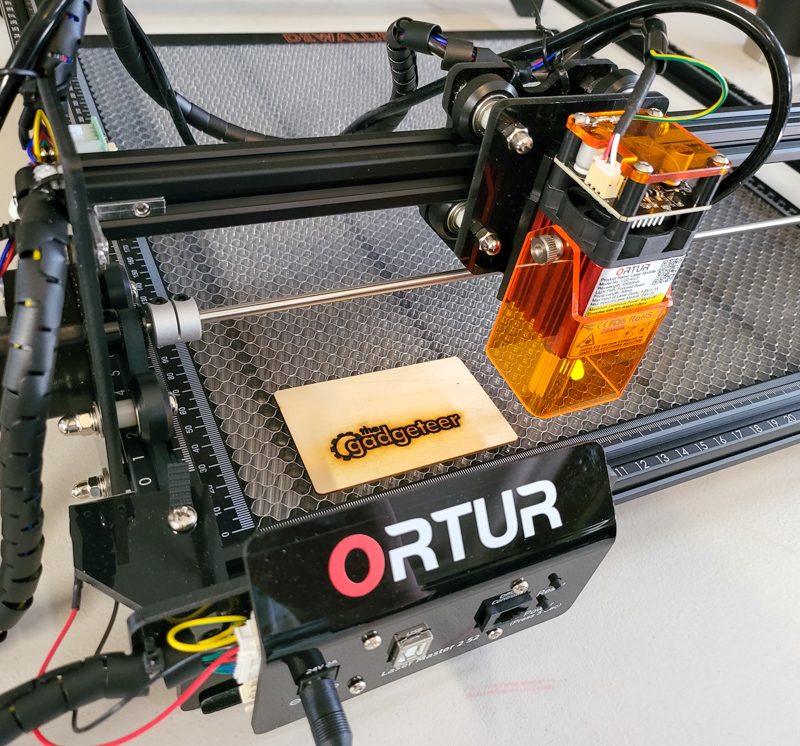
REVIEW – There have only been a handful of times in my life when I wished I had a laser cutter/engraver. It’s the sort of tool that hasn’t ever been at the top of my mind, but now that I’ve received the ORTUR Laser Master 2 S2 24V laser engraving machine to review, it’s opened a floodgate of creative applications that I never knew I could do. Fry from Futurama on my coffee mug? Check. A new dog tag for the little mutt? Check. A butt-themed beer table? Check.
The ORTUR Laser Master 2 S2 24V laser engraving machine (that’s a mouthful) is a laser cutter/engraver system. You can send designs or images to it and either cut or engrave those designs onto a wide variety of surfaces, including wood, metal, glass, stone, and much more.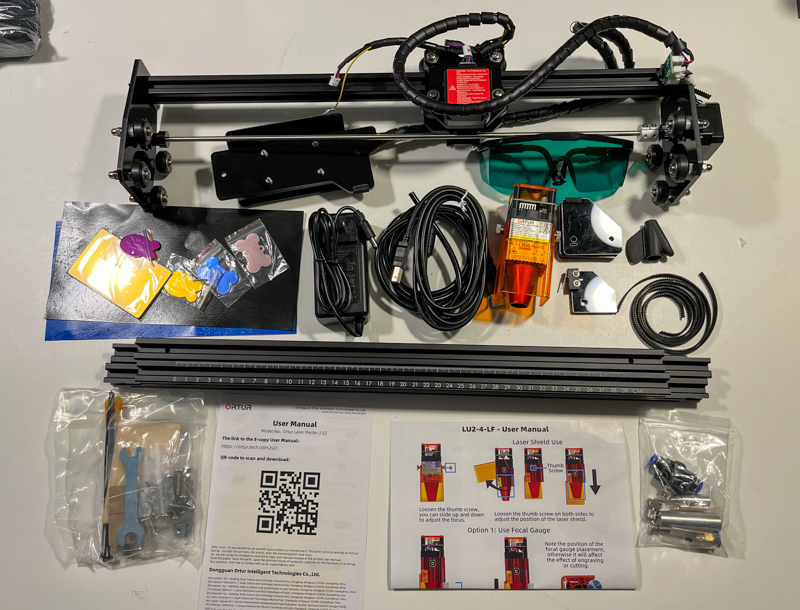
NOT INCLUDED but pictured throughout this review and provided by Made the Best: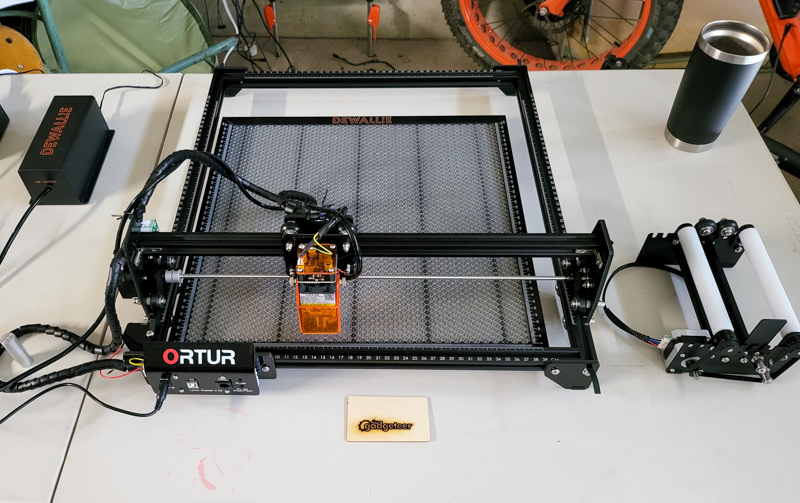
The ORTUR Laser Master 2 S2 24V laser engraving machine seems to be a fairly standard laser engraver/cutter design. A frame allows the laser head to move along the X and Y axis and a small control panel on the front includes power and USB connections as well as power and reset controls.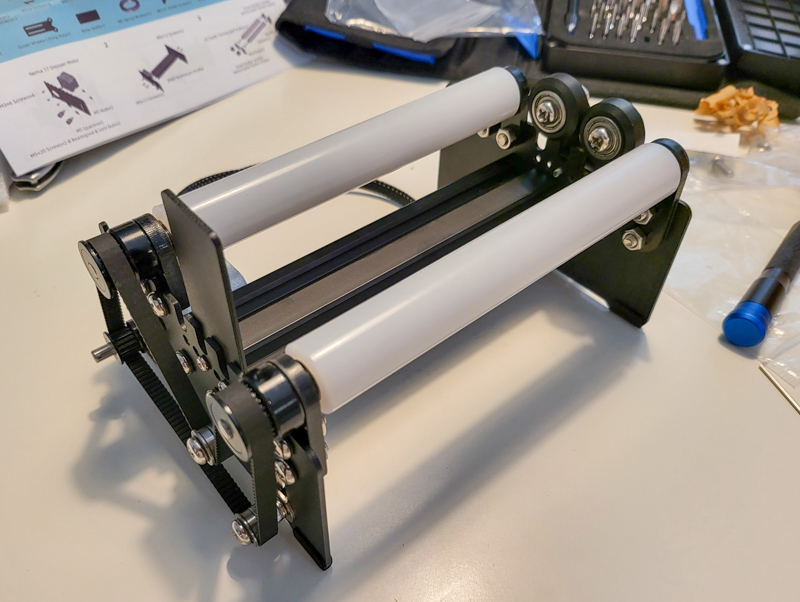
The optional Ortur Y-axis Rotary Roller 2.0 is shown above, this consists of two rollers that can be moved around to accommodate fairly large mugs, bottles, or glasses. This plugs into the control unit directly.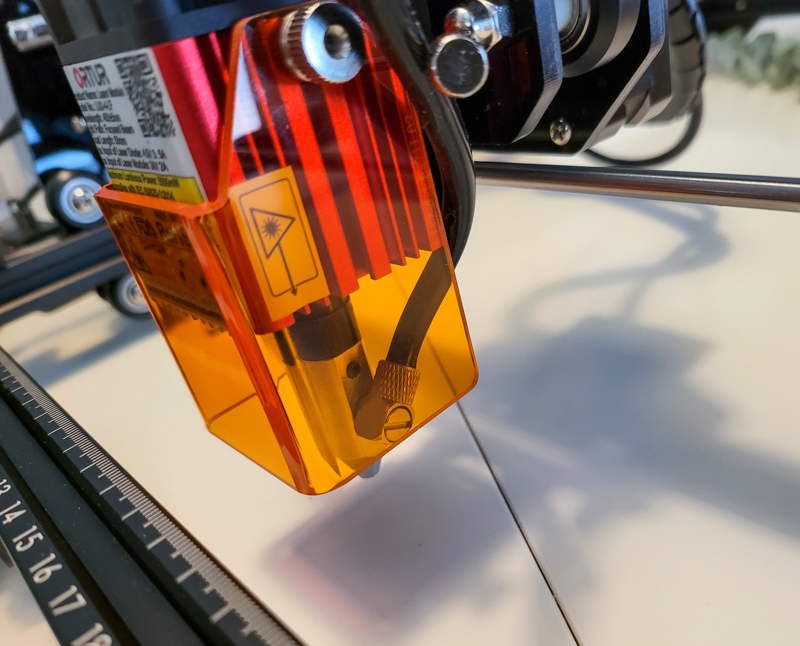
Made the Best also sent over an air pump, which I set up as shown above. This blows a steady stream of air onto the surface being lased, which keeps smoke away and results in less darkened edges due to smoke.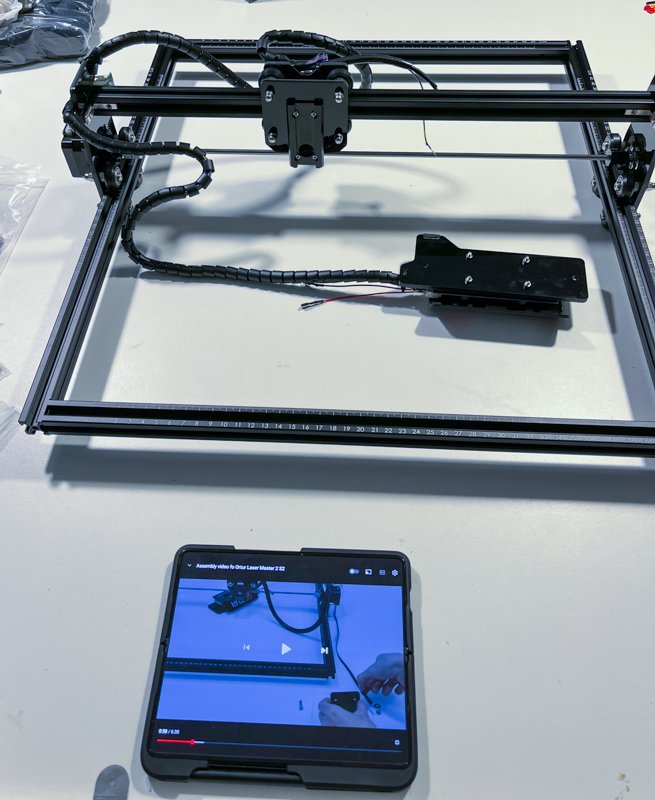
Setup consisted of quite a few screws and belts to be installed, but the tutorial video (a QR code in the manual leads to this) did a good job of clearly illustrating each step.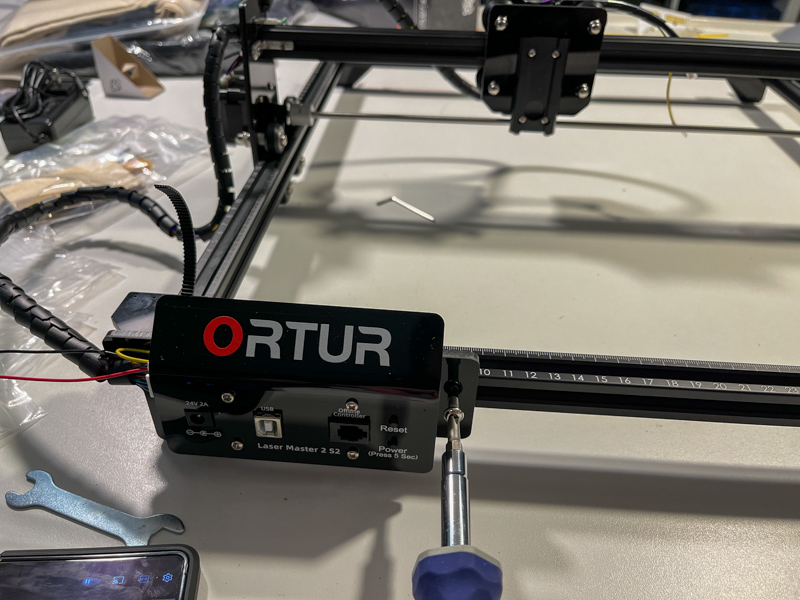
In the shot above, I’m putting the finishing touches on the installation. This all took less than 30 minutes start to finish, and only required a standard screwdriver and scissors or snips to remove excess belt material after installation.
Next, you want to make sure you have something below the object being engraved or cut, I opted for an old piece of a desk for my first test. If you don’t have a safety material then plan on having whatever surface you are on to get scorched and possibly cut.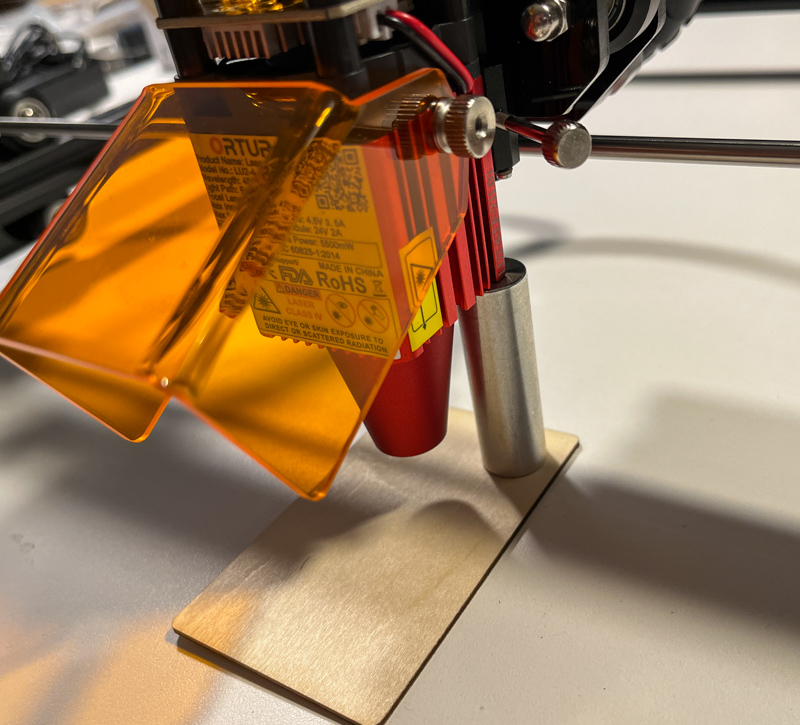
The included small metal cylinder pictured above is provided to adjust the laser height to the perfect position above the item to be engraved/cut. An easy thumbscrew loosens the laser head, and you can slide it up, set the metal cylinder on your object, lower the laser to gently rest on it, then tighten the thumbscrew to lock in that position.
Next up, you’ll need to select software to convert images to cutting/engraving instructions. Made The Best suggests either LaserGRBL (free) or LightBurn (free 30 day trial then $40). Here’s screenshots of both: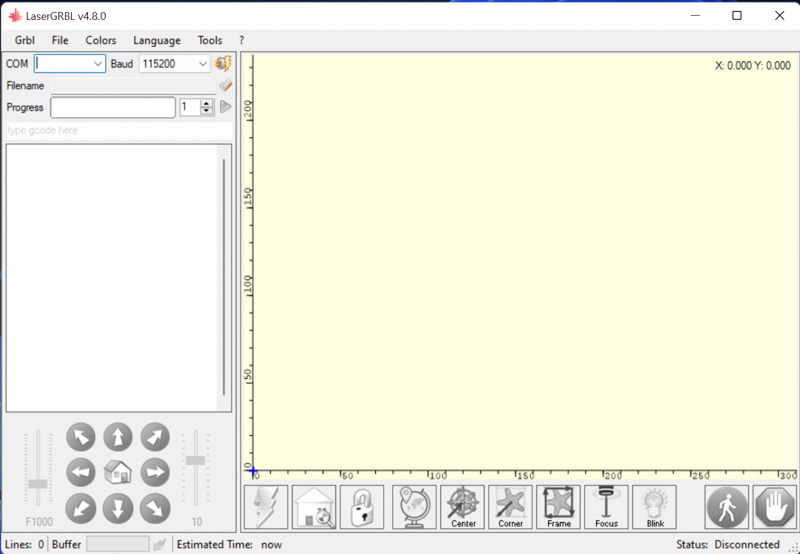
I found LaserGRBL to be fairly easy to use. It feels like 10 year old software, but it gets the job done. I was able to do my first few engravings after watching one or two tutorials.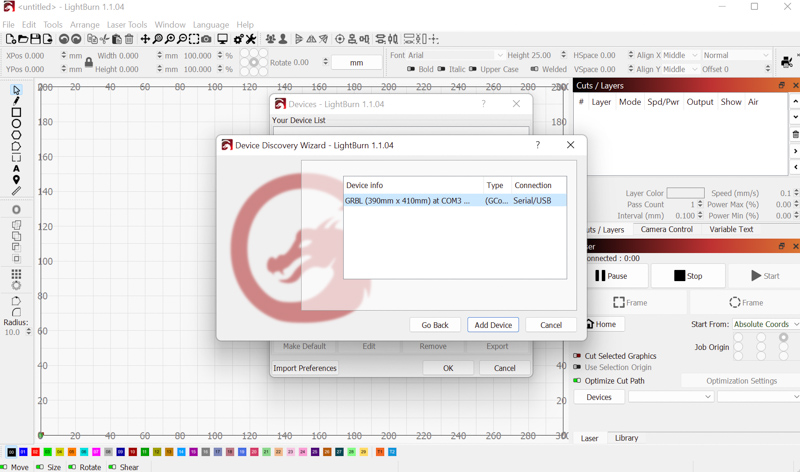
Lightburn (pictured above) is a more complex interface, but it feels like you’d be able to do more with it and it comes highly recommended by many of the creators I found while browsing laser engraving tutorials.
Regardless of the software you use, basically you import an image or design, choose how the software should interpret that to laser instructions, and decide variables like power and speed (which, depending on your material, affect how deeply the laser cuts or engraves).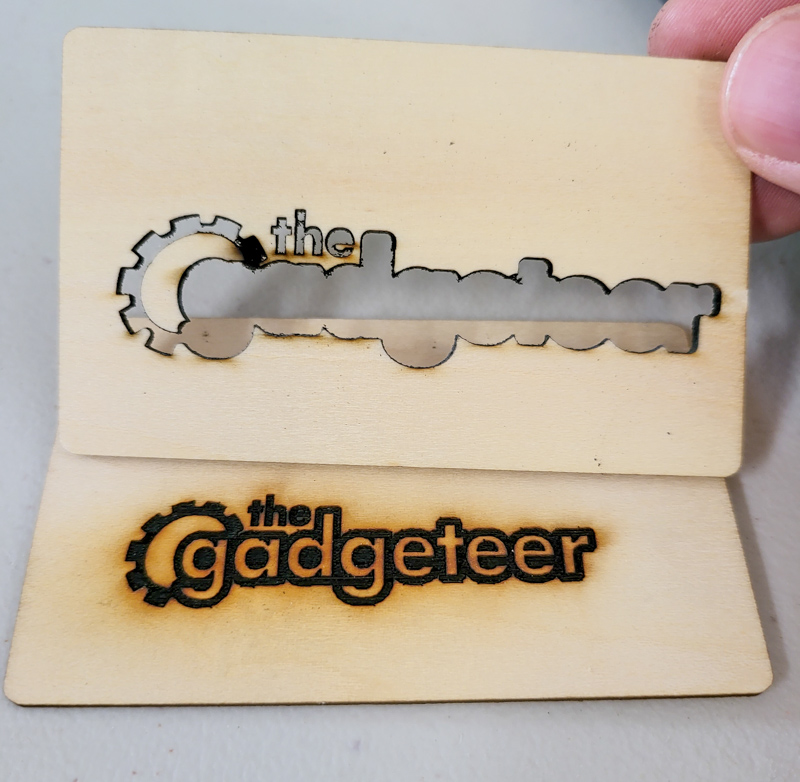
I started with our Gadgeteer logo (naturally), and as you can see above I learned some valuable lessons quickly about laser power and the need to have a safe surface behind whatever you’re cutting. The power in the top one was at 100%, and easily and quickly cut right through the thin wood, while the bottom one was at a 20% setting. The speed you tell the laser to cut at also affects engraving versus cutting – more power and/or less speed will result in a deeper cut.
Once I’d mastered the basics of the settings and the software, I moved on to a more advanced project: cutting a picture of Fry from Futurama onto my coffee mug. I had to connect the Ortur Y-axis Rotary Roller 2.0 (which disables the Y axis motors and instead spins an object in place while the laser can still move along the X-axis). I also had to get creative and raise the whole unit a few inches with some spare wood beams.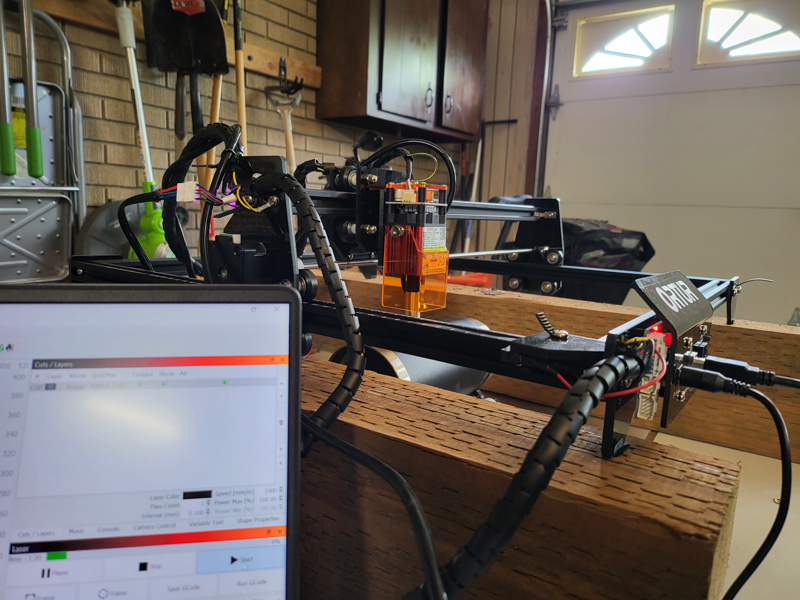
Pictured below: success. Also pictured, an inadvertent test of the optional air blower attachment turned on partway through the engraving (the left side you can see is much darker, this is due to smoke from the engraving not being blown away during the process). I highly recommend getting a blower or using an air compressor with this unit, you can tell from my results what a difference it makes.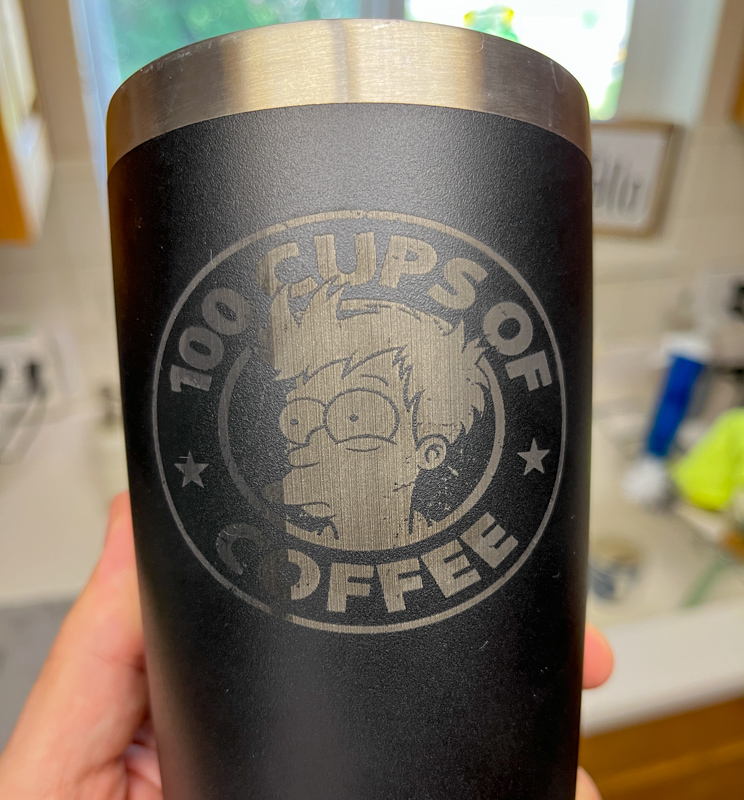
I was highly impressed with the accuracy and performance of the ORTUR Laser Master 2 S2 24V laser engraving machine. I have yet to push the limits of what it can do, specifically in engraving grayscale images onto various surfaces. This is not for lack of trying, but rather lack of experience, several tests resulted in too-light or too-dark images on different types of wood. You’ll need to experiment to dial in a highly detailed image with higher contrast, but the laser is capable of 1000 different power levels (many competing models only have 255 levels). This theoretically could result in up to 1000 shades of grey in an image engraving.
Image resolution is also very high, over a fairly large cutting area (39 x 41 centimeters).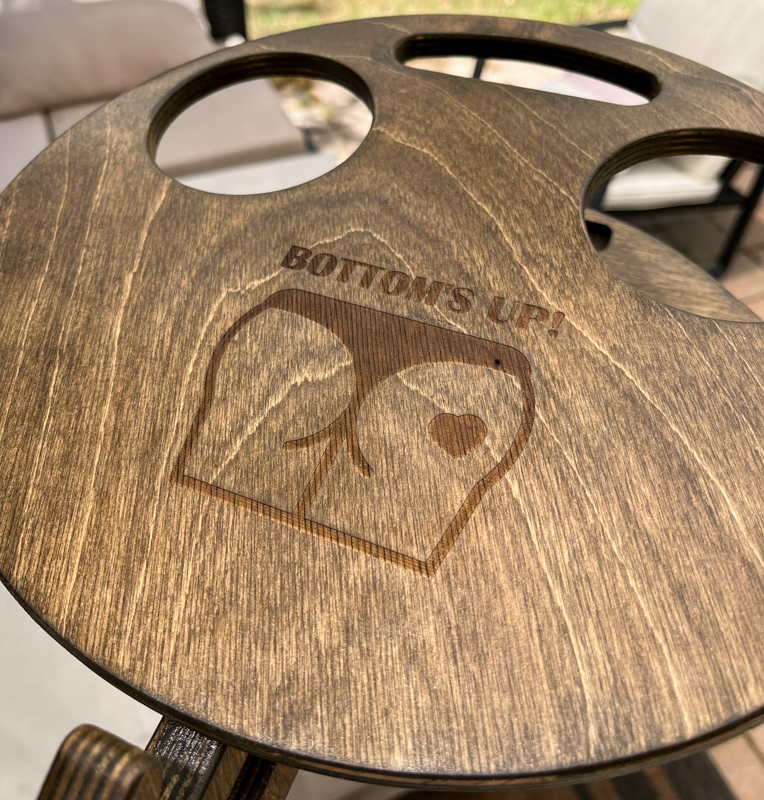
I think the image above sums up the value of the ORTUR Laser Master 2 S2 24V laser engraving machine to me more than any words could. This machine has opened up new worlds of cutting and engraving that I hadn’t even dreamed of before, creative juices are flowing, and I’m excited for many projects in the future!
Price: $359.00
Where to buy:
ORTUR Laser Master 2 S2 LF LU2-4
Made The Best: https://www.madethebest.com/collections/engraving-machines-1/products/ortur-laser-master-2-s2?variant=42866699075800&aff=64
Made The Best Coupon code: M2S2 save $30
Amazon: https://amzn.to/3At1L1F
Ortur YRR2.0 Y-axis Rotary Roller
Made The Best: https://www.madethebest.com/products/ortur-laser-engraver-y-axis-rotary-roller-engraving-module-for-engraving-cylindrical-objects-cans?_pos=3&_sid=bbaaab738&_ss=r&variant=40259244753082&aff=64
Amazon: https://amzn.to/3bVdrji
Source: The sample for this review was provided by Made The Best
Your email address will not be published.
This site is intended for informational and entertainment purposes only. The contents are the views and opinions of the author(s) and/or associates. All products and trademarks are the property of their respective owners. Reproduction in whole or in part, in any form or medium, without express written permission of The Gadgeteer, is prohibited. All content and graphical elements are Copyright © 1997 – 2022 Julie Strietelmeier and The Gadgeteer.
All rights reserved.

The summer capsule collection, called “AKUA”, features Studio 189’s artisan-produced fabrics to debut at The Surf Lodge
[LINK TO DOWNLOAD EDITORIAL & BTS IMAGES HERE]
NEW YORK, June 29, 2022 /PRNewswire/ — Bloomingdale’s today announces AQUA x Studio 189, a limited-edition collaboration between the retailer’s best-selling exclusive brand and the artisan-produced fashion luxury lifestyle brand and social enterprise co-founded by luxury executive and educator Abrima Erwiah and actress and activist Rosario Dawson. The collection features vibrant hand-dyed prints produced by Studio 189 artisans in Ghana in vibrant summer-ready styles including dresses, tops, skirts, and swimwear – all designed to be mixed and matched. The AQUA x Studio 189 collection launches on July 1 at Bloomingdale’s stores nationwide and on Bloomingdales.com. Bloomingdale’s will host celebrations at The Surf Lodge in Montauk, N.Y., from June 29 to July 4, with special integrations across the property, including the premiere of AQUA x Studio 189 collection in the boutique. View and shop the AQUA x Studio 189 collection here.

“By partnering with AQUA on this collection, we’re able to celebrate the work of our artisans on a whole new level,” said Abrima Erwiah, Studio 189 co-founder. “The special hand-batiked prints that were created exclusively for this collaboration resulted in Studio 189’s largest single fabric order to date, which grants us the opportunity to present the craftsmanship of our artisans to a broader audience. It’s an accessible collection that embraces joy with vibrant and tropical designs fitting for the summer season.”
“We’re delighted to have had the opportunity to collaborate with Studio 189 on this beautiful collection,” says Denise Magid, Executive Vice President and General Merchandise Manager for Ready-to-Wear, Center Core, Concessions and Bloomingdale’s Outlets. “As a brand that works with artisanal communities that specialize in various traditional craftsmanship techniques, Studio 189 brings bold, inspired new looks to our beloved and best-selling AQUA portfolio this summer.”
The AQUA x Studio 189 collection entitled “AKUA” was born on a Wednesday during New York Fashion Week after Bloomingdale’s Creative Director of AQUA Erica Ruff Hatfield contacted designer Abrima Erwiah to collaborate following Studio 189’s SS2022 Runway Show. “In Ghana, we are named after the days of the week. For example, Abrima is Nzema for Tuesday born. I felt very moved by this idea of birthing a new project “AKUA” when I was contacted by Bloomingdale’s and AQUA,” says Erwiah. Akua is an Akan female name for a girl child born on Wednesday and is derived from deities. Akua is said to be a champion for the cause of others. Erwiah continued, “This was fitting because the goal of this collaboration was to allow Studio 189 to create more work for the communities we serve in Africa. We were able to produce more than 20,000 yards of hand-made fabric and activate rural communities that really need the work especially considering the effects of the pandemic and rising prices. This was also our first time producing in Asia which is where AQUA produces. We learned new ways of working via skills transfer from AQUA’s family-run factory that is based in LA, Korea and China. This was a true collaboration in every way. The team we worked with has been spectacular and have helped us to achieve our mission in providing jobs, to empowering women in disenfranchised communities, and to support education and skills training.”
The AQUA x Studio 189 collection features vibrant prints produced by Studio 189 artisans using the art of hand-batiking. This art form starts with patterns carved into wood or sponge that are dipped into hot wax and stamped onto cloth. This cloth is dipped into hand-mixed dyes and then the wax is removed to unveil the finished design.
A total of 11 different hand-batiked prints were created exclusively for this collection, including palm leaves and pineapple motifs, each designed in bright, vivid color palettes. The summer styles can be worn on their own or mixed and matched with one another, with ready-to-wear pieces spanning halter maxi dresses, ruffled tiered skirts, miniskirts and more. The collection also marks the first-ever AQUA swim collaboration with one and two-piece swimsuits and that can be paired with the ready-to-wear styles for a beach to bar look. AQUA x Studio 189 has 17 apparel pieces and 8 swim styles ranging from $48 to $198.
AQUA is a contemporary, trend-driven brand available exclusively at Bloomingdale’s stores and online at Bloomingdales.com. Each season, AQUA features of-the-moment ready-to-wear apparel and accessories for a stylish head-to-toe look at an approachable price point. The brand has previously partnered with cultural figures and top brands, including Pendleton, Scout the City, Mary Katrantzou, Zendaya, Helen Owen, Mary Lawless Lee, Yigal Azrouël, Maddie & Tae, Zadig & Voltaire and Madeleine Thompson.
Bloomingdale’s will celebrate the AQUA x Studio 189 collection at The Surf Lodge over the 4th of July holiday weekend with integrations throughout the property. The Surf Lodge boutique will be the first to offer the AQUA x Studio 189 collection, which will be available June 29 – July 4. Continuing the celebration at The Surf Lodge, Bloomingdale’s will also be hosting a private dinner with guests of honor Studio 189 co-founders Abrima Erwiah and Rosario Dawson, and special musical performances.
Visit Bloomingdales.com here and your nearest Bloomingdale’s store to shop the full AQUA x Studio 189 collection starting Friday, July 1.
Bloomingdale’s is America’s only nationwide, full-line, upscale department store. A division of Macy’s, Inc., it currently operates 33 Bloomingdale’s stores and 21 Bloomingdale’s, The Outlet Stores, in California, Connecticut, Florida, Georgia, Hawaii, Illinois, Maryland, Massachusetts, New Hampshire, New Jersey, New York, Pennsylvania, Texas, and Virginia, along with 1 Bloomie’s location in Virginia. In addition, Bloomingdale’s has an international presence with a location in Dubai. Founded in 1872, the iconic retailer is celebrating its 150th anniversary this year. Be sure to follow @bloomingdales on social media, become a Loyallist, and for more information, or to shop any time, visit www.bloomingdales.com
Co-founded by Rosario Dawson and Abrima Erwiah, is an artisan produced fashion lifestyle brand and social enterprise that has recently been a recipient of the prestigious CFDA/VOGUE fashion fund grant and has also won the CFDA Lexus Fashion Initiative for Sustainability. The brand is made in Africa and produces African and African-inspired content and clothing. The brand currently operates a store in Accra (Ghana), an ecommerce site, a manufacturing facility in Accra, and supports various community led projects in Africa and in the USA. Studio 189 works with artisanal communities that specialize in various traditional craftsmanship techniques including natural plant based dye indigo, hand-batik, kente weaving and more. Studio 189 focuses on empowerment, creating jobs and supporting education and skills training. Studio 189 is the recipient of various awards including the prestigious FIT Changemaker Award, the Cooper Hewitt Smithsonian Emerging Designer Award and the Martin Luther King Jr Social Justice award from Upenn. The first collection launched on February 14th 2013 in honor of One Billion Rising. The mission took shape following a trip with Eve Ensler’s V-Day and Dr. Mukwege’s Panzi Hospital in February 2011, through Kenya, Burundi and Rwanda to Bukavu in the Democratic Republic of Congo for the opening of the City of Joy.

 View original content to download multimedia:https://www.prnewswire.com/news-releases/bloomingdales-launches-exclusive-aqua-x-studio-189-collection-301577448.html
SOURCE Bloomingdale’s
Released June 29, 2022

The start of every journey is a single step, and for renowned music producer Calvin Ngo, this was a step he took almost six years ago. Calvin Ngo, popularly known by his artistic name, NGO, developed a passion for music at a young age. He loved and enjoyed listening to different genres of music, which led him to learn more about music production.
According to NGO, he always wanted to know how songs made their way from the studio to the radio. To quench his thirst, he began digging into the production process and started learning about the different techniques used to create and manipulate sounds.
At the time, NGO pursued music production as a hobby while also attending high school. Between after school sports and the workload from his classes, he had no time to take formal music production classes but he took it upon himself to learn through YouTube videos and try to recreate songs that he liked in FL Studio.
“It was a frustrating trial and error process, and most of the time, I wasn’t sure whether what I was doing was the right thing. But I did not give up. I continued practicing, and after months of hard work, my productions started to seem more well-rounded,” says NGO.
This enabled NGO to shape his own sounds. However, the challenges were far from over. NGO didn’t know anyone in the music scene, and with no support or money to promote his work, it was tough to break into the scene. He explains that it took him several months before he got his big break.
NGO shot into the limelight when he released his future bass-inspired dance-pop remix of “Too Good” by Drake and Rihanna. His undeniable talent, skills, and unique sound helped him establish and cement his place in the music industry with the “Too Good” remix amassing over 15 million streams. Since then, NGO has not looked back, and he has released hit after hit.
NGO is the creative behind several viral remixes, including “All We Know” by The Chainsmokers, which has gained 20M+ streams and earned NGO support from The Chainsmokers themselves, Trap Nation, and countless other artists/influencers. NGO has also released “Levitate”, Hear From Me”, and “Somebody”, which are original projects signed to reputable record labels that have attracted much attention from the public.
NGO has over 75 million streams and has been interviewed and featured on several online publications and media networks, making an appearance on the iconic BBC Radio 1 twice. He also launched his own record label, BLNDR, in 2020.
From a struggling young dreamer to one of the most sought-after music producers in the US, NGO is on his way to the top. He is a musical force who is not only dropping great tunes for his growing fan base but is also redefining the music scene. He is introducing a new vibe to the music industry that is uniquely his own, one that is not defined by any particular genres.
NGO says his goal is to create more timeless music as he builds an online family of music lovers. Through BLNDR (Blender), NGO provides upcoming artists with a chance to showcase their talents. Whether it be support in one of his highly influential curated playlists on Spotify or signing the tracks to the BLNDR record label, NGO envisions BLNDR as the launchpad for talented artists, regardless of their size.

For a guy who got his first big break with a song called “We Are Young,” Jack Antonoff sure seems fixated on old music.
At last month’s Bonnaroo festival in Tennessee, Antonoff — former guitarist of the pop-rock trio fun., whose exultant (if somewhat cringe) 2012 smash about youth topped Billboard’s Hot 100 for six weeks on its way to winning song of the year at the Grammy Awards — convened a bunch of musician pals for an all-star tribute to his birth year of 1984.
Last week, he played Inglewood’s Kia Forum with his current group, Bleachers, which stopped channeling Bruce Springsteen’s time-honored thoughts on girls and New Jersey only to cover Tom Waits’ “Jersey Girl.”
A few days after that show, the latest “Minions” movie landed in theaters with an Antonoff-assembled soundtrack of indelible ’70s hits newly recorded by the likes of Thundercat, Kali Uchis, St. Vincent, H.E.R. and Caroline Polachek. “The Rise of Gru,” as the animated film is called, set a Fourth of July box office record, which almost certainly means that millions more grade-schoolers have now heard “Fly Like an Eagle” than had the weekend before.
It’s no wonder Antonoff, 38, keeps rifling through the used bins: Old music is big business these days, with so-called catalog material accounting for 70% of what was streamed last year on services such as Spotify and Apple Music, according to MRC Data. Thanks in large part to TikTok, vintage tunes like Fleetwood Mac’s “Dreams” and Matthew Wilder’s “Break My Stride” have surged onto streaming charts; Kate Bush’s “Running Up That Hill (A Deal with God)” sits at No. 6 on the Hot 100, ahead of Beyoncé’s new single, after it was prominently featured in Netflix’s “Stranger Things.”
Music
Bush, a rare female auteur in the male-dominated music world, has inspired a raft of acclaimed artists from Fiona Apple to FKA Twigs to Japanese Breakfast.
Indeed, “The Rise of Gru” isn’t this summer’s only Hollywood blockbuster with a soundtrack of familiar melodies. For his splashy take on the life of Elvis Presley, Baz Luhrmann recruited Doja Cat, Eminem, Kacey Musgraves and Stevie Nicks, among others, to punch up Presley’s music, while “Top Gun: Maverick” recycles Kenny Loggins’ “Danger Zone” to accompany a nearly shot-for-shot re-creation of the original “Top Gun’s” opening sequence.
Yet Antonoff’s retro leanings have actually made him a major player shaping the sound of modern pop. More than Bleachers — a moderately successful alt-rock radio act headlining an arena for the first time at the Forum — what he’s best known for is his production and songwriting for superstars including Taylor Swift and Lorde and acclaimed critics’ faves such as Lana Del Rey, Clairo and St. Vincent. When the Chicks got back together a couple of years ago (minus the “Dixie”), the groundbreaking country trio hired Antonoff to oversee their return; when Olivia Rodrigo revised the credits for her album “Sour” to acknowledge some crucial inspirations (and perhaps to stave off a copyright lawsuit or two), Antonoff’s name was among those added. At April’s Grammys ceremony he was named producer of the year — one of four Grammys he’s won, along with fun.’s two, for his behind-the-scenes studio work.
Antonoff’s touch — his ability to blend classic and cutting-edge, cult and mass, intimate and anthemic — has proven sufficiently zeitgeist-y that he’s started attracting older musicians eager to connect with fans of the millennial and Gen Z artists who idolize them: Diana Ross and Earth, Wind & Fire’s Verdine White both appear on the “Rise of Gru” soundtrack, while Springsteen himself puts in a cameo on Bleachers’ third LP, 2021’s “Take the Sadness Out of Saturday Night,” which got no higher than No. 27 on the Billboard 200 but which scored Bleachers a last-minute booking on “Saturday Night Live” in January after Roddy Ricch bailed due to a COVID exposure.
So what is it precisely that Antonoff does? In interviews, he routinely describes his production approach as an act of emotional availability — establishing a secure environment for artists to express themselves, then responding in a way that encourages them to keep going further than they otherwise might. Whatever arrangement he helps devise depends entirely, in his telling, on where the artist has led him. “Production isn’t someone with the coolest snare sound,” he told The Times in 2019. “Production is the idea.”
It’s a willful throwback to a more collaborative, exploratory age before hitmakers like Max Martin and the Neptunes provided pop stars and rappers with nearly finished tracks awaiting a marquee vocal performance; it’s also, in the wake of sexual-abuse allegations against the once-powerful Dr. Luke, a shrewd assurance of his respect for women in the workplace. (Jack Antonoff: the original gentleminion.) So inescapable did he seem last year that a mild backlash began forming among listeners who felt he’d overplayed his hand as a female ally — at least until he turned up yet again as Florence Welch’s right-hand man on Florence + the Machine’s well-received “Dance Fever.”
Still, that framing downplays Antonoff’s reliance on a variety of sonic hallmarks: booming drums, airy synths, snaking guitar lines, reverb-drenched vocals, each rooted in a lifetime of obsessive listening and tinkering with both instruments and software. That you can detect his fingerprints throughout the songs from “Minions” — even in cuts as distinct as Phoebe Bridgers’ winsome take on the Carpenters’ “Goodbye to Love” and Brockhampton’s swaggering run through “Hollywood Swinging” by Kool & the Gang — is an indication of how finely he’s honed his textural palette. Maybe too finely: For Bleachers’ rendition of John Lennon’s “Instant Karma!” Antonoff made the insane choice to forgo the late Alan White’s iconic drum fill.
Antonoff, an occasional tabloid presence thanks to his relationships with actresses Lena Dunham and Margaret Qualley, isn’t alone in his flair for slightly denaturing sounds familiar to any music fan. Smart, young-ish acts curious about the history of pop and rock — your Haims and Vampire Weekends and Lady Gagas — have sought out other writer-producers such as Ariel Rechtshaid, Rostam, Blake Mills and Tame Impala’s Kevin Parker, the last of whom teamed with Ross and Antonoff for a standout original, “Turn Up the Sunshine,” for “The Rise of Gru.”
Taken together, these guys’ efforts reflect an era in which the creative instinct has grown inseparable from the curatorial one — when the only way to say something honest about your life is to acknowledge that each of your experiences was shaped by those who experienced and then sang about them before you did.
“I miss Long Beach and I miss you, babe / I miss dancing with you the most of all,” Del Rey purrs in “The Greatest,” a stately piano ballad she and Antonoff co-wrote for 2019’s richly allusive (and endlessly memeable) “Norman F— Rockwell!” “I miss the bar where the Beach Boys would go / Dennis’ last stop before ‘Kokomo.’”
What does distinguish Antonoff, who came up playing in punk bands in his native New Jersey before breaking out with fun., is his eagerness to forget that he knows all that. Fronting Bleachers at the Forum, he began the show in proudly nerdy media-studies mode, mumbling the band’s “91,” about watching the Gulf War on TV, in front of a flickering box; within 15 minutes or so, he pretended to decide that the sweater he’d worn onstage had been a bad move.
“No f— way I’m playing this song in a cardigan,” he said as he tore it off (along with his Coke-bottle eyeglasses) to reveal a sleeveless T-shirt, his bandmates revving up the monstrous and chiming “How Dare You Want More” behind him. And that was where Antonoff, perhaps the unlikeliest rock star since Weezer’s Rivers Cuomo, achieved something like an escape into the fantasy his music holds out. It’s not that the songs about grief and ambition were mapping new thematic territory; it’s definitely not that the “Born to Run” glockenspiel licks were doing something you’d never heard.
But the emotional energy felt incredibly pure as he and the rest of Bleachers pushed their way to a sweet spot where you couldn’t tell the difference between a blaring guitar and a blaring saxophone. He wasn’t lost in the music, exactly, but he didn’t seem to want to find his way back.
The complete guide to home viewing
Get Screen Gab for weekly recommendations, analysis, interviews and irreverent discussion of the TV and streaming movies everyone’s talking about.
You may occasionally receive promotional content from the Los Angeles Times.
Follow Us
Mikael Wood is pop music critic for the Los Angeles Times.
Music
Subscribe for unlimited access
Follow Us

Get local news, offers & more…
The Talent House, a new £4.1 million state-of-the-art creative hub from East London Dance and leading national youth music organisation, UD, has officially been opened in Stratford by the Mayor of London, Sadiq Khan.
The new hub will equip young diverse talent in east London to become the next generation of music and dance professionals by providing free and affordable access to world class facilities as a launchpad to reach new audiences, alongside facilitating collaboration between young people and early career creatives and producers.
The five-year capital project, launched with initial funding from Arts Council England and the Greater London Authority (GLA), brings East London Dance and UD together under one roof. The Talent House will welcome more than 12,000 people every year with an inspirational public programme, co-curated with young people, artists and local residents.
Equipping young diverse talent in east London to become the next generation of music and dance professionals
The Talent House will enable the two organisations, both long-standing champions of the next generation of artists, entrepreneurs and creative leaders, to support even more outstanding but under-represented talent. From schools outreach and skills programmes to industry networks and professional development opportunities, East London Dance and UD will continue to nurture the confidence of young creatives and support them to build sustainable careers, acting as a pivotal player in the talent development pipeline of the next generation of music and dance professionals.
Providing free and affordable access to world class facilities as a launchpad for young creatives to reach new audiences
With professional rehearsal spaces and digital broadcast capability throughout the building, brand new creations and collaborations from bold, authentic and blazingly contemporary east London dance and music creatives will have a vital launchpad to reach new audiences locally, nationally and internationally. More than 2,100 hours of free access to the building with its facilities will be made available to locally-based independent artists and young participants every year.
Facilitating collaboration between young people and early career creatives and producers
An engine room for creativity, the Talent House will create opportunities for early career and more established dance and music artists and professionals to connect with one another, to be inspired and create, as well as encouraging the cross-pollination of talent, ideas, conversation and performance between art forms.
Designed by Waugh Thistleton with internal design by award-winning architect Katy Marks from Citizens Design Bureau, and located within a new development by Vastint UK, the three-storey building housed in an historic warehouse with a modern extension was repurposed by specialist fit-out contractors ITC. The building comprises two dance studios, five music production/recording studios, a live room and two vocal booths, a large flexible rehearsal/events space and a tech lab for education and training. The design also includes a co-working space for artists and members, and a central atrium functioning as the main reception and multi-use space for dance jams and informal gigs.
The Mayor of London, Sadiq Khan, said: “Culture is at the heart of what makes London the greatest city in the world, which is why I’m delighted to officially open Talent House. London’s music and dance scene is thriving, but these companies need a home to nurture and support talent, so I’m proud to have invested in this state of the art facility, which will not only be a springboard for creatives and performers in Newham and across the city, but help to cement London as the creative capital of the world. Investment like this is essential for our city’s recovery and a key part of building a better London for everyone.”
Tia Hassan & Kate Scanlan, Joint Creative Director & Chief Executive, East London Dance said: “For more than three decades, East London Dance has played a central role in the development of dance in east London – nurturing, showcasing and championing young and emerging artists and creatives from black, Asian, ethnically diverse and working-class communities. With the Talent House, our first dedicated home, we are energised like never before to create a world where creative talent is always met with opportunity, no matter where you come from. We’re committed to artist-led and co-designed programmes and to ensuring that the Talent House is a welcoming and open space for people to gather, connect, learn, collaborate and share their creativity with the world – so come and get involved.”
Pamela McCormick, Founder and CEO, UD said: “Over the last 20+ years, UD has seen the potential for excellence in every young person we’ve encountered. Talent is everywhere, but opportunity is not. We know that the specific training needs demanded of Black music are not met by music education; there is a lack of strategic talent development in Black music, with many artists unable to achieve sustainable careers without subsidised intervention; and, whilst Black music has never been more commercially successful in the UK, only a small percentage of the workforce is from communities experiencing racial inequality or barriers to social mobility. As we move into the Talent House, we are poised to realise the potential that this new state-of-the-art resource can bring to transforming the lives of young people, challenging the outdated traditions of music education, and diversifying the face of the music industry.”
Michael Cronin, Head of UK Portfolio, Vastint said “We are delighted to welcome UD Music back to Sugar House Island, alongside East London Dance, to create a place which will support and inspire the local community. It is fitting that this partnership comes together under the roof of a building which has witnessed the Island’s long-standing history of creativity and collaboration and we look forward to playing host to upcoming talent from across the capital.”
Baseless Fabric Announce Free Street Performances of CARMEN Across South London
Photos: First Look at Louis Gaunt in MARY POPPINS
Italia Conti’s Student Welfare Officer Responsible For Offensive Social Media Posts
Karena Johnson Joins Barbican As New Head of Creative Collaboration And Learning
Hot stories
CURSED CHILD To Have Someone on Stage Over 24-Hour Period
Emilia Clarke Has High Hopes For West End Debut
Review: RICHARD III, Royal Shakespeare Theatre
Casting Announced For the UK Premiere of Dawn King’s THE TRIALS at The Donmar Warehouse
BroadwayWorld TV
News + special offers for Broadway Shows
Save Up To 50% On Tickets For JITNEY at The Old Vic
Save 38% on SECRET CINEMA PRESENTS DIRTY DANCING
Show Of The Week: Exclusive Ticket Prices For MAGIC MIKE LIVE!
Recommended for You
Sign-Up for UK / West End News
Follow Us
BWW Sister Sites
Apps
GENE DEMBY, HOST:
Just a heads up, y’all – this episode contains mentions of suicide.
What’s good, y’all? I’m Gene Demby, and this is CODE SWITCH from NPR.
(SOUNDBITE OF MUSIC)
DEMBY: So for as long as CODE SWITCH has been the thing, our team has been made up in no small part of the kids of immigrants. So when we’re all chopping it up on the CODE SWITCH stoop, which is the joke-y (ph) name for the little area in the NPR office where all of our cubicles are situated, we sometimes get to complaining about our families and our parents, you know, as you do, and all the typical generational frictions and frustrations come up, but also so does a lot of commiserating about this experiential stuff – right? – this giant gap in outlooks when you are born and raised in the United States, and your mother or your father or the people who raised you grew up somewhere, you know, halfway around the world.
People on the team have talked about what it was like to go back to their parents’ home country and to see their parents transform into these unfamiliar beings once they were back in this different element, their own element. A normally taciturn father who was suddenly really mischievous and quick-witted, the life of the party even. The anxious mother who was just more assured, who was just moving lighter. Sometimes it was a function of people’s parents slipping back into some role they played in the family order back in the old country, back in the day. And sometimes it was just about their parents being able to step back into a life they had before they had the life they have now, before any number of potential lives and careers and lovers came off the table.
On this episode, we’re going to hear a very personal story from someone who was stuck between these two different versions of himself, these two different modes of being. Miguel Macias was an executive producer with our play cousins over at Latino USA. He grew up in Spain but moved to the United States when he was in his 20s. And he’s spent a lot of his life since toggling back and forth between these two worlds that he inhabited on either side of the Atlantic. And this episode, which originally ran on Latino USA, Miguel gets very honest about his hopes, his regrets, his debilitating depression and what you lose when you choose the freedom of not putting down stakes anywhere.
(SOUNDBITE OF MUSIC)
PABLO: (Speaking Spanish).
MIGUEL MACIAS, BYLINE: This story starts in 2012. That’s the year I started taping interviews with my friends in Spain. The 2008 economic crisis was four years in and not going away anytime soon. I saw many of my friends give up on their dreams of a more fulfilling life as I watched from the outside. So we talked. We talked for hours and hours about the crisis, politics, society, Spain, our generation.
PABLO: (Speaking Spanish).
MACIAS: My generation was born around the time Franco, the Spanish dictator, died. We grew up under a new democracy full of promise that things would be better for us, better than for our parents, not just politically but also economically. But the crisis took away that promise. By then, I had been in the U.S. for more than a decade. I had a stable job as a professor teaching radio production at Brooklyn College in New York City. And at that moment, when so many of my friends were basically drowning, I felt lucky to live somewhere else, to have some stability.
PABLO: (Speaking Spanish).
MACIAS: That’s my friend Pablo, an architect. Studying architecture in Spain seemed like a good idea for a while for my generation, when construction was booming, until it wasn’t, until the crisis devastated the sector. Work started to dry up progressively until there was no work for Pablo. He was unemployed for years.
PABLO: (Speaking Spanish).
MACIAS: He went into a dark place, thinking that, at 40 years old, he had nothing to show for his life…
PABLO: (Speaking Spanish).
MACIAS: …Wondering what good happened to him in 20 years.
PABLO: (Speaking Spanish).
MACIAS: He started doubting himself. Everything you expect to feel when you’re unemployed for a long time, he knew these feelings were coming, and he still suffered from them.
PABLO: (Speaking Spanish).
(SOUNDBITE OF MUSIC)
UNIDENTIFIED PERSON #1: (Speaking Spanish).
UNIDENTIFIED PERSON #2: (Speaking Spanish).
UNIDENTIFIED PERSON #3: (Speaking Spanish).
MACIAS: As I listened to my friends talking about a system that felt like it was falling apart, I told myself, why would there be a place for me in this society? And they told me too in no uncertain terms, Miguel, don’t come back to Spain now; it’s horrible here. So for me, at that moment, the crisis took away a different kind of promise – my dream to go back to Spain one day.
UNIDENTIFIED PERSON #4: (Speaking Spanish).
UNIDENTIFIED PERSON #5: (Speaking Spanish).
(SOUNDBITE OF MUSIC)
MACIAS: I am, by all means a privileged immigrant. I came to the U.S. because I wanted to. I was able to study and get a job. I even had support from my family in my early years here. I guess we could say that I’ve been fairly successful, too. So I could have gone back to Spain any time. I can go back now if I want to. But for some reason, while I once felt free to leave, I never felt I had earned the right to go back. And I could have gone back, too, in those years if it weren’t for the crisis. But instead, I used every opportunity I had to spend time in Spain. And these interviews – they became a way to get to know my friends better, get to know what they thought about me.
MARIANGELES: (Through interpreter) Just one thing. Seriously, Miguel, can I really ask you questions?
MACIAS: Yeah, I’m saying that if the conversation leads to you asking me questions, I will answer them.
MARIANGELES: (Through interpreter) But are you ready for my questions?
MACIAS: Mariangeles (ph) is one of my best friends in Spain. She has a way to cut through the crap when she speaks. I interviewed her twice for my documentary about the crisis, but by the second time I sat down with her in 2016 at her terrace overlooking the center of Seville, the same place where we have had so many parties over the years, by then my conversations with my friends had turned a lot more personal.
MARIANGELES: (Through interpreter) I think that you are part of your group of friends in Spain as much as if you lived here. Now, they are happy when you visit, but they don’t miss you when you’re not here.
Do you consider them your people?
MACIAS: (Speaking Spanish) I do. They are my people, but they miss a great part of my life, the same way that I miss a great part of their lives. (Speaking Spanish).
MARIANGELES: (Through interpreter) I have one more question for you. Do you ever think about coming back?
MACIAS: (Speaking Spanish). Do I think about it? I think about it all the time. Where do you think I’ll be in 10 years?
MARIANGELES: (Through interpreter) You’ll be there. I think you just don’t want to come back.
MACIAS: I did want to go back. I still do. And hearing many of my friends say that I didn’t kind of broke my heart because it made me feel that they were seeing something I couldn’t see, that I had reached a point of no return. In my mind, I had just never found the moment to come back. I always imagined there would be this time in my life when I would be successful enough to be able to make some kind of triumphal return, to finally rest, to even be happy, build a house, work on my own things, not have to worry about my career anymore, and that moment has never come.
So I’m not sure how 10 years have passed since 2012 and I still have not been able to make a decision because I’m afraid – afraid that 20 years of my life could evaporate without a trace if I went back, afraid that my achievements would not mean much in Spain, that I couldn’t even get a good job, afraid that the past two decades of my life, the effort, the fighting, the sacrifice, the loneliness, could amount to nothing. It’s an immigrant’s worst nightmare, going back with nothing to show for. And while this might not actually be true, those are my fears. And fears have a way to sneak up on your decisions, to convince you that the worst-case scenario is real.
(SOUNDBITE OF MUSIC)
MACIAS: The first time I ever visited the U.S. – long before I moved – was in 1991, when I was 15 years old. My father was obsessed with the need to speak English to succeed in life. He was also obsessed with succeeding in life. So my parents signed me up to one of those summer programs where you spend a couple of months with an American family. I spent a few summers over the years with Peg and Mick (ph), my host family in the U.S., who made me feel at home in Delaware. I kept coming back. I guess I liked it there. I don’t really remember. Lourdes (ph), who was my girlfriend at the time, she does.
LOURDES: (Speaking Spanish).
MACIAS: She remembers me connecting with the U.S. when I was young. She even still has handwritten letters that I sent her during those summers. I would tell her about everything that I observed with bright eyes.
LOURDES: (Speaking Spanish).
MACIAS: I remember the night before I visited the U.S. for the first time. I have this image of walking into my room and seeing a bottle of scotch and a box of condoms on my table. It took me a few seconds to understand that my parents had found them where they were hidden in my room. I was 15 years old, and I was a difficult teenager. But that didn’t keep me from getting straight As in high school. My mother, who’s a psychologist, took me to her home office to talk to me about the obvious risks of drinking and having sex at that age. All I could think about was the fact that the next morning, I had a ticket to jump on a plane and travel to Delaware.
That was my first summer in the U.S. Many followed in the ’90s. So when I decided that I wanted to go live somewhere else, the United States seemed like the logical place for me to go. In January 2001, I packed a suitcase, got a job as a waiter in the West Village, and I started to count the years – five, 10, 15, 20, almost half of my life at this point.
(SOUNDBITE OF MUSIC)
MACIAS: My initial goal was not necessarily to stay in New York permanently. I wanted to study radio production for a year, maybe two. I enrolled in the master’s program, I got a student visa, and I started working as a teaching assistant at Brooklyn College. I thought I was going to go back to Spain with my fancy title and score a great job. I had spent a bunch of time in Spain after college working in bars and clubs, playing guitar in a rock band, just being young. So when I moved to New York at 25 years old, I was ready to accomplish things.
(SOUNDBITE OF UNIDENTIFIED SONG)
UNIDENTIFIED MUSICAL ARTIST: (Singing in Spanish).
MACIAS: For a few years, I just put my head down to study and work at all times, except for when I went back to Spain for the summer or for Christmas. I remember having the feeling during those years that I had started running, running at all times, and that I was never going to stop.
IRENE: You were so busy during that time. Even before you began school, I remember you were always very busy, and you were working a lot of hours.
MACIAS: Irene (ph) was a professor of mine in grad school. She met me just a few weeks after I arrived in New York in 2001. She’s been a patient mentor, even though I’ve disappointed her a few times throughout the years with my decisions.
IRENE: Do you remember how you felt then?
MACIAS: I think that when I was a student, I was very excited about my potential, you know? At the time, I thought that I may have a lot of talent. And I was very excited about what I could accomplish. And I was convinced that I was going to achieve great things, basically.
I worked with Irene on my master’s thesis project. It was a long audio experimental documentary about romantic love called “Chasing Love.” It was really important to me. I thought it was going to win all the awards or something.
(SOUNDBITE OF DOCUMENTARY, “CHASING LOVE”)
UNIDENTIFIED PERSON #6: I’ve been in love and it was a physical feeling. It wasn’t like the idea of, oh, now we’ll be together. That’ll be great. It was a feeling in my stomach.
UNIDENTIFIED PERSON #7: People just take love at face value. You know, like, oh, they’re married, so they’re in love. They love each other. But you’re like, but why? Why are they in love?
UNIDENTIFIED PERSON #8: There’s definitely things going on in our bodies that require us to touch other people. You know, that’s definitely true.
(SOUNDBITE OF MUSIC)
IRENE: I think in the present that you are a very, very, extremely talented person. But maybe I always felt that your creativity was, like, very slippery. I felt that you were sabotaging yourself the whole time. Your whole life in Brooklyn College was very general with other people, but I think to a point of being an excuse not to sit down and confront a creative project because at the end of the day, we’re always afraid of rejection.
MACIAS: She is right. I am afraid of rejection. That’s why the creative process is something that has haunted me for years. Creativity is slippery indeed, and I needed to take risks. But I’ve always been risk-averse, so instead I turned to my professional development as the thing to be proud of. I made it the reason why I came to this country and success, progress, accomplishment became crucial for me. As I worked, I worked at all times.
(SOUNDBITE OF MUSIC)
MACIAS: In 2004, after graduating from Brooklyn College, I was offered a job in public radio and I couldn’t turn it down. And that’s what I told myself, that I couldn’t turn it down. There would surely be another chance to go back to Spain. Funny how I keep telling myself the same thing decades later. Then, not long after I started my job as a radio producer, I met Julia. Her name is not actually Julia, but we’ll call her that.
(SOUNDBITE OF MUSIC)
MACIAS: We fell in love, started spending almost every single night together, then moved into a beautiful apartment in Brooklyn. We got married. Julia brought along perhaps the happiest moments of my life in the U.S. I felt I was growing roots. I loved the life that we had. We eloped, went to Montauk for our honeymoon. We were a team, and we could do anything we wanted. So we picked up and moved to LA. Julia taught me so many of the things I know about this country. As an immigrant, I’ve always been wary about assimilating. But with Julia, I actually understood so many things – politics, culture. She made me a football fan who would go to the bars on Sundays, eat wings, drink beer and cheer for the Steelers. Went to Dodger Stadium quite a few times to see Manny Ramirez at bat, Broxton closing games. I once cooked a rabbit paella for a bunch of friends in the amazing yard that we had. I felt like I was growing up. That was a time when I was the farthest away from Seville, both literally and in spirit. But I would still go back for Christmas every year.
(SOUNDBITE OF MUSIC)
MACIAS: There’s a picture Julia once took of me in Spain. I’m laughing, my head tilted back, while hanging out with friends on a sunny Friday afternoon. One day, while looking at that picture, Julia said something I will never forget – when you’re in Spain, you’re like a different person. Even the way you laugh is different. I couldn’t understand what she meant by that. Then, over the years, I spoke to other immigrants about it. They all had heard the same thing. I’ve never been able to understand the differences between my two identities. Like, I couldn’t give you an example. It’s more like what I hear from people who know me about the way I laugh, the way I interact with other people, the faces I make. But there’s also something else, something that has shaped my identity deeply.
(SOUNDBITE OF MUSIC)
MACIAS: So how do you think about the meaning of life, then? I mean…
LISALI: Oh, no. You’re not going to ask me that question (laughter).
MACIAS: Yes, yes, yes. I mean…
LISALI: That’s ridiculous. This can’t be the first question.
MACIAS: (Laughter).
LISALI: Are you crazy?
MACIAS: That’s my good friend, Lisali (ph). She emigrated from Brazil decades ago. She’s one of my closest friends in Brooklyn, and she has seen me navigate all the changes in my life.
LISALI: Ultimately, I think it’s about daily survival, but it’s also about the love and the connection you make with people. Yeah, in general, I am a half-glass-full person, I guess. But it’s funny because I see you that way, as well. I know you’ve struggled with your depression, but it never transpired in our relationship. I know that happens in your life because you tell me, but it’s not something I experience. And I actually – my interactions with you, I see you as a happy person.
MACIAS: I am optimistic, you know, as a way to survive, you know? So – OK, so I just need to think positively about where things are going to go because, otherwise, I will be depressed all the freaking time, basically, you know?
LISALI: Right. But it’s also interesting that I feel like not only our interactions, I find you are – seem a happy person. You are always enjoyable to be around. You’re a positive person. But I feel like you also have it so together. Like, you are one of the most punctual people I know, and I’m pretty punctual.
MACIAS: I have suffered from chronic depression since I was a teenager. I’ve done all the things that you can do – therapy, medication. I am stupidly proud of never missing a day of work, never saying no to a plan with friends. But all the while, I was suffering.
The other thing that I’ve thought sometimes is that being an immigrant always kind of – it’s complicated, mentally, to some extent, you know? I mean, you know…
LISALI: Yeah.
MACIAS: …I suffered from depression, you know, a decade before I moved to the U.S. But it’s true that, you know, you have to develop a little bit of a different personality and different language, right?
There was a time when I was young, when I was openly sad. My friends in college knew me as someone who was always thinking, questioning, but also sad. I was convinced I wouldn’t make it to an old age. I don’t know how far I thought I would get, but suicide was a real option in my mind.
(SOUNDBITE OF MUSIC)
MACIAS: Then one day – I’m not sure why – I decided I did not want people to see me that way again. So I stopped showing my sadness. When I moved to the U.S., I had a chance to develop a different reputation, not just in the way people saw me but also in the way I thought about myself. I only told my closest friends about my depression, and when I did, I felt I was putting my life in their hands. I saw it as a weakness, a liability. I was convinced that if I told people, they would never look at me in the same way. And even with people I told, I never really showed my suffering. But my wife, Julia, did see a lot of the suffering, and she suffered with me as a consequence of it. She didn’t know what to do when I would sit on the bed in the morning and stare at the floor, unable to explain what was going through my head.
There are two interesting things about suffering. One is that after the years, if you make it, you know you can survive it. So when something difficult actually happens, it might not even make you that sad because it’s something real. After all, suffering for a reason is much easier than suffering for no reason. The other interesting thing is that you want it to stop, and so you’re always thinking about what to do to stop it. And I don’t mean hurting yourself, although those thoughts are always lurking around. I mean wondering what other life will make you happier? A different job, a different city, buying something, selling something, meeting someone, breaking up with someone.
(SOUNDBITE OF MUSIC)
MACIAS: In January, 2012, Julia and I separated. We had moved back to New York a few years before. I thought I would be OK, but I wasn’t because it touched the core of my identity in this country. I felt uprooted, out of place, lost. I moved into a room in Prospect Heights, sharing an apartment with two young women – medical students. I would get up every day before dawn, go to have the same breakfast at the same local cafe, then head to work, stay way past my teaching hours and only return home late at night. I felt like an immigrant all over again. And then something happened – a moment that has stretched over the years for me that never really ended.
MARIA: (Through interpreter) When I met you – I didn’t know, Miguel, because – what do I say – how American you seemed to me when I met you.
MACIAS: (Speaking Spanish).
MARIA: (Through interpreter) The large shirts. Well, when I met Miguel, Miguel was a very strange American.
MACIAS: I met Maria outside of a bar in Seville. People love to be out on the streets in the south of Spain, letting the hours go by while you talk about nothing in particular. And there’s nothing in the world I love more than getting together with a group of friends outside. You can send a WhatsApp message at 1 p.m. and by 2:30 p.m., you have eight people together at some bar in the sun and no one make plans for later because you know you’ll be there for hours. So Maria pointed at me from inside the bar. I looked around and gestured, me? She said, no, no, the friend next to you. Maria came out of the bar and Mariangeles, my friend, introduced us. We smiled at each other a lot, didn’t talk much. Nothing happened that night, but I hoped we would run into each other again, which happens a lot when you spend hours outside of bars talking about nothing in particular. We ran into each other another night, and so it begun.
MARIA: (Through interpreter) I really think that when I first noticed your personality change, when I realized you went from a Spanish to an American way of being, was in the last part of our trip to the United States when we arrived in New York.
MACIAS: It did not take long for Maria to realize there was Miguel in Spain and Miguel in the U.S.
MARIA: (Through interpreter) You became much more serious, you looked down more, walked faster, talked to me less.
MACIAS: Maria and I fell in love very quickly. I guess everybody falls in love very quickly, but it was really special. Meeting Maria started a period of my life when I would use every opportunity I had to go back to Spain. I would load my big suitcase, close up my little apartment in Crown Heights and take off for months at a time. Every time I had to go back to New York, it was heartbreaking to separate from Maria, my friends – every single time. And it did not get easier over the years.
MARIA: (Speaking Spanish).
MACIAS: This conversation was recorded in 2017 in Spain. We had actually broken up after a really tough stretch for both of us. We sat in an empty living room to talk with the sun coming through the windows.
(Through interpreter) What role do you think my visits to Spain play?
MARIA: (Through interpreter) I think it’s a role of – I mean, your visits have a nourishment role – nourishment in many ways. (Laughter) You eat all the tapas in town. And I think it also contributes to your survival because I don’t know how sustainable a life like the one you lead is without having a little bit of affection from time to time. And you do have friends there, but I think relationships here are more about touching and also more about laughing.
MACIAS: (Through interpreter) I do laugh a lot more here, yeah.
MARIA: (Speaking Spanish).
MACIAS: (Speaking Spanish).
MARIA: (Through interpreter) And also, you always come wanting to laugh, sitting down with your friends and seeing that everything is the same. I don’t know. I would say that you’re home. I know you wouldn’t say it, but these are things that make you feel like you’re at home.
MACIAS: And I held on to those things over the years. I don’t know if it was a choice I made or the sway of the small things that made me feel at home in Spain. My friends are a huge part of it. But then there’s Maria. We continued to see each other after breaking up. And naturally, after a while, we came back together.
(SOUNDBITE OF MUSIC)
MACIAS: During that time, one of those days walking down the street in Spain, Maria asked me what I thought love was, and I told her something like, it is full trust. It is caring, understanding, support, really knowing each other, more or less what you and I have. And out of the corner of my eye, I saw her hold back her tears. Another day, when I had just arrived from the U.S., she hugged me on the subway and told me, it’s just that life’s better when we’re together. And I stayed there, hugging her, silent, so that she could not see that I was holding back tears.
(SOUNDBITE OF MUSIC)
MACIAS: I would feel deeply lonely in New York after spending months surrounded by my friends and my girlfriend, but I would also struggle when I spent long periods of time in Seville without my usual work routines. Routines are a big thing for me. It’s how I fight depression.
(SOUNDBITE OF MUSIC)
MACIAS: A few years later, I got tenure at Brooklyn College, yet one more reason not to give up everything I had accomplished. But I kept recording interviews with my friends in Spain.
UNIDENTIFIED PERSON #9: (Speaking Spanish).
UNIDENTIFIED PERSON #10: (Speaking Spanish)
MACIAS: I also taped hours and hours of me just hanging out with my friends, tape that I stored on a harddrive, tape that I haven’t looked at much, the past 10 years of my life in video as if I was trying to hold on to those moments, as if they were not happening unless I was taping them.
UNIDENTIFIED CROWD: (Singing in Spanish).
(SOUNDBITE OF MUSIC)
LISA: I didn’t send you the book “Wherever You Go, There You Are”? I didn’t insist that you read it?
MACIAS: I didn’t read, it, no. “Wherever You Go, There You Are”? – tell me.
LISA: Oh, we have to – “Wherever You Go, There You Are.” It’s a famous book about exactly that – you know, that there is no better place.
MACIAS: Lisa is a dear friend from my LA years. We were really close back then. Now, we talk less often, but I still consider her one of my closest friends in the U.S. We talked about this notion that your problems travel with you.
LISA: I don’t think it’s untrue that somebody can be happier in a certain environment than in another. You know, I don’t think that that’s untrue. But I think, at the core, simply relocating doesn’t erase whatever fundamental issues or needs or demons or angels or whatever in us.
MACIAS: I now know the depression came with me when I moved to the U.S., even when I tried to hide it, to deny it, to pretend it didn’t exist. And I am terrified now that depressio will chase me back to Spain in full force if I moved back.
Right. I mean – and my fear is that nothing will get rid of those demons. So on one hand, I have this, like – this constant need to make decisions to be happier and, on the other hand, I have this constant fear that, no matter what I do, I will never be happy.
LISA: What do you think it means to be happy?
MACIAS: For me, being happy means to not suffer, basically.
LISA: Mmm hmm.
MACIAS: I mean, if I were able to just go through my days without suffering, then I would call that happiness.
(SOUNDBITE OF MUSIC)
MACIAS: Sometimes, I forget that I’m depressed. I take my medications every day as if I was taking vitamins. I pretend that I’m handling things perfectly, that depression is not influencing every single day of my life. And every day, when I get up, I check on myself for a minute to see where my mind is. Am I going to be able to cruise through this morning, or is it going to be a battle? I’ve wondered many times if the process of migration, the process of uprooting yourself, developing a different personality and different language might be the worst possible combination for people who suffer from depression.
Migrating, just like depression, is not a single event. It happens every day when you get up, happens every time you meet someone and they notice your accent, every occasion someone makes an old cultural reference and you don’t get it. It happens every time something important happens back at home and you’re not there for that – a birthday, a death, a celebration, a sickness, good news, bad news, no news, this life. And you’re not there for any of it. And over the years, my depression and my process of migration have intertwined in a way that now I no longer can tell them apart.
(SOUNDBITE OF MUSIC)
MACIAS: The pandemic caught me in Brooklyn in 2020. I had a plane ticket to go back to Spain around Easter, and I remember telling Maria in February, I don’t know, this COVID thing is not looking good. I worked from home during those months, and I mostly did OK, keeping myself busy, dodging sadness one day at a time.
In early April, my mother told me that the private nursing home where my father lived was being taken over by the public health system. A few days later, she called me to let me know that my father had tested positive. We laughed it off. My father had survived a devastating stroke, decades of living under the risk of dying from another stroke any day. COVID could do nothing to him. I have never liked to talk about my father. I was 12 when he had the stroke. I only have scattered memories from that time, but I was never able to bury the image of him trying to smile at me when I walked into the hospital room days after. My sister Beatriz was two years older than me.
BEATRIZ: I don’t remember very much. I just remember the shock of seeing him like that. I think my mom said, you’re going to recover. She’d talk to him in a very tender way. And she said, you’re going to recover, aren’t you?
MACIAS: He did not recover. He became disabled, fought hard to get better. And he was relentless, the way he had worked relentlessly all his life. But ultimately, he never got much better. Beatriz and I had never talked about this until this past Christmas Day.
BEATRIZ: I felt you separated from – I don’t know if the family or me, but I remember before that we were very actively united, you and I, as children. And I don’t know if that was a turning point – kind of afterwards interpreted that it was too hard for you. So you kind of got away from the whole family. And part of the family was me. But I also felt bad because I was a child, so I felt I was left alone.
MACIAS: As I went into my teenage years, I wasn’t just far away from my family; I was also having fights with them all the time. My father needed a lot of care, and I didn’t help. It all fell on my sister and my mother.
BEATRIZ: And I was very, like, very clear of the fact that I was still talking about him as an agujero negro.
MACIAS: Beatriz calls him an agujero negro, a black hole of energy and care. Even when she took him on big trips to Russia, to New York, just to please him, he could not be grateful.
BEATRIZ: I went there saying, this is just for him, so I’m going to do whatever he wants. And it was very obvious that he couldn’t be good. And I would say, do you want to do A or B? And he would say B, and then he would just be angry at me because we did B and shouting at me. And in that trip, it was – for me, it was very obvious that was something I had been seeing all along my life. It was toxic in some way, but in that trip, that was obvious.
(SOUNDBITE OF MUSIC)
MACIAS: I barely remember anything about my father before he had the stroke. My mother always tells me that I was really close to him, that I would go everywhere with my father. But I’ve wondered many times if he ever had the capacity to enjoy life. He was old-fashioned, obsessed with work and productivity. Everything he did had to have a purpose. Even dancing sevillanas was a project for him. My mother told me once about a summer when he got to the family’s house near the beach for a long vacation. He sat on the stairs and said something like, what am I going to do here with all this time? He would go on long bike rides, and I would come along. He would buy lots of sardines and grill them at home. I didn’t like sardines back then. I love them now. But my relationship with him after the stroke could not have been worse. I thought he was mean, ungrateful, controlling.
BEATRIZ: Yeah, I remember you couldn’t look at him of the face when we were having lunch as teenagers, very young, here in this table. And it was always tense when we were together. But I remember specifically, you don’t – do like this. You’re looking at the table. And I interpreted that – I don’t know – if you couldn’t just accept that he had gone, that you felt abandoned in some way by him.
MACIAS: So, you know, the one thing that I’ve talked about in therapy many times, but, you know, it’s – I don’t know if there’s any conclusion, but, you know, the fact that for all intents and purposes, you know, Dad died basically when he got sick.
BEATRIZ: Yeah.
MACIAS: My father wasn’t much older than I am now when he had the stroke. I cannot imagine what it was like for him and my mother. And for me, I simply never came to terms with what happened. The father who took me everywhere became forever disconnected from this other person who I never learned to love. Those are the years when I started going to the U.S. during the summer. The United States became my escape. I miss Spain. I found refuge in my friends. They became my lifeline.
BEATRIZ: It was also obvious that you were a different person when you were with your friends. I’ve said you have anesthesia when you were at home, but then you will see – I will see yourself with your friends. And you were totally different, and you were very loved.
MACIAS: Yeah. So yeah, I think that I became very cold with the family, and also unfair probably. And with Dad, I don’t think I was – I was very unforgiving with him.
(SOUNDBITE OF MUSIC)
MACIAS: I’ve never known how much of my father’s toxic behavior was there before and how much came after his stroke. My mother and sister explained it in a number of ways, but I didn’t understand it or didn’t want to understand it. So I moved away, emotionally and physically, leaving the burden of caring for my father to them. It was selfish of me, like many of the decisions I make. I’ve been running away from the legacy of my father all my life. My constant need to accomplish things in my life in the U.S. to one day earn the right to go back – it’s pretty clear to me now where it comes from, but I don’t even know what exactly I’m trying to accomplish anymore and for what purpose. The further I get, the more elusive the notion of success becomes, and the opposite of success is failure.
(SOUNDBITE OF MUSIC)
MACIAS: On April 9, 2020, my mother called me to give me the news. My father died of COVID three days after testing positive alone in his nursery home in Seville. I cried on the phone, took the rest of the day off, went back to work the next morning. After all, suffering for a reason is much easier than suffering for no reason.
(SOUNDBITE OF MUSIC)
MACIAS: As the years went by, I changed jobs as part of this accomplishment strategy of mine, as it wasn’t already problematic. The only problem is that the burden fell on my relationship with Maria. I had less and less time for her, and Maria warned me more than a few times, this is not going to work, Miguel. And it didn’t really. But we persevered, mostly thanks to her patience. And then I got an offer for a great job in D.C., an offer I couldn’t turn down. Maria did not take it well.
El tema. What do you mean by el tema?
MARIA: (Through interpreter) Well, the topic – I’m talking about the subject of what’s your plan? What is your life plan? What do you plan to do?
MACIAS: This was recorded in October of 2021, when Maria visited me for a week in D.C. The day she was flying back, we sat down on the sofa, with the warm sun coming through the windows, to talk.
MARIA: (Through interpreter) It is very difficult after 10 years and the distance to have projects in common and suddenly, once again, take it all to pieces and have to rebuild it in some other way. And also – this is something I have already told you – that I think they’re going to give me the Nobel Prize for patience because my decisions, my preferences, my personal growth, vital and professional growth – they are never taken into consideration here.
MACIAS: Well, I feel – I mean, like, yeah, I mean, that’s true. But I feel that I do have a huge amount of respect for your – I mean, something that people ask me all the time is, you know, so is she going to come here, you know? And I always think that, you know, for me, it’s always – I think that I have a lot of respect for your life there, your job, family, friends. And I’ve always felt that asking you to come here would be a huge sacrifice. So in a kind of – in a twisted way, I am taking it into consideration.
MARIA: (Through interpreter) But again, it is a consideration that you’re having for me in which you’re not taking into account what I think because this is an old conversation, and you know that. And you have never asked me to come live with you directly. Is this a project of yours in which…
MACIAS: Yeah, I mean…
MARIA: (Through interpreter) …We’re going to see how long I can last by your side? And what will I feel like? Working – just working for you, and working and waiting for me – is that what you want?
MACIAS: I don’t think so. I don’t think so. I mean, I’m kind of like – there’s this great irony to the way I approach life in general, which is I’ve always – since I was very young, I’ve been obsessed with being ahead of life, basically being ahead of the kind of things that you will know 10 years from now, 20 years from now so that you can make the right decisions earlier in life. And so the irony is that that has kind of turned into this eternal chase. In the process, life is going by, basically. And I think that’s what makes me sad about the past, that I feel like I’ve just been running all the time (crying).
MARIA: (Through interpreter) Oh, my darling, maybe you have the opportunity to stop running and to just be. That is why I have come to visit – to be with you, not to do many things or eat in many places or see the Capitol many times. I have come to be with you and spend time with you, which is the only thing I have decided – try to spend time with you when I’ve had the chance, when you have allowed me to.
MACIAS: Hearing this broke my heart. It breaks my heart every single time I hear it. I’ve wondered too many times what kind of person I am, if I am capable of hurting and disappointing people that I love. I’ve made some mistakes in my life – sometimes mistakes to rectify previous mistakes. I’ve dragged Maria in the process. I’m desperately hoping that those mistakes somehow amount to the right final outcome to one correct final decision. But maybe lately things are beginning to change.
(SOUNDBITE OF MUSIC)
MACIAS: Recently, a friend of mine sent me a message. She’s also an immigrant to the U.S. She also struggles with depression. She was holding back tears while talking to me about the same things I’ve been struggling with. Where is our place in the world? Why are we putting ourselves through all this suffering, going back and forth? And the only advice that I could give her is, try to decide where you want to be in the future. And even if you don’t know when that will happen, even if you continue to wonder what version of yourself is more real, at least you’ll know that you made a decision. And at that moment, I realized that I had made a decision.
(SOUNDBITE OF MUSIC)
MARIA: (Speaking Spanish).
(SOUNDBITE OF DOOR CREAKING)
MACIAS: (Speaking Spanish).
MARIA: (Speaking Spanish).
MACIAS: (Speaking Spanish).
MARIA: (Speaking Spanish).
MACIAS: (Speaking Spanish).
MARIA: (Speaking Spanish).
MACIAS: I bought an old house in Seville to tear it down and build a beautiful home where we can live and be happy together. This past Valentine’s Day, I sent flowers to Maria’s job – not the kind of thing I’ve ever done. I also asked her to marry me on my birthday while getting lunch with some good friends in Seville in the sun. What else could I ask for?
MARIA: (Speaking Spanish).
MACIAS: Recently, we visited the old house to talk about what the new house will look like when it’s built.
MARIA: (Speaking Spanish).
MACIAS: (Speaking Spanish).
MARIA: (Speaking Spanish).
MACIAS: I’m not surprised she’s skeptical when I tell her that I will come back to Spain for good when the house is finished. My time is ticking away, but I finally know where my place in the world is. And even though I don’t have a date or a one-way plane ticket, I know I will come back to Spain to live with Maria, to finally rest, to even be happy, to live for the things that matter.
(SOUNDBITE OF MUSIC)
MARIA HINOJOSA, BYLINE: This episode was produced by Miguel Macias and edited by Sophia Paliza-Carre, with help from Marta Martinez and Andrea Lopez-Cruzado. It was mixed by Stephanie Lebow and Julia Caruso. The Latino USA team includes Daisy Contreras, Mike Sargent, Julieta Martinelli, Victoria Estrada, Reynaldo Leanos Jr., Alejandra Salazar, Patricia Sulbaran and Julia Rocha, with help from Raul Perez. Our editorial director is Julio Ricardo Varela. Our associate engineers are Gabriela Baez and JJ Querubin. Our marketing manager is Luis Luna. Special thanks to Yorch for the music for this episode, and thanks also to Adriana Tapia. Our theme music was composed by Xenia Rubinos. I’m your host and executive producer, Maria Hinojosa. Join us again on our next episode. And in the meantime, remember, (speaking Spanish).
Copyright © 2022 NPR. All rights reserved. Visit our website terms of use and permissions pages at www.npr.org for further information.
NPR transcripts are created on a rush deadline by an NPR contractor. This text may not be in its final form and may be updated or revised in the future. Accuracy and availability may vary. The authoritative record of NPR’s programming is the audio record.
Sponsor Message
Become an NPR sponsor

By Sarah Kinbar
The most beautiful things happen when creativity and technology embrace one another like the lovers they were meant to be. But here in Louisville, where musical artistry knows no limits, there’s a dearth of recording studios offering the kind of production and engineering that will yield recordings poised to satisfy newly-educated listeners worldwide.
As if struck by Cupid’s arrow, music lovers are falling for immersive audio, thanks to the streaming platforms and listening devices that deliver in this arena. Join the fans who popped in their AirPod Pros and listened to “Gotta Move On” by Bryson Tiller and Diddy, Vory’s album Lost Souls, or EST Gee’s album Last Ones Left, via Apple Music or Tidal. The songs were mixed for Dolby Atmos, a magically wonderful technology exported from the movie industry. You will walk away from your personal listening session knowing something different happened, craving more of these captivating sounds, even if you cannot identify the root cause.
So let’s get down to it and explore what immersive audio actually is. No matter how many tracks a song originally has, a stereo mix boils them all down to two tracks, left and right. Meanwhile, an Atmos mix supports 128 channels, and each track is located and manipulated individually by the mixer.
The mastering engineer has a leadership role in that they need to know the ins and outs of the technology and possess the expertise and creativity to use that technology. But they are not working alone. An artist listening to their own music in an Atmos-enabled environment, a 7.1.4 surround sound environment, can give feedback to the mastering engineer, specifying their preferences for which qualities are emphasized and where the tracks are located. “Let’s try putting the hi-hat over here, and the kicks back there,” they might say. In the end, a listener gets to experience the music the way the artist intended, immersed in three-dimensional sound.
A well-done Atmos mix has textures, layers and volume dynamics that are less notable in stereo versions.
A year ago on May 17, Apple Music announced that big changes were afoot, stating, “Apple Music is bringing industry-leading sound quality to subscribers with the addition of Spatial Audio with support for Dolby Atmos. Spatial Audio gives artists the opportunity to create immersive audio experiences for their fans with true multidimensional sound and clarity. Apple Music subscribers will also be able to listen to more than 75 million songs in lossless audio — the way the artists created them in the studio. These new features will be available for Apple Music subscribers starting next month at no additional cost.”
Indeed, it did.
While Spotify dominated the marketplace, grabbing 32% of streaming listeners globally, Apple Music promised to be a conduit for better listening experiences, and they weren’t lying. Their leadership in this audio category, a quality-driven audio space that is shared with Tidal, Amazon Music and Qobuz, syncs up with the proliferation of new listening products designed for spatial audio. New-to-market speakers, soundbars, receivers, and even models of several brands of earbuds (Apple, Beats, and Sony) support immersive listening.
You might have heard — or you may be — a naysayer dismissing immersive audio as a fad. But we can expect pushback when the tides of change roll in. The thing is, immersive audio has been with us for a long time, utilized in movie theaters, where the audience is not confined to a stereo experience. In a movie theater, the sound comes from all around you. That’s Atmos.
Louisville-based studio designer Greg Geddes has tracked the emergence of spatial audio since its origins. A musician signed to Phillips Records at age 19, he put out albums with his band Hello People and toured with Todd Rundgren, who audaciously skipped his Rock & Roll Hall of Fame induction last year (“The fans have practically no power to influence who gets into the Hall.”). In 1980, he went to work for Modern VideoFilm in Los Angeles, transferring film to videotape. From there Geddes moved to Chase Productions where he did archival restorations, including remixing “Gone With The Wind” using early Dolby technology.
Building his reputation on his musical artistry and decades of stellar work at California post-production houses, today he designs Atmos studios and his current project is overseeing the build-out of two Atmos rooms he designed for Wildtracks in Burbank, CA. Wildtracks is a full-service post-production audio facility in Hollywood specializing in television, theatrical marketing, and commercials. The company is responsible for audio on “Breaking Bad,” “Ozark,” and “The Good Wife.”
“The Dolby Atmos Production Suite renderer being made available for music had a lot to do with record companies being able to hire out,” Geddes said. “Two years ago, studios in Nashville and Los Angeles were suddenly flooded with catalogs to put into Atmos. … The original Atmos renderers were designed for motion pictures for a three man mix on a dub stage. They were expensive. … Then, about a year ago, the Dolby folks made it possible to mix in Dolby Atmos with Pro Tools Ultimate with panners specifically made for music.”
Advancements have come fast and furious, and now Atmos post-production work hardly requires any equipment. Just a laptop.
So how does this all tie into Louisville’s music scene? Right now, there are at least four Louisville artists consistently producing new music mixed for immersive audio: EST Gee, Bryson Tiller, Vory, and Jack Harlow. Thanks to a stiff hierarchy that controls information flow in the entertainment world, commercially successful artists like these are tuned into trends and industry shifts, and so they know Atmos mixes are not optional. But what are Louisville artists to do if they want to match the big stars on sound quality?
The trick is to find an Atmos-enabled studio where you can book time.
Geddes explained what an Atmos-enabled environment is when describing his home studio:
“It’s an Atmos studio because I have the software license for the Dolby Atmos renderer, and I use Pro Tools Ultimate with that,” Geddes said. “And mainly because I have a whole lot of speakers. It’s a 7.1.4 Atmos environment with the speakers in their logical places, but most importantly, I get to use all my learned skills from working in multi-format surround post-production and apply it to my first love — music.”
Finding such a place locally is going to be a challenge right now. There aren’t any Louisville studios marketing themselves as Atmos-enabled. One reason could be the financial investment in speaker systems required to optimize for Atmos; another could be doubts about whether there’s a market for immersive audio production here in town.
The fact is, Louisville is behind with regard to audio technology. There is a Nashville cluster of Atmos-enabled studios on Dolby’s list, and another in proximity is Sweetwater Studios in Fort Wayne, Indiana.
DeShawndra Ray, founder of the production company 7 Ray Media and manager of Bblasian and Cam Harris, has seen all aspects of the local music industry, first as an artist himself and more recently as an artist manager. Ray has solid points of comparison to draw from, having invested significant time in Los Angeles, Atlanta, and Nashville, where his clients record.
Ray noted that the lack of availability of Atmos-enabled studios and low numbers of Atmos-savvy artists and engineers is a sign that the local music industry must employ a coordinated strategy if it intends to emerge further: “Arts funding and tax breaks directed at the music scene seem like part of the answer, but it is more complicated than that. If the music sector were to follow the roadmap of the bourbon industry, unify through organization, build a lobby, we would get heard by state and city officials. If we were to effectively communicate the economic benefits of fully building out the music sector, Lousiville would become the music city it was meant to be.”
Deep structural changes won’t happen overnight, and some artists won’t wait for a foundation of support to coalesce. They will take matters into their own hands. •
Keep Louisville interesting and support LEO Weekly by subscribing to our newsletter here. In return, you’ll receive news with an edge and the latest on where to eat, drink and hang out in Derby City.
Follow us on Facebook, Twitter and Instagram.
Join our e-mail list to receive LEO exclusives and special offers on tickets and giveaways.
All material ©2022 LEO Weekly, Louisville, KY. All rights reserved.

WHAT: Join Save The Music Foundation (STM) and Wayne State University as they recognize the legacy of music producer, J Dilla, in a full-day intensive training program for area teachers about music technology. Teachers from public school districts in the metro Detroit area will receive an introduction to modern music production pedagogy, led by WSU music faculty and will use software and equipment in the J Dilla Music Tech Grant, provided by Save The Music.
WHEN: Friday, July 8, 2022, 9:30 a.m. to 3:30 p.m. J Dilla's mother, Ma Dukes, will be visiting from noon to 1 p.m. Media are welcome to come anytime during the day, as well.
WHERE: Wayne State University, Old Main building, 4841 Cass Avenue, Detroit
ABOUT THE J DILLA MUSIC TECH PROGRAM: Developed in partnership with Pharrell Williams’ creative collective, i am OTHER, supported by Ma Dukes, and named after her son, legendary hip hop producer J Dilla, the STM J Dilla Music Technology Grant delivers the future of music education through innovative tech tools and curriculum to bring out students’ inner creativity, talent, and confidence by teaching the fundamentals of electronic music creation, recording, and production.
Learn more at https://www.savethemusic.org/how-we-work/explore-music-tech/
ABOUT SAVE THE MUSIC
Website | Instagram | Twitter | Facebook
The Save The Music Foundation is a 501(c)(3) nonprofit that helps students, schools, and communities reach their full potential through the power of making music. For 25 years, Save The Music has addressed the systemic inequities in music education by investing in under-resourced communities across the US – donating school instruments and technology; working as a convener, expert, and catalyst; helping to train and support teachers; and starting and building thousands of new music programs in over 286 school districts nationwide. Learn more at https://www.savethemusic.org.
CONTACT:
Zack Flores, Save The Music Foundation, [email protected]
Jessica Archer, Wayne State University, [email protected]
Direct to your inbox 3 times a week
Twitter
3100 Academic/Administration Building
5700 Cass Avenue Detroit, MI 48202 (map)
Fax: 313-577-4459
Phone: 313-577-8155
The Wayne State University Office of Communications is the primary liaison between the university and the news media. We understand timeliness is critical in news reporting. Our goal is to deliver a rapid response to media inquiries and provide reporters with the most relevant experts and spokespeople.
Privacy and University Policies
Wayne State University © 2018

Update your browser to view this website correctly. Update my browser now
×
Home RecordingMusic Production
Skyler Gibbons, a partner at the Grand Bay studios complex in Tampa, has been using Polyverse plug-ins on a number of his music mixes.
By Mix Staff
Tampa, FL (July 6, 2022)—Skyler Gibbons, a partner at the Grand Bay studios complex in Tampa, has been using Polyverse plug-ins on a number of his music mixes.
Noted Gibbons, “It’s always been a thing for me to look for new ways of using the plug-ins I have. Something might say the plugin is for drums, but I might throw it on vocals. You never know what might work. Even if you’re experimenting a lot, you can hit a wall of using the same stuff again and again, so sometimes I’ll just strip down everything I’ve been using and start over with all-new stuff. That’s how I found Polyverse.”
The Manipulator granular pitch and formant shifting plug-in has been used a few times in Gibbons’s mixes for pitch-bent vocal sounds. “I use it with so many pop vocals because it’s perfect for a whole bunch of processed vocal sounds,” he says. “It’s also great for hip-hop, because they always want that deep voice in the background and it gives you the perfect version of that. A lot of times with sound manipulation, you can get a lot of artifacts and other stuff you don’t want, but I don’t get that with Manipulator. Even when I’m messing with the formant a lot the sound stays really smooth and clear.”
grand bay ⋅ Plug-in ⋅ Plugin ⋅ Polyverse ⋅ recording ⋅ skyler gibbons
Mix Staff
© 2022 MIX is part of Future plc, an international media group and leading digital publisher. Visit our corporate site.

The Global Music Video Production Market research looks at prospective segments, including product type, application, and end-user, as well as their impact on size. In simple and understandable formats, the article offers a detailed and knowledgeable evaluation of the complex analysis of prospects, development variables, and future projections.
Click the link to get a Sample Copy of the Report: https://www.marketresearchintellect.com/download-sample/?rid=197417
To ensure that the specific detailing of the Global Music Video Production Market’s footprint and sales demographics are captured with precision, an in-depth analysis of several regions is carried out, allowing the user to make the most of the data.
Market Segmentation:
Key Players:
Segment by Types:
Segment by Applications:
Get | Discount On The Purchase Of This Report @ https://www.marketresearchintellect.com/ask-for-discount/?rid=197417
Music Video Production Market Market Report Scope:
Regions Are covered By Music Video Production Market Report 2022 To 2028
For a comprehensive understanding of dynamics, the global Music Video Production Market is analyzed across key geographies namely: North America (United States, Canada, and Mexico), Europe (Germany, France, UK, Russia, and Italy), Asia-Pacific (China, Japan, Korea, India, and Southeast Asia), South America (Brazil, Argentina, and Colombia), Middle East and Africa (Saudi Arabia, UAE, Egypt, Nigeria, and South Africa). Each of these regions is analyzed on the basis of findings across major countries in these regions for a macro-level understanding of the.
Key Highlights of the Report
– Quantitative information and forecasts for the global Music Video Production Market industry, segmented by type, end-use, and geographic region.
– Expert analysis of the key technological, demographic, economic, and regulatory factors driving growth in the Music Video Production Market to 2026.
– opportunities and recommendations for new investments.
– Growth prospects among the emerging nations through 2026.
For More Information or Query or Customization Before Buying, Visit: https://www.marketresearchintellect.com/product/global-music-video-production-market-size-and-forecast/
Key questions answered in the report:
✦ What is the growth potential of the Music Video Production Market?
✦ Which product segment will get the lion’s share?
✦ Which regional will emerge as a forerunner in the coming years?
✦ Which application segment will grow at a steady pace?
✦ What are the growth opportunities that could emerge in the lock washer in the coming years?
✦ What are the main challenges that the global Music Video Production Markets could face in the future?
✦ What are the leading companies in the world of Music Video Production Market?
✦ What are the main trends that have a positive impact on the growth of the?
Below is a snapshot of these quadrants.
The Music Video Production Market study offers an in-depth assessment of various customers’ journeys pertinent to the and its segments. It offers various customer impressions about the products and service use. The analysis takes a closer look at their pain points and fears across various customer touchpoints.
The various insights in the Music Video Production Market study are based on elaborate cycles of primary and secondary research the analysts engage with during the course of research. The analysts and expert advisors at Research Intellect adopt industry-wide, quantitative customer insights tools and projection methodologies to arrive at results, which makes them reliable.
The findings presented in this study are an indispensable guide for meeting all business priorities, including mission-critical ones. The results when implemented have shown tangible benefits to business stakeholders and industry entities to boost their performance. The results are tailored to fit the individual strategic framework.
The Music Video Production Market study equips businesses and anyone interested in the to frame broad strategic frameworks. This has become more important than ever, given the current uncertainty due to COVID-19. The study deliberates on consultations to overcome various such past disruptions and foresees new ones to boost the preparedness.
Top Trending Reports:
Global Rotary Hydraulic Actuator Market
Global Oil Water Separator Market
Global Offshore Inflatable Boats Market
Global Underblanket Market
Global Hydraulic Sand Fracturing Equipment Market
Global Cbm Drilling Rig Market
Global Air Freshener Fragrances Market
Global Gantry Waterjet Cutting Machine Market
Global Etc System Market
Global Compact Street Sweeper Market
About Us: Market Research Intellect
Market Research Intellect provides syndicated and customized research reports to clients from various industries and organizations with the aim of delivering functional expertise. We provide reports for all industries including Energy, Technology, Manufacturing and Construction, Chemicals and Materials, Food and Beverage, and more. These reports deliver an in-depth study of the with industry analysis, the value for regions and countries, and trends that are pertinent to the industry.
Contact Us:
Mr. Steven Fernandes
Market Research Intellect
New Jersey (USA)
Tel: +1-650-781-4080
Website: –https://www.marketresearchintellect.com/

Telephone
+972-77-2005042 from 8 AM – 11 PM IL
Contact
+972-77-2005042
from 8 AM – 11 PM IL
News provided by
05 Jul, 2022, 14:40 IDT
Share this article
CHLOE EQ™ is the first AI-powered decision support tool for embryo classification and selection to achieve CE MDR approval
TEL AVIV, Israel, July 5, 2022 /PRNewswire/ — Fairtility™, the transparent AI innovator powering in vitro fertilization (IVF) for improved outcomes, today announced its AI decision support tool CHLOE EQ™ earned the CE Mark under the European Medical Devices Regulation (MDR) regulatory requirements. CHLOE EQ™ is now commercially available to IVF fertility clinics across Europe.
CHLOE EQ™ is an AI decision support tool that was developed to provide Embryo Viability Assessment which supports the prediction of blastulation, the prediction of implantation and ploidy and, ranks embryos in order of priority. It also provides automatic annotations for morphokinetic and PN count which support fertilization assessment.
According to Dr. Cristina Hickman, Fairtility VP of Clinical Affairs and leading embryology expert, "Traditionally, embryo evaluation and selection has been a manual process, limiting patient access to treatment while also opening the door for human error. One of the key advantages that CHLOE EQ™, the transparent AI-driven embryo quality assessment tool, was designed to offer is accuracy and consistency in assessment. CHLOE’s proprietary AI-based algorithms become more accurate the more data it gathers, leading to uniform and accurate embryo assessment."
The information provided by CHLOE EQ™ can then assist embryologists and IVF professionals in the decision of prioritizing the most viable embryo for treatment, especially when there are multiple embryos deemed suitable.
CHLOE EQ™ is designed to add efficiency to embryologists’ workflow, automating manual steps, including annotation of each embryo and written daily observations into each patient’s electronic medical record (EMR). Embryologists verify the system’s automatic annotations that are then immediately integrated from the Time Lapse Incubator (TLI) directly into the EMR.
"Having gained regulatory acknowledgement in Europe, under the more stringent directive that the CE MDR provides, we are now commercially launching CHLOE EQ™ in clinics across the EU while continuing to uphold the highest standard of this classification," said Eran Eshed, CEO and Co-Founder of Fairtility. "With the EU IVF market size estimated to reach over $2 billion by 2027, we see tremendous opportunities to demonstrate the clinical efficacy and impact of CHLOE EQ™ ahead of US market entry."
The European MDR came into effect in May 2021 and serves as the new European legal framework for medical devices. MDR has more stringent requirements for demonstrated compliance, vis a vis the obsolete Medical Device Directive (MDD), the previous industry standard.
Fairtility is showcasing CHLOE EQ™ at the 38th Annual Meeting of the European Society of Human Reproduction and Embryology (ESHRE), taking place in Milan Italy from July 3-6, 2022 with five oral presentations and seven posters supporting the clinical impact of the product.
About Fairtility
Fairtility™ is powering in vitro fertilization (IVF) through transparent AI to improve outcomes. Equipping clinicians and their patients with unparalleled visibility into IVF treatment, CHLOE™ (Cultivating Human Life through Optimal Embryos) is the first and only transparent AI-based decision support tool that provides clinicians with complete visibility into the clinical and laboratory parameters that make up data output to help improve IVF outcomes. Beginning with CHLOE EQ™, a proprietary embryo grading platform, Fairtility is on a path to expand CHLOE™’s application to span the full IVF journey – from infertility cause assessment through transfer optimization. To learn more about Fairtility™ or schedule a demo, visit our website and follow us on Twitter and LinkedIn.
Media Contact
Nechama Feuerstein
[email protected]
+1 551-444-0784
SOURCE Fairtility
+972-77-2005042
from 8 AM – 11 PM IL

BISMARCK, N.D. (KFYR) – Home movies became popular in the 1950s, then home video cameras encouraged a generation of Americans to record family events and their children’s first steps all the way to graduation. Now a new trend in audio recording is finding a voice with consumers.
The image of an audio waveform is trending. A company from Indiana is making noise recording greetings, treasured voice mail messages and even the sound of a beloved pet barking forever.
Robb Woodruff lost his dad last year, and give his mother the gift of his father’s voice mail box as a anniversary present.
“Obviously, she was in tears, hearing his voice on their anniversary,” Bismarck resident Rob Woodruff said.
Joel and Cindy Pendl own Jack Vaughn Gifts and Decor, which produces the sound wave art. They started making audio recordings in 2018 as a way to sell something that had more meaning.
“Tons of people have that voice mail and they don’t know what to do with it, so it kind of catches them off guard and they are excited to do it,” co-owner Cindy Pendl said.
Customers can send in audio clips that are then digitized to make the art. Words from the audio clip are placed below the sound wave and QR codes can be added. When scanned technology brings up the original audio clip of the art.
“It’s just the fact that is was his voice, you know you can hear his voice, it’s the small things like that you miss later you know, even if it is just a work voice mail, it’s still incredible just to hear his voice,” Woodruff said.
The entire process of creating the art takes only 45 minutes, so it can be done live at vendor shows such as last weekend at Art in the Park in Mandan. Orders can also be made online and shipped anywhere in the US.
“We’ve been able to record several people who have been recently diagnosed with diseases that are life threatening and we’re able to take their voice and digitalize before they lose their voice,” co-owner Joel Pendl said.
All order prices are different but the cost for the art normally falls under 50 dollars. Greeting cards, key chains and magnets are other options than the standard art print.
The art can be ordered here.
Copyright 2022 KFYR. All rights reserved.


