Toy Dogs In Fashion: Here are the UK's 10 most popular breeds of cute and cuddly toy dog – including the adorable Pug 🐕
Dogs With Strong Bites: Here are the 11 breeds of adorable dog that have the most powerful bite – including the brave German Shepherd 🐶
Fans of long snoozes, cute, loving and fiercely independent, cats are an animal that continue to be loved the world over. Many owners will attest once you have been in the company of these gorgeous creatures, it’s easy to become quite obsessed!
It is reported that the average cat owner actually own a minimum of two cats – though we are sure you may know some with many more.
Gorgeous cats: Here are 10 of the most popular girl cat names in 2022
Most playful cat breeds: The 10 most playful cute cats
Beautiful playful cats: Here are the 10 most playful and energetic cats
And while it is indeed true – all cats are beautiful – if you are looking for a cat that is most likely to be with you for the longest time possible, then these 10 breeds of cat may well be worth adopting, according The Spruce Pets.*
*While cat breeds do share similar traits, we advise each cat does have their own personality and individual needs – including medical, which is of primary importance when taking a cat into your home. Please be aware of this if adopting a cat.
The Savannah breed can live between 12 and 20 years – incredible for a cat! These cats are recommended only for experienced cat owners, as they are part serval and part domestic.
Photo: Getty Images/Canva Pro
An average lifespan for a Burmese cat is between 16 to 18 years. These cats are energetic, often playful and make for great household companions.
Photo: Getty Images/Canva Pro
Despite being prone to respiratory issues the Siamese breed of cats can live anywhere between 10 to 12 years on average.
Photo: Getty Images/Canva Pro
In general, the Ragdoll breed is said to be healthy, though they can suffer from issues with their bladder and kidney stones. Despite this, the Ragdool can often outlive many other breeds, with a lifespan of 15 years on average.
Photo: Getty Images/Canva Pro
Cats With Long Lives: 10 breeds of adorable cat that live the longest – including the beautiful Ragdoll cat breed 🐱 – The Scotsman
School of Fine Arts Celebrates Diamond Anniversary – UConn Today – UConn
Our websites may use cookies to personalize and enhance your experience. By continuing without changing your cookie settings, you agree to this collection. For more information, please see our University Websites Privacy Notice.
|
Sixty years of innovation, dynamism, and creativity for arts education in Connecticut
The UConn Fine Arts Complex. The School of Fine Arts celebrates its 60th anniversary this year (UConn Photo).
When Forrest McClendon started at UConn in the mid-1980s as a computer science and electrical engineering major, the Fine Arts Complex was just another building to walk by on junk food runs to Store 24 in what is now Downtown Storrs.
But as he passed by in those early days away from home, McClendon ’89 (SFA) says the music practice rooms that looked out onto Route 195 caught his attention.
“Eventually, I slipped in to play the piano – it was my refuge from the computer lab,” he says. “As a non-major, I eventually pursued private voice lessons, which required participation in choir. That’s how I came to the music department and the School of Fine Arts. There was a place for me even though it wasn’t my chosen field of study at the time.”
Today, the Tony Award-nominated McClendon is among two dozen major entertainers listed on the UConn Foundation website who’ve walked the halls of the complex in the southeastern part of campus over the last 60 years.
Their careers and those of the thousands who graduated alongside them with majors and minors in the departments of Art and Art History, Digital Media & Design, Dramatic Arts, and Music are success stories, each a testament to the strength of the school that was created in March 1961 and saw its first dean appointed on May 16, 1962, and seated on Aug. 1 that year.
“When I think about the anniversary of the school, my focus is as much on the next 60 years as it is on the prior 60 years,” Interim Provost and Executive Vice President for Academic Affairs and previous SFA Dean Anne D’Alleva says. “It’s a moment when we not only can celebrate our past and the many achievements of our faculty, staff, students, and alumni, but also look to the future.”
But first, the last two years
There’s no doubt the pandemic devastated the arts world, separating performers and artists who oftentimes need to be face-to-face, eye-to-eye to do their work well. Professional and student work has been curtailed or modified, producers and instructors had their plans stymied, curators and collaborators were stopped in their tracks.
“It is the single-largest challenge I have experienced in my 30-plus-year career in the performing arts and the single-largest challenge I have encountered as a full-time educator in the last decade,” dramatic arts department head Megan Monaghan Rivas says.
The Connecticut Repertory Theatre, of which Monaghan Rivas also serves as artistic director, had only one show, “The 39 Steps,” open on time and make a full run in 2021-22, she says. The other five shows had to adapt to remote rehearsals and quarantines, not to mention winter weather and power outages. “Food for the Gods,” scheduled for the first two weeks of December, was hit hardest by the virus.
Challenges mounted in the music department as well.
Professor and department head Eric Rice says he couldn’t stop thinking about the virus outbreak in Washington state in March 2020 when a choir rehearsal turned into a super-spreader event, resulting in 52 infections and two deaths from one infected participant.
“The memory of that hung over me as I was thinking about how to run our programs,” Rice says, noting that singing and instrument playing have been among some of the easiest ways to transmit the virus – and that’s the heart of what his students and faculty do.
With instrument bell covers and face masks, musicians in 2021-22 tiptoed into the traditions of student recitals and ensemble performances. The UConn Herald Trumpeters announced commencement. The Voices for Freedom gospel choir celebrated its 50th anniversary.
“We want people not to lose sight of what a live performance actually is and how very different the energy of a live performance is versus consuming something via a digital means,” Rice says. “As a music historian and a music conductor, one of the things I’m always having to remind students is that before the age of recorded sound, if you wanted to hear music in your home you had to make it yourself.
“It’s ironic,” he continues, “because that means the skill level of your average person was probably a little bit higher on instruments and singing than it is today. On the other hand, people today are bombarded with music in a way they weren’t even 100 years ago. That change has meant people are confronted with much less live performance than they used to be and if the pandemic has taught us anything, a live performance in communion with each other is an incredibly valuable experience that’s hard to duplicate.”
Art consumption evolving
Monaghan Rivas says that before the pandemic, audiences were starting to consume art in a different way, seeking out interactive and immersive events that would give them personalized experiences. The pandemic thwarted that when it forced social distancing and isolation. Two years later, drawing people back into theaters, museums, galleries, and recital halls is the goal; figuring ways to provide individualized attention is next.
“During the pandemic, so many people reached for books, music, film, all forms of artistic expression to keep loneliness at bay, to keep their fear under control, to bring strength and peace at a moment when they craved it. But also, so many people turned to artistic expression to reconnect with themselves,” Monaghan Rivas says. “As soon as you give people uninterrupted time, often they start making art of some kind – photography, quilt making, sourdough. Folks were not only consuming art early in the pandemic, they were making art. Our audience has been transformed. What that could mean for us as artists is the thing we get to discover over the next several years.”
Constance DeVereaux, director of the MFA Arts Leadership and Cultural Management program in the dramatic arts department, says that no matter how the arts struggled in the pandemic and continue to recover, they’ve survived worse.
“People go to the arts when things are not going well in the world and when things are going well. We find solace in the arts,” she says. “What the pandemic has done is made us rethink a lot of things. That kind of pause has probably been good not only for arts organizations but also for audiences to rethink about what it is they want. Artists seem to be able to figure out how to adapt. Who knows what the arts are going to be like in 20 or 30 years?”
UConn’s arts leadership program, in short, trains students on how to manage arts organizations, DeVereaux says, so predicting what those organizations will look like and do over the duration of a person’s career is a challenge. The key is to be nimble.
She’s been doing some of that at the Wadsworth Atheneum Museum of Art, where just prior to the pandemic University officials sought a way to have an arts presence in the capital city near the Hartford campus. The result is a newly constructed suite of offices on the second floor of the museum for graduate classes.
“People might look at an arts school and think, ‘Why do we need that?’,” DeVereaux says. “The presence of an arts school in higher education – and one that thrives as this one does in a state university – is so important to what that university is. It’s saying we appreciate the whole human being and everything that human beings are.”
Collaboration, collaboration, collaboration
Judith Thorpe, MFA Studio Art program director, photography professor, and former head of the art and art history department, says one of her MFA students recently took a drama class in body performance and movement so they could get a better sense of how arms, legs, and torsos shift through space. They’re using that imagery in their sculptural work.
This kind of interdisciplinary work benefits artists who draw inspiration and expertise from many non-traditional sources, Thorpe says. Oftentimes, UConn art students look to other subject areas – creative writing, physics, and biology – for inspiration, not to mention round their education.
“There are a lot of great art schools especially in this Northeast region, but they don’t have the strength of the Research 1 status,” Thorpe says of UConn’s designation as an R1 university. “There’s an ability at UConn to have a broad range of experiences in students’ education both at the graduate and undergraduate levels to develop their work based on an intense center view, which the art program provides, and a broader view provided by the full University.”
This connection to other subject areas fosters continued collaboration – take, for instance, the Krenicki Arts and Engineering Institute, created in 2019 as a place for engineering students to learn skills geared toward the arts.
“The Krenicki Arts and Engineering Institute is a unique home for students who have passion for both the arts and engineering,” Institute Co-Director Edward Weingart says. “Many are not aware that it is possible to pursue both in an academic environment and professionally until they arrive in Storrs. Our programs blend pedagogical styles from both disciplines in order to foster students who will be more prepared to enter the job market whether they decide to continue to work in the intersection of arts and engineering or if they embrace more traditional engineering careers.”
Another place to see collaboration at work is in Digital Media & Design, SFA’s newest department created in 2013 thanks to the efforts of the schools of Fine Arts, Business, and Engineering.
“Our program is one of the most collaborative on campus in that we work with everybody,” Michael Vertefeuille, associate department head and one of the original department members, says. “We’re in the School of Fine Arts, but we’re really a central hub for the rest of the University. Many people come to us. We’re working with the College of Agriculture, Health, and Natural Resources; School of Engineering; School of Medicine; School of Nursing. We’ve done research projects with the School of Business. There are very few schools and areas that we haven’t collaborated with and that’s because of what we do.”
With classes that range from interactive media design to 3-D animation, film production to digital culture, department head Heather Elliott-Famularo says DMD students learn technical skills that allow them to work in any field and almost any profession.
“As much as we emphasize technical skills and aesthetics, we also talk about stories,” she says. “Interactive stories, time-based stories, stories through still images, stories through audio: Storytelling is the focus of what we do whether those stories are nonfiction or scripted. And we share those stories with diverse audiences for entertainment, business, and even science communication. That’s what situates us best in the School of Fine Arts. Our faculty members not only consider themselves artists or designers, but also storytellers.”
As often as DMD collaborates with the rest of the University, sometimes it stays closer to home.
In 2018, DMD and music students collaborated on “Synesthesia,” a music and visual performance that illustrated for an average audience the colors and visual changes synesthetes see when they hear sound. The following year, they worked on Connecticut Repertory Theatre’s production of “If We Were Birds,” developing custom animations projected as the background scenery. Now, dramatic arts students seeking the experience of video work are teaming with film production students looking to use professional actors in their projects.
“What’s really exciting is how collaborative and interdisciplinary the arts are, and not just at UConn but broadly across the art world,” D’Alleva says. “The arts are engaging important social issues like racial justice and climate change.”
Accolades and the long view
“I’m very proud of our collaboration with the Human Rights Institute,” D’Alleva adds. “We created a research cluster last year around the arts, social justice, and human rights, and DMD established the Human Rights Film & Digital Media initiative in Fall 2020. This is groundbreaking, inspiring work.”
In these achievements, D’Alleva gives credit to the people who make the school and its collaborations success stories.
Its faculty: “We have a stellar faculty with Emmy Awards, Grammy Awards, Guggenheim Fellowships, Fulbright Fellowships, Mellon Foundation grants, and Luce Foundation grants. It’s inspiring that, as accomplished and internationally renowned as our faculty are, they are in our studios and classrooms everyday teaching our students.”
Its staff: “The staff of the School of Fine Arts is fabulous. It’s an incredibly dedicated, collaborative staff implementing the vision for the school and moving us forward at every step.”
Its students: “Our students are academically talented, highly creative, ambitious, and dynamic. To see the wonderful things they do here as students and then out in the world, honestly, it’s just a joy to see the impact they’re having.”
Its alumni: “We have such accomplished and loyal alumni, and they complete the circle. They return to SFA as mentors, teachers, and guest artists, helping us educate the next generation of students.”
And together, they’re marking a diamond anniversary while looking ahead to what comes next at 70 or 80 years and beyond.
“I see the future of the arts as collaborative and dynamic, inclusive and global, dedicated to human expression and to social change, and it’s wonderful to say that UConn is a place where all of that already happens naturally,” D’Alleva says. “Forging collaborations, driving change, breaking down silos and boundaries, that’s UConn. And that’s where the arts are going.”
Read the article
Read the article
Read the article
University Communications
communications.uconn.edu
[email protected] | (860) 486-3530
Mercedes-EQ Formula E Team Launches Powerful eBike Collection — Shop Now – OK!
Jul. 8 2022, Published 2:20 p.m. ET
With gas prices soaring and pollution out of control, electricity has become a favorite form of power for many. With electric-powered cars becoming more and more popular, the preferred power source has now expanded its realm to bicycles.
Among the leaders of luxury cars, has now joined the electric bike market.
Electric bikes are extremely efficient in bettering your day-to-day lifestyle. Riding on this powerful mode of transportation makes commuting through cities a breeze — literally. Not only will you feel the wind in your face as you take your sweet and smooth ride, but eBikes are truly a lifesaver when it comes to making a quick commute, as we all know time is of the essence.
The German luxury automotive brand has created its of high performance, licensed and streamlined electric bikes. And while you may be hesitant in investing in an electrically powered bicycle, this new and powerful, modern-day technology speaks for itself after just one ride.
The Mercedes-EQ Formula E Team’s Powerful eBike Collection features four unique models — , , and the high-performing . Each specialized selection is better than the next, as the respective styles increase in power, battery life, speed, functionality and performance.
The new line of electric bikes are three times more powerful than the average electric bicycle, proving the luxury automobile company’s standout sophistication and performance among all other retailers on the market.
The minimalistic designs of each bike create a sleek ride with every trip you take. The subtle features of the concealed battery motor beneath Mercedes-Benz’ unique, personalized designs, separate these models from all others the eBikes on the market.
Mercedes-Benz’ modernized, password-activated digital dashboard advances its technological sophistication. The detailed designs of the motorized technology clears the age of “clunky” gear changes, with its powerful carbon belt drive and motor output having you speed silently in style.
Ready to elevate your daily transportation with a powerful performing electric bicycle? OK! helps you shop the Mercedes-EQ Formula E Team Powerful eBike Collection below.
Mercedes-EQ Formula E Team’s Powerful eBike Collection retails from $3,450-$5,800 at .
© Copyright 2022 OK!. A DIVISION OF EMPIRE MEDIA GROUP HOLDINGS LLC. OK! is a registered trademark. All rights reserved. Registration on or use of this site constitutes acceptance of our Terms of Service, Privacy Policy and Cookies Policy. People may receive compensation for some links to products and services. Offers may be subject to change without notice.
Leading Gaming Studio “The Game Storm” To Enter Web3 World With Ready Games Partnership – Crypto News Flash
Gibraltar, Gibraltar, 7th July, 2022, Chainwire
Ready Games, an established entity in the gaming industry, and The Game Storm Studio, one of the top game development companies globally, intend to explore Web3 opportunities by launching two new games. Both US Police Dog Mall Chase and Pet Cat Sims will bring furry companions to the virtual world and showcase the potential of blockchain gaming.
With over 1,000 games published, and a cumulative 1 billion downloads, Game Storm is the largest studio in Pakistan, with over 300 employees and offices in the US, India, and Dubai, the time has come for the company to broaden its attention scope to include Web3 opportunities.
Ready Games takes the next step in its journey to becoming a global gaming household name. Since launching its division dedicated to bringing mobile blockchain gaming to Apple and Google app stores, the team has worked hard to push the boundaries. The launch of two new upcoming games will further illustrate the potential of Web3 technology.
Having the support of The Game Storm Studio will prove crucial in this process. The Game Storm Studio has made a name for itself in the last 10 years by focusing on Android and iPhone development and publishing, helping game builders access the necessary resources to deliver quality mobile applications.
The Game Storm Studio COO Jawad Amjad states: “We are partnering with the Ready Games because they have a complete and efficient tech stack and rapid execution strategy to enable us the opportunity to enter into game development in web3.0, to allow us to innovate new game mechanics and player experiences, all within under a month, allowing us that first movers advantage.”
Two new game titles have been announced to consummate this joint push into Web3 and blockchain gaming:
Ready Games CTO Martin Cormier adds: “We offer a very efficient and easily adaptable set of gaming infrastructure tools that assists game developers to build or transition their games on the blockchain with the least amount of friction as possible, under 30 day integration, no need to hire additional web3 ressources, Apple and Google compliant and access to over 40K Betatesters. Developers finally feel they have the tools to enter into web3.”
Ready Games saw over 40,000 testers register for their Beta Tester Campaign in June associated with its Web3 push. That is excellent news for developers, as they can tap into that growing community to collect feedback on prototypes, ideas, and games. Registered Beta Testers gain additional perks during Ready Games’s first NFT drop in the Summer of 2022.
About Ready Games
Founded in 2016, Ready Games has focused on building creator communities, and democratizing access to game creation for amateurs and professionals. Now Ready takes its creator philosophy to web3 by solving hard problems in the transition from web2 gaming to web3: live game operations that synchronize on-chain, accessible through a turnkey API and SDK; modular smart contract systems; on-chain player profiles, with game achievements serving as a store of “reputational capital” for the players; along with distributed token economics to align the interests of game developers, creators, and players. To learn more about The Ready Games, please visit https://ready.gg. .
About The Game Storm Studio
The Game Storm Studios specializes in mobile game development on multi-platforms using several technologies. With over 10 years of experience developing and publishing games and apps, Game Storm Studios have acquired the skills to successfully publish games and reach the top of the charts. Our team of developers are focused on optimization and monetization, deep funnel strategies, and ROIs. With over 1000 games published and over 1B downloads, we are the top game development agency in Pakistan. To learn more about The Game Storm Studio, please visit https://thegamestormstudios.com.
Comments are closed.
Crypto News Flash is your number one source for the latest news and information from the world of cryptocurrencies.
About us
Contact us
Legals
Data protection policy
*= Affiliate-Link
Risk warning and disclaimer: The contents of this website are intended solely for the entertainment and information of readers and do not provide investment advice or a recommendation within the context of the Securities Trading Act. The content of this website solely reflects the subjective and personal opinion of the authors. Readers are requested to form their own opinions on the contents of this website and to seek professional and independent advice before making concrete investment decisions. The information found on this site does not contain any information or messages, but is intended solely for information and personal use. None of the information shown constitutes an offer to buy or sell futures contracts, securities, options, CFDs, other derivatives or cryptocurrencies. Any opinions provided, including e-mails, live chat, SMS or other forms of communication across social media networks do not constitute a suitable basis for an investment decision. You alone bear the risk for your investment decisions. Read more!
For San Jose's Freeman Flow, Live Hip-Hop 'Reminds Us How We're Connected' – KQED
Please try again
My first encounter with Jeff Turner, also known as Freeman Flow, was watching him conduct an impromptu freestyle exercise. It was a couple months ago, at a gathering at San Francisco’s District Six event space, where Turner hadn’t expected to perform—but when prompted, he was ready: I watched as the rapper/singer built an off-the-dome verse around any word suggested by an audience member, knocked his knuckles against the body of his guitar, strummed its strings and beat-boxed.
I took my opportunity to get involved, and yelled out “Graduation!” since I was only about a week away from completing my undergraduate degree.
Turner came back with:
Graduation! Oh my gosh, yes it’s time!
Graduation, finally you’ve reached the finish line
So congratulations, and yes indeed we’re gonna search
You did all of that motha motha effin homework
This interaction sums up Turner as an artist: a master of instruments, freestyling and live street performance, whose music evokes a sense of community—with a focus on audience interaction.
“I’m interested in keeping the soul in (music), and the human element in it, the more digital it all becomes,” says Turner. “I’ve always been interested in live performance that evokes the best out of people and makes real-life memories.”
Turner grew up in San Jose, where he was in the foster care system from the age of 7—an experience that had a “profound effect” on his passion for poetry, he says. Growing up in that system created “lots of intense feelings, and you need a place to put them,” says Turner.
In high school, he was introduced to rhyming on a beat when he noticed two groups of students facing off against each other in a hallway. Turner walked over to the groups, expecting to see a fight, but what he witnessed next changed his life.
The students launched into a cypher—a collaborative, freestyle rap session—with one person beat-boxing and another rapping. “That piqued my curiosity,” Turner says. “The cypher is a place that you can say anything, and that’s a rare place for young people.”
Though his first time hopping into a cypher “didn’t go so well,” Turner says it lit up a conviction in him to perfect his performance skills.
He did just that every week for five years. From ages 21 to 25, Turner would meet up with other freestyle artists at a bar called Johnny V’s in downtown San Jose on Wednesday nights, and rhyme back and forth in front of crowds for five hours straight. Turner says those sessions “made me an excellent live performer because I understood what it was to perform with others, and in front of people.”
His street performance grind paid off when he joined the professional cypher circuit with the San Francisco group Team Backpack in 2012. The verses Turner spit as part of Team Backpack garnered millions of views online, and attracted fans to his produced music. Soon, he was getting booked to open for acts like Bone Thugs-n-Harmony, Andre Nickatina and Atmosphere.
Now 34, Turner says his love for connecting with others through live performance is stronger than ever. In part, he says, his passion was relit by feelings of isolation brought on by the pandemic.
“I think we’re feeling a little stuck still in one spot. Maybe from being inside, we all got inside our heads. I know that I definitely was up in my head a lot, especially in the last couple of years during COVID,” Turner says. “This is my way of being my own therapist, and coming out of my mind and out of what I think, and learning about myself through others’ stories.”
Don Budd, a music producer who has collaborated with Turner for 11 years, says Turner cares deeply about how his music will translate to a live audience; in fact, that’s “always a major portion of what he’s thinking about” when making music in the studio. “I wish more people would think that way,” Budd says.
Turner’s latest album, WAMO, was released in 2021; the title stands for We All Make One. That phrase “sums up a lot of what I see myself and my music doing in the world: reminding people of the ways that we are connected,” says the rapper.
This philosophy has recently taken him to some far-out places to spread the WAMO gospel. Turner speaks highly of his experiences performing in Chile, Spain and Italy, where language barriers presented an extra challenge.
“There’s a level of conviction that you have to have, but also humility,” he says of performing in another country. “I have a lot of love in my heart, but I still have a lot of (difficult) things that I’m dealing with as well, and I think that they could feel that. I wasn’t too soft or too hard, just strong, like a peaceful warrior.”
He also learned a lot from his fans abroad. “I think expanding our world and learning (about) other cultures and languages is an obligation as an American because we’re so in our own little bubble,” he says. “It widened my ideas on what rhythm and flow is, and what hip-hop is.”
Soon, he’ll return to Europe to perform, including stops in Sweden, Spain and Italy. Until then, he’s giving back to the Bay Area community, as a “professional expert” teaching youth ages 11 to 24 music production and songwriting three times a week at the REACH Ashland Youth Center in San Leandro.
“Jeff Turner brings his full self to every class that these young people experience with him. He never phones it in,” says Joaquin Newman, the arts program manager at REACH Ashland Youth Center, adding that it’s sometimes tough to fit his schedule when Turner is touring the world—but they make it work because he’s so passionate about mentorship.
“He doesn’t come to our classroom flexing and showing what an amazing performer he is,” says Newman, who’s been working with Turner since 2015. “He brings his talent to these young people and it kind of sneaks up on them by just having a really strong relationship … he really sees the importance of everybody having the access to learn a creative craft. He sees it as an important element of building equity in our society.”
Turner echoes this sentiment, noting that he wants “to highlight the purpose of music”: to bring folks together.
“Before there was celebrity people used music—and still do use music—to tell a story and to channel what they’re going through,” Turner says. “I think that music is pretty much a fire to gather around so people can see each other.”

Equilibrium Partners with Republic Crypto to Boost its Token Offering – Coinpedia Fintech News
Don’t have your own account? click below link to register
Sara is steadily working on cryptocurrency evaluations, news, and fluctuations in digital currency prices. She is guest author associated with many cryptocurrencies admin and contributes as an active guide to readers about recent updates on virtual currencies.
Jul 8, 2022
Equilibrium, a Polkadot cross-chain DeFi app utilizing high leverage, partners with Republic Crypto, a Web3.0 investment firm, to accelerate the first-ever public offering of its native EQ token.
Equilibrium is a software service with a consensus-based governance system and is an integral part of the Polkadot ecosystem. Equilibrium is a parachain on Polkadot facilitating borrowing and trading with high leverage, and is a one-stop decentralized finance (DeFi) platform. It is the first to combine a money market with an orderbook decentralized exchange (DEX).
Equilibrium’s innovative financial mechanism on the backend enables the lowest collateral and margin requirements for its users, allowing borrowers to set interest rates on their loans. The company offers a full array of DeFi services including a decentralized exchange (DEX), money market, insurance, an automated market maker (AMM) for DOT vs DOT wrappers, and insurance.
“Our token distribution event with Republic Crypto is a major milestone for Equilibrium and it comes on the heels of our successful money market launch,” says Alex Melikhov, Equilibrium’s CEO. “This is a major step towards solidifying ourselves as the premier DeFi platform in the Polkadot ecosystem and pushing the blockchain space toward a NPoS model.”
Phase 1 of the offering began on June 28 and will close on July 9 at 6:59 a.m. UTC. The extended first phase is available for everyone. A limited hard cap of 500,000 USD was set for Phase 1, and all participants are eligible for a special airdrop. Phase 2 is split into two phases: early access and public access. Early access is reserved for an overflow of Phase 1 participants who registered for the Reg D whitelist prior to June 12, while public access is open to all.
Equilibrium’s interoperable money market combines a comprehensive lending platform and a professional-grade cross-chain DEX, allowing for high-leverage borrowing and trading thanks to an innovative financial engineering mechanism on the backend. The platform marries a money market with an orderbook DEX to facilitate an all-encompassing DeFi platform. Republic Crypto is an investment firm supporting the most ambitious builders and investors in the Web3.0 space.
DFG is an early investor and strategic partner of Equilibrium and leading institutional support of the Polkadot ecosystem. DFG’s portfolio has included equity holdings in Circle, LedgerX, Chainsafe, Bloq, Brave, Ripio, and Bitso, among others, and DFG was the lead investor in the development and launch of USDC.
“This is amazing news for the Polkadot ecosystem we have been focusing on since 2020.” James Wo, the founder and CEO of DFG comments. “We are very delighted to witness this breakthrough of Equilibrium. Their native token EQ has a tremendous potential to offer more features and better values to investors. The success of the initial offering on Republic also indicates a brand new chapter for Equilibrium.”
Advertisement ×
Advertisement ×
Feed your Mind with Finance Building Ethics and Play Smart.
Quick Updates on latest trends in financial services, fintech, digital strategy and more with our industry leading Fintech Channel.
Follow These Accounts
for inspiring Posts
And Stories


The market for #cryptocurrencies is currently at $952.6 billion, an improvement from past weeks. The overall size o… https://t.co/LwcOcmi1oF
AEW Rampage live results, open thread: Eddie Kingston vs. Konosuke Takeshita – Cageside Seats
Filed under:
Here’s a place to check results and comment along with a new episode of AEW Rampage, airing tonight at 10 pm ET on TNT.
The latest edition of AEW’s Friday night show comes our way on tape from Blue Cross Arena at the War Memorial in Rochester, New York (spoilers are here, if you’re interested – and if you are and chose to discuss them in the comments, please use the spoiler tag).
Tonight’s episode features Orange Cassidy vs. Tony Nese in the main event.
Also set for tonight: Eddie Kingston vs. Konosuke Takeshita, Jonathan Gresham & Lee Moriarty vs. Gates of Agony (with Tully Blanchard), Serena Deeb & Mercedes Martinez in tag team action, and more!
Come right back here at 10 pm ET when Rampage kicks off on TNT. We’ll update the post with everything that happens on the show below the line.
Enjoy the show!
How to watch LIV Golf in USA: TV schedule, channels, live streams to follow new tour in 2022 – Sporting News
The (golf) revolution will not be televised.
LIV Golf will debut in America this week in Portland, Ore., where major PGA Tour defectors such as Brooks Koepka, Bryson DeChambeau, Patrick Reed, Abraham Ancer and Pat Perez will make their first appearances on the start-up tour.
For better or worse — it depends on who you ask — LIV Golf has shaken the established order of the golf world. Objectors to the tour have expressed frustrations that its biggest draws have betrayed the PGA Tour, where they originally made names for themselves. Others have expressed disdain for playing on a tour backed by Saudi Arabian investors, considering the country’s history of human rights violations.
But those who have joined LIV Golf claim it can change how golf operates for the better; PGA defectors also scoff at the notion they have betrayed anyone by simply playing under a new tour.
MORE: LIV Golf Portland tee times, TV coverage, live streams & more to watch Rounds 1-3
Perfect drama for American audiences. But how, exactly, can they tune in to watch the tour’s second-ever tournament? The Sporting News has you covered:
Currently, LIV Golf is not on TV. It has no TV rights deals in place, and its biggest competitor, the PGA Tour, recently signed nine-year deals with CBS, NBC and ESPN+ to broadcast coverage of events through 2030. Though no numbers associated with the deal have been publicized, it is reported to be worth $700 million per year, amounting to over $6 billion over the course of the deal.
LIV Golf’s most likely avenue to securing a TV rights deal in America is with Fox, which hasn’t exactly shown an interest in broadcasting the sport. In June 2020, the network opted out of the seven remaining years on its contract to broadcast USGA events, including the U.S. Open. It sold the rights to NBC.
It appears to be a long-term goal for LIV Golf to secure some type of broadcast partner, starting with the 2023 calendar year. Here is what one anonymous LIV executive said of the tour’s aim to secure a broadcast partner, per the Sports Business Journal:
The chances that LIV Golf events will be broadcast on either linear or OTT/streaming platforms in 2023, a LIV executive said, is ‘very high. We absolutely know we need TV partners.’
MORE: LIV Golf Portland purse, payout breakdown: How much prize money will the winner make?
So then, how will audiences watch LIV Golf in the U.S.? Directly from LIV Golf. The tour will stream coverage of its event directly through LIVGolf.com and YouTube and Facebook pages.
The LIV Golf Portland event runs from Thursday, June 30 through Saturday, July 2, and play begins each day at 4 p.m. ET (1 p.m. PT). Coverage of the event will also begin at that time.
The LIV Golf Portland event is the second of eight LIV Tour events through the end of the calendar year. South African Charl Schwartzel won the inaugural event outside London. The 2022 LIV Tour ends in Miami at the Trump National Golf Club Doral from October 27-30.
Tisbury Embarks on Master Plan for Main Port Town – The Vineyard Gazette – Martha's Vineyard News
The complex task of writing a master plan — a comprehensive planning document to guide the town through development, land use and other far-reaching decisions — is under way in Tisbury.
Operating without a plan, town government has produced a series of zoning bylaws that no longer match up with what’s happening in 21st-century Vineyard Haven, planning board member Cheryl Doble told the Gazette.
“We’re working with bylaws that were set at a different time,” Ms. Doble said.
“We’re now facing some very different challenges on a lot of fronts, the most obvious new one being climate change, but there are a lot of other things that have evolved over time,” she continued.
“Given the fact that we don’t have a master plan . . . we’ve made decisions not anticipating certain changes that would come. So the impact is huge on us as a town,” Ms. Doble said.
To begin developing the plan, the board has appointed a steering committee whose 12 members represent a range of Tisbury residents, from senior citizens to a student at the regional high school.
“We made a real effort to find [members] who represented the breadth of our community and the various groups that are in it,” said Ms. Doble, who sits on the new committee along with planning board chairman Ben Robinson.
That also meant seeking not only longtime residents but recent arrivals to town, Mr. Doyle said.
“We also have a member of the Brazilian community as well [who] will give us a sense of the different facets of that community, so we don’t approach them as a singular entity,” he said.
Mr. Robinson listed some of the questions that face the steering committee.
“How do we deal with housing? How do we deal with economic development? How do we deal with sea level rise? How do we deal with the pressure of being a global tourist economy?” Mr. Robinson said.
“These are all going to have to be put into the bowl and mixed around, and hopefully we’ll have some consensus,” he told the Gazette.
“It’s exciting, but it’s a real challenge.”
Steering committee members recently toured the business districts on Beach Road and State Road, Mr. Robinson said at Wednesday’s planning board meeting online. More tours may follow, he added.
“It sort of grounds people in what’s happening out there in town,” Mr. Robinson said at the meeting.
“It’s eye-opening to see those parts of town that you don’t normally see.”
Public participation is an essential part of the planning process, which is expected to take about 14 months, Judi Barrett, of Barrett Planning Group LLC, told the Gazette.
As the steering committee members buckle to their work this summer, her firm has begun gathering comment from seasonal and year-round residents at events like First Friday and a recent gathering at the senior center, she said.
Organized forums for public discussion and feedback will begin after the summer rush, Ms. Barrett said.
“While we’re trying to get the community informed and engaged, we’re also doing a lot of homework . . . to develop an understanding of where Tisbury is,” Ms. Barrett said.
“You don’t come in like a bull in a china shop,” she added. “Sometimes there are traditions deep and dear.”
The Tisbury master plan steering committee meets next on July 11 at 5:30 p.m. at the Martha’s Vineyard Museum.
Subscribe or become a Friend of the Vineyard Gazette and receive our free newsletters and free and discounted tickets to Gazette events along with our award-winning news and photography.
© 2022 Vineyard Gazette
Sample size calculations for continuous outcomes in clinical nutrition | European Journal of Clinical Nutrition – Nature.com
Thank you for visiting nature.com. You are using a browser version with limited support for CSS. To obtain the best experience, we recommend you use a more up to date browser (or turn off compatibility mode in Internet Explorer). In the meantime, to ensure continued support, we are displaying the site without styles and JavaScript.
Advertisement
Nutrition and Health (including climate and ecological aspects)
European Journal of Clinical Nutrition (2022)
6
1
Metrics details
In nutrition research, sample size calculations for continuous outcomes are important for the planning phase of many randomized trials and could also be relevant for some observational studies such as cohort and cross-sectional studies. However, only little literature dedicated to this topic exists within nutritional science. This article reviews the most common methods for sample size calculations in nutrition research. Approximate formulas are used for explaining concepts and requirements and for working through examples from the literature. Sample size calculations for the various study designs, which are covered, may all be seen as extensions of the sample size calculation for the basic two-group comparison through the application of suitable scaling factors and, possibly, modification of the significance level. The latter is needed for sample size calculations for multi-group designs and designs involving multiple primary outcomes. Like cluster-randomized designs, these types of study designs may be more challenging than standard sample size calculations. In such non-standard scenarios, there may be a need for consulting a biostatistician. Finally, it should be stressed that there may be many ways to plan a study. The final sample size calculation provided for a grant applicant, study protocol, or publication will often not only depend on considerations and input information as described in this article but will also involve restrictions in terms of logistics and/or resources.
This is a preview of subscription content
Subscribe to Journal
Get full journal access for 1 year
$119.00
only $9.92 per issue
All prices are NET prices.
VAT will be added later in the checkout.
Tax calculation will be finalised during checkout.
Buy article
Get time limited or full article access on ReadCube.
$32.00
All prices are NET prices.
All data used are provided in the paper.
Bacchetti P, Wolf LE, Segal MR, McCulloch CE. Ethics and Sample Size. Am J Epidemiol. 2005;161:105–10.
PubMed Article Google Scholar
Nelson M, Margetts BM. Design, planning, and evaluation of nutritional epidemiological studies. 2nd ed. In: Margetts BM, Nelson M, editors. Design Concepts in Nutritional Epidemiology. Oxford:Oxford University Press;1997.
Cole TJ. Sampling, study, and power. 2nd ed. In: Margetts BM, Nelson M, editors. Design Concepts in Nutritional Epidemiology. Oxford: Oxford University Press; 1997.
Zhang W, Liu A, Zhang Z, Nansel T, Halabi S. Best (but oft-forgotten) practices: sample size and power calculation for a dietary intervention trial with episodically consumed foods. Am J Clin Nutr. 2020;112:920–5.
PubMed PubMed Central Article Google Scholar
Saracino G, Jennings LW, Hasse JM. Basic statistical concepts in nutrition research. Nutr Clin Pract. 2013;28:182–93.
PubMed Article Google Scholar
Harris JE, Raynor HA. Crossover Designs in Nutrition and Dietetics Research. J Acad Nutr Dietetics. 2017;117:1023–30.
Article Google Scholar
Chow S-C, Shao J, Wang H, Lokhnygina Y. Sample Size Calculations in Clinical Research. 3rd ed. Boca Raton:CRC Press; 2018.
Tukey JW. Tightening the clinical trial. Controlled Clin Trials. 1993;14:266–85.
CAS PubMed Article Google Scholar
Hoenig JM, Heisey DM. The Abuse of Power: The Pervasive Fallacy of Power Calculations for Data Analysis. Am Statistician. 2001;55:19–24.
Article Google Scholar
Fabiansen C, Yamééogo CW, Iuel-Brockdorf A-S, Cichon B, Rytter MJH, Kurpad A, et al. Effectiveness of food supplements in increasing fat-free tissue accretion in children with moderate acute malnutrition: a randomised 2 × 2 × 3 factorial trial in Burkina Faso. PLoS Med. 2017;14:e1002387.
PubMed PubMed Central Article Google Scholar
Kehlet U, Kofod J, Holst JJ, Ritz C, Aaslyng MD, Raben A. Addition of Rye Bran and Pea Fiber to Pork Meatballs Enhances Subjective Satiety in Healthy Men, but Does Not Change Glycemic or Hormonal Responses: a Randomized Crossover Meal Test Study. J Nutr. 2017;147:1700–8.
CAS PubMed Google Scholar
Brown T, Ross L, Jones L, Hughes B, Banks M. Nutrition outcomes following implementation of validated swallowing and nutrition guidelines for patients with head and neck cancer. Supportive Care Cancer. 2014;22:2381–91.
Article Google Scholar
Kiefer E, Hoover DR, Shi Q, Dusingize JC, Cohen M, Mutimura E, et al. Association of pre-treatment nutritional status with change in CD4 count after antiretroviral therapy at 6, 12, and 24 months in Rwandan women. PloS ONE. 2011;6:e29625.
CAS PubMed PubMed Central Article Google Scholar
Laursen R, Larnkjær A, Ritz C, Hauger H, Michaelsen KF, Mølgaard C. Probiotics and Child Care Absence Due to Infections: A Randomized Controlled Trial. Pediatrics. 2017;140:e20170735.
PubMed Article Google Scholar
Raben A, Vestentoft PS, Brand-Miller J, Jalo E, Drummen M, Simpson L, et al. PREVIEW – Results from a 3-year randomised 2 x 2 factorial multinational trial investigating the role of protein, glycemic index and physical activity for prevention of type-2 diabetes. Diabetes Obes Metab. 2021;23:324–37.
CAS PubMed Article Google Scholar
Julious SA. Sample sizes for clinical trials with Normal data. Stat Med. 2004;23:1921–86.
PubMed Article Google Scholar
Hsieh FY, Lavori PW, Cohen HJ, Feussner JR. An overview of variance inflation factors for sample-size calculation. Eval Health Prof. 2003;26:239–57.
CAS PubMed Article Google Scholar
R Core Team (2021). (2020). R: A language and environment for statistical computing. Vienna:R Foundation for Statistical Computing. https://www.R-project.org/.
Rutterford C, Copas A, Eldridge S. Methods for sample size determination in cluster randomized trials. Int J Epidemiol. 2015;44:1051–67.
PubMed PubMed Central Article Google Scholar
Raziani F, Tholstrup T, Kristensen MD, Svanegaard ML, Ritz C, Astrup A, et al. High intake of regular-fat cheese compared with reduced-fat cheese does not affect LDL cholesterol or risk markers of the metabolic syndrome: a randomized controlled trial. Am J Clin Nutr. 2016;104:973–81.
CAS PubMed Article Google Scholar
Hothorn T, Bretz F, Westfall P. Simultaneous inference in general parametric models. Biometrical J. 2008;50:346–63.
Article Google Scholar
Große Ruse M, Ritz C, Hothorn LA. Simultaneous inference of a binary composite endpoint and its components. J Biopharmaceutical Stat. 2017;27:56–69.
Article Google Scholar
Friis H, Mwaniki D, Omondi B, Muniu E, Thiong’o F, Ouma J, et al. Effects on haemoglobin of multi-micronutrient supplementation and multi-helminth chemotherapy: a randomized, controlled trial in Kenyan school children. Eur J Clin Nutr. 2003;57:573–9.
CAS PubMed Article Google Scholar
Leon AC, Heo M. Sample sizes required to detect interactions between two binary fixed-effects in a mixed-effects linear regression model. Comput Stat Data Anal. 2009;53:603–8.
PubMed PubMed Central Article Google Scholar
Hongisto SM, Paajanen L, Saxelin M, Korpela R. A combination of fibre-rich rye bread and yoghurt containing Lactobacillus GG improves bowel function in women with self-reported constipation. Eur J Clin Nutr. 2006;60:319–24.
CAS PubMed Article Google Scholar
Jones B, Kenward MG. Design and Analysis of Cross-Over Trials. 3rd ed. Boca Raton:CRC Press; 2015.
Donner A, Klar N. Design and Analysis of Cluster Randomization Trials in Health Research. Chichester:John Wiley & Sons; 2000.
Hemming K, Eldridge S, Forbes G, Weijer C, Taljaard M. How to design efficient cluster randomised trials. BMJ. 2017;358:j3064.
CAS PubMed PubMed Central Article Google Scholar
Thompson DM, Fernald DH, Mold JW. Intraclass correlation coefficients typical of cluster-randomized studies: estimates from the Robert Wood Johnson Prescription for Health projects. Ann Fam Med. 2012;10:235–40.
PubMed PubMed Central Article Google Scholar
van Breukelen GJ, Candel MJJM. Calculating sample sizes for cluster randomized trials: we can keep it simple and efficient! J Clin Epidemiol. 2012;65:1212–8.
PubMed Article Google Scholar
Kerry SM, Bland JM. Statistics notes: Sample size in cluster randomisation. BMJ. 1998;316:549.
CAS PubMed PubMed Central Article Google Scholar
Arnup SJ, McKenzie JE, Hemming K, Pilcher D, Forbes AB. Understanding the cluster randomised crossover design: a graphical illustration of the components of variation and a sample size tutorial. Trials. 2017;18:381.
PubMed PubMed Central Article Google Scholar
Gupta A, Kant S, Ramakrishnan L, Pandey RM, Khandelwal R, Kapil U, et al. Impact of daily-supervised administration of a package of iron and folic acid and vitamin B12 on hemoglobin levels among adolescent girls (12−19 years): a cluster randomized control trial. Eur J Clin Nutr. 2021;75:1588–97.
CAS PubMed Article Google Scholar
Kramer MS, Chalmers B, Hodnett ED, Sevkovskaya Z, Dzikovich I, Shapiro S, et al. PROBIT Study Group (Promotion of Breastfeeding Intervention Trial). Promotion of Breastfeeding Intervention Trial (PROBIT): a randomized trial in the Republic of Belarus. JAMA 2001;285:413–20.
CAS PubMed Article Google Scholar
Senn S, Bretz F. Power and sample size when multiple endpoints are considered. Pharm Stat. 2007;6:161–70.
PubMed Article Google Scholar
Sugimoto T, Sozu T, Hamasaki T. A convenient formula for sample size calculations in clinical trials with multiple co-primary continuous endpoints. Pharm Stat. 2012;11:118–28.
PubMed Article Google Scholar
Yang J, Li J, Wang S, Luo L, Liu P. Comparison of three sample size calculation methods for non-inferiority vaccine trials with multiple continuous co-primary endpoints. Hum Vaccines Immunother. 2019;15:256–63.
Article Google Scholar
Damsgaard CT, Lauritzen L, Hauger H, Vuholm S, Teisen MN, Ritz C, et al. Effects of oily fish intake on cardiovascular risk markers, cognitive function, and behavior in school-aged children: study protocol for a randomized controlled trial. Trials. 2016;17:510.
PubMed PubMed Central Article Google Scholar
Geiker NR, Ritz C, Pedersen SD, Larsen TM, Hill JO, Astrup A. A weight-loss program adapted to the menstrual cycle increases weight loss in healthy, overweight, premenopausal women: a 6-mo randomized controlled trial. Am J Clin Nutr. 2016;104:15–20.
CAS PubMed Article Google Scholar
Sahu SK, Smith TMF. A Bayesian method of sample size determination with practical applications. J R Stat Soc: Ser A. 2006;169:235–53.
Article Google Scholar
Noordzij M, Tripepi G, Dekker FW, Zoccali C, Tanck MW, Jager KJ. Sample size calculations: basic principles and common pitfalls. Nephrol Dialysis Transplant. 2010;25:1388–93.
Article Google Scholar
Hemming K, Girling AJ, Sitch AJ, Marsh J, Lilford RJ. Sample size calculations for cluster randomised controlled trials with a fixed number of clusters. BMC Med Res Methodol. 2011;11:102.
PubMed PubMed Central Article Google Scholar
Kangas S, Salpéteur C, Nikièma V, Talley L, Ritz C, Friis, et al. Impact of reduced dose of ready-to-use therapeutic foods in children with uncomplicated severe acute malnutrition: a randomised non-inferiority trial in Burkina Faso. PLOS Med. 2019;16:e1002887.
PubMed PubMed Central Article Google Scholar
Julious SA, Campbell MJ. Tutorial in biostatistics: sample sizes for parallel group clinical trials with binary data. Stat Med. 2012;31:2904–36.
PubMed Article Google Scholar
Ritz C. Statistical analysis of continuous outcomes from parallel-arm randomized controlled trials in nutrition – a tutorial. Eur J Clin Nutr. 2021;75:161–70.
Google Scholar
Download references
National Institute of Public Health, University of Southern Denmark, Studiestræde 6, DK-1455, Copenhagen K, Denmark
Christian Ritz
Department of Nutrition, Exercise and Sports, University of Copenhagen, Rolighedsvej 26, DK-1958, Frederiksberg C, Denmark
Mette Frahm Olsen, Benedikte Grenov & Henrik Friis
You can also search for this author in PubMed Google Scholar
CR wrote the initial draft of the paper. MFO, BG, and HF commented on and revised the paper.
Correspondence to Christian Ritz.
CR, MFO, BG, and HF declare no competing interests.
Publisher’s note Springer Nature remains neutral with regard to jurisdictional claims in published maps and institutional affiliations.
Reprints and Permissions
Ritz, C., Olsen, M.F., Grenov, B. et al. Sample size calculations for continuous outcomes in clinical nutrition. Eur J Clin Nutr (2022). https://doi.org/10.1038/s41430-022-01169-4
Download citation
Received:
Revised:
Accepted:
Published:
DOI: https://doi.org/10.1038/s41430-022-01169-4
Anyone you share the following link with will be able to read this content:
Sorry, a shareable link is not currently available for this article.
Provided by the Springer Nature SharedIt content-sharing initiative
Advertisement
Advanced search
© 2022 Springer Nature Limited
What was the first song to use sampling? – Far Out Magazine
{{#message}}{{{message}}}{{/message}}{{^message}}Your submission failed. The server responded with {{status_text}} (code {{status_code}}). Please contact the developer of this form processor to improve this message. Learn More{{/message}}
{{#message}}{{{message}}}{{/message}}{{^message}}It appears your submission was successful. Even though the server responded OK, it is possible the submission was not processed. Please contact the developer of this form processor to improve this message. Learn More{{/message}}
Submitting…
The basic principle of sampling in music has been around since the early days of tape recording. These early rumblings began in the form of looping. The Beatles fans among us might now be jumping the gun and thinking Paul McCartney was the source of the sample thanks to his pioneering tape loops for 1966’s ‘Tomorrow Never Knows’; alas, you’d be wrong.
Tape looping was a method first introduced in the 1940s, with French composer Pierre Schaeffer often given due credit for his pioneering musique concrète. These experimental compositions were created by splicing up tape recordings and rearranging them into a sonic collage. Much like the William Burroughs of sound, Schaeffer formed his early collages from everyday vibrations, such as those produced by the human body, vehicles or kitchen utensils.
If we’re allowing loops to be considered the earliest form of sampling, Schaeffer was the first person to invent a sampling instrument. In the early 1950s, he developed the Phonogene, which he constructed using a section of keyboard that allowed 12 different pitches. This primitive synthesiser would play a given sample in the chosen pitch.
So, while Schaeffer was the pioneer of the sample and laid much of the groundwork for the avant-garde musical stylings of the 1960s and beyond, he isn’t widely considered the first to use a sample in a song. The reasons are two-fold; firstly, his sound experiments couldn’t strictly be regarded as songs, and secondly, pedants might get a bee in their bonnet if we were to label tape looping as sampling.
Read More
The term “sampling” wasn’t coined until the late 1970s. While experimental artists such as The Beatles, Pink Floyd and Frank Zappa began flirting with loops for commercial music in the 1960s, it was funk and the birth of hip-hop that truly broke through. The concept of sampling means excising a significant part of a pre-extant song and transplanting it to a new one.
According to the Guinness Book of World Records, the first song to use a sample was ‘He’s Gonna Step on You Again’. The 1971 song by South African musician John Kongos used a sample of a recorded African drumming track. However, other sources suggest that the folks at Guinness had John Kongos’ work confused with ‘Burundi Black’ by the French composer Michel Bernholc (AKA Mike Steiphenson).
Bernholc’s song features a tribal rhythm made by 25 drummers of the Ingoma tribe in Burundi that originally appeared on the 1968 album, Musique du Burundi. He added guitar and keyboard tracks over the top of the drumming loop to create ‘Burundi Black’, the pioneering title track for his 1971 album. Upon its release, the record sold 125,000 copies in the UK.
Now we have filed the first sample used in a song down to 1971, and between two artists, let’s have a quick look at how sampling developed over the subsequent years. In 1976, the first monophonic digital sampler, called the Computer Music Melodian, was invented by Harry Mendel. The trailblazing gadget was particularly hefty and looked a bit like a 1960s television plonked atop a keyboard with a processor the size of a microwave underneath.
One of the first, and certainly the most prominent, users of Mendel’s Computer Music Melodian was Stevie Wonder, who used the sampler extensively when producing his 1979 album Journey Through The Secret Life of Plants. But by the time Wonder was releasing the album, his sampler was already outdated by a new kid on the block, Peter Fogel and Kim Ryrie’s Fairlight CMI.
The Fairlight CMI (CMI initialising ‘Computer Musical Instrument’) was a truly remarkable step in the field of music production. It was a polyphonic digital synthesiser with an early digital audio workstation (DAW) all built into one unit. The ultimate music geek’s gizmo came complete with a touchscreen operated by a light pen.
Needless to say, the Fairlight CMI was particularly pricey and thus only affordable to some of the biggest stars of the 1980s. The early 1980s, however, saw the dawn of the much more accessible portable digital samplers just in time for the explosion of hip-hop. The Akai MPC60 and the E-MU SP-1200 models were the most prolific in the 1980s, allowing countless hip-hop artists to create full songs without a studio.
Over the course of the 1980s and into the ’90s, sampling became an accepted standard in pop music but was mainly associated with hip-hop and, later, trip-hop. By 1996, sampling had reached its pinnacle with DJ Shadow’s (Joshua Davis) debut album Endtroducing….. To create the album, the American producer worked solely from an Akai MPC60 sampler and made practically the whole album from samples.
In a recent interview with The Guardian, Davis claimed to have “accidentally invented trip-hop” with his 1996 instrumental hip-hop album. Despite his pioneering work on the album and the term “trip-hop” first being coined in 1994, the genre’s true source is traceable back to Bristol, UK in the early 1990s with Massive Attack and Portishead.
Listen to Mike Stephenson’s ‘Burundi Black’ below. It is widely understood to be the first song to use a prominent sample.
{{#message}}{{{message}}}{{/message}}{{^message}}Your submission failed. The server responded with {{status_text}} (code {{status_code}}). Please contact the developer of this form processor to improve this message. Learn More{{/message}}
{{#message}}{{{message}}}{{/message}}{{^message}}It appears your submission was successful. Even though the server responded OK, it is possible the submission was not processed. Please contact the developer of this form processor to improve this message. Learn More{{/message}}
Submitting…
Subscribe to our Newsletter
Jobs / Careers
Contact Us
© 2022 Far Out Magazine
Spotify revamps in-app concert discovery with new Live Events Feed – TechCrunch
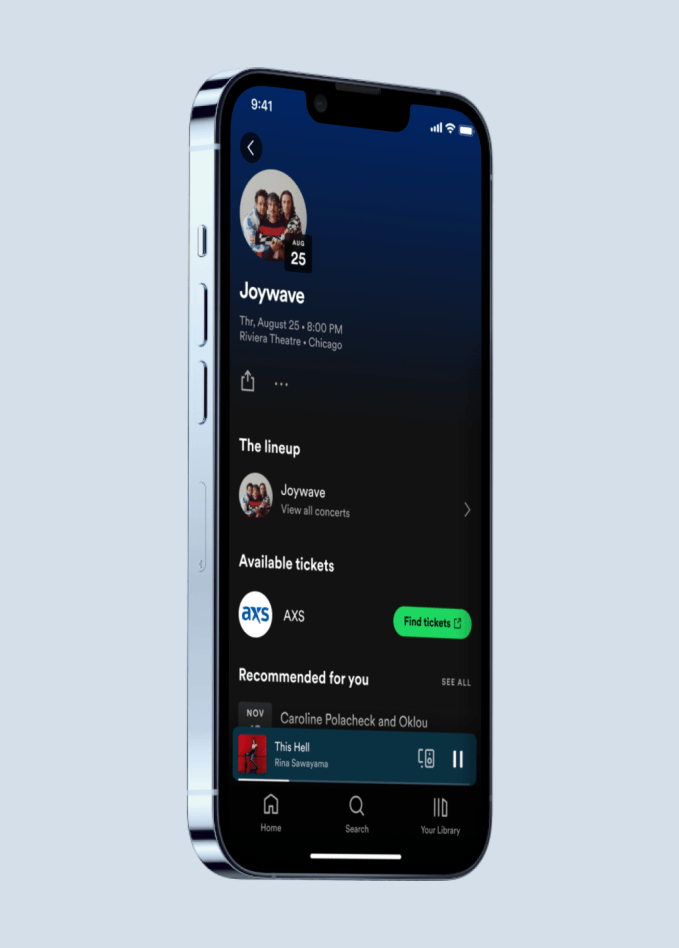
Spotify is introducing a new feature that will allow users to better discover nearby events and concerts. The streaming service today announced it’s replacing its in-app Concert Hub with a new Live Events Feed that will allow you to find favorite artists’ events in your area in a way that’s personalized to your own interests.
The update is only the first step toward a reimagined strategy around live events, Spotify says. The company notes it’s aiming to further integrate event discovery into the app in the future, which could see in introducing new search tools, playlist formats and other integrations into the app that will make event discovery an even larger part of the overall Spotify listening experience.
The company has been invested in concert discovery features for many years, as it first introduced a concert discovery feature back in 2015. Though Spotify doesn’t sell event tickets directly, it’s able to leverage its listening data and knowledge of a user’s location to suggest concerts to fans who may be interested in attending.
The new Live Events Feed continues to be powered by Spotify’s existing ticketing partnerships, which had earlier fed listings into the Concert Hub. The company works with Ticketmaster, AXS, DICE, Eventbrite, See Tickets and others to help source the event listings and direct users to purchase their tickets.
Image Credits: Spotify
But this system wasn’t working as well as it should have been, it seems. In an interview published to the corporate blog, Spotify’s product manager for Live Events Discovery Sam Sheridan, admitted that music fans would engage with artists on its platform but would leave the Spotify app when they wanted to buy tickets or follow the artists on social media in order to get event updates. That indicates Spotify’s product wasn’t doing enough to retain the users interested in live events from using its own app to make their ticket purchases.
Though Spotify doesn’t disclose the details of its partnership agreements, this impacted its bottom line as Spotify earns affiliate commissions on the sale of tickets initiated in the app.
The updated Live Events Feed looks a bit different from the Concert Hub, the company notes. It now includes artist imagery, instead of just the calendar icon that showed the date and show information, as before. When you tap into a particular show, you can also see the concert lineup along with other event details, a link to purchase tickets and other music recommendations. Spotify says it’s also introduced a new messaging tool, which will alert fans to personalized recommendations about live events based on their listening habits. Fans can control this experience by setting their notification preferences.
In addition, when users are streaming an artist in the Spotify app who has a show coming up, this information will now be displayed in the app while listening. This will help to surface live events even to those who don’t visit the Live Events Feed itself.
The company had to shift its live events strategy during the pandemic when it shifted focus to virtual events instead. But Spotify now believes the time is right to refocus on live concerts and events, as listeners are now excited to see their favorite artists perform live again.
“Ultimately, our goal is to ensure that fans are aware of all of the upcoming events by the creators they love and creators they may come to love,” said René Volker, senior director of Live Events, in the announcement. “We believe if we get that right, then we can get more fans to more shows and help artists and venues have better-filled rooms. We’d love to be a part of helping the live music industry recover and, even more importantly to us, helping to grow it in the years to come.”
How to watch Wimbledon 2022 in Australia: TV channel, live streams, start times – Sporting News
Wimbledon 2022 is finally, with the world’s best tennis players currently battling it out at the year’s third Grand Slam held at the famous All England Lawn Tennis & Croquet Club.
Rafael Nadal has won the first two men’s majors of the year – Australian Open and French Open – but won’t be favourite on the grasscourts, with reigning champion Novak Djokovic taking that honour as he aims for his seventh Wimbledon title.
World no.1 Iga Swiatek will be hot favourite to win her first Wimbledon title after sweeping all before her at the French Open, with the likes of Ons Jabeur, Maria Sakkari and Coco Gauff hoping to upset the Polish superstar and win their first Grand Slams.
The Sporting News has all the details on how to watch Wimbledon if you’re Down Under.
MORE: Wimbledon 2022 final live: Nick Kyrgios vs. Novak Djokovic score updates and highlights from Centre Court
The main draw singles for Wimbledon 2022 commenced on Monday, June 27 and will conclude with the men’s final on Sunday, July 10.
Play on the outside courts will commence at 8pm (AEST), while Court One’s action begins at 10pm (AEST) and Centre Court will host matches from 10.30pm (AEST).
Channel 9 will host the free-to-air component of Wimbledon with select matches available via digital television and their Nine Now app.
If you want to have access to watch EVERY Wimbledon match you will need to , before adding on Stan Sport as an additional package.
There are many ways Stan can be watched, with the most common via apps on Smart TV’s such as Hisense, Sony, Samsung or LG.
The service also has apps for computer, phone and tablet that can be downloaded, and you can either watch content there, or you can use a media streaming device such as Chromecast, Apple TV, Fetch TV or Telstra TV 3 to project Stan to your television.
You can also watch via the Stan website on phones, tablets or computer via web browser.
Abe's killing haunts Japan with questions on handmade guns – Bay News 9
Get the best experience and stay connected to your community with our Spectrum News app. Learn More
Continue in Browser
Get hyperlocal forecasts, radar and weather alerts.
Please enter a valid zipcode.
Save
TOKYO (AP) — The shooting sent shudders through low-crime, orderly Japan: A high-profile politician gets killed by a man emerging from a crowd, wielding a handmade firearm so roughly made it’s wrapped up in tape.
The 40-centimeter-long (16-inch) firearm that was used to kill former Prime Minister Shinzo Abe on Friday as he campaigned for his ruling party in Nara, western Japan, looked crude, more like a propellant made of pipes taped together and filled with explosives.
A raid of the suspect’s home, a one-room apartment in Nara, turned up several such guns, police said. Unlike standard weapons, handmade guns are practically impossible to trace, making an investigation difficult.
Such weapons are rarely used in Japan, where most attacks involve stabbings or dousing a place with gasoline and setting it ablaze, or running haywire on the street in a vehicle.
Strict gun control laws likely made the suspect choose a handcrafted weapon. Tetsuya Yamagami, who was arrested on the spot, was a former member of Japan’s navy, and knew how to handle and assemble weapons.
Crime experts say instructions on how to make guns are floating around on the internet, and guns can be made with a 3D printer.
Some analysts characterized the attack on Abe as “lone-wolf terrorism." In such cases, the perpetrator acts alone, often in sympathy with certain political views, making the crime very difficult to detect in advance.
The motive for Abe’s assassination remains unclear. Japanese media reported that the suspect had developed hatred toward a religious group that his mother was obsessed about and that caused his family financial problems. The reports did not specify the group.
Japan has seen attacks on politicians in the past. In 1960, Abe’s grandfather, then-Prime Minister Nobusuke Kishi, was stabbed but survived. In 1975, when then-Prime Minister Takeo Miki was assaulted at the funeral for former Prime Minister Eisaku Sato, Abe’s great-uncle, Japan set up a security team modeled after the American Secret Service.
Hideto Ted Osanai, chief executive at the International Bodyguard Association in Japan, and other experts believe that the Japanese may have merely learned superficial things like escort formation rather than the prevention mindset critical to security.
“Japanese are so used to leading peaceful lives, the security guards were caught asleep,” says Yasuhiro Sasaki, president of Safety-Pro, a Tokyo-based security company.
Sasaki said he couldn’t believe that no one moved to protect Abe in the seconds between the first and the second shot, a scene shown over and over on national TV.
Guards should have acted by physically pulling Abe away from danger, Sasaki said. More critically, he wondered why weren’t they aware of a suspicious person approaching, drawing what could be a weapon from a bag?
Isao Itabashi, chief of the research division at the Council for Public Policy, which oversees such risks, said that providing security during an election campaign was challenging when the whole point is for politicians to get close to people.
Unlike the U.S., the use of bulletproof glass is relatively scant in Japan, and security officials rarely resort to shooting potential attackers.
“The presumption here is that people are not armed,” Itabashi said.
Osanai worried that more people may use handcrafted guns like the one used in Abe’s assassination in “copycat crimes.” He noted a trend of disgruntled people turning to random crimes, indiscriminately targeting victims.
“Japan’s conformist culture makes it difficult for some people to live freely, and they put great pressure on themselves. When they blame themselves, they turn to suicide. When they blame others, they turn to indiscriminate crimes,” he said.
Last year, a man wearing a Joker costume brandished a knife and started a fire on a Tokyo train, injuring 17 people. In December 2021, arson at a clinic in Osaka killed 25 people. In 2019, another arson in a Kyoto animation studio killed 36 people.
___
Yuri Kageyama is on Twitter https://twitter.com/yurikageyama
Copyright 2022 The Associated Press. All rights reserved. This material may not be published, broadcast, rewritten or redistributed without permission.
Lewis Black sues Pandora for $10 million over copyright infringement – The Verge
Filed under:
He is the latest star comedian to pursue legal action against the streaming service
Hot Pod is The Verge’s premier audio industry newsletter, delivering news, analysis, and opinions on how the audio world is changing. Subscribe here.
Comedian Lewis Black filed suit against SiriusXM-owned audio streamer Pandora on Thursday, arguing that the company ran recordings of his performances without obtaining the copyright to his written work.
It is the latest escalation in the messy fight between comedians, streamers, and the performing rights organizations that have recently stepped in to standardize spoken-word copyright in the digital age. This suit, along with several others filed against Pandora, seeks back pay for millions of dollars worth of publishing royalties and to fundamentally change the way copyright for comedy functions. If the comedians win, it could have major ramifications for Pandora, Spotify, and other audio streamers.
Black, who rose to national prominence with his regular appearances on The Daily Show, is suing for a total of $10.2 million. “One would think that entertainment giants like Pandora would honor the legacy of such an amazing talent, but instead it chose to illegally profit from the creative mind and literary/comedic works of Lewis Black,” the suit says. Black and Pandora were not immediately available for comment.
The suit is based on the idea that, like in music, comedy albums have two copyrights for which streamers must pay royalties: one for the recording and one for the publishing, or the written work of the material that was recorded. Although comedians and their labels are normally paid royalties for their recording rights, publishing rights for spoken-word content (like comedy) have been largely ignored, and sometimes outright denied, by the streamers.
Black’s lawsuit follows a slew of similar legal actions from comedians like Andrew Dice Clay and Nick Di Paolo as well as the estates of Robin Williams and George Carlin, which are represented by the performing rights organization Word Collections. Those suits, initially filed in February, were consolidated into one lawsuit by the judge in March. Black is represented by another performing rights organization, Spoken Giants, though it is not party to the suit.
“The comedy community stands firm in their belief that their written work has value. Without the written work, there would be no recordings and no live performances,” said Spoken Giants CEO Jim King in a statement. “The staggering costs of this battle would be better spent simply paying for the intellectual property they stream to their millions of subscribers.”
Black first publicly entered the fray in December when Spotify removed disputed comedy albums from its platform by comedians like John Mulaney and Tiffany Haddish after negotiations between Spoken Giants and the streamer broke down. He asked that his albums be removed in solidarity. “It has taken a long time for comedy to be recognized as an art form,” he said at the time. “Therefore, Spotify should recognize that a joke is as powerful as a lyric of a song, which they do pay for.”
The spat with Spotify has not yet resulted in a lawsuit. And part of the reason why the Pandora suit is moving more quickly (even if it is not as big a player as Spotify) could be because of language the company used in a financial filing predating its acquisition by SiriusXM. In 2017, Pandora listed among its liabilities that it streamed comedy without obtaining publishing rights. “Third parties could assert copyright claims against us as a result,” the company wrote.
In its response to the combined lawsuits in May, the company argued that it has been correct in doing so because publishing rights for spoken-word content have not been the industry custom, comedians benefit from the exposure they get on Pandora, and Pandora is not profitable while the comedy record labels are. The company is also countersuing for damages.
Pandora’s arguments may not be strong enough to ward off the suits. “They’re saying that it would be hard to pay out the royalties. That’s unimpeachable — it will be hard,” said intellectual property litigator Terence Ross, who is a partner at Katten Muchin Rosenman. “Unfortunately, that’s not a cognizable defense to a copyright charge.”
Losing is a very, very expensive proposition for Pandora. The comedians are suing for $150,000 for each allegedly infringed work for a total of more than $70 million. It could also set a precedent for other comedians to sue streamers for similar damages.
Aside from the immediate financial damage, a change in the way spoken-word copyright functions could also fundamentally change the way streamers do business. Spotify, in particular, has been leaning hard on talk content like podcasts and, soon, audiobooks because they are so much less expensive to stream than music. If those works are also entitled to publishing royalties, then that is another cost that Spotify and other streamers will have to take on.
Every Tuesday receive analysis, insights, and commentary on the growing audio industry.
Check your inbox for a welcome email.
Subscribe to get the best Verge-approved tech deals of the week.
Please confirm your subscription to Verge Deals via the verification email we just sent you.
NUGEN Audio Loudness Plug-ins Prove Essential for Re-recording Mixer James Wichall – Mix
Update your browser to view this website correctly. Update my browser now
×
Home The Wire
Software Bundle Keeps Loudness in Check for Creative Projects
D. Pagan Communications ⋅
LONDON, JULY 7, 2022―Sound design is certainly an intriguing field, but, unless you are immersed in the business early on, it is not always presented as a career choice. Such was the case with Re-recording Mixer James Wichall, who also serves as a dialogue editor for various TV and film projects. Wichall fell into the business by chance while working in the legal department at UK-based Ragdoll production company, the team behind the popular Teletubbies children’s television program. It was there that he was first introduced to the behind-the-scenes excitement of sound design. His fondness for work in sound led him to a staff role for four years, until he decided to go freelance.
While he still regularly works with Ragdoll in-house, Wichall also mixes and edits from his home-based studio. Over the course of his career, he has worked on independent and short films, including Fantastic Beasts and Trainspotting 2, as well as a new children’s television series, Bot and the Beasties, which is currently available in the UK. To help support his busy lineup of mixing projects, Wichall relies on NUGEN Audio’s Loudness Toolkit and Halo Upmix and Downmix software.
When it comes to mixing projects, Wichall says he integrates NUGEN’s VisLM and ISL plug-ins throughout the entire process, be it for a heavy mix or something lighter where he is tweaking tracks―such as spreading them out more or adding reverb as needed. Regardless of the job size, Wichall relies on VisLM and ISL to meet compliance standards, while also retaining the creativity of the audio he is working on.
“I’ve used lots of loudness software and there’s not really anything else that’s as good as NUGEN,” adds Wichall. “They are very quick and accurate, and I can run a lot of meters together without killing my session, which is always nice. Before the NUGEN ISL limiter, I always had an issue with catching those transient peaks, but these tools have been a lifesaver.”
Wichall also says that when he first began to use NUGEN’s loudness tools, the ease-of-use and intuitiveness of the visual meters made the transition from Peak Program Meters (PPM) a breeze. “I love that all of the visual settings aren’t hidden away and that everything’s just there, ready for me,” he continues. “If there’s too many graphics and other things going on, it can kill your computer’s performance. My focus should be on the sound, not the visuals. NUGEN managed to find a great balance in its interface―between form and function.”
Wichall also heavily relies on LM-Correct as he says it is a huge time saver to meet loudness standards. “The LM-Correct plug-in is not overly complex, it just does what it needs to do and saves so much time,” he explains. “Prior to using it, I was metering the audio on my mixes and then just gaining stuff up and down until they matched the way I wanted. LM-Correct just does that for you. It’s a huge time saver and definitely worth the money.”
For more information about NUGEN Audio products, visit: https://nugenaudio.com.
Mixing ⋅ NUGEN Audio ⋅ production
© 2022 MIX is part of Future plc, an international media group and leading digital publisher. Visit our corporate site.
GET ACTIVE: Yoga studio adds glow in the dark, ‘80s theme to pump up fun – dayton.com
“Pump Up the Jam” with neon colors, leg warmers, big hair and party tunes from the 1980s at Glowga.
Unlike the calming sights and sounds of a traditional yoga practice, Day Yoga Studio’s ‘80s Glowga is a glow-in-the-dark yoga class created for fun as much as fitness – maybe more. The vinyasa flow class – designed for all abilities and experience levels – will be held on Thursday, July 28 at 8:45 p.m. at the Beavercreek studio.
“The ‘80s are a fun multi-generational theme that connects with everybody in a fun, let-loose way,” instructor Krista Colter said. “We’ve even added time to just dance and move the way your body wants to.”
While the ‘80s theme is a new twist, it’s not the first time the Beavercreek yoga studio has held a glow-in-the-dark practice. Previous events have been so well received that the Glowga sessions will likely become a regular offering at Day Yoga.
“We’re trying to offer lots of opportunities to get your foot in the door,” said Maggie Kiedrowski of Day Yoga. “What I love about our studio is that it’s accessible for everybody. It’s so important to move your body intentionally and this is such a fun way to do that.”
With Cyndi Lauper, The Go-Go’s and Bananarama on the playlist, it’s sure to be a party – one anyone can join.
“Some people think you need to be able to do a headstand to do yoga and that’s not the case,” Colter said. “Yoga can be completely restorative if that’s what you prefer.”
Or, in the case of Glowga, it can be a nostalgic night of fun.
“If you’re looking for something fun to do with your friends while also being active, this is it,” Kiedrowski said.
Practicing with blacklights also means no one will notice if your poses are less than perfect.
“And there are modifications offered if there is something that is too challenging,” Kiedrowski said.
Wearing white or neon colors is suggested but there will be glow-in-the-dark jewelry and body paint on hand for the finishing touches before you get your yoga on.
‘80s Glowga: Glow in the Dark Yoga
What: A vinyasa flow class that is all about having fun. The practice will be done under black lights with ‘80s music. Glow-in-the-dark clothing is encouraged, and body paint and glow-in-the-dark jewelry will be provided.
When: Thursday, July 28 from 8:45 p.m. to 10 p.m.
Where: Day Yoga Studio, 2440 Dayton Xenia Road, Beavercreek
Tickets: Visit www.dayyogastudio.com/80s-glowga-glow-dark-yoga
About the Author
Interdimensional Transmissions Explores Electronic Music's Outer Limits – bandcamp.com
No matching results
Try a different filter or a new search keyword.
Search all Bandcamp artists, tracks, and albums
Brendan Gillen (aka BMG) grew up listening to Detroit techno as it evolved on the radio. He was entranced as a child by the prosody and mythology of Detroit radio legend The Electrifying Mojo and the fast, wild mixes of Underground Resistance co-founder Jeff Mills when he was “The Wizard,” before techno and house had even begun to creep into his mixes. By the late 80s, mix shows by Juan Atkins, Derrick May, and Kevin Saunderson—the Belleville Three credited with pioneering techno—made it enormously clear to Gillen that another world was possible. When he made it to the world’s first techno club The Music Institute in 1989, his life was changed forever.
“There were people there who had a dance that included running up the wall: the participation with the music was another level,” Gillen recalls. “When I heard Parliament’s ‘Flashlight’ deconstructed on that system within the context of advanced techno, everything clicked. I had another similar experience in Berlin in 1991 on the dance floor of Tresor, when I realized this was the new global music. The wall had fallen, and to escape the Tower of Babel, we had this instrumental music with short English (common language) samples. The magic of seeing Detroit techno evolve in 1989-1992 was astonishing: there were so many incredible characters, some still barely known. The ideas were so fresh, such a unique response to the world.”
Gillen’s love for and belief in the future of music activated here led him to Ann Arbor’s WCBN, where he became a Music Director and ran a show called Crush Collision. Future Interdimensional Transmissions co-founder Erika Sherman met him there as a student and later became Program Director. Immersive installation artist and visual artistic director at Interdimensional Transmissions Amber Gillen (who Gillen would marry) met both of them when she came to WCBN to visit her older sister, a good friend of Sherman’s. When she later came to the University of Michigan as a student, she also volunteered at WCBN and had her own show; her future husband called in when she played one of his favorite Liquid Liquid songs. Between working at WCBN, buying imports and indie 45s for the Dance Room at Record Time with Mike Huckaby, and attending parties around Detroit, Gillen organically developed friendships with almost everyone who would be involved with his distro Star 67 and the Interdimensional Transmissions label.
“When I joined WCBN, I was immediately around people with deep knowledge of jazz, people in space rock bands, making noise art, who loved country music and klezmer and reggae and classical and everything in between,” Sherman says. “I had unlimited access to explore everything myself through the station’s massive library collection. My experience at WCBN taught me that genre is a mythical construct, something that journalists and marketers invented to commodify music. It’s not about genre. All of these expressions, all of this art and music is a continuum that we feel a myriad of different connections to. Because we all met and came from this time period of WCBN, we all feel this, and strive to bring many sides of genre together in the events.”
While it’s not all Detroit music or all of the city’s parties and promoters, there has always been a strain within Detroit music that is unbound to genre, going back to bands like the Dirtbombs and Parliament-Funkadelic. It can be hard for Detroit artists to be fully understood by a world that is accustomed to perceiving music through narrow genres and definitions, but it’s very normal in Detroit for music heads to be open-minded: rock kids going to raves, synth nerds hitting up the jazz festival. Interdimensional Transmissions exists to preserve and expand that spirit: the label was inspired equally by Sun Ra’s El Saturn Records, independent rock labels of the ‘80s and early ‘90s, and underground European electronic records, especially from the UK, Germany, Holland, and Belgium.
As Detroit techno began to see success in the outside world, however, its futuristic vision appeared to have gotten hijacked by the American dream. The original innovators and hometown heroes shifted focus to making music for Europe, were perpetually on tour, and were essentially “leaving Detroit to rot,” according to Gillen. “I felt the most important thing was to take the inspiration of this revolution and infuse it with the true underground ideals I saw in things like Liquid Liquid or Dischord [Records] or Underground Resistance and take my own lens that incorporated experimental music like [Iannis] Xenakis and [Karlheinz] Stockhausen and the music of Mika Vainio, Dan Bell, Drexciya, and share this new fusion with Detroit. Detroit music for Detroit, but respecting its incredibly advanced and high-concept history, adding to that history by offering a more fascinating, mysterious future, a new place to go with your mind,” he says. “Our early records show this with the lock grooves, backwards mastering, groove notes, and unique vinyl colors. The records themselves were a statement.”
As the Kraftwerkian vision of the future died, Interdimensional Transmissions charted out a new future in the mid-’90s guided by dreams, allowing the subconscious mind to direct us where we need to go and beyond where the prevailing rules tell us to go. “This is not the music of the world you are in, that dying world subject to cruel crony capitalism, destroying itself before your very eyes,” Gillen says. “This is the music of other tangential dimensions, where the higher planes of consciousness are valued, where the mind and pure thought come together to take the body to another plane. These are interdimensional transmissions received with the intention of allowing your spirit to be truly free, to enjoy things that aren’t supposed to collide, where we can enjoy the aural moire patterns of where things overlap and connect and take new form.”
Eventually, it became clear that they needed to throw events if they wanted people to truly understand their vision: to not just sow the seeds of concepts through the albums they released, but give those seeds a fertile place to gather and grow. Between 1998 and 2000, they began experimenting with events in different contexts and venues. This eventually evolved into their annual Samhain events, first held at the Blind Pig in Ann Arbor. Ectomorph performed live as the central event with performance art and full space transformation: the need to cover all the beer mirrors there led to an on-going practice of wrapping spaces. Gillen made it clear in the beginning they would keep having these parties until everyone in the crew was a household name getting regular gigs, but it took repeated attempts over many years in various venues for it to finally come together and be fully realized.
“The first No Way Back was thrown in a dilapidated leaky bank building on December 1, 2007,” Sherman recalls. “It was a snowy cold winter night, with about 150 Detroiters. The event was conceived to be a 12-hour party, an immersive experience like the warehouse and loft parties we’d enjoyed 10-plus years ago, that were no longer happening in the city, with long sets from Derek Plaslaiko, Carlos Souffront, Patrick Russell, and Gillen, who became the party’s first residents. That venue was a one-off, and No Way Back returned the following May, becoming a part of [Detroit’s annual dance music celebration] Memorial Day weekend.” The party moved around Detroit for the next few years, with evolving lineups designed to fit into many different spaces: Tangent Gallery, Oslo, Bohemian National Home, and eventually to 1515 Broadway, where it seemed to catch on the most. 1515 Broadway had hosted events in the ‘80s and approximated well the unfettered and unfancy vibe of warehouse parties, but after a few years, it was so packed and dangerously hot, they had to find a new home in a new incarnation of the Tangent Gallery. “The full vision for No Way Back has always been about long events, a full exploration of music, and an immersive environment. Tangent has allowed us to take this concept and expand it into a full weekend,” Sherman explains. “We can now realize the concept of Return to the Source, not just as one party or event, but as a full statement.”
It’s clear that their decades of work haven’t been in vain. Detroit’s scene is enormously vibrant, fresh, and thriving in a way that is inspiring and truly diverse by any metric. The work has gone far beyond creating periodic events that captivate locals to national and international recognition as one of the greatest scenes for proper underground dance music, but more importantly: it’s now an incredible time to experience Detroit any time of the year, with consistently magical crowds and more local event crews taking inspiration from Amber Gillen’s immersive space transformations at International Transmissions events. Visual art has become a major part of nightlife.
“Some of the stranger sides of what we’ve presented have also made a major impact, like the Scott Zacharias set that happens at dawn in the Outer Space Room at No Way Back has affected our scene for the positive,” Gillen says. “And Scott is touring now, which is so great to see, and good for the world, because there is nobody else like him.”
Here are 10 releases to get you acquainted with this home for deep-listening and forward-thinking sonic voyagers, those who are always pushing the culture and the music forward with what Gillen dubs “the pure and sometimes nasty essence of raw creativity.”
This is the record that launched both the Ectomorph project and the International Transmissions label in 1995. In 2018, it was re-pressed for the first time in over a decade using the original masters complete with three lock grooves cut by Ron Murphy.
“The first song on the B side was the first thing we ever did, the beginning of the collaboration, with my 606 for drums. In this era, there is borrowed equipment on every song,” Gillen says. “The lock grooves were inspired by Cycle 30 by Jeff Mills. Ron Murphy told us the math. I applied that in the studio and we did multiple takes in mastering to get them just right. Ron was really sweating, but got it just right with the overcut of the loop, making that crazy bass whoomp. The rhythm lock groove became a Detroit street jock and radio staple, often mixed with the acapellas.” It was an early milestone: when the title track was used for the top “urban” station in Detroit WJLB’s own NYE show advertisement, Gillen really felt like they had made it. The record was popular at Record Time and all around Detroit, introducing a sound both abstract and experimental, yet into the groove enough to become a major street jam and part of a sound that was to become popular later through the stylistic developments of DJ Assault and DJ Godfather.
Making this EP was a dream for Gillen, as Liquid Liquid are one of his all-time favorite groups. They first met performing on the same stage at Detroit Electronic Music Festival in 2003 and Gillen even got to write about them for the MetroTimes; Sal P told him it was the first article on the group he wanted to keep a copy of. A chance second encounter at the Red Bull Music Academy in CapeTown, South Africa where Gillen was teaching about creating computer music led to an impromptu performance with Sal P and Patrick Pulsinger. From that evolved this project, which Gillen describes as “coming out of thin air, from parts Sal and Crispy [Christopher Fachini] had written separately, and it worked like magic.”
They toured and did shows as Electric Skin and then BMG & Sal P, plus a collaborative Electric Skin tour that brought Ectomorph and Sal P together in the mid-’00s, featuring “fascinating fusions on stage with Sal’s live percussion and voices and the electronics from Erika and myself,” Gillen says. “This project took years to complete, because as an electronic musician, I had no idea how to use a recording studio. Crispy helped bridge that gap, and we got to do the final mix down on a desk that Pete Townshend and Billy Corgan were bidding for, that had been used by Led Zeppelin. I learned so much in the production of this: it didn’t come out when it should have, but I learned techniques that I use to this day.”
Erika [Sherman] had been a member of Ectomorph for a long time, touring with the group and performing as a synthesist, before her debut solo album came out. When she showed Gillen the demos for this material, they had been planning to make an EP, but the sheer volume of great tunes demanded a full-length.
“Technically we aligned using the same mixer, monitors, sound card, and software,” Gillen says. “She recorded all these keyboard lines at her house, recorded demo arrangements and drums. I produced the record: arranging the songs, mixing the whole thing, re-recording the drums, and in some cases, writing new rhythms in the spirit of her music. Her music is so cosmic, so pure sci-fi, but also deeply like an Audubon Society book, or Darwin’s field drawings, very free and organic. So I did my best to highlight how she thinks and back it up with tones and rhythm that would push her ideas to the fore. I still mix her records–classic audio engineer mixing, not remixing.”
They screened the covers by hand at a place that was so toxic the environment was negatively affecting the person who ran it so only the front cover was printed, and even that was a miraculous feat. The art was hand drawn by Sherman, and the associated remix record has the color versions of the art, part of a series she was doing. As a result, this release communicates many aspects of Sherman’s process in addition to her unique sound.
The Interdimensional Transmissions crew has known Andy Toth since even before his days in the Detroit Grand Pubahs, but this connection came together at the wake of Greg Mudge, a pillar of the techno community and mutual friend who helped with leads on the original No Way Back location and who was also constantly bugging Toth to release his solo tracks.
“We heard these tracks after Andy had been working on them for a very long time. He DJed the wake and it turned out that every song he played was his own production,” Gillen says. “Erika and I had our jaws on the ground, just blown away by how incredible the music was. Derek Plaslaiko was there too. We were all losing it to just what an original blend of electro, techno, and acid these were—and then all the Star Trek references. But just how mature the music was: it was such a refined vision of the original Detroit rave spirit, a new form of flawlessly perfect No Way Back music produced by someone who masters, mixes, and engineers audio professionally, which put these in a new sonic realm. The kind of deep thought that goes into these dense, multi-layered, but ultimately hypnotic tunes just blows my mind. You can listen so many times and always keep discovering new things.”
After seeing Jamal Moss perform live and enjoying the “history of house he was referencing, but with such an avant-garde angle,” Gillen says the crew started talking about a release on Interdimensional Transmissions. Gillen and Carlos Souffront were obsessed with one song he played that they were never able to locate in Moss’s archive, as well as a few others that they were able to find. Thus began many years searching through his archives, Moss coming to Gillen’s house with shoeboxes full of cassette tapes, minidiscs, CDs, and videotapes of sound recordings.
“Carlos was so fast on the cassette deck: identifying songs, marking the spots on the tape externally so we could find them again… and I spent time carefully recording them all in and then getting them mastered. It was a long, arduous process that took me many years to complete,” Gillen says. “We went through a few mastering guys to get the oldest, rawest ones to be of a sound that not just pure freaks could listen to. Melvin Oliphant [Traxx] once played a raw original of one of these at a party in Montreal and they kicked him off the decks, which is beyond insulting, but I wanted to make sure this music had the effect it should—taking the mind into new dimensions. Jamal kept delivering more and more tracks and we finally ended up with Kill Bill, which was kind of the apex of this sound, a jacking apocalypse complete with Gabriel’s trumpets.”
Gillen first met Armando Martinez through some friends in Miami, when he would go to the Winter Music Conference and related gatherings. They organized some parties down there, and Martinez played alongside Patrick Russell and Sal Principato.
“Alpha 606 was originally three people but ended up with just Armando, kind of a reclusive genius. Starting with the original EP, we expanded to this album, full of amazing concepts,” Gillen says. “I worked hard on engineering it so that it could work on more sound systems around the world, and I’m really happy with the edit/remix I did of ‘Armambo’ that killed in sets for years. Cuban music is a huge influence on the development of funk, which is one of my main influences, so it was wonderful to show this from another perspective.”
The late Jasen Loveland (born Andrew Smith) met Gillen on the dance floor at No Way Back. “He created so much music, so fast—it just kept multiplying to the point where I created a sub-label for him called Infinite Refractions, named after the way I saw his music,” Gillen says. This EP was created and recorded by Loveland in his home studio in different places around the world, which he then brought to the Interdimensional Transmissions studio to mix. They mixed eight songs in two days, deciding ultimately on these four and having a real blast doing it. Infusing his tracks with production techniques to help the sounds stand out and have compelling emotional textures was an extremely fast, pleasurable, and easy process. “It was a high we never came down from, the sharing of these ideas and really fleshing them out and finishing them in this way: we were meant to do this many more times,” Gillen says.
The Interdimensional Transmissions crew came to know Eris Drew through her work with Hugo Ball, a Chicago collective with a similar mission in the last decade [full disclosure: this author was also involved with this collective]. They started having her perform in Detroit at their parties: initially as a giant home studio live show “featuring so many layers of sound, with influences ranging from synth-pop to Sun Records,” Gillen says. “As her [gender] transition continued, a new DJ style emerged and the energy coming from it just blew me away.” Gillen started booking her in Detroit as much as possible and asking her for demos, specifically of songs that referenced her DJ style more, and Interdimensional Transmissions had the great fortune of developing her debut record.
Once they’d selected the songs, the label had her stay another week after a New Year’s Eve show to mix these songs down together in Gillen’s studio. “I wanted to share some of what I’d learned about engineering, so her future productions would elevate, and really I wanted her to understand how to create this bass weight that her DJ style implies,” he explains. “I think it really clicked: we went through her music in such close detail, and I’m so proud of what emerged since it still retains its gentleness, raw details, imperfections, sonic power, and emotional purity.”
Gillen and Arthur also met on the dancefloor at No Way Back; Arthur was dancing right in front of Gillen during his set. Arthur then invited Gillen to play his house in Memphis on his Funktion One sound system. When he played that set at Arthur’s house, Gillen noticed house pioneer Larry Heard [Mr. Fingers] and Chad White [Mr. White] dancing in the crowd. Arthur built a huge Buchla system to create his own music, resulting in these tracks that feel somewhere between dreaming and waking—a space he deals in professionally as an anesthesiologist. “We talked about sound cards, monitors, hardware compressors, and what it takes to get your music to where it needs to be,” BMG says. “He did all of that and more, a truly unique character now living in rural Arkansas.” He continues to record music with his massive Buchla, like his stunning ambient performance following Suzanne Ciani at No Way Back 2021.
Israel Vines is one of the most formidable but slept-on artists in the game. Gillen describes him as being “somewhere in the future with this brilliant fusion of Detroit electro, Birmingham techno, and post-jungle Bristol sounds.” Following a series of extraordinary 12” records on Interdimensional Transmissions’ Eye Teeth imprint (devoted to pure, experimental, and entirely contemporary techno explorations), Vines put out this powerful double LP in late 2020. This album developed with a great focus and is a rare release on the label designed by a graphic artist besides Gillen—Ken Meier, the brother of Karl Meier (Talker), another criminally underrated “underdog lifer ultrahead” who Vines’s debut track on Eye Teeth was named after—“WWKD.” This was the final release from Eye Teeth. Now Interdimensional Transmissions feel the separate imprint is no longer necessary. It is natural in the outer limits for boundaries to dissolve.
Sleep is the hottest new hotel amenity – The Washington Post
After the pandemic forced the Cadogan hotel in London to temporarily shut down, general manager Xavier Lablaude and his team began thinking of ways to bring guests back in.
With reports of insomnia on the rise, they decided to lean into one of a hotel’s key functions: providing a place to get a good night’s sleep.
The hotel launched its Sleep Concierge service in early 2021, assisting guests with all things slumber through a range of services and amenities, from hypnotherapy to calming tea. “A lot of people were quite stressed just by leaving their homes,” Lablaude said. “They’d been in their homes so much, that it was quite an adventure to get out of their cocoon, and I think it was the right timing to reassure people when they left their home, to have this offer at the same time.”
The hotel is one of many to invest more heavily in sleep-themed services, with offerings across numerous properties aimed at helping guests get the most out of their shut-eye.
The Cadogan partnered with hypnotherapist Malminder Gill to create a meditation audio recording, and it also offers a pillow menu, a weighted blanket, a lavender pillow mist and more, all included in the room price. Guests also can book a private in-room session with Gill in advance for around $375.
Other hotels have designated spaces designed to help guests rest. When Hotel Figueroa in Los Angeles initially launched its Rest & Recovery Suite last year, it was expected to be a summer promotion for National Relaxation Day. “We were expecting it to run for about three months, and then it just kept booking,” managing director Connie Wang said.
The 870-square-foot suite features a mattress from Eight Sleep that adjusts its temperature during the night and a custom Pluto Pillow that you can take home. The suite, which runs about $500 per night, also has a FORME fitness mirror — part of a holistic approach to helping guests sleep well, starting before they hit the sheets.
Wang said the idea came about after guests sought respite at the hotel as people worked from home during the pandemic and the boundaries between personal and professional blurred. Many locals flocked there to get away from their work-from-home space, she said.
“We were already noticing this trend with hotel guests coming to stay in the hotel to find that really restful night of sleep, away from their emails and away from the stresses of home life and the stresses and the rigors of the pandemic, and just have an escape,” she said.
Tanner Saunders, senior hotels reporter at the Points Guy, said sleep-focused offerings at hotels are not new, but that “it’s just another thing that’s been exacerbated by the pandemic in a lot of ways.”
As the pandemic wanes, wellness is key for many hospitality brands, he said, with sleep emerging as a particular area of focus. “As the pandemic changed so many parts of our lives, we realized that sleep is so much more important because we had that time at home to regroup … and I think hotels are starting to capitalize on that,” he said.
In general, hotels try to create brand loyalty, said Jamie Larounis, a travel industry analyst with UpgradedPoints.com. The overnight part of a guest’s stay is especially important. “They want to associate you traveling … to certain brands, certain hotels, because you know you’re going to get an excellent night of sleep,” he said.
A sleep-themed offering can also provide “an ancillary revenue stream” for the hotel that does not cost them much. Larounis added that travelers can primarily expect to see special services of that kind at mid- to high-end hotels.
The offerings can range depending on the property. The Lotte New York Palace decked out its Hästens Ultimate Sleep Suite with a $200,000 bed from the Swedish company and signature pajamas, while Equinox Hotel in Hudson Yards designed its rooms with “regeneration” top of mind, including blackout blinds and soundproofing.
Some offerings are particularly immersive: The Royal Livingstone Victoria Falls Zambia Hotel by Anantara is holding a three-day Sophrology Sleep Retreat.
While some are more elaborate, Saunders noted that in other cases, hotels are “just kind of reframing the services that they already offer and tying it together with this little bow that says ‘sleep experience.’” He recommended travelers that are looking for specialized packages do some investigating “because there are some that are really different from the others.”
Wang said she expects Hotel Figueroa will continue to offer its suite until the end of the year and gauge demand again then. For the time being, though, guests can rest easy. “I think that as long as it’s helpful to people and that people are seeking out that experience, we’ll be able to keep it,” she said.
Safety: Mask advice | Travel after covid recovery | Entry test rules | Maskalorian | CDC travel advisories | Kids and masks | Traveling while trans
Airlines: What to expect in 2022 | Confronting unruly passengers | Buses as flights | Goodie bags | Fare sales | Unruly passenger no-fly list | It’s physically impossible to open a plane door | Refund battles | Disruptive behavior | Wheelchair damage
Destinations: Florida v. Disney | Disney boycott | Texas, Florida travel ban | Obama’s national parks show | Top vacation spots | Disney prices | Australia reopens | Passport-free travel | Mexico shooting | Moving to Rome
Airbnb: Accidental break-in | Ukrainian refugee housing | Pet-friendly additions | Vacation rental startups | Cleaning fees
On the road: Pricey summer travel | Labor shortages | Hertz police reports | Rental car woes | How environmentalists travel | Road trips with pets | Road trips with babies