Blog

Halo Devs ‘Exploring’ Microtransactions For Master Chief Collection, An 8-Year-Old Game – Kotaku

Advertisement
It’s one thing for free-to-play shooter Halo Infinite to have microtransactions. Now Halo: The Master Chief Collection, a first-person shooter with a price tag, might see something similar. Maybe. Developer 343 is still “exploring” a “potential” framework “for the future.”

Introducing microtransactions might seem like an odd step for Halo: The Master Chief Collection, which is nearly eight years old and has already had one of the more publicly turbulent receptions in modern gaming.
First released in 2014, Halo: The Master Chief Collection combines the first four mainline Halo games—and their popular multiplayer components—but stumbled out of the gate with some serious connectivity woes. It took quite a while and a ton of updates, but by 2019, Master Chief Collection locked a spot as one of the best multiplayer shooters around. The player base was further invigorated in 2020 following buzz for the then-forthcoming Halo Infinite.
“We are internally exploring a potential new feature for the future in the form of purchasable Spartan Points,” 343’s Alex Wakeford wrote in a blog post. “It is prudent to note here that we are happy with the current system of how players earn Spartan Points, by completing challenges and leveling up through play. This would be an optional, additive alternative for players who might find the vast scope of content to be an intimidating amount of playtime and want to get ahead on (or skip) the grind.”
Needless to say, the Halo community is not happy.
“It’s a mistake,” Taras, a Halo-focused content creator known as LateNightGaming on YouTube, told Kotaku. “343 unfortunately has had a rough year following the poor handling of Halo Infinite’s supposed ‘live service.’ The last thing they need is [to] retroactively add microtransactions to games that are over a decade old at this point.”
Alexa-enabled
The Omni Series are all produced 4K UHD picture quality and are equipped with the same interface you may be used to on a Fire TV Stick. That means they are also Alexa enabled so no need to type in your favorite movies and shows. Just hold the remote button and ask Alexa.
Even the generally positive-leaning voices in Halo’s community have spoken up. Sacred Icon, a popular Halo podcast, said that more microtransactions is “the last thing” Halo needs. UberNick, a Halo content creator with Spacestation Gaming, said he wasn’t initially irked by the idea of microtransaction but revised his position after reading up on the concerns of others.
“The Master Chief Collection is considered a bit of a ‘safe spot’ for Halo right now, the one area of the series that is doing relatively well, so to see them consider something as tone deaf as microtransaction inclusion is an astonishingly bad PR move,” Taras said.
Following the release of Halo Infinite’s second season, fans criticized how 343 Industries quietly slipped in some controversial changes—like the removal of non-telegraphed traversal methods called “skill jumps”—without informing players first. After some vocal feedback from community members, 343 reverted those changes.
In the time since, this is, to my understanding, the first instance where 343 has actually run a change by the Halo community to gauge reception before implementing it. But it’s unclear if it was an intentional decision on the part of 343 as a response to Halo Infinite’s second season debacle or, if so, why they opted to test the water with the terminally hot-button topic of microtransactions. Everyone hates microtransactions!
Representatives for 343 Industries did not respond to a request for comment.

 

source

API-inspired plug-ins: 8 console, preamp, EQ & compressor emulations – gearnews.com – Gearnews

 ·  Source: API/GEARNEWS
Looking to get that API sound in your DAW? Then here’s our list of the 8 best API plug-ins! Found in 1969, API (Automated Processes Inc.) remains a pro audio stronghold to this day. From EQ through to channel strip emulations, here’s our pick of the best.
If you haven’t heard of API before, here’s a quick crash course: Founded back in 1968, Automated Processes Inc went on to create some truly classic gear; if you’ve ever used any 500 series “lunchbox format” gear, then you have API to thank for that! From consoles to EQs, dynamics and more, API gear has its own unique sonic signature. So what is the API sound? You’ll hear it in particular, across rock and metal records; punchy like an SSL, but also thicker and warmer.
Signature API products include the 512c Mic Preamp, the 525 Compressor, the 550A and 550B EQs, the 2500+ Bus Compressor, and plenty of others. Here are several excellent API plug-ins that let you get close to that coveted sound quality while staying in the box…
IK Multimedia has the API 550 EQ revisions covered as part of its T-RackS 5 virtual rack. The EQ-PA has three stepped bands and a total of 21 frequencies. Each band is stepped in 1 dB increments to permit precise dialing in and make it easy to find or recall those “in between” spots that sound just right. However, the resolution becomes 1.5dBs in the higher part of the knob’s throw.
You can also switch the outer bands from peaking to shelving mode, which is how you boost low end on kick drums, add air to acoustic guitars and vocals, and so on. API’s proportional Q and EQ curves concept are in full swing, ensuring boosts and cuts are broader at lower amounts of gain and sharper at higher amounts. An additional switchable “band pass” filter is there, too.
The EQ-PB module expands the concept to 4 bands with the possibility for overlapping bands and complex EQ shapes. Finally, the EQ-PG brings the discrete signal path and proportional Q design to a 10-band graphic EQ. This one is more appropriate for broad tonal shaping where the recording calls for more radical adjustments.
Price: EUR 100 each.
By loading the video, you agree to YouTube’s privacy policy.
Learn more
Load video

By loading the video, you agree to YouTube’s privacy policy.
Learn more
Load video

By loading the video, you agree to YouTube’s privacy policy.
Learn more
Load video

"<yoastmark
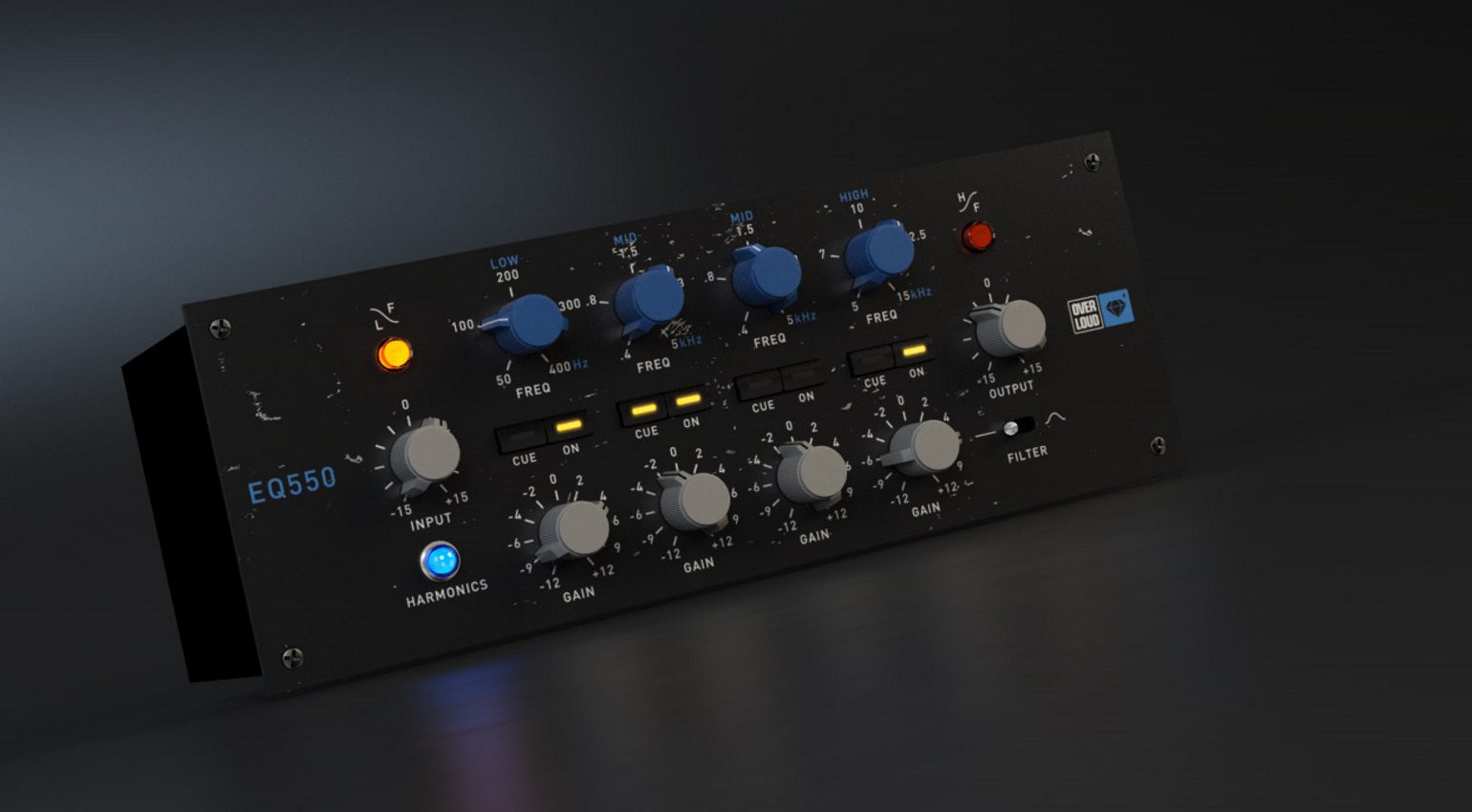
Overloud EQ550 models the American EQ you know and love, complete with custom op-amps, transformers, and proportional Q (the bandwidth of the filters gets narrower as the filter gain increases.) At low gain settings, the EQ delivers a smoother tone. But its character becomes more pronounced as the gain is raised. There are 5 EQ bands: 2 shelving / peaking, 2 peaking, 1 bandpass. Workflow features include undo/redo, A/B comparison, an abundance of presets, and CPU efficiency.
Price: EUR 109 + VAT (on sale)
By loading the video, you agree to YouTube’s privacy policy.
Learn more
Load video

"<yoastmark
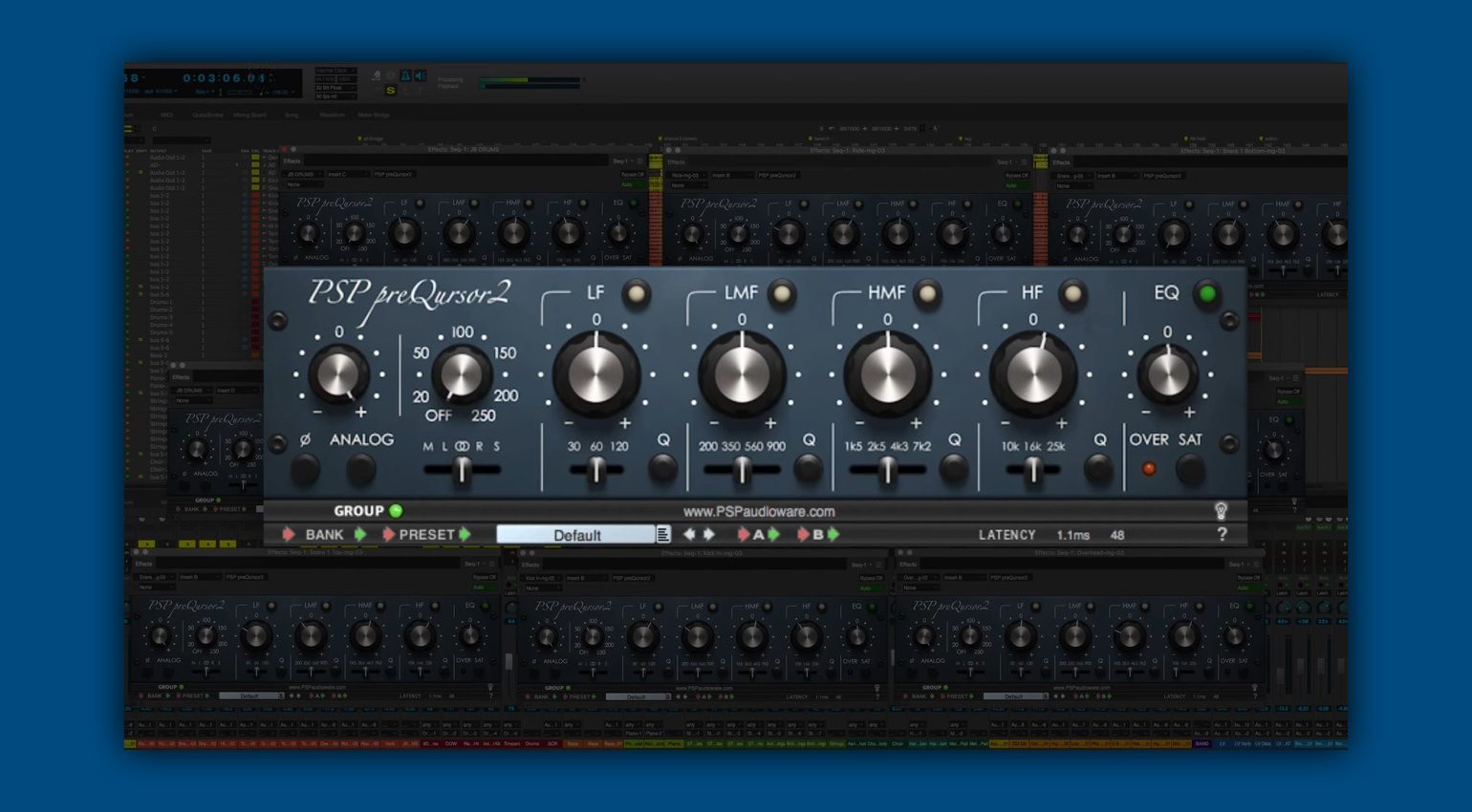
PSP preQursor2 implements PSP’s proprietary filter design with low resonance peaks for reduced ringing artefacts, enhanced band separation, and narrower notching when attenuating signals. All four filters are bell-type filters when boosting, and have progressive Q factors. PSP preQursor2 also includes PSP’s Advanced Analog Modelling of preamp and filter circuits to accurately recreate analog behaviours.
The analog modelling algorithm can be enabled and controlled per instance, or globally per group of instances. So you can have the analog flavor on either selected tracks, or all tracks in the mix. In a way, you can create a virtual console from several EQ instances with both the preamp and EQ simulations in place. While there are more advanced approaches to console emulation, the lack of channel crosstalk and tolerances doesn’t mean you can’t get a nice analog vibe going.
Price: USD 69
By loading the video, you agree to YouTube’s privacy policy.
Learn more
Load video

"<yoastmark
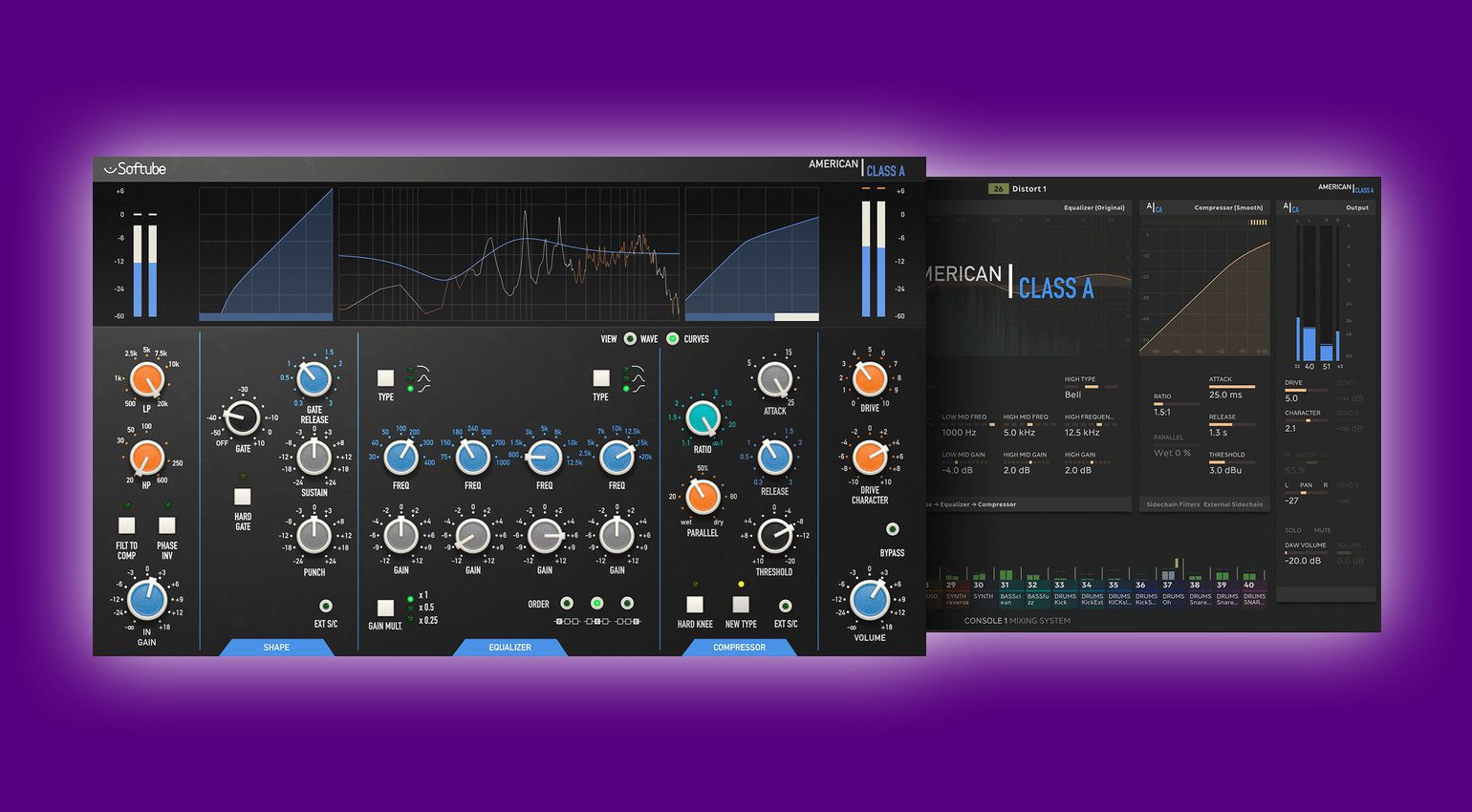
Softube went straight for the jugular with a complete API channel strip. The shape section features gating and transient designing. The EQ has four bands with proportional Q and range control. The compressor can be switched between feedback and feed forward operations. The output section has adjustable overdrive. Typical for Softube, the plug-in is also very nice to look at with plenty of visual feedback (including FFT readouts and waveform view). At the sale price, the plug-in is a solid all-around proposition for API fans and one of our favourite API plug-ins.
Price: EUR 99 (on sale)
By loading the video, you agree to YouTube’s privacy policy.
Learn more
Load video

Acustica Audio Pink4
Pink4 is Acustica Audio sampling the living daylights out of a room full of API things! The suite includes 6 different EQ models, 2 compressors (single-band and a multi-band), and a bunch of preamp emulations (16 different line-level channels and an additional 9 custom preamps):
Price: EUR 119
By loading the video, you agree to YouTube’s privacy policy.
Learn more
Load video

"<yoastmark
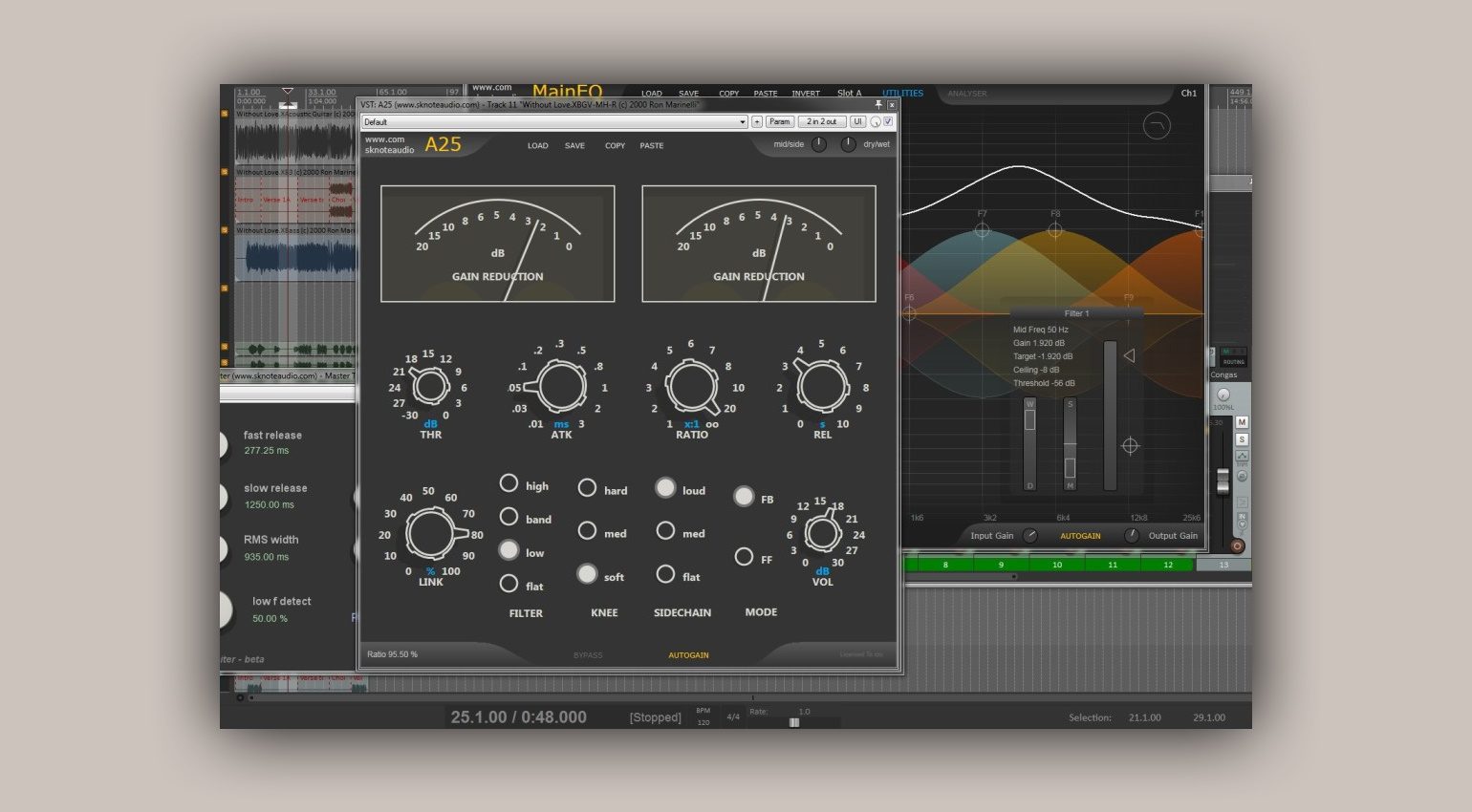
Here’s a model of the entire API 2500+ stereo bus compressor (transformers, compression, filters, etc.) with added plug-in features:
Price: USD 50
By loading the video, you agree to YouTube’s privacy policy.
Learn more
Load video

Waves API Collection
Developed in partnership with API, the Waves API Collection features 4 API plug-ins modelling the API equalizer and compressor modules in chief: the API 550A 3-Band EQ, API 550B 4-Band EQ, API 560 Graphic EQ, and API 2500 Stereo Compressor. The API Collection captures enough of their soul and spirit to quench your API thirst at the typically competitive Waves pricing.
Price: Check with Waves.
By loading the video, you agree to YouTube’s privacy policy.
Learn more
Load video

Lindell Series 50
Plugin Alliance alumni Lindell Audio once again borrowed Brainworx’s TMT modeling tech – this time, to develop the API-est of API emulations. The Audio 50 series is essentially a modular API console. It models the slight channel-to-channel variances in analog component values. And it presents a choice between 3 classic EQs – the semi-parametric 50A EQ for three-band processing, the 50B for four bands, and the 60 for a 10-band graphic EQ. Likewise, the VCA compressor models the esteemed 2500 series compressor with additional controls not found in the original. Finally, the FET compressor models goes after the simple and effect API 525 unit.
Price: Check with Plugin Alliance.
By loading the video, you agree to YouTube’s privacy policy.
Learn more
Load video

By loading the video, you agree to YouTube’s privacy policy.
Learn more
Load video

Your email address will not be published.


· Very interesting site.
· Geoff Emerick was responsible for the recorded sound on Tomorrow never knows and innovative Mike placement and compression used on Revover, SGT Pepper etc
· Interesting

source

Take a bow: Flagler Youth Orchestra supports ELO tribute band – Palm Coast Observer

The Observer Media Group Inc. respects your privacy and values the relationship we have with you. We use technology to collect information that helps us enhance your experience and our products and services. The cookies we use help us understand what information and advertising are most useful and valuable. Please take a moment to review our Cookie Policy and Privacy Policy. By clicking “Accept,” you agree to our use of cookies and similar technologies.
Monday, Jun. 27, 2022 |
Ticket To The Moon, an Electric Light Orchestra tribute band and light show, played to an enthusiastic audience on Saturday, June 25, at the Flagler Auditorium. Four members of the Flagler Youth Orchestra were invited to participate in the program, much to the delight of the audience.
The four FYO members were Corey Lehnertz, who has been studying cello for eight years; Jack Lisenby, who is interested in music composition, has been playing the violin for 10 years and is currently writing a score for a short film; Luka Tristam, a student of violin for 11 years and who is interested in music production, R & B and hip hop; and Nigel-Ginola Njok, who has been playing violin for six years.
Amelia Fulmer, director of the Flagler Auditorium, introduced the band to the audience and spoke of the opportunities for the auditorium, and the importance of supporting the arts in the county. Cheryl Tristam, FYO's executive director, was on hand to support the Flagler Youth Orchestra members on stage, as was David Ayres, president of Flagler Broadcasting, who organized the opportunity for the band and the orchestra to collaborate at the venue.
"This is the sort of organic opportunity that we love seeing our students involved in," Cheryl Tristam said. "We're incredibly proud to have trained up students capable of sitting in with a talented group of musicians like this tribute band. It's an experience I'm sure none of them will forget. "
Jack Neiberlein, the technical director of the Flagler Auditorium, appreciated the headlining band's production, musical skill and the venue. He noted that the auditorium allows for a full schedule of technical classes for Flagler Palm Coast High School students to expose them to careers in the entertainment industry, with many graduates in demand across the entertainment industry.
Neiberlein noted that the auditorium's sound system is the same used by Billie Eilish on tour, and the lighting technology in-house is the same used by the "Hamilton" production on Broadway.
Ticket To The Moon consists of Reggie Fecteau, who plays over seven different instruments and assumes the role of ELO lead singer Jeff Lynne in the production. Fecteau's wife, Nathalie Tasse, is on keyboards and vocals, and daughter Jade Tasse on vocals and percussions. Rounding out the group are Manuel Rodriguez, drums and vocals; Dany Roy, guitars and vocals; Jamie Meselsohn on bass guitar and vocals; and Colin Priller on violin; and Clarissa Vieira on cello.
Ticket To The Moon play many venues nationally and can be found online at https://eloband.com 
Information for future shows and tickets at the Flagler Auditorium can be found at https://flaglerauditorium.org
View the discussion thread.
Circulation Verification Council
12166 Old Big Bend Rd, Suite 210, Kirkwood, MO 63122
(314) 966-7711
www.cvcaudit.com

source

How Studio Ghibli is Protecting the Forests that Inspired My Neighbor Totoro – GameRant

My Neighbor Totoro was inspired by a real area of rural Japan – and Studio Ghibli is determined to protect it for future generations.
The forests around the town of Tokorozawa, Japan (just north of Tokyo, in Saitama Prefecture), are set to become a protected area. The land is being sold to the Tokorozawa Project, funded in part by Studio Ghibli, and will consist of 8.6 acres (3.5 hectares) of land with about 7000 trees. Studio Ghibli being involved in creating a protective forest is not at all uncharacteristic if you know the themes behind some of its most famous films. Stories like Princess Mononoke, and Hayao Miyazaki’s Nausicaä of the Valley of the Wind have strong environmental messages, showing exactly where Miyazaki and Ghibli stand on the subject.
As for the area of Tokorozawa, it’s actually where Miyazaki has been living since the 1970s. And the forest around the city served as the inspiration for one of Miyazaki’s most famous movies – My Neighbor Totoro. Miyazaki definitely has a personal interest in ensuring that land stays protected in its natural state, and is happy to use his studio’s funding to do so.
RELATED: Navigating Ghibli Fest 2022: What's Playing and When?
Currently, a short walk train ride out of the center of Tokorozawa, you can find a group of nature reserves titled Totoro’s Forests. The area is not huge, but it’s a nice piece of protected land where one can escape into nature for a few hours. Totoro’s Forest has many easy hiking trails accessible for people of all fitness levels, weaving through the trees and hills of the Sayama Hills area. And it's something to do while waiting for the Studio Ghibli theme park to open.
Totoro's Forests began in 1990 by five monetary contributors – including, of course, Hayao Miyazaki himself. With his backing, the forest preservation gained donations from all across Japan. The number of forests continues to grow as donations keep coming in, and visitors come from around the world to appreciate nature and feel like they have stepped right into a Studio Ghibli film.
RELATED: Ghibli Theme Park Delays Some Attractions But Announces New Ones
As you can guess from the name, Totoro’s Forests are the area that served as Miyazaki’s original inspiration for My Neighbor Totoro. While the location of the movie is never mentioned in the film, it is based on the countryside around Tokorozawa. The movie is famous for its beautiful depictions of rural Japanese life, and the forest that the spirit Totoro protects.
While you’re not guaranteed to see Totoro or the Cat Bus if you visit Totoro’s Forests, you never know what else you might find. Other animals like deer live in the area, and you can at least escape the hustle and bustle of the city and enjoy the side of Japan that Miyazaki wants to share with everyone. And if you do see some acorns, well. You’ll know that Totoro has probably been around recently. Near the forest, there is also a house styled after the one in the movie called Kurosuke's House. Inside is a giant Totoro replica, and while it’s free to enter, donations can be made to the Totoro Fund. This money is also used to continue to preserve and protect the forest. Kurosuke's House is open on Tuesdays, Wednesdays, and Saturdays.
This latest project to protect even more forested land around Tokorozawa started with a chat Miyazaki had with the mayor in 2018 about the significance of the area. Now, it’s become a huge undertaking at the cost of 2.6 billion yen ($20 million USD) to purchase the 8.6 acres of forest. To help raise the funds (and in addition to government money and crowdfunding), Studio Ghibli is contributing 5 pieces of background art from My Neighbor Totoro inspired by the region.
These will be used to create beautiful reproduction paintings, and will be sold for 25,000 yen ($185 USD) each to anyone willing to make the pledge. 1000 of these paintings will be available from September 2022, and more may be available in the future depending on demand. Hayao Miyazaki is outspoken about environmental issues and is putting money where his mouth is. Thanks in part to Studio Ghibli, even more beautiful forests north of Tokyo will be protected from development, and nature will remain as it has always been – and can be enjoyed by future generations, too.
If you ever find yourself wanting to get away from the chaos of Tokyo and experience a bit of Miyazaki’s romanticized Japan, it’s just a short train ride to Tokorozawa. From there, you can see the forests that inspired My Neighbor Totoro, and help protect them yourself. It’s what Totoro would want. And an alternative otaku destination from the usual choices. You can even wear a themed yukata and enjoy a picnic lunch, as there are plenty of nice picnic areas to choose from.
MORE: The Hidden Gem Short Films of Studio Ghibli
Sources: SoraNews24, Totoro Fund
Tokyo-based writer, gamer, hiker, and proud herbivore. My passion is bringing news straight from Japan to you, in English, keeping the otaku world accessible for everyone!

source

The Best Mixing Advice I Can Give

Avery Research Center Receives Rare Recording of MLK Speech in Charleston as Part of New Collection – The College Today

Capping a week of Juneteenth celebrations across the United States, the College of Charleston’s Avery Research Center for African American History and Culture is pleased to announce receipt of materials that will offer new insights into pivotal moments in the fight for civil rights in the South Carolina Lowcountry, including a rare recording of a speech made by the Rev. Martin Luther King Jr. during a visit to Charleston less than a year before his death.
The Eugene B. Sloan Civil Rights Collection constitutes an extraordinary archive of audiotapes, photographs, correspondence, ephemera and objects from award-winning South Carolina journalist and editor Eugene B. Sloan. Preserved by Sloan’s immediate family over more than five decades, highlights of the collection include three exceedingly rare and historically significant audio recordings:
Generously donated by Merrill C. Berman, review of the interviews and transcripts is currently underway. They will be accessible in the spring of 2023 to the CofC community and the public on Aviary, the audiovisual repository and platform for the Lowcountry Oral History Initiative. The collection also features artifacts and personal papers connected to Eugene Sloan and his family, including the Hasselblad camera he used to photograph King and other notable civil rights figures, as well as a personal recording Sloan made in the early morning hours after King’s death in 1968. 
“The gift from Merrill C. Berman of the Eugene B. Sloan Civil Rights Collection is a perfect match to the mission and focus of the Avery Research Center,” says CofC President Andrew T. Hsu. “The Avery Research Center is a premier repository for Black history in the Lowcountry and having the 1967 recording of Martin Luther King Jr. in Charleston is an incredible addition to our world-class collections at the Avery Research Center.”
The Eugene B. Sloan Civil Rights Collection will also serve as a complementary element of Documenting the Arc, the Avery Research Center’s oral history project documenting the ongoing fight for equality in the Lowcountry. Supported by the Gaylord and Dorothy Donnelley Foundation, Documenting the Arc collects interviews focusing on the grassroots demonstrations and organizing efforts in late 2014 through the local George Floyd protests and civil unrest that marked the summer of 2020, emphasizing the period between the killing of Walter Scott and the massacre at Mother Emanuel AME Church. 
“The artifacts from the Sloan collection also demonstrate how intricately connected the Charleston peninsula and the Sea Island communities (especially Johns and Wadmalaw islands) were to one another and to the ongoing work toward justice,” says Tamara T. Butler, executive director of the Avery Research Center and associate dean of strategic planning and community engagement. “We are honored to be the stewards of this collection as it is an important thread of the civil rights tapestry that we weave together at the Avery Research Center.” 
The Avery Research Center publicly announced the donation on Saturday, June 25, 2022, during the annual meeting of the Avery Institute of Afro-American History and Culture, a separate nonprofit organization providing support to the Avery Research Center’s programs, operations and efforts to acquire archival collections. The meeting also inaugurated the Avery Institute’s Curatorial Committee, which will collaborate with Avery Research Center faculty and staff to design upcoming exhibits for the center’s historic building at 125 Bull St. in downtown Charleston.  
“The Sloan collection would be a treasured and powerful addition to the holdings of even the largest academic library,” says John W. White, dean of libraries. “The conviction shared by Merrill C. Berman and the Sloan family that the Avery Research Center is the best steward for these materials is a testament to the institution’s ability to connect meaningfully with communities in the Lowcountry and around the world. We could not be happier to have the Sloan collection forever preserved and made available right here at the Avery Research Center.” 
The new Eugene B. Sloan Civil Rights Collection at @avery_tweets offers insight into the fight for civil rights in… twitter.com/i/web/status/1…
The Women for Women Summit sponsored by the College of Charleston School of Business features local women’s right’s… twitter.com/i/web/status/1…
If there’s news at the College of Charleston, you’ll find it here. We strive to bring you faculty, staff and student profiles, research updates and the latest happenings on campus.
College of Charleston
Office of University Communications
66 George Street
Charleston, SC 29424 USA
843.805.5507 [email protected]

source

Logitech MX Master 3S Review: the Perfect Companion – Review Geek

Join 350,000 subscribers and get a daily digest of news, articles, and more.
By submitting your email, you agree to the Terms of Use and Privacy Policy.
Dave McQuilling has spent over 10 years writing about almost everything, but technology has always been one of his main interests. He has previously worked for newspapers, magazines, radio stations, websites, and television stations in both the US and Europe. Read more…
The concept of a mouse you can use anywhere is strange; there are some cases where a touchscreen or a trackpad is more logical. But in the MX Master 3S, Logitech may have created something you do want to have with you anywhere you take a device.
I’m writing this while sitting on a couch, my laptop is two feet away on a table, and I’m currently comfortably reclining. I don’t have to lean in at any point as I have a Bluetooth keyboard on my lap and the MX Master 3S on the couch’s arm. And that’s all it needs, a few inches of upholstery, thigh, or desk, and you can comfortably navigate any device you own with minimal movement.
The mouse is a part of Logitech’s newly expanded MX Master range and a companion to their MX Mechanical and MX Mechanical Mini keyboards. It comes in three colors, “graphite,” “pale grey,” and “black,” with graphite being a color match for the keyboards. Let’s take an in-depth look at why you should get an MX Master 3S and why it should never leave your side.

Specs as Reviewed
You really can use this anywhere
Some People May Not Like the Lack of Macro Keys
The MX Master 3S Can Take a Knock
It Won’t Annoy The People Around You
I Can Barely Find a Fault With This

The mouse’s high DPI and tracking technology mean you can comfortably use it on any solid surface you can think of. During the testing period, the mouse spent most of the time on the arm of my sofa, which is about eight inches wide but rounded, so in reality, it has around two inches of usable surface. This exact setup has given lesser mice so much trouble I just stopped bothering with them, but the MX Master 3S has not had a single issue. The high DPI has allowed me to perform photo editing tasks and play video games without a problem.
In terms of tracking, which is the main thing I look for in a mouse, the MX Master 3S has me beat. It will track on glass, which is impressive in itself, but beyond that, I haven’t managed to find a solid surface it struggles on. I even placed it on top of my head, and while I had a bit of directional confusion, the mouse was fine. I even tried to confuse the MX Master 3S using it on a mirror. My logic was the reflective surface might interfere with its optics. Nope, it was fine, maybe not 100% as smooth as it was on a desk, but definitely usable.
Then there’s the mouse’s three-channel function. It’s pretty standard on Logitech mice and keyboards these days but still worth a mention as it allows users to pair up to three devices simultaneously. Users can then switch between the three at the press of a button. This is great if, like me, there’s a PC you work on at home and a laptop you use on the road. No fiddling with Bluetooth pairing; click through to the correct channel, and it’s go time.
The battery also factors into the mouse’s practicality. Logitech claims the mouse will last 70 days on a full charge and functions for three hours following a one-minute fast charge. I’ve used the mouse extensively since I received it and have charged it once, so assuming it came from the factory with a roughly 50% charge, that all adds up.
The logitech options plus app
Seven buttons is fine for me, but some people may lament the lack of macro keys. Without sacrificing your forward and back buttons, you have one spare button on the thumb rest, which may be an issue if you rely on mouse-based shortcuts, not keyboard-based ones.
In Logitech’s defense, you can extensively remap every function on the mouse via their Logi Options + app. So, a user could also remap the scroll select button, as once they choose a preference for the scroll wheel, it isn’t really doing much. From a personal standpoint, I wouldn’t trade ergonomics for extra buttons, and I don’t even use the thumbpad button, despite having it set to take a screenshot — a PC function I use all the time while working. I use the keyboard.
The two-scroll wheel system is also fantastic; I find myself using the horizontal scroll wheel all the time. It’s a game-changer when you want to adjust brush size in Photoshop, and it’s also great for general web browsing.
 
 
I can be clumsy at times, and using the MX Master 3S on small, narrow surfaces is a great way to guarantee it will be knocked on the floor at some point. Now while it probably won’t survive getting hurled into a wall during a moment of frustration, you shouldn’t be concerned if it takes the occasional three-foot tumble from a desk.
Confession time: I accidentally knocked the MX Master 3S onto the floor several times during the testing period, and it did bounce once or twice, but it hasn’t got a scratch on it. Nor has it developed any new rattles or performance issues. This isn’t something I intended to test, but it may be reassuring to know the pricy mouse you’ve just purchased isn’t going to break as soon as someone mildly mistreats it.
One of the significant points Logitech made in the press briefing for the MX Master 3S related to how quiet it was, and they weren’t lying. While clicking isn’t completely quiet, it’s much quieter than a standard mouse, including others I’ve used from Logitech.
All in all, the mouse is 90% quieter than its predecessors, the Master 3 and the Master 3S. Logitech says they’ve completely redesigned the sensors and switches involved to achieve this. While clicking can be annoying, this is a feature I haven’t noticed too much. You know it’s there when you focus on it, but my keyboard makes a lot of clicky noises anyway, so I was never that concerned about my mouse joining the party.
MX Master 3S underneath
I usually like to identify a few little problems, even if they are nitpicky. If you’re going to drop $100 on something like a mouse, you should be informed of any issues, no matter how minor. Unfortunately, with the MX Master 3S, I have utterly failed in this respect. I’ve been using this for over a month and have not encountered a significant problem.
The main scroll wheel can sometimes be a touch imprecise when it’s on the ratchet setting; that’s it. If you don’t want to accidentally scroll a bit far occasionally, use the smooth setting. The side wheel decided not to play well with Trello on one occasion, but closing my browser and reopening it fixed that problem, so that may have been a software issue and not the mouse’s fault. The lack of macro buttons may be an issue for some, but if that’s vital, you’re better off looking for a gaming mouse anyway.
Beyond that, the Master 3S has been perfect. It tracks like a dream on every surface it’s been near, clicks are comfortable, and it needs barely any space as someone who usually cheaps out on mice; saving a few dollars isn’t worth the hassle. If you’re looking for a Bluetooth mouse, spend a little extra and get this. The practicality and lack of issues make it worth every penny.

  • Tracks absolutely anywhere
  • An incredible amount of battery life
  • Requires very little space

  • Some minor scroll wheel issues
  • It may not have enough buttons for some people

Facebook
Twitter
Instagram
LinkedIn
RSS Feed
The Best Free Tech Newsletter Anywhere
By submitting your email, you agree to the Terms of Use and Privacy Policy.

source

Maid Composers Este Haim and Chris Stracey on Fusing Their Musical Styles and Skills for the Netflix Show's Synth-Heavy Soundtrack – Below the Line | Below the Line – Below the Line

TOP GUN: MAVERICK Trailer
Image via Netflix
Este Haim, best known as one-third of the Grammy Award-nominated musical sisterhood HAIM, had never imagined what writing a soundtrack would entail. Never one to set creative boundaries, Haim put it out to the universe that she wanted to try her hand at composing, and her desire manifested with the opportunity to compose the original music for Netflix‘s acclaimed limited series Maid.
Sure, Haim could write catchy pop tunes, but composing to set the scene was unfamiliar territory that required flexing different musical muscles. That’s when she enlisted the help of Chris Stracey, the multi-hyphenated record producer, songwriter, and instrumentalist, who already had the composing creds, most recently making his scoring debut for War Pony with Mato Wayuhi for co-directors Riley Keough and Gina Gammell (his wife) and their production company Felix Culpa. Haim sought out Stracey’s technical know-how at a musical blind date, which gave her the confidence needed to give a definitive “yes” when offered the job during the pandemic by Maid creator Molly Smith Metzler.
Australian-born Stracey, known to those who know him as “Stray,” also comes from the band mentality, as one-half of Australian synth-pop/dance music group Bag Raiders. It was there that he first started to experiment with manipulating everyday sounds to convey certain emotions. Like Haim, composing music for television and film was right there in his wheelhouse; he just needed the opportunity.
The Haim/Stracey collaboration proved successful with Haim playing most of the instruments and Stracey handling the production and the synth-based sounds. They’ve done it again since with the score for Cha Cha Real Smooth, which premiered at the 2022 Sundance Film Festival.
Below the Line spoke with Chris Stracey via Zoom from the Cannes Film Festival, still giddy from the War Pony screening that featured his debut film score. Este Haim, currently on tour with HAIM, zoomed in on a prior morning from her hotel room in Nashville. They discussed exchanging music riffs and ideas in the recording studio to create the soundtrack for Maid. Haim spoke about how the story of Alex (Margaret Qualley), a single mother who turns to cleaning houses after escaping an abusive relationship, struck a personal chord with her while composing music for some of the show’s more emotional scenes. Meanwhile, Stracey discussed the inspiration behind selected cues and explained some of the musical hacks he created with organic and electronic instruments.
Este Haim image via Netflix
Below the Line: When did you discover you were interested in composing music for television?
Este Haim: In my band, Haim, the first producer who we ever worked with where we actually put out the music, was Ludwig Göransson. He was working on a TV show, Community, and my sisters and I would come in late at night when he had time to work with us. I would see him composing every time I was in the studio and I found it really fascinating. Ludwig was so cool and he played everything. I just thought he truly was like a one-man band. Did I ever think it was something that I was truly capable of doing? That’s a different story. I thought if I got the opportunity to be able to compose something for TV or film, I would jump at the chance but it wasn’t something I was actively pursuing, mostly because I’m in a band with my sisters and that was my focus.
BTL: What changed for you to go for it?
Haim: Things changed over the pandemic and the opportunity presented itself in a really organic way. I had all this time on my hands. I’d just put out a record that I couldn’t tour and was really sad about it. I didn’t know how I would survive, especially [since] performing live is the only thing that gives me pure joy. I had this thirst for a creative outlet and maybe I put it into the universe to give me the opportunity and I guess I manifested it. I said “yes” to everything. You want to take an online ceramics class? Sure, I’m doing it. Join a knitting circle through Zoom? Doing it.
Chris Stracey image via Netflix
BTL: How did working with Chris Stracey come about?
Haim: I have a friend who is a producer and he reached out to help with the music on Maid. I leapt at the chance, but I also knew that I wasn’t going to be able to do it without a partner. I play everything and I’m a songwriter and melody and lyrics and all of that is my bread and butter. The production and engineering of music is not my forte at all. Chris and I have a brilliant mutual friend, Tobias Jesso, Jr. who has written songs for Adele and in my mind, I could do this with Tobias. But he said you know the person you should really be talking to is my friend Chris. I met Stray, he goes by Stray, at kind of like a songwriting session. It was like a blind date.
BTL: How did you translate your pop rock sensibilities into scoring?
Haim: Just because I’ve been writing songs my entire life doesn’t mean that I would be a good composer. They are two very different things. I’m self-aware enough to know that I was coming into this with a passion for it but it was a gamble. I’ve been obsessed with TV and film music [for] the majority of my life and have always paid attention to that. The collaboration between [composer] Jonny Greenwood and [director] Paul Thomas Anderson for Licorice Pizza is always something that I admired. I also looked [at] the way Jonny composes for TV and film but is also in a band. I looked to the way that he could do both as a blueprint. If I have an ounce in my pinky of the talent that he has I’ll be truly happy.
Chris Stracey: I’ve been writing and producing records for a while. Both of us come from that space as opposed to the traditional composer space. I grew up playing violin and I’d been through the classical hoo-ha so I had an understanding of music beyond pop music. It was like two musical artists in bands coming together to write music to picture. It’s so different. When you’re writing a song everything has to hit super hard and make sure that you’re getting to the chorus and make sure that it’s hooky enough. But with score work, it’s almost the opposite. You got to know when to be noticeable and when to sit in the background.
Image via Netflix
BTL: How did you connect with one another during that first meeting?
Haim: I think because Stray and I had done a multitude of meets, we just jumped into it to see what would happen. Let’s throw spaghetti at the wall and see if the vibe is there. The good news is Stray is one of the sweetest, kindest, funniest, talented people that I’ve ever met and so into collaborating.
Stracey: Having her come around to the studio was awesome. She’s obviously a very accomplished musician and songwriter and it was interesting for us to jam on ideas. Between the two of us, we almost had every instrument covered. I’d play guitar and some string stuff and keyboards and synths. We just got together and jammed it out. It was cool.
BTL: How did the two of you sort of riff off of one another?
Haim: The way that Stray and I worked together was slightly frenetic. We would watch the cue and then one of us would have an idea of a melody or a vibe and then we would either jump on the piano or the drums. I write on guitar and piano and so does Stray but I also love starting with a drum beat. I would sing melodies. A lot of stuff we would do gave us the feeling of an artist and we would do something that evoked that. This cue could be cool with a cello and sound like Arthur Russell. We cultivated our own kind of musical language making Maid.
BTL: How did the music convey the tone of the scene?
Haim: We knew that we didn’t want it to be all like dreary piano music because the subject matter is already so dark. I knew the story and that it was probably counterproductive to add any heaviness with the music. We tried to keep it light with tinges of sadness and longing. There are still elements of pain and despair but wanted to keep it to a minimum and finding that balance was difficult. As a composer and a songwriter, you have to be able to extricate yourself from that.
Stracey: In the cue “Driving To Ferry” there’s one sound that comes up a lot in Alex’s theme. There’s a lot of guitar where we sort of imagined the music she might listen to. We’d been given a playlist from the producers of what they’d been loving, and also what Margaret had been listening to, and kind of soaked that into our heads for the Alex character. What came out was baritone guitar and softer paintbrush played acoustic guitars. But there’s one sound that’s a synth sound that has that driving motion to it and that’s her stress and anxiety but she’s moving forward and determined. That comes up any time she’s on the run. There are these extra little whaling sounds, bending notes that come in and out of tune and they get a little bit under your skin.
Image via Netflix
BTL: Could you relate to the subject matter where the character Alex is abused by her husband (Nick Robinson)?
Haim: As a woman who has experienced nothing close to what Alex had experienced, but elements of abuse in a relationship with certain men in my past. A lot of it was really triggering and to be able to separate myself from the task at hand was something that I had to actively work on every time we were in the studio. It was cathartic and forced me to look at some things that I had maybe buried away as a form of survival. My therapist sent me a hefty bill throughout this experience. [laughs]
BTL: What were some of the instruments that you used to convey the emotions of the scene?
Haim: Stray and I have a tendency to go really deep into the world music realm, especially Indian music. Even on the first cue, you can hear tabla. Radiohead does that really well and I’m a big fan. A lot of it was acoustic guitar and Stray has an abundance of ’70s synths and weird, random instruments that he uses. He has an Australian guitar that was really tiny. I played bass on everything and all the live drums. Stray took the reins when it came to acoustic guitar and electric guitar which we used in the first couple of episodes and manipulated feedback. Being in a studio is like [being] surrounded by beakers as a scientist. You’re in a room where the possibilities are endless. Stray is such an incredible producer. It was hard to pick between the 10 amazing sounds that he was coming up with. Then it becomes like Sophie’s Choice. We could’ve tinkered around for days and days and days. It revealed itself quite quickly once we put the compositions to picture.
Stracey: I have this one synthesizer like a fretless keyboard-like instrument like a cello or a violin or an upright bass, which don’t have frets. You can see what would be the piano notes but there’s no way to exactly hit on the note and it’s one of my favorite things. I use it for everything. It’s capable of almost any sound and [you can] use it to control samples. There’s an expressive element and it’s basically like pushing into a wetsuit. You can push ever so slightly and the volume will come up from nothing. Before the note is fully formed there are tiny hints at the cloud of a note, and [if] you put those through reverb and amplify them you get this textural sound. It’s great for atmospheric cues.
BTL: What were some of the weird sounds that you tinkered with?
Haim: We used a paintbrush on an acoustic guitar in the scene where she first gets to the shelter. You start passing these women with black and blue marks on their bodies and it’s so intense and we didn’t want the score to add to the harshness of that scene so we pulled it back. We were playing it with a pick and it sounded too harsh and intense. We wanted it to sound more soft and vulnerable.
Stracey: There’s a real tenderness to the cue “Shelter.” We wanted to make it really soft but also present. What we ended up doing was I got a paintbrush out of my drawer that I use to clean my synths and we played the guitar with the paintbrush instead of a pick. It’s like a brushing sound of these chords and we close mic’d it. We had to crank the mic because it’s obviously not loud when you’re lightly touching a guitar string so there’s noise in it just from the room and you’ve got these brushy guitar chords. All the tiny little nuances and sounds become more vivid and amplified. Those feelings of being quite raw and having that sound of being super close and super personal. The beautiful tender sounding melody is played by a Chirango.
Image via Netflix
BTL: Were there other happy accidents?
Haim: Stray had muted these piano strings on the piano the day before in a session he was doing. I saw the courtroom scene and I had an idea so I ran to the piano and was like, “what the f**k is wrong with the keys?!” But I also loved what it was doing and it worked almost like a clock because the scene feels like a ticking time bomb and her life is about to implode.
Stracey: I’d been using a baby grand Steinway piano and I got duct tape which is sacrilege and put it across the strings. You get the note but it’s super short and percussive. If you have the pedal held down on the piano, you have the string being muted by the tape and resonates just that tiny sound. It’s almost like reverb and it’s a sound that I was just falling in love with. It’s atonal and a-rhythmic and gets under your skin. You wouldn’t tell that’s a piano that has sticky tape all over it.
BTL: Have you always created musical hacks?
Stracey: From the beginning when I first got into music, it was music production. The school that I went to had a room that nobody ever used that had a computer with pro tools on it. My friends from Bag Raiders in Australia were the only people that ever used that room. He showed me how to use a microphone and record a sound and we would just do things like throw the chair into the corner and mic it. Then we would chop the audio files up and use those for drum beats because we didn’t have drums. This is the late ’90s and so we would use whatever we could to make the sounds. I’ve always loved sampling like that. It’s always been in my musical DNA to get one sound and turn it into a different sound or find a different way of playing an instrument to make it sound different. Or sometimes it might be because I can’t play every instrument so I can get something cool out of it.
BTL: Is composing for film and television something you would do again?
Stracey: It’s been such an eye-opener and such a fun thing to do as well. It gives me a real outlet for creativity that is so different from songwriting and record producing. It’s more personal because there’s so much experimentation where sometimes the experiment is the cue. There are moments where you have to lay back and help the scene along without the audience knowing. It’s like you’re shepherding them into feeling a certain way. It’s something that I always wanted to do but I never thought I knew how to get into it. I love it.
Haim: I’m composing music with my friend and collaborator Amanda for a film, Do Revenge, [which is] coming out on Netflix. It’s Jen Kaytin Robinson’s new movie and she’s a close friend of mine [so] I leaped at the chance to compose something for her. Our schedules haven’t lined up in the span of our friendship and finally, they did. I wrote that while on tour, which was a lot of fun. I would like to think that I could do it all. I want to keep doing this forever.
Maid is now streaming on Netflix.

source

Universal Production Soft Launches New 'USample' Site for Major Talent – Digital Music News


Photo Credit: UMG
Universal Music Group first filed the trademark for USample back in October 2021. Now the site is operational, offering a catalog of around 7,000 rare tracks that come “from the depths of the [UMG] archive, digitized for the first time since the original pressings.”
Every track on Usample’s website was originally made as library music for TV and film. Some of the early releases on its website date back to the ’60s and ’70s, which Universal describes as legacy works. “These legacy works are highly sought after by crate diggers and record collectors alike.” The new sample service from Universal adds to the already broad sample catalog.
Universal Music owns both the master and the publishing rights to all of the tracks on the USample website. That means all of the samples are easy to clear. It’s important to note that it doesn’t mean the work is royalty-free, however.
“Whilst all of our music is pre-cleared making licensing easy, our work is not royalty-free and must be cleared by your label in the normal way,” the site advises those who are interested in using it as a resource for their projects. USample also has an AI tool that allows it to isolate parts of a track, providing the associated stems upon request.
UMG’s AI software powers its Similarity Search tool that finds similar-sounding tracks for users to consider. “Using AI technology, Similarity Search listens to your reference track, analyzes its audio features, and identifies tracks in the USample catalog that sound similar,” explains the website.
 

source

Huge Dr Disrespect Times Square Ad Promotes Midnight Society Development Studio – GameRant

Dr Disrespect’s Midnight Society game studio is featured in a massive ad in Times Square, teasing a potential reveal to come in late July.
Over the years since his transition to full-time streaming, Dr. Disrespect has become a household name in the gaming community across both YouTube and Twitch. From his initial success as a battle royale streamer to his infamous Twitch ban, the Doc has carved out a spot as one of the most widely-recognized talents in online gaming. His iconic status has recently seen Dr. Disrespect looking to further cement his influence in the gaming industry by starting his own game studio, Midnight Society.
Dr. Disrespect officially announced the establishment of Midnight Society late last year, with the developer's first project confirmed to be a battle royale. While the studio has been recruiting high-end talent like former Halo and Elder Scrolls dev Alex Fennell, Midnight Society has also been the subject of criticism for its use of NFTs. Though Dr. Disrespect's AAA studio has yet to fully reveal its inaugural game, Midnight Society has received plenty of press from its founder. Now, Midnight Society's newest ad sees the studio taking center stage in Times Square.
RELATED: Dr Disrespect Game Studio Midnight Society Throws Shade at 100 Thieves
A video uploaded to Dr. Disrespect's Twitter on Friday features a massive ad for Midnight Society being shown on one of Time Square's famous screens. The towering ad reveals little about Midnight Society's upcoming project showing a nighttime cityscape before the studio's logo bleeds in. However, the video invites viewers to "enter the existence" on July 29th, with many speculating a major reveal for Midnight Society's "Project Moon" may be coming soon.
Dr. Disrespect's foundation of his own game studio comes as a result of the streamer's own history with game development, working as a developer before he started streaming full-time. Dr. Disrespect had previously served as the community manager for Sledgehammer Games, later working as a level designer for Call of Duty: Advanced Warfare. The Doc also briefly worked with Hi-Rez Studios to develop both a custom level and a Dr. Disrespect skin for the 2020 hero shooter Rogue Company.
Recent years have seen Dr. Disrespect leveraging his success on Twitch and YouTube into other forms of media. Dr. Disrespect's first book, titled Violence. Speed. Momentum. released last year as a deep dive into the character's origin story. The Doc has also been featured in several collaborations with major brands like Mountain Dew, and even made an appearance during the 2022 NFL Entry Draft. With Dr. Disrespect's ad teasing a major reveal for July 29th, it looks like fans won't be waiting much longer to see Midnight Society's first game.
MORE: How Dr Disrespect's Midnight Society Accidentally Used an Image of Cyberpunk 2077 On Its Website
Michael Ingram is a writer and a gamer whose first memories with video games come from being a four-year-old playing Sonic the Hedgehog on his brother’s Sega Genesis and Pokemon Red on his Game Boy Color. He is a noted RPG buff whose lists some of his favorite franchises as Persona, Tales, and Fire Emblem. Alongside his lifelong love for video games, Michael is a passionate fan of anime, hockey, and card games, particularly Yu-Gi-Oh. Michael is also an avid hobby writer, regularly posting his fiction and a variety of others to his “lordtakuro” Twitter page.

source

Universal Studios Closing Location Permanently Tonight – Inside the Magic

in Universal Orlando
Credit: Universal
A beloved store at the Universal Studios Resort in Orlando, Florida will be shutting its doors permanently.
We are sad to report that a popular store at Universal Studios in Orlando will be closing very, very soon.
A tweet from digital content creator Landon McReynolds (@LandonProducer) last week confirmed that Universal would be closing the store. The statement reads:
NEW: Universal Orlando confirms that Williams of Hollywood is closing. | “Williams of Hollywood Prop Shop at Universal Studios Florida is scheduled to permanently close on June 26 to make way for a new retail experience. More details will be shared in the months ahead.”
Universally Addicted (@UniversallAdd) also shared a tweet today reminding Guests of this closure:
Today we say goodbye to an iconic location in Universal Studios Florida, The Williams Of Hollywood Prop Shop will permanently close tonight at park close.
Today we say goodbye to an iconic location in Universal Studios Florida, The Williams Of Hollywood Prop Shop will permanently close tonight at park close. 😭 pic.twitter.com/b0StJQExXw
— Universally Addicted (@UniversallyAdd) June 26, 2022

So there you have it, the Williams of Hollywood Prop Shop will officially close tonight at the Orlando Resort, meaning today is the last chance you have of visiting and enjoying the store. Universal describes the prop shop as follows:
Take Home More Than Memories.
Snag a piece of theme park history at this fascinating Hollywood Boulevard store. A must-see stop for film buffs, the Williams of Hollywood Prop Shop is packed with vintage curiosities, set pieces used in the parks, and more. Restocked often, there are always new treasures to discover.
Universal recently closed down The Classic Monsters Cafe, which had been a staple at Universal Studios Florida for more than two decades. Many fans were stunned to hear this popular eatery close, fearing it may also be taken over by Minions. Fans also feared the old Shrek 4-D attraction would be replaced with Minions, as construction walls also featured the yellow “creatures”.
The Williams of Hollywood Prop Shop joins the Classis Monsters Cafe as well as the likes of Back to the Future: The Ride, Twister: Ride It Out, Earthquake, JAWS, Beetlejuice Graveyard Revue, Kongfrontation, Shrek 4-D, Jimmy Neutron’s Nicktoon Blast, and Disaster! A Major Motion Picture Ride Starring You! as attractions retired at Universal Studios Florida
Will you be visiting the store before it closes?
When at Disney world, Luke will probably be found eating with his favorite animatronic, Sonny Eclipse at Cosmic Ray’s Starlight Cafe. When not at Disney World, Luke will probably be found defending Cosmic Ray’s Starlight Cafe to people who claim “there are better restaurants”
View Comments (6)
Inside the Magic was created in 2005. What started as a tiny central Florida based website and short weekly podcast that provided our audience the opportunity to visit Walt Disney World virtually has grown to the publishing company it is today. We focus on bringing you all things fun so you can plan your theme park vacation, enjoy Disney at home, and more.
ITM now consists of multiple writers living near both Disneyland and Walt Disney World theme parks and around the world. This allows us to bring you the most interesting, entertaining, and unique entertainment experiences, covering theme parks, movies, TV, video games, special events and so much more.

CONTACT US | ADVERTISE ON ITM

PRIVACY POLICY

© 2005–2022 JAK Schmidt, Inc. All rights reserved.
By using this site you agree to our privacy policy. The material on this site may not be reproduced, distributed, transmitted, cached, or otherwise used, except with the prior written permission of Inside the Magic.

source

FL STUDIO 12 BEGINNER HIP HOP BEAT TUTORIAL 2017 | Old School Rap Beat – Chuki Beats II

FL STUDIO 12 BEGINNER HIP HOP BEAT TUTORIAL 2017 | Old School Rap Beat  Chuki Beats II
source

Patty Griffin releases demos and home recordings on 'Tape' – Iowa Public Radio

ELISSA NADWORNY, HOST:
Patty Griffin’s newest album is a collection of old tunes, but not any that have been released before.
(SOUNDBITE OF SONG, “LITTLE YELLOW HOUSE”)
PATTY GRIFFIN: (Singing) Little yellow house with a cross on the door.
NADWORNY: Many are songs she wrote and captured over the years on cheap home recording apps and then set aside. That is, until the pandemic sent her digging through them, where she found the makings of a new record. It’s called “Tape,” and the multi-Grammy-winning Patty Griffin joins us now to talk about it. Thanks for being here.
GRIFFIN: Thanks for having me.
NADWORNY: What did you hear in them when you went back and listened?
GRIFFIN: I think, you know, I’m always my worst critic. Like, if I play something that’s new to a friend of mine and they happen to be – they need a cigarette and they’re not really paying attention and they don’t give me the full, wow, that’s great (laughter), then I tend to just drop whatever it is and go, oh, that must be terrible. They’re not giving me the reaction I want (laughter). So, you know, I keep growing up every year. I get a little more grown up. And I thought, well, maybe I read that wrong. Maybe that’s a little better than I thought. I should probably check that one out again.
NADWORNY: Well, let’s listen to a bit of the first song on the album. This is “Get Lucky.”
(SOUNDBITE OF SONG, “GET LUCKY”)
GRIFFIN: (Singing) Maybe you’ll get lucky one more time. Maybe all the stars in the universe will shine for you one more time, one more day. Maybe you’ll get lucky along the way.
NADWORNY: When did you write this song, and why did you want it to open the album?
GRIFFIN: I think that was probably in the 2010 – ’09, ’10 region. I’m not really sure. I thought it was a nice starter. It gives you a very big clue that the rest of the record’s going to be technically challenging to listen to. So, you know, there’s not going to be a pretty recording of things. So you’re going to get that information right away. And at the same time, it’s a pretty compelling performance, I think. You know, now that I’m older, I can look back at that and be a little more kind and say there’s moments in that performance that are good. You know, if I was producing her, I would go, oh, that’s good. You know, let’s keep that.
NADWORNY: Well, let’s talk a little bit about the sound quality because on a lot of these songs, it is different than what we typically hear on a studio album. You’ve said that your home recordings are almost always your favorite recordings. Why?
GRIFFIN: Because they’re very close to the conception of the song. So the emotional content – the emotional part of them is really, really relevant when you’re singing them. Like, it’s immediate. It’s really hard to bring that, for me, into a studio where someone will go, wait a minute, wait a minute – you’ll get halfway through (laughter) – something’s going wrong the mic. Let’s hang on. And, you know, there’s a lot of stuff that goes on in a studio that can make that hard to get to. And, you know, songs are always your favorite when you first write them anyway. And you’re – you know, I’m by myself and I do really, really love to work very – I’m a night owl. I like to, you know, take a nap until about 10 and then get up and work until 3. That is – that’s my dream work schedule.
(SOUNDBITE OF SONG, “STRIP OF LIGHT”)
GRIFFIN: (Singing) Early in the morning there’s a long strip of light stretching out across the bedroom floor. There’s some dust in the corner and an old pair of boots right next to the clothes that you wore.
NADWORNY: I wonder if you have any specific memories that come up when you listen to the album now, when you listen back to these songs. What other visuals come to mind from some of these memories?
GRIFFIN: Two places. I was at another house I lived in in Austin, Texas, that I don’t live in anymore. And I have very specific locations of writing and a very specific process in that house at that time. But I have nostalgia about the simplicity of having that very specific designated time and those places where I loved to hear my own voice bounce off the walls, you know?
(SOUNDBITE OF SONG, “STRIP OF LIGHT”)
GRIFFIN: (Singing) Well you may be right. I’m getting way past my prime, but I still never want any of your love.
NADWORNY: I wonder, could you describe maybe some of those moments in which you’ve really loved your voice bouncing off the wall? Where were you? Were you in the kitchen? Like, could you give us a little detail so we can imagine it with you?
GRIFFIN: It’s kind of a weird little place. I had a duplex that I put together and I had this sort of semi-kitchen, and so I would sit at this old iron – you know, those old 1940s iron kitchen tables, which I’d had for a long time, and – with these red chairs and a white table and just sing against the wall. I mean, it was very simple in a kitchen. And then I had a room in that house that was just really empty except for a piano, and that is a dream scenario, really. I’m a big fan of reverb and rooms that give you your voice back. And it was just sort of this perfect place to sit and write till all hours of the morning, you know?
NADWORNY: Yeah. And when you hear a recording or when you hear a song, do you get transported back to that place where you recorded it or where you wrote it?
GRIFFIN: If I can remember (laughter). You know, “Sundown” I remember writing.
(SOUNDBITE OF SONG, “SUNDOWN”)
GRIFFIN: (Singing) When the sun goes down, it really goes down.
NADWORNY: How did that song come about? What can you tell me about that memory?
GRIFFIN: You know, I wrote a whole record about my dad. There was no terminal illness with my father, but he was having a very difficult old age and a lot of – a lot of – health problems. And I just knew in my gut from knowing him really well that he was not going to stick around. He was going to get out of there. So I wrote a whole record sort of getting ready for that moment. And then he died, and I felt like I’d written every single – I tried to turn over as many stones as I possibly could at that point in my life about him and about me losing him.
(SOUNDBITE OF SONG, “SUNDOWN”)
GRIFFIN: (Singing) This is what they call the end. This is where the rainbow bends across the sky.
“Sundown” is sort of this moment of realizing the very permanent fact of losing somebody – you know? – that you love that much. It was like, wow. I mean, that is – he’s not coming back, you know? It doesn’t matter how much I sing. You know, there’s no protecting you from that moment of – really that understanding that this is it. You know, that was all you get.
(SOUNDBITE OF PATTY GRIFFIN SONG, “SUNDOWN”)
NADWORNY: So in 2016, you were diagnosed with breast cancer and you had to take a break from music. Can I ask how you’re doing now?
GRIFFIN: I’m doing really well. I really had to rebuild my voice, I feel like, from scratch. And it took me a very long time to sort out what I could safely do to get myself back on the singing track. The good thing is I’ve always loved many, many different kinds of music and many, many different kinds of singing. I felt like, in my younger years, I could never pick one and settle down into something that a record label could figure out how to sell. You know, I was writing all over the map, and I think that that, at my age now and where I’m at with my voice, is really benefiting me because I have a lot of different things that I never tapped into when I was younger because I was just really much more powerhouse vocals and, you know, technically proficient, vocal-oriented. And now I’m a little bit – I’m just having a little bit more fun.
(SOUNDBITE OF SONG, “DON’T MIND”)
GRIFFIN: (Singing) Your lips say.
NADWORNY: Patty Griffin – her new album “Tape” is out now – thanks so much for being with us.
GRIFFIN: I appreciate it.
(SOUNDBITE OF SONG, “DON’T MIND”)
GRIFFIN: (Singing) Your eyes say look my way. I don’t mind if I do. I don’t mind if I do. Transcript provided by NPR, Copyright NPR.

source

Operations Coordinator – Q City Metro – Qcity metro

TITLE: Operations Coordinator
REPORTS TO: Director of Operations
DEPARTMENT: Operations
STATUS: Exempt full-time
SUMMARY DESCRIPTION
Reporting to the Director of Operations, the Operations Coordinator is a key member of the CSO Artistic/Operations team and manages the logistical needs of the Orchestra and associated venues.
DUTIES AND RESPONSIBILITIES
• Working with the Director of Operations, aid in production logistics for all CSO concert presentations including instrument and equipment acquisition.
• Create and proof calendars and other scheduling documents.
• Assist with advancing production and technical riders with CSO and venue staff, guest artists, and third-party vendors.
• Manage keyboard equipment and coordinate tuning schedule with piano technicians and venues.
• Update and maintain electronic databases (ArtsVision) and file system software, including management of system users.
• Working with the Director of Operations, process check requests and invoices for relevant expenses.
• Use best judgment and diplomacy when working with musicians to accommodate requests.
• Staff concerts and events, as requested, aiding backstage and/or front of house personnel.
• Assist Artistic and Operations department staff with various office and administrative tasks, including but not limited to: coordinating auditions, coordinating travel logistics (busing, hotels, etc.) for musicians, guest artists, and conductors, creating travel itineraries, and managing parking passes for CSO musicians.
POSITION REQUIREMENTS
• A bachelor’s degree or equivalent experience in a related discipline such as music or arts management
• Strong competency with office equipment and technology, including internet, email, and Microsoft Office Suite
• A minimum of 1-2 years related administrative experience with an orchestra, opera, theatre, ballet, performing arts organization or festival
• Interest in and dedication to working effectively with orchestra members, stagehands, guest artists, presenters, and vendors, among others.
• Ability to act with discretion and handle sensitive, confidential information required
• An understanding of working with unionized labor and a background in professional concert event production is strongly preferred.
• Demonstrated success in organizing work, meeting strict deadlines, and setting priorities
• Outstanding attention to detail and ability to multi-task
• Excellent verbal communication and written skills
• Desire and aptitude to be a team player and to work collaboratively across the organization
• Ability to read music and an interest and understanding of symphonic repertoire is preferred.
• Physical requirements include: walking quickly, standing, and moving agilely for extended periods of time in venues and production spaces. Must be able to lift and carry up to 40 lbs.
• Must have valid driver’s license and reliable transportation
• Day, evening, and weekend work required
• Proof of being fully vaccinated and boosted for COVID-19 required
Applying:
Qualified candidates should send a resume and cover letter to [email protected]
Charlotte Symphony Orchestra is an equal opportunity employer and does not unlawfully discriminate against employees or applicants for employment on the basis of an individual’s race, sex, gender identity, sexual orientation, color, religion, national origin, age, disability, veteran status or genetic information. This policy applies to all terms, conditions and privileges of employment, including recruitment, hiring, placement, compensation, promotion, discipline and termination.
Delivering the latest from Qcitymetro right to your inbox.

source

Vietnam's 107-year-old 'pudding master' – BBC

Vietnam’s 107-year-old ‘pudding master’  BBC
source

AI Mastering: Is Online Mastering Any Good Though? – Magnetic Magazine

There is no doubt that artificial intelligence (AI) is becoming more and more advanced. But is it really any good? 
This is an especially important question when it comes to mastering your music, as many industry veterans are skeptical about letting an algorithm decide the sonics of music instead of a mastering engineer.
Some people believe that AI is becoming so good that it will soon surpass human intelligence and human hearing. This may or may not be true, but either way, AI is definitely changing the world of online mastering services and loudness as we know it.
For better or for worse, AI is here to stay. So we might as well try to make the best of it. So let's dive into everything you have ever wondered about fully automatic mastering and the effects of deeper learning on the world of audio processing.
We had a chance to sit down with the Founder of Chosen Masters, an AI-driven mastering service who has mastered music for artists actively releasing on label like Spinnin' and Mad Decent, to explain to real power that AI mastering can have on your musical career. 
Mastering can help balance out a mix-downs and give a song more presence and clarity. Great mastering can make your song loud but clean at the same time but mix-downs is equally important in creating great sounding music.
Great mastering like Chosen Masters can help fix bad or ok mix-downs but learning to mix better is always gonna help.
Skill and time in the game are what make a great audio mastering engineer. These people are hard to find and perfecting the art of mastering can take decades.
Luckily this is what gives out software a great edge, having great engineers design the mastering engine brings all those years of knowledge to our platform.
AI Mastering is fast, affordable and to be honest very powerful. It's missing a human to work with but finding an amazing human mastering engineer is painful, expensive and very time consuming.
Consistency and turnaround time are usually issues I have found. Having a pro audio mastering engineer is great but very rare and expensive but can be worth it if you find the right one.
Consistent, low-cost, and powerful with instant turn around times. It helps you learn to mix as you can hear your results and tweak your mix-downs right away. 
AI mastering saves you so much time and helps you put your energy into making songs instead of trying to bang your head against the wall hoping to crack the code or audio mastering.
Absolutely, I might be biased here but i wouldn't be doing this if I didn't think it was worth it! Chosen Masters is a great semi AI powered online mastering software. It's a great tool to add to your production tool belt, either songs or even stems.
Check out more about Chosen Masters, along with high-value information on the powers and benefits of AI mastering, on their blog here.
Managing Editor at Magnetic Magazine – Former Marketing Manager at the Hyperbits Masterclass – Writer, Content Strategist, Music Producer, and Record Label Manager 

source

Norman Petty Studios in NM where Buddy Holly's sound originated – Amarillo Globe-News

CLOVIS, N.M. — When it comes to pivotal cities with famous music studios, one routinely thinks of such locations as Nashville, Detroit and Memphis. However, Clovis, New Mexico, home to the Norman Petty Recording Studios, was once in high demand as a music recording destination, and rock legend Buddy Holly created some of his most polished efforts, such as “Peggy Sue” and “That’ll Be the Day” at the studio.
Norman Petty, born in Clovis, was a musician and producer who was able to turn his musical success into creating a sought-after studio finished in 1957 on 7th Street that was used by the likes of Buddy Holly, Roy Orbison, Waylon Jennings and other famous artists of the ’60s.
 Norm Petty and his wife Vi Petty formed the Norman Petty Trio with guitarist Jack Vaughn, going on to sell half a million copies of their recording “Almost Paradise,” recorded in 1957 and hitting No. 18 on the singles chart. Norm Petty built his studio at an estimated cost of $100,000, which was perfect for many musicians of the era, especially since it offered prices based on session rather than just by time or take.  A great deal of guitar instrumental surf music was made at the studio in the early 1960s.
More:Wildcat Bluff invites community to celebrate 30th anniversary with Beerology, live music
Petty was charged with putting the final touches on recordings, such as the overdubbing on Holly’s unfinished tracks.
Much of the success of Buddy Holly’s signature sound came out of this studio; a rerecorded version of “That’ll Be the Day” became his first major hit going all the way to No. 1, followed by his second major hit, “Peggy Sue”. Petty is credited as a songwriter on over half the songs of Holly’s self-titled album.
As a tribute to the work of her husband, who passed away in 1984, Vi Petty was one of the main contributors to creating the Clovis Music Festival in 1987, named for the duo. What originally started as a spotlight of some of the acts and music that came out of the studio has had to transition to featuring other popular music acts, due to the lack of availability of still living performers from that era of music at the Norm Petty Studios.  
In 1989, the music festival featured a reunion of one of the studio’s most successful groups: The Fireballs, a group formed in Raton, N.M. The Fireballs featured Amarillo-raised singer Jimmy Gilmer and went on to have six top 40 hits, including the top selling single of 1963, “Sugar Shack”. Also billed as the band that Holly never knew he had, the Fireballs did the instrumentation for Holly’s posthumous releases that were overdubbed at the Norm Petty Studios.
Other previous performers at the Clovis festival have included Clint Black, Warrant, Night Ranger, Loverboy, Firehouse, Winger and Lou Gramm from Foreigner. Typically, attendance at the festival brings about 3,000 people attending the event, according to Randy Petty, Chairman of the Clovis Music Festival who has been involved with the event for the past decade.
More:The Beach Boys to perform at Amarillo Civic Center in September
Clovis is also home to the Norman & Vi Petty Rock ‘N’ Roll Museum, which features memorabilia from the era when the Petty Studios was in hot demand. Extensive sections of the museum are dedicated to Buddy Holly and other recording artists who worked at this location.
“This is a great opportunity for music fans to learn about Clovis’s rich music history and its impact on rock and roll history,” Randy Petty said. “This is a step back into history, and Norman Petty’s impact on music history is unmistakable.”
The museum features a recreation of a ’50s diner and two of the studio rooms from the Norman Petty Studios which were originally recorded in. Being the home studio responsible for the iconic Buddy Holly records makes this a must-visit location for fans of the rocker and of this era in the recording.  
Also on display at the museum is a recreation of the Norman Petty Recording Studio where Holly did his iconic work, as well as other artists who recorded at the studio. By appointment, parties can tour the actual recording studio where Petty produced his records, with many of the original instruments and equipment on display. During the tour, visitors are given a full history of the music produced at the studio. Original microphones, a control board and many of the instruments that were used in recordings at the studio are also on display.
More:Lifting up their voices: Amarillo celebrates choral director George Biffle’s 60 years of service
During the tour, snippets of interviews and music produced at the studio are played, along with details about how a session was recorded and how many acts preferred to record there due to not having the same time constraints as other studios.
Randy Petty said that many people including musicians come from all over the world to see the studio due to its history and ties to Holly.
The yearly Clovis Music Festival has spotlighted the studio’s history, including previous shows with some artists that recorded performances at the studio such as the Fireballs. For the 2022 festival, classic southern rockers 38 Special appeared with its original singer Don Barnes, whose distinctive voice appears on most of the early 80s classics such as “Hold On Loosely,” “Caught Up in You” and “Rockin’ into the Night”. Previous performers have toured the studio and have acknowledged its place in the history of rock music.
Clovis is about 80 miles from Route 66 in Tucumcari, New Mexico, and about 100 miles from Amarillo and Holly’s hometown of Lubbock, Texas. This trek makes for a good companion to touring the Buddy Holly Museum in Lubbock.

source

Mayfair and Navarino Enter Huntsville Market With $17.5 Million Acquisition of Cambridge Court and Windsor Apartment Communities | MultifamilyBiz.com – MultifamilyBiz.com

HUNTSVILLE, AL – The Kirkland Company announced the sale of The Windsor, an 88-unit complex, and Cambridge Court, a 64-unit complex, both located in the heart of Huntsville, Alabama. The combined purchase price for both properties is approximately $17,500,000. The properties are comprised of studio, one-bedroom and two-bedroom apartments.
“Windsor and Cambridge are a perfect pairing for our entry into the Huntsville market. We have been attracted to Huntsville for a few years’ time. The job demand drivers, high levels of intellectual capital, wonderful lifestyle and general affordability are exactly what we seek in investment markets. We are keen to grow our local portfolio vastly in the next 12 months and hope to find opportunities to put our capital to work,” said Jonathan More of Mayfair. “Eric Hardesty of the Kirkland Company is a consummate professional and had a excellent handle on all moving parts throughout the deal process.”
“This was a particularly challenging transaction with two disparate, yet experienced sellers. Mayfair and Navarino performed very well, dual tracking the transactions, and closing both deals simultaneously despite the market volatility and economic headwinds”, said Eric Hardesty. “We look forward to getting many more of these done in the future with Navarino and Mayfair.”
Eric Hardesty, Stephen Perlis, and Wade Lowry brokered the transaction between the buyers, Mayfair and Navarino, and the sellers, 3MC Partners and Penn Capital Group.
Texas-Based Real Estate Investment Group Acquires Three Large Multifamily Communities Totaling 600-Units in San Antonio
FCP and VaultCap Partners Complete Acquisition of 200-unit Huntington Meadows Apartment Community in Austin, Texas
Mayfair and Navarino Enter Huntsville Market With $17.5 Million Acquisition of Cambridge Court and Windsor Apartment Communities
Freshwater Investments Expands Its Footprint With $26.5 Million Acquisition of Hanover Apartments in Portland, Oregon Submarket
The latest multifamily industry news
delivered to your inbox
SAN ANTONIO, TX – DJE Texas Management Group (DJE), a vertically integrated real estate investment…
AUSTIN, TX – FCP and VaultCap Partners announce the acquisition of Huntington Meadows apartments, a…
HUNTSVILLE, AL – The Kirkland Company announced the sale of The Windsor, an 88-unit complex, and…
BEAVERTON, OR – Freshwater Investments has acquired 84-unit Hanover Apartments in Beaverton, Oregon…
SANDY, UT – MAXX Properties announced the acquisition of The Ridge, a 261-unit, 4-story luxury…
RICHMOND, VA – San Francisco-based real estate investment firm Hamilton Zanze announced the sale…
NEW YORK, NY – MC Real Estate Partners MCRE) and Tokyo Trust Capital (TTC) announced the…
RALEIGH, NC – Capital Square, one of the nation’s leading sponsors of tax-advantaged real estate…
The latest multifamily industry news delivered to your inbox.
MultifamilyBiz.com is an information, advertising, and content display platform focused on the multifamily housing industry. This Website features information, materials,products, content, images, links,and services provided by third parties, and we are not responsible for such. We do not own or manage any properties featured on this website, are not a party to, and are not liable for, any transactions with any party featured on this website. Your use of this website is subject to our Terms of Use Agreement.
© 2022 – MULTIFAMILYBIZ.COM – ALL RIGHTS RESERVED

source

Community Spotlight Podcast: Crawford County Sheriff Scott Kent – crawfordcountynow.com

Crawford County Sheriff Scott Kent talks about the recent storm damage and what is happening in the county.


source

NASCAR Cup Series race at Nashville: Live updates, highlights of Ally 400 – Tennessean

The NASCAR Cup Series runs the Ally 400 on Sunday at the Nashville Superspeedway.
Denny Hamlin is on the pole following Saturday’s rain-shortened qualifying. The forecast calls for potential rain and thunder throughout Sunday, and multiple delays have shifted the broadcast, which signed off on NBC at 8 p.m. and will resume on USA Network when the weather clears.
Last year, Kyle Larson was dominant en route to another victory in the track’s first Cup Series race. 
Follow along with our live highlights and updates below.
DOLLY! Here’s Dolly Parton’s message to fans ahead of NASCAR’s Ally 400 at Nashville Superspeedway
FULL RESULTS:NASCAR Cup Series at Nashville full results: Chase Elliott wins Ally 400
RACE RECAP:Chase Elliott claims second NASCAR Cup Series win of the season in the Ally 400 at Nashville Superspeedway
WINNER: Chase Elliott is your winner in Nashville! Kurt Busch is 2nd, with Ryan Blaney 3rd. No Joe Gibbs Racing cars in the top 5. 
Denny Hamlin led 115 laps but finishes 6th after coming on to pit road on the final caution. Kyle Busch and Martin Truex Jr. finish 21st and 22nd after doing the same. The decision to come in was not the right one.
Lap 298:  Keselowski gets off the track. Still green. Elliott leads.
Lap 297: Cole Custer and Brad Keselowski in the wall! No caution!
Lap 296: Green! Elliott clears Kurt Busch for the lead on the restart.
Lap 293: Oh boy. Elliott and some others stay out. Majority of the top 10 behind Elliott pit, including all the Joe Gibbs Racing cars.
Lap 291: Caution!!! Josh Bilicki up in smoke. Chase Elliott’s lead is erased.
Lap 273:  Great cat-and-mouse racing from Chase Elliott and Kyle Busch for the lead.
Lap 268:  Kyle Busch not letting the No. 9 car drive away. Lead is about three-tenths of a second.
Lap 262:  Back to green. Elliott clears Kyle Busch after about a lap and a half for the lead.
Lap 254: Caution!! Chris Buescher’s right rear tire is hopping along the frontstretch unattached. The No. 17 Ford had been running in the top 10 for much of the race. Still several cars who have not pitted. When those cars do come in under caution, Kyle Busch should be the leader for the restart.
Lap 252:  Kyle Busch is ahead of Chase Elliott among cars that have pitted. Denny Hamlin leads the race but has not come in for his final spot.
Lap 247:  Kyle Busch and Martin Truex Jr. to pit road. Busch was really struggling. Scheduled final pit stops.
Lap 245:  New leader: Chase Elliott.
Lap 244: Elliott within a couple car lengths now. Truex close by too in 3rd.
Lap 242: Elliott to 2nd. Kyle Busch’s lead is 1.1 seconds as he fights a loose race car.
Lap 239:  Truex and Elliott have cut the lead to under 2 seconds with 61 laps to go. Everyone will need to stop once more for fuel.
Lap 228: Truex around Harvick, and Chase Elliott around Harvick too. So Truex 2nd, Elliott 3rd, Harvick 4th behind Kyle Busch. Lead is 3.78 seconds.
Lap 220:  Front five cars have strung out. Kyle Busch leads Kevin Harvick by 2.8 seconds.
Lap 210:  Back to green. Kyle Busch is gone, while Chastain, Harvick and Truex go 3-wide for 2nd.
Lap 204:  Ryan Blaney spins off turn 4, makes a little bit of contact with the outside wall. Kyle Busch’s lead was about a second over Truex.
Lap 194: Green flag! And new leader! Kyle Busch clears Truex for the lead. Chase Elliott now 3rd.
Lap 188: Truex leads off pit road. Kyle Busch 2nd, Chase Elliott 3rd. Hamlin goes from 2nd to 8th.
STAGE 2 WINNER: Martin Truex Jr. edges Denny Hamlin to conclude the longest Stage 2 in Nashville Superspeedway history. Kyle Busch 3rd, Chase Elliott 4th.
Lap 171: Truex drives past Hamlin on the outside in turns 3 and 4 and clears Hamlin for the lead. The No. 19 Toyota is handling a bit better.
Lap 156:  Hamlin finally clears Truex Jr. for the lead after an intense battle following the restart. Kyle Busch 3rd.
Lap 151: Green flag! Race is halfway, which means it’ll end tonight!
10 p.m. CT:  We’re back after more than two hours of a weather delay. There’s still a couple cells around, but engines have re-fired. Race restarts on USA Network.
Lap 139: Red flag for lightning, and it appears there may be rain in the area too.
Lap 128: Hamlin back to the lead after a duel with Ryan Blaney and Truex. 
Lap 118:  Caution for rain.
Lap 115: Kyle Busch +33 since the start of the race. Bubba Wallace is +24.
Lap 110:  Joey Logano has slipped to 7th after taking two tires. Interested in how teams will look at that in relation to strategy later in the race.
Lap 102:  Austin Cindric unscheduled stop for four tires. Kyle Busch is now 4th.
Lap 94:  Joey Logano leads off pit road after taking two tires. Aric Almirola is too fast on pit road and will have to start Stage 2 in the back.
STAGE 1 WINNER:  Martin Truex Jr., who is a surprise driver without a win so far in 2022. Hamlin was right at his quarter panel coming off of Turn 4 but could not complete the pass. Good battle.
Lap 83: Hamlin closes the gap to Truex and is there for a battle to win Stage 1. Ryan Blaney, Kevin Harvick and Christopher Bell all primed to battle for 3rd.
Lap 65:  Green flag! Truex leads.
Lap 60: Another caution! Chase Briscoe and Ty Dillon spin in turns 1 and 2.
Lap 49: Caution! Hendrick cars in trouble. Alex Bowman backs into the wall. William Byron has a separate issue and heads to the garage.
Lap 45: Green flag! Martin Truex Jr. pushing for the lead.
5:29 p.m. CT:  Lightning hold lifted after about 55 minutes of a delay. 
Lap 42: Lightning hold of at least 30 minutes. Red flag. 
Lap 41: Caution! Josh Bilicki has an issue and is very slow down the backstretch.
Lap 36: Daniel Suarez up to 2nd. Lap traffic to deal with for leader Denny Hamlin. Austin Dillon and Cole Custer among those already a lap down.
Lap 25: Kyle Busch started last but is already 16th. Rowdy is coming. Clouds are, too.
LAP 1: Green flag! Denny Hamlin leads the field.
STARTING LINEUP:NASCAR Cup Series at Nashville: Starting lineup, TV schedule for Sunday’s race
TRAFFIC IMPROVEMENTS? Will traffic be a problem again for the Ally 400 NASCAR Cup Series race? Officials hope not
ROWDY:‘Rowdy’ documentary proves NASCAR star Kyle Busch is more human than he lets on

source

‹ Previous Next ›