Sources: Audio recording may provide evidence of “broader conspiracy.” Published on By I will have a detailed story up later today on some major developments in the federal case against disgraced former South Carolina banker Russell Laffitte – who is alleged to have been a key cog in the crumbling empire of accused killer/ disbarred attorney Alex Murdaugh. But first, there is some breaking news to report related to this case … which has been escalating in recent weeks. According to my sources, U.S. district court judge Richard Gergel has scheduled an emergency hearing related to a piece of “critical evidence” that has emerged in the Laffitte proceedings. The hearing has been scheduled for 5:00 p.m. EDT today (October 6, 2022) in Charleston, S.C. – although it remains to be seen whether this confab will take place in open court or in the judge’s chambers. This hearing related to this purported evidence was reportedly requested by Trenholm Walker, an attorney who is representing Palmetto State Bank (PSB) – where Laffitte was employed prior to his termination in January of this year. Quick hit on the latest #MurdaughMurders news … pic.twitter.com/cV3R3R42FL Walker did not respond to a request for comment from this news outlet. Nor did Laffitte’s lawyers – former U.S. attorney Bart Daniel and former federal prosecutor Matt Austin. According to my sources, Gergel will be asked at the emergency hearing to address an audio recording in which multiple PSB leaders are rumored to be implicated in some of the same criminal conduct of which Laffitte stands accused. What is on this purported recording? It is not clear … It is abundantly clear, however, that Walker and PSB do not want the audio recording released. As of this writing, Laffitte remains the only person charged at the federal level in connection with the ‘Murdaugh Murders’ crime and corruption saga – a still unspooling web of alleged criminality tied to Murdaugh, the scion of a powerful South Carolina family which for decades enjoyed near dictatorial control of a five-county region in the Palmetto Lowcountry. Murdaugh’s case has attracted international attention in the aftermath of the June 7, 2021 murders of his wife – 52-year-old Maggie Murdaugh – and younger son, 22-year-old Paul Murdaugh, at the family’s Colleton County hunting property, known locally as Moselle. Murdaugh has been charged with killing his wife and son. But he has also been charged by a statewide grand jury with 90 individual counts of alleged criminal activity involving “schemes to defraud victims” of $8.79 million. ***** ***** In addition to his federal charges, Laffitte is also staring down state charges tied to these alleged schemes. Last month, Laffitte’s attorneys filed a motion demanding “the production of all reports and associated documents related to any witnesses in the government’s investigation (against Laffitte) containing information or allegations of crimes or acts of moral turpitude, including fraud.” “To the extent any allegations have been made that any of the government’s witnesses have engaged in crimes of moral turpitude, including fraud, the government must produce any reports or associated documents to Mr. Laffitte so that he may adequately prepare to defend himself at trial,” the motion (.pdf) noted. As I noted in my report, this filing seemed to indicate “Laffitte knows (that) someone who is dropping dimes on him is guilty of conduct every bit as bad as what he has been accused of doing … perhaps worse.” In his February 24, 2022 deposition tied to a Murdaugh-related wrongful death case, Laffitte made several comments related to others at PSB (including several of his own family members who occupy leadership positions at the bank). Laffitte has reportedly told federal prosecutors on multiple occasions that all of the transactions leading to the current charges against him were approved by a majority of PSB’s executive committee – which at the time consisted of Laffitte, Gray Henderson, Charlie Laffitte, Norris Laffitte and Jan Malinowski. Again, my news outlet is in the process of publishing an expansive report related to this case later today … so be on the lookout for that within the next couple of hours. UPDATE:Charleston Feds Facing Scrutiny As Criminal Case Escalates ***** (Via: FITSNews) Will Folks is the founding editor of the news outlet you are currently reading. Prior to founding FITSNews, he served as press secretary to the governor of South Carolina. He lives in the Midlands region of the state with his wife and seven children. And yes, he has many hats – including that St. Louis Cardinals’ lid (with matching Stan Musial jersey) pictured above. ***** Got something you’d like to say in response to one of our articles? Or an issue you’d like to address proactively? We have an open microphone policy here at FITSNews! Submit your letter to the editor (or guest column) via email HERE. Got a tip for a story? CLICK HERE. Got a technical question or a glitch to report? CLICK HERE.
Community marketing agency and audio production house will create bespoke tracks that inspire community participation and excitement around Hashtag Challenges, campaigns, and more. LOS ANGELES & SAN FRANCISCO–(BUSINESS WIRE)–Song Candy Media, a community marketing agency and audio production house, is pleased to announce that it has been selected as one of six official TikTok Marketing Partners for Custom Sound services, which connects brands with trusted partners who can help them leverage the unique potential of TikTok’s sound-on environment at scale. Custom Sound partners create bespoke tracks that inspire community participation and excitement around Hashtag Challenges, campaigns, and more.
“Fifty percent of users say that music makes TikTok content more uplifting, energizing and engaging — while brands that use the platform’s music-driven, sound-on ad solutions see a 120% lift in awareness,” said Christine Hunt, co-founder of Song Candy. “As one of very few selected sound partners, brands can trust that in working with Song Candy they can expect quality custom audio tailored to TikTok and that they will be working with professional musicians and marketers who have a proven track record of success on the platform.” Melissa Yang, Head of Ecosystems at TikTok, added: “Sound is the universal language of TikTok, and brands need to embrace music and sound in order to show up authentically on the platform,” said “Our new Sound Partners have a proven track record of helping marketers develop strategies for TikTok, and offer scalable options for brands of all sizes.” For more information, visit https://www.songcandy.com. About Song Candy Media Founded by a powerhouse team of digital marketing and music production veterans in 2020, Song Candy is a first-of-its-kind community marketing agency and audio production house helping brands connect with their audience by entertaining instead of interrupting their consumer experience. We specialize in creating relatable, trend-driven stories through custom-branded audio, video, AR, and VR across immersive NFT and metaverse experiences for sound-on environments such as TikTok, Instagram, YouTube, and Spotify. Partnering with brands including P&G, Neutrogena, Kohl’s, IKEA, Intel, Sephora, and Keebler—our approach is backed by trend data, music science, and audience insights to give brand content a “sticky” factor that is then amplified through a 360 marketing strategy. Visit https://www.songcandy.com to learn more. Flight PR Alysha Light [email protected] Flight PR Alysha Light [email protected]
Automotive giant Mercedes-Benz has struck a multi-faced partnership with Universal Music Group and Apple Music. According to the announcement issued on Sunday (October 16), Mercedes cars are set to become the first non-Apple devices to offer Spatial Audio with Dolby Atmos from Apple Music natively in a vehicle. The partnership comes over a year after Apple Music started offering Lossless Audio and Spatial Audio with support for Dolby Atmos on its platform at no additional cost. In addition, Mercedes-Benz, Apple Music and Universal Music Group have announced a partnership, that the companies say, ushers in “a new era of in-car entertainment by establishing the in-car audio experience as the benchmark for music production and playback quality”. According to the announcement, the tie-up has been launched based on the “understanding that many musicians and recording artists already base their approval of a new mix of a track on how it sounds when played in a car”. UMG says that it is actively encouraging its artists and record labels to produce music mixed in Dolby Atmos immersive audio. Universal will now enable its artists to base their song approval process on how the final mix sounds in a Mercedes-Benz and will introduce what it calls the seal, “Approved in a Mercedes-Benz” as “a gold standard of sound”. According to the announcement, as part of the agreement, Mercedes-Benz will provide UMG with vehicles equipped with the Burmester high-end sound system “for creative and technical assurances”. The music company also says that it plans to establish a new studio environment in Sindelfingen, Germany, based on its Capitol Studios’ Studio C, which it calls “a major global reference music studio for Dolby Atmos mixing”. The new spatial Audio feature is now integrated into the MBUX infotainment system of a number of Mercedes-Benz cars including the Mercedes-Maybach models, the EQS and EQS SUV, as well as the EQE and the S-Class, according to a press release on Sunday (October 16). Mercedes-Benz drivers who are already subscribed to Apple Music will gain immediate access to songs and albums available in Spatial Audio with Dolby Atmos. The partnership follows the integration of Dolby Atmos immersive audio in the optional Burmester high-end 4D and 3D sound system offered in Mercedes-Benz cars. Citing a Mercedes survey, the press release notes that over 70% of music consumers state they listen to music mostly in a car. Another survey conducted by Mercedes-Benz, in cooperation with Appinio in 2022, found that almost 72% of car drivers say that they are unable to imagine a car ride without music, while for two out of three of the respondents, in-car sound quality is “important” or “very important.” “This important step in the history of recorded music is the culmination of years of working together with our partners at Dolby to develop the Dolby Atmos Music format so we can provide our artists with an even wider palette for their creative expression.” Sir Lucian Grainge, Universal Music Group Sir Lucian Grainge, Chairman and CEO of Universal Music Group, said: “This important step in the history of recorded music is the culmination of years of working together with our partners at Dolby to develop the Dolby Atmos Music format so we can provide our artists with an even wider palette for their creative expression. “With Mercedes, a company that shares our passion for quality and innovation, fans can now enjoy our artists’ music in Mercedes cars in a way that virtually transports them to the recording studio or live stage.” “Sound quality is incredibly important to Apple Music which is why we are so excited to be working with Mercedes to make Spatial Audio on Apple Music available natively in the car for the first time.” Oliver Schusser, Apple “Sound quality is incredibly important to Apple Music which is why we are so excited to be working with Mercedes to make Spatial Audio on Apple Music available natively in the car for the first time,” said Oliver Schusser, Apple’s vice president of Apple Music and Beats. Added Schusser: “Spatial Audio is revolutionizing the way artists create and fans listen to music and it’s an experience that is impossible to explain in words; you have to hear it for yourself to appreciate it. “Together with Mercedes, we now have even more opportunities to bring wholly immersive music to our subscribers all over the world.” “These efforts come together to give Mercedes customers a one-of-a-kind immersive music experience in Dolby Atmos, setting a new bar for how music should be heard in the car.” Kevin Yeaman, Dolby Laboratories Kevin Yeaman, President and CEO of Dolby Laboratories, said: “In 2021, we launched partnerships with both Mercedes-Benz and Apple Music to bring music in Dolby Atmos to more people around the world. “Today, backed by a robust and growing catalog of music available in Dolby Atmos from our partners at Universal Music Group, these efforts come together to give Mercedes customers a one-of-a-kind immersive music experience in Dolby Atmos, setting a new bar for how music should be heard in the car.”Music Business Worldwide The best of MBW, plus the most important music biz stories on the web. Delivered for FREE, direct to your inbox each day.
Newly Semi-Limited: Swordsoul Strategist Longyuan Branded Opening Floowandereeze and the Magnificent Map No Longer Limited: Prank-Kids Rocksies The Phantom Knights of Torn Scales Virtual World Roshi – Laolao Sky Striker Mecha – Widow Anchor The list is expected to be applied on October 28th, and the +20 point bonus for dismantling the extra copies you have of the cards will apply from October 28th to November 29th (time zones applying).
I like to write about sports. I am a dwarf at 4'7" tall. The city of Los Angeles has one of the most vibrant indie music scenes in the entire world. The reasons why independent music does so well in the "City of Angels" are due to tourism, due to so many people looking to make it big in Hollywood, and due to some of the oldest bars in the USA. However, the indie scene in Los Angeles was impacted over the past couple of years because of the lockdown during the pandemic. Nevertheless, the indie scene is looking to come back from the malaise over the past couple of years.
Jeanne Rice was a former photographer for Rolling Stone for over twenty-five years. However, she made a pivot during the pandemic in order to start her music developing agency called Artist Network Agency. "Artist Network Agency (ANA) has always been my end-all-be-all goal for the past 20 years. No matter what I was doing in life, I took joy in finding out what other people wanted to do in their lives and seeing what role I could play in helping them get there." How rare is it to hear of an agent or manager that is putting the clients ahead of her own self-interests. If you have ever binged music documentary shows like "VH1: Behind the Music" or "Unsung," then you will constantly hear the musicians that are being showcased go on and on about how their managers swindled them out of millions of dollars throughout their careers. "Elvis" was one of the best movies of the year because the movie showed how Elvis Presley was bilked out of millions by his manager. At this time, ANA has many musicians under her stable from the US and abroad, which means that you will be hearing from her for a long time.
I like to write about sports. I am a dwarf at 4'7" tall. More from Adrian Holman The Score the Job! Career Fair will take place on Wednesday, October 19th from 4 PM to 7 PM EST at the Pro Football Hall of Fame Nash Family Event & Conference Center. This career fair is sponsored by Ohio Means Jobs and by Stark and Tuscarawas Counties. Joliet Junior College (JJC) will be conducting an in-person college fair at the Event Center on campus on Wednesday, October 19th from 6 PM until 8 PM CST. The college fair is free of charge. The address for JJC is 1215 Houbolt Road in Joliet, just north of the Houbolt exit off of Interstate 80. This is the time of the year where children yell out, "Trick or Treat." Don't sing the rest of the song because I do want to smell your feet. It won't matter if you're wearing a nice costume to boot. The Washington Wizards made a run at the end of the last season to make the playoffs after trading for Kristaps Porzingis, but just missed out of the play-in games with a 35-47 record. During the offseason, the Wizards decided to add more offense to the starting lineup by trading for point guard Monte Morris and small forward Will Barton. The trade will allow for more space at the offensive end for Bradley Beal to operate. The Lightways Hospice Guild will be holding their annual Puttin' on the Glitz fashion show on Sunday, November 6th at 11:30 AM CST at the Bolingbrook Country Club. Proceeds for this fashion show will go towards the Lightways Hospice Guild and Serious Illness Care that is located in Joliet. Although the Utah Jazz finished with a respectable 49-33 record last season, the Jazz ended up losing in the first round of the NBA Western Conference Playoffs to the Dallas Mavericks. The Jazz did not have any picks in this year's NBA Draft, so the assumption was that the organization was going to stay put with their core and make another playoff run this season. Hairbanger's Ball is scheduled to perform at Konow's Corn Maze on Sunday, October 16th from 3 PM to 6 PM CST. Hairbanger's Ball is the best '80's hair band cover group in the Midwest. You will not realize how fast the three hours will go by after listening to them cover songs from Bon Jovi, Guns N' Roses, Warrant, Poison, and AC/DC. Although the other four teams in the Atlantic Division always seem to be making big-time moves over the past few years, the Toronto Raptors have found a way to remain a perennial playoff team. The Raptors have qualified for the NBA Playoffs in eight out of the last nine seasons. Last season, the Raptors went 48-34 and finished as the #5 seed in the Eastern Conference. However, Toronto was ousted in the first round by the Philadelphia 76ers in six games. After almost being shut down because of a jealous neighbor chasing spectators away with a baseball bat, the house decorated according to the theme of 'Stranger Things' was reopened for people to visit again last weekend. The display was shut down for about a week. With neighbors like that, you do not need enemies. The Sacramento Kings are stuck in a perpetual rebuild after finishing with a record of 30-52 last season. The Kings have not qualified for the NBA Playoffs since the 2005-2006 season. We are talking about 17 years of ineptitude. Before you can smash a pumpkin after Halloween is over, you first have to obtain a pumpkin. Here is an easy way to obtain a free pumpkin for the fall season. The Forest Preserve District of Will County will be holding the Pumpkin Fun Run on Saturday, October 15th from 11 AM to 1 PM CST at the Hadley Forest Preserve. Last season, the San Antonio Spurs just missed out on the postseason by ending up in 10th place in the Western Conference with a 34-48 record. Being stuck in the middle is the worst place to be in the NBA because the only two options are to add a big-time free agent in the off-season in order to make a playoff push or to go into rebuilding mode. After qualifying for the NBA Playoffs for eight straight seasons, the Portland Trail Blazers went into full rebuilding mode with a 27-55 record last season. However, Portland looks to turn things around rather quickly after trading for Jerami Grant and signing free agent Gary Payton II. The 70th Annual Plainfield Community Homecoming Parade will take place on Saturday, October 8th at 9 AM CST. The parade is expected to take about two hours. However, the parade will be taking a new route through downtown Plainfield. The LaSalle County Historical Society will be holding the 52nd Annual Burgoo Festival on Saturday, October 8th and on Sunday, October 9th. The event is held every year throughout the small town of North Utica, a population of 1,136 people. The town is located directly north of Starved Rock State Park right across the Illinois River. The purpose of the festival is to show how things were done in the pioneer days during the 1800's. In recognition of Hispanic Heritage Month, the DePaul University Latino Law Student Association will be holding an event on Thursday, October 6th at 5:30 PM CST at the DePaul University College of Law. The event is scheduled to be on the 11th floor terrace within the building. However, bring an umbrella just in case because there is a possibility for rain on Thursday evening. Hopefully, the event can be moved to a different area if it rains. The Phoenix Suns were looking to put their tumultuous off-season in the rear-view mirror with their first preseason game of the year against the Adelaide 36ers, a professional team in Australia. From time to time, a few NBA teams will play a professional team from the overseas in preseason games to get back into shape before the season starts. The Orlando Magic ended up with the #1 pick in the NBA Draft after finishing 22-60 last season. The main reason why the Magic were so tragic last season was due to their roster construction. Orlando has too many power forwards and point guards on their roster. Hopefully, this trend changes so that the Magic can actually make it to the NBA Playoffs before this decade ends. In recognition of the month of October being National Disability Employment Awareness Month, the Workforce Center of Will County will be conducting an Individuals with Disabilities Career Fair on Tuesday, October 4th from 4 PM to 6 PM CST. The Workforce Center of Will County is located at 2400 Glenwood Avenue in Joliet, IL.
Your guide to a better future The newly debuted midsize SUV borrows design and details from the rest of Mercedes-Benz’s EQ family of electric sedans and SUVs. Antuan Goodwin The 2023 Mercedes-Benz EQE SUV looks about like we expected, blending the proportions of the EQB and EQS SUVs with the scale of the EQE Sedan. The SUV, surprisingly, has a smaller footprint and shorter wheelbase than the sedan upon which it its based. However, more torque and cargo capacity make it a more flexible hauler. The SUV will be offered in single- and dual-motor variants. The single-motor EQE350 Plus sends 288 horsepower to its rear wheels. The dual-motor EQE350 4Matic sticks with 288 total horsepower, while the EQE500 4Matic boosts to 536 hp. A 90.6 kWh battery is standard across the board. Range hasn’t yet been estimated by the EPA. The EQE SUV will boast Mercedes-Benz’s full suite of driver aid tech with the most advanced features comprising an optional Driver Assistance Package. Pricing hasn’t been announced, but should stick closely to the EQE sedan’s ballpark. Check out our first look for more details about the 2023 Mercedes-Benz EQE SUV and the 677-hp Mercedes-AMG variant.
I’ve always been a little bit obsessed with fitness gear and gadgets. Even before the pandemic, I’d developed a habit of trying new fitness gear both at home and in the gym to see what’s actually worth the hype, and I’ve learned a lot since then. From VR workouts to hopping on the Peloton craze with a Bowflex C6 bike, my husband and I even built out a fully-equipped home gym in our garage prior to moving into the city, but thanks to downsizing, we’ve had to be a little more strategic about our space. As you can imagine, that meant I was pretty familiar with the concept of fitness mirrors, so when I had the opportunity to try out one of the newest ones to hit the market — the FORME Studio(opens in a new tab) — I absolutely jumped at the chance. A fully customizable fitness studio, the FORME is hands-down one of the most interesting fitness mirrors I’ve seen to date. At 68 inches (nearly six feet tall), the FORME Studio is a full foot taller than the Mirror and 18 inches taller than Tonal, making it a stunning full-length mirror that actually, you know, looks like a mirror. With white glove delivery, users have the option of wall mounting the mirror or resting it on the ground — which is what I chose — and at 102 pounds, it’s definitely a weighty and surprisingly well-made device. At first glance, the FORME Studio genuinely looks like a gorgeous, high-quality mirror. Several of my friends were shocked to find out that it was a fitness studio, which was definitely a win in my book. Compared to other fitness mirrors like Tonal, which have more of a gadget-y vibe, I loved how the FORME actually looked like an intentional part of my home decor, which was huge compared to other fitness equipment (like my spin bike) that eats up a lot of floor space. Users have the option to customize their FORME Studio according to their preferences. I stuck with the basic package — which included the mirror itself, a yoga mat, heart rate monitor, cleaning cloth, and camera covers — but FORME also offers a barre add-on(opens in a new tab) (that includes a removable, real wood barre as well as barre socks and a barre ball) and a lift add-on(opens in a new tab) with strength training gear. Like most at-home fitness equipment, the FORME does require a monthly membership fee of $49 per month, but this includes access to their entire class library with accounts for you and five other people. Plus, your membership also comes with a personal fitness concierge who can answer any questions you may have and offers you a selection of curated classes each week tailored to your preferences. Once it was installed, the FORME Studio(opens in a new tab) was up and running within seconds. I created an account and was quickly given access to their entire on-demand class library — which included options like barre, yoga, pilates, strength training, boxing, and meditation — as well as classes from Barry’s X, at-home training classes from Barry’s Bootcamp. Unfortunately, I sustained a pretty severe leg injury shortly before receiving my FORME Studio, which meant I wasn’t able to jump into most of the classes right away. However, FORME was incredibly flexible and even rescheduled my white glove delivery to accommodate for my injury, and my fitness concierge recommended a selection of meditation and recovery classes that would allow me to utilize the studio without worrying about my injury. Once I was able to use the FORME Studio, however, I was sold. The experience was incredibly seamless, and it was easy to navigate the touchscreen to find whatever type of workout you were looking for. Plus, the class library offered useful filters so you could search for the type of class, length, difficulty level, and more which made finding the perfect workout super easy. Since I was recovering from an injury, I mostly stuck with low-impact classes like pilates and yoga once I was given the all-clear from my physical therapist. For the most part, the classes were pretty straightforward — the instructors were friendly and engaging, the classes kept my interest, and I liked that I had the option to increase the volume of the background music or keep the music low so I could hear the instructor’s voice. There was also a decent amount of variety in the class library, so it was easy to find something that suited my mood. On days when I wanted more of a challenge, I could find an upbeat class on my first try — which is something I struggled with when I was doing Peloton classes — and it was just as easy to find slower, gentle classes on days where I just wasn’t feeling it. Obviously, I love how the FORME Studio looks. My husband and I had been dreaming of purchasing a massive floor mirror for our living room, and the FORME absolutely nailed that dream with its flawless, aesthetic design that is luxurious and super well-made. Even my husband — who was skeptical about whether or not the FORME would be “worth it” — said he was impressed with the quality and appearance of the studio. Beyond that, I really liked that the FORME Studio goes above and beyond as far as experience. My fitness concierge was friendly and supportive, and I liked getting class recommendations from her every single week. FORME’s live one-on-one personal training sessions were also a fantastic touch, especially during my injury recovery program. After filling out a brief questionnaire, FORME matched me with two potential trainers and allowed me to choose which one I wanted to try, and it was a quick process to book my complimentary introductory session. From there, the actual one-on-one session was pretty great. It was easy to start my session (and slide off the camera covers) and my trainer asked me a few questions before walking me through a mobility and fitness screening, as well as a quick and easy workout tailored to me and my goals. The entire session was super low-key, and a few things — like how my trainer could switch my display from being a full-screen display of her demonstrating moves back to a mirror with her in the corner — made me really appreciate FORME’s attention to detail. The cost of the one-on-one sessions was a little high at $130 per hour or $70 per 30 minutes, but it wasn’t too bad compared to some of the high-end trainers I’ve seen in my city. It might not be something I use on a regular basis, but I liked that I had the option to connect with a trainer if I wanted to work on something specific. Compared to other membership programs, like Peloton, the on-demand class library was a little smaller, but FORME is consistently adding new classes to their library. They have a pretty impressive selection of classes available, and it was easier to search the FORME library to find something I enjoyed than it was back when I was using Peloton. Plus, their other wellness classes — like meditation, breathwork, and even massage gun recovery classes in partnership with Hypervolt — felt a little more intentional and impactful than similar options available on Peloton. They even had specialty classes that were a nice touch including kid-friendly family yoga, niche classes like strength training for surfers, treadmill classes, and more, so I didn’t feel like I was limited to “basic” classes like yoga or pilates. After a few weeks, I found myself preferring the teaching style of the FORME instructors compared to Peloton as well. There was a good level of consistency between the instructors, so while you definitely experienced different teaching styles and personalities, I never found myself quitting a class because I didn’t vibe with an instructor…which absolutely happened when I had a Peloton membership. While the mirror itself is incredibly well-made, the sound quality from the mirror isn’t ideal — especially given the price of the Studio. Obviously, this wasn’t a complete dealbreaker (and it was my only issue with the mirror itself) considering you can also use Bluetooth headphones to connect to the mirror if you want to crank it up louder. However, the FORME Studio seems to have a few hiccups within the software. There were several days when I struggled to get the Bluetooth heart rate monitor that came with the Studio to connect, and I would have to reboot the mirror to fix the problem. One day, the sound didn’t work with any of the classes, but again, a quick reboot solved it. I had a few more issues with Bluetooth over the next few weeks, but I noticed FORME was releasing regular software updates that consistently improved my experience. For example, I noticed my heart rate monitor would stop working in the middle of class — especially if I was doing something on the ground, like the swimming exercise in pilates — and there wasn’t the option to reconnect the Bluetooth without ending the class completely. However, the next time I did a workout where the heart rate monitor disconnected, it reconnected immediately without me having to do anything, so it seems like they’re very quick to resolve any issues that arise. If you’ve got the money? I’ve gotta say yes. If not? It depends. At $2,495 for the Studio(opens in a new tab) without any add-ons, the FORME is definitely one of the pricier fitness mirrors on the market. They do offer a financing option at $52 per month, but when you add on the $49 per month membership to access the on-demand class library, that gets pretty expensive fast. Obviously, this is less than a boutique studio membership — my favorite yoga studio is $130 per month for unlimited classes — so it really depends on what you’re looking for. If you’re wanting a budget option, or you aren’t sure whether or not you’ll “stick” to an at-home fitness program, you might want to consider a cheaper alternative. However, if you already know you love working out at home — or you’re looking for a space-saving option that looks phenomenal — then I’d highly recommend splurging on the FORME. While it might not be as “established” as some of its competitors, I loved my entire experience with the FORME Studio and the company itself. They were responsive and supportive, and — given that this is obviously a luxury purchase — the fact that they are so connected to their customers created a truly personalized, high-touch experience that feels just as luxurious as the mirror itself. More inReviews, Fitness Tech, Fitness Equipment
Get the best experience and stay connected to your community with our Spectrum News app. Learn More Continue in Browser Get hyperlocal forecasts, radar and weather alerts. Please enter a valid zipcode. Save TAMPA, Fla. — The city of Tampa wants to expand the areas of the city where it allows ADUs, or accessory dwelling units. Often, these are called garage apartments, mother-in-law suites or granny flats. They are small rental units on a bigger single family home property, and the city says not only will their expansion help mitigate Tampa’s affordable housing challenges, but also could help homeowners looking to make extra money from renting them out. Tampa City Councilwoman Lynn Hurtak bought her home seven years ago in Old Seminole Heights, and it wasn’t just the character of the neighborhood that helped sell her and her husband — it was what was out back. “We just needed more space for him to do his work that didn’t interrupt the rest of the house,” Hurtak said. Hurtak is talking about the ADU that’s behind their home, that her husband currently uses as a TV production studio. But Hurtak says should financial circumstances change, the small second home could be a money maker. “It’s sort of a security for us,” Hurtak said. "So if something happened to one of us we could still rent it out and help pay our mortgage and help get us through what we might need to get through." Not only are there benefits for homeowners — renters could take advantage of cheaper rent in ADUs. Their smaller footprint means the rent and utilities are cheaper. But to expand ADUs, Tampa needs to change its 40-year-old ADU zoning regulations, which currently only allows for ADUs in Lowry Park and Seminole Heights. The expansion will be the focus of a virtual public meeting on Tuesday night, when the city is expected to pitch its idea to residents about expanding ADUs to East and West Tampa, Tampa Heights and the Westshore District. “It’s important that we adjust our zoning to make them fit into our neighborhoods so they will have to meet certain regulations as far as with parking and setbacks, and that’s what we are trying to work through with the community,” said Matt Pleasant, Tampa’s Senior Planning Coordinator. The City of Tampa has already reached out to St. Petersburg and Long Beach, California to help model its proposed ADU zoning changes. It is hoping to make a complex housing option more streamlined for homeowners, and more available for renters. Find more information on tonight’s virtual public meeting at 6 p.m. here.
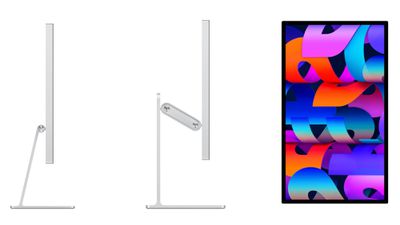
The Studio Display is Apple’s newest standalone display, offering a high-resolution 5K LCD display with a built-in camera, speaker system, and microphone array, in a slim, aluminum design. The Studio Display starts at $1,599, and was released alongside the $1,999 Mac Studio. The Studio Display is the newest external display in Apple’s lineup and is early in is product cycle. Since it is an entirely new display product line and there have been no previous models, we have no indication of how long Apple could wait to update it. Now is a very good time to buy the Studio Display and customers should not wait for a replacement model to launch. There are early signs of a different, high-end 27-inch Apple external displaywith mini-LED and ProMotion technology, but this device is not expected to replace Studio Display, with this device set to sit alongside it at a higher price point. If you would prefer a more advanced display and are willing to pay a premium for it, it may be better to wait for this other external display product to launch later this year. The Studio Display is Apple’s most affordable external display, but for a larger, more advanced display, there is the Pro Display XDR, which starts at $4,999. If the $1,599 is beyond your budget, you will need to look for an external display from another brand since the Studio Display is currently Apple’s lowest-cost display. Introduced in March 2022, the Studio Display is Apple’s first monitor since the 2019 Pro Display XDR, and the first lower-priced display option since the 2016 discontinuation of the Thunderbolt Display. Priced starting at $1,599, the Studio Display features a 27-inch 5K retina display with a resolution of 5120 x 2880 at 218 pixels per inch, aka the same resolution as the now discontinued 27-inch iMac. It supports up to 600 nits brightness so it’s not as bright as the Pro Display XDR, and it offers P3 Wide color for vivid, true to life colors and True Tone to match the white balance of the display to the lighting in the room. The Studio Display is engineered with glass that has extremely low reflectivity, but there is a $300 upgrade for nano-texture glass that minimizes glare in workspaces with bright lighting. Design wise, the Studio Display features slim black bezels all the way around, along with an iMac-style aluminum stand with 30 degrees of adjustable tilt (−5° to +25°). The stand is included in the price of the display, but for an extra $400, there is a tilt-and height adjustable stand that offers the same tilt but also 105mm of height adjustability, and a VESA mount adapter option that lets the display be used in portrait or landscape orientation. The Studio Display measures in at 18.8 inches tall, 24.5 inches wide, and 6.6 inches deep. It weighs 13.9 pounds. The tilt and height adjustable stand adds three extra pounds and a bit more depth and height, while the VESA mount version is less tall and lighter weight because of the lack of an included stand. At the back of the display, there is one Thunderbolt 3 port that supports 96W charging, enough to power all of Apple’s laptops, and three additional 10Gb/s USB-C ports for connecting peripherals. It connects to a Mac using a single Thunderbolt cable, which is included. Compared to the Pro Display XDR, the Studio Display is unique because it has a built-in A13 Bionic chip to power the camera and audio systems. It is equipped with a 12-megapixel f/2.4 Ultra Wide camera that has a 122-degree field of view. The Ultra Wide camera facilitates Center Stage, a feature that is designed to keep you centered in the frame as you move around during video calls. The A13 Bionic supports Spatial Audio for cinematic sound and it has a built-in Hey Siri feature, adding it to desktop Macs that do not normally have Siri functionality. It also powers the high-fidelity six-speaker sound system, which is equipped with four force-cancelling woofers and two high-performance tweeters. To go along with the speakers, there is a three-microphone array for high-quality audio. The Studio Display is compatible with Mac Studio, 2016 or later MacBook Pro models, 2018 or later MacBook Air models, 2018 or later Mac mini models, 2019 or later Mac Pro models, and 2017 or later iMac models, including iMac Pro. It also works with the 12.9-inch iPad Pro (third-generation or later), all 11-inch iPad Pro models, and the fifth-generation iPad Air. When connected to the 4th-generation iPad Air or iPad mini 6, the display works at a downscaled 1440p resolution. Apple is selling the Studio Display for $1,599, with nano-texture glass and upgraded stand available as add-ons. The display launched on March 18, although initial supplies are limited. Note: See an error in this roundup or want to offer feedback? Send us an email here. Apple is selling the Studio Display for $1,599, with nano-texture glass and upgraded stand available as add-ons. The display is available as of March 18. In October 2022, Apple began selling refurbished Studio Display models. The base Studio Display is available for $1,359, down from the original price of $1,599. The nano-texture model with tilt adjustable stand is available for $1,609, with the nano-texture add-on meant to minimize glare. The first reviews of the Studio Display praised some aspects such as the display’s built-in speaker and microphone setup, while others felt that “the Studio Display in its current state is a confounding miss.” Reviewers generally admired the slim, all-aluminum design of the Studio Display. Gizmodo‘s Phillip Tracy highlighted the Studio Display’s passive cooling design elements and criticized the display’s rubbber feet: CNBC‘s Kif Leswing felt that the display quality was adequate but unimpressive: The Verge‘s Nilay Patel criticized the Studio Display’s lack of HDR and ProMotion: Tracy was similarly disappointed at the lack of true blacks due to the Studio Display’s LCD panel: The specifications of the display were consistently flagged as disappointments by reviewers given the Studio Display’s price point. Patel praised the Studio Display’s built-in microphone and speaker setup: TechRadar‘s Matt Hanson praised the microphones, but found the Studio Display’s support for Spatial Audio less impressive: Tracy likewise lauded the speaker setup, saying that “the sound quality is better than anything I’ve ever heard out of a monitor.” TechCrunch‘s Brian Heater said that while the microphone setup is marketed as “studio quality,” for users “planning to do much more than just webconferencing, I’d recommend plugging an external mic into one of the aforementioned ports.” A major area of concern among reviewers was the built-in 12-megapixel camera. Patel said that “the Studio Display’s headline webcam feature works so badly that it’s virtually unusable.” Other reviewers generally agreed with the disappointing results from the built-in webcam, with Heater commenting: The Wall Street Journal‘s Joanna Stern agreed: Tracy similarly found the camera to be “fine” but “noisy.” Apple told multiple publications that improvements to the Studio Display’s camera would be coming in a software update, but it is unclear exactly what aspect of the reviewers’ complaints this update pertains to or when it will be released. Patel noted that the “$300 nanotexture option smudges easily and is hard to clean,” while Tracy criticized the Studio Display’s stand options: Hanson said that “it’s these kinds of ‘hidden’ extra costs that try a lot of peoples’ patience when it comes to Apple.” Some Studio Display users have complained about the built-in webcam, alleging that the image quality ranges anywhere from an “old BlackBerry” to downright “awful.” In his detailed review of the Studio Display, John Gruber said that the camera is “crushingly disappointing” and “astonishingly poor,” with the image being “terrible” and Center Stage being “glitchy.” Apple told reviewers that it “discovered an issue where the system is not behaving as expected” and will be “making improvements in a software update.” In May 2022, Apple released firmware update 15.5 for the Studio Display which it says brings updated “camera tuning, improved noise reduction, contrast, and framing.” The Studio Display measures in at 27 inches, and it features a design that’s reminiscent of the Pro Display XDR, but simpler. It measures in at 27 inches, and it has slim black bezels at the top, bottom, and sides. There’s a camera located in the top bezel, and the casing and stand are made of silver aluminum, matching Apple’s silver aluminum Macs like the Mac Studio. A hole in the stand is available for cable routing, and there are several ports at the back for connecting peripherals and your Mac. The display measures in at 18.8 inches tall and 24.5 inches wide, with total height and footprint varying based on the stand chosen. It weighs in at 13.9 pounds with the standard stand. There are three total stand options that can be purchased for the Studio Display. The standard display mount is tilt-adjustable and provides 30 degrees of tilt, ranging from −5° to +25°. For an extra $400, Apple offers an upgraded tilt and height adjustable stand. It has the same tilt range, but adds a total of 105mm height adjustment. Those who prefer to use their own mounting solution can get the VESA mount adapter at no additional cost, and the VESA mount adapter is compatible with 100 x 100mm VESA stands or mounts. With the VESA option, the Studio Display can be used in either landscape or portrait mode. Apple retail stores and Apple Authorized Service Providers can change out the stand of a Studio Display after purchase, swapping in the VESA mount or the tilt and height-adjustable stand for a fee. The Studio Display is a 5K display, similar to Apple’s now-discontinued 27-inch iMac. Compared to the 6K Pro Display XDR, it is lower resolution with less brightness and less contrast, which is why it has a more affordable price point. It has a 5120 x 2880 resolution at 218 pixels per inch, along with 600 nits maximum brightness. It supports 1 billion colors, and it offers Wide color support for vivid, true to life colors. True Tone technology allows the white balance of the display to adjust to the ambient lighting in the room for a more natural look that’s easier on the eyes. According to Apple, the standard display is engineered for “extremely low reflectivity,” but for rooms where there is a lot of glare, Apple also offers a nano-texture glass option with even less glare. First introduced in the Pro Display XDR, nano-texture glass is glass that is etched at the nanometer level to cut down on reflectivity and glare, unlike a standard matte display that uses a coating to scatter light. Apple’s nano-texturing process offers a matte look able to maintain contrast while scattering light to reduce glare as much as possible. Nano-texture glass is an upgrade, and it costs an additional $300 on the Studio Display. Nano-texture glass requires Apple’s special polishing cloth when it’s cleaned, and these models ship with a polishing cloth in the box. The Studio Display is Apple’s first-ever display to feature a built-in chip, and it comes equipped with the A13 Bionic, the same processor used in the iPhone 11 models. The A13 chip powers camera and speaker features. The Studio Display is equipped with a 12-megapixel f/2.4 Ultra Wide camera similar to the cameras that are used in Apple’s iPad models. The camera has a 122 degree field of view, and it also offers Center Stage support. Center Stage is designed to keep users perfectly framed on screen during video calls. With the wider field of view, the camera can zoom in as appropriate and follow people around the room as they move, with the A13 chip powering the feature that pans around to ensure the user stays in the shot. When other people join in on a call, the camera is able to detect them, and it will zoom out to fit everyone into the view. Center Stage is designed for FaceTime, but it also works with third-party video apps like Zoom and Skype. With the A13 chip, the Studio Display runs iOS, and at launch, it was equipped with the same version of iOS that was on the iPhone (15.4). Apple will deliver firmware updates to the display through software updates in the future. Along with a 12-megapixel camera, the Studio Display has a high-fidelity six-speaker system with four force-cancelling woofers and two high-performance tweeters for excellent sound quality. Apple says this is the highest-fidelity speaker system created for the Mac. It offers wide stereo sound and there’s also a three-microphone array for video and phone calls, with the speakers offering a high signal-to-noise ratio and directional beamforming to cut down on the noise that’s nearby. Thanks to the A13 chip, there’s support for Spatial Audio when playing music or video with Dolby Atmos for an immersive, surround sound audio experience. Hey Siri support is also integrated, bringing the Hey Siri feature to Macs that do not normally have it such as the Mac mini and Mac Studio, as well as older Macs that do not support the feature. There are a total of four ports on the back of the Studio Display. There’s one upstream Thunderbolt 3 port that offers 96W of charging, which is enough to power all of Apple’s MacBooks. It will fast charge the 14-inch MacBook Pro, but charging will be slower on the 16-inch MacBook Pro, which supports up to 140W. The Studio Display also features three downstream USB-C ports that support speeds of up to 10Gb/s for connecting peripherals, storage, and networking devices. Apple includes a 1 meter Thunderbolt cable with the Studio Display, and longer cables can be purchased separately. The Studio Display is compatible with many 2016 or later Macs that run macOS Monterey, with a full list available below. It is also compatible with the third-generation 12.9-inch iPad Pro and later, all 11-inch iPad Pro models, and the fifth-generation iPad Air. As for other USB-C iPads, the display can be used with the tablet, but the iPad cannot drive the display at the full 5K resolution and it is downscaled to 1440p. Apple could have a “Studio Display Pro” in the works with mini-LED display technology and ProMotion support, according to display analyst Ross Young. The product could potentially be a middle-tier display between the Pro Display XDR and the Studio Display. This 27-inch display is expected in 2023 after some delays. There is no word as of yet on when we could see a new Pro Display XDR.
MacRumors attracts a broad audience of both consumers and professionals interested in the latest technologies and products. We also boast an active community focused on purchasing decisions and technical aspects of the iPhone, iPod, iPad, and Mac platforms.
The M1 Ultra upgrade is worth it If you’re after laptop buying advice, I’m your man. I’ve been reviewing PCs and technology products for more than a decade. I cut my teeth in PC Labs, spending several years with PCMag.com before writing for other outlets, among them LaptopMag.com and Tom’s Guide. While computers are my main focus, I’ve also written at length about topics ranging from fitness gear and appliances to TV and home theater equipment. If I’ve used it, I have opinions about it, whether somebody’s paying me to write them up or not. If you want power, the Apple Mac Studio with an M1 Ultra chip brings it in spades, elevating the elegant desktop PC with truly impressive processing and graphics. Apple’s known for its aggressive marketing and bold claims, but when the company announced the new Mac Studio desktop, the accompanying claims were pretty incredible. Not only does the new Mac come with a new processor and display, but the promised performance rivaled that of larger workstations. Was this to be the most powerful Mac since the introduction of Apple silicon? When we tested the less-expensive M1 Max configuration of the Mac Studio, we didn’t quite see the full extent of that promised power. Instead, we saw a machine that felt a lot like a desktop-designed version of the more mundane MacBook Pro. But the results from the M1 Ultra configuration we just benchmarked (starts at $3,999; $6,199 as tested) are are stunning. This compact desktop may look like a thicker Mac mini, but the sheer amount of power inside is anything but mini. If you want the most powerful Mac, this is it. If you’ve looked at the M1 Max version of the Mac Studio we reviewed last month, then you already know what the M1 Ultra version looks like, because they’re identical on the outside. It has the same 3.7-by-7.7-by-7.7-inch dimensions, and a thermal design that pulls cool air in through the vented base and expels the hot air out through the ventilated back of the unibody aluminum chassis. For a more detailed look at the Mac Studio’s design and specifics, check out our original Mac Studio (M1 Max) review. The port selection is nearly identical on both configurations, with a quartet of Thunderbolt 4 ports, a 10-Gigabit Ethernet jack, dual USB-A ports, a single HDMI output, and a 3.5mm headphone jack. The only real difference is in front, where you’ll find an SDXC card slot and two USB-C ports—on the M1 Ultra model, they’re actually two additional Thunderbolt 4 ports. The other difference is one you’ll never see, but you’ll feel it if you try picking up the Mac Studio. Where the M1 Max-equipped base model weighs 5.9 pounds, the M1 Ultra configurations weigh 7.9 pounds—a full 2 pounds heavier. It’s not the larger processor that contributes to the weight, but the cooling system. Instead of the aluminum cooling block and vapor chamber used in the lesser models, the M1 Ultra needs more efficient cooling, so it uses copper, which is denser and heavier. Aside from the weight, however, it’s the same design, from the vents to the dual blower fans. One other thing that doesn’t change between the two models: The cooling system is whisper quiet, even under the most demanding software load. Debuting with the Mac Studio is Apple’s Studio Display, a monitor with a 5K Retina display and Thunderbolt connectivity, along with an A13 Bionic processor that supports the built-in 12-megapixel webcam and features like Center Stage and Apple’s True Tone color adjustment technology. It also boasts some impressive sound, with a six-speaker array that can handle Dolby Atmos and other spatial audio formats. The peripherals and accessories that turn the Mac Studio into a full-fledged desktop are the same on the M1 Ultra Mac Studio as they are on the M1 Max variant. (They’re also separate purchases.) Apple is now selling a black-and-aluminum version of longstanding peripherals like the Magic Keyboard with Touch ID, the Magic Mouse, and the Magic Trackpad. But the only new detail is the color scheme. The functions are unchanged from previous versions, right down to the quirks we’ve long wanted Apple to fix, like the awkward bottom-mounted charging port on the Magic Mouse. The Mac Studio comes with the latest version of Apple’s computer operating system, Mac OS Monterey. As with any other Mac, it comes with both good and bad. Our own Ed Mendelson noted in his review (linked above) that the OS is both stable and secure, and praised the “elegance, coherence, and ease of use” that easily exceeds Windows 11. And if there’s a better example of tightly integrated software and hardware, I don’t know what it is. Everything just works, from the standard productivity apps to cool features like Universal Control, which lets you pair your Mac with an iPad or iPhone, and use them like a second extended display, complete with cursor control and the ability to share files between devices. (We’ve got a list of the 10 Coolest Things in macOS Monterey that gives you a nice sampling of some of the latest new features.) Most of the software and apps you know from Windows are available on Mac, though some will look a bit different. Apple’s M1 hardware provides a compelling reason to develop apps that run natively on Apple silicon, but for those that don’t, Apple also has Rosetta 2, an emulation layer that lets the new Macs run software that was designed for older Intel x86 systems. It can be a little laggy at times, but it does make everything work. The Mac Studio is available with your choice of M1 Max or M1 Ultra processors, with additional options for added GPU cores, expanded memory and larger storage capacity. For the M1 Max models, the prices range between $1,999 and $4,999, all with the same M1 Max processor we tested in our earlier Mac Studio review. For this review, we’re looking at the M1 Ultra version of the Mac Studio, which sells for between $3,999 and $7,999. Again, this price varies based on configuration, with your choice of 48 or 64 GPU cores, the option to go with 64GB or 128GB of unified memory, and a range of storage choices, from 1TB up to 8TB. For $3,999, you’ll get the M1 Ultra CPU with 20 processing cores, a 48-core GPU, 64GB of unified memory, and 1TB of SSD storage. Extra GPU cores cost $1,000. Doubling the memory is an additional $800. And storage goes up incrementally: 2TB for $400, 4TB for $1,000, and 8TB for an extra $2,200. Since our initial review, we’ve seen several teardowns(Opens in a new window) of the Mac Studio, and they confirmed what we suspected all along: There are no post-purchase upgrades to this little desktop, and Apple doesn’t even want users opening up the chassis. One of the most curious aspects of the internals is the presence of not one, but two storage slots. But you won’t be able to simply swap them out for a new, larger SSD. Unlike the average PC, Macs using M1 processors use plain NAND modules, without an on-board controller, instead delegating that function to the processor. The drive and CPU are also cryptographically paired, so even pulling a storage card from one unit and plugging it into another Mac Studio won’t work. And that’s just the storage, which at least looked like it could potentially be upgradable. Everything else is locked down tight. The memory is soldered down, there are no slots for adding hardware, and the unibody chassis wouldn’t support additional ports or accommodate additional hardware even if you could figure out a way to connect it. You’re stuck with whatever you buy, so be sure to bump up the RAM, and possibly the storage, if you think you might need more. (Of course, there’s always Thunderbolt; an external drive connected over Thunderbolt will be plenty fast and can actually be moved between machines.) The M1 Ultra’s impressive performance claims are backed with plenty of silicon muscle, using a doubled-up processor that weds two M1 Max CPUs onto a single chip die using Apple’s UltraFusion interconnect, an eight-lane highway of data flow that combines the two halves of the chip with 2.5 terabytes per second of bandwidth. The result allows the processor to function seamlessly as a single chip, which is how it appears to software—as one massive CPU with 20 processing cores and 64 GPU cores. Backed with 128GB of unified memory and a specially built cooling block that manages the heat generated by the chip, it’s a powerhouse of a processor. But just how powerful is it? With the M1 Ultra offering both a high-powered CPU and GPU in a single package, we test performance of Macs and competing PCs (some of whose specs you can see in the chart below) with an array of productivity tests. The first test we run on Mac systems is Cinebench R23, which uses Maxon’s Cinema 4D engine to render a complex scene to test multi-core and multi-threaded processing. Here, the M1 Ultra-equipped Mac Studio delivered one of the best scores we’ve ever seen, nearly doubling the already capable score of the M1 Max version. We follow it up with Primate Labs’ Geekbench Pro, which simulates popular apps ranging from PDF rendering and speech recognition to machine learning. Again, the M1 Ultra rocketed past the M1 Max, as well as systems that use top-tier Intel Core i9 CPUs. But the most impressive improvements were in real-world tests, like our Handbrake 1.4 video transcoding test and Adobe Photoshop running in Rosetta 2. Whether it was decoding and re-encoding a 4K video clip or running through a gauntlet of processor-intensive filters and functions, the Mac Studio with M1 Ultra proved itself one of the most capable media editing machines we’ve ever tested. Even in truly demanding content creation, such as rendering a 3D image in Blender, the M1 Ultra showed it has the chops to power any professional media shop, thanks to lightning-fast results in both CPU and GPU render tests. The only area where we didn’t see staggering improvements over the M1 Max was in browser-based tests. Whether it was the 64 JavaScript and WebAssembly benchmarks of JetStream 2 or the HTML and JavaScript throughput tests of Principled Technologies’ WebXPRT 3, the results fell slightly behind those we saw on the M1 Max Studio, but only slightly—and both still handily beat out every other M1 Mac by a wide margin. The lesson here? The M1 Ultra’s processing and graphics horsepower isn’t going to be needlessly wasted bolstering browser performance, but you’ll still get lightning-fast performance for even the most demanding web apps. Finally, with the M1 Ultra bringing 64 GPU cores to bear—twice the 32 cores of the M1 Max—it’s no surprise that it dominated in every graphics test we threw at it. In the cross-platform 3DMark Wildlife Extreme, running in Unlimited mode to accommodate the Apple Studio Display’s 5K resolution, the M1 Ultra nearly doubled what we saw on the M1 Max-powered Studio. In both of our GFXBench OpenGL graphics benchmarks, the Studio’s M1 Ultra went toe-to-toe with the best graphics options available. In the Car Chase (1080p) test, that meant matching every other system in low-level performance. But in the more demanding Aztec Ruins (1440p) test, it lead-footed past the competition. When performance matters most, the M1 Ultra delivers in a big way. The only disappointment is that the muscular graphics of the M1 Ultra won’t translate into great gaming experiences. Sure, it delivered the best performance of any Mac tested using Rise of the Tomb Raider, delivering best-in-class frame rates at the highest detail settings. But Apple’s relationship with gaming is tricky at best. You can get more games on Apple than ever before, but between running many in Rosetta 2 and finding M1-native versions of the biggest titles today, you’ll find yourself frustrated as often as you are delighted by the capable hardware. We really like the M1 Max-powered version of the Mac Studio, but its lack of really competitive power is a head scratcher for us. Having finally tested the Mac Studio with M1 Ultra, the confusion is long gone. This is the desktop Apple promised, delivering an astounding amount of power in a strikingly compact package. The Mac Studio (M1 Ultra) is far and away the best value for Mac users that need power, and lots of it. Sure, the Intel Xeon-powered Mac Pro is still available if you want to spend $10,000 or more for a truly unparalleled machine, but with the Mac Studio around, you won’t need to. From the slick design and generous port selection to the unbeatable power of the doubled-up M1 Ultra, the Mac Studio is the desktop to get for any professional studio. If you want power, the Apple Mac Studio with an M1 Ultra chip brings it in spades, elevating the elegant desktop PC with truly impressive processing and graphics. Sign up for our Weekly Apple Brief for the latest news, reviews, tips, and more delivered right to your inbox.
October 17, 2022Education GAINESVILLE, Fla. — When Jack Manfredi graduated from Gainesville High School in 2020, he was lost. The art of pottery had captured his heart in high school ceramics class, but as he applied to different universities and programs during the pandemic shutdowns, a distressing realization settled in. Everywhere he applied, the answer remained the same – he would have to start his ceramics degree online. For such a hands-on career path, this was a serious drawback. “I feel like that would not be the best use of my time and money,” he said. So instead of pursuing a degree, Manfredi decided to immerse himself in an old, nearly forgotten method of education — apprenticeship. Apprenticeship is an ancient practice that extends to a vast array of industries. Artists, technical workers and tradespeople all learn through immersive practice under the watchful eye of mentors in their chosen fields. No matter the profession, an organic, personalized approach to teaching is intertwined with trust as apprentices grow into full-fledged professionals. For Manfredi, the choice between college and apprenticeship was easy. His ceramics teacher from high school, Sara Truman, had a brand-new studio and had seen him grow in his art. Her assistant was leaving the business at the time, and she needed someone to help with the shop. Manfredi was already there, volunteering around the studio whenever possible. She decided this was the perfect opportunity to take on an official mentor role. “We were interviewing people from all over the country who had finished their undergrad degrees,” she said. “And I’m like, ‘Why are we going to bring in a student that’s making us wait to see if they get a residency when he’s here doing the work?’” So after getting a grant from Studio Potter Magazine to fund his education, Manfredi chose to make his clay-stained hands a lifestyle under Truman’s diligent guidance. Non-academic education is often viewed as old-fashioned, when in reality, it remains the standard in some industries, including tattooing. Tim Strating, a tattoo artist and owner of Anthem Tattoo, speaks to the value of a personalized learning approach. Mentors actively invest in an apprentice’s success. The future of a shop depends on the quality of art that comes out of it. “Tattoo apprenticeship is kind of this organic thing where we try to suit it to the person that is learning,” he said. Tattooing requires a special kind of grit. The bold colors and clean lines etched into the skin of a human canvas can take a long time to learn and even longer to perfect. While there is no specific timeline for when an apprenticeship ends, building confidence in an artist’s work is the ultimate goal. A mentor’s relationship with an apprentice is as unique as an individual’s art style, which is why Anthem takes on no more than two or three apprentices at a time. Tattoo schools are generally frowned upon because they seek to teach in bulk, often 20 to 30 students at a time. Such a unique development of style is hard to replicate in a classroom setting. “People learn in different ways; people grow at different rates,” he said. “We want to be able to devote enough attention to one person where they’re not slipping through the cracks.” Many schools teach the basic mechanics of tattooing but fail to encourage artists to lean into their style in the way mentorship does. “They’re not following up with you to watch you and make sure you’re doing those things,” he said. “You’re gonna slip into bad habits. You don’t have somebody kind of correcting behaviors.” Strating, who apprenticed at Anthem and rose through the ranks to become an owner and veteran artist, attributes success in a difficult industry to this tough-love mentality. “Even when [criticism] does seem harsh, it’s because you’re gonna have clients that are difficult,” he said. “It all kind of plays into your future success.” Training for success and independence are hallmarks of the age-old method of apprenticeship. Apprentices in more technical trades, such as electricians, train for at least four years to earn different levels of certification and rely on their mentors to guide them through the tricky world of circuitry. “You have an instructor that was also an electrician. He wasn’t just somebody hired by somebody. He was an actual licensed electrician himself,” said Joe Rega, a master electrician from North Florida. He is licensed across the state to install electrical systems in buildings and to have less experienced electricians train under him. After going through his apprenticeship in 1988 and mentoring three of his sons in the trade, Rega speaks to the values of trust that mentors develop with their mentees. “If you don’t trust the guy that you’re working under, it’s big trouble. Then, if the guy doesn’t trust you, you know, you can get hurt or he can get hurt,” he said. Shadowing someone with years of concrete, practical experience seals that bond of trust and instills a sense of autonomy in learning that classroom instruction can sometimes miss. When reflecting on her own journey compared to that of her apprentice, Truman remains an advocate for the benefits of a one-on-one relationship. “I didn’t see a reason for him to go take a ton of student loan debt like I did,” she said. Manfredi counts himself lucky to gain experience through a system that is becoming more and more obscure. To him, the “dying art of apprenticeship” is kept alive by those who seek a different kind of life. He and Truman are friends outside of work; he goes to her for advice, and they talk about politics. Manfredi said he has found a connection to his trade, to his mentor and to the people around him. “I’m friends with her family and her kids,” he said. “We have a really good working relationship as well as a social relationship.” Whether in the fine arts like ceramics, disciplines like tattooing or the fundamentals of technical trades, apprentices learn from their mentors and grow into professionals who carry on their craft traditions. “You should be in love with the work,” said Manfredi. “You should be in love with what they’re making and be inspired by them and how they live their life.”
University of the Arts London is hiring a Course Leader, MA Music Production. The successful candidate will design, implement and deliver their own vision for this course, and support the development of music production within the college. The role shall involve the appointment and coordination of a new teaching team, leadership of the development and delivery of a curriculum, the management of learning, teaching and assessment, maintenance and enhancement of standards, and resource allocation. The successful candidate will be responsible to the Programme Director for the academic leadership and management of the course, and will shape and lead its future direction. See link below for further details. Please note that some listings are added by third parties. The Journal of Music does not take responsibility for the content or accuracy of listings published by third parties on this site. The Journal of Music reserves the right to edit or delete listings. Click here to add a listing, login or register.
ADVERTISEMENT ADVERTISEMENT Dear Master Gardener: Are the pumpkins and gourds that are for sale around Halloween edible? Answer: There are two species of pumpkins. Cucurbita pepo are usually the jack o’lanterns and some pie pumpkins and Cucurbita maxima are the giant ones grown for competition and decoration. People generally do not eat the pumpkins grown for jack o’lanterns because they are stringy and tasteless; however, the seeds are good roasted. There are three species of edible winter squash: Cucurbita pepo is the acorn and spaghetti squash, Cucurbita moshata is the butternut type, and Cucurbita maxima include the hubbard, kaboch, turban and buttercup types. Dear Master Gardener: Should I cut my Hydrangea back this fall or wait until spring? Answer: Hydrangea arborescens (Annabelle, Bounty, Incrediball, Grandiflora) and Hydrangea paniculata (Limelight, Quick Fire, Pinky Winky, Tardiva, White Diamonds, etc) bloom on new wood of the current season. They can either be cut back in late winter or early spring. Flowering is actually enhanced by cutting back all stems to about 12 inches from the soil line. Some hydrangeas flop after a rain. One way to alleviate flopping and strengthen the stems is to cut stems to a height of 18-24 inches to provide a framework to support new growth. Some Hydrangea paniculata can grow quite large so cutting it back can help you manage its size. If size is of no concern to you, then just remove spent blossoms and any broken stems. Dear Master Gardener: Can I bring my begonias in and keep them as a houseplant until next summer? ADVERTISEMENT Answer: It depends on what type of begonia you have. Tuberous begonias should be dug up and stored indoors in a cool place during the winter like calla lilies, cannas, dahlias, and gladioli. Dig them up after the first light frost, spread the tubers on newspaper and let them dry for about a week. Then cut off any remaining foliage and gently shake off excess soil. All of the aforementioned bulbs/tubers can be dusted with sulfur powder to prevent disease while overwintering. Store them in paper bags or a cardboard box in a cool, dark, dry place. Rhizomatous begonias are the easiest to grow indoors as a houseplant. To figure out if yours is a rhizomatous begonia, look for a rhizome (looks like a thick stem) that is right around the soil surface. Place your plant in an area where it gets bright light, but not direct sunlight and keep it slightly moist and fertilized. Cane type begonias, like Angel Wings and the dragon wing types can also be kept as houseplants. They need the same requirements as rhizomatous. Rex begonias are a little trickier as a houseplant because they need high humidity. They like constant moderate moisture, high humidity, regular fertilization and bright (but not direct) light. When bringing any plant inside for the winter make sure they are free of insects or disease. Inspect them carefully. Clean off the foliage and put a systemic insecticide in the soil. Dear Master Gardener: When I’ve been out walking, I’ve seen some beautiful shrubs with fall color. What can I plant so I have gorgeous fall color in my yard next year? Answer: Here are some shrubs you can add to your landscape to add autumn color and interest:
You may get your garden questions answered by calling the new Master Gardener Help Line at 218-824-1068 and leaving a message. A Master Gardener will return your call. Or, emailing me at [email protected] and I will answer you in the column if space allows. University of Minnesota Extension Master Gardeners are trained and certified volunteers for the University of Minnesota Extension. Information given in this column is based on university research. ADVERTISEMENT ADVERTISEMENT