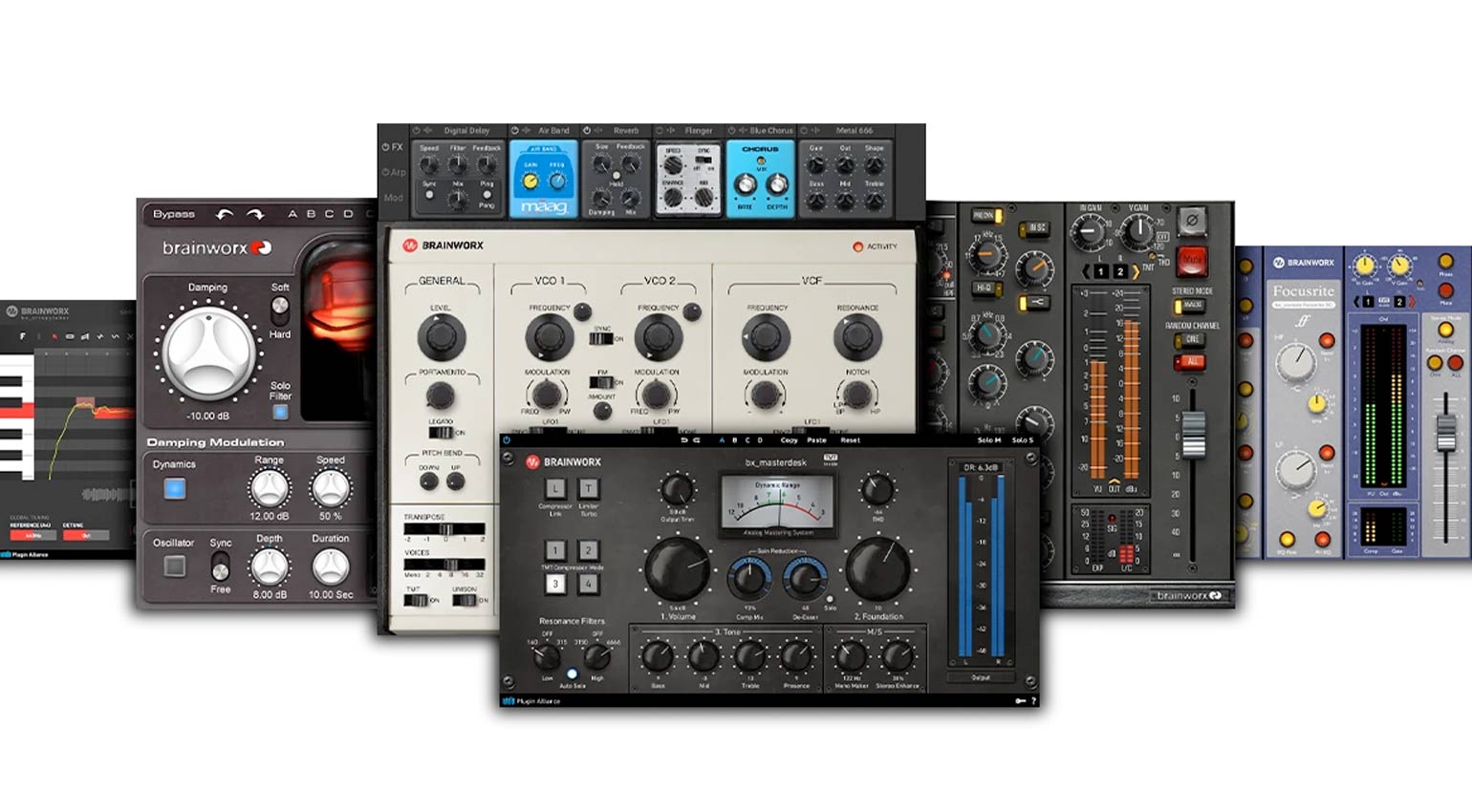
· Source: MAGIX MAGIX released ACID Pro 11, the latest version of its longstanding loop-based creative DAW. Among its new features and additions are more ACID-ized loops, a sample chopper (triggered via MIDI), and a range of new effects. What’s already included can be expanded with additional content via in-app purchases. In addition to ACID Pro 11, there is also ACID Pro 11 Suite with more bells and whistles, as well as the ACID Pro 365 monthly and yearly subscription plans. MAGIX really has you covered when it comes to purchasing options. Flexible pricing is infinitely better at fighting piracy than USB dongles! Loop-based production remains at the heart of ACID Pro 11. ACID was my first DAW encounter and I fondly remember the immediacy of stacking a bunch of loops in the same tempo and key together in ACID. I’m reminded of it anytime I hear about the Ableton Push, Maschine Jam, and any product designed around triggering sync’d up loops. It’s a fun and accessible means to conjuring super-hits. The only limit to it is what you don’t know yet. ACID is fondly remembered by many for being among the first DAWs to let you edit audio pitch and tempo. Speaking of which, ACID Pro 11 ships with 9GB of ACID-ized loops and 11 Suite tops out at 15 GB of the stuff. So there’s plenty of sample and loop fodder from the get-go at your disposal. Of course, you can also import your own audio to come up with beats and tunes. ACID is Pro in all major ways, but its interface remains intuitive and accessible. The creative process is quick, especially if you have the right loops. To that, a built-in store lets you buy new sounds and loops on a whim. The aforementioned Chopper, which can be triggered via MIDI, cuts up audio files and ACID loops into individual slices. You can play them from your MIDI controller which is a fast way of beatmaking. MAGIX also teamed up with Brainworx to borrow some new plug-ins for this release. Depending on the software version, the available studio effects include bx_oberhausen, bx_masterdesk, bx_console N, bx_console Focusrite SC, bx_crispy tuner, and bx_refinement. That’s a solid all-around package. The new Morph Pads make for an interesting addition. Not unlike Ableton’s simplest sampler, you can assign audio tracks, instruments, or audio buses to a pad. Then you can morph between the sounds via different modulations of FX targets. There’s mangling to be made! The software bundle is complete with Elements and Essential versions of iZotope Ozone 9 and Celemony Melodyne 5, along with various effects such as VariVerb II or the Analogue Modeling Suite Plus. You can find a detailed overview on the developer’s website. Until June 29 2022, you will pay EUR 199 for ACID Pro 11, EUR 299 for 11 Suite, and EUR 20 / mo for Acid Pro 365. Upgrade prices are displayed in your user account, along with additional offers. The software works under Windows 10 and 11. You can download a free demo version from the developer’s website. Your email address will not be published.Required fields are marked *
· Gives a new sense of humor if i now say “I’ve got the clap, baby!” Couldn’t have chosen a “better” name, these Germans. · I only have two questions: Did no one understand that “the clap” is slang for a STD? Did you consider AIDS (Audio Interface Dynamic Sub-system)? · Sounds great!
MarketandResearch.biz has just released Global IT Leasing And Financing Market from 2022 to 2028, a global study report that combines industry expertise, unique ideas, practical solutions, and cutting-edge technology to improve the user experience. Furthermore, the file gives thorough research into the neighborhood enhancements of the market, influencing its improvement at some level in the forecast period from 2022 to 2028. The research is a great way to learn about the global IT Leasing And Financing market, emerging trends, product applications, customer and competitor motivators, brand positioning, and consumer behaviour.The research is based on precise findings from a range of high-end business models, including Porter’s five forces analysis and SWOT analysis. DOWNLOAD FREE SAMPLE REPORT: https://www.marketandresearch.biz/sample-request/228712 The firm has professional business relationships with a number of companies, as well as a strategic alliance with freelancing specialists from all over the world. The in-house database contains market data for a variety of industries and domains. The major players included in the market report are: The global IT Leasing And Financing market research is divided into Geographically, the following regions, as well as the national/local markets indicated below, are thoroughly examined: The research contains a detailed examination of each parameter, allowing our users to identify the most likely and perhaps best trend in the current environment. Market Segment through application, split into: ACCESS FULL REPORT: https://www.marketandresearch.biz/report/228712/global-it-leasing-and-financing-market-growth-status-and-outlook-2022-2028 are studied, and their business models and business segmentations are examined. Analysis of upstream raw materials, downstream demand, and current market dynamics is moreover achieved here. The segmentation analysis includes a descriptive assessment of the segments, presentation of the market stocks constituted by each section, increase rate of every section, and attractiveness of the segment in terms of revenue. Customization of the Report: This report can be customized to meet the client’s requirements. Please connect with our sales team ([email protected]), who will ensure that you get a report that suits your needs. You can also get in touch with our executives on +1-201-465-4211 to share your research requirements. Contact Us Mark Stone Head of Business Development Phone: +1-201-465-4211 Email:[email protected]
Search: Language: Search: Language: Language: ChessBase 16 – Mega package Edition 2022 Your key to fresh ideas, precise analyses and targeted training! Everyone uses ChessBase, from the World Champion to the amateur next door. It is the program of choice for anyone who loves the game and wants to know more about it. Start your personal success story with ChessBase and enjoy the game even more. More… The Semi-Slav, Chebanenko system and the Slav triangle are solid and flexible weapons for Black. The repertoire examined on this DVD meets them all in a provocative way. €29.90 In the Classical-Armageddon tournament, in case of a draw in the slow game, a sudden-death decider will follow. The time control in the classical game is 120 minutes plus an increment of 10 seconds after move 40. In the Armageddon, White has 10 minutes and Black has 7 minutes, with an increment of 1 second per move starting from move 41. The pointing system: Read the full preview…
Wesley So published two new opening DVDs: 1.b3, the so called Nimzo-Larsen-Attack, for White and his black secrets in the modern Italian. Get them in a package and save money!
Commentary by Jovanka Houska and Jan Gustafsson The new Komodo Dragon 3 engine has gained 100 Elo points in playing strength over its predecessor when using a processor core in blitz. That’s a huge improvement for a program that already reached at an Elo level of over 3500! €99.90 This video course is aimed as a tactical guide for Black, featuring the most typical combinations for the French structures. €59.80 €54.90 This video course is aimed as a tactical guide for Black, featuring the most typical combinations for the French structures. €29.90 his video course is aimed as a tactical guide for Black, featuring the most typical combinations for the French structures. €29.90 The Stonewall Attack (d4 followed by e3 and possibly f4) is an old-fashioned opening, almost forgotten, not thought to give White any advantage at all. Yet it still packs a punch and is not so easy to defend against. It is especially good for club players €9.90 White gains space on the queenside, forces the opponent to use their own resources right from the start of the game and creates a complicated position. €9.90 In this two-part course the emphasis will be on typical pawn-structures. “Open and half-open files” and “the pawn chain” will be covered extensively on this video course. New: now also available as stream! €29.90 We use cookies and comparable technologies to provide certain functions, to improve the user experience and to offer interest-oriented content. Depending on their intended use, cookies may be used in addition to technically required cookies, analysis cookies and marketing cookies. You can decide which cookies to use by selecting the appropriate options below. Please note that your selection may affect the functionality of the service. Further information can be found in our privacy policy.
A few showers and thunderstorms early, otherwise mostly cloudy with some breaks of hazy sun. More humid with another gusty t-storm possible towards evening.. Mostly cloudy and muggy with a few showers and thunderstorms, especially in the evening. A gusty thunderstorm is possible. Updated: June 16, 2022 @ 8:46 am Rendering of the proposed 125-unit project called the 1010 Apartments, to be located at 1010 W. Hamilton St.
Reporter Reporter
ALLENTOWN, Pa. – Construction is officially underway on a new apartment complex in downtown Allentown. Officials broke ground Tuesday on the $25-million 1010 Apartments community, located at 1010 Hamilton Street.
The 125-unit, four-story building, set to open in summer 2023, will be a mix of studio, one-bedroom and two-bedroom apartments. Rendering of the proposed 125-unit project called the 1010 Apartments, to be located at 1010 W. Hamilton St. Other features include a lounge with a coffee bar and fireplace, a courtyard with a firepit and grills, a bocce court, cornhole and a dog park with outdoor seating. Residents can park next door in the new Maple Street parking garage. The groundbreaking also means a substantial development outside of the Neighborhood Improvement Zone. “When the NIZ was being planned over 10 years ago, the ultimate goal was to start spreading the economic development throughout Allentown,” said J.B. Reilly, City Center president. “Ten years later, we are doing a $25-million project on the 1000 block of Hamilton Street, which I think is what the legislation intended, and what Sen. Pat Browne envisioned, so this is very meaningful from that standpoint.” Also during Tuesday’s event, City Center announced a new initiative. It’s investing $1 million in a neighborhood to be known as “Downtown West.” The Downtown West Investment Fund will offer interest-free loans for the acquisition or redevelopment of properties between 9th and 15th streets, and Walnut and Turner streets, City Center said. “We see Downtown West as an up-and-coming neighborhood that’s ripe for investment with many opportunities,” said Reilly, in a statement. “We’re exploring a variety of programs to encourage small investors to buy into Downtown West…” Allentown Mayor Matt Tuerk says revitalizing the Downtown West district has become a strategic priority, as partnerships are already in place and underway to help renovate and improve facades and streetscape. “Whatever your memories of downtown Allentown were, whether it was from the Hess’s years or from the early years of redevelopment, it’s totally different,” he said. “You’ve got to see it to believe it, you’ve got to come down.”
{{description}} Email notifications are only sent once a day, and only if there are new matching items. Reporter {{description}} Email notifications are only sent once a day, and only if there are new matching items. Reporter {{description}} Email notifications are only sent once a day, and only if there are new matching items. Get local Breaking News alerts sent directly to your inbox. Success! An email has been sent to with a link to confirm list signup. Error! There was an error processing your request. Brand New App to watch all of WFMZ-TV News and Syndicated Programing 24/7 on your Streaming App enabled TV. Get up-to-the-minute news sent straight to your device.
Thank you for visiting nature.com. You are using a browser version with limited support for CSS. To obtain the best experience, we recommend you use a more up to date browser (or turn off compatibility mode in Internet Explorer). In the meantime, to ensure continued support, we are displaying the site without styles and JavaScript. Advertisement Scientific Reportsvolume 12, Article number: 9603 (2022) Cite this article 93 Accesses Metrics details Owing to their outstanding characteristics, carbon based nanofluids (CbNFs) have been applied to various advanced heat transfer and cooling technologies. It was claimed that these CbNFs can considerably improve the properties of the base working fluids. Among all the thermal characteristics, the thermal conductivity (λ) is regarded as the primary parameter to be considered for the application of nanofluids (NFs). In the present research study we measured for the first time both λ and thermal diffusivity (aT) of very stable fullerene (C60)-based NFs in liquid phase (1,2,3,4-tetrahydronaphthalene and 1,2-dicholorobenzene) by the transient multi-current hot wire technique at atmospheric pressure in a wide range of temperature (254–323 K). Similar to the base liquids (BLs), we observed a slight decrease in λ with an increase in temperature. Additionally, compared to the BLs λ was reduced upon the addition of C60. The results were compared with the predicted ones using different theoretical models. Not much variation in aT was observed between the C60 NFs and the corresponding BLs due partly to the small variation of λ with the addition of C60. Carbon based family of nanomaterials (CbNFs) comprising of single- and multi-layer graphene, single- and multi-walled carbon nanotubes, graphite, graphene nanoplatelets, graphene quantum dots, graphene oxide, and so on have recently received major attention for the preparation of NFs (i.e. dispersion of CbNFs in base liquids, BLs) because of their various excellent and unique characteristics along with their superior thermal attributes as compared to conventional liquids1,2,3,4,5. The way the CbNFs bond to and through the molecules of the BLs govern the properties like rheology, thermal and electrical conductivity or light absorption/emission. These NFs have exhibited great potential in industrial applications such as solar thermal storage, heat pipes, and energy storage among other advanced heat transfer and cooling technologies; which is attributable to their greater thermal conductivity (λ) and convective heat transfer coefficients compared to the corresponding BLs2,5. In fact, λ improvement is the first expected advantage of using a nanofluid (NF) when applied as a thermal working fluid. When evaluated against metals or metal oxides (Au, Ag, Cu, Fe, CuO, Al2O3, ZnO, etc.), λ in carbon nanostructures is greater due to their high intrinsic λ, low density, strong C–C covalent bonds, and phonon scattering6. For instance, λ of carbon materials has a wide range that varies from 0.2 W/m K for diamond-like carbons to 6000 W/m K for single-walled carbon nano-tube (SWNT)7; which is superior to that of graphene (5300 W/m K for)8, double-walled carbon nano-tube (DWNT, 3986 W/m K) and multi-walled carbon nano-tube (MWNT, 3000 W/m K)5,7,9. Therefore, carbon materials can be applied either as heat insulators (e.g. diamond-like carbons) or heat superconductors (e.g. graphene). It is worth noting that various experimental and theoretical studies have reported λ enhancement of NFs and the related affecting factors. The results indicated that λ of NFs are normally functions not only of the particle’s thermal conductivity, its concentration in a NF, size and shape, but also the environmental parameters such as the base fluid’s, pH value, surfactant, dispersing agent, and the standing time10. Various investigations have shown that higher λ enhancement of NFs could be obtained when lower λ base fluids were considered2. In addition, it has been reported that λ of NFs is atypically enhanced with a very low volume fraction of nano-additives11,12,13,14. For instance, in a first study by Choi et al.12, a 160% λ enhancement for 1.0 vol% multiwall carbon nano-tube (MWCNT) dispersed in synthetic poly (alpha-olefin) (PAO) oil was reported. Much lower λ enhancement (i.e. an order of magnitude smaller, as low as 7%) of carbon nano-tubes-based NFs were found in various other studies including functionalized MWCNT and different based fluids (water, oil, decene, ethylene glycol, glycerol, Refrigerant R113, etc.)14,15,16,17,18,19,20,21,22,23. In some studies, a decrease in time of λ was observed, especially by the first 10 days from the preparation of the NF, but the reduction rate also decreased with time9. Contrastingly, some have reported that NFs containing graphene nanomaterials frequently exhibited greater λ compared with those including other nano-particles5. Yu et al.24 stated an increase of λ up to 86% for graphene and graphene oxide (GO) based ethylene glycol NFs (i.e. λ of the GO NF and graphene NF was 4.9 W/m K and 6.8 W/m K, respectively). Lower λ enhancements (below 27%) were claimed in other graphene nanosheets, graphite nano-particles and graphene quantum dots (GQD) based NFs prepared with water or ionic liquids3,25,26,27. It was indicated that, other than the presence of structural defects, inadequate stability, and restacking of graphene oxide, graphene nano-sheets are prone to be coiled, folded, and corrugated at the surface and edges affecting the heat transfer mechanisms and the subsequent measured λ. Among the above cited CbNFs, much less attention has been given to nano-diamond particles and fullerene based NFs19,28,29,30. This may be attributed to the lower λ of these nanoparticles. For nano-diamond-water based NFs, the stated λ enhancements were up to 22.8%29,30. For fullerene C60 NFs, it was claimed 6% enhancement of λ for oil base liquid; but 3% reduction of λ for water base liquid, and a decrease of λ with increasing C60 volume fraction19,28. In general, there exists a considerable scattering in the measured λ by different research groups for the same kind of NFs and even for the same volume fraction of nano-additive having the same size. Although an increase in the volume fraction of the nano-additive seems to always have a positive effect on λ of NFs, the enhancement rate is rather dissimilar in different research studies. Such disagreements are attributed to the different sample preparations and stabilization methods. The use of suitable surfactant(s) or dispersing agent(s) to prepare stable NFs, since the nano-additives can form aggregates because of strong van der Waals interactions, not only increases the viscosity but also reduces λ of NFs31,32,33,34. Moreover, even if λ of the nano-particle can directly affect λ of NFs (i.e. for a similar nano-particle content in a given NF, higher λ of the particle generally produces a greater enhancement in λ of the NF), this is not conclusive since λ of NFs is also affected by other aspects such as aggregation, Brownian motion, interfacial nano-layer, surface charge state, and thermal resistance of nanoparticles, among others10. It must also be mentioned that some research studies have revealed an anomalous λ increment of some NFs with an increase of the nano-additive volume fraction within the base fluid12,35. This is still a controversial issue10,36. The measured λ was found to be significantly higher than the theoretical value predicted by the classical Maxwell model37 as adapted by Hamilton and Crosser38. This was explained by the nature of heat conduction in nano-particles and suspensions, the Brownian motion of nano-particles, the arranged structure at the solid/liquid interface, nano-particle clustering, etc.39,40,41. To date there is no consistent theory to predict the anomalous λ enhancement of NFs. Whether the differences are due to the previous reasons cited or to any other cause, it is still an open question worthy of further investigation both experimentally and theoretically42,43. As stated earlier, the issue of stability in NFs is one of the causes for the observed contradictions in various published papers on λ measurements5. Achieving a homogenous dispersion with a long-term stability is essential in order to achieve greater thermal properties in the NFs and better heating performance for long periods of time. On the other hand, the bulk of studies in the literature have concentrated on studying λ enhancement in NFs using nano-additives with a much higher λ than the base fluids. The present research study is intended to investigate both the thermal conductivity, λ, and thermal diffusivity, aT, of very stable fullerene C60 based NFs prepared exclusive of any surfactant or dispersing agent. C60 has a spherical cage-like fused-ring structure that exhibits a different bond structure of carbon than the previously cited CbNFs and a slightly greater λ (0.4 W/m K)19,44 than the selected two base liquids, 1,2,3,4-tetrahydronaphthalene (C10H12) and 1,2-dicholorobenzene (C6H4Cl2). The C60 content in the NFs was up to 0.83 vol% in C10H12 and 1.64 vol% in C6H4Cl2. The measurements were carried out in a wide range of temperatures (254 – 323 K) at atmospheric pressure using the transient multi-current hot wire technique, recognized as the most reliable and precise method to measure λ of fluids as it is not adversely affected by convection45,46. The λ experimental results were compared to the theoretical predictions using different available theoretical models proposed to explain the atypical λ enhancement of NFs. The aT of the two base liquids used in the present study and C60 NFs has not yet been systematically studied. One of the curious issues about the λ augmentation of NFs is whether the noted changes can be clarified by the existing effective-medium theoretical models. Various useful analytical models have been established to predict the actual λ of NFs; whether the nano-additive be spherical, cylindrical, or sheet based10,43. The most popular models for NFs like Maxwell, Bruggeman, and Timofeeva models, consider the nano-additive content and its λ together with that of the base fluid37,38,47,48. The known Brownian motion of micrometer or millimeter nano-additives in suspensions is commonly neglected due to their large size. Nonetheless, its effect was proved to have some impact on λ of NFs because of the involved micro-convection of the fluid surrounding the nano-additives. Some thermal conductivity computer models of NFs consider, for instance, the random Brownian motions through some factors influencing its intensity like temperature, particle size, and density10. Various models have taken into consideration the influence of convective heat transfer caused by Brownian motion; such as, Sohrabi’s, Koo and Kleinstreuer’s, Bhattacharya’s, and Xue’s models49,50,51,52. Furthermore, in other models it was claimed to take into consideration the effect of a nano-particle’s clustering; such as, Prasher’s, Wang’s, and Evans’ models53,54,55. Further model developments consider the effect of the interfacial nano-layer51,52,56,57,58,59. It is apparent in all the previously proposed computer models that the particle volume fraction (ϕ), and λ of the nano-additive and base fluids should be considered. It is worth noting that the first commonly regarded computer model to predict λ of different types of suspensions/solutions is the Maxwell model37. This computer model was established for suspensions having low concentrations of homogeneously dispersed, hard spherical particles, and with no interactions between particles as follows10: where ϕ is the volume fraction of the dispersed particles in the base liquid and the subscripts f and p refer to the base liquid and particle, respectively. Wasp et al.10,60 suggested an analogous thermal conductivity model for NFs for a slightly higher concentration of nanoparticles, expressed as: Based on homogenous spherical particles, Bruggeman61 proposed the following model: To solve the above equation, Murshed et al.62 simplified the Bruggeman model by offering a direct solution given by: where (Delta ={left(3phi -1right)}^{2}{left(frac{{lambda }_{p}}{{lambda }_{f}}right)}^{2}+{left(2-3phi right)}^{2}+2left(2+9phi -9{phi }^{2}right)left(frac{{lambda }_{p}}{{lambda }_{f}}right)) The thermal conductivity computer model proposed by Timofeeva et al.48 is also built on the effective medium theory and results in: Xue et al.51 proposed a computer model to calculate λ of NFs based on carbon nano-tubes (CNT): An apparent shortcoming is that the above computer models observably underestimate λ of those NFs prepared with nano-particles with a high λ. This is owed to the fact that the calculated theoretical λ increases with an increase in ({lambda }_{p}/{lambda }_{f}) when the value is below 10 in the Maxwell, Wasp, and Bruggeman models. Conversely, an increase in the rate of the computed λ value slowly becomes moderate with an increase in the ({lambda }_{p}/{lambda }_{f}) ; specifically, when the ({lambda }_{p}/{lambda }_{f}) exceeds 20, the calculated λ of the NF continues nearly constant with an increase in ({lambda }_{p}/{lambda }_{f}). Other methods, as the Timofeeva model, does not consider λ of the nano-particles; which alleviates that particular problem but causes others. Thus, those models do not seem appropriate for NFs created with nanoparticles with a high λ. Xuan et al.63 established a computer model that considers the Brownian motion of the nano-additives and clusters together with Maxwell`s model: where KB is Boltzmann constant, Rcl is the mean radius of gyration of the cluster, µf is the viscosity of the base liquid, ρp is the density of the nano-additive, and cp is its specific heat. Because the second term of Eq. (7) is not dimensionally homogeneous. (i.e. must be in W/m K), this equation was revised by assigning the unit (m/s1/2) to the constant ((frac{1}{2sqrt{3pi }}))64. The obtained λ of the base fluids 1,2,3,4-tetrahydronaphthalene (C10H12) and 1,2-dicholorobenzene (ortho-dicholorobenzene, C6H4Cl2) are plotted in Fig. 1 as a function of temperature along with the published literature data for C10H1265. The presented standard deviations are related to 116–411 readings for each temperature. It can be seen that the reference data for C10H1265 is slightly higher than the measured values (< 2%) but within the margin of error confirming the adequate measurements of the hot wire. It is worth noting that the published λ values of C10H12 were given without inclusion of the corresponding associated errors and the followed measurement technique; while for C6H4Cl2 it is unfeasible to make any comparison due to the scarcity available data. For C6H4Cl2, λ decreases gradually with the increase of temperature being the slope −1.065 10–4 W/m K2. However, for C10H12, no clear decrease of λ with temperature was observed, provided that the slope of the reported data was very small −5.205 10–5 W/m K2. Within the full temperature range studied, λ of C10H12 is higher than that of C6H4Cl2 (9.8–15.7% for 273.9–313.4 K). Measured λ of C60 NFs and base liquids C10H12 (a) and C6H4Cl2 (b) as a function of temperature (T). Microsoft Excel 2016 was used to generate these figures. Similar to the base liquids (solvents), as shown in Fig. 2a, λ of the prepared NFs decreased with temperature, indicated by the slope being greater for C60 based C6H4Cl2 NF (−1.46 10–4 W/m K2) than for C60 based C10H12 (−8.45 10–5 W/m K2). Upon the addition of fullerene C60 in C6H4Cl2 (Fig. 2b), a slight reduction of λ was observed for the entire temperature range studied (−2.4% reduction for 1.64 vol% C60), while for C10H12 based NFs, as is depicted in Fig. 2b, a slow decrease in λ was observed with greater C60 concentration but only for temperatures above 303 K (2 , 3.6 and 3.8% reduction for 0.83 vol% C60 in C10H12 at 303.7, 313.2 and 323.2 K, respectively). This contradicts the previously reported λ enhancement of various types of carbon-based nano-additives (graphene, carbon nanotubes, nano-diamond particles, etc.)2,3,5,9,10,11,12,13,14,15,16,17,18,19,20,21,22,23,24,25,26,27,29,35,41; although λ of C60 (0.4 W/m K) is approximately 3.1% and 3.5% higher than that of the based liquids C10H12 and C6H4Cl2, respectively. In fact, λ of various types of carbon based nano-additives is extremely greater than that of C60 (e.g. 5300 W/m K for graphene8, 6000 W/m K for single walled carbon nano-tubes7, 3986 W/m K for double walled carbon nano-tubes7, and 3000 W/m K for multi-walled carbon nano-tubes5,7,9). In comparison to the base liquid, water, Hwang et al.28 also observed a lower λ value for water based C60 NFs, and λ decreased with a greater C60 volume fraction. For the same base liquid, water, MWCNT NFs exhibited greater λ values than that of water (e.g. For MWCNT NF, λ increased by approximately 7.0% at a volume fraction of 1.0%; whereas for C60 it decreased by approximately 3.0% for a volume fraction of 1.5%). In this case, λ of a C60 water based NF is less than that of water. For oil-based liquids, λ was improved for both C60 and MWCNT NFs (e.g. λ increased by 6.0% for 5 vol% of C60 and increased by 8.7% for 0.5 vol% of MWCNT). It was found that λ of MWCNT NF was considerably better than that of a C60 NF because λ of MWCNT is superior than that of C6028. For the same nano-additive loading, it is generally thought that the nano-additive having a higher λ induces a greater λ enhancement of the NFs. However, this conclusion is uncertain for specific types of NFs, since λ of the NFs is concurrently influenced by numerous other things such as aggregation, Brownian motion, interfacial nano-layer, surface charge state, and the thermal resistance of the nanoparticles10. More theoretical studies should be conducted in order to accurately reveal the governing mechanism(s) and justify the reduction in λ observed in our study. Effect of temperature on λ of NFs prepared with 0.83 vol% in C10H12 and 1.64 vol% in C6H4Cl2 (a) and effect of C60 concentration (ϕ) on λ of NFs prepared with C10H12 for different temperatures (T) (b). Microsoft Excel 2016 was used to generate these figures. As stated in the previous section thermal conductivity predicted models, the λ of the prepared NFs can be predicted using the mentioned theoretical models [Eqs. (1–7)]. The calculated λ values were plotted against the experimental ones in Fig. 3. In general, good agreements were observed for all models (Maxwell model [Eq. (1)], Wasp et al. model [Eq. (2), Bruggeman model [Eq. (3)], Timofeeva et al. model [Eq. (5)], Xue et al. model [Eq. (6)], Xuan et al. model [Eq. (7)] within 5% confidence except for the Timofeeva et al. model [Eq. (5)], which showed more than 5% deviation from the experimental values (i.e. maximum registered deviations were up to 7%). For small concentrations in volume fraction of C60 in C10H12 (< 0.6 vol.%), the calculated λ values from the Timofeeva et al. model agree well with the experimental one. However, for higher concentrations, this model overestimated λ. These conclusions are attributed to the fact that, in contrast to the other theoretical models, the Timofeeva et al. model does not consider λ of the nano-additive C60. Nearly the same deviations from the experimental data were obtained for the Maxwell, Bruggeman, and Xuan et al. models. The latter model (Xue) is based on the Maxwell model and the influence of Brownian motion of C60 was found to be negligible (4.2 10–4—6.7 10–4% for 1.64 vol% of C60 based C6H4Cl2 NF and 2.6 10–5 – 1.2 10–4% for 0.06 vol% of C60 based C10H12 NF, 2.6 10–4—1.2 10–3% for 0.6 vol% of C60 based C10H12 NF and 3.4 10–4 – 1.6 10–3% for 0.83 vol% of C60 based C10H12 NF). It should be mentioned that the contribution of Brownian motion of C60 increased with an increase in C60 content within the based fluid and with temperature, as can be expected from Eq. (7); although the obtained values were very low. The observed negligible influence of Brownian motion of C60 in both BLs, justifies the similarity of the registered temperature reliance of the λ of the NFs to the BLs. In fact, Brownian motion increases λ of NFs whereas the influence of aggregation is adverse for Brownian motion10. Some researchers reported a negative effect on λ when increasing the temperature. For SiO2 based water NFs, Masuda et al.66 observed a λ enhancement of approximately 10–11% at 31.85 °C, 9–10% at 46.85 °C, and 5–7% at 66.85 °C when the volume loading was increased from 1.1 to 2.3%. This indicates the different influences of temperature on λ of NFs through particle Brownian motion, dispersion stability, and particles clustering. In this study, because of the negligible Brownian motion of C60 and stability of the prepared NFs, the base liquids dictated the temperature dependency of the NFs (i.e. similar trends were observed for the base liquid and the corresponding NFs). Predicted λ of C60 NFs based C10H12 (a) and in C6H4Cl2 (b) vs. the obtained experimental λ values. Microsoft Excel 2016 was used to generate these figures. Taking into consideration the deviations of all data for both based liquids, among the considered model, Wasp et al. model60 is the best one (i.e. the obtained deviations from the measured values were −0.4 to 1.1% for 1.64 vol% of C60 in C6H4Cl2 NF; −0.6 −1.1% for 0.06 vol% of C60 in C10H12 NF; −1.5 to 2.2% for 0.6 vol% of C60 in C10H12 NF and 1.5—4.1% for 0.83 vol% of C60 in C10H12 NF). Apropos that there is not any data for aT that has been reported for the base liquids used in this study, this was determined by the hot wire technique as explained in Measurements section, for both C10H12 and C6H4Cl2 together with the above mentioned C60 NFs. The results are plotted in Fig. 4 as a function of temperature, along with their associated inaccuracies. Measured aT of C60 NFs together with the corresponding base liquids C10H12 (a) and in C6H4Cl2 (b) as a function of temperature (T). Microsoft Excel 2016 was used to generate these figures. For C10H12, taking into consideration the standard errors, no clear variation of aT was detected with neither a change in temperature nor with the addition of C60. As indicated in our previous study67, the uncertainty associated to aT (up to 9.5%) acquired by the transient hot-wire method is greater than that of λ (up to 3%). However, a minor decrease with temperature was observed for C6H4Cl2 (i.e. 9.3% when the temperature was increased from 264.6 to 323.3 K). Similarly, as with C10H12, no variations were observed between aT values of C6H4Cl2 and the C60 related NFs for the entire temperature range studied. This result may be attributed partly to the small variation of the λ upon the addition of C60 and with temperature (({a}_{T}=frac{lambda }{{rho c}_{P}})). For the first time, very stable fullerene (C60)-based NFs were prepared without any surfactant or dispersing agent using two base liquids C10H12 and C6H4Cl2; and both λ and aT were measured in liquid phase by the transient multi-current hot wire technique at atmospheric pressure in a wide range of temperature (254 – 323 K). The obtained λ of C10H12 in this study is in very good accord with the values found from the only reported ones 27 years ago in65. However, for C6H4Cl2, it is impossible to produce any such comparison due to the lack of published data. Similar to the base liquids, λ of both types of C60 NFs decreased slightly with an increase in temperature. However, in contrast to what it was expected (compared to the base liquids), λ of the C60 NFs was reduced upon the addition of C60 and decreased with an increase in its concentration. The obtained experimental λ values were compared to the values predicted using different theoretical thermal conductivity models, originally proposed to clarify the abnormal improvement of λ of NFs. In general, good accord was found, within 5% confidence, with the experimental data for the Maxwell [Eq. (1)], Wasp et al. [Eq. (2)], Bruggeman [Eq. (3)], Xue et al. [Eq. (6)], and Xuan et al. models [Eq. (7)]. More than 5% deviation, and up to 7%, was observed for the Timofeeva et al. model [Eq. (5)], mainly because of the overestimation of λ at high C60 concentrations in the NFs; ascribed to the fact that this model does not consider λ of the nano-particles. In general, the Brownian motion of C60 was found to be negligible in the studied NFs. It was not possible to find any literature data for aT of C10H12 and C6H4Cl2 to be used in this study. For the tested base liquids, no clear variation of aT was detected between the C60 NF and the corresponding base liquid for the entire temperature range studied. This was partly due to the small variation of λ upon the addition of C60. For C10H12 no clear tendency was observed between aT and the temperature. However, a slight decrease (9.3%) was observed for C6H4Cl2 when the temperature was increased from 264.6 to 323.3 K. There has been a significant amount of research on λ enhancement of different types of NFs, but the results differ even for the same NF. More importantly, the large enhancement in λ of NFs prepared with a small amount of nano-additive is regarded as anomalous and controversial. We measured for the first time both λ and aT of two types of stable fullerene-based NFs together with their base liquids, 1,2,3,4-tetrahydronaphthalene and 1,2-dicholorobenzene, by the transient multi-current hot wire technique at atmospheric pressure and different temperatures in the range 254 – 323 K. We found that the obtained λ of 1,2,3,4-tetrahydronaphthalene is in very good agreement with the values reported in the literature more than 25 years ago confirming the adequacy of the developed hot-wire measurements. However, we did not find any literature data for λ of 1,2-dicholorobenzene. Similarly to the base liquids, we found that λ of both types of C60 NFs decreased slightly with the increase of the temperature. However, in contrast to what we expected, compared to the base liquids, λ of the NFs was reduced upon the addition of fullerene. We compared the obtained results with the predicted ones using different thermal conductivity theoretical models and good agreement was observed between them (up to 7% deviation). More theoretical studies should be conducted in order to accurately reveal the governing mechanism(s) and justify the reduction in λ observed in this research study, rather than the anomalous λ enhancement of NFs. We didn’t find in the literature aT data of fullerene-based NFs or the base liquids 1,2,3,4-tetrahydronaphthalene and 1,2-dicholorobenzene. We didn’t detect much variation in aT between the C60 NFs and the corresponding base liquids tested at different temperatures due partly to the small variation of λ with the addition of C60. The based liquids used to prepare the NFs, 1,2,3,4-tetrahydronaphthalene (C10H12) and 1,2-dicholorobenzene (ortho-dicholorobenzene, C6H4Cl2) having minimum purities of 99% were supplied by Sigma-Aldrich. The solvents were used without further purification or removal of any dissolved water or air. Fullerene C60 with approximately 0.7 nm in diameter and 99.5% purity was purchased from Sigma-Aldrich. To calibrate the λ measurements of the wire, dimethyl phthalate (C10H10O4, 99% purity, Sigma- Aldrich) with a known λ value was used following the ASTM D2717 standard test68. The method commonly followed for NF preparation is known as the two-step method. With this method, the preparation procedures of nano-additive and NF are implemented independently. In this study, dry C60 was suspended into the base liquid, first stirred for 30 min at 150 rpm (Ika RCT basic) and then subjected to ultra-sonication for multiple 30-min intervals in order to remove any possible aggregations or colliding nanoparticles due to their high activity and interaction force. Then the dispersion was left overnight to assure that there was no precipitation of the nanoparticles. When the C60 nanoparticles were introduced to the clear base fluids it turned them a very dark purple/violet. The highest possible C60 loading in C6H4Cl2 was 2 wt% (1.64 v/v%) while in C10H12 it was found to be lower 1.35 wt% (0.83 v/v%). It is worth noting that no fullerene settlements were observed during the whole experimental time after NF preparation and even after all testing periods, so the fraction of contained C60 remained unchanged. No clear variation of λ with time was detected indicating very good dispersion stability of the prepared samples. The transient hot-wire method is the most common method to quantify λ of different types of materials of both liquid and solid phases45,46,67. In this study, both λ and aT were measured using the transient hot wire experimental apparatus detailed in our previous studies67,69,70. The followed method is similar to the ones explained for the measurement of λ of several fluids67,69,70. Briefly, a platinum wire of 50 ± 0.001 μm diameter and 5.92 ± 0.07 cm length was used. Each end of the platinum wire was first soldered to tabs on a properly prepared, chemically resistant, flat frame, cut from a raw circuit board (substrate). Two leads (Teflon jacketed and isolated) were then soldered to each tab; the soldered tabs were subsequently covered by a thermal resistant epoxy. Before calibration a Teflon-based industrial coating was applied to the platinum wire having a thickness layer of less than 1 μm in order to prevent any electrical connection among the platinum wire and the sample. The liquid sample is placed inside a cylindrical double-walled glass cell that has an internal diameter of 2.2 cm, an external diameter of 4.1 cm and a height of 13 cm. The temperature of the glass cell was controlled within ± 0.05 K by means of a working fluid, which flowed from a thermostatic bath (Lauda ECO RE630) through the jacket of the glass cell. The temperature of the samples were measured by a platinum resistance thermometer (F250 MKII Precision Thermometer, accuracy < ± 0.005ºC), which together with the hot wire, were inserted inside the glass cell containing the sample. The whole measurement cell was kept inside a climatic chamber (Mytron) set at the same temperature of the test temperature maintaining the humidity to around 40%. To conduct the electrical measurements, we used a Keithley 2400 source-meter that allows operation as a current source and voltage meter simultaneously. The acquisition equipment was then connected to a desktop computer and a software code was developed to run the experimental test, register the measurement points, conduct a data fitting, and finally calculate aT and λ. The platinum thermometer was also coupled to the computer. In this study, the applied electrical currents (200, 250 and 300 mA) were first applied through two of the leads connected to the wire ends, while the voltage was measured concurrently by the other two leads. To ensure the satisfactory measurements of the wire, first experimental runs using C10H10O4 at different temperatures were performed and the obtained λ values were compared to the reported ones following the ASTM D2717 standard test68 (See Fig. 5c,d). For each temperature of the sample, when steady-state has been established, the software was run under the established electrical currents, which were administered to the wire every 4 min. The recorded data consisted of time (t), the electric potential (V), the temperature (T), and the resistance of the wire (R0) at the beginning of the heating step. With each measurement, approximately 350 values of voltage (V) as a function of time were recorded and the measurements were performed for at least 6 and as many as 16 h depending on the set temperature. A typical heating run lasts for approximately 0.34–1.6 s (depending on the record rate). Figure 5a shows as an example the variation with time of the electric potential between the wire ends. Typical discrete heating curve showing the voltage drop in the platinum wire, V, as a function of time for the C60 NF prepared by dispersing 0.6 v/v% in C10H12 at 293.15 K and 250 mA (The straight line represent the fitting to Eq. (8)) (a), variation of the wire resistance, R, with temperature, T (b), measured λ of C10H10O4 as a function of T following the ASTM D2717 standard test68 to calibrate the wire before (Initial data) and after (Final data) testing base liquids and NFs (c) and deviation from the tabulated values of the measured λ (d). Microsoft Excel 2016 was used to generate these figures. Due to Joule heating, when an electrical current (I) is applied across the platinum wire, the temperature (T), resistance (R), and voltage difference (ΔV) of the wire increases depending on λ and aT of the sample surrounding the wire. For an infinite cylindrical straight wire, the change with time (t) of the voltage difference (ΔV) between two points separated by a distance (L) can be approximated for large time, (t > > frac{{r_{0}^{2} rho^{{}} c_{p} }}{4lambda }), by the following equation as reported elsewhere40,71,72. where α is the temperature resistance coefficient of the Platinum wire, R0 is the electrical resistance of the wire at the beginning of the heating (t = 0), γ is Euler’s constant (γ = 0.5772), and L is the length of the wire. Equation (8) can be rewritten as: where m is the slope of the {R ,T} curve at the initial temperature of the heating run (see Fig. 5b) and the parameter, β, (units of time) depends on aT of the sample and the wire radius (ro) as follows: The resistance (R) is recorded for each measurement, temperature, sample, and electrical current. A mean value is calculated and the variation in resistance (R) with temperature (T) is plotted in Fig. 5b. The calculated slope (m) value is 0.0119 Ω/K. λ of the sample is calculated from Eq. (9) as follows: the solid line in Fig. 5a depicts the fitting of the experimental points {Vi , ln(ti)} to Eq. (9) when the system reaches steady-state (i.e. t > > 412 ms; the first 150 points have not been utilized in determining the fitting). It must be pointed out that deviations in this study were not observed between the measured data and the straight lines in the long time asymptotic regime indicating that the measurements are free of natural convection. From the obtained intercept (B) and slope (S) of the straight lines, λ and aT, were determined using the following expressions: where A is a constant of the wire that is determined based on its effective length. For the hot wire used in this study, A was found to be 0.015848 Ω/K.m. This was determined from the measured and reported λ values of dimethyl phthalate at different temperatures. The effective length of the wire (Leff) was calculated from the equation (Leff = m/(4πA)). The calculated value of 5.975 cm is very close to the measured length of the wire 5.92 ± 0.07 cm (1.0% deviation). This confirms that the measured aT and λ data in this investigation are absolute values. It is worth noting that the behavior of the electrical resistance of the platinum wire with temperature permits verification to the stability of the wire during the measurement run. Additionally, variances were not observed between the tests performed with the samples at the beginning, at the end, nor when switching between tested NFs. All data generated or analysed during this study are included in this published article [and its supplementary information file]. Behera, M. & Ram, S. Solubilization and stabilization of fullerne C60 in presence of poly(vinyl pyrrolidone) molecules in water. J. Incl. Phenom. Macrocycl. Chem.72, 233–239 (2012). CASArticle Google Scholar Sidik, N. A. C., Yazid, M. N. A. W. M. & Samion, S. A review on the use of carbon nanotubes nanofluid for energy harvesting system. Int. J. Heat Mass Tran.111, 782–794 (2017). CASArticle Google Scholar Naddaf, A. & Heris, S. Z. Experimental study on thermal conductivity and electrical conductivity of diesel oil-based nanofluids of graphene nanoplatelets and carbon nanotubes. Int. Commun. Heat Mass Trans.95, 116–122 (2018). CASArticle Google Scholar Ismail, I. A., Yusoff, M. Z., Ismail, F. B. & Gunnasegaran, P. Heat transfer enhancement with nanofluids: A review of recent applications and experiments. Int. J. Heat Technol.36, 1350–1361 (2018). Article Google Scholar Bahiraei, M. & Heshmatian, S. Graphene family nanofluids: A critical review and future research directions. Energ. Convers. Manage.196, 1222–1256 (2019). CASArticle Google Scholar Baby, T. T. & Ramaprabhu, S. Enhanced convective heat transfer using graphene dispersed nanofluids. Nanoscale Res. Lett.6(1), 289 (2011). ADSPubMedPubMed CentralArticleCAS Google Scholar Chen, L. & Xie, H. Surfactant-free nanofluids containing double- and single walled carbon nanotubes functionalized by a wet-mechanochemical reaction. Thermochim. Acta497, 67–71 (2010). CASArticle Google Scholar Balandin, A. A. et al. Superior thermal conductivity of single-layer graphene. Nano Lett.8(3), 902–907 (2008). ADSCASPubMedArticle Google Scholar Nasiri, A., Sariaty-Niasar, M., Rashidi, A. M. & Khodafarin, R. Effect on CTN structures on thermal conductivity and stability of nanofluid. Int. J. Heat Mass Tran.55, 1529–1535 (2012). CASArticle Google Scholar Yang, L., Xu, J., Du, K. & Zhang, X. Recent developments on viscosity and thermal conductivity of nanofluids. Rev. Powder Technol.317, 348–369 (2017). CASArticle Google Scholar Eastman, J. A. et al. Anomalously increased effective thermal conductivities of ethylene glycol-based nanofluids containing copper nanoparticles. Appl. Phys. Lett.78(6), 718–720 (2001). ADSCASArticle Google Scholar Choi, S., Zhang, Z., Yu, W., Lockwood, F. & Grulke, E. Anomalous thermal conductivity enhancement in nanotube suspensions. Appl. Phys. Lett.79, 2252–2254 (2001). ADSCASArticle Google Scholar Patel, H. E. et al. Thermal conductivities of naked and monolayer protected metal nanoparticle based nanofluids: manifestation of anomalous enhancement and chemical effects. Appl. Phys. Lett.83(14), 2931–2933 (2003). ADSCASArticle Google Scholar Xie, H., Lee, H., Youn, W. & Choi, M. Nanofluids containing multiwalled carbon nanotubes and their enhanced thermal conductivities. Appl. Phys.94, 4967–4971 (2003). CASArticle Google Scholar Wen, D. & Ding, Y. Effective thermal conductivity of aqueous suspensions of carbon nanotubes (carbon nanotube nanofluids). J. Thermophys. Heat Tr.18(4), 481–485 (2004). CASArticle Google Scholar Assael, M. J., Chen, C. F., Metaxa, I. & Wakeham, W. A. Thermal conductivity of suspensions of carbon nanotubes in water. Int. J. Thermophys.25(4), 971–985 (2004). ADSCASArticle Google Scholar Assael, M. J., Metaxa, I., Arvanitidis, J., Christofilos, D. & Lioustas, C. Thermal conductivity enhancement in aqueous suspensions of carbon multi-walled and double-walled nanotubes in the presence of two different dispersants. Int. J. Thermophys.26(3), 647–664 (2005). ADSCASArticle Google Scholar Liu, M. S., Ching-Cheng Lin, M., Huang, I. T. & Wang, C. C. Enhancement of thermal conductivity with carbon nanotube for nanofluids. Int. Commun. Heat Mass Trans.32(9), 1202–1210 (2005). CASArticle Google Scholar Hwang, Y. J. et al. Stability and thermal conductivity characteristics of nanofluids. Thermochim. Acta455, 70–74 (2007). CASArticle Google Scholar Chen, L., Xie, H., Li, Y. & Yu, W. Nanofluids containing carbon nanotubes treated by mechanochemical reaction. Thermochim. Acta477, 21–24 (2008). CASArticle Google Scholar Jiang, W., Ding, G. & Peng, H. Measurement and model on thermal conductivities of carbon nanotube nanorefrigerants. Int. J. Therm. Sci.48, 1108–1115 (2009). CASArticle Google Scholar Aravind, S. J. et al. Investigation of structural stability, dispersion, viscosity, and conductive heat transfer properties of functionalized carbon nanotube based nanofluids. J. Phys. Chem. C115, 16737–16744 (2011). CASArticle Google Scholar Halelfadl, S., Estellé, P. & Maré, T. Heat transfer properties of aqueous carbon nanotubes nanofluids in coaxial heat exchanger under laminar regime. Exp. Therm. Fluid Sci.55, 174–180 (2014). CASArticle Google Scholar Yu, W., Xiea, H., Wang, X. & Wang, X. Significant thermal conductivity enhancement for nanofluids containing graphene nanosheets. Phys Lett. A375, 1323–1328 (2011). ADSCASArticle Google Scholar Akhavan-Zanjani, H., Saffar-Avval, M., Mansourkiaei, M., Ahadi, M. & Sharif, F. Turbulent convective heat transfer and pressure drop of graphene-water nanofluid flowing inside a horizontal circular tube. J. Disper. Sci. Technol.35(9), 1230–1240 (2014). CASArticle Google Scholar Liu, J., Wang, F., Zhang, L., Fang, X. & Zhang, Z. Thermodynamic properties and thermal stability of ionic liquid-based nanofluids containing graphene as advanced heat transfer fluids for medium-to-high-temperature applications. Renew. Energ.63, 519–523 (2014). CASArticle Google Scholar Amiri, A., Shanbedi, M. & Dashti, H. Thermophysical and rheological properties of water-based graphene quantum dots nanofluids. J. Taiwan Inst. Chem. E.76, 132–140 (2017). CASArticle Google Scholar Hwang, Y., Park, H. S., Lee, J. K. & Jung, W. H. Thermal conductivity and lubrication characteristics of nanofluids. Curr. Appl. Phys.6, e67–e71 (2006). ADSArticle Google Scholar Yeganeh, M. et al. Volume fraction and temperature variations of the effective thermal conductivity of nanodiamond fluids in deionized water. Int. J. Heat Mass Tran.53(15), 3186–3192 (2010). CASArticle Google Scholar Sundar, L. S., Hortiguela, M. J., Singh, M. K. & Sousa, A. C. M. Thermal conductivity and viscosity of water based nanodiamond (ND) nanofluids: an experimental study. Int. Commun. Heat Mass Trans.76, 245–255 (2016). CASArticle Google Scholar Kim, S. et al. Experimental investigation of dispersion characteristics and thermal conductivity of various surfactants on carbon based nanomaterial. Int. Commun. Heat Mass Trans.91, 95–102 (2018). CASArticle Google Scholar Ma, J., Liu, J., Zhu, W. & Qin, W. Solubility study on the surfactants functionalized reduced graphene oxide. Colloid. Surface A538, 79–85 (2018). ADSCASArticle Google Scholar Seong, H. et al. Experimental study on characteristics of grinded graphene nanofluids with surfactants. Materials11(6), 950 (2018). ADSPubMed CentralArticleCAS Google Scholar Cakmak, N. K. The impact of surfactants on the stability and thermal conductivity of graphene oxide de-ionized water nanofluids. J. Therm. Anal. Calorim.139, 1895–1902 (2020). ArticleCAS Google Scholar Lee, G. & Rhee, C. K. Enhanced thermal conductivity of nanofluids containing graphene nanoplatelets prepared by ultrasound irradiation. J. Mater. Sci.49, 1506–1511 (2014). ADSCASArticle Google Scholar Arshad, A., Jabbal, M., Yan, Y. & Reay, D. A review on graphene based nanofluids: Preparation, characterization and applications. J. Mol. Liq.279, 444–484 (2019). CASArticle Google Scholar Maxwell, J. A Treatise On Electricity And Magnetism, vol. 1. Clarendon Press, Oxford, UK, 435 (1881). Hamilton, R. L. & Crosser, O. Thermal conductivity of heterogeneous two-component systems. Ind. Eng. Chem. Fund.1(3), 187–191 (1962). CASArticle Google Scholar Keblinski, P., Phillpot, S. R., Choi, S. U. S. & Eastman, J. A. Mechanisms of heat flow in suspensions of nano-sized particles (nanofluids). Int. J. Heat Mass Tran.45, 855–863 (2002). CASMATHArticle Google Scholar Vázquez-Peñas, J.R., Ortiz de Zárate, J.M. & Khayet, M. Measurement of the thermal conductivity of nanofluids by the multicurrent hot-wire method. J. Appl. Phys.104, 044314 (2008). Park, S. S. & Kim, N. J. A study on the characteristicss of carbon nanofluid for heat transfer enhancement of heat pipe. Renew. Energ.65, 123–129 (2014). CASArticle Google Scholar Gandhi, K. S. Thermal properties of nanofluids: Controversy in the making?. Curr. Sci.6, 717–718 (2007). Google Scholar Wang, X. Q. & Mujumdar, A. S. Heat transfer characteristics of nanofluids: A review. Int. J. Therm. Sci.46, 1–19 (2007). Article Google Scholar Yu, R. C., Tea, N., Salamon, M. B., Lorents, D. & Malhotra, R. Thermal conductivity of single crystal C60. Phys. Rev. Lett.68, 2050 (1992). ADSCASPubMedArticle Google Scholar Assael, M. J., Antoniadis, K. D. & Wakeham, W. A. Historical evolution of the transient hot-wire technique. Int. J. Thermophys.31, 1051–1072 (2010). ADSCASArticle Google Scholar Vélez, C., Ortiz de Zárate, J.M. & Khayet, M. Thermal conductivity enhancement in nanofluids measured with a hot-wire calorimeter, in S.M. Musa (Ed.), Nanoscale Flow: Advances, Modeling, and Applications, CRC Press Taylor & Francis Group, (2014). Bruggeman, V.D. Calculation of different physical constants of heterogeneous substances. I. Dielectric constants and conductivities of the mixed bodies made of isotropic substances. Ann. Phys.46(7), 636–664 (1935). Timofeeva, E. V. et al. Thermal conductivity and particle agglomeration in alumna nanofluids: experimental and theory. Phys. Rev. E76(6), 061203 (2007). ADSMathSciNetArticleCAS Google Scholar Koo, J. & Kleinstreuer, C. A new thermal conductivity model for nanofluids. J. Nanopart. Res.6(6), 577–588 (2004). ADSArticle Google Scholar Bhattacharya, P. S., Saha, S. K., Yadav, A., Phelan, P. E. & Prasher, R. S. Brownian dynamics simulation to determine the effective thermal conductivity of nanofluids. J. Appl. Phys.95(11), 6492–6494 (2004). ADSCASArticle Google Scholar Xue, Q. Z. Model for thermal conductivity of carbon nanotube-based composites. Physica B368(1–4), 302–307 (2005). ADSCASArticle Google Scholar Sohrabi, N., Masoumi, N., Behzadmehr, A. & Sarvari, S. M. A simple analytical model for calculating the effective thermal conductivity of nanofluids. Heat Transf. -Asian Res.39(3), 141–150 (2010). Google Scholar Wang, B. X., Zhou, L. P. & Peng, X. F. A fractal model for predicting the effective thermal conductivity of liquid with suspension of nanoparticles. Int. J. Heat Mass Tran.46(14), 2665–2672 (2003). CASMATHArticle Google Scholar Prasher, R. et al. Effect of aggregation on thermal conduction in colloidal nanofluids. Appl. Phys. Lett.89(14), 143119 (2006). ADSArticleCAS Google Scholar Evans, W. et al. Effect of aggregation and interfacil thermal resistance on thermal conductivity of nanocomposites and colloidal nanofluids. Int. J. Heat Mass Tran.51(5–6), 1431–1438 (2008). CASMATHArticle Google Scholar Yu, W. & Choi, S. U. The role of interfacial layers in the enhanced thermal conductivity of nanofluids: A renovated Maxwell model. J. Nanopart. Res.5(1–2), 167–171 (2003). ADSCASArticle Google Scholar Xie, H., Fujii, M. & Xhang, X. Effect of interfacial nanolayer on the effective thermal conductivity of nanoparticle-fluid mixture. Int. J. Heat Mass Trans.48(14), 2926–3293 (2005). CASMATHArticle Google Scholar Leong, K. C., Yang, C. & Murshed, S. M. A model for the thermal conductivity of nanofluids—The effect of interfacial layer. J. Nanopart. Res.8(2), 245–254 (2006). ADSCASArticle Google Scholar Murshed, S. M., Leong, K. C. & Yang, C. A combined model for the effective thermal conductivity of nanofluids. Appl. Therm. Eng.29(11–12), 2477–2483 (2009). CASArticle Google Scholar Wasp, E. J., Kenny, J. P. & Gandhi, R. L. Solid-liquid flow: slurry pipeline transportation. Ser. Bulk Mater. Handl.1(4), 244 (1977). Google Scholar Bruggeman, D. Dielectric constant and conductivity of mixtures of isotropic materials. Ann. Phys.24, 636–679 (1935). CASArticle Google Scholar Murshed, S. M. S., Leong, K. C. & Yang, C. Enhanced thermal conductivity of TiO2-water based nanofluids. Int. J. Therm. Sci.44(4), 367–373 (2005). CASArticle Google Scholar Xuan, Y., Li, Q. & Hu, W. Aggregation structure and thermal conductivity of nanofluids. AICHE J.49(4), 1038–1043 (2003). CASArticle Google Scholar Vajjha, R. S. & Das, D. K. Experimental determination of thermal conductivity of three nanofluids and development of new correlations. Int. J. Heat Mass Trans.52, 4675–4682 (2009). CASMATHArticle Google Scholar Yaws, C. L., Handbook Of Thermal Conductivity, Volume 3 Organic Compounds C8 To C28, Houston, Texas: Gulf Professional Publishing, 1–398 (1995). Masuda, H., Ebata, A., Teramae, K. & Hishinuma, N. Alteration of thermal conductivity and viscosity of liquid by dispersing ultra-fine particles, Dispersion of Al2O3, SiO2 and TiO2 ultra-fine particles. Netsu Bussei7(4), 227–233 (1993). CASArticle Google Scholar Velez, C., Khayet, M. & Ortiz de Zarate, J.M. Temperature-dependent thermal properties of solid/liquid phase change even-numbered n-alkanes: n-Hexadecane, noctadecane and n-eicosane. Appl. Energ.143, 383–394 (2015). Standard ASTM D2717, Standard test method for thermal conductivity of liquids (1995). Velez, C., Ortiz de Zarate & J.M., Khayet, M. Thermal properties of n-pentadecane, nheptadecane nheptadecane and n-nonadecane in the solid/liquid phase change region. Int. J. Therm. Sci.94, 139–146 (2015). Vélez, C., Reding, B., Ortiz de Zárate & J.M., Khayet, M. Thermal conductivity of water Ih-ice measured with transient hot-wires of different lengths. Appl. Therm. Eng.149, 788–797 (2019). Khayet, M. & Ortiz de Zarate, J.M. Application of the multi-current transient hot wire technique for absolute measurements of the thermal conductivity of glycols. Int. J. Thermophys.26, 637–646 (2005). Ortiz de Zarate, J.M., Hita, J.L., Khayet, M. & Legido, J.L. Measurement of the thermal conductivity of clays used in pelotherapy by the multi-current hot-wire technique. Appl. Clay Sci.50, 423–426 (2010). Download references This project has received funding from the European Union’s Horizon 2020 research and innovation program under the Marie Sklodowska-Curie grant agreement No 753319 (Acronym: PCMNano). The authors thank Dr. José María Ortiz de Zárate for all needed support to develop the experimental part of this research study. Department of Structure of Matter, Thermal Physics and Electronics, Faculty of Physics, University Complutense of Madrid, Avda. Complutense s/n, 28040, Madrid, Spain Brian Reding & Mohamed Khayet You can also search for this author in PubMedGoogle Scholar You can also search for this author in PubMedGoogle Scholar The authors declare that both made substantial contributions to: Conception and design of the work and data analysis. Drafted the work and revised it critically for important intellectual content. Approved the version to be published. Agree to be accountable for all aspects of the work in ensuring that questions related to the accuracy or integrity of any part of the work are appropriately investigated and resolved. BDR declare to be responsible of data acquisition. Correspondence to Mohamed Khayet. The authors declare that they have no known competing financial interests or personal relationships that could have appeared to influence the work reported in this paper. Springer Nature remains neutral with regard to jurisdictional claims in published maps and institutional affiliations. Open Access This article is licensed under a Creative Commons Attribution 4.0 International License, which permits use, sharing, adaptation, distribution and reproduction in any medium or format, as long as you give appropriate credit to the original author(s) and the source, provide a link to the Creative Commons licence, and indicate if changes were made. The images or other third party material in this article are included in the article’s Creative Commons licence, unless indicated otherwise in a credit line to the material. If material is not included in the article’s Creative Commons licence and your intended use is not permitted by statutory regulation or exceeds the permitted use, you will need to obtain permission directly from the copyright holder. To view a copy of this licence, visit http://creativecommons.org/licenses/by/4.0/. Reprints and Permissions Reding, B., Khayet, M. Thermal conductivity and thermal diffusivity of fullerene-based nanofluids. Sci Rep12, 9603 (2022). https://doi.org/10.1038/s41598-022-14204-y Download citation Received: Accepted: Published: DOI: https://doi.org/10.1038/s41598-022-14204-y Anyone you share the following link with will be able to read this content: Sorry, a shareable link is not currently available for this article.
Philip Baker Hall, a jowly actor whose air of ruefulness and scowling impatience elevated even the briefest of appearances into masterful portrayals of gravity and silliness, best captured in an unforgettable role on “Seinfeld” as a hardcore library cop, died June 12 at his home in Glendale, Calif. He was 90. His daughter Anna Ruth Hall said the cause was complications from emphysema. In some of his later screen work, he used a portable oxygen tank. With his raspy delivery, grizzled hair and doleful face, Mr. Hall excelled as government and military officials with urgent agendas as well as Hollywood and business executives with ulterior motives. He played enough judges to form a bar association, but the hint of menace in his voice also made him effective as old-school hoods and others on the fringes of society. When choosing roles, he once told the A.V. Club, he was drawn to “really off-center parts that are so ludicrous that you almost can’t believe them. It’s always fun to take those kinds of parts and play them with as much serious passion as you can muster.” One of his most indelible characters was the aptly named library investigations officer Lieutenant Bookman on the sitcom “Seinfeld.” Larry David, who created the show with comedian Jerry Seinfeld, once told The Washington Post that Mr. Hall never played his scenes for laughs, which only intensified the bonkers absurdity of punchlines such as, “I’ve got a flash for you, joy boy!” David recalled that Mr. Hall was so effective playing the library cop inspired by “Dragnet,” a Detective Joe Friday of the stacks, that “Jerry had problems getting through the scene.” Philip Baker Hall could probably be one of your favorite actors Although his television and film appearances were often too fleeting to merit mention in reviews, Mr. Hall became one of the most reliable and welcome character actors of his era. Film scholar David Thomson described him as having a “wonderfully sour presence.” Thomson added, “He looks like a guy on the subway, at the end of the diner counter, a face that knows its place is in the crowd and several rows back.” Yet that veneer of anonymity propelled one of the busiest late-blooming careers in show business. Mr. Hall, who came from a blue-collar Ohio family, did not start acting professionally until he was 30 but made up for lost time with hundreds of roles, from the works of Shakespeare to those of Arthur Miller and Philip Barry, with regional theaters across the country. He came to greater prominence in 1983 as the star of the off-Broadway drama “Secret Honor,” a one-man show focused on the brooding post-presidential life of Richard M. Nixon. It was mostly a Faustian story with a political spin, Mr. Hall told the Boston Globe, “really about anybody who comes to a crisis, anybody whose ambitions have been high and who has had to compromise to reach those ambitions.” Mr. Hall copied neither Nixon’s voice nor his mannerisms but, by all accounts, he succeeded in portraying a wounded soul. New York Times cultural critic Mel Gussow wrote that Mr. Hall “seems to capture a full measure of the man — his edginess, suspicion, resentment and unconscious humor — as he wills himself into failure.” Robert Altman directed a screen version of the play in 1984, and film critic Roger Ebert praised Mr. Hall for giving “one of the great performances in American movies.” But it tanked commercially, relegating Mr. Hall to another decade of minor parts on both side of the law, among them, a mob boss fixer in “Midnight Run” (1988) and an IRS agent in “Say Anything” (1989). In the early 1990s, he was working on a television production when Paul Thomas Anderson, then a gofer on the set, offered Mr. Hall the lead role of a gambler in a short film he was planning. The project, “Cigarettes & Coffee” (1993), featuring an interconnected series of stories set in a diner, became a hit at the Sundance Film Festival and launched Anderson’s feature career. For years, Mr. Hall remained part of Anderson’s unofficial stock company of actors, and the writer-director gave him some of his most memorable dramatic opportunities: a rare leading role as a mysterious professional gambler with a guilty past and a deep sense of honor in “Hard Eight” (1996), a commercially minded theater magnate who foresees the future of videotape in the pornographic film industry in “Boogie Nights” (1997), and a quiz show presenter who faces his mortality in “Magnolia” (1999). Mr. Hall’s trio of high-profile roles for Anderson, along with his “Seinfeld” appearance, were his windfall. He began appearing in so many movies and television shows in any given year, with a dozen credits in 1998 alone, that he sometimes forgot in interviews which characters he played and what the projects were called. He was the harried police captain in “Rush Hour” (1998) and its action-comedy sequels and the embattled “60 Minutes” producer Don Hewitt in the tobacco whistleblowing drama “The Insider” (1999). He was as much at home in Lars von Trier’s scathing minimalist avant-garde drama “Dogville” (2003) as he was in his prolific supporting parts in major studio releases of the 1990s, 2000s and 2010s, among them “The Rock,” “Air Force One,” “The Contender,” “The Truman Show,” “The Talented Mr. Ripley,” “The Sum of All Fears” and “Argo.” In a testament to his omnipresence, Mr. Hall appeared as a handwriting expert in director David Fincher’s acclaimed “Zodiac” (2007) and as a police department chief in the lower-profile film “The Zodiac” (2005), both about the hunt for a San Francisco serial killer. Philip Baker Hall was born in Toledo on Sept. 10, 1931. His father, a factory laborer, had difficulty finding work during the Great Depression, and the family scraped by in what Mr. Hall later called “the slums of the north end” of the city. At a young age, Mr. Hall developed an interest in entertainment and began performing magic shows at lodge meetings and banquet functions, aided by a resonant baritone that came into full pitch by the time he was 12. He was active in his high school drama club and majored in speech and drama at the University of Toledo, where he worked as a ditchdigger to pay for his education. After graduating in 1953 and completing Army service, he supported himself and a growing family as a high school teacher in Ohio before tiring of the “hypocrisy and bureaucracy” of academic life. He uprooted his wife and children to New York and was quickly exposed to the vagaries of professional show business. He toured South America with a cultural exchange program sponsored by the Kennedy administration, performing small parts opposite Helen Hayes. He also did a stint in Boston with an offshoot of the Second City improv group, amid a hectic schedule of roadshow productions and off-Broadway work. His marriages to Maryella Holst and Dianne Lewis ended in divorce. In 1987, he married Holly Wolfle. In addition to his wife, survivors include two daughters from his first marriage, Trisha Infante and Darcy Hall; two daughters from his third marriage, Anna Ruth Hall and Adella Violet Hall; a brother; and four grandchildren. Mr. Hall periodically returned to the stage, notably in a 2000 London and off-Broadway revival of David Mamet’s “American Buffalo” opposite William H. Macy. But he mostly stayed close to Hollywood, remaining in seemingly constant demand for guest appearances on shows such as “3rd Rock From the Sun,” “Boston Legal,” “Modern Family,” “The Loop,” “Messiah” and “Curb Your Enthusiasm,” reuniting in the last with Larry David as his crotchety doctor. By Mr. Hall’s telling, he was bemused to find that his years of compelling dramatic work onstage, as Prospero or Willy Loman, had been almost entirely overshadowed by a few minutes as a flinty library detective. “Before Bookman, my agent would say, ‘Well, they really liked your work, they really love you, but they don’t think you’re right for this,’ ” he told the A.V. Club. “After Bookman, there was no door closed to me in the industry. My agent would say, ‘Everybody wants to see you. Everybody wants you to be in their movie, everybody wants you to be on their show.’ “It was kind of incredible,” he added. “I’m not putting it down. It’s just that when people say, ‘I loved you as Bookman,’ I can’t help but think, ‘But what about the other 280 roles I’ve done?’ I don’t say it, though. Because with Bookman, I kind of hit the jackpot.” Read more Washington Post obituaries
Seven-time Grammy-winning producer Mark Ronson will give an in-depth master class on music production in a forthcoming BBC Maestro series, demonstrating in detail how he works as a producer, beat maker, musician, songwriter and collaborator. Ronson’s long resume includes classic albums with such legendary artists as Amy Winehouse, Lady Gaga, Adele, Bruno Mars (including the smash “Uptown Funk”), Paul McCartney, Lily Allen, Duran Duran and many others. The series, which launches on July 5, features 18 online lessons — with individual sub-chapters — wherein Ronson educates beginners on how to tackle songwriting, recording, production as well as advice on how to successfully collaborate with other musicians to create genre defying and timeless music. Information on the paid-subscription series is below; check out the trailer: “I’m doing this so that any young kids curious about producing, or people who are starting out, or just music fans who are wondering if they want to get into it, can see how to produce music,” Ronson tells Variety. “The BBC is almost the reason I have a career in some ways, because of the early support of Radio One and [DJs] Zane Lowe and Giles Peterson, and when I hear ‘BBC’ I go to a very happy place on my brain. So things that I’ve learned about production and miking and techniques that I used to be very possessive of, I’m now less precious about. When somebody hits me on Instagram with a little message like, ‘Hey, I’m a fledgling producer, where do I put the mic around the kick drum when I’m trying to get this sound,’ and if I have a second, I’m always happy to write back, and this is kind of a way of doing that on a bigger scale.” “We’re thrilled to have Mark Ronson’s course on Music Production launching on both sides of the Atlantic on 5th July,” says BBC Maestro Managing Director Michael Levine. “BBC Maestro’s goal is to find the greatest exponents in their field and have them teach their craft and inspire those interested in learning. As part of the course, Mark breaks down some of his biggest hits. ‘Educate Yourself’ is a particularly powerful lesson in his BBC Maestro course, as Mark talks through ‘Back to Black’ in the very studio where he first met Amy Winehouse. We can’t wait to hear the future Grammy and BRIT award-winning songs that will hopefully come from those who take Mark’s course secrets with them into their next production session.” Launched in October 2020, the BBC Maestro platform sees world-class experts share exclusive knowledge and insight into their craft. Ronson’s course launch coincides with the introduction of BBC Maestro’s new all-access subscription service, where users can pay an annual fee for unlimited access to all BBC Maestro courses. ● Mark Ronson’s Music Production Course launches on 5 July 2022 ● Buy now at www.bbcmaestro.com ● The total course length is over 6 hours ● Launches with BBC Maestro’s new all-access subscription service ● The cost of the individual course is £80
The digital marketing guide: expert insight, case studies, fresh approaches, and overlooked opportunities. The latest and best jobs in the global music industry Brief, deep analysis of essential music business stuff: every week, in about 20 mins. Essential international guides, packed with data, interviews, strategies, and local insight. Twice-monthly reports on the newest platforms – to help you find a competitive edge. Music Ally Ltd., Holborn Studios, 49-50 Eagle Wharf Rd, London, N1 7ED, United Kingdom Music Ally is a Registered Learning Provider 10029483
TPCO to Upgrade Luxury Off-Campus Apartments Near FSU TALLAHASSEE, Fla.–(BUSINESS WIRE)–Officials of The Preiss Company (TPCO), one of the nation’s largest, privately-held, student housing owner-operators, today announced the completed recapitalization of the 752-bed Quantum at West Call luxury off-campus apartments. Located within walking distance of Florida State University, the student housing complex also will undergo a value-add renovation to further improve units and amenities.
“Quantum at West Call and the Tallahassee market remain top property performers in our portfolio,” said Susan Folckemer, chief acquisition and development officer, TPCO. “The recapitalization allows us the opportunity to reinvest in the property and the marketplace.” Located along the FSU Seminole Shuttle Route, Quantum on West Call is situated on the corner of West Call and Conradi Streets. Quantum on West Call amenities include a resort-style pool, yoga center, 24-hour fitness center, sundeck with hammocks and grilling stations. The student housing complex also includes a clubhouse with HD theater, private parking, cyber lounge, group study spaces, individual study nooks, FSU shuttle and community Wi-Fi access. Residents may select from studio, one-, two-, three- and four-bedroom layouts with private bathrooms and a private parking garage. Fully furnished units are supplied with full-sized washer and dryer, 50” 4K Smart TV, walk-in closet, bedroom ceiling fan, granite countertops, stainless steel appliances and plush carpeting. Select units offer patios and balconies. Packages also contain high-speed internet, premium cable including HBO and all utilities except for electricity. TPCO plans to invest targeted CapEx into the units and common area amenities. To learn more about Quantum on West Call, please visit www.quantumonwestcall.com. About The Preiss Company Celebrating its 34th year, Raleigh, North Carolina-based, The Preiss Company specializes in the development, acquisition and management of off-campus student housing. The company is ranked in the nation’s top 10 of the largest, privately held, student housing owner-operators. For more information, visit www.tpco.com. Kasey Munsch, Vice President of Marketing 919-706-0668 [email protected] The Preiss Company (TPCO) announced the completed recapitalization of the 752-bed Quantum at West Call luxury off-campus apartments. Kasey Munsch, Vice President of Marketing 919-706-0668 [email protected]
On social media, DJ YK’s influence is ubiquitous – the hashtags #DJYK and #DJYKbeats have over 14 million streams and 50.5 million streams respectively on TikTok. Lagos, Nigeria – In 2019, a catchy, melodic instrumental hit social media platforms in Nigeria. A year later, it emerged as a groovy soundtrack during lockdowns induced by the COVID-19 pandemic, and afterwards on dancefloors, across parts of Africa and the African diaspora. Simply titled Dance, the beat had no vocals. It indisputably bore the marks of Nigeria’s blossoming Afrobeats music genre but an overwhelming majority of those who liked it had no idea who its producer was – until November 2019 when its creator, Lagos-based Olayinka “DJ YK” Lawal, uploaded a street dance video for it on YouTube. The virality was evidence of the enigma of 29-year-old Lawal, a relatively unknown act in the mainstream Nigerian music industry but one with a massive presence on Instagram and TikTok. He also has a large following in the street music scene across Lagos, the continent’s de facto entertainment capital. That provided a springboard for the untitled beat to conquer the continent, but Lawal has largely stayed away from the limelight. “I am not the interview type,” he told Al Jazeera, calmly at the start of a chat after weeks of ducking phone calls and not replying to text messages. Last summer, Essence, a song by Nigerian superstar duo Wizkid and Tems, peaked at the ninth spot on the Billboard Hot 100 chart and Love Nwantiti by their compatriot cKay became the most Shazamed song in the world. Those moments, alongside the 2021 Global Music Album category win at the Grammys by another Nigerian, Burna Boy, are seen as seminal landmarks of Afrobeats and its arrival on the global scene. According to Statista, the revenue of the Nigerian music industry will be approximately $44m in 2023, a sharp rise from $34m in 2018 due to the global acceptance of Afrobeats. Major international players like Universal, Sony and Empire have set up shop in Nigeria. But the ground zero of the genre, a loose grouping of contemporary African pop sounds from mostly Nigeria and Ghana, is in the inner streets of the many ghetto communities dotting Lagos. And if Afrobeats is scrubbed of its Western-approved sheen, Lawal is one of its powerful engines. His producer tag – “DJ YK Mule” (‘mu le’ is a Yoruba phrase which means ‘drop it’) reverberates across Lagos alongside his catchy beats, powering many a faaji – the Yoruba concept of enjoyment as a part of everyday living. On social media, DJ YK’s influence is ubiquitous – the hashtags #DJYK and #DJYKbeats have at least 14 million streams and 50.5 million streams respectively on TikTok. On Instagram, he has an average of 50,000 views on his reels. His beats have become the soundtrack to viral challenges on both platforms and YouTube. Popstars Naira Marley and Ice Prince have also given him shout-outs on social media for his influence on today’s sound. But he is an unconventional pop star with unusual problems: his music gets no love from many radio stations and his face barely registers on the scale of known faces in Nigerian pop culture, even to many who dance to his music. “I know people wonder what DJ YK looks like,” he said. While other music celebrities post clips of their performances on their social media pages, DJ YK prefers to share viral videos featuring his instrumentals. But his reclusive nature has also affected his brand value. While newbies are racking up endorsements, DJ YK has yet to bag a major endorsement deal. “He is one of those old-school producers that are content with having a hit song and being a DJ,” Motolani Alake, Nigerian music critic and Lagos-based managing editor of Pulse Nigeria daily magazine, told Al Jazeera. “Maybe he is scared of the public, that’s a possibility.” Music critics say his reclusive behaviour is not reverse psychology to boost attention to his brand but simply the case of a private individual shunning the press. During the interview, his answers were direct and brief. He also nitpicked questions to answer, not with the arrogance of a megastar, but with the impatience of one keen to return to focusing on doing what he loves best – making people dance. Born and bred in Sango-Ota in Ogun state, next door to Lagos, Lawal always liked music. He evaded questions about his family and background, preferring to discuss only music. But he revealed that he grew up poor. “Everything was rough,” he said. “I came from a poor background. I had no supporters,” he said. Born a Muslim, he still holds on to his faith today and studied at what is today known as the Tai Solarin University of Education in Ogun state. As a teenager, he began to listen deeply to stars at the time like Terry G, SideOne, DreSan and others who took over the inner-city of Lagos and its environs. The music from these artists was crude and vulgar but represented the sound of the inner-city youth. Its tempo was also fast and the songs had an unconventional structure, which was partly why most of the musicians did not hit mainstream stardom. And Lawal gravitated toward this sound in his environment. His foray into music began around 2013 when he started as a disc jockey but he was not raking in good money from deejaying. During those dark times, Lawal decided to try his hands at production. “I learned everything I know about music on YouTube,” he said. “Music production is how people knew about me,” he said. ‘When you have been doing something for a while, and people are not turning up, you have to sit down and find the way forward and make yourself popular.” With production in his repertoire, Lawal’s career began an upward trajectory. He credits the viral instrumental he released in 2017, South African Beat Style, as when things started to pop for him. It was during this period that he performed at concerts headlined by Afrobeats stars Mayorkun, Mr Eazi and Reekado Banks. That instrumental was later rechristened Dance when it started to get mainstream attention. And when he officially released it in 2019, it moved from barbershops in inner-city Lagos to many of the most exclusive nightclubs across Nigeria. Its popularity coincided with the emergence of a new dance wave accompanying the introduction of Afrobeats to global audiences. Dance steps Shaku Shaku, and Zanku became part of popular culture and became the perfect platform for DJs like Lawal to flood the scene with their instrumentals. Lawal’s other beats initially followed the same pattern as Dance, not requiring a singer or rapper to jump on them. It takes him anything from 2-10 hours to produce them, or sometimes two days. They sound crude but are a tour de force sans vocals and quick to induce sweat and euphoria, thanks to a nifty undercurrent that is hard to resist, his fans say. And perhaps another reason the beats catch on so well, critics say, is because they are also reminiscent of popular street musicians. One of those is Terry G, a veteran singer, producer and hood genius who blew up circa 2008, thanks to a staccato flow and similarly groovy songs. “I feel it is Nigeria’s version of EDM, rave music, and dubstep,” Alake said. After making a name for himself in the underground scene, Lawal was not satisfied with being a one-trick pony. In 2020, he add a new element to his beats, viral vocal gaffes or buzzwords. He would splice the buzzwords and embed them in his instrumentals. “Essentially my beats became songs,” he said. The new style worked tremendously and elevated his profile more. Today, most DJ sets across Lagos are incomplete without Warisi and Trap Lanje, two of his biggest songs. But virality has its drawbacks. According to City 105.1 FM Lagos presenter Melody Hassan, “People assume that everything that goes viral on TikTok automatically gets played on the radio. It’s not necessarily so.” Each radio station has its music style, and DJ YK’s beats are barely radio-friendly. Even with a bias for Nigerian songs on the channels, most stations hardly play “street music”; when they do, marquee artists like Naira Marley or Zlatan get the slot. “His songs [also] don’t work in radio format because of the sparse vocals and prolonged instrumental,” Hassan told Al Jazeera. Still, many mainstream acts would gladly pay handsomely to get his level of cultural relevance. But Lawal says he only posts his songs online and does no other form of promotion. And he credits the new generation of dancers with helping promote his music. Unsurprisingly, his influence is now increasingly cutting across economic strata. Unlike a few years ago, it is now common to witness bedlam at a street carnival in the low-income suburbs of Agege or concerts in the highbrow district of Victoria Island, when a DJ YK beat comes up. People become “possessed” as they shuffle their legs in a wide range of dance moves popularly known as “legwork”. “His work is a unifier,” Alake said. “It’s the energy that the streets enjoy. It’s infectious and unique.” Even without little or no radio play, Lawal is happy about his impact. But if there is any clear grand plan or master strategy to push himself further, he is being cryptic about it, as usual. His only body of work is the 2019 album, The Face, Vol. 1, and he is tight-lipped about whether another project is on the way. The Face had nine tracks and no features. Apart from two acts – Dammy Krane and Q-Dot – Lawal has not worked with any artiste of repute in a strictly collaborative sense. He prefers to slice catchphrases from popular artists and sample them on his beats. But even the enigma may be tired of lurking in the shadows and Lawal is working on new music videos that he could star in – and that could unmask him. But he seems prepared, willing even. On his album cover lies what is perhaps a prophecy for the days ahead. “You know the content, so sad you don’t know the face, now it’s time you all know the face,” it reads. Follow Al Jazeera English:
Ukraine latest as US defence secretary says war is now at a “pivotal moment” as the two sides battle for the eastern Donbas region; Russia claims to have destroyed an ammunition warehouse for weapons donated by NATO countries. The captain of a £38m superyacht detained in London has said it is the victim of a “PR stunt” and that ministers have “got the wrong guy”. Sky News was given exclusive access onboard Phi, a 58m (190ft) boat that has been unable to leave Canary Wharf since March. The vessel is being held under the government’s sanctions regime against Russia, but her owner, named on the detention order as Sergei Naumenko, is not on any sanctions list. Read more on this story below.
Olaf Scholz, the chancellor of Germany, has reflected on his visit to Irpin, Kyiv, saying: “#Irpin, like #Bucha, has long since become a symbol of the unimaginable cruelty of the Russian war, of senseless violence. “The brutal destruction in this city is a memorial – this war must come to an end.” He has been in Ukraine with France’s Emmanuel Macron and Italy’s Mario Draghi. The foreign and commonwealth office has announced its latest wave of sanctions on Russia, which will target those who have allegedly been involved in the forced transfer and adoption of Ukrainian children. Russian children’s rights commissioner Maria Lvova-Belova is accused of “enabling 2,000 vulnerable children being violently taken from the Luhansk and Donetsk regions and orchestrating a new policy to facilitate their forced adoptions in Russia.”
Meanwhile, Patriarch Kirill, head of Russian Orthodox Church has also been sanctioned for his prominent support of Russian military aggression in Ukraine. Foreign Secretary Liz Truss said: “Today we are targeting the enablers and perpetrators of Putin’s war who have brought untold suffering to Ukraine, including the forced transfer and adoption of children. “We will not tire of defending freedom and democracy, and keeping up the pressure on Putin, until Ukraine succeeds. “Putin’s allies continue to choose to turn a blind eye to alleged war crimes and support his bloody offensive.” More allies of Vladimir Putin have also been sanctioned, as well as Myanmar arms dealers. Russia has said today that Moscow was ready restart peace talks with Ukraine, but adds Kyiv is yet to respond to its proposals, according to Interfax. Negotiations between the two countries have largely stalled since March, with both sides blaming each other for the lack of progress. Russia has fined Google more than a quarter of a million dollars over its refusal to localise its data in the country. Moscow requires tech companies to store their data in the country, and have handed out a tranche of fines in recent months to firms refusing to comply with the rules. It comes after the government admitted earlier in the day it has no intentions of blocking YouTube, owned by Google’s parent company Alphabet – despite it shutting down access to many other social media platforms. Dmitry Medvedev, a key ally of Vladimir Putin and former president, has suggested the visit to Kyiv by European leaders is pointless. He criticises the visit by Emmanuel Macron, Mario Draghi and Olaf Scholz, saying it won’t help bring peace to Ukraine. During a visit to Irpin, just north of Kyiv, French president Emmanuel Macron said that war crimes and massacres have been committed. Mr Macron added that Ukraine must win the conflict with Russia, and be able to resist. He is in Ukraine with Mario Draghi, Italy’s prime minister, and Olaf Scholz, the German chancellor, to offer a show of support to Kyiv, after being previously criticised for their slow response. Defence ministers from across NATO have met in Brussels, Belgium, this morning. They will be focusing on bolstering forces and deterrence along the military alliance’s eastern borders, to prevent Russia from planning further aggression.
NATO secretary general Jens Stoltenberg said allies will take decisions on the scale of their position for the the longer term “to ensure that we can defend every inch of allied territory.”
Steinberg VST Live · Source: Steinberg Steinberg has released VST Live. Designed as an integrated solution for controlling your entire live performance, VST Live includes virtual instruments, a live sequencer, DMX lighting control, video playback, and more. This brings all critical aspects of contemporary live performances together in one place. Despite the fact that DAWs are mainly designed for studio production, many artists now rely on them for live performances, too. Depending on the nature of the performance, the software is typically used to fire off backing tracks and sequences, play samples, host virtual instruments, and even control the visual aspects of the performance, such as the light show. With VST Live, Steinberg presents a custom-built solution for these tasks that does away with all the non-essential DAW features and instead focuses on what you really need on stage. At its core, VST Live is obviously a competitor to Apple’s MainStage, an offspring of Logic designed for live performances. But it looks like Steinberg has gone a step further by making VST Live much more than just a VST host for virtual instruments and effects. Among many other things, the software can also sequence your backing tracks, control your light show via DMX, provide custom click tracks for every band member, display set lists, lyrics, and chord progressions, and record your performance. Firstly, the Layers view lets you set up the sounds for each song of your set using virtual instruments. For processing external signals such as guitar, bass, or vocals, there’s a Stacks view that allows you to set up custom effect chains. In addition to this, VST Live features a built-in sequencer for triggering samples and assembling complex sequences and backing tracks. The sequencer can also be used to deliver custom click tracks for each band member, so each performer gets their preferred type of click. Furthermore, VST Live Pro is compatible with the DMX protocol for controlling stage lighting. This means that you can design and control your light show right in the box. It’ll play in sync with your music without the need for additional software. You can also include up to six video tracks. The Pro version also supports the VST Live App for iOS devices, which can deliver lyrics, chord symbols, notes, and click tracks to the performers via WiFi. Finally, everything comes together in Tracks view, where you can arrange MIDI sequences, backing tracks, lighting and video control data, and everything else that makes up your performance. And last but not least, VST Live also includes a multitrack recorder for capturing your show. All in all, Steinberg VST Live seems like a comprehensive solution for controlling all elements of modern live shows. If you use virtual instruments, MIDI sequences, synced lighting, or video during your live shows, we think it’s definitely worth a closer look. Steinberg VST Live Pro is now available for an introductory price of USD/EUR 99.99. This offer is good through July 13, 2022, after which the price will increase to EUR/USD 129.99. VST Live Elements, which includes all virtual instruments and sequencing capabilities, but lacks DMX support and compatibility with the VST Live App, is now available for USD/EUR 59.99 (regular price: USD/EUR 79.99). The software runs on macOS 10.14 or higher (including Apple Silicon) and Windows 10 or higher. By loading the video, you agree to YouTube’s privacy policy. Learn more Load video
Your email address will not be published.Required fields are marked *
· Gives a new sense of humor if i now say “I’ve got the clap, baby!” Couldn’t have chosen a “better” name, these Germans. · I only have two questions: Did no one understand that “the clap” is slang for a STD? Did you consider AIDS (Audio Interface Dynamic Sub-system)? · Sounds great!
Jury finds 'psychotic' man who killed teenage girlfriend guilty of murder A New South Wales man has been found guilty of murdering the girlfriend he strangled believing she had turned into a life-sucking demon as he suffered a psychotic episode. Jordan Brodie Miller, 21, has been on trial in Newcastle's Supreme Court for the murder of 18-year-old Emerald Wardle at their home in Metford, near Maitland, in June 2020. Ms Wardle was in a relationship with Miller and the pair lived together. Neighbours in the "small, loving, quiet neighbourhood" described Ms Wardle as "a lovely girl". The trial heard Miller, a second-year university student and part-time service station worker, had no criminal history or mental health diagnosis before Ms Wardle's death. Miller, 21, has always admitted killing Ms Wardle. The trial heard he attacked her because he thought she was a demon that wanted to suck the life out of him. Miller had used the drug LSD 11 days earlier. Crown prosecutor Lee Carr told the court there were signs Miller recognised he killed Ms Wardle and knew she was a human and not a demon. But defence barrister Peter Krisenthal told the jury his client had a mental health condition exacerbated by drug use and he did not know that what he had done was morally and legally wrong In opening addresses, the jury was told Miller was in a "psychotic state". Mr Carr concluded that Miller's unstable state was brought on by LSD. But Mr Krisenthal said it was due to chronic schizophrenia and that Miller was mentally impaired. During the trial, in police body camera vision played to the jury, Miller spoke about what happened. As he was placed in a police car, he said: "She sucked the life out of me. I killed a demon. "I am sorry for killing Emerald Wardle. Is that demon dead". During a police interview, Miller told police he "took half a tab of acid and had a spiritual enlightenment". "I became very smart," he said. "I felt I had a curse on me and the only way I could fix it was to kill myself or kill her. "Essentially I lost a part of me." The jury was also played an audio recording of Miller's first court appearance in Newcastle in which he repeated: "I'm a murderer". At his trial, Miller also relied on a partial defence of self-defence. In summing up the case, Justice Richard Cavanagh told jurors that if they accepted mental impairment as a defence they would reach a verdict of the act being proven without holding Miller criminally responsible. He said that would mean a conviction of manslaughter instead of murder. Ultimately the jury agreed with the Crown, finding Miller guilty of murder. Sentencing proceedings are due to start on August 18. We acknowledge Aboriginal and Torres Strait Islander peoples as the First Australians and Traditional Custodians of the lands where we live, learn, and work. This service may include material from Agence France-Presse (AFP), APTN, Reuters, AAP, CNN and the BBC World Service which is copyright and cannot be reproduced. AEST = Australian Eastern Standard Time which is 10 hours ahead of GMT (Greenwich Mean Time)
Chris Dawson's relative saw Lynette Dawson six months after she vanished, murder trial told Chris Dawson's murder trial has heard his first wife Lynette was seen outside a Sydney hospital up to six months after she disappeared from their northern beaches home in January 1982. The court was on Tuesday played a video recording of a police interview from March 2019 with Mr Dawson's late brother-in-law Ross Hutcheon. Mr Hutcheon, who was married to Chris Dawson's sister, who is also called Lynette, died six weeks ago. In a video, he told officers he had been travelling west along Victoria Road when he saw Ms Dawson standing at a bus stop outside what was then the Gladesville Hospital. "She looked just like the Lyn that I knew — same colour hair, same hairstyle, same glasses. No obvious attempt to disguise herself," he said. "The other thing that convinced me … was the fact that it was opposite the hospital and she was a nurse." The Crown alleges Chris Dawson murdered his first wife in order to pursue a relationship with the family's 16-year-old babysitter, who was also a student at Cromer High School where Mr Dawson taught physical education. He has always denied any involvement in Ms Dawson's disappearance and claims she left voluntarily. There have been no verified sightings of her since. In the 2019 interview, Mr Hutcheon told police that once he passed the woman he believed to be Ms Dawson, he continued driving for about half a kilometre, then doubled back to speak to her. "I did a U-turn, and by the time I got back to the bus stop she was gone," he said. He said he had relayed the information to two police officers who came to speak to him about the disappearance "something like" three to six months after the disappearance. But when shown police records that indicated the interview was in fact conducted more than 15 years later in 1999, Mr Hutcheon conceded that might have been the case. In another tape played for the court, this one of a 2020 committal hearing, Crown prosecutor Craig Everson suggested to Mr Hutcheon that in the 1999 interview he actually told police he had had "no contact with Lynette Dawson since her disappearance". "I had visual contact with Lyn Dawson, not verbal contact," Mr Hutcheon responded. Mr Hutcheon said as well as telling police and his wife about the sighting, "three or four years" before 2019, he made the decision to disclose it to Chris Dawson's brother Peter. "Things started to get very serious when [Chris Dawson] was charged and whatnot, and I thought I'd better do something about it," he told the officers. He added: "I don't think Chris would have done something like that." At the 2020 committal hearing, he explained the decision further. "I had already spoken to the police,," Mr Hutcheon said. "As far as I was concerned, the police had every detail about the sighting. "I thought the system knew … I thought it's about time I spoke up because it didn't appear as though my evidence had been looked into. "I made a very, very, very big mistake by not stopping my car and speaking to Lyn … I should have told everybody at the time but I just didn't understand the implications of the whole issue." The court was also played an audio recording of a phone call made by Mr Hutcheon's wife Lynette to Chris Dawson on the day of the 1999 police interview. In the call, Mr Dawson and Ms Hutcheon discuss the visit and who else the police might be preparing to contact in relation to the disappearance. In the witness box on Tuesday, Mr Everson asked Ms Hutcheon why she had not taken that opportunity to mention the alleged sighting of Lynette Dawson at Gladesville. "It didn't come up," she responded. "I didn't tell him everything else that was in the conversation. If I'd known it was going to come up now I would have listed everything that was said but… it wasn't important to me to tell him at that stage." She told the court that she heard about numerous reported sightings of Lynette Dawson in the weeks and months after her disappearance, including from her aunt. "My husband had seen her and I had heard that other people had seen her. I thought she had been seen by people that knew her," she said. The trial before Justice Ian Harrison continues. We acknowledge Aboriginal and Torres Strait Islander peoples as the First Australians and Traditional Custodians of the lands where we live, learn, and work. This service may include material from Agence France-Presse (AFP), APTN, Reuters, AAP, CNN and the BBC World Service which is copyright and cannot be reproduced. AEST = Australian Eastern Standard Time which is 10 hours ahead of GMT (Greenwich Mean Time)
Market Leaders Profiled: Report Analysis & Segments: The Music Production App for Phone is segmented as per the type of product, application, and geography. All of the segments of the Music Production App for Phone are carefully analyzed based on their market share, CAGR, value and volume growth, and other important factors. We have also provided Porter’s Five Forces and PESTLE analysis for a deeper study of the Music Production App for Phone. The report also constitutes recent development undertaken by key players in the market which includes new product launches, partnerships, mergers, acquisitions, and other latest developments. Based on Product Type Music Production App for Phone is segmented into – Based on the Application Music Production App for Phone is segmented into – The report provides insights on the following pointers: 1️⃣ Market Penetration: Comprehensive information on the product portfolios of the top players in the Music Production App for Phone. 2️⃣ Product Development/Innovation: Detailed insights on the upcoming technologies, R&D activities, and product launches in the market. 3️⃣ Competitive Assessment: In-depth assessment of the market strategies, and geographic and business segments of the leading players in the market. 4️⃣ Market Development: Comprehensive information about emerging markets. This report analyzes the market for various segments across geographies. 5️⃣ Market Diversification: Exhaustive information about new products, untapped geographies, recent developments, and investments in the Music Production App for Phone. Schedule a Consultation Call With Our Analysts / Industry Experts to Find a Solution For Your Business @ https://www.marketresearchintellect.com/ask-for-discount/?rid=372023 Various Analyses Covered: Regional assessment of the Music Production App for Phone has been carried out over six key regions which include North America, Asia-pacific, Europe, Latin America, Middle East, and Africa. Moreover, the report also delivers deep insights on the ongoing research & development activities, revenue, innovative services, the actual status of demand and supply, and pricing strategy. In addition to this, this report also delivers details on consumption figures, export/import supply, and gross margin by region. In short, this report provides a valuable source of guidance and clear direction for the marketer and the part interested in the market. ➸ North America (United States, Canada) ➸ Asia Pacific (China, Japan, India, South Korea, Australia, Indonesia, Others) ➸ Europe (Germany, France, United Kingdom, Italy, Spain, Russia, Others) ➸ Latin America (Brazil, Mexico, Others) ➸ The Middle East and Africa Frequently Asked Questions: Benefits of Purchasing Cancer immunotherapy Market Reports: To Browse Full Report, Click Here – https://www.marketresearchintellect.com/product/global-music-production-app-for-phone-market-size-and-forecast/ Stratagem Market Insights offers customized offers upon request. This report can be customized to meet your needs. Please contact the research team to ensure you get the report that meets your needs. Top Trending Reports:
About Us: Market Research Intellect Market Research Intellect provides syndicated and customized research reports to clients from various industries and organizations with the aim of delivering functional expertise. We provide reports for all industries including Energy, Technology, Manufacturing and Construction, Chemicals and Materials, Food and Beverage, and more. These reports deliver an in-depth study of the market with industry analysis, the market value for regions and countries, and trends that are pertinent to the industry. Contact Us: Mr. Steven Fernandes Market Research Intellect New Jersey (USA) Tel: +1-650-781-4080 Email: [email protected] Website: –https://www.marketresearchintellect.com/
Click the image to view the Master Plan work so far and to give your input.
There’s lots of talk about what Paine Field in Everett, Washington should look like twenty years from now. Click the image to view the Master Plan work so far and to give your input. Throughout the month of June planners with Snohomish County are inviting the public to weigh in with their ideas via an online open house. On Thursday there will be a webinar where the public can ask direct questions with planners. Here’s more on how to participate. Airport planners have completed draft concepts and alternatives for the Paine Field Airport Master Plan. Snohomish County invites the public to visit our online open house from June 1 to 30, to get an update on what the team has been working on, to learn more about the master plan, and leave comments or questions. The public is also invited to share their thoughts with airport planners at a webinar on Thursday, June 16 from 6 to 7 p.m. The webinar will provide attendees a chance to learn more about the Master Plan updates and ask questions directly of the project team. Register and learn more about the draft plan at PaineFieldMasterPlan.com. Planners and engineers developed these concepts and alternatives based on public feedback in late 2021 and early 2022. Webinar attendees and visitors to the online open house will see draft drawings of improved airfield taxiways, see land use updates, and hear more about the planning process. “Snohomish County residents are passionate about activity in their communities, and this includes their local airport. We’ve worked hard to include them in the planning process and encourage them to get involved,” said Terry Ryan, Snohomish County Aerospace Economic Development Director. Community members can visit the online open house at PaineFieldMasterPlan.com. Through the online open house, community members can learn more about the master plan process, get an update on the proposed alternatives, leave comments, sign up for project emails, and follow Paine Field Airport on Facebook and Twitter for the latest updates. About Paine Field Paine Field is a unique airport, driving the economy of the region, having the newest commercial airport terminal in Washington state, and serving as home to over 550 aircraft, including small, single engine recreational aircraft, corporate jets, vintage warbirds, and brand-new Boeing aircraft. Paine Field’s privately-owned commercial air terminal services a dozen western destinations. Located about 30 miles north of downtown Seattle, the airport offers high quality aviation facilities, including an FAA tower, Cat 1 ILS, Part 139 certification, FBO services and good access to Seattle, Bellevue, and Redmond. The airport’s economic impact is estimated at over 158,000 jobs (over 46,000 direct) and an output of almost $60 billion annually.
My Everett News is a hyperlocal news website featuring breaking news and events in Everett, WA. We also cover City of Everett information and items of interest to those who live and work in Everett. It’s written by Leland Dart a former Snohomish County based radio reporter born and raised in Everett. Comments are closed. Like what you see on our website? Want to support MyEverettNews.com? Click the button below to donate any amount. Your support is vital to continue our mission of bringing you news and photos about Everett, Washington you can’t find anywhere else.
When Samantha Stanich applied to the master’s degree program in psychology at Pepperdine University’s Graduate School of Education and Psychology, she was looking to advance her career in health care. Stanich decided to pursue an advanced degree only after she joined Abbott Laboratories in 2020. She says she fell into the healthcare industry as a happy accident following a series of COVID-era layoffs at the non-profit where she formerly worked. The new job at Abbott showed her the impact she could make if she got a master’s degree in psychology, and the doors it would open up later on in her career. “The plan is to use this degree to someday start my own non-profit,” Stanich says. “I recognize that’s quite a few years down the line, so in the interim, my hope is to continue working with my healthcare company, and use the degree to work directly with patients.” Someone’s decision to go for a master’s in psychology can originate from a desire to level up in your career, switch careers entirely, or pursue a doctorate degree. Students attending grad school full-time can generally complete a master’s degree program within 18 months to 3 years, including classes and in-person placements. Part-time students take fewer classes at a time, usually due to managing school and work, which can extend the length of the program. Whether full-time or part-time, a master’s degree in psychology is a significant time commitment and prospective students have a lot to consider. Fortune spoke with Gimel Rogers, Psy.D., ABPP, visiting clinical professor and associate director of online MAP/MACLP programs at Pepperdine’s Graduate School of Education and Psychology, to learn more about what prospective students should know when considering an online master’s degree program in psychology. Rogers is a licensed psychologist and the training director of the Professional Clinical and Forensic Services department at the Institute on Violence, Abuse, and Trauma (IVAT). She has 15 years of clinical, professional speaking, and training experience. Here’s what you need to know. People who are already working in the behavioral or mental health fields often go back to school for a master’s degree in psychology to advance in their chosen field. “Think of an individual who works in a behavioral health office, and wants to be a supervisor,” says Rogers. “But in order to be a supervisor who can engage in chart review or data analysis and get that promotion, you need to have a master’s.” Other students find a use-case for this degree because they’re interested in how psychology intersects with their current career. “There is a group of people who are already working outside the field of psychology, but understand how psychology integrates into their discipline,” says Rogers. She references examples such as personal trainers, who know how important the mind-body connection is to their work, and attorneys, who understand the integration of mental health in practicing law and criminal law, in particular. The third group of people who pursue a master’s in psychology are on a path to getting a doctorate degree and hope to either appear more competitive, especially if they don’t have much practical experience in the field, or want to practice clinically before continuing their education, which requires licensure at the master’s degree level. A number of students enroll in a master’s degree program in psychology in order to make a career shift after a few years in the working world—a dynamic that’s become even more pronounced during the pandemic, Rogers says. “Individuals were starting to think, ‘Okay, what do I want to do for the rest of my life?’” Among Pepperdine’s current student body, Rogers cites a few examples of career switchers including lawyers, law enforcers, and accountants. For these types of career switchers, it’s not as important that they come from a related field as it is to feel deeply connected to this work. “If being empathetic is an innate trait, and you really have the ability to connect, it’s not really a hard switch because those two traits are instinctual to you. It’s more just learning the discipline,” says Rogers. “If somebody is more along the thought process of ‘This is cool. Let me check it out’, then it might be a little bit harder.” Students who opt for an in-person master’s degree program generally live close to campus and can commute. Online programs offer a lot more flexibility for students living far away from their preferred school. A lot of the students enrolled in Pepperdine’s online program chose this format, Rogers says, because they needed to eliminate the drive time as a result of work or family obligations. If this applies to you, she recommends considering programs that were originally created to be remote. “A lot of students apply to Pepperdine’s online program thinking, ‘I might as well apply to a quality online program’, instead of a school that’s typically in-person, trying to be online.” Online programs are a great fit for people who are busy with life’s other responsibilities—but the format doesn’t change how demanding these programs can be and may create other challenges for some students. “You definitely need to be able to manage your time,” says Stanich, who notes that the geographical distance from campus was, in some ways, the hardest part of doing an online program. “I was so used to having a network of peers that were all doing the exact same thing as me. None of my adult friends are back in school. You definitely need to be okay with the fact that you might be the only one doing this where you are physically located.” Stanich found a solution by using the online program to make connections with other students. “I’ve made a few friends that I plan to stay in touch with throughout this process,” she says. “You have to try a little harder to be seen and be connected. But once you do, I think the reward is undeniable.” With respect to admission requirements, some graduate schools no longer require students to submit a GRE score—or will substitute other skills and qualifications for the test. That said, most master’s programs in psychology will require the GRE, according to Psychology.org. What’s more, some programs may prefer a bachelor’s degree in psychology, while many schools have flexibility here too, and happily admit non-psychology students. No matter which reason has led you to apply for a master’s degree program, there are some other factors to consider. Prospective students should look at accredited programs and, depending on if you’re planning on working clinically, where you plan to practice. “If your plan is to go the license route, you really need to be intentional about what you’re choosing because it’s technically transferable, but it’s not easy,” says Stanich, whose program at Pepperdine is supported in multiple states. When evaluating potential schools, Rogers suggests that students thoroughly vet the schools to know their geographical reach, particularly if you’re looking at attending an online program that’s based in a different state. In addition, she says students should think twice about a school that doesn’t specialize in the type of psychology they want to practice. “I encourage the student to reach out to the school and inquire about their internships, availability, and practicum availability. Who does the school have relationships with? How many placement sites do you have? What type of placement sites are there?” says Rogers. “I definitely would encourage students to do their research.” See how the schools you’re considering fared in Fortune’s rankings of the best master’s in psychology programs, public health programs, business analytics programs, data science programs, and part-time, executive, full-time, and online MBA programs.
Delhi-based lawyer Gunmeher Juneja (32) was always passionate about singing. But like in many Indian middle-class homes, it was not considered an acceptable career choice. So Juneja went the traditional route and chose a career as a lawyer, though always wondering where a career in singing would have taken her. And now thanks to Unlu– a platform which has live classes and fellowships with industry stalwarts across various fields such as acting, music and writing– she has got a taste of it over the last few months. “I got to know about Unlu from a friend. I saw they have a paid fellowship for singers too, and that clicked with me, especially because it was something I could do over the weekend,” Juneja told indianexpress.com. Unlu might sound like yet another platform offering live classes to help hone a skill, but the concept is more evolved than just classes. The idea is to help those who want to perhaps pursue a professional career in the media and entertainment industry. The company claims to offer significant guidance to those who join the platform. It also wants to spawn a community of creators who can collaborate for more professional projects, and also help them monetise their content. “We want to build a scalable product for creators in India. We are trying to create a community of skilled creators, who can collaborate for producing high-value monetisable content. Only 6 per cent of creators are professionally skilled. There is a market opportunity,” Himanshu Periwal, one of the co-founders of Unlu, told indianexpress.com. Another difference is that Unlu doesn’t just offer classes. While classes are the first step, and are mostly pre-recorded, it also comes with a more dedicated ‘fellowship’, which is cohort-based for these creators. The fellowship has live classes and pre-recorded content, though the idea is to go beyond the basics and learn about the nuances of the industry. While the basic classes can be completed in just two to four weeks, the fellowship is longer with a duration of two-three months, and of course, more expensive, averaging Rs 5,000 to Rs 20,000. Unlu claims more than one million registered creators have taken a class on the platform since it started in May 2020. Overall, there are three aspects or layers to Unlu and its monetisation. There’s the Unlu Class at the base level, followed by the Fellowship, and then there’s the Community, which brings with it “distribution and monetisation” for content created by its students. Of course, Unlu takes a share if the content is successfully monetised, though the company did not specify the exact percentage of commission it takes. According to Periwal, about 10 to 20 per cent of creators qualify for the fellowship, where they get trained further. “They get trained to understand the functional and technical skills required from them in the industry. We handhold the creators to their full potential,” he added. Singing and music production are areas where the company has focused most of its classes and content. The experts who teach classes include Zaman Khan, Geetika Varde Qureshi, Shibani Kashyap, and Monali Thakur. But the courses are not limited to singing, they also have acting classes by Manoj Bajpayee, a course on writing taught by Ruskin Bond, etc. As Juneja pointed out, the experts are not just teaching basics here, given that most students already understand these. “They’ve given us critical, practical points on how we can take our singing to the next level,” she said. For her, Hindustani classical vocalist Geetika Varde’s class stood out: “She told us a lot about how classical is also used in semi-classical and Bollywood songs. I didn’t know what the exact nuances are and how to use them. The way these instructors have taught us, it’s helping us enhance our own creativity.” Others who have joined fellowships on the platform have similar thoughts about the experience. For instance, Bengaluru-based Kohinoor Batra (20) started the singing fellowship in January because he saw this as an opportunity to learn from industry leaders. “I might not look at a career opportunity in this, but it helped me improve in my areas of music, like how to practice better and put forward the feelings when we sing. They (teachers) also taught us how to present our music professionally in front of others,” Batra said. For Mannik (21), a Chandigarh-based rapper and songwriter, the platform has also helped him find an audience. Mannik said Unlu helped him release his music video titled 21. Thanks to the platform’s reach, he reached 200,000 views on YouTube. “I was already doing music for a couple of years, but I wasn’t able to reach that significant audience. Unlu helped me with the production of one of my songs 21 and promotion, etc,” he said. Initially, he was only interested in rapping but has now expanded into singing and song-writing. What he liked most about the platform is the ability to collaborate with others in the community and get “honest feedback from peers”. This ‘community’ aspect is what Unlu’s founders consider a key aspect of their acquisition and retention strategy. “Once the creators join the community, it’s more like a LinkedIn equivalent. They get so many opportunities to understand what’s happening in the industry. The creator can… check across opportunities, what’s working, and collaborate with others,” Periwal explained, adding that this is open to all who join the classes. In fact, the company claims that some of its students have also gotten opportunities in the industry, including with Yash Raj Films and Dharma Productions. As Periwal sees it, the key is to help creators monetise their content, and he believes their platform has a full-stack solution to solve this. And with the creator economy predicted to grow in double digits in India, Unlu is confident that their ‘collaboration-led’ approach can further capitalise on this. 📣 Join our Telegram channel (The Indian Express) for the latest news and updates For all the latest Technology News, download Indian Express App. Shruti DhapolaAssistant Editor at Indianexpress.com and looks after the Indian Expre… read more
Add WBUR to your morning routine Advertisement The daily chaos that surrounds us has reached alarmingly high levels this month as we come face to face with a bear market and a very public breakdown of the events that surrounded Jan. 6, 2021. I don’t know about you, but I’ve retreated into a sort of buzzing trance, a vibration that connects me with a more energized, if not ruffled spectrum of music. In fewer words: I’m irritated, and so is the music I’m listening to. What better way to manifest action than to listen to music that moves you. The seven new albums that I’m sharing with you are all movers, all fueled by angst and inquiry and agenda. I can confidently say it’s the most probing guide I’ve ever sourced, and for that, it’s probably my favorite. We have plenty of local rock groups returning with thorny and contemplative new offerings, some jazz-tinged R&B and crunchy future soul, and a particularly compelling release echoing a collection of voices of the Northeastern Native Americans. This guide is meant to conjure energy and channel force; it’s my way of operating in the world these days. With that, dive right in without looking back. Boston’s Pet Fox — made up of current and former members from Ovlov and Palehound respectively — are hurling alt rock back into the fold. “A Face In Your Life,” the group’s first full length release since 2019’s “Rare Occasion,” is crammed with hooky guitar lines and a pavlovian soft/loud dynamic that will snag anyone who fawned over their copy of “Pinkerton” as a teenager. Pet Fox’s newest release is a seamless piece of power pop meets alternative rock, the kind of heady, vigorous record Failure or Silversun Pickups would make in the wake of the post-grunge boom. New York City up-and-comer Yaya Bey is an old soul, an advocate for Black women, offering spoken-word bars over old school beats. On the R&B storyteller’s new album, the ruminative “Remember Your North Star,” Bey taps into the plight of Black women bearing misogynoir and inherited trauma, sharing a message of self love and acceptance with nods to both Missy Elliott and Mary J. Blige. The crunchy, jazz-tinged production of lead single “keisha” sums it all up: “Show me one thing that’s been worth risking me/ Babe, why you no like nice things?” “Natural Part,” the third full-length album from Boston slowcore indie trio Horse Jumper of Love, is undoubtedly their best release. Dialed in, deliciously textured and indulgent, the band distilled their sticky, sprawling slow rock into a crystalline, multidimensional body of work as densely rich as a chunk of quartz. “Natural Part” is a triumph of dogged proportions, an unfaltering evolution of angular slowcore into enveloping indie pop. You’ve never heard a powwow quite like this. Medicine Singers, fronted by Daryl Black Eagle Jamieson, clan chief of the Pokanoket Nation (Rhode Island and Southern Massachusetts), had a chance encounter with guitarist Yonatan Gat at SXSW in 2017, where they shared the stage for an impromptu set of traditional Eastern Algonquin powwow music and thorny, psychedelic guitar improvisation. Much of their collaborative new album, the self-titled “Medicine Singers,” capitalizes on the magic they caught that day, with additional contributions from members of Swans and DNA. A truly haunting and spiritually probing release. New York-based singer-songwriter and producer Opal Hoyt, otherwise known as Zenizen, has spearheaded the latest breakthrough in the lush, warbly world of future soul. The artist’s newest release, the kaleidoscopic “P.O.C (Proof of Concept),” offers a glimpse of her transient life with poetic vignettes and music production swathed in vibrant layers. The 8-bit groove of single “Aja” recalls the eccentric beats of Dev Hynes’ Blood Orange, melded with the soulful electronic exploration of artists like Hiatus Kaiyote and Sampha. Boston noise rock sentries Kal Marks, captained by founder Carl Shane, have returned from a two-year hiatus with a new lineup and a new prickly vision. “My Name Is Hell,” the group’s tempestuous fifth album, might be their most melodic, but don’t be fooled: It’s still a monster trying to claw its way out of your speakers. It’s a broad exercise in cynicism, a jaundiced study of humanity, grief and religion, all somewhat familiar territory for a band that spent the better part of a decade sweating and screaming it out from within the walls of Great Scott. But really, this is the Kal Marks record that we need for this moment. Formed in an NYU dorm room back in 1989, Boston-based trio Sleepyhead found a niche in the loose, jangly indie rock scene of the 1990s, sharing the stage with groups like Polvo and Yo La Tengo. On their peppy sixth album, “New Alchemy,” the group revel in the homespun simplicity of feel-good slacker rock and the melodic and structural sensibilities of ‘90s-era Big Star. A little twangy, a little rickety and a little rough and tumble, Sleepyhead’s venture into its fourth decade is all heart and big hooks at its core. Charley RuddellMusic Writer Charley Ruddell is a freelance music critic and contributor for WBUR. More… Advertisement Advertisement Add WBUR to your morning routine