The creative industries contributed close to $3 trillion to global GDP in 2020, yet their ability to support inclusive and sustainable economic growth in emerging markets is often largely invisible ― especially compared to traditional sectors such as natural resource extraction, manufacturing, and financial services. This happens largely because of the challenges in defining and measuring the creative industries and its impact, especially given that several of its development outcomes are intangible. By neglecting to capitalize on their rich cultural assets, emerging markets are missing major opportunities in pursuing economic diversification and promoting shared prosperity. But now there are strong incentives for governments and the private sector to measure and invest in this industry. That is because new disruptive technologies, which have flourished since the onset of the COVID-19 pandemic, have the potential to create formal income-earning opportunities for hundreds of thousands of individual artists and generate economic growth for countries around the world. First, some background on creative industries. These industries use creativity and culture as their main input to produce creative products. These products include music, film, fashion, and the visual arts, among others, and extend to a range of creative content production embedded within other sectors. The sector has the potential to constitute not only a source of cultural value, but also commercial value within emerging markets. One good example is Nollywood, the Nigerian film industry, which contributes around up to 3 percent to Nigeria’s GDP. Nollywood provides around 300,000 direct and 1 million indirect jobs and generates around 10 percent of foreign exchange earnings from non-oil exports. Still, much of Nollywood’s commercial potential remains unharnessed, as piracy of films is thought to constitute 50 percent of potential profits. Creativity also supports economic growth through fostering productivity, promoting industrial innovation via supply chain linkages with other sectors, and improving country branding for the tourism industry. Further, unlike other economic sectors, the creative industries provide a broad array of socio-cognitive benefits for individuals, as consumption of creative goods supports educational outcomes, health and wellbeing, and inclusion. These spill over at the country level in the form of nation building, social cohesion, and diversity. However, emerging markets historically faced substantial challenges in formalizing and commercializing their creative wealth. Broken creative value chains paired with a weak enabling environment have created a fragmented landscape with high costs of production of creative products and limited local and global distribution and monetization channels for artists from emerging markets. The fragmented nature of the sector also means there is limited coverage and enforcement of institutional frameworks to protect creative assets (intellectual property), limited public promotion of the sector, and a lack of available infrastructure, financing, and skills to develop the industries. Partly triggered by the challenges that creatives faced in developing and marketing their products during the pandemic, the adoption of emerging digital technologies is opening new avenues to produce, distribute, and monetize content. Drastic reductions in the costs of media recording technologies, such as cameras and microphones, have also helped more artists purchase equipment. Consumer-facing digital technologies such as music streaming (Spotify, Pandora), movie streaming and production platforms (Netflix, Amazon Prime), creator tech applications (YouTube, Instagram, Facebook), and e-commerce (Etsy) ― paired with mobile money solutions ― have similarly lowered barriers to entry for talent discovery, distribution, and drawing income from creative content. For example, musicians in Kenya, Tanzania, and Uganda previously relied on live shows for most of their income earnings, but digital platforms such as Mdundo have enabled more than 90,000 artists in those countries sell their music to global audiences. Importantly, disruptive technologies have enabled the creative industries to become an investablesector for the first time in many emerging markets. Digital platforms are enabling artists to track earnings and provide pathways for new forms of income generation, such as brand promotion and advertising. New technologies also support technological and legal barriers to production and thereby protect intellectual property. Evidence about the potential effects of digitalization on protection of creative assets from developed markets highlights that appealing licensed streaming alternatives can thwart piracy rates. Non-Fungible Tokens (NFTs), a relatively nascent blockchain technology that tokenizes and records digital assets on a digital ledger, help enforce copyright protections and enable artists to be rewarded for their work. These technologies also enable data generation on the creative industries, helping governments to understand the relevance of the creative industries and develop evidence-based policies to promote them. The unprecedented disruption created by COVID-19 has accelerated digitalization and exposed inequalities on who enjoys the benefits from technology, increasing the urgency for an inclusive digital transformation. The World Economic Forum’s Platform for Shaping the Future of Digital Economy and New Value Creation helps companies and governments leverage technology to create new value for business and society in a volatile global context. The platform aims to ensure universal 21st-century digital infrastructure and inclusive digital services while transitioning to a new normal. Contact us for more information on how to get involved.
Good morning, neighbors! It’s Thursday in Dunedin and I’m back in your inbox to get you caught up on all the most important things happening in town. Let’s do it… 📣 Our readers love to celebrate good news! You can now shout out your big announcement at the top of the Dunedin Daily newsletter. Whether it’s a grand opening, new product for sale, birthday, anniversary, engagement, wedding, or new baby, let everyone celebrate alongside you! Submit your announcement here. First, today’s weather: A heavy t-storm in the p.m. High: 92 Low: 78. Check out what our local sponsors can do for you: Want to see your business featured in this spot? Click here to get started. Here are the top three stories today in Dunedin: Today in Dunedin: From my notebook: More from our sponsors — thanks for supporting local news! Featured businesses: Events: For sale: That’s it for today! I’ll see you soon.
Mount Vernon police Det. Alice Ferreira took the witness stand Monday afternoon to recount several instances in which she says she was attacked by a now-retired sergeant. Martin Bailey, 52, was charged in 2019 with evidence tampering, a felony, and third-degree assault and obstruction of breathing, both misdemeanors. Monday kicked off his nonjury trial before Westchester County Judge Susan Cacace. Bailey’s consensual (and extramarital) relationship with Ferreira was punctuated by turmoil and recrimination. But Ferreira said that he occasionally crossed the line into physical assault. “I thought he could change. I thought he would change,” Ferreira, 33, testified. Ultimately, their affair only grew more turbulent, she said, culminating in a physical confrontation that led to Bailey’s current prosecution. On September 21, 2019, Bailey and Ferreira had an encounter in a basement apartment owned by Bailey on Hillside Avenue, where she was living at the time. The pair dispute exactly what occurred that day. But during Monday’s testimony, prosecutors played an audio recording of the incident that Bailey had made. Bailey can be heard repeatedly stating, “now you’re hitting me, now you’re striking me. I just want to leave.” He accuses her of blocking the door: “this is unlawful imprisonment.” “We’re both gonna lose our jobs, that’s for sure,” Ferreira said. At some point, Ferreira’s confrontational tone changed, and she can be heard screaming, “help me.” “I can’t breathe. I can’t breathe,” she cried, sobbing and shouting for help. “Get away from me. Stay away from me.” Bailey retorted, “this is what you wanted?” “There were no surprises on the recording, after all our client made the recording,” said Bruce Bendish, one of Bailey’s defense attorneys. “We think it is helpful to our case.” Crime: Trial begins for retired Mount Vernon cop accused of assaulting lover Politics: Census showed NY is more diverse, but representation might not be Mount Vernon: Developers look for innovative youth programming Bailey was a Mount Vernon cop for 21 years, including six years as a sergeant, before retiring in November 2020, a year after his arrest. He began an affair with Ferreira after meeting her at a Mount Vernon gym, helping her to become a police officer, like her father was in their native Brazil. Bailey lived with his wife and two daughters in Wappingers Falls and, during the four-year affair, he let Ferreira move into the Hillside Avenue apartment. She had been divorced once and, while dating Bailey, had a second marriage annulled. She joined the police department in 2017. During the 2019 confrontation, Ferreira had been insisting that he stay and talk. She said she blocked the door and even demanded he take his pants off, hoping to have sex with him to convince him to stay. Ferreira testified Monday that this was a tactic Bailey encouraged her to use to appease him during the course of their relationship. But that day, Bailey was adamant that she let him leave. He began recording the confrontation and eventually threw her on the bed, Ferreira said. “One hand is on my neck,” she recalled. “The other, he uses his forearm to press my teeth and lips together. I was not able to breathe. I couldn’t believe he was doing that.” At the end of the recording, Bailey can be heard berating her, stating “this is my house, remember that. You wanna call the police? Go ahead. You will regret that decision.” Ferreira recalled the injuries she said she suffered that day, noting the bruises on her arms and swelling on her face and lips that resulted from the confrontation. She did not go to police but to the Westchester District Attorney’s Office instead. Six days later, when they interviewed Bailey, he tried to prove his innocence with the recording – but only gave investigators the first seven minutes of it. The last five minutes included his alleged attack on Ferreira. “Just as he intended, this doctored recording, this tampered piece of physical evidence, put a new spin on their investigation and it actually froze them off,” Assistant District Attorney Marissa Morra-Wynn told Cacace in her opening statement. But they quickly renewed their probe of Bailey after a forensic review of his cell phone uncovered the missing audio. In his opening, Bendish assailed the prosecution for bolstering its case with a “bogus” tampering charge because they knew the physical confrontation was not as serious as they made it out to be. He suggested that Cacace reject the felony charge because Bailey did not actually erase or manipulate the recording. He only gave them what he thought they needed to actually charge Ferreira with unlawful imprisonment. The subsequent physical contact, Bendish suggested, was the minimal force Bailey needed to use to get out of the apartment. The defense lawyer called Ferreira a “desperate, neurotic female” who became vindictive after Bailey broke up with her. Asher Stockler is a reporter for The Journal News. You can find him on Twitter at @quasiasher or send him an email at [email protected]. Reach him securely: [email protected].
Photo Credit: Sweetwater The following was created in collaboration with Sweetwater, a company DMN is proud to be partnered with. Dolby Atmos enables sound engineers to reproduce a fully 3D soundfield that includes height information. This information is what enables Dolby Atmos music to feel as if it is coming at you or surrounding you as you listen. The Dolby Atmos format itself isn’t dependent on having a specific setup either, so a wide variety of devices can playback Dolby Atmos audio. As a musician, you may be wondering how Dolby Atmos tracks are configured and how you can create 3D music for your fans to enjoy. Let’s take a look at how Atmos tracks are arranged to create the three dimensional sound. We’ll also take a look at some of the recommended hardware you’ll need to get your music studio Dolby Atmos-ready. Dolby 5.1 and 7.1 surround sound configurations with a vertical or height dimension help create the 3D soundstage. Instead of outputting music to 2, 6, or 8 channels only, it instead resembles a spatial audio field where music objects can be positioned and moved in real-time so listeners perceive audio as intended. Playback systems in Dolby Atmos Systems include up to 64 channels for re-creating lifelike sound. The three-dimensional soundstage is possible due to the concept of audio objects, rather than specific speakers. Dolby Atmos treats sounds as individual objects that can be placed anywhere in a 360-degree field with pinpoint precision. Sound engineers are not limited to horizontal, lateral, or vertical axes. In Dolby Atmos, every specific sound defined as an audio object has dedicated metadata. This information tells playback systems how to process information for the proper sonic reproduction of a 3D audio recording across a wide range of devices – from mobile homes, to home theaters, to game consoles and sound systems.
Producing audio projects with Dolby Atmos still includes foundational sound mixing tools like ambience stems, center dialog, and other static elements. Ten channels are reserved for the base layer, with an additional 118 channels for audio objects. This gives musicians a total of 128 channels to work with on a Dolby Atmos track. The Dolby Atmos soundstage allows sound engineers to put music in specific locations. Want the drum kit and lead vocalist right out front? It’s possible. Pan the guitars from left and right, but add verticality to it so it feels as though the instruments are above the listeners. Here’s the basic breakdown of the process for Dolby Atmos music creation. Surround sound has always been something of a niche in the music industry because you traditionally needed a good audio setup to enjoy it. But Dolby Atmos rendering is changing that, since it takes the delivery factor out of the equation entirely. As long as the device supports Dolby Atmos, it can play the track. Companies like Apple, Microsoft, Google, and Netflix are some of the biggest driving forces behind adoption for the new format. Music artists are also embracing Dolby Atmos thanks to the support from Apple Music. Artists like Billie Eilish, The Weeknd, Justin Bieber, Olivia Rodrigo, and Ariana Grande have released mixes specifically for Dolby Atmos. Hundreds of classic songs from Elton John, Pink Floyd, Marvin Gaye, Aretha Franklin, and The Beatles have also been remixed in the new format. Getting started with Dolby Atmos audio production requires a basic setup. Part of that basic setup is a properly sized room. Dolby recommends a minimum length, width, and height for recording rooms to create the best digital soundstage. Dolby Atmos Room Size Minimums Dolby Atmos Room Size Recommended Studio Monitors Dolby also recommends a 7.1.4 speaker configuration as the minimum for Dolby Atmos music production. The company says a 9.1.4 or 9.1.6 studio monitor configuration is best for optimal results. That means you’ll need a minimum of 11 studio monitors plus an LFE speaker to get Dolby Atmos music production up and running. Sweetwater recommends all speakers be the same brand and model to help ease setup troubleshooting. Software Once your music production space is ready, you’ll need a Dolby Atmos compatible DAW. Both Avid Pro Tools Ultimate and Steinberg Nuendo include a built-in Dolby Atmos audio panner. If you’re more familiar with another DAW, you may need to download the free Dolby Atmos Music Panner plugin. You’ll also need the Dolby Atmos Mastering Suite, which is a set of software tools designed to allow production facilities to create, edit, mix, and master Dolby Atmos content. Computers & Laptops For commercial Dolby Atmos music production, you’ll need at least two computer workstations. You’ll need one to run your source DAW and a dedicated system to run the Dolby Atmos Renderer software included with the Dolby Atmos Mastering suite. Home studios may be able to get by with a single workstation, but commercial setups definitely need two. Hardware You’ll need an audio interface with enough input and output to route 128 channels from your source DAW to the rendering workstation. You’ll also need a bidirectional, 128-channel MADI or Dante interface. Finally, Sweetwater recommends several monitor management options to accommodate your full music production rig. These include the JBL Intonato 24,Yamaha MMP1, Focusrite RedNet R1, or GraceDesign m908. Want to create music in a studio environment that’s already setup for Atmos music recording? Sweetwater Studios specializes in Atmos recording and mixing with their state of the art Dolby Atmos Suite in Fort Wayne, Indiana. You can learn more at the Sweetwater Studios website.
The Design Dispatch offers expertly written and essential news from the design world crafted by our dedicated team. Think of it as your cheat sheet for the day in design delivered to your inbox before you’ve had your coffee. Subscribe now. Have a news story our readers need to see? Submit it here Taking over the former hipster haven Ace Hotel in the heart of London’s happening Shoreditch neighborhood, One Hundred Shoreditch is the latest destination from the Lore Group, whose idiosyncratic properties are known for purposeful design narrative threads. Creative director Jacu Strauss tones down the whimsy of Lore properties like the Pulitzer Amsterdam, and amps up the polish: behind their oriel windows and ample terraces, the 258 bedrooms and suites are cream-colored oases with furnishings of bentwood and acrylic. That doesn’t mean One Hundred Shoreditch is lacking in spontaneous flourishes. In the marigold-toned seafood restaurant, Goddard and Gibbs, a monumental sunflower-yellow sculpture, is perched atop one of the tables—a reference to Strauss’s childhood memories of building rock towers at the beach. In the basement, experimental and acclaimed cocktail master Ryan Chetiyawardana makes a triumphant return with his first opening in three years, Seed Library, a “lo-fi” pivot from his past high-concept projects that often blend scientific methodologies with artful presentations. If subterranean isn’t your vibe, head to the rooftop, where a pink tiled bar, succulents, and cacti bring Palm Springs into the equation, albeit with a striking view of the London skyline. —Jesse Dorris “The fourth and final component of the first phase of San Francisco’s Mission Rock, a new mixed-use waterfront district rising on a 28-acre swath of land near Oracle Field that was previously home to a beast of a surface parking lot, is now officially underway. As announced last week by the Mission Rock Partners development team (a collaboration between San Francisco Giants and Tishman Speyer), construction on Parcel F, a 23-story apartment tower clad in glazed ceramic tiles and topped with a biodiversity-bolstering “sky garden,” is now underway. The Studio Gang-designed residential high-rise joins three other district-anchoring projects that are currently in various states of progress.” [H/T The Architect’s Newspaper] “Adidas AG sued Nike Inc on Friday for allegedly infringing its patents with its mobile applications and shoe-fitting technology, marking Adidas’ first federal lawsuit against its rival in a long-running fight between the world’s two biggest sneaker brands. The lawsuit filed in East Texas federal court said Nike’s Run Club, Training Club and SNKRS mobile apps and Adapt system for adjusting sneaker fits violate nine Adidas patents for exercise monitoring, an “intelligent footwear” system, and other technology.” [H/T Reuters] “Amid the glittering geometric towers that dot the Manhattan skyline, the hotel on 11th Avenue in Hudson Yards was designed to stand out. At 642 feet tall, the building soars above the Hudson River, featuring jagged sets of floor-to-ceiling windows that shimmer in the sun. To all outward appearances, Warren L. Schiffman, who is in his mid-80s and retired, was the architect of record on the project. His professional seal and signature were stamped on its design and those of two other large-scale projects in New York City. All share the same developer, Marx Development Group. But Mr. Schiffman said he had no active role in those projects, which raises questions about whether the buildings were approved for construction without the oversight of a registered architect—a requirement in New York to ensure buildings are properly designed and do not pose a safety risk.” [H/T The New York Times] “World-renowned performance artist Marina Abramović is launching her first ever NFT later this week, of The Hero (2001), one of her most personal performance pieces. In the original piece, Abramović sat astride a white steed, bearing a white flag waving gracefully in the wind, set against an expansive landscape of trees and sky in Spain. The piece, released as a film, was a tribute to her then-recently deceased father, who was a Yugoslavian war hero during World War II. Abramović’s NFT will be launched on Tezos, a proof-of-stake blockchain that is considered to be more environmentally friendly and less energy intensive than others. She is slated to announce details of her inaugural NFT during a conversation with CIRCA Artistic Director, Josef O’Connor, at Art Basel on 18 June.” [H/T ARTnews] “LVMH Luxury Ventures, the luxury conglomerate’s private equity arm, has acquired a stake in Israeli lab-grown diamond start-up Lusix alongside other investors in a $90 million funding round. The bet by luxury’s biggest company, whose “Ventures” subsidiary recently invested in Aimé Leon Dore and Heat, comes as the diamond industry seeks to respond to concerns about the ethics and sustainability of mining virgin materials.” [H/T Business of Fashion] “President Joe Biden on Monday signed what he described as “long-overdue” legislation that could help establish a National Museum of Asian American and Pacific Islander History and Culture. The bill will examine how to make the museum a reality and whether to make it part of the Smithsonian Institution, he said, describing it as a “similar process” to that of the National Museum of African American History and Culture. The bill, Biden said, comes at a “critical time,” pointing to one year since the Atlanta spa shootings and the 80th anniversary of the incarceration of 120,000 Japanese Americans during World War II.” [H/T CNN] The most detailed map of the moon ever made shows every nook and cranny. Interior designers would be wise to use their own home as a marketing tactic. Marilyn Monroe’s dress shows signs of damage after Kim Kardashian wore it. Scooby Doo fans can book a stay in the Mystery Machine on Airbnb for $20. Next Article Our daily look at the world through the lens of design. Our daily look at the world through the lens of design. Our daily look at the world through the lens of design. Our daily look at the world through the lens of design. Our daily look at the world through the lens of design.
The global Digital Audio Workstation Daw Software industry research report provides an in-depth and methodical assessment of regional and global markets, as well as the most current service and product innovations and the global market’s predicted size. The Digital Audio Workstation Daw Software research does a complete market analysis to find the major suppliers by integrating all relevant products and services in order to understand the roles of the top industry players in the Digital Audio Workstation Daw Software segment. The global Digital Audio Workstation Daw Software market also provides a thorough analysis of cutting-edge competitor research and new industry advancements, as well as market dynamics, challenges, restrictions, and opportunities, in order to give precise insights and the latest scenarios for appropriate judgments. Get FREE PDF Sample Copy of the Report @ https://marketstrides.com/request-sample/digital-audio-workstation-daw-software-market This report centers about the top players in global Digital Audio Workstation Daw Software marketplace: Ableton, Cakewalk, Magix, Image-Line, Steinberg, Apple, Sonoma Wire Works, Reason Studios, Native Instruments, Avid, PreSonus, Acoustica, Adobe, Harrison Consoles, Renoise, Bitwig, MOTU … This research study contains a SWOT analysis, significant trends, and a financial evaluation of the Digital Audio Workstation Daw Software and the global market’s major competitors. Additionally, the Digital Audio Workstation Daw Software study provides a complete perspective of the Digital Audio Workstation Daw Software market and assists organizations in generating sales by providing a better knowledge of the leading competitors’ growth plans and competitive environment. This report includes a deep investigation of PEST and the industry’s overall dynamics during the anticipated term. The research includes essential results as well as highlights of guidance and significant industry changes in the Digital Audio Workstation Daw Software industry, supporting market leaders in developing new tactics to increase income. Different product types include: MAC, Windows, Android, Others Global Digital Audio Workstation Daw Software business has Several end-user applications such as: Professional/Audio Engineers and Mixers, Songwriters and Production Teams, Electronic Musicians, Artists/Performers, Educational Institutes, Music Studios, Others The global Digital Audio Workstation Daw Software study also looks at industry trends, size, cost structure, revenue, potential, market share, drivers, opportunities, competitive environment, market challenges, and market forecast. This study also includes a complete and general review of the Digital Audio Workstation Daw Software industry, as well as in-depth industry variables that affect market growth. In addition to supply chain characteristics, key players’ current market conditions, and a generally discussed market pricing study, the Digital Audio Workstation Daw Software research contains insights on supply chain features, key players’ recent market situations, and a widely talked market price study. Aside from the acceptance rate, the global Digital Audio Workstation Daw Software market study shows the entire quantity of technical progress produced in recent years. It does a complete study of the Digital Audio Workstation Daw Software market using SWOT analysis. Key Points Covered in the Report: Reasons to Purchase this Report: – The Digital Audio Workstation Daw Software market analysis covers many of the important device developments that are now being used in the global sector. – The end-user is primarily concerned with the production of global Digital Audio Workstation Daw Software market items, and market prices reflect this. – Global Digital Audio Workstation Daw Software market operators, including regional and global companies, place work orders with global Digital Audio Workstation Daw Software market manufacturers. – As a consequence, demand numbers for the global Digital Audio Workstation Daw Software market are derived from the perspective of end-users, based on their orders. About Us: Market Strides is a Global aggregator and publisher of Market intelligence development reports, equity reports, database directories, and economic reports. Our repository is diverse, spanning virtually every industrial sector and even more every category and sub-category within the industry. Our pre-onboarding strategy for publishers is perhaps, what makes us stand out in the market space. Publishers & their market Share, reports are meticulously validated by our in-house panel of consultants, prior to a feature on our website. These in-house panel of consultants are also in charge of ensuring that our website features the most updated reports only. Have Any Query? Ask Our Experts Market Strides have team of professionals that assist you in many advanced industry specific trends, content and tests different strategies and implements the most productive one for the business. For more information, Email – [email protected] Contact Us: +1 856 677 8909 (US) Follow us on Social Media: Other Reports: https://www.newstrail.com/diesel-trucks-market-may-see-a-big-move-chevrolet-ford-nissan/ https://marketstrides.com/report/welding-cable-market https://marketstrides.com/report/thiophanate-methyl-market https://marketstrides.com/report/military-armored-vehicles-and-counter-ied-vehicles-market
Katie Alice Greer likens the creation of her debut solo album, Barbarism, to the construction of an entire world. Written, performed, produced and mixed entirely by Greer, the record makes use of gunshots, industrial noise and tremolo-warbled guitar riffs, among other sounds, to create complex, layered compositions. The effect is sometimes jarring, sometimes lush, but always captivating. As frontperson of the widely-hailed Washington, D.C. punk band Priests, Greer cultivated a reputation as a dynamic performer and an astute conveyor of both abstract and didactic cultural critiques. On Barbarism, out June 24, Greer draws inspiration from her new Los Angeles surroundings, the dissolution of relationships and the forced isolation of the pandemic. Merging pop sensibilities with the expansiveness of electronic manipulation, the album is in line with the numerous tapes, cover songs and EPs Greer has released as a solo act. While the music can be harsh and hard to parse, the overall message seems to be one of hope. On the uplifting opening track — in a line that echoes poet June Jordan — Greer asks, “Aren’t we / The ones that we were waiting for us to be?” This interview has been edited for length and clarity.
NPR Music: You’ve been in a lot of different bands. On this, you really did it all — what was it like to have total control as a solo artist? Katie Alice Greer: It was both the most exciting part of making this record, and also the most challenging and scary. I’m such a big believer in teamwork and collaboration. I love working with other people because I think, in the best case scenario, both parties are making something that they probably would not have created on their own. When you don’t have the creative restriction of others, you’re out there in the wilderness of your own brain and abilities. I was excited to see what I would come up with on my own, and also freaked out sometimes. You moved to LA right before COVID-19? I got here two weeks before the pandemic. What was it like working on music when you couldn’t perform and couldn’t put music out [physically?] I know there [have] been delays in terms of pressing records. Did it change the way that you were thinking about yourself as a musician? It completely changed my day to day reality. I spent the last decade, if not on tour, working jobs that allowed me the flexibility to go on tour, centering my whole life around being able to perform live and being able to live on the meager and inconsistent income you get from doing that unless you’re at a higher professional level. In the past when I’ve moved to new places, I’ve always been like, I just need a place to keep my stuff, I don’t really care what my home is like, I’m on the road all the time. Not having any live shows for the foreseeable future, it sucked. One of my favorite things is performing. But it helped me refocus on other aspects of my life that I had been neglecting or just not even really bothering with. It’s been a good period for me to just get re-grounded in other parts of my life so that hopefully when I can be back on the road more, I have more of a home to come home to. Did being in LA shape [the album’s] sound? I think so. Not just LA but the whole experience of living through the past two years, which I’m sure everyone can understand from their own experiences. Having left the East Coast when I did and getting out here just before everything shut down, I felt really grateful and lucky. As much as LA gets a bad rap for being filled with smog and traffic, there’s a lot of greenery. I felt really inspired by feeling more connected to nature. I mean, I wasn’t just walking around, totally inspired by the uncertainty and horrible destruction of the pandemic — but a lot of weird mixed emotions and feelings during all this, coupled with the fact that I’ve never lived on the West Coast before. Even two years into living here, LA is still sort of a novelty to me. There’s a real weirdness that runs through this city. I’m sure that worked its way into some of the stranger sounds on the record or just leaning into things feeling maximalist and over the top and peculiar. Some of the songs, particularly the opening track [“FITS/My Love Can’t Be,”] mimic this feeling of how overwhelming social media can be — or the news, how it never ends. It’s this onslaught of sounds. What were you trying to convey using these sometimes discordant sounds? Conveying a sense of being overwhelmed was a big influence in that track. I wrote it after the first couple of months of quarantine here where I hadn’t really seen anybody at all and was kind of just holed up in my apartment and then started going downtown for more protests. It was this extreme of total isolation to being around hundreds of bodies. That contrast and those extremes really informed the mood I was going for. I wanted to play with feelings of optimism and excitement and happiness, and also maybe draw out how those things can feel when taken too far into an extreme. Are there any themes or ideas you return to? There seems to be this hopeful message behind a lot of the songs. There [are] moments where the lyrics are really beautiful and positive or poppy. It’s less topical for me and less about communicating a specific message, and more like, I keep seeing in my head building a model planet or habitat. It was more about creating sonically a whole world that these narratives and weird songs could live in. It was a very exploratory process for me because this is the first time in so long that I’ve been decoupled from the responsibility of being sort of a spokesperson for a group. That often informed a lot of my songwriting sensibilities in the past. This album was stretching out a little bit and making space for that, really giving myself permission to say: this is how I’m feeling these days, when it’s just me. You’ve been releasing solo music for a long time. You used to do it using your initials, [KAG] and now you’re going by your full name. Was there a reason for that? It’s two reasons. The first one being I started getting an uptick in people following me, especially on Twitter, who seemed to be into “MAGA” this, Trump that. I was kind of scratching my head because I’m pretty vocally opposed to that stuff, but it’s not like I’m some famous person who might be the target of Trump trolls. I finally realized it’s because #KAG, my initials, for them means “Keep America Great.” That coupled with the fact that a lot of times I felt bad about taking individual credit for my creative work. There’s just something about that that’s always made me a little uncomfortable. And I’m often drawn to doing things that make me uncomfortable in my creative work, because that’s one of the best ways for me to figure out what’s going on in my head. The idea that putting it out in my own full name scared me also drew me to wanting to do it. Some people like to have day jobs that are totally separate from what they do creatively. You have had other sorts of jobs in the past. Does that help your creative process or do you prefer to always be working on music or creative projects? I do prefer to constantly be working on music and to have no interruptions. I remember reading about Prince in his heyday and how when he would go on tour, he would have a separate vehicle for all the gear in case he decided he wanted to jam and turn the venue into a studio for recording. He had his whole routine set up around constantly writing and recording and that’s my dream. Obviously, I don’t have that luxury. I’ve had multiple day jobs since I moved here that have nothing to do with music and it always sucks a little bit when I go back to that because I just hate anything that tears me away from what I want to be working on. But I know that it’s been good for me if for no other reason than I’ve had more of a steady income. Not having a steady income when you do creative stuff can be really distracting to creativity in other ways, when you’re stuck trying to figure out where your money is coming from. What do you get out of making music? Or do you just feel compelled to do it? I would say the reward is not having a nervous breakdown, like maintaining some semblance of mental health. [Laughs] I tend to feel compelled to make stuff. When you grow up in the culture that we live in that is so obsessed with productivity, maybe if you’re a creative person, [there] also is this constant thing in your head of: make more stuff, do something productive, which I don’t think is necessarily healthy. I tend to feel good when I find a way to translate the sounds I’m hearing in my head into something other people can hear. I probably want to make things that are more accessible to other people in the future. But for now, it’s just been a real satisfaction getting strange things I hear in my head out into the world. Copyright 2022 NPR. To see more, visit https://www.npr.org.
A downtown Binghamton apartment complex is planning to add a dozen new units through a mix of new construction and the repurposing of existing space. OCSH Binghamton Holdings, owners of The Club on Washington at 257 Washington St., aims to grow from 13 market-rate apartments to 25 during a $756,560 renovation project. The developers applied for small business incentives through the Broome County Industrial Development Agency, and on Monday The Agency’s Governance Committee approved sales tax exemptions for the project up to $37,176 over 12 months. The project includes the conversion of existing apartments into one-bedroom units and studio apartments, and the construction of five new studio apartments in the lower level of the building. The two-story brick structure at the corner of Washington and East Clinton streets once served as the Binghamton Boys Club, and later the Binghamton Boys & Girls Club when the national nonprofit changed its name. It was built in 1926 as the Eagles Club Lodge, according to city planning reports. OCSH Binghamton Holdings bought the property in 2009, when the club moved to a new facility on Clinton Street. The renovation project also includes construction of a community room, window replacements, installation of heat pumps in the renovated apartments and new studios, a modernized control access system, and new roofing and doors on the south side of the building. The majority of the current apartments on-site are multi-bedroom units. OCSH Binghamton Holdings has experienced difficulty filling those units and elected to convert the entire building into a mix of one-bedroom units and studio apartments better suited to meet the demands of the market. “I have four one-bedroom units that are always full, are always rented,” said developer Kevin Finley. “That’s one thing that’s hurting me from an operational and economic return. My vacancies on the large units are way too high. It’s above 30%.” Finley noted The Club on Washington does not rent to undergraduate students, but is popular with postgraduate students, medical students doing clinical rotations and doctors in residency. Finley said the one-bedroom units downtown have also proven attractive to government employees, engineers, lawyers and self-employed individuals. “The vacancy rate right now is very low for these kinds of amenities,” said Stacey Duncan, Executive Director of The Agency. Will Binghamton City School District close an elementary school?What to know about study Want to bring an old barn to life?Here’s how to get NY’s help in paying for restoration Where to camp in the Southern Tier of NY:21 unique spots to try across the region The vote on the sales tax exemptions for the project moves from the Governance Committee to the full board on Wednesday. The Club on Washington units feature hardwood floors, modern kitchens and bathrooms, and energy-efficient LED lighting. Some have exposed brick and steel beams in the industrial chic aesthetic. Chris Potter can be reached at [email protected] or on Twitter @ChrisPotter413. To get unlimited access to the latest news, please subscribe or activate your digital account today.
Hi, what are you looking for? By Published The production, revenue, price, market share, and growth rate of each type are displayed in the Music Software Market study. This research focuses on the status and trend for major applications/end users, consumption (sales), market share, and growth rate of the Music Software Market for each application for the period 2022-2026, based on end users/applications. The Music Software Market research report contains detailed information on the current growth potential in global and regional markets. The Global Music Software Market research also examines all applications, categorizations, and the supply-detailed chain’s structure. The report includes production and manufacturing scenarios, advanced progression agendas and budgeting. The development trends, a review of the business posture, and the growth state of the major region are all part of a recent industry evaluation that was distributed to audiences all over the world. In addition, the report now includes the most recent COVID-19 impacts, which show how the annual growth rate is altered. Get a Sample PDF of Report –https://www.businessgrowthreports.com/enquiry/request-sample/18928132 Music Software Market Analysis: The global Music Software market research study examines the market’s size, share, segmentation, revenue, geographic areas, and forecasts through 2026 in great detail. Market overview, geographies, types and applications analysis, market dynamics, and manufacturer profiles are the four areas covered in this study. Keep an eye out for fresh Music Software Market Study Reports with Top Countries Data, Current Trends, Future Estimations, and Opportunity Analysis. The market is expected to grow significantly in the next years. Get a Sample Copy of the Music Software Market Report Global Music Software Market: Segment Analysis Music Software market segments are classified based on type and application. These segments are thoroughly investigated, with market estimates and forecasts provided at the regional and country levels. The data is presented in a variety of charts and infographics, including estimated sales and revenue statistics, gross margin, and other information. On the basis of product, this file shows the production, revenue, price, marketplace percentage and boom fee of Music Software Market sorts break up into: List of TOP KEY PLAYERS in Music Software Market Report are: – On the basis of product type, the Music Software market is primarily split into On the basis of end-users/application, this report covers the following segments Enquire before purchasing this report –https://www.businessgrowthreports.com/enquiry/pre-order-enquiry/18928132 Global Music Software Market Analysis by Region: The Music Software Market regional analysis provides a comprehensive overview of the Music Software industry. On basis of type, application and key player regions are covered. Music Software Market by Region: Global Music Software Market Trends: The Global Music Software Market study delves deeply into current and emerging Global Music Software Market trends and dynamics. Estimates for key market categories in the Global Music Software Market provide an in-depth overview of the market. Within the market framework, extensive market research is conducted by tracking key product positioning and monitoring top competitors. The study also includes a comprehensive Global Music Software Market opportunity analysis for each country. Key Points Covered in The Global Music Software Market Industry Report: Purchase this report (Price 3000 USD for a single-user license) –https://www.businessgrowthreports.com/purchase/18928132 Detailed TOC of Global Music Software Market Report 1 Music Software Market Definition and Overview 1.1 Objectives of the Study 1.2 Overview of PET Film Coated Steel Coil for Home Appliances 1.3 Music Software Market Scope and Market Size Estimation 1.4 Market Segmentation 1.5 Market Exchange Rate 2 Research Method and Logic 2.1 Methodology 2.2 Research Data Source 3 Market Competition Analysis 4 Market Segment by Type, Historical Data and Market Forecasts 4.1 Global Music Software Production and Value by Type 4.2 Global Music Software Market Production, Value and Growth Rate by Type 2016-2021 4.3 Global Music Software Production and Value Forecast by Type 4.4 Global Music Software Market Production, Value and Growth Rate by Type Forecast 2021-2026 5 Market Segment by Application, Historical Data and Market Forecasts 5.1 Global Music Software Consumption and Value by Application 5.2 Global Music Software Market Consumption, Value and Growth Rate by Application 2016-2021 5.3 Global Music Software Consumption and Value Forecast by Application 5.4 Global Music Software Market Consumption, Value and Growth Rate by Application Forecast 2021-2026 6 Global Music Software by Region, Historical Data and Market Forecasts 6.1 Global Music Software Sales by Region 2016-2021 6.2 Global Music Software Market Value by Region 2016-2021 6.3 Global Music Software Market Sales, Value and Growth Rate by Region 2016-2021 6.4 Global Music Software Sales Forecast by Region 2021-2026 6.5 Global Music Software Market Value Forecast by Region 2021-2026 6.6 Global Music Software Market Sales, Value and Growth Rate Forecast by Region 2021-2026 7 United State Market Size Analysis 2016-2026 7.1 United State Music Software Value and Market Growth 2016-2021 7.2 United State Music Software Sales and Market Growth 2016-2021 7.3 United State Music Software Market Value Forecast 2021-2026 8 Canada Market Size Analysis 2016-2026 8.1 Canada Music Software Value and Market Growth 2016-2021 8.2 Canada Music Software Sales and Market Growth 2016-2021 8.3 Canada Music Software Market Value Forecast 2021-2026 9 Germany Market Size Analysis 2016-2026 9.1 Germany Music Software Value and Market Growth 2016-2021 9.2 Germany Music Software Sales and Market Growth 2016-2021 9.3 Germany Music Software Market Value Forecast 2021-2026 10 UK Market Size Analysis 2016-2026 10.1 UK Music Software Value and Market Growth 2016-2021 10.2 UK Music Software Sales and Market Growth 2016-2021 10.3 UK Music Software Market Value Forecast 2021-2026 11 France Market Size Analysis 2016-2026 11.1 France Music Software Value and Market Growth 2016-2021 11.2 France Music Software Sales and Market Growth 2016-2021 11.3 France Music Software Market Value Forecast 2021-2026 …to be continued Browse the complete table of contents at – https://www.businessgrowthreports.com/TOC/18928132 About Us: Business Growth Reports is the Credible Source for Gaining the Market Reports that will provide you with the lead your business needs. Market is changing rapidly with the ongoing expansion of the industry. Advancement in the technology has provided today’s businesses with multifaceted advantages resulting in daily economic shifts. Thus, it is very important for a company to comprehend the patterns of the market movements in order to strategize better. An efficient strategy offers the companies with a head start in planning and an edge over the competitors. Contact Us: Business Growth Reports Phone: (US) +1 424 253 0946 (UK) +44 203 239 8187 Email:[email protected] Website:https://www.businessgrowthreports.com Press Release Distributed by The Express Wire To view the original version on The Express Wire visit Music Software Market Report 2022: Size, Growth Trends, Top Key Players and Regional Forecast 2026
At the government school in Jalandhar’s Laddewalli, 11-year-old Sneha listens intently to an audio recording through a pair of headphones. The pencil in her hand hovers over a printed list of words and through the recording, Sneha learns the usage and pronunciation of every word. Like her, the 20 other students present in the Smart Language Listening Lab (SLLL) listen and repeat the same set of words. “The listening lab is a boon for me. My teachers introduced me to it a few months back and explained the steps and procedure of listening to every chapter carefully. Listening has not only made me learn new English words, but also helps me improve my pronunciation, which is a very important part of spoken English, and dismisses my fear about this international language. Now I can speak difficult words with great ease and can face the world confidently. Thank you,” Sneha says as she wraps up her prepared speech. The class 7 student, whose father fixes tyre punctures for a living, confessed that before she joined the lab, she couldn’t even complete a sentence in English. “But for the past 5-6 months, ever since I have been taking my listening classes regularly and practising it with my classmates and my sisters, my confidence has gone up,” Sneha said. “After listening to each word carefully, revising and bringing them in daily conversations, now I can prepare my speeches in English on various topics like the importance of listening labs,” she added. Simran of Class 7 Government Girls Senior Secondary School, Model Town in Jalandhar, has also developed good communication skills through SLLL and has even started a channel on YouTube – Fun with Simran – where she shares her views on different topics. 🚨 Limited Time Offer | Express Premium with ad-lite for just Rs 2/ day 👉🏽 Click here to subscribe 🚨 Like Simran and Sneha, girls from several government schools have improved their vocabulary and English communication skills through SLLL. Most of these students belong to poor families and are wards of daily wage workers. In Punjab, SLLLs have been set up in the middle, high and higher secondary schools in the past 8-9 months by the department of education. In schools where there isn’t enough space to make a separate listening lab, students have been provided with an audio player, headphones and a pen-drive with the recordings so that they can practice in their classrooms. The listening-learning programme has been launched in 6,349 government schools – 2,557 middle, 1,741 high and 2,051 higher secondary schools – by the state’s education department. “For government school students, English was a shortcoming. But that isn’t the case no more as we are preparing our students to overcome this. They (the students) are happily doing this weekly activity; they are practising and making videos and sharing them with teachers and classmates,” Tajinder Singh, principal of Laddewali government school, said. “You can speak to any of our students in English now and they will understand and try to revert in English only,” English teachers Mamta and Ranjit Kaur said. “We are trying to put our best to enrich the communication skills of our students at par with any good private school…most of our children come from very poor family backgrounds and here we give them the best facilities,” Sangeeta Bhatia, principal of the Model Town government school said. Another teacher, Ranjit, said, “They have a great zeal to learn…their parents do not even know what their kids are learning in schools so whatever efforts are required are to be made by teachers only.” “The change is visible across several districts as students are sharing their videos in which they are speaking confidently about themselves and on other issues. Our main motive is to design a proper methodology which can help them to learn easily and it will help the department too when the result of this subject will be improved further. Even teachers’ training is conducted from time to time,” said Chander Shekhar, an English mentor for schools in Jalandhar. “Even other English language-related programmes including English Booster Clubs (EBC), which were initiated earlier, are also mitigating the fear of English language among the students,” he added. This programme is based on the IELTS examination and has four modules – speaking, listening, reading and writing – to prepare students for competitive exams and better job opportunities after completing their 10+2. “We cover syllabus-related and general topics in our worksheets…the students listen and learn to pronounce the words and also learn to use punctuation, prepositions etc.,” Shekar said. A senior officer in the education department said, “We are adopting a multi-level approach, which was the brainchild of the former education secretary Krishan Kumar, to strengthen the base in the English language which led our students taking competitive exams in diverse fields including engineering, medical etc., which was not common earlier.” Till a few years ago, several students from government schools would fail in English in their board examinations. In 2017, as many as 70,436 students failed English in class 10. In 2016 as many as 56,628 students failed despite being given 26-30 grace marks were awarded to students as the year before that saw about 80,278 students fail the subject. But in 2019, as many as 91.09 per cent of class 10 students passed in English – about 28,256 failed against the 89,789 witnessed in 2018. This jump can be attributed to the English-speaking programme the Punjab education department introduced in the 2018-19 academic year. The program was developed to bring down the failure percentage and it did just that. 📣 Join our Telegram channel (The Indian Express) for the latest news and updates For all the latest Jalandhar News, download Indian Express App. Anju Agnihotri Chaba … read more
They have produced so many revolutionary instruments over the years that they have even birthed entirely new genres. Roland instruments have been featured on countless hit records over a range of genres, and can be seen in both high end and bedroom studios alike. Read all the latest features, columns and more here. Roland was founded in 1972 in Osaka, Japan by Ikutaro Kakehashi. Kakehashi always had an interest in electronics and would repair clocks, watches, and radios in his formative teenage years. This eventually led him to open his own business selling and repairing electronics. Although without any formal training in music, Kakehashi developed an interest in musical instruments, and soon pivoted his business to cater to musicians. This is where Ace Tone (or Ace Electronics) was born. Ace Tone primarily focused on organs and devices to accompany organists. The first device manufactured by Ace Tone was the R-1 Rhythm Ace in 1964. This was a small transistor based rhythmbox that could emulate drum sounds and was designed with organists in mind. What is interesting about Ace Tone and Kakehashi’s early career is that we can see the early prototypes of what were to be some of the most influential electronic instruments ever to be released. Their rhythm boxes for organists were the early incarnations of Roland’s drum machines and Ace Tone even developed an early form of the RE-202 Space Echo. Kakehashi would leave Ace Tone in 1972 to establish Roland after being unhappy with his standing in the company. Roland would continue to cater to organists by creating rhythm boxes and pseudo drum machines, as the first device developed by Roland was the TR-77. This again was aimed at organists but it was the first time Roland used the ‘TR’ moniker, which stands for ‘Transistor Rhythm’. 1973 saw Roland’s first venture into synthesisers with the SH1000. This again is the first time we see Roland using the popular ‘SH’ moniker. The SH1000 was the first mass-produced synth to come from Japan. It was affordable and simple to use, coming with 10 presets and a basic synthesiser signal path, with one oscillator, filter, envelope, and LFOs. Affordable and accessible synthesisers were not too common in the early days of mass-produced synthesisers, so the SH1000 did well considering the electronic instruments were far more niche in the ‘70s, with artists such as Vangelis and Blondie using the SH1000. A year later, Roland began their journey into effects with the founding of Boss. Boss is arguably the most influential and well known manufacturer of guitar pedals and stompboxes the world over, offering great sounding effects at an affordable price – you would be hard pressed to find a guitarist who doesn’t have at least one Boss pedal in their collection. 1974 also saw the release of the Roland RE-202 Space Echo, which is perhaps the most iconic tape delay to ever be produced. Found in studio’s across the world, the RE202 has been featured on countless hit records, and it is still being emulated and even reproduced by Roland in pedal form, almost half a century after its initial release. The RE-202 was also critical in the creation of dub music and Jamaican sound system culture, with producers such as King Tubby using the Space Echo on just about every remix he produced. Roland would soon break new ground in the electronic instrument landscape again in 1978 with the release of the CR-78 CompuRythm, the world’s first programmable drum machine. Although limited and not having the most intuitive workflow, it opened up the market to a brand new instrument, the fully programmable drum machine. The follow-up to the CompuRythm was arguably Roland’s most influential and important release of all time, the TR-808 drum machine in 1980. The 808 drum machine was a fully analogue, programmable drum machine with deep, boomy kicks, tight, snappy snares, and crisp hi hats. There was just one issue however, it didn’t sound much at all like a real drum kit. With the release of the LinnDrum LN1 that same year, which used digital samples of real drums, the 808 flopped, only selling a handful of units over its production. This however, is what led to the 808 becoming the instrument we know it as today. The 808 eventually wound up in pawn shops across the globe, being sold at a fraction of their initial price. Young producers who were strapped for cash would experiment with the 808, and it eventually became a pivotal player in the creation of genres such as hip hop, techno, and electro. In 1981, Roland put out three more instruments that would go on to define the synthesiser marketplace. Firstly was the Jupiter 8, one of the first analogue poly synthesisers with digital controls, adding stability and simplifying the interface to be far more accessible. The Jupiter 8 was incredibly popular in the ‘80s, with artists such as Toto, Stevie Wonder, and Queen all featuring it on their records. Also released that year was the Roland TB-303 and TR-606. Going back to their Ace Tone roots, the 303 and 606 were designed to be a practise tool for guitarists and keyboard players, by offering a programmable bass and rhythm sections for jams and song writing. The issue was that they didn’t sound much like real drums or real bass, leading them to flop and wind up in pawn shops for cheap, much like the 808 had done. And again like the 808, it found its way into the hands of up and coming producers looking to experiment. The 303 was soon adopted by emerging house and techno producers, and would directly lead to the sub genre ‘acid’, which saw a huge explosion in popularity in the late ‘80s, especially in the UK with the second summer of love in 1989. With the popularity of synthesisers exploding in the ‘80s, Roland released an affordable polysynth in the form of the Juno 6. The Juno 6 was groundbreaking in a few ways. First, for its simplicity. The intuitive slider controls were accessible to those unfamiliar with synthesis, and the clever incorporation of a sub oscillator and built-in chorus effects meant players were able to get huge sounds with the synthesiser’s limited parameters. The other reason the Juno 6 was such a success was the digitally-controlled oscillator (DCO). Until that point, analogue synths were notorious for their temperamental tuning. Even slight deviations in weather and humidity could affect the tuning of the oscillators, making them unreliable in a live situation. The Juno 6’s DCO used digital controls to automatically tune the oscillators, making it far more reliable than anything else on the market. This feature led the Juno to become the go-to synthesiser for any live band or performance, with many Juno’s still holding their tuning, 40 years after their manufacturing. In that same year, Roland also released the SH-101 monophonic synthesisers. Another classic synth in the Roland line up, the 101 took elements of the Jupiter and Juno series by incorporating sliders to control parameters which was very accessible to new players. The 101 would be adopted into a range of genres, but has become legendary for its use in house and techno. In 1983, Roland would continue to innovate and redefine the musical landscape with their contribution to the development of the Musical Instrument Digital Interface (MIDI), a universal digital language that allowed electronic instruments to communicate with each other. The very first public demonstration of MIDI was with a Dave Smith Sequential 100 and a Roland Jupiter 6 sending note information to one another. That same year, Roland would release another legendary piece of gear with the TR-909, the follow up to the 808. The 909 featured synthesiser drum sounds along with digital samples of hats and symbols, and would go on to define the rhythm sections of dance genres such as house and techno. The Juno 106 came the following year and built upon the Juno legacy, with easy programming, solid tuning, great sound, and now with MIDI, preset recall, and storage. The 106 would go on to be one of the most popular and best selling synths of all time, still sought after to this day, as it can be heard on records from Daft Punk and Tame Impala. Roland has created more iconic instruments than perhaps any other manufacturer, and still operates to this day, Releasing new instruments as well as recreations of their classic gear in the forms of their boutique series and plugins. Their mantra of simple to use but great-sounding instruments have resonated with musicians all over the world, and their designs have been pivotal in the creation and popularisation of entire genres. Electronic dance music as we know it may not exist in the same capacity today without the 303, 808, and 909, and popularisation of electronic music and synthesisers in the ‘80s may not have had such a grip on the music landscape without Roland’s affordable and intuitive designs.
While his Seattle Sounders FC teammates were steamrolling to a 4-0 victory over Vancouver Whitecaps FC at Lumen Field on Tuesday evening, Sounders attacker Jordan Morris got the opportunity to state his case for a World Cup roster spot with the US men’s national team. It remains to be seen whether the Seattle homegrown ultimately wins one of those last spots to Qatar 2022, but on Tuesday he certainly had the type of moment that can help his argument, rising up for a dramatic 91st-minute equalizer that salvaged the US a chaotic 1-1 draw at El Salvador. For Morris, it was a cathartic moment, given his long road back to the international level that has seen him overcome two separate ACL tears over the past four years. “You know, I’m a goal-scorer, and so that’s obviously what you live on,” Morris told reporters postgame after netting his 11th international goal. “For me it had been a long time with the national team since my last goal, going through the COVID year in 2020, where we didn’t play any games. Then coming back and being out all of ‘21 with my injury, it had been since 2019 since I scored a goal with the national team. “So it’s definitely been a little bit of a wait there, a little too long for my liking of course.” While Tuesday’s match was far from the prettiest for the US, head coach Gregg Berhalter said the ending was also the type of experience that can prove invaluable in building culture and camaraderie given the wild sequence of events that took place on the field. It started with an improbable golazo from El Salvador’s Alexander Larin that put the Yanks down 1-0 in the 35th minute, and continued through an overall feisty second half that featured two red cards (one to each side) during a nine-minute span. The emotion was evident in the postgame locker room, where Berhalter relayed that Morris was mobbed by his jubilant teammates in celebration of the late leveler, the type of moment that the Yanks’ coach said can help “build a team.” “As Jordan came into the locker room after the game, this is a guy that hasn’t played much throughout this camp, and he walks into the locker room and the whole group went nuts, started cheering his name,” Berhalter said. “And that’s what type of group this is. It’s a selfless team. It’s a group that’s concerned about their teammates, concerned about their teammates performing well, and supporting their teammates at all moments. And it was a really nice moment to see, to see him being embraced by the group.” 90'+ – Jordan Morris' 91st minute equalizer is the first stoppage-time result-changing goal for the @USMNT since Graham Zusi and Aron Johansson both scored in stoppage time against Panama in October 2013. Saintly. pic.twitter.com/XiY5yZRW52 With the Sounders rolling on Tuesday in the absence of Morris and several other of their internationals, Seattle head coach Brian Schmetzer said he was happy to hear his homegrown had found the scoresheet, though he’d only seen one brief highlight on the phone of goalkeeper coach Tommy Dutra in the postgame locker room. “It’s good for Jordan to score, goal-scorers like to have that little bit of momentum, but he’ll be fine when he comes back,” Schmetzer said. “He’s been a great player for us and sometimes the heartache, the success, national team, club, it does all fit together with the players. “But I think they’re all smart enough to understand that there are certain differences between the two entities. So Jordan knows he’s from Seattle, Mercer Island, it’s a great storyline for us. He works hard for us all the time. He works hard for the national team. Tonight I’ll watch the highlights, good for him.” MLS All-Stars to face the LIGA MX All-Stars in the 2022 MLS All-Star Game presented by Target on August 10
UREC Tennis Center located at 1357 W. Indian Trail University Recreation invites all current faculty and staff members of the university to come check out what UREC has to offer this summer! A free one-week facility pass will be given to those who are interested in checking out all UREC facilities: HPER Building, UREC Fitness Center in the Arkansas Union, UREC Sports Complex or UREC Tennis Center. To redeem your free one-week pass, please complete this online Qualtrics form. Passes are able to be used between Monday to Sunday, June 20-26, during operating hours. If you have any questions, please call the UREC Main Office during office hours at 479-575-4646 or email us at [email protected]. The Summer 2022 UREC Main Office hours are: The main facility for the department of University Recreation is the Health, Physical Education and Recreation Building at 155 N. Stadium Dr. Highlights include the Donna Axum Fitness Center, an Olympic-sized swimming pool, four basketball courts, an indoor track, group fitness studios, functional training areas, cycle studio, racquetball courts, bouldering and climbing walls, UREC Outdoors and locker and shower facilities. The UREC Fitness Center, conveniently located in the middle of the U of A campus on the second floor of the Arkansas Union, features almost 6,000 square feet of gym floor space and fully equipped men's and women's locker and shower facilities. The UREC Sports Complex, located at 1486 Mitchell St., offers one competition and practice club sports surface, four intramural playing surfaces and two sand volleyball courts. It is recommended that participants bring their own equipment with them, but equipment items such as footballs, soccer balls, sand volleyballs, Frisbees, etc. are available for checkout from the service center inside the complex. The UREC Tennis Center is located at 1357 W. Indian Trail, east of Razorback Road and behind the Chick-Fil-A on Martin Luther King Boulevard. The UREC Tennis Center features 12 tennis courts, incluing four courts with backboards to allow for individual play, and a service facility that includes an equipment checkout center and restrooms. It is recommended that participants bring their own equipment with them to play. Equipment such as tennis racquets, tennis balls and pickleball racquets are available to check out, but on a limited basis. The department of University Recreation is a major campuswide service unit in the Division of Student Affairs. The mission of University Recreation is to empower students for success through recreation and wellness. For additional information about University Recreation, please visit urec.uark.edu. Julie Kelly, office manager University Recreation 479-575-4646, [email protected] The annual Northwest Arkansas Juneteenth celebration is open to the entire community to commemorate the anniversary of African American emancipation. Battelle, a scientific nonprofit, has awarded professor Tom Spicer III a research grant to assess the consequences for potential releases of toxic or flammable clouds. Reagan White and Megan Formwalt, both honors students in supply chain management, have been named recipients of a scholarship with networking and mentorship opportunities. Mary Savin, assistant director of the Arkansas Agricultural Experiment Station, will expand collaborative efforts that advance food and agriculture research initiatives on a state and national level. Laura Mabry has been promoted to director of operations and projects for the Division of Economic Development.
Three Utah bands, each with a unique story representing different age groups, backgrounds and interests are part of the deep bench of local music talent, which will appear at this year’s Utah Arts Festival. They include a hard rock band of four Ogden Valley mothers, an electronic dance music rock band conceived from a lunch period chat at a Lindon prep academy and a rock and western folk group which is comprised of graduates from Utah State University and inflects its sound with psychedelia. MOTHERS OF MAYHEM: June 24, 5 p.m., Park Stage When the four members of the Mothers of Mayhem step foot on stage, bassist Victoria Green says that one of her favorite moments is looking out at the crowd, and seeing the eyes of those who are convinced that they know exactly what the band is going to sound like when they start playing. “And when Jessica [Groom, the lead singer] starts yelling and we’re playing hard and heavy metal, we can see their reactions because it is not what they expected. I love watching their faces. I always pick out the grumpiest looking person and soon enough they are smiling, tapping their feet and bobbing their head. It’s my all-favorite thing to see in winning over the crowds.” In many respects, this Utah band would make a great television series. Four women who enjoy being mothers to their children – 19 in the total count among the four families – and the support of their husbands have found their niche in the rock music which would delight any seriously dedicated headbanger. The episodes would almost write themselves.
Hailing from Ogden Valley in northern Utah, Mothers of Mayhem will take the Utah Arts Festival’s Park Stage on June 24 at 5 p.m. It is clear from The Utah Review’s interview with the four mothers, who really are quite different from each other in many respects, nevertheless have made their band a popular success by following one rule: all decisions are by unanimous vote. Lead guitarist Jami Taylor says that it was a slow and messy creative process at first. “Each of us had our own styles and preferences of what we like to play and listen to in rock covers,” she says. “It was my husband who suggested that we find our niche with old school hard rock because of the juxtaposition of having four mothers play this type of music would be a powerful stage appeal.” Eventually, the band members would use their individual preferences in terms of covers as a platform to write original songs to go along with their favorite hard rock covers. Every band member has a different musical background. Taylor started guitar lessons when she was five and would eventually earn a bachelor of music degree in guitar performance at Utah State University. The mother of two sons, she has solo acoustic guitar gigs, runs a private teaching studio and is editor of ModernGuitarApproach.com. Jessica Groom started vocals and piano as a child and combined a minor in music with her interior design degree at the University of Nebraska-Kearney. She is the mother of seven children. Drummer Nikki Ashston, who earned a bachelor’s degree in piano performance, has five kids. Victoria Green says her kids were delighted by her switching to metal rock from the sounds of the LDS Church’s famous Tabernacle Choir. Green says that all of them believe in unanimous decisions about everything they do creatively, including shows and venues, “We believe it brings out a better product with four voices fully being heard as we smooth out our weaknesses and pull out the strengths each of us has.” Groom adds that once a recording engineer was “blown away” by the fact we could function as four equal voices when normally they wonder who is the main contact for making decisions in the studio. As for their song writing process, Groom says their favorite way is to bounce ideas off each other until we end up “laughing hysterically.” This led, for example, as Taylor explains, to their popular rendition of the classic Beatles song Eleanor Rigby. For a band that sounds and looks tight as possible, more than a few observers might be surprised by how four women who already have such busy lives as mothers find time to rehearse and develop their creative platform. All four of them make clear that their family priorities come first and they set aside one evening each week to rehearse and prepare for gigs. Green says that when she became a mother, “my little babies” received all of the attention but when the band started coming together, she admits that she was “really nervous” for a while, wondering if she was ever ignoring something that was important to her kids. But, in more than a few instances, apparently watching their mothers, the kids have found their own courage and confidence and, as Green explains, have blossomed in many ways. “When the band came out with T-shirts, my oldest teen soon wore it to school and even displayed the band’s sticker in his window,” she adds. Groom says she sees in her kids the same sort of blossoming confidence that Green has seen in her children. “When I was growing up, I had the fantasy dream of being in a band and now to see it materialize is touching. I notice this has transferred and translated to our kids in their lives when it comes to confidence. My kids now see me in a different light and it has opened up a dialogue between us to talk about so many things about growing up.” Ashton says that it is common for a woman from the audience to come to the stage after a performance, who says how inspired she is to see us perform. “It genuinely surprises me about the impact and influence on people to be inspired to do something they love doing even if they had not considered it before.” Taylor adds, “I am surprised and delighted at my own growth and to realize that the idea of having the band does not have to be an age barrier, especially when some women worry about their identities disappearing in their forties. We feel very much accepted by people who love to see us on stage and to recognize that being a mother who happens to play in a rock band is as normal as anything can be.” THE PAINTED ROSES: June 25, Amphitheater Stage, 8:15 p.m. Talk about Aggie Pride from Utah State University! In four short years, despite frequent changes in the vocalists lineup, The Painted Roses, comprising members who have degrees from Utah’s northernmost university, is on a roll. Coming off of a well received debut album Stone Cold Killer in 2021, the band has found its groove with the current members, including Cole Stocker (vocals, guitar), Alex Schneider (guitar), Nora Barlow (vocals), Shane Wegner (drums), Allie Harris (vocals, acoustic guitar), and Niall Thorley (vocals, bass). Stocker, in an interview with The Utah Review, says that the band has definitely emerged from the pandemic with a clear sense of how to cultivate their musicianship and a burst of new song material. “Not doing road trips gave us the space, time and comfort to develop better relationships and communicate with each other,” he says. The band brings a large palette of musical influences and inspirations. Stocker says songs will arise from bits of wordplay and phrase turns. Some of these might reflect themes of heartbreak and love that would have been evident in the popular music and press of the 1950s, including pet names for love interests that were widely use during that time. Some of the band’s newer songs make the bridge from the fears of existential isolation during the pandemic to positive affirmations about confronting and coming to grips with one’s own fears and anxieties. From the band’s latest album, one track was Temptation, a contemporary parallel to a couple of Bob Dylan’s songs on theme of temptation such as It’s Alright Ma (I’m Only Bleeding) and Every Grain of Sand. The opening lyrics in The Painted Roses song are, “She’s a lion on the hunt for blood/I’m in the dark with no place to go but up/She’s a fire burning through my trees/I’m a deadbeat hunk of wood lying at her feet.” It is intended to reflect the frequent spans of anxieties a songwriter might face when attempting to set a new set of lyrics. To outsiders it might take a few moments to sort out the song’s epiphany but to Utah-rooted listeners, the song’s theme resonates about finding the resolve to step out of the corner and not let the prevailing conservative or ‘don’t rock the boat’ culture tempt one to stay put. Thus, legendary songwriters such as the late John Prine, a veritable master of word play and phrase turns, as well as Bob Dylan and The Beatles are relevant for how the band approaches the songwriting objectives. The interior harmonic and melodic structures reflect the band’s respect for classics such as Neil Young and Crosby Stills and Nash and more recent bands such as Wilco, My Morning Jacket and Jason Isbell. Stocker is proud that Utah has produced such a long, diverse bench of indie rock musicians and talent. To wit: the local music offering at this year’s Utah Arts Festival, a juried event with the state’s most comprehensive multidisciplinary offering of arts and creative productions, reflects Stocker’s sentiments precisely. SOUTHERNMOST GRAVY: June 26, Park Stage, 3:45 p.m. About a month before the pandemic shut everything down in March 2020, Ben Adams, then 14 and a student at the Maeser Preparatory Academy in Lindon, Utah, was joking with a friend during lunch about how, as he recalls it, “it would be fun and cool” to start a band. “At the beginning, it seemed like a joke,” Adams says in an interview with The Utah Review. After school at home, Adams used a random word generator to come up with the band’s name, which became Southernmost Gravy. Two years later, Adams, now 16, and the band’s four other musicians, ranging in age from 16 to 22, are a legitimate band which has packed fans into Kilby Court and is now set to play on the Park Stage at this year’s Utah Arts Festival. The five-member band comes from as many destinations along the Wasatch Front, including Draper, Farmington, Orem and Provo. Adams handles synth, keyboard and production duties for the band and is joined by Tate Storey (guitar), Jonny Masters (guitar), Tyson Shepherd (bass) and Mikey Lacopucci (drums). The pandemic gave Adams and his bandmates plenty of space to develop and coordinate their sound based on influences including EDM and rock. One early influence was Marshmello, 30, a native Philadelphian electronic music DJ and producer who is well known for his groove-oriented, synth sounds and bass-heavy electronic dance music. Marhsmello’s digital reach is phenomenal. He has more than 55.4 million subscribers on his YouTube channel and his releases have gone either platinum or multi-platinum in eight countries. Other influences include The Band Camino, Don’t Hurt My Turtle Plz, Muninn, and Leokc. Adams also is an avid fan of the production work featured on some of the earlier releases of The Beach Boys, proving once again how classic rock has cultivated a timeless appeal for the 21st century generations. Southernmost Gravy’s initial foray was through digital platforms, a necessity during the time of physical and social distancing guidelines. The band gained notice through some online festivals. They earned second place honors at The Battle of the Bands at Brigham Young University. Their Kilby Court appearance in 2021 was enthusiastically received. The band played at the Utah State Fair last summer and after their UAF appearance, Southernmost Gravy have appearances at Soundwell and Kilby Court. Not bad for a band so casually conceived during a school lunch hour just 26 months ago. Adams says that what was a movie screening room at his parents’ home has now been covered into a recording and rehearsal space. As for production skills, Adams, who took piano lessons for five years, says that he despised watching the tutorials on how to use the production software and decided to learn the skills on his own. The band has two albums: Starting Up and What Am I Thinking. All in all, the rapid development is impressive for a band whose first performances were for the tiniest audiences, composed exclusively of their parents.
Summer is nearly here and with the arrival of the season comes a slew of concerts, festivals and other in-person events. While some events that happened last year, like the Riverview Music Festival and Big Country Bash, will be absent from central Iowa this year, here are more than 55 events Iowans can look forward to this summer. Tickets can be found via TicketSmarter.com. Where: Various When: Throughout the summer All through the summer, a variety of central Iowa venues have free concert series available to Iowans. These include Hoyt Sherman Place’s Jazz in July series, Windsor Heights’ Nights in the Heights, Valley Junction’s Music in the Junction, Jasper Winery’s Summer Concert Series, Summer Sundaze at the Jamie Hurd Amphitheater, Sunday Tunes at Summerset Winery, the Iowa Municipal Band Festival in Boone and Tunes in the Trees in Madrid, among many others. More:From Todrick Hall to Drag Queen Story Time, here’s a guide to Des Moines’ 30 Days of Pride Where: Western Gateway Park, 1205 Locust St., Des Moines When: June 24-26 The first major event of the summer is the Des Moines Arts Festival, which is celebrating its 25th anniversary. The annual event gathers thousands of people each year for a weekend of art, entertainment and food. There will also be a June 23 kickoff concert at 7:30 p.m. on the Roots Stage, in the parking lot east of 1416 Locust St., featuring Iowa folk musician William Elliott Whitmore. More about the event can be found at desmoinesartsfestival.org. Where: Various When: Throughout the summer Last year, uncertain what indoor performance would look like for the summer, Des Moines Performing Arts scheduled a series of outdoor events for 2021. Those events were so positively received that, even those COVID restrictions have eased, DMPA has scheduled a brand new slew of free events throughout central Iowa. These events include Yoga on Cowles Commons — a recurring event Sunday mornings — as well as events that will be performed outside of downtown like Bees by Polyglot Theatre and the Bindlestiff Family Cirkus. More information about all of these upcoming events can be found at desmoinesperformingarts.org. Where: The West Terrace of the Iowa State Capitol, Des Moines When: July 1, 8:30 p.m. Yankee Doodle Pops is an annual, family-friendly concert with fireworks and patriotic music. Now in its 28th year, Yankee Doodle Pops claims to be the largest single-day concert in the state of Iowa. Those interested in attending can bring lawn chairs, blankets and picnic baskets to the State Capitol’s West Terrace. Food trucks and vendors will be at the event as attendees enjoy an evening of music and fireworks lighting up the sky over Des Moines. More information about this free event can be found at dmsymphony.org. Where: Hoyt Sherman Place, 1501 Woodland Ave., Des Moines When: 8 p.m. July 6 The man behind “Hello It’s Me” takes the stage at Hoyt Sherman Place on July 6. The Philadelphia native fronted The Nazz, a ’60s psychedelic group, before starting a solo career. His 1972 album “Something/Anything” brought him to the forefront of the music industry. He played every instrument and sang all the vocal parts on that album. His catalog of hits includes “I Saw The Light,” “Can We Still Be Friends,” and “Bang The Drum.” Tickets range from $49 to $79. More:Wang Chung, Hairball, Anne Wilson among the free entertainment at the Iowa State Fair 2022 Where: Western Gateway Park, 1205 Locust St., Des Moines When: July 8-9 After not holding the 80/35 Music Festival in 2020 and 2021 due to COVID-19, the Des Moines Music Coalition announced plans to bring the two-day festival back for 2022 in full force. The nonprofit music festival is returning with headliners Father John Misty on July 8 and Charli XCX on July 9. More than 40 acts are scheduled to perform across three stages. Other performances include experimental pop band Japanese Breakfast, indie rock legends Guided by Voices, Zimbabwean-Australian singer Tkay Maidza, indie-pop band Future Islands, singer-songwriter Jamila Woods and experimental musician MonoNeon among others. More information about the festival can be found at 80-35.com. More:New executive director announces dates for 80/35 Music Festival’s 2022 return after two COVID-19 cancellations Where: Des Moines Metro Opera, 513 North D St., Indianola When: July 9-22 This July marks the world premiere of the opera adaptation of “A Thousand Acres,” based on the Pulitzer Prize-winning novel by Jane Smiley, Iowa Writers’ Workshop grad. This modern re-telling of Shakespeare’s “King Lear” is set on an Iowa farm. The story follows a farmer who decides to hand over his land to his three daughters. When his youngest daughter expresses doubt about the plan, she ends up getting cut out of the deal. In 1997, Michelle Pfeiffer and Jessica Lange starred in the film adaptation of the novel. More information on the performance can be found at desmoinesmetroopera.org. Where: Hoyt Sherman Place, 1501 Woodland Ave., Des Moines When: 8 p.m. July 15 The singer behind “American Pie” swings through Des Moines for a stop at Hoyt Sherman Place on July 15. Don McLean celebrates the 50th anniversary of the song, a classic in American music. McLean infuses his concerts with all his songs from the “American Pie” album as well as “Vincent (Starry Starry Night),” “Castles in the Air,” “And I Love You So,” and “Cryin’.” In 2018, McLean released his 19th studio album, “Botanical Gardens.” More:Want in on secret spots to have fun in Des Moines? We’ve got a newsletter for that. Where: Des Moines Art Center, 4700 Grand Ave., Des Moines When: July 20-23 The story of Thomas Eugene McKeller, a Black man who was born in 1890 in Wilmington, North Carolina, and his work modeling for painter John Singer Sargent has inspired an opera. Originally a 20-minute piece composed by Damien Geter with libretto by Lila Palmer, the opera will now be performed by the Des Moines Metro Opera and the Pyramid Theater Co., a Des Moines troupe focused on Black theater, as part of the Indianola-based opera’s 50th anniversary season. With the support of a $100,000 gift from Harry Bookey and Pamela Bass-Bookey — the patrons behind the conversion of downtown Des Moines’ former Masonic Temple into the Temple for the Performing Arts — “American Apollo” will be expanded into a full-length work for performance in the opera’s 2024 season. This summer’s event, however, will not be the eventual full opera, but the 20-minute version of the show. Where: Hoyt Sherman Place When: 7:30 p.m. July 21 The four-time Grammy-winning singer, composer, and actor Lyle Lovett performs with his Large Band at Hoyt Sherman Place on July 21. Fans can expect to hear some of his biggest hits such as “That’s Right (You’re Not From Texas),” “Pontiac,” “Bears,” “Cowboy Man” and “If I Had a Boat” as well as songs from his new album “Twelfth of Noon.” Tickets range from $59.50 to $99.50. Where: Horizon Events Center, 2100 NW 100th St., Clive When: 7 p.m. July 21 Canadian rockers Three Days Grace take over the Horizon Events Center in Clive on July 21. Some of the band’s biggest hits include “(I Hate) Everything About You,” “Pain,” “Just Like You,” “Animal I Have Become” and “Break.” Tickets range from $39.99 to $234.99. More:Your bucket list of things to do this summer in Iowa from day trips to family fun Where: Des Moines Civic Center, 221 Walnut St. When: 8 p.m. July 22 Country singer Vince Gill heads out on tour for the first time since 2019 with a stop at the Des Moines Civic Center on July 22. The venerable country star behind songs such as “Go Rest High on That Mountain,” “I Still Believe in You,” “One More Last Chance,” and “My Kind of Woman/My Kind of Man” has been touring on and off with The Eagles. “Come In Out of the Rain” singer Wendy Moten, who performed on “The Voice” in 2021, opens. Tickets range from $50.50 to $154.50. Where: Hoyt Sherman Place, 1501 Woodland Ave., Des Moines When: 8 p.m. July 22 Right before the pandemic hit, Drive-By Truckers released their 12th studio album “The Unraveling” and continued to perform virtual concerts and write new music for “The New OK.” Now the band hits the road again for a performance at Hoyt Sherman Place on July 22. As fans know, Drive-By Truckers don’t use a set list, so anything goes. Tickets range from $29.50 to $49.50. Where: Iowa Motor Speedway, 3333 Rusty Wallace Dr., Newton When: July 22-24 When IndyCar returns to central Iowa this summer, it brings with it a list of high-profile country and pop music stars to bookend the race with entertainment on July 23-24. Country star Tim McGraw and country duo Florida Georgia Line will perform on Saturday with the former playing before the race and the latter after. Sunday features a performance from pop star Gwen Stefani before the race and her husband, country music star and “The Voice” coach Blake Shelton, after the race. Pre-race concerts are expected to run for 50 minutes, with post-race performances planned to run for 90 minutes. Tickets for the day at the races will also get attendees into the two concerts booked for that same day. Pricing for tickets to the race start at $50. More:Gwen Stefani, Blake Shelton, Tim McGraw and Florida Georgia Line headline Iowa’s IndyCar race Where: Hilton Garden’s Inn, 205 S. 64th St., West Des Moines When: July 29-31 Despite its name, don’t expect politics at the cardboard caucus, just fun and games. In the three years since the Cardboard Caucus first debuted in central Iowa, the popularity of board games — the focus of this weekend event — has soared. Attendees can expect to see area game stores selling their wares as well as hundreds of board games to rent over the course of the day courtesy of the Omaha-based Board Game Wagon. “Last year we did get a family that runs a YouTube channel called Our Family Plays Games and be a special guest — and they’re coming back this year,” said Chad Hatting, one of the event’s organizers. More information about the event can be found at cardboardcaucus.com. Where: Avenue of the Saints Amphitheater, 3357 St. Charles Road, Saint Charles When: Aug. 4-7 Sam Summers, owner of the music venue Wooly’s in Des Moines, organizes Hinterland Music Festival in St. Charles. This music festival, one of the largest in the state, drew an estimated 14,000 attendees in 2021. Typically the three-day festival invites more niche artists such as progressive bluegrass band Yonder Mountain String Band, multi-genre group Lake Street Dive and indie-folk band The Head and the Heart. Other acts include the Minnesota bluegrass group Trampled by Turtles, country singer Miko Marks, and stand-up comedian Joe Pera. More information about the event can be found at hinterlandiowa.com. More:5 ways to feel the beat this summer in Iowa from Hinterland to arts festivals and more Where: Des Moines Civic Center, 221 Walnut St., Des Moines When: Aug. 2-7 The Broadway touring show “My Fair Lady” was locked and loaded at the Des Moines Civic Center in 2020 when the COVID-19 pandemic caused the abrupt cancelation of the show, which, at the time, never got to perform on the Civic Center stage. This updated iteration of the 1956 Lerner and Loewe classic “My Fair Lady” is a musical that takes its narrative cues from the 1913 “Pygmalion” play. Find more information at desmoinesperformingarts.org. More:A sumptuous, ‘loverly’ revival twists ‘My Fair Lady’ for the modern age Where: Hoyt Sherman Place, 1501 Woodland Ave., Des Moines When: 7:30 p.m. Aug. 5 Rock, country and folk singer Steve Earle brings his biggest hits such as “Guitar Town,” “Copperhead Road” and “Feel Alright” to Hoyt Sherman on Aug. 5. Tickets start at $45. Where: Wells Fargo Arena, 233 Center St., Des Moines When: 7:30 p.m. Aug. 9 Hip-hop artist Machine Gun Kelly is bringing his Mainstream Sellout tour to Wells Fargo Arena on Aug. 9 with drummer Travis Barker and Willow opening. Kelly blends alternative hip-hop with rock for songs such as “Bad Things,” “Forget Me Too” and “At My Best.” Barker, who plays drums in Blink-182 and frequently collaborates with hip-hop artists, went solo in 2008. Kelly and Barker collaborated on Kelly’s album Tickets to My Downfall. Willow, aka Willow Smith, is the daughter of actors Will Smith and Jada Pinkett Smith. She performed “Transparent Soul” with Barker and “Emo Girl” with Kelly. Tickets start at $29.50. More:Machine Gun Kelly, Travis Barker and Willow take over Wells Fargo Arena in August Where: Hoyt Sherman Place, 1501 Woodland Ave., Des Moines When: 7:30 p.m. Aug. 10 Singer and songwriter Melissa Etheridge returns to Hoyt Sherman Place on Aug. 10 with her lineup up hits that started with her self-titled debut album in 1988. Some of her big hits include “I’m the Only One” and “Come to My Window,” her love song of longing that earned her a second Grammy Award for Best Female Rock Performance. Tickets go for $65 to $95. Where: Iowa State Fairgrounds, 3000 E. Grand Ave., Des Moines When: Aug.11-21 The Iowa State Fair remains one of the most anticipated events of the coming year. In 2021, the event managed to draw more than 1 million visitors despite ongoing COVID-19 concerns over the summer. Announcements regarding the 2022 State Fair have been rolling out since the end of 2021, which includes the entirety of the Grandstand lineup for this year. Those Grandstand performances vary from country music star Carrie Underwood to the rock band Disturbed to hip-hop artist Nelly. More:What to know about the 2022 Iowa State Fair: concerts, tickets, dates and more Free shows at the Iowa State Fair:Wang Chung, Hairball, Anne Wilson among the free entertainment at the Iowa State Fair 2022 Where: Val Air Ballroom, 301 Ashworth Road, West Des Moines When: Aug. 14 at 7 p.m. The gritty sounds of singer-songwriter Jack White head to the Val Air Ballroom on Aug. 14 as part of his The Supply Chain Issues Tour. White first gained fame as a member of the duo The White Stripes with his ex-wife and drummer Meg White. The pair fused punk and folk music, producing hits like “Seven Nation Army” and “Fell In Love With a Girl.” Outside of The White Stripes, White has released pieces like “Love Interrupted” and “Lazaretto.” Tickets are sold out. More:Rocker Jack White brings his garage-rock vibe to the Val Air Ballroom this summer Where: Wells Fargo Arena, 233 Center St., Des Moines When: Aug. 21, 8 p.m. Pitbull, aka Mr. 305, is known for hits such as “I Know You Want Me” and “Timber.” In 2016 he won a Grammy for his album “Dale”, which tied with Natalia Lafourcade in the category of Best Latin Rock, Urban or Alternative Album. Pitbull fans know that the artist worked with other famed singers from Colombian singer and songwriter Shakira (“Get It Started”) and pop star Ke$ha (“Timber”) to country stars Blake Shelton (“Get Ready”) and Keith Urban (“Sun Don’t Let Me Down”). On this stop on his “Can’t Stop Us Now” Pitbull will be joined by special guest Iggy Azalea, the Australian artist who gained musical stardom with her 2014 song “Fancy.” Tickets start at $29.95. More:Pitbull schedules Des Moines stop on his ‘Can’t Stop Us Now’ summer tour with Iggy Azalea Where: Des Moines Civic Center, 221 Walnut St., Des Moines When: Aug. 23-28 The Aaron Sorkin (“The West Wing,” “The Social Network”) stage play adaptation of Harper Lee’s ubiquitous American novel is coming to the Civic Center this August. This acclaimed “To Kill a Mockingbird” adaptation was first staged on Broadway in 2018. The touring production of the show originally planned to hit the road in 2020, with a Des Moines stop. This national tour subsequently ended up taking to the road in early spring. The touring production cast will include Richard Thomas (“The Waltons”) as Atticus Finch and Mary Badham — the Oscar-nominated actor famous for portraying Scout in the 1962 film — as Mrs. Dubose. More:Broadway shows coming to Des Moines include ‘The Lion King,’ ‘Fiddler on the Roof,’ ‘Six’ and more Where: Water Works Park, 2201 George Flagg Pkwy., Des Moines When: 5 p.m., Sept. 3 Des Moines’ Water Works Park will once again host a Water Lantern Festival this summer. One World LLC produces water lantern festivals, inspired by east Asian traditions, across the nation. These festivals feature local vendors for an evening near the water that sees hundreds of lanterns lit and floated down the river. Youth tickets for the Des Moines event start at $11.99 with adult tickets starting at $35.99. More information can be found at waterlanternfestival.com. Where: Wells Fargo Arena, 233 Center St., Des Moines When: 6:45 p.m. Sept. 4 The ’70s come calling when two iconic bands head to Well Fargo Arena in September. REO Speedwagon, formed in 1968 by keyboardist Neal Doughty and drummer Alan Gratzer, joins Styx, a rock band with origins in Chicago in the early ’70s, for the co-headlining show “Live and Unzoomed.” And that’s not all. Canadian rockers Loverboy take the stage as a special guest. Styx is famous for songs such as “Come Sail Away,” “Mr. Roboto,” “Lady,” “The Grand Illusion” and “Renegade.” The group won a Grammy Award in 1980. REO Speedwagon formed in Champaign, Illinois, and went on to sing hits such as “Can’t Fight This Feeling,” “Take It on the Run,” “Keep on Loving You,” “Time for Me to Fly” and “Back on the Road Again.” Tickets for the show range from $39.50 to $199.50. More:REO Speedwagon, Styx and Loverboy to headline concerts in Des Moines at Wells Fargo Arena show this September Where: Hoyt Sherman Place, 1501 Woodland Ave., Des Moines When: Sept. 6 at 7:30 p.m. The Omaha-based alt-rock band 311 will perform at Hoyt Sherman Place, 1501 Woodland Ave., as part of its 27-show tour. Joining the band as a special guest for the performance will be Tropidelic, a reggae-rock band hailing from Ohio, scheduled to play 18 of the shows. Tickets for the show, priced from $45 to $79. More:Alt-rock band 311 comes to play Hoyt Sherman Place this September with Tropidelic Where: Des Moines Civic Center, 221 Walnut St. When: 7:30 p.m., Sept. 8 Bernadette Peters, famous for her roles in the musical work of the late Stephen Sondheim such as “Sunday In the Park With George” and “Into the Woods,” appears in Des Moines for an in-concert performance on Sept. 8. Across her storied career, Peters received three Tony Awards and a Golden Globe, with three Emmy and four Grammy nominations. Tickets start at $40. Where: Various locations, Ames When: Sept. 15-18 The 10th year of the Maximum Ames Music Festival has been a long time coming. After being canceled in the face of the pandemic in 2020 and scaled back last year, the music festival promises to be in full swing for 2022. “We’re a community-based DIY festival that really wants to show Iowa talent,” said Fred Love, co-producer of the central Iowa music festival, who also started as the director of marketing and sales for Stephens Auditorium in May. “We raise our own money, don’t keep a dime of it… (and) spotlight Iowa artists.” The festival generally sees dozens of musicians appearing at a variety of price points in multiple Ames-area venues across the four days of the event. While this year’s schedule has not yet been fully announced, once more information is announced, it can be found at maxamesmusicfest.com. Where: Western Gateway Park, 1205 Locust St. When: Sept. 16-18 One of the last big events of 2022 is this year’s World Food & Music Festival when dozens of vendors representing myriad culinary traditions fill Western Gateway Park in downtown Des Moines for this year’s event. More information about the 17th year of this annual event will be announced closer to the date of the festival and can be found through www.dsmpartnership.com. However, those interested can expect a weekend packed with food, music and more. Where: Hoyt Sherman Place, 1501 Woodland Ave., Des Moines When: Sept. 22 On the very last day of Summer 2022, Des Moines welcomes singer-songwriter, Amy Grant, to the stage at Hoyt Sherman Place. Grant, who got her start in gospel music before leaping into pop, has been making music for over four decades and, in that time, has performed recognizable tunes like “That’s What Love Is For” and “Baby Baby.” Across her long career of music-making, Grant has accrued six Grammy-award wins. Tickets range from $59 to $125. Where: Horizon Events Center, 2100 NW 100th St. in Clive When: Sept. 22 Hip-hop artist Ludacris will bring his DTP Tour to central Iowa on Sept. 22 when the pop icon arrives at the Horizon Events Center. Beginning his rise to fame with his music career in the late ’90s, Chris “Ludacris” Bridges has become known for songs like “Phat Rabbit,” “Rollout” and “My Chick Bad.” Tickets for the show start at $79 More:‘Fast & Furious’ star Ludacris books a summer show in Iowa. Find out how to see the hip-hop star Isaac Hamlet covers arts, entertainment and culture at the Des Moines Register. Reach him at ihamlet@gannett.com or 319-600-2124, follow him on Twitter @IsaacHamlet.
Posted by admin on Jun 12th, 2022 VictoryShares US EQ Income Enhanced Volatility Wtd ETF (NASDAQ:CDC – Get Rating) was the target of a significant growth in short interest during the month of May. As of May 31st, there was short interest totalling 135,700 shares, a growth of 136.4% from the May 15th total of 57,400 shares. Based on an average daily volume of 242,400 shares, the days-to-cover ratio is presently 0.6 days. A number of hedge funds and other institutional investors have recently modified their holdings of CDC. IFP Advisors Inc boosted its stake in shares of VictoryShares US EQ Income Enhanced Volatility Wtd ETF by 1.0% during the 4th quarter. IFP Advisors Inc now owns 62,529 shares of the company’s stock worth $4,351,000 after acquiring an additional 608 shares in the last quarter. Flow Traders U.S. LLC boosted its stake in shares of VictoryShares US EQ Income Enhanced Volatility Wtd ETF by 142.8% during the 3rd quarter. Flow Traders U.S. LLC now owns 12,208 shares of the company’s stock worth $786,000 after acquiring an additional 7,179 shares in the last quarter. Eudaimonia Partners LLC bought a new stake in shares of VictoryShares US EQ Income Enhanced Volatility Wtd ETF during the 1st quarter worth about $2,334,000. Integrated Wealth Concepts LLC boosted its stake in shares of VictoryShares US EQ Income Enhanced Volatility Wtd ETF by 4.8% during the 1st quarter. Integrated Wealth Concepts LLC now owns 148,880 shares of the company’s stock worth $10,698,000 after acquiring an additional 6,827 shares in the last quarter. Finally, Cambridge Investment Research Advisors Inc. boosted its stake in shares of VictoryShares US EQ Income Enhanced Volatility Wtd ETF by 170.7% during the 1st quarter. Cambridge Investment Research Advisors Inc. now owns 169,496 shares of the company’s stock worth $12,180,000 after acquiring an additional 106,875 shares in the last quarter. VictoryShares US EQ Income Enhanced Volatility Wtd ETF stock opened at $68.20 on Friday. The business has a 50 day simple moving average of $71.09 and a 200-day simple moving average of $70.01. VictoryShares US EQ Income Enhanced Volatility Wtd ETF has a 12 month low of $62.95 and a 12 month high of $74.46.
The company also recently announced a monthly dividend, which will be paid on Tuesday, June 14th. Shareholders of record on Monday, June 13th will be paid a $0.217 dividend. The ex-dividend date of this dividend is Friday, June 10th. This represents a $2.60 dividend on an annualized basis and a yield of 3.82%. This is an increase from VictoryShares US EQ Income Enhanced Volatility Wtd ETF’s previous monthly dividend of $0.07.
Read More
Receive News & Ratings for VictoryShares US EQ Income Enhanced Volatility Wtd ETF Daily – Enter your email address below to receive a concise daily summary of the latest news and analysts’ ratings for VictoryShares US EQ Income Enhanced Volatility Wtd ETF and related companies with MarketBeat.com’s FREE daily email newsletter. Short Interest in VictoryShares Emerging Market High Div Volatility Wtd ETF (NASDAQ:CEY) Grows By 122.2% Genius Sports Limited (NYSE:GENI) Given Average Recommendation of “Buy” by Analysts


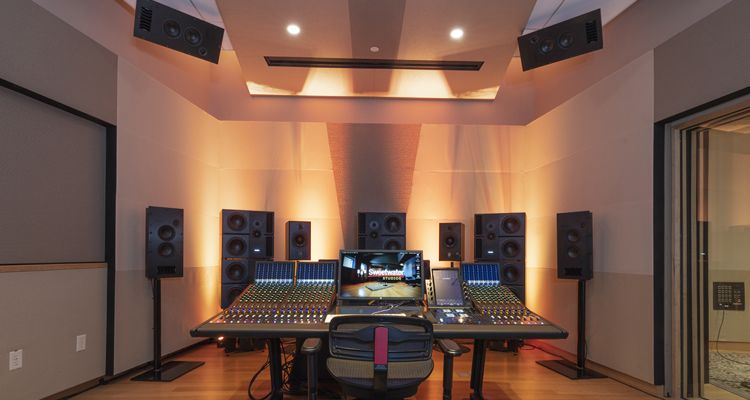 Photo Credit: Sweetwater






 VictoryShares US EQ Income Enhanced Volatility Wtd ETF (