‘She was the real pioneer.’ Marisol and Andy Warhol share the pop art limelight at PAMM Miami Herald
source

The English dubs of Studio Ghibli’s films feature some top-tier talent. Here is a ranking of a few of the biggest stars that can be heard.
The works of Studio Ghibli and its renowned creatives, such as Hayao Miyazaki and Isao Takahata, are known internationally as some of the best animated features ever to grace the big screen. Films such as My Neighbor Totoro and Spirited Away are some of the most recognizable animated films of all time, with the latter even winning the Academy Award for Best Animated Feature in 2002. Over the course of its 36-year history, Studio Ghibli has undoubtedly become one of the most revered animation studios in the world.
There is often a lively debate over whether Ghibli's films are best viewed subtitled with their original Japanese dialogue or dubbed with English voice-overs. Miyazaki himself waded into the waters of this debate in a 2005 interview with The Guardian, where he stated, "When you watch the subtitled version you are probably missing just as many things. There is a layer and a nuance you're not going to get." Many of the studio's films have had expensive re-dubs in English, with the help of none other than Disney, and most of which are available to stream on HBO Max. As a result of Disney's involvement, the English dubs of Studio Ghibli's films often feature A-list talent lending their voices to the productions. Here are some of the biggest names whose voices can be heard.
Disney's 2005 re-dubbing of Nausicaä of the Valley of the Wind brings the actor behind Captain Picard and Professor Xavier into the world of Ghibli, as Sir Patrick Stewart can be heard voicing the legendary Lord Yupa in the film. In the film, Yupa is a well-known swordsman and warrior, who is respected throughout the post-apocalyptic world where the tale of Nausicaä takes place. As a wise old warrior searching for a prophesied hero, Yupa serves a role in the film similar to that of Obi-Wan Kenobi in the original Star Wars or Gandalf in The Lord of the Rings. It makes sense that Stewart was brought in to voice the character in the English dub, as the actor has the same esteemed aura about him as Alec Guinness and his X-Men co-star Ian McKellen.
The 2005 dub of Nausicaä was not the first time the film had been translated into English for Western audiences. Miyazaki's original Japanese version was released in 1984, and it was followed by a heavily-edited English version in 1985. That version was retitled Warriors of the Wind and Miyazaki was displeased with the way it had been revised for viewers in the US. The English cast of the film was not credited for their work, and reports from Nausicaa.net say the cast was not told what the film was about until they recorded their dialogue. Disney's dubbing of the movie restored the story to the way it was originally written, and it is now widely considered the best way to experience the film in English.
Star Trek isn't the only sci-fi franchise to have one of its lead stars featured in a Studio Ghibli film, as none other than Luke Skywalker himself, Mark Hamill, can be heard in not one but two different films from the studio. Hamill can also be heard in the 2005 dub of Nausicaä, though in a much smaller role than Stewart. Hamill plays the Mayor of Pejite, one of the two major warring civilizations at the center of the film's conflict. However, Hamill made his largest contribution to the English dubbing of Miyazaki's work several years earlier, as he was featured in Disney's 2003 re-dubbing of the first official Studio Ghibli film Castle in the Sky.
Hamill voices Colonel Muska in the film, one of the few straight-forward villains found in the Ghibli filmography. It's no surprise that Hamill would pop up somewhere in the English dubbing of these films, as he has really made a career for himself in voice work post-Star Wars. Most notably, he's known for lending his vocal talents to the role of The Joker in Batman: The Animated Series and a number of other animated iterations of that character. Hearing Hamill's incredibly expressive voice in the realm of Miyazaki's work is something that just makes sense, and it's honestly surprising that he's only been in two of these dubs.
Kirsten Dunst was featured in the voice-cast of the first Studio Ghibli film to receive a new dubbing from Disney, Kiki's Delivery Service. Though many may instantly associate Dunst with her role as Mary Jane Watson in Sam Raimi's Spider-Man films, her work on this English version of Miyazaki's delightful children's story happened years before. Disney's English dub of Kiki's Delivery Service was released in 1998, at a point in time when Dunst was most known for her work on the likes of Jumanji, Interview with The Vampire, and Little Women.
Dunst voiced the central character of Kiki, a young witch who strikes out on her own as a test of her magical abilities. She ends up settling in a seaside city where she decides to help the local community by starting a delivery service. Kiki's Delivery Service is one of Miyazaki's most feel-good and wholesome stories, and Kirsten Dunst was only 15-years-old when she contributed to the English dubbing of the film. It's a bit surreal watching the film now, knowing that Dunst has since become such an esteemed and Academy-Award-nominated actress.
This is an interesting inclusion because John Krasinski's work in The Wind Rises is one of the few instances on this list where the English dubbing wasn't done by Disney years after the film's original Japanese release. Miyazaki's most recent film, The Wind Rises, was released in Japan in 2013, with the English dub following in the United States in early 2014. Miyazaki initially intended to retire after the film, but he has since begun work on what will likely be his final film, How Do You Live?. Krasinksi voices Kiro Honjō, a college friend and later co-worker of the 2013 film's lead character, Jirō Horikoshi (who also happened to be voiced by Joseph Gordon-Levitt). Emily Blunt, who had just married Krasinski a few years prior, also voices Nahoko Satomi, Jirō's main love interest, in the film as well.
Krasinski was hot off the American version of The Office when he recorded his dialogue for The Wind Rises, and he was looking to grow beyond the character of Jim Halpert. While it would be several years before he would find his post-Office foothold with the likes of Amazon's Jack Ryan series and his directorial efforts with the A Quiet Place series, Krasinski was already an established household name. While his work in The Wind Rises may not be the most dynamic voice-acting around, it was certainly a pleasant surprise to hear his voice in what is one of Miyazaki's most beautiful films to date.
This is another instance of an actor appearing in an English-dub of a Studio Ghibli film before they became a major name. Back in 2011, Tom Holland was featured in a dub of Arrietty (or The Secret World of Arrietty in the US) where he voices the character of Shō. The dubbing was conducted by StudioCanal for audiences in the United Kingdom in 2011, a year after the film's initial Japanese release. This makes this one of the few entries on the list that is not from the Disney dubs of Studio Ghibli's work, as Disney's dubbing of Arrietty would come a year later and feature Wizards of Waverly Place star David Henrie in the role instead of the future Spider-Man.
With there being two separate English dubs for this film, it's interesting to compare how the voice casts compare from one to the other. For example, while the StudioCanal version of the film cast Saoirse Ronan in the lead role, the Disney version brought in Lemonade Mouth's Bridgit Mendler. The UK version also featured the likes of Olivia Colman and Mark Strong while the US version had Amy Poehler and Will Arnett. Unfortunately, only the US version is available to stream on HBO Max or through services such as Vudu in the States.
The legendary actress Cate Blanchett can also be heard in one of Miyazaki's relatively recent films, Ponyo. The film is widely referred to as the director's take on the story of The Little Mermaid, and Blanchett contributes to the film as the voice of Ponyo's mother, the sea goddess Granmamare. Though it's not a very large role, Ponyo's mother does play a key part in the film's conclusion and overall thematic message, which makes Blanchett's casting nearly perfect. She brings a necessary warmth and regality to the character, making her one of the most memorable aspects of the film.
Similar to The Wind Rises, Disney's English dub of the film was released not long after the original Japanese version, with only about a year of separation. The English cast of Ponyo is also one of the most star-studded of these dubs, as the film also features the likes of Liam Neeson, Tina Fey, Matt Damon, and Betty White.
Not only does Michael Keaton appear in a Studio Ghibli film, he genuinely stars in one. The Batman actor voices the lead pig-ace pilot of Porco Rosso. Miyazaki's dog-fighting adventure film was originally released in Japan in 1992, and the English dub from Disney came a dozen years later in 2004. Much of the film is told from the perspective of Porco Rosso, with the character appearing in most scenes. That makes this an instance where Keaton likely had to do extensive voice work for the film, as opposed to the small commitment that was asked of some other actors on this list.
Porco Rosso is by no means the best film to come from Miyazaki or Studio Ghibli, but it is a thoroughly entertaining one nonetheless. As far as the English dub is concerned, much of that fun can be attributed to Keaton's performance, as the actor's carefree and the occasionally machismo personality is a great fit for the character.
Michael Keaton isn't the only Batman to star in a Studio Ghibli film, as Christian Bale lends his voice to one of the studio's most beloved films, Howl's Moving Castle. Bale voices the titular magical character of Howl, whose steampunk-inspired castle travels across the countryside intimidating most people who come across it. Howl is a much more nuanced character than one might initially expect, and Bale conveys much of the character's conflict excellently in his voice work. What makes Bale's casting even more entertaining is that the actor recorded his dialogue for this film in roughly the same period of time that he was working on his first Bat-flick, Batman Begins, which is apparent in his work here. The suave persona of Howl in much of the film is very reminiscent of Bale's Bruce Wayne, and in Howl's more monstrous moments Bale takes on the same kind of gravelly voice he used for the caped crusader.
Disney's English dub of Howl's Moving Castle was released in 2005, and it featured several other big names in its cast. The most instantly recognizable voice in the English dub comes from Billy Crystal, who plays the delightfully sassy fire demon Calcifer. The film also features the voices of several stars from the classic Hollywood era, such as Jean Simmons and Lauren Bacall. Howl's Moving Castle is one of the most wondrous films of Miyazaki's long career, and Bale and the rest of the English cast do an outstanding job of capturing that sentiment.
No matching results
Try a different filter or a new search keyword.
Search all Bandcamp artists, tracks, and albums
Use Toms. Call It Gorge. Don’t Call It Art. These three instructions constitute the terms and conditions for Gorge Public License, the governing document for Japan’s “gorge” movement.
Celebrating its 10th anniversary this year, gorge is as much a parody of both music scenes and music genres as it is a serious form of expression unto itself. It takes its name from the class of landform better known as canyons in the United States, and uses tom drums to represent the craggy conditions of mountain climbing—the pastime of choice for gorge practitioners, who prefer to be referred to as “bootists” rather than artists.
As long as participants make use of the required percussion, the genre can be (and likely already has been) interpreted through the lens of any other genre, from South African club music to vintage krautrock. What matters most is that a bootist contributes to the ever-expanding language and lore of the movement, which revels in dadaist wordplay and intentionally confusing mythology. Bootists drop short experimental projects under pseudonyms like Gorge Clooney or DJ in pitch-dark clubs while wearing headlamps. Tokyo’s GORGE.IN, the label responsible for launching the genre, claims on their website’s “about” section that gorge started in a Nepalese club scene thanks to the efforts of a mysterious “Himalayan Giant” named DJ Nanga. This origin story is dubious at best, but it’s as integral to gorge as the music itself. Even in more organically-formed scenes, truth and legend blur to form an overarching narrative. Gorge just accelerates the process.
Obscured behind gorge’s tangled web of false identities and tongue-in-cheek creation myths lies the movement’s true founder: Fukuoka-born producer and outdoorsman Toki Takumi, who performs under the alias Hanali.
According to a 2016 interview with GHz, Takumi first became interested in creating electronic music in the mid-’90s as a junior high school student, baffled by a Buck-Tick remix album that included contributions by IDM pioneers Autechre and Aphex Twin. Despite dropping out in his freshman year of high school, Takumi tested into a university in Tokyo, where he fell in love with the improvisational work of avant-garde composers like Otomo Yoshihide and John Zorn. It was there that he began to develop his own live performances, initially playing guitar before learning to produce sounds with the magnetic head of a tape recorder.
Assuming the name of a character from short-lived baseball manga Animal Stadium, Takumi began to release some of his electroacoustic music as Hanali in the late ‘00s. Around the same time, another manga series titled The Summit of the Gods would inspire him to take up mountaineering as a hobby, igniting his passion for the outdoors.
In 2011, Takumi was hospitalized in a climbing accident, leaving him bed-ridden for months. It was during this time that he began to devise the core tenets of gorge in an attempt to channel the sublime beauty and danger of mountain streams into sound. On August 3, 2012, he launched the GORGE.IN label with a pair of full-length releases: Hanali’s Gorge Is Gorge and a compilation of like-minded bootists titled Gorge Out Tokyo 2012, which, together, form a de facto manifesto.
The Hanali record is as opaque and dense as his earlier work, though it yields enough to let Takumi’s tom loops break through the walls of feedback he conjures. There’s a chilling sense of cosmic power pulsing through the album, and the sampled vocals he sneaks deep into the mix make the atmosphere all the more unsettling. “Clap…tom…” announces a tinny, robotic voice, as if it’s giving pre-recorded safety instructions to a panicked crowd, drums shattering on impact.
Gorge Out Tokyo 2012’s cover art is nearly identical to Gorge Is Gorge, with one important distinction: it features the three commandments of the Gorge Public License.
“Gorge is considered open source software, like Linux or Apache, and the Gorge Public License is a tribute to the GNU Public License,” Hanali writes via email. “The creator is free to modify, hack, and create new versions. In other words, the Gorge that someone makes under the Gorge Public License is always the latest version of Gorge, and it is legitimate. No one can deny that. Music has always been this free, but in a genre that has grown to a certain degree, there tends to be a centralized authority or power. Gorge has never had that. It has always been decentralized and local.”
Though the definition of gorge is intentionally left open-ended, members of Hanali’s collective maintain a Pinterest board called “Roots Gorge Archives” in order to establish a proto-gorge canon. Naive garage rock The Shaggs and Beat Happening are cited as influences for their off-beat, tom-heavy drumming, as well as the cut-up production techniques employed by This Heat and Miles Davis.
Mo’ Big Fun, a 2013 gorge compilation on Tokyo’s Lo-Vibes label, was produced in tribute to Davis’s 1974 record Big Fun, which is noted for its frenetically-panned percussion and collage-like layering, two traits shared with the music made by Hanali and company. Sampled horns and atonal synths swirl and stew across bubbling percussion, putting a murkier spin on the record’s already arcane source material. Themed compilations and explicit genre fusions have since become a hallmark of gorge, and would increase exponentially in the years that followed.
The mid-‘10s were a breakthrough period for gorge, blossoming from its hyper-localized Tokyo scene into the modular genre Hanali originally envisioned, with smaller hubs of activity happening all over the world. This was set in motion partly due to the release of Los Angeles-based bootist San Gabriel’s 2014 Gorge Sample Pack. An unassuming collection of 20 tom drums, the kit (like the genre itself) is open-ended enough to assume just about any shape an imaginative producer can dream up.
San Gabriel is better known as Butchy Fuego, an avid mountaineer and experimental drummer who occasionally tours with legendary Japanese noise-rock band Boredoms. Fuego was introduced to gorge through friends in Tokyo’s underground scene while on tour and became intrigued by its fixation on mountains, which were already an influence on his own solo work. Upon returning home, he founded the movement’s first chapter in the states (The United Gorge Bootists of America) and organized a 2016 compilation titled GORGE.US.
Back in Japan, the first wave of bootists were beginning to roll out longer, more ambitious projects. Kazuki Koga’s The Salathé Wall, named for a notoriously difficult climbing route in Yosemite National Park, is a seamless industrial suite broken up into 12 brief movements. The record opens with a machine-gun salvo of toms that bounce from speaker to speaker so rapidly they seem to compress into a single, wriggling unit of rubberized bass. Save for a few eerie synths that resemble ritual chants and a spoken-word interlude by Canadian poet Così e Così, the album is an unstoppable cascade of percussion that sounds as though it’s collapsing in on itself.
A DJ and producer inspired by big beat and Detroit techno, Koga first heard gorge in 2013 via a livestream hosted by Dommune, a virtual club in Shibuya that has been a hotbed for the genre over the past decade. Bored by four-on-the-floor kicks, he was attracted to gorge’s rhythmic freedom and lack of restriction on BPM, allowing him to think beyond the grid of his DAW.
Tokyo producer Drastik Adhesive Force is also a club iconoclast, slicing house’s tempo in half to create a lurching sound that he dubs “SLAB music.” His 2015 LP (also called SLAB) creeps forward at a glacial pace, tethering blistering feedback and grunted vocals to beats that resembled chopped-and-screwed death metal breakdowns. The higher end of the mix is sparsely populated by a few bleeping synth tones and stray hi-hats, allowing him to smear thick pulses of bass across the record like it’s a Rothko canvas.
Further south, in Okinawa, juke producer Tea-chi would infuse his Island Gorge EP with the tropical atmosphere and traditional folk instrumentation of his home prefecture. His arrangements carefully weave taiko drums, plucked sanshin, and vocal fragments that attain a percussive quality in their new context. The minimalist, glitchy construction of tracks like “Inspired Gorge Work” and “Celebration” isn’t that dissimilar to early works by Chicago footwork artists like RP Boo and DJ Nate, both major influences on the current sound of Japanese club music.
Emerging around the same time GORGE.IN was founded, Japan’s juke scene has had a symbiotic relationship with gorge since the start. “In 2012, Chicago producer Traxman came to Japan for the first time, and I was invited to perform at the event,” says Hanali. “This was one of the first times Gorge became known to the public.” DOMMUNE has hosted a number of “Juke vs. Gorge” DJ battles over the years, which often leads to overlap with local labels like Booty Tune and OMOIDE.
Hiroki Yamamura, who now produces under the name Hyradiance for London’s Moveltraxx Records, released an early gorge/juke fusion EP with GORGE.IN in 2015. ゆーこロータスのGorge & Jukeしようよ is a dissonant, surreal club record that blends ragtime piano, baroque strings, and chopped vocals behind thumping percussion. It’s packed with claustrophobic tension and made even more fierce by a Drastik Adhesive Force remix, which interpolates DJ Nanga’s cyborgian “use toms” sample.
A self-described “warm-hearted office lady,” Aichi-based MC Megane raps in a hushed, deadpan cadence over beats that are anything but. Her 2016 debut album, 手さぐり (Tesaguri), enlists production help from an all-star cast of bootists and footwork producers who toy with pitch and tempo in the backdrop, conjuring soundscapes that wouldn’t feel out of place on a Danny Brown mixtape. Labeled GORAP (gorge + rap), Tesaguri gurgles, squelches, and radiates warmth like brewing coffee. No craggy landscapes here. This is gorge music for the breakroom—a brief, caffeinated escape from workplace drudgery.
In recent years, gorge has spread to countries like New Zealand, Germany, and Argentina by word of mouth, radically transforming as it interacts with new cultures and aesthetics. At the same time, Japan’s domestic gorge scene draws from a diverse array of regional styles from around the globe. Veteran bootist Indus Bonze’s recent output dabbles in gqom, a South African club genre that—like gorge—prioritizes rugged, polyrhythmic percussion over melody.
There’s also considerable influence from singeli, which shares a laissez-faire attitude to dance music’s conventions regarding tempo. On “秋田 Gqom 音頭,” tom drums shuffle across a static synth pad, forming an amorphous frame for for a collage of looped bells and distant shouts. “2029,” also on the spooky side, is driven by thunderous EBM-adjacent bass that threatens to swallow the entirety of the mix, like a massive black hole.
GORGE.IN’s pantanoGORGE compilation, released in late 2020, was recorded by a group of Argentinian bootists associated with South American label pantanosumpf. The collective’s interpretation of gorge is less club-oriented than that of their Trans-Pacific counterparts, often using toms to add meditative texture to droning, microtonal synths. 1134_’s “M0R6U3_XII” is an eerie highlight, filling the sound field with insectoid chirps and the crunch of debris underfoot before dropping an ominous beat nearly three minutes into the track. “Tom y Jerry” by Guidi le shimao wraps meandering guitar melodies and New Age vocal chops around steady bass and rapid-fire hi-hats, creating an eldritch aura.
Based in Tāmaki Makaurau, New Zealand’s largest city, Hasji produces ambient gorge that connects the region’s metropolitan present with its Māori ancestry. The bootist’s immersive Groves EP is a tightly-woven amalgamation of rippling tom patterns and atonal clicks, vibrating through the inner ear that register more as incidental noise than traditional music.
“I’m from a tribe called Ngāti Rangiwewehi, who are from the geothermal region of Rotorua, in the volcanic plateau of the North Island,” says Hasji. “Rotorua has always been a place of rest and healing for many people, with our geothermal hot springs, steam, hot mud and music. As Māori, we consider maunga/mountains to be our tīpuna/ancestors—our relatives that we can confide in, and act as guardians to. This relationship is an example of the interconnectedness that we share, as members of the environment/wider ecology. Something that gorge certainly speaks to also! I consider gorge a brilliant vehicle to speak to this respect for our maunga and wider ecology, as well as a means to personally try and convey a sense okioki (rest) and sonic rongoā māori (natural medicine)—especially for urban Māori like myself who navigate the multitudes of contemporary city life.”
A student of Tea-chi’s island gorge style, Hasji sees the GPL’s loose restrictions as a way to foster kinship during an era in which genre is so malleable it has lost its traditional meaning.
“The act of setting such rigid foundations—which are also so open—really plays with our conceptions of what genre/style really is,” they say.
In the United States, gorge has inspired members of netlabel Eat Dis to concoct their own futuristic spin on the genre called mecha. “Gorge is kind of like, focused mainly on nature-related sounds and ideas,” says label member Twofold in a Discord call. “With mecha, there’s a lot more emphasis on combat and futuristic imagery.”
“In the way that gorge is evoking images through sound, mecha’s meant to be a sort of bio-creature that you make through sound,” adds founder DJ Girl. “It’s not really about the structure of the beat, it’s about how you put it all together so that it’s kind of breathing.”
Twofold’s Lost Mecha Tools EP, released in May, sounds like a field recording from inside a spacecraft hangar bay. Reminiscent of Jlin’s skeletal footwork sound design, the track is driven by chaotic 808 percussion and decorated with an overwhelming tapestry of sci-fi sound effects. Alarms blare; drills screw bionic arms into place; snares clatter like steel. While not as tom-centric as traditional gorge production, the ethos remains the same. It’s aural world-building: club music meant to transform the venue itself into a strange, unfamiliar place.
“I heard about gorge from some dude in 2016, in what was basically like a Discord channel,” says DJ Girl. “He sent me a sample pack and everything. I remember initially being confused, and then captivated by it. It really does give you an image in your head of something distinct, but hard to explain. I can’t imagine how it is for people in Japan—it seems like it relates to old spiritual practices and ghost stories. It’s a genre that doesn’t have a tinge to it. They’re just breeding an idea.”
While GORGE.IN’s inaugural compilation was named Gorge Out Tokyo, the label’s new 45-track opus disregards such geographical distinctions. Simply subtitled “Here,” Gorge Out 2022 captures the genre at a pivotal stage, breaking free from its regional roots and evolving as it’s molded by a global network of users.
Pennsylvania’s (is), aka Isobel Bess, was the United States’s lone contributor, developing a uniquely austere, pensive take on the genre. “I was coming to it from a background making more ambient, minimal, FM synthesizer-based work. I just finished an album of what I call hypnowave,” she says. “I wanted to see if I could combine that hypnowave approach with gorge. Something digital and hypnotic but still massive. I was drawn to some more chill gorge records like Franz Snake’s New Age of Gorge and Tea-chi’s ISLAND GORGE 2. All that led me to the idea of cybergorge. Like what if I could synthesize a kind of virtual mountain? Is that still a mountain? Is it still gorge?”
Bess had previously heard whispers about a mysterious scene of mountain-obsessed producers online, but hadn’t had the opportunity to gorge until late 2021, with the release of Kazuki Koga’s Instinctive Plagiarism EP.
“All of the sudden I was listening to gorge all the time. I wanted to understand what this absolutely massive music was about,” says Bess. “I figured the best way to learn about rock climbing is just to go out and try it, so I started trying to make gorge tracks right away. Now I’m researching mountain trails where I live out in central Pennsylvania. 2022 has really been the year of gorge for me.”
“Gorge’s last ten years have been [an] embryo”, says Hanali. “With this album, gorge’s true story has finally begun to unfold. Next, we would like to do projects like Gorge Out Tokyo 3112 or Gorge Out 12112, projects that will be done in the next 1,000 or 10,000 years. We are not interested in following the changing music scene in the short term. We believe that one day we may acquire bipedalism over a very long period of time, like human evolution.”

More than a year of investigating reached its most public point Thursday, when a U.S. House committee held the first in a series of hearings highlighting the results of the investigation into whether Trump and his team tried to overturn the results of the 2020 election.
On this episode of River to River, host Ben Kieffer and political scientists Donna Hoffman of the University of Northern Iowa and Rachel Caufield of Drake University, wade through the hearing and discuss what was revealed.
Guests:

RED BANK – What do you love about Red Bank? And what is it that you can’t stand?
That’s what consultants with BFJ Planning and FHI Studio wanted to know, as they presented issues the borough faced and solicited feedback from residents during its first public meeting about revising the borough’s master plan.
This once-in-a-decade opportunity allows borough officials, residents and business owners to have a say in shaping the next 10 years or more of Red Bank.
Comments and suggestions included “biking is too dangerous,” that the town should create “controls on rent levels” and prioritize a “need for water access.”
Red Bank mayor primary:Newcomer beats local Democratic Party choice for nomination
Susan Favate, principal planner, described municipalities’ master plans as a set of policy guidelines that dictate how land within a municipality is used.
While the document is not a set of laws, its contents need to be taken into consideration by municipalities when deciding land use or investment opportunities.
“The planning board and zoning board should be following those policies (set by the master plan) in all of their actions,” Favate said. “The actions they take should be consistent with the master plan and if they’re not, then the borough is opening itself up to legal challenge.”
G&G Hot Dogs:Building the American dream in Red Bank, one hot dog at a time
Red Bank’s last major overhaul of its master plan was in 1995, and since then the borough has seen large changes.
Peter Van den Kooy, project manager, said the borough has seen a 22% growth since 1990 and a 19% increase in jobs since 2010. As the borough grows, the percentage of people of color decreased from 50% to 45%, with the largest decline among Black residents at 24%.
He noted that about 12% of residents both live and work in town. And while average household incomes have increased, about one third of residents make less than $50,000 and, according to the PowerPoint, “income inequality is on the rise.”
Red Bank:Apartment plan would now save one house from wrecking ball
After spending months reaching out to community members at pop-up fairs, places of worship, the housing authority, nonprofits, the senior center and schools, the consultants have received survey data from 525 individuals.
Ryan Walsh, community engagement manager, said his team has realized five areas of priority. They include: revitalization; new development standards; parks and open space; traffic; and walking, biking and transit.
While Red Bank has few plots of vacant land available, there are a number of vacant buildings that community members have expressed concern about.
Walsh said a resident wrote, “Vacant properties, surface lots and other poor uses of land negatively portray the town to visitors or potential homeowners.”
Red Bank:Developer drops plan to pave century-old house, put up a parking lot
Concerning new development standards, Walsh said community members were concerned that the building of big luxury developments “encourages speculators and drives prices up, making it impossible for my family to live here.”
Walsh said his team is looking into advocating for an increase in greenspace in Red Bank, with an emphasis on the riverfront. He said community members were interested in beautifying the parks and wanted more activities to happen within them.
Walsh said community members flagged traffic and transportation as their highest concerns. He said his team was looking to update traffic patterns and make certain that new developments are planned alongside traffic improvements to reduce congestion from an increase in population. He added that they want infrastructure that makes walking and biking safer.
‘People are in a hurry’:Can Red Bank plans save pedestrian lives on Shrewsbury Avenue?
Van den Kooy noted that accidents tend to happen along West Front Street, Maple Avenue, Rector Place and Shrewsbury Avenue. He added that while many residents complained about inadequate parking, many parking lots are underutilized.
Favate said Red Bank has a special vibe that’s unique in New Jersey. She said its small town feel with mom-and-pop stores are an asset to the town.
“Red Bank is a diverse place,” she added. “We think is a core strength. It is something that is truly special about Red Bank. It’s something that’s appropriate to build off.”
Red Bank:How charter study could mean big changes to local government
In surveys, Walsh said, the areas around Marine Park, Riverside Gardens and Broad Street were the most liked by residents, while the areas surrounding Riverview Medical Center, the gateway to Red Bank along Riverside Avenue and the intersection of Maple Avenue, Front Street and Water Street received the most dislikes.
According to Adam Tecza, urban designer and project manager, the gateway to Red Bank and the hospital have been designated for “small area plans” as well as the proposed Sunset Park.
Tecza said small area plans allow officials to prioritize improvements and private businesses to identify investment opportunities.
Red Bank:Town OKs plan to make Riverside Avenue five-story apartments even bigger
He said the gateway to Red Bank has traffic issues that make it dangerous for cyclists and pedestrians. It also has vacant gas stations that need to be redeveloped. In an informal poll conducted at the meeting, about 35% of attendees supported turning the vacant gas station at 80 Rector Place into a public park, followed by about 20% of attendees voting for a marina or boat club.
In a separate poll conducted at the meeting, about 60% of attendees supported turning the vacant gas station at 187 Riverside Ave. into some kind of restaurant, retail or office space.
Tecza said there is a possibility that a traffic light will be installed on Riverside Avenue and Bodman Place, a proposal that was rejected by the state Department of Transportation in 2017.
“One of the things we’ll be looking at is different options,” he said. “We understand that if you’re essentially exiting out of Bodman Place, you may end up having to go all the way over the bridge, turn around, do some funky U-turn just to be able to get back going the right direction. So, we’re really going to be studying that closely.”
Tecza said the hospital, which is the largest employer in Red Bank, has been in tension with neighboring residents and has a parking problem.
“The hospital has indicated to us that there is no immediate plans to make major changes to the hospital,” Tecza said. “They have been purchasing some of the sites across Front Street as they become available. According to them, those purchases are really strategic purchases.”
He said the needs of the hospital are driven by market forces and in the future, there will be more outpatient care that will result in more medical facilities in office buildings.
He said the current zoning is outdated for how hospitals will operate in the future.
‘It was us against the virus’:What did hospital workers learn from two years of COVID?
A number of attendees at the meeting advocated for taxing the hospital or limiting how much property the hospital could buy. Under state law, nonprofit hospitals such as Riverview are not subject to property tax.
Tecza said that was beyond the scope of the master plan study and officials cannot restrict anyone from purchasing land.
The last “small area plan” involves Sunset Park on the west side of Red Bank. A concept plan has been drawn up in 2017, but it needs gap funding to make it a reality.
Tecza said while some projects or recommendations may not come to fruition, it is important to put it in the master plan.
“Having things in your master plan make it more likely that (when) grant funding becomes available that the town may be competitive for those kinds of projects,” he said. “You want to be prepared so that if a state agency or the federal government changes policy and starts making grant funding available, (the borough) can move forward.”
Favate said her team hopes to begin consolidating the recommendations from community members and start drafting the master plan in September. She said there will be a second public hearing on the draft that will take place in-person in the fall.
Olivia Liu is a reporter covering transportation, Red Bank and western Monmouth County. She can be reached at [email protected].

Ace music producer, Awal Alhassan, popularly known as Possigee, is set to host the second edition of his Possigee Mix Class following the huge success of the maiden edition.
The Ghanaian producer has engaged in this vision to relieve him of the burden of passing on something substantial to the next generation of creatives.
In this regard, he has summoned the minds of globally renowned sound engineers and music producers to facilitate the event. These include; Tubhani Muzik – Ghana, MOG Beatz – Ghanay, Nektunez – USA, Ransombeatz – Nigeria, Cteabeatz – Ghana, Paul Cruz – Zambia and Ubeatz – Ghana.
It’s happening at the Kobys Event Center off, Adjiringano Rd. Accra on the 12th to 14th of July at a registration rate of ¢1,000 for the 3-day session.
Commenting on the event, Possigee posited, “It’s a 3-day mix and mastering class through which I will be teaching how to mix and master. The class will be done live in an auditorium. There will be a series of mixing tips and how to acquire a clear and quality song.”
Patrons will be educated on the length and breadth of global standard music production, mixing, mastering, split sheets, percentage splits, and copyrights, among other salient issues.
Oti Regional Minister orders removal of …
National Cathedral embedded in illegality and …
National Cathedral: ‘Otabil has left Board …
Over 20 students of Islamic SHS injured …
‘LGBTQ community must stop provoking Ghanaians’ …
4 MPs invited for Commonwealth Parliamentary Association …
Luv FM launches 2022 edition of High …
Recycle Up! Ghana partners basic schools …
The Multimedia Group
Advertise With Us
Contact Us
Terms of Use
Privacy Policy
Joy 99.7 FM
Adom 106.3 FM
Hitz 103.9 FM
Asempa 94.7 FM
Luv 99.5 FM
Nhyira 104.5 FM
Joy News
Adom TV
Joy Prime
MultiTVWorld.com
Adom TV (Audio)
Joy News (Audio)
YouTube
Facebook
Twitter
Instagram
LinkedIn
Infographics
Elections
Habitat Fair

For full functionality of this site it is necessary to enable JavaScript. Please Allow Javascript and reload this page.
Blackstone’s Kathleen McCarthy with rendering of Willis Tower (LinkedIn, EQ Office)
Blackstone-owned Willis Tower, Chicago’s tallest building, landed an expanded lease extension, its first since unveiling a $500 million renovation with more retail and tenant amenities.
Technology-driven market maker IMC took another 50,000 square feet in the 110-story skyscraper, expanding its previous lease by 50 percent to 160,000 square feet, according to a statement from Blackstone affiliate and tower manager EQ Office.
The building’s yearslong upgrade brought 150,000 square feet of tenant-exclusive amenities such as cafes and bars, a fitness center, lounge areas and conference spaces, and installed a new structure at the base of the building with 300,000 square feet of retail, restaurant and entertainment space. The move underscores how important tenant perks have become as landlords compete with a wave of commercial development, particularly in Fulton Market, as the Loop’s office vacancy soared to record levels.
“The recent repositioning has set the tower apart in the market by creating a workplace with incredible amenities and quality office spaces,” Nikki Kern of the Telos Group, which represents EQ Office in tower negotiations, said in the statement.
IMC’s decision is rare amid the pandemic as office users cut back on office space even since the virus started to wane this year. Firms have found they require less space as many employees still prefer to work from home, at least for one or more days per week. Those who have signed new leases have tended to do so in newer buildings with high-quality amenities — but for less space than they had before.
Blackstone bought Willis Tower for $1.3 billion in 2015, well ahead of the pandemic, and two years later began pouring in cash to perform the upgrades. Other Loop landlords have since followed suit after getting prodded by the pandemic’s blow to downtown office demand. AmTrust Real Estate is putting $100 million into its Loop portfolio of vintage towers to add similar features such as lounges, bars and cafes for tenants who want their buildings to draw employees to commute by offering a social scene only available at the office.
Matt Carolan and Phil Geiger of JLL represented IMC in the deal. Jamey Dix and Caroline Colnon along with Kern of the Telos Group represented EQ Office.
All rights reserved © 2022 The Real Deal is a registered Trademark of Korangy Publishing Inc.
The Deal’s newsletters give you the latest scoops, fresh headlines, marketing data, and things to know within the industry.
By clicking Subscribe you agree to our Privacy Policy.
Round-up top news and topics for each of the following cities
Select the newsletter you’d like to receive below
Select the newsletter you’d like to receive below
Select the newsletter you’d like to receive below
advertisement
By Oindrila Muhuri Last Updated: 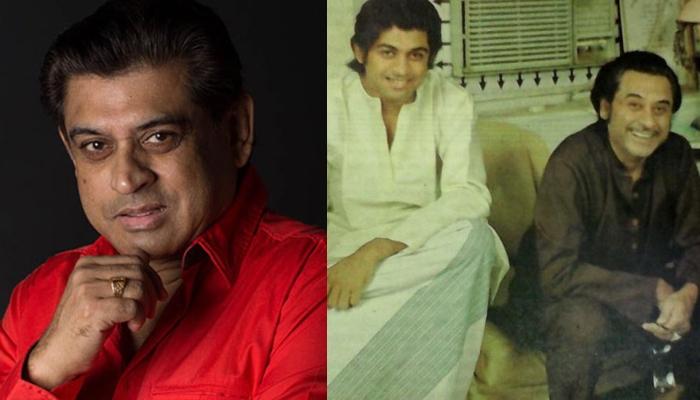
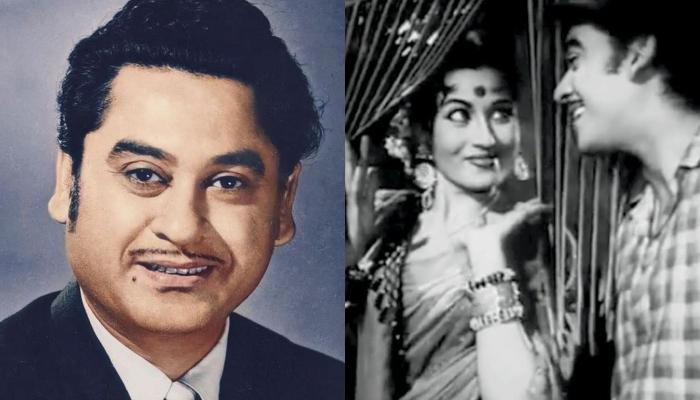
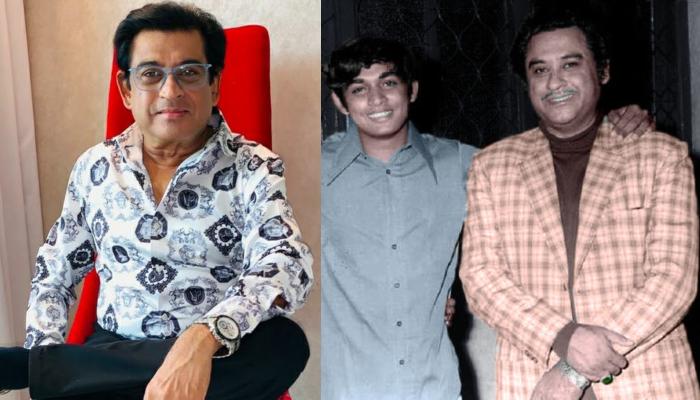
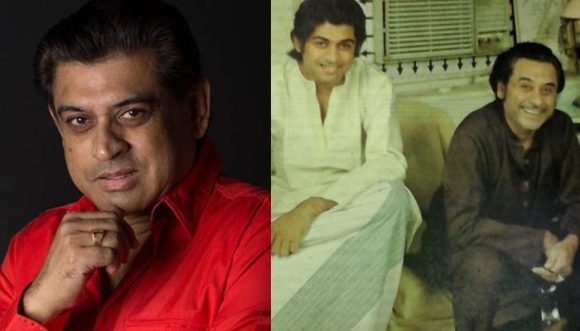
Late legendary playback singer, Kishore Kumar’s son, Amit Kumar is also an iconic music composer. Following his father’s footsteps, he had already worked on more than 150 Hindi and Bengali songs. Not only that, but Amit also has his own music production company, named Kumar Brothers Music. Recently, in an interview, Amit revealed that he had never asked his father about his four wives.
advertisement
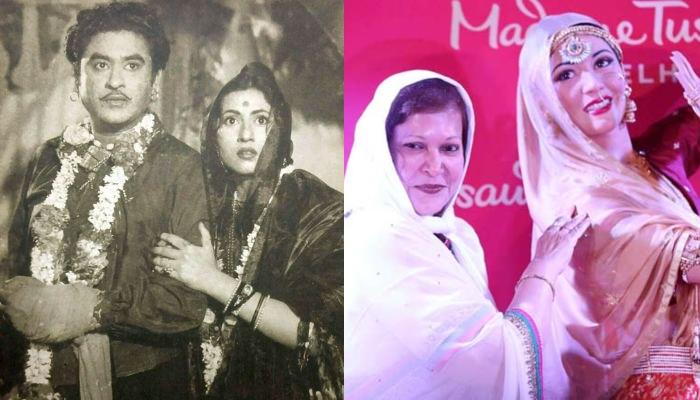
For the unversed, Amit Kumar is Kishore Kumar‘s eldest son with his first wife and Bengali singer-actor, Ruma Guha Thakurta aka Ruma Ghosh. Kishore was married to Ruma from 1950 to 1958, and during their divorce proceedings, he had gotten involved with Bollywood actress, Madhubala. Later, Kishore and Madhubala had a civil wedding in 1960. However, with Madhubala’s demise on February 23, 1969, their relationship had ended. Afterwards, Kishore had tied the knot for the third time with another Bollywood actress, Yogeeta Bali in 1976, which had lasted till 1978. At last, the late singer had tied the knot with Bollywood actress, Leena Chandavarkar in 1980 and together, they have a son, Sumit Kumar.
Recommended Read: Debina Bonnerjee Reveals The Tedious IVF Process Including Failed Attempts, Cost Her Rs. 6 Lakhs
advertisement
advertisement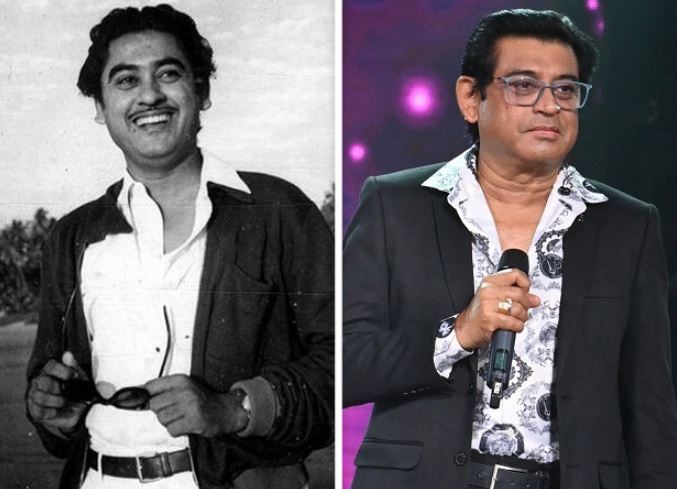
In an interview with Etimes, Amit Kumar shared his reaction to his father, Kishore Kumar’s decision to marry four times. Amit was asked why he had never asked his father about his four marriages with Ruma Guha Thakurta, Madhubala, Yogeeta Bali and Leena Chandavarkar. He mentioned that he respected his father’s decision and that Kishore had always wanted to have a family. Moreover, Amit revealed how his father had disconnected from his past related to his mother, Ruma Guha Thakurta. The singer son revealed that the day his parents had gotten divorced, Kishore had buried the car he had brought with Ruma. Amit said:
“I never asked him. It was his personal life. He always wanted a family. He was a family man. It was just that he was misunderstood. The day my parents divorced, he buried his Morris Minor car in this bungalow. He had bought it with my mother after his first film as a hero – ‘Andolan’. That was Kishore Kumar!”
advertisement
“I never asked him. It was his personal life. He always wanted a family. He was a family man. It was just that he was misunderstood. The day my parents divorced, he buried his Morris Minor car in this bungalow. He had bought it with my mother after his first film as a hero – ‘Andolan’. That was Kishore Kumar!” 
Further, Amit was asked about his stepmother, Leena Chandavarkar. To this, Amit mentioned that the veteran actress likes to stay inside the house, however, she shares a beautiful bond with him. He mentioned that his stepmother is a brilliant writer and that she writes songs for him. He was also asked whether Leena has any urge to act again, to which Amit completely denied. Singing a line from her writings, Amit expressed:
“No, she doesn’t go out. She writes songs for me. And, she writes beautifully. She is a brilliant writer. No, she has no urge to act again. Now, let me sing one of the songs Leena ji wrote for me a few days ago: Tinka hoon main aur yeh jahan hai sagar, dubaya gaya phir bhi dooba nahin hoon.”
advertisement
advertisement
“No, she doesn’t go out. She writes songs for me. And, she writes beautifully. She is a brilliant writer. No, she has no urge to act again. Now, let me sing one of the songs Leena ji wrote for me a few days ago: Tinka hoon main aur yeh jahan hai sagar, dubaya gaya phir bhi dooba nahin hoon.”
Don’t Miss: Shilpa Shetty Reveals Her Mom, Sunanda Shetty Got Scared When She Said ‘Yes’ To ‘Big Brother’

advertisement.
In the same conversation, Amit also revealed about the time when Kishore used to get angry with him. He said that it was the time when he had started smoking, his late father had caught him and had got upset with it. Further, adding that his father was only concerned about the texture of his voice, Amit revealed:
“He was angry with me when I started smoking and he caught me. Then I started drinking and he used to be upset. He wanted me to be No.1, he had his reasons. He said that smoking and drinking would spoil the texture of my voice. He loved me immensely.”
“He was angry with me when I started smoking and he caught me. Then I started drinking and he used to be upset. He wanted me to be No.1, he had his reasons. He said that smoking and drinking would spoil the texture of my voice. He loved me immensely.” 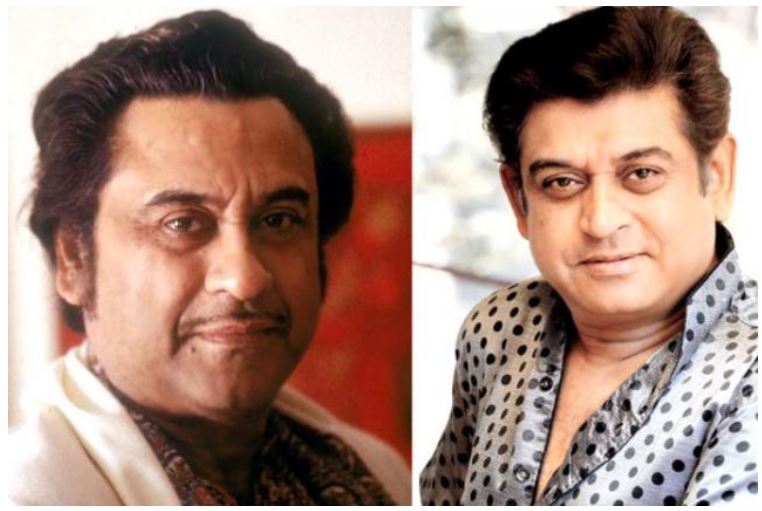
advertisement
advertisement
For the unversed, Amit Kumar had already bagged five Filmfare Awards for Best Male Playback Singer in his career in Bollywood.
Next Read: Pranitha Subhash Shares An Unseen Video Of Her Just-Born Baby From The Delivery Room
ADVT.
AWESOME NEWS! Now you can download BollywoodShaadis app and never miss a story. Get App
AWESOME NEWS! Now you can download BollywoodShaadis app and never miss a story. Choose your device Android or IOS (Apple)
advertisement
INDIA’S MOST POPULAR ENTERTAINMENT
AND CELEBRITY WEDDING NEWS WEBSITE
BollywoodShaadis.com © 2022, Red Hot Web Gems (I) Pvt Ltd, All Rights Reserved.

The New York Times explores the roots of Questlove’s creativity in a fresh installment of the media giant’s “Independent Journalism for an Independent Life” campaign from Droga5.
A 90-second film directed by Joshua Kissi follows the Academy Award-winning Roots bandleader (aka, Ahmir Khalib Thompson) to Electric Lady Studios in Greenwich Village, with narration and on-screen text derived from actual NYT headlines and copy.
Sometimes the words mention the man himself. Sometimes they reflect his many passions and interests. In the end, a kind of audio-visual poem describing Questlove emerges, driven by “Black Sugar,” a jazzy track from the Three Sounds.
To view this video please enable JavaScript, and consider upgrading to a web browser that supports HTML5 video
The work represents an evolution and expansion of the template introduced in February, when the NYT deployed headlines to illustrate its relationship with readers. Now, a celebrity comes into focus—and we get a Wordle plug, too.
In addition to the Questlove spot, which will initially appear in cinemas and online, the Times is launching a digital experience allowing subscribers to create personalized “Story Portraits” based on NYT journalism they consume.
Here’s Questlove’s portrait from the ad (though subscriber versions won’t include a headshot):
Below, the campaign’s creators take us deeper into the story:
Amy Weisenbach, SVP, head of marketing, NYT: In the first iteration of the campaign, we set out to spotlight subscribers who are as dynamic and multifaceted as our journalism. Questlove, who’s subscribed since 2020, is an award-winning filmmaker, drummer, DJ, producer, director, culinary entrepreneur and author. He really defines curiosity, continuing to expand who he is and what he brings to the world. He is an avid reader, serious (daily!) New York Times Games player, and he even sketches on the Sunday paper. Earlier this year, he contributed a guest essay about his passion for collecting. He is the perfect example of how journalism can inspire you to pursue new passions and expand your world.
Laurie Howell, executive creative director, Droga5: Distilling a personality like Ahmir’s into any film—let alone into this kind of creative construct—is not easy. It was integral to find a collaborator who was able to capture strong, beautiful images and connect with Ahmir and help push the campaign’s next chapter. Joshua Kissi was perfect for this. A Ghanian-American filmmaker/photographer, Joshua has always been drawn tow the topic of identity. That experience showed in this work, where he beautifully captured Ahmir independent life in an honest and poetic way.
Laurie Howell: Great, deep, conversations with Ahmir led to a good base to build the story of woven headlines. That has always been the starting point with this campaign—understanding the subscriber and getting into who they are, how they live and what they’ve read. The film was predominantly shot in and around NYC, showing the sides of the city that mean most to Ahmir, from Harlem to Electric Lady Studios.
Toby Treyer-Evans, executive creative director, Droga5: Earlier this year, we launched the campaign with seven subscribers to celebrate the intersection of journalism and readers’ lives. Now, we’ve jumped into the world of someone many of us recognize, who has a lot of interests and stories to tell. Both iterations of the campaign lead us to think, is there a way to create a version of these portraits for every single Times subscriber? Partnering with the NYT creative team and Hello Monday, we developed an algorithm that pulls a reader’s most-read articles from their history, and beautifully lays them out, filling a square frame to match the campaign films.
Amy Weisenbach: The in-app experience analyzes reading habits to develop a shareable headline composite drawing from over 50,000 Times articles. The experience customizes a color background, too. The result is a personalized portrait that depicts how what you read reflects who you are. Our internal team became obsessed with the tool as we tested the beta version prior to launch. We think subscribers are going to have fun seeing what their reading history says about them, and it will spark fun conversations with family and friends.
Agency Droga5 NY
Co-Chief Creative Officer Tim Gordon
Executive Creative Director Laurie Howell
Executive Creative Director Toby Treyer-Evans
Sr. Copywriter Lorne Heller
Sr. Art Director Justin Luu
Sr. Copywriter Sara Muchnick
Sr. Art Director Jessica Pester
Designer Hua Chen
Designer, Story Portrait Samantha Lee
Co-Head of Film and Content Ruben Mercadal
Senior Producer, Film Volney Guzman
Associate Producer, Film Hugh Copeland
Director of Innovation, Story Portrait Justin Durazzo
Interactive Producer, Story Portrait Dakota Brockman
Associate Director, Business Affairs Dan Simonetti
Senior Talent Manager Sunny Valencia
Senior Business Affairs Manager Ann Marie Turbitt
Senior Traffic Manager Mary Thornton
Senior Music Supervisor, Film Mike Ladman
Music Supervisor, Film Brandy Ricker
Director, Art Production Cliff Lewis
Executive Producer, Print Alyssa Dolman
Sr. Art Producer Caroline Fahey
Chief Brand Strategy Officer Harry Román-Torres
Strategy Director Carmen VonPatterson
Group Communications Strategy Director Justin Schneider
Brand & Communications Strategist Katherine Lee
Executive Group Account Director Lea Mastroberti
Account Director Amanda Lederman
Account Manager Anoria Safadi
Client New York Times
Chief Executive Officer Meredith Kopit Levien
Chief Marketing & Communications Officer David Rubin
SVP, Head of Marketing Amy Weisenbach
Vice President, Creative, Marketing Laura Forde
Executive Director, Brand Marketing Chanelle Kalfas
Director, Brand Marketing Peter Lauer
Managing Director, Marketing Audience Insights Brenna King Schleifer
Director, Marketing & Media Strategy Jessica Worthington
Director, Head of Earned Media Marketing Holly Harnisch
Brand Strategy Consultant Iain Newton
Head of Photo and Art Buying, Marketing Brenda Hutchings
Director, Project Management, Brand Marketing Blair Ecton
Project Manager, Brand Marketing Janelle Whitehurst
Associate Creative Director, Marketing Jordan Jacobson
Senior Brand Writer, Marketing George Chapman Jr.
Brand Writer, Naming Lead Dash Turner
Designer, Marketing Jessica Huang
Senior Manager, Brand Media Marketing Alison Carlson
Graphic Designer Alex Van Dorp
Senior Manager, Photo and Art Buying Miriam Hsia
Manager, Photo and Art Buying Karen Sutorius
Associate Photo Editor, Marketing Aaron Tejada
Senior Manager, Social Video, Marketing Tessa Modi
Associate Motion Designer, Marketing Tandis Shoushtary
Senior Manager of Audio, Marketing Matt Lewkowicz
Audio Producer, Marketing Sam Posner
Software Engineer, Media Innovations Claire Cecil
Web Developer, Email Solutions Megan Allas
Senior Analyst, Brand Marketing Analytics Sammy Stolzenbach
Manager, Email/Landing Page Solutions Julio Vela
Senior Program Manager Alannah Spaulding
QA Manager Alena Burava
QA Analyst Marina Sukhova
Production Company, Questlove Division 7
Director: Joshua Kissi
Co-Managing Director/EP: Kamila Prokop
Co-Managing Director/EP: David Richards
Producer: Saul Germaine
1st AD: Donna Imbarrato
Director of Photography: Michael “Cambio” Fernandez
Production Designer: Madison Hatch
Wardrobe Stylist: Kah Li
Hair Stylist: Elliot Simpson
Make Up: Maria C Scali
Editorial House, Questlove Cut+Run NYC
Editor: Beau Dickson
Assistant Editor : Eli Beck – Gifford
Senior Producer: Diana Méndez
Executive Producer: Ellese Shell
Managing Partner: Lauren Hertzberg
Post Production, Questlove The Mill
Executive Producer Luis Martin
Production Supervisor Matthew Engel
Associate Producer Claire Stiefel
Finishing Lead Anton Anderson
Finish Artist Ruairi Twohig
Design Lead Laura Nash
Designer Yimeng Sun
Color Studio , Questlove Color With Primary
Colorist Kya Lou
Producer Diane Valera
Sound House, Questlove Wave Studios
Sound Designer & Mixer Aaron Reynolds
Executive Producer Vicky Ferraro
Producer Eleni Giannopoulos
Music, Questlove Black Sugar by The Three Sounds
Photography, Questlove
Photographer Joshua Kissi
Production Company, Story Portrait Hello Monday
Senior Producer Nicole Maisonville
Senior Creative Technologist Terkel Gjervig
Creative Developer Virgil Spruit
Designer Toni Größchen
Senior Designer Casper Holden
The best in creativity delivered to your inbox every morning.
Sign up for the daily Museletter for the latest ad campaigns and the stories behind them.
MUSE by Clio © 2022

While the AirPods Max are Apple's most advanced headphones to date, they're also the company's most expensive. Normally priced at $549, all of the colors of the AirPods Max are on sale right now. Most of them are $100 off and down to $449, while currently the pink and the space gray models are $120 off and down to $429.
Shop AirPods Max at Amazon
These headphones will be most useful to Apple diehards as the combine the conveniences of the H1 chipset with remarkable audio quality and ANC. We gave them a score of 84 and found them to have excellent, balanced sound with Adaptive EQ and spatial audio support, plus ANC that's strong enough to block out most surrounding noises. They have a uniquely "Apple" design, complete with aluminum earcups and a mesh headband, and it's actually quite comfortable despite being on the heavier side. We also appreciate their reliable onboard controls: you can use the rotating crown to adjust the volume, and there's a dedicated button that switches between ANC and Transparency mode.
Inside the AirPods Max is Apple's H1 chipset, which means these headphones have all of the conveniences that the company's wireless earbuds do. They'll pair quickly with iPhones and other Apple devices, and you can switch seamlessly from taking a call on your iPhone to listening to music on your MacBook. The chip also powers hands-free Siri access, so you can ask the virtual assistant to do things for you without lifting a finger. Admittedly, they're still high-priced headphones even when on sale — you could pick up the new Sony WH-1000XM5 for less — but the AirPods Max are a good choice for those that live within the Apple ecosystem.
Follow @EngadgetDeals on Twitter for the latest tech deals and buying advice.
If you've been eyeing an Apple iPad Mini, the 64GB model is now on sale at Amazon for $400, a relatively steep discount of $100 (20 percent).
Google has agreed to pay $118 million to settle a lawsuit first launched in 2017 over gender-based wage discrimination.
Rocket startup company Astra has suffered from a second launch failure this year as it failed to get to orbit with a pair of NASA satellites on board
Webex now has seamless CarPlay support. You can keep a meeting going when you plug into your car… even if you'd rather leave work behind.
Google places an engineer on leave after claiming its AI is sentient, We get the first extended look at Bethesda’s space epic, 'Starfield', 'God of War: Ragnarok' reportedly lands this November.
You don't have to wait for Amazon Prime Day to save big. Shop the best Apple product deals on AirPods, iMacs, and more ahead.
Apple's health business could now stand alone as one of the largest in the sector in terms of sheer reach — if it could ever be disentangled from the company's other products, which, by design, it really can't. At the company's annual WWDC global developer conference last week, a variety of new health-related features were introduced that cover not only the wellness-oriented Apple Watch lineup, but also the company's iPhone, iPad and beyond. From product design, to participation in academic research, to hiring, Apple has demonstrated a concerted effort to do more in health.
Starting later this year, Amazon will begin making drone deliveries in Lockeford, California.
Before AT&T formally sold-off Warner Bros. to Discovery Media , John Oliver took great delight in mocking HBO's parent company, frequently calling them "business daddy" and skewering the company's reputation for poor cellular service (amongst other common complaints). In the most recent episode of his late night news show "Last Week Tonight," Oliver uses the history of AT&T as a jumping off point for a segment on antitrust legislation, in which he makes the point that monopolies are bad for business and customers. The segment begins with a brief history of AT&T, which Oliver explains once had a monopoly over the telephone industry, and would go out of its way to hinder competing businesses.
Apple is so massive that growing its revenue by 10% requires adding $40 billion in annual sales. That’s equivalent to building another Mac business.
When looking for the best artificial intelligence stocks to buy, identify companies using AI technology to improve products or gain a strategic edge, such as Google, Microsoft and Nvidia.
Many investors are well aware by now that Roku (NASDAQ: ROKU) primarily makes its money through advertising, so they overlook contributions from Roku's hardware business. Here's one big reason Roku wants everyone to buy more Roku TVs. Roku's most significant competitive advantage is its ability to collect and properly utilize data.
The state joins California and Arizona in giving the all-clear to digital plates.
Bitcoin price declined over 15%, Ethereum’s ETH tumbled 20%, and XRP is now approaching a crucial support zone at $0.3000.
These aren't hyper-growth companies, but they can provide investors with steady expansion year after year.
T-Mobile holds an edge in 5G wireless spectrum but will its market share gains vs. AT&T and Verizon continue? Here is what fundamental and technical analysis says about buying TMUS stock.
Alphawave IP (LN: AWE), a global leader in high-speed connectivity for the world's technology infrastructure, is pleased to announce availability of two new Interconnect IP's to their product portfolio. AresCORE16 is a Die-to-Die parallel interface that further extends Alphawave's chiplet leadership by enabling a new generation of chiplet products. OptiCORE100 is a 112Gbps PAM4 optical Serialiser-Deserialiser ("SerDes") that enables direct drive of optics and includes advanced DSP techniques for
Over the past couple of years Apple’s major iPad updates have been focused on dragging the device out of a long gestational period and into a universe that offered more linguistic similarity with the Mac. A handful of features like Stage Manager, Desktop Class Apps and enhancements to Continuity are all aimed at continuing iPadOS 15’s work in this regard. Stage Manager is the centerpiece of this year’s enhancements to multitasking on iPad.
Goodbye, complex, hard-to-remember passwords. Hello, logging in with your face and fingerprints.
(Bloomberg) — PlayStation’s revamped version of its video game subscription service went live on Monday, giving members access to a catalog of several hundred games both new and old.Most Read from BloombergChina Alarms US With Private Warnings to Avoid Taiwan StraitStocks’ Pandemic Bull Run Ends With Recession Fear: Markets WrapCrypto Market Sinks Below $1 Trillion After Latest DeFi BlowupBond Yields, Dollar Surge With Fed Bets as Recession Risk GrowsCrypto Debacle at Celsius Rattles Market Alr

The detailed analysis of the global Laser Decap Machine market delivers key insights on the changing industry dynamics, value chain analysis, leading investment pockets, competitive scenarios, regional landscape, and crucial segments. It also offers an extensive inspection related to the driving and restraining ingredients for the global Laser Decap Machine market. Additionally, explains the superior data about the working strategies and growth prospects of the global Laser Decap Machine market. This will help industry players, policymakers, stakeholders, investors, and new aspirants to grab innovative opportunities, uncover important strategies, and also accomplish a competitive edge in the global Laser Decap Machine Industry.
Get a FREE PDF Sample of the Global Laser Decap Machine Market Report: https://marketresearchexpertz.com/report/global-laser-decap-machine-market-538931#request-sample
The report delivers a comprehensive evaluation of the Laser Decap Machine market globally for the forecasted period through 2022-2029. The global Laser Decap Machine market report comprises different marketing components and the future trends that are performing a substantial role in the Laser Decap Machine industry. The factors such as the drivers, opportunities, challenges, and restraints will impact the Laser Decap Machine market growth across the world. Moreover, the Laser Decap Machine market report gives a deep outlook on the implementation of the Laser Decap Machine market in terms of revenue throughout the projected period.
The study pays attention to the loftiest revenue-generating and highest growing segments of the Laser Decap Machine market. All these insights help explore strategies and accomplish sustainable growth in the Laser Decap Machine market. This makes the research document accurately organized and systematic alongside encouraging a simpler understanding of each facet covered in this report.
The research also offers deep segmentation of the global Laser Decap Machine market 2022 based on the specific region, well-established players, applications, and product types. The global Laser Decap Machine market report also offers a comprehensive analysis of each segment of the Laser Decap Machine market. The insights on the Laser Decap Machine market report are valuable in evaluating distinct components such as analyzing expansion strategies, finding growth potential, and focusing on opportunities that are available in new regions/countries.
If You Have a Any Query for Buying A Report or Customization of Report Click Here: https://marketresearchexpertz.com/report/global-laser-decap-machine-market-538931#inquiry-for-buying
Vital Players covered in the Laser Decap Machine Market report:
Hmc Sales And Service
Digit Concept
Gaotec Solutions
Bset Eq
Insight Analytical Labs
Kingrun Thchnology
Huacong Technology Co Ltd
Sector Technologies
Msscorps Co Ltd
Hackaday
Product Types of the Laser Decap Machine market are as follows:
Unpacking and Section Cutting of PCB Board
Power Device And IC Tray Cutting
Key Applications included in the Laser Decap Machine market:
Electronic
Indusrtial
Laser Decap Machine
Regional analysis of the Laser Decap Machine market:
North America Market(United States, Canada, North American country and Mexico),
Europe Market (Germany, Laser Decap Machine France, UK, Russia and Italy),
Asia-Pacific Market (China, Laser Decap Machine Japan and Korea, Asian nation, India and Southeast Asia),
South America Market (Brazil, Argentina, Republic of Colombia etc.),
Middle East & Africa Market (Saudi Arabian Peninsula, UAE, Egypt, Nigeria and South Africa)
The new study on the global Laser Decap Machine market report provides a detailed impact of the COVID-19 pandemic on the Laser Decap Machine market in order to support the worldwide industry players, suppliers, investors, and various other competitors to recapture their strategies, attain new patterns, and meanwhile, take some necessary steps to survive through the pandemic. Furthermore, the report on the Laser Decap Machine market delivers high-quality information and statistics related to the world Laser Decap Machine market. Our professional research report will help you to establish accurate data tables and assigns the utmost accuracy in the Laser Decap Machine industry forecasting.
Read Complete Analysis Report for Better Understanding (Description, TOC, List of Tables & Figures and Many More): https://marketresearchexpertz.com/report/global-laser-decap-machine-market-538931
Prominent Highlights of the Global Laser Decap Machine Market Report:
• It demonstrates the overall competitive landscape of the global Laser Decap Machine market.
• Revenue produced by each segment of the Laser Decap Machine market by 2029.
• It covers different industrial factors that are anticipated to drive and generate newer opportunities in the Laser Decap Machine market.
• The report on the Laser Decap Machine market also illustrates several strategies to climb sustainable growth of the Laser Decap Machine industry.
• It displays the tactics used by the leading players and product offerings.
• Exhibits geographical regions that would develop excellent business opportunities during the predicted timeframe from 2022 to 2029.
• The global Laser Decap Machine market report covers, revenue shares, sale assessment, gross margin, historical growth analysis, and upcoming perspectives in the Laser Decap Machine market.
Contact Us:
Market Research Expertz
Email : [email protected]
Website : https://marketresearchexpertz.com/
Address : 3626 North Hall Street (Two Oak Lawn), Suite 610, Dallas, TX 75219 USA.

 AiThority – Artificial Intelligence | News | Insights | AiThority
RAD AI released client due diligence designed to test the veracity and effectiveness of its AI EQ optimization platform. Jeremy Barnett, RAD AI CEO, said, “Countless companies in the marketing industry use AI as a marketing buzzword to differentiate themselves from their competition. It was because of this justified skepticism that we welcomed one client’s technical challenge. We’re proud to release the results.”
Latest Aithority Insights: HYCU Secures $53 Million Series B to Fuel Hypergrowth for New SaaS-based Service
The following questions were asked and answered as part of the process:
Q: “Objective function for the more ‘nuanced’ types of model — e.g., for something like an NLP (natural language processing) sentiment model, are you using something off-the-shelf, and fine-tuning with your own labeled data to ensure it captures the type of language you intend?”
A: Choosing a single model for sentiment analysis is challenging due to the nature of the research, the data involved, the labeling methodology, the models applied and, lastly, the results from the analysis.
Plutchik’s wheel of emotion was found to be the most expressive and descriptive, with eight different emotions and “levels” within each emotion. Using an off-the-shelf solution, the dataset from social media was trained via classification to give a distributed probability of results very close to human judgment. Due to concerns about the labeling methodology being automated (distant supervision), RAD AI did not want to fine-tune the model to its specific dataset as it had intended to keep the “knowledge” of the model as “generalized” as possible.
In some cases, it has built proprietary solutions since limited to no research exists for this specific NLP question. For example, the RAD AI EQ writing style model is a unique solution.
For content teams that use uncommon data sets (i.e., email, ads, blogs), the ability to fine-tune performance models based on channel and objective is critical — this is not an “out-of-the-box” solution, as content performance models need customization based on their optimization requirements.
Q: “Regarding objective functions — are you typically making recommendations based on a single objective (e.g., engagement)? Or are you optimizing models for a set of outcomes?”
A: The solutions are capable of optimizing toward multiple outcomes (improved KPIs relevant to the provided data type) based on the client’s request, however, adding too many outcomes causes limitations on the number of proposed optimizations that it can provide. In general, this analysis is performed during the optimization stage of post-processing and is based on the RAD AI EQ proprietary ranking methodology.
RAD AI has found that there are many different variables that impact performance on social posts, articles, emails, and paid ads. It uses a proprietary RAD AI EQ engagement analysis as a catalyst for a scoring engine that weights optimizations for audience type. Depending on the client’s “engagement objectives,” it reveals the “best” suggestion mapped to that “engagement objective” (ex: a client wants to optimize towards page views; it then suggests the result most likely to give the most page views).
Data Privacy and Security: Chicago Public Schools Suffers Major Data Breach Affecting 100K Accounts
Daily AI Roundup: Biggest Machine Learning, Robotic And Automation Updates – June 14
AITX’s Subsidiary Robotic Assistance Devices to Receive Largest Unit Order in its History
Operating Models to Power Continuous Transformation the Focus of ISG Event in London
Q: “For individual models trying to optimize a certain outcome (e.g., impressions), how do you think about your training set? For example, with computer vision, and determining what types of photos create better engagement for a given influencer, how do you think about the ‘right’ set of images to train that model?”
A: The models for computer vision problems are based on large datasets of mixed data from the identified social media channels (outliers are filtered out). This data is used for the initial training of the DNN (Deep Neural Networks) model, then fine-tuned by each influencer. At this stage, variation analysis between the original dataset and new incoming data is performed to eliminate the model being overtrained. RAD AI recognizes that there are common ways to describe popular images as a group, however, when applied to a certain audience — such descriptions can and should be modified to achieve the best possible outcome. The methodology is designed with this flexibility in mind.
Q: “For ongoing campaigns, using RAD AI EQ insights, what is the baseline comparison for performance tracking? Previous campaigns for the same client? Are you rolling any of that data back into the models for retraining? Any types of experiments you run (A/B tests or multi-arm bandits) within that campaign to ensure you’re right?”
A: RAD AI EQ breaks down and baselines the historical performance on the actual digital channels the client plans to distribute the influencer-created content on. The metrics it benchmarks are ultimately dictated by the client, but the models allow for data variability.
RAD AI EQ establishes a client’s KPIs through their performance analytics (i.e., Google Analytics, Adobe for click-through rates, conversion rates, time on site, etc.). From there, it creates AI EQ-informed content that its technology compares to content that is not AI EQ-informed. The client always knows the performance delta between AI EQ-informed content and content that is not using the AI EQ suggestion.
To further validate the efficacy of its models, RAD AI EQ uses statistical methods that measure the positive impact and significance (a null hypothesis that the model has 0 weight). It generally optimizes any media its clients provide alongside any new media created. Additionally, any new media created that goes live is also used to further fine-tune the model, thus creating an AI EQ feedback loop endemic to the needs of the client.
To understand the client’s audience, data is collected from their respective user channels. The customer’s audience is then categorized using their interests, interest levels, emotion, and sentiment analysis.
As part of the extraction process, it uses off-the-shelf pre-trained models to perform interest extraction and sentence embedding. This information is then fed into the RAD AI EQ proprietary software to be optimized using a combination of dimension reduction and clustering for segments of each audience. Once analyzed, it is able to provide the most important interests per group segment and label them. The compilation of relevant interests for each segment of the audience can be scaled across millions of users. Each group has relevance with correlating user engagement to provide priority to different audience interests. Additionally, it connects sentiment analysis components to help marketers better understand which audience should be targeted and why.
Barnett concludes, “In a perfect marketing world, millions of individual and diverse personas need to be communicated with in effective and customized ways at scale. Our AI EQ helps us create authentic organic marketing, then slices it and dices it across the marketing mix to help our clients create economies of scale, unify and integrate their brands and, most importantly of all, capture their customers’ hearts.”
Top Machine Learning Insights: LivePerson Collaborates with UCSC to Build the Future of Natural…
[To share your insights with us, please write to [email protected]]
AIT News Desk is a trained group of web journalists and reporters who collect news from all over the technology landscape. The technical space includes advanced technologies related to AI, ML, ITops, Cloud Security, Privacy and Security, Cyberthreat intelligence, Space, Big data and Analytics, Blockchain and Crypto.
To connect, please write to AiT Analyst at [email protected].
Prev Post
Oracle Purchase of Cerner Approved
Next Post
Adobe Introduces Frame.io for Creative Cloud and Updates to After Effects of Premiere Pro
Daily AI Roundup: Biggest Machine Learning, Robotic And Automation Updates – June 14
AITX’s Subsidiary Robotic Assistance Devices to Receive Largest Unit Order in…
Operating Models to Power Continuous Transformation the Focus of ISG Event in London
Clearlake Capital-Backed Cornerstone Enters Definitive Agreement to Acquire SumTotal,…
Comments are closed.
Natural Language
IXL Learning Acquires Language Learning Software Developer Curiosity Media
Expert.ai and the University of Siena Launch the First Multilingual…
Tanla, Kore.ai Forge Exclusive Partnership to Offer Conversational AI…
Higher Ed CRM Leader Element451 Announces Conversations Module…
AiThority.com covers AI technology news, editorial insights and digital marketing trends from around the globe. Updates on modern marketing tech adoption, AI interviews, tech articles and events.
Copyright © 2022 AiThority. All Rights Reserved. Privacy Policy

Associated Press undefined
NEW YORK (AP) — Major automakers are asking Congress to lift the cap on how many people can receive tax credits for buying a hybrid or fully electric vehicle.
Currently the number of tax credits allowed is capped at 200,000 per company. General Motors and Tesla have already reached the cap and Toyota is close to it.
In a letter to leaders of the Senate and House of Representatives on Monday, the chief executives of Ford, Toyota, GM and Stellantis asked that tax credits be extended to anyone who seeks to buy a qualified vehicle.
Automakers want the cap lifted until “the EV market is more mature,” they said, without giving a time frame.
“Eliminating the cap will incentivize consumer adoption of future electrified options and provide much-needed certainty to our customers and domestic workforce,” the CEOs wrote.
The request comes as Americans find themselves financially pinched from all directions by four-decade high inflation. Energy prices have been especially bad, with the average cost for a gallon of gas in the U.S. breaching $5 this weekend, according to the auto club AAA.
Automakers said Monday that the tax credit has allowed them to offer more affordable cars to people, helping accelerate the adoption of EVs. However, the companies said recent economic conditions and supply chain constraints have raised the cost of manufacturing EVs and those costs have to passed on to car buyers already paying more for almost everything.
President Joe Biden has attempted to ensure the supply of materials needed to produce electric vehicles continues to flow as the nation transitions away from fossil fuels.
Biden in April invoked the 1950 Defense Production Act to boost production of lithium and other minerals critical in powering electric vehicles.
Toyota’s plug-in RAV4 Prime small SUV with 42 miles of electric range earns the buyer a $7,500 credit, the largest available. The Prius Prime plug-in, with 25 miles of electric range, gets $4,500.
The letter was signed by GM CEO Mary Barra, Toyota CEO Ted Ogawa, Ford CEO Jim Farley and Stellantis CEO Carlos Tavares,
Advertisement
Supported by
Critic’s Notebook
Amid a labor battle, the continuing pandemic and war in Ukraine, it often felt as though the real drama was in simply putting on a show.
Send any friend a story
As a subscriber, you have 10 gift articles to give each month. Anyone can read what you share.
Has there ever been a Metropolitan Opera season like the one that just ended? In which the stuff onstage — the homicidal brides, mystical pharaohs and longing stepsons — felt so anticlimactic? Over the past eight months, amid a labor battle, a pandemic that surged again and again, and a war, it was as if the real drama was in simply getting the doors open. Once that was achieved, what followed was almost beside the point.
Or, to put it more accurately, what followed was like icing on the cake. Rarely has it felt so sweet to be inside the gilded Met, has opera seemed — whatever you thought of a given work, singer or production — so much a gift. A groundswell of gratitude was palpable throughout the season, which finished on Saturday evening with Verdi’s “Rigoletto.”
You felt it in the explosive ovation that greeted a virtuosic step-dance sequence in Terence Blanchard’s “Fire Shut Up in My Bones,” which opened the season as a double milestone: the first production since the pandemic lockdown in March 2020, and the first work at the Met by a Black composer since its founding in 1883.
You felt it in the cheers for Lise Davidsen’s vast, star-making Ariadne; Nadine Sierra’s sensual Lucia di Lammermoor; Matthew Polenzani’s earnestly agonized Don Carlos; Allan Clayton’s quivering Hamlet; and the chorus’s shimmering “Prayer for Ukraine” at a benefit concert in March.
You felt it in the roaring curtain calls at the revival of “Akhnaten,” which proved once again that Philip Glass’s idiom has been welcomed by the Met audience as wholeheartedly as those of Mozart or Puccini.
Around this time a year ago, it seemed like the great battle would be returning after a canceled 2020-21 season. Bad blood was in the air: The Met’s unions were furious at the company’s general manager, Peter Gelb, for his insistence that unpaid furloughs were the only way it could survive the long lockdown. The situation grew so bitter that it seemed possible a strike or lockout would keep the Met closed past the planned opening night.
But the promise of coming back after 18 months proved too strong to resist, and the unions and management came — warily — to terms. No one who was at the outdoor performances of Mahler’s “Resurrection” Symphony over Labor Day weekend, or, especially, at the return indoors for Verdi’s Requiem on the 20th anniversary of the Sept. 11 attacks, will forget the relief and joy of the Met once again making live music at Lincoln Center.
The opening months of the season had an air of triumph. There was the sold-out success of “Fire Shut Up in My Bones”; a series of ambitious revivals, including the Met’s first performances of the brooding original version of Mussorgsky’s “Boris Godunov” and Wagner’s six-hour “Die Meistersinger von Nürnberg,” the longest opera in its repertory; and Matthew Aucoin’s recent “Eurydice,” in which a sprawling orchestra thrashed Sarah Ruhl’s winsome version of the Orpheus myth.
Then the rise of the Omicron variant in late fall began to claim performances, festivals and concerts. The Vienna State Opera was closed for almost a week. But the Met buckled down, strengthening its already stringent health protocols and dipping into a broad pool of covers to fill in for sick artists. With luck on its side, it stayed open through the winter — and into yet another rise in cases this spring.
Broadway shows kept canceling at the last minute or closing entirely, but the Met, America’s largest performing arts institution, never did. That will be Gelb’s legacy from this troubled period, along with the landmark “Fire” and the unrelenting position he took after the invasion of Ukraine, when he declared that the Met would sever ties with artists who supported President Vladimir V. Putin of Russia. That ultimatum had one singer in mind: the Russian soprano Anna Netrebko, the company’s leading diva, who criticized the war but remained silent about Putin. In a coup, Gelb replaced her as Puccini’s Turandot with the Ukrainian soprano Liudmyla Monastyrska, who drove the audience wild when she wrapped herself in a Ukrainian flag to take her bow.
Gelb’s Netrebko decision wasn’t universally praised, and other major opera houses now seem to be inclined to welcome her back, classifying her as merely a prominent Russian, not a hardcore Putinist. But within the Met, the moral clarity of the war proved a unifying force: At the benefit concert for Ukraine, some players in the orchestra even applauded Gelb, their nemesis during the grueling furlough, as he declared from the stage that they were “soldiers of music.”
Somewhere in the midst of politics and the virus was opera. Under the focused baton of Sebastian Weigle, “Boris Godunov” was memorably grim in the concentrated form Mussorgsky gave it before a hodgepodge of revisions; “Meistersinger,” expansive enough that it really does seem to convey a whole world, was relaxed and sunny, and gently comic as led by Antonio Pappano.
Simon Stone’s technically savvy staging of Donizetti’s “Lucia,” set amid the malaise of a contemporary postindustrial American town, didn’t translate its bold concept into a convincing portrayal of its pathetically suffering title character. The Met’s de facto house director these days, David McVicar, offered a grayly old-fashioned production of Verdi’s “Don Carlos.”
Davidsen, in Strauss’s “Ariadne auf Naxos,” a mythic creation of flooding tone, also lavished her soaring soprano on Eva in “Meistersinger” and Chrysothemis in Strauss’s “Elektra,” her voice almost palpable against your skin. The mezzo-soprano Isabel Leonard brought silvery elegance to Cherubino in Mozart’s “Le Nozze di Figaro” and the Composer in “Ariadne.”
There were sympathetic soprano star turns from Ailyn Pérez as a fiery soloist in the Sept. 11 Requiem and a girlish Tatiana in “Eugene Onegin,” Eleonora Buratto as a reserved Madama Butterfly and Elena Stikhina as a kindly Tosca — as well as from Sonya Yoncheva, in a solo recital of shadowy sensitivity.
While Blanchard’s score moved comfortably between bars, college parties and fraught, tender nocturnes, “Fire” was fairly turgid as drama, its individual sequences clear but the broader conflicts driving its characters obscure. (It was telling that the most dazzling sequences in this opera were Camille A. Brown’s dances.)
Perhaps most remarkable about the offerings this season were the three — count ’em — works from the past five years: “Fire,” “Eurydice” and Brett Dean’s “Hamlet,” which set to seething music Matthew Jocelyn’s moodily distilled version of Shakespeare. The Met has not had so many recent operas on a single year’s lineup since the early 1930s, even if that number is notable only in the context of the stubbornly backward-looking world of opera.
Not long ago, the idea of three contemporary operas in a Met season would have been preposterous. This was largely because the company’s longtime music director, James Levine — while he expanded the repertory significantly and presided over a handful of premieres — didn’t prioritize newer work.
But his successor, Yannick Nézet-Séguin, agrees with Gelb that contemporary operas are crucial, both artistically and for expanding the company’s audience. And Nézet-Séguin is putting his money where his mouth is: He conducted both “Fire” and “Eurydice,” and leads Kevin Puts’s “The Hours” in the fall and Blanchard’s “Champion” next spring. (The early months of this season, though, were an exhausting workload when coupled with his duties as music director of the Philadelphia Orchestra: He dropped out of a run of “Le Nozze di Figaro” to take a four-week sabbatical around the new year.)
The continuing transition out of the Levine era has been obvious not just in the repertory, but also in the orchestra’s sound — which was noticeably lighter and lither in three works closely associated with Levine: “Meistersinger”; Stravinsky’s “The Rake’s Progress,” led by Susanna Mälkki; and “Don Carlos,” which Nézet-Séguin brought to the Met for the first time in its original French.
This change is for better and worse. The ensemble played these pieces with brisker transparency and perhaps more varied colors; Nézet-Séguin’s textures in “Don Carlos,” airier than Levine’s, felt of a piece with the elegant nasality of French. In “Hamlet,” conducted by Nicholas Carter, the orchestra was ferocious. But a certain grandeur is now missing, more often than not: the weight of Levine’s “Meistersinger” prelude, for one thing, and the gleefully straight-faced bombast of Baba the Turk’s entrance in his performances of “The Rake’s Progress.”
Even a frequent operagoer or critic can’t see everything or everyone. I missed a new, family-friendly abridgment of Massenet’s fairy-dust “Cendrillon.” And after opening a new production of Verdi’s “Rigoletto” on New Year’s Eve, the baritone Quinn Kelsey — acclaimed in the title role — came down with Covid-19 and missed a few performances, including the one I attended. But I got to see his credible replacement: the baritone Michael Chioldi, finally getting his first big role at the Met after years as a stalwart of the New York opera scene.
That was one of four performances at the opera house that I watched in a single weekend in early January, during the first Omicron wave. Such a marathon was an extraordinary exclamation point on the Met’s achievement in merely keeping the lights on.
It wasn’t enough to taste opera after a year-and-a-half fast. I wanted to gorge.
Advertisement
Searching for your content…
Phone
877-269-7890 from 8 AM – 10 PM ET
Contact Cision
877-269-7890
from 8 AM – 10 PM ET
News provided by
Jun 13, 2022, 09:05 ET
Share this article
Jessye Romeo (Pennyworth), Nykeem Provo (The Right One), Idrissa Sanogo (Titans), Daniela Kharlamova (The Boys), and Jonathan Langdon (Run The Burbs) Cast as the Rebellious Masked Group ‘The Hood’
Re-Imagining of Classic Tale Created by Julien Christian Lutz pka Director X and Written By Chris Roberts is Set to Premiere on Global in 2023
From Boat Rocker, Creative Rain, Eleventh Hour Films and Luti Media, the Action Drama Films in the Toronto and Hamilton Area
Series Produced and Distributed Globally by Boat Rocker
For photography, please click here
Follow us on Twitter at @GlobalTV_PR
To share this release: #RobynHood
TORONTO, June 13, 2022 /CNW/ – Following yesterday’s exclusive announcement at Banff World Media Festival, Global confirms the start of production and casting details for new original scripted series, Robyn Hood. With filming beginning June 20 in the Toronto and Hamilton area, Robyn Hood is produced by Boat Rocker, created by innovative music video director and filmmaker Julien Christian Lutz pka Director X (Superfly, Mister Tachyon), and written by award-winning screenwriter Chris Roberts (Orphan Black, Frontier).
Set to premiere on Global in the 2023 broadcast year, the eight-episode, one-hour contemporary re-imagining of the Robin Hood legend follows fearless heroine Robyn Loxley and anti-authoritarian masked hip-hop band, The Hood, as they call out injustices and fight for freedom and equality in the city of New Nottingham.
The heroic tale stars an aspiring cast including:
"With cameras ready to roll on Global’s newest original scripted series Robyn Hood, we look forward to collaborating with our talented production partners Boat Rocker, Creative Rain, Eleventh Hour Films, and Luti Media, to bring this contemporary story to life," said Lisa Godfrey, Vice President Original Content, Corus Entertainment. "Fueled by Julien Christian Lutz pka Director X’s passion for this raw and vibrant original concept, combined with the dynamic lineup of young actors cast to play these gripping characters, viewers can expect to be blown away by this modern new series."
Robyn Hood follows Robyn Loxley, a young woman whose masked hip-hop band, The Hood, is known for their inventive videos and anti-authoritarian message. She lives in Sherwood Towers, a community of rental high-rises in a working-class corner of New Nottingham, where the cost of living has skyrocketed, leaving an ever-widening gap between the rich and everyone else.
When Robyn finds herself fighting for her home and her family against local property developer John Prince and The Sheriff of New Nottingham, Robyn and her band The Hood decide to fight back, righting the wrongs of the corrupt elite to give back to the people.
Robyn Hood is produced by Boat Rocker in association with Corus Entertainment. The series is executive produced by Julien Christian Lutz pka Director X (Superfly, Mister Tachyon) for Creative Rain, Chris Roberts (Orphan Black, Frontier), Kerry Appleyard (Orphan Black, X-Company) for Boat Rocker, Jill Green (Alex Rider, Magpie Murders) for Eleventh Hour Films, and Luti Fagbenle (Maxxx) for Luti Media, with Boat Rocker handling global distribution. For Corus, Kathleen Meek is Production Executive; Rachel Nelson is Vice President, Original Content, Scripted, Factual and Kids; Lisa Godfrey is Senior Vice President of Original Content and Corus Studios.
Global is a Corus Entertainment Network and is available through all major TV distributors, including: Shaw, Shaw Direct, Rogers, Bell, Videotron, Telus, Cogeco, Eastlink, SaskTel and STACKTV, available via Amazon Prime Video Channels, Rogers Ignite TV and Ignite SmartStream. The Global TV App is available on iOS, Android, Chromecast, Amazon Fire TV, Samsung Smart TVs, Roku streaming players, Roku TV™ models, and at watch.globaltv.com.
SOCIAL MEDIA LINKS:
#RobynHood
Twitter:
@GlobalTV
@GlobalTV_PR
@CorusPR
Facebook:
https://www.facebook.com/GlobalTV
Instagram:
https://www.instagram.com/globaltv/
Corus Entertainment Inc. (TSX: CJR.B) is a leading media and content company that develops and delivers high quality brands and content across platforms for audiences around the world. Engaging audiences since 1999, the company’s portfolio of multimedia offerings encompass 33 specialty television services, 39 radio stations, 15 conventional television stations, a suite of digital and streaming assets, animation software, technology and media services. Corus is an internationally-renowned content creator and distributor through Nelvana, a world class animation studio expert in all formats and Corus Studios, a globally recognized producer of hit scripted and unscripted content. The company also owns innovative full-service social digital agency so.da, lifestyle entertainment company Kin Canada, leading 2D animation software supplier Toon Boom and children’s book publishing house, Kids Can Press. Corus’ roster of premium brands includes Global Television, W Network, HGTV Canada, Food Network Canada, Magnolia Network Canada, The HISTORY® Channel, Showcase, Adult Swim, National Geographic, Disney Channel Canada, YTV, Global News, Globalnews.ca, Q107, Country 105, and CFOX, along with broadly distributed Canadian streaming platforms STACKTV, Nick+, the Global TV App and Curiouscast. For more information visit www.corusent.com
Boat Rocker (TSX: BRMI) is the home for creative visionaries. An independent, integrated global entertainment company, Boat Rocker’s purpose is to tell stories and build iconic brands across all genres and mediums. With offices around the world, Boat Rocker’s creative and commercial capabilities include Scripted, Unscripted, and Kids & Family television production, distribution, brand & franchise management, a world-class animation studio, and talent management through Untitled Entertainment. A selection of Boat Rocker’s projects include: Invasion (Apple TV+), Orphan Black (BBC AMERICA, CTV Sci-Fi Channel), Dear…(Apple TV+), Billie Eilish: The World’s a Little Blurry (Apple TV+), The Next Step (BBC, Family Channel, CBC), Daniel Spellbound (Netflix), and Dino Ranch (Disney+, Disney Junior, CBC). For more information, please visit www.boatrocker.com.
SOURCE Corus Entertainment Inc.
For further information: For media inquiries, please contact: Cassandra Chambers, Associate Publicist, Global Television, 416.479.6945, [email protected]; Jacqui VanSickle, Publicity Manager, Global Television, 416.860.4224, [email protected]
Corus Entertainment Inc. (TSX: CJR.B) is a leading media and content company that develops and delivers high quality brands and content across platforms for audiences around the world. Engaging audiences since 1999, the company’s portfolio of multimedia offerings encompass…
Also from this source
GLOBAL GREENLIGHTS ORIGINAL REALITY POWERHOUSE BIG BROTHER CANADA …
ATTENTION CULINARY ENTHUSIASTS: CORUS’ GRAZE TORONTO FOOD…
PLUTO TV TO LAUNCH WITH CORUS IN CANADA THIS FALL…
Also from this source
GLOBAL GREENLIGHTS ORIGINAL REALITY POWERHOUSE BIG BROTHER CANADA …
GLOBAL ANNOUNCES 2022/23 PRIMETIME LINEUP PACKED WITH THE MOST…
GLOBAL GREENLIGHTS SEASON 3 OF ORIGINAL SCRIPTED SERIES FAMILY LAW…
877-269-7890
from 8 AM – 10 PM ET

and receive the latest news & inspiration, straight to your inbox
By clicking subscribe, you agree to receiving future communications from IMAGE and are happy for your data to be shared with IMAGE.
Megan Burns
Amanda Cassidy
Sarah Gill
Amanda Cassidy
Orla Neligan
Amanda Cassidy
Sarah Gill
Sarah Finnan
Sarah Finnan
Amanda Cassidy
Advertisement
Milan Design Week is known around the world for the place to see the latest in design and home interiors, and so what better place for Ikea to announce four upcoming collaborations? Here are the ranges that will be landing in stores over the next year.
Dutch designer Sabine Marcelis has collaborated with Ikea on a collection designed to add both warmth to a space and an artistic touch. The first two products from the VARMBLIXT range have been revealed, two LED lights in sculptural shapes.
“As a designer, I am inspired by sculptural lighting and objects in the home that serve more than their functional needs but add to the artistic value of home” says Sabine Marcelis, designer. “With VARMBLIXT, I want people to connect more with their homes and consider elements such as lighting which enlighten our atmosphere in a simplistic yet sophisticated way.”
The collection will launch in spring 2023.
Focusing on Nordic sauna culture, Ikea has worked with iconic Finnish textiles company Marimekko to create a range, BASTUA. The first product has been revealed, a shower curtain in a playful print inspired by the large rhubarb leaves are often seen growing next to sauna buildings in the Finnish countryside.
“We at Marimekko are really excited about this collaboration, and we are thrilled to be able to share more about our design philosophy,” says Rebekka Bay, Creative Director at Marimekko.
The collection will launch in March 2023.
To celebrate the launch of Ikea stores in countries including Dominican Republic, Mexico, Chile, Colombia, and Peru, they have collaborated with nine prominent Latin American creatives including artists, product designers, ceramicists, architects and fashion designers.
“This collection is about amplifying and celebrating the talents of our collaborators ranging from a variety of creative fields including design, fashion, art, food and architecture,” says Friso Wiersma, designer at Ikea.
The collection will launch in 2023.
Ikea and electronic music artists Swedish House Mafia have teamed up to explore music and creativity at home in the upcoming OBEGRÄNSAD collection.
The collection promises to focus on music production, and three products have been revealed: a desk, an armchair, and a record player.
The desk has been created with speakers stands. “Sound is everything in music, and we have added two speaker stands to the desk to bring the speakers to the ear level. We have also added a pull-out shelf below the desktop. This functionality allows you to have a midi keyboard, for example, in easy reach, while maximising space on your desktop”, says Ikea designer Friso Wiersma.
The armchair is minimalist and elegant, perfect for relaxing and listening to music, while the record player is similarly sleek and works with Ikea’s Eneby speaker.
“The solid, chunky design gives the player a presence in the room. It transmits the physicality of music in the collection, making it really claim space with the attitude of music woven into it – rather than making it blend,” says Friso Wiersma.
The collection will launch in autumn 2022.
Advertisement
By Sarah Gill
By Sarah Finnan
By Meg Walker
By Megan Burns
By Sarah Finnan
By Sarah Finnan
By Megan Burns
and receive the latest news & inspiration, straight to your inbox
By clicking subscribe, you agree to receiving future communications from IMAGE and are happy for your data to be shared with IMAGE.
ALL RIGHTS RESERVED. COPYRIGHT MEDIA 2022. SITE BY IZEST MARKETING
NOTE: By clicking subscribe, you agree to receiving future communications from IMAGE and are happy for your data to be shared with IMAGE.

Netflix reportedly has plans to roll out livestreaming — a capability that could bring an entirely new value for the streamer as it experiences a major slump in subscriber growth. This is in the early stages of development, however; it will apparently launch for its many unscripted shows and stand-up specials.
Deadline first broke the news and according to sources, a small team within the company is in the preliminary stages of developing the product.
Netflix confirmed to TechCrunch that the Deadline story is accurate. The company stressed it is early days and it doesn’t have a timeline, but the effort will be focused on its unscripted content and events, such as competition shows, reality reunions, live comedy shows, and a future Netflix is a Joke festival.
Disney+ was the latest of Netflix’s rivals to test livestreams. The streaming service aired its first-ever livestream in February, testing a live showing of the Academy Awards nominations. It also became the new home of “Dancing with the Stars,” the celebrity dance competition series set to debut later this year as a live series on the platform.
From mobile games to an ad-supported tier, Netflix has explored new offerings in recent months. If Netflix were to explore livestreaming, it means the platform could use live voting for competition series such as “Dance 100” and reality TV programs like “The Circle.” Netflix also had its reunion special for season five of “Selling Sunset,” which would be another opportunity for a live showing.
Additionally, when the Netflix is a Joke festival comes back, the live comedy event could potentially air stand-up performances by Dave Chappelle, Larry David and Pete Davidson, among other big names.
The biggest question is whether livestreaming could be rolled out for sports; however, there has been no evidence of that ever happening.
Update, 5/16/22, 6:30 p.m. Updated with Netflix comment.
Netflix is not yet considering live sports — but here’s why it should