Blog

Maximilian Günther finishes empty-handed despite battling performance in Jakarta – automobilsport.com – automobilsport.com


Maximilian Günther finished the ninth race of the Formula E in 14th place on Saturday. An early safety car phase put paid to the 24-year-old’s chase in Jakarta. The German driver from Oberstdorf delivered a courageous performance but was unable to get near a points finish.

This was Günther’s first Formula E drive in the Indonesian metropolis that has more than ten million inhabitants. The Jakarta International E-Prix Circuit is 2.37 kilometres in length, boasting 18 turns, while the start-finish straight is one of the longest on the current calendar.

 At the specially constructed circuit, the ninth race of the season developed into a sizzling battle as temperatures reached 30 degrees Celsius at the start of the race and humidity climbed to around 70 percent.

Starting from 15th position, the Nissan driver held his nerve and moved up two places through the first corners. However, an early safety car phase put paid to the chasing performance of the multiple Formula E race winner. Race control added another 1.5 minutes to the 45-minute race, meaning that Günther and the other 21 drivers had to focus on energy management.

Even after many changes of position and spending some time in 17th place, Günther refused to give up and crossed the finishing line in 14th place at the first FIA event in Indonesia since 2006.


Maximilian Günther: “I really enjoyed driving in Jakarta. Having so many fans there made the atmosphere unbelievable. Loads of people were asking for autographs, so many people love motor racing. The racing was good, even though 14th place is not satisfactory. Now we have to continue working hard to get even more out of the car. I am already looking forward to the next race in Marrakesh, which is another opportunity for us.”

 
The tenth race in the ABB FIA Formula E World Championship takes place on 2nd July in Marrakesh. This will be the fifth visit paid to the Moroccan city by the fully-electric race series.

You can also find all the latest news about Maximilian Günther on his social media accounts on Instagram and Facebook (both @maximilianguenther), as well as Twitter (@maxg_official).

Helvetic Global Invest – photos Nissan


05.06.2022 / MaP
STROOSSEN ENGLEN asbl
Motorsport Live Results

Jobs Around the World


2001-2022 automobilsport.com full copyright

source

How Tyreek Hill's podcast offered a master class in free marketing – Kansas City Business Journal – The Business Journals

Even off the football field, former Kansas City Chiefs wide receiver Tyreek Hill commands a lot of attention.
Hill created a new burst of publicity last week when he released a preview clip of his new podcast, titled “It Needed To Be Said.”
The clip concerns Hill’s trade this summer from the Chiefs to the Miami Dolphins.
According to numerous media reports, the move was motivated by the Chiefs’ inability to negotiate a new salary for Hill. He immediately signed a four-year, $120 million deal with the Dolphins.
In the podcast clip, Hill’s co-host asks whether the Chiefs intentionally suppressed his statistics to drive down his value. The clip did not include Hill’s answer.
This created a storm in Kansas City, where Hill is an icon after spending years terrorizing defenses alongside quarterback Patrick Mahomes and tight end Travis Kelce. Reporters tracked him to a youth football camp in Kansas City, where he called the entire thing an overreaction. More stories were published.
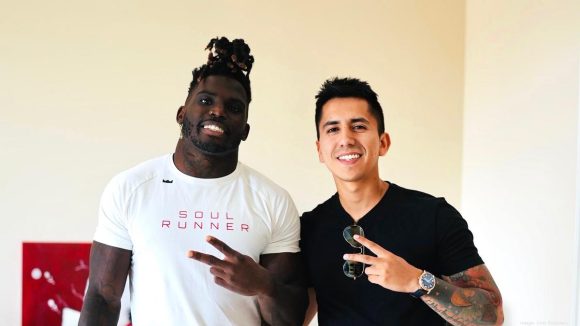
It was a master class in free marketing. Just the way Avalon Sports planned it.
The Buffalo-based sports branding and production company is producing and marketing Hill’s podcast.
“We didn’t know it was going to go viral the way it did,” said Deiver Montes, Avalon Sports co-founder, “but it was definitely something we planned and we knew we’d get a reaction out of it.”
Montes, a native of Bogota, Colombia, is a former professional soccer player who moved a few years ago to Buffalo, his wife’s hometown. He started Avalon with Pat Matthews, a longtime Buffalo Bills employee.
The company’s initial focus was locally based professional athletes, but its scope quickly expanded. During the past year, Avalon has grown from five employees to 20, taken on clients in different cities and sports, and placed a heavy emphasis on production rather than just connecting clients to branding opportunities.
One client is Buffalo Bills safety Jordan Poyer, for whom Avalon produced the documentary “The Kid from Astoria.”
Poyer’s agent, Drew Rosenhaus, also represents Hill. Members of Rosenhaus’ team got in touch with Avalon on the subject of Hill, a podcast and his interests outside of football.
“It Needed To Be Said” is billed as an intersection between sports and culture, featuring Hill and his friend Julius Collins. Future guests will include Dolphins quarter Tua Tagovailoa along with musicians, actors and others.
Hill “wants to bring the best of sports and culture to the podcast world,” Montes said.
“It’s something he has a passion for and wants to give athletes a platform to speak their truth without being filtered by traditional media,” Montes said.
Avalon’s employees are spread between offices in Bogota, Miami and Buffalo, along with some remote workers, he said. The company’s goal has been to prove it can compete with agencies in coastal hubs and major media markets.
“We’re proving we can compete with companies out of Los Angeles and Miami,” Montes said. “We have the talent and we’re doing it.”
© 2022 American City Business Journals. All rights reserved. Use of and/or registration on any portion of this site constitutes acceptance of our User Agreement (updated 1/1/21) and Privacy Policy and Cookie Statement (updated 7/20/21). The material on this site may not be reproduced, distributed, transmitted, cached or otherwise used, except with the prior written permission of American City Business Journals.

source

Music Production Software Market Research Report 2022: Key Vendors Revenue Figures & Sales Statistics and Competitive Analysis by Forecast till 2028 – Digital Journal

Hi, what are you looking for?
By
Published
This comprehensive Music Production Software market report includes a detailed look at vital opponents as well as sales volume to aid newcomers to the industry. The opportunity of this market study comprises the whole kit from economic conditions to comparable pricing amongst projecting stakeholders, as well as profit and cost of certain market segments. It then moves on to a thorough examination of the current market for the years 2022-2028. Because this market study outlines a comprehensive market strategy, important companies can profit tremendously by investing wisely in the sector.
Global “ Music Production Software Market “ report is the single authoritative source of intelligence on Music Production Software Market. Report provides qualitative analysis of the market using various frameworks such as Porters’ and PESTLE analysis. Report includes in-depth segmentation and market size data by categories, product types, applications, and geographies. Report also includes comprehensive analysis of key issues, trends and drivers, restraints and challenges, competitive landscape, as well as recent events such as MandA activities in the market.
The Latest research study released by expert Global Music Production Software Market with analysis on business Strategy taken up by key and emerging industry players and delivers know how of the current market development, landscape, technologies, drivers, opportunities, market viewpoint and status. Understanding the segments helps in identifying the importance of different factors that aid the market growth.
Get a Sample PDF of the report at –https://www.businessgrowthreports.com/enquiry/request-sample/20839558
Covid-19 Impact On Music Production Software Industry:
The report will provide you with analysis of impact of latest market disruptions such as Russia-Ukraine war and Covid-19 on the market. The research and development of vaccines has made breakthrough progress, and many governments have also issued various policies to stimulate economic recovery, particularly in the United States, is likely to provide a strong boost to economic activity but prospects for sustainable growth vary widely between countries and sectors. Although the global economy is recovering from the great depression caused by COVID-19, it will remain below pre-pandemic trends for a prolonged period. The pandemic has exacerbated the risks associated with the decade-long wave of global debt accumulation. It is also likely to steepen the long-expected slowdown in potential growth over the next decade.
Get a Sample Copy of the Music Production Software Market Report 2022
Global Music Production Software Market: Drivers and Restrains
The research report has incorporated the analysis of different factors that augment the market’s growth. It constitutes trends, restraints, and drivers that transform the market in either a positive or negative manner. This section also provides the scope of different segments and applications that can potentially influence the market in the future. The detailed information is based on current trends and historic milestones. This section also provides an analysis of the volume of production about the global market and about each type.
A thorough evaluation of the restrains included in the report portrays the contrast to drivers and gives room for strategic planning. Factors that overshadow the market growth are pivotal as they can be understood to devise different bends for getting hold of the lucrative opportunities that are present in the ever-growing market. Additionally, insights into market expert’s opinions have been taken to understand the market better.
List of TOP KEY PLAYERS in Music Production Software Market Report are: –
Segmentation by Regions:
The Streaming Spending market in North America has created tapes are made from crepe paper, and rubber adhesive coating to help aviation vendors in the world. It was followed by Western Europe, China, Japan, Southeast Asia, India and Central and South America regions. Asia Pacific is expected to record higher growth rate in Streaming Spending Market during the forecast year.
On the basis of product type, the Music Production Software market is primarily split into
On the basis of end-users/application, this report covers the following segments
Enquire before purchasing this report–https://www.businessgrowthreports.com/enquiry/pre-order-enquiry/20839558
Objectives of this Report Studied are:
To study and analyze the global Music Production Software market size (value and volume) by company, key regions/countries, products and application, history data and forecast.
To understand the structure of Music Production Software market by identifying its various sub segments.
To share detailed information about the key factors influencing the growth of the market (growth potential, opportunities, drivers, industry-specific challenges and risks).
Focuses on the key global Music Production Software manufacturers, to define, describe and analyze the sales volume, value, market share, market competition landscape, SWOT analysis and development plans in next few years.
To analyze the Music Production Software with respect to individual growth trends, future prospects, and their contribution to the total market.
To project the value and volume of Music Production Software submarkets, with respect to key regions (along with their respective key countries).
Purchase this report (Price 2350 USD for a single-user license) –https://www.businessgrowthreports.com/purchase/20839558
Geographic Segment Covered in the Report:
The Music Production Software report provides information about the market area, which is further subdivided into sub-regions and countries/regions. In addition to the market share in each country and sub-region, this chapter of this report also contains information on profit opportunities. This chapter of the report mentions the market share and growth rate of each region, country and sub-region during the estimated period.
North America (United States, Canada, Mexico)
South America (Brazil, Argentina, Other)
Asia Pacific (China, Japan, India, Korea, Southeast Asia)
Europe (Germany, UK, France, Spain, Italy)
Middle East and Africa (Middle East, Africa)
Detailed TOC of Global Music Production Software Market Report 2022
Detailed TOC of Global Music Production Software Market Status, Trends and COVID-19 Impact Report 2021
TableofContents
Section1Music Production SoftwareMarketOverview
1.1Music Production SoftwareMarketScope
1.2COVID-19ImpactonMusic Production SoftwareMarket
1.3GlobalMusic Production SoftwareMarketStatusandForecastOverview
1.3.1GlobalMusic Production SoftwareMarketStatus2016-2021
1.3.2GlobalMusic Production SoftwareMarketForecast2021-2026
Section2GlobalMusic Production SoftwareMarketManufacturerShare
2.1GlobalManufacturerMusic Production SoftwareSalesVolume
2.2GlobalManufacturerMusic Production SoftwareBusinessRevenue
Section3ManufacturerMusic Production SoftwareBusinessIntroduction
…
Section4GlobalMusic Production SoftwareMarketSegmentation(ByRegion)
4.1NorthAmericaCountry
4.1.1UnitedStatesMusic Production SoftwareMarketSizeandPriceAnalysis2016-2021
4.1.2CanadaMusic Production SoftwareMarketSizeandPriceAnalysis2016-2021
4.1.3MexicoMusic Production SoftwareMarketSizeandPriceAnalysis2016-2021
4.2SouthAmericaCountry
4.2.1BrazilMusic Production SoftwareMarketSizeandPriceAnalysis2016-2021
4.2.2ArgentinaMusic Production SoftwareMarketSizeandPriceAnalysis2016-2021
4.3AsiaPacific
4.3.1ChinaMusic Production SoftwareMarketSizeandPriceAnalysis2016-2021
4.3.2JapanMusic Production SoftwareMarketSizeandPriceAnalysis2016-2021
4.3.3IndiaMusic Production SoftwareMarketSizeandPriceAnalysis2016-2021
4.3.4KoreaMusic Production SoftwareMarketSizeandPriceAnalysis2016-2021
4.3.5SoutheastAsiaMusic Production SoftwareMarketSizeandPriceAnalysis2016-2021
4.4EuropeCountry
4.4.1GermanyMusic Production SoftwareMarketSizeandPriceAnalysis2016-2021
4.4.2UKMusic Production SoftwareMarketSizeandPriceAnalysis2016-2021
4.4.3FranceMusic Production SoftwareMarketSizeandPriceAnalysis2016-2021
4.4.4SpainMusic Production SoftwareMarketSizeandPriceAnalysis2016-2021
4.4.5ItalyMusic Production SoftwareMarketSizeandPriceAnalysis2016-2021
4.5MiddleEastandAfrica
4.5.1AfricaMusic Production SoftwareMarketSizeandPriceAnalysis2016-2021
4.5.2MiddleEastMusic Production SoftwareMarketSizeandPriceAnalysis2016-2021
4.6GlobalMusic Production SoftwareMarketSegmentation(ByRegion)Analysis2016-2021
4.7GlobalMusic Production SoftwareMarketSegmentation(ByRegion)Analysis
Section5GlobalMusic Production SoftwareMarketSegmentation(byProductType)
5.1ProductIntroductionbyType
5.1.1PassengerCarProductIntroduction
5.1.2BusProductIntroduction
5.1.3TruckProductIntroduction
5.2GlobalMusic Production SoftwareSalesVolumebyBus016-2021
5.3GlobalMusic Production SoftwareMarketSizebyBus016-2021
5.4DifferentMusic Production SoftwareProductTypePrice2016-2021
5.5GlobalMusic Production SoftwareMarketSegmentation(ByType)Analysis
Section6GlobalMusic Production SoftwareMarketSegmentation(byApplication)
6.1GlobalMusic Production SoftwareSalesVolumebyApplication2016-2021
6.2GlobalMusic Production SoftwareMarketSizebyApplication2016-2021
6.2Music Production SoftwarePriceinDifferentApplicationField2016-2021
6.3GlobalMusic Production SoftwareMarketSegmentation(ByApplication)Analysis
Section7GlobalMusic Production SoftwareMarketSegmentation(byChannel)
7.1GlobalMusic Production SoftwareMarketSegmentation(ByChannel)SalesVolumeandShare2016-2021
7.2GlobalMusic Production SoftwareMarketSegmentation(ByChannel)Analysis
Section8Music Production SoftwareMarketForecast2021-2026
8.1Music Production SoftwareSegmentationMarketForecast2021-2026(ByRegion)
8.2Music Production SoftwareSegmentationMarketForecast2021-2026(ByType)
8.3Music Production SoftwareSegmentationMarketForecast2021-2026(ByApplication)
8.4Music Production SoftwareSegmentationMarketForecast2021-2026(ByChannel)
8.5GlobalMusic Production SoftwarePriceForecast
Section9Music Production SoftwareApplicationandClientAnalysis
9.1OperatingVehicleCustomers
9.2FamilyCarCustomers
Section10Music Production SoftwareManufacturingCostofAnalysis
11.0RawMaterialCostAnalysis
11.0LaborCostAnalysis
11.0CostOverview
Section11Conclusion
Section12MethodologyandDataSource
……..
Browse complete table of contents at–https://www.businessgrowthreports.com/TOC/20839558#TOC
About Us:
Business Growth Reports is the Credible Source for Gaining the Market Reports that will provide you with the lead your business needs. Market is changing rapidly with the ongoing expansion of the industry. Advancement in the technology has provided today’s businesses with multifaceted advantages resulting in daily economic shifts. Thus, it is very important for a company to comprehend the patterns of the market movements in order to strategize better. An efficient strategy offers the companies with a head start in planning and an edge over the competitors.
Contact Us:
Business Growth Reports
Phone:
US +1 424 253 0946
UK (+44) 203 239 8187
Email:[email protected]
Website:https://www.businessgrowthreports.com
Press Release Distributed by The Express Wire
To view the original version on The Express Wire visit Music Production Software Market Research Report 2022: Key Vendors Revenue Figures & Sales Statistics and Competitive Analysis by Forecast till 2028

After being sacked by Putin, Kasyanov joined Russia’s opposition and became one of the Kremlin’s most vocal critics.
The human idea of sentience is a slow-moving thing.
The number of nuclear weapons in the world is set to rise in the coming decade after 35 years of decline.
The UK government will Monday introduce legislation to unilaterally rip up post-Brexit trading rules for Northern Ireland.
COPYRIGHT © 1998 – 2022 DIGITAL JOURNAL INC. Digital Journal is not responsible for the content of external sites. Read more about our external linking.

source

Jan. 6 panelists: Enough evidence uncovered to indict Trump – WYMT

Jan. 6 panelists: Enough evidence uncovered to indict Trump  WYMT
source

Step Into A Dazzling New Era With ElectraQueens – Guitar Girl Mag

June 8th, 2022 (Nashville, TN): After years branded as The Highway Women, The newly branded ElectraQueens have revamped  their sound and image. “Walk Away” is the first original song by the ElectraQueens. Their vocals and harmonies are more stunning than ever before as they quite literally walk away from everything we thought we knew about the group. Their new music video for “Walk Away” released today via VEVO.
While the former group celebrated country music, ElectraQueens celebrate many genres of music including country, rock, pop & R&B.
“We made great strides along the way, as The Highway Women. We built a formidable fanbase, released music and videos with critical acclaim. When we found Jenane, Alyssa, and Gabrielle, it was a seamless transition as the three group members brought a musical diversity beyond country music.  It became obvious that the timing to rebrand was now! The band loved the idea of the titled song.  We have all been through so much in the past few years, including the pandemic and a shift in life as we all knew it.  We wanted to launch the new group with an inspirational and uplifting song, because it feels great to walk away and free ourselves from the past and march boldly into a new future.” -Jill Pavel (Owner)
This music video for ElectraQueens’ latest single, “Walk Away,” takes a simple but elegant direction to elevate an already phenomenal track to another level. The new lineup weaves their personal styles and exploit their intense level of talent and insane harmonies to other genre-based audiences. Viewers are presented with a simple yet classy visual with the main focus on the groups incredible vocal presentation and their seamless and natural blend of harmonies and powerful delivery.
“We wanted a simple video, with the focus on the powerful lyrics paying homage to the music and composition written by Tony Luke Jr. and Joe Callari.” – ElectraQueens
ElectraQueens are indeed walking away from the past, and they’re doing it with undeniable grace and style. ElectraQueens aren’t here to play around–they’re cementing their place in the music community celebrating the lost art of the girl bands past, one single and one video at a time.  The ElectraQueens will be dropping a new single each month through 2022.
“Walk Away” Credits
Songwriters: Tony Luke Jr, Joe Callari
Video Production:  McGettrick Media
Executive Producer: Joe Nicolo
Music Production: Justin Bandalon
Vocal Production: Jenane Dahl, Alyssa Scott & Gabrielle Vaughn
Mastering: Moontree Mastering (Brian J. Poole)


Save An Additional 5% on Most Items With Coupon Code "SaveNow"

source

Chris Smalls's Amazon uprising and the fight for a second warehouse – The Washington Post

NEW YORK — As soon as Chris Smalls ended one call, his phone buzzed again. It had been that way for three days, ever since the 33-year-old and his team had won a vote to unionize an Amazon warehouse, a first in the company’s history.
“I don’t have an assistant. It’s just me,” he was telling a television producer whose name and show he would quickly forget. “Send me another text tomorrow, and I’ll call from wherever I’m at.”
The Amazon Labor Union’s win in early April — at the same 8,300-person facility on Staten Island where Smalls had been fired — defied almost every rule of organizing. With virtually no money, experience or help from big unions, Smalls and his team had convinced a building full of disaffected workers that they could fight for themselves and win.
Now Smalls, with his “Eat the Rich” sweatsuits, sunglasses and gold chains, was being touted as the leader of a new kind of worker-led uprising, one that could reinvigorate a shrinking labor movement. He also faced tough questions: Could the unruly, often-chaotic movement that he had helped to spark spread to other Amazon warehouses? A vote at a second Staten Island facility was scheduled for April 25, about three weeks away. Could he and his fellow warehouse workers ever amass enough power to wrest concessions from Amazon and actually improve their lives?
Around 9 p.m., Smalls was sitting in the front seat of a beat-up SUV that doubled as his office when his phone started ringing again, this time with news that a worker he knew had been suspended for fighting with some employees and needed his help. He FaceTimed the worker’s manager and, when she didn’t respond, fired off a text asking what had happened.
“Just fyi I officially represent the workers so they are going to tell me,” he wrote.
“So, go through the right channels,” the manager texted back.
“Lol you my friend or nah,” Smalls typed. “The right channels stfu lol.”
He climbed out of his car and headed into the living room of a small Staten Island duplex that served as the union’s temporary headquarters. Bags of trash and a dirty gray carpet covered the floor. Trays of molding ziti filled the refrigerator. The senior members of Smalls’s team sat on plastic folding chairs and discussed plans for the coming week: State lawmakers in Albany wanted to give Smalls an award. The head of the Teamsters union wanted to meet with him in D.C. The election at the second warehouse was fast approaching.
By 2 a.m., most of the staffers had drifted home. Only Smalls and Brett Daniels, a night-shift worker and the union’s director of organizing, remained. The two smoked a joint and Smalls dived into the thousands of unopened texts and emails on his phone.
Many were from Amazon workers who had been inspired by the Staten Island victory and wanted to unionize, too. Smalls skimmed a message from an Amazon driver in Kansas City, Mo. “I’ve never been to Kansas City,” he said. “That’d be a dope trip.”
He read an email from a worker in Sacramento who was complaining about the abuse she was suffering on the job. “No one here gives a flying fudge about my wellbeing,” she wrote. The Staten Island win, she continued, had “sparked a fire” and a “hunger” in her.
“I’m calling her tomorrow. I ain’t playing,” Smalls said. “It’s lit, bro. It’s lit. We’re going to Cali.”
It wasn’t just Amazon workers. Walmart, Target and Dollar General employees wanted his help, too. There were so many requests pouring in through so many channels that Smalls and his team had for the moment given up on keeping track of them all. Smalls looked up from his phone and flashed a grin that revealed teeth covered in gold grillz.
“We just made unionizing cool as f—,” he said.
Smalls’s breaking point with Amazon came in March 2020 at a moment when the pandemic was raging in New York City and so many workers around the country were reevaluating their relationships with their employers.
By then, he had been with Amazon for nearly five years, worked at three warehouses and been promoted to “process assistant,” a low-level management position. He had been briefly terminated — and then reinstated after a six-week battle — for stealing two minutes of the company’s time. “It was so ridiculous,” he said of the way he had been treated.
And so when he learned that a worker in his building had tested positive for the coronavirus, he suspected that Amazon didn’t have his or his co-workers’ best interests at heart.
For a week, Smalls said, he pressed the JFK8 warehouse’s top managers to shut down and clean the facility. When that failed, he led a walkout that got him fired and caught the attention of Amazon’s general counsel in Seattle, who wrote in an email leaked to Vice News that Smalls was “not smart or articulate.”
Smalls was reaching his own conclusions: “I’ll never work for anybody again,” he recalled thinking. He began searching online for the addresses of Amazon founder Jeff Bezos’s homes in New York City, D.C., Beverly Hills and Seattle, where he then organized demonstrations. (Bezos owns The Washington Post.) Sometimes a couple dozen people attended; sometimes a couple hundred. At each stop, Smalls raised his megaphone to a mostly empty, heavily guarded mansion and led the protesters in a call and response.
“F— Jeff Bezos!” he yelled and the crowd repeated in kind.
One year into his crusade, Smalls realized that shouting at houses wasn’t going to produce lasting change, so he set up a tent on public property next to a bus stop across from the warehouse where he had been fired and began organizing a union. A far larger, better-funded effort by the Retail, Wholesale and Department Store Union was already underway to organize an Amazon facility in Bessemer, Ala.
Smalls was starting with almost nothing. Via a tweet, he found a lawyer willing to help for free.
The core of his initial team was warehouse workers whom he had supervised in New York or who had found him outside one of Bezos’s mansions. The rest ran into him at the bus stop, where Smalls strove to build a haven for workers who often complained that they were abused and surveilled. Amid a miasma of exhaust, Smalls lit a firepit on cold nights, played music, served food and made s’mores.
Angelika Maldonado, a 27-year-old single mom, was feeling sick when she cut short her 12-hour shift one night last October. She missed her bus, but there was Smalls. Someone from his team invited her over to the tent and asked her what she thought they could gain from unionizing.
Maldonado talked about her struggle to afford the $54 weekly health-care premium for her and her son. Smalls handed her a slice of pumpkin pie.
She spent six hours at the tent that first night, returning home with the sunrise about 5 a.m., and then quickly became a regular. She’d just broken up with her boyfriend and moved in with her mother. For her, the tent became an escape from the drudgery and isolation of working the overnight shift at Amazon.
Michelle Valentin Nieves, 45, was screaming at a manager in the JFK8 warehouse when one of Smalls’s best friends approached her about the union. On her phone was a year-old picture of her and a dozen co-workers — from Panama, Colombia, Peru, Haiti and the Dominican Republic. “Los Originales,” read the caption. They’d gone to birthday parties, baby showers, and bowling and karaoke nights together.
Now only three, including Nieves, were left. They were people with “families, mortgages and car notes,” Nieves said. The pandemic had left people stranded at home and caused Amazon’s business to boom. The surge in demand put new pressures on Amazon workers in places like Staten Island. Some of Nieves’s friends had grown tired of a workplace where their every move, including bathroom breaks, was tracked by sensors and scrutinized by managers. Others were fired for arguing with bosses or failing to meet production targets, a common occurrence at Amazon warehouses, which typically have 100 percent turnover annually.
Amazon officials said the surveillance is needed to keep employees and inventory safe. The churn is a function of the company’s flexible work environment, they said. “A large percentage of people we hire are re-hires, showing that they will choose to work with us when they want to, then come back when it’s convenient for them — and we’re glad they’re on our team,” said Kelly Nantel, an Amazon spokeswoman.
Nieves attributed the high attrition to the grinding nature of the labor. “There’s no culture here,” she said. “You just produce, produce, produce.”
In Smalls, she saw someone like her — someone who was “tired of the B.S.”
The workers were joined by a half-dozen outsiders — most of them recent college graduates — who had seen Smalls on the news and signed up to help him fight Amazon, a company that posted soaring profits throughout the pandemic and to them epitomized everything that was cruel and unjust in the U.S. economy. Smalls couldn’t pay them, so they got warehouse jobs and worked with him to organize Amazon from the inside.
To trigger an election, Smalls and his team needed to persuade at least 30 percent of the workers at an Amazon building to sign authorization cards. By early 2022, the union had collected enough signatures for votes at two Staten Island warehouses — known as JFK8 and LDJ5. The JFK8 warehouse was set to go first.
About the same time, the union scored a big legal win. Amazon reached a settlement with the National Labor Relations Board that allowed employees to stay and organize in their building’s nonwork areas even when they were off the clock. Smalls held down the tent by the bus stop. His worker-organizers occupied the break rooms, passing out pro-union literature and serving hot meals.
When the votes were counted on April 1, showing that the union had won by more than 500 votes, international media descended on Staten Island, and Smalls became an overnight star. President Biden gave him a shout-out: “Amazon, here we come.”
“What an insane story,” raved “Daily Show” host Trevor Noah with Smalls sitting next to him in the studio.
Smalls was often asked how he had done it. Sometimes he focused on his team’s firsthand knowledge of the workers’ struggles. “We live the grievances, the reality of the warehouse,” he said. Sometimes he talked about the culture they’d built at the bus stop: the food, the music, the friendships.
“The one thing that Amazon can’t buy is love,” he said.
The truth, he’d realized as he prepared for the next warehouse’s vote, was that he’d been willing to spend 11 months at a dirty bus stop, fighting to prove himself to the workers.
“It was day after day working straight,” he said. “We were there with the bonfires. We were there with rallies. We were there at every shift change. There’s no secrecy. You have to go all in.”
The lead organizer for the next vote was Maddie Wesley, 23, whose pathway to Amazon was in so many ways the opposite of Smalls’s. She had graduated from Wesleyan University in Connecticut in 2020 and was living in Florida last summer when Seth Goldstein, the labor lawyer who had responded to Smalls’s tweet asking for help, called her. The two had worked together organizing campus custodial workers when Wesley was a student.
Wesley had tentatively signed on to work with Unite Here, a big union with 300,000 members that was organizing hotel workers in South Florida. Goldstein urged her to drop the job. “This is the kind of stuff you and I dream about,” he told her of Smalls’s effort. “This is a chance to make history.”
In August, she moved north and got a job at an Amazon warehouse on Staten Island. Wesley knew that the poorly funded, worker-led campaign was a long shot. Smalls didn’t even have money to pay her. But she also understood that the payoff, if it succeeded, could be huge.
Amazon workers held a critical position at the heart of the U.S. economy. Smalls was building an organization that could help them exercise their power. To Wesley, the effort seemed potentially “revolutionary.”
Her first sense of Smalls’s potential as a leader came days after her move at a Medicare-for-all rally in Manhattan. Smalls was late and the rally, organized by another group, was a mess. Activists were fighting over the megaphones. Their chants were way too complicated. “Chris finally shows up and all the issues just melt away,” she recalled. “He’s able to take over and lead the whole protest. I saw his potential to really lead a movement.”
When the final tally came in showing the union’s win at the first warehouse, Wesley stood cheering next to Smalls as he popped champagne on a Brooklyn sidewalk. But as the days passed, she worried that the spotlight was introducing new strains on the group and on Smalls, who she said was struggling to balance running a union and being the face of a movement. She missed the simplicity of their “dirty-little-tent days,” when they were all equals.
Now, Wesley was once again waiting on Smalls, who was late. The victorious worker-organizers from the first warehouse were meeting with Wesley and the team she had recruited for the second vote. The union didn’t have office space, so a Staten Island chapter of the Communications Workers of America lent them a room.
“Is Chris pulling up?” one of the organizers asked.
“Theoretically,” Wesley replied.
The group got started without him. All eyes turned to Wesley, who stood beside a whiteboard at the front of the room. The union depended on donations collected via a GoFundMe account that since the win had ballooned from virtually nothing to more than $120,000. “The good news is that we’re rolling in dough,” said Wesley, who doubled as the union’s treasurer.
The bad news was that they were up against a $1 trillion company, which had been surprised by the loss at the JFK8 warehouse and was already ramping up spending to counter the union’s message at the second facility.
Wesley sketched out a round-the-clock plan to occupy the LDJ5 warehouse break rooms, where she and her team would serve food and pass out leaflets outlining the union’s demands: better wages, more job security, a pension fund, better health benefits.
The JFK8 workers talked about the tactics they had used to win over union skeptics.
Eventually, Smalls arrived and assured them that he was going to set up the tent by the bus stop, just as he had during the earlier campaign. Because he was no longer an Amazon worker, Smalls wasn’t allowed on company property. In February, he had been in a warehouse parking lot delivering food to workers when Amazon called the police and he was arrested.
“I’m going to catch all your stragglers … day and night,” he told Wesley at the meeting. “I got you. I’ll be there.”
When the meeting ended, Smalls lingered by the front door. His movement suddenly had money and momentum. But Smalls sensed that something was wrong. For the past several months, the union’s all-consuming focus had been winning the election at JFK8, which was five times the size of the 1,600-worker LDJ5 facility.
Smalls worried that Wesley and her team — many of whom had been focused on helping with the first warehouse campaign — didn’t have a good handle on the problems and frustrations of workers inside their building. With only 20 days until the voting started, he knew that they were running out of time. “It’s like starting over,” Smalls told an organizer from the JFK8 warehouse. “We gotta go hard. It’s gotta be a full-on assault.”
He climbed into his SUV and was gone.
Days passed, and the demands on Smalls’s time exploded in ways he never imagined.
In Manhattan, the New York City comptroller wanted to discuss ways that he and other big pension fund investors could put pressure on Amazon to lower its worker injury rate. The next day Smalls traveled to D.C., where he met with members of Congress and labor leaders who were offering money and expertise.
He and his team visited Albany, where they were the guests of honor at a luncheon hosted by a coalition of minority lawmakers and sponsored, in part, by Amazon. “It just goes to show how they try to control everything,” Smalls said.
The NAACP invited him to Detroit. Another group was offering to fly him to Cuba. He appeared alongside actress Susan Sarandon at a rally in Manhattan. He was a near-daily presence on cable news.
Much of it was important work. But it was far from the daily concerns of the warehouse workers on Staten Island. About a week into the campaign for the second warehouse, Smalls stopped by the bus shelter to pass out yellow union lanyards during a shift change. Empty cigarette packs, discarded work gloves and a folded-up Amazon ID littered the ground next to a makeshift memorial for a 24-year-old employee who had been fatally struck by a car on her way to work. The smell of diesel fumes, cigarettes and marijuana filled the air.
Smalls was on the phone with his lawyer, who was updating him on Amazon’s latest legal filing challenging the first vote. Amazon alleges that the National Labor Relations Board improperly “created the impression” it was supporting the union before the balloting and that Smalls and his team harassed employees to win their backing.
“Nobody cheated,” Smalls told his lawyer. “A trillion-dollar company loses and they want to cry.”
A former network news president was calling to gauge Smalls’s interest in a documentary film project. “Thank you. Thank you,” Smalls was telling him. “We’re still trying to get to the next level. It’s been a journey.”
An older woman with a limp who knew Smalls from the JFK8 warehouse rushed up to talk. He pointed at his headphones to signal that he was on a call and gave her a hug.
She returned to the conversation she was having with her co-worker about a manager who had criticized her hourly “rate” — the pace at which she worked — in front of others.
“He shouldn’t have said that!” she fumed.
“We need a change,” her friend agreed.
After about 15 minutes, the workers climbed onto the S-90 bus headed to the St. George Ferry Terminal and were gone. So was Smalls.
At the LDJ5 warehouse, Wesley was growing increasingly worried that she and her team of organizers were overmatched. Amazon, chastened by its earlier loss, moved virtually all of the anti-union consultants — some of whom charged as much as $3,200 a day, according to federal disclosure forms — into the smaller LDJ5 building.
“The [Amazon Labor Union] is trying to insult your intelligence,” read one of their anti-union fliers. “Its officers can put you on trial and fine and expel you.” Others reviewed by The Washington Post falsely accused the union of being a for-profit business and featured cartoon drawings of union officials surrounded by stacks of money and driving a convertible sports car. Amazon declined to comment on the activities of its anti-union consultants. “It’s our employees’ choice whether or not to join a union, it always has been,” the company said in a statement.
Most of the organizers that Wesley recruited were friends in their early 20s that she had made in the warehouse break room during her eight months with the company. They were all learning on the fly how to connect with demoralized co-workers who were often twice their age.
About a week into the campaign, Wesley began to worry. “We need you here,” Wesley warned Smalls in a phone call. “We’re going to lose this building.”
Wesley treasured the responsibility that Smalls and the union had given her. “This organization, it means so much to me,” she said.
Lately, though, the pressure was almost too much to bear. She had been sleeping only four hours a night and suffering panic attacks in which her heart would start racing as she was lying in bed. If the movement couldn’t spread to other warehouses, she knew it stood little chance against Amazon. “All this responsibility, this early in life,” she said, “it’s a lot.”
She wanted Smalls to press the JFK8 worker-organizers, who weren’t allowed inside the LDJ5 warehouse, to spend more time working the phone banks and passing out literature on the steps of the building. And she wanted Smalls to put in more time at the bus stop, where he could talk to workers, tell his story and counter the lies Amazon was spreading about him.
Smalls, who was also tired and stretched thin, told Wesley that he had more-pressing responsibilities. The union needed to find office space, lawyers and accountants. The outreach to Smalls from politicians and the international media hadn’t let up. “Being at the bus stop is not valuable to my time and not valuable to the organizing,” he told her.
About 10 days before voting was set to start, Wesley sat on the sidewalk by the LDJ5 warehouse’s front doors. The long hours inside the windowless building made the brightness of the afternoon sun overwhelming. Next to her was Julian Mitchell-Israel, who had landed a job at the warehouse in the fall after reading an article about the union drive in Jacobin, a socialist magazine. Mitchell-Israel, a graduate of Oberlin College in Ohio, had called Smalls to ask how he could help.
Both Wesley and Mitchell-Israel, 22, had backed the second presidential run of Sen. Bernie Sanders (I-Vt.), believing he might be able to galvanize a working-class movement like the one they were now trying to build at Amazon. In 2020, Sanders’s campaign slogan had been: “Fight for someone you don’t know.” The motto, they decided, explained why Sanders had failed to mobilize people like the workers in their warehouse.
“It should be fight for someone you love,” Mitchell-Israel argued.
“It should be fight for yourself,” Wesley insisted.
Their toughest job was persuading dispirited Amazon workers to fight at all. Many who opposed the union argued that the demands they were making — a $30-an-hour wage, pensions, free college for family members — were unrealistic. “You think you’re going to get $30 an hour for this?” one woman yelled at them. “This is not a career. You’re working at a warehouse.” Others insisted that many of their colleagues at the plant were undeserving or lazy. Or they said that they had decided to wait and see if the unionized workers at the JFK8 building across the street would be able to negotiate a better deal — a process that was likely to take at least a year.
Smalls’s chief of staff stopped by to check on Wesley and talk about their strategy for the final days of the campaign. Amazon was halting production for five hours each day so that employees could attend sessions with the warehouse’s general manager and a senior executive from Seattle. Wesley told him that anti-union workers were spreading false rumors that Smalls had bought her a Mercedes.
“You have a target on your back,” he said.
“I am second only to Chris Smalls,” Wesley replied.
Wesley believed that to win, she and her team had to shift the focus away from both her and Smalls, whom Amazon was portraying as an embittered employee with a vendetta against the company that had fired him.
“It’s not about me,” she said. “It’s not about Chris.”
She grabbed several boxes of pizza that had just arrived and headed back inside with them.
The workers would soon be arriving in the break room, and she needed to be there.
The day before the voting at LDJ5, Smalls and the rest of the Amazon Labor Union held a news conference and rally on a patch of grass halfway between the bus stop and the warehouse. The initial win and Smalls’s rising profile helped attract some heavy hitters who hadn’t been willing to make the trek to Staten Island for the first campaign.
“What you’re doing here is sending a message to every worker in America that the time is now to stand up to our oligarchy,” said Sanders, who had come from Washington.
Next up was Rep. Alexandria Ocasio-Cortez (D-N.Y.). “Let’s just give a big shout-out to the workers who did the damn thing!” she shouted in praise of Smalls and his team.
Eventually, Wesley climbed the riser and addressed the crowd. “This is our one chance to improve our livelihoods, to be a part of something truly great,” she said.
The voting was spread over four days. On May 2, Wesley, her black work boots untied, arrived at the National Labor Relations Board headquarters in Brooklyn to watch the final count. Smalls was en route from Detroit, where a day earlier, the NAACP had presented him with its Great Expectation Award.
The tally was done in about 90 minutes and ended in a rout. Of the roughly 1,600 workers eligible to vote, 380 voted in favor of unionizing and 618 voted no.
In the union’s win at the JFK8 warehouse, Smalls’s personal story — his covid-19 protest, his firing, his two-year battle with the company — had been a critical part of the campaign’s closing argument. Workers who had toiled alongside Smalls before his firing or had spoken with him at the bus stop saw someone just like them. Most of the other JFK8 organizers, who became regulars at Smalls’s tent, had worked at the warehouse for years.
At LDJ5, workers didn’t have the same bond with Smalls. To them, Smalls was “the guy with the gold chains” they had seen on the news or on Instagram. Some who voted no complained that the union was making unrealistic promises or said they didn’t want to pay dues. A few noted that the work in their warehouse wasn’t as hard as in the larger JFK8 facility.
Most of these workers knew Wesley and liked her. But they also knew she had come to Amazon to help organize it, not because she desperately needed a job. And while Wesley had recruited several workers to her organizing team, most had been reluctant to assume central roles that would turn them into targets or put their jobs in jeopardy. Others had families or stresses at home that prevented them from devoting weeks to a union campaign. So, much of the burden for the campaign fell on Wesley.
Once the votes were counted, Wesley who had been steeling herself for a loss, slipped away unnoticed.
Outside, members of the union’s organizing committee — many of whom had been key to the first win — were fending off questions from reporters.
“It’s just a bump in the road,” one said.
“A minor setback,” insisted another.
Everyone was waiting for Smalls, who projected confidence and calm when he arrived an hour later.
“What’s the strategy for the next vote?” one journalist asked.
“What about the 100 other warehouses that contacted you?” another pressed.
Smalls talked about his plans for a national video call this summer for Amazon workers around the country who were interested in organizing. And he emphasized the need for government reforms that would “level the playing field” and make it harder for companies such as Amazon to “crush workers’ voices” and “intimidate” those seeking to unionize. “We’re going to apply pressure to the ones that can make decisions and help us,” he told the reporters.
In the coming days, Smalls was scheduled to visit Washington, where, clad in his “Eat the Rich” jacket, he would testify before Congress and meet with the president in the White House.
“You got it done in one place,” Biden told him. “Let’s not stop.”
“That’s right,” Smalls replied.
Amazon officials touted the LDJ5 victory as proof that workers are satisfied with the company. “It’s our employees’ choice whether or not to join a union, it always has been,” said the Amazon spokesperson. “And in the case of LDJ5, our employees overwhelmingly rejected the union.”
Smalls, Wesley and the rest of the team knew that to put pressure on Amazon and win a contract — a process that could take years — the union would have to expand to other warehouses. And they knew that the people they needed didn’t live in Washington. They didn’t watch cable news or attend rallies. They were people with busy lives and bills that they were struggling to pay. They were the kind of people who were exhausted after a long shift and waiting at the Staten Island bus stop.
Smalls and his team were tired, too. He had spent the first year after his dismissal leading protests against Amazon and much of the second organizing and breathing exhaust fumes at the bus stop.
Someone urged him to help find Wesley.
“I’ve called her twice,” he said sharply. “She hasn’t picked up.”
Smalls was standing just steps from the spot where, a month earlier, he had popped a celebratory bottle of champagne. The reporters were gone. A light rain fell as he considered his next move.
Anna Betts contributed to this report.

source

McLaren is joining Formula E and buying the Mercedes-EQ team – Hypertext – htxt.africa

McLaren is joining Formula E and buying the Mercedes-EQ team – Hypertext  htxt.africa
source

On 'It's Almost Dry,' Pusha T plays the long game – NPR


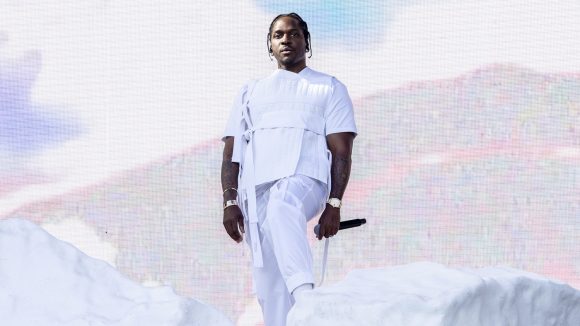
“Rap — this is a whole lifestyle,” Pusha T tells NPR. “This is a whole culture.” Amy Harris/Amy Harris/Invision/AP hide caption
“Rap — this is a whole lifestyle,” Pusha T tells NPR. “This is a whole culture.”
The Martin Scorsese of street rap — that’s how Pusha T sees himself these days.
The Virginia Beach, Va. artist — government name Terrence LeVarr Thornton — has grounds to do so. He first rose through the ranks of hip-hop in the ’90s and early 2000s in the group Clipse with his brother, who now performs as No Malice. Then in 2010, Pusha T broke out as a solo artist, signing to Kanye West‘s G.O.O.D. Music label. This year, his newest album It’s Almost Dry became his first to reach No. 1 on the Billboard 200 chart.
From the road, Pusha T joined NPR’s Ayesha Rascoe to discuss the making of the record, spurring competition between producers Pharrell Williams and West and staying on top of a decades-long career in hip-hop.
The following interview has been condensed and edited. To listen to the audio version, click the link above.
Ayesha Rascoe, Weekend Edition: I want to start off with that Martin Scorsese comparison. Martin Scorsese is known for making gangster movies, and you’re known for rapping about selling cocaine. You’ve even called yourself “cocaine’s Dr. Seuss.” What’s that parallel you’re drawing there?
Pusha T: Basically, of course there are times in Scorsese’s [filmography] where he ventures off from gangster films, but for the majority Scorsese makes a very particular type of movie that culturally we all have gravitated towards. And he does it very well. It’s iconic. I look at my rhymes and my content and my music and my discography the same way — I do something very specific and I do it very, very well.
I’m listening to you, I’m listening to Jay-Z, I’m listening to [other rappers] — and I love the wordplay. I’m feeling the energy of it.
I think a lot of it is energy and aspiration. Rap — this is a whole lifestyle. This is a whole culture. Rap teaches you how to live and aspire. Man, it teaches you how to dress sometimes. There are so many different avenues and so many other things that you can take away from an album like It’s Almost Dry. And I would say aspiration is one.
Turning to It’s Almost Dry, where does that name come from?
It speaks to art and creating a masterpiece. Everyone’s always waiting on that masterpiece and you always have to tell them that it’s almost dry, it’s almost ready.
Half of the album is produced by Pharrell Williams, who you’ve been making music with since the very beginning of your career. The other half is produced by Kanye West, who was a huge part of you [branching out] as a solo artist. How does working with both of them differ?
I would say that me and Kanye connect very deeply on very purist, obscure hard samples — hard drums. Very minimal. He likes to treat my voice like an instrument. He loves mixtape Pusha T. He loves that, so he makes records that lean heavy in that vein.
Pharrell is always trying to turn me into a character. He definitely is big on composition and the actual songwriting — cadence, flows, melodies. [He’s] always trying to turn even the darkest or hardest of records into some level of hit, you know? That’s the difference between those two to me.
Was it kind of like a competition, because you had half and half? Was it fun?
It turned very competitive. And mind you, I’m doing this album really between Miami, Florida and LA. I could get in the groove and catch a record and fly to Miami to be with Pharrell, then fly to LA and be like, “Look what we did.” And Kanye will perk up and be like “Oh really? That’s what y’all on? Okay.” Boom — before I know it, he’s throwing me beats like, “Take this. Finish this.” Then I go back to Miami and say, “He heard that — and he gave me this.” I just start pitting the two energies versus each other the whole time.
Then it got to a point where, for “Rock N Roll” featuring Kid Cudi, Kanye himself couldn’t find the drums that he liked for the record. He was like, “Man, take this to Pharrell. Tell him to put some drums on it. I want to hear his drums on it.” That was the one record that they actually collaborated on. With that being said, there were other people who were trying to find drums, and I would be playing it and Kanye would walk in and spaz out. He’d be like “What is that? Throw all those drums away, I don’t wanna hear nobody’s drums but Pharrell’s drums on this record.”
Kanye can be controversial, to say the least.
Very much so.
Does that ever affect the making of the music, or do you ever pull him aside on a personal level and go, “Hey, Ye — maybe pull back a little bit?”
We talk about everything that goes on with him. I always lend him an ear, and I always speak to him and give my opinions. Kanye is just who he is, though. He has a very strong personality. He just wants what he wants, and he wants it a particular way. We definitely bump heads or disagree about quite a few things, but I think that where we’re compatible is that he knows that I’m just giving him my honest point of view. When he speaks to me, he’s like “Man, when I talk to you, I actually get to look at things outside of myself.”
I want to ask you about the song, “Call My Bluff.” I know you were talking about getting into character. You were watching Joaquin Phoenix’s Joker movie a lot working on that song. Tell me about that process.
You know Pharrell just thinks that me becoming a character is the next level to my career. He feels like I’ve been a quintessential rapper the whole time, but yet I haven’t really tapped into a character. So we would watch Joker and he’d be like, “Man this is who you are! You laugh at things you’re not even supposed to be laughing at. This is you.”
I’m like, “Damn bro, that’s what you think about your man?” So we started actually watching the movie, right? And then it turned into us watching the movie on silent, and he would make music to the energy of the TV. It tells you the energy that you’re supposed to be in. That’s how we continued to create his portion of the album.
You have longevity in hip-hop. What do you think longevity looks like for hip-hop artists right now? Because there was a long time where rappers really didn’t have that long span of being popular and they would get older and get pushed aside. But now it’s different, right? Everybody’s like, who’s going to be the Rolling Stones for hip-hop?
Well that’s my goal. My goal is to see how far I can really take this competitively. I don’t want to just exist in rap or just make records that aren’t considered classics. It’s funny you mentioned the Rolling Stones as a group, but in talking about this, Rolling Stone just made a top 200 list of hip-hop albums of all time, and I was on that list three times. I want to keep making albums that will end up on all of these lists. If I stop making albums that don’t garner that type of fanfare or attention, then I don’t want to make music anymore.
Sponsor Message
Become an NPR sponsor

source

Transfer news and rumours LIVE: Man Utd to join race for Lewandowski – Goal.com

This page is not available in low-end version.
Copyright © 2022 Goal (English) All rights reserved. The information contained in Goal (English) may not be published, broadcast, rewritten, or redistributed without the prior written authority of Goal (English)

source

ZOM Living, AEW Capital to Develop 248-Unit Apartment Community in Downtown Durham – REBusinessOnline


Set to break ground this summer, Maizon Durham will feature studio, one-, two- and three-bedroom units ranging in size from 555 to 1,450 square feet.
DURHAM, N.C. — ZOM Living and AEW Capital Management have purchased a site at 500 E. Main St. in downtown Durham for the development of Maizon Durham, a 248-unit apartment community. The co-developers also secured $49 million in construction financing from Santander Bank. The project team includes architect Hord Coplan Macht, interior designer One Line Design Studio and general contractor LeChase Construction. Set to break ground this summer, Maizon Durham will feature studio, one-, two- and three-bedroom units ranging in size from 555 to 1,450 square feet, as well as coworking and conference spaces, a fitness center, dog spa, clubroom, 13,000 square feet of retail space and a swimming pool and sundeck.

source

Can NFTs Ever be More than Just Art Before the Bubble Bursts? – Analytics Insight

source

Studio One 5: Show Page Overview

Celebrating 100 Years of News & Classical Radio – Iowa Public Radio

We want to hear your favorite memories of listening to public radio, the stories that stuck with you and your hopes for the next hundred at IPR.

We couldn’t have made it to 100 years old without a century of your support. So we invite you to join us for a birthday party to celebrate this historic milestone!
Come to one of our four studio locations to enjoy birthday cake and ice cream, listen to live music, tour the studio, explore a century of radio history and meet your fellow fans and favorite IPR personalities.
Thursday, June 9, 4–6 p.m.
Iowa State University
1013 WOI Road
Ames, IA 50011
Bring a chair or a blanket to the greenspace next to the studio and enjoy live music by the Curt Snook Duo. Free parking is available in Lot 12, right between the greenspace and studio.
Tuesday, June 14, 4–6 p.m.
2111 Grand Avenue
Des Moines, IA 50312
Bring a chair to sit and enjoy music from Dang Felton outside our Des Moines studio. Please park at the American Red Cross (across Grand Avenue), who generously offered their parking lot, or in the street.
Wednesday, June 22, 4–6 p.m.
University of Iowa
710 South Clinton Street
Iowa City, IA 52240
Pull up a chair outside to enjoy some live music from multi-instrumentalist ADE. Free parking is available in University Lot 36 (enter from Dubuque Street) or along Clinton Street.
Tuesday, June 28, 4–6 p.m.
Russell Hall Amphitheatre
University of Northern Iowa
322 Communication Arts Center
Cedar Falls, IA 50614
Grab a chair and join us outside for a performance by the Bob Dorr Trio, featuring IPR Studio One host and Iowa music icon Bob Dorr! Free parking is available in the Latham Field lot just north of the Communication Arts Center.

source

Review: Excite Audio – Lifeline Console VST Plugin | Channel Strip – We Rave You


Excite Audio announced their newest development, called Lifeline Console, together with Plugin Boutique. This plugin is promised to hold on to many interesting features for adding character to your sound source. Down below you’ll find a comprehensive review of the Lifeline Console plugin by Excite Audio.
 
| Best VST Plugins of 2022 – Read Here
 
 
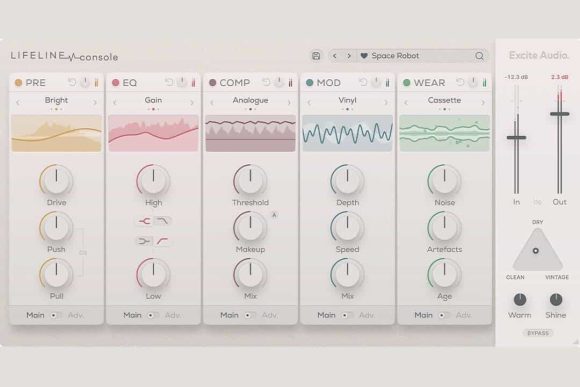
Lifeline Console holds on to a modular interface including zero latency, resizable UI, 5 displays, a common modular workflow, 15 algorithms, and a total of 5 effects modules. When opening the plugin you’ll notice that you’ve got the availability to add a Pre-amp, EQ, Compressor, Modulator, and Wear to your sound source. The Pre-amp adds warmth to your sounds and it complements its frequency spectrum through colorful saturation. The equalizer holds on to a vintage interface for sculpting the low- and high-end of your sounds. The compressor has standard attack and release settings, but you’ll be able to set the right threshold, makeup, and mix. Modulate the sound by controlling depth, rate speed, and total effects mix, and obsolete the sound by using wear’s noise, artifacts, and age features. On the right side, you’ll find standard in/out gain sliders, as well as a display to choose between a dry, clean or vintage character. A total of 325 interesting presets are included, suitable for any sound. The Lifeline Console looks familiar to XLN Audio’s RC-20, but the effects are achieving a different outcome. I’d recommend using this plugin on a sound that’s missing life. This plugin will definitely add personality and will give your mixes a special touch of vintage character.
 
Lifetime Console is currently on sale and is available for $49.00. The usual price for the plugin is $69.00
 
 
Have a look at the plugin down below:

 
Next article: ADSR releases the next-gen Drum Machine VST Plugin
Image Credits: Excite Audio


– DJ/Producer from the Netherlands. – Graduated from the Conservatory in Amsterdam. – Currently working as the technical writer at We Rave You
[email protected]

GET THE MAGAZINE!

We Rave You Ltd. All Rights Reserved © 2022

source

Bricktown Breakdown uploads full audio recording of Thunder film "Seeds of Greenwood" discussion – OKC Thunder Wire

The Oklahoma City Thunder held a press screening this past Thursday showing their film “Seeds of Greenwood.” The 50-minute film centers around the Thunder Fellows program, which helps Black children in Tulsa with educational opportunities and discusses the importance of remembering the 1921 Tulsa Race Massacre.
Thunder personnel that were included in the film include general manager Sam Presti, head coach Mark Daigneault and franchise player Shai Gilgeous-Alexander.
Classic Mark
pic.twitter.com/lzQT5irENP
— Clemente Almanza (@CAlmanza1007) June 9, 2022

The creators of the film — which were mostly Thunder employees — held a panel discussion and quick Q & A before and after the showing discussing behind-the-scenes content.
To listen to the full audio recording of the creators speaking with the media about the film and answering questions, Bricktown Breakdown uploaded the entire discussion below:
The Thunder held an early press screening for the Seeds of Greenwood. Here’s the audio for the panel discussion & Q & A the creators of the film held before and after the showing:
Spotify: https://t.co/yDva3pt4Hw
ITunes: https://t.co/LsPg6gNoPX
— Bricktown Breakdown (@BtownBdown) June 11, 2022

If interested in listening, the Spotify link is here and the ITunes link is here.
Sign up for the OKC Thunder Wire newsletter to get our top stories in your inbox every morning
Jalen Williams took to IG to announce his presence in OKC.
OKC Thunder Wire
© Copyright OKC Thunder Wire 2022
USA Today Sports
Powered by WordPress.com VIP
Please enter an email address.
Thanks for signing up.
Please check your email for a confirmation.
Something went wrong.

source

Parks and Recreation – BLITHEWOOD PARK MASTER PLAN | City of Worcester, MA – Worcester, MA (.gov)

×Worcester health officials have issued a citywide mask advisory due to a surge in positive COVID-19 cases. More Info
Please see attachment for more information. 
Share

City of Worcester
Customer Service Line
Monday – Friday
7:30 a.m. – 5 p.m.
508-929-1300
Contact Us
Services Tour
© 2022 Copyright City of Worcester, MA. All Rights Reserved.
Official City of Worcester, MA Website WorcesterMA.gov

source

DJ Tracy Young on Madonna, Pride, and Why She Won’t Watch the News – Metro Weekly


“What are the chances of a girl coming from Virginia having the life that I have, one in a trillion?” says DJ Tracy Young. “I’m aware, and grateful, and humbled, and very blessed. And I’ll throw luck in there, too. I don’t take it for granted.”
Young has had a lot of “pinch me” moments in a life surrounded by celebrities and fueled by her enduring passion for music.
“When I look back at my life,” she says, “I feel like I’ve never worked. And I owe that all to where it started. And I just don’t forget it.”
Ultimately, the Grammy-winning remixer and boldface name gay DJ got her start three decades ago in D.C. It was here where she fell in love with gay nightlife and clubs, from the moment she set foot in the storied nightclub Tracks. It was also here where she first found work as a DJ on the radio, at WPGC-FM 95.5.
Young would go on to relocate in Miami a few years before the turn of the millennium and just as that Florida hotspot’s South Beach neighborhood was in the midst of a gay-led revival. Almost immediately upon making the move, Young became part of Miami’s inner-circle, befriending nightlife impresario and cultural connector Ingrid Casares, who, as Young puts it, “just oddly happened to be best friends with Madonna.”
Young quickly established herself as “Miami’s Queen of House Music,” to cite a recent feature on CBS News Miami. She also became the go-to DJ for Madonna, at the time the world’s biggest pop star was also a Miami resident. Eventually, Young started remixing for the superstar, work that has continued through the decades. In fact, through Madonna, Young scored her a Grammy win for Best Remixed Recording of the pop star’s 2019 single “I Rise.” Young became the first female producer ever even nominated in the category.

Last year, Young garnered a Grammy nomination for her “Fashionably Late” remix of k.d. lang’s biggest hit “Constant Craving.” “Being nominated is just as much a win,” Young says.
Young’s life took a sad turn recently, when her mother, Patricia Ann Ray, died in February due to complications from COVID.
“My mom was my muse,” she says. “We shared the love of music. She would come to the club with me sometimes. She was just so proud.” Since the start of the pandemic, Young has become a regular presence on Twitch, mixing music in livestreamed sessions several times a week. Her mother had been a regular presence in the Twitch chat room. All that’s taken an understandable toll on Young over the past few months.
“I’ve been really down and I haven’t turned [to] music, which was always the thing that got me through the hard times,” Young says. “D.C. will be my first performance since [her death]. I haven’t even done any music since. I was actually quite worried about it. But I picked myself up, and I’m getting ready for D.C., because I’ve got to bring it. I’ve got to be ready. I have to perform for my family back home.”
Last week was the first time since her mother’s passing that Young was able to even walk into her home studio, where she streams on Twitch. “I don’t know what happened Friday. I actually prayed. And then all of a sudden, I’m in the room and I’m like, ‘Whoa.’ So I went with it.”
At one point last February, following her mother’s death, Young found herself looking to adopt a puppy for companionship, as her last dog had died the previous fall. “I went and got this dog, Brady, and I was like, ‘What am I doing?’ It felt really spontaneous and not very well thought out. I believe that she sent me the dog. So the dog is very special to me now. I’m falling madly in love with her. It’s a good distraction. It gets you up in the morning even if you’re sad.” Brady’s puppy energy, she adds, “keeps me young.”

Young is looking forward to her annual trek to help close out the Capital Pride festival and concert on Sunday, June 12. From the very start of a ninety-minute Zoom conversation last weekend, Young could barely contain her excitement about returning to her hometown pride.
“I miss D.C.,” she says. “It’s home. When I do this event, it’s like I never dreamt that I would have a career like I do. I mean, you always hope for it. But to be able to do music, I get really emotional.”
METRO WEEKLY: Let’s start with your childhood growing up in Northern Virginia. Did you play a musical instrument?
TRACY YOUNG: I played piano. I started with the trumpet, and I didn’t like that too much. But I just used to really communicate through music.
I remember being eight years old and it was my favorite thing in the world. And fortunately, I had a mother who encouraged me to dream big and go for whatever it was that made me happy. She used to tell me, make your choices based on passion and not money. Because the money will come if you’re doing something you love. And here I am, I’ve done this all my life.
MW: How was coming out for you, and when was it?
YOUNG: I’ve always kind of been outspoken. I never said, “Hey, I’m gay.” I was myself. My mom always knew, because I was running around questioning my sexuality when I was a teenager. And I would talk to my mom. I’ve always kind of been who I am.

I kind of had it easy. But they knew. I’m the type of person, if you ask me a question, I’m going to tell you the truth. When I worked at WPGC, if somebody would say, “Are you dating women?” I would say “Yeah, I do. I’m exploring my sexuality.” Fortunately for me, I work in a field where it was pretty accepting.
My mom always prayed for me to meet a man. But she didn’t love me any less. She wanted me to go to heaven. What I always tell people is, we don’t choose this life. We choose to be happy. It’s a hard life. I mean, why would anybody pick a harder way to live? We always, as human beings, look for the easy way. This is who I am. I was born this way. Lady Gaga said it best.
As gay people, we have time to process it. But there is another factor that people don’t think about. If your parents have no idea and you come out and you go, “I’m gay, yay!” it’s not fair to the parents. They need their time to process it. And that’s the part that I’ve learned. We act like our parents should love us no matter what. My mom loved me, but she wanted me to be with a man. She wanted me to have kids. And that’s okay.
MW: You learned a lot in your time as a DJ at radio station WPGC, right?
YOUNG: Yeah, I was doing mix shows on the radio, but I also was learning the music business, as they say. And that was my whole ambition as an eight-year-old, was to find the business of music. I knew I wanted to do music. I applied to MTV. I had huge dreams.
And they came true. They did. And that’s what I tell young people. I’m living proof. The odds were so against me. But you have to pick something that you love to do for work. I would spend all my time DJing because I loved it. And I loved creating a song, putting an acapella over an instrumental, or whatever it was that I was doing. And I was lucky that I just pursued what I fell in love with at an early age. And I was determined, driven.
MW: Do you remember the first club you went to?
YOUNG: Tracks. I was 17, and I was like, “Oh my God, look.” And it was ladies’ night. I didn’t understand where all these women came from. I eventually met some people who I’m still friends with today — Michele Miruski was one of them. She was a huge inspiration to me. She would give me records and I would watch her.
MW: When did you start DJing at clubs?
YOUNG: My first DJ gig in a club was the Marriott in Blacksburg, Virginia, where Virginia Tech is, they had a little club in there. And then when I came home for the summer, I just knew I wanted to be in the club. Because that summer, when I came home, I had found Tracks and I basically lived there. I should have put a bed in there. I mean I literally went every night it was open.
Michele was [also] working at Hill Haven, a girls club in Southeast. It was down the street from Tracks. One time she called in sick and they called me to do the backup. So that was the first club in D.C. I spun at. And then I was hooked.
Up to that point, I had no career. I was a clubgoer. Then I started getting gigs. And Michele had Thursdays and I think Saturdays and I was given Fridays and Sundays at Hill Haven. Eventually, I went up to the radio station, I just walked up to WPGC and said, “Can I intern here?” And they just hired me [in 1990].
MW: What inspired your move to Miami?
YOUNG: After I graduated from the University of Maryland, I had been at the radio station for seven years and I applied for the music director position there. And they gave it to another person. I was devastated. I kind of resented the fact that I had been there so long and worked [so hard]. I thought I wanted that job. So I ended up leaving. I had my sights on Miami already.
I think it was in ’95 that I went to Winter Music Conference one year and I fell in love with it. Miami was bubbling. I fell in love the minute I came off the plane. Fast forward to ’97 when I didn’t get that WPGC job, I got a job offer in Miami to work for a record label, Interscope Records. And I knew nothing about it. I said, “Okay, let’s go. I’m ready.” I just never planned, I never thought about anything, I just went with what felt right. And I had a salary, I had an expense account.
I promoted Eminem when he first came out. Enrique Iglesias. And I was in charge of the Southeast region. It was the first time I had a little bit of money and success, and I could buy a car. So I ended up coming here and my friend Ingrid [Casares] had opened a club, Liquid. So I had a job there. And then I started working at a radio station. I had three jobs in music when I moved here.
It was a nice, easy transition. I was with a good group of people, as far as my career. And I had already done a few parties and met Madonna, and I just never talked about it because I didn’t think people would believe me.
So I’m in Miami and that’s where things kind of fell into place. I started DJing full time and then that’s when I started producing. At that point, I asked, “Can I have the vocals for Enrique?” So my first remixes were “Bailamos” and “Rhythm Divine.” And Power 96, the radio station down here, played them. That’s how I started remixing. I was just immersed in music all day long down here. It’s what I did all day long, just music, music, music.
MW: I think it’s notable that you’ve managed to maintain your relationship with Madonna all this time.
YOUNG: I respect her. I’m so grateful for her. I wouldn’t be where I am without Ingrid and Madonna. I feel very lucky. And at the time Madonna was also a big club person. So remixing for her, it changed your life. And it changed my life.
I’m a very loyal person by nature. And I know the opportunities she’s given me. I DJed many, many events for her when I first met her. And then I started remixing for her. My first record that was released was the remix of Pet Shop Boys’ “I Don’t Know What You Want But I Can’t Give It Anymore.” I mean, that doesn’t happen — I didn’t know it at the time. But I went under The Young Collective because I didn’t want people to know I was a girl. I wanted to stand on my own. So my first record for Madonna was “Music,” under The Young Collective. But they found out. So I was like, “Fuck it. I’ll just put my name on it.”
MW: That was over two decades ago, and you’ve been churning out remixes pretty consistently ever since. But it wasn’t until 2019 that you garnered your first Grammy nomination, for your remix of Madonna’s “I Rise.” How did that remix come to be and what would you say is its significance in your career?
YOUNG: Like any business, the work ebbs and flows. And I hit a dry spot. I thought I wanted to retire from music. In my head I just felt like this is going to end one day. It’s too good to be true.
I’ve always approached my life like it’s my last day at this. And being a woman had a lot to do with it, because there weren’t girls doing it. When I started DJing in D.C., some of the club owners would say, “You’re not a DJ, you’re a girl.” And that just fired me up. Madonna and I are similar in that way — it made me angry. Don’t tell me no, because then I’m going to do it. It didn’t discourage me like it might some people, it made me work harder.
This was a few years ago. I’m nearing 50, I’m running around clubs, I was ready for something new. I wasn’t very active doing music because I was in an ebb, not a flow. I learned Madonna’s coming out with her new album, Madame X. And we hadn’t talked in a while. I ended up asking her, “Can I remix ‘I Rise?’ I think this is an anthem for gays, and I would love to have a version to play on the dance floor.” Mind you, I wasn’t DJing that much. I just wanted to apply the knowledge to the song. I sent it out to some radio contacts, and it started taking speed.
That’s what put me back in music again — it was Madonna. It’s full circle. She’s always there. I don’t know if she feels that way, but I do. It’s always her that gives me that kick in the ass. So we were texting. She loved it. She released it. We submitted it for a Grammy, and I won a Grammy for it. Then I was like, “Okay, Tracy, this is what you’re supposed to be doing.”
MW: What is your relationship with Madonna like?
YOUNG: We talk about stuff, not like buddy-buddy, but, who better to learn from? The good thing about Madonna is she comes from the clubs. I had a relationship with her because of it. I would be at dinners with her, and we went to the movies once, all of us. I’m like, “I’m in the car with Madonna!” And I DJed her wedding.
I feel like we have a great relationship. I don’t know, I’m speaking for myself. I’m not putting words in her mouth. I wouldn’t say we’re friends — we have a working relationship, and she’s been very good to me. And I’m grateful for that relationship, because at a time when women weren’t doing this, especially the production part, she encouraged me and was very supportive. And I owe a lot to her. I do.
I had to walk in the door and stay in the room. The part that people always remind me, “You know, Tracy, you’re talented, too. She didn’t just give you a chance and you suck.” But she’s given me many opportunities, introduced me to people. I’m lucky.
I’m not unaware of the fact that some of my music didn’t work in the clubs, but it had its place. I think the radio influenced me a lot, as far as my production. I’m a woman, and it’s a little softer touch. There’s a place for all of us, is what I’ve learned.
MW: You don’t DJ big parties or on the circuit as much anymore, right?
YOUNG: I don’t. For me, I like the outdoor stuff right now. It’s where I am in my head. I need to know what I can do physically. I’m 51. I want to do different things, and COVID provided me an opportunity to focus on production. I Twitch a lot, and that’s fun. And you make money doing that. It’s not a lot, but I walk out of my living room and go in my studio, and I’m in heaven. So I’m okay.
If I live in the past, I can’t be in the future or the present. And I did that for a while and I missed the times. I know I’m doing what I’m supposed to be doing. There’s no question in my mind.
I am open for new opportunities. I’ve just had a rough few years as far as business. People tell me to write a book, which is interesting to me because I want to pass on what I’ve learned. Or inspire other people. Madonna inspired me. And everybody gets inspiration from something.
I’m just at a different point. I love the clubs. I’m not turning work down, but I don’t know, those after-hours, I’m not really there anymore. I’m more into the happier, outdoor stuff.
MW: That’s a great segue to talk more about Capital Pride. You’ve been coming here every year for a while now. I remember the first year, they were so behind with the entertainment lineup, you barely got to play anything before the hard cutoff at 10 p.m.
YOUNG: Yeah, I played like two songs. I forgot about that. You know what? I also have a history. I’m a gay person. And I remember the times when friends of mine got beat up or even killed, and when AIDS happened. And to be part of something in front of the Capitol, that’s what’s important to me. It’s not about me. The world is a big place. And just the fact that we’ve come this far. Of course, there’s more to do, but I remember a harder time to be gay. And the symbolism, I mean, for me, I just get emotional because I did lose friends to AIDS, and that was the worst thing. And thankfully not a lot, but I knew people that were murdered, and all because of love.
And so just being there, the fact that I played two records didn’t bother me because I see the bigger picture. I look out and everybody is celebrating love. And it’s bigger than me. It’s so much more important than playing records. I’m not curing cancer. I don’t take myself that seriously.
It’s become a tradition. And I look forward to it every year, because it’s a way for me to give back to the people that I started with, at least mentally.
MW: A lot has happened since you last came to town for Pride, and I know you’ve had a rough go of it over the last year especially.
YOUNG: Yeah, the past year has been really difficult for me. I had a friend in Surfside. She was a DJ, and she was in the building that collapsed down here. So that’s kind of what started it. It was a series of losses. Then my dog, then my mom’s house caught on fire — and then my stepdad passed, and then my mom.
The house caught fire because my stepfather was struggling with beginning symptoms of dementia. I don’t know, I just had a bad feeling. They got COVID. And my mom, as beautiful and wonderful as she was, she wasn’t the healthiest person. So my stepdad died December 18, and then my mom had COVID so she couldn’t be around anybody for Christmas, which is always heartbreaking. And then my mom passed in February of COVID.
It’s just been a lot these past years for everybody. I feel like I skipped a grade in high school or two grades, and we’re still going through it. Now they’re talking about monkeypox. What the hell? I’m careful. I never got COVID. Thank God. I’ve just got to live my life. I can’t stay in the house all day, because it’s not healthy. Our genetic makeup isn’t to be alone. I think it’s bad for society. I think COVID really fucked people up. Look at what’s happening. We get out, we don’t know how to behave in normal society anymore, because we’ve been alone all this time.
How do you feel Pride will be post-COVID? This is the first time. Do you think people are a little scared still?
MW: I think a lot of people are kind of gung-ho.
YOUNG: I lost a lot of people I knew from this, over 30 people, so I understand the hesitancy. But also, I don’t know, life’s short.
It’s hard to juggle. Our health is important and we take it for granted. But I try not to watch the news as much. I think it’s bad, unhealthy, especially when I’m grieving. They don’t give any positive message at all. And they don’t give facts, they give opinions. I don’t need your opinion. I just want to know the facts.
I just wish that we could get to a place where we could talk about our differences and not have it turn into a shootout. I grew up in D.C., a political place. I don’t ever recall differences creating such hatred and divisions the way it has today. I like to learn from other people’s differences.
I think it stems from the media. It’s all opinion. I studied journalism. Give me the facts and let me decide. I just think we need to accept our differences. And I’m just trying to really work on that. I can only change myself. That’s just where I am right now. I think losing my mom has made me want to be a nicer person.
I’ve been that person. “How could you? Why would you think that?” I can only change myself. And that’s what America is, we’re all different. That’s what makes this place so amazing. We’ve lost sight of what it means to be American.
MW: Back to the topic of your personal life, I understand you’ve been with your girlfriend for a while now.
YOUNG: We’ve been together for, oh my God, 2015. Seven years? And her name is Stacy. Don’t laugh. Stacy and Tracy. We were set up on a blind date. We’re not married or anything.
MW: Do you think that might happen?
YOUNG: I don’t know. I grew up thinking that we couldn’t get married. So it’s kind of hard for me, to be honest. I’m very committed, though.
MW: What’s your sign?
YOUNG: I’m a Scorpio. November 9. I’m into that stupid stuff.
MW: What’s her sign?
YOUNG: Gemini.
MW: Is that compatible with Scorpio?
YOUNG: No, I’m not a match. If I listened to astrology, we wouldn’t be together. Funny story: We were set up by a mutual friend, and I didn’t want to meet her because, on the outside, we were too similar. Our names rhymed. I was like, “Oh hell no! Stacy and Tracy?” It turns out that she’s my love.
MW: Is Stacy going to come to Capital Pride with you?
YOUNG: Yes! She’s coming. She’s there every year, it’s her birthday. And this year it’ll be her 50th birthday.
MW: We’ve talked a lot about Madonna, but what about Gloria Estefan? She also lives in Miami, obviously.
YOUNG: Oh, I love Gloria. We’re friends. She’s awesome. She’s very down-to-earth. She walks around, she’s a person. Madonna’s a little intimidating, I will admit.
I’ve done a remix for Gloria and I DJed her 50th birthday. I’m friends with her children. Emily’s a huge talent.
MW: And a lesbian. Or maybe it’s queer, I’m not sure exactly how she identifies or what she calls herself.
YOUNG: No, I don’t like that word. That word is not a good word.
MW: You don’t use the “L” word?
YOUNG: No, queer I don’t use. If you look that up in the dictionary, I don’t know why we’re saying that. It’s not a good word.
MW: The idea is to reclaim it though, use it as a positive descriptor to take the power out of its use as a pejorative.
YOUNG: I know, but I can’t say it. Because I’m older, I remember being called queer is like calling someone a faggot. That’s what I remember. I can’t say those words. People tell me, you can’t say gay anymore. Why?
MW: Well, technically speaking, that’s only one letter in the umbrella acronym LGBTQ.
YOUNG: I can’t say that either. It’s like saying the alphabet. I just say gay. It means happy. We overthink everything now. Let’s just be kind to each other. Does it matter? I mean, yeah, it does to some people, and I need to remember that, but it’s just…
MW: We get hung up too easily.
YOUNG: I feel like we’re losing the big picture. I read the book Don’t Sweat The Small Stuff. Let people be who they are. When I have to fill out what to be called as a pronoun — I don’t know, maybe I’m turning people off. I just think there’s so much more we have to devote our energy to. But it matters to people. That’s what I need to work on for myself.
I can’t say queer, I can’t call myself queer. Let’s look that up right now, as a matter of fact, the definition of queer. “Strange or odd from a conventional viewpoint. Unusual, different, singular.” Nope. Not saying that word. I feel like the straight people want us to say queer. I’m not unusual, I’m not odd. I’m not any of that. That’s how I feel about it. Words have meaning and power. I’m going to call myself something positive, like gay, not something that’s a negative word. I’ve said gay my whole life, and that’s what I identify as, a gay person. I’m not conforming to using what’s acceptable. I never have, and I’m not starting now, that’s for sure.
MW: What do you see for yourself and your career over the next five years?
YOUNG: I think the most important thing for me right now is to pass it on, because I do have a lot of knowledge. I just feel like I want to give back to people, especially to women, because I’ve been told no all the time. I still get told no. Being told no often discourages people.
MW: When you say sharing your knowledge and inspiring people, do you mean as in teaching, becoming a teacher?
YOUNG: Maybe. I’m open. I remember back when everybody was so competitive with each other. And I’m at a place where it’s like, you can’t keep it if you don’t give it, is what I’m trying to say. If I want to continue in music, I have to give it, because I can’t keep it by holding it. And back then I would. I didn’t want anybody taking my gigs. And me and Peter [Rauhofer] were always competing for Madonna. I just don’t have that in me anymore, I don’t. I’m where I’m supposed to be. And what’s next for me? We’ll have to see, but it’s definitely production and definitely Twitch right now. And I have a few gigs. And just relearning all that without my mom.
I think you just helped me verbalize that. So, thank you. I didn’t know why I was having such a hard time. Like I’ve done this my whole life. Whenever a hurdle would come, that’s where I would go — to music. I’d be like, “I’m going to show you!” But it just wasn’t happening this time.
MW: I totally get that. I wish I could give a hug.
YOUNG: You can when I see you at Pride!
It all goes back to my thought process about approaching my career. I always thought it would go away, like this is a dream. I’m living a dream, and I don’t take it for granted. But I have to relearn with my mom not being here. So that’s what I’m going to do. Start over without my mom. Start over without my mom.
Back to Gloria. I ran into her after I won. “Tracy, you won a Grammy!” I said, “I just can’t believe it.” She was like, “You’ve been nominated before, right?” When I said no, she goes, “You won your first time? Oh my God! This doesn’t happen!”
I wanted that music director job at WPGC. But had I got that, my life would’ve been totally different. Who knows what would have happened? I would still be sitting at that desk, probably. I’ve traveled the world. I’ve worked with amazing talent. I have a great life and it hasn’t been easy, but you have to go where the energy takes you. If you go left and it ain’t working, take a right. It’s the truth. At least with my life.
Tracy Young closes out this year’s Capital Pride Festival and Concert as the official DJ for the Capitol Sunset Dance Party on Sunday, June 12, from 8 to 10 p.m., on Pennsylvania Avenue between 3rd and 4th Streets NW. Visit www.capitalpride.org.
For more on Tracy Young, visit www.tracyyoung.com.
Follow Tracy Young on Twitter at @djtracyyoung.


After a months-long search that had seemingly every entertainment-focused media outlet speculating who might win in the end, a name has been chosen for a role that will surely be an acting challenge the likes of which few have experienced.
Julia Garner has reportedly been chosen to portray Madonna in the singer’s upcoming biopic. The casting news was broken by Variety.
Garner will play the singer in a movie that focuses on the early years of Madonna’s meteoric rise to superstardom. Apparently, the audition process was “grueling,” according to the publication, as the role requires the person chosen to act, sing, and dance. And, of course, she must look somewhat like the Queen of pop.

A little more than halfway into the eligibility period for the 2023 Grammys, it looks like the race for Album of the Year is set to be a race between two artists who have both been up for the honor multiple times — though one has collected the trophy more than once, while the other has yet to do so.
Adele could easily sweep once again, but isn’t it time for someone else to have a shot, like the underappreciated Kendrick Lamar?

Here are five early predictions for Album of the Year at the 2023 Grammy Awards.
Adele – 30

Madonna has been relatively quiet since wrapping the promotion of her most recent studio album Madame X, which arrived in June 2019.
But fans of the pop singer do have something to get excited about, as the legend is releasing something very special in June.
No, she’s not about to begin a new era with a hot, radio-ready single, but there’s still a lot of great music on the horizon.
On June 24, Madonna will release Finally Enough Love, a remix album that spans her entire career and which has a specific focus. The set (at least some versions of it) will include her singles that have risen to No. 1 on Billboard‘s Dance Club Songs chart — all 50 of them.
These are challenging times for news organizations. And yet it’s crucial we stay active and provide vital resources and information to both our local readers and the world. So won’t you please take a moment and consider supporting Metro Weekly with a membership? For as little as $5 a month, you can help ensure Metro Weekly magazine and MetroWeekly.com remain free, viable resources as we provide the best, most diverse, culturally-resonant LGBTQ coverage in both the D.C. region and around the world. Memberships come with exclusive perks and discounts, your own personal digital delivery of each week’s magazine (and an archive), access to our Member’s Lounge when it launches this fall, and exclusive members-only items like Metro Weekly Membership Mugs and Tote Bags! Check out all our membership levels here and please join us today!


» View more events
More Scene
Washington’s LGBTQ Magazine

P.O. Box 11559
Washington, DC 20008

(202) 638-6830
About Us page
Follow Us:
· Facebook
· Twitter
· Flipboard
· YouTube
· Instagram
· RSS News | RSS Scene
Copyright ©2021 Jansi LLC.

source

LIVE SL vs AUS 3rd T20 Cricket Score and Updates: Shanaka's Blitz Powers Hosts To 4-wicket Win – India.com

LIVE SL vs AUS 3rd T20 Cricket Score and Updates: Shanaka’s Blitz Powers Hosts To 4-wicket Win  India.com
source

Campus Growth Is Focus of Forum on Physical Master Plan – NC State News

The NC State community can help plan the next transformative phase of the university through the new Physical Master Plan. Attend a virtual campus forum on Tuesday, June 14.
In 2009, the Princeton Review gave NC State the dubious distinction of being one of its 50 least-attractive college campuses in the country. It was a time when the school’s utilitarian grounds, bisected by railroad tracks, were largely unimproved, unadorned with decoration and somewhat disjointed in a comprehensive design.
A little more than a decade later, College Consensus lists North Carolina’s largest university as the No. 14 most attractive urban campus in America.
The difference? Close adherence to the school’s Physical Master Plan, originally presented in 2000 following passage of the North Carolina Higher Education Bonds and updated in 2007 and ’14 to include a full list of proposed projects.
Among the many things that were included in that previous plan were the development of NC State’s Hallowed Places, campus gateways, the award-winning Hunt Library on Centennial Campus and the renovation of Talley Student Union.
Each of those projects provided an improved and intentional upgrade in both the appearance and usefulness of the expanding university’s physical plant, along with a nod to its history as the state’s leading land-grant institution.
So what will be the next transformative phase of the university, which has now grown to include a total of 4,800 acres, 670 buildings and 15.9 million gross square feet in Raleigh’s most expansive permanent landscape?
That’s the task of the Physical Master Plan, an 18-month project of idea-sharing and community input that works as an extension to the university’s updated strategic plan. Working with the outside agency, the SmithGroup, there are six planning committees, an overall steering committee and an executive committee working to develop and prioritize the next phases of development, replacement and construction on campus.
Next week, the SmithGroup will host a public forum for faculty, staff and others with vested interests in NC State’s growth to offer input on how the campus should change over the next decade, from accessibility to transportation to additional educational buildings and residence halls. Registered participants can join the Zoom-based virtual public forum on Tuesday from 5:30 to 7 p.m. to learn more about the process and give feedback on the work already done. Register online.
“This is the most far-reaching physical master plan in NC State’s history,” says Chancellor Randy Woodson. “In addition to the five campus precincts in Raleigh, the plan will also include the field labs at Lake Wheeler Road and Reedy Creek Road.
“At its core, the plan has guiding principles that provide a framework to guide prioritization and decision-making for campus development and to reflect the vision, goals and values of the NC State Strategic Plan.”
Previous master plans have no doubt improved the campus, from the nine designated Hallowed Places, which highlight important landmarks on various parts of campus, to necessary construction projects and specific beautification efforts.
“There were literally dozens of buildings that were funded by 2000 Higher Education Bonds and there would have been no way to make decisions on how and where to put those into place without our last physical master plan,” says University Landscape Architect Thomas Skolnicki,
In 2007, Hunt Library was just a dream by Vice Provost and Director of NCSU Libraries Susan Nutter, with no specific designs or campus location. The idea to increase student space came down to a choice of building a new student center on campus or reimaging Talley to include more amenities, meeting locations, dining options and open green spaces. The Physical Master Plan’s framework and guiding principles shaped these projects, making them the iconic places they are today.
New gateways integrated traditional brickwork with modern designs that helped define campus edges and improved wayfinding on Hillsborough Street, Western Boulevard and Centennial Parkway.
Among the six task forces, made up of multiple individuals representing all campus communities, multiple work sessions have produced ideas that will improve the campus’s growth to serve its population.
Decisions on growth are pressing and long-lasting. Earlier this year, the university announced a $50 million expansion of the College of Engineering that will add some 4,000 new graduate and undergraduate engineering students to meet North Carolina’s growing STEM needs as national companies such as Apple, Google, Fujifilm Diosynth Biotechnologies and others expand into the state’s growing tech hub.
How to integrate that many new students into an already growing population is an important consideration, as the university pushes its enrollment to nearly 40,000 students. That creates a need for new residence halls in both existing housing neighborhoods, and possibly in locations not previously considered.
Now that The Oval and the Plant Sciences Initiative have been completed on Centennial Campus, new educational facilities such as the Integrative Sciences Building on north campus in the footprint of the now-demolished Harrelson Hall will be an important part of the university’s future. Students, staff and faculty who now use Talley as a transportation and open-space hub may soon have additional hubs of activity to use in their daily and weekly routines.
“There are many things that are up for discussion right now that will be critical to the future of the university,” Skolnicki said. “And participation in the virtual public forum is everyone’s chance to have their voices heard on many of the ideas that already have been proposed and to share some that might not have been considered.”
Your email address will not be published. All fields are required.


Raleigh, NC 27695

source

Higher rents strain Johnson County residents' budgets – Daily Journal

Franklin Cove Apartments is one of several Johnson County apartment complexes that offer units for low-income families.
Daily Journal File Photo
At a time when rising gasoline and food prices are already straining Hoosiers’ budgets, Johnson County apartment tenants are grappling with soaring rents.
The average rent for a two-bedroom apartment in Franklin is currently $1,400, a 93% increase from this time last year. In Greenwood, the average rent is $1,119, a 14% increase, as of June 9, according to the latest data from Rents.com.
The increases don’t stop there.
When it comes to 1-bedroom apartments, the average rent in Franklin has increased by 48%, to $999. For a 3-bedroom apartment, rent has increased by 91%, to $1,570, data shows.
In Greenwood, the increases for studio, one-bedroom and three-bedroom apartments were lower than Franklin’s. A studio apartment in Greenwood currently costs $1,102, a 24% increase around this time last year. For a one-bedroom apartment, the average rent is $945, a 13% increase, data shows.
For a three-bedroom apartment in Greenwood, the average rent is $1,212, a 1% increase from last year, data shows.
Since the COVID-19 pandemic began, the average rent in Johnson County has risen by 19%, to $1,027. This is a huge jump, said Amanda Ott of the Bridges Alliance of Johnson County, citing national rent data collected from the Washington Post. Bridges Alliance is a collaboration between businesses, social service agencies, churches and individuals working together to end poverty in the community.
While other types of housing are in the works in area towns and cities, most of it includes luxury or market-rate apartments. Affordable housing, both new homes and rentals, is sorely lacking in the county, Ott said.
“We have luxury apartments going in; $400,000 neighborhoods going in, but we have nothing for people who want that affordability,” she said.
Even with the data available now, Ott says the data still does not paint a picture of how bad it is, as the numbers are outdated by the time they’re reported. With inflation now, there are a lot more people than reported who are renting and barely making it by, she said.
With rents continuing to rise, there is rental assistance available. One major source is the Indiana Emergency Rental Assistance (IERA) program.
The IERA program results from the more than $371.9 million in federal funding the Indiana Housing and Community Development Authority (IHCDA) received from the CARES Act to support Indiana households financially impacted by COVID-19. The program can provide up to 18 months in rental assistance to help cover past due and ongoing monthly rent and utility payments for qualifying Indiana renters, the agency says.
Households from all over the state, including Johnson County, have utilized the program. In Johnson County, at least 958 households have been assisted through the state’s emergency rental assistance program, with more than $7.6 million being given in rental assistance. More than $653,936 in utility assistance has also been issued to county households, according to IHCDA’s June 6 update on the funding.
Another well-known federal aid program is the Section 8 Housing Voucher Program. This voucher program assists very low-income families, the elderly, and the disabled by helping them afford decent, safe and sanitary housing in private markets, according to the U.S Department of Housing and Urban Development.
Any households who receive a voucher must pay at least 30% of their monthly adjusted gross income for rent and utilities, the agency says.
Ott said it’s great that there are programs to offer both rental assistance and vouchers, however, the willingness of landlords to accept the assistance can be an issue.
“Not all landlords accept the vouchers from some of the federal programs and a lot of times people don’t know that,” she said.
Some apartment complexes that offer low-income housing units only do so after receiving rental subsidies from HUD. The department is obligated to provide subsidies for a maximum period of 15 years.
Once this 15-year period ends, the complex can choose to not participate, and begin offering the apartments at market-rate prices. If a resident had a voucher and lived there, they would have to find another space to use it or would have to pay market-rate, Ott said.
Depending on where you live, that could be difficult, she said.
In Edinburgh, there are three places that participate in low-income housing programs, and in Trafalgar, there are two. In Greenwood, the county’s largest city, there are about 19 places, and in Franklin, about 16. However, these numbers are not certain as not all complexes are willing to share information with organizations like Bridges Alliance, Ott said.
Even if they do accept the vouchers, many complexes only offer a handful of units for low-income households, she said.
“They aren’t offering all units to be affordable,” Ott said.
Many rental communities also did not renew housing contracts with IHCDA, leading to fewer options for those with vouchers, said Katie Schwarz, director of the Kids in Crisis-Intervention Team, or KIC-IT. The organization collaborates with other groups and agencies to support young people, ages 16 to 25, who are struggling to break the cycle of homelessness.
The pandemic, combined with the booming housing market, has also made it difficult for low-income families looking for rentals. A lot of private landlords have sold their properties because of the eviction moratoriums. Many landlords lost money during the moratoriums due to lack of payment, and because they were unable to evict people, Schwarz said.
Additionally due to the shortage of affordable housing, rents have increased significantly, which has created a problem for low-income people, she said.
“Rent in Johnson County is higher than the state average. The number has increased since COVID, but wages are not higher than the state average,” Schwarz said. “The discrepancy makes it even harder.”
Inflation and the lack of available housing will continue to make the rent situation difficult for the foreseeable future, advocates said. However, one thing that could help is having a registry of landlords so both communities and residents can see a full listing of all available rentals in their areas, Ott said.
“(Landlords) wouldn’t have to pay,” Ott said. “It’s just a matter of registering so people can get the information. Right now, most of the rental stuff is word of mouth.”
BY THE NUMBERS
Here’s a look at average rents in Franklin and Greenwood compared to one year earlier, with data as of June 9:
Franklin
June 2022:
May 2021
Greenwood
June 2022:
June 2021
Source: Rent.com
Nobody covers Johnson County and the surrounding areas like the Daily Journal.
30 S. Water St., Second floor, Suite A, Franklin, IN 46131

Phone: (317) 736-7101
Toll free: (888) 736-7101

Contact us: [email protected]

source

‹ Previous Next ›