Jerry Exum Obituary (1935 – 2022) – Miami, FL – the Miami Herald Legacy.com
source
Terms
Terms of use
Privacy
Privacy Policy
CA Privacy
California Privacy
COMPLEX participates in various affiliate marketing programs, which means COMPLEX gets paid commissions on purchases made through our links to retailer sites. Our editorial content is not influenced by any commissions we receive.
© Complex Media, Inc. All Rights Reserved.
Complex.com is a part of
@andrejgee
Share This Story
It’s only right that The Greatest Mixtape Ever, a documentary on the AND1 movement, came from a young Black creator gettin’ it out the mud. In 2017, documentary co-creator Brian Mickens was looking for a story to tell. He had previously pitched a 30 for 30 on the 2000 Michigan State Spartans team that went to the National Championship, but it didn’t work out. At that point though, the recent Grand Valley State University grad was tired of working factory jobs. He knew he had to make something shake.
“I just started watching old YouTube videos [and I was] like, “Man! AND1 was groundbreaking!,” Mickens recalls over the phone. “And I was like, ‘I need to do a documentary on this.”
He’d go to Georgia Tech every day to plot out the project.
“I would write the description. I would write how I wanted it shot. I would write the players I wanted to be involved with, the rundown. I would do this every day, every day for like a few months.”
Four years later, that work resulted in an hour-long special that chronicled one of the most important basketball movements ever. The show debuted last week on ESPN, and predominantly covers the first four volumes of the AND1 Mixtape series, where Set Free mashed up underground rap with clips of playground legends like Rafer “Skip To My Lou” Alston, Waliyy “Main Event” Dixon, Anthony “Half Man, Half Amazing” Heyward, Aaron “AO” Owens, and many more.
The project is a result of Mickens’ resourcefulness and persistence. A chance meeting with Michael Smith at a 2017 BET Awards afterparty led to a later phone call with Smith and Scoop Jackson who heard his idea for an AND1 doc and linked him with The Undefeated.
“I [didn’t] have no money,” Mickens recalls. “So my friends come over with some money and fly me there and I meet with [The Undefeated]. I pitch it to them and they love it. They’re like, ‘This is too big. We need to forward you to ESPN films.’”
From there, the still “dead broke” aspirant made three separate trips from Atlanta to New York to convince the AND1 team to give him their footage. In the midst of that process he told the team he wanted AND1 mixtape creator and DJ Set Free Richardson involved in the documentary, noting,
“If it wasn’t for him creating the mixtapes, I wouldn’t have no film.” Mickens says that Free’s connections brought on the AND1 players and rappers like Snoop Dogg, Fat Joe and Jadakiss, who lent his iconic voice to narrating the documentary. But the collaborative effort shifted the documentary from his initial plan.
That production choice casts a shadow over the documentary for those who felt like it was too omissive. Some mistook the documentary to be about streetball in general and expected mention of other famous streetball figures. And the people who understood the doc to be strictly about the AND1 mixtape wanted a story that extended into the wildly successful AND1 Mixtape tour, which ESPN covered on Streetball: The AND1 Mixtape Tour, their highest-rated original series ever.
Shortly after the documentary’s release, AND1 player Alimoe’s niece spoke for many by tweeting the film “conveniently leaves Tyron “Alimoe” Evans out” and that ESPN had “left a lot of people out.” ESPN had left out the likes of Alimoe, Escalade, Flash, The Professor, and others who weren’t mentioned.
Mickens says he understands and agrees with the sentiment, noting, “If we would’ve did it the way it was [written in the original script ] everybody would’ve gotten their due diligence. Everybody knows the documentary could have been greater, but I’m just happy for that moment, to give younger basketball players an idea of what it was like when they weren’t born. And why kids, after they do a move, they rush the court. It all started somewhere. And I think we were able to show where.”
Aaron “AO” Owens, an AND1 player and Philly basketball legend who’s one of the film’s prominent voices, agrees.
“It was dope. I understood what they was trying to accomplish with it, so it was cool,” AO says. “I think it was just about the basis of summertime basketball linked with the music. And that first [AND1 mixtape] was about that. it was more of that than it was us personally and the tour. So, you see only the guys that was in the first three tapes was on it.”
AO is a push-the-tempo guard who many Streetball viewers may remember as the catalyst to many fast breaks which led to a spectacular alley-oop or coast-to-coast finish. His voice is heard throughout the doc, chiefly in a scene where AND1 players and NBA stars discuss whether AND1 players could have made the league. In the doc, AO admitted that his AND1 peers’ discipline might not have been where it needed to be to maintain a pro career, but he doesn’t agree with any of the players proposing that they didn’t have the skill.
“I played in the D-League (which became the G-League). I worked out with the Sixers and Sonics, stuff like that,” AO says. “As far as how Kyrie was putting it, were we dedicated? Probably not. I wasn’t dedicated to basketball at that point. I really wasn’t pushing myself. But as far as skill-wise, we played against NBA guys before, and the skill factor is not even the issue.”
Indeed, AO helped the Mobile Revelers win the D-League championship in 02-03, and also played in the first division of the Israeli Basketball Premier League. He recalled scoring 26 points on perennial IBBL power Maccabi Tel Aviv.
“The NBA is made up of, let me see, 10 superstars. Then you probably got like your next [25, 30] who could be all-stars. And then after that, you really just filling in your roster with whoever,” AO adds. “So, [for the] 80 percent of the NBA players in there it’s another 80 percent that’s not in the NBA that could play them spots. I know I could have. I know Prime Objective could have. I know Alimoe could have. Baby Shaq, maybe. Kenny Brunner was a fuckin’ McDonald’s All-American at Crenshaw, No.1 team in the country, him and Tayshaun Prince. Like Baron, you played against Kenny your whole life. You get what I’m saying? But I didn’t feel a type of way about it at all.”
During another scene, Iman Shumpert gleefully recalled people dissing AND1 star Hot Sauce as “Ketchup” after a bad showing at a pro-am game. But AO feels that the scene was unfair to Hot Sauce, who never proclaimed to be NBA caliber.
“Sauce is my man, a hundred grand. But Sauce is not a basketball player,” AO says. “Sauce was what he was. I [commented on] somebody’s Instagram the other day, one of the guys who used to be at the Rucker. He had posted something, and I was like, ‘Yo, Sauce never said he was an NBA guy. He never said he could be a pro. He never said anything bad about Rucker and all that. And every time something come up like this, y’all put Sauce name in it.’ Sauce was who he was. And that’s the end of that.”
That’s why the AND1 crew is set to tell their own story, as AO tells us that he and several other players are in the early stages of their own “Last Dance style” documentary that they’re shopping with Netflix. But even with that future documentary, AO and others at AND1 are appreciative of the story Mickens and Set Free just told. Mickens says AND1’s marketing director and others congratulated him on the documentary after its release.
“That’s what I’m happy about, man,’’ Mickens says. “I just want to keep creating dope stuff, letting young Black kids know that, ‘Look, I’m from Flint, Michigan. If I made it, you can do the same thing. It’s just all mental man. You got to have your spirit right. Your mind right. You can do it too bro.’”
Just like AO and the AND1 movement inspired him.
Join the conversation on Complex today!
Share This Story

THE COMMITTEE investigating the Capitol attacks of January 6th 2021 held the first of several public hearings last night, having gathered evidence for the past year. The hearings may not break Donald Trump’s hold on the Republicans, but they are creating a vital record of an attempted coup. As wolf populations grow, humans are learning to live with them. And why the corporate world has taken an interest in psychedelic drugs.
For full access to print, digital and audio editions of The Economist, subscribe here www.economist.com/intelligenceoffer Runtime: 22min
Our weekly podcast on democracy in America
We ask Alice Waters, the chef and founder of Chez Panisse, how we should decide what to eat
Also on the daily podcast: why education is crucial to climate-change adaptation, and why Hollywood hopes this summer’s blockbusters will lure people off their sofas.
Published since September 1843 to take part in “a severe contest between intelligence, which presses forward, and an unworthy, timid ignorance obstructing our progress.”
Copyright © The Economist Newspaper Limited 2022. All rights reserved.

– Average US gas price reaches $4.97 per gallon, with experts predicting a $6 average later this year. Where are the highest and lowest prices?
– Secretary Yellen urges Congress to approve $80bn for IRS to chase tax cheats, reduce backlog
– Select Massachusetts residents to receive $500 direct payment
– Tesla boss Elon Musk backtracks on job cuts after saying that 10% of workers would be laid off
– Federal Reserve expected to address 40-year-highs in inflation with interest rate hikes
– North Carolina lawmakers propose a $200 tax refund for drivers
– Unemployment falls to lowest rate since 1969, May jobs report shows
– Treasury Secretary Yellen says she was "wrong" about the path of inflation
– A few helpful tips for saving money
– California State Disability Insurance scheme: the lowdown
– Why are mortgage rates beginning to decrease in the US?
– Pennsylvania governor wants to send residents $2,000 stimulus check
– North Carolina Democrats propose $200 gas tax rebate
More AS USA related articles:
Gas prices: In which states is it more expensive and in which ones is it cheaper?
US NEWS
When will President Joe Biden make a decision over student loan forgiveness?
US NEWS
What are the reasons for bitcoin’s rise in the last few days?
US NEWS
Gas price predictions: how high will the cost per gallon rise and when will it go down?
Latest News
How does an adjustable-rate mortgage work?
US NEWS
How much will healthcare cost once I’m retired?
US NEWS
$500 stimulus checks sent to low-income workers in Massachusetts
US NEWS
Gas tax rebate: North Carolina lawmakers propose a $200 refund for drivers
US household wealth decreases for first time in 2 years despite home value gains
Despite the dramatic growth in housing prices, the losses in the stock market resulted in a net negative for US household wealth in the first quarter on 2022. This is the first drop since the first quarter of 2020 when the US economy was battered by the effects of the covid-19 pandemic.
The Fed's quarterly snapshot of the national balance sheet recorded household new worth dipped to $149.3 trillion from a record $149.8 trillion at the end of last year.
However, household balance sheets overall remained healthy some $32.5 trillion above pre-pandemic levels. The decline is not expected to dampen strong consumer spending even with high inflation.
Shrinkflation is ballooning as prices rise their fastest in four decades
You might not have noticed but the products you buy are getting smaller as companies try to avoid raising sticker prices due to inflation. The concept known as "shrinkflation" is nothing new but has accelerated in recent months with rising prices.
"Since most shoppers don’t pay attention to the net weight or net count disclosure on packages, manufacturers can pass on a sneaky price increase without much notice by just making their products a little smaller," says Edgar Dworsky aka MrConsumer on his Consumer World website.
Americans more concerned about price of food than gas prices
The Harris Poll conducted a survey in two phases of more than 2,000 American adults about their concerns over inflation and how it is affecting their shopping habits.
The results from March found that Ameircans were more concerned about the price of gas than food and other discretionary spending.
However, worries about the cost of putting food on the table trumped gas prices when respondents were asked again in May, now a concern for 90 percent of Americans.
LNG plant fire in Texas causes futures of natural gas prices to soar in Europe
Europe's efforts to wean itself off Russian natural gas over Putin's invasion of neighboring Ukraine was dealt a major blow on Thursday. A fire at Freeport LNG, one of the world's biggest suppliers of liquefied natural gas, is expected to disrupt production into next month as Europe tries to build up stocks in preparation for next winter.
The US is the world's largest supplier of LNG suppling around a fifth of worldwide exports and the Freeport facility makes up 18 percent of US exports. The cause of the fire is under investigation.
SOCIAL SECURITY
Do I have to pay taxes on Social Security benefits? How much?
Some people will need to pay federal income tax on Social Security benefits. There is a limit of your combined income, and those with a combined income under $25,000 ($32,000 for married couples) a year will not have to pay taxes on their Social Security benefits.
However, for individuals and married couples earning above this threshold you will more than likely have to pay some tax.
Read more
It’s been one kink after another this year, and worst of all, demand doesn’t seem to be responding to the surge in gas prices, meaning there is a high probability that prices could go even higher in the weeks ahead.
People are still fueling up, despite these high prices. At some point, drivers may change their daily driving habits or lifestyle due to these high prices, but we are not there yet.
New records for fuel prices as $5 a gallon topped
For the first time ever, the national average price of gas has topped $5 per gallon. This is according to data analysts at GasBuddy, though the AAA has the average at a slightly lower, though no less scary, $4.97 per gallon.
SOCIAL SECURITY
Can I work and still get Social Security retirement benefits?
With the inflation crisis biting purse strings up and down the land, many people who had previously retired may be thinking about rejoining the workforce to keep their head above water. While not necessarily good news, considering the circumstances, it is possible for seniors to work and receive their Social Security benefits.
Read more
The Republicans stand an excellent chance of gaining control of the House and quite possibly the Senate… Two corporate Democrats, Sens. Manchin and Sen. Sinema, sabotaged [Build Back Better] and it has been downhill ever since for the Democratic Party.
You really can’t win an election with a bumper sticker that says: ‘Well, we can’t do much, but the other side is worse.'
Social Security plans could face Senate
Senator Bernie Sanders has been challenged to bring forth his plans to expand Social Security support. However, the split Senate means it is unlikely anything will be passed.
Back in March Mitt Romney proposed reducing the support available for younger retirees. Most recently, House Republicans proposed raising the eligibility age for Medicare from 65 to 69 and social security from 67 to 69.
Can the economy be turned around before the election in November?
Apoll published on Wednesday by Morning Consult found that 58 percent of those surveyed disapprove of Biden’s performance as president, while 39 percent of respondents approve.
In a poll from May, the same group found that 42 of respondents approved of his presidency. With trouble ahead with continued inflation, it can be expected that this number will continue to drop. It is also worse than Donald Trump's ratings at the same stage of his presidency.
World Bank warns of serious threat to the global economy
The World Bank has slashed its global growth forecast, warning that Russia’s invasion of Ukraine has compounded the damage from the covid-19 pandemic and could push many countries into recession.
In its Global Economic Prospects report, the World Bank cut its forecast for world GDP growth this year to 2.9%, from 4.1% previously, and warned there is a considerable danger of stagflation.
Experts predict continued inflation
Speaking to CNBC's Closing Bell, Brian Belski, BMO Capital Markets chief investment strategist, explains how the Federal Reserve's rate hikes could affect the continued high rate of inflation. Price rises have hurt consumers in the US, and with wages unlikely to increase in line with inflation many workers will find themselves out of pocket.
Gas prices: In which states is it more expensive and in which ones is it cheaper?
The average price of a gallon of gas in the US has hit $4.95 for Regular, $5.30 for Mid-Grade, $5.59 Premium, and $5.71 for Diesel. Up almost $2.00 across the board compared to prices paid at the pump last year.
The state paying the highest for a gallon of regular gasoline is California where the gallon has reached $6.39. Governor Gavin Newsom has proposed a gas stimulus check or rebate for up two cars per household to offset costs for residents. Drivers will be able to receive $400 per vehicle.
Read more
$5 national gasoline average is just around the corner
On Wednesday, 8 June the AAA calculated that the average price of a gallon of gasoline in the United States had reached $4.955, once again breaking the all-time record. Just one year ago the average price was just over $3 per gallon, but a confluence of factor in the last 12 months have conspired to send the price skywards. Experts have been predicting a $5 national average for weeks, but it looks like we are finally on the cusp of that bleak milestone.
US NEWS
US Economy: Experts fear United States could enter a recession if spending continues to slow
Despite positive unemployment figures and the end of nearly every pandemic restriction, the US economy could be headed for the rocks. Inflation, currently standing at 8.3 percent year-on-year, is threatening to pull the plug on economic progress. Prices for some of the most neccessary commodities are at record levels, such as fuel and grain, without a clear end date for when things may get better.
Read more
Chance of a recession is a coinflip says Nobel laureate and economist
Robert Shiller, Nobel laureate and economist, said there is a "good chance" of the US entering a recession. He told Bloomberg Wednesday that the odds of a recession in the next few years are basically a cointoss. The 50 percent chance is "much higher than normal" and is at least in part the result of a "self-fulfilling prophecy" as worries about a downturn increase among investors, companies and consumers.
Yellen says Child Tax Credit had nothing to do with inflation
Treasury Secretary Janet Yellen addressed concerns about inflation when she spoke to the Senate Finance Committee this week. She repeatedly rejected Republican assertions that the highest inflation in four decades has been driven by Biden's $1.9 trillion American Rescue Plan.
"We're seeing high inflation in almost all of the developed countries around the world. And they have very different fiscal policies. So it can't be the case that the bulk of the inflation that we're experiencing reflects the impact of the ARP," she told the committee.
When asked about the Child Tax Credit payments made last year, she said they were a relatively small expenditure and "utterly nothing" to do with boosting inflation. Yellen repeated that inflation was being fueled by persistent supply chain disruptions and new covid-19 variants, along with high energy and food prices caused by Russia's war in Ukraine.
Hello and welcome to AS USA
We'll have all the latest news on the high rate of inflation and continued gasoline price rices, as well as updates on all financial news from the United States.
To be able to comment you must be registered and logged in. Forgot password?

By Ray Roa on Fri, Jun 10, 2022 at 12:25 pm
Sun., Sept. 18, 6 p.m.
MIDFLORIDA Credit Union Amphitheatre at the FL State Fairgrounds 4802 US Highway 301 North, Tampa Tampa
Buy Tickets
Subscribe now to get the latest news delivered right to your inbox.
We welcome readers to submit letters regarding articles and content in Creative Loafing Tampa Bay. Letters should be a minimum of 150 words, refer to content that has appeared on Creative Loafing Tampa Bay, and must include the writer’s full name, address, and phone number for verification purposes. No attachments will be considered. Writers of letters selected for publication will be notified via email. Letters may be edited and shortened for space.
Email us at [email protected]
Jam scene supergroup plays free Dunedin concert this weekend
By Ray Roa
‘Beastie Buns’ tribute band leads lineup for Ybor City’s Hot Dog Party 16
By Ray Roa
19 live music concerts and events happening in Tampa Bay this weekend
By Ray Roa and Josh Bradley
This weekend’s Destroy Boys Orpheum concert moved to Ybor City
By Ray Roa
Review: Joan Jett and the Blackhearts bring tweaked nostalgia schtick to Tampa’s Hard Rock Live
By Josh Bradley
View more issues
Read our sister publications
633 N. Franklin Street, Suite 735
Tampa, FL 33602
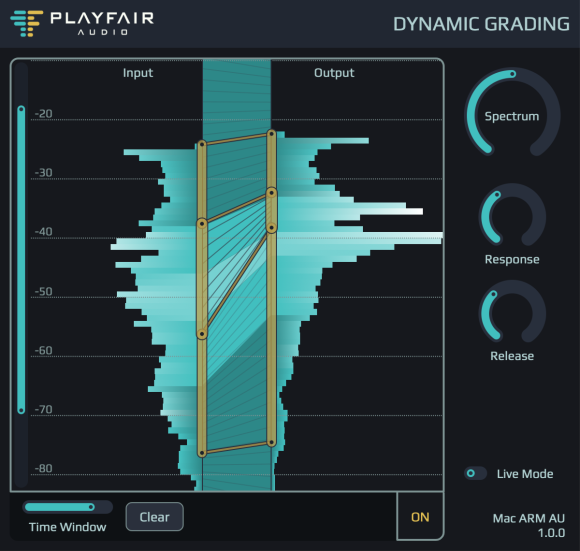
Playfair Audio, Hannover/ Germany, May 30th, 2022 (ictw) – Playfair Audio today released Dynamic Grading, a sound design and shaping plug-in with a completely new approach to handling and designing the dynamic behavior of audio signals. Dynamic Grading puts all these „best practices using compressors”-concepts into the „things from the past”-vault and opens a whole new world of creative workflows.
Playfair Audio created Dynamic Grading for musicians and creative professionals. To never break the creative process by thinking about threshold & attack. To enable them to easily get more thump or more attack for any instrument and recording, and then quickly move on. No „secret” knowledge or arcane compression recipes are required anymore for sounding great. Think of being able to shape dynamics like a piece of clay, with the help of Playfair Audio’s idea of augmented intelligence tools.
What it does
Dynamic Grading is a dynamic processing plugin for handling the dynamics of audio recordings. The typical tools of the trade to shape and fatten up sounds for final mixes are Compressors, Expanders, Gates, and related techniques such as parallel compression. It usually takes a lot of experience and technical knowledge to master and create the often complex combinations and chains of compressors, parallel paths, busses, etc.
Playfair Audio now lets musicians forget about those clumsy compressors, expanders, and gates. Dynamic Grading makes audio dynamics visible and tangible. Now, getting the most diverse tracks under perfect control with this unique and versatile dynamic processing plugin is easy: Beginners and seasoned engineers alike deliver better results, faster.
Overview
Dynamic Grading is an entirely novel approach to dynamic processing of audio. Unlike traditional dynamic processors like compressors or expanders, which are notoriously hard to adjust, Dynamic Grading lets you mix with more confidence than ever before. It does so by displaying an easily comprehensible histogram of audio dynamics, providing intuitive and easy-to-use means for manipulating the audio’s dynamic „gestalt” graphically and using sophisticated and musical dynamic processing algorithms.
The Dynamic Grading method is inspired by digital image processing tools, where the use of histograms and grading curves is well-known and established to adjust the dynamics of brightness in images. With Dynamic Grading, these concepts have been adapted and tailored to practical use in music production and audio engineering for the first time.
The plugin is designed to make mixing a song, adjusting movie dialogue or podcasts, and mastering albums an intuitive, fast, and enjoyable experience, as easy as drawing a stick man.
Additional Video Examples:
Dynamic Grading on Drums & Percussion: https://youtu.be/fa_lxEvLxl4
Dynamic Grading on Synth Bass: https://youtu.be/x-gB2WAKS2I
Dynamic Grading on Bell Synth: https://youtu.be/jjev7UjgR-E
Dynamic Grading on Acoustic Guitar: https://youtu.be/q-vZ1ZmtavQ
System requirements
Dynamic Grading supports AU, VST3, and AAX formats (64 Bit only).
Mac: 2GHz CPU, 4GB RAM, macOS 10.10 or later, Apple Silicon compatible
Windows: 2GHz CPU, 4GB RAM, Windows 7 or later.
Pricing and availability
Dynamic Grading is available from www.playfair-audio.com for Euro 149,- / USD 169,-

© 2022 MJH Life Sciences and AJMC – Managed Care News, Research, and Expert Insights. All rights reserved.
© 2022 MJH Life Sciences™ and Clinical Care Targeted Communications, LLC. All rights reserved.
Conferences | EHA: European Hematology Association
Abstracts presented at the 2022 European Hematology Association Congress demonstrate superior health-related quality of life (HRQOL) outcomes among patients with chronic lymphocytic leukemia (CLL) and small lymphocytic leukemia (SLL) taking zanubrutinib.
Abstracts presented at the 2022 European Hematology Association (EHA) Congress demonstrate superior health-related quality of life (HRQOL) outcomes among patients with chronic lymphocytic leukemia (CLL) and small lymphocytic leukemia (SLL) taking zanubrutinib.
An interim analysis of the phase 3 randomized SEQUOIA trial aimed to report HRQOL outcomes among patients with treatment-naïve CLL/SLL.1 The patient-reported outcomes were assessed using HRQOL questionnaires completed at baseline, each 12 weeks for 96 weeks, and then every 24 weeks until disease progression, study withdrawal, or death. The end points included global health status (GHS), physical and role functioning, and symptoms of pain, fatigue, diarrhea, and nausea/vomiting. Investigators compared these outcomes between patients taking zanubrutinib (n = 241) and those receiving bendamustine plus rituximab (BR) (n = 238).
Using the QLQ-C30 scale, a quality-of-life questionnaire for patients with cancer, the patients receiving zanubrutinib reported greater improvements in HRQOL than the patients receiving BR at weeks 12 and 24, though the difference between the groups was only significant at the 24-week mark (zanubrutinib – BR difference in GHS score improvement, 12 weeks: 0.7; 95% CI, –3.3 to 4.7; P = .73; 24 weeks: 4.9; 0.9-9.0; P = .017). The zanubrutinib group also had significantly better physical and role functioning score improvements and decreases in the measured symptoms by week 24.
Using the EuroQol-5 Dimension visual analog scale (EQ-5D-5L VAS), however, the improvements seen in health status between the zanubrutinib and BR groups were comparable at weeks 12 (4.3 vs 3.5, respectively) and 24 (4.5 vs 4.9).
In an interview with The American Journal of Managed Care®, coauthor Mazyar Shadman, MD, MPH, said that these data “add to the quality of the conversation that a physician and a patient have before selecting any specific therapy, in this case zanubrutinib.”
Another abstract presented results from an interim analysis of the ALPINE trial comparing zanubrutinib and ibrutinib in patients with relapsed/refractory (RR) CLL/SLL.2 This analysis used the same questionnaires as the SEQUOIA analysis to assess the same HRQOL outcomes in the intent-to-treat population (zanubrutinib: n = 327; ibrutinib: n = 325). Responses were collected at cycles 7 and 13, corresponding to 6 and 12 months of treatment, respectively.
Investigators found greater improvement with zanubrutinib vs ibrutinib at cycle 7 (mean [SD] change in EQ-5D-5L VAS from baseline, 8.4 [18.2] vs 4.0 [16.6]) and at cycle 13 (6.8 [18.8] vs 5.2 [17.5]). They also detected differences in favor of zanubrutinib on the QLQ-C30 measures of GHS, physical functioning, and fatigue at cycle 7 and diarrhea at cycle 13. The mean difference in GHS at cycle 7 between the zanubrutinib and ibrutinib groups was 3.45 (95% CI, 0.3-6.6; P = .0322).
“In the ALPINE trial, patients with RR CLL/SLL who received zanubrutinib monotherapy reported improvements in key HRQOL end points compared with patients who received ibrutinib monotherapy,” the abstract authors concluded.
An additional abstract presented at EHA2022 aimed to describe the evolving treatment landscape of CLL in Australia, given the approval of novel Bruton tyrosine kinase (BTK) inhibitors including zanubrutinib.3 Investigators retrieved information from a data set capturing all publicly funded prescription treatments in Australia by selecting data on CLL treatment between January 1, 2011, and July 31, 2021.
In addition to identifying the most common comedications among the 803 patients with CLL, the researchers also noted trends in adoption of newly approved therapies for CLL. Use of BTK inhibitors increased from 0% to 26% in the first line and from 0% to 58% for R/R CLL between 2011 and 2021. Concurrently, use of fludarabine-cyclophosphamide-rituximab in the first line decreased from 78% in 2010 to 11% in 2021.
Another trend identified by the investigators was a drop in CD20-directed monotherapy for R/R disease from 60% to 17% over the study period.
“CLL treatment patterns have significantly changed in Australia since the introduction of the BTK [inhibitors],” the authors summarized.
References
1. Ghia P, Barnes G, Yang K, et al. Patient-reported outcomes from a phase 3 randomized study of zanubrutinib versus bendamustine plus rituximab (BR) in patients with treatment-naïve (TN) CLL/SLL. HemaSphere. 2022;6(suppl 3):P662.
2. Hillmen P, Brown J, Lamanna N, et al. Health-related quality of life outcomes associated with zanubrutinib vs ibrutinib monotherapy in patients with relapsed/refractory (RR) CLL/SLL: results from the randomized phase 3 ALPINE trial. HemaSphere. 2022;6(suppl 3):P663.
3. Tam C, Zhao FL, Gauba R, Yang K, Azmi S, Li SC. Population-wide patterns of care in chronic lymphocytic leukemia in Australia: an analysis of the Pharmaceutical Benefits Scheme dataset. HemaSphere. 2022;6(suppl 3):P661.

Warner Music Group is hiring an A&R Coordinator to be based in London.
In this role you will report to the VP of A&R Co-ordination & A&R Co-ordination Manager in all A&R administration activities.
Here you’ll get to:
– Assist the A&R Co-ordination Department in the following: to set up, administer and monitor recording budgets;
– Run the day to day activities for recording projects such as organising studios, arranging artist and producer transport, booking hotels and equipment hire for each project for the duration of the recording project in line with the recording budget. Finding engineers, session musicians as requested.
– Issue PO’s for the budgets and helping with any payment issues.
– Be responsible on the current costs of the recording budgets. Working with A&R and Finance to keep projects on budget and informing them of any variance.
– Operate the computer systems and keeping up to date at all times i.e. Inputting budgets, issuing PO’s in line with agreed budgets, dealing with any enquiries relating to the PO / invoice with AP and finance.
– Work with co-ordination of international artists when recording /remixing in the UK and make sure all costs are recharged to the relevant company.
NB: no deadline specified.
See link below for further details.
Please note that some listings are added by third parties. The Journal of Music does not take responsibility for the content or accuracy of listings published by third parties on this site. The Journal of Music reserves the right to edit or delete listings. Click here to add a listing, login or register.

Thank you for visiting nature.com. You are using a browser version with limited support for CSS. To obtain the best experience, we recommend you use a more up to date browser (or turn off compatibility mode in Internet Explorer). In the meantime, to ensure continued support, we are displaying the site without styles and JavaScript.
Advertisement
Scientific Reports volume 12, Article number: 9684 (2022)
Metrics details
Although patients with diabetes reportedly have more peripheral neuropathy, the impacts of diabetes on postoperative recovery in pain and patient-reported outcome measures (PROMs) after laminoplasty for cervical spondylotic myelopathy (CSM) is not well characterized. The authors aimed to elucidate the effects of diabetes on neck/arm/hand/leg/foot pain and PROMs after laminoplasty CSM. The authors retrospectively reviewed 339 patients (82 with diabetes and 257 without) who underwent laminoplasty between C3 and C7 in 11 hospitals during April 2017 –October 2019. Preoperative Numerical Rating Scale (NRS) scores in all five areas, the Short Form-12 Mental Component Summary, Euro quality of life 5-dimension, Neck Disability Index, and the Core Outcome Measures Index-Neck) were comparable between the groups. The between-group differences were also not significant in NRS scores and PROMs one year after surgery. The change score of NRS hand pain was larger in the diabetic group than the nondiabetic group. The diabetic group showed worse preoperative score but greater improvement in the Short Form-12 Physical Component Summary than the nondiabetic group, following comparable score one year after surgery. These data indicated that the preoperative presence of diabetes, at least, did not adversely affect pain or PROMs one year after laminoplasty for CSM.
Cervical spondylotic myelopathy (CSM) is a common and increasingly observed degenerative disorder causing spinal cord compression and neurological deterioration1. Surgical decompression via laminoplasty is the standard treatment for CSM and can prevent the progression of neurological deficits as well as improve neurological function and quality of life2. Surgical outcomes should be evaluated using patient-reported outcome measures (PROMs).
Diabetic neuropathy following diabetes mellitus can profoundly impair the quality of life. Diabetes mellitus is a chronic systemic disease characterized by multiple neurologic sequelae mainly associated with diabetic neuropathy, chronic peripheral pain due to microvascular changes, and irreversible nerve damage3,4,5. The reported prevalence of painful diabetic peripheral neuropathy shows wide variability (range, 3–65%) owing to differences in sampling methods and diagnostic criteria3,4,5,6,7,8,9. It is a well-known fact that patients with diabetic neuropathy have sensory disturbances in the extremities and typically show stocking-and-glove patterns of sensory deficit3,10. Compromised vascularity and secondary peripheral neuropathy may affect the recovery of nerve roots even after surgical decompression11.
Several reports showed diabetic effects on surgical outcomes after surgery for CSM, and their results were controversial10,12,13,14. These studies showed that diabetes had equivalent effects13,14 or negative effects on gait, sensory, and bladder function10. Previous studies used JOA score, which was evaluated by doctors10,13. The other study was heterogenous; including patients undergoing anterior cervical spine surgery or lumbar spine surgery12. Therefore, the diabetic effects on PROMs and pain after cervical laminoplasty surgery have not been well characterized in patients with CSM. In the present multicenter study investigating the surgical outcomes of laminoplasty for CSM, the authors aimed to investigate the impact of diabetes on pain as well as PROMs after laminoplasty for CSM with an adequately large sample size.
A prospective spine surgery registry was started at eight institutions in the greater Tokyo metropolitan area, after obtaining approval from the Clinical Research Support Center of the University of Tokyo Hospital (10,335-(3)) and the institutional review boards of all participating hospitals i.e., The University of Tokyo Hospital, Japanese Red Cross Medical Center, Yokohama Rosai Hospital, Kanto Rosai Hospital, Japan Community Health-care Organization Tokyo Shinjuku Medical Center, Toranomon Hospital, Japanese Red Cross Saitama Hospital, and Japanese Red Cross Musashino Hospital. The present study was carried out in accordance with the relevant guidelines and regulations/ethical principles of the Declaration of Helsinki. The authors have obtained informed consent form with opt-out method from patients.
The authors evaluated a consecutive cohort of patients who were diagnosed with CSM and underwent posterior cervical decompression at 11 different institutions between April 2017 and October 2019. Diagnosis was made by board-certified spine surgeons based on neurological examinations as well as MRI or myelography evaluations (existence of the effacement of subarachnoid space with spinal cord compression). The study’s inclusion criteria were as follows: symptomatic CSM (at least one clinical sign of myelopathy), surgical level between C3 and C7, evidence of cervical spinal cord compression on magnetic resonance imaging or cervical myelogram-computed tomography, and no previous cervical spine surgery. The study’s exclusion criteria were as follows: diagnosis of posterior longitudinal ligament ossification, spinal tumors, trauma, or infectious diseases; aged younger than 18 years; emergency surgery; surgery involving the thoracic spine; and fixation surgery.
Data on the clinical characteristics of the patients, including age, sex, body mass index, current smoking history, American Society of Anesthesiologists (ASA) classification, and medical history, were retrospectively collected. Preoperative laboratory data were assessed. Patients with a fasting blood glucose level of 126 mg/dL and glycated hemoglobin (HbA1c) levels of 6.5% or those previously diagnosed with diabetes by a diabetes specialist were considered to have diabetes15. Diabetes specialists at each hospital were able to sufficiently control the blood sugar levels of patients diagnosed with diabetes throughout the immediate perioperative period. Blood glucose levels were checked four times a day, and a sliding scale insulin coverage was adopted to avoid perioperative hyperglycemia until the patient’s food intake stabilized. Surgical factors, including operative time and estimated blood loss, were registered. Surgeons in charge were asked to report all intraoperative complications, including nerve root damage and dural tear, and postoperative complications within 30 days after surgery.
At baseline and one year after surgery, all patients were asked to answer a booklet of questionnaires, including the Japanese version of the (1) Numerical Rating Scale (NRS), (2) the Short Form-12 Physical Component Summary (PCS), (3) Mental Component Summary (MCS), (4) Euro quality of life 5-dimmension (EQ-5D)-3L to assess health-related quality of life16, (5) Neck Disability Index (NDI) to assess pain-associated disability, and (6) Core Outcome Measures Index (COMI)-Neck17. The NRS measures the intensity of pain over the preceding 4 weeks; the scores range from 0 (no pain at all) to 10 (worst pain imaginable). To evaluate the diabetic effect on axial pain and residual radiculopathy, the authors analyzed the following five NRS domains; neck, arm, hand, leg, and foot pain. Each corresponding body part had been discussed in previous reports18. To determine treatment satisfaction, a 7-point Likert scale was used, wherein, the patients were asked to answer whether they were satisfied with the treatment, with possible answers of “very satisfied,” “satisfied,” “somewhat satisfied,” “neither,” “dissatisfied,” “somewhat dissatisfied,” and “very dissatisfied”17.
Baseline demographic and clinical characteristics in the diabetic and nondiabetic groups were compared using the Chi-square test for categorical variables and Student’s t-test for continuous variables. The Student’s t-test was used to examine intergroup differences with respect to pre- and postoperative NRS, PCS, MCS, EQ-5D, NDI, and COMI-Neck scores. For further evaluation of the difference in each outcome score, the authors calculated the adjusted p values by inverse probability weighting method after calculating propensity scores based on seven variables (age, sex, BMI, smoking status, ASA class, operative time, and estimated blood loss) as per a previous report12,19. The correlations between diabetes-related factors (preoperative HbA1c level and fasting blood sugar) and postoperative outcomes was measured using Spearman’s rank correlation coefficients. We defined the correlation as the value of ρ > 0.40 with p value < 0.05. All data analyses were performed using SPSS version 21.0 statistical software (SPSS, Inc., Chicago, IL, USA).
The sample size for this study was calculated using G*Power version 3.1. With an approximately 20–25% prevalence of diabetes as reported in a previous prospectively collected database10,13,20, a total sample size of at least 200 patients was required with a power of > 0.8, significance level of P < 0.05, and effect size of < 0.2.
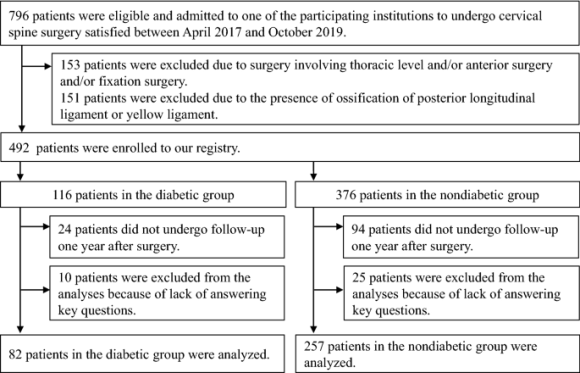
Among the 339 patients who satisfied the inclusion and exclusion criteria, 82 (24.2%) and 257 (75.8%) were grouped into the diabetic and nondiabetic groups, respectively (Fig. 1). No significant intergroup differences were observed with respect to age (mean 70.1. vs. 71.0 years, P = 0.575), male/female ratio (58 men:24 women vs. 175 men:82 women, P = 0.653), and current smoking status (12.2% smokers vs. 11.1% nonsmokers, P = 0.454) (Table 1). The diabetic group had a higher BMI (25.2 vs. 23.7 kg/m2, P = 0.012) and included a higher percentage of patient with an ASA classification of ≥ 3 (19.5% vs. 8.0%, P < 0.001), hypertension (58.6% vs. 41.1%, P = 0.022), and hyperlipidemia (26.4% vs. 11.1%, P = 0.006) than the nondiabetic group. No significant intergroup differences were observed with respect to hemodialysis, rheumatoid arthritis, and past history of stroke. The diabetic group had a significantly higher mean HbA1c level (7.0% vs. 5.8%, P < 0.001), fasting blood sugar (161.3 vs. 112.2 mg/dL, P < 0.001), and creatinine (1.4 vs. 1.0 mg/dL, P = 0.009) than the nondiabetic group. The diabetic group had a lower mean value of total cholesterol than the nondiabetic group (183.1 vs. 200.9 mg/dL, P = 0.001). Although the diabetic group had a lower value of mean low density lipoprotein cholesterol than the nondiabetic group, the difference was not statistically significant (97.4 vs. 110.4 mg/dL, P = 0.059).
Flowchart of the study population.
No significant intergroup differences were observed with respect to operative time (139.7 vs. 136.2 min, P = 0.590) and estimated blood loss (102.0 vs. 98.4 mL, P = 0.855) (Table 2). No significant intergroup differences were observed in complications during surgery and within 30 days after surgery.
The absolute changes in NRS scores are shown in Table 3. Pre- and postoperative NRS scores in neck/arm/leg/foot were comparable between the two groups (P > 0.05). There were no significant differences in the change NRS scores in neck/arm/leg/foot with or without adjustment by propensity score. Although pre- and postoperative NRS hand pain scores showed no significant difference between the two groups, the change score of NRS hand pain was larger in the diabetic group than the nondiabetic group (1.2 vs. 0.3, P = 0.034, Adjusted P = 0.017).
The trends in PROMs are shown in Table 4. The diabetic group had a lower preoperative PCS score than the nondiabetic group with or without adjustment (22.0 vs. 28.9, P = 0.001, Adjusted P = 0.028), and no significant intergroup differences were observed in postoperative PCS scores (30.4 vs. 32.7, P = 0.324). Hence, the change score in PCS was larger in the diabetic group than the nondiabetic group, but the difference was not significant after the adjustment by the propensity score (8.4 vs. 3.7, P = 0.039, Adjusted P = 0.151). No significant intergroup differences were observed in pre- and postoperative MCS, EQ-5D, NDI, and COMI-Neck scores. There is no at least moderate correlation between diabetes-related factors (preoperative HbA1c level and fasting blood sugar) and pain/PROMs (Sup Table 1).
Table 5 summarizes the answers to questions on satisfaction. The diabetic group tended to have a higher proportion of patients answering “very satisfied” or “satisfied” than the nondiabetic group, although the difference was not significant (58.5% vs. 47.5%, P = 0.081). The diabetic group had a higher total percentage of patients who answered “very satisfied,” “satisfied,” or “somewhat satisfied” than the nondiabetic group (74.4% vs. 64.6%, P = 0.001).
To the best of our knowledge, this has been the largest study that investigated the effects of diabetes on multiple NRS scores with PROMs following elective laminoplasty for CSM. In the present study, pre- and postoperative NRS scores for neck/arm/hand/leg/foot pain were comparable between the two groups. The diabetic group showed greater improvement in NRS hand scores than the nondiabetic group. No significant intergroup differences in pre- and postoperative MCS, EQ-5D, NDI, and COMI-Neck scores were noted. Although the diabetic group had lower preoperative PCS scores than the nondiabetic group, the postoperative PCS scores of the two groups were comparable. Moreover, patients in the diabetic group tended to be satisfied with the surgical results. Collectively, these data indicated that the presence of diabetes did not, at least, adversely affect surgical outcomes of laminoplasty for CSM.
The present study showed that the diabetic group had higher prevalence rates of ASA classification ≥ 3, consistent with the findings of a previous study13. Although the diabetic group tended to have more risk factors, the current study revealed no intergroup differences with respect to perioperative complications. Strict glycemic control may play an important role. The mean and maximum HbA1c level was 7.0% and 8.9%, respectively, even in the diabetic group. This relatively strict glycemic control enforced by diabetes specialists before and after laminoplasty surgery may have contributed to the lack of intergroup differences not only in complications but also in the non-inferiority in pain control. Appropriate perioperative blood glucose control is associated with a reasonable recovery after cervical decompression10 or belief in self-efficacy and active behavior21. Several trials have shown significant improvements in peripheral nerve function with intensive glucose control22.
Only a few large-scale reports have investigated the effects of diabetes on laminoplasty using PROMs12. In the present study, the diabetic and nondiabetic groups showed similar pre- and postoperative MCS/EQ-5D/NDI/COMI-Neck scores, except for PCS. Diabetes has been reported as a risk factor for neck and back pain23,24. Armaghani et al. argued that patients with diabetes showed minor improvements in the NDI or Oswestry Disability Index and EQ-5D scores compared with patients without diabetes12. They analyzed patients undergoing back surgery and those undergoing neck surgery together12 and thereby making interpretation difficult. Alternatively, Arnold et al. found that patients with diabetes did not differ from those without diabetes in terms of pre- and postoperative NDI14 and Nori et al. argued that diabetes did not negatively affect neck pain after posterior cervical decompression13. The present study was consistent with these reports13,14 in that diabetic patients had comparable postoperative outcomes and we showed this point by pain-associate PROMs. The effects of diabetes may differ between patient with back and neck pain. Given that diabetes impairs bone fusion, the effects of diabetes can be greater following posterior lumbar interbody fusion surgeries25, which contributes to mechanical instability and the occurrence of back pain13. In contrast, considering that cervical laminoplasty is not performed for the purpose of bone fusion, the effects of diabetes can be minor. These mechanisms can explain why no significant differences were observed for neck pain-associated outcome measures, including NRS neck pain, EQ-5D, NDI, and multidimensional COMI-Neck, in the current study.
In the present study, the diabetic group showed lower preoperative PCS scores than the nondiabetic group; however, the two groups had comparable postoperative PCS scores. This finding differed from that reported by Arnold et al.14; they reported no significant intergroup differences in preoperative PCS, but patients with diabetes experienced significantly lesser improvement than those without diabetes14. Our cohort had an average age of 70.8 years, while Arnold’s cohort had an average age of 56.4 years14. The relatively older our cohort with low preoperative PCS scores may have affected the difference. Because of the relatively low reliability of PCS for evaluation of health transition among patients aged 75 or over26, multiple PROMs should be used when the average age of the cohort is high. Low preoperative PCS scores can be associated with lower leg strength and proprioception19, which is greater risk of preoperative slower walking speed, especially in the elderly27,28. The slower walking speed due to diabetic neuropathy could mimic walking impairment due to CSM, resulting in early surgical intervention in the diabetic group. Early surgical intervention is an important factor for good clinical outcomes29 and can explain why the diabetic group in the present study had comparable postoperative PCS scores, despite having lower preoperative PCS scores. To prove this hypothesis, further large size studies linking duration of CSM symptoms and multiple PROMs are warranted.
The authors believe that this study adds to the contemporary knowledge related to the effect of diabetes on patients undergoing cervical posterior decompression surgery. However, some limitations of our study should be considered when interpreting our results. First, the current study did not analyze detailed information for diabetes except for preoperative HbA1c level. We were unable to collect detailed information on diabetes, including duration, medication history, or trend of HbA1c. Second, the follow-up duration was one year, not two years after surgery, although PROMs assessed at one year adequately predict long-term (24-month) outcomes30. Third, double door or open door laminoplasty was determined by the surgeon in charge at each participating hospital due to the multicenter study design. In addition, relatively elder cohorts may undergo laminoplasty for the purpose myelopathy rather than pain caused by radiculopathy and the effect of laminoplasty on peripheral may be limited.
The results of the present multicenter cohort study showed that diabetes did not adversely affect improvement in pain and PROMs one year after laminoplasty for CSM, although the diabetic group had lower preoperative PCS scores than the nondiabetic group. Under the strict glycemic control before and after surgery, surgeons can use this information when counseling patients who have CSM with diabetes about the expected outcomes of laminoplasty.
Fehlings, M. G., Tetreault, L. A., Wilson, J. R. & Skelly, A. C. Cervical spondylotic myelopathy: Current state of the art and future directions. Spine (Phila Pa 1976) 38, S1-8. https://doi.org/10.1097/BRS.0b013e3182a7e9e0 (2013).
Article Google Scholar
Fehlings, M. G. et al. Efficacy and safety of surgical decompression in patients with cervical spondylotic myelopathy: Results of the AOSpine North America prospective multi-center study. J. Bone Joint Surg. Am. 95, 1651–1658. https://doi.org/10.2106/JBJS.L.00589 (2013).
Article PubMed Google Scholar
Vinik, A. I. Clinical practice. Diabetic sensory and motor neuropathy. N. Engl. J. Med. 374, 1455–1464. https://doi.org/10.1056/NEJMcp1503948 (2016).
CAS Article PubMed Google Scholar
Ziegler, D. R. W. & Meisinger, C. Prevalence and risk factors of neuropathic pain in survivors of myocardial infarction with pre-diabetes and diabetes. The KORA myocardial infarction registry. Eur. J. Pain 13, 582–587 (2009).
Article Google Scholar
Erbas, T. E. M. & Yucel, A. Prevalence of peripheral neuropathy and painful peripheral neuropathy in Turkish diabetic patients. J. Clin. Neurophysiol 28, 51–55 (2011).
Article Google Scholar
Abbott, C. A. M. R. & van Ross, E. R. Prevalence and characteristics of painful diabetic neuropathy in a large communitybased diabetic population in the U.K. Diabetes Care 34, 2220–2224 (2011).
Article Google Scholar
Kim, S. S. W. J. & Kwon, H. S. Prevalence and clinical implications of painful diabetic peripheral neuropathy in type 2 diabetes: Results from a nationwide hospital-based study of diabetic neuropathy in Korea. Diabetes Res. Clin. Pract. 103, 522–529 (2014).
Article Google Scholar
Alleman, C. J. W. K. & Hensen, M. Humanistic and economic burden of painful diabetic peripheral neuropathy in Europe: a review of the literature. Diabetes Res. Clin. Pract. 109, 215–225 (2015).
Article Google Scholar
Bouhassira, D. L. M. & Hartemann, A. Chronic pain with neuropathic characteristics in diabetic patients: A French crosssectional study. PLoS One 8, e74195 (2013).
ADS CAS Article Google Scholar
Machino, M. et al. Characteristics of residual symptoms after laminoplasty in diabetic patients with cervical spondylotic myelopathy: A prospective cohort study. Spine (Phila Pa 1976) 42, E708–E715. https://doi.org/10.1097/BRS.0000000000001947 (2017).
Article Google Scholar
Freedman, M. K. et al. The impact of diabetes on the outcomes of surgical and nonsurgical treatment of patients in the spine patient outcomes research trial. Spine (Phila Pa 1976) 36, 290–307. https://doi.org/10.1097/BRS.0b013e3181ef9d8c (2011).
Article Google Scholar
Armaghani, S. J., Archer, K. R., Rolfe, R., Demaio, D. N. & Devin, C. J. Diabetes is related to worse patient-reported outcomes at two years following spine surgery. J. Bone Joint Surg. Am. 98, 15–22. https://doi.org/10.2106/JBJS.O.00297 (2016).
Article PubMed Google Scholar
Nori, S. et al. Diabetes does not adversely affect neurological recovery and reduction of neck pain after posterior decompression surgery for cervical spondylotic myelopathy: Results from a retrospective multicenter study of 675 patients. Spine (Phila Pa 1976) 46, 433–439. https://doi.org/10.1097/BRS.0000000000003817 (2021).
Article Google Scholar
Arnold, P. M. et al. Mild diabetes is not a contraindication for surgical decompression in cervical spondylotic myelopathy: Results of the AOSpine North America multicenter prospective study (CSM). Spine J. 14, 65–72. https://doi.org/10.1016/j.spinee.2013.06.016 (2014).
Article PubMed Google Scholar
Committee of the Japan Diabetes Society on the Diagnostic Criteria of Diabetes, M. et al. Report of the committee on the classification and diagnostic criteria of diabetes mellitus. J. Diabetes Investig. 1, 212–228. https://doi.org/10.1111/j.2040-1124.2010.00074.x (2010).
Tsuchiya, A. I. S. et al. Estimating an EQ-5D population value set: The case of Japan. Health Econ 11, 1105 (2002).
Article Google Scholar
Oshima, Y. et al. Validity of the Japanese core outcome measures index (COMI)-neck for cervical spine surgery: A prospective cohort study. Eur. Spine J. 30, 402–409. https://doi.org/10.1007/s00586-020-06657-4 (2021).
Article PubMed Google Scholar
Oshima, Y. et al. Mental state can influence the degree of postoperative axial neck pain following cervical laminoplasty. Global Spine J. 9, 292–297. https://doi.org/10.1177/2192568218793861 (2019).
Article PubMed Google Scholar
Nagata, K. et al. Diabetes is associated with greater leg pain and worse patient-reported outcomes at 1 year after lumbar spine surgery. Sci. Rep. 11, 11450. https://doi.org/10.1038/s41598-021-87615-y (2021).
CAS Article Google Scholar
Machino, M. et al. Risk factors for poor outcome of cervical laminoplasty for cervical spondylotic myelopathy in patients with diabetes. J. Bone Joint Surg. Am. 96, 2049–2055. https://doi.org/10.2106/JBJS.N.00064 (2014).
Article PubMed Google Scholar
Rose, M. et al. The network of psychological variables in patients with diabetes and their importance for quality of life and metabolic control. Diabetes Care 25, 35–42. https://doi.org/10.2337/diacare.25.1.35 (2002).
Article PubMed Google Scholar
Sloan, G., Selvarajah, D. & Tesfaye, S. Pathogenesis, diagnosis and clinical management of diabetic sensorimotor peripheral neuropathy. Nat. Rev. Endocrinol. 17, 400–420. https://doi.org/10.1038/s41574-021-00496-z (2021).
Article PubMed Google Scholar
Pai, L. W. et al. Musculoskeletal pain in people with and without type 2 diabetes in Taiwan: A population-based, retrospective cohort study. BMC Musculoskelet Disord. 16, 364. https://doi.org/10.1186/s12891-015-0819-4 (2015).
CAS Article PubMed PubMed Central Google Scholar
Jimenez-Garcia, R. et al. Is there an association between diabetes and neck pain and lower back pain? Results of a population-based study. J. Pain Res. 11, 1005–1015. https://doi.org/10.2147/JPR.S158877 (2018).
Article PubMed PubMed Central Google Scholar
Henderson, S., Ibe, I., Cahill, S., Chung, Y. H. & Lee, F. Y. Bone quality and fracture-healing in type-1 and type-2 diabetes mellitus. J. Bone Joint Surg. Am. 101, 1399–1410. https://doi.org/10.2106/JBJS.18.01297 (2019).
Article PubMed Google Scholar
Nagata, K. et al. Minimum clinically important change for outcome scores among patients aged 75 or over undergoing lumbar spine surgery. Eur. Spine J. 30, 1226–1234. https://doi.org/10.1007/s00586-021-06815-2 (2021).
Article PubMed Google Scholar
Cimbiz, A. C. O. Evaluation of balance and physical fi tness in diabetic neuropathic patients. J. Diabetes Complicat. 19, 160–164 (2005).
Article Google Scholar
Volpato, S. et al. Role of muscle mass and muscle quality in the association between diabetes and gait speed. Diabetes Care 35, 1672–1679. https://doi.org/10.2337/dc11-2202 (2012).
Article PubMed PubMed Central Google Scholar
Machino, M. et al. Risk factors for poor outcome of cervical laminoplasty: Multivariate analysis in 505 patients with cervical spondylotic myelopathy. Spine (Phila Pa 1976) 46, 329–336. https://doi.org/10.1097/BRS.0000000000003783 (2021).
Article Google Scholar
Fekete, T. F. et al. How does patient-rated outcome change over time following the surgical treatment of degenerative disorders of the thoracolumbar spine?. Eur. Spine J. 27, 700–708. https://doi.org/10.1007/s00586-017-5358-2 (2018).
Article PubMed Google Scholar
Download references
The manuscript submitted does not contain information about medical device(s)/drug(s). No funds were received in support of this work. No benefits in any form have been or will be received from a commercial party related directly or indirectly to the subject of this manuscript. The study approval was given by the institutional review board of the Clinical Research Support Center of the University of Tokyo Hospital.
Department of Orthopaedic Surgery and Spinal Surgery, The University of Tokyo, 7-3-1 Hongo, Bunkyo-ku, Tokyo, 113-8655, Japan
Kosei Nagata, Junya Miyahara, Hideki Nakamoto, So Kato, Toru Doi, Yuki Taniguchi, Yoshitaka Matsubayashi, Sakae Tanaka & Yasushi Oshima
The University of Tokyo Spine Group (UTSG), Tokyo, Japan
Kosei Nagata, Junya Miyahara, Hideki Nakamoto, Naohiro Kawamura, Yujiro Takeshita, Akiro Higashikawa, Takashi Ono, Masayoshi Fukushima, Rentaro Okazaki, Nobuhiro Hara, So Kato, Toru Doi, Yuki Taniguchi, Yoshitaka Matsubayashi, Sakae Tanaka & Yasushi Oshima
Department of Spine and Orthopedic Surgery, Japanese Red Cross Medical Center, Tokyo, Japan
Naohiro Kawamura
Department of Orthopedic Surgery, Yokohama Rosai Hospital, Kanagawa, Japan
Yujiro Takeshita
Department of Orthopedic Surgery, Kanto Rosai Hospital, Kanagawa, Japan
Akiro Higashikawa
Department of Spinal Surgery, Japan Community Health-Care Organization Tokyo Shinjuku Medical Center, Tokyo, Japan
Takashi Ono
Spine Center, Toranomon Hospital, Tokyo, Japan
Masayoshi Fukushima
Department of Orthopedic Surgery, Japanese Red Cross Saitama Hospital, Saitama, Japan
Rentaro Okazaki
Department of Orthopedic Surgery, Japanese Red Cross Musashino Hospital, Tokyo, Japan
Nobuhiro Hara
You can also search for this author in PubMed Google Scholar
You can also search for this author in PubMed Google Scholar
You can also search for this author in PubMed Google Scholar
You can also search for this author in PubMed Google Scholar
You can also search for this author in PubMed Google Scholar
You can also search for this author in PubMed Google Scholar
You can also search for this author in PubMed Google Scholar
You can also search for this author in PubMed Google Scholar
You can also search for this author in PubMed Google Scholar
You can also search for this author in PubMed Google Scholar
You can also search for this author in PubMed Google Scholar
You can also search for this author in PubMed Google Scholar
You can also search for this author in PubMed Google Scholar
You can also search for this author in PubMed Google Scholar
You can also search for this author in PubMed Google Scholar
You can also search for this author in PubMed Google Scholar
K.N. and Y.O. conceived the study. J.M., H.N. and S.K. analyzed the data. T.D., Y.T., and Y.M. discussed the results. N.K., Y.T., A.H., T.O., M.F., R.O., and N.H. contributed data collection and result interpretation. K.N. wrote the initial draft. Y.O. and S.T. revised the manuscript. All authors reviewed the manuscript.
Correspondence to Yasushi Oshima.
The authors declare no competing interests.
Springer Nature remains neutral with regard to jurisdictional claims in published maps and institutional affiliations.
Open Access This article is licensed under a Creative Commons Attribution 4.0 International License, which permits use, sharing, adaptation, distribution and reproduction in any medium or format, as long as you give appropriate credit to the original author(s) and the source, provide a link to the Creative Commons licence, and indicate if changes were made. The images or other third party material in this article are included in the article’s Creative Commons licence, unless indicated otherwise in a credit line to the material. If material is not included in the article’s Creative Commons licence and your intended use is not permitted by statutory regulation or exceeds the permitted use, you will need to obtain permission directly from the copyright holder. To view a copy of this licence, visit http://creativecommons.org/licenses/by/4.0/.
Reprints and Permissions
Nagata, K., Miyahara, J., Nakamoto, H. et al. Effect of diabetes on patient-reported outcome measures at one year after laminoplasty for cervical spondylotic myelopathy. Sci Rep 12, 9684 (2022). https://doi.org/10.1038/s41598-022-13838-2
Download citation
Received:
Accepted:
Published:
DOI: https://doi.org/10.1038/s41598-022-13838-2
Anyone you share the following link with will be able to read this content:
Sorry, a shareable link is not currently available for this article.
Provided by the Springer Nature SharedIt content-sharing initiative
By submitting a comment you agree to abide by our Terms and Community Guidelines. If you find something abusive or that does not comply with our terms or guidelines please flag it as inappropriate.
Advertisement
Advanced search
© 2022 Springer Nature Limited
Sign up for the Nature Briefing newsletter — what matters in science, free to your inbox daily.

Advertisement
Supported by
The Playlist
Hear tracks by Saucy Santana, Demi Lovato, Joyce Manor and others.
Send any friend a story
As a subscriber, you have 10 gift articles to give each month. Anyone can read what you share.
Jon Pareles, Jon Caramanica, Giovanni Russonello and
Every Friday, pop critics for The New York Times weigh in on the week’s most notable new songs and videos. Just want the music? Listen to the Playlist on Spotify here (or find our profile: nytimes). Like what you hear? Let us know at [email protected] and sign up for our Louder newsletter, a once-a-week blast of our pop music coverage.
One way to satiate fans who have been clamoring for your long-delayed next album: just keep adding new material to the one they already love! Five years ago this week, SZA released her widely adored debut “Ctrl,” and though she’s put out a handful of singles and made some celebrated feature appearances since then (including her Grammy-winning Doja Cat collaboration “Kiss Me More”), she’s yet to follow it up with a full-length. As a stopgap, though, SZA offered fans seven previously unreleased tracks this week on a deluxe edition of “Ctrl.” The best of them is “Jodie” — already a fan favorite, since a demo version leaked last year. “Stuck with just weed and no friends,” she laments on the buoyant track, which balances a confessional tone with self-deprecating humor. Her vocals are melodically nimble but endearingly off-the-cuff, as though you’re overhearing an animated conversation she’s having with herself. LINDSAY ZOLADZ
Whether the exuberant horns deployed on Saucy Santana’s “Booty” are sampled from Beyoncé’s “Crazy in Love” or “Are You My Woman? (Tell Me So)” by the Chi-Lites (which provided the original sample for “Crazy in Love”) is immaterial — it’s pure cheat code either way. “Booty” functions as a kind of conceptual bootleg remix of the Beyoncé classic, a way of trumpeting an alliance that could be actual, virtual or theoretical. Most listeners won’t parse it out. Consider it a savvy stroke by Saucy Santana, whose “Material Girl” was the best kind of TikTok breakout — a catchphrase that was in fact connected to an outsized personality. “Booty” is his first major label single, and it has a couple of other borrowings, too: a flow from J-Kwon’s “Tipsy,” a nod to Bubba Sparxxx’s “Ms. New Booty.” But mainly this onetime makeup artist is having fun in the shrinking space between fan and star. JON CARAMANICA
Another entry in the gratuitous remake sweepstakes of 2022: Lizzo reimagines the Beastie Boys’ hypercrass “Girls” as a celebration of female friendship: “That’s my girl, we codependent/If she with it, them I’m with it.” CARAMANICA
“Somebody’s gonna figure us out,” Lili Trifilio sings with bracing confidence, “and I hope they do ’cause I’m falling for you.” The hopelessly catchy opening track from the Chicago pop-rock band Beach Bunny’s forthcoming second album, “Emotional Creature,” is all about throwing caution to the wind and going public with a clandestine romance. There’s a fitting clarity to the song’s production and arrangement: glimmering guitars, steady percussion and Trifilio’s voice at the forefront as she sings such openhearted lyrics as “I wanna kiss you when everyone’s watching.” ZOLADZ
Demi Lovato — the child star turned grown-up hitmaker who survived a 2018 drug overdose and has come out as nonbinary — leverages notoriety and a setback into fierce punk-pop with “Skin of My Teeth.” It’s an armor-plated confession that begins “Demi leaves rehab again” and rides seismic drums, cranked-up guitars and an “ooh-woo-hoo” pop hook to claim solidarity with everyone struggling with addiction. “I can’t believe I’m not dead,” they belt, adding, “I’m just trying to keep my head above water.” JON PARELES
“40 Oz. to Fresno,” the new album from the Torrance, Calif., rock band Joyce Manor, is a relentlessly tuneful 17-minute collection of all-killer, no-filler power-pop. An obvious highlight is the punchy “You’re Not Famous Anymore,” which sounds like something that would have gotten a lot of play on mid-90s alternative-rock radio — the sort of song that would have seemed like a mere novelty hit until it ended up stuck in your head for weeks. “You were a child star on methamphetamines,” the frontman Barry Johnson sings, “Now who knows what you are, ’cause you’re not anything.” Accompanied by head-bopping percussion and a surfy guitar, Johnson’s archly acidic delivery cuts through the rest of the song’s mock-breezy atmosphere. ZOLADZ
A splendid and striking piano ballad from the singer Joji, who finds middle ground between 1970s soft rock and James Blake. His singing is lightly unsteady, meshing an unnerving sadness with a know-better resilience. CARAMANICA
The 23-year-old pianist and multi-instrumentalist Julius Rodriguez has been wowing audiences at New York clubs for more than half his young life. In a story that’s already become part of jazz’s 21st-century lore, from the time Rodriguez was 11 his father would drive him in from White Plains to partake of jam sessions at Smalls. Cats were floored from Day 1. The other big portion of his musical education took place in church, where he started out even younger as a drummer, and those two big influences resound throughout “Let Sound Tell All,” Rodriguez’s highly anticipated debut album. On “In Heaven,” an invocation written by Darlene Andrews and first recorded by Gregory Porter, Rodriguez joins up with another rising star, the singer Samara Joy. He accompanies her molasses-rich vocals with fanned-out harmonies, channeling Kenny Barron and Hank Jones, sweeping from heavy clusters of notes to threads of crystal clarity. GIOVANNI RUSSONELLO
“Love is an emotion in action,” the eminent saxophonist, poet and visual artist Oliver Lake, 79, recites over the Sonic Liberation Singers’ suspended, open-vowel harmonies. “Ain’t nothin’ real but love/It moves independently of our fears and desires.” Lake recently performed a series of farewell shows with Trio 3, the avant-garde supergroup that he has played in for more than three decades — but it should come as little surprise that as he closes one chapter, the ever-prolific Lake has opened another: “Justice,” on which this track appears, is the first LP to feature Lake’s vocal compositions. At times wild and purgative, the album is also full of moments like this one: poised, stubbornly hopeful, grounded in Lake’s memories of a more revolutionary age and seeking to stir that energy up again. RUSSONELLO
Advertisement

Published on May 17, 2022
Great news! The City of Huntsville, Alabama, is the 2022-2023 best place to live in the United States, according to a ranking by U.S. News & World Report.
U.S. News recently analyzed 150 large metropolitan areas in the U.S. to find the best places to live based on job market, housing affordability, quality of life, desirability and net migration. Huntsville, which topped the list with an overall score of 7, quality of life of 6.8 and value of 8.5, rose from the No. 3 spot on last year’s Best Places to Live list.
In addition to being the No. 1 Best Place to Live, U.S. News also named Huntsville the:
Mayor Tommy Battle said the U.S. News & World Report annual rankings are no surprise, given Huntsville is a growing, vibrant community and now the most populous city in Alabama.
“We are the Star of Alabama for a reason,” he said. “As more people discover what makes us the South’s best-kept secret, we take pride in our diverse community’s strength and authenticity. Rankings like these affirm our commitment to continuing to provide a healthy, thriving economy without losing our identity, while also welcoming new citizens and businesses with open arms. Great things are happening in Huntsville!”
Mayor Battle and City economic development leaders held a news conference Tuesday, May 17, at City Hall to spotlight the recognition and driving factors behind Huntsville’s success.
“When we meet people from outside Huntsville, they often tell us, ‘I had no idea,’” Mayor Battle said. “To be a part of this community during such a pivotal point in Huntsville’s history is an honor. We look forward to continuing to build on our momentum and make Huntsville a safe, affordable and livable city that all parts of our society can call home.”
In addition to Huntsville, the U.S. News Best Places to Live ranking includes other growing American metros, including Colorado Springs, Colorado; Green Bay, Wisconsin; Boulder, Colorado; and San Jose, California.
Click here to see the full report.
(256) 427-5000Huntsville City Hall308 Fountain CircleHuntsville, Alabama 35801

Inflation Reaches 8.6% in May: CPI Live Updates The Wall Street Journal
source
Topics
Western News
A new study out of Jessica Grahn’s music lab suggests music training may preserve certain rhythmic motor training abilities in early-stage Parkinson’s disease.
Jessica Grahn (Sylvie Li/Shoot Studio)
Grahn, a psychology professor and member of the Western Institute for Neuroscience, combines her unique background as a classically trained concert pianist and training as a neuroscientist to focus on why humans move to rhythm, and how and why movement and rhythm may be connected in the brain.
“Humans naturally perceive and move to a music beat, falling into the rhythm through clapping, tapping and dancing,” she said. “Yet the accuracy of this seemingly effortless behaviour varies widely across individuals.”
Beat perception and production abilities can be improved by experience such as music or dance training, and as previous studies have shown, can also be impaired by neurological changes, including in Parkinson’s disease.
Using data collected over a series of smaller studies, Grahn, along with Emily Ready, MSc (OT)’17, PhD’19 and Prisca Hsu, BSc’21, saw an opportunity to investigate how musical training might affect Parkinson’s patients.
“We were curious whether musical training might alter what we usually see in people with Parkinson’s, in that they are slightly worse at the ability to tap and feel the beat,” Grahn said.
Beat and movement
Grahn’s team drew data from three different participant groups for the study – healthy young adults, healthy older adults and adults with early-stage Parkinson’s disease. All had varying degrees of music and dance training.
Participants performed beat alignment tests (BAT) requiring them to execute two tasks: listen to music and identify if superimposed metronome beeps occur on and off the beat, and then, while listening to several short pieces of music, tap along to the beat.
“These are important tasks in a lot of different studies we do,” said Grahn. “For example, does one’s ability to feel the beat predict how well an intervention of walking to music will work for them?”
It did not surprise Grahn and her team to find that for the younger adults, those with musical training did slightly better in both perceiving the accuracy of the beat and producing it with taps.
“In general, we found participants with over three years of music training had more accurate beat perception than those with less training,” Grahn said. “Interestingly, Parkinson’s disease patients with music training had beat production (tapping) abilities comparable to healthy adults, while Parkinson’s disease patients with minimal to no music training performed significantly worse.
“For perception of the beat we didn’t find that strong an effect on how accurately they could feel or perceive it,” Grahn said. “But when we had people tap to the beat, Parkinson’s patients who had no musical training were much less accurate than both older adults and younger adults. The Parkinson’s patients who had musical training were on par with other groups.”
No effects were found in healthy adults for dance training, and too few Parkinson’s disease patients had dance training to reliably assess its effects.
Music in mind
The finding that musically trained Parkinson’s disease patients performed similarly to healthy adults during the tapping task, while untrained patients did not, suggests music training may preserve certain rhythmic motor timing abilities in early-stage Parkinson’s disease.
“It gives us some hope that those who have this experience of musical training may be more receptive,” Grahn said. “It doesn’t mean it wouldn’t work for other people too, but it means a lifetime of music experience seems to relate to an improvement, even if you have Parkinson’s.”
Either way, it’s an important step toward a growing knowledge on the long-term effects of music training, suggesting it may preserve certain motor timing functions related to beat processing in early-stage Parkinson’s disease.
“It’s sometimes assumed if someone has a neurological disorder, the person will be terrible at everything,” Grahn said. “What’s nice here is, we can tease it apart and show they may still get the benefit of the beat, because they hear it. Often it is about what’s preserved. This means, for example, some of these training interventions we use may still be able to work when we ask them to tap along. They’re not as good at it but the system (in their brain) that hears and reacts to the beat still seems to be working for them.”
Topic Featured 1 Research
Featured 1, Student Life
Once doctor to Nelson Mandela, Viwe Mtwesi plans to use medical training to pursue social agenda
Western University
1151 Richmond Street
London, Ontario, Canada, N6A 3K7
Tel: 519-661-2111
Contact Us
Privacy | Web Standards | Terms of Use | Accessibility
Topics
Western News
Filed under:
Desta: The Memories Between stars a nonbinary protagonist exploring their past
Ustwo games, the studio behind Monument Valley and Alba: A Wildlife Adventure, announced its next game during the June 9 livestream for Summer Game Fest’s Day of the Devs. It’s a fully-voiced strategy game about dreams, relationships, and regrets called Desta: The Memories Between, and it stars a nonbinary protagonist named Desta.
Desta is in their 20s, and they’re returning home as an adult having left some of their relationships in a weird state. In dream sequences, Desta will hear from people in their life who’ve had an impact or taught them something. The game is also about Desta coping with their father’s death, and themes of loss — but, once again, this is a strategy game that includes lots of mechanics on top of the narrative.
Just how deep is the strategy here? According to ustwo, the game takes inspiration from Hades, Into the Breach, and Inception, all games with rogue-like mechanics — and all games that require some serious strategic planning in order to advance and succeed. Perhaps most surprising is there’s a sports game influence on the game as well. In its press release, the developer describes Desta as “the deepest, most ambitious and most replayable title from ustwo games yet, but with all the heart and approachability that the London studio is known for.”
The game’s art has a hand-painted look, almost like a picture book. Gameplay screens look like a more colorful version of Monument Valley and depict a turn-based sports game in which characters pass a ball to one another, sometimes bouncing it off various surfaces and obstacles in order to complete a tricky pass.
Desta: The Memories Between has not yet revealed platforms or a release date.
A weekly roundup of the best things from Polygon
Please check your email to find a confirmation email, and follow the steps to confirm your humanity.
Please check your email to find a confirmation email, and follow the steps to confirm your humanity.

By Josh Bradley on Wed, Jun 8, 2022 at 4:10 pm
Subscribe now to get the latest news delivered right to your inbox.
We welcome readers to submit letters regarding articles and content in Creative Loafing Tampa Bay. Letters should be a minimum of 150 words, refer to content that has appeared on Creative Loafing Tampa Bay, and must include the writer’s full name, address, and phone number for verification purposes. No attachments will be considered. Writers of letters selected for publication will be notified via email. Letters may be edited and shortened for space.
Email us at [email protected]
Jam scene supergroup plays free Dunedin concert this weekend
By Ray Roa
Heavy metal legend Lamb God brings monster fall tour to Tampa
By Ray Roa
19 live music concerts and events happening in Tampa Bay this weekend
By Ray Roa and Josh Bradley
‘Beastie Buns’ tribute band leads lineup for Ybor City’s Hot Dog Party 16
By Ray Roa
Review: Joan Jett and the Blackhearts bring tweaked nostalgia schtick to Tampa’s Hard Rock Live
By Josh Bradley
View more issues
Read our sister publications
633 N. Franklin Street, Suite 735
Tampa, FL 33602
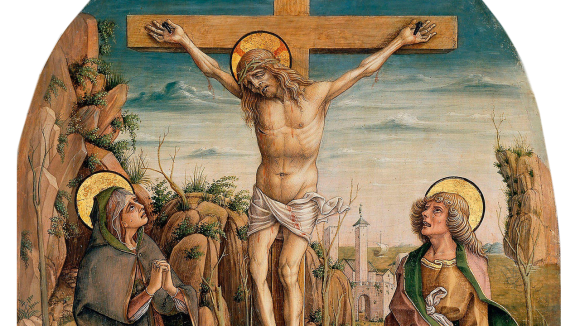
A Neglected Renaissance Master Gets His Due The New Yorker
source
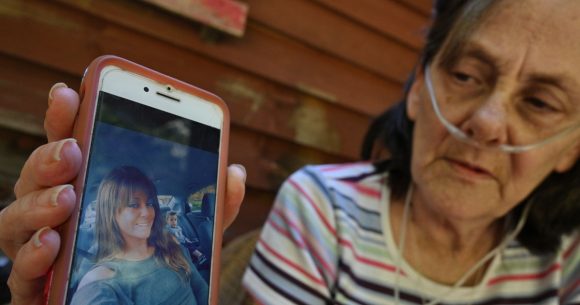
Gang members using violence to extort inmates, families at Ga. prison for women The Atlanta Journal Constitution
source
Industry: Entertainment
Multi-platinum music producer and sync license expert; Tito Tahan, contributes his share of music to the Disney+ reboot ‘The Proud Family: Louder And Prouder’.
Cleveland, OH (PRUnderground) May 17th, 2022
The Disney+ reboot “The Proud Family: Louder and Prouder” officially made its comeback on February 23, 2022. A star-studded cast revives one of the most iconic families in animation history. Voices who brought the characters back to life include; Tommy Davidson, Paula Jai Parker, Cedric the Entertainer and Carlos Mencia, among others. Keke Palmer, officially joined the cast and other celebrities are lending their voices to the reboot such as Lil Nas X, Lizzo, Tiffany Haddish, Gabrielle Union and many more. If that’s not exciting enough, Disney has already renewed the Proud Family revival for a second season.
It should come to no surprise that the music, compositions and sound also plays an essential role in assisting those wonderful voices. The music in particular tends to shape, build and create the atmosphere for such animations. Everyone loves music, right? Contributing his share of music to the reboots first season is; Tito Tahan, an American multi-platinum producer, sync license expert, and founder at ProducerLife ™. He has been making major moves for years producing music for TV shows, films, video games and ads but still remains relatively unknown to the masses. Tito plans to change that in the next coming years with the projects he is currently working on.
Tito has had an extremely busy past few years, producing music for shows such as Keeping Up with The Kardashians (now on Hulu), VH1’s, Love and Hip Hop and the film “2 Minutes of Fame” starring Jay Pharoah, Katt Williams, D.C. Young Fly and Keke Palmer. A wide array of projects is nothing new for the Cleveland based producer, whose music production and songs span across hundreds of titles. Tito attributes his talent to produce multiple genres of music to the influences of his childhood upbringing, life circumstances and his family heritage. As Tito puts it, “I grew up listening to many genres of music,” he says. “It was like, I got to experience multiple walks of life through each genre of music I listened to.” It’s clear those experiences helped Tito develop his talent and fine-tune his ear for creating music.
“I love producing beats, writing / recording songs and collaborating with artists but I also love doing business, I guess that mixture makes me unique in a way.” says the Music Business graduate from Full Sail University. Tito and his newly signed artist Bravenn Dehill are creating music for projects releasing later this year. Tito says, “I mean, just to have music in a show like, The Proud Family: Louder and Prouder, is amazing.” he adds. “Thanks to my team, the true music team and everyone who played a part in making this possible, I appreciate you.” Tito gives his gratitude to those involved that helped him complete such an accomplishment. He also pays homage to the iconic Disney brand, which has been bringing joy to our hearts for almost 100 years. Look out for more music from Tito Tahan on the second season, which has already started production.
About ProducerLife
ProducerLife ™ is a music software, sound technology, music library and label services company. Founded by multi-platinum record producer Tito Tahan and music industry experts with over 20 years of professional experience in Music, TV, Film, Video Games and Ads..
Posted on 12:01 am
Posted on 8:10 pm
READ MORE
©2022 PR Underground
Use the Live Connection to Speak with a PR Underground Rep Today!