Cuts to local government spending, multimorbidity and health-related quality of life: A longitudinal ecological study in England The Lancet
source

Google Slides is an excellent tool for creating presentations fast and sharing them online. If you want to jazz up your presentations and make them a little more interesting, then knowing how to record audio on Google Slides can make the process a whole lot easier.
Google Drive
Google Slides
If you are looking for a way to automatically start an audio file for a particular slide, you may have noticed that Google Slides has no quick built-in recording option. But with the right online tools, you can still put one together quickly to help with demos, voiceovers, description sounds, and more. Here’s how.
If you’ve never used Slides before, you can visit this webpage to get started quickly. Choose the blank slide to begin a new slideshow, or access another Slides presentation that’s been shared with you in Google Drive. When you’ve navigated to a slide that needs an audio effect, you’re ready to begin.
Step 1: Slides doesn’t have a built-in audio recorder, but that’s not a huge concern when the internet is filled with free recorder tools. As long as you have a mic, you can create an audio file to use in Slides.
If this is a one-time audio recording for a presentation, we suggest using the super-speedy Rev Online Voice Recorder, where you simply select Record, give the site permission, and start talking. If you’re going to be creating a lot of audio files over time, then you may prefer to install the ChromeMP3 Recorder extension from Hablacloud.
If you aren’t recording something but rather using an existing clip, make sure it’s in a common format like MP3.
Step 2: To upload your audio file to Google Drive, log into Drive, select New, and select File upload. Find the audio file on your local storage, typically in Recent downloads, and select it. Google with automatically upload it to Drive.
Step 3: On the slide where you want to add audio, select Insert, then select Audio in the drop-down menu.
Step 4: In the new window, you’ll see all the audio files you currently have in Drive. If you haven’t cleared out your Drive files in a while, you may need to use the Recent or search tools to help you locate it. When you find it, choose the file and then Select.
Step 5: You will now get a small icon on the slide to let you know there’s an audio file there, and a new menu on the right with your Audio playback options.
Spend a little time in the audio menu to make sure the sound is playing like it should. You can choose to have it play on click or automatically, and adjust the volume for when the audio plays. You also have the ability to choose to loop the audio if you want and whether or not you want the audio to stop playing when you move to the next slide.
Step 6: With the settings configured, your slide should now be able to play audio the way you had in mind. You can repeat this process for any slide that needs audio in your presentation.
Now that you’ve nailed adding recorded audio to Google Slides, why not learn how to draw on Google Slides.
Upgrade your lifestyleDigital Trends helps readers keep tabs on the fast-paced world of tech with all the latest news, fun product reviews, insightful editorials, and one-of-a-kind sneak peeks.

Business and Economy
Business and Economy
Published
on
By
From zen gardens to ambisonic rainforest experiences, the Mercedes-EQ Innovation Zone will be a rejuvenating oasis amid the high-energy MURAL Festival, which takes over 4200 Boulevard Saint-Laurent June 9-19. (Mercedes-Benz Photo)
From zen gardens to ambisonic rainforest experiences, the Mercedes-EQ Innovation Zone will be a rejuvenating oasis amid the high-energy MURAL Festival, which takes over 4200 Boulevard Saint-Laurent June 9-19. Located at 3527 Boulevard Saint-Laurent, the Mercedes-EQ Innovation Zone takes its cues from the Mercedes EQS 580 4MATIC Sedan, harnessing innovative technologies to create a calming retreat.
The all-electric luxury sedan from Mercedes-Benz also inspired the artistic direction for the open-air art space, which features sculptures created by Olivier Bonnard and Alexis Vaillancourt from all recycled materials. The EQS uses carpets made from recycled yarn and recycled plastics for components such as the wheel arch and underbody panels, as well as many small parts such as pushbuttons, plastic nuts and cable fasteners.
“At Mercedes-Benz, we know the only desirable luxury is sustainable luxury,” says Nathalie Gravel, national manager, Marketing & Communications, at Mercedes-Benz Canada. “We’re proud to work with MURAL to offer a space that is a physical representation of the creativity, innovation and ingenuity it takes to bring the future of luxury mobility to life in a responsible, sustainable way.”
To reinforce its commitment to sustainability, Mercedes-Benz collaborated with like-minded local artists on elements of the Mercedes-EQ Innovation Zone. Brand ambassadors on-site will wear T-shirt uniforms designed by Eric Eugène and Billy Eugène of Laval-based elevated streetwear brand Unlike General Norms (UGN) and manufactured in a fair-trade factory using textiles made from recycled water bottles. Additionally, a limited number of guests to the space will leave with an exclusive tote bag designed by local artist and philanthropist Amelia Hadouchi.
“We want to contribute responsibly to the social and cultural life of the city,” says Gravel. “From the sculptures on display to our brand ambassador uniforms, it was a priority for sustainability to be a guiding principle in our space because it’s a guiding principle for Mercedes-Benz.”
Visitors to the Mercedes-EQ Innovation Zone can experience:
A Mercedes EQS 580 4MATIC Sedan will be on display at the centre of the Mercedes-EQ Innovation Zone. The EQS is the world’s most aerodynamic production car and festivalgoers will get to see and appreciate the unique shape that allows the vehicle to hold this distinction.
The EQS boasts a 547-kilometre range of zero-emissions mobility, intelligent resource-conserving features and is developed and manufactured following a responsible circular economy concept. It is assembled in Factory 56 in Sindelfingen, Germany. The “car factory of the future,” Factory 56 was designed from the start to be carbon-neutral and thus is a zero-carbon manufacturing plant. It draws energy for its power supply entirely from renewable resources. The photovoltaic system installed on the factory roof alone supplies up to 30 per cent of the production hall’s total annual consumption.
The EQS is now available in Canada. Additional vehicles from Mercedes-EQ, the Mercedes-Benz sub-brand for electric mobility, will arrive to Canada later this year.
About MURAL
MURAL Festival is an 11-day event that celebrates culture, innovation and live art, bringing together world-class musicians and visual artists from around the world to celebrate art and technology. Inspired by this theme, the Mercedes-EQ Innovation Zone will showcase a unique NFT exhibit, curated by Mercedes-Benz and MURAL. Each zone in this immersive event was inspired by the design and experience of the Mercedes EQS.
Volkswagen offers additional all-wheel drive version for the ID.4
Your email address will not be published.
It’s 2022! Hurrah! Here’s our chance to start afresh and reinvent ourselves. It is vital to revamp ourselves for our…
When Maria and her nine-year-old son returned to Vancouver for good in 2007, admittedly, it was not love at first…
Maria in Vancouver can’t help but reflect on what is the secret to a lasting relationship? Is there really a…
Photography is the story every photographer fails to put into words. When there are no words, photographs do the talking….
Female artists around the world are constantly battling gender-biased challenges in global mainstream art. Women in art have suffered mistaken…
Successful women aren’t always successful. They failed several times in life before they achieved success. They were broke before they…
They say that a picture is worth a thousand words. A meaningful photograph is one that grabs the emotions of…
Photographs are mankind’s way to freeze a moment so that they could remember that moment for a lifetime. Every picture…
This article is super close to this writer’s heart. I am writing about a woman whom I’ve personally known for…
Editor’s Note: This column is divided into three parts. [READ: Ahhh, The Places Maria Will Go! – Part 1] South America…

Advertisement
Adora Nwodo isn’t shy about how good she was at calculus and statistics as a student. She shouldn’t be. A first-class graduate of Computer Science from the University of Lagos, she is now a Software Engineer at Microsoft working on creating mixed reality applications. But she isn’t your typical nerd hiding behind lit-up screens in dark rooms. She loves the outdoors and meeting people. Her alternative career is music production. And she disc-jockeys at parties when she’s not writing code or books or encouraging more people – read women – to get into tech, or studying for a degree at one of the world’s topmost business schools.
First Class is a column about extraordinary Nigerians aged 35 years and below. It collects their thoughts on what it takes to thrive as a young person in Nigeria.
Do you know someone who fits the bill? Recommend a name here.
Sign up to receive the latest installment of exclusive First Class interviews in your email.
This interview has been edited for clarity and conciseness.
SE: What was growing up like for you?
AN: Growing up for me was okay, I guess. I’m the last born, the only girl. I have a bunch of elder brothers. Everyone always wanted me to do well. I won’t say I was spoilt, but I didn’t lack anything. I started with computers quite early, maybe eight or seven. I was really fascinated by it. My siblings were my best friends; and then they were in JSS3 or so when my dad sent them to computer school and bought them computers. So my brothers went from playing with me when bored in the house to working on their computers. And obviously, because I didn’t have anyone to play with anymore, I joined them in using the computers. So I got drawn into it. I was fascinated by what I could do on a computer. That was how I fell in love with computers and decided to build a life around them.
That’s interesting.
I was a very expressive child – a parrot – and my parents thought I’d be a lawyer. But even if I didn’t go into Computer Science, I wouldn’t have become a lawyer. I would have been a music producer. That’s another thing that I really like to do. Even now, I’m a DJ. I can’t be that DJ that is also a Producer on the side because I have a full Computer Science career. But making music has always been a hobby for me. So, I would have studied Sound Engineering, interned at one of these record labels and, at some point, started my producer career. It was a backup career that I’ve always had. As early as 100 level, I used to say if tech didn’t work out for me, I would do a Masters in Sound Engineering and become a Producer.
How do you balance these different aspects of your personality?
I don’t balance it. At this point, I think I’m running on vibes. But I don’t like to see them as two personalities. Because everything is still one person. I don’t see myself as someone that has multiple alter egos or personalities. I don’t compartmentalise it. Everything is one person. The engineer is also a music enthusiast. When I am writing code, I am listening to music, and discovering new music. Even when I was in university, I am studying and listening to music. When I have a gig to go play for, there is a science to the preparation. And I’m a science person, but I’m also a creative because I’m a content creator. I tend to apply different parts of myself to every single thing I do. I just make sure I’m enjoying myself.
Would you describe yourself as an obsessive planner?
Yes, I plan my whole life. I’m a planner. Even up to my dates. Recently, a friend wanted to take me out. But I told him I had a romantic date with someone that could be a partner that same weekend, and there was no slot for him. So everything I do is on my calendar. Even my sleeping is a routine. I don’t control exactly when I sleep, but every day at 5:45 am I am awake by default. Even if, according to my calendar, the last thing I have to do for the day is by 9 pm, I try to go to sleep by 9:30 pm; if I can’t, then I hop on Twitter until I finally drift off. But I must be awake at 5:45 am.
So I plan my life, but also I leave small room for that flexibility because we are in Lagos and things can just happen. And your plans can get disrupted if you don’t have backup plans.
How did you get into Microsoft?
I applied and they hired me. (Laughs)
One thing I tell people is that there are so many talented people and opportunities but what makes people single you out is if they see a clear value that you can add. So, I don’t know if I would have gotten the interview if I had just applied when the opening came up. Because a lot of people would have also applied. But I was doing a lot of things within the community at the time and I was very vocal about the kind of technology I wanted to work on; so I had said I wanted to work on technology that was powered by AI; I wanted to help build mobile or other device experiences. And I was talking about it on LinkedIn and Twitter, volunteering at communities, speaking, organising events, writing, and making YouTube content. So people were noticing me, I guess. And a Microsoft recruiter reached out to me and said they wanted to hire me for a role in Nigeria, blah, blah, blah. So I applied and got back to the recruiter. So, that got me the interview. Getting myself to get the recruiter to notice me personally was what got me the interview. But that wasn’t what got me the job, because I still had to make sure I learned every single thing I needed to learn. I had to make sure I practiced for the interview, did mock interviews with my friends, prayed, practiced some questions, brushed up on some engineering concepts I probably didn’t remember from school; and then I went for the interview and passed and got the job.
You initially worked at a Nigerian ad agency? How’s does that experience differ from your current role?
I spent only my service year at the agency. I passed out of NYSC in June 2019 and started working for Microsoft in August 2019. So it was almost straight out of school. How has the experience been? I like my job at Microsoft because out of all the other things people say – the money is great – I tend to optimise for peace of mind more than money. I want to have job satisfaction and have the liberty to do what I have to do; this is also the freedom I had while working at the ad agency – they encouraged people to focus on their side hustles. So that was basically how I was brought up professionally – I’m always going to do other things.
So, apart from the fact that I love the kind of work that I am doing, because it is me really creating something new, something that doesn’t yet exist in its full form in the world right now, and I am learning a lot – apart from that – there’s also the peace of mind because of the culture; everyone always willing to help each other and being welcoming, and being able to do all I do and my managers providing support in any way they can.
You are involved in several tech communities – unStack Africa, Open Source Community Africa – what drives your passion for community engagement?
There’s a gap. I have seen people do a lot of things to try and help this community grow. My own approach to that isn’t necessarily being the community manager, because that’s a lot of work. I lead a few communities and I’m not necessarily focused on the day-to-day. I’m more focused on advocacy and inspiration. Advocacy for the tech ecosystem in general, not just about developers. And this is me trying to inspire people to come to join the ecosystem. And there’s a gap, especially in terms of gender diversity. I’m very bullish on women in tech. And I talk about it every single time I get. And I always share resources with communities that are trying to empower women in tech, to help them grow in a way. There’s also the part of training more developers to get opportunities globally; because there are a lot of global opportunities and there are not a lot of people to take on these opportunities. So why don’t you have more Africans so they can get these opportunities and make their lives better?
Some mistakes you’ve made in your career?
I can’t think of any on the spot. I haven’t made a bunch of decisions on my own. Most of my decisions are always collective decisions with my family. As I said, I’m the last born so I have a lot of elder siblings who give me advice. I have mentors as well that I reach out to; I also have peers who are doing well. So it’s never oh this thing just pops into my head and I’m going to make that career, life-changing decision. So there are always back and forth conversations with people, going to God in prayer, before I finally make a decision.
What’s the hardest decision you’ve ever had to make?
One that comes to mind is recently I started going to Business School. One of my elders brought it up and I said I wasn’t doing it; because I felt like I still wanted to be in engineering for a while and was not ready to move into something else. And going to Business school, I might have to quit my job. And because of the kind of schools I wanted to go to. There were a bunch of different routes I could have taken. Was I going to sacrifice my time, my job or the quality of school I wanted to go to, or my social life? So it was a very hard decision. I ended up sacrificing myself. Because I found a program in a top school that required me to not be full time and I would also keep my job. So now I’m going to school, to work, and I’m still doing all the community things I was doing in the first place. I don’t regret the decision so far, but I guess we’ll see in a couple of months; maybe when I get tired, I’ll come on social media to rant.
You live in Nigeria. Do you ever think of relocating?
Who wouldn’t? It has definitely crossed my mind once or twice. But I’m not actually doing anything about it for personal reasons.
Are you hopeful about the country’s future?
I don’t have a direct answer to that question. I think Nigeria’s future depends a lot on all of us doing the work. Because hope without action is a very stupid thing. So I’m not going to say I’m very hopeful and all we have is hope or prayers and nobody is doing anything; nothing will happen. So, if we really want Nigerians to be the home that we want, everybody needs to be a part of making that happen. It will take a very long time, possibly more than 50 years but everybody needs to participate in that process and not just complain on social media.
How do we get to that point where everybody comes together?
I’m not talking about everybody coming out. Not everybody is going to be involved in politics. But in your own little way, what are you doing for your immediate country, in your house, apart from sitting down and complaining. To be honest, I don’t blame anyone who decides to pack their bags and leave Nigeria. I’m not going to guilt-trip you. But if you are one of those people who complain, my first question would be, what have you tried to do about it? I’m not saying what you do will change the country in 24 hours, but what you do might change somebody’s life, or mindset, or be the reason why somebody gets to live an extra day. The point is, have you actually done anything to influence your immediate society? Because if we are promoting that mindset of doing things for each other to influence ourselves, you will see the whole pyramid effect. You will influence some people who will influence other people, and those people will go ahead to influence more people. And from there, something will change. These things take a very long time, but there’s that possibility. I don’t want to talk about hope for Nigeria, because there are some people that are doing a bunch of things, there are people that are not doing anything at all, and there are a lot of people that are complaining. The Nigeria we want, we will have to work for it. If you don’t put in the work, nothing is going to change. And 20 years down the line, we will be having the same conversations. We’ve been having these same conversations since I was born, and I am going to be 26 this year.
How does your faith affect your outlook on life?
I’m a Christian, a Catholic. And one thing that we preach at Church is love. And that’s what I’ve been hearing all my life. From going to Church, to catechism classes, to having conversations with friends who share the same faith. And the constant thing is always love. Jesus Christ came to preach love. God is love. And that has just made me always want to give love. I’m one of those people that believe we are born with multiple gifts and we should give everything we have and die empty. You should leave the world better than you left it. And that makes me want to show love to people around me in different ways. And I guess that has, in some ways, been a huge part of who I am and has had an effect on how I interact with people. I’m a human being and there will be small anger, and drama, but there’s that thing of calling yourself to order and asking for forgiveness and being better. I believe love will change the world; if we all had love in our hearts, the world will be a much better place.
If you had to recommend a book, what would it be?
I would definitely recommend my book. People that have read it have come back to give me feedback. A girl took it before she took an Amazon exam and she passed. So I’m very happy about the impact the book is making and I get excited about it.
But if you are not trying to get into Cloud Engineering, another book I’ll recommend is Atomic Habits by James Clear. I think it’s a behavioural book and it can help you build fantastic habits and break away from habits that are not so good.
Who would you recommend as a First-Class Nigerian?
Easy. Jude Dike. I find what GetEquity is building interesting. Also coupled with the fact that he’s young (26) and the company isn’t up to a year old.
First Class is a column about extraordinary Nigerians aged 35 years and below. It collects their thoughts on what it takes to thrive as a young person in Nigeria.
Do you know someone who fits the bill? Recommend a name here.
Sign up to receive the latest installment of exclusive First Class interviews in your email.
Advertisement
by | Jun 8, 2022
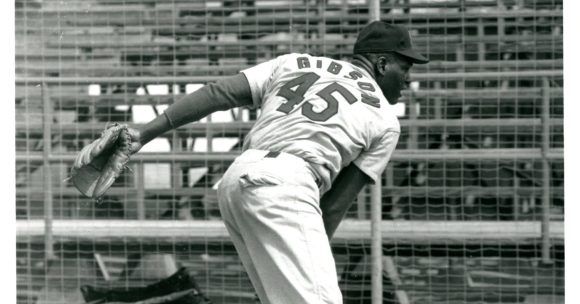
Sixty years ago – June 8, 1962 – the St. Louis Cardinals beat the San Francisco Giants, 8-4, at Busch Stadium in the first of a four-game weekend series.
The result was insignificant; the Cardinals finished in sixth place in the National League that season and the setback did not stop the Giants’ march to the pennant.
But with six decades of hindsight, the game offered 16,209 fans in attendance glimpses into the Cardinals’ future and past – and it offers us a chance to relive a team and city on the brink of transformation.
Harry Caray and Jack Buck called the action on KMOX; the broadcast is now public domain and available in its’ entirety. The accounts of the game are taken from that audio recording.
Caray and Buck are masterful and the 1960’s era advertisements for dual-filtered Tareyton cigarettes and Busch Bavarian beer are charmingly funny. You can find the broadcast on YouTube and the Internet Archive.
Amy Berra, curator of the Cardinals’ Hall of Fame and Museum, provided additional source material and photos for this story – I am grateful to her and the Museum for their help.
To paraphrase Mike Shannon – a 22-year-old rookie that wore No. 60 at Spring Training in 1962 – I hope you enjoy reading this as much as I enjoyed bringing it to you.
Caray: “Here now is Willie McCovey – too big to be a man and not quite big enough to be a horse. McCovey, born in Mobile, Alabama; his hobby is reading comic books and seeing motion pictures.”
Buck: “And hitting.”
Caray: “Yeah.”
The Giants were the class of the National League in 1962. San Francisco won 103 games and pounded opposing pitchers – leading the league in team batting average, home runs and runs scored.
Glaring at McCovey from the mound was Cardinals’ starting pitcher Bob Gibson.
The 26-year-old righthander had just frozen Giants’ center fielder Willie Mays with a sweeping curveball and McCovey – who entered the game 9-for-19 against Gibson with a home run – was all that stood between the Cardinals and a painless opening frame.
Caray: “Now the wind-up, the 2-2 delivery to McCovey – barely missed outside and Gibson is furious about that one. Three balls, two strikes.”
Buck: “He was really moaning about the second pitch to McCovey. The umpire didn’t give it to him. He threw the 2-2 pitch in the very same spot and (home plate umpire Paul) Pryor still wouldn’t give it to him.”
Photo courtesy of Cardinals Archives
Gibson would later call McCovey the scariest hitter in baseball, but at the time the trajectory of his own career was uncertain.
The one-time Harlem Globetrotter issued a National League-worst 119 walks in 1961, then stumbled to a 6.11 ERA in the first month of the season. But he’d found a groove lately and posted five wins in May to improve his career mark to 25 wins and 27 losses.
Caray: “Now it’s a 3-2 pitch again, here it is on the way – lined into center a base hit and now Gibson is really angry – even more angry, as that ball sailed past his head into center, he was already barking at Paul Pryor, as if to say, well if you give him that many strikes, sure he’s going to get a hit sooner or later.”
Gibson’s fiery demeanor on the mound would personify the coming decade of Cardinals’ baseball.
The fans that filed into Busch Stadium, more commonly known as Sportsman’s Park, were undeterred by strong thunderstorms that drenched St. Louis that afternoon.
A group from a bowling alley in Belleville, Illinois that was part-owned by Red Schoendienst were in attendance; so was a contingent from West Plains High School, located 200 miles away in south-central Missouri.
The aging structure on North Grand Avenue and Dodier Street was completed in 1909 and plans were underway for a state-of-the-art multipurpose stadium on the riverfront – just one of many projects that would soon change the St. Louis’ horizon and usher the city, planners hoped, into a new age of progress.
The foundation of the Gateway Arch was being laid that summer and the first steel triangles were still months away from starting their journey skyward.
With the game scoreless in the second inning, Cardinals’ shortstop Julio Gotay singled with two outs, bringing right fielder Doug Clemens to the dish.
Caray: “Now (Juan) Marichal steps off the rubber…two balls and a strike, Gotay a lead – and the pitch, there’s a high flyball to center that will be an easy out – Willie Mays can’t find it!”
“It drops for a hit – here’s Clemens around to third, the run scores! And he’s in there with a triple!”
“Willie Mays lost the ball in the lights, couldn’t locate it at all. Standing there – and he suddenly looked over toward Felipe Alou, as if to say, ‘where is it, Felipe?’”
“Get a good look at that because boy, you don’t see that happen often.”
Even with help from Mays’ miscue, Clemens batted for a .217 average in 93 games with St. Louis. Two years later, the Cardinals traded him and two others to the Chicago Cubs for Lou Brock.
That day in Chicago, Brock collected two hits to help the Cubs split a double-header with the lowly New York Mets at Wrigley Field.
Those clubs met again nine days later at the Polo Grounds in Manhattan, and Brock blasted a home run off Mets’ starter Al Jackson that traveled more than 460-feet and sailed into the ancient bleachers in center field.
Brock was just the fourth player to hit a homer that reached those seats, and only the second player in the history of the Polo Grounds to do it during a Major League game.
The next day, Milwaukee Braves’ outfielder Henry Aaron would be the last to accomplish that feat.
Buck: “Well a reminder right here, fans, that the 1962 edition of the dual-filtered Tareyton Baseball Guide is available. For your copy, send 50 cents with your name and address to Harry Caray, care of the Sporting News, Box 5-6, St. Louis, Missouri. Send for your copy this evening and have it for the remainder of the season to enjoy.”
37-year-old Jack Buck was in his second tour-of-duty in the KMOX booth – one that would last until he stepped away 39 years later. He rejoined partners’ Caray and Joe Garagiola in 1961 after Buddy Blattner bumped him from the crew the year before.
1962 was Garagiola’s final season as a member of the Cardinals’ trio of Hall of Fame voices. He would enjoy a long career on radio and television with NBC; in addition to broadcasting baseball, he co-hosted the Today show and guest-hosted for Johnny Carson.
As the Washington Post wrote upon his death in 2016, Garagiola – a St. Louisan that was childhood friends with Yogi Berra, played parts of six seasons with the Cardinals and married the team’s organist at Sportsman’s Park in 1949 – made one of his first television appearances at a 1960 presidential campaign rally for John F. Kennedy.
Standing by Kennedy and former president Harry Truman, Garagiola quipped to his dad watching at home, “Hey Pop, I just want you to see who I’m hanging around with.”
In Washington, D.C. on June 8, 1962, President Kennedy awarded three teenagers with medals for volunteerism and met with dignitaries from Germany.
Somewhere in the Atlantic Ocean, a Dutch cruise liner was ferrying Lee and Marina Oswald and the couple’s infant daughter to New York City – the final leg of a journey from the Soviet Union.
Elsewhere on the seas, Soviet nuclear missiles were bound for Cuba. The day before the Giants lost to the New York Yankees in Game 7 of the 1962 World Series, Kennedy would learn of the threat and one of the most intense episodes of the Cold War began.
Gibson faced the heart of the Giants’ order again in the third inning.
Caray: “Mays the batter, one out and one on…Bob Gibson with a one-run lead, into the stretch, the 3-1 pitch, here it is: And there it goes. Way back it might be out of here, it could be, it is!
“A home run into right-center, his 20th home run of the year.”
“So, Willie gave us one run and just got two back. Mays hit a 3-1 pitch into the right-center field pavilion and the Giants, just like that, lead 2-1. And you almost knew that was going to happen.”
The next batter, McCovey, got ahead in the count, then took a big swing at a Gibson fastball but missed.
Caray: “Man these guys – these guys really get some cuts!” he said, laughing. “One ball, one strike – now the delivery, there she goes! Way back, forget about it. Home run.”
“He even broke the bat and hit it on the roof. A line drive, and the Giants lead 3-1.”
Cardinals’ first baseman Bill White answered with a solo shot in the bottom of the third, and the Giants held a one-run lead into the fifth inning.
Gibson struck out Mays looking for the second time and he led-off the bottom of the fifth with a single, then moved to third on Julian Javier’s base hit.
White and Gibson’s place in Cardinals’ history was already secure in 1962, even if neither player accomplished anything else on the diamond.
Photo courtesy of Cardinals Archives
Along with outfielder Curt Flood, they were instrumental in the successful effort to integrate the Cardinals’ spring training accommodations in 1961. As White recounted in his autobiography published in 2011, he received a letter from Jackie Robinson afterwards, thanking him for everything he had done for Black baseball players.
Buck: “Outfield around to the right for Bill, hitting .269 with 10 home runs, 42 RBIs – a chance to make it 45 right here. One strike the count, here’s the pitch to him: Line drive into left-center field that’s a base hit and the ball game is tied, Javier is going to third base and there’s no play on him.”
“White gets his second hit, he really stroked that ball beautifully over the head of the shortstop Pagan into left-center, for his second run-batted-in of the night – driving in Gibson to tie the ballgame.”
Stan Musial hit into a fielder’s choice and Ken Boyer stepped-in with two runners on and two outs.
Boyer was a 7-time all-star, and the 31-year-old added two more All-Star game appearances to his total in 1962.
Buck: “Marichal taking his time. Nobody down in that Giants bullpen…runners lead away, here’s the pitch to Ken Boyer: a drive to very, very deep center field, Mays going back, way back near the bleachers – that ball is out of here!”
“Boyer wallops a three-run homer with two men out here in the fifth inning to put the Cardinals out in front, 6-3. That ball was really hit – about 430 feet…Mays chased it for a while, then stopped and watched it disappear into the bleacher customers out there.”
Boyer hit 24 home runs and drove-in 119 runs in 1964, earning National League MVP honors for the World Champion Cardinals. But he played through injuries in 1965 and St. Louis traded him to the New York Mets when the season ended.
In return, the Cardinals’ received pitcher Al Jackson, the victim of Brock’s historic blast at the Polo Grounds in June 1962.
Jackson won nine games for the 1967 championship team, but he was left off St. Louis’ World Series roster. He returned to New York and pitched for the 1969 “Miracle Mets” but was sold to the Cincinnati Reds mid-season.
Jackson pitched in 303 Major League games and contributed to two World Series winners, but he never threw a pitch in the postseason.
The Giants cut into the Cardinals’ advantage when Gibson surrendered a run in the seventh inning and Lindy McDaniel relieved him.
McDaniel retired Mays and McCovey with two runners aboard to preserve the Cardinals’ lead. He worked a perfect eighth inning too, striking out Orlando Cepeda and Jim Davenport.
White’s monster game continued when he singled off Giants’ reliever Don Larsen – famous for pitching a perfect game in the 1956 World Series – to score Flood in the bottom of the eighth. Musial was next, with runners at the corners and nobody out.
The 41-year-old Musial defied time in 1962, his 21st season wearing birds on the bat. He played in 135 games and hit for a .330 batting average with 19 home runs while rewriting the record books.
Three weeks earlier, on May 19 at Dodger Stadium, Musial passed Honus Wagner for most hits in National League history.
When his career ended, Stan joined a thriving St. Louis business community and in 1966, he belonged to the investment group that secured a National Hockey League expansion franchise for the city.
The St. Louis Browns left for Baltimore after the 1953 season, but Anheuser-Busch and Brown Shoe Company – the other two components of the famous line that described St. Louis as “first in shoes, first in booze and last in the American League” – were still dominant players in the region’s corporate landscape.
McDonnell Aircraft Corporation manufactured the Friendship 7 space capsule that took Mercury astronaut John Glenn on the first American orbital spaceflight in February 1962 – a mission critical to President Kennedy’s challenge for NASA to beat the Soviets in space.
The Western Cartridge Company in Alton, Illinois supplied the military with ammunition and produced the 6.5-millimeter bullet that Lee Oswald used to assassinate Kennedy the following year.
But while businesses looked forward with optimism, St. Louis’ leaders concerned themselves with reversing a population in decline.
St. Louis was America’s 10th-largest city, more populous than San Francisco, Boston, Dallas, Phoenix and Atlanta. But the 1960 census revealed an alarming 13 percent population drop in one decade.
That summer, city officials debated a proposed amendment to the Missouri constitution known as the Borough Plan – an attempt to expand St. Louis’ boundaries and consolidate many of the small municipalities into larger boroughs, like those in New York City.
But city planning troubles were far from the minds of the faithful at Busch Stadium, with the home team ahead – and as Gaylord Perry, a 23-year-old rookie and future Hall of Fame pitcher, limbered in the Giants’ bullpen – Musial stepped in to face Larsen.
Buck: “Javier and White, two good baserunners on – they lead away. Larsen to Musial, base hit into left! Another run scores on a single to left by Musial, and it’s 8-4.”
Musial was lifted for a pinch-runner and while applause echoed around the old ballpark, Buck paid tribute to Stan the Man.
“Harry, it’s still one of the prettiest sights in baseball to see Musial stroke that ball to the opposite field.”
Andy Carroll is a freelance sports writer living in the Ozarks with his wife and four great kids. He loves St. Louis, toasted ravioli and minor league baseball. You can follow him on Twitter @carroll_sgf and Instagram @andycarroll505

I’m a professional writer and hobbyist hacker, and I’m bashing a keyboard for at least 75% of my working day. Unsurprisingly, then, I’m also a mechanical keyboard user. So, when I read about a new threat that can remotely tell what you are typing just by listening to the audio of your clicky keyboard, I’m all ears. After all, if a remote hacker could listen in to my typing and grab my passwords and other ‘secrets’ out of the ether, that would be quite the cause for concern.
The threat in question comes by way of a security researcher who has been exploring the viability of such remote eavesdropping activity for a while now. The latest incarnation of the research is called keytap3, and the researcher even has a website where you can try it out for yourself, assuming you are typing in English and don’t type too quickly. It works, and this is very much an over-simplification, by analyzing the frequency of n-grams (contiguous sequences of items from a given sample) in the audio clusters recorded. Well, I say works…
Please don’t get me wrong, this article is not in any way meant to ridicule or demean research such as this. As regular readers of mine will appreciate, and you can see for yourself with a quick search of my published work archive, I’m fascinated and sometimes awed by the work done by security researchers. OK, with that preamble out of the way I’m guessing you may have already realized what the answer to the question posed by the sub-title is. Actually, it’s not a big no but rather a maybe. Not everything, well very little if the truth be told, that is demonstrated under lab conditions will work in the ‘real world’ beyond those carefully controlled boundaries. However, such work can eventually lead to working exploits along the way.
Keytap3 lets you test how it works in your web browser
I took part in the test scenario and the result was much as I would expect given that the software analyzing the audio didn’t know what keyboard I was using (and was unlikely to have been trained upon every variation out there – both keyboard model and key switch type) nor the microphone being used to name but two variables that could throw a spanner in the works. That result was gobbledegook and nothing remotely resembling what I had actually been typing. However, it is clear that the researcher in question, Georgi Gerganov, has been improving his techniques and this third incarnation, Keytap3, has had success in the lab and the threat model continues to evolve. I took the liberty, therefore, of having an online chat with Gerganov about why my interactions with Keytap3 failed and where he goes from here.
Do you need to worry about a threat actor being able to hack your password by listening to you type? Heck no. There are far easier ways that they can employ to get your passwords than this, no matter how interesting from a security-nerd perspective it may be. However, watch this space. Or should I say, listen up?
I explained to Gerganov that the particular keyboard I was using, a Logitech G915 with the ‘clicky’ key switch option and a Marantz Pro MPM1000 microphone and I was hard-pressed to find a single word that made sense, and none that resembled what I’d been typing. I, therefore, asked if such a threat scenario of translating typing sound to typed text without substantial ‘training’ to encompass different keyboards and microphones, typing styles, and the like, could ever be expected to work. Here’s what he told me:
“One possible explanation to the results that you observe is that simply Keytap3 is somehow overfitted to my setup or style. Even though I have tried to keep the implementation as general as possible, without making unnecessary assumptions about the typing style or the devices (keyboard and mic) it is still possible that the algorithm performs well only in the limited set of environments that I have tested it with. I only have two mechanical keyboards and using them the results are pretty good, but this is certainly a small set of data points to be able to make a conclusion about the efficiency of the approach in general.”
“I am trying to gather more data in order to better understand the limitations of the approach. Anyone willing to help with that can use the “Save” button on the page after recording a sample and send it to me so I can analyze it. I don’t have access to the recordings that people are doing because the test runs completely in the client browser and in order to keep their privacy none of the data is stored or uploaded back to me. That is why I have to rely on people to manually save the record and send it to me via email for example.”
“Another thing you can try is to wait for the analysis to for a little longer. In some cases, it takes a bit more iterations for the algorithm to start showing meaningful results. Also, you can try recording more text – for example, 200 characters. Use the slider before pressing the Init button.”
“The main factor that determines if Keytap will succeed or not, is how accurately it can match the key sounds to one another (i.e. determine if two separate sounds are produced by the same key). Currently, Keytap uses a time-domain cross-correlation metric to match the keys with one another and it is definitely not perfect. It was actually a surprise to me that it performs that well. If this part of the algorithm is improved somehow, I believe it can become highly efficient. It’s interesting to investigate what are the physical properties of mechanical keyboards that make the sounds so easy to differentiate – maybe this will provide insight into which audio similarity metrics are suitable for this purpose. Probably some frequency-domain metrics could provide better results – I have done a few experiments, but without much success.”
“The typing speed factor on the other hand I think is not very important. In the Keytap3 test, I have suggested a certain speed limit (250 CPM) simply because it makes automation much easier. However, a bad actor could easily analyze the recording and manually select the key sounds with high accuracy, instead of relying on automation to do that. A note about the Keytap3 test is that I wanted to make a simple page that is fully automated so that it is very easy for anyone to give it a try using a phone/tablet and a keyboard. An attacker, on the other hand, could create a more sophisticated exploit that allows them to control the different free parameters of the algorithm and potentially be able to recover more information by fine-tuning the algorithm. Once the keys are matched with one another, the problem becomes equivalent to reversing a Substitution Cipher. This problem is well understood and there are different algorithms to solve it. In Keytap3, I use a Beam Search algorithm which performs very well.”
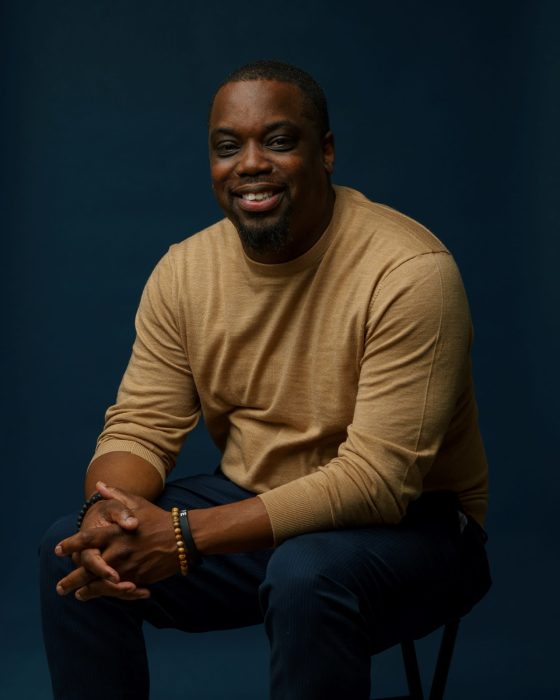
Matthew Head. Photo credit: Melissa Alexander.
When we tune into our favorite television shows, we’re hooked into the drama, the comedy, the romance, sometimes even the action depending on the series. Much of the time these scenes are backed by snappy dialogue or resonating monologues that’ll be played by fans over and over again. Bar that, it’s music setting the moment, be it a needle drop or the score.
Viewers with fine tuned ears, the ones whose minds wander toward the piano keys creating the atmosphere around their beloved characters, they’re the ones that composers love. See, music tells a story all its own in a show, whether it be a character cue introducing a new player in the midst of our regular cast. Or a theme denoting the relationship between two people on-screen.
Sure, we all love a good earworm, a familiar tune that’ll have us nodding along as a singer or rapper’s cadence sets the mood for the scene. We have the music editors to thank for those moments. But, it’s the composers that must grab us without a lyric or a rhyme and tell us the story that plays out beside the main narrative of the show.
When it comes to Tom Swift and P-Valley, two polar opposite series, composer Matthew Head is the musical talent behind rounding out their sound to create a fuller picture of the season. Hidden Remote had the opportunity to talk with Head about his work on both shows ahead of their premieres to discuss what went into their scores and the sounds that set them apart on television.
Head hails from Atlanta, the Cradle of the Civil Rights Movement, and a city rooted so deeply in the musical tapestry that makes up American culture that it’s unique not only in its artists but also in the ways they’ve transformed the genres they’ve touched.
In Head’s case, he takes household favorites like the jazz, country, and blues his mother would play on Saturdays and blends it with the hip-hop and R&B he discovered on his own.
He refers to it as a kind of gumbo. When we spoke about his musical influences, Head said, “I grew up listening to all of the R&B to Michael Jackson to Babyface to Smokey Robinson and Motown. Then I listened to gospel. I grew up in a Baptist church where Mahalia Jackson and all those old-school Negro spirituals were put in my spirit as far as my parents going to church and my mom being in the choir.”
He named Outkast and T.I. as musical influences as well, so when the time came to sit down and compose for the new CW series, Tom Swift, he wasn’t entirely out of his wheelhouse even though it’s his first sci-fi project.
Head is a collaborative composer, his process starts simply. He sits down with the showrunners, whom he credits for adding new textures and ingredients to the sound he’s been developing for decades, and talks through what they want.
With Tom Swift, Head, Cameron Johnson, and Melinda Hsu Taylor created a specific vibe. Johnson had Head listening to Drake and Kanye, two of the most braggadocious rappers in a genre that’s full of swagger, arrogance, pride, and cool that can’t be emulated only admired. But, that was only part of the template they were building for the show’s sound.
Matthew Head. Photo credit: Melissa Alexander.
“It was cool,” Head said when we spoke. “The thing about it, we wanted to have a gumbo of sound. We definitely wanted to have a cinematic feel because he’s solving missions, and he’s got a lot going on. Tom is a huge and bigger than life character so the strings and the cinematic sound give [the show] a bigger feel. But, at the same time, he’s retro, he’s cool, he’s laid back, he’s African-American, so we wanted to give it a hip-hop flavor, something that I listen to, that my kids listen to.”
The minute Tom Swift comes on you can hear what Head is talking about. The score for the show blends the old world of classical music with the sounds of today i.e. heavy beats and rhythms that you’d hear pumping out of headphones or on dance floors. But, we’d advise you not to sleep on the space odyssey Head has added into the mix. Remember, as much as Tom is a black billionaire tech genius, he’s also the man behind his father’s mission to Saturn.
When speaking on this bit of storytelling in the score, Head said, “I used a lot of different synth keyboards and found some unique tabs and sounds to give it that space adventure feel.”
The composer is also a student of the craft, taking in the music he’s heard in Bond movies, Star Trek, and space films to help shape the “futuristic, sci-fi, hip-hop, noir” vibe of Tom Swift. It’s Head’s belief that research, patience, and hard work are the keys to success for a composer.
At the beginning of his journey in composition, Head started out as a copycat, that’s how he figured out how to create the sounds that he gravitated toward. He said, “I would listen to what the Hans Zimmers would do, I’d listen to the Danny Elfmans. I would literally try to duplicate their scores, not necessarily their melodies but more so their sounds. What did Hans do with his strings? What did Hands do with his synth sounds? What did Danny Elfman do with the piano and the bells?”
Head said that if you do that enough, if you mimic what you hear, you’ll eventually get to a point where you start adding in your own preferences. Think of it as adding your own flare and flavor to the ingredients that life and music you’ve listened to have already added to the pot that’ll eventually be your own brand and calling card.
For Head that flavor is the music of the South. The rich and somber tones of blues. The elegance and disorder of jazz. The hip and smooth grooves of R&B. The bombast of hip-hop and trap. All of it is a part of his work. It’s a sound he’s worked to perfect, and it’s how he encourages other composers. You know when it’s a Matthew Head track. And, as he puts it, “That’s the goal of a composer. You get calls, you get the next opportunity because they want your sound. They want you to add to their project.”
Head puts his talent and his heart into every project, it’s why he can’t choose a favorite. Everything he’s worked on is the best one he’s had the honor of being a part of. Right now, that’s Tom Swift and P-Valley, two scores he worked on simultaneously and that are nothing alike.
“P-Valley is a completely different beast,” Head said. “I call it my night and day. My night is P-Valley and my day is Tom Swift. With P-Valley we went for a dark, mysterious, horror-y kind of vibe just because of the way the story is moving with the characters in that series.”
Head described his work on P-Valley as “creative heaven” because it brings him back to his roots, there’s a nostalgia factor for him.
“I’m a music producer,” Head said. “I used to make a whole bunch of music for local hip-hop writers here in Atlanta and songwriters and singers. So, [P-Valley] takes me back to that. I get to go back to my producer stage where I can sit and make a really cool beat and see where I go with that in a P-Valley theme.”
The vibe of this Starz series is glam mixed with grit. Those who work at the Pynk are beautiful, but not necessarily untouchable and they do what they have to do to survive. Though the show is set in Mississippi and not Georgia, Southern style and attitude is regional even if the swing of it changes from state to state. Hence the horns used in Head’s score for season 2.
The Pynk is loud, in your face, and unapologetic. But, P-Valley is also a show with layers that are peeled back episode by episode. It necessitates a score that can embrace the drama unfolding on the screen and that’s what Head gives it. Honestly, there’s a reason why he’s considered to be a jack-of-all-trades in the industry. Head knows how to shape the music to fit the story.
That’s why he selected the cello as Frederick Douglass’ main storytelling element in his work for Frederick Douglass: In Five Speeches. It’s how he was able to trace 400 years of gospel music for The Black Church which starts in 1619 and moves toward the present as the documentary progresses. Head extends the same mentality to his work for the stage as well.
As he said, “The gumbo of music is what keeps me creative, keeps me adding things with different flavors and to see what happens.”
For Tom Swift that was blending his sound with sci-fi elements and hopefully opening the door for other Black composers to follow behind him in this genre of music production. P-Valley was a window back in time that allowed him to experiment and grow in an area that he’d started his career in.
Head is always taking the direction he gets from showrunners, like P-Valley‘s Katori Hall, to keep pushing the limit of what can be done in his scores. It’s a challenge he rises to at every occasion and its led to a varied career, memorable scores, and the opportunity to leave his stamp on iconic and integral pieces of television history.
Build your custom FanSided TV email newsletter with news and analysis on All Television and all your favorite sports teams, TV shows, and more.
Your favorite teams, topics, and players all on your favorite mobile devices.
© 2022 Minute Media – All Rights Reserved. The content on this site is for entertainment and educational purposes only. All advice, including picks and predictions, is based on individual commentators’ opinions and not that of Minute Media or its related brands. All picks and predictions are suggestions only. No one should expect to make money from the picks and predictions discussed on this website. For more information, please read our Legal Disclaimer. If you or someone you know has a gambling problem, call 1-800-GAMBLER.
From the Clash to Tiësto: The 109th LA Weekly playlist, reviewing the musicians that we’ve been writing about all week, is live now. There’s electronic music from Two Friends and Tiësto, pop from Brenda Carsey, hip-hop from AG Club and Rowdy Rebel, punk from the Clash and Pulley, and so much more.
Find us on Spotify here,
or on Soundcloud here.
Don’t forget to “Like” the playlists and “Follow” the profiles.
AG Club (Calvin La)
From the Clash to Tiësto
Also this week:
Jody Fontaine of print stars AG Club told us that, “Personally, I would say that the sound now is a little more of a focused version of what we were doing in the beginning, which was really just like making cool songs. In the beginning, maybe our subject matter and stuff like that wasn’t very focused because it was reflecting what was going on at the time, and we were a little bit younger than we are now. I was just getting out of high school, Baby Boy was still in high school. So I feel like, now that we’ve gone through all that we’ve gone through, and this thing has come so far, we’re making music that is a little bit more focused but still has that youthful sense of exploration. That’s why we always say that we’re genre-less, because it’s just like us trying things. We’re very experimental.”
In “Not Another DJ,” Two Friends said, “Towards the end of high school, on a random weekend hanging out together, we decided to do a Google search for ‘best music production software’. We chose one of the top results from some random forum discussion and bought it (ProTools) and just dove in. Slowly as some of our songs and remixes started to gain some momentum online, we thought it would be smart to learn how to DJ so we could eventually do performances. So we did a similar thing– Googled ‘best DJ software and hardware’ and bought some and dove in. It was always serious, but I’d say right after we graduated college in 2015 is when we were able to really focus ALL our attention on music. ”
Clash photo licensed under the Creative Commons Attribution-Share Alike 4.0 International license.

It started as a strand of melody, and then was joined by the bass notes of a cello, and some rhythmic tapping on a violin. The four musicians spun harmonies on top of each other, weaving in and out of this groove, locking together, and then drifting apart. It might have gone on for a minute and a half.
I was observing a Nebulous Quartet rehearsal and asked, “What was that one?”
Everyone laughed because it wasn’t a song, “just something that we do,” cellist and vocalist Kely Pinheiro said.
“These are all grown out of free improvs,” added violinist Claudius Agrippa.
Advertisement
The rehearsal continued as the group worked out their setlist for that night’s show, which would be at a DIY venue in Allston.
“I think we should designate leaders for sections of the piece,” Agrippa said after running a tune. “When you’re that person, just let the group know what you’re feeling.”
The members of the Nebulous Quartet are all classically trained musicians who found each other at the Berklee College of Music. On violin there’s Fabienne Jean, 25, from Dorchester, and Agrippa, 22, from Brooklyn, who also sings. Noah Leong, 23, from Detroit, plays viola. Pinheiro, 24, the cellist, is from Rio de Janeiro.
The group began as a directed study in early 2020, Agrippa said, under Grammy-winning cellist and Berklee professor Eugene Friesen.
“Eugene played with us,” Agrippa said. “Eugene was a member and an active player, at least for rehearsals, just for developing our sound throughout our inception.”
The band rehearsed once a week with no material prepared, just improvising for two hours.
“Eugene would always start something, some cool idea, and we’d play over it,” Leong said. “What ended up emerging wasn’t something that was super jazz or super classical, it was a conglomeration of everything that we listened to.”
Advertisement
They had to take a break once COVID hit but reformed in 2021, with Pinheiro taking the place of cellist Freddy Renaud, who was moving to San Francisco. The group started to look for gigs and recording opportunities.
“We are the Nebulous Ensemble,” Agrippa said to the crowd at the Allston venue. He was wearing the same Ray Bans and gold shirt he’d worn at rehearsal. “We are a string quartet that makes music you probably haven’t heard before.”
Much of Nebulous’s sound comes from experimentation with electronics, a key interest of Leong, who majors in electronic production and design at Berklee. They run their instruments and mics through the music production software Ableton to add a myriad of possible effects, and some members keep a pedalboard at their feet for easy access. They’ve also got a Novation Launchpad, a MIDI controller that connects to their Ableton effects.
“We put this at the front of the audience and have someone in the audience come up every minute or so and, without knowing what anything does, spend 30 seconds messing with the contours of the sound,” Agrippa said. “We’ll have an interactive concert.”
“Portuguese song,” someone yelled from the audience, referring to the songwriting of Pinheiro, who started creating tunes during COVID.
“I was always scared of starting something out of nowhere,” Pinheiro said, “but then I started writing those lyrics as a way of practicing everything that I was feeling during those dark months.”
Advertisement
Along with playing live, which can just mean rehearsing in a park, the Nebulous Quartet try to record as much as possible, Agrippa said.
“Our first collaboration, our first album release, was with that artist Mei Semones,” Agrippa said. “The album is really indicative of Nebulous’s sound and how much greatness can be achieved just off of instinct and natural expression.”
Semones, who just graduated from Berklee, said members of Nebulous played regularly with her band before going into the studio to record her May EP “Sukikirai.”
“I would describe them all as very melodic, very expressive,” Semones said. “I don’t know any other groups around here that are doing anything like what they’re doing.”
The quartet has a busy summer ahead, with plans to put on a free concert series and record their first album. Up first is a free show Saturday from noon to 2 p.m. at the Institute of Contemporary Art. They’ll also be playing at the Mission Hill Arts Festival on July 23 (tickets are available at eventbrite.com).
The group just received a $10,000 grant from the Mayor’s Office of Arts and Culture Opportunity Fund, plus $5,000 from the same program that Agrippa received as an individual.
“The majority of the money is going to go towards setting up free concerts in Roxbury and East Boston, neighborhoods where members of the quartet actually live and grew up,” Agrippa said.
Agrippa added that Nebulous is working with the city to set up free summer workshops in Boston schools.
Advertisement
“The hope is to inspire, more than anything,” Agrippa said. “As a young string player, I boxed myself into what I thought was possible, and to hear people doing some really cool stuff that is modern and maybe songs that I’d recognize, I feel like it would be important.”
The quartet played four songs at that DIY venue to a packed crowd of college-aged listeners who cheered after every tune.
“We all are strong by ourselves, and creative by ourselves,” said Jean. “I can think of this creative line, and Noah would flip it, and then add to it, but then two other people do that same process, and then the end of that is what our music is.”
Sam Trottenberg can be reached at [email protected].
Digital Access
Home Delivery
Gift Subscriptions
Log In
Manage My Account
Customer Service
Help & FAQs
Staff List
Advertise
Newsletters
View the ePaper
Order Back Issues
News in Education
Search the Archives
Privacy Policy
Terms of Service
Terms of Purchase
Work at Boston Globe Media

It’s virtually every musician’s dream to have a world-renowned name that can move millions of records and sell out arenas when it’s emblazoned on a marquee. The lucky few who reach that level have to work for years or decades before they get there—but for most, it never happens at all.
In 1993, few entertainers had the name recognition of Prince. But despite all the years and toil it took to arrive at that position, the singer no longer wanted any part of it. Instead, he wanted to be known as something unpronounceable.
Prince was born Prince Rogers Nelson in Minneapolis, Minnesota, on June 7, 1958, and had emerged as one of music’s biggest stars in the 1980s. Albums like 1984’s Purple Rain and 1989’s Batman soundtrack were gateways to his eclectic, multifaceted talents. He could sing, play instruments, and put on an electric live show that few could match. He was also tireless when it came to his music production, with a rumored 500 tracks sitting in his “vault” waiting to be released.
But Warner Bros., the label behind Prince, saw the singer’s prolific output as a potential problem. He was already averaging one album per year by the early 1990s, and the record company believed that his desire to release so much material might create consumer fatigue. It was the same kind of thinking that led Stephen King to create his Richard Bachman pseudonym in order to satisfy his creative impulses. But Prince couldn’t hide behind a pen name on stage, so he pled with the label to release his backlogged music even while the company was still promoting his last album.
“I would tell him that it was counterproductive, that people can only absorb so much music from one artist at a time,” Warner executive Marylou Badeaux said in 2016. “His answer was, ‘What am I supposed to do? The music just flows through me.’”
His strained relationship with the label was chafing him. His own given name had been trademarked by the company, which increasingly had him feeling like a commodity. The intersection of business and creativity was stifling, and not even the reported $100 million price tag attached to his latest deal seemed to satisfy him. The pact called for one album per year; Prince spoke of wanting to release albums whenever the mood struck, whether it was 12 songs or 70.
In 1992, Prince believed he had come up with a solution. While recording music at his Paisley Park estate in Minnesota, the singer had an idea to create a graphic that fused the astrological symbols for men (Mars) and women (Venus). He asked an intermediary to put the request to HDMG, a studio that was already creating designs for his albums. HDMG employees Mitch Monson and Lizz Luce then sketched several concepts, one of which Prince picked out. (The Love Symbol, as it came to be known, was slightly off-center at the singer’s request.)
The designers had little idea what Prince had in mind for the symbol beyond its use for his 14th studio album, known as The Love Symbol Album. Then in 1993, on his 35th birthday, the singer issued a press release notifying media and fans that he had changed his name to the same symbol—an unpronounceable glyph that looked equal parts Egyptian and musical note.
“It is an unpronounceable symbol whose meaning has not been identified,” the artist wrote. “It’s all about thinking in new ways, tuning in 2 a new free-quency.”
The symbol wasn't really a legal solution to Prince's contract issues, although that may have been part of his motivation.
“In Prince's mind, by changing his name to a symbol, he thought he could rescind and void the contract,” the singer’s then-lawyer, Londell McMillan, told 20/20 in 2016. “Because he was no longer a signatory under the name Prince Rogers Nelson. We now know that was not the case. However, it was still a very bold, courageous, and clever move on his part.”
Prince didn't change his name legally—this was simply an adoption of a new stage name, or symbol, that highlighted his dissatisfaction with the record industry and Warner in particular. But while he couldn’t get out of any legal obligations, he still wanted to be addressed differently from then on.
“[He] insisted that we use that as the reference to him,” McMillan said. “So, in my computers, at the time, we had to download the font. And I had to actually use the font to describe Prince.” McMillan also avoided calling him “Prince” to his face.
Warner, of course, still had an artist to promote—one with a very lucrative deal. The label sent out thousands of computer floppy disks to media outlets to help them depict the symbol, as it wasn’t able to be replicated on conventional keyboards.
Naturally, fans and industry observers who have been informed of a name change that’s unpronounceable and not able to be typed found the idea somewhat obnoxious. MTV used a metallic clanging noise in place of the singer’s name on air; record sales went down. Eventually, Warner and Prince agreed that referring to him as the Artist Formerly Known As Prince was a reasonable compromise, though Prince was still feeling restricted. In 1995, he appeared on stage with the word slave written across his cheek.
By 1996, the singer’s deal with Warner had expired. This seemed to placate Prince, who later resumed using his birth name and released music as he saw fit while operating as an independent artist. But his animosity toward Warner appeared to ease with time. In 2014, two years before the singer’s death, he partnered with the label to reissue Purple Rain for its 30th anniversary.
A full explanation of the name change was, according to Rolling Stone writer Neal Karlen, typed up and placed in a time capsule on the grounds of the singer’s estate in Minnesota, where it has yet to surface. Like most things related to Prince, the explanation wasn’t as important as the execution.
© 2022 Minute Media – All Rights Reserved

 Below are BroadwayWorld’s latest Classifieds listings as of 6/9/2022. Catch up below on anything that you might have missed and to visit the full section to post FREE classifieds, read ads and more, click here!
Posting listings in the Classifieds Section is totally FREE for basic listings, and our listings now include career help including accounting, taxes, designers, help wanted featuring full time jobs, internships, part-time jobs and temp work. For instruction and classes, we have listings on acting, dance, voice and voice-over lessons and coaching, as well as listings of accompanists, music production, arrangers & more.
| CATEGORY | NAME | COMPANY |
| Temp Jobs – Creative | Electrician mid may – sept | Cape Playhouse Dennis |
| Part Time Jobs – Creative | CNC Operator | Tom Carroll Scenery Jersey City |
| Full Time Jobs – Creative | Lead Scenic Designer | Grand Rapids Civic Theatre GRAND RAPIDS |
| Full Time Jobs – Administrative | Production Supervisor | Brooklyn Academy of Music Brooklyn |
Part Time Jobs – Non Theatrical: Project Manager (Contract Position)
Position Title: Project Manager (Contract Position) About Dramatists Guild Foundation: Dramatists Guild Foundation (DGF) is a national charity that fuels the future of American theater by supporting the writers who create it. DGF fosters playwrights, composers, lyricists, and librettists at all stages of their careers. We sponsor educational programs; provide awards, grants, and stipends; offer free space to create new works; and give emergency aid to writers in need. By supporting and nurtu… (more)
Full Time Jobs – Administrative: Executive Director – Media Theatre
MEDIA THEATRE is an award-winning 491-seat theatre in Delaware County, Pennsylvania that produces an engaging theatrical season of new and classic works each year and plays host to a number of community events and festivals while also offering a conservatory-style education program for young professionals. The organization is seeking a administrative leader who will oversee all musical, theatrical, and educational operations of the theatre. The ideal candidate will possess excellent executive l… (more)
Temp Jobs – Creative: Casting – EVITA – Ensemble and Supporting roles
Seeking exceptional singers and actors for upcoming production of “Evita.” Rehearsals start: September 11, 2022. Opening: September 30, 2022 -Closing: October 23, 2022 at Suncoast Broadway Dinner Theatre, Hudson, FL. Additional Information: Pay totals from: $500 – 700 (base salary range: $400/wk). Three to five shows per week, an additional $100-$300+/wk. earned from tips from food and beverage service (cocktail serving) prior to the show. All ensemble and supporting shall participate in foo… (more)
Temp Jobs – Creative: Casting – EVITA – All lead roles – Suncoast Broadway
Casting – EVITA – All lead roles – Suncoast Broadway Rehearsal and Production Dates: Rehearsals start: September 11, 2022. Opening: September 30, 2022 -Closing: October 23, 2022 at Suncoast Broadway Dinner Theatre, Hudson, FL. Additional information: Housing provided. Internet, utilities, shared company car, and meals on show days. Production description: Seeking exceptional singers and actors for upcoming production of “Evita. PAY: $400-600/week Submission details: Please submit your he… (more)
Full Time Jobs – Administrative: General Press Agent
DESCRIPTION General Press Agent, at Lincoln Center Theater: Lincoln Center Theater has produced over 200 plays and musicals at the Vivian Beaumont, Mitzi E. Newhouse, and Claire Tow Theaters at Lincoln Center and other theaters on and off-Broadway, as well as touring productions nationally and around the world. LCT is committed to developing and producing new works and classics with an emphasis on the work of new and emerging playwrights, directors, and designers. LCT’s education program, O… (more)
Full Time Jobs – Administrative: Executive Director – SPACE on Ryder Farm
About the Opportunity SPACE on Ryder Farm seeks its next Executive Director to lead the organization into a new era: one marked not solely by the return from COVID, but by the opportunity to live and thrive in adherence to the organization’s recent strategic plan, as well as align the financial resources necessary for the organization to support its people and programs in an equitable, sustainable fashion. The Executive Director should be equally comfortable leading high-level vision, advoca… (more)
Full Time Jobs – Administrative: Technical Director
About OPPA: On Pitch Performing Arts is in our 6th Season of producing community theatre and providing theatre education. We are firm believers in the value of children’s theatre education and value this as one of our highest priorities. We truly believe that #theatrematters. OPPA! Mission Statement: On Pitch Performing Arts Inc. exists to educate, entertain, and inspire children, adults and audiences with theatrical productions that range from musicals, plays, and new works; we train and… (more)
Part Time Jobs – Non Theatrical: Waitstaff
Server Position-Hidden Gem Opportunity (Upper West Side) World renowned NYC restaurant and foodie destination with decades of history seeks an experienced server who can work quickly and efficiently with GREAT earning capability! You are the ideal candidate … if you are: A team-player Comfortable in a fast-paced environment Value punctuality, professionalism & accuracy (including good math skills) Strong customer relation skills for our high-end clientele. Breakfast and lunc… (more)
Internships – Administrative: Design and Digital Marketing Internship
Children’s Theatre Company (CTC) is seeking qualified candidates for our paid Design and Digital Marketing Internship. This is a part-time internship, averaging 20-hours per week and is a great opportunity for early career graphic designers to learn about designing and creating content in a non-profit setting. This internship will run from July or August of 2022 to June 30, 2023. This position requires someone who is has demonstrated graphic design skills and proficiency in Adobe Creative Su… (more)
Full Time Jobs – Administrative: Tessitura Systems Administrator
Children’s Theatre Company (CTC) is seeking qualified candidates for the position of Tessitura Systems Administrator. This full-time benefits-eligible position requires someone who has demonstrated expertise in the use of ticketing systems, preferably Tessitura, as well having skills in database management, and the ability to positively contribute to an anti-racist organization and assist in dismantling structural racism in theatre. Applicants for this role should have exceptional attention t… (more)
Part Time Jobs – Non Theatrical: Program Associate
Position Title: Program Associate About Dramatists Guild Foundation: Dramatists Guild Foundation (DGF) is a national charity that fuels the future of American theater by supporting the writers who create it. DGF fosters playwrights, composers, lyricists, and librettists at all stages of their careers. We sponsor educational programs; provide awards, grants, and stipends; offer free space to create new works; and give emergency aid to writers in need. By supporting and nurturing the creators … (more)
Full Time Jobs – Administrative: Marketing Coordinator for the Midland Center for the Arts
Position Announcement/Description Midland Center for the Arts Midland, MI Position Title: Marketing Coordinator Supervisor: Director of Communications Classification: Full time Exempt Last Updated: June 7, 2022 Compensation: $36,000-$40,000 Annually About Midland Center for the Arts Midland Center for the Arts is a cultural destination where people find meaning and connection in their busy lives. One of Michigan’s largest non-profit arts organizations, the Center is a unique… (more)
Full Time Jobs – Non Theatrical: NYC Residential Real Estate Salesperson
THINKING ABOUT A CAREER IN RESIDENTIAL REAL ESTATE? **Join us for Cooper & Cooper CAREER NIGHT (~45 minutes) on Wednesday, June 8th at 7pm EST! See far below for webinar details and RSVP information. We hope to see you there!** Cooper & Cooper is a Manhattan-based Ivy League (Harvard/Columbia) Residential Real Estate Brokerage Firm looking for talented new Rental & Sales Real Estate Salespeople. THE FIRM: Cooper & Cooper is a premier residential real estate brokerage firm based in M… (more)
Temp Jobs – Creative: Technical Director for Immediate Hire
East Hartford Summer Youth Festival, Inc. is seeking a Technical Director for our summer production of “The Addams Family.” Rehearsals for the production begin June 20th and show dates are July 29, 30, & 31st. Rehearsal times during which set construction can take place are generally as follows: Monday through Friday from 6:30pm – 9:30pm. Experience with set design and construction, theatrical lighting, and leading a small team of youth and adults desired. Please email [email protected] fo… (more)
Full Time Jobs – Crew: Carpenter
GULFSHORE PLAYHOUSE SEEKS CARPENTER Gulfshore Playhouse, a not-for-profit, professional theatre company located in Naples, Florida, is seeking a dynamic, detail-oriented and experienced individual to serve as Carpenter. Gulfshore Playhouse offers a diverse season of straight plays and small musicals ranging from venerated classics and Broadway hits to contemporary works and world premieres. The Playhouse is passionately committed to producing high-quality, professional theatre which exceeds t… (more)
Full Time Jobs – Crew: Production Stage Manager – West Side Story – International Tour
PRODUCTION STAGE MANAGER – AUDITION NOTICE WEST SIDE STORY – INTERNATIONAL TOUR Seeking: Experienced Tour Production Stage Manager – International Experience a Plus Duties include maintaining the artistic intentions of the director, choreographer, and producer after opening. This Includes giving notes and calling brush up/understudy rehearsals. If interested, please email a short note, and a resume with key references immediately to: [email protected] PRESS… (more)
Full Time Jobs – Creative: Production Stage Manager – West Side Story – International Tour
PRODUCTION STAGE MANAGER – AUDITION NOTICE WEST SIDE STORY – INTERNATIONAL TOUR Seeking: Experienced Tour Production Stage Manager – International Experience a Plus Duties include maintaining the artistic intentions of the director, choreographer, and producer after opening. This Includes giving notes and calling brush up/understudy rehearsals. If interested, please email a short note, and a resume with key references immediately to: [email protected] PRESS… (more)
Full Time Jobs – Administrative: Marketing/General Manager – 59E59 Theaters
About the Opportunity 59E59 Theaters has emerged from the pandemic closure and reopened its three spaces, resuming its unique role in the New York City theater ecosystem as a company committed to providing a top-quality professional home and support services for non-profit theaters. During closure, the team at 59E59 engaged in the deep work required to craft a dynamic strategic plan, articulating next wave goals centering the mission of the organization and activating their commitments to eq… (more)
Full Time Jobs – Administrative: Production Stage Manager – West Side Story – International Tour
PRODUCTION STAGE MANAGER – AUDITION NOTICE WEST SIDE STORY – INTERNATIONAL TOUR Seeking: Experienced Tour Production Stage Manager – International Experience a Plus Duties include maintaining the artistic intentions of the director, choreographer, and producer after opening. This Includes giving notes and calling brush up/understudy rehearsals. If interested, please email a short note, and a resume with key references immediately to: [email protected] PRE… (more)
Full Time Jobs – Administrative: Technical Director
TECHNICAL DIRECTOR – SIGNATURE THEATRE Signature Theatre, one of New York’s leading off-Broadway theatres, is seeking a TECHNICAL DIRECTOR to join the production team. Applicants from populations underrepresented in the theatre field are strongly encouraged to apply. Founded in 1991, Signature Theatre celebrates playwrights and gives them an artistic home, producing six to eight productions annually. In 2005 Signature began its groundbreaking Signature Ticket Initiative, providing afford… (more)
Part Time Jobs – Creative: Dyer-Painter/Costume Crafts Artisan
Children’s Theatre Company (CTC) is seeking qualified candidates with a background in costume dying, painting and crafts for the position of Dyer-Painter/Costume Crafts Artisan. This is a seasonal benefits eligible position that averages around 28 to 32 weeks of full-time work in a typical season and is part of a collective bargaining agreement with IATSE Local 13, AFL-CIO. The person filling this role will start in late-August or early-September of 2022. This position requires someone who i… (more)
Full Time Jobs – Crew: Touring Head Carpenter
Position Overview Rockefeller Productions is a multi-faceted entertainment company that specializes in high quality family entertainment for the stage, screen, and immersive events for domestic and international markets. Our productions include beloved characters from iconic properties such as The Very Hungry Caterpillar, Paddington Bear, That Golden Girls Show, Disney’s Winnie the Pooh: The New Musical Stage Adaptation, and Pixar Putt along with several major titles in development. We a… (more)
Now Hiring: Touring Company Manager, Production Assistant and More – BroadwayWorld Classifieds
BroadwayWorld Classifieds 5/26
Now Hiring: Props Master, Production Stage Manager, and More – BroadwayWorld Classifieds
This Week’s New Classifieds on BWW – 5/12/2022
Hot stories
Performances Announced For The 75th Annual Tony Awards
VIDEO: Watch the Complete Musical Theatre Tribute to the Queen’s Platinum Jubilee
DEAR EVAN HANSEN Will Play Final Broadway Performance This Fall
COMPANY, SIX & More Win 2022 Drama Desk Awards – Full List!
BroadwayWorld TV
News + special offers for Broadway Shows
Recommended for You
Sign-Up for Broadway News
Follow Us
BWW Sister Sites
Apps
The position is located in the Center for Folklife and Cultural Heritage (CFCH), a research, collection, and public education unit of the Smithsonian Institution dedicated to the understanding, preservation, and sustainability of diverse cultural traditions in the U.S. and around the world. The Director of Smithsonian Folkways manages the content and business operations of the Smithsonian Folkways family of record labels and oversees the Ralph Rinzler Folklife Archives and Collections.
Leading, Curating and Managing Smithsonian Folkways Recordings
Formulates policies, business plans, programmatic, research documentary, and educational goals and objectives for Smithsonian Folkways.
Determines guidelines, standards, and criteria for the generation and/or acquisition of Smithsonian Folkways collections of musical and other performance materials, and for the development of recordings and accompanying photographic and explanatory (liner note) content issued on Smithsonian Folkways labels and appearing in other public products.
Oversees and monitors the development and execution of short- and long-range plans to accomplish program goals and objectives.
Ensures appropriate coordination and integration of all program components in accord with sound business decisions and the achievement of high-quality products.
Serves ex officio on the Folkways Advisory Board to both represent Smithsonian Folkways and process the Board’s advice and guidance.
Leading, Curating and Managing the Rinzler Archives
Serves as the supervisory curator of the Rinzler Archives and its collections, including developing its goals, objectives, and annual plans in coordination with the Center for Folklife and Cultural Heritage (CFCH or Center) Director and its senior managers.
Serves as staff liaison to the CFCH Advisory Council and the Folkways Advisory Board with regard to the Rinzler Archives.
Issues guidelines, standards, and criteria for the generation/acquisition, care, processing, and physical and digital accessibility of the Rinzler Archives consistent with acquisition agreements, Smithsonian guidelines, and best practices.
Oversees the physical collection of artifacts in the collections, their inventory, care, and display in the Center offices, other Smithsonian museums, and venues.
Reviews and evaluates proposals for new collections, collection management, preservation, security, storage, digitization, and accessibility and major shifts or expansions in existing programs.
Managing Human Resources
Supervises subordinates in the Smithsonian Folkways operation and oversees their supervision of approximately 20 staff and dozens of fellows, interns, contract producers, and relationships with participating musicians, recording experts, and designers.
Supervises subordinates in the Rinzler Archives and oversees a handful of staff, dozens of interns, fellows, visiting researchers, educators, and contractors, and relationships with constituent musicians, artists, field researchers and documentarians represented in the archival collections.
Performs the full range of supervisory oversight responsibilities for all assigned staff and contractors.
Seeking and Managing Allotments, Revenue, Gifts, Grants, and Contracts
Develops, justifies, presents, and executes annual operating budgets for Smithsonian Folkways and the Rinzler Archives that meet program and financial objectives to the Center Director and Smithsonian management.
Ensures that collections, products, and activities generate sufficient income through grants, gifts, contract, mail order, retail and wholesale sales, licenses, downloads, streams, subscriptions, and other sources to meet expenses.
Oversees the development and terms of all Smithsonian Folkways business activities, all contracts—including those with sponsors and partners, wholesale and retail distributors, agents for subscription sales, streaming, licensing companies and individuals, online brokers, compilers, and service providers—to assure positive results with regard to the generation of income and net revenue.
Identifies and actively pursues additional revenue-generating and fundraising opportunities.
Smithsonian Collaboration and External Engagement
Represents Smithsonian Folkways and the Rinzler Archives on the CFCH leadership team, regularly reporting to colleagues on activities and issues.
Represents Smithsonian Folkways and the Rinzler Archives both within and outside the Institution and maintains active relationships with similar programs of other museums and educational institutions throughout the U.S. and internationally.
Coordinates programmatic and operational efforts with other programs of the CFCH including the Smithsonian Folklife Festival, research, educational and sustainability programs.
Works with other Smithsonian units to assure high-quality, high-impact programs through joint programs or activities such as concerts or jointly produced publications and digital products.
Explores and develops joint products and activities in cooperation with professional organizations, museums, Smithsonian affiliates, national community organizations, and educational and cultural associations to create high visibility and good will for the Institution.
Participates in national and international forums, conferences, symposia, and/or performances and produces exemplary leadership, scholarly, artistic, and/or entrepreneurial presentations.
Conditions of Employment
COVID-19 VACCINATION REQUIREMENTS: For the latest information on the COVID-19 vaccination requirements and its impact on your application, click on Smithsonian Institution’s Frequently Asked Questions.
Qualifications
BASIC QUALIFICATIONS
Applicants must clearly demonstrate the necessary level of managerial and leadership skills and competence to perform successfully in this position. This includes a degree in museum work or an applicable subject-matter field, or a combination of education and appropriate experience that provides knowledge comparable to that normally acquired through successful completion of a four-year course of study in an applicable subject-matter field.
SPECIALIZED EXPERIENCE
In addition, applicants must have one year of specialized experience at or equivalent to the GS-15 level. Specialized experience is defined as the demonstrated knowledge and leadership skills as it relates to managing programs and initiatives of a museum, cultural or educational institution, business, or a similar organization with an emphasis on musical and verbal culture, cultural heritage, archiving, the recording industry and/or education.
The applications that meet the basic qualifications will be evaluated further against the following criteria:
1. Knowledge of the diverse musical traditions found in the United States and among the world’s people.
2. Experience and demonstrated results in presenting musical and verbal artistry through scholarly activity, recordings, artistic performances and public programs, exhibitions, publications, and/or educational materials.
3. Experience and demonstrated results in the preservation of documentary and archival collections and increasing their accessibility and use for scholarship, education, artistic creativity, and/or community cultural development.
4. Demonstrated track record of developing, monitoring and adjusting budgets for income and expenses, generating revenue from the physical and/or digital production and distribution of sound recordings and the raising funds from individuals, foundations, corporations and governmental organizations through gifts, grants, and partnerships.
5. Demonstrated interpersonal and communications skills to build relationships and lead collaborative initiatives with both internal and external stakeholders. This includes ability to effectively persuade and influence stakeholders, build trust and credibility, and to form successful partnerships with a wide variety of constituencies (i.e., senior leadership, boards, donors, and staff) across an organization.
6. Demonstrated skills for leading and managing a multi-disciplined and culturally diverse workforce, including fostering teamwork and high morale, attracting, retaining, and mentoring staff, fellows, interns, and volunteers, and implementing EEO/Affirmative Action policies and programs.
Your application package should include the following documents:
-Resume
-Responses the criteria-based questions
https://www.usajobs.gov/job/654712000
Good luck! Let’s build the future music industry. Tell ’em Digital Music News sent ya!

For some people, important — and even downright precious — messages only live on in the form of voice mails. Here’s how to preserve them just in case anything ever happens to your phone or phone service.
Note: Because Android phone makers customize their devices differently, the process for yours may vary from these instructions. If that’s the case for you, let us know.
The easy way
Turn on your speakerphone, play the voice mail and record it on another device. Many smartphones or tablets have built-in voice memo or recorder apps that you can use free. As for laptops, they almost certainly have a built-in microphone — you just need the right software. We recommend using the free app Audacity for Windows or Mac’s built-in QuickTime Player to record the audio.
The high-quality way
If you want your saved voice mail to sound as good as possible, you’ll have to connect your phone directly to your computer with an audio cable.
For many newer flip phones, you can use a common auxiliary cable — it has a standard 3.5mm headphone plug on each end. (You might already have one if you’ve ever connected your phone or MP3 player to your car stereo.) If your phone is older, it might only accept a tiny, 2.5mm jack, but don’t worry: 2.5mm-to-3.5mm cables are still easy to find.
Once you have your cable, plug one end into your phone and the other into your computer’s microphone port — you can usually spot these by looking for a headphone jack with small microphone icon or pink trim.
Then fire up your recording app of choice and pick your phone as the “input.”
In Audacity, your phone (possibly going by the name “microphone” or “microphone array”) should appear in the drop-down menu next to the microphone icon. If you’re using QuickTime on a Mac, click File, then New Audio Recording, then click the small down-facing arrow icon next to the record button and select your phone.
Finally, start the recording by clicking the big red button, then press play on the voice mail on your phone. If everything came together correctly, you’ll now have a high-quality copy of that precious voice message.
Once you’ve recorded the voice mail on the device of your choice, save it (sometimes this happens automatically) and put it somewhere for safekeeping.
No matter how you save a copy of those voice mails, we recommend putting them in more than one place — say, your computer, an external drive and in cloud storage — just to be safe.
Help Desk is a destination built for readers looking to better understand and take control of the technology used in everyday life.
Go deeper: Tech in Your Life | Tech at Work | Your Data and Privacy | Internet Access | What’s New | Ethical Issues
Data and Privacy: A guide to every privacy setting you should change now. We have gone through the settings for the most popular (and problematic) services to give you recommendations. Google | Amazon | Facebook | Venmo | Apple | Android
Ask a question: Send the Help Desk your personal technology questions.
News•
News•
News•
Thank you for visiting nature.com. You are using a browser version with limited support for CSS. To obtain the best experience, we recommend you use a more up to date browser (or turn off compatibility mode in Internet Explorer). In the meantime, to ensure continued support, we are displaying the site without styles and JavaScript.
Advertisement
Scientific Reports volume 12, Article number: 9550 (2022)
Metrics details
The heat source based on the self-propagation reaction of Al/Ni thin foil has the characteristics of concentrated heat, fast temperature rise/fall rate and small heat-affected zone; it can complete the melting and solidification crystallization of solder within milliseconds to realize solder interconnection, which can solve the problems of damage to heat-sensitive materials and components caused by monolithic heating of package structure. However, due to the highly non-stationary interconnection process, the resulting microstructure morphology may affect the service performance of the interconnected joints. In view of this, to investigate the post-solder microstructure of solder based on the self-propagation reaction, this paper analyzes the effect of the initial microstructure on the post-solder microstructure by heating 300-μm-thick SnBi solder with a 40-μm Al/Ni thin foil. The results indicated that the short melting time could resulted in the incomplete melting of heterogeneous phases and the non-uniform distribution of elements during the melting process, which had a significant effect on the morphology and composition distribution of the solidified microstructure, as well as the hardness distribution of the melted zone. The above conclusions have the potential to improve the interconnection process based on the self-propagation reaction, which is critical for both theoretical guidance and engineering application.
Electronic packaging solder interconnection processes are typically accomplished through the device’s integral heating. Due to the material’s different coefficients of thermal expansion (CTE), a concentration of thermal stress forms at the interface, causing damage to the device’s internal thermal sensitivity, thermal mismatch components and materials, and decreased package reliability. Since SnPb was banned in electronic information products because of its inherent toxicity, Sn-based lead-free solders have been widely studied and commercially used to replace Sn–Pb solders. In recent years, the demand for lead-free solder continues to grow, and many Pb-free solders have been studied. Yuanyuan Qiao et al.1 used Quasi- in-situ method to observe the growth behavior of intermetallic compounds (IMCs) in Cu/Sn-3.0Ag-0.5Cu/Cu micro solder joints with single β-Sn grain during aging with and without temperature gradient (TG), and come up with a solution to predict the IMC morphology and thickness considering β-Sn grain orientation. Xiaoyang Bi et al.2 found that the addition of Co–Ni film enhanced the mechanical properties of Ni film and Ni3Sn4 IMC. Haozhong Wang et al.3 confirmed through tests that the hardness and modulus of Sn-3.0Ag-0.5Cu composite solder alloys were enhanced after the addition of Ni-CNTs. The above literature are from the perspective of adding elements to study how to improve the strength of the solder after the conventional soldering method, but less research on how to improve the soldering strength in the high-speed self-propagation reaction, in view of this, by studying the effect of remelting heat treatment on the microstructure and mechanical properties of SnBi solder under high-speed self-propagation reaction, this paper is critical for both theoretical guidance and engineering application.
The self-propagation reaction interconnection technology is capable of resolving the aforementioned issues more effectively. Self-propagation reaction solder interconnection technology melts the solder by utilizing the self-heating and self-conducting effect of the high chemical reaction heat between reactants. Due to their ease of excitation and high thermal efficiency, nano-thin foils with alternating Al and Ni nano-layers, commonly referred to as AlNi self-propagation thin foils, are one of the most common self-propagation reaction materials used in package interconnects. The reaction equation is denoted by the symbol Eq. (1).
Heerden et al.4 completed the interconnection between silicon chips and copper heat sinks using SnPb solder and AlNi self-propagating thin foil reaction, and applied the technique to the rework of failed devices; Qiu et al.5 used AlNi self-propagating thin foil reaction to achieve direct bonding between silicon wafers and passed the IPA leakage test; Namazu et al.6 used magnetron sputtering to deposit thin AlNi foil atop AuSn solder and then exploited the heat generated by the thin foil’s ignition to melt the solder to connect MEMS devices; Levin et al.7 used self-propagation to exothermally melt AuSn solder at room temperature in order to complete the connection between electrical connectors and printed circuit boards.
To enable device connectivity, these applications used a thin foil self-propagation reaction that was exothermic to melt the solder. However, due to the fast self-propagation reaction and highly concentrated heat source, the solder rapidly warms/cools (approximately 105~107 °C/s) due to the very short period (about 0.2 ms), resulting in a very large temperature gradient in the solder layer (1~3*107 °C/m)8,9,10. During the melting process, the solder that has been impacted by the short liquid state period cannot be thoroughly convection mixed. The elemental diffusion is also affected by the short liquid time leading to the crystalline microstructure of the solder solidification that is different from the conventional melting crystalline microstructure, which shows a specific inheritance of the original microstructure of the solder11,12,13. Due to the scarcity of studies on this subject, this paper examines the effect of the solder’s initial microstructure on the microstructure of the joint’s melting zone under the action of a self-propagating high-speed heat source14,15,16.
The self-propagation reaction described in this article is based on an Indium nanomultilayer foil (NanoFoil). The thin foil is an Al–Ni reactive multilayer foil with the structure depicted in Fig. 1. The Al/Ni nano foil has a thickness of 40 μm and an atomic ratio of Al to Ni of 1:1, resulting in AlNi as the end product. On the surface of the foil, a wetting layer (59 wt% Ag~27.25 wt% Cu~12.5 wt% In~1.25 wt% Ti) with a thickness of 1 μm is coated to improve the wetting between the self-propagating foil and the solder layer.
Structure of AlNi nano-thin foil.
The prefabricated solder sheets used in this paper were provided by Shaanxi Turing Company. The thick (300 μm) SnBi solder sheets were selected for self-propagation melting to partially melt the solder sheets and allow intuitive observation of the difference between the original solder microstructure and the re-solidified microstructure under the action of the self-propagation high-speed heat source. Figure 2 depicts the microstructure of these solder sheets.
SnBi solder sheet microstructure morphology.
The experimental design utilized in this article is depicted in Fig. 3. To study the non-equilibrium microstructure distribution throughout the solder’s melting zone when subjected to a high-speed heat source, a sandwich structure of solder/self-propagating foil/solder was used. Additionally, varied pressures and preheating temperatures were applied to the reaction structure during the reaction to ensure that the solder and self-propagating foil fit tightly and formed a reliable connectivity. When the preheating temperature exceeds the Al/Ni foil’s ignition point (~ 200 °C), the Al/Ni foil ignites directly, and the long preheating period accelerates interdiffusion between the Al and Ni nano-layers, reducing the total heat yield and heat generation efficiency.
Schematic diagram of solder/self-propagating thin foil/solder sandwich structure.
The SnBi solder sheets were separated into two groups. The solder sheets in group A were left untreated, while those in group B were melted and cooled to room temperature at a rate of 10 °C/s. Then, for each group, a self-propagating foil was inserted between the two components of the prefabricated solder. After applying pressure to this sandwich construction, the self-propagating foil reacted with energy excitation, generating sufficient heat to melt the two groups of solder sheets on both sides and produce a joint, as illustrated in Fig. 4.
Schematic diagram of the experimental process.
Both groups’ solders were heated by using a self-propagating heat source, and the resulting microstructures were compared. The results are illustrated in Fig. 5. Each group’s solidification microstructures were distinct under the influence of the identical self-propagating high-speed heat source. After the self-propagating high-speed heat source reacted on the solders of group A, the microstructure of the melting zone retained a significant residual Bi-rich phase with a high melting point that was similar to the initial microstructure. In the case of solders in group B, the melting zone microstructure exhibited a laminar eutectic microstructure that was also similar to the initial microstructure of the remelted SnBi eutectic solder. It was established that the initial microstructure of the SnBi solder had a significant effect on the microstructure morphology after the self-propagating high-speed heat source was applied.
The complete microstructure of SnBi solder and the microstructure in the melting zone. (a, c) unheated SnBi solder, (b, d) heat-treated SnBi solder.
By scanning the surface of the SnBi solder in group A, it was found that the AlNi thin foil formed an obvious interface with the solder and exhibited no evidence of mutual diffusion, as shown in Fig. 6. The unmelted region’s Sn- and Bi-rich phases were uniformly distributed and of uniform size. Concerning the melted region, the size distribution of the Bi-rich phase was not uniform; the highest size reached 5 μm, while the smallest size was less than 1 μm. These large residual phases form in a manner that is clearly distinct from that of other fine eutectic structures. And the primary mechanism of formation was a scarcity of element dispersion.
Microstructure and surface scan results of the melting zone of SnBi solder after the action of self-propagating high-speed heat source.
The SnBi composition of the entire melting zone diverged from the eutectic point (Sn 42%–Bi 58%), but the melting zone retained an alternating eutectic pattern of Sn-rich and Bi-rich phases. The EDX composition analysis indicated a distinct gradient distribution of Sn content in the melting zone, with a lower Sn content towards the self-propagating thin foil’s surface and a higher Sn content away from it. This was due to the melting temperatures of the SnBi solder’s Sn-rich and Bi-rich phases being different. Due to the higher melting point, the Bi-rich phase was more difficult to melt than the Sn-rich phase during the melting process, which resulted in the Sn content in the melting zone was higher than the eutectic point at the beginning of melting. Meanwhile, the solder solidified in a direction away from the melting zone’s interface with the unmelted region and toward the melting zone’s interface with the self-propagating thin foil. When combined with Fig. 7, the composition of SnBi solder in various regions following the operation of a self-propagating high-speed heat source was clearly deduced. The composition of the melt during the initial solidification process was subeutectic, and the SnBi solder was prone to the formation of the Sn primary phase. The solder solidified in a very non-equilibrium state, the cooling rate and supercooling degree were both high, and the eutectic precipitation occurred below the eutectic point, indicating that the alloy liquid was supersaturated for both the Sn and Bi phases. Both Sn and Bi crystallized during crystallization, and the eutectic microstructure was nevertheless precipitated when the composition diverged from the eutectic point, resulting in the formation of a pseudo-eutectic microstructure (Sn content slightly higher than the melt). Rapid solidification enclosed the incipient -Sn and prevented it from propagating to the self-propagating thin foil side, resulting in a high Sn concentration at the interface between the melted and unmelted areas at the start of solidification. The melt’s Sn concentration rapidly dropped as pseudoeutectic microstructure and incipient -Sn precipitated. As a result, the Sn content showed a gradient distribution that increased with distance from the self-propagating thin foil, and the closer the solder composition was to the eutectic point, the higher the Sn content.
Composition of SnBi solder in different regions after the action of self-propagating high-speed heat source.
The microstructure of the contact between the unmelted and melted regions of the SnBi solder was shown in Fig. 8. The Bi-rich phase in the unmelted region was found to have a distinct contour and a smooth interface with the Sn-rich phase. Within the paste region, a layer of Sn-rich phase encircled the big granular Bi-rich phase, followed by a layer of Bi-rich phase wrapped around the Sn-rich phase to form a eutectic structure. In the melting zone, the Bi-rich phase was alternatively dispersed with the Sn-rich phase. There was a Sn-rich layer at the interface between the unmelted and melted regions, and elemental analysis revealed that the Sn-rich layer had the same composition as the Sn-rich phase in the unmelted region, with a Sn content of 86.31–87.68%, and the solid solubility of Bi elements was higher than the equilibrium solid solubility (21%). The bulk Bi-rich phase that remained at this interface was elementally determined to be congruent with the equilibrium phase diagram description of the phase from which point-like Sn-rich particles precipitated.
Microstructure of SnBi solder melt region/unmelted region interface.
Figure 9 illustrates further surface scans of remelted SnBi solder. The interface between the thin AlNi foil and the solder was readily apparent, with no obvious evidence of reciprocal diffusion. The size of the microstructure in the unmelted region was slightly larger than that in the melted region, and the Sn-rich and Bi-rich phases were smaller and more uniformly distributed than in the unremelted SnBi solder. The grain size of the Bi-rich phase was essentially less than 1 μm.
Microstructure and face scan element distribution in the melting zone of SnBi solder after heat treatment after the action of a self-propagating high-speed heat source. (a) Microstructure, (b) Al, (c) Ni, (d) Sn, (e) Bi, (f) Ag, (g) Cu.
Additionally, the elemental composition of the remelted SnBi solder was analyzed in each region. The outcome is depicted in Fig. 10. The elemental composition of Bi in the unmelted region was 52.36 wt%, and the microstructure morphology was also consistent with a sub-eutectic microstructure, with visible incipient –Sn phase generation and white Bi-rich phase particles precipitated in solid solution, indicating that the melt was sub-eutectic (58 wt%). At the interface between the melted and unmelted zones, the weight ratio of Sn to Bi was 47.43:52.56, which was still subeutectic. It was discovered that during remelting of SnBi solder, no Sn-rich layer formed at the melted/unmelted interface due to the action of the self-propagating high-speed heat source, and that the composition of this layer was essentially identical to that of the original microstructure. This occurred because, due to the tiny grain size and homogenous microstructure distribution of the remelted SnBi solder, both eutectic phases were consumed during the melting process, leaving no residual Bi-rich phases. And the melt was homogeneous in composition, being closer to the eutectic point than the unremelted SnBi solder melt composition17,18. As a result, no β-Sn phase could precipitate from the melted/unmelted interface to the self-propagating thin foil/solder contact during the solidification process, resulting in the absence of a Sn-rich band at the melted/unmelted solder interface. The composition was essentially uniform throughout the melting zone, with a slight gradient in the distribution of the Sn concentration. The gradient in the solidification composition was compatible with non-equilibrium solidification theory19,20,21, and the melt composition steadily approached the eutectic point as it solidified from the melted/unmelted interface to the solder/self-propagating thin foil Boundaries.
Composition of different regions of the heat-treated SnBi solder after the action of a self-propagating high-speed heat source.
Figure 11 illustrates the hardness distribution of the microstructure surrounding the solder joint’s melting interface. Within the melting zone, the hardness of the SnBi solder rapidly decreases with increasing distance from the self-propagating foil, reaching 0.54 GPa on the side closest to the self-propagating foil and 0.35 GPa at a distance of 63 μm. This is because the grain size of the SnBi eutectic solder increases with distance from the self-propagating thin foil, and also the microstructure hardness in the melting zone increases with distance from the self-propagating thin foil. By comparing the microstructure hardness distributions within the melting zones of the two groups of solders, it was determined that the hardness of the heat-treated and refined SnBi solder was slightly less than that of the SnBi solder after the action of the self-propagating high-speed heat source, with a hardness distribution of 0.3–0.6 GPa for the non-heat-treated SnBi solder and 0.3–0.45 GPa for the heat-treated solder. SnBi solder that has been heat treated has a lower variance and a more concentrated hardness distribution. The statistical analysis of the unmelted zone’s hardness distribution reveals that the high hardness phase is mostly driven by the presence of a large Bi-rich hard and brittle phase. The solder which after heat-treatment is predominantly lamellar eutectic, and the SnBi solder is finer and lacks a substantial Bi-rich phase. Because the brittle and hard Bi-rich phase is essentially eliminated, the remelted solder’s hardness distribution is more uniform than that of unremelted SnBi solder. This indicates that as grain refinement improves, the average hardness of the solder falls, and the hardness distribution within the solder becomes more uniform.
Hardness distribution of the microstructure surrounding the solder joint’s melting interface.
According to prior research, the microstructure homogeneity of SnBi solder under the influence of a self-propagating high-speed heat source had a greater effect on the solidification microstructure morphology. Due to the solder’s extremely rapid melting time under the influence of the self-propagating heat source, insufficient element diffusion may occur. Due to the inhomogeneous microstructure of the internal element diffusion, solders with a large size high melting point phase could not reach the eutectic point after a brief period of attaining the eutectic temperature22,23. This meant that the solder could not entirely melt, even when the region of the inhomogeneous microstructure of the solder reached the eutectic solder’s melting point. Additionally, due to insufficient element diffusion, the region’s original composition distribution would persist, preserving the region’s original microstructure even if the temperature surpassed the melting point of the high melting point phase.
To further solve for the actual mass transfer process in the solder, the diffusion distance of the solute was typically computed using irregular atomic jumps24. To begin, it was previously established that the atomic jumping probability P, the jumping frequency, the jumping distance r, and the diffusion coefficient D are related as follows:
Suppose an atom made n-time jumps and represented each jump as a vector r, with the final jump vector Rn
To find the modulus of Rn, multiplied it by a dot product to obtain
The leap of an atom was random, and the direction of each leap was independent of the previous leap, so the leap had the same probability for any vector direction, and any vector had a corresponding vector in the opposite direction, so the average value of the jump vector after a large number of atomic leaps (overline{{R_{n}^{2} }}) was expressed as
Combining the atomic hopping probability P, hopping frequency Γ, hopping distance r, and the diffusion coefficient D in Eq. (2), the expression for the diffusion distance d could be obtained as
where a was the diffusion dimension.
Since the size of the heterogeneous phase Bi in the SnBi solder was about 10 μm, By calculating the diffusion distance, it was found that assuming the heterogeneous elements above the eutectic melting point which diffused to part of the solder had melted the diffusion coefficient and the time required to melt the heterogeneous phase of the SnBi solder were shown in Table 125.
The microstructure formation process of SnBi eutectic solder with an uneven composition distribution was illustrated in Fig. 12 under the influence of a self-propagating high-speed temperature field26,27,28,29,30,31. The original microstructure was shown in Fig. 12a–b. When the initial microstructure was a relatively bulky eutectic microstructure before the temperature reached the eutectic point, the eutectic microstructure remained solid with irregular layer distribution. The phase interface between the Sn-rich phase and the Bi-rich phase was obvious, and there was a small interdiffusion of atoms between these two interfaces in the solid state. The microstructure had an obvious uneven distribution of components, and the melting point of the Sn-rich phase and Bi-rich phase would be higher than the eutectic point if these two phases were too late to diffuse. During the actual melting process, the atomic diffusion between the interfaces made the composition at the interface close to the eutectic composition, the melting point dropped to the eutectic point, and melting would start from the interface of the two phases as shown in Fig. 12b–e. With the extension of time, the volume of the liquid phase gradually increased, and both the Sn-rich phase and the Bi-rich phase were consumed. With the end of the self-propagation reaction, the temperature of the structure gradually decreased. The Sn-rich phase and the Bi-rich phase were continuously consumed before reaching the eutectic point, and the consumption would have not been stopped until the temperature reached the eutectic point, as shown in Fig. 12f. The solidification rate of the solder under the action of the self-propagating high-speed heat source was extremely high (200 mm/s), and the solidified microstructure was transformed into a finer layered eutectic than the original microstructure. The Bi-rich phase in the original microstructure was not completely consumed and remained in the newly formed microstructure as a lumpy distribution, as shown in Fig. 12g. There was obviously a layer of Sn-rich phase microstructure generated around the unmelted Bi-rich phase during solidification, which was because that this microstructure took the Bi-rich phase as the matrix during solidification, and the enrichment of Bi elements at this solid–liquid interface made it possible for the nucleation of the Bi-rich solid solution, and Bi would discharge the excess Sn-rich phase during the nucleation process, so there was a layer of wrapped Sn-rich phase around the unmelted Bi-rich phase, while the Sn-rich phase was also surrounded by a layer of wrapped Bi-rich phase. Taking the uneven distribution of the two phases in SnBi solder as a premise, if the solder temperature reached the melting point of Bi elements, i.e., above 271 °C, the solder would completely be melted at the moment, and the element diffusion rate in the melt would be fast as well, so this region would be more likely to present the eutectic state; if the solder temperature was above the Sn melting point and below the Bi melting point (231 °C < T < 271 °C), when the solder melting time was sufficient, both Sn monomers and Bi monomers could be completely melted. If the solder melting time was too short, incomplete melting of the residual phase could easily occurred.
Schematic diagram of the melting process in the pasting region of SnBi solder.26
Under the action of a self-propagating high-speed heat source, the time above the eutectic melting point temperature near the melted/unmelted interface in SnBi solder was mostly about 4–5 ms, and the maximum melting grain size would be 7.59–8.48 μm obtained by Eq. (6). Therefore, even at a distance of 10 μm from the melted/unmelted interface, it was not possible to completely melt the larger phases of the SnBi solder with uneven element distribution. The grain size produced by the solidified crystalline phase of the fully melted solder was about 1 μm, and most of the residual bulk phase was much larger than 1 μm, thus the grain size in the SnBi solder depended to a large extent on the particle size of the bulk microstructure. The farther the distance from the self-propagating foil, the shorter the melting time of the solder and the larger the lumpy microstructure, so the size of the microstructure in the SnBi solder would be increased with the increasing distance from the self-propagating foil. Insufficient melting was the mechanism for the formation of lumpy microstructure at the interface between the melted and unmelted regions32.
Compared to the lumpy microstructure that appeared at the interface between the melted and unmelted regions, granular lumpy microstructure also appeared near the self-propagating thin foil, and the size increased with increasing distance from the self-propagating thin foil. However, due to the short melting time of the solder, when the solder reached the heterogeneous phase melting point, the heterogeneous phase had been fully melted, the insufficient diffusion of the elements would still cause the residual solder in the completely melted region, forming a lumpy residual phase. Assuming that the convection effect of the melt had not been considered, the diffusion range of its heterogeneous elements was calculated by Eq. (6) and the melting time. It was clear to found that the element diffusion distance was smaller than the maximum heterogeneous phase size after complete melting of the solder with large original microstructure, and the liquid solder would still be distributed with Bi-rich and Sn-rich regions. During solidification, these regions had a higher melting point than the eutectic melt and solidify preferentially, so they could retain some of the characteristics of the original microstructure33. This led to the fact that even if the solder was completely melted, the uniformity of the initial microstructure distribution still influenced the composition and morphology of the solidified solder microstructure in the self-propagation reaction. The formation of residual phases close to the region of the self-propagating thin foil was owing to the appearance of lumpy microstructure caused by insufficient diffusion of the composition.
In summary, the incomplete melting of heterogeneous phases and the uneven distribution of elements during the solder melting process led to the formation of lumpy residual phases in the melting zone of the solder. The incompletely melted lumps were mainly concentrated at the melted/unmelted interface, while the smaller size lumps in the melting zone were formed by the uneven distribution of elements in the melt.
The microstructure and distribution of low-temperature eutectic SnBi solder were compared in this article using two sets of double-sided SnBi solder sheets with and without remelt heat treatment using a 40 μm self-propagating thin foil. As a result, the following findings were reached:
On the one hand, the inhomogeneous initial microstructure distribution of Sn42Bi58 solder would have a significant impact on the morphology and composition distribution of the solidified microstructure under the action of the self-propagating high-speed heat source due to the short melting time; on the other hand, insufficient element diffusion during the solder melting process results in incomplete melting of heterogeneous phases and uneven distribution, which has a considerable effect on the composition and hardness distribution of the melting zone. According to the findings of this research, remelting SnBi solder prior to self-propagation high-speed soldering improves the consistency of microstructure morphology, composition, and hardness distribution in the melting zone after soldering, hence increasing the reliability of the soldering performance.
Coefficients of thermal expansion
Intermetallic compound
Temperature gradient
Carbon nanotubes
Isopropyl alcohol
Micro-electro-mechanical system
Qiao, Y. et al. Quasi-in-situ observation on diffusion anisotropy dominated asymmetrical growth of Cu-Sn IMCs under temperature gradient. Acta Mater. 217, 117168 (2021).
CAS Article Google Scholar
Bi, X., Hu, X. & Li, Q. Effect of Co addition into Ni film on shear strength of solder/Ni/Cu system: Experimental and theoretical investigations. Mater. Sci. Eng., A 788, 139589 (2020).
CAS Article Google Scholar
Wang, H., Hu, X. & Jiang, X. Effects of Ni modified MWCNTs on the microstructural evolution and shear strength of Sn-3.0 Ag-0.5 Cu composite solder joints. Mater. Charact. 163, 110287 (2020).
CAS Article Google Scholar
Van Heerden D, Rude T, Newson J. et al. Thermal behaviour of a soldered Cu-Si interface. In Semiconductor Thermal Measurement and Management Symposium, 2004. Twentieth IEEE. IEEE, 2004: 46-49.
Qiu, X. et al. Localized Parylene-C bonding with reactive multilayer foils. J. Phys. D Appl. Phys. 42(18), 185411-185416(6) (2009).
ADS Article Google Scholar
Namazu T, Takemoto H, Fujita H. et al. Self-propagating explosive reactions in nanostructured AL/NI multilayer films as alocalized heat process technique formems. In IEEE International Conference on MICRO Electro Mechanical Systems, 2006. Mems 2006 Istanbul. IEEE, 2006: 286–289.
Levin, J. P., Rude, T. R., Subramanian, J. et al. Room temperature lead-free soldering of microelectronic components using a local hear source. In Joining of Advanced and Specialty Materials VII: Conference Proceedings from Materials Solutions 4. 2005: 75–79.
Kuk, S. W., Yu, J. & Ryu, H. J. Stationary self-propagation combustion with variations in the total layer thickness of compression-bonded Ni-sputtered Al foil multilayers. J. Alloy. Compd. 626, 16–19 (2015).
CAS Article Google Scholar
Xing, Y. et al. Self-propagation high-temperature synthesis of half-Heusler thermoelectric materials: reaction mechanism and applicability. J. Mater. Chem. A 6(40), 19470–19478 (2018).
CAS Article Google Scholar
Baloochi, M. et al. Influence of initial temperature and convective heat loss on the self-propagating reaction in Al/Ni multilayer foils. Materials 14(24), 7815 (2021).
ADS CAS Article Google Scholar
Kanetsuki, S. et al. Effect of thickening outermost layers in Al/Ni multilayer film on thermal resistance of reactively bonded solder joints. Jpn. J. Appl. Phys 56(6S1), 06GN16 (2017).
Article Google Scholar
Ma, D. & Kai, W. . Qi. . Selection of phase spacing for directional solidification rule eutectic growth. J. Metals 8, 791–798 (1996).
Google Scholar
Hunt, J. & Lu, S. Numerical modeling of cellular/dendritic array growth: Spacing and structure predictions. Metall. Mater. Trans. A 27(3), 611–623 (1996).
Article Google Scholar
Bruson, A. & Gerl, M. Diffusion coefficient of Sn 113, Sb 124, Ag110m, and Au 195 in liquid Sn. Phys. Rev. B 21(12), 5447 (1980).
ADS CAS Article Google Scholar
Qiu, X. T. et al. Combustion synthesis reactions in cold-rolled Ni/Al and Ti/Al multilayers. Metall. Mater. Trans. Phys. Metall. Mater. Sci. 40a(7), 1541–1546 (2009).
ADS CAS Article Google Scholar
Namazu, T. et al. Size effect in self-propagating exothermic reaction of Al/Ni multilayer block on a Si wafer. Jpn. J. Appl. Phys. 56(6S1), 0GN611 (2017).
Article Google Scholar
Harman, G. Wire Bonding in Microelectronics, 3/E (McGraw Hill Professional, 2009).
Google Scholar
Christiansen, S. H., Singh, R. & Gosele, U. Wafer direct bonding: From advance substrate engineering to future applications in micro/nanoelectronics. Proc. IEEE 94(12), 2060–2106 (2006).
CAS Article Google Scholar
Wolffenbuttel, R. & Wise, K. Low-temperature silicon wafer-to-wafer bonding using gold at eutectic temperature. Sens. Actuators, A 43(1), 223–229 (1994).
CAS Article Google Scholar
Kastner, G. et al. Compound semiconductor interfaces obtained by direct wafer bonding in hydrogen or forming gas. J. Mater. Sci.-Mater. Electron. 13(10), 593–595 (2002).
CAS Article Google Scholar
Gösele, U. et al. Self-propagating room-temperature silicon wafer bonding in ultrahigh vacuum. Appl. Phys. Lett. 67(24), 3614–3616 (1995).
ADS Article Google Scholar
Li, Y. & Wong, C. P. Recent advances of conductive adhesives as a lead-free alternative in electronic packaging: Materials, processing, reliability and applications. Mater. Sci. Eng. R Rep. 51(1–3), 1–35 (2006).
Article Google Scholar
Glazer, J. Microstructure and mechanical properties of Pb-free solder alloys for low-cost electronic assembly: A review. J. Electron. Mater. 23(8), 693–700 (1994).
ADS CAS Article Google Scholar
Tu, K. & Zeng, K. Reliability issues of Pb-free solder joints in electronic packaging technology. In Electronic Components and Technology Conference. IEEE, 2002. 1194–1200.
Suganuma, K. Advances in lead-free electronics soldering. Curr. Opin. Solid State Mater. Sci. 5(1), 55–64 (2001).
ADS MathSciNet CAS Article Google Scholar
Li, Y. K., Guo, L., Liang, Z. C. et al. The influence of microstructure characteristic on the electromigration behaviour of line-type Sn58Bi solder joints. In 2018 19th International Conference on Electronic Packaging Technology (ICEPT). IEEE, 2018: 1488–1491.
Anderson, M. P., Srolovitz, D. J., Grest, G. S. & Sahni, P. S. Computer simulation of grain growth I. Kinetics. Acta Metall. 32(5), 783–791 (1984).
CAS Article Google Scholar
Anderson, M. P., Grest, G. S. & Srolovitz, D. J. Computer simulation of grain growth in three dimensions. Phil. Mag. 59B, 293–329 (1989).
ADS Article Google Scholar
Tikare, V. & Cawley, J. D. Application of the Potts model to simulation of Ostwald ripening. J. Am. Ceram. Soc. 81, 485–491 (1998).
CAS Article Google Scholar
Tikare, V. & Cawley, J. D. Numerical simulations of grain growth in liquid phase sintered materials. II. Study if isotropic grain growth. Acta Mater. 46, 1343–1356 (1998).
ADS CAS Article Google Scholar
Rogachev, A. S. et al. Combustion in reactive multilayer Ni/Al nanofoils: Experiments and molecular dynamic simulation. Combust. Flame 166, 166158–169 (2016).
Article Google Scholar
Besnoin, E. et al. Effect of reactant and product melting on self-propagating reactions in multilayer foils. J. Appl. Phys. 92(9), 5474–5481 (2002).
ADS CAS Article Google Scholar
Duckham, A., Levin, J. & Weihs, T. Soldering and brazing metals to ceramics at room temperature using a novel nanotechnology. Adv. Sci. Technol. Trans. Tech. Publ. 45, 1578–1587 (2006).
CAS Article Google Scholar
Download references
This work is financially supported by the National Natural Science Foundation of China (NSFC No. 62074062 and NSFC No. 61574068).
School of Materials Science and Engineering, Huazhong University of Science and Technology, Wuhan, 430074, China
Yang Wan, Longzao Zhou & Fengshun Wu
TKD Science and Technology Co., LTD, Suizhou, 441300, China
Yang Wan
You can also search for this author in PubMed Google Scholar
You can also search for this author in PubMed Google Scholar
You can also search for this author in PubMed Google Scholar
Y.W.: Conceptualization, Methodology, Validation, Formal analysis, Writing-original draft, and Writing-review&editing. L.Z.: Data curation, Investigation, and Visualization. F.W.: Conceptualization, Resources, Supervision, and Project administration.
Correspondence to Fengshun Wu.
The authors declare no competing interests.
Springer Nature remains neutral with regard to jurisdictional claims in published maps and institutional affiliations.
Open Access This article is licensed under a Creative Commons Attribution 4.0 International License, which permits use, sharing, adaptation, distribution and reproduction in any medium or format, as long as you give appropriate credit to the original author(s) and the source, provide a link to the Creative Commons licence, and indicate if changes were made. The images or other third party material in this article are included in the article’s Creative Commons licence, unless indicated otherwise in a credit line to the material. If material is not included in the article’s Creative Commons licence and your intended use is not permitted by statutory regulation or exceeds the permitted use, you will need to obtain permission directly from the copyright holder. To view a copy of this licence, visit http://creativecommons.org/licenses/by/4.0/.
Reprints and Permissions
Wan, Y., Zhou, L. & Wu, F. Effect of remelting heat treatment on the microstructure and mechanical properties of SnBi solder under high-speed self-propagation reaction. Sci Rep 12, 9550 (2022). https://doi.org/10.1038/s41598-022-13776-z
Download citation
Received:
Accepted:
Published:
DOI: https://doi.org/10.1038/s41598-022-13776-z
Anyone you share the following link with will be able to read this content:
Sorry, a shareable link is not currently available for this article.
Provided by the Springer Nature SharedIt content-sharing initiative
By submitting a comment you agree to abide by our Terms and Community Guidelines. If you find something abusive or that does not comply with our terms or guidelines please flag it as inappropriate.
Advertisement
Advanced search
© 2022 Springer Nature Limited
Sign up for the Nature Briefing newsletter — what matters in science, free to your inbox daily.
Amp up your portable audio experience
The Marshall Willen is a fully waterproof speaker with a reasonable amount of power, though it's priced a bit high for what it offers.
Marshall’s lineup of portable Bluetooth speakers has been a steady presence of cool in a category saturated with sporty models, and the Willen ($119.99) sticks with that approach. This speaker features a retro, rock-inspired design and pumps out surprisingly powerful audio for its size. We also like its practical touches, such as a built-in carrying strap and a durable build. From an audio perspective, however, it doesn’t do enough quite to justify its cost compared with similarly priced competitors, such as the more powerful JBL Flip 6 ($129.95). Just keep in mind that none of the competition offers the same sense of rock-and-roll swagger.
The Marshall Willen is available in black-and-brass as of this writing, and will be available in a cream color later this year. It upholds the company’s rock aesthetic with a faux grain-leather exterior (this has a rubbery, weatherproof feel) and a front-facing, crosshatched grille reminiscent of a classic guitar amp. It measures just 4.0 by 4.0 by 1.6 inches (HWD) and weighs 10.9 ounces. For comparison, the JBL Flip 6 (7.0 by 2.6 by 2.8 inches, 1.0 pound) and the $169.99 Marshall Emberton II (2.7 by 6.3 by 3.0 inches, 1.5 pounds) are significantly larger.
Behind the grille, a 10W Class-D amplifier powers the full-range, 2-inch driver, while dual passive radiators add a sense of bass depth. The Willen is compatible with Bluetooth 5.1 and supports the SBC Bluetooth codec; AptX and AAC support is missing, but that’s not a huge deal because the Willen pumps out mono audio. That said, you can pair multiple Willen speakers together by pressing the Bluetooth button several times.
The front features a brass Marshall script logo, while a brass multifunction button sits in the upper right corner. The left side houses an uncovered USB-C port for the included USB-C-to-USB-A charging cable. And on the back panel, the speaker has a strap that you can use to fasten it to various surfaces, such as a bicycle handlebar.
The multifunction button handles power (hold it down) and playback (press it), as well as volume (nudge it up or down), and track navigation (push it left or right). It’s a useful, easy-to-operate control and looks good, too. Up top, you get controls for Bluetooth pairing, a speakerphone mic button (press it to toggle calls between your phone and the Willen’s speakerphone), a status LED, and a battery life meter (both are red).
The Willen’s IP67 rating is excellent—the speaker is fully dust-proof and waterproof. You can submerge it at depths of up to 1 meter for up to 30 minutes and rinse it off under a faucet without issue. Neither poolside splashes nor heavy downpours should pose much of a risk.
Marshall estimates that the Willen can last roughly 15 hours on the battery. That estimate is excellent, but your results will vary based on your typical volume level. For comparison, the JBL Flip 6 has only a 12-hour battery life. Recharging takes a full three hours.
The Marshall Bluetooth app (available for Android and iOS) offers three EQ presets: the default Marshall sound signature, Push (boosted treble and bass), and Voice (enhanced vocal clarity). You can’t make adjustments to these EQ presets, but that’s not something we expect for a speaker in this class. Otherwise, the app offers firmware updates and the ability to control the Stack mode (for pairing multiple Marshall speakers).
The Push EQ mode indeed seems to deliver slightly more bass depth, but a speaker of this size is not capable of truly deep bass and this mode comes at the expense of some midrange. That said, it’s really a matter of taste whether you should use the Marshall or Push mode—both have their merits. We primarily tested the speaker in the default Marshall mode.
On tracks with intense sub-bass content, like The Knife’s “Silent Shout,” the Willen pumps out a reasonable semblance of deep bass at moderate-to-high volumes. At maximum volume, it’s a different story: Here, the digital signal processing (DSP) desperately tries to thin out the bass thump to prevent distortion. This effort is mostly successful, but the enclosure can rattle a bit and the sound quality suffers as a result. This behavior isn’t surprising given the speaker’s size, and just reaffirms that you should stick with moderate volumes.
Bill Callahan’s “Drover,” a track with far less deep bass in the mix, gives us a better sense of the Willen’s sound signature. The drums on this track can sound thunderous on larger speakers, but here they have a far more subtle presence; you get a hint of their lower frequencies, but that’s it. Callahan’s baritone vocals get plenty of low-mid richness and some additional high-mid presence, thus resulting in a rich, sculpted sound. The acoustic strums and higher-register percussive hits retain a certain brightness, and even at top volumes, everything stays in relative balance. Still, there’s a definite tendency toward the brighter, crisper aspects of the mix.
On Jay-Z and Kanye West’s “No Church in the Wild,” the kick drum loop receives plenty of high-mid presence, so its attack retains its punch. Meanwhile, the vinyl crackle and hiss in the background take a step forward in the mix. The sub-bass synth hits that punctuate the beat are present but faint, and the drum loop gets additional weight from the passive radiators. But again, a speaker of this size isn’t going to provide much deep bass response. The vocals on this track sound clear, but we note some additional sibilance.
Orchestral tracks, like the opening scene from John Adams’ The Gospel According to the Other Mary, have a crisp, bright sound. A pleasant lower-mid richness anchors the mix here.
The mic works fine. We had no trouble understanding every word in a test recording on an iPhone, and even note a bit of lower-frequency presence in the signal. Vocals sound crisper at close distances, but you shouldn’t have any problems with voice calls over this speaker in any reasonable scenario.
The Marshall Willen is easy to use, sounds good for its size, and looks cool. But the cost seems a bit high in light of more powerful competitors in this price bracket, including the JBL Flip 6 and the comparatively massive Anker Soundcore Motion Boom ($89.99). The Bose SoundLink Flex ($149) and the Marshall Emberton II are more premium options worth your attention, though the latter isn’t much of an upgrade in terms of sound quality. If you’re a fan of the Marshall aesthetic and the price doesn’t bother you, however, the highly portable and outdoor-ready Willen lives up to expectations.
The Marshall Willen is a fully waterproof speaker with a reasonable amount of power, though it's priced a bit high for what it offers.
Sign up for Lab Report to get the latest reviews and top product advice delivered right to your inbox.
This newsletter may contain advertising, deals, or affiliate links. Subscribing to a newsletter indicates your consent to our Terms of Use and Privacy Policy. You may unsubscribe from the newsletters at any time.
Your subscription has been confirmed. Keep an eye on your inbox!
Advertisement
I’ve been a contributing editor for PCMag since 2011. Before that, I was PCMag’s lead audio analyst from 2006 to 2011. Even though I’m a freelancer now, PCMag has been my home for well over a decade, and audio gear reviews are still my primary focus. Prior to my career in reviewing tech, I worked as an audio engineer—my love of recording audio eventually led me to writing about audio gear.
Headphones and earphones
Wireless and computer speakers
USB mics
Bluetooth headsets
Probably because of their prevalence in the recording studios I worked in a long time ago, I am most comfortable on Macs—I’m writing this on the 2019 iMac I use for testing. I also have a MacBook Pro that gets plenty of similar use.
My workspace has a mini recording studio setup, and the the gear I work with there is a mix of items I’ve used forever (Paradigm Mini Monitors and a McIntosh stereo receiver) and newer gear I use for recording and review testing (such as the Universal Audio Apollo x16).
I’m obsessed with modern boutique analog synths—some of my favorites instruments in this realm are the Landscape Audio Stereo Field and HC-TT, the Soma Enner, the Koma Field Kit, and the Lorre Mill Keyed Mosstone.
From my studio days, I’m comfortable using Pro Tools, and in recent years have branched out to other realms of creative software, like Adobe Premiere and After Effects.
I stream music, but I also still buy albums, digitally or on vinyl, and encourage anyone who wants fair compensation for musicians and engineers to do the same.
I also play lots of Wordle.
PCMag.com is a leading authority on technology, delivering lab-based, independent reviews of the latest products and services. Our expert industry analysis and practical solutions help you make better buying decisions and get more from technology.
© 1996-2022 Ziff Davis. PCMag Digital Group
PCMag, PCMag.com and PC Magazine are among the federally registered trademarks of Ziff Davis and may not be used by third parties without explicit permission. The display of third-party trademarks and trade names on this site does not necessarily indicate any affiliation or the endorsement of PCMag. If you click an affiliate link and buy a product or service, we may be paid a fee by that merchant.

This live blog is now closed, you can find our latest coverage of the Russia-Ukraine war here
Russian President Vladimir Putin reportedly compared his current actions in Ukraine to Peter the Great’s conquest of the Baltic coast during his 18th-century war against Sweden.
After visiting an exhibition in Moscow dedicated to the 350th birthday of tsar Peter the Great on Thursday, Putin told a group of young entrepreneurs that “you get the impression that by fighting Sweden he was grabbing something. He wasn’t taking anything, he was taking it back”, according to a report from Agence France-Presse.
In televised comments, Putin compared Peter’s campaign with Russia’s offensive in Ukraine.
Apparently, it also fell to us to return [what is Russia’s] and strengthen [the country]. And if we proceed from the fact that these basic values form the basis of our existence, we will certainly succeed in solving the tasks that we face.
When Peter the Great founded Saint Petersburg and declared it the Russian capital “none of the countries in Europe recognised this territory as belonging to Russia,” Putin added.
Peter the Great waged the Great Northern War for 21 years. It would seem that he was at war with Sweden, he took something from them. He did not take anything from them, he returned (what was Russia’s),”
Everyone considered it to be part of Sweden. But from time immemorial, Slavs had lived there alongside Finno-Ugric peoples.
It is our responsibility also to take back and strengthen.
Yes, there have been times in our country’s history when we have been forced to retreat, but only to regain our strength and move forward.”
The defeat of Sweden in the Great Northern War (1700-1721) made Russia the leading power in the Baltic Sea and an important player in European affairs.
But with Russia’s ties with the west currently shattered by the Ukraine invasion, Moscow authorities are downplaying Peter’s affinity for Europe and focusing on his role in expanding Russian territories.
Prior to Putin’s visit to the exhibition, state television aired a documentary praising Peter the Great as a tough military leader, greatly expanding territory at the expense of Sweden and the Ottoman Empire.
More than three centuries after he sought to bring Russia closer to Europe, Russians on Thursday marked the 350th birthday of tsar Peter the Great with the country deeply isolated over the Ukraine conflict.
Peter I reigned first as tsar and then as emperor from 1682 until his death in 1725.
We will shortly be pausing this live blog before launching more of our live coverage in the next few hours.
In the meantime, here is a comprehensive run-down of where things stand in Ukraine as of 3.30am.
Ukrainian military casualties are now between 100 and 200 per day, according to Mykhailo Podolyak, a senior adviser to Ukraine’s president Volodymyr Zelenskiy, who spoke with the BBC on Thursday.
Zelenskiy said last week that the Ukrainian army was losing 60 to 100 soldiers a day.
Speaking to entrepreneurs on Thursday, Vladimir Putin compared his invasion of Ukraine with Peter the Great’s invasion of eastern and central Europe in the early 18th century.
Sky News has a quick snippet of some of the footage from the event below.
Speaking to entrepreneurs, Vladimir Putin compares his invasion of Ukraine with Peter the Great's invasion of eastern and central Europe in the early 18th century.
Latest on the war in Ukraine: https://t.co/cQOE6LmR1d pic.twitter.com/J9jsdBAzKJ
As Russia’s attack on Ukraine continues, images of Ukrainian servicemen on the frontlines in the eastern Donetsk region have emerged.
Russian President Vladimir Putin reportedly compared his current actions in Ukraine to Peter the Great’s conquest of the Baltic coast during his 18th-century war against Sweden.
After visiting an exhibition in Moscow dedicated to the 350th birthday of tsar Peter the Great on Thursday, Putin told a group of young entrepreneurs that “you get the impression that by fighting Sweden he was grabbing something. He wasn’t taking anything, he was taking it back”, according to a report from Agence France-Presse.
In televised comments, Putin compared Peter’s campaign with Russia’s offensive in Ukraine.
Apparently, it also fell to us to return [what is Russia’s] and strengthen [the country]. And if we proceed from the fact that these basic values form the basis of our existence, we will certainly succeed in solving the tasks that we face.
When Peter the Great founded Saint Petersburg and declared it the Russian capital “none of the countries in Europe recognised this territory as belonging to Russia,” Putin added.
Peter the Great waged the Great Northern War for 21 years. It would seem that he was at war with Sweden, he took something from them. He did not take anything from them, he returned (what was Russia’s),”
Everyone considered it to be part of Sweden. But from time immemorial, Slavs had lived there alongside Finno-Ugric peoples.
It is our responsibility also to take back and strengthen.
Yes, there have been times in our country’s history when we have been forced to retreat, but only to regain our strength and move forward.”
The defeat of Sweden in the Great Northern War (1700-1721) made Russia the leading power in the Baltic Sea and an important player in European affairs.
But with Russia’s ties with the west currently shattered by the Ukraine invasion, Moscow authorities are downplaying Peter’s affinity for Europe and focusing on his role in expanding Russian territories.
Prior to Putin’s visit to the exhibition, state television aired a documentary praising Peter the Great as a tough military leader, greatly expanding territory at the expense of Sweden and the Ottoman Empire.
More than three centuries after he sought to bring Russia closer to Europe, Russians on Thursday marked the 350th birthday of tsar Peter the Great with the country deeply isolated over the Ukraine conflict.
Peter I reigned first as tsar and then as emperor from 1682 until his death in 1725.
Ukraine is “holding on” to key frontline cities in Donbas, according to president Volodymyr Zelenskiy.
Providing a quick update as to the situation in Donbas during his latest national address, Zelenskiy said:
The frontline situation today is without significant changes. Sievierodonetsk, Lysychansk and other cities in Donbas, which the occupiers now consider key targets, are holding on.
We have a certain positive in the Zaporizhzhia region, where we manage to thwart the plans of the occupiers. We are gradually moving forward in the Kharkiv region, liberating our land. We are keeping defence in the Mykolaiv direction.”
That’s it from me, Maya Yang, today as I hand the blog over to my colleague in Australia, Samantha Lock, who will bring you the latest updates. I’ll be back tomorrow, thank you.
Ukrainian president Volodymyr Zelenskiy on Thursday reported “positive” news from the southeastern Zaporizhzhia region, where he said Ukraine’s forces were managing to thwart Russian troops, Agence France-Presse reports.
In a video address, Zelenskiy also said Ukrainian forces were gradually advancing in the Kharkiv region, east of Kyiv, “liberating our land.”
Senegalese president and African Union chair Macky Sall on Thursday urged Ukraine to demine waters around its Odessa port to ease much needed grain exports from the war-torn country.
Agence France-Presse reports:
Russia’s invasion of Ukraine and western sanctions have disrupted grain deliveries from the two countries, fuelling fears of hunger around the world.
Cereal prices in Africa – the world’s poorest continent – have surged because of the slump in exports, sharpening the impact of conflict and climate change and sparking fears of social unrest.
If wheat exports do not resume from Ukraine, Africa “will be in a situation of very serious famine that could destabilise the continent”, Sall told French media outlets France 24 and RFI.
Russia and Ukraine produce 30% of the global wheat supply. But grain has remained stuck in Ukraine’s ports due to a Russian blockade, while western sanctions on Moscow have disrupted exports from Russia.
Moscow has called for Ukraine to demine the waters surrounding the Ukrainian-controlled port of Odessa to allow out blocked grain, but Kyiv has refused for fear of a Russian attack.
Sall said Russian president Vladimir Putin, whom he met last week in Russia, had assured him this would not happen.
“I even told him: ‘The Ukrainians said that if they demine, you’ll enter the port.’ He says, no, he will not enter, and that’s a commitment he made,” the Senegalese leader said.
“There must now be work towards getting the demining done, the United Nations involved … so that we can start getting the Ukrainian wheat out,” he said.
Ukrainian president Volodymyr Zelenskiy announced on Friday that he had a phone conversation with French president Emmanuel Macron in which “special attention was paid to Ukraine’s path to the EU”.
“We are coordinating steps,” he said.
Had another phone conversation with 🇫🇷 President @EmmanuelMacron. Informed about the situation on the front. Discussed further defense support for 🇺🇦 and work on security guarantees. Special attention was paid to Ukraine's path to the #EU, we are coordinating steps.
Zelenskiy added that other topics discussed included increased defense support for Ukraine, security guarantees and “the situation on the front”.
Ukrainian president Volodymyr Zelenskiy has signed a decree that imposes personal sanctions against 35 high-ranking Russian officials, including Russian president Vladimir Putin.
Volodymir Zelenskyy signed a decree imposing personal sanctions against Vladimir Putin and 34 other #Russian statesmen
Sanctions are blocking assets and property, preventing the withdrawal of capital from #Ukraine, a ban on any crossing of Ukrainian border and other measures. pic.twitter.com/4N2ukBHHan
Other individuals include Russia’s presidential press secretary Dmitry Peskov, Russian prime minister Mikhail Mishustin, Russian defense minister Sergei Shoigu, secretary of the Security Council of Russia Nikolai Patrushev and Russian foreign minister Sergey Lavrov, among others.
Ukrainian troops announced on Thursday that they have advanced in fierce street fighting in Sievierodonetsk but continued to stress that the only way to fully overcome enemy forces is more weaponry to counter Russia’s advanced firepower.
“They (the Russians) are dying like flies … fierce fighting continues inside Sievierodonetsk,” Luhansk governor Serhiy Gaidai said in an online post. “The losses of the Russians far exceed ours.” Fighting was now taking place in the towns of Hirske and Popasnyanska, to the south of Sievierodonetsk, he added.
According to the commander of Ukraine’s Svoboda (Freedom) National Guard battalion, the fighting in Sievierodonetsk is being fought house to house as Ukrainian forces face heavy Russian artillery barrages that endanger forces from sides.
The Ukrainian Defense Ministry said its forces had won back some territory from Russian forces in a counter-offensive in the Kherson area of southern Ukraine.