PREVIEW: Inaugural Jakarta E-Prix awaits as Formula E heads to Indonesia for Round 9, 4 June – Formula E

Immerse yourself in Formula E’s dedicated fan festival – Enter the Driver Q&A, get virtual autographs and join in on the fan wall.
Master the unpredictable. Play Formula E Predictor
Change the race. Boost your favourite driver
DHL + Formula E Together Green Award. Enter for the chance to win a €10,000 grant and more…
The ABB FIA Formula E World Championship turns to an all-new race location and Jakarta, Indonesia this weekend (4 June) for Round 9 of Season 8 at the purpose-built Jakarta International E-Prix Circuit, Ancol Beach.
The trip to Jakarta marks Formula E’s debut in Indonesia, home to 273 million people and a huge contingent of motorsport fanatics eager for a first taste of the leading electric racing series and a return to motorsport’s world stage.
WAYS TO WATCH: Where and how to watch every minute of Season 8
It’s uncharted territory for the championship’s grid of 22 world-class drivers, with the title race on a knife-edge as just 16 points – comfortably less than is on offer for a single victory – split the top three drivers at just over the halfway stage of the campaign.
Title race taking shape
With eight rounds and five different race winners in the books, standings leader Stoffel Vandoorne (Mercedes-EQ) heads ROKiT Venturi Racing’s Edoardo Mortara and DS TECHEETAH’s double champion Jean-Eric Vergne.
Mercedes-EQ has stolen a march in the Teams’ running after a dominant second win of the season for reigning champion Nyck de Vries in Berlin. Add to that a pair of podiums courtesy of teammate Vandoorne and it was some haul for the German giants on home soil – all on the weekend the team’s future became clear, with McLaren taking the reins of the title-winning squad from Season 9.
SIGN UP: Keep up-to-date with all the latest from Formula E
Saturday’s action gets underway with Free Practice from 07:15 local time, with qualifying at 10:40 and Round 9 itself from 15:00 local. Keep track of all the action at fiaformulae.com/live and tune in where you are via fiaformulae.com/watch.
Uncharted territory
Formula E’s 11 teams and 22 drivers will face a whole-new challenge when they rock up to the Jakarta International E-Prix Circuit. It’s a purpose-built racetrack which brings all the best elements of street racing to picturesque Ancol Beach – South East Asia’s largest park, welcoming some 40,000 visitors a day. Unique banked sections, undulations, bumps and a mix of technical and high speed sections will provide a real test.
The 2.37km, 18-turn circuit kicks off with a tight opening sector after a long run down the start/finish straight. There’ll be plenty of room for manoeuvre into the right hander at Turn 1 before drivers head into a flowing series of turns that swoop by Ancol Beach City. The final sector is a tricky complex following a fast right hander at Turn 12 and another long straight into what will no doubt be a busy Turn 13 hairpin come the race. An awkward left-hander at Turn 18 rounds out the lap with a strong slingshot required down that long home straight.
Formula E has been a regular in Asia since the championship’s inaugural 2014/15 campaign, with 16 races at five locations so far in the region – including its first-ever and landmark 50th round taking place on the continent, with the Jakarta E-Prix marking the championship’s return to the continent, with Seoul set to follow, rounding out Season 8.
The circuit’s development is aimed at leaving a lasting legacy in the city, breathing new life into Ancol Beach and kickstarting the city’s post-pandemic tourism comeback. City authorities have also earmarked the location as a potential centre for innovation as Indonesia drives towards a complete EV transition by 2050.
The event will be 100% powered by sustainably-sourced HVO and as ever in the world’s first net zero sport, it’s a net zero carbon event. Formula E will measure, reduce, and offset all its unavoidable emissions by investing in renewable energy production.
As it stands…
Last time out at the Berlin E-Prix, Vandoorne was able to consolidate his Drivers’ World Championship advantage – hard earned with victory in the Monaco E-Prix – by driving to a pair of third-placed finishes, on home soil for Mercedes-EQ no less.
Race one was one of the best races the Belgian had managed in Formula E, according to his engineer Stephen Lane – over team radio. Vandoorne had clambered from 12th midway through the race to an eventual third. Some fightback – teammate de Vries could only manage 10th in the same machinery – and it could prove crucial come the end of the season. The all-new Jakarta International E-Prix Circuit, Ancol Beach
That’s six top-five finishes from eight attempts for the Belgian with a greater than 60% silverware return. Consistency is key in Formula E, and it doesn’t get much better than this after eight rounds.
Mercedes’ pace was there all weekend in Berlin, and Edoardo Mortara steered his ROKiT Venturi Racing-run Silver Arrow 02 to a consummate race win in the opening race at Tempelhof. The Swiss-French-Italian triple national had topped the Drivers’ table heading into the Rome race weekend, but a costly pair of retirements in Rounds 5 & 6 saw him fall by the wayside.
Mortara’s pace had never been in doubt, and Berlin was a return to form at the best possible time, with a top three or four starting to break clear in the points table heading over the halfway stage of Season 8.
Jean-Eric Vergne (DS TECHEETAH) continues his scoring streak – now at eight races and the only driver with an 100% record in 2021/22. The Frenchman is desperate for that first race win of the season but Formula E’s only double and consecutive champion is just 16 points shy of leader Vandoorne with eight rounds to come.
READ MORE: De Vries: ‘I hate losing, Berlin comeback was key’
Jaguar TCS Racing’s Mitch Evans’ hot streak continued with more solid points in Berlin, following up on a Rome win-double and silverware in Monaco. Robin Frijns (Envision Racing) qualified down in 20th for race one at Tempelhof which proved to be costly – the Dutchman having top six pace at worst all weekend. Still, he’s just two points back from Evans in fifth, though the pair have fallen 12 behind third spot in the standings.
Reigning champion de Vries pulled a dominant drive out of the bag on home soil for Mercedes-EQ in the Shell Recharge Berlin E-Prix Round 8 to bite back from a run of two points from four races in the best way possible. Mercedes-EQ and Stoffel Vandoorne are the team to beat
It was never in doubt after a lap one move saw him fling by Julius Baer Polesitter Mortara and second-placed Frijns at Turn 1. The Mercedes-EQ driver managed his lead from there and a maximum was vital to give him a chance of becoming only the second driver to retain a title after Vergne.
Who’s in with a shot?
We’ve never raced in Jakarta before, but we have raced 16 times in Asia before across Beijing, Putrajaya, Hong Kong, Diriyah and Sanya.
In that time, 2016/17 champion Lucas di Grassi has made the podium on seven occasions – more than 50% of all Formula E’s rounds in Asia. Could that bode well for the ROKiT Venturi Racing driver, as he seeks to push up the order from ninth in the standings?
On past form, Jaguar TCS Racing’s Sam Bird could also be one to watch. The Brit has stormed to victory in a quarter of all Formula E races in Asia. He’ll be aching to turn his season around, with the 2020/21 title challenger finding himself down the order in 12th. There’s plenty of time left this season for all that to change, though, and as one of the championship’s most experienced racers – a fixture from day one – he’ll know it’s not done yet.
Follow live
Follow every lap from Monaco as it happens in the Live Hub. Keep across Live Timing – including a real-time interactive track map and the ability to follow your favourite driver – plus detailed session reports, exclusive interviews, all the standings and results as well as reaction from the ground means fans won’t miss a moment.
New for Season 8, there’s a full race day rundown pulling together everything on-track with the best of social media and in-race clips – alongside the usual Live Hub experience that debuted in Season 7. Get involved using #ABBFormulaE.
The Formula E app allows fans to go behind the scenes and listen to Driver Radio for live reactions from the cockpit and the pit wall as the race plays out. To listen in, download now on iOS and Android.
Watch
Don’t miss a minute of Season 8. Keep track of the best ways to tune in where you are at fiaformulae.com/watch.
Get involved
Formula E blurs the lines between the real and virtual worlds of motorsport and there are even more opportunities to engage with the championship in Season 8, even if you can’t be at an E-Prix in person.
Formula E is the only motorsport in the world that lets fans play an active role in influencing the outcome. FANBOOST for Rounds 9 opens on Tuesday 31 May, until 15 minutes into the race. To give your favourite driver an extra boost of power, visit FANBOOST and the Formula E app.
Can you predict the unpredictable? The Formula E Predictor puts you in the hot seat to predict each round of the ABB FIA Formula E World Championship. 
It’s free to play, and points are awarded for each correct prediction. Make your picks for five race outcomes – selecting from the 22 Formula E drivers that you think will win the E-Prix, clinch Julius Baer Pole Position, set the TAG Heuer Fastest Lap, be the first to use ATTACK MODE and be the driver to make up the most places in the race.
Published on 30th May 2022
6 min read
Get yourself up to-date with the action and the inside track from the 2022 Jakarta E-Prix via the Live Hub

Santa Fe Painting Workshops Opens Downtown Location for Unique Art Classes for Tourists to Connect Authentically with the Santa Fe, New Mexico Artist Community – PR Web

Santa Fe Painter Andrea Cermanski
SANTA FE, N.M. (PRWEB) June 07, 2022
Santa Fe Painting Workshops offers small, personalized art classes and multi-day custom retreats for creative locals, as well as tourists visiting Santa Fe, to explore their artistic side. Cermanski is a respected artist and is opening her downtown studio and gallery to people seeking to take classes in the art mecca that is Santa Fe.
Tourists come to Santa Fe to explore artistic expression. Santa Fe Painting Workshops makes it possible for artists to “find their own creative voice and connect within,” said Cermanski, who shows her abstract paintings in the gallery space. “Classes provide an opportunity for tourists to interact and I look forward to teaching. The workshop space is also perfect for children and families to participate in making art while experiencing an up-close look at the life of a Santa Fe artist.”
The artist continued, “I aim to demystify art by making painting approachable to everyone, regardless of age or skill level. I invite students to realize that anyone can make art, and teach them foundational principles of good design in a fun, relaxing environment. It is my personal goal to share the gift of painting with others because art helps calm the mind, relax the nervous system and feel connected.”
Randy Randall, executive director of TOURISM Santa Fe, says about Cermanski’s new location, “I am pleased to hear that we will have more painting classes offered in Santa Fe. Having all aspects of art is a key reason our city was recently recognized in Travel and Leisure as the 7th best destination in the world for Art Lovers.”
Santa Fe Painting Workshops invites tourists and locals to check out its website at santafepaintingworkshops.com and book a painting class or retreat.
Share article on social media or email:
View article via:
Questions about a news article you’ve read?
Reach out to the author: contact and available social following information is listed in the top-right of all news releases.
Questions about your PRWeb account or interested in learning more about our news services?
Call PRWeb:1-866-640-6397
©Copyright 1997-2015, Vocus PRW Holdings, LLC. Vocus, PRWeb, and Publicity Wire are trademarks or registered trademarks of Vocus, Inc. or Vocus PRW Holdings, LLC.
Digital Audio Advertising Software Market Report Shows Demand to Boost Industry Growth from 2022 to 2027| AdsWizz, Centro, AI Music, Audio.Ad, Audion, etc. – Digital Journal
Hi, what are you looking for?
By
Published
The global Digital Audio Advertising Software market report gives a subjective and quantitative assessment of changing cutthroat market attributes and components which incorporate market definition, elements, research procedure, fragments and competitive landscape. The report additionally gives insights into the Market Analysis and Product Development Platform that assesses the present status of the market and plans for future development and extension.
“Final Report will add the analysis of the impact of COVID-19 on this industry.”
The global “Digital Audio Advertising Software Market” report 2022 depicts all critical driving variables affecting important growth aspects, as well as the most recent trends and breakthroughs in the industry. It covers the business development plans of top manufacturers, the current situation of the industry, potential growth areas, and future prospects. The goal of Digital Audio Advertising Software’s market research is to give data on regional development, market driving forces, and sales income. It comprises a thorough examination and analysis of key elements, as well as a focus on current market conditions, employing a variety of research approaches like SWOT and PESTLE analysis. The report also contains significant information on the future intents and prospects of global players.
Get a Sample Copy of the report @ https://www.kingpinmarketresearch.com/enquiry/request-sample/19194376
About Digital Audio Advertising Software Market:
Digital audio advertising software, or audio programmatic advertising software, enables companies to automate the selling and insertion of ads into digital audio content, such as podcasts, digital radio, and music streaming services. This type of software uses algorithmic buying technology to automate the process of selling and inserting ads.
Market Analysis and Insights: Global Digital Audio Advertising Software Market
The global Digital Audio Advertising Software market size is projected to reach USD million by 2027, from USD million in 2020, at a CAGR of during 2021-2027.
List of Top Key Players in the Digital Audio Advertising Software Market report are: –
COVID-19 sickness began to spread all over the world at the beginning of 2021, infecting countless individuals in general, and important governments all over the world-imposed foot restrictions and work stoppage orders. Aside from the clinical supplies and life support items organizations, most endeavors have been significantly impacted, and Digital Audio Advertising Software adventures have been severely impacted.
To Understand How Covid-19 Impact Is Covered in This Report – https://www.kingpinmarketresearch.com/enquiry/request-covid19/19194376
The Keyword market report has classified the market into segments including product type and application. Every segment is evaluated based on share and growth rate. Besides, the analysts have studied the potential regions that may prove rewarding for the manufacturers in the coming years. The regional analysis includes reliable predictions on value and volume, thereby helping market players to gain deep insights into the overall industry.
On the basis of product, this report displays the production, revenue, price, market share and growth rate of each type, primarily split into:
On the basis of the end users/applications, this report focuses on the status and outlook for major applications/end users, consumption (sales), market share and growth rate for each application, including:
Enquire before purchasing this report – https://www.kingpinmarketresearch.com/enquiry/pre-order-enquiry/19194376
Global Digital Audio Advertising Software Market: Drivers and Restrains:
The research report has incorporated the analysis of different factors that augment the market’s growth. It constitutes trends, restraints, and drivers that transform the market in either a positive or negative manner. This section also provides the scope of different segments and applications that can potentially influence the market in the future. The detailed information is based on current trends and historic milestones. This section also provides an analysis of the volume of production about the global market and about each type from 2016 to 2027. This section mentions the volume of production by region from 2016 to 2027. Pricing analysis is included in the report according to each type from the year 2016 to 2027, manufacturer from 2016 to 2021, region from 2016 to 2021, and global price from 2016 to 2027.
A thorough evaluation of the restrains included in the report portrays the contrast to drivers and gives room for strategic planning. Factors that overshadow the market growth are pivotal as they can be understood to devise different bends for getting hold of the lucrative opportunities that are present in the ever-growing market. Additionally, insights into market expert’s opinions have been taken to understand the market better.
Major regions and top countries which are contributed to this industry are: –
Purchase this report (Price 3900 USD for a single-user license) – https://www.kingpinmarketresearch.com/purchase/19194376
The Digital Audio Advertising Software market report provides answers to the following key questions:
Years considered for this report:
With tables and figures helping analyze worldwide Global Digital Audio Advertising Software market trends, this research provides key statistics on the state of the industry and is a valuable source of guidance and direction for companies and individuals interested in the market.
Detailed TOC of Global Digital Audio Advertising Software Market @ https://www.kingpinmarketresearch.com/TOC/19194376
1 Report Business Overview
1.1 Study Scope
1.2 Market Analysis by Type
1.2.1 Global Digital Audio Advertising Software Market Size Growth Rate by Type, 2016 VS 2021 VS 2027
1.3 Market by Application
1.3.1 Global Digital Audio Advertising Software Market Size Growth Rate by Application, 2016 VS 2021 VS 2027
1.4 Study Objectives
1.5 Years Considered
2 Global Growth Trends
2.1 Global Digital Audio Advertising Software Market Perspective (2016-2027)
2.2 Digital Audio Advertising Software Growth Trends by Region
2.2.1 Digital Audio Advertising Software Market Size by Region: 2016 VS 2021 VS 2027
2.2.2 Digital Audio Advertising Software Historic Market Size by Region (2016-2021)
2.3 Digital Audio Advertising Software Market Dynamics
2.3.1 Digital Audio Advertising Software Industry Trends
2.3.2 Digital Audio Advertising Software Market Drivers
2.3.3 Digital Audio Advertising Software Market Challenges
2.3.4 Digital Audio Advertising Software Market Restraints
3 Competition Landscape by Key Players
3.1 Global Top Digital Audio Advertising Software Players by Revenue
3.1.1 Global Top Digital Audio Advertising Software Players by Revenue (2016-2021)
3.1.2 Global Digital Audio Advertising Software Revenue Market Share by Players (2016-2021)
3.2 Global Digital Audio Advertising Software Market Share by Company Type (Tier 1, Tier 2, and Tier 3)
3.3 Players Covered: Ranking by Digital Audio Advertising Software Revenue
3.4 Global Digital Audio Advertising Software Market Concentration Ratio
3.4.1 Global Digital Audio Advertising Software Market Concentration Ratio (CR5 and HHI)
3.4.2 Global Top 10 and Top 5 Companies by Digital Audio Advertising Software Revenue in 2021
3.5 Digital Audio Advertising Software Key Players Head office and Area Served
3.6 Key Players Digital Audio Advertising Software Product Solution and Service
3.7 Date of Enter into Digital Audio Advertising Software Market
3.8 Mergers and Acquisitions, Expansion Plans
4 Digital Audio Advertising Software Breakdown Data by Type
4.1 Global Digital Audio Advertising Software Historic Market Size by Type (2016-2021)
5 Digital Audio Advertising Software Breakdown Data by Application
5.1 Global Digital Audio Advertising Software Historic Market Size by Application (2016-2021)
6 North America
7 Europe
8 Asia-Pacific
9 Latin America
10 Middle East and Africa
11 Key Players Profiles
12 Analyst’s Viewpoints/Conclusions
13 Appendix
Continued…….
About Us:
Market is changing rapidly with the ongoing expansion of the industry. Advancement in the technology has provided today’s businesses with multifaceted advantages resulting in daily economic shifts. Thus, it is very important for a company to comprehend the patterns of the market movements in order to strategize better. An efficient strategy offers the companies with a head start in planning and an edge over the competitors. Kingpin Market Research is the credible source for gaining the market reports that will provide you with the lead your business needs.
Contact Us:
Kingpin Market Research
Phone: US +1 424 253 0807
UK +44 203 239 8187
Email: [email protected]
Web: https://www.kingpinmarketresearch.com
Press Release Distributed by The Express Wire
To view the original version on The Express Wire visit Digital Audio Advertising Software Market Report Shows Demand to Boost Industry Growth from 2022 to 2027| AdsWizz, Centro, AI Music, Audio.Ad, Audion, etc.
Apparently also destroying Russia as a nation is just an added benefit.
UN chief Antonio Guterres said that the consequences for the world of Russia’s invasion of Ukraine are worsening.
Indigenous leaders from across South America are in the United States for the Summit of the Americas.
Canada’s public health agency has issued a travel notice as the monkeypox virus continues to spread globally.
COPYRIGHT © 1998 – 2022 DIGITAL JOURNAL INC. Digital Journal is not responsible for the content of external sites. Read more about our external linking.

$5M From Vinik Family To Support Tampa Museum Of Art Education Center – Patch
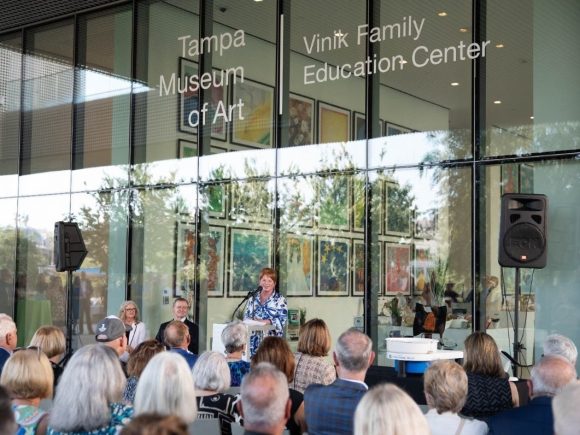
TAMPA, FL — The Tampa Museum of Art has announced that its new education center will be named the Vinik Family Education Center in honor of a $5 million gift made by Jeff and Penny Vinik to the museum’s $100 million Centennial Campaign for Renovation and Expansion.
“The Tampa Museum of Art is renowned for the value of its educational programs and its exceptional support for Hillsborough County students and teachers. We are delighted to advance that good work with this gift, and to further contribute to the museum’s mission to educate, engage and inspire Tampa Bay residents and others around the world,” said Penny Vinik.
“The opening of our new education center is long-awaited for museum members, volunteers and other visitors,” said Michael Tomor, Penny and Jeff Vinik executive director of the Tampa Museum of Art. “We are so thrilled to finally have a facility with a capacity to match the demand for our education programs, and we are grateful to the Viniks for their generous gift to help make this facility and the future growth possible.”
The education center opened on May 16 and will serve as the temporary entrance to the museum while additional renovations are completed on the west side of the building.
The first classes in the space will be the museum’s summer art camps for ages 6 to 17.
The most recent gift by the Viniks for the education center is made in addition to a previous $5 million gift made in October 2019 to endow the position of executive director, bringing the family’s total contributions to the Centennial Campaign to $10 million. To date, including the Vinik family’s gifts, the Centennial Campaign has raised $71 million toward the museum’s $100 million goal.
With the education center renovations complete, the education space has grown from 1,400 to 8,000 square feet, including four classrooms, a lobby, orientation spaces and a secure entrance.
The museum anticipates quadrupling the number of students it serves per year, and the school tour program alone can grow from 6,000 students to 24,000 each year.
In 2021, the museum at Cornelia Corbett Center, 120 W. Gasparilla Plaza, on the downtown Tampa Riverwalk, announced it was embarking on its $100 million Centennial Renovation and Expansion to expand the museum’s gross area from 69,000 to 125,000 square feet.
The renovation portion of the project is rolling out now, beginning with the new Vinik Family Education Center.
See related stories:
Architectural Plans Released For Tampa Museum Of Art Expansion
Viniks Present Largest Gift In History Of Tampa Museum Of Art
New galleries are scheduled to open in the fall, and the groundbreaking for the expansion portion of the project is expected to take place early next year.
The design of the entire renovation and expansion project is led by New York-based Weiss/Manfredi Architecture/Landscape/Urbanism.
“We’re inspired by the Tampa Museum of Art’s expansive commitment to arts education,” principal architects Marion Weiss and Michael Manfredi said in a statement. “We’re thrilled that the Vinik Family Education Center is the fitting and very visible first phase of the larger transformation and expansion of the museum. These studios and education spaces will provide light-filled settings to connect all the arts to the larger community of Tampa.”
The future expansion project will add a 4,000-square-foot auditorium. Culinary arts classes on the third-floor rooftop area of the expansion will also add to its future education program offerings.
“I am a longtime Tampa resident, and I cannot remember another time when our local arts and culture institutions have had so much wind at their back,” said Jerry Divers, chairman of the campaign cabinet and president of the Tampa Museum of Art Foundation. “This generous gift from the Vinik family, in addition to the historic $25 million donation from Dick Corbett announced last month, is truly transformational for the museum and the Tampa Bay community.”
“As we embarked on the Centennial Campaign, we made a commitment to Hillsborough County students and teachers that we would make it a priority to serve them and make the museum’s resources accessible to them for field trips, extracurricular programming and professional development,” said Dianne Jacob, chairwoman of the Tampa Museum of Art Board of Trustees. “By giving so generously to the new Education Center, the Viniks have made a lasting impression on the next generation of Tampa Bay residents.”
Founded in 1997, the private Vinik Family Foundation managed by the Viniks has donated more than $100 million to nonprofits working in the areas of education, human services, health care and the arts. VFF is especially dedicated to broadening the public’s understanding of art through inclusive, interactive exhibits and installations.
Under the umbrellas of the Vinik Family Foundation and the Lightning Foundation, the Viniks have invested significantly in Tampa Bay area charities through a variety of initiatives – the most notable being the Lightning Community Heroes program, which honors grassroots heroes with $50,000 each for their respective nonprofits at every Lightning home game.
Vinik has ventured into development and, over the last several years, has moved forward with his vision to develop 60 acres in downtown Tampa.
Water Street Tampa includes donated land and financial support to house the USF Health Morsani College of Medicine & Heart Institute in downtown Tampa.
The walkable Water Street waterfront community will also feature corporate office buildings, a hotel, residences, retail, restaurants and entertainment options.
In Tampa, Penny Vinik is a board member of the Tampa Museum of Art.
She also chairs a community arts initiative that enables Tampa Bay-based artists to display their works throughout Amalie Arena.
In August 2016, the Viniks brought “The Beach Tampa” by Snarkitecture to Amalie Arena. Following the tremendous response to this installation, they presented “The Art of the Brick Tampa” in the summer of 2017, welcoming more than 135,000 guests to experience the art of Nathan Sawaya free of charge.
Penny Vinik is also at the forefront of organizing the annual Celebration of the Arts, a juried exhibition that displays the works of hundreds of local and regional artists.
She formerly served as an ambassador for the nonprofit, Dress for Success.
Jeff and Penny Vinik moved to Tampa in 2012 after Jeff Vinik acquired the Tampa Bay Lightning hockey team. After 20-plus years in Boston, the Viniks were thrilled to experience the warmth of Tampa Bay, both in the weather and in the people.
In partnership with Cascade Investment, the investment arm of the Gates Foundation, Jeff Vinik and his real estate development company, Strategic Property Partners, are re-imagining downtown Tampa.
Founded in 1920, the Tampa Museum of Art offers exhibitions and educational programs that emphasize ancient, modern and contemporary art.
The museum houses one of the largest Greek and Roman antiquities collections in the southeastern United States, as well as sculpture, photography, painting and new media.
Online programs add to the year-round studio art classes, lectures and tours that allow children, teens and adults to discover new perspectives and learn different art-making techniques.
Through unique community partnerships, the museum offers outreach programs that provide art-therapy interventions and modes of self-expression to vulnerable segments of the population.
The Tampa Museum of Art is open seven days a week, Monday through Sunday from 10 a.m. to 5 p.m. and Thursday from 10 a.m. to 8 p.m.
Click here for tickets.
Get more local news delivered straight to your inbox. Sign up for free Patch newsletters and alerts.
Lightning In a Smile: An Interview with Justin Golden – rvamag.com

RVA Mag
Richmond, VA Culture & Politics Since 2005
|
Topics:
Justin Golden has been a mainstay in the Richmond music scene for years now; his strong guitar chops and blues fundamentals made him RVA’s best-kept secret for quite a while. But his debut record, Hard Times And A Woman, is starting to make waves outside the city. Despite the fact that it’s his debut, it does not feel like a first project, but a portrait of an artist solidifying his songwriting craft and making his own way as part of an emerging new wave of blues musicians. Kelli Strawbridge talks to Justin about the conception of the record, how his influences led him there, and not being the lead guitar guy.
Kelli Strawbridge: Let’s see, where do we start? You know what, I’ll start with this question: how long have you been writing this new album?
Justin Golden: Since May of 2019. I went on a trip, and the goal of the trip was a few different things, but I had time for once to sit down and actually write songs. I was like, ‘Okay, I’m gonna do do this really cool.’ Basically the whole east coast — do some shows, go see some shows, have time to myself… I’m gonna have a coming-of-age story and write this freaking record, you know? So that’s when I started; I wrote “Can’t Get Right” on that trip. I basically wrote version one on the trip, with the hook and the little riff, and then that got rewritten at the very end. That was the last thing I finished for the record too. So, first and last thing I did.
Kelli: Okay. That makes a ton of sense, because that record has that vibe of sounding like either the first record that you recorded or the last record. Because after listening to the rest of the record, I was like, “Oh he’s coming with this,” for this song. But you know, the rest of the record is not really in that vibe. I feel like it’s a definite statement. So you recorded that last?
Justin: Well, I wrote it first. Afterwards, I cut all the demos with Chip [Hale]. It was the last demo I brought to Chip, because I just didn’t feel like it was ready. I basically streamlined my technique, my process for how to write and how to record music, doing demos with Chip at his house a couple times a week. We started that in September of 2020, and then in December 2021, we finished that. I remember it was, like, a Tuesday or Wednesday afternoon. It was like two, three o’clock. I poured myself a whiskey and I rewrote “Can’t Get Right” from top to bottom, except for the hook. There were things I liked about it, but I was like, “This story is not driving with me anymore.” So I sat down and took me, like, three hours to get all the verses together. And I thought, “Man, I’m on one right now, I’m doing something.” [laughs]
Kelli: I feel like that’s the hardest thing, to sit down and just, as a project, go, “Okay, I need to finish this song.” It’s not something that comes easy to me. So does that come natural to you? To sit down and just go, I need to finish this?
Justin: I definitely work better with the deadline, but I need the idea to be there, and I need a spark. I had all the bones. I just had to plug in something that was better than what I had, and I worked and worked. I don’t know what happened that day. I guess it was really just the grind of this whole thing. It just came together. Having the focus. So the song, the reason I have it first is like, that song is literally Hard Times and a Woman. It is the album. Everything, top to bottom. The person in the song loses his girl, because he lost all his money, because he got drunk or whatever, you know? And a lot of it is not his fault. I don’t know, it just flowed out. Took three hours. I remember it was dark in my apartment by the time I finished, and I hadn’t turned on any lights, because I was just working.
Kelli: When you put out the artwork with that, I felt like it matched. When I saw the artwork and then I heard that song, I’m like, “This is a marriage.” You know? So what were the ideas behind the artwork?
Justin: I wanted something that was really simple and bold, but also took classic blues iconography and turned it into something that was mine. And without it being super obvious. Like, all of those are different symbols of good luck and bad luck, you know? So a little bit of a balance. The empty frame is a sense of belonging, but I didn’t wanna just have it right in front of you, like a rabbit’s foot or something. That’s lame. It’s lame as fuck. [laughs] So I spent a lot of time. I actually took a while on that step, to get the graphic designer really dialed into what I was looking for. Because that is an actual photo that he did there. He set up that scene, then shot a photo and did some other stuff to it.
Kelli: Okay, well that’s even cooler. What were your inspirations musically for this album?
Justin: That’s such a tough question. It’s such a long answer is what it is. [laughs]
Kelli: I know! I mean, I made these questions myself, but I kind of hate these questions. [laughs] But again, I feel like you’re kind of making a statement with this record. I feel like, with your singles [“Arm’s Length” and “It Ain’t Much”] and EP [Idle Hands, all three released in 2021], you’ve really been building up. I was wondering what you were really shooting for musically, with this record.
Justin: I think the answer is, like, two different tracks: one is the songs I was listening to, to come up with the music — the techniques and stuff. And then there’s also the actual sound and texture of the record. Those are two things I nitpicked really, really carefully. And I mean, as far as inspirations of other artists — like, Daniel Norgren, if you’re familiar with him at all. Swedish guy. Low-key blues and different types of folk. But for me, a lot of his his albums are hit or miss, but the ones that hit are just amazing. In 2019 he released a record which was just fantastic. It’s called Wooh Dang. The sound of it was really cool, and it was all live. I think they cut it all [as] live takes in one day. I’d already been listening to him — like, I learned finger-style, [and] that was one of my major influences, finger-style guitar playing to his YouTube videos ten years ago.
[Also,] early Black Keys, Hiss Golden Messenger, Phil Cook, the more contemporary ones. Then you got Taj Mahal, Howlin’ Wolf. I made a long playlist of things like Magic Sam, just really cool 60s-era blues. Because man, I heard the Taj Mahal album, his first one, with a lot of the hits that the Allman Brothers did, and stuff like that. I was like, “I haven’t heard a blues album like this, really, since that.” It was some groove stuff, you know? No one’s playing blues in those ways anymore. It’s always just smokey, dusty. I wanted something like that. I don’t think I quite got there with this [album], because the songs weren’t the same, but that was a major influence for me.
Kelli: You’re hitting it right on the head. I felt that you’re cultivating a different, kind of a new blues thing. You’re dressing it up, but it’s not dressing it up. It’s just maybe making it dirtier and a little more real, back to the singer-songwriter thing. Because maybe the virtuosic thing, where it’s it’s about the guitar player and the guy’s got a singer, it’s not really about the singer-songwriter thing anymore. But it seems like you’re going back to that. Were you trying to go for a newer sound with this record?
Justin: When I started writing this record, I was watching an interview with one of my friends, Jontavious Willis, who’s a Grammy nominated Blues [musician], and I’ve known him for a number of years. He used to do these interviews with older bluesmen that are [still] around, because they’re basically unsung. In one of them, the guy states something like, “the blues ain’t nothing but bad times and a woman,” you know? And that specifically hit me, because I’m not the guitar-player blues person. I’m not the lead guy. And I don’t really wanna be, to be honest. Like, it’s cool to do that sometimes. But I like writing songs, you know? And I like learning songs. So it’s been tough to be in a blues box and not be a real lead player.
When I heard that statement, I was like, “Okay, so the blues can be more than just 12 bars. It can be whatever I want it to be, as long as the content is there.” It all is coming from the same place, and I wanted to honor the tradition. That’s why I have eight-bar blues up there. I have 12-bar blues. I have country blues. “Lightning When She Smiles” is a country blues song, at least the way that I wrote it originally. And it’s still played the same way, just with better production. So this record is me reconciling all those influences I have, trying to do a blues album in content, and then something modern at the same time.
Kelli: Right. Right. It really hits those marks to me, for sure. What is the guitar that you mostly used on the record? Did you use the same guitar, or did you switch it up a lot? What was your axe of choice on the record?
Justin: So anytime you hear me finger-picking, it’s probably my Airline, which is a Harmony Rocket reissue, with fixed strings on it. That’s a semi-hollow body, and it’s really thumping. That’s what you hear on “The Gator” and “Ain’t Just Luck,” stuff like that. Acoustic [guitar], it’s probably my Yamaha, but we also used a Martin. And then my resonator [guitar] is up there too. I have a Recording King resonator, which was unplugged.
Kelli: Can you talk about the musicians on the record? They, are they mostly your band, right?
Justin: For the most part, yeah. And I really wanted it to be mostly Richmond people. That was something I was really adamant about. And as many Black musicians as I could get too, but it was COVID, and it was very limited [due] to that. I wanted to keep the circle small. The main features — like getting Ben Hunter on fiddle from Seattle, who I’ve known for years — that was really significant for me. And getting Andrew Alli, who largely… I probably wouldn’t be who I am in Richmond, or even in the blues scene around, if it wasn’t for knowing Andrew. So, it was great to get them both on it. Otherwise it’s just people in my band, and then Tommy Booker [of Jackass Flats and The Southern Belles], who was a hired gun. And that was an awesome addition. I wanted keys all over this thing, and I was like, “I need a killer keys player that can just sit down and just rip this thing.”
But for the band, we got Chip on bass, and he played a number of instruments; acoustic guitar on some stuff, lots of percussion and backing vocals. Tyler Meacham — I think another thing that really changes the sound on the record was having Tyler handle all the backing vocal arrangements. So anything that’s not just me singing, if you hear her voice on there, she arranged the backing vocals for that, after a short meeting with me.
Kelli: It’s very nice. She pops up and I’m like, “This is probably Tyler.” She sounded perfect.
Justin: And it was new for me. I’ve never given that big of a job to someone else. Usually I would nitpick that, and say, “This is what I want.” And sometimes we had a meeting beforehand and I said, “This is what I want on specific songs, more or less what you do with it. I believe in you, because I know you’re good.” And then some songs like “Lightning,” I was like, “I don’t know what I want. If you feel something, you do it, and then we’ll listen back.” And that’s one of my favorite tracks on the record, because it’s got some moments.
Kelli: I agree. I have to say, the lyrics on the record are just fantastic. I really feel like you hit it out of the park. Were there any specific lyrical inspirations for this record? Anyone in particular?
Justin: I don’t know. I listened to so much old pre-war blues, and I think that was the major inspiration for some of the lines. Like “lightning when she smiles” is an old blues line from a song a hundred years ago. I was like, “I’ve never heard anyone else use this in a song before.” And immediately — that was another one I basically wrote top to bottom in one go, using that [line] as a guide. And then it’s a lot of churchy language in there. Stuff like “Must Be Honey.” That’s sometimes what I go for, but I don’t think any one person [inspired that], other than maybe Taj Mahal, because he uses a lot of those lines too. But once I get the idea for the song, then I’m like, “Okay, it’d be cool to add something from a song, an obscure line from something else.” You know, if possible.
Kelli: Very cool. How about favorite songs or records right now in general? Is there anything that you’re really into right now, or anything that started your year off right? Other than your record.
Justin: Like I said, I kind of exist in two worlds, one foot in like the fifties and one foot in now. But…
Kelli: And postwar, anything postwar. [laughs]
Justin: I’ve really been digging this group called Vivian Leva and Riley Calcagno. Their record is out through Free Dirt Records, who is doing my promotion. I met Riley at a thing down in North Carolina last fall, and I’m really loving that record. They’re from kind of an old-time [style], but they’re also just killer songwriters and players. So that’s a really great one. I’ve been listening to a good amount of Allen Stone and Yola, who I really didn’t listen to too much until this past year. But Yola, that’s another Dan Auerbach joint. [Black Keys guitarist Auerbach produced Yola’s 2021 LP, Stand For Myself. -ed.]
Something else I really wanted to highlight, and you notice in a lot of the interviews, [was for me] to make sure people know that Chip was behind this [album], because he had a huge direction for the sounds. I definitely couldn’t have pulled it off the way that it sounds now without Chip’s directions. I was like, “This will hopefully put you on the map as a producer.” I’ve known Chip since college, so this is what he really wants to do. And I think it sounded great.
Kelli: I could hear that you guys still worked pretty closely together [during COVID], and once you guys figured out how to do it, as far as recording through the pandemic, you were able to work it out, which is good. You don’t hear that [struggle] on the record, is what I’m saying. It sounds really fresh.
Justin: Thanks, man. I felt like I leveled up at various stages through this thing. Like nailing takes to a metronome — I never really played to a metronome before, and finger-picking to a click track is not easy. [laughs]
Kelli: I feel for anybody that has to do that. I feel for any guitar player when they do that, because it feels like you are definitely being put on the spot for that kind of shit.
Justin: Bro. It’s so hard. Like, it’s incredibly hard.
Kelli: But I’m really excited for you. Thanks for taking the time out, man.
Justin: Man, I really appreciate you asking me. This has been a lot of fun to talk about this.
Justin Golden’s debut album, Hard Times And A Woman, is available on vinyl, CD, and mp3 format from Bandcamp, and can be found on all streaming websites.
“It’s free cooking gas,” said Monica Alinea. Monica Alinea and her husband, Tim, are proud owners of a HomeBiogas… READ MORE
Many small cannabis entrepreneurs say large companies are jockeying to lock them out of the industry and have funding that gives them more… READ MORE
FEATURED SHOWFriday, May 13, 9 PMInterference Radio’s First In-Person Event, feat. Katred, Andrew Fetch, IVNX, DJ Sprite, Flesh_Bot @… READ MORE
FEATURED SHOWFriday, June 10, 7 PMTyler Meacham, Dead Billionaires, Anna Leonard @ Gallery 5 – $8 in advance, $10 day of show (order… READ MORE
On a steamy Thursday afternoon in Richmond, music lovers poured into Brown’s Island for part of Live Loud Music, a summer concert series… READ MORE
Strawberry Moon has been a familiar band on the Richmond indie scene for a few years now, but with their brand new single, “Control” –… READ MORE
Copyright © 2022 · RVA Magazine on Genesis Framework · WordPress · Log in

Watch Google I/O keynote live right here – TechCrunch

Google’s developer conference Google I/O is back, which means that the company has a few things to announce. During the opening keynote, Google is expected to unveil new hardware products, new software updates and new features for Google’s ecosystem.
The conference starts at 10 a.m. PDT (1 p.m. on the East Cost, 6 p.m. in London, 7 p.m. in Paris) and you can watch the livestream right here on this page.
Rumor has it that Google could unveil the Pixel Watch. This isn’t the company’s first experience in the smartwatch space, but it represents a fresh new start with Google’s own hardware division leveraging Wear OS. If you’re a Pixel person, you can also expect some smartphone news and maybe new accessories.
More importantly, Google will likely share some news about its flagship services, such as Google Maps, Google’s search engine, YouTube and Google Play. It’s going to be interesting to see if Google has anything to share about Chrome and Android as well.
Whether you’re a Google user who relies a lot on Google’s ecosystem or a tech enthusiast who wants to see what’s next for Google, make sure to watch today’s keynote and read our coverage on TechCrunch.
The Vindication of Jack White – The Atlantic
An obsessive protector of rock’s past could hold the key to its future.
Something preposterous was happening the night I visited Third Man Records in Nashville. The label and cultural center founded by Jack White, of the White Stripes, generally strives for a freak-show vibe; you can pay 25 cents to watch animatronic monkeys play punk rock in the record store, and a taxidermied elephant adorns the nightclub. On the March night when I showed up, Bob Weir of the Grateful Dead was performing. Through a pane of blue-tinted glass at the back of the stage, another curiosity in White’s menagerie could be glimpsed: a 74-year-old audio engineer in a lab coat who calls himself Dr. Groove.
Check out more from this issue and find your next story to read.
In a narrow room behind the stage, Dr. Groove—his real name is George A. Ingram—stooped over a needle that was etching Weir’s music into a black, lacquer-coated disc called an acetate. This is the first step in an obsolete process for producing a vinyl record. The lathe he used was the very same one that cut James Brown’s early singles, in the 1950s.
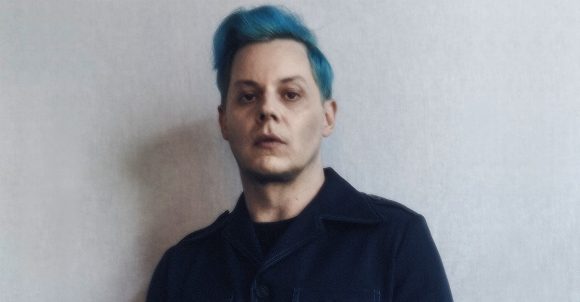
Observing this process intently was White himself. Thanks to the endurance of early-2000s White Stripes hits such as “Seven Nation Army” and “Fell in Love With a Girl,” the guitarist and singer is one of the few undisputed rock gods to emerge in the 21st century. On this evening, White, now 46, wore half-rim glasses and flannel, the only hint of rock coming from the Gatorade-blue tinge of his hair.
Listeners generally want a record to sound as loud as possible, White told me as Dr. Groove continued his work. But “you can have a mellow song like this”—the Dead’s downbeat “New Speedway Boogie” drifted in the air—and then, all of a sudden, the drummer hits the effects pedal and pumps up his volume. If Dr. Groove isn’t prepared, “the needle will literally pop out of the groove from the jolt,” rendering the recording useless.
Ted Gioia: Is old music killing new music?
For so finicky an operation to take place in 2022 is, from one point of view, absurd. The music industry largely stopped cutting performances directly to disc 70 years ago, with the advent of magnetic tape. A few minutes before taking the stage at Third Man, Weir—a septuagenarian cowboy who spoke in a low mutter—had visited the back room and marveled that not even the Grateful Dead, those ancient gods of concert documentation, had captured a show in this fashion. “Cat Stevens said the same thing,” White told me.
Ever since White installed a lathe at Third Man, a stream of acts has come to teleport to the time before Pro Tools. Unlike a recording made with contemporary equipment, a performance etched into an acetate can’t be easily remixed or otherwise reengineered. Flubs, flaws, and interference instead become selling points—evidence of a recording’s authenticity. “People who know, audiophiles—they see ‘live to acetate,’ they know the circumstances under which it was made, and it’s exciting,” White said. “There were no overdubs on that guitar. That solo really happened at that moment.” A sticker on one acetate-derived record for sale in Third Man’s store, by the dance-punk band Adult, promises “such detail in this live recording, you can even hear the fog machine!”
White is the sort of listener who appreciates such detail. This spring, a clip made the rounds online in which White demonstrated his uncanny ability to identify any song in the Beatles’ catalog in one second or less. This keen sense of the past helped the White Stripes—the Detroit band he formed in 1997 with his then-wife, Meg White—revive classic-rock rawness in an era of plastic pop and space-age hip-hop. After the band’s breakup, in 2011, his solo records earned consistent if narrower acclaim. Lately, though, his obsession with the antique has made him an unlikely power broker in what was supposed to be the digital age.
Streaming, the cheap and convenient format that came to rule the industry in the past decade, has begun to grate on a diverse range of artists and listeners. Musicians’ foremost gripe is about money: Spotify, the dominant platform, reportedly pays a fraction of a cent whenever a song is played. When, more or less overnight, the pandemic made touring impossible, the difficulty for most acts to make a living from such an arrangement became painfully clear.
The virus also spurred a public reckoning with Spotify earlier this year. A number of artists, including Neil Young and Joni Mitchell, pulled their catalogs from the platform to protest its exclusive deal with the podcaster Joe Rogan, who had aired misleading information about COVID‑19 vaccines on his show. In the eyes of those dissenters, Spotify’s unwillingness to remove Rogan reinforced the idea that it views music as just another offering in a buffet of content.
The devaluing of music as an art form, many artists worry, is hardwired into the streaming format. The old ways of building relationships between act and audience (liner notes, audio quality) are subordinated by the new: algorithmic curation, which invites endless listening but not active engagement. This may seem like the way of the future, our tastes intuited and satisfied by strings of code. But while the medium continues to attract new users, some listeners are showing signs of streaming burnout.
One way to measure this sentiment is by looking at the popularity of the physical media that White has long championed—and that ought, in a streaming-enabled world, to have gone extinct. After languishing for years, vinyl sales began a steady climb around 2007 and then exploded during the pandemic. Last year’s 41.7-million-unit, $1 billion gross for the medium represented 61 percent year-over-year growth, and this after a 28 percent spike in 2020. Limited-edition records—sold for upwards of $30 a pop at retailers such as Target and Amazon—have become integral to release strategies for the likes of Taylor Swift and Adele, who last year sold 318,000 vinyl copies of her most recent album within two months of its release. The same direct-to-acetate ritual Weir and Dr. Groove performed at Third Man’s shrine to music past also produced the first live album by Billie Eilish, the 20-year-old Gen Z phenomenon known to eat spiders on YouTube. Maybe White had been onto something.
White’s Third Man label got serious about reviving vinyl in 2009. Even his friends wrote it off as a vanity project in keeping with his other willfully retro larks, such as his upholstery hobby (don’t throw away the old; make it new) and his co-ownership of a company that manufactures baseball bats (“Built to spec … for the athlete that competes with a warrior’s mentality”). He was full of grand pronouncements in defense of the old, hard ways of doing things. “Technology is a big destroyer of emotion and truth,” he declared in the 2008 documentary It Might Get Loud.
Today, in conversation, White has an innocent, almost surfer-dude affect, though his appetite for discussing outmoded forms of technology has hardly waned. While we were hanging out with audio engineers, he proposed a guessing game about when 8-track cartridges were last on the market. (White doesn’t own a smartphone, so a member of Weir’s entourage looked it up. The answer, per Wikipedia, was late 1988, vindicating White’s memories of seeing such tapes as a teen at Harmony House Records in Detroit.) Later, in Third Man’s lounge, he described waiting months to see Paul Thomas Anderson’s The Master on 70 mm, only to have the experience ruined by a screaming baby in the row in front of him. The point of the story wasn’t that someone had brought an infant to a psychosexual thriller about a cult leader—it was that White had really wanted to enjoy the movie on celluloid.
I’ll admit that I arrived in Nashville skeptical of White’s nostalgist views. Some of my most crucial music memories include pirating Green Day on Napster and spacing out to Sufjan Stevens through Bluetooth speakers. Analog obsessives, I’ve found, can be dismissive of the powerful relationships that streamers form all the time with new artists. And some vinyl heads treat music mainly as an acquisitive hobby, like sneaker collecting. The records remain safely in their sleeves, lest their value as commodities be diminished by taking them out to play.
But White is less doctrinaire about these matters than I feared. With Third Man now a cultural fixture, he seems less like a strident iconoclast than a peacemaker between the streaming economy and the stuff economy. He insists that he never wanted to stop the march of progress; he only wanted to make sure the past didn’t get torched along the way. As he put it, “It’s hard to inspire only with one set of ways—only with the digital part, only with the vinyl part.”
Read: How the hippies hijacked vinyl
White told me he listens to 90 percent of his music digitally. He appreciates the way that streaming helps new acts find wide audiences. (Olivia Rodrigo, whose debut single made a swift transit to No. 1 thanks to Spotify, is one of the young pop artists he admires—which is cute because she herself is a White Stripes obsessive.) “I know it’s not amazing money on streaming, but if vinyl hadn’t blown up over the last few years, it would be a lot more dire,” he said.
I gave White the chance to take a victory lap for saving vinyl from what seemed like certain doom, but he was quick to credit the figures who sustained the format in the ’90s and 2000s: house DJs, punk bands, Pearl Jam. Still, he acknowledged that Third Man had played an outsize role. At first, the company focused on kooky innovations, including records that projected 3-D images when spun. (Disney borrowed the same hologram artist for a 2016 Star Wars soundtrack, which shot up an image of a TIE fighter or the Millennium Falcon.) “I never minded the gimmicks,” White said. “If it turns a kid on to music that they would have never gotten into, then whatever.”
Today, Third Man has the makings of an old-media empire. Divisions in Nashville and Detroit master music, publish books and rock-focused magazines, and develop photography. Last year, the company opened its third record store/rock club/wonder emporium, in London. But Third Man’s greatest source of influence may be the record-processing plant White opened in Detroit in 2017, which has tripled its manufacturing capacity since then. Day and night, the facility whirs along, not only pressing Third Man’s work—such as the record that will result from Weir’s gig—but also filling contract orders from behemoths such as Paul McCartney, BTS, and Beyoncé.
White’s forays into the future haven’t always been as successful as his treks to the past. In 2015, he joined a group of superstars—including Jay-Z, Beyoncé, and Madonna—with an ownership stake in the Spotify competitor Tidal. A press conference about the virtues of an artist-driven platform was met with skepticism. Tidal was, specifically and flagrantly, a celebrity-driven platform. The service did tout higher audio quality and better payouts to artists than competitors, but user sign-ups were slow, and the service never found its footing. White, who was not involved with running the company, said the backlash was eye-opening. “I don’t think [Tidal] was promoted properly from the get-go,” he said. “It quickly became a lesson: Maybe people don’t like it when the artists own the art gallery … It sort of gets to ‘Eat the rich’ kind of stuff.”
White winced when I asked about an even more contentious attempt at revolution in the music world: non-fungible tokens, or NFTs. As the pandemic wore on, some record-industry figures argued that giving fans the ability to purchase digital assets—interactive album art, or even ownership rights to a song—would fulfill the same yearning for collectibility that has helped drive the vinyl boom. Others—White now among them—see NFTs as a way to get listeners to pay for things they can generally get for free. “It gives off a vibe of ‘Well, if people are stupid enough to give me money for this, I’ll take it.’ ”
But in 2021, the White Stripes—a legacy brand more than a band at this point—hawked some NFTs, animations tied to a 10-year-old EDM remix of “Seven Nation Army.” White said that those had been pushed by the defunct band’s management. “I don’t want to come out and say ‘I had nothing to do with this,’ ” he told me. “It is my band. We allowed it to happen. But it didn’t really interest me. It’s not something we’ll be doing very much of.”
Read: Jack White and the “pro–real experience” economy
What does interest White is the internet’s broader music landscape—despite the fact that he isn’t the most fluent participant in it. He appreciates how underground scenes and subcultures, which might seem like logical casualties of streaming, haven’t quite died out: “You almost get a neighborhood feel in the TikToks and—what is it?—the Bandcamps and SoundClouds,” he said. (Witness the recent wave of chatty, droll post-punk bands such as Wet Leg, a favorite new find of White’s.) He even had a kind word for social-media platforms such as Twitter and Snapchat, not that he uses them. In their character counts and time limits, he sees proof of one of his favorite theories: Constraint is the mother of creativity. “There’s inspiration to be taken from all of that stuff,” he said.
White has always thrived within constraints, many of them self-imposed. The White Stripes famously had no bassist, and White originally composed his 2018 solo album, Boarding House Reach, with the same reel-to-reel recorder he used when he was 14 years old. For the two records he’s released this year, April’s Fear of the Dawn and July’s Entering Heaven Alive, White didn’t need to dream up new limitations. The pandemic did that for him.
When the coronavirus made studio sessions with other instrumentalists a risk, White, a consummate collaborator (besides the White Stripes, he has formed two other successful bands over his career, the Dead Weather and the Raconteurs), did something he’d rarely done: He played all the parts on his songs. This in turn required another previously unthinkable step: using software to arrange drums, guitars, keyboards, and even samples into a coherent whole. Once, the enfant terrible of the White Stripes had routinely denounced computers for their deadening effects on rock. But the technology has improved since Nickelback’s heyday, and White now believes that, in the right hands, it can stoke the life of a song rather than sap it. “It’s like, CGI in movies is so much better than it was in the early 2000s,” he said.
As social distancing loosened up and White brought in other musicians to record the songs he’d been writing, the resulting work fell into two categories: thrashing, Deep Purple–inspired rock and roll, and sweet, “Maybe I’m Amazed”–style love songs. His past solo albums had been mishmashes of styles, and he had assumed that this time he’d end up with another eclectic collection. But, he explained, instead of fitting together naturally (he knitted his fingers), the loud songs and the soft ones now seemed to repel each other (his fingers then made a crosshatch). The muse was pushing him toward two separate albums—though not a double album, which he knows screams filler. (“People even say that about The White Album, which seems shocking.”)
Both the mosh-worthy Fear of the Dawn and the brunch-friendly Entering Heaven Alive are among the best albums of White’s solo career. The lead single on Fear of the Dawn, “Taking Me Back” (which spent a few weeks at No. 1 on rock radio), has guitar jolts so menacing that they almost trigger a fight-or-flight reflex. White likes that the title phrase can be heard a few different ways. “Maybe the pandemic has made everybody ask the world, ‘Will you take me back as we emerge from our caves?’ ” he told me. The lyric is also a way for White, the father of two teenagers, to link his generation to the next. “When you kids do that,” went White’s alternative reading, “it takes me back to when I was a kid.”
A renewed appreciation for the tangible should be a boon for musicians who have struggled in the streaming era, a period in which rising profits for the industry as a whole have only incrementally benefited most individual artists. But demand for vinyl now exceeds manufacturing capacity by astonishing margins. A record that would have once taken three months to go from recording to the shelves today requires eight months or a year. Even White has been a victim of the lags; he’d originally considered releasing his new albums on the same day, but with his plant at capacity, he decided to stagger them. He has dubbed his present concert series the Supply Chain Issues Tour. As he tries to expand production at his Detroit factory, White finds himself more and more preoccupied by “regular manufacturing-plant kind of problems,” he said. “How many shifts do we have? Once you start the machines, how many hours do you keep them going?”
Read: 10 Years after the White Stripes “saved” it, rock is again in crisis
But Third Man can only do so much: In 2021, an unnamed industry executive speculated to Billboard that global pressing capacity would need to at least double to meet present demand for vinyl. Some indie figures blame the bottleneck on the pop stars who have bought up time at small pressing facilities. The real problem, White argues, is a lack of manufacturers. He recently filmed a plea for the three major record labels—Universal, Sony, and Warner—to build their own factories. Vinyl is “no longer a fad,” he said, standing amid the hazmat-yellow equipment of his pressing plant. “As the MC5 once said, you’re either part of the problem or part of the solution.”
In the meantime, artists are stymied by scarcity. Some commentators in the music industry see this as a sign that musicians need to focus on reforming streaming services or advocating a return to paid downloads. Others say that less unwieldy formats, such as the humble cassette tape, would be a more sustainable medium for collectors (sales of tapes have indeed begun rebounding recently). White has always wanted all of the above. When he launched Third Man’s first store, he had dreams of iPads packed with MP3s next to 1940s recording booths, and of customers accessing both a record-of-the-month club and an online streaming library of live music. While not all such plans have come to fruition, when I visited the Nashville location, I was amused to find a rotating rack displaying CDs for sale, as if at a Tower Records in 2005.
Yet there is no doubt that the very things that make vinyl a chore to replicate—the bulkiness, the frameable album art, the fingerprint-like grooves that differentiate one record from the next—are part of why vinyl is surging right now. It’s the sort of paradox that has animated White’s entire career as a songwriter and businessman: romance leading to frustration, frustration leading to romance.
In the Blue Room, Third Man’s concert venue, Weir and his band Wolf Bros preached between songs. The bassist, Don Was, who is also the head of the legendary jazz label Blue Note Records, gave a spiel about the glory of “authentic,” Auto-Tune-free music. Weir recalled his teenage vinyl experiences. “You’d go to a friend’s house, and you’d put records on and you’d listen to music all night,” he said. “People don’t do that anymore, because you can’t. You can’t listen to digital music for very long, because it makes your brain tired.”
The crowd whooped, but I felt a defensive pang. We all fetishize our formative listening experiences—whether they were dancing to jug bands on vinyl ’til sunup or vibing to Frank Ocean on an iPhone while riding the subway. Still, maybe Weir was right: Whose brain doesn’t feel tired these days? What if I’ve been addicted to musical fast food since first downloading MP3s at age 11? What if entire generations have been?
Looking around at the audience offered a less declinist narrative. Many of Weir’s followers were 20-somethings in flannel; they twirled alongside a few grizzled, Merlin-looking guys who no doubt had been attending shows like this one for decades. The legendary, highly physical subculture of the Dead—an ecosystem of bootleg recordings, concert tailgates, and tie-dye merch—appears to still be going strong. Indeed, it has provided a model that many of today’s acts are embracing. Live ticket sales have surged in recent months. Rappers and indie singers alike are moving branded hoodies and hats faster than they can manufacture them. Even in the slick, futuristic world of K-pop, fans express their devotion by snapping up CD bundles laden with such delights as key chains and postcards. Fans download and stream, but they still thirst for a connection with artists that isn’t mediated through a screen.
Read: Just how much of musical history has been lost?
I circled backstage to find White hanging out with staff. As we watched Dr. Groove gingerly turn over an acetate, White described the layers of quality control in the process of making Weir’s record. “You know that show How It’s Made ? ” he asked. “I get so jealous: Oh, they make razor blades, how hard! They just build the machine and it pumps it out. But we have to make something that sounds good when you put it on your turntable. There’s magic dust in there.”
Weir finished up “Saint of Circumstance,” the last of the songs that Dr. Groove had planned to capture. His assistant marked the record with a pen, and then placed it into a cardboard container. “Vinyl is final!” White shouted.
Weir wasn’t finished playing, though. As his encore of “China Cat Sunflower” and “I Know You Rider” stretched past the 10-minute mark, Third Man’s reel-to-reel recorder—striped red and white in the White Stripes’ classic aesthetic—ran out of material with which to record backup. Loose tape flapped and jangled. “This machine was not built for this type of jamming,” Bill Skibbe, White’s longtime audio engineer, said. Someone suggested ripping the rest of the show from YouTube, but audiences at Third Man are typically asked not to film concerts. White prefers that the only glow come from the electric candles that flicker from wall sconces, not iPhones held aloft. The encore would not be lost, however. White’s team had yet another device capturing the show for posterity: a digital recorder.
This article appears in the July/August 2022 print edition with the headline “The Vindication of Jack White.”
BIMM Institute Berlin: Where dynamic, career-ready Film and Music graduates are made – Study International News
For creative individuals, Berlin is a paradise. The city is experimental, innovative, liberating and alive. It not only houses a vast network of artists, labels, venues and media outlets, but it is also home to prolific film and music industries. This is where legends are made – from David Bowie, Brian Eno and Iggy Pop, to Nick Cave, U2 and Peggy Gou, many call this musical metropolis home. Inspiration is everywhere – in Berlin, these icons rub shoulders with the top producers, film distributors, streaming portals and VFX companies from all over the world, including the famous Studio Babelsberg.
BIMM Institute Berlin sits at the centre of this dynamic collaboration. As the hub of creative education in Europe, BIMM believes in nurturing individuality and empowering students to develop their own artistic vision within the context of the wider creative sector.
Here, degree programmes cover all aspects of the music and film industries, with acting, and film business and production courses set to arrive in 2023. Its Sound and Vision industry-led courses span music production, performance, songwriting, music business and filmmaking.
Whichever programme you choose, you’ll be connected to the industry you are looking to join. BIMM has over 30 years’ experience in the arts sector – not only does BIMM know how fast things evolve, but also how to equip students with the knowledge and skills to be industry-ready. You’ll hit the ground running – with confidence.
Great music and films have a long and rich history together. BIMM students will benefit greatly from a range of unique collaborative opportunities across both disciplines. “There is a huge number of opportunities for those two cohorts of students to work together,” says Alex Hobden, College Principal of BIMM Institute Berlin’s Screen and Film Faculty. “In the first year, the music video module brings together film students and music students to collaboratively work to create music videos.”
BIMM offers unlimited opportunities to gain real-world experiences, explore your passion and hone your skills. Whether you spend your time on stage, on screen or behind the scenes, courses here ensure you will gain the know-how that is continuously aligned with what the industry needs.
By being surrounded by an exemplary group of creative students and professionals alike, you’ll expand your creative network. By working with your peers from other courses to create music videos, you’ll experience the power of multidisciplinary collaboration. By getting involved with mixed media projects, you’ll work across genres and media.
That’s not all. You’ll compose music for film, diving into the world of film scoring and hearing your work on screen. You’ll film and edit live music performances too, using your live performances as an opportunity to stretch your skills and build a portfolio of projects.
Source: BIMM Institute Berlin
These courses are led by highly experienced and respected lecturers who cross creative boundaries. Their impressive accolades are only matched by their passion for their work and the support they have for their students. BIMM students get essential insider tips and exclusive knowledge that they won’t find anywhere else. “Their teaching perspective comes from being very passionate about filmmaking and wanting to teach the next generation of filmmakers,” explains Leon Springer, a screen and film school graduate.
Pair this with BIMM’s ongoing industry engagement, and students are set for success – 86% of graduates are in work six months after graduation and 82% of BIMM alumni are employed in professional/graduate jobs (BIMM Graduate Survey 2017/18).
The best part? As you evolve to join Berlin’s community of creatives, you’ll be making memories with friends from over 60 nationalities. “As an artist, I am able to collaborate with many artists and talented individuals, which helps me to grow and to become better at my craft,” says student Esther Eden.
Facebook's algorithm change in 2018 benefitted Republican groups, researchers say – Yahoo Entertainment
A 2018 change in Facebook’s algorithm resulted in significant boosts in engagement for local Republican groups even though their Democratic counterparts posted more often, according to newly published research. The findings, first reported by NBC News, line up with one of the major revelations of the Facebook Papers. Namely, that a change meant to emphasize content from family and friends wound up making News Feed more divisive by incentivizing negative posts.
The latest research, published in Research & Politics, used CrowdTangle data to measure engagement with posts from local Democratic and Republican groups on Facebook and Twitter between January 2016 and August 2021. The researchers found that by the fall of 2018, several months after Facebook announced its algorithm change, there was a significant uptick in engagement with Republican pages on Facebook that didn’t occur on Twitter.
Of course without the actual algorithm we cannot say what caused the change in 2018. We can say there was a change, specifically on Facebook, and that it impacted a large number of local Republican parties. We can also say the timing lines up with what others saw for FB's changes
— Kevin Reuning (@KevinReuning) June 8, 2022
“We conclude that it seems possible that changes in how Facebook rated content led to a doubling of the total shares of local Republican party posts compared to local Democratic party posts in the first half of 2019 even though Democratic parties posted more often during this period,” the paper’s authors write.
The researchers say it’s “difficult” to know for sure what caused the shift toward the end of 2018. But they note that their findings broadly align with what we know about Facebook’s algorithm change, and the reaction to it, thanks to the Facebook Papers. The company had announced a major change to News Feed’s ranking systems in January 2018, in order to emphasize “meaningful social interactions” or MSI. But documents disclosed by Facebook whistleblower Frances Haugen indicate that by early 2019 publishers and political parties were raising questions about whether MSI was incentivizing negativity.
“Of course without the actual algorithm we cannot say what caused the change in 2018,” Kevin Reuning, one of the paper’s authors wrote on Twitter. “We can say there was a change, specifically on Facebook, and that it impacted a large number of local Republican parties. We can also say the timing lines up with what others saw for FB's changes”
In a statement to NBC News, Meta called the researchers’ findings “implausible,” saying differences in engagement could be attributed to other factors. “It doesn’t add up with what MSI actually did, which was reduce the amount of public content — like that of political parties — on the platform,” a company spokesperson said. “The trends here instead seem to coincide with a divisive election cycle, and since the differences between political parties in the U.S. have been growing for decades, the idea that a change to Facebook ranking would fundamentally shift how people choose to engage with political parties is implausible.”
It will be pitted against human competitors in July.
Creator of Biden gas stickers Bobby Naklicki discusses the success of his popular stickers on gas pumps across America Wednesday on ‘Jesse Watters Primetime.’
TikTok is rolling out more screen time controls to help users manage how much time they are spending in the app
Marathon County Circuit Judge Michael Moran sentenced Cindy Schulz-Juedes to life in prison for the 2006 shooting death of her husband, Kenneth.
A bipartisan Senate bill would create a full regulatory framework for cryptocurrency and other digital assets.
The FBI in North Carolina is warning businesses in eight states about a scheme in which people are using stolen credit card numbers to make large purchases by telephone.
When its Pay Later service launches alongside iOS 16 later this year, Apple plans to handle lending decisions on its own.
Netflix and CD Projekt Red have unveiled the first trailer for Cyberpunk: Edgerunners, their anime series based on Cyberpunk 2077.
It's on sale right now. The post I drop my iPhone at least once a week, but this case I bought on Amazon has kept it crack-free for over a year appeared first on In The Know.
Most Americans don’t want abortion bans but gerrymandering allows politicians to face little accountability
It took 157 days to perform the calculation.
Workers will now be able to apply for jobs with competitors and talk about instances of misconduct.
LinkedIn is expanding its Clubhouse-style live audio feature as it looks to draw more creators to its platform.
Twitter's latest experiment is product drops, which allows users to get notifications ahead of in-demand product launches.
State Rep. Gary Click wanted to discuss the hospital's website during a hearing on a bill to ban gender-affirming care for minors in Ohio.
A YouTube creator trained an AI on 4chan's most hate-filled board, and it was exactly as vile as you imagine.
Between Summer Game Fest and the Xbox showcase, June is jam-packed.
Amazon's app now includes a Virtual Try-On for Shoes feature that lets you see how casual shoes would look on your feet.
Let's be honest, you just want to hear about the video game in which you play as a cat, don't you.
Halsey fans were soaked as they waited for the pop star’s concert to begin at a flooded venue in Columbia, Maryland, on June 8, amid a tornado warning.Halsey was scheduled to take the stage at the Merriweather Post Pavilion Amphitheater at 7 pm but severe weather forced the venue to delay the show, local media reported.Staci Downing Creative filmed video showing rain streaming in through the roof, drenching the crowd.The venue tweeted that the delayed show would resume at 9:30 pm, however the concert was cancelled not long later.Halsey took to Twitter following the cancellation, saying she was “beyond disappointed with the way the venue handled everything” and that her rescheduled concert would be held at a different location. Credit: Staci Downing Creative via Storyful
AAPI Heritage Month Spotlight: Master Sgt. Gloria Florentine Siliako-Nautu – Goodfellow Air Force Base

U.S. Air Force Master Sgt. Gloria Florentine Siliako-Nautu, 17th Security Forces Squadron noncommissioned officer in charge of operations, official photo. Siliako-Nautu is Samoan and is from the island of American Samoa located southwest of Hawaii. Siliako-Nautu volunteered to participate in the 17th Training Wing’s Asian American and Pacific Islander Heritage Month observance. (Courtesy photo)
U.S. Air Force Master Sgt. Gloria Florentine Siliako-Nautu, 17th Security Forces Squadron noncommissioned officer in charge of operations, performs a traditional dance. Siliako-Nautu is Samoan and is from the island of American Samoa located southwest of Hawaii. Siliako-Nautu volunteered to participate in the 17th Training Wing’s Asian American Pacific Islander Heritage Month observance. (Courtesy photo)
U.S. Air Force Master Sgt. Gloria Florentine Siliako-Nautu, and her fiancé and his brother after getting their traditional tattoo. Siliako-Nautu is assigned to the 17th Security Forces Squadron and where she is noncommissioned officer in charge of operations at Goodfellow Air Force Base, Texas. (courtesy photo)
This month’s observance is Asian American and Pacific Islander Heritage Month. The 17th Training Wing recognizes this culture and diversity and how it makes the force stronger. Each week in May, the 17th TRW will highlight service members of different backgrounds and experiences. This week we are highlighting Master Sgt Gloria Florentine Siliako-Nautu, 17th Security Forces Squadron noncommissioned officer in charge of operations.
What is your job?
I am currently deployed to Ramstein Air Base, Germany. I am working at the Deployment Transition Center (DTC) as the mission set manager flight chief.
I am a Defender by trade and back at home station, 17th Security Forces Squadron, I was the noncommissioned officer in charge of operations at Goodfellow Air Force Base.
Tell us about your Asian or Pacific Islander Heritage.
I am Samoan. I come from the beautiful island of American Samoa located southwest of Hawaii.
What does Asian American and Pacific Islander Heritage Month mean to you?
It means remembering that I’m Samoan and to be proud of who I am. It also means sharing my culture and the Samoan history with those around me.
What’s one aspect of your heritage that you feel very strongly about?
The Faa-Samoa or the Samoan way. We are deeply rooted in our culture despite where we go. We were taught at a very young age of the traditional and customary way of life in Samoan culture.
What Asian or Pacific Islander public figure, past or present, inspires you and why?
Congresswoman Uifa’atali Aumua Amata Coleman. She was the first woman to represent my island in the U.S. Congress.
17th Training Wing kicks off Pride Month
Congratulations 2022 master sergeant selectees!
17th CPTS welcomes new commander
Proud to be: CMSgt Chasity Hert
17th OMRS Change of Command
EQ's Fuller and T&F's Sarnowski Earn Big 12 Postgraduate Scholarships – BaylorBears.com

West End native opens coffee shop in her own neighborhood – Spectrum News 1
Get the best experience and stay connected to your community with our Spectrum News app. Learn More
Continue in Browser
Get hyperlocal forecasts, radar and weather alerts.
Please enter a valid zipcode.
Save
LOUISVILLE, Ky — Economic growth continues in Louisville’s West End for Black-owned businesses. One West End native has turned her love for coffee into a business and this month has opened her first brick and mortar shop: Julee’s Mocha.
“This is a food desert and a lot of people think, ‘Oh they are not going to want a coffee shop,’ but that is actually the total opposite,” Ausha Hilliman, owner of Julee’s Mocha said.
Hilliman spent years as a barista, even becoming a Starbucks Coffee Master, before deciding to go out on her own. Julee’s Mocha began as a mobile-only business but now occupies an area inside the Nia Center on West Broadway. The shop will have its grand opening on June 24.
As a West End native, Hilliman explains on this side of town, coffee shops are few.
“Some local chains were not willing to come past 9th (street) and major chains were not either,” Hilliman said. “So, I bought my house on the West End and I said if I’m going to continue this coffee journey, I might as well try to open something in my neighborhood.”
Through the help of organizations like the Russell Business Incubator, AMPED (The Academy of Music Production Education and Development), and the Urban League, that dream has turned into a reality. All while showing the next generation of Black business owners they can succeed too, regardless of what they want to pursue.
“Hopefully, I can be a role model for people who have a passion, a strong hobby, they want to take it to the next level and have some doubts to if they can pull it off,” Hilliman said.
Hilliman hopes to break the stigma of the West End and show everything that you can find success there, even if it’s one cup of joe at a time.
Techivation T-Clarity: a technical and creative tool for music – – Happy Mag
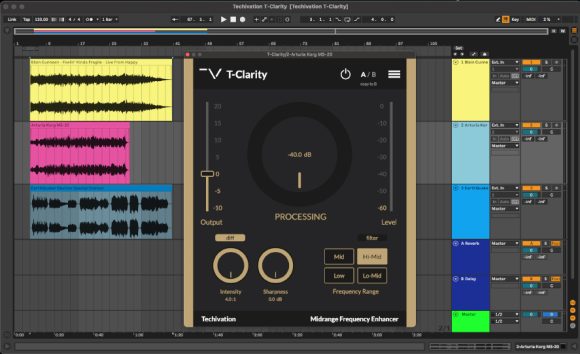
by Tim McArtney
by Tim McArtney
Techivation is a company based in the United Kingdom whose plugins land firmly in the production and mixing world of music making. With their latest plugin, T-Clarity they have found themselves with a useful tool to clean up an instrument or entire mix.
T-Clarity presents as a simple plugin, but we quickly found how complex and useful on so many different sources it is. To put it simply, it’s a multi-band compressor. As used by some of the music industry heavyweights we put the T-Clarity to work on a few things that have been produced at the Happy studios.
As mentioned, the T-Clarity graphic user interface (GUI) is classically elegant and easy to understand as you dive into the plugin. Across the top, it has a power button, A/B switch, and an in depth menu with presets, GUI window size, and oversampling rate.
In the main section, it has Output, Processing control knob, Level — that shows gain reduction, Intensity and a Diff button above that to hear what’s happening, Sharpness, Frequency range selectors from Low, Lo-Mid, Mid to Hi-Mid, and a Filter button that acts as a low or high cut depending on which frequency you engage.
I wanted to hear the T-Clarity across multiple sources so I loaded up a full mix, an Arturia bass line from their new Korg MS-20 and a bright distorted guitar. I wanted to jump in and start tweaking knobs and pressing buttons to see if I could improve on what I thought were great sounds.
The first source was the full mix, and it cleaned up the mid to low end in the mix. The key to success here was being subtle, which is important in any full mix. The use of Intensity and Sharpness made some magic happen as it gave clarity (pun intended) to the low mids that were building up from the bass guitar and the keyboard part.
Moving on, I placed T-Clarity on the Korg MS-20 bass line. It controlled some of those runaway low notes, so again I found myself impressed by its use of the controlling low end. But I thought to myself, is this all it can do? No, no, no. With a few tweaks, I quickly turned this bassline into something more of an interesting production layer by selecting the Hi-Mid Filter.
After landing on a radio effect, I played with the Diff button — this disengages the Filter — and created a glitchy sound that was interesting. I’m unsure if the creators at Techivation intended the plugin to be used in this manner, but I was impressed with the sounds I was coming up with.
Back to what is most likely, its intended use, I put T-Clarity on a bright electric guitar. With a light touch, this plugin contained some of those occasional high brittle frequencies. Exactly what I was hoping it would do. It reminded me of that annoying term ‘Fix it in the mix’, which the T-Clarity did exactly. But please keep recording as well as you can folks!
Overall, I enjoyed the simplicity in look and sound and the fact that I was able to be creative with it as well.
To get yourself a copy of T-Clarity head over to Techivation’s website.
News and Entertainment from Australia’s favourite youth publisher
WE ARE HAPPY MEDIA PTY. LIMITED
GET HAPPY IN YOUR INBOX
Spotify Shares Our Vision To Become the World's Creator Platform – spotify.com
Artists deserve clarity about the economics of music streaming. This site sheds light on the global streaming economy and royalty system.
When competition is fair, both consumers and companies win. Learn about our efforts to even the playing field for all developers.
During Stream On, we explored the power of audio for millions of creators and billions of fans around the world.
June 8, 2022
Today, Spotify hosted our second Investor Day, updating the financial community on the progress we’ve made since our direct listing. Additionally, we shared details about how we’ll continue to innovate and grow over the short and long term. The event, which was held at our New York City office, featured presentations by Spotify’s Chief Executive Officer Daniel Ek, Chief Financial Officer Paul Vogel, and members of the company’s global leadership team.
When Spotify went public in 2018, we were a music-streaming company, but we’ve evolved dramatically over the last four years—expanding beyond music to become the leading player in audio.
Throughout the event, Spotify executives highlighted the consistency of our financial performance, our strong momentum, and the potential we see ahead for driving meaningful user, revenue, and bottom-line growth. They also built the case for why our future extends beyond music and podcasting, describing a reality where 50 million artists, writers, labels, publishers, studios, and other creators will be able to manage their businesses and monetize and effectively promote their work to more than one billion users.
At the center is a set of software, services, products, and business models tailored for specific verticals and bundled into a single consumer experience: The Spotify Machine.
Read on for top takeaways from our speakers. 
“We’re really investing in building a fantastic multisided platform that has all the ingredients to become one of the truly unique creative platforms in the world,” Daniel shared in his opening remarks. “And based on what we see, we are accelerating our moves to seize that opportunity in the near term. And the value creation opportunity is very high.”
He then outlined at a high level what Spotify has achieved since 2018 and revisited the three key foundations that continue to differentiate Spotify and drive our long-term strategy:
Ubiquity: It’s long been our goal to make Spotify available to anyone on any device. Over the last four years, we’ve gone from approximately 250 partners to more than 2,000 today, with integrations ranging from wearables like watches to all facets of the connected life—including cars and kitchen appliances. Ubiquity has proven to be a significant driver of new users to the platform, with 28% of all our new registrations coming from these partners, up from 14% in 2018.
Personalization: When you ask listeners what they love most about Spotify, more than 81% cite our personalization, or discoverability. That magic ability to introduce a user to their next favorite song and artist. Spotify listeners view this as the reason not only to sign up for our service, but also to stay.
Freemium: The combination of our free ad-supported tier and our premium subscription tier. It gives listeners a chance to try Spotify risk-free, enables Spotify to build a funnel toward establishing a larger and growing subscriber base, and has enabled our expansion into new markets due to our low price of entry—we’ve gone from 65 markets around the world to 183 in just four years.
“We see the opportunity to continue to imagine and explore new verticals across our platform—within audio, but also beyond.” Daniel noted. “And for each vertical, we will develop a unique set of software, services, and products and business models that’s going to be tailored for that specific ecosystem.” 
Joining the stage after Daniel, Gustav Söderström, Spotify’s Chief R&D Officer, provided a deeper look into that future from a product point of view.
While there’s much that goes on behind the scenes of the Spotify app, the end result is a single intuitive experience for listeners that brings the world’s audio content together in a relevant and personalized way. And that’s what we’ll continue to do as we add new format verticals, like audiobooks, to the Spotify app.
Gustav also shared how this strategy has been successful over the last few years in compounding our user base. He noted that in 2019 we integrated podcasts into the main app, making them available to over 200M potential listeners. In 2020, we did the same with video podcasts, in 2021 with Live, and in 2022, we’re integrating audiobooks into the main app, making them available to over 400M potential listeners.
Finally, Gustav explained Spotify’s personalization engine, which is shared among all of our content formats. “Investments in this space allow for the personalization engine to get better and better as new formats are added, ultimately giving us a better understanding of every user and how we recommend to them. To a large extent, the value of a service like Spotify is directly related to how much a consumer feels like that service helps them discover new things,” Gustav said. And that’s what Spotify enables. In 2018, we had 10 billion artist discoveries every month on Spotify. Today, there are 22 billion and we’re nowhere near done. 
“First and foremost, Spotify is a music company,” Charlie Hellman noted upon taking the mic. “All of our music teams’ strategies ladder up to two primary goals: making a unique and superior music experience for fans, and creating a more open and valuable ecosystem for artists.”
“We are by far the most global platform, the most tapped into local scenes, and the most capable of developing opportunities for artists at scale,” Sulinna Ong shared. “No other streaming service is better positioned to identify, amplify, and help shape culture than Spotify.”
“We are the preferred destination for artists, because we help to take an active role in achieving their dreams and partner with them on thinking outside the box, working together to help them succeed,” Madeleine Bennett said. “By unlocking the ability of any artist—from anywhere in the world—to connect with listeners everywhere, we are tapping into a potential market of billions of people everywhere.”
One of the reasons that we’re the go-to destination for artists is because we uniquely provide them with a core set of valuable free resources, useful for any stage of an artist’s career, that help them get their music in front of the right fans. In addition to these free tools, we’ve invested in building the most performant and effective commercial tools for promotion in the streaming era.
In 2020, we introduced our Discovery Mode program, which is powered by algorithmic promotion and is loved by those who have tried it. From Q121 through Q122, Discovery Mode had 98% customer retention. And in early testing, artists with tracks opted in to the program increased their listenership by an average of 40%. Almost half of that growth came from listeners who had never listened to the artist before.
With Marquee—our full-screen, visual, sponsored recommendation of artists’ new releases—we recently expanded access by rolling out a self-serve buying experience in the U.S. As a result, we doubled the number of new customers from Q4021 to Q122 while maintaining an 85% retention rate. And in Q122, revenue grew 224% year over year.
Charlie Hellman
In addition to helping artist teams promote and grow their audiences on an ongoing basis, we’re also focused on helping them earn in more ways. Beyond music, touring and merchandise are significant pieces of the equation. So we’re building solutions for both artists and fans, all while growing new lines of profit for artists and Spotify.
We’ve integrated listings from top ticketing platforms to sell concert tickets at scale within Spotify. We’ve also enabled artists to sell merch, vinyl, and other offerings directly to fans via their Spotify artist pages through a custom integration with Shopify. And we’ve continued to make great progress with our Fans First program, which uses Spotify data to identify and reward the most passionate fans with exclusive offers, like advance access to concert tickets, exclusive merchandise, or invite-only events. To date, the program has generated more than $300 million in revenue for the music industry.
We also want to open up ways for artists to directly interact with their audiences, creating meaningful engagement and monetization opportunities. One new experience is exclusive live audio rooms where artists host their top Spotify fans. Here, artists can celebrate a special musical moment like a new release and earn revenue by selling merch, promoting concert tickets, and receiving tips—all inside the live room.
“As we diversify revenue streams for artists and identify the best ways to increase spending from a user base that is on its way to 1 billion, we will further enrich artists—even outside of their rapidly growing streaming royalties—and deliver margin impact for Spotify,” Charlie concluded. 
In just under four years, Spotify went from having few podcasts on-platform to being a global leader in the market.
Consider the numbers: When Anchor joined Spotify in 2019, there were fewer than 500 thousand podcasts on the platform. Today, there are over 4 million, and Anchor powers more than 75% of them. Those millions of shows being published to Spotify from Anchor are often being made by first-time creators. And as those creators make their content, they share it with their friends and family off-platform. And the result? On average, every new Anchor show brings 2.5 additional monthly active users (MAUs) to Spotify.
“With that critical mass of both creators and consumption in the same ecosystem, we’re able to do something that has not been possible in nearly 20 years: actually innovating on the podcast format itself,” Maya shared.
We’re doing this in a few ways.
First is format innovation.
Next is interactivity.
Finally, monetization.
“This has opened up a new world of opportunity to add features and formats to the podcast-listening experience that have never been possible before—so Spotify is now not only differentiated by our catalog of content, but also by delivering a truly superior product for podcast listeners and creators,” she concluded. 
Spotify’s origins are rooted in music, but our future is supporting creators across audio—and we’ve taken the learnings from our success in music to propel our podcast business forward.
Dawn explained that our investments in top-tier exclusive and original content create real value for Spotify in four ways:
This strategy is proving to be successful: “Our original and exclusive shows account for 15 of the top 100 podcasts on Spotify—a significant achievement given that we produce or license only 1,000 of the more than 4 million podcasts currently on the platform,” shared Dawn. “And six of the top 10 shows are Spotify exclusives.”
To date, we have committed more than a billion dollars to podcasting in order to grow the podcast audience and transform the industry. And this investment brings with it significant long-term upside: In 2021, we generated close to €200 million in podcast revenue. We expect this to increase materially in 2022, and going forward, we believe podcasting in itself will be a multibillion-euro business for Spotify.
Thinking about the podcasting industry as a whole, before Spotify entered podcasting in 2018, the annual ad spend in the U.S. was approximately $480 million. At that time, it was projected to hit $1.1 billion in 2022. Today, podcasting is expected to exceed $2.1 billion in 2022—almost double the initial projections and over 300% growth since 2018. What’s more, the market is expected to double by 2024 to reach $4.2 billion.
And while the U.S. is a key market for podcast advertising, podcasting adoption is growing internationally, especially in markets such as the U.K., Germany, and Brazil.
The number of people engaging with podcasts is also growing. Since 2018, we’ve gone from less than 7% of listeners on Spotify spending time with podcasts to 30% of users monthly. Users who listen to both podcasts and music listen twice as much as users who only listen to music. And that extends beyond listeners: In the U.S., when we bundle music and podcast advertising, the average size of the spend on a campaign is four times that of a music-only campaign, so we’re driving bigger spend from advertisers and significantly growing our revenue.
By introducing streaming technology to podcasting, Spotify helped create audio experiences that were not possible before. Like with music and podcasting, we see an extraordinary opportunity to invest, innovate, and grow audiobooks. The vertical holds massive possibilities to build on our ambition to be the destination for a wide array of creators. The global book market is estimated to be around $140 billion, with audiobooks having only a 6%-7% market share.
At the end of 2021, we announced our plans to acquire Findaway and enter the audiobook space. Findaway works across the entire audiobook ecosystem, with a platform and offerings that serve authors, publishers, and consumers. We plan to build on its expertise and infrastructure to deliver tools and resources that will lower the barriers to entry and enable creators to find an audience—expanding the audiobooks market overall, just as we did with podcasting.
To achieve that scale, we’ll amplify the growth of Findaway’s platform offering, currently called Findaway Voices. This platform connects independent authors and publishers with independent voice actors and manages the production and distribution of their audiobooks. This creates an exciting new channel of scaled creation, with the potential to quickly grow the audiobooks market. 
Lifetime Value—or LTV—is a metric that many at Spotify spend much time considering, modeling, testing, and refining. We believe this is a metric that provides enormous insight into the true value that we provide to consumers, creators, and our business. We use this powerful instrument to predict which content yields longer-term retention, engagement, and happiness, with the goal being to maximize the lifetime value of all Spotify users.
Lifetime Value is simple in theory, but complex in practice. Think of it this way: All the future value that you expect a consumer to bring you, across their entire lifetime on the service, discounted to a net present value.
As an experimentation metric, the total LTV seeks to answer the question: If we do X today, what can we expect to be the profit that X will bring to the business and its creators in the future?
Our machine learning models now tell us which combination of user, content, and monetization gives the most consumer value—and the most creator value—at a certain time, enabling us to maximize the total value of the platform at each moment.
So, how do we keep on increasing LTV? We plan to repeat what we just did with podcasts by adding audiobooks to the platform. Audiobooks should grow our users’ lifetime multiplied by their value because it’s helping retain users and it’s increasing our gross profit.
We don’t want to increase lifetime at the expense of gross profit—for example, by dropping prices. And we don’t want to increase gross profit by doing something that a user might accept in the moment but not enjoy in the long term . . . like cranking up their ad load or recommending lower-cost content that isn’t right for them. Both could negatively impact their lifetime on the service. A well-instrumented LTV metric aligns you with your consumers and creator partners, and it “keeps you honest.”
While it’s still early days, we’re using LTV more and more in our business. Our vision is to have it be the primary driver of all of our business decisions as it allows those decisions to be automated, personalized, and scalable—something that wasn’t possible before.
Tony concluded that Lifetime Value:
All of these are essential to helping Spotify reach our goal of 50 million creators and 1 billion listeners globally while also ensuring our business grows. 
“Right now, we’re on track to more than double our reach to over 1 billion users,” Alex began. “And with our vertical platform strategy, over time our ambition is to build the business toward an annual ARPU of €100. This means, on average, looking at both free and paid, we can significantly increase the total revenue across our entire user base.”
But how do we do that? Alex laid out our existing structure.
We then go back to step one and bundle in a new vertical. We did this, for example, with podcasts in 2019.
With 422 million users worldwide, Spotify is by far the largest audio streaming subscription service in the world. Subscriptions, in particular, are our super strength. We have more than 182 million subscribers—meaning we have a recurring relationship with 2% of the world’s population.
We’ll continue to innovate across our propositions, tailoring our playbook to the needs of the regions to maximize our user- and revenue-growth opportunities. “As Free users convert, subscribers upgrade, and the ad business scales, the ARPU increases. So we see plenty of potential to further increase ARPU,” Alex said.
And just as Spotify continues to grow, so too do the industries we play in. We believe the music streaming market alone has room to expand from $30 billion to nearly $80 billion in the next 10 years. We also see the Live Experiences business as a natural extension of Spotify’s existing music business. Because of our scale, the data advantage we can offer to partners, artists, and venues is powerful.
In the decade ahead, we believe there are additional markets and verticals that are natural fits for our platform and audience. There is a golden opportunity for an audio-first platform like Spotify to add value in categories beyond music, podcasts, and audiobooks. “With our enormous user base, imagine the potential,” Alex said. “With our monetization modalities and LTV optimization, we can ensure that users get access to the right content, at the right price, at the right moment.”
Our current markets of music and podcasts coupled with our multiple modalities of monetization and our extension into Live will build revenue growth that will take us to a global ARPU of 2 times. And as we continue to expand into these new verticals, we’ll deploy our Spotify Machine to apply the same growth playbook. We believe this can unlock our full ARPU potential, creating the opportunity to reach €100—4 times where we are today, inclusive of all our new initiatives. “This,” said Alex, “is our future.”
Since 2018, we’ve tripled our ad revenue and established an entirely new business with podcasting, growing it tenfold since 2019 alone. So we not only have the ingredients to succeed in a competitive ad market, but we’re also already delivering return on our investment to advertisers by leveraging synergies between content formats.
There’s also a significant opportunity to further implement and improve ad monetization around the world. So as we fully realize our international investments over the next year, we expect to see higher margins and revenue growth. To do this, we’re focusing on three key product areas.
First, Streaming Ad Insertion (SAI), our game-changing ad tech, unlocks valuable first-party audience data and insights by delivering the most rigorous targeting and reporting available in podcasting today.
Next, Spotify Audience Network, our audio-first advertising marketplace, makes it possible for advertisers to connect with audiences listening across a broad range of Spotify Original & Exclusive podcasts as well as third-party podcasts, opted-in creators, and publishers. The Spotify Audience Network was born out of our acquisition of Megaphone and strengthened by our more recent acquisitions of Podsights, Chartable, and Whooshkaa—and is helping us lead the charge to revolutionize podcast ad buying.
“That flywheel of having more creators adding more content to our network means more listeners who will in turn attract even more advertisers,” said Dawn. “This is what makes the Spotify Audience Network so powerful—allowing us to grow our podcast advertising revenue by many multiples.”
Finally, we’re innovating on the audio ad experience itself to make it more interactive for users and more impactful for advertisers. One recent example of this is Call-to-Action cards. Powered by SAI, this format makes it easier for users to engage with promo codes as they listen—and offers advertisers an even more direct way to measure campaign success via clicks. We see this format as the foundation of future ad experiences in podcasting, music, and beyond.
Gone are the days of ads’ accounting for less than 10%of Spotify’s total revenue. Advertising is now poised to become a key growth driver. Over the long term, we expect ad revenue to be more than €10 billion annually.
“We’re seeing very strong user growth across the world, and Spotify’s ad machine stands ready to unlock huge value for creators, publishers, and advertisers,” Dawn noted. “In some of our largest markets, including the U.K., Germany, and Japan, we’ve just scratched the surface—and we see a significant opportunity to implement and improve monetization in growing markets across Latin America, Africa, and Southeast Asia.”
We’re also upleveling our measurement offerings, most notably through our acquisition of the leading podcast ad measurement service, Podsights. Podsights offers an advertising attribution solution that is built specifically for podcasting, and it allows advertisers to attribute podcast ad exposures to actions taken on an advertiser’s website or app—helping them to better understand their ROI. Long term, we also intend to extend Podsights’ capabilities beyond podcasts to the full scope of the Spotify platform.
Additionally, we’re preparing to launch a dynamically priced auction for a segment of audio ads by enhancing our self-serve manager, Ad Studio, which includes features that advertisers have grown accustomed to on other platforms, but with a unique Spotify spin.
Today we have tens of thousands of advertisers on Spotify, with the majority of our ad revenue coming from the larger brand enterprise category. By making it possible for advertisers to buy based on desired outcomes across music and podcasts, we’ll begin to increase our stable of small- and medium-sized advertisers. In turn, this will unlock massive lower-funnel media budgets, like direct response—a part of advertising currently missing from audio.
Long term, we’re exploring how to bring ad monetization into audiobooks and video podcasts, and how to unlock more ad-supported music listening as we continue to innovate across our Free tier.
Today Spotify has roughly 2.5 times more users than we had just four years ago. Our subscribers have grown at a similar rate, topping 180 million. And since going public, we have met or exceeded our guidance ranges for both users and subscribers over 90% of the time. Paul outlined our progress across a variety of metrics.
He then moved into our specific business performance, starting with music.
Spotify’s music business has been a real source of strength, driving strong revenue growth and gross margin expansion. Music revenues—which consist of Premium subscriptions, ad-supported music, and our Marketplace suite of artist tools—grew at a 24% CAGR. And, importantly, music gross margins have increased over the same time frame, reaching 28.3% in 2021.
Marketplace, too, is adding significant value to our music business. In 2018, our Marketplace contribution to gross profit was less than €20 million. In 2021, it grew to more than €160 million, eight times the amount in just four years. We expect Marketplace contributions to gross profit to increase another 30% or more in 2022. Marketplace is the quintessential example of our approach to capital allocation. While there was a significant upfront cost to build and launch these offerings, we saw compelling data, which gave us the confidence to double down and invest aggressively against our goals.
He then turned to podcasting. “We continue to invest in podcasting because we believe the long-term margin profile will be accretive to our consolidated margins,” Paul explained. And there are positive signs so far: Users who engage with both music and podcasts have a higher lifetime value than those who engage with only music. And in 2021, podcasting revenue grew more than 300% year over year to nearly €200 million.
We believe 2022 will be the peak in terms of the negative impact of our investments on gross margins, and we expect podcasting gross margin to turn profitable over the next one to two years and on a meaningful ramp from that point onward.
When it comes to monetizing podcast listening hours, we’re just getting started. Only a minority of podcast time spent was monetized by Spotify in 2021, whether through our O&E inventory or monetizable Spotify Audience Network impressions. Of the 7% of listening hours today coming from podcasts, approximately 14% are currently monetized by us on a global basis. Yet we believe we have a multibillion podcasting advertising opportunity, both on- and off-platform.
Next, Paul moved on to our goals and expectations over the immediate (three to five years) and long term (the next decade). Long term, our goal is to deliver more than 20% revenue growth.
We expect our consolidated gross margin to top 30% in the intermediate term. Favorable margin drivers such as Marketplace and improving international ads monetization should lead to further expansion of our music margin, first to 30% and then over time, to 35%. Over the next three to five years, we believe podcast margins should top 30%, and our long-term view is that this business could reach 40%-50%. Over the long term, our road map has a number of initiatives that we believe will yield even higher incremental margins.
Plus, we won’t hesitate to invest when we see something big to grow our business. This may create lumpiness in our margin progression—but growth isn’t always linear.
“We are excited about the business we are building at Spotify,” Paul concluded. “We have strong momentum with the potential for meaningful user, revenue, and bottom-line growth in both the short and long term. We have the team and the plan to deliver growth in users, subscribers, revenue, and margin, and doing so with positive and growing free cash flow. We have never been more enthusiastic about the opportunity ahead.”
“We are running faster and we are more focused than anyone else in audio. And as you could hear, audio and long-form content is a much bigger business than what many would have thought.”
“From everything I see, I believe that over the next decade, we will be a company that generates $100 billion in revenue annually and achieves a 40% gross margin and a 20% operating margin.”
And, among this, we’re accelerating our move from a one-size-fits-all to a far more dynamic and open platform. “A platform that will entertain, inspire, and educate more than 1 billion users around the world,” Daniel explained. “And as the world’s creator platform, we will provide the infrastructure and resources that will enable 50 million artists and creators to grow and manage their own businesses, monetize their work, and effectively promote it.”
Doing this well will make us more attractive as a home for top and emerging talent. And in turn, these services will also improve the gross margin across our portfolio: a total win.
Forward-Looking Statements
We would like to caution you that certain of the above statements represent “forward-looking statements” as defined in Section 27A of the United States Securities Act of 1933, as amended, and Section 21E of the United States Securities Exchange Act of 1934, as amended. The words “will,” “expect,” “believe,” and similar words are intended to identify forward-looking statements. Examples of forward-looking statements include, but are not limited to, those relating to projections or estimates about the future performance of our company. Such forward-looking statements involve significant risks, uncertainties, and assumptions that could cause actual results to differ materially from our historical experience and our present expectations or projections, including our ability to attract prospective users, retain existing users, and monetize our products and services; competition for users, user listening time, and advertisers; risks associated with our international operations and our ability to manage our growth; and other risks as set forth in our filings with the United States Securities and Exchange Commission. We undertake no obligation to update forward-looking statements to reflect events or circumstances occurring after the date hereof.
Non-IFRS Financial Measures
The discussion above includes non-IFRS financial measures that should not be construed as alternatives to financial measures determined in accordance with International Financial Reporting Standards, or IFRS. See the appendix to our CFO’s Investor Day presentation available on our website for a reconciliation of these non-IFRS financial measures to the most closely comparable IFRS measures.
© 2022 Spotify AB.