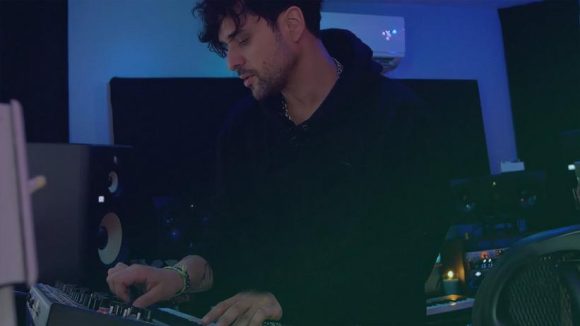
There is no one answer for what Contains: Eggs exactly is: a multimedia team, an innovative music video and concert hub or simply a passionate group of friends. “[Contains: Eggs is] a group of people that believes in the quality of innovating what music videos can and should look like, and whenever we have an opportunity that gives us the potential to do that, we pursue it,” said William Higbie, a rising senior majoring in cinema and media studies and the group’s producer. Contains: Eggs was originally founded in 2019 by rising seniors Shantanu Jhaveri and Joel Yoon, who said the group’s name was inspired by their friend and musician Sumit shaving his head bald, which “looked like an egg” and inclined them to “make something.” At the time of the group’s creation, Jhaveri and Yoon were freshmen and excited to start projects but found it hard for people to take them seriously as first-year students. This passion, combined with their desire to collaborate on projects with other students, sparked what would become a space where anyone with an idea for a project had the ability to come and work on things together. “[Yoon] came from a very traditional storytelling background, and I came from a traditional engineering background,” said Jhaveri, who is majoring in arts, technology and the business of innovation and computer science. “If you see any of our videos, we try to do some technically captivating things. If we do anything technical, we want to try to capture some element of storytelling, or some level of art behind it, so that’s how we kind of came up with this cool collaboration between us.” With Yoon, who is majoring in arts, technology and the business of innovation, and Jhaveri, Sumit and Higbie make up the core of Contains: Eggs. One of the major projects pursued by the team was TinyDorm, an event where musicians perform in an intimate college dorm room. All of the team members agree that TinyDorm has come a long way since its first rendition in 2020. “That first one was so chaotic because we had never done it before. We were all running around,” Yoon said. “We did it in McCarthy [Residential College], and there was still a guest policy at McCarthy. You could only bring two people up. We were trying to put like around 90 people into that dorm that night. It was like three groups of 30, rotating out. It was very janky.” Since then, TinyDorm events are now filmed, and have evolved to include 3D printed tickets and a partnership with student-run traveling coffee shop Cup of Troy. In addition to their work on music videos and putting on tiny concerts, Contains: Eggs also works on “bold tech,” such as projection mapping, a projection technique used to turn objects, often irregularly shaped, into display surfaces for video projection. “We like introducing fun little concepts that people don’t really see before,” Sumit said. “For instance, projection mapping in a dorm room is something no one had ever seen. Then we have these [wooden] tickets that we would burn to mark people’s drinks. We had [3D printed] physical tickets for each person. We use the tools we have to make the experience a lot more engaging.” As Contains: Eggs grows older, there is even more of an emphasis for projects to feel polished, a desire for things to look better than anyone else they are competing with. “We want you to pay like $20 for a $100 experience. It should be done to the point where you’re surprised that college students were able to put this together with absolutely no budget or funding but simply because they want to do it,” Jhaveri said. “Anything we do, anything we build, we want it to feel like magic.” An integral part of the magic are the musicians who Contains: Eggs work with, whether on their music videos or inviting them to perform. “Very plainly, it was the creative control that they gave me, this vision they collaborated with me to help see through for the night, with the drinks and the lighting and the camera angles and what the idea was going to be behind it,” said Ethan Sak, a rising junior majoring in music production, of his performance last November. Sak performed at TinyDorm after his friend, who ran sound for Contains: Eggs in the past, recommended him for the gig. “As the people were shuffling in, you started to get a little bit more aware of just how close everybody was to each other, just how intimate it was. In my opinion, that or the biggest stage you can get are two of the best stages you can play. I finished my first song and I was looking at somebody in the eyes who was just crying, just bawling, and it was just me and my acoustic guitar.” Moving into their final year at USC, the students working on Contains: Eggs have no intention of stopping anytime soon. “We’re so excited about these ideas that we have taken a vow. None of us are allowed to talk about it outside of our group, just because we want people’s jaws on the floor when they walk into the show,” Yoon said. With pushback from campus sustainability groups, USG voted 7-5 to approve a budget reallocating dollars from the Green Engagement Fund to the Legislative Fund. The University is monitoring rising case counts but has no set plans for Fall 2022. Faculty members discussed causes and solutions to the ongoing wildfire crisis. The University will be temporarily required to provide certification letters on the accuracy of future submissions. This site uses cookies. By continuing to browse the site, you are agreeing to our use of cookies. We may request cookies to be set on your device. We use cookies to let us know when you visit our websites, how you interact with us, to enrich your user experience, and to customize your relationship with our website. Click on the different category headings to find out more. You can also change some of your preferences. Note that blocking some types of cookies may impact your experience on our websites and the services we are able to offer. These cookies are strictly necessary to provide you with services available through our website and to use some of its features. Because these cookies are strictly necessary to deliver the website, refusing them will have impact how our site functions. You always can block or delete cookies by changing your browser settings and force blocking all cookies on this website. But this will always prompt you to accept/refuse cookies when revisiting our site. We fully respect if you want to refuse cookies but to avoid asking you again and again kindly allow us to store a cookie for that. You are free to opt out any time or opt in for other cookies to get a better experience. If you refuse cookies we will remove all set cookies in our domain. We provide you with a list of stored cookies on your computer in our domain so you can check what we stored. Due to security reasons we are not able to show or modify cookies from other domains. You can check these in your browser security settings. These cookies collect information that is used either in aggregate form to help us understand how our website is being used or how effective our marketing campaigns are, or to help us customize our website and application for you in order to enhance your experience. If you do not want that we track your visit to our site you can disable tracking in your browser here: We also use different external services like Google Webfonts, Google Maps, and external Video providers. Since these providers may collect personal data like your IP address we allow you to block them here. Please be aware that this might heavily reduce the functionality and appearance of our site. Changes will take effect once you reload the page. Google Webfont Settings: Google Map Settings: Google reCaptcha Settings: Vimeo and Youtube video embeds: The following cookies are also needed – You can choose if you want to allow them:
Tom’s Hardware is supported by its audience. When you purchase through links on our site, we may earn an affiliate commission. Here’s why you can trust us By Joe Shields published At roughly $200, the B660 Aorus Master is ready for anyone who needs a full-featured motherboard at a reasonable price and doesn’t care to overclock their processor. It’s a well-rounded board that will be a hit in the mainstream space, if its appearance works with your build theme. Palatable price point Capable 16-phase, 60A VRMs 10 Rear I/O USB ports Four SATA ports, no SATA M.2 sockets Contrasting heatsink colors Several months ago, we looked at the Z690 Aorus Master and found the upper-midrange board to have robust power delivery and many M.2 sockets for the latest storage. Today, we’ll look at the B660 Aorus Master that lives a bit down the product stack, on a chipset that eliminates CPU overclocking. Priced at a between $190 and $210 depending on where you find it, the B660 version of the Aorus Master also comes well-equipped and is a solid choice from a features perspective. The B660 Master comes with almost everything you’d expect from a B660 board. There are three M.2 sockets, capable 16-phase 60A power delivery, a last-gen flagship audio codec, along with integrated Intel Wi-Fi 6 and 2.5 GbE. Gigabyte uses a black and gray heatsink combination here, which some may not find particularly appealing. That said, this is still a good-looking board and the heatsinks and shrouds covering most of the board, delivering a premium look. Tested performance with our B660 Aorus Master was average among its DDR4 peers. It excelled in the Procyon suite but was a bit slower than others in the video and photo editing portion. Gaming results were on par with the rest, while power consumption was better than most overall. As usual, you’d be hard-pressed to notice any performance deficits without seeing them in a benchmark result. Below, we’ll take a closer look at the Aorus Master’s features, software, and performance to see how this sub-$210 board stacks up against the rest and if it finds a spot on our best motherboards list. First, here’s a detailed list of the B660 Aorus Master’s specs, direct from Gigabyte.
Read Today’s Top Story: Georgia housing market snapshot by John Yellig Community amenities include two pools and a 24-hour club-quality fitness studio. Courtesy of Modera Old Ivy. Preleasing of the 394 units in the Modera Old Ivy luxury apartment complex in Buckhead has started, with the first move-ins expected early next month. Modera Old Ivy is located on the corner of Lenox and Piedmont roads. Courtesy of Google Maps. Located at the intersection of Lenox and Piedmont roads, the wood-framed midrise and 21-story building are part of a larger master development, which includes the Prominence office building and an Element Marriott. “This area of Buckhead is one of the city’s most well-established commercial districts, and we look forward to adding to our presence in the area,” said Patrick Chesser, senior managing director of development in Atlanta for the building’s owner, Mill Creek Residential. “Residents will be within Atlanta’s most prominent retail and financial corridors and will have direct access to an abundance of retail, dining and entertainment options. Modera Old Ivy will be a unique product offering in the area, and we’re eager to deliver a top-of-market experience.” The property, located at 3652 Lenox Road NE, joins a handful of Modera-branded apartment buildings around Atlanta. In December 2021, Mill Creek sold the nearby Modera Prominence at 3699 Lenox. Modera Old Ivy has a variety of studio, one-, two- and three-bedroom apartments with various layouts. Unit amenities include nine-foot ceilings, private balconies, smart thermostats and other high-end features, Mill Creek said in a press release. Community amenities include two pools, a 24-hour club-quality fitness studio, clubhouse, community-wide WiFi, demonstration kitchen, game room, sauna, steam room and rooftop deck, among other features. Other amenities include a clubhouse, community-wide WiFi, demonstration kitchen, game room, sauna, steam room and rooftop deck. Courtesy of Modera Old Ivy.
Advertisement Supported by Best of Late Night “They are destined to go down in the annals of live TV like the Watergate hearings, the moon landing, and the time Walter Cronkite was swallowed by a python,” Colbert said. Send any friend a story As a subscriber, you have 10 gift articles to give each month. Anyone can read what you share. By Trish Bendix Welcome to Best of Late Night, a rundown of the previous night’s highlights that lets you sleep — and lets us get paid to watch comedy. Here are the 50 best movies on Netflix right now. Stephen Colbert announced that “The Late Show” will go live on Thursday night after the prime-time Jan. 6 committee hearings. “They are destined to go down in the annals of live TV,” Colbert said on Tuesday, “like the Watergate hearings, the moon landing, and the time Walter Cronkite was swallowed by a python.” “Now, here’s the deal: all the major news outfits — CBS, NBC, ABC, MSNBC, CNN — will be covering the hearings live, while the Fox News Channel will stay with its usual prime-time lineup. Well, that’s actually good. No, it’s actually good. We’ll hear directly from the people who planned the coup.” — STEPHEN COLBERT “The Proud Boys are going to be prominently featured during the live hearings on Thursday, because the committee intends to present live testimony from a British documentarian who was filming the group, with their permission, during the riot. Why do you let a film crew follow you while you commit treason? Well, same reason Benedict Arnold commissioned that painting of him handing over the plans.” — STEPHEN COLBERT “I’ve got to tell you, seeing those guys arrested makes this boy proud.” — STEPHEN COLBERT “Now, if you’re not familiar with the Proud Boys, that sounds lovely. But as a refresher, they’re a far-right, anti-immigrant, all-male group who take their name from an obscure show tune from the Disney musical ‘Aladdin’ entitled ‘Proud of Your Boy.’ It was actually their second Disney song choice. Originally, they were the Supercalifragilisticexpiali-douchebags.” — STEPHEN COLBERT “According to a new study, dogs are more effective at detecting Covid than rapid tests. I’m glad we’ve reached the point in the pandemic where the C.D.C. is like, ‘I don’t know, dogs?’” — JIMMY FALLON “Knowing the C.D.C., in two days, they’re going to be like, ‘Never mind, it’s actually rabbits, I’m sorry.’” — JIMMY FALLON “Seriously, I have no idea what’s going on. Today, I saw Sarah McLachlan snuggling a person with Covid asking pets to help.” — JIMMY FALLON “Here’s how it works with dogs: If you have symptoms, they sniff your crotch. One hump — one hump means you’re negative, two humps means you’re positive.” — JIMMY FALLON “Apparently, dogs are better at detecting Covid than rapid tests, which explains now when you take an at-home test, the instructions look a little different. Yeah, now the steps are: ‘One, open package. Two, remove at-home Covid test. Three, walk and feed at-home Covid test.’” — JIMMY FALLON Seth Meyers went day drinking with Post Malone on Tuesday’s “Late Night.” President Biden will visit “Jimmy Kimmel Live” on Wednesday. New apps like Tertulia are helping avid readers discover new books. Advertisement
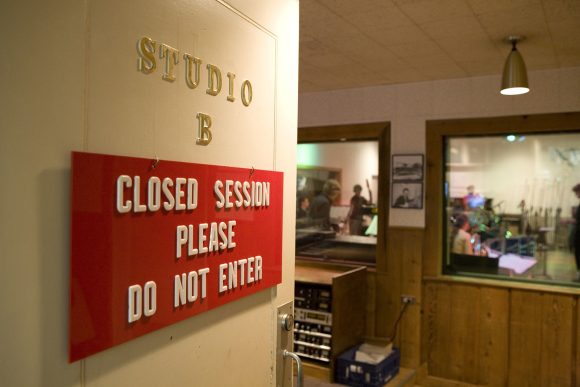
The history of popular music in the 20th century wouldn’t be complete without recording the contributions of the great studios in which the world’s most famous and influential artists committed their work to tape. RCA Studio B on Nashville’s Music Row is one of them. Listen to the Urban Spelunking Audio Stories on 88Nine Radio Milwaukee. NASHVILLE, Tenn. – The history of popular music in the 20th century wouldn’t be complete without recording the contributions of the great studios in which the world’s most famous and influential artists committed their work to tape. There’s Sun Studios and the (now-rebuilt) Stax in Memphis, Motown in Detroit, Muscle Shoals in Alabama, Abbey Road in London, Electric Ladyland in New York, Chess in Chicago, Sigma in Philadelphia … to name but a few. Any such list has to include RCA Studio B, 1611 Roy Acuff Pl., on Music Row in Nashville.
Dubbed “The Home of a Thousand Hits,” this modestly sized studio in an unprepossessing low-slung building is where Elvis Presley recorded regularly, putting down more than 200 songs. But it was also the site of hit records by the Everly Brothers, Roy Orbison and Duane Eddy; pop saxman Boots Randolph and his trumpet counterpart Al Hirt; pop singers Perry Como and Rosemary Clooney; modern-day artists like Gillian Welch, The Strokes and My Morning Jacket; and pretty much every Country & Western singer you can conjure from the late 1950s through the mid-1970s. Eddy Arnold, Chet Atkins, Skeeter Davis, Waylon Jennings, Roger Miller, Willie Nelson, Dolly Parton, Charley Pride, Hank Snow, Ernest, Tubb, Porter Wagoner and Dottie West all recorded there. And that’s but a sampling.
Then there were the gospel records, the bluegrass records and R&B records made there, too, by the likes of the Blackwood Brothers, Lester Flatt and Fats Domino. You can see lists of artists and songs connected to Studio B here. These days, the studio – owned since 2002 by Curb Records founder Mike Curb and funded by his family foundation – is leased in perpetuity to the Country Music Hall of Fame for $1 a year and it offers guided tours during the day. The studio is still actively recording evenings and nights.
The facility is also used for classes in analog audio recording techniques.
Built in 1957 to the specifications of virtuoso guitarist and RCA Records artist and A&R man Chet Atkins, RCA Records leased Studio B from owner Dan Maddox, a Nashville businessman, and moved over from its first permanent studio in the city, opened in 1954 on nearby McGavock Street. (That earlier studio was demolished in 2006.) Atkins has said that he and chief engineer Bill Miltenburg drew up the plans for the studio on the back of a napkin.
The 42.5x27x13-foot studio took four months and $37,515 to build. A few years later, an addition was tacked on, adding space for offices and lacquer and tape mastering suites. It’s the second-oldest studio on Music Row, after Owen Bradley’s legendary Quonset Hut, which still exists inside a nearby building that was constructed around it. The much larger RCA Studio A was built next door, according to Atkins’ and Bradley’s specs, in 1964. That’s when Studio B earned its designation. (For the record, an expansion to A was classified as Studio C and a smaller room in the Studio B building is D.) Engineer Bill Porter arrived in early 1959 and – disappointed in the audio characteristics of the room – bought acoustic ceiling tiles and cut them into triangles, hanging them around the space. These so-called “Porter Pyramids” were just one of his innovations. Porter also put an X on the floor just inside the door of the studio to mark the room’s “sweet spot” and it is here that Elvis and the others stood while recording. A room above the studio was outfitted as one of the earliest reverb room/echo chamber setups, and Studio B is where The Jordanaires’ Neal Matthews created the so-called “Nashville Number System” method of transcribing music that's still used today.
Presley was especially enamored of the place, in part for its great Steinway piano (above), but also for its intimate feel and unique sound. When Studio A opened, he went over there for a session, but he wasn’t comfortable and quickly returned to Studio B. According to her memoir, in 1967, Dolly Parton was late for her first session at Studio B and accidentally slammed her car into the wall of the building, where, even today, you can see that the bricks used to repair the damage don’t match the originals.
All would be forgiven, of course, as Parton went on to thrice record her song, “I Will Always Love You,” inside the building, scoring hits with each version. The studio continued to operate full-time until 1977, when the Hall of Fame began its tours. When you enter the building, you’ll find a room with a display showing some of the many artists who recorded here. Grandpa Jones' "Yodeling Hits" is my favorite and if you mention it, the tour guide will cue it up and play a bit for you.
As you walk down the hall, you’ll see an early recording console off to the left in Atkins’ old office (above), before you reach the control room for Studio D and then the small Studio D room that’s used mostly for demo sessions, overdubs and the like. In here, note the interesting curved wood feature that runs along the walls.
Step through a door to the right and you’re in one of the most sacred spaces in country and rock and roll history. Though its now gone, you’ll be standing right where a coat rack had been used to create a makeshift vocal booth for Roy Orbison.
Note the X on the checkered floor marking the room’s sweet spot. When the tour guide lowers the lights and plays “Are You Lonesome Tonight,” recorded in that very room, you can almost see Presley standing there next to you, the musicians arrayed around the room.
In the corner, just beyond a honky tonk piano that’s more than a century old, is a stunning, simple four-piece drum kit behind a couple baffles. Along the back wall are amplifiers that were used here, as well as a marimba and vibraphone.
On the opposite side of the room, right near the control room window, is that Steinway that has been in the studio since it opened. Next to it is the still-broken cabinet door that Elvis took out with a good swift kick in a moment of frustration. The tours aren’t long (about an hour, including the bus to and from the Hall of Fame downtown) but they’re packed full of information and anecdotes and even if you don’t care and just want to sit in Studio B and close your eyes and feel the vibes, it’s worth it. But, please, don’t show up at the front door of Studio B, because they won’t let you in. You have to book your timed tour at the Country Music Hall of Fame downtown. They will transport you to and from the studio on a bus. Our guide Ron Harman vowed to make any Elvis doubters on the bus into rabid fans by the end of the tour. I’m hard pressed to think of a more powerful moment I’ve experienced at a similar site than when he dimmed the lights and “Are You Lonesome Tonight” filled the space and made music history come alive. Born in Brooklyn, N.Y., where he lived until he was 17, Bobby received his BA-Mass Communications from UWM in 1989 and has lived in Walker's Point, Bay View, Enderis Park, South Milwaukee and on the East Side. He has published three non-fiction books in Italy – including one about an event in Milwaukee history, which was published in the U.S. in autumn 2010. Four more books, all about Milwaukee, have been published by The History Press. With his most recent band, The Yell Leaders, Bobby released four LPs and had a songs featured in episodes of TV's "Party of Five" and "Dawson's Creek," and films in Japan, South America and the U.S. The Yell Leaders were named the best unsigned band in their region by VH-1 as part of its Rock Across America 1998 Tour. Most recently, the band contributed tracks to a UK vinyl/CD tribute to the Redskins and collaborated on a track with Italian novelist Enrico Remmert. He's produced three installments of the "OMCD" series of local music compilations for OnMilwaukee.com and in 2007 produced a CD of Italian music and poetry. In 2005, he was awarded the City of Asti's (Italy) Journalism Prize for his work focusing on that area. He has also won awards from the Milwaukee Press Club. He can be heard weekly on 88Nine Radio Milwaukee talking about his "Urban Spelunking" series of stories.
Isolated thunderstorms in the morning, then partly cloudy late. High near 85F. Winds W at 10 to 15 mph. Chance of rain 40%.. A few clouds from time to time. A stray shower or thunderstorm is possible. Low 78F. Winds WSW at 10 to 15 mph. Updated: June 9, 2022 @ 2:35 am Grace VanderWaal as Stargirl Caraway, Tyrel Jackson Williams as Terrell, and Elijah Richardson as Evan. Grace VanderWaal as Stargirl Caraway. Grace VanderWaal Uma Thurman, left, as Roxanne Martel and Grace VanderWaal as Stargirl Caraway. Grace VanderWaal as Stargirl Caraway and Elijah Richardson as Evan. Grace VanderWaal, left, as Stargirl Caraway and Uma Thurman as Roxanne Martel.
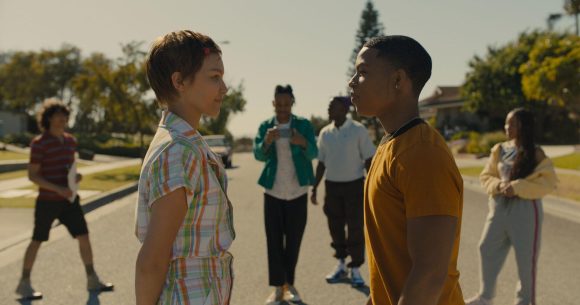
Grace VanderWaal as Stargirl Caraway, Tyrel Jackson Williams as Terrell, and Elijah Richardson as Evan. Grace VanderWaal as Stargirl Caraway. Grace VanderWaal Uma Thurman, left, as Roxanne Martel and Grace VanderWaal as Stargirl Caraway. Grace VanderWaal as Stargirl Caraway and Elijah Richardson as Evan. Grace VanderWaal, left, as Stargirl Caraway and Uma Thurman as Roxanne Martel. When one thinks about Walt Disney Studios’ creative output, films that generate billion-dollar box office figures are bound to be the first titles that come to mind. Disney dominated the box office in 2019 — the last year of normalcy, before the pandemic changed the way we view movies. “Avengers: Endgame,” that year’s biggest film, boasts a worldwide gross of roughly $2.8 billion. Of the top 10 highest grossing films in 2019, Disney made seven of them — and had a hand in the making of an eighth, “Spider-Man: Far from Home,” the 23rd film in the Marvel Cinematic Universe. But there’s more to Disney Studios than big-budget blockbusters. Beginning in 1983, the Disney Channel evolved into a showcase for niche films that appealed especially to the tween demographic — 9- to 13-year-olds. Some of the most recognizable of these include “The Cheetah Girls” franchise, the “High School Musical” franchise, “Camp Rock,” “Princess Protection Program,” and the “Descendants” franchise. With the introduction of Disney+ in November 2019, the studio added another platform — and another way to generate income — for exclusive movie content. During the pandemic, Disney+ also became an outlet for films that the studio had intended to release theatrically but chose not to due to COVID-19 protocols on public gatherings. “Stargirl” was never intended to be released in theaters. It debuted on Disney+ on March 13, 2020. Directed by Julia Hart, the film is based on the young adult novel of the same name written by American author Jerry Spinelli and published in 2000. Optimistic and rewarding, “Stargirl” is a melodious anthem for uniqueness played on a ukulele. Now Disney+ has delivered a sequel. “Hollywood Stargirl,” billed as a teen romantic drama, was released on Disney+ on June 3. Like its predecessor, “Hollywood Stargirl” is confident and hopeful, with not a hint of negativity to be found. It is disarmingly optimistic, and it manages to entrance viewers with its rose-colored perspective even though, deep down, we know chasing dreams can be risky business. Hart returns to direct the sequel and Grace VanderWaal reprises her role as Susan “Stargirl” Caraway. Stargirl is a free spirit who plays the ukulele and sings cover songs. Set in the summer between her junior and senior year in high school, she and her mother are moving once again, leaving their Arizona home behind for a new world of possibilities in Los Angeles. The two relocate often as Stargirl’s mother, Ana (Judy Greer), job-hops repeatedly as she searches for the perfect career fit. Almost immediately, Stargirl is presented with new friendships and new opportunities. She meets Evan (Elijah Richardson), who lives in the same apartment building. His brother Terrell (Tyrel Jackson Williams) wants to make a movie. After hearing Stargirl sing, Evan believes she could write music and possibly star in Terrell’s film. The only source of tension in the film emerges when Ana loses her job and must decide between moving once again or staying in Los Angeles and trying to find employment. The situation provides a glimpse at real-world obstacles that often hinder or thwart the music makers and the dreamers of dreams. While the previous film focused on self-esteem and personal expression, “Hollywood Stargirl” emphasizes the importance of chasing your dreams. Once Stargirl finds her place in a community of like-minded creatives, she flourishes. She becomes part of a team that embraces her, encourages her, and challenges her to grow and evolve artistically. In many ways, the film is an homage to Hollywood. Ironically, early versions of the script sent Stargirl and her mother to Paris. “Now I can’t imagine any other version of the film than the one that we landed on,” Hart said in the film’s production notes. “The thing that we missed the most during quarantine was our movie family, and so we wanted to tell a story about all the wonderful people that we get to work with and create with and what it means to find those people for the first time.” “Hollywood Stargirl” is emotionally engaging and unapologetically hopeful. It’s a booster shot of optimism that might provide much-needed inspiration for the next generation of filmmakers, artists, composers, and writers.
Assistant reviewer B.C. Zumpe, a 15-year-old, shares her thoughts on the film:
I’ve had an interest in movies and theater for a long time. I would like to be a director someday, though I might find another job in the film industry that is equally attractive as I learn more about filmmaking. “Hollywood Stargirl” depicts the things I find appealing about making movies. Before we get into that, let’s start from the beginning. The film opens with Stargirl Carraway’s move from Mica, Arizona, to Los Angeles, California. For those of you who read the books, you should know that this isn’t based on “Love, Stargirl,” the sequel to the original novel “Stargirl.” This is a different story with different characters. One thing that the movie sequel has in common with the book sequel is that the story focuses on Stargirl’s perspective. Also, while Leo is mentioned, the only characters from the first movie that appear are Stargirl and her mother, Ana. Ana has a job as a costume designer for a movie. We soon discover that the director is not easy to work with. Stargirl is having doubts about constantly having to move. Ana is just trying to support her daughter, and it’s hard to find a permanent job. She promises Stargirl that they will stay for her senior year. After they settle into the new apartment, Stargirl starts singing and playing her ukulele. She is noticed by her neighbor, Evan, who compliments her singing. He and his brother Terrell are making a movie called “Tell Your Story,” and they need to make a sizzle reel, which is a small version of the actual movie. Evan thinks that Stargirl could write the music for it and play the female lead. Stargirl has never acted before, but Evan and Terrell convince her to try it. Stargirl ends up making some friends who help with the movie as well: a former producer who lives near her apartment (Judd Hirsch) and a retired singer she admires (Uma Thurman). While watching the first movie gives viewers a better understanding and appreciation for this sequel, I also feel that it can stand on its own. I enjoyed watching the characters bond as they created the movie. It reminds me of my experiences in drama club, meeting interesting people and being part of something special. I also liked that we got to know Stargirl better as a person. I liked Leo, but it’s nice to see things from her point of view instead of her being the mysterious love interest. Her new friends accept her for who she is without questioning her. There are several recognizable people in the cast. Ana Carraway is now being played by Judy Greer, a well-known character actress with more than 250 credits in film and television. In the Marvel Cinematic Universe, she plays Maggie Lang, ex-wife of Scott Lang. She also voices a character in the adult animated sitcom “Archer” and had roles on “The Big Bang Theory.” Judd Hirsch plays Mr. Mitchell, Stargirl’s neighbor and a former Hollywood producer. Coincidentally, he also appeared in “The Big Bang Theory,” but he is more well known for films like “Independence Day” and the television sitcom “Taxi.” The singer, Roxanne Martel, is portrayed by Uma Thurman, who played The Bride in “Kill Bill.” The acting was great. It was realistic and it brought the characters to life. I was able to connect with the story. Even if they’re not that interested in cinema, I’m sure that viewers will enjoy the positivity from this movie, or picture, as Mr. Mitchell would call it. The story is relaxing and uplifting, and it inspires people to dream.
We’re always interested in hearing about news in our community. Let us know what’s going on! We accept many different kinds of announcements. Just click on the button below and submit a form.
Kartel Music Group is seeking an experience and passionate Product Manager to join our team. We are looking for an Electronic & Dance Music specialist. The role will head up the recently formed inhouse EMK (Electronic Music Kartel) label imprint as well as working across a number of priority Artist and Label Services clients across a range of genres with lean toward electronic and dance music. The ideal candidate will have a strong instinct for the record label, distribution and label services environment and be passionate about supporting professional creators in todays’ evolving recorded music landscape. They will have hands-on product management expertise and a strong passion for administration, work-flow efficiency, digital and traditional marketing, digital and physical distribution and retail channels. They will have a proven track record working with release schedules, marketing budgets and be comfortable with metadata and be generally data literate and confident working on detailed excel spreadsheets. The successful applicant must have a minimum of 3+ years experience in a similar Music Industry role in a Label or Services/Distribution company. They will be experienced in creating and disseminating marketing and promotions reports. Great communication, interpersonal skills and attention to detail are a prerequisite. This is a unique and challenging opportunity to join an ambitious and versatile music business shaping the future of consumer music marketing. Kartel Music Group is a modern music services agency. We provide integrated solutions for marketing, campaign management, distribution and business services. Our clients include some of the best emerging and established independent artists, managers and record labels. We are dedicated to reimagining the music industry for creative entrepreneurs in the digital age. For more information visit: www.kartelmusicgroup.com. How to apply: Please send a covering letter with examples of your recent work, along with your CV and your salary expectations for the role to [email protected]. Please include the subject: “Product Manager 22”. Music Business Jobs is the most effective way for the global music industry to find the best candidates for their open positions. In addition to being seen by over 300,000 monthly unique readers online, our listings are also emailed direct to more than 50,000 professional subscribers every week – across the US, UK, Europe, Asia-Pacific and beyond. Click through below for details on how to submit a Music Business Jobs listing – and learn why our advertisers ‘strongly recommend’ us to their peers…
Apple has released a firmware update with macOS Monterey 12.4 to fix the Studio Display’s terrible webcam, but don’t expect drastic changes. Apple has released macOS Monterey 12.4 which brings a separate firmware update with fixes for the Studio Display‘s problematic webcam. The Studio Display was launched in March alongside the powerful Mac Studio desktop. While the Studio Display resembles Apple’s iMac desktop PCs, it’s actually a standalone 27-inch 5K monitor that can be paired with any Mac computer. It also works with Windows PCs, although this limits some of its functionality. The $1,600 Studio Display is powered by the Apple A13 Bionic chipset seen on the iPhone 11. It has three USB-C ports with 10GB/s transfer speeds, and a Thunderbolt port that can connect it to a Mac and even fast-charge a MacBook Pro. The Studio Display also features a three-microphone array and a six-speaker setup that provides spatial audio with Dolby Atmos. Its 12MP ultra-wide webcam supports Center Stage, an otherwise iPad-exclusive feature that keeps users centered on the screen. Unfortunately, early buyers reported that the webcam’s quality was far from acceptable, leading Apple to announce that it would release a software update to solve the problem. Related: Samsung M8 Vs. Apple Studio Display: Which Monitor Is A Better Deal? With macOS Monterey 12.4, Apple has finally included a few improvements for the Studio Display’s camera. The news was first confirmed when the beta build of the software was released, but a stable version of the update is now available to download for Mac users. macOS Monterey 12.4 includes support for the Studio Display Firmware Update 15.5. As per Apple, the update improves camera tuning, noise reduction, contrast, and framing. To install the update, users need to open System Preferences on their Mac and click on Software Update. The Studio Display firmware update will be displayed alongside the macOS Monterey 12.4 update. Clicking on Install Now will download the update. The Studio Display’s 12MP webcam is similar to the one found in iPhones and iPads, which made the poor camera quality all the more surprising. Soon after launch, many reviewers and buyers complained about the quality of the Studio Display’s camera, which had noisy visuals and difficulty focusing. Another reported issue was with Center Stage, which was laggy and ended up framing users on the side instead of the middle with even minor movements. Unfortunately, while the update improves the camera quality to an extent, early reviews haven’t been very positive. As per Nilay Patel of The Verge, after installing the update, “noise reduction is improved, contrast is better, and the framing is slightly wider.” However, before and after images don’t show a stark visible change. The main issue seems to be the use of a wide-angle sensor with Center Stage. Since the sensor lacks optical zoom, it digitally crops the image to center people in the frame, resulting in a loss of image quality. Unlike an iPhone which captures a full-resolution 12MP selfie, images and video captured with the Studio Display‘s camera will always be of a lower quality, and that’s something no software update can fix. Next: Why Does Apple’s Studio Display Have An A13 Chip & 64GB Of Storage? Source: Apple, The Verge Ketaki is a Tech Editor for Screen Rant based in Bangalore, India. She’s been writing on tech since 2009, and has worked for major print and digital media publications over the years. She loves smartphones, smart home devices and wearables, and is always up for testing the latest gadget or app. When she isn’t working, you’ll probably find her reading fantasy fiction on her Kindle.
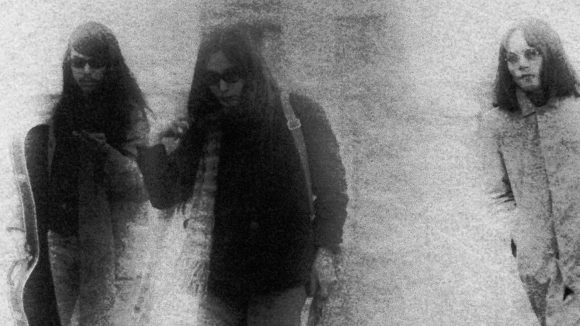
Matt LaJoie The Japanese psych-rock band Les Rallizes Dénudés were after a visceral — sometimes violent — impact, borne from unimaginable loudness. M. Tezuka and OZ Press/Courtesy of the artist hide caption With just fuzz, wah-wah, tape delay and amplifiers of incredible wattage, the sounds Takashi Mizutani wrung from his electric guitar were seismic beyond belief. Never playing five notes when one held to oblivion would do, his guitar mastery was in the feel, texture and pure, earth-shaking volume and vibration of his instrument. Listening to live recordings of Mizutani’s band Les Rallizes Dénudés is a frequently unnerving experience, as there exists an implicit threat that any moment could be overtaken by excruciating, ear-piercing feedback. This was no mistake, but by design: “Our band’s direction was decided the instant my electric guitar fed back,” Mizutani told Music Magazine writer Manabu Yuasa via fax in 1991, one of the only known communiqués from the notoriously interview-allergic recluse. Never completing a studio album and failing to ever register his compositions in any legal way, Mizutani’s sonic art has long lived in the shadowy domain of unofficial live bootlegs, which generated rampant piracy, myth and rumor about his life and work. After delayed news of his death was announced in Oct. 2021 via Les Rallizes Dénudés’ first official website — he died in 2019 — managing entity The Last One Musique promised to finally offer the truth that had been obscured by years of hearsay and legend. Now with a 50-year-old live recording titled The OZ Tapes, Mizutani’s fervent fanbase is at last able to legally acquire the music of this totem of psychedelic rock. The strange tale of Les Rallizes Dénudés begins in 1967 at Doshisha University in Kyoto. It was on Doshisha’s politically and culturally progressive campus where Takashi Mizutani befriended the radical theater troupe Gendai Gekijo and, according to lore about the origin of the band’s name, adopted their slang “valise dénudé” — its direct translation meaning “empty suitcase,” roughly equivalent to “airhead.” Incorporating a play on the Japanese slang “rari,” meaning “under the influence” (which explains a popular alternative translation of the band’s name), he had a name that conveyed the empty vessel his body would have to become to channel titanic currents of audio assailment. Mizutani’s compositions center on hypnotic repetition and rugged simplicity in the rhythm section, which allows ample space for his passionate, echo-laden vocals and maelstrom of free-wailing guitar to fly high atop. A voracious appetite for extreme sounds on the edges of American rock and jazz guided these unique auditory manifestations: the proto-punk of The Stooges, The Seeds and The Velvet Underground; American free-jazz pioneers John Coltrane and Albert Ayler; releases on the boundary-destroying avant-garde label ESP-Disk’; the time-bending, mind-expanding jams of 1960s Haight-Ashbury groups. Each skipped a flat stone over the surface of the Pacific, generating fractal rings that collided and combined in ways only Mizutani could envision and embody. Where bands like Grateful Dead welcomed amateur live recordings, Takashi Mizutani (right), according to bassist Makoto Kubota, “hated the idea.” M. Tezuka and OZ Press/Courtesy of the artist hide caption Where bands like Grateful Dead welcomed amateur live recordings, Takashi Mizutani (right), according to bassist Makoto Kubota, “hated the idea.” In particular, the Fillmore West scene revolving around the Grateful Dead‘s axis was of unique interest to both Rallizes and the directors of OZ, the café and performance space that acted as a short-lived headquarters for countercultural art in Tokyo’s Kichijoji neighborhood. When the venue approached its inevitable end, the OZ Last Days festival — from which The OZ Tapes‘ performances are drawn — was patterned directly after the Fillmore’s closing fest. Even the original private-press OZ Days Live compilation mirrored the commemorative Fillmore: Last Days vinyl set. But with Les Rallizes Dénudés allowed only a single side of wax to contain their sprawling jams, the original release pales in comparison to the transcendent impact of The OZ Tapes. Thanks to LRD bassist and producer Makoto Kubota’s sensitive remastering of the original tape reels, which remained miraculously undecayed under the care of OZ manager Minoru Tezuka, we are finally gifted the opportunity to be front-and-center to the band’s incandescent performance in a glorious high-fidelity stereo field. Kubota — a lifelong musician, producer and collaborator in many Japanese music projects of note over the past 50 years — connects the late Mizutani to Temporal Drift. “Our relationship with The Last One Musique begins with Makoto Kubota,” writes Temporal Drift co-founder Yosuke Kitazawa. After working with label partner Patrick McCarthy on Light In The Attic’s reissue for Sanchiko Kanenobu’s Misora, a connection was made with Kanenobu’s personal friend Kubota. Kitazawa and McCarthy were both longtime fans of the band, and in the midst of launching their new label, leapt at the opportunity to bring official Les Rallizes Dénudés records into the world. It’s appropriate that The Last One Musique and Temporal Drift have issued a single, unedited live performance as the first above-ground Rallizes release in their campaign. A studio album by Les Rallizes Dénudés never materialized in Mizutani’s lifetime, which has often been attributed to his crippling perfectionism, but OZ‘s unabridged versions of “The Last One” reveal that a studio could hardly hope to contain or capture the colossal sonics he favored. Les Rallizes Dénudés were after a visceral — sometimes violent — impact, borne from unimaginable loudness. Performing with mirror balls, stupefying light shows, fog machines and strobes, the band’s live sets required no drug inducement to naturally achieve the psychedelic state. This precedence of live performance over studio recordings links LRD once again to the Grateful Dead, and the vibrant “taper” scene that cropped up amongst its fanbase to circulate the sound across time and space. A crucial distinction must be made, however: while the Dead graciously welcomed tapers at their shows and even helped facilitate tape-trading networks, Mizutani, according to Kubota, “hated the idea.” But with Rallizes records completely nonexistent in Japanese record shops, many of those lucky enough to catch one of their infrequent concerts began to bring various audio recorders with them, capturing raw and often unbelievably overdriven tapes to take home and listen to religiously. Some dubbed and passed these illicit recordings on to fellow fans, as piracy was the only means for zealots to turn on neophytes. And so an underground community flowered from the dank soil beneath Mizutani’s black-booted feet, a legion bound together as adoring co-conspirators. Thus, word about this superlatively loud music spread in hushed tones of reverence, each cassette, CD-R and white-label vinyl that survived its clandestine birth garnering a whole new clan of converts, eventually materializing as MP3 uploads on music blogs in the 2000s. “There are many times when the consumer has no idea that what they’re buying is a bootleg or that the artist isn’t really getting any royalties from the sale,” says McCarthy. “That was certainly the case for many fans of Les Rallizes, where the rumors were that someone in the band or even Mizutani was behind the releases. We know now that this was not the case.” “Our band’s direction was decided the instant my electric guitar fed back,” Takashi Mizutani told Music Magazine in 1991. M. Tezuka and OZ Press/Courtesy of the artist hide caption “Our band’s direction was decided the instant my electric guitar fed back,” Takashi Mizutani told Music Magazine in 1991. As each new pressing sold out quickly with zero publicity, the cult of Les Rallizes Dénudés grew, and so did the number of bootleg record labels looking to cash in without having to share a cent with the musicians themselves. Whether driven by sheer economics or a more idealistic drive to spread some of the most extreme music in the psychedelic rock canon, the result for Mizutani was the same: an insatiable international fanbase buying up recordings he never wanted released; his visionary work stripped from his hands without control or compensation. The cycle continued until Mizutani’s death in 2019, at which point his entire catalog of recorded music — including many reels of tape that had never been grasped by bootleggers — transferred into the control of his surviving family. With Kubota and The Last One Musique’s help, the work began to legally register the original compositions and recordings in an official capacity. Now, thanks to their collaboration with Temporal Drift, acquiring the music of Mizutani and his cohorts is finally an above-the-board affair. “It is extremely important to me, as well as Yosuke, that artists are fairly represented and compensated for their work,” says McCarthy. “Near the end of his life, Mizutani talked with Kubota and expressed his frustration with how the music had been bootlegged and presented over the years. They discussed plans to set the story straight and put a stop to all of the illegally released albums, both physical and streaming. The fact that we’re able to help carry out this wish makes us extremely proud.” Next on the docket is a remastered, three-CD set commemorating the 50th anniversary of the OZ Last Days festival (due this summer); The Last One Musique has hinted that this will be followed by the first-ever vinyl editions of the three archival albums Mizutani sanctioned on CD in 1991, originally released by the Rivista label and long out-of-print (and, subsequently, widely bootlegged). Takashi Mizutani departed this world in secret, his existence so shrouded in rumor that even his friends and collaborators believed the obfuscation was deliberate. But as recent interviews, extensive liner notes and official timelines have shown, this was both unintentional and undesired. Rather than dispelling the magic of a dream, being drawn closer to Mizutani’s truth instead awakens a deeper connection to the man behind the ubiquitous dark sunglasses. The OZ Tapes begins the work of casting all inferior, grimy bootlegs into obsolescence, generating a new fleeting moment of communion with one of rock music’s most fascinating and misunderstood auteurs. Sponsor Message Become an NPR sponsor
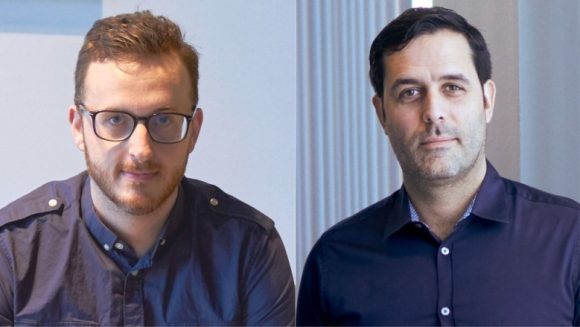
The producers of "What We Do in the Shadows" say the duo are more than sound mixers — they're often an integral part of the show's comedy. Samuel Ejnes and Diego Gat courtesy of Formosa Group Fans of “Yellowstone” have come to expect viscerally charged action tied to the Dutton family’s intense emotional and political entanglements. But even by those standards, the opening sequence of Season 4 is a game changer: The episode begins with three main characters targeted for assassination in a 13-minute shootout and chase that incorporates almost all of the series’ principals in an impeccably orchestrated, steadily escalating explosion of violence. In its relentlessness, immediacy, and clear and concise expression of character through action, it’s the closest television has ever come to the bank robbery at the center of Michael Mann’s “Heat.” Contributing to the opening’s impact is its sound design, characterized — like every other component of the sequence — by a brutal authenticity punctuated by moments of lyrical impressionism. In its complexity, ambition, and overall effect, the set piece is a culmination for re-recording mixers Samuel Ejnes and Diego Gat, who have been working together since 2017 on shows as varied as “Mythic Quest,” “Black Monday,” and “Atlanta.” Television schedules are notoriously unforgiving, but Ejnes and Gat have managed to bring the nuance and auditory complexity of the best feature films to their work.
“I always feel like the term ‘sound mixer’ understates what Diego and Sam do, and what makes them so great,” said “What We Do in the Shadows” and “Atlanta” executive producer Paul Simms. “Just as the production designer and the DP design the look of the show, [Diego and Sam] are really designing the sound and the tone of it — and adding a lot of funniness that viewers would never know was not planned from the very beginning. And as their work is the last step in the process, you can really feel a cut that you’ve probably watched 30 times in editing suddenly come to life and feel brand new when they work their magic on it.” “Yellowstone” Paramount Network Ejnes and Gat have found that their similar tastes and easy communication have produced pleasing results. “I do sound effects and foley and backgrounds, and Diego focuses mostly on the music and dialogue,” Ejnes said, “but we’re not afraid to give each other notes or ideas.” Ejnes came to sound design through music, playing trumpet in his school band and working as a DJ before learning in college that there was “this thing called post-production” and moving out to L.A. to work in the film business. Gat worked in live theater in his home country of Argentina and started mixing movies in film school; six years ago he moved to Hollywood and met Ejnes, with whom he has been working ever since. “We’ve developed a common way of doing things that makes things a lot smoother” Gat said. “It’s unspoken communication — we just look at each other and know what the other one is thinking most of the time.” Their ability to swiftly and clearly communicate was essential when it came to that “Yellowstone” premiere: “The note that we were given was, ‘We want the cold open of the show to grab the audience by the face and throttle them until the main title starts,’” Ejnes said. Initially, he and Gat mixed the sequence in a more orthodox manner, balancing the music and effects and leaving pauses where music would dip down to make room for dialogue. But the producers wanted the mix to be a persistent assault with no let-up.
“We had to keep the music up and not dip for sound effects, just let the sound effects bulldoze over the music,” Gat said. “We had to keep the sound pressure on at all times, so when we did dip it had to be very detailed, working note by note. It took a very long time. Very detailed frame by frame mixing.” They added layer upon layer to the sound mix: Bullet hits, tire screeches, bone breaks, dialogue that’s crisp and clear but not unbelievably louder than the surrounding commotion, music that weaves in and out with a hypnotic power. Even Ejnes felt tense watching the footage on the final review. “It’s something like 14 minutes of action before the main titles coming in, and you realize when those titles start that you’ve been holding your breath,” he said. “Yellowstone” Paramount Network Part of what makes “Yellowstone” as a whole so successful is its sense of realism, an approach that informs all of Ejnes and Gat’s choices on the mix stage. “We’re always trying to keep it very authentic and real,” Ejnes said. “There might be moments that are more design-y and fun, but for the most part it’s just about presenting what’s happening in the scene. There’s always the urge to make the guns big and sound like an action movie, and sometimes we do, but for the most part we want to keep it within the world and contained. And we’re also mindful not only of what we hear, but of what we don’t hear.” Gat added, “If we’re in a house, we think about how thick the windows are. Can we hear the rain on the other side of the window? When we close a door, does it seal well enough that we don’t hear the rain, or do we still hear some? There are a lot of conversations about footsteps – like, even if we don’t see the floor, we know the last two footsteps were on a rug, so we want that sound. It’s that kind of detail.” These are guiding principles shared by two of Ejnes and Gat’s other recent credits: the “Yellowstone” prequel “1883” and the supernatural mockumentary “What We Do in the Shadows.” The period setting of the former presents some unique challenges, particularly for Gat — “From a dialogue perspective, there’s a lot more cleaning. You can’t have a highway in the background, or a generator — while the latter deviates from every other show the duo mixes, in the practice of adding the types of sounds that other productions would strive to remove.
“We’ll come into a mix and say, ‘What would it sound like if that character wasn’t on a microphone?,’” said “Shadows” director and editor Yana Gorsaka. “Not to make it sound like we did it bad on purpose, but we’re always trying to make it sound like we recorded it as a documentary.” Gat credits Ejnes with finding sound effects that add to the show’s humor. “There’s a way of making a body fall funny, and it can also not be funny,” he said. “It’s like, what about the materials? If it’s softer is it funnier? Is it funny if it feels like a soft body, or is it funnier if it’s harder and sharper and more painful? Would it be funnier if it’s two ‘plop plops,’ or should it be three parts or just one?” This speaks to their keen focus on rhythm. “One thing that we’ve learned over the years of working in comedy is that the making or breaking of rhythm can help heighten the humor of a situation,” Ejnes said.
In the video below, see how this seemingly counterintuitive approach, when combined with the imaginary noises of a supernatural world, amplifies the comedy of “What We Do In The Shadows.”
Hi, what are you looking for? By Published Duluth, Georgia – Atlanta Institute of Music and Media, an accredited music college from Atlanta that has trained some of the most prominent names in modern music, is urging those with ambitions of starting a music production studio to find out exactly how they can get started from home. More information can be found in the blog post: https://www.aimm.edu/blog/start-music-production-company-at-home. The music industry recorded a staggering $8 billion in revenue in 2021, a significant increase compared to its numbers over the last decade. Since streaming services have become mainstream and due to the introduction of countless online platforms to promote one’s music that increases the chances of one going viral, even creators with humble origins can make it big. Case in point, one of the music industry’s biggest breakout stars of the last couple of years, Billie Eilish recorded her songs and uploaded them to the music sharing website Soundcloud where they gained traction and eventually netted her a record deal. These stories are not uncommon and with the barriers to entry, such as hardware and software, being lower than ever, there has never been a better time to chart a career in music. According to AIMM’s blog post on the topic, those who want to produce music from the comfort of their home should consider soundproofing the room of the home where they intend to work and giving it the acoustic treatment. Soundproofing reduces sound leakage from inside the home studio to the outside world. Acoustic treatment involves the control of reverberation and echoes inside the studio to enable the musician to capture the best sound. Once the home studio is built, they will need equipment such as a desktop computer or laptop, a copy of audio software or a digital audio workstation (DAW) such as AVID Pro Tools, Ableton Live, or FL Studio, a soundboard, an audio interface, a USB microphone, XLR mic cable, mic stand, a pop filter, and headphones or a pair of studio monitors. Once the equipment and space are ready, it is time to upgrade one’s skills. AIMM recommends learning the basics such as creating a MIDI with a piano roll, creating an audio track enabled to record, and setting the input source to the webcam if recording, in the software or DAW of choice. A music school such as AIMM will cover all these basics and many more advanced topics that will put a student’s skills at par with the professionals working in the industry. The next step is getting a formal business set up by starting a company, preferably an LLC. This can involve filing paperwork and taxes, depending on the state one is in. The company should be the artist’s brand which should then be marketed on as many online social media platforms as possible. They should upload their creations to popular streaming and music hosting services to reach the widest audience. The artist should also make contacts with industry professionals and tastemakers such as those who control streaming playlists and curate the music for local and college radio stations. Other marketing tools include business cards and a website. Finally, all these marketing efforts should be used to collaborate with local artists. This not only helps one broaden their music horizons but also lets them tap into the fan bases of established artists. A spokesperson for AIMM talks about what the music college can do for those wondering how to become a music producer by saying, “The dream of being a music producer is accessible, now more than ever before. If you work hard consistently, you can make a stable living and you even have a chance of reaching the pinnacle of success. If you need a boost to your skills, AIMM offers extensive lessons, courses, and programs for music producers. AIMM offers multiple programs for producers, including the Certificate in Music Production which is offered both online and on-site on campus, and the Music Production and Audio for Media Associate Degree.” Atlanta Institute of Music and Media can be contacted for inquiries at the phone number (770) 242-7717 or the email address [email protected]. ### For more information about Atlanta Institute of Music and Media, contact the company here: Atlanta Institute of Music and Media Nite Driscoll (770) 242-7717 [email protected] 2875 Breckinridge Blvd #700, Duluth, Georgia 30096
Get the best experience and stay connected to your community with our Spectrum News app. Learn More Continue in Browser Get hyperlocal forecasts, radar and weather alerts. Please enter a valid zipcode. Save LOS ANGELES (CNS) — The family of the writer whose magazine article inspired the 1986 Tom Cruise movie “Top Gun” sued Paramount Pictures Monday for copyright infringement over this year’s “Top Gun: Maverick” sequel. In the lawsuit, the author’s widow, Shosh Yonay, and son, Yuval Yonay, allege they filed a notice four years ago reclaiming the copyright to the article, but the studio did not obtain a new license to use the material. Ehud Yonay — whose 1983 piece about the Top Gun school at Miramar Naval Air Station for California magazine inspired the original blockbuster starring Tom Cruise and Kelly McGillis — died in 2012. The plaintiffs allege that Paramount failed to renew the rights to the article before releasing the “derivative” sequel, according to the complaint, filed in Los Angeles federal court. A Paramount representative did not immediately respond to a request for comment. The suit seeks monetary damages and an injunction barring Paramount from distributing the film or any further sequels. With Cruise at the helm, “Top Gun: Maverick” is this year’s biggest box office hit, generating $291 million in North America and $548.6 million globally in its first 10 days of release, according to Variety.
Third-year IT student at Tshwane University of Technology (TUT) and Birch Acres resident Mpho Shaun Dibakoane realised his passion for music. ALSO READ: Two musicians join forces to create an impressive ballad Although he is not a performer, Dibakoane was always fascinated by music. He was in high school when the idea of music production took hold of his heart. “My friends used to rap and we would go to a recording studio not far from where I live. “While we were there, the owner used to ask me if I was a producer and I laughed it off at the time and said no. “A few years later I decided to give myself the challenge to produce beats because I love music and I love technology,” said Dibakoane. The 21-year-old said creating the studio was not easy, however, with the help of friends they were able to turn what was a store room into a space where creatives can flourish. His favourite part of the installations was the booth. “A lot of the things you see in my studio were designed by my friends,” said the young producer. ALSO READ:The power of music for wellbeing Mpho installed studio monitors an audio interface, TRS cables, a microphone and studio headphones. Although still a new studio, Mpho has managed to grab the attention of 10 artists from the neighbourhood recording a variety of genres. “A lot of the work I’ve done hasn’t been released yet, some of the work that’s completed is available on a YouTube channel called The AfterEffect with Zhane. “People can also expect some music from an amapiano group, The Heavy Joints Sessions, and there’s also a project we are working on with Jazzylee Mapiano,” said Dibakoane. Also follow us on: We use cookies to help improve your experience and to show you relevant advertising. To learn more about cookies, please read our Privacy Policy.
KGET 17 Please enter a search term. Please enter a search term. by: KGET Staff Posted: Updated: by: KGET Staff Posted: Updated: This page will be edited. Check back for updates. 6:15 a.m. — The Associated Press is projecting Kevin McCarthy (R), with 55.87 percent of the votes, will move forward to November’s general race. Among his competitors, Marissa Wood (D) currently holds 26.81 percent of the votes, with 56 percent of precincts reporting. David Valadao (R) has held on to second place in the 22nd District race. He currently has 25.64 percent of the votes, with 30 percent of precincts reporting. In the race for the State Senate 16th District, David Shepard (R) has grown his lead to 42.10 percent of the votes. Melissa Hurtado (D) has 31.16 percent, Nicole Parra (D) 14.09 percent, Gregory Tatum (R) 8.21 percent and Bryan Osorio (D) 4.43 percent. Thirty-eight percent of precincts have been reported. Vince Fong ran unopposed and will move forward to November’s general election. In local supervisor races, Zack Scrivner has a commanding lead with 70.55 percent of the vote for the 2nd Supervisor District. Kelly L. Carden Jr. has 23.88 percent and Pete Graff has 5.57 percent with all precincts reporting. For the 3rd Supervisor District, Jeff Flores has 38.74 percent of the vote, Brian Smith 34.16 percent and Louis Gill 27.10 percent, with all precincts reporting. In the race for assessor-recorder, Laura Avila has lost a bit of her commanding lead with all precincts reporting. She has 57.19 percent of the vote compared to Todd Reeves’ 42.81 percent. For Auditor-Controller-County Clerk, Aimee X. Espinoza has also lost a bit of her lead with all precincts reporting. She has 56.41 percent of the vote and Mark McKenzie has 43.59 percent. 6/7/22 11:20 p.m. — The Associated Press is reporting Rudy Salas (D) has won the primary with 50.88 percent. David Valadao (R) trailed him with 25.43 percent, with 19 percent of precincts reporting. 10:10 p.m. — With 19 percent of precincts reporting, Rudy Salas (D) has 51.52 percent of the vote for the 22nd Congressional District, with David Valadao (R) getting 25.32 percent. Chris Mathys (R) has 16.59 percent and Adam Medeiros (R) 6.57 percent. In the race for the State Senate 16th District, David Shepard (R) has 39.37 percent, Melissa Hurtado (D) has 33.23 percent, Nicole Parra (D) 14.95 percent, Gregory Tatum (R) 7.78 percent and Bryan Osorio (D) 4.67 percent. Twenty-four percent of precincts have reported. Leticia Perez (D) has a lead over Dr. Jasmeet Bains (D) in the race for the newly-formed 35th Assembly District, with 61.01 percent to Bains’ 38.99 percent. So far, 39 percent of precincts have reported In local supervisor races, Zack Scrivner has a commanding lead with 69.52 percent of the vote for the 2nd Supervisor District. Kelly L. Garden Jr. has 25.26 percent and Pete Graff has 5.22 percent with 43 percent of precincts reporting. For the 3rd Supervisor District, Jeff Flores 37.92 percent of the vote, Brian Smith 33.73 percent and Louis Gill 28.35 percent, with 52 percent of precincts reporting. In the race for assessor-recorder, Laura Avila has a substantial lead with 47 percent of precincts reporting. She has 60.45 percent compared to Todd Reeves’ 39.55 percent. For Auditor-Controller-County Clerk, Aimee X. Espinoza has 60.65 percent with 47 percent of precincts reporting. Mark McKenzie has 39.35 percent. 9:20 p.m. — Congressman Kevin McCarthy (R-Bakersfield) has declared victory, issuing the following statement: “I want to thank the voters of the new 20th District for their support in our shared vision to make the Central Valley more prosperous, safer, and affordable for our families and communities. I also want to personally thank my family, staff and volunteers for their tireless work and commitment. It is my greatest honor to represent you in Congress, and I will continue to fight to stop the rising cost of inflation in our stores and at the pump, keep our neighborhoods safe, and bring more water to our farms and communities.” 8:20 p.m. — Results are beginning to trickle in. The Kern County elections website is now reporting results live. With 93 of 265 precincts reporting, Rudy Salas (D) is leading with 60.78 percent of the vote for the 22nd Congressional District, and incumbent David Valadao (R) is in second with 23.53 percent. In the race for Kern County’s 3rd District Supervisor, Jeff Flores has 37.60 percent, Brian Smith 33.18 percent and Louis Gill 29.22 percent. A total of 20 of 110 precincts have reported. Shannon Grove (R) has 63.88 percent of the vote for the State Senate 12th District with 102 of 321 precincts reporting, compared to 36.12 percent for Susanne Gundy (D). Leticia Perez (D) has 61.01 percent of the vote for the newly-formed State Assembly 35th District, with 89 of 259 precincts reporting. Jasmeet Bains (D) has 38.99 percent. In the State Senate 16th District race, Melissa Hurtado (D) has 37.75 percent of the vote. David Shepard (R) has 25.87 percent, Nicole Parra (D) 21.01 percent, Bryan Osorio (D) 8.27 percent and Gregory Tatum (R) 7.11 percent. Seventy-nine of 248 precincts have reported. Congressman Kevin McCarthy (R-Bakersfield) has 55.10 percent of the vote with 79 of 286 precincts reporting. His closest challenger is Marisa Wood (D) with 30.03 percent. 8 p.m. — Polls in California are officially closed. 7 p.m. — Polls close in one hour. 5 p.m. — Polls are currently open and will be closing at 8 p.m. Visit 17 News’ voter guide for information and coverage on this year’s candidates and races. Copyright 2022 Nexstar Media Inc. All rights reserved. This material may not be published, broadcast, rewritten, or redistributed.
Be the first to find out about GRAMMY nominees, winners, important news, and events. Privacy Policy Photo: Daniel Mendoza/The Recording Academy video Eric Zayne explains how his war-torn childhood in the Congo shaped his musical identity — one that’s helped him become a superproducer and multifaceted artist in his own right. For Congo-born musician, artist and producer Eric Zayne, inspiration has often come from unexpected places. "I was walking through a construction site and there was a jackhammer. And instead of hearing the jackhammer, I could hear a whole symphony," he recounts. "Something opened up, and I started hearing music everywhere in everything." In this episode of Behind the Board, get to know the multi-faceted artist who has written and produced music for a diverse cast of A-listers that range from Twenty One Pilots and Ashlee Simpson to BTS, H.E.R. and Matisyahu. As a kid, music seemed like an unlikely choice for Zayne, who grew up in a war zone and had to leave the Congo without his family when he was 13. "I was in school and there were a bunch of soldiers everywhere. They were handing out notes. And the notes said, 'Don't leave your house on Monday. A war will start.' That was Friday. Monday morning, 7 am, right on cue, bullets are covering the sky." When his family had the chance to evacuate just one of its members, Zayne was forced to live independently from his teen years into young adulthood. "I had to basically learn to reconstruct what life is on my own," he notes. Now, he says that experience taught him wisdom, compassion and understanding — all qualities that have contributed to his musical identity. Zayne's artistic philosophy is centered on humility and operating as a vessel for something greater and more mystical. "I personally feel that I have never written anything in my life. I'm just lucky enough to pick up what's already there," he relates. "The minute that you take ownership of it is when you lose it, because it is not yours. You're lucky enough to get the antennas to download it. So get out of the way and let it move through you." Zayne — who is now based in LA — says he's been lucky enough to meet some of the most talented, inspired people in the music business. "One of my favorite sessions was with H.E.R.," he says. "I was just so amazed to watch a true artist that really knows how to play all her instruments and understands music." Get to know more about Zayne's personal history and musical methodology in the video above, and keep checking GRAMMY.com for more episodes of Behind the Board. Why Is BTS So Popular? 9 Questions About The K-Pop Phenoms Answered Travis Scott Photo: Scott Dudelson/Getty Images news Pass through the velvet rope at the Beverly Hilton in Los Angeles for an exclusive look at the star-studded 2019 Pre-GRAMMY Salute To Industry Icons On Feb. 9, on the eve of Music’s Biggest Night, the 61st GRAMMY Awards, artists from across genres and decades gathered at the glitzy Beverly Hilton in Beverly Hills, Calif. for the 2019 Pre-GRAMMY Salute To Industry Icons. Less than 24 hours before the big red carpet walk today, the likes of current GRAMMY nominees Ella Mai, Dua Lipa, Diplo, Shaggy, Alice Cooper and Weird Al Yankovich, and GRAMMY winners Melissa Etheridge and Quincy Jones, brought their vibrant energy and killer looks at the annual celebration hosted by the Recording Academy and Clive Davis. Onlookers tried to spy the glam looks on the red carpet as they peered into the hotel’s glass—we’ll let you past the velvet rope and walk it with us as at this exclusive music industry event. Dua Lipa & Ellie Goulding | Photo: Steve Granitz/WireImage/Getty Images This year’s who’s-who of music gala celebrated iconic industry veteran Clarence Avant, known as the Godfather Of Black Music, as the honoree of the evening. Like event host and fellow legend Davis, he helped launch the careers of many great artists, working with the likes of GRAMMY-winning greats Bill Withers, Kenneth “Babyface” Edmonds and Jimmy Jam and Terry Lewis of The Time. The video celebrating Avant had countless heroes such as Former President Barack Obama, Jones, Diddy and JAY-Z sharing how much they love Avant, the powerful impact he’s made on their lives and music, and how he always knows the right thing to say. Recording Academy President/CEO Neil Portnow introduced him with a fitting complement, and a huge one given the company they were in: “You’re the ultimate music person.” The Time properly brought the funk on stage to celebrate Avant with a performance of their ’80s hits “The Bird” and “Jungle Love,” dancing as if no time had passed. Current GRAMMY nominee Travis Scott set the mood opening the evening’s performances with “Goosebumps” and “Sicko Mode,” while sisters and fellow nominees Chloe x Halle brought home a rousing cover of the late GRAMMY-winning Queen Of Soul Aretha Franklin‘s “Sisters Are Doing It For Themselves.” Brandi Carlile, another current GRAMMY nominee, returned to the stage to join the duo, along with past nominee Valerie Simpson and Broadway star Keala Settle, ending the evening on quite the high note. Chloe x Halle | Photo: Scott Dudelson/Getty Images Other musical guests for the evening included current nominees Bebe Rexha, Florida Georgia Line and H.E.R., along with past nominees Jazmine Sullivan and Ledisi, plus GRAMMY winner Rob Thomas. Sullivan and Thomas offered a powerful duet, belting out Aretha and George Michael’s “I Knew You Were Waiting (For Me).” As the evening rolled on, Davis made sure to highlight all the countless legends in the room, as the crowd continuously burst into applause and often up on their feet to celebrate the likes of music greats Barbara Streisand, George Clinton and Dionne Warwick, along with House Speaker Nancy Pelosi, Apple’s Tim Cook and even former-L.A. Lakers star Kareem Abdul-Jabbar. Don’t forget to tune in to the 2019 GRAMMYs live from Staples Center today. Start with the GRAMMY Awards Premiere Ceremony at 12:30 p.m. PST/3:30 ET, then follow us to the red carpet at 2:00 p.m. PST/5:00 p.m. ET—both will be live streamed right here on right here on GRAMMY.com. Then the moment you’ve all been waiting for, the 61st GRAMMY Awards, hosted by 15-time GRAMMY winner Alicia Keys, will air live at 5:00 p.m. PST/8:00 p.m. ET / 7:00 p.m. CT on CBS. GRAMMY Nominees In Their Own Words: Brandi Carlile, H.E.R., Shawn Mendes, Janelle Monaé & More TOKiMONSTA news The L.A.-based electronic music producer describes the organic journey of turning her love of music into a career, how she's learned to go with the flow creatively and more Jennifer Lee aka TOKiMONSTA is up for her first GRAMMY Award this year, for Best Dance/Electronic Album for her third studio album, Lune Rouge. While she has been experimenting with beats and sounds and sharing her music with the world since her first EP in 2009, she didn’t always think her love of music would ever be more than a hobby. In the second episode of the Recording Academy’s Behind The Board, which looks at the producers and other creatives behind the studio board, Lee dives into how she went from a music lover to full-time creator. She shares how she got her making beats with the likes of Flying Lotus and Daedalus at underground parties in her native Los Angeles and how that paved the way to where she is today. She also discusses another way that going with the flow has helped her in her life, sharing that forcing herself to make music has never really worked. “I’ve learned that for me in my ‘creative process’ is to not really have a process,” she says. Lee also talks about how she’s proud of her GRAMMY-nominated album, that time Skrillex called to congratulate her on her nomination and how making music that she truly loves helps her connect with fans. “I’m hoping that if I make music that’s for myself, that there’s a commonality between me and my listeners where we can agree on this music together. So it’s more of a joint venture where we all get this,” Lee explains. Watch the exclusive interview with TOKiMONSTA above, and don’t forget to tune into the 61st GRAMMY Awards on Sun. Feb. 10 on CBS. Meet The First-Time GRAMMY Nominee: TOKiMONSTA On Authenticity & Why ‘Lune Rouge’ Is “A Celebration Of Life” Photo: Monhand Mathurin interview 'An Evening with Silk Sonic' producer D’Mile revisits his career milestones and discusses his blockbuster 2021, which included back-to-back GRAMMY “Song Of The Year” Awards and multiple hit collaborations. "He is a genius. I don’t feel like most people realize how much of a genius heactuallyis" producer D’Mile asserts when thinking back on his most popular project to date withBruno Mars. But prior to the formation of Silk Sonic, longtime friend and bandmate Anderson .Paak implored Mars and D’Mile to come together for a session. "Once we realized we were doing a group project, I think it was easy for all of us to know what kind of vibe it was going to be," D'Mile says. "Leave The Door Open,'' the GRAMMY-winning product of the trio’s collaboration, became a hit for its groovy R&B bridges and velvety vocal harmonies — and D’Mile’s career skyrocketed. Now, he is a creative backbone behind many top artists, infusing discographies with blues, jazz and neo-R&B, while engineering for Beyoncé, Jay Z, Lupe Fiasco, H.E.R. and others. Long before earning a clutch of awards, D’Mile was disciplined in a musical household. Dernst Emile II, a.k.a. D'Mile was born to two esteemed Haitian musicians — vocalist Yanick Étienne and Dernst Emile, an established music arranger and instrumentalist — with a wide global lineage and appreciation of the music of the African diaspora. Coming up in Brooklyn, D'Mile learned the piano from his father, and would hear his mother sing jazz and Haitian konpa around the house. "They would always work together," the 37-year-old music producer bashfully remembers over Zoom, chuckling. "My dad [still] gives private lessons to this day. I was just always around instruments my whole life — the jam and recording sessions. I feel like I am just a younger version of him." A young D'Mile inherited the musical aptitude of his parents, nurturing his musical roots while keeping his ear close to the ground as his career blossomed. "One of my first [producer] placements ever was actually Mary J. Blige in 2005," D’Mile reflects bashfully. That single was the title track on Blige’s 2005 album, The Breakthrough, which won the GRAMMY Award for Best R&B Record. Nearly two decades into producing music, D’Mile applies artists' personal experiences to the music they create together, tailoring their sounds as a reflection of who they are, at the moment he meets them. "I just do what I know when I feel right in my heart," D’Mile says, shrugging his shoulders. "[But] when I do a collab with an artist, I try to speak to who they are through the music." That insight, and ability to cohere an artist's essence with contemporary culture, has led to many hit-making moments. After having compulsive thoughts of quitting music over the past decade, D’Mile ignited an artistic flare at the beginning of the pandemic and a plethora of gold-plated accolades was on the horizon. From 2020 to 2022, D’Mile experienced highs that accelerated career’s trajectory. At the 2020 GRAMMY Awards, D’Mile received seven nominations for his work on Lucky Daye’s debut album, PaintedandH.E.R’s second album,I Used To Know Her. Following the police murder of George Floyd, D'Mile channeled racial tensions into H.E.R.'s"I Can’t Breathe"; the song won the coveted GRAMMY Award for Song Of The Year in 2021. That same year, D'Mile won an Academy Award for Best Original Song ("Fight For You") in the motion picture,Judas and the Black Messiah. D'Mile's star only continued to rise in 2022. At the 64th GRAMMY Awards, the producer took home three golden gramophones for his work onSilk Sonic's "Leave the Door Open" — including Song and Record Of The Year. A testament to his production expertise and wide-ranging ear, D'Mile was also nominated for his efforts on Christian/Contemporary song "Hold Us Together(Hope Mix)." "I am not saying my first accomplishments haven’t hit me yet, but it is just unbelievable sometimes to think of all of the good things that have been happening in my career recently," D'Mile reflects. The Los Angeles-based musician is nourishing the nucleic basis of R&B, creating an environment for upcoming and celebrated artists to rejoice and evolve. The producer shared memories from some of his favorite collaborations with GRAMMY.com. Executive produced by D’Mile, Joyce Wrice's 2021 debut album is an exquisite gift to R&B buffs. The bluesy 14-trackOvergrownis a delineation of nostalgic 90’s R&B and hip-hop, with pitched vocal highs and emotional lows. "The first time Joyce and I met in the studio, I was picking up on who she is as a woman and her vision for Overgrown," says D’Mile. "I got close with her and I would gather information off of what she would play me. I feel like when I make music, that's me kind of examining who you are." Throughout Overgrown, the San Diego native sings about the pains of healing from heartbreak and unrequited love. The album is also a celebration of womanhood, where a confidently independent Wrice embraces the mental strength she discovered while finding herself. Compton-raised rapper Buddy released his sophomore album,Superghetto, in 2022 and D’Mile produced one of the most popular tracks from the project. "Happy Hour" is an ode to letting loose and treating life as joyously chaotic as ordering a drink at a crowded bar on a weekend night. "Buddy and I created this song a couple of years ago," D’Mile recalls, thinking deeply about the track's origins. The single can be seen as a sequel to T-Pain’s 2007 anthem, "Bartender" — and fittingly so. Adds D'Mile, "T-Pain hopped on the track maybe a few months before it was released. I can’t take credit for getting that feature on the song, but it did make all the sense in the world." In 2021, D’Mile got together with longtime collaborators H.E.R and singerTiara Thomas to create socially-charged songs that highlighted the atrocities of police violence against Black Americans. "The creation of these songs started with a conversation," D’Mile says, smiling as he reflects on the trio's tight bond. "H.E.R and Tiara were talking about what was going on in the world. H.E.R. is an artist that really cares about people and cares about what's right." D'Mile recalls that H.E.R. picked up a guitar and played "I Can’t Breathe." "I remember tearing up when I first heard the song and I just knew exactly what I needed to do to help." The producer also assisted on the tearful tune "Could've Been," which was also born from this session and later appeared on H.E.R’s second LP. D’Mile had his hands in all processes behind the production of Victoria Monét’s debut album,Jaguar. The supersonic 2020 project is a funky unification of fun R&B with sultry pop melodies. While Monét has penned lyrics for Ariana Grande, Nas, Chris Brown and others,Jaguarwas the Georgia native's first full-length foray as a solo artist. The performer, dancer and recent mom is also using D’Mile’s musical compositions on her next album. D'Mile says he's excited for Monét’s next musical chapter, which incorporates her experiences with motherhood and more sass. "We dug a little deeper. She is an artist that I feel really comfortable with," the producer says of Monét's forthcoming record. "There might be a couple of songs that you wouldn’t expect from her, and then there are songs that are just incredible records." The breakout group of 2021 were undoubtedly the nostalgically catchy vocal duo Silk Sonic — a project of Bruno Mars and Anderson .Paak. D’Mile executive produced the entireAn Evening With Silk Sonicalbum, whichswept the 64th GRAMMY Awards. D’Mile related immensely to Bruno Mars, who is also a producer, and found commonality in .Paak's interest in older R&B originals from the likes of Michael Jackson, Donny Hathaway and Stevie Wonder. The stars finally aligned in 2020 when Anderson reached out to D'Mile about a collaboration. "It took us two years to create the vision and we all just kind of love that era of music [that Silk Sonic is emulating]. That's what we grew up on," D’Mile reminisces. "'Smoking Out the Window' was a song that Bruno and Anderson sat on for five years until the right moment came. It feels like a blur because we were just having so much fun together." 10 Essential Vangelis Albums: Remembering The Electronic Music Pioneer BTS – “Black Swan” Music Video news The striking visual is the latest offering from the South Korean septet's chart-topping album BTS are back with another stunning music video off their newly released, chart-topping album Map Of The Soul: 7. Today (March 4), the global pop superstars released the official music video for “Black Swan,” the first single off the album.
Simple yet striking, the “Black Swan” video shows the South Korean septet deliver a gorgeous dance performance inside an equally beautiful theater. Directed by YongSeok Choi and co-directed by Guzza, both from the Lumpens creative collective, the visual depicts the members of BTS transforming from swans into the song’s eponymous black swans onstage. The “Black Swan” video follows the group’s recent cinematic visual for Map Of The Soul: 7 single “ON,” which last week (Feb. 28) broke YouTube’s record for most views for a video premiere. Last month (Feb. 21), BTS released the Kinetic Manifesto Film: Come Prima, the first visual for “ON” that unfolds like a short film. Released last month, Map Of The Soul: 7, BTS’ fourth studio album, is breaking records around the world. Already the best-selling album of the year worldwide, the album topped the Billboard 200 chart, their fourth No. 1 album in the U.S., while lead single “ON” currently sits at No. 4 on the Billboard Hot 100 chart, marking their highest record on that chart to date. Read: BTS Talk New Album ‘Map Of The Soul: 7’: “The Genre Is BTS” In an interview with the Recording Academy last month, BTS explained their creative approach to Map Of The Soul: 7, which sees the group exploring everything from pop ballads to hip-hop jams. “I think it’s less and less meaningful to divide music into genres now,” BTS member Suga said. “The genre is BTS. That’s the genre we want to make and the music that we want. New genre,” the group’s Jungkook, V and J-Hope added. Map Of The Soul: 7 follows a dazzling performance from BTS at the 62nd GRAMMY Awards last month. They joined Lil Nas X in a star-studded performance of “Old Town Road” that also featured Billy Ray Cyrus, Diplo and Mason Ramsey. Map Of The Soul: 7 marks BTS’ first full-length project since their 2018 album, Love Yourself: Tear, which topped the Billboard 200 chart and solidified the group as the first Korean act to accomplish that record-setting feat. It’s also the second installment in BTS’ ongoing Map Of The Soul series, which launched with the chart-topping Map of the Soul: Persona EP last April. Why is K-pop’s popularity exploding in the United States? RECORDING ACADEMY MEMBERSHIP GRAMMYS ADVOCACY MUSICARES LATIN GRAMMYS GRAMMY MUSEUM @ 2022 – Recording Academy. All rights reserved. Some of the content on this site expresses viewpoints and opinions that are not those of the Recording Academy. Responsibility for the accuracy of information provided in stories not written by or specifically prepared for the Academy lies with the story's original source or writer. Content on this site does not reflect an endorsement or recommendation of any artist or music by the Recording Academy.