The Tony-winning musical began previews at the Music Box November 14, 2016, prior to an official opening December 4. Dear Evan Hansen, winner of the 2017 Tony Award for Best Musical, will play its final Broadway performance September 18 at the Music Box Theatre. At closing, the production will have played 1,678 regular performances and 21 preview performances, making it one of the 50 longest-running shows in Broadway history. The current company includes Zachary Noah Piser, Talia Simone Robinson, Jessica Phillips, Christiane Noll, David Jeffery, Manoel Felciano, Jared Goldsmith, and Phoebe Koyabe, and Linedy Genao, Nathan Levy, Mateo Lizcano, Dan Macke, Jane Pfitsch, D’Kaylah Unique Whitley, Asa Somers, Josh Strobl, and Nicole Van Giesen. DearEvanHansen Sets Closing Date in London’s West End
Following Piser’s run as Evan, Stephen Christopher Anthony, who currently plays the lead role on the North American tour, will join the Broadway company as Evan for a limited four-week engagement beginning August 9. Sam Primack, who made his Broadway debut as an Evan cover, will take over beginning September 6 through September 18. On July 19, StrangerThings star Gaten Matarazzo joins the company as Jared Kleinman alongside returning cast members Ann Sanders as Cynthia Murphy, Noah Kieserman as Connor Murphy, and Ciara Alyse Harris as Alana Beck. Dear Evan Hansen features a score by the Tony- and Oscar-winning songwriting team of Benj Pasek and Justin Paul (Dogfight, A Christmas Story), a book by Tony winner Steven Levenson (tick, tick…BOOM! movie), choreography by Danny Mefford (Fun Home), and direction by multiple Tony nominee Michael Greif (Rent, Next to Normal, If/Then). “From our earliest reading of DearEvanHansen in 2011, there have been two great joys that stand out above all the others (and there are many),” says Stacey Mindich, the show’s Tony and Olivier-winning producer. “One is the sweeping and soaring show itself, which never fails to make me think, cry, laugh, and try to be a better mother and person. The other is watching the profound change in the audience from when they walk into the theater to when they leave. I feel grateful to have been part of bringing Pasek, Paul, Levenson, and Greif’s original musical to life—which has captured the hearts of so many, impacted millions of audience members across the globe, and literally changed lives with its with its breathtaking score and its vital and universal message.” The musical also features scenic design by David Korins, projection design by Peter Nigrini, costume design by Emily Rebholz, lighting design by Japhy Weideman, sound design by Nevin Steinberg, and hair design by David Brian Brown. Music supervision, orchestrations, and additional arrangements are by Alex Lacamoire. Ben Cohn is the associate music supervisor. Vocal arrangements and additional arrangements are by Justin Paul. Casting is by Tara Rubin Casting’s Kevin Metzger-Timson. Dear Evan Hansen began previews at the Music Box November 14, 2016, prior to an official opening December 4. The musical was nominated for nine 2017 Tony Awards, winning six: Best Musical, Best Book of a Musical, Best Original Score, Best Actor in a Leading Role in a Musical (Ben Platt), Best Featured Actress in a Leading Role in a Musical (Rachel Bay Jones), and Best Orchestrations. The international hit musical reopened its Broadway production December 11, 2021, 21 months after the COVID shutdown. The Dear Evan Hansen film premiered in September 2021. Platt reprised his Tony-winning performance in the title role opposite Julianne Moore, Amy Adams, Danny Pino, Kaitlyn Dever, Amandla Stenberg, Colton Ryan, and Nik Dodani.
CBS Mornings profiled the recently renamed organization that has distributed nearly $27 million since the beginning of the pandemic. The national tour features Courtney Reed as Satine and Conor Ryan as Christian. The Atlantic Theater Company production stars Zoe Glick, Caissie Levy, Bebe Neuwirth, Ashley Blanchet, and more. The Girl From the North Country star is a 2002 graduate of the New York institution. The Stephen Sondheim-James Lapine musical begins performances at the St. James Theatre June 28. The awards will be presented June 14 at Sardi’s Restaurant. The John Kander, Fred Ebb, Joe Masteroff musical is running at the Connecticut theatre through July 3. The musical comedy by John Leguizamo, Benjamin Velez, and David Kamp plays through June 26. The organization aims to elevate the work of Latiné theatre artists. Sign up for reopening news, announcements, and exclusive discounts on tickets to your favorite shows! Blocking belongs on the stage, not on websites. Our website is made possible by displaying online advertisements to our visitors. Please consider supporting us by whitelisting playbill.com with your ad blocker. Thank you!
After literally years of anticipation, the return of NAMM did not disappoint. Here’s our rundown of the ten most important takeaways from this year’s spellbinding comeback
That’s NAMM 2022 then. The music technology, instrument manufacturer and retailer’s most central trade show firmament has, at long last, returned as an in-person show. Across the four days, countless astounding innovations sat among age-old designs, as a plethora of new speakers, instruments, software, synths and more took their first steps, and made a traditionally debut splash at NAMM. Here then, are our immediate takeaways following the show, with an eye on the most impressive new gear, as well as a broader eye on NAMM’s heroic return itself… 10: Navigating the show was easier than ever… Thanks to NAMM Show+. This new app addition enabled in-person attendees to organise their time at the show more effectively, while external viewers could also officially join in from afar. NAMM Show+ changed the game in a number of ways, with the ability to communicate directly with the exhibiting brands, reschedule meetings on the fly, check in on newly launched product details and expand your social network (via the app’s AI matchmaking algorithm), it gave an augmented experience for NAMM-goers. 9: Saturday night’s alright (for bestowing awards) The 37th TEC Awards were held on Saturday, hosted by the ever-hilarious Fred Armisen. Genelec, PreSonus and Universal Audio were the big winners, scooping two awards apiece for an assortment of kit. Namely, the GLM V4.0, and Immersive Experience Center, the ATOM SQ and Electronics Sphere and UAFX Golden Reverberator and LUNA respectively. Other worthy gong recipients included Austrian Audio, bagging the award for Headphone/Earpiece Technology for their acclaimed Hi-X65. Neve scooped a worthy honour in the Large Format Console Technology department for their modern spin on a legend, the 8424 desk. Other plaudits went to the likes of software titans iZotope, receiving the honour for best Signal Processing Software for their top tier audio editing workstation RX 8, while in the monitoring department, EVE Audio’s SC4070 took home the award for Best Loudspeaker. Read more about the TEC Awards 2022 winners here. Also, the She Rocks Awards marked its tenth anniversary by honouring the likes of Manley Laboratories President EveAnna Manley, the singer songwriter Meredith Brooks and six-time Grammy-winning legend Dionne Warwick. Meanwhile, over at the Top 100 Dealers Awards, the likes of Anderson’s, All County Music, Amro and Zeswitz Music were recognised for their exemplary work in helping the industry recover after the pandemic. 8: The future waits for nobody… While we might have been patiently waiting for the chance to get back to roaming the stands and discovering the innovations of tomorrow in-person for the last couple of years, many of the industry’s forward-thinkers haven’t been resting on their laurels. At NAMM 2022, several products made us giddy for where the ’20s might lead us. Namely… Eventide MISHA – A game changing interval-based Eurorack instrument and sequencer that creates music in a wholly original way. Joué Music Instruments Play – Attending NAMM for the first time, Joué presented their future-proof Play and Play Pro modular instrument, designed to teach people the intricacies of music making via an expressive MIDI controller. Read more here Artiphon Orba 2 – The tiny handheld music generating hub allows users to play pretty much any instrument conceivable, all within the palm of the hand. Orba 2’s four modes sport dozens of instrument presets. iZotope Neutron 4 and Music Production Suite V5 – Combining two of its most advanced mixing tools into one superb package, the AI-powered Neutron 4 allows for smart mix interrogation, while Music Production Suite V5 presents a smorgasbord of creative effects, audio manipulation and intelligent balancing aids. Quite the duo. Playtime Engineering Blipbox SK2 – A child-friendly synth you say? Don’t be deceived by its Toymaster-esque design, the Blipbox SK2 is a densely packed sound designer and synth that will undoubtedly provide many a musical youngster to begin their journey into synthesis. With a 5×5 grid of pads, MIDI support, multiple oscillator schemes and wavetables up the wazoo. 7: The guitar industry exemplified ‘transformation and tradition’ more than anyone
With a stellar array of guitars on show this year, it was abundantly clear was that while certain guitar builders were keen to mark anniversaries, accentuate their legacies and re-mould the classics, on a sonic level, there was much to be excited about, rethinking the types of sounds our axes are now able to explore… Guild Surfliner – Guild’s brand new Surfliner model is visually stunning yet budget-conscious. Drawing from the style of classic Guild models of the 1960s and ‘70s. The pickups however, are an entirely 2022 affair, with its Rocker Pickup switching system providing up to seven pickup combinations. Martin 2.5 Millionth Guitar – One of the world’s most respect guitar makers, Martin presented the 2.5 Millionth guitar that it has ever made. This gorgeous work of art, sported 436 diamonds, a palladium pick-guard and a hand engraved map of New York City. It’s an absolutely astonishing work of art, and will live in Martin’s bespoke museum in Nazareth, Pennsylvania. Dreadbox Treminator and Raindrops – The former synth manufacturers have switched back to their original passion of making vivid and expressive guitar pedals, with Treminator and Raindrops brining a fresh spin on tremolo and stereo delay. Aviate Multiverse – You can’t move for multiverses in 2022, and Aviate Audio have also got in on the act, with the Multiverse inviting users to craft their own realities of sound, and save them as new presets within the pedal. A linked app allows you to purchase pro-built presets, too. Universal Audio Woodrow, Ruby and Dream – UA are the MVPs when it comes to software modelling, and now they’ve packed the distinctive mechanical oomph of vintage tube amps into three small stompboxes. With mobile app control and customisation bridging the old and the new. 6: Live sound is booming once again It’s not just the show itself that’s back in force. Across the world, live music has returned to our venues – from stadiums to village halls, arenas to bars. With that revitalisation has come the demand for increasingly efficient live sound and monitoring solutions, some of which we saw at NAMM. The Loudspeaker System Showcase provided a round robin insight (or ‘insound’) into how the latest crop of speakers fared in a large environment. More specifically, speakers at the show such as the Eastern Acoustic Works AC6 column loudspeaker wowed many with its portability, while still delivering on frequency response. So too, did the ART 9 from RCF, which improved on the legendary build quality of the ART series with a host of modern bells and whistles, as well as an advanced waveguide. For those needing improved in-ear monitoring solutions, the 3000 series from Audio Technica proved enticing for those needing stable, uninterrupted connections and astounding room noise rejection. 5: Home studio kit is now indistinguishable from pro The quality bar for the types of pro quality kit consumers can now purchase for their home and project studios has been continually rising over the last ten years. At NAMM 2022 the wares of some of the industry’s most trusted manufacturers wowed us with a combination of peerless sound, build quality, innovation and ease of use. Here’s a few of our fave picks of a verdant field… AMS Neve 88M – Packing fully fledged console sound into a tiny desktop interface, Neve’s 10 in/10 out 88M gives you the same mic preamp as the famed 88RS, as well as transformer-coupled inputs. Audient iD44 MK II – A studio classic for years, Audient’s second iteration of their beloved iD44 contains a a digital Audio Loopback feature to record playback from multiple sources, not to mention a 9dB increase in its frequency capturing capabilities. Austrian Audio OC16 – Growing in stature over the last few years, Austrian Audio’s OC16 brings solid, high-end performance to a budget-priced microphone. Using their patented Open Acoustic Technology, this new cardioid large-diaphragm condenser looks set to be a new studio workhorse. Focusrite Vocaster Range – Podcasting has exploded over the last decade, so it’s no surprise that more pro audio heavyweights are getting in on the act. Focusrite’s small Vocaster Range is suited for those needing to record their conversations as efficiently as possible, with slick Auto Gain and Voice Enhancement features.
4: Conventional keys will never die
Among the multitudes of weird and wonderful modular synths, patch bays and newfangled MPE devices, conventional keyboard synths (and keyboard-based MIDI controllers) show no signs of being supplanted any time soon. This year’s crop of new keyboards stemmed from those that blend next-level ideas with those that favour simplicity and immediacy. Some of the best were: Gamechanger Audio Motor Synth MK II – Motor Synth – the crowdfunded electro-mechanical desktop synth – has been hotly anticipated for a while now, and this second pass at the design bolsters its moving motorised oscillators with MIDI and CV support. Novation Launchkey 88 MIDI – Novation’s biggest entry in their Launchkey range, this 88-note heavyweight sports a sumptuous-feeling keybed, as well as built-in arpeggiator and new Scale mode Melbourne Instruments Nina – A newcomer to the fierce world of synth design, Melbourne Instruments’ inaugural instrument is an impressive 12-voice analogue polysynth that allows users to morph between triangular and sawtooth waves, as well as futuristic encoders. Casio CT-S1FH – More of a stylistic upgrade to Casio’s keyboard warrior, the gorgeous design of the CT-S1FH was added by artist Romero Britto, who freshens up the design of the 61-key MIDI keyboard with a vibrant application of colour.
3: Speakers are getting louder and more precise A whole range of new monitors were loudly making their presence heard this year. Though volume and impact remain as important factors as ever, precision, ease of use and functionality are not being compromised. Focal’s ST6 upgrades the company’s Solo and Twin monitor series, with brand new drivers and 1.5mm Beryllium inverted dome tweeters for an optimised and dynamic sound. On the smaller end of the scale the Auratone 5C Super Active Sound Cubecements a studio legend with a modern age upgrade to make the tiny box speakers now Active as opposed to Passive. Fluid Audio rolled out their Image 2. These studio monitors are designed for near and midfield use, and effectively present two monitors in one, suited for both mixing and mastering purposes. The mighty Augspurger were present this year too, and we finally got chance to check out their recently launched immersive-sound producing MinimaX MX-65. This Atmos-ready design grants 70 x 110 degree dispersion for astoundingly accurate aural response On the more wider aural picture front, PMC’s twin cabinet, full-range PMC8-2XBD offers a staggering 6dB of bass headroom and class-D amplifiers. 2: Nothing beats face-to-face interaction with the industry From casual booth-hopping, dashing from business meeting-to-meeting, enjoying the traditional breakfast of champions (or a few post-show bevvies), attending one of NAMM’s numerous educational seminars and learning from the collectively thousands of years of experience on offer, NAMM 2022 has reaffirmed our belief that while virtual conferencing has it’s place, to truly soak into a show like NAMM, getting into the heady social flow of the real-life tradeshow is unparalleled. 1: NAMM’s future looks promising With NAMM 2023 set to take place between April 13-15th next year, and the 2024 show returning to its traditional January slot, it seems like NAMM’s immediate future is secured. As NAMM CEO Joe Lamond told us recently, NAMM belongs in the first month of the year. “It was aligned with a time of renewal” Joe told us, “Coming out of the Christmas holidays and looking ahead to a new year. This show belongs in January and it will return there.” While many might debate the importance of in-person shows in comparison to the immediacy of virtual experiences, the addition of NAMM Show+ to this year’s proceedings furthers NAMM’s ever-shifting evolution, adapting to change while still keeping the heart and spirit of the show intact. All photos from NAMM.com or via respective company’s press releases Live,News Studios & Recording,News Top Stories,Business,News News News Top Stories,Business,News News News Top Stories,News Top Stories,News Top Stories,News New Gear,Studio,News Studio,News Top Stories,Interview,News News Top Stories,Business,News New Gear,Studio,News News News Business,Live,News Get the latest News, Reviews and more in your inbox.
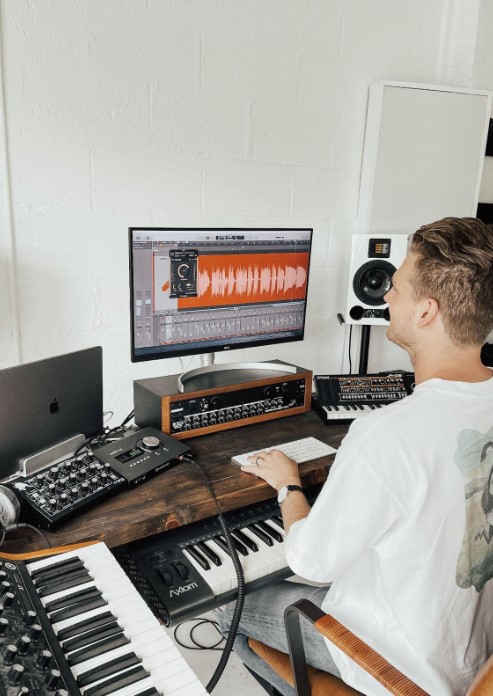
Posted by: KHTS Articles in News ArticlesJune 7, 2022 – 9:04 am0568 Views Almost everyone listens to music, but some folks take it a step further and go into music production. However, saying the name is the easiest step here! Music production has its pitfalls, but you don’t have to worry about them. That’s because this article will detail them, plus how to deal with them. Technology has come a long way these days. You don’t need to call in an entire orchestra anymore to record their separate instruments! You can just pick up some samples online. That being said, the basic amount of gear you’ll need for music production has changed recently. These advancements extend past music production and have affected the wider world of music at large. You likely won’t be making anything amazing using just a USB microphone and your old Macbook. You can use a Digital Audio Workstation (or DAW) to edit your music. That’s fine, but you’ll still need to be able to translate your music into something that your computer can recognize. In this case, you’ll need to pick up at least an audio interface. There is no need to pick up an audio interface worth a couple of thousand dollars. Start with something that has the basics, like two mono signals or a single stereo signal. Just in case you’re stumped on what you need to look for in an audio interface, check out this site for more audio interface options. Of course, if you’re planning on producing music for a long time, it would be wiser to pick up a higher-end model with more features, such as those with more modes of input and MIDI connections. If you want to learn a little more about music production and the gear you’ll need, click here. This issue has more to do with time than anything else. If you don’t have a deadline, this likely won’t be an issue for you, but it’s still an issue that crops up a lot. Music production has a few tried-and-tested steps to ensure your song will sound good, or at least better than it would without the process. Said steps include arranging the tracks and instruments, not following a proper tempo, or choosing a sample to use for a specific section. But for some reason, there’s this belief that skipping steps like mastering will let you finish faster and save both time and money. This isn’t true, and the opposite will actually happen! It’s best to think of every step in the music production process, like the sections of a house under construction. No one will ever see the foundation when you start building a house, right? But you still need to make sure the house’s foundation is solid; otherwise, you’ll risk the whole house crumbling later on. It’s the same story with music production. You can’t rush the initial recording or placement of instruments just because you want to get it done faster. If you need to take the time to record one more take, then do it! Make sure that your song or track has a solid musical foundation before you move on to mixing and the final step of mastering. If you have to go back later on to fix some sections, you might not be in the right frame of mind, or you could miss some other detail by mistake. It’s better to tackle any issues you might hear while you’re in the moment instead of leaving them to snowball in the future. No one starts out as an expert, right? This is true whether you’re into sports or making music. However, a lot of fledgling producers have a hard time letting go of their first track. They think that every track they put out must be absolutely perfect and ready. But here’s the thing. You’re a beginner, right? You’re not going to start out with the same level of experience and training that veteran studio engineers have. This isn’t meant to put you down, but you should know when you’ve done everything that you can for a song…for now. In the future, you can always come back to your earlier songs and realize, “Oh, it’s too messy. You can’t hear every instrument clearly anymore.” But that comes later. For now, you need to learn how to say, “Okay, I think this song is done.” Of course, you should strive to make a good song, but for now, finish up and move on to the next track. This is how you’ll gain experience and eventually train your ear and skills better. When you eventually return to your old sound, you can fix it with some EQ or cut out dead air. The important thing is that you won’t know the issue with your old work if you never move on from it. Produce a song that you think sounds good and feels good. Then move forward. Music production isn’t exactly easy. One of the most common difficulties that new producers are hit with is “Where do I start?” They often get out of the game before they can really hit their stride. But another issue has cropped up. Now that Spotify and Tiktok are seen as the main sources for new music, everyone is trying to make it by following the trends. The issue here is that artists (and their music) are now judged by their individual songs, not their albums. New producers will often start out by mimicking the trends of their favorite genres. If it works for others, it will work for you, right? While that’s a good springboard, they also often get stuck in this stage, forever aping the popular trends and not growing in their experience and sound. Music producers need to learn to move past the idea of the “one-hit” and make music with a variety of themes. If you truly want to develop your craft and talents, you need to learn how to draw inspiration from a multitude of sources, not just copy what’s popular at the moment. Genres will fall in and out of style according to what the listeners want. Think of how “80’s-style” pop music has made a resurgence in popularity lately. To grow as a music producer, you must try out new things and learn how to create more than just another viral hit. Your email address will not be published. Required fields are marked *
* *
Tagged with: Audio InterfacemusicMusic ProductionProducerSound June 8, 2022 – 1:54 pm June 8, 2022 – 12:45 pm June 8, 2022 – 10:12 am As Santa Clarita’s only local radio station, KHTS FM 98.1 & AM 1220 mixes in a combination of news, traffic, sports, along with your favorite adult contemporary hits by artists such as Rob Thomas, Taylor Swift, Katy Perry and Maroon 5. We are vibrant member of the Santa Clarita community. Our broadcast signal reaches all of the Santa Clarita Valley and parts of the high desert communities located in the Antelope Valley. We stream our talk shows over the web, reaching a potentially worldwide audience.
Hi, what are you looking for? By Published Dubbing Software Market Research 2022-2028 aims to help decision makers create credible investment reviews by providing, analyzing information about strategically important competitors. The report also describes the main companies involved in Dubbing Software analysis products and lists all of their large and minor projects. Global “Dubbing Software Market” Research Report 2022-2028 features an intrinsic analysis of the current growth status and provides detailed insights into the market size, drivers, opportunities, trends, competitive landscapes, and strategies of players. The report analyses market latest advancements, mergers, acquisitions, product launches, concentration, and scope of development across the region. The key factors such as market size, share, geographical expansion, market demand, sales, value, and quantity are explained. Moreover, the document presents latest developments, regional production, industry drivers, revenue, upcoming technologies, and manufacturer information compiled by researchers. Global Players can use the accurate market facts and figures and statistical studies provided in the report to understand the current and future growth of the Dubbing Software market. Get a Sample PDF of report – https://www.industryresearch.biz/enquiry/request-sample/20703718 About Dubbing Software Market: Video dubbing is a complete tool for video dubbing using subtitle files. All you need to do is provide the video’s subtitle file, Video dubbing generates audio based on subtitles, then synthesizes audio and video, and you immediately have a new dubbing video! Market Analysis and Insights: Global and United States Dubbing Software Market This report focuses on global and United States Dubbing Software market, also covers the segmentation data of other regions in regional level and county level. Due to the COVID-19 pandemic, the global Dubbing Software market size is estimated to be worth USD million in 2022 and is forecast to a readjusted size of USD million by 2028 with a CAGR of during the review period. Fully considering the economic change by this health crisis, by Type, Cloud base accounting for % of the Dubbing Software global market in 2021, is projected to value USD million by 2028, growing at a revised CAGR in the post-COVID-19 period. While by Application, Music Production was the leading segment, accounting for over percent market share in 2021, and altered to an CAGR throughout this forecast period. In United States the Dubbing Software market size is expected to grow from USD million in 2021 to USD million by 2028, at a CAGR of during the forecast period. The competitive landscape analysis of the Dubbing Software market uncovers detailed company profiles, revenue shares, portfolio innovations, regional product footprint, key developmental strategies, pricing structure, and future plans of market leaders. This entire section helps readers gain the essence of what is driving competition and what would help them stand out to win new target markets. Assessment of Dubbing Software demand across a variety of application areas also discovers the potential applicability that would push market growth at a considerable rate. The Key Market Players for Global Dubbing Software Market are listed below: TO UNDERSTAND HOW COVID-19 IMPACT IS COVERED IN THIS REPORT Global Dubbing Software Market: Segment Analysis Industry Research Biz provides an analysis of the key trends in each sub-segment of the global Dubbing Software market, along with forecasts at the global, regional, and country-level analysis from 2022 to 2028. Our report has categorized the market based on type, offering, technology, system, and end-use industry. The biggest highlight of the report is to provide companies in the industry with a strategic analysis of the impact of COVID-19. The research report includes specific segments by region (country), manufacturer, Type, and Application. On the basis of Product Type, this report displays the production, revenue, price, market share, and growth rate of each type, primarily split into: On the basis of the End Users/Applications, this report focuses on the status and outlook for major applications/end users, consumption (sales), market share, and growth rate for each application, including: With industry-standard accuracy in analysis and high data integrity, the report makes a brilliant attempt to unveil key opportunities available in the global Dubbing Software market to help players in achieving a strong market position. Buyers of the report can access verified and reliable market forecasts, including those for the overall size of the global Dubbing Software market in terms of revenue. The report proves to be an effective tool that players can use to gain a competitive edge over their competitors and ensure lasting success in the global Dubbing Software market. Get A Sample Copy Of The Dubbing Software Market Report 2022-2028 Attractions of the Dubbing Software Market Report: – Some of the highlighted features of this report: Market Size Estimates: Dubbing Software in the global composites industry size estimation in terms of value and volume Trend and Forecast Analysis: Market trend (2017-2022) and forecast (2022-2028) by segments and region. Segmentation Analysis: Dubbing Software in the global composites industry size by various applications such as end-use industry, region, and country in terms of value and volume. Regional Analysis: Dubbing Software in the global composites industry breakdown by North America, Europe, Asia Pacific, and the Rest of the World. Growth Opportunities: Analysis on growth opportunities in different applications and regions of Dubbing Software in the global composites industry. Strategic Analysis: This includes MandA, new product development, and the competitive landscape of Dubbing Software in the global composites industry. Enquire before purchasing this report – https://www.industryresearch.biz/enquiry/pre-order-enquiry/20703718 Competitive Landscape and Dubbing Software Market Share Analysis: Dubbing Software market competitive landscape provides details and data information by vendors. The report offers a comprehensive analysis and accurate statistics on revenue by the player for the period 2017-2022. It also offers detailed analysis supported by reliable statistics on revenue (global and regional level) by players for the period 2017-2022. Details included are company description, major business, company total revenue and revenue generated in Dubbing Software business, the date to enter into the Dubbing Software market, Dubbing Software product introduction, recent developments, etc. This report focuses on Dubbing Software volume and value at the global level, regional level, and company level. Regionally, this report focuses on several key regions: North America, Europe, Asia-Pacific, Latin America, and Middle East and Africa. From a global perspective, this report represents the overall Dubbing Software market size by analyzing historical data and future prospects. Key Questions Answered in the Report: Key Reasons to Purchase Dubbing Software Market Report: Purchase this report (Price 4350 USD for a single-user license) – https://www.industryresearch.biz/purchase/20703718 What Report Exactly Offers to the Buyers? Some Points from TOC: With tables and figures helping analyze worldwide Global Dubbing Software market trends, this research provides key statistics on the state of the industry and is a valuable source of guidance and direction for companies and individuals interested in the market. 1 Study Coverage 1.1 Dubbing Software Product Introduction 1.2 Market by Type 1.2.1 Global Dubbing Software Market Size by Type, 2017 VS 2021 VS 2028 1.3 Market by Application 1.3.1 Global Dubbing Software Market Size by Application, 2017 VS 2021 VS 2028 1.4 Study Objectives 1.5 Years Considered 2 Global Dubbing Software Production 2.1 Global Dubbing Software Production Capacity (2017-2028) 2.2 Global Dubbing Software Production by Region: 2017 VS 2021 VS 2028 2.3 Global Dubbing Software Production by Region 2.3.1 Global Dubbing Software Historic Production by Region (2017-2022) 2.3.2 Global Dubbing Software Forecasted Production by Region (2023-2028) 2.4 North America 2.5 Europe 2.6 China 2.7 Japan 3 Global Dubbing Software Sales in Volume and Value Estimates and Forecasts 3.1 Global Dubbing Software Sales Estimates and Forecasts 2017-2028 3.2 Global Dubbing Software Revenue Estimates and Forecasts 2017-2028 3.3 Global Dubbing Software Revenue by Region: 2017 VS 2021 VS 2028 3.4 Global Dubbing Software Sales by Region 3.4.1 Global Dubbing Software Sales by Region (2017-2022) 3.4.2 Global Sales Dubbing Software by Region (2023-2028) 3.5 Global Dubbing Software Revenue by Region 3.5.1 Global Dubbing Software Revenue by Region (2017-2022) 3.5.2 Global Dubbing Software Revenue by Region (2023-2028) 3.6 North America 3.7 Europe 3.8 Asia-Pacific 3.9 Latin America 3.10 Middle East and Africa 4 Competition by Manufactures 4.1 Global Dubbing Software Production Capacity by Manufacturers 4.2 Global Dubbing Software Sales by Manufacturers 4.2.1 Global Dubbing Software Sales by Manufacturers (2017-2022) 4.2.2 Global Dubbing Software Sales Market Share by Manufacturers (2017-2022) 4.2.3 Global Top 10 and Top 5 Largest Manufacturers of Dubbing Software in 2021 4.3 Global Dubbing Software Revenue by Manufacturers 4.3.1 Global Dubbing Software Revenue by Manufacturers (2017-2022) 4.3.2 Global Dubbing Software Revenue Market Share by Manufacturers (2017-2022) 4.3.3 Global Top 10 and Top 5 Companies by Dubbing Software Revenue in 2021 4.4 Global Dubbing Software Sales Price by Manufacturers 4.5 Analysis of Competitive Landscape 4.5.1 Manufacturers Market Concentration Ratio (CR5 and HHI) 4.5.2 Global Dubbing Software Market Share by Company Type (Tier 1, Tier 2, and Tier 3) 4.5.3 Global Dubbing Software Manufacturers Geographical Distribution 4.6 Mergers and Acquisitions, Expansion Plans 5 Market Size by Type 5.1 Global Dubbing Software Sales by Type 5.1.1 Global Dubbing Software Historical Sales by Type (2017-2022) 5.1.2 Global Dubbing Software Forecasted Sales by Type (2023-2028) 5.1.3 Global Dubbing Software Sales Market Share by Type (2017-2028) 5.2 Global Dubbing Software Revenue by Type 5.2.1 Global Dubbing Software Historical Revenue by Type (2017-2022) 5.2.2 Global Dubbing Software Forecasted Revenue by Type (2023-2028) 5.2.3 Global Dubbing Software Revenue Market Share by Type (2017-2028) 5.3 Global Dubbing Software Price by Type 5.3.1 Global Dubbing Software Price by Type (2017-2022) 5.3.2 Global Dubbing Software Price Forecast by Type (2023-2028) 6 Market Size by Application 6.1 Global Dubbing Software Sales by Application 6.1.1 Global Dubbing Software Historical Sales by Application (2017-2022) 6.1.2 Global Dubbing Software Forecasted Sales by Application (2023-2028) 6.1.3 Global Dubbing Software Sales Market Share by Application (2017-2028) 6.2 Global Dubbing Software Revenue by Application 6.2.1 Global Dubbing Software Historical Revenue by Application (2017-2022) 6.2.2 Global Dubbing Software Forecasted Revenue by Application (2023-2028) 6.2.3 Global Dubbing Software Revenue Market Share by Application (2017-2028) 6.3 Global Dubbing Software Price by Application 6.3.1 Global Dubbing Software Price by Application (2017-2022) 6.3.2 Global Dubbing Software Price Forecast by Application (2023-2028) 7 North America 8 Europe 9 Asia Pacific 10 Latin America 11 Middle East and Africa 12 Corporate Profiles 12.1 Company Profile 1 12.1.1 Company Profile 1 Corporation Information 12.1.2 Company Profile 1 Overview 12.1.3 Company Profile 1 Dubbing Software Sales, Price, Revenue and Gross Margin (2017-2022) 12.1.4 Company Profile 1 Dubbing Software Product Model Numbers, Pictures, Descriptions and Specifications 12.1.5 Company Profile 1 Recent Developments 12.2 Company Profile 2 12.2.1 Company Profile 2 Corporation Information 12.2.2 Company Profile 2 Overview 12.2.3 Company Profile 2 Dubbing Software Sales, Price, Revenue and Gross Margin (2017-2022) 12.2.4 Company Profile 2 Dubbing Software Product Model Numbers, Pictures, Descriptions and Specifications 12.2.5 Company Profile 2 Recent Developments 12.3 Company Profile 3 12.3.1 Company Profile 3 Corporation Information 12.3.2 Company Profile 3 Overview 12.3.3 Company Profile 3 Dubbing Software Sales, Price, Revenue and Gross Margin (2017-2022) 12.3.4 Company Profile 3 Dubbing Software Product Model Numbers, Pictures, Descriptions and Specifications 12.3.5 Company Profile 3 Recent Developments ………………………………….. 13 Industry Chain and Sales Channels Analysis 13.1 Dubbing Software Industry Chain Analysis 13.2 Dubbing Software Key Raw Materials 13.2.1 Key Raw Materials 13.2.2 Raw Materials Key Suppliers 13.3 Dubbing Software Production Mode and Process 13.4 Dubbing Software Sales and Marketing 13.4.1 Dubbing Software Sales Channels 13.4.2 Dubbing Software Distributors 13.5 Dubbing Software Customers 14 Market Drivers, Opportunities, Challenges and Risks Factors Analysis 15 Key Finding in The Global Dubbing Software Study Continue………… Detailed TOC of Global Dubbing Software Market @ https://www.industryresearch.biz/TOC/20703718 About Us: Market is changing rapidly with the ongoing expansion of the industry. Advancement in technology has provided today’s businesses with multifaceted advantages resulting in daily economic shifts. Thus, it is very important for a company to comprehend the patterns of market movements in order to strategize better. An efficient strategy offers the companies a head start in planning and an edge over the competitors. Industry Research is a credible source for gaining market reports that will provide you with the lead your business needs. Contact Us: Industry Research Biz Phone: US +1 424 253 0807 UK +44 203 239 8187 Email: [email protected] Web: https://www.industryresearch.biz Press Release Distributed by The Express Wire To view the original version on The Express Wire visit Dubbing Software Market 2022: Comprehensive Research Study, Size, Trends, Growth Statistics, Share and Innovative Strategy by Top Key Players – Wondershare, Magix, Camstudio, Dvdvideo Soft
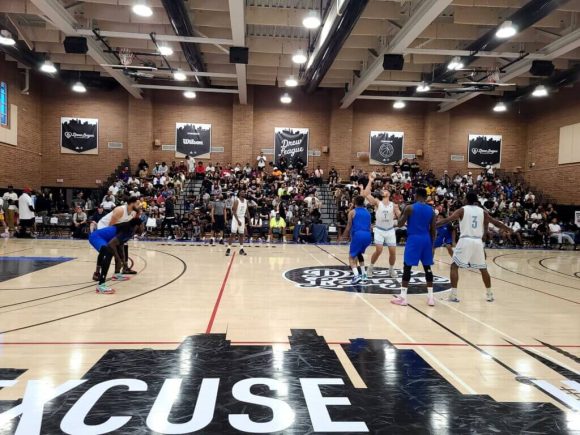
(Editor’s note: This article has been amended to reflect Caffeine’s current relationship with the Drew League.) LOS ANGELES — After Golden State Warriors center Kevon Looney scored a career-high 21 points in Game 2 of the Western Conference finals against the Dallas Mavericks, he was asked in the postgame press conference when the last time he recorded 20 points in a game was. “Probably college,” Looney answered with a wry smile. “Drew League! Count that!” Looney’s shout out to the Drew League came two weeks before the 49th opening weekend of the South-Central Los Angeles-based pro-am basketball league. Looney dominated the league last summer, culminating with his team, the I-Can All-Stars, winning their first overtime game in the league’s 48-year history. “I remember when Baron Davis out of UCLA struggled, played in the Drew, and went back and killed in the league. The Drew League does things to people,” Rocchead Johnson, coach of the I-Can All-Stars said. “Having Loon play for me — and he was already good — but was he having fun? Get what I’m saying? He had fun! He went back to the Warriors, ‘I won a championship at Drew League with Rocc Johnson, I-Can All-Stars!’ Now, look at his year. His year is ridiculous. It’s great. Now you get a chance to win two chips in the same year. It makes me really feel good when he mentioned the Drew League.” The I-Can All-Stars’ title defense is one of the many items to watch as the Drew League season gets underway. Last year, the league played games at St. John Bosco High School in Bellflower, Calif. The Drew League returned to King Drew High School in the Watts neighborhood of Los Angeles, where the games took place for the eight summers prior to the coronavirus pandemic outbreak. The return of the main site of games has energized the league led by commissioner Chaniel Smiley and her father Dino Smiley, the CEO and previous long-time commissioner of the Drew League. “This is a location where everybody loves to be at,” Chaniel Smiley says. “They love to bring their families, their kids. And it’s just, the atmosphere, the energy around King Drew, is always awesome.” “Everybody says the same thing: We’re back home,” Dino Smiley added. “Feels good. We missed everything here.” The court at the Drew League features the skyline of Watts, with the names of the Smiley family on the floor. The refreshed Drew League logo features the location of “South Central” for the first time in several years.
“This is where we’re from, and we’re very prideful of where we come from, and that’s very important to resemble that,” Chaniel Smiley said. “Bringing back the South-Central L.A. in our logo just meant that, as far as ownership, just being able to show love to our community and not being ashamed of South Central. We’re proud of where we’re from.” The theme of home was further emphasized by the Smiley family when discussing the move in primary sponsorship from Nike to Adidas. In addition to the summer Drew League, Adidas is sponsoring the Women’s Drew League as well as a high school basketball showcase presented by the Drew League and a Jr. Drew League in the spring. The change from Nike to Adidas has energized a couple of NBA players, most notably Philadelphia 76ers shooting guard James Harden, who competed in the Drew League against Kobe Bryant during the 2011 summer lockout and won a championship at the Drew in 2015 in a matchup against DeMar DeRozan. Harden used to tear out the Nike logo or otherwise cover up his jersey for years due to his status as an Adidas athlete. Now, it appears Harden is ready to return to the Drew as a face of the new era for the league. truly honored to officially unveil the partnership between @adidasHoops and @DrewLeague. King Drew continues to be the center of the L.A. community and I’m excited for this next gen under the Three Stripes. See you this summer ya diggggggg! 🔥 #TeamAdidaspic.twitter.com/WyxEH32Q6k — James Harden (@JHarden13) May 31, 2022
Another development for the Drew League this summer is the capacity to stream games live for the first time. The removal of NCAA restrictions that prevented athletes from being compensated cleared one hurdle toward streaming pro-am games. The Drew League has also developed a partnership with the National Basketball Players Association over the last few years, clearing another barrier to streaming games. The Drew League partnered with Caffeine, a social broadcasting platform, to stream two games a weekend in June. Caffeine will also feature the Drew League in a pregame and postgame show on Sundays, as well as a weekly recap on Tuesdays. “Starting in July, Caffeine will move to doing a pre- and post-show to kind of talk about predictions, talk to the people in the audience and kind of break down the game,” Amanda Lac, Caffeine content and marketing coordinator said. One of the games that Caffeine broadcasted live to start the Drew League season featured Public Enemy. Charlotte Hornets center Montrezl Harrell suited up for Public Enemy on Sunday alongside three-time Drew League MVP Franklin Session. “A lot of people don’t like change, but I look at it as growth,” said Session, who won a Drew League championship in 2017. “Because growth, at the end of the day man, we were never able to stream games. We can stream games now. Unlimited product for everybody, that’s what it feels like to me. It’s a great environment again. We’re back at King Drew. I feel like this is how it should be.” Caffeine will also broadcast the Pro-Am Basketball Challenge (PABC) Tournament on June 24-26 which will bring six pro-am leagues from across the nation together in Los Angeles. The Drew League will host, and leagues from New York (Dyckman), Baltimore (Brunson League), Atlanta (Atlanta Entertainment Basketball League), Miami (Miami Pro League) and Philadelphia (Rumph Classic) will all descend upon South Central L.A., with each team playing at least two games. The two teams with the best records and point differentials will face off on the final day of the event. THE TIME HAS COME🔥🔥 This summer, we are bringing together the Top 6 pro-am basketball leagues for a new event, the tournament will feature: (@BrunsonLeague ) (@AEBLHOOPS ) (@MiamiProLeague_ ) (@IamDyckman ) (@RumphClassic )#TheDrewpic.twitter.com/kbnmh3iB6u — Drew League (@DrewLeague) April 8, 2022
“If we’re shorthanded, we’ve got the whole city to grab some players,” quipped Dino Smiley about the Drew League hosting the PABC Tournament this month. “The other summer pro leagues, they wanted that Drew League atmosphere … Just pack it in, whoever can get in can get in, and let’s just battle.” Overall, this will be one of the most competitive summers at the Drew, in large part because this is the smallest roster of teams in at least a decade. Only 20 teams were invited to compete this season, including new teams led by former Warriors champion Jordan Bell (CHPT562) and former Clipper and current broadcaster Corey Maggette (GHOST). There are 10 teams in two divisions, named for recently deceased Los Angeles natives referee Booker Turner and former Clipper Freeman Williams. Sixteen teams will make the playoffs with the championship set for Aug. 21 at Los Angeles Southwest College. As usual, the motto remains the same: “No Excuse, Just Produce.” “We’re excited to be back, and we’re kind of getting out of the pandemic, so just happy that everybody else is feeling good as well,” Chaniel Smiley said during the first weekend of games. “We’re going to keep rocking this thing out. Year 49. I feel like it’s going to be one of our best ones. I say that almost every year. But I just have really, really good vibes about this.” (Photo: Law Murray)
You are here: byAlex Hopper ASCAP has announced its June 2022 schedule for the ASCAP Experience—a series of special guests, panels, and more that were created to inspire, educate, and connect aspiring songwriters and composers. This year’s event will focus on highlighting the many diverse voices in the music community. Capping off the event is a session with singer/songwriter Ashanti, where she will chat with VIBE Editor-in-Chief Datwon Thomas to celebrate the 20-year legacy of her debut album. During the discussion, she will dive into the creation of some of her all-time greatest hits. In addition to her lauded career as a singer, Ashanti is the CEO of her own record label, Written Entertainment, and has recently become the first Black female artist to co-found a Web3 company, EQ Exchange. The event will be live-streamed straight from ASCAP’s Youtube Channel. Also on the billing are TV and film composter Raashi Kulkarni (Supergirl, DC’s Legends of Tomorrow) and Costa Rican composer and producers Daniel Rojas (Marvel’s Hit-Monkey, M.O.D.O.K.). The two will join Universal Pictures executive Jeff Cafuir for a talk on finding diverse voices for film and television music production. The panelists will discuss why diversity, equity, and inclusion efforts are so crucial for composers, film companies, and fans alike. Kulkarni and Rojas will also discuss their own personal experiences with NBCUniversal’s Universal Composter Initiative, an effort aimed at closing the gap for women, people of color, and other underrepresented communities in the composing world. The conversation will be live-streamed from ASCAP’s Instagram on June 8. The ASCAP Wellness Program will present “The Art of Listening: A Live Music Meditation with Beginner’s Ear” as a prelude to Global Wellness Day. Corinna da Fonseca-Wollheim, founder of Beginner’s Ear, will guide an immersive group meditation that explores the ways in which sound, stillness, and mindfulness are interconnected. ASCAP composer Todd Reynolds will be performing a program of contemporary classical works for violin and electronics. The meditation will also take place on ASCAP’s Instagram on June 10 at 12 pm ET. “Express Yourself: A Roundtable on Identity in the Music Industry” featuring Lazaro Hernandez, Ryan Cassata, and Jamie Moore will lead a roundtable discussion about how each participant’s identity shapes their music career. They will also cover the challenges they’ve faced in their careers as well as how to create a more welcoming, accessible, and nurturing industry for everyone. The discussion will be live-streamed on June 15 at 3 pm ET on ASCAP’s YouTube Channel. These previous ASCAP Sessions this year have already garnered nearly 30,000 views. Sessions so far have included music creators from Latin superstar Camilo, Oscar-nominated composer Germaine Franco, K-Pop stars Justin Liu and Amber Park, Ariana Grande hitmaker Tommy Brown, and Bieber collaborator Poo Bear. Across the sessions, each artist discusses a wide array of music-industry-related topics. For more information on the ASCAP Experience, as well as on-demand sessions go to their website, HERE. ABC/Lorenzo Bevilaqua JA RULE, ASHANTI See more Only members can comment. Become a member. Already a member? Log In.
Welcome, Minneapolis-based singer, rapper, and producer on lifting up Black trans women, finding her community, and expressing herself to the fullest Deputy Music Editor Zora describes her remarkable debut album, 'Z1,' as "all the different parts of my identity — the sadness, the happiness, the craziness, the funniness… combined into one cohesive body of work" Cameron Wittig for Rolling Stone When Zora Grey was 16, she wanted to be a jazz singer. So she tried out at a vocal audition at her performing-arts high school in Los Angeles — only to be slotted instead into a music technology class where kids learned how to make beats using Ableton and Logic. “I was so annoyed,” says the Minneapolis-based musician, 23. “I was really not for it at all.” But she got hooked on the feeling of freedom she got from constructing her own world from scratch, and soon she was on her way to becoming a rare triple-threat phenomenon. Today, Zora is an exceptionally talented singer, rapper, and producer, with the ability to stand out instantly in a sea of new music from better-known artists. Her debut album, Z1 (out June 17 on Get Better Records), is one of 2022’s most thrilling first listens and most rewarding re-listens, packed with pummeling techno beats, irrepressible pop hooks, trippy club bangers, sharply pointed bars, and melancholy future-soul melodies. It’s the kind of album that makes you stop and say, “Who made this?”
Chasteness, Soda Pop, and Show Tunes: The Lost Story of the Young Americans and the Choircore Movement
20 Overlooked Bob Dylan Classics
Growing up in L.A., Zora was a shy kid surrounded by a family full of musical gifts: a grandmother who taught her to play piano, a dad who moved crowds as a hip-hop DJ, a cousin who plays in a progressive metal band. Zora herself was drawn to iconic pop and R&B voices like Britney Spears, Lauryn Hill, Ariana Grande, and Janet Jackson — artists whose music sparked something within her. “I was like, ‘I want to do that. I literally want to be like them,’” she says. “But I also didn’t know how to make my own music yet.” After high school, she moved across the country to study the music business at Boston’s Berklee College of Music. Far from home, she struggled with insecurity about the path she was on. “All of my music was cookie-cutter love-song, straight-up R&B – very much, like, ‘Baby come back to me, I love you,’” she says. “I could not connect with it at all, but I could sing it so well. Everyone was like, ‘She’s amazing!’ But I was like, ‘I don’t even know what I wrote about.” Searching for something realer, she listened closely to Sophie’s boundary-pushing electronic production and Kendrick Lamar’s defiantly individualistic rap. “To Pimp a Butterfly specifically inspired me to make anything that felt close to my heart,” she says. “It was like, you don’t have to do what’s trendy or what’s cool.” Around the same time, she was coming to understand herself as a trans woman looking for her place in the world. “When I initially came out and started transitioning, I just wanted to find friends and a chosen family,” she says. “It got lonely sometimes.” By the spring of 2020, Zora had dropped out of Berklee. She looks back on that period now as a key turning point in her quest for artistic truth. At the time, though, it felt more like a plunge into despair. “The death toll with the pandemic was rising,” she recalls, speaking softly. “There weren’t any vaccines. There was no hope in that time. There was a Black trans girl that had died almost every week or every two weeks. I just felt like I wanted to go into hiding, honestly. That was the biggest feeling: ‘I just want to stay inside for my own health and safety.’” She ended up fighting through that fear and confusion to make “All Around the World!,” the joyful, catchy, uplifting pop anthem that is the first full song on Z1. “I was going through a bad depression, and I wanted a song that was just happy,” she continues. “Something that gave girls — Black girls, specifically; Black trans girls, even more specifically — a sense of hope… It was honestly what saved my life, to be real.”
That ability to turn painful, heavy feelings into complex yet rewarding music is one of Zora’s greatest strengths. You can hear it, too, in “Happiest I’ve Ever Been,” a rock-inflected slow-burner that she began writing after a difficult breakup sent her spiraling. “I had heard the song ‘1979’ by the Smashing Pumpkins, and I wanted something that felt like home,” she says. “It was supposed to be a party song — like, ‘I drink till I can’t no more, I smoke till I can’t no more, turn up,’ whatever. But then I ended up going into the mental hospital and the psych ward.” The song, which Zora wrote while staying with her mom in Washington, D.C., after getting out of the hospital, dramatizes her mental-health scare with vivid lyrics about crashed cars and broken windows, and a snappy rap verse from Myia Thornton, a close friend she’d made in college. “I wrote it in a way that’s more how I was feeling than what actually happened,” Zora clarifies. “Like, ‘Crash my car into the subway station’ — that didn’t happen, but that’s what I felt I could potentially do. It was a bad time.”
Produced entirely by Zora herself, with just a few key contributions from Thornton and other friends on guest vocals and session parts, Z1 is a fearless expression of the person Zora truly is. “It’s all the different parts of my identity,” she says. “The sadness, the happiness, the craziness, the funniness — all of those different parts of myself, combined into one cohesive body of work.” Zora posted Z1 online as a limited self-release in 2021, but she knew she had something that deserved a wider audience. She sent the music to a few major labels before coming across Get Better, the radical queer and trans artist-led label behind releases by Control Top, Empath, Evan Greer, and more. “I was like, ‘They seem so inclusive and their releases are dope,’” she says. “So I found their email. ‘My name’s Zora, I’m 22, and here’s my album. Have a great day,’ with a smiley face on the end. They ended up getting back to me: ‘Hey, we’re obsessed with your album. We’ve been showing it to everybody who will listen.’ I was not expecting it at all. They’re amazing.” Zora says she’s found a sense of balance in Minneapolis, where she’s lived for the last two years, working as a case manager at an agency that helps find housing for people experiencing homelessness. She’s also found a treasured community in the city’s ballroom scene, where she walks regularly as part of the House of Escada (a storied mainstream ballroom house) as well as the House of Old Navy (in the more casual kiki scene).
“I love the competitive aspect of it, because in its true essence, that is a huge part of it,” she says. “But even bigger than that, it’s about feeling safe. Ballroom, for me, is being able to call my sister when I’m walking home just in case, or having someone go with me to get my nails done just in case anything happens. This is the safety net that we’ve created for ourselves, and regardless of any BS that’s going on in the world, we know that it will not get broken.” The journey that began for her all those years ago has taken her somewhere she only dreamed about. She’s mindful of her platform as an artist, and she’s thought about the lessons she’d like to share with anyone reading this story who’s like her. “It’s cheesy, but the biggest thing I would say is never give up,” Zora says. “That’s what I was always told, and what I always resented — but it’s true. Your community is out there, and they’re looking for you as hard as you’re looking for them.”
Thank you for visiting nature.com. You are using a browser version with limited support for CSS. To obtain the best experience, we recommend you use a more up to date browser (or turn off compatibility mode in Internet Explorer). In the meantime, to ensure continued support, we are displaying the site without styles and JavaScript. Advertisement Scientific Reportsvolume 12, Article number: 9379 (2022) Cite this article Metrics details The increase of COVID-19 breakthrough infection risk with time since vaccination has a clear relationship to the decrease of antibody concentration with time. The empirically-observed dependence on blood IgG anti-receptor binding domain antibody concentration of SARS-CoV-2 vaccine efficacy against infection has a rational explanation in the statistics of binding of antibody to spike proteins on the virus surface, leading to blocking of binding to the receptor: namely that the probability of infection is the probability that a critical number of the spike proteins protruding from the virus are unblocked. The model is consistent with the observed antibody concentrations required to induce immunity and with the observed dependence of vaccine efficacy on antibody concentration and thus is a useful tool in the development of models to relate, for an individual person, risk of infection given measured antibody concentration. It can be used to relate population breakthrough infection risk to the distribution across the population of antibody concentration, and its variation with time. The probability of breakthrough infection—where a person who has been previously convalescent or vaccinated becomes infected with Covid19—is a matter of serious public health concern. The mechanism of antibody neutralisation of viral infection is complex and depends on the type of virus1,2. However, although the variation across individuals is large the concentration in blood of IgG antibodies against the spike receptor binding domain (RBD) of the SARS-CoV-2 virus is well correlated with neutralisation efficacy against the virus3 and appears to be a useful predictor of breakthrough infection risk for both convalescent and vaccinated individuals, regardless of vaccine type4,5,6. The well-documented increase in breakthrough infection risk over time for some months following vaccination7 has been attributed to a decrease in IgG concentration, in advance of the development later of cell-based immunity8. An empirical model for this dependence has been given9,10 and developed into a model describing breakthrough infection risk, and importation risk stratification using quantitative serology11. Lipsitch et al.12, reviewing recently causes and impact of breakthrough infections in vaccinated individuals, suggest that the rates of breakthrough infection are best viewed as a consequence of the level of immunity at any moment in an individual. This argument can be developed as follows: the probability that an individual becomes infected, P(infected), depends on immune response to previous infection or vaccination, on variant and on contact with other infected people: The probability of transmission given exposure, P(transmission|exposure), depending on the variant and the nature of contact (close, casual), and P(exposure), depending on the disease prevalence as well as behavioural factors, have been documented through epidemiological studies. Understanding of breakthrough infection thus requires understanding P(infected|immunity, transmission, exposure), the probability of infection given all of immunity, transmission and exposure. Khouri et al.10 correlated data for vaccine efficacy and antibody concentration across clinical trials for different vaccines. In the presence of antibody, with exposure and transmission probability the same in each group, the vaccine efficacy, E = 1 − (infection proportion amongst vaccinated people/infection proportion amongst unvaccinated people). Khouri et al. used a log-logistic function empirically to derive the dependence of vaccine efficacy against symptomatic infection, E, on IgG concentration, c, with parameters c50 and k: The assumption is that Eq. (2), derived by correlation of population-median results, also applies at the level of the individual. The risk to an individual at any particular time could then be written: where c is the antibody concentration for any given individual at any particular time, c50 depends on the variant and k is a parameter independent of variant and vaccine type. Data on individual infection risk is not available. However, the applicability of Eq. (3) at the level of the individual can be assessed by using it to understand population breakthrough infection risk. Williams11 used Eqs. (1) and (3) to derive population breakthrough risk given a known antibody concentration distribution across the population, and compared computed and observed population breakthrough infection risk: where fV(c) denotes the probability density of concentration, c, across the population. In a small study, Vargas et al.13 indicated that this distribution across a vaccinated population is log-normal, consistent with the observations and assumptions of Khouri et al.10 Therefore, if there are sufficient data to estimate the mean, μ, and standard deviation, σ, over a range of time since vaccination, then an estimate of population vaccine efficacy, VE, over this time range can be obtained: Tartof et al.7 in a large retrospective cohort study in California estimated vaccine efficacy for mRNA BNT162b2 COVID-19 vaccine, month-by-month up to 6 months. The study included variants from the original Wuhan strain, against which the vaccine has been derived, up to and including the Delta strain. Israel et al.14 measured anti-receptor binding domain (RBD) IgG across a large, BNT162b2 fully-vaccinated population, month-by-month, in Israel. Assuming the concentration distribution is log-normal allows the log-normal mean and standard deviation to be derived from the reported arithmetic mean and variance, median and quartiles. Figure 1 compares the vaccine efficacy reported by Tartof et al.7 with the vaccine efficacy computed from Eq. 6, using the data of Israel et al.14, with c50 and k as global fitting parameters averaged over all variants and participant ages (16 +). The estimated k = 1.57 (95% CI 1.14, 2.08) agrees with the value deduced by Khouri et al.10 Eq. (3) appears therefore to be a useful individual risk model with a parameter k that appears to be fixed. Comparison of vaccine efficacy (expressed as %) computed from Eq. 6 with observed efficacy. Log-normal mean, μ, of antibody concentration distributions are the median values given by Israel et al.14 Random sampling from the assumed normal distribution of σ deduced from the various estimates given the data of Israel et al. and from the vaccine efficacy confidence intervals given by Tartof et al.7, minimising the sum of squared deviations by varying c50 and k. Error bars are 95% confidence intervals. The model is also useful in assessing the effect of different variants on individual risk. Laboratory and observational studies indicate that, given vaccines directed at the RBD of the Wuhan strain, neutralising efficacy against different variants can be derived simply by scaling the parameter c509,15,16,17. Since the risk model relies heavily on the empirical correlation of vaccine efficacy with neutralising antibody concentration, it would be useful to find a physical basis for the correlation and to use this to develop more confidence in the risk prediction. Given current knowledge that vaccine efficacy against infection (as opposed to efficacy against hospitalization and death) is, at least for some months, determined by the concentration of neutralizing antibodies, it is assumed in the following that the mechanism is simply antibody binding to the spike protein blocking the virus binding to host cells1,18. Potent antibodies indeed block binding of the virus to its receptor19. In the following, we simply suppose that there is some threshold number of spikes on the virus surface that must be unblocked by antibody in order that there is a significant probability that a virus particle may bind to and infect a cell. The total number number, N, of spikes per virus particle is variable from one particle to another, distributed over the range 10–40 with median around 2520,21. Let s denote the number of antibody molecules bound on a particular particle. We wish to calculate the probability that the number of unoccupied sites is less than or equal to a threshold number, n*: that is that the number of occupied sites is greater than or equal to N − n*, P(s ≥ N − n*). This probability will depend on the antibody concentration in the medium surrounding the virus particle. The question is therefore : what is the probability distribution for the number of antibody molecules bound per particle as a function of the antibody concentration ? The problem can be framed in terms of transitions between states of a given particle where each state has a particular number of bound antibodies, ranging from zero up to the maximum, N. The objective is to calculate the probability of a given state for a particular particle. The transition frequencies for adsorption and desorption between the different states, ({lambda}_{1,s},,{lambda}_{2,s}) depend upon the occupancy, s : A simplifying assumption is that the diameter of the virus particle and number of spikes/particle are such that the spacing of the spikes is significantly larger than the antibody dimensions so lateral interactions between bound antibodies can reasonably be ignored. With this assumption, the rate of binding of antibody to a particle is proportional to the collision frequency of antibodies with unoccupied sites, hence dependent on the fraction of the particle area that is unoccupied, hence on the fraction of unoccupied sites, whilst the rate of desorption is proportional to the number of occupied sites. Hence for the exchange between state (s − 1) and state s, where c denotes the solution concentration of antibody where kon and koff denote the rate constants for attachment and detachment of the antibody to a site on the particle surface. The antibody affinity is the ratio kon/koff. The detail of the calculation is given in the Supporting Information. The key parameter determining the antibody concentration scale for effective blockade is the dimensionless concentration, z, which is the product of the antibody solution concentration and the antibody affinity for the binding site. A second parameter depends on N and n*. The result for the probability that exactly s antibody molecules should be bound is: where and If N is significantly greater then s, then Eq. (7) is a Poisson distribution. Therefore, the probability of occupancy s ≥ N − n* is: Infection also requires some dose of virus be received. However, as is shown in the following, the dependence of vaccine efficacy on antibody concentration would be just the dependence of P(s ≥ N − n*) on concentration, calculated according to Eq. (8). Infection requires both exposure to an infected person and transmission from that person. Vaccine efficacy is determined by comparing two groups where both the probability of exposure and the probability of transmission given exposure are assumed to be the same. In any given exposure event, the viral dose received, D, would be variable. Then, in the presence of antibody, within some dose, D, the number of virus particles that are infectious would be [1 − P(s ≥ N − n*)]D. Across the population of virus, there would be a distribution of N and hence a distribution of P(s ≥ N − n*). The argument is first developed here assuming a single population with given N. Suppose that a ‘critical dose’, D*, is required to trigger an infection. Suppose that the dose, D, across an exposed population is described by a probability distribution P(D). The probability of infection across the population in the absence of immunity, taking account of the distribution of D would then be (mathop smallint limits_{{D^{*} }}^{infty } Pleft( D right){text{d}}D) In the presence of antibody, the probability of infection would be (mathop smallint limits_{{D^{*} }}^{infty } left[ {1 – Pleft( {s ge N – n^{*} } right)} right]Pleft( D right)dD). In the presence of antibody, with exposure and transmission probability the same in each group the vaccine efficacy, E = 1 − (infection proportion amongst vaccinated people/infection proportion amongst unvaccinated people). Thus: That is: the variation of E with antibody concentration, as discussed by Khouri et al.10, should be the same as the variation of P(s ≥ N − n*) with concentration. Thus we expect where the dimensionless concentration, z, has been substituted. To account for the distribution of N across the virus population, the integral in Eq. (9) should also be evaluated over the probability distribution of N. As well as knowledge of the form of this distribution, this also requires an understanding of the dependence of the parameter k on N, which is developed in the following discussion. Figure 2A shows the variation of P(s ≥ N − n*) for various values of N and n*. The line is fitted to the log-logistic function, demonstrating that the variation of P(s ≥ N − n*) with dimensionless concentration, z, has the functional form of Eq. (10), supporting the idea that vaccine efficacy against symptomatic infection can be ascribed simply to antibody blocking of the receptor binding domain of the spike protein. Figure 2C shows that, to obtain high occupancy, z must be large—typically z ~ 1000 − otherwise a significant proportion of particles will have greater than n* sites unblocked. Figure 2C also illustrates at the lower values of z a potential application of this model to other aspects of the immune response: namely that, if immune recognition requires that a certain minimum number of antibodies be bound to a sufficient proportion of particles then there is a minimum requirement for z − typically z ≥ 1. (A) Probability of site occupancy, s ≥ N − n*, against dimensionless neutralising antibody concentration, z, for different numbers of spikes on the virus particle, N and various n*; points are calculated with Eq. 8 and lines are fits to the log-logistic function, Eq. 10, with rate parameter k and dimensionless concentration scaling factor z50. (B) Variation of z50 with total binding site number, N, and threshold number of vacant sites to allow virus-receptor binding, n*. Inset, (C) Individual state probability, P(s) against s (Eq. 7) for different z, with N = 25. By attributing vaccine efficacy to the probability that more than a critical number of binding sites on the virus should be occupied by antibody, the statistical model captures the observed general behaviour and demonstrates the dependence of the critical parameter, z50 on the assumption made regarding the critical number of uncovered sites, n*, and on the total number of binding sites/particle, N. Since z is proportional to antibody affinity, the model captures also the effect of this and attributes the difference between different vaccines, and of the effectiveness of vaccines against different variants, to both the concentration and the affinity of the antibodies induced by vaccination against the receptor binding domain of the different variants. Figure 2B shows that the parameter z50, interpretable as the median antibody concentration relative to affinity required to achieve 50% blocking, varies strongly both with the number of binding sites, N, and the threshold number of unoccupied sites, n*. Figure 3 shows the variation of k determined for the statistical site-binding model for different values of the total number of sites, N, that span the range given for the SARS-CoV-2 virus20,21, and with different values assumed for the threshold number of sites left uncovered in order to induce infection, n*. This number is unknown. It may be that virus binding to target requires multiple spike interactions, from spikes that are randomly separated, or may require adjacent spikes, or may be effective with just one spike uncovered. The infection may be ‘land and stick’ or ‘land and seek’22. The probability that a collision between virus particle and cell is a reactive collision leading to infection would be different for each of these scenarios. In the absence of any evidence to the contrary, given the size scale of the virus the assumption that the spikes are spaced sufficiently far apart that antibody binding to one does not affect binding to another seems reasonable. Rate parameter k of the log-logistic fit shown in Fig. 2 against number of spikes on the virus particle, for different threshold numbers of unoccupied spikes, n*. Symbols ○ : effect of introduction of a log-normal distribution of dimensionless concentration, z, equivalent to a distribution of neutralising antibody affinity, for spike number N = 25 and N − n* = 3; σ is the log-normal standard deviation of affinity. Black circle Comparison with the fit of Khouri et al.10 describing vaccine efficacy as a function of neutralising antibody concentration, with their 95% confidence interval shown. Brown square Comparison with the fit of Fig. 1 (antibody concentration data of Israel et al.14 and vaccine efficacy data of Tartof et al.7) with 95% confidence interval from bootstrap sampling. Khouri et al. give k = k′/2.303 = 1.30 with 95% confidence interval 0.96–1.82, and Fig. 1 shows k = 1.57 with 95% confidence interval 1.14–2.06. The values of the rate parameter, k, deduced for different values of n* are rather higher than that deduced by Khouri et al., even for the most stringent neutralisation criterion, that only one site unblocked on the virus could lead to infection, although this condition does bring k into the range deduced from the data of Tartof et al.7 and Israel et al.14 (Fig. 1 and Eq. 6). There are three reasons that can be deduced. First, there is a distribution of binding site number. Second, it is known that an antibody population with a range of affinity is induced either by vaccination or by infection3,19,23. Third, there is the effect of the distribution of N across the virus population. Figure 3 shows the effect of variation of N on the variation of k. For all N, except for n* = 1, variation of N alone does not bring the computed value of k into the range deduced by Khouri et al. or that deduced from Israel et al. and Tartof et al. The effect of a distribution of N would be to bias the deduced value of k to lower values, but not to values lower than that deduced for the lowest observed N. For larger N, the effect on the variation of k is relatively small, so the effect of introducing into the model a distribution of N would be small. The effect of a variation of the affinity distribution can straightforwardly be modelled by introducing a distribution of the parameter z50, whose variation for a particular antibody concentration would be due to variation of antibody affinity. Figure 3 shows as a comparison the effect of introducing a log-normal distribution antibody affinity through a log-normal distribution of z50. With a distribution that is of moderate broadness, for n* = 3 the deduced value of k comes into the middle of the range given by Khouri et al. and to that given on Fig. 1, deduced from large studies of breakthrough infection rate and antibody concentration distribution using Eq. (6). To come to the bottom of the range requires a very broad affinity distribution. The induced affinity distribution may depend on the specific vaccine. An important conclusion from this analysis is that n* may be rather small, ≤ 3 possibly as small as n* = 1. The magnitude scale for antibody concentration can be estimated, as a further qualitative check that the model is sensible. Figure 2 shows that a high degree of protection would require z50 ~ 102–103. Human antibodies induced in response to SARS-CoV-2 have a range of affinity (ratio of ‘on’ rate constant to ‘off’ rate constant, kon/koff) with the most potent ~ 1011 M19, to the receptor binding domain. Thus, given the deduced range of z50, the expected range of median antibody concentration would be ~ 10−9–10−8 M. Data from Roche24 indicate median convalescent antibody concentration ~ 4 nM and from Wei et al.25 post-vaccination concentrations in the range 200–500 ng/mL (1.5–3.5 nM assuming an antibody molecular weight of 150 kDa) whilst other studies (converting units) show concentrations above 10 nM8,26. The antibody concentration range deduced from the model therefore seems reasonable. The empirically-observed dependence of vaccine efficacy on antibody concentration10 has a rational explanation in the statistics of binding of antibody to spike proteins on the virus surface. The model is consistent with the observed antibody concentrations required to induce immunity and with the observed dependence of vaccine efficacy on antibody concentration. It provides a way to constrain the value of the parameter describing the increase of vaccine efficacy with increase of antibody concentration and thus is a useful tool in the development of models to relate, for an individual person, risk of breakthrough infection given measured antibody concentration. It provides an explicit means for relating laboratory measurements of the antibody affinity for virus neutralisation or spike protein binding to expected breakthrough infection rates and hence should be useful in understanding the public health implications of new variants. The model shows the importance for the dependence of immunity on antibody concentration of the minimum number of spikes unblocked by antibody that is required for virus binding to the target to occur, which perhaps is different for different variants, and of the antibody affinity distribution, which would be different for different vaccines, for prior infection, or for the combination of vaccine and prior infection: all of these factors are known strongly to affect the probability of infection upon exposure. The model provides a simple and rational basis for approaching discussion of such effects. Murin, C. D., Wilson, I. A. & Ward, A. B. Antibody responses to viral infections: A structural perspective across three different enveloped viruses. Nat. Microbiol.4, 734–747. https://doi.org/10.1038/s41564-019-0392-y (2019). CASArticle Google Scholar Maginnis, M. S. Virus-receptor interactions: The key to cellular invasion. J. Mol. Biol.430, 2590–2611. https://doi.org/10.1016/j.jmb.2018.06.024 (2018). CASArticle Google Scholar Wang, Z. J. et al. mRNA vaccine-elicited antibodies to SARS-CoV-2 and circulating variants. Nature592, 616. https://doi.org/10.1038/s41586-021-03324-6 (2021). CASArticle Google Scholar Lumley, S. F. et al. Antibody status and incidence of SARS-CoV-2 infection in health care workers. N. Engl. J. Med.384, 533–540. https://doi.org/10.1056/NEJMoa2034545 (2020). Article Google Scholar Gilbert, P. B. et al. Immune correlates analysis of the mRNA-1273 COVID-19 vaccine efficacy clinical trial. Science375, 43–50. https://doi.org/10.1126/science.abm3425 (2022). CASArticle Google Scholar Feng, S. et al. Correlates of protection against symptomatic and asymptomatic SARS-CoV-2 infection. Nat. Med.27, 2032–2040. https://doi.org/10.1038/s41591-021-01540-1 (2021). CASArticle Google Scholar Tartof, S. Y. et al. Effectiveness of mRNA BNT162b2 COVID-19 vaccine up to 6 months in a large integrated health system in the USA: A retrospective cohort study. The Lancet398, 1407–1416. https://doi.org/10.1016/S0140-6736(21)02183-8 (2021). CASArticle Google Scholar Goel, R. R. et al. Distinct antibody and memory B cell responses in SARS-CoV-2 naïve and recovered individuals after mRNA vaccination. Sci. Immunol.6, eabi6950 (2021). Article Google Scholar Cromer, D. et al. SARS-CoV-2 variants: levels of neutralisation required for protective immunity. medRxiv. https://doi.org/10.1101/2021.08.11.21261876 (2021). Khoury, D. S. et al. Neutralizing antibody levels are highly predictive of immune protection from symptomatic SARS-CoV-2 infection. Nat. Med.27, 1205–1211. https://doi.org/10.1038/s41591-021-01377-8 (2021). CASArticle Google Scholar Williams, D. E. Importation Risk Stratification for COVID19 using Quantitative Serology. medRxiv. https://doi.org/10.1101/2021.09.29.21264323 (2021). Lipsitch, M., Krammer, F., Regev-Yochay, G., Lustig, Y. & Balicer, R. D. SARS-CoV-2 breakthrough infections in vaccinated individuals: measurement, causes and impact. Nat. Rev. Immunol.22, 57–65. https://doi.org/10.1038/s41577-021-00662-4 (2022). CASArticle Google Scholar Vargas, M. J. T. et al. Individual vaccine efficacy variation with time since mRNA BNT162b2 vaccination estimated by rapid, quantitative antibody measurements from a finger-prick sample. medRxiv. https://doi.org/10.1101/2021.11.30.21267102 (2021). Israel, A. et al. Large-scale study of antibody titer decay following BNT162b2 mRNA vaccine or SARS-CoV-2 infection. Vaccines10, 64 (2022). CASArticle Google Scholar Khoury, D. S. et al. Analysis: A meta-analysis of early results to predict vaccine efficacy against Omicron. medRxiv. https://doi.org/10.1101/2021.12.13.21267748 (2021). Wall, E. C. et al. AZD1222-induced neutralising antibody activity against SARS-CoV-2 Delta VOC. Lancet398, 207–209. https://doi.org/10.1016/s0140-6736(21)01462-8 (2021). CASArticle Google Scholar Wall, E. C. et al. Neutralising antibody activity against SARS-CoV-2 VOCs B.1.617.2 and B.1.351 by BNT162b2 vaccination. Lancet397, 2331–2333. https://doi.org/10.1016/s0140-6736(21)01290-3 (2021). CASArticle Google Scholar Mostaghimi, D., Valdez, C. N., Larson, H. T., Kalinich, C. C. & Iwasaki, A. Prevention of host-to-host transmission by SARS-CoV-2 vaccines. Lancet. Infect. Dishttps://doi.org/10.1016/S1473-3099(1021)00472-00472 (2021). Article Google Scholar Tortorici, M. A. et al. Ultrapotent human antibodies protect against SARS-CoV-2 challenge via multiple mechanisms. Science370, 950–957 (2020). CASArticle Google Scholar Ke, Z. et al. Structures and distributions of SARS-CoV-2 spike proteins on intact virions. Nature588, 498–502. https://doi.org/10.1038/s41586-020-2665-2 (2020). CASArticle Google Scholar Laue, M. et al. Morphometry of SARS-CoV and SARS-CoV-2 particles in ultrathin plastic sections of infected Vero cell cultures. Sci. Rep.11, 3515. https://doi.org/10.1038/s41598-021-82852-7 (2021). CASArticle Google Scholar Boulant, S., Stanifer, M. & Lozach, P.-Y. Dynamics of virus-receptor interactions in virus binding, signaling, and endocytosis. Viruses7, 2794–2815. https://doi.org/10.3390/v7062747 (2015). CASArticle Google Scholar Schmidt, F. et al. High genetic barrier to escape from human polyclonal SARS-CoV-2 neutralizing antibodies. bioRxiv. https://doi.org/10.1101/2021.08.06.455491 (2021). Roche. Canadian package insert: Roche-Anti-SARS-CoV-2-S-09203095190-EN-Can.pdf. https://www.rochecanada.com/en/products/diagnostics-products/documentation/canadian-package-inserts.html (2020). Wei, J. et al. Antibody responses to SARS-CoV-2 vaccines in 45,965 adults from the general population of the United Kingdom. Nat. Microbiol.https://doi.org/10.1038/s41564-41021-00947-41563.10.1038/s41564-021-00947-3 (2021). Article Google Scholar Shrotri, M. et al. Spike-antibody responses to ChAdOx1 and BNT162b2 vaccines by demographic and clinical factors (Virus Watch study). medRxiv. https://doi.org/10.1101/2021.1105.1112.21257102; (2021). Download references School of Chemical Sciences, University of Auckland, Private Bag 92019, Auckland, 1142, New Zealand David E. Williams You can also search for this author in PubMedGoogle Scholar D.E.W. conceived the idea and wrote the manuscript. Correspondence to David E. Williams. The author is a founder and shareholder of Orbis Diagnostics Ltd, developing high-throughput quantitative antibody measurement. Funding Statement I have received consultancy payments from Orbis Diagnostics. Springer Nature remains neutral with regard to jurisdictional claims in published maps and institutional affiliations. Open Access This article is licensed under a Creative Commons Attribution 4.0 International License, which permits use, sharing, adaptation, distribution and reproduction in any medium or format, as long as you give appropriate credit to the original author(s) and the source, provide a link to the Creative Commons licence, and indicate if changes were made. The images or other third party material in this article are included in the article’s Creative Commons licence, unless indicated otherwise in a credit line to the material. If material is not included in the article’s Creative Commons licence and your intended use is not permitted by statutory regulation or exceeds the permitted use, you will need to obtain permission directly from the copyright holder. To view a copy of this licence, visit http://creativecommons.org/licenses/by/4.0/. Reprints and Permissions Williams, D.E. Statistics of antibody binding to the spike protein explain the dependence of COVID 19 infection risk on antibody concentration and affinity. Sci Rep12, 9379 (2022). https://doi.org/10.1038/s41598-022-13748-3 Download citation Received: Accepted: Published: DOI: https://doi.org/10.1038/s41598-022-13748-3 Anyone you share the following link with will be able to read this content: Sorry, a shareable link is not currently available for this article.
There were 855 press releases posted in the last 24 hours and 191,831 in the last 365 days. John Joyce, Director of Tennis, Boca West Country Club Boca West Country Club The USPTA designated John Joyce, the long-time Director of Tennis for Boca West Country Club, with the USPTA George Basco Lifetime Achievement Award 2022. Elizabeth Kelley Grace The Buzz Agency +1 561-702-7471 email us here You just read:
EIN Presswire’s priority is source transparency. We do not allow opaque clients, and our editors try to be careful about weeding out false and misleading content. As a user, if you see something we have missed, please do bring it to our attention. Your help is welcome. EIN Presswire, Everyone’s Internet News Presswire™, tries to define some of the boundaries that are reasonable in today’s world. Please see our Editorial Guidelines for more information.
HONG KONG, June 8, 2022 /PRNewswire/ — After announcing its foray into the metaverse in an online press conference in the beginning of May, Emperor Entertainment Group (EEG) went on to announce Hertz City – its first NFT (Non-fungible Tokens) collection, Hertz, and virtual city in the Sandbox Metaverse leads by artist Hins Cheung where he will play the role as Mayor Hins. The Philosophy behinds Hertz City Designed with the goal of creating a virtual wonderland for creatives and music lovers, Hertz City aims to attract young aspiring artists by providing them a decentralised platform to grow and showcase their talents in a community with support by EEG. Emperor Entertainment Group understands the importance of artists having the right outreach and is dedicated to sharing its extensive resources gained over the last decades for public access. With the capability of the metaverse, the obstacles faced between artists and the entertainment industry will be a thing of the past. Shirley Hughes, the CEO of the Group, said at the press conference: ‘The Metaverse is the new frontier of the ever-growing digital world. EEG has been re-inventing itself with multimedia entertainment innovations. Narrowing down the boundary amongst artists and fans. To further provide our users with more enhanced entertainment experiences. It is our goal to work with more professional partners to expand our presence in the metaverse.’ Hertz City will be supported by MetaTimes (a subsidiary of VAR LIVE and Times Capital), where they will put their experience in game development and fintech into the project. Bringing a perfect balance of fun and investment. At Hertz City, you can both have fun and achieve your dreams. Designed as a game in the Sandbox Metaverse, Citizens of Hertz City can expect games, singing sessions, contests and even collaborate on a new song with their favourite artists. In fact, the experience has already begun. Fans of Hins Cheung can take advantage of the opportunity and join the discord server: [@Hertz – https://discord.gg/hertz]. Where Hins Cheung have been frequently spotted having singalong sessions and interactions with fans. The Soul of Hertz City – Hins Cheung, a Singer, Songwriter, Producer & Restaurateur Well known for helping aspiring artists, the multiple award winning singer – Hins Cheung, will take on the role as Mayor Hins of Hertz City where he will be providing his guidance and sharing his experience growing as an artist. Additionally, Mayor Hins will organise events, hold virtual concerts and interact with citizens. The experience? – A new and immersive way for fans to be closer with their idols and share the music and entertainment related materials internationally. Exclusive Privileges Come along with the Hertz NFT Hertz NFT collection consists of 8121 unique artwork carefully curated by Hins Cheung, EEG and team members of MetaTimes. Hins Cheung is the first artist of many to enter this project and Emperor Entertainment Group plans to continually integrate corporate value into this project and other artists will be brought on board in the future. NFT holders will enjoy many benefits such as priority for subsequent projects, exclusive features in the Hinsland Metaverse, and real-world benefits such as priority access to concert tickets and merchandise. Hertz City is a revolution of “blockchain x music”. In Hertz City, everyone can be a music creator and every user can enjoy an auditory carnival for free. Aspiring singers will be able to showcase their talents, get in touch with music producers and expand their network (e.g access to sponsors, record deal, advertising). Keeping good music updated online, Hertz City draws musicians and listeners closer, and brings music back to its own purity and freedom of creativity. In the Web3.0 era, Emperor Entertainment Group will lead Asia to a new world of digital music. Are you ready to be a citizen of Hertz City? For the latest updates on and priority to the NFT (whitelist), Follow Discord, Twitter & IG https://discord.gg/hertz https://twitter.com/hertz_city https://instagram.com/hertz_city The AMA (ask me anything) session will be hold on the 10th June 2022 at Discord (@hertz) Stage Channel at HKT 9pm. The session will be opened to join freely @hertz. Guests of honour including Shirley Hughes, CEO of Emperor Entertainment Group (Middle); Eric Yeung, Chairman of MetaTimes, a joint venture of VAR LIVE and Times capital (Right); and Hins Cheung, Multiple award winning Artist to lead HertzCity Metaverse (Left) pictured at the press conference against a virtual backdrop constructed with Extended Reality (XR) technologies. EEG artist Hins Cheung unveiling the metaverse world Hinsland with his avatar, HC. Hinsland is currently under construction, feature various scenes and attractions including the mansion of HC, who is Hins Cheung’s avatar, an opera house for hosting virtual concerts, and Hin Kung Restaurant, the first ‘dark cuisine’ destination in The Sandbox. Interactive game zones in HertzCity Metaverse that are evocative of the significant moments in Hins Cheung’s stardom Hertz NFT (Non-fungible token) About Emperor Entertainment Group (EEG) As one of the brands under Emperor Culture Group Limited, Emperor Entertainment Group (EEG)’s major businesses include music production and distribution both local and overseas, talent management, and concert production. EEG is also engaged in drama, film and TV production, multimedia and merchandise licensing. Over the years, EEG have created countless music albums, concerts, and stage performances. EEG is home to many of the most iconic contemporary artists, including Nicholas Tse, Joey Yung, Leo Ku and Twins, who have achieved international acclaim. EEG artists have swept over 1,000 music awards across different regions over the years, establishing EEG as one of the music industry leaders in the Asian-Pacific region. About MetaTimes (under VAR LIVE) MetaTimes envisions a new generation where the virtual reality and the real world meld together. In this very future, we are going to spend a considerable amount of time interacting with our family, friends and co-workers in the virtual reality space. To lead people to the next generation, utilising blockchain technologies to connect and create a virtual space in the metaverse. MetaTimes believe in the potential of the Web 3.0 world where a new social system is taking shape. MetaTimes is primarily a gaming software developer utilising blockchain technologies. While focusing on upcoming development in the NFTs market and the metaverse, it is also involved in investing and managing crypto currency funds, and crypto assets transactions for upcoming projects.
FREE Breaking News Alerts from StreetInsider.com! StreetInsider.com Top Tickers, 6/8/2022 LOS ANGELES, June 07, 2022 (GLOBE NEWSWIRE) — RAD AI today released client due diligence designed to test the veracity and effectiveness of its AI EQ optimization platform. Jeremy Barnett, RAD AI CEO, said, “Countless companies in the marketing industry use AI as a marketing buzzword to differentiate themselves from their competition. It was because of this justified skepticism that we welcomed one client’s technical challenge. We’re proud to release the results.” The following questions were asked and answered as part of the process: Q: “Objective function for the more ‘nuanced’ types of model — e.g., for something like an NLP (natural language processing) sentiment model, are you using something off-the-shelf, and fine-tuning with your own labeled data to ensure it captures the type of language you intend?” A: Choosing a single model for sentiment analysis is challenging due to the nature of the research, the data involved, the labeling methodology, the models applied and, lastly, the results from the analysis. Plutchik’s wheel of emotion was found to be the most expressive and descriptive, with eight different emotions and “levels” within each emotion. Using an off-the-shelf solution, the dataset from social media was trained via classification to give a distributed probability of results very close to human judgment. Due to concerns about the labeling methodology being automated (distant supervision), RAD AI did not want to fine-tune the model to its specific dataset as it had intended to keep the “knowledge” of the model as “generalized” as possible. In some cases, it has built proprietary solutions since limited to no research exists for this specific NLP question. For example, the RAD AI EQ writing style model is a unique solution. For content teams that use uncommon data sets (i.e., email, ads, blogs), the ability to fine-tune performance models based on channel and objective is critical — this is not an “out-of-the-box” solution, as content performance models need customization based on their optimization requirements. Q: “Regarding objective functions — are you typically making recommendations based on a single objective (e.g., engagement)? Or are you optimizing models for a set of outcomes?” A: The solutions are capable of optimizing toward multiple outcomes (improved KPIs relevant to the provided data type) based on the client’s request, however, adding too many outcomes causes limitations on the number of proposed optimizations that it can provide. In general, this analysis is performed during the optimization stage of post-processing and is based on the RAD AI EQ proprietary ranking methodology. RAD AI has found that there are many different variables that impact performance on social posts, articles, emails, and paid ads. It uses a proprietary RAD AI EQ engagement analysis as a catalyst for a scoring engine that weights optimizations for audience type. Depending on the client’s “engagement objectives,” it reveals the “best” suggestion mapped to that “engagement objective” (ex: a client wants to optimize towards page views; it then suggests the result most likely to give the most page views). Q: “For individual models trying to optimize a certain outcome (e.g., impressions), how do you think about your training set? For example, with computer vision, and determining what types of photos create better engagement for a given influencer, how do you think about the ‘right’ set of images to train that model?” A: The models for computer vision problems are based on large datasets of mixed data from the identified social media channels (outliers are filtered out). This data is used for the initial training of the DNN (Deep Neural Networks) model, then fine-tuned by each influencer. At this stage, variation analysis between the original dataset and new incoming data is performed to eliminate the model being overtrained. RAD AI recognizes that there are common ways to describe popular images as a group, however, when applied to a certain audience — such descriptions can and should be modified to achieve the best possible outcome. The methodology is designed with this flexibility in mind. Q: “For ongoing campaigns, using RAD AI EQ insights, what is the baseline comparison for performance tracking? Previous campaigns for the same client? Are you rolling any of that data back into the models for retraining? Any types of experiments you run (A/B tests or multi-arm bandits) within that campaign to ensure you’re right?” A: RAD AI EQ breaks down and baselines the historical performance on the actual digital channels the client plans to distribute the influencer-created content on. The metrics it benchmarks are ultimately dictated by the client, but the models allow for data variability. RAD AI EQ establishes a client’s KPIs through their performance analytics (i.e., Google Analytics, Adobe for click-through rates, conversion rates, time on site, etc.). From there, it creates AI EQ-informed content that its technology compares to content that is not AI EQ-informed. The client always knows the performance delta between AI EQ-informed content and content that is not using the AI EQ suggestion. To further validate the efficacy of its models, RAD AI EQ uses statistical methods that measure the positive impact and significance (a null hypothesis that the model has 0 weight). It generally optimizes any media its clients provide alongside any new media created. Additionally, any new media created that goes live is also used to further fine-tune the model, thus creating an AI EQ feedback loop endemic to the needs of the client. Q. “How does RAD’s AI EQ understand each client’s audience?” To understand the client’s audience, data is collected from their respective user channels. The customer’s audience is then categorized using their interests, interest levels, emotion, and sentiment analysis. As part of the extraction process, it uses off-the-shelf pre-trained models to perform interest extraction and sentence embedding. This information is then fed into the RAD AI EQ proprietary software to be optimized using a combination of dimension reduction and clustering for segments of each audience. Once analyzed, it is able to provide the most important interests per group segment and label them. The compilation of relevant interests for each segment of the audience can be scaled across millions of users. Each group has relevance with correlating user engagement to provide priority to different audience interests. Additionally, it connects sentiment analysis components to help marketers better understand which audience should be targeted and why. Barnett concludes, “In a perfect marketing world, millions of individual and diverse personas need to be communicated with in effective and customized ways at scale. Our AI EQ helps us create authentic organic marketing, then slices it and dices it across the marketing mix to help our clients create economies of scale, unify and integrate their brands and, most importantly of all, capture their customers’ hearts.” About Rad Intelligence (RAD AI) Rad Intelligence (RAD AI) specializes in diversity and inclusion and has developed a marketing AI with emotional intelligence (EQ) that delivers a better way to create authentic, highly engaging, and inclusive influencer marketing programs. This results in unified and integrated marketing at economies of scale that help strengthen brands while generating the frequency needed to crush KPIs. Brands use RAD AI-informed content across the entire marketing mix, including paid advertising, blogs, emails, and brand-owned properties. Media ContactRAD IntelligenceJennifer Truong[email protected] Related Images Image 1Image 2 This content was issued through the press release distribution service at Newswire.com. Attachment
Receive full access to all new and archived articles, unlimited portfolio tracking, e-mail alerts, custom newswires and RSS feeds – and more!
Anaheim, CA (June 8, 2022)—At the NAMM Show this past weekend, Apogee offered educational sessions, percussive live music jams and more, but the big news from the company was new software and the announcement of an upcoming free plug-in. Immersive Audio was practically all anyone could talk about at NAMM this year, and fittingly, Apogee released Symphony I/O Mk II Thunderbolt Monitor Workflows, featuring Dolby Atmos and Sony 360. With the new software, users can configure and operate a monitoring system for Dolby Atmos, Sony 360 Reality Audio and other immersive audio systems with control of up to 32 Speaker outputs. Users can create up to 16 Monitor Workflows in all popular multichannel configurations; instantly switch between Monitor Workflows from the Apogee Hardware Remote, Symphony Control software, or the front panel touchscreen; and mute, solo, and calibrate up to 16 speaker outputs. Another new software release is Apogee Control for iOS—an iOS app that works with Apogee’s Duet 3. The app allows users to record, mix, and share music, voice-over and streaming projects anywhere with Apogee interfaces, Garageband and iPad Pro. With the app, users can control Symphony ECS Channel Strip from an iOS device, capture performances on the go in high-quality audio, and dial in input, headphone and speaker levels. Lastly, the company announced an upcoming free Soft Limit plug-in. Soft Limit has been a feature of Apogee converters since the AD-500, the company’s first standalone A-D converter released in 1991. Now that simple analog tape emulation will be available as an audio plug-in. The free plug-in will allow users to round an audio signal’s transients, increasing apparent loudness while controlling extraneous digital peaks; add analog tape-like harmonics and warmth; and drive the input knob to conjure crunchy thickness. The plug-in will be released later this month; those interested can register in advance for it. Tags ⋅Apogee ⋅ Immersive Audio ⋅ plugin. plug-in ⋅ Symphony Mix Staff
Newmark announces it has completed the sale and financing of Live Oak Place, a 308-unit value-add multifamily asset located in northeast San Antonio along the Texas Innovation Corridor. Newmark Senior Managing Director Jim Young, Senior Managing Director Matt Michelson and Director Chase Easley represented the seller, 29th Street Capital, in the sale. Newmark Vice Chairman Matt Greer and Vice President Andrew Wilson helped arrange the acquisition financing on behalf of the buyer. Remarkably, this transaction marks the Newmark team’s third time selling this property, after prior transactions in 2018 and 2020. The buyer and sale price were undisclosed.
“Live Oak Place presented investors with an outstanding value-add opportunity at the major intersection of IH-35 & Loop 1604,” said Young. “The asset’s location along the booming IH-35 growth corridor attracted both private and institutional investors while offering residents a competitive residential option with convenient proximity to major employment and retail nodes. This asset will be an outstanding addition to the buyer’s growing Texas portfolio.”
Live Oak Place is a 308-unit, garden-style apartment community located at 13012 Oak Terrace Drive in Live Oak, Texas. The property features a mix of studio, one- and two-bedroom units with an average unit size of 668 square feet. Unit interiors feature fully equipped kitchens, tile surround tub/showers, large patios or balconies and vinyl plank flooring in select units. Community amenities include three swimming pools, clubhouse with coffee bar and Wi-Fi, laundry facilities and two dog parks. Approximately one-third of the units remain in classic condition, with another one-third having received partial upgrades, offering the new owner attractive value-add potential in completing upgrades to the remaining units.
Located in Northeast San Antonio, Live Oak Place benefits from a desirable location in proximity to some of the city’s major employers including the Randolph Brooks Federal Credit Union (RBFCU) headquarters, Randolph Air Force Base / Joint Base San Antonio (JBSA), Amazon, Rackspace, and Southwest Airlines. In addition, the property is proximate to an abundance of mixed-use, retail, entertainment and recreation destinations including Forum at Olympia Parkway, Live Oak Town Center, Northwoods, and multiple golf courses, resorts, and parks.
“Live Oak Place was financed by Fannie Mae through Newmark’s Debt & Structured Finance platform in a time when rates were rising and due to the quick diligence from the borrower, they were able to make a quick decision and execute at a great rate,” said Wilson. “This transaction illustrates continued investor appetite for multifamily opportunities in San Antonio and Texas.”
Following a record 2021, investor demand for multifamily remained robust during the first quarter of 2022 with $63.0 billion in U.S. sales volume, according to Real Capital Analytics data analyzed by Newmark Research. In addition to this volume signifying the largest first quarter on record, year-over-year volume accelerated 65.4%. Trailing twelve-month volume increased to $374.3 billion. Remarkably, major markets in Florida and Texas accounted for 27.3% of total volume over the past 12 months. About Newmark Newmark Group, Inc. (Nasdaq: NMRK), together with its subsidiaries (“Newmark”), is a world leader in commercial real estate, seamlessly powering every phase of the property life cycle. Newmark’s comprehensive suite of services and products is uniquely tailored to each client, from owners to occupiers, investors to founders, and startups to blue-chip companies. Combining the platform’s global reach with market intelligence in both established and emerging property markets, Newmark provides superior service to clients across the industry spectrum. Newmark generated revenues of nearly $3.1 billion for the twelve months ending March 31, 2022. Newmark’s company-owned offices, together with its business partners, operate from approximately 170 offices with 6,300 professionals around the world. To learn more, visit nmrk.com or follow @newmark.
Discussion of Forward-Looking Statements about Newmark Statements in this document regarding Newmark that are not historical facts are “forward-looking statements” that involve risks and uncertainties, which could cause actual results to differ from those contained in the forward-looking statements. These include statements about the effects of the COVID-19 pandemic on the Company’s business, results, financial position, liquidity and outlook, which may constitute forward-looking statements and are subject to the risk that the actual impact may differ, possibly materially, from what is currently expected. Except as required by law, Newmark undertakes no obligation to update any forward-looking statements. For a discussion of additional risks and uncertainties, which could cause actual results to differ from those contained in the forward-looking statements, see Newmark’s Securities and Exchange Commission filings, including, but not limited to, the risk factors and Special Note on Forward-Looking Information set forth in these filings and any updates to such risk factors and Special Note on Forward-Looking Information contained in subsequent reports on Form 10-K, Form 10-Q or Form 8-K.
Attachments Disclaimer Newmark Group Inc. published this content on 06 June 2022 and is solely responsible for the information contained therein. Distributed by Public, unedited and unaltered, on 06 June 2022 21:21:04 UTC.