Large music festivals like Glastonbury, Reading, and Leeds are sold out as music fans choose to attend huge festivals over smaller gatherings. Elsewhere, The Guardian reports that ticket sales are flatlining as promoters struggle to sell tickets in the face of rising costs. Simply put, people in the UK have less disposable income for concerts so they’d rather attend a huge concert – if they attend at all. “We normally sell out but when we went on sale in December we knew something was wrong,” Marina Blake, Creative Director of the Brainchild Festival toldThe Guardian. The festival has been running for nine years (with the exception of 2020 due to COVID). “It was so much slower than normal and there just wasn’t demand. We’ve recently made the decision to cancel.” Artist fees are higher as musicians attempt to make up for income lost due to the pandemic. Production costs are also up, as are labor costs. The organizers of Summerfest ended up making the same decision due to rising costs. “We had to take that decision because ticket sales were flatlining,” says a Summerfest spokesperson. “It’s a 30,000 capacity site and tickets stopped selling at around 16,000 so it wasn’t financially viable to run. Three other festivals went that same week. It’s been a domino effect,” the spokesperson continues. “With the cost of living crisis, people are struggling to pay for tickets and production costs have gone through the roof. The price of diesel has rocketed and we have to transport everything to the site.” “We’re hearing of increased demand for events in Ibiza,” says Paul Reed, the CEO of the Association of Independent Festivals in the UK. “This is the first opportunity for international travel after COVID, and people are choosing that over the domestic experience.” “When going to a British festival costs the same as flights and tickets to one in Ibiza, why wouldn’t you do that?” says another artist manager, who asked not to be named.
Brian Kennedy was living his dream. A piano prodigy, he moved from his hometown of Kansas City, Missouri, to Los Angeles in 2003, when he was 20. He started out as a musician for hire, playing a handful of instruments and composing on his own. Then, in 2009, “everything finally started happening,” he said. Kennedy earned Grammy awards for his writing and production contribution to Jennifer Hudson’s self-titled debut album and for being a writer and the producer for Rihanna’s No. 1 song “Disturbia,” while also producing the No. 2 song, Chris Brown’s “Forever.” Kennedy quickly became in high demand as a producer and writer. He’d been in Los Angeles long enough to know that when that happens, “you don’t say no.” “Producers might be working for two days straight,” he said. “You don’t sleep. You just gotta keep working.” The lifestyle took a toll. What started as a regular headache grew in intensity, reaching the point where he described them as “insane.” He also felt exhausted. While he didn’t smoke or drink alcohol, his diet was fast food, sodas and snacks. In 2010, Kennedy’s hot streak enabled him to afford health insurance. One of his first appointments was with a dentist. He learned he needed his wisdom teeth pulled. “Yes, that’s my problem!” he thought. “Get this done, and life is going to get better.” When Kennedy returned for the procedure, the hygienist took his blood pressure. Alarmed by the result, she went to get the dentist. He checked again. The dentist told Kennedy his blood pressure was extremely high and that he needed to get to the emergency room immediately. At the hospital, a doctor told Kennedy that he was a stroke waiting to happen. Following a urinalysis, doctors could see that Kennedy had a problem with his kidneys. A biopsy showed he had FSGS, or focal segmental glomerulosclerosis, a relatively common form of kidney disease. When a kidney’s filters are damaged, they become scarred and are no longer able to filter blood appropriately. Doctors told Kennedy he would eventually need a kidney transplant. Not yet, though. The more immediate concern was getting his blood pressure under control. Kennedy hired a trainer and a chef. He also took blood pressure-lowering medication. “Why was this happening right when the life I had wanted was starting to explode?” he said. “In the music industry, you have to always be at 100%. If you aren’t, it’s almost like the success and accolades you’ve earned never happened. Everyone just wants to know what you’re on to next.” Kennedy felt like he was living two lives. Maintaining the focus and energy his work required was challenging, but he refused to let anyone know about his health concerns. “I didn’t want people looking at my vulnerabilities,” he said. His outlook became so bleak that he took down all his award plaques. Although the collection was rapidly growing, to him they were a reminder of how hard he’d pushed his body. “It felt like they were representing destruction,” he said. In 2017, at age 33, Kennedy received a kidney transplant. His donor was his brother Kevin Seals, who had moved to Los Angeles to be his manager. “I’d do anything for him,” Seals said. The surgery was in Kansas City, which allowed them to recuperate close to home. Kennedy stayed at his parents’ house for three months, a welcome break from his fast-paced life in California. “Dad would cook, and I got to catch up with my friends,” he said. When he returned to Los Angeles, Kennedy still struggled to open up about his health. He eventually posted news of his transplant on social media. Although the reactions were extremely supportive, he took down the posts. “It just felt too overwhelming to be so bare,” he said. During the COVID-19 pandemic, Kennedy began reflecting on his journey, personally and professionally. As a musician, he returned to what he loved most – playing the piano. He started a weekly online show. He’s also back to work, most recently as producer on The Weeknd’s song “Here We Go … Again,” and working with artists such as Bruce Johnston of The Beach Boys, Harold O’Neal, Aloe Blacc, Rex Kudo and CeeLo Green. As for the personal side, he decided to fully share his story as a way to educate people – especially fellow members of the Black community – about the dangers of high blood pressure. The prevalence of high blood pressure in Black people in the U.S. is among the highest in the world, according to American Heart Association statistics, and research shows they are disproportionately more likely to develop complications associated with high blood pressure. Seals said his brother’s advocacy work is needed. “A lot of people in general don’t know about blood pressure or kidney issues, so I think it’s a great idea,” Seals said. “You’ve gotta be vulnerable to be heard. I’m very proud of him.” Stories From the Heart chronicles the inspiring journeys of heart disease and stroke survivors, caregivers and advocates. If you have questions or comments about this American Heart Association News story, please email [email protected]. American Heart Association News covers heart disease, stroke and related health issues. Not all views expressed in American Heart Association News stories reflect the official position of the American Heart Association. Statements, conclusions, accuracy and reliability of studies published in American Heart Association scientific journals or presented at American Heart Association scientific meetings are solely those of the study authors and do not necessarily reflect the American Heart Association’s official guidance, policies or positions. Copyright is owned or held by the American Heart Association, Inc., and all rights are reserved. Permission is granted, at no cost and without need for further request, for individuals, media outlets, and non-commercial education and awareness efforts to link to, quote, excerpt or reprint from these stories in any medium as long as no text is altered and proper attribution is made to American Heart Association News. Other uses, including educational products or services sold for profit, must comply with the American Heart Association’s Copyright Permission Guidelines. See full terms of use. These stories may not be used to promote or endorse a commercial product or service. HEALTH CARE DISCLAIMER: This site and its services do not constitute the practice of medical advice, diagnosis or treatment. Always talk to your health care provider for diagnosis and treatment, including your specific medical needs. If you have or suspect that you have a medical problem or condition, please contact a qualified health care professional immediately. If you are in the United States and experiencing a medical emergency, call 911 or call for emergency medical help immediately.
*All health/medical information on this website has been reviewed and approved by the American Heart Association, based on scientific research and American Heart Association guidelines. Find more information on our content editorial process. National Center 7272 Greenville Ave. Dallas, TX 75231 Customer Service 1-800-AHA-USA-1 1-800-242-8721
Searching for your content… In-Language News Contact Us 888-776-0942 from 8 AM – 10 PM ET News provided by Jun 06, 2022, 08:36 ET Share this article MAUI, Hawaii, June 6, 2022 /PRNewswire/ — Councilmember Kelly T. King is introducing a resolution at June 8th’s council meeting congratulating Mana’o Radio for providing community outreach for two decades. The resolution congratulates Mana’o Radio on its 20th anniversary. Serving Maui since 2002. Kathy Collins and Barry Shannon were inspired to create an alternative to corporate radio and to bring music to their community. Mana’o means thought, opinion, knowledge –and their vision was to share Mana’o not just through music but through all forms of audio.
"We were the 13th applicant in the nation to file our application," remarked Kathy Collins, Co-founder of Mana’o Radio. "We got a couple of investors and found some used equipment," explains Collins, "We went on air on March 11, 2002 at 6am from my teenage son’s bedroom. A team of 5 volunteers helped us put an antenna up on the roof." On June 11, 2014, Mana’o Radio was granted a new FCC High power license under Maui Media Initiative KMNO 91.7FM which vastly expanded their reach. "You can’t think about our music-loving community in Maui without thinking about Mana’o Radio. They bring such joy to our island with live events and their FM broadcast," King said. "It’s inspiring how they come together as volunteers to contribute to our community." While relying solely on donations and volunteers to operate, the station continues to keep the music flowing through the FM broadcast, live music productions, live streaming, and adding segments to social media. Current Mana’o Radio Board President Michael Elam noted, "our mission has stayed the same, but how we achieve it has changed. We’ve grown beyond just an FM broadcast to now include all sorts of digital tools and live music production." At Mana’o Radio, no one receives compensation including DJs, engineering, operations management, board members and community partners. Every person is involved for the love of sharing eclectic music with FM listeners on Maui and growing an internet audience worldwide. "The all-volunteer crew at Mana’o Radio is dedicated to enriching the lives of our community by focusing on local musicians and news reports," said King, who is in her third term as councilmember for the South Maui residency area. King’s company, Pacific Biodiesel, recently partnered with Mana’o Radio to produce the Concert for Ukraine in the Maui sunflower fields. Livestream the station’s programs or listen on demand from anywhere in the world by visiting manaoradio.com. Michael Elam (808) 242-5666 [email protected] SOURCE Mana’o Radio Cision Distribution 888-776-0942 from 8 AM – 9 PM ET
Ten women from across the country were selected to take part in the two-year program, which was created to provide support and mentorship opportunities to BIPOC women working towards their professional landscape architecture licensures. The aim of the program is to increase racial and gender diversity within the profession as taken from ASLA’s 2020 Racial Equity Plan of Action. Launched in February, the program crucially provides up to $3,500 to cover costs related to the Landscape Architectural Registration Exam (LARE) for each participant in addition to the mentorship opportunities and preparatory coursework for each section. “We are proud to take this first step to lift up women of color in our landscape architecture community, by providing them with the support network they need to achieve licensure,” ASLA President Eugenia Martin said in a statement. Additionally, the organization said it supports the professional licensure process and pointed to a report from The Alliance for Responsible Professional Licensing which states that having a license can help reduce the gender pay gap by about a third and the race-driven wage gap by about half as an important motivating factor. Keep reading to learn more about the inaugural class of participants in their own words. Diana Alcantara Ortiz, ASLA — Landscape Architectural Assistant 1, San Francisco Public Works, Bureau of Landscape Architecture San Francisco, CA "I believe in the importance of giving back to the community and promoting awareness of the valuable role of women of different races in the field of landscape architecture. By becoming a landscape architect, I will continue to create meaningful and enjoyable spaces. I will reshape communities by using sustainable practices, responding to their uniqueness and respecting their urban context." Jessica Colvin, Assoc. ASLA — Assistant Campus Landscape Architect, University of California, Davis Davis, CA "I applied to the program for the opportunity to connect with other women of color in our profession and benefit from our shared experience. Licensure is important to me as a milestone towards a successful and responsible career in stewarding our environment and serving the public good."
Alexandria Dial — Designer, Studio Outside Dallas, TX "I knew I wanted to achieve greater growth, and that a great way to do so would be through the support of other women in the landscape architecture community. Licensure is important to me, because as a minority in the landscape architecture field, the achievements I make can help inspire the next person to believe they can do the same and even more." Ana Cristina Garcia, ASLA — Associate, GGN Seattle, WA "I wanted to be part of a mentorship program where I could engage with and help elevate the voices of Black, Indigenous, and People of Color (BIPOC) women and women-identifying folk in the profession. Licensure is important to me because it validates the knowledge and experience I bring into every meeting, project team, and construction site."
Adriana Garcia, ASLA — Senior Designer, SALT Landscape Architecture Long Beach, CA "I applied to this program to expand my network of landscape architect women of color, empower and extend mentorship opportunities to other women of color, channel my passions and advocate for social and environmental justice, and receive support in my path towards licensure. I strongly believe obtaining my license will allow me to build a competent skill set to become a competitive landscape architect and prepare me with foundational knowledge to pursue independent practice in the future." Yamile Garcia, ASLA — Designer, Rialto Studio Austin, TX "I was at a point in my career where I felt ready to begin studying for the LARE exams, and this program provides the one-on-one mentorship that will help me succeed. Licensure is important to me, because I believe it will give me an extra push to advance myself in this profession and help me create an increased level of responsibility and authority over my own work."
Maci Nelson, Assoc. ASLA — Landscape Designer, DERU LA and Adjunct Professor, Kent State University Cleveland, OH "I applied to the program to show other mothers of color there is room for us in this profession. Licensure means access to a future say in the way we practice and more decision-making power in the communities we serve."
Angelica Rockquemore, ASLA — Site Planner/Landscape Designer Honolulu, HI "I admire this program, as it provides access to a community of women pursuing a shared goal and supports women of color like myself -- new mothers seeking to navigate the fragile balance of motherhood and professional practice independent of a traditional design firm. Licensure is an invaluable credential, and an increasingly important way to elevate the visibility of women of color design professionals." Jameka Smith, ASLA — Landscape Architect, City of Jacksonville Jacksonville, FL "The program will offer me all of the resources, in particular a mentor, which I feel would be of great assistance to me and my journey to licensure. Obtaining my license has always been a career goal for me. I’m excited that with this program I’ll be able to achieve this accomplishment."
Shuangwen Yang, Assoc. ASLA — Landscape Designer, Catalyst Design Group Nashville, TN "I believe this program will serve as a great resource and a strong support network to help young women of color in landscape architecture like myself to succeed. Licensure will help me establish credibility and give me more confidence to speak boldly in the decision-making process." wow are the Garcia's related. Are you sure you want to block this user and hide all related comments throughout the site? View all | Firms View all | Schools view all
Thank you for visiting nature.com. You are using a browser version with limited support for CSS. To obtain the best experience, we recommend you use a more up to date browser (or turn off compatibility mode in Internet Explorer). In the meantime, to ensure continued support, we are displaying the site without styles and JavaScript. Advertisement Scientific Reportsvolume 12, Article number: 9318 (2022) Cite this article 67 Accesses Metrics details The volume detection of medical mice feed is crucial to understand the food intake requirements of mice at different growth stages and to grasp their growth, development, and health status. Aiming at the problem of volume calculation in the way of feed bulk in mice, a method for detecting the bulk volume of feed in mice based on binocular stereo vision was proposed. Firstly, the three-dimensional point coordinates of the feed’s surface were calculated using the binocular stereo vision three-dimensional reconstruction technology. The coordinates of these dense points formed a point cloud, and then the projection method was used to calculate the volume of the point cloud; and finally, the volume of the mice feed was obtained. We use the stereo matching data set provided by the Middlebury evaluation platform to conduct experimental verification. The results show that our method effectively improves the matching degree of stereo matching and makes the three-dimensional point coordinates of the obtained feed’s surface more accurate. The point cloud is then denoised and Delaunay triangulated, and the volume of the tetrahedron obtained after the triangulation is calculated and summed to obtain the total volume. We used different sizes of wood instead of feed for multiple volume calculations, and the average error between the calculated volume and the real volume was 7.12%. The experimental results show that the volume of the remaining feed of mice can be calculated by binocular stereo vision. Mice are the first choice of experimental animals in many fields such as teaching, scientific research, and experimental research. The detection of the feeding amount of experimental mice is an important prerequisite to ensure their healthy growth and accurate experimental results. At present, most of the testing of the feed consumption of laboratory mice adopts the manual weighing method, which is labor-intensive, easy to fatigue, and easy to cause residual feed contamination. In addition, it can also be achieved by measuring the volume for conversion; the volume calculation problem can be seen as an extension of the problem of measuring the surface shape or depth of the animal feed. The volume calculation can be done by estimating the space occupied by the point cloud model obtained by 3D reconstruction with the help of machine vision, image processing, and other technologies. The research algorithms for obtaining physical model volume based on a three-dimensional point cloud can be roughly divided into the following four categories: (1) Convex hull algorithm1,2 The convex hull model is used to approximate the irregular object, and the convex hull model is divided and accumulated or decomposed into two triangular mesh surfaces, and the corresponding projection volume is calculated by the orthographic projection method, and the difference is the desired object volume. This method is suitable for convex models, and the calculation error of non-convex models is large. (2) Model reconstruction method3. The physical model of the point cloud is constructed by triangular patches to obtain the volume of the object. This method is greatly affected by the point cloud density, the number of generated triangular meshes, and the pointing accuracy, and it is easy to generate holes. (3) Slice method4,5. The point cloud is sliced along the direction perpendicular to the coordinate axis, and the total volume is obtained by accumulating slice volumes. This method is affected by the slice thickness. The smaller the slice thickness, the higher the computational accuracy but the decrease in computational efficiency. (4) Projection method11. First, the point cloud projection is triangulated, and then the projection point and its original corresponding point are constructed to form a pentahedron, and the total volume is obtained by accumulating the volume of the pentahedron. The algorithm is also prone to holes. Volume measurement by point cloud has a vital application basis in the fields of coal6, trees7,8, and hospital disease diagnosis9,10. This paper uses binocular stereo vision technology to reconstruct the object to obtain the point cloud model. The advantages of this technology are that the measurement speed is fast, the measurement accuracy is high, and high-density point cloud data can be obtained. Binocular stereo vision is a technology that uses sensors to simulate the human eye to collect images and process images, which can map three-dimensional spatial information into two-dimensional images. The binocular stereo vision technology includes five steps: image acquisition, camera calibration, image correction, stereo matching, and three-dimensional reconstruction. Stereo matching is the most critical step in this process. Scharstein and Szeliski11 summarized stereo matching into four processes: matching cost computation, cost aggregation, disparity calculation, and disparity refinement. Stereo matching algorithms can be divided into local, global, semi-global, and deep learning-based stereo matching algorithms according to their characteristics. The local stereo matching algorithm is also called the region-based or window-based image matching method. This method takes the pixels in the local window of the pixels to be matched as constraints and calculates all the pixels in each disparity window by moving the window horizontally in another perspective. And then, using the Winner-Takes-All(WTA) principle, the minimum matching cost value is selected as the point disparity. Hamzah et al.12 introduced the Sum of Gradient (SG) matching algorithm, using the amplitude difference of fixed window size for matching, an Adaptive Support Weight (ASW) algorithm based on iterative Guided Filter (GF) is proposed, which reduces the influence of noise and preserves the edges of objects. Kitagaw et al.13 proposed a guided filter matching method based on the response of the Different of Gaussian (DoG). The matching cost is calculated using the Sum of Absolute intensity Differences (SAD) of the grayscale difference and the weighted sum of the gradient values of adjacent pixels. An appropriate window is selected according to each pixel, and the cost matrix is smoothed and aggregated by guided filtering. The global stereo matching algorithm continuously optimizes the allocated disparity value by constructing a global cost function until the energy of two terms in the objective function is minimized. That is, the data term penalizes the solution inconsistent with the target data, and the smoothing item forces the piecewise smoothing assumption for adjacent pixels. The global method can produce better results, but the computational cost is high, and it is not suitable for real-time systems. The global stereo matching algorithm usually includes three steps of matching cost computation, disparity calculation, and disparity optimization, and no cost aggregation is performed. Zhou et al.14 proposed a dynamic programming stereo matching algorithm based on differential equations, using all matching cost functions, smooth energy functions, and occlusion cost functions. The diffusion speed of the smooth energy function includes gradient information, line points, and corner points. The matching degree of the depth discontinuity area is improved, and the error rate of the disparity is reduced. Hong and Chen15 transformed the stereo matching problem into the energy minimization problem in the segmentation domain and used the graph cut technique to quickly approach the optimal solution, assigning the corresponding disparity plane to each segmentation. The algorithm has a high matching degree between the discontinuous disparity boundary and the occluded part in the textureless area. The Semi-Global Matching (SGM) algorithm was proposed by Hirschmüller16, which also adopts the idea of optimizing the energy function, and estimates the optimal disparity value by minimizing the global energy function. Different from the global matching method, this algorithm transforms the optimization problem of a two-dimensional image into a one-dimensional optimization problem of multiple paths, calculates the matching cost of pixel points, aggregates the path cost from 8 or 16 directions, and uses the WTA method to calculate disparity. Wan et al.17 proposed an SGM method combining matching costs for the problem of low matching accuracy of existing stereo matching algorithms for weak texture and discontinuous disparity regions. The matching cost is calculated using a combination of adaptive weight SAD and Absolute intensity Differences of Grads (GAD), and an 8-path semi-global method is used for cost aggregation. With the rapid development of deep learning, it has become an important method to study the field of binocular stereo vision, and the stereo matching method based on deep learning improves the performance of stereo vision applications. Zbontar and Lecun18 proposed a method to obtain depth information from rectified image pairs, first using Convolutional Neural Networks (CNN) for matching cost computation, then through cross cost aggregation and Semi-Global Matching refinement, and finally using the left and right consistency constraints to eliminate errors in the occluded area. Mayer et al.19 first applied the end-to-end network to the stereo matching algorithm. By training the end-to-end convolutional neural network, using the encoder-decoder structure, the correlation quantity was calculated from the left and right image features, and the disparity map was directly output. Chang and Chen20 proposed a pyramid stereo matching network PSMNet composed of two modules of spatial pyramid pooling and a three-dimensional convolutional neural network. The capacity of the global context information is exploited by the spatial pyramid pooling module to aggregate contexts of different scales and locations into a cost volume, and then the three-dimensional CNN uses stacked multiple hourglass networks combined with intermediate supervision to learn the regularized cost volume. The rest of this article is organized as follows. “Binocular stereo vision geometric model” introduces the geometric model of binocular vision, including the relationship between the four coordinate systems and the principle of the binocular vision model. Section “Stereo matching” proposes a cost computation method for weighted fusion of gradient, Squared Difference (SD), and Census Transforms and introduces other steps of stereo matching. Section “Volume computation” introduces the volume calculation method of the projection method based on Delaunay triangulation. Section “Experimental results and analysis” conducts experiments on stereo matching and volume calculation and analyzes the experimental results. Section “Conclusion” concludes the article. The binocular cameras are located at the same height, and the imaging plane is on the same horizontal plane. When shooting the same object, the angle formed between the left camera and the right camera and the observation object is different, and there will be a position difference on the imaging plane of the camera-this position difference is also known as disparity. As shown in Fig. 1, the coordinates of a point P in the space point in the imaging plane of the left camera and the right camera are (p_{l} (x_{l} ,y_{l} )) and (p_{r} (x_{r} ,y_{r} )), at this time (y_{l} = y_{r}), then the disparity of this point is (d_{0}). According to the geometric information, the expressions of (x_{l}) and (x_{r}) can be obtained, as shown in Eq. (1): where B is the camera baseline distance, f is the focal length of the camera, and Z is the depth information of the spatial point P. Then, the calculation equation of disparity (d_{0}) is shown in Eq. (2). Standard stereos vision system21. The three-dimensional coordinates of the space point P can be calculated from Eqs. (5) and (6), as shown in Eq. (3). 22: Assume that the coordinates of (p_{l}) and (p_{r}) in the image pixel coordinate system are (p_{l} = (u_{l} ,v_{l} )) and (p_{r} = (u_{r} ,v_{r} )), then the disparity (d) of (p_{l}) and (p_{r}) in the image pixel coordinate system can be expressed as (d = u_{l} – u_{r} { = }d_{0} /d_{x}). According to the inverse relationship of parallax (d), (d_{0}) and Eq. (3), the three-dimensional coordinates of space point (P) in the image pixel coordinate system can be obtained: The core of stereo matching is to find the corresponding pixels in the left and right images to calculate the disparity and then obtain the depth information of the object. Image noise, lighting, and texture all affect the matching results. Designing a corresponding stereo matching method for a specific environment is of great significance to obtain an accurate disparity map. The matching cost is a measure of the similarity of the corresponding pixels between the left and right images. Generally, the pixel with the highest similarity within the parallax search range of the left and right images is selected as the matching point through the similarity measure function. The Census transform is a local non-parametric transform that transforms the relative size relationship between pixels and surrounding pixels on grayscale into a binary string. For any pixel p in the image I, select a rectangular transformation window 1 centered on p. Then compare the gray level of other pixels in the rectangular transformation window with p; if the gray level of the adjacent pixel is greater than p, it is recorded as 1; otherwise, it is recorded as 0. Finally, these comparison results are concatenated into a binary string. As shown in Eq. (5): where (otimes) represents the binary string concatenation operation, (I(p)) and (I(q)) are the grayscale values of pixel p and pixel q respectively, (zeta (I(p),I(q))) is a binary function, and its definition is shown in (6): After completing the Census Transform, it is necessary to calculate the similarity of the two regions through the obtained bit string, and the similarity of the regions can be reflected by the size of the Hamming distance. The bitwise summation after bitwise XOR is the Hamming distance. The definition of Hamming distance is shown in Eq. (7), and the size of its value affects the accuracy of stereo matching. The traditional Census Transform mainly depends on the gray value in the window when calculating the initial cost and does not use the specific gray value of the image pixel for calculation. Therefore, the Census Transform has better robustness to noise and illumination, and it is relatively simple. However, the Census Transform has a strong dependence on the gray value of the center point pixel, and there is a problem of a high error rate in weak texture and edge regions. In order to solve the problems of the above Census Transform, gradient information and SD are introduced, and the three methods are weighted and fused to calculate the cost. Gradient information is an attribute of the image itself, and it has good stability to the noise and illumination of the image, so the gradient information of the image can be used to measure the similarity of two different images. It can prevent the edge area from being too smooth and further improve the robustness of the matching algorithm to interference. The gradient information property of an image can be expressed as: where (C_{grad} (p,d)) is the gradient-based matching cost of the pixel (p) when the disparity value is (d), (I_{l} (p)) is the gray value of the pixel (p) in the left image, (nabla_{x}) and (nabla_{y}) are the single-channel gradient operators in the (x) and (y) directions, respectively, (I_{r} (p,d)) is the gray value corresponding to (p) point in the right image and the disparity is (d) pixel. SD is the sum of squares obtained by taking the difference between a pixel and the pixels in its neighborhood. It has a good matching effect in the rich texture area of the image, but it is easily affected by light and noise, which can be expressed as: In order to better fuse the Census Transform, SD, and gradient information, the method of weighted fusion of the three are adopted. Because the Census transform has better adaptability to changes in illumination, SD has better effects in weak texture areas and repeated texture areas, and gradient information constrains the smoothness of image information in the edge area. To get a more accurate matching effect, the specific equation is shown in (14): where (lambda_{C}), (lambda_{SD}), (lambda_{G}) represent the weight of Census Transform, SD, and gradient information, respectively, and 1 is the robust function of 1, which is defined as23: Using the exponential form can better control the Census Transform, the values obtained by SD and gradient information, and will not affect the output results due to the excessive variation of one of the values. At the same time, parameter control is used in the equation to allow slight anomalies. The influence of the value ensures the accuracy and reliability of the algorithm and also improves the accuracy of the algorithm. The specific equation is shown in Eq. (12): Due to the low discriminative degree of the matching cost of a single pixel, the disparity obtained by the matching cost computation is not reliable. The cost aggregation can aggregate the matching cost of each pixel on the support domain, which can reduce the noise and blur caused by the matching of the initial matching cost. This paper focuses on the cost aggregation method based on cross-based by Zhang et al.24 and Mei et al.25. The intersection-based support field is first constructed by extending each pixel p horizontally and vertically to adjacent pixels with similar intensities to it, denoted as (V(p)) and (H(p)): where ({ l_{v}^{ – } ,l_{v}^{ + } ,l_{h}^{ – } ,l_{h}^{ + } }) is the length of the four arms, as shown in Fig. 2a, taking the left arm as an example, the limit conditions of the arm length are: Cross-based cost aggregation. (D_{C} (p_{l} ,p) < tau_{1} , and , D_{C} (p_{l} ,p_{l} + (1,0)) < tau_{1}),(D_{C} (p_{l} ,p)) is the color difference between (p_{l}) and (p), (D_{C} (p_{l} ,p_{l} + (1,0))) is the color difference between (p_{l}) and a pixel (p_{l} + (1,0)) in front of its arm, (tau_{1}) is the threshold set to avoid the extension of the arm across edge pixels. The definition of color difference is (D_{C} (p_{l} ,p) = max_{{i{ = }R,G,B}} left| {I_{i} (p_{l} ) – I_{i} (p)} right|). (D_{S} (p_{l} ,p) < L_{1}), (D_{S} (p_{l} ,p)) is the length of the space between (p_{l}) and (p), and (L_{1}) is the set threshold. The definition of space length is (D_{S} (p_{l} ,p) = left| {p_{l} – p} right|). (D_{C} (p_{l} ,p) < tau_{2} , , , if , L_{2} < D_{S} (p_{l} ,p) < L_{1}),(tau_{2}) is the set threshold, (tau_{2} < tau_{1}), (L_{2}) is the set threshold, (L_{2} < L_{1}). This limitation is that when in weakly textured areas, having longer arms without making them too long ensures that the arms extend in areas of similar color. Then, build the support window with the cross arm as the skeleton. Simply expand horizontally as above for each point on the vertical arm. The process is shown in Fig. 2b. Denote the set of points on the horizontal arm and the vertical arm with (H(p)) and (V(p)) respectively, then the adaptive support area (U(p)) of the pixel (p) can be expressed as24: Pixel q is the neighborhood pixel of the pixel p in the vertical direction. This method uses not only the support area (U(p)) of the pixel p but also the support area (U^{prime}(p)) of the corresponding pixel (q = (x,y – d)), then the aggregate pixel cost between pixels p and q is defined as: where (U_{d} (p,d) = { (x,y)|(x,y) in U(p),(x,y – d) in U^{prime}(p)}), (left| {U_{d} (p)} right|) is the number of pixels in (U_{d} (p)) for normalized aggregation cost (C(p,d)). The disparity computation is to calculate the optimal disparity value of each pixel through the cost matrix after cost aggregation. Generally, the local optimization method of WTA26 is used to calculate the initial disparity of each pixel from the aggregated cost volume (C^{A}) pixel by pixel. Specifically, for each pixel p, the WTA optimization strategy selects the disparity with the smallest aggregation cost value as the optimal disparity (d_{p}) of the pixel within the disparity range, namely: The disparity computation process generally takes the left view as the reference image, so the initial disparity map of the left view can be generated by mapping each pixel in the left view to its optimal disparity level according to the WTA optimization strategy. The initial disparity map obtained by disparity computation still has occlusions and mismatched pixels. In this section, various optimization methods are used to deal with disparity errors, mainly including outlier detection, proper interpolation, and sub-pixel enhancement. Outlier detection: Using left–right consistency detection to find outliers in the disparity map. According to the uniqueness constraint of disparity, each pixel in the left image can find its disparity value in the right image correspondingly and judge whether the difference between the disparity of two pixels is less than the threshold of 1 pixel. If so, then the pixel point is retained; otherwise, the point is deleted, and the specific equation is shown in (17)27. Proper interpolation: Different interpolation methods are used to fill in mismatched pixels and pixels in occluded areas. For the pixels in the occluded area, since the occlusion point is very likely to come from the background, we select the pixel with the smallest disparity value for interpolation; otherwise, select the pixel with the closest color for interpolation. For mismatched pixels, we look for the closest reliable pixel in 8 different directions. Sub-pixel enhancement: A sub-pixel enhancement method based on quadratic polynomial interpolation is adopted to reduce the error caused by discrete disparity levels28. For each pixel (p), the optimal subpixel disparity is calculated by Eq. (18). 25: where (d) is the disparity depth with the least cost, (d_{ + } = d + 1), (d_{ – } = d – 1). Using the left–right consistency detection, the disparity of the occluded area in the disparity map can be obtained, and then the background filling method is used to fill it, and then the sub-pixel enhancement method is used to improve the overall accuracy of the stereo matching algorithm, and finally, the disparity map is processed by median filtering. Smoothing to get the final optimized disparity map. Based on the disparity map obtained by stereo matching. By substituting the camera parameters obtained from camera calibration into Eqs. (7) or (8), the three-dimensional point coordinates of the measured object can be solved, and then the point cloud data of the measured object can be obtained. There will be noise in the initially obtained point cloud, which is first processed using a filtering method. After that, the point cloud is meshed using the Delaunay triangulation method, and then the volume of the target object is calculated by the projection method. The projection method is to divide the point cloud into several combinations whose volumes can be obtained, obtain the volume of each combination, and sum the volumes of all the combinations to obtain the overall volume of the measured object. In the process of calculating the three-dimensional point coordinates of the object surface, affected by the errors in the steps of camera calibration, image correction and stereo matching, noise points and distortion points will inevitably be generated in the initially obtained point cloud data. Generally, the filtering method is used to denoise the point cloud to make the point cloud smooth. Fleishman29 applies it to 3D point cloud data on the basis of image bilateral filtering, and its definition is shown in Eq. (19). Bilateral filtering is a nonlinear non-iterative filtering method that uses the weighted average of the gray values of the pixels in the neighborhood to replace the gray value of the current point. This method can smooth not only the point cloud but also protect the edge features of the point cloud data. where, (P_{i}) is the original point cloud, (P_{i} ^{prime}) is the point cloud after denoising, (overrightarrow {{n_{i} }}) is the normal vector of (P_{i}) points, and 5 is the weight factor of bilateral filtering, and its definition is shown in Eq. (24). 30: where (K(P_{i} )) represents the neighborhood point of the point cloud (P_{i}), (left| * right|) represents the modulus of the vector, 〈〉 represents the inner product of the vector, (W_{s}) represents the feature preservation weight function, and (W_{c}) represents the smoothing filter weight function. where (sigma_{c}) represents the smoothness of the point cloud and (sigma_{s}) represents the feature retention characteristics of the point cloud. Delaunay triangulation results have good triangulation properties so that ill-conditioned triangles do not appear in the triangulation results. And the triangles divided by Delaunay are unique and do not overlap each other, and the circumcircle of each triangle does not contain other vertices. If the diagonals of a convex quadrilateral formed by any two adjacent triangles can be interchanged, the smallest of the six interior angles of the two triangles will not become larger. The triangular shape can maximize the minimum angle so that each triangle is as close to an equilateral triangle as possible. Adding, deleting, or moving a vertex will only affect the adjacent triangles. Inseparable from the Delaunay triangulation is the Voronoi31. Taking a two-dimensional plane point set as an example, first, draw a vertical bisector between every two points, and then connect them to each other so that the final topological structure is a Voronoi diagram, as shown in Fig. 3a. The Voronoi region is a regional structure of the Voronoi diagram. For a point set (S = left{ {p_{1} ,p_{2} , cdots ,p_{n} } right}) in two-dimensional space, for any point (p_{i}) in it, the Voronoi region where it is located can be expressed as: where (delta (p,p_{i} )) represents the distance between point p and point (p_{i}). Voronoi and delaunay triangulation. If the concept of the Voronoi diagram is extended to three-dimensional space, the Voronoi region will no longer be divided by straight line segments but by the nearest neighbor made by the vertical bisector of two points. At this time, the Voronoi area is no longer a polygonal area but a polyhedral area. In fact, the Voronoi diagram and Delaunay triangulation have been proved to be dual: in the Voronoi diagram, the triangulation topology is obtained by connecting the corresponding vertices of all adjacent Voronoi regions is the Delaunay triangulation, as shown in Fig. 3b. After the point cloud of the measured object is obtained, the point cloud is first projected onto the plane. At this time, the projected points are scattered points in the two-dimensional plane, and the projected scattered points are subjected to Delaunay triangulation. According to the division standard of Delaunay triangulation, it can be seen that the triangular triangles are adjacent and do not contain each other, and the vertex of each triangulation triangle corresponds to a projection point in the bulk point cloud model. Then each triangulation triangle has a one-to-one correspondence with a triangular patch on the surface of the bulk, and the projected triangle and the triangular patch can form a combination. As shown in Fig. 4. It can be known that each combination is composed of two tetrahedrons and a triangular prism, and the volume (V_{i}) of each combination is equal to the sum of the volumes of these three spatial bodies. Triangular patch composite model. It is assumed that the projected point cloud is divided into M triangles after Delaunay triangulation. It can be known that the entire stacking object can be divided into M composite bodies. As shown in Fig. 4, the volume of each composite body is calculated, and the volume of all composite bodies is accumulated to obtain the volume V of the stacked body. When the number of point clouds obtained is more, the description of the surface features of the stacked objects is complete. After the projected point cloud is triangulated, the more triangles and combinations are obtained, and the volume obtained in this way, the more accurate the result. The parameters of the two cameras need to be known when calculating the coordinates of the space point by Eqs. (7) and (8), and the process of obtaining the camera parameters (including the camera internal parameter matrix and the camera external parameter matrix) is called camera calibration. The accuracy and reliability of the calibration results will affect the accuracy and stability of stereo matching. Since the Zhang Zhengyou calibration method32 has the advantages of simple operation and accurate calibration results, the Zhang Zhengyou calibration method is used to calibrate the binocular camera, and the obtained parameters are shown in Table 1: Since the input image pair for stereo matching is an image that has been corrected, the image needs to be corrected before performing stereo matching. The purpose of image correction is to make the corresponding epipolar lines of the two images lie on the same scan line and parallel to the camera baseline. At the same time, the search range of stereo matching can be reduced from two-dimensional to one-dimensional41. When searching for the corresponding point of the two images, it is only necessary to search on the scanning line corresponding to the point so that the stereo matching problem can be simplified and effectively dealt with. We use the Bouguet method33 for image correction, which is image correction using the intrinsic parameter matrix obtained from camera calibration. The processed images before and after image correction are shown in Fig. 5: Image correction processing. The stereo matching experiment uses the dataset provided by the Middlebury11 evaluation platform to verify the stereo matching algorithm. Use (d_{t} (p)) for the true disparity value, (d_{r} (p)) for the calculated disparity value, and if (left| {d_{t} (p) – d_{r} (p)} right| > 1), then (d_{r} (p)) is considered a false disparity value. In the specified area, the total number of error values is divided by the total number of valid points (excluding the points with no true disparity value) to obtain the error rate of (R), which is used as an index to evaluate the accuracy and performance of the algorithm. This set of experiments is to analyze the effect of the magnitude of the (lambda_{C}), (lambda_{SD}) and (lambda_{G}) parameter values on the generation of disparity maps. First, setting (lambda_{C}) = 30, (lambda_{SD}) = 30, change the value of (lambda_{G}) and calculate the disparity error matching rate corresponding to each (lambda_{G}), and determine the value of (lambda_{G}) by the size of the error matching rate. Then, setting (lambda_{SD}) = 30, change the value of (lambda_{C}) and calculate the disparity error matching rate corresponding to each (lambda_{C}), and determine the value of (lambda_{C}) by the size of the error matching rate. Finally, determine the value of (lambda_{SD}). In order to clearly observe the changing laws of different parameter values on different images, we selected six groups of images for experiments and calculated the mean value of the error rate. The results are shown in Fig. 7. Figure 6a shows the change rule of (lambda_{G}). It can be seen from the figure that when (lambda_{G}) is equal to 20, the error rate is the lowest. Figure 6b shows the change rule of (lambda_{SD}). It can be seen from the figure that the error rate of (lambda_{SD}) fluctuates less after 600. Figure 6c shows the change rule of (lambda_{C}). It can be seen from the figure that when (lambda_{C}) is between 13 and 21, the error rate is relatively flat. When it is equal to 15, the error rate is the lowest, and after 21, the error rate fluctuates. There is an upward trend. The effect of parameter changes on the error rate. The rest of the parameters use the experimental parameters in the original reference, and the experimental parameters are set as shown in Table 2: In order to verify the effectiveness of the matching cost calculation method proposed in this paper, we choose AD-Gradient34 and AD-Census25as comparative experiments. Experiments are performed using 12 sets of stereo image pairs, and the mismatch rates of all regions are calculated, and the results are shown in Table 3. As can be seen from the table, our matching cost computation method is better than AD-Gradient and AD-Census cost computation methods. Figure 7 shows the disparity images generated by the three matching cost computation methods in the four images of Aloe, Art, Baby1, and Bowling2. From the figure, it can be observed that our algorithm outperforms other algorithms in edge regions and weakly textured regions. And the reasons why the algorithm is effective are analyzed. Both Census Transformation and gradient describe the local structure. The former describes a large range, while the latter describes a small range. In the weak texture area, the color difference of the pixel points is very small (the points in the untextured area also have a color difference, but the difference is smaller), and only using the SD of a single point to calculate the cost will produce very large ambiguity. This is because there are many similarities within the parallax range. When the disparity of most points in the aggregation area is ambiguous, the cost value after aggregation will be very unreliable. Census Transform can use the small color difference between pixels to encode the local structure of the target point, and the ambiguity of the local structure is much smaller than the intensity of a single point, so the Census Transform cost has a natural advantage for weak textures. The local structure information in the gradient is contained in the intensity changes between the left and right adjacent points and the upper and lower adjacent points of the target point. This smaller local structure is still effective for the characterization of weak texture areas. In summary, our algorithm obtains a matching cost that is robust to weak texture regions by combining gradient cost, SD, and Census Transform. Disparity maps generated by different cost computation methods. In order to objectively evaluate the overall evaluation of the algorithm in this paper, 12 pairs of stereo matching images in Middlebury were selected to test the algorithm. And compare the disparity map of the algorithm in this paper with the Truncated Threshold Absolute Difference + Gradient + guided filter cost aggregation algorithm (GRD-GF)35,36 and Census + gradient + non-local cost aggregation algorithm (CG-NL)37. The guided filter uses the image itself or another different image as the input image to calculate the filtering output, which has the functions of protecting the edge and denoising and can improve the matching accuracy at the edge of the image. The non-local cost is aggregated on the tree structure of the stereo image, and the matching cost value is adaptively aggregated based on pixel similarity to preserve the depth edge. Table 4 is a comparison of the disparity average error of all pixels of different stereo matching algorithms. Figure 8 shows the true disparity map and the disparity map generated by different algorithms. Disparity maps generated by different algorithms. Due to the irregular shape, size, and surface of experimental mice feed, accurate volume measurements are difficult. When using the feed for experiments, the accumulation and collision of the feed will cause some particles on the surface of the feed to fall off, resulting in changes in the actual volume of the feed, which is difficult to apply to repeated experiments. The measurement of the actual volume of the experimental mice feed is the value obtained by data processing on the basis of repeated experiments. Therefore, a cylindrical wooden stick with a smooth surface and a denser material was used to replace the actual feed, and repeated measurement experiments were carried out. Therefore, different specifications of wood are used instead of the mice feed in the volume calculation experiment. The specifications of wood include diameters of 10 mm, 12 mm, and 15 mm, heights of 20 mm and 30 mm, and a number of them. Due to the particularity of the mice rearing box, it is first necessary to perform stereo matching on the empty rearing box to obtain the three-dimensional point coordinates of its surface. Then, stereo matching is performed again on the feeding box containing the feed, and the three-dimensional point coordinates of its surface are obtained. The three-dimensional point coordinates obtained twice are subtracted, and the points with the same coordinates are eliminated, and then the point cloud data of the feed is obtained. The position of the camera and the rearing box remained unchanged during this process. The original image of the mice rearing box is shown in Fig. 9, and the mice’s food is placed in the rearing tank shown in the figure. There is a certain angle between the feeding trough and the horizontal plane, and the feeding trough is hollow, which will seriously affect the result of stereo matching. Therefore, the rearing box is packaged with cardboard, as shown in Fig. 10a: Original feeding box image. The feeding box image, stereo matching result, and point cloud image. The next step is to perform stereo matching between the empty rearing box and the rearing box with feed and obtain the point cloud data of the entire rearing box. The results are shown in Fig. 10. After obtaining the point cloud of the empty rearing box and the rearing box with the feed, the subtraction operation is performed to obtain the point cloud of the feed alone, as shown in Fig. 11: Point cloud image. Experiment 1, experiment 2, experiment 3, and experiment 4 in Figs. 10 and 11 correspond to experiment numbers 1, 2, 3, and 4. According to the volume calculation principle in “Volume computation”, the volume of the mice feed was calculated, and the results are shown in Table 5. It can be seen from the table that the volume error rate of each test is below 8%, and the average error is 7.12%. The data in the table can reflect the feasibility of using this method to calculate the volume of mice feed. Since the obtained point cloud is the point cloud on the surface of the feed, gaps will inevitably appear in the feed when the mice feed is piled up. The existence of these gaps expands the real space of the feed. As a result, the calculated volume is higher than the real volume every time, which in turn has a certain impact on the accuracy of the volume calculation. Aiming at the problem of volume calculation in the way of food bulk in mice, this paper proposes a method for detecting the bulk volume of food in mice based on binocular vision. Firstly, the binocular stereo vision three-dimensional reconstruction technique is used to calculate the three-dimensional point coordinates of the feed surface, and then the coordinates of a series of dense points are obtained to form a point cloud. And then, the volume of the point cloud is calculated by the projection method to obtain the volume of the mice feed. Ther are aiming at the problem that the stereo matching algorithm in the binocular vision three-dimensional reconstruction technology has a high mismatch rate in weak texture regions. In the matching cost computation stage, the image gradient information, SD, and Census Transform are weighted and fused to obtain the initial matching cost and the Cross-Based Cost Aggregation. Then, the initial disparity is obtained through the WTA rule, and the disparity map is optimized using strategies such as left–right consistency detection and sub-pixel refinement. Finally, the three-dimensional point coordinates of the feed are calculated through the principle of triangulation. Experiments are carried out using the stereo matching image dataset provided by the Middlebury evaluation platform to verify the effectiveness of the proposed initial matching cost computation method. After obtaining the point cloud of the feed, first, use bilateral filtering to denoise the point cloud, then use the Delaunay triangulation algorithm to tetrahedral the point cloud, and finally accumulate and sum each tetrahedron to obtain the total volume of the feed. We use wood of different sizes instead of feed for volume calculation, and the average error between the calculated volume and the real volume after many experiments is 7.12%. The experimental results show that the volume of the remaining feed of mice can be calculated by binocular vision. The way the mice feed is accumulated will inevitably generate gaps, and the size of the gaps is also uncontrollable. The gaps are an important factor for errors in the volume calculation process. The idea of reducing the error caused by this factor is as follows: put the same amount of feed in the feeding tank in different ways and then calculate the corresponding volume each time. After obtaining multiple sets of data, perform data fitting on them to obtain a suitable one. A function is used to express the relationship between the calculated volume and the real volume so as to obtain higher calculation accuracy. Data is contained within the article or supplementary material. The data presented in this study are available in this article. Graham, R. L. An efficient algorithm for determining the convex hull of a finite planar set[J]. Info. Pro. Lett.1, 132–133. https://doi.org/10.1016/0020-0190(72)90045-2 (1972). ArticleMATH Google Scholar Xu, Z. & Xu, H. Fast algorithm of computing volume based on convex hull. Comput. Eng. Appl.29, 4 (2013). Google Scholar Hu, Y. et al. Lidar-based three-dimensional modeling and volume calculation for space objects. Chin. J. Lasershttps://doi.org/10.3788/cjl202047.0510001 (2020). Article Google Scholar Sen, D. & Srikanth, T. Efficient computation of volume fractions for multi-material cell complexes in a grid by slicing. Comput. Geosci.34(7), 754–782. https://doi.org/10.1016/j.cageo.2007.09.016 (2008). ADSArticle Google Scholar Lu, Y.-P., Wang, J. & Liu, R. Study on reslicing method for volume data from industrial ct. Jisuanji Gongcheng yu Yingyong42(22), 201–203 (2007). Google Scholar Zhang W, Yang D, Li Y, et al. Portable 3D Laser Scanner for Volume Measurement of Coal Pile[C]. International Conference in Communications, Signal Processing, and Systems, 2018: 340–347. https://doi.org/10.1007/978-981-13-6508-9_41 Guo X, Wang F, Ma Y, et al. Research on three-dimensional point clouds processing for standing tree volume based on laser scanner[C]. 2009 Second International Symposium on Knowledge Acquisition and Modeling, 2009: 206-208. https://doi.org/10.1109/kam.2009.229 Wei, X. et al. Tree crown volume calculation based on 3-D laser scanning point clouds data. Nongye Jixie Xuebao44(7), 235–240 (2013). Google Scholar Basher, A. et al. Automatic localization and discrete volume measurements of hippocampi from MRI data using a convolutional neural network. IEEE Access8, 91725–91739. https://doi.org/10.1109/access.2020.2994388 (2020). Article Google Scholar Hadhazi, D., Czétényi, B., Horváth, Á., et al. Lung nodule volume measurement using digital chest tomosynthesis[C]. 2015 IEEE International Instrumentation and Measurement Technology Conference (I2MTC) Proceedings, 2015: 2026–2031. https://doi.org/10.1109/i2mtc.2015.7151594 Scharstein, D. & Szeliski, R. A taxonomy and evaluation of dense two-frame stereo correspondence algorithms. Int. J. Comput. Vision47(1), 7–42. https://doi.org/10.1109/smbv.2001.988771 (2002). ArticleMATH Google Scholar Hamzah, R. A. et al. Improvement of stereo matching algorithm for 3D surface reconstruction. Signal Process. Image Commun.65, 165–172. https://doi.org/10.1016/j.image.2018.04.001 (2018). Article Google Scholar Kitagawa, M., Shimizu, I., Sara, R. High accuracy local stereo matching using DoG scale map[C]. 2017 Fifteenth IAPR International Conference on Machine Vision Applications (MVA), 2017: 258–261. https://doi.org/10.23919/mva.2017.7986850 Zhou, Z., Wu, D. & Zhu, Z. Stereo matching using dynamic programming based on differential smoothing. Optik127(4), 2287–2293. https://doi.org/10.1016/j.ijleo.2015.11.062 (2016). ADSArticle Google Scholar Hong, L., Chen, G. Segment-based stereo matching using graph cuts[C]. Proceedings of the 2004 IEEE Computer Society Conference on Computer Vision and Pattern Recognition, 2004. CVPR 2004., 2004: I-I. https://doi.org/10.1109/cvpr.2004.1315016 Hirschmuller, H. Accurate and efficient stereo processing by semi-global matching and mutual information[C]. 2005 IEEE Computer Society Conference on Computer Vision and Pattern Recognition (CVPR’05), 2005: 807–814. https://doi.org/10.1109/cvpr.2005.56 Ende, W., Yalong, Z., Liangyu, P., et al. Stereo matching algorithm based on the combination of matching costs[C]. 2017 IEEE 7th Annual International Conference on CYBER Technology in Automation, Control, and Intelligent Systems (CYBER), 2017: 1001–1004. https://doi.org/10.1109/cyber.2017.8446444 Zbontar, J., Lecun, Y. Computing the stereo matching cost with a convolutional neural network[C]. Proceedings of the IEEE conference on computer vision and pattern recognition, 2015: 1592–1599. https://doi.org/10.1109/cvpr.2015.7298767 Mayer, N., Ilg, E., Hausser, P., et al. A large dataset to train convolutional networks for disparity, optical flow, and scene flow estimation[C]. Proceedings of the IEEE conference on computer vision and pattern recognition, 2016: 4040–4048. https://doi.org/10.1109/cvpr.2016.438 Chang, J.-R., Chen, Y.-S. Pyramid stereo matching network[C]. Proceedings of the IEEE Conference on Computer Vision and Pattern Recognition, 2018: 5410–5418. https://doi.org/10.19678/j.issn.1000-3428.0055428 Wang, X., Li, D. & Zhang, G. Panoramic stereo imaging of a bionic compound-Eye based on binocular vision. Sensors21(6), 1944. https://doi.org/10.3390/s21061944 (2021). ADSArticlePubMedPubMed Central Google Scholar Ding, J., Yan, Z. & We, X. High-accuracy recognition and localization of moving targets in an indoor environment using binocular stereo vision. ISPRS Int. J. Geo Inf.10(4), 234. https://doi.org/10.3390/ijgi10040234 (2021). Article Google Scholar Liu, H. et al. Improved cost computation and adaptive shape guided filter for local stereo matching of low texture stereo images. Appl. Sci.10(5), 1869. https://doi.org/10.3390/app10051869 (2020). CASArticle Google Scholar Zhang, K., Lu, J. & Lafruit, G. Cross-based local stereo matching using orthogonal integral images. IEEE Trans. Circuits Syst. Video Technol.19(7), 1073–1079. https://doi.org/10.1109/tcsvt.2009.2020478 (2009). Article Google Scholar Mei X, Sun X, Zhou M, et al. On building an accurate stereo matching system on graphics hardware[C]. 2011 IEEE International Conference on Computer Vision Workshops (ICCV Workshops), 2011: 467-474. https://doi.org/10.1109/iccvw.2011.6130280 Lee, Z., Juang, J. & Nguyen, T. Q. Local disparity estimation with three-moded cross census and advanced support weight. IEEE Trans. Multimedia15(8), 1855–1864. https://doi.org/10.1109/tmm.2013.2270456 (2013). Article Google Scholar Li, Y. et al. High throughput hardware architecture for accurate semi-global matching. Integration65, 417–427. https://doi.org/10.1016/j.vlsi.2017.12.007 (2019). Article Google Scholar Yang, Q. et al. Stereo matching with color-weighted correlation, hierarchical belief propagation, and occlusion handling. IEEE Trans. Pattern Anal. Mach. Intell.31(3), 492–504. https://doi.org/10.1109/cvpr.2006.292 (2008). Article Google Scholar Fleishman, S., Drori, I. & Cohen-Or, D. Bilateral mesh denoising[M]//ACM SIGGRAPH. Papers.2003, 950–953. https://doi.org/10.1145/1201775.882368 (2003). Article Google Scholar Digne, J. & De Franchis, C. The bilateral filter for point clouds. Image Process. Line7, 278–287. https://doi.org/10.5201/ipol.2017.179 (2017). MathSciNetArticle Google Scholar Liu, Z. et al. A dynamic fusion pathfinding algorithm using delaunay triangulation and improved a-star for mobile robots. IEEE Access9, 20602–20621. https://doi.org/10.1109/access.2021.3055231 (2021). Article Google Scholar Zhang Z. Flexible camera calibration by viewing a plane from unknown orientations[C]. Proceedings of the seventh ieee international conference on computer vision, 1999: 666–673. https://doi.org/10.1109/iccv.1999.791289 Taibi M, Allaoui R, Touahni R. A Toolbox For Calibrating Fundus Camera[C]. Proceedings of the New Challenges in Data Sciences: Acts of the Second Conference of the Moroccan Classification Society, 2019: 1–5. https://doi.org/10.1145/3314074.3314081 Hosni, A. et al. Fast cost-volume filtering for visual correspondence and beyond. IEEE Trans. Pattern Anal. Mach. Intell.35(2), 504–511. https://doi.org/10.1109/cvpr.2011.5995372 (2012). Article Google Scholar Fukushima N, Sugimoto K, Kamata S-I. Guided image filtering with arbitrary window function[C]. 2018 IEEE international conference on acoustics, speech and signal processing (ICASSP), 2018: 1523–1527. https://doi.org/10.1109/icassp.2018.8462016 He, K., Sun, J. & Tang, X. Guided image filtering. IEEE Trans. Pattern Anal. Mach. Intell.35(6), 1397–1409. https://doi.org/10.1109/TPAMI.2012.213 (2012). Article Google Scholar Yang Q. A non-local cost aggregation method for stereo matching[C]. 2012 IEEE Conference on Computer Vision and Pattern Recognition, 2012: 1402-1409. https://doi.org/10.1109/cvpr.2012.6247827 Download references This research was funded by the Key R & D plan of Shandong Province, China, Grant number 2019GGX104048; the projects of the Shandong Provincial Key Research and Development Project, Grant number 2019SDZY01; open fund project of National Key Laboratory for mine disaster prevention and control, grant number MDPC201713. College of Transportation, Shandong University of Science and Technology, Qingdao, 266590, China Zhihai Liu & Jinxia Liu College of Mechanical and Electronic Engineering, Shandong University of Science and Technology, Qingdao, 266590, China Zhenrui Dai, Qingliang Zeng & Feiyi Liu College of Information Science and Engineering, Shandong Normal University, Jinan, 250358, China Qingliang Zeng College of Automation, Shandong University of Science and Technology, Qingdao, 266590, China Qing Lu You can also search for this author in PubMedGoogle Scholar You can also search for this author in PubMedGoogle Scholar You can also search for this author in PubMedGoogle Scholar You can also search for this author in PubMedGoogle Scholar You can also search for this author in PubMedGoogle Scholar You can also search for this author in PubMedGoogle Scholar Conceptualization: all authors; methodology: Z.H.L., Z.R.D., Q.L.Z. and J.X.L.; Software:Z.R.D., F.Y.L.; Validation: Z.H.L. and Q.L.; Formal analysis and investigation: Z.H.L., Z.R.D. and Q.L.; Resources: Z.H.L. and Q.L.Z.; Data curation: Z.R.D. and F.Y.L.; Writing—original draft preparation: Z.H.L. and Z.R.D; Writing—review and editing: Z.H.L., Q.L.Z., Z.R.D. and Q.L.; Project administration: Z.H.L.; Funding acquisition: Q.L.; Supervision: J.X.L. and Q.L. All authors have read and agreed to the published version of the manuscript. Correspondence to Qing Lu. The authors declare no competing interests. Springer Nature remains neutral with regard to jurisdictional claims in published maps and institutional affiliations. Open Access This article is licensed under a Creative Commons Attribution 4.0 International License, which permits use, sharing, adaptation, distribution and reproduction in any medium or format, as long as you give appropriate credit to the original author(s) and the source, provide a link to the Creative Commons licence, and indicate if changes were made. The images or other third party material in this article are included in the article’s Creative Commons licence, unless indicated otherwise in a credit line to the material. If material is not included in the article’s Creative Commons licence and your intended use is not permitted by statutory regulation or exceeds the permitted use, you will need to obtain permission directly from the copyright holder. To view a copy of this licence, visit http://creativecommons.org/licenses/by/4.0/. Reprints and Permissions Liu, Z., Dai, Z., Zeng, Q. et al. Detection of bulk feed volume based on binocular stereo vision. Sci Rep12, 9318 (2022). https://doi.org/10.1038/s41598-022-13075-7 Download citation Received: Accepted: Published: DOI: https://doi.org/10.1038/s41598-022-13075-7 Anyone you share the following link with will be able to read this content: Sorry, a shareable link is not currently available for this article.
About Us Advertise KUALA LUMPUR, June 6 — Not many people can lay claim to fame the way 31-year-old Yew Ping Soo can. Ampang-born Yew, better known as Soya, has steadily built a career working as an audio producer, score mixer assistant, sound engineer and recording engineer in many Hollywood movies and can now boast of his latest achievement of being a recording engineer for Oscar award-winning movie, Dune. Besides that, he was a part of the Hans Zimmer Live Europe Tour 2022, which featured 130 talented musicians. Soya said that Hans had been a source of inspiration to him, and he had always looked up to the world-famous German music composer. “I like to work with and learn from Hans because he always, not only challenges himself, but also challenges us to achieve the visions in his head. He always believes that there are different ways to achieve a goal even though sometimes you have to break and push the limits,” he said in an exclusive interview with Bernama. When asked about his reaction upon learning that Hans had won the Oscar for Best Original Score for the movie Dune at the Academy Awards last March, Soya said he could hardly believe that their efforts had paid off so handsomely. He remembered how he had finished recording material during the early production for scoring the film just before the Covid-19 pandemic hit the United States. He described being able to follow the music producer for live concerts as an exciting experience as there was a big difference between being a studio audio engineer and live concert sound engineer. “In the studio, you always get to ‘undo’ and ‘redo’ but not for live sound. I know that it will be a ‘blood, tears and sweat’ experience but I believe that challenges are more exciting,” he added. Soya, who is currently working at Hans Zimmer’s production studio, also had the good fortune to work on many popular series and movies on platforms such as Netflix, Disney Plus and HBO during the pandemic. The list includes hits such as The Unforgivable, Army of Thieves, The Survivor, Diary of a Wimpy Kid, The Last Warrior: A Messenger of Darkness, The Gilded Age, Outside the Wire, and Love Wedding Repeat. He revealed that most of those projects were completed in 2021, in between the Covid-19 Delta and Omicron variant waves. “Although we did not suffer that much by working from home, it was definitely better that we were able to work together in person, especially for recording and mixing because the composer could deliver the ideas and feedback immediately to us (engineers) and musicians. “Regardless of the tight schedules or deadlines, to be frank, it was exciting to be back at the studio and work with everyone again,” he said. He also hoped to bring any Hans-related concerts to Malaysia in the near future because he believes there are many music lovers who admire Hans’s work. Soya’s work can be found in many famous Hollywood movies including the Lion King, Ferdinand, X-Men: Dark Phoenix, Ralph Breaks the Internet, Aquaman and Gears 5. He also made history as the first Malaysian to be involved in the Star Wars movie franchise through the movie Solo: A Star Wars Story. — Bernama
City Hall/ Neighborhoods Kimberly C. Moore The Lakeland City Commission voted 5-2 Monday afternoon to deny Publix and a partnering developer a zoning change that would have allowed them to build a 211-unit apartment complex along Lake Miriam Drive. The commission cited a massive change in the square footage of impact, along with adding transportation impacts to an overcrowded road that is “already failing.” Mayor Bill Mutz and City Commissioner Chad McLeod were the two commissioners who were in favor of green-lighting the controversial project that has been discussed for months by the planning and zoning board, along with the city commissioners. “It’s like trying to hold a 4×8 sheet of plywood against a tsunami,” Mutz said of any efforts to hold off developers. “I do believe — and I know this is not a popular opinion — I do believe the apartments are the right solution for that location.” Mutz and McLeod also pointed out that if a 24-hour gas station and convenience store wanted to open on that location, there is nothing the city commission can do to stop it from happening since the site is already zoned for commercial uses. “That’s just a fact … We don’t have any opportunity to engage in what goes there otherwise,” said Mutz, adding that he rides his bike through the Lake Miriam shopping center several times a week and so he is intimately familiar with the area. Under commercial zoning, he said, ”There will be high traffic, there will be brighter lights … I’d much rather put in something that provides people to have some place to live in Lakeland.” McLeod said the developer has a right to build something on that property. “I think there are many uses that would be more intense,” said McLeod. “We may not have a voice in what is approved.” The vote came following a presentation by the developer, Preferred Apartment Communities of Atlanta, along with lengthy comments from about a dozen residents opposed to the project. No resident spoke in favor of it. Preferred Apartment Communities attorney Elise Batsel outlined changes to the proposed community the developer had made following a contentious April 4 City Commission meeting. Those changes included: Batsel, an attorney with the Tampa law firm Stearns Weaver Miller Weissler Alhadeff & Sitterson, cited legal precedent that the proposal aligned with the city’s comprehensive plan for development, noting that there was commercial property to the north and west of the site, along with two homes that had been turned into businesses on the other side of Lake Miriam Drive, including Grayson’s Dance Studio. Preferred Apartment Communities officials also pointed to two other apartment complexes that Lakeland allowed to be built next to single family homes – St. Luke’s Ministry Apartments near Emma Street and The Park at Palazzo on Lakeland Hills Boulevard. Batsel said homes to the south and east of the site would see a buffer of trees, shrubbery and a lake, all of which would have blocked vehicle lights and street lights. In addition, widened sidewalks would have kept pedestrians safe, including students attending nearby Lakeland Highlands Middle School, she said. But Zachary Jefferson, 18, told commissioners about being hit by a car on Lake Miriam Drive when he was 13 years old, walking home from school. He crossed the street in front of his home and a driver ran over his foot. “This one time, the day before my birthday, someone let me go,” Jefferson said. “An impatient person, they cut and hit me. So that’s an issue. That’s why they have a crosswalk (now). Of course, you’re going to have your rush hour. It’s still going to be packed and going to be worse than it already is. It’s better to leave it as it is. There’s plenty of traffic. More students are going to end up getting hit if this happens. It’s a possibility … It’s just too dangerous.” Linda Bagley Wiggs submitted her comments via video because she had a scheduling conflict. She is married to former Lakeland Mayor Howard Wiggs. “Two hours of public comments [at the April 4 meeting] did not say, ‘Just take off one story and then we’ll be happy,’” said Wiggs, noting that the people who would pay the going rate for a Class A apartment development were not going to take a public bus or ride bicycles to Dixieland or downtown. “We put a lot more in our comprehensive plan that (talks) about quality of life and being consistent and congruity with neighborhoods,” Wiggs said. “We can orange pick what we want to make an argument … This makes absolutely no sense it does not fit. Let’s go to envisioning what we want. There are other possibilities for this land. This is not us. We are Lakeland, Florida. Protect us, city commissioners. Be brave and deny.” Jeff Cox detailed Facebook analytics to discuss resident sentiment. He said 66 people were in favor of the apartment complex, 114 were indifferent and 2,109 were adamantly opposed. He said Preferred Apartment Communities is owned by Blackstone Real Estate Income Trust Inc., which has $300 billion in assets and manages 80,000 units nationwide. “How much do you think a New York-based REIT cares about Lakeland?” Cox said and then noted Lakelanders’ aversion to taking a bus or biking to work. “By show of hands, who rode their bike or took the bus here today?” Laughter then filled the commission chamber when only Commissioner Stephanie Madden raised her hand. Catherine Rideout pointed out that property values would plummet in the neighborhood. “Everyone’s talking about traffic, let’s talk about property values,” Rideout said. “It’s not compatible. If you want something compatible, put in single family homes or a luxury condo complex. The property values generate property taxes. The property values are going to go down if you put in an apartment complex there.” Bill Wheeler told commissioners that his family moved to Lakeland in the 1890s. He pointed out that Lake Miriam Circle, located across the street from the proposed development, has about three dozen homes and residents find it nearly impossible to turn left onto Lake Miriam Drive. “They’re virtually held hostage already,” Wheeler said. “The Lake Miriam corridor affects things from South Florida Avenue to Lakeland Highlands Road. “No one I’ve talked to or seen on social media have been in favor of it other than those who stand to make money off of it” Jerry Reynolds said he has lived in Lakeland for 72 years and in the Lake Miriam area for 44 years. His grandfather was born in Lakeland in 1879. Reynolds worked for many years for the city as the finance director. He said he remembers when downtown had become a ghost town, as businesses moved to shopping malls north of downtown and government entities tried to attract business back to the area north of Lake Morton and west of Lake Mirror. “They did such a good job developing the city it’s booming — people want to live in Lakeland. There’s a quality of life,” Reynolds said. “I would say Lakeland no longer needs growth at any cost. Lakeland’s infrastructure has not been able to keep pace. Streets that were once residential are becoming way overcrowded. Edgewood, Cleveland Heights Boulevard, South Florida Avenue and, yes, Lake Miriam Drive are backed up at certain points of the day. Lake Miriam is backed up from South Florida Avenue to Lakeland Highlands Road. I feel like I’m taking my life in my own hands to cross over Lake Miriam to get to South Florida Avenue. I have concerns about the safety of children going to and from Lakeland Highlands Middle School. I see kids walking across intersections up and down that road. Young kids – very young kids. I think we need to consider those kids who live in those neighborhoods and play in those neighborhood.” Commissioner Phillip Walker said he would be voting his conscience and hoped his colleagues would as well. “I could live with my conscious – not that this is not lawful,” Walker said. “I am saying everything lawful is not expedient or helpful.” Commissioner Madden also talked about the legality of Monday’s vote. “Often we make those kind of votes just on overflowing sentiments from neighborhoods. Days like today, we are restricted legally — it’s not just on sentiment. It’s a quasi-judicial role and we can be sued … my words will be used against me in a court of law, potentially,” said Madden, pointing out that people were threatening to vote her out of office. “That would be the least part of my rationale today. I live in this city and drive on these roads … For me, as one of seven, I don’t feel like I can, in good conscience, add more development on a road that is failing.” She acknowledged that the developer had made modifications to their proposal based on concerns the commission and neighbors voiced in April. But she pointed out that widening Lake Miriam Drive isn’t on the city or county’s to-do list. “Why would anyone want to build more residences … onto this road that’s failing?” she asked. “What are the mistakes we’ve made collectively as a commission, as a staff, as a school board? We have developers who can’t develop this land for mistakes that are not their fault.” And she reminded her colleagues that in 1973, when Publix Supermarkets developed what was then the Food World shopping center, Publix promised it would be at least 400 feet from the nearest resident. Gregory Fancelli, the grandson of Publix founder George Jenkins, was in the audience Monday and sided with the area residents against the proposed apartment complex. “There is a document from 1973, based on an agreement my grandfather made with the residents, that there would be a buffer zone between residences and the shopping strip,” Fancelli said in a text message to LkldNow. “That same buffer zone is where the … developer wants to build.” Commissioner Sara Roberts McCarley pointed out that the owners have a right to develop the property and neighbors might like even less what could come without any say from the city commissioners. “It will not come before this body or for citizen input (and) will be commercial,” Roberts McCarley said. “If this is denied, a WaWa could go there or something that has 24 hours a day, 7 days a week with light, and noise.” Following the vote, the commissioners also had to approve the rationale for their decision; they included two ways in which they feel the residential rezoning would be less appropriate than the current commercial zoning, for which a gym was approved in 2018 but never built: Following the vote, a Preferred Apartment Community executive attending the meeting declined to comment on whether the company is planning to take the city to court over the zoning decision. Video: Presentations, discussions and votes on the Lake Miriam apartments Kimberly C. Moore is an award-winning investigative reporter, author, and Lakeland native. She can be reached at [email protected] Follow her on twitter @KMooreTheLedger. Carol Ebersole, MD June 6, 2022 @ 2:30 pm THANK YOU, THANK YOU, THANK YOU Lakeland City Commissioners for denying the Lake Miriam zoning change, blocking the proposed Lake Miriam apartment complex. Thank you for voting your collective consciences, saying no to out of town developers, and preserving what we all cherish here in Lakeland, Quality of Life! And thank you Lakeland neighbors and residents for taking the time to learn about the issues, become involved, contributing to these issues, and showing up in numbers to be heard. I love that we really can make a difference together and that our commissioners take their roles very seriously and are committed to keeping Lakeland beautiful. No wonder everyone wants to move here! Reply J. Wayne Alford June 6, 2022 @ 4:23 pm I want to thank the Lakeland City Commissioners for voting their consciences. Common Sense is not so common anymore; it takes much discussion to bring it forward. Each who voted to deny the Apartment Development listened to both sides and found the wisdom to make the correct decision. As a lifelong Lakeland native, and retiree from Publix, I am very proud you know that the Quality of Life in Lakeland is at the forefront of many citizens. Yes, growth is significant, but local growth is much like local shopping. Our local developers and merchants know firsthand what Lakeland needs, and they can produce what we need. And to all those who held signs on Lake Miriam, those who attended in the April meeting, and those who attended today. You did a Great Job of Representing the Citizens of Lakeland. Thank you for your involvement. Reply BETTY Miller June 6, 2022 @ 9:35 pm Hats off to the commissioners who voted their hearts instead of their pocketbooks to stop the proposed plan to bring 211 apartments to Lake Miriam Square shopping center. Your NO vote said you listened and cared. You protected a layer of safety for our nearby Lakeland Highlands Middle School, you saved area residents from a fast-worsening traffic land-lock, and you upheld a past promise made by a Publix exec who was an integral part of our city. I love that Lakelanders cared enough to gather, call, email and text to say no, together. I love that most of our city government heard. Let’s don’t turn Lakeland into the urban nightmare so many come here to escape. Reply Nieta Alford June 7, 2022 @ 7:40 am I was wondering why there was no mention of the power presentation of lady from previous planning board who stated it has been identified was wetland area? Very powerful but not mention?? Reply Get LkldNow news via email. Always free. Choose how often. Back to Top Always free. Choose how often. Send tips, feedback, corrections to [email protected] We’ll send you an email on Thursdays to let you know what’s happened so far this week and what’s coming up for the weekend.
English music equipment manufacturer Neve has long been a big name- founded in the 60s and merged with AMS in 1992, the company behind some of the greatest mixing consoles ever made is introducing something rather different (and much, much smaller). Widely recognized for some of the best hardware of the past, this legendary maker is bringing about the future with its all new Neve 88m audio interface.
The first ever audio interface the company has produced, the 88m brings the same technology from the acclaimed 88RS studio console and fits it into a portable and compact size. Used in legendary studios like AIR, Capitol Studios, and Abbey Road, this tech is well known for its distinctive analog punch and clarity- now you can get that same feel and sound in your bedroom! Built like a tank, this interface provides a winning combination of versatility and power: up to 10 inputs and outputs, 2 dedicated studio monitor outs, balanced insert loop, pro studio-level conversion, latency-free monitoring and quick and easy bus powering make the 88m a heavyweight contender among audio interfaces.
Like most products sold by the company, the Neve 88m is available for purchase through a partnered dealer. Prices may vary, but the interface is currently selling for $1,245 from sites such as Sweetwater and Vintage King. If you’re not sure where to order, check out this list of dealers on the official Neve website. For a quick look at the 88m, check out the video below.
Opera: “The Magic Flute” Company: Opera Theatre of Saint Louis Venue: Loretto-Hilton Center for the Performing Arts, Webster University, 130 Edgar Road, Webster Groves Dates: June 2, 8, 10, 14, 18, 22 and 26 Tickets: $25 to $135; contact experienceopera.org or 314-961-0644 Highlights: Wolfgang Amadeus Mozart’s final opera, finished just months before his death in 1791, triumphantly returns for a fifth production at Opera Theatre of Saint Louis in a festive and brightly rendered presentation. Story: In a land between the sun and the moon, Prince Tamino is given a picture of Pamina by The Three Ladies. They tell Tamino that the young woman’s mother, the Queen of the Night, wants her daughter to be rescued from the forces of the sinister Sarastro. To aid him in his search, The Three Ladies give Tamino a flute with magic powers. They also bestow a set of magic bells to his newfound friend Papageno, a bird-watcher who laments his lack of a wife or girlfriend. Papageno, who has been punished by The Three Ladies for untruthfully telling Tamino that he had saved the prince from a deadly snake, finds Pamina imprisoned by Sarastro’s slaves. He tells her that her mother has instructed Tamino to rescue her. Three child spirits sent by The Three Ladies to help Tamino on his quest have led him to Pamina. Together, Tamino and Pamina soon learn that Sarastro may not be the evil lord as described by the Queen of the Night, but rather a force for good. Sarastro informs Tamino that he must undergo a test to determine his worthiness. Papageno also undergoes scrutiny. Although he lacks Tamino’s resolve, nonetheless he is befriended by a young woman named Papagena in disguise, who finds the amiable bird-watcher appealing. As Tamino continues his ordeals to prove his worthiness to Sarastro, the Queen of the Night instructs Pamina to kill Sarastro and to return to the queen Sarastro’s kingdom, which she says Sarastro took from her long ago. Meanwhile, the lustful Monostatos, chief of Sarastro’s slave forces, tries to force himself upon Pamina and threatens to blackmail her if she doesn’t comply. After being forced to maintain silence in the presence of Pamina as part of his trials, Tamina at last is allowed to speak and to reassure Pamina of his love. Papageno also is united with his love, Papagena, after the queen, Monostatos and others are banished from Sarastro’s kingdom. Sarastro decrees that the sun has conquered the night, and happiness reigns over the land. Other Info: Following productions in 1980, 1984, 2002 and 2014, this newest version is accentuated by the M.C. Escheresque set designed by Ryan Howell, an eye-catching backdrop of black-and-white stripes and patterns which is immediately both arresting and delightful. Add Christopher Akerlind’s beautifully illuminated lighting design, and you have an ideal setting for a fanciful tale such as this. Costume designer Jessica Jahn further enlivens the look of the show with some wildly inventive clothing, highlighted by the “silvery moon” attire of the Queen of the Night and the brightly festooned attire of The Three Ladies, as well as Papagena’s humorous garb. Add Tom Watson’s flair for accomplished wig and makeup design, and let the music and action fill in the rest. Sean Curran’s subtle choreography further supports the performance onstage. Those latter aspects are handled admirably by conductor Rory Macdonald and stage director Omer Ben Seadia. The former elicits a delightful performance by members of the Saint Louis Symphony Orchestra, aided by chorus master Kevin J. Miller and his singers. Making an OTSL debut, Seadia maintains an appealing pace for the story, although the second act does seem to drag toward the end more than one might prefer. “The Magic Flute” is described as a “singspiel in two acts,” with music by Mozart and a libretto by his collaborator, Emanuel Schikaneder. This version is based on an English translation by Andrew Porter, which was commissioned by Opera Theatre. It features English dialogue by Colin Graham and new English dialogue for this production by Ben Seadia. Jeni Houser, in her Opera Theatre debut as the Queen of the Night, leads the performers with her gloriously soaring soprano reaching every corner of the Loretto-Hilton, and looks resplendent in Jahn’s striking silver gown. On the acting side, Johnathan McCullough consistently amuses the audience with his winning portrayal of the amiable and slightly mischievous Papageno. Soprano Erica Petrocelli is an appealing and convincing Pamina, demonstrating her own splendid vocal chords, although from a distance there doesn’t appear to be much age difference between her Pamina and Houser’s Queen. Of course, this is fantasy, after all. Joshua Blue’s crystal-clear tenor lends credence to Tamino’s gallant nature as the prince dutifully goes about his business of rescuing Pamina. Adam Lau’s powerful, resonating bass imparts the wisdom and austerity of Sarastro, who appears here to be a combination of the Dalai Lama and Obi-Wan Kenobi, aided by “Star Wars”-style assistants. Angel Riley makes an appealing and ingratiating Papageno for the agreeable Papagena. Christian Sanders does well in his Opera Theatre debut as the scheming Monostatos, while Meghan Kasanders, Meridian Prail and Stephanie Sanchez get the show moving with their delightful turns as The Three Ladies. The three child spirits are played effectively by Hallie Schmidt, Daniela Magura and Maria Consamus, and Evan Lazdowski brings gravitas to the role of Spokesman of the Temple. Appealing music, amusing comedy and engaging performances add up to another triumphant Opera Theatre presentation of Mozart’s final opera, still entertaining after more than 225 years. Get local news delivered to your inbox! {{description}} Email notifications are only sent once a day, and only if there are new matching items.
Inclusive festivals, parades and events abound in St. Louis and the neighborhoods surrounding it, each shining a spotlight on the diverse and vibrant LGBTQ+ community.
“I’m just really excited to introduce taiyaki and bingsu to St. Louis,” owner Monica Lee says. “I think St. Louis has an appetite for new foods and new flavors … ”
“Stitched Aperture” numbered among the works displayed in the “This or That” exhibition at Clayton’s cherished Bruno David Gallery.
Catch up on St. Louis area golf news, including details on how the first big amateur golf tournament of the season saw a first-time winner claim the championship.
A recent Harvard graduate and former St. Louis Children’s Choirs member united ancestry with art to develop a Disney-inspired musical that’s turning heads across the entertainment industry.
The landmark hotel in St. Louis’ Central West End neighborhood has hosted U.S. presidents, the Rolling Stones, the Rat Pack and Liza Minelliover the years and now celebrates its history with a culinary and cocktail journey through the decades.
Top Sushi comes from chef-owner Rongyue Gu and manager Kristen Chen, who both hail from Shanghai, and features both Japanese- and Korean-inspired fare.
From cavern explorations to creative camps and more, give your children a summer they won’t soon forget, with this handy list for a primer on family-friendly entertainment throughout the coming season.
A video grab from Iran's state TV showing Khamenei speaking in the fateful meeting in June 1989, when he was elected as Supreme Leader. 6/6/2022 Author: Iran International Newsroom Supreme Leader Ali Khamenei's website has published an audio tape to show that Islamic Republic’s founder Ruhollah Khomeini endorsed him as Iran's next leader. Khamenei says in the 3:30-minute tape that in 1989 when Khomeini was determined to oust his deputy Ayatollah Hosseinali Montazeri, a group of top leaders held a private meeting with the dying leader and told him that without Montazeri Iran will have no leader after his death, but Khomeini turning to Khamenei said: "You be the next leader!" This corroborates in part with quintessential kingmaker Akbar Hashemi Rafsanjani's anecdotal account of Khmomeini's suggestion that Khamenei can be the Islamic Republic's next leader. Rafsanjani made the comment to encourage Assembly of Expert members to vote for Khamenei. All but 14 of them did in fact vote to elect Khamenei in June 1989. The website says the contents of the tape is being revealed for the first time, but journalists in Tehran knew about it for a long time. The voice in the tape is that of Khamenei, telling someone about what transpired in the meeting with Khomeini. His website says the audio was recorded at a private meeting, but it does not say where and when. In the recording, Khamenei says others who were present in the meeting with Khomeini were then- Prime Minister Mir Hossein Mousavi, Chief Justice Abdolkarim Mousavi Ardebili, Khomeini's son Ahmad and Majles Speaker and deputy chairman of Assembly of Experts Rafsanjani. At the time Khamenei was Iran's President. Election as Supreme Leader "I did not take it seriously at all," says Khamenei in the tape, adding a few more times that he never took Khomeini’s suggestion it seriously. "And I was determined not to accept this position if they insisted after Imam’s death," Khamenei continued. Khamenei in the 1980s with Khomeni's son Ahmad and Rafsanjani In fact, when the Assembly of Experts was discussing his nomination as the next leader, Khamenei delivered a brief speech in which he said he was against the idea of his nomination "because of religious and legal problems," apparently alluding to the fact that he was not a religious "source of emulation" at the time which was a key requirement for the post. He said on the election day, a day after Khomeini's death: "One should pity a nation who would have him as their leader. My words will never be as influential as those of the Imam." Nonetheless, Rafsanjani insisted that Khamenei is the nation's best choice for a leader and added more anecdotal evidence about why Khomeini liked Khamenei to be his heir. In fact, in 33 years since Khamenei’s ascendance to the top of leadership, his critics have always pointed out his weak claim to be Supreme Leader. Immediately after Khomeini’s passing, top clerics were discussing the formation of a leadership council, until Rafsanjani engineered Khamenei’s election in the Assembly of Experts. Timing for releasing tape The fact that Khamenei now publishes the tape to convince the nation of Khomeini's endorsement is significant. A series of nationwide protests since 2017 during which demonstrators called for his death or resignation, as well as the country's backbreaking economic crisis that has led to more protests, acknowledgement by officials that young Iranians no longer care for the values propagated by Islamic Republic, and Iran's weakness in terms of security while Israeli agents steal its secrets and attack Iranian nuclear sites, show that Khamenei's career is at its weakest point since 1989. These events have eroded his self-confidence, as many observed after his speech on June 4. It is this weakness that has probably persuaded him to produce some evidence that Khomeini endorsed his leadership. However, Khomeini’s daughter Zahra Mostavafi and Abdolkarim Mousavi Ardabili who was present in the meeting with Khoemeini have said in the past the founder of the Islamic Republic did not single out Khamenei as possible Supreme Leader, and he referred to all three clerics present in the meeting as his possible heirs. See All Send your Videos and Photos to us فارسیعربي All rights reserved for Volant Media UK Limited فارسیعربي فارسیعربي






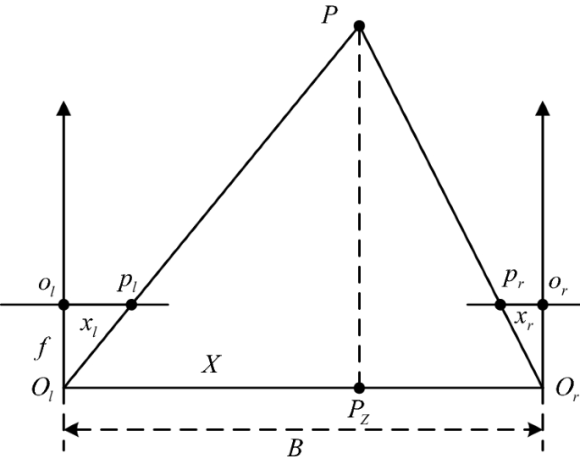



 Carol Ebersole, MD
 J. Wayne Alford
 BETTY Miller
 Nieta Alford