Award-winning U.S. and France-based live-action production company Cadence Films welcomes Executive Producer Jenn Johnson to the team. Working closely alongside Founder/EP Lorenzo Ragionieri, Jenn’s keen creative eye and extensive background in sales and talent representation will further Cadence’s mission: to bring bold, moving ideas to life.
“I’m beyond excited to add Jenn to our team, and know she’ll push us to make our best work,” said Lorenzo, who co-founded Cadence Films in 2014. “As a fellow entrepreneur, I’m drawn to her self-starting spirit and appetite for growth.”
Jenn’s career includes a variety of prominent, high-impact positions, including President/Lead Sales at her own talent representation company, Open Season; Executive Producer and Head of Sales at the New York-based music production company Music and Strategy; and most recently, as a partner at talent representation firm Hustle. There she had the opportunity to work with some of the most respected directors working today, including Michel Gondry, Martin Krejci, Antoine Bardou-Jacquet, Hannah Lux Davis, Drew Kirsch, and The Bobbsey Twins.
While at Hustle, Jenn connected with Lorenzo through mutual friends at the talent placement firm ARC. When she dove into the roster, Jenn felt an instinctual pull to Cadence Films, which is driven by a team of best-in-class producers with expertise in advertising, fashion, music videos, and entertainment. Given Jenn’s self-motivated nature and undeniable enthusiasm for making things happen, the pairing was simpatico from the start.
“Immediately I had so much excitement and passion for the directors and the company,” said Jenn. “I could see my next five years pretty clearly, building on Cadence’s existing equity and expanding it with my specific background and network.”
Alongside her experience in bringing compelling stories to life on-screen, Jenn’s considerable background in sales, including tenures repping for RadicalMedia and B-Reel Films, gives her the tools to nurture rewarding relationships with creative stakeholders. It’s a winning combination that sets her up to approach this next chapter as an Executive Producer and to expand the reach and impact of Cadence’s groundbreaking and stylistically diverse work.
“This is a relationships business, and Jenn has the track record and trust of some of the best directors and agencies in the industry,” said Lorenzo. “In a space that gets more crowded by the year, we need someone who will tirelessly champion our work, and elevate our profile. We’re fortunate to have Jenn in that role.”
As she comes aboard, Jenn is particularly looking forward to leaning on her 15+ years of experience to better serve Cadence Film’s visionaries and support them in making premier work that expands audiences’ understanding of the genre.
“I’m looking forward to cultivating fresh opportunities for our filmmakers to make highly creative work,” said Jenn. “Repping certainly taught me how to turn over every rock, follow every lead, and dream big for my client. The chance to do this with a laser-focus on one specific roster is such a rewarding experience and one that I’ve been craving to take on.”
Adland® is a commercial-laden heaven and hell for advertising addicts around the world.
This advertising publication was founded in 1996, built on beer and bravery, Adland® now boasts the largest super bowl commercials collection in the world.
Adland® survives on your donations alone. You can help us out by donating via Paypal. Adland® works best in Brave browser
Jenn Johnson joins Cadence Films as Executive Producer – Adland
How Special is That Legislative Session? – kuaf.com
Arkansas Issue 1 looks to change who can call for a special legislative session. But how special are those sessions, and how will this impact future candidates? Our podcast Natural Election aims to answer those questions.
Senate candidate Blake Masters weighs in on campaign spending – Arizona's Family
PHOENIX (3TV/CBS 5) — The race for Arizona’s U.S. Senate seat is one of the most expensive in the country. The Republican nominee Blake Masters was dealt a major blow on that front this week. A super PAC aligned with Senate Minority Leader Mitch McConnell is pulling millions of dollars of support in this high-stakes race. Politico reported earlier this week that the Senate Leadership Fund canceled about $8 million in Arizona, about half of its initial promise for Arizona, for ads that were supposed to start in the early fall. It comes just as Masters’ opponent, incumbent Democrat Mark Kelly, dominates the airwaves with his own commercials.
At the same time, a major contributor in the GOP primary, tech investor Peter Theil, hasn’t spent nearly as much for the general election. Political editor Dennis Welch asked Masters about the spending on Friday. “I think we’re going to have all the resources we need to fight, run hard on the issues and win this race while Peter and Mitch McConnell have been sort of facing off in the headlines. Let’s say I have been just putting my shoulder to the wheel, focused on this campaign and we have closed the gap without either of those guys spending money in the general election,” Masters said.
Arizona’s U.S. Senate currently ranks as the fourth most expensive in the country, according to Open Secrets, a nonpartisan group that tracks campaign finance. But has Masters closed the gap as he claims? That all depends on which poll you look at. One poll released this week by the right-leaning Traflager Group showed Kelly up two points over Masters, 47%-45%. But another poll, paid by the AARP, had Kelly beating Masters by eight points, 50%-42%, with less than three weeks before the start of early voting.
Welch talked to Masters about immigration, inflation, his thoughts on the Jan. 6 riots and whether he believes the 2020 election was stolen. You can see the entire interview on Sunday at 5 p.m. on 3TV.
Copyright 2022 KTVK/KPHO. All rights reserved.
Honda-Sony EV to be built and sold in N. America – Automotive News Europe
Izumi Kawanishi, left, a Sony executive vice president, will be president and COO of the new venture, while Yasuhide Mizuno, right, from Honda, will be CEO of the new company. Both are pictured at a briefing to outline the joint venture on Thursday.
TOKYO – Honda and Japanese electronics giant Sony are betting big on the future of electric vehicles in the U.S., planning to produce their new jointly developed EV at a Honda plant in North America and deliver it first to customers in 2026.
Sony Honda Mobility also plans to export the EV to Japan from North America. A launch for Europe is also being considered, but no plan has been set.
Executives described the upcoming EV as a high value-added model that will build-in lots of new technology from Sony, including entertainment systems, advanced software and loads of sensors.
Retailing will be centered around online sales, following Honda’s dabbling with that model in Japan. Various aftermarket and service plans are still under consideration, Honda said.
The rollout prioritizes North America, one of Honda’s most important markets, because the U.S. is advancing quickly in electric vehicle development and market acceptance.
EV-friendly incentives and regulations, like those in California, also played a role.
“The reason we chose North America is because it is more advanced,” Yasuhide Mizuno, CEO of the new joint venture company, said while announced the timeline at a Thursday briefing.
“I think North America is a market with a lot of purchasing power,” he said. “Electrification varies from state to state, but it is important for us to release our product in markets like California.”
Sony Honda Mobility is not ruling out production in Japan someday. But for now, North America will be the main production and sales base.
Deliveries in Honda’s home market will begin in the second half of the 2026, making the new EV a rare American-made export shipped to Japan, by a Japanese brand.
Sony Honda Mobility will start taking orders for the new car in the first half of 2025.
The Vision-S 01 and Vision-S 02 concepts, shown, previewed what Sony envisions for a software-centric automobile during CES 2022 in January. A new concept of the Honda-Sony car will be unveiled at the next CES in January 2023.
The tie-up is the first major collaboration between two iconic Japanese brands from different industries to tackle the challenges of new mobility in an auto industry under siege by change. By harnessing the strengths of two powerhouses, it could be an effective riposte to interloping outsiders such as Tesla or Apple, which have not yet reached cross-industry in such a formal way.
“We would like to form this company as a whole new automaker completely different from anything else,” Mizuno said at the Tokyo briefing. “Our goal is not to become an ordinary car manufacturer, but to become a new mobility tech company centered on software technology.”
The new joint venture teased a video of a mock-up or concept of the upcoming car, hinting it would be shown Jan. 4 at the Consumer Electronics Show in Las Vegas. But Mizuno declined to detail specifics of the new vehicle – including targeted sales volume, pricing and body style.
“A high value-added product is what we are looking at, so it’s not like we’re looking at mass production,” Mizuno said. But he equated “high value-added” to top-tier offerings such as the Honda Legend premium sedan, which has a Level 3 autonomous driving system in Japan.
Honda will be responsible for manufacturing and procurement, he said. But Mizuno would not say what assembly plant would make the vehicle or who would supply the battery. The project will leverage Honda’s existing supply chain, and current battery partners including LG and General Motors, which has a propriety battery system called Ultium, are under consideration, he said.
The news from Tokyo comes after Honda’s announcement in the U.S. that it would create an electric-vehicle production hub in Ohio as it doubles down on an all-electric future.
Those plans include building a battery plant with its South Korean partner LG at a cost of $3.5 billion and spending an additional $700 million to retool three plants in the state to make EVs.
Based in Tokyo, the 50-50 joint venture between Sony and Honda was announced earlier this year. Izumi Kawanishi, a Sony executive vice president, is its COO. Mizuno comes from Honda.
The partners say Sony Honda Mobility will combine Honda’s expertise in engineering and manufacturing vehicles, along with its proficiency in providing after-sales service, with Sony’s strengths in imaging, sensing, telecommunications and entertainment.
Honda, in the midst of a radical corporate makeover, said in April it will invest 5 trillion yen ($37.16 billion) over the next 10 years in electrification as it rolls out 30 full electric vehicles globally and builds production capacity for 2 million EVs annually by 2030.
Honda wants to drop combustion and shift to pure electric drivetrains by 2040.
In detailing the strategy, Honda said it will also shift its business away from non-recurring hardware sales toward recurring sales of services that combine hardware and software.
It is part of new software-defined EV platform, dubbed e:Architecture, that the company will launch in 2026 to underpin the next generation of large-sized battery electric cars from Honda.
Honda expects to be ready to supply 800,000 EVs to North America by 2030.
Sony will be responsible for much of the car’s cloud-based systems, electronics, software and infotainment, as well as sensors that help deliver higher levels of automated driving.
Kawanishi dangled Sony’s mammoth library of movies, music and photos as a wealth of content that could be served up on the go. Automated driving will make automobiles a more viable venue for selling such services as people increasingly hand over driving duty to the car’s computer.
“What will be important is the software domain,” Kawanishi said, outlining potential for new revenue streams. “We have to add value and that is where we will place our emphasis.”
Naoto Okamura contributed to this report
Please enter a valid email address.
Please enter your email address.
Please verify captcha.
Please select at least one newsletter to subscribe.
You can unsubscribe at any time through links in these emails. For more information, see our Privacy Policy.
Sign up and get the best of Automotive News Europe delivered straight to your email inbox, free of charge. Choose your news – we will deliver.
You can unsubscribe at any time through links in these emails. For more information, see our Privacy Policy.
Get 24/7 access to in-depth, authoritative coverage of the auto industry from a global team of reporters and editors covering the news that’s vital to your business.
Founded in 1996, Automotive News Europe is the preferred information source for decision-makers and opinion leaders operating in Europe.
1155 Gratiot Avenue
Detroit MI 48207-2997
Tel: +1 877-812-1584
Email Us
ISSN 2643-6590 (print)
ISSN 2643-6604 (online)
Learn about the Master Teacher of Invention Education Program – United States Patent and Trademark Office
Jump to main content
File a patent application online with EFS-web
Single interface replacement for EFS-Web, Private PAIR and Public PAIR
Check patent application status with Patent Center and Private PAIR
Pay maintenance fees and learn more about filing fees and other payments
Resolve disputes regarding patents with PTAB
View international patent filings
File a trademark application and other documents online through TEAS.
Check trademark application status and view all documents associated with an application/registration.
Trademark fees and payment
Learn about our current legislative initiatives.
Find out how to protect intellectual property in other countries.
Find upcoming programs related to IP policy and international affairs
Are you an educator who has been teaching invention education or intellectual property education? Join the U.S. Patent and Trademark Office’s (USPTO) Office of Education to learn about the Master Teacher of Invention Education Program (MTIP). In this information session you will learn about MTIP and how to apply.
The mission of MTIP is to cultivate a national network of teacher leaders who will empower educators to foster invention and intellectual property education for their students, who are the next generation of creative thinkers, problem solvers, inventors, innovators, and entrepreneurs.
Join now to learn more about the MTIP application process. If selected as an MTIP participant, you will work closely with the USPTO’s Office of Education and STEMisED to provide professional development opportunities to other educators interested in implementing invention and intellectual property education programs and activities in their classrooms, schools, districts, and local communities. Resources and training materials will be provided. Application deadline was October 5, 2022.
To learn more about the USPTO’s Office of Education, please visit USPTO Kids or contact us at [email protected].
We would like to know what you found helpful about this page.
We may have questions about your feedback, please provide your email address.
The USPTO is currently improving our content to better serve you. Can you describe the problem?
We may have questions about your feedback, please provide your email address.
Skip footer and go to main content
We may have questions about your feedback, please provide your email address.
For other assistance, please see our contact us page.
iPhone 14 Pro Features Live Sports Scores in Dynamic Island on iOS 16.1 – MacRumors
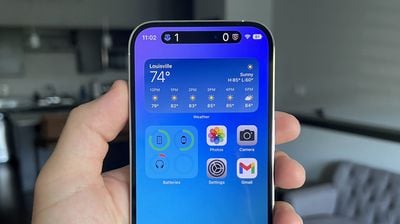
Earlier this month, Apple announced that iOS 16.1 will enable a new Live Activities feature that allows iPhone users to stay on top of things that are happening in real time, such as a sports game or a food delivery order, right from the Lock Screen. On the iPhone 14 Pro and Pro Max, Live Activities also integrate with the Dynamic Island.
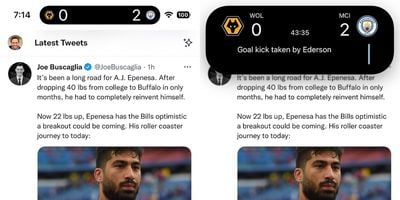
During a Premier League match, for example, the Dynamic Island shows a live-updating scoreboard with the number of goals scored by each club. When long pressed, the Dynamic Island expands to show the time elapsed and play-by-play action.
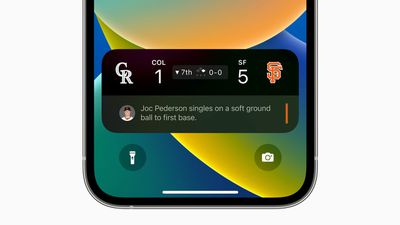
When an iPhone 14 Pro is locked, the score is shown in a widget on the Lock Screen instead. On the iPhone 14 and iPhone 14 Plus, and on all other iPhone models without the Dynamic Island, Live Activities are limited to the Lock Screen entirely.
To test the feature with an iPhone on the iOS 16.1 beta, open the TV app and tap on the “Follow” button for a supported game. At launch, Apple says the feature is available for MLB games for users in the U.S., Canada, Australia, U.K., Brazil, Mexico, Japan, and South Korea, in addition to NBA and Premier League games for users in the U.S. and Canada only. The feature will likely be expanded to other sports leagues in the future.
Apple says iOS 16.1 will be released later this year. In addition to adding support for Live Activities in third-party apps, the update will include a new Clean Energy Charging option for U.S. users, add support for Matter accessories in the Home app, make Apple Fitness+ workouts available without an Apple Watch, and more.
How big of an upgrade are Apple’s cheapest mainstream flagship phones?
Apple’s latest Pro phones replace the notch with an innovative “Dynamic Island,” but what else is new compared to last year’s models?
Apple on September 12 released iOS 15.7 and iPadOS 15.7, delivering important fixes for multiple security vulnerabilities, including at least one that has been actively exploited.
Figure out if the 14″ or 16″ MacBook Pro is the one for you.
Stage Manager multitasking, new Weather app, Display Zoom, and more.
Apple’s next-generation Mac operating system with Stage Manager, Continuity Camera, and more.
New 14″ and 16″ models with M2 Pro and M2 Max chip options as the most significant changes.
M2 chip, possible MagSafe charging and new connectors, and more.
MacRumors attracts a broad audience of both consumers and professionals interested in the latest technologies and products. We also boast an active community focused on purchasing decisions and technical aspects of the iPhone, iPod, iPad, and Mac platforms.
Alleged Killers of Jam Master Jay to Face Trial in February — 21 Years After His Death – Rolling Stone
By Tomás Mier
Two decades after Run-DMC’s Jam Master Jay was killed, his alleged killers will finally go to trial.
On Monday, a federal judge rejected the defense’s request to dismiss the case and set a trial date for early next year, according to Billboard. lawyers for the two men — — claimed that the men and asked the court to dismiss the case
After the two men — Karl Jordan Jr. and Ronald Washington — were charged back in 2020 for the alleged murder, their lawyers argued that prosecutors waited too long to charge them, which caused crucial evidence to be lost. Their lawyers said that cell phone records that would support their alibis were no longer available and that key witnesses would not remember details in the case. But the federal judge in charge of the case said Monday that their arguments were too “speculative” to serve as a cause for dismissal.
“Conspicuously absent from Jordan’s argument is any factual support for his claim,” Judge LaShann DeArcy Hall wrote, per Billboard. “In the absence of any factual support, the court has no idea what Jordan believes the phone records contain, how they could conceivably contradict the Government’s evidence, and how those contradictions could conceivably demonstrate that Jordan did not commit the crime.”
Back in May, Jordan Jr. asked for a separate trial or for his murder indictment to be dropped. Jordan’s lawyers said because of the delay, it’s now too late for Jordan to obtain “beeper records” and other “objective evidence” to support his alibi, and the location of a possibly critical eyewitness is no longer known.
Co-defendant Washington was previously quoted in Playboy saying that he had witnessed Jordan Jr. fleeing the scene of the murder after hearing three shots. He referred to Jordan and Jordan’s father as “Little D” and “Big D” while speaking to Playboy from “behind bars” in 2003.
“I’m positive it was Little D. I looked him right in his face before he ran off,” Washington is quoted as telling writer Frank Owen. “Little D told me, ‘My pops wasn’t supposed to shoot Jay. That wasn’t supposed to happen,’” he said.
Washington previously filed a motion to dismiss his indictment because “the government waited 18 years” to file charges, causing a “prejudicial impact” on “his ability to defend against the charges.”
According to the prosecutors, Jordan Jr. shot Jay twice at close range, killing the DJ, born Jason Mizell, with an execution-style bullet to the head.
We want to hear it. Send us a tip using our anonymous form.
Copyright © 2022 Penske Business Media, LLC. All Rights reserved.
Charlayne Hunter-Gault's 'My People' looks back on her trailblazing career in journalism – Canvas
Public Media Arts Hub
Stay Connected:
Beyond the Canvas Books Music Arts & Culture Film & TV
William Brangham: Charlayne Hunter-Gault’s trailblazing journalistic career has spanned more than 50 years. But, before that, she made news herself when she became one of two Black students to desegregate the University of Georgia in 1961.
She went on to become an Emmy Award-winning reporter working at several prestigious news organizations, including right here at PBS with “The MacNeil/Lehrer NewsHour.”
Charlayne recently spoke with Judy Woodruff about her reporting career, which is also the focus of her new book and the collection of her work. It’s called “My People: Five Decades of Writing About Black Lives.”
Judy Woodruff: Charlayne Hunter-Gault, welcome, and congratulations on the book.
Charlayne Hunter-Gault: Thank you so much, Judy. It’s so nice to be back home.
(LAUGHTER)
Judy Woodruff: Exactly.
And what a life you have had. What a career you have had a writing for all these organizations, The New York Times, “The New Yorker,” and then, of course, coming to work with Robert MacNeil and Jim Lehrer and what was then “The MacNeil/Lehrer Report.” That was back in the 1970s. This is really family for you, isn’t it?
Charlayne Hunter-Gault: Yes, it really is. It’s something else.
Judy Woodruff: For sure.
This is a book that is a collection of your writing, your reporting over the decades going back to the 1960s, after you became a part of American history, when you integrated the University of Georgia. And you were greeted with the worst kind of welcome by the students there.
Remind us in brief, Charlayne, about that experience for you and how it shaped the work that you would do later on.
Charlayne Hunter-Gault: Well, actually, I was — along with Hamilton Holmes, we were committed to use the university for both of our purposes that we started out with.
Hamilton wanted to be a doctor, and I wanted to be a journalist. And I really think that that commitment to our ambition was what enabled us to just ignore all the ugly things that were going around. It was so bad, for example, that Hamilton never stayed on the campus after he went to class. And his son told me that he never made a single friend, which is such a tragedy.
But we kept our eyes on the prize. And the prize was me being a journalist and Hamilton being a doctor, which he did indeed become.
Judy Woodruff: And you were not deterred by some of the really awful things that happened in those early days, when you were at the University of Georgia.
Charlayne, so many of the things that you write about here that date back to the ’60s and the ’70s and later are things that we are still seeing in this country today. And they have to do with the experience of Black people in this country with voting access, with education, with job opportunities, with police reform, interacting with the police.
Do you have the sense that some of these things have really not changed at all? How do you look at the fact that we are still dealing with some of the issues you were writing about decades ago?
Charlayne Hunter-Gault: Well, to be sure, what you have just stated is absolutely correct. And it’s very painful.
But it has happened before, and we got past it. There are a lot of very successful African Americans, or, as we say, today, Black people with a capital B. But what continues to happen is the disproportionate impact of everything that’s happening in this world on people of color, when you look at the COVID crisis, when you look at just all kinds of things.
I was looking at something today where people were having a hard time buying groceries and paying rent, and then the number of homeless people has increased. And so we get to a point where some people are successful, like all of us, my husband, who was a great banker, and so many others like him, and my dear friend Vernon Jordan, who helped me get into the University of Georgia, who is now one of our ancestors.
And you say, OK, we made progress, but we still have a way to go. And, sometimes, it looks like a long way. However, one more thing. I think that the effort that seems to be being made on the part of media people, media people in charge of media people, they’re trying to bring in more people of color.
And I’m hoping that those people who are coming in, along with those who are already there and very conscious about these discrepancies, will make a big difference.
Judy Woodruff: And I wanted to ask you about that, because the news media has changed over the decades.
And I wanted to ask you, what more do we need to do to make sure we are covering the Black American experience, as we should be?
Charlayne Hunter-Gault: Well, I think we just have to talk about it more. And we have to keep it in the forefront.
People in positions like yourself and all of the other great journalists on the “NewsHour” need to continue to keep these discrepancies before the public.
I remember one of Jim Lehrer’s great quotes. If you inform people with good information, they will do the right thing.
And so as I look at many of the programs on television today, they are doing just that.
Judy Woodruff: And, Charlayne, finally, I want to ask you about a theme that arises at several points in your writing in the book, and that is the need to teach young Black children about their history, about the real heritage, the things that they have faced, that their ancestors have faced.
Here we are, what is it, 60-some years later from one of the pieces you wrote, and we have this argument over what’s called Critical Race Theory, with politicians saying that this is being taught in the schools, and it shouldn’t be.
Do you think we have made progress in that regard when you look at the political debate right now over this?
Charlayne Hunter-Gault: Well, I think we need to have more information about how people are coming to these conclusions.
But we also have to continue to press the importance of Black history, our history, because that was our armor. And that is how so many of us have managed to succeed in our professions.
But it’s critical for everybody who has an opportunity to speak to people in the public to say how important it is for everybody to know this history, so that we can come together and help make or help continue to make a more perfect union. It may not be totally perfect, but I think it’ll be better than it is today.
Judy Woodruff: Well, we certainly understand better of the story and the stories of Black Americans in this country thanks to your book. It’s “My People: Five Decades of Writing About Black Lives.”
Charlayne Hunter-Gault, it’s always good to have you on the program. Thank you.
Charlayne Hunter-Gault: Thank you, Judy, for having me. And I’d love to be back in that studio one of these days.
(LAUGHTER)
Judy Woodruff: We can’t wait for that to happen.
(LAUGHTER)
Sustain our coverage of culture, arts and literature.
Judy Woodruff
Canvas supported by
Knight Foundation
Art Works / National Endownment for the Arts
Laurie M. Tisch Illumination Fund
The Andrew W. Mellon Foundation
A specialist in plastic waste management, artists, musicians, computer scientists, and a poet-ornithologist who advocates for Black people in nature…
Charlayne Hunter-Gault’s trailblazing career in journalism has spanned more than 50 years. But before that, she made news herself when…
Lansbury died Tuesday at her home in Los Angeles, according to a statement from her three children. She died five…
The studying and exhibiting of human remains and sacred objects taken from Native American graves and sites have been a…
Jennifer Siebel Newsom, a documentary filmmaker and actor who is married to California Gov. Gavin Newsom, is among the accusers…
A new production opening on Broadway offers a different window into one of the great classics of American theater. “Death…
South Korea’s military appears to want to conscript members of the K-pop supergroup BTS for mandatory military duties, as the…
Harriet Tubman and Frederick Douglass are the latest subjects of a filmmaker long-engaged in telling the contributions and challenges of…
Ernaux has mined her own biography to explore life in France since the 1940s, illuminating murky corners of memory, family…
Singer Linda Ronstadt sold millions of records, performed for over four decades and made history as the first woman to…
The family of a cinematographer shot and killed by Alec Baldwin on the set of the film “Rust” has agreed…
Legendary country singer Loretta Lynn died Tuesday at age 90, leaving a legacy of more than six decades of boundary-breaking…
Loretta Lynn, the Kentucky coal miner’s daughter who became a pillar of country music, has died.
An independent investigation into the scandals that erupted in the National Women’s Soccer League found emotional abuse and sexual misconduct…
Bryan Ford catapulted to prominence during the pandemic’s bread-making frenzy, inspiring millions online with innovative twists on sourdough bread, all…
Get Canvas delievered right to your inbox.
© 1996 – 2022 NewsHour Productions LLC. All Rights Reserved.
Sections
About
Stay Connected
Support provided by
Trak Racer to launch 'affordable' load cell sim racing pedals and peripherals – Traxion
Leading sim racing cockpit and wheel stand manufacturer, Trak Racer, will soon make the leap into electronic hardware.
Known for its simulation rigs – such as the TR8 Pro for racing and the RS6 for flight simulators – it will also start entering the electronic hardware market, with load cell pedals, a gear shifter and a handbrake.
The aim isn’t to offer high-end premium lines, at least not initially, with the goal to democratise more realistic technology.
“A long time ago, I thought that for people to actually get into sim racing it needs to be affordable to the masses, and not the top five per cent,” said Matt Sten, Found and CEO of Trak Racer to Traxion.GG on our latest podcast episode.
We have learnt that a new, upgradeable in some form, load cell pedal set will complement a range of planned devices, all controlled by Trak Racer’s own proprietary software.
“We’re just finishing up prototypes, which we hope to show a few different parts at the ADAC SimRacing Expo at the start of December in Germany,” continued Sten.
“It’s a bit of a race against the clock. But I’m pretty confident that we’ll have at least our pedals shifter and handbrake to show at the event.”
In terms of the production timeline, the global company – with Australian roots – is focussing on producing its Alpine Racing TRX cockpit, with the first deliveries due in December 2022.
“First half of next year,” said Sten when asked about a pedal set release date.
“I’ll be pushing the team for Q1, but I don’t want to make any promises yet because we’ve already got so much on our plate.
“I’ve always kind of worked on the idea of ‘stack them high and sell them for a low price’, as opposed to making a huge margin but only selling a couple here and there.”
Alongside the approachability of the pedal set, its shift will also aim to deliver a new experience to the sim racing market.
“One of our engineers is a race car engineer and driver. So, the shifter is not just a simple ‘click on, click off’ design,” explained the Australian native.
“We’ve developed a clutch mechanism to really give you that true feeling and sound as you would expect in a [real] car. Little details like that will set us aside from the competition.”
Trak Racer won’t stop there, with its software compatibility perhaps a hint at what’s to come.
“We’ve finished our own proprietary software,” said Sten
“This software has a lot of the game plugins already completed and it will allow us to plug in different peripherals including steering wheels, pedals, handbrake, shifter, motion etc.
“We see this as an important part of our future… which may or may not include the most affordable motion platform ever to be seen…”
Traxion.GG will be onsite at the SimRacing Expo later this year to try the prototype devices, and you can hear more about Trak Racer’s plans by listening to the latest episode of our podcast – out now on Apple Podcasts, Google Podcasts, Amazon Music and Spotify.
More ranked online hopper races are now live within Gran Turismo 7, with a…
Dave Cam’s POV of the Week #5 takes us onboard Dave’s point of view…
Following the Homestead-Miami Speedway Round of 10 finale, the eNASCAR Coca-Cola iRacing Series Championship…
The 17th race of the 2022 eNASCAR Coca-Cola iRacing Series season takes the series…
Trak Racer will join the sim racing software, pedal, shifter and handbrake market early…
Here’s our Traxion.GG guide for the Summer Wet Season series playlist, Forza Horizon 5’s…
The next update for EA Sports’ F1 22 will include 2022 Formula 2 racing…
The Grand Harvest is upon us, SnowRunners! The Season 8 DLC is also a…
The entry list of teams and drivers for the opening ROKiT British F4 Esports…
Here’s our Traxion.GG guide for the Summer Wet Season series playlist, Forza Horizon 5’s…
Leading sim racing cockpit and wheel stand manufacturer, Trak Racer, will soon make the leap…
Team Redline took its first victory in the VCO Esports Racing League Fall Cup,…
Traxion is a collective of racing, esports and gaming enthusiasts. Bringing you the latest news, reviews, updates, opinions, and insight from the most recognized and respected names from the world of racing games. We are building a positive community of likeminded gamers, sim racers and fans and we want you to be a part of it.
The Grand Harvest is upon us, SnowRunners! The Season 8 DLC is also a…
The entry list of teams and drivers for the opening ROKiT British F4 Esports…
Here’s our Traxion.GG guide for the Summer Wet Season series playlist, Forza Horizon 5’s…
Leading sim racing cockpit and wheel stand manufacturer, Trak Racer, will soon make the leap…
Team Redline took its first victory in the VCO Esports Racing League Fall Cup,…
© 2022 Traxion.gg. All rights reserved. Part of Motorsport Games, Inc. | Beta Version 0.9
Which AirPods Should You Buy? The Best AirPods for 2022 in the UAE and Saudi Arabia – PCMag Middle East
The second-generation AirPods Pro are the latest earphones in Apple’s lineup, but they aren’t your only option. Here we run you through all of your choices to help you pick the best model for your needs and budget. And for the open-minded, we even suggest some compelling alternatives from other manufacturers.
Make sure to scroll to the bottom of the page for an in-depth specs comparison.
The fantastic AirPods Pro (2nd Generation) deliver some of the strongest noise cancellation performance of any earphones we’ve tested, and offer a pleasing sound signature that emphasizes bass and high-frequency clarity. Their Adaptive Transparency mode is also so good that you might consider using the earbuds as transparent, active earplugs at concerts. Our gripes are relatively minor—an IPX4 rating means the case and earphones can withstand only light splashes, while the lack of adjustable EQ continues to be an annoyance. Complaints aside, the latest AirPods Pro are the best in-ear AirPods thus far.
What Should You Choose Instead?
If you’re looking for the absolute best in true wireless noise cancellation, the Bose QuietComfort Earbuds II ($299) have a slight edge over the AirPods Pro, along with slightly richer bass depth and in-app EQ. Check out our detailed head-to-head comparison between the two if you’re having trouble deciding.
The AirPods Max are notable for two reasons: They’re the only over-ear headphones Apple sells and they cost over twice as much as the AirPods Pro. For the money, you get strong active noise cancellation and excellent audio quality. And whereas all of the in-ear AirPods use a white plastic material, these elegant headphones are available in several colors including Green, Pink, Silver, Sky Blue, and Space Gray.
That said, the AirPods Max are approaching their second birthday, and we’re thus hesitant to recommend them in case a replacement is on the way in the next year or so; $550 is a lot to spend on headphones that might not stay at the top of their class for long. If Apple decides to upgrade them at some point, we hope it improves the included Smart Case, which protects only the earcups.
What Should You Choose Instead?
Very few noise-cancelling headphones cost as much as the AirPods Max. That means you can save quite a bit of money with still-excellent alternatives including the Bose QuietComfort 45 ($329) and the Sony WH-1000XM5 ($399).
The third-generation AirPods sport an open design that doesn’t seal off the ear canal. We’re never fans of this approach because it often leads to unbalanced audio, poor bass response, and a less secure fit. This iteration still feels somewhat loose in the ear, but internal sensors and mics help deliver the best bass response we’ve heard from this type of earphone. You don’t get active noise cancellation or transparency modes here (the latter isn’t really necessary in light of the open design), but the case notably supports MagSafe and Qi wireless charging (if you pay an extra $10 for those capabilities).
What Should You Choose Instead?
Both the Jabra Elite 7 Pro ($199.99) and the Jabra Elite 7 Active ($179.99) are strong alternatives in this price range, offering a secure fit, excellent sound quality, a top-notch companion app (available for Android and iOS), and effective active noise cancellation. Better yet, each features an IP57 durability rating, which means they can survive heavy rainstorms and intense workouts. That’s much better than the IPX4 rating of the AirPods.
The second-generation AirPods debuted in early 2019 for $199, which might make their current price of $129 seem like a bargain. We don’t think they’re worth getting, though. Simply put, the third-generation AirPods make these feel like a work-in-progress. These aging earphones offer much weaker audio performance, doesn’t feature a water-resistance rating, have short battery life, and lack Spatial audio support. Moreover, the on-ear controls don’t work very well. If you have a strict budget of around $130, consider the true wireless options we mention below. They don’t work as seamlessly with iOS devices, but they sound far better, fit more securely, and last longer per charge.
What Should You Choose Instead?
There are plenty of good offerings in this price range, but in the interest of space, JBL’s $149.95 Live Pro 2 TWS earphones are vastly superior to the second-gen AirPods, with an IPX5 rating, a bass-forward sound signature, and the ability to seal off your ear canal. Tge JBL companion app (available for Android and iOS) also offers an adjustable 10-band EQ, which we much prefer over iOS’s basic EQ presets. For more options, make sure to check out our roundup of the best true wireless earbuds under $100.
Want to know even more about Apple’s AirPods? Check out our explainers on how Adaptive Transparency and Spatial audio work.
PCMag is obsessed with culture and tech, offering smart, spirited coverage of the products and innovations that shape our connected lives and the digital trends that keep us talking.
Check out these deals from the Amazon Prime Early Access Sale. – Gearnews
Amazon Prime Early Access Sale · Source: Amazon
The second Amazon Prime Deals event is here! To save you some time we’ve selected some of the stand-out deals on tech, peripherals, and other gear relevant to content creation and music production.
Most of these deals are limited, so act fast while stocks last. The event is running for the course of today and tomorrow which should be just enough time to decide what you need for your setup.
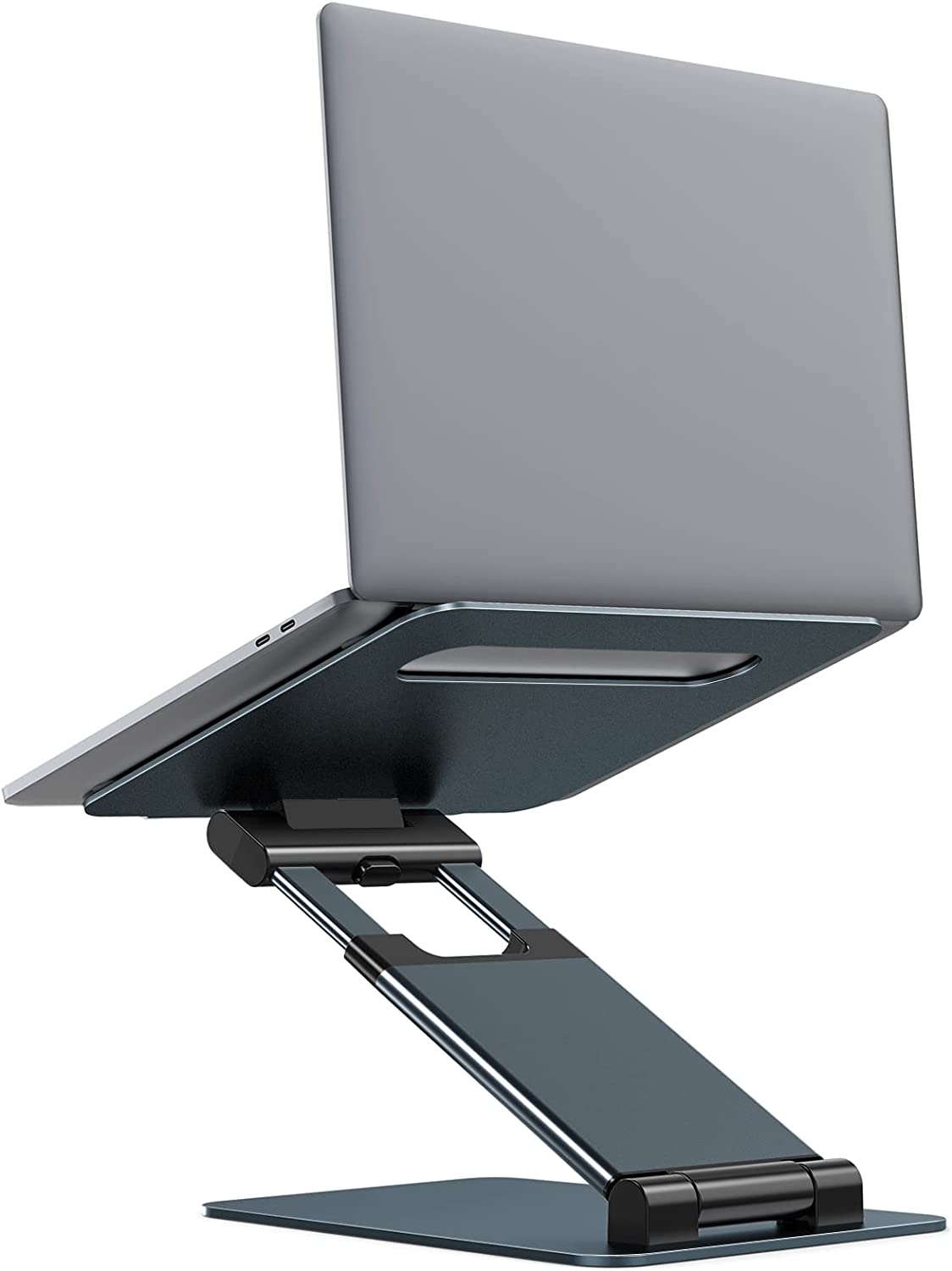
If you’re working long hours or connecting peripherals, everyone needs a laptop stand of some sort. This fully adjustable laptop stand from Nulaxy is ergonomically designed to make work more comfortable.
It’s compatible with all the major laptop brands and fits any size between 10 and 17 inches. The ventilated aluminium design helps your laptop breathe and keep cool, and the anti-slip base keeps your machine in one place.
NULAXY Laptop Stand
For those who need extra screen real-estate or simply prefer 13-inch laptops for portability, this UPERFECT Portable Monitor offers a great solution for mobile workstations.
The adjustable kick-stand allows you to use the monitor in both landscape and portrait orientation, and has integrated HDMI and USB-C ports for connectivity. Altogether, the screen weighs only 943g (92.08lb), so it’s easy to move in your backpack.
UPERFECT 17.3 Inch Portable Monitor
Light panels like the ones in this Neewer 18.3” RGB LED kit offer a versatile ambient lighting solution for stills or video. The panels provide a dimmable range of 2500K~8500K warm to cold white and fully adjustable hue, brightness, and colour temperature.
You have app control from either Android or iOS, a selection of 17 lighting presets as well as the ability to create and store your own user settings. These lights can be powered via the included DC adapter or NP-F batteries(not included).
Neewer 18.3” RGB LED Video Light Panel Kit
If you’re looking to upgrade your video streaming or podcasting setup, this set of 3 800D-RGB LED lights from GVM is a great solution. Between the two lighting modes, you can easily create a pro lighting ambiance, taking your production to the next level.
While the first setting operates from 3200K-5600K, the RGB mode allows you to control the hue and saturation from 0% to 100%. To make things easy, the GVM app is available for both Android and iOS and gives you precise control of your lighting rig.
GVM RGB LED Video Lighting Kit
Note: This article contains affiliate links that help us fund our site. Don’t worry: the price for you always stays the same! If you buy something through these links, we will receive a small commission. Thank you for your support!
How do you like this post?
Your email address will not be published.
· Your guess is as good as mine; no information is forthcoming at this time.
· He does go on and on about the misapplication of the terms “subtractive” and “additive”. I highly recommend the book “Analog Days” by Trevor Pinch and Frank Trocco. It tells the fascinating …
· Really amazing piece of information. Nice content it was really helpful for me. keep it up!
Mysterious 'nightmare' shark with unnerving human-like smile dragged up from the deep sea – Livescience.com
Live Science is supported by its audience. When you purchase through links on our site, we may earn an affiliate commission. Here’s why you can trust us.
Experts are unsure exactly which species the creepy creature belongs to.
A deep-sea angler, who goes by the online name Trapman Bermagui, reeled in the mysterious shark from a depth of around 2,130 feet (650 meters) off the coast of New South Wales in Australia. The fisher later shared a snap of the deep-sea specimen on Sept. 12 on Facebook (opens in new tab). The image shows off the dead shark’s rough sandpaper-like skin, large pointed snout, large bulging eyes and exposed pearly whites.
The shark’s unusual features quickly caught the attention of other Facebook users, who were either amazed or terrified by the creature. One commenter wrote that the specimen was “the stuff of nightmares,” while another wrote that the creature’s “evil smile” gave them “major creeps.” Other people joked about the animal’s appearance, speculating that the shark was wearing “false teeth” or that it was smiling after finally having its braces removed.
Commenters also speculated about which species the shark belonged to. The most common guess was that the specimen was a cookiecutter shark (Isistius brasiliensis), which is named for the distinctive bite marks it leaves on larger animals. Other guesses included a goblin shark (Mitsukurina owstoni) or a species of lantern shark (Etmopteridae).
However, Trapman Bermagui disagreed with the online commenters. “Totally not a cookiecutter,” the fisher told Newsweek (opens in new tab). “It’s a rough skin shark, also known as a species of endeavor dogfish.”
Endeavor dogfish (Centrophorus moluccensis) are a type of gulper shark, a group of deep-sea sharks found throughout the world, according to the Shark Research Institute (opens in new tab).
But some shark experts were unconvinced by the fisher’s identification.
“Looks to me like a deepwater kitefin shark (Dalatias licha), which are known in the waters off Australia,” Christopher Lowe, director of the Shark Lab at California State University, Long Beach, told Newsweek. Although, it is hard to tell for sure without being able to see the entire specimen, he added.
Dean Grubbs, a marine biologist and shark expert at Florida State University, offered up a different conclusion. Grubbs suspected that the dead shark was a roughskin dogfish (Centroscymnus owstonii), a type of sleeper shark from the same family as Greenland sharks (Somniosus microcephalus), according to Newsweek.
It is also possible that the shark could belong to a never-before-seen species, Lowe said. “We discover new species of deepwater shark all the time and many look very similar to each other.”
However, other experts believe that Trapman Bermagui may have been spot on after all.
“It’s a gulper shark,” Brit Finucci, a fisheries scientist at the National Institute of Water and Atmospheric Research in New Zealand who specializes in deep-sea sharks, told Live Science in an email. However, it is unclear exactly which species in this group it belongs to, she added.
—‘Walking sharks’ caught on video, astound scientists
—Dead baby shark that washed up on UK beach was likely aborted by its mother
—‘Truly remarkable’ fossils are rare evidence of ancient shark-on-shark attacks
Charlie Huveneers, a shark scientist at Flinders University in Australia, told Live Science that he agreed with Finucci’s identification and that the animal was most likely a gulper shark.
“In the past, gulper sharks were targeted by fisheries for their liver oil in New South Wales,” Finucci said. Most gulper sharks are “very sensitive to overexploitation from fishing” and as a result, “some species are now highly threatened and protected in Australia,” she added.
Originally published on Live Science.
Harry is a U.K.-based staff writer at Live Science. He studied Marine Biology at the University of Exeter (Penryn campus) and after graduating started his own blog site “Marine Madness,” which he continues to run with other ocean enthusiasts. He is also interested in evolution, climate change, robots, space exploration, environmental conservation and anything that’s been fossilized. When not at work he can be found watching sci-fi films, playing old Pokemon games or running (probably slower than he’d like).
In ‘bizarre behavior,’ New Zealand penguins lay one egg, reject it, and then lay another. Now, scientists know why.
Astonishing dinosaur mummy has ‘glittering’ skin that was punctured and ripped by ancient crocs
Best Fitbit 2022
Stay up to date on the latest science news by signing up for our Essentials newsletter.
Thank you for signing up to Live Science. You will receive a verification email shortly.
There was a problem. Please refresh the page and try again.
Live Science is part of Future US Inc, an international media group and leading digital publisher. Visit our corporate site (opens in new tab).
© Future US, Inc. Full 7th Floor, 130 West 42nd Street, New York, NY 10036.
AVID Launches Pro Tools Intro Artist for New Music Makers – Zacks Investment Research
We use cookies to understand how you use our site and to improve your experience. This includes personalizing content and advertising. To learn more, click here. By continuing to use our site, you accept our use of cookies, revised Privacy Policy and Terms of Service.
Don't Know Your Password?
New to Zacks? Get started here.
Don't Know Your Password?
You are being directed to ZacksTrade, a division of LBMZ Securities and licensed broker-dealer. ZacksTrade and Zacks.com are separate companies. The web link between the two companies is not a solicitation or offer to invest in a particular security or type of security. ZacksTrade does not endorse or adopt any particular investment strategy, any analyst opinion/rating/report or any approach to evaluating indiv idual securities.
If you wish to go to ZacksTrade, click OK. If you do not, click Cancel.
OK Cancel
Image: Bigstock
Zacks Equity Research
AMZN AAPL MSFT AVID
Trades from $1
You follow Analyst Blog – edit
You follow Zacks Equity Research – edit
Avid Technology (AVID – Free Report) recently announced the debut of Pro Tools Intro, specifically designed for aspiring creatives who are willing to create music, podcasts, songs, loops and beats in any genre.
Pro Tools Intro is available as a download option for free and will introduce Pro Tools Digital Audio Workstation to new creators. Also, this platform will help aspiring musicians and audio artists connect with other notable artists and professionals who use the Pro Tools system.
Avid’s recent launch is in accordance with its strategic plan to introduce features that attract new aspiring artists, specifically millennials and Gen Z. In September, Avid announced that its Avid Learning Academy (ALA) program has transitioned to Pro Tools Artist, which will give every student aspiring to build a career in media and enrolled in the program free access to the new Pro Tools Artist (PTA) software.
Avid introduced the PTA software in late April 2022 as a new lower-priced tier directed at the music creation community. Music creators can use the software to make beats, write songs, record vocals and instruments and mix studio-quality music.
The initial result from the Pro Tools Artist offering reflected solid demand for the product, which helped to increase Avid’s subscriber base and impacted subscription revenue growth positively in the second quarter of 2022. Avid is looking to continue boosting subscription revenue growth in the coming quarters with the launch of its latest Pro Tools Intro.
Avid Technology, Inc. price-consensus-chart | Avid Technology, Inc. Quote
AVID’s shares have slumped 25% in the year-to-date period compared with the Zacks Computer – Software industry, which has declined 33% in the same period.
The recent fall in Avid’s share price reflects negative sentiments among investors as the company realized a 10.6% decline in integrated solutions revenues in second-quarter 2022. Due to global supply chain constraints, the company continued to face challenges in delivering certain parts of its integrated solutions portfolio to customers. In the first half of the year, Avid’s unfulfilled contractually committed orders were more than 20 million. This impacted revenue growth negatively.
The company is also facing competition across all of its product offerings from companies like ChryonHego corporation, Dell Technologies, Adobe, Yamaha Corporation and big tech giants like Apple (AAPL – Free Report) .
Apple has cut into the video editing space as it provides less expensive digital video editing software. Apple’s video editing software uses machine learning to help provide video editing features and is currently available with its latest iPhone offerings helping the company to gain market share in the video editing software market.
Also, rising inflation has placed huge pressure on media technology budgets, which is expected to affect subscription revenue growth of Avid.
However, amidst such market volatility, Avid’s recent launch of Pro Tools Intro will attract budding artists to the platform for free. However, the probability of turning these budding artists into potential new subscribers is high, as Avid created the Pro Tools Artist as a low-priced tier that aspiring artists can afford, which will contribute to its subscription revenue growth.
However, to deal with the rising competition, Avid has forged strategic partnerships with Amazon (AMZN – Free Report) and Microsoft (MSFT – Free Report) .
Avid has partnered with Amazon studios to help in Amazon’s content production in the cloud with software such as Media Composer, Nexis storage and media control platform.
Avid is also benefiting from its multi-year agreement with Microsoft, which includes technology collaboration, co-development of cloud bases solutions and the launch of several software-as-a-service offerings. This partnership is helping Avid to create new technologies, which are attracting new users to many of its subscription-based product offerings.
In the second quarter, Avid realized net adds of 18,500 subscriptions and delivered year-over-year growth of 22%. As a result, the company, which currently carries a Zacks Rank #3 (Hold), reported subscription revenue growth of 58.7% in the quarter. You can see the complete list of today’s Zacks #1 Rank (Strong Buy) stocks here.
Avid also expects that the effects of the supply chain constraints will start resolving from the second half of 2022, and it will be able to cover much of its backlog.
Amazon.com, Inc. (AMZN) – free report >>
Apple Inc. (AAPL) – free report >>
Microsoft Corporation (MSFT) – free report >>
Avid Technology, Inc. (AVID) – free report >>
Our experts picked 7 Zacks Rank #1 Strong Buy stocks with the best chance to skyrocket within the next 30-90 days.
Recent stocks from this report have soared up to +178.7% in 3 months – this month’s picks could be even better. See our report’s 7 new picks today, absolutely FREE.
Privacy Policy No cost, no obligation to buy anything ever.
This page has not been authorized, sponsored, or otherwise approved or endorsed by the companies represented herein. Each of the company logos represented herein are trademarks of Microsoft Corporation; Dow Jones & Company; Nasdaq, Inc.; Forbes Media, LLC; Investor’s Business Daily, Inc.; and Morningstar, Inc.
Copyright 2022 Zacks Investment Research 10 S Riverside Plaza Suite #1600 Chicago, IL 60606
At the center of everything we do is a strong commitment to independent research and sharing its profitable discoveries with investors. This dedication to giving investors a trading advantage led to the creation of our proven Zacks Rank stock-rating system. Since 1988 it has more than doubled the S&P 500 with an average gain of +24.51% per year. These returns cover a period from January 1, 1988 through September 12, 2022. Zacks Rank stock-rating system returns are computed monthly based on the beginning of the month and end of the month Zacks Rank stock prices plus any dividends received during that particular month. A simple, equally-weighted average return of all Zacks Rank stocks is calculated to determine the monthly return. The monthly returns are then compounded to arrive at the annual return. Only Zacks Rank stocks included in Zacks hypothetical portfolios at the beginning of each month are included in the return calculations. Zacks Ranks stocks can, and often do, change throughout the month. Certain Zacks Rank stocks for which no month-end price was available, pricing information was not collected, or for certain other reasons have been excluded from these return calculations.
Visit Performance Disclosure for information about the performance numbers displayed above.
Visit www.zacksdata.com to get our data and content for your mobile app or website.
Real time prices by BATS. Delayed quotes by Sungard.
NYSE and AMEX data is at least 20 minutes delayed. NASDAQ data is at least 15 minutes delayed.
This site is protected by reCAPTCHA and the Google Privacy Policy and Terms of Service apply.
How Cortex’s ‘Troupeau Bleu’ Became Hip-Hop’s Favorite French Jazz Album – Rolling Stone
By Arielle Lana LeJarde
As the doors of Music Hall of Williamsburg opened on Sept. 28, concert-goers of all ages wearing MF DOOM memorabilia quickly filled the Brooklyn venue — only to eagerly change their outfits for merch with the name of a French jazz album from the Seventies. Within 10 minutes, Cortex’s Troupeau Bleu tees had run out.
“R.I.P. MF DOOM!” one fan screamed as the band hit its stride onstage at its first-ever U.S. show.
“Ah, yes,” Alain Mion, Cortex’s 75-year-old frontman and pianist, responded, before lightheartedly adding, “But me — not yet.”
The thirst for anything related to Troupeau Bleu wasn’t surprising, seeing as the 1975 album’s first vinyl pressing has been sold for almost $1,000 on Discogs. It’s a familiar name if you’ve spent long enough digging for the samples of your favorite rap tracks: Troupeau Bleu has been sampled at least 142 times to date, with its blend of psychedelic jazz, soul, and funk finding its way into songs by underground legends like DOOM and J Dilla, along with rap royalty including Lupe Fiasco on “Mural” and Rick Ross on “Amsterdam,” “Oyster Perpetual,” “Everything a Dope Boy Ever Wanted,” and Jeezy’s “Beautiful.”
The most recognizable selections come from “Huit Octobre 1971,” a song named after Mion’s wedding anniversary with his late wife. Vocalist Mirelle Dalbray’s angelic high-pitched scatting and Alain Gandolfi’s frenzied drum breaks have been also used in DOOM’s Madlib-produced “One Beer,” Tyler, the Creator’s “Odd Toddlers,” Wiz Khalifa’s “Visions,” and Lil Yachty’s aptly-named “Cortex,” among dozens of other songs.
With the prolific use of Troupeau Bleu in hip-hop for over two decades, would it be fair to anoint the record as hip-hop’s favorite jazz album? “It’s not an overstatement,” says New York drill wunderkind Cash Cobain. “It’s a fact.” Cash Cobain discovered Cortex when he heard Tyler’s “Odd Toddlers” in 2009 and has been a fan of the jazz band since then, going on to produce Yachty’s “Cortex” 12 years later.
Industry giants like Madlib and Rick Ross have a substantial archive of Cortex-injected tracks, but Tyler may be Cortex’s most prominent fan today. While he declined to respond to Rolling Stone’s request for comment for this story, he was there at Music Hall of Williamsburg, dancing through the night in a closed-off section of the club; Tyler even posted about his love for Troupeau Bleu during the concert in a since-vanished Instagram story.
Speaking in the green room before the show, which kicked off a tour that also included dates in Los Angeles and at the Desert Daze festival, Mion has his own theories about why his music has resonated with a younger generation of rap musicians. “People in hip-hop use a lot of soul music,” he says. “[Troupeau Bleu] has soul, it’s particular, it’s original, and it’s French.” He quips: “It could also be because we’re geniuses.”
Gino Sorcinelli, creator of Micro-Chop, a popular Twitter account and newsletter dedicated to dissecting sampling and music production, says it’s all about Troupeau Bleu’s distinctive sound. “All the drum hits are crisp as fuck, every piano and organ sequence is impeccable, the basslines sit perfectly in the pocket and complement each composition, and Mireille Dalbray’s vocals are unbelievable,” he says. “They sound like they’re floating on top of each track.”
Jazz and hip-hop have a long, intertwined history together. Both forms originated in the United States, and their genealogies are rooted in the Black American experience. The symbiotic relationship is ancestral, dating back to the 1920s Harlem Renaissance, when Langston Hughes innovated reciting poetry over jazz rhythms, inadvertently creating the literary art form of jazz poetry. The connection between the two improvisation-based genres evolved with hip-hop producers’ adoption of breakbeats, syncopation, and sampling; by the 1990s, acts like A Tribe Called Quest, Gang Starr, and Digable Planets could build a substantial part of their musical identity around their appreciation for jazz.
Cortex’s history with sampling is a bit more complicated, which could be one reason the band has flown under the radar for so long, despite its appeal to sample-flippers. The first documentation of Troupeau Bleu being used in a hip-hop track is in DJ Cam’s 1997 experimental hip-hop instrumental “Bronx Theme,” where he sampled the record’s title track. Madlib then sampled “Huit Octobre 1971” in his 2003 track “No Games” with J Dilla, for their collaborative project Jaylib, before sampling the same song in DOOM’s “One Beer” and his own “Mind Fusions (Intro).”
In the ‘90s and early 2000s, sample-snitching was against the rules of hip-hop, with discussing the sources of a rare loop strongly discouraged. “That rule robbed us in the beginning,” Mion says. “It’s no more like that, because every label doesn’t want to go to court. They say, ‘Mr. Mion, please accept this contract with us.’ And every time I say yes.”
Mion recognizes that hip-hop’s love for the album has only prolonged its shelf life, and acknowledges how all of the sampling was ultimately a good thing. While rap is still not necessarily his taste, he mentions: “There is one rapper I really like. Lupe Fiasco. I just love his energy. If he was a businessman, he could sell me anything!”
Mion is currently the sole remaining founding member of Cortex; the current touring group is comprised of vocalist Maeva Borzakian, drummer Cedric Affre, bassist Mohamed Ouraz, and saxophonist Loic Soulat, each with their own heartwarming relationship to Mion. Borzakian called Mion, hoping it wasn’t too late to audition. They then spent two hours on the phone talking about music, learning how much their tastes align. Ouraz bought the house directly across from Mion in the Paris suburb of Bourg-la-Reine and the two bonded over their love of jazz. Soulat, meanwhile has known Mion since he was nine years old — the Cortex leader was his childhood piano teacher. “But he wasn’t as good as me,” Mion jokes. “That’s why he plays the saxophone.”
The original band’s founding was equally serendipitous. “I met two young American musicians in Paris,” Mion says. “They made an announcement in the American Center in Paris and said that they wanted to play music with Frenchmen, so I called them. And that was the beginning of a beautiful story,” he recalls fondly.
One of those musicians was the now-deceased Jeff Huttner, who’s recognized as one of the three founders of Cortex. Although Huttner was replaced by Jean Grevet on Troupeau Bleu’s recording due to prior obligations in the United States, he remains rooted in the band’s story through “Mary et Jeff,” a romantic highlight of the 1975 record.
The rest of the recording band has also since passed away or moved on from jazz music. Saxophonist Alain Labib is now a professor who studies cancer. Cortex co-founder and drummer Gandolfi is a talented classical music sound engineer. “[Gandolfi] said that he thought — completely stupidly — that he was not a good drummer,” remarks Mion, sweetly laughing. “I think that he is très bien.”
Today, Cortex can take their rightful place as a key influence on generations of rap acts. “It took hip-hop to provide the vantage point for the world [for jazz] — to tell people why our shit is dope,” Adrian Younge said as he introduced Cortex’s show in Williamsburg. The host, DJ, and curator of Jazz Is Dead, an event company and record label pushing the modern-day jazz movement, continued: “They don’t realize all the ill cats that’s still alive and around, but leave it up to us cool kids to come out in droves and support. What we’re doing tonight, we are going to let them know how much we appreciate them while they’re here today. Because we give flowers, not after the fact.”
The interview with Cortex was conducted largely in French. We have attempted to provide as accurate a translation as possible.
We want to hear it. Send us a tip using our anonymous form.
Copyright © 2022 Penske Business Media, LLC. All Rights reserved.
Trump, Biden and America's destiny: We're about to face the consequences. How bad will they be? – Salon
Keep Salon Independent
Longtime White House correspondent Brian Karem writes a weekly column for Salon.
The Biden administration learned the hard way last week that it can’t trust Saudi Arabia.
Along with other OPEC nations, the desert monarchy cut oil production, virtually ensuring an increase in gas prices just before the November election.
“Puppets for Putin” never rang more true.
But there isn’t much of a positive nature that you can expect from a country that was complicit (at the very least) in the murder and dismemberment of a Washington Post columnist and that had a hand in the 9/11 terrorist attacks. There will be “consequences,” Biden warned in an exclusive interview on CNN. We just don’t know yet what those will be.
Related
Consequences are a leading theme as we cruise into the midterm elections.
Leading economic indicators show the world is slipping into recession. In the Atlantic this week, Norm Ornstein underscored the bottom line for American voters should the Republicans prevail this fall and take control of Congress. It’s not just the move toward authoritarianism. Ornstein points to the fact that the Republicans would likely, and eagerly, crash the whole economic and political system.
White House press secretary Karine Jean-Pierre broke down the differences between Democrats and Republicans, when it comes to consequences, from her podium this week in the Brady Briefing Room. “We hold Democrats accountable,” she said. “When a MAGA Republican says something racist or antisemitic, they are embraced.”
And in the midst of the fall follies during the run-up to the election, Joe Biden is on the road again, trying to make a livin’ and doin’ the best that he can — with apologies to the Allman Brothers.
But Uncle Joe ain’t movin’ so slow and has joined his fellow Democrats on a crusade across the country to sell the idea of self-government, while members of the GOP are pulling their hair out and screaming about lizard aliens harvesting children for God only knows what nefarious and fictional ends. Think about the consequences!
Too many Republicans see themselves as fictional heroes in the solipsistic movie playing inside their heads. The fact that anyone takes them seriously is the real problem.
For some reason the results of the midterm election remain in doubt. Election deniers now dominate the Republican Party and will cause all kinds of torture to election officials no matter what the turnout. That’s what a scorpion does. Of course the Democratic scorpion is the only one to ever sting its own back — so again, remember the consequences.
Many Democratic candidates see themselves as patriots holding the tide against rising fascism while those election deniers and GOP candidates who believe Trump is a postmodern shaman see themselves the same way. Both sentiments cannot be true.
The key is that many on the far right see themselves as fictional heroes in the solipsistic soup inside their heads. The fact that anyone takes them seriously is a dire reflection on the electorate as whole.
* * *
I thought about all that and more while walking up a dusty hill in a public park in Columbia, Missouri, recently. A lack of rain has turned this part of the state into a fine ash-like powder that seems to be everywhere. It sticks to your clothes and your car, and makes breathing difficult.
I walked up the hill to an outdoor theater to hear Jon Batiste sing “Tell the Truth,” make a plea for universal peace and also perform the greatest rendition of “The Star-Spangled Banner” I’ve ever heard. Batiste has said that “human interaction during a live musical performance can uplift humanity in the midst of the ‘plug in, tune out’ nature of modern society.” He proved it that night and gave me an insight into the consequences we all face. As it turns out, human interaction is not just for music. It makes a big difference in dealing with people. It’s something we did without during the pandemic — and the consequences of that are being felt today.
This country remains a hyperkinetic wound, rubbed raw by divisiveness and desperate for a laugh. Most people want very much for common sense to take over. Even those who participate most in the insanity are a little out of sorts. I saw a self-described Trumper declare he was tired of everyone “claiming to be patriots” and wanted to know “what the hell are you going to do for us if we elect you.” He declared this at a coffee shop in Fulton, Missouri, as several of his friends bobbed their heads in agreement.
Consequences. You cannot escape them no matter how much you want to, and you can’t create reality from fiction without heavy consequences. The longer you wait, the rougher those consequences will be.
Mid-Missouri is suffering a drought. There are consequences. “There’s Missouri hot. There’s Missouri dry. Welcome to Missouri hot and dry,” I was told at a truck stop, with little hint of sarcasm. The speaker said he was tired of strife, tired of the weather and most definitely tired of politics.
With that said, there are fewer public displays of Republican lunacy in mid-Missouri in the last few months. The greatest uprising against Republican lunacy came after the Jan. 6 hearing that showed Sen. Josh Hawley (yes, of Missouri) doing his “Chariots of Fire” sprint through the Capitol on the day of the insurrection. Even stalwart members of the GOP, nay, especially the most stalwart, are beginning to understand that Hawley may have the potential for a healthy amount of adult growth, but certainly hasn’t realized any
Will he face consequences? Or will he end up out of office and hired by a news network to be the voice of the loyal opposition? There can be no consequences if those who promote extremism are given equal consideration alongside law-abiding citizens. And there can no equal justice if it is not applied to any and all presidents.
* * *
The thunder rumbles in the background against a quiet countryside — with a faint baying of hounds, in response to the coyotes, the only sounds to be heard other than the wind and rain.
After weeks of no rain, the mid-Missouri countryside picked up an inch and a half on Tuesday — enough to bed down the dust, but not enough to relieve the ongoing drought. This leads me to wonder: If the Republicans are turned back in the fall and the Democrats do retain control of one or both houses of Congress, will it be enough to end the drought of decent government we’ve experienced? Or will it be just enough to bed down the dust while the drought remains?
Want a daily wrap-up of all the news and commentary Salon has to offer? Subscribe to our morning newsletter, Crash Course.
I continue to have hope, but I realize this is a long fight that won’t be over soon, no matter what the outcome in November. But I had an epiphany of sorts in a Moser’s grocery store at the north end of Fulton. They advertised that they had the best cuts of meat, and I had to see for myself. I got sidetracked when I saw a woman in her mid-80s waving a walking stick. In time. To AC/DC’s “It’s a Long Way to the Top.” When she got to “If you wanna rock ‘n’ roll,” she was somehow transformed. She told me it was “our song,” the favorite song of her second husband, whom she loved and cherished and recently lost after 40 years. Hotel, motel, makes you want to cry… It’s a long way to the top if you wanna rock ‘n’ roll. If seeing a woman over 80 dancing to AC/DC while rattling her cane won’t restore your faith in humanity, I don’t know what will.
The “Let’s Go Brandon” signs you saw along the country roads of mid-Missouri even a few months ago are less frequent in October. That may speak to a growing realization that there are consequences for all this discord.
But it’s hard to see, at this point, whether we are going to face the consequences now or later for the mistakes we’ve made in this country. Take a walk through the mid-Missouri countryside, if you can, and clear your head. The ghosts are hard to shake. The arrowheads found in the ground along a nearby creek and the Civil War buttons from the uniforms of the North and South speak of the savagery of our recent past. They’re easy to find in any cornfield.
The “Let’s Go Brandon” and “Trump Is My God” signs you saw along the country roads of mid-Missouri even a few months ago speak to the savagery of the present. Their relative absence in mid-October, a few weeks before the midterm elections, speaks perhaps to the growing realization that there are consequences for all this discord that most Americans don’t want to face, including total government upheaval on a scale not seen since the Civil War.
Related
There are always consequences. Seldom do we wish to face the worst of them even if we’re responsible for them. Alex Jones doesn’t have $965 million to pay for the consequences of his misdeeds. Vladimir Putin doesn’t want to face the consequences of an illegal war he started as a monument to his own ego. Donald Trump doesn’t want to face the consequences for a lifetime of bilking the citizens of the planet.
And Americans don’t want to face the consequences of the people we voted into office. But there it is. We have to do so.
One last tale of consequence.
Sitting at Coopers Landing this week — a riverside diner, pub and music venue on the Missouri River — I witnessed a beautiful thing. Two obvious Trumpers (the MAGA hats gave it away) were sitting with two friends who obviously were not. They spoke about the last few years, COVID, Trump, the threat of nuclear war in Ukraine and the general state of the world. They embraced each other. One said to the other, “If you have to explain to me that you are woke, then you aren’t.” And the other said, “And if you claim you’re a Trump Patriot, you’re not a patriot.” They laughed, shared some suds and listened to a pretty good rendition of “Wild Night” by Van Morrison.
The consequences of our actions are things we seldom wish to face. We’re eager to slide on past them. Next month’s election won’t let us do that.
The echoes of all our past problems, the ghosts of strife from the past, the injustice, the racism, misogyny and vitriol are all crying at us across time to settle our differences and move forward as one nation.
There are those in Congress, including but not limited to Jim Jordan, Mitch McConnell, Marjorie Taylor Greene, Louie Gohmert and Lauren Boebert, who want to benefit from avoiding any consequences for their actions. But I’m not sure they’re in lockstep with Americans outside the D.C. bubble.
Out here I see people who understand consequences. Whether or not those consequences are felt in D.C. is up to the Jan. 6 committee, Congress, the president and the voters.
Whatever voters say, in a few short weeks there will be consequences that we cannot avoid and cannot delay. The reckoning is upon us.
Read more
from Brian Karem on Biden, Trump and America
Brian Karem is the former senior White House correspondent for Playboy. He has covered every presidential administration since Ronald Reagan, sued Donald Trump three times successfully to keep his press pass, spent time in jail to protect a confidential source, covered wars in the Middle East, and is the author of seven books. His latest is “Free the Press.”
Copyright © 2022 Salon.com, LLC. Reproduction of material from any Salon pages without written permission is strictly prohibited. SALON ® is registered in the U.S. Patent and Trademark Office as a trademark of Salon.com, LLC. Associated Press articles: Copyright © 2016 The Associated Press. All rights reserved. This material may not be published, broadcast, rewritten or redistributed.
Why digital clipping occurs and how to avoid it – RouteNote
For instance, cranking your input gain too high generates that unsettling noise in digital recording systems. But clipping is an easy problem to solve and avoid altogether.
With that said, what if I told you that you can use audio clipping to your advantage in your DAW?
But what is digital clipping? Is it anything like analog distortion? And why does clipping occur in DAWs?
Why is distortion still a problem in digital audio? Let’s find out!
Digital clipping is the result of recording with too high a gain level or boosting pre-existing audio too much. In other words, you will clip your signal if it exceeds the loudness ceiling in your recording equipment.
And we call this digital waveform distortion clipping because it clips the peaks and troughs of the sound wave away from the rest of the signal.
Digital clipping occurs in the same way as analog clipping. For example, an amplifier goes into overdrive if you push it over its limits and distorts the signal. And amplifying a signal past the maximum level a speaker can handle will distort the signal and maybe damage the speaker.
Therefore, you can clip analog and digital signals by overdriving recording equipment.
Digital clipping occurs when the level of your input signal is higher than the loudness ceiling in your recording equipment. Therefore, any signal that is breaching the ceiling is cut away which results in a horrible noise infiltrating your signal.
Any signal breaching the ceiling is disregarded, and the horrible sound of digital clipping is your signal breaking apart.
Recording devices like audio interfaces give you a determined amount of ‘headroom’ to record with. Consequently, recording at a level higher than this loudness ceiling clips the peaks and troughs of your sound wave away.
But digital clipping can arise anywhere in your digital signal chan – not just at the input stage. For example, you can boost your signal too much with a plugin, you can boost a virtual instrument too much, and you can clip your master channel if your mixer input channel levels are too high too.
Therefore, adjusting the input level before each stage of recording helps mitigate clipping. But we’ll come back to that later.
Analog clipping occurs when we overdrive the electric circuits and transistors in analog equipment.
But where analog signals distort based on the circuitry of hardware equipment, a digital system generates ‘clipping’ with an algorithm.
Furthermore, analog distortion squares off the sound wave, meaning the ceiling and floor flatten the round peaks and troughs into squares. In contrast, digital clipping cut the peaks and troughs clean off.
As another matter, there’s only one type of digital clipping but there are three types of analog distortion. These include:
You can notice each type of distortion In a recording session, but distortion and fuzz are far more obvious than overdrive.
Being the lightest of the three, overdrive is a creative effect used in lots of musical genres. But accidental distortion degrades the recording and doesn’t sound so good.
Secondly, distortion noticeably breaks the audio up and can compromise audio quality.
Finally, Fuzz sounds like it’s named – a strong and undesirable fuzz.
First of all, you’re going to hear a horrible noise in your input signal if you clip it. As a result, this noise ruins your recording if you’re overdriving the signal at the input.
You’ll definitely hear it, and it could damage your equipment too.
Secondly, severe clipping begins to break your signal up. So, the more severe the clipping the more you break up your recording until it sounds like a mess of horrendous noise.
However, what’s important to note is the severity of clipping. A lot of professional music uses clipping creatively because you can introduce minor clipping and it won’t be noticeable.
This practice gives you a little more ‘headroom’ in the rest of your mix because a signal doesn’t instantly distort once it reaches the loudness ceiling.
Therefore, you can think of the red clipping indicator as a warning and not a hazardous monster to avoid at all costs. Instead, use your ears and listen for noticeable signal degradation.
Sever clipping sounds like your recording is breaking up as a horrible noise infiltrates the signal. The higher you breach the loudness ceiling, the more distorted your recording becomes with the noise and loudness.
Despite their benefits, making music on computers has similar limitations to production on analog equipment. There is a limit to how loud your signals can be, so let’s discover why that’s the case.
We’ve referred to the ‘loudness ceiling’ quite a bit in this post. Well, its actual name is the 0 dBFS ceiling.
dBFS means Decibels relative to Full Scale, and it is a unit of measurement in digital systems that measure the amplitude of signals.
0 dBFS is the maximum level your input signal can reach in amplitude before clipping occurs. In other words, 0dBFS is the ceiling of the headroom we were talking about earlier. And measurements below the maximum are always negative levels.
Furthermore, affecting a signal by approximately 6dBFS doubles the volume of the signal or halves it – depending on whether you increase or attenuate the fader – and thereby adds or subtracts 10dB.
Dynamic range is the difference between the minimum and maximum signal levels a digital recording device can process without distorting the signal, measured in dB (decibels).
So, a greater dynamic range allows for a bigger contrast between loud and quiet sounds in your recording. An audio interface offering 100 dB of dynamic range can register signal strengths between 0 – 100 dB.
But how do digital systems measure sound? They depend on something known as bit depth which determines dynamic range among other things.
Microphone and instrument signals are electrical signals that the interface reads and converts into digital. The louder your gain, the stronger the electrical current. And an interface can’t measure any signal strength (amplitude level) higher than the number of available bits allows it to.
Thereby bit depth determines the dynamic range the interface can process without distorting the input signal. 16-bit offer 96 dB of dynamic range whereas 24-bit offers 124dB of dynamic range!
But no matter how much dynamic range your audio interface gives you, your dBFS ceiling is the final boss. And when your input signal exceeds 0dBFS it will clip.
The closer your input signal gets to 0 dBFS, the more full of information the bits of each sample are. As a result, our digital system has no more bits to accurately process our signal.
Then, any excess data is disregarded which results in your song breaking down – clipping.
In summary, while 0dBFS is the maximum signal strength a digital system can process, a higher bit depth allows you to record a louder signal without breaching the 0dBFS ceiling.
One final stop on the bit depth bus.
Today, DAWs utilize 32-bit float processing. But what does that mean?
Well, 24-bit and 16-bit use whole numbers with no decimal points (fixed-point), to represent data. But 32-bit float does use decimal points (floating-point). Therefore, data in digital audio files use decimal points and exponents (for example “1.4563 x 10⁶“ instead of “1456300”).
As a result, 32-bit float DAWs can process much larger and much smaller data (think of the dynamic range as a reference here).
In fact, A 32-bit float DAW offers 1528 dB of dynamic range compared to 24-bit’s 144 dB! It goes without saying that this is more than we actually need, but it has huge benefits. In short, it’s impossible to clip your signal in a DAW.
It’s still very possible to clip in your audio interface at the recording stage, but a 32-bit float DAW allows us a lot of flexibility once our signal is in.
But as soon as you export your file to a 16 or 24-bit file (as you will for online distribution), the risks of clipping become very real once more. So, should we talk about how to avoid clipping altogether?
Okay, so 32-bit float DAWs make clipping your signal in a DAW pretty difficult, but salvageable at the very least.
But when the time comes to export to a 16-bit or 24-bit audio file, the laws of digital audio return. So making channels as loud as you can in your DAW is still a bad idea. And you can still clip your signal before it reaches your DAW too!
Therefore, practicing gain staging in your signal chain will help you avoid clipping forever.
Gain staging is the practice of keeping an instrument at a consistent level in its entire signal chain.
For example, let’s look at the signal chain of an electric guitar:
In this example, we’d first need to make sure the amplifier isn’t boosting the signal too much.
Secondly, we can make sure the output volume of our cabinet isn’t too loud. But if you’ve attenuated the amplifier level, the cabinet may need a little boost.
Thirdly, we need to look at our microphone. So we’d attenuate or increase the gain knob – based on the level of your amplifier – on the interface which tells its microphone preamp what to do.
Now it’s time to attenuate the gain fader on the mixer channel. Once this is done, you can finally begin inserting plugins on the channel.
But each plugin you add will affect the level of the signal. So to maintain the level of the channel, you need to attenuate or boost the volume knob of the plugins you insert.
Quality recordings
While gain staging, use the dBFS peak meters in your DAW as a reference.
Firstly, avoid recording your instruments too loudly. Using up too much headroom straight off the bat isn’t a great idea!
A general input level to strive for is -18dBFS as an average, and make sure your peaks aren’t going higher than -10 dBFS. Remember to attenuate your signal at its source (amplifier) before you start playing with your DAW faders.
Each plugin you insert needs gain staging because plugins increase or attenuate the signal level at their output.
For example, using a filter or an EQ to remove frequencies attenuates the signal level when it leaves the plugin. Here we’d use the makeup gain knob to replenish those lost levels.
A VU Meter is a metering tool that you can insert on your master bus, where VU stands for Volume Unit.
VU Meters give you a calculated estimate of the level of your signal – a more accurate representation than DAW peak meters give you. So they’re a great tool to use while gain staging to understand the level of your signals all the more.
VU Meters also provide a limiter of sorts. For example, set your VU Meter to -18 dBFS and then the value of 0 in your VU Meter is equal to -18 dBFS, giving you an easy reference point.
On the other hand, LUF Meters give you an accurate representation of how loud your signal is to human ears, and that’s why we call them Loudness Meters.
Loudness Meters analyze audio while considering the duration and frequency content of the signal. In contrast, a peak meter only reads signal strength. Therefore, loudness meters allow you to assess how loud your track actually is.
Moreover, they use Loudness Units (LU) as their unit of measurement, where a difference of one LU is noticeable to your ears.
While VU Meters allow you to measure the average gain levels of your signals, Loudness Meters allow you to dissect your processed signal at the end of your master bus to measure how loud the signal actually is.
In other words, using both of these tools will allow you to avoid clipping while keeping things loud!
Going back to our filter/EQ example, you use a LUF meter to measure how much loudness you have lost after removing frequencies.
Before throwing yourself at the makeup gain and guessing, you can measure loudness by soloing the channel and bypassing the filter/EQ. What does the LUF Meter show you? How much gain do you need to apply to get the channel level where it was before the processing frequency cuts?
Finally, don’t aim for low faders.
The lower the mixer faders are to the bottom, the less audio resolution the signals have resulting in a less clear mixdown.
One slight attenuation dramatically changed the volume of the sound. So, as we said earlier, aim to gain stage at the sound source rather than with mixer faders as to maintain the resolution of your signal.
Alternatively, you could use a gain plugin at the end of the plugin chain. A gain plugin allows you to decrease the gain and maintain audio resolution.
Digital clipping isn’t fun but it isn’t the end of the world. Now you know why clipping occurs you can take the necessary steps to remove the risk.
But you can use clipping to your advantage. After all, digital audio workstations provide a flexible workflow that allows you to use clipping as a pragmatic and creative tool.
So, make sure that you experiment with the dBFS ceiling now that you know how to use gain staging. We’ve discussed general guidelines and good practices but experimenting with gain staging and clipping could lead to some interesting results…
Don’t forget to claim your ten free sounds from RouteNote Create! Access our diverse catalog of sounds and inspire yourself!
Your email address will not be published. Required fields are marked *
Sign up to our newsletter and make sure you don’t miss a thing!
Hit enter to search or ESC to close.
Rage Against the Machine – Douglas McLennan – The American Scholar
If the American symphony orchestra is to survive, it must rewired and reengineered
As a piece of technology, the modern symphony orchestra is an engineering marvel, a project underway now for more than four centuries that has flourished through countless software updates and component upgrades to its user manuals and core instrumentation. The orchestra has been shaped and defined and redefined again and again not only by those who work on and operate it, but also by the evolution of its underlying technologies and by the social and cultural traditions in which it operates. The orchestra is, in short, an exquisitely balanced synthesis of people, technology, and culture with all of its swirling forces and alchemical interactions. It is perhaps the apotheosis of a community engineering culture built around the interaction between human and machine.
Perhaps counterintuitively, one sign of the enduring importance of the American orchestra might be continuing concern about its health. Although expressions of those concerns over the past half-century have usually begun with changing market forces and popularity—tickets sold, number of concerts given, financial health—followed by conjecture about cultural cause-and-effect, the disruption caused by Covid lockdowns has proved something of a new dividing line in the debate.
Not just because of Covid. During the pandemic, the George Floyd murder, which played out on screens worldwide and provoked wrenching national anger and demonstrations across the country in the summer of 2020, intensified attention on diversity, equity, and inclusion across America’s cultural sectors. As it should have. America’s cultural industries, central to the national economy (entertainment is America’s number one export to the world), play a significant role in helping to shape and define American-ness and its values. If they didn’t take up the cause, who should?
These conversations had been going on for decades, but the summer of 2020 was an inflection point, with most operations on hold and without the pressures of having to actively produce for the public. Existential debates took place about what it means to be a cultural institution in America, alongside the very real, very practical questions of survival.
The precariousness of traditional arts institutions has grown over the past 20 years as the Internet has upended and disrupted business models. Indeed, one could frame the history of the Internet as a full-frontal attack on traditional business, civic, political, and social institutions. One common thread through all of it has been a challenge to culture. In an era of profound destabilizing disruptive change—celebrated with gusto by the lords of technology—pretty much everything about how culture is made, who makes it, and how it gets shared, is up for reinvention or reconsideration.
In the arts in the first decades of the 21st century, we’ve seen a transition from what had been for nearly 50 years a relatively stable, largely institution-based system of nonprofit and commercial cultural production—institutions had been the most efficient way of aggregating resources to make excellent things—to one in which many of the fundamental rules and basic infrastructure that had supported culture have been dismantled or blown up.
In its place are not so much new systems and power centers as a series of endlessly evolving networks of “warring state” cultures in which the very concepts of who is an artist, what is an audience, and relationships between culture, community, and creativity are up for debate. These have largely overshadowed more traditional debates about stylistic evolution within any particular art form. In an age in which anything new has to compete with everything else ever recorded (much of it now accessible online), and every piece of culture competes with every other culture, genres and boundaries have blurred.
Institutions such as orchestras, museums, and theaters, not to mention industries such as popular music, movies, TV and publishing, have been caught in the middle, neither as nimble as newer, networked, open-source models nor as tuned in to cultural trends and changing consumption patterns that are powered largely by social media platforms and new digital tools. The scramble to survive collapsing business models built for another era has inexorably threatened to dominate over the art these institutions are trying to create.
In an odd twist, perhaps the pandemic pause was something of a reprieve for America’s arts institutions, many of which came out of lockdown in better financial shape (unlike most artists and arts workers) thanks to PPP loans, various government relief programs, and generous donors and foundations. The nonprofit model is founded on the notion that the more you produce, the more money you lose (and therefore have to subsidize). Unable to produce, many arts organizations found themselves in a stronger financial position than they had been for some time.
That strength is, alas, proving ephemeral. Though in-person performances have resumed, audiences so far have not returned to theaters, concert halls, and galleries at pre-pandemic levels. Ticket sales are generally down 15 to 40 percent across the board according to many reports, and costs—including paying for new security and Covid protocols—have increased, which means that even with the Covid cash infusion, a difficult winter lies ahead. And, unlike during the lockdown, government assistance is unlikely to be repeated. Arts supporters, perceiving the Covid threat to have eased, are unlikely to come to the aid with more emergency relief. The bigger threat is that this downturn will be longer lasting than a season or two.
It’s difficult to say how much of a legacy institution’s audience attended out of habit, but the importance of routine in that habit shouldn’t be underestimated. Consumers of culture didn’t just quit cold turkey during lockdown. Indeed, there’s evidence that cultural consumption went up online, where new habits were formed. The audience calculation in deciding to return to the theater has become more complicated now that legacy habits have been broken.
All of which brings us back to orchestras, which, along with ballet companies, are possibly the most vulnerably and inflexibly institutiony of arts institutions. Museums and performing arts centers can close their doors and hibernate. Theater and opera companies can scale up and down depending on productions. Movies and TV shows and books can be made or not depending on the market.
But orchestras’ activities are proscribed in union-negotiated contracts that need to be paid whether an orchestra is performing or not. The modern orchestra contract is breathtakingly inflexible in what it will and won’t allow, spelling out in painstaking detail the rules about rehearsing, performing, recording, and working that govern institutional life. In other words, the modern orchestra’s legacy operating system has become so encrusted with lines of code that it is wheezing under the strain of trying to compete in contemporary culture. Alas, what might have been an opportunity to rethink a creaky institutional model was instead largely regarded as accommodation to pandemic disruption until the return of a pre- Covid norm. One that may no longer exist.
In 1989, as the Soviet Union was collapsing and the Berlin wall falling, Francis Fukuyama, then a deputy director of policy planning at the U.S State Department, wrote a highly influential article in the journal The National Interest in which he wondered whether the world had reached “the end of history.” He argued that if history is a coherent narrative in which one event leads or reacts to another and if that story is one of evolutionary political progress, then the implosion of the USSR suggested that liberal democracy had triumphed, becoming the final, best form of government. Thus the end of history. Fukuyama later turned the article into a 1992 book called The End of History and the Last Man.
Fukuyama wasn’t suggesting that nothing more would be added to the historical record or that history had stopped. And, from the vantage of 30 years later—he certainly wasn’t right about democracy’s decisive victory. But his central idea—that looking at history as a narrative suggesting an ultimate state of arrival or resolution and that perhaps we had achieved it—was an animating idea for a world that was going all in on globalism.
The kind of progressive model that Fukuyama (and before him Hegel and Marx) had proposed for political history has long been discarded as a useful way of thinking about history in the arts. First, not all artists work in the same style in a given era. Second, art is not always reactive to what came before it. And third, the idea of artistic “progress” suggests improvement, and that’s not necessarily how art works.
Baroque music isn’t “lesser” than Impressionist music, it’s just different. Beethoven isn’t a better composer than Bach because he came later and wrote louder pieces. Michael Jackson wasn’t better than Elvis because he improved on “Blue Suede Shoes.” Indian ragas and Chinese opera aren’t superior to Western European music because they’re based on more expanded musical scales. There is no ultimate, universal moment of arrival at which artistic perfection is reached. The musical language might be more sophisticated, the instrument and recording technology might be more advanced, and the style of one composer or era might speak to you more personally than another, but quality isn’t a linear chronological process toward some notion of perfect. Art interacts with and is changed by the context of the time and culture in which it’s being encountered.
Further, notions of an artistic canon, a mechanism for sorting out what’s valuable historically, break down when cultural authority fragments and weakens. In a structured, hierarchical, institutional system, a “canon” that can serve as a kind of Rosetta Stone for understanding art feeds and strengthens the system. In the Internet age, as professional critics’ voices are diminished, institutions under attack lose power, cultural “norms” fragment, and any definitive “canon” loses authority.
A better frame for understanding history in the arts might be as a “conversation.” It’s too easy (and boring) to make the same thing over and over again once it’s been done, so just as in a conversation, someone who wants to contribute meaningfully has to further an argument, refute a claim, or introduce something novel to the fray. Conversations go forward, but they often loop back, and rarely do they move in a consistently linear way.
That said, we may, in fact, have reached something of an “end of history” point in music. For most of human history, the music that was available to us was the music of our time. In the 19th century and earlier, that meant live musicians performing for you. Listening to music was an intimate experience that was unique to the moment and unrepeatable. So by definition, the music you heard, even if based on something older or traditional, was contemporary. When radio and recordings came along, that evolved. The context of listening to music was shifted from the here-and-now to the hear-and-then. That is, you could experience a full symphony orchestra time- and place-shifted to your living room, or later on your Walkman as you engaged in another activity. Technology made possible recordings and listener experiences that were almost impossible to replicate in any live performance.
The primary relationship that most listeners now had with musicians was through their recordings rather than live encounters in a theater. And the act of listening to music began to detach from its shared communal context to one of personal experience planned and unplanned—for instance, immersing yourself in Bach’s Goldberg Variations while in your car. Not that live performance ever went away. And not that it doesn’t offer experiences that can’t be replicated by listening to recordings. But the culture of listening began to shift.
Still, the evolutionary arc of the conversation was visible. In the 19th century, the technology of musical instruments got better and more precise; in the 20th, as modernism dominated, composers and performers became fixated on the new and latest. Pop music was all about this week’s charts. In art music, multiple challenges to and explorations of what exactly we thought constituted music—tonality, form, sound, origin, style—dominated. Complexity versus minimalism. Balance between rhythm, melody, tonality and harmony (or lack thereof). Explorations of diverse sources and traditions musical and non-musical. The conversation about music expanded and contracted, became more abstract and then porous and elemental. The availability of music of all kinds fragmented musicians and audiences.
But the evolution in how we listen to music took an even bigger shift with music streaming. On first consideration, streaming looks to be simply more expansion of choice. But streaming also emphatically helped midwife the negation of context. In recordings version 1.0 of the 20th century, listeners still had to proactively choose and acquire (buy) the music they wanted. In recordings version 2.0 in the 21st century, streaming (abetted by the algorithms that increasingly drive what we listen to) has flattened the selection process.
Any piece of music is merely a click or two away from any other piece of music, erasing original context or meaning, making the entire history of music accessible on demand to virtually anyone, anywhere, and anytime, but stripped of its original cultural location. Worse, algorithms increasingly choose our music for us, giving the illusion of discovery even while narrowing our musical tastes by feeding us what we already computationally “like,” Stripped even of the need to choose, these empty calories lead to a kind of deadening of desire to seek out new music that will mean something to us.
Musicians and composers of the 20th century certainly were exposed to works from other genres. But musicians and listeners in the 21st century have been surrounded from their earliest moments by a variety of musical styles and genres ubiquitous enough to have become embedded in their formative experiences. Today’s “classical” composers (“please call us ‘genre-less’”) grab their musical influences across the entirety of our music history, Western and non-Western, popular and arty, and not as dustings of exotic fairy dust, but as authentically internalized influences. Lang Lang’s new Disney classics album may well be a marketing stunt, but Disney movie soundtracks are now every bit as much a piece of the average listener’s common musical heritage as is Beethoven or abstract atonality, which once was perceived to be inaccessible to many but now colors and shapes virtually any movie we see.
This flattening of musical styles, eras, and genres has produced what seems like something of a new era in music; the language(s), materials, and sources have not so much expanded as they have realigned as to what constitutes common cultural reference. Gone are the old tyrannies of 20th-century musical conversations that rigidly defined the rules for “serious” music, now replaced by a Wild West view of ahistorical musical heritage, in which ideas can (and do) come from anywhere.
Music on TikTok, for example, is used as an essential shorthand to anchor viral memes. These memes act as strands of connective tissue across nonmusical culture. The New York Times employs a team of composers to color, evoke, and amplify meaning in the stories told in its podcasts. Music has become atomized, attaching as nano-particles to nonmusical elements, smoothing memes on their journey through the culture.
I began to notice this fragmentation in the early 2000s at panels of classical music critics at the Aspen Music Festival. In talking about where music was going, after getting beyond a handful or so of contemporary composers, critics struggled to debate what was happening more broadly. The problem? There wasn’t—even among people who were closely paying attention—enough common ground to stake definitive positions or even debate. The problem wasn’t the absence of enough interesting ideas; rather, so many ideas had gained traction, it was difficult to determine larger directions and trends with any consensus. “Classical music” now ranges across expansive territory of previously excluded ground in ways that are redefining it.
This has been happening while “pop” music burrowed deeper into its familiar tropes within genres. The result—as on the classical side—has been a fracturing of the pop audience. The days when a big pop artist could dominate the charts for weeks and weeks are gone; now it isn’t just a different artist every week at the top, it’s likely a different genre of music. User statistics on a platform such as Spotify suggest that more than 70 percent of streamed pop music today is not new, not the latest thing, but part of the pop music catalog—the Eagles, Elvis, the Beatles, Motown, Prince, and Steely Dan, and on and on.
Younger listeners see this music as part of the contemporary musical heritage at their fingertips, but it might also speak to a contemporary pop music culture that seems not to have found traction to coalesce around meaningful new directions. There’s no shortage of inventive and original new pop music, each sub-genre with its own fan base, but with a few notable exceptions, there are few younger performers able to command the stadium-size audiences of the ’60s and ’70s, when pop was a mass-culture lingua franca.
If the late 20th-century story was that “classical music” was a domain of rarified afficionados and pop music the soundtrack for the rest of us, perhaps an apt 21st century comparison might be that pop music has become the reliable comfort food, while “classical” has become the slow food of artisanal aspiration. Surely a rich new vein to mine. And yet, while classical music’s institutions (aka orchestras) have begun to embrace the new playing field, this new terrain is largely at odds with how the institution of the orchestra and its artistic aspirations were built to function.
In July, a group of music historians, musicians, and orchestra executives gathered at the bucolic Brevard Center in the foothills of northwestern North Carolina for The Brevard Project: Reimagining the Future of Orchestral Programming, a think tank/symposium focused on the heritage and future of American symphony orchestras. Brevard is a summer training camp for young musicians that traces its origins to the 1930s. Each summer, some 700 young musicians come to play in orchestras and ensembles and get coaching. In recent years, Brevard has also endeavored to reach out beyond instrumental training to consider the broader culture of music and its place in culture. The setting is idyllic, a mirrored lake surrounded by concert spaces and practice rooms, and echoing through the trees are the sounds of young musicians rehearsing for the dozens of concerts given each summer. An inspiring setting, amid the sound of aspiring musicians of tomorrow, to reflect on the state of an art form.
One of the difficulties across the arts of addressing big issues is that working artists and institutions are so challenged by producing their own work and keeping the lights on that gatherings focusing on big-picture debates are rare. The Mellon Orchestra Forum convened such discussions for several years in the early 2000s, and the League of American Orchestras, through its conferences and symposia, tries to serve that function, but a focused, curated opportunity such as Brevard is rare.
The week-long gathering was the brainchild of Joseph Horowitz. A one-time music critic at The New York Times, Horowitz has been for decades, in his roles as a music and cultural historian and an artistic director and producer, a passionate advocate for connecting the art of classical music with its cultural and historical contexts. Through 11 books, countless articles and blog posts, and numerous concert productions, he has explored how classical music came to America and evolved culturally. His 1987 book Understanding Toscanini is a perceptive and insightful study of how classical music was positioned and popularized in America. As celebrity worship became the vehicle for winning fans for great music, argued Horowitz, the die was cast for the place of European classical music in America.
As the pandemic hit, Horowitz astutely grasped challenges to American culture and its cultural institutions, and he authored a series of thoughtful articles and video conversations diagnosing threats and exploring contextual connections between art and culture. Perhaps the heart of his thesis is in his latest book, Dvořák’s Prophecy: And the Vexed Fate of Black Classical Music, so named for the composer’s observation after coming to America in 1892 that the path to a unique American musical voice was not by extending European traditions, but by building on the wealth of Black and Indigenous music he encountered in his time living here. “I am now satisfied that the future music of this country must be founded upon what are called the negro melodies,” Dvořák wrote. “This must be the real foundation of any serious and original school of composition to be developed in the United States.”
Horowitz then goes on to document the social and political disconnects and policies that ensured this would not happen.
Standard histories of American music history feature 19th- and early-20th-century struggles to identify a unique (as opposed to derivatively European) musical art identity, which was judged especially difficult when the most promising young American musicians and composers journeyed to Europe for their training. Or at least that’s how the commonly-taught narrative goes, arguing for a line of American musical identity emerging from European roots that runs through Aaron Copland, Virgil Thomson, and Leonard Bernstein.
Horowitz emphatically believes this was a critical wrong turn, separating American culture from its true authentic self, and he proposes an alternative branch that leads through Dvořák, George Gershwin, and Charles Ives, but includes other notable figures. George Chadwick (1854–1931), a composer much influenced by the Realist movement in the arts and a longtime director of the New England Conservatory, is one. Arthur Farwell (1852–1972), a composer associated with the so-called Indianist movement, and Silvestre Revueltas (1899–1940)—a Mexican composer who, for Horowitz, hasn’t gotten his due—are others. The line also takes in Bernard Herrmann (1911–1975), known for his affecting music for Hollywood movies; George Walker (1922–2018), a composer influenced by jazz, hymns, and folk music and the first African American to win a Pulitzer Prize in music; and the iconoclast Lou Harrison (1917–2003), who crafted a tonal idiom often infused with the sound of the gamelan and other Eastern influences. The reason American classical music of the 20th century lost cohesion (and audience) was its failure to recognize in itself a compelling musical narrative and build on its roots.
In Horowitz’s account, American music of the traditionally taught story peaks before 1900, when two dynamic figures—Theodore Thomas, founder and music director of the Chicago Symphony, and Henry Higginson, a businessman who founded the Boston Symphony in 1881, were its inventive entrepreneurial impresarios. Higginson wrote: “The scheme, half-baked, no doubt, was simply this: to give concerts of good music, very well performed, in such style as we had all heard for years in Europe; to make fair prices for the tickets and then open wide the doors.”
These orchestras were hugely popular, says Horowitz, because of their sense of musical mission—they were led by the belief that music elevated those who made and listened to it, and thus, decisions about how these orchestras were run were musical decisions. Where things went astray, Horowitz suggests, was when the artist manager and businessman Arthur Judson took over management of first the Philadelphia Orchestra (from 1915–1930) and then adding the New York Philharmonic (1922–1956), giving him unprecedented power in the orchestra world. Under his regime, power shifted away from the traditional center of a music director to one of star guest conductors and soloists (aka artist-manager clients). A mission driven by music soon became dominated by stars.
Over the years since, there have been attempts to alter this model, but the culture of the star performer system yoked to the need to sell tickets has proven stubbornly resistant. Worse: absent champions for a native music-first culture in orchestras, American art music culture fragmented and lost a constituent audience. Indeed, mainstream audiences grew actively resistant to “modern music” in the last half of the 20th century. Many orchestras still programmed it, but more out of a conviction that it was the “right” thing to do, while failing to find ways to make what they played compelling.
Popular music, on the other hand, ingested Black musical heritage, built on it, reinvented it, and created a flourishing musical culture that thrives to this day. And yet, there is a significant but neglected body of orchestral work by Black American composers that until recently has gone unplayed. In the past few years, as orchestras have struggled to diversify their programs, a rush of new performances and recordings exploring composers of color has been released. Significantly, Yannick Nézet-Séguin and the Philadelphia Orchestra’s recording of Florence Price’s First and Third Symphonies on Deutsche Grammophon won this year’s Grammy for Best Orchestra Performance. Other composers of color, including Nathaniel Dett, Harry Burleigh, William Grant Still, Samuel Coleridge-Taylor, Margaret Bonds, William Dawson, and George Walker, offer further evidence of accomplished composers whose work largely failed to penetrate the repertoire. At the Brevard meetings, discussions during the day of this alternative history and of contextual programming and where it is working—the South Dakota Symphony’s Lakota Indian Project, led by conductor Delta David Gier, being a prominent example—were followed by performances of music by these composers and others each evening.
Horowitz considers Dawson’s Negro Folk Symphony (performed by the Brevard student orchestra that week) a forgotten American masterpiece. Another highlight was the active participation of George Shirley, now 88 years old, and the first African-American tenor to sing a leading role at the Metropolitan Opera. He powerfully sang “sorrow songs” and spirituals that come out of Black culture, and accompanied them with personal stories about his own career as a Black performer in the world of classical music. Not just through stories though. If there was ever evidence needed for Horowitz’s notion of the power of cultural context, Shirley is it. In the voice of an 88-year-man, the music was deeply personal, achingly respectful, and tragically beautiful.
And ironically, this is where Horowitz’s diagnosis both soars and stumbles. So right about the power of context and the crucial importance of authenticity, a music-driven culture, and taking up a vision for what music can be. But the attendant difficulties of preserving that authenticity among competing exigencies of musical institutional survival, not to mention competing cultural (and extra-cultural) forces, make it very hard to accomplish. As if to prove the point, many of the other performances at Brevard got respectful performances but lacked authentic heft. It’s difficult to make a case for a compelling alternative historical line with tentative reproductions.
I’d love to be excited by Florence Price’s music. It is well crafted and expertly orchestrated, yet considered in the context of its time, it sounds to me like music that looked back rather than forward when Dmitri Shostakovich, Igor Stravinsky, Arnold Schoenberg, and countless others were searching for new musical language. Without doubt, Price was denied opportunity because she was both a woman and Black. Going back to the idea of music history as a conversation, Price never really had a seat at the table so how could she be part of influencing it? Given more access to opportunity, she might have exerted influence on the direction of music in 1932 when she wrote her First Symphony. But the animating ethos of the time (and not just in music) was excitement about the future, about progress, about what came next. Price’s musical language didn’t fit where the conversation was going; that didn’t mean it wasn’t accomplished work, just that—had anybody even really bothered to listen—it didn’t extend the conversation.
If we live in an age in which our institutions are under attack, traditional cultural models are being disrupted, and the contract between artists and their audiences is being reimagined, what role is there for context, particularly when context seems to be a pitched battle of attrition, if social media is any indication?
Today, the core of the orchestra’s essential technology works better than ever: its musicians perform at a high level, and excellent young musicians are more plentiful than ever, even if some of the most talented of them, in search of greater creative freedom, are choosing not to play in orchestras. The music being composed in the “after the end of musical history” era is inventive and less dogmatic than it has been in decades, and there is a fresh willingness to experiment and take chances, which hasn’t been as evident at this level for many years.
And yet, the institution of the orchestra—its operating system—is now old outdated technology that has resisted updates. It’s a laundry list of bugs:
Oh, and that mission? It’s unclear what it is for some orchestras other than an imperative to survive. That might be their most fundamental impediment.
At a time when we seem to be at war with our own historical and cultural narratives, claims of “ownership” of any particular cultural strands are fraught. Claims of context may be equally so. An artistic OS in which the code is stripped of context ultimately fails to make a case for a reason to endure. If pieces of culture can be interchangeably snapped in and out without impacting meaning, they ultimately cease to have any. And yet, in these very challenges may lie a path forward.
To shift metaphors, fast food might be preeminent in America, but the Slow Food movement that started in the 1980s proved that a robust culture can be built around artisanal attention to context, one based on excellence and history and local roots. And over time, the Slow Food movement has had an influence across the whole of our culture, extending even back to fast food.
Whether Dvořák’s prophecy about Black music being the foundation for American music was the right path not taken is open to debate. But Joseph Horowitz’s larger point about authentically animating and invigorating the context of a musical tradition—about the search for meaning amid the pervasive background noise of our fragmented culture—seems a prescription for the times.
Read Joseph Horowitz’s companion piece in American Purpose, “The Soul of Black Classical Music,” here.
Permission required for reprinting, reproducing, or other uses.
is the founder and editor of ArtsJournal.com and co-founder and editor of the Seattle news website Post Alley. He has a master’s degree in music from Juilliard and was arts columnist and classical music critic of the Seattle Post-Intelligencer. His work has also appeared in Newsweek, The New York Times, The Lost Angeles Times, The Wall Street Journal, Salon.com, and the London Evening Standard.
Comments powered by Disqus
Hilary Mantel, one of Britain’s most revered novelists, died last month at the age of 70. She is beloved for her sweeping Wolf Hall trilogy, for which she won two Booker Prizes. But long before rehabilitating Thomas Cromwell’s reputation, Mantel was unparalleled in her crystalline dissections of power, whether between girls at the University of London or Dantonists in the French Revolution. In honor of Mantel’s enormous contributions to literature, dive back into her Tudor world with Penelope Rowlands’s essay about one of the key power dynamics Mantel explored: that between Cromwell and Sir Thomas More.
Sponsored by Phi Beta Kappa
Copyright © 2021 Phi Beta Kappa
Column: Birds flock in a trip to Nashville – Escanaba Daily Press
Oct 12, 2022
MARQUETTE — “When it’s late in the evening and the music’s seeping through,” – Paul Simon
I just recently returned from a trip to Nashville. The last time I went to Nashville it was in Indiana. This time it was the one in Tennessee.
A couple of interesting thoughts on things I contemplated there.
One is the naming of things, in this case birds.
First, it’s interesting to me that Nashville is known for its country music, and singers are sometimes referred to as warblers.
This is interesting to me because as many people know, there is a group of birds called warblers. Once more, there are bird species named Nashville warbler and Tennessee warbler. And yes, the males of both species sing.
The Nashville warbler was first discovered near Nashville, Tennessee by ornithologist Alexander Wilson. The Tennessee warbler was also discovered and named by Wilson after he found the bird along the Cumberland River.
All of that is made even more interesting by the fact that Nashville warblers and Tennessee warblers mate, build their nests, lay eggs and raise young – in other words “live” – much farther north, in places including Michigan’s Upper Peninsula.
The birds are named for geographic places that they are just passing through while they are migrating north or south for the summer or wintertime. There are also other species that have been named in this fashion.
Another thing that occurred to me in Nashville was most relatable to human nature.
I have been in plenty of situations where I see a person and I know I know them, but for some reason I can’t recognize them.
It usually turns out that I am seeing this person out of their typical uniform, place they work or something else that’s out of place and that detail works to confound my identification ability.
I usually figure it out after I’ve walked away thinking, “Who the hell was that?”
When I finally recall the name and the face and the place, when it all snaps together it’s like solving a riddle or some other puzzle.
I then feel relieved, satisfied and happy that I was finally able to figure it out, but still a bit foolish for not being able to recognize someone I knew I knew.
The same thing can happen while watching well-disguised actors in Hollywood movies. I think as viewers we intrinsically know we need to buy in to some degree to what is happening on the stage or the screen to stay engaged with the story.
When we do this, I think we often look past the human being we are seeing and go straight to the character, trying to figure out what he or she means to the story. This is exactly what these very skilled and chameleon-like actors want us to do.
But by doing so, we can become distracted as the production moves on. We can hear a voice or see certain mannerisms or facial characteristics and wonder who is that guy?
Then it clicks and it can be mind-blowing.
Example: “That guy who’s playing the monkey was the one who played the woman in that show about the stolen car. Wow, that’s cool!”
The absolute best one of these snap moments for me came during the movie “The Avengers.” Not the 2012 action hero film, the 1998 satire based on the spy television show of the late 1960s.
When I was a kid, the Avengers television show made actress Diana Rigg a veritable sex symbol in her definitive role as Emma Peel. Her male counterpart was Patrick Macnee who played John Steed.
I loved that show then and I still do.
When the 1998 movie came out, I was disappointed in the interpretation, but the snap moment provided complete absolution.
A character in the plot is named Invisible Jones and not surprisingly, you don’t see him. But you hear his voice.
After listening for a little while, I recognized the character’s voice as none other than that of Patrick Macnee – the dapper actor who played John Steed in the television series 30 years prior.
That was an exciting and wonderful moment for me. It was like a secret message to viewers that those who were putting this film together not only were aware of the Avengers television show, but that they might quite possibly be fans themselves.
So cool. It’s one of those little things that make me probably happier than it should, but I can’t help it. I think it’s great.
So, with all that said, when I was in Nashville, I toured the 360-degree, Vincent Van Gogh immersive experience exhibit. It was absorbing and completely incredible.
Afterward, I was outside waiting for my ride.
I sat on the sidewalk and watched the scene around me. It was a hot day, and I was enjoying the shade of a tree growing along the sidewalk. After a few minutes, I stood up to stretch and saw a bird flying in the sky over me.
It was bigger than a robin and its flight looked familiar, but I was out of place. I was in Nashville where there could be quite a few different birds that I am not used to seeing regularly.
It was like one of those times I’ve described of bumping into someone I didn’t recognize in the grocery store.
So, I studied the bird intently for the few seconds I had to observe and think.
Then, the positive identification swept over me like a cold, ocean wave.
I said aloud, “Yup, that’s a blue jay.”
I could have smacked myself in the forehead.
I think the geographic location predisposed my brain to anticipate something exotic. Instead, it turned out to be a species I see almost every single day, but under these circumstances was, for a few seconds, an unidentified flying object.
At times like these, I try to remind myself that there are plenty of people who have never, nor will ever, see a blue jay but would certainly like to.
It’s all about relativity and location.
Speaking of unidentified or missing information, I had another realization this week. This one was kind of sad and hollow for me.
When birds leave for the winter season, many of my favorites, unlike the Canada geese and sandhill cranes, do not announce their departure.
One day, I just figure it out that they are gone.
This week, I had one of those days.
I realized that I was no longer hearing the loons. They had been constant friends since the spring with their haunting nighttime serenades that let me know I wasn’t the only one still awake at those hours.
The black-throated blue warblers, chimney swifts and common nighthawks are all favorites of mine that exhibit the same leaving behaviors. The nighthawks at least form big, mid-air grouping displays which could be considered an announcement, but I rarely am fortunate enough to see those.
But with the loons gone, what I presume is a young, barred owl has done his best to fill that friendship gap. I have been hearing him singing on several nights recently and I have answered back in some instances.
A few nights ago, I was watching television late in the evening and I heard the owl’s call. It was loud enough to hear over the show I was watching.
I went outside and found the owl in the trees in our front yard. I shined a flashlight up and had a great look at the bird, just sitting there in the open, looking down at me.
I talked with him for a few seconds and enjoyed the opportunity. This is one of those experiences not enough people have had. To see an owl and to hear it sing or call is an out of this world kind of experience.
I have intentionally sought such encounters out over the years, and it has proven to be invaluable to me. I can likely remember just about every time I have seen an owl.
From hot, desert nights to chilly mountain heights and snowy fields in the eastern part of our region, I have seen more than a dozen owl species. However, there remain a few noted blanks on my mental life list of owls I still want to see.
With the autumn here, I anticipate spending many evenings sitting out before a campfire, letting the cool and clean atmosphere sink into my soul.
Once the leaves are down, the owl spotting becomes much easier.
I eagerly await those nights, ready to smell the pumpkin spice and recognize my ghostly avian friends when I see them and hear them.
— — —
Outdoors North is a weekly column produced by the Michigan Department of Natural Resources on a wide range of topics important to those who enjoy and appreciate Michigan’s world-class natural resources of the Upper Peninsula.
Today’s breaking news and more in your inbox
RAPID RIVER — On Sunday, July 17, UP Wild Delta County will host a Nature Prayer Gathering in Rapid River with …
ESCANABA — The AARP Foundation and the Escanaba Public Library are looking to expand their team of volunteers for …
MARQUETTE — “When it’s late in the evening and the music’s seeping through,” – Paul Simon I just …
MARQUETTE — Planning on spending the cold-weather season around a cozy, crackling campfire or gazing at glowing …
ESCANABA — OSF HealthCare St. Francis Hospital & Medical Group along with AirMedCare Network & …
Today’s breaking news and more in your inbox
Copyright © Daily Press | https://www.dailypress.net | 600 Ludington St., Escanaba, MI 49829 | 906-786-2021
How to adjust the Pixel Buds Pro EQ – Digital Trends
One of the best things about modern-day headphones is that they actually can get better over time, thanks to software updates. Such is the case with the Google Pixel Buds Pro, which got a pretty huge new feature in one of their first major firmware updates.
Google Pixel Buds Pro
Android device of some sort
New to the Pixel Buds Pro is the ability to set a full five-band EQ. That is, you can now adjust things like bass and treble — five layers worth — to dial in the sound just how you like it. Google also has thrown in seven EQ presets, which you can use as your new default or as a starting place to customize and save your own EQ settings.
Here’s how to change the EQ on the Google Pixel Buds Pro.
By the time you’re reading this, it’s likely you already have the latest version of the Pixel Buds Pro firmware, as well as the latest version of the Pixel Buds app for Android. If not, you need to be on Version 1.0.474476083 (or newer) of the Pixel Buds app, and the earbuds need to be on Version 3.14.
Here’s how to update your Pixel Buds Pro firmware if you need a little help.
Now that you’ve got updated software and updated firmware, it’s time to play with the EQ. Here’s how to do that.
Step 1: Open the Pixel Buds app.
Step 2: Tap the Sound (Active Noise Control and EQ) button.
Step 3: From here you can choose any of the seven EQ presets. There’s default (wherein everything is flat), heavy bass, light bass, balanced, vocal boost, clarity, and last-saved.
Step 4: To save a custom preset, tap the Gear icon. You can choose a preset here as a starting point, if you want, and adjust things from there. Or you can just go hog wild on the sliders on your own.
Step 5: After you’ve adjusted the five EQ bands — upper treble, treble, mid, bass, and low bass — however you like, scroll down below Low bass and tap Save.
And that’s it. There’s no right or wrong here. You can adjust the EQ however you want, which is exactly what it’s for. If you like more bass in your music, ramp it up. If you like the high end coming through on your podcasts, have at it.
It’d be nice if you could save more than one custom preset and not the most recent changes, but it’s a start. And it’s simple enough to change things whenever you want.
Upgrade your lifestyleDigital Trends helps readers keep tabs on the fast-paced world of tech with all the latest news, fun product reviews, insightful editorials, and one-of-a-kind sneak peeks.