· Source: Gearnews
Welcome to this week’s edition of Plugin Picks where we showcase plug-ins by lesser-known developers! Here, we have Artistry Audio Monolith, Inertia Sound Systems Hinder, the announcement of FABRICVERB, and two fantastic deals. Have fun and see you next week!
By loading the video, you agree to YouTube’s privacy policy.
Learn more
Load video
Monolith is a Bass Engine that runs in the free Kontakt Player or the full, paid version of Kontakt. It contains 85 groups of high-def basses, subs, orchestral, and synth samples. You can also import your own samples for extended creativity.
The instrument has two layers of raw samples processed using macros, motion, and layered fx chains. The fully-featured presets/sounds browser for each layer has onboard tagging for master presets, cores, and source sounds. Once you discover a sound, you can use the sequence, arp, motion, and FX presets to come up with bass lines.
Macro controls let you adjust multiple parameter layers, including tempo-synced FX macros, arpeggios, and motion sequence programming. There is dynamic playback and a wide variety of playback modes and preset banks. Further on, there are randomization filters to change and randomize only the elements of the sound you want to.
Monolith runs in the free Kontakt Player and is NKS-integrated. The instrument features 5.72GB of uncompressed samples with 350 Master presets and 100+ effects chains. It’s currently priced at USD 99, down from USD 149. Click here to learn more.
By loading the video, you agree to YouTube’s privacy policy.
Learn more
Load video
According to ISS (the developer), the Bucket Brigade Delay design has “stood the test of time” but it needs to be “kicked up a notch”. The outcome is Hinder, a new delay plug-in whose core is modeled after BBD principles but has the kind of creative features you’d expect out of a modern sound design tool. So vintage delay tone, modern features. Sounds like a very promising combination!
Among Hinder’s features are Separate or Linked Delay Time for the Left and Right Channels, Focused or wider delay effect controls, Feedback LP / HP analog modeled filters, a Feedback Compression module with amount and speed controls, an Overdrive module with HEAT parameter (for the resampling and feedback filters), Delay line modulation (Chorus and Flanger effects), Bit Depth, and Quantisation artifact mix controls.
Hinder is available for Windows 10, macOS 10.12+, and Linux (GLIBC 2.29) in 64-bit VST, VST3, and AU formats. The introductory price is EUR 40. Click here to learn more.
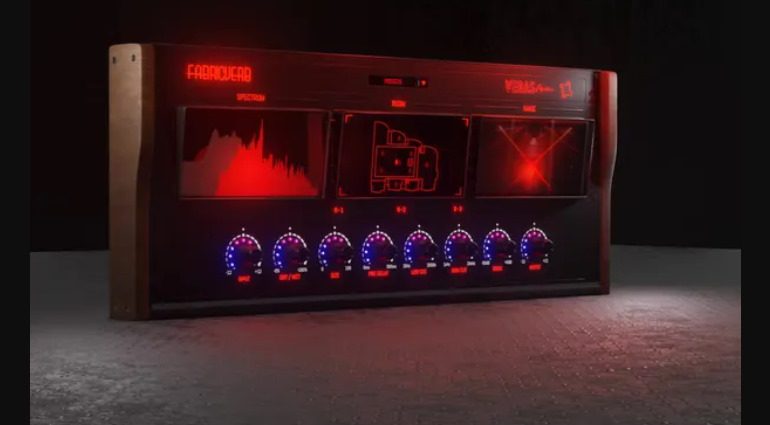
Developer Vegas Audio announced a new reverb plug-in called FABRICVERB – a collaboration with Fabric London. The convolution reverb plug-in lets users get the signature thumping sound of the UK’s most famous nightclub in their productions. The developers approached things in a familiar way, recording sine sweeps through each sound system in each room.
In total, users can click through 21 different points within the nightclub, including the booths. That ought to sound interesting! Check out some audio samples below and head here to learn more.
Click on the button to load the content from SoundCloud.
Load content
By loading the video, you agree to YouTube’s privacy policy.
Learn more
Load video
Our affiliate partner Plugin Boutique * launched a limited-time sale on the STA Effects 2 bundle. This is developer Audified’s collection of 6 valve gear emulation effects. It has a delay, chorus, flanger, phaser, enhancer, and preamp units famed for a warm and musical character. The plug-ins benefit from a Summing Tube Amplifier simulation technology that lends itself to clean and sparky mixes.
The STA Effects 2 is on sale for only USD 27 until September 18, 2022. The regular price is USD 74 and the plugins are available in 64-bit VST/VST3, AU, and AAX formats for Windows and macOS. Click here to learn more *.
By loading the video, you agree to YouTube’s privacy policy.
Learn more
Load video
Developer Process Audio has a 40% off sale on its Decibel audio metering suite at our affiliate partner Plugin Boutique *. Decibel offers professional stereo and 5.1 audio metering alongside unlimited display support, Android / iOS compatibility, and compliance with all major broadcast standards (including ATSC A/85 and EBU R128, NETFLIX & DVD BLUE-RAY).
It also has a fully customizable Super Meter, Phase Scope, Spectrum Analyzer, and additional modules with essential audio monitoring information. The statistics can be exported for an overview of all key audio monitoring measuring parameters. Additionally, the user interface supports fully customizable skins, colors, targets, and layouts.
Decibel is currently on sale at 40% off, priced at USD 89 instead of USD 149. The deal is valid until October 5, 2022. Head here to learn more *.
* This article contains affiliate links to help us fund Gearnews. If you buy something through these links, we will receive a commission. Don’t worry, the price for you always stays the same. Thank you for your support!
How do you like this post?
Your email address will not be published.
· I have no clue and thought I’d gotten away with it. However, I hope to learn what it might be during the build 😀
· What a story!! So, Bob, do you think a 75 year old can begin playing the piano ??!! And how should one start the process?? Should I rent a piano? Buy?? Or try to get to a studio or store that offers…
· I like this. I’ve been thinking about getting and building these for a while and I think this is the one I’ll start with. Robin, excuse my ignorance, but what is a “BJT-based double wavefolder”? Is …
Plugin Picks: Monolith, Hinder, Fabricverb, deals – Gearnews
Rolling Stone PODIUM: The Dummy's Guide to Music Production as an Indie Artist – Rolling Stone India
Ahmedabad-based producer, studio-owner, songwriter and guitarist/bassist Raag Sethi lays out a handy checklist for musicians releasing their songs
(The views and opinions expressed in this blog belong solely to the aforementioned blog writer, and do not represent those of Rolling Stone India as a magazine)
Up until a few decades ago, the idea of a home studio and recording a release-worthy single or album was unheard of. Now we have Grammy winners like Finneas who managed to achieve that all while producing from his bedroom. It really puts the pandemic in perspective for a lot of us working from home.
Music-making now has become so ubiquitous that the knowledge and process of how a song used to be made are no longer reserved for the omniscient members of the audio engineering community or record executives chomping on cigars. Gone are the days where you need expensive outboard gear and large purpose-built studios to go and record – as a studio owner, I’m aware of the irony.
This shift has occurred because technology has finally caught up to the wallets of the independent musician. Having a decent home recording setup is slowly becoming the norm. In doing so, a lot of singer-songwriters and musicians are self-producing their work and releasing it through a distribution service, no middlemen required. Navigating this free-for-all space can be quite daunting.
Read on for a fairly simple guide for anyone who is starting to release their own music. I’ll also try to highlight the differences in the workflow if you work with a producer (in addition to what value they bring) or are self-producing and releasing your song. Here is my little four step guide to getting your song(s) out there:
If you are self-producing your song, the first step is getting your pilots ready. A pilot/demo is a quick, scratch track of your primary guitar line/chords or vocal melody for reference so that the song’s arrangement and instrumentation are ready before hitting the studio. This would entail finalizing the scoring, structure and melodies and making sure no more changes are needed to the song. Not all of us have friends who play all the instruments required for the song, and even less of us can pay for every single session musician (especially if you have that one layer of glockenspiel that you absolutely need). Most DAWs (digital audio workstations) will have all the necessary tools for you to program an entire band without hiring a single session musician. The catch is, you need to know how to work with MIDI and VSTs and have a basic audio interface and MIDI keyboard. If you have access to these things, it’s a quick process to build the arrangements. Aside from getting your logistics in order, you need to make one important decision: to work with a producer, or do everything yourself.
There are two value propositions to working with a producer; technical and creative. Most musicians have felt the need to get an objective critique on their songs, beyond an opinionated viewpoint. The creative producer can help deconstruct the compositions, instrumentation, reharmonize and help spice things up. This might be necessary especially if you have reached the ambit of your own musical exposure, since you are too close to the song and have been listening to it on repeat.
The technical producer is one who can help produce and program all your stems, help engineer your sessions at the studio (or at home) and can help with mix and mastering as well.
Here are what some artists have to say about working with a producer:
“Working with a good producer is very reassuring as you know that your sound and arrangement is sorted. It helps to think beyond your own instrument and enhances the overall composition.” – Chirag Todi
“Working with a producer helps you gain a lot of perspective- it’s someone who gives you honest and constructive advice, which is rare and something that I had not experienced before. I definitely think it made me a better writer and musician. They solve the problem of, ‘I know what I want it to sound like, but I can’t get it to sound like that.’” – Meera Desai
The production step is about materializing everything you set out to do in pre-production. One important decision to make here is if you are using programmed MIDI tracks or are recording live instruments at a studio – this will set the tone, pace and expense for your song. I’m not going to argue which sounds better, as this article will be rife with fanboys of samples and modern VSTs against analogue master race purists. Instead of wondering which will sound better, consider which will fit in your budget, because the latter will be more expensive. Virtual instruments have gotten to the point where, for the most part, they can easily convince a listener that an actual musician is playing. Are there differences between a programmed drum loop and tracking live drums in a studio? Yes, but today, it’s smaller than you think.
The same is also true for gear used to record. People are often surprised when I tell them that the first few albums or what we produced in our Compass Box Live Sessions up until a few years ago were all done on reasonably cheap gear. Great equipment does not guarantee great recordings. As any experienced audio engineer will know, the instrument and the musician contribute 50 percent of the overall sound, 20 percent is the space, 20 percent is the mic placement and that last 10 percent is the mic/pre choice (which means where you record is more important than what you record on). Spend your time working on your parts, finding a good space, and good musicians to work with rather than spending a lot of money just to record through a Neve 1073.
If you are going for an all programmed kind of sound, and you have a small home studio setup with a recording interface and a mic, you can also record vocals/guitar at home; eliminating the need to rent out a studio. That being said, most home setups are not acoustically treated, so it is always cleaner to record in a proper studio. Here are a few things to keep in mind when going to a studio:
– Ask what equipment they have! Find out which mics, pres, interface, and instruments will be available to you when you start recording.
– Since most studios charge hourly, practice, practice, practice your parts and sufficiently warm up before going to the studio. You’ll be more efficient and spend less money – this goes for singing or tracking an instrument (yes, looking at you, guitarist).
– If you are working with a producer that has audio engineering skills, then you’re sorted. If you are alone, make sure you know what you want from your sound so you can communicate to the house engineer what to set up. For example, if you are recording acoustic guitar, ask for a stereo mic setup if your song needs it. Or when you are recording vocals, ask the engineer to DT (double track) certain parts. Basically, do a little research about micing and recording techniques and learn some technical terms that will help you communicate what you want from your sound.
The final stage is getting your song mixed and mastered, which can be done entirely online these days through services like Fiverr and SoundBetter. If you know friends locally, ask them. That way you can be privy to the process of how your song is being mixed, and give real-time feedback to the engineer. Remember, mixing is an iterative process, so also ask the engineer how many revisions they will do for you. Be as specific and descriptive about what you want from the overall sound and this process will go smoothly. Find references of soundscapes that you want to emulate on your track to give to the engineer, it’ll make their job a lot easier when mixing. It really is a fun – albeit a tedious – part of getting your song ready, you might even go back and listen to the music that inspired you to create songs in the first place so you can better communicate what you want for your track. Find the right distributor and then get your music on all the streaming platforms.
Before you start the distribution process, make sure you have your final artwork and master. If you are releasing on YouTube only, then this is a self-explanatory step. Suppose you want to publish it on all platforms, i.e. Apple Music, Spotify, Amazon Music, JioSaavn etc. you need to go through a distributor. Distributors, as the name suggests, provide a one-stop shop for getting your music on every platform at once. Different distributors have different pricing models; some have an annual subscription fee; some have per-release fees, and some have a mix of both. Most distributors offer the same thing, release music on streaming platforms, so look for the unique advantages that each service provides.
When releasing your music make sure you send it to different publications like Rolling Stone India, if they like it, they’ll write about it. Send it to your friends to listen to, share it, and try to get it on playlists either through the distributor or contacting editors directly. This is your moment, the culmination of all your hard work, so make sure you have set aside some kind of plan to market your song. It doesn’t have to involve paid promotion or glitzy videos, but have a roadmap of the things you are going to do pre and post-release. Most importantly, be proud of what you have made. This industry isn’t easy, and making non-Bollywood original music is still a long way behind mainstream.
But, if you manage to make a fan following, they’ll truly be people that believe and follow your work.
Contribute to Rolling Stone India by sending in your own unpublished submissions to [email protected] Know more about RS PODIUM.
Raag Sethi is an award-winning producer, bassist and guitarist from Ahmedabad, and the founder of Compass Box Studio. He has been instrumental in promoting indie talent in India through the Compass Box Live Sessions on YouTube. He is also a member of the Recording Academy.
Eloro Resources Intersects 150.47 g Ag eq/t (9.45 g Ag/t, 1.53% Zn, 0.88% Pb and 0.07% Sn) over 441.21m in High-Grade Feeder Zone in Santa Barbara Target Area at the Iska Iska Silver-Tin Polymetallic Project – Marketscreener.com
Overall, the Company has completed 74,782m in 113 drill holes to-date at Iska Iska, including five holes in progress, as shown in Figure 1. Tables 1 to 3 list significant assay results for the drill holes reported. Prices used for calculating Ag equivalent grades are as outlined in the
Santa Barbara High Grade Feeder Zone Definition Drilling.
Drilling continues to expand the extent of the high-grade feeder zone at Santa Barbara, especially to the south-southeast. New borehole geophysical data have significantly expanded the strike length of this important high-grade zone. The highly conductive zones correlate very well with previously released high grade drill intersections, as described below. The conductivity data from boreholes have extended the high-grade feeder zone a further 250m along strike to the south-southeast. The 3D inverse magnetic model which correlates very strongly with the conductive zone suggests that the high-grade feeder zone may extend across the entire caldera for as much as a further 1 km along strike. The definition drill program has now been modified to sectionally drill this highly prospective extension, with the intention of defining a major open pittable mineral resource in the valley of the caldera.
Dr.
Significant results from five (5) additional surface drill holes and two underground holes testing the high-grade feeder zone at Santa Barbara are as follows:
Hole DSB-30, drilled to the SW at -60-degree across the centre of the current high grade feeder zone, intersected 150.47 g Ag eq/t (9.45 g Ag/t, 1.53% Zn and 0.88% Pb) over 441.21m from 28.70m to 469.91m, including a higher-grade portion grading 209.30 g Ag eq/t (10.06 g Ag/t, 2.76% Zn and 0.98% Pb) over 102.30m from 80.05m to 182.35m. This is the longest continuous mineralized intersection obtained in drilling at Iska Iska thus far.
Overall, 67% of this 909.85m long hole contains reportable intersections which collectively average 133.49 g Ag eq/t
Hole DSB-32, drilled on-section at -60-degree to the southeast of hole DSB-30 intersected 185.94 g Ag eq/t (44.55 g Ag/t, 0.57% Pb, 0.14% Cu and 0.25% Sn) over 135.15m from 0.00 to 135.15m, including a higher-grade section of 277.34 g Ag eq/t (78.12 g Ag/t, 0.09 g Au/t, 1.01% Pb, 0.27% Cu and 0.33% Sn) over 66.04m from 45.13m to 111.17m.
Hole DSB-29, collared at surface to test the southeast extension of the high-grade feeder system, was drilled to the SW at -60-degree and intersected multiple intersections including:
108.31 g Ag/t (14.31 g Ag/t, 0.08 g Au/t, 0.81% Zn, 0.40% Pb and 0.08% Sn) over 110.40m from 320.94 to 431.34m, including a higher-grade portion of 174.81 g Ag/t (18.66 g Ag/t, 0.17 g Au/t, 1.43% Zn and 0.88% Pb) over 36.06m from 334.66m to 370.72m
Hole DSB-28, located approximately 100m northwest of DSB-29, collared at surface to test the high-grade feeder system, was drilled to the SW at -60-degree and intersected multiple intersections including:
98.98 g Ag/t (4.41 g Ag/t, 1.16% Zn and 0.49% Pb) over 96.51m from 39.49 to 136.00m, including a higher-grade portion of 220.47 g Ag/t (2.99 g Ag/t, 2.68% Zn, 1.13% Pb and 0.11% Sn) over 16.52m from 74.20m to 90.72m,
94.39 g Ag eq/t (5.49 g Ag/t, 1.36% Zn and 0.31% Pb) over 90.18m from 163.17m to 253.35m, and
83.44 g Ag eq/t (31.12 g Ag/t, 0.10 g Au/t, 0.27% Zn and 0.23%Pb) over 86.32m from 455.52m to 541.84m including higher-grade portions of 278.75 g Ag eq/t (56.42 g Ag/t, 0.23 g Au/t, 0.83% Zn, 2.38% Pb and 0.22 Sn) over 6.06m from 458.57 to 464.63m and 197.15 g Ag eq/t (136.45 g Ag/t, 0.22 g Au/t, 0.39% Zn, 0.11% Pb and 0.04 Sn) over 10.59m from 520.85 to 531.44m.
Overall, 55% of the overall length of this 831.80m long hole yielded reportable intersections, which collectively average 83.69 g Ag eq/t.
Major Extension of
As noted above, new borehole geophysical data have significantly expanded the strike length of the important high-grade feeder zone at Santa Barbara. The highly conductive zones correlate very well with previously released high grade drill intersections. Figure 2 is a NW-SE longitudinal section showing the geophysical results in the Santa Barbara high grade feeder zone. Based on current data, this feeder zone has a potential overall strike length of at least 2km. Figure 3 is a view looking south across the Iska Iska caldera valley and Figure 4 shows the conductivity model in the same view as Figure 3.
Eloro’s Chief Geophysicist, Dr.
Reinterpretation and Significance of Drilling in the Porco Area.
Results for eight (8) diamond drill holes that tested the magnetic susceptibility anomaly in the Porco area are summarized in Table 2. Locations of these holes are shown on Figure 1. Holes DPC-04, DPC-05 and DPC-06 were drilled from the Porco radial drill platform. Hole DPC-07 was drilled at an azimuth of 235-degree at -60-degree across the gap area between the Porco and Central Breccia pipes. Holes DPC-08 (Az 235-degree, -65-degree), DPC-10 (Az 225-degree, -70-degree) and DPC-11-12 (both Az 235-degree, -70-degree) were drilled from the access road to the Porco radial platform. Results from DPC-09 (Az 180-degree, -75-degree) were previously released on
Hole DPC-10 returned 38 reportable intersections including 268.41 g Ag eq/t (30.31 g Ag/t, 2.22% Zn, 1.19% Pb and 0.16% Sn) over 17.88m from 253.77 to 271.65m and 185.50 g Ag eq/t (4.18 g Ag/t, 1.15% Zn, 0.92% Pb and 0.17% Sn) over 5.98m from 193.65 to 199.63m.
Hole DPC-11 returned 29 reportable intersections including 126.42 g Ag eq/t (5.09 g Ag/t, 1.77% Zn and 0.13% Pb) over 16.46m from 392.40 to 408.86m, 171.01 g Ag eq/t (16.34 g Ag/t, 0.16 g Au/t, 2.14% Zn and 0.81% Pb) over 8.93m from 241.07 to 250.00m and 595.23 g Ag eq/t (50.32 g Ag/t, 0.48 g Au/t, 8.67% Zn and 1.09% Pb) over 2.99m from 364.47 to 367.46m.
Hole DPC-12 returned 26 reportable intersections including 239.74 g Ag eq/t (58.26 g Ag/t, 2.49% Zn and 1.58% Pb) over 2.96m from 410.66 to 413.62m, 132.46 g Ag eq/t (25.58 g Ag/t, 1.57% Zn and 0.30% Pb) over 3.03m from 761.22 to 764.25m and 72.26 g Ag eq/t (13.73 g Ag/t, 0.87% Zn and 0.06% Pb) over 14.85m from 884.40 to 899.25m.
Hole DPC-08 returned 14 reportable intersections including:
281.64 g Ag eq/t (15.34 g Ag/t, 0.44 g Au/t, 3.51% Zn, 0.77% Pb and 0.17% Cu) over 2.87m from 77.43m to 80.30m, 140.31 g Ag eq/t (9.07 g Ag/t, 2.14% Zn and 0.61% Pb) over 3.03m from 149.20m to 152.23m, 134.34 g Ag eq/t (6.40 g Ag/t, 2.27% Zn and 0.33% Pb) over 4.56m from 237.84m to 242.40m, and 125.58 g Ag eq/t (5.55 g Ag/t, 0.29 g Au/t, 1.15% Zn and 0.13% Pb) over 9.02m from 443.40m to 452.42m.
Hole DPC-07 returned 13 reportable intersections including 286.53 g Ag eq/t (59.08 g Ag/t, 0.37 g Au/t, 1.80% Zn, 0.14% Pb 0.19% Cu and 0.20% Sn) over 3.00m from 587.12 to 590.12m and 158.27 g Ag eq/t (10.41 g Ag/t, 2.51% Zn and 0.09% Pb) over 4.51m from 681.95 to 686.46m.
Hole DPC-06 in the radial drill platform returned 11 reportable intersections including: 122.34 g Ag eq/t (4.66 g Ag/t, 2.16% Zn and 0.16% Pb) over 16.43m from 156.01m to 172.44m, 134.13 g Ag eq/t (9.37 g Ag/t, 2.11% Zn and 0.31% Pb) over 7.46m from 215.92 to 223.38, 77.57 g Ag eq/t (50.31 g Ag/t, 3.44% Zn and 1.41% Pb) over 6.03m from 133.55 to 139.58m, and 447.07 g Ag eq/t (4.10 g Ag/t, 0.91% Zn and 3.37% Pb) over 4.41m from 248.95 to 253.36m.
All the Porco holes reported in this release are on the margins of the conductive/magnetic anomalies, hence the presence of widespread higher-grade mineralization on the edge of these anomalies is very encouraging. Further drilling will be carried out to test the core of the geophysical anomalies in these areas.
Surface
Results for six (6) diamond drill holes that tested the potential northwest extension of the Santa Barbara zone are summarized in Table 1. Locations of these holes are shown on Figure 1. Holes from southeast to northwest are DSB-23, DSB-18 and DSB-19 on the same section, DSB-17, DSB-27 and the northwesternmost hole DSB-16, which collectively cover a strike length of approximately 600m. Highlights are as follows:
Hole DSB-23 returned 27 reportable intersections including: 186.67 g Ag eq/t (152.91 g Ag/t, 0.13% Pb and 0.19% Cu) over 6.35m from 264.27m to 270.62m, 122.44 g Ag eq/t (22.28 g Ag/t, 0.22 g Au/t, 0.31% Zn, 0.12% Cu and 0.10% Sn) over 33.11m from 598.13m to 631.24m, 195.93 g Ag eq/t (38.19 g Ag/t, 0.40 g Au/t, 0.12% Zn, 0.22% Cu and 0.19% Sn) over 11.69m from 613.50m to 625.19m, and 97.91 g Ag eq/t (13.29 g Ag/t, 0.16 g Au/t, 0.12% Cu and 0.10% Sn) over 21.16m from 655.17m to 676.33m including a higher-grade section of 153.20 g Ag eq/t (22.87 g Ag/t, 0.32 g Au/t, 0.17% Cu and 0.15% Sn) over 7.66m from 668.67m to 676.33m.
Hole DSB-18 returned 32 reportable intersections including 144.53 g Ag eq/t (36.49 g Ag/t, 0.88% Zn, 0.98% Pb and 0.13% Cu) over 17.96m from 243.40 to 261.36m and 71.49 g Ag/t (3.49 g Ag/t, 0.22 g Au/t and 0.09% Sn) over 33.88m from 401.8m to 435.68m.
Hole DSB-19 returned 12 reportable intersections including 202.55 g Ag eq/t (10.56 g Ag/t, 0.47% Zn, 0.57% Pb and 0.25% Sn) over 16.52m from 247.28m to 263.80m and 128.74 g Ag eq/t (4.33 g Ag/t, 1.32% Zn and 0.58% Pb) over 13.38m from 217.37m to 230.75m.
Hole DSB-17 returned 40 reportable intersections including: 76.59 g Ag eq/t (15.61 g Ag/t, 0.16% Cu and 0.09% Sn) over 85.31m from 80.00m to 165.31m, 479.42 g Ag eq/t (5.19 g Ag/t, 0.11% Cu and 1.18% Sn) over 11.82m from 330.66m to 342.48, 85.69 g Ag eq/t (4.73 g Ag/t and 0.68 g Au/t) over 12.11m from 457.44m to 269.55m, and 127.35 g Ag eq/t (30.61 g Ag/t, 0.23 g Au/t, 0.14% Cu and 0.13% Sn) over 18.14m from 624.82m to 642.96m including a higher-grade section of 410.38 g Ag eq/t (106.47 g Ag/t, 0.51 g Au/t, 0.52% Cu and 0.47% Sn) over 3.01m from 639.95m to 642.96m.
Hole DSB-27 returned 7 reportable intersections including 380.33 g Ag eq/t (9.00 g Ag/t, 0.86% Zn, 0.54% Pb and 0.80% Sn) over 1.54m from 130.56m to 132.10m, 143.69 g Ag eq/t (12.00 g Ag/t, 0.30 g Au/t, 1.04% Zn and 0.11% Sn) over 1.50m from 515.37 to 516.87m and 179.30 g Ag eq/t (55.00 g Ag/t, 0.14 g Au/t, 0.22% Cu and 0.20% Sn) over 1.48m from 675.93 to 677.41m.
Hole DSB-16, the northernmost hole returned 20 reportable intersections including 123.03 g Ag eq/t (15.26 g Ag/t, 0.82% Zn and 0.23% Cu) over 3.01m from 188.42m to 191.43m, 113.45 g Ag eq/t (15.13 g Ag/t, 0.52% Zn, 0.12% Cu and 0.11% Sn) over 6.03m from 462.67m to 468.70m, and 96.41 g Ag eq/t (20.64 g Ag/t, 0.15% Cu and 0.13% Sn) over 4.60m from 639.80m to 644.40m. About
Eloro began underground diamond drilling from the Huayra Kasa underground workings at Iska Iska on
Subsequently, on
Since the initial discovery hole, Eloro has released a number of significant drill results in the SBBP and the surrounding mineralized envelope which along with geophysical data has defined a target zone 1400m along strike, 500m wide and that extends to a depth of 600m. This zone is open along strike to the northwest and southeast as well as to the southwest. The Company’s nearer term objective is to outline a maiden NI 43-101 compliant mineral resource within this large target area. As outlined in this press release as a result of continuing discoveries from recent drilling that have substantially extended the high-grade feeder zone at Santa Barbara, the Company has pushed back the inaugural mineral resource to the end of Q1 2023.
About
Eloro is an exploration and mine development company with a portfolio of gold and base-metal properties in
Contact:
T: (416) 868-9168
Information in this news release may contain forward-looking information. Statements containing forward-looking information express, as at the date of this news release, the Company’s plans, estimates, forecasts, projections, expectations, or beliefs as to future events or results and are believed to be reasonable based on information currently available to the Company. There can be no assurance that forward-looking statements will prove to be accurate. Actual results and future events could differ materially from those anticipated in such statements. Readers should not place undue reliance on forward-looking information.
(C) 2022 Electronic News Publishing, source
Why U.S. Adults Live in Multigenerational Homes – Pew Research Center
See our research on: Economy | Abortion | Russia | COVID-19
Pew Research Center conducted this study to better understand the experiences of U.S. adults living in multigenerational households, as well as the overall number and share of Americans who live in this type of household. The analysis in this report is based on two separate data sources. The findings about the number and share of Americans in multigenerational households, featured in Chapter 1 of the report, are based on data from the Annual Social and Economic Supplement of the Census Bureau’s Current Population Survey. The findings about the experiences of adults in multigenerational households, featured in Chapter 2 of the report, are based on 1,548 U.S. adults ages 25 and older who live with a parent or grandparent or who live with an adult child or grandchild age 25 or older. The data was collected as a part of a larger survey of 9,676 U.S. adults conducted in October 2021. Everyone who took part is a member of Pew Research Center’s American Trends Panel (ATP), an online survey panel that is recruited through national, random sampling of residential addresses. This way nearly all U.S. adults have a chance of selection. The survey is weighted to be representative of the U.S. adult population by gender, race, ethnicity, partisan affiliation, education and other categories. Read more about the ATP’s methodology.
See here to read more about the questions used for this report and the report’s methodology.
In the analysis of the Annual Social and Economic Supplement of the Census Bureau’s Current Population Survey, multigenerational households are those that include two or more adult generations (mainly ages 25 and older) or a “skipped generation,” which consists of grandparents and their grandchildren younger than 25. See Defining multigenerational households for more detail.
In the analysis of Pew Research Center survey data, adults in multigenerational households include those ages 25 and older who live with a parent or grandparent or who live with an adult child or grandchild age 25 or older.
References to White, Black and Asian Americans include only those who are not Hispanic and identify as only one race. Asian Americans include Pacific Islanders. Hispanics are of any race.
“Middle income” is defined here as two-thirds to double the median annual family income for panelists on the American Trends Panel. “Lower income” falls below that range; “upper income” falls above it. See the methodology for more details.
Multigenerational living has grown sharply in the U.S. over the past five decades and shows no sign of peaking. When asked why they share their home with relatives, Americans often give practical reasons related to finances or family caregiving. But the experience also has an emotional component. About a quarter of adults in multigenerational homes say it is stressful all or most of the time, and more than twice that share say it is mostly or always rewarding.
These experiences with multigenerational living vary by demographic group, especially by age and income, according to a Pew Research Center survey conducted in October 2021. There also are generational differences, especially in terms of stress and money, between the views of adult children and parents who share a home.
According to an analysis of census data from 1971-2021, the number of people living in multigenerational family households quadrupled during that time period, reaching 59.7 million in March 2021. The share more than doubled as well, to 18% of the U.S. population.
This increase in multigenerational living has been fed by social forces that include rapid growth of the U.S. Asian and Hispanic populations who, along with Black Americans, each are more likely than White Americans to live with extended family, especially if they are immigrants. By age, the highest share in this living arrangement is among young adults, a group that compared with prior generations when they were young generally stays in school longer, postpones or forgoes marriage and delays forming their own households. Among young adults ages 25 to 29, nearly a third (31%) live in multigenerational households, often in their parents’ home. Nearly four-in-ten young men in this age group (37%) are in multigenerational households, as are 26% of similarly aged young women.
Living in a multigenerational household appears to confer a financial benefit by buffering residents against poverty, according to census data. Americans living in multigenerational households are less likely to be poor than those living in other types of households. This is especially true of some groups that are economically vulnerable, such as unemployed people.
Although majorities across income groups cite financial issues as a major or minor reason for residing in a multigenerational family household, lower-income adults are more likely to say the living arrangement helps them financially – 50% say it does at least a little, compared with 36% of middle-income adults and 24% of upper-income adults.
Parents living with adult children and adults living with parents are about equally likely to say finances are a major reason for their living arrangement. But among those living with parents, younger adults (ages 25 to 39) are much more likely than older ones (40 and older) to say this (57% to 31%). And while 53% of adult children who live with their parents say it helps them financially at least a little, a smaller share of parents living with an adult child (29%) say the same. Parents are more likely than their adult children to say that living with extended family hurts their finances at least a little.
In exploring the demographics and experiences of Americans in multigenerational households, this report relies on two separate data sources and two definitions of who lives in this type of household.
In reporting the overall number and share of Americans who live in multigenerational households (and the demographic characteristics of these people), the analysis relies on data from the Annual Social and Economic Supplement of the Census Bureau’s Current Population Survey (IPUMS). For this part of the analysis, which is featured in Chapter 1 of the report, multigenerational households are defined as including two or more adult generations or a “skipped generation,” which consists of grandparents and their grandchildren younger than age 25. In this definition, adult children living in a parent’s home must be 25 or older (18- to 24-year-olds living in their parents’ home are not treated as an adult generation). However, 18- to 24-year-olds are treated as an adult generation if they are the householder and a parent or other relative from an older generation lives with them. This arrangement accounts for a relatively small share of multigenerational households. In other households as well, the householder could either be from the older or younger adult generation.
The analysis of census data includes all Americans – children and adults – living in multigenerational households, even if their presence doesn’t make it a multigenerational household. For example, a 7-year-old living with her parents and a grandparent or an 18-year-old living with a 25-year-old sibling and their parents in the parents’ home are each living in a multigenerational household. The trends and patterns here are similar to previous Pew Research Center reports based on the Census Bureau’s American Community Survey, although the Current Population Survey numbers tend to be lower. See Methodology for more detail.
In Chapter 2, we examine the experiences of adults in multigenerational households based on findings from a Pew Research Center survey conducted in October 2021. In this part of the analysis, adults in multigenerational households are defined as those ages 25 and older who live with a parent or grandparent or who live with an adult child or grandchild who is 25 or older (regardless of whether the respondent is or is not the householder).
The nationally representative survey of 9,676 U.S. adults, including 1,548 who live in multigenerational households, was conducted Oct. 18-24, 2021, using the Center’s American Trends Panel. The census figures are from the Annual Social and Economic Supplement of the Census Bureau’s Current Population Survey, which reports data for the civilian population other than those living in institutions such as prisons or mental hospitals.1
Among the other key findings:
A third of U.S. adults in multigenerational households say caregiving is a major reason for their living arrangement, including 25% who cite adult caregiving and 12% who cite child care. Among the other reasons given for living in a multigenerational household, 28% say it’s the arrangement they’ve always had, while smaller shares cite a change in relationship status (15%), or companionship (12%) as a major reason why they live with family members. About one-in-eight adults (13%) say the coronavirus pandemic is a factor in why they live with multiple generations under one roof.
A quarter of adults in multigenerational households say caregiving actually is occurring in their homes, either in the form of personal care for another adult in the household or care for a child younger than 18 who is not the caregiver’s own child. Those with lower (30%) and middle (24%) incomes are more likely than those with upper incomes (15%) to say caregiving is occurring in their household. Among adults living with a parent age 65 and older, 23% say they personally provide care for another adult in the household at least sometimes, compared with 8% of those living with a parent younger than 65.
More adults living in multigenerational households say the experience has been very positive (30%) or somewhat positive (27%) than say it has been somewhat negative (14%) or very negative (3%). An additional 26% say it has been neither. About half or more of those living with adult relatives other than a spouse or partner say it is convenient (58%) or rewarding (54%) all or most of the time. About a quarter (23%) say it is stressful all or most of the time, 40% say it is stressful some of the time and 36% say it is rarely or never stressful.
Among adults younger than 40, men are more likely than women to live in multigenerational households. Among those ages 40 and older, women are more likely to do so. For the most part, the reasons for living in a multigenerational household do not vary between men and women. Women are more likely than men to say a change in relationship status is a major reason. Among those living with a parent, men are more likely than women to say this is the arrangement they’ve always had.
Parents living with an adult child (60%) are more likely than adult children living with a parent (52%) to say their living situation is at least somewhat positive. Among adult children who live with parents, the younger group, ages 25 to 39 (43%), is less likely than those 40 and older (64%) to say the experience is at least somewhat positive. Adults living with parents (31%) are more likely than parents living with adult children (18%) to say their living situation is stressful all or most of the time. Similar shares of adults living with a parent and parents living with an adult child say living in a multigenerational household is convenient or rewarding all or most of the time.
Parents are more likely than adult children to pay the rent or mortgage when the two generations share a home. A majority of parents who live with an adult child (63%) say they pay more than half the rent or mortgage, including 51% who say they pay all. Meanwhile, 30% of adult children living with a parent say they pay nothing. Adult children are more likely to chip in for day-to-day costs; only 9% of those living with their parents say they pay nothing for groceries, utility bills or other household expenses. Still, 45% of parents living with adult children say they pay all such costs.
Upper-income adults are less likely than those with lower or middle incomes to cite caregiving as a reason for living in a multigenerational household. About a third of upper-income adults say that giving or getting adult care is a reason they live in a multigenerational household, compared with 45% of those with middle incomes and 51% of those with lower incomes who say so. Only 9% of upper-income adults identify giving or receiving child care as a reason for living with extended family, compared with 32% of lower-income adults and 20% of middle-income adults.
Upper-income adults in multigenerational households are more likely than those in other income groups to see the arrangement as temporary. Some 47% say they think they are in a temporary situation, compared with 35% of those with middle incomes and 31% of those with lower incomes. Overall, 41% of adults in multigenerational households say their living arrangement is a long-term one, 34% say it is temporary and 24% do not know. Upper-income adults also are more likely to find multigenerational living to be a positive experience – 71% say so, compared with 59% of middle-income adults and 50% of lower-income adults in that situation. Lower-income adults are more likely to say there is not enough space in their home for everyone to live comfortably – 38% say so, compared with 21% of middle-income and just 9% of upper-income residents of multigenerational households.
Among most major racial groups and Hispanics, the share of people in poverty is lower in multigenerational households than in other types of households. Overall poverty is lower in multigenerational homes (10% of those who live in them are poor) compared with other types of households (12%), according to census data. The apparent benefit of living in a multigenerational household extends to people who are unemployed – 11% in multigenerational households were poor in 2020, compared with 19% of those in other living arrangements. Those with a disability that limits or prevents them from working also are less likely to be poor if they live in a multigenerational household (16%) than another type of household (27%).
Fresh data delivered Saturday mornings
1615 L St. NW, Suite 800
Washington, DC 20036
USA
(+1) 202-419-4300 | Main
(+1) 202-857-8562 | Fax
(+1) 202-419-4372 | Media Inquiries
About Pew Research Center Pew Research Center is a nonpartisan fact tank that informs the public about the issues, attitudes and trends shaping the world. It conducts public opinion polling, demographic research, media content analysis and other empirical social science research. Pew Research Center does not take policy positions. It is a subsidiary of The Pew Charitable Trusts.
“Entergalactic” is a simple love story with vibrant production – University of Virginia The Cavalier Daily
The television special personifies Cudi’s eighth studio album by presenting a romantic-comedy narrative about the character Jabari, voiced by Cudi.
Scott Mescudi — better known as Kid Cudi — has never been the type to be defined by one label. Taking advantage of his successful 2009 debut album, “Man On The Moon,” Cudi explored acting with his first role — the short-lived 2010 HBO series “How to Make It in America.” Since 2010, the rapper/actor has played various roles, of late shifting gears to higher-up positions, such as working as an executive producer on “Malcolm and Marie.” His most recent project steps into an entirely new environment by creating a Netflix animated TV special, “Entergalactic.”
The television special personifies Cudi’s eighth studio album by presenting a romantic-comedy narrative about the character Jabari, voiced by Cudi. Jabari is an animated equivalent of the rapper, taking the same admiration of streetwear fashion and music seen with decor by streetwear designers Kaws and Virgil Abloh and a Nirvana poster in the character’s Manhattan apartment.
In “Entergalactic,” New York City is illustrated with subtle blue, pink and orange undertones with an animation style very similar to “Spider-Man: Into the Spider-Verse.” The comic book aesthetic is prevalent as Jabari is brought to Manhattan to convert his graffiti character, Mr. Rager — the name of Cudi’s second album and musical alter ego — into a comic book. While Jabari embarks on his new job he runs across two significant women, his ex-girlfriend Carmen, voiced by Laura Harrier, and his new love interest Meadow, voiced by Jessica Williams.
Significant moments in the narrative are emphasized with music from the new album of the same name — “Entergalatic.” The music is smoothly included in montages, such as when Jabarai goes out partying with his friends, that not only extend the plot, but encourage viewers to listen to the rest of the album “Entergalatic.”
This creates unique concepts of in-film music videos that extend the TV special into an experimental multimedia presentation. The most significant use of the practice is when Jabari first lays his eyes on his photographer neighbor Meadow, when the song “Angel” begins to play.
With their shared love of art, the young couple forges a sweet, innocent connection. Their interest in one another is more evident in the silent moments when their eyes lock than through outward displays of affection. It is a wholesome relationship that ultimately overcomes adversity in the end.
Another point the film analyzes is the construct of online dating. Throughout the film, advertisements for the online dating app Stush are promoted all over New York City. The film promotes a view on organic relationships — Jabari and Meadow — and disapproves of hookup culture — the regretted one-night stand between Jabari and Carmen before he met Meadow — associated with the current dating culture. The most obvious negative view is in the end when it is revealed that Stush was an identity fraud operation that stole millions.
Despite depicting a common love story, the TV special tackles unique topics. One moment that “Entergalactic” covers very well is the censorship or sugar coating of dark topics in art. This is seen when another cartoonist suggests Jabari change his Mr. Rager character to be “bright, white, and light.” This might be a nod to early criticism of Cudi’s music as he featured emotional lyrics of suicide and depression which reviewers felt unfitting to the genre of rap. Despite comments from his co-workers, Jabari ignores him, proving authenticity is applauded.
Altogether, the film follows a common rom-com storyline — two characters meet, part ways due to an obstacle, but then realize their love for one another. It is the small elements that prevent “Entergalactic” from being redundant, however. The friends of Jabari and Meadow are all hilarious in personality. Giving Cudi’s new songs from “Entergalactic” extended limelight in scenes — making it a visual and audible experience — is what makes it feel like a TV special rather than another Netflix movie. The animated details for Cudi’s late friend, Virgil Abloh, such as his characters wearing Off-White clothing, a billboard of Abloh with the words “Icon” and the fact that the series was released on his birthday, Sept. 30, make it all the more special.
For Cudi, this is unlike anything he’s done before, which makes “Entergalactic” even more impressive. He is especially aware of that. After a recent interview, Cudi talked about “closing the chapter on Kid Cudi,” at least in the realm of music. One can only sit back and wait to see what other ventures Cudi pursues.
The lecture, titled “Frock On: Indigenous Australian Textiles and Fashion,” discussed the recent rise in popularity of Aboriginal designs in the global fashion industry over the past few years.
“$oul $old $eparately” was released Friday with a stacked list of producers, features and some of Gibbs’ best efforts to date, making the record an undoubtedly important release for rap in 2022.
On the cusp of releasing two new singles, fourth year College student Farrah Hanna sat down with The Cavalier Daily to discuss her experience recording music as an independent artist, her musical influences and her songwriting process.
For 132 years, The Cavalier Daily has served as the first draft of history for the University of Virginia and Charlottesville communities.
As an independent, non-profit student newsroom that receives no money from the University, we rely on contributions from readers like you. Join us in our mission of providing local news and creating opportunities for the next generation of journalists.
Here's how to use bold colors, according to Atlanta's top interior designers – Finger Lakes Times
Sunny. High 72F. Winds SW at 5 to 10 mph..
A few passing clouds. Low 49F. Winds SSW at 5 to 10 mph.
Updated: October 11, 2022 @ 12:16 pm
After living with the pandemic for years, many homeowners are feeling isolated and are consequently focusing more on their mental health. A great way to reinforce a brighter mindset, according to Atlanta’s top interior designers, is by going bold. (Katarzyna Bialasiewicz/Dreamstime/TNS)
While trends come and go, there is one interior design choice that has spread at an exceptional pace this year — bold colors. After living with the pandemic for years, many homeowners are feeling isolated and are consequently focusing more on their mental health. A great way to reinforce a brighter mindset, according to Atlanta’s top interior designers, is by going bold.
Atlanta’s Lauren Wesley Designs said the uptick in bold color choices is due to a number of other factors as well.
“Going bold with color is so popular this year because for the past two or three years the design trend has been very focused on the minimalist and modern farmhouse aesthetics which typically encompass more muted and neutral tones, such as whites and grays,” the studio told The Atlanta Journal-Constitution. “Also, I think people are getting a little restless after being stuck inside during the pandemic. It’s time to inject some excitement into our environment and fall is the perfect time to do that.”
Studio 11 Design agreed.
“Like fashion, design trends are often cyclical,” the studio said. “Warm neutrals, earth tones and Scandinavian-inspired elements have dominated the design scene in recent years. While these are still popular choices, people are ready for a shift and are looking to brighten their homes and update their aesthetic in simple, yet impactful ways, easily done through the use of bold color.”
For those designing their own living spaces, the pros warned that there are some common pitfalls to look out for.
“The most common mistake that I see happening is featuring an accent wall,” Lauren Wesley Design said. “Frankly, we are tired of accent walls. If you must do an accent wall, include some millwork and a color over the millwork. Even still, we like to go ahead and commit to a color that we would feel comfortable with placing on every wall. When working with a bold color, you don’t have to go bold all over. You can go bold with your window treatments, a beautiful or a patterned rug. We like incorporating neutral furniture with bold accents. The combination of a bold color and neutral furniture gives so much more versatility to the room.”
CG Interiors, on the other hand, warned that people often don’t go bold enough.
“I’d say not going bold enough, like settling for just a pop of color here and there,” the studio said. “If you’ve done your research, you’ll know what schemes make you happy. Don’t be afraid to change things up.”
Leah Atkins Design cautions against going too bright with the paint selection.
“One common mistake is having an entirely neutral room and just throwing in a couple of bold colored accessories — this can be done well, but it can also look like a cheap afterthought,” the studio said. “Another mistake is choosing the wrong paint color, whether it’s not bold enough or too bold. Typically, you want the color to be deep, but not bright (this will keep it from looking like a kid’s room).”
While it’s good to know where some novice designers go wrong, it’s more important to know what can go right.
Lauren Wesley Design said that accent items are the way to go if you want to improve your space.
“Implementing bold colors using accent pillows, art, rugs, and window treatments can really add character and dimension to a room,” the studio said. “When there are too many colors it takes the eye all over and can often make people feel a little uneasy. You would be surprised how much design and color affects mood and comfortability.”
Andi Morse Design suggested focusing on a single color rather than a spectrum of bold choices.
“I love the idea of taking one color and going BIG with it,” they said. “Use it on furniture, walls, and fabrics to create a monochromatic look. I also love the idea of sprinkling strong or unexpected colors into a room for a surprise when you walk through the door.”
Studio 11 Design said contrasting the walls from the room’s furnishings can really create a pop.
“Bold wall colors are an excellent way to make a statement,” the studio said. “They lend a dramatic effect that immediately wows guests, and can easily be softened by neutral furniture pieces and accessories.
“If a bold wall color feels like too big of a commitment, I also love using bold colors with either a statement furniture piece, like a sofa, or in smaller more supporting accent pieces, like throw pillows, rugs and artwork. In the former, the larger piece becomes an artistic focal point and can be balanced by softer accessorizing elements. In the latter, accessories have the ability to brighten a neutrally toned room, adding artful pops of color that can easily be swapped out when a change of aesthetic is desired.”
If you are looking for inspiration when it comes to choosing a specific color scheme, there are a few trends to consider.
Andi Morse Design said green is in vogue this year.
“If you’re into ‘grandmother chic,’ then color is a great choice for mixing and matching within your walls,” they said. “Not only mixing solids, but patterns with bold neutrals. Green is a big color this year and there are so many deep hues that are easy to bring into your home through paint, fabric, and even wallpaper. Many times homeowners are worried they will tire of a color so are too afraid to commit. If that’s the case, I recommend starting small by mixing in throw pillows or statement lamps. As you start to feel more comfortable with the color, you’ll likely start infusing it more.”
CG Interiors said that it is alright to buck the trends as well.
“My advice is not to follow or give in to trends,” they said. “Trends in design come from such myriad places, and tend to categorize rather than emphasize individuality. Choose colors that resonate personally; that bring you joy, or settle your soul — whatever the emotion is that you are trying to evoke.
“Often when designing a home with a lot of color, we’ll treat the bedroom as more of a neutral zone, engendering a sense of calm when clients settle in.”
The Finger Lakes Times mobile app brings you the latest local breaking news, updates, and more. Read the Finger Lakes Times on your mobile device just as it appears in print.
‘Time to rise’: In grand style, a farewell to Philly dance, education legend LaDeva Davis – The Philadelphia Inquirer
“‘When I leave here, I want a big production,” LaDeva Davis said before her death. On Sunday, she got it.
It was a show fit for a queen — a diva — LaDeva Davis.
The renowned dancer, musician, choreographer, and city teacher of 57 years died Sept. 8, but on Sunday was celebrated in grand style with a memorial service that was equal parts remembrance and performance.
A month before her death — at which time Davis was still a full-time, active teacher at the Philadelphia High School for Creative and Performing Arts, where she founded its dance department — Davis, 78, reflected on what kind of funeral she wanted someday.
» READ MORE: LaDeva Davis, beloved Philadelphia dance teacher at CAPA, music producer, and entertainer, has died at 78
“She said, ‘When I leave here, I want a big production,” David Poindexter, Davis’ brother, said at the funeral service, held on the grand stage at the Met Philadelphia.
Davis got just that.
There was a performance by a concert choir, dancers leaping gracefully to a modern gospel interpretation of Handel’s Messiah, a lion dance and stirring eulogies, students dancing to a piece Davis had choreographed herself, all punctuated by more ovations and thunderous applause than tears. At the front of the stage was a large flower arrangement — white roses spelling out “LaDeva.”
Davis was a Renaissance woman — not just a teacher, but a gifted dancer, singer and musician; a kung fu master; a Grammy-winning producer and, by virtue of her work as host of a popular PBS cooking show, part of a Smithsonian Institution exhibit about food television.
“What an extraordinary person,” said Johnny Whaley, the former longtime CAPA principal.
Davis was stylish, a standout, whether she was choreographing her CAPA dancers on a national stage at the Cherry Blossom Festival in a fur coat or sailing into a faculty meeting — late — in shades and a rhinestone ballcap. She was not politically correct; she kept a nameplate on her desk that said “Mess With Me If You Dare,” and she fought for students, said Joanne Beaver, the current CAPA principal.
“She removed obstacles for students and provided them with opportunities they never would have had without her. There will never be another educator like her,” Beaver said. Davis called Beaver “Boss Lady,” but Beaver knew what the score was.
“I might be the principal of CAPA, but LaDeva Davis was the boss, all day, every day,” Beaver said.
» READ MORE: An 'old school' treasure celebrates 50 years in Philly classrooms
Under Davis’ direction, CAPA productions radiated. Her dancers regularly performed at Philadelphia’s Thanksgiving parade, with Davis urging the students that yes, they could complete a costume change in a minute.
Brenda Goldsmith, associate producer of the parade, remembers one year when she thought she might have the CAPA dancers perform fewer numbers than in prior years.
“She said, ‘No, dear, no less than five production numbers in each parade,’” Goldsmith said.
“She was meticulous, tireless, passionate, and irascible for all the right reasons,” said Sharon Friedler, dance professor emeritus of Swarthmore College, where Davis taught tap two nights a week for 31 years.
William R. Hite Jr., former superintendent of the Philadelphia School District, sent wishes about a teacher he spent time with on multiple occasions during his 10 years in the school system. On one of his last days as superintendent, Hite visited CAPA — and received well wishes on his departure from Davis.
Hite said he doesn’t remember the exact words she used, but he was struck by something people felt intuitively after being in Davis’ presence.
“I remember so vividly how good she made me feel after my interaction with her,” Hite said.
She was “Mama Dee” to many of her students, but always “Aunt Dee” to the extended family that was her joy, who honored her with an interpretation of one of Davis’ favorite songs, “Home,” from the musical The Wiz.
Beth Johnson, Davis’ niece, remembered a woman who loved hot peppers on her hoagies, who prayed daily, who drove cool cars with her favorite music up loud, who cared for her niece and nephew after their parents split up. She suffered, as a Black woman born in the 1940s, kept from opportunities because of her skin color — but this did not define her.
Johnson told the audience of hundreds how much Davis loved them, how much she believed in them. She told them to go out as Davis wanted them to.
“She would want us to be strong, positive and take steps to make the world better,” Johnson said. “It is time to rise.”
Porter Robinson reveals xQc inspired him to make FL Studio tutorials – Sportskeeda
In a recent stream uploaded to Riot Games’ Twitch channel, American musician and DJ Porter Robinson offered to help Natsumiii with the intricacies of FL Studio. FL Studio is a software program that allows users to generate digitalized audio from scratch by recording and storing it.
While streaming League of Legends with Lily “LilyPichu,” Wendy “Natsumiii” and Abe “Baboabe,” the 30-year-old musician revealed his favored instruments, along with the ability to operate FL Studios. Upon hearing that Natsumiii, a fellow musician, found the software to be complex, Porter was quick to offer help.
Natsumiii is notable for being associated with the OfflineTV squad. However, she is also known for her musical covers and skill with various instruments. Being in the music industry, her producers often ask her to use FL Studios for remixes. However, in yesterday’s stream, she spoke about her troubles with the software. She revealed:
Upon seeing the streamer confused, Porter Robinson went on to offer his help. He added:
He then recounted how watching xQc learn the program prompted him to give out tutorials as well. He further revealed his longstanding relationship with the program, exclaiming:
Viewers found the entire clip to be amusing. Many even drew parallels between Porter Robinson and the ‘Juicer’ himself by commenting on their similar haircuts. The clip received multiple comments after being shared on r/LivestreamFail:
Porter Robinson has a Twitch channel himself with over 59K followers. Although he is not as regular as full-time streamers, he uploads fairly often. His streams mostly include League of Legends gameplay.
Read about your favorite creators only on TikTok Wiki & Youtube Wiki
Poll :
0 votes
Quick Links
Be the first one to comment on this story
A Fairfax Music School Makes Learning Music More Accessible – District Fray Magazine
Many of us sustain a lifelong passion for music without ever learning to play an instrument. The prospect can seem intimidating, especially for those of us well past college. However, there’s an irresistible power that comes from playing an instrument and wrapping your mind around learning a new skill. Once you start playing music, it can be hard to stop.
Sterling Conservancy of Music, located in Fairfax, Virginia, and serving the region, makes it easy to get started.
Founded in 2009, Sterling Conservancy of Music provides accessible music lessons to students of all ages and skill levels living in D.C. and Northern Virginia, including piano, harpsichord, guitar, harp, voice, and musical theater coaching. Faculty come from some of the world’s most renowned music schools, but don’t be intimated — SCM is geared toward community enrichment, accessibility and, above all, fun.
We spoke with Director Gretchen Sterling about her work, her career in (and her lifelong passion for) classical music, and the benefits of learning to play. Answers have been edited for clarity and length.
District Fray: What’s your history with music?
Gretchen Sterling: I started learning piano lessons at the age of 7, but my early days were spent experimenting on my grandmother’s electric organ. I went on to study at the Royal Welsh College of Music and Drama in Cardiff, Wales, and was one of the youngest students ever accepted into the undergraduate program, auditioning at age 15. I completed my Master’s in piano performance from the London College of Music and began my teaching career in the States in 2008, building a reputation for innovative methods in teaching piano technique. I studied with prominent artists, which allowed me to experience a unique tradition in classical training that can directly be traced back to Beethoven and Russian composer, Nikolai Medtner. Additionally, I completed professional studies on music and the brain through Berklee College of Music, and hold certificates in audio engineering and music production.
What’s unique about the Sterling Conservancy of Music?
We are a highly adaptable and diverse group of professionals all in one place. Our hiring process is very selective. We have really carved out a niche as one of Metro D.C. and Northern Virginia’s top music centers for adult students, and we’ve created a real community here for adults who can connect socially, intellectually, and emotionally.
What are some benefits of learning to play music, particularly for adults who love music but haven’t trained previously?
The benefits of music are lifelong. First of all, it’s fantastic for the brain. Adults in particular can reap huge rewards mentally and emotionally because the practice of learning music develops new neurons in the brain, keeps critical thinking skills sharp, enhances memory, and, especially in a school setting, enables social connections with like-minded people. Especially as an adult, it can be difficult in this day and age to make long-lasting connections with fellow adults who are not co-workers or neighbors. People who are interested in the same subject naturally develop stronger connections, and because music really requires a more long-term commitment, it enhances the opportunity for connection and builds communication skills. In addition to the social benefit, music greatly enhances working memory, which is a skill many people could improve on, plus pattern recognition, listening skills, and creativity.
What is your advice for someone who gets discouraged learning a new skill?
Cut yourself some slack. Especially as adults, we spend most of our lives learning how to categorize and become critical thinkers, but as we carry those stringencies into adulthood, we psychologically get in our own way. There’s also a disconnect between the reality of learning — which requires failures and mistakes to occur in order to grow vs. intellectual understanding equaling attainment. When it comes to music, people usually start to feel discouraged when their intellectual level of understanding is above that of their level of physical attainment. Learning an instrument requires more than just understanding. Putting that understanding into regular, consistent action requires grit and discipline. The best advice to someone learning music is to set small, realistic goals, be patient and persistent, and show humility. Those who laugh at their mistakes and keep going are far more successful than those who get frustrated for expecting something unreasonable of themselves. That’s another reason learning music is so valuable. It teaches us how to be open-minded and forgiving of our imperfections.
Enjoy this piece? Consider becoming a member for access to our premium digital content. Support local journalism and start your membership today.
District Fray members receive unlimited access to our digital content, including new articles published daily. We also have membership options available for locals interested in our print magazine, member events, or first-access tickets and giveaways.
By clicking submit, you agree to receive emails from District Fray and accept our web terms of use and privacy and cookie policy.
© 2022 District Fray.
34 Crazy Photos Show How Much the Boise Mall Area Has Changed in 15 Years – 1035kissfmboise.com
Google Maps first sent their “Street View” cars into Boise in 2007. Since then, Boise has seen a huge population boom!
In the past 10 years alone, World Population review estimates that more than 170,000 new residents have moved to the Boise Metro area. With that type of growth, comes change and evolution. That evolution in Boise City limits is probably most evident in Downtown Boise. Just think of all the buildings that weren’t there a decade ago: JUMP, the Simplot Headquarters, Zion’s Bank Building, the Boise Center Expansion, a handful of hotels…
Earlier this spring, we grabbed some pretty dramatic now-and-then photos of Downtown Boise off Google Maps to show just how much things have changed. You can see them here or keep scrolling to the bottom of the article.
That project had us wondering, which other places inside Boise city limits have seen dramatic changes since Google first visited? Naturally, our minds went to Boise Towne Square Mall. We know the inside has changed immensely from when this video was captured on opening day in 1988.
But what about the exterior? What about the neighboring businesses on Franklin or Milwaukee? We fired up the Google Maps time machine and went back to see what things looked like 11-15 years ago compared to today and the results were pretty wild.
(For the record, we don't have any recollection of that Jack in the Box at all. None.)
Judge appoints special master, rejects DOJ bid to delay Mar-a-Lago ruling – POLITICO
Legal
Aileen Cannon appointed Raymond Dearie, a senior judge in the Eastern District of New York, to lead an independent review of the seized materials.
Pages from the order granting a request by former President Donald Trump's legal team to appoint a special master to review documents seized by the FBI during a search of his Mar-a-Lago estate is photographed Monday, Sept. 5, 2022. | Jon Elswick/AP Photo
By Kyle Cheney and Josh Gerstein
Link Copied
U.S. District Court Judge Aileen Cannon on Thursday rejected a Justice Department demand to let federal prosecutors continue their review of records marked classified that were recovered from former President Donald Trump’s Mar-a-Lago estate.
In her ruling, Cannon refused to accept department officials’ contention that the records they are trying to review as part of an ongoing criminal investigation remain highly classified or contain extraordinarily sensitive defense information that could damage national security if released.
“The Court does not find it appropriate to accept the Government’s conclusions on these important and disputed issues without further review by a neutral third party in an expedited and orderly fashion,” Cannon, a Trump appointee, wrote in her 10-page ruling denying the Justice Department’s request to essentially exclude about 100 documents marked classified from the special master process.
Cannon instead appointed Raymond Dearie, a senior federal judge in New York, to lead an independent review of the seized materials. He was one of two potential special masters proposed by the Trump team, and prosecutors said they found him acceptable even though he was not one of their initial picks.
In a signed filing released by the court on Thursday night, Dearie accepted the task. Cannon urged him to complete his review by Nov. 30 — more than a month after the Oct. 17 deadline the Justice Department had most recently asked Cannon to set.
While Cannon’s timeline appears to extend Dearie’s review well past the November midterm elections, she did instruct him “to prioritize review of the approximately 100 documents marked as classified (and papers physically attached thereto),” meaning it’s possible prosecutors could regain access to some or all of those materials before they get another look at the other records seized in the FBI’s Aug. 8 search of the Trump’s Florida estate.
Last week, the Justice Department appealed Cannon’s order to appoint a special master and indicated it would seek relief from the 11th U.S. Circuit Court of Appeals if she did not agree to delay aspects of her ruling by Thursday night. .
The ruling is another setback for federal prosecutors, who have expressed alarm at the extraordinarily sensitive records they found in boxes intermingled with Trump’s personal items in his Mar-a-Lago storage room, as well as some recovered from his office. The Justice Department has warned that Cannon’s Sept. 5 order — which enjoined the department from furthering its criminal review of the documents seized by FBI agents — had also disrupted a parallel risk assessment of those documents by the intelligence community. Though Cannon allowed that review to continue, the Justice Department emphasized that her order had sown confusion within the executive branch.
In one nod to the Justice Department, Cannon ordered Trump to shoulder the full cost of Dearie’s review, as well as that for any staff or associates he hires.
Cannon also clarified certain steps the department could take to further its criminal investigation even while the documents remained off-limits, such as “questioning witnesses and obtaining other information about the movement and storage of seized materials, including documents marked as classified, without discussion of their contents.”
She also said the Justice Department was free to brief congressional leaders “with intelligence oversight responsibilities” on the seized materials.
Cannon’s ruling denying the Justice Department’s stay makes clear she simply did not buy prosecutors’ argument that an intelligence community review of the national security impact of the presence of the information at Mar-a-Lago could not proceed while the criminal investigation remains temporarily halted.
“The Government’s submissions, read collectively, do not firmly maintain that the described processes are inextricably intertwined, and instead rely heavily on hypothetical scenarios and generalized explanations that do not establish irreparable injury,” she wrote.
However, the judge also emphasized that she was giving Justice Department personnel some leeway to participate in the national security assessment even as she maintains her order blocking the use of any of the documents in the criminal probe.
“To the extent that the Security Assessments truly are, in fact, inextricable from criminal investigative use of the seized materials, the Court makes clear that the September 5 Order does not enjoin the Government from taking actions necessary for the Security Assessments,” she wrote.
Cannon based her ruling in part on what she said were “media leaks” describing the seized materials.
While the Justice Department had raised alarms about a delay in its criminal investigation risking the unauthorized disclosure of classified information, the judge suggested that the risk of such was speculative, but that the evidence of ongoing leaks related to the investigation was concrete.
“There has been no actual suggestion by the Government of any identifiable emergency or imminent disclosure of classified information arising from Plaintiff’s allegedly unlawful retention of the seized property,” Cannon wrote. “Instead, and unfortunately, the unwarranted disclosures that float in the background have been leaks to the media after the underlying seizure.”
Link Copied
© 2022 POLITICO LLC
Meet the MBA Class of 2024: Lana Harfouche, New York University (Stern) – Poets&Quants
“World traveler with a Big Apple dream!”
Hometown: Chandler, AZ
Fun Fact About Yourself: I come from a Lebanese royal bloodline
Undergraduate School and Major: Arizona State University. I double majored in Supply Chain Management and Global Studies and minored in International Business and Women Studies.
Most Recent Employer and Job Title: Boeing, Supply Chain Strategy
What excites you the most about living in New York City and how do you see it enhancing your learning experience? NYC is one of my favorite cities, and the thought of living in the epicenter of corporate headquarters, diverse cultures, and the best food scene excites me! NYC exposes you to so many careers; it is the perfect place to explore what you want to do and learn what is out there. Being able to visit companies, network with like-minded peers, and have industry leaders a stone throw away will be a great learning enhancement.
Aside from your classmates, what was the key part of NYU Stern’s MBA programming that led you to choose this business school and why was it so important to you? I really liked how NYU Stern has a focus on experiential learning through Stern Solutions projects with actual companies. Being able to learn through real-world experience is really the best way, and being surrounded by many industries in NYC, I really look forward to using my new skills in real situations.
What course, club or activity excites you the most at NYU Stern? It’s hard to pick just one but the “Doing Business In” courses are really intriguing, like a mini study abroad! I would love to partake in the Italy course, where we visit luxury companies in Milan after learning about them in the NYC classroom.
What does EQ (Emotional Intelligence) mean to you and when have you seen its value in your career? EQ to me is about being self-aware — knowing how you feel and how others feel around you. I have seen the value of EQ when leading multiple cross-functional teams, and needing to understand everyone’s diverse perspectives.
Describe your biggest accomplishment in your career so far: My biggest accomplishment was completing Boeing’s robust two-year rotation program during Covid — one of aerospace’s most challenging times.
What led you to pursue an MBA at this point and what do you hope to do after graduation? After my rotation program, I found it to be the perfect time in my career to make a switch.
What is one thing you have recently read, watched, or listened to that you would highly recommend to prospective MBAs? Why? I recently watched King Richard on a flight and I really loved it. It showed how constant determination will lead you to fulfilling any dream, no matter how unlikely it may seem. I think prospective MBAs need to have a dream within themselves that they want to go after, and not be thrown off by any obstacles that come their way.
What other MBA programs did you apply to? I applied to Wharton, Kellogg, Booth, Columbia, Ross, LBS, Harvard, and Berkeley.
What advice would you give to help potential applicants gain admission into NYU Stern’s MBA program? Really understand your story, and what makes you truly want an MBA, and how NYU Stern specifically can make that happen! Also, the people at Stern really set themselves apart, so have fun with your interviews and whomever you talk to. Just be yourself!
DON’T MISS: MEET NYU STERN’S MBA CLASS OF 2024
Comments
Comments
Comments
Comments
Our Partner Sites: Poets&Quants for Execs | Poets&Quants for Undergrads | Tipping the Scales | We See Genius
About Poets&Quants | P&Q News Archives | Privacy Policy | Advertising & Partnerships | Editorial | Contact Us | Sign In / Register
Copyright© 2022 Poets&Quants, Inc. All Rights Reserved.
Website Design By: Yellowfarmstudios.com
Oklahoma vs. Texas score, takeaways: 'Horns shut out Sooners for OU's worst loss in Red River Showdown history – CBS Sports
Play Now
Football Pick’em
Play Now
College Football Pick’em
Week Five Recap
Talking the business of sports
Texas handed Oklahoma its worst loss in the history of the Red River Showdown with a decisive 49-0 shutout of the 14-time Big 12 champions. Not only was it the Longhorns’ biggest victory in the series, it was the first shut out either way since 2006 and the most dominant win by either side since 2003.
The Texas victory marked a breakout moment for quarterback Quinn Ewers, who completed 21 of 31 passes for 289 yards and four touchdowns in a total evisceration of Oklahoma’s secondary. Longhorns running back Bijan Robinson added 130 yards rushing and two touchdowns.
The Sooners started QB Davis Beville for the injured Dillon Gabriel, but things fell apart quickly. Beville completed just 6 of 12 passes for 38 yards and an interception in a miserable effort. OU found some success using the Wildcat to generate offensive yardage with tight end Brayden Willis under center; however, it was never enough to break into the end zone.
Defensively, Texas brought consistent pressure and was credited with 10 tackles for loss and three sacks. Two of the TFLs came from senior defensive tackle Keondre Coburn. Conversely, Oklahoma failed to get any pressure on Ewers with only two credited QB pressures.
Texas had lost six of the prior seven matchups against Oklahoma, including five in the Red River Showdown. This victory for Texas over Oklahoma marked its biggest in the history of the rivalry, overtaking a 45-12 win in 2005. The difference? The Longhorns finished undefeated that season and won the national championship. This year, the ‘Horns already have two losses, including one to Texas Tech just two games ago. As such, the 2022 Red River Showdown will live in infamy.
Texas’ star signal caller played well in his first quarter against No. 1 Alabama before suffering an injury, but the talent was on full display against Oklahoma. Ewers was limitless on Saturday, throwing passes to every corner of the field and sidestepping rushers with ease. Wide receiver Xavier Worthy played a big role in the win, but Ewers used all of his weapons far more effectively than backup Hudson Card. Seven receivers caught at least two passes with tight end Ja’Tavion Sanders and WR Jordan Whittington each nabbing five balls. Playing Ewers allows Texas to open up its full playbook.
The Sooners entered the Red River Showdown with two losses and left being shutout for the first time since 1998 (Texas A&M). If that 1998 season keeps coming up as this year progresses, there’s a reason. Since Bob Stoops took over the program in 1999, Oklahoma has been a model of consistency. When Lincoln Riley was promoted internally in 2017, little changed.
However, Venables is the first external hire at Oklahoma since 1998, and the team’s performance looks like it. The Sooners are 0-3 in conference play under a new coach for the first time in program history. As a further means of comparison, OU had not lost more than two games in any season since 2014. Venables has his work cut out to redefine the Oklahoma program.
With the win, Texas moves to 4-2 with a 2-1 record in Big 12 play. The losses have come by a combined four points. Steve Sarkisian sold a reset when he raided the transfer market and brought Ewers to the 40 Acres. For the first time under Sark, the Longhorns have a truly signature victory to market to fans and recruits.
No. 7 Oklahoma State remains undefeated. No. 17 TCU is as well after edging No. 19 Kansas in a competitive game. However, Texas is in a great position to fight back into the Big 12 title conversation. There are four ranked games remaining — not even counting Baylor or Iowa State — but the ‘Horns are a different animal with Ewers in the lineup.
For Texas 🤘 pic.twitter.com/IaIq5AQA9y
Got the Hat back 🤘 pic.twitter.com/bcdbb1eKZp
It’s coming home all the way to Austin Texas 🤘 pic.twitter.com/VLYga97iX2
Red River Shutout 🤘 pic.twitter.com/ihDSwYBNuw
Final: Texas 49, OU 0
FINAL #HookEm 🤘 pic.twitter.com/VvxQ5JvdCD
Keep ’em coming 💪 @JusticeFinkley pic.twitter.com/U6a30BfY0n
Welcome to the end zone @2brookss 🤝 pic.twitter.com/0vfgl60aPo
BRING THE PAIN!!!@ByronMurphyII on the sack 😤 pic.twitter.com/HkPO2gkhwx
What more is there to say at this point? Texas is obliterating Oklahoma in a way that it never has before. The Sooners have not been shut out of this game since 1965.
Too Easy 😮💨 @Jatavionsanders TOUCHDOWN!!! pic.twitter.com/klgWuFCYpN
THE HUMAN CHEAT CODE @Bijan5Robinson ➡️ TD number ✌️ pic.twitter.com/pUek3J44jL
The Longhorns continue to pour it on with another drive that looked far too easy for Quinn Ewers and the offense. Don’t be surprised to see Ewers hit the bench soon.
Texas quarterback Quinn Ewers’ nearly perfect day came to a close as he threw a bizarre interception on an attempted throwaway on the edge of the red zone. Ewers was still in the pocket and likely would have been called for intentional grounding if the ball fell. Instead, it was intercepted. Luckily for Texas, Oklahoma’s offense went three-and-out again.
Us. Them. 30 Minutes ⏳ pic.twitter.com/cPyxBMng6W
Too easy from Texas on this TD 😮💨 pic.twitter.com/pJENu5pPeF
Texas boys 🤘@McConaughey x @sehlinger3 pic.twitter.com/xOiDngVece
Talkin’ ball 🗣️@sehlinger3 | @McConaughey pic.twitter.com/9rFRkNyXR3
🔴🔴⚪️⚪️#OUDNA pic.twitter.com/aMUSeBMTjj
Score At The Half #HookEm 🤘 pic.twitter.com/tUa4G1LrNg
Looks like it’s shark week in Dallas 🦈#HookEm 🤘 pic.twitter.com/phdHJsmp4q
FOOT ON THE GAS 🔥@QuinnEwers ➡️ @Jatavionsanders pic.twitter.com/WYZ3DdnCcy
Stole One ☝️ @Officia1dae pic.twitter.com/W99yoofyRW
Things only keep going downhill for Oklahoma. Eric Gray threw a jump pass, but it was picked off by Jahdae Barron in the red zone. Nothing has gone right for Oklahoma.
The rout is on at the State Fair. Quinn Ewers has completed 14 of 16 passes for 178 yards and two touchdowns as the Longhorns are dropping the hammer on Oklahoma. The Sooners look miserable on both ends, and their defense has effectively not made a positive play at any point. This could be a historic rout.
How about another 🤷♂️@__keilan TOUCHDOWN! pic.twitter.com/LssKqzVOQs
all of us after that @XavierWorthy TD pic.twitter.com/Utal2wsgHc
A physical brand of football 😤 @AGENT0__ pic.twitter.com/6vfgBsWePh
For the second year in a row, Texas has taken an early lead on Oklahoma. After the Sooners powered down the field, Texas zoomed with ease to an eight-play, 92-yard drive in barely three minutes. The Longhorns are making the game easy for Quinn Ewers, getting passes going to the outside and involving running backs and tight ends in the receiving game. Oklahoma’s porous defense has few answers.
They’re not Worthy 😤 @XavierWorthy TOUCHDOWN! pic.twitter.com/Y4kTUV8rWj
© 2004-2022 CBS Interactive. All Rights Reserved.
CBS Sports is a registered trademark of CBS Broadcasting Inc. Commissioner.com is a registered trademark of CBS Interactive Inc.
Images by Getty Images and US Presswire
Justice Dept. and Trump Legal Team Clash Over Special Master Candidates – The New York Times
Advertisement
Supported by
The two sides had sharply diverging views of who could serve as a special master and what that person would do.
Send any friend a story
As a subscriber, you have 10 gift articles to give each month. Anyone can read what you share.
Charlie Savage, Alan Feuer, Glenn Thrush and
WASHINGTON — The Justice Department and lawyers for former President Donald J. Trump failed to agree on Friday on who could serve as an independent arbiter to sift through documents the F.B.I. seized from Mr. Trump’s Florida club and residence last month.
In an eight-page joint filing that listed far more points of disagreement than of consensus, the two sides exhibited sharply divergent visions for what the arbiter, known as a special master, would do, and put forth different candidates.
The Justice Department proposed two former federal judges for the position: Barbara S. Jones, a Clinton appointee to the Southern District of New York who performed a similar role in cases involving two personal lawyers of Mr. Trump, Michael S. Cohen in 2017 and Rudolph W. Giuliani in 2021; and Thomas B. Griffith, a George W. Bush appointee who retired from the Court of Appeals for the District of Columbia in 2020.
Mr. Trump’s legal team countered with two suggestions of its own: a retired Federal District Court judge, Raymond J. Dearie, a Reagan appointee who sat in the Eastern District of New York and once served as the top federal prosecutor there; and Paul Huck Jr., a former deputy attorney general in Florida who also served as general counsel to Charlie Crist, who was its Republican governor at the time.
Mr. Huck is married to Judge Barbara Lagoa, whom Mr. Trump appointed to the Court of Appeals for the 11th Circuit in Atlanta, which oversees federal courts in Florida. Such an appointment would appear to create a conflict of interest that could require Judge Lagoa to recuse herself from litigation involving the case.
Judge Aileen M. Cannon, who ordered the parties to produce a list of qualified candidates by midnight Friday, will ultimately decide who will be tapped for the job. She will also set the parameters of the review.
The Justice Department, seeking to quickly finish its investigation into Mr. Trump’s handling of sensitive government documents, proposed setting a deadline of Oct. 17 for completion of the arbiter’s work; Mr. Trump’s team suggested taking 90 days — or about three times as long.
The department also said Mr. Trump should pay for the master since he had asked for it; Mr. Trump’s team proposed that taxpayers split the cost.
The two sides also clashed substantially over the duties of the special master. Mr. Trump’s lawyers argued that the arbiter should look at all the documents seized in the search and filter out anything potentially subject to attorney-client or executive privilege.
By contrast, the government argued that the master should look only at unclassified documents and should not adjudicate whether anything was subject to executive privilege.
Mr. Trump’s lawyers are also asking the court to exclude National Archives officials from the process of reviewing the materials; the department believes their involvement is essential.
The dispute over the special master’s purview was reflected in an appeal the Justice Department filed on Thursday seeking to lift part of Judge Cannon’s order temporarily barring it from using the documents in its investigation.
The department asked an appeals court to overturn the portion of that order that applied to about 100 documents marked as classified, and asked Judge Cannon to hold off on enforcing that part as the appeal unfolded. If she did, the investigation could resume using only those documents.
Judge Cannon has not yet decided whether to comply with the government’s request, which the Justice Department argued was necessary for separate national security assessments to continue.
The Office of the Director of National Intelligence, which is conducting those national security reviews, said Friday that both, a classification review and an assessment of the potential risks to national security caused by the insecure storage of documents at Mar-a-Lago, Mr. Trump’s residence in Palm Beach, Fla., had been “temporarily paused” after consultation with the Justice Department.
While Mr. Trump and his allies have repeatedly claimed that the former president had a standing order to declassify all materials he took from the White House, his lawyers have not made that assertion in court. In fact, they have said that any special master in the case would need a high-level security clearance.
But Mr. Trump’s lawyers have gestured toward his claim of declassification by declining to concede that the documents were classified. They did so again in the filing on Friday night, writing that the Justice Department had wrongly assumed “that if a document has a classification marking, it remains classified in perpetuity.”
The dispute over the special master was the latest twist in the criminal investigation into Mr. Trump’s hoarding of government documents — including some marked as highly classified — and his refusal to return them despite repeated entreaties by the National Archives and a subpoena from a grand jury.
The matter traces back to Mr. Trump’s chaotic exit from office in January 2021, when boxes of materials from the residential part of the White House were taken to Mar-a-Lago. They contained thousands of government records — some marked as classified, some not — apparently mixed in with news clippings, articles of clothing, gifts and other items.
By May 2021, the National Archives realized that Mr. Trump had taken numerous government files with him and began asking for their return. In January, after months of delay, Mr. Trump returned 15 boxes. When the agency discovered sensitive documents mixed in, it referred the matter to the Justice Department.
In May, the department obtained a grand jury subpoena requiring Mr. Trump to return any other documents marked as classified in his possession. The next month, two of his lawyers turned over a small number of such files and told the government that there had been a “diligent search” and no others remained.
But investigators acquired evidence that Mr. Trump was still holding onto more government property, including files with classification markings, leading to the search last month.
Materials related to the search show the Justice Department is investigating crimes that include unauthorized retention of national security secrets and obstruction.
Julian E. Barnes contributed reporting.
Advertisement
Blackmagic Design Announces New Lower Price for ATEM Mini Pro – Sports Video Group
By SVG Staff
Thursday, October 6, 2022 – 9:02 pm
Print This Story | Subscribe
Blackmagic Design today announced a new lower price for ATEM Mini Pro live production switchers. The ATEM Mini Pro is now reduced to US$295 and the ATEM Mini Pro ISO model is reduced to US$495.
This reduction of up to $300 has been made possible by efficiencies in manufacturing. The new prices will help to make live production more affordable for anyone who wants to reach a worldwide audience in true broadcast quality. With built in recording, streaming and multiview monitoring, the ATEM Mini Pro models have been the best way for customers to create high quality multi camera live production for streaming worldwide to platforms such as YouTube, Facebook, Twitch TV and more. With these new lower prices, ATEM Mini Pro replaces ATEM Mini as a more powerful entry model in the ATEM Mini family of live production switchers.
ATEM Mini Pro is available immediately from Blackmagic Design resellers worldwide from US$295.
ATEM Mini switchers make it easy to create professional multi camera productions for live streaming to YouTube and innovative business presentations using Zoom, Microsoft Teams or Skype. Simply connect ATEM Mini and customers can switch live up to 4 high quality video camera inputs for dramatically better quality images. Or connect a computer for PowerPoint slides or gaming consoles. The built in DVE allows exciting picture in picture effects, perfect for commentary. There are loads of video effects too. ATEM Mini has a built in hardware streaming engine for live streaming via ethernet, or stream via the USB which also works like a webcam. There’s also HDMI out for projectors. Microphone inputs allow high quality desktop and lapel mics for interviews and presentations.
ATEM Mini’s compact all in one design includes both a control panel as well as connections. The front panel includes easy to use buttons for selecting sources, video effects and transitions. The source buttons are large so it’s possible to use it by feel, letting the presenter do the switching. Customers even get buttons for audio mixing. Customers also get buttons for record and streaming control, as well as output selection buttons that let customers change the video output between cameras, program and multiview. On the rear panel there are HDMI connections for cameras or computers or even gaming consoles, extra microphone inputs, USB for webcam out plus an HDMI “aux” output for program video.
ATEM Mini has a built in hardware streaming engine for live streaming via their Ethernet connections without the need for a computer. That means customers can live stream to YouTube, Facebook and Twitch in better quality, without dropped frames and with simpler settings. Just select the streaming service and enter the streaming key. There are palettes in ATEM Software Control for streaming setup, plus streaming status is also displayed in the multiview. Streaming status is easy to understand as the data rate indicator shows internet speed required for the video format users are using. If users are technically minded, customers can update the streaming profiles in an XML settings file to load new services.
If customers are doing live production on location then ATEM Mini supports connecting an Apple or Android smartphone to the USB port to use mobile data. It’s also a great backup for the main Ethernet connection. Phone tethering works with the latest high speed 5G phones plus the more common 4G phones. The ATEM Mini switcher will automatically detect when a phone is connected to the USB port and switch its internet connection to use it, eliminating the need for changing settings. When connected, the phone will draw power from the USB port so it remains charged from the switcher. By using phone tethering and mobile data, ATEM Mini switchers become the perfect mobile production solution
ATEM Mini also supports direct recording of their streaming data to USB flash disks. That means customers get very long recording times in the same H.264 video files with AAC audio that customers streamed, so customers can directly upload to any online video site, such as YouTube or Vimeo more quickly. Recording to multiple disks is also supported via a USB hub or Blackmagic MultiDock, so when a disk fills recording can continue to a second disk for non-stop recording. Record settings and disk selection are set up in ATEM Software Control and there’s a record status view in the built-in multiview.
The ATEM Mini ISO models allow customers to edit their live event as they can record multiple video streams, including clean feeds of all inputs and program, all at the same time. Media pool images used are also saved with the video files. The video files include metadata tags such as synced timecode and camera numbers. Imagine re-editing their show with new color grades, effects and graphics. Even the audio sources are all recorded so customers can professionally remix their audio.
The ISO models also save a DaVinci Resolve project file, so with a single click customers can open their live production as a video edit. All cuts, dissolves and media pool graphics will be loaded. This means customers can fine tune edit points or even completely replace shots. The DaVinci Resolve Sync Bin lets customers select new shots via a multiview so it’s very easy to use. Customers can even relink to Blackmagic RAW camera files for adding professional color correction and finishing in Ultra HD.
When doing larger live productions with multiple cameras, it’s very useful to see all their video sources at the same time on a single monitor. All ATEM Mini models include a professional multiview that lets customers see all video inputs, preview and program on a single HDMI television or monitor. Each camera view includes tally indicators so customers know when each source is on-air, and each view also has custom labels and audio meters. The multiview even allows customers to monitor critical statuses for recording, streaming and the audio mixer.
“Since we released these models, we have been working hard to make improvements in our manufacturing processes to help reduce the cost of building the ATEM Mini family,” said Grant Petty, Blackmagic Design CEO. “This reduction of $200 on ATEM Mini Pro and $300 on ATEM Mini Pro ISO helps make these switchers more affordable for customers who want the power of built-in streaming and multiview to help share their knowledge and skills with a worldwide audience on YouTube, Facebook and more!”
© 2022 Sports Video Group. All rights reserved. Site by Brightgreen Design/Arturan/Sfera Interactive.
A lowercase letter
A capital (uppercase) letter
A number
Minimum 8 characters
PARAMOUNT+, NICKELODEON AND HASBRO'S ENTERTAINMENT ONE DEBUT OFFICIAL TRAILER FOR ORIGINAL ANIMATED SERIES "TRANSFORMERS: EARTHSPARK" AT NEW YORK COMIC CON 2022 – Longview News-Journal
Sunshine and some clouds. High 87F. Winds light and variable..
Generally fair. Low near 60F. Winds light and variable.
Updated: October 10, 2022 @ 2:22 am
Paramount and Transformers Logo
Joining the Voice Cast are Nolan North, Michael T Downey, Marc Evan Jackson, Sean Kenin Reyes, Nicole Dubuc, Martha Marion, Kari Wahlgren, and Daran Norris
Share it: @Nickelodeon @ParamountPlus @Hasbro
Click HERE to embed the trailer.
NEW YORK, Oct. 9, 2022 /PRNewswire/ — Paramount+, Nickelodeon and Hasbro’s Entertainment One (eOne) today revealed the official trailer for the upcoming original animated series TRANSFORMERS: EARTHSPARK, which will debut the first 10 episodes of its premiere season in the U.S. and Canada on Friday, Nov. 11, on Paramount+. TRANSFORMERS: EARTHSPARK will also debut overseas beginning in November on Paramount+, where the service is available, and on Nickelodeon channels around the world. The trailer debuted in a panel at New York Comic Con 2022 where fans gathered to hear from voice cast members Diedrich Bader (Mandroid), Sydney Mikayla (Robby Malto), Zion Broadnax (Mo Malto), Cissy Jones (Elita-1), co-executive producer Dale Malinowski and executive producer Ant Ward.
Also announced today is an all-star lineup of additional voice talent for TRANSFORMERS: EARTHSPARK:
The new voice actors join previously announced cast members: Sydney Mikayla (Robby Malto), Zion Broadnax (Morgan ‘Mo‘ Malto), Benni Latham (Dot Malto), Jon Jon Briones (Alex Malto), Kathreen Khavari (Twitch), Zeno Robinson (Thrash), Danny Pudi (Bumblebee), Alan Tudyk (Optimus Prime), Rory McCann (Megatron), Cissy Jones (Elita-1) and Diedrich Bader (Mandroid).
The all-new animated series TRANSFORMERS: EARTHSPARK introduces a new generation of Transformers robots–the first to be born on Earth–and together with the human family who welcomes them in and cares for them, they’ll redefine what it means to be a family.
TRANSFORMERS: EARTHSPARK is created and co-executive produced by Dale Malinowski (“Rise of the Teenage Mutant Ninja Turtles”) and executive produced by Ant Ward (“Rise of the Teenage Mutant Ninja Turtles”). The series is developed for television by Claudia Spinelli, Senior Vice President, Big Kids Animation, Nickelodeon. Production is overseen for Nickelodeon by Mikiel Houser, Executive in Charge of Production and for eOne by Kari Rosenberg.
The TRANSFORMERS brand is a global powerhouse franchise with millions of fans around the world. Since 1984, the battle between the Autobots and Decepticons has come to life in movies, TV shows, comic books, innovative toys, and digital media, bringing incredible “MORE THAN MEETS THE EYE” experiences to fans of all ages. The brand’s enduring connection is made possible by its rich storytelling and characters: the heroic Autobots who seek to protect all life, and the evil Decepticons who seek to conquer the universe. The TRANSFORMERS brand is a Hasbro franchise.
Nickelodeon, now in its 43rd year, is the number-one entertainment brand for kids. It has built a diverse, global business by putting kids first in everything it does. The brand includes television programming and production in the United States and around the world, plus consumer products, digital, location-based experiences, publishing and feature films. For more information or artwork, visit http://www.nickpress.com. Nickelodeon is a part of Paramount’s (Nasdaq: PARA, PARAA) global portfolio of multimedia entertainment brands.
Paramount+, a direct-to-consumer digital subscription video on-demand and live streaming service, combines live sports, breaking news and a mountain of entertainment. The premium streaming service features an expansive library of original series, hit shows and popular movies across every genre from world-renowned brands and production studios, including BET, CBS, Comedy Central, MTV, Nickelodeon, Paramount Pictures and the Smithsonian Channel. The service is also the streaming home to unmatched sports programming, including every CBS Sports event, from golf to football to basketball and more, plus exclusive streaming rights for major sports properties, including some of the world’s biggest and most popular soccer leagues. Paramount+ also enables subscribers to stream local CBS stations live across the U.S. in addition to the ability to stream CBS News Network for 24/7 news and CBS Sports HQ for sports news and analysis.
For more information about Paramount+, please visit www.paramountplus.com and follow @ParamountPlus on social platforms.
Entertainment One Ltd. (eOne) is a talent-driven independent studio that specializes in the development, acquisition, production, financing, distribution and sales of entertainment content. As part of global play and entertainment company Hasbro (NASDAQ: HAS), eOne’s expertise spans across film, television and music production and sales; family programming, merchandising and licensing; digital content; and live entertainment. Through its extensive reach and scale, and a deep commitment to high-quality entertainment, eOne unlocks the power and value of creativity. eOne brings to market both original and existing content, sourcing IP from Hasbro’s portfolio of 1500+ brands, and through a diversified network of creative partners and eOne companies.
View original content to download multimedia:https://www.prnewswire.com/news-releases/paramount-nickelodeon-and-hasbros-entertainment-one-debut-official-trailer-for-original-animated-series-transformers-earthspark-at-new-york-comic-con-2022-301644138.html
SOURCE Nickelodeon
Originally published on the TownNews Content Exchange.
Donald Trump seeks to withhold two folders seized at Mar-a-Lago – The Guardian US
The former US president is trying to exclude a specific set of seized documents from an inquiry into his handling of government records
Donald Trump is seeking to withhold from the justice department two folders marked as containing correspondence with the National Archives and signing sheets that the FBI seized from his Mar-a-Lago resort, according to court filings in the special master review of the confiscated documents.
The former US president’s privilege assertions over the folders, which appear to have direct relevance to the criminal investigation into whether he retained national defense information and obstructed justice, are significant as they represent an effort to exclude the items from the inquiry and keep them confidential.
Most notably, Trump asserted privilege over the contents of one red folder marked as containing “NARA letters and other copies” and a second, manilla folder marked as containing “NARA letters one top sheet + 3 signing sheets”, a review of the court filings indicated.
The former president also asserted privilege over 35 pages of documents titled “The President’s Calls” that included the presidential seal in the upper left corner and contained handwritten names, numbers, notes about messages and four blank pages of miscellaneous notes, the filings showed.
Other things Trump is seeking to withhold include a 2017 letter concerning former special counsel Robert Mueller, emails about election fraud lawsuits in Fulton County, Georgia, and deliberations about clemency to a certain “MB”, Ted Suhl and former Illinois governor Rod Blagojevich.
A person close to the legal team referred questions about whether Trump was claiming attorney-client or executive privilege over the folders with the National Archives letters to a spokesman. The spokesman could not immediately be reached for comment.
The documents the former president is attempting to withhold from the criminal investigation by asserting some sort of privilege – it was not clear whether he asserted executive or attorney-client privilege over the two folders, for instance – became clear after a Friday ruling by the special master.
In the three-page order, US district court judge Raymond Dearie – appointed as the special master with a mandate to screen the seized materials for potential privilege issues – made public the unique identifier numbers for documents for which Trump is not claiming privilege.
Ordinarily, the exact nature of the documents being claimed as protected would remain private. But an apparent docketing error by the court earlier in the week revealed the seized materials that the justice department’s “filter team” identified as potentially privileged.
By comparing the unique identifier numbers for which Trump was not claiming privilege with the inadvertently unsealed list of potentially privileged documents, the Guardian was able to identify which documents the former president was seeking to withhold from the department.
The special master directed that the “filter team” should transfer the documents not deemed to be privileged by Trump to the “case team” conducting the criminal investigation before 10 October, the ruling showed.
Once the documents are transferred, the special master wrote, Trump’s lawyers and the department should confer and attempt to resolve any disputes about executive privilege over the remaining records before 20 October – and then submit any outstanding issues to him to decide.
Sarah Stennett – Music Business Worldwide
Sarah Stennett is the CEO/Co-Founder of the London, England-headquartered First Access Entertainment.
Her previous music venture, Turn First Artists, was folded into First Access Entertainment after partnering with Warner Music.
Stennett also founded the music law firm SSB, which notably represents Adele.
Sarah Stennett’s first management company, Turn First Artists, is where she got her start. She founded the company out of London, focusing on artist management and development.
At Turn First Artists, three-quarters of Stennett’s co-directors were female, which British soul artist Liam Bailey cited as giving them a leg-up in dealing with rising stars. When artists are in their developmental period but feel supported unconditionally, he said, they fulfill their true potential.
Since then, Turn First Artists has been folded into Stennett’s new venture, First Access Entertainment, which she co-founded with Len Blavatnik and Access Industries. Stennett also assumed the CEO role at FEA.
The partnership enabled Stennett to offer both management and label services. In 2017, FEA signed a global administration deal with Warner Chappell Music to handle its in-house music publishing roster.
FEA now offers varied services including artist management, model management, an in-house label, music publishing, television and film development, and sports management. Their management roster has included such artists as Lil Peep, Iggy Azalea, Ellie Goulding, Madison Beer, Jessie J., and Rita Ora. Stennett was responsible for launching Iggy Azalea’s career and strategized Zayn Malik’s solo career beginnings after his departure from One Direction.
In 1995, Stennett also co-founded the boutique media and entertainment law firm SSB Solicitors, which specializes in the music industry. Their notable clients include Adele and The Prodigy.
Stennett remains in the CEO role at First Access Entertainment.Music Business Worldwide
The best of MBW, plus the most important music biz stories on the web. Delivered for FREE, direct to your inbox each day.
SHAREHOLDER INVESTIGATION: Halper Sadeh LLC Investigates EQ, MTCR, BTRS, PZN – GlobeNewswire
| Source: Halper Sadeh LLC
New York, New York, UNITED STATES
NEW YORK, Sept. 30, 2022 (GLOBE NEWSWIRE) — Halper Sadeh LLC, an investor rights law firm, is investigating the following companies for potential violations of the federal securities laws and/or breaches of fiduciary duties to shareholders relating to:
Equillium, Inc. (NASDAQ: EQ)’s merger with Metacrine Inc. If you are an Equillium shareholder, click here to learn more about your rights and options.
Metacrine Inc. (NASDAQ: MTCR)’s merger with Equillium, Inc. If you are a Metacrine shareholder, click here to learn more about your rights and options.
BTRS Holdings Inc. (NASDAQ: BTRS)’s sale to EQT X fund for $9.50 per share in cash. If you are a BTRS shareholder, click here to learn more about your rights and options.
Pzena Investment Management, Inc. (NYSE: PZN)’s sale to Pzena Investment Management, LLC for $9.60 per share in cash. If you are a PZN shareholder, click here to learn more about your rights and options.
Shareholders are encouraged to contact the firm free of charge to discuss their legal rights and options. Please call Daniel Sadeh or Zachary Halper at (212) 763-0060 or email [email protected] or [email protected].
Halper Sadeh LLC represents investors all over the world who have fallen victim to securities fraud and corporate misconduct. Our attorneys have been instrumental in implementing corporate reforms and recovering millions of dollars on behalf of defrauded investors.
Attorney Advertising. Prior results do not guarantee a similar outcome.
Contact Information:
Halper Sadeh LLC
Daniel Sadeh, Esq.
Zachary Halper, Esq.
(212) 763-0060
[email protected]
[email protected]
https://www.halpersadeh.com