
GOP megadonor Peter Thiel signals he is done helping Ohio Senate hopeful J.D. Vance, will fundraise for Arizona’s Blake Masters CNBC
source

Suzanne Schechtman, who opened Pure Juicery in Annadale in 2020, said she hoping to provide borough residents with an innovative, healthy product. (Photo courtesy of @kass.studio)(Photo courtesy of @kass.studio)
STATEN ISLAND, N.Y. — Suzanne Schechtman begins most of her days by purchasing and shredding hundreds of pounds of fruits and veggies, then using a hydraulic press and 10,000 pounds of force to extract all of the produce’s sweet and natural juice. It’s a time-consuming cold-press process that preserves all of the live enzymes and nutrients that would normally be killed off during a mass production pasteurization process. And while her uncommonly fresh beet and carrot concoctions should be flying off the shelves, snapped up by a health-conscious clientele, much of it sits in the fridge for three days before getting tossed in the dumpster.
Raw, cold-pressed juices are at the heart of the Pure Juicery business in Annadale. (Staten Island Advance/Pamela Silvestri)
“This is a very fresh, raw product so the shelf life is short — only four to five days,” Schechtman said, detailing all of the time, effort and pricey produce that go into making one 16-ounce bottle of juice. “You can’t put a price on health, and folks don’t understand that two pounds of veggies are packed into each and every bottle, which is part of a healthy eating pattern. But due to global inflation causing the cost of ingredients to double in price since my store’s opening, it has been difficult to make ends meet. It’s become increasingly hard to bring wellness to the Staten Island community. People are paying $7 for coffee, but why does no one want to pay $9 for a healthy juice?”
Launched in July 2020 and dubbed by Schechtman as the only cold press juicer located on Staten Island, Pure Juicery in Annadale enjoyed a great deal of success during its first few months in business before sales began to decline.
Schechtman said she uses only fresh and mostly organic ingredients to create her foods and juices. (Staten Island Advance/Pamela Silvestri)
“It’s been two-and-a-half years, and now we’re struggling to stay in business,” Schechtman said. “There’s been such an outrageous increase in the costs of goods, the expenses for operating this small business have basically spiraled out of control.”
Schechtman, a self-proclaimed juicepreneur and former athlete who grew up drinking fresh juices before her swim meets, said she can’t understand why the concept isn’t taking off.
“I have always enjoyed juicing my own fruits and vegetables at home, so it’s always been a lifestyle for me,” she said. “And when I moved to Staten Island, one of the first things that hit me was that there was no fresh juicery here. These shops are so trendy in California and Manhattan, I couldn’t understand why there wasn’t one here.”
Toasts topped with fresh berries and other healthy ingredients are some of Pure Juicery's best sellers. (Photo courtesy of @kass.studio)(Photo courtesy of @kass.studio)
That’s why Schechtman and her husband, Bryan, decided to combine his background in food manufacturing and her love for fresh juice, investing in all of the proper tools and technology to bring some healthy alternatives to a neighborhood which seemed to have none.
“There are plenty of fast-food options here, but nothing that is truly healthful,” Schechtman said. “So we launched the business with juices as the base, and then added on gourmet toasts, wraps, salads, acai bowls, vegan energy bites, smoothies and more.”
The Mediterranean Toast is topped with hummus, cucumber, feta and red onion. (Photo courtesy of @kass.studio)(Photo courtesy of @kass.studio)
Located in the heart of Annadale, right by the train station, Schechtman said she thought her Hulk and Almond Java drinks would be the perfect pick-me-up for commuters, but the interest is just not there.
“I just want to create some awareness about how delicious health food can be,” Schechtman said. “We have terrific cold brew coffee and a banana Nutella smoothie that’s to-die-for. Our avocado toast and grilled chicken paninis are such a tasty and healthy lunch alternative. I think people see we’re a juicery and think it’s all kale and strawberries. There’s so much more than that on our menu.”
Pure Juicery's acai and pitaya bowls come in eight different varieties and retail for about $10. (Photo courtesy of @kass.studio)(Photo courtesy of @kass.studio)
There are products like Hawaiian wraps with chicken, avocado, cilantro and pineapple and brie and fig jam toast. A Dragon Berry Peanut Butter bowl features pitaya, granola, banana and coconut flakes; the ham and Swiss panini is true cold-weather comfort food, only healthier.
“People think we’re all cold press juices, but there’s lots of good gourmet food here, and our prices are in line with every other lunch place in the borough,” Schechtman explained.
Grilled paninis are stuffed with grilled chicken, fresh cheese and more. (Photo courtesy of @kass.studio)(Photo courtesy of @kass.studio)
Pure Juicery is open six days a week (closed on Sundays) and sells pre-bottled juices and smoothies that are made on demand. Every Tuesday those smoothies (regularly $8) are sold for $6.
“We try to promote the business as much as we can,” Schechtman concluded. “We use the freshest ingredients and put our heart and soul into what we do. We just hope that consumers will go out of their way to visit this small juicer and see exactly what we have to offer.”
“This is a very fresh, raw product so the shelf life is short — only four to five days,” Schechtman said, detailing all of the time, effort and pricey produce that go into making one 16-ounce bottle of juice.(Photo courtesy of @kass.studio)(Photo courtesy of @kass.studio)
If you purchase a product or register for an account through one of the links on our site, we may receive compensation.
Registration on or use of this site constitutes acceptance of our User Agreement, Privacy Policy and Cookie Statement, and Your California Privacy Rights (User Agreement updated 1/1/21. Privacy Policy and Cookie Statement updated 7/1/2022).
Cookie Settings
© 2022 Advance Local Media LLC. All rights reserved (About Us).
The material on this site may not be reproduced, distributed, transmitted, cached or otherwise used, except with the prior written permission of Advance Local.
Community Rules apply to all content you upload or otherwise submit to this site. Ad Choices

Former President Donald Trump has learned time and again that the best way to kill legal action is to first delay it. And while Trump’s “special master” gambit initially showed promise in that regard, the tactic may have actually backfired and put him on a fast-track collision course with the federal government he once led.
Two separate court decisions last week have empowered the FBI to move swiftly in its investigation against Trump for mishandling classified information.
“Who knows what’s still at Mar-a-Lago? Who knows where the rest of it is? It’s obvious that Trump can’t be trusted—and neither can his lawyers. But at least the bluff has been called on using the courts to delay this,” said Carl W. Tobias, a University of Richmond law school professor.
Trump Steps Up QAnon Outreach With Q Meme Video
Trump’s preemptive strike last month—a lawsuit against the feds—tried to block the FBI from reviewing the documents seized at his oceanfront Mar-a-Lago mansion. That legal fight has now been split in two. On one end, a court-appointed “special master” in Brooklyn is combing through some of the seized materials to figure out if any of them can be held back from the feds due to the former president’s “executive privilege.” On the other end, a Trump-friendly federal judge in South Florida has gone out of her way to stop the FBI from even touching the classified files, a decision that just reached a highly conservative appellate court.
But neither one is going well for Trump.
A very special master
His insistence on slowing down the investigation by forcefully inserting an independent referee has blown up in his face. Raymond Dearie, the semi-retired Brooklyn federal judge specifically brought in to second-guess the Justice Department, has actually used his special master role to speed up the review.
On Friday, Dearie set an Oct. 28 deadline to know what documents Trump actually wants to hold back from the DOJ on the head-scratching theory that a former president can cite “executive privilege” that somehow supersedes the current executive branch.
In doing so, Dearie is moving significantly faster than the instructions he received to wrap things up by the end of November from the Trump appointee down south who played along with the intended delay tactic, U.S. District Judge Aileen M. Cannon.
Dearie is even bringing in reinforcements. In an order Thursday, Dearie said he’s tapping retired magistrate judge James Orenstein to help sort through the gargantuan mountain of 11,000 documents—and without hesitation ordered Trump to pay him $500 an hour to do it.
Special Master Forces Trump’s Hand in His First Mar-a-Lago Ruling
Tobias called Dearie’s decision to recruit Orenstein “a master stroke.”
“That will expedite matters exponentially, and that’s all good. The whole point of this litigation is to delay,” Tobias said. “[Dearie] has a reputation as a no-nonsense, very professional, very experienced jurist… he has cut through the bullshit offered up by Trump’s lawyers and gotten to the point,” Tobias said.
The sped-up timeline means the DOJ will know sooner which non-classified documents it can access—and use as evidence that Trump kept and altered government records that don’t belong to him.
For example, previous court filings disclosed that investigators recovered documents showing that “certain pages of presidential records had been torn up,” a violation of 18 U.S. Code § 2071 that bars anyone from ever again holding a political office in the United States. Those same documents could also support the other federal charge they’re considering against the former president, 18 U.S. Code § 1519, because the feds “developed evidence that government records were likely concealed and removed from the [Mar-a-Lago] storage room and that efforts were likely taken to obstruct the government’s investigation.” That second criminal charge carries the threat of a 20-year prison sentence.
“Judge Cannon tried to throw a lifeline of delay, and it didn’t work… [Dearie] is the kind of judge who’s been around a long time. He’s not going to tolerate wasted time. And he’s not going to be played,” said George Washington University law school professor Stephen A. Saltzburg, who has twice served as a special master himself.
Special Master Has a Simple Test That May Be Disaster for Trump
Dearie is wasting no time and already set up a follow-up court hearing on Oct. 6 to ensure the review is moving along. The compressed timeline puts Trump in the position where any legal games—and obvious delay tactics—happen just as the dozens of Republicans he’s endorsed enter their final weeks of political campaigning before the general election.
Appeal to reason
Meanwhile, the more menacing aspect of the FBI’s investigation is now free to proceed at full speed. Special agents can now once again access the classified files they seized, the evidence at the very heart of the most serious criminal charge Trump faces: violating the Espionage Act by keeping “Top Secret” documents lying around at his busy club and putting the security of the nation at risk. That law, U.S. Code § 2071, comes with the threat of prison time and could also bar him from ever running for president again.
Last week, the 11th Circuit Court of Appeals took a close look at Cannon’s decision to halt the FBI and sided with the DOJ—despite the fact that two of the three judges on the panel were appointed by Trump himself.
The court even called out Trump for publicly claiming it was fine for him to have classified records because he’d already declassified them—maybe even in his head, as he mused to Fox News. The appellate panel noted that Trump’s lawyers have yet to make that argument before Dearie (perhaps, as some have pointed out, because lying to a judge would cost them their license to practice law).
“[Trump] suggests that he may have declassified these documents when he was president. But the record contains no evidence that any of these records were declassified. And before the special master, [Trump] resisted providing any evidence that he had declassified any of these documents,” the panel wrote.
Judge Cannon’s Latest Mar-a-Lago Ruling Just Got Benchslapped
And they added this scathing line, toppling future arguments that Trump had any excuse.
“In any event, at least for these purposes, the declassification argument is a red herring because declassifying an official document would not change its content or render it personal. So even if we assumed that [Trump] did declassify some or all of the documents, that would not explain why he has a personal interest in them,” they wrote.
Saltzburg said Trump’s legal team, still high from the victory in front of Cannon, “completely miscalculated with the 11th Circuit.”
Legal scholars told The Daily Beast that last week’s court decisions had the effect of tightening the noose around Trump’s neck.
“It looks a lot different than it did last week thanks to Judge Dearie and thanks to the two Trump appointees on the 11th Circuit who cut through the garbage. I think they have some measure of self-respect. And they understand what’s going on here. Maybe they actually care about national defense and national security. What a concept,” Tobias said.
“These decisions will make it go much faster,” said Noah Bookbinder, president of the watchdog group Citizens for Responsibility and Ethics in Washington, which has spent considerable time and effort seeking to hold Trump accountable for years.
However, Bookbinder warned that the DOJ isn’t likely to actually give the American public what so many people crave.
“I cannot imagine that, even if they were ready, that the Justice Department would bring charges in this case before the election,” he said, citing the agency’s vague, 60-day principle to not intentionally interfere in elections. “There’s not a reason under the Justice Department’s policy—Donald Trump’s not a candidate for anything in November 2022—but construing the policy broadly, an indictment could affect the election. And I can’t imagine they would go there.”
Read more at The Daily Beast.
Get the Daily Beast’s biggest scoops and scandals delivered right to your inbox. Sign up now.
Stay informed and gain unlimited access to the Daily Beast’s unmatched reporting. Subscribe now.
Trump spoke about Russia’s nuclear capabilities, his relationship with authoritarian leaders, and having his staff sign non-disclosure agreements.
The former president was deposed — under court order and under oath — on Wednesday in the magazine writer's 2019 rape defamation lawsuit.
The then-president spoke about his relationships with world leaders in taped interviews with journalist Bob Woodward.
Ukraine's counteroffensive is edging closer to the symbolic city of Kherson, prompting Russia to crack down and evacuate civilians.
The "Daily Show" correspondent is back on the trail — this time talking to election deniers and conspiracy theorists.
The GOP candidate denied saying conspiracy theorist Alex Jones was a credible source of information. But he did.
L.A. City Councilmember Kevin De León says he won't resign following calls for him to step down after the leak of an audio conversation in which racist and disparaging comments were made.
(Bloomberg) — Former President Donald Trump lost his request to transfer New York’s fraud lawsuit against him and his company to a different court division in Manhattan, ensuring the case will remain before the same judge who once held him in contempt of court.Most Read from BloombergA Tense Pay Dispute Overshadows Nintendo’s Upcoming Bayonetta 3Trump Prosecutors See Evidence for Obstruction Charges$200 Diesel Puts Biden in an Ugly CornerTrump Special Master Has ‘No Patience’ for Records SpatsW
Trump pushed for weeks for a special master to review the documents seized from Mar-a-Lago, but the official has continued to erode his legal case.
UKRAINSKA PRAVDA – WEDNESDAY, 19 OCTOBER 2022, 18:57 Military personnel who were recruited for the war in Ukraine from Russian prisons are leaving their units with weapons in hand and trying to return to the Russian Federation.
Former President Donald Trump answered questions under oath Wednesday in a lawsuit filed by E. Jean Carroll, a magazine columnist who says the Republican raped her in the mid-1990s in a department store dressing room.
A federal judge called the former president's efforts to skirt testifying in the case brought in 2019 by E. Jean Carroll "inexcusable"
(Bloomberg) — The special master reviewing documents seized from Donald Trump’s Mar-a-Lago estate warned the former president’s lawyers that their initial efforts to claim certain records were personal and not presidential might be lacking enough detail.Most Read from BloombergA Tense Pay Dispute Overshadows Nintendo’s Upcoming Bayonetta 3$200 Diesel Puts Biden in an Ugly CornerTrump Special Master Has ‘No Patience’ for Records SpatsBlinken Says China Wants to Seize Taiwan on ‘Much Faster Timel
SPARTANBURG, South Carolina (Reuters) -U.S. Republican Senator Lindsey Graham on Wednesday said he will hold a hearing on electric vehicle batteries and sourcing issues if his party takes control after the November midterm elections. Graham, who would be Budget Committee chair under GOP control, said the hearing would look at the impact of the shift to EVs on automakers and the oil industry. "South Carolina's going to become the Detroit of batteries."
Georgia Republican Senate candidate Herschel Walker, who did not attend the second debate, attacked Democratic Senator Warnock for his performance during the second debate. At the first debate between the two candidates, Herschel Walker received immense criticism for bringing out a fake police badge, claiming he works with police officers. Recently, a former partner of Herschel Walker came out and announced that Herschel Walker paid for her to have an abortion.
Fox NewsFox News host Sean Hannity on Tuesday tried to extract some good news from the acquittal of Igor Danchenko in what was Special Counsel John Durham’s final case, in part by minimizing his own past focus on the Steele dossier researcher.“A lot of people think this was a loss for Durham,” Hannity said after a judge found Danchenko not guilty on four counts of lying to the FBI. The work by Durham, the Trump-era prosecutor tasked with probing the FBI’s investigation into the Trump campaign’s
Steve Scalise questioned whether Democrats sought help on January 6, but video shows him standing near Pelosi as she called for national guard troops
The swap was the largest all-female prisoner exchange of the war so far, wrote Andriy Yermak, chief of staff for Ukraine's Presidential Office.
White House press secretary Karine Jean-Pierre refused to say whether President Biden stood by Georgia Dem. Stacey Abrams after she suggested abortion can alleviate inflation.
An electrical substation in Russia’s Belgorod has been taken offline, leaving parts of the city without power, Belgorod governor Vyacheslav Gladkov said in a Telegram post on Oct. 19.

PORTLAND, Ore. (AP) — Two students were injured in a shooting Tuesday afternoon near a high school in Portland, Oregon, officials said.
Shots were fired near Jefferson High School in north Portland around 4 p.m. after school was dismissed, Portland Public Schools officials said.
The two students are expected to survive, District spokeswoman Marifer Sager told The Oregonian/OregonLive.
Police received a report that one of the injured students suffered a wound to the leg and entered the gym shortly after the shooting, the Portland Police Bureau said. As of 7:25 p.m., police said they were still trying to locate another student who had suffered a graze wound.
Police said officers received reports that two teens wearing face masks fled after the shooting in a car that crashed nearby. The teens then ran away, according to police.
Police haven’t said if anyone was arrested.
Jefferson High sophomore Mesert Melda told the newspaper she was in the gym when other students ran in screaming that there had been a drive-by shooting.
A teacher told the students to take shelter in the school’s audio recording room, she said.
“I was concerned for the people outside,” Melda said.

Look, there’s no shortage of affordable MIDI controllers out there. And if you stick to the big brands, it’s kinda hard to go wrong. Arturia itself even has multiple budget offerings that are all pretty solid in their own right. One of its most popular, the MiniLab is getting a pretty major update that includes changes to the controls, an arpeggiator, and the addition of a MIDI port – and full-sized one at that.
The MiniLab 3 doesn’t look terribly different from its MKII predecessor. Its corners are slightly more rounded and it ditched eight of its 16 encoders for four sliders. But otherwise, it keeps the same general setup. You still get 25 velocity sensitive keys, eight velocity sensitive RGB pads, as well as mod and pitch touch strips above the keyboard. And there’s still faux wood panels on the side that give it a little bit of a unique flair.
The hardware itself is what you’d expect for $109. It’s plasticky, but not cheap feeling. The knobs and sliders have a decent amount of resistance and the keybed is slightly springy. All of this is basically par for the course, and other similarly priced controllers have their own pros and cons. The pads and keys on the MiniLab are better than the LaunchKey Mini MK3, but its arpeggiator isn’t as unique and its integration with Ableton Live isn’t as tight. While the Akai MPK Mini MK3 has far and away the best pads of the bunch, its keybed is nothing to write home about and its integration with DAWs is extremely basic.
The integration with DAWs has been improved on the MiniLab 3, though. Arturia has put additional effort into improving this over the last couple of years and we’re starting to see some of the fruits of that labor. The available controls have been greatly expanded for many apps with scripts that are customized for specific DAWs like Ableton Live or FL Studio.
The arpeggiator is pretty solid. I don’t think it’s quite as interesting as the one on the LaunchKey Mini MK3, but it’s hardly barebones. It has six different playback modes, swing and gate controls, as well as your standard octave and time division options. There’s also a chord mode that lets you play full rich chords with a single finger.
If you’re tight on space and don’t plan to drag your controller out and about with you, the MiniLab 3 is an excellent option. While Arturia calls it portable, it’s just big enough to be a little unwieldy in a bag. And I have some concerns about how those faders would hold up getting jostled around with other stuff. If portability is your primary concern either Novation’s LaunchKey Mini or Arturia’s MicroLab are probably better bets. But if you just want the most controls in the smallest amount of space while also getting solid software integration – especially with Arturia’s Analog Lab – then the MiniLab is the way to go.
Subscribe to our two newsletters:
– A weekly roundup of our favorite tech deals
– A daily dose of the news you need
Please enter a valid email address
Please select a newsletter
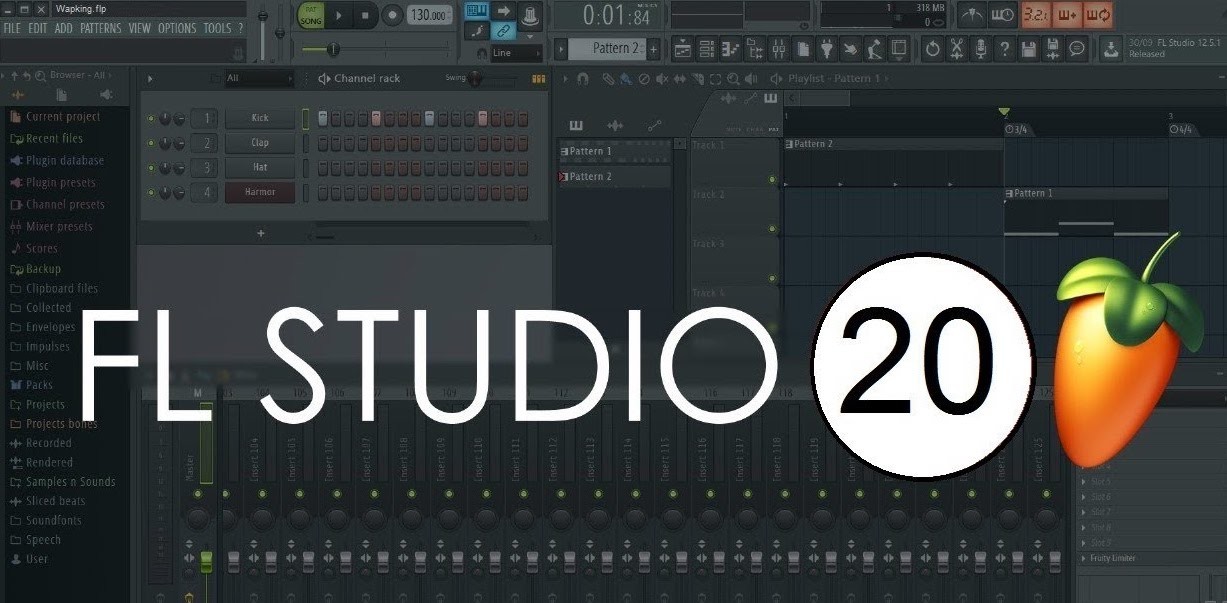
Fruity Loops (FL Studio) is a full-featured music production environment capable of multi-track audio recording, sequencing and mixing for the creation of professional quality music tracks. With VST & DX hosting, a flexible 99 insert-track mixer, advanced MIDI, DX and ReWire support no musical style will be beyond your reach. Songs or loops can be exported to .wav, .mp3, .ogg or .mid format.
What can FL Studio do?
Download: FL Studio 20.9.2 Build 2963 | 894.0 MB (Shareware)
Download: FL Studio 20.9.2 Build 2963 for Mac | 1.1 GB
View: FL Studio Homepage Get alerted to all of our Software updates on Twitter at @NeowinSoftware
with 13 comments
with 53 comments
with 0 comments
with 12 comments
Please enter your reason for reporting this comment.
windows 11
rtx 4090
windows 11 insider preview
microsoft weekly
windows update thinking
windows 10 2022 update
windows 11 promo
windows 11 insider preview
windows 11 2022 update
windows 11
windows update
twirl 87
© Since 2000 Neowin LLC. All trademarks mentioned are the property of their respective owners.

Kiriko in Overwatch 2
After a two-week lockout following the Overwatch 2 launch so that players could get used to her, Kiriko is now available in Competitive Play.
The support hero has the potential to have a big impact on ranked games. She’s lethal in the right hands and her Kitsune Rush Ultimate is absolutely devastating — as long as your team is coordinated enough. I’m looking forward to seeing what grandmaster players and Overwatch League pros can do with her in ranked play.
However, as one hero joins the Competitive fray, two others remain missing. Bastion (who is currently not available in the game at all) and Torbjörn were pulled from ranked modes on October 10 so that Team 4 could address some bugs with them. No timeline has been given for their return. Here’s hoping that Blizzard can get them back into action soon.
Still, if you’re a DPS player who hasn’t been tempted to flex over to support, now might be a good time to hop over and try out Kiriko, given her damage output and high skill ceiling.
For more news and updates on Overwatch 2 and other games, follow my Forbes blog! You’ll get a weekly round-up email that includes everything I publish. You’d be doing me a solid, too — it’s a great way to support me and my work at no cost. Apologies about the Heardle and Quordle posts if you don’t care about those.
If you have any questions about Overwatch 2 or anything else I write about, please feel free to get in touch on Twitter (oh, and follow me too. I’m nice, I swear).

MusicRadar is supported by its audience. When you purchase through links on our site, we may earn an affiliate commission. Here’s why you can trust us.
10th-generation model gets an all-screen design and a more powerful chip, but you can probably guess the catch…
With surprisingly little fanfare, Apple has unveiled the biggest update to its standard iPad – by which we mean the one without the word mini, Air or Pro in its name – in years.
This new 10th-generation model ditches the bezels in favour of all-screen design and a 10.9-inch Liquid Retina display, and gets a speed boost courtesy of the A14 Bionic chip. This is the same as the one used in the fourth-generation iPad Air and the iPhone 12 range.
The new chip promises a 20 percent increase in CPU power and a 10 percent graphics boost in comparison to the previous ninth-gen model, which has a 10.2-inch display and contains the A13 Bionic chip.
There are new cameras, too, with the front-facing lens being the first on any iPad model to sit along the landscape edge. This supports centre stage, the Apple technology that’s designed to automatically keep you in shot.
New dual microphones reinforce the impression that Apple wants to make this iPad a better option for video calling, as do the new landscape stereo speakers.
In terms of connectivity, this iPad gets a USB-C rather than a Lightning port, and supports Wi-FI 6 for faster connectivity. The cellular models are 5G, and the new iPad is compatible with a fresh Magic Keyboard Folio.
Add to this the fact that the ninth-gen iPad will remain on sale and this doesn’t really feel like a new entry-level Apple tablet at all. In fact, it appears to have more in common with the iPad Air, which starts at $599/£669, the biggest difference being that it doesn’t have that machine’s M1 processor.
As such, for music producers, there’s a risk that this new iPad falls between two stools – neither cheap enough to feel like an affordable way of accessing the many excellent DAW, synth and other apps that are on offer, or powerful enough to give you the very best Apple tablet experience currently available.
So, the ninth-gen model still looks a decent bet if you want to keep costs down, and if you want raw power – perhaps even a tablet that will be your primary music-making device – the AIr and Pro models are more attractive.
Speaking of the iPad Pro, Apple has also given this a refresh, replacing its M1 chip with an M2 processor. Prices start at $799/£899 for the 11-inch WiFi model and $1,099/£1,249 for the 12.9-inch WiFi model.
The new iPad (10th-generation) is available in a choice of four colours (blue, pink, silver and yellow) and, like the new iPad Pro, will be available from 26 October. Pre-orders are open now.
Find out more on the Apple (opens in new tab) website.
I’m the Group Content Manager for MusicRadar, specialising in all things tech. I previously spent eight years working on our sister magazine, Computer Music. I’ve been playing the piano, gigging in bands and failing to finish tracks at home for more than 30 years, 20 of which I’ve also spent writing about music technology.
Arturia MiniFreak: 5 things you need to know
Arturia’s new MiniFreak is a polyphonic hybrid synth that goes where the MicroFreak didn’t… and it comes with a free VST version
Celebrate the 30th birthday of Stone Temple Pilots’ Core album with this Dead & Bloated guitar lesson
Don’t miss the latest deals, news, reviews, features and tutorials
Thank you for signing up to Musicradar. You will receive a verification email shortly.
There was a problem. Please refresh the page and try again.
MusicRadar is part of Future plc, an international media group and leading digital publisher. Visit our corporate site (opens in new tab).
© Future Publishing Limited Quay House, The Ambury, Bath BA1 1UA. All rights reserved. England and Wales company registration number 2008885.

MusicRadar is supported by its audience. When you purchase through links on our site, we may earn an affiliate commission. Here’s why you can trust us.
A Major development in more ways than one
We already knew that GPU Audio’s graphics card processing technology could be used to power effects, but now the company has revealed that it’s working on a GPU-fuelled synth plugin known as Major.
Announced during a recent Pro Synth Network Show, Major is an eight-layer instrument that’s described as a cross between existing synth plugins Sylenth1 and Rapture. It gives you eight oscillators, a sub oscillator and eight samplers per layer, so the sound design potential is seemingly vast.
All layers can be mixed down to stereo, but the fact that you also have the option of sending each one to its own channel means that Major can be used as a ‘spatial’ synth, with sounds mixed all around you. Other highlights include FM oscillators, arpeggiators, effects and randomisation options.
Major is very much a work in progress at this stage, but GPU Audio says that it hopes to have something for its users to try by the end of the year. You can already beta test the company’s Modulation effects bundle, though; as things stand, this runs on Windows machines with NVIDIA GPUs only, but AMD support is coming soon, and GPU Audio says that it’s working closely with Apple and hopes to roll out macOS support in November.
If you want to be among the first to get access to Major, download the ‘beta suite’ Modulation bundle plugins and start submitting bug reports to help the developers with refinements. Find out more on the GPU Audio (opens in new tab) website.
I’m the Group Content Manager for MusicRadar, specialising in all things tech. I previously spent eight years working on our sister magazine, Computer Music. I’ve been playing the piano, gigging in bands and failing to finish tracks at home for more than 30 years, 20 of which I’ve also spent writing about music technology.
Why have Daft Punk just joined TikTok? Not for the reason you might have been hoping for
Best multi-effects pedals 2022: 10 of the best all-in-one guitar FX modellers
Learn 4 Megadeth chords – including Dave Mustaine’s signature spider!
Don’t miss the latest deals, news, reviews, features and tutorials
Thank you for signing up to Musicradar. You will receive a verification email shortly.
There was a problem. Please refresh the page and try again.
MusicRadar is part of Future plc, an international media group and leading digital publisher. Visit our corporate site (opens in new tab).
© Future Publishing Limited Quay House, The Ambury, Bath BA1 1UA. All rights reserved. England and Wales company registration number 2008885.

Get local news, offers & more…
CATCO will open its 2022-23 season Nov. 3-20 with a spirited and revolutionary love story celebrating Yiddish language and literature written by celebrated Pulitzer-Prize winning playwright Paula Vogel.
INDECENT was inspired by the events surrounding the controversial 1923 Broadway debut of Sholem Asch‘s God of Vengeance, and charts the history and path of artists who risked their careers and lives to perform it.
“Welcome to our new season and to this beautiful play that reminds us why art matters – and to share hope and joy. These are the kinds of stories that we need right now,” said Leda Hoffmann, CATCO’s artistic director and INDECENT director. “I am thrilled to share the work of these incredible actors and designers – many of whom are working at CATCO for the first time – with audiences.”
INDECENT, a play with music, was first produced in 2015 and opened on Broadway in 2017, ultimately winning three Tony Awards. The Los Angeles Times called the play “hauntingly captivating” while Newsday described it as a “gripping extraordinary play about a play.” TheaterMania said it’s “a must-see for anyone who cares about the important legacy of Yiddish theater, or of theater in general.”
Performing in the cast are:
• Benny Zelkowicz (Lemml), who is making his CATCO debut. An animator (The LEGO Movie, Robot Chicken); voice actor (Lunar Jim, BBC/CBC); and novelist (The Books of Ore Trilogy published by Disney-Hyperion), his award-winning, sand-animated film The ErlKing showed at Lincoln Center and Sundance. Recent roles include Plaza Suite (Jesse Kiplinger, Gallery Players), A Gentleman’s Guide to Love and Murder (Ensemble, Gallery), and Oliver! (Bill Sikes, Gallery). He is working on an animated documentary and has published two neuroscience papers.
Becky Keeshin (Chana), whose acting credits include CHICAGO: ShakesFest! (Chicago Shakespeare Theatre); Fiddler on the Roof (Lyric Opera of Chicago); Nunsense, Chicago Sings Sondheim, New Faces Sing Broadway NOW (Porchlight Music Theatre); A Midsummer Night’s Dream, Shrew’d (First Folio Theatre); 33 to Nothing, Killing Game (A Red Orchid Theatre); Junie B. Jones (Marriott Theatre); and A Little Night Music (Writers Theatre). Workshops include San Diego Repertory Theatre, 11th Hour Theatre Company and American Theater Company.
Ben Tracy (Avram), who is a former CATCO acting apprentice. His acting credits include Gross Indecency, Baskerville: A Sherlock Holmes Mystery, Cowgirls Don’t Ride Zebras and Anne of Green Gables at CATCO; Let the Right One In and A Christmas Carol at Hippodrome Theatre; Peter and the Starcatcher at West Virginia Public Theatre; and Charlotte’s Web at Old Log Theatre. Also a playwright, his short play, One Cow Mooing, was the Audience Choice Winner (2016) for the Theatre Oxford National Ten Minute Play Contest, and his full-length play, Disingenuous – a c*ck(and Bull) Story, was a Semifinalist (2021) for the Garry Marshall New Works Festival.
Cassandra Bissell (Halina), whose regional credits include Actors’ Theatre of Louisville, Arizona Theatre Company, Cleveland Playhouse, Court Theatre, Great Lakes Theater, Idaho Shakespeare Festival, Indiana Repertory, Milwaukee Repertory, Northern Stage, Northlight Theatre, People’s Light, and the Utah Shakespeare Festival. In Chicago, she has performed at Chicago Shakespeare Theater, First Folio, Rivendell Theatre and Steppenwolf. Small Professional Theatre credits include Company of Fools (Hailey, Idaho); Forward Theater (Madison, Wis.); freeFall Theatre (St. Petersburg, Fla.); Next Act Theatre and Renaissance Theaterworks (Milwaukee, Wis.); and Third Avenue Playworks (Sturgeon Bay, Wis.)
Ryan Bernstein (Mendel), who is making his CATCO debut. Acting credits include The Drowsy Chaperone (Robert), West Side Story (Riff), Newsies (Race), The Wedding Singer (Sammy), Young Frankenstein (Igor), The 25th Annual Putnam County Spelling Bee (Leaf Coneybear), and Bare: A Pop Opera (Jason).
Anne McEvoy (Vera), who is making her CATCO debut. She is a Cleveland-based actor and director, who has performed extensively over the years at The Beck Center, Cleveland Playhouse, Cleveland Public Theatre, Dobama, Ensemble Theatre, Karamu, None Too Fragile, Ohio Shakespeare Festival, and Seat of the Pants.
Phillip Wells (Otto), who is making his CATCO debut. He most recently appeared in Murder on the Orient Express (LTOB); The Sound of Music (Westerville Civic Theatre); and Present Laughter (Curtain Players). Other performances include Side Show, Ragtime, Guy & Dolls, Les Miserables, Rosenkrantz and Guildenstern Are Dead (Gallery Players); Hello, Dolly! (OU-Lancaster); Kiss Me, Kate (Northland Performing Arts Center); and The Importance of Being Earnest (Curtain Players).
Before joining CATCO in 2020, Hoffmann was the artistic director of Chicago-based Strawdog Theatre Company. She was a member of Milwaukee Rep’s artistic staff for seven years, working
in the education and literary departments and founding Milwaukee Rep’s community engagement department. Also in Milwaukee, as the artistic director of Luminous Theatre, Hoffmann produced and directed site-specific productions of Mr. Burns: A Post-Electric
Play and The Penelopiad. Her work as a director has been seen nationwide at Milwaukee Rep, Illinois Shakespeare Festival, Texas Shakespeare Festival, University of Miami, Door Shakespeare, Milwaukee Chamber Theatre, Renaissance Theaterworks, Jedlicka Performing Arts Center, Northbrook Theatre, The Alchemist Theatre, Max and Louie Productions, and Riverside Theater Iowa City. She has also been a teaching artist for more than 10 years, directing youth and teaching with Hartford Stage, Milwaukee Rep, Mudlark Theater, Northbrook Park District, and Skyline Studios. Her CATCO directing credits include Head Over Heels, Mr. Burns, a post- electric play, An Iliad, and A Columbus Christmas Carol.
INDECENT features music, which will be performed by musicians Jeff Rolland, clarinet; Mathew Kinnear, violin; and Marian Funk, accordion. They will perform under the direction of music director Allan Finkelstein. Other members of the production staff are: Asher Vickers, movement director; Jessica Morgan, intimacy and violence director; Melissa Lusher, dialect coach; Kirsten Upchurch, stage manager; Brooke Stiles, assistant stage manager; Dan Gray, set designer; Molly Tiede, lighting designer; Mary McMullen, costume designer; Doc Davis, sound designer; Lonelle Yoder, props designer; Rowan Winterwood, master electrician; Isaac Steinhour, technical director; and Matthew Sierra, assistant director.
Tickets for INDECENT are $47.50 each and can be purchased online. Thursday, Nov. 3, 7:30 p.m., and Friday, Nov. 4, 8 p.m., are preview performances; opening night is Saturday, Nov. 5, 8 p.m. Performances during the run are Thursdays, 7:30 p.m.; Fridays and Saturdays, 8 p.m.; and Sundays, 2 p.m. The play runs for 90 minutes with no intermissions and is recommended for patrons 12 years of age and older.
CATCO will present INDECENT in the Studio One Theatre, Riffe Center, 77 S. High St., fourth floor. This season patrons will be able enter the theatre from the High Street entrance, or through the parking garage.
Subscriptions for the 2022-23 season are currently on sale for $171 (four shows; the New Works Festival is an add-on of $25 per subscription). Flex tickets are available for $179 for a pack of four tickets. Visit https://www.catco.org/season-pass/ for details.
The theatre also offers a Pay-What-You-Want (PWYW) ticket option for every preview this season. PWYW tickets may be purchased in advance by telephone (614.469.0939), in-person at the CBUSArts ticket office, 55 E. State St., or at the venue starting two hours before showtime. CATCO also offers $20 student rush tickets to every performance. Tickets (one per student with
New this season is a COVID-19 policy occurring the first Sunday of each production, Nov. 6, 2 p.m., for INDECENT, which will require patrons to wear masks. The safety of our patrons, actors and staff remains our top priority. Our HVAC system has been professionally evaluated and meets federal guidelines to ensure a safe environment. Additionally, all performances will be open seating. a valid ID) are sold at the box office, 77 S. High St., Fourth Floor, up to two hours before curtain and are subject to availability.
.
The Robert Weiler Company is the season sponsor for CATCO’s Pay-What-You-Want program.
CATCO’s 38th season is made possible in part by state tax dollars allocated by the Ohio Legislature to the Ohio Arts Council (OAC), a state agency that funds and supports quality arts experiences to strengthen Ohio communities culturally, educationally, and economically.
CATCO also appreciates the support of the Ella Richey Wells and Theodore R. Magnuson Fund of The Columbus Foundation, assisting donors and others in strengthening our community for the benefit of all of its citizens, and the Greater Columbus Arts Council, supporting the city’s artists and arts organizations since 1973. Other supporters include The Shubert Foundation Inc., Nationwide Insurance Foundation, SUNNY95 94.7FM, WOSU public media and Columbusunderground.
CATCO is central Ohio’s leading professional Equity theatre company, providing exceptional productions and educational programs for adults and young people, in response to our community’s needs. We believe theatrical storytelling transforms people of all ages by immersing them into immediate, communal experiences. CATCO exists to harness the transformational power of theatre that engages with our current moment to inspire a community of empathy. For more information, visit catco.org.
Review: Jonathan Larson’s RENT Rocks at Garden Theater
Photos: First Look at Out of the Box Community Theatre’s ANOTHER DUMB GHOST STORY
Photos: First Look At Evolution Theatre Company’s I’LL TAKE ROMANCE, THE MUSICAL
Submit Nominations For The 2022 BroadwayWorld Columbus Awards Before October 31st
Most Popular
Review: THE WHO at Schottenstein Center
Dublin Coffman High School Drama Club to Present NEWSIES Starting This Month
Interview: Katie Jacoby And Keith Levenson of THE WHO at Schottenstein Center
Review: HAMILTON at Ohio Theatre
BroadwayWorld TV

News + special offers for Broadway Shows
Columbus SHOWS
Recommended for You
Get Columbus News
Follow Us
BWW Sister Sites
Apps

SHARE
EQ Bank has launched its first campaign under a new brand platform developed with The Hive. The new ‘Make Bank’ campaign positions EQ Bank firmly on the side of Canadians who are looking to maximise their potential and gain an edge with their money. The integrated national effort launches this week with video, OOH, digital media and influencer activations.
Throughout the campaign, EQ Bank champions the voices of Canadians – both their frustration and desires – that were gleaned through extensive discussions with consumers.
“It was important for us to not just reflect back the tension we heard when people described how they currently feel towards their existing bank” said “Dustin Rideout, CSO and partner at The Hive”. ‘Make Bank’ is about boldly declaring how EQ bank provides its customers a real solution to what they feel is missing.”
The campaign hero video and supporting :15s, stoke emotion through a shared belief that Canadians feel like they’re living in a world working that’s taking from them. The brand asks a simple yet provocative question – don’t we deserve a bank always making for us?
In OOH, digital and social, similar sentiments of frustration with the old banking system are paired with powerful portraits of Canadians who have moved on to EQ Bank.
“The headlines were all inspired by actual consumers voices that we heard in research” said Mitch Duesling, associate creative director at The Hive, “Canadians are known for being fairly apathetic when it comes to their banking – many staying with the same institutions for life – but when you dig a little deeper, we heard a growing sense of resentment and impatience at the way their money is being handled.” 
“Our purpose is to drive change in Canadian Banking to enrich people’s lives,” says Caleb Rubin, VP marketing at EQ Bank. “This next stage of our brand story is about boldly declaring that EQ Bank is the next-gen bank empowering Canadians with the tools to maximise their potential. There’s a reason more than 250,000 Canadians are already making bank with EQ Bank. We’re challenging what’s been done before because we know Canadians deserve better. And this is just the start.”
The first campaign under EQ Bank’s new platform will run through the fall, with future campaign waves currently in development.
Creative strategy and development were led by The Hive, with Epitaph managing media planning and buying.
Genres: Dialogue, People
Categories: Banking, Finance
Wed, 19 Oct 2022 08:30:57 GMT
v8.4.3

Arturia has announced the immediate availability of MiniFuse 4, a 4-in/4-out audio & MIDI interface which they say is packed with useful and accessible creative features. They tell us that, completing the MiniFuse family of easy-to-use interfaces, it offers expanded connectivity for musicians & producers looking to streamline their audio creation setups.
A spokesperson told us, “Capture crystal-clear recordings, refine with pro-grade creative software, and make music happen with a 4-in/4-out interface that ticks all the boxes: best-in-class audio, expanded connectivity, a 5-year warranty, and a world-class suite of software titles for modern music production.”
Here’s more details direct from Arturia…
Best-in-class audio quality
A 110dB dynamic range and industry-best equivalent input noise of -129dB means clear noise-free recording and studio-grade sound quality.
Supreme connectivity
Record with up to 4 inputs, connect other gear via MIDI & the USB hub, and customize your ins and outs including dual headphone connections.
Loopback channel
The stereo virtual Loopback channel lets you record audio from your computer alongside MiniFuse 4’s inputs for a seamless content creation.
Production-ready software bundle
All the premium software you need to make music your own way, from Ableton Live Lite, to Analog Lab Intro, to Native Instruments’ Guitar Rig 6 LE.
Pricing and Availability:
MiniFuse 4 is available for purchase priced at 219€ / $219.
More information:
New Stereo features and FX algos
And more
With Delta CEP A and friends
Hold on, there’s more
Copyright Sonic State Ltd © 1995-2022. All rights reserved.
Reproduction in whole or in part in any form or medium without express written permission from Sonic State is prohibited.
Hey there, we use Cookies to customize your experience on Sonicstate.com

Thank you for visiting nature.com. You are using a browser version with limited support for CSS. To obtain the best experience, we recommend you use a more up to date browser (or turn off compatibility mode in Internet Explorer). In the meantime, to ensure continued support, we are displaying the site without styles and JavaScript.
Advertisement
Communications Biology volume 5, Article number: 1104 (2022)
Metrics details
Passive listening to music, without sound production or evident movement, is long known to activate motor control regions. Nevertheless, the exact neuroanatomical correlates of the auditory-motor association and its underlying neural mechanisms have not been fully determined. Here, based on a NeuroSynth meta-analysis and three original fMRI paradigms of music perception, we show that the long-ignored pre-motor region, area 55b, an anatomically unique and functionally intriguing region, is a core hub of music perception. Moreover, results of a brain-behavior correlation analysis implicate neural entrainment as the underlying mechanism of area 55b’s contribution to music perception. In view of the current results and prior literature, area 55b is proposed as a keystone of sensorimotor integration, a fundamental brain machinery underlying simple to hierarchically complex behaviors. Refining the neuroanatomical and physiological understanding of sensorimotor integration is expected to have a major impact on various fields, from brain disorders to artificial general intelligence.
Motor brain regions have long been noticed to be activated during listening to music, even in the absence of any overt bodily movement1,2,3. Imaging studies over the last decades have confirmed repeatedly the involvement of motor control regions, particularly the premotor cortices, basal ganglia, and the cerebellum, in tasks related to rhythm perception4,5, but importantly, also in tasks evaluating non-rhythmic aspects of music, such as melody and harmony6,7. A controversy still exists as to whether entirely passive listening to music activates regions outside the auditory system. Several studies have argued that motor regions are recruited only when a cognitive task is performed concurrently (e.g., anticipation or discrimination)6,8; whereas a few others reported motor activations even during purely passive listening9,10, supporting the view that passive listening is never wholly passive11.
Why motor-related brain regions are so closely associated with music perception has long fascinated the music cognition community. Among the most cited theories proposed to account for this phenomenon are the Action Simulation for Auditory Prediction (ASAP) thesis by Aniruddh Patel and John Iversen5, the theory of sensorimotor control through the dorsal auditory stream by Josef Rauscheker12, and the Habitual Pragmatic Event Map framework by Ricarda Schubotz13. Common to all the above is the general understanding that, contrary to traditional views, perception is not a process of passive registration of external stimuli, but rather an active process of exploration and inference. Perception and action are considered tightly intertwined within a complex operation involving predictive mechanisms. Whenever perceiving a stimulus, simulation of the action which may have generated it helps improve perception, and whenever executing an action, the prediction of its sensory consequences optimizes its performance. This neuroscientific paradigm has been empowered over the last two decades through the predictive coding / active inference thesis advanced by Karl Friston and his colleagues14,15,16. In brief, predictive coding maintains that the brain is a hierarchical statistical machine that constantly and iteratively generates top-down predictions and concurrently strives to minimize bottom-up prediction errors. Within the active inference framework, perception-action coupling is critical for prediction error minimization, the presumed underlying computational principle of all brain activity. Music and speech are two domains that best exemplify how perception-action coupling and prediction at multiple levels enhance performance and promote the establishment of higher-level cognition.
Among the theories mentioned above, more specific to music is the ASAP hypothesis, which posits that while listening to music, neural substrates involved in simulation of body movements align their activity with the musical beat (the perceived periodic pulse underlying music), to facilitates auditory temporal prediction and perception5. Beat is a fundamental component of music in every human culture17 and the prediction of beat timings is thought to support music perception5. The ASAP suggests that existing timing-based cortical mechanisms in motor control regions are utilized for this predictive process5.
Within ASAP, the proposed underlying mechanism for the auditory-motor interaction is entrainment, the gradual adjustment and consequent synchronization of two or more independent oscillators18. Evidence for behavioral entrainment to the musical beat, i.e., gradual adjustment of an internal body rhythm to an external rhythm (here later referred to as ‘rhythmic entrainment’) has been reported at multiple levels including perceptual, attentional, autonomic physiological and motor18,19. Rhythmic entrainment is considered a robust and intuitive phenomenon central to music perception and production18. At the neurophysiological level, brain-to-stimulus neural entrainment has been proposed to mediate rhythmic entrainment20; yet, evidence for brain-to-brain auditory-to-motor entrainment is scarce. Consistent with the ASAP, it has been argued that brain-to-stimulus entrainment facilitates not only temporal or beat perception, but also sensory perception in general, possibly through fluctuations of attention21,22,23. Support for the association between entrainment and temporal prediction, implicated by the ASAP, can be found in the phenomenon termed negative asynchrony; when human subjects are asked to synchronize a motor action to the musical beat (usually finger tapping in sensorimotor synchronization tasks), they tend to anticipate it and act just prior to the beat, usually in the range of tens of milliseconds5,24.
Interestingly, although entrainment in its general sense is ubiquitous in nature, negative asynchrony during synchronization to paced stimuli appears relatively unique to humans25,26. This uniqueness has led to the proposal that rhythmic entrainment relies on auditory-motor pathways which have been evolved to serve vocal learning, the ability to learn to produce novel vocalizations based on auditory experience, imitation and feedback. Vocal learning is relatively rare in the animal kingdom, it has only been reported in a small group of species, including songbirds, parrots, hummingbirds, bats, cetaceans, pinnipeds, elephants, and humans25, and indeed, several of these species demonstrate relatively high rhythmic entrainment skills25. Notably, brain regions related to vocal learning, i.e., the dorsal auditory pathway and motor planning regions have been linked to rhythmic entrainment5,24, however, its exact neuroanatomical infrastructure has not been fully elucidated.
Among the motor-related regions implicated in music perception, a lateral frontal area stands out in its consistency. It has been identified as a premotor1,9,27,28, primary motor1,29, or motor-premotor6 region. Here we first suggest it nicely fits area 55b, a forgotten cortical region, which despite being reported by Hopf in 1956, only recently has gained recognition through the Human Connectome Project’s multi-modal cortical parcellation, HCP-MMP130. Located at the posterior end of the middle frontal gyrus, area 55b is bounded by the primary motor cortex posteriorly, the frontal eye field superiorly, the premotor eye field and ventral premotor cortex inferiorly and the prefrontal cortex anteriorly. The differentiation of area 55b from its neighbors mostly relied on relatively low intracortical myelin content, contrasted with high and moderate myelination of the primary motor cortex and frontal/premotor eye fields, respectively30. Beyond assisting in anatomical delineation, sparse myelination may point to higher functioning of area 55b than expected from its pre-motoric location31.
Glasser and his colleagues argued that area 55b (particularly on the left hemisphere) is involved in language processing, based upon its activation during a functional magnetic resonance imaging (fMRI) language task (listening to a story vs. baseline) and its functional connectivity with the left inferior frontal gyrus (Broca’s area)30. Since then, a few additional studies have linked area 55b to language, mainly to language production32,33,34. Interestingly, area 55b has also been associated with negative motor responses35, which though controversial, have been implicated in inhibition of self-movement during action observation, and hence, may colocalize with mirror neurons35,36. In summary, albeit recently highlighted as a potential key cortical region, the exact function of area 55b is still to be defined.
The current study has aimed to: (1) tie area 55b, a motor-related region, to music processing in general; (2) substantiate the involvement of area 55b in music perception; and (3) offer a neural mechanism to underlie area 55b’s contribution to music perception. We hypothesized that if area 55b, a premotor region, is involved in passive music perception, it may have a role in auditory-motor integration, and that entrainment may serve as the underlying mechanism for this integration. For aim 1, we used a meta-analysis of music imaging studies; for aim 2, three in-house fMRI paradigms of rhythm, melody, and harmony perception were applied; and for aim 3, results of an accompanying behavioral study were subjected to inter-individual brain-behavior analysis.
Our results indicate that area 55b, particularly on the right hemisphere, is a key hub of music perception. This small, well-defined, so-far overlooked brain region emerged as the most strongly activated cortical area outside the auditory region in various tasks of music perception. Furthermore, activity within the right area 55b was shown to correlate, in a highly selective manner, with indices of rhythmic entrainment. Overall, the current findings support a role for area 55b in sensorimotor integration possibly through neural entrainment.
To generally link area 55b with music processing, we first used the NeuroSynth online database (https://neurosynth.org/37) to meta-analyze 163 neuroimaging studies mentioning the term music. As expected from the meta-analytic procedure used by NeuroSynth (see “Methods”), the included neuroimaging studies dealt with different aspects of music: perception (107 studies), production (8), intervention/training (7), imagery (4), and various combinations of the above (14). The remaining 23 studies did not focus on music processing according to our screening (Supplementary Data 1). The thresholded meta-analytic activation map downloaded from neurosynth.org was first overlaid on a T1 Montreal Neurological Institute (MNI) template. As shown in Fig. 1a, a prominent lateral frontal activation was noticed, consistent with previous literature and the hypotheses of the current study. This activation was more pronounced on the right hemisphere. The meta-analytic map was then projected on a volumetric version of the HCP-MMP1 parcellation. As displayed in Fig. 1b–d, an overlap was observed between the right lateral frontal activation of the meta-analytic map and the right area 55b of the HCP-MMP1. The activation within the right area 55b was the most robust among cerebral activation foci outside the auditory (transverse and superior temporal/insular/opercular) region.
a The NeuroSynth Music meta-analysis map (163 imaging studies, false discovery rate (FDR)-corrected, p < 0.01) overlaid on a T1 brain template. The yellow crosshair indicates the peak cerebral activation outside the auditory region (MNI coordinates: 56, 0, 46). b The NeuroSynth Music meta-analysis map overlaid on a volumetric version of the HCP-MMP1 (MNI space, ICBM 152 non-linear 6th generation). The largest cerebral extra-auditory activation focus of the meta-analysis (white cluster indicated by the crosshair) overlaps right area 55b (R55b, blue parcel). c 3D view of the volumetric version of the HCP-MMP1 parcellation. The yellow crosshair marks the voxel of maximal extra-auditory activation included within the R55b. d HCP-MMP1 parcellation of the right hemisphere displayed on inflated surface, as provided by Glasser et al.30 (downloaded from BALSA, https://balsa.wustl.edu/sceneFile/Zvk4).
Since only 65% of the studies included in the NeuroSynth meta-analysis focused on music perception, and some of the remaining might have directly activated motor brain regions (music production studies), to establish the role of area 55b in music perception, we introduce results of a recent fMRI study from our laboratory, designed to explore the brain underpinnings of implicit prediction accompanying music listening. Musical excerpts manipulating rhythmic, melodic, and harmonic expectations were presented to 71 healthy non-musicians (mean age: 26.8 years, 41 female) in three separate block-design paradigms. Each paradigm was composed of 16 experimental blocks (block duration: 15–18 s) of either rhythmic phrases (Rhythm paradigm), instrumental melodies (Melody paradigm), or harmonic progressions (Harmony paradigm) at one of four levels of musical complexity (i.e., prediction violation). Rhythmic complexity was defined based on syncopation (violation of metric expectations), melodic complexity was determined through computation of pitch information content and harmonic complexity relied on chord functions in tonal music (see “Methods” and Supplementary Figs. 1–3). Subjects were instructed to lie still, fixate on a central cross and listen to the musical excerpts without performing any particular task. For the purpose of the current study, statistical parametric maps of each paradigm were computed for the contrast of all conditions versus baseline (i.e., across complexity levels), to yield maximal activations associated with musical perception. The statistical parametric maps were overlaid on a volumetric version of the HCP-MMP1 and mean activity per parcel was calculated for each map. Figure 2 demonstrates the top 10% most strongly activated regions among the 360 parcels of the HCP-MMP1 for each activity map. Ranking the 360 regions based on mean activity per parcel, area 55b on the right hemisphere (R55b) was found at location 24, 32, and 29 in the Rhythm, Melody, and Harmony paradigms, respectively, secondary only to peri-auditory regions. The only additional extra-auditory region among the 36 most activated parcels was the right frontal eye field (RFEF), which was less prominently activated relative to its neighbor, the R55b (Rhythm paradigm, location 32; Melody paradigm, not included; Harmony paradigm, location 35). Summarizing, during passive listening to music the R55b was found to be the most strongly activated cerebral parcel outside the auditory area, irrespective of the aspect of music being presented (i.e., rhythm, melody, or harmony).
Statistical parametric maps (family-wise error (FWE)-corrected, p < 0.05) of three musical paradigms involving passive listening to either rhythmic phrases (Rhythm paradigm, n = 67), instrumental melodies (Melody paradigm, n = 66) or harmonic progressions (Harmony paradigm, n = 65) were overlaid on a volumetric version of the HCP-MMP1 parcellation (MNI space, ICBM 152 2009c non-linear asymmetric). Mean activity per parcel was calculated for each map. The top 10% most strongly activated regions were colored in each parcellation and are listed below the 3D rendering of the right hemisphere, right to the axial, coronal, and sagittal slices at the level of R55b (blue parcel). R55b emerged as the most robust cerebral parcel outside the auditory region. MNI coordinates of the peak cerebral extra-auditory activation: Rhythm paradigm: 52, −2, 52; Melody paradigm: 52, −2, 50; Harmony paradigm: 54, 0, 54. The nearby right frontal eye field (RFEF, red parcel) appeared in two of the three paradigms, its intensity level was lower relative to R55b. See Supplementary Figs. 5–7 for coronal slices covering all 36 regions and Supplementary Data 2 for full names of HCP-MMP1 regions.
Among the 71 volunteers who participated in the fMRI study described above, 59 subjects (mean age: 26.3 years, 35 female) also underwent a behavioral assessment. In most cases, the behavioral session took place a few days prior to the imaging session, and included, among others, a sensorimotor synchronization task. While listening to short musical excerpts adopted from the Harvard Beat Assessment Test38, participants were instructed to tap their right index finger in synchrony with the beat. Synchronization accuracy and consistency measures were calculated using linear and circular methods38,39. For the evaluation of synchronization accuracy, we used the absolute (not signed) linear distance in time between subject’s taps and the musical beat (absolute asynchrony (AA))39. The lower the AA, the more accurate was the subject’s performance. For the assessment of synchronization consistency, we used two circular metrics: (1) length of resultant vector (LRV), which represents the distribution of the relative phase angles and ranges from 0 to 1, where 1 denotes perfect concordance of angles (LRV values were submitted to logit transformation to reduce data skewness); and (2) entropy of relative-phase distribution (ENT), which like LRV represents circular spread and ranges from 0 to 1, yet, it uses Shannon entropy, to allow differentiation of random phase distribution from the mixture of in-phase and anti-phase locking38.
To explore whether these measures of rhythmic entrainment are related to brain activity within the R55b, we first computed a correlation matrix between the behavioral (three indices of rhythmic entrainment) and brain (strength of activation within the R55b during each of the four conditions (complexity levels) of the three musical paradigms) variables. As shown in Fig. 3, a positive correlation was found between performance on the sensorimotor synchronization task and activity within the R55b. Overall, the association between indices of rhythmic entrainment and R55b activity was most significant for the Rhythm paradigm. Variation was noted among the four experimental conditions of each paradigm, such that maximum correlation was found for the third condition of the Rhythm paradigm (moderately syncopated sequences), second condition of the Melody paradigm (relatively simple melodic lines extracted from Mozart’s string quartets) and the first condition of the Harmony paradigm (harmonic progressions ending with regular cadence) (Fig. 3). Notably, the pattern of variation in brain-behavior correlation among the experimental conditions overlapped with the variation in emotional ratings provided by subjects following scanning. That is, the experimental conditions showing maximum brain-behavior correlation were also those associated with maximal pleasure (Supplementary Table 1 and Supplementary Fig. 4).
Spearman correlation analysis showed positive correlation between accuracy and consistency measures of rhythmic entrainment and activity within the R55b while listening to rhythmic patterns (Rhythm paradigm, n = 56), short melodies (Melody paradigm, n = 58) and harmonic sequences (Harmony paradigm, n = 53). The correlation was most significant for activity values derived from the Rhythm paradigm, and in particular, its third condition (moderately complex rhythms). Less significant results were documented for activity during the second condition of the Melody paradigm (relatively simple Mozart’s melodic lines) and the first condition of the Harmony paradigm (regular cadence). For the assessment of synchronization accuracy, we used the absolute values of negative asynchrony (absolute asynchrony (AA)). Lower AA scores indicate higher accuracy. For the assessment of synchronization consistency, we used the circular metrics Length of Resultant Vector (following logit transformation (LRV-logit)) and entropy of relative-phase distribution (ENT). I-IV, complexity levels 1–4, T, Tonic (regular cadence), VI, sixth degree (less regular cadence), N, Neapolitan (irregular cadence), S, scrambled version of the chord progression ending on the tonic. The color bar indicates the Spearman’s correlation coefficient, ranging from −1 (blue, strong negative correlation) to +1 (red, strong positive correlation). *p < 0.05, **p < 0.01, ***p < 0.001, ****p < 0.0001.
To control for potential confounders in the relationship between activity within the R55b and synchronization to the beat, multiple linear regression analyses were performed, using the metrics of rhythmic entrainment as dependent variables, and R55b activity, age, gender, and musical education as independent variables (Table 1). This analysis was conducted for each paradigm separately; mean contrast estimate values were extracted from the R55b for the condition showing maximum brain-behavior correlation in each paradigm. Most significant results were documented for the third condition of the rhythm paradigm (Table 1 and Fig. 4); activity within the R55b while listening to moderately syncopated sequences significantly predicted the performance on a rhythmic entrainment task (AA: β = −15.030, p < 0.0003, LRV-logit: β = 0.518, p < 0.00009, ENT: β = 0.046, p < 0.0001). To rule out the possibility that the above results were affected by computational inaccuracies related to the conversion of the HCP-MMP1 parcellation from surface- to volume-based coordination system, we repeated the multiple linear regression analysis using brain data derived from a 6 mm sphere centered on the extra-auditory peak cerebral activation during the Rhythm paradigm (instead of the R55b parcel). Similar results were obtained (AA: β = −13.926, p < 0.001, LRV-logit: β = 0.428, p < 0.001, ENT: β = 0.039, p < 0.001), as detailed in Supplementary Table 2.
Significant association was documented between indices of rhythmic entrainment accuracy (absolute asynchrony) and consistency (length of resultant vector–logit) and R55b activity during the Rhythm paradigm (third complexity level vs. baseline), while controlling for age, gender and musical education (n = 56). The solid blue line is the regression line; the gray bands represent the standard error of the regression line.
Last, a bidirectional stepwise multiple linear regression was used to examine whether activity in other brain regions significantly activated during passive listening to rhythmic patterns is also associated with indices of rhythmic entrainment. For this analysis, we used the 36 HCP-MMP1 parcels, which showed maximal activation during the Rhythm paradigm (Fig. 2). Values of mean activity within each of the 36 regions (during the third condition of the Rhythm paradigm) served as independent variables, as were age, gender, and musical education. The dependent variables for this analysis were, as before, the three metrics of rhythmic entrainment (AA, LRV-logit, and ENT). The results showed that the optimized model in all three analyses included the R55b activity as the most significant explanatory variable (Tables 2 and 3). In the case of AA, activity within no region other than the R55b was entered to the model. In the case of LRV-logit and ENT, activity within the left perisylvian language area (PSL) and the left frontal operculum 1 region (FOP1) were also included; however, activity within the R55b explained a significant amount of variance in the dependent variables, well beyond that accounted for by the two additional regions. Moreover, FOP1 activity was negatively correlated with the indices of rhythmic entrainment (Tables 2 and 3). In sum, among the 36 brain regions significantly activated by rhythmic sequences, the R55b best accounted for variance in measures of rhythmic entrainment.
In this study, we show that the reintroduced premotor region, named area 55b, particularly on the right hemisphere, is a central hub of music perception. This conclusion, drawn from results of a NeuroSynth meta-analysis and three in-house fMRI paradigms, of rhythmic, melodic, and harmonic perception, endorses the view that passive music listening is never entirely passive, but more importantly, speaks to the involvement of a highly restricted premotor region in this intriguing phenomenon. Furthermore, based on combined behavioral and fMRI data, we propose that area 55b is involved in rhythmic entrainment. While awaiting further behavioral and neurophysiological support, the above findings indirectly suggest that neural entrainment may underlie area 55b’s contribution to music perception. In agreement with the ASAP hypothesis which links motor activity with temporal prediction, R55b activation and its association with rhythmic entrainment were more pronounced when listening to rhythms, compared to melodies and harmonic progressions. Nonetheless, the predictive nature of entrainment may implicate its relevance not only to temporal- but also to pitch-related musical elements, as well as to language and other behaviors leaning on complex hierarchical sequences40. For now, however, it cannot be ruled out that area 55b activation during listening to melodies and harmonic progressions (in this and other studies) is related to their inevitably associated rhythmic structure. In what follows, we will present evidence linking music perception and auditory-motor integration with neural entrainment, then discuss how area 55b fits into previous anatomical/functional accounts of sensorimotor association, i.e., the dorsal stream and the mirror neuron system models.
First, it should be noted that the emergence of area 55b as the most robust cortical activation outside the auditory region during passive listening to music is in line with several prior meta-analyses of music perception1,29,41,42,43. These studies reported prominent activations in regions that have been identified anatomically as the right precentral or middle frontal gyri, and with our new perspective seem to overlap with the R55b. The emergence of the neighboring RFEF in some of our analyses is not unexpected, considering the high inter-individual anatomical variability described for area 55b30. As participants were instructed to fixate on a central cross throughout the experiment this activation is probably not related to eye movements. The right lateralization of area 55b activation observed in our results is consistent with part of the literature on hemispheric dominance of music perception in non-musicians44,45. The discussion on music lateralization, and its relations with language lateralization, is complex and extends beyond the scope of the current study; however, it is interesting to mention that speech envelope tracking, the driving of auditory cortex activity by slow amplitude fluctuations of the speech signal, has been described as right lateralized46.
An old question is whether neural tracking of speech and music envelopes can be considered a process of entrainment. To meet the definition of entrainment, a pre-existing internal oscillator should gradually synchronize to an external rhythm18. So far, speech tracking has not been proven to fulfill these criteria; it cannot be ruled out that the rhythmic auditory response to speech reflects mere superposition of evoked responses rather than entrainment21. Conversely, the music perception literature accumulated more evidence to support synchronization of intrinsic neural oscillations to external rhythms. Several studies have documented neural oscillations at the pulse frequency, even when subjects listened to complex, highly syncopated rhythms, which did not contain the pulse frequency itself20,47,48. These studies have also showed induction of activity at harmonics and subharmonics of the beat frequency, which were absent from the stimulus20,47. Moreover, mere imagery of metric structures (i.e., march and waltz) was shown to induce subharmonics of the beat frequency49.
The association of neural oscillations with meter imagery opens another long-standing discussion, of whether or to what extent the automatic, bottom-up process of neural entrainment to the beat is affected by top-down processes21. One prevailing opinion poses that neural entrainment is enhanced by selective attention21,50,51,52. The well-supported association between attention and entrainment is in agreement with the correspondence we found between enjoyment (probably associated with increased attention) and brain (activity)–behavior (rhythmic entrainment) correlation, across different levels of musical complexity. Another view is that motor cortices are involved in top-down control of auditory cortex entrainment to external rhythms53. Morillon and his colleagues54 proposed a mechanism of auditory active sensing, where rhythmic motor activity affects auditory perception through a top-down mechanism involving attention and temporal prediction, a view highly reminiscent of the active inference scheme proposed by Karl Friston16.
Much of the discussion on neural entrainment to external auditory stimuli has been focused on the auditory cortex; what do we know about entrainment of motor-related regions or the coherence between auditory and motor oscillators in response to auditory stimulus? Modulation of neural oscillations during passive listening to auditory rhythms has been documented outside the auditory region, particularly in motor-related areas, including the precentral gyrus, medial frontal gyrus and the cerebellum55. Interestingly, low-frequency oscillations in the premotor region have been reported during exposure to non-musical rhythmic auditory stimulus (shuffled speech)56. Similarly, speech tracking (particularly at the phrasal timescale) has been documented in the premotor cortex57. As for the interaction between auditory and motor regions, generally speaking, brain-to-brain entrainment has been suggested to underpin communication between different sensory modalities and between the sensory and motor systems20,50,58. Moreover, phase synchrony between brain oscillators has been advocated to facilitate information transfer and integration59,60. However, while oscillations in the delta (1–4 Hz) and beta (14–30 Hz) bands have been implicated in communication between motor and auditory regions55,61,62, we are not aware of direct evidence establishing auditory-to-motor neural entrainment at the cortical level.
A related open question is to what extent subcortical, rather than cortical, structures are involved in auditory-motor integration. This question is relevant to an additional interesting result of the current study, namely the relative selectivity of the brain (activity)-behavior (rhythmic entrainment) association to the R55b. A stepwise regression indicated that among the 36 parcels most activated during passive listening to rhythmic patterns, activity in the R55b accounted for much of the variance in the capacity to synchronize to the beat. The importance of this finding is twofold; first, it allows localizing rhythmic entrainment, which has already been linked to the premotor cortex56,57,63, to a highly restricted area within this strip. Second, it emphasizes the uniqueness of area 55b among cortical regions activated by music. Although much less prominently, the left perisylvian language area (PSL) also showed positive correlation with measures of entrainment consistency. PSL is located at the apex of the posterior Sylvian fissure within the supramarginal gyrus (SMG). Remarkably, Glasser and his colleagues in their seminal work introducing the HCP-MMP1 reported functional connectivity between the PSL and area 55b, more on the left hemisphere, and claimed for its association with a language network30. Further, PSL appears to overlap, at least partially, with area Spt (Sylvian-parietal-temporal region)64, which has previously been linked to auditory-motor integration10. Why did other regions fail to emerge, or were even negatively correlated with rhythmic entrainment, as in the case of the frontal operculum 1 (FOP1), and whether this finding implies involvement of subcortical structures in auditory-motor integration, is left for future investigation.
Returning to area 55b, it is important to notice that its location is in line with previous theories of auditory-motor integration and prediction. Located relatively dorsally in the premotor strip65, area 55b may belong to the dorsal auditory stream, which has been advocated to mediate auditory-motor integration and prediction by Rauschecker12 and others66, and was also implicated in rhythmic entrainment within the ASAP thesis5. Interestingly, the Spt region (which partly overlap with area PSL) has also been linked to the dorsal stream of auditory processing and language10,66. The Habitual Pragmatic Event Map framework by Ricarda Schubotz posits that precompiled action templates stored in the premotor cortex are central to prediction of perceptual (including musical) events, and that the exact portion of the premotor strip involved depends on the type of the related action13. The exact localization for rhythmic events has not been fully characterized. In any case, the premotor cortex has been implicated by both Rauschecker67 and Schubotz68 in predicting the structure of acoustic sequences, which are the backbone of music and speech/language.
As the mirror neuron system has also been linked to sensorimotor association69,70, a question is raised whether area 55b belongs to the mirror neuron network (for review on mirror neurons see Rizzolatti et al.71). Albeit first identified in the ventral premotor cortex of the macaque monkey (area F5)71, mirror neurons have later been documented also in the dorsal premotor region (area F2vr and F7) and other cortices (parietal and temporal) of the macaque brain72,73,74. Neuroanatomical localization of mirror neurons in the human brain is still an area of controversy, nevertheless, both ventral and dorsal premotor cortices have been proposed as central nodes of the human mirror neuron network75,76,77. Support for mirror properties of area 55b can be found in fMRI studies of sensorimotor synchronization reporting coordinates similar to those of area 55b (bilaterally) while synchronizing via finger tapping to the musical beat9,78,79,80,81,82,83. Notably, Chen et al.9 have directed attention to the border between the dorsal and ventral premotor cortices (mid-premotor cortex), which emerged as a core region of both passive perception and sensorimotor synchronization. The reported coordinates of the mid-premotor cortex are highly concordant with area 55b.
Due to the emerging relevance of area 55b to music and language, it is intriguing to explore whether it is more specifically involved in an auditory-vocal mirror system, perhaps even represent a human homolog of the avian high vocal center, the highest nucleus among birdsong nuclei identified so far, which has been proposed to mediate complex vocal learning through mirroring, sequencing and rhythmic bursting84,85, and has been related to the mammalian premotor cortex84. Though audio-vocal mirroring in humans has been linked traditionally to Broca’s area84, as far as we can tell, regions at the vicinity of area 55b appear to have emerged in previous studies directed at activating an auditory mirror circuit86,87. Other studies have associated nearby locations with a pre(motor) vocal network6,88. Unfortunately, knowledge about the cortical control of the complex neuromuscular apparatus coordinating human laryngeal vocalizations is limited. At least two distinct loci have been reported within the pre(motor) region, the ventral and the dorsal laryngeal motor cortices88,89,90. Albeit plausible, whether the dorsal laryngeal motor cortex matches area 55b is still to be determined. If confirmed it will provide an anatomical proof for the presumptive linkage between vocal functioning and rhythmic entrainment and may reconcile the old controversy of the origin of music, vocalization vs. rhythmic percussion. Here it is also interesting to mention, that the Spt, probably a part of the PSL, which emerged in our analysis as weakly associated with measures of rhythmic entrainment, has been advocated to take part in a sensorimotor integration circuit dedicated for the vocal tract66. The current study has focused on the role of the R55b in music perception, to what extent this region is also involved in other brain processes, including music/speech production, speech perception, and visual perception of music and language remains to be determined by further research.
To conclude, building on the current observations and prior theories, area 55b is advised as an epicenter for perception-action coupling within a nexus of auditory-motor loops mediating sensorimotor integration and implicit prediction3,91,92. We propose that area 55b in humans may tie up advanced mechanisms of hierarchical sensorimotor integration via neural entrainment with mechanisms of complex vocal control, thus enabling the peculiar evolution of music and speech, which differentiates us from non-human primates, on the one hand, and from avian vocal learners, on the other hand. Future definition of area 55b’s connections to other brain regions and the functions these connections harbor would probably contribute to better understanding of sensorimotor integration, a fundamental brain process which on the one side of the spectrum, characterizes most elementary behaviors, such as goal-directed movement of even the simplest organism, and on the other side, set the stage for human unique complex behaviors, probably representing a late evolutionary form of hierarchical cognition. Beyond theoretical interest, improved understanding of these cardinal processes and their anatomical infrastructure will likely promote interventions for relevant clinical conditions, such as movement disorders (e.g., Parkinson’s disease), developmental learning disabilities (e.g., developmental dyslexia), and social cognition impairment (e.g., autism spectrum disorders). Furthermore, it may accelerate human brain-inspired approaches in artificial intelligence and robotics, which so far have been advanced through reciprocal interactions with the neuroscientific understanding of implicit learning and prediction93.
In total, 71 right-handed healthy volunteers participated in the study (median age, 25.0 years (range, 18–44); female, 41; median general education, 14 years (range, 12–18 years), median musical education, 2.0 years (range, 0–12 years)). Fifty-nine out of the 71 subjects (median age, 25.0 years (range, 19–42); female, 35; median general education, 14 years (range, 12–18 years), median musical education, 2.0 years (range, 0–12 years)) participated in both the behavioral and imaging sessions. All subjects had normal or corrected-to-normal vision, reported normal hearing, had no history of neurological or psychiatric disorder, no history of substance/alcohol abuse, and no structural brain abnormality. All subjects were eligible for MRI scanning and did not use medications that may interfere with the study. Applicants with professional background in music or dance were excluded. Past musical experience was determined through a musical experience questionnaire. To ensure normal music perception, a brief version of the Profile of Music Perception Skills (PROMS, https://www.uibk.ac.at/psychologie/fachbereiche/pdd/personality_assessment/proms/) was administered. The study was conducted according to the guidelines of the Declaration of Helsinki and approved by the Institutional Review Board of Tel Aviv Sourasky Medical Center (committee reference number 0017-18-TLV). Informed consent was obtained from all subjects involved in the study.
Rhythmic entrainment skills were evaluated outside the magnet through a sensorimotor synchronization task adopted from Fujii and Schlaug38. The music tapping test of the Harvard Beat Assessment Test38 is composed of three musical excerpts from the Beat Alignment Test94: Hurts So Good by J. Mellencamp (rock style, duration = 14 s), Tuxedo Junction by Glenn Miller (jazz style, duration = 16 s), and A Chorus Line by Boston Pops (pop-orchestral style, duration = 14 s). Each tune was presented at three different tempi, 100, 120, and 140 beats per minute. A 1000 Hz pure tone of 200 ms duration preceded each musical excerpt to signal the beginning of the trial. Materials were downloaded from https://www.ncbi.nlm.nih.gov/pmc/articles/PMC3840802/ (GUID: D30B541A-F157-4B50-AFB2-ECBFD18500D1).
Out of 50 drum-breaks introduced by Witek et al.95, 14 excerpts were chosen to fit one of four levels of rhythmic complexity in the form of syncopation: (I) isochronous rhythm, (II) mildly syncopated, (III) moderately syncopated or (IV) highly syncopated rhythm. Two isochronous drum-breaks were composed by the authors to conform to level I. Each drum-break consisted of a two-bar phrase in 4/4 time looped four times at 110 beats per minute to yield a 17.45 s excerpt. Syncopation level was determined by two indices adopted from the literature: (1) The C-score offered by Povel and Essens96, and (2) A syncopation index suggested by Fitch and Rosenfeld97. Excerpts were generated using Studio drummer of the Native Instruments Komplete, in Cubase Pro 9.5 (Steinberg Media Technologies GmbH). The paradigm consisted of four conditions (four levels of rhythmic complexity), four blocks per condition, block duration 18 s, inter-block interval 9 s. The first 30 s (including an additional 9 s drum-break) were discarded from analysis. Total task time was 8 min and 9 s (Supplementary Fig. 1).
Eight 15 s excerpts were extracted from Mozart quartets available in KernScores (http://humdrum.ccarh.org/). Excerpts were drawn from the highest melodic line (mostly first violin, flute/oboe one excerpt each) to fit into one of two melodic complexity levels, based on pitch unexpectedness (information content) determined by the algorithm IDyOM (Information Dynamics of Music, http://mtpearce.github.io/idyom/98,99). Other musical features, such as pitch range, mode, meter, tempo, density, and rhythm complexity were kept as invariable as possible. The IDyOM model predicted unexpectedness of subsequent notes based on chromatic pitch, chromatic pitch interval, chromatic interval from tonic and contour, using both short-term and long-term models. The long-term model was trained on nine datasets of western music (Bach chorales and several folk song cohorts available in KernScores). Eight additional melodies were generated using the above Mozart’s excerpts: four by reducing the lower complexity excerpts into single pitch (tonic) tunes, and additional four, by randomizing notes of the higher complexity excerpts, using the shuffle pitches function in Sibelius software (Version 7.5). All excerpts were recorded with piano timbre (The Grandeur, Native Instruments Komplete) using Cubase Pro 9.5 (Steinberg Media Technologies GmbH). The paradigm consisted of four conditions (four levels of melodic complexity), four blocks per condition, block duration 15 s, inter-block interval 9 s. The first 36 s (including an additional 15 s melody) were discarded from analysis. Total task time was 7 min and 27 s (Supplementary Fig. 2).
Eight-chord descending-fifths sequences were constructed following classical paradigms of musical prediction. Progressions were ended on either the tonic chord (regular cadence), the sixth-degree chord (less regular (deceptive) cadence) or the Neapolitan chord (irregular cadence). The Neapolitan chord is a major chord built on the lowered 2nd scale degree, not a dissonance by itself, but as a cadence sounds completely unexpected100. A scrambled version of the chord progression ending on the tonic was also included. Duration of chords 1–7 in each sequence was 600 ms, while the final chord lasted 1200 ms. Sequences were recorded with piano timbre (The Grandeur, Native Instruments Komplete) using Cubase Pro 9.5 (Steinberg Media Technologies GmbH). Each sequence was transposed into 12 major keys. The paradigm consisted of four conditions (Tonic, Sixth degree, Neapolitan, Scrambled), four blocks per condition, block duration 18 s, inter-block interval 9 s. The first 30 s (including a 12 s block of chord sequences) were discarded from analysis. Total task time was 8 min and 9 s (Supplementary Fig. 3).
The combined behavioral and neuroimaging study was conducted at Sagol Brain Institute, Tel Aviv Sourasky Medical Center. On the first session, participants completed a battery of cognitive tasks outside the magnet, including a sensorimotor synchronization task (the music tapping test) drawn from the Harvard Beat Assessment Test38. Stimulus presentation and response recording were controlled by Presentation software version 20.1 (Neurobehavioral Systems, Albany, USA). Auditory stimuli were delivered over headphones (Sony MDR-7506). Participants were instructed to tap the quarter-note beat underlying the musical excerpts (demonstration by the experimenter and a few practice trials preceded actual task performance). The nine musical excerpts were repeated twice for each participant (the order of stimuli presentation was randomized). Exact timings of finger taps were captured by the TapArduino device101. Participants used the index finger of their dominant hand to tap on a force-sensitive resistor pad connected to the Arduino. No auditory feedback was provided during tapping. Tap timings registered by Presentation software were subjected to further analysis as detailed below. On the second session, participants underwent fMRI scanning. They were instructed to lie as still as possible (refrain from any movement) and listen carefully to the presented auditory stimuli while fixating on a central cross (projected on a screen at the back of the bore and viewed through a mirror attached to the top of the head coil). They were not informed about the nature of the musical stimuli. Stimuli were presented in a block design using Presentation software version 20.1 (Neurobehavioral Systems, Albany, USA). At the end of the scanning session, subjects listened again to all musical stimuli and reported their emotional response to each musical block through five-point Likert scales. In the majority of cases, participants completed all parts of the study within one week. In any case, time delay between sessions did not exceed 5 weeks. Sixteen out of the 59 (27%) subjects who participated in both sessions, underwent the fMRI scanning before the behavioral session.
Scanning was performed on a 3.0 Tesla MAGNETOM Prisma MRI scanner (Siemens, Munich, Germany) using 20-channel head coil. The scanning session included a Magnetization Prepared RApid Gradient Echo (MP-RAGE) sequence to provide high-resolution structural images (TR/TE = 1860/2.74 ms, flip angle = 8°, FOV = 256 × 256 mm, voxel size = 1 × 1 × 1 mm, 176 slices). Functional scans were acquired using a T2*-weighted echo planar-imaging (EPI) sequence (TR/TE = 3000/35 ms, flip angle = 90°, 96 × 96 matrix, FOV = 220 × 220 mm, 46 slices of 3 mm thickness, no gap, whole-brain coverage).
Preprocessing of functional images was performed using fMRIPrep 20.0.2102. Briefly, functional images were corrected for slice timing and distortion, realigned, co-registered with the structural image, normalized into MNI space (MNI152NLin2009cAsym), and smoothed with a 6 mm full width half-maximum Gaussian kernel. Participants exhibiting head motion of >2 mm were excluded from analysis of the relevant task, i.e., four, five, and six participants in the rhythm, melody, and harmony paradigms, respectively. First and second-level analyses were conducted using the Statistical Parametric Mapping (SPM12) software package (http://www.fil.ion.ucl.ac.uk/spm) implemented in MATLAΒ (version R2018a, Mathworks, Natick, MA). The blood oxygenation level-dependent (BOLD) fMRI signal was modeled with a general linear model, using a canonical hemodynamic response function and a standard temporal filter of 128 s. The following confound regressors, computed by fMRIPrep, were included in the analysis: time series derived from the whole brain, white matter and cerebrospinal fluid masks, six rigid-body motion parameters, the first temporal derivatives and quadratic terms for each of the above, framewise displacement and the standardized derivative of root mean square variance over voxels. For motion scrubbing, framewise displacement threshold of 0.9 mm was applied.
For the whole brain analysis, individual statistical parametric maps were calculated for the basic contrast of all conditions together vs. baseline (no auditory stimulus) to yield maximal activations. Using Python version 3.7.9 (https://www.python.org/), including NumPy103 and SciPy104, group-level statistical parametric maps (family-wise error (FWE) corrected, p < 0.05), were overlaid on a projection of the HCP-MMP1 parcellation30 onto the ICBM 152 2009c non-linear asymmetric version of the MNI space, downloaded from NeuroVault (https://neurovault.org/images/29489/). Mean intensity level per parcel was calculated for each activation map and the first 36 most activated regions (top ten percent of all parcels) were highlighted on a parcellation map. 3D Slicer software (version 4.11, Kitware, Inc., New York, NY, and Brigham and Women’s Hospital, Boston, MA) was used to visualize the volumetric parcellations. Figures were assembled using Adobe Photoshop version 10.0.
For the region of interest analysis, using SPM12, individual mean contrast estimates were extracted from the R55b parcel, for each condition (vs. baseline) of each paradigm. In addition, mean contrast estimate values were extracted from each of the 36 most activated parcels of the Rhythm paradigm, for the third condition (moderately syncopated sequences). As the conversion of the HCP-MMP1 parcellation from surface- to volume-based coordination system has been criticized105, mean contrast estimates were also extracted from a 6 mm sphere region-of-interest centered on the extra-auditory peak cerebral activation, to replace contrast estimates derived from the R55b parcel in a repeated analysis.
We used NeuroSynth, a web-based platform for large-scale automated synthesis of fMRI data (https://neurosynth.org/37), to produce a meta-analytic activation map of 163 imaging studies using the term music. The Neurosynth term-based meta-analysis tool applies text-mining techniques to identify neuroimaging studies that used specific terms of interest (hundreds of psychological concepts). Published articles are automatically parsed and each article is tagged with a set of terms, which occur at least once in their abstract. Activation coordinates are also automatically extracted from each article. For each term of interest, an association test map is constructed to display brain regions that show statistically significant association with the term. For instance, a positive voxel in the association test map for music indicates that studies tagged with the term music are more likely to report activation at that voxel relative to other studies. The statistical computation is based on chi-square test of 2 × 2 contingency table with the factors (1) term inclusion (mentioned or not mentioned in a study’s abstract) and (2) voxel activation (reported or not reported in a study). Voxel Z-scores correspond to p-values of the chi-square test. Maps are corrected for multiple comparisons using a False Discovery Rate (FDR) criterion of 0.01 (for details, see Neurosynth.org/faq).
At the time of our analysis, the NeuroSynth database included activation coordinates from >14,000 neuroimaging studies. Details of the 163 studies used for the meta-analysis of the term music can be found in https://neurosynth.org/analyses/terms/music/ (see Supplementary Data 1). To overlay the NeuroSynth map on the HCP-MMP1 parcellation, we here first projected the parcellation onto the ICBM 152 non-linear 6th generation version of the MNI space, using a MATLAB code based on: https://figshare.com/articles/dataset/HCP-MMP1_0_projected_on_MNI2009a_GM_volumetric_in_NIfTI_format/3501911/4. Gray matter segmentation was generated in SPM12 using a T1 brain template included with FSL (Functional Magnetic Resonance Imaging of the brain (FMRIB) Software Library, Oxford, UK). 3D Slicer software (version 4.11, Kitware, Inc., New York, NY, and Brigham and Women’s Hospital, Boston, MA) was used for visualization. Figures were assembled using Adobe Photoshop version 10.0.
Using MATLAΒ (version R2020b, Mathworks, Natick, MA), timings of taps performed during the 18 musical excerpts of the music tapping test were extracted from the Presentation logfile for each participant. Musical beat timings were detected using BeatRoot 0.5.8 (https://code.soundsoftware.ac.uk/projects/beatroot) with minor manual adjustments. To assess the degree of synchronization between participant’s taps and the beat we used both linear and circular methods38,39. The first five and last three taps of each trial were discarded from further analysis. First, tap timings were aligned to the stimulus beat timings on a linear scale. For the assessment of synchronization accuracy, absolute asynchrony (AA) was calculated as the mean of absolute (not signed) distances in milliseconds between taps and corresponding beats across trials39. Lower AA scores indicate higher accuracy. For the assessment of synchronization consistency, two circular statistics indices were computed as recommended by Fujii and Schlaug38: (1) length of resultant vector (LRV) and (2) entropy of relative-phase distribution (ENT). Time differences between taps and corresponding beats were transformed into angles measured in radians, considering the inter-stimulus interval of the relevant trial as the circle circumference. LRV, representing the distribution of the relative phase angles, was calculated using circ_r function of the CircStat toolbox106 implemented in MATLAB. LRV ranges from 0 to 1, where 1 denotes perfect concordance of angles. Following Dalla Bella et al.39, LRV values were submitted to logit transformation, to reduce data skewness. ENT also represents circular spread and ranges from 0 to 1, yet, it uses Shannon entropy107, i.e., the logarithms of the probability density function, to allow differentiation of random phase distribution from the mixture of in-phase and anti-phase locking38.
The overall sample size (N = 71) was determined based on literature recommendations108,109 and prior lab experience with similar study designs. The sample size differed for each analysis, as not all participants completed all tasks and since exclusion from the fMRI analysis was based on excessive head motion during a specific scan. The exact composition of subjects is therefore not equal for all tasks but contain minor differences. We preferred differential removal of data according to its quality to keeping the exact same subjects in all paradigms, in order to achieve maximal statistical power for each analysis. Final sample sizes were as follows: Rhythm paradigm, fMRI only, n = 67; Melody paradigm, fMRI only, n = 66; Harmony paradigm, fMRI only, n = 65; Rhythm paradigm, combined study, n = 56; Melody paradigm, combined study, n = 58; Harmony paradigm, combined study, n = 53; Emotional ratings for all fMRI paradigms, n = 62.
Computation and graphical presentation of correlations between behavioral (synchronization accuracy (AA) and consistency (LRV-logit and ENT)) and imaging (mean contrast estimate values within the R55b) measures were conducted using GraphPad Prism version 9.4.0 for Windows (GraphPad Software, California, USA). Spearman’s correlation was chosen since part of the variables were not normally distributed.
Linear mixed model analysis of the relationship between pleasure ratings and experimental condition was performed using R software version 4.0.4 (R Foundation for Statistical Computing, Vienna, Austria). The analysis was conducted for each paradigm separately using the functions lme() and anova () (package nlme), with experimental condition as fixed effect and subject and block as random effects. Boxplots were generated using ggplot() (package ggplot2). Post hoc comparisons between conditions of each paradigm were calculated using emmeans() (package emmeans), with Tukey’s correction for multiple comparisons. Parameters of descriptive statistics were calculated using tapply() (package base).
R software version 4.0.4 (R Foundation for Statistical Computing, Vienna, Austria) was used to perform multiple linear regression analyses to evaluate the association between activity within the R55b (independent variable) and the rhythmic entrainment indices (dependent variables), while controlling for age, gender and musical education. This analysis was conducted separately for each of the metrics of rhythmic entrainment, i.e., AA, LRV-logit and ENT, and each of the conditions of interest, i.e., third, second, and first conditions of the Rhythm, Melody, and Harmony paradigms, respectively (the conditions characterized by maximal correlation between R55b activity and entrainment indices). The analysis was performed using the R lm() function (package stats). Numerical results were attained through the summary() function. Partial regression plots were generated using the ggplot() function (package ggplot2).
Finally, a hierarchical stepwise linear regression was performed using the Statistical Package for the Social Sciences (IBM SPSS statistics 20.0). This analysis was conducted separately for each of the measures of rhythmic entrainment, which served as dependent variables. Mean contrast estimate values extracted from the 36 brain parcels most strongly activated during the Rhythm paradigm served as independent variables of interest. Age, gender, and musical education were forced-entered in the first block of the hierarchical regression to ensure that the contribution of localized brain activity is evaluated while these covariates are controlled for. The 36 variables of localized brain activity were included in a second block, which was analyzed using the bidirectional stepwise selection method. At each step, variables were chosen based on p-values: entry criterion, p < 0.05, removal criterion, p > 0.1. Stepwise regression was chosen in this case due to the large number of independent variables and the expected multicollinearity among the brain activity variables.
Further information on experimental design is available in the Nature Research Reporting Summary linked to this paper.
Musical stimuli which have been used in the three fMRI paradigms as well as the statistical parametric maps underlying Fig. 2 are available to download from the Open Science Framework (OSF): https://osf.io/qnbwv/?view_only=e67e4737c321450f8488a80dcbfd5f5d. Behavioral and imaging raw data that support the findings of this study are available from the corresponding author upon reasonable request.
The custom Python (version 3.7.9) script used to overlay statistical parametric maps onto the volumetric version of the HCP-MMP1 parcellation and estimate brain activity per parcel is available to download from the Open Science Framework (OSF): https://osf.io/qnbwv/?view_only=e67e4737c321450f8488a80dcbfd5f5d (https://doi.org/10.17605/OSF.IO/QNBWV).
Gordon, C. L., Cobb, P. R. & Balasubramaniam, R. Recruitment of the motor system during music listening: an ALE meta-analysis of fMRI data. PLoS ONE 13, e0207213 (2018).
PubMed PubMed Central Google Scholar
Zatorre, R. J., Chen, J. L. & Penhune, V. B. When the brain plays music: auditory–motor interactions in music perception and production. Nat. Rev. Neurosci. 8, 547–558 (2007).
CAS PubMed Google Scholar
Maes, P.-J., Leman, M., Palmer, C. & Wanderley, M. Action-based effects on music perception. Front. Psychol. 4, 1008 (2014).
PubMed PubMed Central Google Scholar
Cannon, J. J. & Patel, A. D. How beat perception co-opts motor neurophysiology. Trends Cogn. Sci. 25, 137–150 (2021).
Patel, A. D. & Iversen, J. R. The evolutionary neuroscience of musical beat perception: the Action Simulation for Auditory Prediction (ASAP) hypothesis. Front. Syst. Neurosci. 8, 57 (2014).
PubMed PubMed Central Google Scholar
Brown, S. & Martinez, M. J. Activation of premotor vocal areas during musical discrimination. Brain Cognition 63, 59–69 (2007).
PubMed Google Scholar
Koelsch, S. Toward a neural basis of music perception—a review and updated model. Front. Psychol. 2, 110 (2011).
PubMed PubMed Central Google Scholar
Zatorre, R. J., Evans, A. C. & Meyer, E. Neural mechanisms underlying melodic perception and memory for pitch. J. Neurosci. 14, 1908–1919 (1994).
CAS PubMed PubMed Central Google Scholar
Chen, J. L., Penhune, V. B. & Zatorre, R. J. Listening to musical rhythms recruits motor regions of the brain. Cereb. Cortex 18, 2844–2854 (2008).
PubMed Google Scholar
Hickok, G., Buchsbaum, B., Humphries, C. & Muftuler, T. Auditory–motor interaction revealed by fMRI: speech, music, and working memory in area Spt. J. Cogn. Neurosci. 15, 673–682 (2003).
PubMed Google Scholar
Froese, T. & González-Grandón, X. How passive is passive listening? Toward a sensorimotor theory of auditory perception. Phenomenol. Cogn. Sci. 19, 619–651 (2020).
Google Scholar
Rauschecker, J. P. An expanded role for the dorsal auditory pathway in sensorimotor control and integration. Hearing Res. 271, 16–25 (2011).
Google Scholar
Schubotz, R. I. Prediction of external events with our motor system: towards a new framework. Trends Cogn. Sci. 11, 211–218 (2007).
PubMed Google Scholar
Friston, K. Functional integration and inference in the brain. Prog. Neurobiol. 68, 113–143 (2002).
PubMed Google Scholar
Friston, K. The free-energy principle: a unified brain theory? Nat. Rev. Neurosci. 11, 127–138 (2010).
CAS PubMed Google Scholar
Friston, K. Prediction, perception and agency. Int. J. Psychophysiol. 83, 248–252 (2012).
PubMed PubMed Central Google Scholar
Brown, S. & Jordania, J. Universals in the world’s musics. Psychol. Music 41, 229–248 (2011).
Google Scholar
Clayton, M., Sager, R. & Will, U. In time with the music: the concept of entrainment and its significance for ethnomusicology. ESEM Counterpoint 1, 1–82 (2005).
Trost, W. J., Labbé, C. & Grandjean, D. Rhythmic entrainment as a musical affect induction mechanism. Neuropsychologia 96, 96–110 (2017).
Google Scholar
Nozaradan, S., Peretz, I. & Keller, P. E. Individual differences in rhythmic cortical entrainment correlate with predictive behavior in sensorimotor synchronization. Sci. Rep. 6, 1–12 (2016).
Google Scholar
Haegens, S. & Golumbic, E. Z. Rhythmic facilitation of sensory processing: a critical review. Neurosci. Biobehav. Rev. 86, 150–165 (2018).
PubMed Google Scholar
Henry, M. J. & Obleser, J. Frequency modulation entrains slow neural oscillations and optimizes human listening behavior. Proc. Natl Acad. Sci. USA 109, 20095–20100 (2012).
CAS PubMed PubMed Central Google Scholar
Large, E. W. & Jones, M. R. The dynamics of attending: how people track time-varying events. Psychological Rev. 106, 119 (1999).
Google Scholar
Levitin, D. J., Grahn, J. A. & London, J. The psychology of music: rhythm and movement. Annu. Rev. Psychol. 69, 51–75 (2018).
PubMed Google Scholar
Patel, A. D. Vocal learning as a preadaptation for the evolution of human beat perception and synchronization. Philos. Trans. R. Soc. B 376, 20200326 (2021).
CAS Google Scholar
Repp, B. H. & Su, Y.-H. Sensorimotor synchronization: a review of recent research (2006–2012). Psychonomic Bull. Rev. 20, 403–452 (2013).
Google Scholar
Baumann, S. et al. A network for audio–motor coordination in skilled pianists and non-musicians. Brain Res. 1161, 65–78 (2007).
CAS PubMed Google Scholar
Grahn, J. A. & Rowe, J. B. Feeling the beat: premotor and striatal interactions in musicians and nonmusicians during beat perception. J. Neurosci. 29, 7540–7548 (2009).
CAS PubMed PubMed Central Google Scholar
Pando-Naude, V., Patyczek, A., Bonetti, L. & Vuust, P. An ALE meta-analytic review of top-down and bottom-up processing of music in the brain. Sci. Rep. 11, 1–15 (2021).
Google Scholar
Glasser, M. F. et al. A multi-modal parcellation of human cerebral cortex. Nature 536, 171–178 (2016).
CAS PubMed PubMed Central Google Scholar
Sydnor, V. J. et al. Neurodevelopment of the association cortices: patterns, mechanisms, and implications for psychopathology. Neuron 109, 2820–2846 (2021).
Chang, E. F. et al. Pure apraxia of speech after resection based in the posterior middle frontal gyrus. Neurosurgery 87, E383–E389 (2020).
PubMed PubMed Central Google Scholar
Hazem, S. R. et al. Middle frontal gyrus and area 55b: perioperative mapping and language outcomes. Front. Neurol. 12, 194 (2021).
Google Scholar
Milton, C. K. et al. Parcellation‐based anatomic model of the semantic network. Brain Behav. 11, e02065 (2021).
PubMed PubMed Central Google Scholar
Rech, F. et al. A probabilistic map of negative motor areas of the upper limb and face: a brain stimulation study. Brain 142, 952–965 (2019).
PubMed PubMed Central Google Scholar
Kraskov, A., Dancause, N., Quallo, M. M., Shepherd, S. & Lemon, R. N. Corticospinal neurons in macaque ventral premotor cortex with mirror properties: a potential mechanism for action suppression? Neuron 64, 922–930 (2009).
CAS PubMed PubMed Central Google Scholar
Yarkoni, T., Poldrack, R. A., Nichols, T. E., Van Essen, D. C. & Wager, T. D. Large-scale automated synthesis of human functional neuroimaging data. Nat. Methods 8, 665–670 (2011).
CAS PubMed PubMed Central Google Scholar
Fujii, S. & Schlaug, G. The Harvard Beat Assessment Test (H-BAT): a battery for assessing beat perception and production and their dissociation. Front. Hum. Neurosci. 7, 771 (2013).
PubMed PubMed Central Google Scholar
Dalla Bella, S. et al. BAASTA: battery for the assessment of auditory sensorimotor and timing abilities. Behav. Res. Methods 49, 1128–1145 (2017).
PubMed Google Scholar
Baltzell, L. S., Srinivasan, R. & Richards, V. Hierarchical organization of melodic sequences is encoded by cortical entrainment. Neuroimage 200, 490–500 (2019).
PubMed Google Scholar
Janata, P. Neural basis of music perception. Handb. Clin. Neurol. 129, 187–205 (2015).
PubMed Google Scholar
LaCroix, A. N., Diaz, A. F. & Rogalsky, C. The relationship between the neural computations for speech and music perception is context-dependent: an activation likelihood estimate study. Front. Psychol. 6, 1138 (2015).
PubMed PubMed Central Google Scholar
Chan, M. M. & Han, Y. M. The functional brain networks activated by music listening: a neuroimaging meta-analysis and implications for treatment. Neuropsychology 36, 4 (2022).
PubMed Google Scholar
Tervaniemi, M. & Hugdahl, K. Lateralization of auditory-cortex functions. Brain Res. Rev. 43, 231–246 (2003).
PubMed Google Scholar
Ohnishi, T. et al. Functional anatomy of musical perception in musicians. Cereb. Cortex 11, 754–760 (2001).
CAS PubMed Google Scholar
Luo, H. & Poeppel, D. Phase patterns of neuronal responses reliably discriminate speech in human auditory cortex. Neuron 54, 1001–1010 (2007).
CAS PubMed PubMed Central Google Scholar
Nozaradan, S., Peretz, I. & Mouraux, A. Selective neuronal entrainment to the beat and meter embedded in a musical rhythm. J. Neurosci. 32, 17572–17581 (2012).
CAS PubMed PubMed Central Google Scholar
Tal, I. et al. Neural entrainment to the beat: the “missing-pulse” phenomenon. J. Neurosci. 37, 6331–6341 (2017).
CAS PubMed PubMed Central Google Scholar
Nozaradan, S., Peretz, I., Missal, M. & Mouraux, A. Tagging the neuronal entrainment to beat and meter. J. Neurosci. 31, 10234–10240 (2011).
CAS PubMed PubMed Central Google Scholar
Bauer, A.-K. R., Debener, S. & Nobre, A. C. Synchronisation of neural oscillations and cross-modal influences. Trends Cogn. Sci. 24, 481–495 (2020).
PubMed PubMed Central Google Scholar
Farahbod, H., Saberi, K. & Hickok, G. The rhythm of attention: perceptual modulation via rhythmic entrainment is lowpass and attention mediated. Atten., Percept., Psychophys. 82, 3558–3570 (2020).
Google Scholar
Obleser, J. & Kayser, C. Neural entrainment and attentional selection in the listening brain. Trends Cogn. Sci. 23, 913–926 (2019).
PubMed Google Scholar
Park, H., Ince, R. A., Schyns, P. G., Thut, G. & Gross, J. Frontal top-down signals increase coupling of auditory low-frequency oscillations to continuous speech in human listeners. Curr. Biol. 25, 1649–1653 (2015).
CAS PubMed PubMed Central Google Scholar
Morillon, B., Schroeder, C. E. & Wyart, V. Motor contributions to the temporal precision of auditory attention. Nat. Commun. 5, 1–9 (2014).
Google Scholar
Fujioka, T., Trainor, L. J., Large, E. W. & Ross, B. Internalized timing of isochronous sounds is represented in neuromagnetic beta oscillations. J. Neurosci. 32, 1791–1802 (2012).
CAS PubMed PubMed Central Google Scholar
Ding, N., Melloni, L., Zhang, H., Tian, X. & Poeppel, D. Cortical tracking of hierarchical linguistic structures in connected speech. Nat. Neurosci. 19, 158–164 (2016).
CAS PubMed Google Scholar
Keitel, A., Gross, J. & Kayser, C. Perceptually relevant speech tracking in auditory and motor cortex reflects distinct linguistic features. PLoS Biol. 16, e2004473 (2018).
PubMed PubMed Central Google Scholar
Tomassini, A., Spinelli, D., Jacono, M., Sandini, G. & Morrone, M. C. Rhythmic oscillations of visual contrast sensitivity synchronized with action. J. Neurosci. 35, 7019–7029 (2015).
CAS PubMed PubMed Central Google Scholar
Canavier, C. C. Phase-resetting as a tool of information transmission. Curr. Opin. Neurobiol. 31, 206–213 (2015).
CAS PubMed Google Scholar
Varela, F., Lachaux, J.-P., Rodriguez, E. & Martinerie, J. The brainweb: phase synchronization and large-scale integration. Nat. Rev. Neurosci. 2, 229–239 (2001).
CAS PubMed Google Scholar
Arnal, L. H., Doelling, K. B. & Poeppel, D. Delta–beta coupled oscillations underlie temporal prediction accuracy. Cereb. Cortex 25, 3077–3085 (2015).
PubMed Google Scholar
Morillon, B., Arnal, L. H., Schroeder, C. E. & Keitel, A. Prominence of delta oscillatory rhythms in the motor cortex and their relevance for auditory and speech perception. Neurosci. Biobehav. Rev. 107, 136–142 (2019).
PubMed Google Scholar
Chauvigné, L. A., Gitau, K. M. & Brown, S. The neural basis of audiomotor entrainment: an ALE meta-analysis. Front. Hum. Neurosci. 8, 776 (2014).
PubMed PubMed Central Google Scholar
Loo, C., Lee, A. C. & Buchsbaum, B. R. Multivariate FMRI signatures of learning in a Hebb repetition paradigm with tone sequences. Front. Neurol. 2232, https://doi.org/10.3389/fneur.2021.674275 (2021).
Genon, S. et al. The right dorsal premotor mosaic: organization, functions, and connectivity. Cereb. Cortex 27, 2095–2110 (2017).
PubMed Google Scholar
Hickok, G. & Poeppel, D. The cortical organization of speech processing. Nat. Rev. Neurosci. 8, 393–402 (2007).
CAS PubMed Google Scholar
Rauschecker, J. P. Is there a tape recorder in your head? How the brain stores and retrieves musical melodies. Front. Syst. Neurosci. 8, 149 (2014).
PubMed PubMed Central Google Scholar
Schubotz, R. I. & von Cramon, D. Y. Predicting perceptual events activates corresponding motor schemes in lateral premotor cortex: an fMRI study. Neuroimage 15, 787–796 (2002).
PubMed Google Scholar
Cook, R., Bird, G., Catmur, C., Press, C. & Heyes, C. Mirror neurons: from origin to function. Behav. brain Sci. 37, 177–192 (2014).
PubMed Google Scholar
Fogassi, L. Mirror mechanism and dedicated circuits are the scaffold for mirroring processes. Behav. Brain Sci. 37, 199 (2014).
PubMed Google Scholar
Rizzolatti, G., Fogassi, L. & Gallese, V. Neurophysiological mechanisms underlying the understanding and imitation of action. Nat. Rev. Neurosci. 2, 661–670 (2001).
CAS PubMed Google Scholar
Bonini, L. The extended mirror neuron network: anatomy, origin, and functions. Neuroscientist 23, 56–67 (2017).
PubMed Google Scholar
Bruni, S. et al. Cortical and subcortical connections of parietal and premotor nodes of the monkey hand mirror neuron network. Brain Struct. Funct. 223, 1713–1729 (2018).
PubMed Google Scholar
Papadourakis, V. & Raos, V. Neurons in the macaque dorsal premotor cortex respond to execution and observation of actions. Cereb. Cortex 29, 4223–4237 (2019).
PubMed Google Scholar
Filimon, F., Nelson, J. D., Hagler, D. J. & Sereno, M. I. Human cortical representations for reaching: mirror neurons for execution, observation, and imagery. Neuroimage 37, 1315–1328 (2007).
PubMed Google Scholar
Molenberghs, P., Cunnington, R. & Mattingley, J. B. Brain regions with mirror properties: a meta-analysis of 125 human fMRI studies. Neurosci. Biobehav. Rev. 36, 341–349 (2012).
PubMed Google Scholar
Rizzolatti, G. & Craighero, L. The mirror-neuron system. Annu. Rev. Neurosci. 27, 169–192 (2004).
CAS PubMed Google Scholar
Kung, S.-J., Chen, J. L., Zatorre, R. J. & Penhune, V. B. Interacting cortical and basal ganglia networks underlying finding and tapping to the musical beat. J. Cogn. Neurosci. 25, 401–420 (2013).
PubMed Google Scholar
Oullier, O., Jantzen, K., Steinberg, F. & Kelso, J. Neural substrates of real and imagined sensorimotor coordination. Cereb. Cortex 15, 975–985 (2005).
CAS PubMed Google Scholar
Pecenka, N., Engel, A. & Keller, P. E. Neural correlates of auditory temporal predictions during sensorimotor synchronization. Front. Hum. Neurosci. 7, 380 (2013).
PubMed PubMed Central Google Scholar
Jantzen, K. J., Steinberg, F. L. & Kelso, J. S. Functional MRI reveals the existence of modality and coordination-dependent timing networks. Neuroimage 25, 1031–1042 (2005).
CAS PubMed Google Scholar
Thaut, M. H., Demartin, M. & Sanes, J. N. Brain networks for integrative rhythm formation. PLoS ONE 3, e2312 (2008).
PubMed PubMed Central Google Scholar
Witt, S. T., Laird, A. R. & Meyerand, M. E. Functional neuroimaging correlates of finger-tapping task variations: an ALE meta-analysis. Neuroimage 42, 343–356 (2008).
PubMed Google Scholar
Tramacere, A., Wada, K., Okanoya, K., Iriki, A. & Ferrari, P. F. Auditory-motor matching in vocal recognition and imitative learning. Neuroscience 409, 222–234 (2019).
CAS PubMed Google Scholar
Mackevicius, E. L., Happ, M. T. & Fee, M. S. An avian cortical circuit for chunking tutor song syllables into simple vocal-motor units. Nat. Commun. 11, 1–16 (2020).
Google Scholar
Bangert, M. et al. Shared networks for auditory and motor processing in professional pianists: evidence from fMRI conjunction. Neuroimage 30, 917–926 (2006).
PubMed Google Scholar
Lahav, A., Saltzman, E. & Schlaug, G. Action representation of sound: audiomotor recognition network while listening to newly acquired actions. J. Neurosci. 27, 308–314 (2007).
CAS PubMed PubMed Central Google Scholar
Brown, S., Ngan, E. & Liotti, M. A larynx area in the human motor cortex. Cereb. Cortex 18, 837–845 (2008).
PubMed Google Scholar
Olthoff, A., Baudewig, J., Kruse, E. & Dechent, P. Cortical sensorimotor control in vocalization: a functional magnetic resonance imaging study. Laryngoscope 118, 2091–2096 (2008).
PubMed Google Scholar
Dichter, B. K., Breshears, J. D., Leonard, M. K. & Chang, E. F. The control of vocal pitch in human laryngeal motor cortex. Cell 174, 21–31.e29 (2018).
CAS PubMed PubMed Central Google Scholar
Adams, R. A., Shipp, S. & Friston, K. J. Predictions not commands: active inference in the motor system. Brain Struct. Funct. 218, 611–643 (2013).
PubMed Google Scholar
Siman-Tov, T. et al. Is there a prediction network? Meta-analytic evidence for a cortical-subcortical network likely subserving prediction. Neurosci. Biobehav. Rev. 105, 262–275 (2019).
PubMed Google Scholar
Friston, K. et al. World model learning and inference. Neural Netw. 144, 573–590 (2021).
PubMed Google Scholar
Iversen, J. R. & Patel, A. D. The Beat Alignment Test (BAT): Surveying Beat Processing Abilities in the General Population (2008).
Witek, M. A., Clarke, E. F., Wallentin, M., Kringelbach, M. L. & Vuust, P. Syncopation, body-movement and pleasure in groove music. PLoS ONE 9, e94446 (2014).
PubMed PubMed Central Google Scholar
Povel, D.-J. & Essens, P. Perception of temporal patterns. Music Percept. 2, 411–440 (1985).
Google Scholar
Fitch, W. T. & Rosenfeld, A. J. Perception and production of syncopated rhythms. Music Percept. 25, 43–58 (2007).
Google Scholar
Pearce, M. T. The Construction and Evaluation of Statistical Models of Melodic Structure in Music Perception and Composition (City University London, 2005).
Pearce, M. T. Statistical learning and probabilistic prediction in music cognition: mechanisms of stylistic enculturation. Ann. N. Y. Acad. Sci. 1423, 378 (2018).
PubMed Central Google Scholar
Koelsch, S., Gunter, T., Friederici, A. D. & Schröger, E. Brain indices of music processing: “nonmusicians” are musical. J. Cogn. Neurosci. 12, 520–541 (2000).
CAS PubMed Google Scholar
Schultz, B. G. & van Vugt, F. T. Tap Arduino: an Arduino microcontroller for low-latency auditory feedback in sensorimotor synchronization experiments. Behav. Res. Methods 48, 1591–1607 (2016).
PubMed Google Scholar
Esteban, O. et al. fMRIPrep: a robust preprocessing pipeline for functional MRI. Nat. Methods 16, 111–116 (2019).
CAS PubMed Google Scholar
Harris, C. R. et al. Array programming with NumPy. Nature 585, 357–362 (2020).
CAS PubMed PubMed Central Google Scholar
Virtanen, P. et al. SciPy 1.0: fundamental algorithms for scientific computing in Python. Nat. Methods 17, 261–272 (2020).
CAS PubMed PubMed Central Google Scholar
Coalson, T. S., Van Essen, D. C. & Glasser, M. F. The impact of traditional neuroimaging methods on the spatial localization of cortical areas. Proc. Natl Acad. Sci. USA 115, E6356–E6365 (2018).
CAS PubMed PubMed Central Google Scholar
Berens, P. CircStat: a MATLAB toolbox for circular statistics. J. Stat. Softw. 31, 1–21 (2009).
Google Scholar
Shannon, C. E. A mathematical theory of communication. Bell Syst. Tech. J. 27, 379–423 (1948).
Google Scholar
Turner, B. O., Paul, E. J., Miller, M. B. & Barbey, A. K. Small sample sizes reduce the replicability of task-based fMRI studies. Commun. Biol. 1, 1–10 (2018).
Google Scholar
Durnez, J. et al. Power and sample size calculations for fMRI studies based on the prevalence of active peaks. Preprint at BioRxiv https://doi.org/10.1101/049429 (2016).
Download references
This work was supported by the European Union’s Horizon 2020 Framework Programme for Research and Innovation under Specific Grant Agreement No. 945539 (Human Brain Project SGA3) and the Sagol Family Fund. We would like to thank Prof. Yaniv Kanat-Maymon and David Harar for statistical consultation, Adi Sarig, Karni Bar-Or, Guy Gurevitch, Dr. Yulia Lerner, Dr. Neomi Singer, Itamar Jalon, Avihay Cohen, Ayam Greental, Oren Levin, Yael Hamrani, Dr. Moran Artzi, and Prof. Dafna Ben-Bashat for helpful discussions and/or technical assistance with experimental design and data analysis. We also thank Prof. Zohar Eitan and Prof. Matitiahu Mintz for insightful discussions.
These authors contributed equally: Netanell Avisdris, Ofir Shany.
These authors jointly supervised this work: Roni Y. Granot, Talma Hendler.
Sagol Brain Institute Tel Aviv, Wohl Institute for Advanced Imaging, Tel Aviv Sourasky Medical Center, Tel Aviv, Israel
Tali Siman-Tov, Netanell Avisdris, Ofir Shany, Avigail Lerner & Talma Hendler
Sackler School of Medicine, Tel Aviv University, Tel Aviv, Israel
Tali Siman-Tov, Carlos R. Gordon & Talma Hendler
Sagol school of Neuroscience, Tel Aviv University, Tel Aviv, Israel
Carlos R. Gordon, Avigail Lerner & Talma Hendler
School of Computer Science and Engineering, The Hebrew University of Jerusalem, Jerusalem, Israel
Netanell Avisdris
Musicology Department, The Hebrew University of Jerusalem, Jerusalem, Israel
Omer Shuster & Roni Y. Granot
School of Psychological Sciences, Tel Aviv University, Tel Aviv, Israel
Talma Hendler
You can also search for this author in PubMed Google Scholar
You can also search for this author in PubMed Google Scholar
You can also search for this author in PubMed Google Scholar
You can also search for this author in PubMed Google Scholar
You can also search for this author in PubMed Google Scholar
You can also search for this author in PubMed Google Scholar
You can also search for this author in PubMed Google Scholar
You can also search for this author in PubMed Google Scholar
T.S., C.R.G., R.Y.G., and T.H. contributed to the conception and design of this work. T.S., N.A., O.Shany, O.Shuster, A.L., and R.Y.G. were involved in experiment preparation and data collection. T.S., N.A., and O.Shany carried out data analysis. T.S., O.Shany, C.R.G., R.Y.G., and T.H. contributed to interpretation of the results. T.S. drafted the manuscript, which was revised by C.R.G., R.Y.G., and T.H. All authors read and approved the final version of the manuscript.
Correspondence to Tali Siman-Tov.
The authors declare no competing interests.
Communications Biology thanks Ramesh Balasubramaniam, Katerina Kandylaki and Leonardo Bonetti for their contribution to the peer review of this work. Primary Handling Editor: George Inglis. Peer reviewer reports are available.
Publisher’s note Springer Nature remains neutral with regard to jurisdictional claims in published maps and institutional affiliations.
Open Access This article is licensed under a Creative Commons Attribution 4.0 International License, which permits use, sharing, adaptation, distribution and reproduction in any medium or format, as long as you give appropriate credit to the original author(s) and the source, provide a link to the Creative Commons license, and indicate if changes were made. The images or other third party material in this article are included in the article’s Creative Commons license, unless indicated otherwise in a credit line to the material. If material is not included in the article’s Creative Commons license and your intended use is not permitted by statutory regulation or exceeds the permitted use, you will need to obtain permission directly from the copyright holder. To view a copy of this license, visit http://creativecommons.org/licenses/by/4.0/.
Reprints and Permissions
Siman-Tov, T., Gordon, C.R., Avisdris, N. et al. The rediscovered motor-related area 55b emerges as a core hub of music perception. Commun Biol 5, 1104 (2022). https://doi.org/10.1038/s42003-022-04009-0
Download citation
Received:
Accepted:
Published:
DOI: https://doi.org/10.1038/s42003-022-04009-0
Anyone you share the following link with will be able to read this content:
Sorry, a shareable link is not currently available for this article.
Provided by the Springer Nature SharedIt content-sharing initiative
By submitting a comment you agree to abide by our Terms and Community Guidelines. If you find something abusive or that does not comply with our terms or guidelines please flag it as inappropriate.
Advertisement
© 2022 Springer Nature Limited
Sign up for the Nature Briefing newsletter — what matters in science, free to your inbox daily.

MusicRadar is supported by its audience. When you purchase through links on our site, we may earn an affiliate commission. Here’s why you can trust us.
Sounds can be editing using 12 macro controls, and more can be added via expansion packs
KV331 Audio is giving you another chance to download SynthMaster Player, its preset-packed ROMpler synth plugin, for free.
This Player edition of the acclaimed SynthMaster instrument comes with 2,000 NKS-compatible factory presets, but offers limited editing functionality. You still get 12 macro controls per preset, though, so the opportunity to personalise these sounds is there.
What’s more, you can increase the number of sounds available to you by purchasing any or all of the 37 preset expansion packs that are offered for purchase on the SynthMaster website, so this is by no means a closed shop.
Regularly retailing for $29, SynthMaster Player runs on PC and Mac in VST/AU/AAX formats, and is available for free until 1 November. Go grab it on the SynthMaster (opens in new tab) website.
Looking for more great deals on plugins and music production software? Keep it locked to our Black Friday plugin deals page for all the latest savings and offers. For even more music-making discounts, explore our Black Friday music deals hub.
I’m the Group Content Manager for MusicRadar, specialising in all things tech. I previously spent eight years working on our sister magazine, Computer Music. I’ve been playing the piano, gigging in bands and failing to finish tracks at home for more than 30 years, 20 of which I’ve also spent writing about music technology.
“Plugins are lame, bro”: The 1975’s Matty Healy on why the band chose to use a limited amount of gear, including a Roland JV-1080, on their new album
Why have Daft Punk just joined TikTok? Not for the reason you might have been hoping for
G-Sonique announces BFX24, a free filter plugin, but you can’t download it just yet
Don’t miss the latest deals, news, reviews, features and tutorials
Thank you for signing up to Musicradar. You will receive a verification email shortly.
There was a problem. Please refresh the page and try again.
MusicRadar is part of Future plc, an international media group and leading digital publisher. Visit our corporate site (opens in new tab).
© Future Publishing Limited Quay House, The Ambury, Bath BA1 1UA. All rights reserved. England and Wales company registration number 2008885.

An earthquake of 5.6 M at a depth of 15 km occurred in Khoy County (West Azerbaijan Province, north-west Iran) on 5 October at 00.21 UTC (03.51 local time). The epicentre was located very close to Khoy City, about 65 km east of the border between Iran and eastern Turkey, about 70 km south of the border between Iran and Nakhchivan Region of Azerbaijan, and about 115 south-west of the border between Iran and southern Armenia. USGS PAGER estimates that up to 108,000 people were exposed to very strong shaking and 206,000 people to strong shaking. According to media reports, the earthquake was felt across eastern Turkey, southern Armenia, as well as in Nakhchivan Region of Azerbaijan. In Iran, media report that at least 276 people have been injured across West Azerbaijan Province, and 200 houses have been slightly damaged. (ECHO, 5 Oct 2022)
According to the Iranian Seismological Center, a 5.4 magnitude earthquake has hit Khoy city in Azarbayejan Gharbi province of North-Western of Iran on 5 October 2022 at 03:51 am local time. So far, 42 aftershocks (the biggest one with 4.6 Richter at 17:21 local time has hit the region). The affected area consists of 2 provinces and 8 cities (53 villages) with a total population of approximately 3,195 households (11,288 people). Azarbayejan Gharbi is the most hit province and cities of Khoy, Salmas and Chaypareh are among the most affected cities. Morteza Gholi Kendi is the most hit village located in Khoy City. People in Azarbayejan Sharghi has felt the tremor. […] According to the Emergency Medical Services (EMS), 1,127 individuals were injured. Some 112 buildings have been totally destroyed, and some infrastructures damaged, such as gas leakage, water pipes and electricity. Cracks on the walls of buildings can be seen primarily in the areas near the epicenter and surrounding villages. 53 villages were assessed rapidly by the IRCS rapid response teams. One person is injured due to rubble and 1,126 persons while escaping their houses. (IFRC, 18 Oct 2022)
Iran
Iran
Iran + 3 more
ReliefWeb’s Terms & Conditions.
© 2022 all rights reserved.
Related Platforms
Other OCHA Services

In a season full of drama and disappointment, the Wisconsin Badgers look to bounce back from a 34-28 double overtime loss to Michigan State when they battle Purdue on Saturday.
Here’s what you should know about the Big Ten football game between the Badgers (3-4, 1-3 Big Ten) and the Boilermakers (5-2, 3-1) at Camp Randall Stadium in Madison.
2:30 p.m. Saturday, Oct. 22
ESPN.
AM-920 and FM-97.3 in Milwaukee and a state network. Here’s more information on the UW football team, including a list of stations in the Badger Sports Network.
You can watch ESPN without cable on Sling TV Orange, Sling TV Orange + Blue, DirecTV Stream, Hulu with Live TV, FuboTV, FuboTV Elite, YouTube TV, Vidgo or Spectrum TV.
Here is the Badgers roster.
Here is the Badgers schedule.
More:Emotional Wisconsin captains Nick Herbig, Keeanu Benton ‘needed a break’ before discussing the Badgers’ loss at Michigan State
More:Redshirt freshman wide receiver Markus Allen, whose playing time has dipped, announces he is transferring from Wisconsin
Contact Denis Dougherty at [email protected].

The new musical KPOP, inspired by the global phenomenon of the K-pop genre, has arrived on Broadway, and the cast performed a number on Good Morning America on October 18. Featuring a book by Jason Kim, music, lyrics, music production and arrangements by Helen Park and music and lyrics by Max Vernon, KPOP weaves together dance, music and intimate storytelling, taking theatergoers on a backstage tour of a Korean pop music factory and stars Luna, Kevin Woo, Min, BoHyung, Julia Abueva, Major Curda, Jinwoo Jung, Jiho Kang, Amy Keum, James Kho, Eddy Lee, Jully Lee, Timothy H. Lee, Abraham Lim, Kate Mina Lin, Aubie Merrylees, Patrick Park, John Yi, Joshua Lee, Lina Rose Lee and Zachary Noah Piser. The cast performed the opening number "This Is My Korea." Watch below, and then see the show at the Circle in the Square Theatre.
Searching for your content…
In-Language News
Contact Us
888-776-0942
from 8 AM – 10 PM ET
News provided by
Oct 18, 2022, 09:00 ET
Share this article
Music-creation app, relying on real music played by real people, enables anyone with a smartphone to create professional-quality music
NEW YORK, Oct. 18, 2022 /PRNewswire/ — HYPH Corporation today announced the creation of HYPH, a new mobile application aimed at making commercial-grade music creation as simple and universal as taking a selfie. Users will choose the genre or mood they would like to capture, and with the tap of a finger, HYPH will combine single-instrument music recordings known as stems, into a professional-quality song. Each song created on HYPH will be unique and have the ability to be further customized with mere taps or swipes. Once created, songs can be used as backing tracks to user-created videos, added to personalized playlists, mixed with vocal recordings, uploaded to social platforms, and more. HYPH is providing an opportunity for anyone, regardless of musical skill, training, and expensive equipment, the ability to create high-quality music in seconds.
With the creator economy estimated to be worth $100 billion with 50 million active users, HYPH will democratize music production and make song creation accessible to anyone with a smartphone. The app will also create a new social community, allowing users to share and create music iteratively, meaning users can take the creations of others, edit them, and republish them for other users to do the same.
“Gen-Z is a hands-on generation who wants to be a part of the creation process as opposed to consuming what is already available. They are quickly changing what is acceptable, particularly in industries that were previously gated like entertainment and the arts,” said Max Renard, CEO of HYPH. “HYPH will do for music creation what smartphone cameras did for photography, which was provide anyone with a smartphone the ability to produce quality photos without the financial commitment and time previously required.”
HYPH does not employ AI technology, and its music is not computer-generated. Instead, all the music on HYPH is played by real people. Every melody, bass line, and instrument track in HYPH’s massive stem library is composed by top session musicians. While HYPH owns the rights to all the songs created on its app, it will share any proceeds earned with song creators and music contributors.
HYPH’s proprietary technology is combined with the expertise of its world-class in-house Music Board. With over 100 years of collective experience in the commercial music industry, the creative masterminds behind the Music Board ensure each sound in the library is always of the highest quality.
HYPH’s Music Board consists of music-industry powerhouses: Andreas Carlsson, Andreas Oberg, Kalle Engstrom, Ali Dee Theodore, Brandon Bell, and Seth Stachowski. Andreas Carlsson is the company’s Chief Music Officer and a two-time Emmy-nominated and six-time Grammy-nominated songwriter, movie producer, entrepreneur, and author who brings over 20 years of experience producing pop music for some of the world’s biggest stars including The Backstreet Boys, Katy Perry, Carrie Underwood, and Britney Spears. Andreas Oberg is a multi-platinum songwriter, guitarist, and music producer who has written 80+ number-one releases in Japan & South Korea and numerous US Billboard hits. Kalle Engstrom is an arranger, composer, and producer who has worked with Celine Dion, The Saturdays, and Ace of Base. Ali Dee Theodore is an executive music producer, songwriter, producer, manager, and artist who has composed or produced music for over 350 feature films. Brandon Bell is a Grammy Award-winning recording engineer, mix engineer, and producer, whose additional nominations include Best Engineered Album and Audio Engineer of the Year. Seth Stachowski is a multi-instrumentalist, composer, and producer with 10+ years of experience as a Music Director for Cirque du Soleil who currently performs as Music Director for Aerosmith.
HYPH will be available via invitation this fall with a full launch planned for Spring 2023. For more information on HYPH, visit www.hyph.com.
HYPH is on a mission to empower the next generation and ensure the spirit of creativity through music lives on in everyone. We envision a world of social music creation where the sonic genius in everyone is unlocked, and we are all inspired to move from being curious to being creative.
Contact: North 6th Agency for HYPH Corporation, [email protected]
SOURCE HYPH Corporation
Cision Distribution 888-776-0942
from 8 AM – 9 PM ET

The New York Giants travel south to take on the Jacksonville Jaguars on Sunday, Oct. 23. Kickoff is set for 1 p.m. ET in TIAA Bank Field on FOX.
The Giants head to Jacksonville with a 5-1 record, their best start since 2009, and have won their last three games – their longest winning streak since they won four in a row from Nov. 8 to Dec. 6, 2020.
Sunday marks the eighth time the Giants and Jaguars will meet and the fourth time in Jacksonville, where the Giants look to pick up their first road win in the series.
HOW TO WATCH GIANTS VS. JAGUARS ON TV
Channel: FOX (1:00 p.m. ET Kickoff)
Announcers: Chris Myers (Play-by-Play), Mark Schlereth (Analyst), Kristina Pink (Sideline)
Postgame: Madelyn Burke, Shaun O’Hara, and Victor Cruz on Giants Postgame Live
Giants Postgame Live presented by NFL All Day is the official one-hour postgame show that will air live immediately following the game on MSG Network and stream live on Giants.com, the Giants mobile app, “Giants TV” streaming app, and the Giants’ YouTube Channel.
HOW TO STREAM GIANTS VS. JAGUARS ON MOBILE
NFL+ | Click To Subscribe
Watch live local & primetime Regular Season and Postseason games on your phone or tablet, game replays, and more.
Geographic and device restrictions apply. Local & Primetime games only. Data charges may apply.
HOW TO LISTEN TO GIANTS VS. JAGUARS ON RADIO
Channel: WFAN 660AM/101.9FM
Play-by-Play: Bob Papa
Analyst: Carl Banks
Sideline: Howard Cross
Pregame: Lance Medow, Jeff Feagles, Paul Dottino, John Schmeelk
Postgame: Bob Papa, Carl Banks, Lance Medow, Jeff Feagles, John Schmeelk
Bud Light Giants Gameday radio pregame show, will begin at 11:30 a.m. on WFAN 660AM/101.9FM. Giants Extra Point presented by Pepsi can be heard immediately after the game also on WFAN 660AM/101.9FM.
NATIONAL RADIO
Channel: SiriusXM Channel 387 and SiriusXM App Channel 823
GIANTS EN ESPAÑOL
Channel: WADO 1280 AM Univision
Play-by-Play: Nestor Rosario
Analyst: Francis Adames
Giants App
Download the Giants’ official app for iPhone, iPad and Android devices
HIGHLIGHTS FROM THE GAME
Find all of the big plays and important action from this clash on:
SOCIAL MEDIA ACCOUNTS
Follow the New York Giants for live game day updates, videos and behind-the-scenes photos:
GAME PREVIEW
Check out Giants.com or the Giants mobile app for your one-stop shop for all things New York Giants:
SOCIAL MEDIA ACCOUNTS
Follow the New York Giants for live game day updates, videos and behind-the-scenes photos:
How to watch, listen, and live stream New York Giants vs. Baltimore Ravens on Sunday, Oct. 16.
How to watch, listen, and live stream New York Giants vs. Green Bay Packers on Sunday, Oct. 9.
How to watch, listen, and live stream New York Giants vs. Chicago Bears on Sunday, Oct. 2.
How to watch, listen, and live stream New York Giants vs. Dallas Cowboys on Monday, Sept. 26.
How to watch, listen, and live stream New York Giants vs. Carolina Panthers on Sunday, Sept. 18.
How to watch, listen, and live stream New York Giants vs. Tennessee Titans on Sunday, Sept. 11.
How to watch, listen, and live stream New York Giants vs. New York Jets on Sunday, Aug. 28.
How to watch, listen, and live stream New York Giants vs. Cincinnati Bengals on Sunday, Aug. 21.
How to watch, listen, and live stream New York Giants vs. New England Patriots on Thursday, Aug. 11.
How to watch, listen, and live stream New York Giants vs. Washington Football Team on Sunday, Jan. 9.
How to watch, listen, and live stream New York Giants vs. Chicago Bears on Sunday, Jan. 2.
© 2022 New York Giants. All Rights Reserved. Do not duplicate in any form without permission.


 FUNNY GIRL PIN
 SHOP WICKED
 NEXT BWW EVENTS STREAM