At its core, the Orba 2 is a drum machine, synth, groove box, and sampler that lets you do all of the above from the palm of your hand. You can sequence out beats, play melodies, and more entirely on the go which is pretty incredible (in theory)!
Any new initiatives by the company have made the Orba 2 more powerful and inspiring than ever before. By partnering with music makers, influencers, and content creators, Orba 2 now offers custom-made presets that leading names in the production community are using every day in their own music. Producers such as Tom Thum and Taetro have contributed packs of percussive sounds and music elements for Orba users to get inspired by.
It goes to show that the future is looking bright for this pocket-sized music gadget. So let's dive into whether or not right now is the best time to snag one…
No device this small and at this price point will be a one-stop shop for all your music needs, so don't put your expectations of these things in the clouds just yet. Instead, let's hone in on a couple of the things this little unit does really well.
The touch pads around the device almost function as their own X/Y axis controller, allowing you to control different parameters as your finger moves around and across the pad itself.
Sliding your finger along one of the pads could not only trigger the note but also adjust the filter cutoff as a way to create an instantly evolving and dynamic sound.
Moving your finger back and forth also shapes the sound in interesting ways. For example, some enable a vibrato effect which causes the sound to bend and shift as it responds to your movements.
It's worth mentioning too that the Orba 2 is also sensitive to rotation, meaning if you turn the unit itself the sound will change and morph. Not necessarily touch-sensitive related, but tangential enough and cool enough to be worth mentioning here.
There is an accompanying app that opens up entirely new worlds of functionality for the Orba 2.
Not only does the app, which mirrors your selections and modulations on the unit, show you readings of the presets and sounds you're using; but it also shows how the sound is moving and modulating similar to an oscilloscope.
While I do also have some gripes with the app which we'll discuss later on, it's also a powerful addition to the Orba ecosystem.
The amount of expression that this little thing can output makes it a super-powerful MIDI controller in its own right, apart from the onboard sounds and sequencing that it can do. It's velocity sensitive and can receive numerous different touch-sensitive MIDI inputs and more.
So even if you don't plan on using this thing as an instrument in your studio, it can be an awesome expression tool for controlling MIDI for almost any purpose you'd like. Of all the features, I think this showed the most potential.
With its shining qualities on full display, now let's dive into some of the things I wasn't too impressed by.
Granted, it's important to note that, through a bit of research, I have found that Artiphone has plans to remedy some of these issues. But as it stands now, here is a few things I wasn't too crazy about.
The app is the central hub for loading samples you might purchase on Splice or other audio bits onto the Orba. As such, it goes hand in hand with almost everything you're doing with the unit.
But when I was using the app, I often experienced slow load times which sometimes threw me out of the creative zone.
Scrolling and navigating the app was also a bit finicky. While perusing through the lists of presets and trying to scroll through different options, the app continued to select and queue sounds I only wanted to scroll by. This cause a light amount of frustration, but enough to note here.
While I have heard that they plan on updating the firmware needed to allow for saving and exporting, I was unable to find a way to save or export my work.
This was a major frustration I experienced while getting familiar with this unit and could be an easy deal breaker for many more serious producers looking to use this thing in a professional setting.
To help get a true understanding of the functionality of this small little device, we decided it would be best to fire over some questions to the pros over at Artiphone and figure out how they and their team use the Orba 2 in their own workflows.
Below is a few rapid-fire questions we sent over to Adam McHeffey, Artiphone's Director of Marketing and avid Orba user.
There are over 100 new sounds that you can try in the Orba 2 app. We designed the first four factory sounds to be really versatile and approachable, but there are some really far-out presets you can play with as well.
There is a koto, a glockenspiel, an affected piano… There are horror movie sound effects. Even sounds from artists: like the beatboxed sounds from Tom Thum. I hope people dig into the app and explore this vast library!
The most creative use of Orba 2 I've heard (yet) is using it as a musical instrument as well as a lighting controller.
At a walk-through Holiday light show, guests will walk through a tunnel of Orba 2s.
As they touch the pads, they will trigger a variety of different songs and sounds, while also controlling the lighting effects that surround them. It's all possible because in addition to being an intuitive, simple gadget it's also a very powerful MPE MIDI controller.
I have a gig tonight here in Nashville where I'm mostly playing electric guitar, but I'll be using Orba 2 for a moment in the set. I need a Fender Rhodes electric piano sound, but only for one verse. So instead of bringing a keyboard, I will be bringing Orba 2.
The song is in a weird key: Gb, but luckily I can change that too in the Orba 2 app. I'm able to load up the perfect sound and play just the right sprinkling of notes and then put it right back down. It fits in my pedalboard case perfectly and plugs right in with the 1/8" out.
After tinkering with this small device for a few evenings, it was clear that this small device might not necessarily be designed for Grammy-level studios or multi-platinum producers; but you know, that is okay with me.
Because while this thing is fairly gimmicky, it's also incredibly cool. It's a great way to pass the time and mess around with beat-making and can be an easy stocking stuffer or present on a birthday. Not everything in your studio or your life needs to be a game-changing device; sometimes making music is just about having fun and that's what the Orba 2 offers in spades.
Orba 2 is now in stock and available at Artiphon.com, Guitar Center, Musician’s Friend, Perfect Circuit, American Musical Supply, zZounds, and many other retailers around the world. View Artiphon’s Where To Buy page for a complete list.
Managing Editor at Magnetic Magazine – Former Marketing Manager at the Hyperbits Masterclass – Writer, Content Strategist, Music Producer, and Record Label Manager
Orba 2 Review: Cool Toy Or Essential Music Production Tool? – Magnetic Magazine
Yes' 'Close to the Edge' 50th anniversary tour stops in Brown County – The Herald-Times
Yes’s hit album “Close to the Edge” has 6.9 million hits on YouTube. Listening to it has pulled many close to the edge of their seats as they hear that keyboard solo screaming yes, bring-it-on, baby.
See them Nov. 5 at the Brown County Music Center during the U.S. portion of their “The Album Series Tour 2022,” honoring the 50th anniversary of their 1972 album, “Close To The Edge.”
They’ve sold more than 50 million records, have won Grammys and were inducted into the Rock and Roll Hall of Fame in 2017. There, they did Roundabout from the album “Fragile” and the FM radio delight, “Owner of a Lonely Heart,” from their 1985 album.
Yes is a prog, or progressive, rock band whose music from the early 1970s documents prog rock’s very history. The grinding “Close to the Edge” came out in 1972, but the previous year’s “Fragile” had just as big an impact on prog, according to RollingStone.com. Then in 1983, “Owner of a Lonely Heart” chased up the charts in a major comeback for the musicians.
Prog rock is a subgroup of rock that prioritizes composition, esoteric lyrics, experimentation and musicianship. Uniting fast-food servers and CEOs, it showed rock could appeal to the humble and the wealthy and didn’t have to be simple or witless. New in the late 1960s, it carries on today, loved by many, hated by just as many.
Original Yes lead singer Jon Anderson was replaced with the singer of a band that does Yes covers. There are other changes, too. It gets convoluted, and doors revolve.
Yes’ English keyboardist, songwriter and record producer Geoff Downes is also well known as a member of The Buggles (new wave band, with Trevor Horn) and the supergroup Asia. Yes began in 1968, created by Jon Anderson and the late Chris Squire.
Downes comes from a musical family in England, his father having been a church organist and choirmaster. Graduating from Leeds School of Music in 1975 renders Downes the first Yes member to graduate with a music degree.
“Prog rock has an extra, special, depth of music in it,” Downes said over the phone.
He wrote “Don’t Cry” with John Wetton, the first hit single from prog rock band Asia‘s second album, “Alpha.” The song hit No. 10 on the Billboard Hot 100 and was the band’s second Top 10 pop smash, sending them right back to No. 1 on Billboard’s Top Album Rock Tracks chart.
Not only has Downes never considered a career outside of music, he has never lost his love for it. “I’ve had that all my life.” That’s one reason he decided to embrace the industry’s other side of the studio’s glass wall — music production.
“Producers wear a different hat.” They’re conscious of all sorts of things, including personalities, and not wanting to upset people — and yet keep the music’s quality.
“The producer is responsible for how the record comes out.” Today, Downes said, the producer plays a big part; the old divide from previous times is gone. “Producers in the old days were really just engineers.”
Today, he said, musicians have their own recording equipment and a lot can be produced with very little.
As a keyboardist, he has seen huge change. “The keyboard is (now) responsible for playing a variety of sounds. It’s more of a production tool now.”
When Downes started out, keyboardists had essentially just piano, electric piano, Hammond organ and synthesizer. In the 1970s new methods and plugins came out, which are available to anyone with a computer. Today, concert-goers hear and see a menagerie of instruments as they observe the keyboardist. Watch Downes, and you’ll see.
Zapp Mallet: I'm stuck with music production – Graphic Online
Speaking on GTV’s Breakfast show recently, the multiple award-winning artiste likened music to a bug which has no cure when it bites you.
“I’m used to music now. I’ve been doing it for over 30 years and I’m stuck with it now. Music is like a bug. When it bites you, you can’t free yourself. There’s no cure. It’s like a disease, not a terminal disease, but a kind of loving disease. And when it bites you, you can go and work at the bank, and you won’t be happy. You can get a good salary, but you won’t be happy,” he said.
Adidas ends massive deal with Kanye West after antisemitism controversy
Zapp Mallet made headlines in July last year when he described award schemes in Ghana as popularity contests that do not measure excellence and hard work.
He noted that the allocation of voting rights to the public and how many streams an artiste has raised questions about what award schemes reward.
“I don’t think awards schemes in Ghana recognise excellence, they are just popularity awards. They are for those who made the most noise in the year under review,” Mr Mallet said.
Zapp Mallet is regarded as one of Ghana’s most accomplished music producers and a pioneer of Ghana’s Hiplife genre.
He has won the Ghana Music Awards three times in a row -1999, 2000, and 2001- as Best Producer.
Over the past years, Zapp has worked with various high-profile Ghanaian and international musicians, including Kojo Antwi, Ofori Amponsah, and Daasebre Gyamena.
He has also made beats for Reggie Rockstone, Lord Kenya, Obour, Obrafour, Akyeame, Tagoe Sisters, Suzzy, Helena Rhabbles among others.
News in Your Mail | Contact Us | Advertise With Graphic | Twitter
23-story apartment tower Evo set to welcome downtown St. Pete renters – St. Pete Rising
Urban Development News
Evo includes more than 13,000 square feet of ground-level retail space. The five retail units will face 2nd Avenue South and 3rd Street South. Retail tenants have yet to be announced.
Evo, a 23-story, 220-unit apartment tower under construction at 334 2nd Avenue South, has progressed into the preleasing stage.
Miami-based developer American Land Ventures proposed the project in 2016. It replaces a property, since demolished, that housed the controversial Onyx nightclub.
American Land Ventures says Evo is on track to open in early 2023. It broke ground in March 2021 and topped out at 250 feet earlier this year. Coastal Construction is the project’s general contractor.
The 23-story 220-unit apartment tower will feature studio, one-, two- and three-bedroom floorplans.
Evo will feature studio, one-, two- and three-bedroom floorplans.
American Land Ventures, in a project summary, says Evo has been “built to the highest industry standards and will include impressive interior appointments such as custom designer cabinetry, upgraded stainless steel appliances, quartz countertops, porcelain tile, 9- to 10-foot ceilings, oversized sliding glass doors, and open balconies with panoramic water and city skyline views.”
Some of Evo’s community amenities include a 23rd-floor rooftop terrace with sweeping views of downtown St. Pete plus a rooftop gym with Precor Resolute equipment, fitness mirror and Peloton, a treatment room, a dry sauna, showers, and an indoor spa.
Additionally, a 12,000-square-foot pool deck will feature cabanas, firepit, outdoor bar, hot tub, BBQ areas, and more.
The apartments at Evo will include custom designer cabinetry, upgraded stainless steel appliances, quartz countertops, porcelain tile, 9- to 10-foot ceilings, oversized sliding glass doors, and open balconies with water and city skyline views.
Evo also includes more than 13,000 square feet of ground-level retail space. The five retail units, which are currently being marketed by ACRE Commercial, will face 2nd Avenue South and 3rd Street South. Retail tenants have yet to be announced.
Evo’s spacious clubroom will house a large exhibition kitchen, sports bar, and wine room.
Former St. Petersburg Mayor Rick Kriseman, in a statement issued at the time the project broke ground, described Evo as “a wonderful addition to St. Petersburg” that will “provide opportunities for even more residents to live, work and play in our vibrant downtown.”
Evo’s spacious clubroom will house a large exhibition kitchen, sports bar, and wine room.
Demand for the retail units will likely be high, as more than 20,000 people live within one mile of Evo, and the area’s median age being 46. Additionally, Evo boasts a Walk Score of 98, making it a “Walker’s Paradise.”
American Land Ventures also developed the nearby Camden Pier District, but Evo, with its larger and more upscale residential units, is expected to cater to an older and more affluent clientele, with rents ranging from $2,200 to over $4,000 per month.
“Baby boomers, we found, are more likely to want to rent and keep their money in the bank and not have to worry about some of the issues surrounding home ownership,” American Land Ventures President Granville Tracy told the Business Observer newspaper in February 2020. “So, we’re trying to gear our project in St. Petersburg to that market.”
For more information about Evo, visit its website or contact the leasing team at 727-300-3333 or [email protected].
evo is on track to welcome new residents by early 2023. Photo taken in early October 2022 | St Pete RIsing
St. Pete Rising is an online urban development publication covering retail, restaurants, and real estate news in St. Petersburg, FL
Want to be the first to know what’s coming soon to the Sunshine City?
Sign up to receive the latest news straight to your inbox!
We respect your privacy.
Thank you!
Terms of Use – Privacy Policy
© 2022 St. Pete Rising, LLC
FIT 407 now open in Horizon West – West Orange Times & Windermere Observer
The Observer Media Group Inc. respects your privacy and values the relationship we have with you. We use technology to collect information that helps us enhance your experience and our products and services. The cookies we use help us understand what information and advertising are most useful and valuable. Please take a moment to review our Cookie Policy and Privacy Policy. By clicking “Accept,” you agree to our use of cookies and similar technologies.
A new fitness business is now open in the Horizon West area.
FIT 407 is a modern pilates studio with workouts that cover the whole body with high intensity and low impact.
The location offers classes for beginners up to expert level.
According to the organization, the workouts increase metabolic rate, muscular strength and endurance; improve cardiovascular efficiency, body composition and bone density; and enhance muscle tone and definition, posture alignment, and flexibility.
FIT 407 opened on Monday, Oct. 24, and can be found at 6516 Old Brick Road, Suite 120.
For more information on the new business, visit its website here or its Instagram here.
The Observer has invested in new technology, so you can enjoy a more personalized online experience. By creating a user profile on OrangeObserver.com, you can manage settings, customize content, enter contests and more, all while continuing to enjoy all the local news you care about — Click Here it’s FREE.
Annabelle Sikes is a staff writer at the West Orange Times & Observer, Southwest Orange Observer and OrangeObserver.com. She graduated in May 2021 from the University of Central Florida with a bachelor’s degree in journalism and a minor in sociology. Her past…
View the discussion thread.
USPS Periodicals Permit
USPS# 687-120
as required for Public Notices per F.S. 50.011
Avid Unveils Further Innovation for Music Creation with Sonically Exceptional Pro Tools | Carbon Pre Audio Interface – EIN News
There were 1,520 press releases posted in the last 24 hours and 284,881 in the last 365 days.
/EIN News/ — BURLINGTON, Mass., Oct. 19, 2022 (GLOBE NEWSWIRE) — Today at the AES Show 2022 in New York City, Avid® (Nasdaq: AVID) unveiled Pro Tools | Carbon Pre™ to empower individual artists, bands and producers using Pro Tools | Carbon® or third-party audio interfaces to easily expand their studio setups to capture every sonic detail of large tracking sessions. Pro Tools | Carbon Pre is a pristine multi-mic pre interface that ensures the highest quality audio at 32-bit resolution to maximize dynamic range from input to output across the entire audio production workflow.
“The Pro Tools | Carbon system eliminates the barriers and tedious tasks that detract from productivity and creativity to enable artists and musicians to focus on capturing great performances and mixes,” said Francois Quereuil, Vice President, Product Management for Audio and Music Solutions, Avid. “Pro Tools | Carbon Pre is a high-quality I/O expansion option for users who need to record full bands. Pro Tools Carbon Pre delivers the flexibility of additional mic/line inputs and outputs to ensure brilliant sound quality on every track while leveraging the system’s Hybrid Engine, with complete remote control, and recall capabilities that are fully integrated with Pro Tools.”
Matching the audio performance of Avid’s groundbreaking Pro Tools | Carbon interface, Pro Tools | Carbon Pre enables users to expand their system with 24 channels of world-class mic/line preamps and line outputs. This allows users to capture large tracking sessions and multi-mic live recordings delivering impeccable sound quality from capture to output. In addition, Pro Tools Carbon’s extremely low-noise mic preamps have variable impedance, which lets users subtly change the tone of their mics, so they can be confident of capturing every sonic detail in the studio.
Existing Pro Tools | HD systems needing more mic preamps can leverage Pro Tools | Carbon Pre as an eight-channel ADAT preamp expansion unit to scale up I/O. Users can control up to nine Pro Tools | Carbon Pre units in a Pro Tools | HD system, while also tapping into the Pro Tools Hybrid Engine for low-latency input processing.
To help capture impeccable sound quality across the entire system, Pro Tools | Carbon Pre also uses stacked AD converters on each input, while also providing industry-leading double-precision clocking. Pro Tools | Carbon Pre allows artists to optimize and color the tone of mic or instrument inputs with Variable Z impedance switching, so users hear and feel every nuance in their recordings.
Pro Tools | Carbon Pre accelerates audio workflows without the need for users to access the interface to make changes. Artists can remotely control, save, and recall all preamp settings—including phantom power, gain, and impedance switching directly in Pro Tools across all Pro Tools | Carbon-connected interfaces. And, with instant session recall courtesy of the virtual assistant, users can quickly switch between sessions without any delays from manual setup and reconfiguration.
Raising the bar on audio interface performance
The Pro Tools | Carbon audio interface empowers artists, bands, engineers, and producers to record every detail of every performance with the utmost clarity and precision. Built to capture brilliance, this hybrid audio production system features incredible sound quality and intelligent Pro Tools integration that combines the power of the user’s native CPU with the unparalleled performance of HDX DSP acceleration.
Pricing and availability
Pro Tools | Carbon Pre will be available later this month through Avid resellers, starting at $2,999 USD. For more information about Pro Tools | Carbon Pre, visit www.avid.com/products/pro-tools-carbon/carbon-pre.
Always innovating for music creators
In addition to debuting Pro Tools | Carbon Pre today at the Audio Engineering Society Show 2022 (booth 155), Avid is showcasing its brand-new MBOX® Studio which brings professional recording power to personal studios with the most comprehensive desktop interface ever made. Avid is also demonstrating the latest version of Pro Tools featuring tightly integrated Celemony Melodyne software via ARA 2 (Audio Random Access) for quick vocal tuning and creating harmonies, re-voicing instruments, fixing rhythm timing, and much more.
Avid Powers Greater Creators
People who create media for a living become greater creators with Avid’s award-winning technology solutions to make, manage and monetize today’s most celebrated video and audio content—from iconic movies and binge-worthy TV series, to network news and sports, to recorded music and the live stage. What began more than 30 years ago with our invention of nonlinear digital video editing has led to individual artists, creative teams and organizations everywhere subscribing to our powerful tools and collaborating securely in the cloud. We continue to re-imagine the many ways editors, musicians, producers, journalists and other content creators will bring their stories to life. Discover the possibilities at avid.com and join the conversation on social media with the multitude of brilliant creative people who choose Avid for a lifetime of success.
© 2022 Avid Technology, Inc. All rights reserved. Avid, its logo, MBOX, Pro Tools Pro Tools, Pro Tools | Carbon and Pro Tools | Carbon Pre are trademarks or registered trademarks of Avid Technology, Inc. or its subsidiaries in the United States and/or other countries. Celemony, Melodyne, DNA Direct Note Access and ARA Audio Random Access are registered trademarks of Celemony Software GmbH. Other trademarks are property of their respective owners. Product features, specifications, system requirements and availability are subject to change without notice. Details are available at www.avid.com/legal/patent-marking.
PR Contacts
Heather Vosburg
Avid Audio Communications
[email protected]
615.430.3454
Red Lorry Yellow Lorry (Avid’s PR agency)
[email protected]![]()
You just read:
EIN Presswire’s priority is source transparency. We do not allow opaque clients, and our editors try to be careful about weeding out false and misleading content. As a user, if you see something we have missed, please do bring it to our attention. Your help is welcome. EIN Presswire, Everyone’s Internet News Presswire™, tries to define some of the boundaries that are reasonable in today’s world. Please see our Editorial Guidelines for more information.
Follow EIN Presswire
© 1995-2022 Newsmatics Inc. dba EIN Presswire
All Right Reserved.
Best Halloween 2022 deals on VST Plugins for music producers – We Rave You
October 31, the day we celebrate Halloween. A day where we not only feast, dress up, and wander the streets, but also profit from some of the best sales going on various different products in the market. Like every year, we arrange a list with the best deals for music production. Down below you’ll find the best Halloween 2022 deals on VST/AU plugins.
1. Waves H-delay (Buy 2 Get 1 Free on Waves | Halloween Sale on VST Plugins)
Waves probably have an effect vst/au plugin for every single tool you might require during your music production process. Their easy-to-use plugins are well recognized among music producers and now is a great time to grab some of their vst plugins catering to the lucrative discount.
2. SSL Fusion Stereo Image (82% off)
The mid-side circuit from Fusion is brought to your DAW through the Stereo Image Plug-in. Stereo Image Plug-in, praised for its realistic sounding 3D boosting capabilities, enables you to precisely adjust the width, depth, and space surrounding your sounds, instruments, vocals, and overall mix.
| Best VST Plugins of 2022 – Click here to checkout
3. Shaperbox 3 (10% off)
Your go-to tool for creating rhythmic inspiration, musical motion, and blending magic is ShaperBox.One simple, contemporary interface unites nine potent Cableguys Shaper effects. A browser that makes it simple to discover the presets you need allows you to create countless variations on any sound. Add, improve, warp, warp, glitch, and many other effects.
4. RC-20 Retro Color (25% off)
A creative effect plugin called RC-20 Retro Color expertly imitates the cosy atmosphere of old-school recording gear. It enhances the vitality and richness of any recording and fits right in with any contemporary production environment. Definitely one of the best Halloween deals on VST plugins in 2022.
5. KSHMR Chain (40% off)
A cutting-edge tool called KSHMR Chain rapidly duplicates your plugin chain from one track to a great number of others. Don’t use Copy & Paste anymore. With KSHMR Chain, you can adjust a plugin’s settings for many tracks with a single twist and hear the cumulative effect of those changes in real-time, which is useful when working with vocal stacks or ensembles of instruments.
6. H-Reverb Hybrid Reverb:
Finite Impulse Response (FIR) reverberation technology is the foundation of the ground-breaking FIR reverb H-Reverb, which offers richer, deeper reverb tails that lay elegantly in the mix while adding crisp air to your compositions. Features like Resonant filter sweeps for creating innovative reverb effects, EQ and dynamics module for compression, ducking and de-essing, ADA analog modeling and drive control make this reverb stand apart from the rest.
7. Softube October Sale (upto 60% OFF)
Plugins such as the AMP room, Model 72 synthesizer, FET compressor, transient shaper, spring reverb, and many more are available for almost half of the money. Everything you need in music production to process or create your next track is right at your fingertips. Have a look at their website to see which plugins are included.
8. Moogerfooger Effects Plugin Bundle(up to 40% off)
The Moogerfooger effects pedals were created by Bob Moog and his engineering team in the late 1990s and early 2000s. They were the direct offspring of the original Moog modular synthesisers and could process, modulate, and play with inputs from guitar, voice, and synthesiser to any type of audio source. From the famed resonant ladder lowpass filter of the MF-101 to the whirling phaser effects of the MF-103, Moogerfoogers have become renowned for their sound and modularity and have been used by studios and performances all around the world. Another not to miss Halloween deal on VST plugins.
9. iZotope VocalSynth 2 (80%off)
An immersive vocal experience, VocalSynth 2 offers a wide range of vocal options and continuously evolves to match your individual style. With five blendable wacky must-haves and studio effects in the stompbox style, you may colour and shape vocals. VocalSynth 2 includes a Vocoder, Compuvox, Polyvox, Talkbox, and Biovox: a brand-new effect based on the sonic characteristics of the human vocal tract. It is a one-stop shop for past, present, and future voice sounds.
10. Sonnox November Sale (up to 75% off)
With Claro, Oxford Inflator, Oxford Limiter, and Oxford Drum Gate, you can enhance your mixes and masters with clarity and quality while saving up to 75% off the Sonnox line. Prices begin at only £29.95/$34.
11. Renaissance Compressor (Buy 2 get 1 free)
R-Comp, the industry standard for natural-sounding, smooth compression, has produced artistic outcomes for countless top engineers and musicians. features both contemporary Electro and classic Opto modes. Any vocal or instrument recording can benefit from the special warmth and presence that the Renaissance Compressor (R-Comp) adds while yet producing transparent, undetectable results.
12. Arturia Analog Lab V (50% off)
The most recognizable synth and keyboard sounds of all time are at your fingertips with Analog Lab V, straight from Arturia’s well-regarded V Collection. By selecting from a wide range of the best current & vintage presets with simple smart-filter browsing, you may revitalize your mix with the well-known tones of authentically imitated classics. You’ll find inspiration everywhere you go, whether you’re a producer, performer, sound designer, or collector of old synths.
12. Audio Imperia Composition Tools (up to 70% off)
All the compositional essentials at your fingertips, from orchestral must-haves to gritty sound design and otherworldly ambience. Including Photosynthesis, Artifact Reanimate, Solo, Nucleus, and Klavier.
Next article: Best Drum VST plugins for music producers
Image Credits: Moog
Hemant has been actively involved in the dance music industry with over 2 years of experience. Currently working as a Project Manager and heading the We Rave You Tech division. Get in touch via email or Instagram
[email protected]
Ahmed Alshaiba, Yemeni Music Master, Is Dead at 32 – The New York Times
Ahmed Alshaiba, Yemeni Music Master, Is Dead at 32 The New York Times
source
Uber to freeze fake rider account names, pilot front-facing video recording – TechCrunch
Uber is releasing a suite of new safety features geared toward the driver, including freezing fake rider account names and piloting a front-facing video recording tool to replace a driver’s dashcam.
The safety features follow a feedback period from drivers that Uber began this summer.
It looks like drivers have been having a hard time with fake user names. Uber, in its attempt to prevent discrimination based on someone’s name, has allowed riders to update their names in the app. The result is some users changed their names to cartoon characters or “even offensive language,” which Uber said “can lead to challenging pickups or uncomfortable situations for drivers.”
Uber will conduct a large audit of rider account names and freeze any accounts with clearly fake names. Riders will have to update or validate their account names with Uber’s support agents to have their accounts unblocked, the company said.
Drivers will also be able to flag any fake or inappropriate names in their app’s Help section.
Uber is also expanding its audio recording feature and piloting front-facing video recording. The ride-hail giant says in-app audio recording during rides has helped it determine the best course of action after a safety incident, and it’s helped riders and drivers feel safer when using the app. Uber has been piloting audio recording in three U.S. cities over the past year and will now expand to six new U.S. cities next month, including Cincinnati, Nashville, Phoenix, Salt Lake City, San Antonio and Tucson.
The video recording trial, which will take place in Cincinnati, Louisville and New York City in the U.S. and Santos and João Pessoa in Brazil, will allow drivers to record video using the front-facing camera on their smartphone. The idea is to replace an interior-facing dashcam with a much cheaper and easier to set up alternative, and it will allow drivers to record both video and audio on every trip, the company said.
As with the audio recording feature, no one, including the driver, can access the recording unless the driver wants to share it with Uber to find information in a safety-related incident, Uber said.
Uber also revealed some new road safety features on Thursday. The company said its in-app navigation system will now suggest fewer left turns, which according to the National Highway Traffic Safety Administration, result in 22% of crashes. The navigation will also alert drivers to “watch for cross traffic” when approaching an intersection without a four-way stop.
Pasadena Waldorf School Students Making Soundwaves in their Introduction to Recorded Music Production – Pasadena Schools – Pasadena Now

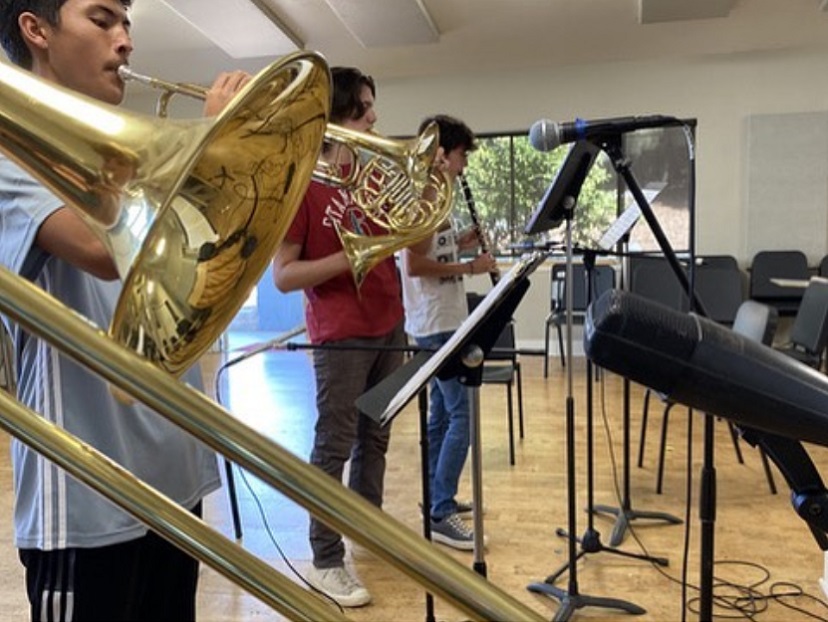
PWS High School students have been making waves, or rather soundwaves, in their Introduction to Recorded Music Production and Live Sound class. Taught by an award-winning producer, songwriter, and sound engineer, students from Grades 10-12 are learning the fundamental skills needed to record various instruments and voices through digital audio workstations. Microphone types, recording techniques, audio terminology, understanding audio waveforms, acoustics, and creative decision-making in the recording process are a focus when working together in the studio.
Creativity is welcomed and encouraged! The students have enthusiastically been taking turns recording each other in various performances, including horns, piano, singing, and percussion. The collaborative nature of this class has been rewarding for all with plenty of fun! Students are also learning the art of live sound, understanding mixing boards and amplifiers, learning how to setup for a live performance, and realizing the different choices an engineer makes in a live sound environment versus an indoor recording studio.

Pasadena Waldorf School, 536 E. Mendocino St., Altadena, (626) 204-0786 or visit www.pasadenawaldorf.org.
Learn more about the Pasadena area’s finest private schools
Tickets for Sequoyah High School Musical “Carrie” On Sale Now!
Alverno Heights Academy Presents “Middletown”
Flintridge Preparatory School Present “Puffs or Seven Increasingly Eventful Years at a Certain School of Magic and Magic”
South Pasadena High School Tiger Studios Provides Opportunities for Students to Learn Skills and Earn College Credit
Pasadena Now has been published daily since April, 2004 and is among the very oldest continously operated community news websites in the U.S.
Pasadena Now strives to publish a full spectrum of news and information articles in service to the entire community. The publication will remain free to readers and will not erect paywalls.
Pasadena Now strives to provide factual, unbiased reporting. Our opinion section is open to all.
CONTACT
© 2016-2020 PASADENA NOW, LLC. ALL RIGHTS RESERVED
Breaking News Tips: (626) 737-8486 Extension 7
E-mail press release to : [email protected]
Fax press release to : (888) 650-9712
James Macpherson, Co-Publisher | [email protected]
(626)737-8486 Ext. 7
Candice Merrill, Co-Publisher | [email protected]
(626)737-8486 Ext. 4
Faith Fernandez, Chief Administrative Officer | [email protected]
(626)737-8486 Ext. 801
.
Editorial Department
André Coleman, Managing Editor | [email protected]
(626) 737-8486 Ext. 2
David Cross | [email protected]
(626)737-8486 Ext. 8
Eddie Rivera | [email protected]
(626)737-8486 Ext. 82
.
Sales
Jeff Vaughn, Sales Manager | [email protected]
(310) 378-9116
The joys of learning music on YouTube – Mint Lounge
You have successfully subscribed to Mint Lounge newsletter.
Through 2020 and 2021, isolated at home while covid-19 raged outside, I became a musician. I have been playing in bands since high school and had grown proficient enough on the guitar to be able to accompany myself while singing. But I had never received formal training and though my musical vocabulary was extensive, it was untutored and instinctive.
Over those two years, I would take the time to formally learn how to play the guitar, starting with music theory and graduating to mastering technique. For all this, I turned to YouTube. While it is easy to get distracted on the platform, it is actually a gold mine of information if you want to learn something. And the best YouTube channels are musicology ones.
Also Read Songs from a cupboard: creating music during covid
From music theory to songwriting, or music production, and learning an instrument, there’s frankly nothing better than YouTube. Over the course of those years—and this one as well—I have finally received a musical education. While I magpied information from a plethora of channels, there are three YouTube channels I keep gravitating to. The following is a subjective list, of course, but if you are interested, you should check them out.
Rick Beato (music producer, educator); YouTube channels: Rick Beato/Rick Beato 2
Let’s begin with the most famous of music YouTubers, Rick Beato. The 62-year-old native of Atlanta, US, is today a bona- fide star, with over three million subscribers. His channel, Everything Music, had a low-key footprint in 2015, when it started. Then a video of his went viral. In it, his then-toddler son, Dylan, perfectly identifies individual notes within complex chord clusters. Dylan’s unassuming answers to each chord pattern Beato plays (Dylan has “perfect pitch”, the ability to identify notes without the help of a reference tone) wowed audiences, with the video racking up three million views.
Beato decided to use this sudden fame to dedicate the channel to music education. As he has said many times, his son’s abilities may seem uncanny but they can be nurtured. And when people grow up and lose their perfect pitch, they can still sharpen their relative pitch, with the ability to break down any musical composition by ear.
Also Read Paul McCartney can’t stop, won’t stop
Since then, Beato’s channel has gone from strength to strength, primarily because Beato is an excellent communicator and knows what he’s talking about. He received a bachelor of arts in music at Ithaca College in New York in 1980, and a master’s degree in jazz from the New England Conservatory of Music in Boston, Massachusetts, in 1987.
Beato has worked in nearly every level of the US music industry, as a sessions musician, a songwriter, a record producer, an audio engineer and a music lecturer at institutions like the Berklee College of Music in Boston. While his experience is formidable, what really makes him such a great teacher is his sheer love for music and the intricacies of song composition. You will find him gushing over the songwriting of Miles Davis or The Beatles as much as Taylor Swift and H.E.R. His live songwriting sessions are a joy, as are his breakdowns of seemingly dense music theory.
Also Read My year in music
But if there’s one thing I love, it’s his series What Makes This Song Great?. In each of over 100 episodes, he takes one song from one artist and breaks it down, from the songwriting to the arrangement, to the mix and the performance, using this to comment on why the artist is great. Notable showcases include Joni Mitchell, The Beatles, Police and Steely Dan. Also check out his brilliant interviews with the likes of Sting, Pat Metheny, John Scofield and Ron Carter.
David Bennett (pianist, composer, educator); YouTube channel: David Bennett Piano
The jazz pianist from Sussex, England, is only in his 20s, but already a formidable presence in the world of music YouTubers. While his preferred instrument, the piano, doesn’t hold much interest for me, I find his songwriting videos extremely useful. With time, it has become clearer to me that what really sets the true geniuses apart is their ability to write songs. To this end, Bennett’s channel is a godsend.
He started the channel in 2018 and it has racked up a sizable 707,000 followers. The video series of his I love, are the ones on music theory pertaining to songwriting. While many have found music theory an often insurmountable barrier, Bennett’s easy, breezy approach shows it’s anything but. He focuses on standard songwriting tricks, like well-known chord progressions, and showcases songs from different artists that use these same tricks to wildly different ends.
A fantastic recent video on the hugely popular I-V-bVII-IV progression shows how the same progression (down to the same key of C major) is used by artists as wildly different as OK Go for Here It Goes Again, The Foundations in Build Me Up Buttercup, The Dandy Warhols in We Used To Be Friends, TLC in Waterfalls, Duran Duran in Rio, The Cranberries in Linger, Lou Reed in Satellite Of Love or Robyn in Show Me Love.
Simply put, when you part the curtain of seemingly mystical talent and see the craft and process behind the pop song, not only does your appreciation for it increases, but you can also pick up interesting tricks for your own songwriting. Bennett’s YouTube channel is priceless for this reason.
Also Read ‘The Beatles: Get Back’ sets the band’s record straight
Paul Davids (guitarist, producer, educator); YouTube channel: Paul Davids
If I mine David Bennett’s channel for songwriting hacks, I go to Paul Davids’ channel for the same, with added focus on learning new guitar-playing techniques as well. Davids, who is from the Netherlands, has a bachelor’s degree in music from the Rotterdam Conservatory. He began the channel from his living room in 2015. Seven years and 2.97 million followers later, Davids produces slickly filmed episodes from his new home studio.
And what a joy they are. Davids’ main business is his subscription-based guitar and theory courses and he usually takes aspects from his tutorials to create his videos. Although he covers a vast gamut of guitar-related subjects, including guitar reviews, the ones I find the most edifying are simple lessons that aim to help you become a better guitar player.
Also Read Why Amazon’s ‘The Rings of Power’ is an empty spectacle
Again, the beauty of the videos lies in their simplicity. When Davids shows how you can spice up a standard major chord, by adding a suspended note, arpeggiating the chord or playing an inversion, he’s essentially enhancing your musical vocabulary, showing how you can do much more with just three-four chords. Before I chanced upon his channel, I knew all this in theory, but when Davids actually shows you how to do it, it’s like a string of light bulbs going off in your brain.
Another useful set of Davids’ videos deal with home music production, and as I have been in the process of setting up a small home studio and learning how to record and mix, these too have been a godsend. It’s usually the simple—but vital—things that stand out: how to mic your instruments and your voice, how to correctly master gain (the loudness or softness of sound), how to record basic tracks and overdubs, and, finally, what to look for when mixing. There are many other dedicated music production YouTubers who do this, but I find Davids particularly useful because his primary instrument is the guitar. As an added bonus, check out his fantastic set of videos decoding guitar playing with modern jazz great Rotem Sivan.
Also Read What Matt Reeves’ The Batman owes to the comics
OPINION: A Tight Squeeze: An Interrogation of Yale's Music Major – Yale Daily News
An Interrogation of Yale’s Music Major
Loren Bass-Sanford
Contributing Reporter
A few weeks ago, I attended Flowin’, a conference that was hosted at Yale in honor of Dr. Farah Jasmine Griffin and her critical work on Black feminist jazz and literary studies. It was probably one of the best things to ever happen to me. I met Dr. Griffin and many of my academic and cultural heroes, including Dr. Angela Y. Davis. The conference felt more like a family reunion than an academic conference. Most importantly, I left with the triumph of knowing that it was possible for me to seriously study the music that I love — African American popular music — in its fullest capacity.
This conference did not focus on music or African American history in isolation. Rather, it centered on the inextricable link between Black feminism and African American music, history and literature. It was the first space I had been in where I didn’t have to study music and culture separately. Music wasn’t an abstraction that existed in a vacuum, but a medium that embodied all parts of my identity, my sense of self and my family and our history.
Seeing people at the conference talking about the significance of Black popular musics — discussing the likes of Patti Labelle, Whitney Houston and Billie Holiday — was at once validating and infuriating because it made realize me the extent to which this music had been either devalued or completely omitted from my music education at Yale.
Reflecting on my experiences made me wonder about the experiences of other music lovers on campus. There are so many talented musicians here — from a cappella singers and Yale Symphony Orchestra players to students who produce and perform their own music. How many students shared my experience? How many students would love to study music but don’t see their interests reflected in the department? How many students have an unawakened love for music that may never be brought to life because of the narrow scope of the music curriculum?
The music major is divided into four groups: Music Theory; Creative Practices, which consist of performance, composition and lessons; Western Art Musics, which is everything that would be colloquially called “classical music”; and World & Popular Musics. Unlike a conservatory like Juilliard, where students focus almost exclusively on music performance, Yale’s music program follows a liberal arts curriculum that requires students to take two intermediate courses and one advanced course in each group. The major’s website states that “Yale’s music major is a general music program that combines studies in composition, conducting, ethnomusicology, music history, music technology, music theory, and performance.”
The experiences of myself and my peers, however, cast doubt on whether this claim is true.
Amara Mgbeike ’22, who uses she/her pronouns, is a vocalist and guitar player who came to Yale with a background in Gospel music. She was eager to explore Gospel music and learn about music production and writing vocal arrangements. Caleb Crayton ’22, who uses he/him pronouns, came to Yale with extensive experience writing and producing hip-hop beats for himself and his friends in a home studio setup. He and Mgbeike both began releasing and performing their own music while at Yale and have continued to pursue music professionally since graduating. Crayton hopes to pursue music full time.
When I asked Crayton if he ever considered majoring or double-majoring in music, he said that he considered it out of a love for music, but that his passion wasn’t in music theory, composition or classical music. These disciplines, he said, are “more so what the music major prepares you for unless you try to go at it on your own.”
Mgbeike said that most of her decision to not major or double-major in music was due to family concern about the viability of a music degree. However, those considerations aside, when I asked her if she could have seen a place for herself in the music major, she said, “I really have to say no.”
“The course listings each semester didn’t have a lot of variety. Sometimes there’s one cool class or two, but the majority of what I’d have to take probably wouldn’t have excited me,” she said. “I’m so grateful for the extracurricular things that allowed me to be involved in music so I didn’t have to major in music and take classes I didn’t want to take.”
Mgbeike and Crayton’s first encounters with the music major were in the fall of 2018, the year that a reconfiguration of the major went into effect. In the previous structure of the major, Western classical music dominated the curriculum — seven of the 16 credits were required courses that focused on Western classical music. The newly configured music major was supposed to provide more flexibility and decenter the Western canon through changes such as eliminating required courses and creating the group structure that allows students to have more choice in which classes they take.
It takes time for some of the impact of these changes to be felt, so it’s possible that aspects of the major have since improved. I talked to Sage Friedman ’25, a sophomore considering majoring in music. Friedman, who uses she/her pronouns, is a classically trained opera singer, but her true passion relates to music history and ethnomusicology, the study of music in its social and cultural contexts. She has a deep love for Caribbean music and the music of Haitian immigrants and is considering double-majoring in American Studies. During her first year, she took “Commercial & Pop Music Theory,” a recent course added to the curriculum in the fall of 2020, as well as a class called “Western Philosophy in Four Operas,” which she described as her “bread and butter.” She was so thrilled that she was exposed to things like “music history, ethnomusicology and all of these ways to study music as subject.”
Though initially excited by those classes, Friedman has since developed concerns about how she will be able to further her course of study in the department. In other words, she’s feeling similarly to Mgbeike — there might be one or two classes in her area of interest, but the majority of the department doesn’t really have a place for her. She told me she would be meeting with the director of undergraduate studies of the Music Department in the days after our conversation to address her concerns.
“Now I’m here, having taken two music courses, and I’m like, ‘Okay, where is this going?’” Friedman told me. “There are kids sitting next to me in these music classes who are classically trained musicians of 10 years. They know what this looks like for them, but my path is much less clear. I’m not a theorist or composer, and I’m not necessarily a performer, so I’m worried I’ll have to squeeze myself into this shoe that doesn’t fit to continue doing the thing that I love.”
When Friedman told me all of this, I jokingly asked her how she got into my brain. We had never met before this conversation, yet she articulated my exact experience with the music major in a way that I had never been able to. I had been feeling constrained by what felt like a narrow range of musical study and thus feeling less passionate about music as a whole.
Coming into college, I knew that I wanted to leave with a degree in music because I wanted it to be part of my professional life. I knew I did not want to focus on performance or theory, so I settled on composition and began the four-semester-long composition sequence, even though my passion has never been for composing. At times my friends saw my dissatisfaction and suggested I stop pursuing the composition track. What else would I do? I would respond. The senior project options are a composition, a musical theater composition, a senior recital or a senior essay. I could have done the senior essay, but there weren’t enough relevant courses to undergird the writing and research I was interested in, African American popular music. Thus, I continued walking around with that too-tight shoe, even when it gave me blisters.
My experience in the music major is especially jarring when compared to my experience as an Ethnicity, Race and Migration major, also known as ER&M. Though my interests in ER&M would traditionally fall under the African American Studies Department, the ER&M Program recognizes that a lot of African American studies topics overlap with ethnicity, race and migration. Therefore, there are a lot of ER&M courses that reflect that overlap. In other words, I don’t feel like I have to leave the ER&M Department to substantially study various topics related to ethnicity, race and migration. Why is this not the case with the Music Department? Why do I have to go outside of the Music Department to substantially study music that is not of the western classical tradition?
While it was affirming to hear I’m not alone, I hated listening to Friedman echo the same problem. I’m glad that she has such a strong sense of what she wants to study and is taking the steps to make sure she is supported academically, but she shouldn’t have to do all of that heavy lifting. None of us should have to “go at it on our own,” as Crayton noted, if we want to deviate from the traditional path. No one should have to come into college knowing exactly what they want and be ready to fight tooth and nail to get it.
The fact that students are slipping through the cracks or feeling confined within the major is indicative of a larger problem with the structure of the major, which lies in what Avik Sarkar ’23, who uses all pronouns, calls its “diversity approach.” In this model, classes that focus on music outside of the Western classical music tradition are added in here and there — as Mgbeike noted — for the sake of diversifying the course offerings, but there is no structural interrogation of who the major serves.
Sarkar is a classically trained pianist and composer whose work has received national and international recognition. They decided against majoring or double-majoring in music because of the dominance of western classical music in the music major that resulted from this diversity approach.
She noted that in this context, classes that don’t focus on Western classical can “only matter as additives.” This is why students like Friedman, Mgbeike, Crayton and I did not — and have not — felt as though there’s a place for us in the music major. The music that we consider worthy of serious study functions more as a way to enrich the education of students studying Western classical music than as a topic for any student to focus on, as if the music we love is an afterthought.
This is evident in the way the major still requires students to interact with the Western tradition for the majority of their study. Until last year’s introduction of the popular music theory sequence, almost all of the classes that fulfilled the music theory requirement were based in the Western classical tradition. The only classes that fulfill the intermediate level of the Western classical music history requirement are the same three history classes that used to be required for the major. In other words, there’s still a de facto requirement that all music majors take two of those western classical music history classes. Lastly, there are consistently only three or four classes offered in the World and Popular Musics category — for comparison, the Creative Practices category usually has fifteen classes.
On a smaller scale, the diversity approach results in feelings of alienation and lackluster support for students who want to study or create music that is not of the Western classical tradition. Sarkar gave this account from his semester in Composition Seminar I:
“I wanted to write something that was influenced by Indian classical music, which has a very highly complicated system of notation, counterpoint, rhythm and meter, but there was no one to guide me through that. I was completely on my own. All anyone wanted to talk about was that I was bringing in a diverse perspective. That to me is a problem with the diversity approach because it’s like, ‘We need to integrate non-Western influences into Western music,’ but that leads to people only regarding this music as exotic and other.”
Mgbeike had a similar anecdote about her time in Composition Seminar I: “When I took Composition Seminar, I was trying to make something more jazzy than the rest of my classmates, so I kind of felt out of place. I wondered if that feeling would have subsided at all had I continued with the major. During my first year, I was feeling like everyone was better than me or more advanced than me because they were doing something different from me.”
These are the stakes of the diversity approach. Music lovers either see the overwhelming dominance of Western classical music in the major and feel completely shut out, or they continue walking through the major with blisters on their feet, always feeling implicitly less than or exoticized and exhausted from having to learn about the music they love without support.
Immediately following my conversation with Sarkar, I interviewed Dr. Fredara Hadley, an ethnomusicologist who specializes in African American popular music, who gave me some context that even further highlights the problems with Yale’s diversity approach. Dr. Hadley, who uses she/her pronouns, went to Florida A&M University, received her Ph.D. at Indiana University, and has taught at Oberlin College and Conservatory and The Juilliard School, both of which are conservatories where the overwhelming majority of students study Western classical music performance. When I asked her where her ethnomusicology courses fit into the conservatory curriculum, she said many of her classes are electives.
“Conservatory students are required to take courses in Western classical music history, and there are always electives that they have left over. Oftentimes ethnomusicology courses are among the electives they can take after they’ve completed their classical music history requirements. At Oberlin, students could use these courses to fulfill a cultural diversity requirement.”
While Yale’s Music Department does not solely focus on performance, the structure of the major is very similar to that of the conservatory structure Dr. Hadley described: Western classical music dominates the curriculum and a few courses are offered in other types of music to act as supplements to the classical music education. The problem here is that Yale’s Music Department is explicitly not a conservatory. It’s also the Music Department, not the department of Western classical music or the Western-classical-music-and-a-few-other-types-of-music department. Dr. Hadley herself noted that departments like Yale’s are meant to be more flexible than conservatories, so one would think there’d be a much more expansive study of music in our department. But instead, as Friedman noted, the department is “boxing itself in and stifling what could be a really vibrant and much more popular major.” She continued, ““We all interact with music so differently, it’s one of the most versatile forms of media you can engage with. I think the lack of versatility in the department is disheartening.”
I talked to the DUS — Dr. Anna Zayaruznaya, who specializes in music of the Middle ages and Renaissance — about a place to start with potential changes. I first asked about cross-listing music-related classes taught in other departments as a way to start, since hiring new music faculty would be a lengthy process. The list below shows some of the music-related classes that have been offered in other departments since the reconfiguration of the music major but were not cross-listed with the music major.
CSGH 370 The Media of Sound: Experimental Approaches to Sound Design (Fall 2022)
CSBF 370 Hip-Hop Music and Culture (Fall 2022, Spring 2021, Fall 2019)
ENGL 423 Writing about the Performing Arts (Spring 2022, 2021, 2020)
RLST 156 Buddhism & Hip-Hop (Fall 2021)
FILM 338 International Movie Musical (Fall 2021)
CSDC 330 The Art and Business of Songwriting (Spring 2021)
AFAM 190/AMST 204 Protest Music and the Black Radical Tradition (Fall 2020)
AMST 034 Country Music in America (Spring 2021)
AMST 357 The Times of Bob Dylan (Spring 2020 but was canceled)
CSBR 301 Music and Cinema: A History (Fall 2019)
CSDC 300 Composing for Film & Media: Art, Innovation, and Commerce (2019)
ENGL 350 Literary Sound Studies (Fall 2019, Spr 21 canceled)
AMST 354 Music and Resistance in the United States (Fall 2018)
I also asked about the inclusion of the so-called “general interest and introductory classes” that are taught in the Music Department but cannot currently be counted towards the major. Many of these are first-year seminars like Music 081: “Race and Place in British New Wave, K-Pop, and Beyond,” Music 031: “Music of Protest, & Propaganda” and Music 087: “Music, Memes and Digital Culture.” Some are introductory courses like Music 145: “Music in Japan,” Music 185: “American Musical Theater History,” and even the class Friedman loved, Music 137: “Western Philosophy in Four Operas.” The exclusion of these classes from the major is a bit ludicrous to me — imagine taking one of these classes as a first-year student or someone who’s interested in the major only to find out those classes can’t count towards the fulfillment of the requirements and the rest of the major looks nothing like those classes.
Professor Zayaruznaya, who uses she/her pronouns, said her “goal is never to gatekeep” and that she would always be open to allowing classes to count for the major when individual students ask. She also agreed that some of the music-related classes from other departments should be cross-listed with music, noting that sometimes the department just doesn’t know that those classes are being taught.
While this is certainly nice to hear, it places the burden of getting credits counted toward the major on the student and does not structurally change the prioritization of Western music. If the department made a more centralized effort to include these classes in the major that would be much more impactful. It’s the difference between sure, we’ll allow that class to count towards the fulfillment of this requirement in this one case and these concepts are important components of the study of music. Let’s make sure that is reflected in our course offerings. This requires both an interrogation or expansion of what is considered to be important to music education and an examination of the course offerings to determine if the different types of music represented are actually getting an equal amount of focus. That is what is missing in the Music Department.
In the last part of our discussion, I told Professor Zayaruznaya that this piece is not necessarily about me shaking my fist at the Music Department. I just want so much more. I want my study of music to be as expansive as my love for music, and I want the same for all music lovers. It’s also not about getting rid of Western classical music — all of the students I spoke with value the many skills they’ve learned from studying that canon. It’s a matter of Western classical music being so disproportionately centered in the department to the extent that it’s difficult to study any other type of music substantively. It’s a matter of the curriculum being designed with a “typical” student in mind when, in reality, there should be no typical. While incorporating some of the classes I mentioned would be a great start, I dream of the vibrant music major that Friedman talked about.
What if the Music Department was a multicultural hub for the study of music? What if you could walk in and hear the sounds of someone learning how to DJ, a classically trained pianist preparing for a performance, and a classroom of students analyzing a Beyoncé album? What if the Music Department was a place where a person’s love for music, no matter the form, could blossom instead of wilting from malnourishment? What if the Music Department could be reimagined so that students like myself, Crayton, Mgbeike, Friedman and Sarkar aren’t left behind or forced to squeeze into shoes that don’t fit in order to pursue our love of music?
EQ Audio/Focal/Vicoustic/Kaleidescape/Dolby Atmos – Stereophile Magazine

On the gentle urging of one of the nicest guys in the biz, Ed O’Herlihy, owner of Ontario retailer EQ audio video, I visited, among the many exhibits Ed was hosting in his nearly stadium-sized space, was the Focal 1000 series Utopia 7.0.4 Dolby Atmos demonstration, the exact same setup that Focal presented in Dallas at this year’s CEDIA Expo.
I was played two tracks, one from a scene from the movie The Greatest Showman and the other Elton John’s “Rocket Man.” A word about the .0 designation in 7.0.4. That digit refers to the number of subwoofers used in a home theater system. Focal’s Utopia 1000 series system has no dedicated LFE channel and therefore uses no subwoofer in the typical sense of that word. Deep bass— and by deep bass I include the thunderous kind I heard at this demo—was produced by in-wall panels.
So what did I think? Movie-wise, as it related to the one scene I watched, it was a sonic thrill ride—dynamic, powerful, booming, visceral, layered —blockbuster sound for a blockbuster movie. It was also quite interesting to feel completely encircled like never before by a multitude of different sounds. Sounds came from everywhere, not just from this corner or that corner. You’re in what feels like a speaker-less globe of sound. Dolby Atmos gets closer to the ideal of surround-sound than anything else I’ve heard. It isn’t just about horizontal sound dissipation; when called for, sound is also swooping in from the sky.
As for the Elton John track, I liked a lot of it, especially as long as the main instrumentation and vocal—the band itself—stayed in front. I enjoyed the washing-over-me-from-behind effect when the backing vocals kicked in, the almost cathedral-like sense of scale it erected, and many of the various studio effects that materialized around me from the most unexpected places. However, as soon as the band broke up, with the main instruments and vocal suddenly scattered about in opposite directions, I was less enamoured. But I think Dolby Atmos has potential for music, once an industry recording standard is established, and new recordings are made using this technology as opposed to old recordings being retrofitted with it.
The Focal 1000 series Utopia 7.0.4 Dolby Atmos system included the Astral 16 AV home theater processor amplifier ($26,000), Utopia 1000 series speakers ($110,981/19 speakers), Vicoustic Room Treatment, and a custom-built Kaleidescape movie player with internal storage that is not available to the general public.
(All prices in Canadian dollars unless otherwise noted.)
- Log in or register to post comments
In a Marathon of One-Act Plays, Boundaries Are Pushed and Pulled – The New York Times
In a Marathon of One-Act Plays, Boundaries Are Pushed and Pulled The New York Times
source
Seminole County to ease Red Bug Lake Road congestion – News 13 Orlando
Get the best experience and stay connected to your community with our Spectrum News app. Learn More
Continue in Browser
Get hyperlocal forecasts, radar and weather alerts.
Please enter a valid zipcode.
Save
SEMINOLE COUNTY, Fla. — As Orange County leaders hope voters will approve a penny sales tax for transportation, other counties, like Seminole, already have a cent tax to improve infrastructure.
Currently, crews are extending turning lanes on Red Bug Lake Road, from Dodd Road to Tuskawilla Road.
“There has been a lot more traffic, especially right here in front of the salon because of the way it’s structured, how people get in and out,” said Chena Burr, the owner of Maestros Hair Studio.
Getting in and out of the shopping and service plazas can cause backups, especially on short turning lanes.
The goal of this project is to eliminate some of the congestion.
“I think it’s going to be very helpful to do that,” said Burr.
The $1.4 million project is set to be completed in late February or March of next year.
Mercedes: EQ Brand’s Future Is “$1M Question” Once ICE Production Ends – Motor1
Mercedes-Benz’s EQ sub-brand is the future of the brand. The EQE SUV’s world debut ahead of the Paris Motor Show was a milestone for the brand – it debuted new sound technologies, like the native integration of Apple Music, and a heavy focus on the Dolby Atmos suite of tech.
But most importantly, it’s the final EV model to complete the EQ lineup. With the EQE SUV, Mercedes claims that it now has an EV model for every mainstream vehicle segment it sells, barring any sports cars or commercial vehicles. What next, though? Is that it for the EQ brand or EV2 platform? What happens to EQ when Mercedes eventually phases out its ICE efforts?
During the EQE SUV debut in Paris, we got some time to sit down with Christoph Starzynski, the Vice President of Electric Vehicle Architecture, and Chief Technology Officer Markus Schäfer to ask some questions. And the first was what the EQ brand looks like when Mercedes phases out combustion power.
“That’s the $1 million question, isn’t it? It’s a question for the marketing and sales team, but the brand itself is more than just a battery; it’s a technology, its intelligence,” Starzynski said. “The question is, what will be the nomenclature in the future? But right now, we’ll still be parallel, until later this decade. The brand is more than just the badge on the rear of the car, you know?”
We also asked Starzynski about the future of the EV2 platform, which currently underpins not just the EQE line, but the EQS family. With rumors that they’ll be the smallest products on EV2, what does the future of the architecture hold?
“[The] MMA [platform] is the successor of the current compact cars. The A, B, GLA, GLB, EQA, EQB; the MMA (platform) will be the successor,” Starzynski said. “The only real thing we’re going to do here is go down from seven models to four. Then, the MB.EA [platform] will do middle and upper-class vehicles. The EV2 platform will run parallel for a while.”
In another roundtable discussion, Markus Schäfer, did hint briefly that there could be some more things in store for the EV2 platform before its replacement.
The future EQB crossover will ride on the MMA platform.
“Our Tuscaloosa-built models [EQE and EQS SUV] will hit the market early next year, and it will be our fourth model on the EV2 platform,” Schäfer said. “We have further ideas, more to be announced yet, that we could do on this platform, but definitely, the SUVs will be, for us in terms of volume and sales expectations, an important part of our EV strategy.”
So, it looks like Mercedes is already gearing up for the next generation of EVs, even as it explores the possibilities of new models on its current EV architecture. It’s making new modular platforms, in order to phase out its EQ-series converted gas cars, namely the EQA, EQB, and EQC.
The EV2 platform, which underpins the EQE and EQS in both sedan and SUV form, will eventually be phased out, as well, to be replaced by a new modular platform that will likely underpin everything from the C-class on up. Whether or not that means the EQ brand will usurp the traditional Mercedes-Benz naming scheme when the brand stops making ICE vehicles, well, it seems like the brand is still figuring that out. It’s exciting times for the future of Mercedes-Benz, that’s for sure.
Car Buying Service
Get upfront price offers on local inventory.
Search for:
Trending
About this article
The 25-year-old Australian who helped produce Taylor Swift’s latest album – Sydney Morning Herald
We’re sorry, this feature is currently unavailable. We’re working to restore it. Please try again later.
Look at the songwriting credits on Taylor Swift’s Midnights, past names like Jack Antonoff and Lana Del Rey and (weirdly) Zoe Kravitz, and down there on Karma, the album’s wavy eleventh track, you’ll spot the name Keanu Beats, the moniker of Melbourne-born, Gold Coast-based producer Keanu Torres.
The 25-year-old may be an unknown name to all but obsessive Discogs listings enthusiasts, but he’s already one of Australia’s most successful hip-hop and R&B producers, having contributed to tracks for Beyonce, Drake, Kendrick Lamar and The Kid Laroi since his first big break on Migos’ trap classic Culture in 2017. But the shift to Taylor Swift’s pop world, on what’s already the year’s biggest album, is a rare move.
Melbourne producer Keanu Beats (aka Keanu Torres) has worked with Beyonce, Drake and Kendrick Lamar, and now adds a Taylor Swift credit to his resume.
“It does feel like a big move, just because of how different the actual music is and because the stats, how the album is performing, is insane,” says Torres, from a holiday break in Japan.
“I mean, it had got to the point where everything I was getting sort of felt the same and I didn’t know if or when I was gonna get to that next level. So this was like, holy shit. It’s a completely different ballgame.”
True to the logistics of the recording business today, the story behind the collaboration is gloriously uneventful.
“I just made the sample at home in Melbourne, in like 2019, sent it to [Grammy-winning producer] Sounwave, and didn’t really think anything of it; it wasn’t really for Taylor or anything,” Torres explains of his contribution, the woozy main sample that kicks off the song and propels it throughout.
“Then, at some point this year, he contacted me and confirmed we were on the new Taylor Swift album. We had to sign NDAs, weren’t allowed to speak on it at all. But I mean, I didn’t even know the track name until it came out, or what it sounded like, or anything.”
The result, however, is career-defining. In Australia, Midnights is #1 on the ARIA albums chart and is the highest-selling album in the country since Swift’s own Reputation in 2017. In the US, the album had the largest week for any album since Adele’s 25 debuted in December 2015. Globally, the album broke Spotify’s record for the most streams in a single day in the platform’s history. So what’s Torres’ cut on that? Could Karma buy him a house?
He laughs. “I mean, it depends on how that one song performs, I guess; you never really know with this shit. But I’m sure it’d be pretty healthy for everybody involved. The album is definitely the biggest project I’ve been involved in, ever.”
Raised in Melbourne’s Werribee to an Argentinian mother and a Uruguayan father, Torres first delved into music at 16, learning to make beats in his bedroom on an FL Studio demo and eventually started selling sample packs online.
“It was okay – I could focus on music 24/7 because I was making decent money online so it was my full-time job – but I wasn’t really content with just selling my beats online to random people,” Torres says. “I was always like, nah, I wanna work with big artists.”
He hustled proactively, DMing and emailing producers in the US with his wares. At 20, he got his first placement on the Migos single What the Price and within six months “shit just snowballed from there”, Torres recalls.
Musically, his strength might lie in his versatility, Torres suggests. “I don’t like to pigeonhole myself. There are some tracks where I’ve done the drums, some songs where I’ve done melodies, it just depends. In terms of the Taylor Swift track, I did the melody, the sample – one of them, anyway.”
For Torres, who calls Swift his favourite artist outside hip-hop (Lover is his go-to of her albums), Midnights’ success is already bringing new attention. “You know how it goes – publishers reach out, managers reach out, other producers reach out. Which is cool, I’m all for it. The funniest thing is just a lot of Taylor fans, man,” he laughs. “It’s very different.”
Adding to the exposure, Torres earned a personal shoutout on social media from the pop icon herself, who posted photos and tagged all her collaborators. “That was really cool of her to do because most artists don’t do that, especially at her level,” he says.
Although he’s generally toiled behind the scenes, Torres says he’s comfortable with the sudden relative loss of anonymity. “I typically don’t like attention, but in the past year I kind of told myself that I just need to let it be what it is and to just accept it openly, because the attention is good attention. Especially the attention I’m receiving for this one, I’m proud of it because it’s a big achievement for me.”
After this taste, he’s keen to keep working in the pop space. Does he have any dream projects left?
“I mean, definitely Taylor again,” he says. “Maybe someone like Ed Sheeran would be f—ing crazy. But I don’t know, man. I never really focus on dream projects because it always just happens randomly, anyway. You’ve just got to keep working.”
A cultural guide to going out and loving your city. Sign up to our Culture Fix newsletter here.
Copyright © 2022
BAUER MEDIA AUDIO UK CELEBRATES RECORD NUMBERS, AS IT GROWS OVERALL REACH TO 21.3M – Bauer Media
The latest RAJAR results show the biggest ever commercial radio audience with 38.2m listening every week, for a record number of hours (520m). Bauer Media Audio UK has achieved a record total audience of 21.3m, with record growth for the Hits Radio Brand Network and strong performances across its other influential networks.
With a continued shift to listening via digital devices, Bauer dominates the market with a digital listening profile of 75%, ahead of an industry average of 70%, and is home to 3 of the top 5 digital only commercial radio stations: KISSTORY, Absolute 80s and Planet Rock.
Standout performances this quarter, include:
Dee Ford CBE, Group Managing Director, Bauer Media Audio UK said, “For the first time ever, commercial radio is attracting more than half of all listening in the UK. It’s achieved this through creating more ways to listen with more products to listen to, which creates more exciting opportunities for our commercial partners. It’s no wonder listeners are voting with their ears.”
Ben Cooper, Chief Content and Music Officer, Bauer Media Audio UK said, “The scores are in, and it’s another brilliant book for Bauer, with great results for our stations. We’ve grown reach across the portfolio and the Hits Radio Brand Network is going from strength to strength. And it’s not only Strictly stars Fleur and Tyler that are hitting the mark with our audiences, with presenters across our brands growing increasingly popular.”
– ENDS –
Note to editors:
Bauer Media Audio UK total reach figure includes partner stations. * Bauer Partner Stations – Bauer Media
For more information, please contact:
Amelia O’Shea – Head of Communications, Bauer Media Audio UK
E: [email protected] T: 07718 489342
About Bauer Media UK:
Bauer Media UK reaches over 25 million UK consumers through a portfolio of world-class, multi-platform media and entertainment brands including heat, KISS, Grazia, Empire, Magic, Absolute Radio and the Hits Radio Network. These brands offer commercial partners access to highly engaged audiences, with creative solutions underpinned by insight and instinct. Bauer Media UK is part of the Bauer Media Group, one of the world’s largest privately owned media businesses with media assets all over the globe.
And the winner is… Oasis!
Absolute Radio has made the dreams of six of its listeners come true after bringing them together to form a band, recording a song and playing it on the station to an audience of over 5 Million people.
Voting is open now till 13th November
Harry Styles named the richest young British star for the first time
And the winner is… Oasis!
Q3 RAJAR 2022 results
Absolute Radio has made the dreams of six of its listeners come true after bringing them together to form a band, recording a song and playing it on the station to an audience of over 5 Million people.
Bauer Consumer Media Ltd, Company number: 01176085 Registered Office: Media House, Peterborough Business Park, Lynch Wood, Peterborough, PE2 6EA Bauer Radio Ltd, Company Number: 1394141 Registered Office: Media House, Peterborough Business Park, Lynch Wood, Peterborough, PE2 6EA H Bauer Publishing, Company Number: LP003328 (England and Wales) Registered Office: Academic House, 24-28 Oval Road, London, NW1 7DT
All registered in England and Wales
COPYRIGHT © 2022 BAUER CONSUMER MEDIA LTD
Charlotte Mae Cudney Heiserman Obituary – Topeka Capital-Journal – The Topeka Capital-Journal
Mass of Christian Burial for Charlotte Mae Cudney Heiserman, 94, will be at 10:00 a.m. Saturday, October 29 at Corpus Christi Catholic Church in Lawrence. The family will have visitation 9:00 -10:00 a.m. at the church, with burial following at Mount Calvary cemetery in Lawrence, Kansas. Charlotte died peacefully in her home October 26, 2022, with family by her side.
Charlotte was born on December 31, 1927, in Harrison, Arkansas to Leo H. Cudney and Minnie O. Slama Cudney. She spent her early childhood in Marysville, Kansas. Charlotte’s dad was employed by the Union Pacific Railroad and died suddenly when she was just 16 years old, resulting in Charlotte beginning her working career at a young age, first at the Marysville general store candy counter and then at Armour’s Creamier.
Charlotte graduated from Marysville High School on May 25, 1945; the following day, she and her future mother-in-law boarded a Continental Bus to Mineral Wells, Texas where Charlotte married her high school sweetheart, Sgt. Dale Heiserman, in the Army chapel at Camp Wolters Military Base. They were married 69 years at the time of Dale’s passing in 2015.
Following Dale’s discharge from the Army, Dale and Charlotte returned to Marysville where Charlotte worked at Jayhawk Café and together, they opened Heiserman Photography Studio. One of the highlights of the studio was on Saturday evenings when Dale and Charlotte would go to Club 36 in Marysville where most of the nationally known Big Bands would come and play. They would spend the early part of the evening taking photos of the various tables of partygoers, rush back to the studio, develop the photos, and then return to the club with the prints for the individuals to purchase, providing some of the first ever “same day” photography.
In 1949 they moved to Kansas City, MO where Charlotte worked at the Sunshine Biscuit Co. for two years before becoming a new mother, with the birth of their first son, Dale Jr. The family then returned to Oketo, KS where their son Gary was born, and they lived there for the next four years working on the farm. Dale later joined the Kansas Highway Patrol in 1957 and was stationed in McPherson, where their daughter Linda was born. They then moved to Council Grove and added their second daughter, Julie, to the family. The family made their final move to Lawrence, Kansas in 1963. Once the kids were school age, Charlotte became a school bus driver and then in 1968 began her career at the Douglas County Sheriff’s Office. She initially was a dispatcher, then a deputy, and later the City and County photographer. Charlotte retired from the Douglas County Sheriff’s office in February 1991.
Charlotte was a wonderful, caring, giving person. She was an exceptional cook and an excellent baker. Her grandchildren have wonderful memories of her homemade hot fudge sauce and homemade ice cream. She enjoyed needlework, canning (as Dale was an avid gardener), cooking, and raising her four children. She was a member of the Kansas Sheriff’s Association, American Legion Auxiliary Post 14, Corpus Christi Catholic Church, and at one time, a member of the Altar Society.
Charlotte was proceeded in death by her husband Dale; son Dale Frederick Heiserman Jr.; her daughter-in-law, Jane Heiserman; her son-in-law, Jim Hazlett; her parents, Leo and Minnie Cudney; her step-father Melvin Hatfield; and brothers Merle Cudney and Darrell Cudney. Charlotte is survived by her son Gary Heiserman and wife Lynn; daughter Linda Schrock and husband Eric; daughter Julie Allmon and husband Kevin, all of Lawrence; brother Leo Cudney Jr. of Marysville; her grandchildren Jenny Heiserman, Amber and Scott Rowland, Ben and Maegan Heiserman, Sommer and Cameron Taylor, Kristie Hazlett, Michael Schrock, Chris Allmon, and Alex Allmon; and great-grandchildren Brayden and Adriana Rowland, Daisie and Cooper Heiserman, and Elijah, Lukas, and Raelee Taylor.
Memorial contributions can be sent to Corpus Christi Catholic Church to the Bereavement Ministry or to Corpus Christi Catholic Church and may be sent in care of Warren-McElwain Mortuary, 120 W. 13th Street, Lawrence, KS 66044.
For more information or to post a condolence go to warrenmcelwain.com
Posted online on October 26, 2022
Published in Topeka Capital Journal
Artist drops unreleased Worlds song in contract breach – Win.gg
British artist Simon Rosenfeld has pulled back the curtain on Riot Games’ music production pipeline by dropping an unreleased Worlds song that hadn’t made the cut.
A British musical artist has released a song that he claims was meant to be the 2021 Worlds anthem, before being replaced by higher-profile group PVRIS in 2021 and Lil Nas X in 2022. The artist, Simon Rosenfeld, says that he was contacted by Riot to produce the 2021 Worlds anthem before Riot Games decided to go with PVRIS’ offering with “Burn It Down”.
Rosenfeld spoke with PCGamesN to explain how it got to the point of him releasing a shelved Worlds anthem a year after it was meant to see the light of day. According to Rosenfeld, Riot Games approached him to produce the 2021 World Championship song but had the option not use the song should situations change. Rosenfeld produced a swelling anthem by the title of “Heroes”, but it was ultimately abandoned by Riot. LoL’s developer would eventually decide to publish PVRIS’ Worlds anthem instead, last year’s “Burn It Down”, and Lil Nas X’s “Star Walkin’” the next year. To hear the song for yourself, check out Rosenfeld’s released version.
After seeing Burn It Down released in 2021, and Star Walkin’ in 2022, Rosenfeld assumed that Heroes was effectively dead in the water and went to release it himself. However, when Rosenfeld first tried to publish the song on Soundcloud, he was met with a notice that the song he was trying to publish was actually owned by WLTD Entertainment, a company that Rosenfeld had created and was still sole owner of.
Rosenfeld also acknowledges that he was paid for his efforts and that releasing the song on his own is a clear breach of contract. However, this doesn’t seem to bother Rosenfeld, who told PCGamesN that he released the song anyway because it was “a banger.”
How Riot Games will choose to respond to this breach of contract has yet to be seen, but it can be assumed the massive developer isn’t happy with Rosenfeld’s choice.![]()