Izumi Kawanishi, left, a Sony executive vice president, will be president and COO of the new venture, while Yasuhide Mizuno, right, from Honda, will be CEO of the new company. Both are pictured at a briefing to outline the joint venture on Thursday. TOKYO – Honda and Japanese electronics giant Sony are betting big on the future of electric vehicles in the U.S., planning to produce their new jointly developed EV at a Honda plant in North America and deliver it first to customers in 2026. Sony Honda Mobility also plans to export the EV to Japan from North America. A launch for Europe is also being considered, but no plan has been set. Executives described the upcoming EV as a high value-added model that will build-in lots of new technology from Sony, including entertainment systems, advanced software and loads of sensors. Retailing will be centered around online sales, following Honda’s dabbling with that model in Japan. Various aftermarket and service plans are still under consideration, Honda said. The rollout prioritizes North America, one of Honda’s most important markets, because the U.S. is advancing quickly in electric vehicle development and market acceptance. EV-friendly incentives and regulations, like those in California, also played a role. “The reason we chose North America is because it is more advanced,” Yasuhide Mizuno, CEO of the new joint venture company, said while announced the timeline at a Thursday briefing. “I think North America is a market with a lot of purchasing power,” he said. “Electrification varies from state to state, but it is important for us to release our product in markets like California.” Sony Honda Mobility is not ruling out production in Japan someday. But for now, North America will be the main production and sales base. Deliveries in Honda’s home market will begin in the second half of the 2026, making the new EV a rare American-made export shipped to Japan, by a Japanese brand. Sony Honda Mobility will start taking orders for the new car in the first half of 2025. The Vision-S 01 and Vision-S 02 concepts, shown, previewed what Sony envisions for a software-centric automobile during CES 2022 in January. A new concept of the Honda-Sony car will be unveiled at the next CES in January 2023. The tie-up is the first major collaboration between two iconic Japanese brands from different industries to tackle the challenges of new mobility in an auto industry under siege by change. By harnessing the strengths of two powerhouses, it could be an effective riposte to interloping outsiders such as Tesla or Apple, which have not yet reached cross-industry in such a formal way. “We would like to form this company as a whole new automaker completely different from anything else,” Mizuno said at the Tokyo briefing. “Our goal is not to become an ordinary car manufacturer, but to become a new mobility tech company centered on software technology.” The new joint venture teased a video of a mock-up or concept of the upcoming car, hinting it would be shown Jan. 4 at the Consumer Electronics Show in Las Vegas. But Mizuno declined to detail specifics of the new vehicle – including targeted sales volume, pricing and body style. “A high value-added product is what we are looking at, so it’s not like we’re looking at mass production,” Mizuno said. But he equated “high value-added” to top-tier offerings such as the Honda Legend premium sedan, which has a Level 3 autonomous driving system in Japan. Honda will be responsible for manufacturing and procurement, he said. But Mizuno would not say what assembly plant would make the vehicle or who would supply the battery. The project will leverage Honda’s existing supply chain, and current battery partners including LG and General Motors, which has a propriety battery system called Ultium, are under consideration, he said. The news from Tokyo comes after Honda’s announcement in the U.S. that it would create an electric-vehicle production hub in Ohio as it doubles down on an all-electric future. Those plans include building a battery plant with its South Korean partner LG at a cost of $3.5 billion and spending an additional $700 million to retool three plants in the state to make EVs. Based in Tokyo, the 50-50 joint venture between Sony and Honda was announced earlier this year. Izumi Kawanishi, a Sony executive vice president, is its COO. Mizuno comes from Honda. The partners say Sony Honda Mobility will combine Honda’s expertise in engineering and manufacturing vehicles, along with its proficiency in providing after-sales service, with Sony’s strengths in imaging, sensing, telecommunications and entertainment. Honda, in the midst of a radical corporate makeover, said in April it will invest 5 trillion yen ($37.16 billion) over the next 10 years in electrification as it rolls out 30 full electric vehicles globally and builds production capacity for 2 million EVs annually by 2030. Honda wants to drop combustion and shift to pure electric drivetrains by 2040. In detailing the strategy, Honda said it will also shift its business away from non-recurring hardware sales toward recurring sales of services that combine hardware and software. It is part of new software-defined EV platform, dubbed e:Architecture, that the company will launch in 2026 to underpin the next generation of large-sized battery electric cars from Honda. Honda expects to be ready to supply 800,000 EVs to North America by 2030. Sony will be responsible for much of the car’s cloud-based systems, electronics, software and infotainment, as well as sensors that help deliver higher levels of automated driving. Kawanishi dangled Sony’s mammoth library of movies, music and photos as a wealth of content that could be served up on the go. Automated driving will make automobiles a more viable venue for selling such services as people increasingly hand over driving duty to the car’s computer. “What will be important is the software domain,” Kawanishi said, outlining potential for new revenue streams. “We have to add value and that is where we will place our emphasis.” Naoto Okamura contributed to this report Please enter a valid email address. Please enter your email address. Please verify captcha. Please select at least one newsletter to subscribe. You can unsubscribe at any time through links in these emails. For more information, see our Privacy Policy. Sign up and get the best of Automotive News Europe delivered straight to your email inbox, free of charge. Choose your news – we will deliver. You can unsubscribe at any time through links in these emails. For more information, see our Privacy Policy. Get 24/7 access to in-depth, authoritative coverage of the auto industry from a global team of reporters and editors covering the news that’s vital to your business.
Founded in 1996, Automotive News Europe is the preferred information source for decision-makers and opinion leaders operating in Europe. 1155 Gratiot Avenue Detroit MI 48207-2997 Tel: +1 877-812-1584 Email Us ISSN 2643-6590 (print) ISSN 2643-6604 (online)
Jump to main content File a patent application online with EFS-web Single interface replacement for EFS-Web, Private PAIR and Public PAIR Check patent application status with Patent Center and Private PAIR Pay maintenance fees and learn more about filing fees and other payments Resolve disputes regarding patents with PTAB View international patent filings File a trademark application and other documents online through TEAS. Check trademark application status and view all documents associated with an application/registration. Trademark fees and payment Learn about our current legislative initiatives. Find out how to protect intellectual property in other countries. Find upcoming programs related to IP policy and international affairs Are you an educator who has been teaching invention education or intellectual property education? Join the U.S. Patent and Trademark Office’s (USPTO) Office of Education to learn about the Master Teacher of Invention Education Program (MTIP). In this information session you will learn about MTIP and how to apply. The mission of MTIP is to cultivate a national network of teacher leaders who will empower educators to foster invention and intellectual property education for their students, who are the next generation of creative thinkers, problem solvers, inventors, innovators, and entrepreneurs. Join now to learn more about the MTIP application process. If selected as an MTIP participant, you will work closely with the USPTO’s Office of Education and STEMisED to provide professional development opportunities to other educators interested in implementing invention and intellectual property education programs and activities in their classrooms, schools, districts, and local communities. Resources and training materials will be provided. Application deadline was October 5, 2022. To learn more about the USPTO’s Office of Education, please visit USPTO Kids or contact us at [email protected]. We would like to know what you found helpful about this page. We may have questions about your feedback, please provide your email address. The USPTO is currently improving our content to better serve you. Can you describe the problem? We may have questions about your feedback, please provide your email address. Skip footer and go to main content
We may have questions about your feedback, please provide your email address.
For other assistance, please see our contact us page.
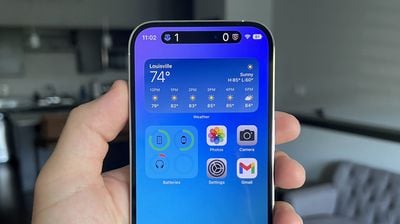
Earlier this month, Apple announced that iOS 16.1 will enable a new Live Activities feature that allows iPhone users to stay on top of things that are happening in real time, such as a sports game or a food delivery order, right from the Lock Screen. On the iPhone 14 Pro and Pro Max, Live Activities also integrate with the Dynamic Island.
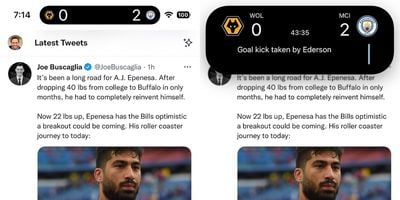
Premier League match in Dynamic Island via Paul Bradford
During a Premier League match, for example, the Dynamic Island shows a live-updating scoreboard with the number of goals scored by each club. When long pressed, the Dynamic Island expands to show the time elapsed and play-by-play action.
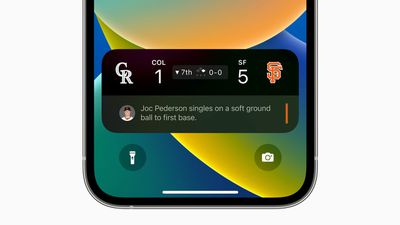
When an iPhone 14 Pro is locked, the score is shown in a widget on the Lock Screen instead. On the iPhone 14 and iPhone 14 Plus, and on all other iPhone models without the Dynamic Island, Live Activities are limited to the Lock Screen entirely.
MLB game on Lock Screen
To test the feature with an iPhone on the iOS 16.1 beta, open the TV app and tap on the “Follow” button for a supported game. At launch, Apple says the feature is available for MLB games for users in the U.S., Canada, Australia, U.K., Brazil, Mexico, Japan, and South Korea, in addition to NBA and Premier League games for users in the U.S. and Canada only. The feature will likely be expanded to other sports leagues in the future. Apple says iOS 16.1 will be released later this year. In addition to adding support for Live Activities in third-party apps, the update will include a new Clean Energy Charging option for U.S. users, add support for Matter accessories in the Home app, make Apple Fitness+ workouts available without an Apple Watch, and more.
How big of an upgrade are Apple’s cheapest mainstream flagship phones? Apple’s latest Pro phones replace the notch with an innovative “Dynamic Island,” but what else is new compared to last year’s models? Apple on September 12 released iOS 15.7 and iPadOS 15.7, delivering important fixes for multiple security vulnerabilities, including at least one that has been actively exploited. Figure out if the 14″ or 16″ MacBook Pro is the one for you. Stage Manager multitasking, new Weather app, Display Zoom, and more. Apple’s next-generation Mac operating system with Stage Manager, Continuity Camera, and more. New 14″ and 16″ models with M2 Pro and M2 Max chip options as the most significant changes. M2 chip, possible MagSafe charging and new connectors, and more.
MacRumors attracts a broad audience of both consumers and professionals interested in the latest technologies and products. We also boast an active community focused on purchasing decisions and technical aspects of the iPhone, iPod, iPad, and Mac platforms.
By Tomás Mier Two decades after Run-DMC’s Jam Master Jay was killed, his alleged killers will finally go to trial. On Monday, a federal judge rejected the defense’s request to dismiss the case and set a trial date for early next year, according to Billboard. lawyers for the two men — — claimed that the men and asked the court to dismiss the case After the two men — Karl Jordan Jr. and Ronald Washington — were charged back in 2020 for the alleged murder, their lawyers argued that prosecutors waited too long to charge them, which caused crucial evidence to be lost. Their lawyers said that cell phone records that would support their alibis were no longer available and that key witnesses would not remember details in the case. But the federal judge in charge of the case said Monday that their arguments were too “speculative” to serve as a cause for dismissal. “Conspicuously absent from Jordan’s argument is any factual support for his claim,” Judge LaShann DeArcy Hall wrote, per Billboard. “In the absence of any factual support, the court has no idea what Jordan believes the phone records contain, how they could conceivably contradict the Government’s evidence, and how those contradictions could conceivably demonstrate that Jordan did not commit the crime.”
The second-generation AirPods Pro are the latest earphones in Apple’s lineup, but they aren’t your only option. Here we run you through all of your choices to help you pick the best model for your needs and budget. And for the open-minded, we even suggest some compelling alternatives from other manufacturers. Make sure to scroll to the bottom of the page for an in-depth specs comparison.
The fantastic AirPods Pro (2nd Generation) deliver some of the strongest noise cancellation performance of any earphones we’ve tested, and offer a pleasing sound signature that emphasizes bass and high-frequency clarity. Their Adaptive Transparency mode is also so good that you might consider using the earbuds as transparent, active earplugs at concerts. Our gripes are relatively minor—an IPX4 rating means the case and earphones can withstand only light splashes, while the lack of adjustable EQ continues to be an annoyance. Complaints aside, the latest AirPods Pro are the best in-ear AirPods thus far. What Should You Choose Instead? If you’re looking for the absolute best in true wireless noise cancellation, the Bose QuietComfort Earbuds II ($299) have a slight edge over the AirPods Pro, along with slightly richer bass depth and in-app EQ. Check out our detailed head-to-head comparison between the two if you’re having trouble deciding.
The AirPods Max are notable for two reasons: They’re the only over-ear headphones Apple sells and they cost over twice as much as the AirPods Pro. For the money, you get strong active noise cancellation and excellent audio quality. And whereas all of the in-ear AirPods use a white plastic material, these elegant headphones are available in several colors including Green, Pink, Silver, Sky Blue, and Space Gray. That said, the AirPods Max are approaching their second birthday, and we’re thus hesitant to recommend them in case a replacement is on the way in the next year or so; $550 is a lot to spend on headphones that might not stay at the top of their class for long. If Apple decides to upgrade them at some point, we hope it improves the included Smart Case, which protects only the earcups. What Should You Choose Instead? Very few noise-cancelling headphones cost as much as the AirPods Max. That means you can save quite a bit of money with still-excellent alternatives including the Bose QuietComfort 45 ($329) and the Sony WH-1000XM5 ($399).
The third-generation AirPods sport an open design that doesn’t seal off the ear canal. We’re never fans of this approach because it often leads to unbalanced audio, poor bass response, and a less secure fit. This iteration still feels somewhat loose in the ear, but internal sensors and mics help deliver the best bass response we’ve heard from this type of earphone. You don’t get active noise cancellation or transparency modes here (the latter isn’t really necessary in light of the open design), but the case notably supports MagSafe and Qi wireless charging (if you pay an extra $10 for those capabilities). What Should You Choose Instead? Both the Jabra Elite 7 Pro ($199.99) and the Jabra Elite 7 Active ($179.99) are strong alternatives in this price range, offering a secure fit, excellent sound quality, a top-notch companion app (available for Android and iOS), and effective active noise cancellation. Better yet, each features an IP57 durability rating, which means they can survive heavy rainstorms and intense workouts. That’s much better than the IPX4 rating of the AirPods.
The second-generation AirPods debuted in early 2019 for $199, which might make their current price of $129 seem like a bargain. We don’t think they’re worth getting, though. Simply put, the third-generation AirPods make these feel like a work-in-progress. These aging earphones offer much weaker audio performance, doesn’t feature a water-resistance rating, have short battery life, and lack Spatial audio support. Moreover, the on-ear controls don’t work very well. If you have a strict budget of around $130, consider the true wireless options we mention below. They don’t work as seamlessly with iOS devices, but they sound far better, fit more securely, and last longer per charge. What Should You Choose Instead? There are plenty of good offerings in this price range, but in the interest of space, JBL’s $149.95 Live Pro 2 TWS earphones are vastly superior to the second-gen AirPods, with an IPX5 rating, a bass-forward sound signature, and the ability to seal off your ear canal. Tge JBL companion app (available for Android and iOS) also offers an adjustable 10-band EQ, which we much prefer over iOS’s basic EQ presets. For more options, make sure to check out our roundup of the best true wireless earbuds under $100. Want to know even more about Apple’s AirPods? Check out our explainers on how Adaptive Transparency and Spatial audio work. PCMag is obsessed with culture and tech, offering smart, spirited coverage of the products and innovations that shape our connected lives and the digital trends that keep us talking.
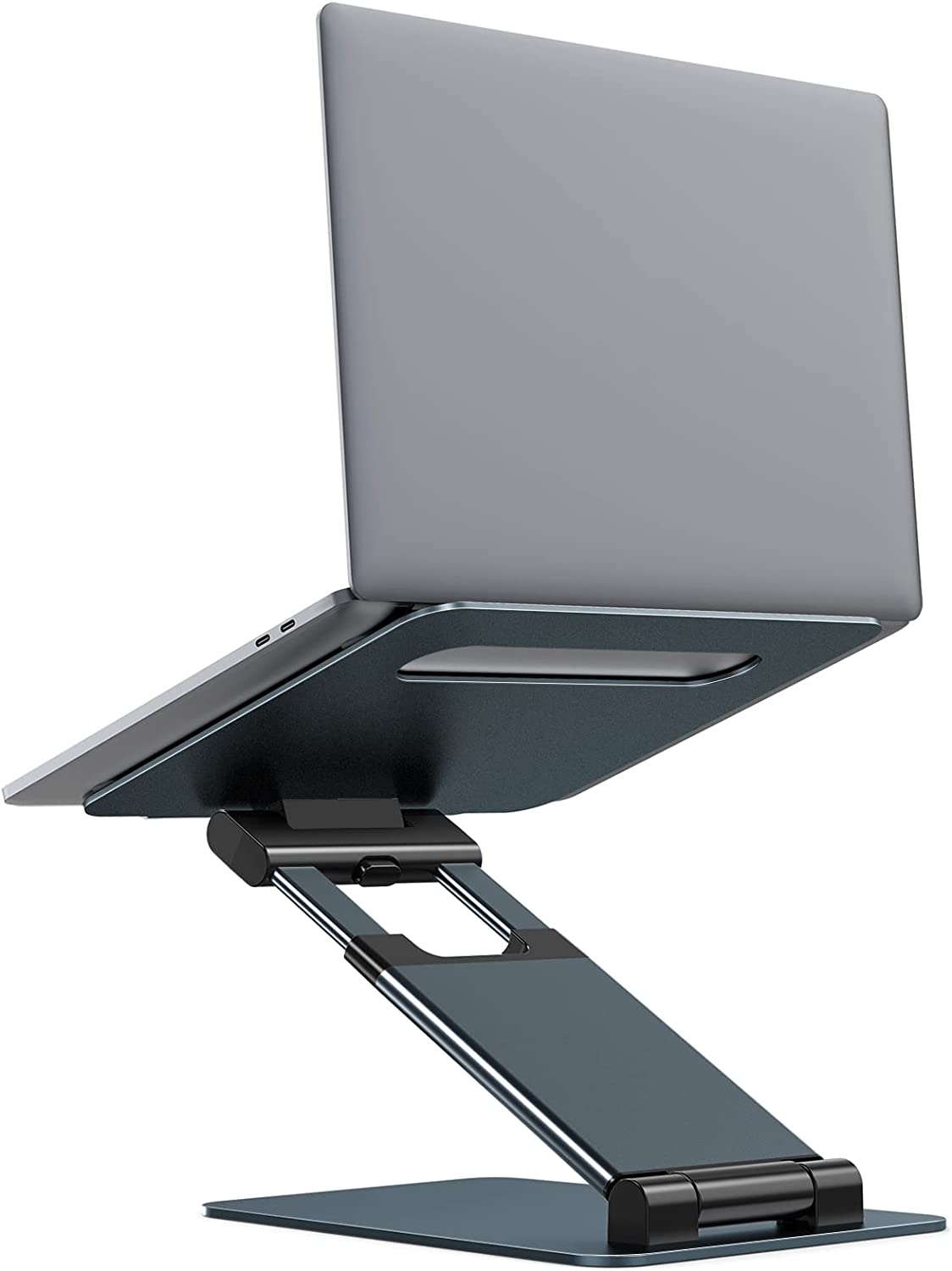
The second Amazon Prime Deals event is here! To save you some time we’ve selected some of the stand-out deals on tech, peripherals, and other gear relevant to content creation and music production. Most of these deals are limited, so act fast while stocks last. The event is running for the course of today and tomorrow which should be just enough time to decide what you need for your setup. If you’re working long hours or connecting peripherals, everyone needs a laptop stand of some sort. This fully adjustable laptop stand from Nulaxy is ergonomically designed to make work more comfortable. It’s compatible with all the major laptop brands and fits any size between 10 and 17 inches. The ventilated aluminium design helps your laptop breathe and keep cool, and the anti-slip base keeps your machine in one place. NULAXY Laptop Stand For those who need extra screen real-estate or simply prefer 13-inch laptops for portability, this UPERFECT Portable Monitor offers a great solution for mobile workstations. The adjustable kick-stand allows you to use the monitor in both landscape and portrait orientation, and has integrated HDMI and USB-C ports for connectivity. Altogether, the screen weighs only 943g (92.08lb), so it’s easy to move in your backpack. UPERFECT 17.3 Inch Portable Monitor Light panels like the ones in this Neewer 18.3” RGB LED kit offer a versatile ambient lighting solution for stills or video. The panels provide a dimmable range of 2500K~8500K warm to cold white and fully adjustable hue, brightness, and colour temperature. You have app control from either Android or iOS, a selection of 17 lighting presets as well as the ability to create and store your own user settings. These lights can be powered via the included DC adapter or NP-F batteries(not included). Neewer 18.3” RGB LED Video Light Panel Kit If you’re looking to upgrade your video streaming or podcasting setup, this set of 3 800D-RGB LED lights from GVM is a great solution. Between the two lighting modes, you can easily create a pro lighting ambiance, taking your production to the next level. While the first setting operates from 3200K-5600K, the RGB mode allows you to control the hue and saturation from 0% to 100%. To make things easy, the GVM app is available for both Android and iOS and gives you precise control of your lighting rig. GVM RGB LED Video Lighting Kit Note: This article contains affiliate links that help us fund our site. Don’t worry: the price for you always stays the same! If you buy something through these links, we will receive a small commission. Thank you for your support! How do you like this post? Your email address will not be published.Required fields are marked *
· Your guess is as good as mine; no information is forthcoming at this time. · He does go on and on about the misapplication of the terms “subtractive” and “additive”. I highly recommend the book “Analog Days” by Trevor Pinch and Frank Trocco. It tells the fascinating … · Really amazing piece of information. Nice content it was really helpful for me. keep it up!
We use cookies to understand how you use our site and to improve your experience. This includes personalizing content and advertising. To learn more, click here. By continuing to use our site, you accept our use of cookies, revised Privacy Policy and Terms of Service. Don't Know Your Password?
You are being directed to ZacksTrade, a division of LBMZ Securities and licensed broker-dealer. ZacksTrade and Zacks.com are separate companies. The web link between the two companies is not a solicitation or offer to invest in a particular security or type of security. ZacksTrade does not endorse or adopt any particular investment strategy, any analyst opinion/rating/report or any approach to evaluating indiv idual securities. If you wish to go to ZacksTrade, click OK. If you do not, click Cancel. OKCancel Image: Bigstock Zacks Equity Research AMZNAAPLMSFTAVID Trades from$1 You follow Analyst Blog – edit You follow Zacks Equity Research – edit
Avid Technology (AVID – Free Report) recently announced the debut of Pro Tools Intro, specifically designed for aspiring creatives who are willing to create music, podcasts, songs, loops and beats in any genre. Pro Tools Intro is available as a download option for free and will introduce Pro Tools Digital Audio Workstation to new creators. Also, this platform will help aspiring musicians and audio artists connect with other notable artists and professionals who use the Pro Tools system. Avid’s recent launch is in accordance with its strategic plan to introduce features that attract new aspiring artists, specifically millennials and Gen Z. In September, Avid announced that its Avid Learning Academy (ALA) program has transitioned to Pro Tools Artist, which will give every student aspiring to build a career in media and enrolled in the program free access to the new Pro Tools Artist (PTA) software. Avid introduced the PTA software in late April 2022 as a new lower-priced tier directed at the music creation community. Music creators can use the software to make beats, write songs, record vocals and instruments and mix studio-quality music. The initial result from the Pro Tools Artist offering reflected solid demand for the product, which helped to increase Avid’s subscriber base and impacted subscription revenue growth positively in the second quarter of 2022. Avid is looking to continue boosting subscription revenue growth in the coming quarters with the launch of its latest Pro Tools Intro. Avid Technology, Inc. price-consensus-chart | Avid Technology, Inc. Quote AVID’s shares have slumped 25% in the year-to-date period compared with the Zacks Computer – Software industry, which has declined 33% in the same period. The recent fall in Avid’s share price reflects negative sentiments among investors as the company realized a 10.6% decline in integrated solutions revenues in second-quarter 2022. Due to global supply chain constraints, the company continued to face challenges in delivering certain parts of its integrated solutions portfolio to customers. In the first half of the year, Avid’s unfulfilled contractually committed orders were more than 20 million. This impacted revenue growth negatively. The company is also facing competition across all of its product offerings from companies like ChryonHego corporation, Dell Technologies, Adobe, Yamaha Corporation and big tech giants like Apple (AAPL – Free Report) . Apple has cut into the video editing space as it provides less expensive digital video editing software. Apple’s video editing software uses machine learning to help provide video editing features and is currently available with its latest iPhone offerings helping the company to gain market share in the video editing software market. Also, rising inflation has placed huge pressure on media technology budgets, which is expected to affect subscription revenue growth of Avid. However, amidst such market volatility, Avid’s recent launch of Pro Tools Intro will attract budding artists to the platform for free. However, the probability of turning these budding artists into potential new subscribers is high, as Avid created the Pro Tools Artist as a low-priced tier that aspiring artists can afford, which will contribute to its subscription revenue growth. However, to deal with the rising competition, Avid has forged strategic partnerships with Amazon (AMZN – Free Report) and Microsoft (MSFT – Free Report) . Avid has partnered with Amazon studios to help in Amazon’s content production in the cloud with software such as Media Composer, Nexis storage and media control platform. Avid is also benefiting from its multi-year agreement with Microsoft, which includes technology collaboration, co-development of cloud bases solutions and the launch of several software-as-a-service offerings. This partnership is helping Avid to create new technologies, which are attracting new users to many of its subscription-based product offerings. In the second quarter, Avid realized net adds of 18,500 subscriptions and delivered year-over-year growth of 22%. As a result, the company, which currently carries a Zacks Rank #3 (Hold), reported subscription revenue growth of 58.7% in the quarter. You can see the complete list of today’s Zacks #1 Rank (Strong Buy) stocks here. Avid also expects that the effects of the supply chain constraints will start resolving from the second half of 2022, and it will be able to cover much of its backlog. Amazon.com, Inc. (AMZN) – free report >> Apple Inc. (AAPL) – free report >> Microsoft Corporation (MSFT) – free report >> Avid Technology, Inc. (AVID) – free report >> Our experts picked 7 Zacks Rank #1 Strong Buy stocks with the best chance to skyrocket within the next 30-90 days. Recent stocks from this report have soared up to +178.7% in 3 months – this month’s picks could be even better. See our report’s 7 new picks today, absolutely FREE. Privacy Policy | No cost, no obligation to buy anything ever. This page has not been authorized, sponsored, or otherwise approved or endorsed by the companies represented herein. Each of the company logos represented herein are trademarks of Microsoft Corporation; Dow Jones & Company; Nasdaq, Inc.; Forbes Media, LLC; Investor’s Business Daily, Inc.; and Morningstar, Inc. Copyright 2022 Zacks Investment Research | 10 S Riverside Plaza Suite #1600 | Chicago, IL 60606 At the center of everything we do is a strong commitment to independent research and sharing its profitable discoveries with investors. This dedication to giving investors a trading advantage led to the creation of our proven Zacks Rank stock-rating system. Since 1988 it has more than doubled the S&P 500 with an average gain of +24.51% per year. These returns cover a period from January 1, 1988 through September 12, 2022. Zacks Rank stock-rating system returns are computed monthly based on the beginning of the month and end of the month Zacks Rank stock prices plus any dividends received during that particular month. A simple, equally-weighted average return of all Zacks Rank stocks is calculated to determine the monthly return. The monthly returns are then compounded to arrive at the annual return. Only Zacks Rank stocks included in Zacks hypothetical portfolios at the beginning of each month are included in the return calculations. Zacks Ranks stocks can, and often do, change throughout the month. Certain Zacks Rank stocks for which no month-end price was available, pricing information was not collected, or for certain other reasons have been excluded from these return calculations. Visit Performance Disclosure for information about the performance numbers displayed above. Visit www.zacksdata.com to get our data and content for your mobile app or website. Real time prices by BATS. Delayed quotes by Sungard. NYSE and AMEX data is at least 20 minutes delayed. NASDAQ data is at least 15 minutes delayed. This site is protected by reCAPTCHA and the Google Privacy Policy and Terms of Service apply.
By Arielle Lana LeJarde As the doors of Music Hall of Williamsburg opened on Sept. 28, concert-goers of all ages wearing MF DOOM memorabilia quickly filled the Brooklyn venue — only to eagerly change their outfits for merch with the name of a French jazz album from the Seventies. Within 10 minutes, Cortex’s Troupeau Bleu tees had run out. “R.I.P. MF DOOM!” one fan screamed as the band hit its stride onstage at its first-ever U.S. show. “Ah, yes,” Alain Mion, Cortex’s 75-year-old frontman and pianist, responded, before lightheartedly adding, “But me — not yet.” The thirst for anything related to Troupeau Bleu wasn’t surprising, seeing as the 1975 album’s first vinyl pressing has been sold for almost $1,000 on Discogs. It’s a familiar name if you’ve spent long enough digging for the samples of your favorite rap tracks: Troupeau Bleu has been sampled at least 142 times to date, with its blend of psychedelic jazz, soul, and funk finding its way into songs by underground legends like DOOM and J Dilla, along with rap royalty including Lupe Fiasco on “Mural” and Rick Ross on “Amsterdam,” “Oyster Perpetual,” “Everything a Dope Boy Ever Wanted,” and Jeezy’s “Beautiful.”
The most recognizable selections come from “Huit Octobre 1971,” a song named after Mion’s wedding anniversary with his late wife. Vocalist Mirelle Dalbray’s angelic high-pitched scatting and Alain Gandolfi’s frenzied drum breaks have been also used in DOOM’s Madlib-produced “One Beer,” Tyler, the Creator’s “Odd Toddlers,” Wiz Khalifa’s “Visions,” and Lil Yachty’s aptly-named “Cortex,” among dozens of other songs.
With the prolific use of Troupeau Bleu in hip-hop for over two decades, would it be fair to anoint the record as hip-hop’s favorite jazz album? “It’s not an overstatement,” says New York drill wunderkind Cash Cobain. “It’s a fact.” Cash Cobain discovered Cortex when he heard Tyler’s “Odd Toddlers” in 2009 and has been a fan of the jazz band since then, going on to produce Yachty’s “Cortex” 12 years later. Industry giants like Madlib and Rick Ross have a substantial archive of Cortex-injected tracks, but Tyler may be Cortex’s most prominent fan today.While he declined to respond to Rolling Stone’s request for comment for this story, he was there at Music Hall of Williamsburg, dancing through the night in a closed-off section of the club; Tyler even posted about his love for Troupeau Bleu during the concert in a since-vanished Instagram story. Speaking in the green room before the show, which kicked off a tour that also included dates in Los Angeles and at the Desert Daze festival, Mion has his own theories about why his music has resonated with a younger generation of rap musicians. “People in hip-hop use a lot of soul music,” he says. “[Troupeau Bleu] has soul, it’s particular, it’s original, and it’s French.” He quips: “It could also be because we’re geniuses.” Gino Sorcinelli, creator of Micro-Chop, a popular Twitter account and newsletter dedicated to dissecting sampling and music production, says it’s all about Troupeau Bleu’s distinctive sound. “All the drum hits are crisp as fuck, every piano and organ sequence is impeccable, the basslines sit perfectly in the pocket and complement each composition, and Mireille Dalbray’s vocals are unbelievable,” he says. “They sound like they’re floating on top of each track.”
Jazz and hip-hop have a long, intertwined history together. Both forms originated in the United States, and their genealogies are rooted in the Black American experience. The symbiotic relationship is ancestral, dating back to the 1920s Harlem Renaissance, when Langston Hughes innovated reciting poetry over jazz rhythms, inadvertently creating the literary art form of jazz poetry. The connection between the two improvisation-based genres evolved with hip-hop producers’ adoption of breakbeats, syncopation, and sampling; by the 1990s, acts like A Tribe Called Quest, Gang Starr, and Digable Planets could build a substantial part of their musical identity around their appreciation for jazz. Cortex’s history with sampling is a bit more complicated, which could be one reason the band has flown under the radar for so long, despite its appeal to sample-flippers. The first documentation of Troupeau Bleu being used in a hip-hop track is in DJ Cam’s 1997 experimental hip-hop instrumental “Bronx Theme,” where he sampled the record’s title track. Madlib then sampled “Huit Octobre 1971” in his 2003 track “No Games” with J Dilla, for their collaborative project Jaylib, before sampling the same song in DOOM’s “One Beer” and his own “Mind Fusions (Intro).” In the ‘90s and early 2000s, sample-snitching was against the rules of hip-hop, with discussing the sources of a rare loop strongly discouraged. “That rule robbed us in the beginning,” Mion says. “It’s no more like that, because every label doesn’t want to go to court. They say, ‘Mr. Mion, please accept this contract with us.’ And every time I say yes.” Mion recognizes that hip-hop’s love for the album has only prolonged its shelf life, and acknowledges how all of the sampling was ultimately a good thing. While rap is still not necessarily his taste, he mentions: “There is one rapper I really like. Lupe Fiasco. I just love his energy. If he was a businessman, he could sell me anything!” Mion is currently the sole remaining founding member of Cortex; the current touring group is comprised of vocalist Maeva Borzakian, drummer Cedric Affre, bassist Mohamed Ouraz, and saxophonist Loic Soulat, each with their own heartwarming relationship to Mion. Borzakian called Mion, hoping it wasn’t too late to audition. They then spent two hours on the phone talking about music, learning how much their tastes align. Ouraz bought the house directly across from Mion in the Paris suburb of Bourg-la-Reine and the two bonded over their love of jazz. Soulat, meanwhile has known Mion since he was nine years old — the Cortex leader was his childhood piano teacher. “But he wasn’t as good as me,” Mion jokes. “That’s why he plays the saxophone.”
For instance, cranking your input gain too high generates that unsettling noise in digital recording systems. But clipping is an easy problem to solve and avoid altogether. With that said, what if I told you that you can use audio clipping to your advantage in your DAW? But what is digital clipping? Is it anything like analog distortion? And why does clipping occur in DAWs? Why is distortion still a problem in digital audio? Let’s find out! Digital clipping is the result of recording with too high a gain level or boosting pre-existing audio too much. In other words, you will clip your signal if it exceeds the loudness ceiling in your recording equipment. And we call this digital waveform distortion clipping because it clips the peaks and troughs of the sound wave away from the rest of the signal. Digital clipping occurs in the same way as analog clipping. For example, an amplifier goes into overdrive if you push it over its limits and distorts the signal. And amplifying a signal past the maximum level a speaker can handle will distort the signal and maybe damage the speaker. Therefore, you can clip analog and digital signals by overdriving recording equipment. Digital clipping occurs when the level of your input signal is higher than the loudness ceiling in your recording equipment. Therefore, any signal that is breaching the ceiling is cut away which results in a horrible noise infiltrating your signal. Any signal breaching the ceiling is disregarded, and the horrible sound of digital clipping is your signal breaking apart. Recording devices like audio interfaces give you a determined amount of ‘headroom’ to record with. Consequently, recording at a level higher than this loudness ceiling clips the peaks and troughs of your sound wave away. But digital clipping can arise anywhere in your digital signal chan – not just at the input stage. For example, you can boost your signal too much with a plugin, you can boost a virtual instrument too much, and you can clip your master channel if your mixer input channel levels are too high too. Therefore, adjusting the input level before each stage of recording helps mitigate clipping. But we’ll come back to that later. Analog clipping occurs when we overdrive the electric circuits and transistors in analog equipment. But where analog signals distort based on the circuitry of hardware equipment, a digital system generates ‘clipping’ with an algorithm. Furthermore, analog distortion squares off the sound wave, meaning the ceiling and floor flatten the round peaks and troughs into squares. In contrast, digital clipping cut the peaks and troughs clean off. As another matter, there’s only one type of digital clipping but there are three types of analog distortion. These include: You can notice each type of distortion In a recording session, but distortion and fuzz are far more obvious than overdrive. Being the lightest of the three, overdrive is a creative effect used in lots of musical genres. But accidental distortion degrades the recording and doesn’t sound so good. Secondly, distortion noticeably breaks the audio up and can compromise audio quality. Finally, Fuzz sounds like it’s named – a strong and undesirable fuzz. First of all, you’re going to hear a horrible noise in your input signal if you clip it. As a result, this noise ruins your recording if you’re overdriving the signal at the input. You’ll definitely hear it, and it could damage your equipment too. Secondly, severe clipping begins to break your signal up. So, the more severe the clipping the more you break up your recording until it sounds like a mess of horrendous noise. However, what’s important to note is the severity of clipping. A lot of professional music uses clipping creatively because you can introduce minor clipping and it won’t be noticeable. This practice gives you a little more ‘headroom’ in the rest of your mix because a signal doesn’t instantly distort once it reaches the loudness ceiling. Therefore, you can think of the red clipping indicator as a warning and not a hazardous monster to avoid at all costs. Instead, use your ears and listen for noticeable signal degradation. Sever clipping sounds like your recording is breaking up as a horrible noise infiltrates the signal. The higher you breach the loudness ceiling, the more distorted your recording becomes with the noise and loudness. Despite their benefits, making music on computers has similar limitations to production on analog equipment. There is a limit to how loud your signals can be, so let’s discover why that’s the case. We’ve referred to the ‘loudness ceiling’ quite a bit in this post. Well, its actual name is the 0 dBFS ceiling. dBFS means Decibels relative to Full Scale, and it is a unit of measurement in digital systems that measure the amplitude of signals. 0 dBFS is the maximum level your input signal can reach in amplitude before clipping occurs. In other words, 0dBFS is the ceiling of the headroom we were talking about earlier. And measurements below the maximum are always negative levels. Furthermore, affecting a signal by approximately 6dBFS doubles the volume of the signal or halves it – depending on whether you increase or attenuate the fader – and thereby adds or subtracts 10dB. Dynamic range is the difference between the minimum and maximum signal levels a digital recording device can process without distorting the signal, measured in dB (decibels). So, a greater dynamic range allows for a bigger contrast between loud and quiet sounds in your recording. An audio interface offering 100 dB of dynamic range can register signal strengths between 0 – 100 dB. But how do digital systems measure sound? They depend on something known as bit depth which determines dynamic range among other things. Microphone and instrument signals are electrical signals that the interface reads and converts into digital. The louder your gain, the stronger the electrical current. And an interface can’t measure any signal strength (amplitude level) higher than the number of available bits allows it to. Thereby bit depth determines the dynamic range the interface can process without distorting the input signal. 16-bit offer 96 dB of dynamic range whereas 24-bit offers 124dB of dynamic range! But no matter how much dynamic range your audio interface gives you, your dBFS ceiling is the final boss. And when your input signal exceeds 0dBFS it will clip. The closer your input signal gets to 0 dBFS, the more full of information the bits of each sample are. As a result, our digital system has no more bits to accurately process our signal. Then, any excess data is disregarded which results in your song breaking down – clipping. In summary, while 0dBFS is the maximum signal strength a digital system can process, a higher bit depth allows you to record a louder signal without breaching the 0dBFS ceiling. One final stop on the bit depth bus. Today, DAWs utilize 32-bit float processing. But what does that mean? Well, 24-bit and 16-bit use whole numbers with no decimal points (fixed-point), to represent data. But 32-bit float does use decimal points (floating-point). Therefore, data in digital audio files use decimal points and exponents (for example “1.4563 x 10⁶“ instead of “1456300”). As a result, 32-bit float DAWs can process much larger and much smaller data (think of the dynamic range as a reference here). In fact, A 32-bit float DAW offers 1528 dB of dynamic range compared to 24-bit’s 144 dB! It goes without saying that this is more than we actually need, but it has huge benefits. In short, it’s impossible to clip your signal in a DAW. It’s still very possible to clip in your audio interface at the recording stage, but a 32-bit float DAW allows us a lot of flexibility once our signal is in. But as soon as you export your file to a 16 or 24-bit file (as you will for online distribution), the risks of clipping become very real once more. So, should we talk about how to avoid clipping altogether? Okay, so 32-bit float DAWs make clipping your signal in a DAW pretty difficult, but salvageable at the very least. But when the time comes to export to a 16-bit or 24-bit audio file, the laws of digital audio return. So making channels as loud as you can in your DAW is still a bad idea. And you can still clip your signal before it reaches your DAW too! Therefore, practicing gain staging in your signal chain will help you avoid clipping forever. Gain staging is the practice of keeping an instrument at a consistent level in its entire signal chain. For example, let’s look at the signal chain of an electric guitar: In this example, we’d first need to make sure the amplifier isn’t boosting the signal too much. Secondly, we can make sure the output volume of our cabinet isn’t too loud. But if you’ve attenuated the amplifier level, the cabinet may need a little boost. Thirdly, we need to look at our microphone. So we’d attenuate or increase the gain knob – based on the level of your amplifier – on the interface which tells its microphone preamp what to do. Now it’s time to attenuate the gain fader on the mixer channel. Once this is done, you can finally begin inserting plugins on the channel. But each plugin you add will affect the level of the signal. So to maintain the level of the channel, you need to attenuate or boost the volume knob of the plugins you insert. Quality recordings While gain staging, use the dBFS peak meters in your DAW as a reference. Firstly, avoid recording your instruments too loudly. Using up too much headroom straight off the bat isn’t a great idea! A general input level to strive for is -18dBFS as an average, and make sure your peaks aren’t going higher than -10 dBFS. Remember to attenuate your signal at its source (amplifier) before you start playing with your DAW faders. Each pluginyou insert needs gain staging because plugins increase or attenuate the signal level at their output. For example, using a filter or an EQ to remove frequenciesattenuates the signal level when it leaves the plugin. Herewe’d use the makeup gain knobto replenish those lost levels. A VU Meter is a metering tool that you can insert on your masterbus, where VU stands for Volume Unit. VU Meters give you a calculated estimate of the level of your signal – a more accurate representation than DAW peak meters give you. So they’re a great tool to use while gain staging to understand the level of your signals all the more. VU Meters also provide a limiter of sorts. For example, set your VU Meterto -18 dBFS and then the value of 0 in your VU Meteris equal to -18 dBFS, giving you an easy reference point. On the other hand, LUF Meters give you an accurate representationof how loud your signal is to human ears, and that’s why we call them Loudness Meters. Loudness Meters analyze audiowhile considering the duration and frequency content of the signal. In contrast, a peak meter only reads signal strength. Therefore, loudness meters allow you to assess how loud your track actually is. Moreover, they use Loudness Units(LU) as their unit of measurement, where a difference of one LU is noticeable to your ears. While VU Metersallow you to measure the average gain levels of your signals, Loudness Meters allow you to dissect your processed signal at the end of your master bus to measure how loud the signal actually is. In other words, using both of these tools will allow you to avoid clipping while keeping things loud! Going back to our filter/EQ example, you use a LUF meter to measure how much loudness you have lost after removing frequencies. Before throwing yourself at the makeup gain and guessing, you can measure loudness by soloing the channel and bypassing the filter/EQ. What does the LUF Meter show you? How much gain do you need to apply to get the channel level where it was before the processing frequency cuts? Finally, don’t aim for low faders. The lower the mixer faders are to the bottom, the less audio resolution the signals have resulting in a less clear mixdown. One slight attenuation dramatically changed the volume of the sound. So, as we said earlier, aim to gain stage at the sound source rather than with mixer faders as to maintain the resolution of your signal. Alternatively, you could use a gain pluginat the end of the plugin chain. A gain plugin allows you to decrease the gain and maintain audio resolution. Digital clipping isn’t fun but it isn’t the end of the world. Now you know why clipping occurs you can take the necessary steps to remove the risk. But you can use clipping to your advantage. After all, digital audio workstations provide a flexible workflow that allows you to use clipping as a pragmatic and creative tool. So, make sure that you experiment with the dBFS ceiling now that you know how to use gain staging. We’ve discussed general guidelines and good practices but experimenting with gain staging and clipping could lead to some interesting results… Don’t forget to claim your ten free sounds from RouteNote Create! Access our diverse catalog of sounds and inspire yourself! Your email address will not be published. Required fields are marked *
Sign up to our newsletter and make sure you don’t miss a thing! Hit enter to search or ESC to close.
Oct 12, 2022 MARQUETTE — “When it’s late in the evening and the music’s seeping through,” – Paul Simon I just recently returned from a trip to Nashville. The last time I went to Nashville it was in Indiana. This time it was the one in Tennessee. A couple of interesting thoughts on things I contemplated there. One is the naming of things, in this case birds. First, it’s interesting to me that Nashville is known for its country music, and singers are sometimes referred to as warblers. This is interesting to me because as many people know, there is a group of birds called warblers. Once more, there are bird species named Nashville warbler and Tennessee warbler. And yes, the males of both species sing. The Nashville warbler was first discovered near Nashville, Tennessee by ornithologist Alexander Wilson. The Tennessee warbler was also discovered and named by Wilson after he found the bird along the Cumberland River. All of that is made even more interesting by the fact that Nashville warblers and Tennessee warblers mate, build their nests, lay eggs and raise young – in other words “live” – much farther north, in places including Michigan’s Upper Peninsula. The birds are named for geographic places that they are just passing through while they are migrating north or south for the summer or wintertime. There are also other species that have been named in this fashion. Another thing that occurred to me in Nashville was most relatable to human nature. I have been in plenty of situations where I see a person and I know I know them, but for some reason I can’t recognize them. It usually turns out that I am seeing this person out of their typical uniform, place they work or something else that’s out of place and that detail works to confound my identification ability. I usually figure it out after I’ve walked away thinking, “Who the hell was that?” When I finally recall the name and the face and the place, when it all snaps together it’s like solving a riddle or some other puzzle. I then feel relieved, satisfied and happy that I was finally able to figure it out, but still a bit foolish for not being able to recognize someone I knew I knew. The same thing can happen while watching well-disguised actors in Hollywood movies. I think as viewers we intrinsically know we need to buy in to some degree to what is happening on the stage or the screen to stay engaged with the story. When we do this, I think we often look past the human being we are seeing and go straight to the character, trying to figure out what he or she means to the story. This is exactly what these very skilled and chameleon-like actors want us to do. But by doing so, we can become distracted as the production moves on. We can hear a voice or see certain mannerisms or facial characteristics and wonder who is that guy? Then it clicks and it can be mind-blowing. Example: “That guy who’s playing the monkey was the one who played the woman in that show about the stolen car. Wow, that’s cool!” The absolute best one of these snap moments for me came during the movie “The Avengers.” Not the 2012 action hero film, the 1998 satire based on the spy television show of the late 1960s. When I was a kid, the Avengers television show made actress Diana Rigg a veritable sex symbol in her definitive role as Emma Peel. Her male counterpart was Patrick Macnee who played John Steed. I loved that show then and I still do. When the 1998 movie came out, I was disappointed in the interpretation, but the snap moment provided complete absolution. A character in the plot is named Invisible Jones and not surprisingly, you don’t see him. But you hear his voice. After listening for a little while, I recognized the character’s voice as none other than that of Patrick Macnee – the dapper actor who played John Steed in the television series 30 years prior. That was an exciting and wonderful moment for me. It was like a secret message to viewers that those who were putting this film together not only were aware of the Avengers television show, but that they might quite possibly be fans themselves. So cool. It’s one of those little things that make me probably happier than it should, but I can’t help it. I think it’s great. So, with all that said, when I was in Nashville, I toured the 360-degree, Vincent Van Gogh immersive experience exhibit. It was absorbing and completely incredible. Afterward, I was outside waiting for my ride. I sat on the sidewalk and watched the scene around me. It was a hot day, and I was enjoying the shade of a tree growing along the sidewalk. After a few minutes, I stood up to stretch and saw a bird flying in the sky over me. It was bigger than a robin and its flight looked familiar, but I was out of place. I was in Nashville where there could be quite a few different birds that I am not used to seeing regularly. It was like one of those times I’ve described of bumping into someone I didn’t recognize in the grocery store. So, I studied the bird intently for the few seconds I had to observe and think. Then, the positive identification swept over me like a cold, ocean wave. I said aloud, “Yup, that’s a blue jay.” I could have smacked myself in the forehead. I think the geographic location predisposed my brain to anticipate something exotic. Instead, it turned out to be a species I see almost every single day, but under these circumstances was, for a few seconds, an unidentified flying object. At times like these, I try to remind myself that there are plenty of people who have never, nor will ever, see a blue jay but would certainly like to. It’s all about relativity and location. Speaking of unidentified or missing information, I had another realization this week. This one was kind of sad and hollow for me. When birds leave for the winter season, many of my favorites, unlike the Canada geese and sandhill cranes, do not announce their departure. One day, I just figure it out that they are gone. This week, I had one of those days. I realized that I was no longer hearing the loons. They had been constant friends since the spring with their haunting nighttime serenades that let me know I wasn’t the only one still awake at those hours. The black-throated blue warblers, chimney swifts and common nighthawks are all favorites of mine that exhibit the same leaving behaviors. The nighthawks at least form big, mid-air grouping displays which could be considered an announcement, but I rarely am fortunate enough to see those. But with the loons gone, what I presume is a young, barred owl has done his best to fill that friendship gap. I have been hearing him singing on several nights recently and I have answered back in some instances. A few nights ago, I was watching television late in the evening and I heard the owl’s call. It was loud enough to hear over the show I was watching. I went outside and found the owl in the trees in our front yard. I shined a flashlight up and had a great look at the bird, just sitting there in the open, looking down at me. I talked with him for a few seconds and enjoyed the opportunity. This is one of those experiences not enough people have had. To see an owl and to hear it sing or call is an out of this world kind of experience. I have intentionally sought such encounters out over the years, and it has proven to be invaluable to me. I can likely remember just about every time I have seen an owl. From hot, desert nights to chilly mountain heights and snowy fields in the eastern part of our region, I have seen more than a dozen owl species. However, there remain a few noted blanks on my mental life list of owls I still want to see. With the autumn here, I anticipate spending many evenings sitting out before a campfire, letting the cool and clean atmosphere sink into my soul. Once the leaves are down, the owl spotting becomes much easier. I eagerly await those nights, ready to smell the pumpkin spice and recognize my ghostly avian friends when I see them and hear them. — — — Outdoors North is a weekly column produced by the Michigan Department of Natural Resources on a wide range of topics important to those who enjoy and appreciate Michigan’s world-class natural resources of the Upper Peninsula. Today’s breaking news and more in your inbox RAPID RIVER — On Sunday, July 17, UP Wild Delta County will host a Nature Prayer Gathering in Rapid River with … ESCANABA — The AARP Foundation and the Escanaba Public Library are looking to expand their team of volunteers for … MARQUETTE — “When it’s late in the evening and the music’s seeping through,” – Paul Simon I just … MARQUETTE — Planning on spending the cold-weather season around a cozy, crackling campfire or gazing at glowing … ESCANABA — OSF HealthCare St. Francis Hospital & Medical Group along with AirMedCare Network & … Today’s breaking news and more in your inbox
One of the best things about modern-day headphones is that they actually can get better over time, thanks to software updates. Such is the case with the Google Pixel Buds Pro, which got a pretty huge new feature in one of their first major firmware updates. Google Pixel Buds Pro Android device of some sort New to the Pixel Buds Pro is the ability to set a full five-band EQ. That is, you can now adjust things like bass and treble — five layers worth — to dial in the sound just how you like it. Google also has thrown in seven EQ presets, which you can use as your new default or as a starting place to customize and save your own EQ settings. Here’s how to change the EQ on the Google Pixel Buds Pro. By the time you’re reading this, it’s likely you already have the latest version of the Pixel Buds Pro firmware, as well as the latest version of the Pixel Buds app for Android. If not, you need to be on Version 1.0.474476083 (or newer) of the Pixel Buds app, and the earbuds need to be on Version 3.14. Here’s how to update your Pixel Buds Pro firmware if you need a little help. Now that you’ve got updated software and updated firmware, it’s time to play with the EQ. Here’s how to do that. Step 1: Open the Pixel Buds app. Step 2: Tap the Sound (Active Noise Control and EQ) button. Step 3: From here you can choose any of the seven EQ presets. There’s default (wherein everything is flat), heavy bass, light bass, balanced, vocal boost, clarity, and last-saved. Step 4: To save a custom preset, tap the Gear icon. You can choose a preset here as a starting point, if you want, and adjust things from there. Or you can just go hog wild on the sliders on your own. Step 5: After you’ve adjusted the five EQ bands — upper treble, treble, mid, bass, and low bass — however you like, scroll down below Low bass and tap Save. And that’s it. There’s no right or wrong here. You can adjust the EQ however you want, which is exactly what it’s for. If you like more bass in your music, ramp it up. If you like the high end coming through on your podcasts, have at it. It’d be nice if you could save more than one custom preset and not the most recent changes, but it’s a start. And it’s simple enough to change things whenever you want. Upgrade your lifestyleDigital Trends helps readers keep tabs on the fast-paced world of tech with all the latest news, fun product reviews, insightful editorials, and one-of-a-kind sneak peeks.
Sign up for our free daily newsletter, along with occasional offers for programs that support our journalism. By signing up to receive emails, you agree to receive occasional promotional offers for programs that support The Nation‘s journalism. You may unsubscribe or adjust your preferences at any time. You can read our Privacy Policy here. Copyright (c) 2022 The Nation Company LLC
by Gary Price October 11, 2022 by Gary Price From a Library of Congress Blog Post: Following its annual National Hispanic Heritage Month tradition, the Hispanic Reading Room in the Latin American, Caribbean and European division (LAC&E) announces the digital release of 50 new streaming audio recordings in the PALABRA Archive — the Library’s treasure trove of recordings of 20th and 21st century Luso-Hispanic poets and writers reading from their works. With recorded authors from all over Latin America, the Iberian Peninsula, the Caribbean, and other regions with Hispanic and Portuguese heritage populations, the PALABRA Archive includes close to 850 recordings, a growing portion of which are available for online streaming. The newly released recordings include contemporary and historic gems. Among these are July 2022 recording of U.S. Poet Laureate Ada Limón in conversation with Argentine poets Laura Wittner and Daniela Auginsky during an event organized in Buenos Aires by the Queen’s College low-res program where Limón teaches; and a historic recording of Spanish writer Juan Goytisolo reading an essay on General Francisco Franco’s death on November 20th, 1975. Recorded in the Laboratory at the Library of Congress only thirteen days after the General’s death, this two-part recording includes an interview and the essay (forward to minute 08:35). The powerful obituary, titled “In Memoriam” was later published in 1978 in a book titled Libertad, libertad, libertad. [Clip] PALABRA has been curated by the Library of Congress Hispanic Reading Room and continues recording the voices contemporary literary figures. Throughout its history, writers such as Nobel Laureates Gabriel García Márquez, Pablo Neruda, Gabriela Mistral, Miguel Ángel Asturias, and Juan Ramón Jiménez have been recorded for the collection, as well as other noteworthy figures like Jorge Luis Borges, Julio Cortázar, and Isabel Allende. Learn More, Read the Complete Post Filed under: Interviews, Libraries, News, Profiles SHARE: Gary Price ([email protected]) is a librarian, writer, consultant, and frequent conference speaker based in the Washington D.C. metro area. He earned his MLIS degree from Wayne State University in Detroit. Price has won several awards including the SLA Innovations in Technology Award and Alumnus of the Year from the Wayne St. University Library and Information Science Program. From 2006-2009 he was Director of Online Information Services at Ask.com. Gary is also the co-founder of infoDJ an innovation research consultancy supporting corporate product and business model teams with just-in-time fact and insight finding. ADVERTISEMENT ADVERTISEMENT From the Launch Announcement: SAGE has launched a free-to-read collection of research and other resources supporting library professionals as they make improvements in their library, across their institutions, and build … From the Smithsonian Libraries and Archives “Unbound” Blog: Smithsonian Institution Archives, and now the Smithsonian Libraries and Archives, have been working diligently for the past 7+ years to gather information, … From WZZM in Grand Rapids, MI: A recent report from PEN America found there’s been an increase in books bans in schools. It says more than 1,600 book title were … The State of Open Data Report 2022 was published on October 13, 2022. From the News Release: Researchers worldwide will need further assistance to help comply with an increasing number … Canada: Final Design of New Saskatoon Central Library Unveiled (via CBC) Going Open Access: A Tale of Two Journals (via Illinois State University News) GPO’s Responses to Recommendations & Commendation … From NC State University Libraries: Video interviews with many of North Carolina’s most notable authors—including Guy Owen, Lee Smith, Linda Beatrice Brown, Clyde Edgerton, and Gerald Barrax—are now publicly available … Texas State Library and Archives Commission Signs Deal with Gale For E-Resources Jane Austen Presentation Copy of Emma Sells for Record $425,000 (via Fine Books and Collectors) Library System in … From an Announcement: The American Library Association’s Intellectual Freedom Round Table Committee is soliciting nominations for three annual Intellectual Freedom Awards The John Phillip Immroth award honors the courage of … From the UC Davis Library: MacKenzie Smith has announced she will retire as University Librarian and Vice Provost of Digital Scholarship at the end of June 2023, after more than … From an Internet Archive Blog Post: We are pleased to announce that the COVID-19 Web Archive is now available! As the COVID-19 pandemic emerged in early 2020, librarians, archivists, and … The Europeana 2022 conference took place a couple of weeks ago and video recordings of presentations are being made available on YouTube. A playlist of video recordings of sessions is … Author Interview: Nine Best Practices for Software Repositories and Registries (PeerJ) Disinformation is a Growing Crisis. Governments, Business and Individuals Can Help Stem the Tide (via World Economic Forum) Introducing … ADVERTISEMENT ADVERTISEMENT This coverage is free for all visitors. Your support makes this possible. This coverage is free for all visitors. Your support makes this possible.
Oct 12, 2022 -Submitted photo At times Ryan Madden finds himself a little overwhelmed with his schedule, but the Fort Dodge Senior High School senior pushes forward, enjoying everything he can while walking the halls as a Dodger. At times Ryan Madden finds himself a little overwhelmed with his schedule, but the Fort Dodge Senior High School senior pushes forward, enjoying everything he can while walking the halls as a Dodger. Madden’s list of activities stems from athletics to performing arts to band. Madden is the student body president for Dodger Senate and the president of the National Honor Society. “It is a little overwhelming at times to think about everything going on,” Madden said. “My trick isn’t really a trick, I’ve just been blessed with having an amazing family and friends who support me, and remind me everything’s going to work out whenever I get a little stressed.” He is a freshman ambassador that also participates in large group speech, jazz band and youth group at St. Paul Lutheran Church. He takes part in theater and marching band as a drum major. On the athletic side, he is on the soccer, cross country and track teams, and also referees youth soccer. “I personally feel like when you are involved in things, you are getting the most of every experience,” Madden said. “This sounds cliche, but you only get to go through high school once, and I didn’t want to regret not trying anything, so I tried it all.” On Friday nights, you can find Madden in the center of the field as one of Fort Dodge’s four drum majors. “Being a drum major has been one of the most fun things of my entire high school career,” Madden said. “Getting to know all the people in the band and being a figure they can rely on means so much to me. The band feels like a family, and to have a role in all of the chaos that comes with organizing over 100 people is a pretty amazing feeling. “There’s also just something about standing on that podium with the lights of the (Dodger) stadium shining down on you that just can’t be replicated.” Stemming from his first role as Charlie’s grandfather in the middle school production of “Charlie and the Chocolate Factory,” Madden has loved the stage. “From a young age, my parents wanted music to play in all the lives of my brothers and I,” Madden said. “This kind of resulted in me being around a lot of performances, and eventually I wanted to perform myself. “I like that performing allows me to show people a side of myself they don’t really know about.” While on stage it’s not about the role or the theme, it’s about the process and the memories. “The most important thing to me about performing are the memories you make,” Madden said. “You can ask any performer about the process of putting on a show, and I promise you that there are always going to be specific memories and inside jokes that make every performance memorable and different for every person. “That’s the most fun thing to me about performing.” Madden also enjoys the opportunity to get on stage and relate himself to a character that may not be like his personality. “Trying to define why I like acting has always been hard for me because on one hand you are playing a completely different person unlike yourself, but at the same time, by the end of the show you end up relating to the character in some way or another,” Madden said. “In Footloose, I played the Rev. Shaw Moore. This was something unlike anything I had ever done, and at first, I had a hard time being so uptight, but towards the end leading up to the performance I started to understand where he was coming from more and more. “The connection you make to the character and bringing out the connection is what acting and performing is to me.” While taking part in so many activities, it helps to have a strong support system, and Madden has that at his side. “My biggest influences have definitely been my family,” Madden said. “My mom and dad in particular help me to strive to be the best version of myself by being the best versions of themselves.” Today’s breaking news and more in your inbox HUMBOLDT — Three residents of a bankrupt Iowa nursing home have suffered broken bones in recent months, despite … Former Councilman Andy Fritz has been picked to fill the vacancy on the Fort Dodge City Council created by … The developer of one of the two carbon capture pipelines proposed to cross through Webster County says it has … Today’s breaking news and more in your inbox