Every week we simplify the market into key points so you can stay up to date on market trends, upcoming drops, top project guides and much more!
BY Jex Exmundo
September 29, 2022
Since starting in Chicago’s hyper-competitive hip-hop scene 15 years ago, The Cool Kids carved out a singular niche for themselves in the larger music industry by consistently being ahead of the curve. When the duo, comprised of Chuck Inglish and Sir Michael Rocks, dropped their first video Black Mags in 2007, the world witnessed a novel kind of alternative hip-hop that later topped the charts in the following decade.
Now, The Cool Kids have kicked off yet another forward-looking initiative — a generative NFT art collection. Following the success of their membership token, they felt like they could go deeper into NFTs. “With that token, you would be able to gain access to shows that we have, you would get exclusive merchandise. Vinyl, CDs, signed memorabilia, and all that stuff,” said Sir Michael Rocks in an interview with nft now.
With their initial project serving as a seamless Web3 onboarding experience for the fans, the duo knew their next foray into NFTs needed to go hard. In our latest episode of Behind The Drop, The Cool Kids gave us an inside look at Pre-School, their next big NFT drop.
Through this collection, The Cool Kids’ art curation skills blended with their music production chops. In collaboration with generative art service provider Async, Pre-School hopes to provide collectors and fans with yet another NFT project worth collecting. “The best part is that no other edition will be generated in the exact same way, so that every collector essentially has a one-of-one,” said Async Artist Sophie Sturdevant, in an interview with nft now.
“Collaborating with The Cool Kids was such a fun and honestly smooth process for us. It was fun to work with a pair […] of musicians that understand the value of blockchain technology [and] the value of building community in Web3. [To] be frank, the two made our jobs so easy,” Sturdevant said.
Down the line, The Cool Kids hope this foray into the world of NFTs won’t be their last. Chuck Inglish, the other half of the hip-hop duo, sees the nascent technology as virtually limitless. “I see NFTs for exactly what they are, which is intelligent contracts, and not like a thing called NFT. You got opportunities to make money off of sales of art. A smart contract does that for you. That’s what I love about NFTs,” said Inglish.
How The Cool Kids' New NFT Project Is Elevating Hip-Hop – nft now
Economic estimation of Bitcoin mining's climate damages demonstrates closer resemblance to digital crude than digital gold | Scientific Reports – Nature.com

Thank you for visiting nature.com. You are using a browser version with limited support for CSS. To obtain the best experience, we recommend you use a more up to date browser (or turn off compatibility mode in Internet Explorer). In the meantime, to ensure continued support, we are displaying the site without styles and JavaScript.
Advertisement
Scientific Reports volume 12, Article number: 14512 (2022)
Metrics details
This paper provides economic estimates of the energy-related climate damages of mining Bitcoin (BTC), the dominant proof-of-work cryptocurrency. We provide three sustainability criteria for signaling when the climate damages may be unsustainable. BTC mining fails all three. We find that for 2016–2021: (i) per coin climate damages from BTC were increasing, rather than decreasing with industry maturation; (ii) during certain time periods, BTC climate damages exceed the price of each coin created; (iii) on average, each $1 in BTC market value created was responsible for $0.35 in global climate damages, which as a share of market value is in the range between beef production and crude oil burned as gasoline, and an order-of-magnitude higher than wind and solar power. Taken together, these results represent a set of sustainability red flags. While proponents have offered BTC as representing “digital gold,” from a climate damages perspective it operates more like “digital crude”.
Given rapidly developing blockchain technology and the use of encryption and decentralized, permission-less public ledgers, today’s evolving internet has allowed the emergence of various digitally scarce goods1. This digital economy includes nonfungible assets like tokens for various digital media2, as well as fungible, divisible assets like the several thousand cryptocurrencies supported by hundreds of exchange platforms3. Select digitally scarce goods use production schemes with intensive energy use4,5. These include several prominent cryptocurrencies (e.g., Bitcoin, Ether), which to-date are based on highly energy-intensive, competitive tournament-style production schemes known as proof-of-work (POW) mining for providing the encrypted validation in decentralized public ledgers6,7.
POW-based cryptocurrencies are a slice of the larger set of blockchain technologies that have disruptively entered global marketplaces over the last decade or more8. The production of cryptocurrencies has been relatively decentralized and largely unregulated as they have first gained a foothold and then occupied a larger space9. Cryptocurrencies are priced and traded in markets, but often exhibit considerable volatility10, and financial anomalies like speculative bubbles11, or evidence of price manipulation12,13. Yet, various proponents argue that such innovations provide significant value or are especially needed in the developing world (e.g., from providing sustainable new financial goods or mediums of exchange to the underserved14, investment diversification15, or routes around government corruption16). Others question the benefit of such disruptions, and especially so if the new technologies (e.g., POW-type technologies) have intensive energy use, with potentially large social costs from associated carbon emissions17,18. Potentially, there may be significant room for learning19 and moving to alternative production pathways that use significantly less energy, while still providing the purported benefits20. However, achieving net reductions in energy use is inherently challenging, due to redundancies (e.g., number of nodes involved, or the workload of operations) in all types of blockchain technology21. Against this backdrop and within broader efforts to mitigate climate change, the policy challenge is creating governance mechanisms for an emergent, decentralized industry, which includes energy-intensive POW cryptocurrencies22,23. Such efforts would be aided by measurable, empirical signals concerning potentially unsustainable climate damages.
Taking Bitcoin (BTC) as our focus, this analysis estimates climate damages of mining coins and explores several criteria for signaling when these damages might be unsustainable. First, the trend of estimated climate damages per BTC mined should not be increasing, as the industry matures. Second, per BTC mined, its market price should always exceed its estimated climate damages; i.e., BTC mining should not be “underwater” wherein per unit climate damages are greater than coin market prices for any appreciable period. Third, to contextualize the sustainability of BTC over some chosen time frame, estimated climate damages per coin mined should favorably compare to some reference percentage benchmark of the climate damages per unit market value of other sectors and commodities; e.g., ones that we regulate or consider unsustainable. We offer these measurable criteria for consideration as “red flags” of incipient climate damage from an emerging industry. They signal the need for change (e.g., production alternatives). Absent such change, it may be time to forgo a “business-as-usual” approach and consider collective action (e.g., increased regulation).
The proof-of-work (POW) blockchain technology used by Bitcoin (BTC) is energy intensive5,24. For context, BTC is a cryptocurrency with a decentralized open-source blockchain whose public ledger began in 200925 and is transacted peer-to-peer without any central authority (e.g., bank or government). Through December 2021, BTC had an approximately $960 billion (US$) market capitalization, and a roughly 41% global market share among all cryptocurrencies 26.
POW blockchain technology is energy intensive because new blocks are added to the blockchain through a competitive consensus-driven verification process carried out by individual or pools of “miners.” Miners verify transactions occurring on the blockchain and compete simultaneously to correctly provide a unique transaction identifier, or “hash,” for a block27. Miners who are first to verify a given number of transactions and to provide the correct hash identifier are rewarded with new cryptocurrency and a new block is added to the chain28.
Providing the correct hash identifier employs enormous amounts of energy due to the decentralized production process, which encourages competition and creates a “winner-take-all” game27. As miners across the globe compete, as quickly as possible, to add new blocks to the chain (i.e., by generating guesses of the target hash identifier [“hash rate”]), they employ highly specialized computer equipment and machinery (known as “mining rigs”) that uses significant amounts of electricity to operate competitively4. As miners compete with ever more computing power (e.g., as more miners participate in the network, or, as more efficient mining rigs are employed, or both), the overall network hash rate increases, endogenously raising the computational difficulty required to correctly guess the target hash, thereby increasing the overall energy use of mining activity29.
Using network hash rate data from January 2016 through December 2021 and data on mining equipment power consumption and efficiency5,30, Fig. 1 presents global electricity usage of mining BTC and prices per coin. On the basis of these estimates, in 2020 BTC mining used 75.4 TWh yr−1 of electricity, which is more energy than used by Austria (69.9 TWh yr−1 in 2020) or Portugal (48.4 TWh yr−1 in 2020)31. There is a general upward time trend in BTC electricity use and a close correlation between BTC prices and mining energy usage. The decline in BTC exchange prices and mining energy use in the summer of 2021 is likely due in part to China’s banning of financial institutions and payment companies from providing cryptocurrency-related transactions32.
Global 7-days averaged daily electricity usage of mining activity (right axis) and coin exchange price in US$ (left axis) for Bitcoin (BTC). Data from January 1, 2016 to December 31, 2021 shown. Electricity usage is calculated based on network hash rate data downloaded from Blockchain Charts (https://www.blockchain.com/charts) and mining rig efficiency (see Methods section). Prices downloaded from Yahoo! Finance (https://finance.yahoo.com/cryptocurrencies/). All network hash rate and price data are supplied in the Supplementary Data.
Estimates from Cambridge University suggest the majority of electricity used to mine POW cryptocurrencies comes from coal and natural gas, though hydropower use was likely prominent in China until cryptocurrency mining was banned there32,33. Globally, it is estimated that 39% of POW mining is powered by renewable energy, meaning that non-renewables, such as fossil fuels, power the majority (~ 61%)33. Due to its considerable fossil fuel energy use, cryptocurrency mining contributes to global carbon emissions30,34 with associated environmental damages35. Goodkind et al.29 estimated that in 2018 each $1 (US$) of BTC market value created through mining was associated with $0.49 (US$) in combined health and climate damages in the US and $0.37 (US$) in China. Krause and Tolaymat5 estimated that BTC, Ether, Litecoin, and Monero coins were responsible for 3–15 million tonnes of CO2 emissions over January 2016 to June 2018. For comparison, in 2018, similar amounts of CO2 were emitted from Afghanistan (7.44 million tonnes), Slovenia (14.1 million tonnes), and Uruguay (6.52 million tonnes)36.
As mining efforts have increased over time, we estimate steeply increasing CO2e (carbon dioxide equivalent) emissions per coin created. Using a global estimate of the location of BTC miners and the local electricity mix, and regional CO2e emission coefficients by generation type37, a BTC mined in 2021 is responsible for emitting 126 times the CO2e as a BTC mined in 2016—increasing from 0.9 to 113 tonnes (t) CO2e per coin from 2016 to 2021 (Fig. 2A).
Global estimates of Bitcoin (BTC) mining’s climate damages, CO2e emissions, and climate damages as a share of coin price. (A) Estimated climate damages ($/coin mined) and CO2e emissions (t/coin mined; bar chart) of BTC. A non-linear trend line has been fit to the damages per coin data to illustrate time trends (dotted line). (B) Climate damages as a share of the coin’s price for BTC. Values displayed are the 7-days running average. Climate damages per coin mined in (A) were divided by the daily market price of the coin and multiplied by 100 to put into percentage terms for calculation in (B). $100 t−1 damage coefficient used for CO2e emissions based on ranges in the peer-reviewed literature. Damages are in US$. Estimates span January 1, 2016 to December 31, 2021. See the Supplementary Data for emissions factors used and the climate damages data.
With increasing CO2e emissions per coin created, climate damages of producing BTC increased over time (Fig. 2A). Using a $100 t−1 damage coefficient for CO2e emissions (dollar values in US dollars (US$) unless otherwise noted), commonly referred to as the social cost of carbon (SCC), each BTC created in 2021 resulted in $11,314 in climate damages, on average, with total global damages of all coins mined in 2021 exceeding $3.7 billion. Between 2016 and 2021, total global BTC climate damages are estimated at $12 billion. With rapid price increases in BTC at the end of 2020, climate damages of mining represented 25% of market prices for 2021 (Fig. 2B). This percentage is useful to normalize the scale of externalities to the market price of the product. We offer two potential ranges of concern in Fig. 2B—when the climate damages as a share of the coin price are between 50 and 100% (shown in amber), and when they are > 100% (shown in red). The former would be above those found on average in Goodkind et al.29, while the latter represents times when BTC was “underwater” on a per coin basis (i.e., climate damages exceeding the coin’s market price). With much lower prices in 2019 and 2020, BTC climate damages were 64% of market price, on average. For more than one-third of the days in 2020, BTC climate damages exceeded the price of the coins sold. Damages peaked at 156% of coin price in May 2020, suggesting each $1 of BTC market value created in that month was responsible for $1.56 in global climate damages.
By our first sustainability criterion that “the trend of the estimated climate damages per BTC mined should not be increasing, as the industry matures,” BTC fails. There is a clear upward trajectory in per coin estimated climate damages, as seen from the non-linear trend line in Fig. 2A. Rather than declining as the industry matures, each new BTC coin mined is, on average, associated with increasing climate damages.
BTC also fails our second sustainability criterion that “per BTC mined, its market price should always exceed its estimated climate damages.” From Fig. 2B, at multiple periods of time in 2020, BTC climate damages as a share of the coin’s price were greater than 100% (areas indicated in red). BTC was “underwater” at these intervals, meaning that each coin mined produced climate damages exceeding the market price of the coin. Over 2016–2021, BTC was underwater on 6.4% of days, and the damages exceeded 50% of coin price on 30.6% of days.
One key parameter where we assume a range of values from available evidence is the SCC. For our baseline estimate, we follow Pindyck38 in choosing $100 t−1. SCC is the estimated present value of monetary damages from emitting an additional tonne of carbon today and monetizes the negative social externalities of carbon emissions38. From a policy and regulatory perspective, SCC is a key parameter for evaluating the social costs (i.e., those not considered in the market price) of a high-energy use product or service. Carleton and Greenstone39 note the central role of the United States (US) Government’s official SCC estimate in both domestic US and international climate policy. SCC estimation has extensive history in economics40,41,42, and such values are widely used39.
However, while analyses that use SCC estimates must make assumptions on its value or range, there is no consensus38. There is a growing literature on both estimating the SCC and modeling the optimal SCC for pricing the externality43. The current US Government estimated SCC value is $51 t−1 CO2e in 2020 inflation-adjusted dollars44. However, President Biden’s Executive Order #13,990 (January 20, 2021) directed an updating of this value45.
Even a select review of recent SCC estimation studies encompasses a broad range of values38,40,43. Depending on varying assumptions and approaches, recent empirical studies can easily support a range of values around our SCC baseline coefficient of $100 t−1 CO2e, from + /−$50 t−1 on either side. Thus, to represent some of this variability we use two alternative SCC values to augment the $100 t−1 baseline: (i) $50 t−1 CO2e (essentially equivalent to the 2020 value of the 2010 US Government estimate), and; (ii) $150 t−1 CO2e.
We re-estimate climate damages of BTC using these alternative SCC values (Supplementary Table 1). The high and low values of the SCC adjust the estimated climate damages proportionally to the baseline value of $100 t−1 CO2e, and greatly impact the magnitude of the estimated damages. At $150 t−1 CO2e, BTC climate damages per coin mined averaged $4632 over 2016–2021, compared to $1544 at $50 t−1 CO2e, versus $3088 at $100 t−1 CO2e from the results in Fig. 2A. With the high SCC, the climate damages were underwater 17% of the time between 2016 and 2021 (69% of days in 2020), whereas with the low SCC the climate damages were never underwater. Regardless of SCC value, climate damages of BTC mining increased substantially from 2016 to 2021, with a continuing upward trajectory.
The CO2e emission estimates and climate damages depend, critically, on assumptions of the share of renewable electricity sources used in cryptocurrency mining. Due to the decentralized and anonymized nature of cryptocurrency mining, determining actual energy sources is a challenge and no primary data sources exist30. This has led to a range of estimates in the literature. Prior work suggests the share of renewables (e.g., solar, wind, hydropower) used by POW mining processes may vary considerably, from 25.1% of mining’s total electricity use37, to 39%33 and even up to 73%46. Some of the differences in estimates are due to the time periods studied. China, once a large source of global Bitcoin mining that likely used significant amounts of renewable hydropower30, banned all cryptocurrency mining in 202132. This appears to have drastically altered the global share of renewables used by Bitcoin miners, resulting in an increased use of fossil fuels37. Thus, renewable share estimates before and after the China ban would be expected to be different, and perhaps considerably so. Other differences, such as the methods used to locate miners, assumptions on mining rig efficiency and cooling needs, and assumptions on electricity sources can also drive differences in the range of estimates found in prior work30,37.
Given the large ranges found, we expand our analysis with an alternative higher renewable electricity scenario. In this scenario, we increase the share of renewable generation used to mine cryptocurrencies from the baseline of 38.5% (plus 5.2% nuclear power) to a scenario with 50% more renewables (to 57.8% in total plus 5.2% nuclear). This scenario represents a hypothetical situation in which cryptocurrency miners use substantially more renewables than the baseline and a large majority (63%) of electricity from directly carbon free sources (renewables and nuclear combined).
Compared to the baseline renewable share, increasing use of renewables in BTC mining reduces associated climate damages per coin mined (Supplementary Table 2). With a 50% increase in the renewable share, BTC climate damages are approximately two-thirds of the baseline magnitude. Yet, even for this high renewable scenario the climate damages still average 23% of the coin’s price (2016–2021), despite miners only using 37% of their electricity from fossil fuels. Thus, even if BTC miners obtained the majority of their electricity from renewables and directly carbon free sources, there are still large and growing climate damages.
Recall from Fig. 2B, which showed climate damages per coin market price, that the ratio of BTC damages to price declined from 2020 to 2021. This does not necessarily imply that the POW mining process is sustainable. To contextualize these ratios, we make climate damage comparisons against some other relevant commodities and economic products: (i) electricity generation by source (hydropower, wind, solar, nuclear, natural gas, and coal), (ii) crude oil processed and burned as gasoline, (iii) automobile use and manufacturing (sport utility vehicles (SUVs) and mid-sized sedans), (iv) agricultural meat production (chicken, pork, and beef), and; (v) precious metals mining (rare earth oxides (REOs), copper, platinum group metals (PGMs), and gold). Figure 3 shows climate damages per unit market price (% of price) for BTC compared to lifecycle climate damages of these 16 other commodities.
Bitcoin (BTC) mining’s climate damages as a share of coin market price (2016–2021), compared with full lifecycle analysis climate damages as a share of market price for other commodities (for a single year). Damages are expressed in percentage terms (% of market price). BTC climate damages only include energy use and emissions from running mining rigs, and do not include climate damages associated with cooling and manufacturing of mining rigs or other potential sources of carbon equivalent emissions. This makes estimated BTC damages a lower bound compared to the full lifecycle damages for the other commodities shown. Climate damages for the other commodities and economic products shown are calculated using lifecycle estimates from the peer-reviewed literature and US government agencies combined with publicly available price data. All commodity prices and lifecycle climate damage data are in the Supplementary Data.
Climate damages of BTC averaged 35% of its market value (2016–2021), and 58% (2020–2021). This places BTC in the category of other energy intensive or heavily-polluting commodities such as beef production, natural gas electricity generation, or gasoline from crude oil, and substantially more damaging than what we might consider to be more sustainable commodities like chicken and pork production and renewable electricity sources like solar and wind. For solar and wind specifically, their full lifecycle climate damages as a share of their market prices are an order-of-magnitude below those of BTC over 2016–2021. BTC mining also generates climate damages per unit price that are an order-of-magnitude above those generated from the mining of precious metals such as gold, copper, PGMs, and REOs, which all average < 10% per unit market value compared to BTC’s 35% average over 2016–2021. For the specific case of gold, which is considered by some to be an important store of value and a hedge against volatility in stocks, bonds, and the US dollar47, BTC’s climate damages are a relative outlier. As a share of gold’s market price, its climate damages average 4%; BTC’s 2016–2021 average climate damages are 8.75 times greater.
Given the high share of climate damages to BTC market price, we ask: “What utilization share of renewable electricity sources would make BTC production similar in climate damage impact to more sustainable commodities?” Our results suggest that if the share of renewable electricity sources for 2016–2021 increased from 38.5 to 88.4% (with additional 5.2% from nuclear)—a 129% increase—the climate damages as a share of coin price for BTC would drop from 35 to 4.0%; similar in magnitude to the climate damages of solar power or gold.
Absent such an extreme increase in the share of renewable electricity used in mining, BTC’s climate damages will remain an outlier compared to more sustainable commodities. Thus, BTC mining presently fails our third sustainability criterion that “estimated climate damages per coin mined should favorably compare to some reference percentage benchmark of the climate damages per unit market value of other sectors and commodities.” Though not as climate damaging as coal electricity generation, BTC mining generates similar damages as gasoline, natural gas generation and beef production, as a share of market prices; none of which would generally be considered sustainable48,49.
Digitally scarce goods are likely here to stay, and will bring innovation to a variety of economic dimensions generating value to people. It is important to sort this broader context from the elements of this digital economy that may have particularly significant sustainability and climate concerns (see President Biden’s March 2022 Executive Order on cryptocurrencies for the US50). Our focus is on the dominant cryptocurrency, BTC, which uses a highly energy-intensive, competitive POW mining scheme. While society and nations weigh the benefits and costs of various digitally scarce goods, we provide an empirical approach for evaluating BTC sustainability concerns.
We find that for 2016–2021: (i) per coin climate damages from BTC were increasing; (ii) as a share of its market price, BTC climate damages were underwater 6.4% of days, and damages exceeded 50% of the coin price 30.6% of days; and (iii) the average BTC climate damage share was 35% over the period, which falls in the range between beef production and gasoline consumption (as processed from crude oil), but is less than coal electricity generation. BTC’s climate damages per unit market price are roughly an order-of-magnitude higher than wind and solar generation; i.e., it is operating far above any renewable benchmark that might be offered. Taken together, the results represent a set of red flags for any consideration as a sustainable sector (investment or otherwise). While proponents regularly offer BTC as representing a kind of “digital gold”51,52, from a climate damages perspective BTC operates more like “digital crude.”
There are a number of important caveats about our offered criteria. First, as to our second criterion, the meaningfulness of our “underwater” benchmark (where the ratio of per coin climate damages as a share of market price not exceed 100%) could be called into question. This exceedance occurs 6.4% of the study period for BTC. While this might be a clear alarm threshold, might it be too weak? Why not 50%, or even staying below 25%? To help consider this, we turn to our third criterion, where we make comparisons to other commodities and sectors. In doing so, staying under a 10% share for an emergent technology might be a preferable sustainability criterion—a level exceeded by BTC 96% of the days in our study.
We highlight that for our comparison commodities, the shares all represent full lifecycle damage estimates, but not for BTC. Thus, BTC shares are deflated in this initial research, ignoring carbon emissions from cooling of mining rigs, rig manufacturing, electronic waste, building construction, etc., where only very preliminary impact estimates are emerging in the literature35. A further caveat, with respect to our second and third criteria, relates to accumulating evidence that some cryptocurrency prices may be inflated by significant speculation, and even manipulation (referred to as “crypto washing”) 13. Naturally, an inflated price will artificially decrease the estimated climate damages to price ratio. To the extent that artificial price inflation is occurring, the damage ratio with a not-manipulated price may be higher than those presented here. Finally, we have focused strictly on climate damages, but many technology assessments also include health damages from emissions. Thus, for several reasons our sustainability evaluations for BTC are highly conservative.
While not the focus of this paper, an alternative cryptocurrency production process to POW, known as proof-of-stake (POS), could be used to lower the energy use of cryptocurrency mining. POS works by requiring validators to hold and stake coins, with the next block writer on the blockchain being selected at random, with higher odds being assigned to those with larger stake positions53. POS, by relying on randomization and validation sharing, does not require significant computational power and therefore uses a fraction of the electricity as POW mining. Ethereum, the second largest cryptocurrency by market capitalization26, is scheduled to switch from POW to POS sometime in 2022, lowering its estimated energy use by 99.95%54. If Bitcoin, the dominant global cryptocurrency, could also switch from POW to POS, its energy use, and, by extension, its climate damages estimated in this work, would likely become negligible. However, the likelihood of BTC switching to POS seems low at present55.
There is no shortage of advocates for digitally scarce goods, and the innovation they offer. Even in the pages of Nature Climate Change, Howson20 argues: “Remaining overly fixated on the inefficiency of some cryptocurrencies is likely to encourage throwing the blockchain baby out with Bitcoin’s bathwater.” But the danger of path dependence and technological lock-in with an emergent industry56,57 supports the argument that POW-based cryptocurrencies, which dominate market share, do indeed merit special attention. Our counterfactuals show that extreme changes would be required to make BTC sustainable (e.g., on the renewable mix). POW-based cryptocurrencies are on an unsustainable path. If the industry doesn’t shift its production path away from POW, or move towards POS, then this class of digitally scarce goods may need to be regulated, and delay will likely lead to increasing global climate damages.
Estimates of climate damages from Bitcoin mining follow methods described in the existing literature in this space5,29. The primary estimate of interest is electricity consumption per BTC coin mined (in kWh per coin), as derived from the daily network hash rate of the BTC blockchain58; this is the number of calculations on the network in gigahashes per second (GH/s). Using an estimate of average efficiency of BTC mining rigs, in joules (J) per GH, we calculated total electricity consumption (in kWh/day) of the network in Eq. (1), after converting J/s to kilowatts (kW) and multiplying by 24 h per day:
We calculated total BTC coins mined per day in Eq. (2) using average time in minutes for a block to be added to the blockchain per day59 and the miner reward in BTC coins per block:
Dividing electricity consumption of the network by the number of coins yields the electricity per coin in Eq. (3):
Multiplying electricity per coin by a global average estimate of the greenhouse gas emission factor (EF) for electricity in the BTC network (in kg CO2e/kWh) produces our estimate of emissions per coin in Eq. (4). The emission factors used are provided in the Supplementary Data.
Climate damages per coin are calculated as emissions per coin times the SCC (in $/t CO2e) in Eq. (5):
Damages as a share of coin price takes the damages per coin and divides by the daily market price of BTC60. All estimates of annual or multi-year damages per coin or damages per share of coin price take a daily-coin-generated weighted average across days (i.e., weighted by number of coins generated each day).
Mining rigs improved the efficiency of hash calculations per unit of energy over our study period. For BTC, we calculated annual average rig efficiency from sales data in30 for 2016–2018, and then used the efficiency of the popular ANTminer s15 for rig efficiency for 2021. We fit a non-linear relationship (Eq. 6) between this data to compute a declining but flattening rig energy usage per hash for any day in our study period:
where days is the number of days since 1/1/1900.
Greenhouse gas emissions of electricity generation of the BTC network of miners comes from37. We averaged their monthly estimates of global emission factors (kg CO2e/kWh) from September 2019 through August 2021, and applied this average across our study period. The emission factors in37 are based on mining pool locations and country and sub-country (China and US) electricity mixes and generation-source-specific emission factors. As sensitivity analyses, we used emission factors from two other sources: (i) from30, and; (ii) the US average electricity mix by year using electricity source and generation mix estimates from various US government agencies61,62. Results from these analyses are provided Supplementary Table 3 and are qualitatively similar to our baseline results.
Climate damages from 16 comparison commodities are calculated: electricity generation by source (hydropower, wind, solar, nuclear power, natural gas, and coal); crude oil processed and burned as gasoline; automobile use and manufacturing (sport utility vehicles (SUVs) and mid-sized sedans); agricultural meat production (chicken, pork, and beef), and; precious metals mining (rare earth oxides (REOs), copper, platinum group metals (PGMs), and gold). For each commodity we use estimates of full lifecycle CO2e emissions per unit of production, and multiply this by the SCC to obtain climate damages per unit. Climate damages per unit are divided by market price to get damages as a share of commodity value. All commodity price and CO2e emissions data per unit production are provided in the Supplemental Data.
For the electricity sector, we used the average lifecycle CO2e emissions per kWh electricity generated for the US from the NREL61, by source type, and the electricity generation mix by source type for each year from the US EIA62. For the market price of electricity, we use the 2016–2021 average retail price across the residential, commercial, industrial, and transportation sectors from the US EIA63.
For the agricultural meat sector, we obtained estimates of the lifecycle CO2e emissions per head from the FAO64,65; for North America (pork), for North America (broilers), for North America (beef). We adjusted for average quantity of meat per carcass to get emissions per kg of meat (pork: 65%, beef: 65%, chicken: 100%) using data from university state extension services66,67. The chicken price is per carcass (not per kg of meat) and thus 100% of the carcass is used. Price data are averaged from 2016 to 2020, obtained from the USDA Economic Research Service for pork, beef, and chicken68.
For gasoline from crude oil, we use an estimate of the well-to-wheel lifecycle emissions from the literature69 and the 2016–2021 average retail price of gasoline from the US EIA70.
For vehicles, over a 15-years lifetime, we use estimates of the total cost of ownership and vehicle operation emissions, assuming 14,263 miles annually71 based on a 2019 Ford Explorer for a sport utility vehicle (SUV) and a 2019 Toyota Camry for a mid-sized sedan. We add vehicle emissions from fabrication and materials production and extraction using data from the peer-reviewed literature72.
For precious metals, annual prices (US$ per troy ounce, US$ per lb, or US$ per kg) for rare earth oxides (REOs), copper, platinum group metals (PGMs), and gold were obtained from the 2021 USGS Mineral Commodity Summaries for 2016–202073. Full lifecycle CO2e emissions per unit mass come from74 for gold, from the International Platinum Group Metals Association75 for PGMs, from76 for copper, and from77 for REOs.
All data used in this paper are included in the article and in the Supplementary Information file or are publicly available online as noted.
Brekke, J. K. & Fischer, A. Digital scarcity. Internet Policy Rev. https://doi.org/10.14763/2021.2.1548 (2021).
Article Google Scholar
Sotheby’s. 2021. NFT’s: Redefining Digital Ownership and Scarcity. Sotheby’s Metaverse, April 6, 2021. https://www.sothebys.com/en/articles/nfts-redefining-digital-ownership-and-scarcity.
Brekke, J. K. & Alsindi, W. Z. Cryptoeconomics. Internet Policy Rev. https://doi.org/10.14763/2021.2.1553 (2021).
Article Google Scholar
de Vries, A. Bitcoin boom: What rising prices mean for the network’s energy consumption. Joule 5(3), 509–513 (2021).
Article Google Scholar
Krause, M. J. & Tolaymat, T. Quantification of energy and carbon costs for mining cryptocurrencies. Nature Sustain. 1(11), 711–718 (2018).
Article Google Scholar
Platt, M., Sedlmeir, J., Platt, D., Tasca, P., Vadgama, N. & Ibanez, J. Energy footprint of blockchain consensus mechanisms: Beyond proof-of-work. Pre-print. http://arxiv.org/abs/2109.03667v5 (2021).
Zhang, R. & Chan, W.K. Evaluation of Energy Consumption in Blockchains with Proof of Work and Proof of Stake. Journal of Physics: Conference Series, Volume 1584, 4th International Conference on Data Mining, Communications and Information Technology (DMCIT 2020) 21–24 May 2020, Xi’an, China. (2020).
de Vries, P. An analysis of cryptocurrency, Bitcoin and the future. Int. J. Bus. Manag. Commer. 1(2), 1–9 (2016).
Google Scholar
Johnson, K. Decentralized finance: Regulating cryptocurrency exchanges. William Mary Law Rev. 62(6), 1914–2001 (2020).
Google Scholar
Akyildirim, E., Corbet, S., Lucey, B., Sensoy, A. & Yarovaya, L. The relationship between implied volatility and cryptocurrency returns. Financ. Res. Lett. 33, 1–10. https://doi.org/10.1016/j.frl.2019.06.010 (2020).
Article Google Scholar
Corbett, S., Lucey, B. & Yarovaya, L. Datestamping the bitcoin and ethereum bubbles. Financ. Res. Lett. 26, 81–88. https://doi.org/10.1016/j.frl.2017.12.006 (2018).
Article Google Scholar
Pennec, G., Fieldler, I. & Lennart, A. Wash trading at cryptocurrency exchanges. Financ. Res. Lett. 43, 1–7 (2021).
Article Google Scholar
Cong, L., Li, X., Tang, K. & Yang, Y. Crypto wash trading. SSRN Electron. J. https://doi.org/10.2139/ssrn.3530220 (2020).
Article Google Scholar
Vincent, O. & Evans, O. Can cryptocurrency, mobile phones and internet herald sustainable financial sector development in the developing world? J. Transnatl. Manag. 24(3), 259 (2019).
Article Google Scholar
Anyfantaki, S. & Topaloglou, N. Diversification, Integration and Cryptocurrency Market (March 29, 2018). SSRN Working Paper. URL: https://ssrn.com/abstract=3186474 (2018).
Pilkington, M., Crudu, R. & Gibson Grant, L. Blockchain and bitcoin as a way to lift a country out of poverty – tourism 2.0 and e-governance in the Republic of Moldova. Int. J. Internet Technol. Secur. Trans. 7(2), 115–143 (2017).
Article Google Scholar
Benetton, M. & Copiani, G. 2021. Investors’ Beliefs and Cryptocurrency Prices. Working Paper, Yale University. https://cowles.yale.edu/3a/bcwp-investors-beliefs-and-asset-prices-structural-model-cryptocurrency-demand.pdf.
de Vries, A. Bitcoin’s growing energy problem. Joule 2(5), 801–805 (2018).
Article Google Scholar
Levitt, S. D., List, J. A. & Syverson, C. Toward an understanding of learning by doing: Evidence from an automobile assembly plant. J. Polit. Econ. 121(4), 643–681 (2013).
Article Google Scholar
Howson, P. Tackling climate change with blockchain. Nat. Clim. Chang. 9, 644–645 (2019).
ADS Article Google Scholar
Sedlmeir, J., Buhl, H. U., Fridgen, G. & Keller, R. The energy consumption of blockchain technology: Beyond myth. Bus. Inform. Syst. Eng. 62, 599–608 (2020).
Article Google Scholar
US Committee on Energy and Commerce Staff. 2022. Memorandum: Hearing on “Cleaning up Cryptocurrency: The Energy Impacts of Blockchain.” January 20, 2022. Subcommittee on Oversight and Investigations, Committee on Energy and Commerce (Chairman Frank Pallone Jr.). US Congress.
Truby, J. Decarbonizing Bitcoin: Law and policy choices for reducing the energy consumption of Blockchain technologies and digital currencies. Energy Res. Social Sci. 44, 399–410 (2018).
Article Google Scholar
Li, J., Li, N., Peng, J., Cui, H. & Wu, Z. Energy consumption of cryptocurrency mining: A study of electricity consumption in mining cryptocurrencies. Energy 168, 160–168 (2019).
Article Google Scholar
Chohan, U. W. A history of bitcoin. SSRN Working Paper. https://doi.org/10.2139/ssrn.3047875 (2017).
CoinMarketCap.com. 2021. All Cryptocurrencies, Market Cap. URL: https://coinmarketcap.com/all/views/all/. Accessed Dec 25, 2021.
Dimitri, N. Bitcoin mining as a contest. Ledger 2, 31–37 (2017).
Article Google Scholar
Houy, N. The bitcoin mining game. Ledger 1, 53–68 (2016).
Article Google Scholar
Goodkind, A. L., Jones, B. A. & Berrens, R. P. Cryptodamages: Monetary value estimates of the air pollution and human health impacts of cryptocurrency mining. Energy Res. Soc. Sci. 59, 101281 (2020).
Article Google Scholar
Stoll, C., Klaaßen, L. & Gallersdörfer, U. The carbon footprint of bitcoin. Joule 3(7), 1647–1661 (2019).
Article Google Scholar
US EIA. 2021a. World Electricity Net Consumption. US Energy Information Agency. https://www.eia.gov/international/data/world/electricity/electricity-consumption. Accessed Jan 6, 2022.
John, A., Shen, S., & Wilson, T. 2021. China’s top regulators ban crypto trading and mining, sending bitcoin tumbling. https://www.reuters.com/world/china/china-central-bank-vows-crackdown-cryptocurrency-trading-2021-09-24/. Reuters, Accessed Oct 19, 2021.
Blandin, A., Pieters, G., Wu, Y., Eisermann, T., Dek, A., Taylor, S., & Njoki, D. 2020. 3rd Global Cryptoasset Benchmarking Study. University of Cambridge Judge Business School. https://www.jbs.cam.ac.uk/faculty-research/centres/alternative-finance/publications/3rd-global-cryptoasset-benchmarking-study/. Accessed Oct 19, 2021.
Mora, C. et al. Bitcoin emissions alone could push global warming above 2 C. Nat. Clim. Chang. 8(11), 931–933 (2018).
ADS Article Google Scholar
Badea, L. & Mungiu-Pupӑzan, M. C. The economic and environmental impact of bitcoin. IEEE Access 9, 48091–48104 (2021).
Article Google Scholar
World Bank, The. 2021. CO2 emissions (kt). URL: https://data.worldbank.org/indicator/EN.ATM.CO2E.KT. Accessed on Oct 19, 2021.
de Vries, A., Gallersdorfer, U., Klaaben, L. & Stoll, C. Revisiting Bitcoin’s carbon footprint. Joule https://doi.org/10.1016/j.joule.2022.02.005 (2022).
Article Google Scholar
Pindyck, R. The social cost of carbon revisited. J. Environ. Econ. Manag. 94, 140–160 (2019).
Article Google Scholar
Carleton, T., & M. Greenstone, M. 2021. Updating the United States government’s social cost of carbon. Energy Policy Institute at the University of Chicago. Working paper No. 2021-04. https://ssrn.com/abstract=3764255 Accessed Dec 19, 2021.
Rennert, K., Prest, B., Pizer, W., Anthoff, D., Kingdon, C., Rennels, L., Cooke, R., Rafery. A., Sevcikova, H., and Errickson. F. The social cost of carbon: Advances in long-term probabilistic projections in population, GDP, emissions and discount rates. Brookings Papers on Economic Activity BPEA FA21. (2021).
Nordhaus, W. D. Revisiting the social cost of carbon. Proc. Natl. Acad. Sci. 114(7), 1518–1523 (2017).
ADS CAS Article Google Scholar
Nordhaus, W. D. How fast should we graze the global commons? Am. Econ. Rev. 72(2), 242–246 (1982).
Google Scholar
Van den Bremer, T. & Van der Ploeg, F. The risk-adjusted carbon price. Am. Econ. Rev. 111(9), 2782–27810 (2021).
Article Google Scholar
Interagency Working Group on the Social Cost of Carbon (IWG SCC). 2010. Technical Support Document: Technical Update of the Social Cost of Carbon for Regulatory Impact Analysis Under Executive Order 12866. Washington, DC. https://19january2017snapshot.epa.gov/sites/production/files/2016-12/documents/sc_co2_tsd_august_2016.pdf
Interagency Working Group on the Social Cost of Carbon (IWG SCC). 2021. Technical Support Document: Social Cost of Carbon, Methane, and Nitrous Oxide Interim Estimates under Executive Order 1399. Interagency Working Group on Social Cost of Greenhouse Gases, Washington, DC.
Bendiksen, C. & Gibbons, S. (2019). The Bitcoin Mining Network: Trends, Composition, Average Creation Cost, Electricity Consumption & Sources. CoinShares Research White Paper. https://coinshares.com/research/bitcoin-mining-network-december-2019. Accessed Feb 22, 2022.
Dyhrberg, A. H. Hedging capabilities of bitcoin. Is it the virtual gold? Financ. Res. Lett. 16, 139–144 (2016).
Article Google Scholar
Safari, A., Das, N., Langhelle, O., Roy, J. & Assadi, M. Natural gas: A transition fuel for sustainable energy system transformation? Energy Sci. Eng. 7(4), 1075–1094 (2019).
Article Google Scholar
Eshel, G. et al. A model for ‘sustainable’ US beef production. Nat. Ecol. Evol. 2(1), 81–85 (2018).
Article Google Scholar
Whitehouse, The. 2022. Executive Order on Responsible Development of Digital Assets. March 9, 2022, Presidential Actions. https://www.whitehouse.gov/briefing-room/presidential-actions/2022/03/09/executive-order-on-ensuring-responsible-development-of-digital-assets/.
Eckett, T. 2022. Will Bitcoin Become the New Digital Gold? ETF Stream. March 9, 2022. https://www.etfstream.com/features/will-bitcoin-become-the-new-digital-gold/.
Popper, N. Digital Gold: Bitcoin and the Inside Story of the Misfits and Millionaires Trying to Reinvent Money (Harpers, 2016).
Google Scholar
Frankenfield, J. 2022. Proof-of-Stake (PoS). Investopedia. https://www.investopedia.com/terms/p/proof-stake-pos.asp.
Ethereum.org. 2022. Ethereum Energy Consumption. https://ethereum.org/en/energy-consumption/.
Locke, T. 2022. Climate groups say Bitcoin can be 99% greener with one key change. Here’s why it won’t happen. Fortune Magazine. March 29, 2022. https://fortune.com/2022/03/29/bitcoin-climate-pollution-greenpeace-chris-larsen/.
Arthur, W. B. Competing technologies, increasing returns and lock-in by historical events. Econ. J. 99(394), 116–131 (1989).
Article Google Scholar
Arthur, W. B. Positive feedbacks in the economy. Sci. Am. 262(2), 92–99 (1990).
Article Google Scholar
Blockchain.com. 2021. Total Hash Rate (TH/s). URL: https://www.blockchain.com/charts/hash-rate. Accessed Dec 25, 2021.
BitInfoCharts.com. 2021. Bitcoin Block Time historical chart. URL: https://bitinfocharts.com/comparison/bitcoin-confirmationtime.html#1y. Accessed Dec 25, 2021.
Yahoo! Finance. 2021. Cryptocurrencies. URL: https://finance.yahoo.com/cryptocurrencies/. Accessed on Dec 25, 2021.
NREL. 2021. Life Cycle Assessment Harmonization. US Department of Energy, National Renewable Energy Laboratory. URL: https://www.nrel.gov/analysis/life-cycle-assessment.html. Accessed Dec 25, 2021.
US EIA. 2021b. Electric Power Monthly. US Energy Information Administration. URL: https://www.eia.gov/electricity/monthly/. Accessed Dec 25, 2021.
US EIA. 2021c. Electric Power Monthly, Table 5.6.A. Average Price of Electricity to Ultimate Customers by End-Use Sector. US Energy Information Administration. URL: https://www.eia.gov/electricity/monthly/epm_table_grapher.php?t=epmt_5_6_a. Accessed Dec 25, 2021.
FAO. (2013a). Greenhouse gas emissions from pig and chicken supply chains: A global life cycle assessment. Food and Agricultural Organization of the United Nations, Animal Production and Health Division.
FAO. (2013b). Greenhouse gas emissions from ruminant supply chains: A global life cycle assessment. Food and Agricultural Organization of the United Nations, Animal Production and Health Division.
South Dakota State University Extension. 2020. How Much Meat Can You Expect from a Fed Steer? URL: https://extension.sdstate.edu/how-much-meat-can-you-expect-fed-steer. Accessed Dec 25, 2021.
University of Illinois Extension. 2002. Swine, Illinois Livestock Trail. URL: http://livestocktrail.illinois.edu/porknet/questionDisplay.cfm?ContentID=4696. Accessed on Dec 25, 2021.
USDA ERS. 2021. Meat Price Spreads. US Department of Agriculture Economic Research Service. URL: https://www.ers.usda.gov/data-products/meat-price-spreads/. Accessed Dec 25, 2021.
Laurenzi, I. J., Bergerson, J. A. & Motazedi, K. Life cycle greenhouse gas emissions and freshwater consumption associated with Bakken tight oil. Proc. Natl. Acad. Sci. 113(48), E7672–E7680 (2016).
ADS CAS Article Google Scholar
US EIA. 2021d. U.S. All Grades All Formulations Retail Gasoline Prices. US Energy Information Administration. URL https://www.eia.gov/dnav/pet/hist/LeafHandler.ashx?n=pet&s=emm_epm0_pte_nus_dpg&f=m. Accessed Dec 25, 2021.
US DOE. 2021. Vehicle Cost Calculator. US Department of Energy Vehicle Technologies Office. URL: https://afdc.energy.gov/calc/. Accessed Dec 25, 2021.
Ma, H., Balthasar, F., Tait, N., Riera-Palou, X. & Harrison, A. A new comparison between the life cycle greenhouse gas emissions of battery electric vehicles and internal combustion vehicles. Energy Policy 44, 160–173 (2012).
Article Google Scholar
USGS. Mineral Commodity Summaries 2021. US Department of the Interior, US Geological Survey, Reston, VA. (2021).
Norgate, T. & Haque, N. Using life cycle assessment to evaluate some environmental impacts of gold production. J. Clean. Prod. 29, 53–63 (2012).
Article Google Scholar
Bossi, T. & Gediga, J. The environmental profile of platinum group metals. Johns. Matthey Technol. Rev. 61(2), 111–121 (2017).
CAS Article Google Scholar
Nilsson, A. E. et al. A review of the carbon footprint of Cu and Zn production from primary and secondary sources. Minerals 7(9), 168 (2017).
ADS Article Google Scholar
Koltun, P., & Tharumarajah, A. Life cycle impact of rare earth elements. International Scholarly Research Notices. (2014).
Download references
The authors would like to acknowledge and thank Eytan Libedinsky for his contributions as a research assistant on this project.
Department of Economics, University of New Mexico, 1 University of New Mexico, MSC 05 3060, Albuquerque, NM, 87131, USA
Benjamin A. Jones, Andrew L. Goodkind & Robert P. Berrens
You can also search for this author in PubMed Google Scholar
You can also search for this author in PubMed Google Scholar
You can also search for this author in PubMed Google Scholar
Conceptualization: B.A.J., A.L.G., R.P.B.; methodology: B.A.J., A.L.G., R.P.B.; investigation: B.A.J, A.L.G., R.P.B.; visualization: A.L.G.; writing original draft: B.A.J., R.P.B.; writing, review, and editing: B.A.J., A.L.G., R.P.B.
Correspondence to Benjamin A. Jones.
The authors declare no competing interests.
Springer Nature remains neutral with regard to jurisdictional claims in published maps and institutional affiliations.
Open Access This article is licensed under a Creative Commons Attribution 4.0 International License, which permits use, sharing, adaptation, distribution and reproduction in any medium or format, as long as you give appropriate credit to the original author(s) and the source, provide a link to the Creative Commons licence, and indicate if changes were made. The images or other third party material in this article are included in the article’s Creative Commons licence, unless indicated otherwise in a credit line to the material. If material is not included in the article’s Creative Commons licence and your intended use is not permitted by statutory regulation or exceeds the permitted use, you will need to obtain permission directly from the copyright holder. To view a copy of this licence, visit http://creativecommons.org/licenses/by/4.0/.
Reprints and Permissions
Jones, B.A., Goodkind, A.L. & Berrens, R.P. Economic estimation of Bitcoin mining’s climate damages demonstrates closer resemblance to digital crude than digital gold. Sci Rep 12, 14512 (2022). https://doi.org/10.1038/s41598-022-18686-8
Download citation
Received:
Accepted:
Published:
DOI: https://doi.org/10.1038/s41598-022-18686-8
Anyone you share the following link with will be able to read this content:
Sorry, a shareable link is not currently available for this article.
Provided by the Springer Nature SharedIt content-sharing initiative
By submitting a comment you agree to abide by our Terms and Community Guidelines. If you find something abusive or that does not comply with our terms or guidelines please flag it as inappropriate.
Advertisement
© 2022 Springer Nature Limited
Sign up for the Nature Briefing newsletter — what matters in science, free to your inbox daily.
Smile And Pyae Maung Share The Secrets Of Lotus Silk, One Of The World’s Most Expensive Fabrics – Forbes
Close up of hands of burmese man making silk thread from lotus plant – Inle Lake, Myanmar
Smile and Pyae Maung are one of Myanmar’s most adored couples. She is a famous actress who hails from a film production family, and he is a scratch golfer who played for the Myanmar National Golf Team. Their careers evolved from the arts and sports to the telecom industry in 2006 with what started as a calling card business based in London. Under the names of Smile Empire and Smile Online Cinema, their businesses have evolved to the realms of digital content partnerships, mobile payment apps, entertainment, gaming, and hospitality.
Now, the pair have become sort of de facto ambassadors for their motherland. The couple are spending more time in Los Angeles with their two teenage daughters with the dream to create cross-cultural dialogue between South East Asia and the West.
“We hope to bring our culture to our adopted home of the United States by drawing on our traditions of architecture, textiles, cuisine, and even homeopathy,” says Smile. “We plan to build a Buddhist monastery, which will be open to everyone, in the Los Angeles area and build replicas of Shwedagon pagoda and Kyaiktiyo temples.”
The power couple from Myanmar have spend a lot time in Los Angeles and are keen to create cross … [+]
“Many people have never heard of Myanmar,” adds Pyae. “We’re proud of our diverse Southeast Asian country. We have a long history of artisanship and cultural traditions we are eager to share.”
Ever the emissaries, it was through them I’d learned of Myanmar’s prized artisanal textile, lotus silk. This silk—which is amongst the most rare in the world due to the short harvesting period for the raw materials, the skilled craftsmanship it requires to create it, and the sheer time it takes to weave it—is painstakingly created by hand and takes upward of two months to create one scarf. Because it is extracted and made completely manually the price of lotus silk is more than 10 times the amount of traditional silk making it one one of the most rare, and expensive, textiles in the world.
Palaung woman checks the quality of the Lotus threads on an ancient Lotus loom in the village of … [+]
The Maung’s passion for promoting this fabric couldn’t come at a more opportune time as the world contends with ethical issues around textile and garment production that ranges from labor to pollution to non-biodegradable waste. Because lotus silk is spun from the moist strands of fiber within the stem of the lotus plant and is made completely without machinery, this type of silk is not only all-natural and vegan, it is also biodegradable.
“The production method may be labor-intensive but in many ways it’s sustainable because it’s natural, hand-made from start to finish and can be put back into the earth without causing damage,” says Pyae.
While lotus silk hails from Myanmar, it has been replicated in Vietnam and to a lesser degree in India where the the lotus plant grows. The process of making this fabric begins with the harvesting of the stems which only takes place during the rainy season which lasts from mid May to late October. The harvesting must take place daily because the threads, which are gently pulled from the interiors of the lotus stems, must be processed while still wet which is a period of 24 hours. Each of these stems contains only a tiny amount of the fiber, which is thin and sticky, and must be gently rolled together to create a strand of thread which is then left to dry. This extraction process is the most time-consuming part of the creation of this silk.
“Heho, Myanmar – March 01, 2011 : Old burmese man making thread from lotus flower in a floating … [+]
It takes about 200-250 stems to create the thread alone, and this is by the hands of a fast and skillful worker, at that. Once the threads have dried they are wrapped around a spool (again, by hand) before being fed into the loom for weaving.
If the end goal for the weaver is to create a 24” x 68” piece of fabric, then it takes about 9200 lotus stems to do so. An artisan studio–one with a small team that specializes in making this textile–may output about 20 scarves per month. The result is a fabric which has the softness of silk with a highly elastic quality, and yet breathes like linen.
“The Lotus fabric is natural breathable, gentle to the touch, naturally stain-resistant, waterproof, and wrinkle-free,” enthuses Smile.
Luxury brands have tried to utilize lotus silk into their collections such as the high-end Italian house known for exquisite textiles, Loro Piana. After the house’s founder, Pier Luigi Loro Piana, was gifted lotus silk which he made into a sport coat for himself, he fell so in love with the fabric that he replicated it using Lotus Silk and introduced it into the collection with a retail price of $5,600. By any standard, that is an expensive jacket. Now, imagine that price tag over ten years ago when Loro Piana first released it. They continue to create clothes which use Lotus silk to this day.
There’s not been much movement of Lotus silk into the high-fashion sphere because of the challenge of sourcing the material at scale—it simply takes too long to produce the fabric. Although it’s this unavailability which makes it so covetable and allows it to remain as one of the most expensive textiles in the world.
“The Lotus blossom holds tremendous significance in our culture for many reasons such as purity, rebirth, and ascension,” explains Pyae. “More personally for me, it is part of my wife’s and my story, our romance. In the beginning of our courtship, I brought my wife 7 Lotus flowers at 7 am in the morning, and that was the turning point for us. We became a couple after that.”
Best Free Guitar Plugins: Every Six-Stringed VST You Should Know About In 2022 – Magnetic Magazine
Barbora Mrazkova
The guitar is one of the oldest stringed instruments known to humanity. And as such, we are naturally drawn to its timbres and tones. But not every music producer can be a mastermind on the six-string, which can be frustrating when you want to tap into its timeless tonality to use in your productions.
So what options are there? Well, the majority of guitar VSTs and Kontakt Libraries out there can cost a fortune and usually only offer you a single style of guitar which can be frustrating for us music producers.
To save you time and headaches, we dug deep across the internet to find the best free alternatives for you to use in your productions. There is a unique free electric guitar, an excellent sampled guitar, and even a super impactful free electric guitar VST. If you're looking for a free guitar tone of any kind, we did you a favor and found it.
But First, Do Need Free Stuff? We Got You Covered:
The vinyl guitar was designed to create a realistic Lo-Fi and Trap-friendly guitar sound. To achieve this, they sampled it twice: Once to record the actual guitar and then resampled it on a real vinyl record player to make it sound more LoFi and realistic. The result is a free plugin that has all the tonality and depth of a classic guitar tone with the nuance and texture of a gritty vinyl player.
I have found even better results by running this VST plugin through Guitar Rig 5, adding another level of gritty distortion and delay to the signal. It certainly encourages experimentation, which is half the battle.
Snag This Guitar Here
Ample Guitar M Lite II is a free acoustic guitar simulation, or virtual instrument, software with a very realistic feel, even when compared to more expensive pieces of software. I love using this on any number of guitar tracks in my productions. After running it through a plugin, the Valhalla Supermassive, it even sounds great as an FX guitar. It might not be the best guitar on this list, but it does a great job of sounding like a real guitar.
This guitar sounds great with or without effects. You can also double the guitar sound by pressing a button, making the sound fuller by mimicking that classic Fleetwood Mac guitar tone that we simply can't get enough of.
Snag This Guitar Here
Iridium Iris' Lethality is a tremendous free VST electric guitar with many different playing options. It has most of the critical articulations and effect modes you need to get a good sample, especially for alternative and rock genres.
The plugin is versatile and sounds realistic, from chords to pitch bends, and harmonics, to strumming control with manual automation. Plus, the guitar's tone can be adjusted by many different knobs on the interface, such as gain, distortion, and fuzz control knobs. This guitar is a VST replication of some heavily distorted guitars. If you're a fan of the sound of guitar distortion, this distorted electric guitar will surely be at the top of your list. And the fact that it is available for free is even more incredible!
Snag This Guitar Here
This sound is very similar to the Playstation games from the early 2000s. It's nostalgic for me, but it also sounds like something that would be perfect for a video game. This plugin is a free lite version of the premium model, which allows for more customization and playability features. Free works for us too!
This plugin's primary focus is simplicity; You can scroll through the seven different presets or create your sound, and all tone shaping options are reduced to modulation settings, an amp envelope, and High- and Low-pass filters. This result is a unique guitar pick sound that adds an excellent layer of detail to your productions.
Snag This Guitar Here
I use the LABS collection by Spitfire a lot in my posts because the instruments sound great, and it's fantastic that they are free.
These are recordings of an electric guitar, a lap steel guitar, a peel guitar, a mandolin, and even a charango that professional players sampled. They probably have some of the most realistic guitars sounds that you can get, even when compared to paid plugins.
The entire line of their free offerings makes Spitfire LABS a powerhouse player in the production world, all without the majority of its users spending a dime (although their premium stuff is incredible too). If you're looking to add any guitar sound to your studio, this sure is sure to be one of the best plugins on this list for your needs.
Snag This Guitar Here
The Suburban Guitarist VST is an electric guitar with unique lead and rhythm guitar modes. By incorporating different techniques, such as bends, slides, whammy bar actions, palm-muted notes, and harmonics, the instrument can create a more realistic sound. The humanization control also helps to make the sound more realistic by simulating the sync differences between the guitarists' fretting and picking hands.
This acoustic guitar plugin is great but comes with pros and cons. The pros are that it's a classic-sounding guitar tone without many frills, bells, or whistles. This also can be seen as a con, as it allows for little flexibility outside of the core sound that is its forte. If you're looking for a tremendous sampled guitar song, this one will be awesome for you.
Snag This Guitar Here
This plugin produces similar to those guitar harmonics, giving it a more angelic or harp-like vibe. I find the plugin to be excellent sounding on its own, and I see it as a tool that you could be used to produce music for games or videos. This is a perfect option if you're making more ambient and soundscape-style music breathwork or sync placements. All you need to do is throw a bit of lush, tasty reverb on this and you're completely set. It is fun to play with after a bit of tweaking is done, that is.
Guitar Harmonics Essential is a plugin for Steinberg's HALion sampler, but it is compatible with any DAW.
Snag This Guitar Here
The three virtual instruments offered by DSK Dynamic Guitars – Acoustic, Steel, and Nylon guitars – all provide excellent sound quality and realistic, dynamic responses. The control panel features several adjustment knobs, allowing users to customize the sound of the guitars to their liking.
This guitar is a free Swiss Army knife of guitar models. So if you're looking for a realistic acoustic guitar sound, this option is well worth the space on your hard drive.
So check it out!
Snag This Guitar Here
Managing Editor at Magnetic Magazine – Former Marketing Manager at the Hyperbits Masterclass – Writer, Content Strategist, Music Producer, and Record Label Manager
Centerstage with: Griffin Jones, of Abilene Community Theatre's 'The Play That Goes Wrong' – Abilene Reporter-News
You are: The associate worship pastor at Pioneer Drive Baptist Church, starting Oct. 1, 2021. So, this show opens literally one year to the date. Jones is a May 2021 graduate of Abilene Christian University.
We’ve seen you before in: Many remember Jones as Tevye in Cooper High School’s production of “Fiddler on the Roof.” Jones took his skills to ACU, where his roles included Gaston in “Beauty and the Beast,” Jimmy Ray in “Bright Star” and the traditional Jewish father in “Beau Jest.” “That’s kind of a typecast for me,” he said, laughing. That was his last time on a local stage until this show.
Role in “The Play That Goes Wrong”: Jones is Robert, who plays Thomas, in this farce that is set with a group of actors taking on a murder mystery. What can go wrong, does, often to laugh-out-loud results. “We are all actors playing characters − a play within a play,” he said. “Robert … he would say he’s the lead actor of the troupe. He is very sure of his abilities, and he’s not shy telling others about ways they can be better. He tangles with Chris (Tony Redman), who portrays a detective but also is the director of the show. “Under the guise of playing their characters they butt heads,” Jones said. “It has been fun to explore not only the character in the play that I’m playing but also the actor behind that. It’s kind of like I’m playing two characters at once. Everybody is. It’s very interesting to play with those layers.”
What you’ve learned in this role: Jones did not hesitate with his answer: It’s a greater appreciation of community theater. While a student at ACU, theater was his main thing − his job. But in this production, he has seen those involved in any capacity coming from day jobs and pouring themselves into the play. “Just sacrificing a lot of their time and energy,” he said. “To get up and work a different job all day and then come here all night, it’s like, ‘Man, I miss my evenings.’ It gives me a huge respect for people who spend a lot of time here because they love it. That’s a real testament to their love of theater.”
What the audience will get out of this production: “You want the audience to come in ready to enjoy themselves. There’s not really anything to take too seriously in this show. I think there is a lot of value in taking time to unplug from the world. There are a lot of very serious, heavy things today. Important things that need to be talked about. But I definitely think there is a place for unwinding and being able to laugh. Just enjoy yourself.”
What’s next for you: As a recent college graduate, Jones is sizing up life ahead. First of all, he’s getting married in December. And his job. “I have really, really enjoyed the last year at Pioneer Drive. Worship and music ministry always has been a big part of life,” he said. His father, Alan, has been a music minister and also has been seen many times on local stages, including ACT. “It’s something I felt called to in some capacity for a long time. But I have such a love for theater and the arts,” Griffin Jones said. “I am passionate about finding ways to have those intersect. Ways that faith and art can overlap. If that’s in the church building, that’s amazing. If that’s on a stage, that’s amazing. Wherever the Lord leads, I’m happy to go. He has me here right now, and I’m happy about that.”
Asked if he has missed being on stage for 18 months, Jones said, “I do. I’ve been waiting for the right one. I wanted to take a bit of a step away. With COVID and my senior year, I felt I was at a sprint. Pioneer Drive provided a great opportunity to do that. I was waiting for the right show at the right time. This one fit the bill. When I found out ACT was doing (“The Play That Goes Wrong”), I was like, ‘That would be so much fun.'” He thought the role of Robert fit him best, though just being in the show and on stage again would be fine. “This show is so fun,” Jones said.
Greg Jaklewicz is editor of the Abilene Reporter-News and general columnist. If you appreciate locally driven news, you can support local journalists with a digital subscription to ReporterNews.com.
What: “The Play That Goes Wrong,” Abilene Community Theatre season opener, a farce directed by Mike Stephens
When: 7:30 p.m. Friday and Saturday, and 2 p.m. Sunday. Also 7:30 p.m. Oct. 7-8 and 2 p.m. Oct. 9
Where: ACT playhouse, 801 Barrow St.
Tickets: $18 general admission, $15 for military, students and seniors. Go to abilenecommunitytheatre.org to get tickets online or call 325-673-6271.
Giyani Announces Results of Life Cycle Assessment Study for the K.Hill Battery Manganese Project – GlobeNewswire
| Source: Giyani Metals Corp.
Oakville, Ontario, CANADA
Not for distribution to U.S. newswire services or for dissemination in the United States
TORONTO, Sept. 29, 2022 (GLOBE NEWSWIRE) — Giyani Metals Corp. (TSXV: EMM, GR: A2DUU8) (“Giyani” or the “Company“), developer of the K.Hill battery grade manganese project in Botswana (“K.Hill Battery Manganese Project” or “K.Hill”), is pleased to announce the results of a life cycle assessment (“LCA”) prepared by Minviro Limited (“Minviro”) based on the feasibility study for K.Hill (“FS”).
Highlights
The goal of this LCA is to determine the significant project and process parameters contributing to the GWP from production of HPMSM at K.Hill. The LCA is a cradle-to-gate study, meaning the product GWP is assessed from the point of ore and waste rock extraction (cradle) to the end-gate (a set point at the end of processing, with HPMSM being ready for transport to customers), modelled in the two distinct stages of mining and processing using data developed as part of the FS.
The total GWP of 3.2 kg CO2 eq. per kg HPMSM can be classified into scope 1, 2 and upstream scope 3 emissions:
The LCA will support Giyani in understanding the GWP of the K.Hill Battery Manganese Project, its main drivers and inform decision-making on advancing project development. The main impact driver of the GWP is the consumption of electricity from the national grid in Botswana, corresponding to approximately 37% of total GWP. The plan, as laid out in the FS for K.Hill, includes a 4.5 MW photovoltaic solar plant and Giyani is currently assessing various options to further reduce the GWP for K.Hill and to develop a roadmap for decarbonization.
Robin Birchall, CEO of the Company, commented:
“The results of the LCA confirm the potential of the K.Hill Battery Manganese Project to be a low-carbon producer of a critical battery raw material. One of Giyani’s key strengths will be our ability to produce HPMSM directly from our high-grade manganese oxide ore without the need for calcining or electrorefining, both potentially significant emitters of greenhouse gases.
In addition to calculating our global warming potential, the LCA will also act as a guide to help develop a roadmap to decarbonize our operation, which is part of our long-term strategic objective. Further information on K.Hill and its development plan will be available in the FS, which is expected to be published in the coming weeks.”
About Giyani
Giyani is a mineral resource company focused on becoming one of Africa’s first low-carbon producers of high-purity manganese sulphate monohydrate (“HPMSM”) precursor materials directly from manganese oxide ore, used by battery manufacturers for the expanding electric vehicle market through the advancement of its manganese assets in the Kanye Basin in south-eastern Botswana, (the “Kanye Basin Prospects”) through its wholly-owned Botswana subsidiary Menzi Battery Metals (Pty) Limited. The Company’s Kanye Basin Prospects consist of eight prospecting licences and include the past producing Kgwakgwe Hill mine and project, referred to as the K.Hill Battery Manganese Project, the Otse and Lobatse manganese prospects, both of which have seen historical mining activities.
Qualified Persons / NI 43-101 Disclosures
Mr. Jacques du Toit CEng. PrEng. MscEng. PMP is a qualified person, as defined by National Instrument 43-101. Mr. du Toit is the Company’s VP, Technical Services and has reviewed and approved the scientific and technical content contained in this press release but is not independent for the purposes of NI 43-101.
About Minviro
Minviro (www.minviro.com) is a London based and globally recognized consultancy and technology company specialized in carrying out life cycle assessments in the technology metals space. The company provides quantitative environmental and climate impact data for mineral resource projects, battery manufacturers and original equipment manufacturers to make environmentally informed decisions.
On behalf of the Board of Directors of Giyani Metals Corp.
Robin Birchall, CEO
Contact:
Robin Birchall CEO, Director
+44 7711 313019
[email protected]
George Donne
VP Business Development
+44 7866 591 897
[email protected]
Judith Webster
Corporate Secretary
+1 416 453 8818
[email protected]
Neither the TSX Venture Exchange (the “TSXV”) nor its Regulation Services Provider (as that term is defined in the policies of the TSXV) accepts responsibility for the adequacy or accuracy of this news release.
The securities described herein have not been registered under the United States Securities Act of 1933, as amended (the “U.S. Securities Act”), or any state securities laws, and accordingly, may not be offered or sold to, or for the account or benefit of, persons in the United States or “U.S. persons,” as such term is defined in Regulation S promulgated under the U.S. Securities Act (“U.S. Persons”), except in compliance with the registration requirements of the U.S. Securities Act and applicable state securities requirements or pursuant to exemptions therefrom. This press release does not constitute an offer to sell or a solicitation of an offer to buy any of the Company’s securities to, or for the account of benefit of, persons in the United States or U.S. Persons.
Forward Looking Information
This press release contains “forward-looking information” within the meaning of applicable Canadian securities legislation. All statements in this news release, other than statements of historical fact, that address events or developments that Giyani expects to occur, are “forward-looking statements”. Forward-looking statements are statements that are not historical facts and are generally, but not always, identified by the words “expects”, “does not expect”, “plans”, “anticipates”, “does not anticipate”, “believes”, “intends”, “estimates”, “projects”, “potential”, “scheduled”, “forecast”, “budget” and similar expressions, or that events or conditions “will”, “would”, “may”, “could”, “should” or “might” occur. Specific forward-looking statements and forward-looking information herein includes completion of receipt of TSXV approval for the private placement and completion of the private placement.
All such forward-looking statements are based on the opinions and estimates of the relevant management as of the date such statements are made and are subject to certain assumptions, important risk factors and uncertainties, many of which are beyond Giyani’s ability to control or predict. Forward-looking statements are necessarily based on estimates and assumptions that are inherently subject to known and unknown risks, uncertainties and other factors that may cause actual results, level of activity, performance or achievements to be materially different from those expressed or implied by such forward-looking statements. In the case of Giyani, these facts include their anticipated operations in future periods, planned exploration and development of its properties, and plans related to its business and other matters that may occur in the future. This information relates to analyses and other information that is based on expectations of future performance and planned work programs.
Forward-looking information is subject to a variety of known and unknown risks, uncertainties and other factors which could cause actual events or results to differ from those expressed or implied by the forward-looking information, including, without limitation: inherent exploration hazards and risks; risks related to exploration and development of natural resource properties; uncertainty in Giyani’s ability to obtain funding; commodity price fluctuations; recent market events and conditions; risks related to the uncertainty of mineral resource calculations and the inclusion of inferred mineral resources in economic estimation; risks in how the world-wide economic and social impact of COVID-19 is managed; risks related to governmental regulations; risks related to obtaining necessary licences and permits; risks related to their business being subject to environmental laws and regulations; risks related to their mineral properties being subject to prior unregistered agreements, transfers, or claims and other defects in title; risks relating to competition from larger companies with greater financial and technical resources; risks relating to the inability to meet financial obligations under agreements to which they are a party; ability to recruit and retain qualified personnel; and risks related to their directors and officers becoming associated with other natural resource companies which may give rise to conflicts of interests. This list is not exhaustive of the factors that may affect Giyani’s forward-looking information. Should one or more of these risks and uncertainties materialize, or should underlying assumptions prove incorrect, actual results may vary materially from those described in the forward-looking information or statements.
Giyani’s forward-looking information is based on the reasonable beliefs, expectations and opinions of their respective management on the date the statements are made, and Giyani does not assume any obligation to update forward looking information if circumstances or management’s beliefs, expectations or opinions change, except as required by law. For the reasons set forth above, investors should not place undue reliance on forward-looking information. For a complete discussion with respect to Giyani and risks associated with forward-looking information and forward-looking statements, please refer to Giyani’s Annual Information Form, all of which are filed on SEDAR at www.sedar.com.
Coolio dead at 59: Rapper filmed audio for next season's Futurama playing role of Kwanzaa-bot – Daily Mail
By Sonia Horon and Adam S. Levy For Dailymail.com and David Averre and Rebecca Lawrence For Mailonline
|
1
View
comments
Coolio filmed audio playing the role of Kwanzaa-bot that will be aired on next season’s Futurama, in the wake of the rapper’s death Wednesday at 59.
Futurama executive producer David X. Cohen told TMZ that the rapper had completed recording audio tracks for his recurring character weeks ago.
Cohen told the outlet that Coolio ‘looked and sounded great’ in his work on the Hulu series, and extemporaneously produced tracks for the show.
The latest: Coolio filmed audio playing the role of Kwanzaa-bot that will be aired on next season’s Futurama, in the wake of the rapper’s death Wednesday at 59. He was pictured earlier this month in Chicago
The episode featuring Coolio will be dedicated to the late performer, who will be heard rapping in the show’s closing credits, according to the outlet.
Cohen said producers will give him ‘the best send-off we can’ in the episode.
‘Coolio was one of my favorite guests,’ Cohen said. ‘He was always totally upbeat and genuinely enjoyed coming in to record as his character Kwanzaa-bot.’
Coolio initially appeared and made his first of multiple appearances on the show in 2001.
Details: Futurama executive producer David X. Cohen said that the rapper had completed recording audio tracks for his recurring character weeks ago
Goodbye: Producers said they will give Coolio ‘the best send-off we can’ in the episode
The rapper, whose real name was Artis Leon Ivey Jr., died at his friend’s Los Angeles home Wednesday, his manager Jarez Posey told the Associated Press. There was no immediate cause of death announced.
EMTs pronounced Coolio dead on the scene and an autopsy is now underway to establish the official cause of death – though law enforcement sources shared that ‘no drugs or drug paraphernalia were found at the scene’ and they do not suspect foul play.
Paramedics suspected he suffered a cardiac arrest, according to the star’s longtime manager, Jarez.
The track Gangsta’s Paradise topped the US Billboard Hot 100 for three weeks and won Coolio the Grammy award for best rap solo performance in 1996. Coolio was awarded a Grammy for Best Rap Solo Performance, two MTV Video Music Awards for Best Rap Video and Best Video from a Film and a Billboard Music Award for the song/album.
Tragedy: The musician, whose real name is Artis Leon Ivey Jr, was found unresponsive on a bathroom floor of a friend’s house in Los Angeles at around 4pm
Passing: EMTs pronounced Coolio dead on the scene and an autopsy is now underway to establish the official cause of death – though law enforcement sources shared that ‘no drugs or drug paraphernalia were found at the scene’
The latest: Helicopter reporter for ABC7 Eyewitness News Chris Cristi Tweeted a photo of police officers outside the house where the rapper was found dead
Bella Hadid is sprayed into gown as Kylie takes in Coperni show
Victoria Beckham breaks down in tears after her Paris fashion show
Victoria & David Beckham leave hotel for family dinner in Paris
Victoria Beckham runs into family backstage at VB fashion show
Brooklyn and Nicola Beckham hug family ahed of Victoria’s show
Stars arrive at the Clooney Foundation For Justice Albie Awards
Selena Gomez talks about ‘vile’ comments after Hailey interview
Timelapse shows Ana De Armas transforming into Marilyn Monroe
Country singer David Morris goes viral after releasing new song
Chip and Joanna Gaines take on Fixer Upper: The Castle
George Clooney and wife Amal stun ahead of the Albie Awards
Bella and Gigi Hadid storm the runway for Isabel Marant
Rapper Ice Cube took to Twitter after hearing the sad news and paid tribute to Coolio, writing, ‘This is sad news. I witness first hand this man’s grind to the top of the industry. Rest In Peace.’
Sean Evans shared a photo of a Coolio CD, writing, ‘First CD I ever bought in may life and the most legendary Wing 10 Last Dab these eyes have ever seen RIP Coolio.’
Snoop Dogg referenced the world-famous track in his own tribute, writing: ‘Gangstas paradise. R I P.’
He also shared a picture of the two on Instagram, posing on the set of the music video for their collaborative track Gangsta Walk, released in 2006.
Questlove shared a black and white picture of the rapper on Instagram, writing: ‘Peaceful journey brother.’
New York rapper Flava Flav lamented the loss of Coolio, writing: ‘Coolio was the West Coast Flavor Flav,,, He loved telling everyone that.
‘We was supposed to perform together this Tuesday. RIP my friend. Rest in Gangsta’s Paradise my friend.’
Tributes: There was also an outpouring of grief from the hip hop community who had worked closely with the rapper
Gangsta’s Paradise was parodied by US musical comedian Weird Al Yankovic, as Amish Paradise, who also paid his respects to the rapper in a short tribute on social media.
At the time it was claimed that Coolio had not given him permission for the parody, however, Coolio stated in interviews that the pair had since made amends.
Sharing a picture of the pair embracing, Weird Al Yankovic wrote: ‘RIP Coolio.’
Among those to respond immediately to the reports was fellow US rapper Vanilla Ice, who said he was ‘freaking out’ after hearing the news.
‘I’m freaking out I just heard my good friend Coolio passed away,’ the rapper, real name Robert Matthew Van Winkle, wrote on Twitter.
In his own online tribute, US rapper LL Cool J wrote: ‘Rest in power my brother. @Coolio Love and Respect.’
The West Coast legend is survived by his ex-wife, Josefa Salinas, whom he married in 1996. The former couple split four years later after having four children.
He is reported to have between six and 10 children in total with multiple women. His known children include Grtis Ivey, Brandi Ivey, Milan Ivey, Darius Ivey, Zhaneand Ivey, Jackie Ivey, Kate Ivey, Shayne Ivey, Artisha Ivey, and Artis Ivey III.
Coolio was recently seen performing on stage during Riot Fest 2022 at Douglass Park on September 18, in Chicago, Illinois, and just four days ago he took to Instagram to share his latest performance in Texas.
He was also seen looking healthy earlier in April at the airport in Sydney where he generously stopped to take photos with fans, ahead of his concert at Luna Park.
Possible cause: The paramedics suspect he suffered a cardiac arrest, though an official cause of death has not been determined according to the star’s longtime manager (Pictured in 1996)
After being born in the steel-making city of Monessen, south-western Pennsylvania, he moved to Compton, Los Angeles where he began developing his skills by entering rap contests.
He recorded the singles Watcha Gonna Do and You’re Gonna Miss Me in the late 1980s, before joining group WC and the Maad Circle in 1991.
He had his breakout moment as a solo artist three years later with the single Fantastic Voyage, from his individual debut album It Takes a Thief, which was released by Tommy Boy Records.
The outlandish singer released Gangster’s Paradise in 1995 and the song topped the charts in the US, UK, France, Ireland, Australia and New Zealand.
The single itself sold over six million copies worldwide and came from his four time Platinum-selling, Grammy-nominated 17-track album of the same name.
The singer used religious undertones in the lyrics and said he felt a calling to make the tune, announcing: ‘Gangsta’s Paradise wanted to be born; it wanted to come to life, and it chose me as the vessel.’
He revealed some of the lines were from Stevie Wonder, who would not allow any cuss words: ‘I had a few vulgarities… and he wasn’t with that. So I changed it. Once he heard it, he thought it was incredible.’
The music video for the song was directed by Antoine Fuqua, and featured Pfeiffer reprising her role.
An album with the same title was released later in 1995 and was soon certified twice platinum by the Recording Industry Association of America, with the release also containing hit singles 1, 2, 3, 4 (Sumpin’ New) and Too Hot.
Variety: A host of actors and performers also paid tribute to the legendary singer
Unfortunately, Coolio was unable to duplicate his level of musical success again and gained only a small amount of recognition with subsequent song ‘I’ll C U When U Get There.’
Coolio also collaborated on the soundtrack to the Michael Jordan-starring family film Space Jam, teaming up with Busta Rhymes, LL Cool J, Cyprus Hill’s B-Real and Method Man of the Wu-Tang Clan for the song Hit ’em High.
He achieved a special place in many television viewers’ hearts with the memorable theme song – titled Aw Here It Goes – to the children’s show Kenan and Kel, along with turns on The Nanny and Sabrina, the Teenage Witch.
Coolio recorded eight studio albums finishing with 2009’s From the Bottom 2 the Top, and kept working in TV including appearances as himself in Adult Swim’s Black Jesus in 2014 and last year in the presidential puppet-themed show Let’s Be Real.
He had been due to perform in Europe in the coming weeks, with performances in Germany booked for October.
He was not without legal incidents, being convicted of being an accessory to robbery and causing bodily injury in Germany in 1998.
He was also convicted for having a loaded firearm inside a bookbag at Los Angeles International Airport in 2016 then denied entry to Singapore at Changi International Airport the next year for a non-disclosed reason.
Bella Hadid is sprayed into gown as Kylie takes in Coperni show
Victoria Beckham breaks down in tears after her Paris fashion show
Victoria & David Beckham leave hotel for family dinner in Paris
Victoria Beckham runs into family backstage at VB fashion show
Brooklyn and Nicola Beckham hug family ahed of Victoria’s show
Stars arrive at the Clooney Foundation For Justice Albie Awards
Selena Gomez talks about ‘vile’ comments after Hailey interview
Timelapse shows Ana De Armas transforming into Marilyn Monroe
Country singer David Morris goes viral after releasing new song
Chip and Joanna Gaines take on Fixer Upper: The Castle
George Clooney and wife Amal stun ahead of the Albie Awards
Bella and Gigi Hadid storm the runway for Isabel Marant
Seen this month: Coolio was recently seen performing on stage during Riot Fest 2022 at Douglass Park on September 18, in Chicago, Illinois
Feeling good: He was also seen looking healthy earlier in April at the airport in Sydney where he generously stopped to take photos with fans, ahead of his concert at Luna Park
He was sentenced to 45 days community service and banned from owning or possessing guns during a three-year probation period.
Speaking outside the courtroom, Coolio said: ‘A mistake was made. It was a misunderstanding. I don’t condone the use of firearms, illegal or legal. Thanks to the court and the attorneys for handling this for me. I was very worried. I don’t do crime. I’m not into anything illegal.’
A talented actor, Coolio played in dozens of films and TV shows throughout his career, and had three movies in the works according to his IMDb page: Bobcat Moretti, It Wants Blood 2, and a TV movie Vegas High.
His passion for food saw him become a chef who appeared in web-based cooking instructional shows Coolio’s Rules and Cookin’ with Coolio, as well as a celebrity contestant on the first season of Rachael vs Guy: Celebrity Cook-Off.
Coolio has toured smaller venues throughout the United States over the past few years, playing a number of hits from his back catalogue.
Family: Coolio is survived by his six children and ex-wife, Josefa Salinas; Pictured with Salinas and their kids at the World Premiere of ‘Space Jam’ on November 10, 1996, in Westwood, California
Ex-wife: The two were married in 1996. The former couple split four years later; Pictured with Salinas in 1998 in Los Angeles
As well as for his successful music career, he became well known in the UK for his appearances on Channel 4 reality show Big Brother.
The rapper came third in the sixth series of UK Celebrity Big Brother in 2009, losing out to broadcaster Terry Christian, who was the runner-up, and presenter and model Ulrika Jonsson, who won.
But along with Jonsson he went on to join the cast of Ultimate Big Brother the following year in 2010, the last series of the show to air on Channel 4.
Jonsson told PA that his death was a ‘shock’ but the pair had shared ‘so many laughs’ together.
‘I spent a fair bit of time with Coolio’, she said. ‘He was a misogynist, broke wind a lot; he fancied himself as a cook but my God, we had so many laughs.’
Actress Tina Malone also appeared on the show and paid tribute by tweeting: ‘RIP COOLIO! YOU DROVE ME NUTS,YOU MADE ME LAUGH! GLAD WE GOT TO MAKE UP! Godbless xx’
Hit song: Coolio is perhaps best known for his ‘Gangsta’s Paradise’ hit song on the soundtrack of the Michelle Pfeiffer film ‘Dangerous Minds’; Still from Dangerous Minds
Looking back: In May, Pfeiffer shared an image taken in 1995 when the two worked on the music video for Gangsta’s Paradise
Coolio sensationally walked out of the Ultimate Big Brother house after having a huge bust-up with fellow contestant Nadia Almada.
The pair spent the night bickering, with the simmering tension coming to a head when the rapper was caught red-handed in the act of hiding the transgender star’s clothes.
They were each ordered to the Diary Room where, after calming down, Coolio decided it was time to leave, a spokeswoman for the show explained.
His exit was announced on the Channel 4 website with statement: ‘Following an eventful morning in the House, at 13:20 today Coolio was called to the Diary Room to talk to Big Brother.
‘Shortly after, in agreement with Big Brother, it was mutually decided that Coolio should leave the House. Big Brother broke the news to the surprised housemates at 14:37. One thing is for sure, Coolio is a character whose absence will be felt.’
Investigation: Law enforcement sources shared that ‘no drugs or drug paraphernalia were found at the scene of Coolio’s death’ and that ‘an autopsy and toxicology test will be used to determine an official cause of death’ (pictured in 2016)
Published by Associated Newspapers Ltd
Part of the Daily Mail, The Mail on Sunday & Metro Media Group
Studio Display, One Month In – Daring Fireball
By John Gruber
Fantastical now includes Focus filters and Lock Screen widgets. Get Fantastical today and get more productive!
A few updates to my review of the Apple Studio, after using it just about every day for the last month.
I’m ordering a Studio Display with the works: the nano-texture display and the height-adjustable stand. I saw the nano-texture display in person at an Apple Store, and it seems just what I need for a window-filled office. Reflections just disappear. It’s like magic.
But I can see why — $300 price difference aside — the nano-texture finish is not to everyone’s liking. Side-by-side with a regular glossy-finish Studio Display, the nano-texture display looks … a bit dull? It’s just as bright, and I don’t think it looks less sharp, but the glossy glass makes everything look more vibrant on screen. Personally, I prefer the less-vibrant-but-still-just-as-bright look, and if I could pay $300 extra to get a similar nano-texture/matte finish on a MacBook Pro display, I’d spring for that, too.
Yesterday I noticed that the audio output from my Studio Display review unit was garbled. All audio, from all sources, was stuttered and jittery. Not just a little bit off, but unlistenable. Audio from my MacBook Pro’s built-in speakers, or from headphones, was fine. Detaching and reattaching the Mac to the Studio Display didn’t help. Neither did restarting the MacBook Pro.
I had one last guess for a fix: restarting the Studio Display. But there are no buttons on the display, and there are no software controls in Mac OS to tell an attached Studio Display to restart.1 So, under my desk I crawled. Pulled the power plug from the wall socket, waited a few seconds, plugged it back in. To my knowledge, this is the first time my Studio Display review unit restarted since I first plugged it in on March 11. (My unit came with “firmware” version 15.4 (build 19E241), which is still the current version, so I’ve yet to see the firmware update process firsthand.2)
The Studio Display rebooted. While booting, it shows a black background with three small circles aligned horizontally, and those dots animate side-to-side. Seems like this would be better if the animation were Apple’s standard clock-like circular spinner, but whatever, the Studio Display doesn’t take long to boot.
Plugged the MacBook Pro back in and boom — audio was back to normal. Problem solved.
But “pull the power cord out of the wall” is not exactly an intuitive solution to glitchy audio. It is fascinating that the Studio Display is, under the hood, a self-contained iOS computer, but the overwhelming majority of Studio Display owners will never know that, nor should they. A monitor is the sort of thing you expect to plug in and never need to unplug — certainly not just to get sound working.
All sorts of devices are really computers under the hood today. My refrigerator has an embedded computer of some sort, for controlling temperatures, ice-making, and notifying me when filters are due to be changed. I’ve owned it for over five years and have never needed to reboot it. I expect a display from the world’s most-renowned computer company to be at least as reliable a computer as my refrigerator.
If you’re going to design a display without a power button, it ought never need to be power-cycled.
Or at least no such commands I’m aware of. If there’s a command-line incantation or something that can do this, I’d love to hear about it. ↩︎︎
Speaking of Studio Display firmware updates, we’ve seen nada on that front in terms of addressing the deplorable image quality of the built-in camera. I’ve heard nothing on that front, officially or unofficially, since I posted this on March 17. I’ve heard from some early Studio Display buyers who were hoping for a software fix for the camera image quality before their return windows expired. Perhaps Murphy’s Law will kick in and a “hey, the camera quality is now at least as good as an iPad” update will drop this week — but I’m resigned to accepting that the Studio Display just has a crappy camera. ↩︎
Display Preferences
Copyright © 2002–2022 The Daring Fireball Company LLC.
This Week's New Classifieds on – 9/29/2022 – Broadway World
 Below are BroadwayWorld’s latest Classifieds listings as of 9/29/2022. Catch up below on anything that you might have missed and to visit the full section to post FREE classifieds, read ads and more, click here!
Posting listings in the Classifieds Section is totally FREE for basic listings, and our listings now include career help including accounting, taxes, designers, help wanted featuring full time jobs, internships, part-time jobs and temp work. For instruction and classes, we have listings on acting, dance, voice and voice-over lessons and coaching, as well as listings of accompanists, music production, arrangers & more.
Featured Listings This Week
New Listings This Week
Full Time Jobs – Administrative: Artistic Director
LAGUNA PLAYHOUSE welcomes applications from boldly creative artistic visionaries with ambition and spark eager to chart the course for this storied West Coast theater company. As a co-equal leader of the company with Laguna Playhouse Managing Director (to be identified shortly following the selection of a new Artistic Director), the Artistic Director will envision an exciting and diverse set of programs that capture the attention of audiences and supporters throughout the greater Orange County … (more)
Full Time Jobs – Administrative: Communications and Engagement Associate
Communications and Engagement Associate-SIGNATURE THEATRE Signature Theatre, one of New York’s leading off-Broadway theatres, is seeking a COMMUNICATIONS AND ENGAGEMENT ASSOCIATE for The Pershing Square Signature Center on West 42nd Street. About Signature Founded in 1991, Signature Theatre celebrates playwrights and gives them an artistic home, producing six to eight productions annually. In 2005 Signature began its groundbreaking Signature Ticket Initiative, providing affordable ticke… (more)
Classes / Instruction: Online This Fall: Black Plays with Bethany Mayo
Black Plays with Bethany Mayo An online workshop 11am-12:30 EST Sundays November 6- December 18, 2022 6 sessions for $125 Join teaching artist Bethany Mayo for this guided play reading experience and survey of Black American Playwrights prior to 1955. Sessions are broadcast via Zoom & accessible from anywhere! Part spotlight on Black culture, part play analysis, and part discussion group, this online course is intended for anyone curious about Black theatre history & no prior experience… (more)
Full Time Jobs – Crew: Production Manager
Boston Lyric Opera is seeking candidates for the Production Manager. The Production Manager is responsible for planning, implementing, and managing the production needs and resources for the company’s programs, including, but not limited to mainstage productions, site-specific productions, digital productions, and a variety of events both in person and online. Production Manager ensures all programs are within given resources and realizes the artistic goals of the company. They maintain ow… (more)
Full Time Jobs – Administrative: Producing Artistic Director
OREGON CHILDREN’S THEATRE (OCT) invites innovative, hard-working, and charismatic leaders deeply invested in youth and family programming to present themselves as candidates to serve as Producing Artistic Director. The Producing Artistic Director will lead a team of passionately committed staff and work with a fiercely dedicated Board of Directors all focused on an exciting future for OCT. The opportunity to institute change and reinvention of how OCT executes on its mission and vision will be a… (more)
Full Time Jobs – Crew: Technical Director
Penobscot Theatre Company Seeks Technical Director *Organizational Overview* Penobscot Theatre Company is a nonprofit regional professional theatre company in Bangor, Maine. Our mission is to produce high-quality, professional theatre works and programs that inspire the imagination and cultivate a lifelong passion for the art form in the heart of Maine and beyond. Having earned a reputation for excellence and innovation for nearly 50 years, the company seeks to broaden its impact as the reg… (more)
Part Time Jobs – Non Theatrical: Restaurant Host
The Medi/Blue/Giardino54 restaurant group, based in Hell’s Kitchen, is now hiring for several hosting positions to work weekend brunch and dinner shifts, Thursdays-Sundays. We are seeking enthusiastic, dynamic, dedicated team players to enhance our restaurants’ guest experience. Working closely with the FOH staff, our hosts play a key role not only in managing seating assignments, responding to guest inquiries, and facilitating FOH operations, but also in establishing and cultivating client… (more)
Full Time Jobs – Administrative: General Manager
The Company: The Acting Company, est. 1972, is the only professional non-profit touring theater in the United States, and the only professional theater dedicated to the development and empowerment of the American actor. Founded by John Houseman and Margot Harley with the first graduating class of the Drama Division of The Juilliard School, The Acting Company has launched the careers of hundreds of professional actors who are in constant demand on and off Broadway, in film, and on television. … (more)
Temp Jobs – Administrative: Stage Manager
Stage Manager for Spring 2023 Discoveries Series Reports to: Production Stage Manager FLSA Status: N/A Employment Status: Independent Contractor Supervisory Requirements: No Dates: March 1, 2023 to April 2, 2023 (inclusive) Salary: $1025/week + Housing & $350 travel stipend SUMMARY The Stage Manager is a contract employee who, under the guidance of the Production Stage Manager, will organize the documentation, preparation, and running of all rehearsals and performances for the upcoming S… (more)
Temp Jobs – Administrative: Assistant Stage Manager
Assistant Stage Manager for Spring 2023 Discoveries Series Reports to: Production Stage Manager FLSA Status: N/A Employment Status: Independent Contractor Supervisory Requirements: No Dates: March 1, 2023 to April 2, 2023 (inclusive) Salary: $825/week + Housing & $350 travel stipend SUMMARY The Assistant Stage Manager is a contract employee who, under the guidance of the Production Stage Manager & Stage Manager, will assist with the documentation, preparation, and running of all rehears… (more)
Full Time Jobs – Administrative: Senior Technical Director
The Senior Technical Director (SrTD) reports directly to the Director of Production (DP) and provides oversight of all technical production activities in support of the mission of The Atlanta Opera. The SrTD actively manages the technical operations including scenery, properties, audio, lighting, and video; and provides administrative support for the Production Department. DUTIES AND RESPONSIBILITIES • Direct and supervise the technical department managers and staff. • Determine and manage… (more)
Classes / Instruction: STAGEHANDS FOR EVENTS – CARPENTERS, ELECTRICIANS, AUDIO & VIDEO TECHNICIANS, FORK OPS, LOADERS
Lankey & Limey Ltd., an event production and labor company serving the New York area and other major US currently accepting resumes for stagehand positions for event work including: Carpenters Electricians Audio & Video Technicians Certified Fork Operators Certified Scissor & Boom Lift Operators Riggers Loaders Please email your resume to: [email protected]… (more)
Classes / Instruction: Project Director of the Democracy Cycle at PAC
Ronald O. Perelman Performing Arts Center in NYC seeks a Project Director for The Democracy Cycle, a project of Galvan Center for the Common Good and the Ronald O. Perelman Performing Arts Center at the World Trade Center. To commission and develop 25 new works in theater, opera, dance, and music that explore the nature of democracy over the course of five years (2022 – 2026). The Project Director will report to Artistic Director Bill Rauch and T. Eric Galloway. Who is Ronald O. Perelman Perf… (more)
Full Time Jobs – Administrative: Development Manager – Clubbed Thumb
Clubbed Thumb – DEVELOPMENT MANAGER Clubbed Thumb, a 27 year-old Tony-nominated and Obie-award winning downtown theater company committed to producing and developing funny, strange, and provocative new plays by living American writers, seeks a Development Manager to assist in all aspects of fundraising. Clubbed Thumb has two current full-time staff members and a part-time financial services consultant, augmented by part-time Producing Fellows and creative teams when we are in production. This p… (more)
Temp Jobs – Creative: Actors Needed for Production of Sizwe Banzi is Dead
The Outer Loop Theater Experience is casting our important and timely upcoming live in-person production of Sizwe Banzi is Dead by Athol Fugard, John Kani, and Winston Ntshona! Please email [email protected] for audition information. We look forward to seeing you! Virtual and self-tape auditions: 9/24 & 9/25 9/29, 9/30 & 10/1 Performance location: Chicago, IL Casting two black actors. All ages, all genders. … (more)
Full Time Jobs – Crew: Touring Head Audio
Opening for Head Audio – North American Touring Production of STOMP. Individual will be responsible for ensuring that the technical and aesthetic standards of the show’s lighting are regularly met at all venues. General responsibilities include, but are not limited to: • Keeping open lines of communication with Lighting Director and Production Manager • Liaising with the creators, rehearsal director, and/or designers to ensure that the show’s aesthetic is being maintained • Working… (more)
Full Time Jobs – Crew: National Tour Monitor Engineer
Experienced Monitor Engineer needed for Hits! The Musical tour – see www.thehitstour.com for the tour schedule. Traveling to 50+ cities from February 22, 2023 to May 8, 2023. Well recognized creative team and first-class production. About the show: Will need to manage 18 singers on handheld mics 3-4 lavaliers Cast members as young as 10 years old Also note: there will be 10 dancers on stage as well Need side fills and wedges with a handful of performers on IEM Responsibilities: Perf… (more)
Full Time Jobs – Administrative: Coordinator, Met Opera On Demand
The Coordinator, Met Opera on Demand will provide day-to-day operational support for Met Opera on Demand, the Met’s subscription streaming service, and other streaming video initiatives at the Met. Met Opera on Demand offers subscribers around the world unparalleled access to more than 800 Met performances including Live in HD presentations, standard definition programs, and historic radio broadcasts, through the Met website and multiple apps (available for Apple TV and iOS, Amazon Fire TV and… (more)
Full Time Jobs – Administrative: GENERAL MANAGER – Immersive Great Gatsby, NYC
Immersive Great Gatsby will premiere in New York City, direct from London. This highly acclaimed production is the longest running immersive in London with over eight years of successful performances. Show is in production now. Seeking an experienced NYC General Manager who will be instrumental in the operations and production of Immersive Great Gatsby. General Manager will report directly to Marc Routh, and the Producers and the Executive Producers. Position available immediately. Appl… (more)
Temp Jobs – Creative: Donald Byrd‘s “The Harlem Nutcracker”
OPEN AUDITIONS! Sept. 25th | 1PM-3PM – Seattle, WA Spectrum Dance Theater seeks BIPOC* dancers for Donald Byrd‘s “The Harlem Nutcracker” 2022 teaser production. Auditions will be held Sunday, September 25th 1PM-3PM at Spectrum Dance Theater Studios, 800 Lake Washington Blvd, Seattle, WA 98122 *Especially interested in dancers who culturally identify as African-American Information about Spectrum Dance Theater, eligibility, time commitments and more below https://spectrumdance.org/c… (more)
Classes / Instruction: On-Call General Carpenter
The Skirball Cultural Center seeks a General Carpenter to perform a wide range of skilled and semi-skilled tasks in the preparation, construction, installation, and repair of preexisting or new educational or interactive components. This is an on-call position with a variable, seasonal schedule with pay of $25 per hour. The schedule ranges from 4 to 30 hours per week and is dependent on departmental need and employee availability. Responsibilities -Assist in repairing, building, and re… (more)
Full Time Jobs – Crew: Production Manager
Experienced Production Manager needed for Hits! The Musical tour – see www.thehitstour.com for the tour schedule. Traveling to 50+ cities from February 22, 2023 to May 8, 2023. Well recognized creative team and first-class production. Duties and Responsibilities: It is the primary responsibility of the Production Manager – to oversee and manage all elements of the production while on tour. Manage onsite teams of AV event support engineers, freelancers and in-house production team members…. (more)
Part Time Jobs – Administrative: Producing Artistic Director
Post Playhouse, northwestern Nebraska’s premier summer stock theatre company, is hiring a Producing Artistic Director. A non-union, non-profit organization that produces several Broadway-style musicals, the Post Playhouse runs in repertory every summer by bringing together 35-40 highly-skilled creative professionals from across the country and nearby. Post Playhouse performs its productions at the historic 175-seat theatre venue in Fort Robinson State Park, which is three miles from the scenic … (more)
Classes / Instruction: Join Us For Fall Acting Classes! Classes & Private Lessons Available For All Ages!
We have acting classes available for ages 4 & up. Private lessons are available on request. Classes occur Mondays & Tuesdays this fall! Classes are $20 per student per class. Contact us about scholarship opportunities! Spotlight Acting Studio is run by Sheri Whittington. Sheri has been involved with the Tampa theater scene for over 40 years. Spotlight Acting Studio offers classes for stage and screen with a proven success record of students currently working in theatre and film. Our lessons i… (more)
Now Hiring: Production Manager, Head Audio, and More
Now Hiring: Production Manager, Master Carpenter, and More – BroadwayWorld Classifieds
Now Hiring: Drama School Coordinator, Lighting/Sound Intern, and More
Now Hiring: Assistant Company Manager, Production Supervisor, and More
Most Popular


Video: Watch Gavin Creel & Joshua Henry Sing ‘Agony’ from INTO THE WOODS
VIDEO: LES MISERABLES Tour Gets Ready to Hit the Road
Rita Gardner, Original Luisa in THE FANTASTICKS, Passes Away at 87
Video: Sneak Peek of GUYS AND DOLLS, Starring Iglehart, Mueller, Soo & Pasquale
BroadwayWorld TV


 SHOP BEETLEJUICE
 STAGE MAG
 NEXT BWW EVENTS STREAM

News + special offers for Broadway Shows
Recommended for You
Sign-Up for Broadway News
Follow Us
BWW Sister Sites
Apps
Spotify: The Transition Is Slowly Happening (NYSE:SPOT) – Seeking Alpha

Avid Photographer. Travel the world to capture moments and beautiful photos. Sony Alpha User
Avid Photographer. Travel the world to capture moments and beautiful photos. Sony Alpha User
Investors have long been skeptical of Spotify’s (NYSE:SPOT) business model, with good reason. Over the past few years, management have been trying to move the business beyond music, to create more value for shareholders. Investors don’t appear to be convinced though, as the stock price is at all-time lows, despite continued robust growth. Spotify appear to be growing frustrated with this situation, as they have recently made an effort to improve their communication with investors and tell their story more clearly. In the current economic environment it is difficult to see the share price moving higher until meaningful margin improvements are made.
Spotify has laid out plans to become a general audio platform, and in many ways, this is similar to a range of companies who are trying to position themselves as super apps. For example, Spotify’s ventures beyond music and podcasting are similar to Netflix’s (NFLX) foray into gaming. While this makes sense from a financial perspective, the user benefits of bundling different services into the one application should be questioned.
It is not clear that users derive significant benefits from an audio platform, outside of synchronization of the user experience across devices and greater simplicity from utilizing a single vendor. Mobile operating systems offer a platform for competing audio apps, and Spotify must create value beyond this option. Most Spotify subscribers utilize the app across multiple devices though, which is supportive of Spotify’s expansion.

Table 1: Subscribers Wo Use Spotify on Multiple Devices (source: Created by author using data from Spotify)
Table 1: Subscribers Wo Use Spotify on Multiple Devices (source: Created by author using data from Spotify)
In 2021, Spotify introduced Car Thing, a hardware device designed for vehicles. This was intended to make streaming audio in vehicles simpler, whilst also improving Spotify’s position as a platform. Spotify recently made the decision to stop manufacturing the device though as they weren’t achieving sufficient sales to make the product financially viable. This is an example of an innovation more focused on improving a company’s competitive positioning rather than attempting to meet user demands.
While Spotify’s attempt to become an audio platform has more strategic logic than moving into hardware, it is not clear how much Spotify can improve the user experience by offering a range of audio services from within the same app. The logic of this move also becomes more questionable as Spotify strays further from its core use case. New verticals that are likely to be introduced in coming years include:
Spotify recently acquired Findaway in support of audiobooks. Findaway is the world’s largest audiobook distribution platform, and also matches authors with voice actors and organizes content production. Findaway partners include Apple (AAPL), Scribd, Google (GOOG) (GOOGL), Rakuten Kobo and audible and the company has a catalog of 400,000 titles from publishers all over the world.
Books are currently a 140 billion USD market, with audiobooks having a 6-7% market share globally. In the most penetrated markets this figure is closer to 50% though, leading Spotify to believe audiobooks could be close to a 70 billion USD opportunity. Spotify’s audiobook efforts are likely to become more visible in the first half of 2023.
Spotify is also likely to pursue other audio verticals, like live events, news and education, although these initiatives may take a number of years to reach the market. Live events could be a close match for Spotify’s music business, although they appear to be struggling to find product-market fit at the moment. Management have stated that they remain optimistic due to the prevalence of the category in Asian markets. There may be a cultural component to this though, and it is not clear that this popularity can be replicated globally.
News and education both potentially stretch the strategic logic of the audio platform, as the preference is likely to include a visual component when possible. These are also more mature categories, where Spotify would be competing against strong incumbents. Education could be viewed as a complement to the audiobook category, although this may be a fairly niche market.

Table 2: Spotify TAM by Category (source: Created by author using data from Spotify)
Table 2: Spotify TAM by Category (source: Created by author using data from Spotify)
Music remains the core of Spotify’s business, and also the cause of skepticism regarding the company’s prospects. Content royalties currently limit Spotify’s gross margins, and unless user attention can be dragged to other verticals, Spotify’s margins will remain low. Even within the music category, Spotify has a number of initiatives that could be accretive to margins. For example, Spotify controls discovery and hence can charge fees to increase listens. For example, Spotify for Artists drives discovery and in return takes a commission on royalties.
Spotify’s Marquee recommendation tool has shown the ability to increase new listeners 2x and Marquee revenue is up 224% YoY. Marquee is a full-screen, sponsored recommendation of new releases to listeners who are likely to be interested in that content.
Music is an experience good, customers only know if they like a particular song once they have heard it. Unlike most forms of media, music is subject to highly repetitive consumption. Most people will only watch a movie or read a book once or at most a handful of times. People will listen to a song they enjoy dozens if not hundreds of times. Music customers are also more likely to form a lasting relationship with a band or musician in a way that also generally does not happen with most other forms of media. Spotify should therefore be viewed as a marketing channel which can increase the value of a musicians intellectual property. Even if musicians earn little directly from Spotify it has tremendous value as it can increase exposure and help musicians form a relationship with customers. This can be used to monetize IP through means like physical music (limited press LP), merchandise and concerts. Spotify are likely to capitalize on this in coming years by becoming something akin to Shopify (SHOP) for musicians.
Touring and merchandise are other areas where Spotify is offering tools that assist artists to monetize their content. Spotify has a custom integration with Shopify that enables artists to grow additional revenue streams, like merchandise. Fans First is another Spotify for Artists tool, which offers fans priority access to concert tickets as well as things like exclusive merchandise and brought in 300 million USD revenue for Spotify in 2021.
Spotify’s advertising business is still relatively small, but continues to grow rapidly. A recent third-party survey indicated that Spotify is the must buy audio ad partner in the US.
Spotify are investing to modernize audio advertising, including acquisitions like Podsights and Chartable and these efforts are leading to greater renewal rates and deal sizes. Podsights and Chartable are podcast technology companies that help advertisers measure and scale their podcast advertising. Acquisitions have generally been geared towards improving measurement and enabling more personalization to maximize the value of inventory.
Spotify’s podcast advertising innovations include streaming ad insertion, call to action cards and the Spotify Audience Network, which allows ads to be bought based on demographics (age, gender, and location), behavior and context.
Spotify like to point towards audio’s share of time spent with media to imply significant future growth in ad spend, but this is not how advertisers allocate budgets. Return on ad spend will be a far more important determinant of audio ad growth in the long run.

Table 3: US Daily Time Spend vs Ad Spend (source: Created by author using data from Spotify)
Table 3: US Daily Time Spend vs Ad Spend (source: Created by author using data from Spotify)
One area where audio advertising potentially offers an advantage is in localized advertising. People often stream audio content when they are on the move (walking, travelling by car, etc.), which provides an opportunity to reach people based on their location.

Figure 1: US Digital Audio Ad Spend (billion USD) (source: Spotify)
Figure 1: US Digital Audio Ad Spend (billion USD) (source: Spotify)
Podcasting was Spotify’s first foray outside of music, and so far has been relatively successful. Podcasting’s share of overall consumption continues to increase and Spotify now have more than 4 million podcasts on their platform, up 53% YoY, with emerging markets driving much of this growth. Spotify is also investing heavily in content and now has more than 1,150 original and exclusive shows on their platform. These efforts appear to be reasonably successful, as originals account for 15 of the top 100 podcasts on the platform. Spotify also continues to expand the functionality of their podcast platform, introducing video podcasts and interactive features.
Spotify has made a number of sizeable acquisitions over the past few years to support their podcast ambitions. They acquired the podcast creation software company, Anchor, for over 100 million USD. This acquisition appears to have been a success, as Anchors software reportedly powers 70% of Spotify’s total podcast catalog.
Spotify also acquired a number of podcast studios, including Gimlet, The Ringer and Parcast. Spotify reportedly paid 230 million USD for Gimlet in 2019, a studio known for “prestige programming”. Gimlet’s approach is labor intensive though, and it is not clear that the acquisition is living up to expectations. In comparison, The Ringer and Parcast are more focused on volume. Parcast was acquired by Spotify in 2019 and is best known for shows about true crime. The Ringer is focused on sports and pop culture and was acquired in 2020. Whooshkaa was also recently acquired for their broadcast-to-podcast technology, which enables radio broadcasters to easily convert their existing audio content into podcasts.
In 2018, less than 7% of Spotify users listened to podcasts, a figure that has since increased to approximately 30%.

Figure 2: Spotify Users Engaging with Podcast Content (source: Spotify)
Figure 2: Spotify Users Engaging with Podcast Content (source: Spotify)
Podcasts currently account for 7% of user listening time on the platform, and based on Spotify’s more mature markets and audio consumption patterns in other categories, like radio, Spotify believe that the ceiling is 2-3 times higher than current levels.

Figure 3: Spotify Podcast Listening Hours (% Total) (source: Spotify)
Figure 3: Spotify Podcast Listening Hours (% Total) (source: Spotify)
Podcasts are currently monetized through advertising, but Spotify introduced podcast subscriptions in 2021. Creators currently receive 100% of this revenue, until 2023, when Spotify will introduce a 5% fee. The combination of fees on subscriptions and shifting listener time from music to podcasts will be accretive to gross margins and should create more investor faith in the business model.
Spotify believes that podcasting could be a 20 billion USD opportunity by 2030, with 40-50% gross profit margins. Their podcast business is currently in investment mode though and hence is a drag on margins. Spotify has committed over 1 billion Euros to podcasts so far and 2021 podcast revenue was approximately 200 million Euros.

Table 4: US Annual Podcasting Ad Spend (source: Created by author using data from Spotify)
Table 4: US Annual Podcasting Ad Spend (source: Created by author using data from Spotify)
Spotify continues to achieve robust growth, although this is now moderating somewhat as the business scales. The company also likely has a long growth runway still ahead of it, with potential for both growth in user numbers and average revenue per user. A significant part of this will be continuing to improve their advertising offering, as well as marketplace revenue becoming a significant contributor. The marketplace business is still nascent, but gross profits increased from 8 million Euros in 2017 to 161 million Euros in 2021.
Spotify saw some weakness in their advertising business over the last 2 weeks of June, but still expect solid growth in Q3. This is no surprise given the recent performance of digital advertising companies, and it would not be unreasonable to expect further deterioration going forward. Advertising is a relatively small contributor for Spotify though, and provided subscriber numbers hold up, revenues should not be too negatively impacted by a recession. The large concern for investors is likely that economic weakness could increase churn, as users look to reduce their expenses. This is possible, but I think far less of a concern than for video streaming companies, which are generally at higher price points and face far more competition.
Spotify recently laid out their ambitions to reach 1 billion users by 2030, with an ARPU of 100 Euros. They also expect that ad revenue will be greater than 10 billion Euros annually. The revenue figures are aggressive and imply a substantial acceleration in growth over that period, which is unlikely.

Figure 4: Spotify Revenue Growth (source: Created by author using data from Spotify)
Figure 4: Spotify Revenue Growth (source: Created by author using data from Spotify)
Spotify’s user and subscriber numbers both continue to grow rapidly, and Spotify has now cemented itself as an audio streaming platform without peer. User growth is being driven by Spotify’s less mature markets, led by countries like Indonesia, Brazil and Mexico. While this is a positive, it is a drag on ARPU, although as Spotify have pointed out it is not really a drag on gross profit margins.

Figure 5: Streaming Subscribers by Service (source: Created by author using data from Statista)
Figure 5: Streaming Subscribers by Service (source: Created by author using data from Statista)
Spotify estimate that their penetration rate in established markets is approximately 32%, compared to an estimated 8% penetration rate in emerging markets. If these emerging markets follow the same path as the established markets, Spotify has a reasonable chance of achieving their long-term user targets.

Figure 6: Monthly Streams for India’s Top 5 Music Streaming Services (source: Spotify)
Figure 6: Monthly Streams for India’s Top 5 Music Streaming Services (source: Spotify)
Spotify’s ARPU for both subscribers and ad-supported users has been relatively flat for a number of years. This is due to increasing ARPU’s in individual markets, coupled with strong user growth in low ARPU markets. This dynamic will be the largest challenge for Spotify to achieve their long-term ARPU target.

Figure 7: Spotify ARPU (source: Created by author using data from Spotify)
Figure 7: Spotify ARPU (source: Created by author using data from Spotify)
Spotify appears to be expecting ARPU growth to come from new verticals, like audiobooks. Based on the figures given by Spotify, even modest success in new verticals could provide significant upside for the stock.

Table 5: Example ARPUs by Vertical (source: Created by author using data from Spotify)
Table 5: Example ARPUs by Vertical (source: Created by author using data from Spotify)
Another key driver of ARPU growth will be converting more ad-supported users to subscribers. This is another area where Spotify’s established markets look healthy, but rapid growth in emerging markets are making aggregate figures look bad. Approximately 61% of MAUs in established markets are subscribers.

Figure 8: Spotify Premium Users (% Total Users) (source: Created by author using data from Spotify)
Figure 8: Spotify Premium Users (% Total Users) (source: Created by author using data from Spotify)
Spotify’s gross margins are yet to show the kind of improvement that investors would like to see before buying into the company’s narrative. Much of this can be explained by the negative short-term impact of the podcasting business though. Impairment charges related to Car Thing reduced gross margin by approximately 1% in the second quarter. There has also been some volatility related to publishing royalty accruals. Outside of this, gross margins have generally been in the 25-26% range, with improvements in the music business offset by investments in other areas.

Figure 9: Spotify Gross Profit Margins (source: Created by author using data from Spotify)

Figure 10: Spotify Music Gross Profit Margins (source: Spotify)
Figure 9: Spotify Gross Profit Margins (source: Created by author using data from Spotify)
Figure 10: Spotify Music Gross Profit Margins (source: Spotify)
Ad-supported gross margins are currently near zero, as Spotify is investing aggressively in content and all of the content costs for podcasting go into the ad supported business. This could be supportive of long-term premium margins though as podcasts reduce the burden of royalties. Content costs will need to level off and podcast revenue increase before Spotify’s gross margins see the full benefit of these efforts.

Figure 11: Spotify Content Amortization Expenses (source: Created by author using data from Spotify)

Figure 12: Spotify Gross Profit Margins by Segment (source: Created by author using data from Spotify)
Figure 11: Spotify Content Amortization Expenses (source: Created by author using data from Spotify)
Figure 12: Spotify Gross Profit Margins by Segment (source: Created by author using data from Spotify)
Long-term Spotify are targeting gross margins of 30-35%, driven mainly by growth in new verticals which have more favorable margin profiles than music.

Table 6: Expected Gross Profit Margins by Vertical (source: Created by author using data from Spotify)
Table 6: Expected Gross Profit Margins by Vertical (source: Created by author using data from Spotify)
Spotify’s operating margins have been stable near 0% in recent years, due to content costs, incremental costs associated with acquisitions and growth investments (R&D and sales and marketing). If Spotify succeeds in expanding into new verticals, their operating profit margins could potentially increase into the low double digit range as growth normalizes. While this may appear poor in comparison to many tech stocks, even modest profitability will end up more than justifying the current share price.

Figure 13: Spotify Operating Profit Margins (source: Created by author using data from Spotify)
Figure 13: Spotify Operating Profit Margins (source: Created by author using data from Spotify)
Spotify has shown an ability to reduce user churn over time, which will reduce the burden of sales and marketing expenses over time. In more mature markets, Spotify’s monthly churn is approximately 2.4%, which is quite low for a consumer application. Spotify also recently pushed through price increases and saw no material change in churn.

Figure 14: Spotify Churn by Market (source: Spotify)

Figure 15: Active Monthly Churn Rate by Streaming Service (source: Spotify)
Figure 14: Spotify Churn by Market (source: Spotify)
Figure 15: Active Monthly Churn Rate by Streaming Service (source: Spotify)
Employee expenses are one of Spotify’s main costs, meaning that improvement in revenue per employee will be important component of improving margins. Spotify has historically shown an ability to improve this metric, but improvement has stalled in recent years as Spotify invests in growth initiatives which are not yet meaningfully contributing to revenue.

Figure 16: Spotify Revenue per Employee (source: Created by author using data from Spotify)
Figure 16: Spotify Revenue per Employee (source: Created by author using data from Spotify)
In particular, Spotify remains focused on R&D and content related employee costs are growing in importance.

Figure 17: Spotify Employee Costs by Function (source: Created by author using data from Spotify)
Figure 17: Spotify Employee Costs by Function (source: Created by author using data from Spotify)
Spotify has shared plans to reduce hiring by 25% going forward, in anticipation of a potential economic slowdown.
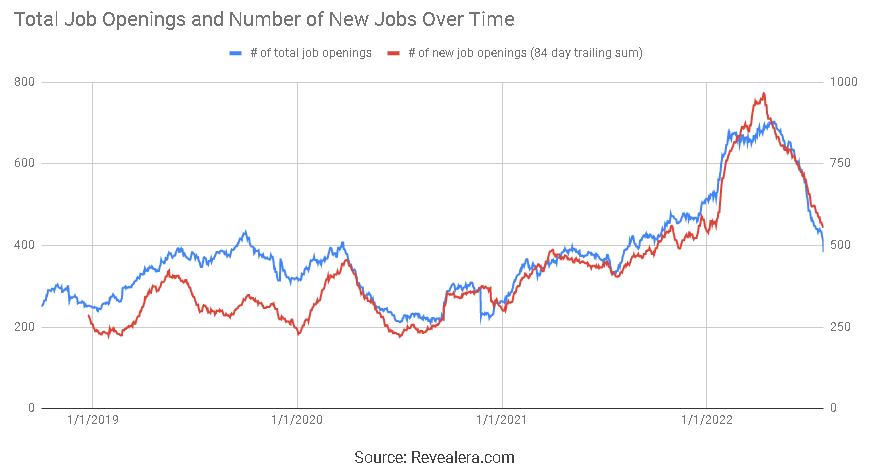
Figure 18: Spotify Hiring Trend (source: Revealera.com)
Figure 18: Spotify Hiring Trend (source: Revealera.com)
The market has not bought into the vision laid out by Spotify’s management at all, with the stock currently trading on historically low multiples. Based on a discounted cash flow analysis I estimate that Spotify is worth approximately 170 USD per share, which would put Spotify’s EV/S multiple more in line with its historical average. Due to the combination of high inflation and economic uncertainty, markets are primarily assessing companies based on profitability, with little weight given to future growth. Until economic conditions normalize, or Spotify shows an ability to improve its bottom line, the stock is unlikely to move significantly higher.
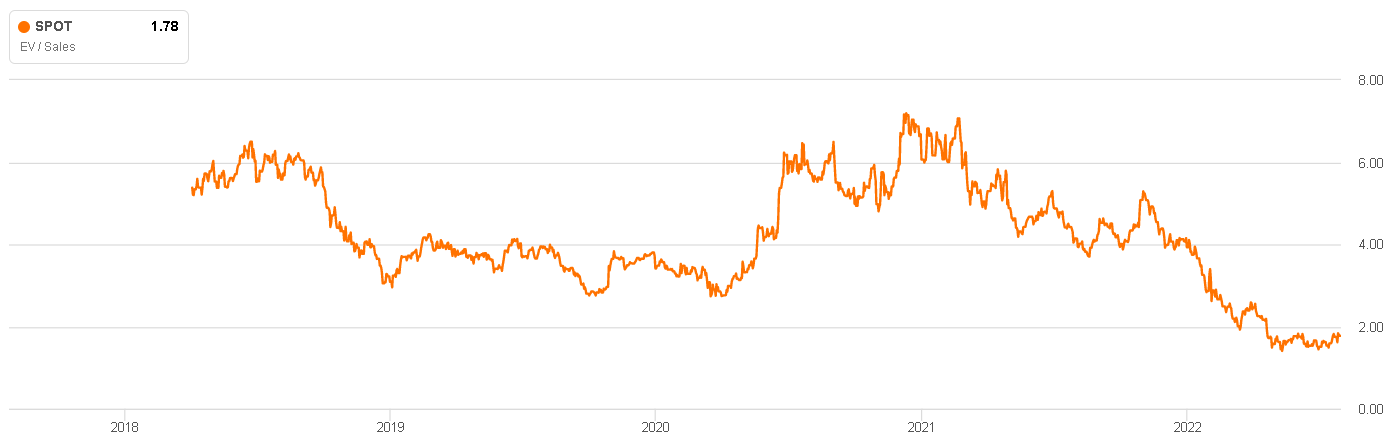
Figure 19: Spotify EV/S Ratio (source: Seeking Alpha)
Figure 19: Spotify EV/S Ratio (source: Seeking Alpha)
Spotify’s stock appears relatively inexpensive, but its future path will be highly dependent on the company’s success in audio verticals outside of music. Spotify is slowing making progress in podcasting, which should eventually lead to an improvement in profitability, but this success may be difficult to repeat. With investments in future growth likely to continue weighing on Spotify’s margins in the short-term, it is not clear what will be the catalyst to move the stock higher.
This article was written by
Disclosure: I/we have no stock, option or similar derivative position in any of the companies mentioned, and no plans to initiate any such positions within the next 72 hours. I wrote this article myself, and it expresses my own opinions. I am not receiving compensation for it (other than from Seeking Alpha). I have no business relationship with any company whose stock is mentioned in this article.
The hip-hop horizon: Iowa rappers' fall releases explore drug culture, punk and 'ascension music' – Little Village – Little Village Magazine
Advertisement
Got a tip? Email us at [email protected] or give us a call at 319.555.2451
This fall will see a wide range of releases from Iowan artists spanning the diverse rap and hip-hop spectrum. While this is far from a comprehensive list of what’s on tap for the next several months, here’s a cross-section looking at five releases from young, up-and-coming artists who have new projects on the way.
Up first in early September is the debut album from XMajin, titled Hate Me. XMajin self-produced roughly half of the tracks, and the release will be rounded out by several features including the likes of DRXCULV (whose own album, Antiporn, is also being readied for release). Thematically, Hate Me looks to serve as an outlet for the 20-year-old rapper and producer to challenge the glorification of drug-culture within music, following his own challenges with substance abuse.
“I just want to look at it in a negative way so people stop glorifying it,” he told Little Village.
Advertisement
Later in September, Shaky Shawn999 will issue an expanded deluxe edition of his Before I Die EP. Born in Chicago, the 21-year-old framed his intention behind his music as influenced by an aesthetic rather than specific style.
“Punk is just anything opposite of a square,” he told Little Village. “That’s exactly what it is.”
Blending beats, vocals and raps, the upcoming album will also feature work from teenage producer TB.
“The shit that he does at his age is mind-blowing,” Shawn said.
Bridging September and October are a pair of releases from Quan Draper, titled Viice and Viirtue. Piggybacking off his original Virtue (2018) and Vice (2019) EPs, the rapper and vocalist said the music will find him trying out new sounds and experimenting with songwriting conventions.
“[2021 full-length] Snowfall was very introspective and expressive,” Draper said, whereas “you’ll get two sides of me with these next EPs: the fun, light side” with Viirtue, and the “harsh, competitive side” with Viice.
Advertisement
Expanding on Shaky Shawn999’s conceptual bridge between rap and punk will be the new EP from Antiluv, titled Anti-Pop Rockstar, which more literally connects the two genres. It will see a stylistic split, with one half bearing a vocal and beat-propelled sound and the other leaning into instrumentally driven pop-punk. The tracks were recorded at Carousel Studios in Des Moines, where Antiluv also serves as an audio engineer, and individual songs will see a staggered release before the full collection drops as a unit sometime around Halloween.
Out of Iowa City, TheZeffsterr will be returning this November with a new release combining a series of new recordings with several re-mastered and re-released songs. With production from Lugi Beats, the still-to-be titled EP is being recorded and released through Hit Island Studios in Chicago. Calling his brand of sound “ascension music,” TheZeffsterr told Little Village his focus with the upcoming collection is to help promote progression in himself and his listeners.
“I make music that puts you in high spirits,” he said.
Advertisement CI
Advertisement CI
Central Iowa Issue 006
Eastern Iowa Issue 310
Central Iowa Issue 005
Eastern Iowa Issue 309
Central Iowa Issue 004
Eastern Iowa Issue 308
© 2022 Little Village LLC Website by Little Village Creative Services
Naomi Judd's Family Seeks To Stop Release Of Final Audio Before Death – OK!
Sep. 29 2022, Published 5:36 p.m. ET
Naomi Judd‘s family is seeking to halt the release of several upsetting pieces of evidence that were discovered after the famed country star’s death.
Among the items are handwritten notes and what is believed to be Naomi’s final audio message recorded by a close friend shortly before she took her own life.
Naomi’s daughters, Ashley and Wynonna, as well as her husband Larry Strickland, previously asked the court to block the release of potentially traumatizing videos, photos and police interviews with the family members regarding the singer’s heartbreaking passing.
A DAUGHTER’S HEARTBREAK: WYNONNA JUDD RECALLS WONDERING IF SHE MISSED WARNING SIGNS OF HER MOTHER NAOMI JUDD’S IMPENDING SUICIDE
The court initially agreed to temporarily seal the graphic content on Tuesday, August 2. Now, the Judd family is hoping to keep the disturbing and painful images from the public for good.
“We want to have this stuff — these materials never released,” the Judd family’s lawyer said in a statement, voicing fears that “more personal things, such as video and pictures of the incident itself, as well as the immediate reaction of family members still on the scene” would become public through “sordid news organizations.”
ASHLEY JUDD MAKES HAUNTING CONFESSION: HOW SHE FOUND, CRADLED LATE MOM NAOMI’S ‘LABORING BODY’ WITH SELF INFLICTED GUN SHOT WOUND
“We all want to cooperate with law enforcement when there’s a tragedy such as this,” the attorney continued. “When such a tragedy occurs, we all want to cooperate and give the best possible information to the authorities. Maybe that attitude is going to change if people realize that two weeks after they talk to the police about the suicide of their loved on, the very words that they speak are going to show up on YouTube tomorrow. That’s a public interest.”
However, the lawyer representing the county claimed that most of the records should be made public. The subject of the audio recording also came up soon after, when the judge asked if the message in question was the 911 call.
The legal mind confirmed it was not, stating it was “an audio recording that was made, apparently, by a friend, and then provided to Mr. Strickland, and then provided to the detectives at a time when Ms. Judd was in distress, before she shot herself.”
The lawyer also alleged while it was “temporally close” to the time of her death, “I can’t say as I stand here right now if it was the same day or not.”
Powered by RedCircle
Radar was first to report the court transcripts regarding the audio message.
Want OK! each day? Sign up here!
© Copyright 2022 OK!. A DIVISION OF EMPIRE MEDIA GROUP HOLDINGS LLC. OK! is a registered trademark. All rights reserved. Registration on or use of this site constitutes acceptance of our Terms of Service, Privacy Policy and Cookies Policy. People may receive compensation for some links to products and services. Offers may be subject to change without notice.
'Blonde' director says the unhappiness of Marilyn Monroe should come as no surprise – Iowa Public Radio
Blonde tells the story of Norma Jeane Baker, from her childhood with an absent father and unstable mother, through her rise to stardom as Marilyn Monroe and her eventual suicide at the age of 36. Based on the bestselling novel by Joyce Carol Oates, at every turn in the Netflix adaption, the actress is mistreated, exploited and abused.
Director Andrew Dominik says he read Oates’ novel 20 years ago. “I saw an opportunity of how to turn it into a film. Of how to take what she set up in the book, which is the childhood trauma. The idea of what childbirth might mean. The idea of the desire for the absent father to return and stabilize her mother. And then it seemed to me that there was a way to see the adult life through the lens of that trauma.”
After he finished his 2007 film, The Assassination of Jesse James by the Coward Robert Ford, Dominik began to work on adapting Blonde.
“I wrote it in 2008, and it was just impossible to get it made,” he says. “I think a lot of it was how it portrayed the men in the story. I think people felt that there was no market for feminine rage, and trauma and all that sort of stuff. But then #MeToo happened, and obviously, that was something that people actually were interested in.”
The novel that inspired the film came about by chance. Oates says she had no particular interest in Marilyn Monroe when she came across a photo in the library.
“I saw a photograph of Norma Jeane Baker taken when she was about 15 years old. And she was a brunette. Very pretty. Little artificial flowers in her hair. And I was stunned because within 10 years, she was going to be one of the most famous names in the history of show business,” she says.
That photo struck a chord in Oates’ heart. “I was drawn to write this story of a very ordinary-seeming American girl, from a very lower economic background, who rises and becomes enormously successful. And famous, and then is destroyed in the process,” she says.
The result was a 738-page novel that describes actual events in Monroe’s life, but then imagines how she experienced them. So, the audience understands her but none of the people in the story do. Oates provides the voice inside Monroe’s head, which as her life spins out of control, becomes more surreal and hallucinatory, mimicking the process of her anxiety.
Dominik says in his film he tried to preserve the novel’s perspective. He uses unexpected camera angles, switching back and forth from color to black and white, shifting the picture aspect ratio.
“In early stages of development where she’s relatively stabilized, the movie will proceed in a fairly straight-ahead manner,” he says. “It’s only once the rug is pulled out emotionally that it will start to get sort of phantasmagoric. And there’s a sense of the past, or the unconscious terror rising up. And being indistinguishable from the present.”
The director says the novel provided a richer source than any nonfiction could. “A documentary can tell you what happened. But I think that what the film and the novel are really dealing with are what is the meaning of Marilyn Monroe? Why is that woman on the subway grating the sort of American equivalent of Venus in the Shell, rising out of the sea? And what does she inspire in us that she continues to have this kind of resonance?”
Dominik adds our cultural obsession with Monroe stems from a rescue fantasy; we know she’s doomed, but we can’t save her. Oates felt it. While she has written 23 novels since Blonde was published in 2000, she says her Monroe story was the most wrenching novel she ever wrote.
“Blonde was very very difficult emotionally for me. And even though I knew that Marilyn would die at the end of my novel, I didn’t realize how when I got to that point I would be so identified with her. There was no way out except what happened to Marilyn. I couldn’t make up an ending where she’s happily married. Or she runs away from Hollywood. I mean I couldn’t make that up!”
The film version of Blonde is the first Netflix production ever with an NC-17 rating. In one scene a studio head rapes the starlet. In another, she’s beaten by Joe DiMaggio, her husband at the time. One shot in an abortion sequence is presented from the fetus’ point of view. Towards the end of the film, President Kennedy treats her like a disposable sex toy.
Dominik says people shouldn’t be surprised that Blonde portrays Monroe’s life as relentlessly unhappy.
“It’s the story of a person who kills herself. It’s also the story of a person who had everything that our culture is always screaming at us is desirable,” he explains. “She was famous, she was beautiful, she had a glamorous job, she dated all the cool guys of the day—and she killed herself. Okay, what do we all want? And should we want that thing?”
Copyright 2022 NPR. To see more, visit https://www.npr.org.
EXPANDED Edition Of 'AVALON WORSHIP' Project Released – TCB – TheChristianBeat.org
A new expanded edition of the popular project, Avalon Worship, is now available.
The project released today, September 30, 2022, includes a total of sixteen tracks – eleven studio recordings and five live recordings.
The talented worship ensemble will make high-profile appearances to support the release of the expanded offering including TBN’s Huckabee, Daystar, along with First Baptist, Dallas, TX.
Recently, Avalon Worship led worship at the Experience Worship Conference in Orlando, FL, thrilling the audience and blessing hearts.
Long admired for show-stopping, mega-hits like “Testify To Love,” “Can’t Live A Day,” and “Adonai,” the American Music Award-winning, GRAMMY-nominated pop vocal group surprised industry and fans alike when they announced their new name, new project and new musical direction – Avalon Worship.
Produced by Don Koch and released on Red Street Records, the project – Avalon Worship – reflects who they are as individuals as well as a worship collective.
The expanded edition of Avalon Worship includes both original recordings as well as worship covers of some of the most well-known songs sung in churches every weekend, all carried by the group’s signature, powerhouse vocals.
Powerful and poignant, each track was handpicked to reflect a personal cry for God to draw near. More than a collection of songs, Avalon Worship is faith extending outward to be a blessing to all who hear it.
Produced by Don Koch and released on Red Street Records, the project is available now at all digital retailers.
Sign up today to start receiving our free weekly email! All of the week’s top stories in one place in the TCB Newsletter.
At TheChristianBeat.org, our mission is to point you to music that connects the human heart with Jesus in all seasons of life. We are committed to connecting you with your favorite Christian and Gospel artists like never before with unparalleled coverage of new music, an expansive video gallery, and exclusive interviews, album reviews and special event coverage.
Sign up today to start receiving our free weekly email! All of the week’s top stories in one place in the TCB Newsletter.
Drag Superstar Ginger Minj Releases New Rendition of 'I Put A Spell On You' From HOCUS POCUS – Broadway World
Get local news, offers & more…
Kicking off spooky season, RuPaul’s Drag Race royalty and highly regarded singer-songwriter Ginger Minj is dropping a brand new version of the revered Hocus Pocus classic, “I Put A Spell On You” today, Friday, September 30.
The updated version coincides with GInger’s return to the big screen in the brand new Hocus Pocus 2 film streaming exclusively on Disney+ today. Stream the new track now.
The sultry new twist on the Halloween anthem is a longstanding favorite in the drag community, and Ginger was inspired to re-record “I Put A Spell On You” after years of performing Bette Midler’s iconic version. “You can’t walk into a drag show after September without seeing someone performing to this song” she said. “I wanted to provide a new version – in a suitable key – that allows for a live vocal performance and we had tons of fun with it.”
In the spirit of Halloween and her love of all things Hocus Pocus, Ginger is taking her captivating performance as Winnie Sanderson on the road with the Hocus Pocus Halloween Bash. The one-of-a-kind musical performance event features star-studded guest performances from Gidget Galore, MR MS Adrien and Aria Hard at select shows. It’s safe to say the Sanderson Sisters have never looked so good.
Ginger will also co-host Huluween Dragstravaganza alongside fellow Drag Race alum Monet X Change where the duo, along with other beloved queens and kings, will take the stage in original musical numbers, sketch comedy performances, and more. The Halloween-themed variety special will premiere Saturday, October 1 on Hulu.
With additional exciting announcements to come in the near future including an official music video, Ginger continues to prove her staying power in the industry with her effortless ability to draw fans in with her bewitching personality and creative endeavors.
Listen to the new single here:
HOCUS POCUS HALLOWEEN BASH
Chicago, IL – Venus Cabaret Theatre – October 14-16
Portland, OR – The Aladdin Theatre – October 18
Royal Oak, MI – Five15 – October 23
Philadelphia, PA – City Winery – October 25
Boston, MA – City Winery – October 26
Columbus, OH – Axis – October 27
Harrisonburg, VA – Court Square Theater – October 29
Orlando, FL – The Abbey – October 31
Tickets to the Hocus Pocus Halloween Bash Tour can be purchased here. For more information, follow Ginger on Instagram, Twitter and TikTok.
Long before she held court as a finalist on Season 7 of RuPaul’s Drag Race and Seasons 2 and 6 of RuPaul’s Drag Race All Stars, Ginger Minj reigned as The Comedy Queen of The South from her homebase in Orlando, Florida. The self-professed “nicest bitch you’ll ever meet” cites classic funny ladies Carol Burnett, Lucille Ball, and Dolly Parton as her idols.
“Anyone who can pile three wigs on their head, squeeze their body into a beaded and rhinestoned gown and serve humor alongside the glamour is my hero,” says Minj. That’s why she coined the term “Glamour Toad” to describe her unique persona. In 2016, Ginger released her debut album, Sweet Tea, which was soon followed by years spent touring the world and performing showtunes for Broadway royalty on national television.
With over 200,000 global streams, Ginger went on to star in the 2018 Netflix feature film, Dumplin’ (Jennifer Anniston, Dove Cameron), and in June 2021 released her sophomore album Gummy Bear, which peaked at #2 on the iTunes Comedy Album Chart. In Fall 2021, Ginger Minj tapped into her genuine southern roots as she introduced herself to the country music genre with her third studio album, Double Wide Diva.
Mirei Discusses Industry Pressures on New Single ‘Idol’
Darius Rucker Releases ‘Ol’ Church Hymn’ Featuring Chapel Hart
Molly Moore Releases Introspective Anthem ‘Hate Myself’
Betty Who Announces 2023 Tour & New Album ‘Big!’ Release Date
Most Popular


Interview: Ben Platt Talks ‘Reverie’ Tour & Performing After the Pandemic
Interview: Renée Fleming Discusses Bringing Opera to IMAX
Video: Watch Highlights of Jeremy Jordan’s New Band, Age of Madness, at Sony Hall
iHeartRadio Announces Z100 Jingle Ball 2022 Official Kick Off Event
BroadwayWorld TV


News + special offers for Broadway Shows
Recommended for You
Get Music News
Follow Us
BWW Sister Sites
Apps