Blog

Master Gardener tips for the Panhandle – Week of Sept.19 , 2022 – Nebraska Today

by Kirstee Schutte, Nebraska Extension Master Gardener
Lincoln, Neb. —Nematodes
Have you ever encountered a parasitic nematode? Root-knot nematodes are microscopic roundworms that pierce the roots of plants and lay their eggs inside the roots, giving them a “knotty” appearance, while the plant itself may appear wilted or stunted. Plants growing in nematode infested soils are typically stunted and have galled decaying roots. Plants with infected roots are more susceptible to other diseases caused by fungi and bacteria and tend to stop producing early. It is important for control steps to be taken before planting such as carefully sourcing soil and plants. There are many nematode resistant varieties of vegetables available through Johnny’s Selected Seeds and other sources.
Solarization 
Solarization is a technique that utilizes heat to decrease harmful organisms and weed seeds. By covering soil with transparent plastic sheets, you allow short wave radiation from the sun to penetrate the plastic. Once the light passes through the plastic and is reflected from the soil, the wavelength becomes longer and cannot escape through the plastic. The trapped light facilitates the heating of the soil to temperatures detrimental to most living organisms. The plastic must be sealed to prevent air movement underneath which would prevent temperatures from rising. The soil should remain covered for a minimum of four weeks but increasing solarization time improves effectiveness.
Chlorosis
Have you observed yellowing of leaves in the landscape? Chlorosis describes a condition in which leaves, or needles develop an abnormally light green or yellow color. Causes of chlorosis include a deficiency of iron, over-watering, and high pH (or alkaline) soils. When iron and other micronutrients are present in the soil in sufficient quantities the high pH may be rendering them unavailable to plants, and trees. In this case sulfur applications are appropriate to achieve and maintain lower pH levels. Because roots need oxygen to function overwatering and compaction can leave low levels of oxygen in the soil affecting the ability of roots to pick up iron.
Nebraska Natural Resource DistrictsAre you familiar with Nebraska’s Natural Resource Districts? Established in 1972, Nebraska’s unique Natural Resources Districts were created to solve flood control, soil erosion, irrigation run-off, and groundwater quantity and quality issues. Nebraska’s NRDs are involved in a wide variety of projects and programs to conserve and protect the state’s natural resources. NRD boundaries are organized based on Nebraska’s major river basins making 23 different districts. Located near the Western Nebraska Regional Airport, the North Platte Resource District includes Sioux, Scotts Bluff, Banner, Morrill and Garden Counties.
Windbreaks
Did you know that a windbreak doesn’t just compliment your property, but it can also be an energy saving tool that has positive effects on soil health. By planting a row of trees on your property you can reduce heating costs by lowering windchill as dead airspace between the windbreak and your home provides insulation during the winter. Windbreaks positively influence microclimate on an area much greater than the space they occupy. These influences extend into fields about twenty times the height of the windbreak.
105 Ag Communications Building
University of Nebraska-Lincoln
Lincoln, NE 68583
402-472-4398
[email protected]
Submit News
Some parts of this site work best with JavaScript enabled.

source

Cute Executive Officer Sequel To Premiere in Early Spring 2023 – Anime Trending News

A sequel of the Cute Executive Officer original net anime series is set to premiere in early Spring 2023. The sequel is titled Cute Executive Officer R and will be streamed in Japan on various streaming platforms. The first ONA series aired on January 1, 2021.
The production team for the sequel will consist of Kazuya Iwata (Love After World Domination) as director, Satoru Sugisawa (Love After World Domination) as series screenwriter, and Susumu Watanabe (Didn’t I Say to Make My Abilities Average in the Next Life?!) as character designer. Soshina is replacing H ZETT M as the music composer from the first anime, while FABTONE is returning to work on general music production. Project No.9 is returning to handle the animation production. 
All voice cast members from the first Cute Executive Officer series are set to reprise their roles for the sequel. The main cast includes Rina Hidaka as Najimu Mujina, Hisako Kanemoto as Mayu Warito, Sumire Uesaka as Yuki Karuizawa, Sayaka Kaneko as Garcia Dekasegi, Chinami Hashimoto as Riya Motohashi, and Aoi Koga as Nowani.
New cast members for Cute Executive Officer R also include Ikumi Hasegawa as Yoshine Fudou, Yui Ogura as Ray Okano, and Akio Ohtsuka as Mugaku Hamaoka. 
The anime production team has also teased two mystery characters whose voice actors have yet to be revealed. They include Yamada-san; an office worker with two years of experience; and Dokudakomaru, a half-octopus employee who happens to work in the sales department. 
Actress Arisa Sonohara is performing the opening theme “Narase! Mujina Symphony.” Meanwhile, Rina Hidaka will be performing the ending theme “O-Hi-Me-Sa-Ma!” as her character Najimu, along with music unit Neko Hacker. 
Cute Executive Officer is based on a manga series by Odeko Fujii and was first launched in Curazy Manga and Comicwalker in January 2018. It was published by Kadokawa Shoten, who has released three tankoubon volumes as of January 2021.
Sentai Filmworks has licensed the anime series and streamed it on HIDIVE. It describes the synopsis as: 
She’s not a genius. She’s not a prodigy. Heck, she’s not even old enough to vote! But somehow Mujina Najimu scored a totally above-average job as the president and “CEO” of the Mujina Company, where she navigates the world of adults with infectious, bright-eyed charm and enthusiasm. Whether it’s golfing with colleagues, negotiating contracts or pestering her executive assistant, Yuki, her hilarious antics are sure to captivate audiences of all ages.
Source: Cute Executive Officer Official Twitter, Official Anime Website

source

Visit the Cycle & Carriage Mercedes-Benz roadshow at Centre Court, Mid Valley Southkey, JB, Sept 21-25 [AD] – paultan.org – Paul Tan's Automotive News

In Advertorial, Sales & Promotions / By / / Comments are Disabled

You deserve a reward, and there are few rewards on the level of a new Mercedes-Benz. If you’re in Johor, come to the Cycle & Carriage roadshow at the Ground Floor Centre Court of Southkey Megamall from September 21-25 to experience Mercedes-Benz and learn more about the brand’s latest models.
A tech showcase that’s also a reality, the Merdedes-Benz EQS 450+ AMG Line is the flagship model of the Mercedes-EQ electric sub-brand, and this impressive machine will be on display at the Cycle & Carriage roadshow.
Beneath the EQS futuristic design is cutting edge EV tech. A 107.9 kWh lithium-ion battery pack provides 782 km of range on a single charge. 0-100 km/h acceleration is done in a whisper quiet 6.2 seconds, before a top speed of 210 km/h is reached, all with zero tailpipe emissions. To replenish, DC fast charging gets the battery state of charge from 10% to 80% in just 31 minutes.
The specs are great, but the EQS interior needs to be experienced. Fascination points include the MBUX Hyperscreen triple display, comprising a 12.3-inch instrument cluster, a 17.7-inch central OLED touchscreen and another 12.3-inch OLED touchscreen for the front passenger. Audio is delivered by a Burmester 3D surround sound system. The EQS 450+ AMG Line is priced at RM698,888.
The second-generation Mercedes-Benz GLA is a practical compact SUV. In RM283,888 GLA 250 form, it is powered by an efficient and powerful 2.0 litre turbocharged petrol engine with 224 PS and 350 Nm of torque, mated to an eight-speed dual-clutch transmission. A pleasant urban runabout, the GLA 250 comes with the Mercedes-Benz User Experience (MBUX) system with twin 10.25-inch displays, a hands-free powered tailgate and powered front seats with memory.
The latest W206 generation of the Mercedes-Benz C-Class serves up a classic blend of luxury and performance, with a healthy dose of the latest technology and elegant design. Try out the RM287,888 C 200 Avantgarde and RM327,888 C 300 AMG Line for size at the Cycle & Carriage roadshow, happening at Southkey Megamall’s Centre Court from September 21-25. Get full details at the .
Car Reviews


Car Launches


paultan.org
Copyright © 2022 Driven Communications Sdn Bhd. All Rights Reserved.

source

After ‘Phantom,’ Which Shows Will Be the Longest-Running on Broadway? – The New York Times

Advertisement
Supported by
Hints: They both reached for the gun. I’m working on my roar! Everyone deserves the chance to fly. Have fun in hell!
Send any friend a story
As a subscriber, you have 10 gift articles to give each month. Anyone can read what you share.

“The Phantom of the Opera” has been running on Broadway longer than many of the industry’s hoofers have been alive. But on Friday, the show announced that it will close Feb. 18, a few weeks after celebrating its 35th anniversary.
The musical holds a distinction unlikely to be overtaken any time soon: It is the longest-running show in Broadway history, by a long stretch. By the time it closes, if all goes well, it will have played for 13,925 performances.
Many of Broadway’s longest-running shows closed years ago, including the original productions of “Cats,” which ran for 7,500 performances; “Les Misérables,” which had 6,691 performances; and “A Chorus Line,” which had 6,137.
“Phantom” has been enormously profitable and has reached a huge audience: As of Sept. 11, the Broadway production had been seen by 19.8 million people, and had grossed $1.3 billion. Globally, “Phantom” is even bigger, thanks to productions in London and on tour, and those will continue after the Broadway show closes.
And what will be the most-enduring-and-still-running shows on Broadway once “Phantom” closes? “Chicago” celebrated its 25th anniversary last fall; “The Lion King” is preparing to celebrate that same milestone this fall. Here’s a look at the four remaining productions that have been playing for more than a decade:
It turns out that the combination of sex and murder is a potent one. This show, with a plot about a group of women jailed for killing their husbands or lovers, is beloved for its jazz score, its Bob Fosse-inspired choreography, and its dark satire of the justice system.
The musical, with songs by John Kander and Fred Ebb and a book by Ebb and Fosse, first opened on Broadway in 1975 and ran for just two years. But then in 1996, the Encores! program at New York City Center staged a bare-bones revival and it was so successful that it transferred to Broadway. That revival, with Walter Bobbie as director and Ann Reinking as choreographer, is now the second-longest running show in Broadway history, and once “Phantom” closes, it will be the longest-running show still open.
The show has a huge sustainability advantage over all of the other long runners — its weekly running costs are much, much, much lower, thanks to the simplicity of the production (one set, no costume changes, minimal automation and 14 onstage musicians, which is about half the size of the “Phantom” orchestra) plus aggressive cost management. And the show benefited enormously — and somewhat unexpectedly — from the success of a 2002 film adaptation, which won the Academy Award for best picture.
But still, the musical, which has been enormously dependent on tourists, and has relied heavily on news-making casting to goose grosses (Pamela Anderson cycled in to play Roxie Hart earlier this year), seemed soft before the pandemic and its grosses are volatile again now. Its continued longevity is unknown; it has proved doubters wrong many times in the past, but what happens next depends on whether international and business travelers return in greater numbers.
As of Sept. 11, the Broadway production of “Chicago” had run for 10,114 performances; it had been seen by 9.8 million people and had grossed $711 million.
This show really is the king of the jungle, and the pride of Disney, which claims that “The Lion King” has grossed more than any other title in entertainment history.
The Broadway musical, adapted from the animated film, this fall will celebrate its 25th anniversary. And it is the strongest of the long-running shows, thanks in part to its innovative use of eye-popping puppetry and masks to tell a mythic story, but also because of the strength of the Disney brand, and the show’s enduring appeal for families.
Directed by Julie Taymor, the show is about a lion cub who must overcome the circumstances of his father’s death in order to succeed him; it features pop-style songs by Elton John and Tim Rice as well as South African music by a team of writers including Lebo M.
As of Sept. 11, the Broadway production of “The Lion King” had run for 9,740 performances; it had been seen by 16.4 million people and had grossed $1.8 billion.
Rejoicify indeed! This musical, which imagines a sympathetic back story for the villainous Wicked Witch of “The Wizard of Oz,” overcame skeptical critics to become an enormous hit that is playing in Broadway’s biggest theater (the Gershwin), and shows no signs of slowing down.
Adapted from a novel by Gregory Maguire, the show has appealed to audiences who love the clever riff on a beloved story, and it has also cultivated a devoted fan base that includes many repeat attendees thanks to its focus on female friendship.
The musical, which opened in 2003, features songs by Stephen Schwartz and a book by Winnie Holzman; it is directed by Joe Mantello. A long-delayed film adaptation starring Ariana Grande and Cynthia Erivo, directed by John M. Chu, is now in the works; it is scheduled to be released in two parts, starting in late 2024.
As of Sept. 11, the Broadway production of “Wicked” had run for 7,268 performances; it had been seen by 12.9 million people and had grossed $1.5 billion.
It’s hard for comedies to stand the test of time, but “The Book of Mormon” is still going strong, more than a decade after it opened to raised eyebrows and rave reviews.
The musical, developed in part by the team behind “South Park,” is a biting satire, not only about the Church of Jesus Christ of Latter-day Saints, but also about religion more generally, and its “can-they-really-say-that” humor, combined with its masterly deployment of old-fashioned song and dance, has made it a main stem mainstay.
The show, which opened in 2011, faced more challenges than its competitors during the pandemic, as one of the lead producers, Scott Rudin, stepped back over allegations of bullying behavior, and after some critics questioned whether the musical’s depiction of African villagers was offensive. But the show’s three writers, Robert Lopez, Trey Parker and Matt Stone, retooled elements of the script and staging, and its grosses have held up.
As of Sept. 11, the Broadway production of “The Book of Mormon,” directed by Parker and Casey Nicholaw, had run for 4,131 performances; it had been seen by 4.5 million people and had grossed $704 million.
Advertisement

source

Nike Revives The Air Max 1 Master In Bold “Magma Orange” – Sneaker News

feature image
ADVERTISEMENT
The Nike Air Max 1 has been in the spotlight over the last nine months given that it’s been celebrating its 35th anniversary. In addition to limited collaborations, Tinker Hatfield’s iconic design has welcomed the milestone with pairs like the newly-surfaced Master “Magna Orange.”
First seen in 2017 during the sneaker’s 30th birthday, the model’s Master iteration ups the ante in terms of quality and story-telling. The newly-surfaced take opts for a rather straightforward “Magma Orange,” “Neutral Grey” and “Light Bone” arrangement, but maintains the disparate patterns and textures across its mudguards and profile swooshes.
Five years ago, the Air Max 1 Master delivered a “What The” Dunk-like proposition, as the aforementioned components were comprised of fragmented panels nodding to a handful of important releases in the shoe’s design catalog. Various animal prints and contrasting colors came together on the original Air Max sneaker to commemorate 30 years up to that moment. With the premium version’s return in vibrant citrus flair, it’s possible the Swoosh is prepping a Master collection donning inaugural color-blocking. The yellowed midsole underfoot injects a touch of “age” into the kicks, while propelling the AM1 into its next 35 years.
Enjoy official images of the pair ahead, and anticipate a Nike SNKRS release soon.
For more from under the NIKE, Inc. umbrella, check out the Air Jordan 1 “Lost and Found” expected to launch in November.
Where to Buy
Make sure to follow @kicksfinder for live tweets during the release date.
North America2022

Martine Rose x Nike Shox
Air Jordan 1 Retro High OG "Taxi"
Air Jordan 1 Mid "Multi-Color"
© 2007-2021 Sneaker News IncPowered by WordPress VIP

source

We have audio recording of BJP's offer to Sisodia, will release it when time comes: AAP sources – The Economic Times


AAP leaders backed Sisodia’s claims but neither they nor the deputy chief minister disclosed the name of the person from the BJP who had approached him with such offers.

Download The Economic Times News App to get Daily Market Updates & Live Business News.
More

source

The New, Improved James Cameron Wants to Reintroduce You to ‘Avatar’ – The New York Times

Advertisement
Supported by
Before the release of the sequel “Avatar: The Way of Water,” the iconoclastic filmmaker explains why he’s bringing the first film back to theaters.
Send any friend a story
As a subscriber, you have 10 gift articles to give each month. Anyone can read what you share.

The pop-cultural landscape looked considerably different in 2009. Television shows were still largely watched on television sets. “TiK ToK” referred to a hit song by Kesha. And the Marvel Cinematic Universe consisted of only two movies released the previous year.
Instead, the multiplexes were about to be dominated by “Avatar,” James Cameron’s science-fiction epic about a battle for natural resources between human colonists from Earth and the native Na’vi people of a distant moon called Pandora. “Avatar” went on to become one of the most successful films of all time, grossing more than $2.8 billion worldwide and winning three Academy Awards.
Cameron, the decorated filmmaker of “Titanic,” “True Lies” and “The Terminator,” went off to prepare the next entries in his new franchise. Now, as he puts the finishing touches on the first of four planned sequels, “Avatar: The Way of Water” (which 20th Century Studios will release on Dec. 16), nearly 13 years have gone by and much has changed.
To help reacquaint audiences with “Avatar” — and with the 3-D filmmaking that dazzled audiences in 2009 — the first movie is being rereleased in theaters on Sept. 23. It’s a strategy that is, of course, intended to prime ticket buyers for the impending follow-up, but also to remind them of what was special about the original.
As Cameron said of “Avatar” in a video interview on Thursday, “We authored it for the big-screen experience. You let people smell the roses. You let people go on the ride. If you’re doing a flying shot or a shot underwater in a beautiful coral reef, you hold the shot a little bit longer. I want people to really get in there and feel like they’re there, on a journey with these characters.”
Calling from his studios in Wellington, New Zealand, the 68-year-old Cameron spoke about seeing “Avatar” through new eyes, how the world has or hasn’t changed since its release and whether this onetime king of the world has maybe — just maybe — chilled out a little bit. These are edited excerpts from our conversation.
Have you watched the original “Avatar” recently? What was that experience like?
It was a real pleasure to watch it, in its fully remastered state, a few weeks ago with my kids, because they had only ever seen it on streaming or on Blu-ray. “Oh yeah, it’s that movie that Dad made back then.” And they got to see it in 3-D, at good light level and projection levels, for the first time. And they were kind of like, “Oh. All right. Now I get it.” Which, hopefully, will be the general audience reaction. Young film fans never had the opportunity to see it in a movie theater. Even though they think they may have seen the film, they really haven’t seen it. And I was pleasantly surprised, not only at how well it holds up but how gorgeous it is in its remastered state.
Did you see details that you wished you could change?
I don’t think that way. It’s such an intense process when you’re editing a film and you have to fight for every frame that stays in. I felt pretty good about the creative decisions that were made back then. We spent a lot of time and energy improving our process in the decade-plus since. But there’s certainly nothing cringeworthy. I can see tiny places where we’ve improved facial-performance work. But it doesn’t take you out. I think it’s still competitive with everything that’s out there these days.
Even with everything you had accomplished before making “Avatar,” were there still elements that you had to fight the studio to keep in it?
I think I felt, at the time, that we clashed over certain things. For example, the studio felt that the film should be shorter and that there was too much flying around on the ikran — what the humans call the banshees. Well, it turns out that’s what the audience loved the most, in terms of our exit polling and data gathering. And that’s a place where I just drew a line in the sand and said, “You know what? I made ‘Titanic.’ This building that we’re meeting in right now, this new half-billion dollar complex on your lot? ‘Titanic.’ paid for that, so I get to do this.” And afterward, they thanked me. I feel that my job is to protect their investment, often against their own judgment. But as long as I protect their investment, all is forgiven.
What do you think has changed about the movie industry in the years since its release?
The negative factors are obvious. We’ve got a turn of the world toward easy access in the home, and that has to do a lot with the rise of streaming in general, and the pandemic, where we literally had to risk our lives to go to the movie theater. On the positive side, we see a resurgence of the theater experience. People are craving that. We’re still down about 20 percent from prepandemic levels, but it’s slowly building back. Partly it’s been because of a dearth of top titles that people would want to see in a theater. But “Avatar” is the poster child for that. This is the type of film that you have to see in a theater.
Does knowing audiences want that blockbuster experience put more pressure on you?
I’ve always thrived in that scenario. The danger has been that there are so many big movies coming out all the time and we were always jostling for place. That’s why I recommended to Fox that we push “Titanic” till Christmas, because we’d have a clear playing field in January and February, and that worked out beautifully. The same strategy worked well with “Avatar.” And of course we’re going into the same date with “The Way of Water.” But we’re not jostling as much now because there aren’t as many big tentpoles.
There’s a sense of responsibility to do the best job we can and make it a moneymaker. But I don’t how that translates artistically to any decision I make on the movie. I don’t say, Hmmm, let’s put that plant over there because we’ll make more money. It doesn’t work that way. When it’s good enough, you kind of know.
“Avatar” had a prominent message about taking care of the environment and the resources it has provided. In the years since its release, do you feel like that message has been heeded?
I’m not going to feel guilty because my movie didn’t save the world. I certainly wasn’t the only voice back then, and I’m certainly not the only voice now, telling people that they have to change. But people don’t want to change. We love to burn energy. We love to eat our meat and dairy. Asking people to fundamentally change their behavior patterns, it’s like asking them to change their religion. We’re seeing this ongoing series of greater and greater manifestations of the consequences, like with these heat waves in China and North America and Europe, the flooding in Pakistan, which is horrific. And eventually we will change or we’ll die out. “Avatar” is not trying to tell you what to do specifically. It’s not telling you, Go vote for so-and-so, buy a Prius, put down the cheeseburger. It’s just reminding us of what we’re losing. And it puts us back in touch with that childlike state of wonder about the natural world. As long as that beauty still resonates within us, there’s hope.
Are you concerned that in the time between the original and the sequel, audiences will have lost their connection to the story or its characters?
I think I could have made a sequel two years later and have it bomb because people didn’t relate to the characters or the direction of the film. My personal experience goes like this: I made a sequel called “Aliens,” seven years after the first movie. It was very well received. I made a sequel called “Terminator 2,” seven years after the first movie. It did an order of magnitude of more, in revenue, than the first film. I was a little concerned that I had stretched the tether too far, in our fast-paced, modern world, with “Avatar 2” coming in 12 years later. Right until we dropped the teaser trailer, and we got 148 million views in 24 hours. There’s that scarce seen but wondered at principle, which is, Wow, we haven’t seen that in a long time, but I remember how cool it was back then. Does that play in our favor? I don’t know. I guess we’re going to find out.
In the era of the original “Avatar,” we learned that you possess a baseball cap bearing the letters “HMFIC” (a boastful if family-unfriendly personal description). Did that get any use on the making of “The Way of Water”?
I would either wear that hat on the first day of a new shoot, or I would wear my T-shirt that says “Time becomes meaningless in the face of creativity.” Just to shake up the studio a little bit. I don’t think I [wore] the HMFIC hat on the new “Avatar.” This is the kinder, gentler me. This is the mellow, Zen nice guy, sensitive to everybody’s needs and emotional requirements. No microaggressions here. Which is usually good for about the first two weeks.
Advertisement

source

Love Letter to a Record: Muroki on Nick Hakim’s ‘Roller Skates’ – Music Feeds

Muroki | Credit: Jared Tinetti
Music Feeds’ Love Letter to a Record series asks artists to reflect on their relationship with the music they love and share stories about how it has influenced their lives. Here, Muroki shares his love for Nick Hakim’s ‘Roller Skates’ (2017).
Muroki’s second EP, Heading East, combines elements of indie, pop, reggae and global music. The 21-year-old Aotearoa artist will launch the EP with a run of headline shows around Australia this month, as well as a slot at the Wanderer Festival. Muroki describes the six-song Heading East as representing “a few moments and experiences I’ve had over the past three years.”


The first time I heard ‘Roller Skates’, I was sixteen years old sitting at the end of my bed in the basement of my friend’s parents’ house. This basement was where I became a recording artist, and this song is what started that. I was just getting into music production, but I was convinced the music I was making needed vocals in order to connect. ‘Roller Skates’ was the record that inspired me to sing and turn my instrumentals into songs.
Nick Hakim had the perfect mix of soul and spaciness in his production and the way he manipulated his vocals. At the time I could never really make out a lot of what he was saying in his music, but the melodies said enough. ‘Roller Skates’ inspired me to use my voice like an instrument, creating top lines rather than sharing poetry.
After hearing ‘Roller Skates’, I became completely infatuated with the rest of his catalogue. I used to smoke marijuana in a spa pool for hours, only listening to Nick Hakim. The heat of the green and the sweat of the steam turned it into this psychedelic experience, full of inspiration and appreciation for this beautiful music.
In the midst of all this green and steam, I released my first ever body of work, titled Digi Town and the Boogie Boys, a four track psych-soul EP made with my friend Lennox Reynolds under the name Cloak Bay. ‘Roller Skates’ was the compass that started me in the right direction to recording and releasing my music. If it wasn’t for this song, I wouldn’t be where I am today and for that I am grateful.


Muroki Announces Debut Headline Australian Tour
Love Letter to a Record: Coterie on The Beatles’ ‘Here Comes the Sun’
Luke Sital-Singh: “I’m Always Wondering What It All Means to Be Human”

source

MoMA Photo Curator Departs for French Foundation After 2 Years – The New York Times

Advertisement
Supported by
Clément Chéroux, who joined the museum in 2020, will direct the Henri Cartier-Bresson Foundation in Paris.
Send any friend a story
As a subscriber, you have 10 gift articles to give each month. Anyone can read what you share.

Clément Chéroux, the chief curator of photography at the Museum of Modern Art, will return to his native France to direct the Henri Cartier-Bresson Foundation, a photography institute in Paris. His departure, announced Thursday by the French foundation, comes after just two years at MoMA, during which the museum was closed for the coronavirus pandemic and its programming was disrupted.
During Chéroux’s short tenure, which began in the summer of 2020, the department acquired works by Deana Lawson, Sara VanDerBeek and other new talents, as well as important archival collections, such as Marilyn Nance’s photographs of FESTAC 77, the renowned 1977 African arts festival. Two significant photography exhibitions, both curated by Chéroux’s colleague Roxana Marcoci, are now on view: a retrospective of the German artist Wolfgang Tillmans and a showcase of women photographers.
The photography department at MoMA has continued to reshuffle its collection displays, which now commingle artistic disciplines. The museum’s first gallery, formerly home to Cézanne’s “Bather” and van Gogh’s “Starry Night,” currently examines how early photography captured the changing nature of cities in 19th-century Europe and America.
The Cartier-Bresson Foundation was established in 2003 to conserve the archives of Henri Cartier-Bresson and his wife, the photographer Martine Franck, as well as to provide an exhibition space to other photographers. In 2018 it moved from an artist’s studio in Montparnasse to its current home in the Marais, and this November it will open new exhibition galleries that will expand the foundation’s home by a third.
Chéroux’s departure once again leaves vacant one of the most prestigious posts in American photography, previously held by Edward Steichen and John Szarkowski. In a statement, Glenn D. Lowry, MoMA’s director, called Chéroux a “gifted curator and a beloved colleague whose leadership of our photography program through an exceptionally difficult period was exemplary.”
Advertisement

source

‘Hold Me Closer’ Producers Andrew Watt and Cirkut Reveal the Story Behind the Joyful Elton/Britney Collab – Variety

Variety Print Plus Subscriber
"It’s a song to go out and sing your ass off to at Elton John karaoke," says Watt. "Britney’s had a lot of stuff to go through, and for her, too, maybe this is a moment of getting to be carefree and use her voice to make people dance and have fun.”
By Jonathan Cohen
The prospect of a new version of Elton John’s “Tiny Dancer” with vocals from Britney Spears has sent the music world into a tizzy for weeks, particularly since Spears has not released fresh music in six years amid the knockdown, drag-out battle over her conservatorship. Luckily, “Hold Me Closer,” produced by Andrew Watt and Cirkut and finally due out at midnight ET, is an unabashed dance-floor celebration of good vibes much in the vein of John’s surprise smash 2021 collaboration with Dua Lipa, “Cold Heart,” which was built on elements of his past hits such as “Rocket Man.”
John first worked with former Grammy producer of the year Watt while making a guest appearance on the 2020 Watt-produced Ozzy Osbourne album “Ordinary Man,” which led to Watt producing John’s “Cold Heart”-featuring “The Lockdown Sessions” album last year. “The song is still in the 20s on the global top 50, and it has been over a year,” Watt (pictured above, left) tells Variety of “Cold Heart.” “It really resonated with people, because the world is so serious right now. It was a way to scream an Elton John song while you’re out at a nightclub and also feel Dua’s energy. Elton wanted to do a follow-up to that song. Why wouldn’t he? We thought we’d try something with ‘Tiny Dancer,’ so they sent me the original stems.”

“Andrew and I have been collaborating on a bunch of music recently, and one day he called me up to ask if I’d want to produce something for Elton together,” says Toronto-born Cirkut (real name: Henry Walter; pictured above, right), who has also worked with Spears several times in the past. “I’ve been a fan of Elton’s since I was young, so of course I had to be involved. We were able to mix in and re-arrange the original strings, guitar, piano and background vocals from ‘Tiny Dancer.’ We stumbled upon this amazing guitar part that I didn’t even know was in the song — it’s not a prominent part of the original production. We used that as the basis for the beginning of ‘Hold Me Closer’ and built around it. We had it playing on loop while Watt started playing bass and I programmed the drums.”
Of that Caleb Quaye guitar part, Watt marvels, “It literally sounded like Hendrix. I was like, what the fuck is this? Is this actually Hendrix? Was he even alive then? I FaceTimed Elton and played it for him, and he was like, ‘That’s fucking amazing!’ I said, ‘Give me a couple hours. I just got really inspired.’” When the two producers laid the “Tiny Dancer” hook atop of their nascent instrumental bed, “that was it,” Watt says. “It clicked. We had our fuckin’ record.”
“We had to figure out how to put a new spin on it while still preserving the spirit of the original,” Cirkut says of the challenge inherent in reinterpreting a song as well-known as “Tiny Dancer. “The original song’s tempo is 73 BPM (beats per minute). We could have gone half-time with it and taken it in a completely different direction than we did but we wanted to do something upbeat and danceable, so we essentially slowed down the tempo of the original and made the beat double-time. Once the groove was locked into place, I knew we had something special.”

Watt was leaving his Beverly Hills studio in anticipation of flying to Dallas to meet John the next day when another idea hit him. He recalls, “As I’m going up the stairs, I’m singing to myself, ‘hold me closer … hold me closer.’ What if we take that first line of the classic chorus and repurpose the melody a little bit? I ran back downstairs and Cirkut was already packing up his stuff, but he’s so amazing that we quickly took my idea and turned it into this post-chorus type of thing at the end of the song. The structure was developing. But there’s a lot of pressure to sit down and be like, ‘Hey Elton, here’s another version of “Tiny Dancer.”’ What I had to keep telling myself is that this is not a new version of ‘Tiny Dancer.’ It’s a great addition to an already amazing piece of art. Luckily, he loved it.”
While John and Watt were sitting together in Toronto the next day, John’s husband and manager David Furnish showed off some new merch featuring photography used on John’s 1992 album “The One.” Says Watt, “We’re staring at this hoodie while sitting on the couch, and it hits Elton: What about ‘The One’ for the verses? He starts singing it, but he’s singing it a little different. We went through melodies together, and it’s the words and the vibe, but the melody is repurposed to work over the chords. We took the vocal from that and tweaked it. ‘Tiny Dancer’ and ‘The One’ are 20-something years apart, but they worked together unbelievably.”
John later played Fender Rhodes piano through a Roland Jazz Chorus amp and added new piano parts to “Hold Me Closer,” leaving one important and final element of the song to be conceptualized. “He wanted to collaborate again with an artist and came up with the idea to have Britney on the record,” Watt says, confirming that Spears recorded her vocals at his studio. “The fact that it came together and she wanted to do it and how she sounded on the record — you couldn’t have made it up. It’s amazing. It’s a moment in time. She elevated the record so much and put so much of her own personality into it — all of her ad-libs, runs and soulfulness.”
Spears “was actually one of the first major artists I got to produce for back when I was first getting my start professionally,” says Cirkut. “It feels very special to be a part of her first release in quite some time, not to mention at a significant positive turning point in her life and career. Seeing her fans’ excitement gets me excited.” Adds Watt, “I was born in 1990, so she’s my pop star, you know? She’s the one I grew up watching on MTV. She’s my Madonna. To record with her and hear that voice was just incredible. She was a master at hearing her own voice and knowing when she had the take. You’d never think her and Elton’s voices would blend so well, but they do. She took the record to a place we never dreamed it could go and really made it an event.”
Ultimately, “Hold Me Closer” is a ray of positivity amid a world perpetually struggling with the COVID-19 pandemic, the threat of escalating war in Ukraine and bitter political and cultural divisions. “Everyone is on edge,” Watt says. “This song is just a celebration. It hopefully keeps the summer going for another couple of months. It’s a song to go out and sing your ass off to at Elton John karaoke. You can get lost in it. You want to have a good time. The songs that are serious and can change the world are amazing too, but this one, you can just leave everything off to the side and enjoy. Britney’s had a lot of stuff to go through, and maybe this is that moment for her, too — a moment of getting to be carefree and use her voice to make people dance and have fun.”
Asked why he thinks John has been so enthusiastic about revamping his classic material when so many artists of his vintage are content to rely on decades-old formulas, Watt says the artist “loves music more than anyone in the world. He’s the only person on the planet I could sit with and in the same sentence talk about Lizzo and Jerry Lee Lewis. We just sit and listen to other people’s music for hours and hours — the other night we went from James Blake to Aretha Franklin. His breadth and knowledge of music is so wide, so it makes sense that he enjoys making modern music. You can’t play ‘Tiny Dancer’ in a nightclub. You could, but it would have to be a remix. So for Elton, why not do it himself? Why not put his musical genius into it and make a version that the youth of today will want to listen to?”
John’s Goodbye Yellow Brick Road tour has been paused since early August but will resume with shows on Sept. 7-8 in Toronto. Watt produced Osbourne’s next, star-packed album, “Patient Number 9,” which arrives Sept. 9 from Epic, while Cirkut was behind the boards for his longtime partner Ava Max’s upcoming release “Diamonds & Dancefloors,” due Oct. 14 via Atlantic.

A Variety and iHeartRadio Podcast
The Business of Entertainment

source

‘The Music Man’ is closing on Broadway in January: Get tix to see Hugh Jackman before the final curtain – SILive.com

The final curtain is coming down on "The Music Man." (Dr. Gracelyn Santos/Staten Island Advance)
The Broadway smash revival of Meredith Willson’s The Music Man, starring Tony winners Hugh Jackman as Professor Harold Hill and Sutton Foster as Marian Paroo, is closing at the Winter Garden Theatre on Jan. 1, 2023.
* * * GET YOUR MUSIC MAN TICKETS BEFORE THE FINAL CURTAIN
When final bows are taken, The Music Man will have played 358 regular and 46 previews. Over the course of its run, the production has shattered the Winter Garden’s box-office record 48 times; it opened on Feb. 10, 2022.
“Music Man” is about a traveling salesman by the name of Harold Hill who arrives in River City, Iowa, passing himself off as a leader and organizer of marching bands to naive locals. Marian Paroo (played by Sutton Foster), is the prim, discerning librarian and piano teacher who threatens to expose him as a fraud when he tries to start a boys’ marching band in her small Iowa town.
The show was a massive success on Broadway years ago, running for 1,375 performances and winning five Tony Awards, including Best Musical. The show’s cast album was the first ever recipient of the Grammy Award for Best Musical Theatre Album and includes many memorable tunes.
The production was nominated for six 2022 Tony Awards, including Best Revival of a Musical.
Producer Kate Horton told Playbill: “We are so proud of our extraordinary company, led by Hugh and Sutton, for their tireless work in bringing joy to our audiences night after night. I am thrilled that Hugh and Sutton will continue to create their unique magic to the stage right through to the end of 2022 so that we can properly close out what has been a triumphant year for our entire industry.
“Most of all, we are endlessly grateful for the faith and support of our audiences, whose love affair with our show has weathered even the most complicated circumstances a global pandemic could throw our way. We wish this ride could last forever but, alas, all good things must come to an end.”
Note to readers: if you purchase something through one of our affiliate links we may earn a commission.
Registration on or use of this site constitutes acceptance of our User Agreement, Privacy Policy and Cookie Statement, and Your California Privacy Rights (User Agreement updated 1/1/21. Privacy Policy and Cookie Statement updated 7/1/2022).
Cookie Settings
© 2022 Advance Local Media LLC. All rights reserved (About Us).
The material on this site may not be reproduced, distributed, transmitted, cached or otherwise used, except with the prior written permission of Advance Local.
Community Rules apply to all content you upload or otherwise submit to this site.
Ad ChoicesAd Choices

source

SHAREHOLDER INVESTIGATION: Halper Sadeh LLC Investigates ECOM, SGFY, EQ, MTCR – EIN News

There were 1,583 press releases posted in the last 24 hours and 243,271 in the last 365 days.

NEW YORK, Sept. 19, 2022 /PRNewswire/ — Halper Sadeh LLC, an investor rights law firm, is investigating the following companies for potential violations of the federal securities laws and/or breaches of fiduciary duties to shareholders relating to:
ChannelAdvisor Corporation ECOM‘s sale to CommerceHub for $23.10 per share in cash. If you are a ChannelAdvisor shareholder, click here to learn more about your rights and options.
Signify Health, Inc. SGFY‘s sale to CVS Health Corporation for $30.50 per share in cash. If you are a Signify Health shareholder, click here to learn more about your rights and options.  

Equillium, Inc. EQ‘s merger with Metacrine Inc. If you are an Equillium shareholder, click here to learn more about your rights and options.  
Metacrine Inc. MTCR‘s merger with Equillium, Inc. If you are a Metacrine shareholder, click here to learn more about your rights and options.
Halper Sadeh LLC may seek increased consideration for shareholders, additional disclosures and information concerning the proposed transaction, or other relief and benefits on behalf of shareholders.

Shareholders are encouraged to contact the firm free of charge to discuss their legal rights and options. Please call Daniel Sadeh or Zachary Halper at (212) 763-0060 or email [email protected] or [email protected].
Halper Sadeh LLC represents investors all over the world who have fallen victim to securities fraud and corporate misconduct. Our attorneys have been instrumental in implementing corporate reforms and recovering millions of dollars on behalf of defrauded investors.
Attorney Advertising. Prior results do not guarantee a similar outcome.
Contact Information:
Halper Sadeh LLC
Daniel Sadeh, Esq.
Zachary Halper, Esq.
(212) 763-0060
[email protected]
[email protected] 
https://www.halpersadeh.com

SOURCE Halper Sadeh LLP

You just read:

EIN Presswire’s priority is source transparency. We do not allow opaque clients, and our editors try to be careful about weeding out false and misleading content. As a user, if you see something we have missed, please do bring it to our attention. Your help is welcome. EIN Presswire, Everyone’s Internet News Presswire™, tries to define some of the boundaries that are reasonable in today’s world. Please see our Editorial Guidelines for more information.

Follow EIN Presswire
© 1995-2022 Newsmatics Inc. dba EIN Presswire All Right Reserved.

source

Crescent Communities Sells Apartment Community in Charlotte's Lower South End District for $140M – REBusinessOnline


Crescent Communities sold Novel LoSo Station almost exactly one year after opening the 344-unit property.
CHARLOTTE, N.C. — Crescent Communities has sold Novel LoSo Station, a 344-unit apartment community located at 4015 Craft St. in Charlotte. Mid-America Apartment Communities purchased the newly built property for $140 million, according to Charlotte Business Journal. Situated near the Scaleybark Light Rail Station in Charlotte’s Lower South End neighborhood (LoSo), Novel LoSo Station is a part of the larger LoSo Station master development by Beacon Partners that includes more than 500,000 square feet of office space, 45,000 square feet of retail space and 125 townhomes.
Units at Novel LoSo Station come in studio, one-, two- and three-bedroom floor plans with high-end finishes. Community amenities include a double-story fitness center with a dedicated yoga and spin room, a LTH Coffee & Social café on the ground level, coworking area, saltwater pool with a tanning ledge, rooftop terrace with outdoor heated space and outdoor grilling and picnic areas.
Crescent Communities sold Novel LoSo Station almost exactly one year after opening the community. The developer has recently announced the land closings of two build-to-rent communities in Charlotte, Harmon Five Points and Harmon Ballantyne, as well as the development of multifamily communities Novel Mallard Creek and Novel University Place, which are both under construction. Crescent Communities also plans to break ground soon on Novel Ballantyne in the city’s Ballantyne office submarket.

source

A short history of the drum machine – MusicRadar

MusicRadar is supported by its audience. When you purchase through links on our site, we may earn an affiliate commission. Here’s why you can trust us.
Drum machine invention started nearly 100 years ago, before heading to its heyday and the current renaissance. We track its progress
The Rhythmicon, invented and developed by Leon Theremin and Henry Cowell in 1930 is considered to be the world’s first drum machine. 
Despite this grand title, it was played rather like a conventional music keyboard, with each note triggering a set of notes to be played, which in turn generated rhythmic patterns. The resulting cacophony was a highly polyrhythmic affair, where it could play quintuplets against triplets, with a minimum of effort. It was calculated that it would take over 455 days to be able to play every conceivable Rhythmicon pattern, or combination of patterns, in completion. Not quite the drum machine notion that we’re more accustomed to these days.
In the tradition of the ’round-the-piano-sing-along, a market was beginning to reveal itself with a desire for rhythm generation units to accompany pianos and home organs. The Chamberlin Rhythmate was produced in 1949, and much like its sister product, the Mellotron, reproduced live players via tape loops for all your bossanova and cha-cha needs! It was a stylish, wooden unit, with a speaker on one side of the cabinet. With such fine woodwork on display, it was an excellent addition to any home!
It was a full ten years later that Wurlitzer released the Sideman. For the first time, since the Rhythmicon, a drum machine appeared that created sounds electronically, rather than via recording, but in this instance they sounded authentic and drum-like. The Sideman relied on a circuit board, which looked reminiscent of a clock face. A rotating arm would brush against contacts to complete a circuit, at which point a drum sound would trigger. 
We can all agree that these three drum machines (and we’re stretching that term) over a period of 30 years, isn’t exactly pushing the beatbox envelope. But fear not, because things were about to get far more interesting… computerhythmDuring the early 70s, several beatbox machines made it to market, with one of the most important being the Eko Corporation ComputeRhythm from 1972. Working firmly within the analogue domain, the Eko is regarded as the first programmable machine, allowing six instruments to be programmed within a framework of up to 16 steps. 
This was an important concept, not least because it set a benchmark for many machines that followed including some of the most infamous from drum machine history. Due to their rarity, there are thought to be only 15 ComputeRhythms in working order throughout the world today, although on a pure design aesthetic, it oozes 70s retro charm, and would not look out of place on the set of 2001: A Space Odyssey.
Ace Tone also produced a number of machines, before morphing into the Roland Corporation. The TR-77, from 1972, was designed to be flat enough to place on top of a home organ or miniature piano, incorporating a wooden music stand on its top. Roland had some catching up to do, to compete with the programmability of the Eko, and sure enough, with the development of microchips, the 1978 release of the legendary CR-78 saw chip technology used for the first time to allow chip-based pattern programmability. RolandThe CR-78’s success was quickly followed with the release of the first Dr. Rhythm DR-55. Rather than being released under the Roland brand, it was categorised as a unit to act as a backing device for guitarists, hence it was released as Boss product. Drawing on the success of the CR-78, it was a fairly cheap and programmable machine, though its programmability was limited to the snare and bass drum sounds and only 16 steps. Even so, the good Doctor has sealed its legendary status in history, as it was the first drum machine to be used by the band Depeche Mode. It was Dave Gahan’s job, along with providing the band’s lead vocals, to pick the appropriate pattern to play, and adjust the tempo to suit the song. 
Arguably, it took many artists quite some time to appreciate what these basic drum boxes could bring to the creative and artistic tables. Bands such as Blondie and Culture Club embraced the CR-78, as did Phil Collins, who used the CR-78 alongside an eerie reverb, on In The Air Tonight, before the infamous and thundering drum fill explodes into view.Roland TR-808Roland consolidated their drum machine expertise to produce the now legendary TR-808 Rhythm Composer in 1980. It’s difficult to imagine now, but it was initially a flop, not least because of its relatively high price tag. The problem for the TR-808 was that it was an entirely analogue sound source machine. This meant that many of the drums did not sound like their acoustic counterparts. Of course we now view this as its endearing charm, but back then it was less convincing. 
This argument was settled by the Linn LM1 the following year. This was the first drum machine to exclusively use samples. Its inventor, Roger Linn, hired a drummer friend to go around to his house where they recorded the drum samples. The legendary snare, with its huge fat sound, was recorded in the dry space of a wardrobe at Roger’s house. 
Moreover, it was done very quickly in a single pass! The LM-1 attracted an enormous number of fans, and a user base that read like a who’s who of music production. It also holds the status of being the first drum machine to be on a number one single in the UK. Don’t You Want Me by The Human League hit the top spot at the end of 1981. Roger Linn Design LinnDrumRoger Linn updated the LM-1, releasing the LM-2 in 1982. It was this model that coined the term LinnDrum, selling considerably more units than its predecessor. 
In an attempt not to be outdone, Roland updated their 808 concept, releasing the TR-909 Rhythm Composer in 1983. In something of a hybrid move, they employed sampling technology for the cymbal and hi-hat sounds, while also utilising the new protocol called MIDI. Regrettably, it was still competing with the arguably more realistic and polished sounds from the LinnDrum. The 909, much like its predecessor, was also a bit of a flop. Roland TR-72710 drum machines that changed musical history (opens in new tab)
It was left to the new bedroom producer generation to buy up the old and unwanted 808 and 909 units, and start making music with them. It was this creative groundswell that informed the sound of the dance and hip-hop movements, with producers offering a preference for specific instrument timbre from one machine or another. As the secondhand prices were rock bottom, these machines were literally as cheap as chips. Sadly, this is not the case now as both 808 and 909 drum machines will cost thousands on the secondhand market. 
There are so many classic machines that we cannot mention them all, but we have to give passing praise to a few key beat-machines, namely the Korg Mini Pops series, Oberheim DMX, E-mu SP-1200 and Drumulator, and finally the Akai MPC series, which played a significant role in altering drum machine and sample usage in the live and production arenas.mpcAs computer sequencing came of age in the late 80s, the demand for drum machines declined. Thanks to interest in hardware devices, also driven by the lust for Eurorack systems, drum machines enjoyed a resurgence a couple of decades later. 
Ten years ago, Korg did the unthinkable and released a small drum machine as part of their Volca range. Moreover, it was predominantly analogue-based, with sounds that could give the secondhand extremities an excellent run for their money. It was also relatively inexpensive and incredible fun to use.ElektronAt the opposite end of the drum machine spectrum, Swedish manufacturer Elektron were beginning to gain traction with their device called Machinedrum. Released at the beginning of the ’00s, Machinedrum provided numerous reproductions of classic drum machines, along with extensive programming capabilities. It was well built, sounded fantastic, and provided all of the connectivity that would be expected with a modern day instrument. 
Then, of course, we have software. You can now find reincarnations of pretty much any device ever produced, and if you cannot find a bespoke plugin, there are plenty of sample libraries culled from every machine produced in the history of drum machines. More importantly, there is software to suit all budgets, with many great samples being available for free.
Computer Music magazine is the world’s best selling publication dedicated solely to making great music with your Mac or PC computer. Each issue it brings its lucky readers the best in cutting-edge tutorials, need-to-know, expert software reviews and even all the tools you actually need to make great music today, courtesy of our legendary CM Plugin Suite.
Don’t miss the latest deals, news, reviews, features and tutorials
Thank you for signing up to Musicradar. You will receive a verification email shortly.
There was a problem. Please refresh the page and try again.
MusicRadar is part of Future plc, an international media group and leading digital publisher. Visit our corporate site (opens in new tab).
© Future Publishing Limited Quay House, The Ambury, Bath BA1 1UA. All rights reserved. England and Wales company registration number 2008885.

source

Ubisoft workers pin reform hopes on local teams and an ambitious lawsuit – Axios

Ubisoft game designers are expressing a mix of despair and defiant hope when talking about their company’s attempts to reform.
Driving the news: Several of those workers spoke to Axios in Paris last week in meetings far from the company’s HQ.
Why it matters: In the last two years, Ubisoft has seen a raft of allegations about workplace misconduct, the departure of several men accused of toxic management or sexual misconduct, and a restructuring of the company’s HR and top creative teams coupled with vows by executives to do better. Some employees say that's not enough.
What they’re saying: “It’s not harassers who create toxic culture. It’s a toxic culture that produces harassers,” Ubisoft game designer Marc Rutschlé said, during a meeting at the office of French tech workers union Solidaires Informatique.
Transparency is a big concern for Ubisoft workers around the world, several of whom emailed Axios about their experiences.
In Paris, one former Ubisoft worker told Axios they used to feel great about Ubisoft but left as morale sank after the misconduct scandals.
Some Ubisoft workers have cited improvements, crediting enlightened leaders at the local level at Ubisoft’s worldwide studios far from Paris HQ.
Management's take: Ubisoft CEO Yves Guillemot told Axios in Paris that he was aware of continued worker frustration and welcomed feedback.
Yes, but some workers feel management is too eager to talk about something else.
Go deeper: Interview: Ubisoft CEO on company’s scandals and attempts to reform
Sign up for the Axios Gaming newsletter here.

source

Ron Carson shares master tips on prospecting at Excell conference – Citywire USA

LAS VEGAS— Ron Carson is always prospecting, the Carson Group chief executive revealed through an on-stage anecdote he shared on stage Thursday morning at the company’s Excell conference.
The story started with a friendship with a couple who had a different financial advisor. In the past, this couple had asked Carson about business topics. ‘“You know, if you were a client of mine, I could actually answer that question,”’ Carson responded as a joke in order to ‘plant the seed,’ before going on to provide a thoughtful answer. 
Then, on a recent evening while conversing by the fire, Carson said he asked the couple about their level of freedom. A deep conversation about life and its changes turned into one about financial planning, Carson said. 
The next day, it became apparent the conversation had made them reconsider who was giving them financial advice.
‘He says, “we can’t imagine having had this conversation with our guy. I don’t think they would have ever asked any of those questions,”’ said Carson (pictured, left). ‘This freedom thing is powerful.’
The session, entitled ‘Find Your Freedom: Why Times Have Changed for the Financial Advisor,’ invited attendees to rethink their client relationships. Paul West (pictured, right), managing partner at Carson Wealth, also participated. Both advisors shared experiences and tips, encouraging fellow travelers in the industry to go beyond investments and focus on the bigger picture with clients. 
West emphasized the importance of having deep conversations with clients, illustrating it with a story about a recent business sale process.
Earlier this year, an attorney friend introduced him to a business owner who was looking to sell his company. At first, the person on the other end of the line told West that he was selling because multiples were high.
But West said he probed deeper, trying to find out the real reason. ‘Really, why are you selling your company?’ West asked. Spending more time with his children came up, but that wasn’t the only reason. 
West continued with the same line of questioning, to the point that the business owner got annoyed. But it finally surfaced that it wasn’t really market conditions, but instead the recent death of a parent, that prompted the owner to evaluate a sale, and to find ways to spend more time with his own children.
‘If I wouldn’t have spent the time to dive into those questions, I would have said, “multiples are high, it’s the right time,”’ West said. ‘The scope of your engagement is about their life and not about the numbers.’ 
Carson Group’s clientele includes many business owners, and West said the company encourages clients to think about some of the more difficult questions surrounding mortality and succession planning. 
The firm has crafted business continuity plans for clients that can include a personal note to family members, an outline of key personal relationships, and major payments family members should make with life insurance proceeds.
West said that clients are often reluctant to speak about succession planning. One strategy to combat this, he said, is to ask a client to envision what a future without them could look like. 
‘You’re looking down and your family is sitting at the table and they’re grieving,’ West said, demonstrating suggested language around continuity planning. ‘And then you see them throw a pile of papers on the table. “Dad left us a pile of shit. And now we have stress, because we don’t know what to do.” And you’re up there crying, because you know you could have dealt with this when you were on earth.’ 
Carson and West also shared advice about delegating responsibility as one’s business grows.
Your employees ‘are probably not going to do it the way you do it, but let’s say they do it 80 percent as well,’ Carson said. ‘Now all of a sudden you’ve got 10 people doing it 80 percent as well and then you’ve got 15; pretty soon they’re going to get a lot better, so just get over that and don’t micromanage.’ 
Your online account is ready and you will now have access to:
Forgot your password?
Not registered yet? Create An Account
To get in touch with Citywire’s editorial staff email [email protected].
Search for news, funds, fund managers, sectors and asset classes
© 2022 Citywire. All Rights Reserved. For Professional Investors.

source

Dear Ol' State: A Chat With Defensive Line Guru And Grill Master Jeff Phelps – Mississippi State Athletics

You’re aware Mississippi State defensive line coach Jeff Phelps knows what he’s doing when instructing his guys how to excel in the trenches, but he’s also an expert at the grill. On another episode of Dear Ol’ State, Phelps joins Joel Coleman and Logan Lowery to discuss it all ahead of Saturday’s game at LSU. The Dear Ol’ State podcast is also available on Apple Podcasts and Spotify. Just search for Dear Ol’ State.
© 2022 Mississippi State University Athletics.
All Rights Reserved.
Thanks for visiting !
The use of software that blocks ads hinders our ability to serve you the content you came here to enjoy.
We ask that you consider turning off your ad blocker so we can deliver you the best experience possible while you are here.
Thank you for your support!

source

Club Rush Represents Communities At M-A – M-A Chronicle – MA Chronicle

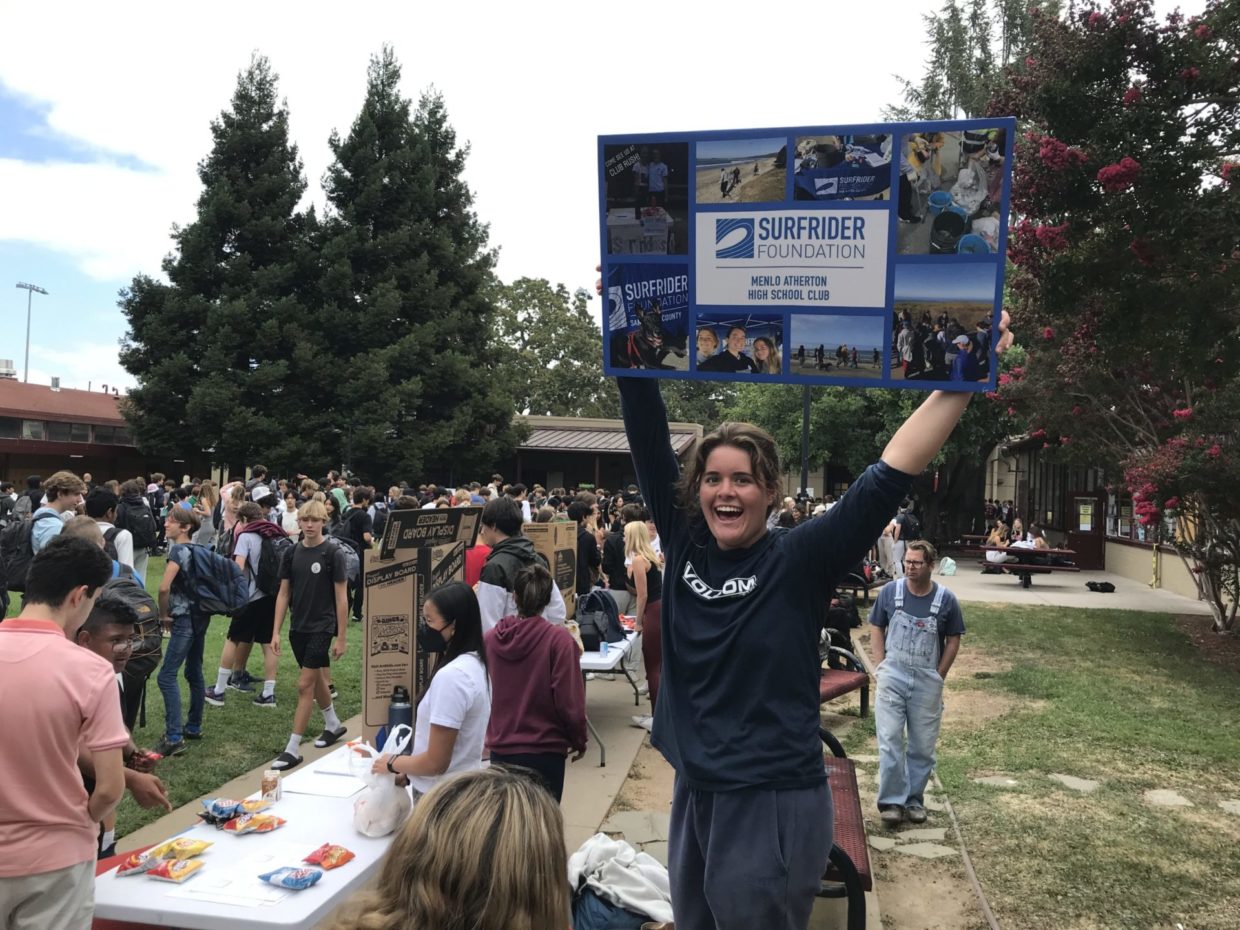
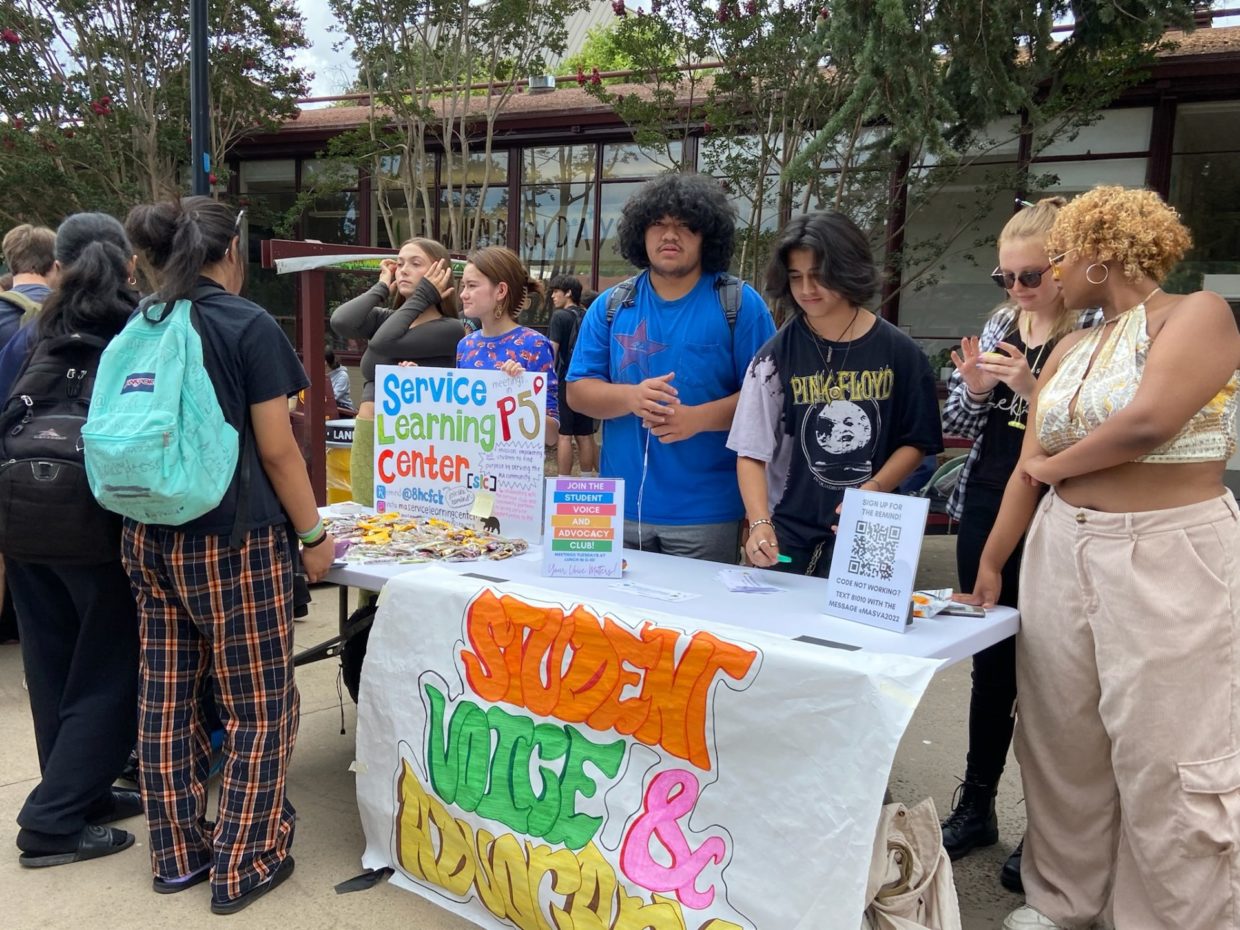
Last Wednesday at lunch, students from all grades gathered on the Green to sign up for clubs at M-A’s annual Club Rush. Senior Club Coordinator Simone McCreary said, “I am really happy with the Club Rush turnout, both from students and clubs. I can’t wait to see the clubs in action this year.” Here’s a selection of the clubs present and activities they do around campus.
Alternative Journalism Club – Senior Elizabeth Rosales founded this club in order to create “a community for people of color and members of the LGBTQ+ community to express their art.” It aims to make a safe space for people who may not have the opportunity to create artwork at home, who “maybe can then do it in this club.” 
Current Events Discussion and Activism Club – Focusing on local and international issues of today’s society, this club aims to come up with “a plan of action” achievable to students in order to address topics they care about. The current president, freshman Niklas Klemmer, said he wants to “incorporate discussion and debate” into meetings.
Women’s Union – Founder Anna Gady Mognuilnitskaia, a junior, said the Women’s Union “promotes women’s rights and funds education for charities and domestic violence shelters.” Mognuilnitskaia founded the club after not seeing one like it at M-A last year. 
Genders and Sexualities Alliance (GSA) – Sophomore Benji Weiss, a GSA Vice President, said “GSA is a community and safe space for people to learn about the culture and history of LGBTQ+ people.”. The club advocates for inclusivity for LGBTQ+ students on campus, and “would love to welcome more people into this awesome community.”
Surfriders Club – Lilly Supple, a senior at M-A, said, “We clean beaches on the weekends to keep our oceans and beaches clean.” If you are looking for an opportunity to meet new people and help the Earth at the same time, check out this long-running service club, which meets in the Service Learning Center (P-5) every other Thursday. 
Dream Volunteers – This branch of the international Dream Volunteers organization arranges service trips abroad. “We focus on bringing service opportunities to students at M-A,” senior and Co-President Sufie Sheikh-Bahaei said. They have “coordinated service trips to 5 different countries.” Senior Kiana Gholamy added, “we also provide opportunities for students to create their own projects.”  
Leo Club – “The Leo Club is a community service club that represents Leadership, Experience, and Opportunity,” senior Parsa Zaheri, the club’s president, said. It aims to ensure all students have the opportunity “to serve as a leader.” Overall, “the Leo Club is a great service club to join if you’re interested in sampling all kinds of community service and finding what parts of service intrigue you most.”
Music Production Club – Sophomore and President Alex Grigoroiu said, “you should join our club if you’re interested in learning how to make music digitally.” The meetings teach members how to use different software and equipment, as well as “peer review others’ work.” 
Ultimate Frisbee Club – If you are looking to find something active and new to do on Saturday afternoons, the Ultimate Frisbee club is the place for you. With no prior experience necessary, anyone can join the meetings for fun practices and scrimmages. With the existence of two different ultimate frisbee clubs on campus, junior Lily Montague-Alamin said, “we may scrimmage against the other club as well,” which is an event you do not want to miss.
Chess Club – The chess club is another opportunity to take a break from schoolwork and have fun with peers. “We want to create a community where people can come and play chess and have a good time, where you don’t have to be an insane chess player,” said senior Chase Baker. 
Ceramics Club – Whether you already know the basics of ceramics, are advanced, or have never tried it, the ceramics club is a place for people of all skill levels to learn more about and explore the art. Senior Ellery Burton-Tillson says, “it’s a good way to not be stressed and to meet new people.” They meet every other Wednesday at Flex Time in D-22.
Mandarin Club – This club spreads knowledge of Chinese culture around school. “We play a lot of games at club meetings,” junior president Wilona Chen said, and emphasized that students should join because “it is a good community overall.”
Pacific Islander Club – This club focuses mainly on Polynesian culture, but is open to showing the culture of other Pacific Island regions. Junior president Alia Vunipola said, “In a meeting, we go over the events that we’re planning on doing. Depending on what we’re going to represent, most of the time we put on dances.” The number of dances the club puts on varies each year based on what the members decide, but they are most common at school pep rallies. 
Deaf Culture Club – This club, newly started this year by sophomore Faith Schubin, meets every Thursday in G-8. “I really wanted to start a club related to sign language because my parents are deaf,” Schubin said. If you want to learn more about deaf culture and American Sign Language, join the Deaf Culture Club.
Mental Wellness Club – The mental wellness club is new this year, and is all about finding a balance in life and better managing stress. The founder, sophomore Hura Orujov, found the transition into the new school year overwhelming, and said she “wanted to provide a way to help people manage.” They will meet on the weekends in an outdoor space to do activities like yoga and meditation.
Intercambio – Intercambio is a club where students can practice their speaking skills in both Spanish and English. “We rotate the language a couple of times during each meeting,” junior Julianna Maldonado said “We exchange cultural ideas and language, which is really helpful for your classes.”
If you would like more information on any of the clubs at M-A or find out where and when they meet, check out this link: Clubs at M-A


The Online News Site of Menlo-Atherton High School
555 Middlefield Road
Atherton, CA 94027
(650) 322-5311

© 2022 M-A Chronicle.

source

Neeko Interview – "My Existence Is Political" – TheGamer

Nicole ‘Neeko’ Sanchez on being Mexican-American representation, the wholesomeness of cooking streams, and making the leap from TikTok to Twitch
Streaming is a tough business, full of highs, lows, hard work, and overnight successes. Few have experienced an ascent from anonymity to stardom like Nicole 'Neeko' Sanchez, who I caught up with this week ahead of the debut of the second series of her livestream cooking show, Noms with Neeko. Speaking to Neeko about her heritage, her politics, and the importance of fostering wholesome communities, there's a deep sense of intelligence to her thoughts that even she seems shy of.
Being a streamer means you're always 'on', and it means there's always someone waiting to take you down. If you're a woman of colour who embraces both her culture and her femininity, that goes double, then triple, then quadruple for Neeko. Her answers are as occasionally guarded as they are profound, and I get the sense that Neeko is a fiercely smart young woman with a passion to be the change she wants to see in the world, even as she figures out what that looks like as she goes.
"There's definitely a little bit of a difference between being a Mexican-American streamer and avidly trying to represent your culture and where you're from," Neeko says. "I feel like there are Latin American streamers that probably don't really like to touch on that, they just kind of want to be their selves, so avidly trying to showcase your background, where you're from, and be able to touch different audiences I think is definitely different, like progressively trying to be that representation. I don't feel responsible, I think it's just a passion of mine to be that representation. I don't think anyone should feel responsible or try to carry the weight of anything that they don't want to."
Related: Amouranth Interview: "I Just Work Harder – Full Stop"
Neeko streams in both Spanish and English and explains that she feels it's important for Latine Americans to have a face and a voice like themselves on Twitch, someone who not only speaks their language but represents their demographic and the unique position Mexican-Americans have in the Latin diaspora. There are few Mexican-American streamers of Neeko's profile on Twitch, and she's aware of the responsibility that casts upon her. It's not just about standing for her own culture though, but also about sharing it with the world. One of the ways she does that is through her cooking stream, Noms with Neeko.
"Cooking was always super important to my mom," she says. "I was raised to be independent at a really young age, because my parents had to make ends meet, and they were never home. Although they tried to be as involved in my life as possible, [my mom] wasn't able to be there all the time. So it was really important to her to show me how to serve myself food, teach me how to make foods, so as a kid [I could] make something for my younger brother. A common thing that Hispanic moms say is like, 'what if I'm not here one day, what are you gonna do, starve to death?'. When I moved out, I was really surprised how much I retained. That's how my cooking streams came about. Just kind of me just trying to not spend too much on going out to eat and incorporating what my mom taught me."
She adds that it's important too for Twitch to build different sorts of communities, and while gaming is always likely to be the dominant force in streaming, diversifying content allows for communities made up of all kinds of people. Gaming culture, Neeko says, “can be a little toxic" and her "cooking audience is a little more wholesome". Speaking on the toxicity specifically, she adds "when you see a hate comment, you have to act like you don't see it, even though it probably made you uncomfortable or hurt your feelings," and that this side of streaming is the most "mentally taxing", especially for a self-described introvert. Part of the reason we've seen the nature of Twitch change is the influx of content creators from other platforms; Neeko herself first gained fame on TikTok, becoming a viral sensation through her 'Okay, Boomer' video. Since then, she's worked hard to let people see the person behind the meme.
"The first thing my mind jumped to when I realised the magnitude of the virality of the meme is that I wanted to absolutely be my own person from 'Okay, Boomer'," she says. This is probably the biggest struggle content creators face when moving from a social media platform to the behemoth of Twitch, Neeko thinks. Streaming is more reactive, parasocial, and demands longer hours of more active participation.
"I think we are in a world right now where a lot of the biggest stars are content creators," she says. Having that accessibility to a content creator, or illusion of accessibility, is very popular. These are features that are seen on a lot of different platforms. Twitch being personally, I think, one of the main ones having that accessibility to talk to your favourite content creator live on stream. Maybe they'll answer you, so there's a higher possibility that you could engage with your favourite content creator. With that being said, I think Twitch, I personally feel not everyone could do it. Being a live streamer is a whole different form of content. I feel that I'm gonna see a lot of different people from different platforms come to Twitch to be more engaging with their audience, [but it] definitely does weed out people. Do I think it's gonna be like, [a] large [number]? No, but those people that do come and do keep a consistent flow going, I feel have a very, very high likelihood of being successful."
As someone who has been successful on Twitch, and in migrating from one social media platform to another, I wanted to get Neeko's take on a growing trend. Increasingly, children are naming 'content creator' as one of their most desired jobs when they grow up, often drawing a level of scorn unseen from adults when children instead wish to be singers or actors. This new fame, it seems, is nothing like the old fame. Cutting through the noise of feigned outrage, Neeko's answer is incisive and wise rather than defensive.
"I definitely encourage people to follow their dreams, and I feel hearing children out is very important," she says. "Although these kiddos want to be content creators, at the end of the day, I feel like their true passions and interests will take over over time. Maybe at the moment, they want to be content creators, but maybe later in life, they find a passion for medicine, or theatre, or art, or music production. I think listening to children, and the youth of America on what they want to do, and letting them find out what they want to do is very important. If they do want to be content creators, it doesn't hurt to try and give it at least a chance if you really, really want to pursue it, but just like a lot of media jobs, whether it's traditional or digital, it definitely depends on who you know, networking, consistency, and also a little bit of luck. It's definitely something to keep in mind but I think when children say it, it's best to let their interests develop over time. Maybe they'll change their minds."
Streaming is often seen as an apolitical career. 'Republicans buy sneakers too' tends to be the overriding sentiment. When Neeko shot to fame though, she did so wearing a Bernie Sanders for President t-shirt. However, rather than to play this off and brand herself as the same sort of apolitical entertainer her peers are, Neeko has – somewhat bravely – embraced political discussion. She felt she had no choice. Not because of the t-shirt, but because of her life.
"I feel like there have been points where talking about politics has been kind of like a trend," she says. "So when it's trendy, people talk about politics, but when it's not beneficial and trendy, I notice some people do tend to stray away from them. It's definitely a scary thing to do, so I completely understand that. But being a woman of colour, being from the background that I am, first generation Mexican here in this country, it's kind of hard not to be political because I think my just my existence is political, right? I mean, at one point, I was pretty much classified as an anchor baby. My existence is political. It's hard for me not to talk about these things when they have directly affected me a lot, just like a lot of other POC minorities in this country. It's definitely something I'm just very passionate about talking about, because they are almost who I am. That's something I still do up to this day."
Next: The Trouble With Teabagging
Stacey Henley is the Editor-in-Chief at TheGamer, and can often be found journeying to the edge of the Earth, but only in video games. Find her on Twitter @FiveTacey

source

Master of Public Health now offered online through World Campus – Pennsylvania State University

Master of Public Health now offered online through World Campus  Pennsylvania State University
source

‹ Previous Next ›