A former Michigan TV broadcaster is drawing attention for leaked audio of a heated, profanity-laced exchange he had with a female colleague last week. The recording of the off-air exchange involving Vic Faust, who left WXYZ-TV (Ch. 7) in 2015, was reported Monday by the St. Louis Post-Dispatch. Listen: Exchange between Vic Faust and his co-host It reportedly unfolded Sept. 13, toward the end of “The Edge” morning show that Faust co-hosts on 100.7 The Viper, a Missouri-based FM radio station. Faust also is an anchor for a Fox affiliate in St. Louis, according to the station’s website. The outburst appears to have started after the closing minutes of the show, when co-host Crystal Cooper jokingly said Faust called her “stupid” on-air the previous day and objected to the co-host criticizing his computer skills, according to a YouTube video the radio station posted. Faust went on to say Cooper referenced “a dumb topic,” said she shouldn’t be bringing up some subjects and called her a “liar” and “immature” and “stupid” several more times before the final commercial break. In the edited clip of audio the St. Louis Post-Dispatch said was sent anonymously and recorded during the break, Faust can be heard repeatedly calling Cooper names that are bleeped out. Throughout the nearly 5-minute argument, Faust accused Cooper of attacking him on air, referring to her as “fat” and “nasty.” When Cooper was heard telling Faust to “grow the (expletive) up” and had been “acting like an immature (expletive),” he responded: “You grow up, you fat (expletive) … .” Faust went on to say she was “stupid” for not speaking intelligently on topics during the show and told Cooper she shouldn’t return to work. “If you come back, I’m going to be in your (expletive) every (expletive) day,” he was heard saying. Cooper told Faust he was not her supervisor and she would return, according to the recording. Faust was heard telling Cooper he would “nail your (expletive)” and “do whatever I (expletive) need to do to you” before using a string of more profanities to describe the woman. Shortly before a co-host yelled there were 20 seconds left before the commercial break ended, Faust was heard telling Cooper: “Your kids have a (expletive) terrible mom. I feel sorry for them.” “Wow,” Cooper replied. “Wow.” Faust did not immediately respond to a request for comment Monday night. Neither did Cooper or representatives for the radio station. According to her Facebook page, Cooper stopped working for The Viper the same day as the confrontation. Faust joined WXYZ in 2004 as a weekend sports anchor, according to Detroit News archives. He went on to co-anchor the station’s morning and noon “Action News” shows. In early 2015, Faust announced on Facebook he would leave to take a new job in St. Louis, where he grew up. Faust graduated from the University of Missouri, where he attended on a football scholarship then started his broadcasting career as color-commentator and pre-post game host for the Missouri Tiger Radio Network on Learfield Communications, according to his profile on the Fox website. His career included working in Missouri and Oklahoma.
Advertisement Supported by His speed (and his bat) helped the Los Angeles Dodgers win four pennants and three championships. He was voted the National League’s M.V.P. in 1962. Send any friend a story As a subscriber, you have 10 gift articles to give each month. Anyone can read what you share. By Richard Goldstein Maury Wills, the star Los Angeles Dodger shortstop who revived the art of base-stealing in the 1960s and became one of the most exciting ballplayers of his time, died on Monday night at his home in Sedona, Ariz. He was 89. His death was announced by the Dodgers. The chants of “Go, go, go!” resounded from Dodger fans when the slender Wills took a lead off first base. He was soon off and running — stealing second base, and sometimes third moments later, spurring the usually light-hitting Dodgers to scratch out enough runs to come up winners. Wills had spent more than eight seasons in the minors when he joined the Dodgers in early June 1959. But he took over at shortstop and helped bring the team four pennants and three World Series championships. Wills set a modern major league record when he stole 104 bases in 1962, eclipsing the record of 96 set by Ty Cobb in 1915 and transforming baseball from the power game that had prevailed since Babe Ruth’s heyday. He set the stage for Lou Brock of the St. Louis Cardinals, who stole 118 bases in 1974, and Rickey Henderson of the Oakland A’s, who set the current record with 130 steals in 1982. The Seattle Mariners hired Wills in August 1980 as the third Black manager in major league baseball history, following Frank Robinson of the Cleveland Indians and Larry Doby of the Chicago White Sox. But Wills’s managerial tenure was brief and unsuccessful. He was later plagued by cocaine addiction. In his base-stealing prime, Wills was adept at getting a quick jump off the bag, and he was a master of sliding under or around a tag. He took long leads and studied pitchers’ habits intently. Most of all, it was a mental duel for Wills. “Stealing is a matter of confidence, even conceit,” he told The New York Times in September 1962. “It’s more than getting a good jump, a big lead. It’s being in the right frame of mind. I run with the thought that the pitcher will make a perfect throw and the catcher will make a perfect throw and I’ll still beat them. I don’t have a doubt.” A hardly imposing 5 feet 10 inches and 165 pounds, Wills, known as Mouse to his teammates, was a popular figure among Dodger fans in Los Angeles during the team’s first decade there after leaving Brooklyn. Early in September 1962, while covering the race for California governor between the incumbent, Edmund G. Brown, and Richard M. Nixon, the Washington columnist James Reston of The Times wrote, “If, after the season, Maury Wills were to run for governor, neither Brown nor Nixon would have a chance.” Maurice Morning Wills was born on Oct. 2, 1932, in the Anacostia neighborhood of Washington, D.C., one of 13 children of Guy and Mable Wills. His father was a minister who also worked as a machinist at the Washington Navy Yard. His mother worked as an elevator operator. At Cardozo High School in Washington, Wills played football — quarterback on offense, safety on defense and kicker on special teams — and starred in baseball as a pitcher, winning all-city honors in both sports. He was converted to an infielder after joining the Dodgers’ organization in 1951. In his rookie season with the Dodgers, the team won the World Series, defeating the Chicago White Sox, who had their own outstanding base-stealer in Luis Aparicio. Wills stole 50 bases in 1960, his first full season, and went on to win the National League’s base-stealing title every year through 1965. He was named the league’s most valuable player in 1962. He played on Dodger World Series championship teams again in 1963 and 1965 and a pennant-winner in 1966, teams powered by the pitching of Sandy Koufax and Don Drysdale. Wills was traded to the Pittsburgh Pirates after the 1966 season. He later played for the Montreal Expos and then was traded back to the Dodgers in June 1969, finishing his career with them in 1972. He stole 586 bases (putting him 20th on the all-time major league career list) and had a career batting average of .281, with 2,134 hits — only 20 of them home runs. He was a five-time All-Star and winner of the Gold Glove award for fielding in 1961 and 1962. He remained on the Hall of Fame ballot for 15 seasons but was never inducted. Wills was a baseball analyst for NBC-TV’s “Game of the Week” during the 1970s. Taking over a weak team when he was named the Mariners’ manager, he was probably most remembered in Seattle for being suspended for two games after he was caught illegally ordering the team’s groundskeeper to extend the batter’s box by a foot toward the pitcher’s rubber before a game with the Oakland A’s on April 25, 1981. Billy Martin, the A’s manager, believed Wills was trying to give Mariner batters a better chance to connect against his starting pitcher, Rick Langford, before his deliveries broke. Wills was fired on May 6. He had only a 26-56 record as the Mariners’ manager. He acknowledged in his memoir, “On the Run: The Never Dull and Often Shocking Life of Maury Wills” (1992), written with Mike Celizic, that he struggled with cocaine addiction, but he became sober in the late 1980s. He was later a baserunning instructor for the Dodger organization and for other teams. Wills had six children, all from his first marriage, to Gertrude (Elliott) Wills, whom he married in high school, according to his memoir. That marriage ended in divorce, as did his second marriage, to Angela George. He is survived by his third wife, Carla; two sons, Barry and Bump; four daughters, Mauricia Wills, Anita Wills, Wendi Wills and Susan Wills-Quam; seven grandchildren; and eight great-grandchildren. A number of his siblings also survive him. Wills’s son Bump was an infielder for the Texas Rangers and Chicago Cubs in the late 1970s and early ’80s. Though his Dodgers were usually winners, Wills didn’t need to look at the scoreboard to tell when he had fallen short. “I know when I have had a lousy day just by looking down at my uniform,” he told Sports Illustrated in 1965. “If it isn’t dirty, I haven’t scored two runs, I haven’t done my job.” Alex Traub contributed reporting. Advertisement
The non-fungible token and metaverse market are retesting mainstream adoption after a market dump this year, with the two rapidly evolving spaces still attracting institutions, investors and brands. The Tennessee whisky brand “Jack Daniels” is the latest company showing interest in joining the NFT and metaverse spaces. In a September 19 blog post, Mike Kondoudis, an intellectual property trademark attorney, confirmed that Jack Daniels applied for three trademarks for metaverse and NFTs with the United States Patent and Trademark Office (USPTO) on September 13. Virtual whiskey?#JackDaniels has filed a new trademark application claiming plans to sell: ▶️ NFT-authenticated media ▶️ Virtual beverages, barware, and clothing ▶️ Digital wallets and collectibles#NFT#NFTs#Metaverse#Web3#Crypto#JackLivesHerepic.twitter.com/3xgq8GkYAE — Mike Kondoudis (@KondoudisLaw) September 19, 2022
According to Kondoudis, Jack Daniels intends to sell NFT-authenticated media that could include video, audio, artwork, and text related to beverages, barware and clothing. The trademark will also cover downloadable digital goods. The company has also filed a trademark application for downloadable computer software that provides information in the field of beverages and software that Jack Daniels could use as a digital wallet. Jack Daniels now joins several notable companies and brands that have already applied for metaverse and NFT-related trademarks with the United States trademark regulator for various purposes in the past few months. Earlier this month, luxury fashion brand Hermes filed its trademark application for different virtual assets, including currencies, virtual goods marketplaces, virtual clothing, fashion show and non-fungible tokens (NFTs). On August 30, Sony Music Entertainment also applied for a trademark covering music, podcast production, artist management, marketing services, distribution, promotion, advertising, online entertainment, and audiovisual recordings. In addition, singer and actress Miley Cyrus registered metaverse and NFT-related trademarks of her name with the United States Patents and Trademark Office. Cyrus anticipates launching virtual clothing, entertainment services, drinks, and currency management software. Several other notable alcohol brands have already moved into the metaverse space. Tiger Beer, Heineken and Absolut Vodka, which launched its Coachella-themed metaverse, are recent perfect examples. Tamadoge (TAMA) – The P2E Dogecoin Our Rating This article was written for Business 2 Community by Dominic Kimani. Learn how to publish your content on B2C Join our Telegram channel to stay up to date on breaking news coverage
Dominic is a Nairobi, Kenya based crypto news writer enthusiastic about NFTs, DeFi, and blockchain tech in general, with four years experience in the field, alongside his own personal investing journey. Dominic also produces his own NFT and crypto newsletter, taking the initiative to set up his own mailing list with
… View full profile › Dominic is a Nairobi, Kenya based crypto news writer enthusiastic about NFTs, DeFi, and blockchain tech in general, with four years experience in the field, alongside his own personal investing journey. Dominic also produces his own NFT and crypto newsletter, taking the initiative to set up his own mailing list with by Connor Brooke by Jay Leonard by Connor Brooke by Jay Leonard
Kai Whiston discusses how aliens, his traveller background, and growing up with his raver artist mother inspired his maximalist new record Quiet As Kept, F.O.G., and an accompanying graphic novel Div Era Photos by Furmaan Ahmed According to Kai Whiston, traveller communities believe in aliens. “Every fucking traveller you speak to has an alien experience,” he tells me over video call, speaking into a large microphone as if he’s hosting a podcast. “So I’ve pushed that sonically and visually. The aliens do exist and they are operating in Stonehenge. The travellers were right.” Whiston’s third album, Quiet As Kept, F.O.G., landed last Friday. Drawing inspiration from aliens, 90s rave motifs – both sonically and in iconography of caravans and peace convoys, growing up among new age travellers (including his raver artist mum, Helene, who features heavily on the record), and several different fantasy lands, the music, in keeping with Whiston’s work to date, takes ideas and pushes them, exaggerates them, builds them to bursting. “It’s very maximal,” he says. “Both artistically and aesthetically.” Quiet As Kept has been in the works for three years, almost to the day, since the release of his last album No World Eternal, three years he describes as “disgusting, hermitting, mood boards, artwork, videos, everything.” But in all its fantastical, maximalist experimental pop, this record has allowed Whiston to explore parts of himself and his background that, for most of his life, he kept hidden and felt shameful of. It’s an album with great meaning, a meaning that only really began to show itself as the project came to life. A graphic novel, titled Div Era, will also form part of the Quiet As Kept project, which Whiston is working on with his mum. “It’s been great seeing her express herself artistically with this project,” he says with a grin. “It’s given her motivation.” After growing up in a house full of artworks and doodles and a shared fascination with Jamie Hewlett, Deadline magazine and Gorillaz, Div Era is a chance for the pair to create something together inspired by this common interest. “I’ve always been very self-focused and interested in this need to build my career,” Whiston explains. But Quiet As Kept has been as much about building his understanding of self and his relationship with his mum as anything else. “In a way this project was the easiest because I knew the community and the things I wanted to say so well,” he reflects. “It was all already in there, I just needed to be honest with myself about it.” A page from Div Era When you’re working on something for a long time in a very private and personal way, and then suddenly it’s out there in the world, that must be a strange feeling. Kai Whiston: There’s a big feeling of relief and some excitement. But I also have a sad moment too, because it’s not mine anymore. I just give it to everyone else. I have this secret thing that I really enjoy, that I totally obsess over, and then suddenly, that’s that. It’s almost as if when I release a new project it gets archived immediately, I never really listen to it again unless I have to. So it’s on to the next thing. As with anything creative, you could keep working on it, fine tuning, editing, adding flourishes, forever. How do you find that process of calling time on a project? KW: I had many moments with this record where I thought it was done, but then I kept breaking this weird boundary I’d set for myself. Two years ago, when much of the tracklisting was done, it was almost a similar album to what it is now. These days I need to insert a two or three year boundary in order to allow my life to change. To allow myself to grow – outside of fiddling around with music – my perspectives, my general outlook and the things I like. These things shift in a years-long period. Over time what comes out is a more eclectic project. So when did you start working on this record? KW: It’s a horrible habit of mine, but pretty much immediately as my last album [No World As Good As Mine] was being rolled out. I’m so close to the finishing line and it’s like this devil procrastinator in my head going, “Oh, here’s a new idea. Maybe you should start making music for no apparent reason!” This time around I’ve had to force myself not to do the same thing, so I can focus on the promotion aspect. The initial ideas didn’t have anything to do with 90s rave music, or my mum or my upbringing. Instead it was focused on being weightless and ambient sonically. It felt like the flipside to what I’d just done. I find myself making instinctive contrarian pivots. When I know that people like my music for a particular reason, I want to try and build my skill set in other areas. So I wanted to make intricate, beautiful music, inspired by the PAN compilation Mono No Aware. I wanted to meander in the idea of quietness, looking inwards, working on a more mature sound – whatever that means. At one point, and I don’t know why I did this because I had never really used drum samples before, but I added this classic 90s drum loop to a track and it was like everything came in all at once. I remember the feeling really vividly; this drum break was my mum, my childhood, The Prodigy and Massive Attack. So the foundations of the album transformed because of that sample? It really felt like a big movie moment. I wanted to do my own version of dance music, inspired by my household growing up and traveller communities. I was turning 21 at that point, and starting to develop the emotional connection I had with my parents and my upbringing. My relationship with my mum had been this complicated thing where I had a lot of animosity because of our situation financially. Not in a blame way, but because, especially in creative industries, you see so many privileged kids. Back then I wished we could swap places. Now I feel very grateful for it, and this drum break made me want to focus on the relationship with my mum again. As you found this inspiration in your mum, her community, her raving and your upbringing, did you have conversations with her to add colour and context to your memories? KW: Completely. You can hear some of those conversations sampled in the album. At first she was surprised, she didn’t think I cared about the history. But the truth is, when I was a kid in a small town with an arty raver girl for a mum, I stuck out like a sore thumb and I just wanted to fit in and be normal. I think I suppressed that in myself for a long time. I went to uni to study business, sort of in reaction to my mum being this hippy artist. I wanted to be sensible, whatever that definition of sensible is. The dynamic I have with my mum is sometimes blurred between parent and child. She’s been young her whole life, it’s an amazing thing. I told her about this project, and wanting to study new age travellers, and in doing so I embraced these parts of myself I had been suppressing. When you’re a kid you don’t care and you just want to be left alone, but now, hearing her talk about the Battle Of The Beanfield or Castlemorton, those things are remarkable. And the political overtones were very ahead of their time. Those conversations with her were really valuable, hearing about the crazy life she’s had, her experience of having a child and then losing the father of that child, it was a relearning experience for me. I used to roll my eyes at her stories and now I find immense value in them. And in my approach to the music too. You never appreciate your parents’ music taste until you grow up. I knew Massive Attack were good but I didn’t realise how good, or understand the history and the lineage. Besides Massive Attack, what are your earliest, formative memories of music? KW: A lot of it is that my mum has always blasted music in the house to the point of inconvenience. It’s funny to me when people describe me as eclectic when my mum is far more so in terms of her taste. It feels like she was part of every counterculture in the 80s and 90s. Part goth, raver, punk, you name it. That’s helped develop my approach to genre. She’d play The Prodigy, The Future Sound Of London, Kate Bush, Siouxsie And The Banshees, Disturbed and that extremely eyeliner goth band HIM. I also have a distinct memory of her sitting me on her lap to play me some Led Zeppelin for the first time, wanting it to impact me as it had her. It worked, because I grew my hair long and started playing guitar. That set me on the collision course. Our house also looked like a 16-year-old’s bedroom – there were posters everywhere. Rockstars, DJs, I think that’s what led me into having an interest in music, it was to do with the iconography. I got into music production more through digital art. I got a computer through a government scheme for low income households or something and once we got broadband I became obsessed with YouTube. From there, I got a free version of photoshop and was doing that and then I got into video editing through a game, do you remember a game called Club Penguin? Let me Google it, important research. KW: It was silly, but I started making music videos on Club Penguin. Around that time I got into EDM like Skrillex and Deadmau5 and then when I was 14 or 15 I started to learn about weirder things like Aphex Twin and MF DOOM, learning what sampling is, going deeper into electronic stuff and finding Death Grips and Daft Punk. Then the rabbit hole took me to Clams Casino and Evian Christ. That was when I really started making music and something just clicked. My friend Josh [AKA Ship Sket] and I were always making songs together. There we were in Shaftesbury, Dorset, and it felt like this thing was ours, like we were the only people in the whole school that cared about this music. There’s a group of you that have come out of Dorset making interesting electronic music, why do you think that is? KW: If you’re a weird internet nerd I think you sort of gravitate to each other. That’s how I found out about Iglooghost. There is a lineage of artists from that town – Dark Sky, memotone, Iglooghost and now me. I need to find out if there’s anyone making electronic music in Shaftesbury now that we’re overlooking, I feel like the lineage needs to continue. It would be nice to keep it going. KW: We’re on the hunt, but as we don’t live there anymore it’s harder. In the way that you have explored your upbringing in making this record and thinking about this record, what do you think you’ve learned about yourself? KW: I used to think that my internet-based upbringing was the only reason I got into music and how I broke out of the wrath of council estate England. I thought I was so unlike my mum, but now I know that’s not the case. She shaped me in so many ways, directly or indirectly, as did the environment I grew up in, surrounded by travellers. Her free spirit brought me to the person I am now. I always knew I was different from other kids and I think my upbringing says a lot about me today – my drives and motivations, my contrarianism, wanting to be recognized. Even being a traveller, one of the definitions of Quiet As Kept is how I suppressed my background for so long. I felt the discrimination and taboo around it was too much and I wouldn’t be able to put up with it. Now with this album, I’m saturating everything I can with this part of me. It’s been a big exercise in looking inward, into my own stories and then blending escapism with realism or the fantasy with the everyday. It’s a bit of a chicken and egg situation. Has the project led me to be more mature? Or was it just that period of my life when you enter your 20s and become an actual person? I’ve always had these instincts to do things and now I’m asking: Why? How? I’m challenging myself to be more inquisitive of my own ways of doing things. Kai Whiston’s new album Quiet As Kept, F.O.G. is out now via Lux Recordings Share this article: If you love what we do, you can help tQ to continue bringing you the best in cultural criticism and new music by joining one of our subscription tiers. As well as the unparalleled joy of keeping the publication alive, you’ll receive benefits including exclusive editorial, podcasts, and specially-commissioned music by some of our favourite artists. To find out more, click here. Support tQ’s work by becoming a subscriber and enjoy the benefits of bonus essays, podcasts and exclusively-commissioned new music. To find out more, click here. As a wholly independent publication, we rely entirely on our ad bookings to keep The Quietus going. Please whitelist our site in order to continue to access The Quietus.
Manteca (Ca.) four-star linebacker Blake Nichelson will announce his college decision tonight live on the 247Sports Youtube at 9:30 p.m. eastern time. Nichelson will choose between his three finalists: Oregon, UCLA and Florida State. Florida State has been involved with Nichelson since offering him in May of this year. Just about a month later, the 6-foot-3, 200-pound defender took an official visit to FSU. After making his way to Oregon for an official visit at the end of June, he then returned to Tallahassee at the end of July for a multi-day unofficial trip. After that July trip, the Seminoles started to garner predictions in their favor on the 247Sports Crystal Ball. The ‘Noles hold all six predictions heading into Nichelson’s Tuesday night announcement. Nichelson also made his way to Oregon this past weekend for their game against BYU. According to the industry-generated 247Sports Composite Rankings, Nichelson is the No. 245 overall player and No. 19 linebacker in the nation.
Home » 9th equine West Nile virus case in California The gelding displayed acute neurologic signs and was euthanized. On Sept. 19, the California Department of Food and Agriculture confirmed a vaccinated 8-year-old Thoroughbred gelding in Tulare County tested positive for West Nile virus (WNV) and was euthanized. He displayed neurologic signs, including ataxia (incoordination) in all four limbs, hypermetria (an exaggerated gait) in the front limbs and recumbency (down and unable to rise). This is the ninth confirmed case of equine WNV in California in 2022. EDCC Health Watch is an Equine Network marketing program that utilizes information from the Equine Disease Communication Center (EDCC) to create and disseminate verified equine disease reports. The EDCC is an independent nonprofit organization that is supported by industry donations in order to provide open access to infectious disease information. West Nile virus is transmitted to horses via bites from infected mosquitoes. Not all infected horses show clinical signs, but those that do can exhibit: West Nile virus has no cure. However, some horses can recover with supportive care. Equine mortality rates can reach 30-40%. Studies have shown that vaccines can be effective WNV prevention tools. Horses vaccinated in past years need an annual booster shot, but veterinarians might recommend two boosters annually—one in the spring and another in the fall—in areas with prolonged mosquito seasons. In contrast, previously unvaccinated horses require a two-shot vaccination series in a three- to six-week period. It takes several weeks for horses to develop protection against the disease following complete vaccination or booster administration. In addition to vaccinations, owners should work to reduce mosquito population and breeding areas and limit horses’ mosquito exposure by: What did you think of this article?
Three generations of my family gathered together last night and this morning to say goodbye to the third and last of our three beloved, adopted shelter dogs, 13 year-old Bella-bear. She lived well and was happy until the very end. Reflecting on the last 24 hours, I am enlightened and thankful to Bella. It is clear to me that the purest kind of love occurs when a family can find happiness even in the saddest moments. Animals are extraordinary life teachers. If you have the ability, and if you have not done so already, please rescue and adopt a shelter animal, because they offer kindness and happiness beyond what you could ever wish for. Michael Mallen
September 20, 2022 September 20, 2022 September 19, 2022 Progressives are always “raising awareness.” It’s our turn now. Governor Gavin Newsom, pompous Democrat of California, went into a tizzy calling for a DOJ investigation over Texas and Florida … (click for more) My morning readings have increasingly included much about Queen Elizabeth II since her death on Sept. 8 and prior to her funeral on Monday, it became clear the one mortal or “commoner,” I can … (click for more) Minutes after the second-ranked Alabama football team laid an embarrassing 63-7 whipping on Louisiana-Monroe Saturday, Warhawks coach Terry Bowden was ever the optimist: “Alabama doesn’t know … (click for more) Progressives are always “raising awareness.” It’s our turn now. Governor Gavin Newsom, pompous Democrat of California, went into a tizzy calling for a DOJ investigation over Texas and Florida sending illegal migrants to the so-called sanctuary cities. By Abbot and DeSantis sending illegals to these northern cities, they “raised awareness” of what is a real crisis for them. Seventy-eight … (click for more) My morning readings have increasingly included much about Queen Elizabeth II since her death on Sept. 8 and prior to her funeral on Monday, it became clear the one mortal or “commoner,” I can compare her to during my lifetime is my grandmother, the late Elizabeth McDonald. “Mammaw” was the Godliest woman who I’ve known. Just like the Queen, “Mammaw” embodied Christ in a way that, … (click for more) The Election Commission on Wednesday morning certified the District 8 election in which Marvene Noel won by 70 votes, though Commissioner Jerry Summers said “it doesn’t pass the smell test.” Chairman Mike Walden also expressed concerns related to the conduct of city officials. He said, “We asked them not to swear in Ms. Noel before we had certified the election, but they said … (click for more) The County Commission voted Wednesday to name attorney Charles Paty as a magistrate. He replaces Andrew Basler, who resigned effective Sept. 11 to join the district attorney’s office. On the first ballot, attorney Paty got seven votes. Voting for Micah Juster were Commissioners Lee Helton, Warren Mackey and David Sharpe. Chairman Chip Baker voted for Elizabeth Schmidt. … (click for more) The 9th-ranked Chattanooga Mocs are headed to prime time. It’s a short week with this Thursday’s kickoff at Illinois. It’s a tall enough order with playing two games over the space of a six-day span, the Mocs head into unfamiliar territory with their first meeting with a Big Ten opponent. The Mocs offense continued its trending forward with the highest-scoring output putting … (click for more) -Senior Dorota Zalewska was the Chattanooga Mocs top golfer this week at the Mercedes-Benz Collegiate. She also out-shone the entire Southern Conference claiming the league’s Golfer of the Week honors. “We are happy for Dori that she came in right where she left off,” Coach Colette Murray said. “I’m sure this is just the first of many this year. My hope is her teammates are … (click for more)
Over 3,888,949 readers this year! Local Weather Search Follow Us Over 3,888,949 readers this year! Local Weather Over 3,888,949 readers this year! The Natrona County Townsend Justice Center (Dan Cepeda, Oil City) CASPER, Wyo. — A Casper man was sentenced to two and a half to five years in state prison for conspiracy to commit theft of copper cable from a workover rig west of Casper last December. John David Christensen, 38, is also ordered to pay over $25,000 in restitution to Ironhand Drilling for damages resulting from cutting a live power cable during the theft. Christensen pleaded guilty to a charge of conspiracy to commit felony theft in Natrona County District Court in May. Charges of felony theft and property destruction were dropped. “One night, we needed some money so we hopped a fence and cut some copper off a rig,” Christensen said when making his plea, according to court transcripts. His accomplice, Christopher Carlen, has also pleaded guilty to the conspiracy, according to Assistant District Attorney Jared Holbrook. Around 3:27 a.m. on Dec. 7, a caller in the area of Highway 20-26 near the Casper-Natrona County International Airport reported seeing the lights out at the rig, which was unusual. The caller also saw a truck speeding down 7 Mile Road with its lights off. Natrona County Sheriff’s deputies responded to the area and saw the suspect vehicle pull onto the highway and park at the Ghost Town truck stop, according to the affidavit. Deputies saw several lengths of heavy industrial copper cable in the bed of the truck. The cables appeared to have been cleanly cut. Company officials told investigators that a set of heavy bolt cutters had been found arc welded to a live wire, which had blown the breaker and caused the power outage. Holbrook said the $25,538 restitution is for the cut power cable and related damages. Share this: Share your best photos with our community: #oilcitywy! Support local news and always be the first to know!
Vikram Montrose has had a very interesting journey as a composer in the Hindi film industry. The Sanjay Dutt produced ‘Hasmukh Pighal Gaya’, which was the first film he worked on, never saw the light of the day. A couple of years later, ‘Kar Har Maidaan Fateh’ from Rajkumar Hirani’s ‘Sanju’ became an anthem for many and opened several doors for Montrose in the industry. Since then, the young composer has worked on multiple films including ‘Prassthanam’, ‘Commando 3’, ‘Mere Desh Ki Dharti’ and ‘Liger’. Recently, he won the Filmfare Award for Best Music for ‘Shershaah’. Vikram shared the award with Tanishk Bagchi, Jasleen Royal, Javed-Mohsin and B Praak, his fellow composers on the film. For the Sidharth Malhotra – Kiara Advani starrer biographical war drama, Vikram had composed ‘Jai Hind Ki Senaa’, a soaring patriotic number. In this interview, Vikram talks about his journey in the music industry, popular tracks, special equation with Sanjay Dutt, the importance of formal training and more. ‘Attack’ and ‘The Liger Hunt Theme’ are the two tracks you composed for ‘Liger’. You have collaborated with Azeem Dayani and Dharma Productions earlier as well. How was the process of creating these two tracks for the film? I am fortunate for all the opportunities I have received thus far. I am blessed to be a part of ‘Shershaah’ and now Liger. I thank Mr. Azeem Dayani for getting me on board for these two projects. The best thing about working with Azeem is the ease and freedom that you get as an artist. The brief is to the point and he is always sure of what he wants. He is open to new styles or approaches and totally puts his faith in the composer. That always makes the process easy. While working with him, an artist can dive in fearlessly. And that’s what motivated me to create songs like ‘Jai Hind Ki Senaa’, ‘Liger Hunt’ and ‘Attack’. What do you think about the trend of having multiple composers on a single film? You have worked on many such films but have also composed full-fledged albums for a couple of projects like ‘Mere Desh Ki Dharti’. There are various models for scoring music for a film. The regular model is when there is one composer who composes the entire album then there is the model where multiple composers are brought on board, but that is used selectively depending on the film. For me, both have their own merits. Music is one of the key tools for movies and sometimes having a diverse soundtrack for a film by various composers and their styles work well for it. Then, there are movies that require a certain kind of sound which is best delivered by a single composer. At the end of the day, it all depends on the filmmaker and what he thinks is best for the movie. Personally, I enjoy being a part of both the setups. The film’s storyline and characters will always be the most important part of my song-making process. Sometimes, when you have no idea of what is going on in the movie and you just place a song, there is huge possibility it getting backfired. The song must complement the narrative of the film. I always try to ensure that the song should contribute to the storytelling in some way or the other. As a child, you learned to play the piano and the guitar. How important, do you think, is formal training for a musician? It is very important. Knowledge gives you longevity as a music composer. Things are changing faster than ever. Learning the craft always gives you the extra edge. Whether it’s learning an instrument or the theory of music making or the technical and marketing aspects of music, you have to be open to the idea of learning new things. I was lucky that I got the opportunity to learn the piano, guitars and drums at an early age. The best decision of my life, however, was to learn music production. The process of learning music never stops. Currently, I am learning to play the violin. I firmly believe that education always elevates your craft. The two songs you composed for the Sanju soundtrack were hugely popular. ‘Kar Har Maidaan Fateh’ is one song that people from different walks of life keep listening regularly to inspire themselves. Take us through the process of creating the song. ‘Sanju’ has been special in ways more than one. ‘Kar Har Maidan Fateh’ was a dream song for me. I was able to create that because of the guidance and motivation I received from Mr. Sanjay Dutt. I was very new to the industry then.I will be forever grateful to Mr. Rajkumar Hirani for believing in me. ‘Kar Har Maidan Fateh’ has motivated and inspired people in ways that makes me emotional. I feel blessed to see the kind of impact the song has created. I hope I get more opportunities to create songs like these. Getting an understanding of the extraordinary journey of Mr. Sanjay Dutt helped me create ‘Kar Har Maidaan Fateh’. I always feel that the heart and soul of ‘Kar Har Maidaan Fateh’were the lyrics which were beautifully written by Shekhar Astitwa ji. I learnt a lot while working on the song. ‘Hasmukh Pighal Gaya’, ‘Prrasthanam’, ‘Torbaaz’ – you have had a long-standing association with Sanjay Dutt. Sanju sir is family. I have learned so much from him. I continue to learn a lot of important lessons about music and life from him. Sanju sir has an impeccable taste in music and he introduced me to music genres that I didn’t even know existed. His guidance completely transformed my music. He has always been there for me and guided me and motivated me to become better and to be humble. What are you doing next? There is an interesting line up in place. I am eagerly looking forward to introducing a totally different soundscape. There is also a different style of music that I love doing and I really want to present it to people through my own company.
Subscribe to one or all notification sources from this one place. Subscribe to our newsletter to get the day's top stories sent directly to you. The final touches are being applied to a Telford theatre group’s latest production ahead of opening night next month. The Telford and District Light Operatic Players (TADLOP) will be breaking new ground when they present the Hunchback of Notre Dame, with it thought to be the first time it has been performed in Shropshire Based on the original gothic novel by Victor Hugo, the performance, at The Telford Theatre – formerly known as The Place – will feature songs from the Disney animated film by Alan Menken and Stephen Schwartz. TADLOP formed in 1972 with the stated aim of bringing “a little of the West End” to Telford. Performing twice a year, past productions have included Sunset Boulevard, My Fair Lady, Oklahoma and most recently Guys and Dolls. The group have been rehearsing for the Hunchback of Notre Dame at Hadley Methodist Church and recently held a celebratory ball with all the cast present. Tickets are on sale for the performances, which will be at The Telford Theatre from Thursday, October 27, to Saturday, October 29. For more details visit tadlop.com or for tickets go to telfordtheatre.com By Paul Jenkins Senior Reporter Senior Reporter at the Express & Star and Shropshire Star.
Variety Print Plus Subscriber Variety Print Plus Subscriber Variety Print Plus Subscriber Variety Print Plus Subscriber Variety Print Plus Subscriber
By Michael Schneider Variety Editor at Large As he prepares to celebrate two decades in late night, Jimmy Kimmel has agreed to stick around for at least three more years. Kimmel announced on Tuesday that he would continue his run as host of ABC’s “Jimmy Kimmel Live!” through the show’s 23rd season, extending his contract — which was set to expire in the next year. Kimmel has fronted “Jimmy Kimmel Live” as host and executive producer since 2003. “After two decades at ABC, I am now looking forward to three years of what they call ‘quiet quitting,’” he quipped in a statement. News comes as Kimmel prepares to return to Brooklyn next week for the show’s sixth visit to the borough. This marks the first time “Jimmy Kimmel Live” has been back in New York since 2019 (before the COVID-19 pandemic put such trips to a halt, of course). The late night talk show will once again tape in front of a live studio audience at the Brooklyn Academy of Music’s Howard Gilman Opera House.
The news of Kimmel’s renewal comes as the late night space sees some shifts, following the cancellation of TBS’ “Full Frontal with Samantha Bee” and the dissolving of Showtime’s “Desus & Mero” partnership. “The Late Late Show with James Corden” host James Corden also announced plans to depart his CBS show next year. Kimmel is by far the longest-running late night talk show in ABC history. He’s also now the longest-tenured host currently in late night, since Conan O’Brien ended his show last year. “For 20 years, Jimmy Kimmel has been a huge part of the ABC family and the heartbeat of late-night television,” said Craig Erwich president, ABC Entertainment, Hulu & Disney Branded Television Streaming Originals, in a statement. “Not only has he entertained our audiences night after night with his sharp comedy, dynamic interviews and irreverent humor, but he has gotten us through some of the most momentous events in our history with optimism and heart. There is no one funnier and more authentic than Jimmy. We are so proud of the incredibly talented team at ‘Jimmy Kimmel Live!’ and could not be happier to continue our partnership.” Since the show’s launch, Kimmel created some of the earliest viral video sensations, has bumped Matt Damon off his show nightly, has hosted the Oscars twice, and fronted the Primetime Emmys multiple times — including, most recently in 2020 in the midst of the pandemic. The host had hinted in interviews in recent years that he may be looking at ending his show sometime in the near future. Kimmel most recently renewed his ABC contract in 2019 for three more years. At the time he told reporters that he had been “seriously considering” ending his ABC late-night show before then-ABC Entertainment president Karey Burke and Disney TV Studios bosses Dana Walden and Peter Rice convinced him to continue on with his show. “I think I felt appreciated and that is important even if you have a job that people think of as a glamorous job,” Kimmel said in 2019 at the Television Critics Association summer press tour. “You still want to feel like your company is behind you and I do.”
In June, “Jimmy Kimmel Live” went on a roll, becoming the No. 1 talk show among adults 18-49 for several weeks. In the weeks of June 6 and June 13, “Kimmel” scored the two of the strongest weeks for any late-night talk show on any network so far this year in adults 18-49, according to ABC. “Jimmy Kimmel Live” also received another Emmy nom for variety talk series this year, the show’s twelfth. In 2018, Kimmel launched Kimmelot Prods., in partnership with Wheelhouse Entertainment’s Brent Montgomery. Beyond “Jimmy Kimmel Live,” his recent series include executive producing the revival of “Crank Yankers,” as well as hosting and executive producing the return of “Who Wants to Be a Millionaire” in 2020 and 2021. He is currently creator/executive producer of the Kelly Ripa-hosted game show “Generation Gap.” Kimmel has also earned accolades for spearheading, along with Norman Lear and Brent Miller, the “Live in Front of a Studio Audience” franchise. The first two editions won Primetime Emmys for outstanding variety special (live), while the most recent installment, which took on “Diff’rent Strokes” and “The Facts of Life,” received an Emmy nomination this year. “Jimmy Kimmel Live” continues to air weeknights from the El Capitan Entertainment Centre on Hollywood Boulevard in Los Angeles. Jimmy Kimmel, Erin Irwin, Molly McNearney, Jennifer Sharron and David Craig serve as executive producers on the show; Douglas DeLuca serves as co-executive producer. “Jimmy Kimmel Live!” is produced by 1205 AM Productions LLC in association with Kimmelot and ABC Signature. A Variety and iHeartRadio Podcast The Business of Entertainment
Get local news, offers & more… The Smashing Pumpkins shared their brand new single Beguiled today, along with details of their highly anticipated twelfth studio album; a three-act rock opera album titled ATUM (pronounced Autumn), which is slated for release in April 2023 [Pre-order/add/save HERE]. ATUM will feature 33-tracks –with each track to be revealed chronologically each week on Corgan’s podcast– and is the sequel to 1995’s Mellon Collie and the Infinite Sadness and 2000’s Machina/Machine of God. ATUM was written and produced by Corganover the past 4 years. Each act of eleven songs will come out every eleven weeks on digital streaming platforms to coincide with the podcast. Act 1 on November 15, 2022. Act 2 on January 31, 2023. Act 3 along with a special edition boxset featuring all 33 album tracks plus 10 additional unreleased songs, will be released on April 21, 2023, also available for pre-order HERE. Also revealed today, Billy Corgan’s brand-new podcast series co-produced with iHeartRadio, Thirty-Three with William Patrick Corgan. The first two episodes are available now via https://smashingpumpkins.com where fans can hear two never-before released tracks, taken from The Smashing Pumpkins’ forthcoming album. The first episode’s guest is David Bowie’s esteemed long-time pianist Mike Garson. More guests to be revealed soon. Each episode of Thirty-Three with William Patrick Corgan will debut a new, yet to be released song until the official release of ATUM in 2023. This week, tracks Atum and Butterfly Suite were shared alongside a deeper break down, from Corgan himself, on their forthcoming 33-track musical concept album. The podcast also dives into Pumpkins history and features a classic song in each episode. Thirty-Three with William Patrick Corgan is distributed by iHeartPodcasts and available on iHeartRadio and everywhere podcasts are heard. Last night, the legendary rock luminaries debuted their new single ‘Beguiled’ via a very special live video performance broadcasted exclusively via the bands’ Tik Tok account. This week, the band celebrates their new music and their forthcoming North American arena tour with two very special sold out underplays at Chicago’s Metro and New York City’s Irving Plaza. This Friday, they will be performing Beguiled for the first time live on late night television on NBC’s The Tonight Show Starring Jimmy Fallon. Next month, The Smashing Pumpkins will be embarking on their North American arena tour with special guests Jane’s Addiction andPoppy. Produced by Live Nation, the 32-date SPIRITS ON FIRE TOUR will commence on October 2 in Dallas, TX and will conclude on November 19 in Los Angeles, CA at the Hollywood Bowl. For tickets and more details, go here. When The Smashing Pumpkins first emerged out of Chicago in 1988, the world had never heard a band quite like them. They spun together rock, pop, shoe-gaze, metal, goth, psychedelia, and electronic into a kaleidoscope of saccharine melodies, fuzzy distortion, bombastic orchestration, incendiary fretwork, eloquent songcraft, and unshakable hooks. Upon their formation, their sound was different, iconoclastic, and wholly new-and it still is today. As a result, they’ve sold over 30 million albums worldwide and collected two GRAMMY® Awards, two MTV VMAs, and an American Music Award. Their catalog is highlighted by the platinum Gish [1991], the quadruple-platinum Siamese Dream [1993], diamond-certified Mellon Collie and the Infinite Sadness [1995], platinum Adore [1998], and gold Machina/The Machines of God [2000]. In 2018, they embarked on one of their most successful tours ever, the Shiny and Oh So Bright Tour, followed by SHINY AND OH SO BRIGHT, VOL. 1 / LP: NO PAST. NO FUTURE. NO SUN. Meanwhile, 2020 saw the release of the band’s eleventh full-length and latest double album, CYR. As prolific as ever, The Smashing Pumpkins will release their next album in 2023. More details to come. Watch the new music video here:
NORTH AMERICAN TOUR DATES
10/02 – American Airlines Center – Dallas, TX** 10/03 – Toyota Center – Houston, TX** 10/05 – Moody Center – Austin, TX** 10/07 – Amalie Arena – Tampa, FL** 10/08 – Hard Rock Casino – Hollywood, FL** 10/10 – Bridgestone Arena – Nashville, TN** 10/11 – State Farm Arena – Atlanta, GA** 10/13 – Mohegan Sun – Uncasville, CT** 10/14 – UBS Arena – Belmont Park, NY** 10/16 – TD Garden – Boston, MA** 10/18 – Capital One Arena – Washington, DC** 10/19 – Madison Square Garden – New York City, NY** 10/21 – Wells Fargo Center – Philadelphia, PA** 10/22 – PPG Paints Arena – Pittsburgh, PA*^ 10/24 – Scotiabank Arena – Toronto, ON** 10/26 – Bell Centre – Montreal, QC** 10/27 – Centre Videotron – Quebec City, QC** 10/29 – Rocket Mortgage Fieldhouse – Cleveland, OH*^ 10/30 – Fiserv Forum – Milwaukee, WI** 11/01 – Enterprise Center – St. Louis, MO** 11/02 – Little Caesars Arena – Detroit, MI** 11/04 – Xcel Energy Center – St. Paul, MN** 11/05 – United Center – Chicago, IL** 11/07 – Ball Arena – Denver, CO** 11/09 – Spokane Arena – Spokane, WA** 11/11 – Rogers Arena – Vancouver, BC** 11/12 – Climate Pledge Arena – Seattle, WA** 11/13 – Moda Center – Portland, OR** 11/15 – Chase Center – San Francisco, CA** 11/16 – Honda Center – Anaheim, CA** 11/18 – Footprint Center – Phoenix, AZ** 11/19 – Hollywood Bowl – Los Angeles, CA** ** with guests Jane’s Addiction + opener Poppy *^ with guests Jane’s Addiction + opener Meg Myers Photo Credit Paul Elledge PINKSHIFT Share New Single ‘in a breathe’ Bitch Releases New Single ‘Boys Of Summer’ Birds in Row Release Two New Singles ‘Noah / Cathedrals’ Groove Armada Announce ‘Hold a Vibe’ Their First New Single in Two Years Most Popular
Olivia Newton-John Honored with ‘If Not For You’ 50th Anniversary Deluxe Edition
Interview: Renée Fleming Discusses Bringing Opera to IMAX Exclusive: Hear ‘I Remember’ From New Eleri Ward Sondheim Folk Album Luke Combs Announces Second Brisbane, Sydney & Melbourne Concerts Olivia Newton-John Honored with ‘If Not For You’ 50th Anniversary Deluxe Edition BroadwayWorld TV
Thank you for visiting nature.com. You are using a browser version with limited support for CSS. To obtain the best experience, we recommend you use a more up to date browser (or turn off compatibility mode in Internet Explorer). In the meantime, to ensure continued support, we are displaying the site without styles and JavaScript. Advertisement Scientific Reportsvolume 12, Article number: 15754 (2022) Cite this article Metrics details The uncertainty of LNG import risks will have a significant impact on China’s energy security. This paper establishes a multi-agent game model based on the current LNG transportation network and global LNG supply and demand pattern, evaluates the LNG import risks faced by China under the global governance model, and simulates and predicts the optimal LNG import strategy of China in 2030. The research results show that between 2007 and 2020, China’s LNG import risks increased rapidly compared with political risks and national risks. From the perspective of risk identification, the comprehensive risk of China’s imports from Southeast Asia and Australia is lower. However, due to the increasing demand gap for LNG, the Middle East, and Africa are still necessary supply sources. It is estimated that by 2030, the future LNG market will be oversupplied, and the United States is expected to become the world’s top LNG supplier. China will reduce its dependence on Africa and the Middle East, and import a large amount of natural gas from the United States, Australia, Qatar, and Russia to reduce supply risks. From the perspective of import market competition, the new analysis model proposed in this article provides an effective tool for exploring the optimal strategy for LNG import. Liquefied natural gas (LNG), as efficient and clean energy, plays an important role in the global energy trade pattern with its flexible advantages of safe storage and easy transportation and has gradually become an important choice for energy strategies of various countries1. From 2008 to 2020, the LNG trade increased rapidly from 235 billion cubic meters (bcm) to 487.9 bcm2. In 2017, China’s LNG imports were second only to Japan, becoming the world’s second-largest LNG importer. The continuous improvement of LNG trade activity has led to increasingly fierce competition between importing countries and exporting countries, and the trade pattern may be reshaped3. The performance is as follows: firstly, the influence of the LNG buyer’s market under the oversupply situation of the global natural gas market4; the second is the competition between emerging LNG exporting countries (such as the United States) and traditional exporting countries (such as Qatar and Australia)5, and LNG exports (such as the United States) and the game of pipeline natural gas exports (Russia)6. In addition, affected by factors such as price fluctuations, transportation interruptions, and geopolitics, the global LNG trade will face a higher risk of uncertainty, threatening the supply security of LNG importing countries7. As the world’s second-largest LNG importer, China imported 94 bcm of LNG in 2020, accounting for 51.8% of the total global natural gas imports2, and has become an important part of global LNG imports. However, statistics show that the rapid increase in LNG imports has led to China’s external dependence on LNG from 43% in 2020 to 62% in 20302, which seriously affects the security of China’s natural gas supply and promotes the redistribution of global LNG import and export trade pattern. Therefore, how to reduce the risk of China’s LNG import is a necessary practice that urgently needs to be resolved to ensure the stability of China’s natural gas market, and it is also an important exploration in global LNG trade negotiations. With the increasing activity of LNG trade, the risk and prevention of LNG import have aroused widespread concern. Based on a summary of existing research, LNG imports face three main risks, namely, economic risks due to natural gas prices and import costs, political risks due to political turbulence in exporting countries, and maritime transportation risks8,9,10. Based on risk identification, a large number of studies have focused on LNG import risk assessment methods. Scholars such as Tixier et al.11 summarized the risk assessment method of the dynamic system and summarized the risk assessment process into hazard identification, risk assessment, and risk stratification. Vivoda et al.12 respectively used principal component analysis and Herfindahl–Hirschman Index (HHI) to evaluate the impact of natural gas supply interruption on major Asian gas importing countries and the diversified investment portfolio of LNG imports. The results show that China is the second most risky country for LNG imports in Asia, but HHI has improved. Scholars such as Kong et al.13 and Biresselioglu9 transformed the LNG import risk problem into a linear or mixed-integer programming model to explore the optimal import risk combination, to reduce the impact of LNG supply interruption caused by changes in the political environment of the supplier country, pirate attacks and strait closure. Some scholars have also tried to construct a network model of the influencing factors of LNG import risks, and analyze the regional combination strategies to deal with LNG supply risks14. For example, Huang Tao15 used the fuzzy network method to assess the risk of China’s LNG route. In addition, Magnier et al.16 adopted a simplified coarse-grained model to select the LNG import trade portfolio strategy in Europe and Asia–Pacific markets. The above studies provide the basis for LNG import risk evaluation and strategic analysis. However, these studies aim to judge the optimal export source of LNG through indicators but fail to fully consider the joint effect of various risks on the choice of import channels and the inherent power of LNG import evolution. The subjective viewpoint-oriented weighting system used by many researchers may distort indicator weights and bias the evaluation results. Few studies have taken global LNG trade as the background and described it as a game system composed of supply and demand sides. It is difficult to give changes in import and export strategies. Mixed complementarity programming (MCP) provides a general mathematical framework for the equilibrium modeling of energy markets17,18. The main idea is to describe each participant as solving a separate optimization problem and simulate the market performance generated by the game behavior of market players. Many researchers have used this method to conduct simulation research on the natural gas market, such as the research on the security of supply and market power in Europe19 and the research on third-party access systems in North America20. However, few researchers use this method to study LNG import risk. Multi-agent game model based on MCP can bring import and export countries into a game system, which can not only quantify import risks but also give optimal import strategies under different market Settings. The advantages mentioned above make up for the deficiency of existing research to some extent. As of the end of 2020, there were 17 major LNG exporting countries and 40 importing countries2 (The related information is shown in Table 1), ignoring a few minor countries. According to the British Petroleum (BP) report, the total export volume of 17 LNG exporting countries accounted for 98.23% of the total global LNG export volume. LNG exporting countries are mainly Qatar, Australia, Malaysia, the United States, Nigeria, Russia, Indonesia, and so on. The International Energy Agency (IEA) forecasts that the US could become the world’s largest LNG exporter by 202421. The commissioning of the Yamal LNG project in the Russian Arctic and the opening of the Arctic shipping route will also enhance Russia’s LNG export capacity5. The LNG import area can be divided into the North American market, Central and South American market, European market, and Asian market according to the import area. Among them, the Asian market is currently the largest demand area for LNG, with imports accounting for more than 70%. Asian countries such as China, Japan, South Korea, and India accounted for 19.27%, 20.91%, 11.33%, and 7.3% of LNG imports in 2020. To highlight China’s status, this paper discusses China as an independent market. Because Japan and South Korea are geographically close and share a high share of imports, the Japanese and South Korean markets are discussed as a whole. Similarly, India and the remaining Asian and African countries are located in South Asia. This article divides them into the Rest of Asia and Africa market for exploration. Europe is the world’s second-largest LNG import region, accounting for 23.53% of the global total. LNG imports in the Americas only account for less than 5% of the world’s total, but they have basically achieved self-sufficiency. In these six import markets, The North American market and the Central and South American markets share a small share of LNG import demand, and the import sources are relatively overlapping, which basically comes from intra-regional imports. The market shares of LNG imports in Central and South America are higher than that in North America. In addition to the American countries, it also has trade relations with North Africa and Qatar. The European market has a high demand for LNG and low diversification of imports, mostly from the Americas, the Middle East, North Africa, and many other countries. In addition, to get rid of the dependence on Russian pipeline natural gas and the requirements of low-carbon policies, European LNG foreign dependence will continue to increase in the future22. The United States may become one of the main sources of LNG imports in Europe, which will also intensify the competition with other import markets for LNG. The LNG import maturity of China, Japan and South Korea, and India is relatively high. In terms of import sources, the three markets share many of the same import sources and have trade relations with America, North Africa, the Middle East, and especially Southeast Asia. These three markets account for the share of Southeast Asian LNG exports. With India’s economy growing rapidly and South Korea still using LNG as an alternative to coal, gas consumption in both countries will continue to grow in the future23,24. However, Japan’s demand for LNG will not increase significantly in the future as the proportion of renewable energy increases. China began to import LNG in 2007. As the growth rate of domestic supply is lower than that of natural gas consumption, a large part of the demand gap needs to be met by LNG imports, mainly from Australia, Qatar, Malaysia, and Indonesia. However, many risk factors will affect the import process, such as the closure of the Straits of Hormuz and Malacca passage, the stability of the political pattern in the Middle East, China’s relations with the U.S. and so on. By 2020, China’s dependence on foreign natural gas will have reached 43%. In recent years, driven by the energy transition, the Chinese government has vigorously implemented the policy of replacing coal with gas, while at the same time, considering environmental factors, China has proposed the goal of achieving carbon neutrality by 2060. This will drive the continued growth of China’s LNG imports. Under the background of China’s diversified import strategy, it is bound to compete with big natural gas importers in the future. How to reduce the risk of LNG import and ensure the security of supply, China is facing many opportunities and challenges. Global LNG import and export market structure The multi-agent market game model is formulated as an MCP, a more general modeling approach than, e.g., linear programming (LP) or quadratic programming (QP), and a generalization of pure nonlinear complementarity problems (NCP)25. In energy markets, mixed complementarity problems are increasingly used, which is mainly realized through the Karush–Kuhn–Tucker (KKT) conditions and market clearing conditions. According to the principle of the complementarity problem26, the model constructed in this paper takes each importing country as a separate topic to optimize its objective function and lists the constraints and dual variables that each subject needs to satisfy. The objective function of each import market is to minimize import risk costs. The import risk cost considered in this paper mainly includes the import price cost of LNG, the country risk cost of the import source country in the transaction process, and the sea transportation risk cost in the transportation process. Restrictions on import demand and export supply, import and export diversification, and shipping channel capacity are related constraints. The global LNG trade and transportation network is a transportation network composed of three layers of nodes: exporting countries, transshipment channels, and LNG import markets. This article builds a generalized network of global LNG shipping routes (Fig. 1) to show the transaction relationship between each LNG import market and exporting country and the transportation relationship from each channel. According to the current status of global LNG trade in 2020, this paper sets up 17 LNG export nodes (blue solid circles in Fig. 1) and 6 LNG import nodes (green solid circles in Fig. 1) to indicate exporting countries and import markets. In addition, we have set up 11 transit nodes (red solid circles in Fig. 1) for the Panama Canal, The Strait of Gibraltar, the Strait of Malacca, the Strait of Hormuz, the Sea of Okhotsk, and the Cape of Good Hope, which are the main routes of the LNG route27. Generalized map of global LNG trade shipping routes (The unit of distance is a kilometer). Objective function Table 2 for the explanation of the variables involved in this model. Price risk. Import price cost refers to the actual price of LNG paid during the import process, including liquefaction cost and freight cost. Since liquefaction cost has nothing to do with the purchase policy, this item is excluded from the calculation. In addition, during transportation, it is assumed that the unit freight cost is the same, this article obtains the transaction prices between LNG importing countries and exporting countries from the IEA. The LNG import market hopes to minimize the cost of LNG import during the import process, so the objective function in Eq. (1): Z1p represents the total cost of importing prices from each exporting country s in each importing country market p, and tradesp is the transaction volume between the exporting country s and the importing country p. Country risk of the import source country. Country risk is a risk related to the exporting country. This risk is affected by many determinants, such as the political climate and economic stability of the exporting country. This article uses the International Country Risk Guide (ICRG) indicator proposed by the Political Risk Services Group (PRS) to quantify the risk of LNG exporting countries. This rating reflects various aspects of the country’s political risks, such as government stability, socio-economic conditions, and internal or external conflicts9. The country risk GRsp indicator is shown in Eq. (2). In the imported LNG, the goal of each import market for the country risk of the import source country is to minimize the import political risk, so the objective function is as follows: Z2p represents the total country risk of the import source country in each importing market p. Transportation risk. The import market transportation risk refers to the shipping risk of LNG transported from the exporting country to the importing country via a specific route, which is affected by factors such as transportation distance and pirate attacks16. The transportation distance mainly affects the cost risks related to the price of liquefied natural gas, such as fuel, steamship, and insurance. The greater the distance, the higher the risk. During transportation, it will pass through some key passages such as the Strait of Malacca. Pirate attacks are an important factor affecting the safety of LNG transportation. In this paper, the transportation distance and the number of pirate attacks are combined as the transportation risk. TRpnm is the transportation risk that the importing country p faces through shipping routes (n, m), and the index quantification process is as shown in Eq. (4): Dnm represents the transportation distance between maritime routes (n, m), and Risknm represents the number of pirate attacks on maritime routes (n, m). Each import market minimizes the expected transportation risk during the transportation process, and the objective function is as shown in Eq. (5): Z3p represents the total transportation risks faced by each import market p on route (n, m), and flowpnm is the traffic volume of the importing country p through the route (n, m). Total import risk. Different LNG import markets are expected to minimize the import risk when importing LNG. Although reducing the import price cost, import source country risk, and import market transportation risk are common factors for all LNG import markets to minimize risk, risk aversion policies are different in each import market. After normalizing different indicators, the three import targets are incorporated into the total import risk of each LNG import market by using different weights. As Eq. (6): Among them, Zp represents the total import risk of the LNG import market p. wep, wtp, and wgp are respectively the weights of import price risk, transportation risk, and country risk in the import market p. Constraints LNG import faces many restrictions. This article examines the import market clearance conditions, import and export diversification constraints, transportation channel flow clearance conditions, and transportation capacity constraints. The establishment process is as follows: Constraint (7) means that for exporting countries, the sum of exports of each LNG exporting country to each LNG import market shall not exceed its maximum supply. Constraint (8) means that for each LNG import market, the total import volume of each LNG import market from each exporting country shall not exceed its LNG demand. The Greek letters in the parentheses of Eq. (7) and Eq. (8) represent the dual variable (lagrangian multiplier) of the scarce trade volume. To ensure the diversification of imports and exports of LNG trading countries and prevent energy supply problems caused by single import and export, it is necessary to set constraints on diversified exports and diversified imports. Constraint (9) is the condition of export diversification of exporting countries, and the export volume of each exporting country to a single LNG import market should not be less than its minimum export volume. (Scale_{sp}^{min }) is the minimum proportion of exporting countries s to the import market p. Constraint (10) is the diversification of imports in the LNG import market, and the import volume of each import market from a single exporting country should not be higher than its maximum import volume. (Scale_{sp}^{max }) is the highest proportion of imports from the import market p to the exporting country s. The Greek letters in the parentheses of Eq. (9) and Eq. (10) represent the dual variable of the constraints of import and export diversification and the safety cost of export diversification and import diversification. It is necessary to connect the transaction volume with the transportation channel flow in the import market to establish the market clearing conditions of the transportation network, that is, the network flow transfer equation, as in Eqs. (11), (12), (13). The corresponding dual variable is the shadow price of the clearing of each transit node. The constraint condition (13) is the flow balance equation between the transfer nodes: the total amount flowing through a certain transfer node is equal to the total amount flowing out of the node. Constraint (14) is the transportation volume restriction condition of the transportation channel: the sum of the flow of all the import markets through the transportation channel is not higher than the maximum carrying capacity of this channel, and the corresponding dual variable is the maximum transportation capacity of the shipping route (n, m) scarce rent. Solution method for model This part uses the import risk cost minimization principle, deduces the KKT condition from the first-order condition of each decision variable, and combines it with the market clearing condition, which is the key to solve the LNG multi-agent market game mode. And then we use GAMS software to solve the model established above and simulate the natural gas import market equilibrium under different conditions. KKT conditions and market clearing conditions are no longer listed one by one. The data of the largest LNG export volume Supply(s) of the world’s major LNG exporting countries and the smallest LNG import volume Demand(p) of the import market used in this article are from BP (2021). The trade price Pricesp of each LNG import market p and exporting country s are calculated by trade data, and the data comes from IEA (2021). The maximum export ratio of an exporting country to a certain country is the ratio of the exporting country’s maximum export to a certain country to the export volume, calculated based on BP (2021). The minimum proportion of a country’s imports from a country in demand is the ratio of the minimum amount of imports from a country to the total amount of imports in the import market, calculated based on BP (2021). The national political risk GRsp uses the ICRG risk index data released by PRS. The LNG capacity data of each channel’s Capacity comes from the International Maritime Organization (IMO) (2021). The sea distance data between the nodes of each network channel is obtained through the online map measurement tool. The data on the number of piracy attacks between nodes comes from the International Chamber of Commerce (ICC) (2021)28. Our results are divided into two main parts. Firstly, we use the model to evaluate the import risk of global historical years, and select 2007,2015, and 2020 for analysis. Second, we simulated the future risks and strategies based on forecasts for global LNG trade in 2030. In 2007, China started importing natural gas for the first time. In 2015, China’s dependence on foreign gas exceeded 30%. As of 2020, China’s dependence on foreign countries has reached 43%, making China the world’s second-largest LNG importer. Since the dependence on imports exceeds 30%, it will become an important factor affecting energy security29, so we have chosen these three years to verify and analyze the risks of China and other major importing markets in the LNG global governance system. Figure 2 shows the comparison of LNG import risks in different import markets in different years. In general, China’s import risks are showing an increasing trend year by year. The most important factor is the increase in demand. We found that in this transition process, the impact of risk is also different. Maritime risk is the risk with the greatest impact. Although the maritime risk for imports in 2007 is limited to the Strait of Malacca, it accounts for the highest proportion of the three source risks. After 2015, the increase in LNG import risks comes from imports from the Middle East and Africa, and the transportation risks in the Straits of Malacca and Hormuz have become the most important factors30. Due to the high similarity of import sources between the Japanese and South Korean market and the Chinese market, the above risk analysis is also suitable for analyzing the shipping risks of LNG imports in Japan and South Korea. The comparison of LNG import risks in different import markets in different years. However, different market risks also have differences in price risks. We found that Japan and South Korea’s price risk has a downward trend from 2015 to 2020. The reason behind this is due to the transformation of the Asia–Pacific region’s purchase price system: the transition from the oil–gas pegged era to the gas-to-gas pricing model is similar to the decoupling of oil and gas in North American and European markets31. In fact, after 2018, the world LNG supply and demand pattern gradually changed from a shortage of supply to a trend of oversupply. Relying on the spot pricing method, the export competition to the Asia–Pacific market is gradually increasing, the price is lowered, and the price risk is also reduced. However, under the huge LNG import demand, the long-term import contract transaction method is still adopted, and the price is still the long-term contract price. LNG promotes the development of the international natural gas market from regional to global integration, and the cost of this process is shared by both supply and demand. This counterfactual result just reflects that the global natural gas market governance system is jointly shaped by both importers and exporters, and exporters share higher costs than importers. It is the flexibility of LNG that has transformed the natural gas market from supply to demand. Figure 3 shows the export/import security costs of various LNG trading countries in different years. For each LNG import market, the degree of scarcity faced by each import market is different. In terms of unit import security costs, North America, South America, and Japan and South Korea are the highest, followed by other markets. Because the demand for LNG in the American market is small and imports are only from neighboring countries, the degree of diversification of imports is low, so the cost of import security is higher than that of other markets. However, Europe, China, Japan and South Korea, and the Rest of Asia and Africa have a large import demand, high import maturity, and a wide range of import sources, and the scarcity faced by these countries is positively correlated with their import demand. In terms of total import security costs, the security costs in the Japanese and South Korean markets were the highest in the three years, which indicates that Japan and South Korea are more in short supply of LNG and the import costs are greater. The export/import security costs of various LNG trading countries in different years. As far as LNG exporting countries are concerned, Qatar and Australia have the highest export security costs. Both countries have always been among the top exporters of LNG, and the export costs are also relatively high. In 2019, Australia’s LNG export volume surpassed Qatar and became the largest export country. Australia is rich in natural gas resources, and many projects are still under construction. It is expected that future production will increase significantly, which will also alleviate the current shortage of LNG supply. Qatar, as one of the countries with the entire industrial chain of upper, middle, and lower reaches, has a high degree of flexibility and reliability in LNG export. Qatar is also improving infrastructure and equipment, reducing LNG production costs to increase its supply. Due to the shale gas revolution in the United States, other countries will also become the backbone of natural gas supply in the future. This section also analyzes the risk sources of the important LNG import market in 2020. Figure 4 shows the three types of risks in the four markets of China, Rest of Asia and Africa, Japan and South Korea, and Europe. Risk identification of import sources in each LNG import market. When there are political fluctuations or economic crises in the exporting country, it may cause the interruption of LNG supply and make the import market face a supply shortage of LNG. In 2020, countries with high national risks are mainly Peru, Egypt, Angola, and Papua New Guinea. Importing LNG from these countries will involve high-risk costs. In terms of price risk, due to the impact of regional price premiums and ocean freight, different markets have different import prices for various exporting countries. On the whole, China, Japan and South Korea’s import prices from the Middle East and Africa are much higher than those from other regions, while the Rest of Asian and African market’s import prices from the Americas are higher than other regions. Europe’s import prices from Southeast Asia are higher. As far as maritime risks are concerned, maritime risks are mainly affected by the distance of the sea and pirate attacks within the route. If the LNG importing country and exporting country are in the same region, the maritime risk is lower, otherwise, the risk is higher. Just talk about China, the source countries of high maritime risk come from the Middle East and North Africa. On the one hand, the sea distance is too long, and there are too many uncontrollable factors, which increase the risk; on the other hand, the Gulf of Aden and the Strait of Malacca are the necessary waterways for North Africa and the Middle East-China route, and frequent piracy also increases shipping risks. Imports from Southeast Asia, Australia, and the Americas have relatively low maritime risks. Considering the three risks, the priority importing regions for China, Japan and South Korea are Southeast Asia and Australia. Importing LNG from these regions has low shipping and economic risks. However, the demand in the two markets is too high, the competition for LNG imports from the above-mentioned regional countries is high, and the LNG supply in this region cannot meet the import needs of the two markets. High supply despite high import risks is also an indispensable source of imports for the two markets. For the Rest of Asian and African market, the overall risk of importing LNG from the Middle East is low, and Southeast Asia is its second source of imports. Europe, the Americas, the Middle East, and North Africa are regions with low import risks. In summary, intra-regional imports are the preferred choice for reducing the risk of LNG imports. However, the increase in LNG demand cannot fully satisfy the LNG supply in the region. Although the risk of LNG imports from outside the region is higher, it is still a necessary source of supply. The strong development of the LNG demand market and the increase in supply market capacity will increase the diversification and flexibility of the global trade market in the future, and the situation will become increasingly complex32. The degree of competition in the LNG market may continue to increase33. By 2030, LNG supply growth is mainly concentrated in the United States, Australia, Qatar, Russia, Malaysia, and other countries34. With the investment in shale gas development, the United States is expected to reach 150 bcm of liquefaction capacity in 2030, becoming the world’s largest exporter of LNG. For traditional exporters, the increase in LNG in the Middle East is mainly concentrated in Qatar35. All of its pending projects will be put into production before 2030, and the estimated production capacity will reach 148.2 bcm, which will still occupy a large market share. As Australia’s LNG production boom has begun to turn, supplies will be limited for some time to come36. Although Russia’s natural gas exports are mainly piped gas, it has been increasing its LNG capacity in recent years, and the commissioning of new LNG projects will bring its annual production capacity to 56 bcm per year by 2030. In Africa, Algeria and Egypt are affected by the source of raw gas and the LNG supply capacity is expected to remain at the current level in the future. By 2030, LNG demand is expected to double, with the main demand concentrated in Europe, China, and South Asia. The BP Energy Outlook expects China’s LNG imports to double to 150 bcm around 2030, surpassing PNG imports. Europe and India will also see further expansion in LNG demand, while Japan and South Korea will maintain their current imports. Emerging LNG importers in Southeast Asia, such as Thailand, Singapore, and Bangladesh, will see a rapid increase in demand to reduce pollution. Supplementary Table a, b provide the estimated supply and demand of LNG trading countries in 203037. Except for the countries mentioned in the table, other importing and exporting countries still retain the existing supply and demand. In this section, we take the forecast of global LNG supply and demand in 2030 as the basic data to solve the model and get the game equilibrium result of global import and export trade when the LNG import risk is minimized in 2030, which is the corresponding import strategy. Figure 5 shows the LNG import portfolio transaction results in 2030. According to forecasts, in 2030, the United States, Australia, Qatar, Russia, and Malaysia will become the world’s major LNG suppliers. The top five exporters will account for 75.36% of the LNG trade market, with the United States becoming the world’s largest LNG exporter with a market share of about 25%. The growth of U.S. LNG exports mainly meets the LNG demand gap in Europe and China. The U.S. exports LNG to almost all import markets, which also makes its exports more diversified, ensuring its export security. From the prediction and simulation results, about 40% of the LNG import market demand in the Asia Pacific is supplied by four Southeast Asian countries and Australia, and the remaining demand mainly comes from the Middle East and the United States. Notably, the conflict between Russia and Ukraine has led Europe and the United States to tighten sanctions against Russia. The Financial Times reported that the EU plans to cut imports of pipeline gas from Russia by two-thirds and increase imports of LNG from the United States and other countries. Russia also plans to transfer the remaining natural gas to the Chinese market, so that China will reduce its dependence on LNG imports and import risks in the future. LNG trade strategy in 2030 at risk minimization (Figures represent the total volume of imports or exports in BCM). It is estimated that by 2030, China’s LNG import demand will reach 150 bcm, an increase of 38.3% over 2020. Figure 6 shows China’s LNG import strategy for 2030 risk minimization. Qatar and Australia, which are major LNG exporters, also increased their supplies to China from 2020. However, from the perspective of reducing import risk and ensuring supply security, China cannot import too much LNG from these two countries to meet the demand gap. Our model finds that in 2030, China will import about 27% of its total LNG imports from the United States to meet its domestic demand. The reasons behind this are as follows: From the risk identification in the previous section, we can see that China’s LNG import risks mainly come from Australia and the Middle East, and the import risks from the United States are smaller. Increased imports from the United States could reduce the risk of imports. In the optimal import strategy we obtained, Australia, the United States, and Qatar still occupy the largest market share in China. Meanwhile, to ensure the diversification of China’s supply sources and reduce import risks, Southeast Asian and African markets are also China’s import target countries. In addition, we use the model to simulate the sensitivity of LNG trade to changes in China’s LNG demand, which could reshape LNG trade strategies through significant changes in its import trends. If China’s LNG import demand increases to 170 bcm in 2030, due to import diversification restrictions, China cannot obtain surplus imports from the United States and Australia, and imports from Qatar have doubled. Simulation of China’s LNG import strategy in 2030. From the perspective of the global LNG supply and demand pattern and maritime transportation network, this paper establishes a global LNG import multi-agent game model to evaluate China’s LNG import risks and optimize import strategies in the future. Different from previous studies, this paper studies LNG import safety from the perspective of global LNG import market competition. To verify the practicability of the proposed model, we conducted a risk assessment using global LNG trade data from previous years to analyze the import risks and costs of six energy import markets in several different years. For China, in the past, with the continuous increase of LNG imports, import risks have been increasing, especially shipping risks. China’s LNG import risks mainly come from the Middle East and Africa. We find that imports from Southeast Asia, Australia, and The Americas have lower risks and can be used as priority import sources of LNG for China. In addition, intra-regional import is the preferred strategy for LNG to reduce import risk. However, LNG demand growth cannot be fully met by regional LNG supply, and imports from outside the region remain an essential source of supply despite the higher risk. At the same time, with the future growth of China’s LNG demand and the increasing degree of import competition in the LNG market, this paper simulates the game equilibrium result of the LNG world trade strategy in 2030 when the import risk is minimized and gives the optimal LNG import plan for China. In the future, to reduce import risks, the United States and Russia will become the new main sources of China’s LNG imports, accounting for more than 50% of China’s energy imports together with major exporting countries such as Australia and Qatar. At the same time, China should reduce its import dependence on the Middle East and Africa. The rest of the supply gap will be supplied by other long-term energy exporters, as import diversification strategies require. Finally, we would like to offer some suggestions for further research directions in the future: extending the research period to a further distance such as 2060, introducing more potential LNG importers and exporters, and trading networks such as the Northeast Passage connecting Russia and East Asian markets; Consider both the global LNG market and the piped gas market; The model is further improved to facilitate risk sensitivity analysis. Qi, M., Marco Opazo, B. & Fan, S. The diversification of China’ s future oil import structure. Resour. Sci.36, 512–519 (2014). Google Scholar BP. Statistical review of world energy. Preprint at https://www.bp.com/en/global/corporate/energy-economics.html (2021). Kutcherov, V., Morgunova, M., Bessel, V. & Lopatin, A. Russian natural gas exports: An analysis of challenges and opportunities. Energy Strateg. Rev.30, (2020). Biresselioglu, M. E., Demir, M. H. & Kandemir, C. Modeling Turkey’s future LNG supply security strategy. Energy Policy46, 144–152 (2012). Article Google Scholar Gilbert, A. Q. & Sovacool, B. K. US liquefied natural gas (LNG) exports: Boom or bust for the global climate?. Energy141, 1671–1680 (2017). Article Google Scholar Moryadee, S., Gabriel, S. A. & Avetisyan, H. G. Investigating the potential effects of U.S. LNG exports on global natural gas markets. Energy Strateg. Rev.2, 273–288 (2014). Article Google Scholar Geng, J. B., Ji, Q., Fan, Y. & Shaikh, F. Optimal LNG importation portfolio considering multiple risk factors. J. Clean. Prod.151, 452–464 (2017). Article Google Scholar Zhang, Q., Li, Z., Wang, G. & Li, H. Study on the impacts of natural gas supply cost on gas flow and infrastructure deployment in China. Appl. Energy162, 1385–1398 (2016). Article Google Scholar Berle, O., Norstad, I. & Asbjornslett, B. E. Optimization, risk assessment and resilience in LNG transportation systems. Supply Chain Manag.18, 253–264 (2013). Article Google Scholar Tixier, J., Dusserre, G., Salvi, O. & Gaston, D. Review of 62 risk analysis methodologies of industrial plants. J. Loss Prevent Proc.15, 291–303 (2002). Article Google Scholar Vivoda, V. LNG import diversification and energy security in Asia. Energy Policy129, 967–974 (2019). Article Google Scholar Kong, Z. et al. Assessment of import risks for natural gas and its implication for optimal importing strategies: A case study of China. Energy Policy127, 11–18 (2019). Article Google Scholar Shaikh, F., Ji, Q. & Fan, Y. Assessing the stability of the LNG supply in the Asia Pacific region. J. Nat. Gas Sci. Eng.34, 376–386 (2016). Article Google Scholar Huang, T. Risk assessment and ship Aalocation of LNG shipping line. WHUT, 2012. Magnier, H. J. & Jrad, A. A minimal simplified model for assessing and devising global LNG equilibrium trade portfolios while maximizing energy security. Energy173, 1221–1233 (2019). Article Google Scholar Golombek, R., Gjelsvik, E. & Rosendahl, K. E. Effects of liberalizing the natural gas markets in Western Europe. Energy J.16, 85–111 (2005). Google Scholar Gabriel, S. A. & Smeers, Y. Complementarity problems in restructured natural gas markets. SSRN Electron., 343–373 (2005). Egging, R. G. & Gabriel, S. A. Examining market power in the European natural gas market. Energy Policy34, 2762–2778 (2006). Article Google Scholar Gabriel, S. A., Zhuang, J. F. & Kiet, S. A large-scale linear complementarity model of the North American natural gas market. Energy Econ.27, 639–665 (2005). Article Google Scholar IEA, Word energy outlook. Preprint at https://www.iea.org/topics/world-energy-outlook (2021). Akdag, S. & Yildirim, H. Toward a sustainable mitigation approach of energy efficiency to greenhouse gas emissions in the European countries. Heliyon6 (2020). Azad, R. & Chakraborty, S. Green growth and the right to energy in India. Energy Policy141 (2020). Kim, E. H., Park, Y.-G. & Roh, J. H. Competitiveness of open-cycle gas turbine and its potential in the future Korean electricity market with high renewable energy. Energy Policy129, 1056–1069 (2019). Article Google Scholar Moest, D. & Perlwitz, H. Prospects of gas supply until 2020 in Europe and its relevance for the power sector in the context of emission trading. Energy34, 1510–1522 (2009). CASArticle Google Scholar Cottle, R., Pang, J. S. & Stone, R. E. The linear complementarity problem. (Academic Press, 1992). Siddiqui, A. W. & Verma, M. A bi-objective approach to routing and scheduling maritime transportation of crude oil. Transport. Res. D-Tr. E.37, 65–78 (2015). Article Google Scholar PRS, International political risk rating. Preprint at http://www.prsgroup.com (2021). Vivoda, V. LNG import diversification in Asia. Energy Strateg. Rev.2, 289–297 (2014). Article Google Scholar Vasquez Cordano, A. L. & Zellou, A. M. Super cycles in natural gas prices and their impact on Latin American energy and environmental policies. Resour. Policy65, 1513–1513 (2020). Dong, X. & Kong, Z. The impact of China’s natural gas import risks on the national economy. J. Nat. Gas Sci. Eng.36, 97–107 (2016). Article Google Scholar Moryadee, S., Gabriel, S. A. & Rehulka, F. The influence of the Panama Canal on global gas trade. J. Nat. Gas Sci. Eng.20, 161–174 (2014). Article Google Scholar Medlock, K. B., Jaffe, A. M. & O’Sullivan, M. The global gas market, LNG exports and the shifting US geopolitical presence. Energy Strateg. Rev.5, 14–25 (2014). Article Google Scholar Mathiesen, T. C., Flatseth, H. H. & Solberg, D. M. Risk management in marine transportation of LNG (1977). Amos, N., Cozzani, V., Spadoni, G. & Khan, F. Assessment of domino effect: State of the art and research Needs. Reliab. Eng. Syst. Saf.143, 3–18 (2015). Article Google Scholar Nowrouzi, A., Panahi, M., Ghaffarzadeh, H. & Ataei, A. Optimizing Iran’s natural gas export portfolio by presenting a conceptual framework for non-systematic risk based on portfolio theory. Energy Strateg. Rev.26 (2019). Liu, Y., Shi, X. & Laurenceson, J. Dynamics of Australia’s LNG export performance: A modified constant market shares analysis. Energy Econ.89, 4808–4808 (2020). Google Scholar BP. Energy outlook. Preprint at https://www.bp.com/en/global/corporate/energy-economics.html (2021). Download references This research is financially supported by the National Natural Science Foundation of China (No. 71874166). The authors appreciate the editors’ and anonymous reviewers’ help for improving the manuscript. School of Economics and Management, China University of Geosciences (Wuhan), Wuhan, 430074, China Weijing Zeng, Xianfeng Zhang, Na Li, Xiaobo Wang & Xiaolin Wang Research Center of Resource and Environmental Economics, China University of Geosciences (Wuhan), Wuhan, 430074, China Weijing Zeng, Xianfeng Zhang, Na Li, Xiaobo Wang & Xiaolin Wang You can also search for this author in PubMedGoogle Scholar You can also search for this author in PubMedGoogle Scholar You can also search for this author in PubMedGoogle Scholar You can also search for this author in PubMedGoogle Scholar You can also search for this author in PubMedGoogle Scholar W.Z.: Methodology, original draft. X.Z.: Review, editing. N.L.: Data curation, formal analysis. X.W.: Checking. X.W.: Supervision. Correspondence to Xianfeng Zhang or Xiaolin Wang. The authors declare no competing interests. Springer Nature remains neutral with regard to jurisdictional claims in published maps and institutional affiliations. Open Access This article is licensed under a Creative Commons Attribution 4.0 International License, which permits use, sharing, adaptation, distribution and reproduction in any medium or format, as long as you give appropriate credit to the original author(s) and the source, provide a link to the Creative Commons licence, and indicate if changes were made. The images or other third party material in this article are included in the article’s Creative Commons licence, unless indicated otherwise in a credit line to the material. If material is not included in the article’s Creative Commons licence and your intended use is not permitted by statutory regulation or exceeds the permitted use, you will need to obtain permission directly from the copyright holder. To view a copy of this licence, visit http://creativecommons.org/licenses/by/4.0/. Reprints and Permissions Zeng, W., Zhang, X., Li, N. et al. China’s LNG import risk assessment based on the perspective of global governance. Sci Rep12, 15754 (2022). https://doi.org/10.1038/s41598-022-20090-1 Download citation Received: Accepted: Published: DOI: https://doi.org/10.1038/s41598-022-20090-1 Anyone you share the following link with will be able to read this content: Sorry, a shareable link is not currently available for this article.
Kid Cudi and Kanye West’s cold war is creating all sorts of collateral damage, and longtime GOOD Music producer Mike Dean appears to be the latest one feeling the burn. Dean launched into a Twitter rant after learning Wednesday night he’d been dropped from Cudi’s upcoming “Moon Man’s Landing Festival” without warning. He clarified on Thursday that Cudi was indeed the one who cut him — but still says he’s definitely “G.O.O.D.” on the live music circuit … with or without Cudi’s help. Dean told HipHopDX … “[Kid Cudi dropped me] from the festival. I don’t care. I’m doing stadiums this weekend.” What’s even more puzzling is Mike and Cudi have their own long-running relationship — he even produced on Cudi’s last solo “Man On the Moon” album in 2020. Kanye and Cudi’s friendship came to an end earlier this year, and the fallout continues. Pusha T was forced to choose sides when he released his last album, but things came to a head at Rolling Loud Miami last month when Cudi was forced off stage by rogue Kanye fans who pelted him with objects. Kanye canceled Cudi for being friends with Pete Davidson, and now Cudi clips Mike … seemingly for his ties to Ye. Talk about a bad bromance! Yes! Send me email updates and offers from TMZ and its Affiliates. By subscribing, I agree to the Privacy Policy and Terms of Use


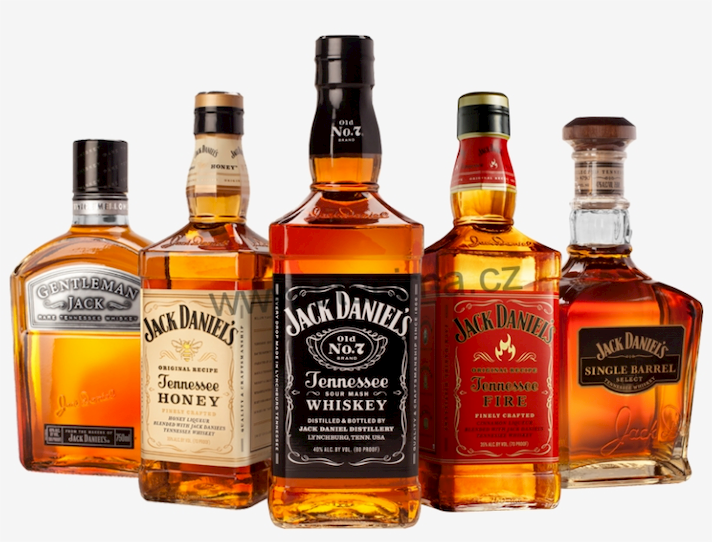
 Photos by Furmaan Ahmed
 A page from Div Era


 NEXT BWW EVENTS STREAM