Blog

Whitmer kidnap trial: Key FBI informant clashes with defense – Detroit Free Press

GRAND RAPIDS – “Big Dan,” a key witness and undercover FBI informant who infiltrated a group of militia members accused of plotting to kidnap Gov. Gretchen Whitmer, pushed back during cross-examination Tuesday against the notion he worked for the agency to boost his own profile. 
“I wanted to protect lives,” Big Dan said. “I never asked for money. I never expected money. I wanted to prevent bad people from doing bad things.”
Big Dan, a 35-year-old postal contractor and U.S. Army veteran, gathered evidence for the FBI through secret audio recording devices and photographs at meetings and events held throughout the summer of 2020. His testimony is vital to the government’s case against Adam Fox and Barry Croft, whom prosecutors have described as the ringleaders in a plot to kidnap Whitmer in 2020.
Fox and Croft are being retried in federal court here after a jury earlier this year couldn’t reach a verdict in their case. Two codefendants were acquitted during that trial. 
More:Informant ‘Big Dan’ returns in Whitmer kidnapping retrial as feds fight entrapment claim
More:Juror’s daughter-in-law got high with kidnap defendant Fox near Whitmer cottage
During cross-examination, defense attorneys noted that Dan was paid by the FBI — about $54,000 for his work from March-December 2020. 
“You earned as much as you do hauling mail,” said Joshua Blanchard, one of the defense attorneys, during Big Dan’s cross-examination. 
Big Dan fired back, saying he begrudgingly accepted to work undercover for the FBI after he became concerned that the militia group was plotting and training to kill police officers. The money he received was to reimburse expenses for attending events, buying meals and at one point moving to a new home after a militia member learned his previous address. 
Blanchard continued to scrutinize Dan’s finances, showing the jury a receipt for a $3,399.99 Surface Book 3 laptop Dan purchased, along with a $199.99 docking station — both of which were reimbursed by the FBI.
Dan said the FBI agents he corresponded with, Special Agents Jayson Chambers and Henrik “Hank” Impola, had taken an interest in his personal life after he began working as an informant. It was the FBI who pushed for reimbursing the hardware, Dan testified, adding that he planned on using the laptop once he went back to college.
Cross-examination at times became combative, as Dan pushed against claims made by Blanchard, who is representing Croft in the case, and fellow defense attorney Christopher Gibbons, who is representing suspected plot leader Fox. 
Gibbons highlighted text messages exchanged between Dan and his FBI handling agent, including one where the handler instructed Dan to “have (Fox) post his pictures” of Whitmer’s vacation home in Elk Rapids after Fox, Dan and one other individual visited the home in August 2020. 
In another message, the FBI handler told Dan to “start talking details of the night op with Adam,” referring to the group scouting the vacation home the night of Sept. 12. 
On Sept. 26, the handler texted Dan “We are good to start talking to Adam about the ruse for October 7.”
The ruse to which Chambers referred was a sting operation conducted when Dan led the group to a warehouse in Ypsilanti. The men thought they were meeting a contact for free tactical gear, like bulletproof vests, tactical belts and a Kevlar helmet, but were instead met by FBI agents. 
Gibbons noted that the gear wasn’t a sign of any conspiracy, saying none of the men expected to obtain explosives at the warehouse. Gibbons also said that Dan was the one who organized the warehouse trip, not Fox.
More:Judge scolds defense in Whitmer kidnap trial: Stop wasting time talking ‘crap’
More:Meet the jurors in the Whitmer kidnap retrial — most don’t like the news
The attorney also highlighted Dan’s previous testimony that the group was supposed to meet at Buffalo Wild Wings for a meal after grabbing the fake gear. Dan had testified he had gone to the restaurant with others in the militia previously; Gibbons pointed out that Fox had been left out of those meetings to that point. 
“Adam and I had been to the tavern in Luther,” Dan said. 
“But not with the other guys, just you,” Gibbons replied. When Dan tried to explain why Fox hadn’t joined the group at Buffalo Wild Wings, Gibbons interjected. 
“If you answered the questions I asked you to answer, we’d go a lot faster,” Gibbons said. 
Defense attorneys have long argued Fox and Croft were entrapped by the FBI to create a plan to kidnap Whitmer. Both parties have said their clients are merely tough talkers who were frustrated by COVID-19 restrictions before they were pushed by overzealous FBI informants and undercover agents. 
Fox, of Potterville, and Croft, of Bear, Delaware, were initially tried along with Daniel Harris and Brandon Caserta, but a jury was unable to deliver a verdict for them after finding Harris and Caserta not guilty. Two others, Ty Garbin and Kaleb Franks, previously pleaded guilty to their roles in the conspiracy. 
Garbin was among the government witnesses to follow Dan on the stand Tuesday. Trial will resume Wednesday morning with his continued direct examination. Assistant U.S. Attorney Nils Kessler said Franks is expected to follow Garbin’s testimony. 
Contact Arpan Lobo: [email protected]. Follow him on Twitter @arpanlobo.
Become a subscriber today.

source

21 Year Old Chesney Claire releasing NEW SINGLE August 26, 2022 – Daily Music Roll

(DailyMusicRoll Editorial):- Las Vegas, Nevada Aug 16, 2022 (Issuewire.com) – Las Vegas, NV– Well, it looks as though Chesney Claire has done it again with her new single, “The Problem”. Chesney Claire, a 21-year-old Pop/R&B award-winning singer/songwriter/producer, is all the rage this Summer as she keeps showing the world her talent(s).
Jumping from one red carpet event to the next is what’s happening now. In the last few weeks, Chesney has walked the red carpet and was a Presenter for “Best Set Design” at the LaJolla, CA Fashion & Film Festival. Just a few days later she was in Atlanta, GA presenting awards on the red carpet for the International Singer Songwriter’s Association.
Chesney has worked in every capacity from an award winner to Presenter of awards and has taken some bold strides in modeling. In August 2022 Chesney Claire made it through 7 rounds of the Maxim CoverGirl Contest and finished 4th in the world for the coveted “Maxim CoverGirl” front cover of the magazine but Chesney could not devote enough time to the contest- as she was traveling from state to state during that time. Nevertheless, Chesney was asked to do a model photoshoot for a very well-known Fashion Magazine in California while she was there at the International Film and Fashion Festival. The shoot drew lots of attention from the Fashion Industry and propelled Chesney Claire into the limelight in the Film Industry as well. Chesney is scheduled to star in a feature film with A-list actors that starts filming in March 2023 in Arizona.
Not only has she gained tons of experience in those fields, but her main passion is also music.
Last year Chesney won 25+ Music Industry Awards; including but not limited to Female Vocalist of The Year at the International Singer Songwriter’s Association, and at Indie Star Radio in Hollywood, CA. She won (4) World Songwriting Awards, a Nomination from The Hollywood Music In Media Awards, got her first original song in a Television reality series, earned a “Half A Million Streams” Spotify Award, and a coveted Josie Music Awards Nomination amongst others.
Now Chesney Claire is learning music production and engineering.
Chesney won a Hermes Award this year for her music video that accompanied her latest single release “Not In The Mood“. That song was written by Chesney, produced by Chesney, and engineered by her.
Chesney’s latest release “The Problem” is scheduled to debut on August 26th, 2022- And it’s already been nominated to receive a Grammy at this year’s Grammy Awards. (Not to mention that Chesney just also became a voting member of the Recording Academy- Class of 2022). Chesney’s nominations are for “Best New Artist” and “Single of The Year” and although Academy Members may not know Chesney yet, her talent and absolute resolve to make it in the Music business shines brighter than all the stars in the sky.
“I know God has blessed me with undeniable talent. My goal is to make Him proud by using my talents to the best of my ability. I want to shine! I have a lot of Angels to make proud,” Chesney says.
Quite sure there will be many more opportunities for Chesney Claire as she continues down this road to international stardom.
“I’m now writing all my own songs. I’m producing my own songs, and I am engineering everything myself. Hopefully, that will count for something and help advance my career quickly“, she said.
The new song “The Problem” is a saucy, hot tropical Afro Pop dance vibe. It will be available on all streaming platforms on August 26th so please stream it. Listen on repeat, and share.
Chesney has just been commissioned to write a theme song for another upcoming feature film and is working on that now.
We all see great things in her future. She’s the hardest-working Female in the entertainment industry right now and if you haven’t heard of her, it’s time to do some research!
You can Google “Chesney Claire” to learn more. You can visit her website: www.chesneyclaire.com. You can contact her manager(s), David Davidian (Tour Manager for Alice Cooper/The Hollywood Vampires) at [email protected] or her Music and Television sync manager, Charlie Mac at [email protected]
Stay tuned. There’s so much more to come!
 
 
http://www.chesneyclaire.com
This article was originally published by IssueWire. Read the original article here.


Copyright © 2022 DailyMusicRoll.

source

Why is 'outside-zone' offense so hard to master? Ed McCaffrey explains – NBC Sports Boston

Watch

The storyline dominating Patriots training camp so far is the implementation of a new offense. The post-Brady/McDaniels switch to a scheme that’s going to be more user-friendly has been a slow and hard-to-watch slog on many days.
This is not an entire “out with the old, in with the new” undertaking, sources have told me. Elements of the offense the team’s used for years will remain. But there’s a pivot in the run game to using more stretch or “outside zone” concepts that, ideally, will become the basis for incorporating new pass-game concepts.  
Don’t expect the Patriots to just throw up their hands because it’s looked ugly. Mac Jones‘ words last week were all the evidence you need to see that’s not happening.
“I’m going to figure it out,” Jones said, via Mike Reiss of ESPN.com. “I always have. I always will. At the end of the day, you’re going to have your ups and downs with anything new, but I’ve learned a lot of different systems and the guys around me have too. We know what football looks like, we know what a good play looks like. … It just needs to be more consistent. We all trust in each other at the end of the day. When there’s 10 people that look into my eyes, I know they’re going to trust me to do the right thing on game day.”
Why’s it been so hard to master and why’s it looked so rough in practice? Because the outside-zone scheme is complex.
Last Thursday, I asked former Denver Broncos great Ed McCaffrey, who came up in the Mike Shanahan offense that beautifully employed outside zone (and sometimes took Bill Belichick’s defenses to the woodshed) what a switch to outside zone would entail.
What are you gonna be good at? You can’t be great at everything. You just can’t. So what are you gonna hang your hat on? And if it’s gonna be outside-zone it takes time.
McCaffrey, who was co-hosting on SiriusXM NFL Radio when I asked him, went into a detailed explanation that really lays out the intricacies.
“Some offensive line coaches are insulted when you call it outside zone,” McCaffrey began. “They like to call it wide zone and they call inside zone ‘tight zone.’ Rarely when you are running an outside zone play does it go outside. It usually cuts back somewhere in between the edge defender and the hash mark. Some people call it stretch, doesn’t matter what you call it, it is a whole system.
“But just the outside run play itself is an entire system involving multiple two-man combinations on the front side and back side of the play. It gets more complicated when you introduce different formations and different personnel groupings. So, for instance, you could run a wide-zone play out of 21 personnel (two backs, one tight end) which is what most pro-style West Coast offensive coaches consider their base offense. That involves a fullback and a tight end.
“(The complexity rises when you get into) are you running a full-flow to the tight end with the fullback? Are you running split-flow to the tight end with the fullback going the opposite way? Are you running to the open side with the fullback?
“In addition to that, every one play is actually two because you’re coaching the front side and the back side. Center and guard have to communicate, guard and tackle have to communicate, tackle and tight end have to communicate. And then there’s 36 minimum basic fronts that involve different two-man combination calls. So if defenders ‘mug and bug’ bringing linebackers up you can potentially turn that into a three or four-man combination play. Communication on the line just for that — we aren’t even discussing 11 personnel or 10 personnel motions and shifts — is a whole entire language.”
Patriots Talk: What’s the end goal of the Patriots playing ‘process’? | Listen & Subscribe | Watch on YouTube
McCaffrey mentions the fullback. The Patriots made an interesting move with that position in the offseason, saying goodbye to Jakob Johnson and letting him know the straight-ahead battering ram style was going away from their offense. 
So the outside-zone style McCaffrey’s referencing from 21 personnel may not be the Patriots’ base formation. Either way, the concepts are still complicated.
“If you haven’t done it then it does take time just to install the outside zone scheme,” McCaffrey explained. “Just one play is really like 20 plays (because of the variations in personnel and options). So to put in an outside zone scheme with multiple personnel groupings … think of the time it takes to put that in.
“In the NFL you have time to put in multiple blocking schemes and all teams do. But how much time are you going to spend doing that? Time is our most valuable asset. So to get guys up to speed and be really good at the outside zone schemes which involve multiple combination blocks versus various fronts, to get really, really good at that takes time.
You can’t be great at everything but as a playcaller you still want enough variation to keep defenses on their heels and attack certain fronts. But the big decision is, ‘How much time am I gonna spend on this other stuff? What am I gonna live out of?’ It takes time to learn. A lot of time. And really repetition. Practicing their fits on those two-man combinations and communicating.”
McCaffrey, whose son Christian is a standout with the Panthers, currently coaches at the University of Northern Colorado. He’s got an appreciation for what the Patriots staff is wrestling with.  
“Think of wide zone as a whole language in and of itself,” he said. “And with that, you only have so much time in a day to get really good at something. And that’s the question for head coaches and coordinators. ‘What do we want to be great at?’ If you want to be great at outside zone, you gotta spend a lot of time running outside zone.
“Then you have to pair that with all of your play-action passes. Your play-action passes are gonna work off of the runs you run well and have success running. … and with play-action it all comes off of the run game. What are you gonna be good at? You can’t be great at everything. You just can’t. So what are you gonna hang your hat on? And if it’s gonna be outside-zone it takes time.”
And it’s going to take time for it to look good. Which is what we’re seeing in Foxboro currently.

source

How Botswana is learning to live alongside elephants – BBC

How Botswana is learning to live alongside elephants  BBC
source

1 dead, 1 injured in shooting outside Atlanta recording studio – WSB Atlanta

1 dead in shooting outside Atlanta recording studio
ATLANTA — Police are investigating a shooting that left one person dead and another injured in southwest Atlanta.
Channel 2′s Darryn Moore is at the investigation location off 2945 Stone Hogan Connector where there is a large police presence.
The address belongs to a building that holds several recording studios. It is unknown if the victims were connected to any of the businesses.
TRENDING STORIES
The shooting happened around 3:30 a.m. Investigators told Moore that it appears the shooter fired from the driveway of the business.
Moore counted at least 26 evidence markers placed where shell casings were found.
Atlanta homicide detectives said a man in his late 20s died at the scene. The second victim is stable at Grady Memorial Hospital.
No description of the shooter is available at this time. The victims’ names have not been released.
[DOWNLOAD: Free WSB-TV News app for alerts as news breaks]
IN OTHER NEWS
DeKalb County residents say they are ‘powerless’ and ‘frustrated’ by crime in their community Neighbors in DeKalb County told Channel 2 Action News they feel ‘powerless’ and ‘frustrated’ by criminal activity they see happening in their community.

©2022 Cox Media Group
© 2022 Cox Media Group. This station is part of Cox Media Group Television. Learn about careers at Cox Media Group. By using this website, you accept the terms of our Visitor Agreement and Privacy Policy, and understand your options regarding Ad Choices. Manage Cookie Preferences | Do Not Sell My Information

source

Why I chose to get my master's degree in nursing online – Fortune

Katarina Maric had logged a decade as a registered nurse before tackling her master’s degree in nursing. In fall 2020, Maric enrolled in Marymount University’s online master’s program in nursing to become a family nurse practitioner. “I always knew I wanted to be a nurse and continue my education,” she says. “I wasn’t sure of the right time.”
Taking courses online worked best for Maric—she’s busy at home in a suburb of Washington, D.C., with her 3- and 5-year-old boys. Selecting the best time to begin and the program was a process, she says. 
Turns out, Maric’s decision process is fairly typical, says Alison Colbert, a professor at Duquesne University’s School of Nursing. “I always joke, no one says, ‘Well, I wish I waited longer to get my graduate degree,’” says Colbert. “But an equal number of people say, ‘I needed the experience and the perspective. I had my life.’”
Because nursing is predominantly a female profession, that inevitably informs how schools approach education—particularly for advanced degree programs, Colbert says. Schools offering advanced nursing degrees need to be flexible to capture students who need to work, raise children, care for parents—or simply find the time to save money, arrange for childcare, or shift work schedules to make room for school to begin with. 
For Maric, who will graduate in December, navigating the decision to enroll in Marymount’s online MSN program took time and thought. She sat down with Fortune to share her experience and offer some advice for prospective students considering a similar path.  
The following interview has been edited for brevity and clarity.
Fortune: Why did you go back to school?
Maric: Right before I went to Marymount, I got sick and was navigating the health care system and got really frustrated. I decided that as soon as I felt better, I was going to go back.
How does the master’s degree line up with your professional goals?
It’s an advanced practice nursing degree. I will be able to function as a primary care provider. As an RN, you follow orders, and there’s not much autonomy. As a family nurse practitioner, I can work anywhere—in family practice or in a specialty with patients of all ages. There are different routes; they say it’s like cradle to grave, from newborns to end of life. I can work with anybody and function as their primary care provider and work in any specialty.
I wanted to expand my professional knowledge and felt like it was a natural progression to move into a more advanced role, more of a health care provider role. As a school nurse, I worked at a middle school that had a lot of underprivileged students. I was realizing I was often the only health care professional they’d see. Their parents work hourly jobs and can’t afford to take off to take them to the doctor. 
At first, I thought it would be cool to work in the school system as a nurse practitioner in a clinic in the school system. That was my initial thought: Maybe I could bridge that gap. But I’ve since learned that in Virginia, in order to practice independently as a nurse practitioner, you have to have a practice agreement with a physician for five years before you can apply to practice independently. Maybe down the line somewhere; I won’t be able to do that right out of school.
How did you choose your program?
I did a ton of research. Marymount is semi-local, as Arlington is 40 minutes from my house. I wanted support. As soon as I talked to a student success coach and adviser, I got the feeling they have a good support system. 
Even though the program is mostly online, I wanted to be able to go to campus if I had to. They have student success coaches that stay with you throughout the program. It’s my first experience with online education. I want to be present for my kids, and the traffic in D.C. is crazy. I didn’t want to have to drive and waste time driving, when I could be spending that time studying.
Are you working while going to school?
I decided to stop working so I can spend time with my kids and go to school. My kids are only in school for four hours a day, so it doesn’t leave too much time. As part of the program, we do work. I work three days a week right now in an internal medicine practice as part of the program. Marymount finds clinical placement for you and they set you up. They found this practice for me. 
We also have a nurse residency program. For that, we have to go on campus for one weekend—when we are done with our core classes, before we start clinical rotations. We see patients on campus and do physical exams on them to show our skills.
Has your decade of experience as an RN helped with that piece of it?
I think it really helps that I worked for 10 years—understanding the health care system, understanding patients and their stories, talking to people. There is an art in talking to patients on sensitive subjects, especially if they have serious trauma or something they are embarrassed about. It helps to have that nursing background so you know how to approach patients. We are building on knowledge we already have, from ecology to pathophysiology.
What has surprised you most about your experience?
The main surprising thing is related to it being online. I thought you just do it and get your work done week by week. I’m surprised by the relationships I’ve built with people—you don’t feel like you’re online, you have support all of the time. We have [mandatory] synchronized sessions over Zoom every other week. We are all there and talking and interacting. I’ve become great friends with my classmates. 
Our professors have gone above and beyond, taking out extra time to meet with us on Zoom or help us find clinical placement. For people that don’t have an established network—they pulled out their own contacts and helped set them up. The professors are extremely involved and truly care about our success. They want us to have the tools we can to perform well. I thought it might be lonely to do it online, but it’s definitely not.
See how the schools you’re considering fared in Fortune’s rankings of the best master’s degree programs in nursing, computer science, cybersecurity, psychology, public health, business analytics, and data science, as well as the best doctorate in education, and part-time, executive, full-time, and online MBA programs.

source

Glowing snailfish riddled with antifreeze protein discovered off Greenland coast – Livescience.com

Live Science is supported by its audience. When you purchase through links on our site, we may earn an affiliate commission. Here’s why you can trust us.
By published
This helps protect the tadpole-like fish from the cold.
Scientists drilling deep into an iceberg off Greenland have discovered a fish with glowing green antifreeze coursing through its veins.
The juvenile variegated snailfish (Liparis gibbus) contained the “highest expression levels” of antifreeze proteins ever reported, a new study found.
Similar to how antifreeze helps to regulate the temperature of a car’s engine in extreme conditions, certain species have evolved to have similar protection, especially those living in frigid habitats such as the polar waters off Greenland.
“Antifreeze proteins stick to the surface of smaller ice crystals and slow or prevent them from growing into larger, and more dangerous, crystals,” study co-author David Gruber, a research associate at the American Museum of Natural History (AMNH) and a distinguished biology professor at City University of New York’s Baruch College, told Live Science in an email. “Fish from both the North and South Poles independently evolved these proteins.”
Related: Robotic sub will explore underside of Greenland’s glaciers in a first
Antifreeze proteins were first discovered in some Antarctic fish nearly 50 years ago, according to the National Science Foundation (opens in new tab).
Unlike certain cold-blooded species of reptiles and insects, fish are unable to survive when their bodily fluids freeze, which can cause grains of ice to form inside their cells and essentially turns them into fish Popsicles. 
“The fact that these different antifreeze proteins have evolved independently in a number of different — and not closely related — fish lineages show[s] how critical they are to the survival of these organisms in these extreme habitats,” John Sparks, a curator in the AMNH’s Department of Ichthyology and co-author of the study, told Live Science in an email.
Snailfish produce antifreeze proteins “like any other protein and then excrete them into their bloodstream,” Gruber said. However, snailfish appear to be “making antifreeze proteins in the top 1% of all other fish genes.”The iceberg habitat in Greenland where the snailfish was discovered.Scientists found the tiny tadpole-like creature in 2019 during an expedition as they explored the iceberg habitats off the coast of Greenland. During the trip — which was part of the Constantine S. Niarchos Expedition, a series of science-based expeditions led by the AMNH — the scientists were flummoxed when they discovered the biofluorescent snailfish glowing brilliant green and red in the icy habitat.
“The snailfish was one of the few species of fish living among the icebergs, in the crevices,” Gruber said. “It was surprising that such a tiny fish could live in such an extremely cold environment without freezing.” 
It’s also rare for Arctic fishes to exhibit biofluorescence, which is the ability to convert blue light into green, red or yellow light, since there are prolonged periods of darkness, especially in the winter, at the poles. Normally this characteristic is found in fish swimming in warmer waters. This is the first reported case of an Arctic fish species exhibiting this adaptation, according to an AMNH post (opens in new tab).
The scientists further examined the biofluorescent properties of the snailfish and found “two different types of gene families encoding for antifreeze proteins,” according to a separate statement, an adaptation that essentially helps them avoid turning into frozen fish sticks. 
—Bizarre translucent ‘Jell-O fish’ pulled up from icy depths in Alaska
—What’s the weirdest sea creature ever discovered?
—Strange ‘alien’ holes discovered on the ocean floor
This mind-boggling level of antifreeze production could help this species adapt to a subzero environment, according to the statement. It also raises a question about how snailfish will fare as ocean temperatures increase as a result of global warming.
“Due to rapidly warming waters in the Arctic, these cold-water-adapted species will also have to compete with warmer-water species that are now able to migrate north and survive at higher latitudes (and that won’t need to produce metabolically costly antifreeze proteins to survive in the warmer Arctic waters),” Sparks said. “In the future, [antifreeze] proteins may no longer provide an advantage.”
The findings were published Aug. 16 in the journal Evolutionary Bioinformatics (opens in new tab).
Originally published on Live Science.
Jennifer Nalewicki is a Salt Lake City-based journalist whose work has been featured in The New York Times, Smithsonian Magazine, Scientific American, Popular Mechanics and more. She covers several science topics from planet Earth to paleontology and archaeology to health and culture. Prior to freelancing, Jennifer was a reporter at Interior Design Magazine, and before that she held an Editor role at Time Inc. Jennifer has a bachelor’s degree in Journalism from The University of Texas at Austin.
Stay up to date on the latest science news by signing up for our Essentials newsletter.
Thank you for signing up to Live Science. You will receive a verification email shortly.
There was a problem. Please refresh the page and try again.
Live Science is part of Future US Inc, an international media group and leading digital publisher. Visit our corporate site (opens in new tab).
© Future US, Inc. Full 7th Floor, 130 West 42nd Street, New York, NY 10036.

source

How to Record and Edit a Podcast in Audacity (Complete Tutorial)

Looking to invest in transcription services? The most important factors for legal industry professionals to consider. – JD Supra

U.S. Legal Support
[author: Sandra Redavid]
While there’s been a rising demand for audio and video transcription services across all industries, the legal transcription market accounts for nearly 30% of the transcription market as a whole. And demand for legal transcription in the U.S. is expected to account for 90% market share in North America through 2029. These statistics align with my experience – compared to pre-COVID, since 2020, I’ve seen a 60%-70% uptick in audio and video transcription requests.
What’s behind this increased demand? The pandemic was, and is, a definite factor. The abrupt shift from in-person to virtual everything meant people in all industries needed new ways of getting transcriptions made. The rise of digital platforms like Zoom, Microsoft Teams, and Google Meet also played a role, as more professional interactions than ever were recorded as video and audio files. Transcripts can help for meetings where you just want the notes recorded or want to remember something important that wasn’t written down.
When it comes to record keeping requirements, in some industries, having just an audio recording or video recording is enough. In others, like the legal industry, a hard-copy transcript is required because an accurate record of a legal proceeding is always necessary. No matter the reason, as audio and video transcription demands ramp up, legal organizations want to pay careful attention to how and where recordings are transcribed, as this could drastically impact legal outcomes.
In terms of the type of recording, there is no rule in the legal industry that specifies you must use video recordings over audio recordings or vice versa. Both recording formats can be filed in court. However, you are not permitted to file only an audio and/or video recording—a typed transcript must accompany the filing. Whether a recording of a wiretap, a 911 call, a police interview, a deposition, or a Senate hearing, any digital file must include a written transcript.
As a transcription services provider, U.S. Legal Support meets both HIPAA and HITECH compliance requirements and takes privacy and confidentiality extremely seriously. This means we never sell any copies of transcripts, nor share transcripts with any party other than the original submitted. We also take extra care that our transcripts are sent via a secure, non-shareable link within our SOC 2 Type 2 and HIPAA compliant client portal. In addition, all transcripts are kept in a secure database that follows our SOC 2 Type 2 compliant protocols as well.
We take security another step further by ensuring our “people” are secure as well. Transcribers are required to sign business agreements, including non-disclosure agreements. You can learn more about how U.S. Legal Support wraps all of our services in industry-leading cybersecurity efforts here.
There are so many ways to create recordings these days, but when it comes to files needed for audio and video transcription, some formats are definitively better than others. If you’re planning to have something transcribed for a legal or court proceeding, it is important to think through the following.
#1: The platform
In terms of virtual meeting platforms, I’ve found that Zoom is one of the better ones for translating an audio or video recording into a transcript. It provides you with speaker identification and displays who is speaking at a specific time within the recording.
Other platforms, like Google Meet, won’t tell you who is speaking. Unless it was captured on video and you are supplied with a name and what the speaker was wearing, you can have a hard time identifying speakers.
#2: The mic
The quality of a recording really comes down to the audio and where the mic is placed. If the person talking is across the room and not close to the mic, like on a speaker phone, it’s much harder to pick up his or her voice and there’s a better chance of misheard or dropped words.
The quality of the connection itself also plays a big role. This can come into play with wire taps or cell phone recordings of interviews, or if the person recording a conversation has a poor Wi-Fi connection.
#3: The speakers
Accents and dialects can also impact transcription accuracy. For this reason, when dealing with recordings where international speakers are involved, it’s vital to use a real person to create the transcript—and if it’s someone who is intimately familiar with the language and dialect, and can transcribe it with great accuracy, all the better.
At U.S. Legal Support, our team has translators who are fluent in multiple languages and dialects. When we work with a legal entity on transcribing an audio or video recording where dialects or accents are a factor, we’re able to assign that recording to someone who understands both the phrases and words commonly used in that dialect, as well as different legal jargon that might be used within the speaker’s court system.
#4: The terminology
Using a litigation support resource who understands the area of expertise covered by the recording also helps in the process of cleaning up the audio prior to transcription. If it’s a recording of a financial board meeting, for example, we assign someone who understands the financial industry and its terminology. This ensures a more customized, accurate experience and transcript.
Given the nuances in transcript requirements, here are considerations for legal professionals when looking to invest in audio or video transcription services.
What to avoid:
Looking ahead
I believe audio and video transcription holds big promise for the legal industry in the coming years. I also believe the further development and refinement of additional technologies is going to greatly enhance the transcription world, too.
See more »
Refine your interests »
This website uses cookies to improve user experience, track anonymous site usage, store authorization tokens and permit sharing on social media networks. By continuing to browse this website you accept the use of cookies. Click here to read more about how we use cookies.
Back to Top
Explore 2022 Readers’ Choice Awards
Copyright © JD Supra, LLC

source

British workers need 'more graft', says Liz Truss in leaked recording – audio – The Guardian

British workers need ‘more graft’, says Liz Truss in leaked recording – audio  The Guardian
source

Leaked audio reveals Liz Truss said British workers needed ‘more graft’ – The Guardian

Exclusive: Tory leadership frontrunner suggested Britons lacked ‘skill and application’, in echo of ‘idlers’ row
Liz Truss, now the Tory leadership frontrunner, launched an astonishing broadside against British workers, saying they needed “more graft” and suggesting they lacked the “skill and application” of foreign rivals, the Guardian can reveal.
In a leaked recording, the then No 2 at the Treasury also risked pitting Londoners against the rest of the country by attempting to explain the difference between the capital and other regions in the UK.
Truss, who has put patriotism at the heart of her leadership campaign, suggested the disparity was “partly a mindset or attitude thing”.
The comments were made when Truss was the chief secretary to the Treasury, a post she held until 2019. In the recording she intimated that there seemed little desire to change the working culture so that the UK could become more prosperous.
The highly disparaging remarks echo a controversial passage about British workers being among the “worst idlers in the world” in the book Britannia Unchained, which she co-authored in 2012 when she was a new backbench MP seeking to make her mark as a neo-Thatcherite.
In the first televised head-to-head Tory leadership debate last month, Truss claimed she had not written the offending chapter and blamed her fellow author Dominic Raab instead.
She told the BBC presenter: “Each author wrote a different chapter. Dominic Raab wrote that chapter – he’s backing Rishi Sunak.”
Raab later claimed that the authors, who also included Priti Patel and Kwasi Kwarteng, had taken “collective responsibility” for the book, adding: “It’s up to Liz to explain why she’s changed her view.”
In the leaked recording, Truss claimed that the book had been “mischaracterised” at the time of its release a decade ago, but gave no detail as to how she felt the passage had been misrepresented.
Truss’s remarks about the productivity of workers outside London could be particularly damaging as earlier this month she was forced to make a U-turn on plans to cut civil service pay outside the capital after a furious outcry from Conservative MPs.
She claimed there had been a “wilful misrepresentation” of her policy – despite her campaign having published specific details – but confirmed she was abandoning plans for regional pay boards for civil servants or public sector workers.
Sign up to First Edition
Archie Bland and Nimo Omer take you through the top stories and what they mean, free every weekday morning
London had the highest productivity level of any UK region in 2020, with output per hour more than 50% higher than the median, according to the Office for National Statistics.
However, this is widely believed to be the result of large multinationals being based in the capital, higher engagement with research and development, the size of firms and the level of exports, and the transport infrastructure.
In the leaked recording, Truss began: “I once wrote a book about this which got mischaracterised – British workers produce less per hour than … and that’s a combination of kind of skill and application.”
She went on: “If you look at productivity, it’s very, very different in London from the rest of the country. But basically … this has been a historical fact for decades. Essentially it’s partly a mindset and attitude thing, I think. It’s working culture, basically. If you go to China it’s quite different, I can assure you.”
The minister, who had close oversight of public spending, added: “There’s a fundamental issue of British working culture. Essentially, if we’re going to be a richer country and a more prosperous country, that needs to change. But I don’t think people are that keen to change that.
“There’s a slight thing in Britain about wanting the easy answers. That’s my reflection on the election and what’s gone before it, and the referendum – we say it’s all Europe that’s causing these huge problems … it’s all these migrants causing these problems. But actually what needs to happen is more … more graft. It’s not a popular message.”
Truss was questioned about the Guardian’s revelations during a Tory leadership hustings in Perth, and appeared to confirm she still believed British workers were not as productive as they should be.
Asked by Colin Mackay, STV’s political editor and chair of the hustings, whether she stood by those remarks, Truss said: “I don’t know what you’re quoting there [but] what we need in this country is more productivity and we need more economic growth.
“The thing is we don’t have enough of is capital investment, which why it’s important to get more investment in the whisky industry and North Sea.”
The shadow work and pensions secretary, Jonathan Ashworth, said: “With wages shrinking thanks to Tory failure to bring inflation under control and years of lacklustre growth, it’s grossly offensive for Liz Truss to effectively brand British workers lazy.
“I would have hoped she had moved on from the days of her Britannia Unchained fiasco, but it seems that is the blueprint for her prospective government. Workers across the country are working all hours to keep a roof over their heads, put food on the table and provide for their families. Liz Truss should be helping working people to cope with this cost of living crisis, as Labour this week outlined we would do, not peddling this offensive nonsense.”

source

60 Years of Stereophile! – Stereophile Magazine


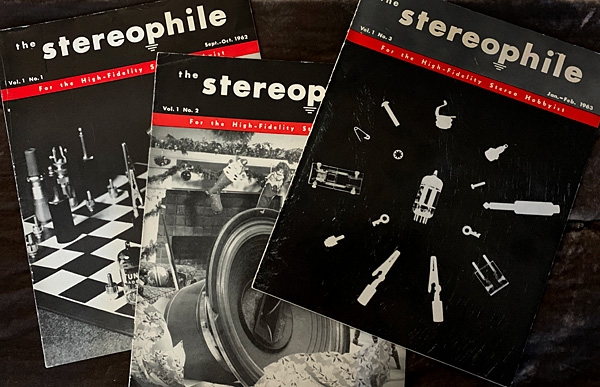
“Okay, if no one else will publish a magazine that calls the shots as it sees them, I’ll do it myself,” he later recalled thinking, adding, “I must have been out of my mind!”
Six decades later, Paul McCartney and Ringo Starr are still touring (though not together), and the magazine JGH founded, now just called Stereophile, is celebrating 60 years of continuous publication (footnote 1).
This longevity is a rarity in magazine publishing. When that first issue appeared in readers’ mailboxes, there were three dominant audio magazines in the US: High Fidelity, Audio, and Stereo Review (then called HiFi/Stereo Review). High Fidelity was published from April 1951 until July 1989, when it was bought by Stereo Review‘s then-publisher and shuttered. Stereo Review was first published in 1958, with the title HiFi and Music Review. In 1999, it merged with Video magazine. In 2000, it was retitled Stereo Review’s Sound & Vision—then later just Sound & Vision—to emphasize its change from an audio magazine to one covering home theater as well.
Audio started life in 1947 as Audio Engineering, then dropped the word “engineering” in 1954. Audio‘s final issue was a combined February/March 2000 issue, after which it merged with Sound & Vision. In a strange twist, Stereophile‘s then-publisher bought Sound & Vision in 2013; Sound & Vision is now owned, like Stereophile, by AVTech Media, which also publishes the only English-language audio magazine that has exceeded Stereophile‘s 60-year (so far) lifespan: the UK’s Hi-Fi News & Record Review, which published its first issue in June 1956.
What could lie behind this magazine’s longevity? In an article I contributed to Hi-Fi News & Record Review‘s 50th anniversary issue, in June 2006, I wrote: “Monthly magazines, with their focus on the new, the exciting, the cool, are inherently ephemeral things. Some readers react to this reality by merely glancing at a few features as the magazine wends its way from mailbox to recycling bin. However, other readers pore over each issue’s content, using it to stay abreast of what is happening, to feed their passion for the subject. Such readers are drawn to a publication that shares their passion, that doesn’t talk down to them, that is unfailingly honest with them, that informs and educates as it entertains, that gives them more than they expect with respect to both breadth and depth of content.”
These words have applied to Stereophile since its founding, coupled with J. Gordon Holt’s vision that the optimal way to judge audio components was to do what end users did: listen to them! “Dammit,” Gordon said, “if nobody else will report what an audio component sounds like, I’ll do it myself!”
The audio space was simpler in the 1960s. In its first 12 issues, published as Vol.1 from September 1962 through May 1966, Stereophile reviewed 84 products from 36 manufacturers, doing a relatively complete job of covering what was available then. By contrast, the magazine’s 12 issues published in 2021 (Vol.44) contained reviews of 125 products from 101 manufacturers and couldn’t come close to being comprehensive. Even so, other than stablemate Hi-Fi News, there isn’t an audio magazine that can rival the depth of Stereophile‘s audio product reviews.
Of the 36 brands reviewed in Vol.1, several have been in continuous existence since: Bang & Olufsen, Beyerdynamic, Grado, Koss, Marantz, McIntosh, Nagra, Neumann, Ortofon, and Shure. The reviews in 2021 included products from Marantz and McIntosh, as well as some from other brands that have been in continuous existence since Stereophile‘s first issue was published but weren’t reviewed in Vol.1: KEF, Klipsch, SME, and Sony.
J. Gordon Holt, who passed away in 2009, created not just a magazine but a community of what came to be called audiophiles. Stereophile‘s team of contributors has played an important role in that community. There have been too many to list here, but I will mention those who are no longer with us and who played major roles in creating the magazine’s identity through those 60 years: Art Dudley, Margaret Graham (Mrs. Holt), Peter W. Mitchell, Wes Phillips, Robert J. Reina, Rick Rosen, John Swenson, and Steven W. Watkinson, as well as art director Daniel Bish, managing editor Debbie Starr, and advertising representative Ken Nelson.
Another writer who also played a major role at the magazine for more than a quarter-century, but who is very much alive, is analog guru Michael Fremer. His first Analog Corner column appeared in July 1995 (footnote 2), and in 2012, he was hired as a fulltime staff member, not only to continue contributing Analog Corner and equipment reviews but also to edit AnalogPlanet.com, Stereophile‘s sister website. Sadly, Mikey (as he likes to be called) resigned from both Stereophile and AnalogPlanet.com in June. His final column appears in this issue, along with his final review, of the humongous Gryphon Apex Stereo amplifier.
All of us at Stereophile wish Mikey well in his new ventures.


Footnote 1: You can find a timeline of Stereophile’s first 40 years here and articles celebrating the magazine’s 500th issue here and here, and a related photo gallery here.
Footnote 2: Analog Corners through November 2005 are archived here; from October 2017 onward they can be found here, with earlier columns added each month.

COMMENTS

teched58's picture

You (JA2) can ban me if you want, I really don’t care at this point.

I’m sure you guys can see what’s happening, and I really get that you have a limited editorial budget to work with, but in any case, isn’t there anything you can do to make this site more interesting for the readers?

Right now, AnalogPlanet is fresher than you guys. Think about that. Personally, I’m not interested in record reviews, so they’re not an alternative for me.

Jack L's picture

Hi

To YOU, maybe. Not to many many loyal readers out there, including yours truly.

“Personally, I’m not interested in record reviews”

Who cares !

Jack L

PS: I’m still awaiting yr reply to my question to you: “Are you really an EE ??”. I’m all ears.

MatthewT's picture

For you to answer his question as well.

Jack L's picture

Hi

Talk is cheap! I want to read his posts in Audiophile forums, if any at all, in electrical engineering language.

Back to the same topic on $4,000+ interconnects, I want him to show me his EE knowledge in audio cables: the formula to calculate the “characteristic impedance” of an audio cable.

Otherwise please shut up & back off.

Jack L

MatthewT's picture

No.

Jack L's picture

Hi MatthewT

I meant to tell the guy who challenged me with such redundant personal question to “shut up & back up” if he could not come with the formula to calculate the “characteristic impedance” of an electrical cable.

FYI, audio electronics is only my leisure hobby to supplement my classical music enjoyment. It’s kinda ‘peanut’ vs my EE experience.

My professional EE experience is much more subtantial:
providing engineering solutions to the power industries for deacades, e.g. to power companies for their HV power distribution.
I dealt with power company engineers day in day out.

Jack L

MatthewT's picture

Deleted

Nicholalala's picture

I wouldn’t say that Stereophile is dying. In fact, of all the sites that I visit, Stereophile is first on my list. Sure, I visit Analogue planet, and stop by Twittering and maybe even Darko. But, my tastes were formed by the late Art Dudley. This is the first place I stop by to look for reviews of equipment that I am considering to purchase. Perhaps, I’m more in the maker end of the spectrum.

So, maybe a return to the idea of being a maker audiophile is in order. I’m certain my grandfather purchased your fist issues, because he had a subscription when he was 90 decades ago. He also designed audio equipment for RCA and such. So, I’m in the market for a SUT for an EMT TSD. I also just found out that EMT is making new tonearms! Yay!!! My next set of speakers I’ll be building with Rulliet drivers, but hey, I do well so a set of KEF LS60s might show up.

All in all, death looks somewhat premature.

Anton's picture

I remain a steadfast fan.

We are definitely in the time of diminishing ‘hard copy’ circulation, but that is certainly not unique to Stereophile.

Plus, evil empires now rule the landscape, so I am even more impressed that Stereophile can maintain some degree of the appearance of autonomy.

Plus, the hobby is so different now.

In 1962, a person earning the median wage could participate in the hobby at the highest level. Now, it seems the average demo at a given hi fi show is double the median price for an entire home. That part might be a factor in how we are seen by non-audiophiles.

*Don’t get me wrong, I understand the great affordability of entry and middle ground gear. It’s just what JA1 called that price event horizon.

John Atkinson's picture

Anton wrote:

I remain a steadfast fan.

Thanks.

Anton wrote:

…the hobby is so different now. In 1962, a person earning the median wage could participate in the hobby at the highest level. Now, it seems the average demo at a given hi fi show is double the median price for an entire home. That part might be a factor in how we are seen by non-audiophiles.

*Don’t get me wrong, I understand the great affordability of entry and middle ground gear. It’s just what JA1 called that price event horizon.

I used that term in my January 2017 As We See It: www.stereophile.com/content/price-event-horizon. I was referring to an an earlier essay – www.stereophile.com/content/upward-price-spiral – in which I wrote “if an audio manufacturer has to gross a certain amount of revenue each quarter to meet payroll, cover fixed expenses, invest in parts for the next quarter’s production, and pay the interest on any capital they’ve borrowed, the least risky business strategy is to bring to market a very small number of very expensive products.” But that strategy make so many great products financially out of reach for regular people, like you and me, Anton.

John Atkinson
Technical Editor, Stereophile

MatthewT's picture

I’m not complaining, but the Entry Level column needs to make a comeback.

Jack L's picture

Hi

Just last nite I streamed “Concert for George (Harrison)” performed 11/29/2002 at the Royal Albert Hall on my 4KUHD TV with sound feeding my audio rig.

What a full-house musical event! Paul McCartney & Ringo Starr were seen playing together with George’s then young son: Dhani, who looked so much like his dad !

Jack L

Jack L's picture

Hi

Though JGH outlived many audio celebrities back then (He was 79 !!), he could have lived much longer should he give up his addicted smoking. He only stopped smoking 10 years after he got the painful throat cancer !

This reflected his determination of running a readers-friendly audio magazine aginst those well established “showcases for advertisers”.

Jack L

Allen Fant's picture

A Salutation to the original JGH! A 2nd salutation to J.A. for his hard work and passion at the helm of Stereophile. May J.A.(2) have the same flair and zest for our beloved hobby. I have been a dedicated subscriber sine 1993 to present date.
Think about adding a “Dealers Showcase” several times per year to recognize those brick-and-mortar retailers still in the field.

Happy Listening!
J.A.(3)

Glotz's picture

60 years is an utterly amazing accomplishment! John’s work, Jim’s work, Larry’s… and of course Gordon, there has been no other magazine that provides the insight, knowledge and truth that Sterophile has provided over the past 6 decades!

I would even argue that they are the best, most interesting and best written magazine of ALL TIME.

To those that would say much less or worse about these fine writers and editors… you have no place to disparage with these professionals!

Thank you truly, for the most thought provoking periodical extant.

BillBrown's picture

Wow! Remembering the 25th anniversary makes me feel old!

Congratulations to all. My 35 years with the magazine has provided tons of enjoyment, especially early on and for years when I read it ravenously in less than a day, then began the wait for the next issue (pre-internet!).

Bill

hb72's picture

…to the team!! Pls keep up the great work!!

best regards
HB

The Tinkerer's picture

I just upgraded from digital, TO PRINT, for the first time in the history of my subscription. A decadent move that will reward me in the most corporeal manner.

Long live Stereophile.

You (JA2) can ban me if you want, I really don’t care at this point.
I’m sure you guys can see what’s happening, and I really get that you have a limited editorial budget to work with, but in any case, isn’t there anything you can do to make this site more interesting for the readers?
Right now, AnalogPlanet is fresher than you guys. Think about that. Personally, I’m not interested in record reviews, so they’re not an alternative for me.
Hi
To YOU, maybe. Not to many many loyal readers out there, including yours truly.
“Personally, I’m not interested in record reviews”
Who cares !
Jack L
PS: I’m still awaiting yr reply to my question to you: “Are you really an EE ??”. I’m all ears.
For you to answer his question as well.
Hi
Talk is cheap! I want to read his posts in Audiophile forums, if any at all, in electrical engineering language.
Back to the same topic on $4,000+ interconnects, I want him to show me his EE knowledge in audio cables: the formula to calculate the “characteristic impedance” of an audio cable.
Otherwise please shut up & back off.
Jack L
No.
Hi MatthewT
I meant to tell the guy who challenged me with such redundant personal question to “shut up & back up” if he could not come with the formula to calculate the “characteristic impedance” of an electrical cable.
FYI, audio electronics is only my leisure hobby to supplement my classical music enjoyment. It’s kinda ‘peanut’ vs my EE experience.
My professional EE experience is much more subtantial:
providing engineering solutions to the power industries for deacades, e.g. to power companies for their HV power distribution.
I dealt with power company engineers day in day out.
Jack L
Deleted
I wouldn’t say that Stereophile is dying. In fact, of all the sites that I visit, Stereophile is first on my list. Sure, I visit Analogue planet, and stop by Twittering and maybe even Darko. But, my tastes were formed by the late Art Dudley. This is the first place I stop by to look for reviews of equipment that I am considering to purchase. Perhaps, I’m more in the maker end of the spectrum.
So, maybe a return to the idea of being a maker audiophile is in order. I’m certain my grandfather purchased your fist issues, because he had a subscription when he was 90 decades ago. He also designed audio equipment for RCA and such. So, I’m in the market for a SUT for an EMT TSD. I also just found out that EMT is making new tonearms! Yay!!! My next set of speakers I’ll be building with Rulliet drivers, but hey, I do well so a set of KEF LS60s might show up.
All in all, death looks somewhat premature.
I remain a steadfast fan.
We are definitely in the time of diminishing ‘hard copy’ circulation, but that is certainly not unique to Stereophile.
Plus, evil empires now rule the landscape, so I am even more impressed that Stereophile can maintain some degree of the appearance of autonomy.
Plus, the hobby is so different now.
In 1962, a person earning the median wage could participate in the hobby at the highest level. Now, it seems the average demo at a given hi fi show is double the median price for an entire home. That part might be a factor in how we are seen by non-audiophiles.
*Don’t get me wrong, I understand the great affordability of entry and middle ground gear. It’s just what JA1 called that price event horizon.
Thanks.

Anton wrote:

…the hobby is so different now. In 1962, a person earning the median wage could participate in the hobby at the highest level. Now, it seems the average demo at a given hi fi show is double the median price for an entire home. That part might be a factor in how we are seen by non-audiophiles.

*Don’t get me wrong, I understand the great affordability of entry and middle ground gear. It’s just what JA1 called that price event horizon.

*Don’t get me wrong, I understand the great affordability of entry and middle ground gear. It’s just what JA1 called that price event horizon.
I used that term in my January 2017 As We See It: www.stereophile.com/content/price-event-horizon. I was referring to an an earlier essay – www.stereophile.com/content/upward-price-spiral – in which I wrote “if an audio manufacturer has to gross a certain amount of revenue each quarter to meet payroll, cover fixed expenses, invest in parts for the next quarter’s production, and pay the interest on any capital they’ve borrowed, the least risky business strategy is to bring to market a very small number of very expensive products.” But that strategy make so many great products financially out of reach for regular people, like you and me, Anton.
John Atkinson
Technical Editor, Stereophile
I’m not complaining, but the Entry Level column needs to make a comeback.
Hi
Just last nite I streamed “Concert for George (Harrison)” performed 11/29/2002 at the Royal Albert Hall on my 4KUHD TV with sound feeding my audio rig.
What a full-house musical event! Paul McCartney & Ringo Starr were seen playing together with George’s then young son: Dhani, who looked so much like his dad !
Jack L
Hi
Though JGH outlived many audio celebrities back then (He was 79 !!), he could have lived much longer should he give up his addicted smoking. He only stopped smoking 10 years after he got the painful throat cancer !
This reflected his determination of running a readers-friendly audio magazine aginst those well established “showcases for advertisers”.
Jack L
A Salutation to the original JGH! A 2nd salutation to J.A. for his hard work and passion at the helm of Stereophile. May J.A.(2) have the same flair and zest for our beloved hobby. I have been a dedicated subscriber sine 1993 to present date.
Think about adding a “Dealers Showcase” several times per year to recognize those brick-and-mortar retailers still in the field.
Happy Listening!
J.A.(3)
60 years is an utterly amazing accomplishment! John’s work, Jim’s work, Larry’s… and of course Gordon, there has been no other magazine that provides the insight, knowledge and truth that Sterophile has provided over the past 6 decades!
I would even argue that they are the best, most interesting and best written magazine of ALL TIME.
To those that would say much less or worse about these fine writers and editors… you have no place to disparage with these professionals!
Thank you truly, for the most thought provoking periodical extant.
Wow! Remembering the 25th anniversary makes me feel old!
Congratulations to all. My 35 years with the magazine has provided tons of enjoyment, especially early on and for years when I read it ravenously in less than a day, then began the wait for the next issue (pre-internet!).
Bill
…to the team!! Pls keep up the great work!!
best regards
HB
I just upgraded from digital, TO PRINT, for the first time in the history of my subscription. A decadent move that will reward me in the most corporeal manner.
Long live Stereophile.

source

ALIBI Music Scares Up Trio of Horror Albums – Mix

Update your browser to view this website correctly. Update my browser now
×
Home › The Wire
‘Minimal Horror,’ ‘Spooky Retro Horror’ and ‘Vocal Intrigue’ double-down on creepy in three very different ways.
By kristienb

Whether raising goosebumps, tingling spines or building uncomfortable suspense, music plays a powerful role in ratcheting up onscreen chills. That’s why ALIBI has dropped a trio of horror albums designed for maximum scares across a wide range of uses. The new production music releases are “Minimal Horror,” “Spooky Retro Horror” and “Vocal Intrigue” – each with its own inspiration and brand of creepy.
“Minimal Horror” (11 tracks, 456 audio files, Listen)
Inspired by trailers for “Midsommar,” “The Lodge,” “The Witch” and “Hereditary,” these stripped-back, building horror arrangements focus on mangled violins, scraped cellos, fluttering brass and twisted percussion. Huge wooshes and hits are interspersed with subtle, menacing ticking, tapping and scraping, while deep cellos and contra bass drone ominously. Many tracks also include designed vocals, such as guttural roars, tongue clicks and gurgling, and each has a gradual build to a nightmarish crescendo. A perfect match for horror trailers, survival horror video games and true crime documentaries.
“Spooky Retro Horror” (10 tracks, 440 audio files, Listen)
These sinister, building horror cues are inspired by iconic late-20th Century horror such as “Halloween,” “The Exorcist” and “The Omen,” to name a few. These tracks make use of a range of instrumentation, from creepy risers and stabbing staccato strings, to twinkling mallets, demonic chanting and ethereal, theremin-like female vocals for a sense of slow, creeping dread. Ideal if you’re cutting a deliberately retro horror scene, a Halloween spot or need some ominous music for your survival horror video game.
“Vocal Intrigue” (13 tracks, 595 audio files, Listen)
In this album, curious, intriguing and mysterious cues center around heavily stylized, rhythmic female vocal samples. Taking inspiration from iconic soundtracks such as “Squid Game,” this album develops the concept further by adding layers of trailer drums, ticking clocks, ominous sound design and menacing braams. The addition of staccato violins and cellos to some tracks also creates a hint of neoclassical elegance, making these tracks extremely well-suited to political intrigue/espionage, tense psychological thrillers, disturbing folk horror, survival terror and haunting puzzle/narrative games.
ALIBI Music’s horror cues have been used in the trailers promoting such notable projects as the Epix series “From,” Netflix original “Hellbound,” and the classic “Chucky” on USA/SyFy, among numerous others.
 
About ALIBI Music
Founded in 2011, ALIBI Music is a leading provider of music and sound effects for license in advertising, trailers, promos, programming, video games and all other forms of multimedia content. The company’s expertly curated catalogs are produced and structured especially for storytelling, with high-quality, searchable tracks, alternate mixes and stems delivering clients robust versatility. For more information, please visit www.alibimusic.com or connect via Twitter, LinkedIn, Facebook or Instagram.
Tags ⋅ ⋅ ⋅ ⋅ ⋅ ⋅

© 2022 MIX is part of Future plc, an international media group and leading digital publisher. Visit our corporate site.

source

Chill Study Beats 2 • Instrumental & Jazz Hip Hop Music [2016]

7 things to know about F1’s new engine rules – Autocar India

Less fuel, more electrical power; we explain what changes F1’s new engine regulations will bring.
Published On Aug 17, 2022 03:35:00 PM
2,330 Views
The new engine rules come into effect in 2026.
img By Unnatee Gidithuri
Share – Share to Facebook Share to Twitter Share to LinkedIn Share on Whatsapp

The FIA World Motor Sport Council has approved the new F1 engine regulations that will come into effect in 2026. While the new power units will carry on with the current 1.6-litre V6 internal combustion engine, there are some crucial changes that pave the way for Porsche and Audi to enter F1.
The new rules set out to make F1’s power units more efficient, requiring less fuel, while still putting out over 1,000hp. So what are these changes, and will they have an impact on the on-track racing? We break it down for you:
From 2026, F1 is doing away with the complex MGU-H (Motor Generator Unit – Heat), which captures energy from exhaust gases. It’s a move intended to encourage new manufacturers like Porsche and Audi to join the fray. The MGU-H has little relevance to road cars and it’s understood that the Volkswagen Group had been reluctant to commit to the expense of developing the system.
The FIA has stated that the new rules “are intended to make it possible and attractive for newcomers to join the sport at a competitive level”. In line with that, the removal of the MGU-H will also reduce any advantages the current power unit manufacturers have.
Earlier this year, former Volkswagen Group chairman Herbert Diess had already announced Audi and Porsche’s plans to enter F1. With the new rules formally approved, both brands can now go ahead with officially confirming their entry.
Porsche will be teaming up with Red Bull for a new engine partnership, and while Audi’s plans aren’t as concrete, it’s expected to tie up with Alfa Romeo.
To make up for the loss of the MGU-H, the MGU-K – which recaptures energy under braking – will generate three times more electrical power. Currently, both MGUs generate 120kW of energy, but this is set to increase to 350kW from just the MGU-K in 2026. So it will be able to collect even more braking energy that would otherwise be wasted.
Despite the reduced fuel flow and resulting lower power, the added electrical energy means the cars will still churn out over 1,000hp. And there’s an extra treat for fans – F1 says the new power units could make the cars louder too.
The new power units will use fully sustainable fuel, generated using non-food biomass or even through carbon capture by drawing CO2 from the atmosphere. This means that no new fossil carbon will be burned, and you can head here to learn more about how this tech could help make internal combustion engines greener.
The combination of the car changes and increased electrical power means the cars will need less fuel to run. F1 is aiming for each car to use just 70kg of fuel during a race from 2026 onwards. This is a major reduction from the 100kg of fuel used by cars in 2020. In 2013, this figure stood at 160kg for a single race. Additionally, the fuel-flow rate will be limited by energy rather than volume.
The MGU-H helped avoid turbo lag, so that could very well return in 2026. It’ll be trickier for drivers to control the car at corner exits, so it would be interesting to see how that plays out.
There’s also the strategy aspect of it all. With the management of higher electric energy, deciding when and how to attack will become even more critical.
The MGU-K will be enclosed within the chassis, right next to the battery and control electronics. With this, all the high-voltage equipment will now be contained within the safety cell.
A number of measures will be introduced to keep costs in check, including an engine-specific cost cap and banning of expensive manufacturing materials. More engine components will be standardised or supplied from a single source and dyno hours will be limited as well.
But this doesn’t mean innovation will be limited. Engineers will have the freedom to keep developing electrical systems.
From 2026, it will be mandatory for batteries to be recycled, and additionally, materials such as cobalt will be recycled at the end of the MGU-K’s life as well.
Also see:
How F1’s new fuel could keep the internal combustion engine alive
Copyright (c) Autocar India. All rights reserved.
No comments yet. Be the first to comment.
Cars between ₹ 5-10 lakhs
Cars between ₹ 10-15 Lakhs
Cars between ₹ 15-20 Lakhs
Cars between ₹ 20-40 Lakhs
Cars between ₹ 40-60 Lakhs
Cars between ₹ 60-80 Lakhs
Cars between ₹ 80 Lakhs – 1 Crore
Cars above ₹ 1 Crore
The Mahindra Scorpio N prices are very close to those of the XUV700. Which Mahindra SUV would you buy?
Scorpio N
37.49%
XUV700
62.51%
Get all the latest updates from the automobile universe

source

IQ-EQ appoints global head of insurance – Private Equity Wire

Sign up to our free newsletter
IQ-EQ has appointed Shaun Geils as global head of insurance, a newly created position supporting IQ-EQ’s extended service offering.
Geils first joined IQ-EQ in 2015 in Mauritius to establish a unit servicing third party insurance, funds, private wealth and corporate clients. After successful completion in record time, he took on additional responsibility to implement the Group’s Shared Services operating model in Mauritius. Geils helped to grow the team from its inception, which now has over 275 professionals, servicing external clients, as well as 18 global IQ-EQ offices in Asia, Europe, UK and Channel Islands, Caribbean, Africa and United States. Prior to taking on his new role Geils held the position of Managing Director, Shared Services in Mauritius.
 
In his new role as Global Head of Insurance, Geils will lead an insurance team, partnering with business development, client relations and portfolio management teams to develop strategic and competitive solutions to address the needs of our current client base. This role will also see him attract new opportunities for current and future clients by providing an expanded service offering of insurance solutions.
 
Geils will play a key role in driving growth in IQ-EQ’s Debt, Capital Markets and & Corporates segment and will be based in London.

source

“Savannah” is available for adoption at Bay County Animal Control – WJHG

PANAMA CITY, Fla. (WJHG/WECP) – When school starts back up each year, the amount of animals surrendered to shelters tends to rise.
Evelyn Temple, with the Bay County Animal Control, stopped by the NewsChannel 7 studio to talk about this trend and the animals at the shelter who are waiting for homes. Temple brought along “Savannah”, a two-year-old Labrador Retriever mix who is looking for a family.
Temple also discussed what a microchip is, and why it is important for all pets to have one.
If you’d like to learn more, watch the video attached to this story.
Copyright 2022 WJHG. All rights reserved.

source

Best states to live in 2022, per WalletHub: Massachusetts, New Jersey – USA TODAY

Is your state among the best to live in this year? WalletHub has an answer. 
Researchers at the personal finance publication ranked the 50 states based on scores in five categories: affordability, economy, education and health, quality of life, and safety. 
Massachusetts topped 2022’s list, touting a score of 62.65 out of 100. New Jersey came in second, dropping from the top spot last year. New York, Idaho and Virginia fill out the rest of the top five states to live in, in that order. Virginia is the only new addition to the top five, bumping Minnesota off the list. 
Several Southern states – Mississippi, Louisiana and Arkansas, among others – rounded out the bottom of WalletHub’s rankings. 
You’ll be surprised by No. 1:These metros had the highest inflation in the US
Oops:Copy-paste error results in Nevada homebuyer getting 87 properties for the price of one home
WalletHub says its rankings reflect the states’ scores on a total of 52 “livability” indicators, each weighted differently. Here’s a breakdown of the five categories:
Affordability: Takes into account cost of living, housing prices, median household income, home ownership and median annual property taxes. 
Economy: Indicators include the state unemployment rate, poverty rate and wealth gap, among others. 
Quality of life: Measured by commute times, infrastructure quality, access to walking and bike trails, air quality and weather among several other indicators. 
Education and health: Indicators include the quality of the public school and hospital systems, life expectancy and the premature death rate. 
Safety: WalletHub looks at violent and property crime rates, traffic deaths and the number of law enforcement employees. 
Each category is worth 20points, with a total maximum score of 100. 
Miami to London in half the time? American Airlines agrees to purchase supersonic planes
Want to buy a ‘fixer-upper’ home? Here are the top US cities
Is your state in the middle of the pack? See WalletHub’s full rankings.

source

Kari Lake and Blake Masters Bring the Trump Train to Arizona – The Nation

Republican candidate for state attorney general Abraham Hamadeh, Republican gubernatorial candidate Kari Lake, and Republican US senatorial candidate Blake Masters wave to supporters at the conclusion of a campaign event on the eve of the primary at the Duce bar in Phoenix, Ariz. (Brandon Bell / Getty Images)

Two years ago, Arizona was one of the five pivotal swing states that won President Joe Biden an Electoral College majority. On Tuesday, Donald Trump, still fighting to overturn and rewrite his humiliating defeat, succeeded in his campaign to drum out of the GOP’s upper strata in Arizona any politicians who doesn’t fully buy into his “Stop the Steal” lies about the 2020 result.

Outgoing Governor Doug Ducey, who roused the disgraced ex-president’s wrath by refusing to challenge certification of the Arizona election result, endorsed—along with most of the party’s establishment figures— Karrin Robson to be the GOP candidate in the race to succeed him. But Trump endorsed Kari Lake, a fiery and opportunistic television personality who has gone all in on Trumpism in recent years. While the votes are still being counted, at this point it looks like Lake has narrowly won.
In the race for US Senate nominee, Trump endorsed the extremist venture capitalist Blake Masters, a protégé of Silicon Valley billionaire and Trump adviser Peter Thiel. So, too, did neo-Nazi publisher Andrew Anglin, who founded The Daily Stormer nine years ago. Masters handily beat out his more moderate rivals, who hadn’t fully gotten with the plan in terms of their views on the validity of the 2020 election.

Trump also came out a winner in the race for the GOP candidate for Arizona secretary of state. He endorsed election-denier Mark Finchem, an extremist state rep whose previous claim to fame was introducing a bill last year, HCR 2033, that would have allowed legislators to overturn the will of the people in the state’s three most populous and Democratic-leaning counties—Maricopa, Pima, and Yuma—and simply choose whom to assign their electors to in a disputed presidential election. Finchem won a four-way race with more than 40 percent of the vote.
If elected in November, Finchem, a QAnon supporter and member of the extremist Oath Keepers militia, has pledged to end early voting (a critical part of the state’s electoral apparatus), to curtail or end the use of electronic voting machines, and to implement strict voter ID laws. He is one of several candidates for secretary of state around the country whom Trump has endorsed, apparently with the intent of entirely capturing vulnerable election apparatuses so as to make it easier to challenge unfavorable election results should the need arise.

All of which will make for an interesting three months in the run-up to the November midterm elections in a state that has for the past several election cycles been more purple than reliably red, which voted for Biden in 2020, and which currently has two Democratic senators.

For decades now, Arizona’s GOP has swung ever further rightward, even as the broader electorate in Arizona has gradually become more liberal. This week’s results simply accelerate long-standing trends.


Arizona’s GOP has a long and dishonorable record of tacking to the extreme right, especially in primary season, when red meat must be fed to the base. This is the state that produced Barry Goldwater and his extremist presidential candidacy of 1964. It is a state whose GOP leaders, a decade ago, passed SB 1070, arguably the most extreme anti-immigrant measure in the country at the time. It’s a state that sent white nationalist Representative Paul Gosar to D.C.—and propelled him to another primary victory yesterday with 65 percent of the vote, despite a string of recent actions in which Gosar has ever more explicitly tied his political fortune to racist and fascist ideologies and groups. It’s a state that embraces state senators such as Wendy Rogers, who routinely call for violence to be meted out against their political opponents. It’s the state that turned Maricopa County Sheriff Joe Arpaio—who specialized in terrorizing undocumented immigrants, and tormenting his jail inmates with the chain gang and a slew of other humiliation rituals—into an icon for the nativist right in America.
But it’s also a state that has, in recent years, seen one of the country’s most potent organizing efforts to counter far-right politicians and to raise the profile of progressives. Trade unions such as UNITE Here! Local 11 have helped coordinate huge get-out-the-vote efforts in recent elections and are already on the ground in Arizona working on the midterm election campaigns. Immigrants’ rights groups have succeeded in substantial voter registration efforts over the past decade. As a result, politics in Arizona in 2022 is a far cry from what it was even a decade ago. Blake Masters is hoping to unseat Democratic Senator Mark Kelly. Yet recent polling gives the incumbent a large lead over his opponent.
Kari Lake is hoping to succeed Doug Ducey. She talks incessantly about the supposed stealing of the 2020 election, and has already warned her supporters that if she loses in November, it will be because dead people voted against her. Seeking to position herself as a culture warrior, she has in recent months gone to war against drag queens and other targets of opportunity. Yet she is trailing Democratic Party candidate Katie Hobbs—currently Arizona’s secretary of state—by between 5 and 10 percent, according to a number of recent polls. There isn’t polling on Finchem’s race, but despite the flurry of loud GOP voices proclaiming fealty to the idea of a stolen election, even the GOP’s own officials in Maricopa County were unable to find evidence of systemic voter fraud impacting the 2020 vote. Given this, it’s hard to see how a delusionist of Finchem’s caliber will be able to build a viable electoral coalition that goes beyond the die-hard Republicans who have already gone down the conspiracy rabbit hole and drunk the Trumpian Kool-Aid.
Moreover, on key national issues, the far-right candidates the GOP has nominated are massively out of sync with public opinion. Lake, Finchem, Masters, all oppose abortion rights. Yet more than seven in 10 Arizonans believe in preserving reproductive freedoms. Eighty percent of Arizonans want a pathway to citizenship for DREAMers and for holders of Temporary Protected Status; on the subject of immigration, this puts them at loggerheads with all the leading GOP candidates. A large majority of Arizonans support raising the minimum wage to $15 per hour. A similarly large majority support a rapid transition to a clean energy economy. Again, the GOP opposes these changes.


There is, in other words, a pathway—albeit narrow—for the Democrats to consolidate their political takeover of Arizona in this election season. The party has nominated eminently sensible politicians to fight key races. By contrast, the GOP has opted for extremism.
In his bilious revenge campaign against the so-called RINOs surrounding Ducey, Trump has facilitated the triumph of the crackpot wing of Arizona’s GOP. It’s hard to see how this bodes well for the party in November’s general election.
Sasha AbramskyTwitterSasha Abramsky, who writes regularly for The Nation, is the author of several books, including Inside Obama’s Brain, The American Way of Poverty, The House of 20,000 Books, Jumping at Shadows, and, most recently, Little Wonder: The Fabulous Story of Lottie Dod, the World’s First Female Sports Superstar. Subscribe to The Abramsky Report, a weekly, subscription-based political column, here.
To submit a correction for our consideration, click here.
For Reprints and Permissions, click here.
In order to comment, you must be logged in as a paid subscriber.  or subscribe.
Logged in as    Log out?


Sign up for our free daily newsletter, along with occasional offers for programs that support our journalism. By signing up to receive emails, you agree to receive occasional promotional offers for programs that support The Nation‘s journalism. You may unsubscribe or adjust your preferences at any time. You can read our Privacy Policy here.
Copyright (c) 2022 The Nation Company LLC

source

Indeed’s CEO mines data to determine what job candidates want from the workplace – Fortune

On this week’s episode of Fortune’s Leadership Next podcast, co-hosts Alan Murray and Ellen McGirt talk with Chris Hyams, CEO of Indeed, about the reasons it’s harder than ever for businesses in some sectors to find new employees.
Job seekers are looking for companies that share their values—”Places,” Hyams says, “where an employer is going to look out for them as a whole human being, that is going to care about their physical health [and] their mental health.” Hyams, Murray, and McGirt also discuss breaking down systemic biases and barriers in hiring, and how to help job seekers expand their understanding of their skillsets.
Listen to the episode or read the full transcript below. 

Alan Murray: Leadership Next is powered by the folks at Deloitte, who, like me, are super focused on how CEOs can lead in the context of disruption and evolving societal expectations. Welcome to Leadership Next, the podcast about the changing rules of business leadership.
I’m Alan Murray and I’m here with my perspicacious co-host, Ellen McGirt.
Ellen McGirt: Did you have to practice that?
Murray: Yeah. I’m trying to find some new adjectives.
McGirt: Well, I love that. I love your dedication to the craft too. And you know, I love you as well. But I want to start off today and hello, everyone who’s listening, with asking you a philosophical question, Alan Murray. Are you ready?
Murray: Go for it. Go for it.
McGirt: Are you happy in your job?
Murray: Wow. You know, Ellen, actually, that one’s easy. I love my job. I think Fortune has a great purpose in the world. It’s been around for almost 100 years, and my job is to make sure that it’s around for another 100 years. I couldn’t ask for anything better.
McGirt: And we couldn’t ask for anyone better, so… but we are the lucky ones, right? We are really in the right job at the right time for us, but so many people just aren’t as sure for all kinds of reasons that we talk about a lot, like their stage of life, the company that they work for, their employers are looking for certain types of people, if you get my drift, and of course, pandemic stress, whether they’re looking for meaning or impact and safety and security. They’re looking.
Murray: Yeah, I think that’s become so central to business today. And so much of what we’ve been talking about on this podcast for the last two years. What’s loosely referred to as the war for talent has much bigger implications about how people find meaning in their life and how companies attract the best people to create the most value. That’s why I was really excited about this episode, Ellen, that you’re responsible for, an opportunity to talk to Chris Hyams, who’s the CEO of indeed, and is in a fascinating position to help us really understand the labor market, where work is headed. They’re the largest job site in the world—250 million unique visitors every month, more than 12,000 employees around the world. And they’re sitting on a mountain of data that we’re going to explore today to find out what workers are really looking for and why.
McGirt: My favorite part of the story too is that they’re in a position to nudge employers at scale, to do things like remove human bias from their hiring process and to think more broadly about the social impact of what it means to have an inclusive workforce in the world. And he’s doing all that work at the company too. I met Chris this spring at a conference in Austin called Culturati, which was a wonderful experience and I was really taken with his vision and his ideas and his life story. Alan, unlike you who started your journalism career as a kid with a homemade broadsheet for your neighborhood, Chris had a very different idea of what he wanted to do when he first started out in life, which is a wonderful journey indeed. So Chris, thank you for being here. And welcome to Leadership Next.
Chris Hyams: Ellen and Alan, thank you so much for having me. It’s a real pleasure to be here.
Murray: Chris, your real roots are in rock and roll. Tell us about that.
Hyams: Well, I came to tech, not on a straight path. And I actually did my first job right out of college, I worked in an adolescent psychiatric hospital on the chemical dependency unit with young addicts and alcoholics. I taught special education [at] public high school in rural Vermont for two years. I then played music professionally for three years. I tried to become a rock star and failed, and then found myself in a in a graduate program in computer science. But for me, the experience of doing all of this human and creative work before, I think, helped me to approach technology from a more human perspective.
Murray: I want to start with the big picture because Ellen’s already made a subtle nod to my length of time in this business. I have never in my 40 years looking at business, in covering business and the economy seen anything quite like what we have right now. Where we’ve had in the U.S. two negative quarters, people are talking about a recession, and yet, the business fight for talent has never been greater. People are desperate to find good people to staff their company. So I’m curious from where you sit with all the data you have access to, what’s going on?
Hyams: Yeah, that’s a that’s a great question. Technical recession and 3.5% unemployment tend to not go together historically. But it’s almost become boring saying we’re in uncharted territory. The last two-and-a-half-years, everything that’s gone on has been very, very new. So if you look at the at the top line stats in the U.S. right now, there are two open positions for every worker out there that is potentially looking for a job. And that’s just sort of people who are out of work and open positions. There’s actually more open positions plus filled positions than there are workers in the workforce. And that’s that’s relatively new territory. You often have the imbalance in terms of people out of work and open positions.
You know, a huge part of this has been the fact that during the pandemic, we had an extraordinarily unequal impact on the labor market, different sectors shut down entirely. And then you had health care and obviously everything supporting the stay-at-home economy. So ecommerce and logistics and warehousing and delivery go through the roof. What we’re seeing right now is this kind of strange things all happening at the same time. We’re seeing a bit of the boom starting to slow down for some of the sectors that were running hot during the pandemic. But then, if anyone has tried to get on a plane recently or go to a restaurant, it’s impossible to find staff right now in those sectors. So we are still at this place where psychologically everyone in the business world seems to think that we’re already there, or we’re about to hit a recession, but the labor market is as tight as it’s ever been.
Murray: And so Ellen, if you’ll allow me a follow-up on that, there are two points of view about what happens next. There is one group of people that says, well, when the recession really hits, all this craziness in the labor market is going to go away. And there is another group of people that says, you know what, something has fundamentally changed in the way business operates and generates value and and talent is so much at the core of that, that it may ease up a little bit, but it’s not going away. The war for talent is a structural permanent change. Where are you in that debate?
Hyams: Well, we’ve been using the phrase war for talent for at least the last two decades. So as long as I’ve been at Indeed, which is 12 years, and then as long as I’ve been in tech trying to hire people, you know, that’s a phrase that’s been around. The things that we’re looking at right now, I think there’s a few long-term trends that we believe will continue to result in a shortage of labor supply. Two of those are not pandemic related. So you have an aging workforce population that obviously impacts certain markets like Japan more profoundly than others, but that’s happening everywhere. You have a lack of immigration, and especially things like Brexit, where there are policies that are driving that. And then you have these changing attitudes towards work-life balance and what people expect to get out of their career. That’s a trend that had been there but that was massively accelerated during the pandemic. And so if you look at certain sectors,why it’s so hard to get staff in a restaurant right now is that people who’ve been working in the food industry for years saw overnight that there was zero safety net for them. There was absolutely nothing that their employers could do for them. They had nowhere to turn. The number of people who left and are never coming back to that industry is pretty meaningful. And then, clearly, you had a lot of other people in different sectors who just saw how much they were valued when things got tough. You learn a whole lot about, you know, any relationship when things are tough. That’s very different than when when things are good.
Murray: I’m going to add one more structural change to your list and Ellen, allow me to do this and then I will shut up and let you present any questions I know you have on this. But there is a fundamental change in the nature of business. And there’s a reason this started in the technology industry. If you go back 50 years ago, and look at the balance sheets of Fortune 500 companies, what you’ll see is that more than 80% of the value of those companies was rooted in physical stuff. It was plant. It was equipment. It was oil in the ground. It was inventory on the shelves. Things that were tied to financial capital. If you do the same exercise today, more than 85% of the value on the balance sheets of Fortune 500 companies is intangibles. It’s like intellectual property, it’s brand value. It’s all things that are much more closely tied to talent. So I do think there’s been a real structural change in business that makes talent just so much more important than it was 20 30 40 years ago.
Hyams: And there’s no question about that. People spent a whole lot of time while stuck at home thinking about what was most important to them, and being a part of an organization that is going to be there and care for them when things are difficult, I think, progressed. This was a trend that was happening. But I think we got about 10 years of contemplation crammed into two years, and people are looking for something very different on all sides of the economy.
McGirt: And I would argue that you think, Chris, it’s your job to be part of that fundamental change in business. You’re sitting in the middle of what we called, when we talked last time, a sacred transaction between someone who’s seeking work and a meaningful life and an organization that is seeking the kinds of people and the intellectual talent to transform their business and their communities and their world in a positive way. But maybe we should take just a quick step back and figure out exactly what Indeed is because it has changed over the years. It’s not just a search engine for jobs anymore.
Hyams: Right. So Indeed’s mission is to help people get jobs. And as I like to say every time I talked to the company, that’s what gets us out of bed in the morning and what keeps us going all day. It is a platform for matching jobseekers and employers and there’s a few things that are unique about Indeed. I’d say number one, it’s that we are for everyone. So we’re not a site for white collar workers. We’re not a site for flex workers or part-time workers. It’s absolutely everyone in the economy.
Hyams: The other one is that our business model from the very start, pay for performance, that was pretty radical in 2004 when everything else was essentially classified ads. But what it means is we have no long-term contracts we have no minimum spend for our customers. We want to get paid when we’re delivering value. When the pandemic hit we spent a huge amount of time, our client success teams were calling into our customer saying we see no open jobs right now for you but you’re still paying for a subscription to our Indeed resume product. You should pause that subscription and come back and start spending when you’re ready to hire again. We had a really rough Q3 of 2020 because of that. And then as soon as people started hiring, they came back to us and have continued over the last multiple quarters. And so I think that trust in that relationship, that’s that’s really the principles that the business was founded on. And especially in the last few years that’s become incredibly important where how can we be there and help people when they need us the most? And there’s been a lot of opportunity for the last couple of years for that.
But there’s a couple things that from the very start had been really unique. And I think that that’s really what we’ve been leaning into for the last 17 years that we’ve been around. The first one is that we’re a marketplace but we put job seekers first. That shows up in a million different ways. Probably the most important one is that the only connections that we allow on the site and we police very aggressively is someone who is looking to hire someone for an open position right now. There’s a whole lot of ways that we could make money by targeting job seekers for ads because we know a lot about them or by allowing employers to reach out to them for business development opportunities or selling them educational opportunities. We are focused solely and entirely on helping people get jobs and that has been that has been really important from the start.
McGirt: So how has hiring changed over the past couple of years and I think the implied follow up, how does it need to change?
Hyams: So the way that we describe it from the start really is that we want to make hiring simple and fast. What we’ve added is this dimension in the last few years and the recognition is making hiring more human. So Indeed very successfully, in the early days, was able to take all the jobs from everywhere in the world, bring them into one place and make it simple and fast for people to find jobs that were interesting to them. But in making it so easy for people to find and apply to jobs, then suddenly the problem became people applying to more and more jobs, which then started overwhelming employers with too many applications, which then made them less responsive which made jobseekers more frustrated.
And so, what we’ve really been focused on for the last several years is bringing that human element back in. We want to remove all of the complexity, make it incredibly we’re really focused on just understanding everything we can about job seekers and employers and and really what job seekers are capable of, what their skills are, not what their resume says, trying to match them as quickly as possible to the right jobs, but then to bring the communication and connection on to Indeed so one of the things that we did during the pandemic was we saw in April of 2020, in one month, the request for video interviews went up by 1600%. And so we pivoted a huge portion of the company we built our own video interview platform. And what we can do now because the interview is happening on Indeed, we can take a job from an employer, get a few specific criteria, and then we can go and find the right job seekers, assess them in an objective way, schedule an interview and take them directly to talking to a human being in a matter of hours instead of a matter of weeks.
Murray: Sounds like a dating site.
Hyams: It’s funny when we talk about the analogies that is really the closest thing especially because of the one-to-one nature. It’s one thing in e-commerce to try to find a product or a movie or a book that you might be interested in. But there’s there’s no limit on the supply of the number of books on Amazon. For us it really is this one-to-one connection, and so we’ve just spent the last 17 years trying to understand everything we can about that.
[Music]
Murray: I’m here with Joe Ucuzoglu, the CEO of Deloitte US and the sponsor of this podcast for all three of its seasons. Thank you for that, Joe.
Joe Ucuzoglu: Pleasure to be here, Alan.
Murray: The biggest issue that I hear companies talk about these days and CEOs talk about is the battle for talent. People talk about the great resignation. How do you hire great people? How do you retain great people? It really seems to be the leading challenge most companies are facing. You agree?
Ucuzoglu: I do. The intensity level in the talent market is high and we certainly see the challenging aspects of worker shortages,  of turnover levels. But Alan we’re also seeing the leading companies realize that there’s some opportunity in all of this. Market forces are at work here that’s driving differentiation in the talent experience. And the companies that do this well are going to be big net winners, attracting and retaining more great talent. There’s a lot of good in that, competition driving better outcomes for employees.
Murray: And so what’s your advice for the companies trying to win the battle for talent?
Ucuzoglu: Well, first it’s not going away. So prepare for the long haul. The demographics would suggest that there will be some level of continued tightness. I also think that it’s important to realize that employees are now in the mindset of expecting a lot from employers, including a baseline expectation that they can relate their work to a broader purpose, that they’re doing work that they’re passionate about. They want to work for an organization that aligns with their values.
Murray: Joe, thank you.
Ucuzoglu: Alan, it’s a real pleasure.
[End music]
McGirt: So let’s stick with the philosophical piece that we started out with. What are people looking for today? Maybe we could break it down by sector and how do you get that pulse? And how do you translate that into insights for employers?
Hyams: We do a number of things. We look at clearly all of the activity that’s happening on on Indeed. We have a team of economists, who are PhD economists who take all of the data that’s available on the labor sector on the outside, and they combine it with our unique perspective. So what you typically see on the outside is supply, we have this view of demand and you can put those two together, but more interestingly, look at the mismatch between supply and demand. So what we’re seeing right now is, for example, a significantly higher rate of people looking outside of the industry that they’re in than we’ve seen before, and especially in some of these sectors that have seen the most disruption during the pandemic.
We also talk to job seekers and employers constantly. We run surveys. Our team of economists for anyone that’s interested, I’ll just give a quick plug—hiringlab.org—we publish in the U.S. and in multiple countries around the world, real time insights every single week. There’s a huge amount of data that comes out of that. But really what we’re seeing is that trend that more and more job seekers are looking for companies that share their values. And they’re looking for places where an employer is going to look out for them as a whole human being that is going to care about their physical health, about their mental health. One of the biggest things that’s happened during the pandemic is that, especially for folks who are connecting and working remotely from home, is we have these windows into each other’s physical lives, like we’re looking at these little rectangles, and we’re seeing not just someone at a desk, we’re seeing piles of dirty laundry and dogs running in and out of rooms and kids crying and and I think that you know, one of the things that that we’ve talked about quite a bit is that if you ask the question, especially in the U.S. three years ago, how are you doing? The answer always was one of two things was great or fine. And starting in March of 2020, if you asked how you’re doing, you get a big sigh and then a real answer of what’s going on in your neighborhood with your family. And I think that that has fundamentally changed every sector, every part of work in that we’re beginning to see human beings as complete complex creatures that have a life outside and what’s going on outside does affect us. I mean, we’ve always walked into work with a bag of weight on our shoulders. But almost everyone showed up with a game face and just said, Well, while I’m here, I’m just going to do my job and that’s it and then might quietly break down in the bathroom stall. And it’s not just one type of job or another type of job. People are bringing their whole selves and and we see that coming out in all kinds of different ways that people really want to be able to connect as humans with each other.
McGirt: So what does that mean for employers? You know, when we talk about things like inclusive leadership, and we talk about empathy, which we do all the time, and particularly on the podcast, we are hearing people particularly in the middle of their careers, really struggling with the new mandate to be human people who lead human people. What does that really look like and where should executives be focusing their learning?
Hyams: So certainly for us, you know, we started with just the the impact of this fear about this this virus and what it means for me and and my family, what it means for work. But then, on the heels of that we saw the waves of anti-Asian American xenophobia and then the murder of George Floyd in the aftermath of that and because of the lack, I think, of answers that were coming from the outside. Normally people would expect to maybe hear from the leaders of their of their country or if people were still going outside from their places of worship or whatever. People started turning to the workplace to get these answers and all of us who were not necessarily trained in any of these areas were thrust into a position of having to either try to provide some answers, or just ignore it. And I think that the one thing that was very clear is that leaders at this point whether or not this is something natural, ignore that at their own peril and so for us, it was really an opportunity to to open up and to listen to to create safe spaces for employees to come together. We were extremely fortunate, I think, at Indeed, that we had been doing with sincerity work around inclusion and equity for a number of years. And so we had this infrastructure of our, we call inclusion resource groups, some other companies might would call them ERGs or employee resource groups and for us, without even recognizing it or planning it, that actually became the glue that held the company together because we didn’t have physical locations where people could get together and talk.
Hyams: We had very transactional meetings going on, people were showing up on on Zoom. But then suddenly, we had a place where when George Floyd was murdered, where our Black inclusion group could get people together, not just in a single office, but across the U.S. and EMEA together, across AIPAC and have employees who were deeply impacted, have a safe space to talk about that and for other people, to actually be witness to that and to start to listen, and that’s, you know, one of the things and Ellen you and I spoke about this before that’s really remarkable that I honestly I hadn’t thought about too much, is that for many people, their place of work is the most diverse environment they find themselves in. Most people’s neighborhoods are not terribly diverse. Most people’s schools, their place of worship might not be. But if you work at a big enough company, you’re going to work with a lot of people from a lot of different backgrounds and experiences and what changes people’s perspectives and ideas is getting to know someone who can share their own personal experience. That’s so much more impact. I mean, you can you can read books, you can watch TED Talks and do all those things. But if there’s someone who you know who you’ve worked with, who’s telling you that they’re, you know, an Asian-American is terrified for their parents going out to the grocery store. And they spent two hours on the phone with their mom last night begging them not to go to the grocery store because they were afraid for their safety. That’s something that I’ve never had to beg my mother for and it’s very different when I’m hearing it from someone that I know, than the abstraction of of seeing it somewhere else.
Murray: Yeah. You know, Chris, the other thing is that it’s not only that the workplace is the most diverse interaction they have with society, in many cases for the younger generation. It’s the only formal connection they have with society. They’re much slower to get married and form families. They’re much less likely to belong to an organized religion. They’re not big joiners, you know, Rotary Club, Kiwanis Club, Moose club, whatever. And so oftentimes the employer is it that which seems to me as part of what’s going on here.
Hyams: Absolutely. So we have found ourselves in in a new position I think, you know, one of the things that we look at is what is the role of an employer to care for people? And you know, if you if you look at the at the history of technology and technology innovation and then disruption, so there have been and there’s this debate that we could spend hours on, which is, are people going to be permanently displaced by technology? So this is an argument it’s been going on since the Luddites and for smashing looms. What has happened historically, is that every time there are technological innovations, it frees up people to do higher level work. It gives them more flexibility. By and large, they’re doing work that is less dangerous, but a couple things happen at the same time. So it’s very easy to focus on that  and say, well, in the long run technology is great. It also does lead to more lower-paying jobs. And so right now there’s a huge growth in warehousing and driving and all these other things to support these technology jobs. And those don’t have the same type of future as these higher-level jobs that are being created.
Hyams: But the other thing that we ignore is that if you if you look at the long version of history, things do get better and more and more people have opportunity. But every time there’s a new technology that comes up disrupts things, there’s a massive set of people who are disrupted. So for me as someone who works in technology, I’m kind of sickened by the use of the word disruption as a good thing. Everyone’s like, what we’re disrupting this industry. We’re disrupting that. Disruption means a whole bunch of people are losing work, and it’s it’s inequitable, how it goes down. You look at the industries and the type of work that is disrupted, it is typically people of color. It is people who are much more vulnerable from an economic perspective. And then we’ve also seen this very long thing over the last 40 50 years in this country of less and less power for workers. So you see huge productivity gains, and the the values go into smaller and smaller groups. So for us, automation means faster and faster disruption.
Murray: So Chris, what can Indeed do to help with that? No question, in advanced societies inequality is getting worse. No question, we have to massively speed up the ability to upskill train people to take on higher level jobs. How are you taking that on as a company?
Hyams: So we’re deeply focused on that. And there’s a couple things. Number one is that all of this data we have allows us to see these trends. So the first thing that we do is we try to recognize where things are going and see where disruption is starting to happen. Where are the number of jobs starting to shrink? When something happens like that, we will be able to see it, you know, minute to minute day to day. So the second thing that’s really, really important is that if disruption is going to keep happening and happening more and more, we’re focused on reducing the amount of time it takes to get a new job. And a big part of that, wo we believe in rescaling and upskilling, but that’s too slow in many cases. So what we’re really focused on is transferable skills. What can someone do that they’re not and that’s the thing that we hear so much for job seekers, they have no idea what they’re capable of doing. So understanding from the work that you’ve done before, what are the set of skills that you have and what else could you go and do? So we have hundreds of millions of job seekers who we’ve seen move from one job to another to another, and understanding those and being able to help someone who is being displaced, and point them to something else where they can get hired right away.
Then the big thing is working on breaking down the systemic bias and barriers and hiring. And so those those show up in every area of society, in health care and housing, education, the criminal justice system. But employment we believe is the foundation of all of that and so, we have a huge effort around partnerships and social impact and working on helping people get ready for work and helping people with reentry from the criminal justice system. But also, we have this huge obligation given where we sit with all the data that we’re collecting to look at that data with extreme skepticism. So the data that we have on employers selecting job seekers for jobs is colored by their bias. And so we have an AI ethics team that is looking at measuring very specifically what is the difference in overall impact and outcomes? And how do we measure and counteract that bias to make sure that not only are we not replicating the bias that exists in the world, but how are we counteracting that and creating a more equitable platform for hiring?
McGirt: So we should also talk about the work that you’re doing within the company. You had mentioned when we talked last time that your focus and understanding of equity was still relatively new for you. You didn’t come in to Indeed or even in the tech industry with that orientation. So how are you retooling the company to embed this kind of thinking in all parts of the business?
Hyams: Yeah, that’s a great question. We could we could spend a lot of time on that. So I mean, like a lot of other people I was hired at Indeed in 2010. I came in as the VP of our product organization. I was the ninth member of the senior leadership team and the ninth middle-aged white guy. Eight of us were married with kids. So not a whole lot of diversity on that team. So we’ve had to be extremely thoughtful and intentional about those changes.
I’ll tell you just one example, most recently, you know, like a lot of other companies were trying to increase the diversity of our hires. We put in place in June of last year, a new rule called the we called the “inclusive interview rule.” So it’s based on the Rooney rule—if you’re familiar with the Rooney rule in the National Football League—but we adapted it and so for every single director level higher and above in the company starting last June, we have to have in our final slate of candidates before deliberation for an offer, we have at least one non-male identifying candidate and at least one what we count in our business as underrepresented minority in technology. So basically BIPOC, Black, Latinx, Indigenous Pacific Islanders. We don’t we don’t count Asians because they’re not terribly underrepresented in technology.
That was hugely disruptive. I put this in place and I have personally approved every single offer for director level and above higher since last June. For the first three months. It was chaos, because basically everyone was saying, look, we’ve had this roll up. And for nine months, we have this amazing candidate for Google. We did get to talk to a woman but we couldn’t find a person of color. Can we just make this offer? And I said no. And the answer was it forced us to completely change how we recruit. You can’t just put a filter in place and say that that’s going to change anything. So we had to, we had that we hired a whole inclusive recruiting and sourcing team. We started changing to spend the first couple of weeks of every search just looking for underrepresented minority and non-male identifying candidates.
What it ended up doing is opening up a whole new pipeline, we’re now hiring more people faster and better. But we had to make all of these deep changes and we had to be willing to do painful things like slow down for the first few months. The outcomes are tremendously different. We’ve now expanded that to all of our HR team because they’re so foundational to everything that we’re doing. So the the inclusive interview rule is in place for that. We’re going to expand it slowly to the entire company. And we’ve had to do so many different things. And what we’ve realized from this and is that in order to really make the kind of change that we make, if these are systemic issues that exist in the world around us, the only solutions are systemic. So where we are at now we just hired a new chief people officer and Priscilla’s primary focus is on the way that we’ve described it is we need to break down the entire HR system, tear it down to the studs and rebuild it with equity as the primary lens. So how we do job architecture, how we do promotions, how we do compensation and benefits, how we do leadership development. Every aspect of that has to get rebuilt. It can’t be done as a let’s look at the numbers and say let’s do better.
Murray: Yeah, Chris, it’s so inspiring listening to what you are doing to make both your own hiring and your platform more inclusive, and more human. Really impressive. Also daunting though, to recognize the challenges that this disruptive sorry to use the word economy is is presenting us. Thank you so much for spending the time with us on this really fascinating and we appreciate it.
Hyams: Thank you so much for having me. It’s my pleasure.
Murray: Leadership Next is edited by Nicole Vergalla, written by me, Alan Murray, along with my amazing colleagues, Ellen McGirt and Megan Arnold. Our theme is by Jason Snell. Executive producers are Mason Cohn and Megan Arnold. Leadership Next is a production of Fortune Media. Leadership Next episodes are produced by Fortune‘s editorial team.
The views and opinions expressed by podcast speakers and guests are solely their own and do not reflect the opinions of Deloitte or its personnel. Nor does Deloitte advocate or endorse any individuals or entities featured on the episodes.
Sign up for the Fortune Features email list so you don’t miss our biggest features, exclusive interviews, and investigations.
© 2022 Fortune Media IP Limited. All Rights Reserved. Use of this site constitutes acceptance of our Terms of Use and Privacy Policy | CA Notice at Collection and Privacy Notice | Do Not Sell My Personal Information | Ad Choices 
FORTUNE is a trademark of Fortune Media IP Limited, registered in the U.S. and other countries. FORTUNE may receive compensation for some links to products and services on this website. Offers may be subject to change without notice.
S&P Index data is the property of Chicago Mercantile Exchange Inc. and its licensors. All rights reserved. Terms & Conditions. Powered and implemented by Interactive Data Managed Solutions.

source

‹ Previous Next ›