United Plugins has announced availability of TrapTune from founding partner SounDevice Digital. They say that the plug-in puts perfect vocal tracks within easy reach of anyone working within the trap sub-genre of hip-hop or elsewhere for whom an automatic tuner with a unique character holds the key to creative success. Here’s their press release with the full details… As anyone working in modern-day music production will likely testify, a perfect vocal track is the key element of almost every song — which is where SounDevice Digital’s TrapTune comes into play as the perfect fit for the trap sub-genre of hip-hop or, indeed, any scenario where hard-tuning is needed. Needless to say, TrapTune could conceivably be the only tool needed to achieve that perfect vocal track. That said, TrapTune is not just an automatic tuner with a unique character — albeit one that can capably deliver everything from subtle pitch correction to the likes of an artificial ‘Cher effect’ (exemplified by the American singer/actress’ global chart-topper ‘I Believe’ back in 1998 on account of its pioneering use of software audio processing), but can be combined with a second voice harmony, doubler, and special effects section to creatively craft a vocal track that really stands out from the sound of the (plug-in) crowd. Clearly, TrapTune is especially well suited to genres where hard-tuning is required — think trap, hip-hop, EDM (Electronic Dance Music), R&B, contemporary pop, and more, but, of course, creativity should know no bounds. After all, any genre can conceivably benefit from TrapTune’s unique character. Key to TrapTune’s creative success is its tune in section; there, the TRAP TUNE INTENSITY (%) knob may well be the only control anyone turns to. tune in controls the intensity and speed of natural tuning and intensity of hard tuning as an effect, while also working with formants (FORMANT SHIFT), voice transposing (TRANSPOSE), and key of the tuning. The second voice section effectively adds another voice singing in unison with the vocal track being processed by TrapTune. It is possible to TRANSPOSE that additional voice by semitones and switch OCTAVES to lower (deeper) or higher if required, while hitting the STEREO VOICE switch activates TrapTune’s doubler effect. Exactly as might be expected, the vocal immediately gets bigger-, wider-, and stronger-sounding as a result of doing so. SounDevice Digital’s TrapTune also includes a distortion section, specially tuned for vocals; controlled by the DRIVE (%) and DRY/WET (%) knobs therein, this can provide users with a wide variety of distortion effects, ranging from warm saturation right through to total mayhem! Musically, TrapTune would be incomplete without its included reverb and delay sections, so users are able to easily access a beautiful-sounding plate reverb tuned for vocals with as few controls as possible, as well as a modelled tape delay with FEEDBACK (%) and time (LENGTH) controls. Simply scanning through the plentiful presets included in TrapTune — also included for anyone to try in its unlimited 15-day trial version (available for free) — should satisfy anyone, thanks to the sheer variety of unique sounds on offer. On the face of it, TrapTune’s distinctive design DNA carries through from SounDevice Digital’s Voxessor (https://unitedplugins.com/Voxessor/) — released early last year to widespread critical acclaim as a sophisticated tool that assists anyone wishing to create a perfect-sounding voice-over in next to no time (thanks to all voice treatment processes such as compression, equalisation, and saturation being easily accessible alongside several shortcuts), with which TrapTune makes for a perfect pairing. Put it this way: while TrapTune takes care of the effect part of the creative partnership, Voxessor handles the ‘technical’ work to fulfil the treated voice’s essential needs. Needless to say, TrapTune shares several admirable attributes with fellow family members now numbering 29 plug-ins, each playing their part in United Plugins’ proliferating product portfolio, providing maximum audio quality by using internal 64-bit audio processing as well as being able to handle any sampling rate — 192 kHz (or even higher) — and also the fact that it intelligently detects whether it makes sense to perform any processing at all; if not, it temporarily turns on sleep mode, meaning it requires virtually no CPU (Central Processing Unit) power at all, thereby saving computing resources for other processes. Putting a photorealistic 3D yet flexible GUI (Graphical User Interface) to the test with TrapTune, likewise, leaves its users with the impression that they are working with real world hardware; however, it easily adapts to their needs since they can always drag the arrow at the bottom-right corner to change its size — smaller to save precious ‘screen estate’ or larger to make it easier on the eye and, as a result, even easier to use than it already is. It is fair to say, then, that anyone looking to create a unique-sounding trap, hip-hop, or R&B song needs a unique vocal effect, yet now need look no further than SounDevice Digital’s TrapTune plug-in. As an automatic tuner with unique character suited to trap music and more, perfect vocal tracks are now within easy reach of anyone. Pricing and Availability: TrapTune is available to purchase for a time-limited introductory promo price of only €19.00 EUR until September 30, 2022 — rising thereafter to its regular price of €79.00 EUR — as an AAX-, AU-, VST-, and VST3-compatible plug-in (using internal 64-bit audio processing capable of handling any sample rate). A 15-day, fully-functional trial version for macOS 10.10 and newer and Windows 8/10 can also be downloaded for free. Note that no iLok, dongle, or internet access is required for TrapTune activation. (All United Plugins software uses license files for activation and owners can freely use purchased software on all their computers as long as they are the user.) More information:
Next up in 5 Example video title will go here for this video
KNOXVILLE, Tenn. — A group of students created songs based on some of their favorite spots in Knoxville. This was a project for the Big Ears Festival 2022. Students in a creative writing class at Fulton High School wrote stories and poems about their favorite places in Knoxville. Then, a class of music production students took those stories and paired them with beats and sounds. Festival musicians were paired with the students to perform the audio tracks near the location of students’ favorite locations. The final product was a story and sound map of Knoxville. The project is titled “City Songs: Knoxville.” Big Ears Festival said this project was supported in part by a Presentation Grant from South Arts in partnership with the National Endowment for the Arts and the Tennessee Arts Commission. The students picked places in Knoxville with special memories. One student, Neveah Wright, chose her grandmother’s old apartment in the old Austin Homes apartments. She sharedthat being with her grandma in her home is one of her favorite memories. Wright wanted to use the project to take the viewer to a place that no longer exists. One student used lyrics to show what it was like to grow up in a neighborhood with a legacy of violence and uncertainty. Azion Dawkins grew up in Mayfield Park. Dawkins writes in the song “used to walk through the hood with about 60 friends. Now I look up and now they ain’t nowhere near. Now I’m sitting alone with my thoughts in here” Some other spots in Knoxville featured in the project are UT Botanical Gardens, Downtown Knoxville, Green Magnet Math and Science Academy, the Churchwell and North Central intersection, Jody Wright Arena and Boright Park. The Big Ears Festival was held in March 2022. It is one of Knoxville’s biggest music festivals in the area. Paid Advertisement Notifications can be turned off anytime in the browser settings.
High-quality earbuds that pair best with recent Galaxy phones I’ve been a contributing editor for PCMag since 2011. Before that, I was PCMag’s lead audio analyst from 2006 to 2011. Even though I’m a freelancer now, PCMag has been my home for well over a decade, and audio gear reviews are still my primary focus. Prior to my career in reviewing tech, I worked as an audio engineer—my love of recording audio eventually led me to writing about audio gear. The Samsung Galaxy Buds 2 Pro aren’t flawless, but they sound excellent and offer plenty of attractive features for Galaxy phone users. To date, Samsung’s lineup of noise-cancelling true wireless earphones hasn’t knocked our socks off, but the $229.99 Samsung Galaxy Buds 2 Pro (available for $154.99 if you preorder) strive to reset our expectations. Notably, these earphones are one of the few true wireless pairs we’ve tested with dual drivers in each earpiece, the result of which is fantastic audio performance. Otherwise, the Buds 2 Pro offer competent active noise cancellation (ANC), a fully waterproof design, and support for 24-bit hi-res audio playback (on select source devices). The in-app EQ is a bit limited and we could do without some of the gimmicky 360 Audio features, but those drawbacks don’t seriously detract from the experience. Anyone with a recent Galaxy phone should consider the Buds 2 Pro, though we recommend the $279.99 Sony WF-1000XM4 earphones more highly to everyone else thanks to their class-leading noise cancellation. Available in black, lavender, or white, the Buds 2 Pro earpieces are bulky but light, with a rounded contour that helps them fit snugly in the ear. The exterior surface uses a silicone material and sports an eggshell-like sheen—this grip-friendly surface ensures a secure fit. The pair doesn’t offer any additional fit accessories (like fins or hooks), but three pairs of silicone ear tips (small, medium, and large) are included. Perhaps the most impressive aspect of the Galaxy Buds 2 Pro is their two-way drivers—nearly all comparable true wireless models use a single driver in each ear, but here you get a 10mm driver for bass and a 5.3mm driver for treble. That setup doesn’t guarantee great audio, but it’s an excellent platform from which to build. The Galaxy Buds 2 Pro are compatible with Bluetooth 5.3, offer auto-switching between devices, and support the AAC and SBC codecs, but not AptX. But that’s only half the story. The pair also works with Samsung’s proprietary and hi-res Samsung Seamless codec. Whether you can listen to 24-bit audio depends on what phone you use, however. The fine print states that 24-bit audio support is only possible on Galaxy smartphones with at least Android 8.0, One UI 4.0, and 1.5GB RAM. That means if you have an Android device that doesn’t meet these specs, you have to make do with either the lowest-common-denominator SBC or the inefficient (on Android) AAC codecs. Aside from people who own the specific Galaxy phones mentioned above, that means that iPhone users will actually get better audio quality than Android users with these earbuds. Sony’s WF-1000XM4 earphones, on the other hand, support the audiophile-friendly LDAC codec, which is built into the Android OS, making them a better choice for hi-res audio if you don’t own a Galaxy phone. We reached out to Samsung for more details about the technical specs of the Samsung Seamless codec (such as sampling rate and bitrate), but haven’t heard back as of press time, so we can’t directly compare the two codecs. The on-ear capacitive touch controls are easy to operate and audible prompts provide useful feedback; I never once misfired with the controls. That said, the default control layout is a bit limited. You can only control playback (single tap), answer or end calls (double-tap), decline incoming calls (touch and hold), or switch noise controls (touch and hold). Head to the app to enable additional double-tap and triple-tap functionality, such as for track navigation. You can also set the touch-and-hold gesture to summon the Bixby voice assistant, adjust volume (left ear for down and right for up), or open Spotify. With a little bit of work, it’s possible to set up just about everything you need. The IPX7 waterproof rating here is excellent, especially for a true wireless pair with ANC (the runner-friendlyJabra Elite 7 Pro ($199.99) and Elite 7 Active ($179.99) are two notable exceptions that boast both ANC and IP57 ratings). You can submerge the Buds 2 Pro at depths of up to one meter for 30 minutes, as well as expose them to a moderate amount of water pressure, such as from a faucet. Neither sweaty workouts nor rainy weather should pose a problem. Note that this IP rating doesn’t apply to the charging case, so be sure to fully dry the earpieces before you dock them. The squared-shaped charging case is compact and features the same grip-friendly surface as the earphones. A USB-C port on the back enables charging via the included (and lengthy) USB-C-to-USB-C cable. The case also supports wireless charging via the Qi standard. Samsung estimates that the Galaxy Buds 2 Pro can last roughly either five hours with ANC on or eight hours with ANC off per charge. It says the case holds an additional 18 or 29 hours of battery life depending on your use of ANC. The upper ranges of those estimates are pretty good, but the lower ones aren’t impressive. Don’t forget that all the extra bells and whistles, such as 360 Audio and 24-bit playback, impact the battery life, as does your typical listening volume. The Samsung Galaxy Wearable app (available for Android only) resembles most other companion apps we’ve tested recently. The Galaxy Buds 2 Pro can pair with iOS devices over Bluetooth, of course, but the company doesn’t offer an app for that platform. The Buds will fast pair with Samsung’s Galaxy phones, which eases the process some. First, the app prompts you to test your earbud fit—this is a quick process that you can skip. At the top of the menu is the Noise Controls section—here, you choose between ANC On, Ambient Sound, or All Off modes. Below this, you can enable Voice Detect (Ambient Sound mode automatically turns on when it detects your voice) and 360 Audio (Samsung’s version of Spatial Audio, which has an optional head-tracking feature). You can also toggle various on-ear touch controls from the main app screen. But, as mentioned, these options are very specific—you can choose to enable triple taps, for instance, but only for track navigation; you can’t assign this gesture to control anything else. For a touch control customization menu, it’s overly rigid and we don’t know why anyone would choose to turn off any of the touch controls. Farther down, the Earbuds Settings menu grants access to the EQ, the earbud fit test, and toggles for various functions. For instance, you can enable audible notifications, Bixby voice wakeup for hands-free voice assistance (which requires a Bixby account), the Use Ambient Sound During Calls setting (which controls your in-ear voice levels on calls), Noise Controls for single-earbud use, and even neck stretch reminders (complete with a tutorial on how to stretch your neck). The EQ function is a missed opportunity. You get six presets (Bass Boost, Clear, Dynamic, Normal, Soft, and Treble Boost), but none is customizable. We recommend leaving things in the default Normal mode unless you need some extra treble or bass. Finally, the app also includes a user manual and a Find My Earbuds function that plays loud beeps through the earpieces. You can also add widgets to your home screen so that you don’t need to open the app to switch Noise Control modes or check the battery status. Although the app has some customization functions, it’s nonetheless pretty basic. You can’t customize the EQ to taste nor can you adjust anything about the ANC intensity. Moreover, Samsung heavily limits your options for on-ear controls. The Galaxy Buds 2 Pro deliver decent noise cancellation for their price. They significantly dial back powerful low-frequency rumble (like you hear on an airplane), though some subtle high-frequency hiss is still audible. A recording of a busy restaurant with clanging dishes and boisterous conversation proved far more of a challenge in testing—the pair cut back the lows, but the mids and especially the highs seemed to sail right past the ANC. Again, a faint hiss is quite audible. However, the ANC doesn’t seem to impact the sound signature, which is good. Sony’s WF-1000XM4 earphones handily outperform the Galaxy Buds 2 Pro here. The former tamps down low-frequency rumble more effectively and eliminates far more midrange noise in a busy cafe scenario. On top of that, the Sony earphones allow less high-frequency noise through and add in less masking hiss. We found the 360 Audio feature amusing, with and without Head Tracking. Like Apple’s Spatial Audio feature, it’s a gimmick, but harmless and fun to try out. Samsung’s version at least creates a far roomier sound experience than others we’ve tested—imagine your favorite band playing in a large bathroom, with some exaggerated bright reflections. With head tracking in the mix, the now-familiar feature performs as we expect: Spin around in your office chair with your sound source on your desk and the audio seems to move around your head. If you like this effect, it’s fine, but always remember that it’s likely to obscure the original mix. We tested audio performance in the Normal EQ mode and with 360 Audio turned off. Again, the lack of a custom EQ option is annoying, considering it would elevate the experience overall, but we’re mostly happy with the balanced, full, and detailed Normal mode, even if it’s unlikely to appeal to audio purists. We paired the earbuds with both a Samsung Galaxy S21 FE and an iPhone 8 to evaluate the audio performance on both platforms. Obviously, 24-bit audio is going to sound better than anything with less resolution, but we focused more on the capabilities of the dual drivers in each ear. Simply put, audio sounds excellent on both platforms, though the Galaxy phone has the technical advantage with Samsung Seamless codec support. On tracks with intense sub-bass content, like The Knife’s “Silent Shout,” the pair deliver palpable thump—the low-frequency response is robust, even at moderate volumes. At top listening levels, the lows don’t distort, either. Bill Callahan’s “Drover,” a track with far less deep bass, gives us a better sense of the sound signature. The drums on this track sound excellent through the dual drivers—we get some additional bass heft from the woofers, but never to the point of overemphasis. The dedicated tweeters add a wonderfully complementary layer of detail and clarity. The sound signature is certainly sculpted, but everything remains in balance. On Jay-Z and Kanye West’s “No Church in the Wild,” the kick drum loop receives an ideal amount of high-mid presence, allowing its attack to retain its punch, but the vinyl hiss and crackle also step forward in the mix to an extent. The audio sounds a bit bright, but then again, it’s hard to ignore the power behind the sub-bass synth hits. The dual drivers really excel and bring out the best of elements from both frequency ranges. The vocals exhibit excellent clarity and we didn’t note any additional sibilance. Orchestral tracks, like the opening scene from John Adams’ The Gospel According to the Other Mary, sound fantastic. The lows are full, realistic, and rich, while the choir vocals are crisp and bright. If I weren’t paid to test it, you’d have to twist my arm uncomfortably to get me to turn on 360 Audio here—the dual drivers do such a beautiful job of bringing out the natural spatial elements of the stereo recording. But I tried 360 Audio in the name of science, and it makes the track sound flat-out bad, boosting the treble to bizarre levels. The mic array works fine. Our test recordings revealed no egregious Bluetooth audio artifacts and we could easily understand every word. The Galaxy Buds 2 Pro deliver an excellent audio experience (up to 24-bit audio with the right gear) thanks their innovative dual-driver setup. They also boast fairly effective ANC for the price and a waterproof design. For the best mix of audio and noise cancellation, Sony’s WF-1000XM4 earphones remain our Editors’ Choice for Android and iOS phone users alike, but the Galaxy Buds 2 Pro are a welcome alternative, especially if you have a recent Galaxy device. Samsung’s earphones split the difference in price between the $179 Apple AirPods (3rd Gen) and the $249 Apple AirPods Pro, but sound better than both. We imagine Apple is going to find a way to make lossless, hi-res audio work for AirPods sooner or later though, which should swing the advantage in their favor for Apple users. The Samsung Galaxy Buds 2 Pro aren’t flawless, but they sound excellent and offer plenty of attractive features for Galaxy phone users. Sign up for Lab Report to get the latest reviews and top product advice delivered right to your inbox.
Warning: This story contains descriptions that some readers may find disturbing. LOS ANGELES — Vanessa Bryant had been waiting for this day for many months. This was Day 4 of her civil trial against Los Angeles County. But it was the first day that multiple county sheriff’s and fire department employees would be required to get up on the witness stand and answer questions in front of her about what they did. It wasn’t pretty. One witness, a retired fire captain named Brian Jordan, stepped down off the witness stand three times in distress Monday after being asked about taking photos at the scene of the helicopter crash that killed Bryant’s daughter and husband, Kobe, the NBA legend. Jordan claimed not to remember anything about the crash scene even though he was there and took photos of what he saw. “Kobe Bryant’s remains were in the pictures you took?” asked Luis Li, Bryant’s attorney. “I need a break,” Jordan replied, before stepping down and leaving the court room for the first of those three interruptions. It went like this for much of the day in federal court: After Jordan completed his testimony, three sheriff’s deputies took the stand and also claimed memory problems or gave conflicting testimony when asked key questions about sharing photos of human remains from the crash that killed all nine aboard in January 2020. One deputy, Joey Cruz, said he made a “misjudgment” when he showed crash-scene photos to a bartender at a restaurant two days after the crash. “I took it too far,” he said, saying he was under stress at the time and “overwhelmed.” But he also gave conflicting testimony about what he showed the bartender and what he remembered about it. The bartender, Cruz’s friend, testified last week that Cruz asked him if he wanted to see a photo of Bryant’s dead body. Cruz disputed that Monday in front of the jury of five men and four women. “You did not tell bartender, ‘Hey do you want to see a photo of Kobe Bryant’s body?’ You never said that?” asked Craig Jennings Lavoie, one of Bryant’s attorneys. “No, because there was no identifying features,” Cruz said, implying he couldn’t know whose body it was. Vanessa Bryant brought this case to trial after suing the county for invasion of privacy in 2020. Her lawsuit accuses county sheriff’s and fire department personnel of taking and sharing crash-scene photos of her loved ones’ dead bodies despite not having a legitimate business reason for it. She is joined in the trial by fellow plaintiff Chris Chester, a financial advisor who lost his wife and daughter in the same crash and also sued the county for similar reasons. Both are seeking damages to be determined at trial for the emotional distress they say they suffered after learning of the county’s conduct with the photos. In Bryant’s case, she has indicated she also might want something more than that. In March of 2021, she amended her lawsuit to include the names of four sheriff’s deputies she blames for improperly sharing photos: Cruz, Raul Versales, Rafael Mejia and Michael Russell. She even used her widely followed Instagram account that month to highlight their names in a public post, bringing them unwanted attention and in some cases harassment. On Monday, she finally faced three of them in court when they testified for the first time at trial. Unlike previous days in this trial, she did not break down or leave the court room to avoid graphic testimony. She instead took notes and appeared eager to hear how they would answer for their actions. Cruz was a deputy trainee when he and Mejia responded to the radio call of the crash that day. Later that night, Cruz received crash-scene photos from Mejia, who received them from Versales, who received them from another deputy who had hiked to the scene of the crash: Douglas Johnson. Johnson testified on Friday that he took about 25 photos including those that contained close-up shots of human remains. Two days later, Cruz attempted to show photos of the crash scene to his niece but testified Monday “she didn’t care to look” at them. Then at the bar in Norwalk, California, surveillance video shows him displaying his phone to the bartender and making gestures to his body. The bartender claimed Cruz indicated they were Kobe’s remains. But in a pretrial deposition in October, Cruz testified he didn’t remember if the photos he showed at the bar contained body parts at all. On Monday, he testified they did contain body parts but didn’t say they were Kobe’s. “You’re telling the truth today?” Lavoie asked Cruz, noting the conflicting testimony. Cruz then said he only realized the photos contained body parts after “reviewing documents” following his deposition testimony in October. “It required you to review documents that you showed photos of body parts to a bartender?” Lavoie asked. “Yes,” Cruz replied. “Prior to that, you had just forgotten you had showed photos of body parts to a bartender?” Cruz’s memory lapse in October also came after a patron at the restaurant that night in January 2020 filed a complaint about Cruz with the sheriff’s department. The patron said the bartender came to his table at the restaurant and told his group about what Cruz had showed him on his phone. Cruz learned about this complaint shortly after it was filed. “Did you think that complaint was true?” Lavoie asked him Monday “I knew it was true,” Cruz replied. “You know it was true that you had showed photos of Kobe Bryant’s body to the bartender, but (more than a year) later, you testified under oath . . . in your deposition, that you forgot?” Lavoie asked. “I didn’t recall then,” Cruz answered. Cruz was initially suspended 10 days for his conduct before his suspension was reduced on appeal. He is expected to resume testifying Tuesday morning. DAY 3 OF TRIAL:Why did deputy take close-up photos of body parts? DAY 2 OF TRIAL:Vanessa Bryant leaves court during testimony about crash photos shared at bar after Kobe’s death DAY 1 OF TRIAL:Tears, testimony and details about deadly crash Jordan did not want to testify and had fought having to do so. His attorneys even stated in court records this month that Jordan had been “ordered by his doctors to refrain from discussing this tragic event due to the toll it has taken on his psychological health.” But U.S. District Judge John F. Walter denied his attempt to get out of it, and there Jordan was on the witness stand Monday as the day’s first witness. “I am here because of false allegations, so please refrain from taking my brain back to that crash site,” Jordan said from the witness stand Monday. The L.A. County Fire Department rebuked Jordan in a letter to him in December 2020 after determining his photographs from the crash scene had “no legitimate business purpose” and “only served to appeal to baser instincts and desires for what amounted to visual gossip,” according to the letter. The letter said the photographs included one body cut from the waist down and another containing only the head and torso, among others. The department intended to discharge him from his position before he retired early, citing his mental health, according to court records. This information was not shared with the jury, but the jury did hear him initially say, “I don’t remember being at the crash.” Then he said he did remember being under orders to take photos from the crash scene from Anthony Marrone, now the acting fire chief of L.A. County. “Take pictures, take pictures, take pictures,” Jordan said he was told by Marrone. But Marrone has denied giving that order, according to evidence cited Monday by Bryant’s attorneys. Asked whether he took photos of Gianna Bryant, Bryant’s daughter, Jordan said, “I don’t even know who that is.” On Friday, deputy Johnson testified that a Black man he later identified as Jordan was at the crash scene taking photos and that he helped show him around the scene. On Monday, Jordan testified, “I don’t know what I took pictures of.” Jordan said he did send crash-scene photos to fire captain Tony Imbrenda, who later showed such photos to a group of people at an awards gala in February 2020, triggering a citizen’s complaint. The woman who complained about Imbrenda showing off the photos said she overheard a witness saying they contained an image of Kobe’s “burnt-up” body. Jordan testified Monday the photos he sent Imbrenda were not “offensive” because Imbrenda told him so. Li, Bryant’s attorney, then entered into evidence Exhibit 336 A and B, an audio recording in which Imbrenda is interviewed and said he received photos from Jordan. “There were a few graphic photos,” Imbrenda said on the audio. Imbrenda described them as “human remains from a high-impact crash.” The county’s position is that the photos were not publicly disseminated and never were posted online after being deleted. Versales testified he did not know Kobe Bryant was among the dead when he received the photos from Johnson. Versales also said he did not request those photos from Johnson even though Johnson testified Friday that Versales did ask him to take photos from the crash site. After passing the photos along to other sheriff’s personnel, including Mejia, Versales said he deleted them that night. “I did not need to have photographs,” Versales testified in a pretrial deposition. On Monday, Versales gave a different account. “Later after thinking about it … I later on thought I needed it,” he testified Monday, explaining he needed the photos to pass along to others. After Versales completed his testimony Monday, Mejia got on the witness stand and said he sent crash-scene photos to Cruz so that he could use them to write a report later if necessary, which he never did. Mejia said he would do things differently now by making sure the photos were needed for a report. “I regret it,” Mejia testified. Lavoie later told Mejia that many prior statements he made in this case were untrue. “It’s not that I was intentionally trying to lie about anything,” he said. “It’s lapse in memory.” Follow reporter Brent Schrotenboer @Schrotenboer. E-mail: [email protected].
Thank you for visiting nature.com. You are using a browser version with limited support for CSS. To obtain the best experience, we recommend you use a more up to date browser (or turn off compatibility mode in Internet Explorer). In the meantime, to ensure continued support, we are displaying the site without styles and JavaScript. Advertisement Scientific Reportsvolume 12, Article number: 13867 (2022) Cite this article 2 Altmetric Metrics details In environmental monitoring, multiple spatial variables are often sampled at a geographical location that can depend on each other in complex ways, such as non-linear and non-Gaussian spatial dependence. We propose a new mixture copula model that can capture those complex relationships of spatially correlated multiple variables and predict univariate variables while considering the multivariate spatial relationship. The proposed method is demonstrated using an environmental application and compared with three existing methods. Firstly, improvement in the prediction of individual variables by utilising multivariate spatial copula compares to the existing univariate pair copula method. Secondly, performance in prediction by utilising mixture copula in the multivariate spatial copula framework compares with an existing multivariate spatial copula model that uses a non-linear principal component analysis. Lastly, improvement in the prediction of individual variables by utilising the non-linear non-Gaussian multivariate spatial copula model compares to the linear Gaussian multivariate cokriging model. The results show that the proposed spatial mixture copula model outperforms the existing methods in the cross-validation of actual and predicted values at the sampled locations. Many environmental sampling is often observed multiple spatially correlated variables at a given geographical location. For instance, multiple topsoil heavy metal concentrations, such as cadmium, zinc, and copper, are sampled from the soil sample at a field location. In forestry, multiple biomass variables, such as bole, foliage, stump, branch, and root biomass, are sampled in a tree. Also, the spatial distribution of forest biomass variables may use to understand wildfire behaviour. These variables can depend on each other in complex ways, such as non-linear and non-Gaussian spatial dependence. The spatial modelling by considering these complex multivariate spatial dependence may increase the prediction accuracy of individual variables, which may help forest managers to minimise risk and save lives. This article focusses on the copula-based spatial modelling of spatially correlated multiple variables and predicts the individual variables while utilising multivariate spatial dependence of spatially correlated variables. Gaussian-based linear kriging method is widely used to model spatial variables and provides a weighted average measure of linear spatial dependence. The kriging weights do not depend on the different values of samples and also assume linear Gaussian spatial dependence over the spatial domain1,2,3,4,5,6. However, spatial interpolation (prediction or simulation) based on a spatial model expects to behave differently for different values of samples. That is, spatial correlation between samples varies for the different quantiles of samples. Thus, Bárdossy7 introduced spatial copula method that can capture the spatial dependence of a spatial variable by considering the different values of samples. In the non-spatial setting, copula method is used to model the dependence between two or more non-spatial variables, which has widely applied in many fields, such as environmental science, finance, economics, medicine and engineering8,9,10,11,12,13,14. Bárdossy’s7 spatial copula method divides the distance over which spatial dependence exists into equally spaced intervals, also referred to as distance classes or spatial bins, and requires the same family of copulas to be fitted across all of the spatial bins. Gräler and Pebesma15 proposed a more flexible spatial copula model that permits copulas from different families to be fitted across the distance classes. The added flexibility of Gräler and Pebesma’s model, over Bárdossy’s model, permits increased accuracy in modelling and prediction. The spatial copula concept proposed by Bárdossy, Gräler and Pebesma has used in mining, forestry, soil sampling, hydrology, and other environmental applications8,16,17,18,19,20,21,22,23,24. However, these spatial copula methods enable modelling and predicting a univariate spatial variable without considering the multivariate dependence of spatially correlated multiple variables. Recently, Gnann et al.25 improved Bàrdossy’s7 method to interpolate a primary spatial variable while considering a secondary correlated spatial variable. However, Gnann et al.25 assumed that the joint distribution of primary and secondary variables follows Gaussian copula. As a solution to model non-Gaussian multivariate spatial dependence in spatial copula framework, Musafer et al.26 proposed a multivariate spatial copula model, whereby the correlated spatial variables were transformed into spatially uncorrelated factors using non-linear principal component analysis (NLPCA). Then, Gräler and Pebesma’s univariate spatial copula model was used to model and predict spatially uncorrelated factors. Subsequent back transformation is required to transform predicted values to the scale of the original variables and to re-inject correlation. However, Musafer et al.’s26 method indirectly models the joint dependence between spatial variables through a black-box transformation. We directly extend Gräler and Pebesma’s univariate spatial copula to multivariate setting that jointly models spatially correlated multiple variables via a white-box mixture copula24. The mixture copula is a joint distribution function of multiple copulas that offers a more flexible framework for parametric statistical modelling and analysis. Also, a single copula family may not be able to capture tail dependencies but the mixture copula capture the tail dependencies as well24. The mixture copula has used in the non-spatial setting for modelling multivariate genomic data27, and modelling wave height and period28,29. We adapt the mixture copula in the spatial setting that offers a more flexible multivariate spatial copula framework for spatially correlated multiple variables. The methodology for modelling spatially correlated multiple variables consists of two essential components: modelling each spatial variable separately using Gräler and Pebesma’s15 univariate spatial copula; then joining the univariate spatial copulas using the idea of mixture copula24. We also use the proposed spatial mixture model to predict individual variables using inverse conditional approach in a bivariate context30. However, the method can be used to predict more than two variables with a trivial generalisation of the bivariate setting. Let (mathbf {Z}(x)=[Z_1(x),Z_2(x),ldots ,Z_m]) be the second-order stationary multivariate spatial random field (mathbf {Z}) with m spatial variables that are sampled at the same two-dimensional location (xin mathcal {X}), and let (X=(x_1,x_2,ldots ,x_n)) be the set of existing locations in the given spatial domain (mathcal {X}). A spatial copula15 describes the joint spatial dependence of a univariate spatial variable at any two spatial locations x and (x+h), where h is the separation distance between two locations. Hence, spatial copulas model dependence of one spatial location relative to another spatial location, rather than modelling dependence using absolute locations. The methodology for modelling spatially correlated multiple variables is simply shown in Fig. 1, and a detail procedure for the model development is provided in steps 1–4. A diagram for spatial mixture copula construction. Step 1: For each spatial variable (Z_l, l=1,2,ldots ,m), models the marginal cumulative distribution functions (CDFs), such as Gamma, Weibull, Normal, Log-normal, and obtain the best fitted CDFs. Let (F_l) denote the best fit CDF of (Z_l), which is assumed to be same at each location x, i.e., (F_l(Z_l(x))=F_l(Z_l(x+h))). The proposed method is based on the concept of distance dependent spatial copula15,31. Hence, the distances between every pair of locations are calculated. Suppose, (x_1), (x_2), (x_3) and (x_4) are four sampled locations of Z. Example plot to show the possible pairs with four locations. As given in Fig. 2, the distances are calculated for each location pair ({x_i)–(x_j=h}) as (sqrt{(a_i-a_j)^2 + (b_i-b_j)^2}), where ((a_i,b_i)) and ((a_j,b_j)) are the coordinates of (x_i) and (x_j), for (ine j), (forall i,j = 1,2,ldots ,n), respectively. Also, (n(n+1)/2) number of pairs are obtained with n sampled locations. The next important step of the methodology is spatial binning. The spatial dependence of copula-based spatial models depends on the distance between locations. As the distance between two points increases, spatial dependence between points decreases until it is independent or negligible enough to be considered independent. The distance at which independence occurs is referred to as the cut-off distance and is determined empirically using a correlogram. The correlogram plots the Kendall’s tau (tau) correlation coefficient for each spatial bin, and a curve is fitted through the plotted points. Similar to a variogram in Kriging, the cut-off distance is visually determined as the distance at which the curve plateaus. Step 2: Based on the distance between pairs, place each sample pair ({F_l(Z_l(x),F_l(Z_l(x+h))}) into K equally spaced spatial bins as follows: ([0,h_1),[h_1,h_2),ldots ,[h_{K-1},h_K)), where (h_K) is the cut-off distance. A correlogram is used to determine the cut-off distance as a plot of (tau) against the mean distance of each bin, which is calculated using the pairs belonging to relevant spatial bin. Figure 3 depicts an example correlogram. An example correlogram. The blue dashed line indicates the upper limit of cut-off distance at which pairs of points are no longer considered to be spatially dependent. Empirical (tau) values (black dots) overlaid with theoretical cubic smooth line. Given the pairs of points for each spatial bin, spatial copula that describes the dependence of spatial variable (Z_l) at any two locations can be calculated as, where (k=1,2,ldots ,K) is the index of the spatial bin, u and v are any selected quantiles of the corresponding univariate CDF of (Z_l) at locations x and (x+h). The copulas for each bin are selected using maximum log-likelihood values of competing copulas, such as Gaussian, Student’s t, Clayton, Frank, Gumbel, and Joe30, which represent variety of dependence structures. Then, a mixture copula is used to determine the multivariate spatial dependence across bins as a weighted linear combination of copula. Step 3: For each spatial bin k, use the spatial copulas in Eq. (1) to construct the mixture copula (C^m_{k,h}) as, where, (w_l) is the mixture weight, (sum _{l=1}^{m} w_l=1), and (0< w_l <1). An equal weight can be used in Eq. (2) if the correlogram of each variable is not significantly different. Otherwise, compare different weight combinations across bins and obtain the optimal weight combination. Moreover, for small distances, pairs of points will become extremely strong dependent and modelled using a comonotonic copula M(u, v). For large distances, pairs will become independent and modelled using a product copula (Pi (u,v))32, as follows The mixture copula in Eq. (2) only describes the multivariate spatial dependence across individual bins. However, a spatial model should be able to capture spatial autocorrelation between bins15. For instance, points near the upper bound of the first bin and the lower bound of the second bin may have similar features; points near the upper bound of the second bin and lower bound of the third bin; and so on. Thus, the spatial dependence is incorporated using the distance dependent parameter (lambda _k) that determines spatial dependence while incorporating spatial autocorrelation. In practical situations, the first bin is modelled using the best fit copula for that bin, and subsequent bins are modelled using the convex linear combination of copulas with parameter (lambda _k)15. Further, pairs that fall above the cut-off distance are often omitted and not incorporated into the convex combination, assumed as an independent copula. Step 4: Use Eq. (2), construct the distance dependent spatial mixture copula of (mathbf {Z}) as the convex linear combination of mixture copulas of each spatial bin as follows, where (lambda _{k} = frac{bar{h}_k-h_{k-1}}{h_k – h_{k-1}}) for (k=2,3,ldots ,K), (bar{h}_k) is the mean distance, and (h_1,h_2,ldots ,h_K) denote upper limits of the chosen distances for the spatial bins. Prediction of individuals spatial variables at sampled locations based on the spatial mixture copula is described in a bivariate context. That is (m=2), then (C^m_h) is the spatial mixture copula of (Z_1) and (Z_2). The prediction method demonstrates the advantage of using a secondary correlated spatial variable in the prediction of a primary spatial variable25. Thus, an inverse conditional prediction approach is proposed30,[pp. 40–42] where a secondary correlated spatial variable is known when predicting the primary spatial variable . Suppose (Z_1) is the primary variable of interest, then (Z_2) is correlated secondary variable. The prediction of (Z_1) at location x conditional on the known given value of (Z_2) can be generated at the same location x, using the copula CDF of (C^m_h). The procedure of the inverse conditional approach is given in steps 5-8, Step 5: Obtain the joint CDF values of (Z_1) and (Z_2) using (C^m_{h}), and let T be the vector with joint CDF values. Step 6: Obtain the marginal CDF values of (Z_2) using (F_2), and let R be the vector with marginal CDF values. Step 7: Derive the conditional distribution of T, given (R=r), using the partial derivative of (C^m_h) as follows, let (s = (C^m_{h,r})^{-1}(T|R=r)) be the conditional predicted value of (Z_1) at location x. Step 8: Take, (Z_1 = F_1^{-1}(s)). The prediction of (Z_2), given (Z_1), can be described by simply switching the subscripts 1 and 2 in the steps 5–8. The proposed method can be validated against actual values at sampled locations by cross-validation, and three scenarios are considered with the existing methods. Can any improvement in the prediction of individual variables be gained by utilising the multivariate spatial dependence using mixture copula over the univariate pair copula15? Can any improvement in the prediction of individual variables be gained by utilising the mixture copula over the NLPCA transformation based spatial copula26? Can any improvement in the prediction of individual variables be gained by utilising the non-linear non-Gaussian multivariate spatial dependence (spatial mixture copula) over the linear Gaussian multivariate spatial dependence (cokriging)33? The cross-validation study is illustrated using mean absolute error (MAE), root mean square error (RMSE), mean absolute percentage error (MAPE). The MAE, RMSE and MAPE can be calculated using the actual and predicted values at the sampled locations26. Also, accuracy in the reproduction of the bivariate relationship of (Z_1) and (Z_2) is evaluated based on the mean square error from the kernel density estimation (KDE MSE). The KDE MSE can be calculated by taking the mean of the squared differences between the bivariate KDEs of the actual and predicted data26. The proposed method was applied to model real forest data that was taken from georeferenced forest inventory plots in the US Department of Agriculture Forest Service Bartlett Experimental Forest (BEF) in Bartlett, New Hampshire34. The variables of interest were forest-wide biomass estimations within the area of 1053 hectares (measured in mg/ha). In this study, only foliage biomass ((Z_1)) and bole biomass ((Z_2)) were used that sampled at 335 two-dimensional locations. The prediction of bole biomass can be used for carbon accounting purposes, and the prediction of foliage biomass can be used to identify regions with high values of foliage biomass. Also, the behaviour of wildfires depends on pools of biomass variables26,35. Table 1 gives the summary statistics of the data. Figure 4a,b show the spatial distributions of (Z_1) and (Z_2) at observed locations. Figure 4c shows a strong bivariate non-linear relationship between (Z_1) and (Z_2). The best marginal distributions were selected based on the maximum log-likelihood (ML) values. The Weibull distribution was achieved as the best distribution for (Z_1) based on the ML values, 65.03, 69.43, 33.26, 44.03, and the Gamma distribution was achieved as the best distribution for (Z_2) based on the ML values, 378.86, 378.28, 250.20, 377.51, of Gamma, Weibull, Normal, Log-normal distributions respectively. Then, the CDF values of (Z_1) and (Z_2) were calculated using the corresponding CDFs. The following steps for the modelling is only incorporated the CDF values of (Z_1) and (Z_2) (Step 1). BEF data. Spatial distributions of (a) (Z_1), (b) (Z_2), and (c) scatter plot between (Z_1) and (Z_2). The cut-off distance was selected as 800 m using the correlograms of variables, and ten equally spaced (80 m) spatial bins were created (see Table 2). Table 3 shows the best fit copulas and the estimated copula parameters, where (C_{1,k,h}) and (C_{2,k,h}) are the fitted univariate spatial copulas of (Z_1) and (Z_2) respectively (Step 2). The correlation across bins almost similar for each variable (see Table 2), and then equal weights were used. Table 4 shows the mixture copulas of each bin (Step 3). The mixture copulas in Table 4 were used to develop the distance dependent convex combination of mixture copulas as given in the Eq. (3), which is the proposed spatial mixture copula of the spatially correlated (Z_1) and (Z_2) (Step 4), is given by where (lambda _2) = (frac{105-80}{160-80}) = 0.31, (lambda _{3}) = 0.61,(ldots), (lambda _{10}) = 0.48. The proposed spatial mixture copula method was used to predict (Z_1) and (Z_2) using the inverse conditional approach as described in the steps 5–8. Figure 5 shows the bivariate relationship of (Z_1) and (Z_2). Table 5 shows the model validation results with the existing methods. Reproduction of bivariate relationship using various methods. Actual (red), predicted (black), (Z_1) given (Z_2) (green), and (Z_2) given (Z_1) (blue). According to Table 5 almost all the RMSE, MAE, and MAPE values are the lowest for the (Z_1) and (Z_2) predictions based on the spatial mixture copula. The MAPE value of cokriging method is the smallest for the (Z_1) prediction that is very close to the spatial mixture copula. Thus, it can be seen that the proposed method outperformed in the prediction of (Z_1) and (Z_2) across the observed locations. Also, the proposed method accurately reproduces the bivariate relationship in terms of the minimum value of KDE MSE. In Fig. 5, the univariate pair copula method does not reproduce the tail values of both variables. Cokriging is unable to predict tail values and follows a strictly linear relationship. Although the NLPCA spatial copula method reproduces the non-linear relationship, it cannot reproduce upper tails, specifically for (Z_2). The prediction of individual variables using the novel spatial mixture copula method accurately predicts both upper and lower tail values, and conditional values of the variables reproduce the non-linear relationships between them. Thus, using mixture copula in the multivariate spatial copula framework is improved the accuracy in the univariate prediction. This article proposed a new mixture copula method for modelling spatially correlated multiple variables. The proposed method models multiple spatial variables without any normalisation of the original variables, such as NLPCA transformation. The method was applied to model bivariate non-linear spatial variables (Z_1) (foliage biomass) and (Z_2) (bole biomass). The model performance was assessed in the cross-validation of actual versus predicted values at sampled locations. The use of multivariate spatial dependence in the univariate prediction, the strength of the mixture copula in the univariate prediction, and utilising non-linear non-Gaussian multivariate spatial dependence in the univariate prediction, were compared with the existing univariate pair copula, NLPCA spatial copula and cokriging methods, respectively. The results showed that the proposed spatial mixture copula model outperformed the existing methods in terms of the minimum values of RMSE, MAE, MAPE, and KDE MSE. The method also applied to non-linear simulated bivariate correlated variables (see Supplementary online), where the spatial mixture copula outperformed the existing methods, in terms of predicting individual simulated variables and their bivariate relationship. The proposed method used equal weights for each variable for both BEF application and simulation study. However, further improvement to the spatial mixture model is the optimal weights selection of each variable in the mixture copula modelling. For instance, one spatial variable may have a strong spatial dependence across locations than the other variable, and the optimal weights selection may increase the prediction accuracy of each variable across locations. The prediction method is explained for the bivariate case (m = 2), however, it can be extended to multivariate setting. Also, the proposed spatial mixture copula can be extended to multivariate spatial sampling design methodology for optimally selecting additional sampling to reduce prediction uncertainty by leveraging spatially correlated multiple variables. Moreover, the proposed method assumes isotropic spatial dependence of spatial variables but can be extended to model spatially correlated anisotropic variables, which can be present in mining36 and soil variables37, for example. The proposed method assumes that the spatial random field is stationary. However, the method can be extended to non-stationary spatial processes. For example, a non-stationary spatial process can be divided into several locally stationary processes. A univariate spatial copula can be modelled to each stationary process, and then a global non-stationary spatial copula can be constructed as a mixture of locally stationary spatial copulas. Furthermore, the proposed method assumes that all data points are known and collected at the same set of locations. However, measurements could be unavailable or difficult to sample at some locations, which is quite common in functional spatial data analysis. Thus, the proposed method can be extended for modelling and predicting complex functional spatial data. In implementing the proposed model in this paper, R software version 3.6.3 (R Development Core Team 2020) was used. Specifically, R package “spcopula” version 0.2-4 of Gräler was entirely used in this study (see http://r-forge.r-project.org/projects/spcopula/), including key dependent packages, such as “copula”, “VineCopula” version 2.1.8, “sp”, “spBayes” “MASS”,“fitdistrplus”. The data is available in “spBayes” package, where only non-zero values of biomass were considered in this study. For simulation study, “gstat” package was mainly used that facilitated the unconditional prediction of Gaussian random fields. Moreover, in comparing the proposed model with the most relevant NLPCA spatial copula model, MATLAB software was used, specifically “Nonlinear PCA toolbox” of Scholz (see http://www.nlpca.org/matlab.html)38. Data for developed method can be found in Dropbox: https://www.dropbox.com/s/cdbmx89fgjul9cg/bef_data.csv?dl=0. Agyeman, P. C. et al. Prediction of nickel concentration in peri-urban and urban soils using hybridized empirical Bayesian kriging and support vector machine regression. Sci. Rep.12, 1–16. https://doi.org/10.1038/s41598-022-06843-y (2022). CASArticle Google Scholar Behrens, T., Schmidt, K., MacMillan, R. A. & Rossel, R. V. Multiscale contextual spatial modelling with the gaussian scale space. Geoderma310, 128–137. https://doi.org/10.1016/j.geoderma.2017.09.015 (2018). ADSArticle Google Scholar Cui, T., Pagendam, D. & Gilfedder, M. Gaussian process machine learning and kriging for groundwater salinity interpolation. Environ. Model. Softw.144, 105170. https://doi.org/10.1016/j.envsoft.2021.105170 (2021). Article Google Scholar Gribov, A. & Krivoruchko, K. Empirical bayesian kriging implementation and usage. Sci. Total Environ.722, 137290. https://doi.org/10.1016/j.scitotenv.2020.137290 (2020). ADSCASArticlePubMed Google Scholar Krivoruchko, K. & Gribov, A. Evaluation of empirical bayesian kriging. Spat. Stat.32, 100368. https://doi.org/10.1016/j.spasta.2019.100368 (2019). MathSciNetArticle Google Scholar Rostami, A. A., Karimi, V., Khatibi, R. & Pradhan, B. An investigation into seasonal variations of groundwater nitrate by spatial modelling strategies at two levels by kriging and co-kriging models. J. Environ. Manage.270, 110843. https://doi.org/10.1016/j.jenvman.2020.110843 (2020). CASArticlePubMed Google Scholar Bárdossy, A. Copula-based geostatistical models for groundwater quality parameters. Water Resour. Res.https://doi.org/10.1029/2005WR004754 (2006). Article Google Scholar Abraj, M. & Hewaarachchi, A. Joint return period estimation of daily maximum and minimum temperatures using copula method. Adv. Appl. Stat.66, 175–190. https://doi.org/10.17654/as066020175 (2021). Article Google Scholar Carreau, J. & Toulemonde, G. Extra-parametrized extreme value copula: Extension to a spatial framework. Spat. Stat.40, 100410. https://doi.org/10.1016/j.spasta.2020.100410 (2020). MathSciNetArticle Google Scholar D’Amico, G. & Petroni, F. Copula based multivariate semi-markov models with applications in high-frequency finance. Eur. J. Oper. Res.267, 765–777. https://doi.org/10.1016/j.ejor.2017.12.016 (2018). MathSciNetArticleMATH Google Scholar Dolžan, D., Bukovšek, D. K., Omladič, M. & Škulj, D. Some multivariate imprecise shock model copulas. Fuzzy Sets Syst.428, 34–57. https://doi.org/10.1016/j.fss.2021.01.008 (2022). MathSciNetArticle Google Scholar Li, F., Zhou, J. & Liu, C. Statistical modelling of extreme storms using copulas: A comparison study. Coast. Eng.142, 52–61. https://doi.org/10.1016/j.coastaleng.2018.09.007 (2018). Article Google Scholar Patton, A. J. A review of copula models for economic time series. J. Multivar. Anal.110, 4–18. https://doi.org/10.1016/j.jmva.2012.02.021 (2012). MathSciNetArticleMATH Google Scholar Senarathne, S., Drovandi, C. C. & McGree, J. Bayesian sequential design for copula models. TEST29, 454–478. https://doi.org/10.1007/s11749-019-00661-7 (2020). MathSciNetArticleMATH Google Scholar Gräler, B. & Pebesma, E. The pair-copula construction for spatial data: A new approach to model spatial dependency. Proced. Environ. Sci.7, 206–211. https://doi.org/10.1016/j.proenv.2011.07.036 (2011). Article Google Scholar Abraj, M. & Wijekoon, P. Analysis of wind speed and direction data in hambantota district of southern sri lanka. In Young Scientist Forum 6 th Symposium, 1–5 (National Science and Technology Commission, 2017). Addo, E., Chanda, E. K. & Metcalfe, A. V. Spatial pair-copula model of grade for an anisotropic gold deposit. Math. Geosci.51, 553–578. https://doi.org/10.1007/s11004-018-9757-7 (2019). MathSciNetCASArticleMATH Google Scholar Durocher, M., Chebana, F. & Ouarda, T. B. On the prediction of extreme flood quantiles at ungauged locations with spatial copula. J. Hydrol.533, 523–532. https://doi.org/10.1016/j.jhydrol.2015.12.029 (2016). ADSArticle Google Scholar Kazianka, H. & Pilz, J. Spatial interpolation using copula-based geostatistical models. In geoENV VII-Geostatistics for Environmental Applications 307–319 (Springer, 2010). https://doi.org/10.1007/978-90-481-2322-3_27. Chapter Google Scholar Krupskii, P., Huser, R. & Genton, M. G. Factor copula models for replicated spatial data. J. Am. Stat. Assoc.113, 467–479 (2018). MathSciNetCASArticle Google Scholar Li, J., Bárdossy, A., Guenni, L. & Liu, M. A copula based observation network design approach. Environ. Model. Softw.26, 1349–1357. https://doi.org/10.1016/j.envsoft.2011.05.001 (2011). Article Google Scholar Marchant, B., Saby, N., Jolivet, C., Arrouays, D. & Lark, R. Spatial prediction of soil properties with copulas. Geoderma162, 327–334. https://doi.org/10.1016/j.geoderma.2011.03.005 (2011). ADSCASArticle Google Scholar Musafer, G. N., Thompson, M. H., Kozan, E. & Wolff, R. Spatial pair-copula modeling of grade in ore bodies: A case study. Nat. Resour. Res.26, 223–236. https://doi.org/10.1007/s11053-016-9314-3 (2017). CASArticle Google Scholar Sohrabian, B. Geostatistical prediction through convex combination of archimedean copulas. Spat. Stat.41, 100488. https://doi.org/10.1016/j.spasta.2020.100488 (2021). MathSciNetArticle Google Scholar Gnann, S. J., Allmendinger, M. C., Haslauer, C. P. & Bárdossy, A. Improving copula-based spatial interpolation with secondary data. Spat. Stat.28, 105–127. https://doi.org/10.1016/j.spasta.2018.07.001 (2018). MathSciNetArticle Google Scholar Musafer, G. N., Thompson, M. H., Wolff, R. C. & Kozan, E. Nonlinear multivariate spatial modeling using nlpca and pair-copulas. Geogr. Anal.49, 409–432. https://doi.org/10.1111/gean.12126 (2017). Article Google Scholar Zhang, Q. & Shi, X. A mixture copula bayesian network model for multimodal genomic data. Cancer Inform.16, 1176935117702389. https://doi.org/10.1177/1176935117702389 (2017). ArticlePubMedPubMed Central Google Scholar Huang, W. & Dong, S. Joint distribution of significant wave height and zero-up-crossing wave period using mixture copula method. Ocean Eng.219, 108305. https://doi.org/10.1016/j.oceaneng.2020.108305 (2021). Article Google Scholar Lin, Y., Dong, S. & Tao, S. Modelling long-term joint distribution of significant wave height and mean zero-crossing wave period using a copula mixture. Ocean Eng.197, 106856. https://doi.org/10.1016/j.oceaneng.2019.106856 (2020). Article Google Scholar Nelsen, R. B. An Introduction to Copulas (Springer, 2007). MATH Google Scholar Tobler, W. R. A computer movie simulating urban growth in the detroit region. Econ. Geogr.46, 234–240 (1970). Article Google Scholar Zheng, Y., Yang, J. & Huang, J. Z. Approximation of bivariate copulas by patched bivariate fréchet copulas. Insur. Math. Econ.48, 246–256. https://doi.org/10.1016/j.insmatheco.2010.11.002 (2011). ArticleMATH Google Scholar Madani, N. & Emery, X. A comparison of search strategies to design the cokriging neighborhood for predicting coregionalized variables. Stoch. Environ. Res. Risk Assess.33, 183–199. https://doi.org/10.1007/s00477-018-1578-1 (2019). Article Google Scholar Finley, A. O., Banerjee, S. & Carlin, B. P. spBayes: An R Package for univariate and multivariate hierarchical point-referenced spatial models. J. Stat. Softw.https://doi.org/10.18637/jss.v019.i04 (2007). ArticlePubMedPubMed Central Google Scholar Kumar, L. & Mutanga, O. Remote sensing of above-ground biomass. Remote Sens.https://doi.org/10.3390/rs9090935 (2017). Article Google Scholar Addo, E., Chanda, E. K. & Metcalfe, A. V. Spatial pair-copula model of grade for an anisotropic gold deposit. Math. Geosci.https://doi.org/10.1007/s11004-018-9757-7 (2018). ArticleMATH Google Scholar Chen, L.-L. et al. Probabilistic assessment of slope failure considering anisotropic spatial variability of soil properties. Geosci. Front.https://doi.org/10.1016/j.gsf.2022.101371 (2022). Article Google Scholar Scholz, M. Validation of nonlinear pca. Neural Process. Lett.36, 21–30. https://doi.org/10.1007/s11063-012-9220-6 (2012). Article Google Scholar Download references The authors would like to thank the Queensland University of Technology for funding the present study. Mohomed Abraj is funded through an Australian Government Research Training Programme award and a Queensland University of Technology Higher Degree Research award. School of Mathematical Sciences, Faculty of Science, Queensland University of Technology (QUT), Brisbane, Australia Mohomed Abraj, You-Gan Wang & M. Helen Thompson QUT Centre for Data Science, Brisbane, Australia Mohomed Abraj, You-Gan Wang & M. Helen Thompson You can also search for this author in PubMedGoogle Scholar You can also search for this author in PubMedGoogle Scholar You can also search for this author in PubMedGoogle Scholar M.A. model development, simulation, data analysis and interpretation. M.A. manuscript drafting. M.A., M.H.T. and Y. W. critical revision of the manuscript. Correspondence to Mohomed Abraj. The authors declare no competing interests. Springer Nature remains neutral with regard to jurisdictional claims in published maps and institutional affiliations. Open Access This article is licensed under a Creative Commons Attribution 4.0 International License, which permits use, sharing, adaptation, distribution and reproduction in any medium or format, as long as you give appropriate credit to the original author(s) and the source, provide a link to the Creative Commons licence, and indicate if changes were made. The images or other third party material in this article are included in the article’s Creative Commons licence, unless indicated otherwise in a credit line to the material. If material is not included in the article’s Creative Commons licence and your intended use is not permitted by statutory regulation or exceeds the permitted use, you will need to obtain permission directly from the copyright holder. To view a copy of this licence, visit http://creativecommons.org/licenses/by/4.0/. Reprints and Permissions Abraj, M., Wang, YG. & Thompson, M.H. A new mixture copula model for spatially correlated multiple variables with an environmental application. Sci Rep12, 13867 (2022). https://doi.org/10.1038/s41598-022-18007-z Download citation Received: Accepted: Published: DOI: https://doi.org/10.1038/s41598-022-18007-z Anyone you share the following link with will be able to read this content: Sorry, a shareable link is not currently available for this article.
In an interview with UA Audio,Composer Hans Zimmer opened up about his studio secrets. He explained his workflow, discussed the gear he uses, and detailed how he writes scores such as the soundtrack to the 2014 film Interstellar. Surely one of the most prolific and recognized movie score writers we have known, Zimmer was among the first to combine electronic and digitally made music with orchestral sounds. Starting as a recording engineer and synth programmer in London, Zimmer quickly came into contact with Stanley Myers, who taught him how to write movie scores. The first big production he worked on was “Rain Man”, and with Lion King, Pirates of the Caribbean, Interstellar, and Gladiator also on his CV, it’s safe to say that his footprint in Hollywood and the music community is undeniable.
We know the man’s work, but what kind of plugins and gear does he use to put it all together? For his DAW, he uses Cubase/Nuendo in combination with a Euphonix System 5 console and 1 UAD-2 Quadinterface. All his gear is portable- Zimmer and his team don’t work just in one studio. He notes, “the way we work here is that we have three studios on the go. We have my room, we have the other programmers` rooms, and everybody has sort of the same outfit.”
One of the plugins he states has made his life easier is the dbx 160 Compressor. The actual hardware was his long time go-to drum compressor; with the plugin, he gets the same effect on the go. Zimmer is also a big fan of his 24-channel Neve Console 1081, and Neve in general- he puts the brand’s plugins on every channel. Universal Audio being one of the leaders in the plugin emulation world, it’s little surprise that the composer favors the Roland RE-201 Space Echo. He goes so far as to call it his “bread and butter”. All in all, Zimmer uses UA Audio gear in every production, going so far as to state that their gear is beyond what everybody else is doing right now.
Read the full interview from Hans Zimmer and UA Audio by clicking the button below!
by The Associated Press U.S. Sen. Lisa Murkowski, an Alaska Republican, flashes a thumbs-up to a passing motorist while waving signs, Tuesday, Aug. 16, 2022, in Anchorage, Alaska. Mark Thiessen/AP hide caption U.S. Sen. Lisa Murkowski, an Alaska Republican, flashes a thumbs-up to a passing motorist while waving signs, Tuesday, Aug. 16, 2022, in Anchorage, Alaska. JUNEAU, Alaska — Alaska Republican U.S. Sen. Lisa Murkowski advanced from her primary along with Kelly Tshibaka, her GOP rival endorsed by former President Donald Trump, while another Trump-backed candidate, Republican Sarah Palin, was among the candidates bound for the November general election in the race for Alaska’s only House seat. Murkowski had expressed confidence that she would advance and earlier in the day told reporters that “what matters is winning in November.” Tshibaka called the results “the first step in breaking the Murkowski monarchy’s grip on Alaska.” Tshibaka also said she was thankful “for the strong and unwavering support President Trump has shown Alaska.” A Murkowski has held the Senate seat since 1981. Before Lisa Murkowski, who has been in the Senate since late 2002, it was her father, Frank Murkowski. Under a voter-approved elections process being used for the first time in Alaska elections this year, party primaries have been scrapped and ranked choice voting is being used in general elections. The top four vote-getters in a primary race, regardless of party affiliation, are to advance to the general election. The other two places in the Senate race were too early to call. Murkowski voted to convict Trump in his second impeachment trial after the Jan. 6, 2021, insurrection. Trump was acquitted. But he has had strong words for Murkowski, calling her “the worst” during a rally last month in Anchorage. Murkowski said that if Tshibaka derives her sole strength from Trump’s endorsement, “what does that really say about her as a candidate with what she has to offer Alaska? Is it just that she will be a rubber stamp for Donald Trump? I don’t think that all Alaskans are really seeking that. Not the ones that I’m talking to.” Kevin Durling, a co-chair of Tshibaka’s campaign, said Trump’s endorsement of Tshibaka was an added bonus for him. He said Tshibaka’s commitment to business and family and her values were important to him. He expressed frustration with Murkowski for the impeachment vote and for her support of the nomination of Interior Secretary Deb Haaland. In the House primary, Democrat Mary Peltola, Palin and Republican Nick Begich advanced to the November election. It was too early to call the fourth spot. The winner of the November race will be elected to a two-year term. Peltola, Begich and Palin were also competing in a special election to serve the remainder of the late-Rep. Don Young ‘s term, which ends early next year. Young died in March. Sarah Palin, a Republican seeking the sole U.S. House seat in Alaska, speaks during a forum for candidates May 12, 2022, in Anchorage, Alaska. Mark Thiessen/AP hide caption Sarah Palin, a Republican seeking the sole U.S. House seat in Alaska, speaks during a forum for candidates May 12, 2022, in Anchorage, Alaska. The special election was voters’ first shot at ranked voting in a statewide race. The winner of the special election may not be known until at least Aug. 31. If successful, Peltola would be the first Alaska Native woman elected to the House. There also were several write-in candidates in the special election, including Republican Tara Sweeney, who was also competing in the House primary. Sweeney was an assistant secretary for Indian Affairs in the U.S. Interior Department during the Trump administration. The special election was on one side of the ballot; the other side contained primary races for U.S. Senate, U.S. House, governor and lieutenant governor and legislative seats. Palin, in a statement Tuesday evening, called this “the first test case of the crazy, convoluted, undesirable ranked-choice voting system.” Supporters of ranked voting have said it encourages positive campaigning but the House race has at times taken on harsh tones. Begich, a businessman from a family of prominent Democrats, has come out hard against Palin, seeking to cast her as someone chasing fame and as a quitter; Palin resigned during her term as governor in 2009. In one Begich ad, the narrator says Alaska has faced “years of disasters,” including fires and COVID-19. “Sarah Palin is one disaster we can actually avoid,” the narrator says. A narrator in one of Palin’s ads refers to Begich as “negative Nick” and says Palin wants to serve in Congress “to carry Don Young’s torch.” Peltola, a former lawmaker who most recently worked at a commission whose goal is to rebuild salmon resources on the Kuskokwim River, has cast herself as a consensus builder. She said one thing that would help her be a good representative is that she is “not a millionaire. I am just like every other regular Alaskan, and I understand the economic struggles that Alaskans face first-hand. My priorities are the priorities of everyday Alaskans.” In a statement early Wednesday, she said while the results of the special election won’t be known for some time, “we are moving forward into the general election. We are going to build on this momentum and build a coalition of Alaskans that can win in November.” In the race for Alaska governor, Republican Gov. Mike Dunleavy advanced, as did former Gov. Bill Walker, an independent, and Democrat Les Gara. It was too early to call the fourth spot. Dunleavy and his running mate, Nancy Dahlstrom, in a statement said this “is only the start of the race. We’ll dig into all the numbers as they come in over the next few days to find out where we need to shore up our campaign, and we’re looking forward to reaching every Alaskan and earning their vote between now and November.” Walker is running with Heidi Drygas and Gara with Jessica Cook. by Ayana Archie Republican House candidate Harriet Hageman speaks to supporters on Tuesday in Cheyenne, Wyo., after defeating Rep. Liz Cheney in the Republican primary. Mead Gruver/AP hide caption Incumbent Wyoming Republican House Rep. Liz Cheney was defeated Tuesday after she broke from her party to criticize former President Donald Trump following the Jan. 6 insurrection. She lost the race for Wyoming’s at-large congressional district to Harriet Hageman, an attorney who supported Cheney in her race toward the House in 2016. While there is not extensive official information on Hageman, this is what we know: Hageman, a Wyoming native, received both her undergraduate degree and law degree from the University of Wyoming. She began her career as a law clerk for federal appeals judge James Barrett, and went on to practice law privately in Wyoming, Colorado and Nebraska, according to Iowa State University. Her specialty as an attorney was natural resources and water litigation. She also represented the federal government in many private property cases and eventually opened her own firm, according to Wyoming Public Media. Hageman, whose father Jim Hageman was a Wyoming state representative for more than 20 years, first joined the political sphere when she unsuccessfully ran for governor in 2018. Hageman said in a statement that she decided to run against Cheney in the House because Cheney “betrayed Wyoming, betrayed the country and she betrayed me.” Cheney was ostracized by senior members of the Republican Party for voting to impeach Trump and later criticizing him for his handling of the Jan. 6 Capitol riot. Roughly 70% of Wyoming voted for Trump and Cheney’s repudiation of him became the red line for so many GOP voters who enthusiastically backed her not long ago. Trump eventually officially endorsed Hageman, a former Republican National Committee member for the state of Wyoming. by Deirdre Walsh Rep. Liz Cheney, R-Wyo., appears at an Election Day gathering in Jackson, Wyo., to concede defeat in a GOP primary to Harriet Hageman, who was backed by former President Trump. Cheney vows that she will carry on her work to make sure Trump doesn’t return to the presidency. Jae C. Hong/AP hide caption Rep. Liz Cheney, R-Wyo., appears at an Election Day gathering in Jackson, Wyo., to concede defeat in a GOP primary to Harriet Hageman, who was backed by former President Trump. Cheney vows that she will carry on her work to make sure Trump doesn’t return to the presidency. Wyoming Republican Rep. Liz Cheney is laying out her future political plans, including a possible run against Donald Trump in 2024, after conceding defeat in the primary election for her House seat. Her loss on Tuesday followed unyielding criticism since the Jan. 6 attack on the Capitol of the former president and his efforts to subvert the 2020 election. “This primary election is over, but now the real work begins,” Cheney said in her concession speech Tuesday night, noting that she had called opponent Harriet Hageman to congratulate her. Cheney acknowledged in a Wednesday interview on NBC’s Today she was “thinking” about running for president in 2024. For her 2022 House race, Cheney raised $14 million, a record for any primary in Wyoming’s history, and she spent about half of it. The vast majority of donations came from out of state, and she has built up a network she could tap into in the future. Cheney plans to transform her campaign operation into a political action committee called The Great Task, according to a filing with the Federal Election Commission. “In coming weeks, Liz will be launching an organization to educate the American people about the ongoing threat to our Republic, and to mobilize a unified effort to oppose any Donald Trump campaign for president,” said Cheney spokesman Jeremy Adler, as first reported by Politico. In the interview on Wednesday, she called Trump a “grave threat” and said, “I think that defeating him is going to require a broad and united front of Democrats, Republicans and independents, and that’s what I intend to be part of.” Cheney didn’t say whether she would run as a Republican or an independent, but said the GOP is “in very bad shape” and said it “could take several election cycles” to return it to its principles. But she said it was important for the country that the Republican Party return to its roots, instead of being focused on Trump. It was an expected outcome for Cheney, who went from party star and heir to a conservative dynasty to a political outcast — marked by the moment she chose to break with the former president following his role in fomenting a mob to attack the U.S. Capitol on Jan. 6. Cheney addressed supporters on Tuesday night in Jackson Hole, near her home, repeating her vow to do whatever she can to stop Trump from returning to the White House and warning against candidates for other offices willing to ignore the will of voters. “Our nation is barreling once again toward crisis, lawlessness and violence,” Cheney said. “No American should support election deniers for any position of genuine responsibility.” Hageman argued that Cheney was out of step with the state. “By our vote today, Wyoming has put the elites on notice: We are no longer going to tolerate representatives who don’t represent us,” Hageman said in her victory speech. Hageman, an attorney endorsed by Trump who once was a Cheney supporter, took a vast lead over the incumbent. In a state that gave Donald Trump his biggest victory in 2020, Hageman is on a glide path to win the seat outright against Democratic opponent Lynnette GreyBull in November. When Liz Cheney chose to run for reelection to her House seat in 2020 instead of making a bid for an open Senate seat, some Republicans speculated she was charting a path to become the first female Republican speaker of the House. Cheney’s allies assert she could have easily won reelection if she had done what the vast majority of her GOP colleagues in Congress have done — stood in lock step with Trump. Instead, Cheney made the race entirely about her decision to stand up to the former president. Roughly 70% of Wyoming voted for Trump and Cheney’s repudiation of him became the red line for so many GOP voters who enthusiastically backed her not long ago. Her final campaign ad zeroed in on her argument that Trump’s lie about the 2020 election being stolen is “insidious” and damaging to democracy. Mary Martin, chair of the Teton County Republican Party in Wyoming, supported Cheney in the past, but says Cheney’s interaction with voters changed following her sharp break with the former president. “I have heard personally from folks who were really staunch supporters of Liz Cheney, and contributed lots of money to her in the past, that she’s insulted them,” Martin said, adding that her rhetoric labeling her constituents, “Just her personal approach to this has alienated and turned people off. She is not the only person in Wyoming that supports the Constitution.” Republican strategist Alice Stewart says Trump’s influence was the ultimate factor in this race. “Without a doubt, again, when we’re talking about a primary, the base is king, and right now, the base of the Republican Party supports Donald Trump,” she said. Martin says the race became personal for many: “In Wyoming, trust and loyalty are very high traits. And she has betrayed trust and she’s betrayed loyalty. And she has taken a stance that is perceived by some to be arrogant and not acceptable. And that I mean, it comes down to just, in my opinion, January 6th.” Hageman proudly touted Trump’s support. He traveled to Casper in May hold a rally for her and labelled Cheney a “RINO” — Republican In Name Only. While Hageman criss-crossed the state, Cheney held mostly small private campaign events and her aides say security concerns forced a more limited public schedule. Cheney has had a U.S. Capitol Police detail for more than a year due to a steady stream of threats. Cheney was one of just 10 House Republicans who voted to impeach Trump after the attack on the Capitol on Jan. 6, 2021. With her loss, only two in that group — David Valadao of California and Dan Newhouse of Washington State — will remain on the ballot in November. Three others lost primaries and four chose to retire. Cheney’s public statements hinted for some time she’s focused on the long game. In June, she delivered a blunt broadside at fellow House GOP members still loyal to Trump at the primetime kick off of the public hearings of the House panel probing Jan, 6. “Tonight, I say this to my Republican colleagues who are defending the indefensible: There will come a day when Donald Trump is gone, but your dishonor will remain,” Cheney said. The panel is still interviewing witnesses and planning more public hearings this fall. It plans to release a report by the end of the year, and Cheney’s position as vice chair gives her a national platform for several more months. Even before the primary vote, Cheney was showing some signs of positioning for a possible 2024 presidential campaign. It’s unclear if she would remain a Republican, or consider an independent bid. In June, she traveled to the Ronald Reagan Library — a stop for GOP presidential hopefuls — and made a speech many viewed as the blueprint for a national campaign. It was a mix of her regular denunciations of Trump, mixed with her political biography. It outlined conservative principles similar to those espoused by her father, former Vice President Dick Cheney: limited government, lower taxes and a strong national defense. Cheney also made gender a part of her critique about the current leaders in power. She emphasized that many of the key witnesses in the Jan. 6 probe were young women like Cassidy Hutchinson, a former aide to White House chief of staff Mark Meadows, whose dramatic testimony marked a major moment in the investigation. She told the audience at the library, “These days, for the most part, men are running the world, and it is really not going all that well.” Stewart believes, even after she no longer has a seat in Congress, there is a place for Cheney in the GOP. She thinks she could be part of an effort to expand the message beyond the Trump base. “If she continues to get out there and engage in GOP circles and functions, and continue to remind people about her voting record as a Republican, and about her support for freedom and policies that unite the Republican Party as opposed to grievances that divide us, there’s a path for her to stay very relevant in the Republican Party,” Stewart said. Martin agreed that Cheney’s Wyoming primary, and her role in the party going forward, would be one that people would talk about for a while: “I know that she’s going to go down in history, but I think we are going to have to wait a while to see what the story is of what is said about Liz Cheney in history.” Two states hold primaries Tuesday: Alaska and Wyoming. Voting concludes Tuesday in the Wyoming primary elections, including notable races for governor and a House congressional district. Polls close at 9 p.m. ET. by Domenico Montanaro Republican Rep. Liz Cheney of Wyoming speaks at a hearing held by the House Jan. 6 committee. Cheney, who serves as vice chair of the committee, is facing a likely defeat in Tuesday’s GOP primary in Wyoming. Saul Loeb/AFP via Getty Images hide caption Republican Rep. Liz Cheney of Wyoming speaks at a hearing held by the House Jan. 6 committee. Cheney, who serves as vice chair of the committee, is facing a likely defeat in Tuesday’s GOP primary in Wyoming. Liz Cheney has cut a national profile, crossing former President Donald Trump because of his conduct on Jan. 6. The Wyoming Republican is one of two Republicans on the House Jan. 6 committee, of which she is the vice chair — and her voice has been one of the clearest laying blame for the insurrection on Trump. But on Tuesday, Cheney faces voters back home in Wyoming who will determine her fate and whether they want to send her back to Congress. And she looks to be in significant trouble. Cheney’s broadsides against Trump put her job in serious jeopardy, having drawn his ire and prompting him to endorse primary challenger Harriet Hageman. Polls show Cheney down by 20 points or more as her approval among Republicans in the state has nosedived. In an effort to adjust for that, Cheney has been trying to appeal to Democrats, encouraging them to cross over and vote for her, even invoking the late Democratic President John F. Kennedy in a fundraising email. That seems like a good idea on its face, but it’s likely ill-fated. There simply aren’t enough Democrats in Wyoming, the state that voted by a wider margin for Trump in the 2020 presidential election than any other state in the country. It’s been odd to see Cheney, the daughter of former Vice President Dick Cheney, lauded as something of a folk hero among Democrats. The numbers bear that out: In the latest NPR/PBS NewsHour/Marist poll, Cheney had a 60% favorability rating with Democrats. But among Republicans, her favorability sank to just 13%. Looking at other surveys, it’s a similar story. A Quinnipiac poll, for example, showed her approval with Republicans at 17%. In Wyoming, a survey found Cheney’s disapproval in Wyoming at 72%. That’s bad news for a candidate trying to win a competitive primary. Let’s look at the numbers. Broadly, even if every Democrat, every member of the Constitution Party, libertarian and every other otherwise unaffiliated registered voter in the state broke for Cheney, she’d still be more than 200,000 votes short in a state of just under 300,000 registered voters. To put an even finer point on it, if Cheney wins every Wyoming voter who is not a Republican, she’d still lose by almost 50 points (73%-27%) if she won no Republican votes. Cheney will obviously win some Republicans’ votes, but that’s quite the steep hill to start from. It all points to a possibly rough night for Cheney, and if she does lose, just two of the 10 House Republicans who voted for Trump’s impeachment as a result of his conduct on Jan. 6 will have won their primaries. One of those, California’s David Valadao, is one of the most endangered Republicans in the country, because he’s in a district President Biden won in 2020 by double digits. That means when the next Congress begins, it’s possible just one Republican Trump impeacher, Washington’s Dan Newhouse, will likely still be in office. by Liz Ruskin, Alaska Public Media U.S. House candidate former Alaska Gov. Sarah Palin greets the crowd during a rally held by former President Donald Trump on July 9 in Anchorage. Justin Sullivan/Getty Images hide caption U.S. House candidate former Alaska Gov. Sarah Palin greets the crowd during a rally held by former President Donald Trump on July 9 in Anchorage. Alaskans go to the polls Tuesday to decide, among other things, whether to send former governor and Republican vice presidential nominee Sarah Palin to Congress. The right-wing Republican is among three candidates in a special election for Alaska’s sole U.S. House seat. Palin is up against Republican Nick Begich III and Democrat Mary Peltola in the first test of Alaska’s new ranked-choice voting system. The winner will serve until the end of the year, finishing the term of GOP Rep. Don Young. He died in March after serving 49 years. Begich is a wealthy tech entrepreneur. He was co-chair of Young’s 2020 campaign but turned on the incumbent the next year and ran to Young’s right. He comes from a family of prominent Democrats and is named for his grandfather, the congressman who held the seat before Young. With two conservatives splitting the vote, Peltola, a salmon advocate and former state legislator from western Alaska, is likely to gain the most first-choice ballots. But the winner of the special election won’t be known until the end of August, after all the mailed ballots arrive. That’s when the Alaska Division of Elections will tabulate the rankings. The third-place finisher will be eliminated and the ballots that went to the candidate will be reallocated according to the voters’ second choices. Palin has called it the “screwiest system” that “makes no sense to most voters.” A slim majority of Alaska voters adopted the new method in 2020. It pairs a nonpartisan primary with ranked choice voting in the general. To win the special general, one of the conservatives would have to get enough second-choice votes from the other to overcome Peltola’s likely lead in the first round of counting. The two Republicans have been attacking each other for weeks while leaving Peltola alone. Palin recently called the Democrat a “sweetheart,” even as she attacks Begich for supporting Democrats in past races. Begich has called Palin a “quitter,” tapping into the disappointment many Alaska Republicans felt when she resigned as governor in 2009in the wake of her unsuccessful campaign as John McCain’s vice presidential running mate in 2008. “We picked her to do a job, and she didn’t bother to finish it. Because she wanted to go out there and get rich and famous,” a Begich ad says. While they need second-choice votes, Begich and Palin have a more immediate concern. “Game No. 1 has to be that you don’t come in third,” said Art Hackney, a Republican consultant working for Begich. “Because if you come in third, you are, you know, moot to the whole thing, and it becomes your second-choice votes that are the things that matter.” To complicate this election day for voters, it is also the day of the regular primary. Sen. Lisa Murkowski, a moderate Republican who supports abortion rights, is on the ballot for reelection with 18 challengers. Among them is attorney and evangelical pastor Kelly Tshibaka. She, like Palin, has the endorsement of former President Donald Trump. The Alaska Republican Party would like to punish Murkowski for voting to convict Trump at his second impeachment trial, but the new system eliminates the partisan primary. The top four vote-getters will advance to the November ballot. Murkowski and Tshibaka are both sure to make the cut, along with Democrat Pat Chesbro, a retired educator. Also at stake this election season: Who will serve the next full term in the U.S. House. Begich, Palin and Peltola are all in that race, too. Two states hold primaries Tuesday: Alaska and Wyoming. Voting concludes Tuesday in the Alaska primary elections, including notable races for governor, U.S. Senate, and the state’s single U.S. House district. There are actually two simultaneous elections for the House. Three candidates are competing in a ranked-choice special election to fill the late Rep. Don Young’s seat until the end of the year. If no candidate has at least 50% of the vote on the first round, the candidate with the least number of votes will be eliminated and those votes will be redistributed to the second-choice candidate on the ballots. Those same candidates are among nearly two dozen competing in a primary for the full U.S. House term beginning in 2023. The top four candidates in that race will advance to a ranked-choice general election in November. Polls close at 12 a.m. ET Wednesday. by Ron Elving Former President Donald Trump campaigns May 28 in Casper, Wyo., for Harriet Hageman, who is challenging Rep. Liz Cheney in the state’s Republican primary. Chet Strange/Getty Images hide caption Former President Donald Trump campaigns May 28 in Casper, Wyo., for Harriet Hageman, who is challenging Rep. Liz Cheney in the state’s Republican primary. This Tuesday brings another round of important primaries for Congress and statewide office and the likelihood that big-name candidates will go down to defeat. But the news next week will not focus on those household-familiar names or what their losses mean for their states. It will focus on what those outcomes may mean for Donald Trump. That is all the more remarkable considering that these could be the last bids for seats in Congress for two of the best-known women in American politics — Republican icons Liz Cheney of Wyoming and Sarah Palin of Alaska. Cheney is vice chair of the committee investigating the Jan. 6 attack on the U.S. Capitol and has often been the sharp point of the spear for that probe. Until she voted to impeach Trump in January 2021, she was on track to someday be the first Republican woman to be speaker of the House. She may also be a candidate for president in 2024. Cheney is, of course, also the daughter of former Vice President Richard B. Cheney, who served two terms in the White House (2001-2009) and was often described as the most powerful No. 2 executive in U.S. history. The former vice president has released an ad and a video in which he appears in a cowboy hat and growls out his support for his daughter and dismisses Trump’s claims about the 2020 election. The tag line is: “Only a coward would lie to his own supporters.” Palin was the first woman since Geraldine Ferraro in 1984 to be on the national ticket of either of the two major parties, chosen for the vice-presidential slot by GOP nominee John McCain in 2008. She delivered one of the most memorable speeches in recent history at the party’s St. Paul convention that summer and headlined packed rallies that autumn that in many ways anticipated Trump’s own. Before that she was the governor of Alaska and since then she has been a TV reality star, though far less successful in that career than Trump. She has also been a Fox News contributor prior to her current campaign and a contestant on “The Masked Singer.” She is running now for the seat held for 49 years by the late Rep. Don Young, the longest serving Republican member of Congress in history. If she wins the special election Tuesday, she will complete his term, and a primary vote on the same ballot would nominate her for a full term starting in 2023. Just over a year ago, the prospect of Cheney and Palin both serving in the same chamber of Congress at once would have been enough to draw media attention of all kinds at all levels of sophistication. With first names that easily fit in headlines and last names sure to be click-bait, the two could have driven traffic for years. That would have been especially true had one or the other or both run for president in 2024 or thereafter. And even if neither did, either would be an automatic mention for vice president in 2024 or thereafter. It is still possible, but developments in both their states and nationally have made it increasingly unlikely that either will be on the House floor next year. In another time — say one cycle ago — Cheney would be breezing to another GOP nod for the seat she first won in 2016 and has held since. In November she would expect to win with more than two-thirds of the vote, as she has three times. But this time, she is expected to lose badly to state legislator Harriet Hageman, who has been leading in the polls – including a University of Wyoming poll published Aug. 12 showing Hageman ahead 30 points. Trump endorsed Hageman the day she announced way back in September 2021, a swift move that helped to freeze out other Republican rivals who might have divided the anti-Cheney vote. “We love President Trump here,” Hageman says, thanking him for also coming to the state for her. Trump has made good on his vow to oppose the 10 House Republicans who voted to impeach him in January 2021 (two have survived their primaries, three have lost and four others did not seek re-election). Hageman was a strong supporter of the presidential aspirations of Sen. Ted Cruz of Texas in 2016, at the time dismissing Trump as “racist and xenophobic.” She now says she was the victim of lies about Trump told by Democrats and Liz Cheney at that time, but now regards him “as the greatest president of my lifetime.” In interviews, Cheney has strongly suggested she has already accepted the verdict of the Wyoming voters but is not ready to end her career. After completing her current term, observers have suggested, she could be the anti-Trump campaigner in a 2024 field of pro-Trump Republicans – quite possibly including Trump himself. While no data exist to suggest Cheney could still win on Tuesday, her candidacy has prompted an unprecedented outpouring of support from outside the state and from longtime adversaries as well. Led by former Gov. Mike Sullivan, many Wyoming Democrats are expected to switch their party registration (as state law permits on primary day) so as to vote for Cheney. But it’s highly unlikely there would be enough of these to make the difference. There may have been some erosion of Trump support in Wyoming, where he got 70% of the vote twice. But that slippage probably ended when the FBI searched his home at Mar-a-Lago on Aug. 8. Republicans in Wyoming, as elsewhere, closed ranks behind the former president this past week and denounced the search as politically motivated. After that FBI search, the blood is up in Trump states. But even this latest rallying around Trump might not be enough to save Palin. She has his endorsement, and he dialed in for one of her rallies as recently as the day his home was searched. What’s stopping Palin is not her relationship with the former president, it’s a voting system. Alaska has an open primary that lists all candidates together regardless of party. In the first round of the vote there this spring, there were 48 candidates on the ballot. Palin, no surprise, came in first with 27% of the total. She has often complained that she “got the most votes” and should not be subjected to a second round of voter assessment. But under Alaska’s system, Palin must face a second round of voting that includes the top four finishers from the first round. One of the top four in the June vote has dropped out, but Palin is still battling two second-round rivals on Tuesday, including another Republican. He is Nick Begich III, the grandson of the last person to hold this seat before Young. His grandfather was a Democrat who was lost in a plane crash in the Alaska wilderness in 1972; his uncle Mark, also a Democrat, was a one-term U.S. senator. The third candidate this Tuesday is Mary Peltola, a former state legislator who is a daughter of a Yup’ik Eskimo. A Democrat who has emerged as a factor in her own right, she could even win a plurality of first-place votes on Tuesday. But that would not be the end of the story, because a first-place plurality is not enough. Alaska has just installed a new ranked-choice system, like the one used in Maine and New York City and elsewhere. It allows each voter to vote for more than one candidate, ranking them by order of preference. If no one gets over 50% on first count, the two with the most first-place votes proceed to an “instant runoff” — a tally of their respective second-place votes. If a candidate has enough of an advantage in the second tally it can overcome a deficit in the first. Because third-place votes at this point may be the kiss of death, the contest becomes less a popularity contest than an unpopularity contest. The candidate liked best by some but liked least by too many others is not going to win. One of the arguments for the ranked-choice system has been that it encourages candidates to be more congenial and supposedly discourages negative campaigning. But Begich’s ads have been tough on Palin. One says “she left Alaska to be a celebrity.” A voice in another says “vote smart, not Sarah.” It was widely noted that she missed a candidate debate this summer for a fundraiser in Minnesota. And while she was a charismatic force in the 2008 presidential campaign, she has not faced any voters since quitting midway through her one term as governor in 2009. Some Republicans have still not forgotten how she won that term, challenging an incumbent Republican. A recent poll by Alaska Survey Research showed her to be viewed unfavorably by 60% of Alaskans, far more than either Begich or Peltola. Surveys have shown voters in other places have found the system reasonably easy to use and like the chance to make more than one choice. Trump, for his part, has weighed in calling the system “crap.” He might be even less enamored of it if it frustrates Palin on Tuesday. She was among the first famous Republicans to support him in his presidential quest, and he was pleased to return the favor. But he will likely console himself by thinking about Wyoming. by Shawn Johnson Tim Michels, Wisconsin Republican candidate for governor, right, speaks as former President Donald Trump listens at a rally Friday, Aug. 5, 2022, in Waukesha, Wisc. Morry Gash/AP hide caption Tim Michels, Wisconsin Republican candidate for governor, right, speaks as former President Donald Trump listens at a rally Friday, Aug. 5, 2022, in Waukesha, Wisc. About a day after the FBI raided former President Donald Trump’s Mar-a-Lago home and resort, his pick for Wisconsin governor has won the Republican primary, according to a race call by The Associated Press. Late in the campaign, Trump endorsed construction executive and self-described political newcomer Tim Michels who spent millions of his own dollars on a TV ad blitz, painting himself as a businessman and “outsider” who wants to turn government upside down. Michels may not earn his living in politics, but he’s not a political newcomer. He first ran for office in 1998, losing a Republican primary for state Senate to now-U.S. Rep. Scott Fitzgerald. In 2004, Michels ran for U.S. Senate, winning a GOP primary but losing the general election to former Democratic U.S. Sen. Russ Feingold. After the backing of the former president in this race, Michels shot up in the polls and ran a competitive campaign against Rebecca Kleefisch, who was lieutenant governor under former Republican Gov. Scott Walker for eight years. Kleefisch was also supported by former Vice President Mike Pence. Michels hasn’t gone as far as Trump when it comes to the way he describes the 2020 presidential election, but he has cast doubt on President Biden’s victory in Wisconsin, which was affirmed by a statewide canvas, a partial recount and multiple state and federal court decisions. When asked at a recent debate whether he’d sign legislation that would “decertify” Biden’s 2020 victory in Wisconsin, Michels kept his options open. In 2018, Democratic Gov. Tony Evers won the election for governor by a sliver and the race in 2022 between Michels and Evers could be just as close. The governor has incumbency and a decent approval rating on his side. Evers is regularly at odds with Republicans in the state and has set veto records. In many ways, his veto is the only thing standing in between the large GOP majorities in the legislature and measures like making it easier to carry concealed guns and election law changes that would likely become law under Michels. To many in Wisconsin, Michels policy agenda is a mystery. While he’s laid out some of what he’d prioritize if elected, big questions remain about how he would govern. But the spotlight of the campaign has prompted Michels to take stands on some issues. In early July, his campaign didn’t respond when asked by the Milwaukee Journal-Sentinel whether he would ban emergency contraceptives, known as Plan B. By mid-month, he told reporters he would not. “I am against abortion,” Michels said. “I am not against contraception.” Michels’ stump speech lists three priorities as governor. He tells voters he’s for “election integrity,” referencing a package of changes that includes eliminating the Wisconsin Elections Commission. He said he also wants to reduce crime and reform education. by Bob Kinzel Thursday, Jan. 7, 2021, Republican Gov. Phil Scott wears a mask as he takes the Oath of Office on the steps of the Vermont Statehouse in Montpelier, Vt., beginning his third two-year term. Vermont is one of two states that holds elections for governor every two years. Wilson Ring/AP hide caption Thursday, Jan. 7, 2021, Republican Gov. Phil Scott wears a mask as he takes the Oath of Office on the steps of the Vermont Statehouse in Montpelier, Vt., beginning his third two-year term. Vermont is one of two states that holds elections for governor every two years. Tuesday, there are primaries for governor in Connecticut, Minnesota, Wisconsin and Vermont. Three of those states hold elections for governor every four years. That’s the norm. But Republican Gov. Phil Scott, in Vermont, is running for his fourth term after first being elected in 2016. There are several reasons why Vermont and New Hampshire are the last two states to keep a two-year term. There’s a sense with some voters that they want the opportunity to review how a governor is doing every two years. Some believe there’s a benefit to having a governor address current issues and defend their priorities in a statewide campaign every two years. If something bad takes place — let’s say, a scandal of some sort or an unexpected development that becomes a dominant issue for the state — then voters have a chance to give the incumbent either a vote of confidence or vote them out of office. It’s worth noting that unlike some states, Vermont does not have a recall process to remove a governor from office, so the two-year term serves as a method of accountability. It also requires a constitutional amendment to change to a four-year term, and that’s a very long, difficult process. The two-year term has been on the minds of lawmakers for more than 100 years. Vermont actually went to a two-year term in 1870, but then in 1880 there was an effort to switch back — but it failed. Since 1880, there have been nearly 20 efforts to amend the Vermont constitution to expand the governor’s term to four years. All attempts have been unsuccessful. by Shawn Johnson From left, Rebecca Kleefisch, Tim Michels and Timothy Ramthun (not pictured) participate in a televised debate for the GOP nomination for Wisconsin governor on July 24 in Milwaukee. Morry Gash/AP hide caption From left, Rebecca Kleefisch, Tim Michels and Timothy Ramthun (not pictured) participate in a televised debate for the GOP nomination for Wisconsin governor on July 24 in Milwaukee. MADISON, Wis. – Tuesday, former President Donald Trump’s influence over GOP swing state voters will again be tested. This time in Wisconsin where the former president has endorsed candidates that pit him squarely against the establishment of the Republican Party. In the primary for Wisconsin governor, Trump endorsed construction executive Tim Michels over Rebecca Kleefisch, who was lieutenant governor under former Republican Gov. Scott Walker for eight years. Walker has campaigned aggressively for Kleefisch, who is also supported by former Vice President Mike Pence. Trump’s endorsement of Michels in early June upended the race for governor, giving his campaign a jolt roughly a month after he entered the race. Michels spent millions of dollars of his own money on a TV ad blitz, painting himself as a businessman and “outsider” who wants to turn government upside down, echoing messages used by Trump in his 2016 run for the presidency. Trump also backed Republican Adam Steen in his primary campaign against Robin Vos, the powerful speaker of the Wisconsin Assembly who angered Trump because of his refusal to try to overturn President Joe Biden’s 2020 victory in the state, a move election law experts say is legally impossible. Trump victories in both races could help him lay claim to the Wisconsin GOP ahead of his assumed presidential campaign in 2024. But Anthony Chergosky, a political scientist with the University of Wisconsin-La Crosse, says both of Trump’s candidates could very plausibly lose. “I wonder if Donald Trump fully understands what he’s getting into,” Chergosky says. Michels hasn’t gone as far as Trump when it comes to the way he describes the 2020 presidential election, but he has cast doubt on Biden’s victory in Wisconsin, which was affirmed by a statewide canvas, a partial recount and multiple state and federal court decisions. When asked at a recent debate whether he’d sign legislation that would “decertify” Biden’s 2020 victory in Wisconsin, Michels kept his options open. “Everything’ll be on the table,” Michels said. “I’ll make the right decision.” Kleefisch, who has said the 2020 election was “rigged,” has nevertheless been the only GOP candidate for governor in Wisconsin who has rejected the idea that the outcome of the race could be overturned. “It’s not constitutionally possible,” Kleefisch said at the same debate. “There is no path to decertifying an election that has already happened.” Other factors reportedly weighed into Trump’s endorsement decision. The Milwaukee Journal Sentinel reported that Trump was angered by a picture Kleefisch posted on Twitter of her teenage daughter going to homecoming with the son of a state Supreme Court justice who ruled against Trump in multiple election lawsuits nearly two years ago. Trump’s push to overturn the election has certainly been front-and-center in his decision to endorse Steen, a political unknown until recently, over Vos, the legislature’s most powerful Republican who has set the GOP agenda in Wisconsin for more than a decade. “Adam Steen is running to defeat your RINO speaker of the house, Robin Vos,” Trump said at a Friday rally in Waukesha, Wis., referring to the acronym for “Republican In Name Only.” Chergosky says the races are broadly reflective of the battle for power within the GOP, both in Wisconsin and nationally. “You’ve got sort of the early 2010s version of the Republican Party on one side, and you’ve got the Donald Trump version of the Republican Party on the other side.” The primary also showcases a geographic divide, Chergosky says, in the GOP between the suburbs — where Kleefisch draws her strongest support — and rural areas that have been key to the Trump coalition. Wisconsin Gov. Tony Evers awaits to address the virtual Democratic National Convention at the Wisconsin Center on Aug. 19, 2020, in Milwaukee, Wis. Evers is running for reelection in 2022. Melina Mara/Getty Images hide caption Wisconsin Gov. Tony Evers awaits to address the virtual Democratic National Convention at the Wisconsin Center on Aug. 19, 2020, in Milwaukee, Wis. Evers is running for reelection in 2022. The winner will face Democratic Gov. Tony Evers in November in a race that public polling and recent Wisconsin history suggest will be close. Evers defeated Walker by a little more than a percentage point in 2018 and has spent the bulk of the past four years at odds with Republicans who have large majorities in the state legislature, vetoing more bills in a single session than any governor in Wisconsin history. When Trump visited Wisconsin last week, Evers’ campaign issued a statement that attacked both Michels and Kleefisch, yet another sign that the race could go either way. “Every candidate in the Republican primary is too extreme for our state, and would sign into law dangerous bills that would undermine our democracy,” said Evers campaign spokesman Sam Roecker. “Gov. Evers is focused on doing the right thing for our state and bringing people together to solve real problems.” Four states hold primaries Tuesday: Connecticut, Minnesota, Wisconsin and Vermont. Four states hold primaries Tuesday: Connecticut, Minnesota, Wisconsin and Vermont. Polls in Minnesota — which has a special congressional election, along with competitive primaries for several contests — close at 8 p.m. CT, 9 p.m. ET. Note: Voters in Minnesota’s 1st Congressional District will cast ballots in both a special election, to fill the remainder of the late Rep. Jim Hagedorn’s term, and in a primary for the seat. Here’s more from Minnesota Public Radio. Four states hold primaries Tuesday: Connecticut, Minnesota, Wisconsin and Vermont. Wisconsin holds top billing, with a competitive Republican governor’s primary there highlighting the races. Polls in Wisconsin close at 8 p.m. CT, 9 p.m. ET. Note: Though they remain on the Senate Democratic ballot, notable candidates Sarah Godlewski, Alex Lasry and Tom Nelson have dropped out in recent days. Four states hold primaries Tuesday: Connecticut, Minnesota, Wisconsin and Vermont. In Vermont, there are competitive primaries for U.S. Senate and the state’s lone U.S. House district, as Rep. Peter Welch is giving up his House seat to run for the Senate seat left open by the retirement of Patrick Leahy. by Benjamin Swasey Rep. Jaime Herrera Beutler, R-Wash., speaks during a hearing on June 4, 2020. Al Drago/Pool via AP hide caption Rep. Jaime Herrera Beutler, R-Wash., speaks during a hearing on June 4, 2020. Washington state U.S. Rep. Jaime Herrera Beutler has become the latest House Republican to be ousted in a primary after voting to impeach then-President Donald Trump in the wake of the Capitol insurrection. Herrera Beutler was narrowly edged out of a spot in November’s general election by Joe Kent, a Trump-backed opponent, according to a race call by The Associated Press. Kent will face Democrat Marie Perez, who finished atop the primary field. She conceded on Washington’s top-two primary system puts all candidates on one ballot and advances the top two vote-getters to the general election, regardless of party. Kent emerged from the primary though he and another candidate, Heidi St. John, splintered the far-right vote. The two spent much of the race attacking each other. While Herrera Beutler failed to advance in the 3rd Congressional District, her fellow Washington state Republican, Dan Newhouse, survived the open primary in the next-door 4th District, despite his own vote to impeach Trump and the former president’s endorsement of a conservative challenger in the race. Newhouse will face Democrat Doug White in November in the solidly GOP district. Rep. Dan Newhouse, R-Wash., questions Congressional Budget Office Director Phillip Swagel as he testifies during a hearing on Feb. 12, 2020. Sarah Silbiger/Getty Images hide caption Rep. Dan Newhouse, R-Wash., questions Congressional Budget Office Director Phillip Swagel as he testifies during a hearing on Feb. 12, 2020. Herrera Beutler and Newhouse were two of just 10 House Republicans who voted to impeach Trump in early 2021. A third was also on the Aug. 2 ballot. In Michigan, Rep. Peter Meijer was narrowly defeated by former Trump administration official John Gibbs in that state’s Grand Rapids-based 3rd District. Newhouse and California Rep. David Valadao are the only House Republicans who have sought reelection and gotten past their primaries. Valadao, who represents a Democratic-leaning district, did not face a Trump-backed opponent. The final pro-impeachment House Republican who’s seeking reelection is on the ballot next week. Trump antagonist Rep. Liz Cheney faces long odds in Wyoming. by Ben Giles Arizona Republican candidate for governor Kari Lake speaks at an election-night gathering in Scottsdale, Ariz., on Tuesday. Justin Sullivan/Getty Images hide caption Arizona Republican candidate for governor Kari Lake speaks at an election-night gathering in Scottsdale, Ariz., on Tuesday. PHOENIX — Two days after polls closed in Arizona, The Associated Press called the Republican primary for governor for former local news anchor Kari Lake, an election-denying new convert to Republican causes. Former President Donald Trump’s preferred candidate bested a field of GOP hopefuls, but the only other real contender was developer Karrin Taylor Robson. By the end of the campaign, the head-to-head race between two candidates — neither of whom had been elected to office before — was defined by who supported them. In Lake’s corner was Trump and a wave of the former president’s allies swept up in the false narrative that President Biden stole the election. Taylor Robson was backed by establishment Republicans, both locally and nationally — including current Arizona Gov. Doug Ducey and former Vice President Mike Pence. She spent millions of dollars, much of it her own wealth, to brand herself as a more reasonable-sounding Republican, though Taylor Robson’s policies don’t often differ from Lake. Both have similar talking points when it comes to border security and so-called critical race theory. And Taylor Robson did little to dispel concerns about the 2020 election while she criticized Lake for casting doubt on the integrity of the 2022 vote. But it wasn’t enough to overcome Lake, who took an early lead in polls after Trump’s endorsement in September 2021. Less than two years ago, Lake was still reading the news on television. In March of 2021, she resigned amid a slew of controversial social media posts, including one spreading a debunked video about COVID-19. Months later, she announced her campaign for governor. Much of her campaign was dedicated to repeating the former president’s election lies, both old and new — Lake even spent the past few weeks baselessly claiming fraud in Arizona’s current vote. Now she’ll face Katie Hobbs, a Democrat who made a name for herself in 2020 for opposite reasons — defending the integrity of the 2020 election as the secretary of state, the top election official in Arizona. by Blaise Gainey A mural of Rep. John Lewis on a street named after him Feb. 11, in Nashville, Tenn. The late Lewis was part of a movement that marched downtown from the historically Black neighborhood of North Nashville to take part in lunch counter sit-ins. That same neighborhood is redistricted into a mostly white congressional district, which some Democrats are comparing past civil rights violations. John Amis/AP hide caption A mural of Rep. John Lewis on a street named after him Feb. 11, in Nashville, Tenn. The late Lewis was part of a movement that marched downtown from the historically Black neighborhood of North Nashville to take part in lunch counter sit-ins. That same neighborhood is redistricted into a mostly white congressional district, which some Democrats are comparing past civil rights violations. NASHVILLE, Tenn. — Thursday, voters in Nashville won’t see their congressman’s name on the ballot. Jim Cooper decided to sit out the race after redistricting when GOP lawmakers in the state redrew the boundaries of the 5th Congressional District into three separate districts more likely to elect a Republican than a Democrat, like him. Cooper, a moderate Democrat, has represented the district for two decades and had survived previous redistricting battles, but the state capital has never been carved up quite like this in its entire history. “We’ve been a state capital that spoke for itself for at least 230 years,” Cooper said in an interview earlier this year. “We’ve been Democratic for longer than anybody can count — at least 100 years.” When the Republican-controlled Tennessee legislature gathered to redraw congressional maps earlier this year, they had a goal. They wanted to gain a seat in the U.S. House, so they spliced Davidson County, home to Nashville, into three more rural Republican-leaning districts. That could dilute the Democratic stronghold just enough to give the GOP another seat on their quest to take back the House this November. In January, after the maps were approved, Cooper had had enough. “I know how politics works. I’ve run probably more than any living politician. And when they stack the deck against you, you’re wasting your time,” said Cooper. Democrats argue that Nashville could have been kept whole. Each congressional district in Tennessee needs to have about 767,000 people. Nashville has roughly 715,000, and it’s quickly growing, meaning that Republicans could have added one extra mid-size city instead of splitting it into three different districts. “They very carefully tried to ensure that Davidson County could not necessarily be the predominant power in any of those three,” says Kent Syler, a political science professor at Middle Tennessee State University. Republicans have defended their maps, saying they followed the law. Tennessee House Speaker Cameron Sexton says he thinks the split will help, not hurt Nashville. “I think Davidson will gain more representation. It never hurts to have more people in Washington fighting for you,” says Sexton. Signs for the top three Republican candidates for Tennessee’s 5th Congressional District — Andy Ogles, Beth Harwell and Kurt Winstead — stand amid other placards at a polling site in Nashville, Tenn. Chas Sisk/WPLN hide caption Signs for the top three Republican candidates for Tennessee’s 5th Congressional District — Andy Ogles, Beth Harwell and Kurt Winstead — stand amid other placards at a polling site in Nashville, Tenn. If money talks, then Republican Kurt Winstead’s campaign fund is yelling. He’s raised $900,000 this cycle, the most of any of the nine GOP candidates running in the 5th District. The retired Tennessee National Guardsman likes to reference his time in the military on the campaign trail, including a time he toured a hospital in Iraq. Other top fundraisers are Maury County Mayor Andy Ogles and Beth Harwell, Tennessee’s first female House speaker. Harwell has raised a little over $800,000 so far. Ogles has raised $200,000, and he’s gotten an additional boost from Super PACs — pouring more than half a million into the race on his behalf. Former President Donald Trump could be a big factor in this race. He hasn’t endorsed any of the current candidates, but in January, he endorsed Morgan Ortagus, who worked in the Trump administration. Ortagus has since been removed from the ballot by the state party. After being kicked out of the race, Ortagus endorsed Kurt Winstead and joined his campaign. That set up the sort of political jockeying that now has party insiders wondering who might get Trump’s blessing. “Any endorsement he would make, even at this late stage of the game, would be a huge game-changer,” says Rick Williams, a conservative political activist and former Davidson County co-chair for Trump’s presidential campaign. With or without the former president’s blessing, loyalty to Trumpism is a huge theme in this race. Several candidates still float Trump’s false claim that he won the 2020 election. And, when candidates were asked about impeaching President Joe Biden at a debate in Maury County, four of them said they would. Odessa Kelly, a Nashville native, worries that whoever is elected won’t be fighting for her. She’s Black and gay, and she says these maps will weaken the power of Black and brown voters. “There is no Republican that can accurately represent me, my values, my morals and my thoughts. There’s none. There’s zero,” says Kelly. “And what they did is tried to dilute that.” Kelly is running as a Democrat in the redesigned District 7. That’s probably her best chance. According to Census data, out of the three newly drawn districts in and around Nashville, it has the highest percentage of Black voters — close to 18%. “I’m not going to lay down and take this,” Kelly says. “And neither should anyone else who believes in the fundamental ideas of America where everyone has a right to their voice and a right to be heard. Because that’s essentially what they took away.” But it will be an uphill battle. She’ll be facing Republican incumbent Mark Green, who is running for his third term. Tennessee is often referred to as a “red state” politically, but it’s more complex than that. In the last presidential election, 60% of the state voted Republican, but they’ve controlled nearly 80% of U.S. House seats. And if the Republican’s plan goes their way this November, they’ll control nearly all of them. Grabbing eight seats, while Democrats would only control one in Memphis. Voting concludes Thursday in Tennessee’s primary elections for governor and U.S. House districts. Polls in Tennessee close at 8 p.m. ET. by Domenico Montanaro Abortion-rights supporters cheer as the proposed Kansas constitutional amendment that would allow abortion restrictions in the state fails. They were watching election results at the Kansas for Constitutional Freedom watch party in Overland Park. Dave Kaup/AFP via Getty Images hide caption Abortion-rights supporters cheer as the proposed Kansas constitutional amendment that would allow abortion restrictions in the state fails. They were watching election results at the Kansas for Constitutional Freedom watch party in Overland Park. Tuesday was the biggest primary day left on the 2022 midterm calendar — and there were some telling results that could have implications for this fall, from the state of abortion rights in this country to the risks to Republicans and Democrats posed by former President Donald Trump’s influence. Here are four takeaways from the results in Arizona, Kansas, Michigan, Missouri and Washington state: Voters in Kansas rejected a ballot initiative that would have opened the door to allowing lawmakers to significantly restrict abortion rights in the state. But it didn’t just fail, it failed decisively. It’s the first time voters have weighed in on the issue since the Supreme Court overturned Roe v. Wade, and it has to be an eye-opener for Republicans. This is conservative Kansas, not New York or California. And it was on the ballot in August because abortion-rights opponents thought it would advantage them with a low-turnout election. But it was no low-turnout affair. For context, in 2018, only about 450,000 people turned out for the Kansas primary elections. For this ballot measure, it was double. That’s about half of Kansas’ total registered voters. For a ballot measure in August… wow. Republican strategists over these last few months have been concerned about how the Supreme Court’s decision to overturn Roe would affect the campaigns. This is going to make them raise some eyebrows with their morning coffee, because this result clearly shows where the energy is on the issue of abortion rights right now. Now, this was a one-issue race in Kansas, and moderate voters and independents have been saying inflation, gas prices and crime are more important to their vote this fall. But abortion rights has skyrocketed up the list of concerns and engaged a Democratic base that was otherwise depressed. Republicans were on a glide path to take back the House and potentially the Senate, but abortion-rights supporters now have the potential to help Democrats blunt some of those expected GOP gains in the House and hold the Senate. In Arizona’s key Senate race, Blake Masters won with Trump’s endorsement and will face the more moderate Democrat Mark Kelly this fall. Masters is a venture capitalist who has pushed Trump’s policies and his election lies. Masters — who had big financial backing from his friend and mentor, PayPal co-founder Peter Thiel, who poured millions into this race to boost Masters — has said for example, that Democrats “pulled out all the stops” to steal the 2020 presidential election and has suggested this year’s midterms might not be on the level. In the secretary of state’s race, a Trump-backed conspiracy theorist and election denier, Mark Finchem, who was on the Capitol grounds on Jan. 6, won the GOP nomination. Finchem is now the sixth election denier across the country to win the Republican nomination for the job that often controls election administration in the states. Four of those places are key presidential swing states — Michigan, Nevada, New Mexico and, now, Arizona. The big race for Arizona governor between Trump’s preferred candidate, Kari Lake, and Karrin Taylor Robson — who had the backing of former Vice President Mike Pence and outgoing Gov. Doug Ducey — was still too close to call on Wednesday morning. Polls had shown Lake, also an election denier, ahead, but Lake only leads by a couple thousand votes. In the Missouri Senate race, state Attorney General Eric Schmitt handily defeated the controversial former Gov. Eric Greitens. The day before this race, Trump endorsed “ERIC.” Just “ERIC,” no last name. That doesn’t count for much except trolling. In Michigan, Trump got a win with his candidate, John Gibbs, ousting Peter Meijer, one of the 10 Republicans who voted for his impeachment following his conduct on and before the Jan. 6 insurrection. Democrats boosted Gibbs, spending millions to help oust Meijer, thinking it would give them a better shot at winning the seat in a general election. It’s a Machiavellian move that’s part of a larger trend for Democrats in these kinds of races and has irritated even some Democratic lawmakers. It worked in the short term in this race, but, if Gibbs — and other candidates like him — wins, it would come back to bite Democrats (more on that below). Two other Republican Trump impeachers were also on the ballot in Washington state, Reps. Jaime Herrera Beutler and Dan Newhouse. The races have not been called, as only about half the vote was in by Wednesday morning. Both incumbents lead Republican challengers narrowly in primaries where the top two candidates, regardless of party, move on to the general election. If they hold on, they would join California’s David Valadao as the only Trump impeachers left standing. Four others announced their decision not to run for reelection, and Jan. 6 committee vice chair and principal Trump antagonist Liz Cheney faces her fate in two weeks in Wyoming. And Cheney is in a lot of trouble. The latest NPR/PBS NewsHour/Marist poll found that just 13% of Republicans nationally had a favorable view of her, as compared to 60% of Democrats. That’s a tough position in a very conservative state, where Republicans outnumber Democrats five-to-one and that went more heavily for Trump than any other state in 2020. Cheney has been trying to appeal to Democrats in her state, but that is unlikely to work. Why? Let’s put it this way: She could win every single non-Republican voter in the state — Democrats, independents, libertarians, Constitution Party members and otherwise unaffiliated voters, and she could still lose by almost 50 points. That’s a lot of ground to make up with Republicans. Sure, Trump took out Meijer. But it’s a district President Biden won by double-digits in 2020, and with the hard-line Gibbs, a Trump Housing and Urban Development appointee, on the ballot, it gives Democrats a key pickup opportunity. In fact, shortly after the race was called, the Cook Political Report changed the race from Toss Up to Lean Democrat. Sure, Masters won in the Arizona Senate race, but can someone peddling Trump’s election lies and who supports Trump’s hard-right policies in the ever-more-purple Arizona beat a more moderate candidate like Kelly? Do these election deniers in secretary of state races win in states Democrats have won in the last several presidential elections when those positions have traditionally gone to fairly nonpartisan people? That’s really important, because, as the Jan. 6 hearings have shown, democracy held in 2020, but only because of people who did the right thing. If these candidates do win, though — and it’s possible given anyone with a “D” or “R” next to their name in these highly polarized times starts at about 45% in a competitive race — and Trump runs and wins in 2024, he will be in a much stronger position to impose his will than in 2017 when he first took office or in 2021 when he left. He would control a lot more levers in states, from state parties to elections officials. And those seeds are being sown, as Biden is at his lowest point of popularity, largely because independents concerned with inflation and high gas prices are heavily disapproving of the job he’s doing, while Democrats, notably progressives, are disappointed Biden hasn’t been able to get more done for them or fight as boldly as they’d like. But come 2024, Trump could pose an emboldened threat to infighting Democrats — and if Biden runs, as he says he will, his challenge is to get his base back on board to stand up to it. by Elena Moore Rep. Peter Meijer, R-Mich., walks down the stairs of the U.S. Capitol. Anna Moneymaker/Getty Images hide caption Rep. Peter Meijer, R-Mich., walks down the stairs of the U.S. Capitol. Michigan Rep. Peter Meijer, who voted to impeach former President Donald Trump after the Capitol riot, has narrowly lost his Republican primary to Trump-backed conservative challenger John Gibbs, according to a race call by The Associated Press. The loss for Meijer is a boost for Trump as he continues endorsing primary challenges to Republican Senate and House members who disagree with his false narrative that the 2020 election was fraudulent. Meijer, a moderate freshman Republican, was one of just 10 House GOP members who voted to impeach Trump after the Jan. 6 insurrection. Gibbs, a former Trump appointee to the Department of Housing and Urban Development, echoes similar rhetoric as the former president about denying the results of the 2020 presidential election. Gibbs will face off against Democratic nominee Hillary Scholten in November. Scholten, a former lawyer at the Department of Justice, lost to Meijer in 2020 by over 6 percentage points. But following redistricting, Michigan’s 3rd Congressional District looks different than it did two years ago. The Grand Rapids-based district now leans more Democratic than in previous cycles and is considered a toss-up contest by the Cook Political Report. And in a year in which Democrats are in serious jeopardy of losing their majority in the House, the party is eyeing Michigan’s 3rd as a potential get. Tensions rose between Meijer and House Democrats last week after the Democratic Congressional Campaign Committee (DCCC) released an ad against Gibbs, painting him as “too conservative for West Michigan.” Meijer claimed the 30-second ad would benefit Gibbs in the Republican primary. But given the district is a toss-up seat, voters nominating a more extreme conservative in the primary could hurt Republican chances of keeping it red in November. “You would think that the Democrats would look at John Gibbs and see the embodiment of what they say they most fear,” Meijer wrote in an opinion piece published the day before his primary. “That as patriots they would use every tool at their disposal to defeat him and similar candidates that they’ve said are an existential threat. Instead they are funding Gibbs,” he added. The DCCC has declined to comment on the advertisement, which reportedly cost $425,000. “If successful, Republican voters will be blamed if any of these candidates are ultimately elected, but there is no doubt Democrats’ fingerprints will be on the weapon,” Meijer also wrote, “We should never forget it.” While Republicans’ future hold over the district is uncertain heading into November, the future for the last few House Republicans who stood up against Trump in the aftermath of Jan. 6 remains in the balance. Since voting to impeach Trump, more than half of the 10 GOP members have either announced that they won’t seek reelection or have lost a primary reelection bid to a more conservative challenger. Washington state Reps. Jaime Herrera Butler and Dan Newhouse also faced primary challengers Tuesday. The only member of the group of 10 to win their primary reelection bid so far has been California Rep. David Valadao. For the final primary matchup of this group, Wyoming Rep. Liz Cheney will face off against Trump-endorsed challenger Harriet Hageman on Aug. 16. by Miles Parks Mark Finchem, a Republican candidate for Arizona secretary of state, waves to the crowd as he arrives to speak at a rally put on by former President Donald Trump in Arizona on July 22. Ross D. Franklin/AP hide caption Mark Finchem, a Republican candidate for Arizona secretary of state, waves to the crowd as he arrives to speak at a rally put on by former President Donald Trump in Arizona on July 22. Mark Finchem, a state representative and election conspiracy theorist who was endorsed by former President Donald Trump, has won the GOP nomination to oversee voting as Arizona’s secretary of state, according to a race call by The Associated Press. Finchem will appear on the November general election ballot against either Democrat Adrian Fontes, the former county clerk of Maricopa County, Arizona’s most populous county, or Democratic state Rep. Reginald Bolding. The AP has not yet called that race. Finchem was seen as the Republican frontrunner after securing Trump’s endorsement last September. He won the former president over by becoming one of the loudest proponents over the past two years of the lie that Trump won the 2020 election. Finchem sponsored legislation this year that sought to decertify the 2020 election in three Arizona counties based on false allegations of fraud, and he was at the U.S. Capitol on Jan. 6, 2021, although he says he did not break the law by going inside. In an interview with NPR earlier this year, Finchem declined to call what happened there a riot or insurrection. “What happens when the People feel they have been ignored, and Congress refuses to acknowledge rampant fraud. #stopthesteal,” he tweeted that day, with a photo of people waving Trump flags on the Capitol steps. Finchem is a longtime member of the Oath Keepers, a far-right extremist group, and he becomes the sixth election denier this primary season to move closer to overseeing voting as a statewide elections chief. Election-denying candidates in Alabama, Indiana, Nevada and New Mexico also won GOP primaries earlier this year and in Michigan, an election denier won a party vote to become the Republican nominee there during an endorsement convention in April. In the time since voting ended in 2020, those who believe fraud was rampant in that election have weaponized that false narrative to strip back voting access measures, as well as election security tools like the Electronic Registration Information Center or ERIC. That’s led to fear among election experts about the sort of policies these candidates would implement should they be elected. “I never thought we would be talking about individuals governing our election system … who felt that they should put their fingers on the scale,” said Tammy Patrick, a former Arizona election official and now a senior adviser at Democracy Fund. Finchem, for instance, says he wants to get rid of early voting and pull Arizona out of ERIC, despite bipartisan agreement that the system is among the best tools states have to detect and prevent voter fraud. Loading… Sponsor Message Become an NPR sponsor
Earlier this year, LA-based producers, Phantoms, announced that they would be joining Foreign Family Collective. The duo have built a reputation for a constantly evolving sound that blurs the lines of house, indie dance, and alt-pop music. We’ve been anxiously awaiting the release of their sophomore album, This Can’t Be Everything, and are happy to say that today is finally that day.
As is true with virtually every human being during the pandemic, Phantoms struggled with hope for the future and what was to become of life after lockdown. Their combined vulnerability allowed for a new approach to music production which can be deeply felt throughout their sophomore album. The resulting effort is an incredibly fresh and heartening body of work that serves as a refreshing addition to the world of modern-day dance music.
Of course, they had to recruit some help along the way including UK singer/songwriter, Jem Cooke, Big Wild and Lizzy Land. Whether you opt for the gleaming indie-dance track, “Firepit,” or the unexpected drum n bass nod in “Echoes,” This Can’t Be Everything has something for just about everyone and serves as a beautiful compliment to Foreign Family Collective’s already stellar record of releases.
August 10, 2022 For more than a decade, there has been an increase in the demand for public health workers, and a shrinking public health workforce, exacerbated by pandemic burnout. To meet educational and workforce needs, Georgia Southern University is expanding its offerings in public health at multiple degree levels. The Jiann-Ping Hsu College of Public Health (JPHCOPH) just launched a fully online Master of Public Health (MPH) with a focus in health informatics. The program is made possible in part through a $1.8 million grant from the U.S. Department of Health and Human Services. “We are excited to be able to offer this concentration to our online students,” said Gulzar Shah, Ph.D., JPHCOPH professor and Health Policy and Community Health Department chair. “Health informatics is a rapidly growing field and the grant will provide several graduate assistant opportunities and paid practicums to support students enrolled in this concentration.” The graduate-level courses will focus on health information systems, data analytics and public health data visualization for evidenced-based practices. The classes will be available as elective options for students in the University’s Doctor of Public Health program. In fall 2023, JPHCOPH will launch a fully online Bachelor of Science in Public Health (BSPH) degree with an emphasis in global health, though students will have the option to do an internship close to home. “We hope that the online BSPH meets the needs of students who can’t attend traditional, in-person undergraduate classes, including those across the country and abroad,” said JPHCOPH Associate Dean of Academic Affairs Nandi Marshall, DrPH. According to recent survey findings, it’s estimated that 80,000 full-time staff members are needed to fulfill fundamental public health service roles in scientific, government, academic, research and medical settings across the U.S. On a global scale, the numbers far exceed this.
“We know the demand for our programs is high, but today’s students need the flexibility of program modality,” noted JPHCOPH Dean Stuart Tedders, Ph.D. “The quality and investment of our faculty in these online programs is on a par with what we offer in traditional classrooms. Either way you are receiving the same quality education that we are known for. “Our graduates are making a difference every day improving the health of people in Georgia and around the globe. It is imperative that we continue to respond to the needs of our students to offer excellent accredited programs in public health, in a manner that meets both their needs and our mission to improve health in our communities. That is what we are doing with these new offerings.”
Liz Ruskin, Alaska Public Media From U.S. House candidate former Alaska Gov. Sarah Palin greets the crowd during a rally held by former President Donald Trump on July 9 in Anchorage. Justin Sullivan/Getty Images hide caption U.S. House candidate former Alaska Gov. Sarah Palin greets the crowd during a rally held by former President Donald Trump on July 9 in Anchorage. Alaskans go to the polls Tuesday to decide, among other things, whether to send former governor and Republican vice presidential nominee Sarah Palin to Congress. The right-wing Republican is among three candidates in a special election for Alaska’s sole U.S. House seat. Palin is up against Republican Nick Begich III and Democrat Mary Peltola in the first test of Alaska’s new ranked-choice voting system. The winner will serve until the end of the year, finishing the term of GOP Rep. Don Young. He died in March after serving 49 years. Begich is a wealthy tech entrepreneur. He was co-chair of Young’s 2020 campaign but turned on the incumbent the next year and ran to Young’s right. He comes from a family of prominent Democrats and is named for his grandfather, the congressman who held the seat before Young. With two conservatives splitting the vote, Peltola, a salmon advocate and former state legislator from western Alaska, is likely to gain the most first-choice ballots. But the winner of the special election won’t be known until the end of August, after all the mailed ballots arrive. That’s when the Alaska Division of Elections will tabulate the rankings. The third-place finisher will be eliminated and the ballots that went to the candidate will be reallocated according to the voters’ second choices. Palin has called it the “screwiest system” that “makes no sense to most voters.” A slim majority of Alaska voters adopted the new method in 2020. It pairs a nonpartisan primary with ranked choice voting in the general. To win the special general, one of the conservatives would have to get enough second-choice votes from the other to overcome Peltola’s likely lead in the first round of counting. The two Republicans have been attacking each other for weeks while leaving Peltola alone. Palin recently called the Democrat a “sweetheart,” even as she attacks Begich for supporting Democrats in past races. Begich has called Palin a “quitter,” tapping into the disappointment many Alaska Republicans felt when she resigned as governor in 2009in the wake of her unsuccessful campaign as John McCain’s vice presidential running mate in 2008. “We picked her to do a job, and she didn’t bother to finish it. Because she wanted to go out there and get rich and famous,” a Begich ad says. While they need second-choice votes, Begich and Palin have a more immediate concern. “Game No. 1 has to be that you don’t come in third,” said Art Hackney, a Republican consultant working for Begich. “Because if you come in third, you are, you know, moot to the whole thing, and it becomes your second-choice votes that are the things that matter.” To complicate this election day for voters, it is also the day of the regular primary. Sen. Lisa Murkowski, a moderate Republican who supports abortion rights, is on the ballot for reelection with 18 challengers. Among them is attorney and evangelical pastor Kelly Tshibaka. She, like Palin, has the endorsement of former President Donald Trump. The Alaska Republican Party would like to punish Murkowski for voting to convict Trump at his second impeachment trial, but the new system eliminates the partisan primary. The top four vote-getters will advance to the November ballot. Murkowski and Tshibaka are both sure to make the cut, along with Democrat Pat Chesbro, a retired educator. Also at stake this election season: Who will serve the next full term in the U.S. House. Begich, Palin and Peltola are all in that race, too. Sponsor Message Become an NPR sponsor
The IEEE Standards-Based Program Benefits Global System Integrators, Plant Owners, Equipment Vendors, and More PISCATAWAY, N.J.–(BUSINESS WIRE)–IEEE, the world’s largest technical professional organization dedicated to advancing technology for humanity, and the IEEE Standards Association (IEEE SA) announce the launch of the IEEE Nuclear Power Electrical Equipment Certification Program. This program aims to help the nuclear equipment qualification (EQ) ecosystem improve safety by implementing cost savings on source verification and audits, limiting fraudulent product issues, offering an independent assessment of compliance to relevant IEEE standards, and mitigating uncertainties in Class 1E electrical equipment procurement.
The IEEE Nuclear Power Electrical Equipment Certification Program benefits multiple nuclear industry stakeholders by providing a standardized test plan, methodology, and report templates that can help avoid market confusion and make it easier to identify, attain, and manage IEEE product certifications when building an EQ package/binder. Key stakeholders include: In order to qualify as a recognized nuclear equipment test facility, labs undergo an extensive audit performed by the IEEE Conformity Assessment Program (ICAP). Periodic audits are performed to assess their technical competence and quality assurance program by utilizing standardized audit guidelines with relevant IEEE standards such as IEC/IEEE 60780-323™. IEEE SA has announced Kinectrics, Inc. and NTS, two prominent nuclear equipment qualification labs, as early adopters that have been recognized in the program. Recognized labs will demonstrate that only certified components meeting the most widely accepted qualification standards can be tested. “The Nuclear Standards Certification Program was developed in collaboration with industry experts and stakeholders,” said John White, IEEE Nuclear Power Engineering Committee Chair. “Launching this program along with the IEEE EQ Navigator™ platform better positions IEEE to serve the global marketplace in the nuclear power industry. Conformance with IEEE standards has never been more necessary than it is today, and I would like to congratulate Kinectrics and NTS for being recognized as part of this program.” All recognized labs will employ the IEEE EQ Navigator, a software-as-a-service (SaaS) that the nuclear industry will use to attain product qualification and test laboratory accreditation. It allows for an independent and streamlined assessment of conformance to IEEE nuclear power standards. “IEEE is committed to access to energy through our standards development and conformity programs,” said Konstantinos Karachalios, managing director of IEEE SA. “The global nuclear power industry is focused on the safe and efficient delivery of power, and as the industry’s leading provider of technical standards, we are committed to helping create a more sustainable world through safer nuclear energy. The Nuclear Standards Certification Program will not only benefit manufacturers and utilities but create an industry benchmark for nuclear labs around the world.” Stakeholders are welcome to learn more by visiting the IEEE Nuclear Power Electrical Equipment Certification Programwebsite. About IEEE SA IEEE Standards Association (IEEE SA) is a collaborative organization where innovators raise the world’s standards for technology. IEEE SA provides a globally open, consensus-building environment and platform that empowers people to work together in the development of leading-edge, market-relevant technology standards, and industry solutions shaping a better, safer, and sustainable world. Learn more about IEEE SA. About IEEE IEEE is the world’s largest technical professional organization dedicated to advancing technology for the benefit of humanity. Through its highly cited publications, conferences, technology standards, and professional and educational activities, IEEE is the trusted voice in a wide variety of areas ranging from aerospace systems, computers, and telecommunications to biomedical engineering, electric power, and consumer electronics. Learn more about IEEE. Media Tania Olabi-Colon, Director, Brand Marketing & Communications Olivia Wang, Manager, Marketing & Communications [email protected] Media Tania Olabi-Colon, Director, Brand Marketing & Communications Olivia Wang, Manager, Marketing & Communications [email protected]
Advertisement Supported by Best of Late Night “He says the F.B.I. planted fake evidence to frame him, and now he wants them to return the fake evidence,” Nice said. “Even O.J. is like, ‘Yo, bro, you wildin.’” Send any friend a story As a subscriber, you have 10 gift articles to give each month. Anyone can read what you share. By Trish Bendix Welcome to Best of Late Night, a rundown of the previous night’s highlights that lets you sleep — and lets us get paid to watch comedy. Here are the 50 best movies on Netflix right now. Desus Nice, the former co-host of Showtime’s “Desus & Mero” guest hosted “Jimmy Kimmel Live” on Monday, where the topic was the F.B.I.’s search of former President Donald Trump’s Florida estate, Mar-a-Lago. “He’s like a racist Jason Bourne, but more orange,” Nice said of Trump. “Trump says the documents the F.B.I. took from Mar-a-Lago are covered by his white privilege — wait, excuse me, I mean his executive privilege.” — DESUS NICE “They also confiscated 8,000 McRibs, nine Melania clones, one never-been-used Peloton, two tons of industrial-grade ranch dressing, ‘Girls Gone Wild’ volumes 8 through 19 — ay, yo! — Lindsey Graham’s testicles.” — DESUS NICE “Let me just break down Trump’s defense: He says the F.B.I. planted fake evidence to frame him, and now he wants them to return the fake evidence. Even O.J. is like, ‘Yo, bro, you wildin.’” — DESUS NICE “Here’s the thing Donald Trump doesn’t understand: He doesn’t own those documents. They belong to his former employer, the United States government. See, that’s not how jobs work. When you get fired from an office, you don’t get to take the Xerox machine home with you. When I got fired from Showtime, they didn’t let me bring home the cast of ‘Shameless.’” — DESUS NICE “And people are saying, ‘What’s the big deal about a president keeping classified documents at his house?’ Because his house is a golf resort! It has a seafood buffet on Wednesday nights. Come on. This is like if Obama left the nuclear codes at Red Lobster.” — DESUS NICE “Over the weekend, we found out that the F.B.I. seized 11 sets of classified documents from Trump’s home, including four sets that were marked ‘Top Secret.’ You know Trump just kept those hoping to come across KFC’s secret blend.” — JIMMY FALLON “Also, just a thought, but if the government doesn’t want people reading those files, maybe they shouldn’t label them ‘Top Secret.’ It’s like a guy labeling a porn folder on his computer, ‘Best Porn.’ Call it banana bread recipe. No one will open it.” — JIMMY FALLON “The government should do what we do: Just put secrets in a folder called ‘Taxes 2012-2017.’ Yeah, I have done that my whole life. The only screwup was, I did this when I was 12 years old, and then my mother was like, ‘What taxes are you paying when you’re 12?’ And then she busted me for porn and tax evasion.” — TREVOR NOAH The singer-songwriter Em Beihold made her television debut on Monday’s “Tonight Show.” Sterling K. Brown will appear on Tuesday’s “Daily Show.” Christopher Walken and John Turturro drew on their years of friendship for their Emmy-nominated roles in “Severance.” Advertisement
Dodge makes muscle cars. Americans buy more practical little crossovers.
If you’re Dodge, this presents you with a challenge: How do you turn the kind of buyer that wants a functional small SUV into someone that will spend the next few decades identifying with Dominic Toretto and the lifelong fans Dodge calls “the Brotherhood of Muscle”?
Their answer? A gateway drug. A rocks glass of pragmatic compact crossover with a shot of muscle car attitude back. Meet the 2023 Dodge Hornet.
Dodge hasn’t revealed the insect’s exact price yet, but, meeting with reporters, CEO Tim Kuniskis called it “the most powerful SUV in the compact segment under $30,000.” That figure likely represents the base model’s sticker price.
An Alfa Romeo Through Dodge-Colored Glasses
First things first – the Hornet is based on the Alfa Romeo Tonale. It wasn’t designed from scratch as a Dodge.
But, Kuniskis notes, the original Dodge Charger was built on the Chrysler 300 frame and took on a personality all its own. The Hornet, Dodge believes, will do the same.
It does it with a muscular Dodge front fascia grafted onto the Euro curves of the Tonale. Deep character lines in the hood draw back from a pair of horizontal slits (Dodge calls them “heat extractors”) above a grille that could fit on any Dodge muscle car from the last 10 years.
A single taillight stretches across the rear of the Hornet, with the two slash marks Dodge calls its “rhombi logo” in the center.
The entry-level GT model rides on 17-inch alloy wheels. A step up to the R/T model brings 18-inch Graphite Grey alloys with black anodized Brembo front brake calipers wearing the Dodge logo.
A Blacktop Package adds gloss black wheels, mirror caps, badges, and body molding to create what Dodge calls… come on, you know it’s coming… “the automotive version of a murder Hornet.”
Driver-First Cabin, Premium Touches Even in Base Model
Inside, the center stack is slightly canted toward the driver for that cockpit feel. The driver’s digital instrument screen is larger than the central touchscreen – 12.3 inches compared to 10.25 – contributing to the sense that driving is the entertainment here.
Even lower-end trims get red contrast-color stitching and a flat-bottom steering wheel – usually touches reserved for performance versions.
Wireless Android Auto and Apple CarPlay are standard as part of the Uconnect 5 user interface. It also allows owners to save profiles that adjust the home screen layouts, music preferences, HVAC controls, and seat positions to the preferences of each driver.
An available 14-speaker Harman Kardon sound system puts out 465 watts of power.
This being a family-friendly Dodge, there’s also a rear-seat reminder system that “registers rear entry/exit with each key cycle and uses a chime and message display to remind the driver to check the rear seat.”
Two Trims, One Hybrid
Dodge knows that most people who buy small crossovers have different priorities than the typical Dodge shopper.
“Power, acceleration, fun-to-drive. These things are at the end of the list” for the typical compact SUV buyer, Kuniskis says. But that creates an opening for a performance-centered brand. “This seemed like the perfect little politically-correct segment for us to go in and rile up,” he explains.
The Hornet comes in two trim levels, with one being a plug-in hybrid (PHEV) version.
The base GT model uses a 268-horsepower 2.0-liter turbocharged 4-cylinder engine from Dodge’s new Hurricane lineup. It sends power through a 9-speed automatic transmission to a full-time all-wheel-drive (AWD) system. Zero to 60 mph comes in 6.5 seconds – a quick figure for this class and a reasonable case for Dodge’s argument that this car is gateway muscle.
A step up to the R/T model gets a smaller 1.3-liter turbocharged 4-cylinder mill but mates it to an electric motor for a total of 288 horsepower. Most of the time.
Twenty-five more horsepower are available at the touch of a button. R/T models use a 6-speed automatic transmission with paddle shifters. A boost Dodge calls “Powershot” kicks in if you pull on one of the paddles, adding a boost of “pull-to-pass” power.
And, though Dodge advertises the R/T’s PHEV system as a performance feature, it’s good for “more than 30 miles of all-electric range” before you have to use a drop of gasoline.
A Place for Dodge in The Electric Future
That, in the end, may be the Hornet’s most crucial trick.
Dodge plans to transition to electric power – it premiers a future “electric muscle car” tomorrow. But Dodge fans expect attitude and performance above all else.
It’s one thing to argue that the Hornet is the “gateway to Dodge muscle.” It’s another to think that what’s behind the gate looks anything like the Dodge muscle of today.
Can the company sell a reskinned Alfa Romeo with an electric motor as the point of entry to the Brotherhood of Muscle?
We’ll need some time in the seat to tell whether the Hornet is something entirely different or a repackaged compact SUV like all the others. If it’s everything it promises to be, it could help lead the car brand most closely associated with the burble of a V8 into a high-performance future without big engines.
Third Model Coming? Hints of a High-Performance Version
Dodge displayed a third Hornet model at this week’s Speed Week event. That one is officially a concept. But it was built entirely with parts available from Dodge’s Direct Connection aftermarket parts portfolio.
It’s called the Hornet GLH concept (short, Kuniskis says, for “goes like hell”). It’s “nothing that should be in this segment,” the CEO says. With a lowered suspension, 20-inch wheels, and a cat-back exhaust, it pays tribute to the Dodge Omni GLH of the 1980s. But, Dodge claims, it has a better power-to-weight ratio. There’s no word on whether it will see production. But we can’t help but note that Dodge already has all the parts to build it.
Dodge makes muscle cars. Americans buy more practical little crossovers. If you’re Dodge, this presents you with a challenge: How do you turn the kind of buyer that wants a functional small SUV into someone that will spend the next few decades identifying with Dominic Toretto and the lifelong fans Dodge calls “the Brotherhood of Muscle”? Their answer? A gateway drug. A rocks glass of pragmatic compact crossover with a shot of muscle car attitude back. Meet the 2023 Dodge Hornet. Dodge hasn’t revealed the insect’s exact price yet, but, meeting with reporters, CEO Tim Kuniskis called it “the most powerful SUV in the compact segment under $30,000.” That figure likely represents the base model’s sticker price. First things first – the Hornet is based on the Alfa Romeo Tonale. It wasn’t designed from scratch as a Dodge. But, Kuniskis notes, the original Dodge Charger was built on the Chrysler 300 frame and took on a personality all its own. The Hornet, Dodge believes, will do the same. It does it with a muscular Dodge front fascia grafted onto the Euro curves of the Tonale. Deep character lines in the hood draw back from a pair of horizontal slits (Dodge calls them “heat extractors”) above a grille that could fit on any Dodge muscle car from the last 10 years. A single taillight stretches across the rear of the Hornet, with the two slash marks Dodge calls its “rhombi logo” in the center. The entry-level GT model rides on 17-inch alloy wheels. A step up to the R/T model brings 18-inch Graphite Grey alloys with black anodized Brembo front brake calipers wearing the Dodge logo. A Blacktop Package adds gloss black wheels, mirror caps, badges, and body molding to create what Dodge calls… come on, you know it’s coming… “the automotive version of a murder Hornet.” Inside, the center stack is slightly canted toward the driver for that cockpit feel. The driver’s digital instrument screen is larger than the central touchscreen – 12.3 inches compared to 10.25 – contributing to the sense that driving is the entertainment here. Even lower-end trims get red contrast-color stitching and a flat-bottom steering wheel – usually touches reserved for performance versions. Wireless Android Auto and Apple CarPlay are standard as part of the Uconnect 5 user interface. It also allows owners to save profiles that adjust the home screen layouts, music preferences, HVAC controls, and seat positions to the preferences of each driver. An available 14-speaker Harman Kardon sound system puts out 465 watts of power. This being a family-friendly Dodge, there’s also a rear-seat reminder system that “registers rear entry/exit with each key cycle and uses a chime and message display to remind the driver to check the rear seat.” Dodge knows that most people who buy small crossovers have different priorities than the typical Dodge shopper. “Power, acceleration, fun-to-drive. These things are at the end of the list” for the typical compact SUV buyer, Kuniskis says. But that creates an opening for a performance-centered brand. “This seemed like the perfect little politically-correct segment for us to go in and rile up,” he explains. The Hornet comes in two trim levels, with one being a plug-in hybrid (PHEV) version. The base GT model uses a 268-horsepower 2.0-liter turbocharged 4-cylinder engine from Dodge’s new Hurricane lineup. It sends power through a 9-speed automatic transmission to a full-time all-wheel-drive (AWD) system. Zero to 60 mph comes in 6.5 seconds – a quick figure for this class and a reasonable case for Dodge’s argument that this car is gateway muscle. A step up to the R/T model gets a smaller 1.3-liter turbocharged 4-cylinder mill but mates it to an electric motor for a total of 288 horsepower. Most of the time. Twenty-five more horsepower are available at the touch of a button. R/T models use a 6-speed automatic transmission with paddle shifters. A boost Dodge calls “Powershot” kicks in if you pull on one of the paddles, adding a boost of “pull-to-pass” power. And, though Dodge advertises the R/T’s PHEV system as a performance feature, it’s good for “more than 30 miles of all-electric range” before you have to use a drop of gasoline. That, in the end, may be the Hornet’s most crucial trick. Dodge plans to transition to electric power – it premiers a future “electric muscle car” tomorrow. But Dodge fans expect attitude and performance above all else. It’s one thing to argue that the Hornet is the “gateway to Dodge muscle.” It’s another to think that what’s behind the gate looks anything like the Dodge muscle of today. Can the company sell a reskinned Alfa Romeo with an electric motor as the point of entry to the Brotherhood of Muscle? We’ll need some time in the seat to tell whether the Hornet is something entirely different or a repackaged compact SUV like all the others. If it’s everything it promises to be, it could help lead the car brand most closely associated with the burble of a V8 into a high-performance future without big engines. Dodge displayed a third Hornet model at this week’s Speed Week event. That one is officially a concept. But it was built entirely with parts available from Dodge’s Direct Connection aftermarket parts portfolio. It’s called the Hornet GLH concept (short, Kuniskis says, for “goes like hell”). It’s “nothing that should be in this segment,” the CEO says. With a lowered suspension, 20-inch wheels, and a cat-back exhaust, it pays tribute to the Dodge Omni GLH of the 1980s. But, Dodge claims, it has a better power-to-weight ratio. There’s no word on whether it will see production. But we can’t help but note that Dodge already has all the parts to build it. The best cars and best deals delivered to your inbox By subscribing, you agree to our privacy policy
Get local news, offers & more… The National Center for Choreography – Akron (NCCAkron) has launched the third season of Inside the Dancer’s Studio, a podcast that brings listeners into the process of creating dance. Through interviews with choreographers from across the United States, Inside the Dancer’s Studio dissolves the mystique of dance-making into engaging, fun, and deeply human conversation about what moves artists to express their truths through creation and performance. Artists featured in Season 3 include: Rosie Herrera (Miami, FL), Kate Wallich (Seattle, WA), Christopher K. Morgan (Maui, HI), Courtney Lopes (New York, NY), Helanius J. Wilkins (Boulder, CO), and Ashwini Ramaswamy (Minneapolis-St Paul, MN). This new season will also feature bonus episodes from NCCAkron’s recent Creative Administration Research Summit Convening – “Artists as Model for the New Socioeconomic Normal” with Marc Bamuthi Joseph (Washington, DC) and Christy Bolingbroke (Akron, OH); and “Money, Mindset, and Motivation: Where Artist Meets Enterprise” with Elena Muslar (Los Angeles, CA), Antuan Byers (New York, NY), Indira Goodwine (Boston, MA), jumatatu m. poe (Raleigh, NC) and Rosie Herrera (Miami, FL). The podcast’s host, NCCAkron Executive/Artistic Director Christy Bolingbroke, poses a set series of questions about craft, process, and perseverance to each interviewee, including: how do they name a piece? What do they look for in collaborators? What do they do if they find themselves stuck, creatively? Each episode was recorded as part of a lunchtime conversation series presented by NCCAkron, with support from The University of Akron. These short talks are perfect for budding dancers, dancemakers, creatives, or anyone who has ever built something from scratch. New episodes are released each Friday on most streaming platforms, including Spotify and Apple Podcasts. “I’m thrilled to share these conversations about how artists approach their craft, beyond just the latest project a choreographer is developing,” says Bolingbroke. “With each new episode we get yet another perspective on the choreographic process. The series represents the broad expanse and possibilities of dance making today.” The podcast is produced by Jennifer Edwards with Ellis Rovin as engineer, transcription by Arushi Singh, theme music by Floco Torres, and cover art by Micah Kraus. Kat Wentz and Kira Ruffin coordinated the 2022 live Inside The Dancer’s Studio program. The Inside the Dancer’s Studio lunchtime talk series is supported by NCCAkron, The University of Akron, The University of Akron Foundation, the Mary Schiller Myers Lecture Series in the Arts, the GAR Foundation, the Ohio Arts Council, the Akron Community Foundation, and Peg’s Foundation. For more information and to listen to episodes, visit nccakron.org/podcast. The Canton Museum of Art Kicks Off 2022-23 Exhibition Season With Four New Fall Exhibitions Review: FROZEN at Key Bank State $10 Lottery Tickets Will Be Available for HAMILTON at Stranahan Theater Review: WEST SIDE STORY at Porthouse/Kent State University Hot stories
Review: SONDHEIM ON SONDHEIM at Cain Park–Alma Theatre Review: WEST SIDE STORY at Porthouse/Kent State University Review: FROZEN at Key Bank State Individual Tickets For The Cleveland Orchestra’s 2022-2023 Severance Season On Sale Monday BroadwayWorld TV
An official website of the State of Georgia.How you know Local, state, and federal government websites often end in .gov. State of Georgia government websites and email systems use “georgia.gov” or “ga.gov” at the end of the address. Before sharing sensitive or personal information, make sure you’re on an official state website. Call 1-800-GEORGIA to verify that a website is an official website of the State of Georgia.
“When the pandemic struck, we worked hard in Georgia to communicate with our partners in the Georgia film, TV, and streaming industries,” said Governor Brian Kemp. “Together, we forged a safe and appropriate path to allow the film industry to return to operations and deliver Georgia Made productions to eager consumers all around the world – even when some states continued to stay shut down and stifle the industry’s return to normalcy. Because of this partnership approach and the resiliency of our state’s film and television infrastructure, which state and local economic development officials have been working for almost fifty years to build, we are once again celebrating incredible growth and investment from industry leaders.” Studios and support service companies provide additional infrastructure and jobs not included in productions’ direct spends. “In addition to providing production jobs that range across a variety of skills from accounting to carpentry to engineering and graphic design, productions are using local vendors, eating at Georgia restaurants, and staying in our hotels,” continued Governor Kemp. “We’re proud to be training more Georgians to be decision-makers in film and television production, keeping their talents in our state, and we look forward to this industry’s continued success in the Peach State!” In addition to working with studios and communities to bring productions to Georgia, the Georgia Film Office provides multiple resources for local businesses and talent to list their services to industry decision-makers such as the Georgia Reel Crew™ database, which is a searchable, online directory of crew and support services; the Georgia Reel Scout™ database of local properties available for filming; certification and a searchable map of Georgia Camera Ready communities; information on available stage space; and other information that links Georgia assets with industry representatives. “Georgia’s thriving creative arts and entertainment industries support thousands of jobs across our state,” said Speaker David Ralston. “By working collaboratively between the public and private sectors we have created an economic engine that is the envy of the nation. From blockbuster motion pictures to the latest video games, Georgia-produced content is everywhere, demonstrating our competitive advantages in this multi-billion-dollar industry. For producers who are serious about having access to the best talent available and state-of-the-art facilities, Georgia is on their mind.” This fiscal year, as Georgia-lensed “Spider-Man: No Way Home” continued to rise on box office charts during the year, movies filmed in Georgia claimed four of the top six spots for highest domestic-grossing movies: “Avengers: Endgame” (No. 2), “Spider-Man: No Way Home” (3), “Black Panther” (5), and “Avengers: Infinity War” (6). Streaming episodic and limited-series programming continue to choose Georgia for hit programming, including Season Four of Netflix’s “Stranger Things,” which reached an all-time Neilson streaming record in July for its more than 7 billion minutes of viewing time during the first half of the season. This show, as well Georgia-lensed Netflix hit “Ozark,” each earned 13 Primetime Emmy® nominations in July. Emmy nominations also came in for HBO Max’s “The Staircase,” Disney+’s “Loki” and FX’s “Atlanta” among others, totaling 46 nominations for productions in the state. Georgia-lensed productions earned prestigious Peabody Awards in June: both “The Underground Railroad” (Amazon Prime) and “The Wonder Years” (ABC) won in the “Entertainment” category. Among other industry developments during the year, Reynolds Capital announced that they would invest $60 million in Athena Studios, a new soundstage development in Athens, Georgia. Athena Studios will initially host approximately 350,000,000 square feet of stage and mill space as well as a building for the University of Georgia and the Georgia Film Academy to teach students film production. Cinelease Studios-Three Ring broke ground on a $144-million studio expansion in Covington, and Electric Owl Studios broke ground on their 17-acre site in the City of Stone Mountain, where Capstone South Properties and Domain Capital Group are building the world’s first ground-up, LEED Gold-certified film and TV studio campus in March. Also in March, United Talent Agency kicked off their new full-service office, where all 40 of their divisions will be actively represented in Atlanta, from film and TV to gaming and sports to podcasting and music. While developing the former Doraville GM site, Gray Television announced a new partnership with NBCUniversal Media (NBCU) to lease property for content creation as well as manage all production facilities, including Gray’s studios. This partnership is estimated to create more than 4,000 new jobs in the state. The largest studio-based equipment company in the world for film, television, and events, MBS Equipment Company (MBSE), in October 2021 announced the opening of their new East Coast headquarters at Trilith Studios in Fayette County. “The credits rolling are the names of our neighbors and our cities, and it’s incredibly exciting to bring our Georgia people and places around the world through entertainment,” said Georgia Department of Economic Development Commissioner Pat Wilson. “We thank Georgia’s leadership, the companies doing business here, the professionals at our Georgia Film Office, and all of our partners who have worked continuously to bring more film and television production to Georgia. Their tireless efforts improve the lives of thousands of Georgians and their families, and a make significant positive impact on our state’s overall economy.” In addition to new homes, shops, and production space at Trilith Studios in Fayetteville, The Town at Trilith now has a state-of-the-art boutique hotel, expected to open in fall 2023. As production blurs the line between passive and active viewing with the use of virtual and augmented reality, Trilith Studios and NEP Virtual Studios announced a new state-of-the-art virtual production facility – the first Prysm Stage has become available at the Creative Technologies District at Trilith Studios. This permanent stage facility will offer filmmakers stable and advanced real-time workflows and technology, operated by experienced virtual production experts. “It’s very gratifying to see the continued commitment to Georgia’s film industry through local investment in soundstages, support services companies, and educational programs throughout the state,” said Georgia Film Office Director Lee Thomas. “We send a big thanks to the companies who have invested here and the communities that work so hard to make films dreams a reality for their local residents and economy.” Gaming, esports, and other interactive entertainment projects such as mobile games; virtual reality, augmented reality, and console and PC game development are also part of production growth in the state, but are not included in the film industry’s direct spend totals. Riot Games recently announced that the 2022 League of Legends World Championship semifinals will be held in Atlanta. To view video clips of recent productions’ experiences filming across the state, visit the Georgia Film Office’s YouTube page. For a list of Georgia-lensed productions currently in theaters, streaming online, or set to premiere, visit “Release Dates for Georgia-Lensed Productions.” For some of the more than 50 productions currently filming in Georgia, visit “Now Filming in Georgia.” Related: ‘Stranger Things’ Season 4: How Georgia Economy Benefited from Latest Installment of Sci-Fi Series The Verdict Is In: True Crime Miniseries ‘The Staircase’ Showcases Benefits of Filming in Georgia Top 10 Ways the Film Industry Benefits Georgia About the Georgia Film Office The Georgia Film Office develops the state’s film, television, and commercial production industries by marketing the state to production companies; location scouting; and coordinating the filming needs of companies with other state agencies, local governments, and citizens. The office actively works to develop the industry’s infrastructure and workforce, certifies projects under the Georgia Entertainment Industry Investment Act, and oversees the Camera Ready community program to engage municipalities throughout Georgia.
CricketAddictor The Home of Cricket Addicts NED vs PAK Live Streaming Details- When And Where To Watch Netherlands vs Pakistan Live In Your Country? Pakistan Tour of Netherlands 2022, 1st ODI. Pakistan and Netherlands are set to clash with each other in an ODI series. The NED vs PAK ODI series will witness 3 games. The NED vs PAK 1st ODI will take place on August 16 (Tuesday). The venue of the clash is Hazelaarweg Stadium in Rotterdam. The home side Netherlands is led by Scott Edwards in the series. Pakistan is led by Babar Azam. Pakistan tour of Netherlands 2022 is a rescheduled series that was postponed in 2020. ICC Teams Rankings | ICC Players Rankings Also Read: India Are Focussing On Human Development; Pakistan Are Still Focussing On Bringing Coaches From Abroad For Domestic Setup – Salman Butt Netherlands’ recently lost a two-match T20I series against New Zealand 2-0. Their last ODI series was against England in June 2022. Netherlands lost all three games. Netherlands lost the 1st ODI by 232 runs, 2nd ODI by 6 wickets, and 3rd ODI by 8 wickets. Also Read: “You Can’t Even Rate Them In Pakistan” – Aaqib Javed On Pakistan’s Middle Order Pakistan’s previous series was against West Indies at home in June 2022. Pakistan crushed West Indies 3-0 in the series. Pakistan won the 1st ODI by 5 wickets, the 2nd ODI by 120 runs, and the 3rd ODI by 53 runs. Also Read: Asia Cup 2022: Shaheen Afridi Likely To Miss Couple Of ODIs Against Netherlands; Focus On Fitness For Asia Cup 2022 NED vs PAK 1st ODI will take place on August 16 (Tuesday) at Hazelaarweg Stadium in Rotterdam. The match begins at 2:30 PM IST (11 AM local time). Also Read: Asia Cup 2022: Pakistan Squad Announced For The Tournament, Hasan Ali Axed For Asia Cup And Netherlands Series In India There is no official broadcaster that will present the live telecast of NED vs PAK ODI series in India. Hence, fans can tune in to Fan Code app and website to watch the live streaming of the match. In Pakistan In Pakistan, PTV Sports will present the live telecast and live streaming of NED vs PAK ODI series. In Netherlands In Netherlands, Viaplay will present the live action of Pakistan vs Netherlands ODI series.






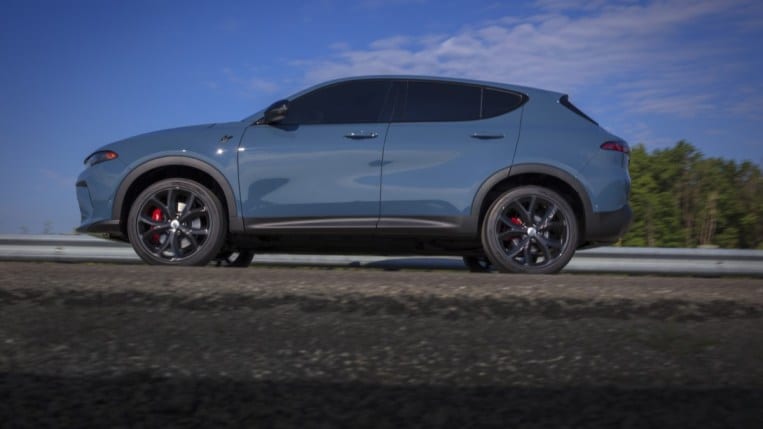
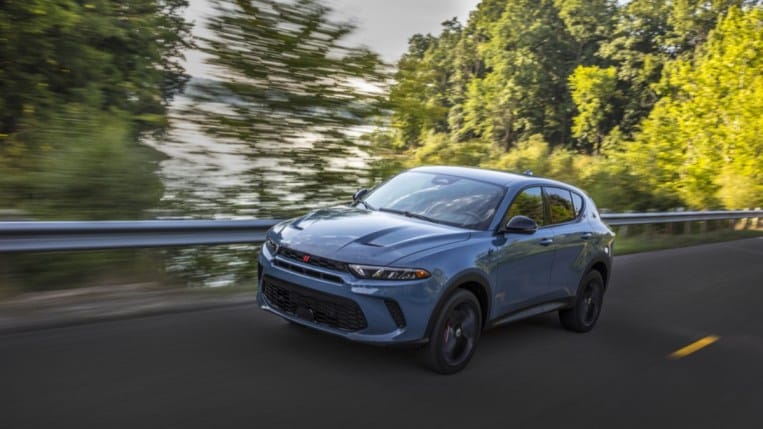
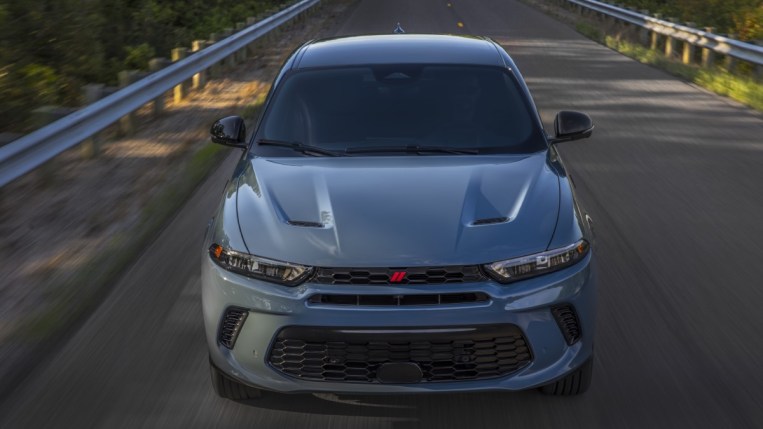


 STAGE MAG
 SHOP BROADWAY
 NEXT BWW EVENTS STREAM