
Getting back to where we once belonged An argument for restoring creative spirit in science – The Cancer Letter

The Cancer Letter
Inside information on cancer research and drug development
The Cancer Letter
Inside information on cancer research and drug development
The scene opens with a group of four musicians sitting on couches around a table in a studio. One of them is strumming aimlessly on his guitar, trying out various chords in sequences. Some of it sounds okay, even pleasant; other parts don’t work and are discarded.
Gradually, fragments of a vaguely familiar tune begin to emerge, scraps of a melody, but it’s not clear yet if this exercise will lead anywhere.
The lead musician begins adding a sing-song patter to his chords, mumbling something about a man named Jo-Jo, who apparently has a home in Tucson, Arizona. The chord changes gradually become more definitive, and a second guitar adds a recognizable riff, driving ever closer towards… something.
Then, over a period of just a few minutes, we hear it coalesce and take on the final shape of the song as we know it today. What we have just witnessed is the genesis of the classic Beatles’ tune “Get Back,” pulled from the air in the ultimate magic act of making something from nothing.
To my mind, the process of musical creation, as depicted in the recent film documentary “Get Back,” bears more than a passing resemblance to a lab meeting at its best: the whirling exchange of half-formed ideas; the false starts and dead ends; the trial balloons that float for a moment and are then deflated, only to be refilled and rise again; the reformulations and clarifying edits that push ideas along, remix, and meld them to their final form.
The process from notion to completion can take hours, days, months, years, or even whole careers.
Usually, the core group is small, Beatles-sized small, bringing in backing musicians as needed, maybe the scientific equivalent of a skilled keyboardist or a horn player, depending on the nature of the project. As in any creative enterprise that requires deep effort, relations between the teammates aren’t always harmonious, and personal issues must sometimes be worked through before meaningful progress can be made.
The melodies of the Beatles’ tunes are famously catchy and memorable, but it is the resolution of harmonies, the complex and often unexpected progressions from dissonance to consonance, that gives their greatest works their unique color and interest. This aspect is also true of scientific research.
We start with a dissonant observation, something that doesn’t quite fit—Why does our tailored drug not kill the targeted cancer cell? What triggers a dormant tumor cell to awaken after decades of slumber? How is it that metastatic cells home to one tissue and not another?—and we attempt to resolve it through a well-modulated series of experiments.
When it works, the process is beautiful to behold, a reminder of why one chose to become a scientist in the first place. When it fails, well, that can be instructive, too, and ideally leads to better ideas and more predictive models.
So, why doesn’t it happen more often? Why does research so often seem plodding rather than flying? Have we, the cancer research community, acting with the best of intentions, inadvertently engineered a system that discourages creativity?
One development that has sapped the creative spirit from cancer research is an overzealous faith in the power of large-scale collaboration.
The animating idea seems to be that greedy, egocentric scientists hoard precious data that properly belong to the public, and if only they could be compelled to share these taxpayer-funded findings, we’d get cancer cures more quickly.
There is a seductive, gut-level logic to this premise, as it simultaneously skewers diva-ish science superstars and explains why most metastatic tumors still can’t be cured despite a 50-year war on cancer. However, if collaboration were an unalloyed good, then adding the Rolling Stones to the Beatles would produce hot licks, when we know it would in fact produce a hot mess.
Put another way, for all the virtues of the 1980’s “We Are the World” supergroup, making great music was not among them. It may seem unsatisfying and counterintuitive, but even the most idealistic scientists are motivated at least in part by a zeal to compete, to reach an answer before one’s rivals, to be recognized as a rock star.
Getting elected to the National Academy of Sciences is akin to getting elected to the Rock & Roll Hall of Fame (and probably much easier, if we go by raw numbers), and for some researchers that is motivation enough.
But it is important to remember that the way to get famous in the cancer research world is by making discoveries that matter, a goal that perfectly aligns with the mission of the NCI and the interests of the public.
One might almost invoke a version of the invisible hand—investigators pursuing their own goals for their own reasons, within the limits of propriety and the law—as a guarantor of getting the best science at the least cost to the public. To paraphrase Adam Smith, it is not from the benevolence of the chemist, the gene jock, or the microscopist that we expect our cures, but from their regard to their own interest.
Team science isn’t inherently bad. In fact, cancer research has always been a team sport, and successful solo acts are exceedingly rare. It’s just that the size of the team matters, and bigger isn’t always better.
Many of the most remarkable discoveries have come from individual, sometimes quite small labs working alone or in small-scale collaborations. With genuine respect to NCI’s national RAS Initiative, whose work I greatly admire, the single most exciting idea for a RAS therapeutic emerged from Kevan Shokat’s group, a traditional (albeit HHMI-funded) academic laboratory. Similarly, gene editing methods, which might one day enable us to repair mutant cancer-driving genes, came out of a small number of what were then mid-sized laboratories that competed as much as they collaborated.
The process of musical creation, as depicted in the recent film documentary “Get Back,” bears more than a passing resemblance to a lab meeting at its best.
Team size and the need for collaborators will naturally be related to the job at hand. Methods to sequence DNA were discovered by Sanger and by Gilbert and their small groups in the mid- 1970s, but it took a veritable global village of collaborating academic groups, in ferocious rivalry with Venter’s private venture, to sequence the human genome.
A similar discovery-to-engineering arc describes the journey from the small-scale development of rocketry by Goddard in the 1920s to NASA’s massive efforts some forty years later—the literal moonshot—that serves, for better or worse, as the defining metaphor for President Biden’s recent efforts to speed cures for cancer.
But, if the fundamental work that underpins these advances usually comes from small teams, is there an optimal size?
In the business world, this issue has been much studied. We have, for example, the Bezos Rule, which states that any group that needs to be fed by more than two pizzas is too large to be effective.
Similarly, Brooks’ law declares that adding new team members to a late software project will make it even later. And then there is Price’s Law, which asserts that half the output of a team is produced by the square root of the number of its members.
The consensus of these and similar anecdotes and studies is that the optimal group size for research projects is about seven, plus or minus three. Luckily for scientists, this is just about the number of staff that a principal investigator can expect to fund with two R01 (or equivalent) grants.
As several of the NIH’s own reports have shown, once things exceed this size, communications become more difficult and the ‘bang for the buck’ starts to decline.
Barely a decade separated the Beatles of the Hamburg cellar clubs from the Beatles of the London rooftop session, and afterwards, the music they made alone was never as good as the music they had made together. It required a certain time and a certain place.
The creative process is a delicate thing, subject to special conditions that are hard to produce and, once lost, even harder to reproduce. Genius can’t be directed from above any more than a record company executive can order up a number-one single by fiat.
What is missing from academic cancer centers today is the equivalent of open session time for its researchers, where a lab group can occupy itself doing what it was meant to do and what it does best: testing the limits of knowledge, relatively free from distraction.
Is it too much to hope that we can get back to that era, or create a new one that adopts its best features?
Patient navigation improves outcomes and addresses health equity across the cancer continuum
What are you reading in 2022?
Looking for IP Login?
This change will be effective immediately and your card will be charged a prorated amount based on your existing subscription level.
OK Cancel
Looking for IP Login?
iGaming Platform Software Market Size 2022, Market Share, Industry Analysis By Future Demand, Top Key-Players, Opportunities, Revenue and Growth Rate Through 2025 – Digital Journal
Hi, what are you looking for?
By
Published
iGaming Platform Software Market Business Growth 2022-2025 Global Industry Research report covers a detailed study of the iGaming Platform Software Market size, growth, and share, trends, consumption, segments, application and Forecast 2025. iGaming Platform Software Market Report will add the analysis of the impact of COVID-19 on this industry.
Global “iGaming Platform Software Market” (2022-2025) Industry Research Report is a professional and in-depth study on the current state of the Global iGaming Platform Software industry. Moreover, research report categorizes the global iGaming Platform Software market by top players/brands, region, type and end user. This report also studies the global iGaming Platform Software market status, competition landscape, market share, growth rate, future trends, market drivers, opportunities and challenges, sales channels and distributors. Regionally, this report categorizes the production, apparent consumption, export and import of iGaming Platform Software in North America, Europe, China, Japan, Southeast Asia and India.
Get a sample PDF of the report at –https://www.researchreportsworld.com/enquiry/request-sample/17398993
The global iGaming Platform Software market is anticipated to rise at a considerable rate during the forecast period, between 2021 and 2025. In 2022, the market was growing at a steady rate and with the rising adoption of strategies by key players, the market is expected to rise over the projected horizon.
The report also tracks the latest market dynamics, such as driving factors, restraining factors, and industry news like mergers, acquisitions, and investments. Global iGaming Platform Software Market Size (value and volume), market share, growth rate by types, applications, and combines both qualitative and quantitative methods to make micro and macro forecasts in different regions or countries.
“Final Report will add the analysis of the impact of COVID-19 on this industry.”
To Understand How COVID-19 Impact is Covered in This Report. Get Sample copy of the report at–
List Of TOP KEY PLAYERS in iGaming Platform Software Market Report Covered in Chapter 13 –
The report also focuses on global major leading industry players of Global iGaming Platform Software Market Share providing information such as company profiles, product picture and specification, capacity, production, price, cost, revenue and contact information. Upstream raw materials and equipment and downstream demand analysis is also carried out. With tables and figures helping analyse worldwide Global iGaming Platform Software Market Forecast this research provides key statistics on the state of the industry and is a valuable source of guidance and direction for companies and individuals interested in the market.
Get a Sample PDF of the iGaming Platform Software Market Report 2022
The Global iGaming Platform Software Market Trends,development and marketing channels are analysed. Finally, the feasibility of new investment projects is assessed and overall research conclusions offered.
In Chapter 6, on the basis of types, the iGaming Platform Software Market from 2015 to 2025 is primarily split into:
In Chapter 7, on the basis of applications, the iGaming Platform Software Market from 2015 to 2025 covers:
Enquire before purchasing this report –https://www.researchreportsworld.com/enquiry/pre-order-enquiry/17398993
Some of the key questions answered in this report:
Major regions covered in the report:
Purchase this report (Price 3360 USD for single user license) –https://www.researchreportsworld.com/purchase/17398993
Major Points from Table of Contents:
1 iGaming Platform Software Market – Research Scope
1.1 Study Goals
1.2 Market Definition and Scope
1.3 Key Market Segments
1.4 Study and Forecasting Years
2 iGaming Platform Software Market – Research Methodology
2.1 Methodology
2.2 Research Data Source
2.2.1 Secondary Data
2.2.2 Primary Data
2.2.3 Market Size Estimation
2.2.4 Legal Disclaimer
3 iGaming Platform Software Market Forces
3.1 Global iGaming Platform Software Market Size
3.2 Top Impacting Factors (PESTEL Analysis)
3.2.1 Political Factors
3.2.2 Economic Factors
3.2.3 Social Factors
3.2.4 Technological Factors
3.2.5 Environmental Factors
3.2.6 Legal Factors
3.3 Industry Trend Analysis
3.4 Industry Trends Under COVID-19
3.4.1 Risk Assessment on COVID-19
3.4.2 Assessment of the Overall Impact of COVID-19 on the Industry
3.4.3 Pre COVID-19 and Post COVID-19 Market Scenario
3.5 Industry Risk Assessment
4 iGaming Platform Software Market – By Geography
4.1 Global iGaming Platform Software Market Value and Market Share by Regions
4.1.1 Global iGaming Platform Software Value ($) by Region (2015-2020)
4.1.2 Global iGaming Platform Software Value Market Share by Regions (2015-2020)
4.2 Global iGaming Platform Software Market Production and Market Share by Major Countries
4.2.1 Global iGaming Platform Software Production by Major Countries (2015-2020)
4.2.2 Global iGaming Platform Software Production Market Share by Major Countries (2015-2020)
4.3 Global iGaming Platform Software Market Consumption and Market Share by Regions
4.3.1 Global iGaming Platform Software Consumption by Regions (2015-2020)
4.3.2 Global iGaming Platform Software Consumption Market Share by Regions (2015-2020)
5 iGaming Platform Software Market – By Trade Statistics
5.1 Global iGaming Platform Software Export and Import
5.2 United States iGaming Platform Software Export and Import (2015-2020)
5.3 Europe iGaming Platform Software Export and Import (2015-2020)
5.4 China iGaming Platform Software Export and Import (2015-2020)
5.5 Japan iGaming Platform Software Export and Import (2015-2020)
5.6 India iGaming Platform Software Export and Import (2015-2020)
5.7 …
6 iGaming Platform Software Market – By Type
6.1 Global iGaming Platform Software Production and Market Share by Types (2015-2020)
6.1.1 Global iGaming Platform Software Production by Types (2015-2020)
6.1.2 Global iGaming Platform Software Production Market Share by Types (2015-2020)
6.2 Global iGaming Platform Software Value and Market Share by Types (2015-2020)
6.2.1 Global iGaming Platform Software Value by Types (2015-2020)
6.2.2 Global iGaming Platform Software Value Market Share by Types (2015-2020)
6.3 Global iGaming Platform Software Production, Price and Growth Rate of On Premiere (2015-2020)
6.4 Global iGaming Platform Software Production, Price and Growth Rate of Cloud-Based (2015-2020)
7 iGaming Platform Software Market – By Application
7.1 Global iGaming Platform Software Consumption and Market Share by Applications (2015-2020)
7.1.1 Global iGaming Platform Software Consumption by Applications (2015-2020)
7.1.2 Global iGaming Platform Software Consumption Market Share by Applications (2015-2020)
7.2 Global iGaming Platform Software Consumption and Growth Rate of Mobiles (2015-2020)
7.3 Global iGaming Platform Software Consumption and Growth Rate of Gaming Consoles (2015-2020)
7.4 Global iGaming Platform Software Consumption and Growth Rate of PC (2015-2020)
8 North America iGaming Platform Software Market
8.1 North America iGaming Platform Software Market Size
8.2 United States iGaming Platform Software Market Size
8.3 Canada iGaming Platform Software Market Size
8.4 Mexico iGaming Platform Software Market Size
8.5 The Influence of COVID-19 on North America Market
…………Continued
Browse complete table of contents at –https://www.researchreportsworld.com/TOC/17398993#TOC
About Us:
Research Reports Worldis the credible source for gaining the market reports that will provide you with the lead your business needs. At Research Reports World, our objective is providing a platform for many top-notch market research firms worldwide to publish their research reports, as well as helping the decision makers in finding most suitable market research solutions under one roof. Our aim is to provide the best solution that matches the exact customer requirements. This drives us to provide you with custom or syndicated research reports.
Contact Us:
Research Reports World
Phone:
US(+1) 424 253 0807
UK(+44) 203 239 8187
Email:[email protected]
Website:https://www.researchreportsworld.com/
Our Other Reports:
Aircraft Ground Support Equipment Market Size 2022, Global Industry Share, Growth, Segments, Revenue, Manufacturers and 2028 Forecast Research Report
Niacinamide for Cosmetics Market 2022 Worldwide Industry Size, Share, Gross Margin, Trend, Future Demand, Analysis by Top Leading Player and Forecast till 2028
Barcode Printer Market Share, Size 2022, Worldwide Impact of COVID-19 on Industry, Business Revenue, Future Plans, Top Key Players, Business Opportunities, Forecast to 2028
Global Electric Railcar Movers Market Size 2022-2028, Share, Trend, Business Growth, Top Key Players Update, Business Statistics and Research Methodology | Top Countries Data
Agricultural Micronutrients Market 2022-Industry Size, Share, Growth Factors, Top Leaders, Development Strategy, Future Trends, Historical Analysis, Competitive Landscape and Regional Forecast 2028
Music Microphone Market 2022 Global Industry Size, Outlook, Share, Demand, Manufacturers and 2028 Forecast
Press Release Distributed by The Express Wire
To view the original version on The Express Wire visit iGaming Platform Software Market Size 2022, Market Share, Industry Analysis By Future Demand, Top Key-Players, Opportunities, Revenue and Growth Rate Through 2025
All eyes are now on the release this week of US July inflation data, which is expected to show a slight slowdown from June.
After more than a year, aviation giant Boeing will be allowed to resume deliveries of its 787 Dreamliner aircraft.
Fashion innovator Issey Miyake shook up Parisian style with his highly wearable avant-garde designs.
Renting in New York has long been a struggle, but recently costs have skyrocketed, jumping an average 20.4 percent in the second quarter.
COPYRIGHT © 1998 – 2022 DIGITAL JOURNAL INC. Digital Journal is not responsible for the content of external sites. Read more about our external linking.

Figma | 2022 Best Medium Workplaces – Fortune

Employees say:
“Everyone at the company seems to have a hidden talent – from beekeeping, to music production, to Olympics-level swimming. We’re encouraged to lead a full life and embrace a healthy work/life balance. This is the first job where I haven’t felt I need to constantly be glued to email/slack at night and on the weekends. We do fun things together as a company, like Maker Week, where everyone focuses on a project outside of their regular 9-5 responsibilities or our quarterly talent show, where talent is not a requirement. Everyone always seems to have a positive attitude and a willingness to go the extra mile.”
Read the Great Place to Work review.
Experience the essence of groovy music with Atlanta hip hop artist Da-Mind on his fresh track 'I'm Not' – Daily Music Roll

A fun and quirky rap song ‘I’m Not’ was released by Atlanta hip hop artist, Da-Mind which is giving energy-packed vibes and unique beats to make listeners hooked.
Just a few days back I had the opportunity to listen to the newest track released by Da-Mind named ‘I’m Not‘ and I was blown away by the immense talent the artist showcased in the song. Now, Soundcloud has always been my favorite music platform to discover underrated yet talented musicians and due to that habit, I have listened to this artist’s previous songs. But this latest track which came out 3 months ago was utterly surprising for me as this Atlanta hip hop artist gave his career-best performance in this. If I focus on the vocal performance that the artist has given, I would have to say the vocal was mellow and reflected confidence which brought out the track’s beats and gives the listeners a sneak peek into his ability as a hip-hop artist.
Da-Mind has again proved his worth as a potential hip hop superstar as his single ‘I’m Not’ captures the listeners’ attention in one go with the funky and quirky rap along with pumping beats. After the song was finished, I was left out with an experience that was so enchanting which made me come back to the track from time to time. As a hip-hop lover myself, I would have to admit the high-quality music production and beats along with the relatable lyricism are of the utmost brilliance and were a complete bliss to my ears. You can follow the artist for his discography on Soundcloud and follow him on social media platforms such as Instagram, and Twitter for the latest news. The whole experience made me excited for the upcoming projects from the artist’s record label Da-Mind Ent LLC.
Let’s listen to Da-Mind’s new track ‘I’m Not’ only on SoundCloud:
https://soundcloud.com/da_mind/im-not-radio-version
Jennifer Stone has turned her love of music toward writing. She is the of the writers of Daily Music Roll and indulges in creating positive reviews, music blog and music press releases for various artists here.
Copyright © 2022 DailyMusicRoll.
“So much love and support”: International student completes master's degree despite pandemic setbacks – University of Alabama at Birmingham

 Photography: Steve WoodWhen John Chen graduated with his undergraduate degree from a college in China, he knew accounting was not his passion. After a few years in the workplace, he decided he wanted to travel to the United States and pursue a master’s degree in teaching English to speakers of other languages.
In December 2019, Chen traveled from coast to coast of the United States, visiting host families and touring college campuses that he would apply to for the next academic year. However, it was not until he returned home to Xuzhou, China, that he learned those plans might not be possible.
“The pandemic hit my hometown quickly after I arrived, and everyone’s life was paused,” Chen said. “I was trained for risk management and crisis management in my undergrad, but the courses I took prepared me for nothing like this.”
Stuck at home and not able to visit more colleges, Chen used an app that provides information on American universities, and it was through it that he learned about the University of Alabama at Birmingham’s School of Education.
“I reached out to the director of the English as a Second Language Teacher Education program, Dr. Susan Spezzini, to learn more about the program, and it was during that conversation that I decided UAB is where I wanted to go,” he said. “She sounded so understanding and supportive over the phone, and I knew this is where I needed to be. When one is coming from a different country, it is important to have support in order to be successful, and I knew I would get that from her and the program.”
After applying and getting accepted to the program, Chen was ready to start his journey as a Blazer; but due to visa restrictions and the pandemic, he could not make the trip to Birmingham to start classes. However, a number of UAB’s classes were moved to an online format during the pandemic, so in August 2020, Chen was able to start his program from across the globe.
“It was difficult at first because, when it is daytime in Alabama, it was nighttime in my country; but all my professors were amazing and helped me in my classes,” he said. “I came into the program expecting to barely pass with C’s, but I will be graduating with a 4.0 because of all the support I have received.”
Learn how to start your Blazer journey, here.
In May 2021, Chen was able to obtain his student visa; but after learning about his grandmother’s and grandfather’s cancer diagnoses, he decided to stay in China for another semester.
Finally, in the spring 2022 semester, he was able to make the 36-hour plan ride from Xuzhou to Birmingham to complete his in-person teaching courses and cross the finish line of his program.
“Everyone I have met here is so nice and encouraging,” Chen said. “I read a research paper that says, ‘Students learn better in supportive environments,’ and I believe this is why I did so well at UAB.”
Chen will be graduating with a Master of Arts degree in education in ESL in August. He hopes to become a research assistant so he can further his professional training before continuing his education through a Ph.D. program. His research interests include finding ways to help other Chinese students in America reduce difficulty caused by cultural difference and as a higher education student.
He plans to walk at a future commencement ceremony when his parents can travel to Birmingham to celebrate his accomplishments.
“I am so grateful for everyone who has supported me during my master’s program,” he said. “I love Alabama — it has become my ‘home away from home.’”
Cross-class interactions in America play a big role in upward mobility. : The Indicator from Planet Money – NPR
The Indicator NPR hide caption
SYLVIE DOUGLIS, BYLINE: NPR.
(SOUNDBITE OF DROP ELECTRIC’S “WAKING UP TO THE FIRE”)
GREG ROSALSKY, HOST:
Like most gyms, InnerCity Weightlifting in Boston offers one-on-one training sessions for people to shed pounds and get ripped. But behind the dumbbells and the treadmills is a deeper purpose. The gym is a nonprofit founded with the mission of providing opportunities to people at risk of poverty and incarceration and helping them forge friendships with wealthier people who might be able to give them a helping hand.
DARIAN WOODS, HOST:
InnerCity Weightlifting does this by recruiting people who are economically disadvantaged, often fresh out of prison. And it offers them a pathway to become trainers and then pairs these trainers with well-to-do clients. And its founder, Jon Feinman, says that they’re seeing amazing results with this model.
JON FEINMAN: Personal training does create this really unique setting that allows for those power dynamics to flip, for those really genuine relationships to form because the value is going both ways, and I think that really transcends a lot.
ROSALSKY: It’s no secret that it pays to have friends in high places or gym clients in high places, but a new groundbreaking research project substantiates this in a profound way. It shows that relationships that cross class lines are crucial for low-income folks to climb the economic ladder.
This is THE INDICATOR FROM PLANET MONEY. I’m Greg Rosalsky.
WOODS: And I’m Darian Woods. Today on the show – why cross-class friendships are so crucial for achieving the American dream.
(SOUNDBITE OF MUSIC)
ROSALSKY: The Harvard economist Raj Chetty is, like, the closest thing we have to LeBron James in the econ world.
RAJ CHETTY: Hey, Greg. How are you doing?
ROSALSKY: Hey. Good, how are you?
I mean, he’s kind of a superstar. He crunches these gigantic data sets and offers compelling evidence to fix some of America’s most stubborn economic problems.
WOODS: And some years back, Raj Chetty and his team published this detailed interactive map of America. It was based on extensive work analyzing millions of IRS tax records, and it shows the likelihood of kids climbing out of poverty in every zip code in the country. They called it the Opportunity Atlas.
ROSALSKY: Ever since they built this map, Raj and his collaborators have been trying to figure out why it looks the way it does. Why is it that kids in places like the diverse D.C. suburb of Silver Spring, Md., have a much better shot of rising out of poverty than kids in places like Little Rock, Ark.?
CHETTY: And so the big question is, why is the American dream more alive in some places than others? And along the way, lots of folks talked about the idea that social capital, or who your friends with, who you’re interacting with, might be an important factor.
WOODS: Social capital – that generally refers to the value of our relationships with our family, with our friends, our broader community. Sociologists and political scientists have long found that these relationships matter a lot for our well-being. But which types of relationships might give us a boost economically, and how do you clearly and precisely measure that?
CHETTY: Lots of people have thought hard about these issues well before us and have just been hampered by a lack of data.
ROSALSKY: But now Raj and his team have found a solution – Facebook data. I mean, who knows more about your social network than the ultimate social network? In a pair of new studies published in the journal Nature, Raj and his team use Facebook data as a proxy to measure people’s real-world relationships.
CHETTY: Who would have thought 15 years ago that you’d be able to see 20 billion friendships and understand how people are interacting with each other?
WOODS: Raj and his team came up with various ways to measure social capital using data from Facebook. And they find that there is one particular measure that has a huge power in explaining upward mobility, and they call it economic connectedness. And that’s the rate that low-income folks are friends with high-income folks.
ROSALSKY: Raj and his team find that it’s the exact places that have more connections between low-income and high-income folks that have much greater rates of upward mobility. And they provide evidence that these cross-class relationships are the very reason why low-income folks are much more likely to climb the economic ladder.
CHETTY: So now, you know, you might ask, but what about the quality of schools? What about racial segregation? What about levels of inequality? There are many other variables for which you can do a similar analysis. And what we basically show is the economic connectedness variable continues to have very high explanatory power, even when you control for all those things.
ROSALSKY: Raj and his team don’t have direct evidence to explain exactly what it is about having more connections between high- and low-income folks that causes greater rates of upward mobility. Maybe it’s because high-income people serve as role models or help their low-income friends get jobs. Maybe it’s because high-income people shape their friends’ aspirations or self-presentation or norms or behavior.
WOODS: But what Raj was able to document is that if you plop a kid from a disadvantaged background into a community with more economic connectedness, their income in adulthood will be, on average, 20% higher. It’s huge.
CHETTY: Social interaction across class lines is a key factor that predicts upward mobility out of poverty.
ROSALSKY: But there’s a problem. Raj and his team find that there are many communities across America that just aren’t very connected across class lines.
WOODS: In a second study, Raj and his team looked at why. They find it boils down to two main things – first of all, exposure.
ROSALSKY: Exposure just means how much lower-income folks are interacting with higher-income folks in an area. Do they live in a mixed-income neighborhood where they’re able to bump into higher-income folks at, like, the supermarket or their schools or churches or rec centers?
WOODS: But Raj says that cross-class encounters are not enough to form relationships. Even if these groups do encounter each other, there’s a tendency for them to not necessarily become friends. Raj calls this friending bias – you know, the people who kind of stay in their own cliques.
ROSALSKY: Raj says there are some settings where this friending bias is really high. One prime example is people’s neighborhoods. Like, I don’t know, Darian. Like, when you’re walking down the street in New York City, like, are you saying hi to everybody?
WOODS: No. Maybe I should. But no, I don’t.
ROSALSKY: Anyway, there are other settings where friendships really thrive – for example, churches, mosques and synagogues.
CHETTY: So it seems like something about the relationships people form in religious groups as opposed to neighborhoods – which shows that the settings, the structure of the institutions in which we’re meeting people might be the key factor that governs bias, not just preferences that people have.
WOODS: In other words, friending bias can be overcome. Raj says that what institutions can do really matters for forging cross-class friendships. So they had a look at high schools across the country, and some are really cliquey. And we’re not just talking about jocks and nerds and freaks and geeks. We’re talking about how wealthy or not wealthy your parents are.
ROSALSKY: For example, schools with multiple cafeterias often see richer kids go to one cafeteria and poorer kids go to another. Raj and his team say there are real things that schools and other institutions can do to encourage more diverse social circles.
WOODS: Yeah. Like, maybe just have one cafeteria or, like, pizza Fridays where all kinds of different kids all come together.
ROSALSKY: Raj says there’s much the government could do to revitalize the American dream, like building affordable housing in high-income areas or helping low-income kids go to high-income schools and thinking deliberately about how to foster friendships in various places. But what’s also exciting about this new research project is it points to practical steps we can make in our own communities to make a difference.
WOODS: Steps like the one taken by InnerCity Weightlifting in Boston – Raj and his colleagues actually shout out this nonprofit gym at the end of one of their new papers. And this gym has been operating for over a decade. And the founder, Jon Feinman, says that it is showing a lot of signs of success. Like, there’s much lower rates of recidivism and higher rates of upward economic mobility for its trainers.
FEINMAN: But to me, honestly, the biggest successes we see in this organization – it’s those day-to-day interactions. It’s our trainers having conversations with someone who they might not otherwise cross paths with and vice versa, that person now having a genuine friend who can advance them as just a human being, never mind their fitness goals, but as a citizen in this society.
ROSALSKY: Jon says one of their trainers bought a house with his earnings. One is now building houses for his former clients. Another uses gym connections to help them navigate electrician school. They’ve even had clients pay for their trainers’ kids to go to summer camp with their own kids – not bad for a gym.
WOODS: The show is produced by Corey Bridges with engineering from Robert Rodriguez. It was fact-checked by Kathryn Yang. Viet Le is our senior producer. Kate Concannon edits the show. And THE INDICATOR is a production of NPR.
Copyright © 2022 NPR. All rights reserved. Visit our website terms of use and permissions pages at www.npr.org for further information.
NPR transcripts are created on a rush deadline by an NPR contractor. This text may not be in its final form and may be updated or revised in the future. Accuracy and availability may vary. The authoritative record of NPR’s programming is the audio record.
Sponsor Message
Become an NPR sponsor
Namibian scholar evaluates commodification of Oviritje – Truth, for its own sake. – New Era

Easy access at the tip of your fingers, subscribe to our daily ePaper version of our New Era Newspaper.
Moses Magadza
Namibian scholar Professor William Heuva has published an eye-opening book chapter on Namibia’s Oviritje popular music, probably marking the first time the genre has had serious critical attention at a very high academic level.
Entitled
‘Commodification of Music in the Digital Age: Locating Namibia’s Oviritje Popular Music Genre in the Capitalist Music Economy’, the chapter appears in the Palgrave Macmillan journal, called Indigenous African Popular Music, Volume 2 of 2022, pages 431-446.
It documents and examines the influence of neoliberal and digital capitalism on the Oviritje music genre of the Ovaherero people of Namibia.
In this work, which constitutes Chapter 25 of this book, Heuva concludes that although the Oviritje music genre has been incorporated into the dominant mode of production of the Namibian neoliberal setting, and while all looks rosy in terms of new modes of production, distribution and consumption of music, the phenomenon has been profiting the Social Network Sites (SNSs).
These include Facebook, Twitter, YouTube, Tik Tok, Spotify and WhatsApp. He argues the distribution has not necessarily benefited the artists who run the whole venture, mostly on shoestring budgets.
Thus, while gaining from the new digital technologies of music production and a ‘conducive environment’ enabled by neoliberalism, the artists, according to this well-nuanced article, take home by far very little.
Heuva refers to Oviritje artists as ‘music entrepreneurs’.
He borrows the concept from Andrea Moore (2016), who uses it to refer to American unemployed youth, who during the 2008 financial crisis, were taught music entrepreneurship skills by the International Contemporary Ensemble to survive the crisis.
For Heuva, while Oviritje artists were not taught entrepreneurship skills, they went through the ‘broader classroom of life’ to acquire the necessary music skills in the midst of economic difficulties and disadvantaged family backgrounds.
Heuva notes that although Oviritje initially emerged as a non-profit venture, operated for public interest, it has been progressively commercialised and objectified on various digital platforms in the digital capitalist era.
Arguably the most critical observation, which colours most of this, is that the development of the Oviritje music genre of Namibia and its subsequent commoditisation beginning in the 1990s is part of the neoliberal phase of capitalism across the world, which includes digital capitalism.
Clearly conceived and written from the point of view of critical theories, if one considers the character of the majority of the scholars referred, this chapter opens up many key critical terms and relations in music and many cultural practices in the world.
The chapter takes the reader to the basics by first unbundling the concept of “popular culture” itself since the Oviritje music genre is now clearly part of popular culture in Namibia.
Heuva explains that while “culture” is the way of life of any group of people living in a geographical location, “popular” culture refers broadly to mass-mediated, frequently youth-driven trends, politics and leisure.
So it follows that “popular culture” is the commercial side of culture (such as music), which appeals to the masses, particularly the young people. All this is aided by modern digital technology.
Heuva provides a useful background: At Namibia’s independence in 1990, the new government was keen to revive the cultural heritage of the people.
This coincides with the development of globalisation, whose spirit, ironically, clashes with the prerequisite of the genuine revival of any specific culture in the world.
Globalisation, the author emphasises, is the creation of countless markets to promote conspicuous consumption, which, in turn, promotes high exploitation of the basic artist and not necessarily genuine cultural revival.
This means the adoption of neoliberal policies in Namibia in the 1990s had a massive impact – not only on the economic sector but also in terms of the transformation of the cultural industry.
This neoliberal development, within whose wings the Oviritje music genre is caught up, makes sure that there is the development of new technologies, including digital technologies, to recruit new and widespread audiences and consumers.
As Heuva argues, this has positive and negative effects on society in that in the process of turning Oviritje into a widely consumed musical commodity, the SNSs led to the artists and their fans being turned into providers of free digital labour online for the benefit of GAFAM corporations.
GAFAM refers to Google, Apple, Facebook, Amazon and Microsoft, who provide space for the consumption of popular culture.
The writer also delves into the development of Oviritje itself, pointing out that Oviritje is actually Herero slang for songs, and that it began around the late 1960s among school learners at sports and school events.
The roots of Oviritje in traditional Herero music are distinct and clear. In its infancy, the genre invited a meagre income to the performers.
It was a non-profit micro activity. Through the influence of neoliberalism, the genre now uses predominantly electronic instruments and has become a mass-produced item, driven by urban youths so much so that it has outstripped other music genres of Herero origin, like Outjina (practised by women) and Omuhiva (practised by men.)
The youth orientation of Oviritje naturally attracted mass production and commercialisation, which provides the wheels of capitalism.
Omuhiva and Outjina art forms declined, as they remained with the old Hereros, who were conservative and less inclined to embrace the capitalist mode of production.
This situation demonstrates the link between capitalism and certain genres of music. Oviritje became popular by being hyped up until it became sellable.
The author introduces another interesting observation, which is, that despite the fact that popular music reflects issues of importance to their target audience, it is not always the case that popular music does critique some of these issues – and Oviritje is not an exception.
In fact, popular music songs outside the west are not as critical of capitalism as popular music in the West.
The book in which Heuva’s chapter appears was edited by Abiodun Salawu and Israel Fadipe. It examines how African indigenous popular music is deployed in democracy, politics and social crusades by African artistes.
Exploring the role of indigenous African popular music in environmental health communication and gender empowerment; the book subsequently focuses on how the music portrays the African future, its use by African youths and how it is affected by advanced broadcast technologies and digital media.
Heuva is a professor in communication and media studies at North West University, South Africa.
His expertise is in the critical political economy of communication; communication (telecoms, media and ICTs) policies and regulations (laws); sociology of the media (including the ‘new media’); media and information literacy as well as media history.
*Moses Magadza is a doctoral student with research interests in framing, agenda setting, (re)presentation, social justice theory and critical discourse analysis.

The New Era is a daily national newspaper owned by the government of Namibia. The newspaper is one of four daily national newspapers in the country.
Charles Lloyd Trios: Ocean review – a rich mix from a master enchanter – The Guardian

(Blue Note)
Devotion to jazz’s roots fill the latest album from the veteran saxophonist and flautist, which at times seems an almost private interchange
The saxophonist, flautist and early global-music pioneer Charles Lloyd has been entrancing audiences worldwide for more than 60 years, as well as travelling widely in his own fertile imagination to cultures way outside his jazz origins. But the west coast has felt like Lloyd’s spiritual home since he was a teenager in 1956 LA, studying Bartók by day and jamming with the then undiscovered Ornette Coleman at night, or playing and hanging out with the Beach Boys during his midlife 1970s-80s withdrawal from jazz. In 2018, three decades after his triumphant comeback, Lloyd chose a beloved Santa Barbara venue close to his California home to record his 80th birthday album: 8: Kindred Spirits (Live from the Lobero).
The theme continues with Ocean, this month’s second release in Blue Note’s Lloyd-led Trio of Trios series, this time featuring west coast guitarist Anthony Wilson, and young Lloyd-devoted pianist Gerald Clayton – son of the famous LA bandleader of the same name with whom a teenage Lloyd played in the 1950s.
Space, reflection, respect, and devotion to jazz’s roots permeate this music. The Lonely One’s doleful tenor theme opens in purring dark tones, turning eventually to whooping free-jazz flurries while Clayton and Wilson encircle Lloyd with quiet Spanish-tinged countermelodies. Hagar and the Inuits is a skippily freeboppish Coleman homage, while Jaramillo Blues and Kuan Yin are both languidly rocking groovers, the first a vehicle for Lloyd’s vaporously swooping flute and his partners’ blues variations, the second a Latin-tinged showcase for his stealthy-to-gambolling tenor phrasing and improv fluency. Ocean is at times a quiet, almost private interchange, but a rich one.
Kokoroko, those vivacious young London alchemists of Afrobeat, jazz improv and eclectic composing resourcefulness, unveil a classy debut album with Could We Be More (Brownswood), 15 tight tracks embracing the players’ jazz, highlife, soul or reggae backgrounds, fused by the particular heat of London life. The percussive, vocally liltingly We Give Thanks and the warmly brassy Soul Searching are seductive highlights of a set that veers a shade close to the smooth and sweet for hardcore jazzers, but shows enough edge to invite the next generation in just the same.
UK journalist/broadcaster Kevin Le Gendre’s occasional Now’s the Time compilations continue with Fresh from Finland (Cadillac), a raft of Finnish new music from lyrical folk-jazz to funky electronica, free improv and adventurous pop/jazz vocalising. The 13 tracks include a wailing opener from Finland’s famous UMO orchestra, two appearances from prizewinning pianist/harpist Iro Haarla (she’s on piano with folk/improv trio Hot Heros and spacey harp with 86-year-old Finnish reeds great Juhani Aaltonen), and some ruggedly exhilarating piano/sax postbop from Riitta Paakki’s quartet.
NAVELSG Hosts MCPON – navy.mil


Smith and Hunt were welcomed aboard by NAVELSG’s Deputy Commander and First Navy Expeditionary Logistics Regiment (1st NELR) Commodore Capt. Christopher S. Koprivec, NCHB-1 Commanding Officer, Cmdr. Lisa Manning, NAVELSG Command Master Chief Chad C. Elliott, and NCHB-1 Command Master Chief Charlie Luna.
“We are excited to host MCPON and Reserve Force Master Chief,” Elliott said. “It’s not every day that we have the opportunity to showcase our unique mission, talented Sailors, and diverse capabilities of Rearm, Refuel, and Resupply in austere environments.”
During Smith’s and Hunt’s visit, they toured the command’s training facilities, had lunch with the Chiefs’ Mess, and addressed NAVELSG and NCHB-1 Sailors during an all-hands call.
“Today I watched a simulated at-sea reload, and it showed me that you all can do this in a foreign place and at-sea,” Smith said. “Reloading a ship with missiles at-sea rather than sailing back to the United States is an essential capability, and what you are doing here, the capability that you demonstrated, is going to have a direct contribution to how effective our Navy can be.”
While visiting NAVELSG’s landship, Smith and Hunt had the opportunity to watch a demonstration of its Surface Cargo Handling Course presented by Chief (Select) Boatswain’s Mate Christina Koziol.
“I had the opportunity to explain that this course is more efficient because it our merges Basic Cargo Handling and Shipboard Pedestal Cranes Courses,” said Koziol. “MCPON was excited to learn that this course would allow Sailors to become certified and deployable in a matter of two weeks.”
NAVELSG provides dynamic logistics support to the joint force across the spectrum of conflict from peacetime support to major combat operations. NAVELSG Rearms, Refuels, and Resupplies the fleet when and where needed to reinforce maritime lethality and support the Navy Expeditionary Combat Force efforts to CLEAR, SECURE, BUILD, and PROTECT logistics throughput in the littorals.
For more news from Navy Expeditionary Logistics Support Group, visit www.dvidshub.net/NAVELSG or www.necc.usff.navy.mil/navelsg. You can also find us on social media at https://facebook.com/Navelsg/, https://linkedin.com/company/navelsg, https://instagram.com/navelsg
Subject specific information for the media
Events or announcements of note for the media
Official Navy statements
Given by Navy leadership
HASC, SASC and Congressional testimony
Google Translation Disclaimer
Chief of Information
Attn: US Navy
1200 Navy Pentagon
Washington DC 20350-1200
Student's tribute to slain Va. reporter stepsister wins award – Culpeper Star-Exponent
Get local news delivered to your inbox!
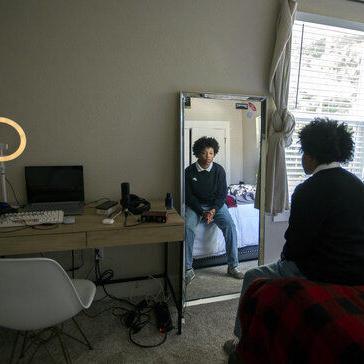
Quinay Gatling, 16, is seen in a corner of her bedroom at her Chesapeake home, where she composed a song called “Granby Street” as a tribute to her slain stepsister, Sierra Jenkins.
Quinay Gatling, 16, at her Chesapeake home, where she composed a song called “Granby Street.” The tribute honors her stepsister Sierra Jenkins, a Virginian-Pilot reporter, who was killed outside a Granby Street business in March 2022.
VIRGINIA BEACH—Quinay Gatling wanted to do something to remember her stepsister, so she wrote a song, “Granby Street,” as a tribute.
“I created the song just trying to cope with things,” she said.
Sierra Jenkins, a reporter for The Virginian-Pilot and Daily Press, was one of three people killed in a downtown Norfolk shooting in March. She was 25.
The song includes Gatling’s vocals, clips from news reports, Jenkins’ parents, the vigil and more. She included the different elements to “show how people are feeling.”
As a student in the Advanced Technology Center in Virginia Beach, Gatling was encouraged to work on a project that could be entered into a competition. She worked with her partner in the class, Kevin Payne, under the music production category.
At first, they had created a different song. After Jenkins died, Gatling took some time off from school. When she returned, they agreed that the tribute was something more powerful and meaningful.
They entered “Granby Street” in the National Technology Student Association Competition this year in the music production category and won third place.
Mack Stevens, an advisor in Advanced Technology Center, said “you can feel the long in the song.”
The June competition was held in Dallas with thousands of students in attendance, including seven from the Virginia Beach school division. More than 70 teams competed.
On stage with her third-place trophy, Gatling said she had mixed emotions: she was thrilled with the award, but missed her stepsister. Her hope is that the song promotes awareness about gun violence.
“I feel like the only way we can make a difference is if everybody comes together and speaks about it,” Gatling said. “We see these things every day, and I never would have thought it’d be someone so close to me.”
As she sang in the song, “How am I supposed to feel when time moves too fast, and it don’t feel real?”
Gatling is getting ready to start her junior year at Tallwood High School and plans to be a representative for the Advanced Technology Center and help guide students through the competition process.
Get local news delivered to your inbox!
The mother of a 2-year-old girl found dead in an Oceanfront hotel room this week was arraigned Wednesday on a felony child abuse charge. Leandra Andrade, 38, of Washington, arrived Tuesday at the Virginia Beach city jail, shortly after her release from a hospital. She’s being held without bond. Her arraignment was held in Virginia Beach Juvenile and Domestic Relations District Court. A bond …
The former chief of a Stafford County volunteer fire department was indicted this week on four felony charges, three of which carry potential …
Eight people were transported to area hospitals Friday morning during an event for Stafford County public school employees held at Virginia Cr…
Ann McLean likened President Abraham Lincoln’s efforts in the Civil War to Russia invading Ukraine. She added that slavery would have eventually ended had the Confederacy remained a country.
The governor also approved a measure proposed by state Sen. Jennifer McClellan, D-Richmond, and Del. Israel O’Quinn, R-Washington County, to award grants to local school boards for building, renovating or adding to schools.
WINCHESTER—Kim Craig wanted to create a revitalized space for people to do their laundry.
A 911 call from air traffic controllers suggests that a co-pilot may have jumped from a damaged plane before the other pilot made an emergency landing in North Carolina.
The building would have 55 loading docks for trucks and parking spaces for more than 400 truck trailers. It would be smaller than Amazon’s fulfillment center in Chesterfield County, which is more than twice the size.
After almost a year and a half of construction, and many years more of dreaming and planning, Thomas Jefferson’s Poplar Forest celebrated the grand opening of Poplar Forest Parkway.
Ocean temperatures at the beaches of Virginia and the Carolinas generally make for pleasant swimming and wading by the end of July. But there is a thorny exception along the northern Outer Banks.
Quinay Gatling, 16, is seen in a corner of her bedroom at her Chesapeake home, where she composed a song called “Granby Street” as a tribute to her slain stepsister, Sierra Jenkins.
Quinay Gatling, 16, at her Chesapeake home, where she composed a song called “Granby Street.” The tribute honors her stepsister Sierra Jenkins, a Virginian-Pilot reporter, who was killed outside a Granby Street business in March 2022.
Get up-to-the-minute news sent straight to your device.
DellaXOZ is on the rise | Interview | Line of Best Fit – The Line of Best Fit


 Words: /
18-year-old DellaXOZ captures the sentiment of gen-z post-lockdown life through her glitchy, alternative pop.
“When you're not an artist yet, and you don't have connections, you don't know where you can get beats from. So I was like, well, I'm just gonna do it myself.” Daniella Lubasu shrugs, casually outlining the DIY ethos that’s anchored her music since her first experiments in production at 12–years–old.
Released under the pseudonym DellaXOZ, Lubasu’s debut EP THE DELLA VARIANT was written entirely from her childhood bedroom in Bolton, a former industrial town on the fringes of Manchester. It’s where she sits now, dangling her phone in her hand and anticipating the EP release that, coincidentally, coincides with her eighteenth birthday. “I feel good,” she says in a distinctively monotone Mancunian drawl, exuding pure composure amid the chaos: “I’ve been sitting on these for such a long time.”
Lubasu is representative of a new breed of inherently Gen–Z artists, born from a cataclysm of 00s pop culture and Spotify algorithms, with the misfortune of the majority of their adolescence being mired in restriction. For Lubasu, this means despite living on the cusp of one of Britain’s historical hubs for live music, it was constantly just beyond her grasp.
Yet, she’s insistent that THE DELLA VARIANT exists as a product of its vicinity to Manchester, if only in spirit: “It’s the energy of that Britpop Manchester era. My music embodies that,” she says. It’s an energy that was built on collaboration and community, something lacking in Della’s formative years of making music which thus far, have been devoid of any opportunity to perform live.
But the circumstances fail to permeate her irremovable confidence. “I’m really excited,” she grins, unfazed by a lack of experience. “I think about performing all the time. I'm always in my room with a hairbrush or a water bottle, pretending to perform.” The setlist? An all-female lineup that spans from Lorde to Nicki Minaj, though she admits “Still Into You” by Paramore remains her solo–karaoke go–to.
Perhaps the excitement stems from the fresh influence of live music on her life – it was only last year that she attended her first concert, trading the blue light of a computer screen for the barrier at Sam Fender. “When you haven't seen the artist before and then you finally see them, it doesn't feel real. You can't believe that's the actual person. For me, it was almost a magical thing,” she says, still energised from the experience. “Every time I see an artist now, I'm just more inspired.”
It’s this ambition that’s intrinsic to DellaXOZ’s current success. She’s endlessly serious when it comes to the sound she’s spent the entirety of her teens curating, as well as its aesthetic universe that extends into her image. Her TikTok is a stream of graphic eyeliner, fingerless gloves, and excessive layers of thin chain necklaces, details she’s had time to perfect in the same meticulous manner she applies to her production.
“Obviously when I started, the beats that I was making were terrible,” Lubasu admits, rolling her eyes at the memory of her 12-year-old self, armed with only free software and Youtube tutorials. “Now I've been doing it for a long time, I have a better idea of what I like and what sounds good to me.”
This early experimentation still bleeds into the eclectic, glitchy, pop that defines her current sound. THE DELLA VARIANT spans a diverse range of references, from garage beats to alternative rock: “I’ll do absolutely everything. One day I would make a pop beat and then I'll make a hip-hop beat, and then an indie beat. I just wanted to see what I could do.”
Her scrapbook approach to production mirrors both the eclecticism of her current playlists and the energy of the Congolese music that filled her home growing up. “It's just an energetic type of music. It's got strong, prominent baselines and a lot of electric guitars. I'm really drawn to that instrument. It’s so versatile, you can put it in any type of genre, so that's what I do.”
Though largely unphased by genre constraints, Lubasu is all too aware of the historical stereotypes of her local scene, only just beginning to shed the reputation of being solely white, working class, and male: "To be honest, I think the face of indie music still is white and male,” she says. “But I think it is becoming a bit more diverse because of people like me. People are moving away from traditional expectations of having to fit into categories.”
This is especially evident in EP highlight “Paranoia”. It’s the soundtrack to Lubasu’s “villain era”, propelled by an electric guitar that encapsulates the energy of 90s Manchester’s indie scene, and the intricacy of Congolese Soukous, in equal measures. The slightly distorted vocals, fundamental to the imperfect nature of her sound, deliver lyricism that exists as an exercise in catharsis. Scratchy percussion and heavy baselines forge an atmosphere as disorientating as the teenage experience. “I feel like I could make positive songs, but you don't have to be nice all the time,” Lubasu explains the vindictive nature of the lyrics. “I wanted to have one mean song, inspired by people that wanna have conflicts with you.”
THE DELLA VARIANT didn’t come into existence without obstacles, which came in the form of an intense creative block, where Lubasu’s extreme perfectionism stifled any momentum. “I knew I had stuff to say but I just wanted to say it in the most impressive way,” she says, reflecting on the tumultuous era of the EP's creation. “I was too scared to write because I had the intention that it has to be perfect. I don't wanna write something and it be really bad. So I just didn’t.”
"When you do everything by yourself, sometimes you can become self-critical, picking apart small things. It's good to have new ideas"
Much of this anxiety stemmed from a fear of judgment from her peers, with Lubasu initially afraid to admit that she wanted to be a singer at school: “I would always lie because I was too scared. I didn't want people to know.” But everything changed in 2020 when TikTok star Addison Rae commented on a video of Lubasu singing: “People that didn’t even like me were coming up to me to say, ‘can I have your autograph? You’re gonna be famous one day.’” I ask if she obliged and it’s met with laughter: “Yeah, why not?”
Initially, she undertook much of the artist admin herself, pitching to Spotify playlists and existing as her own marketing and social media team. When EP opener “AHH!!” was championed by the algorithm, Lubasu began to gain attention from industry professionals. "My lawyer found me and said if I want to move forward, I need to get management.”
“She sent me options and I looked at mine and saw the people they have, like The Wombats and The Night Cafe, and I was like, yeah, I'm going with them. They have people that I've been listening to since high school, so there's no way that I'm not gonna go with them.”
It was her management who connected her with Nathan Boddy, producer for the likes of Nilüfer Yanya, PinkPantheress, and Celeste. His mixing was the finishing seal of THE DELLA VARIANT, and also Lubasu’s first collaborator outside of her siblings, whose vocals occasionally appear on the EP in the form of screams or countdowns.
“It was surprisingly better than I thought,” she says, admitting a prior hesitation to allow outside influence on her music. “I was nervous cause I'd never professionally worked with other people before, but he understands where I'm trying to go.”
“I think it's good to have a fresh perspective. When you do everything by yourself, sometimes you can become self-critical, picking apart small things. It's good to have new ideas.”
Over lockdown, amid a period of heightened adolescent angst, when being chronically online was the only way to connect with peers, the teenage experience was Lubasu’s muse. However, she still struggles to define the familiar concoction of doubt and anxiety that plagues most at that age: “You just kind of accept that everyone's nervous, but you don't know why,” she explains. “Everyone is in a rush to grow up and there’s pressure to be successful. People feel like they don't have enough time.”
It’s this frustration at society that is slowly seeping into the music she’s writing today, but Lubasu is still hesitant to share it. “I don’t know if I could wake up and just randomly release say an angry riot girl, feminist song,” she says. ”I probably have reason to. There’s so much misogyny so it would be relevant at any point.”
Now though, as she awaits A-level results and the release of her debut EP simultaneously, there’s a feeling that things are finally beginning. “It's a full circle moment. It just makes you feel like the world is still small,” she says, pensively reflecting on a whirlwind year that’s seen her music exist in the same spheres as those on her childhood playlists. “It’s like everything is connected, weirdly.”
THE DELLA VARIANT EP is released on 11 August
© 2020 – 
Terms of Service / Privacy Policy / All Rights Reserved
The InterContinental Music Awards Announces 54 Worldwide Winners and a Promising New ICon: Heerraa – EIN News

There were 1,083 press releases posted in the last 24 hours and 214,756 in the last 365 days.
Winners of the 2022 10th Annual InterContinental Music Awards
Hosts of the InterContinental Music Awards: Karen Lorre and Shahed Mohseni
Heerraa is the first ICon Award Winner for the InterContinental Music Awards. taking home a $1000 cash prize; her song “Feel Alive” won Best of North America in the Pop Song category.
The globally-focused, diverse, and inclusive organization live streamed its 10th Annual Awards from Los Angeles; the replay will soon be available on YouTube.
Beth Ann Hilton
The B Company
+1 310-560-8390
[email protected]
Visit us on social media:
Facebook
Twitter
LinkedIn
Other
Official Video: Feel Alive by Heerraa
You just read:
EIN Presswire’s priority is source transparency. We do not allow opaque clients, and our editors try to be careful about weeding out false and misleading content. As a user, if you see something we have missed, please do bring it to our attention. Your help is welcome. EIN Presswire, Everyone’s Internet News Presswire™, tries to define some of the boundaries that are reasonable in today’s world. Please see our Editorial Guidelines for more information.
Follow EIN Presswire
© 1995-2022 Newsmatics Inc. dba EIN Presswire
All Right Reserved.
The Best Podcast Studio Production Console for Beginners – Spacelab
Are you interested in podcasting? If so, you need to invest in a good podcast studio production console. This is the piece of equipment that will allow you to record, edit, and produce your podcasts. There are many different consoles on the market, but we believe that the Rode podcaster pro is the best option for beginners. In this blog post, we will go over the importance of having a good podcast studio production console andd also explain why we think this console is so great, and provide some tips on how to use it.
What is a podcast studio production console and what does it do?
Podcast production consoles, also known as mixing boards or mixer boards, are one of the key pieces of equipment used in podcasting. Podcast consoles allow podcasters to control the levels of various audio sources, such as microphones and sound effects, and mix them together to create a finished product.
There are a variety of different types of podcast production consoles on the market, ranging from small, portable units designed for use with laptops to large-scale professional models with dozens of inputs and outputs. And while most podcast production consoles serve essentially the same purpose – allowing you to mix multiple audio sources – there can be significant differences in features and functionality between different models.
How do I know which one is right for me and my needs as a beginner podcaster?
There are a few things you need to consider when choosing a production console for your podcast studio. First, how many people will be using the console? Second, what type of content will you be producing? Third, what is your budget?
If you’re just starting out and have a limited budget, I would recommend looking for a smaller console that is geared towards solo producers. If you’re planning on producing content with multiple voices or guests, you’ll need a larger console with more inputs. Likewise, if you’re producing predominantly voice-only content, then you don’t need as many features as someone who produces music-heavy podcasts.
What are the different features to look for when choosing a console for your podcasting studio setup, and why are they important to you as a beginner podcaster?
When choosing a console for your podcasting studio setup, there are a few things you’ll want to keep in mind.
One of the most important factors is the number of audio inputs and outputs. This will determine how many microphones or other devices you can plug into the console at once. Most consoles have between two and eight inputs, so make sure to pick one that will accommodate your needs.
Another key feature to look for is channel processing. This allows you to tweak the sound of each individual input before it’s broadcast, which can be helpful in achieving a more consistent tone across all your episodes. Some consoles also include built-in effects processors, which can add some extra flair to your show.
What are the features of the Rode podcaster pro console?
The Rode podcaster pro console is a great piece of equipment for anyone looking to start podcasting. It has a number of features that make it an ideal choice for podcasters, including:
– A built-in analog compressor that ensures a consistent level of sound quality across all your recordings
– A zero-latency headphone output so you can monitor your recordings in real-time
– An XLR input that allows you to connect professional microphones directly to the console
– A USB port that lets you easily transfer your recordings to your computer for editing and publishing
What makes the Rode podcaster pro console one of the best on the market for beginners?
The Rode Podcaster Pro Console is one of the best on the market for beginners because it has a number of features that make it easy to use.
First, the console is very simple to set up. You just plug in the power cord and the microphone, and you’re good to go. Second, the console has a wealth of features that make it easy to customize your recordings. You can adjust the levels of your recording, add effects, and even change the tone of your voice. Finally, the console is very affordable compared to other consoles on the market. This makes it a great option for budget-minded beginners.
How to use the Rode podcaster pro console and get the most out of it?
The Rode Podcaster Pro Console is a powerful and versatile audio production tool. Here are some tips on how to get the most out of it:
– The console has a number of input and output options, so be sure to familiarize yourself with them before starting your project
– The console’s built-in compressor can help you achieve professional-sounding results without having to use external compression software
– The console’s EQ can be used to enhance or reduce certain frequencies in your audio signal. Experiment with different settings until you find one that works best for your project
– Be sure to monitor your audio levels while recording; if they get too high or too low, the resulting recordings will sound distorted
This is a sponsored post by DJ City. More podcast and DJ gear can be found here: www.djcity.com.au
Apollo Global Management Receives $388.4M Financing for The Brook Mixed-Use Project in Brooklyn – REBusinessOnline


The Brook’s eastern building will rise 51 stories in downtown Brooklyn and feature 561 multifamily units.
NEW YORK CITY — Walker & Dunlop Inc.’s New York capital markets team has arranged $388.4 million in construction financing for the Brook, a mixed-use development in downtown Brooklyn consisting of 448,000 rentable square feet of multifamily and retail space. Bank of America provided the funds.
Apollo Commercial Real Estate Finance Inc., which is managed by an affiliate of Apollo Global Management, and Witkoff are developing the property at the cross-section of Fulton Street, Flatbush Avenue Extension, and DeKalb Avenue, next to Brooklyn landmarks such as the Fulton Mall and the Barclays Center.
The mixed-use property will be split between two development sites, with the eastern site located at 565 Fulton St. and the western site at 547-557 Fulton St.
The eastern site will consist of a 51-story mixed-used tower that will feature 561 studio, one- and two-bedroom apartment units utilizing the Affordable New York and Inclusionary Housing programs, as well as approximately 30,000 square feet of common space. Amenities will include a pool with cabanas, dog park, fitness center, half basketball court and multiple resident lounges. The base of the building will feature 17,200 square feet of ground-level retail space.
The western site will consist of approximately 14,000 square feet of retail space next to Albee Square and is poised to attract retail brands and wholesalers looking to establish or strengthen their foothold in Brooklyn.
The Walker & Dunlop team that arranged the financing included Aaron Appel, Keith Kurland, Jonathan Schwartz, Adam Schwartz, Michael Ianno and Sean Bastian.
— Channing Hamilton
Maluma Chooses Waves eMotion LV1 And SuperRack To Mix And Broadcast Live – Sports Video Group
By SVG Staff
Monday, August 8, 2022 – 10:45 pm
Print This Story | Subscribe
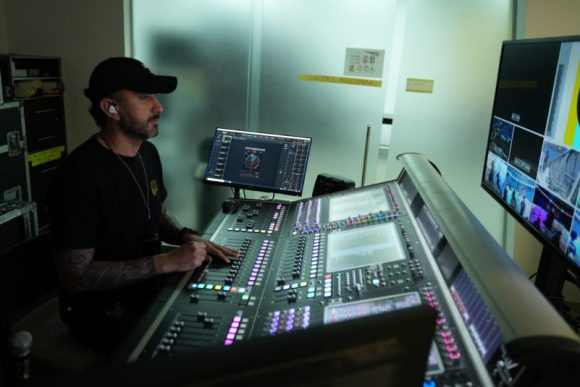
Maluma’s live mixing engineers – FOH engineer Lucas Pinzon (Carlos Vives, Bomba Estero), monitor engineer German Tarazona (J Balvin, Jarabe de Palo, Cali y El Dandee, Alex Campos) and broadcast engineer Fabrizio Piazzini (X-Factor Spain, Got Talent, Mi año favorito, Calvin Harris, David Bisbal) – choose to use Waves plugins for Maluma’s 2022 world tour, using the Waves SuperRack plugin rack for FOH and monitors in all shows, and the Waves eMotion LV1 Live Mixer to mix the Amazon Music Prime broadcast of the tour’s major highlight: Maluma’s homecoming concert in front of 54,000 live fans in his hometown of Medellin, Colombia.
“I’ve been using Waves plugins constantly over the last 11 years,” says FOH Lucas Pinzon, “and today they are essential to my work on every show. I use them on my DiGiCo Quantum 338 console via its Waves IO port and the Waves SuperRack live plugin rack, and it’s amazing how creative I can be using this setup. It gives me unbelievable agility, where a split second is vital to get what I want in a live show environment.”
“I have several favorite plugins,” he comments, “and these are just examples—just some of my must-haves that help me deliver quality audio every night, in venues with complicated acoustics. The F6 Floating-Band Dynamic EQ is a great tool, since not only can I equalize with precision, I can also compress band-by-band according to my needs. Of course, F6’s real-time visual analyzer makes everything visually faster. The Scheps Omni Channel is a Swiss army knife that I use a lot in my chains. I love it! In addition to having a very nice color and texture, it is totally customizable. It helps me build a unique sound, according to my criteria and taste. I can also include it as an external plugin into the internal chain. The PSE (Primary Source Expander) is a MUST for cleaning my vocals of disruptive mic bleed! The eMo D5 Dynamics is a great and versatile plugin that I use as a starter when I need to go fast for some dynamic requirements. The CLA Compressor/Limiters are spectacular: CLA-2A on bass and vocals, CLA-3A on my guitar groups, and the CLA-76 on my drums – the possibilities are endless. I really enjoy the particular sound and color of the dbx® 160 Compressor/Limiter because it leads me to a sound that I have stuck in my memory from analog times, with a unique punch and precision. Finally, the Abbey Road TG Mastering Chain is simply exquisite—an absolute work of art.”
Pinzon continues: “In this 360-degree show, the acoustic energy is very impressive, in that all the microphones are open and located literally below the PA, so I take great care of my gain structure as the basis for everything. The plugins with which I can literally ‘clean’ the sound are my secret weapon to be able to mix this show. I use the eMo D5 Dynamics, PSE, CLA 76, WNS Noise Suppressor on voices, and the NS1 Noise Suppressor for acoustic guitars.”
Monitor engineer German Tarazona comments, “For me, SuperRack has been a new world and a total game-changer for my in-ear monitoring mixes. This is my first tour using DiGiCo with Waves integration, and it’s been my best decision. I have control from the console for any parameter of the plugins that I select, which allows me to be more precise when making changes during the concert.”
“For this tour,” he continues, “I use a DiGiCo 338 console with a Waves IO port, two Extreme-C SoundGrid Servers for redundancy and a Mac mini for my SuperRack. During rehearsals, I like to use the touch-screen. It allows me to navigate very fast, but during the show, I am very careful with every step I take, so I prefer to use the Touch and Turn knob of my DiGiCo to change the parameters of my plugins. This is an incredible advantage of SuperRack’s integration with DiGiCo. I also have the privilege of having a singer and a band that are very well-versed in technology, so with every plugin I use we explore it as a team so that everyone enjoys the process of their instrument. What reassures me, as well, is that they don’t feel any latency in their mixes.”
Using Waves plugins is integral to Tarazona’s workflow: “PSE is an essential plugin in my vocal chain; it really helps me to control the environment of my 360 stage. Furthermore, my two backing singers are singing under the PA and I can have up to four guest singers on stage at the same time, so I can perfectly control their mics on their in-ears. My secret weapon for drums is the H-Reverb Hybrid Reverb, which enables depth and a very clear space between the instruments in the in-ear mixes. I also use it on acoustic guitars; one of my favorite effects is the H-Delay Hybrid Delay. Its analog emulation is very real. The C6 Multiband Compressor is always my favorite multiband compressor for sequences. It enables me to get naturalness in my in-ears song by song. I use the SSL G-Channel on almost any instrument. It’s a very versatile equalizer. Every parameter of the EQ gives me exactly what I’m looking for and its compression and gate are so real that sometimes I feel like I’m operating a real SSL console channel strip.”
Broadcast engineer Fabrizio Piazzini comments, “We’ve used Waves’ eMotion LV1 mixer to broadcast our live show from the Atanasio Girardot Stadium in Medellin, Colombia, on both Amazon Music Prime and the Amazon Music channel on Twitch. The LV1’s sound quality is absolutely amazing—nothing compares to it. Open top end, super-fast transients, wide stereo image and almost infinite headroom. Furthermore, the audio engine is so clean – its stereo image is industry-leading and the ability to dial in any plugin on any channel really elevates this platform to be the best sounding around.”
Piazzini continues, “Choosing the LV1 was the most versatile solution. Its portability is bar none. It allowed me to get the mix ready even if I was on holiday. What other desk this size fits in the back of my car along with my family and all luggage for a two-week holiday? This was a very strong point for the client as we worked together with tracks recorded on previous shows. Form factor is key in today’s touring, and we could fit two complete systems in the space of half of any other console available.”
“As far as networking,” adds Piazzini, “the LV1 has huge possibilities. The really quick setup for multi-track and virtual soundcheck is a game-changer. Our setup is quite simple: Waves eMotion LV1, DiGiGrid MGB, Waves Extreme SoundGrid Server, DSPRO StageGrid 4000, Waves Axis One and Waves FIT Controller. The setup is very quick – 10 minutes and my two rigs were up and running!”
Piazzini remarks about using Waves plugins, ”99% of the time, I’m simply using the plugins that make up eMotion LV1’s channel strip—the Waves eMo Q4 Equilizer, eMo D5 Dynamics and eMo F2 Filter. They sound so good! I also use the F6 Floating-Band Dynamic EQ pretty much on any vocal, alongside Renaissance Vox, WNS and Sibilance. Then for effects, the Manny Marroquin Reverb is incredible!”
“When mixing for broadcast,” he continues, “spill in the vocal mics is a real issue. The Waves WNS plugin is a game-changer for us when it comes to that. Normally, you can clean up the vocal mics only so much before it really changes the tonal balance of the mix. Before, I’d use an expander, but when the vocal opened up, the EQ would dramatically change the whole mix because of the spill. With WNS’s multi-band feature, I can choose the band I want to use on a specific signal, significantly reducing mic spill.”
“Another fantastic plugin feature we use is the F6’s mid-side processing with an external side chain. I use it on two specific busses: ambience mics and band stem. On both busses I use mid processing triggered by a vocal buss signal, so when the singer sings, those frequencies are tamed both on the band and on the overall ambience, so you’re not fighting with the space in your mix or ending up with the vocals louder than they should be. Intelligibility is increased greatly with this tool.”
Maluma’s celebrated live concert in his hometown of Medellín, in front of a crowd of 54,000, was labeled the “Maluma’s Medallo En El Mapa” concert (a concert to “put Medellín on the map”). Choosing Waves’ live sound setup ensured smooth operation on this challenging show: “With these tools,” Pinzon, Tarazona and Piazzini sum it up: “we had the confidence to deliver the best sound we can.”
© 2022 Sports Video Group. All rights reserved. Site by Brightgreen Design/Arturan/Sfera Interactive.
A lowercase letter
A capital (uppercase) letter
A number
Minimum 8 characters
Singer Mona Patel released a powerful song of hope and healing – RadioandMusic.com
MUMBAI: Mona Patel is an Indian-Australian Singer-Songwriter and Music Producer, currently residing in Perth, best known for her tracks ‘Dream Guy’ and ‘Take Me Home’. An artist redefining the pop genre with her unique production skills and lyrical tenacity released yet another incredible single called ‘Hope To Heal’. An English one-vocal track ‘Hope to Heal’ follows the exceptional response to her last three singles, which have attracted numerous Spotify streams and substantial online support from all over the globe.
The hypnotic vocalist captures listeners with her novelty, through its pristine production, enchanting melody, and raw vocal elements which are rare in today’s pop sphere. Listening to this track, you can see her absolute love of story-telling come through strongly. The singer uses lyrics such as ‘Grab your jumper and hold it tight, cause it gets you right through the night’ painting a powerful visual representation for the listener through her song. The lyrics highlight the traumatic journey the world has endured throughout the two-year pandemic. Mona lyrically conveys her faith in the power of the greater good – ‘we hope to heal from all the pain’
Mona explains “I just wanted to write a song of hope, and communicate a healing message. My aim was to transcend the listener into my world and let them hear my thoughts and feel my emotions through my music. The world has been in such incredible turmoil in the past two years, and this song was my way of allowing the listener to understand and empathize with that perspective”
Mona, having produced the track herself, expertly combines orchestral elements in the composition, selecting the strings instruments to be at the forefront of the composition. The string instruments used are; violins, viola, cello, and double bass are all harmonized throughout to support the main vocal, to convey an uplifting message of hope, and of better times to come.
“Music has always been such a pivotal part of my life since I was a child. It has uplifted me, comforted me, encouraged me, and inspired me. I am driven to share my passion for music, songwriting, and production, with the world. I want people to feel what I feel. It’s that mutual empathy”, says Mona Patel.
The emerging artist has training in contemporary jazz vocals and is also a Music Production graduate from SAE Perth. Mona has also voyaged extensively all over the world since she was a child, using her transglobal experience now to leave her legacy and create her mark. Her study in human rights and commercial law has afforded the singer the ability to navigate the music industry’s complex world of contracts and legalities and understand her rights as a musical artist.
Her vision for her music and its impact has always been clear. “All I want to do is make people feel alive, the same way I do when I hear a great song,” say’s Mona.
The song ‘Hope to Heal’ released on the 5th of August (Friday) reveals a side of Mona unseen until now. The song is both passionate, and raw, all the while holding a powerful message that the world needs to take note of.
Hope To Heal: https://open.spotify.com/album/1ZsnOAGZnnbZMDlkgnFcyg?si=Q2zV9v-xR5CCjK6…
MUMBAI: Sony Entertainment Talent Ventures India (SETVI) has signed their first ever virtual talent, the celebrated international popstar -Polar, exclusively in India.
MUMBAI: From the combined lethal forces of Kristian Capuozzolo (bass/vocals), Rob Favotto (guitar) and Nate Barnes (drums) was born Burn The Highway, a high-energy powerhouse that can power large cities.
MUMBAI: New World Order returns to its happy hunting grounds for its 4th edition. Keeping with our philosophy to mingle genres, fans and their audiences NEW WORLD ORDER brings you a night with genre-defining, experimental composers.
MUMBAI: On 15th May this year, Might Delete Later posted her artist phone number on socials, allowing anyone to record a message, which could then be used in one of her upcoming productions. In just three hours, the inbox was full with a mix of intimate, fun and some not so fun messages.
MUMBAI: The Midnight return with brand-new single ‘Brooklyn. Friday. Love.’, out 3rd August on Counter Records. A playful ode to the hip New York borough from which it takes its name, ‘Brooklyn. Friday. Love.’ is an anthemic, infectious pop track.
MUMBAI: Asiaville and Spotify announced a strategic collaboration to discover and educate the nexread more
MUMBAI: Mirchi, India’s no.read more
MUMBAI: 93.5 RED FM, India’s leading private radio and entertainment network announced the returread more
MUMBAI: 9X Media’s Chief Business Officer Punit Pandey has decided to move on after a long stint read more
MUMBAI: Academic Heights Public School, the award-winning secondary school chain, offers a Shark read more
MUMBAI: Duncan Laurence’s breakout single ‘Arcade’ captured the world’s attention in a remarkable journey, the epic song now having over 10.7…read more
MUMBAI: Asia’s award winning largest Gen Z network, Viral Fission has announced the 1st edition of COLLIDE, touted to be one of the biggest festival…read more
MUMBAI: In the wake of the release of their debut self titled album in 2021, Gilligan Moss have returned with their first single of a new chapter. “…read more
MUMBAI: New World Order returns to its happy hunting grounds for its 4th edition. Keeping with our philosophy to mingle genres, fans and their…read more
MUMBAI: From the combined lethal forces of Kristian Capuozzolo (bass/vocals), Rob Favotto (guitar) and Nate Barnes (drums) was born Burn The Highway…read more
Get the best of RnM and RnM biz, plus stories across the web. It will be delivered for free to your inbox.
Ukraine live updates: 3 Russian generals sacked as military struggles – USA TODAY

The poor performance of Russia’s armed forces during its invasion of Ukraine appears to have led to a shakeup in command, the British Defense Ministry said Sunday.
Gen. Aleksandr Vladimirovich Dvornikov, who had been charged with overall command of the operation in Ukraine, was removed from his post last week, the ministry said. General-Colonel Aleksandr Zhuravlev, who had commanded Russia’s Western Military District since 2018, was absent from Russia’s Navy Day in St Petersburg a week ago and has likely been replaced, the ministry said in its assessment of the war.
Another general was relieved of command of Southern Grouping Forces, the ministry said.
“These dismissals are compounded by at least 10 Russian Generals killed on the battlefield in Ukraine,” the assessment said. “The cumulative effect on consistency of command is likely contributing to Russian tactical and operational difficulties.”
USA TODAY ON TELEGRAM: Join our Russia-Ukraine war channel to receive updates
Latest developments:
►U.S. Secretary of State Antony Blinken began his three-nation tour of Africa on Sunday in South Africa, one of several countries in the continent that have remained neutral regarding Russia’s war in Ukraine. In recent weeks, Russian Foreign Minister Sergey Lavrov and French President Emmanuel Macron have also visited Africa, seeking to gain support for their positions on the war.
►Five civilians have been killed in recent Russian and separatist attacks on cities in the Donetsk region, the part of Donbas still under Ukrainian control, regional governor Serhiy Haidai reported.
►The city of Mykolaiv, an important shipbuilding center close to Ukraine’s largest port in Odesa, is now facing daily Russian bombardments, local officials say.
►The Russian invasion that started Feb. 24 “is about to enter a new phase” in which the fighting would shift west and south along a 217-mile line that extends from near the city of Zaporizhzhia to Russian-occupied Kherson, Britain’s Defense Ministry said.
One prominent senator from each party is pushing the Biden administration to declare Russia a state sponsor of terrorism over its invasion of Ukraine, and they’re jointly taking their case to the airwaves.
Democrat Richard Blumenthal of Connecticut and Republican Lindsey Graham of South Carolina, both with more than a decade in the Senate, told CNN on Sunday that if President Joe Biden doesn’t get behind the designation, they would work toward getting Congress to pass a bill issuing one. Typically such designations are made by the State Department.
“I hope the president will decide to adopt this stance voluntarily, and he hasn’t taken it off the table,” Blumenthal said.
Graham, who served in the Senate with Biden, was more pointed in trying to coax the president to put more pressure on Russia by adding it to the USA’s current list of state sponsors of terrorism, which includes Iran, North Korea, Syria and Cuba. Inclusion on the list would trigger four categories of sanctions.
“Whether or not we have to do legislation to make it happen – we’re willing to,” Graham said. “I am urging the administration to act now.”
Russian Foreign Ministry spokeswoman Maria Zakharova, who has called the notion of designating her country a sponsor of terrorism “idiotic” and “naive,” threatened a break in diplomatic relations between the countries if the U.S. made such a decision.
“Washington risks finally crossing the point of no return – with all the ensuing consequences,” she said last week. “This should be well understood in Washington.”
Six more ships carrying agricultural cargo held up by the war in Ukraine have received authorization to leave the country’s Black Sea ports, carrying more than 236,000 tons of grain.
The body overseeing an international deal intended to get 20 million tons of grain out of Ukraine to feed people in Africa, the Middle East and parts of Asia said the loaded vessels were cleared to depart Sunday. Ukraine, Russia, Turkey and the United Nations agreed last month to create a sea corridor that would allow cargo ships to travel safely from Ukraine’s southern coast.
The process has moved slowly, and the ship that left Ukraine last Monday with great fanfare as the first under the deal had its scheduled arrival in Lebanon delayed Sunday, Lebanese officials said. The reason was not immediately clear.
The shipments are considered a hopeful first step but far from the solution to a global food crisis that has been exacerbated by the war.
Ukraine’s nuclear power plant operator, Energoatom, reported that Europe’s largest nuclear power plant, located in southeast Ukraine, came under Russian fire late Saturday. Shelling at the Zaporizhzhia Nuclear Power Station damaged three radiation monitors and injured one worker. Russia blamed the bombing on Ukraine.
Russian forces have occupied the station for months. Rafael Grossi, director general of the International Atomic Energy Agency, recently said he was worried the way the plant was being run and the fighting taking place around it posed grave health and environmental threats.
“Every principle of nuclear safety has been violated” at the plant, said Grossi, who released a statement Saturday saying no significant damage was done by the attack.
The head of Ukraine’s Amnesty International chapter has resigned after the human rights organization released a report claiming Ukrainian forces put civilians in harm’s way by basing themselves in populated areas. In a Facebook post, Oksana Pokalchuk accused Amnesty International of failing to recognize the realities of war in Ukraine and ignoring the advice of staff members, who urged the group to revise its report.
The report, which drew the ire of top Ukrainian officials and Western scholars of international and military law, alleged that Ukrainian forces violated international humanitarian laws by setting up bases and operating weapons systems in schools, hospitals and other populated areas.
Pokalchuk claimed that Ukraine’s Defense Ministry was not given adequate time to respond to the findings, calling the report a “tool of Russian propaganda.” Russian forces have defended attacks in civilian areas by suggesting that Ukrainian fighters set up firing positions at the targeted locations.
Contributing: Ella Lee, USA TODAY; The Associated Press