An example of a light-color shade cloth. Drip irrigation puts water at the root of the plants. An example of a light-color shade cloth. Drip irrigation puts water at the root of the plants. We have had a very hot summer and are anticipating a few more hot weeks ahead. This article will focus on suggestions for protecting your plants from the intense sun and possibly dropping the air and soil temperature around your plants. With the excessive heat this summer, many gardeners have turned to shade cloth to protect their crops and tender plants. Shade cloth is an open-weave synthetic fabric that allows somewhat reduced amounts of air, light and water to pass through. Shade cloth is often used by commercial plant nurseries to cover greenhouses during the heat of the summer or to create shade houses for shade-loving plants. Shade cloth may have advantages over other fabrics; for example, cotton sheets can become heavy when wet, and there is no way to know how much light it blocks out. On the other hand, shade cloth is available in 30%, 60% and 80% light reduction, with 60% being most commonly available at garden centers and big box stores. It is usually 6 feet wide and sold by the linear foot, and sometimes comes in premeasured lengths of 50 or 100 feet. Of course, many other sizes are available online but may require a minimum purchase that may be more than most home gardeners need. Before buying shade cloth it is important to ask what you want it to do: reduce light or reduce heat? They are not the same! Shading for light intensity is different than shading for cooling. Black shade cloth provides the darkest shade but absorbs more of the sun’s heat, meaning there is less cooling effect, and unless the plants are shade-loving they may become spindly and leggy as they grow toward the light. Light-colored shade cloth allows the same percentage of light to pass through but is more reflective so the light inside the structure bounces around more, making the light more usable to plants. The reflective nature of light-colored shade cloth means it absorbs less heat and provides a slightly cooler environment. Many people automatically reach for black, brown or dark green shade cloth to get the darkest shade, incorrectly assuming they will also get the best cooling effect. If you have already purchased dark shade cloth — no worries. The difference between the two is only a few degrees. By raising the fabric cover several feet above the leaf canopy and leaving one side open (the side away from direct sunlight) you will allow more reflected light to enter the structure and better ventilation to help vent the heat. It is also very important to water in the morning when high temperatures are predicted, and the best way to water is with drip irrigation tubing that puts water at the roots of the plants. Another trick is to use the “magic of mulch,” which will help keep the soil moist with the added benefit of reducing the number of weeds. These help so the water does not evaporate as fast. This mulch can be as easy as putting grass clippings on top of the soil around each plant in a garden. For flower beds it can be bark chips, wood chips or other mulches available at box stores or nurseries. Watering with misters or micro emitters for five to 10 minutes two to three times a day during the hottest part of the day can also lower the heat inside the structure by another 10 degrees for at least 30 to 60 minutes. Drive by the orchards and vineyards in our Valley and you can see overhead watering or misters that are used for crop protection. Some people report using less water inside shade cloth structures, as much as 65% less water, so be sure to adjust your irrigation as needed. Last, but not least, be sure to take care of yourself and your pets. With the likelihood of continuing hot weather expected this month, it’s important for you and your pets to stay hydrated by drinking water or other liquids frequently. Also, it’s best to avoid working outside during the heat of the day — so start early and stop before you become overheated. At the very least, take frequent rest breaks in a shady spot. We usually have many cool nights during August, so maybe wait until just before sundown to work in the refreshing cool of the evening. Either way, you will avoid the possibility of getting overheated, sunburned and cranky. We want our gardens to be fun, rewarding and productive, so we encourage “working smarter, not harder.” As always, if you have any gardening questions feel free to contact our Master Gardener clinic at WSU Extension. Gardening problems? The public is encouraged to visit the Master Gardener diagnostic clinic in Union Gap, Mondays and Fridays from 9 a.m. to noon and 1-4 p.m. Contact us at 509-574-1604 or email [email protected]. For better identification, bring a sample of the damaged plant in a sealed zip-close bag. Your comment has been submitted.
Reported There was a problem reporting this. Log in Keep it Clean. Please avoid obscene, vulgar, lewd, racist or sexually-oriented language. PLEASE TURN OFF YOUR CAPS LOCK. Don't Threaten. Threats of harming another person will not be tolerated. Be Truthful. Don't knowingly lie about anyone or anything. Be Nice. No racism, sexism or any sort of -ism that is degrading to another person. Be Proactive. Use the 'Report' link on each comment to let us know of abusive posts. Share with Us. We'd love to hear eyewitness accounts, the history behind an article. The Yakima Herald-Republic is hiring. Sign up to receive news and updates from this site directly to your desktop. Click on the bell icon to manage your notifications at any time. Get up-to-the-minute news sent straight to your device.
The Fine Print: The following comments are owned by whoever posted them. We are not responsible for them in any way. In that case you should buy an EV. They are far more resilient, orders of magnitude less complex, but do cost more. EVs use twice as many semiconductors as ICEs. That seems very unlikely. With an EV you can throw out the complex ICE management system, plus all the sensors to ensure that the component parts are working properly. IIRC the shortage is more about two things. 1) The auto makers cancelled standing orders and are now in the back of the line for capacity reservations. 2) The chips the auto makers use are old tech and the chip makers want them to upgrade to newer tech. https://www.motortrend.com/new… [motortrend.com]
EVs use twice as many semiconductors as ICEs.
EVs use twice as many semiconductors as ICEs. And? Out of all the parts in an ICE car, the semiconductors are the most reliable components. Semiconductors are really amazing things because even consumer grade semiconductors can function continuously for decades before some of them begin to fail. Automotive qualified semiconductors are built to withstand some of the harshest environmental conditions that humans live in. They do have twice as many semis on average but that’s because of all the other bullshit lumped in there, so it’s misleading. Every EV has all the shiny shit. Many ICEVs are still offered with only little bits of it. Electric motor control is way simpler than modern ICE control. I would be surprised if the 80-90s cars had more complex engine control units than a modern EV, but the modern ones have a much harder job. They’ve got to monitor and react to a whole shedload of sensors, and make a guess at what’s h which they won’t make. You could always import a 25yo Kei car/truck. [mitsuicoltd.com] If I want a backup cam I can always look backwards. And there’s not much snow in California so traction control’s wasted money. It doesn’t rain in California either? I guess that explains all the droughts. Traction control harms snow performance, it however helps in rainy weather. One of the first things you do around here when the road is snowy is turn off the traction control, as it will, if it is working properly, prevent your car from moving and overheat your brakes.
It doesn’t rain in California either?
It doesn’t rain in California either? It rains a few times in the winter out here, but I’m not sure that extra few percent of traction three days a year is worth the added cost+complexity. But that’s just me/. I’ts like getting air-conditioned seats in Alaska If we used modern metallurgy with older design ethics to produce a wet sleeved straight six unit injected diesel with a six speed, double overdrive gearbox, you could likely meet emissions regs, get decent mileage, and have reasonably smooth operation with a fully mechanically regulated system. If you wanted to, you could literally design it to continue to run and even still shift if it’s an automatic even if the electrical system failed completely. But it would be seriously expensive to build it to last. Y No AC, too😛 Pretty sure cars have had AC since the 40’s. A very few cars had AC in the 40s. My parents had a car in the 50s that had no air conditioning. I bought a car in the 80s that had no air conditioning. And if you count the car for which the air conditioning failed, which I basically only drove 2 miles each way to the train station and back, I had a car in the 2000s without air conditioning.
Cars started using chips in the 70s. You want to go back to that era? I think your memory is clouded by age or nostalgia.
Simpler, maybe. More resilient? No way. Engines and transmissions didn’t last nearly as long and those are really expensive to replace. Cars from the 70s lasted about 100k miles. They started rusting at 60k miles or before, so I hope you like replacing body panels. They had no ABS. No traction control. They weighed a ton and got awful gas mileage. Hope you like sucking in the lead from that gas. Airbags? Nope. Chances of dying in a wreck? Way higher. Regular tuneups and lube jobs are gonna cost you extra. No backup cameras. Forget anything beyond a standard FM radio.
Cars started using chips in the 70s. You want to go back to that era? I think your memory is clouded by age or nostalgia. Simpler, maybe. More resilient? No way. Engines and transmissions didn’t last nearly as long and those are really expensive to replace. Cars from the 70s lasted about 100k miles. They started rusting at 60k miles or before, so I hope you like replacing body panels. They had no ABS. No traction control. They weighed a ton and got awful gas mileage. Hope you like sucking in the lead from that gas. Airbags? Nope. Chances of dying in a wreck? Way higher. Regular tuneups and lube jobs are gonna cost you extra. No backup cameras. Forget anything beyond a standard FM radio. There’s not a huge amount of that list that requires on-board chips. The big one is probably ABS. Traction control and backup cameras are luxury items for 99% of drivers. And the radio is not what we’re talking about, but a plain FM radio sounds fine to me. There’s not a huge amount of that list that requires on-board chips. The world of chips brought in digital engine management computers. In the 70s, they were basic things, but even then they were far better than the old distributor and carburettor systems. Then it ushered in electronic fuel injection, and then you got both a stupid increase in power and fuel economy. If you want to see what “the past” was like, go get a flight in a light GA aircraft like a Cessna or Piper. It may be a brand new plane right o Traction control and backup cameras are luxury items for 99% of drivers Backup cameras have been required equipment in the U.S. since 2018.
Traction control is about much more than maximum launch acceleration (or, perversely, getting some sick peel-out). It is a safety feature like ABS that drastically improves handling during slippery conditions (rain, snow, ice, mud).
There are lots of reasons that vehicle deaths per miles traveled [google.com] has steadily decreased over the decades. (It’s about 1/3 what it was before the advent of complicated electronics in cars in the 1970s.) It sure as hell isn’t because drivers have gotten better.
Traction control and backup cameras are luxury items for 99% of drivers
Backup cameras have been required equipment in the U.S. since 2018.
Traction control and backup cameras are luxury items for 99% of drivers Backup cameras have been required equipment in the U.S. since 2018. Really? How bizarre.
Traction control is about much more than maximum launch acceleration (or, perversely, getting some sick peel-out). It is a safety feature like ABS that drastically improves handling during slippery conditions (rain, snow, ice, mud).
Traction control is about much more than maximum launch acceleration (or, perversely, getting some sick peel-out). It is a safety feature like ABS that drastically improves handling during slippery conditions (rain, snow, ice, mud). I didn’t think of the acceleration thing; I thought it was just for poor conditions. But I’m still not seeing how chips stop panels rusting or make my (manual) gearbox more reliable.
Traction control and backup cameras are luxury items for 99% of drivers
Backup cameras have been required equipment in the U.S. since 2018.
Really? How bizarre.
Traction control and backup cameras are luxury items for 99% of drivers Backup cameras have been required equipment in the U.S. since 2018. Really? How bizarre. They stopped many incidents of kids getting run over since they are generally shorter than the trunk lids on your normal car, and don’t have the wisdom to not run out behind a backing car.
Traction control is about much more than maximum launch acceleration (or, perversely, getting some sick peel-out). It is a safety feature like ABS that drastically improves handling during slippery conditions (rain, snow, ice, mud).
I didn’t think of the acceleration thing; I thought it was just for poor conditions.
Traction control is about much more than maximum launch acceleration (or, perversely, getting some sick peel-out). It is a safety feature like ABS that drastically improves handling during slippery conditions (rain, snow, ice, mud). I didn’t think of the acceleration thing; I thought it was just for poor conditions. Traction control also helps in emergency steering conditions, even on dry pavement, as it keeps your back end from skidding out when you hard steer.
make my (manual) gearbox more reliable.
make my (manual) gearbox more reliable. Unfortunately, it is near impossible to get those in the US, there are a few still made, but they are extremely rare, and mostly sporty cars. And the radio is not what we’re talking about, but a plain FM radio sounds fine to me. FM radio is about the only thing I listen to in my car. Don’t forget carburetors! Flooding, icing, poor winter performance, etc. No one really wants to go back to them. You got one thing dead wrong, though. Cars in the 70s and 80s were at least a couple thousand pounds lighter than cars today (fewer impact protection structures), and by the 80s during the oil crisis they got fantastic mileage, even a little better than today with our modern heavy cars. Crash test standards have made our cars much heavier now, and despite more fuel-efficient engines, our mileag Well, fair is fair, gpp stated: They weighed a ton, and nowadays they regularly weigh 2 tons and up. I did think it somewhat strange that there’d be complaints about the older cars being too light, but here we are…
Indeed. I would pay more money for a car that was simpler and more resilient.
Indeed. I would pay more money for a car that was simpler and more resilient. Imagine having to use a metal key and go ’round all the doors using it every time you park. Yeah, we know – you always leave yours unlocked, right? News: Those old cars were easy to hotwire so your “simpler and more resilient” car would be a target for thieves. It wouldn’t be more resilient anyway. Mechanically-tuned engines were a pain in the ass, didn’t last as long, and needed constant attention. Nostalgia isn’t what you think it is. My mothers boyfriend had a kill switch hidden inside the car so that it couldn’t be stolen
Don’t rely on chips. Bring back older models that were decently efficient but which didn’t need chips. I would rather that my car NOT rely on a chip for anything.
Don’t rely on chips. Bring back older models that were decently efficient but which didn’t need chips. I would rather that my car NOT rely on a chip for anything. Never going to happen. How are you going to make a backup camera and display without chips? Backup camera systems are mandated by gov’t regulations ever since 2018. Similarly, how are you going to make electric vehicles without chips? Not gonna happen. With gas being super high and rabid climate change believers pushing everybody around, I fully expect the coming “solution” to the chip shortage will be halting production of internal combustion engine vehicles in favor of saving the chips for EV’s.
Similarly, how are you going to make electric vehicles without chips?
Similarly, how are you going to make electric vehicles without chips? The original EVs date from before 1908. I’m pretty sure we could make them without chips. Though as Tesla shows, if you don’t depend upon dinosaur(relative) chip types, you can still get the chips necessary for full operation. You have trouble with the last sentence, don’t you? And no, a chipless EV is still possible without concerning the firefighters too much, you just have to get creative with the charge regulator. Given the voltages and amperages involved in regulating such a large battery, I’m sure a lot of the components are the opposite of “micro”. Chip is cheap and easy, not the only way.
The original EVs date from before 1908. I’m pretty sure we could make them without chips.
The original EVs date from before 1908. I’m pretty sure we could make them without chips. This was your statement. And it’s a really, really stupid one. The bit about Tesla is interesting, but if you are expecting to excuse your first statement with it, well, no. You said “I’m pretty sure we could make them without chips.” So let’s look at that. You have to monitor and control battery temp, cell balancing, charging curves (you can’t just shove power into them from 0% to 100%), monitor and control discharge rates, monitor and adjust charging and range for battery wear, oh, and report rate of cha You can make an EV without chips. It can even do regen, series hybrid, whatever. But all of that depends on highly resilient batteries that can take abuse. Read: NOT LITHIUM CELLS. So yeah, you could make a really dumb EV today, but it would also be really shitty. On the other hand, your average hobby motor speed control does regenerative braking and traction control, so the minimum complexity is not very high. I have to point out that it isn’t charge controller chips that we’re having a shortage of. Even lithium cells aren’t that difficult to regulate. Hell, I’ve watched some videos of the various EV and even a sort of hybrid car from Leno’s Garage. Turn of the 20th century(IE 1900’s), and it’s a sort of hybrid car. Caveats abound, of course. It works like a diesel-electric locomotive – the engine ran a generator that provided power to an electric motor that ran the drive shaft. It even had regenerative braki I haven’t got any information on how acceleration and regen were controlled but the couple-gear trucks [wikimedia.org] had 4WD, 4WS, regen, and could be outfitted with a generator or not. I remember reading about one case where such a truck was used to bring freight down a hill, and did about 50% of the trip back up on its regen charge. They used hub motors, too (next to the hub anyway, with a gear reduction built in – the pinion is on the motor, and the spur gear is built into the wheel.) Turn your head, look over your shoulder, and use your mirrors. These mandated things are for lazy people. Things like ABS, passive restraints, airbags, etc. are a given but we now have sensors in the bumpers and yet people still get run over; cameras that nobody looks at aren’t going to solve anything else. My son has a new car that reminds him to check the back seat to make sure he hasn’t left his kid strapped in the car seat. We’ve nearly reached the “Beef Supreme” level of “Idiocracy.” I’m buying all the B [youtube.com]
Don’t rely on chips. Bring back older models that were decently efficient but which didn’t need chips. I would rather that my car NOT rely on a chip for anything.
Don’t rely on chips. Bring back older models that were decently efficient but which didn’t need chips. I would rather that my car NOT rely on a chip for anything. You will also have to go back to headlights with incandescent bulbs, a coil and manual points for the ignition, break out your timing light for setting your ignition timing, worry about the dwell time for your points, and manually gap your spark plugs because all those things won’t be handled by your electronic ignition anymore. Forget Oxygen sensors, fuel injection, pre-tightening seat belts, air bags, and onboard diagnostics. Get ready for manual emissions checks again. Nope, too many features, both vital Just as importantly, a modern fossil fuel car could never meet emissions standards without chips in it to control the engine. Eight valves in the engine, and eight in the radio. Dr. Freeman, I presume.
Eight valves in the engine, and eight in the radio.
Eight valves in the engine, and eight in the radio. In the USA we call them “tubes”. Ironically, most of the factories still making vacuum tubes are in Russia, which presents its own set of problems at the moment. Besides, if we were going to go back to using discrete components, there’s always the slightly-less-old-school transistor [youtube.com].
In the USA we call them “tubes”.
In the USA we call them “tubes”. Ah! So that’s what Al Gore was talking about.
In the USA we call them “tubes”.
In the USA we call them “tubes”. Partially correct. They were called “tubes” when you referred to the package design, but were still knows as “valves” when you looked at schematics. Similar to calling something an IC chip for the package, but a full-wave rectifier when you refer to what it does. Here is a schematic from Popular Electronics 1955 where they discuss how to build your own Theremin. They talk about the five “tubes” in the design, but the schematic lists them as V1 – V5. https://www.antiqueradio.org/p… [antiqueradio.org] Here is an early explanation of the differences between valves and early transistors. [onlinesciencenotes.com] This can’t happen. CAFE standards and other regulations pretty much require this. Yes, Russia was able to bring back an old Lada model, but… that is Russia. If VW brought back the old beetle or GM brought back the Corvair, the lawsuits would pile up in no time. Aircooled engines had emissions issues. It wasn’t until the mid-70s that VW introduced a fuel injection system that could mitigate most of the emissions issues that were being regulated at the time. CAFE wasn’t the issue, it was things like NOX and unburned hydrocarbons that were the big problem. If you were to compare a VW bug from 1977 to 1970 it was astonishing what they put on the car to keep it legal. During those years there was a lot of creative engineering manifesting into things like air pumps, th It should be possible as long as you don’t mind a less efficient engine or need safety features like airbags or anti lock brakes.
Don’t rely on chips. Bring back older models that were decently efficient but which didn’t need chips.
Don’t rely on chips. Bring back older models that were decently efficient but which didn’t need chips. They would be unable to meet efficiency standards. Also, completely redesigning the cars to not use any chips is idiotic. All they need to do is redesign the part to use a different chip. Your suggestion is asinine at best. You cannot eliminate chips. That’s genuinely one step from saying we need to go back to horse-and-buggy days. However, manufacturers could certainly rationalize and simplify their designs. Just as a small example: One option on a new car we are buying is to have a camera-and-screen combination in place of each of the side mirrors. The camera is in the position of the mirror (outside the car), and the screen is just inside the car. What possible benefit does this bring? Instead of your mirror icing up, it w There are already many places making carburetors all over the world. https://en.wikipedia.org/wiki/List_of_carburetor_manufacturers [wikipedia.org] Don’t rely on chips. Bring back older models that were decently efficient but which didn’t need chips. I would rather that my car NOT rely on a chip for anything. Newer models require them, so maybe return to making some older “heritage” (to use a buzzword for old) models for folks who like to listen to “heritage” music. Do you like music from the 70’s? Now you can drive a car from then too! Tooling up a vehicle manufacturing line costs on-the-order-of a Billion Dollars. That’s roughly equivalent to what
Don’t rely on chips. Bring back older models that were decently efficient but which didn’t need chips. I would rather that my car NOT rely on a chip for anything. Newer models require them, so maybe return to making some older “heritage” (to use a buzzword for old) models for folks who like to listen to “heritage” music. Do you like music from the 70’s? Now you can drive a car from then too!
Don’t rely on chips. Bring back older models that were decently efficient but which didn’t need chips. I would rather that my car NOT rely on a chip for anything. Newer models require them, so maybe return to making some older “heritage” (to use a buzzword for old) models for folks who like to listen to “heritage” music. Do you like music from the 70’s? Now you can drive a car from then too! That would take years. No one makes ECU-less engines in that kind of volume. Or anything, any more. It would probably be 10 years before we could ramp up and re-tool the production of parts to make analog cars again, and that energy would be better spent actually solving the chip problem. Well, that would mean to go back to 1960’s models. Cars have had chips in them since the 1960s, so if they start making Rambler’s again, I’m in. What car had ICs in the 1960s? An Apollo moon buggy?! According to this [idgconnect.com], all sorts of cars starting in the late 60s. [chipsetc.com] It was for things like automatic transmissions and fuel injection. 1968, Volkswagon with their D-Jetronic, which was an electronically controlled fuel injection system. Note that a “computer” doesn’t necessarily use chips. I only see discrete transistors in the D-Jetronic: https://www.thesamba.com/vw/ga… [thesamba.com] From the article: “Volkswagen introduces the first consumer vehicle available with a computer – a transistorized, electronically-controlled, fuel injection system.” It sounds like a classic “Well, actchewally” kind of argument, but there are massive differences between a discrete transistor and an IC.
China, a larger car market than the US, is losing FEWER vehicles due to this shortage. Even though the same vehicles are made in the same way in both countries.
China, a larger car market than the US, is losing FEWER vehicles due to this shortage. Even though the same vehicles are made in the same way in both countries. Incorrect. American car companies did this to themselves. When covid-19 hit, they shutdown production and cancelled their orders for chips because they don’t warehouse parts. However, when they opened up again and reordered their chips, they were at the back of the queue. To make things worse, TSMC started moving away from large fab processes because they aren’t as profitable. This caused a bit of a panic and everything getting bought up. The result is a long lead time to get the part they need while most warehouses have been cleared out. They could get around this by modifying their designs but the only car company that seemed to do this was Tesla. I don’t know what Chinese companies did but American car companies only have themselves to blame for have zero preparation for supply chain interruptions. Just-In-Time manufacturing is cost efficient when it works and very expensive when it fails. I believe there is some kind of industry-wide list of “approved” chips or something where the big car makers like GM and Ford and whatever the hell Chrysler is called these days wont use chips outside of that list and its difficult to get the newer more available chips on that list. As I understand it, it isn’t so much that there’s an approved chip list, it’s that they don’t do the programming for most of their own car’s functionality, outsourcing that to a few contracting companies. Kind of like Bosch, Denso, and such. Given their requirements, said contracting companies don’t upgrade their parts, to include the computer chips, all that often. Plus, the old chips were known to work, met durability requirements(not that new chips can’t, but it has to be tested), and were cheap.
They could get around this by modifying their designs but the only car company that seemed to do this was Tesla.
They could get around this by modifying their designs but the only car company that seemed to do this was Tesla. As I understand it, Tesla never cut production(or purchasing) by all that much, and were using newer chips in the first place. Plus, because they have extensive in-house programming abilities, basically programming their own cars from the ground up themselves, they were indeed able to “make things work” for what chips they couldn’t get.
Just-In-Time manufacturing is cost efficient when it works and very expensive when it fails.
Just-In-Time manufacturing is cost efficient when it works and very expensive when it fails. JIT manufacturing is fine, but the problem is that the American car companies took the JIT idea that Toyota pioneered, and implemented it wrong: they made it “completely inventory-less manufacturing.” The proper implementation includes inventory for things like chips that have huge lead times on orders, or take time to switch manufacturers. What a wonderful way to reduce the supply of cars so that Americans can be weaned from their dependence on them.
What a wonderful way to reduce the supply of cars so that Americans can be weaned from their dependence on them.
What a wonderful way to reduce the supply of cars so that Americans can be weaned from their dependence on them. More likely they will just drive older cars for now. are Infineon Aurix (TriCore) chips. These are mostly 20+ year old technology for vehicles with electrical systems based on the AUTOSAR stack. The automotive industry has collectively refused to move beyond this stack despite its inability to scale effectively for the demands of modern cars. There really isn’t anything these chips are doing that cannot be done with ASIL certified lockstep ARM chips, but the investment in AUTOSAR makes it a huge pain for these companies to rework their development methods and electrical architectures. They also don’t have the right kind of software engineers to handle such a transition. Makes me wonder if some of the older fabs like NXP/Freescale/Motorola could be retooled to handle this type of work. We don’t need the latest and greatest stuff TSMC is belting out. Relegate these older CPUs to older fabs, and then maybe have the government kick automakers in the tush to see about making a standard chip for this replacement that can be done cheaply, with a high supply that can be warehoused if need be. What would really be nice is a SoC that could be used for cars, but other projects as we AUTOSAR – ugh. It’s a terribly over-complicated morass of expensive middleware, with thousands of pages of specifications. I know why OEMS like it – the box claims to make things super drop-in compatible. The reality is you spend as much time “configuring” the AUTOSAR components as you would have spent writing custom code that is more efficient and actually does what you want instead of almost doing what you want and being forced to work around the accidental complexity. That said – is it really the Infineo Infineon recently made a process change and realized they fouled six months worth of production. From what I’ve heard it’s a wide range of chips, particularly the older models built with larger feature sizes. Apparently when the fabs lost a bunch of orders at the beginning of the pandemic several of them decided to take the opportunity to upgrade their assembly lines to newer, more profitable technology (=smaller feature sizes). Technology that can’t actually make the older chips, which would have to be redesigned to deliver the same robustness with smaller features (car electrical systems are hideousl If the issue is that the process technology used to produce these old chips is disappearing as manufacturers focus on newer nodes, why not produce new chips that are compatible with the old chips (same pin-out, same functionality, same instruction set/software) but are built on process nodes that companies will actually fab? I find this a little odd based on what I’m seeing in the computer parts market. Prices are coming down, availability is better. New products are being introduced. Heck, Steam Decks are flowing out like a river now. No, I’m not a supply chain czar, just my $.02 from what I’m seeing in the US. There has certainly been talk about building additional 45nm or even 65nm capacity. The cost of such a fab would probably be comparable with one or two EUV patterning machines. But margins on these older chips are razor thin so it’s difficult to see how any such build would be profitable once the current backlog has been cleared. The new fab would be competing with producers who have no capital depreciation and have spent a decade optimising their process to squeeze every last die from their equipment. A bet There may be more comments in this discussion. Without JavaScript enabled, you might want to turn on Classic Discussion System in your preferences instead. VR Is As Good As Psychedelics At Helping People Reach Transcendence Climate Change Can Make Most Human Diseases Worse Experience varies directly with equipment ruined.
Bungalower Covering Orlando's Bungalow Neighborhoods Songwriter and producer Anthony Little is in search of the next big boy band and he’s hoping Orlando is the place to find them. “My desire is to create a new boyband from the Orlando area and break them on a worldwide level. Much like *NSYNC and Backstreet Boys. I am confident creating a repeat boyband out of Orlando will bring tremendous visibility to the area.” The former Saint Pete resident, who has worked with Justin Timberlake, the Backstreet Boys, N’Sync, and more, told Bungalower that he will be headed to Orlando on August 27th and 28th to audition male singers between the ages of 12-21 at the Dr. Phillips Center for the Performing Arts. Chosen candidates will begin recording and rehearsing immediately after signing with the first single scheduled to be released within just three months of signing a production agreement. Candidates must live or be willing to relocate to the Orlando area. Click HERE for more information on Backstage.com or HERE on Little’s website. The story of Orlando’s last boy band Godfather, Lou Pearlman, didn’t end well so here’s hoping this goes well.
Island accuses Beijing of planning to breach sovereign territory in wake of controversial visit by Nancy Pelosi China is to begin a series of unprecedented live-fire drills that would effectively blockade the island of Taiwan, just hours after the departure of US House speaker, Nancy Pelosi, whose controversial visit this week has sparked fears of a crisis in the Taiwan strait. Taiwan has characterised the drills, which will last until Sunday afternoon – and will include missile tests and other “military operations” as close as nine miles to Taiwan’s coastline – as a violation of international law. While China’s military often holds live-fire exercises in the strait and surrounding seas, those planned for this week encircle Taiwan’s main island and target areas within its territorial sea. Ahead of the drill, it said 27 Chinese warplanes had entered its air defence identification zone, including flights over the median line – the unofficial border in the Taiwan strait. On Wednesday night two suspected drones flew over Taiwan’s outlying Kinmen Island, with Taiwan’s military firing flares in response. Pelosi arrived in Taipei on Tuesday night under intense global scrutiny, and was met by the foreign minister Joseph Wu and the US representative in Taiwan, Sandra Oudkirk. She addressed Taiwan’s parliament on Wednesday before having public and private meetings with the president, Tsai Ing-wen. “Our delegation came to Taiwan to make unequivocally clear we will not abandon Taiwan, and we are proud of our enduring friendship,” Pelosi said on Wednesday, when she was given Taiwan’s highest civilian order by Tsai. She said US solidarity with Taiwan was “crucial” in facing an increasingly authoritarian China. In a later statement, she said China could not prevent world leaders from travelling to Taiwan “to pay respect to its flourishing democracy”. As Pelosi’s plane took off from Songshan airport on Wednesday evening, Wu waved goodbye from the tarmac. But as the American left, Taiwan was facing days of military activity which threaten to escalate into a fourth Taiwan strait crisis. Taiwan’s defence ministry accused Beijing of planning to violate the international convention on the law of sea, by breaching Taiwan’s sovereign territory. Veerle Nouwens, a senior research fellow at the Royal United Services Institute, a London-based thinktank, said the location of the six exclusion zones was noteworthy. “In particular, the exclusion zones appear to no longer be focused on China’s coastline, but rather encircle Taiwan,” she said, adding that China has a different interpretation as to which laws apply to what it considers its own maritime zones. Taiwanese authorities have said the proximity to some major ports combined with orders for all aircraft and sea vessels to steer clear of the area amount to a blockade. China on Wednesday also expanded its trade suspensions on Taiwan to include additional agriculture products, following a ban on imports earlier in the week from more than 100 Taiwanese food companies. China is Taiwan’s largest trading partner. Taipei has remained defiant in its rhetoric. Tsai said on Wednesday that Taiwan “will not back down” in the face of heightened military threats, and would “do whatever it takes to maintain Taiwan’s peace and stability”. Beijing said its drills were “necessary and just”. Beijing’s latest drills are being closely followed by Taiwan, the US and other regional powers, said Nouwens. “The US will be looking for the PLA’s [People’s Liberation Army’s] use of conventional missiles in their inventory – eg, will China conduct anti-ship ballistic missile tests or use air-launched and ship-launched variants of ASBMs? “They will also be paying attention to the types of exercises – eg, whether, how often and how far the PLA cross over the median line, which they did today … crossing well over the median line. “Finally, they’ll also be seeking to get a better sense of the PLA’s coordination between air and maritime forces, particularly given the various scenarios that they’ve highlighted they will be exercising for.” Across the region, there is a growing sense of uncertainty, with the exercises having also upset regional neighbours. Japanese analysts said the northern drills were also a clear warning to their government about islands over which Tokyo and Beijing both claim ownership. “Those plans show that the Sakishima Islands, including Yonaguni, Ishigaki, and Miyako, could be affected by People’s Liberation Army operations as they assume the PLA is operating to the east of Taiwan,” Tetsuo Kotani, a professor of global studies at Meikai University, told the Japan Times. China’s ruling Communist party government, which regards Taiwan as its territory despite it having never ruled the island, has repeatedly warned of retaliation for the visit. On Tuesday night, China’s vice-foreign minister, Xie Feng, “urgently summoned” the US ambassador, Nicholas Burns, to lodge stern representations. China’s ambassador to the UK, Zheng Zeguang, also warned that “those who play with fire will get burned”. Pelosi’s flight took a non-direct path from Kuala Lumpur, with a detour over Indonesia and the Philippines, avoiding the South China Sea, to fly into Taiwan. There had been concerns that China might send PLA aircraft to intercept or tail her plane into Taiwanese airspace. There are also fears of an escalation in cyberwarfare and disinformation. In 7-Eleven stores across Taiwan on Wednesday, the message “Warmonger Pelosi get out of Taiwan” flashed across in-store TV screens. According to local reports, some customers thought the message was a statement of the views of the 7-Eleven franchise owner. But Uni-president, the parent company, told local media it suspected it had been hacked. Shortly before Pelosi’s arrival, Chinese state media reported that Beijing’s Su-35 fighter jets were flying across the Taiwan strait. Taipei subsequently dismissed the announcement as “fake news”. Pelosi earlier said China was making “a big fuss” about this visit because of her status as speaker of the US House of Representatives. “I don’t know if that’s a reason or an excuse,” she said, adding: “Whatever China will do, they will do in their own good time.” Additional reporting by Chi Hui Lin
Founder member of The Horrors, synth polymath and passionate enthusiast for all things AI, Tom Furse spoke to us recently, and predicted how machine learning will re-define art in all its forms, he also admitted a growing hunger for innovation when it comes to music technology… “Why go anywhere when you can go anywhere?” laughs Tom Furse, The Horrors’ inventive co-founder and creative journeyman tell us, when asked about his recent swing away from live performing. Aside from his continuing role as a The Horrors’ principal sonic architect, Tom’s individual exploits have brought two deep solo records, and a burgeoning passion for AI. Using his own system to manufacture dense visuals, like those in his recent video for HAAi’s Baby We’re Ascending, as well as his ‘Relics’ series of generative art pieces. Furse explained to us how he foresees similar mind-blowing AI innovations eventually re-drawing the music technology landscape. But first, we asked Tom about his recent departure from performing live with The Horrors… AMI: Last year you announced you weren’t going to be touring with The Horrors anymore, in your Instagram post you mentioned that you’re more of a ‘creator’ than a performer. Had that been an issue for a while for you, the need to write not marrying with being on the road? Tom Furse: Yeah, it absolutely had been an issue for quite some time. Just because it’s such a different environment when you’re on the road. It’s great for all kinds of reasons, but if what you really want to do is make stuff, there’s pitfalls. It’s just really hard to find a quiet spot. I’d spend a lot of time with headphones on in noisy environments. I wasn’t always happy on tour. When Covid hit it was a bit of a lightbulb moment. AMI: But of course, you are still a member of The Horrors, and you’re working on album six? TF: Yeah, that’s slowly happening, we’re chipping away! AMI: Your own career beyond The Horrors has been pretty varied, one of the things that has been interesting recently is your use of AI in your visual art and videos, not least the Baby We’re Ascending video you did with HAAi. AI seems like it’s quite a big area for you right now. How long have you been working with AI and what first attracted you to it? TF: I’ve been using it for the last year. I just heard about it online, and I’d seen examples of [AI-generated visual art] and thought it was pretty cool. Then I heard an episode of the Interdependence podcast with Holly Herndon and Mat Dryhurst that really got me interested. I heard about an approach that married image synthesis with natural language input control. I really wanted to give it a go. So I did. It required the navigation of a virtual coding environment, it wasn’t like a nice easy user interface. It was a little bit tricky. But, I just started messing around with it and I haven’t stopped since.
After doing more of less the same thing with music for the past 15 years or so, this was like a much needed breath of fresh air – an entirely new medium that was much less explored than music. I think music is thirsty for new technology and sounds, and new places to go. I don’t think we’ve had that for quite a long time. I’ve always loved exploring the element of surprise in music, with generative approaches. But, that’s more an illusion of surprise. This is much more strange and psychedelic. It’s quite something. AMI: Have you used generative and AI-based approaches in music before? Tom Furse: No, not really because they don’t really exist yet. I went looking for it, and everything I found was pretty wanting to be honest. The processes I’ve used before have been based on logic and maths systems. You can set quite complex patterns, but it’s in reality a very simple computer, ones-and-zeroes approach. It’s not really intelligent but it is fun. It’s what Brian Eno’s been doing for decades, he’s done some of the most interesting work in that area. But we need new stuff – we can’t be Brian Eno all the time! AMI: Do you think that we’ve only seen the tip of the iceberg really with what AI can do, particularly in music production? TF: Oh, God, yeah. It’s a hard thing to capture because I think historically what people have been trying to do is train AI on like MIDI files, but they don’t necessarily convey what is interesting or *good* about the songs. Or, the style of a song or a sound. It’s not terrible data but it’s quite raw data. It doesn’t really capture the essence of stuff, which is what the visual art-aimed AI approaches do. With what Holly Herndon and Mat Dryhurst are up to, where they have captured the essence of Holly’s voice with Holly+ – there you can drag an audio file into it and a very good approximation of Holly’s voice will sing it. With the latest version you can’t tell the difference between her voice and the synthesised version. So, there we’re getting into some really interesting territory. The lines are going to get so blurred. One of the best-selling vocal albums of 2026 or 2027 will probably be made not using a real vocalist. People will start making things like Chet Baker techno records. Whatever the maddest thing you can imagine will be possible. We’re seeing this already with image synthesis. People will be mashing up stuff. If you think about how postmodern culture is now, we’re all really primed for this. I think that’s more how entertainment will go. Giving the type of AI technology that we’re currently seeing in visual art to musicians is going to be wild, beautiful, scary and psychedelic. I can’t wait. But, there’ll undoubtedly be a lot of pushback. AMI: Then you’ve got the other side of the AI-paradigm; platforms like AIVA and Amper which can manufacture tailor-made soundtracks using AI, what are your thoughts on that side of things? Tom Furse: I mean, I’ve heard them and I think it’s almost like the equivalent of Dall-E.When I first saw that I suspected that a certain kind of illustrator might not have as much work, and that might also be the case here. I feel that I have a slightly savage opinion on it. My heart says, maybe everyone needs to try a little harder – why do people settle for this kind of mediocrity? I don’t enjoy it, when I’m watching a film, if there’s just a really vanilla score there, I don’t enjoy making that kind of music when I’ve done library projects before, I just feel like we should be rewarding bolder experiments. This is perhaps a wake-up call for everyone. If you’re worried then you’re really saying you’re as much of a skilled craftsman as the AI is, but then the art is somewhere lost in there. Having done a few films, I do understand that it is a very cutthroat industry, and music is such a tiny consideration when people are budgeting. It’s really undervalued, so it doesn’t surprise me that people are seizing on the chance to undervalue it more. I think a better AI solution would be a system that enabled their samples to sound more realistically like a certain style…
AMI: Well, there are quite a few string sample libraries out there that are pretty indiscernible from the real thing… TF: They’re great, and I do use string sample libraries but the lengths you have to go to to make them sound natural is often quite extreme. I’ve been recording some live strings recently and there really is such a huge difference. It sounds very convincing, but when you get the real articulation and expression from a real player, that hasn’t been beaten yet. I think you have a lot more scope to do that if you’re synthesising out of nothing – rather than trying to construct recorded samples to play in this natural way. But that’s not there yet. I think that side of the industry will be able to realise a lot more, with a lot less. It’s going to be pretty wild. AMI: Do you have a similar stance on synths, are you averse to soft synths and prefer the real deal? Tom Furse: No, I’m synth-neutral. At first you could kind of tell there was a difference, but it’s harder to discern now. I use Arturia’s stuff quite a lot. There’s loads of great Max for Live developers doing interesting synths, there’s so much good stuff happening. I do think we’ve reached a little bit of a plateau in terms of synth methods and sounds. When I first started buying synths around 2007/2008, there wasn’t really anyone making any good new analogue synths, but now you can get a Behringer TD-3 for under £100. The accessibility is there now, we’ve conquered that particular mountain but where can we go from here? AMI: How many synths are in your studio right now, or is that a silly question? TF: Like ten I think, I definitely used to have a lot more, but I’m slimming down a little bit. I’ve got an Arturia Polybrute, and that’s a really amazing workhorse. I realised there’s lots of things I didn’t need anymore. I’ve kind of gone for a more efficient set-up. AMI: Your second solo album, Ecstatic Meditations was quite a blissful record. Do you intend to continue making music in that vein? TF: At the moment, it’s more a question of time. I’m just quite busy with a lot of projects that are more visual based. I am doing a bit of music but it’s really nice to have a break for a little bit. I’ve got a piano downstairs and I’ll sit and play something, realise I’m on to something but then might not chase it – But I know that ideas are still there. I used to chase it relentlessly. When your identity is wrapped up in this niche of creativity, it’s good to have a rest and explore something else. When I do come back to make music, it feels more focused. Less like a job. I also feel like I’m preparing myself for what will be an exciting new wave of music technology. I feel like this investment of time is a very positive thing right now.
CURRENTS claims to be one of the first 100% carbon-neutral electronic music and performance festivals A new electronic music festival, CURRENTS, is set to take place in an abandoned power plant south of Berlin on Saturday 8th October. CURRENTS has been curated by Romanian music production and DJ duo Khidja, the line-up includes artists such as Suzanne Ciani, Lena Willikens (who will perform with Marylou), Dopplereffekt and Alicia Carrera. The one-day event will run from 3pm to 1am and is located at the former E-WERK Luckenwalde, which was originally built in 1913 as a coal power station and closed down in 1989. In September 2019, Performance Electrics transformed the building into a renewable Kunststrom power station and contemporary art centre. CURRENTS, which claims to be one of the first 100% carbon-neutral electronic music and performance festivals, will be powered by burning locally sourced waste wood chips to generate electricity. The festival is a non-profit event with funds going to support “an international community of artists and cultural workers existentially threatened by climate change, pandemics, wars, displacement and economic inequality”. Find out more via CURRENTS here and see the full lineup below. Tickets can be picked up from here. Thrust Publishing Ltd, Unit 3, 30-40 Underwood Street, London, N1 7JQ, United Kingdom. Tel: +44(0)7940488008
Doug Howard, a longtime music industry executive, recently announced his retirement as dean of Belmont University’s Mike Curb College of Entertainment & Music Business, effective Aug. 31. Howard, who has held the role of dean since January 2015, is a proud Belmont alumnus and a shining example of the entertainment industry success the Curb College fosters. Belmont President Dr. Greg Jones said, “This news is certainly bittersweet. Doug Howard has always represented this University well as an alum, serving as a transformational leader during his decades in the music business. For the past seven years, he brought that same passion, energy and creativity to developing students who can forge their own paths in a variety of entertainment and media ventures. I’m grateful for his service and his leadership and wish him all the best in a well-deserved retirement.” The former senior vice president of A&R for Lyric Street Records/Walt Disney Company, Howard graduated from Belmont College in 1979 before receiving an MBA from Vanderbilt University and JD from the George Washington University School of Law in Washington, D.C. His history in the Nashville music scene began as a song plugger and studio manager for the Welk Music Group. Following law school, Howard served as vice president and general manager for PolyGram Music Publishing for five years before becoming the senior vice president of A&R for Disney owned Lyric Street Records. In addition, he served as senior vice president and general manager for Disney Music Publishing/Nashville. His tenure as Curb College dean has been marked by the college’s significant growth, a deepening of industry connections, the opening of a state-of-the-art facility and consistent national acclaim. Through the generosity of Mike and Linda Curb and the Curb Family Foundation, the presence of the Curb College has continued to grow on Nashville’s famed Music Row through facilities like the Quonset Hut and Columbia Studio A (34 Music Square East). Thanks to an in kind Curb Family Foundation donation, these historic spaces—the birthplace of countless legendary hits from artists such Bob Dylan, Loretta Lynn, Brenda Lee, Johnny Cash, Buddy Holly and more—now serve as a resource and inspiration for a new generation of industry leaders. Music production and audio engineering students are able to gain hands-on experience in the classic recording studios, and the 34 Music Square East facility also houses Curb College’s renowned songwriter program, which is celebrating its 15th year. Consistently recognized by Billboard and Variety as one of the top schools in the country for music business and film studies, the Curb College has grown from just under 2,000 students to more than 2,500 during Howard’s tenure, while moving into the $87 million Milton & Denice Johnson Center. The building boasts $3.6 million in technology resources and specialized equipment to serve students majoring in Curb College fields: audio engineering technology, creative & entertainment industries, emerging media, film & TV writing, journalism, media production, music business, songwriting, motion pictures and publishing. Of particular note, the facility is equipped with Dolby Atmos Rendering Unit (Dolby RMU) that allows faculty to teach the process of creating and compiling movies in full Dolby Digital, 7.1 and the Atmos DCP formats. Belmont’s Motion Pictures program was the first university-based film program in the country capable of not only showing commercial films, but also teaching the process of developing and producing theater-ready films in the Atmos format. “Since I first walked across campus in the fall of 1975 to interview with music business program founder Bob Mulloy, I have loved Belmont, and I will always love Belmont,” Howard said. “While I’m excited and ready for this next phase of life, I must express how grateful I am for the support I received from Belmont’s senior leaders and share my sincere appreciation for the great work of our amazing faculty and staff. Their combined efforts have allowed the Curb College to provide world-class programs for our students and to build upon the strong foundation created by Mr. Mulloy and so many others across the university.” Howard will continue to maintain his Belmont ties by returning to serve as a member of the Curb College Advisory Board this fall. Belmont Interim Provost Dr. David Gregory added, “As dean of the Curb College, Doug has continuously demonstrated his commitment to our students by providing them exceptional learning experiences in and out of the classroom. He achieved this through tireless support of his faculty and staff, while his deep connections and strong reputation in the industry opened doors to tremendous opportunities for the entire college. I’m thankful to call him a colleague and friend. The good news for us is this isn’t a goodbye—rather, we’re grateful his impact will still be felt through his contributions to the Curb College Advisory Board.” Dr. Sarita Stewart, associate professor of creative & entertainment industries, has agreed to serve as the interim dean for the Curb College as Belmont launches a national search this fall for Howard’s successor.
Partly cloudy skies. Low 74F. Winds SW at 5 to 10 mph.. Partly cloudy skies. Low 74F. Winds SW at 5 to 10 mph. Updated: August 9, 2022 @ 5:32 pm Tierra Norwood stands outside Rec Room, which is officially opening Monday as a co-working space. Tierra Norwood stands inside Rec Room, which is officially opening Monday as a place for co-working space in the Station Square business and professional complex downtown. Shown here is the future Studio One at Station Square in the Station Square business and professional complex downtown.
Tierra Norwood stands outside Rec Room, which is officially opening Monday as a co-working space. Tierra Norwood stands inside Rec Room, which is officially opening Monday as a place for co-working space in the Station Square business and professional complex downtown. Shown here is the future Studio One at Station Square in the Station Square business and professional complex downtown. The Station Square business and professional complex downtown is going to be the home of a place for co-working space, called Rec Room, and a place for people to do podcasting, called Studio One at Station Square. Rec Room, which is being led by Tierra Norwood, will officially open on Monday. Studio One will be opening very soon next door and will be led by Adria Jervay. Norwood is known in the Twin Counties because she served for a time as the City of Rocky Mount’s downtown development coordinator and as director of the Small Business Center at Nash Community College. Norwood, while she was with NCC, appeared on “The Mayor’s Brief,” which is a series in which Mayor Sandy Roberson interviews officials, leaders and people of interest in the community on camera and posts those interviews on YouTube. Norwood also presently owns Ajons Professional Solutions, which is a marketing business. Norwood is working with Station Square’s Ben Braddock to try to introduce something different to the community. On the website wework.com, co-working space is defined as an environment designed to accommodate people from different businesses who come to do work, with a co-working space characterized by shared facilities, services and tools. “Of course, we already have co-working spaces here at Station Square, but hopefully with the Rec Room, we can get more activity and more people utilizing co-working spaces,” Norwood said. Norwood spoke of hoping to be able to offer many partnerships with local resources to have ongoing events, but she also made clear the plans are for Rec Room to have its own events as well. She also made clear Rec Room does not really want to compete with other entities that are already doing business training. She said what Rec Room instead plans to do is to have small business training in a format of about 30 to 45 minutes of lectures and learning, followed by question-and-answer sessions and networking. Asked who came up with the idea for Rec Room and how Norwood ended up becoming the person in charge, she said Braddock. “So we wanted to do a co-working concept for several years here at Station Square,” Braddock said. “We have shared meeting rooms and conference rooms, but not co-working space the way most people understand co-working space. “And we had the space here in the building that we wanted to use it for,” he said. “And so we started the renovations and then as I was finishing the renovations, I sent Tierra a message and I said, ‘Hey, we’re looking for a partner to operate the co-working space that we’re opening at Station Square.’ “And she jumped right on it,” he said. Norwood said Rec Room is seeking people from two types of demographics.
“One is the business professional, including the remote workers. If you’re a remote worker and you’re thinking about co-working, then we would definitely say: Why not come to Rec Room?” Norwood said. Norwood emphasized that Rec Room offers 24/7 access to high-speed internet and the chance to mingle and collaborate with people in other businesses. “And then for the entrepreneurs, you have a lot of people with home-based businesses now, a lot of people operating e-commerce-based businesses. And this gives them a space outside of their home, outside of their bedroom, away from the kids,” she said. “So this will allow for those entrepreneurs to get out of the house and really focus on their business, while networking and introducing themselves as entrepreneurs and small business owners to others.” The term e-commerce is a reference to commercial transactions conducted electronically via the internet. As for the cost, Norwood said membership is $70 a month, with a three-month minimum. Norwood also said members will be able to hold private events, at a limit of two hours and with a reservation required two weeks in advance. As for Studio One, Jervay said that the studio presently is set up for one-person-at-a-time podcasting and that she is waiting for one more piece of equipment to arrive. Jervay said the studio, once complete, will be set up for four people to be able to do podcasting at a time. Jervay said the fee system is multi-tiered based on what type of equipment a person needs to use. She said a person wanting to use a single microphone in the studio to do podcasting would pay $35 per hour. Jervay said people would reserve space via Station Square for the usage of the studio. Jervay is an entrepreneur and also is the publisher of The Carolinian, which is an 82-year-old newspaper based in Raleigh that serves the African-American community in the Piedmont area of the state. Jervay said she came up with the idea to have a place for people to do podcasting when she started frequenting Rocky Mount and seeing all of the potential for business the city has right now. “One of the things that I noticed was that there was no podcasting studio here,” she said. “We have several in the Triangle, but there was none here.” She said for a city that wants to continue to grow and get the word out, “What better megaphone than podcasting?” She also made clear she believes the studio would give people the chance to reach out and say, “Hey, this is what we do here.”
www.RockyMountTelegram.com 1151 Falls Road Suite 2008 Rocky Mount, NC 27804 Main Phone: 252-446-5161 Customer Care Phone: 252-329-9505
Sorry, an error occurred.
Sign up with
Thank you . Your account has been registered, and you are now logged in. Check your email for details. Invalid password or account does not exist Sign in with Submitting this form below will send a message to your email with a link to change your password. An email message containing instructions on how to reset your password has been sent to the e-mail address listed on your account.
By Commentary This commentary is by Frank Hoffman, who produces audio and video content for various channels and is a fundraising consultant for nonprofits across the country. He lives at the base of Mount Ascutney, where he enjoys VPR’s strong HD signal from the mountaintop. I know, I know, my favorite radio network is now called Vermont Public. Whether you like the branding change or not, we Vermonters need to feel proud of the many achievements this small statewide network has achieved in the last 45 years. It is a time for celebration and personal recollection for me. VPR signed on the air on Aug. 13, 1977. I was one of the original staffers and enjoyed every minute of my seven years there. Well, almost every minute. What I remember can certainly be disputed, but even though I may not make it to the 50-year party, I can be thankful for my beginnings at VPR, which helped me throughout my professional life. You’ll never miss a story with our daily headlines in your inbox. As I ponder my personal celebration of this startup, I have high admiration for the people who saw that the state needed public radio and did something about it. Vermont Public TV had been on the air since 1967, and was already firmly established in the Vermont tapestry, even though for many people in southern Vermont, picking it up off air was a challenge. The plan was that VPR was not going to be affiliated with Vermont PBS (until now), or with the University of Vermont, or the state, like many public radio stations are in this country. VPR was a “community licensee,” which carried with it the burden of raising the money needed to pay the bills and comply with FCC regulations. Hats off to the founders who had the guts and vision to bring VPR to the Green Mountains. Qualifying for federal grant money through the Corporation for Public Broadcasting was the only way to go, and the founders were able to be part of the CPB Expansion Program. The NPR system was in a growth spurt. I admit that getting this position at VPR was sheer luck. I was living in New York, working at the American Place Theater and workshopping a play of mine. Weekends I would escape back to my home in Tunbridge, usually by Amtrak. I wanted to be in NYC, but I really wanted to be able to work and live in Vermont. My girlfriend at the time had clipped an ad from a newspaper that said, “Radio Producers Wanted.” I don’t think I knew what a producer was but applied anyway. I was registered with the Vermont Council on the Arts as a playwright, and the two advertised positions would be funded through the council and a Comprehensive Employment and Training Act grant. There was part of the act set aside for artists, and I think that this is how the funding happened to get producers for VPR. I’ll never forget Fonda Siegel at the council who was able to make this happen. I applied for the position of “spoken word producer,” but at my interview I was told that position had been filled, but did I know how to read music? asked Betty Smith, the program director, who interviewed me while Ray Dilley, one of the founders and the general manager, sat back and listened. I told Betty that I read music, had played in my high school orchestra, a rock band or two, and loved music — all kinds! She nodded. Ray had picked up a call, and I thanked them both and walked out from what was my very first interview for any kind of job other than restaurant work and carpentry. The following week I got a call from Betty saying that I got the job. All I could say was, “You picked me?” I couldn’t believe it. Later on, I learned that I was the last one on the list of interviewees of some 200 applicants for the two CETA positions. The spoken word producer hired was Frank Anthony, a poet and writer who lived in Chelsea. We made plans to commute to Windsor in Frank’s VW every day to begin our new jobs. We had voice training, breathing exercises, and electronic training on how to run the board, tape recorders, cartridge machines, and how to read a log and deal with traffic: Tapes coming in and going out. I had the best training at VPR from Steve Robinson, the development director at the time, who had years of radio experience. He also loved pitching during the fundraising marathons and taught me a great deal that served me at the other stations where I worked. The first show on the air I believe was the British import “The Goon Show,” followed by “Saturday Afternoon at the Opera.” You need to know that this was pre-satellite, so the programs were either sent through the mail on reel-to-reel tapes or were being fed on phone lines. “All Things Considered” and “Morning Edition” came to us that way until satellite connections happened in 1980. I was on the air weekdays from 7 until 10 p.m., playing the few classical music recordings in the library. Oh, how I butchered the classical names of the composers and the European conductors. I didn’t know enough to be embarrassed. Steve would be listening at home and in his gentle way would educate me on the correct pronunciations. Learning by doing seemed to be how this training was going to develop. What really sounded the best was live programming from Windsor Studios. This was not really like community radio, where producers bring to the air what they like — folks, blues, jazz, classical, poetry. We were trained to follow format, and VPR was a classical station. LPs sounded great through the new system on radios at home and in cars. To me, this was the best job going, though the annual salary was about $8,000. There was earned vacation time, but no retirement packages. Ah, yes, the good ole days in broadcasting. It was a great time to be at VPR because there was some freedom. Freedom of ideas, or developing concepts, or taking a risk or two. The first collaboration with NPR brought producers to Windsor to help train us in how to tell a story in audio terms. “Maple Syrup” was the first half-hour special that “All Things Considered” ran. But there were others. I produced “Portrait of a Rural Symphony” with the Vermont Symphony Orchestra performing Aaron Copland’s “Fanfare for the Common Man” with Gov. Richard Snelling narrating. This was at Hopkins Center in Hanover, New Hampshire, and Maestro Copland was in attendance. Deborah Amos and Fred Calland worked with me to get this 15-minute piece on the network. I also produced a two-hour special for Folk Festival USA on Canadian traditional music, and there were numerous collaborations with WGBH in Boston producing music from the White Mountains Music Festival with Gerard Schwarz and Gunther Schuller. I also produced short features on the Jose Orozco Murals at Dartmouth and contributed performance recordings of Vermonters and visiting musicians to the long-defunct program “The Sunday Show.” And let’s not forget Midsummer, Vermont’s first statewide folk festival at Shelburne Farms. This was just some of the work that was done in the early years that led to seven grants from the National Endowment for the Arts for my audio productions. I also served on the review panel for radio production. After 45 years, I think it is appropriate to remember how small beginnings grow into larger opportunities. I know this was the case for me. After VPR, I went on to raise $250,000 to produce, market and host a weekly program called “U.S. Ear: The New Music Review.” This magazine program brought to the air electronic music, performance art, found-sound, criticism and commentary using a group of independent producers across the country. It won a Corporation for Public Broadcasting award for programming “innovation and audio excellence.” I met my co-producer, David Moss, a vocalist/percussionist from Marlboro who played in the VPR studios in Windsor. There were many firsts in that studio, including the first live broadcast of the Synclavier, an electronic keyboard instrument developed by composer and electronic music pioneer Jon Appleton. I can’t forget to mention a performance on my Friday afternoon program, “Audio Files for the Compleat Eclectic,” by Allen Ginsberg and Peter Orlovsky. They sang tunes from Ginsberg’s “Birdbrain” album, read some poems, and took calls from the audience. I was an independent producer for three years and then went on to join my old friend and mentor, Steve Robinson, in Lincoln, Nebraska, to be the assistant network manager of Nebraska Public Radio. The network was just a few years old and did some local programming, including a nightly news program. I was able to be a manager but kept my hand in producing. I won three Associated Press awards, a Gabriel Award for a series of features on child abuse and incest, and created a 12-part series of Willa Cather’s “My Antonia.” I pitched Steve on breaking format and playing the programs back-to-back with a few musical interludes and station breaks, of course. He said yes and we had a memorable Dec. 7, 1994, radio event. Steve went on to do many of these specials at the Nebraska Public Radio Network. I went on to be general manager of the statewide radio network in West Virginia, producers of the nationally syndicated “Mountain Stage.” Steve went on to have a stellar career as the CEO and president of WFMT in Chicago. The irony is that Ray Dilley, our old boss at Vermont Public Radio, eventually took Steve’s position at the Nebraska Public Radio Network. He passed away in Lincoln. The second irony is that Scott Finn, the current CEO of Vermont Public (VPR and Vermont PBS), was the CEO and executive director of West Virginia Public Broadcasting, where I was the general manager of radio for five years. I am happy that VPR has thrived for the last 45 years. In my time with public radio, creativity was key, and it was not always easy to be heard. Sound quality was also essential. Now it seems anyone who can speak can have a podcast. Delivery of content has changed in the last four and one-half decades, and that is a good thing. I believe it’s also good to celebrate the past when appropriate and learn from one’s mistakes. VPR gave me so much. I know the network continues and will continue to produce and deliver many creative, unique, stories. Radio succeeds in giving the listener a way to connect personally to issues and to other people. Ideas are in the air and it’s up to us to reach out and grab them and make them into radio programs, what else? Our journalism is made possible by member donations. If you value what we do, please contribute and help keep this vital resource accessible to all. VTDigger.org publishes 12 to 18 commentaries a week from a broad range of community sources. All commentaries must include the author’s first and last name, town of residence and a brief biography, including affiliations with political parties, lobbying or special interest groups. Authors are limited to one commentary published per month from February through May; the rest of the year, the limit is two per month, space permitting. The minimum length is 400 words, and the maximum is 850 words. We require commenters to cite sources for quotations and on a case-by-case basis we ask writers to back up assertions. We do not have the resources to fact check commentaries and reserve the right to reject opinions for matters of taste and inaccuracy. We do not publish commentaries that are endorsements of political candidates. Commentaries are voices from the community and do not represent VTDigger in any way. Please send your commentary to Tom Kearney, [email protected] Email: [email protected] View all Commentaries VTDigger is now accepting letters to the editor. For information about our guidelines, and access to the letter form, please click here.
Thanks for contacting us. We've received your submission. A flashy Brooklyn bishop was robbed in the middle of his livestreamed service Sunday when gun-toting crooks accosted him at the podium before fleeing with $400,000 in jewelry, cops said. Rolls-Royce-driving Bishop Lamor Whitehead last made news in May, when he tried to negotiate the surrender of an accused subway shooter but authorities separately nabbed the suspect. On Sunday, Whitehead was in the middle of his sermon at the Leaders of Tomorrow International Ministries in Canarsie around 11:14 a.m. when three masked gunmen burst in, police said. “How many of you have lost your faith because you saw somebody else die?” Whitehead asked his congregation — right before spotting the armed intruders. “All right, all right,” Whitehead then said several times before hitting the floor on his hands and knees. The men took $400,000 worth of jewelry from Whitehead, his wife and possibly churchgoers, according to police. Whitehead, dressed in a maroon suit with a gold-trimmed collar and sleeve cuffs, was wearing a long gold chain and a large ring on each finger at the time. The robbers fled East on Avenue D after the crime. Two months ago, Whitehead had said he was trying to negotiate the surrender of Andrew Abdullah, 25, in the fatal shooting of Goldman Sachs employee Daniel Enriquez aboard a Manhattan-bound Q train. Whitehead showed up at the Fifth Precinct in a Rolls-Royce to supposedly usher in the surrender, but Abdullah was instead nabbed by cops at the Legal Aid Society offices in Manhattan. Share Selection
Life, Pension, Health & Disability Insurance Market Value Projected to Expand by 2022-2031 Life, Pension, Health & Disability Insurance Market By Top Key Companies ( ACE Insurance, Achmea, AEGON, AIA Group ) NEW YORK CITY, NEW YORK, UNITED STATES, August 9, 2022 /EINPresswire.com/ — According to an analysis, the rise in popularity of Life, Pension, Health & Disability Insurance could motivate companies to expand their portfolios. To improve workflow efficiency, the Technology and Media industry could be the most likely recipient of Life, Pension, Health & Disability Insurance. This report offers a comprehensive view of the Life, Pension, Health & Disability Insurance sector and highlights the key factors driving global market growth. The report is a breakthrough that provides important information about how the covid 19 pandemic affected the Life, Pension, Health & Disability Insurance Market. Additionally, the ongoing conflict between Russia and Ukraine over foreign portfolio investors (FPIs), has had a significant impact on the market. The report also provides an analysis of market drivers, constraints, strategies and trends that can influence the overall development. This report also covers the technological advancements in the industry as well as the current and emerging trends observed in the major regional markets. The authors of the report used a range of analytical tools including SWOT analysis, Porter’s Five Forces analysis and feasibility analysis to provide strategic recommendations to new market entrants about how to overcome entry-level obstacles. The technological developments taking place in the industry, coupled with the current and emerging trends witnessed in the leading regional markets, have also been included in this document. The report’s authors leveraged a set of analytical tools, such as SWOT analysis, Porter’s Five Forces analysis, feasibility analysis, and investment return analysis, to offer strategic recommendations to the new market entrants on how to overcome the entry-level barriers. To know about the assumptions considered for the study, download the pdf brochure: https://market.us/report/life-pension-health-disability-insurance-market/request-sample/ Major Players Profiled in the Life, Pension, Health & Disability Insurance Market Report: ACE Insurance Achmea AEGON AIA Group AlfaStrakhovanie Allianz Anadolu Hayat Emeklilik Assicurazioni Generali Assurant Aviva AXA Banamex Banco Bilbao Vizcaya Argentaria Banco Bradesco BNP Paribas Cardif China Life Insurance Company China Pacific Insurance About Life, Pension, Health & Disability Insurance Market: This report examined the influence of COVID-19 in the global Life, Pension, Health & Disability Insurance industry. It considered both regional and global perspectives. The report covered the entire market, from production to consumption in North America, Europe and China as well as the corresponding response policies in different regions. It is the compilation of all relevant information regarding market statistics over the past years and forecasts for the future. This report provides detailed analysis and organized explanations about current market trends and developments, which can be used to help users make informed decisions. It includes the main players in the Life, Pension, Health & Disability Insurance global market. This includes many companies, manufacturers, suppliers, as well as organizations. The feasibility of new investment projects are evaluated and overall research conclusions are provided. Report Covers: Pages: 200+ Tables: 120+ Figures: 150+ Report Coverage: Additionally, the Life, Pension, Health & Disability Insurance research report examines the key factors that will affect the market’s growth over the forecast period of 2022-2031. This report offers a complete view of the market share, revenue, volume, and other key factors. It includes SWOT analysis. The market has been viewed holistically through both quantitative and qualitative assessments. Primary interviews have confirmed assumptions, results, and the prevailing market scenarios. This report also contains secondary resources, such as press releases, whitepapers, and journals. The report provides a comprehensive view of the market by examining pre-and post COVID-19 analysis. To speak to our analyst for a discussion on the above findings, click Speak to Analyst: https://market.us/report/life-pension-health-disability-insurance-market/#inquiry Market Snapshot: Historical Years: 2015-2020 | Base Year: 2021 | Estimated Year: 2022 Short Term Projection Year: 2025 | Projected Year: 2030 | Long Term Projected Year: 2032 Fastest Growing Market: North America Life, Pension, Health & Disability Insurance Market Segmentation: PRODUCT TYPE OUTLOOK Term Insurance Permanent Insurance END-USE OUTLOOK Children Adults Senior Citizens For Instant Purchase: https://market.us/purchase-report/?report_id=67571 GEOGRAPHICAL ANALYSIS: According to the latest report by Market.us, North America is expected to lead the market with a CAGR of X.X%. The region will likely account for the leading share in the global market due to the advancements in countries like the U.S. and Canada as well as due to the constant investments by the US. – North America (U.S. and Canada) – Latin America (Mexico, Brazil, Peru, Chile, and others) – Western Europe (Germany, U.K., France, Spain, Italy, Nordic countries, Belgium, Netherlands, and Luxembourg) – Eastern Europe (Poland and Russia) – Asia Pacific (China, India, Japan, ASEAN, Australia, and New Zealand) – The Middle East and Africa (GCC, Southern Africa, and North Africa) This report included the analysis of market overview, market characteristics, industry chain, competition landscape, historical and future data by types, applications, regions and Table of Contents. For More Research on World’s Biggest Industries, Visit our YouTube channel - https://www.youtube.com/channel/market_us Highlights: Chapter 1. Detailed introduction In this chapter, we covers a brief introduction of the global Life, Pension, Health & Disability Insurance market and also provide a detailed introduction to our research methods and data sources. Chapter 2. Competitive situation This chapter provides basic information, market data, product introductions, etc. of leading companies in the industry. and also focuses on analysing the current competitive outlook. Chapter 3. Type Segments This is the Third most important chapter, which covers different types of products, as well as market forecasts. Chapter 4. Different Application Fields Therefore, Different application fields have different usage and development prospects of products. Chapter 5. Major regions of the world We have selected the most representative 20 countries from 197 countries in the world and conducted a detailed analysis and overview of the Life, Pension, Health & Disability Insurance market development of these countries. Continued… Research Analysis and More Market Reports: https://www.einpresswire.com/market_us/ Get in Touch with Us : Global Business Development Teams – Market.us Market.us (Powered By Prudour Pvt. Ltd.) Send Email:[email protected] Address: 420 Lexington Avenue, Suite 300 New York City, NY 10170, United States Tel: +1 718 618 4351 Website: https://market.us More Research Reports for Future Projections and Opportunities: Automotive Multifunctional Lifts Market Growth | Future Trends, Development Strategies Forecast to 2031 https://market.us/report/automotive-multifunctional-lifts-market/ Frozen Fruits Market Forecast | Future Roadmap by 2031 https://market.us/report/frozen-fruits-market/ Granita Machines Market Growth Status, Revenue Expectation to 2031 https://market.us/report/granita-machines-market/ Benzalkonium Chloride Market in Manufacturing | Forthcoming Developments and Future Investments to 2031 https://www.taiwannews.com.tw/en/news/4523486 Global Precious Slag Ball Market Future Plans and Industry Growth with High CAGR by Forecast 2030 https://apnews.com/dfc898d339dfbafcc8db5271d4dcdc4e Multiple Launch Rocket Systems Market: https://market.us/report/multiple-launch-rocket-systems-market/ Music Production Software Market: https://market.us/report/music-production-software-market/ Passenger Rolling Stock Leasing Market: https://market.us/report/passenger-rolling-stock-leasing-market/ Agriculture M2M Market: https://market.us/report/Agriculture-m2m-market/ Read Our Specific Blog Chemicals & Materials [email protected]https://chemicalmarketreports.com/ Business Development Team Market.us Prudour Pvt Ltd +1 718-618-4351 [email protected] Visit us on social media: Facebook Twitter LinkedIn Other Global Market Research Reports, Services and Solutions For Business – Market.us
Aug 9, 2022 ABOVE: Students rehearse “This Is Me” in the Fairmont High School Auditorium on Monday. FAIRMONT- The theater program at Fairmont High School is in the final week of its first summer camp. The program will culminate in three variety shows on Wednesday and Thursday. The shows are 2 pm and 7 pm on Wednesday and 7pm on Thursday. Admission is free. Sara Gudahl is the stage director for the theater camp and one of the people who proposed it to the district earlier this year. “At the high school almost every sport here has summer activities where (students) can work on their skills in the summertime, but theater isn’t one (activity) we’ve ever offered before. When I approached our district asking, I was pretty excited to be given the opportunity to do this,” said Gudahl. Around a dozen students participated in the summer program with the youngest entering 8th grade and the oldest recently graduated from high school. “My favorite thing right now is that we have such a blend. I have kids in there who’ve never been on stage yet and I have vets who’ve been here five or six years in a row. Having those older kids mentoring the younger kids, showing them what’s possible, and helping teach along the way,” said Gudahl. The ultimate purpose of this camp was to give students an opportunity to improve their performance skills. Practices were in the form of workshops rather than traditional stage rehearsals. As a result the summer show will feature a selection of pieces from numerous musicals instead of a singular continuous show. Altogether the performance will feature 12 songs from nine different musicals from across Broadway’s history. The decision not to perform a traditional show allowed students to work with roles they normally wouldn’t be able to engage with. “A lot times kids are very fond of theater shows we can’t produce as a school musical. Either the licensing rights aren’t available or the difficulty of the show is just such that our high school wasn’t able to handle it,” Gudahl explained. A majority of the songs in the show were selected by students. Five of the songs will be from “Hamilton,” the only musical from which multiple selections were chosen. Other shows featured in the performance include “The Sound of Music,”“Frozen” and “Annie Get Your Gun.” Students in the upcoming show are typically participating in at least three pieces and everyone will receive at least one solo. All of the students will perform in the opening and closing numbers; the titular song from “Cabaret” and “This is Me” from “The Greatest Showman.” “I just like the opportunity get to perform on stage because we get one big musical per year and then we have the smaller spring play. As a smaller group we get a lot of ‘it is you on stage’ and you just have to be the big part in the big role. You get to soak up a lot of stage time,” said Selma Bleess, a senior who’s singing a piece from “La La Land” and “Hamilton.” Amanda Poetter is one of two students who will be playing in the show’s small pit. “I’ve done plenty of pits in the past so when we got the email it was kind of a given that I was going to do it. Summer is the perfect time since we have so much free time,” said Poetter. The high school’s next theater performance will be a production of “Newsies” in the fall. Gudahl hopes the theater camp will return next year. She expects the program to have an expanded scope with higher student turnout and better organization. Today’s breaking news and more in your inbox FAIRMONT— Ahead of the regular meeting, the Fairmont City Council held a work session on Monday to discuss the … CEYLON — Ceylon Area Historical Society Museum will be open from 1-3 p.m. Sunday, Aug. 7, This is the last summer … Today’s breaking news and more in your inbox
The Cancer Letter Inside information on cancer research and drug development The Cancer Letter Inside information on cancer research and drug development The scene opens with a group of four musicians sitting on couches around a table in a studio. One of them is strumming aimlessly on his guitar, trying out various chords in sequences. Some of it sounds okay, even pleasant; other parts don’t work and are discarded.
Gradually, fragments of a vaguely familiar tune begin to emerge, scraps of a melody, but it’s not clear yet if this exercise will lead anywhere. The lead musician begins adding a sing-song patter to his chords, mumbling something about a man named Jo-Jo, who apparently has a home in Tucson, Arizona. The chord changes gradually become more definitive, and a second guitar adds a recognizable riff, driving ever closer towards… something. Then, over a period of just a few minutes, we hear it coalesce and take on the final shape of the song as we know it today. What we have just witnessed is the genesis of the classic Beatles’ tune “Get Back,” pulled from the air in the ultimate magic act of making something from nothing. To my mind, the process of musical creation, as depicted in the recent film documentary “Get Back,” bears more than a passing resemblance to a lab meeting at its best: the whirling exchange of half-formed ideas; the false starts and dead ends; the trial balloons that float for a moment and are then deflated, only to be refilled and rise again; the reformulations and clarifying edits that push ideas along, remix, and meld them to their final form. The process from notion to completion can take hours, days, months, years, or even whole careers. Usually, the core group is small, Beatles-sized small, bringing in backing musicians as needed, maybe the scientific equivalent of a skilled keyboardist or a horn player, depending on the nature of the project. As in any creative enterprise that requires deep effort, relations between the teammates aren’t always harmonious, and personal issues must sometimes be worked through before meaningful progress can be made. The melodies of the Beatles’ tunes are famously catchy and memorable, but it is the resolution of harmonies, the complex and often unexpected progressions from dissonance to consonance, that gives their greatest works their unique color and interest. This aspect is also true of scientific research. We start with a dissonant observation, something that doesn’t quite fit—Why does our tailored drug not kill the targeted cancer cell? What triggers a dormant tumor cell to awaken after decades of slumber? How is it that metastatic cells home to one tissue and not another?—and we attempt to resolve it through a well-modulated series of experiments. When it works, the process is beautiful to behold, a reminder of why one chose to become a scientist in the first place. When it fails, well, that can be instructive, too, and ideally leads to better ideas and more predictive models. So, why doesn’t it happen more often? Why does research so often seem plodding rather than flying? Have we, the cancer research community, acting with the best of intentions, inadvertently engineered a system that discourages creativity? One development that has sapped the creative spirit from cancer research is an overzealous faith in the power of large-scale collaboration. The animating idea seems to be that greedy, egocentric scientists hoard precious data that properly belong to the public, and if only they could be compelled to share these taxpayer-funded findings, we’d get cancer cures more quickly. There is a seductive, gut-level logic to this premise, as it simultaneously skewers diva-ish science superstars and explains why most metastatic tumors still can’t be cured despite a 50-year war on cancer. However, if collaboration were an unalloyed good, then adding the Rolling Stones to the Beatles would produce hot licks, when we know it would in fact produce a hot mess. Put another way, for all the virtues of the 1980’s “We Are the World” supergroup, making great music was not among them. It may seem unsatisfying and counterintuitive, but even the most idealistic scientists are motivated at least in part by a zeal to compete, to reach an answer before one’s rivals, to be recognized as a rock star. Getting elected to the National Academy of Sciences is akin to getting elected to the Rock & Roll Hall of Fame (and probably much easier, if we go by raw numbers), and for some researchers that is motivation enough. But it is important to remember that the way to get famous in the cancer research world is by making discoveries that matter, a goal that perfectly aligns with the mission of the NCI and the interests of the public. One might almost invoke a version of the invisible hand—investigators pursuing their own goals for their own reasons, within the limits of propriety and the law—as a guarantor of getting the best science at the least cost to the public. To paraphrase Adam Smith, it is not from the benevolence of the chemist, the gene jock, or the microscopist that we expect our cures, but from their regard to their own interest. Team science isn’t inherently bad. In fact, cancer research has always been a team sport, and successful solo acts are exceedingly rare. It’s just that the size of the team matters, and bigger isn’t always better. Many of the most remarkable discoveries have come from individual, sometimes quite small labs working alone or in small-scale collaborations. With genuine respect to NCI’s national RAS Initiative, whose work I greatly admire, the single most exciting idea for a RAS therapeutic emerged from Kevan Shokat’s group, a traditional (albeit HHMI-funded) academic laboratory. Similarly, gene editing methods, which might one day enable us to repair mutant cancer-driving genes, came out of a small number of what were then mid-sized laboratories that competed as much as they collaborated. The process of musical creation, as depicted in the recent film documentary “Get Back,” bears more than a passing resemblance to a lab meeting at its best. Team size and the need for collaborators will naturally be related to the job at hand. Methods to sequence DNA were discovered by Sanger and by Gilbert and their small groups in the mid- 1970s, but it took a veritable global village of collaborating academic groups, in ferocious rivalry with Venter’s private venture, to sequence the human genome. A similar discovery-to-engineering arc describes the journey from the small-scale development of rocketry by Goddard in the 1920s to NASA’s massive efforts some forty years later—the literal moonshot—that serves, for better or worse, as the defining metaphor for President Biden’s recent efforts to speed cures for cancer. But, if the fundamental work that underpins these advances usually comes from small teams, is there an optimal size? In the business world, this issue has been much studied. We have, for example, the Bezos Rule, which states that any group that needs to be fed by more than two pizzas is too large to be effective. Similarly, Brooks’ law declares that adding new team members to a late software project will make it even later. And then there is Price’s Law, which asserts that half the output of a team is produced by the square root of the number of its members. The consensus of these and similar anecdotes and studies is that the optimal group size for research projects is about seven, plus or minus three. Luckily for scientists, this is just about the number of staff that a principal investigator can expect to fund with two R01 (or equivalent) grants. As several of the NIH’s own reports have shown, once things exceed this size, communications become more difficult and the ‘bang for the buck’ starts to decline. Barely a decade separated the Beatles of the Hamburg cellar clubs from the Beatles of the London rooftop session, and afterwards, the music they made alone was never as good as the music they had made together. It required a certain time and a certain place. The creative process is a delicate thing, subject to special conditions that are hard to produce and, once lost, even harder to reproduce. Genius can’t be directed from above any more than a record company executive can order up a number-one single by fiat. What is missing from academic cancer centers today is the equivalent of open session time for its researchers, where a lab group can occupy itself doing what it was meant to do and what it does best: testing the limits of knowledge, relatively free from distraction. Is it too much to hope that we can get back to that era, or create a new one that adopts its best features? Patient navigation improves outcomes and addresses health equity across the cancer continuum What are you reading in 2022?
Hi, what are you looking for? By Published iGaming Platform Software Market Business Growth 2022-2025 Global Industry Research report covers a detailed study of the iGaming Platform Software Market size, growth, and share, trends, consumption, segments, application and Forecast 2025. iGaming Platform Software Market Report will add the analysis of the impact of COVID-19 on this industry. Global “iGaming Platform Software Market” (2022-2025) Industry Research Report is a professional and in-depth study on the current state of the Global iGaming Platform Software industry. Moreover, research report categorizes the global iGaming Platform Software market by top players/brands, region, type and end user. This report also studies the global iGaming Platform Software market status, competition landscape, market share, growth rate, future trends, market drivers, opportunities and challenges, sales channels and distributors. Regionally, this report categorizes the production, apparent consumption, export and import of iGaming Platform Software in North America, Europe, China, Japan, Southeast Asia and India. Get a sample PDF of the report at –https://www.researchreportsworld.com/enquiry/request-sample/17398993 The global iGaming Platform Software market is anticipated to rise at a considerable rate during the forecast period, between 2021 and 2025. In 2022, the market was growing at a steady rate and with the rising adoption of strategies by key players, the market is expected to rise over the projected horizon. The report also tracks the latest market dynamics, such as driving factors, restraining factors, and industry news like mergers, acquisitions, and investments. Global iGaming Platform Software Market Size (value and volume), market share, growth rate by types, applications, and combines both qualitative and quantitative methods to make micro and macro forecasts in different regions or countries. “Final Report will add the analysis of the impact of COVID-19 on this industry.” To Understand How COVID-19 Impact is Covered in This Report. Get Sample copy of the report at– List Of TOP KEY PLAYERS in iGaming Platform Software Market Report Covered in Chapter 13 – The report also focuses on global major leading industry players of Global iGaming Platform Software Market Share providing information such as company profiles, product picture and specification, capacity, production, price, cost, revenue and contact information. Upstream raw materials and equipment and downstream demand analysis is also carried out. With tables and figures helping analyse worldwide Global iGaming Platform Software Market Forecast this research provides key statistics on the state of the industry and is a valuable source of guidance and direction for companies and individuals interested in the market. Get a Sample PDF of the iGaming Platform Software Market Report 2022 The Global iGaming Platform Software Market Trends,development and marketing channels are analysed. Finally, the feasibility of new investment projects is assessed and overall research conclusions offered. In Chapter 6, on the basis of types, the iGaming Platform Software Market from 2015 to 2025 is primarily split into: In Chapter 7, on the basis of applications, the iGaming Platform Software Market from 2015 to 2025 covers: Enquire before purchasing this report –https://www.researchreportsworld.com/enquiry/pre-order-enquiry/17398993 Some of the key questions answered in this report: Major regions covered in the report: Purchase this report (Price 3360 USD for single user license) –https://www.researchreportsworld.com/purchase/17398993 Major Points from Table of Contents: 1 iGaming Platform Software Market – Research Scope 1.1 Study Goals 1.2 Market Definition and Scope 1.3 Key Market Segments 1.4 Study and Forecasting Years 2 iGaming Platform Software Market – Research Methodology 2.1 Methodology 2.2 Research Data Source 2.2.1 Secondary Data 2.2.2 Primary Data 2.2.3 Market Size Estimation 2.2.4 Legal Disclaimer 3 iGaming Platform Software Market Forces 3.1 Global iGaming Platform Software Market Size 3.2 Top Impacting Factors (PESTEL Analysis) 3.2.1 Political Factors 3.2.2 Economic Factors 3.2.3 Social Factors 3.2.4 Technological Factors 3.2.5 Environmental Factors 3.2.6 Legal Factors 3.3 Industry Trend Analysis 3.4 Industry Trends Under COVID-19 3.4.1 Risk Assessment on COVID-19 3.4.2 Assessment of the Overall Impact of COVID-19 on the Industry 3.4.3 Pre COVID-19 and Post COVID-19 Market Scenario 3.5 Industry Risk Assessment 4 iGaming Platform Software Market – By Geography 4.1 Global iGaming Platform Software Market Value and Market Share by Regions 4.1.1 Global iGaming Platform Software Value ($) by Region (2015-2020) 4.1.2 Global iGaming Platform Software Value Market Share by Regions (2015-2020) 4.2 Global iGaming Platform Software Market Production and Market Share by Major Countries 4.2.1 Global iGaming Platform Software Production by Major Countries (2015-2020) 4.2.2 Global iGaming Platform Software Production Market Share by Major Countries (2015-2020) 4.3 Global iGaming Platform Software Market Consumption and Market Share by Regions 4.3.1 Global iGaming Platform Software Consumption by Regions (2015-2020) 4.3.2 Global iGaming Platform Software Consumption Market Share by Regions (2015-2020) 5 iGaming Platform Software Market – By Trade Statistics 5.1 Global iGaming Platform Software Export and Import 5.2 United States iGaming Platform Software Export and Import (2015-2020) 5.3 Europe iGaming Platform Software Export and Import (2015-2020) 5.4 China iGaming Platform Software Export and Import (2015-2020) 5.5 Japan iGaming Platform Software Export and Import (2015-2020) 5.6 India iGaming Platform Software Export and Import (2015-2020) 5.7 … 6 iGaming Platform Software Market – By Type 6.1 Global iGaming Platform Software Production and Market Share by Types (2015-2020) 6.1.1 Global iGaming Platform Software Production by Types (2015-2020) 6.1.2 Global iGaming Platform Software Production Market Share by Types (2015-2020) 6.2 Global iGaming Platform Software Value and Market Share by Types (2015-2020) 6.2.1 Global iGaming Platform Software Value by Types (2015-2020) 6.2.2 Global iGaming Platform Software Value Market Share by Types (2015-2020) 6.3 Global iGaming Platform Software Production, Price and Growth Rate of On Premiere (2015-2020) 6.4 Global iGaming Platform Software Production, Price and Growth Rate of Cloud-Based (2015-2020) 7 iGaming Platform Software Market – By Application 7.1 Global iGaming Platform Software Consumption and Market Share by Applications (2015-2020) 7.1.1 Global iGaming Platform Software Consumption by Applications (2015-2020) 7.1.2 Global iGaming Platform Software Consumption Market Share by Applications (2015-2020) 7.2 Global iGaming Platform Software Consumption and Growth Rate of Mobiles (2015-2020) 7.3 Global iGaming Platform Software Consumption and Growth Rate of Gaming Consoles (2015-2020) 7.4 Global iGaming Platform Software Consumption and Growth Rate of PC (2015-2020) 8 North America iGaming Platform Software Market 8.1 North America iGaming Platform Software Market Size 8.2 United States iGaming Platform Software Market Size 8.3 Canada iGaming Platform Software Market Size 8.4 Mexico iGaming Platform Software Market Size 8.5 The Influence of COVID-19 on North America Market …………Continued Browse complete table of contents at –https://www.researchreportsworld.com/TOC/17398993#TOC About Us: Research Reports Worldis the credible source for gaining the market reports that will provide you with the lead your business needs. At Research Reports World, our objective is providing a platform for many top-notch market research firms worldwide to publish their research reports, as well as helping the decision makers in finding most suitable market research solutions under one roof. Our aim is to provide the best solution that matches the exact customer requirements. This drives us to provide you with custom or syndicated research reports. Contact Us: Research Reports World Phone: US(+1) 424 253 0807 UK(+44) 203 239 8187 Email:[email protected] Website:https://www.researchreportsworld.com/ Our Other Reports: Aircraft Ground Support Equipment Market Size 2022, Global Industry Share, Growth, Segments, Revenue, Manufacturers and 2028 Forecast Research Report Niacinamide for Cosmetics Market 2022 Worldwide Industry Size, Share, Gross Margin, Trend, Future Demand, Analysis by Top Leading Player and Forecast till 2028 Barcode Printer Market Share, Size 2022, Worldwide Impact of COVID-19 on Industry, Business Revenue, Future Plans, Top Key Players, Business Opportunities, Forecast to 2028 Global Electric Railcar Movers Market Size 2022-2028, Share, Trend, Business Growth, Top Key Players Update, Business Statistics and Research Methodology | Top Countries Data Agricultural Micronutrients Market 2022-Industry Size, Share, Growth Factors, Top Leaders, Development Strategy, Future Trends, Historical Analysis, Competitive Landscape and Regional Forecast 2028 Music Microphone Market 2022 Global Industry Size, Outlook, Share, Demand, Manufacturers and 2028 Forecast Press Release Distributed by The Express Wire To view the original version on The Express Wire visit iGaming Platform Software Market Size 2022, Market Share, Industry Analysis By Future Demand, Top Key-Players, Opportunities, Revenue and Growth Rate Through 2025
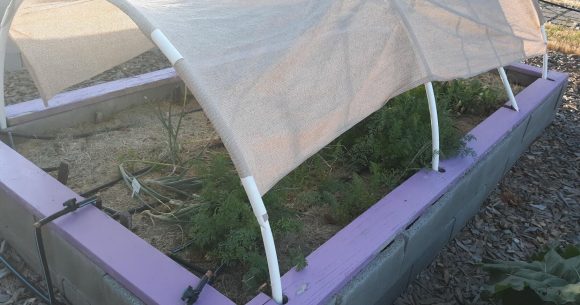







 www.RockyMountTelegram.com