When you purchase through links in our articles, we may earn a small commission. This doesn’t affect our editorial independence.
If you’re looking for an all-in-one audio recording package to get your pod/video casting career up and running, the Vocaster Two Studio is an excellent choice.
$499.99
If you’re hearing the siren call of easy money on YouTube, et al, you need a means of capturing quality audio. The microphone in your laptop or display isn’t going to cut it. Sorry.
While a product like Universal Audio’s excellent Volt 276 studio pack is a great deal for broadcasters, it’s designed with the needs and thought patterns of musicians and engineers in mind–if you have the expertise, you’ll be up and running in no time. The less experienced will have a good amount of learning to do, and that’s where a product like the Vocaster Two Studio comes in. It’s a combination of a high-quality audio interface, microphone, and headphones that feature a design, setup, and software experience tailored to the budding content creator.
The Vocaster Two Studio is tailored to newcomers to the broadcasting routine. The labeling of the controls hints at proper usage (Host/Guest) instead of mere functionality (Mic 1/Mic 2), and everything is arranged according to how a broadcaster looks at things.
The Vocaster Two audio interface is a bus-powered Type-C USB device, but it’s atypical in that there are no quarter-inch line level or guitar inputs. These aren’t particularly pertinent to broadcasting, so why bother? That also means mic inputs are pure XLR, not the combo XLR/quarter-inch that are so common these days. There is a 3.5mm stereo “Phone” (as in cell phone) input that can function as a line-in jack. The front of the device has two quarter-inch stereo headphone jacks on the front, and two balanced (TRS, Tip/Ring/Sleeve) quarter-inch outputs for powered speakers. That much will be familiar to the pure musical crowd.
Taking a cue from the the Vocaster also accepts audio via Bluetooth. This is super convenient if you want to record something onto your podcast from a phone without a headphone jack–one might even say necessary given the increasing rarity of such jacks. There’s a Bluetooth pair/enable button on the back of the interface.
You can see from the images below, that Focusrite is bent on making setup and use as intuitive as possible. The Guest/Host labelling reminds me of the old radio broadcast facilities I once habituated. Input from phone, output to camera–brilliant.
I quite liked that the top of the Vocaster that slopes towards you, as well as the big honkin’ infinite-travel rotary dial you use for changing the mic input levels. Surrounding the big dial is a circular “halo” meter showing the master gain, with two semi-circular strips just outside the halo displaying the input levels for the microphones.
All the dials have exceptionally smooth and solid-feeling travel, however, I’m not sure I like the host headphones and speaker output assigned to the same dial. I might’ve opted for a third button assigning speaker volume to the larger control, or simply a fourth knob. That might’ve unbalanced the look of the interface, but c’est la vie. Then again, I have tasks other than broadcasting in mind.
Below the rotary dials are six buttons, two for muting the two microphone inputs, two that toggle the main rotary dial between the host and guest mic inputs, and two that “Enhance” the sound of each mic input–more on Enhance in a bit.
The whole top is done in flat black, which looks fantastic but shows fingerprints quite readily. The bottom has that speckled dark gray look which usually signifies recycled plastics. (It really does in this case.) I don’t love the look, but I certainly appreciate the thought.
The Vocaster Two is what’s known in the industry as a 14-in, 4-out interface. That first number reflects the total number of monophonic inputs (a stereo input counts as two mono.) that the interface presents to the recording software. The list includes both physical (the two mics, L/R Bluetooth, and L/R Phone) inputs and virtual (4 loopback inputs, two L/R) inputs for the audio generated by programs on your computer (streaming, media players, etc.).
Another four virtual inputs are actually L/R submixes: Video is the entire mix (all unmuted inputs) sans the guest input, and Show is the entire mix (all inputs) as seen in the Vocaster Hub software. Both save you from having to create multi-track mixes in your DAW (recording software). The chart from the users guide listing the inputs is shown below.
Speaking of input, the Vocaster will automatically adjust the gain levels of the mic inputs for you. If you’re new to recording, this is a nice bit of handholding. And once you see what the proper level (approximate) looks like, you’ll have no problems setting or tweaking levels manually.
As the owner of a Focusrite Clarett 4Pre (Thunderbolt), I did run into one issue most users won’t–incompatibility between the Vocaster Hub software that is used to change settings (some of which aren’t accessible from the physical interface) and my older Focusrite Control app. Updating the latter fixed the issue of Vocaster Hub not recognizing the interface. Other software saw the interface just fine.
The included Hub software lets you to do everything you can from the physical interface, plus change the Enhance settings for each channel (clean, warm, bright, radio) and toggle the 48 volt phantom power separately for each channel.
The Hub software is also where you initiate the auto gain function. Click on it, speak into the microphone for about 10 seconds, and it will adjust the gain for optimal signal strength, i.e. loud but without distortion. It might be nice to have a memory function for different mics, but that’s a musician talking.
Also indicative of the Vocaster Two Studio’s focus on broadcasting is the software bundle:
The Vocaster Two Studio is backed by an unusually long, three-year warranty, as well as year-round, 24-hour support.
As the Vocaster Two Studio is a bundle, the quality of the mic and headphones is almost as important as the quality of the interface. If they’re not up to snuff, you’ve fiddled away money and the world has more tech waste on its hands. While I loved the analog-vibe of Universal Audio’s Volt 276 Interface, I felt it could’ve done better both mic- and headphone-wise.
The Vocaster Two audio interface doesn’t have the gaudy specs (gain, noise, distortion) that many modern interfaces claim. Especially when compared to my Focusrite Clarett 4Pre and Universal Audio Apollo Twin X–appreciably pricier interfaces. However, in use, it sounded clear, musical, and pretty much as sonorous as those others on my desk. If I had to ascribe any deficit, it might be in the clarity of the sound field which is a mid-range thing. It would be very, very close however.
What is very noticeable is the ton of headroom on the mic inputs–far more than the aforementioned competitors. I’ll talk more about that in a bit. Also, the Enhance function is very noticeable sonically. I personally preferred the Clean (no compression or EQ) setting, but the compression and EQ were employed effectively on the Warm, Bright, and Radio settings. Which you’ll prefer is a matter of taste, what you’re recording, the other elements in the mix, and the result you’re looking for. Overall, I’d say Focusrite has nicely covered most scenarios and desires.
The auto-gain function worked well, albeit a bit conservatively (less gain) compared to what I’d dial-in. But there was plenty enough signal for recording. Keep in mind that you’ll want to use this feature with the mic positioned as it will be when you actually record with it.
The mic preamps were also practically noise-free. (Focusrite is very good with that.) The Bluetooth connected quickly and input was as clear as the technology can produce.
All in all, while I wouldn’t call the Vocaster interface a top-tier unit, its real-life performance matched anything priced similarly that I’ve tested. In truth, I was in no desperate rush to get back to my other interfaces, as I’ve been when testing some lesser interfaces. I also love the look.
What was even more impressive were the sonic characteristics of the included DM14v broadcast mic. I liked that it has an integrated pop and sibilance filter (foam over the speaking end) as well as the integrated mic stand mount. There’s even a male-to-male adapter/coupler so you don’t have to mess with your existing mount to attach the DM14v.
I’d be in no hurry to upgrade this mic as it’s dead-on in the frequency range of the human voice. The DM14v compared nicely to my RODE NT-2A and Shure SM57/58’s, though the RODE, being condenser rather than dynamic, has a different mid-range flavor.
But darn if it isn’t a good thing that the Vocaster interface’s inputs have 70 dB of headroom. Plugging the DM14v into my other interfaces, I had to crank the input dials almost to their limit to get an adequate signal. Even my 57’s and 58’s don’t require as much gain.
The DM14v attached to the Vocaster Two? No problem. Plenty of signal. That means if you want to use another extremely low-signal level dynamic microphone such as the Shure SM7B with the Vocaster Two, you won’t need a Cloudlifter or similar mic preamp.
I didn’t get to test the smaller SM58-like mic featured with the Vocaster One, but I did hear it in a Zoom meeting with the Vocaster product manager. It sounded fine. I don’t know what Enhance setting he was using, though I noticed some compression. Beyond that, I can’t really say.
Though I haven’t talked about its inclusion, the microphone cable Focusrite provides is of reasonable quality–supple with good quality connectors. It also fits snugly enough that I wouldn’t worry about it coming loose without a rather substantial tug.
The HP60v headphones Focusrite bundles are slightly better than those supplied with the Volt package, but I’d still rate them the weakest component in the kit. The mid-range is a bit more saturated than optimal for musical listening as it makes it more difficult to pick out individual instruments and is tiring over the long haul. However, heavy mid-range can also be good for monitoring the speech that’s part and parcel of this product’s mission.
I’m also not in love with the six-foot, non-coiled cable–I found it hard to keep out of the way. Give me coiled types any day. Coiled is probably also more difficult to manufacture with recycled or green materials. That’s pure guess, but it does segue into Focusrite calling out that the Vocaster Two use lots of recycled materials. I appreciate that.
I should point out that I’m using some pricey and very competent Sony, Marshall, and Edifier planar headphones as the sonic baseline for comparison. The HP60v’s are perfectly serviceable, if not best of breed. In other words, they’ll do fine.
I am a sucker for in-tune, on-target products. Instead of simply bundling one of their existing, highly regarded interfaces, Focusrite created something far more suitable to task. The company took design cues from existing products, but expanded on the concept to make the Vocaster unique. Kudos.
In short, it’s an excellent starter kit for a decent price that you won’t immediately outgrow. Now the company needs to sell a kit with two mics and two pairs of headphones. I saw neither the DM14v or HP60v for sale separately. Hopefully, they will be by the time you read this.
Jon Jacobi is a musician, former x86/6800 programmer, and long-time computer enthusiast. He writes reviews on TVs, SSDs, dash cams, remote access software, Bluetooth speakers, and sundry other consumer-tech hardware and software.
Macworld Sweden
Macwelt Germany
Subscribe to the Macworld Digital Magazine
Manage Subscription
Newsletter
Focusrite Vocaster Two Studio review: Quick start your content creation dream – Macworld
Former deputy Jason Tupps to stand trial again Aug. 22 – Telegraph-Forum
Jason Tupps learned Wednesday his new trial will begin at 8:30 a.m. Aug. 22 in Crawford County Common Pleas Court.
It will be the second trial in as many years for the former sheriff’s deputy. This time, court records show he’s facing charges of first-degree felony rape and misdemeanor domestic violence.
Tupps, 47, has again retained James J. Mayer III as his attorney, the same lawyer who represented him during a four-day jury trial in August 2020.
Jurors two summers ago found Tupps not guilty of six charges that included felony counts of abduction, bribery and improper handling of a firearm in a motor vehicle; and of misdemeanor counts of operating a vehicle under the influence of alcohol or drugs, using a weapon while intoxicated and aggravated menacing.
He was found guilty of first-degree misdemeanor falsification, and in September 2020 was sentenced to 120 days in jail, with all but 45 days suspended provided he complete a three-day driving intervention program, a court official said at the time.
As they did for the first case, local officials recused themselves since they all worked with Tupps while he served as a deputy.
The trial will be heard by visiting Judge Howard Hall, a retired common pleas judge from Morrow County.
The state attorney general’s office appointed Drew Wood and William R. Walton II to prosecute the case.
During a hearing Wednesday, Hall explained to the attorneys how he will handle jury selection and went over procedural details of the trial. As of Thursday morning, the court reserved five days for the trial, Aug. 22-26.
Tupp’s charges stem from an Aug. 28, 2021, incident, according to a Crestline Police Department report the Telegraph-Forum received through a public records request.
A woman then told a Crestline police officer she had been assaulted by Tupps, who had been drinking heavily at the time, according to the report. Because she did not feel safe, she had turned on her phone’s voice recorder, and an audio recording of the incident was turned over to investigators. The incident was reported on Sept. 9, 2021.
[email protected]
419-564-3508
Twitter: @zachtuggle
Security Properties and Tokyu Land Completes $78.5 Million Acquisition of 248-Unit Summit Riverside Apartments in Littleton, Colorado | MultifamilyBiz.com – MultifamilyBiz.com
SEATTLE, WA – Security Properties and Tokyu Land US Corporation purchased Summit Riverside, a multifamily property located in Littleton, CO for $78,500,000. Security Properties now owns five market-rate assets totaling over 1,500 units in Colorado, having successfully sold two prior assets in 2020 & 2021. The Property is Tokyu’s first investment in the Denver MSA.
Summit Riverside consists of 248 units spread out across 21 residential buildings located directly adjacent to the South Platte River. The residential units are a mix of studio, one and two-bedroom floorplans with an average unit size of 777 SF.
The Property is located in Littleton, Colorado on the South Platte River. The site is best characterized by its mature landscaping and park-like feel that offers direct access to the Mary Carter Greenway and Platte River trails, which connect to downtown Denver and to the metro area’s extensive network of hiking and biking trails. Littleton features charming main streets, an emphasis on outdoor recreation, and convenient public transit options. Located just 20 minutes outside of downtown Denver and 15 minutes away from the Denver Technological Center (DTC) Business Corridor, residents and businesses alike are drawn to the high quality of life in the area while still enjoying the convenient amenities of a major metropolitan area.
Summit Riverside is surrounded by major retail including three shopping centers and walking distance to King Soopers, providing residents with quick access to many major necessities. Additionally, Historic Downtown Littleton is less than five minutes from the property, offering boutique shopping, quality dining, and additional entertainment options.
According to Tad Johnson, Director at Security Properties, “Summit Riverside is a strong example of one of our primary investment theses, which is to identify desirable and well located Properties within supply constrained submarkets. The unique site-plan offers an attractive setting for Security Properties to make needed improvements to the physical asset. We are very excited to add Summit Riverside to our greater Denver portfolio and look forward to delivering compelling returns to our investors over our hold.”
Ben Cherney, Vice President of Acquisitions for Tokyu Land Corporation added “We are very excited to expand the TLUS footprint with our entry into the Denver market. This investment checks all our boxes: 1. Great location, 2. Opportunity to add value, 3. Great partner. We look forward to being a part of improving this asset and in turn, the living experience for our residents.”
The property will be managed by Security Properties-affiliate Security Properties Residential.
Security Properties and Tokyu Land Completes $78.5 Million Acquisition of 248-Unit Summit Riverside Apartments in Littleton, Colorado
Venterra Realty Completes Acquisition of 212-Unit Keystone Apartment Community in Strategically Located Killeen-Temple Market
Stratus Properties Secures $56.8 Million in Construction Financing for 316-Unit The Saint George Apartment Community in Austin
Harbor Group International Adds to Miami Portfolio With Acquisition of 372-Unit Miro Brickell Luxury Apartment Community
The latest multifamily industry news
delivered to your inbox
SEATTLE, WA – Security Properties and Tokyu Land US Corporation purchased Summit Riverside, a…
KILLEEN, TX – Venterra Realty recently acquired the Keystone Apartments, a community located in…
AUSTIN, TX – Stratus Properties announced that it has completed construction financing for the…
MIAMI, FL – Affiliates of Harbor Group International, a privately owned international real estate…
CHICAGO, IL – Greystar, a global leader in the investment, development, and management of…
KISSIMMEE, FL – An affiliate of Walton Street Capital announced that it has acquired a 326-unit…
SAN ANTONIO, TX – National multifamily real estate development leader Wood Partners announced the…
RICHMOND, VA – Capital Square, one of the nation’s leading sponsors of tax-advantaged real estate…
The latest multifamily industry news delivered to your inbox.
MultifamilyBiz.com is an information, advertising, and content display platform focused on the multifamily housing industry. This Website features information, materials,products, content, images, links,and services provided by third parties, and we are not responsible for such. We do not own or manage any properties featured on this website, are not a party to, and are not liable for, any transactions with any party featured on this website. Your use of this website is subject to our Terms of Use Agreement.
© 2022 – MULTIFAMILYBIZ.COM – ALL RIGHTS RESERVED
New festival CURRENTS to be held in abandoned Power Plant in Berlin – Mixmag
The day-events line-up includes Suzanne Ciani, Lena Willikens and Dopplereffekt
A new festival, CURRENTS, is set to debut this October in an abandoned power plant in Berlin.
The electronic music day event will take place in south Berlin at an old power plant, E-WERK Luckenwalde that closed in 1989.
Curated by music production and Romanian DJ duo Khidja, the line-up includes, Suzanne Ciani, Lena Willikens with Marylou, Dopplereffekt and Alicia Carrera with music starting at 3:PM through to 1:AM.
Read this next: Artists turned the Kraftwerk power plant into a stunning audio-visual installation
Running from the power plant location, CURRENTS claim they will be one of the first 100% carbon negative electronic music and performance festivals as they will be powering the event with locally sourced waste wood chips to generate electricity.
CURRENTS is described as an “amalgam of live contemporary art and electronic music, presenting a mix of internationally acclaimed artists intertwined with emerging acts.”
It adds: “CURRENTS will create a hyper-attentive environment where every tone is charged to the maximum. Space and time will appear to deform and dissolve and sound will become a door into a world beyond.
Read this next: Watch Shy One live from a hydroelectric power plant in Scotland
“Performances will transform into deep listening sessions, critically and politically engaged; they will echo and reflect a rare archival body of works that have been largely marginalised by the history of avant-garde music and sound art.”
The festival is a non-profit event with funds going towards supporting “an international community of artists and cultural workers existentially threatened by climate change, pandemics, wars, displacement and economic inequality”.
Check out the CURRENTS website for more information on the festival.
Becky Buckle is Mixmag’s Video and Editorial Assistant, follow her on Twitter
A weekly rundown of everything you need to know in music and culture
Mixmag will use the information you provide to send you the Mixmag newsletter using Mailchimp as our marketing platform. You can change your mind at any time by clicking the unsubscribe link in the footer of any email you receive from us. By clicking sign me up you agree that we may process your information in accordance with our privacy policy. Learn more about Mailchimp’s privacy practices here.
Watch Regina Hall Navigate an Awkward Work Party in Prime Video's 'Master' (Exclusive) – Complex
Terms
Terms of use
Privacy
Privacy Policy
CA Privacy
California Privacy
COMPLEX participates in various affiliate marketing programs, which means COMPLEX gets paid commissions on purchases made through our links to retailer sites. Our editorial content is not influenced by any commissions we receive.
© Complex Media, Inc. All Rights Reserved.
Complex.com is a part of
Pop Culture King| resident old | @khal
Share This Story
Earlier this month, we gave you an exclusive look at Prime Video’s Master, a horror set at a university starring upcoming Oscars co-host Regina Hall. Today, we have an exclusive clip from the film that highlights the situations Hall’s character Gail Bishop has to face as the first Black woman to serve as Master at Ancaster College.
In the above clip, Bishop is greeted by a few faculty members at a party, celebrating her appointment. There’s references to Barack Obama with an interesting comparison made between Bishop and Barack. It’s wild to see how “different’ Bishop being appointed Master is, but we all know why, right?
Master hits Amazon Prime Video and select theaters on March 18. You can check out the exclusive clip (and official trailer) above; check out the synopsis below.
In writer-director Mariama Diallo’s debut feature, Master, three women strive to find their place at a prestigious New England university whose frosty elitism may disguise something more sinister. Professor Gail Bishop (Regina Hall) has recently been promoted to “Master” of a residence hall, the first time at storied Ancaster College that a Black woman has held the post. Determined to breathe new life into a centuries-old tradition, Gail soon finds herself wrapped up in the trials and tribulations of Jasmine Moore (Zoe Renee), an energetic and optimistic Black freshman. Jasmine’s time at Ancaster hits a snag early on when she’s assigned a dorm room that is rumored to be haunted. Things get worse when Jasmine clashes in the classroom with Liv Beckman (Amber Gray), a professor in the middle of her own racially charged tenure review. As Gail tries to maintain order and fulfill the duties of a Master, the cracks begin to show in Ancaster’s once-immaculate facade. After a career spent fighting to make it into Ancaster’s inner circle, Gail is confronted with the horrifying prospect of what lies beneath, her question ultimately becoming not whether the school is haunted, but by whom.
Join the conversation on Complex today!
Share This Story
How Tedeschi Trucks Found Their Own Legacy Through Classic Albums – Ultimate Classic Rock
Derek Trucks and Susan Tedeschi have long drawn inspiration from legacy acts, channeling their music back into the Tedeschi Trucks Band.
The group's set lists are dotted with direct nods to those influences, including the occasional tune drawn from Trucks' time with the Allman Brothers Band. Recent shows also mixed in standards from the Grateful Dead, Elmore James, Dr. John, War and many others.
The Tedeschi Trucks Band boasts a catalog of those covers in addition to their own extensive songbook of originals that make their tag of "America's best rock 'n' roll big band" feel quite appropriate. This year finds the group adding several chapters to that oeuvre with I Am the Moon.
During the first part of our conversation, Trucks and Tedeschi discussed how the classic Layla and Other Assorted Love Songs record by Derek and the Dominos served as an initial point of inspiration for the quartet of albums featuring 24 songs that encompass I Am the Moon.
As Trucks reveals below, covering the Dominos album, as well as revisiting the legendary all-star Mad Dogs & Englishmen project, helped the Tedeschi Trucks Band grow as a unit, something which fed positively into the sessions for I Am the Moon.
Watch Tedeschi Trucks Band Perform 'Layla'
The Layla album, you both have some spiritual ties to that record. Once you dug into all of it to play it as a band, what did you find within the songs?
Derek: I love the songwriting on that record. I don’t know, just the simple little moves. Whenever you take the time to learn music like that, it always informs your playing. You learn little quirky chord changes or little guitar patterns that you never would have thought of – and then, it’s kind of forever in your vocabulary. Sometimes, it will kind of sneak in when you’re doing other things. Or you just know, sometimes you’re writing songs and you’re hearing where you think the changes should go. If you didn’t know this chord change from another tune, you might not know to maybe sneak it in here. It’s always fun, especially, I mean, I think [Eric] Clapton, being around the Beatles so much then, that stuff had to influence his songwriting. I almost feel like [there’s] George Harrison-esque writing in some of those changes [like] “I Looked Away” and some of those tunes that I had never learned fully. Even though I toured with [Clapton], we didn’t play all of those songs.
Susan: “I Am Yours.”
Derek: “I Am Yours” is incredible.
Susan: We played that together and it was gorgeous. Derek made me cry every night.
Derek: That’s a great tune. That was actually a tune I was looking up, when we were going to do the rehearsals with Trey [Anastasio] for that Layla record, I was trying to remember [the origins of] “I Am Yours” and I went to look up the lyrics and I saw the release date was the day Sue was born. I was like, “There’s no way that’s true! I’ve got to find another source!” [Laughs.] Sure enough, Nov. 9th, 1970, the day she was born, was the day Layla came out, which is kind of wild.
Listen to Tedeschi Trucks Band Perform 'I Am Yours'
Revisiting Mad Dogs & Englishmen, it's obviously sad that Joe Cocker couldn't be part of it. But it just seems like it must have been such a powerful and rewarding experience playing that album in 2015 with a number of the original participants.
Derek: That was a magical few days.
Susan: That really was special. I mean, Leon [Russell] is one of those people too. For us, he was a living legend in the moment that was willing to come out and do this. Once he was in, everybody came out of the woodwork.
Derek: I don't know if you got to see the film, but just the reverence of the other musicians towards Leon, it was kind of a family reunion that no one ever thought would happen – and it happened. It happened in rehearsal and it happened on the stage. It really went so much better than we ever imagined it could have, in spirit and musically. That thing and doing the Layla thing, I think was hugely important for this band. After we did the LOCKN' thing with Leon and the Mad Dogs, it kind of gave the band a different confidence going forward. You know, not that a torch was passed, but it kind of was. Everybody there was so happy with the way it felt. They were happy that there was a band kind of carrying on some of that legacy, in the way they went about it, but there was also this sense of, “Oh yeah, but this is actually healthy.” That sounds like a jest, but it gave us a little swagger going forward as a band. “You know what? This is kind of a space we can roll in.” The Layla thing too, when you can pull off something like that as a one-off, I mean, everyone just knocked it out of the park. From the first note to the end, it was kind of extraordinary. Those things, it gives you a little extra juice going forward, I think.
Susan: Both of those bands were 1970 and the Allman Brothers were 1970.
Derek: There was a lot going on.
Susan: And the Grateful Dead. If you think about all four of those bands, in that moment, they actually do really encompass a lot of our influences. Of course, Derek and I are both influenced by blues and jazz and gospel and things like that – and folk music – but I would say those four bands are a big cornerstone with our stuff.
Watch the Trailer for ‘Learning to Live Together: The Return of Mad Dogs & Englishmen'
Susan, you and Derek have often been so fortunate to work with the legends that first inspired you. It's an important thing if you are able to be around people like that.
Susan: It is. Honestly, Derek and I have both been incredibly blessed throughout our careers, to not only witness these people in the flesh, just to even be a fan, but to get to play with them.
Derek: Or travel with them and get to know them.
Susan: I got to do how many tours with B.B. King and Buddy Guy? I got to tour with John Lee Hooker and record with Little Milton. Pinetop Perkins. Derek and I both got to play with [Carlos] Santana and Clapton. It’s like a dream.
Derek: We’re in Chicago now and whenever we play the Chicago Theatre, I immediately remember when Pinetop, he came to sit in with the Allman Brothers and me and Susan were sitting in one of the green rooms, hours before the set. There was an upright piano and Pinetop walks in. He’s maybe 92 at the time. He sat down at the piano and knew we were there, but he didn’t really say anything. He started playing and singing for about 20 minutes. We’re just sitting on the couch going, “Oh my God.” This is happening in Chicago of all places, so we’ve had some memorable hangs.
Susan: Yeah, he was playing “Blues Before Sunrise,” and all of these different songs.
Derek: That stuff changes your DNA, getting to have a glass of wine with B.B. King – that stuff changes you.
What's another album you'd like to tackle with this band?
Derek: You know, those came about really naturally. It was nothing we had planned on doing until the opportunity came up. I don’t know if we’ll ever do anything like that again.
Susan: You never know.
Watch the Film for 'Episode III: The Fall'
Derek: We’d played a few Mad Dogs tunes [in our own concerts], so we got the call to do the show with Joe and we were like, “Alright, that makes sense!” When he passed before we could do the show, they asked us to do a tribute. I said, “I’d love to, but I never really got to play with him. I talked to him, but I don’t feel like I’m the one to do it. It doesn’t feel right." But I was like, “Now, if Leon was a part of it, that would make sense.” I was thinking there’d be no way in hell that he would agree to do it. [Laughs.] When he said, “I’ll do it,” I was like, “Well, you were the band leader last time.” He’s like, “I’m not doing that again, that’s on you, Trucks!” [Laughs.] But then it felt right. That one just kind of came about. The Layla thing with Trey, they asked me to sit in with his band one night and him with us. That was going to be the headlining of LOCKN', that collaboration. He had songs of ours that he wanted to play and I mentioned a few Dominos tunes. He lit up at that. I got off the phone with him and was talking to a friend at Red Rocks, Julie Mendelson is her name – and she was like, “You should just do the whole fuckin’ album!” And I was like, “That’s exactly what we should do!” I immediately called him back and he was immediately into it. So I don’t know, things like that kind of happen spur of the moment.
Bringing it back to your new music, I think this series of new albums is a really beautiful picture of how the band really pulled together during the pandemic and found what was possible together.
Derek: I think that’s what I’m proudest of with this record, too. When we finally got to watch all four films. I think we were planning on watching one a night. But when we sat down and poured a few drinks, we watched the first two and we were like, “Let’s go make another drink and then watch the next two!” When we finished all four, the thing that felt great to me was how much I could feel everybody in the band individually. I could feel all of the personalities in the band and all of the characters in the band. Listening to the record, you know, I could feel Elizabeth [Lea] and Kebbi [Williams] and just everybody helped out in different ways. It’s just the way you feel all of the Muppets. It’s fun. And that includes us! [Laughs.] But I love that about the films, too. I really do think you get to experience the band the way we do on the tour bus. I feel like you get to know them a little bit better, which is fun.
Derek, knowing how the band's new albums draw on Layla inspirationally, have you had a chance to share them with Eric Clapton?
Derek: I haven’t yet. We’re going to be overseas in the fall though. We’ll probably see him, so I’ll drop some records on him.
Tedeschi Trucks Band Discuss Their Influences
Volusia/Flagler YMCA Completes $100,000 Renovations at 3 Locations | FlaglerLive – FlaglerLive.com
FlaglerLive
No Bull, no Fluff, No Smudges
| | Leave a Comment
The Volusia Flagler Family YMCA is pleased to announce that the Southeast Volusia branch has recently completed $100K in renovations. The association-wide renovations started at the Ormond Beach branch this past February and have continued to include completion of the Holly Hill and Southeast Volusia Family YMCA locations. Planning is currently underway for renovations at the DeLand, Four Townes and Port Orange branches.
“Our members are providing us with great feedback about the new equipment and renovations,” said Katie Lyle, Chief Operating Officer. “Our members are also enjoying the 24/7 access at all of our branches,” Katie added.
The 4K sq. ft. fitness center renovations include new equipment, new paint, new flooring, and coming soon – shade covers for the outdoor pool area. Separately, the branch has also invested in a new bus to transport children for after school enrichment and summer camp.
Amenities at the Southeast Volusia YMCA include: state-of-the-art cardio and strength equipment, group exercise studios, cycle studio, heated outdoor pool, indoor basketball gymnasium, indoor Pickleball court, personal training, after school enrichment and much more.
With memberships starting at $15 per month, the Southeast Volusia Family YMCA is located at 148 Turgot Ave., Edgewater, FL and can be reached at 386-409-9622 or https://vfymca.org/.
Your email address will not be published.
Log in
Live A Live Is The Beating Heart of RPGs – Paste Magazine
Let’s get this out of the way: Live A Live is one of the best videogames ever made.
This is somewhat of a loaded and—more importantly—annoying statement. It’s the kind of lofty praise that gets applied to either beloved canon classics, such as the game’s direct successor Chrono Trigger, or rarities rendered inaccessible to a wide audience and spoken of as life changing by the chosen few that cross whatever technological or distributary boundaries to play it, such as this game’s nearest neighbor in culture, Mother 3. In either case, it imbues the game with an unfair burden, elevating it to mythical status, setting it up for failure when it’s ultimately just another videogame.
Live A Live is just a videogame. You can now buy it on your Nintendo Switch for $50. There is nothing about the game graphically or mechanically that will instantly thrill you in ways nothing ever has before. Yet this is not a weakness, it is core to Live A Live’s strengths. Instead of systemic complexity, Live A Live is laser focused on the potential of the RPG as an aesthetic experience, creating a joyful celebration of the genre and all its influences.
Core to this is the game’s anthologic structure, with disconnected chapters set across various time periods, each with their own distinct protagonist, genre and gameplay. One chapter is an RPG story told entirely without words, bringing out the best in the beautiful pantomime sprite animation that defined the genre until it leapt into 3D. Another chapter is just Street Fighter, complete with character select screen and win quotes. And yet another takes place in the Wild West, a distillation of the appeal of cowboy movies that uses the threat of an outlaw raid to turn the “searching through every house for random junk” part of RPGs into a genuinely thrilling cinematic climax.
This focus on genre pastiche over intricate worldbuilding makes Live A Live stand out from its peers arguably even more today than it did in the ‘90s. In a genre often criticized for storytelling that is simultaneously convoluted and generic, Live A Live embraces its simplicity and focuses all its efforts on the immediate emotional reaction of the characters, the events, and the sound. It doesn’t matter who Masaru is beyond being a fighting game protagonist who wants to be the best, when the boss declares he’s broken the warrior’s code and killed his opponents in pursuit of power and then “Megalomania” kicks in on the soundtrack it’s still the coolest thing that’s ever happened.
All of this was true when it was originally released in 1994, but perhaps most impressive about this new release is how it all remains true today, despite this new Live A Live being an entirely new game. The artwork in the new HD-2D style features entirely new spritework, which is as charming and expressive as in the original. The rearranged soundtrack is delightful and they even got Hironobu Kageyama to sing “Go! Go! Buriki Daioh.” The battle system has been tweaked to surface more elemental nuances and there’s even a few major story changes (uh oh!!) to the game’s ending. Any one of these elements could have been mishandled and tipped this project out of balance, leaving it as yet another Square Enix re-release that tarnishes what should be a golden legacy. Somehow, not only did that not happen, but the deftness of the additions makes this arguably the best version to recommend. Which leads to a conclusion that is as exciting as it is redundant: you can still make Live A Live today. They did make Live A Live today!
On one level this isn’t surprising. Live A Live is one of the influential pillars that leads directly into RPGMaker scenes on both sides of the pacific, from which springs an entire thriving subculture of independent RPGs that while tonally incredibly divergent are united in a similar focus on the potential of the RPG as an aesthetic storytelling form. From Yume Nikki all the way through to Omori, this is a space that has only grown exponentially in the time between these two releases.
On another level this is huge. Square Enix themselves have moved further and further away from Live A Live’s design values. You need to look no further than the superficially similar HD-2D anthology Octopath Traveler to see the focus on systemic design and complex battle mechanics that define so much of Square Enix’s modern RPGs. In many ways, Live A Live (2022)’s closest relative is Dungeon Encounters, a dungeon crawler light on both story and graphics that, while as far from Live A Live as possible in concept, is another example of a legendary Square staff member from the ‘90s proving that even if the in-fashion trends have left them behind, when they are allowed to step up to the mat, they still got it.
Live A Live still has it. Takashi Tokita led a young team of fans at Historia, Inc. to create a version of a classic as vibrant and exciting and crucially unique in Square’s catalog today as it was in 1994. Released between Final Fantasy VI and Chrono Trigger and passed over for translation due to its technically less impressive sprite work compared to its flagship siblings, it shines today as the celebration of a cult classic, with a worldwide legacy and influence as an important milestone in an entire alternate history of RPGs. Live A Live is the exact opposite of the unique masterpiece that’s so good it ruins other games: it is a heartfelt tribute to everything there is to love about the RPG format, and will leave you invigorated and excited not just to play more RPGs, but to watch more Kung Fu movies, more Westerns, more classic Sci-Fi. If you’ve even a passing interest in the genre, it is simply a must play.
Also, Toby Fox is right. “Megalomania” really does go that hard.
Live A Live was developed by Square Enix and Historia and published by Nintendo. It is available for the Switch.
Jackson Tyler is an nb critic and podcaster at Abnormal Mapping. They’re always tweeting at @headfallsoff.
GET PASTE RIGHT IN YOUR INBOX
The best music, movies, TV, books, comedy and more.
© 2022 Paste Media Group. All Rights Reserved
Q&A: From Going Viral on TikTok to Performing with a Live Audience, with Folk Artist Odie Leigh – Daily Yonder
Get the latest stories from the Yonder directly in your email inbox.
The Daily Yonder
Rural News and Information
Editor’s Note: This interview first appeared in Path Finders, an email newsletter from the Daily Yonder. Each week, Path Finders features a Q&A with a rural thinker, creator, or doer. Like what you see here? You can join the mailing list at the bottom of this article and receive more conversations like this in your inbox each week.
Odie Leigh is a musician from Louisiana whose work – originally popularized on TikTok – has been described as “bedroom folk.” From that categorization, to her mullet, to her rise to fame, the songwriter is quintessential Gen Z. Her classic country and blues inspired songs about overthinking growing up and whirlwind romance are a pleasure. Her new single, “A Month or Two,” was released today, August 5.
Enjoy our conversation about saving crawfish from the boil, the pressures of going viral, and the joys of DIY music-production, below.
Olivia Weeks, The Daily Yonder: In past interviews I’ve seen you talking about growing up in a really culturally rich place but feeling a little bit removed from it. Can you talk about your upbringing and your hometown, and how you balance your love for the culture of the deep south with your position a little outside its traditions?
Odie Leigh: I grew up in Baton Rouge, Louisiana and the thing about Baton Rouge is that while it is surrounded by so much history and culture, there is nothing inherently cultural about that city. You won’t find any crawfishermen or anyone speaking Cajun French, no one is going to work on their pirogue, but only an hour or two in any direction you will find that. My great grandfather, Papo, was a first generation Italian American but, because he lived in Baton Rouge his whole life, loved to crawfish. Until his nineties he spent much of his free time on his boat, fishing and exploring the bayous. In the same way, my father was raised in Baton Rouge but spent many weekends at our family’s camp in Pierre Part, as did I. Growing up, I heard stories of nights spent stranded in the swamp on my Papo’s broken down boat, and spent afternoons on the water with my Pawpaw exploring boat graveyards. My childhood weekends were spent fishing off our back porch, saving crawfish from boils, and playing with bullfrogs before they were skinned and fried. I feel so connected to these things I love, but none of it is really my own. This culture is something I take a brief visit to, say hello, hug goodbye, learn about, eat, and then leave. It is not something I could ever claim.
However, in the deep south everything is temporary like that. There is an unspoken risk associated with rooting here. At any point, everything we own could be destroyed by flood or hurricane. It’s not something I ever questioned until I started to notice the way locals’ reactions to tragedy differed from transplants. Growing up here you learn that houses flood, trees fall, and neighborhoods get completely destroyed in a single afternoon. You are taught at a young age that we are sinking, and that every hour a football field of our wetlands is lost. And you’re also taught to help your neighbors, to show up the morning after a storm with work gloves and chainsaws, to open your home to those who lost theirs in a flood.
Although Cajun culture is not mine, the culture of community, empathy, and “southern hospitality” is something that we all share. I balance my love for these traditions, and my position adjacent to them, by simply loving them, talking about them, respecting them, and being honest about my brief connections to them. I welcome them, share them, and do my part to not overstep while still reflecting on and appreciating the way these experiences and traditions shaped me and the city I call home.
DY: What was your relationship with TikTok like before your songs got popular on there?
OL: I was actually pretty anti-TikTok before I downloaded it. I, like many people, caved and got it during the lockdown, but didn’t do much posting before I shared my first song in an attempt to win a competition with my roommates on who could go viral first. My relationship with the app has been mostly professional in that regard, and while I do like to scroll, I mostly use it just to share my music. People like to hate on it, but it really is an amazing platform if you give it a chance. Tiktok has completely democratized the music industry in a way that has allowed everyone an equal opportunity to be heard. It’s so amazing that I could post a silly little song over a year ago and now I’m touring and meeting all these people I’ve been interacting with through this app!
DY: Do you think blowing up online right off the bat has boxed you in at all? Is it difficult to really spend time developing your sound when you already know what your audience wants to hear from you?
Like this story? Get the latest from the Daily Yonder directly in your inbox, twice each week.
OL: I’m not sure if it’s boxed me in, but the pressures associated with it have definitely made it more difficult to produce music I am actually confident in and proud of. When you have dozens of comments and messages every day asking when a song is coming out, the pressure to get it out becomes very real, and you become more susceptible to just giving up and releasing something you’re not 100% happy with. For example, “Ronnie’s Song” was the second song I ever shared, and I released it 2 weeks after it went viral. That means my roommate at the time and I recorded, produced, mixed, and mastered that song the same week it was posted to TikTok. There was very little time to think about how I wanted it to sound, and on top of that, I had only been writing songs for about 2 or 3 months so I had no idea who I was as a musician. Even now, a year or so later, my music is still evolving. I recorded an EP this January that will be coming out in the near future, and the music I’ve been writing since has changed drastically.
DY: I know you recently played your first in person shows after developing an audience online – how’d that transition feel? What’s it been like getting popular online while living in real life in New Orleans, a place that’s so full of live music?
OL: This tour felt much more like a sink-or-swim experience than a transition. Most musicians I know start playing in real life, and then attempt to transition their in-person community to followers and streams online. This method creates a more gradual introduction to playing big shows, where as they grow as artists, so does their fan base. However, as you mentioned, I garnered an online audience before ever performing, which meant that unlike most musicians I know, I went from having never played live to playing in front of 150 people almost immediately. One of the things that made me so nervous was that I knew that there were going to be people at these shows who truly knew and cared about my music, so I really couldn’t mess up.
It’s funny because back home, people don’t really see me as a musician. Obviously it’s starting to shift, but I have lived in New Orleans much longer than I have been making music so most people just know me for me! I’ve been recognized in public a couple times, which is always cool, but the majority of people I interact with just know me as someone who works in the film industry, and view my music as a cute little hobby. New Orleans has a big gig economy and many musicians here are always playing live, opening for each other, and collaborating. But due to my old job that isolated me and my choice to focus on growing my online fan base before venturing into the real world, I haven’t really made any IRL connections. It’s something that I would love to happen, but I just don’t have the street cred or community that these other extremely talented, hardworking local musicians have. I don’t play in any bands, I don’t busk, I didn’t go to college for this, I just started writing songs one day and accidentally ended up a musician.
DY: You’ve described yourself as a really do-it-yourself kind of person. How are you bringing that quality into the next phase of your music career?
OL: As a woman in music and a singer-songwriter, I’ve found that some people assume that I don’t know how to produce or mix. However, I have a background in film editing, which involves a lot of audio mixing, and production and mixing is actually one of the things I enjoy doing the most! There are times where I know exactly what I want and how to do it and if I am not in person in front of the computer myself, something as simple as automating the volume adjustments can become a two week, frustrating, hair pulling ordeal. After dealing with that ongoing frustration with the production of my upcoming EP, I’ve realized that I prefer to be in the room and to be really involved in the whole process. In the future I hope to work with people who understand and respect my own abilities as a producer while also elevating quality and encouraging collaboration.
DY: What are you listening to lately?
OL: If you get into my car, we will be listening to Lightnin’ Luke. I’ve put every musician I know onto this guy’s music, and every single time they love it! When I release a new song I share a Spotify playlist to go along with it and try to include musicians in the New Orleans folk/western circuit on it. I’ve been putting locals and friends of friends on these playlists since I started doing it and a couple months ago I got a message from Luke asking to be put on one of them. After listening to a couple of his songs I fell absolutely in love with his artistry. He makes beautiful stripped live recordings of these incredible, funny, beautiful songs that are the most entrancing blend of classic country and dark folk. They have these incredibly catchy hooks and melodies, his song “The Only Cowboy Bar In Portland” is definitely going to be one of my most listened to tracks this year.
This interview first appeared in Path Finders, a weekly email newsletter from the Daily Yonder. Each Monday, Path Finders features a Q&A with a rural thinker, creator, or doer. Join the mailing list today, to have these illuminating conversations delivered straight to your inbox.
By clicking submit, you agree to share your email address with the site owner and Mailchimp to receive marketing, updates, and other emails from the site owner. Use the unsubscribe link in those emails to opt out at any time.
Republish our articles for free, online or in print, under a Creative Commons license.
This work is licensed under a Creative Commons Attribution-NoDerivatives 4.0 International License.
by Olivia Weeks, The Daily Yonder
August 5, 2022
This <a target=”_blank” href=”https://dailyyonder.com/qa-from-going-viral-on-tiktok-to-performing-with-a-live-audience-with-folk-artist-odie-leigh/2022/08/05/”>article</a> first appeared on <a target=”_blank” href=”https://dailyyonder.com”>The Daily Yonder</a> and is republished here under a Creative Commons license.<img src=”https://mlc5rw8mrqi2.i.optimole.com/cb:Fone.76a/w:auto/h:auto/q:80/f:best/ig:avif/https://i0.wp.com/dailyyonder.com/wp-content/uploads/2021/03/cropped-dy-wordmark-favicon.png?fit=150%2C150&ssl=1″ style=”width:1em;height:1em;margin-left:10px;”><img id=”republication-tracker-tool-source” src=”https://dailyyonder.com/?republication-pixel=true&post=97028&ga=UA-6858528-1″ style=”width:1px;height:1px;”>
What unionizations at Amazon, Apple, and Starbucks may tell us about the economy : The Indicator from Planet Money – NPR
The Indicator NPR hide caption
SYLVIE DOUGLIS, BYLINE: NPR.
(SOUNDBITE OF DROP ELECTRIC SONG, “WAKING UP TO THE FIRE”)
DARIAN WOODS, HOST:
It is jobs Friday.
(SOUNDBITE OF AIR HORN)
WOODS: The monthly jobs report tells us that 528,000 jobs were added to the U.S. economy in July. That’s a lot more than expected. And unemployment, at 3.5%, is at a 53-year low. And that got us thinking at THE INDICATOR. Is this jobs growth that is still going on contributing to a labor market story that we’ve been seeing a lot in the news recently, what seems to be a turning point of union activity bouncing back from decades of decline?
(SOUNDBITE OF MUSIC)
WOODS: This is THE INDICATOR FROM PLANET MONEY. I’m Darian Woods. In the 1950s, about a third of workers belonged to a union. And that has declined a lot over the decades, continuing through 2021, with only 1 in 10 workers now belonging to a union. But if you read the headlines today, you would think that every Starbucks barista and their dog were getting unionized. This is a puzzle we just had to solve. Coming up after the break.
(SOUNDBITE OF MUSIC)
WOODS: To learn more about what’s happening with unions, we spoke with Heather Goodall. Heather is a union organizer for Amazon’s warehouse in Schodack, N.Y. Amazon, by the way, is among NPR’s financial supporters and also distributes some NPR content.
How would your son and daughter describe you?
HEATHER GOODALL: Determined, firm, but friendly. A very…
WOODS: Heather started working in Amazon’s warehouse earlier this year.
GOODALL: Oh, and animated. So I think that’s plenty (laughter).
WOODS: Heather was working side by side with the essential workers that have helped deliveries keep going during the pandemic. She says she joined Amazon partly because she wanted to check out how good an employer Amazon was firsthand. She was not impressed especially when she caught COVID.
GOODALL: COVID was the last straw. That was the last straw.
WOODS: Amazon did not have specific, paid COVID leave.
GOODALL: I mean, they blatantly disregarded even the fact that these people could get very sick and even die.
WOODS: And as she recovered and regained her animated spirit, she channeled her determination.
GOODALL: And I started to say to people, what do you think about a union? So we really went into high gear.
WOODS: And Heather wasn’t just riled up about Amazon’s health benefits policies and its working conditions.
GOODALL: Following COVID, their revenue increased considerably, and that’s why we finally decided to fight back.
WOODS: We reached out to Amazon. In a statement, a spokesperson said that workers have the choice of whether or not to join a union, but the company doesn’t think unions are the best answer for its employees. And, you know, that’s the kind of thing a lot of businesses point out. They might also cite the costs to workers of union dues, the cost to the company of strikes, and the overall effect on the company’s valuation. In fact, a paper from the Quarterly Journal of Economics finds that the valuation of a company decreases on average when employees unionize. In any case, Heather’s frustration with how her employers were treating her and her colleagues, especially given Amazon’s record profits, is shared by workers in all kinds of businesses. Heidi Shierholz is the president of the progressive think tank the Economic Policy Institute.
HEIDI SHIERHOLZ: If you had an employer that didn’t provide sick days, didn’t provide proper safety precautions when you’re literally putting your life on the line to go to your job, workers who got the message there that their employer doesn’t value them, it’s a really, really stark reason to just stand up and join with your co-workers and demand more.
WOODS: Heidi believes the huge number of jobs being created has boosted workers’ confidence to join unions.
SHIERHOLZ: Very high job availability makes workers understand that if they are fired or retaliated against for union organizing, they are very likely to be able to find another job in a relatively quick time frame. And that makes all the difference to working families.
WOODS: And it’s probably not just the booming jobs landscape that is prompting growing interest in unions. It could also be booming prices, i.e., inflation. If you don’t renegotiate your wages when inflation is high, you’re going backwards. And for low-wage workers, who are a big part of this unionization push, that determines how much food is in the pantry. So inflation could be contributing to the surge of interest in unions that can negotiate inflation adjustments on your behalf. So Heidi says you add up all these different reasons and it explains a lot about what’s happening with retail workers and baristas around the country.
SHIERHOLZ: It’s not yet showing up in the data, but I do think that this momentum that we’re seeing – it’s real. It’s undeniable.
WOODS: So if it is real, it raises the question, why is this apparent trend not showing up in the data? Well, for one thing, the data that Heidi is talking about – the number of Americans in unions – those numbers have not come out for 2022. We’ll know better when those numbers come in at the end of the year. And the early stats on union applications this year are rising.
But Heidi says there is something else going on that could drag down any potential increase. And that is, not as many public sector employees are getting hired these days compared to the private sector. And public sector employees tend to be much more likely to be unionized. And so when you have more delivery drivers, who are not usually unionized, and fewer teachers – highly unionized – that means there’s likely going to be fewer unionized Americans overall. And long term, there is another headwind that union organizers face – what Heidi says is an increasingly hostile attitude to unions by employers over the decades.
SHIERHOLZ: It used to be just the most anti-union companies that would behave that way in the face of a union drive. And now it is the playbook. There’s been a whole rise in an industry of union avoidance, union busting consultants. You can see that as the numbers go down.
WOODS: Heidi points out that retaliating against joining a union is illegal. But, of course, it happens in practice. And she says the government hasn’t updated the law to combat new or more widespread anti-union activity from employers, like anti-union posters with misleading information, for example.
SHIERHOLZ: They just did not allow labor law to evolve to counteract this massively changed landscape that people trying to organize a union are facing.
WOODS: But Heidi points to one key statistic that might encourage those who are forming unions – the view of the public. A Gallup survey found two-thirds of Americans and an even higher amount among younger Americans have a favorable view of them. And that’s the highest share since 1965. Even though most Americans are not in a union, a lot want to be.
SHIERHOLZ: There’s been this spark here that then can really dip into the big pool of people, like, who exist in that gap – who aren’t in a union but want to be in a union. And I think we’re really seeing that now.
WOODS: And one story that may illustrate this is when Amazon organizer Heather Goodall went to an Amazon warehouse in Schodack, N.Y. Amazon called the police because two of Heather’s companions weren’t Amazon employees.
UNIDENTIFIED POLICE OFFICER #1: You want to talk to Amazon’s company’s…
GOODALL: Right.
UNIDENTIFIED POLICE OFFICER #1: …Legal team?
GOODALL: Yes.
WOODS: Heather was signing Amazon workers up to her new union.
GOODALL: So it’s simply an informational session to help employees understand their rights.
WOODS: It was this tense moment – Heather and a couple of other union organizers up against the police.
GOODALL: This is not a police matter. This is an employee-employer matter.
WOODS: The police backed down, and they even offered to help in the future.
UNIDENTIFIED POLICE OFFICER #1: Maybe there’d be a designated time where you guys…
GOODALL: Let’s do that.
UNIDENTIFIED POLICE OFFICER #1: …And give out some literature to…
GOODALL: Because…
WOODS: The two officers said Heather can call them ahead of the next union visit to Amazon. And after some handshakes, the cops left.
UNIDENTIFIED POLICE OFFICER #2: Thank you.
GOODALL: My pleasure.
UNIDENTIFIED POLICE OFFICER #2: Take care. Keep fighting the fight.
GOODALL: Thank you.
UNIDENTIFIED POLICE OFFICER #2: Yeah, bye-bye.
GOODALL: Oh, I appreciate it.
WOODS: Of course, a lot of police famously love their own police unions. But Heather prefers to see this friendliness as part of something bigger.
GOODALL: We’re seeing a shift in unionization and people wanting to be a part of a better future. And I think people are feeling that.
WOODS: And a shift has started in warehouses and coffeeshops around the country. And Heidi says whether or not that favorable view of unions translates into how people vote, that will likely determine whether or not this trend continues.
(SOUNDBITE OF MUSIC)
WOODS: This episode was produced by senior producer Viet Le with engineering from Robert Rodriguez. Kathryn Yang checked the facts. Kate Concannon edits the show. And THE INDICATOR is a production of NPR.
Copyright © 2022 NPR. All rights reserved. Visit our website terms of use and permissions pages at www.npr.org for further information.
NPR transcripts are created on a rush deadline by an NPR contractor. This text may not be in its final form and may be updated or revised in the future. Accuracy and availability may vary. The authoritative record of NPR’s programming is the audio record.
Sponsor Message
Become an NPR sponsor
Affinity Investments Sells Upscale Tacoma Asset for $46M – Multi-Housing News
Kidder Mathews has arranged the sale of Sixth & Alder, a 111-unit luxury community in Tacoma, Wash., for $46.2 million. Kidder Mathews worked on behalf of the buyer, a private investor, in the off-market transaction. The seller was Affinity Investments, according to Yardi Matrix. According to Pierce County public records, the acquisition was financed by a $28.5 million loan held by HomeStreet Bank.
Completed in 2021, the property is located at 3118 Sixth Ave. and encompasses studio, one- and two-bedroom units between 430 and 1,130 square feet, equipped with digital locks, washers and dryers. Common-area amenities include a fitness center, EV charging, a rooftop putting green and 121 parking spots. The asset also includes some 7,400 square feet of retail space.
The luxury multifamily community is situated between University of Puget Sound and Franklin Park, 1.4 miles from Wright Park, 2 miles from downtown Tacoma and within 3 miles of MultiCare Health System. Located close to Interstate 5, the property offers access to Seattle-Tacoma International Airport and downtown Seattle, and major employers in the area such as Amazon and the University of Washington.
Kidder Mathews Senior Vice President Austin Kelley and Executive Vice President Ben Norbe worked on behalf of the buyer.
Kidder Mathews brokered another significant Tacoma-area sale earlier this year. The company represented both parties in the sale of Bella on Canyon, a 140-unit multifamily community in Puyallup, Wash. The Calida Group bought it for $50.2 million.
The latest multifamily news, delivered every morning.
Like what you’re reading? Subscribe for free. Subscribe
© 2022 – Multi-Housing News Online
You must be logged in to post a comment.
Best free plug-ins this week: B4ss Nation, VS Conga and KranchDD – Gearnews
Best free plug-ins this week: B4ss Nation, VS Conga and KranchDD · Source: Infected Sounds, Gearnews
This week’s collection of the best free plug-ins includes B4ss Nation, a free synth with loads of presets for EDM, Hardstyle and similar styles. We’ve also got a cool little percussion ROMpler and a unique filter/distortion combo.
As always, you’ll find many more free plug-ins in our archive.
Infected Sounds is back with the B4ss Nation software synth. Contrary to what the name suggests, it does all sorts of aggressive sounds, not just bass. It’s got two oscillators, a multimode filter (including a vowel filter), two LFOs, a modulation sequencer, three envelopes, FM and AM and a bunch of effects. There’s also a fat unison mode with eight voices per oscillator for super punchy sounds. More than 128 presets are included.
B4ss Nation is a VST plug-in for Windows (32/64 bit).
Get B4ss Nation here
Now for something completely different. VS Conga by Alan ViSTa is a percussion ROMpler that specializes in authentic conga sounds for latin music. It’s got three instruments (Conga, Quinto, Tumba), each of which were sampled with two different hit techniques, round-robin samples and up to four velocity layers. You can also adjust the gain and pan of each individual instrument. A nice tool for adding authentic conga grooves to your tracks in an instant!
VS Conga is available for macOS and Windows in VST, VST3 and AU formats.
Get VS Conga here
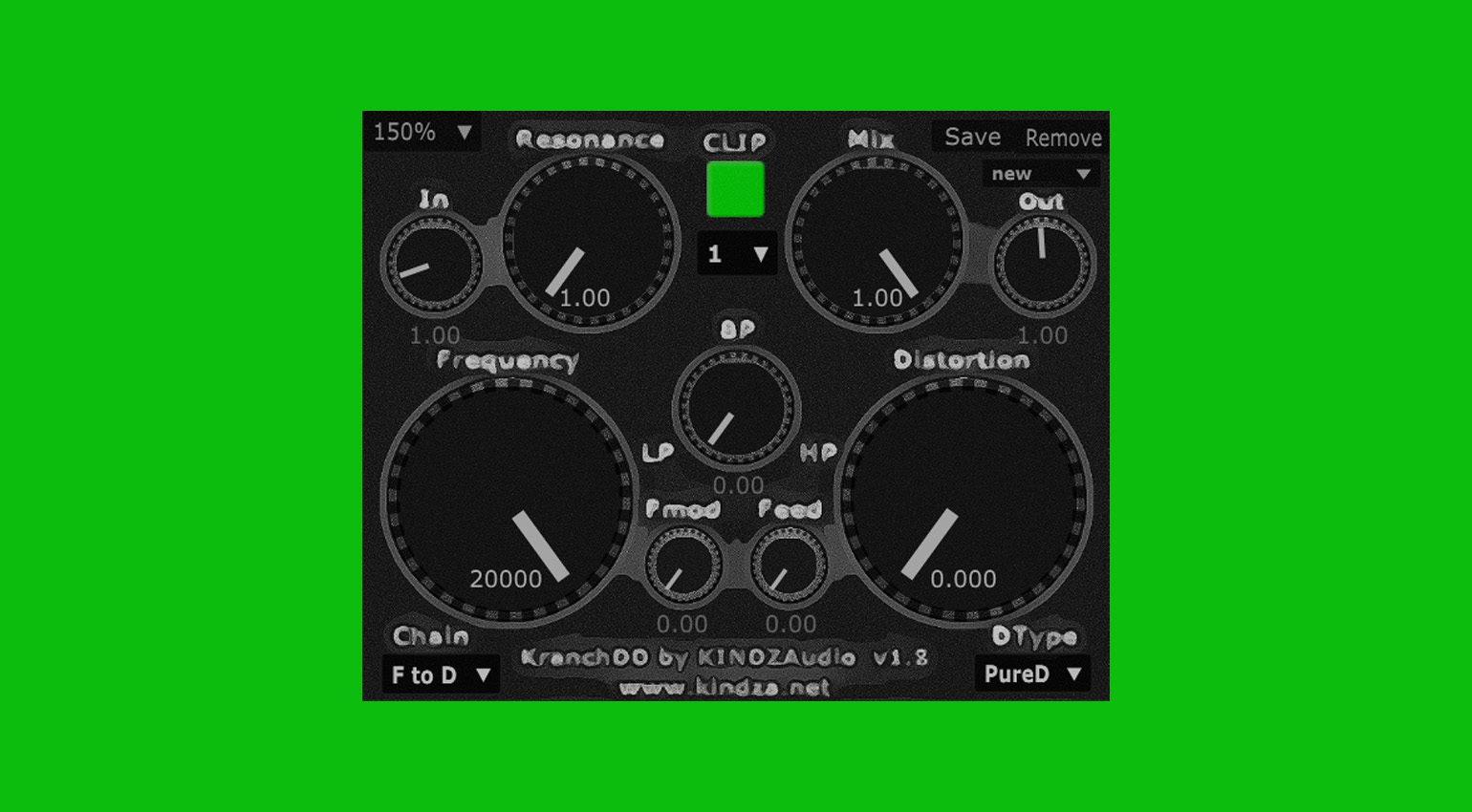
This one’s been out for a while, but it’s pretty cool and if you’ve missed it, you should check it out. KranchDD is a wild combination of a variable-state resonant filter (LP/BP/HP), clipper and a bunch of experimental distortion algorithms. You can also dial in some feedback and modulation for even more sound mangling and creative effects, and there’s a mix knob to blend the dry and wet signals. Check out the video below, it produces some pretty interesting and dirty results.
KranchDD is available for macOS and Windows in VST, VST3 and AU formats.
Get KranchDD here
By loading the video, you agree to YouTube’s privacy policy.
Learn more
Load video
By loading the video, you agree to YouTube’s privacy policy.
Learn more
Load video
Click on the button to load the content from SoundCloud.
Load content
How do you like this post?
Your email address will not be published.
· ehh i have to stand up for Robin here. (and yes i’ve given him plenty of crap in the past for previous articles). We are living in: 1- high economic inflation. 2- a parts/ labor shortage. if people …
· I really, really want this.
· Ah but if it works, and the knobs are reliable, it might become the standard for synths in a few years. Next somebody will invent a keyboard that moves itself and remembers/stores every performance. …
10 Tracks: DJ Mengzy, producer, writer and future doctor of musicology – Lifestyle Asia Hong Kong
In 10 Tracks, we link up with the cool kids and OGs of nightlife, then ask them for a mixtape. This time around, we talk to Mengzy, the DJ, producer, writer and doctoral candidate (!) about her sound, the scene and “intense, all-encompassing rave energy”.
Mengzy has always been hungry for more. Long before she became one of the city’s coolest DJs and producers, she was working on her pen game, waxing poetic on the city’s best bites and sips — practice, in a way, for gigging with HK Magazine, Time Out Hong Kong and nightlife bible Mixmag Asia as its Music Culture Columnist. She even’s doing her doctoral thesis on the history of Hong Kong nightlife, from the early 1900s all the way to the rave scene.
It goes without saying, then, that this future doctor of musicology — also a radio host for RTHK and co-founder of Wonton Bass — is not exactly your average DJ. But don’t count out the 1s and 2s; they’re what transformed Li Meng de Bakker into DJ Mengzy.
“Mengzy is my childhood nickname that my family and close friends call me,” she explains. “When I was brainstorming for my DJ name at the beginning of my career, I came up with loads of whacky aliases but eventually realised the answer was staring me in the face.”
Technically, a second-generation jockey — her dad used to spin records in the late ’60s — a lifetime of geeking out over music of all kinds led her to a “bass-heavy aesthetic” and “intense, all-encompassing rave energy” style, and the proof is in any of her Wonton Bass events around the city, complete with the garage, grime and D&B sound that make it “Hong Kong’s tastiest UK bass party”.
Before Mengzy and Wonton Bass blow out their next set of subs — this Saturday, 6 August at Social Room, to be exact — we caught up with the DJ to talk inspirations, memorable gigs and her upcoming debut EP with UK label Fly By Night Recordings. And as always — she made a mixtape to take us into the weekend.
As a DJ, I’d say I’m an explorer. I don’t focus or devote myself to a single genre, as some DJs do, but really enjoy surfing across styles in my sets and in my production. Having said that, I’ll admit I have a bias towards a bass-heavy aesthetic and intense, all-encompassing rave energy.
I owe my love of music to my dad, who actually was a DJ briefly in the late 60s! Growing up, he exposed my brother and me to his massive collection of classical, jazz, rock and even deep house later on.
Yes, I did play an instrument and sing growing up! Total music geek at school. I started learning piano at the age of 9 and did the whole exam thing all the way up to Grade 8. I was also a choir nerd and have sung in choirs on and off since primary school.
I owe a lot to my music and piano teacher, Nicki Elcome. She inspired a real passion in music education in me. Thanks to her influence, I ended up taking GCSE and A-Level music, all the way to my BA, MA and PhD.
Being a writer came first and, come to think of it, it did indirectly lead me to become a DJ. Back in 2015, I decided to pursue an MA in music to further my abilities as a writer and musician. While I was working towards that, I picked up a book at the library about the art of sampling (Making Beats by Joseph G. Schloss), which I happened to share on my IG story. A DJ friend of mine (Yao) saw that and hit me up, inviting me to production jam session at XXX Gallery on a random Monday afternoon. That jam changed my life. I decided right there and then that I had to learn how to DJ and produce.
No, it’s actually been extremely symbiotic. I love learning about other artists’ work and experiences, and being able to help them share it to more people. The only complication is that I probably take on too much and get stressed out with deadlines.
Yes! Subez Yeti booked me for her Mean Gurls Club 1st Anniversary, which was a pop-up gig at Central Ferry Pier. It was vibey and loads of friends came to support me, which meant the world. Funnily enough, my mum and aunties were also in town visiting and swung by briefly. I’m so grateful to Subez for giving me my first bookings in Hong Kong and introducing me to loads of people in the scene.
There are a few contenders for most memorable but one of them was a gig I did during Art Basel week 2019 called Dreamrave at Terrible Baby in Eaton Hotel. They had built a special “capsule” inside Terrible Baby that was basically a narrow rectangular box completely lined with mirrored panels, and with a psychedelic LED display behind the DJ booth. It was a spectacular setting and the audience energy was incredible.
Worst? In this industry, probably best to keep that to myself! [laughs]
It grew organically from a series of gigs I did at Social Room co-headlining with DJ Lovely. After a few times playing together, we brought in our friends DJ Fu and ‘Enry, and quickly realised that we had something special on our hands. We decided to put a name on it, and Wonton Bass was born.
Absolutely. In person, I would say Mala at Sonar HK 2018. His set was so immersive and he opened with “Empire of Dirt” by Egoless — one of the most incredible tracks I’ve ever heard. That intro shook me to my core! I’ll never forget it. Online, I would have to say Sam Binga’s Boiler Room set at Bass Coast Festival. He is a multigenre wizard who brings incredible party energy to his sets — not to mention, being one of my favourite producers, as well.
MMEE is a DJ/producer who moved here about six months ago and has quickly become part of the extended Wonton family. He and I have done quite a few B2B sets that have gone off really well! Having an artist that I vibe with musically to the level that we do has been very inspiring!
Outside of music, I love graphic arts. To disconnect, I’ve gotten more and more into cooking during the pandemic.
This goes for journalism and music production: write drunk, edit sober. Only joking! My most tried and trusted method is to work in stages. I’ll sit down to write the skeleton of an article or track, for example, and stop when I’ve done that — not pushing myself to finish anything in one sitting. Each time I return to that particular project, I refine it more. Eventually it ends up being finished. Otherwise, a deadline always works extremely well. [laughs]
The best thing, I think, is that despite its relatively small size and despite the many obstacles it has faced in the past few years, the scene here continues to be propelled forward by passionate individuals and crews. We may not be a music centre like London or New York, but you can find parties and producers hustling in pretty much any genre under the sun.
Wonton Bass has a monthly residency at Social Room, so I do encourage anyone who enjoys or is curious about UK bass to check it out! As for myself, my debut EP is on its way via Fly By Night Recordings, so keep your ears peeled for that!
Keep up with DJ Mengzy on Instagram and Spotify, and check out Wonton Bass each month at Social Room.
Social Room, 3/F, Won Hing Building, 74-78 Stanley St, Central, Hong Kong, +852 2915 0373
(Images: Jon Nepomuceno, Jake Aaron Morton, courtesy Mengzy)
Yes, I agree to the Privacy Policy
For your daily updates on all things luxury, follow us at @lifestyleasiahk
Yes, I agree to the Privacy Policy
Subscribe to our newsletter to get the latest updates.
Thank you for your subscription.
Bombers closing in on history with undefeated record – CFL.ca
© 2022 CFL. All rights reserved.
Now Reading
MONTREAL — The Winnipeg Blue Bombers stand alone atop the CFL mountain with a perfect 9-0 record following their latest win over the Alouettes, and the team is just a few consecutive wins away from making history.
The two-time defending Grey Cup champions have one of the longest win streaks to start a season in CFL history, and they will tie a 74-year-old record with three more consecutive victories. The 1948 Calgary Stampeders had the greatest start in league history with a 12-0 record in 1948, while the Bombers’ best start came in 1960 with a 10-0 record.
Quarterback Zach Collaros was uncharacteristically intercepted three times on Thursday night in Montreal, but Winnipeg’s defence and special teams stepped up to finish the job. The team has proven time and time again this season that all three phases can shift momentum and close out games.
“When we’re working as a unit, when everyone’s executing and doing their job, when we play that complimentary football we know we can be successful,” receiver Dalton Schoen told TSN at halftime.
“If we play good football, we know we can win. ”
RELATED
» Bombers beat Als, remain perfect with 9th straight win
» Box Score: Als, Bombers by the numbers
» Through the Lens: Bombers at Als
» Watch: Fancy footwork and a TD pass help to extend Winnipeg’s lead
Winnipeg is the first CFL team to start a season with nine straight wins since the 2005 BC Lions. But only Calgary (1948) and Edmonton (1955) went on to win the Grey Cup after starting a season 10-0.
Collaros gave credit to the defence after the win — a unit that has surrendered just one fourth-quarter touchdown since Week 5. Their ability to shut down opposing offences in the second half instills confidence in Winnipeg’s offence, as the defence can make up for slow offensive starts and negate turnovers that would otherwise be costly.
Montreal was only able to produce one field goal from the three interceptions against Winnipeg.
“I thought the defence carried us all night long,” Collaros told TSN after the win. “I put them in some bad positions, but we found away to do the fourth; all three phases did a great job and stuck together.”
While Collaros is happy with the streak, he knows the team still has to improve and clean up mistakes entering the second half of their regular season. Collaros has throw five interceptions through the last three games after only throwing three in the first six games.
“We’ve got to keep getting better all the way around,” Collaros said. “Obviously we like the position that we’re in. We’ve got to get back to work, though.”
Winnipeg and Montreal face off again next Thursday at IG Field in Winnipeg at 8:30 p.m. ET.
© 2022 CFL ENTERPRISES LP. All rights reserved. Terms Of Use Privacy Policy
Iowa City Council delays decision on removing Truth and Reconciliation Commission leader – The Gazette
Subscriber Services
Our Journalists
Sports Desk
Our Columnists
Our Writers
Our Writers
Our Photojournalists
Data
More Gazette
Other Links
FOLLOW US
Share this article:
Subscriber Services
Our Journalists
Sports Desk
Our Columnists
Our Writers
Our Writers
Our Photojournalists
Data
More Gazette
Other Links
FOLLOW US
Home / News / Government & Politics / Local Government
Council members split on how this impacts commission’s work
Aug. 4, 2022 4:24 pm
IOWA CITY — The decision of whether to remove the leader of Iowa City’s Truth and Reconciliation Commission will be in front of the Iowa City Council again later this month.
The council met Thursday morning to discuss removing Amel Ali from the ad hoc commission after she used a racial insult against other Black leaders in the community and made inappropriate comments on a local podcast.
After a lengthy discussion about Ali’s leadership and the future of the commission, Mayor Pro Tem Megan Alter motioned to table the decision until council’s next meeting on Aug. 16. This motion passed 6-1, with Mayor Bruce Teague voting against tabling.
Council members want the commission to move forward, but they differ on whether that should involve Ali, who was appointed chair of the commission last month.
Some have said this is an opportunity for the commission to practice restorative justice. But other council members said they’re concerned this incident could discourage community members from coming forward to share their stories.
The Iowa City Council created the nine-member commission in 2020 in the wake of Black Lives Matter protests following the killing of George Floyd by Minneapolis police. The TRC’s mission is to gather testimony about racial injustices, foster ways for people to share their stories and encourage direct conversations in the community.
Calls for removal became public earlier this week when Johnson County Supervisor Royceann Porter said she learned of Ali’s comments through an anonymous letter and audio recording she received in the mail.
Some people at Thursday’s meeting spoke in support of Ali, who has apologized for the comments. They called the release of the podcast recordings a targeted attack meant to undermine the work of the commission.
The June 9 and June 16 podcast episodes of “Rock Hard Caucus,” on which Ali was a guest, are no longer posted online. The podcasts’s co-founders said the episodes were originally published behind a paywall.
Newsletter Signup
Legislative & Politics News Delivered to your inbox each weekday
You will begin to receive our Daily On Iowa Politics updates. Add [email protected] to your contacts.
Teague said he intended to have a discussion about Ali’s leadership at the council’s next meeting later this month, but her comments at Tuesday’s council meeting prompted Thursday’s special meeting.
On Tuesday Ali said, “Despite the call by the mayor and others to have me resign, I can’t walk away and turn my back on the trust, hope and responsibilities entrusted to all of us on this commission.”
An agenda for Thursday’s special formal meeting was distributed shortly after Tuesday’s meeting adjourned.
At the meeting Thursday morning, Teague played a recording of Ali’s comments. He also played a three-minute clip from the podcast. The clip did not include the racial insult.
Council has not heard or had access to the full podcast.
“That silence has been deafening,” council member Shawn Harmsen said about the podcast episodes not being available.
Current commissioners — and some council members — said the TRC hasn’t had an opportunity to discuss what happened. The commission’s next meeting was Thursday evening. The agenda included discussion about “TRC leadership.”
Commissioner Daphney Daniel said the TRC wants to show the power of reconciliation and transformative justice.
Commissioner Mohamed Traore, who served as chair before Ali, said most of the commissioners have not heard more than a clip of the podcast.
“We haven’t had a chance to accurately discuss anything that’s a part of this,“ Traore said.
Justin Comer, producer of “Rock Hard Caucus,” said he was “aware that we were taking a risk by releasing this recording, paywalled or not.”
Comer added that the recording presented him with a decision “to either allow a hardworking, young Black woman to speak her mind and say what she feels needs to be said, or to hide it and suppress her truth.”
Council member Laura Bergus advocated for allowing the commission do the work it was tasked with undertaking.
“We can turn to the commission — who we all verbalized that we trust, we have seen their progress, we know what they are capable of — and say this is your work,” Bergus said. “This community cannot heal, cannot move forward while this is just festering.
“They are getting to the work, and we should not shut them down,” she added.
John Thomas and Janice Weiner agreed, saying the decision to remove Ali has been rushed. Thomas pointed to the commission’s recent progress, including work on hiring a facilitator.
But Teague, Alter, Harmsen and Pauline Taylor had concerns about the commission and whether people will feel comfortable sharing their experiences with its members.
Teague said it’s not the responsibility of the commission to decide whether Ali should stay on or be removed. He added that there can be an opportunity for healing, but having Ali on the commission is not appropriate.
Alter acknowledged the long-standing tension between current and former commissioners. She — and other council members — said they’re concerned about the community’s willingness to engage in the reconciliation process after hearing Ali’s comments.
“It’s not about personal grudges,” Harmsen said. “ … It’s what has this done to the work the commission is supposed to be doing.”
Comments: (319) 339-3155; [email protected]
Iowa City and Johnson County government reporter, The Gazette
Vanessa Miller
John McGlothlen
John Steppe
Crime and Courts Aug. 7, 2022 11:07 am
Crime and Courts Aug. 5, 2022 6:00 am
Local Government Aug. 4, 2022 1:59 pm
Local Government Aug. 6, 2022 6:00 am
Local Government Aug. 5, 2022 2:29 pm
Local Government Aug. 5, 2022 3:55 pm
Derecho Anniversary Aug. 5, 2022 6:00 am
News Aug. 6, 2022 6:00 am
Local Government Aug. 6, 2022 6:00 am
Health Care and Medicine Aug. 6, 2022 6:00 am
On Iowa Politics Aug. 5, 2022 4:39 pm
News 3h ago
Health Care and Medicine 4h ago
Environmental News Aug. 7, 2022 6:00 am
News Aug. 7, 2022 6:00 am
FOLLOW US
The Gazette is Iowa’s independent, employee-owned source for local, state, and national news coverage.
© 2022 The Gazette
All Rights Reserved.
© 2022 The Gazette
All Rights Reserved.
Third-generation multimedia student learns on the cheap – OregonLive
Beni Marquez has a passion for photography, a hobby he picked up during the pandemic.Ellen Dong
In an industry where the flashiest cameras and the most expensive editing software distinguishes professionals from pipe dreamers, Beni Marquez is determined to beat the best of the best photographers — but on a budget.
A love for photography and film has been with Beni, 16, for his entire life. His grandfather enjoyed photography as a hobby, and his father attended film school.
The spark that truly lit the fuse, though, was the pandemic.
“There wasn’t much to do,” he said, so he turned to cameras and post-production software as the world was locking down.
That boredom eventually turned into a passion for photographing wildlife and street scenes, creating video effects and editing together music and video. More recently, he’s become interested in developing film photos.
The skills required to create works like these come from knowledge gained through hours of online research along with trial and error. Without any real-life mentors, he’s left to puzzle out issues himself, which can be time consuming and difficult.
His father, who moved on from filmmaking and camera techniques long ago, gives him his thoughts here and there. He already knows a lot of what the multimedia program at Ida B. Wells High School teaches, he said.
“OK, this is kinda easy,” the sophomore said, recalling a photography class at his Portland school.
So Beni, who also works at an ice cream store, has had to make his own opportunities to pursue his passions.
School does offer access to a darkroom for developing film. But with school out for the summer, Beni and classmate Zoe Toperosky lost access to it for three months, and they weren’t able to develop the film photos they’d recently shot.
However, ambition doesn’t wait for school to start. They MacGyvered their own darkroom in Zoe’s bathroom.
With the budget of a part-time ice cream scooper and the determination of a kid with a dream, Beni teamed with Zoe to buy the necessary chemicals and equipment, telling Zoe’s family that “they absolutely may not come in” to their bathroom while the two were working or risk ruining the film, Zoe said.
After hunching over a bathtub for an hour, cramped and in the dark, Beni and Zoe emerged with 36 film pictures that both agreed were worth the time and effort.
It’s an impressive feat of engineering — but not an endeavor that a serious photographer can afford to take on every day.
Beni plans to study a multimedia-related field in college and hopes that the instruction there will take a “deep dive” into the camera techniques and post-production sides of photography and videography in a way that his own current self-education can’t provide.
– Ellen Dong, McMinnville High School
This story was produced as part of the High School Journalism Institute, an annual collaboration among The Oregonian/OregonLive, Oregon State University and other Oregon media organizations. For more information or to support the program, go to oregonlive.com/hsji.
Note to readers: if you purchase something through one of our affiliate links we may earn a commission.
Registration on or use of this site constitutes acceptance of our User Agreement, Privacy Policy and Cookie Statement, and Your California Privacy Rights (User Agreement updated 1/1/21. Privacy Policy and Cookie Statement updated 7/1/2022).
Cookie Settings
© 2022 Advance Local Media LLC. All rights reserved (About Us).
The material on this site may not be reproduced, distributed, transmitted, cached or otherwise used, except with the prior written permission of Advance Local.
Community Rules apply to all content you upload or otherwise submit to this site.
Ad Choices
The day the music died? Welcome to Denmark Street and Tottenham Court Road’s new ‘digitally enabled streetscape’ – The Guardian
The pleasingly ramshackle area of central London where punk was born and you went to buy a banjo is now includes a multi-billion ‘super-flexible brand engagement platform’. So is it as awful as it sounds?
Once upon a time, just outside Soho in central London, there was a legendary hive of musical energy. It was centred on Denmark Street – Britain’s Tin Pan Alley – a strip of shops selling instruments and sheet music, with clubs and bars and such things as production facilities and agents’ and managers’ offices on the upper floors, where new-in-town fans and nascent musicians could mingle with stars. Everything to do with music – writing, producing, performing, listening, selling – could be done within its short length.
An almost endless roll call of greats made music there: Lionel Bart, the Rolling Stones, Jimi Hendrix, Elton John, George Michael, the Libertines, Adele, Ed Sheeran. The young David Bowie, desperate to be in the street where it happened, camped there in a converted ambulance. The Sex Pistols launched their career from a Denmark Street flat. Just across Charing Cross Road, in Soho proper, was the London Astoria, a venue big enough for 2,000 people.
Many hundreds of millions of pounds’ worth of construction later, there is still a street of musical instrument shops, plus new venues and production facilities, plus a “radical new technology-driven marketing, entertainment and information service housed in a super-flexible, digitally enabled streetscape”, plus much else. There will be “busking points” and clubs. The Astoria has gone, but a new 600-seat theatre called @sohoplace is on the way, on a site next to where it stood.
On paper, then, its mix of uses is like that of the past, but in spirit it is utterly changed. It is built on the obvious paradox that a culture fuelled by rebellion and chaos should now be channelled through the processes of large property owners. Anarchy in the UK it is not. Or, rather, it is a new kind of scaled-up anarchy, where the boys making all the noise are big businesses.
The catalyst for this extravaganza is the Elizabeth line, the supersized, speeded-up, £18.9bn underground railway that opened last May, whose station at Tottenham Court Road can disgorge 200,000 passengers a day. Its construction required the demolition of the Astoria and other buildings, clearing the site for new development. It brings crowds of potential punters to the doorstep of the areas of new venues, who will fuel Outernet London, a billion-pound “immersive entertainment district”, “where music, film, art, gaming and retail experiences come to life in new breathtaking ways”.
This “district” is in fact a single project, albeit one incorporating some historic fragments, in the ownership of one company, Consolidated Developments. Its most conspicuous feature is the Now Building, a big oblong block that greets you when you exit the tube: a giant, table-like frame clad in black stone, within which multistorey gold-coloured shutters can fold back to reveal an atrium lined with 23,000 square feet of floor-to-ceiling high resolution LED screens. Other spaces in the complex also surround visitors with screens. You will be greeted with a storm of digital light and motion in what Consolidated say will be “London’s Times Square”.
Beneath the Now Building is a new 2,000-capacity venue, Here at Outernet, opening in September. Behind it there is Chateau Denmark, a hotel “inspired by Denmark Street’s rare hustle”, where, for £456 a night and upwards, you can stay like a rock star in “session rooms” decked out in mahogany and burgundy velvet and “antique brass” and “industrial concrete”, pre-vandalised with curated graffiti. And on the southern side of the same block there is Denmark Street itself, where the old guitar shops – thanks in part to some encouragement from Camden council – have been invited to continue their business in its refurbished buildings, plus a “grassroots music venue” formed in the old 12 Bar Club.
Outernet CEO Philip O’Ferrall calls his project “the world’s largest, most advanced atrium of content … a disruptive, atomised brand engagement platform”, by which he means that companies will pay handsomely to put their brands on the big videos, and to hold spectacular events in the screen-lined rooms. The idea is to entice the public in and then get them to linger, with the imagery on the screens, with the music, with bars and restaurants, such that they can be exposed to more selling. “If you spend an extra 30 seconds in my area I can serve more advertising on you,” he says. The revenues, O’Ferrall also explains, will help fund the less profitable music businesses on the other side of the block.
The architecture, by the long-established practice Orms, who previously made the offices of Camden council into the stylish Standard hotel, is by turns raucous and careful. There is the big, blocky gold-and-black stuff, a bit art deco in inspiration. There are preserved historic facades, gently ornamental affairs of brick and stucco and stone trim. Inside the block there is a version of traditional London backyard construction, a patchwork of glazed bricks and industrial-looking windows. The wider context, outside the site boundary, plays yet more tunes: the zigzag concrete of the 1960s skyscraper Centre Point, a pinkish-and-black flower-patterned building now nearing completion on what was part of Foyle’s bookshop.
There’s not much attempt to tie it all together. You get your small-scale Victorian ornament and your domestic Georgian survivals and then you get your full-on blast of the 21st-century high-technology marketing-entertainment complex. This omnivorous eclecticism – an all-you-can-eat buffet of looks and styles and facilities – is the spirit of the whole Outernet endeavour, from the hotel bedrooms to the big screens to the preserved shops. You feel it from the moment you exit the tube station, on the crossroads of Oxford Street and Tottenham Court Road, and are faced with a digital installation that switches from cloudscapes intended to achieve an “immersive experience of mindfulness and relaxation” to something about Unicef to a roar of music from the Clash, a dizzying ride from calm to conscience to Combat Rock.
To which one might say: great. Is it not fundamental to a city such as London, and especially Soho and its surroundings, that it’s a place of contrasts, a rich palimpsest of aspiration and creation manifest in its built fabric? And is it not also great that the musical heritage of the neighbourhood has found new and clearly well-funded form? That hundreds of thousands of people will have a good time here, and that artists will get the chance to make and perform music?
It’s certainly better that all this is here, and guitar shops kept, than that everything be swept away by a gigantic office block. If it’s brash, then so were the Victorian music halls and 1930s cinemas that are now dearly beloved items of heritage. (And, actually, if you’re going over-the-top, you could have a bit more fun than those black frames offer.) But no one should be under any illusions that this is much like the Tin Pan Alley of old. For what was once multifarious and spontaneous is now under the control of Consolidated Properties and the Outernet. The thing called a “district” is a single-owner real-estate proposition. What would happen to a Bowie now if he tried to kip in his ambulance? Or a Johnny Rotten with a spray can? Or someone who wants to busk in a non-approved way?
The project comes with virtuoso PR gobbledegook that deprives sentences of basic sense. The hotel, apparently, “brings together creative expression and fine architectural detail to present something fierce”. Its rooms come with “strong accents of punk rock” and “a rebellious statement piece”. But how “rebellious” can anything on this site be, when it is co-opted to sell cars and software and fashion?
The outcome is not Tin Pan Alley, but something akin to how it would look if reconstructed by alien archaeologists, with the help of some wonky artificial intelligence. Maybe this is the way the world is – and modern methods or music production mean that places like Denmark Street can in any case never be what they were – and we should gratefully accept what we are given. But that is not what cities, or music, are really about.
Apple introduces Apple Music Sessions – Apple
Text of this article
July 15, 2022
UPDATE
Apple introduces Apple Music Sessions
Exclusive live releases from Carrie Underwood and Tenille Townes are available now, only on Apple Music
Today, Apple Music is premiering Apple Music Sessions, exclusive live releases featuring some of the world’s most prolific artists and emerging artists, all in Spatial Audio. Recorded out of Apple Music’s studios around the world, Apple Music Sessions gives artists the opportunity to reimagine and recreate hits from their catalog, and creative covers of beloved classics. These unique performances are also filmed, resulting in a special, bespoke live collection comprised of brand-new Spatial Audio tracks and companion live performance music videos that will all be available exclusively to Apple Music fans worldwide.
Apple Music Sessions officially launches today with releases from Carrie Underwood and Tenille Townes, recorded out of Apple Music’s new state-of-the-art studios in Nashville, Tennessee.
During her session, Underwood performed her hit “Ghost Story,” as well as a stripped-back version of “Blown Away,” and a cover of Ozzy Osbourne’s “Mama, I’m Coming Home.”
“Being in the studio with Apple Music was such an incredible experience, and I’m excited to share these unique, stripped-down versions of three songs I love with my fans,” Underwood said. “We had a lot of fun reimagining these big, visual songs and presenting them in a different way.”
“I have always been an Ozzy Osbourne fan and ‘Mama, I’m Coming Home’ is one of my all-time favorite songs,” Underwood continued. “I’ve always thought it felt a lot like a country song, and I’ve wanted to cover it for a long time. This was a really fun opportunity for me to be able to finally make that happen. I hope we’ve done Ozzy proud and I hope he likes it.”
“Carrie Underwood: Apple Music Sessions – EP”
Country singer-songwriter Tenille Townes performed her hits “Same Road Home” and “Somebody’s Daughter,” as well as a gritty, soulful cover of Etta James’s “At Last.”
“It was so cool capturing the spirit of how it feels to play my songs live with my band during the Apple Music Sessions performance,” Townes said. “The new space feels like it’s going to become an anchor for our music community in Nashville, and it was an honor to be a part of breaking it in.”
“I chose ‘Same Road Home’ because I really love the message in the song of us all being more alike as humans than we often realize,” she continued. “‘Somebody’s Daughter’ is one of those songs that has grown with us as a band for the past couple of years, and it was really fun to showcase our live version of it. And ‘At Last’ is a song that sets the bar to me as a writer and a singer. I’ve never recorded a version of it before, and I loved getting to include it in my Apple Music Sessions.”
“Tenille Townes: Apple Music Sessions – EP”
Apple Music Sessions kicks off in Nashville with a host of incredible country artists already lined up, including Ronnie Dunn, Ingrid Andress, and many others, and Apple also plans to expand the series into other genres of music in the future.
About Apple Music
Apple loves music. Apple revolutionized the music experience with iPod and iTunes. Today, the award-winning Apple Music celebrates musicians, songwriters, producers, and fans with a catalog of over 90 million songs, expertly curated playlists, and the best artist interviews, conversations, and global premieres with Apple Music Radio. With original content from the most respected and beloved people in music, autoplay, time-synced lyrics, lossless audio, and immersive sound powered by Spatial Audio with Dolby Atmos, Apple Music offers the world’s best listening experience, helping listeners discover new music and enjoy their favorites while empowering the global artist community. Apple Music is available in over 165 countries and regions on iPhone, iPad, iPod touch, Mac, Apple Watch, Apple TV, HomePod mini, CarPlay, and online at music.apple.com, plus popular smart speakers, smart TVs, and Android and Windows devices. Apple Music is ad-free and never shares consumer data with third parties. More information is available at apple.com/apple-music.
Press Contacts
Jessica Bass
Apple
[email protected]
(310) 895-6508
Brian Bumbery
Apple
[email protected]
(424) 326-4156
Apple Media Helpline
[email protected]
(408) 974-2042
Images in this article
Jessica Bass
Apple
[email protected]
(310) 895-6508
Brian Bumbery
Apple
[email protected]
(424) 326-4156
Apple Media Helpline
[email protected]
(408) 974-2042
The latest news and updates, direct from Apple.
Read more