Hello neighbors! It’s Kristen, your host of the Dunedin Daily. Here’s a look at everything happening in town today… First, today’s weather: An afternoon thunderstorm. High: 88 Low: 77. Our local sponsor has some great stuff to offer: Looking to buy or sell a home in the Dunedin area? Tammie Fraser at EXP Realty has lived in our area since 1979 and knows the rapidly changing Dunedin real estate market like few others. She specializes in educating and guiding sellers as well as helping first time buyers find the home of their dreams. For deep local knowledge and expertise, call Tammie at (330) 307-9538 and ask about a free seller’s report, or visit her here to learn more. Want to see your business featured in this spot? Click here to get started. Here are the top three stories today in Dunedin: Dunedin Daily Pic of the Day:
Thank you Marsha Francis for sharing this adorable photo of your Australian Labradoodle doing what she loves most!
Today in Dunedin:
From my notebook: More from our sponsors — thanks for supporting local news! Events: Thanks for following along and staying informed. I’ll catch up with you bright and early tomorrow morning with a new update!
Update your browser to view this website correctly. Update my browser now × Home›Business Blues guitar giant Joe Bonamassa will discuss creating his new Time Clocks immersive music album as part of MixNYC on August 6, 2022. By Mix Staff
New York, NY—One of the ‘can’t miss it’ panels of MixNYC: Immersive Music Production this Saturday will be when the all-star production team behind the new Joe Bonamassa album, Time Clocks, discusses the project—but now the blues guitar giant himself will join in! Bonamassa will remote in live from Denver to be part of the previously announced in-person discussion! MixNYC: Immersive Music Production is an all-day, in-person event taking place Saturday, August 6, 2022, at New York City’s world-famous recording studio, Power Station at BerkleeNYC, right in the heart of Midtown. Currently on tour for the album, Joe Bonamassa will play Omaha on August 5 and Red Rocks on August 7, but on August 6, he’ll be remoting in Live from Denver, where he’s taking the day off to hang with the audience inside Power Station’s Studio B to talk immersive audio. The Bonamassa production team—which will be at Power Station in-person—includes A-list mix engineer Bob Clearmountain, returning after many years to the studio where he began his career; producer Kevin Shirley; recording engineer Jason Staniulis; and Troy Germano, owner of Germano Studios, The Hit Factory, where the tracks were recorded. You don’t want to miss this one! MixNYC: Immersive Music Production, the first industry event to focus entirely on Immersive Music Production, will be held entirely within the recently refurbished, six-studio, three-story, world-renowned BerkleeNYC (Power Station Studios) complex. Expert panel presentations on recording, mixing and distributing immersive music will follow the Keynote Conversation, along with sponsor demonstrations, new product exhibits, one-on-one interviews, multiple networking opportunities and more. For more information—and to register—go to mixmusicproduction.com Tags ⋅BerkleeNYC ⋅ Blues ⋅ Bob Clearmountain ⋅ Germano Studios ⋅ Guitar ⋅ hit factory ⋅ Immersive Audio ⋅ immersive music ⋅ Jason Staniulis ⋅ Joe Bonamassa ⋅ Kevin Shirley ⋅ mixnyc ⋅ power station ⋅ Spatial Audio ⋅ time clocks ⋅ Troy Germano Mix Staff
Thank you for visiting nature.com. You are using a browser version with limited support for CSS. To obtain the best experience, we recommend you use a more up to date browser (or turn off compatibility mode in Internet Explorer). In the meantime, to ensure continued support, we are displaying the site without styles and JavaScript. Advertisement Scientific Reportsvolume 12, Article number: 13243 (2022) Cite this article Metrics details This paper proposes a novel hybrid optimization algorithm named GPOFWA, which integrates political optimizer (PO) with fireworks algorithm (FWA) to solve numerical and engineering optimization problems. The original PO uses subgroup optimal solutions such as party leaders and constituency winners to guide the movement of the search agent. However, the number of such subgroup optimal solutions is limited, which leads to insufficient global exploration capabilities of PO. In addition, the recent past-based position updating strategy (RPPUS) of PO lacks effective verification of the updated candidate solutions, which reduces the convergence speed of the algorithm. The proposed hybrid algorithm uses the spark explosion mechanism in FWA to perform explosion spark and Gauss explosion spark operations on the subgroup optimal solutions (party leader and constituency winner) respectively based on the greedy strategy, which optimizes the subgroup optimal solution and enhances the exploitative ability of the algorithm. Moreover, Gaussian explosion sparks are also used to correct the candidate solutions after RPPUS, which makes up for the shortcomings of the original PO. In addition, a new subgroup optimal solution called the Converged Mobile Center (CMC) based on two-way consideration is designed to guide the movement of search agents and maintain the population diversity. We test the presented hybrid algorithm on 30 well-known benchmark functions, CEC2019 benchmark functions and three engineering optimization problems. The experimental results show that GPOFWA is superior to many statE−of-thE−art methods in terms of the quality of the resulting solution. Optimization is a numerical process used to determine the decision variables for minimizing or maximizing the objective function value while satisfying the constraints of decision-space1. Optimization problems are inevitable in many real-world applications, and these problems usually contain non-linear objective functions and constraints with multiple local optimum, and low feasible regions2. These complex features make it difficult for traditional mathematical programming methods such as conjugate gradient, sequential quadratic programming, Newton’s method, and quasi-Newton’s method to find optimum3. Meta-heuristic algorithms (MAs) have become prevalent in many applied disciplines in recent decades because of higher performance and lower required computing capacity and time than deterministic algorithms in various optimization problems4,5,6,7,8,9,10,11,12. As a branch of random optimization, meta-heuristic algorithms can find a near-optimal solution by using available resources, although it is not always guaranteed to find the global optimum. Most MAs are inspired by human intelligence, the social nature of biological groups, and the laws of natural phenomena. Some classic representatives of MAs, such as genetic algorithm (GA)13, particle swarm optimization (PSO)14, differential evolution (DE)15, grey wolf optimizer (GWO)16, Harris hawks optimizer (HHO)17, bat algorithm (BA)18, whale optimization algorithm (WOA)19, salp swarm algorithm (SSA)20, sine cosine algorithm (SCA)21, water cycle algorithm (WCA)22, and so on, have been successfully used to solve some complex optimization problems. However, the No Free Lunch (NFL) theorem states that it is impossible to solve all optimization problems by a specific algorithm23, which means an algorithm is suitable for a given optimization problem, but may not be suitable for another optimization problem with different characteristics. Therefore, further research on MAs is needed to deal with different optimization problems. The research directions of MAs include proposing new algorithms, improving existing algorithms, and hybridizing different algorithms. Hybridizing different algorithms has drawn attention because it can highlight their respective advantages and make the algorithms have better performance. Various hybrid algorithms have achieved good results, such as hybridizing particle swarm optimization with differential evolution proposed by Wang et al.24, hybridizing sine–cosine algorithm with differential evolution proposed by Li et al.25, hybridizing particle swarm with grey wolf optimizer presented by Zhang et al.26. Fireworks algorithm (FWA) was a newly developed swarm intelligence optimization algorithm, which was put forward by simulating the process of real fireworks explosion and generating a large number of sparks in 201027. When the fireworks explode, the sparks are everywhere. The explosion process of the fireworks can be regarded as the search behavior of the search agent in the local space. The main idea of FWA is to use fireworks and sparks as different kinds of solutions to search the feasible space of the optimization function. As an excellent algorithm, FWA has been used in hybridization with many other algorithms in recent years. Zhu et al.28 hybridized the firework algorithm with the particle swarm algorithm to form DFWPSO, which performed competitively and effectively in numerical optimization problems. Yue et al.29 proposed a new hybrid algorithm called FWGWO based on gray wolf optimizer and firework algorithm and achieved excellent results in global optimization. Guo et al.30 added the differential evolution operator to the firework algorithm and proposed a hybrid fireworks algorithm with differential evolution operator (HFWA_DE) in 2019. Zhang et al.31 introduced the migration operator of biogeography-based optimization into fireworks algorithm to enhance information sharing among populations and presented a hybrid biogeography-based optimization and fireworks algorithm for global optimization. Political Optimizer (PO) is a new meta-heuristic algorithm based on human behavior inspired by the multi-stage political process. PO simulates all important steps in politics, such as party formation, party vote, constituency distribution, election campaigns, and party transitions, inter-party elections, and parliamentary affairs after the government is formed. In addition, PO has introduced a new position update strategy, called the recent past-based position updating strategy (RPPUS). The latter represents the behavior that politicians learned from the last election32. Compared with traditional optimization algorithms, PO shows better competitiveness. Therefore, lots of researchers have applied it in different scientific fields since the PO was proposed. Askari et al.33 employed PO for the training of feedforward neural networks to solve the classification and regression problems, and made a good achievement. Durmus et al. used PO to improve radiation properties of concentric circular antenna arrays (CCAAs) in the far-field such as wireless communication of smart grids and the Internet of things and reached a lower sidelobe level (SLL) value than other optimization methods34. Manita et al.35 proposed a binary version of PO to solve feature selection problems using gene expression data. Elsheikh et al.36 presented a novel optimized predictive model based on PO for eco-friendly MQL-turning of AISI 4340 alloy with nano-lubricants. Moreover, some scholars have made improvements to the shortcomings of PO. Askari et al.37 modified each stage of PO to improve the exploration ability and balance of the algorithm because it is found PO prematurely converges for complex problems. Zhu et al.38 also found that PO has the problem of poor global exploration capabilities, and they integrated PO with quadratic interpolation, advanced quadratic interpolation, cubic interpolation, Lagrange interpolation, Newton interpolation, and refraction learning, and proposed a sequence of novel PO variants. As a novel swarm intelligence algorithm just proposed, PO still has many areas worth improving. It can be found that the main idea of PO is to guide the movement of the search agent through subgroup optimal solutions. However, the number of subgroup optimal solutions such as party leaders and constituency winners used by PO is limited, because the number of initial populations directly determines the number of party leaders and constituency winners. This leads to insufficient global exploration capabilities of PO. In addition, the recent past-based position updating strategy (RPPUS) of PO lacks effective verification of the updated candidate solutions, which reduces the convergence speed of the algorithm. Moreover, a new local leader called the Converged Mobile Center (CMC) based on two-way consideration is designed to guide the movement of search agents, which enhances the exploration ability and maintains the population diversity. Combining the above ideas, we propose a novel hybrid greedy political optimizer with fireworks algorithm named GPOFWA and verify its effectiveness and superiority through a well-studied set of diverse benchmark functions and three engineering optimization problems. In summary, the main contributions of this research are as follows: We propose a new hybrid optimization algorithm named GPOFWA, which integrates the Political Optimizer (PO) and the Fireworks Algorithm (FWA). Using the spark explosion mechanism in FWA, GPOFWA performs explosion spark and Gaussian explosion spark operations on party leaders and constituency winners based on greedy strategy, which enhances exploitation capability of GPOFWA. At the same time, the Gaussian explosion spark mechanism of the firework algorithm is used to explore areas with better fitness to ensure the effectiveness of RPPUS. We adopt a new method called Converged Mobility Center with bi-directional consideration to generate the subgroup optimal solution of the current population, which enhances the exploration ability and maintains the population diversity. We investigate the performance of the proposed algorithm in solving 30 basic benchmark functions in multiple dimensions (30 and 500), CEC2019 benchmark functions and three engineering optimization problems. To verify the feasibility and effectiveness of this scheme and the accuracy of the results from different aspects, we use experimental and statistical analysis, such as qualitative analysis, quantitative analysis, convergence preference, pairwise comparative analysis (Wilcoxon signed-rank test), computational complexity, and sensitivity analysis of parameters. The remainder of this research is organized as follows: Section 2 reviews the basic political optimizer and fireworks algorithm. Section 3 proposes a novel hybrid greedy political optimizer with fireworks algorithm. Section 4 discusses the experiment results of different swarm intelligence optimization algorithms on basic benchmark functions and CEC2019 functions. Section 5 applies the algorithm to three different engineering optimization problems. Section 6 presents the conclusions of this work and directions for future work. Political optimizer and firework algorithm are novel algorithms with excellent performance proposed in recent years, which are inspired by different social natural phenomena and can effectively solve optimization problems. The hybrid algorithm proposed in this paper takes the political optimization algorithm as the starting point, and the explosion spark and Gaussian mutation spark mechanism of the firework algorithm are added to the search process of the political optimization algorithm to enhance the performance of the algorithm. This section will briefly introduce these two algorithms. The political optimizer (PO) is a novel intelligent optimization algorithm inspired by the political election process of human society. In PO, each party member can be viewed as a candidate solution, and the election behavior of party members can be seen as an evaluation function. In addition, the votes obtained by party members are mapped to the fitness value of the candidate solution. Unlike traditional algorithms based on political elections, PO considers the complete process of political elections, including five phases of party formation and constituency allocation, election campaign, party switching, inter-party election, and parliamentary affairs. PO seeks the optimal solution through a multi-stage iterative process, and its main algorithm flow is shown in Fig. 1. The following will introduce the five main stages of PO. The flowchart of political optimizer. At the beginning of PO, the entire population containing ({n}^{2}) individuals are divided into n parties, and there are n members (candidate solution) in each party. In addition, each party member also plays the role of an election candidate, that is, one member from each party is selected to form a constituency. As is depicted in Fig. 2, the red dotted line indicates the division of political parties, and the blue dotted line indicates the division of constituencies. The mapping of this population division to the mathematical model is that the entire population is divided into n political parties as shown in Eq. (1), and each party consists of n party members as represented as Eq. (2). The population and its logical division in political parties and constituencies. Each party member also plays the role of an election candidate, so the entire population can be regarded as n constituencies, which can be represented as Eq. (3). What needs to be emphasized is the members of the constituency are also party members, but the logical division is different. The membership of each constituency is divided as shown in Eq. (4). Furthermore, the leader of the ith party after computing the fitness of all members is noted as (p_{i}^{*}) and the set of all the party leaders is represented by ({P}^{*}) as shown in Eq. (5). Similarly, after the election, ({C}^{*}) regroups the winners from all the constituencies named the parliamentarians as shown in Eq. (6), where (c_{j}^{*}) denotes the winner of jth constituency. This stage is the core stage of the algorithm and is responsible for the location update of the search agent. In the algorithm, the specific performance is that party members change their positions according to the leader ({P}^{*}) of the party they belong to and the winner ({C}^{*}) of their constituency. In addition, they will also learn from the experience of the last election through a novel location update mechanism called recent past-based position updating strategy (RPPUS), as formulated in Eqs. (7) and (8). The main idea of RPPUS is to predict promising areas through the numerical relationship between subgroup optimal solution (party leader or constituency winner) and current fitness and previous fitness of search agent. where (m^{*}) indicates the leader of a party or the winner of a constituency, (r) represents a random number from 0 to 1, and (t) represents the current iteration number. The party switching phase is mainly to balance exploration and exploitation, which introduces an adaptive parameter (lambda) called party switching rate. Each party member may be selected and switched to some randomly selected party. The probability of switching is determined by (lambda), which is initially 1 and linearly decreases to 0 as shown in Eq. (9). At this stage, the fitness of each candidate solution is determined and the party leaders and constituency winners are updated by Eqs. (10) and (11). The party switching phase is aimed at the change of the party’s perspective, and the parliamentary affairs phase is the change of the constituency’s perspective. The constituency winners interact with each other to improve their fitness. Each constituency winner uses the following equation to update its position relative to any other randomly selected constituency. It should be noted that the movement will only be applied if the fitness of (c_{j}^{*}) becomes better. The firework algorithm (FWA) is a swarm intelligence optimization algorithm proposed in recent years, which is inspired by the explosion of fireworks. We usually celebrate with fireworks. When the fireworks explode, the sparks are everywhere. The explosion process of the fireworks can be regarded as the search behavior of the search agent in the local space. The firework algorithm is based on this idea, and the flowchart of the firework algorithm is shown in Fig. 3. The flowchart of firework algorithm. It should be emphasized that fireworks of different qualities will produce different sparks when they explode. High-quality fireworks will produce countless sparks when they explode. The explosion of the fireworks forms a circle, and the sparks are concentrated in the center of the explosion. Conversely, a bad firework will produce fewer sparks when it explodes, and the sparks will spread out to form irregular shapes. From the perspective of swarm intelligence algorithm, a firework is regarded as a candidate solution. A good firework means that a candidate solution is located in a promising area and is close to the global optimal solution. Therefore, more sparks can be generated near good fireworks to find the global optimal solution, and the search radius is as small as possible. A bad firework means that the position of the candidate solution is not ideal, so the search radius should be larger, and the number of sparks generated will be reduced accordingly. As mentioned earlier, good fireworks should produce more sparks, while bad fireworks produce fewer sparks. The calculation of the number of sparks produced by each firework is shown in Eq. (12). Good fireworks are closer to the global optimum, so the explosion amplitude is smaller, while bad fireworks are just the opposite. The amplitude of explosion for each firework is defined as Eq. (13). where (y_{{{text{min}}}} = {text{min}}(f({varvec{x}}_{{varvec{i}}} ))), (y_{{{text{max}}}} = {text{max}}(f({varvec{x}}_{{varvec{i}}} ))), (hat{S}) and (hat{A}) are constants, which are to control the number of explosion sparks and the size of explosion amplitude, respectively. What should be noted is FA design two ways of generating sparks, one is explosion sparks for normal search, its algorithm is shown in Algorithm 1. The other is Gaussian spark, which is a mutation mechanism, and its algorithm is shown in Algorithm 2. The original PO assigns dual roles to each agent and uses RPPUS to make the algorithm have excellent performance, but through careful observation, we can find that the algorithm still has a lot of room for improvement. There are the following several points: The main idea of PO is to guide the movement of the search agent through the subgroup optimal solution. The number of subgroup optimal solutions such as party leader and constituency winner are limited because the number of initial populations directly determines the number of party leaders and constituency winners, which leads to insufficient global exploration capabilities of PO. In RPPUS, member positions are updated based on the positions of members of the previous generation, the positions of party leaders or constituency winners, and the current positions of members. Considering the numerical relationship between these three indicators, it effectively predicts the favorable area of the member’s next move, but this is the future movement trend predicted based on only three indicators, and its accuracy needs to be improved. Moreover, after the update is completed, it is not verified whether the fitness has improved. In the position update process, to consider the influence of the party leader and the constituency winner on the position of the members, the members are successively moved around the two subgroup optimal solutions. If the two subgroup optimal solutions themselves are relatively close, the difference between updating twice and updating once is not large, and updating twice also means that all dimensions of each member must be updated twice, which adds a lot of time consumption. The proposed algorithm puts forward corresponding solutions based on the above points, and finally forms GPOFWA. For the first point, using the spark explosion mechanism in FWA, GPOFWA performs explosion spark and Gauss explosion spark operations on party leader and constituency winner respectively based on greedy strategy, thereby optimizing the subgroup optimal solution. For the second point, GPOFWA uses the Gaussian explosion spark mechanism of the firework algorithm to explore areas with better adaptability to ensure the effectiveness of RPPUS. Regarding the third point, this article proposes a new subgroup optimal solution, called Converged Mobility Center (CMC) with bi-directional consideration, which not only considers the advantages of the party leader and the constituency winner but also maintains the population diversity. The most distinctive feature of FWA is that the firework explosion operator truly simulates the search process of the search agent. Generating a large number of sparks means that a large number of candidate solutions are generated. PO updates the position of search agent around subgroup optimal solutions, but the number of subgroup optimal solutions is limited by the size of the initial population. At the same time, the individuals performing the explosion operation in FWA are selected optimally from the entire population, and subgroup optimal solution of PO has been screened out, which can be used for the explosion operation. Moreover, the two explosion methods of FWA correspond to the two subgroup optimal solutions of PO, and they complement each other. Here, the party leaders conduct the explosion spark operation, and the constituency winners conduct the Gaussian spark operation. The detailed process of their explosive operation is shown in Fig. 4. In the figure, each dot represents a candidate solution, and each fivE−pointed star represents the spark produced by the explosion. Dots of the same color indicate that they belong to the same political party, and the darkest colored dots indicate the leader of the party. Obviously, the dots in the same ellipse belong to a constituency, and the dots marked with a “W” letter indicate the winner of the constituency. The leader of the party conducts an explosion spark operation (hexagonal firework), while the constituency winner conducts a Gaussian explosion operation (pentagonal firework). Party leaders and constituency winners perform explosion operation. Similar to the FWA, the calculation of the number of sparks generated by subgroup optimal solution is shown in Eqs. (14) and (15). The difference is that in the process of generating sparks, only the subgroup optimal solutions are considered. A better subgroup optimal solution generates more sparks, and a lower fitness subgroup optimal solution generates fewer sparks. where (K_{i}^{p}) indicates the number of sparks generated by the leader of the (ith) party, (K_{j}^{c}) indicates the number of sparks generated by the winner of the (jth) constituency, k is a parameter controlling the total number of sparks generated by party leaders or constituency winners, (p_{{{text{max}}}}^{*} = {text{max}}left( {fleft( {p_{i}^{*} } right)} right)) ((i = 1, 2, ldots , N)) is the maximum (worst) value of the objective function among the N party leaders, (c_{{{text{max}}}}^{*} = {text{max}}left( {fleft( {c_{j}^{*} } right)} right)) ((j = 1, 2, ldots , N)) is the maximum (worst) value of the objective function among the N constituency winners, and (xi), which denotes the smallest constant in the computer, is utilized to avoid zero-division-error. Since the party leaders conduct the explosion spark operation, it is necessary to calculate the explosion range. The calculation formula is shown as Eq. (16). where (R_{i}^{p}) represents the explosion range of the leader of the (ith) party, R denotes the maximum explosion range, (p_{{{text{min}}}}^{*} = {text{min}}left( {fleft( {p_{i}^{*} } right)} right)) ((i = 1, 2, ldots , N)) is the minimum (best) value of the objective function among the N party leaders. It should be noted that after the party leaders and the constituency winners perform the explosion operation, based on the greedy strategy, they will update themselves if the sparks they generate have better fitness than themselves. This process is carried out after party formation and constituency allocation, whose pseudo-code is shown in Algorithm 3. As mentioned earlier, RPPUS only predicts the favorable area where the search agent moves and lacks correctness verification after the update. In some cases, the fitness of the candidate solution after the update is worse than the fitness before the update. As shown in Fig. 5, RPPUS only roughly predicts based on three reference points. The green area is where we want the candidate solution to enter, but the candidate solution may enter the yellow area and cause the fitness to become worse. At this time, the candidate solution is regarded as a “problematic” solution and it should be corrected. Potential flaws of RPPUS. In this paper, the Gaussian spark in the FWA is used to correct the candidate solution whose fitness becomes worse after the update. The specific method is to generate three sparks around the candidate solution and judge whether there is a better solution than the candidate solution before the update among the three sparks, if there is, choose the best spark as the new candidate solution. If the fitness of all sparks is worse than that of the candidate solution before the update, the candidate solution before the update will be inherited and no change will be made. It should be noted that the Gaussian spark here is slightly different from the original firework algorithm because we stipulate that the number of sparks generated by the “problematic” solution is three. The pseudo-code of this process is shown in Algorithm 4. In PO, the party leader and the constituency winner are successively regarded as the center on which the position of the member is moved. If the two centers themselves are relatively close, it is not necessary to update twice. In response to this situation, we propose a new method to generate a new subgroup optimal solution as a mobile center—Converged Mobility Center with Bi-directional Consideration (CMC), which not only uses the advantages of both the party leader and the constituency winner but also maintains the population diversity. In order to improve their performance in the election, candidates not only refer to the advantages of party leaders but also compare and analyze with the constituency winners. This action should be carried out at the same time, not one after the other. The higher the ranking of the party leader of the candidate’s party among all party leaders, the more the candidate wants to be close to the party leader. In the same way, the better the constituency winner of the candidate’s constituency ranks among all constituency winners, the candidate will prefer the constituency winner. CMC is proposed based on this consideration. As shown in Fig. 6, (P^{prime}) means ranking first among all party leaders, (P^{primeprime}) means ranking second, (P^{primeprimeprime}) means ranking third, and (C^{prime}) , (C^{primeprime}) and (C^{primeprimeprime}) indicate the ranking among the constituency winners. CMC will be generated near the higher-ranked party leader or constituency winner. The solution of CMC is shown in Eq. (17). where PF represents the party weighting factor, CF represents the constituency weighting factor, (p_{i,k}^{*}) indicates the value of the kth dimension of the party leader (p_{i}^{*}), and (c_{j,k}^{*}) indicates the value of the kth dimension of the party leader (c_{j}^{*}). Converged Mobility Center with Bi-directional Consideration. The party weighting factor PF and the constituency weighting factor CF are calculated as follows: where (r_{1}) and (r_{2}) denotes the random value in the interval of [0, 1], (N) indicates the total number of parties or constituencies. Time complexity is a key criterion for judging the quality of an algorithm. To demonstrate the computational efficiency of GPOFWA, this section analyzes the computational complexity of PO and GPOFWA. The time complexity analysis of PO mainly includes three parts: The time complexity of the population initialization phase is (O(ND)), where (N) represents the population size and (D) represents denotes the dimensions variables of the problem. The fitness value of each candidate is evaluated initially, and the time complexity is (O(NT_{obj} )), where (T_{obj}) denotes the cost of the objective function. The main loop of the algorithm is the main time consumption. The time complexity of the election campaign stage is (O(2ND)), (O(N)) is the time complexity of party switching phase, (O(NT_{obj} )) is the time complexity of the election stage, and the time complexity of parliamentary affairs stage is (Oleft( {sqrt N D} right)), and (T_{{{text{max}}}}) with each component is for the main loop. Therefore, the time complexity of the basic PO for (T_{{{text{max}}}}) loops can be computed as follows: In contrast, GPOFWA introduced the search strategy of the fireworks algorithm and adopted the Converged Mobility Center with bi-directional consideration. The time complexity of these two algorithms is different in the main loop. GPOFWA performs explosion spark and Gaussian explosion spark operations on party leaders and constituency winners to optimize subgroup optimal solutions. The time complexity of this process is (Oleft( {2sqrt N DK} right)), where (K) represents the number of sparks generated by the subgroup optimal solution. Gaussian spark for verification of RPPUS and CMC are applied in the election campaign stage, the time complexity is (O(ND)). Therefore, the time complexity of the GPOFWA for (T_{{{text{max}}}}) loops can be computed as follows: We can conclude from the detailed analysis that they are of the same order of magnitude. The performance of GPOFWA is evaluated on 30 basic benchmark functions in multiple dimensions (30 and 500), CEC2019 benchmark functions and three engineering optimization problems against a good combination of some advanced swarm intelligence algorithms. These test cases include various types (linear, nonlinear, and quadratic) of objective functions with the different number of decision variables and a range of types (linear inequalities, nonlinear equalities, and nonlinear inequalities), and the number of constraints. All simulation experiments are conducted on a computer with a Win10 operating system and Intel(R) Core (TM) i7-10750H GHz with 16 GB RAM. The proposed algorithm is coded in MATLAB R2020a. To verify the good performance of GPOFWA, we first used thirty benchmark functions for testing which are equally divided into two groups: unimodal function and multimodal function. The unimodal function (F1–F15) with the unique global optimal solution can reveal the exploitative capabilities of different algorithms, while the multimodal function (F16–F30) can be used to test the ability of the algorithm to avoid falling into the local optimal solution. It should be noted that the multimodal function test set also contains some fixed-dimensional functions, which show some optimization problems in the real world. The detailed information of the unimodal function is shown in Table 1, including mathematical expressions, test dimensions, search ranges, and theoretical optimal values. The same details of multimodal functions are presented in Table 2. Moreover, in order to reflect the superiority of GPOFWA, we compare it with the existing advanced optimization algorithms, including HHO, GWO, SCA, SSA, WCA, WOA, LSA, and the original PO. The algorithms used for comparison and their parameter settings are all shown in Table 3. It is worth mentioning that parameter settings are based on the parameters used by the original author or the parameters widely used by various researchers. To ensure the fairness of the experiment, we compare the performance of the algorithms after running each experiment independently 30 times and the maximum number of objective function evaluations for all algorithms is set to 30,000. First of all, we tested the performance of all selected algorithms on F1–F15. And used three different statistics to start the first step of the evaluation. These statistics are the best fitness value (Best), the average fitness value (Mean), and the standard deviation (Std). Table 4 outlines the obtained results using these measures where the best ones are highlighted in bold text. It can be seen from the table that the proposed algorithm GPOFWA is superior to the original PO, and performs better than other advanced optimization algorithms. Especially for F4–F8 and F12, GPOFWA can find the theoretical optimal value of the function, while other algorithms are far different in terms of optimization accuracy. For the remaining unimodal functions, the performance of GPOFWA is also better than other algorithms. Not only does it converge faster, but it also achieves the best results in finding global optimal values. In order to reflect the superiority of GPOFWA in convergence speed, we also drew some convergence curves as shown in Fig. 7 based on the average fitness value of each generation in 30 experiments, and show the stability of the algorithm through the corresponding box plot. It can be seen from the figure that for most unimodal functions, GPOFWA can find the optimal value in a few iterations, which shows that its global optimization ability is stronger than other algorithms. Qualitative results of some unimodal functions in 30 dimensions. By testing the unimodal function F1–F15, we can find the powerful exploitative capability of GPOFWA. To evaluate the exploration capability of GPOFWA, we used the multimodal function set F16–F30 for testing. As with the unimodal function test, we also use the best fitness value (Best), the average fitness value (Mean), and the standard deviation (Std) three statistics to illustrate the experimental results. The experimental results are shown in Table 5. It can be seen from the table that GPOFWA performs better on the multidimensional function test set than other advanced optimization algorithms. For example, in functions such as F16–F20 and F23, GPOFWA has higher optimization accuracy than other optimization algorithms. Secondly, we can find that the variance corresponding to the running results of GPOFWA is very small, most of which are 0 or close to 0, which means that GPOFWA is relatively stable in 30 runs. In addition, we also drew the convergence curve as shown in Fig. 8 based on the results of 30 runs and show the stability of the algorithm through the corresponding box plot. It can be seen from the figure that the convergence speed and optimization accuracy of GPOFWA are superior. Considering the performance of GPOFWA on the unimodal function and multimodal function test sets, we can find that GPOFWA not only has good exploitation capability but also performs well in exploration capability. Qualitative results of some multimodal functions in 30 dimensions. To test the performance of the GPOFWA algorithm on high-dimensional problems, we tested unimodal and multimodal functions of 500 dimensions. It should be noted that the test function used in 4.1 contains some fixed dimension functions, so we chose F1–F10, F16–F25 for testing. For each function, the parameters are the same as those mentioned above. Figure 9 shows the qualitative analysis of functions in 500 dimensions. We also use the best fitness value (Best), the average fitness value (Mean), and the standard deviation (Std) three statistics to illustrate the experimental results. The experimental results are shown in Table 6. Similar to the low-dimensional case, GPOFWA also exhibits superior performance in high-dimensional functions. As shown in Fig. 9, it can be clearly seen that for unimodal functions such as F2, F4, and F8, GPOFWA has faster convergence speed and higher convergence accuracy, while for multimodal functions such as F16, GPOFWA shows its ability to avoid local optimal. From the results, the scalability of the proposed algorithm in terms of the number of variables of the optimization problem can be seen. Qualitative results of F2, F4, F8, F16 and F20 functions in 500 dimensions. By testing 30 classic benchmark functions in low and high dimensions, we can already find the excellent performance of GPOFWA. To further explore the effectiveness of the proposed method, we also use the CEC2019 benchmark function for testing. The CEC2019 benchmark function contains a number of shifted rotated functions to test the stability of the algorithm against function shifts. It is worth mentioning that the comparison algorithms we use in this section are some advanced and hybrid algorithms, not the basic algorithm used above. These algorithms are FWHHO39, PPSO40, CLPPSO40, HHOHGSO41, DE15 and CMA-ES42. The algorithms used for comparison and their parameter settings are based on the parameters used by the original author or the parameters widely used by various researchers. To ensure the fairness of the experiment, we compare the performance of the algorithms after running each experiment independently 30 times. Figure 10 shows a qualitative analysis of some CEC2019 benchmark functions and Table 7 shows results of CEC2019 benchmark functions. From the experimental results, GPOFWA can achieve better scores on F3, F6, F7, F8 of CEC2019, and it can be seen from the box plot that GPOFWA is more stable than other algorithms. Although not optimal on other functions, the results obtained using GPOFWA can be as close to optimal as possible. Qualitative results of F3, F6, F7 and F8 in CEC2019 benchmark functions. To evaluate the proposed algorithm fairly and accurately, we perform statistical tests on the experimental results. To better determine whether the optimization results of GPOFWA were significantly different from those of other algorithms, a Wilcoxon nonparametric test was performed at a significance level of 0.05. A significance level (p)-value below 0.05 will be considered sufficient proof of the null hypothesis. The Wilcoxon tests for low dimensions (30 or less), 500 dimensions and CEC2019 are given in Tables 8, 9 and 10. In Tables 8, 9 and 10, values with (p) greater than 0.05 are shown in bold, and NaN indicates that the result of the sum-of-values test is not a number. The last line shows the total counts in ((+/approx /-)) format, where “(+)” indicates that the proposed GPOFWA outperforms the comparison algorithms at the 95% significance level (α = 0.05), ‘(-)’ indicates that the proposed GPOFWA algorithm exhibits poor performance in comparison, and “(approx)” indicates that there is no significant statistical difference between the proposed GPOFWA algorithm and the comparison algorithm. From the last row, we can more intuitively compare the differences between different algorithms from a statistical point of view. From the last row of Table 8, it can be seen that GPOFWA outperforms other algorithms. We can conclude that from a statistical point of view, the performance of GPOFWA for low-dimensional function optimization is significantly different compared to other algorithms. Table 9 shows the Wilcoxon test results for the 500-dimensional function, and it is not difficult to see that the vast majority of (p)-values are less than 0.05 compared to other algorithms. It also shows that GPOFWA still has a statistically significant advantage on high-dimensional problems compared to other algorithms. Table 10 shows the Wilcoxon test results for the CEC2019 functions. It can be seen that except PPSO and HHOHGSO, GPOFWA still has obvious advantages compared with other algorithms. In original PO, the balance between the exploration and exploitation is attained through party switching, which uses a parameter λ to control the diversity, and the interaction between the constituency winners in the phase of parliamentary affairs ensures the convergence of PO32. CPOFWA adds many mechanisms on the basis of PO to enhance the performance of the algorithm. First, GPOFWA performs explosion spark and Gaussian explosion spark operations on party leaders and constituency winners based on greedy strategy, and the Gaussian explosion spark mechanism of the firework algorithm is used to explore areas with better fitness to ensure the effectiveness of RPPUS. The greedy strategy enhances exploitation capability of GPOFWA, and Gaussian spark for verification of RPPUS prevents excluding good solutions. In addition, Converged Mobility Center with bi-directional consideration enhances the exploitation ability and maintains the population diversity, avoiding local optima. We can also analyze the convergence of GPOFWA by observing the convergence curves of numerous test functions. It can be observed that GPOFWA has a faster convergence rate to produce accurate solutions in most cases compared to the comparison algorithms. The GPOFWA mainly includes 4 parameters, which are the parameter (k) that controls the number of sparks generated, the parameter (R) that controls the radius of the spark explosion, the number of parties(constituencies) and initial party switching rate (lambda). Among them, the parameter (k) and the parameter (k) are unique to the GPOFWA. Therefore, we need to analyze the influence of parameters (k) and (R) on the performance of GPOFWA algorithm. Experiments were conducted under four sets of parameters in Table 11. The number of parties (constituencies) is set to 8 and the initial party conversion rate λ is set to 1. We selected several unimodal functions (F2 and F6), multimodal functions (F16 and F23), and fixed dimension functions (F28 and F29) as representatives to test the performance of the algorithm under different parameters. The statistical results of GPOFWA are shown in Table 11, and the best results are shown in bold. According to Table 9, when (k=50) and (R=50), the number of optimal values obtained is 5, which is greater than the number of other cases. Hence, (k=50) and (R=50), is the best choice of parameters. In this section, we apply GPOFWA to three well- known constrained engineering problems: welded beam design problem, spring design problem and three bar truss problem to demonstrate its performance in solving practical problems. For the fairness and rationality of the experiment, each experiment is independently run 30 times and the number of iterations is 500. These engineering problems are abstracted from various scenes in the real world, which are composed of an objective function and multiple constraints. Therefore, we need a suitable method to deal with these constraint conditions in these engineering problems. In this section, we employ the penalty function method. In this approach, solutions which violate any of the constraints are penalized by a large fitness value (in case of minimization). The penalty function is defined as follows: where (lambda) is penalty factor, and it is initialized to (10^{10}) in this section. The goal of the welded beam design problem is to determine the best cost of welding beams with strong members. As shown in Fig. 11, there are four parameters that can be optimized for welded beam: height (h), length (l), weld thickness (t) and thickness (b). Its constraints consist of shear ((tau)), beam blending stress ((sigma)), bar bucking load ((P_{c})) and beam end deflection ((delta)) and side constraints. The mathematical expression of WBD problem is given by: Welded beam design problem. Decision variable interval values: where where (sigma_{{{text{max}}}} = 30000) psi, P = 6000 lb, L = 14 in, (delta_{{{text{max}}}} = 0.25) in, ({{rm E}} = 3 times 10^{6}) psi, (tau_{{{text{max}}}} = 13600) psi and (G = 12 times 10^{6}) psi. We compare the statistical results of 30 independent executions of GPOFWA with some other excellent algorithms, and show the values of the design variables obtained, the mean, best value and variance of the optimal solution in Table 12. The results show that the performance of GPOFWA is better than other algorithms. This constrained engineering problem is to design a tension/compression spring with minimum weight, the structure of which is shown in Fig. 12. There are three variables that can be optimized, including the diameter of the wire (d), coil (D) and the number of the active coil (N). The Spring design problem is mathematically formulated as follows: Speed reducer beam design problem. Decision variable interval values: We also compare the statistical results of 30 independent executions of GPOFWA with some other excellent algorithms, and show the values of the design variables obtained, the mean, best value and variance of the optimal solution in Table 13. The results show that GPOFWA can get better results than other algorithms. GPOFWA has performed well in these two engineering application problems, which shows that the algorithm better balance the relationship between exploration and exploitation. The threE−bar truss design problem is a classic design problem in the field of engineering structure. The optimization goal of this design problem is to design a truss as light as possible, which must meet the three constraints of stress, deflection and buckling. This problem aims to minimize the volume of the truss structure subject to 3 stress constraints. The structural model and parameters of the threE−bar truss design problem are shown in the Fig. 13 and the mathematical formulation of this problem is given below: Three bar truss design problem. Decision variable interval values: We compare the statistical results of 30 independent executions of GPOFWA with other excellent algorithms, and show the values of the design variables obtained, the mean, best value and variance of the optimal solution in Table 14. The results show that the optimal values of GPOFWA and PO, SSA and WCA are consistent, but the average and variance of GPOFWA are the smallest among all algorithms, which indicates that the proposed GPOFWA is feasible and effective for solving the design problem of threE−bar truss. As an emerging swarm intelligence algorithm, PO has good exploration capability, exploration capability, and convergence speed, but the subgroup optimal solution used by the original PO is limited, and PO’s recent past-based position updating strategy (RPPUS) has loopholes. The explosion search mechanism of the firework algorithm has certain potential and unique advantages. In this paper, the explosion search mechanism of the firework algorithm is used to expand and optimize the subgroup optimal solution in the political optimization algorithm. At the same time, the Gaussian explosion spark of the firework algorithm is used to make up for some of the shortcomings of RPPUS. In addition, a new local leader called Converged Mobile Center (CMC) based on two-way consideration was designed to guide the movement of search agents. Based on these, a hybrid algorithm called GPOFWA is obtained. In order to verify the good performance of GPOFWA, we conducted a two-part experiment. In the first part, we selected a set of well-researched different benchmark functions and compared them with new swarm intelligence optimization algorithms including the original HHO, GWO, SCA, SSA, WCA, WOA, LSA, PO. Compared with PO, this algorithm has significantly improved accuracy, convergence curve, stability, and robustness when solving functions that are unimodal or multimodal. Compared with other methods, GPOFWA also shows significant advantages. In the second part, we apply GPOFWA to three constrained engineering problems, because of the improvement of the explosion search mechanism, GPOFWA can achieve the best results in all engineering design problems. The results show that GPOFWA has excellent performance for engineering design problems, and it is believed that GPOFWA can expect the same performance for other more complex engineering problems. In addition to the qualities mentioned above, PO has some limitations that need to be highlighted. The limitations of GPOFWA are as follows: Due to the addition of the explosive search mechanism, the algorithm time overhead has increased, although CMC has reduced this newly added time overhead as much as possible. Second, the algorithm has a total of 4 parameters, which is relatively complex and needs to be improved in the future. In future work, the GPOFWA algorithm can also consider a binary version to solve discrete practical problems, such as antenna design, feature selection, etc. At the same time, we can also combine CMC with other swarm optimization algorithms to further test its performance. All data generated or analyzed during this study are included in this article. The code used to evaluate the proposed algorithm GPOFWA is available with the paper. Full codes are available from the authors upon reasonable request. Kumar, A. et al. A test-suite of non-convex constrained optimization problems from the real-world and some baseline results. Swarm Evol. Comput.56, 100693 (2020). Article Google Scholar Yan, Z., Wang, J. & Li, G. C. A collective neurodynamic optimization approach to bound-constrained nonconvex optimization. Neural Netw.55, 20–29 (2014). Article Google Scholar Wu, G. H. Across neighborhood search for numerical optimization. Inf. Sci.329, 597–618 (2016). Article Google Scholar Chen, H. L. et al. An opposition-based sine cosine approach with local search for parameter estimation of photovoltaic models. Energy Convers. Manage.195, 927–942 (2019). Article Google Scholar Huang, X. W., Li, P. J. & Pu, Y. M. Amplitude angle modulated bat algorithm with application to zero-one knapsack problem. IEEE Access7, 27957–27969 (2019). Article Google Scholar Wang, M. J. & Chen, H. L. Chaotic multi-swarm whale optimizer boosted support vector machine for medical diagnosis. Appl. Soft. Comput.88, 105946 (2020). Article Google Scholar SS, S. and SS, V. C. An Ant Colony Optimization Algorithm Based Automated Generation of Software Test Cases 231–239 (Springer International Publishing, Cham, 2020) Sumega, M., Bou-Ezzeddine, A., Grmanová, G. & Rozinajová, V. Prediction of Photovoltaic Power Using NaturE−Inspired Computing 25–36 (Springer International Publishing, Cham, 2020). Google Scholar Araújo, L. J. P. D., Grichshenko, A., Pinheiro, R. L., Saraiva, R. D. & Gimaeva, S. Map Generation and Balance in the Terra Mystica Board Game Using Particle Swarm and Local Search. In Advances in Swarm Intelligence 163–175 (2020). Dong, J., Li, Q. & Deng, L. Design of fragment-type antenna structure using an improved BPSO. IEEE Trans. Antennas Propag.66, 564–571 (2018). ADSArticle Google Scholar Dong, J., Wang, Z. & Mo, J. A phase anglE−modulated bat algorithm with application to antenna topology optimization. Appl. Sci.11(5), 2243 (2021). CASArticle Google Scholar Song, J., Lu, Z. K., Xiao, Z. B., Li, B. Y. & Sun, G. F. Optimal order of time-domain adaptive filter for anti-jamming navigation receiver. Remote Sens., 14(1), 48 (2022). ADSArticle Google Scholar Goldberg, D. E. Genetic algorithm in search, optimization, and machine learning. Genetic Algorithms in Search Optimization and Machine Learning (1989). Alhudhaif, A. et al. A particle swarm optimization based deep learning model for vehicle classification. Comput Syst Sci Eng40(1), 223–235 (2022). Article Google Scholar Storn, R. & Price, K. Differential evolution: A simple and efficient heuristic for global optimization over continuous spaces. J. Glob. Optim.11(4), 341–359 (1997). MathSciNetArticle Google Scholar Mirjalili, S., Mirjalili, S. M. & Lewis, A. Grey wolf optimizer. Adv. Eng. Softw.69, 46–61 (2014). Article Google Scholar Heidari, A. A. et al. Harris hawks optimization: Algorithm and applications. Future Gener. Comput. Syst. Int. J. Esci.97, 849–872 (2019). Article Google Scholar Yang, X. S. & Gandomi, A. H. Bat algorithm: a novel approach for global engineering optimization. Professional Publications (2012). Mirjalili, S. & Lewis, A. The whale optimization algorithm. Adv. Eng. Softw.95, 51–67 (2016). Article Google Scholar Mirjalili, S. et al. Salp swarm algorithm: A bio-inspired optimizer for engineering design problems. Adv. Eng. Softw.114, 163–191 (2017). Article Google Scholar Mirjalili, S. SCA: A sine cosine algorithm for solving optimization problems. Knowl. Based Syst.96, 120–133 (2016). Article Google Scholar Eskandar, H., Sadollah, A., Bahreininejad, A. & Hamdi, M. Water cycle algorithm: A novel metaheuristic optimization method for solving constrained engineering optimization problems. Comput. Struct.110–111(1), 151–166 (2012). Article Google Scholar Wolpert, D. H. & Macready, W. G. No free lunch theorems for optimization. IEEE Trans. Evol. Comput.1(1), 67–82 (1997). Article Google Scholar Liu, H., Cai, Z. X. & Wang, Y. Hybridizing particle swarm optimization with differential evolution for constrained numerical and engineering optimization. Appl. Soft Comput.10(2), 629–640 (2010). Article Google Scholar Li, Q. J., Ning, H. F., Gong, J., Li, X. & Dai, B. L. A hybrid greedy sine cosine algorithm with differential evolution for global optimization and cylindricity error evaluation. Appl. Artif. Intell.35(2), 171–191 (2021). Article Google Scholar Zhang, X. M. et al. Hybrid particle swarm and grey wolf optimizer and its application to clustering optimization. Appl. Soft Comput.101, 107061 (2021). Article Google Scholar Tan, Y. & Zhu, Y. C. Fireworks algorithm for optimization. Adv. Swarm Intell. Pt 1 Proc.6145, 355 (2010). Google Scholar Zhu, F., Chen, D. B. & Zou, F. A novel hybrid dynamic fireworks algorithm with particle swarm optimization. Soft Comput.25(3), 2371–2398 (2021). Article Google Scholar Yue, Z. H., Zhang, S. & Xiao, W. D. A novel hybrid algorithm based on grey wolf optimizer and fireworks algorithm. Sensors-Basel20(7), 2147 (2020). ADSArticle Google Scholar Guo, J., Liu, W., Liu, M. & Zheng, S. Hybrid fireworks algorithm with differential evolution operator. Int. J. Intell. Inf. Database Syst.12(1/2), 47 (2019). Google Scholar Zhang, B., Zhang, M. X. & Zheng, Y.-J. A Hybrid Biogeography-Based Optimization and Fireworks Algorithm. In 2014 IEEE Congress on Evolutionary Computation (CEC) 3200–3206 (2014). Askari, Q., Younas, I. & Saeed, M. Political Optimizer: A novel socio-inspired meta-heuristic for global optimization. Knowl. Based Syst.195, 105709 (2020). Article Google Scholar Askari, Q. & Younas, I. Political optimizer based feedforward neural network for classification and function approximation. Neural Process. Lett.53(1), 429–458 (2021). Article Google Scholar Durmus, A. & Kurban, R. Optimal synthesis of concentric circular antenna arrays using political optimizer. IETE J Res68, 768–777 (2021). Article Google Scholar Manita, G. & Korbaa, O. Binary political optimizer for feature selection using gene expression data. Comput. Intel. Neurosci.2020 (2020). Elsheikh, A. H., Abd Elaziz, M., Das, S. R., Muthuramalingam, T. & Lu, S. F. A new optimized predictive model based on political optimizer for eco-friendly MQL-turning of AISI 4340 alloy with nano-lubricants. J. Manuf. Process.67, 562–578 (2021). Article Google Scholar Askari, Q. & Younas, I. Improved political optimizer for complex landscapes and engineering optimization problems. Expert Syst. Appl.182, 115178 (2021). Article Google Scholar Zhu, A. J. et al. Political optimizer with interpolation strategy for global optimization. PLOS ONE16(5), 0251204 (2021). Google Scholar Li, W., Shi, R., Zou, H. & Dong, J. Fireworks Harris Hawk Algorithm Based on Dynamic Competition Mechanism for Numerical Optimization. In Advances in Swarm Intelligence 441–450 (2021). Ghasemi, M. et al. Phasor particle swarm optimization: a simple and efficient variant of PSO. Soft Comput.23, 9701–9718 (2018). Article Google Scholar Xie, W., Xing, C., Wang, J. S., Guo, S. S. & Zhu, L. F. Hybrid henry gas solubility optimization algorithm based on the Harris hawk optimization. IEEE Access8(99), 144665–144692 (2020). Article Google Scholar Hansen, N., Müller, S. D. & Koumoutsakos, P. Reducing the time complexity of the derandomized evolution strategy with covariance matrix adaptation (CMA-ES). Evol. Comput.11(1), 1–18 (2003). Article Google Scholar Download references Funding was provided by National Natural Science Foundation of China (Grant Nos. 61801521 and 61971450), Natural Science Foundation of Hunan Province (Grant Nos. 2018JJ2533 and 2022JJ30052), Fundamental Research Funds for the Central Universities (Grant Nos. 2018gczd014 and 20190038020050). School of Computer Science and Engineering, Central South University, Changsha, China Jian Dong, Heng Zou, Wenyu Li & Meng Wang You can also search for this author in PubMedGoogle Scholar You can also search for this author in PubMedGoogle Scholar You can also search for this author in PubMedGoogle Scholar You can also search for this author in PubMedGoogle Scholar J.D. and H.Z. wrote the main manuscript text, W.L. and M.W. prepared figures and tables. All authors reviewed the manuscript. Correspondence to Meng Wang. The authors declare no competing interests. Springer Nature remains neutral with regard to jurisdictional claims in published maps and institutional affiliations. Open Access This article is licensed under a Creative Commons Attribution 4.0 International License, which permits use, sharing, adaptation, distribution and reproduction in any medium or format, as long as you give appropriate credit to the original author(s) and the source, provide a link to the Creative Commons licence, and indicate if changes were made. The images or other third party material in this article are included in the article’s Creative Commons licence, unless indicated otherwise in a credit line to the material. If material is not included in the article’s Creative Commons licence and your intended use is not permitted by statutory regulation or exceeds the permitted use, you will need to obtain permission directly from the copyright holder. To view a copy of this licence, visit http://creativecommons.org/licenses/by/4.0/. Reprints and Permissions Dong, J., Zou, H., Li, W. et al. A hybrid greedy political optimizer with fireworks algorithm for numerical and engineering optimization problems. Sci Rep12, 13243 (2022). https://doi.org/10.1038/s41598-022-17076-4 Download citation Received: Accepted: Published: DOI: https://doi.org/10.1038/s41598-022-17076-4 Anyone you share the following link with will be able to read this content: Sorry, a shareable link is not currently available for this article.
Menu Search About FC Barcelona, one of Europe’s most prestigious football clubs, announced a multi-million euro partnership with Socios.com, the blockchain-based sports fan engagement platform. Socios.com’s owner and technology provider, Chiliz, will invest €100 million (~$102 million) to acquire nearly a quarter of Barça Studios, which manages the club’s audiovisual productions and digital business offerings. The investment comes after Socios.com began collaborating with the club back in February of 2020 with the launch of FC Barcelona’s "fan token" called BAR. According to a press release from Socios.com, the investment will enable the club to build better NFT and metaverse projects, while being able to refine its approach to engaging with fans and building community through the use of digital assets. The partnership intends to create opportunities for the use of BAR tokens that extend beyond Socios.com’s platform. “We are passionate about the role that technology can play in building communities that bring fans closer to their teams and each other,” said Alexandre Dreyfus, CEO of Socios.com and Chiliz. “Barça Studios can now leverage our technology, expertise, and global scale.” Shortly after Socios.com disclosed the deal, FC Barcelona confirmed the news on Twitter, stating it will help the club advance its “audiovisual, blockchain, NFT and Web.3 strategy.” FC Barcelona announces the sale of 24.5% of Barça Studios to the company https://t.co/SkC8g62KY4 for 100 million euros to accelerate the club’s audiovisual, blockchain, NFT and Web.3 strategy. More details https://t.co/0sM9grct3Lpic.twitter.com/5xcLWYg440 — FC Barcelona (@FCBarcelona) August 1, 2022
Fans have already purchased over €39 million ($40.07 million) worth of BAR tokens from Socios.com, according to the company, which yield access to an engage-to-earn platform. Participating in the community can lead to VIP tickets for fans, merchandise, and other opportunities, like being able to play on the pitch at FC Barcelona’s home stadium, Camp Nou. In August of last year, the club’s president, Joan Laporta, disclosed that FC Barcelona was €1.3 billion ($1.34 million) in debt, leading the team to let go of star player Lionel Messi because they could not afford to keep him and seek out funding. It took a €595 million ($611 million) loan from investment bank Goldman Sachs that month and reached a new sponsorship deal with Spotify in March. The world of sports has increasingly become a ripe landscape for Web3 companies to find favorable agreements and promote blockchain-based products through exposure. A poll this year found that avid sports fans are twice as likely to own NFTs or cryptocurrencies, and Manchester City F.C. recently added cryptocurrency platform OKX as training kit partner. Socios.com, founded in 2018, has established partnerships with over 100 sports organizations throughout numerous countries, including 20 NBA teams and 13 NFL teams, and individuals fighting in the UFC.
Audified has updated its U73b Compressor plug-in and associated U78 Saturator. Here’s their press release with the full details… Audified is proud to advance its U73b Compressor effect plug-in — an authentic emulation of its Sixties-vintage hardware namesake, now seldom seen as an all-tube vari-mu (variable gain) German broadcast compressor/limiter later involved in mastering almost all vinyl recorded and cut in Europe into the early Eighties (thanks to the speedy nature of the forward triggered sidechain and adjustable release time implemented in its design), despite its origins — and associated U78 Saturator spinoff — supplementing meticulous models of said hardware’s tube saturation with LowPass and HighPass filters alongside a unique Tone filter for adding characteristic colouration to any sound — with updated versions bolstered by gorgeous GUIs (Graphical User Interfaces) and additional improvements. As a software application, software effect, and hardware processor developer with history — having over 20 years of R&D, education, and collaboration connected with its own notable name, Audified was first musically motivated to breathe new life into a certain Sixties-vintage all-tube vari-mu compressor/limiter by bringing its unique sound into the modern production world when releasing the first version of the U73b Compressor effect plug-in as an authentic emulation of its hardware namesake to widespread critical acclaim back in 2015. Ultimately, U73b Compressor succeeded in recreating one of few remaining original U73b units in existence, consummately capturing the musical magic of its analogue character from the outset, then repeating the feat to even greater effect the following year when a ‘second-generation’ version was seen and heard in DAWs (Digital Audio Workstations) worldwide, benefitting from an ‘audiovisual’ makeover with improved algorithms and a number of other notable improvements — including an eye-catching GUI, which was even switchable from the (authentic) German-only wording of its plug-in predecessor to English! Fast-forward to today, then, and Audified’s ‘third-generation’ of its impressive U73b Compressor effect plug-in — updated to version 3.0.0 — is bolstered by a gorgeous GUI acting as an easy-on-the-eye gateway to easily access that still-sought-after Sixties-vintage sound, as well as improved compatibility. Again, Audified has kept the unique sound as it was originally designed — despite having already added Input and Output gain controls (before and immediately after the emulated compressor circuit to assist with proper adjustment of the compression), albeit adding a Comp. amount control this time (to allow version 3.0.0 users to adjust the compression effect of the vari-mu stage). Saying that, U73b Compressor (version 3.0.0) continues in its musical mission as a unique-sounding compressor suited to modern-day production, providing inspirational sound and intuitive workflow. An automatic (optional) output level control, additional high-pass filter (to switch between vintage and modern sound), external sidechain capabilities, and three program-dependent and three fixed Release times to choose from are among its impressive highlights. However, those producers sold on the unique sound of Audified’s acclaimed U73b Compressor effect plug-in — perhaps intent on adding additional flavourings to their tracks, though — should seriously consider its U78 Saturator spinoff since it takes the former’s authentically emulated analogue saturation to the next level with filters — HiPass sets the cutoff frequency of the high-pass filter, which comes before the saturation circuit in the signal path, ranging between 30 to 800 Hz; LowPass sets the cutoff frequency of the lowpass filter, which also comes before the saturation circuit, ranging between 1 to 8 kHz — added alongside a Tone control to dial in (or out) the unique tone filter, with lower settings producing Dark sounds with more low frequency content while higher settings result in Bright, sparkly sounds. Sharing some features and workflow with its U73b Compressor 3.0.0 sibling, the ‘second-generation’ U78 Saturator — updated to version 2.0.0 — also improves upon its 2016- released predecessor, bolstered by another gorgeous GUI, an improved saturation circuit, and also improved compatibility. Pricing and Availability:
U73b Compressor (version 3.0.0) is available to purchase at a promo price of $79.00 USD until August 8, 2022 — rising thereafter to its regular price of $149.00 USD U78 Saturator (version 2.0.0) is available to purchase at a promo price of $79.00 USD until August 8, 2022 — rising thereafter to its regular price of $149.00 USD U73b Compressor (version 3.0.0) and U78 Saturator (version 2.0.0) are also available to purchase as part of the German Studio Bundle that also includes RZ062 Equalizer — itself originally released in 2017 as a two-plug-ins-in-one affair for music production and mastering, featuring complex control over the frequency spectrum and saturation, based around authentic namesake models of the now-scarce and sought-after Sixties-vintage Klangfilm RZ062a and RZ062b valve EQ modules made by German giant Siemens for installation in its film sound-centric Universal Mixing and Control Console (Klangfilm System), updated last year to version 2.0.0 status with improved tube simulation, reduced CPU (Central Processing Unit) consumption, and improved compatibility — for $199.00 USD, representing a substantial saving over purchasing the three included plug-ins separately. U73b Compressor (version 3.0.0) and U78 Saturator (version 2.0.0) can both be directly downloaded as AAX (64-bit), AU (64-bit), VST3 (64-bit) plug-ins with Native Apple Silicon support for Mac (OS X 10.11 and newer) and AAX (64-bit) and VST3 (32-bit and 64-bit) plug-ins for Windows (7-11) — alongside demo versions — from Audified here (Note that U73b Compressor and U78 Saturator are both iLok-protected, so require iLok License Manager 5.5 or newer and a software machine license or a USB dongle.)
Get local news, offers & more… A brand-new version of a timeless legend takes the stage September 9 through October 9 as Contra Costa Civic Theatre (CCCT) presents Lerner and Loewe’s royal masterpiece, Camelot. Winner of four Tony awards in its original production, CCCT’s production features an eight-person ensemble cast in the iconic tale of Arthur and his Knights, and the ill-fated romance between Lancelot and Guenevere. The beloved original songs are all there: “If Ever I Would Leave You,” “What Do the Simple Folk Do?,” “The Lusty Month of May,” and the title song. The press opening is Friday, September 9 at 7:30; the production runs Saturdays and Sundays through October 9. Tickets are available online at https://cloud.broadwayworld.com/rec/ticketclick.cfm?fromlink=2189162®id=18&articlelink=https%3A%2F%2Fccct.org?utm_source=BWW2022&utm_medium=referral&utm_campaign=article&utm_content=bottombuybutton1, or by calling (510) 524-9012. Freshly reimagined as a “play-within-a-play”, a band of eight traveling Revelers brings us the famous tale of the Knights of the Round Table and the love triangle that destroyed it. In CCCT’s production, the seven men and one woman are portrayed by one man and seven women: Ariel Anderson (he/him) as Arthur, Brenna Sammon (she/her) as Guenevere, and Collette Roberto (she/they) as Lancelot, with Meagan Rossin (she/her) as Mordred, Jamie Strube (she/her) as Sir Dinadan, Adria Swan (she/her) as Sir Sagramore, Lily Jackson (she/her) as Sir Lionel, and Melanie Kibbler (she/her) as Tom. Ms. Roberto previously appeared at CCCT in 2019’s Bright Star; the rest of the company are making their CCCT debuts in this production. The Camelot creative team includes Diana Trotter (director), Armando Fox (music director), John Butterfield (choreographer), Ralph Hoy (costume designer), Devon LaBelle (props designer), Erich Blazeski (lighting designer), and Daniel “Techno” DeBono (sound designer). “There’s a beautiful quote from Indian filmmaker Shekhar Kapur where he says, “the stories we tell ourselves are the stories that define the potentialities of our existence.” says director Diana Trotter. “I love that this small-cast version of Camelot features a band of youthful storytellers who re-enact the tale of King Arthur and the founding of The Round Table. The young Arthur’s idealistic vision of a Utopian society built on justice, kindness, and integrity feels both relevant and necessary to our current moment. As does the reminder that these Utopian visions, grounded as they are on human frailty, cannot last. Yet we go on telling the stories, creating and recreating our visions of what could be. Arthur’s Round Table does not survive, but the stories do. The image and therefore the possibility of Utopia lives on in the stories we tell. And in continuing to tell them we inspire ourselves to keep imagining, keep hoping, keep striving, keep on.” Diana Trotter is best known to CCCT audiences for her critically-acclaimed production of Christopher Durang‘s Vanya, Sonia, Masha, and Spike. She is a Seattle-based director, teacher, actor, and coach, who is equally at home directing contemporary drama, Shakespeare, and musical theatre. Formerly Head of the Acting Program at Whitworth University, Diana now has a private coaching practice, serves as the acting coach for Viva Vocalists, and has taught master classes for Seattle Youth Opera, Village Theatre Kidstage, and the University of Washington. Armando Fox is excited to be back at CCCT after serving as Music Director for In the Heights in the “before times.” He’s served as Music Director for dozens of Bay Area shows, including Altarena Playhouse’s recent production of La Cage Aux Folles and Custom Made Theatre’s Chess (BATCC winner, Music Direction & Best Overall), Next to Normal (BATCC finalist, Music Direction), and Assassins (TBA Top Ten, All Bay Area). He enjoys playing actual 80s vintage synthesizers in the 80s cover band Disposable Pop, currently on COVID hiatus. As far as he knows, he’s the author of the best book on music direction written by a computer scientist (pianoconductor.com) and the best book on software engineering written by a music director (saasbook.info). In his day job, he is an award-winning computer science professor at UC Berkeley. John Butterfield founded New Urban Dance Company (NUDC) to foster the development of new and original dance/theatre works. NUDC performed and produced for 14 years with a roster of 12 to 14 dancers. During this time, John also staged two full length contemporary ballets, as well as choreographed and danced for other companies including Company Chaddick, Dance through Time, ODC, Lis Fain, Nesting Dolls, the New York Baroque Ballet, CCMT, and Willows Theatre. John graduated with his Masters in Directing for Theatre with a joint degree from Toi Whakaari/Victoria University in Wellington, New Zealand, and has worked with The National School of Dance, Aiden Theatre, A Slightly Isolated Dog, and the National School of Drama Toi Whakaari. He continues to work both in the U.S. and New Zealand. John is making his company debut with this production. Tickets for Camelot range from $10-$40, and are available on the theatre’s website at ccct.org. All performances take place in-person at the theatre, 951 Pomona Ave (cross street Moeser) in El Cerrito. Free parking is available in the adjoining lot and on the street. COVID protocols for attending the in-person performances are updated regularly and are available on the theatre’s website at www.ccct.org/safety. Celebrating its 63rd season in 2022-23, Contra Costa Civic Theatre (CCCT) embraces the notion that theatre is a vital part of a healthy community and serves its citizens best when it provides a welcoming home for all people who value the power of storytelling. Established in 1959 by Louis and Bettianne Flynn and a group of dedicated volunteers and under the artistic direction of Marilyn Langbehn for the past ten years, CCCT is proud to provide entertainment and education to the El Cerrito and East Bay communities that help it to thrive. American Conservatory Theater to Open 2022/23 Season with PASSENGERS From The 7 Fingers Stage 1 Presents American Sign Language Production Of JOSEPH AND THE AMAZING TECHNICOLOR DREAMCOAT EXIT Theatre Presents the Premiere of THE ANARCHY QUARTET Lark Theater To Screen National Theatre Live’s PRIMA FACIE Starring Jodie Comer Hot stories
HARRY POTTER AND THE CURSED CHILD San Francisco to Close in Sept Review: FOLLIES at SF Playhouse Complete Cast Announced for World Premiere of GODDESS VIDEO: First Look at Natascia Diaz & More in FOLLIES at San Francisco Playhouse BroadwayWorld TV
Author of the article: Company to host conference call and webcast at 5:00 p.m. ET
MENLO PARK, Calif., Aug. 01, 2022 (GLOBE NEWSWIRE) — CohBar, Inc. (NASDAQ: CWBR), a clinical stage biotechnology company leveraging the power of the mitochondria and the peptides encoded in its genome to develop potential breakthrough therapeutics targeting chronic and age-related diseases, announced today that the company will release its 2022 second quarter financial results after the market closes on Monday, August 15, 2022. Management will host a conference call and webcast at 5:00 p.m. ET (2:00 p.m. PT) on the same day to provide an update on the company’s business.
Details for the Conference Call:
Date: August 15, 2022 Time: 5:00 p.m. ET (2:00 p.m. PT)
Conference Audio
Webcast
For individuals participating in the Investor Call or webcast, please call or login to the conference audio approximately 10 minutes prior to its start.
An audio replay of the call will be available beginning at 8:00 p.m. Eastern Time on August 15, 2022, through 11:59 p.m. Eastern Time on September 5, 2022. To access the recording please dial (844) 512-2921 in the U.S. and Canada, or (412) 317-6671 internationally, and reference Conference ID# 13730421. The audio recording will also be available at www.cohbar.com during the same period.
About CohBar
CohBar (NASDAQ: CWBR) is a clinical-stage biotechnology company leveraging the power of the mitochondria and the peptides encoded in its genome to develop potential breakthrough therapeutics targeting chronic and age-related diseases with limited to no treatment options. CohBar has assembled the leading position in exploring the mitochondrial genome and its utility for the development of novel therapeutics, including world-renowned expertise in mitochondrial biology, a broad intellectual property estate, key opinion leaders and disciplined drug discovery and development processes. CohBar is utilizing its Mito+ platform to identify and develop modified versions of natural peptides called analogs to treat a variety of serious conditions, with a focus on diseases involving inflammation and fibrosis.
For additional company information, please visit www.cohbar.com and engage with us on LinkedIn.
Contacts:
Jordyn Tarazi Director of Investor Relations CohBar, Inc. (650) 445-4441 [email protected]
A little more than a year ago the business software company HubSpot made the leap into content creation with the launch of the HubSpot Podcast Network. The goal was to create and showcase content that would appeal to its more than 143,000 business customers across more than 120 countries. Fifteen months on, podcasting has only grown more, and HubSpot is making a move to bring more creators into its fold. The company is looking to invest in emerging podcast creators, specifically in the business and technology space. HubSpot says it is looking to work with either new or existing media brands and channels to expand its show lineup. Those business and tech podcast creators who are selected will get a host salary, a marketing budget, operation support on things like speaker coaching and music production, and cross-promotion across HubSpot’s existing podcast network. It also says it will give producers “editorial freedom” over the show. HubSpot says it is not using download numbers to determine which podcasts make the cut. Instead, it will use a combination of factors including how well the show aligns with HubSpot’s existing audience, the quality of the podcast, gaps in its current network, and their internal diversity and inclusion goals. The HubSpot Podcast Network was launched in May 2021 with an aim to provide content for business professions to listen and learn, allowing them to grow their companies with the notion what’s good for our clients is good for HubSpot. It launched with six shows and today its roster includes 25 podcasts covering topics like leadership, marketing, sales and customer service. The company says shows in the HubSpot Podcast Network have grown an average of 76% since joining last year. “At HubSpot, we want to educate and inspire business leaders around the world. Audio and podcasting more specifically is a format that continues to see explosive growth,” said Kipp Bodnar, Chief Marketing Officer at HubSpot. “We wanted to bring together some of the best business creators to one podcast network to be the go-to source for business education and inspiration,” he explained last year when the network launched. Bodnar said they also believe that their reach into the business world will help podcasters get their show discovered. “The average podcast episode is only listened to 29 times, and it takes over 4,000 to break into the top one percent. We want to change that,” the company’s website says. “By helping the next generation of creators achieve greater growth, we can ensure a wider variety of voices are heard, more ideas are shared, and stronger communities are formed.” The launch of the HubSpot Podcast Network came after last year’s acquisition of entrepreneur-focused The Hustle as media became a bigger part of what HubSpot does. Applications for HubSpot Creators will be open until August 12. Get details HERE.
India’s rising music star Shivam Bhatia is building up an impressive catalogue of releases. The up-and-coming songwriter/producer-DJ who has been featured on BBC Radio, 93.5 Red FM, VH1 India and has got his music shared by music stalwarts like The Chainsmokers, Dimitri Vegas Like Mike, R3hab and many more. Now he’s back with a fresh new release called God In Our Eyes featuring singer Sarah Solstice. God In Our Eyes is a chill pop single licensed under Shivrr Records, a division of Shivrr Media Group. The track opens up with a catchy pluck chord progression and is followed with Sarah’s soothing and soulful vocals that brings the track altogether. The buildup has Shivam’s signature style mandolin & vocal chops and slowly evolves to super catchy chill drop. Shivam Bhatia is without a doubt going to leave his mark with his unique pop/electronic sound and this new offering is yet another reminder.
Shivam Bhatia has accumulated immense support from music press and he recently became one of the youngest artists to perform at the prestigious TEDx. He indeed is most certainly an artist to watch, as his rise is not stopping anytime soon. His success is backed up by his songwriting talent and his attention to detail in music production. The track also has an accompanying music video that sees the artist in their own self fantasy. Enjoying all the little details in the video, Shivam has done a sterling work on this track and the video!
Hong Jong-hwa, Dean of SM Universe (SMU) and veteran K-pop producer, recently sat down for an interview with JoongAng Ilbo, an affiliate of the Korea JoongAng Daily. [SMU] Inside SM Universe (SMU) [SMU] Kangta of boy band H.O.T. and Bada of girl group S.E.S, two of SM Entertainment's first-generation K-pop idol singers, visited SMU to give special lectures. [SMU] Inside SM Universe (SMU) [SMU] Hong Jong-hwa [SMU] [CELEB] Zico’s finally back, and not even Covid can stop him Boy band ONF to release special album on Aug. 16 Star-studded line-up to perform at Boryeong Mud Festival J-Hope to appear on local radio show ‘Park So-hyun’s Love Game’ next week Disappointed NCT Dream fans plead for postponement, SM says concert is canceled aespa’s song to be lead track of SM Entertainment’s winter album Los Angeles City Council to name crossroads ‘SM Entertainment Square’ SM Entertainment to drop winter special album SM Entertainment to establish metaverse company Studio Kwangya Girl group aespa releases new single ‘Next Level’ on Monday To write comments, please log in to one of the accounts. Standards Board Policy (0/250자) Korea JoongAng Daily Sitemap All materials contained on this site are protected by Korean copyright law and may not be reproduced, distributed, transmitted, displayed, published or broadcast without the prior consent of Joins.com | Tel: 1577-0510
PIX11 Please enter a search term. Please enter a search term. by: Tracy Chevrier, Marysol Castro Posted: Updated: by: Tracy Chevrier, Marysol Castro Posted: Updated: The summer takes a toll on our hair, but today, we’re going to show you how to make it shine, that’s because it’s National Hair Gloss Day. Celebrity hair stylist, and Redken Ambassador, Rodney Cutler is going to show us how Redken Shades EQ Hair Gloss service transformed one of our favorite lifestyle experts hair, Yesi De Avila, and how you can get the same look. Head to Redken.com to learn more about Shades EQ Hair Gloss, and find a salon near you, with Redken’s salon finder feature.
Copyright 2022 Nexstar Media Inc. All rights reserved. This material may not be published, broadcast, rewritten, or redistributed.
PIX11 Partner stories include valuable information from our sponsors. Content found on this page is not endorsed by the station.
RALEIGH, DURHAM, INTERNATIONAL AIRPORT TONIGHT. THANK YOU. LATE FRIDAY NIGHT WE RECEIVED AUDIO OF THE PILOT ASKING TRAFFIC CONTROL FOR HELP JUST BEFORE THAT ROUGH LANDING >> HERE IS VIDEO OF THE TWIN ENGINE TURBOPROP SKIDDING OFF THE RUNWAY AT RDU BEFORE IT COMES TO A STOP THERE COULD VERY PROTECTIVE OF THE NIGHT AND YOU’RE LISTENING NOW TO AUDIO INSIDE THE PLANE BETWEEN THE PILOT AND AIR TRAFFIC CONTROL. >> THERE’S A RECORD ABOUT HOW TO GET AROUND THE AIRPORT. >> THE TAPE GOES SILENT ON THE GROUND. YOU CAN SEE MULTIPLE FIRE TRUCKS AND PARAMEDICS STATIONED AROUND THE PLANE AND THEN THE AIR TRAFFIC CONTROLLER JUMPS BACK IN WITH THE THE CASE AND THEY DID TRY TO FIRE A FOR WEST AND FOR GETTING THE WHAT YOU WERE HERE, WE WERE IN THE LAND. WE MAKE CONTACT WITH THE GROUND, HAD A HEART MAN. >> THE PILOT WHO WAS THE ONLY ONE ON BOARD WHEN THE PLANE LANDED SUFFERED MINOR INJURIES. CREWS RUSHED HIM TO THE HOSPITAL WHERE HE WAS LATER
DISC and other behavioral style assessments have results that typically remain unchanged over time because they gauge how a person is hard-wired. Emotional Intelligence (EQ), on the other hand, increases and decreases throughout one’s career based on interactions with others. According to Travis Bradberry, co-author of Emotional Intelligence 2.0, those who go from front-line contributor roles to supervisor and manager tend to increase their EQ as they realize their direct reports have different communication and work styles. Leaders at that level learn to adapt their approach to successfully lead, mentor, and retain others. However, once leaders reach director or executive status, they tend to lead initiatives from behind their desks, spend far more time in meetings, and often focus primarily on business metrics rather than interacting with their workforce. This shift in focus causes a growing disconnect between senior leaders and front-line workers. As senior leaders less consistently see and hear the workforce on a daily basis as staff needs and concerns evolve over time, those leaders make more assumptions about the way things used to be on the front line and do not keep up with current situations. For example, long-time CNAs I speak to tell me how much more difficult the job is today than it used to be due to the increased acuity in long-term care residents. That evolution happened slowly, but if a senior care leader hasn’t worked on the front line in ten years, they likely remember “how it used to be” when making staffing decisions instead of the reality of the more difficult job expected from their team today. What’s EQ exactly? When we teach EQ classes for leaders, we often start by brainstorming an expanded language bank around emotions in the office because we typically aren’t taught how to identify and adapt to various emotional responses at work. Then, we dive into the five dimensions of EQ, which are: Finally, the training focuses how to improve or regain lost EQ moving forward for leaders who need to build a stronger connection with their team members. This helps them build trust, communicate more effectively, and reduce unnecessary employee turnover caused by misunderstandings and/or a lack of empathy from the managers when their staff needs them most. So, how do I (re)improve my score? Workforce thought leader Cara Silletto, MBA, CSP, works with organizations of all sizes to reduce unnecessary employee turnover by bridging generational gaps and making managers more effective in their roles. She is the author of the book, Staying Power: Why Your Employees Leave & How to Keep Them Longer. The opinions expressed in McKnight’s Long-Term Care News guest submissions are the author’s and are not necessarily those of McKnight’s Long-Term Care News or its editors.
Please login or register first to view this content.



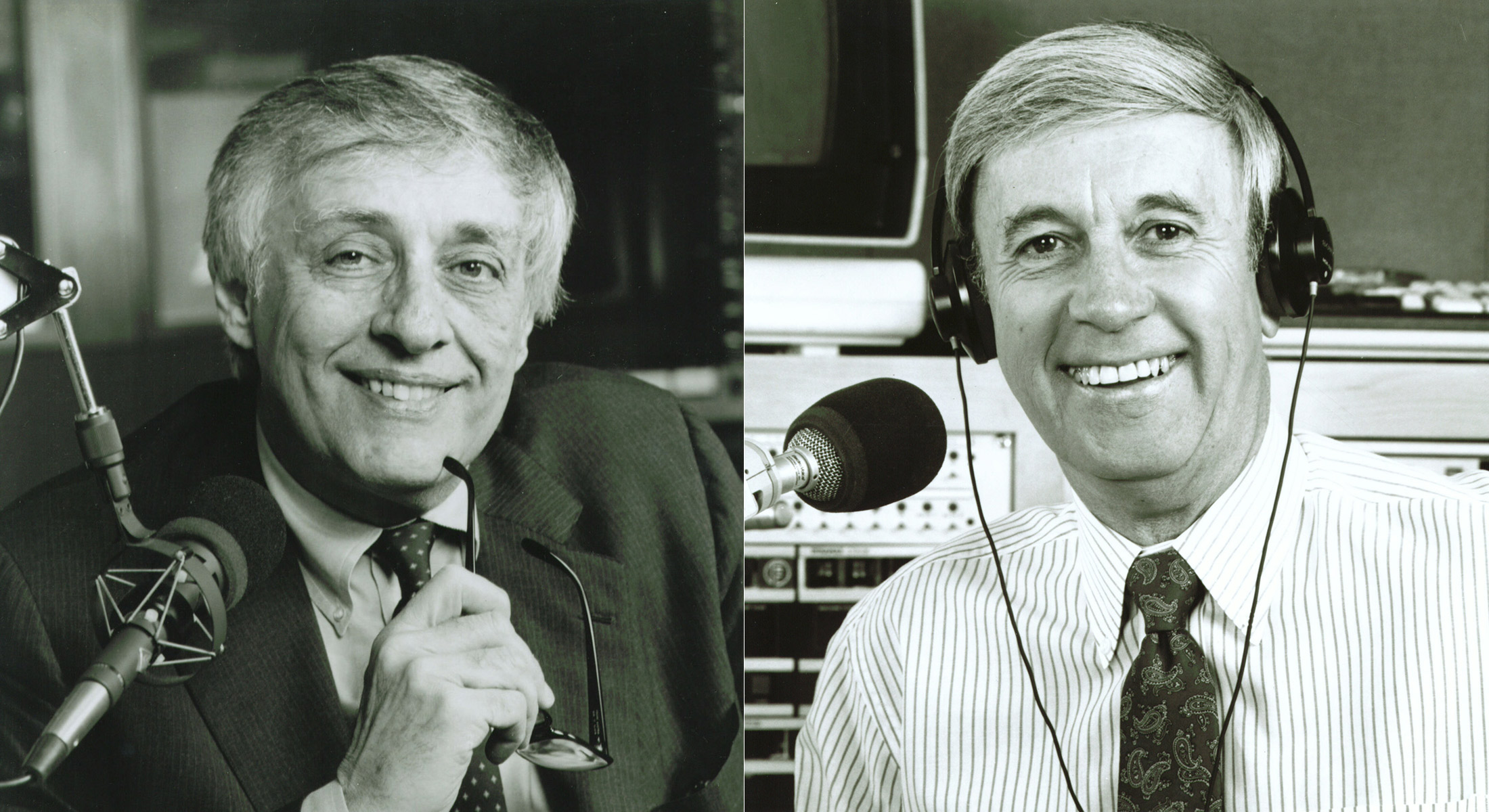 Photo: Longtime WGN Radio hosts, Milt Rosenberg (left) and Wally Phillips (right). Their voices are some of those archived in the vast collection of WGN Radio recordings (1941-2011) recently gifted to Northwestern Libraries by Nexstar Media Group, Inc., WGN Radio’s parent company. Courtesy of WGN Radio.


 STAGE MAG
 NEXT BWW EVENTS STREAM