EIN Presswire’s priority is source transparency. We do not allow opaque clients, and our editors try to be careful about weeding out false and misleading content. As a user, if you see something we have missed, please do bring it to our attention. Your help is welcome. EIN Presswire, Everyone’s Internet News Presswire™, tries to define some of the boundaries that are reasonable in today’s world. Please see our Editorial Guidelines for more information.
Searching for your content… In-Language News Contact Us 888-776-0942 from 8 AM – 10 PM ET News provided by Jul 28, 2022, 09:00 ET Share this article 9 LP VINYL/6 CD BOX SET & DIGITAL HD/SD TO BE RELEASED ON OCTOBER 7, 2022 LOS ANGELES, July 28, 2022 /PRNewswire/ — Mark Knopfler – The Studio Albums 2009-2018, a 9 LP vinyl/6 CD boxset & digital SD/HD, will be released on October 7 by UMe/EMI, gathering together the second half of his solo songbook with his more recent studio albums, to add to last year’s ’96 – 2007 collection. The box will include Get Lucky (2009), Privateering (2012), Tracker (2015), and his latest release Down The Road Wherever (2018) plus a collection of studio b-sides and bonus tracks and two previously unreleased songs – "Back In The Day" and "Precious Voice From Heaven." The audio quality has been overseen by the original mastering engineer Bob Ludwig at Gateway Mastering, while vinyl was cut by Bernie Grundman. You can pre-order/pre-save the album HERE. "The Mark Knopfler songbook, since the Dire Straits years, is literally and pleasingly all over the map, and yet without any sense of an album being a miscellany – being merely the next thing Mark Knopfler comes up with. Cohesion seems instinctual to him, both as a writer and a guitar player. He has his subjects, as any writer luckily will – youth and aging (often his own), the working grind, the demi-monde, the louche, wandering life of the road, women and love, history, literature, The North of England, Geordie issues. All of these preoccupations get fused into songs – melodies, stories (always stories), settings, characters, dictions, breathtaking guitar virtuosity burning hot from within – which seem always to come round to being about seeking grace; a real-time, minor key, on-the-ground grace. And also frequently about not finding it." Richard Ford Mark Knopfler, singer-songwriter, record producer, and composer, is one of the most successful musicians the UK has ever produced and is often cited as one of the greatest guitarists of all time. He first came to prominence in the 80s as the leader of Dire Straits, who created many of the signature songs of the era including "Sultans Of Swing," "Money For Nothing," "Romeo And Juliet," and "Walk Of Life." Dire Straits last toured in 1992 and Mark set off on a new path as a solo artist. In the ensuing years, Knopfler has released nine solo albums of sophisticated rootsy rock and has continued to sell out tours across the globe with his band, delighting audiences wherever he goes. Over the years, Mark has written the music for several films, including Local Hero, Cal, The Princess Bride, Last Exit To Brooklyn, and Wag The Dog, and has played and recorded with many artists, including Bob Dylan, Van Morrison, Tina Turner, Randy Newman, and the late Chet Atkins. The new live musical version ofLocal Hero, with new music and lyrics by Mark, will be staged at Chichester Festival Theatre from October 8 – November 19, 2022. Mark Knopfler – The Studio Albums 2009-2018 will be available in two physical formats – 9LP and 6CD – and a digital equivalent in both SD and HD. Format: 9LP Boxset 9LP collection pressed on 180g black vinyl and housed in a rigid outer slipcase. Includes 5 embossed art prints of each of the original covers. LP 1 & 2: Get Lucky LP 3 & 4: Privateering LP 5 & 6: Tracker LP 7 & 8: Down The Road Wherever LP 9: Back In The Day: The Bonus Tracks 2009-2018 LP Track List Get Lucky – LP 1 &2: Side One Side Two Side Three Side Four: Even Luckier – Extra Tracks Privateering – LP 3 & 4: Side One Side Two: Side Three: Side Four: Tracker – LP 5 & 6: Side One Side Two Side Three Side Four: Down The Road Wherever – LP 7 & 8: Side One Side Two Side Three Side Four Back In The Day: The Bonus Tracks 2009-2018 – LP 9: Side One: Side Two: Format: 6CD Boxset 6CD collection in a clamshell-style box. Original studio albums are housed in gatefold sleeves with lyric sheets. Bonus disc in single sleeve wallet with lyrics insert. Plus 5 art cards CD Tracklist: Get Lucky – CD1: Privateering (Part 1) – CD2: Privateering (Part 2) – CD3: Tracker – CD4: Down The Road Wherever – CD5: Back In The Day: The Bonus Tracks 2009-2018 – CD6: Format: Digital / SD Format: Digital / HD 1: GET LUCKY 2: PRIVATEERING 3: TRACKER 4: DOWN THE ROAD WHEREVER 5 – BACK IN THE DAY: THE BONUS TRACKS 2009-2018 Mark Knopfler– The Studio Albums 2009-2018will be released on October 7, 2022. You can pre-order/pre-save the album HERE: www.markknopfler.com SOURCE UMe/EMI Cision Distribution 888-776-0942 from 8 AM – 9 PM ET
Get local news, offers & more… Often when talking about a performance, the ones that get the spotlight in articles and reviews are generally the lead actors and actresses, sometimes the additional characters, possibly the director and choreographers and, if there is any room left, the light and sound and musicians. But the truth is, without the behind-the-scenes artists, these shows would fall apart. One such person in Arkansas that holds the productions together, and frankly, enhances the artistry, is music performer extraordinaire-Michael Heavner. However, with the multitude of plays and musicals, concerts, classes, and music productions, catching a moment with Heavner is no easy feat. At any point in time, he may be music directing at a university or theatre, music producing for anyone ranging from theatres to international singers, or playing piano at a festival, concert hall, or smoky honky-tonk. He is truly a musical master and Central Arkansas theatre is lucky to have his talents within reach. I wanted to interview Mr. Heavner, because almost every time I went to review a play or musical, his name kept appearing in the Playbill. It was like I was professionally stalking him. He is everywhere. To date, Heavner has been Music Director for 30 musicals/shows, orchestrated 28 productions, played in four national tours, arranged sound design for four shows, was a guest artist for four shows at two different universities, was musical arranger for three shows, conductor for two shows and, as an added surprise, has played country music in bars for over 20 years. When not haunting the various theatres, he is audio producing for other people or being a featured player on other musical endeavors. How does he fit all of that in? Good question. I had the privilege to sit down with Mr. Heavner to discuss his extensive career and what brought him to my attention for Broadway World. In the beginning….. Michael Heavner’s career did not begin in an orchestra pit but still began similarly to most musicians. Starting with formal piano lessons at the age of seven, Heavner naturally blossomed his musical skills, was gifted a guitar by his mother before her passing, and practiced every chance he was given. “I grew up playing in a band starting at the age of 14 with two older brothers, and within a couple of years we were playing at some really nice places,” Heavner said. Things seemed to be going so well for their band RENEGADE, that he dropped out of high school in the eleventh grade to pursue the band full-time. “Our band was doing really well, and I dreamed of the big time,” Heavner says with a laugh. With stardom eluding him in his youth, he corrected his educational detour after a few years. “When I was around 21, I realized what a BIG mistake I had made by quitting school, so I enrolled myself in the Little Rock Adult Education Center for four months and obtained my GED.” Heavner did not stop there. “When I was 22, I wanted to gain more musical knowledge and heard I could go to University of Arkansas, Little Rock, to take piano, guitar, and voice lessons. So, with my very long rock-and-roll hair, I went to UA Little Rock with my Gibson Les Paul in hand. I never dreamed of what happened next.” Heavner was greeted by UALR Piano Class Coordinator Martha Ann Edwards, who took him through the audition process which resulted in a full scholarship to study music and piano. “I played her a couple of Styx songs on the piano and was offered the scholarship. They never did hear me play my guitar.” With classes underway, the music life came calling. “Almost immediately (after starting at UALR) I get a call from the Red Gate Supper Club out on Highway 5. I played country music at night and studied classical and jazz during the day, and practiced every chance I could,” Heavner said. “I loved it. It was refreshing, and just what I wanted at the time.” Technology In the summer of 1988, Heavner found a new, additional passion. “I took a class with a visiting guest artist called Intro to Synthesizer, and I was bitten hard by the music technology bug. Soon after, I bought the best music computer on the market, a Yamaha C1 MIDI (Musical Instrument Digital Interface) computer,” Heavner said with a glean in his eye. “That’s when I began orchestrating and recording.” Gigs kept coming for Michael Heavner. After playing for a few bands and then doing a stint in a house band at the Holiday Inn in Jacksonville, Ark., Heavner joined up with recording artist Jeff Bates. “I played on his debut CD, and played with Jeff for two and a half to three years while he was here in town.” On The Road Finally in 1995, Heavner was offered his first opportunity to play in theatre. ALWAYS…PATSY CLINE was in its infancy when Heavner was approached to join. “Ted had just written it, and it had done a small run at the Ryman in Nashville. Then they brought it to the Arkansas Rep.” Because Heavner had a lot of country music background, he admitted, “I was the perfect fit. I already knew most of the material anyway, so I was able to jump in.” After finishing the show at the Rep, he joined the national tour as their pianist. “Then they did a remount the following year, and they gave me the Musical Director position. We toured coast to coast, border to border. It was incredible.” After he finished touring with ALWAYS…PATSY CLINE, Heavner joined the touring company of IDOLS OF THE KING. “It was written by Ronnie Claire Evans, the store keepers’ wife from the Waltons. It was a big deal,” Heavner smiles saying. IDOLS OF THE KING is about how fans imortalized the king of rock-n-roll, which was interwoven inbetween songs sung by “Elvis”. “IDOLS was a rock musical. It was great.” His next national tour was BLUES IN THE NIGHT, a revue of blues songs around three women who are seeing the same man and sing about their lives, memories and music on a lonely night. “BLUES IN THE NIGHT is more of a jazz musical and it is written out note for note.” Heavner talked about his struggles with the score but was pleased he stayed with the company. “Director Brad Murray convinced me to stay with the show, and I’m so glad I did. We toured everywhere, and it was incredible.” When Heavner finished his run with BLUES IN THE NIGHT, he took a resident gig in Mackinaw City, Michigan, with LOST IN THE FIFTIES, which had a collection of 1950s songs with the cast dressed as if they were going to the hop. “We were the only theatre in town. We did six shows a week, two shows a day.” Personal tragedy hit the Heavner family in between his two seasons with LOST IN THE FIFTIES. “My brother’s four-year-old son was hit by a U-Haul truck and killed, and then two weeks to the day, my dad was killed turkey hunting.” Even with the heartache, he went ahead and did another run in Michigan with LOST IN THE FIFTIES, before returning home to stay for a while. Member of the Country Club When not touring, Heavner spent his time playing piano at Jimmy Doyle’s Country Club, which he continued through 2021 when the venue in North Little Rock, Ark. closed, and “I also did many, many shows at the Arkansas Repertory Theatre either as a keyboard player or musical director.” When asked what he loves to do the most, he openly admits, “My favorite thing to do is play piano in a honky-tonk band. I think it comes from the stress of doing theater shows-whether you play live or you are recording/producing it.” He continues saying, “It’s my release. It’s an acquired taste. It grows on you.” Longtime friend and Tragikly White Sound Engineer Bobby Wood said, “Our last gig together was at Jimmy Doyle’s Honky-Tonk. Jimmy and Patsy Gayle thought Mikey hung the moon. Everybody looked to Mikey as the band leader, even though he will tell you he was not the band leader but he was, he just didn’t know it.” Respect emitted from Wood as he kept saying, “Everybody kind of leaned on Mikey for what was going on. Mikey is one of those sweetheart guys…you know what I mean? He’s absolutely non threatening..super nice guy.” Education on the next level Education started pursuing Heavner shortly after the turn of the century. “Around 2003 I was at home and my former chairperson from UA Little Rock called me and asked if he could bring someone to my home and show them my music computer recording techniques,” Heavner explains. “My chair person along with two faculty members from the music department picked some guy up at the airport and drove straight to my house! The gentleman asked me to demonstrate things like making one side of the stereo recording go in reverse, and much more, and of course I did. Ultimately their visit led to my full-time appointment at UA Little Rock as an instructor of Recording Arts Technology.” Indeed, Heavner was invited to teach Music Technology and Beginning Piano at UALR in 2006. His love affair with audio recording started in the late 1980s due to his rock-n-roll band days. “I was always interested in the latest gadgets, so I was actively recording and working with music technology during this whole time.” Heavner’s audio program of choice is Cakewalk, and because of his involvement with it throughout the years, he continues to have early access to the updated releases. “In 2008 Cakewalk gave me an offer. They gave me a prelaunch candidate #6 because of all the reviews of me telling them about possible bugs. They gave me everything they had for free…all their plugins, all their virtual instruments, and they have kept me on to this day,” Heavner proudly says. Working in the theatre department at UALR was a surprise to Heavner. “When I was hired, I was kind of tricked into working with the theatre department; they never mentioned it.” He served the music department from 2006-2010 concurrent with the Department of Theatre Arts and Dance. In the Fall of 2010, UALR began offering a BFA in dance, so he switched to the Theatre Department as a full-time dance musician for ballet and modern dance, instructor, and musical director. “I had never accompanied a ballet before. I worked with choreographers and other dancers, but never a ballet, so I reluctantly said yes.” The students seemed to have won Heavner over during his time there. “I would have done anything for any student in my 16 years at UA Little Rock-music or dance students.” His co-worker Dr. Karen Kuralt noticed the difference he made with his students. “As a teacher, his most noticeable quality was how much he supported his students. He was always there for them, supporting their performances,” Dr. Kuralt said. “He was enthusiastic in a field where many students are harshly criticized as they try to become professionals. His smile could lighten any student’s day.” Heavner retired early from UALR when the university dismantled the dance program in 2021. Before he retired, though, Heavner decided to take advantage of the opportunities offered at UALR. “Part of my benefits for being fully vested at UALR is that I got a 90% discount on classes that I wanted to take. So as if I didn’t have enough to do already, I decided to get a Master’s Degree,” says Heavner. “There were a lot of changes at UALR-different computing systems as technology moved forward and online classes began to form. I thought I want to know what it’s like to be a student; I want to know Blackboard, which is what they use now, and what better way than to take online classes myself.” Heavner graduated with a Masters in Interdisciplinary Studies with emphasis in Music and Rhetoric and Writing in 2018. “It enabled me to be a better employee.” As part of his Master’s education, Heavner created a website specifically for dance. “I have an educational website. It’s called Music for Martha (musicformartha.com). It’s a collection of dance recordings,” Heavner said. “It’s very specific to Martha Graham beginning dance technique, but it’s also an educational portal. It has resources for online research geared toward music and dance.” Heavner beams, “My Music for Martha collection has sold all over the world, which has blown me away at times. But, music for dance classes is a very niche market, especially for Martha Graham dance classes.” Again, Heavner’s attitude didn’t go unnoticed. “He was fun to have in class as a student, because he was passionate about learning, and not just in his own specialty,” Dr. Kuralt said. “He took my Document Design class, which gave him a great outlet for his creativity and communication skills.” Demands for Orchestration While the demands of academia monopolized his time during the day and the honky-tonk filled up his nights, Heavner switched from playing live at theatres to orchestrating productions. “A lot of the venues that I was asked to orchestrate shows for were smaller venues that could not afford to pay to rent the orchestral tracks offered by the companies, even though they can supply you with the software and charge the theatres per edit.” So, because budget is always a concern, especially with the smaller theatres, Heavner’s production talents have been in high demand. “The orchestrations that I do, I always hire a drummer who does the drum tracks,” Heavner said. “I pay him very well, and even though I play guitar, I bring over a guitar player after I’ve orchestrated things. I’m real mindful as a musician not to cut people out. It’s for theaters who simply cannot afford to hire a band.” Heavner says he has the orchestrations ready before rehearsals begin, and explains what it takes to get the music completed. “What it takes to orchestrate a show-you have to be able to read music; You have to know all the instruments; You have to know the articulation; and you have to know transposition and all the transposition instruments.” He continues, saying, “You have to know music theory; You have to know orchestration and have computer skills.” I mentioned to Heavner that one of the more frustrating things as a reviewer that I see is when a performer doesn’t know when to enter the song and misses their cue. He explained that to remedy that, “I usually play the first two bars or give a bell cue, or I’ll go the extra mile in the middle of the song and add a piano cue so they know that’s their cue to come in.” Michael Heavner Live After his time at UALR and Jimmy Doyle’s Country Club, Heavner and the house band went out and played at different venues. “We’ve had a great time playing together, we’ve done good.” Heavner also joined up with rock band Just Sayin’. “We have played different political events, boys and girls club, Hotel Hot Springs, Fourth of July Celebration; we performed a big show at the Hot Springs Airport on Memorial Day, which had a big fireworks display. There were five to six thousand people there, and we were the headliners.” Regrets….I have a few Because of his loyalty to UALR there have been several missed opportunities that he now ponders from time to time. During the winter of 2003, he was offered a position at Shoji Tabuchi in Branson. “I got there, but I didn’t feel comfortable. It did pay a lot of money, but I had to pay for my own housing. So, I found a cheap hotel on the strip for $500 a month. But during the short rehearsal period-3 weeks-things just went really bad for me,” Heavner laments.”I came down with the flu really bad; My hotel room got ransacked; It was late winter and my serpentine belt broke on my car, which made my windows fog up because it controls the fan, and then I pulled into Walmart and ran over one of those stop signs that are posted in tires that have concrete holding them up.” Heavner continues saying, “I was one of three keyboards, they didn’t have a three key book per se, but there was a big orchestra, and I just didn’t fill it in my heart, so I quit. But on my way home, I received a call from The Rep to play Key 2 for Caberet, so it was meant to be.” Then in 2008, just two years into UALR, Branson calls again. “I received a phone call from the Shoji Tabuchi Theater asking me to be Musical Director and would I be interested. I laughed and explained that I was fully vested at UALR, and that I just couldn’t do it. Afterwards I felt so bad.” Heavner even turned down world tours because of his loyalty to UALR. “I’ve missed so many opportunities…Key 3 for the world tour of Cats– I was called for that. I was asked to audition for the world tour of Beautiful the Carole King Musical. It’s touring the world right now. Those are the kinds of missed opportunities I had staying at UALR.” Moving Onward At the beginning of 2022, Heavner was invited to be Musical Director for LITTLE SHOP OF HORRORS at the University of Central Arkansas, while also orchestrating THE WIZARD OF OZ for The Argenta Theatre. Also, he has been working with an international recording artist. “Recently I have been producing music for a girl in Poland. Magdalena Meisel was #2 in The Voice of Poland-It’s a pretty big deal,” Heavner said, as he was talking about the process. “I do the orchestration. She kind of writes the songs, and then she will sing to a piano part. I will rearrange the music following her vocals, send it back, she sings her vocal part and sends it back clean, and then I produce it.” Heavner takes it personal when he produces for others. “When I record for individuals, I try my best to see inside the person’s mind and play whatever is given to me (spiritually) at that moment in time. My goal is always to serve and please any client I work with, rather it is face to face or from a faraway country.” Hopes and Dreams Heavner still has goals he would like to achieve. “I would love to join a world tour.” And according to Mr. Wood, Heavner has a good shot at achieving whatever he sets out to do. “He’s a self-made man. He grew up hard, he really did. He’s an inspiration to others, because he pulled himself up out of nowhere and made himself somebody, and everybody I know that knows him feels the same way about him. I’m being real honest. He’s rare.” For more information and to see what all Michael Heavner has to offer, check out his website at michaelheavner.com. Review: CASA VALENTINA at The Weekend Theater will make you laugh, cry, think, and act Review: MEMPHIS THE MUSICAL at Argenta Community Theatre Addresses Racial Tension and Change During the Rise of Rock-N-Roll The Royal Players Announces 2022-2023 Season Featuring HELLO, DOLLY!, A CHRISTMAS CAROL & More Review: SHREK! THE MUSICAL at Murry’s Dinner Playhouse is Fun for The Entire Family Prior to becoming a writer for Broadway World, Theresa Bertram has had an extensive career in the media/entertainment business. Born in Las Vegas, Nevada to a professional poker-playing mother, Theresa’s… (read more about this author) Hot stories
Review: MEMPHIS THE MUSICAL at Argenta Community Theatre Addresses Racial Tension and Change During the Rise of Rock-N-Roll CONTEST: Win A Pair of VIP Tickets to see Sarah Brightman in Las Vegas! Review: SHREK! THE MUSICAL at Murry’s Dinner Playhouse is Fun for The Entire Family Review: CASA VALENTINA at The Weekend Theater will make you laugh, cry, think, and act BroadwayWorld TV
Hi, what are you looking for? By Published Global Medical Device Cleaning Solutions Market 2022-2028, By Product Type (Pre-cleaning Equipment, Manual Cleaning Equipment, Automatic Cleaning Equipment, Disinfection Equipment), By Application End User (Hospitals and Clinics, Diagnostic Centers, Dental Clinics and Hospitals, Other), and Geography (Asia-Pacific, North America, Europe, South America, and the Middle East and Africa), Segments and Forecasts from 2022 to 2028. According to our latest study, the global Medical Device Cleaning Solutions market size is estimated to be worth USD million in 2021 and is forecast to a readjusted size of USD million by 2028 with a CAGR of Percent during forecast period 2022-2028. According to the latest Medical Device Cleaning Solutions Market analysis by Eon Market Research, the Medical Device Cleaning Solutions market is expected to grow significantly in the coming years. Analysts have looked at the growth drivers, barriers, challenges, and opportunities in the global market. The Medical Device Cleaning Solutions report forecasts and forecasts the expected market direction in the coming years. The Medical Device Cleaning Solutions market report’s authors have done an excellent job detailing the key business moves the giants are taking to keep the market viable by analyzing a simple landscape. The purpose of this Medical Device Cleaning Solutions market report is to provide information on global developments in the Medical Device Cleaning Solutions business, mainly related to the manufacture and trade of products. Click Here to Get the Sample Medical Device Cleaning Solutions Market Report The global Medical Device Cleaning Solutions market report provides an overview of current market information and long-term forecasts. Medical Device Cleaning Solutions The market report provides comprehensive market analysis including revenue and volume development patterns, recent growth drivers, analyst reports, industry commercialization statistics, and data. According to research, the market and Medical Device Cleaning Solutions industry is outlined by several deep, significant, and encouraging aspects. This analysis covers the market dynamics and growth, drivers, capacity, and the evolving financial models of the Medical Device Cleaning Solutions market as a result of COVID-19 and its recovery. The study also includes spending projections for Medical Device Cleaning Solutions from 2022 to 2028. Have Any Query? Ask Our Experts:https://www.eonmarketresearch.com/enquiry/95920 The research report provides a comprehensive overview of the key Medical Device Cleaning Solutions market, including country-by-country geographic and global market studies, industry growth CAGR forecast over the forecast period, production, key drivers, competition, and aggregate demand forecast. In addition, the study discusses the significant obstacles and hazards that will arise during the forecast period. The Medical Device Cleaning Solutions market is divided into two categories: types and applications. Businesses, players, and other decision-makers in the global Medical Device Cleaning Solutions marketplace will benefit from using studies as a valuable resource. Click Here to Browse Complete Medical Device Cleaning Solutions Market Report Details with Table of Content With List of Tables Key insights from the global Medical Device Cleaning Solutions market: 1. Medical Device Cleaning Solutions Market forecasts of future production, price models, demand, and statistics. It also examines key emerging styles and their impact on current and future growth. 2. This study distinguishes the many sections and sub-segments of the Medical Device Cleaning Solutions market to understand its layout. 3. Companies were profiled in the Medical Device Cleaning Solutions study to characterize inventory, revenue, growth prospects, trends, opportunities and threats, and Medical Device Cleaning Solutions improvement initiatives over the next few years. Click Here To Buy this Premium Medical Device Cleaning Solutions Market Research Report You can place an order or ask any questions, please feel free to contact at [email protected] | +1 310 601 4227 Related Reports: 1. Sign Language Interpretation System Market Size 2022 Analysis by Competitive Vendors in Top Regions and Countries, Revenue, Growth Rate, Development Trends, Threats, Opportunities, and Forecast to 2028 2. Music-making Software Market Size Research Report 2022 by Competitive Vendors in Top Regions and Countries, Development Trends, Threats, Opportunities and Forecast to 2028
Leading Global Music Publisher Sponsors The J Dilla Music Tech Grant As Part of a 10-Year Commitment Manuel Arts High School in Los Angeles is the First School Selected LOS ANGELES–(BUSINESS WIRE)–Kobalt today announced they have partnered with the Save the Music Foundation and will sponsor the J Dilla Music Tech Grant. This grant will provide resources, education, and support to the Manuel Arts High School in Los Angeles, CA, for ten years.
As part of this commitment, Kobalt will provide Manuel Arts High School with custom masterclasses each academic year to educate and give students access to music learning in the modern-day music industry. “Kobalt has a long history of empowering creators,” said President and Chief Operating Officer Jeannette Perez. “This partnership is another example of Kobalt’s commitment to supporting the next generation of creators and providing opportunities to underserved communities.” “Music education undoubtedly provides a myriad of benefits for students in areas of social, emotional learning, identity building, confidence, as well as the incredible skill of being able to create and analyze music,” Joshua Gronlund, Director of Choirs and Music Production at Manual Arts High School said. “Through music production, students will create and analyze electronic music, hip hop, reggaeton, and pop which validates the cultures, identities, and learning styles of all students in our community. I am so thankful that Kobalt has supported the growth of a program that is rooted in culturally responsive music education.” “Save the Music Foundation has created a space for Kobalt to be able to give back in a big way and impact the lives of children and support in building a prosperous future for them,” said Kobalt’s Director of People & Culture & Global Diversity, Equity & Inclusion, Patricia Pereira. “Kobalt will educate and support children’s learning by providing awareness, education, and insight into the music ecosystem. We are excited about this opportunity and can’t wait to start.” Said VP, Creative, and Co-Chair of the DE&I Community Task Force at Kobalt, Emily Bines, “We are excited and honored to collaborate with Save The Music and Manual Arts High School. We have high hopes this partnership will be incredibly impactful to the students now and for years to come. We are excited to offer Kobalt’s unique insights and teachings – and to paint a picture of all the incredible opportunities the music industry has to offer.” “Kobalt’s commitment to invest in music education in Los Angeles means that students will be making music in this culturally and musically rich community for years to come,” said Executive Director of Save The Music, Henry Donahue. “And they’ve also gone beyond a financial investment in our J Dilla Music Tech program – creating a set of curricular materials based on the company’s music tech and music business expertise. Together the grant and the curriculum will create new opportunities for LA students to reach their full potential through the power of making music.” “The confluence of Save the Music, J Dilla, and Kobalt at Manual Arts High School will eliminate the opportunity gap and provide access to the arts, while engaging students in culturally relevant music education,” said Frances Baez, Superintendent of Local District Central in the Los Angeles Unified School District. About Save The Music Foundation Website | Instagram | Twitter | Facebook The Save The Music Foundation is a 501(c)(3) nonprofit that helps students, schools, and communities reach their full potential through the power of making music. For 25 years, Save The Music has addressed the systemic inequities in music education by investing in culturally rich communities across the US – donating school instruments and technology; working as a convener, expert, and catalyst; helping to train and support teachers; and starting and building thousands of new music programs in over 286 school districts nationwide. Learn more at https://www.savethemusic.org. About The J Dilla Music Tech Grant Developed in partnership with Pharrell Williams’ creative collective, i am OTHER, supported by Ma Dukes, and named after her son, legendary hip hop producer J Dilla, the STM J Dilla Music Technology Grant delivers the future of music education through innovative tech tools and curriculum to bring out students’ inner creativity, talent, and confidence by teaching the fundamentals of electronic music creation, recording, and production. Learn more at https://www.savethemusic.org/how-we-work/explore-music-tech/ About Kobalt Kobalt is a music and technology company built for artists, songwriters, publishers, and labels as an alternative to the traditional music business model. Across 13 global offices, the company serves over 700,000 songs, 30,000 songwriters, and 500 publishers, including Roddy Ricch, Max Martin, FINNEAS, Karol G, Andrew Watt, Stevie Nicks, Phoebe Bridgers, The Lumineers, Gunna, Justin Quiles, The Foo Fighters, Paul McCartney, and many more. On average, Kobalt represents over 40% of the top 100 songs and albums in the US and the UK. Through Kobalt’s unique services and technology platform that tracks and collects royalties for the trillions of micro-payments in digital music today, the company continues to drive innovation in music and technology. Kobalt’s latest innovation, AMRA, is a global digital society that has reached all corners of the world outside of the US and includes direct digital collection for China, Brazil, Japan, and more. Kobalt [email protected] Save the Music Foundation Zack Flores [email protected] Kobalt [email protected] Save the Music Foundation Zack Flores [email protected]
The latest breaking updates, delivered straight to your email inbox. Beginning Aug. 1, 2022, WESH 2 will officially launch the Osceola County Bureau in the heart of Kissimmee. The Bureau marks WESH 2’s commitment to covering the expanding population of Osceola County, which has seen rapid growth in the last five years. The bureau will be the home base for a dedicated Osceola County news team: Reporter Megan Mellado and Video Journalist Marvin Somoza. The team, which is bilingual, will contribute reports to WESH 2 News and Estrella TV in English and in Spanish. In addition to exclusively covering the county, WESH 2’s Osceola bureau is equipped with a permanent studio that can go on-air live in a matter of minutes when breaking news happens in the area. “Osceola County is growing so fast and is such an important part of the Central Florida community, that we felt it was necessary to have a permanent studio there,” said Stephanie Linton, WESH 2 News Director. “We want our bilingual audience to know we will be covering stories in their community and this dedicated presence in Kissimmee is proof of our commitment.” The Osceola location is the third County Bureau for WESH 2 News with the others in Volusia and Brevard counties. Hearst Television participates in various affiliate marketing programs, which means we may get paid commissions on editorially chosen products purchased through our links to retailer sites.
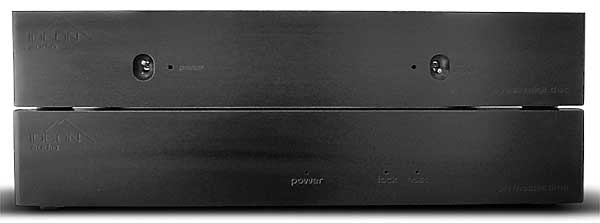
I learned about music in places like this one, having figured out that the occasional eye roll was worth putting up with for the information and knowledge on offer. I grew up at a time when music was obtainable mostly on physical media: records, CDs, cassettes. It was usually necessary to buy a recording in order to hear it, so one’s budget had to be apportioned impactfully. Reliable insider dope was crucial. Today, the internet and streaming have revolutionized access to music in ways that are frankly thrilling (if not for musicians, then definitely for listeners). I teach college classes, and my music-loving students know more about a broader array of music than I did at their age, thanks partly to YouTube and Spotify. During the most isolating months of the pandemic, Roon, Tidal, and Qobuz allowed me to spend many happy hours learning about Indian classical music, the pop traditions of Ethiopia, Mali, and Senegal, and some obscure corners of lover’s rock and classic reggae, propelled record by record through the Tidal and Qobuz catalogs by Roon’s machine-learning algorithms. What I’m getting around to saying is that, for many of us, streaming has become a crucial part of our musical diets, more indispensable than CDs ever were. For me though, this musically exciting fact is sonically challenging, because I have a strong preference for music pressed on vinyl. I’ve listened to, and reviewed, plenty of nice-sounding digital gear, but I cannot remember many times I thought, “wow, this sounds incredible!” the way I sometimes do when I listen to a system organized around a well–set-up turntable. Many digital sources excel at reproducing the contours of music, including the tiny sonic minutiae some listeners call “plankton.” What they struggle with is filling in those contours with realistic information that registers as texture, color, impact, physicality, presence, and, most importantly, a sense of tonal density—of music pressurizing the air. I tend to think of these qualities as reproduced music’s third dimension; for me, they are essential to the illusion of a musical event happening in my listening room. Unfortunately, these qualities do not show up on an oscilloscope (footnote 1). Engineering a digital source that is able to engage and hold your attention is not addressed by simple strategies like lowering distortion or minimizing jitter. It requires a more complex and multilateral approach. The Ideon D/A System Which brings me to the Ideon Ayazi mk2 DAC ($3950) and 3R Master Time Black Star USB reclocker (also $3950), a two-box digital source that made me think about the ways a component can encourage us to seek out certain musical experiences. Founded in Athens in 2016 by George Ligerakis and Vasilis Tounas, Ideon Audio manufactures only digital gear and takes some unorthodox approaches to getting it to sound good. Consider the Ayazi mk2, which is designed around the ESS9023 DAC chip. These days, some perfectionist DACs in a similar price bracket convert data using R-2R resistor networks, while others rely on many lines of custom code. In contrast, the Ayazi relies on the ESS chip and its onboard filters; according to Ligerakis, the special sauce lies in the way it’s optimized and used. Ideon emphasizes regulated, stable linear power supplies and “persistent” reclocking. If I had assumed that the inexpensive integrated DAC chip told me something about how the Ideon stack would sound, I would have been completely wrong. In the metal, the Ideon components are as spare as they are elegant. Their petite yet reassuringly heavy battleship-gray cases, which measure roughly 11″ × 7″ × 3″, reflect their streamlined purpose; the front panel of the Ayazi contains only a power switch and an input selector offering a choice of USB and S/PDIF. The 3R Master Time Black Star (typing the full name of this product makes me feel a little silly, so I will refer to it henceforth as the Master Time) greets the listener only with tastefully dim LEDs marked “power,” “lock,” and “host.” On the back of the Ayazi you will find the two aforementioned inputs, a pair of RCA analog outputs, and an IEC power receptacle. The rear of the Master Time offers a USB input and output, a switch for the 5V power rail, and, of course, another power cord input. That’s it. The Ideon components boast no selectable filters or oversampling options, no network inputs, no I2S or MQA. They don’t even decode DSD. The choices reflect what Ligerakis described to me as the “particularly Spartan approach” he took to maximizing the listening experience; this reference from Ideon’s Greek CEO delighted the geek in me. In use, the Ideon stack is simplicity itself: I connected the Sonore opticalRendu streamer to the Master Time using an AudioQuest Diamond USB cable, then routed another Diamond USB cable from the Master Time to the Ayazi. Then I set Roon to convert DSD files to PCM. Game on. Listening To get an obvious question out of the way: Yes, I did listen to the Ayazi without the Master Time. By its lonesome, the Ayazi reproduced music with less resolution and timbral accuracy and created a spatially smaller, less lifelike sound. Music sounded duller and less compelling. After checking this experiment off my list, I left the two components connected. This review is of the Master Time and Ayazi together. The most obvious aspect of listening through the Ideon stack was how well it organized the recordings played through it. Nothing was exaggerated or missing, including deep bass and the high highs; nothing sounded strident or splashy. This sense of order was heightened by a profound silence. Digital components aren’t generally known for being noisy, but the Master Time/Ayazi created a musically significant silence, in part because of the remarkable resolution on hand. The Ideon components presented recordings as though bathed in brilliant light, with every speck of information illuminated in high contrast. In particular, they portrayed decay and reverberant trails with more precision and sustain than any source I’ve heard at home. On “I Believe in You,” from Talk Talk’s otherworldly Spirit of Eden (16/44.1 FLAC, Parlophone/Qobuz), a record that has become deservedly recognized as a key precursor to post-rock and an unclassifiable masterpiece in its own right, the low-level notes from Tim Friese-Greene’s electric guitar were rendered with such shimmering vividness that they seemed less like sounds and more like tumbleweeds blowing across the soundstage. The Master Time/Ayazi rendered music with none of the artifacts of early digital reproduction, which boil down to the sense of hollowness I touched on earlier: the impression that the music is a flickering hologram with little inside it. Best of all, the Ideon stack’s minutely detailed presentation didn’t detract from the music’s weight. Here, I’m not talking about the weight of low bass tones but rather the realistic sense of weight possessed by actual instruments and voices. And it imbued recordings with remarkable solidity, a genuinely lovely effect. Over the weeks I spent listening to these Greek components, a funny thing happened. As much as I admired them, their way with texture, presence, and color saturation—the tonal juiciness of a recording—was no match for the turntable and handful of low-output moving coil cartridges that lived on the shelf above them. I’m not sure any digital source can surpass a good turntable in this regard. But it became increasingly clear that the Master Time/Ayazi accomplished something that the analog source couldn’t: It created a pristine, spectrally quiet sonic world in which I could enjoy the unfolding of the most delicate musical events. After a while, I realized that the Ideon stack was subtly altering my listening habits, encouraging me to reach more often for music filled with these kind of diaphanous moments, which tend to be present most reliably on classical recordings. Sviatoslav Richter’s 1960 performance of Beethoven’s “Appassionata” (16/44.1 rip of BMG 07863-56518-2) is one of the marvels of recorded piano. It was committed to tape during his first visit to the West, belated because the Ukraine-born pianist—a closeted gay man whose father was murdered during Stalin’s purges—was politically suspect in his native Soviet Union. Richter turned the stately, flowing first movement into a harrowing statement; he dramatically extended the composition’s dynamics and took such liberties with the tempo that listening to it can constrict the throat with suspense. Weeks earlier, he had closed his first appearance at Carnegie Hall with a similarly radical performance of the Beethoven sonata, shocking the audience. The Master Time/Ayazi reproduced the acoustic of New York’s Webster Hall, where RCA engineer Lewis Layton recorded him, in all of its cavernous vastness; hearing the hall reverberate with Richter’s violent attack on the keyboard made the performance disturbing and powerful. The Ideon stack also allowed me to hear that no matter how forcefully Richter struck the keys, his playing remained in perfect control, a testament to his unearthly technique. A Comparison I compared the Master Time/Ayazi combination to my Sonnet Morpheus, another highly resolving DAC, which uses an R-2R conversion scheme. Listening to the beguiling title track from Bert Jansch’s Rosemary Lane (16/44.1 FLAC, Transatlantic/Qobuz) through the Morpheus, Jansch’s John Bailey–built acoustic guitar and quiet yet expressive singing sounded just as detailed but notably less coherent, both musically and sonically, than through the Ideon stack. The recording sounded splashier, with somewhat less weight, and didn’t hold my attention as reliably as it did when played through the Master Time/Ayazi. The Ideon rendition also sounded meaningfully quieter and slightly more dynamic. But then, even when I factor in the Denafrips Iris digital-to-digital converter I use to feed the Morpheus’s I2S input, the Dutch DAC costs about half as much as the Ideon stack. Summing Up During my time with it, the Master Time/Ayazi offered me something I didn’t know I wanted. No audio component offers every desirable aspect of sound reproduction, which means we have to settle for acceptable compromises. My version of audio heaven is the world’s best jukebox playing endless 45s; my choices in gear tend to prioritize dynamics, unambiguous bass, vast soundstages, and plentiful helpings of tone color, drive, and physicality. Of course, that is not the only path to paradise, and the Ideon components provide the kind of musical thrills one might hear through the original Quad electrostatic speakers: a crystal-clear, essentially neutral, hyperdetailed window onto the music that captures every nuance without sacrificing music’s weight and body. During my time with it, the Ideon stack operated flawlessly, offering no intrusions on my enjoyment. With a combined price of $7800, it is by no means inexpensive, but it provides good value for the refined musical spectacle it creates. That it inspired me to explore music that usually forms a relatively small portion of my musical diet is a testament to how compelling the Ideon stack makes the files played through it, and it is by no means a one-trick pony: It can play every kind of music with all of its strengths intact. I simply found listening to certain genres on it to be a revelation. If I were a listener of primarily classical and acoustic music, I would travel far to hear one.
Footnote 1: Maybe they do if you know what to look for.—Jim Austin
Why do so many Hi-Fi brands forgo balanced connections? This unit is $4000. Many amps have an input sensitivity >2V, so you’d thus have to deal with lower wattage or use an active preamp.
I for one, can’t understand usage of balanced lines. Balanced lines, separate neutral and ground wires are required in instances where there is great distance between mikes for example and pre inputs, as in stagework and large recording studios.
As you mention at homes, average source signal levels are as high as 2Vs and average distance between source and other components are usually less than 0.5 m.
There shouldn’t any use for balanced lines or connections at home. Yet they are often used on high priced equipment to give the illusion of high-end.
On the other hand, phono cartridges could benefit as their outputs are extremely low and susceptible to picking up hum.This is the only component in home audio where balanced lines could really help. Yet this fact is easily ignored by the high end crowd.
I’m not talking about balanced for increase performance, I’m talking about balanced as it 2x the output, 4Vrms being standard.
If this unit put out 4Vrms via RCA, I’d have no complaints. But it doesn’t, which leads to a smaller pool of amplifiers that can be paired with it without limiting the wattage.
Do note that even 4Vrms isn’t enough sometimes; the Purifi amp for instance, if you forgo any input buffer (for max performance), it requires something along the lines of 11Vrms!
MZKM: “Many amps have an input sensitivity >2V, so you’d thus have to deal with lower wattage or use an active preamp.”
Yes, it’s so easy to have far higher output gain from sources today with volume control and go direct without any negatives. (And as a bonus also have less distortion/colouration, than having an active preamp and another set of interconnects in line) These manufacturers that refuse to give it, probably also sell active preamps, or have a buddy that does.
Submitted by cognoscente on July 28, 2022 – 4:51am
Streaming a song costs the same amount of power as (buying and) downloading it once. Streaming (and data sharing in general such as on social media, the internet is one of the biggest polluters), eating meat, traveling and having a fireplace and bbq is not the future
Based on what I read here, you seem to have a limited experience with a DAC. Sure, you may have a ton of experience just not written here, but what I am picking up personally from your review is that you are not a DAC fanatic and you may not have an experience with other more established DACs around its price point. The question is – why is your review worth anything? Are you a professional reviewer knowing in and out of a DAC and its industry? Or, is your review just as good as any personal review on Amazon? You may be the former, but I’m leaning toward the latter.
All I care about is wether they know what to talk about. I don’t care if the person doesn’t even like music, as long as they are able to hear subtle changes and able to identify the changes occurred that resulted in that change (maybe the volume control is analog which has a large channel imbalance, altering the imaging/soundstage as the volume control is changed).
For me, I do not care if a $20,000 DAC sounds heavenly when it actually sounds similar to a $2,000 DAC. I read 3 DAC reviews from Alex. Every time, I cannot stop thinking ‘no.. I don’t think he knows a DAC. He does not sound like a DAC guy’. There are many products that sound wonderful. But, when a reviewer recommends a product, he must know how it compares to the competition. I have no idea who Alex is. Maybe he is/used to be a musician. Perhaps he can dive into the music deeper than most. But, say a grammy winning musician goes to an audio shop and listens to a DAC and loves it to death – it does not matter if he only heard 3 DACs in his lifetime. I personally find that’s not much different from a five-year-old finding the next greatest toy of all time every time he steps into the target.
Why do so many Hi-Fi brands forgo balanced connections? This unit is $4000. Many amps have an input sensitivity >2V, so you’d thus have to deal with lower wattage or use an active preamp. I for one, can’t understand usage of balanced lines. Balanced lines, separate neutral and ground wires are required in instances where there is great distance between mikes for example and pre inputs, as in stagework and large recording studios. As you mention at homes, average source signal levels are as high as 2Vs and average distance between source and other components are usually less than 0.5 m. There shouldn’t any use for balanced lines or connections at home. Yet they are often used on high priced equipment to give the illusion of high-end. On the other hand, phono cartridges could benefit as their outputs are extremely low and susceptible to picking up hum.This is the only component in home audio where balanced lines could really help. Yet this fact is easily ignored by the high end crowd. I’m not talking about balanced for increase performance, I’m talking about balanced as it 2x the output, 4Vrms being standard. If this unit put out 4Vrms via RCA, I’d have no complaints. But it doesn’t, which leads to a smaller pool of amplifiers that can be paired with it without limiting the wattage. Do note that even 4Vrms isn’t enough sometimes; the Purifi amp for instance, if you forgo any input buffer (for max performance), it requires something along the lines of 11Vrms! MZKM: “Many amps have an input sensitivity >2V, so you’d thus have to deal with lower wattage or use an active preamp.” Yes, it’s so easy to have far higher output gain from sources today with volume control and go direct without any negatives. (And as a bonus also have less distortion/colouration, than having an active preamp and another set of interconnects in line) These manufacturers that refuse to give it, probably also sell active preamps, or have a buddy that does. Cheers George Streaming a song costs the same amount of power as (buying and) downloading it once. Streaming (and data sharing in general such as on social media, the internet is one of the biggest polluters), eating meat, traveling and having a fireplace and bbq is not the future Based on what I read here, you seem to have a limited experience with a DAC. Sure, you may have a ton of experience just not written here, but what I am picking up personally from your review is that you are not a DAC fanatic and you may not have an experience with other more established DACs around its price point. The question is – why is your review worth anything? Are you a professional reviewer knowing in and out of a DAC and its industry? Or, is your review just as good as any personal review on Amazon? You may be the former, but I’m leaning toward the latter. All I care about is wether they know what to talk about. I don’t care if the person doesn’t even like music, as long as they are able to hear subtle changes and able to identify the changes occurred that resulted in that change (maybe the volume control is analog which has a large channel imbalance, altering the imaging/soundstage as the volume control is changed). For me, I do not care if a $20,000 DAC sounds heavenly when it actually sounds similar to a $2,000 DAC. I read 3 DAC reviews from Alex. Every time, I cannot stop thinking ‘no.. I don’t think he knows a DAC. He does not sound like a DAC guy’. There are many products that sound wonderful. But, when a reviewer recommends a product, he must know how it compares to the competition. I have no idea who Alex is. Maybe he is/used to be a musician. Perhaps he can dive into the music deeper than most. But, say a grammy winning musician goes to an audio shop and listens to a DAC and loves it to death – it does not matter if he only heard 3 DACs in his lifetime. I personally find that’s not much different from a five-year-old finding the next greatest toy of all time every time he steps into the target.
Advertisement Supported by A would-be singing star, he found success in Hollywood playing a variety of roles, but they were often quiet, dangerous men, like Paulie Cicero in “Goodfellas.” Send any friend a story As a subscriber, you have 10 gift articles to give each month. Anyone can read what you share. By Anita Gates Paul Sorvino, the tough-guy actor — and operatic tenor and figurative sculptor — known for his roles as calm and often courteously quiet but dangerous men in films like “Goodfellas” and television shows like “Law & Order,” died on Monday. He was 83. His publicist, Roger Neal, confirmed the death, at the Mayo Clinic in Jacksonville, Fla. No specific cause was given, but Mr. Neal said that Mr. Sorvino “had dealt with health issues over the past few years.” Mr. Sorvino was the father of Mira Sorvino, who won a best supporting actress Oscar for Woody Allen’s “Mighty Aphrodite” (1995). In her acceptance speech, she said her father had “taught me everything I know about acting.” “Goodfellas” (1990), Martin Scorsese’s acclaimed Mafia epic, came along when Mr. Sorvino was 50 and decades into his film career. His character, Paulie Cicero, was a local mob boss — lumbering, soft-spoken and ice-cold. “Paulie might have moved slow,” says Henry Hill, played by Ray Liotta, his neighborhood protégé in the film, “but it was only because he didn’t have to move for nobody.” (Mr. Liotta died in May at 67.) Mr. Sorvino almost abandoned the role because he couldn’t fully connect emotionally, he told the comedian Jon Stewart, who interviewed a panel of “Goodfellas” alumni at the 2015 Tribeca Film Festival. When you “find the spine” of a character, Mr. Sorvino said, “it makes all the decisions for you.” That didn’t happen, he recalled, until one day when he was adjusting his necktie, looked in the mirror and saw something in his own eyes. When he saw what he called “that lethal Paulie look,” Mr. Sorvino told The Lowcountry Weekly, a South Carolina publication, in 2019, “I knew at that moment I had embraced my inner mob boss.” He had made his mark onstage as a very different but perhaps equally soulless character in “That Championship Season” (1972), Jason Miller’s Pulitzer Prize-winning tragicomedy about the sad reunion of high school basketball players whose glory days are decades past. In the original Broadway production, Mr. Sorvino played Phil Romano, a small-town strip-mining millionaire arrogantly having an affair with the mayor’s wife. Mr. Sorvino received a Tony Award nomination for best actor in a play and reprised the role in a 1982 film adaptation. Paul Anthony Sorvino was born on April 13, 1939, in Brooklyn, the youngest of three sons of Fortunato Sorvino, known as Ford, and Marietta (Renzi) Sorvino, a homemaker and piano teacher. The elder Mr. Sorvino, a robe-factory foreman, was born in Naples, Italy, and emigrated to New York with his parents in 1907. Paul grew up in the Bensonhurst section of Brooklyn and attended Lafayette High School. His original career dream was to sing — he idolized the Italian American tenor and actor Mario Lanza — and he began taking voice lessons when he was 8 years old or so. In the late 1950s, he began performing at Catskills resorts and charity events. In 1963, he received his Actors Equity card as a chorus member in “South Pacific” and “The Student Prince” at the Theater at Westbury on Long Island. That same year, he began studying drama at the American Musical and Dramatic Academy in New York. Acting jobs were elusive. Mr. Sorvino’s Broadway debut, in the chorus of the musical “Bajour” (1964), lasted almost seven months, but his next show, the comedy “Mating Dance” (1965), starring Van Johnson, closed on opening night. Mr. Sorvino worked as a waiter and a bartender, sold cars, taught acting to children and appeared in commercials for deodorant and tomato sauce. After his first child, Mira, was born, he wrote advertising copy for nine months, but the office job gave him an ulcer. “Most of the time I was just another out-of-work actor who couldn’t get arrested,” he told The New York Times in 1972. “I had confidence in my ability, and I was angry as hell when other people didn’t recognize it.” Then his luck changed. He made his film debut in “Where’s Poppa?” (1970), a dark comedy directed by Carl Reiner, in a small role as a retirement-home owner. Then “That Championship Season” came along, starting with the Off Broadway production at the Public Theater. The film role that first won him major attention was as Joseph Bologna’s grouchy Italian American father in “Made for Each Other” (1971). Mr. Sorvino, almost five years younger than Mr. Bologna, wore old-age makeup for the role. He appeared next as a New Yorker robbed by a prostitutein “The Panic in Needle Park” (1972) but did not fall victim to the cops-and-gangsters stereotype right away. In 1973, he was George Segal’s movie-producer friend in “A Touch of Class” and a mysterious government agent in “The Day of the Dolphin.” Mr. Sorvino later played an egotistic, money-hungry evangelist with a Southern accent in the comedy “Oh, God!” (1977) and God Himself in “The Devil’s Carnival” (2012) and its 2015 sequel. He was a down-to-earth newspaper reporter in love with a ballerina in “Slow Dancing in the Big City” (1978). In “Reds” (1981), he was a passionate Italian American Communist leader just before the Bolshevik Revolution. He was Secretary of State Henry Kissinger, complete with German accent, in Oliver Stone’s “Nixon” (1995). And he played Fulgencio Capulet, Juliet’s intense father with an ancient grudge, in Baz Luhrmann’s “Romeo + Juliet” (1996). But in a half-century screen career, Mr. Sorvino’s characters were often on the wrong side of the law. He played, among others, Chubby de Coco (“Bloodbrothers,” 1978), Lips Manlis (“Dick Tracy,” 1990), Big Mike Cicero (“How Sweet It Is,” 2013), Jimmy Scambino (“Sicilian Vampire,” 2015) and Fat Tony Salerno (“Kill the Irishman,” 2011). And in at least 20 roles, he played law officers with titles like detective, captain or chief. For one season (1991-92), he was Sgt. Phil Cerreta on NBC’s “Law & Order,” but he found the shooting schedule too demanding — and difficult on his voice. Mr. Sorvino continued to sing professionally, making his City Opera debut in Frank Loesser’s“The Most Happy Fella” in 2006. His personal life sometimes reinforced his tough-guy image. Most recently, in 2018, when the movie mogul Harvey Weinstein was on trial for criminal sexual acts — and Mira Sorvino had accused him of harassment — Mr. Sorvino predicted that Mr. Weinstein would die in jail. “Because if not, he has to meet me, and I will kill the [expletive deleted] — real simple,” Mr. Sorvino said in a widely aired video interview. Four months later, Mr. Weinstein was sentenced to 23 years in prison. Mr. Sorvino’s final screen roles were in 2019. He played a corrupt senator in “Welcome to Acapulco,” a spy-comedy film, and the crime boss Frank Costello in the Epix series “Godfather of Harlem.” He married Lorraine Davis, an actress, in 1966, and they had three children before divorcing in 1988. Mr. Sorvino’s second wife, from 1991 until their 1996 divorce, was Vanessa Arico, a real estate agent. He married Dee Dee Benkie, a Republican political strategist, in 2014. Mr. Sorvino began making bronze sculpture in the 1970s and considered his nonperforming arts work particularly satisfying. “That’s why I prefer it,” he told The Sun-Sentinel, a Florida newspaper, in 2005. “No one really tells you how to finish something.” “Acting onstage is like doing sculpture,” he said. “Acting in movies is like being an assistant to the sculptor.” Mr. Sorvino is survived by his wife, Dee Dee Sorvino; three children, Mira, Amanda, and Michael; and five grandchildren. Johnny Diaz contributed reporting. Advertisement
A majority of people who attended a public hearing Tuesday were critical of the housing plans because they believe the project will erode their quality of life. MADISON — Developers are hoping to move forward with an affordable housing project near the center of town, but at a public hearing this week residents said they were concerned the development would erode the quality of life in the neighborhood. The hearing was held Tuesday by the Planning Board as part of its review of the application for the project on Weston Avenue. Nearly two-dozen people turned out to express a variety of concerns, such as whether all the units will be rented and to argue that the housing could disrupt the quiet nature of the area. They also said they were worried the development could turn into Section 8 housing, which is a program administered by the state for low-income families, the elderly and disabled, so they can receive financial aid to acquire affordable and sanitary housing. The board is tasked with reviewing the application to ensure the project meets the town’s regulations. The land on Weston Avenue once housed a school and now serves as a play area for the neighborhood. The developers are Sam Hight of the Hight Family of Dealerships, based in Skowhegan; Kara Wilbur, a developer based in New Portland and Portland; and Brian End, a developer in Portland. Hight said the project came about after a housing study released last year identified a housing shortage in the area. With interest rates and the cost of materials on the rise, “it was virtually impossible” to provide housing opportunities in the area without specialized financing and subsidies, Hight said. “We really want to provide an area that is attractive not only for people to stay but to move into this area,” he said. “I believe housing is going to be a target here over the next two years.”
Advertisement
The developers are planning to submit an application this month to MaineHousing for financing and hope to receive all the necessary approvals in August. The project would be split into phases. Under the first phase, two buildings are planned offering 18 apartments, at a cost of around $5 million to build. The second part of the development calls for three buildings with 24 apartments, all priced at market rate. Each building would contain eight to 10 units and a mix of studio, one-bedroom and two-bedroom apartments. The homes would not be available for Section 8 vouchers and also not qualify as subsidized affordable housing. Scott Dionne, chief marketing officer at GO Lab Inc., spoke in favor of adding housing in the area, especially as the wood fiber insulation company prepares to grow its work force. “We will be hiring 120 employees over the next three to five years, we’re currently at 25,” Dionne said. “Our employees are professionals who are going to have to work two to three days a week out of Madison, and they have nowhere to stay, so they’re looking for opportunities. We don’t really want people commuting in and out of here; we want to have people living here, so they can add to the services of the community.” But Megan Caudill was one resident who spoke Tuesday in opposition to the plans.
Advertisement
“My kids play in the area all the time, all the kids in the neighborhood play there. It’s just a really good place for the kids to play,” said Caudill, who lives across from the proposed site.
“If things change (and it turns into Section 8 housing), now we have low-income housing all across the street from where my kids are growing up, and they have to deal with more crime, more drugs, more alcohol, more trouble, more everything,” she said. The housing assessment that Hight cited identified a few different sites in Madison for new housing, including Weston Avenue, Winter Street and Old Point Avenue. Weston Avenue was considered the best option. The developers hope to begin construction in the fall, with two two-bedroom units, four one-bedroom units and two studio apartments. Success. Please wait for the page to reload. If the page does not reload within 5 seconds, please refresh the page. Enter your email and password to access comments. Forgot Password? Don’t have a commenting profile? Hi, to comment on stories you must . This profile is in addition to your subscription and website login. Already have a commenting profile? . Invalid username/password. Please check your email to confirm and complete your registration. Create a commenting profile by providing an email address, password and display name. You will receive an email to complete the registration. Please note the display name will appear on screen when you participate. Already registered? Log in to join the discussion. Only subscribers are eligible to post comments. Please subscribe or login first for digital access. Here’s why. Use the form below to reset your password. When you’ve submitted your account email, we will send an email with a reset code. Send questions/comments to the editors. « Previous Next »
WAUWATOSA, WI — Construction has begun on a new 258-unit luxury apartment building on Mayfair Road in Wauwatosa, developers announced Wednesday. Called 2929 on Mayfair, the five-story building will boast a clubhouse, pickleball court, outdoor pool, coffee bar, fitness center and more. A combination of studio, one-, two- and three-bedroom apartments will make up the building. The first residents are expected to move in by August of 2023, developers said in a news release Most apartments will have a balcony, some will have walk-in closets, and each will feature an upgraded kitchen with stainless steel appliances, subway tiled showers, smart thermostats, 9-foot ceilings, developers said in a news release. M&R Development and Campbell Capital Group are leading the project. “The Wauwatosa area is a thriving major center for commercial, medical, biotech and retail development, and strong future job growth is expected over the next decade, so there is a definite need for new upscale rental housing,” said Anthony Rossi Sr., the managing partner of M&R Development. Rossi Sr. said the apartment’s proximity to the Mayfair shopping center will also be a bonus for residents. The building will be located across from Blue Mount Golf and Country Club, providing green views, Rossi said.
The building will also include a business center with private workstations and conference rooms, a pet washing station with a grooming table and dryer, a package room, a bike sharing station, and a three-level parking garage with a car wash and vehicle charging stations, according to the news release. RELATED: Apartment Developments Proposed For Wauwatosa


 school in the eleventh grade to pursue the band full-time. “Our band was doing really well, and I dreamed of the big time,” Heavner says with a laugh. With stardom eluding him in his youth, he corrected his educational detour after a few years. “When I was around 21, I realized what a BIG mistake I had made by quitting school, so I enrolled myself in the Little Rock Adult Education Center for four months and obtained my GED.”
 perfect fit. I already knew most of the material anyway, so I was able to jump in.” After finishing the show at the Rep, he joined the national tour as their pianist. “Then they did a remount the following year, and they gave me the Musical Director position. We toured coast to coast, border to border. It was incredible.”
 also did many, many shows at the Arkansas Repertory Theatre either as a keyboard player or musical director.” When asked what he loves to do the most, he openly admits, “My favorite thing to do is play piano in a honky-tonk band. I think it comes from the stress of doing theater shows-whether you play live or you are recording/producing it.” He continues saying, “It’s my release. It’s an acquired taste. It grows on you.”
 “I had never accompanied a ballet before. I worked with choreographers and other dancers, but never a ballet, so I reluctantly said yes.” The students seemed to have won Heavner over during his time there. “I would have done anything for any student in my 16 years at UA Little Rock-music or dance students.”

 good.” Heavner also joined up with rock band Just Sayin’. “We have played different political events, boys and girls club, Hotel Hot Springs, Fourth of July Celebration; we performed a big show at the Hot Springs Airport on Memorial Day, which had a big fireworks display. There were five to six thousand people there, and we were the headliners.”


 STAGE MAG
 NEXT BWW EVENTS STREAM