Cybersecurity workers are in high demand—and the White House is even calling for action. “With approximately 700,000 cybersecurity positions open, America faces a national security challenge that must be tackled aggressively,” reads a July 2022 announcement from the White House National Cyber Workforce and Education Summit. The government and private sector alike are so desperate for cybersecurity workers because of a massive talent gap in the industry. Cybersecurity gigs often require candidates to have certifications or trainings in the field, whether it’s through the company itself, a university, or other accrediting groups. Just one of the many ways to break into the cybersecurity industry is earning a master’s degree in the field, which can be done online. Ranked No. 1 in the nation for its online master’s in cybersecurity by Fortune, the University of California at Berkeley sees its graduates go on to both high-ranking and high-paying jobs in the field. In fact, in 2020–21, students entering the program self-reported salaries of $104,100 while their peers who were graduating during that same period reported salaries of $200,000—almost twice as much. While these aren’t the same student populations, this data could serve to indicate what potential exit salaries can look like for graduates of UC Berkeley’s online master’s in cybersecurity (MICS). “Our UC Berkeley online master’s in cybersecurity allows students to not only develop technical expertise in cybersecurity, but also essential skills in communications, product development, customer success, and business,” Rebecca Andersen, UC Berkeley senior director of student and alumni career development, tells Fortune. “This allows our students to step into leadership roles within the cybersecurity field and attain significant salary increases as they make these career shifts.” UC Berkeley’s online master’s in cybersecurity, which is hosted by the School of Information (I School), is coveted not only for its technical education, but its interdisciplinary approach. “While the definition of cybersecurity is the protection of internet-connected systems such as hardware, software, and data from cyberthreats, it is not only a technical field; it is an integral aspect of product development, customer success, governance, compliance, risk management, and business leadership,” Mary McHale, MICS career adviser, tells Fortune. “Organizations want business-minded as well as technically savvy professionals.” MICS includes nine courses and takes 20 months to complete. Courses include anything from network and software security to privacy engineering and cryptography. Students also have the option to earn a certificate in applied data science in conjunction with their online master’s degree in cybersecurity. UC Berkeley ranks as having the No. 2 online master’s in data science program in the U.S., according to Fortune. “In our increasingly digital world, cybersecurity affects everything: people, companies, government, infrastructure, homes, devices, [Internet of Things], biotech, education, and health care to name a few,” McHale adds. “So a multifaceted understanding of these intersections is critical to managing the risk of our digital world.” MICS students come to UC Berkeley from several industries including tech, semiconductors, aerospace, defense, military, health care, finance, fintech, government, and consulting, McHale says. After graduating from the program, many students move on to new roles—“frequently ones with more responsibility and leadership.” Early- and mid-career cybersecurity master’s graduates go on to jobs including software engineer, pen tester, cybersecurity threat analyst, network administrator, cybersecurity consultant, and security program manager, among many others. Software engineers at top companies like Google and Capital One land starting salary packages of $133,000—with lead or senior software engineers at these companies landing packages of $230,000 all the way up to more than $350,000, according to data from career and salary platform Levels.fyi. “Each student has a unique background they bring to the MICS program, and we would never tell an individual student to expect a particular salary increase,” Andersen says. “However, I can say that students should expect that if they are making career transitions into highly specialized technical or leadership roles within cybersecurity, they should expect strong salaries to match.” MICS grads who are in the more senior part of their career report holding positions including cyber warfare operations officer, product security engineer, and senior cloud security engineer—as well as C-suite positions like chief technology officer (CTO), chief security officer (CSO), chief information security officer (CISO), and chief information officer (CIO). Average salaries for these positions run well into the six figures, according to several career and salary resources, with C-suite salaries in the $200,000-and-up range. To help land these lucrative jobs, students in UC Berkeley’s online master’s in cybersecurity program have access to professional networking and personalized career services and coaching, which Andersen says are “critical ingredients” that help its grads land top cybersecurity jobs. “Networking and building trust are extremely important in cybersecurity, and now students say they are seeing the close-knit MICS community and the I School network as a key benefit,” McHale notes. See how the schools you’re considering fared in Fortune’s rankings of the best master’s degree programs in nursing, computer science, cybersecurity, psychology, public health, business analytics, anddata science; the bestdoctorate in education programs and part-time, executive, full-time, and online MBA programs.
VIRGINIA BEACH, Va. — Quinay Gatling wanted to do something to remember her stepsister, so she wrote a song, “Granby Street,” as a tribute. “I created the song just trying to cope with things,” she said. Sierra Jenkins, a reporter for The Virginian-Pilot and Daily Press, was one of three people killed in a downtown Norfolk shooting in March. She was 25. The song includes Gatling’s vocals, clips from news reports, Jenkins’ parents, the vigil and more. She included the different elements to “show how people are feeling.” As a student in the Advanced Technology Center in Virginia Beach, Gatling was encouraged to work on a project that could be entered into a competition. She worked with her partner in the class, Kevin Payne, under the music production category. At first, they had created a different song. After Jenkins died, Gatling took some time off from school. When she returned, they agreed that the tribute was something more powerful and meaningful. They entered “Granby Street” in the National Technology Student Association Competition this year in the music production category and won third place. Mack Stevens, an advisor in Advanced Technology Center, said “you can feel the long in the song.” The June competition was held in Dallas with thousands of students in attendance, including seven from the Virginia Beach school division. More than 70 teams competed. On stage with her third-place trophy, Gatling said she had mixed emotions: she was thrilled with the award, but missed her stepsister. Her hope is that the song promotes awareness about gun violence. “I feel like the only way we can make a difference is if everybody comes together and speaks about it,” Gatling said. “We see these things every day, and I never would have thought it’d be someone so close to me.” As she sang in the song, “How am I supposed to feel when time moves too fast, and it don’t feel real?” Gatling is getting ready to start her junior year at Tallwood High School and plans to be a representative for the Advanced Technology Center and help guide students through the competition process.
See Ad Disclosure TORONTO, ON / ACCESSWIRE / August 2, 2022 / Lahontan Gold Corp. LGLGCXF(the "Company" or "Lahontan") is pleased to announce drill results from ten reverse-circulation rotary ("RC") drill holes exploring the Santa Fe pit area of the Company's 19 km2 Santa Fe Project in Nevada's Walker Lane. Eight drill holes, totaling 2,614 metres, are the final RC holes from the 2021 drilling campaign. These drill holes targeted down-dip plus northwest and southeast step outs from known gold and silver mineralization along the Santa Fe fault. Highlights include: Kimberly Ann, CEO, President, Director, and Founder of Lahontan Gold Corp commented: "The Company is excited to release the final results from our Phase One drilling program. In total, Lahontan drilled 9,410 metres in its 2021 Phase One drilling campaign resulting in the discovery of two new high grade "feeder" zones, Bonanza and Big Horn, the expansion of the BH high-grade zone, and impressive volumes of good grade shallow oxide and transition gold and silver mineralization at both the main Santa Fe pit target area and at the Slab target area (see cross sections of the Santa Fe Pit below). RC drilling has resumed at Slab, targeting more shallow oxide gold and silver mineralization. We remain on track to deliver our maiden resource estimate in 2022 and take the next steps to advance the Santa Fe Project back into production." Cross section through all 2021 Lahontan drill holes in the Santa Fe pit area. The 2021 drilling campaign was extremely successful in expanding the volume of gold and silver mineralization in areas adjacent to 0.17 gpt grade shell defined by previous drilling (shown in red above). Note how Lahontan drilling has opened-up potential new gold and silver resources, especially in the newly discovered high-grade zones and deeper portions of the BH zone. Cross section through RC drill holes SF21-007R, SF21-008R, and SF21-015R through -018R, Santa Fe pit area, Santa Fe Project, Mineral County, Nevada. These drill holes greatly expand the volume of gold and silver mineralized rock adjacent to the 0.17 gpt Au grade shell defined by historic drilling (pink outline). Central Santa Fe Pit Drill Holes: As noted above, RC drill holes, SF21-007R, -008R, -015R through -18R targeted expanding potential resources in the central portion of the Santa Fe pit by stepping out into the pit high-wall. While SF21-008R was lost above the intended target, previously reported drill hole -007R intercepted what may be the edge of more high-grade mineralization: 1.5m grading 3.50 gpt Au and 61.9 gpt Ag (4.33 gpt Au Eq, 240.8 – 242.3m). Drill holes SF21-015R and -016R successfully expanded the volume of transition mineralization between the Big Horn and Bonanza high-grade zone (please see cross sections above). Based on the silver grades, it appears that drill holes SF21-015R and -016R drilled the margins of the Big Horn high-grade zone, confirming tonnage potential of this important high-grade target. Of note, SF21-007R, -015R and -018R all bottomed in mineralized rock, emphasizing that the Santa Fe deposit remains open at depth.
This week’s Government Meetings: August 2 – August 9 To view The Advocate’s full events calendar please visit https://www.corvallisadvocate.com/calendar Tuesday, August 2 Board of Commissioners Tuesday Board Meeting. 9 a.m. Free. Board of Commissioners Office, Kalapuya Holmes & Shipley Public Meeting Rooms, 4500 SW Research Way, Corvallis, Oregon. Click on this link to join Zoom Meeting: Passcode: 839586 . Visit https://www.co.benton.or.us/boc/page/board-commissioners-tuesday-board-meeting-64 for more info. Mental Health Addictions and Developmental Disabilities Advisory Committee (MHADDAC) Meeting. 5:15 p.m.-6:30 p.m. Free. Every first Tuesday from 5:15-6:30, the Mental Health Addictions and Developmental Disabilities Advisory Committee (MHADDAC) meets to discuss topics related to the populations represented in the advisory committee. It is open to the public and anyone interested in serving on the committee can contact Benton County for more information on the application process. Click here to visit the MHADDAC web page and learn more. https://global.gotomeeting.com/join/853098181 Visit https://www.co.benton.or.us/health/page/mental-health-addictions-and-developmental-disabilities-advisory-committee-mhaddac for more info. Wednesday, August 3 Board of Commissioners Meeting w/ Community Development, Natural Areas, Parks & Events and Public Works Directors. 9 a.m. GoToMeeting: https://global.gotomeeting.com/join/815242221; or Dial 1 (408) 650-3123; Access Code: 815-242-221. Visit https://www.co.benton.or.us/boc/page/board-commissioners-meeting-w-community-development-natural-areas-parks-events-and-public-5 for more info. HOPE Executive Committee Meeting. 4 p.m. The HOPE Executive Committee meets monthly on the second Wednesday of the month from 4-5pm. They decide who serves on the HOPE Board when there are vacancies and they also set the agendas for the full board meetings. The HOPE Executive Committee is made up of seven board members from the 21-person HOPE Board: two co-chairs, one county commissioner, two city councilors, one business community representative, and the Director of Community Services Consortium, our community action agency for Linn, Benton, and Lincoln counties. Visit https://www.co.benton.or.us/health/page/hope-executive-committee-meeting for more info. Library Advisory Board. 7 p.m. Virtual meeting of the Corvallis-Benton County Public Library Advisory Board. Community members who would like to attend the meeting may do so by using this link: https://attendee.gotowebinar.com/register/1490974475837546254. Visit https://www.corvallisoregon.gov/bc-lab/page/library-advisory-board-32 for more info. Thursday, August 4 Council Work Session. 4 p.m. Free. Everyone is welcome and encouraged to attend City Council work sessions. This work session is being held in-person and virtually. The public may register to watch the work session live on the internet at this link: https://attendee.gotowebinar.com/register/5969444763854528523 Community members wishing to offer testimony in advance on subjects on topics appearing on any City Council agenda and not related to a public hearing before the Council are strongly encouraged to do so in writing. City Council will accept verbal comments as time allows. The deadline to preregister for verbal testimony and to submit written comments or materials is 9:00 am the day of the meeting. Visit https://www.corvallisoregon.gov/mc/page/council-work-session-63 for more info. Friday, August 5 Board of Commissioners Special Board Meeting. 8:30 a.m. Free. Board of Commissioners Office, Kalapuya Holmes & Shipley Public Meeting Rooms, 4500 SW Research Way, Corvallis, Oregon. Please be advised of possible road closures or delays due to roadwork; consider using Country Club Road from 35th Street to access Research Way. Click on this link to join the Zoom Meeting: https://us06web.zoom.us/j/86754750777?pwd=b2ZJdlpPNmNjcW9ITlR1aTQ2Y0dhUT09 ; Meeting ID: 867 5475 0777; Passcode: 406797 Or dial in by phone: 1 (253) 215-8782; Meeting ID: 867 5475 0777; Passcode: 406797 Or watch on Facebook live at https://facebook.com/BentonCoGov Monday, August 8
CAAB Work Group – Utility Decarbonization. 1 p.m. Free. The Climate Action Advisory Board (CAAB) work group meeting will begin at 1:00 p.m. Community members who would like to attend the meeting may do so using this link: https://attendee.gotowebinar.com/register/94638689137738768. Read more about the Climate Action Advisory Board here. If you have questions regarding CAAB, please direct them to Kathryn Duvall at [email protected]. Visit https://www.corvallisoregon.gov/bc-caab/page/caab-work-group-utility-decarbonization for more info. Tuesday, August 9 Board of Commissioners Goal-Setting Work Session. 9 a.m. Free. In an effort to reduce the potential risk for exposure to COVID-19, Tuesday Board Meetings will be held remotely. Visit https://www.co.benton.or.us/boc/page/board-commissioners-goal-setting-work-session-76 for more info. Historic Resources Commission. 6:30 p.m. Free. This Historic Resources Commission meeting will be conducted online only. Please contact the Planning Division if you need special accommodation to be able to participate electronically. How Can I Participate? Submit your comments in writing: Community members who want to submit written comments or testimony for items listed on the agenda below may use the public input form at: [email protected]. Participate via live webinar: Community members who would like to watch the meeting live on the internet may pre-register using this link: https://attendee.gotowebinar.com/register/1313890431253963789. A video and audio recording of the meeting will be available on the City’s website within a few days of the meeting. The meeting agenda and materials are now available through the links below. Visit https://www.corvallisoregon.gov/bc-hrc/page/historic-resources-commission-53 for more info.
Filed under: You can check in, but you can’t check out It starts innocently enough. You download an app, and the app asks for your permission to send you push notifications. Sure, you think. What harm could come of it? I’d like to know when my package arrives or my burrito is ready. But then you download more apps, and they all need your permission to send you notifications, and before you know it your lock screen is awash with apps clamoring for your attention. The apps never shut up. They’re hungry for engagement. They want you to know that your favorite items are on sale, that you haven’t practiced your Spanish today, that your delivery driver is five stops away, that your child at daycare just had a blowout – all day, all at once. Welcome to a place we all live, a place called Notification Hell. We haven’t always lived here. For a while, companies like Apple wouldn’t let app developers run all willy nilly with the power to request our attention at any moment of the day. They insisted that the power should be used for good, not evil. That didn’t last long. App developers are now permitted to send us marketing notifications as long as we’ve opted into them. And guess what: if you’ve opted to have any notifications at all, you’ve opted into a lot of them. The call is even coming from inside the house now – Apple is promoting its services in settings menus and Samsung is trying to sell you a new phone… while you’re using your Samsung phone. There is truly nowhere to hide. It’s not just ads that are the problem. Our phones’ digital assistants are trying hard to learn our behavior and predict our every move. Probably because they’re robots, they don’t really understand what’s helpful and what’s not. Like when Siri sees that I have a flight on my calendar, so it suggests a shortcut to put my phone in airplane mode. Immediately after that, it asks if I want to dial into the meeting on my calendar: my flight. The road to Notification Hell is paved with digital assistants with good intentions. It’s not an assistant, but Google Photos frequently commits notification crimes. It’s always learning new tricks, like how to identify a beer or a latte in a photo, and then pestering you to look at how it can identify all the photos you took of beer and lattes. It also really wants me to know when it finds a bunch of similar shots of my cat sleeping on different pieces of furniture, bringing them to attention unbidden, like a dog that found a stick. My brother in Christ, I took the photos. I know they’re similar. Our operating system developers aren’t totally indifferent to our suffering; they cast us a couple of lifelines. On iOS, you can have non-time-sensitive notifications gathered in a daily digest and delivered once a day. You can also set up focus modes – the UI for which is its own kind of hell – or have some apps deliver notifications quietly unless they’re time-sensitive. But if you do that, you have to kind of solve a riddle first. I tried this once with Amazon. I thought I’d configured it so that I’d only get notifications when a package arrives. I did this wrong, apparently, because a grocery order sat outside my house for five hours the night of the Fourth of July. I now let Amazon send me as many notifications as it wants. That sums up our situation: we are trapped in notification hell, and there will be no rescue. We have a couple of meager tools at our hands, but the onus is on us to find our way out. Until I figure out my notification settings, I know I’m here for the long haul. For now, it’s just a comfort to know that there are others with me too, because misery loves company. Subscribe to get the best Verge-approved tech deals of the week. Please confirm your subscription to Verge Deals via the verification email we just sent you. Oops. Something went wrong. Please enter a valid email and try again.
The Sondheim musical is directed by outgoing BSC Founder and Artistic Director Julianne Boyd. Barrington Stage Company’s A Little Night Music begins performances at the Massachusetts theatre’s Boyd-Quinson Stage August 6, with the run set to continue through August 28. Outgoing BSC Artistic Director Julianne Boyd is at the helm. Leading the production are Broadway favorites Emily Skinner as Desiree, Jason Danieley as Frederick, Sierra Boggess as Charlotte, and Mary Beth Peil as Madame Armfeldt, alongside Cooper Grodin as Count Carl Magnus, Sabina Collazo as Anne Egerman, Noah Wolfe as Henrik Egerman, Sophie Mings as Petra, Kate Day Magocsi as Fredrika, Adam Richardson as Mr. Lindquist, Rebecca Pitcher as Mrs. Nordstrom, Stephanie Bacastow as Mrs. Anderssen, Andrew Maughan as Mr. Erlanson, Leslie Jackson as Mrs. Segstrom, and Slater Ashenhurst as Frid. Rounding out the company as understudies are Paula Gaudier, Sarah Goeke, Gabriel Logan, Teri Ralston, and Andrew Ramey. Joining Boyd on the creative team are choreographer Robert La Fosse, music director Darren R. Cohen, scenic designer Yoon Bae, costume designer Sara Jean Tosetti, lighting designer David Lander, sound designer Leon Rothenberg, and wig designer Mary Schilling-Martin. Jacqueline Holloway is intimacy choreographer, and David D’Agostino is production stage manager. The production is cast by Pat McCorkle of McCorkle Casting. Based on the Ingmar Bergman film Smiles of a Summer Night, A Little Night Music premiered on Broadway in 1973, originally produced and directed by Harold Prince. It won six Tony Awards, including Best Musical, Best Book of a Musical (for Wheeler), and Best Original Score (for Sondheim). The work was revived on Broadway in 2009 in a production starring Catherine Zeta-Jones and Angela Lansbury, and Bernadette Peters and Elaine Stritch later in the run. A Little Night Music follows runs of Ain’t Misbehavin’ and Anna in the Tropics on the Boyd-Quinson Stage, and will be followed by the world premiere of Laura Winters’ All of Me September 21–October 9.
For more information, visit BarringtonStageCo.org. Alison Leiby’s work is playing 15 encore performances Off-Broadway. The Tony-winning Harvey Fierstein-Cyndi Lauper musical plays the Theatre Royal Drury Lane. A rundown of current Broadway shows and their planned show times, as well as cancellations due to COVID. The hit musical continues at the Brooks Atkinson Theatre.
The new production of the Sondheim musical began performances at Barrington Stage Company August 6. The standby-turned-star is paying homage to the musical’s original leading lady, Barbra Streisand. Rachel Tucker returns to the roles of Beverley, Annette, and others August 9. The actor became the first Asian-American to play the role full-time at Broadway’s Music Box Theatre in May. Yours, Stephen Sondheim also features the Chicago Symphony Orchestra conducted by Kevin Stites. Sign up for reopening news, announcements, and exclusive discounts on tickets to your favorite shows! Blocking belongs on the stage, not on websites. Our website is made possible by displaying online advertisements to our visitors. Please consider supporting us by whitelisting playbill.com with your ad blocker. Thank you!
talkSPORT will broadcast the fiercely anticipated fight between Oleksandr Usyk and Anthony Joshua live and free to air from Saudi Arabia, as the two heavyweights step back into the ring on Saturday 20th August. Securing the exclusive audio rights to the fight, talkSPORT will be the only UK broadcaster to offer the rematch to boxing fans for free. Coverage will include exclusive behind the scenes access from Jeddah, as Joshua looks to reclaim his world WBA, WBO, IBF and IBO titles, including front-row seats to the weigh-in and press conference. talkSPORT’s team will be made up by Fight Night presenters Adam Catterall and Gareth A Davies, commentator Andy Clarke, sports broadcaster Ade Oladipo and former bantamweight boxer Spencer Oliver. Head of talkSPORT Lee Clayton said: “The Usyk v Joshua rematch is heating up to be one of the most exciting fights of the year and as we are Powered by Fans, I am delighted that our listeners can enjoy the fight for free on talkSPORT later this month. With world-class commentary live from Saudi Arabia, exclusive behind the scenes content and access to the weigh in and press conference, it’s time to turn to talkSPORT.” talkSPORT is fast becoming the home of boxing, with more listeners turning to the station for the biggest fights. Fans have turned to talkSPORT in record numbers to listen to the best coverage of Deontay Wilder vs. Tyson Fury II live from Las Vegas, Tyson Fury vs. Deontay Wilder III from Nevada and most recently Tyson Fury vs. Dillian Whyte, live from Wembley. Tune into talkSPORT’s Joshua v Usyk coverage on Saturday 20 August – online, via DAB Digital Radio, via your smart speakers, on 1089 or 1053 AM, or via the talkSPORT app. Back to all news
On 20th October The Times and The Sunday Times will host the first ever Times Earth Business Summit. The Summit is aimed at a business leadership audience, and will focus on the latest in investment, science,… Read more
Hosted by Davina McCall, The Sun’s annual Who Cares Wins awards celebrate our healthcare heroes from the frontline NHS staff to the ordinary people who go above and beyond. Produced by Thames (a Fremantle label), the… Read more
The talkSPORT network reached 3m listeners with 17m listening hours The Virgin Radio UK network reached 1.9m listeners, with weekly hours at 11m TalkRadio delivers record reach of 686k up 78% year-on-year, with 5m listening hours… Read more The Sun is more than a newspaper. It is an instigator, an entertainer, a cultural reference point, a finger on the pulse, a daily relationship.
A faithful recorder of the times for more than 200 years. It is authoritative, credible, responsible, trusted and a part of the nation’s cultural heritage. A premium British brand, recognised the world over.
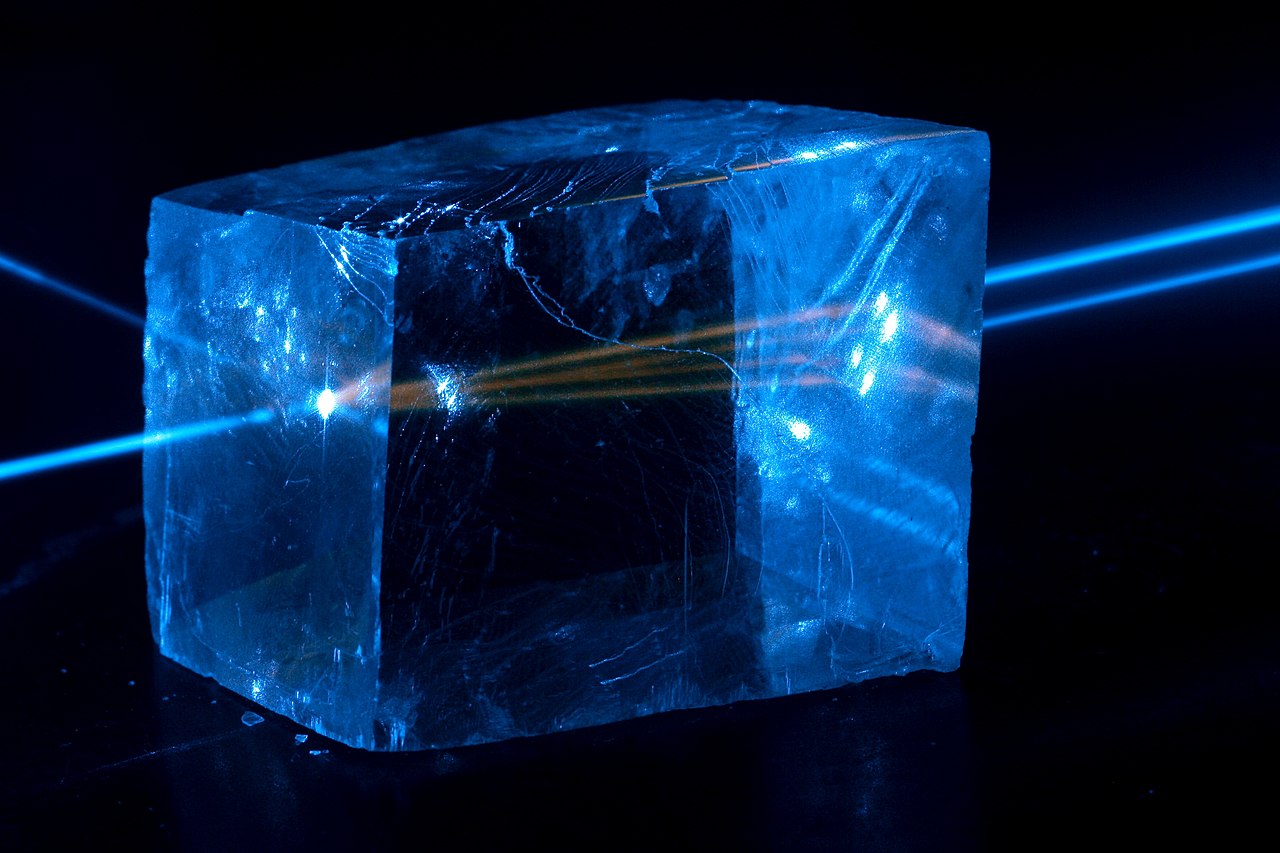
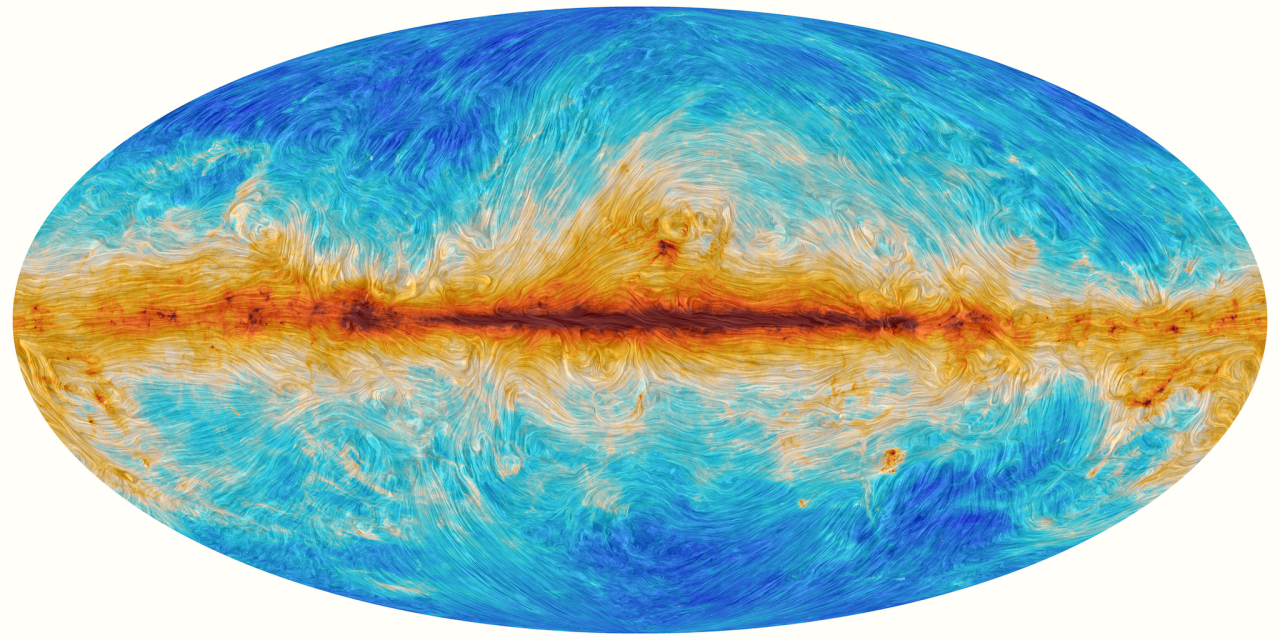
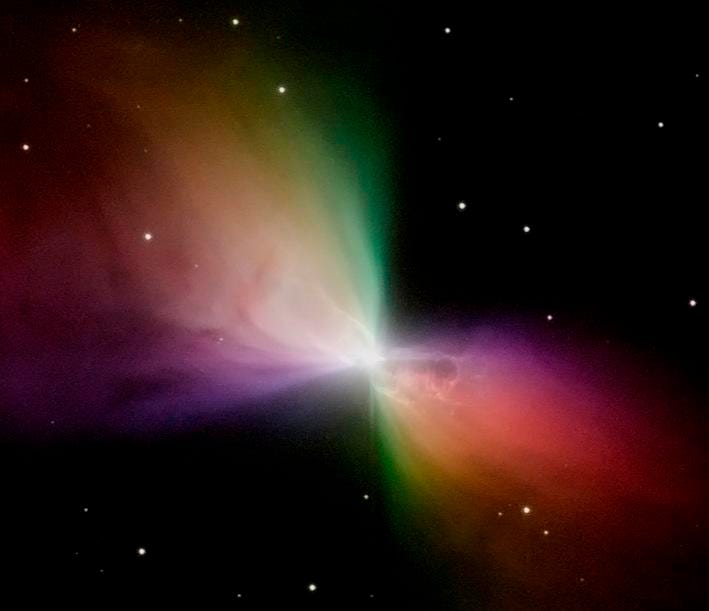
One of the most enduring ideas in all the Universe is that everything that exists now will someday see its existence come to an end. The stars, galaxies, and even the black holes that occupy the space in our Universe will all some day burn out, fade away, and otherwise decay, leaving what we think of as a “heat death” state: where no more energy can possibly be extracted, in any way, from a uniform, maximum entropy, equilibrium state. But, perhaps, there are exceptions to this general rule, and that some things will truly live on forever. One such candidate for a truly stable entity is the photon: the quantum of light. All of the electromagnetic radiation that exists in the Universe is made up of photons, and photons, as far as we can tell, have an infinite lifetime. Does that mean that light will truly live forever? That’s what Anna-Maria Galante wants to know, writing in to ask: “Do photons live forever? Or do they “die,” and convert to some other particle? The light we see erupting from cosmic events over a verrrrry long past … we seem to know where it comes from, but where does it go? What is the life cycle of a photon?” It’s a big and compelling question, and one that brings us right up to the edge of everything we know about the Universe. Here’s the best answer that science has today. The first time the question of a photon having a finite lifetime came up, it was for a very good reason: we had just discovered the key evidence for the expanding Universe. The spiral and elliptical nebulae in the sky were shown to be galaxies, or “island Universes” as they were then known, well beyond the scale and scope of the Milky Way. These collections of millions, billions, or even trillions of stars were located at least millions of light-years away, placing them well outside of the Milky Way. Moreover, it was quickly shown that these distant objects weren’t just far away, but they appeared to be receding from us, as the more distant they were, on average, the greater the light from them turned out to be systematically shifted toward redder and redder wavelengths. Of course, by the time this data was widely available in the 1920s and 1930s, we had already learned about the quantum nature of light, which taught us that the wavelength of light determined its energy. We also had both special and general relativity well in hand, which taught us that once the light leaves its source, the only way you could change its frequency was to either: The first potential explanation, in particular, led to the formulation of a fascinating alternative cosmology: tired light cosmology. First formulated in 1929 by Fritz Zwicky — yes, the same Fritz Zwicky who coined the term supernova, who first formulated the dark matter hypothesis, and who once tried to “still” the turbulent atmospheric air by firing a rifle through his telescope tube — the tired light hypothesis put forth the notion that propagating light loses energy through collisions with other particles present in the space between galaxies. The more space there was to propagate through, the logic went, the more energy would be lost to these interactions, and that would be the explanation, rather than peculiar velocities or cosmic expansion, for why light appeared to be more severely redshifted for more distant objects. However, in order for this scenario to be correct, there are two predictions that should be true. 1. ) When light travels through a medium, even a sparse medium, it slows down from the speed of light in vacuum to the speed of light in that medium. The slowdown affects light of different frequencies by different amounts. Just as light passing through a prism splits into different colors, light passing through an intergalactic medium that interacted with it should slow light of different wavelengths down by different amounts. When that light re-enters a true vacuum, it will resume moving at the speed of light in a vacuum. And yet, when we observed the light coming from sources at different distances, we found no wavelength-dependence to the amount of redshift that light exhibited. Instead, at all distances, all wavelengths of emitted light are observed to redshift by the exact same factor as all others; there is no wavelength-dependence to the redshift. Because of this null observation, the first prediction of tired light cosmology is falsified. But there’s a second prediction to contend with, as well. 2.) If more distant light loses more energy by passing through a greater length of a “lossy medium” than less distant light, then those more distant objects should appear to be blurred by a progressively greater and greater amount than the less distant ones. And again, when we go to test this prediction, we find that it isn’t borne out by observations at all. More distant galaxies, when seen alongside less distant galaxies, appear just as sharp and high-resolution as the less distant ones. This is true, for example, for all five of the galaxies in Stephan’s Quintet, as well as for the background galaxies visible behind all five of the quintet’s members. This prediction is falsified as well. While these observations are good enough to falsify the tired light hypothesis — and, in fact, were good enough to falsify it immediately, as soon as it was proposed — that’s only one possible way that light could be unstable. Light could either die out or convert into some other particle, and there’s a set of interesting ways to think about these possibilities. The first arises simply from the fact that we have a cosmological redshift. Each and every photon that’s produced, irrespective of how it’s produced, whether thermally or from a quantum transition or from any other interaction, will stream through the Universe until it collides and interacts with another quantum of energy. But if you were a photon emitted from a quantum transition, unless you can engage in the inverse quantum reaction in rather rapid fashion, you’re going to begin traveling through intergalactic space, with your wavelength stretching due to the Universe’s expansion as you do. If you’re not lucky enough to be absorbed by a quantum bound state with the right allowable transition frequency, you’ll simply redshift and redshift until you’re below the longest possible wavelength that will ever allow you to be absorbed by such a transition ever again. However, there’s a second set of possibilities that exists for all photons: they can interact with an otherwise free quantum particle, producing one of any number of effects. This can include scattering, where a charged particle — usually an electron — absorbs and then re-emits a photon. This involves an exchange of both energy and momentum, and can boost either the charged particle or the photon to higher energies, at the expense of leaving the other one with less energy. At high enough energies, the collision of a photon with another particle — even another photon, if the energy is high enough — can spontaneously produce a particle-antiparticle pair if there’s enough available energy to make them both through Einstein’s E = mc². In fact, the highest energy cosmic rays of all can do this even with the remarkably low-energy photons that are a part of the cosmic microwave background: the Big Bang’s leftover glow. For cosmic rays above ~1017 eV in energy, a single, typical CMB photon has a chance to produce electron-positron pairs. At even higher energies, more like ~1020 eV in energy, a CMB photon has a significantly large chance to convert to a neutral pion, which robs cosmic rays of energy rather quickly. This is the primary reason why there’s a steep drop-off in the population of the highest-energy cosmic rays: they’re above this critical energy threshold. In other words, even very low-energy photons can be converted into other particles — non-photons — by colliding with another high-enough-energy particle. There’s yet a third way to alter a photon beyond cosmic expansion or through converting into particles with a non-zero rest mass: by scattering off of a particle that results in the production of still additional photons. In practically every electromagnetic interaction, or interaction between a charged particle and at least one photon, there are what are known as “radiative corrections” that arise in quantum field theories. For every standard interaction where the same number of photons exist at the beginning as at the end, there’s a little less than a 1% chance — more like 1/137, to be specific — that you’ll wind up radiating an additional photon in the end over the number you started off with. And every time you have an energetic particle that possesses a positive rest mass and a positive temperature, those particles will also radiate photons away: losing energy in the form of photons. Photons are very, very easy to create, and while it’s possible to absorb them by inducing the proper quantum transitions, most excitations will de-excite after a given amount of time. Just like the old saying that “What goes up must come down,” quantum systems that get excited to higher energies through the absorption of photons will eventually de-excite as well, producing at least the same number of photons, generally with the same net energy, as were absorbed in the first place. Given that there are so many ways to create photons, you’re probably salivating for ways to destroy them. After all, simply waiting for the effects of cosmic redshift to bring them down to an asymptotically low energy value and density is going to take an arbitrarily long time. Each time the Universe stretches to become larger by a factor of 2, the total energy density in the form of photons drops by a factor of 16: a factor of 24. A factor of 8 comes because the number of photons — despite all the ways there are to create them — remains relatively fixed, and doubling the distance between objects increases the volume of the observable Universe by a factor of 8: double the length, double the width, and double the depth. The fourth-and-final factor of two comes from the cosmological expansion, which stretches the wavelength to double its original wavelength, thereby halving the energy-per-photon. On long enough timescales, this will cause the energy density of the Universe in the form of photons to asymptotically drop toward zero, but it will never quite reach it. You might try and get clever, and imagine some sort of exotic, ultra-low-mass particle that couples to photons, that a photon could convert into under the right conditions. Some sort of boson or pseudoscalar particle — like an axion or axino, a neutrino condensate, or some sort of exotic Cooper pair — could lead to precisely this sort of occurrence, but again, this only works if the photon is sufficiently high in energy to convert to the particle with a non-zero rest mass via E = mc². Once the photon’s energy redshifts below a critical threshold, that no longer works. Similarly, you might imagine the ultimate way to absorb photons: by having them encounter a black hole. Once anything crosses over from outside the event horizon to inside it, it not only can never escape, but it will always add to the rest mass energy of the black hole itself. Yes, there will be many black holes populating the Universe over time, and they will grow in mass and size as time continues forward. But even that will only occur up to a point. Once the density of the Universe drops below a certain threshold, black holes will begin decaying via Hawking radiation faster than they grow, and that means the production of even greater numbers of photons than went into the black hole in the first place. Over the next ~10100 years or so, every black hole in the Universe will eventually decay away completely, with the overwhelming majority of the decay products being photons. So will they ever die out? Not according to the currently understood laws of physics. In fact, the situation is even more dire than you probably realize. You can think of every photon that was or will be: and even if you wait for all of those photons to reach arbitrarily low energies due to the Universe’s expansion, the Universe still won’t be devoid of photons. Why’s that? Because the Universe still has dark energy in it. Just as an object with an event horizon, like a black hole, will continuously emit photons due to the difference in acceleration close to versus far away from the event horizon, so too will an object with a cosmological (or, more technically, a Rindler) horizon. Einstein’s equivalence principle tells us that observers cannot tell the difference between gravitational acceleration or acceleration due to any other cause, and any two unbound locations will appear to accelerate relative to one another owing to the presence of dark energy. The physics that results is identical: a continuous amount of thermal radiation gets emitted. Based on the value of the cosmological constant we infer today, that means a blackbody spectrum of radiation with a temperature of ~10–30 K will always permeate all of space, no matter how far into the future we go. Even at its very end, no matter how far into the future we go, the Universe will always continue to produce radiation, ensuring that it will never reach absolute zero, that it will always contain photons, and that even at the lowest energies it will ever reach, there ought to be nothing else for the photon to decay or transition into. Although the energy density of the Universe will continue to drop as the Universe expands, and the energy inherent to any individual photon will continue to drop as time ticks onward and onward into the future, there will never be anything “more fundamental” than they transition into. There are exotic scenarios we can cook up that will change the story, of course. Perhaps it’s possible that photons really do have a non-zero rest mass, causing them to slow down to slower than the speed of light when enough time passes. Perhaps photons really are inherently unstable, and there’s something else that’s truly massless, like a combination of gravitons, that they can decay into. And perhaps there’s some sort of phase transition that will occur, far into the future, where the photon will reveal its true instability and will decay into a yet-unknown quantum state. But if all we have is the photon as we understand it in the Standard Model, then the photon is truly stable. A Universe filled with dark energy ensures, even as the photons that exist today redshift to arbitrarily low energies, that new ones will always get created, leading to a Universe with a finite and positive photon number and photon energy density at all times. We can only be certain of the rules to the extent that we’ve measured them, but unless there’s a big piece of the puzzle missing that we simply haven’t uncovered yet, we can count on the fact that photons might fade away, but they’ll never truly die. Send in your Ask Ethan questions to startswithabang at gmail dot com!
Blake Masters has rocketed from relative political obscurity to the Republican nominee for Arizona’s U.S. Senate race in the span of about a year. He did so with prominent help from his mentor, billionaire Peter Thiel, and former President Donald Trump. Now he’s hoping to oust Sen. Mark Kelly, D-Ariz., in the Nov. 8 general election. Here’s a primer on the often-controversial 35-year-old who could tip the balance of power in the U.S. Senate. Masters is fairly well-known in the tech world because of his years-long ties to Thiel, the co-founder of PayPal and a Trump ally. Masters was born in Colorado and grew up in Tucson. He graduated with degrees in political science and law from Stanford University in Palo Alto, Calif. Thiel was an instructor for one of Masters’ classes and his detailed notes on what Thiel said became an online sensation within the tech community and they became the foundation of “Zero to One: Notes on Startups, or How to Build the Future,” a book Masters co-authored with Thiel. ‘A rock ’em, sock ’em kind of contest’:The Gaggle covers the 2022 primary election Masters quickly became chief operating officer of Thiel Capital and president of Thiel’s personal foundation. He resigned from those posts in February. Masters returned to Tucson in 2018, where he lives with his wife and three young sons. Trump endorsed Masters in the state’s five-way GOP Senate primary. “Blake Masters is one of the most successful businessmen and investors in the Country, having led a multibillion-dollar firm that invests in new technology and many other emerging companies,” Trump said in his June 2 announcement of support. “In addition, he runs a nonprofit foundation that promotes science and innovation. In other words, he is a great modern-day thinker!” The latest:Arizona election results Masters drew interest from conservatives in 2019 when he said what many thought but would not say publicly: that then-Sen. Martha McSally, R-Ariz., could not beat Kelly. McSally lost her 2018 Senate race to Democrat Kyrsten Sinema, but wound up in the chamber anyway after Gov. Doug Ducey appointed her to the state’s other Senate seat after the death of Sen. John McCain, R-Ariz., and the subsequent resignation of Sen. Jon Kyl, R-Ariz. Masters opted against challenging McSally in 2020 after conducting polling, meeting with potential donors and consulting key Republicans, including Ducey and Kyl. Long before, Masters shared libertarian policy views in online posts and essays while he was at Stanford. From the outset of Masters’ Senate run, Thiel committed millions to a political action committee to help boost Masters’ chances. He has spent at least $15 million to help Masters. He won Trump’s endorsement in large part by helping push the false claims that the 2020 presidential election was stolen from Trump and by making border security a top policy concern. Masters has said the 2020 election was not “free and fair” and that cost Trump the presidency. The claims of an unfair election have been widely debunked by election experts, a conclusion Masters dismisses. “The media has basically memory-holed this,” he has said. Trump sweeping Arizona. Now, will Democrats find a way to blow their good fortune? He has said illegal immigration is “harming real people and on a long enough time horizon, it’s ruining our country.” Masters wants to restrain Big Tech, who he accuses of “election interference” and censorship, saying the manipulation of search-engine algorithms that decide what items appear on internet searches can be used to suppress information damaging to Democrats or favorable to Republicans. He favors lifting legal protections to the tech industry to make companies more liable for what they publish. At a candidate forum in June, Masters said, “Maybe we should privatize Social Security. Private retirement accounts, get the government out of it.” At a later forum, he told an attendee, “I don’t think we should, like, mess with Social Security. Keep it.” Masters then said he favored loosening restrictions on investment accounts for young people. Masters is often blunt and provocative. His supporters may find his candor refreshing; his critics see a man comfortable making others cringe. Democrats “don’t actually care about crime, right?” Masters said in an April podcast. “Like, we do have a gun violence problem in this country and it’s gang violence, right? It’s gangs. It’s people in Chicago, St. Louis shooting each other. “Very often, you know, Black people, frankly. And the Democrats don’t want to do anything about that.” Earlier this year, podcaster Alex Kaschuta asked Masters to recommend an underrated “subversive thinker.” “I’ll probably get in trouble for saying this. … How about Theodore Kaczynski,” Masters said, referring to the “Unabomber.” Masters clarified that he did not endorse the domestic terrorist’s bombings targeting scientists and acknowledged his answer may sit well with everyone in politics. “Probably not great talking about the ‘Unabomber’ while campaigning,” Masters said. “He’s a terrorist, you shouldn’t hurt people, obviously.” Masters saw value in Kaczynski’s ideas as outlined in his 1995 manifesto, where he wrote that society has been harmed by industrialization and the effects of advanced technology. “There’s a lot that I disagree with, right? This is not an endorsement but there’s a lot of insight there, there’s a lot that is correct.” As a college student, according to Jewish Insider, Masters wrote an article for a libertarian publication about how U.S. leaders sold World War I to the American public. Masters said wars “are frequently manufactured and deceptively sold to the public,” sometimes to benefit special interests. He ended the essay with what he described as a “poignant quotation” he said came from Hermann Göring, the convicted Nazi war criminal who held a high post in the Nazi Party. Göring told an American psychologist who spoke with him before his conviction and ultimate suicide that “voice or no voice, the people can always be brought to the bidding of the leaders. That is easy. All you have to do is tell them they are being attacked and denounce the pacifists for lack of patriotism and exposing the country to danger. It works the same way in any country.” Masters will face Kelly, the incumbent, in the Nov. 8 general election. Reach the reporter Ronald J. Hansen at [email protected] or 602-444-4493. Follow him on Twitter @ronaldjhansen. Support local journalism. Subscribe to azcentral.com today. Subscribe to our free political podcast, The Gaggle.
For updated information on coronavirus/COVID-19, visit orlando.gov/covid19. Master Plan and Conditional Use Permit to allow a personal storage use with internal storage of RVs, vehicles and trailers on parcels 12A & B of the Orlando Corp. Center PD (both Business Park parcels, with default I-P zoning) (adjacent to existing personal storage in County to the south). Property is located at the southwest corner of Marketplace Dr. and Narcoossee Rd., between Brentwood Dr. (south) and Bipe Ln. (north) (Zone 1, 14.1 acres) 6650 Narcoossee Rd., Orlando, FL 32822 View Map 6650 Narcoossee Rd. , Orlando, FL 32822 Once cases are set for a hearing they will appear on the Board’s agenda. The information presented may be based on the staff’s preliminary review of the submitted application and is subject to change. Contact the Project Planner for the latest project information. If you wish to review the complete file for this project, please make a Public Records Request. City Hall 400 South Orange Avenue Orlando, Florida 32801 407.246.2121 Monday – Friday 8 a.m. to 5 p.m. Observed holidays Contact Us City Directory Subscribe to City News Downtownorlando.com Information Locator News and Information
Let our global subject matter experts broaden your perspective with timely insights and opinions you can’t find anywhere else. Then $69 per month New customers only Cancel anytime during your trial OR BEST VALUE – SAVE 20% Then $74.75 every 3 months Sign in Check if your university has an FT membership to read for free. We use cookies for a number of reasons, such as keeping FT Sites reliable and secure, personalising content and ads, providing social media features and to analyse how our Sites are used. International Edition