This is a carousel. Use Next and Previous buttons to navigate 20 photos of LA in the 1920s The 1920s marked a huge period of growth for the city of Los Angeles. At the start of the decade, just over half a million people called the sunny, Southern California town home. By 1930, that number had jumped to just over 1.2 million. Gone were the days of LA as a farming town, changed forever by the arrival of the film, oil, and aviation industries. Without a doubt, one of the most famous industries to stem from LA’s growth was the motion picture business. While filmmakers first began migrating to SoCal in the late 1910s, the ’20s brought the big studios, major stars, and all the money. If not for studio heads’ desire to escape the Northeast’s temperamental weather and patent restrictions, LA certainly wouldn’t be the city we know it to be today. With that massive population growth came a number of other changes—the suburban sprawl, a reliance on automobiles and the freeways constructed to get those automobiles around the spread-out city, and a burgeoning desire for luxury and leisure. It can be hard to put into words just how unique LA was in the 1920s. For that reason, Giggster combed historical archives to create a collection of pictures that best demonstrate what life was like in the City of Angels during the decade. From snaps of old Hollywood to glimpses of everyday life, these photos perfectly exemplify the history of the nation’s second-largest city. The birth of the film industry In the mid-1910s, many movie makers began heading to Hollywood to shoot, hoping to avoid the fees they were charged when shooting on the East Coast, not to mention taking advantage of Southern California’s year-round temperate weather. By the 1920s, nearly every major studio, and many independent filmmakers, were doing the bulk of their work in the LA area. The Pacific Electric railway system In the 1920s, the Pacific Electric railway system was the largest interurban electric railway system in the world. With more than 1,000 miles of railways, the public transit system connected cities in the counties of LA, Orange, San Bernardino, and Riverside. Here, one of the famous red cars carries commuters along Hollywood Boulevard. Santa Monica beach clubs In the 1920s, dozens of fancy beach clubs sprung up along the beaches in Santa Monica, California. These gathering places, which were whites-only, attracted some of the area’s most wealthy and notable restaurants, who’d all crowd together under the clubs’ beach umbrellas and around dining room tables. A presidential parade In 1927, two years before he was elected president, Herbert Hoover visited LA. The Republican politician had seen his popularity skyrocket (as evidenced by this reception) thanks to the assistance he had offered Mississippi Flood victims earlier that year in his role as Secretary of Commerce under President Warren Harding. The LA Motor Corps With its wide boulevards and crisscrossing freeways, LA is known around the world for its car culture. This reliance on automobiles really took off during the 1920s, when the number of registered private cars exploded from 161,000 to more than 800,000. To keep up with these Fords and Chevys, the LA Motor Corps (pictured above) took to riding around on Indian motorcycles. Major movie studios move in One of the biggest independent film studios of the 1920s, Fox Film acquired the rights to the Movietone sound system—a sound-on-film technique that allowed for the synchronization of sound and image in recorded film—in the mid-1920s. The company’s West LA studio, pictured here, was dedicated to producing these new talkie pictures. Wilshire Boulevard Wilshire Boulevard runs from the heart of the city’s downtown district to the Pacific Ocean. One of the first parcels of land for the street was donated by millionaire socialist Henry Gaylord Wilshire, in the late 19th century on the condition the street be named for him and remain absent rail lines or streetcars. The properties surrounding it were only just beginning to be developed by the 1920s. LA’s yellow cabs Folks without a private car, and who couldn’t be troubled to rely on the regularly striking Pacific Electric railway system, would use cabs to get around the sprawling city. Here, a yellow cab driver helps his passengers disembark after their ride. A beachy beauty pageant In the early years of the 20th century, beach resorts began hosting beauty pageants as a form of entertainment for vacationing middle classes. These contests, like the Bathing Beauty pageant pictured above, would eventually lead to the Miss America pageant we’re so familiar with today. LA’s most famous face A pioneer in the film industry, actress Mary Pickford was one of the most recognizable faces in the world in the 1920s. Dubbed the “Queen of the Movies,” Pickford is often regarded as the first movie star and is best known for movies like “Coquette,” which won her the second-ever Academy Award for Best Actress. Here she’s pictured with her husband, fellow actor Douglas Fairbanks, at their sprawling mansion in the LA hills. The Hollywood sign Conceived as an advertisement for a new suburban housing development, LA’s most famous sign originally read Hollywoodland. Erected in 1923, the wooden sign was meant to be temporary, but in the late ’70s, the still-standing marker was replaced with a more durable steel structure (the “land” had been dropped in the 1940s). Extra, extra Two industries helped drive LA’s growth in the 1920s: oil and movies. Here, a group of well-dressed young women line up outside a studio office, hoping to be chosen as extras for a movie. A winning duo In 1920s LA, pageants and performances weren’t restricted to humans. Here, a young boy poses on a studio backlot with two Russian wolfhounds, the winners of an LA Kennel Club dog show. Field of dreams Days before Black Thursday, a group of relatively stress-free men crowded in front of Sturgis Radio store to listen to a World Series game. They had no skin in the outcome (the LA Dodgers wouldn’t move from Brooklyn until the ’50s), but the gathering proves that the city had been primed to host a Major League Baseball team for years before it happened. The programmatic movement The 1920s marked the beginning of an architectural movement in LA architecture when kitschy novelty buildings began popping up everywhere. These structures were designed to catch the eye of motorists and were often large-scale versions of the wares sold inside—for example, the pig pictured above was actually a barbeque joint. The trend continued until the end of the 1940s, and many original examples still exist in LA today. An ostrich farm adventure Described as the first theme parks in Southern California, ostrich farms were hugely popular (and quite abundant) in LA in the late 19th and early 20th centuries. Visitors would flock to these ranches for a chance to look at the exotic birds, and the brave would hop in ostrich-drawn carriages or wagons for a ride around the property. Gift shops sold clothes and accessories decorated with the birds’ feathers, which were considered luxurious at the time. The University of California, Los Angeles opened Founded in 1919, the University of California, Los Angeles, now the second-largest university in California, was still in its infancy in the 1920s. Here, a group of aspiring dentists train in the school’s state-of-the-art medical center. Aviation Fever During the 1910s and 1920s, LA caught a severe case of flight fever. Dozens of aircraft manufacturers popped up around the valley, enticed by near-perfect year-round flying weather, plenty of space to lay down runways, and cheap, plentiful labor. As the industry grew, so did the number of demonstrations, where gravity-defying tricks like this one (where a young man refuels another airplane midair) would be performed. Movie magic A prime example of the movie magic that LA has created behind countless films, this picture shows a film crew on a Hollywood studio lot working on a set constructed and dressed to resemble midtown Manhattan. A hedonistic lifestyle In the 1920s, actors and actresses flocked to LA. They saw the city as their playground, not a real place but a fancy backdrop for their hedonistic lifestyles. Here, actress Miss DuPont drives a car up a set of hotel steps, demonstrating just how wild things could get in the City of Angels. This story originally appeared on Giggster and was produced and distributed in partnership with Stacker Studio.
Menu LEE COUNTY, Fla. — More insight is being revealed into the ongoing controversy over a video of a 10-year-old’s arrest by Lee County Sheriff’s Office on charges of making a threat against his elementary school. The boy’s family has released an audio recording of the child’s interrogation by deputies. Prior to the Memorial Day weekend arrest, deputies interviewed the boy at his home, with his father nearby. “It was like this joke that I scammed someone for a lot of money,” the boy can be heard saying. “And then I said I bought, like, guns with it. It was just a joke.” In the interview, deputies ask about the texts sent from his phone, including a photo of a gun and a message saying “Get ready for water day” (an annual event held by the school). They ask where he got the picture of the gun. Deputies then ask to see the phone. You can hear the boy reiterate it was a joke, and you hear the investigators respond with laughter. Dereck Marquez, the boy’s father, says that once he saw the messages, he knew what would come next. “I put two-and-two together and said, ‘Yeah, I’m gonna get a visit by the cops,'” he recalled. That visit ultimately led to a public arrest, in which the boy’s name and face were released on the Lee County Sheriff’s Office social media channels. The video has since garnered nationwide attention, replayed countless times on network news programs and syndicated shows like “Inside Edition.” Sheriff Carmine Marceno has made no apologies for the action. “Fake threat, real consequence,” he has gone on-record as saying. Fox 4 has decided not to reveal the boy’s name and is blurring his face in all instances. As a minor who has not been convicted of a crime, we feel revealing such details at this juncture could have negative impacts on his future should he be cleared. However, one group says Marceno should face consequences for his action. In a letter [PDF] from the attorney for the Foundation Against Intolerance and Racism, the group calls for the Department of Justice to investigate “constitutional and civil rights violations” against the 10-year-old. Part of their reasoning is that they say deputies knew, via this interrogation, that the image of guns in the messages came from an internet search, and not an actual gun the boy had in his possession. The letter also claims the sheriff’s office fabricated the text messages in a video about the incident posted to TikTok. The group claims the picture highlighted “was a cynical attempt to frame a 10-year-old child in the eyes of the public as having made a threat when that is not true.” The child is facing one count of a written threat to conduct a mass shooting or an act of terrorism. He has pleaded not guilty to the charge, a stance his father has maintained. “He’s just a child,” Marquez said. “He was just being stupid.”
“Bloomberg Opinion” columnists offer their opinions on issues in the news. Rising life expectancy and falling birth rates mean the world’s average person is getting older. It also means they will be working a lot longer. China on Alert for Evergrande Restructuring Plan After Shakeup UK’s Outsider Economists Question Radicalism of Trussonomics Google Fires Software Engineer Who Says He Talked to Sentient AI Key Region of South Africa’s Governing Party Elects New Leaders Sunak and Truss Urged Not to Follow PM Example in Approach to Lords Appointments Apartment and Warehouse Deals Start to Sputter as Rates Sting China Evergrande CEO, CFO Exit in Internal Probe of Deposit Use Marvel Teases New Avengers Movies, ‘Black Panther’ Sequel Warner Bros. Brings ‘Black Adam,’ ‘Shazam! 2’ to Comic-Con A Black Family Won Back Its Beach. The Law Remains Broken. The Jan. 6 Hearings Are Turning Voters Away From Trump Online Schooling Is the Bad Idea That Refuses to Die Ghosts of 2012 Haunt Europe as Rate Hikes Begin The AI Platform Behind a Bezos-Backed Startup’s Vegan Burgers The $260 Swatch-Omega MoonSwatch Is Reviving the Budget Brand Hyundai Says It Has ‘No Evidence’ of Child Labor at Alabama Unit Bauer Hockey Halts Backing of Tournament on Sex Assault Scandal Supreme Court Clears the Way for Jackson to Hear UNC Race Case, Not Harvard Protesters in UK Decry Climate Change After Record Heat Wave Greece Battles 4 Major Wildfires; Hotels, Homes Evacuated The Artists Who Mastered the Urban Spectacle At Philadelphia Eviction Court, Showing Up on Time Is Half the Battle How to Be a Good Climate Mayor Bankman-Fried’s FTX Makes Proposal for Bankrupt Voyager With Eye on Customers Central African Regional Bank Seeks Common Digital Currency Crypto Stocks Get Boost From Retail Traders Who Drove Meme Craze Stephen Kirkland US stocks fell as disappointing results from social-media firms and weak economic data added to recession fears. Treasuries rallied as traders dialed back bets on Federal Reserve hikes, while the dollar retreated. The S&P 500 dropped for the first time in four days, while the tech-heavy Nasdaq 100 underperformed major benchmarks, closing down 1.8%. Snap Inc.’s poor results and Twitter Inc.’s sales miss raised concern about online ad spending and weighed on shares of Facebook parent Meta Platforms Inc. and Google owner Alphabet Inc. Hardware and storage companies including Micron Technology Inc. and Western Digital Corp. fell after Seagate Technology Plc’s earnings miss and weak outlook.
“Bloomberg Opinion” columnists offer their opinions on issues in the news. Rising life expectancy and falling birth rates mean the world’s average person is getting older. It also means they will be working a lot longer. What Corporate Britain Can Reveal About the State of the Economy US Growth Is Looking Sickly as Fed Keeps Hiking Rates: Eco Week Google Fires Software Engineer Who Says He Talked to Sentient AI Key Region of South Africa’s Governing Party Elects New Leaders Sunak and Truss Urged Not to Follow PM Example in Approach to Lords Appointments Apartment and Warehouse Deals Start to Sputter as Rates Sting China Evergrande CEO, CFO Exit in Internal Probe of Deposit Use Marvel Teases New Avengers Movies, ‘Black Panther’ Sequel Warner Bros. Brings ‘Black Adam,’ ‘Shazam! 2’ to Comic-Con A Black Family Won Back Its Beach. The Law Remains Broken. The Jan. 6 Hearings Are Turning Voters Away From Trump Online Schooling Is the Bad Idea That Refuses to Die Ghosts of 2012 Haunt Europe as Rate Hikes Begin The AI Platform Behind a Bezos-Backed Startup’s Vegan Burgers The $260 Swatch-Omega MoonSwatch Is Reviving the Budget Brand Hyundai Says It Has ‘No Evidence’ of Child Labor at Alabama Unit Bauer Hockey Halts Backing of Tournament on Sex Assault Scandal Supreme Court Clears the Way for Jackson to Hear UNC Race Case, Not Harvard Protesters in UK Decry Climate Change After Record Heat Wave Greece Battles 4 Major Wildfires; Hotels, Homes Evacuated The Artists Who Mastered the Urban Spectacle At Philadelphia Eviction Court, Showing Up on Time Is Half the Battle How to Be a Good Climate Mayor Bankman-Fried’s FTX Makes Proposal for Bankrupt Voyager With Eye on Customers Central African Regional Bank Seeks Common Digital Currency Crypto Stocks Get Boost From Retail Traders Who Drove Meme Craze Representative Liz Cheney, center, gavels in during a hearing of the Select Committee to Investigate the January 6th Attack on the US Capitol in Washington, D.C., on July 21.
EQ Accountants are a modern accounting, tax, and business advisory practice with offices in Forfar, Dundee and Glenrothes. For the second time, the firm are sponsoring the EQ Food & Drink Pavilion at the Turriff Show, which will showcase and celebrate local producers throughout Aberdeenshire and beyond. Some Press and Journal online content is funded by outside parties. The revenue from this helps to sustain our independent news gathering. You will always know if you are reading paid-for material as it will be clearly labelled as “Partnership” on the site and on social media channels. This can take two different forms. This means the content has been paid for and produced by the named advertiser. This means the content has been paid for and approved by the named advertiser but written and edited by our own commercial content team. Their dedicated agriculture team, known as EQ Agriculture, is recognised as one of the leading providers of accountancy, taxation, and business advisory services to the Scottish rural sector. This reputation has been built up over many years and the firm continue to grow their agricultural client base through their extensive experience and knowledge of the sector. The EQ Agriculture team understand farming and the issues affecting the industry with many of them owning and running farms themselves. They act for a range of clients including livestock and arable farmers, estates and landowners and many diversified businesses operating in the rural economy throughout Scotland. Highly regarded by their clients, they are renowned for their proactive and personal approach, getting to know their clients’ circumstances and key drivers so that they can deliver reliable tailored support and advice to help them achieve their personal and business objectives, create, and protect their wealth. Along with general accounting support, the EQ Agriculture team regularly advise clients on several other matters to provide a proactive and comprehensive service. These include tax planning, budgetary and financial controls, growth and diversification, support with accounting software packages and farm business appraisals. Mark Smeaton, Head of EQ Agriculture, says, “Agriculture is a prominent sector for us, and we act for a range of rural clients across Scotland with an increasing client base across the North East. We are delighted to be sponsoring the EQ Food & Drink Pavilion at the Turriff Show once again this year. It’s a fantastic way to highlight local producers with an event that the community can all get involved in. We will also have our own stand at the event and look forward to seeing clients and contacts at the show”. You can visit the EQ team at stand 17 around the main ring of the Turriff Show and make sure to pop by the EQ Food & Drink Pavilion to see the superb showcase of local produce on offer. For more information or to discuss your own circumstances, you can contact the EQ Agriculture team on 01307 474274 or email [email protected].
Jeff Lunden Joshua Henry (left) and Gavin Creel in Into the Woods. Matthew Murphy and Evan Zimmerman hide caption Joshua Henry (left) and Gavin Creel in Into the Woods. Many fans of Stephen Sondheim and James Lapine’s musical Into the Woods, a mash up of Grimm’s Fairy Tales that is both funny and serious, just got their wish. A production of the show, starring Sara Bareilles, that had a limited run at New York’s City Center in the spring, has moved to Broadway, where it’s received rave reviews and is playing to sold out houses. For those familiar with the original, it’s a different kind of production. Fresh off their Pulitzer Prize-winning musical Sunday in the Park with George, composer/lyricist Stephen Sondheim and librettist James Lapine wanted to write a new show together and landed on the idea of taking various fairy tales – Cinderella, Little Red Riding Hood, Jack and the Beanstalk, among them – and mixing them all together, with their own story of a childless baker and his wife. The cast of Into the Woods. Matthew Murphy and Evan Zimmerman hide caption The cast of Into the Woods. “The show opens with the words ‘I wish’ and closes with the words ‘I wish,’ ” explained Sondheim in a video he recorded for Music Theatre International, the company that licenses productions of the show. “And this isn’t just because they’re fairy tale languages, but in fact, what the show is about is a group of people who have various wishes, and during the course of the show, they get their wishes. But, in so doing, upset the natural order of things and have to pay for it in the second act; become a community, submerge their individual wishes into a community wish and thereby save the world, so to speak.” The show is probably Sondheim’s most popular musical – it ran for two years originally, was taped for PBS, has been revived on Broadway, is performed in professional and community theaters and schools around the world. In 2014 it was turned into a Disney film, starring Meryl Streep. “Part of what is glorious about it is you can come to it at many different stages in your life and enjoy it,” says Lear Debessonet, who has directed this revival. “And also notice different things about it based on where you are.” Sara Bareilles and Brian d’Arcy James in Into the Woods. Matthew Murphy and Evan Zimmerman hide caption Sara Bareilles and Brian d’Arcy James in Into the Woods. She says she listened to the cast album as a kid growing up in Baton Rouge, La. “This cast album I credit with my obsession with lyrics,” explains Debessonet. “This was the cast album that taught me what lyrics can do. And the fact that a lyric has the power to hold, not just one or two meanings, but four or five meanings. And so, I’ve loved this show deeply for a very long time.” Debessonet says in the darkest days of the pandemic, she found herself thinking about one particular lyric, from the song “No More,” after she put her three-year-old son to bed. She quotes it: “How do you ignore all the wolves, all the lies, the false hopes, the goodbyes, the reverses, all the wondering what even worse is still in store…” She says “the precision of the emotional and spiritual insight of that question” led her to approach Sondheim and Lapine with another question: “And basically, I said, ‘Whenever theater is back, whether we come back in six months or in five years, the first thing I want to do when we’re back in a theater is direct Into the Woods.’ And they said ‘Yes.’ “ Sondheim was involved in some of the preliminary casting but passed away five months before the show was staged, says music director Rob Berman. “It really feels like we’re doing an American classic,” he says. “And to do it so soon after Steve passed away, it feels so meaningful.” It began as part of the Encores! series at City Center, which puts on semi-staged concert versions of musicals. The orchestra is onstage and there are very few scenic elements – something director Debessonet has retained for Broadway. “In a sense, the gift of stripping away fancy stage mechanics and making it just about these words, these people and their communion with the audience,” she explains, “that’s the center of our production. And I think it’s part of what people have loved about it.” Sara Bareilles stars in the latest revival of Into the Woods. Matthew Murphy and Evan Zimmerman hide caption Sara Bareilles stars in the latest revival of Into the Woods. Pop star Sara Bareilles, who penned the hit musical Waitress and stars in Girls5Eva on Peacock, says she feels the love coming from the audience. “It’s like a rock concert every night,” she says. “We really get the sense that we’re giving these audiences something they really, really want and they really need right now.” Joshua Henry, who plays Rapunzel’s prince and has starred on Broadway in Carousel and Hamilton, says some members of the audience know every lyric and every line. But, more important, they relate to the characters. “I think a show like this that has so many complex characters that talk about the human experience,” he says. “I mean, I don’t feel like there’s one emotion or one experience that humans … experience that is not in this show.” In the second act of the show, the characters face the existential threat of a giant, who creates chaos in the kingdom and several main characters die. In 1987, it was a metaphor for AIDs, the 2002 revival opened shortly after Sept. 11, and now this revival comes after more than a million Americans have died of COVID. Music director Berman says part of what makes the show continue to work is how – like fairy tales, with their archetypal characters, it’s all about interpretation. “In the show, the giant is just the giant,” says Berman. But “as an audience and as humans, we just we take it to these other places that make it meaningful. And we connect to it the things that are going on in real life.” Henry says, even though Sondheim isn’t around, his spirit is. And his collaborator, Lapine, wrote the cast a letter for opening night. “And put it backstage and said that this version of the production specifically is one that Steve would be immensely, immensely proud of,” Henry says. “So, hearing him say that was like woof, you know, really hits you.” And for those who can’t catch the limited run of Into the Woods on Broadway, a new cast recording was made this week and will be available to stream in September. Wishes do come true. Sponsor Message Become an NPR sponsor
Links on Android Authority may earn us a commission. Learn more. Here it is, the latest entry in Sony’s multimedia powerhouse smartphone portfolio. The flagship Sony Xperia 1 IV is built for content consumers and creators, whether you’re taking snaps, shooting video, or streaming mobile games to viewers across the globe. But all this technology comes at a cost. The Xperia 1’s third iteration was already super expensive but the Xperia 1 IV’s $1,600 sticker price in the US seems outright bonkers. Will Sony’s patented combination of multimedia software and elite hardware be enough to overcome its increasingly expensive price tag? Find out in Android Authority’s Sony Xperia 1 IV review. Sony is back with the fourth generation of its premium Xperia 1 line-up. For the most part, the Xperia 1 IV sticks to the same tried and tested formula as the Xperia 1 III and its predecessors. A robust camera, lightweight hardware, and multimedia-oriented features are the phone’s bread and butter. However, the Xperia 1 IV is taking a more robust approach to attract content creators this time, boasting a new variable focal length periscope zoom camera, live streaming support for gaming and video, and a host of Sony Alpha camera supporting features pinched from the ultra-premium, super-niche Xperia Pro-I. With a Snapdragon 8 Gen 1 processor, 12GB RAM, and just one 256GB UFS storage option, state-of-the-art performance is also part of the package, but anyone with a cursory knowledge of the smartphone flagship landscape will know that you can obtain similar specifications at much lower prices. Instead, Sony is banking its value proposition on its exclusive Camera Pro, Video Pro, and new Music Pro apps, all built to empower content creators to make more out of the handset’s hardware than on other smartphones. In the same vein, Sony remains one of the few remaining companies to offer a 3.5mm headphone jack and a microSD card slot in the premium tier. However, it’s not an all-inclusive package. Sony doesn’t include a USB-C cable or charging plug in the box, citing sustainability as the reason. Without plastic components inside, the box is 50% slimmer and saves on 36% CO2 production per unit, according to Sony. It’s happy to sell you a charger for £50/€50, but the phone charges using the widespread USB Power Delivery and PPS standard, so you have your pick of third-party plugs. The Xperia 1 IV is available to purchase in the UK and the rest of Europe. It will arrive in the US on September 1. There are three colorways to choose from: Black, Ice White, and Purple, though availability will depend on your region. If you’ve seen any of Sony’s Xperia 1 handsets before, you’ll know exactly what to expect from the Xperia 1 IV. We’re talking a matte finish encased in Gorilla Glass Victus on the front and back (not the latest Victus Plus grade). The metal chassis adds an extra premium touch, while the square frame, now with minimized edges for better grip, adds a substantial feel to the handset compared to curved glass models that swamp the market. The matte back is a little bit of a fingerprint magnet, but less so than glossy models. Staples of Sony’s smartphone design remain intact in its fourth iteration. There’s a 3.5mm headphone jack for wired headphones and a microSD card slot to augment the potentially limited 256GB internal storage with up to 1TB more. The side-mounted fingerprint scanner inside the power button remains, in lieu of more modern in-display biometrics or hardware-based face unlocking. The scanner is accurate once setup correctly, but tap-to-unlock times are still on the slow side compared to the fastest options on the market, though it’s not a bad experience overall. Speaking of, the power button can be held with a long press to launch Google Assistant, removing the need for the previous generation’s dedicated button. The Xperia 1 IV retains a front-facing stereo speaker setup that offers an expanded low-frequency range. Bass is still lackluster on some tracks, as it is with all small smartphone speakers, but it’s better than most, distortion-free, and an improvement on the Xperia 1 III. There’s also more than enough volume on offer. The front-facing setup offers a much better stereo presentation than the bottom-port arrangement popular on many other flagship phones. The overall sound is good to great, but a few tracks sound too mid-heavy to my ears, lacking the treble/presence of rival handsets. I can leave Sony’s Dynamic Vibration bass enhancement — it’s distracting rather than sound-enhancing. Overall though, this is pretty much as good as speakers get on a smartphone. Despite the additional ports and front-facing speakers, the Xperia 1 IV offers an IP65/68 rating against water and dust resistance. The design remains distinctly Sony’s and while not much has changed in recent years, it’s as good as ever and the black monolith still stands out from the crowd. Sony’s 4K OLED display looks great, regardless of whether you’re gaming or playing back HDR video. This is definitely one of the nicest-looking displays on the market and Sony’s suite of color and white balance options is there to further tweak the panel to your taste. The only change from the previous generation model is a 50% increase in screen brightness for better outdoor viewing. That’s enough to make a difference in bright outdoor light and plays to Sony’s advanced use cases, such as shooting video or using the phone as a monitor for your Sony Alpha camera. Despite the robust specs, the lack of a variable refresh rate is an increasingly glaring omission compared to rival handsets. You’ll notice that the phone is locked to 60Hz out of the box, leaving users to manually set the phone to 120Hz for smoother scrolling. Once set to 120Hz the phone remains locked to it, which has a negative impact on battery life. I’d quite happily trade down the overkill 4K resolution, which is only used in very specific situations, for a variable refresh rate. Even some budget phones can switch between at least two refresh rates, let alone premium flagships with LTPO technology that can do down to as low as 1Hz to preserve battery. Just like last year, there’s a great display on offer, but Sony’s dedication to 4K resolution and the 21:9 aspect ratio may or may not suit your particular needs. The tall 21:9 aspect ratio is great for multitasking and scrolling through social media, for instance, but makes the notification shade tough to reach with one hand and adds black bars to common 16:9 videos. Powered by Qualcomm’s flagship Snapdragon 8 Gen 1 chipset and 12GB RAM, performance isn’t an issue for your everyday apps and multitasking scenarios. I did notice the odd stutter when the battery ran below 20% but this is likely due to the Xperia 1 IV downclocking to save as much power as possible. Day-to-day, there’s nothing glaring to complain about here. Benchmark-wise, the Sony Xperia 1 IV hands in mixed results. Geekbench 5 CPU results are pretty much in the same ballpark as last year’s models. In fact, it’s just outscored by last year’s Xperia 1 III, however, this is a common phenomenon with 8 Gen 1 phones as the chip seems to run hot. Unfortunately, the phone is one of the lower scorers we’ve recently tested when it comes to the system-wide Antutu and PCMark benchmarks too, narrowly beating last year’s model. It appears that Sony is prioritizing temperature and power consumption over peak performance here.
Unfortunately, the phone performs even more dubiously in stress tests. 3DMark’s Wild Life showcases one of the worst GPU performances we’ve seen, with scores falling to below previous generation handsets after just a handful of runs. Sustained performance has been a major issue for phones this generation. We would certainly have preferred the more energy-efficient Snapdragon 8 Plus Gen 1 here, given the later release schedule.
This stress test is reflected in real-world gaming. The phone becomes rather hot during even moderate gaming time using Sony’s balanced performance profile, with frame rates that struggle to cap at a steady 60fps. I clocked regular dips to around 40fps during a round of Apex Legends Mobile at maximum settings. Likewise, Genshin Impact can’t hold close to 60fps maxed out during combat and particle effect-intensive scenes. Of course, these are demanding titles and can run smoother for longer with lower graphical settings and frame rate caps. But a best-in-class gaming phone this isn’t. Related:The best Snapdragon 8 Gen 1 phones you can get Just like previous Xperia’s, the 1 IV supports 5G networking but only on sub-6GHz bands outside of the US. The model launching in the US later in 2022 will have mmWave support. Wi-Fi 6E rounds out the blazing-fast data potential, providing you have a compatible home router. The Xperia 1 IV also misses out on ultra-wideband support for compatible accessories, which is something you’ll find on the latest iPhones, Galaxies, and Pixels handsets. There aren’t a whole lot of use cases right now, but for a phone that’s this expensive, it’d be fair to expect complete future-proofing and parity with the very best. With a larger 5,000mAh battery onboard (up from 4,500mAh last generation), expect a full day of use and often more from the Xperia 1 IV. Using the display’s 120Hz display mode and capturing plenty of photos and 4K video will run the battery down much faster, but the phone should still have a little left in the tank at the end of the day. It’s also noteworthy that Sony claims the battery will still have more than 80% capacity after three years of charging; a boon for long-term use. Fast-charging at 30W using universal USB Power Delivery isn’t blazing fast, but it’s decent enough for a modern flagship. However, there are two caveats. The first is that full-charge times are still very slow. Yes, the Xperia 1 IV hits 50% in the advertised 30 minutes, but topping up to full takes one hour and 36 minutes. I also had trouble obtaining fast speeds from a few supposedly compatible plugs. Turns out the handset is somewhat particular about cables, even though all the cables I tried work just fine with other USB PD phones. I couldn’t figure out the exact issue, other than that shorter cables seem to be preferred. Without a cable and charger in the box, obtaining fast charging speeds could be a headache for some consumers. Fortunately, the 15W Qi-compatible wireless charging had no such issues, although the lower power level makes this more suited to a short top-up than a slow full charge. There’s also reverse wireless charging for topping up Qi-enabled accessories in a pinch. Related:The best phone charging accessories If you’ve seen any of Sony’s recent flagships, you’ll have a good idea of what to expect from this year’s camera package, albeit with some very welcome improvements. For starters, the three rear cameras now support Sony’s absolutely superb eye-tracking and object detection auto-focus capabilities, complete with 20fps burst mode for action shots. Autofocusing is among the best I’ve seen in the business, beating out some mirrorless cameras as well, and ensuring (virtually) every snap is crystal clear. Sony’s color processing continues to err on the side of realism, but seems a fraction punchier than last year, though skies occasionally suffer a purple tint. Best-in-class colors are augmented with AI white balance and an RGB IR sensor. There’s a generally soft presentation that aims to emulate the look of a high-end mirrorless. However, the smaller nature of Sony’s mobile sensors results in some noise and loss of detail, which some might gauge as a lack of sharpness compared to competing phones. I prefer a lighter approach to processing, so am mostly pleased with Sony’s results. HDR processing is improved this year, both in terms of exposure and color, but you will occasionally end up with underexposed results in shadier environments. Sony still doesn’t include a dedicated night mode, preferring automatic low light detection tied to a long exposure time which makes it vulnerable to blurring. That said, the phone’s improved HDR capabilities cut down on this exposure time and result in better low-light shots than in previous years. Even so, the ultrawide and periscope cameras aren’t great in low light without a tripod and manual configuration. Related: The best camera phones you can get The big talking point with the Xperia 1 IV’s camera is the new variable focal length zoom. Taking the last generation switchable focal length a step further, the Xperia 1 IV moves seamlessly through 85 to 125mm — the equivalent of 3.5x and 5.2x zoom — without digital zoom. That’s nice coverage for optical zoom clarity, but doesn’t translate into a particularly large change in the field of view. You can get away with just a single lens to cover this range without issue, such as the 4x lens in the Pixel 6 Pro, and the setup can’t provide the long-distance coverage of the Galaxy S22 Ultra’s 10x lens. Don’t attempt to extend this lens beyond 10x — it doesn’t hold up well. In terms of image quality, the level of sharpness is not quite as good as the 24mm or other periscope cameras I’ve used. That said, Sony’s image processing is much lighter than virtually every other phone on the market, and this soft natural look can pay off when cropping in and editing your pictures. Thankfully, color reproduction is as robust as the main camera, providing consistency as you move between lenses. The periscope camera can’t focus at close distances, making the lens so-so for macro. Overall, it’s a tantalizing taste of the future of smartphone photography, but given the limited utility in this variable focal length, it isn’t a must-have feature in its current form. That said, Sony’s choice of flexible focal length is built with portraits in mind, with 50 to 85mm being ideal for portrait shots, the latter being available on the Xperia’s zoom lens. I’d steer clear of the 125mm option, though, as this leads to a compression effect that pushes features unnaturally towards the center of the face. Sony includes the option to add software blur to emphasize depth of field, which provides a lovely soft bokeh and light circles, but is overly rough when it comes to edge detection (see the crop below) and tends to blow out highlights. The results are serviceable for social media but betray the phone’s pro-level aspirations. Nevertheless, skin tones and details are excellent. If you’re looking for macro capabilities, the 16mm ultrawide camera isn’t capable of that either, so you’re stuck with digital zoom. But for fitting more in the scene, the Xperia 1 IV has you well covered. Its ultrawide lens is reasonably distortion-free at the edges, but there is a small loss in detail and increased noise. Even so, the lens provides solid colors and exposure. Thankfully the phone doesn’t oversharpen details, like so many other implementations, and Zeiss’ T-coating helps reduce most signs of chromatic aberration. Outside of the Basic mode, Sony gives you the option to switch between prioritizing image quality (HDR) or reducing lens distortion (default), which you can see in the comparison below. The Xperia 1 IV packs a larger 12MP 1/2.9-inch front-facing camera this year which certainly boosts selfie image quality. The harsh, oversharp images of yesteryear are gone, replaced by softer, more natural-looking snaps with far better dynamic range. The camera holds up OK in lower light too (but not in the dark), although you’ll notice a fair bit of noise creeping into darker areas of the scene. It’s a pretty decent upgrade on the whole that stacks up pretty well with the best in the business. Sony still hasn’t completely fixed its Portrait Selfie app though, which houses functions for bokeh blur, skin tone, and face shaping. It still struggles to accurately pick out and blur subjects with anything other than a flat background. The overall selfie experience is functional and decent looking, but not as comprehensive as other models. Each of the three rear cameras supports 4K/120fps video recording via the Video Pro app (you’re capped at 4K/30 or 1080p/60 in the camera app), although you can’t switch lenses in 120fps mode. Video quality exceeds expectations, offering a wide dynamic range, excellent exposure, and smooth stabilization that you don’t have to wrestle with. However, you will spot some noise from the periscope camera in low light and there’s a skip and switch in perspective when switching lenses (though no blackouts this time). Really creative types will get even more out of the Video Pro app’s object tracking, manual focus, and custom white balance options. The Photo Pro app retains the Basic and advanced A/P/S/M options as last year, keeping everything neatly in one place. The basic mode offers bokeh, multi-frame, and color balance settings, while the manual controls grant greater flexibility with ISO, shutter, EV focus area, metering, HDR, and assorted other options. Sony’s Video Pro has a revamped user interface that makes it much simpler to find common controls for frame rate and resolution, as well as instant access to focus and focal length sliders. Both apps are very powerful yet aren’t too difficult to master. Overall, Sony’s camera setup is built to emulate the Alpha experience, complete with the pros and cons of mirrorless cameras. Amazing autofocus, superb colors, and variable focal lengths are all wonderful to have, and the phone takes some scintillating snaps. However, the package doesn’t fully embrace powerful computational photography HDR, portrait, and night shooting tools that have made other smartphones the point-and-shoot masters we’ve become accustomed to. You can check out the full-resolution camera samples in this Google Drive folder. Sony keeps it simple in the software department — arguably too simple. Xperia UI is a stock Android-like experience with Android 12’s bubbly, curvy notification shade and minimalist settings menu. It’s as Pixel-like as it comes, at least in terms of appearances. The Xperia 1 IV doesn’t feature a number of Google’s Pixel-exclusive features but Sony packs a slew of display, battery, and audio toggles to help set the phone up just how you like it. Similarly, Sony hasn’t implemented Material You‘s dynamic theming, meaning you’re stuck with the default light blue skin that only complements a handful of wallpapers. Sony relies on a host of Google apps for basic services too, such as Photos for the gallery and Chrome as the default browser. There are a few pre-installed apps that I could do without — including Amazon Shopping, Prime Video, Facebook, Netflix, Tidal, LinkedIn, Booking.com, and YouTube Music. While most of these can be uninstalled, Facebook, LinkedIn, and Tidal can only be disabled — not a very premium experience. Sony also bundles its Bravia Core application complete with one year of free content to stream, including the latest blockbuster movies. The only caveat is that you’re limited to five blockbuster releases, but can enjoy unlimited streaming of classic shows. This is the sort of cross-company Sony tie-in we’ve been longing for, but without the ability to subscribe, it’s not a substitute for other streaming services. Sony’s mostly hands-off approach at the OS level allows the company to focus on its assorted “Pro” multimedia apps, and there have been some notable changes this generation. For starters, Video Pro has a revamped interface (pictured below) that increases the size of the viewfinder and makes it much easier to access the important manual focus and lens zoom control. Unfortunately, there’s still a momentary skip when moving between the camera lenses but it’s improved on over last year. The app also includes new settings to configure live streaming to your YouTube channel or RTMP URL service, such as Twitch. Overall the app is much easier to use in general while the live streaming use case opens the door to a few more niche use cases. Similarly, Sony’s Game Enhancer introduces live streaming support to the same services. It can also support customizable image layouts, chat, and sound settings for streaming. You can also record through your PC via USB-C, complete with separate channels for game and voice audio. Otherwise, the app still features the same game customization options, including performance settings, RAM release, audio EQ, brightness, and notification toggles. Photo Pro and Video Pro (previous Cinematography Pro) are now joined by Music Pro — a music recording DAW of sorts. It’s a reasonably basic piece of kit, supporting up to 10 tracks, although Sony only recommends it for vocals and guitar. The app lacks essential features like volume mixing, panning, or any form of plugins — it’s a fancy recorder, really. Instead, the selling point is cloud-based automatic “studio tuning” that applies de-noise, de-verb, audio separation, and mic/studio simulation designed to emulate recording in a professional space. The app includes a rather limited 100MB free trial, which is enough for a track or two. There’s a basic plan that ups this to 1GB with additional 200MB chunks, but we don’t know the pricing and those allowances seem rather small. Although handy in a pinch, I doubt any serious musician will benefit from the limited nature of the app or expensive subscription price. Overall I’m positive but not completely sold on Sony’s software proposition. While the multimedia apps are better than ever, they’re increasingly focused on rather niche features when the phone could probably do with being friendlier to general consumers. How many customers are really going to stream their games? Although it’s fine to appeal to a niche, Sony is putting a lot of attention into features that consumers may never use while neglecting a few common quality-of-life OS features. What isn’t fine, however, is Sony’s offer of only two years of OS updates and three years of security patches, which is below average for a phone this expensive. It’s certainly not as good as promises from Google and Samsung flagships, or even their budget devices. This just isn’t a great look for a phone that costs more than three times the asking price of phones like the Galaxy A53 5G and the Pixel 6a, both of which will still be getting security patches five years after launch. With even brands like Oppo, Vivo, and Xiaomi starting to up their long-term software support for flagship phones, Sony’s basic pledge doesn’t cut it anymore. The obvious talking point here is that the Xperia 1 IV is one of the most expensive phones on the market. Priced at $1,599, you probably did a spit-take well before reaching this part of the review. That’s steeper than the Xperia 1 III, which launched for a whole $300 less at $1,299, and remember, there’s no charger included this year. The US is hit particularly hard by a major price hike and delayed launch, which is set for September 1. US Sony fans would arguably be better off grabbing the Xperia 1 III ($1,299) on sale, or if you’re really keen on pro-level photography, the Xperia Pro-I ($1,799), which shares many of the same features (plus some extras) and can be found at a cheaper price these days. Otherwise, there’s not a huge amount of competition for US consumers at these prices, and for good reason — it’s a starting price point no others have dared to attempt. Samsung’s premium Galaxy S22 Ultra ($1,199) is one of the more noteworthy competitors. Boasting a competitive camera setup, comparative performance, excellent display, wireless charging, and a host of other comparable features, the handset is an equally solid all-around purchase. It’s a no-brainer at $400 less in the US, especially when you consider Samsung’s four OS and five-year security update pledge. Alternatively, for the same price as the Xperia 1 IV you could get the top model Galaxy S22 Ultra with a whopping 1TB storage. Either way, it’s a far better long-term investment. Feeling really exotic? If you really want to spend top dollar with Samsung, the Galaxy Z Fold 3 ($1,799) or upcoming Z Fold 4 aren’t far off the Xperia 1 IV’s asking price and offer genuine design innovation in the smartphone space. More ideas:The best Android phones you can buy Other ultra-premium handsets include the Oppo Find X5 Pro (£1,049), which boasts exceptional display, charging, and low-light photography capabilities. If you’re happy with the Apple ecosystem, the iPhone 13 Pro Max ($1,099) offers a robust camera setup, videography-focused features, powerful and sustainable performance, and long-term updates. Of course, there’s much better value to be had out there too. Google’s Pixel 6 Pro ($899) might not have all the Xperia’s multimedia features, but its camera system gives Sony’s a run for its money at a fraction of the price, and it’ll receive security updates for five years too. Is the Sony Xperia 1 IV a good phone? Absolutely. So should you buy it? Not unless you’re after something very specific and are prepared to pay for it. As we’ve come to expect from Sony, the Xperia 1 IV is a multimedia powerhouse — packed with sought-after audio and video features, bundled together in a lightweight software shell. 2022’s model leans heavily into the content creator angle in a bid to set itself apart from its predecessor. There are plenty of nice touches to its revamped apps that finally allow them to reach their potential, and a free year of Bravia Core is a positive sign of the sort of tie-ins Sony should be leveraging to add value. This is the best Xperia ever, but it’s only a small upgrade and the phone isn’t alone in vying for your hard-earned cash. Sony clearly has a very specific target market in mind but focusing on a small user base leaves the broader package struggling against experiences available elsewhere. For instance, serious gamers will be left wanting by the lackluster sustained performance, the brand’s computational photography smarts still lag behind for quintessential point-and-shoot use cases, and Sony’s two OS/three-year security update pledge is not great. We’d expect at least another year of support, if not two, when paying top dollar. In the end, the Sony Xperia 1 IV is even harder to justify than its already pricey predecessor. There are plenty of little quality-of-life improvements, from live streaming to camera eye-tracking and a variable focal length zoom, but they’re not fundamental enough to warrant yet another price increase — let alone such a sharp one in the US. You don’t have to be a Sony fan to appreciate this is a lovely phone, but the lack of major changes makes a discounted Xperia 1 III a better pick today. Yes, the Sony Xperia 1 IV has a microSD card slot for expanding the storage by up to 1TB beyond the base 256GB internal storage. Yes, the Xperia 1 IV supports sub-6GHz networking globally and the US version will support mmWave 5G technology. Yes, the Xperia 1 IV has an impressive camera setup. However, the camera hardware and software are geared more towards experienced photographers, and less towards casual point-and-shoot use. Yes. The Xperia 1 IV supports 15W Qi-compatible wireless charging. The Sony Xperia 1 IV is priced at £1,299 in the UK, €1,399 in Europe, and a much steeper $1,599 in the US. The US also has a delayed launch date of September 1. Yes, the Xperia 1 IV has support for eSIM and nano-SIM.
Novation has announced the FLkey range, a pair of MIDI controllers with full integration with FL Studio. Read all the latest product news here. The range includes the FLkey 37 and the FLkey Mini and comes as Novation’s first dive into FL Studio dedicated controllers, offering seamless integration with the popular DAW. It allows users control over a wide range of functionalities straight from the faceplate controls, limiting the need for a mouse and improving workflow.
The FLkey range allows for users to control FL Studio’s set sequencer, the ability to select plugin and presets, navigate the screen, mixer controls for easy tactile mixing, scale and chord modes, and instrument and automation control, all of which are immediately accessible from the FLkey faceplate controls. The pads and knobs are also assignable, allowing users to customise their own workflow to best suit their needs. Both units include 16 RGB pads, eight knobs, velocity-sensitive keys, pitch and mod wheels, MIDI out, and are powered over USB. The FLkey 37 features 37 full size velocity-sensitive keys, and more faceplate controls, such as chord mode, scale mode and quantise. It also has a small screen for real time feedback on adjustable parameters. The pitch and mod wheels are traditional mechanical wheels, whereas the FLkeys Mini has touch sensitive strips. The FLkey 37 would be right at home in any studio. The FLkey Mini features many of the same components, only in a more compact form factor. It features 25 velocity-sensitive mini-keys and fewer faceplate buttons. It’s more suited for the traveling producer or for those with limited studio space. The FLkey Mini will price at $149 whereas the FLkey 37 will come in at $299 Head to Novation for more information. For local enquiries, get in touch with Focusrite Australia.
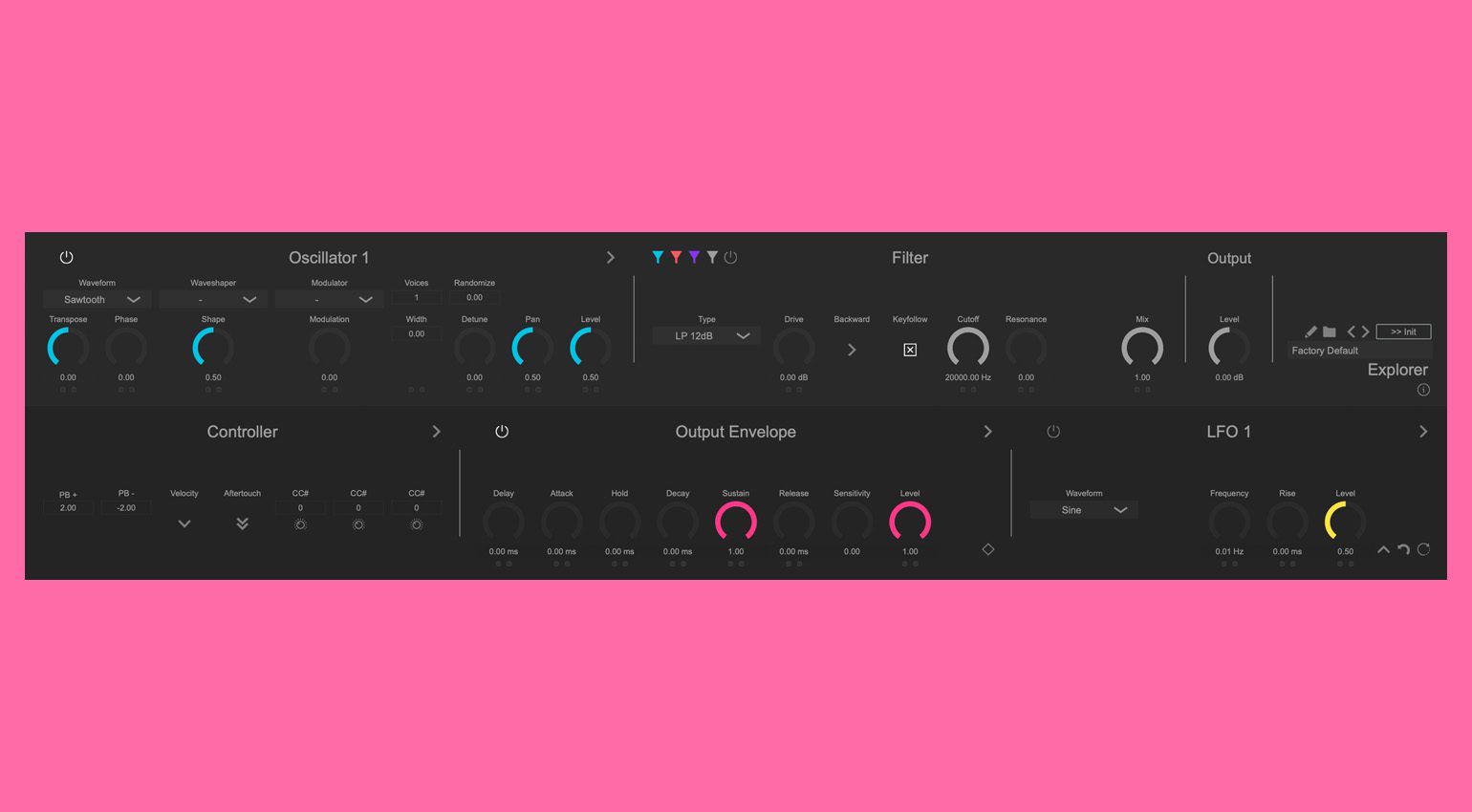
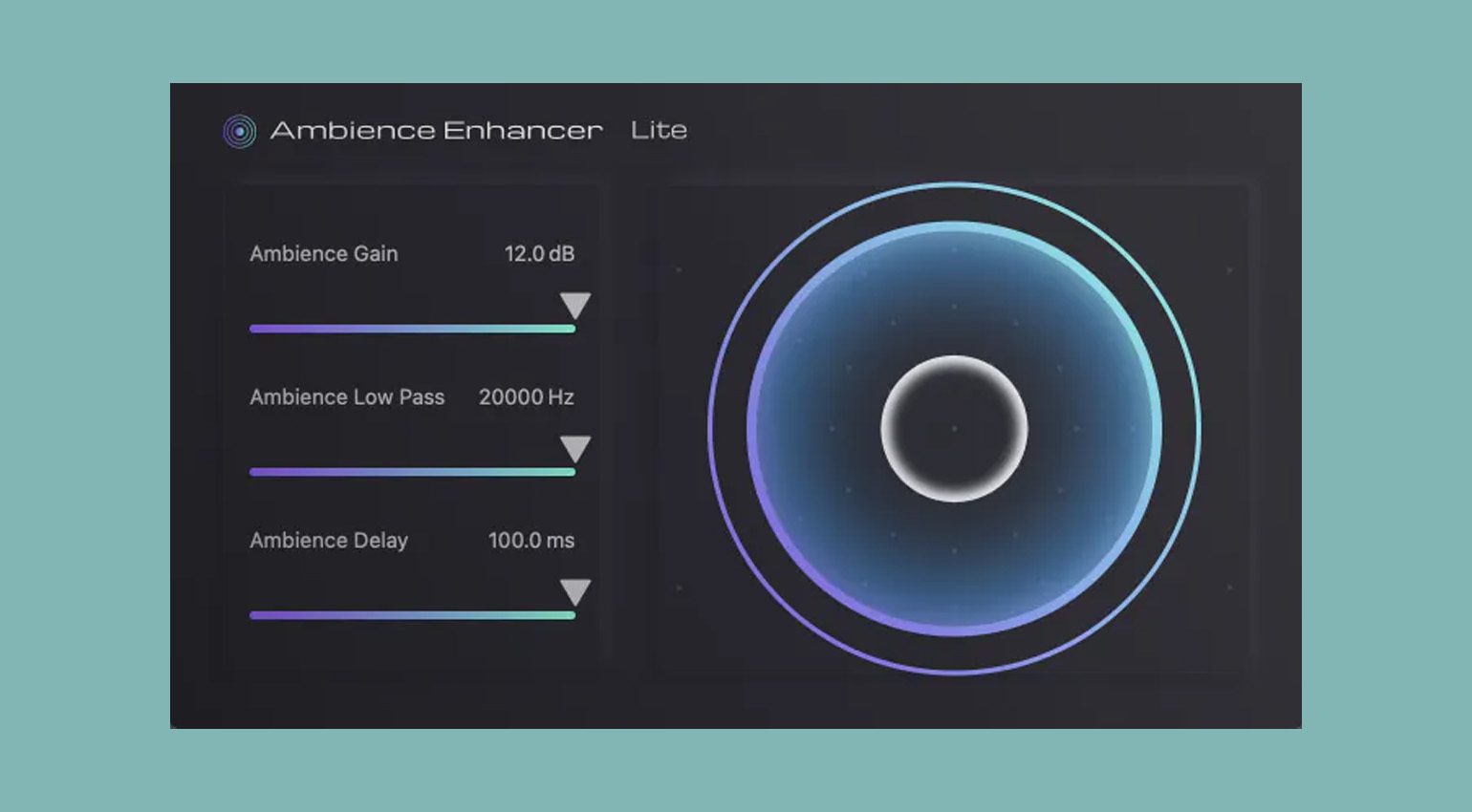
Best free plug-ins this week: Explorer, Ambience Enhancer Lite, and Quantize · Quelle: Fabric 70, Gearnews This week’s roundup of the best free plug-ins includes a versatile polyphonic synth, a very cool little tool for adjusting the ambience level, and a lo-fi toolkit with a bitcrusher, clipper, and more. Here’s Explorer, Ambience Enhancer Lite, and Quantize. What’s the best place to look for free plug-ins? That’s right – our archives! Explorer by Fabric 70 is a polyphonic software synthesizer with three oscillators and a multi-mode filter per voice. It’s also got three envelopes, three LFOs, a waveshaper, and oscillator modulation. Besides velocity and aftertouch, you can assign three additional MIDI CC controllers for real-time control. I kinda like the GUI on this one; Explorer seems like a versatile synth and a great way to get into synthesis and sound design. Hence the name! Explorer is available for macOS and Windows in VST3 and AU formats. Get Explorer here Ever needed to adjust the ambience or reverb level after recording? Ambience Enhancer Lite by Novo Notes lets you do just that. The developer says that it analyzes the incoming audio and divides it into direct and ambient components. You can then adjust the ambience level (like a dry/wet knob in reverse) and shape the sound with a low-pass filter. The plug-in also lets you apply a delay to the ambience. The free version works in stereo; a paid version ($88) for surround applications is coming soon. Ambience Enhancer Lite is available for macOS 10.15 or higher in AAX, VST3, and AU formats. Get Ambience Enhancer here Now for something a bit more rustic. Quantize by SR Musics is a complete toolkit for a variety of tasty lo-fi effects. Besides a bitcrusher, the plug-in includes lowpass and highpass filters, and two circuit emulations. There’s also a hard clipping function. The developer says that Quantize delivers everything from 8-bit sounds to the edgy sounds of early digital samplers. It even has an oscilloscope, so you can see how the lo-fi treatment affects your audio signals. Quantize is available for Windows 7 or higher as a VST3 plug-in (64 bit). Get Quantize here Click on the button to load the content from SoundCloud. Load content Wie findest du diesen Beitrag? Your email address will not be published.Required fields are marked *
· As editor of Gearnews, my apologies for your disgust at this superbly written article. We have never hidden our affiliation with Thomann and neither do we force our readers to purchase via the … · The thing about stands that bounce… velocity is calculated from the speed of the key vs. the keybed. If the keybed is moving in any way whatsoever, you lose the accuracy of how it responds to your … · And that will take the creeses out of your playing
Advertisement Jeremy W. Peters The wall-to-wall cable news and network coverage of Thursday’s prime-time Jan. 6 committee hearing will once again have a notable gap: Fox News. Fox will not carry the hearing live, instead reserving what are typically its highest-rated hours for its usual programming lineup of Tucker Carlson, Sean Hannity and Laura Ingraham. Its sister network, Fox Business, will take the hearing live starting at 8 p.m., the company said in a statement. Viewers of Fox News, the country’s most-watched cable news network, will probably have to wait until midnight for any lengthy discussion of the evening’s events. The anchor Shannon Bream will devote her nightly show at that time to the topic. The committee’s other prime-time hearing last month was also not carried live by Fox News. The network aired its usual prime-time lineup then, too. Mr. Carlson explained to his audience, as he has many times before, that he wasn’t going to indulge the committee’s “lying.” Mr. Hannity dismissed the hearing as a “sham.” Fox News has aired the hearings that have taken place during the day, when millions fewer viewers are watching. But those days were hardly big for the network. It was eclipsed in the ratings by CNN and MSNBC, something that rarely happens. Advertisement
Pop queen Tanya Singgh has brought to us the soulful single Woh beetey din after many songs like Janam kuch toh bolo, Chupke chupke, Baahon mein teri, Piya piya, Ankhiyan mila le and many more. Tanya said, “It is because of my wish and motive of bringing back pop culture to the industry that I came up with Woh beetey din. The song’s look and feel was revitalized because this is the first time designer Nikhil Thampi has styled for a music video.” Added Prem Raj Soni, who is directing a music video for the first time, “The song is so soothing that it will definitely touch everyone’s heart, and shooting with Tanya Singgh was an inspiring journey! Tanya also mentioned that this song is very close to her heart as it was composed by her father and the lyrics were given by her mother. Maybe that’s why she felt a strong connection with it when shooting for the song.” Woh beetey din is a mixture of both modern and retro music. It also features Turkish superstar Ugur Gunes. The original composition is by Indipop 1970s pioneer Ajit Singh with lyrics by Gittanjali Singh and Music Production by Jeff Hunt. The song was released on T-Series’ YouTube channel. This is probably the first Indo-Turkish musical collaboration. While little is known about Ugur, he is a superstar and an influential personality in Turkey. As he enjoys a huge female fan following in his country, he is all set to take over India with his upcoming Hindi music video.
Yes, I would like to receive emails from DESI TALK Headlines!. Sign me up! Parikh Worldwide Media is the largest Indian-American publishing group in the United States. The group publishes five periodicals – “News India Times,” a national weekly newspaper; “Desi Talk in New York,” a weekly newspaper serving the New York-New Jersey-Connecticut region; and “Desi Talk in Chicago,” a weekly newspaper serving the Greater Chicago area and the Midwestern states; and “The Indian American,” a national online quarterly feature magazine, and the Gujarat Times, a Gujarati language weekly. The combined circulation and readership of these publications make the media group the most influential in the ethnic Indian market.
News News | “La… a note to follow so!” “La… a note to follow so!” “LA… a note to follow SOOOOO!” Six children, one conductor as pianist and one acting Liesl von Trapp gather around a circle of chairs in a rehearsal space at the Red Brick Center for the Arts in downtown Aspen. These exuberant voices float out into the hallway as the team conducts rehearsals for the upcoming “Sound of Music” in Concert at the Benedict Music Tent on July 25-26. “I am definitely feeling like the older sister with this group of kids,” said the aforementioned Liesl, as played by Theatre Aspen apprentice Sydney Borchers, who spent the rehearsal session playing both her performing role and filling in as Maria for all of the other numbers with the younger performers. Conductor Andy Einhorn played the piano and kept the energy upbeat in the light-filled rehearsal space. This is his fifth time teaching the show. The performers playing the remaining von Trapp children are all locals, many of whom, while they’ve participated in singing and performing activities in the past, such as previous summers’ Theatre Aspen Camps, have never performed onstage in a concert of this magnitude. “What’s really exciting about this is that it’s the prototype production of doing ‘The Sound of Music’ in Concert with an orchestra,” Einhorn said. “Adding children to the show adds another level of complexity, but also excitement.” It’s “the ultimate ‘musical in the mountains,’” said Theatre Aspen producing director Jed Bernstein. The production, a joint venture between Theatre Aspen and the Aspen Music Festival and School, “is a special event three years in the making,” said Einhorn, who originally set out to helm the production in 2020, on the heels of the success of “South Pacific” in 2019 in the Benedict Music Tent. “Our collaborations with Theatre Aspen are a chance to combine their reach and expertise in casting and theater with our superb orchestras,” said Alan Fletcher, president and CEO of the AMFS. And in those performances, practice makes perfect. The children are required to sing in three-part harmonies regularly throughout the show. Making sure they have the fundamentals down, the rehearsal, and repetition, continue. “When the dog bites, when the bee stings, when I’m feeling sad!” “When the dog bites, when the bee stings, when I’m feeling sad!” “When the DOG BITES, when the BEE STINGS, when I’m feeling SAAAAD!” “This is always the title that people want to do,” Einhorn said. “It’s a beloved show. Everyone knows the music.” The fact that it’s not a full-blown stage production, but rather an interpretation in the style of a concert adds a bit of a twist. “It’s a show that relies a bit on costumes and for the audience to have the imagination of a set,” he said. “It’s a slightly pared down script, but we’re presenting all of the music, and we’re using two songs from the movie that are not in the stage production. What (director) Marc Bruni, (choreographer) Denis Jones and I set out to do is to create a world which allows for imagination and interpretation to take over.” Borchers echoed that sentiment: “One of the nice things about this show is that everyone does know this show, and because they know it, it gives both the audience and the performers excitement about it.” As for the kids playing the remaining von Trapp children, “performing on this big stage is going to be foreign to them, so it’s interesting in that their progression will be similar to the kids in the story, and their growth as performers,” Borchers said. “It’s exciting for the audience to root for them,” Einhorn said. And, when local audiences root for them in person, they might see some kids they recognize. James Nottingham will play Friedrich; Eleanor Carroll appears as Louisa; Harry Spitteler is Kurt; Sierra Quint is Brigitta; Kayleigh Flynn plays Marta; and Anna Riley appears as young Gretl. Tickets are currently on sale, and a limited special $30 offer is being extended to children 12 and younger. Other tickets are $110 and $50. | The Buddy Program presented a masquerade party for its 23rd annual Bash for the Buddies on July 8 at Gail and Lenny “Boogie” Weinglass’ Merry-Go-Ranch on McLain Flats. | | | | Readers around Aspen and Snowmass Village make the Aspen Times’ work possible. Your financial contribution supports our efforts to deliver quality, locally relevant journalism. Now more than ever, your support is critical to help us keep our community informed about the evolving coronavirus pandemic and the impact it is having locally. Every contribution, however large or small, will make a difference. Each donation will be used exclusively for the development and creation of increased news coverage. Start a dialogue, stay on topic and be civil. If you don’t follow the rules, your comment may be deleted. User Legend: ModeratorTrusted User
Ute Mountaineer is currently seeking Sales Associates. We are people who love the outdoors and want to help customer by…
Join our Team Motor Vehicle Technical Glenwood SpringsAdministrative Assistant Glenwood SpringsChief Building Official Glenwood SpringsPlanner II or III Glenwood SpringsFinance…
Kickstart Your Future Today. Dodson Engineered Products, A Core & Main Brand is hiring organized and efficient team members for…
NOW HIRING!PATROL DEPUTYStarting at $26.17 MUST BE P.O.S.T. CERTIFIEDDETENTIONS DEPUTYStarting at $26.17Benefit package includes 100% paid Health insurance, retirement plan,…
NOW HIRING FOR SPRING & SUMMER!Be a part of Glenwood Springs History! FT & PT positions available!! LIFEGUARD – $17-19/hr…
Post Independent is looking for detail oriented, early risers to deliver newspapers.We currently have morning routes available between Rifle and…
is hiring for PT/FT Beauty Specialist.Must be avail. weekends & holidays
Director of SalesJob DetailsJob LocationSnowmass Club – Snowmass Village, COSalary Range$80,000.00 – $80,000.00 Base+Commission/month Reports to: General ManagerSupervises: NoneClassification: Exem…
CTL|Thompson, Inc. is seeking a full-time Engineering Technician to work in our Glenwood Springs office. This opportunity is suited for…
Front Desk Attendant FT/PT J1 Visa, High school students welcome Aspen & Willits locations. Gym membership included.
Yampah Mountain High Schools Project Rebound is hiring an Academic and Behavior Coach for the 22-23 school year. The coachs…
The City of Glenwood Springs is hiring a new Human Resources Manager.This position will build a department from the ground…
Home Team BBQ is hiring managers & hosts immediately! Join our crew at the base of Buttermilk Mountain! If you…
Full time employment, Competetive Pay
HOT SPRINGS GRILL FREE POOL PASS!The Glenwood Hot Springs Resort seeks Prep Cooks, Grill Cooks, and more! $15.50-20.00/hr DOE. No…
SMALL ENGINE MECHANIC needed for busy rental yard. Mechanic will maintain equipment and diagnose repairs. Operating equipment and knowledge of…
Excellent pay for the right individual ableto take projects from start to finish
Busy real estate firm looking for a self-motivated apprentice. Must have excellent communication and writing skills, experience with Adobe InDesign…
Seeking Professional Day and Night Drivers AspenSet your own schedule weeklyTop Drivers Earn $30+/hr.Up to $2,000 sign-on bonus970-925-4475 Ext 2
Wright Water Engineers Inc. is seeking a motivated and experienced Project Assistant to support the Vice President (VP), Senior Principal…
Thank you for visiting nature.com. You are using a browser version with limited support for CSS. To obtain the best experience, we recommend you use a more up to date browser (or turn off compatibility mode in Internet Explorer). In the meantime, to ensure continued support, we are displaying the site without styles and JavaScript. Advertisement You can also search for this author in PubMedGoogle Scholar You have full access to this article via your institution.
People queue at a COVID-19 test site in New York City last month, when the BA.4 and BA.5 subvariants were taking hold.Credit: John Smith/VIEWpress/Getty The Omicron BA.4 and BA.5 subvariants of SARS-CoV-2 have proven to be stealthier at evading people’s immune defences than all of their predecessors. But recent research shows that previous infection with an older variant (such as Alpha, Beta or Delta) offers some protection against reinfection with BA.4 or BA.5, and that a prior Omicron infection is substantially more effective. That was the conclusion of a study that evaluated all of Qatar’s COVID-19 cases since the wave of BA.4 and BA.5 infections began1. The work, which was posted on the medRxiv preprint server on 12 July and has not yet been peer reviewed, feeds into broader research on “how different immunities combine with each other”, says study co-author Laith Abu-Raddad, an infectious-disease epidemiologist at Weill Cornell Medicine-Qatar in Doha. Everyone has a different immune history, because people have received different combinations of COVID-19 vaccines and been infected with assorted variants during the course of the pandemic. “Different histories equip people with different immunity against upcoming infection,” says Abu-Raddad. Knowing how these diverse immune responses interact inside a person will be “very important for the future of the pandemic”, he adds. To see how much protection previous infection offers against the two Omicron subvariants, Abu-Raddad and colleagues analysed COVID-19 cases recorded in Qatar between 7 May this year — when BA.4 and BA.5 first entered the country — and 4 July. They looked at the number of people known to have been infected previously who tested positive or negative for COVID-19, and identified which infections were caused by BA.4 or BA.5 by examining positive test samples to see whether they contained a protein that these subvariants lack.
Fast-evolving COVID variants complicate vaccine updates The researchers found that infection with a pre-Omicron variant prevented reinfection with BA.4 or BA.5 with an effectiveness of 28.3%, and prevented symptomatic reinfection with either subvariant with an effectiveness of 15.1%. Prior infection with Omicron granted stronger protection: it was 79.7% effective at preventing BA.4 and BA.5 reinfection and 76.1% effective at preventing symptomatic reinfection. Although it seems counterintuitive to see stronger protection against any reinfection than symptomatic reinfection, the researchers say this effect is in line with previous studies and is probably caused by the estimates having wide confidence intervals. “It’s a good study,” says Kei Sato, a virologist at the University of Tokyo. But he points out that the length of time between first and second infections could have influenced the results. Earlier variants have been around longer than Omicron, which emerged only in late 2021. And several studies, including one by the same team in Qatar2, have shown that natural immunity against SARS-CoV-2 wanes over time. Alex Sigal, a virologist at the Africa Health Research Institute in Durban, South Africa, agrees. “The time that [has] passed since your original infection is much shorter with Omicron, so it’s really not a fair comparison,” he says. Sigal adds that participants’ vaccination statuses are unclear from the results, as is information on whether primary infections took place before or after vaccination, which could be an important consideration. Abu-Raddad says the study’s purpose was to investigate who is currently most prone to reinfection, rather than to attribute natural immunity to a particular viral strain. He says the study’s design controls for the effects of vaccination, and the team conducted a sensitivity analysis to adjust for vaccine status, the results of which were consistent with the overall conclusions. “The immunity you’re getting from these Omicron infections actually protects you from other Omicron sub-lineages to some extent,” says Sigal. However, “COVID is everywhere,” Sato warns. “It can easily evolve into a new variant.” doi: https://doi.org/10.1038/d41586-022-01950-2 Altarawneh, H. N. et al. Preprint at medRxiv https://doi.org/10.1101/2022.07.11.22277448 (2022). Chemaitelly, H. et al. Preprint at medRxiv https://doi.org/10.1101/2022.07.06.22277306 (2022). Download references News News News News News Article News Comment News Oklahoma Medical Research Foundation (OMRF) Oklahoma City, United States Northwestern University (NU) Chicago, IL, IL, United States Institute of Biology Valrose (IBV) NICE, France Helmholtz Centre for Environmental Research (UFZ) Leipzig, Germany You have full access to this article via your institution.
The appeals court said U.S. courts have jurisdiction to hear copyright infringement cases against foreign entities when the entities put apps on the U.S. market. PASADENA, Calif. (CN) — The Ninth Circuit Court of Appeals made it a little easier for U.S. book, movie and music publishers to sue overseas intellectual property pirates if they target the American market. The court on Thursday overturned a federal judge’s dismissal of a lawsuit by a California producer and distributor of Vietnamese music against a Vietnam-based website and app owner for lack of personal jurisdiction. In an unanimous decision the Ninth Circuit panel said the judge had jurisdiction over the Vietnamese company, VNG Corp., because it intentionally sought out the music of California producer Lang Van Inc. for its Zing MP3 app and it made the app available in the U.S., where it has been downloaded more than 320,000 times. “Although VNG argues its primary audience is in Vietnam, VNG released its Zing MP3 in English to the United States,” said U.S. District Judge Joseph Bataillon, a Bill Clinton appointee from the federal court in Nebraska sitting on the panel by designation. “Absent release by VNG, this app was not available in the United States. Making Zing MP3 accessible to those living in the United States was purposeful.” An attorney for VNG didn’t immediately respond to an email seeking comment on the ruling. Cory Baskin, an attorney for Lang Van, said the company intends to prove at trial that VNG should be ordered to pay Lang Van millions of dollars in statutory damages and attorneys’ fees for its unauthorized distribution of thousands of copyrighted songs and albums to U.S.-based users of VNG’s popular Zing MP3 Music Service and Mobile Applications. “After more than seven years of litigation seeking to hold VNG to account for its targeted infringement of Lang Van’s copyrights in and to its invaluable catalog of Vietnamese music produced in Orange County’s Little Saigon, the Ninth Circuit has finally ruled that Lang Van is entitled to its day in Federal Court,” Baskin said. The dismissal of Lang Van’s lawsuit for lack of jurisdiction in 2019 prompted an outcry by U.S. intellectual property owners who have been facing an onslaught of overseas piracy and have limited means to seek redress. “By closing the doors to U.S. courthouses through its overly narrow interpretation of personal jurisdiction, the district court’s decision threatens to deal a major blow to the ability of members of the book and publishing industry to enforce intellectual property rights against some of the most brazen and prolific infringers of content created and distributed in the United States,” the Association of American Publishers said in an amicus brief in the appeal. “Copyright owners’ ability to enforce their rights in U.S. courts against foreign defendants who commit infringement in the United States is critical in stopping digital piracy,” the Motion Picture Association added in a separate brief. “All too often, foreign jurisdictions fail to enforce intellectual property rights, leaving American courts as the only forum in which copyright owners can vindicate their rights.” Lang Van, based in Westminster, California, was one of the first Vietnamese production companies established in the United States, according to its lawsuit. It has the largest library of content of any Vietnamese production company and owns the copyright to more than 12,000 songs. VNG specifically sought Lang Van’s music for its Zing app, according to the testimony of a former VNG employee, cited in the Ninth Circuit ruling. This employee testified that his job was to source and distribute through the Zing app songs “without regard to authorization from content owners.” VNG offered over 2,800 of Lang Van’s songs to the public through Zing MP3. In his opinion, Bataillon wrote the lower court was wrong to look only at whether VNG had a specific connection with California to determine whether the company could be sued there. The proper analysis, according to the panel, was under a federal rule that provides for jurisdiction over foreign defendants, who have ample contacts with the U.S. as a whole, “but whose contacts are so scattered among states that none of them would have jurisdiction.” U.S. Circuit Judge Jay Bybee, a George W. Bush appointee, and U.S. Circuit Judge Mark Bennett, a Donald Trump appointee, joined Bataillon’s opinion. Sign up for the Top 8, a roundup of the day’s top stories delivered directly to your inbox Monday through Friday.


 Mark Smeaton, Head of EQ Agriculture, says, “Agriculture is a prominent sector for us, and we act for a range of rural clients across Scotland with an increasing client base across the North East. We are delighted to be sponsoring the EQ Food & Drink Pavilion at the Turriff Show once again this year. It’s a fantastic way to highlight local producers with an event that the community can all get involved in. We will also have our own stand at the event and look forward to seeing clients and contacts at the show”.





 Moderator
 Trusted User
 Loading …


