Apr 15
Random advice I find myself repeating a lot…
Software architecture is fun. So much so that there’s never any shortage of smart people eager to jump in with their opinions. In my various engineering leadership roles throughout my career so…
Author of Kill It with Fire Manage Aging Computer Systems (and Future Proof Modern Ones)
Love podcasts or audiobooks? Learn on the go with our new app.
Author of Kill It with Fire Manage Aging Computer Systems (and Future Proof Modern Ones)
The Pragmatic Programmers
in
The Pragmatic Programmers
Dhaval Anjaria
Nishant Gupta
in
Salesforce Engineering
Boris Cherkasky
in
Better Programming
Help
Status
Writers
Blog
Careers
Privacy
Terms
About
Knowable
Five Koans of Software Architecture | by Marianne Bellotti | Apr, 2022 – Medium
Covering a Nearly Forgotten Lynching – kuaf.com
On the most recent episode of Undisciplined, host Caree Banton welcomes journalist Mary Hennigan and editor Rob Wells to discuss the St. Charles Lynchings of 1904 and how little news coverage it received at the time.
Spencer Dinwiddie's New Smart Sneakers Stream Price of Bitcoin – SportTechie
Dallas Mavericks guard Spencer Dinwiddie has partnered with crypto payments startup Bitrefill to launch Bitsneaks, a sneaker with built-in 3G internet connectivity to livestream the price of Bitcoin. The sneaker has an LED display that shows the price of Bitcoin and the block height in real-time.
The pricey sneaker costs 1 Bitcoin per pair (equal to about $40,000) and are being sold on bitsneaks.com. Scandinavian technology lab Nordic Society for Invention and Discovery worked with Bitrefill to design the sneakers, which come with a full node and mining rig built into its shoebox to make it capable of mining Bitcoin, according to Bitcoin Magazine.
Dinwiddie is the founder of Calaxy, an app that lets users buy crypto fan tokens to interact with celebrities. He also has his own sneaker brand called K8IROS.
Nashville SC has become the latest MLS franchise to acquire an official betting partner when it struck a deal with the social marketplace startup Wagr.
Wagr’s innovation as a social sportsbook app is to cut out the middleman and make verbal bets between friends official. Using point spreads calculated by Wagr, customers are essentially wagering against people they know rather than against the house.
Co-founded by former Harvard classmates Mario Malave and Eliana Eskinazi, Tennessee-based Wagr will have an exclusive presence at Nashville SC’s new soccer-only stadium, GEODIS Park, which opens May 1. The company will open activation tents at the venue to engage with spectators.
Other MLS teams with betting partners are D.C. United (Fan Duel), Houston Dynamo (Fubo Gaming), Austin FC (PointsBet) and others.
Wagr launched back in January after completing a $12 million Series A that included funding from The Kraft Group—operated by New England Patriots Owner Robert Kraft—and HBSE Ventures, the venture arm for owners of the Philadelphia 76ers and New Jersey Devils.
“The big, big benefit for us is we want access to the tightly-knit community of fans,” Malave told the Tennessean. “When you go talk to all the fan clubs like La Brigada and all the other ones in the entire Backline Collective, there are friendships in there. There are connections. There are people who are engaging. They go to games together, they tailgate together, they travel together. Our product is built for groups like that.”
Athletes Unlimited, the new company operating four women’s pro sports leagues with an athlete-centric competition model, has launched an Innovation Collective of eight startups working across the areas of performance, recovery, training and fan engagement.
The founding members of the Athletes Unlimited Innovation Collective are:
Jon Patricof, the CEO and co-founder of Athletes Unlimited, said in a statement that AU’s athletes would “benefit short-term from access to products and services and in some cases over the long term in the appreciation of equity.” Underdog Venture Team and CSM Sport & Entertainment collaborated on targeting the right partner companies, with Underdog CEO Nicole Jeter West likening the program to an incubator.
Players Health, a youth sports safety startup funded by NBA veteran Andre Iguodala, has acquired Dallas-based health insurance brokerage firm Life Benefits. The move will expand Players Health’s available health insurance packages for coaches and administrators who work for youth sports organizations.
Iguodala, a three-time NBA champion currently playing for the Golden State Warriors, invested in Players Health’s $28 million raise last month. His VC firm Mastry Ventures co-led the round alongside insurance company SiriusPoint. Clients of Players Health include U.S. Youth Soccer, NFL Flag Football, I9 Sports and USA Cheer. Life Benefits was founded in 2002 and will bring its roster of affiliated insurance carrier partners to Players Health.
Players Health’s insurance packages for youth sports organizations span medical, dental and vision as well as an employee assistance program, employer sponsored life insurance, short- and long-term disability and 401k options. Players Health’s software can also be used to document athlete injuries, report abuse, share coaching education content and streamline credential processes for coaches and staff.
“Life Benefits’ three decades of insurance experience strengthens our team and mission of supporting the ever-growing amateur sports landscape with intuitive technology and solutions,” Naveen Anand, Players Health group president, said in a statement.
When Meta — then known as Facebook — bought Oculus for $2 billion in 2014, the virtual reality headset was expected to become a home for next-generation gaming. What the social network did not anticipate has been the embrace of fitness-themed apps to workout in virtual reality.
“I now have a completely different mindset about where I think gaming on VR is going. Where it’s going, in my opinion, is it’s going to revolutionize fitness,” Rob Shaw, Meta’s director of North American sports partnerships, said Wednesday at SportTechie’s State Of The Industry conference. He spoke on the “Engaging Fans in the Metaverse” panel alongside Candy Digital CMO Andre Llewellyn and Atlanta Braves VP of marketing and innovation Greg Mize.
Meta ignited its push into fitness last November with its acquisition of virtual reality fitness app Supernatural. With VR apps that span boxing, dance and other full-body workouts, Meta is building its next Quest headset to be “sweat proof.”
“The next iteration that we’re going to have of our current Quest 2 product is to make the headset more sweat proof, to have the controllers have better grips,” Shaw said. “People are using our platform to workout, and it’s not something we necessarily forecasted. We now have creators who are developing these games for people to be active. So I think gaming is going to change in many ways.”
Last month, the NFL partnered with StatusPro to develop a virtual reality football game. That game, which will be available on Meta’s Quest and PlayStation VR headsets, will prioritize movement — such as users making physical throwing motions — while playing quarterback in its virtual football environment.
Meta also partnered with the NFL around Super Bowl LVI to let fans dress their digital avatars in Rams and Bengals-branded clothing. The digital apparel was free to buy across Meta’s platforms, but the company expects to eventually have users pay for their virtual avatar’s swag.
“Our intent is to develop a marketplace where those jerseys or shirts can be sold,” Shaw said. “There will be a business model where the monies can go back to the leagues and teams or whoever owns the IP.”
BaseballCloud and Yakkertech, who merged seven months ago to become an optical tracking data and analytics leader, has signed a multi-year deal to secure the Frontier League’s motion capture and distribution rights.
As part of the relationship, BaseballCloud and Yakkertech will collect ball flight metrics and real-time data on every pitch this season in the Frontier League, a longtime independent league with teams in New Jersey, New York, Canada, Illinois, Kentucky, Indiana, Ohio and Pennsylvania. The metrics will then be distributed to sports betting organizations, MLB franchises, broadcast entities—and also used for in-stadium fan engagement.
Frontier League front offices can also use the analytics to help evaluate talent, sign players and enhance their player development departments through BaseballCloud’s biomechanical data and other insights.
“The Frontier League is excited to partner with Yakkertech and Baseball Cloud to expand technology in our stadium, and enhance our fans’ experience, while better showcasing our players’ skills,’’ Brian Lyter, the Frontier League’s board of director’s president, said in a statement.
Polar Electro, a long-time fitness technology innovator, is releasing Pacer and Pacer Pro watches for both fledgling and elite runners.
To appeal to less experienced runners, the company has added a “Walking Test’’ into the Pacer watch that allows people to extrapolate their aerobic fitness through their VO2max—the amount of oxygen a person absorbs and uses during exercise. That fitness number is attained by taking a 15-minute walk on an even path.
The Pacer Pro, designed for the more advanced competitor, includes a reliable GPS system that also tracks heart rate, speed and power zones. The watches also contain route tracking, running profiles, sleep tracking features such as “Nightly Recharge’’ and “Sleep Plus Stages,’’ music controls and a smart watch element that provides runners with weather forecasts. The Polar Pacer Pro sells for $299.95; the Polar Pacer for $199.95.
Interactive sports broadcast producer Tagboard has raised $2.3 million to increase its Series A investment to $10.3 million. New investors in Tagboard include West River Group, Spivy Private Capital and Sports Loft.
The capital builds on Tagboard’s $8 million raised in February. Tagboard’s cloud production software lets networks add interactive polls and real-time content from social media feeds into broadcasts, as well as on-screen QR codes that viewers can scan with their mobile phones to access second-screen experiences such as merchandise and sports betting applications.
More than 600 brands use Tagboard, including NBC Sports, MLB Network, NFL Network, Turner Sports, Fox Sports and Riot Games, as well as teams and leagues such as the Minnesota Vikings and UFC. The company’s existing investors include Sinclair Broadcast Group, Grayhawk Capital, Next Frontier Capital and WISE Ventures.
Women in Sports Tech has placed 27 undergraduate and graduate students into its 2022 fellowship program, which will strategically pair the recipients – two of whom are from the UK – with prominent sports tech companies for internships.
Some of the participating companies are Stats Perform, GameChanger, Titleist, Catapult Sports, MLB and PantherTec. WiST’s goal is to usher a talented pipeline of females into the sport tech industry to support gender equity.
This year’s class is the largest in the fellowship’s five years of existence and features students from universities such as Princeton, Harvard, Yale, Virginia, USC, Ohio State, Michigan, George Washington, Oregon and Duke. Each recipient receives a $5,000 grant as part of their summer job internship, as well as being matched with a WiST mentor. Since 2018, WiST’s fellowship program has provided 75 students with an opportunity to intern for sports tech firms.
“This year’s selection process was by far the most competitive as the WiST Fellowship Program has become recognized within the sports tech industry for the extraordinary experiences for the Fellows and host companies alike,’’ Marilou McFarlane, CEO and founder of WiST, said in a statement. “Our WiST community looks forward to supporting these students as they begin their career journeys and long after their internships end.’’
Tamika Tremaglio, the executive director of the National Basketball Players Association, said she is in favor of the NBA expanding beyond the league’s current 30 teams. Her comments came Tuesday during SportTechie’s State Of The Industry conference at One World Trade Center in New York City.
“We do want more teams, I think it’s good for the business,’’ Tremaglio said during her opening keynote conversation with SBJ executive editor Abraham Madkour. “Ideally, we hope that there will be more teams popping up in the U.S.’’
Las Vegas is a potential NBA expansion city given Oak View Group’s plan to build and complete a 20,000-seat arena by 2026. “If they [the NBA] made a commitment to Vegas at some point in the future, this building will be built so that it would be spectacular for the NBA,’’ OVG CEO Tim Leiweke told the Las Vegas Review-Journal in March. “Not just in the way that it operates, meeting and exceeding all their standards, but in a way economically it could generate revenue for an NBA team.’’
Seattle, home to the NBA’s SuperSonics from 1967 to 2008, is another city rumored to be a frontrunner for expansion. Seattle Mayor Bruce Harrel said in March “the odds are high” of an NBA team returning to the city.
Tremaglio has led the NBPA since January. The NBA’s current collective bargaining agreement runs through the 2023-24 season, although both the league and union have opt-out clauses following the 2022-23 season. Tremaglio said Tuesday that she does “absolutely not” foresee either side exercising that opt-out. She also acknowledged some “privacy concerns” regarding player-tracking data collected through wearable devices or the league’s Second Spectrum optical camera system.
“It’s something that is used so that [players] can hone in on their skills, recognize when they are exhausted and when they can do things better,” Tremaglio said. “But there are still some privacy concerns. We have to look at what that will mean going forward. It is certainly something that we are exploring.”
FIFA is launching a streaming platform, FIFA+, which will provide ubiquitous international soccer coverage of elite and youth teams, not to mention original documentaries and archived games dating back to the 1950s.
Over the course of 2022, FIFA+ expects to stream roughly 40,000 live games from 100 member associations across the six confederations. About 11,000 of those will be women’s matches, while others will be previously anonymous youth matches. Another focal point of the digital platform is Match Centre, which will produce a daily recap of men’s and women’s soccer news, as well as offer interactive games, fantasy games and predictors.
Some of the original documentary titles are “Ronaldinho: The Happiest Man in the World,’’ a 90-minute film about the Brazilian legend, and “Captains: Season 1,’’ an 8-part docuseries that follows six team captains trying to qualify for the FIFA World Cup Qatar 2022.
“This project represents a cultural shift in the way different types of football fans want to connect with and explore the global game and has been a fundamental part of my vision 2020-2023,’’ said FIFA president Gianni Infantino in a statement. “It will accelerate the democratization of football, and we are delighted share it with fans.’’
TV One Begins Production of Marvin Sapp Biopic – GospelMusic.org
TV One announced today that filming for its Marvin Sapp biopic is underway. Chaz Lamar Shepherd (“Marvel’s Luke Cage” “The Game”) will take on the lead role as Marvin Sapp. Joining Shepherd is Ambre Anderson (“Power Book II” “Manifest Evil”) who is cast as Sapp’s wife, MaLinda Prince Sapp. The film is scheduled for an August 21 release on TV One.
“It is an honor to tell Marvin Sapp’s life story,” said TV One’s Executive Producer Jason Ryan. “His vast contributions to gospel and American music are undeniable. We know this film will resonate with our viewers.”
The Marvin Sapp biopic chronicles the prominent gospel music artist and preacher’s Michigan upbringing, battle against teenage alcohol abuse, love for MaLinda Prince, rise in the music industry and growth in his faith. Sapp came into prominence more than 30 years ago as a member of Commissioned and is widely known for his award-winning, chart-topping crossover hit “Never Would Have Made It.” Currently, he is an author, radio show host and senior pastor of The Chosen Vessel Cathedral in Dallas, Texas and pastor emeritus of Lighthouse Full Life Center in Grand Rapids, Michigan – the church he founded with his late wife.
The film is directed by Russ Parr and produced for TV One by Swirl Films, with Eric F. Tomosunas, James Seppelfrick and Keith Neal serving as Executive Producers. Additionally, Marvin Sapp and Phil Thornton are Executive Producers. For TV One, Jason Ryan is the Executive Producer in Charge of Production, Donyell Kennedy-McCullough is Senior Director of Talent & Casting and Susan Henry is Senior Director of Original Programming and Production.
For more information about TV One’s upcoming programming, including original movies, visit the network’s companion website at http://www.tvone.tv. TV One viewers can also join the conversation by connecting via social media on Twitter, Instagram and Facebook.
##
Copyright © 2015 Gospel Music Association. All Rights Reserved.
Monstercat – Brand Director (CA) – Music Business Worldwide
We are looking for an innovative and talented Brand Director to lead Monstercat’s creative department. The successful candidate must possess excellent leadership qualities, with the ability to maximize the talents of their team and elevate the profile of the Monstercat brand. An understanding of Monstercat’s users core demographic and how the latest mainstream trends align with the brand strategy are essential.
Reporting to the Executive, you will align closely with the CEO and Marketing Director to develop a creative brand strategy that delivers engaging content across various mediums to meet the expectations of our fans and business partners.
This is a Director level position, directly overseeing a Creative Production Manager, and indirectly: a team of 5 internal creatives and a large external network of commissioned designers.
Headquartered in Vancouver, Canada with offices in L.A., California and Singapore, Monstercat is North America’s largest independent electronic music label. We’ve mastered the art of innovation to award-winning levels – we connect an unparalleled roster of chart-topping artists with fans worldwide, all the while partnering music with distribution players and partnerships that maximize impact. Powered by a collection of creative music lovers and tech aficionados, we’ve successfully forged into the realms of events, apparel, and gaming with signature style.
On our website, click “Apply for this Job”. To be considered for this role, please include:
We serve a global community and we need a diverse team to do that successfully. Women, Indigenous Peoples, people of colour, members of the LGBTQ2S+ community, individuals with disabilities, and veterans are strongly encouraged to apply.
Music Business Jobs is the most effective way for the global music industry to find the best candidates for their open positions.
In addition to being seen by over 300,000 monthly unique readers online, our listings are also emailed direct to more than 50,000 professional subscribers every week – across the US, UK, Europe, Asia-Pacific and beyond.
Click through below for details on how to submit a Music Business Jobs listing – and learn why our advertisers ‘strongly recommend’ us to their peers…
Artists and music fans can earn crypto from streaming – Yahoo! Voices
Brazilian music producer Lucas Mayer was trying to sell his music as NFTs when he became frustrated with trying to get an artist to make art for the audio of the NFT – or non-fungible token- while also divvying up the crypto royalties from the sale. That’s when he decided there needed to be a marketplace that made all of this seamless while allowing artists and fans to get their appropriate share of royalties in crypto.
“I wanted to create an NFT marketplace only for musicians and music marketing,” Mayer told Yahoo Finance in an interview. “So we started as a marketplace and now we’re helping artists [and fans] receive money in crypto instead of through Paypal.”
Mayer, who is behind the global music production house ‘DaHouse for commercials for Ford, Doritos, Kia and more, created the NFT music platform Phonogram.me. It’s an NFT marketplace made for musicians to sell their music, royalties, tickets for events, backstage passes, artwork, and more.
Artists can distribute their songs through Phonogram.me across major global streaming platforms like Spotify and collect their royalties in crypto. Fans can invest in artists’ music and get paid a portion of royalties alongside the artist as listeners stream the music. The more plays the artists get, the more fans profit alongside them.
Using smart contracts, Phonogram.me is able to register the song in the blockchain and automatically divvy up the correct percentages of royalties in crypto between parties who are owed.
“When the money arrives, because of this smart contract, it's already split between all the properties so everybody who has a part in that song gets their share in their crypto wallet,” Mayer said.
Phonogram.me also prides itself on cutting taxes independent artists have to pay for traditional music distribution platforms by 30% to 50%. And thanks to crypto there’s no foreign exchange rate to deal with and no service fees for going through outside payment services like Paypal.
Mayer is also working on a direct bank transfer. In Brazil, users can add their bank accounts on the Phonogram.me platform and directly convert the crypto into Brazilian currency into their accounts. Mayer and his team are trying to see if they can configure the same solution in other countries that have different rules.
The site opened in the U.S. and worldwide late last month after completing a testing phase in Brazil first. Users who sign up on Phonogram.me will set up a digital wallet associated with the site where royalties in crypto they are owed will automatically be deposited in their wallets.
He says artists from Russia are messaging him because they cannot receive money from banks from other countries, and are eager to receive monies in crypto. He says they have more than 60 releases from Russia already on the line.
Mayer also has a marketplace in the works called Gogram.me that will be an NFT ticket site where fans can buy tickets for concerts, but also purchase and resell those tickets.
“Imagine that you're scalping,” he said. “The band is not earning money from the second selling because it's not connected with them. But when we have something in the blockchain and you'd have to sell it as an NFT, the band makes money off all the additional sales so it’s a good deal."
Jennifer Schonberger covers cryptocurrencies and policy for Yahoo Finance. She has been a financial journalist for over 14 years covering markets, the economy and investing. Follow her at @Jenniferisms.
Read the latest financial and business news from Yahoo Finance
Follow Yahoo Finance on Twitter, Facebook, Instagram, Flipboard, LinkedIn, and YouTube
The verdict that China's web3 community has been waiting for months is here: NFTs, or the tokens used to prove the ownership and authenticity of an item, must not be used for securitization or transacted in cryptocurrencies, said China's banking, securities and internet financial associations in an announcement on Wednesday. China has already banned initial coin offerings, cryptocurrency transactions and crypto mining. Ruling out NFT's financial possibilities could further distance the country from the web3 wave taking place in the rest of the world, which is building a decentralized internet on crypto tokens.
"Someone like Elon Musk" deserves to own Jack Dorsey's first tweet as an NFT, the struggling seller said.
The festival is kicking off with the premiere of the film at the United Palace in Washington Heights on June 8
Jennifer Lopez and Ben Affleck were spotted touring the $165 million Spelling Manor mansion after their $50 million mansion fell out of escrow.
A Netflix documentary about Jennifer Lopez titled “Halftime” will kick off the 21st Tribeca Festival. The New York film festival announced its opening night film Wednesday. While Tribeca has traditionally been held in spring, this year it shifts to the summer, opening on June 8.
The EV6 is one of the best EVs we've tested.
Russian forces have left behind a wide variety of explosive devices in Ukraine, which will endanger civilians for years to come.
U-Haul rules and regulations prompt many questions as to why the company's vehicles all have Arizona license plates.
Crypto entrepreneur Sina Estavi bought Twitter founder Jack Dorsey’s first-ever tweet as an NFT for $2.9 million last year. He listed the NFT for sale again at $48 million last week.
The CHP says it's still investigating the crash and anyone with information about what happened is asked to call the Redding CHP at 530-225-0500.
Bitcoin (BTC) and stocks continue to trade within a range, albeit with large price swings. That indicates uncertainty among investors regarding geopolitical risk. Meanwhile, bitcoin whales are starting to take some profits.
From the bouquet toss to all-white outfits, here are the trends and customs that couples should cut from their 2022 wedding, per a pro bridesmaid.
Today’s tech headlines: Tesla’s cheaper Model Y is incoming, FIFA launches its own soccer streaming service, GoPro's 'Bones' is a stripped-down Hero cam for drones.
Teams like the Padres need stop being so lame.
Sphere, the Montreal-based production and distribution outfit, has acquired fellow Canadian company MK2 Mile End. Leading film distributor MK2 Mile End, which was launched in 2017 by Charles Tremblay with French outfit MK2, will be absorbed into Sphere, with Tremblay appointed as president of the division. French company MK2 will no longer have a stake […]
WASHINGTON (Reuters) -Securities regulators in the U.S. states of Texas and Alabama on Wednesday ordered an online casino developer to stop selling non-fungible tokens (NFTs), alleging the firm was illegally offering unregistered securities and defrauding the public. Cyprus-based Sand Vegas Casino Club and co-founders Martin Schwarzberger and Finn Ruben Warnke allegedly offered 11,111 NFTs in a "high-tech fraudulent securities offering" to fundraise to build virtual casinos in the metaverse.
Sina Estavi is a “crypto entrepreneur,” who last year bought a digital token representing Twitter founder Jack Dorsey’s first ever tweet. He paid $2.9 million for it, and this month sought to make good on his “investment,” putting it up for auction with an expectation it could net him $48 million. It did not.
The attack occurred during the aquarium’s Flipper Dolphin Show on Saturday
Tesla CEO Elon Musk goes all in on Twitter.
Authorities say the RaidForums website trafficked in hundreds of databases of sensitive data, including credit card and Social Security numbers and bank account information, that had been hacked or stolen from victims.
Disney Announces Vinyl Reissue of Daft Punk's Iconic "TRON: Legacy" Soundtrack – EDM.com
Walt Disney Pictures
Vinyl pressings of the original "TRON" film’s soundtrack, scored by legendary composer Wendy Carlos, are also available for pre-order.
Daft Punk are the gift that keep on giving.
In celebration of the 40-year anniversary of the original TRON film, Disney has announced a vinyl reissue of the 1982 sci-fi classic's soundtrack. The company is also pressing new vinyl of Daft Punk's iconic TRON: Legacy score and subsequent remix album, 2011's TRON: Legacy Reconfigured, which features reworks of the robots' music by Avicii, M83, Boys Noize and The Glitch Mob, among others.
TRON: Legacy remains Daft Punk's only film score. Featuring an 85-piece orchestra, the soundtrack took over two years to create and eventually debuted atop Billboard's Dance/Electronic Albums chart. In late 2021, 11 years to the day, the timeless album reclaimed that top spot.
The original TRON film was scored by legendary composer Wendy Carlos, whose pioneering developments in electronic music production helped spawn the seminal Moog synthesizer. Carlos made history as one of the first music industry figures to come out as a transgender woman.
The new TRON vinyl pressings will be distributed on May 27th by Universal Music Group through Walt Disney Records. You can order the vinyl here and check out the tracklist of each reissue below.
TRON Original Motion Picture Soundtrack Tracklist:
Side A
01. Creation of TRON
02. Only Solutions (Journey)
03. We’ve Got Company
04. Wormhole
05. Ring Game and Escape
06. Water Music and Tronaction
07. TRON Scherzo
08. Miracle and Magician
09. Magic Landings
10. Theme from TRON
11. 1990’s Theme (Journey)
Side B
01. Love Theme
02. Tower Music – Let Us Pray
03. Light Sailer
04. Sea of Simulation
05. A New TRON and the MCP
06. Anthem
07. Ending Titles
Production coordinators, take notice: if you don't step your game up, Crossmauz is coming for your job.
Koletzki's dreamy, organic sound has been on full display during the can't-miss tour.
"Think Of You" is the final single off of Blunts & Blondes' upcoming debut album, "Story of a Stoner."
TRON: Legacy Tracklist:
LP1 – Side A
01. Overture
02. The Grid
03. The Son of Flynn
04. Recognizer
05. Armory
06. Arena
07. Rinzler
08. The Game Has Changed
09. Outlands
LP1 – Side B
01. Adagio For TRON
02. Nocturne
03. End of Line
04. Derezzed
05. Fall
06. Solar Sailer
07. Rectifier
08. Disc Wars
LP2 – Side C
01. C.L.U.
02. Arrival
03. Flynn Lives
04. TRON Legacy (End Titles)
05. Finale
LP2 – Side D
01. Sea of Simulation
02. Encom Part II
03. Encom Part I
04. Round One
05. Castor
06. Reflections
07. Sunrise Prelude
TRON: Legacy Reconfigured Tracklist:
LP1 – Side A
01. Derezzed (Remixed by The Glitch Mob)
02. Fall (Remixed by M83 VS Big Black Delta)
03. The Grid (Remixed by The Crystal Method)
04. Adagio for TRON (Remixed by Teddybears)
LP1 – Side B
01. The Son of Flynn (Remixed by Ki:Theory)
02. C.L.U. (Remixed by Paul Oakenfold)
03. The Son of Flynn (Remixed by Moby)
04. End of Line (Remixed by Boys Noize)
LP2 – Side C
01. Rinzler (Remixed by Kaskade)
02. Encom Part 2 (Remixed by Com Truise)
03. End of Line (Remixed by Photek)
LP2 – Side D
01. Arena (Remixed by The Japanese Popstars)
02. Derezzed (Remixed by Avicii)
03. Solar Sailer (Remixed by Pretty Lights)
04. TRON Legacy (End Titles) [Remixed by Sander Kleinenberg]
Sign up for the latest news, exclusive giveaways & more.
Developed in collaboration with Walt Disney Records, the vinyl features exquisite custom artwork by Matt Taylor.
A Disney executive said that the “right and first thing to do” is bring back the legendary production duo.
The release of a new Daft Punk collectible has pushed the duo’s album back to the top of the charts.
The complete edition features nine formerly elusive tracks from the French duo’s Grammy-nominated soundtrack.
Joseph Kosinski suggested that now would be a great time to release some of the Daft Punk music that did not make the cut of the soundtrack.
How much would you pay for a rare Daft Punk vinyl?
The re-releases come shortly after the news of Daft Punk’s shocking split.
These films wouldn’t have been the same without their fantastical musical scores
Katy Perry’s Vegas Show Is A Visual Feast – But Can We Talk About That Immersive Sound? – Forbes
Katy Perry performs onstage during Katy Perry: PLAY Las Vegas Residency
Katy Perry recently extended her Las Vegas residency through early August. Which means more fans will be able to experience PLAY, a sensory overload in the best possible way that feels like a mashup of Toy Story, a Dali painting, a giant color wheel and a benign drug trip.
To be sure, Perry’s gift for adorning performance with over-the-top visuals is top-notch. She is, after all, the one who catapulted Left Shark to stardom and donned a burger costume for the 2019 Met Gala. PLAY takes her vision to a new level with a dizzying array of oversized, animated props including a sock, a fleet of rubber ducks, magic mushrooms, and a pandemic-era mask that seamlessly meld between screens and stage.
But minutes into a recent performance at the 5,000-seat Resorts World Theatre, and there was no question the visceral totality of the experience would not be the same without the audio.
A canopy of massive speakers draped above the stage hints at a something special. But the causal attendee could never expect the all-enveloping audio, delivered through an embedded L-Acoustics L-ISA Immersive Hyperreal Sound Technology system, that not only enables Perry’s voice to resonate crystal-clear in the sound mix but forms a hi-res hemisphere of sound around the entire audience, regardless of seat selection.
“L-ISA allowed us to take the sound over the top to match the show. You could not find a seat in the audience that was not affected by the immersive elements,” says Toby Francis, Perry’s front-of-house engineer. “Katy made it very clear that she was very impressed, and management could not have been more thrilled. If we had to do it again, we could not imagine doing it without L-ISA.”
The live industry is roaring back after nearly two years on the sidelines. And like so many businesses, it has the opportunity to come back differently. After more than a decade of laser focus on visual including lighting and video—LED screens have gone from extra to established—are we finally entering a new era of live audio?
Laurent Vaissié, CEO of Paris- and LA-based L-Acoustics, thinks we are.
“We are now seeing the balance shift because artists and venues know that music is what drives fans to concerts, and there cannot be a compromise on the audio experience,” he says. “The momentum for immersive is part of this trend and is a powerful catalyst both in consumer and professional applications.”
It won’t be a quick turnaround, though, he says, pinning his bet on 10 years when immersive reaches mainstream status. “It will take time because it changes the workflows that have been used in live concert venues for the past 20 years, from the way musical content is created to the way systems are deployed and the show is mixed. That’s a big boat to turn. There are a lot of stakeholders, and we are still in the early phase of the adoption curve, but it is happening and ultimately we believe it will become the standard because audiences will want to hear it, and artists will want to create with it,” he says.
The Immersive Audio Adoption Curve
Several factors are converging around the adoption of immersive audio both from artists who are taking the systems on the road to foster a more intimate connection with audiences, and venues that are embedding systems.
For one, the quality of the home audio experience has been significantly escalating, with tech giants from Apple
For another, music acts are more vested than ever in the concert experience they’re delivering, and sound is naturally at the nexus. From trailblazers like Brian Eno and Thom Yorke, who performed at the Berlin’s Institute for Sound and Music’s immersive installation Hexadome in 2018 to more recent immersive performances by Bon Iver and Lorde, assurance of a quality sound system is becoming more standard on touring riders. “Choral soundscapes” were center stage at Expo 2020 in Dubai, and immersive audio has been built into some of the recent swell of themed pop-ups like the Van Gogh: The Immersive Experience.
“Artists need to make creative decisions regarding how they want their music to be heard. Do they want motion and effects? Do they want the guitar to be more forward or back? Do they want the sound to track the performer as she dances across the stage? These questions were never asked before because there was no way to accomplish any of these things,” Vaissié says.
“Now, we’ve widened the realm of possibilities and it’s fantastic to see a music director’s or artist’s ‘eureka’ moment when it clicks, and they realize the quasi-infinite potential.”
What’s more, venues are looking at immersive sound as a competitive advantage.
“Consideration for sound and the quality of the concert experience is a key factor in their ability to attract talent and fans,” Vaissié. “L-ISA provides, by design, a wider soundscape and rich, detailed 3D sound for every seat in the venue, significantly increasing the sweet spot that only a few seats experience in a left/right stereo configuration. As we see more and more artists producing spatial audio right from their inception of the music, we expect them to also begin looking for venues that are capable of reproducing their creative vision.”
Today, nearly two dozen venues around the world have L-ISA technology permanently installed, including six in the US. Aside from Resorts World, the system is in Cages in LA; Artechouse in DC; and Artechouse, Astor Place Theater and Kaufman Concert Hall, all in NY. It’s a small number compared with the hundreds of live concert venues equipped with L-Acoustics stereo systems, Vaissié acknowledges, but he projects big change is coming.
“Events and venues with high production values—Las Vegas and London artist residencies, theme parks, musicals and houses of worship, for example—will continue to drive the first wave before touring artists adopt a similar configuration. Nightclubs and EDM should not be far behind once technology allows music producers to translate songs more seamlessly for immersive environments,” he notes.
Festival grounds and larger concert venues will likely take longer to adopt, Vaissié notes. So while L-Acoustics stereo sound system is embedded at the Empire Polo Grounds that’s home to Coachella and Stage Coach, it may take a while before the fields fully immersive.
“Festivals and live concert venues… need to cater to a large number of artists; therefore, most artists and engineers need to feel comfortable with the configuration and potential of the technology before implementation,” Vaissié says.
The 10 drum machines that changed musical history – MusicRadar
MusicRadar is supported by its audience. When you purchase through links on our site, we may earn an affiliate commission. Learn more
By published
The incredible stories behind 10 landmark beat boxes that made music dance to a different drum
When technology takes the lead, music always follows, and while the simple provision of a reliable beat doesn’t sound like much, the invention and adoption of new drum machines has consistently kickstarted entire music genres and created countless classics that are celebrated to this day.
Here, we pick just 10 landmark machines, tell their stories and praise them to the skies via the music that they made possible.
Hit it.
It’s impossible to overstate the impact that the original Linn LM-1 from 1980 and its better-sounding, more tweakable follow-up (simply named ‘LinnDrum’ from 1982) had on modern music. Previous machines used simple synthesizer circuits to ‘recreate’ (aka crudely emulate) real drum sounds but – let’s face it – they never quite passed muster.
Don’t get us wrong. Classic electronic drum machines are an ear-grab all their own, defining electronic music’s rhythms, structures and robotic soul, but you could never say that any drum machine pre-Linn ever actually sounded like a drum kit.
Which meant that – for years after their invention – electronic drums were used purely for ‘electronic music’, forever the poor relation of ‘real’ music, which still proudly struggled with mic’ing up a real kit and finding someone skilled, sober and reliable enough to show up night after night and hit it as mechanically as possible.
Thus, the LinnDrum basically ‘reset’ music. It teamed an easily programmed ticking heart with an expert pick of well recorded real drum sounds delivered through the all-new magic of digital sampling. The LinnDrum put real sounds in the hands of non-drummers for the first time, liberating non-bands and (dare we say it) non-musicians so that they could finally make great, era-defining music.
Want to hear it in action? The definitive Linn album is Dare by The Human League and even more so its remix album, Love and Dancing. Thrill to the most hi-tech sound around (circa 1982) and realise that, for most of the time, you’re simply listening to a Linn.
While it was possible to swap out the ‘one sound per chip’ EEPROMs inside the LinnDrum – and there was a whole side industry built around expansion chips – most users simply stuck with the excellent factory sounds on board.
The ability to pitch up and pitch down the sounds (as well as change volume and pan levels) did give users some flexibility (most notably signing-off Prince’s signature sound, the pitched-down Linn rimshot that’s all over Let’s Go Crazy and When Does Cry) but it’s incredible to think that hundreds (if not thousands) of hit records all use the exact same clicky, crisp and still-so-relevant kick, snare, hi-hats, toms, cymbals, cowbell and claps that Roger Linn recorded and digitised.
So next time you’re stuck for drum sounds just lean on the Linn. That’s what they all did in the ’80s.
Yes, we’re skipping the digital Roland TR-707, the much-loved perfect beat go-to for early ’90s pop stars (and all over every track by Erasure, INXS’s Need You Tonight and countless Chicago house tracks) and going for its little-known Latin American twin instead…
The 727 is perhaps dance music’s most unsung hero, spicing up previously 100% electronic tracks all around the late ’80s and early ’90s with its brittle, unrealistic take on the infinite nuances of Latin percussion. Bongos, congas, agogos, timbales and even a same-every-time digital bell tree – this one’s got the lot.
Based on the 707 and sharing the same chassis, controls, body and screen, it was conceived as the perfect digital partner to its brother, offering quirky ‘new’ sounds programmed completely separately then slaved in sync via its trusty DIN Sync socket or all-new MIDI capabilities.
And while there were those that dutifully used it alongside the 707, its harsh, faux ‘Latin’ sounds – and the mechanical, unrealistic way in which the machine invited you to program them – instead kickstarted an era of experimentation, finding a home alongside everything from Dr Rhythm to Fairlight on countless pop and house crossover hits.
The 727 first hit the spotlight on Raze’s classic Jack The Groove, which teams 727 with all analogue predecessor (and much-loved, but under-rated) Roland TR-606. When the 727 dropped, 48 seconds in, back in 1986, it was like a new dawn for dance music.
Thrill to the incredibly automated timbale flams at 2:26 and the tick-tocking, hi and lo agogo bells that went on to be a signifier of ‘street’ for years to come (see also top of their game ‘imperial phase’ Pet Shop Boys with Always On My Mind and countless Stock Aitken Waterman production line smashes for evidence). Did anyone even know agogo before the 727?
Meanwhile, its clattering congas and bongos worked overtime, funking up hundreds of stiff-as-a-board stabs at pop passing off as dance. (See New Order’s Round & Round and Erasure’s Victim of Love).
Looking for that unmistakable faux-funky retro sound? Good news. The 727 has been reborn as a hidden highlight in the expansion options for Roland’s present day TR-8 and its sounds come built into the TR-8S. Software fans, meanwhile, can find both TR-707 and TR-727 plugins on the Roland Cloud.
Before Linn there was Movement. The Movement Systems Drum Computer was very narrowly a precursor to the simpler, more affordable, better sounding and more powerful Linn, and the first machine to truly team flexible pattern-based programming with artificial drum sounds.
Its focus was heavily on the programming angle, delighting in giving the user a full QWERTY keyboard with which to type instructions and requiring a separate computer monitor to see what it was up to. It was also ahead of its time, offering not only analogue synthesized tones (like its contemporaries from the likes of Roland) but also the first 8-bit digitised drums, too.
The digital sounds however, while realistic, lacked any kind of punch and presence, and so its analogue components more commonly found favour and dwarfed them in the mix, giving the Movement a curious, caught between two stools analogue-meets-digital sound.
It soon became something of a staple in hugely expensive early ’80s London studios and as such appears across many ’80s hi-tech hits from the likes of Kajagoogoo, Japan and The Thompson Twins.
Most prominently, it was a staple of synth pioneer Thomas Dolby on tracks like Windpower and One of Our Submarines which bear its meaty, unusual impact. See also Eurythmics smashes such as Love Is A Stranger and Sweet Dreams, the video of which features the band’s Dave Stewart casually tapping at one throughout.
The Movement One soon begat the Movement Two which built its monitor into the machine, increasing its size and weight considerably while sporting a striking orange paint job.
Sadly, both Movements were deemed so unreliable that, rather than being taken out in person, their output was usually committed to reel-to-reel tape to front gigs and TV appearances – a move which played a significant part in establishing the ‘it’s all on tape’ trope that electronic bands still contend with to this day.
Arriving hot on the heels of Linn’s 1980 LM-1, Oberheim’s DMX was a case of the synth giant playing catch up and entering new territory, bypassing the synth tech it was famous for for its own 100% digital Linn ‘clone’.
The DMX went more than a few beats better, though. Firstly, it featured a vast 24 sounds – up from the rival Linn’s 12 – all digitally recorded as 8-bit (as per the Linn), but digitally companded to 12-bit resolution to produce an arguably more airy, bigger, more realistic sound. Most tellingly, the choice of sounds is excellent, right up there with the line-up in the LinnDrum with some (the claps in particular) becoming sought-after hip-hop classics.
There was also the fact that it was part of the Oberheim family of synths being released alongside the company’s DSX sequencer, all of which used a proprietary Oberheim system to sync up. While the Linn always sat solo, a notorious sync-free grump to work alongside, the DMX, DSX and OB-8 synth were – at the time – a music producer’s integrated dream come true.
And there was even the Oberheim Prommer, a (by today’s definition) super-simple sampler that could burn (or ‘blow’ as it was referred to at the time) EEPROM chips that could then be inserted into the DMX, Linn expansion-style. Now, for the first time, users could fill a drum machine with their OWN samples. Imagine that.
Though expensive (£2,500 on release) the DMX soon found its fans, its most upfront airing being the machine gun-like kick drumming on New Order’s Blue Monday, a song designed so that the band could leave the stage and let the machines finish the gig for them.
It’s also the beat provider behind Pet Shop Boys’ West End Girls, Madonna’s Holiday and Into The Groove and – by virtue of being the perfect partner to the DSX sequencer Jimmy Jam was learning to use at the time (Jam being a huge Oberheim fan who still uses the OB-8 to this day) – it’s the downpitched drum machine on The Human League’s Human, too. (Get the full story on the duo’s DMX studio mistakes that made history right here.)
Yes, we’re sneaking in a second nod to Roger Linn and his drum machine progeny with the Linn 9000, a product that, while not quite as revolutionary as his groundbreaking originals, deserves rather more credit than it got during its time at the top of the drum machine tree.
Here, not only did we get 18 excellent new drum sounds (recorded at the extra fidelity of 12-bit over the original’s 8) but innovative features such as pressure-sensitive pads and the shuffle/swing and repeat functions (injecting off-beat feel alongside the quick and easy manufacture of snare rolls, hi-hat lines and tom fills) that would go on to be a mainstay of the much-loved, long-running Akai MPC line (which we’ll get to later).
The 9000’s party piece was in applying Linn’s drum sequencing and quantising tech to the rest of the music, too. Thanks to the wide adoption of MIDI by 1984, keyboards such as the Yamaha DX7, Sequential Circuits Prophet 600 and Roland Juno-106 could ‘talk to each other’ and the first MIDI sequencers – digital recorders such as the the Roland MSQ-7000 that recorded MIDI events rather than audio – could be used to control the lot.
The Linn 9000 therefore pulled off double duties, combining top-flight digital drums (from the makers of the world’s favourite digital drum machine) with a digital sequencer/recorder with a huge 7000-note capacity, great ease of use, innovative looping recording features and even a front-mounted floppy disk expansion to store your songs. Here – at last – was a digital box that – with the addition of a few keyboards – could be used to produce an entire track.
Easily the most prolific 9000 lovers were producers Stock, Aitken, Waterman, who not only used the sequencer to arrange all their early hits but used its drum sounds (most notably its unmistakable toms, congas and cowbell) all over hundreds of hits such as Say I’m Your Number One for Princess and Never Gonna Give You Up and Together Forever for Rick Astley.
Plus, with the addition of a sampling card add-on (released after launch), users could finally sample their own sounds into memory and save them on floppy, a revelation in an era still dominated by the £20,000+ Fairlight.
That’s not to say that the 9000 was cheap. With a starting price of £4,500 for the base unit in 1984, entering the world of the 9000 was strictly pros only, and held the machine back from wider adoption. Its death knell came with the advent of cheaper and more powerful sequencing on Atari ST computers (many running Steinberg’s Cubase precursor Pro-24) effectively ending Linn’s reign and – arguably – the drum machine’s guaranteed place in the modern studio.
There are as many waxing online odes to the Roland TR-808 as there are superb records that used it so we’ll keep it brief. The 808 is a musical epiphany in three movements.
Firstly, there’s the accuracy of the beat. Before drum machines (and the best-in-class accuracy of the 808) music ebbed and flowed not so much through choice but through a failure to find decent drummers. Now beats were rock solid and an audience could finally, truly lose themselves in the music, free from spell-breaking vagaries and imperfections. After years of drilling percussionists to be as perfect as possible (even Kraftwerk had two drummers) now a programmable machine could take the strain.
Next there’s the ease of use. The 808 invented what has become known as the ‘TR recording’ feature still present on Roland’s top-flight hardware today. Its Dr Rhythm DR-55 nailed simple 16-beat programming before it, but on the 808 there are 16 buttons representing 16th-notes across a four-beat bar.
There it is. The mainstay of popular music mapped out in front of you. A four-beat bar with all the bits in between just waiting for you to drop in sounds…
Drummers were appalled by the simplification, but new music makers, too damned fresh to learn to play or learn music notation, loved it. Four kicks, two snares and a line of hi-hats. Tom here and there. Tambourine… Cowbell? Done.
Finally there are the sounds. Aiming to take a major step on from the crude, semi-programmable home organ rhythm boxes that preceded it (see the Korg KR-55 later) the 808 was a large, flat, heavy box by necessity of the analogue synthesizer circuits on board.
Inside there were tunable toms, ‘Decay’ controls for the kick, cymbal and open hat, a ‘Tone’ control (a combo of pitch and timbre adjustment) for kick, snare and cymbal plus an intriguing ‘Snappy’ knob for the snare which ‘tightened’ or ‘loosened’ the sound in a way that sounds great but is impossible to describe.
The sounds are – of course – all-time classics and that super low kick is much-used to this day. So while ‘an 808 track’ unmistakably features the sound of the 808, there were enough edit-ables to give every track that used it its own personality. All highly commendable… And all flying in the face of the identikit digital drum apocalypse that was just around the corner.
Thus the 808 was both a triumph – with an overkill of high-quality warm, deep, editable analogue sounds – and a failure, by virtue of – once again – sounding nothing like real drums, especially when placed alongside the also-released-in-1980 all-digital Linn LM-1. I mean, you call that a cowbell?
There were some artists that grasped the 808 and made glorious music with it at the time (see Marvin Gaye’s Sexual Healing, or The SOS Band’s Just Be Good To Me) but it was actually years later, with digital drums becoming passe and 808s getting ever more second-hand and affordable, that the real 808 ‘boom’ took place.
So… Newcleus’ Jam On It (1984)… Loose Ends’ Hangin On A String (1985)… LL Cool J’s Rock The Bells (1985)… Beastie Boys’ Brass Monkey (1986)… New Kids On The Block’s Please Don’t Go Girl (1986)… Whitney Houston’s I Wanna Dance With Somebody (1986)… 2 Live Crew’s Me So Horny (1989)… Missy Elliot’s Lose Control (2005)… Countless tracks through to Kanye West’s Heartless (2008) and beyond.
Does it sound like a cowbell? No. It sounds like the future…
So what lessons did Roland learn for its next drum machine, released three years later, with the 808 in serious danger of being eclipsed by the Linn? Answer: next to none.
Incredibly in retrospect, 1983’s 909 is yet another analogue drum machine, sticking firmly with the company’s belief in (and experience with) synthesizer circuits to make great new music. To simply produce a copycat digital drum kit – with all the lack of editing and limitation of sound – simply wasn’t the Roland way.
So, again, we’re treated to a range of high-quality analogue sounds that can be tuned and ‘snapped’ into all kinds of new shapes, at once upgrading the sound of the 808 and yet sitting perfectly alongside it rather than replacing it. Jury’s still out as to whether the new, clicky pit-of-the-stomach kick or face-slapping, built for rolling fills snare, or taut, tingling totally tunable hi-hats are the main event here.
The Roland team did acquiesce to a few digital elements, however, including sampled cymbals (recognising one of the 808’s most derided weak spots) and hi-hats. However, the inclusion of samples made the 909 a confusing ‘hybrid’ upon release. “If they could ‘do’ digital samples, why didn’t they ‘do’ more of them?” wondered a confused audience hoping for an affordable Linn.
Instead the 909 was expensive (at £995) and – once again – it was only truly when the lust for ‘real’ digital drums abated that the machine earned anything like the reputation it still holds today.
With the 909 sitting on shelves retailers began to discount the machine at exactly the time when new DJ-derived music producers were looking to pick up their first beatbox. Thus the 909 became the go-to for a new breed of producers springing up in urban US cities such as Chicago and Detroit… And the rest is history.
Hear the 909 jacking to the maximum on classic house tracks such as Inner City’s Big Fun, Farley Jackmaster Funk’s Love Can’t Turn Around and Ralphi Rosario U Used To Hold Me. Or on genre defining UK bangers such as 808 State’s Pacific State, Oceanic’s Insanity and Orbital’s Chime. No 909? No party. And the beat went on, powering up pop hits such as Madonna’s Express Yourself and Debbie Gibson’s Electric Youth right through the 90s and beyond.
While Roland quite rightly loves to big-up the machine to this day, in reality it was axed and replaced by the all-digital 707 in 1984 – just one short year after its release.
There are other stories to tell about the twisted history of the sampler, but simply know for now that it was the Emulator (in I and II flavours) that truly brought sampling to the mainstream, slashing the cost of the expensive Fairlight while still delivering the goods.
That said, Emulator IIs weren’t cheap. You paid £7,500 for 17 seconds of sample time back in 1984, so it was still purely the preserve of the pro, but with ever cheaper models from rivals on the cards, E-MU decided to undercut itself with its own SP-12 in 1985 (though still hardly a snip at £2,675…).
Recognising that many users used the E-II’s limited sample time for drum sounds, the SP-12 was so much more than a replacement for the Drumulator (a simple Linn clone). In addition to 24 digitally sampled drum sounds, the SP-12 offered E-II-style 12-bit sampling of a eight further sounds – provided you could squeeze them into its 1.2 seconds of memory…
By virtue of being built into a beatbox (and that sample time precluding its use for anything else) the SP-12 became the go-to box for cutting edge beatmakers, bridging the tech gap between the new rough and ready music being made via turntablism, and traditional studio recording. Now newer, bigger, fresher, rougher beats – sampling from rock and pop – could be sequenced alongside scratching and rap, ditching the sci-fi, dress-up futurism from early, electro works such as Afrika Bambaataa’s Planet Rock to create the real new music from the streets.
Yep: the SP-12 proved to be the essential ammo in the detonation of hip-hop.
Beloved of the likes of Run DMC, Ice Cube, Beastie Boys and many more, the SP-12 bridged the gaps and fused the rock/rap mash-up that went global. And with a ‘Turbo’ expansion released especially to feed its new fans, the SP-12 could now sample five seconds of music. Just the job for a little rhymin’ and stealin’…
While all the talk may be of Roland, in the late ’70s and early ’80s rival Korg was churning out far more drum machines. There were endless revisions of its ‘MiniPops’ series of preset machines, adding more sounds, more patterns, and all absolutely smashing it, hoovering up the burgeoning… er… home organ market…
Korg’s MiniPops (35… 45… 120…) were simple analogue drum boxes purpose built to crank out a little synthesized ‘Bossa Nova’ at the push of a button. Buttons could even be mashed together leading to funky fusions with the kicks, snare and hats from one preset being topped off by the bongos, congas and claves from another. Cool…
Anything was possible apart from programming your own beat, with the subtle nuances of drums and percussion parts best left to the pros.And while the MiniPops series ended with the KR-33 and bigger brother ‘55 featuring silicon chips delivering a new accuracy of sound and a wave of new presets, they still stopped short of letting users make their own grooves. All of which kind of explains why the 808 was so revolutionary one year later.
Pre-808, anyone wanting to use electronic drums either had to a) Do a Kraftwerk and build (and play) your own or b) Get a little creative with the preset machines at the time, which is exactly what bands did with the KR-55.
Depeche Mode’s Speak and Spell, the band’s debut, is driven by Korg’s KR-55 despite there not being a clearly audible ‘Cha Cha Cha’ on any of the album’s 11 tracks. The trick was to use the new machine’s onboard mixer (there were no separate outs per sound) to mute the offending ‘Latin’ parts, leaving a steaming line of 16th hi-hats and a crispy punchy snare. The ‘Mode then combined this with a zappy, clicky, kick drum produced by and sequenced from an ARP 2600, which ran in sync with the KR-55’s trigger output. Simple…
Check out the combo to devastating effect, delivering the sound of the future on 1981’s breakthrough hit New Life, or ploughing a new furrow right through Jean Michelle Jarre’s Magnetic Fields.
Eventually, the KR-55 and its MiniPops little brothers would go on to have a second (third?) life in the noughties as THE go-to ‘batterie’ for downtempo French chill from the likes Air to hipster soundtracks from The Dust Brothers.
If the SP-12 and SP-1200 ignited the world of sampling in hip-hop then it’s the MPC that poured the gas on it. Coming after Akai’s S900, S950, S1000 etc slick line of rackmount sample boxes (which dramatically undercut the pricey competition while delivering benchmark quality 12-bit sampling) 1988’s Akai MPC60 was a mash-up monster, being half sampler, half drum machine – plus arrangement and sequencing features that made it more than the sum of its parts.
The MPC was a co-product of the hi-fi manufacturer-turned-musical upstart Akai and Linn pioneer Roger Linn, back for more after the demise of the Linn 9000. The machine bears his signature on the front panel.
In the face of an onslaught of affordable computer-based DAW software it was hard to see a future for the MPC, but that was before rap, R&B and hip-hop crews picked it up and ran with it.
Here was a simple, reliable box that had sufficient (quality) sample time to chop up and mash entire tracks. It had great, playable drum pads. The on-board drum sounds were on point. And the speed and ease of use meant that DJs could go from playing tracks to making them in record time. All without looking like you were checking your emails on stage.
Akai’s famous timestretching was included, as was – secret weapon – its ability to swing the beat in sensible, reliable, musical ways that put the wiggle in hip-hop and still hasn’t been bettered today. In short, if you were making hip-hop, you were making it on an MPC.
Take a listen to Entroducing by DJ Shadow (produced entirely on an MPC-60) and DJ Dilla’s incredible Donuts (MPC-3000) or countless hits from Dr Dre’s Chronic to Nate Dogg and Warren G’s Regulate for proof. All feature an MPC at their heart and all wouldn’t be the same without one.
Confusingly numbered upgrades followed, adding more memory and boosting quality – MkII… 3000… 2000(?)… 2000XL… 4000… 1000(!?)… Each had new features or a new price point, each confusing as much as delighting, and each increasing the machine’s ‘power’ and complexity as it sought to remain relevant against powerful new software (regardless of whether its audience wanted that or not).
Today, the MPC lines live on, with a range of hardware and software products still bearing the famous branding.
Daniel Griffiths is a veteran journalist who has worked on some of the biggest entertainment, tech and home brands in the world. He’s interviewed countless big names, and covered countless new releases in the fields of music, videogames, movies, tech, gadgets, home improvement, self build, interiors and garden design. He’s the ex-Editor of Future Music and ex-Group Editor-in-Chief of Electronic Musician, Guitarist, Guitar World, Computer Music and more. He renovates property and writes for MusicRadar.com.
Don’t miss the latest deals, news, reviews, features and tutorials
Thank you for signing up to Musicradar. You will receive a verification email shortly.
There was a problem. Please refresh the page and try again.
MusicRadar is part of Future plc, an international media group and leading digital publisher. Visit our corporate site.
© Future Publishing Limited Quay House, The Ambury, Bath BA1 1UA. All rights reserved. England and Wales company registration number 2008885.
Music Notation Software Market Size In 2022 is estimated to grow at a modest CAGR| Latest Trend, Competitors | 124 Pages Report – Digital Journal
Hi, what are you looking for?
By
Published
Music Notation Software Market 2022-2029 Report provides the latest industry data on market status, market share, growth rate, competition landscape, future trends, budget allocation and key challenges, sales channels, and distributors.
Global “Music Notation Software Market” 2022: – Music Notation Software Market report intends to offer inside and out data about Music Notation Software industry with market outlook, business strategies, trends and future prospects of industry. It includes this market status with some changing size and trends which will affect the market rate of growth. Music Notation Software market report covers the many growth prospect over the approaching years. Likewise, it studies market new product analysis, strategies, financial overview and trends. Music Notation Software market report also offers a summary of revenue, sales, product demand, and provide of knowledge, cost, and growth analysis during the forecast year 2029.
Get a Sample PDF of report at-https://www.marketreportsworld.com/enquiry/request-sample/20418561
The report focuses on the Music Notation Software market size, segment size (mainly covering product type, application, and geography), competitor landscape, recent status, and development trends. Furthermore, the report provides detailed cost analysis, supply chain. Technological innovation and advancement will further optimize the performance of the product, making it more widely used in downstream applications. Moreover, Consumer behavior analysis and market dynamics (drivers, restraints, opportunities) provides crucial information for knowing the Music Notation Software market.
The Music Notation Software market revenue was Million USD in 2016, grew to Million USD in 2022, and will reach Million USD in 2029, with a CAGR of during 2022-2029.Considering the influence of COVID-19 on the global Music Notation Software market, this report analyzed the impact from both global and regional perspectives. From production end to consumption end in regions such as North America, Europe, China, and Japan, the report put emphasis on analysis of market under COVID-19 and corresponding response policy in different regions.
Get a Sample Copy of the Music Notation Software Market Report 2022
TOP MANUFACTURERSListed in The Music Notation Software Market Report Are:
Based on the Music Notation Software market development status, competitive landscape and development model in different regions of the world, this report is dedicated to providing niche markets, potential risks and comprehensive competitive strategy analysis in different fields. From the competitive advantages of different types of products and services, the development opportunities and consumption characteristics and structure analysis of the downstream application fields are all analysed in detail. To Boost Growth during the epidemic era, this report analyses in detail for the potential risks and opportunities which can be focused on.
Based on TYPE, the Music Notation Software market from 2022 to 2029 is primarily split into:
Based on applications, the Music Notation Software market from 2022to 2029 covers:
Enquire before Purchasing this report at–https://www.marketreportsworld.com/enquiry/pre-order-enquiry/20418561
Key Factors of Music Notation Software Market Report : –
Chapters Included in Music Notation Software Market Report: –
Chapter 1 provides an overview of Music Notation Software market, containing global revenue and CAGR. The forecast and analysis of Music Notation Software market by type, application, and region are also presented in this chapter.
Chapter 2 is about the market landscape and major players. It provides competitive situation and market concentration status along with the basic information of these players.
Chapter 3 introduces the industrial chain of Polyurethane Elastic Sealant and MS Sealant. Industrial chain analysis, raw material (suppliers, price, supply and demand, market concentration rate) and downstream buyers are analyzed in this chapter.
Chapter 4 concentrates on manufacturing analysis, including cost structure analysis and process analysis, making up a comprehensive analysis of manufacturing cost.
Chapter 5 provides clear insights into market dynamics, the influence of COVID-19 in Music Notation Software industry, consumer behavior analysis.
Chapter 6 provides a full-scale analysis of major players in Music Notation Software industry. The basic information, as well as the profiles, applications and specifications of products market performance along with Business Overview are offered.
Chapter 7 pays attention to the sales, revenue, price and gross margin of Music Notation Software in markets of different regions. The analysis on sales, revenue, price and gross margin of the global market is covered in this part.
Chapter 8 gives a worldwide view of Music Notation Software market. It includes sales, revenue, price, market share and the growth rate by type.
Chapter 9 focuses on the application of Polyurethane Elastic Sealant and MS Sealant, by analyzing the consumption and its growth rate of each application.
Chapter 10 prospects the whole Music Notation Software market, including the global sales and revenue forecast, regional forecast. It also foresees the Music Notation Software market by type and application.
To know How COVID-19 Pandemic Will Impact This Market/Industry–Request a sample copy of the report at-https://www.marketreportsworld.com/enquiry/request-covid19/20418561
Likely, the Music Notation Software market report tracks the latest market dynamics, such as driving factors, restraining factors, and industry news like mergers, acquisitions, and investments. It provides market size (value and volume), Music Notation Software market trend, growth rate by types, applications, and combines both qualitative and quantitative methods to make micro and macro forecasts in different regions or countries. This market study covers the global and regional market with an in-depth analysis of the overall growth prospects in the market. Furthermore, it sheds light on the comprehensive competitive landscape of the global market. The report further offers a dashboard overview of leading companies encompassing their successful marketing strategies, market contribution, recent developments in both historic and present contexts.
REPORT OVERVIEW INFOGRAPHICS:-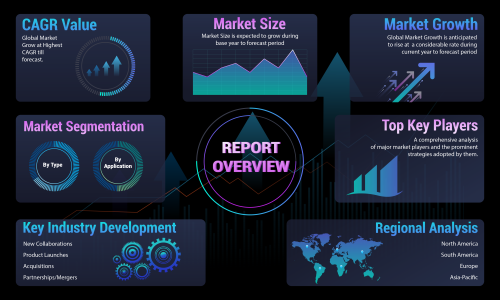
Years considered for this report:
Historical Years: 2016-2020
Base Year: 2020
Estimated Year: 2021
Forecast Period: 2022-2029
Music Notation Software Market report includes estimations of the market size in terms of value (USD million). Both, top-down and bottom-up approaches have been used to estimate and validate the size of the Music Notation Software market and to estimate the size of various other dependent submarkets in the overall market. This research study involved the extensive usage of both primary and secondary data sources.
Key highlights of the report:
– Define, describe and forecast Music Notation Software product market by type, application, end user and region.
– Provide enterprise external environment analysis and PEST analysis.
– Provide strategies for company to deal with the impact of COVID-19.
– Provide market dynamic analysis, including market driving factors, market development constraints.
– Provide market entry strategy analysis for new players or players who are ready to enter the market, including market segment definition, client analysis, distribution model, product messaging and positioning, and price strategy analysis.
– Keep up with international market trends and provide analysis of the impact of the COVID-19 epidemic on major regions of the world.
– Analyze the market opportunities of stakeholders and provide market leaders with details of the competitive landscape.
Major Regions or countries covered in this report:
North America
Europe
China
Japan
Middle East and Africa
South America
India
South Korea
Southeast Asia
Others
Buy this report (Price 2980 USD for single user license) at-https://www.marketreportsworld.com/purchase/20418561
Detailed TOC of 2022-2029 Global Music Notation Software Professional Market Research Report, Analysis from Perspective of Segmentation (Competitor Landscape, Type, Application, and Geography)
1 Music Notation Software Market Overview
1.1 Product Overview and Scope of Polyurethane Elastic Sealant and MS Sealant
1.2 Music Notation Software Segment by Type
1.3 Global Music Notation Software Segment by Application
1.4 Global Music Notation Software Market, Region Wise (2017-2022)
1.5 Global Market Size of Music Notation Software (2017-2029)
2 Global Music Notation Software Market Landscape by Player
2.1 Global Music Notation Software Sales and Share by Player (2017-2022)
2.2 Global Music Notation Software Revenue and Market Share by Player (2017-2022)
2.3 Global Music Notation Software Average Price by Player (2017-2022)
2.4 Global Music Notation Software Gross Margin by Player (2017-2022)
2.5 Music Notation Software Manufacturing Base Distribution, Sales Area and Product Type by Player
2.6 Music Notation Software Market Competitive Situation and Trends
3 Music Notation Software Upstream and Downstream Analysis
3.1 Music Notation Software Industrial Chain Analysis
3.2 Key Raw Materials Suppliers and Price Analysis
3.3 Key Raw Materials Supply and Demand Analysis
3.4 Manufacturing Process Analysis
3.5 Market Concentration Rate of Raw Materials
3.6 Downstream Buyers
3.7 Value Chain Status Under COVID-19
4 Music Notation Software Manufacturing Cost Analysis
4.1 Manufacturing Cost Structure Analysis
4.2 Music Notation Software Key Raw Materials Cost Analysis
4.3 Labor Cost Analysis
4.4 Energy Costs Analysis
4.5 RandD Costs Analysis
5 Market Dynamics
5.1 Drivers
5.2 Restraints and Challenges
5.3 Opportunities
5.4 Music Notation Software Industry Development Trends under COVID-19 Outbreak
5.5 Consumer Behavior Analysis
6 Players Profiles
7 Global Music Notation Software Sales and Revenue Region Wise (2017-2022)
7.1 Global Music Notation Software Sales and Market Share, Region Wise (2017-2022)
7.2 Global Music Notation Software Revenue (Revenue) and Market Share, Region Wise (2017-2022)
8 Global Music Notation Software Sales, Revenue (Revenue), Price Trend by Type
8.1 Global Music Notation Software Sales and Market Share by Type (2017-2022)
8.2 Global Music Notation Software Revenue and Market Share by Type (2017-2022)
8.3 Global Music Notation Software Price by Type (2017-2022)
8.4 Global Music Notation Software Sales Growth Rate by Type (2017-2022)
8.4.2 Global Music Notation Software Sales Growth Rate of MS Sealant (2017-2022)
9 Global Music Notation Software Market Analysis by Application
9.1 Global Music Notation Software Consumption and Market Share by Application (2017-2022)
9.2 Global Music Notation Software Consumption Growth Rate by Application (2017-2022)
10 Global Music Notation Software Market Forecast (2022-2029)
10.1 Global Music Notation Software Sales, Revenue Forecast (2022-2029)
10.2 Global Music Notation Software Sales and Revenue Forecast, Region Wise (2022-2029)
10.3 Global Music Notation Software Sales, Revenue and Price Forecast by Type (2022-2029)
10.4 Global Music Notation Software Consumption Forecast by Application (2022-2029)
10.5 Music Notation Software Market Forecast Under COVID-19
11 Research Findings and Conclusion
Browse complete table of contents at-https://www.marketreportsworld.com/TOC/20418561
About Us:
Market is changing rapidly with the ongoing expansion of the industry. Advancement in the technology has provided today’s businesses with multifaceted advantages resulting in daily economic shifts. Thus, it is very important for a company to comprehend the patterns of the market movements in order to strategize better. An efficient strategy offers the companies with a head start in planning and an edge over the competitors.Market Reports Worldis the credible source for gaining the market reports that will provide you with the lead your business needs.
Contact Us:
Market Reports World
Phone:
US (+1) 424 253 0807
UK (+44) 203 239 8187
Email: [email protected]
Web:https://www.marketreportsworld.com
Press Release Distributed by The Express Wire
To view the original version on The Express Wire visit Music Notation Software Market Size In 2022 is estimated to grow at a modest CAGR| Latest Trend, Competitors | 124 Pages Report
The Russian navy’s Black Sea flagship is “seriously damaged” by an ammunition explosion, state media says.
Web3 has become a notable topic in the technology world over the past year.
ECB is faced with the challenge of threading a response between record-high inflation and weak growth due to the war in Ukraine.
The Greek Orthodox Patriarch of Jerusalem Theophilos III (C) arrives for a meeting with other religious leaders at the Petra Hotel at the Jaffa…
COPYRIGHT © 1998 – 2022 DIGITAL JOURNAL INC. Digital Journal is not responsible for the content of external sites. Read more about our external linking.
Distro Direct – Business Development and Client Relations Manager – North America (US) – Music Business Worldwide
Are you an experienced music industry professional with incredible connections both nationally and internationally?
Would you describe yourself as an expert networker and deal-maker?
Do you thrive on data-driven businesses and a fast paced environment?
Are you a self starter who can work both independently and remotely?
Are you excited about the prospect of building a new innovative music business from the ground up?
The DistroDirect team is looking for a Business Development and Client Relations Manager to build the DistroDirect brand in North America.
DistroDirect is a market disruptive White Label B2B (Business to Business) SaaS (Software as a Service) music distribution solution. Alongside integrated and personalised support services, DistroDirect provides a customizable and automated distribution platform, delivering music to over 100 DSPs globally including Spotify, Apple Music, Amazon, Deezer, TikTok and more. The platform allows any existing music business to add digital distribution services to their current offering, under their own brand, allowing them to grow their artist network and generate new revenue streams for their business.
Created by leading Australian digital distribution company GYROstream, the DistroDirect product is an innovative, fast-growing platform seeing over 200% growth since official launch in August 2021. With the entire team based out of Australia to date, this international position is entirely new (and our first international hire), and will put ‘boots on the ground’ in DistroDirect’s biggest market.
As part of the role you will be responsible for generating quality B2B leads for DistroDirect (eg. record labels, artist managers, producers, studios), and be the key contact for the company’s existing client base in North America. You will also manage key DSP relationships within the market and coordinate with the GYROstream and DistroDirect team on global pitching priorities and networks to achieve success for our partners and artists.
The job requires an exceptional project manager. A confident, enthusiastic and results-driven person who thrives on connection, emerging technologies and helping music businesses and artists succeed.
The role is for an initial 12 month period with extension possible. It’s based remotely and will require travel within the market where required.
1. In collaboration with the GYROstream CEO and Global Director of Marketing and Promotions, you will generate and secure new business opportunities and customers for DistroDirect white label distribution service.
2. Manage and support the company’s existing DistroDirect client based in the North American Market, in collaboration with the GYROstream and DistroDirect head office in Brisbane, Australia.
3. Enhance DistroDirect’s brand in the North American market via networking, conferences, and other related activities.
4. Maintain and enhance key DSP relationships in the market including high level pitching and strategic editorial priority coordination alongside the Australian team.
To apply, please send a cover letter and CV/Resume to [email protected] by Friday 4 March.
Music Business Jobs is the most effective way for the global music industry to find the best candidates for their open positions.
In addition to being seen by over 300,000 monthly unique readers online, our listings are also emailed direct to more than 50,000 professional subscribers every week – across the US, UK, Europe, Asia-Pacific and beyond.
Click through below for details on how to submit a Music Business Jobs listing – and learn why our advertisers ‘strongly recommend’ us to their peers…
Beggars US – US Digital Operations Manager (US) – Music Business Worldwide
US DIGITAL OPERATIONS MANAGER – NEW YORK
Beggars Group is home to XL, Young, 4AD, Rough Trade and Matador. We are looking for a Digital Operations Manager, working in our New York office.
Responsibilities will include data preparation, asset management and the supply of new products into the Digital Supply Chain. Working closely with all members of the Global Digital Operations team, the role will ensure a smooth and seamless continuation of operations as the company shifts from GMT/BST to EST/PST focussed hours as well as supporting the US Director of Digital Operations in tasks as required to ensure the best coverage for all artists and labels across the group.
This role will have a specific and specialised focus on emerging UGC platforms to identify and claim content not currently claimed by the business, working to improve both revenue and operational efficiency on the platform.
The successful candidate will have previous experience in a data driven role, with strong analytical skills, a process-driven approach and the ability to digest and prioritise information.
An interest in emerging social media and technical platforms hosting music content would be an advantage as would a basic understanding of music rights.
To apply:
Send a full resume and covering letter highlighting your relevant experience to [email protected]
Closing date: EOD Monday 28th February
Music Business Jobs is the most effective way for the global music industry to find the best candidates for their open positions.
In addition to being seen by over 300,000 monthly unique readers online, our listings are also emailed direct to more than 50,000 professional subscribers every week – across the US, UK, Europe, Asia-Pacific and beyond.
Click through below for details on how to submit a Music Business Jobs listing – and learn why our advertisers ‘strongly recommend’ us to their peers…
The best music producer in the world that nobody has ever heard of – EL PAÍS in English
On April 3, Jack Antonoff won the Grammy Award for Producer of the Year – classical music aside. It was his first win and third consecutive nomination in the category. Given the importance the US music industry attaches to big hits at these awards, it couldn’t logically have gone to anyone else. Antonoff produced the songs Gold Rush in 2021 for Taylor Swift, Chemtrails Over the Country Club by Lana Del Rey, Daddy’s Home by St. Vincent, Solar Power by Lorde, Sling by Clairo and Take the Sadness Out of Saturday Night by his own group, Bleachers.
In fact, the award confirmed what an algorithm had already spelled out: “Jack Antonoff is the world’s top music producer,” according to the 100 Most Successful Producers in the Business list by Jaxsta, a new website that describes itself as the world’s largest music database. According Jaxsta, their algorithm used the following criteria to put Antonoff in the number one spot: chart position, Grammy wins and nominations, Spotify streams, and physical sales – the same criteria that put more famous producers such as Kanye West, Max Martin and Diplo at the top of the list.
When Antonoff’s name was called at the 64th Grammy Awards ceremony, he emerged from the audience nervous but elegant in a Chanel suit and, in accordance with his shy and modest image, he dedicated the gong to his team, his agent and his girlfriend, Margaret Qualley, the daughter of actress Andie MacDowell. In fact, his acceptance speech ended with the words: “This is for all the people who sit at home, make shit that they think is really cool and just keep making it and just keep making it.”
He might have been a millionaire for some time now, but Antonoff continues to speak like the music nerd he was when composing in a room of his parents’ home, which he did until the age of 27. In fact, these beginnings are so much a part of him that, on his 2017 tour, he meticulously replicated this room in his trailer so that fans could understand where his sound came from. Rollercoaster, his biggest hit with Bleachers, may have more than 115 million streams on Spotify alone but, according to Antonoff, Bleachers’ songs are “supposed to sound like a person going crazy in a room alone – that’s what it is.”
Antonoff’s misfit image is becoming ever more elaborate. When he was a guest on the Jimmy Fallon’s The Tonight Show three years ago, he appeared in jeans and a baseball cap, but on his last visit, 10 months ago, he was dressed like the geeky Steve Urkel from the TV show Family Matters. At 38, this scrawny white man with exaggerated horn-rimmed glasses looks like a modern-day version of Woody Allen. Allen grew up in Brooklyn but made his life in Manhattan. Antonoff grew up in the wealthy New Jersey suburb of Bergenfield, but finished his studies in Manhattan at the exclusive Professional Children’s School, founded in 1914 to educate Broadway child actors. His girlfriend at the time was Scarlett Johansson.
Like Allen, Antonoff is Jewish; his family is of European origin and he easily identifies with the Woody-Allen neurosis often attributed to his ancestors’ troubled history: “Holocaust thinking. Depression mentality. It’s in my lineage,” he recently told Rolling Stone magazine. “That’s a crazy road to go down. Because of the stories you’ve heard of your ancestors, like, ‘We went through this shit so you could play music if you wanted to.’ Two generations ago, the highest form of success was to not be murdered. So you go burn it down for all the people that couldn’t do it. But don’t get cocky!”
Antonoff was still in his twenties when his group at the time, Steel Train, signed their first contract with a record label. Steel Train didn’t do badly, but the ambitious Antonoff wasn’t satisfied with touring mid-sized venues with an emo band. “You accept different things at different ages,” he told Rolling Stone. “When you’re 18 and your friends are going off to college and you’ve scored some small record deal, you’re a king. When you’re 21 and your friends are planning their lives and you’re smoking pot in a van, you’re a loser. When you’re 25 and your friends are going, ‘I feel a little stuck,’ and you’re smoking pot in a van, all of a sudden you’re kind of cool again. I wasn’t able to support myself, move out, envision a life where I could do music and not live in my parents’ house. And it was that way until I was 27. I was on this blind-faith path. I call it a delusion, which I think is part of being an artist.”
Early on, he got involved in a band called Fun, which he defines as “a side project.” But in 2012 it gave him his first number one, We are young. It was success on a grand scale, but Antonoff aspired to do something totally solo, and in 2014 he founded Bleachers, which he defined as a group that could fill the gap between Disclosure and Arcade Fire. The media was on side from the start. His music could feature on the soundtrack of any teen movie, from Pretty in Pink to American Pie. His songs sound like they could be by either a Californian punk pop group or pop star Britney Spears. Others make you think of LCD Soundsystem and Interpol. His epic and colorful compositions are reminiscent of something, but you never know exactly what. That is a big deal when it comes to monetizing a style.
In 2014, singer Taylor Swift contacted him. Together they wrote Out of the Woods, which was also produced by Antonoff. He says this happened almost by chance. “I fucking put my heart and soul into that thing. Right at the moment when I was expecting some heavy to come in and do the production, she was like, ‘Can’t wait for this to come out!’ And I was like, ‘That’s it?’ She was like, ‘Yes, perfect.’”
The success of Swift’s foray into synthpop was just the push that Antonoff needed. He had wanted to become a producer for years, but had, he says, come up against record executives again and again. “Overnight, you’re allowed to produce records,” he told Rolling Stone. “And it filled me with joy and fucking resentment because it’s a reminder of why I keep myself extremely separate from the business. Where are the ears, man?”
But it was nearly three years before Antonoff was allowed to produce an entire record. After the success of her debut, the New Zealander Lorde was trying to match its success with her second album. In the music industry, it is said that an artist has a lifetime to produce their first album, but only two years to make their second, and that pressure has sunk thousands of careers. Lorde turned to Antonoff. Together they composed and produced the entire album. Both sales and reviews were fantastic. According to the big guns in the music media, Melodrama was the best album of the year.
From then on, it was plain sailing. In five years, the “Antonoff sound” has become the dominant sound in commercial pop, especially in the female sphere, to the point that there are already artists who sound as if he had produced them without it being so – Olivia Rodrigo had to add Antonoff, Taylor Swift and St Vincent to the credits of Deja Vu to avoid a potential plagiarism lawsuit.
This year, Antonoff is embarking on a massive tour with Bleachers after recording the group’s new album in Paisley Park, Prince’s studio in Minnesota. Presumably, this means he’ll be turning down hundreds of proposals to produce albums around the world. In 2017, an article on the Stereogum website claimed: “In the future, all albums will be produced by Jack Antonoff.” Obviously it was a joke, but in 2022, it seems more like a prophecy that’s not far from being fulfilled.
English version by Heather Galloway.
O suscríbete para leer sin límites
Suscríbete y lee sin límites
Brittany Davis: Tiny Desk (Home) Concert – NPR
Stephen Thompson
Credit: Brittany Davis
The Tiny Desk is working from home for the foreseeable future. Introducing NPR Music’s Tiny Desk (home) concerts, bringing you performances from across the country and the world. It’s the same spirit — stripped-down sets, an intimate setting — just a different space.
It’s a testament to Brittany Davis that this Tiny Desk home show feels like a true live concert — one with real live energy, as if it’s playing out in front of a massive crowd you can’t quite see or hear. It’s hard to replicate the spirit of the Tiny Desk outside of the NPR offices: You don’t get the visual sense of place, you don’t get NPR engineers managing the sound mix onsite and you don’t get the exchange of energy between musicians and audience members who are often excitedly discovering your music for the first time. Still, this set swims in that much-missed alchemy where everyone in a given room is carried forward by the same sounds.
A blind, Black, nonbinary musician from Seattle, Davis presides over a backing band that features six hard-hitting women. Together, they fuse rock, soul, hip-hop, pop and R&B in four songs — all drawn from Davis’ debut EP, I Choose to Live — that teem with insights about identity, injustice, authenticity, motivation and power. Each song in this set moves at a different pace, from the righteous hip-hop fury of “I Choose to Live” to the plaintive slow burn of “Loud Loud World.” But all four convey a clear sense of purpose.
Davis is signed to Loosegroove Records, the hometown label co-founded by Pearl Jam guitarist Stone Gossard, and Gossard has already figured prominently in Davis’ career: The two share a supergroup called Painted Shield, which also features folksinger Mason Jennings and drummer Matt Chamberlain. If this set is any indication, Davis may well become the biggest name of them all.
SET LIST
MUSICIANS
CREDITS
AUDIO TEAM:
PRODUCTION TEAM:
TINY DESK TEAM
Sponsor Message
Become an NPR sponsor
Qualified Records Launches Artist-First Model – EIN News
There were 784 press releases posted in the last 24 hours and 186,603 in the last 365 days.
Artist-Owned and Operated
Artist-Owned and Operated Independent Record Label Brings Full Suite Of Digital Infrastructure Tools To Industry to keep Artists at the Center of the Experience
NASHVILLE, TENNESSEE, UNITED STATES, April 13, 2022 /EINPresswire.com/ — A recent Forbes article by industry analyst Shain Shapiro reports that the music industry ecosystem had a “banner year” in 2021 and the outlook for 2022 and beyond is strong. Streaming reviews to labels are up, music creators are working within a more equitable legal system and emerging “web 3.0” technologies are at work to make the music discovery, engagement and ownership process more fun for fans around the globe. Yet, as Shapiro reports, sizable inequalities persist, especially for artists not signed to one of the major labels or their subsidiaries. Catalog sales now represent nearly 75% of “new” releases, crowding out the flow of newly created music to be heard, appreciated and purchased. Further, songwriters and performing artists are getting paid less and less for streaming, and assuming more and more of the risk.
Stepping into the fray to help is Qualified Records, a full-service music production and marketing company founded by two industry veterans who are matching their decades of success in the music industry with a cutting-edge technological expertise that artists of any background can potentially benefit from. With a focus on leveraging artists’ ownership rights, creative independence, and an uncompromising commitment to creating diverse music that fans and audiences love, Qualified Records is working to solidify the ways artists can remain relevant, profitable and engaged in the digital era and, eventually, the music metaverse.
Qualified Records is led by music industry veteran and studio owner Kevin McKendree (Delbert McClinton, Brian Setzer Orchestra, John Hiatt) a multi-Grammy® winner with extensive credits as a keyboardist, multi-instrumentalist, songwriter and producer and John Heithaus, ISSA® nominated co-producer and record label executive responsible for #1 charting projects working with Grammy® Winning artists Tom Hambridge (The NOLA Sessions) and Luke Bulla (Who Loves You Better), and the critically-acclaimed blues guitarist Jim Allchin (Prime Blues) among others.
Said McKendree: “It’s got to be about fair compensation for everyone involved. As it is set up now, the music creators are working for the industry. This is completely backwards, in my opinion. The industry should be there to support the artist, not the other way around. That’s why we created Qualified Records.”
Inaugural affiliated artists include: veteran vocalist Bekka Bramlett (Fleetwood Mac, Buddy Guy, Vince Gill), Swede – and a lover of authentic Delta Blues – Robert Lighthouse, Americana Singer/Songwriter Johnny Few, traditional blues guitarist Yates McKendree and the house band, The Rock House All Stars.
Heithaus said: “A generation ago, artists had to trust record labels to get their music into the world. Today, unprecedented artistic freedom is great – but it also comes with an oversupply of music competing for attention. Standing out from the masses and gaining audience engagement is becoming more and more difficult, so fan-centered multifaceted marketing programs need to developed, curated and made part of every release. This includes all of the traditional label A&R functions but so much more in terms of leveraging metadata for streaming curation, understanding the fast-emerging artificial intelligence platforms, the role of NFTs in artistic content and new music-seeking algorithms, for example.”
McKendree adds: “We always try to create music that we would want to hear. Music is like a real time, direct line to the soul. Honest and raw. That’s what our artists want to produce and fans want to hear today, so Qualified Records is on a mission to fulfill that dream and ideally create a better payday for everyone.”
John Heithaus
Qualified Records
+1 615-543-6274
[email protected]
Visit us on social media:
Facebook
You just read:
EIN Presswire’s priority is source transparency. We do not allow opaque clients, and our editors try to be careful about weeding out false and misleading content. As a user, if you see something we have missed, please do bring it to our attention. Your help is welcome. EIN Presswire, Everyone’s Internet News Presswire™, tries to define some of the boundaries that are reasonable in today’s world. Please see our Editorial Guidelines for more information.
Follow EIN Presswire
© 1995-2022 IPD Group, Inc. dba EIN Presswire
All Right Reserved.
Secretly Distribution – North American New Release & Catalog Marketing Manager (US) – Music Business Worldwide
Secretly Distribution Seeks North American New Release & Catalog Marketing Manager
Title: North American New Release & Catalog Marketing Manager
Status: Full-time
Hours: 40/week, Monday – Friday, 9am – 6pm
Location: Bloomington, IN, Chicago, IL, or Brooklyn, NY
Reports to: Head of North American Physical Sales & Marketing
Salary Range: $42k – $54.6k
Company Summary: Secretly Distribution is a global digital and physical distribution company, working with some of the most exciting labels and artists in the independent music sector. We are headquartered in Bloomington, IN, with offices in Brooklyn, London and Los Angeles and additional staff in Paris, Berlin, Amsterdam and beyond. We work every day to support great art with transparency, creativity, expertise and hard work.
Position Overview: This role will be at the forefront of our US and Canadian physical marketing partnerships with a strong focus on new release and catalog campaigns. This manager will work with our genre-spanning distributed label base to help shape sales campaigns as well as to provide reporting and.
Application Link: https://forms.gle/GjPz3m4T8aY1imkU8
All qualified applicants will receive consideration for employment without regard to disability, protected veteran status, age, race, creed, color, religion, sex, marital status, affectional or sexual orientation, gender identity or expression, ancestry, nationality, or national origin.
Music Business Jobs is the most effective way for the global music industry to find the best candidates for their open positions.
In addition to being seen by over 300,000 monthly unique readers online, our listings are also emailed direct to more than 50,000 professional subscribers every week – across the US, UK, Europe, Asia-Pacific and beyond.
Click through below for details on how to submit a Music Business Jobs listing – and learn why our advertisers ‘strongly recommend’ us to their peers…
J Balvin Makes 'Difficult' Decision to Postpone Jose Tour Due to 'Unforeseen Production Challenges' – PEOPLE
Fans are going to have to wait a little longer to see J Balvin on tour again.
On Tuesday, Balvin announced he would be postponing his upcoming Jose tour due to production circumstances due to the COVID-19 pandemic.
In a letter to his fans on Instagram, written in English and Spanish, the Colombian star, 36, expressed how sorry he was for the change of plans.
"Throughout the past year, we have been working tirelessly to bring you an exciting and immersive ''Jose' Tour experience where everyone feels welcome to the party," he began the note. "Covid has caused some unforeseen production challenges, and I wouldn't be able to keep my promise of giving you the absolute best show possible. Because I believe you deserve that, I've made the difficult decision to reschedule the tour."
The note continued, "All the details are still being worked through with my incredible team, but we'll be getting you the new dates within the next few weeks and honoring your tickets. I'm continuously in awe of all your love and support and I can't wait to see you on the road where we will celebrate together and keep the good vibes rolling."
PEOPLE has learned the production challenges came to light once Balvin began his tour rehearsals over the last week and it became apparent that parts of the overall set-up and design, as well as the 360 stage, would encounter limitations which would affect the show. The artist then made the decision to delay the run.
RELATED: J Balvin Dedicates NEON Las Vegas Performance to Valentina Ferrer on Her Birthday: 'I Love You'
The six-week tour was initially scheduled to kick off on April 19 in San Antonio, Texas, and would wrap up in Puerto Rico on June 4. He was also scheduled to appear at Viva! L.A. Music Festival in Los Angeles on June 25, though he has not yet addressed if this would be affected.
Last month, the "Azul" singer collaborated with Ed Sheeran to release a two-song EP, featuring songs "Sigue" and "Forever My Love" — and formed a musical crossover! Turns out, their working together came about after they formed an organic relationship.
"Everything good takes time," Balvin said in a press release at the time. "We had a coffee and spoke about life and there was a dope vibe."
"We bonded over simple things creating a genuine friendship — we even spoke about what it's like to be a dad," the father of one said. Sheeran is also a first-time dad.
Meanwhile, Balvin spoke to PEOPLE earlier this year about his secret to keeping his "high vibrations."
RELATED: J Balvin Welcomes First Baby with Girlfriend Valentina Ferrer: 'The Best Love'
"Meditation, it's the key, it heals how I can balance myself. And the super high vibration, the super low vibration, you've got to be balanced, be patient — and sports, doing exercise. It's key."
Balvin also recently released his single "Niño Soñador," a tribute to his younger self — a boy who dreamed of becoming a singer, yet was unaware of the pressures of fame at the time.
"The things that I've been going through, the only way you can see the light is when you see the dark," he said.
Future Classic – Day To Day Manager (US) – Music Business Worldwide
We’re looking for a passionate and organised Day to Day Manager to join our LA team – working across the management roster and on Future Classic events. You’ll be working closely with our artists and team across artist projects and Future Classic events.
Music Business Jobs is the most effective way for the global music industry to find the best candidates for their open positions.
In addition to being seen by over 300,000 monthly unique readers online, our listings are also emailed direct to more than 50,000 professional subscribers every week – across the US, UK, Europe, Asia-Pacific and beyond.
Click through below for details on how to submit a Music Business Jobs listing – and learn why our advertisers ‘strongly recommend’ us to their peers…
Feature.fm – Artist Support Specialist (US/Remote) – Music Business Worldwide
We believe that all artists with great music should be able to make a living from their passion and we’re laser focused on that mission. The rapid growth of music streaming and artists taking control of their business provides revolutionary opportunities for artists and Feature.fm is on the cutting edge of helping them succeed in this new landscape.
Working at Feature.fm means doing what you love while influencing the future of the music industry. If you believe in helping artists break through barriers and want to join a rapidly growing company with a team of creative thinkers, then we want to work with you.
Feature.fm helps artists connect with their fanbase. We build smart marketing and advertising tools for the music industry and service nearly hundreds of thousands of artists and labels of all sizes on the platform.
We are a fast-growing company looking for team members to put their heart and soul into driving growth for Feature.fm. We want to work with pioneers who have a passion for music, can solve challenging problems, and want to make a real impact on helping artists reach their fans.
You are responsible for ensuring our artists and customers are successful in their use of Feature.fm and providing a positive experience on the platform. The ideal candidate will be able to implement customer service structure and strategies in Intercom and via company processes that drive a successful customer experience.
Music Business Jobs is the most effective way for the global music industry to find the best candidates for their open positions.
In addition to being seen by over 300,000 monthly unique readers online, our listings are also emailed direct to more than 50,000 professional subscribers every week – across the US, UK, Europe, Asia-Pacific and beyond.
Click through below for details on how to submit a Music Business Jobs listing – and learn why our advertisers ‘strongly recommend’ us to their peers…