Blog Archives

Music Notation Software Market: Industry Forecast to 2029| Size 2022, Statistics, Share, Growth Rate, Trends, Regional Analysis by Key Players – Digital Journal

Hi, what are you looking for?
By
Published
Global Music Notation Software Market 2022-2029 report enlists a variety of qualitative as well as quantitative research findings and remarkable insights associated with various segments of the industry reached on the basis of numerous parameters including product type, technology, end-users, geographical regions, and more.
Worldwide “Music Notation Software Market” 2022-2029 is expected to grow significantly during the forecast period 2021-2029, Music Notation Software Market report offers insights into the latest growth and trends. It summarizes key aspects of the market, with focus on leading key player’s areas that have witnessed the highest demand, leading regions and applications. It also offers qualitative as well as quantitative information regarding the factors, challenges, and opportunities that will define the growth of the market over 2022-2029, The Report Contain Many Pages With Detailed Analysis. The report aims to provide an additional illustration of the latest scenario, economic slowdown, and COVID-19 impact on the overall industry.
Get a Sample PDF of report at-https://www.marketreportsworld.com/enquiry/request-sample/20418561
Music Notation Software Market Insight:
Music Notation Software market size, segment size (primarily including product type, application, and geography), competitor analysis, recent status, and development trends are all covered in this research. The study also includes a full cost analysis and supply chain. Technological advancements will improve the product’s performance even more, allowing it to be utilized in additional downstream applications. Furthermore, understanding the Music Notation Software market requires a thorough understanding of consumer behaviour and market dynamics (drivers, restraints, and opportunities).
The Music Notation Software market revenue was Million USD in 2016, grew to Million USD in 2022, and will reach Million USD in 2029, with a CAGR of during 2022-2029.Considering the influence of COVID-19 on the global Music Notation Software market, this report analyzed the impact from both global and regional perspectives. From production end to consumption end in regions such as North America, Europe, China, and Japan, the report put emphasis on analysis of market under COVID-19 and corresponding response policy in different regions.
Get a Sample Copy of the Music Notation Software Market Report 2022
TOP MANUFACTURERSListed in The Music Notation Software Market Report Are:
Pre and Post COVID-19 Impact Analysis:
The COVID-19 pandemic is having a large impact on the water, energy, ecology, and food industries. Despite the difficult circumstances, drip irrigation firms all around the world have continued to operate. On the contrary, a labour shortfall, a budget constraint, and supply chain problems have all hampered service delivery. As a result, the COVID-19 pandemic’s influence on the global drip irrigation market is uncertain.
The COVID-19 pandemic had a huge impact on global Music Notation Software markets at the regional and country level. For the years 2021 and 2022, the study gives three forecast scenarios for the worldwide Music Notation Software market.
To know How COVID-19 Pandemic Will Impact This Market/Industry–Request a sample copy of the report at-https://www.marketreportsworld.com/enquiry/request-covid19/20418561
Music Notation Software Market Segmentation Analysis:
Based on the Music Notation Software market development status, competitive landscape and development model in different regions of the world, this report is dedicated to providing niche markets, potential risks and comprehensive competitive strategy analysis in different fields. From the competitive advantages of different types of products and services, the development opportunities and consumption characteristics and structure analysis of the downstream application fields are all analysed in detail. To Boost Growth during the epidemic era, this report analyses in detail for the potential risks and opportunities which can be focused on.
Based on TYPE, the Music Notation Software market from 2022 to 2029 is primarily split into:
Based on applications, the Music Notation Software market from 2022 to 2029 covers:
Enquire before Purchasing this report at–https://www.marketreportsworld.com/enquiry/pre-order-enquiry/20418561
Client Focus of Music Notation Software Market Report:
Yes. As the COVID-19 and the Russia-Ukraine war are profoundly affecting the global supply chain relationship and raw material price system, we have definitely taken them into consideration throughout the research, and in Chapters 1.7, 2.7, 4.X.1, 7.5, 8.7, we elaborate at full length on the impact of the pandemic and the war on the Music Notation Software Industry.
With the aim of clearly revealing the competitive situation of the industry, we concretely analyze not only the leading enterprises that have a voice on a global scale, but also the regional small and medium-sized companies that play key roles and have plenty of potential growth.
Both Primary and Secondary data sources are being used while compiling the report.
– Primary sources include extensive interviews of key opinion leaders and industry experts (such as experienced front-line staff, directors, CEOs, and marketing executives), downstream distributors, as well as end-users.
– Secondary sources include the research of the annual and financial reports of the top companies, public files, new journals, etc. We also cooperate with some third-party databases.
Please find a more complete list of data sources in Chapters 11.2.1 and 11.2.2.
Yes. Customized requirements of multi-dimensional, deep-level and high-quality can help our customers precisely grasp market opportunities, effortlessly confront market challenges, properly formulate market strategies and act promptly, thus to win them sufficient time and space for market competition.
REPORT OVERVIEW INFOGRAPHICS:-
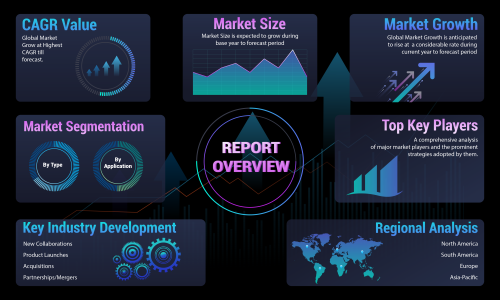
Social-Media-Graph-01
Years considered for this report:
Historical Years: 2017-2020
Base Year: 2021
Estimated Year: 2021
Forecast Period: 2022-2029
Major Regions or countries covered in this report:
Buy this report (Price 2980 USD for single user license) at-https://www.marketreportsworld.com/purchase/20418561
Detailed TOC of 2022-2029 Global Music Notation Software Professional Market Research Report, Analysis from Perspective of Segmentation (Competitor Landscape, Type, Application, and Geography)
1 Music Notation Software Market Overview
1.1 Product Overview and Scope of Polyurethane Elastic Sealant and MS Sealant
1.2 Music Notation Software Segment by Type
1.3 Global Music Notation Software Segment by Application
1.4 Global Music Notation Software Market, Region Wise (2017-2022)
1.5 Global Market Size of Music Notation Software (2017-2029)
2 Global Music Notation Software Market Landscape by Player
2.1 Global Music Notation Software Sales and Share by Player (2017-2022)
2.2 Global Music Notation Software Revenue and Market Share by Player (2017-2022)
2.3 Global Music Notation Software Average Price by Player (2017-2022)
2.4 Global Music Notation Software Gross Margin by Player (2017-2022)
2.5 Music Notation Software Manufacturing Base Distribution, Sales Area and Product Type by Player
2.6 Music Notation Software Market Competitive Situation and Trends
3 Music Notation Software Upstream and Downstream Analysis
3.1 Music Notation Software Industrial Chain Analysis
3.2 Key Raw Materials Suppliers and Price Analysis
3.3 Key Raw Materials Supply and Demand Analysis
3.4 Manufacturing Process Analysis
3.5 Market Concentration Rate of Raw Materials
3.6 Downstream Buyers
3.7 Value Chain Status Under COVID-19
4 Music Notation Software Manufacturing Cost Analysis
4.1 Manufacturing Cost Structure Analysis
4.2 Music Notation Software Key Raw Materials Cost Analysis
4.3 Labor Cost Analysis
4.4 Energy Costs Analysis
4.5 RandD Costs Analysis
5 Market Dynamics
5.1 Drivers
5.2 Restraints and Challenges
5.3 Opportunities
5.4 Music Notation Software Industry Development Trends under COVID-19 Outbreak
5.5 Consumer Behavior Analysis
6 Players Profiles
7 Global Music Notation Software Sales and Revenue Region Wise (2017-2022)
7.1 Global Music Notation Software Sales and Market Share, Region Wise (2017-2022)
7.2 Global Music Notation Software Revenue (Revenue) and Market Share, Region Wise (2017-2022)
8 Global Music Notation Software Sales, Revenue (Revenue), Price Trend by Type
8.1 Global Music Notation Software Sales and Market Share by Type (2017-2022)
8.2 Global Music Notation Software Revenue and Market Share by Type (2017-2022)
8.3 Global Music Notation Software Price by Type (2017-2022)
8.4 Global Music Notation Software Sales Growth Rate by Type (2017-2022)
8.4.2 Global Music Notation Software Sales Growth Rate of MS Sealant (2017-2022)
9 Global Music Notation Software Market Analysis by Application
9.1 Global Music Notation Software Consumption and Market Share by Application (2017-2022)
9.2 Global Music Notation Software Consumption Growth Rate by Application (2017-2022)
10 Global Music Notation Software Market Forecast (2022-2029)
10.1 Global Music Notation Software Sales, Revenue Forecast (2022-2029)
10.2 Global Music Notation Software Sales and Revenue Forecast, Region Wise (2022-2029)
10.3 Global Music Notation Software Sales, Revenue and Price Forecast by Type (2022-2029)
10.4 Global Music Notation Software Consumption Forecast by Application (2022-2029)
10.5 Music Notation Software Market Forecast Under COVID-19
11 Research Findings and Conclusion
Browse complete table of contents at-https://www.marketreportsworld.com/TOC/20418561
About Us:Market is changing rapidly with the ongoing expansion of the industry. Advancement in the technology has provided today’s businesses with multifaceted advantages resulting in daily economic shifts. Thus, it is very important for a company to comprehend the patterns of the market movements in order to strategize better. An efficient strategy offers the companies with a head start in planning and an edge over the competitors. Market Reports World is the credible source for gaining the market reports that will provide you with the lead your business needs.
CONTACT US
Email: [email protected]
Phone: US +(1) 424 253 0946 /UK +(44) 203 239 8187
Press Release Distributed by The Express Wire
To view the original version on The Express Wire visit Music Notation Software Market: Industry Forecast to 2029| Size 2022, Statistics, Share, Growth Rate, Trends, Regional Analysis by Key Players

Swedish Prime Minister and leader of the Social Democrats Magdalena Andersson (L) and leader of the conservative Moderate party Ulf Kristersson debate on September…
“Human misery is an excuse to make money”. Yeah, we know.
As schools have become more digital, they’ve taken a somewhat backwards approach to cybersecurity.
Only a fool would insist on fighting a war so obviously lost. Yet, that’s what’s happening.
COPYRIGHT © 1998 – 2022 DIGITAL JOURNAL INC. Sitemaps: XML / News . Digital Journal is not responsible for the content of external sites. Read more about our external linking.

source

Former CBC Sask. Future 40 recipient Melissa Morgan still grateful for nomination – CBC.ca

Former CBC Sask. Future 40 recipient Melissa Morgan still grateful for nomination  CBC.ca
source

Homemade Haircuts is having an indie rock glow-up – Charleston City Paper

Our local reporters are on the ground covering the news that matters most to Charleston and the area.
Receive their stories each day by signing up for our free daily newsletter, which delivers the latest local news directly to your inbox every morning.

City Paper has been bringing the best news, food, arts, music and event coverage to the Holy City since 1997. Support our continued efforts to highlight the best of Charleston with a one-time donation or become a member of the City Paper Club.
Charleston City Paper
From the opening notes of Sun Showers, the first full-length effort from the rapidly evolving indie-everything troupe Homemade Haircuts, there’s an unmistakable statement of creative intent.
Throttling guitar chords and a dynamic drum fill set the stage for rippling melodic lead guitar lines and reverb-drenched sun-kissed vocals that yank the laid-back bedroom pop of the group’s previous efforts into the rock show.
It’s perhaps not even fair to compare what Homemade Haircuts sounds like now from their earlier efforts, which were largely the product of what frontmen Bob Magee and Evan Delp admit was just them learning how to be a band while they were undergraduates at the University of South Carolina in Columbia.
Neither Delp nor Magee had ever seriously played music in a band before, bonding over a shared love of big, boisterous 2010s alt-rock groups with strong pop sensibilities like Cage the Elephant and The 1975. And there’s a certain casual, strumminess to those early songs, which can often feel more akin to early Alex G or Mac DeMarco if it weren’t for their pop sensibilities, which were evident from the start.
“We weren’t really playing very many shows or anything. We were really just learning how to write songs,” Magee said. “And Evan, who mixes our music to this day, was [learning] music production. Homemade Haircuts was just kind of a project for learning how to make music.”

Even given the casual nature of their approach, the duo found some early success on streaming services, particularly after a quirky Twitter interaction with YouTube influencer Jenna Marbles led to their song “Fairy Tale” getting more than a million Spotify streams and popping up on a few of its algorithmic playlists. Their approach, with layered, dreamy vocals atop winding-yet-infectious melodies, clearly worked.
With the songs on the new album, though, the duo enlisted drummer and bassist Blake Hunter (Bellavida, Bull Moose Party) to fill out the sound just as they were ramping up their live performances. Hunter, a young-yet-seasoned vet in the Columbia music scene who teaches both guitar and drums for Freeway Music, also brought some music theory acumen and chops to the group. The result is a record that compares more readily to their self-described influences, as well as local indie rock heroes like Band of Horses or Susto.
“I don’t think it was a coincidence that this album was formed also during the period that we were starting to play shows,” Magee said. “I think we realized the kind of music that we wanted to be playing for audiences and the energy that we wanted to bring to the shows.”
Delp added, “When we were starting out in college, drum programming was the best tool we had. I think we realized the limitations of that, in a sense. I really feel like the depth and variety of our sound [expanded] because we opened up with [Hunter], and he had a unique perspective.
“I think that made it a bit more broadly ‘rock’ than we would have made it on our own,” Delp added, “but that’s the beauty of the collaborative process, getting in a room and seeing how great it feels when you’re listening back and things changing in really beautiful ways that we couldn’t do on our own.”
While the band produced the LP, there’s clearly a lot of polish and poise that wasn’t as readily apparent in its antecedents. By building on the charms of those early bedroom pop efforts while consciously reaching for room-filling energy, the band, now relocated to Charleston, is ready to see how far their music can go.
Hunter names Charleston outfits like Susto and Brave Baby as early inspirations for the possibilities of his playing, and local drummer and producer Wolfgang Zimmerman as a big drumming influence.
“I just remembered being enamored with them when I first stayed playing music, when I realized that these bands were in the same state as me, just two hours down the road [from Columbia],” he said. “I thought they were amazing.”
Magee echoes that sentiment, noting that “since we met Blake and felt like we became a band, being from South Carolina has been really important to us.”
“Just doing this in South Carolina has definitely colored our experience and all of our influences. We’re happy to be a South Carolina band.”
Stay cool. Support City Paper.
City Paper has been bringing the best news, food, arts, music and event coverage to the Holy City since 1997. Support our continued efforts to highlight the best of Charleston with a one-time donation or become a member of the City Paper Club.

source

SoundCloud secures partnership with Session | Music In Africa – Music In Africa

*Your language will be set using a browser cookie.
Don’t have an account? Sign up
Forgot your password?
SoundCloud has entered into partnership with composer credits platform Session.  
Session (formerly known as Auddly) was founded by ABBA’s Björn Ulvaeus, veteran Swedish producer Max Martin and songwriter Niclas Molinder. It describes itself as a platform that “collects and injects authoritative creator metadata into the music ecosystem, facilitating correct creator credits and accurate, timely music royalty payments.”
According to the platform, the partnership will allow SoundCloud artists to sign up for the free-to-download Session Studio app on mobile or web. After downloading the app, users can create a release with one or more tracks. The app enables users to capture creator identifiers, manage data and splits, and sync song information in real time with leading music production software.
“SoundCloud has doubled down on its platform’s broader goal of getting creators paid with fairness and transparency,” the company’s president, Eliah Seton, said.
The former Warner Music Group exec added: “At SoundCloud, we are passionately devoted to getting creators paid with fairness and transparency. Max, Bjorn, Niclas and the whole Session team are changing the game to get songwriters the credit they deserve. This partnership is a major milestone in our effort to equip creators with the tools to earn.”
SoundCloud joins a number of other companies, including Muso.AI, VEVA Sound and Jaxsta, which are taking steps to improve the metadata to make it easier to determine copyright ownership of musical works and the subsequent royalty payouts.
UK collecting society PRS for Music recently revealed plans to launch an online portal for songwriter credits. Scheduled to roll out early next year, the portal will initially feature metadata for more than two million works.
SoundCloud’s new partnership comes about three months after it announced a significant milestone licensing agreement with Warner Music Group, which made it the first major music rights holder to support payouts based upon actual listening as opposed to a portion of total streams.

Sponsored
See all
Disclaimer: Music In Africa provides a platform for musicians and contributors to embed music and videos solely for promotional purposes. If any track or video embedded on this platform violates any copyrights please inform us immediately and we will take it down. Please read our Terms of Use for more.

Music In Africa is


Siemens | Stiftung Goethe Institut

source

Changing sounds of the 1970s on stage in Florida Studio Theatre cabaret – Sarasota Herald-Tribune

Florida Studio Theatre has touched on the music of the 1970s in a number of its cabaret shows, but it is taking a deeper dive into the period that ushered in disco and other sounds with its season-opening production of “The ’70s: More Than a Decade.”
As in previous shows that focused on the hits of the 1950s and 1960s, this new cabaret revue reveals how much music can change over a decade.
“Compared to the ’60s and ’50s, where the music got a little darker as we progressed, you’re kind of starting in that dark world and then it grows out of it,” said Rebecca Hopkins, who is creating the show with her husband, Richard Hopkins, and Sarah Durham.
Arts Newsletter:Sign up to receive the latest news on the Sarasota area arts scene every Monday
2022-23 at FST:Broadway hits and a world premiere coming this season to Florida Studio Theatre
Sean Daniels:Arizona artistic director to lead new play projects at Florida Studio Theatre
The music, arranged by Jim Prosser, ranges from The Who’s “Baba O’Riley” and “Won’t Get Fooled Again” (which were later theme songs for various editions of “CSI”), the Neil Sedaka/Captain and Tennille hit “Love Will Keep Us Together,” “Don’t Go Breaking My Heart,” “Let it Be,” songs by the Bee Gees and Queen and a medley of TV theme songs ranging “All in the Family” to “The Muppet Show.”
The production features Jannie Jones, appearing in her 21st production at the theater, along with returning artists Michael James Byrne (who was in the cast of last season’s “The Wanderers”) and Eddie Weaver, who recently completed the FST Acting Apprenticeship Training Program. They are joined by Brianna Barnes, who is making her FST debut. Catherine Randazzo is directing the production, as she has done with numerous other cabaret shows.
Rebecca Hopkins said the decade began with the nation still in upheaval over the Vietnam War, which can be heard in several of the first act songs. Changes kept coming with Watergate and the women’s movement.
“There was a shift from the public to personal happenings in the 1970s. The idea was that the best way to change things is to start in my own household. That’s how the 70s became the ‘Me’ decade,” she said. “It went from the outward focus of the 1960s to an inward focus. And that happened in the music as well.”
City Commission decision:Players Centre and Bay Park offer competing plans for Sarasota Municipal Auditorium
Apartments and new theater spaces:FST to expand campus, offer affordable housing for Sarasota arts workers
The decade also marked the introduction of new technology and different kinds of creative jobs, more parents working and leading to a growing number of latchkey kids, the sexual revolution and broken families. 
By the mid part of the decade, after American soldiers left Vietnam and the end of Watergate, “there was a sense of hope that things were looking up,” Hopkins said, noting such songs as “I’ll be There” and “Let It Be.”
Even the rousing beat of disco, which got people dancing at a new style of bars and nightclubs, wasn’t as upbeat as the music might suggest.
“Look at the lyrics to ‘Saturday Night Fever,’ Those are some of the darkest lyrics you’ll read,“ she said. “People were really disenchanted with the American dream and were having troubles having ends meet. Inflation skyrocketed, there was an oil embargo and gas lines.”
The disco movement was an escape, Hopkins said. “Yes, there are troubles but we’re still going to go out and have a good time. This is our chance to not think about those problems day to day. That’s kind of where we are now. I’m done thinking about all this negative stuff. I just want to have a good time.”
Created by Rebecca Hopkins, Richard Hopkins and Sarah Durham. Directed by Catherine Randazzo. Runs Oct. 5-Feb. 12 in Florida Studio Theatre’s Court Cabaret, 1265 First St., Sarasota. 941-366-9000; floridastudiotheatre.org
Follow Jay Handelman on Facebook, Instagram and Twitter. Contact him at [email protected]. And please support local journalism by subscribing to the Herald-Tribune.

source

Theresa Notartomaso: VMLY&R's Pop Star Producer | LBBOnline – Little Black Book – LBBonline

By day, Theresa Notartomaso is VMLY&R’s executive music producer, North America – tracking down some of the hottest musical talents for projects and working with brands to find their sonic identities.
By night, however, she goes simply by ‘Theresa’ – a “singer, songwriter, producer and badass boss” that has rekindled her passion for music at the age of 42, hoping to inspire people to follow their dreams. After experiencing some obstacles and having to prioritise her successful music producer career in adworld, she is back sharing her music and performances with the world.
LBB’s Ben Conway caught up with Theresa to discuss her career journey so far, how her pop star alter ego influences her life, and being a ‘Bong’ aficionado.

Theresa> Music has ALWAYS been a passion of mine. Growing up, we always had the radio or MTV on. One of my earliest memories was my dad giving me Laura Branigan’s album, ‘Branigan’, which had the massive hit ‘Gloria’ on it. It remains one of my favourite songs and one of my most cherished childhood moments. I was always going around the house singing or making up songs. For as long as I can remember, I wanted to be the next Madonna. 

Theresa> I pretty much fell into advertising. I had moved to NYC when I was 18 to attend Marymount Manhattan College as a communications arts major with the full intention of becoming a massive pop star. I figured it would be good to know the business. I had internships with Jive Records as well as other music-based PR firms and management companies. My first full-time job was for a woman named Joanne Schwartz. She had her own company where she represented a UK-based record label, Telstar, and its sister publishing company, Strongsongs – and managed the iconic comedic actress Sandra Bernhard. One day, she got a call from an old friend who was starting an entertainment division at an advertising agency… and that’s how I got my foot in the door at J. Walter Thompson in 2003.
 

Theresa> I actually joined as a freelance music producer back in 2017 to help out on a few accounts. My experience with VMLY&R has been my favourite agency experience – there’s something very special about this place, the people and the work. VMLY&R is a massive network but it still feels so connected. Everyone’s door is always open. Not only does everyone want to collectively do the best work possible, but people genuinely care about one another and want to see each other grow.

Theresa> I oversee all music production across the VMLY&R North American offices. On an average day, I can be working on a massive search for a highly recognisable song as well as working with some of our talented original music partners to create a bespoke score. I love getting in the trenches with my teams and trying to find a solution to a musical problem or issue. As a more senior member of the team and industry, I will say I’ve never been more confident than I am today – and that comes from the time I’ve put in over (almost) 20 years. Knowing I have deep knowledge, experiences, and connections helps me avoid unnecessary mind chatter so I can concentrate on my projects and help my teams bring their musical dreams to life!  

Theresa> I actually love getting into the strategy and understanding the insight behind a brand’s history, as well as where they see themselves in the future. Music is very subjective and sonic branding exploratories of this nature sometimes take several months – yet most of the time, we are only given a few weeks! I do find the truth behind the old saying, ‘We will know when we hear it!’ I always encourage my teams and clients to start as early as possible – even before concepts are written! 

Theresa> Hands down, Intel. Those five notes. Bom! Bom-Bom-Bom-Bommmmm. I had the pleasure of helping re-imagine the Intel sonic logo (aka ‘the Bong’) in 2020, and if you heard the rumour that I am somewhat of a Bong aficionado, that would be correct!

Theresa> Because I fell into advertising by chance, I honestly had no idea that the role of an agency music producer existed. But there are so many amazing artists who inspired me to want to be a pop singer and songwriter. First and foremost, MADONNA! But others include Duran Duran, Debbie Gibson, Mariah Carey, Debbie Harry and Billy Joel!

Theresa> We work in a very demanding industry with a lot of creative minds and personalities. For the longest time, I didn’t have the confidence to feel like I belonged. But the beauty about this talented industry is that there are so many people with different backgrounds. Never discount what you can bring to the table. Try to get out of your head and back into the room. Share what you think is valuable. Ask questions when they need to be asked. Stand up for creative ideas and people you believe in. And most importantly, believe in yourself!
 

Theresa> In my spare time, I am proud to say I am a 42-year-old aspiring pop singer and hit songwriter. Although I had visions of becoming the next Madonna at a young age, I went through a bunch of personal setbacks and lacked the confidence it took to work toward that goal. In my late 20s, I decided to pursue this successful career as an agency music producer and shoved my dreams into the closet – and thought I threw away the key. Well, I was wrong. Four years ago, I had a blip and rediscovered my passion for singing and song writing. In October 2019, I started releasing song after song. Not only do I want to share my music with the world, but I also want to share my story and inspire people to follow their dreams, no matter how big or small, at any age!
Even though it takes hard work and a ton of determination, I find my whole pop star side hustle to be so much fun and completely fulfilling. Song writing is therapeutic, and I am a natural born performer and entertainer. I am so proud of myself for recommitting to my dreams!

Theresa> My pop star alter ego takes up a lot of my time and really helps me stay fresh. When I am not writing a new song, in the studio recording, or planning my next photoshoot, you can find me spending time with my friends and family. I love to cook (and eat!), read, and travel. I love to work SO HARD and then take some time for myself. Balance is really the key to success!

Theresa> There is a burning fire inside of me that continually pushes me to keep going.  Even when I am tired and the uphill climb seems impossible, there is a voice inside telling me not to give up. I have a lot on my plate, but I wouldn’t have it any other way. I have an incredible role at an amazing agency, plus I am able to pursue my dreams. I am one grateful woman!

If you want to learn more about Theresa and her music, you can check out her Instagram and Spotify. 

Wed, 05 Oct 2022 17:21:00 GMT
v8.4.3

source

Digging through the muddiness of Björk's latest release, 'Fossora' – uscannenbergmedia.com

(Photo courtesy of Viðar Logi)
Björk, born of the DIY punk scene, has released a doozy of a 10th studio album, which is analyzed here — for better and for worse — in its entirety. For better? The music, with huge thanks to her collaborators. For worse? The lyrics.
Since her time in the 1980s with the Sugarcubes, Björk has earned a name for herself through thoughtful lyrics, artful vocal interpretations and melodic abstractions. Her latest album, “Fossora,” mostly continues this trend while exploring themes including separation, motherhood and the #MeToo movement. In “Fossora,” Björk plays with the idea of fungi and gravity while molding her style with Gabber, a genre of hardcore techno originating in the Netherlands, to convey a sense of “landing,” like feet on the ground.
The opening track, featuring Kasimyn (the half of Indonesian electronic duo Gabber Modus Operandi that does not have sexual abuse allegations), begins with vocals that sound alternatingly closer and further away, as though they were traversing in time — a fleeting memory.
If my plant doesn’t reach towards you / There’s internal erosion towards all / Pursuing the light too hard is a form of hiding.
The clarinets echo in the background as though they were narrating an evil “Sesame Street” rhyme, a reminder that the plant reaching closest towards the sun has the darkest shadows under its petals. Perfectionism is always an overcompensation, erasing the flawed aspects of life that distinguish it from artificial reality. In the context of a relationship, it erases the quirks that you once loved in the face of hardship, something echoed later in the album with “Freefall” — a soft and intimate ballad about an aging relationship that highlights the scope of Björk’s vocal range.
More importantly, all you can make out is “hope is a mussel” or “hope is a muscle.” Whatever. If you contort your thoughts to match your perception of Björk’s, it nearly makes sense. Hope is the lifeform attachment reminding you that everything has value. Or, it is literally a muscle, something exercised tirelessly in the depths of a difficult relationship that only grows stronger as things digress. All of which is very apparent in the skeletal and robotic beat that drives the song, like a zombified Jane Fonda working you to death.
The drum in “Ovule” goes “tsk tsk tsk” alongside ascendant, propulsive vocals. It’s telling Björk no, in comparison to lyrics that read as a digestion of emotions. The music is irreverent in its treatment of your expectations and notes never land where you expect.
The hostility a broken heart endures / the velocity of that injury is returned to the world / with the same grin showing teeth.
A lost relationship is eulogized in the face of a new beginning — its resulting child. In that child, the love that was once shared comes back to Björk with a similar face, but without all the ire.
Sometimes, it doesn’t make sense how you can love that face all over again. “Tsk tsk tsk.” But you do. And that love is so transcendent that it needs to be prioritized over everything that occurred in the past. Björk’s lyrics truthfully isolate one of the most conflicting aspects of being a parent in a household as “broken” as this tune’s rhythm.
“Mycella” and “Trolla-Gabba” (also featuring Kasimyn) both feature texturally contrasting wordless harmonic choruses over instrumental – audible renditions of the asexual growth of sporing fungi. Systematically repetitive beats mimic the organization of fungi and musculature, while reiterating both as synonyms of new beginnings from decomposition.
The content of “Sorrowful Soil” leaves it as the most underwhelming cut on “Fossora,” wrought with half-baked analysis of motherhood. Sonically it’s lacking too, with boring instrumentation and vocalization that does little to highlight Björk’s strengths.
“Ancestress” is a seven minute long play that tells the story of Björk’s mother’s death and features vocals by Björk’s son, Sindri Eldon. The song’s title itself places a strange sort of distance between Björk and her mother — rarely do people refer to their parents as their ancestors — something reflected again by the song. The clicky drum machines, with disjointed melodies, want to tell a more powerful story than they do. There’s that distance again — a desire by the author to be closer with their subject than they are. It makes the whole runtime feel like a show.
The song is beautifully composed, but packs more of a self-congratulatory fist bump than a punch:
She had idiosyncratic sense of rhythm / Dyslexia, the ultimate freeform / She invents words and adds syllables / Hand-writing, language all her own
These lyrics read as somewhat silly when separated from her trademark throaty delivery and distinctive Icelandic accent, something that distracted from the clarity offered by the song’s production.
A moment of haunting peace is offered by the somber melodies of “Fagurt Er í Fjörum,” before the scariest idea conjured by this album – even beyond being devoured by fungi – is introduced. “Victimhood” starts off strong, with deep woodwinds on top of a simple tapping meter and industrial horn. It’s potentially a landmark in the generally apolitical Björk’s public stance. With the context of #MeToo looming over this album, and no other tracks feeling as relevant, “Victimhood” is a hard pill to swallow.
It’s also a pretty cool song that is supported by a capella cries that underscore the helplessness of its subject matter as they’re swallowed up by ominous clarinets and a Gabber beat. The song begins with:
Victimhood / Has a saintly glow / Holier than thou / It erased my shadow(shadow) / Only bird’s eye view / Can help me / Transcend this archetype
But it strikes as a tad victim-blamey. It’s a projection onto other victims who aren’t as strong as the author sees herself, who are, in her eyes, actively choosing to remain victims. It’s a criticism of victims that only someone who has been victimized could make, begging the weaker person to try and imagine more important issues than their trauma. It is another opinion without nuance that hides behind an interesting concept.
“Allow,” while beautiful, does not match the rest of the album conceptually, instrumentally or lyrically. Probably because it was originally created for Björk’s previous album “Utopia” (2017). It features Emilie Nicolas. Moving on…
You heard it here first — in God’s year, 2022, Björk made fungus sexy. She really captures the sensuality of mycelium in “Fungal City,” which features the experimental musician known as serpentwithfeet. Björk’s audio-filtered moans, coupled with lightly-plucked strings, conjure up the spirit of a dance. This progresses into a moment of carnivorous madness before settling into a demure yet climactic duet. And the lyrics are blushworthy.
I could see the eponymous “Fossora” (also featuring Kasimyn) in a dramatic, all-female, off-Broadway rendition of Louis Sachar’s “Holes.” It’s a highlight of the album, but feels out of place on the tracklist. There’s a sense of whiplash as a listener coming from “Freefall,” a pleasant ditty about falling/being in love. The lyrics call to mind legions of women digging away and planting their roots for generations to come, but are almost sidelined by a kick that hits a thousand times, like shovels cracking the crust of the earth. It’s the sonic portrayal of realizing how badass all of your female ancestors are. This song has what’s missing from others reconciling Björk’s relationship with motherhood. Mothers might just be like the Medusa. You can’t face them dead on, lest you be turned to stone.
Finally, “Her Mother’s House,” featuring vocals by Björk’s daughter, Ísadóra Bjarkardóttir Barney, unifies the album’s themes by harkening back to “Ovule” and asking the listener to think of what’s next: “undo undo undo undo” generational trauma. There isn’t much in the way of analysis, but the emotive tenderness allows for forgiveness from listeners.
Altogether, the songs about Björk’s relationship with her mother tell a beautiful story, but individually fall flat when it comes to “digging deeper.” “Fossora” is the kind of album that is dampened by its context. Still, Björk continues to excel in her conceptual worldbuilding through instrumentation, with a big help from Kasimyn, who elevates the album’s best songs. The extent of thought and imagination put into the album make up for lyrics that occasionally dip into simplicity. It’s also singular in its kind. Björk is making music for a new generation of mothers, even if she isn’t completely sure how to do it.
About Annenberg Media • Contact Us • Get Involved
1
2
3
4
5
uscannenbergmedia.com © 2022 USC Annenberg Media

source

The Roots of Recreational Marijuana on the Ballot – kuaf.com

On the latest episode of Natural Election, we discuss the winding road that brought us to a ballot measure to legalize recreational marijuana in Arkansas.

source

XRP is a Standard That Will Be Adopted Globally, Popular US Music Producer “E. Smitty” Roars – Times Tabloid

Not minding the feud surrounding XRP, the carbon-neutral XRP Ledger native token, many crypto supporters like Eric Finnerud, popularly known as E. Smitty, and top businesses are still utilizing the token for settlements and payment of wages.
In a Tuesday update, E. Smitty, the Super producer, audio engineer, and an American music icon flung XRP’s flag very high to his more than 176K followers, listing the numerous ways he employs the use of the digital asset daily in his music business. 
The top music producer said that he adopts XRP as his business payment method. While he pays his artists in XRP, he accepts XRP for offering all music production and marketing-related services. 
Read Also: Gokhshtein Media Founder Says XRP Community Will Continue to Expand Regardless of Criticisms
Particularly,  E. Smitty lauded the fact that making transactions with XRP is ultra-fast (3-5 seconds completion time) and requires considerably low transaction fees, unlike many other crypto networks where charges are sometimes unbearable.
Stating that XRP is a standard, the music entrepreneur holds the belief that XRP will eventually gain global adoption due to its uniqueness and fine characteristics. 
Eric Finnerud wrote, “I use $XRP every day as a currency, I pay my artists royalties in $XRP and I accept payments for my mixing, mastering, production & marketing in $XRP!!! 3 second transactions, very little fees and soon to be adapted by the entire world!!! $XRP is the Standard.”
I use $XRP everyday as a currency, I pay my artists royalties in $XRP and I accept payments for my mixing, mastering, production & marketing in $XRP!!! 3 second transactions, very little fees and soon to be adapted by the entire world!!! $XRP is the Standard!!!
— E. Smitty $XRP $HBAR $LCX $ALGO Family!!! (@THEREALESMITTY) October 4, 2022

Read Also: Thallo Partners With Ripple To Build Flagship Carbon Credits Marketplace
Following the recent positive outcomes recorded in the ongoing XRP lawsuit between Ripple and the United States Securities and Exchange Commission (SEC), there has been an increased interest in XRP. 
The SEC, who contends that XRP is a security, has been ordered by both Judge Netburn and Judge Analisa Torres to release the controversial William Hinman emails and other related documents.
Also, more companies utilizing the RippleNet financial service have applied to submit amicus briefs concerning the Summary Judgment motion filed by Ripple, as the case nears a conclusion.
Follow us on Twitter, Facebook, Telegram, and Google News
Times Tabloid is a website dedicated to covering cryptocurrency and blockchain news related to Bitcoin (BTC), Ethereum (ETH), Shiba Inu (SHIB), Ripple’s XRP, Cardano (ADA), NFT, and others. It is operated by writers and co-workers located at several locations across the world. We aim to create high-quality content for our readers of the finance and tech niche.
Contact us: [email protected]

Shiba Inu
Ethereum
Cardano
Terra
Ripple
Dogecoin
NFT

About Us
Contact Us
Editorial Policy
Disclaimer
Privacy Policy

© 2022 Times Tabloid. All Rights Reserved

source

Tune in to fall music performances – The Sagamore – The Sagamore

Aidan Woelfel , Arts Editor
CONTRIBUTED BY MICHAEL DRISCOLL
Different musical performances occur during the fall, such as a performance with both the Camerata and Advanced Chamber Orchestra.
Do you play music? Are you anxious to see a performance? Well, there are numerous performances that happen at the high school, even near the beginning of the school year.
In the fall, a variety of musical performances take place. These include, but are not limited to, a joint performance between the Camerata and Advanced Chamber Orchestra and a performance by the Music Collective. Overall, the high school’s many performances offer students fun, unique experiences and musical encouragement.
Carolyn Castellano, who is the head of the band classes as well as Digital Music Production and Composition, said that besides the annual fixture events, there are Open Mics which anyone can take part in every month. The first one typically happens in the first week of school. Castellano said that she likes the community of the Open Mics, and that people are able to play the music they enjoy there.
“I love the Open Mics because it’s just everyone playing the kind of music that they want to play. I also love the community the Open Mics provide for folks who are just performing for the first time,” Castellano said. “If someone [is] feeling nervous, it’s a very supportive environment to get people to hone their performance skills.”
Michael Driscoll, who serves as head of the Choirs, said that the first choir performance happens in early November.
“What’s most fun and interesting about that concert is putting it together with the orchestra, because we don’t get a chance to do that a lot. We do one concert in late March-early April, which is mostly with the orchestra, but other than that we don’t get a lot of chances to perform together with an orchestra. That’s the highlight of the whole thing,” Driscoll said.
Nina Bishop, who is the head of the Orchestras, said that she likes the size of the Camerata and Advanced Chamber Orchestra performance, as well as its timing in the school year.
“I really like that the Camerata Orchestra program is smaller. It comes up relatively quickly in [the] school year and so that helps us to stay motivated and focused just as we’re getting things going,” Bishop said.
Castellano said that, while the Concert Band’s first performance is in December, the Music Collective has one in November.
“The Improvised Music Festival happens in November, and that’s where we invite a guest artist to come in and workshop with the Music Collective. Then they perform with them in the evening. So, it’s the first performance for Music Collective in the fall,” Castellano said.
Driscoll said that a freshman should go to the first performance of the year, and try to attend as many performances as they can.
“My number one recommendation is just go to as much as they can get to, and just get a sense of what are the options and the things that you can do at the high school. It’s a chance to go out with your friends. Go out to see a show and then go hang out afterward,” Driscoll said.
Castellano said that the first performance a freshman should go to is Open Mic.
“I think that they should come to Open Mic. Especially if they play a non-traditional band instrument, like let’s say they have a band, play guitar, or even if they’re a digital musician and want to premiere their music in the band room for people to hear,” Castellano said. “I think that’s a great place to come and start getting used to performing, and taking a risk for people to hear your music.”
Arts
Performances
Arts
“Do Revenge” is a witty and timely high school comedy
Arts
“Don’t Worry Darling” falls short of high expectations
Arts
Saturday Night Live, Sunday Night or Later: Season finale edition
Albums
Harry Styles’ extensive sampling in “Harry’s House” stunts a distinct style
Arts
Gyu-Kaku customers cook their own delicious food
Arts
Engineering Innovation & Design fuses art and STEM
Arts
Gallery: Prom 2022!
Arts
“Doctor Strange in the Multiverse of Madness” addresses emotion and pain
Arts
Spring Fest 2022 welcomes the new season
Arts
T-Lawrence Simmons: Brookline alum takes on The Food Network

Your email address will not be published.


source

Assistant Music Supervisor | LBBOnline – Little Black Book – LBBonline

Twenty Below Music are an award winning music supervision company operating primarily in advertising and looking to expand into film and television.

The company is based in Soho and has the backing of a major sound design company with it’s own music studio and with the sound design company’s many facilities.


We are looking to hire a highly organised and budding music supervisor to join the team and support primarily the Managing Director and also wider music supervision team in day to day duties including but not limited to:
– Music Searches and Research including sourcing new talent, composers, musicians, vocalists
– Administration including organising and updating music libraries, preparing files to be sent to clients, checking quality control prior to delivery, registering works
– Managing Diaries, organising meetings, calls, briefings with clients
– Attending networking events and gigs representing Twenty Below Music
– Staying on top of releases, consistently updating playlists, building relationships with labels/publsihers/artists.
– Social Media Posts and support in other marketing activities
– Maintaining database of contacts
Must have : Passion for music, Motivation and Good vibes.
Ideally will have had some experience within the sync music industry or music production.

Start: ASAP

Please send CV with a covering letter to [email protected] by October 14th
We look forward to hearing from you.

v8.4.3

source

Global Online Music Education Market to Reach $421.9 Million by 2027 – Astute Analytica – EIN News

Global Online Music Education Market to Reach $421.9 Million by 2027 – Astute Analytica  EIN News
source

Collaboration is key for Highnote and Beatmaker launches – Music Ally


The digital marketing guide: expert insight, case studies, fresh approaches, and overlooked opportunities.
The latest and best jobs in the global music industry
Brief, deep analysis of essential music business stuff: every week, in about 20 mins.
Essential international guides, packed with data, interviews, strategies, and local insight.
Twice-monthly reports on the newest platforms – to help you find a competitive edge.
Music Ally Ltd., Holborn Studios,
49-50 Eagle Wharf Rd, London, N1 7ED,
United Kingdom
Music Ally is a Registered Learning Provider 10029483

source

Suzan-Lori Parks Is on Broadway, Off Broadway and Everywhere Else – The New York Times

Advertisement
Supported by
The first African American woman to win the Pulitzer Prize in drama has four shows this season. “If you can hear the world singing, it’s your job to write it down,” she said.
Send any friend a story
As a subscriber, you have 10 gift articles to give each month. Anyone can read what you share.

Suzan-Lori Parks is drawn to archways. Early on in her New York life, long before she became one of the nation’s most acclaimed playwrights, she lived above a McDonald’s on Sixth Avenue — the Golden Arches. Then she moved out by Brooklyn’s Grand Army Plaza, with its triumphal Soldiers and Sailors Memorial Arch. Now she lives in an apartment overlooking the marble monument honoring the nation’s first president at the entrance to Washington Square Park.
“It’s very symbolic,” Parks told me. “I’m always orienting myself to arches.”
Arches, of course, are gateways, portals between one world and another, and Parks is endlessly thinking about other worlds.
This season, audiences will have ample opportunity to join her.
A starry 20th-anniversary revival of “Topdog/Underdog,” her Pulitzer Prize-winning fable about two brothers, three-card monte and one troubling inheritance, is in previews on Broadway. “Sally & Tom,” a new play about Parks’s two favorite subjects, history and theater, but also about Thomas Jefferson and Sally Hemings, has just begun performances at the Guthrie Theater in Minneapolis. “Plays for the Plague Year,” Parks’s diaristic musings on the first year of the Covid-19 pandemic and a coincident string of deaths, including those of Black Americans killed by police officers, is to be presented next month at Joe’s Pub, with Parks onstage singing and starring. And “The Harder They Come,” her musical adaptation of the 1972 outlaw film with a reggae score, will be staged at the Public Theater early next year.
“I’m like a bard,” she said. “I want to sing the songs for the people, and have them remember who they are.”
At this point in her career, Parks, who in 2002 became the first African American woman to win the Pulitzer Prize in drama, is a revered figure, regularly described as one of the greatest contemporary playwrights.
“She occupies pretty hallowed air: She’s the one who walks among us,” said the playwright Branden Jacobs-Jenkins, who teaches playwriting and performance studies at Yale.
“She’s the reigning empress of the Black and weird in theater,” he said. “And she really is the most successful dramatist of the avant-garde working today.”
PARKS HAS BEEN TELLING STORIES since she was a child. She wrote songs. She tried writing a novel. There was a period when she made her own newspaper, called The Daily Daily, reporting on what she saw through a Vermont attic window. (She was born in Kentucky, and moved frequently because her father was in the military.)
While an undergraduate at Mount Holyoke, she had the good fortune to take a creative-writing class at nearby Hampshire College with James Baldwin, who suggested she try playwriting, and, even though she feared he was just trying to politely steer her away from prose, she did. “That’s what I’m doing still,” she said. “Trying theater.”
Her apartment is filled with evidence of a furiously busy creative life: shelves heaving with plastic crates containing thoughts on pending and possible projects; elements of a second novel marinating on a wallboard cloaked by a blanket; index cards in Ziploc bags; a laptop perched on a crate atop the dining table; lyric revisions in notebooks on a music stand by an ever-at-the-ready guitar. (She is a songwriter who occasionally performs with a band; this season’s four productions all feature music she wrote.)
“Writing, I think, is related to being kind of like a witch,” she said as she showed me around. “Writing is magical. I loved mythology, and folk tales, and I could hear them — old stories — not in a recording of something that somebody living in my presence had told me, but if you listen, you can hear organizational principles of nature, which includes the history of people, which is narrative.”
So writing is listening? “Not in a passive way,” she said. “I’m on the hunt.” By this point, she was on her feet, pantomiming the stalking stance of a wild cat, preparing to pounce. “You’re being drawn toward it, and you’re reeling it in at the same time, like a fisher.”
As she talked, she kept cutting herself off, reaching for ways to differentiate her craft. “There’s a lot of writers who have ideas, and they have an agenda, and that’s cool,” she said. “I think I’m something else.”
Digging in to the question of why she writes, she became more and more expansive, reflecting on the songlines of Indigenous Australians, which connect geography and mythology.
“We have our songlines too — we just forgot them a long time ago,” she said. “They’re encoded in all the religious texts. They’re in African folk tales. They’re in the stories that your mom or your grandmother taught you. They’re there, and I can’t get them out of my head.”
“If you can hear the world singing,” she added, “it’s your job to write it down, because that’s the calling.”
PARKS IS NOW 59, and her work has been in production for 35 years. In 1989, the first time The New York Times reviewed her work, the critic Mel Gussow declared her “the year’s most promising new playwright.” In 2018, my critic colleagues at The Times declared “Topdog/Underdog” the best American play of the previous quarter century; explaining the choice, Ben Brantley, who was then the paper’s co-chief theater critic, described Parks as “a specialist in the warping weight of American history,” and declared, “Suzan-Lori Parks has emerged as the most consistently inventive, and venturesome, American dramatist working today.”
“She is a genre in and of herself,” said the playwright James Ijames, who won this year’s Pulitzer Prize in drama for “Fat Ham.” And what is that genre? “It is formally really dazzling, in terms of how she structures the play; there is humor underpinned with horror and political satire; there’s this real thread of the blues and folkways and things that are just root Black American signifiers; it’s musical, it’s whimsical, it’s playful, and it’s dangerous — all of the stuff that’s so exciting to see onstage.”
Her early plays were experimental (“opaque,” Brantley once wrote). The recent plays have been more accessible, for which Parks makes no apologies.
“People — not you, but people — when they ask that question, they’re like, ‘Oh, so now you’re selling out! You’re getting more mainstream and you’re not being true to your roots!’” she said. “Oh, no. I’m becoming more and more and more true. Trust me on this one: I’m following the spirit, no doubt. So, yeah, ‘Plays for the Plague Year’ looks like real life, cause it is. So maybe we ought to think about what am I writing about, and if I’m true to what I’m writing about.”
Reflecting her singular stature, Parks has an unusual perch from which to work: She is a writer in residence at the Public Theater, where she receives a full-time salary and benefits. At the Public, she also conducts one of her great ongoing experiments, “Watch Me Work,” a series of events, in-person before the pandemic and online now, at which anyone can work on their own writing while she works on hers, and then they talk about creativity. Early in the pandemic, Parks held such sessions online every day.
“Her great subject,” said the Public’s artistic director, Oskar Eustis, “is freedom. It’s both what she writes about, and how she writes.”
As part of her arrangement with the Public, Parks is also an arts professor at N.Y.U., which is how she wound up across from Washington Square Park, where she lives in faculty housing with her husband, Christian Konopka, and their 11-year-old son. For years, they shared one bedroom; this summer, they finally scored an upgrade, just 70 steps down the hall (their son counted), but now with a bit more space and that archward view.
She has surrounded herself with a striking number of good-luck charms: not only the pink unicorn balance board on which she stands while typing, but also a tray of unicorn plushies; James Baldwin and Frida Kahlo votive candles; a hamsa wall hanging she picked up at a flea market; milagro hearts from Mexico; Buddha, Ganesh, rabbit and turtle figurines; and a deck of tarot cards (yes, she did a basic reading for me; I drew the high priestess card). Also: she has tattooed into one arm, three times, a yoga sutra in Sanskrit that she translated as “submit your will to the will of God.” (She calls herself a “faith-based, spiritual-based person,” and is also a longtime practitioner of Ashtanga yoga, which she does every morning, after meditation and before writing.)
“All the help I can get, baby,” she said.
THE MANY ARTIFACTS on display in her apartment include a shelf set up as a shrine to Baldwin, a dollar bill Parks collected when, feeling the need to perform, she tried busking in a subway station, and a “Black Lives Matter” placard she held at protests during the summer of 2020, when she also signed the “We See You White American Theater” petition, written by an anonymous collective, calling for changes in the industry.
“Hey, I’m angry as the next Black woman,” she said. “And yet, to get through this, we need to also listen — listen to the voice of anger, listen to the voice of love, listen to the voice of wisdom, listen to the voice of history.”
She added, “Let’s not just stand around telling people that they suck. At least where I come from, that’s not a conversation, and, at least where I come from, that’s not good dialogue.”
The tone of some of the conversation around diversity in theater is clearly a concern of hers — that’s obvious in “Plays for the Plague Year,” which, in the most recent draft, contains a playlet called “The Black Police,” in which three “Black Cops” approach a “writer,” played by Parks, and say, “We’re here to talk with you about your blackness/Why you work with who you work with.”
In our interview, Parks said she was troubled by “the policing of Black people by Black people, and not just in the arts,” adding, “we have to wake up to the ways we are policing each other to our detriment.”
“No more trauma-based writing!” she said. “These are rules. And Suzan-Lori Parks does not like to be policed. Any policing cuts me off from hearing the spirit. Sometimes the spirit sings a song of trauma. I’m not supposed to extend my hand to that spirit that is hurting because it’s no longer marketable, or because I should be only extending my hand to the spirits who are singing a song of joy? That’s not how I want to conduct my artistic life.”
She also said she is troubled by how much anger, at the Public Theater and elsewhere, has been directed at white women. “Not to say that Karen doesn’t exist. Yes, yes, yes. But it’s interesting that on our mission to dismantle the patriarchy, we sure did go after a lot of white women. If you talk about it, it’s ‘You’re supporting white supremacy.’ No, I’m not. I’m supporting nuanced conversation. And I think a lot of that got lost, and lot of times we just stayed silent when the loudest voice in the room was talking, and the loudest voice in the room is not always the voice of wisdom.”
THIS SEASON, SHE’S PIVOTING back toward the stage after a stretch of film work in which she wrote the screenplay for “The United States vs. Billie Holiday,” and was a writer, showrunner and executive producer of “Genius: Aretha,” both of which were released last year.
At the start of the pandemic, she assigned herself the project that became “Plays for the Plague Year,” writing one short play each day for 13 months. The discipline was a familiar one: In 2002, after winning the Pulitzer, she began “365 Days/365 Plays,” then she did another daily playwriting exercise during the first 100 days of the Trump presidency. The pandemic play is part personal history — how the coronavirus affected Parks and her family — and part requiem for those who died during that period, from George Floyd to Parks’s first husband. The play, like much of Parks’s work, features songs she wrote. “I was moved into other states, where I wasn’t just documenting what happened that day, but I wanted to sing,” she said.
She’s got plenty still to come — she’s still polishing “The Harder They Come,” which will feature songs by Jimmy Cliff and others, including Parks, who said the story, set in Jamaica, “really captures a beautiful people in their struggle.” She’s then hoping to turn to that second novel (a first, “Getting Mother’s Body,” was published in 2003).
She is planning a screen adaptation of “Topdog,” as well as a new segment of her Civil War drama “Father Comes Home From the Wars” (so far, three parts have been staged; she said she expects to write nine or 12). Also: she’s writing the book, music and lyrics for an Afrofuturist musical, “Jubilee,” that she’s developing with Bard College; “Jubilee,” inspired by “Treemonisha,” a Scott Joplin opera that was staged on Broadway in 1975, is about a woman who establishes a new society on the site of a former plantation.
On a recent afternoon in Minneapolis, Parks settled in behind a folding table to watch a stumble-through of “Sally & Tom,” which is being developed in association with the Public, where it is expected to be staged next fall. The work, directed by Steve H. Broadnax III, is structured as a play-within-a-play — it depicts a contemporary New York theater company in the final days of rehearsing a new play about Jefferson’s relationship with Hemings, an enslaved woman. Parks has had a longtime interest in Jefferson and Hemings, and at one point had worked on a television project about the relationship that never got made; the play, she said, is not a straight historical drama, but “about how the world is made, and how we live in this country.”
The protagonist is a playwright who, like Parks, is warm but exacting, and is rewriting and restructuring the show as opening night nears. When I asked Joseph Haj, the Guthrie’s artistic director, how much he thought the play was about Parks, he at first shrugged it off, saying artists are always present in their work. After the run-through, he grabbed me to amend his remarks. “I take back everything I said,” he said. “I see her all over this.”
Kristen Ariza, who is playing the playwright as well as Hemings (the fictional playwright stars in her own play) said “the play is full of humor, until it’s not.”
“It feels so meta, because we’re doing the play, within the play, and we’re doing all these things like within the play,” she said. “She’s constantly questioning, ‘Does this fit? Is it working? Is it flowing correctly? She’s hearing our voices and adding things and making things work better as we go.”
A few days later, Parks was in Times Square, watching an invited dress rehearsal for “Topdog/Underdog.” The set is draped in a floor-to-ceiling gold-dipped American flag, meant, the director, Kenny Leon, told me, to reflect the way commerce infuses the culture.
Two actors who have enjoyed success onscreen, Corey Hawkins (“In the Heights”) and Yahya Abdul-Mateen II (“Watchmen,” “Aquaman”), play the story’s brothers, mischievously named Lincoln and Booth. They share a shabby apartment; Lincoln, fatefully, works as a Lincoln impersonator at an amusement park where patrons pretend to assassinate him, while Booth makes ends meet by shoplifting. Their relationship to each other, to truth-telling, and to their shared history is at the heart of the story.
Both actors encountered the play as undergraduates; Hawkins was a stagehand on a production at Juilliard, and Abdul-Mateen read a few scenes as Booth while at Berkeley. “It’s the first piece of material that I ever performed on a stage that I felt like was written for someone like me,” Abdul-Mateen said.
Like many people I spoke with, Abdul-Mateen was particularly struck by Parks’s ear for dialogue. “It’s as if she eavesdropped on these two characters,” he said, “and just wrote everything down as she heard it.”
Hawkins called the play “an ode to young Black men who don’t always get to live out loud.” And he is embracing that opportunity — one night, he called Parks at 2 a.m. to discuss a section of the play; she has also helped him learn the guitar, which he had not played before getting this role. “There’s something very grounding about that peace that she carries,” he said. “When she walks in the room, she carries the ancestors, the people we’re trying to honor, with her.”
Shortly after we hung up, my phone rang: Hawkins again, this time with a reverential plea. “Make us proud, man,” he said. “She’s a national treasure for us.”
Advertisement

source

When a music director owns the production – SlippediscSlippedisc | The inside track on classical music and related cultures, by Norman Lebrecht – Slipped Disc

Alastair Macaulay
Ruth Leon recommends
Uncategorized
about
main
Editors Choice
Premium
Mahler
Album Of The Week
News
Daily Comfort Zone
Orchestras
Opera
Top Artist
Comment Of The Day
RIP
Share this article:
norman lebrecht
October 02, 2022
The Teatro Colon in Buenos Aires has appointed the British conductor Jan-Latham Koenig as its music director from January 2023.
This past week, the Colon staged performances of Weill’s Seven Deadly Sins and Bluebeard’s Castle in a production by the Koenig Ensemble Limited.
The UK-based company is chaired by the conductor, who is also the main shareholder.
On August 10, 2022, well ahead of the production, the Teatro Colón paid Koenig Ensemble Limited the sum of US$195,000 to a bank account in Hampstead.
Is that strictly regular? Not in Argentina, where few get paid on time.
Our documentation was gathered by dissident members of the Teatro Colon.
Previous post
Next post
This was a double-bill production of two short chamber operas (because they are that, with the only exception of the orchestra’s size). An entirely local production would have reached the same quality levels or even higher – since we didn’t have Rattle conducting, Sellars staging, and Pape and Denoke singing.
Even so, let’s accept a few solid foreign artists in the leading sections of the production, just for variety’s sake – so okey with a conductor, a director, the singing Anna, and Bluebeard. That would be four people.
We got 16 instead – and none of them is a star: Latham-Koenig (conductor), Hunter (director), Wyer (designer), Dunn (video), Knowles (lights), Yee (choreographer), Storm (conductor’s assistant), Allardyce (director’s assistant), Wake-Edwards (singing Anna), Gilbert (Brother 1), Zhuravskii (Brother 2), Sedgwick (Brother 3), Malaba (Mother), Rudd (dancing Anna), Szemerédy (Bluebeard) and Shaham (Judit).
Not even for Wagner’s Meistersinger under Reiner, Klemperer, Busch, Kleiber and Leitner the Colón imported such amount of artists for a production… and those were the golden years in which the house, the city and the country were rich!
Here even the smallest comprimario and the dancing Anna were from abroad, bought in the same closed “package” sold by the house’s new music director to the house itself! Everyone was paid in full with dollars, plus international plane tickets and de luxe hotel accommodation… with no need whatsoever, through an agency chaired by the conductor of the production and music director of the house… everything paid in advance – and in a country where half of the population is poor and Argentine artists have gone through two years of pandemics, unemployed by their own (entirely public funded) house.
Please, show a minimum of decency. Shame on you!
Vergogna! Questa é una cosa inaccettabile.
Nothing really surprising. In the Hollywood business, this kind of thing has worked since the glory days of Orson Welles’ Citizen Kane. Director, producer and leading role combined in one person.
No, not in a public institution, certainly not in a State-funded and Government-run opera house.
Wrong.Welles was the exception.and he sold most of his rights on Citizen Kane to RKO,who distributed,and edited the film.The studio system persisted well into the late 50s and early 60s.people like Welles,Chaplin,Hitchcock,and later Preminger and Wyler were the exception of the rule.And even they didn´t have the right of the final cut.
Once upon a time, in an orchestra a long long time ago, this was Koenig’s standard practice. Orchestra players, choir singers, soloists…Some (nasty) people even sugested that he should also bring the audiences from England, to achieve perfection. Once a colonialist, always a colonialist
” dissident” members of the Teatro Colon?
Why not call them partisans….
in spanish we can brand with “me dejaron afuera”
(“they left me out”)
Mario Lutz
I don’t see your point: facts are facts, and as far as I can see they are backed up by official documentation.
By the way, since you talk about people being “left out”: are you happily “in”, Mr. Lutz?
The information is clear and forceful. Outside or inside what are they? Many cases of corruption are heard in Argentina. I’m not surprised.
You gotta hand it to Jan! Nice work…
Did the man who sweeps the floor after the concert came from England too? Who wants to pay a local to sweep when you can pay for the best!
norman lebrecht
October 05, 2022
The conductor announced today that he will be…
norman lebrecht
October 05, 2022
A high-end oboe can cost $14,000, four times…
norman lebrecht
October 04, 2022
The Dutch violinist has cancelled next Wednesday’s limelight…
norman lebrecht
October 04, 2022
The German tide has turned decisively against the…
We are doing our best to ensure that Slipped Disc is free to all readers. However, like every other news site, we have costs to bear and are urging readers to help share them.
As a first step we encourage you to take membership at US$79/£59 a year, or $165/£125 for three years.
Membership benefits will include a daily digest of stories delivered to your email, and occasional exclusive offers from our partners.
Select your subscription length below and head to the checkout:
Session expired
Please log in again. The login page will open in a new tab. After logging in you can close it and return to this page.

source

Amazon, Apple, Google Don’t Want Your Devices to Work Together – Bloomberg

Bloomberg Markets European Open kick starts the trading day, breaking down what’s moving markets and why. Francine Lacqua and Tom Mackenzie live from London bring you an action-packed hour of news no investor in Europe can afford to miss.
Overnight on Wall Street is morning in Europe. Bloomberg Daybreak Europe, anchored live from London, tracks breaking news in Europe and around the world. Markets never sleep, and neither does Bloomberg News. Monitor your investments 24 hours a day, around the clock from around the globe.
Restaurateur Mario Carbone shows us his path from teenaged line chef on Northern Blvd, Queens to NYC dining upstart to global culinary kingpin.
Fitch Lowers UK’s Credit Outlook on Fiscal Risk: The London Rush
Norway Oil Wealth Spending Is Seen Shrinking in Draft Budget
BYD Keeps No.2 Rank in Global Electric Vehicle Battery Market
Crypto Fugitive Do Kwon Is Set to Lose His South Korean Passport
TPG, Johor Corp Talks to Take KPJ Private Have Stalled, Sources Say
Secretive Chip Startup May Help Huawei Circumvent US Sanctions
Chinese EV Battery Maker CALB Targets Top Three Rivals After IPO
Apollo, Sixth Street Abandoned Twitter Funding Talks Months Ago
Myanmar Military Jails Japanese Filmmaker Over Protest Coverage
Cough Syrup Linked to 66 Gambian Deaths May Be in Other Countries, WHO Warns
Hong Kong Millennials Drive Art Hub’s Record Strength
Financier Lars Windhorst Wants to Part Ways With Berlin Football Club
A 1,000-Piece Contemporary Art Collection Is Coming to Auction
James Scores 23 Points, But Not Enough as Suns Defeat Lakers
OPEC’s Yom Kippur Surprise Going Into Earnings Season
Bank of England Needs to Cook Its Monetary Porridge Just Right
A Crisis Is Coming in Europe, the Only Question Is Which Kind
The Massive Gas Field That Europe Can’t Use
How Hidden Risks at Pension Funds Almost Toppled Britain’s Bond Market
Even After $100 Billion, Self-Driving Cars Are Going Nowhere
‘Scrubs’ Producer Eric Weinberg Charged With Sex Assaults
Apple Made Anti-Union Threats in Oklahoma, Complaint Alleges
Investment in Renewable Energy Needs to Quadruple by 2030
Taiwan’s Proposed Carbon Tax Looks Too Low to Curb Emissions
Michigan Lures $1.6 Billion Battery Factory in Fight for EV Jobs 
How to Solve the Great Urban Restroom Shortage
Hong Kong Seeing Rebound in Shared Offices After City Opens Up 
Crypto Lender Nexo’s Co-Founders Rebuff Insolvency Speculation
Hamilton Lane Preps Tokenized Funds to Draw Individual Investors
Bitcoin Rally Loses Momentum as Expectations for Fed Shift Eases

source

Hotboxx Collabs with Blanco y Negro for a Great Start this Fall with Newest Banger, 'Azul' – EDM Sauce

Hi, what are you looking for?
Police Stop Possible Mass Shooting Threat At Bass Canyon
EDMsauce.com Artist of the Week: Pixellay
DISCO FRIES Unveils ‘Friends of Fries’ NFT PACK with RCRDSHP
Griffter rings in the weekend with gritty bass track “All Out” ft. Jones 2.0
AJ Salvatore Crosses Into Rap with “Vitamins” ft. Tokyo’s Revenge
Da Funk Shows Off Newest Single titled, ‘Overcome’
Hotboxx Collabs with Blanco y Negro for a Great Start this Fall with Newest Banger, ‘Azul’
NATHASSIA Releases Newest Track, Titled, ‘Guardian Angel’
DJ Kuba & Neitan deliver hot new version of ’E Samba’
BLOND:ISH & Nico De Andrea – ‘Hold Tight’ (feat. Darla Jade) [Dombresky remix]


By
Published
Hotboxx is here with another hard-hitting banger. Joining forces with Flynn Nolan, they introduce their latest collaboration ‘Azul’ via Blanco y Negro.
Following the great success of his latest EP in collaboration with The Artist Never Die and London X titled ‘Vogue’, Miami-based talented DJ and music producer Hotboxx hits back with another impressive release.

Hotboxx continues to consolidate his career as one of the most impressive DJs and music producers out there.
With more than 10 years of experience behind the mixing decks, he’s genuinely a force to be reckoned with, as every release showcase his eclectic style and sound that has seen him perform at important venues in Miami such as LMNT and Treehouse, as well as being featured on relevant charts in the Electronic Dance world like the Deep House Beatport Top 100. It is undeniable that Hotboxx is ready to reach new heights.
Flynn Nolan, on the other side, has taken his signature style and sound to stages and dancefloors in Mexico, Costa Rica and the Dominican Republic, with releases on labels like Bad Dog Records, Deep Bear Recordings, Area 94, Gigabeat Nights, Far Down Records, he’s ready to introduce his latest production.

‘Azul’ is a Minimal/ Deep Tech upbeat, refreshing track that will surely become an instant favorite.
With a steady but pounding beat, textural pads and sonic elements that along with vocal samples mix playfully in the track. A powerful lower-end made up by with the beat and bass hold the release moments of the track, while sparkling synthlines fly around the soundscape making the listening experience a pleasant and energizing journey inward.

Advertisement. Scroll to continue reading.

This track fits the bill to become an undeniable hit, while proving the name of the DJs as names to keep a close eye on.
Make sure to follow Hotboxx and Flynn Nolan, as they continue to release hard-hitting bangers that make a splash in the Dance music scene.
‘Azul’ is out now via Blanco y Negro, and available in all major online stores and streaming platforms.
 
Listen and buy ‘Azul’ now
Soundcloud
https://www.beatport.com/release/azul/3797700
Hotboxx Online
Soundcloud | Instagram | Beatport

Advertisement. Scroll to continue reading.

Flynn Nolan Online
Beatport | Soundcloud
Blanco y Negro Online:
Website | Spotify | Instagram
Hotboxx strikes back with another impressive release. The talented Miami based DJ and music producer is here with ‘Hialeah’. Following the great reception of…

What is going on dance music nation? We are so happy to bring you only the BEST in up and coming music, and today…


Copyright © EDM Sauce

EDM Sauce is reader-supported. We may earn a commission through products purchased using links on this page. Learn more about our process here.

source

SoundCloud Announces Partnership With Credits Platform Session – Digital Music News


Berlin-based SoundCloud detailed its agreement with three-year-old Session today. Founded by ABBA’s Björn Ulvaeus, veteran producer Max Martin, and songwriter Niclas Molinder, Session (formerly Auddly) says that it “collects and injects authoritative creator metadata into the music ecosystem, facilitating correct creator credits and accurate, timely music royalty payments.”
Under the just-inked deal, SoundCloud artists can sign up for the free-to-download Session Studio app (which is available on mobile and web browsers alike) and link the two accounts. From there, “creating a ‘release’ of one or more tracks” in Session Studio and “pressing a button” will cause the works at hand to go live on the appropriate SoundCloud profile “almost instantly,” according to the involved parties.
And per Session’s website, the Session Studio app itself enables users to “capture creator identifiers,” manage data “from the point of creation,” agree to “all splits” at the outset, and sync song information “in real-time with leading music production software.”
“At SoundCloud, we are passionately devoted to getting creators paid with fairness and transparency. Max Martin, Bjorn, Niclas and the whole Session team are changing the game to get songwriters the credit they deserve,” said the former Warner Music Group exec Seton. “This partnership is a major milestone in our effort to equip creators with the tools to earn.”
After taking aim at the multibillion-dollar problem at the label level, VEVA Sound towards 2021’s conclusion embarked on a creator-focused expansion, including by closing agreements with the PPL, the MLC, and Jaxsta. The self-described “world’s biggest database of official music credits,” Jaxsta in July signed a commercial data access contract with DistroKid.
More recently, PRS for Music last week revealed plans to launch an “online portal” for songwriter credits. Scheduled to roll out early next year, the “pioneering” resource will initially feature “metadata attributed to over 2 million works,” according to higher-ups, who indicated that they intend to expand the platform dramatically during the 12 months following its debut.

source

Still convinced that TikTok isn’t turning into a record company? – Music Business Worldwide

MBW asked earlier this summer if TikTok – via its parent company ByteDance – was slowly turning into a record label.
We posed that question a few months after TikTok launched its ‘SoundOn’ marketing and distribution service, and, following our discovery of an A&R role that its parent company ByteDance was hiring for in Jakarta.
It’s worth acknowledging here that while the broad description of what a record label does has drastically evolved from what it once was alongside new technologies, platforms and societal shifts, some of the core functions of a label remain the same: finding, signing, developing, marketing, and, if all goes well, breaking artists.
This is the majors’ bread and butter… and the evidence is building that TikTok and parent ByteDance are developing a strong appetite for it.

If you’re still not convinced that TikTok and its parent company are starting to morph into something that resembles a record label (remember: finding, signing, marketing, and, breaking artists), we’ll let you in on something MBW just spotted online.
TikTok’s parent company is currently hiring for new A&R Manager positions in four major North American cities: Los Angeles, New York, Miami and Toronto.

According to the job descriptions for each of these A&R roles, the execs who end up getting hired for them will need to “ensure that artists see ByteDance as the #1 partner for artist development, promotion and monetization”.
The job ads continue: “Focusing on the US music landscape, you will sign and develop artists within the independent music community. Our ideal candidate is passionate about music and has a strong desire to make a positive impact on the music industry as a whole.”

ByteDance says these execs will need to have at least five years’ music industry experience, as well as “a data-driven approach and demonstrated track record of finding emerging artists with world-class talent and commercial potential”.
They will also need to have “built strong & wide relationships across the US music industry”.
The A&R ads note specifically that candidates will need to be able to do the following:
ByteDance’s active recruitment for experienced A&R execs in four key North American cities, three of which are in the world’s largest recorded music market, is a significant development in its evolution in the music industry, and one the majors will likely be a keeping a close eye on.
Not least because ByteDance might need to dip into the A&R talent pool at the majors to fill these roles, but also because they might end up competing for artists to sign with major label-employed A&Rs.
Also, ByteDance setting its sights on the independent artist services sector more broadly, by wanting to become the “#1 partner for artist development, promotion and monetization” should probably be ringing alarm bells in the offices of the divisions of the majors (The Orchard, AWAL Ingrooves and ADA) focused on this rapidly growing part of the music industry.
By the way, if you need even more evidence that ByteDance is taking music very, very seriously, we’ve spotted that Tiktok specifically is hiring for over 100 music-related roles globally, in markets from South Africa, to Brazil, to Germany, France, the UK and India.
This hiring spree comes amidst recruitment freezes and redundancies in the wider tech sector, especially at other global tech giants like Meta and Google, indicating that music is a key focus for ByteDance and TikTok in spite of macroeconomic headwinds.
This global hiring spree also comes at time of high tensions between parts of the global ByteDance ecosystem and the music industry.
Sony Music recently pulled its catalog from ByteDance-owned music streaming platform Resso in Brazil, India, and Indonesia, at a time when concerns about so-called buy-out deals are mounting at some music industry companies.
Such deals are understood to be currently licensing the majors’ catalogs to TikTok on a flat fee basis, typically for two-year periods.
Some senior figures in the business are now calling for TikTok to alter its licensing deals with large rightsholders to a revenue-share basis. Doing so would see music companies (and artists) paid every time music is used in a monetized video on the platform.Music Business Worldwide
The best of MBW, plus the most important music biz stories on the web. Delivered for FREE, direct to your inbox each day.

source

162000 Signs That New York Is Struggling to Bounce Back – The New York Times

Advertisement
Newsletter
The city is having a hard time regaining jobs lost during the pandemic, partly because of its reliance on tourism and office workers.
Send any friend a story
As a subscriber, you have 10 gift articles to give each month. Anyone can read what you share.

Good morning. It’s Monday. Today we’ll look at why the pandemic job losses in New York City have lasted longer than anywhere in the United States.
It’s a staggering number, even for New York City — 162,000, more than the population of Boulder, Colo., or Lancaster, Pa. It’s the number of jobs that the city is missing as it continues the struggle to move beyond the pandemic and into an early chapter of a very different future.
Since the early months of the pandemic, New York has had the slowest jobs recovery of any major metropolitan area. If there’s a bright spot, it is this: The number of jobs that the city lost in August was about 14,000 fewer than the number from just a month before, and hiring in many industries has accelerated over the past year.
I asked my colleague Nicole Hong, who with Matthew Haag has been covering the lingering economic effects of the pandemic, to explain.
The rest of the country has recovered all of the jobs it lost during the pandemic. Why have jobs been slower to rebound in New York than anywhere else?
As the epicenter of the virus early in the pandemic, New York City lost almost one million jobs in the first two months, the most of any city, so it had much further to go to recover. New York is also disproportionately reliant on heavy foot traffic and spending by office commuters and tourists, both of whom vanished virtually overnight in March 2020 when the pandemic hit.
The severity of the public health crisis here meant that New York had longer lockdowns and more stringent vaccine mandates than many other cities, which came with their own economic costs.
But many employers now say they can’t find workers, especially for jobs that can’t be done remotely. Why not?
First of all, the work force in New York City is much smaller than it was in February 2020, so that’s contributing to the labor shortage. The pandemic prompted a lot of workers to retire early or move out of the city.
When I interviewed workers here who lost their jobs early in the pandemic and were still unemployed, they shared a wide variety of reasons for being pickier in their job search now. Child care is a big one. Some single mothers are prioritizing finding a job closer to their children’s schools because the pandemic has been so disruptive to in-person schooling and has required more frequent pickups.
Others are quitting jobs where they decided the commutes were too long. And we also spoke to people who refused to be vaccinated and were unable to work certain in-person jobs that had employer vaccine mandates.
You write that things don’t look good for job growth in hotels and restaurants. How does that tie in with expectations for tourism, which was a big part of the city’s economy before the pandemic?
If you walk around Times Square, it definitely feels like the tourists are completely back. But the mix of visitors is different. Levels of business and international travel are still lower than they were before the pandemic, which is a problem for New York’s economy because those visitors tended to stay longer and spend a lot more money than domestic visitors or regional day-trippers.
So it’s not surprising that a majority of the jobs lost in the private sector were in the hospitality and retailing industries.
That points to the lopsidedness of New York’s recovery. Hospitality and retailing have long been a way for younger people, immigrants and residents who don’t have college degrees to enter the work force.
Those segments of the economy also tend to provide little opportunity for remote work. By contrast, employment in industries that allow people to work remotely, like the technology sector, is back at prepandemic levels. Until this month, white-collar workers in New York have been slower to go back to their desks than in other cities around the country.
The number of office workers back at their desks seems to be creeping up slowly — last week the Partnership for New York City said 49 percent of Manhattan office workers were in their workplaces at least one day a week. That was up from 38 percent in April. But you spotlighted the ripple effects on people who aren’t covered in the Partnership’s surveys.
All of the survey data shows that workers overwhelmingly want more flexibility in their schedules, and the persistence of hybrid work may be a permanent shift that emerges from the pandemic.
However, there’s a consequence to a workweek where commuters are only coming in for part of the time. We spoke to an office cleaner who only recently got his job back because empty buildings don’t need as many cleaners. There are thousands of workers like him whose livelihoods depend on office buildings.
So one key challenge for the city moving forward is making sure those workers access the same opportunities to transition to new careers or develop new skills.
Mayor Eric Adams has often described returning to the office as an equity issue, arguing that many lower-income jobs depend on white-collar workers showing up at their offices. He has publicly scolded office workers who don’t. He famously disparaged them for staying “home in your pajamas all day.” Last week he said that remote work was worsening the city’s income divide. But some lawmakers say the lack of a hybrid option for city government workers, an option he could allow, has contributed to an exodus of municipal employees and slowed the delivery of basic services.
Weather
A partly sunny day with highs in the mid-80s and a chance of a storm in the afternoon. Tonight will be cloudy with lows in the 70s.
ALTERNATE-SIDE PARKING
In effect until Sept. 26 (Rosh Hashana).
U.N. GENERAL ASSEMBLY
The city Department of Transportation has declared every day this week a “gridlock alert day.” Expect street closings, detours, unannounced traffic freezes and frustration as the United Nations General Assembly convenes with in-person attendance after two years of pandemic restrictions.
Coney Island drowning: After three children were found dead on the shore of Coney Island, their mother was charged with murder while being evaluated in a psychiatric facility in Brooklyn.
Bronx stabbing: The stabbing of a 35-year-old man who was sitting his car in July — an attack that police officials say was unprovoked — continues to rattle the Bronx neighborhood of Norwood.
A pause for all: Yeshiva University, ordered by the Supreme Court to recognize an L.G.B.T.Q. student group, instead placed all undergraduate club activities on hold.
No longer an app for that: The supermarket chain Wegmans has discontinued its self-checkout app, which let customers scan their groceries as they shopped. The company cited losses but did not say whether they were from customers who simply forgot to scan some items.
Broadway after “Phantom”: With “Phantom of the Opera” closing in February after 35 years and 13,925 performances, which shows will become the longest-running?
Point of no return: The producer Cameron Mackintosh said that a weakening box office and rising production costs led to the decision to close “Phantom of the Opera.”
You’ve got disco mail: Mail sorter by day and dance-music producer at night, Richie Weeks has had 30 years of a double life spinning tracks.
MoMA curator departs: After two years as the chief curator of photography at the Museum of Modern Art, Clément Chéroux is leaving.
METROPOLITAN diary
Dear Diary:
It was January 2010, and my husband had made a reservation at a small French restaurant on the Upper East Side to celebrate my birthday.
The tables are very close together, and we started chatting with a man and a woman who were sitting next to us.
I love to share good news, so I told them it was my birthday and that after dinner we were headed to see Laura Linney in “Time Stands Still.”
The man asked whether we had seen “South Pacific” at Lincoln Center.
I said that, sadly, we had not. We were not Lincoln Center members although we wanted to be. There was a wait.
The woman he was with spoke up.
“Tonight is your lucky night,” she said. “You don’t know who you’re sitting next to.”
The man gave me his business card and asked me to write my email address on it with some dates when we were available to see “South Pacific.”
I was confused but did as he requested. He told me to keep an eye on my inbox. He did not offer any more information, and I did not ask any questions.
After they left, I asked the waiter if he knew who the man was.
Of course, he said, that was André Bishop, Lincoln Center Theater’s artistic director.
We saw “South Pacific” on Valentine’s Day in house seats.
— Ilene Whitman
Illustrated by Agnes Lee. Send submissions here and read more Metropolitan Diary here.
Glad we could get together here. See you tomorrow. — J.B.
P.S. Here’s today’s Mini Crossword and Spelling Bee. You can find all our puzzles here.
Fariha Rahman and Ed Shanahan contributed to New York Today. You can reach the team at [email protected].
Sign up here to get this newsletter in your inbox.
Advertisement

source

‹ Previous Next ›