Nicole ‘Neeko’ Sanchez on being Mexican-American representation, the wholesomeness of cooking streams, and making the leap from TikTok to Twitch
Streaming is a tough business, full of highs, lows, hard work, and overnight successes. Few have experienced an ascent from anonymity to stardom like Nicole 'Neeko' Sanchez, who I caught up with this week ahead of the debut of the second series of her livestream cooking show, Noms with Neeko. Speaking to Neeko about her heritage, her politics, and the importance of fostering wholesome communities, there's a deep sense of intelligence to her thoughts that even she seems shy of.
Being a streamer means you're always 'on', and it means there's always someone waiting to take you down. If you're a woman of colour who embraces both her culture and her femininity, that goes double, then triple, then quadruple for Neeko. Her answers are as occasionally guarded as they are profound, and I get the sense that Neeko is a fiercely smart young woman with a passion to be the change she wants to see in the world, even as she figures out what that looks like as she goes.
"There's definitely a little bit of a difference between being a Mexican-American streamer and avidly trying to represent your culture and where you're from," Neeko says. "I feel like there are Latin American streamers that probably don't really like to touch on that, they just kind of want to be their selves, so avidly trying to showcase your background, where you're from, and be able to touch different audiences I think is definitely different, like progressively trying to be that representation. I don't feel responsible, I think it's just a passion of mine to be that representation. I don't think anyone should feel responsible or try to carry the weight of anything that they don't want to."
Neeko streams in both Spanish and English and explains that she feels it's important for Latine Americans to have a face and a voice like themselves on Twitch, someone who not only speaks their language but represents their demographic and the unique position Mexican-Americans have in the Latin diaspora. There are few Mexican-American streamers of Neeko's profile on Twitch, and she's aware of the responsibility that casts upon her. It's not just about standing for her own culture though, but also about sharing it with the world. One of the ways she does that is through her cooking stream, Noms with Neeko.
"Cooking was always super important to my mom," she says. "I was raised to be independent at a really young age, because my parents had to make ends meet, and they were never home. Although they tried to be as involved in my life as possible, [my mom] wasn't able to be there all the time. So it was really important to her to show me how to serve myself food, teach me how to make foods, so as a kid [I could] make something for my younger brother. A common thing that Hispanic moms say is like, 'what if I'm not here one day, what are you gonna do, starve to death?'. When I moved out, I was really surprised how much I retained. That's how my cooking streams came about. Just kind of me just trying to not spend too much on going out to eat and incorporating what my mom taught me."
She adds that it's important too for Twitch to build different sorts of communities, and while gaming is always likely to be the dominant force in streaming, diversifying content allows for communities made up of all kinds of people. Gaming culture, Neeko says, “can be a little toxic" and her "cooking audience is a little more wholesome". Speaking on the toxicity specifically, she adds "when you see a hate comment, you have to act like you don't see it, even though it probably made you uncomfortable or hurt your feelings," and that this side of streaming is the most "mentally taxing", especially for a self-described introvert. Part of the reason we've seen the nature of Twitch change is the influx of content creators from other platforms; Neeko herself first gained fame on TikTok, becoming a viral sensation through her 'Okay, Boomer' video. Since then, she's worked hard to let people see the person behind the meme.
"The first thing my mind jumped to when I realised the magnitude of the virality of the meme is that I wanted to absolutely be my own person from 'Okay, Boomer'," she says. This is probably the biggest struggle content creators face when moving from a social media platform to the behemoth of Twitch, Neeko thinks. Streaming is more reactive, parasocial, and demands longer hours of more active participation.
"I think we are in a world right now where a lot of the biggest stars are content creators," she says. Having that accessibility to a content creator, or illusion of accessibility, is very popular. These are features that are seen on a lot of different platforms. Twitch being personally, I think, one of the main ones having that accessibility to talk to your favourite content creator live on stream. Maybe they'll answer you, so there's a higher possibility that you could engage with your favourite content creator. With that being said, I think Twitch, I personally feel not everyone could do it. Being a live streamer is a whole different form of content. I feel that I'm gonna see a lot of different people from different platforms come to Twitch to be more engaging with their audience, [but it] definitely does weed out people. Do I think it's gonna be like, [a] large [number]? No, but those people that do come and do keep a consistent flow going, I feel have a very, very high likelihood of being successful."
As someone who has been successful on Twitch, and in migrating from one social media platform to another, I wanted to get Neeko's take on a growing trend. Increasingly, children are naming 'content creator' as one of their most desired jobs when they grow up, often drawing a level of scorn unseen from adults when children instead wish to be singers or actors. This new fame, it seems, is nothing like the old fame. Cutting through the noise of feigned outrage, Neeko's answer is incisive and wise rather than defensive.
"I definitely encourage people to follow their dreams, and I feel hearing children out is very important," she says. "Although these kiddos want to be content creators, at the end of the day, I feel like their true passions and interests will take over over time. Maybe at the moment, they want to be content creators, but maybe later in life, they find a passion for medicine, or theatre, or art, or music production. I think listening to children, and the youth of America on what they want to do, and letting them find out what they want to do is very important. If they do want to be content creators, it doesn't hurt to try and give it at least a chance if you really, really want to pursue it, but just like a lot of media jobs, whether it's traditional or digital, it definitely depends on who you know, networking, consistency, and also a little bit of luck. It's definitely something to keep in mind but I think when children say it, it's best to let their interests develop over time. Maybe they'll change their minds."
Streaming is often seen as an apolitical career. 'Republicans buy sneakers too' tends to be the overriding sentiment. When Neeko shot to fame though, she did so wearing a Bernie Sanders for President t-shirt. However, rather than to play this off and brand herself as the same sort of apolitical entertainer her peers are, Neeko has – somewhat bravely – embraced political discussion. She felt she had no choice. Not because of the t-shirt, but because of her life.
"I feel like there have been points where talking about politics has been kind of like a trend," she says. "So when it's trendy, people talk about politics, but when it's not beneficial and trendy, I notice some people do tend to stray away from them. It's definitely a scary thing to do, so I completely understand that. But being a woman of colour, being from the background that I am, first generation Mexican here in this country, it's kind of hard not to be political because I think my just my existence is political, right? I mean, at one point, I was pretty much classified as an anchor baby. My existence is political. It's hard for me not to talk about these things when they have directly affected me a lot, just like a lot of other POC minorities in this country. It's definitely something I'm just very passionate about talking about, because they are almost who I am. That's something I still do up to this day."
Stacey Henley is the Editor-in-Chief at TheGamer, and can often be found journeying to the edge of the Earth, but only in video games. Find her on Twitter @FiveTacey
Neeko Interview – "My Existence Is Political" – TheGamer
Marshalltown shot 'Little Johnny Jewel' heads to festival circuit – Marshalltown Times Republican
Sep 17, 2022
CONTRIBUTED PHOTOS —In a still from “Little Johnny Jewel,” the title character, played by Modern Life is War lead singer Jeffrey Eaton, left, and his old flame Dotty, played by Cheyenne Goode, right, share a reflective moment in front of Sand Lake. The film was shot in and around Marshalltown and is now hitting the European festival circuit.
British director Jude Rawlins considers himself a devotee of European cinema — particularly, the French New Wave and Marshalltown native Jean Seberg — but when he visited this community for the annual Seberg Film Festival several years ago, he suddenly felt the urge to tell a more American story. As a matter of fact, a particular stateside classic was on his mind: Frank Capra’s timeless “It’s a Wonderful Life.”
That idea ultimately became “Little Johnny Jewel,” a comedy-drama about second chances shot in Marshalltown and now making its way to the festival circuit in Europe. As for its disparate influences from both sides of the Atlantic — unsurprisingly, he also cited the recently passed French master Jean-Luc Godard, who directed Seberg in her most iconic role in “Breathless” — Rawlins did his best to meld the two methods of filmmaking together.
“This film, I feel, is a little of both, because it certainly has a very European sensibility in terms of (the fact that) it doesn’t follow a particularly American form. The storytelling is much more avant garde, really, and the editing is very specific,” he said, citing legendary filmmakers like Federico Fellini and Ingmar Bergman. “But the story and the characters were very influenced by films like ‘It’s a Wonderful Life.’ In particular, what I’d always loved about that film and other films like it were that the minor characters were so rich and interesting, and I feel like that’s something that’s really missing these days.”
Rawlins, who wrote the script in addition to directing, said it started as a solitary process — and of course, the COVID-19 pandemic threw a few wrenches in his original plans — but now, he can finally look back and reflect on a job well done.
“I still have to pinch myself that we actually got there,” he said. “I arrived with literally nothing but the idea and the enthusiasm for Marshalltown.”
CONTRIBUTED PHOTOS From left to right, Emily Ann Kincaid as Jinx, Rebecca Haroldson as Ursula and Lisa Ann as Isobel are pictured in a still from “Little Johnny Jewel,” the independent film shot in Marshalltown and directed by British filmmaker Jude Rawlins.
Perhaps due to his love for the city’s most famous daughter, Rawlins has enjoyed a longstanding friendship with local Seberg expert Nancy Adams dating back over 20 years, and that connection proved valuable as he began to scope out what the film would look like. Rawlins, who has also been a touring musician for much of his adult life, recruited another local legend, Modern Life is War lead singer Jeffrey Eaton, to play the title character, a drifter who returns to his Midwestern hometown and attempts to rebuild bridges burnt long ago with his estranged family. As Rawlins noted, Modern Life is War, the hardcore punk band that originated in Marshalltown, has — much like Seberg — always enjoyed a bigger audience in Europe than in the U.S.
A violent incident serves as a “key component” of the plot, and Rawlins said the situation forces Johnny’s parents to reflect on their own decisions.
“A lot of the humor is the kind of tragic humor that comes out as they sort of take their own inventory a little bit and realize that maybe they didn’t do the best job the first time around,” Rawlins said. “They were very good at putting food on the table, but they didn’t really notice who he was or who he was becoming as he was growing up.”
Tabbi Thompson, a Marshalltown native who had previously acted primarily in theater productions, plays Ivy, a feisty punk rocker who works at the local diner (Doo Dah’s served as the filming location), and she said she had no trouble getting into character because it reflected her own personality so well. She also served as the assistant director.
“I had so much fun,” she said. “I’m not gonna give too much away either, but there are some rockin’ music scenes that I had a blast making.”
Cheyenne Goode, an actress and model originally from Indianola, plays Johnny’s old flame Dotty, who’s also a close friend of Ivy. She raved about the chance to work with both Rawlins and the entire cast and crew, many of whom were relatively new to movies.
“I’ve been acting and modeling for over 10 or 11 years now, and this was by far one of the best experiences I’ve had on set, if not the best. I just made friends with everybody immediately, especially considering how long the group had been together before I got in on the project,” she said. “I just immediately felt like part of the family.”
A long journey home
Rawlins traces his infatuation with Seberg back to a chance encounter in the 1990s when he had stopped by a cemetery to see the grave of the French philosopher Simone de Beauvoir and stumbled upon Seberg’s in the process.
“I knew about Jean, and I knew about the kind of cult of Jean in terms of what she contributed to French New Wave and American cinema. Beyond that, I didn’t know too much about her (other than) she died pretty young,” he said. “(After searching her on the Internet) I was surprised at how little was out there, so I had the idea of just setting up a website so that the information might come to me.”
After he set up the site, in Rawlins’s words, “one thing led to another,” and Adams eventually got in touch with him around the turn of the century. He subsequently became involved in the effort to save the Orpheum Theater, and once it was reopened, she invited him to appear as a keynote speaker at a film festival held in Seberg’s honor to celebrate the occasion in 2011.
Marshalltown, Rawlins said, was his first experience with the “real America” outside of the major cities more closely resembling the John Wayne movies he had watched as a kid.
“Cities all over the world are carbon copies of each other, really, and that’s not where you find the real personality of a place very often,” he said. “And in Marshalltown, I really felt like I had found something instinctively, intrinsically American. It’s the place I always imagined you’d find Snoopy in the backyard somewhere.”
He liked it so much that he came back several more times, and after losing his mother in 2016, Rawlins felt a bit rudderless while living in London. A “half idea” for a redemption story focused on older rather than younger characters entered his mind, and he found inspiration in the aforementioned 1946 classic starring Jimmy Stewart and Denison native Donna Reed.
In 2017, during yet another trip to Marshalltown for the annual festival, the lightbulb turned on, and the rest is history. Adams recalls the two of them standing in front of Third Generation Upholstery near the Orpheum and Rawlins telling her he had a story but not a setting — in her recollection, he looked left, looked right and realized he was exactly where he needed to be.
“It just hit me that this is the place to set this story. It’s the perfect place, and also because the town itself has a personality. I really feel like the town is one of the characters in the film, actually, and you couldn’t do that just anywhere,” Rawlins said.
After shooting for over a year and a half, which the director called “unheard of” for a low budget, independent production like “Little Johnny Jewel,” reshoots wrapped up at the end of June, and the finished product is now out in the world with the possibility of a statewide Iowa premiere and a Marshalltown screening sometime in the relatively near future.
Independent distribution options are being explored, and Rawlins and company have already been heartened by the reception at European festivals. Local film buffs can also take solace in the fact that “Little Johnny Jewel” has a small connection to the box office smash of the summer, “Top Gun: Maverick,” directed by Marshalltown native Joseph Kosinski — both feature Cecil’s Cafe.
The way Adams sees it, the film is simply part of a larger arts and culture renaissance within the community, and she’s excited to watch it grow from the roots that have already been planted.
“I find it exceptionally gratifying but not at all surprising. I fervently believe that Marshalltown attracts and supports creative and entrepreneurial spirits, and it has for a really long time,” she said. “And so anybody who comes here, whether they were born here or not, if they’re paying attention to the light of the skies and the people and the industry and the arts, if they’re paying attention, I think they’re going to find something here and be supported in pursuing it if they’re passionate about it. It’s a passion-fueled city. So I’m delighted that it’s happening here. I’m not surprised, and I think it’s rather quaint that some people are, because that means they don’t know Marshalltown.”
——
Contact Robert Maharry at 641-753-6611 ext. 255 or [email protected].
Today’s breaking news and more in your inbox
In response to news that a facility closure protocol document had been sent to Iowa Veterans Home employees not …
The Oktemberfest event including the parade and weekend events’ staging area will be similar to the layout done …
IOWA CITY — Keyote Dean Smith was pronounced dead at 6:20 p.m. on Sept. 14 at the University of Iowa Hospitals …
Today’s breaking news and more in your inbox
Copyright © Times Republican | https://www.timesrepublican.com | 135 West Main Street, Marshalltown, IA 50158 | 641-753-6611
October brings packed schedule to Center for the Performing Arts – Hamilton County Reporter – Hamilton County Reporter
There’s always something for everyone at the Center for the Performing Arts in Carmel, and September is no different. For tickets to any of these fine events, go to TheCenterPresents.org or call (317) 843-3800.
Center Presents performances include:
Europa Galante with Fabio Biondi
7:30 p.m. Thursday, Oct. 6
The Palladium
Tickets from $25
Printing Partners Classical Series
Europa Galante was formed in 1989 by Artistic Director Fabio Biondi to create an Italian instrumental ensemble for interpretations of the great baroque and classical repertoire on period instruments. With awards including three Grammy nominations, the ensemble is known for performances in the world’s most prestigious halls, including Concertgebouw in Amsterdam, Royal Albert Hall in London, Sydney Opera House, Lincoln Center and Carnegie Hall. This program features works of Vivaldi and Bach.
Scott Bradlee’s Postmodern Jukebox: Life in the Past Lane
7:30 p.m. Thursday, Oct. 13
The Palladium
Tickets from $35
Katz, Sapper & Miller Pop/Rock Series
The musical collective known for putting “pop music in a time machine” returns with a new show of modern hits performed in the classic styles of bygone eras. Founded in 2011 by arranger-pianist Scott Bradlee, Postmodern Jukebox has grown from a viral phenomenon into a worldwide juggernaut, with a current tally of 5.8 million YouTube subscribers. The touring production features an ensemble of multitalented singers and musicians who bring Bradlee’s generation-spanning arrangements to life.
My Name is NOT Mom
8 p.m. Friday, Oct. 14
The Palladium
Tickets from $25
Comedy Series
My Name is NOT Mom is a hilarious journey through motherhood with internet sensations Tiffany Jenkins, Meredith Masony and Dena Blizzard. After helping millions of fans get through the pandemic, the trio share their take on mothering through the sleepless nights of the toddler years, middle school craziness and trying not to physically attack a high schooler. This special live event features stand-up, stories and videos from their online community, and audience interaction to create an up-close and personal experience that’s funnier than a pap smear. Contains adult language.
Johnny Mathis: The Voice of Romance Tour
8 p.m. Saturday, Oct. 15
The Palladium
Tickets from $75
Hoosier Village & The Barrington of Carmel Songbook Series
Celebrating his 66th year as a recording artist, legendary singer Johnny Mathis is still “The Voice of Romance” and one of the most enduring vocalists in music history. He has performed songs in an incredible variety of styles and categories, including enormous hits like “Chances Are,” “It’s Not for Me to Say” and “Misty.” His honors have included five Grammy nominations as well as the Lifetime Achievement Award and three songs in the Grammy Hall of Fame.
The Queen’s Cartoonists
5 p.m. Sunday, Oct. 16
The Palladium
Tickets from $35
Old Town Family Series
The Queen’s Cartoonists play music from classic cartoons and contemporary animation, synchronized to video projections of the films to create a concert of jazz and classical music that connects with audiences of all ages. Since its inception in 2015, the sextet has gone from playing in the New York subway system to opening for the New York Philharmonic. Expect the unexpected from repertoire that includes the Golden Age of animation, cult cartoon classics, modern video pieces and comedy.
Madeleine Peyroux: “Careless Love” & Paula Cole: “This Fire”
7:30 p.m. Thursday, Oct. 20
The Palladium
Tickets from $25
Drewry Simmons Vornehm Jazz Series
Two acclaimed artists are hitting the road together to celebrate classic albums. Madeleine Peyroux will perform songs from her 2004 release Careless Love, reissued in a deluxe edition in 2021, which included the original song “Don’t Wait Too Long” alongside tunes by Bob Dylan, Leonard Cohen and other writers. Paula Cole will perform songs from her 1996 breakthrough This Fire, which included the hits “I Don’t Want to Wait” and “Where Have All the Cowboys Gone?” and led to several Grammy nominations as well as the Best New Artist title.
One Dark Night … A Rock Symphony of the Macabre
8 p.m. Saturday, Oct. 22
The Palladium
Tickets from $25
Faegre Drinker Encore Series
Conceived as “a terrifying orchestral exploration of all things evil and dark from the world’s greatest composers,” One Dark Night is a Halloween-themed stage extravaganza assembled around electrified arrangements of spooky classical masterworks by composers such as Beethoven, Mozart, Chopin and Prokofiev. Classically trained rock guitarist Neil Zaza, known for his viral YouTube videos, leads a six-piece band, accompanied by vocalists, costumed actors, narration and multimedia clips from classic horror and monster films to a create an immersive seasonal experience.
Angélique Kidjo
with special guest Allison Victoria
7 p.m. Sunday, Oct. 23
The Palladium
Tickets from $35
Telamon Passport Series
Across three decades, singer-songwriter and activist Angélique Kidjo has cemented her status as one of the most singular and extraordinary voices in international music. Often described as “Africa’s premier diva,” the Benin-born artist was named to Time magazine’s list of “The 100 Most Influential People of 2021.” On her latest album, 2021’s Mother Nature, the four-time Grammy Award-winning luminary joins forces with young artists from the worlds of West African music, Afrobeat, Afro-pop, dancehall, hip-hop and alt-R&B.
Aaron Lewis
8 p.m. Friday, Oct. 28
The Palladium
Tickets from $35
Faegre Drinker Encore Series
The founder of multiplatinum rock band Staind has returned to his roots with Billboard No. 1 Top Country Album Town Line and Sinner and No. 1 Hot Country Song “Am I the Only One.” Having recorded with George Jones, Willie Nelson, Charlie Daniels, Alison Krauss and Vince Gill, Lewis has put a traditionalist brand on his outlier country. Frayed at Both Ends, released in January, shows the workingman’s country star at his most personal and unplugged – an intimate record reflected in this acoustic tour.
* * *
Other October events include:
JazzTalk: A Conversation with Paula Cole
7 p.m. Tuesday, Oct. 4
Live via Zoom
Free
Singer-songwriter Paula Cole discusses her life and work with host Todd Williams in advance of her co-headlining show with Madeleine Peyroux on Oct. 20. Since making her first splash in the ’90s with the pop hits “Where Have All the Cowboys Gone?” and “I Don’t Want to Wait,” Cole has distinguished herself as a songwriter, music producer and interpreter of traditional tunes and American Songbook standards. Her latest release, 2021’s American Quilt, is a showcase of blues, jazz, folk, pop and gospel favorites including “Shenandoah,” “Bye Bye Blackbird” and “What a Wonderful World.”
Child & Adult Music Class: The Farmer in the Dell
Fridays Oct. 21-Nov. 18; 9:30 or 10:45 a.m. session available
The Palladium
Cost: $55 for five sessions
Local musician Michelle Marti of ShooBeeLoo Music and Movement leads toddlers and their caregivers through interactive songs, stories and activities with toys and percussion instruments. Recommended for ages 10 months to 5 years.
Faegre Drinker Peanut Butter & Jam: Dorin
10:30 a.m. Saturday, Oct. 22
The Palladium
Tickets: $10 per child, includes up to two free adult admissions
Blending bubblegum pop and indie rock, local band Dorin brings you upbeat tunes and punchy lyrics for an engaging experience the whole family will enjoy! Designed for children ages 1 to 7, Faegre Drinker Peanut Butter & Jam sessions encourage young children to become engaged in the arts.
About the Center for the Performing Arts
The mission of the nonprofit Center for the Performing Arts is to engage and inspire the Indiana community through enriching arts experiences. Its campus includes the 1,500-seat Palladium concert hall, the 500-seat Tarkington theater and the black-box Studio Theater.
The Center presents and hosts hundreds of events each year, including the Center Presents performance series, featuring the best in classical, jazz, pop, rock, country, comedy and other genres. Educational and experiential programming includes children’s concerts, summer camps, book clubs, lectures, and classes in music and dance. The Center is home to the affiliated Great American Songbook Foundation and provides space and support services for six resident arts companies.
Find more information at TheCenterPresents.org.
Your email address will not be published.
*
*
This site uses Akismet to reduce spam. Learn how your comment data is processed.
Sports
Sports
Sports
Sports
Sports
Sports
Sports
Sports
Opinion
Opinion
Opinion
Opinion
Opinion
News, Opinion
Opinion
Opinion
Obituaries
Obituaries
Obituaries
Obituaries
Obituaries
Obituaries
Obituaries
Obituaries
Copyright 2017-2019 | ReadTheReporter.com
Secretly Group – Designer (US) – Music Business Worldwide
Title: Designer

Status: Full-time
Hours: 40/week, Monday – Friday, 9am-6pm
Location: Bloomington, IN, Brooklyn, NY or Los Angeles, CA
Reports to: Senior Art Director
Secretly Group is a leading independently-owned music company. Its major divisions include record labels Dead Oceans, Jagjaguwar, Saddest Factory and Secretly Canadian, and music publisher Secretly Publishing. Headquartered in Bloomington, Indiana, Secretly Group also maintains offices in Brooklyn, London, Los Angeles, and Chicago.
Founded in 1996, its roster counts Phoebe Bridgers, Bon Iver, Mitski, Angel Olsen, Japanese Breakfast, Whitney, Jamila Woods, Sharon Van Etten, Faye Webster, Unknown Mortal Orchestra, Claud, MUNA, serpentwithfeet, Slowdive, and Khruangbin among others.
Secretly Publishing artist and writer partners include The War On Drugs, NNAMDI, Japanese Breakfast, Whitney, and Faye Webster, as well as the publishing catalogs of affiliates Songs Of Numero Group and Ghostly Songs.
Secretly Group seeks a talented Designer with a passion for music to join the Secretly Group Art Department. The candidate will have strong print and packaging skills, as well as experience designing for digital environments. Motion graphics, animation and video editing skills would be advantageous. The candidate should be able to communicate well to creatives and non creatives alike and have experience carrying creative through from concept to delivery
Application Link: https://forms.gle/B4qZGCfpo8VtaVax8
All qualified applicants will receive consideration for employment without regard to disability, protected veteran status, age, race, creed, color, religion, sex, marital status, affectional or sexual orientation, gender identity or expression, ancestry, nationality, or national origin.
Music Business Jobs is the most effective way for the global music industry to find the best candidates for their open positions.
In addition to being seen by over 300,000 monthly unique readers online, our listings are also emailed direct to more than 50,000 professional subscribers every week – across the US, UK, Europe, Asia-Pacific and beyond.
Click through below for details on how to submit a Music Business Jobs listing – and learn why our advertisers ‘strongly recommend’ us to their peers…
Clooney headlines at L.A. school to celebrate the launch of a program to diversify Hollywood – LA Daily News
E-Edition
Get the latest news delivered daily!
Get the latest news delivered daily!
E-Edition
Trending:
It’s not every day that some of Hollywood’s most recognizable faces roam the halls of a high school.
But on Wednesday, Sept. 14, actors George Clooney, Mindy Kaling and Don Cheadle visited a campus in downtown Los Angeles to celebrate the launch of a new film and television program aimed at serving historically underrepresented students in hopes of diversifying Hollywood’s workforce.
According to Clooney, who helped establish a fund to support the Roybal School of Film and Television Production Magnet program, there are about 65,000 so-called “below-the-line” jobs in the film and television industry – people who work behind the cameras such as editors, cinematographers, visual effects supervisors, production designers, costume designers and makeup artists.
Yet there’s a lack of diversity in these fields. The goal of the new academy, which launched this year with 150 ninth and 10th graders, is to prepare students – many of whom are low-income or represent communities of color – for such careers in the film and television industry.
The actors who spoke during Wednesday’s school assembly stressed the importance of exposing students of color to jobs in the industry, and giving them access to those jobs.
“These are jobs that, unless you’ve heard about them, you can’t chase ’em, and there (are) whole communities that haven’t even heard about this — don’t know anything about it. We aim to change that,” Clooney told the crowd of high-schoolers.
If the academy at the Los Angeles Unified School District’s Roybal Learning Center proves a success, Clooney said the model may expand to places such as New York, Chicago and other parts of the country to “change the face of our industry.”
He urged the students to help ensure the program’s success.
“In our industry, no one really thinks of education. … If you think of actors, you don’t really think of education in general. I mean, you look at me, you just think, ‘Oh, he’s just the best Batman,’” Clooney said to laughs.
Kaling and Cheadle also addressed the students. They serve on the school’s advisory board along with actors Kerry Washington and Eva Longoria, as well as other celebrities and studio and network executives.
Actor Don Cheadle talks with media at the Roybal School of Film and Television Wednesday, September 14, 2022. Cheadle was visiting the new LAUSD magnet school created to prepare students for careers in the entertainment industry. (Photo by David Crane, Los Angeles Daily News/SCNG)
Monica Garcia, LAUSD school board member, addresses students at the Roybal School of Film and Television Wednesday, September 14, 2022. Garcia was visiting the new LAUSD magnet school created to prepare students for careers in the entertainment industry. (Photo by David Crane, Los Angeles Daily News/SCNG)
Actors Don Cheadle and George Clooney pose with Roybal School of Film and Television students Wednesday, September 14, 2022. The actors were visiting the new LAUSD magnet school created to prepare students for careers in the entertainment industry. (Photo by David Crane, Los Angeles Daily News/SCNG)
George Clooney and Alberto Carvalho, LAUSD Superintendent, at the new Roybal School of Film and Television Wednesday, September 14, 2022. The new LAUSD magnet school was created to prepare students for careers in the entertainment industry. (Photo by David Crane, Los Angeles Daily News/SCNG)
The daughter of immigrants, Kaling said she fell in love with the television industry as a youngster but felt she did not have a way to participate.
“What’s amazing about the school is that we’re going to try to provide that” access, she said.
Added Cheadle: “Hopefully, we will be able to provide a pathway for you to get into this industry, find lucrative jobs, have greater representation in this business.”
Before this school year, L.A. Unified offered a program called Innovative Cinematic Arts and Music Production (iCAMP) at the campus, which the new academy has replaced.
Among those listening was 16-year-old Jayohn Carlton, a junior who has attended school on the Roybal campus since freshman year.
Carlton’s goal is to become an actor, though he’s also learned screenwriting thanks to the program. He likes the curriculum, he said, because students get lessons with real-world applications. For example, rather than a typical math lesson, students might learn to calculate timestamps – a skill needed for film editing.
As someone who identifies as a Black bisexual male, Carlton said it was encouraging to hear celebrities who’ve made it in Hollywood talk about wanting to help ensure that underrepresented minorities have a voice in the industry.
“Gender, race, sexuality – those things used to play a part, but they are starting to lessen more as far as who gets a role” in Hollywood, he said.
The Roybal School of Film and Television Production Magnet launched with $4 million in support from leading media companies.
Along with Clooney, film producer Grant Heslov and talent agent Bryan Lourd of Creative Artists Agency helped establish the fund to support the program, to expose students to working professionals as well as internship opportunities in everything from costume and production design to hair and make-up to editing, lighting and animation.
LAUSD Superintendent Alberto Carvalho thanked all those pushing for further inclusion and equity in the industry.
“Talent is equally distributed; opportunity is not,” he said.
The experiences will “put our children on … the right side of the stage of opportunity, no longer lingering in the shadow,” he added.
Austin Beutner, who was superintendent of L.A. Unified when the effort to launch the academy began in 2021, said in an emailed statement that the program represents “the future of teaching and learning.”
“Students use algebra to design sets for TV shows, physics is involved in cinematography as one learns to understand how light passes through a lens, screen writing is literacy of high order, and high schools already have lots of make-up artists and costume designers, though we call them 9th and 10th graders,” Beutner said.
“One thing we learned during the pandemic is schools need to do a better job connecting book knowledge with real-world applications, all while making it more interesting,” Beutner added. “Roybal can become the model for many schools as it connects the jobs of tomorrow with today’s classrooms.”
We invite you to use our commenting platform to engage in insightful conversations about issues in our community. We reserve the right at all times to remove any information or materials that are unlawful, threatening, abusive, libelous, defamatory, obscene, vulgar, pornographic, profane, indecent or otherwise objectionable to us, and to disclose any information necessary to satisfy the law, regulation, or government request. We might permanently block any user who abuses these conditions.
Get the latest news delivered daily!
Copyright © 2022 MediaNews Group
California's New Fast Food Law Flips Old Dynamic from 'Grassroots' to 'Top-Down' : The Indicator from Planet Money – NPR
The Indicator NPR hide caption
SYLVIE DOUGLIS, BYLINE: NPR.
(SOUNDBITE OF DROP ELECTRIC SONG, “WAKING UP TO THE FIRE”)
ADRIAN MA, HOST:
Here in the U.S., labor negotiations almost always work in a bottom-up fashion, right? Employees at a particular company or worksite, they get to talking and say, let’s form a union. And then, they try to negotiate with management. And if they’re successful, boom, you got a contract.
WAILIN WONG, HOST:
But last week, California passed a law that essentially flips that dynamic on its head. The law is called the FAST Recovery Act because it applies specifically to most fast-food restaurants. And instead of the grassroots approach, the law calls for the formation of a fast-food council.
MA: Actual name.
WONG: Sounds delicious. And this 10-member council will bring together representatives from companies and workers. And after some negotiation, they’ll decide on wage and working standards for hundreds of employers and half a million workers, both union and not union.
MA: This, by the way, is a first-of-its-kind law in the U.S.; a top-down approach to labor relations that has some worker advocates very excited, some business owners very exasperated and both sides muttering this wonky-sounding phrase – sectoral bargaining.
This is THE INDICATOR FROM PLANET MONEY. I’m Adrian Ma.
WONG: And I’m Wailin Wong. So advocates and academics think sectoral bargaining could be the next big thing for American labor, a way to address decades of declining union power. Today on the show, we explain how and look at why California’s labor market experiment could take a big step towards that goal.
(SOUNDBITE OF MUSIC)
WONG: Fast food is where Arin Dube started his professional journey.
ARIN DUBE: McDonald’s in Seattle for two years when I was in high school – worked the grill, the cash register, drive-thru, you name it. I had a lot of burns to prove that – (laughter) prove it.
MA: Getting burned is also a hazard of podcasting. I don’t know if people know that.
WONG: Too many spicy takes?
MA: Yes. Mostly, it’s me getting burned…
WONG: (Laughter).
MA: …A lot of the time – but, you know, not like Arin was at McDonald’s. He says working the grill, the fry machine, it was often hot and a little dangerous. And also, the pay was not great. But in hindsight, it was a good experience.
DUBE: Gave me an opportunity to understand some aspects of what I ended up getting really interested in studying. Why do people get paid what they do? And why is it sometimes so damn low?
MA: Arin would dig into those questions when he later became a labor economist – currently works at UMass Amherst. And he says part of the answers relate to the fast-food business model. You might see a hundred stores with the same logo out front, but those stores might have a hundred different owners.
WONG: And so while workers at one Chipotle might bargain for better wages for themselves, that doesn’t help workers at the Chipotle across town or the Qdoba across the street. This is why labor advocates for years have been trying to promote this thing called sectoral bargaining.
DUBE: What that means is that employers from a particular sector – like, let’s say, auto or steel – get together with representatives of workers, and they hash out a deal at the national level typically, sometimes regionally. And those deals cover most jobs in those industries. Doesn’t matter if someone’s a member of a union or not member of a union – those jobs are covered.
Now, that is not what we have in the United States. Here in America, what we have is, basically, you bargain at a workplace. It’s at that kind of microlevel.
MA: Now, Arin says contrast that with the way things work in some other countries. Take France, for instance. For context, both France and the U.S. have similar, relatively low rates of union membership – around 10%.
DUBE: That may be surprising to you until I tell you, in France, about 95% of its workforce is covered by collective bargaining contracts. So even if they’re not members of unions, there are jobs where wages are actually set by national-level sectoral collective bargaining contracts.
WONG: Whether by law or custom, sectoral bargaining, or a sectorwide standard setting, is also common in places like Germany, Sweden, South Africa and Argentina. Which begs the question, why isn’t it so common in the U.S.?
MA: Well, it turns out that there was a time when the sectoral approach looked like it might become the norm in U.S. labor relations. Back in the 1950s, powerful unions representing autoworkers, steelworkers and teamsters, they all managed to negotiate what essentially amounted to sectorwide contracts. But Sharon Block, who teaches labor policy at Harvard Law School, she says all that happened during a time when roughly 1 out of 3 private sector jobs was a union job. And despite all the hubbub you might have been seeing in the news about workers at Starbuckses and Trader Joe’ses and Amazon organizing, union membership has fallen to historic lows.
SHARON BLOCK: When you’re losing membership, you’re sort of losing market share, to use that term. You’ve got less power. And so that moment where sort of the union figured out how to exercise this power in a model that could really work, you then have them start losing power. And so it was not a good formula for extending that.
WONG: Sharon argues that the shrinking power of unions is one reason the government should encourage more sectoral-type bargaining. Some workplaces have become much more difficult to organize because of what researchers call the fishering of the workplace. She says, take hotels, for instance.
BLOCK: The people at the front desk may be subcontracted from some staffing agency. The landscapers work for a landscaping company. The housekeepers work for a housekeeping company. To organize that kind of workplace, you have to go to each of those different companies and organize a union vis-a-vis each company. If you had sectoral bargaining, you’d say, OK, everybody in the hotel sector, all of you sit at the table together.
MA: Sharon says this broad approach to labor relations would also change the dynamic in another important way.
BLOCK: Sectoral bargaining takes wages and basic benefits, working conditions out of competition because you’ve got this common agreement. All the employees in the sector are paid the same thing. Employers don’t worry so much about losing employees to another company that, like, just offers them, like, a little bit more money.
WONG: We should note here that California’s law is not full-on sectoral bargaining, but it is moving in that direction. Remember, it creates a special council with the power to set sectorwide standards, including a minimum wage as high as $22 an hour next year. Still, the law is not sitting well with the fast-food companies who are fighting it. They say it’s not being applied fairly. For example, it doesn’t affect companies with fewer than a hundred locations.
MA: Yeah. And an industry group called the International Franchise Association, they argue the law will raise labor and food costs, which will also mean higher prices for customers. And in fact, one fast-food executive told The Wall Street Journal that because of the law, he’s going to cut back on hiring by automating jobs. Arin Dube, the labor economist, he says whenever you make a big tweak like this to the labor market, you do run the risk of some unintended consequences.
DUBE: For example, if fast-food wages are raised high enough that it leads fast-food employers to not hire as many workers, that could hurt the workers you’re trying to help. The question is, is that likely to happen? But let me say, this is just not something we have a whole lot of evidence on because we don’t have a whole lot of experience with doing this yet.
WONG: In this particular case, Arin is slightly optimistic because it won’t just be the government unilaterally imposing rules, but rather businesses and workers deciding them together.
MA: Yeah, that is if they can even get in the room together. Currently, fast-food companies are pushing to delay the implementation of this law and actually trying to put the question to voters in a referendum.
(SOUNDBITE OF MUSIC)
MA: Say, Wailin, what do you think the seating arrangement would be at one of these fast-food council meetings?
WONG: Well, I think instead of sitting at a conference table, they’re in the ball pit.
MA: They would be like, we’ve drawn up the contracts, but then, we just lost them somewhere in the ball pit.
(SOUNDBITE OF MUSIC)
MA: This episode was produced by senior producer Viet Le with engineering from Robert Rodriguez. Kathryn Yang checked the facts. Kate Concannon edits the show. And THE INDICATOR’s a production of NPR.
(SOUNDBITE OF MUSIC)
Copyright © 2022 NPR. All rights reserved. Visit our website terms of use and permissions pages at www.npr.org for further information.
NPR transcripts are created on a rush deadline by an NPR contractor. This text may not be in its final form and may be updated or revised in the future. Accuracy and availability may vary. The authoritative record of NPR’s programming is the audio record.
Sponsor Message
Become an NPR sponsor
3LAU and Steve Aoki Invest In Groundbreaking Blockchain Music Production Company – EDM.com
brphoto.co
Dance music artists jumped at the opportunity to invest in Arpeggi Labs, a promising startup with the goal to revolutionize digital music production and publishing.
The future of music production could very well live on the blockchain.
One Web3 startup with promising potential has developed the first on-chain digital audio workstation (DAW), and in doing so, has attracted the attention of a number of major electronic dance music artists.
Arpeggi Labs' use case differs fundamentally from the vast majority of successful developments at the intersection of music tech and blockchain technologies, which may prove to be a key competitive edge.
While many new platforms in the space are leading with a focus on facilitating the tokenized ownership of music, Arpeggi is focusing on revolutionizing the way the music itself is made and published. The platform accomplishes this while maintaining a proprietary crediting system that ensures samples are properly sourced and credited whenever they are used.
EDM.com is partnering with Groove Cruise Cabo for a special giveaway.
There is a reason Flume and his "Palaces" Tour keep trending across North America.
Dance music artists jumped at the opportunity to invest in Arpeggi Labs, a promising startup with the goal to revolutionize digital music production and publishing.
The startup just closed a $5.1 million funding round amid a tough economic backdrop for the industry, which has recently sustained a multi-trillion dollar loss in aggregate.
The round was led by a16z crypto and additionally saw participation from numerous dance music power players including Steve Aoki, 3LAU, Disco Fries, the Audius Foundation and more. Aoki and Disco Fries are among the investors simultaneously joining the advisory team, Music Business Worldwide reports.
For more information or to receive a demo of Arpeggi Studio, visit Arpeggi Labs online.
Sign up for the latest news, exclusive giveaways & more.
The DJ and cryptocurrency pundit appeared on the “Chain Reaction” podcast to explain what gives music NFTs value.
This funding comes after a $16 million investment back in August.
The idea was developed in the spirit of Wu-Tang Clan’s “Once Upon a Time in Shaolin” album release.
Royalty investing platform Republic.co is once again empowering retail investors with an exciting new opportunity that could shape the long-term future of commercial music.
3LAU has cracked the code for democratizing investing in music, and it lies squarely within NFT technology.
Steve Aoki’s new NFT partnership is alongside one of the most promising digital collectible ventures in Asia.
Angello joins multiple titans of technology as a new investor in the anotherblock marketplace.
Steve Aoki’s early adoption of NFTs has paid off, and he remains a believer in the technology’s future.
Four UNCSA short films to screen at Morehouse College Human Rights Film Festival – UNCSA
Top Searches:
UNCSA Wind Ensemble, Chamber Winds and Bergstone Brass: Of Sailors and Whales Sep 24, 2022
Black Mountain Trio: Towering Trios Sep 24, 2022
Fall Dance Sep 27 – Oct 1, 2022
SOLD OUT: Roe Sep 29 – Oct 2, 2022
Panorama Film Screening Sep 30, 2022
UNCSA Symphony Orchestra with Robert Franz Oct 1, 2022 “Anita,” “Sell the Girl,” “Suga Brown” and “Sunset” will all screen on Tuesday, Sept. 20, opening day of the 4th Annual Morehouse College Human Rights Film Festival which runs Sept. 20-24 in Atlanta, Ga., and online Sept. 20-30.
“Anita” and “Sunset” are both official selections and will screen in the 3-5 p.m. block Sept. 20. “Sell the Girl” and “Suga Brown” are both official nominees and will screen in the closing 8-10 p.m. block on opening night.
All four films also will be available to screen online from Sept. 20-30 as part of the virtual Morehouse College Human Rights Film Festival offerings. Virtual All Access Badges are $50 each.
Higher Education All Access badges are $25 and include both in-person tickets and access to all virtual screenings and events.
Morehouse Human Rights Film Festival
This film festival hosts screenings of documentaries and short films submitted for judging that provoke discussions about immigration, race, gender identity, politics, health care, law enforcement, along with many other human rights and social justice topics. In addition to seeing new films, festival attendees can also attend workshops conducted by masters in screenwriting, editing, directing, and producing.
“Anita” is directed by Stewart Jeffers; written by Priscilla Witt; produced by Alejandro Lucas Fritts and Priscilla Witt; cinematography by Eva McKeon; production design by Kayla Gulliver, editing and sound design by Madison Morris; performance music by Wilfred Moeschter and Diana Kotzin.
“Sell the Girl” is directed by Natalie Burchert; written by Mary Louise Reneger and Gabriela Fisher; produced by Maya Penna-Scheer; co-produced by Mary Louise Reneger; cinematography by Katelyn Adkisson; production design by Emma Grace Reynolds; edited by Dasha Mazaeva; co-sound design by Matthew Kupferer and Dasha Mazaeva; music by Evan A. Kibiloski; costume design by Sylvia Massey; and hair & makeup design by Hallie Moore.
“Suga Brown” is directed by Clarke Phillips; written by Pat LaGue and Clarke Phillips; produced by Blaine McIndoe and Cherise Honoré; cinematography by Jack Mohler; production design by Rin Rlayang; edited by Shane Gaber; sound design by Shane Gaber; special effects supervision by Brianna Lanzen and Jonny Weaver; music by Isaac Silva; costume design by Whitney Fabre; and hair & makeup design by Rose Eubanks.
“Sunset” is written and directed by Cameron Parker; written by Will Dixon, III; produced by Cherise Honoré; cinematography by Andrew Parkerton; production design by Una Rae Miolla; edited by Tristan Asuncion; sound design by Tristan Asuncion; music by Joshua Lee Flowers; and costume design by Brandi McKinnon.
Contact Kate Miller
Sept. 16, 2022
Submit an announcement
We encourage you to enable Javascript to enhance your enjoyment of our website.
1533 South Main St.
Winston-Salem, NC
27127-2738
We encourage you to enable Javascript to enhance your enjoyment of our website.
We encourage you to enable Javascript to enhance your enjoyment of our website.
We encourage you to enable Javascript to enhance your enjoyment of our website.
We encourage you to enable Javascript to enhance your enjoyment of our website.
We encourage you to enable Javascript to enhance your enjoyment of our website.
We encourage you to enable Javascript to enhance your enjoyment of our website.
We encourage you to enable Javascript to enhance your enjoyment of our website.
We encourage you to enable Javascript to enhance your enjoyment of our website.
We encourage you to enable Javascript to enhance your enjoyment of our website.
We encourage you to enable Javascript to enhance your enjoyment of our website.
We encourage you to enable Javascript to enhance your enjoyment of our website.
My Dad Inspired Me To Do Music – Kliensman – Leadership News
Kliensman Behora, is one of the most promising, and fast rising artist in Nigeria.The recording artist, who also doubles as a producer and Network Engineer, officially started recording music at age 12, and at the age of 17, he was already familiar with the latest production tools and software.
Speaking to LEADERSHIP Sunday on how he got into music Kliensman said, “I grew up around music, having a dad who exposed me to various local and international sounds that were dominating the music industry as of the late 90’s and early 2000’s.
I was always inclined to music as I also had a mother who was actively part of a church choir for as long as I can recall. These subconsciously conditioned me to gravitate towards the process of music creation and composition.
I Eventually became fond of Dj’ing at mini school events and rapping with friends which somehow it spiraled into me hanging around recording studios within my reach. I somehow ended up around people who took this art serious and began developing myself.
The fast rising artist considers himself as a a multi dimensional musician and music producer,with influences from several parts of the world.
Speaking further he said, After spending time in top cities such as New York, Dubai and Abuja, I believe my music cuts through various genres ranging from Alternate Afro-beat styles to new age rap/hip hop type beats and various other sounds such as house and fusions of electronic and traditional sounds. My craft is a true embodiment of new age Africa.
In terms of already released projects, I previously dropped an Album in the fall of 2018 named Constellations which happened to be my first official body of work. However my new upcoming “Meta-7” Project is set to be dropped after the recent release of my single “Neon Lipstick” featuring YinTheHermit.
On the challenges he has faced as an upcoming artist,he said I would love to see my city embrace the entertainment industry with more open arms. There’s so much potential for expansion and innovation but only if we create room for those things.
Speaking on some of the shows he’s performed in he said “I’m no stranger when it comes to live performances whether locally or internationally. Last year was quite a handful.I headlined my first show called Flow Sessions which turned out to be a success.
That being one amongst the many interesting shows I’ve performed in.I also got to share a big stage with Wizkid,during his live concert in abuja in the Fall of 2021.
© 2022 Leadership Media Group – All Rights Reserved.
© 2022 Leadership Media Group – All Rights Reserved.
Director Edward Berger On His Brutal WWI Story 'All Quiet On The Western Front': “We Wanted To Make It Intimate” — Toronto Studio – Deadline
By Damon Wise
Film Editor, Awards
Edward Berger came to Deadline’s TIFF Studio to discuss the world premiere of his Netflix film All Quiet on the Western Front, an adaptation of the classic German novel published by Erich Maria Remarque in 1929, based on his own experiences. “It deals with a character called Paul Bäumer,” Berger said. “He’s a high-school student, aged 17, who, convinced by the enthusiasm of his teachers and of the Kaiser, is sent into the First World War. He goes to it with the innocence of youth, but realizes very quickly that life on the front line is actually not as fun as it was made out to be when he was sent there.”
The project had gone through many cast-and-director iterations before it finally came to Berger. “My good friend producer Malte Grunert, of Amusement Park Films, called me and said, ‘What do you think of the idea of filming All Quiet on the Western Front in German?’ And I immediately thought, ‘God, why didn’t I think of that before?’ It was just sitting there, you know? I think it’s sold 40 million copies worldwide. Everyone knows this book — they even know about it in Indonesia. It’s a massive bestseller and it’s almost synonymous with anti-war feeling, and it felt like the right time to make it again. Or to make it for the first time in German, actually.”
Toronto Film Festival 2022 Gallery: The Best Of The Red Carpet
Though the story is presented on a broad canvas with high-end production values, Berger was quick to play down suggestions that his film could be called an epic. “That’s a good term,” he said, “but in a way also we wanted to make it intimate by staying very close to the characters and to what they’re feeling. So, actually, in all of our decisions — camera, music, production design, costumes, props or whatever — it felt important to [reflect] what Paul or whoever’s in the frame is feeling at that very moment. In that sense, I would call it maybe an intimate portrait of these young men.”
To hear more about All Quiet on the Western Front click the link above.
The Deadline Studio is sponsored by dr Liza + the[fix] and Watford Group. Special thanks to our partner Soluna.
Subscribe to Deadline Breaking News Alerts and keep your inbox happy.
Signup for Breaking News Alerts & Newsletters
Get our latest storiesin the feed of your favorite networks
We want to hear from you! Send us a tip using our annonymous form.
Sign up for our breaking news alerts
Deadline is a part of Penske Media Corporation. © 2022 Deadline Hollywood, LLC. All Rights Reserved.
Global Music-making Software Market Research Report 2022 to 2031 – Fighting Hawks Magazine – Fighting Hawks Magazine
Fighting Hawks Magazine
Latest News
We released a new market study on Global Music-making Software Market with 100+ market data Tables, Pie Chat, Graphs & Figures spread through Pages and easy to understand detailed analysis. At present, the market is developing its presence. The Research report presents a complete assessment of the Market and contains a future trend, current growth factors, attentive opinions, facts, and industry validated market data. The research study provides estimates for Global Music-making Software Forecast till 2030*. Some are the key players taken under coverage for this study are Ableton, Adobe, Apple, Avid, MAGIX.
Click to get Global Music-making Software Market Research Sample PDF Copy Here @: marketreports.info/sample/47879/Music-making-Software
Important Features that are under offering & key highlights of the report:
1) What all companies are currently profiled in the report?
Following are list of players that are currently profiled in the the report "Ableton, Adobe, Apple, Avid, MAGIX"
** List of companies mentioned may vary in the final report subject to Name Change / Merger etc.
2) Can we add or profiled new company as per our need?
Yes, we can add or profile new company as per client need in the report. Final confirmation to be provided by research team depending upon the difficulty of survey.
** Data availability will be confirmed by research in case of privately held company. Upto 3 players can be added at no added cost.
3) What all regional segmentation covered? Can specific country of interest be added?
Currently, research report gives special attention and focus on following regions:
North America, Europe, Asia-Pacific etc
** One country of specific interest can be included at no added cost. For inclusion of more regional segment quote may vary.
4) Can inclusion of additional Segmentation / Market breakdown is possible?
Yes, inclusion of additional segmentation / Market breakdown is possible subject to data availability and difficulty of survey. However, a detailed requirement needs to be shared with our research before giving final confirmation to client.
** Depending upon the requirement the deliverable time and quote will vary.
To comprehend Global Music-making Software market dynamics in the world mainly, the worldwide Music-making Software market is analysed across major global regions. HTF MI also provides customized specific regional and country-level reports for the following areas.
• North America: United States, Canada, and Mexico.
• South & Central America: Argentina, Chile, and Brazil.
• Middle East & Africa: Saudi Arabia, UAE, Turkey, Egypt and South Africa.
• Europe: UK, France, Italy, Germany, Spain, and Russia.
• Asia-Pacific: India, China, Japan, South Korea, Indonesia, Singapore, and Australia.
2-Page profiles for 10+ leading manufacturers and 10+ leading retailers is included, along with 3 years financial history to illustrate the recent performance of the market. Revised and updated discussion for 2022 of key macro and micro market influences impacting the sector are provided with a thought-provoking qualitative comment on future opportunities and threats. This report combines the best of both statistically relevant quantitative data from the industry, coupled with relevant and insightful qualitative comment and analysis.
Segment by Type– Editing– Mixing– RecordingSegment by Application– Professional Users– Casual Users
Geographical Analysis: North America, Europe, Asia-Pacific etc
In order to get a deeper view of Market Size, competitive landscape is provided i.e. Revenue (Million USD) by Players (2013-2022), Revenue Market Share (%) by Players (2013-2022) and further a qualitative analysis is made towards market concentration rate, product/service differences, new entrants and the technological trends in future.
Competitive Analysis:
The key players are highly focusing innovation in production technologies to improve efficiency and shelf life. The best long-term growth opportunities for this sector can be captured by ensuring ongoing process improvements and financial flexibility to invest in the optimal strategies. Company profile section of players such as Ableton, Adobe, Apple, Avid, MAGIX includes its basic information like legal name, website, headquarters, its market position, historical background and top 5 closest competitors by Market capitalization / revenue along with contact information. Each player/ manufacturer revenue figures, growth rate and gross profit margin is provided in easy to understand tabular format for past 5 years and a separate section on recent development like mergers, acquisition or any new product/service launch etc.
Buy Full Copy Global Music-making Software Report 2022 @ marketreports.info/checkout?buynow=47879/Music-making-Software
In this study, the years considered to estimate the market size of Global Music-making Software are as follows:
History Year: 2013-2021
Base Year: 2021
Estimated Year: 2022
Forecast Year 2022 to 2030
Key Stakeholders/Global Reports:
Music-making Software Manufacturers
Music-making Software Distributors/Traders/Wholesalers
Music-making Software Subcomponent Manufacturers
Industry Association
Downstream Vendors
Browse for Full Report at @: marketreports.info/industry-report/47879/Music-making-Software
Actual Numbers & In-Depth Analysis, Business opportunities, Market Size Estimation Available in Full Report.
Thanks for reading this article, you can also get individual chapter wise section or region wise report version like North America, Europe or Asia.
About Us:
Marketreports.info is the Credible Source for Gaining the Market Reports that will provide you with the Lead Your Business Needs. The market is changing rapidly with the ongoing expansion of the industry. Advancement in technology has provided today’s businesses with multifaceted advantages resulting in daily economic shifts. Thus, it is very important for a company to comprehend the patterns of the market movements in order to strategize better. An efficient strategy offers the companies a head start in planning and an edge over the competitors.
Contact Us
Market Reports
Phone (UK): +44 141 628 5998
Email: [email protected]
Web: https://www.marketreports.info
Your email address will not be published.
Passion for music turns into personal protection business – Huron Daily Tribune
This is a carousel. Use Next and Previous buttons to navigate
The Pisarskis are excited to bring their business to the Thumb region.
The couple looks to bring awareness to protecting yourself in certain situations by offering a variety of items.
The couple looks to bring awareness to protecting yourself in certain situations by offering a variety of items.
The couple looks to bring awareness to protecting yourself in certain situations by offering a variety of items.
The couple looks to bring awareness to protecting yourself in certain situations by offering a variety of items.
The couple looks to bring awareness to protecting yourself in certain situations by offering a variety of items.
The couple looks to bring awareness to protecting yourself in certain situations by offering a variety of items.
The couple looks to bring awareness to protecting yourself in certain situations by offering a variety of items.
The couple looks to bring awareness to protecting yourself in certain situations by offering a variety of items.
The couple looks to bring awareness to protecting yourself in certain situations by offering a variety of items.
The couple looks to bring awareness to protecting yourself in certain situations by offering a variety of items.
The couple looks to bring awareness to protecting yourself in certain situations by offering a variety of items.
The couple looks to bring awareness to protecting yourself in certain situations by offering a variety of items.
The couple looks to bring awareness to protecting yourself in certain situations by offering a variety of items.
What started as a music production company in Birch Run has now become a personal protection business in Caro.
In 2009, Hot & Bothered Protection first began as a production company, with a recording studio and a variety of instruments to play. Jim Pisarski wanted to continue his passion of music, giving lessons and playing himself. Years later, Jim and his wife Kathy, originally from Alpena, decided to add retail and get involved with an important topic that hit home.
“When the world got crazy, that’s where this all came from,” Pisarski said. “You’re talking even pre-COVID, there’s a lot of people that really needed help that didn’t want help. That’s where the purse line and everything came from was being able to teach women how to properly protect themselves.”
Previously, the couple had their business in the Birch Run outlet mall, but a small business at times can be challenging in a big space. Their decision to have a place of their own was enticing and something they had always wanted. The couple looked everywhere across the state and other places, including Indiana and Ohio, to find a home. After nine months, the Pisarskis found a small-house and business place here in Caro.
Kathy is very adamant about women protecting themselves, especially when they’re in a serious situation. The store carries multiple items for self-protection, including pocketknives, pocket bags, pistol packing, handbags and other items that can be used.
“My husband had a friend that was brutally raped,” Kathy said. “She’s never been able to in 25 years to have a good relationship ever. She’s been married several times and could not even contemplate the marriage. That’s what started all of this protection thing, being able to teach people to be able to protect themselves.”
The store caters mostly to women, because there aren’t many retailers that offer these things. But it offers many products for both genders, including hand-cut belts, durags, biker jackets, and some vinyl records. The business even sells toys and small items for children to play with and check out while their parents are looking for the right protection item.
“To me it’s everything,” Kathy said. “As a woman we over analyze everything. We’re moms. We worry about our children, whether their grown, small. ‘Don’t climb up the stairs you might fall down.’ It’s everything and if a woman is ever violated, we over think things and we can’t get our heads straight. So, it’s stopping anything that from like that occurring.”
The couple also runs a medical billing company, in addition to the retail store and recording studio. They hope to expand all three businesses and provide jobs to people within the community. The studio is right now under construction, but there’s a lot of hope for Jim to do something big in that aspect of the business.
“Hopefully we do well enough to have people come in,” Kathy said. “Jim would like a sound engineer and a tech, maybe even a student to come in and help him edit his songs.”
Located at 418 Frank St., the business is open Monday through Saturday, 11 a.m. to 6 p.m. The couple hopes having a store front will increase traffic as they get acclimated to the community.
Former jobs of the governor of every state – kuna noticias y kuna radio
Click Here to Download the News Channel 3 app
Click Here to Watch Our Newscasts Live
Justin Sullivan // Getty Images
California Gov. Gavin Newsom speaks to reporters
In 2018, 36 out of the nation’s 50 states held elections for governor. A record-shattering 16 women were major party nominees for governor, nine of which were successful, making the current number of female governors tied with the all-time high number set in 2004. The LGBTQ+ community also made historic strides, as Colorado’s Jared Polis became the first openly gay man to be elected governor in the United States, and Oregon’s Kate Brown, who is bisexual, was reelected in her state.
Fast forward to the 2022 elections, and 36 states will once again elect—or reelect— their governors. But who are these powerful politicians, and what were they doing before they took their states’ reigns?
While all 50 governors bring with them experiences from different walks of life, some share several commonalities. A total of four current governors have served in the military, and 15 were at one point the lieutenant governor of their states. Eleven governors previously served in the U.S. House of Representatives, while just one was a former U.S. senator.
Stacker analyzed the former roles every current governor had before taking office and found varying resumes, from positions as cabinet secretaries to the CEO of an ice cream company. Read on to find out where each state governor developed and honed the leadership skills that propelled them to public office.
You may also like: States with the most Confederate memorials
ROBIN COOPER // Wikimedia Commons
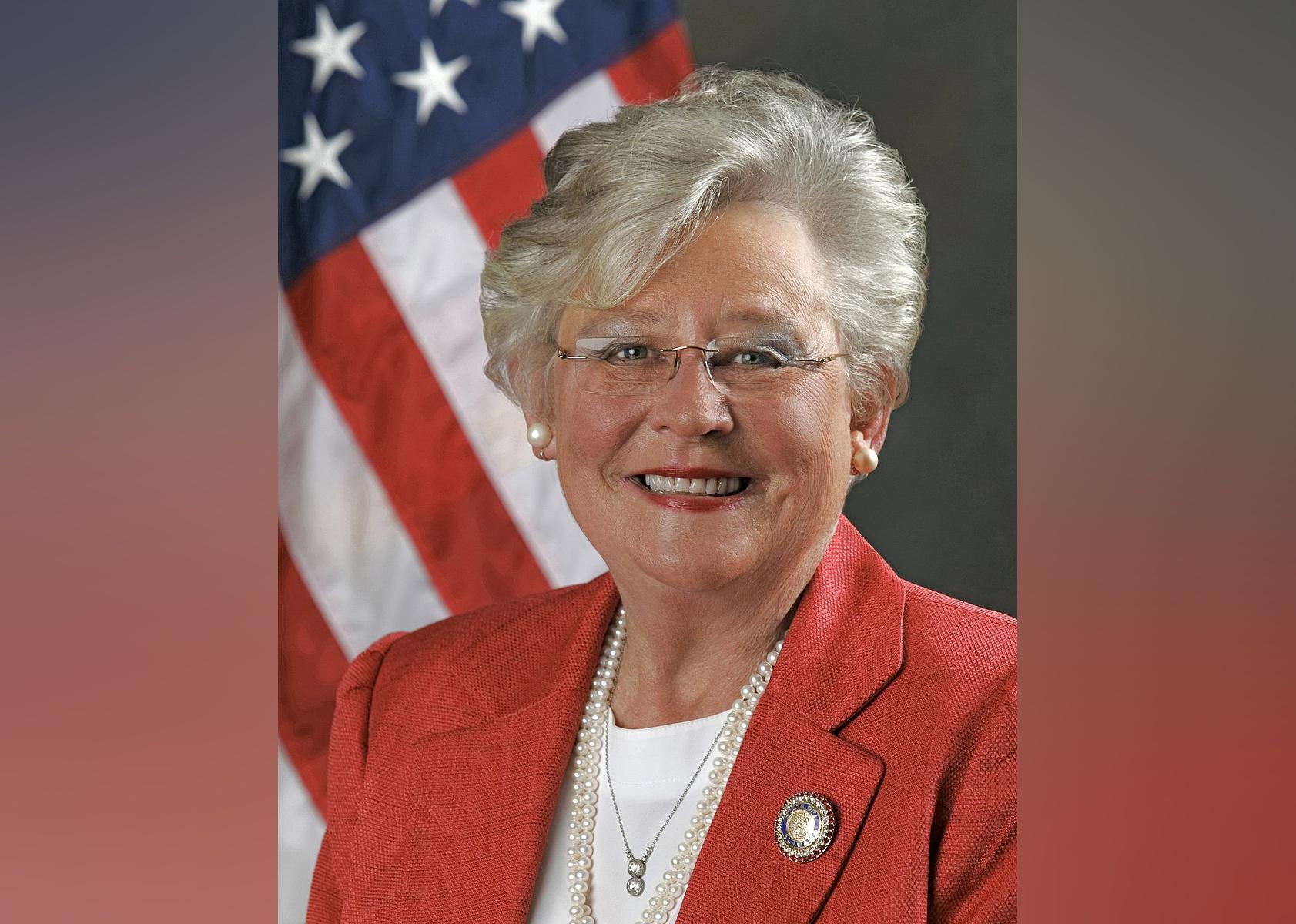
Official photograph of Alabama Lieutenant Governor Kay Ivey
Though Alabama Gov. Kay Ivey grew up working on her family’s farm, she became a high school teacher after graduating from Auburn University in 1967, and then became a bank officer before starting her career in politics. In 2002, she was elected to the position of state treasurer and successfully ran for lieutenant governor in 2010, where she was the first Republican woman to hold the role in the state’s history.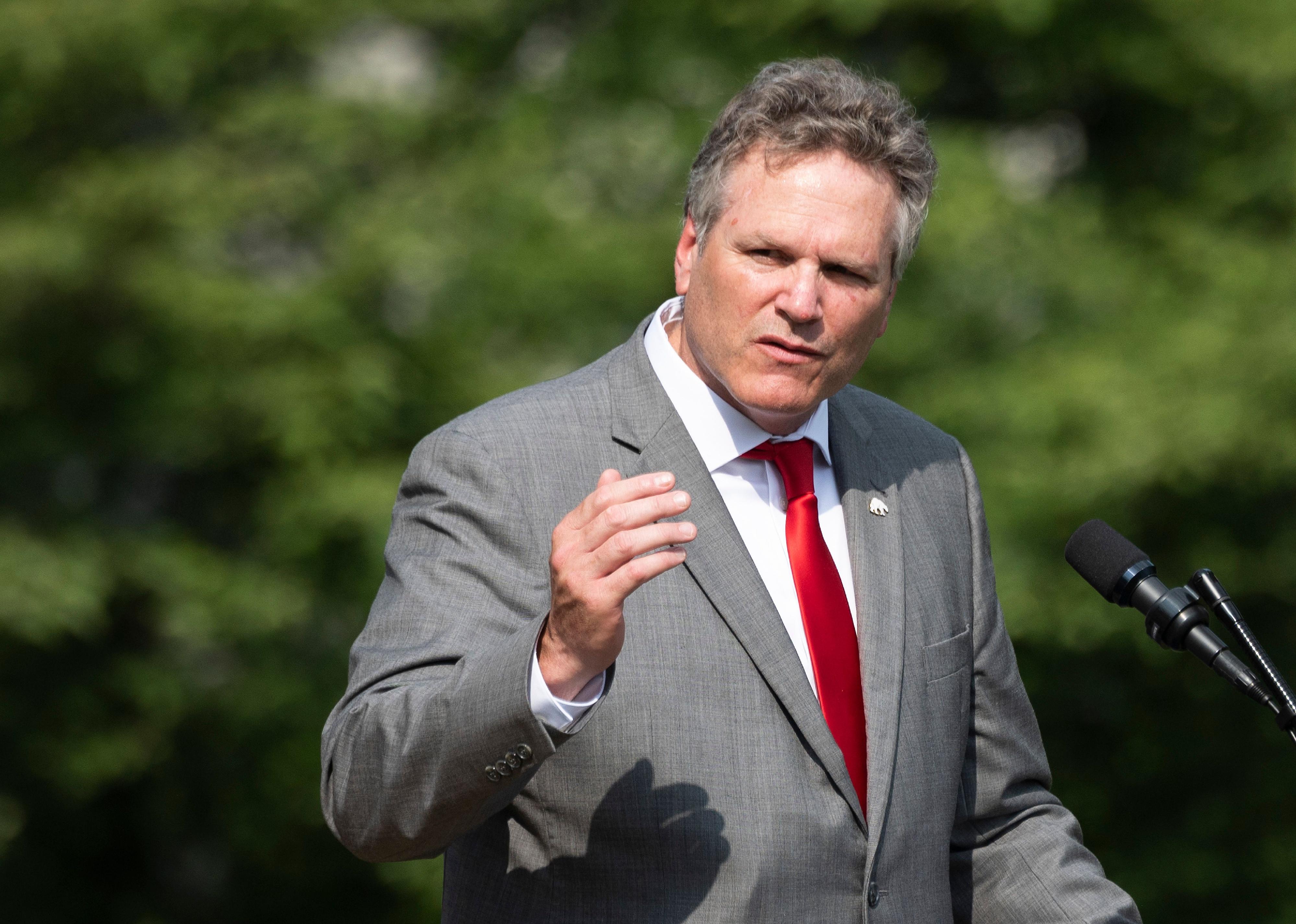
JIM WATSON // Getty Images
Alaska Governor Mike Dunleavy speaks at the White House
Alaska Gov. Mike Dunleavy long dreamed of becoming a teacher, but after coming to Alaska in 1983, he first held a job at a logging camp in the southeastern region of the state. He then pursued his master’s degree in education at the University of Alaska Fairbanks, and spent about 20 years in northwest Alaska working first as a teacher, and then as a principal and superintendent.
You may also like: The history of voting in the United States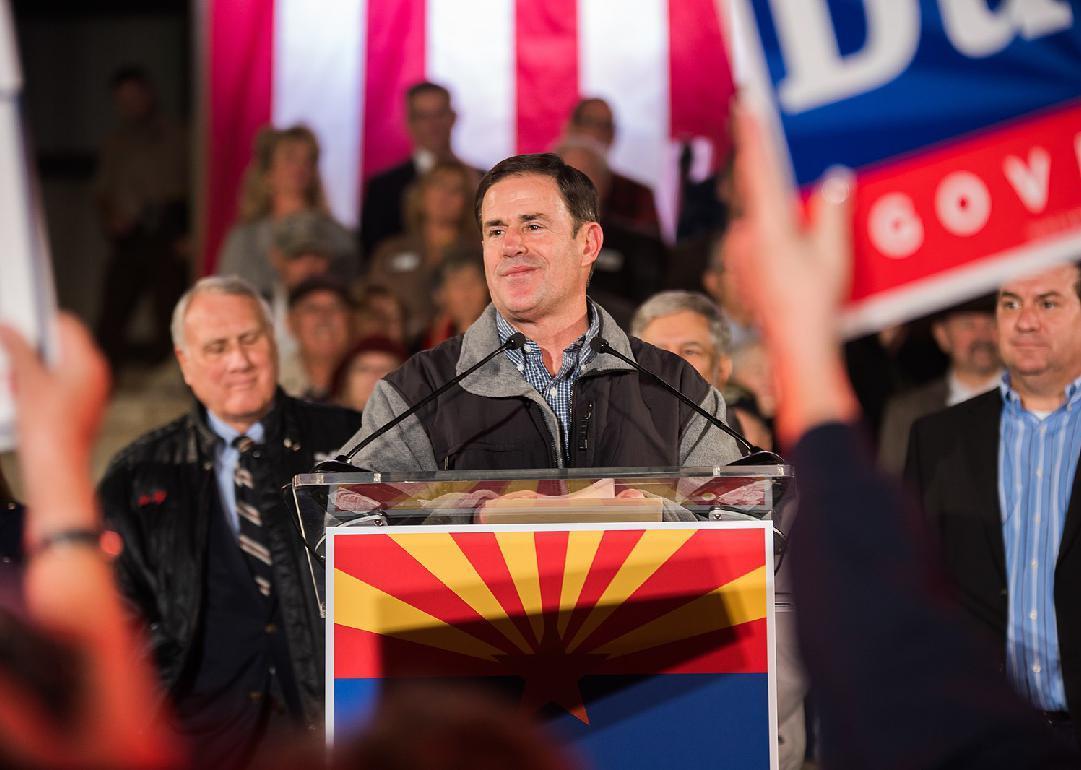
Doug Ducey for Governor // Wikimedia Commons
While Arizona Gov. Doug Ducey got his start in the workforce with a job at Procter & Gamble, he is better known for his time working at Cold Stone Creamery, where he became CEO and grew the chain to over 1,400 locations worldwide. He and his business partners sold the beloved ice cream chain in 2007, and he went on to run for Arizona state treasurer, an election he won in 2010.
You may also like: The history of voting in the United States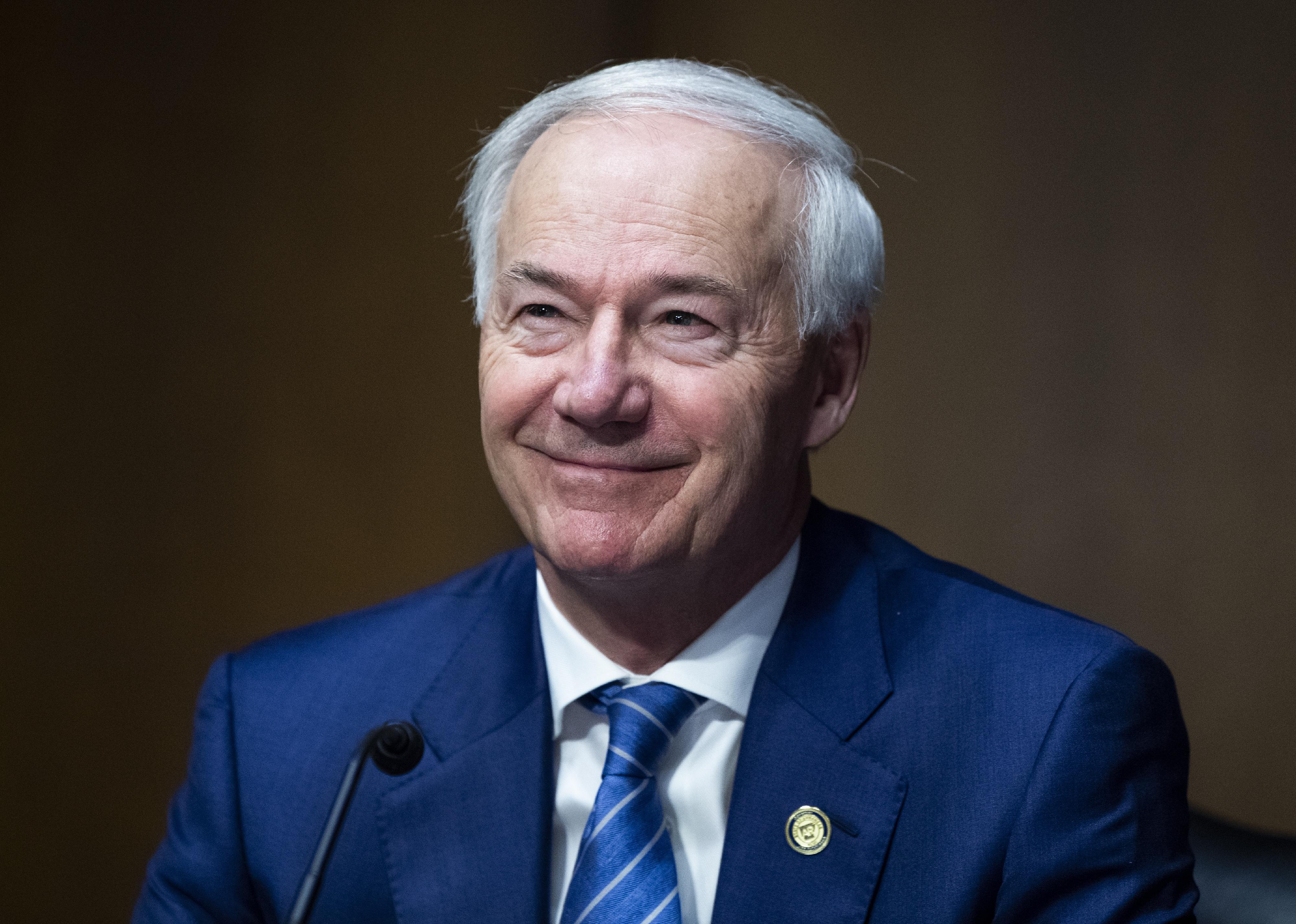
Tom Williams // Getty Images
Arkansas Gov. Asa Hutchinson testifies during a Senate Judiciary Committee hearing
Before Asa Hutchinson was governor of Arkansas, he practiced law in the state. He was nominated by then-President Ronald Reagan to serve as a U.S. attorney for the Western District of Arkansas at the age of 31, making him the youngest U.S. Attorney in the country. From 1997 to 2001, Hutchinson served as a member of Congress before President George W. Bush named him director of the Drug Enforcement Administration, and eventually the undersecretary for border and transportation security at the Department of Homeland Security.
You may also like: The history of voting in the United States
Justin Sullivan // Getty Images
California Gov. Gavin Newsom speaks during a news conference
California Gov. Gavin Newsom originally jump-started his career investing in wineries and restaurants. He entered the political universe in 1995, volunteering for Willie Brown’s campaign for mayor of San Francisco. He then spent six years on the San Francisco Board of Supervisors and rose to the position of mayor. In 2011, he became California’s lieutenant governor.
You may also like: The history of voting in the United States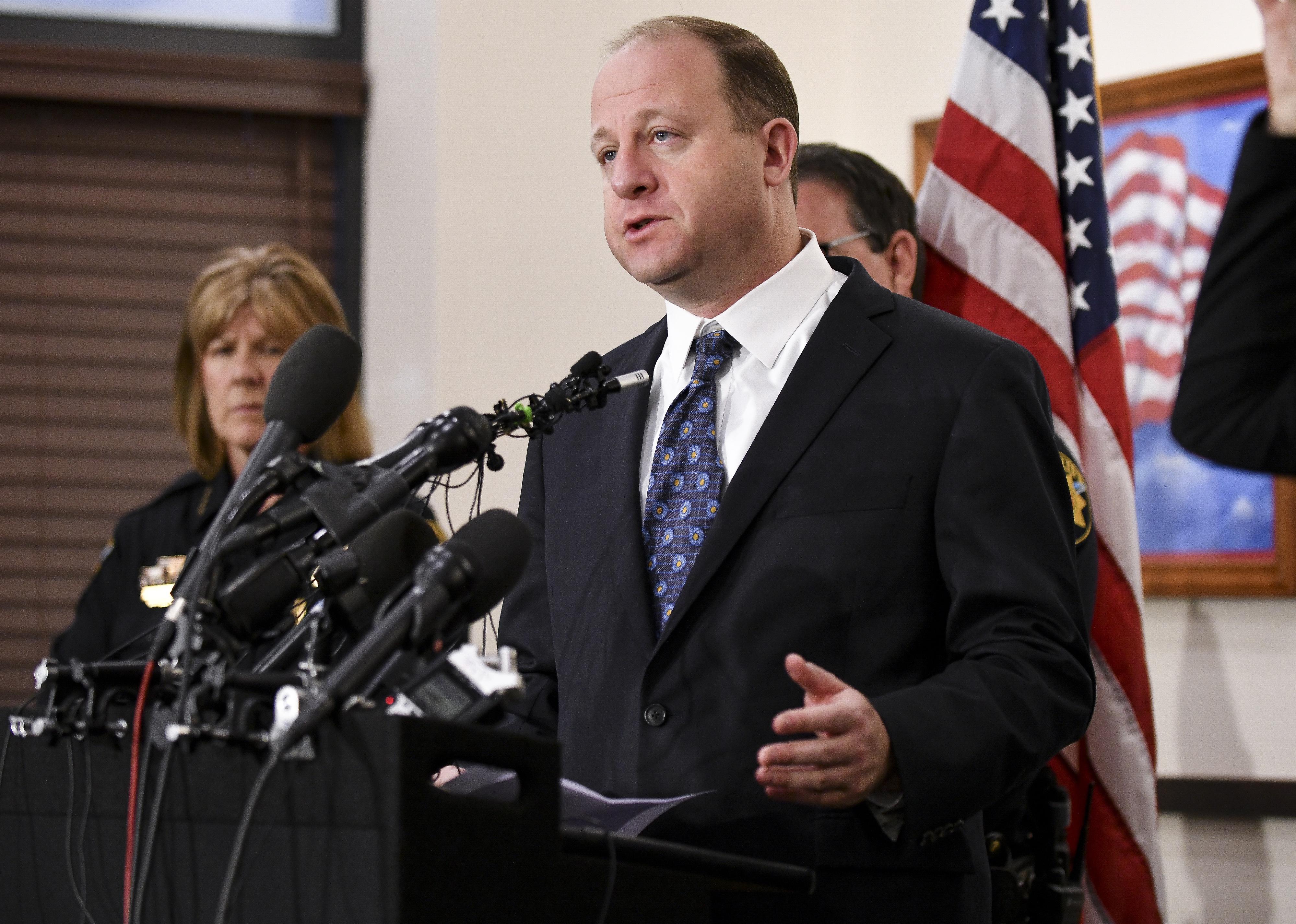
Michael Ciaglo // Getty Images
Colorado governor Jared Polis speaks to the media
As a college student, Jared Polis already had ambitious career goals, starting a company called American Information Systems out of his dorm room. He went on to found ProFlowers before he was 30. He also co-founded Techstars, a startup program to mentor fellow entrepreneurs, and Patriot Boot Camp, which assists veterans in piloting small businesses. Later, he started several public charter schools and served as the superintendent of the New America School, which caters to young immigrants.
You may also like: The history of voting in the United States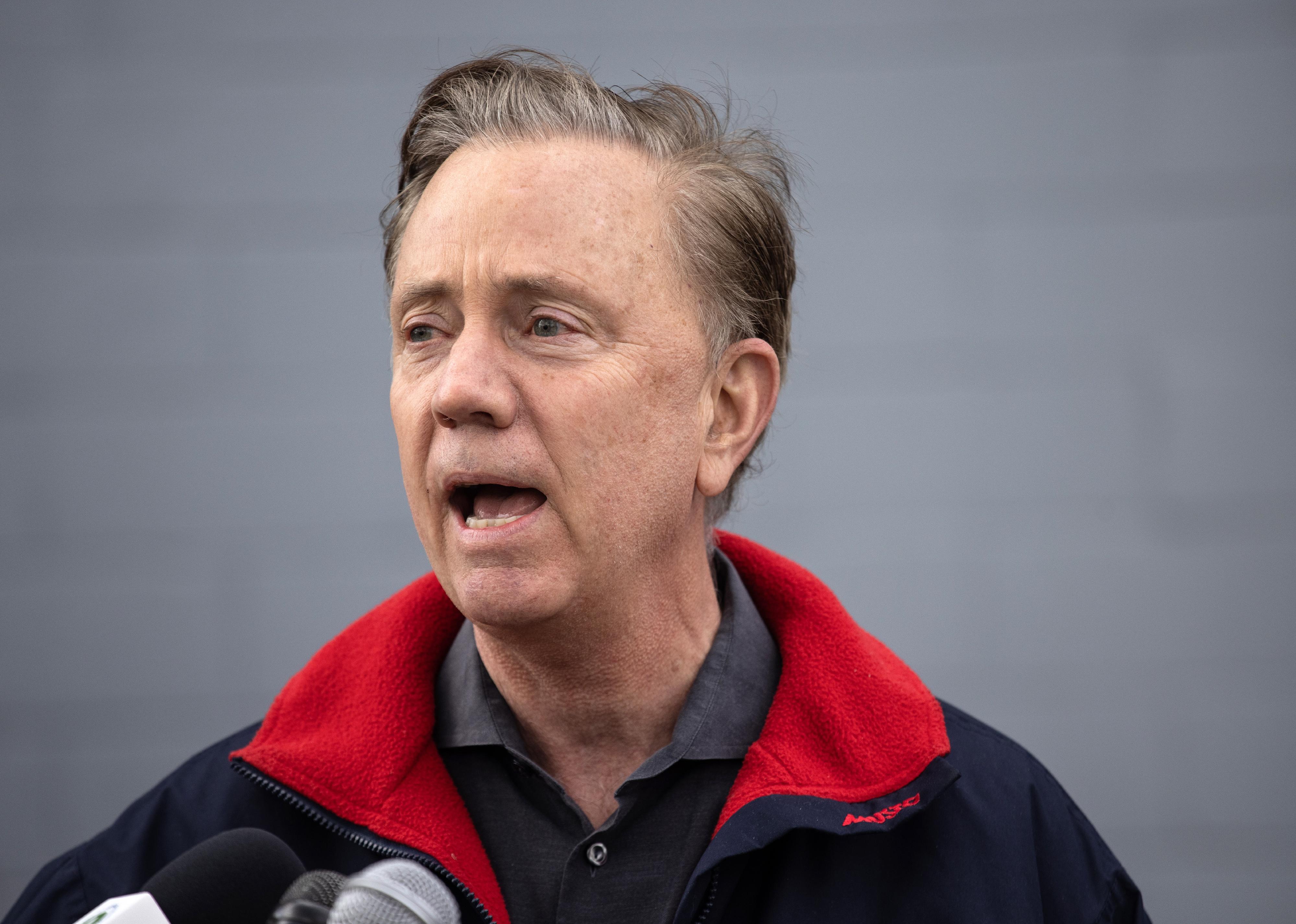
John Moore // Getty Images
Governor Ned Lamont speaks at a Covid-19 vaccination clinic
Connecticut Gov. Ned Lamont founded telecommunications company Lamont Digital Systems, which operated the college campus television service Campus Televideo. While he sold the company before he ran for governor in 2018, it wasn’t his first foray into politics. In 1987, he served on the Greenwich Board of Selectmen and launched several unsuccessful political campaigns, including runs for state senate and U.S. Senate.
You may also like: The history of voting in the United States
NurPhoto // Getty Images
Governor of Delaware John C Carney Jr. speaks at the Delaware Memorial Day Ceremony,
Born in Wilmington to two teachers, John Carney spent his school days as a star quarterback. After leading his high school to a state championship, he continued playing football at Dartmouth College, and upon graduation, coached freshman football at the University of Delaware while earning his master’s degree in public administration. He eventually entered politics, serving as the deputy chief administrative officer for New Castle County (his boss was then-Sen. Joe Biden) and later, the secretary of finance for Delaware. Two terms as Delaware’s lieutenant governor followed, along with six years in the U.S. House of Representatives.
You may also like: The history of voting in the United States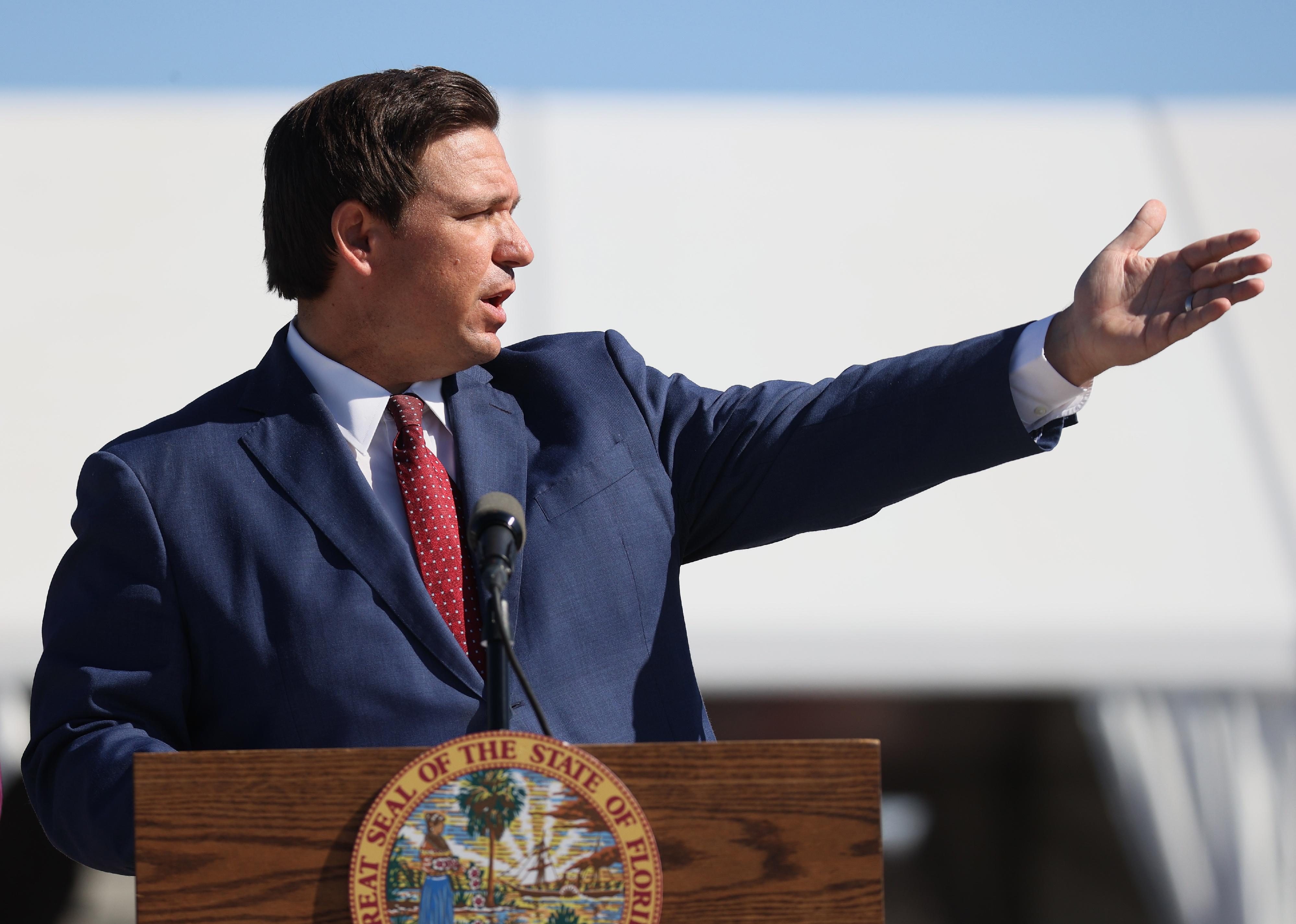
Joe Raedle // Getty Images
Florida Governor Ron DeSantis speaks during a press conference
After graduating from Harvard Law School, now-Florida Gov. Ron DeSantis served as an adviser to a Navy SEAL team in Iraq, where he earned a bronze star medal for his service. He then put his law degree to use as a federal prosecutor before running for Congress in 2012.
You may also like: The history of voting in the United States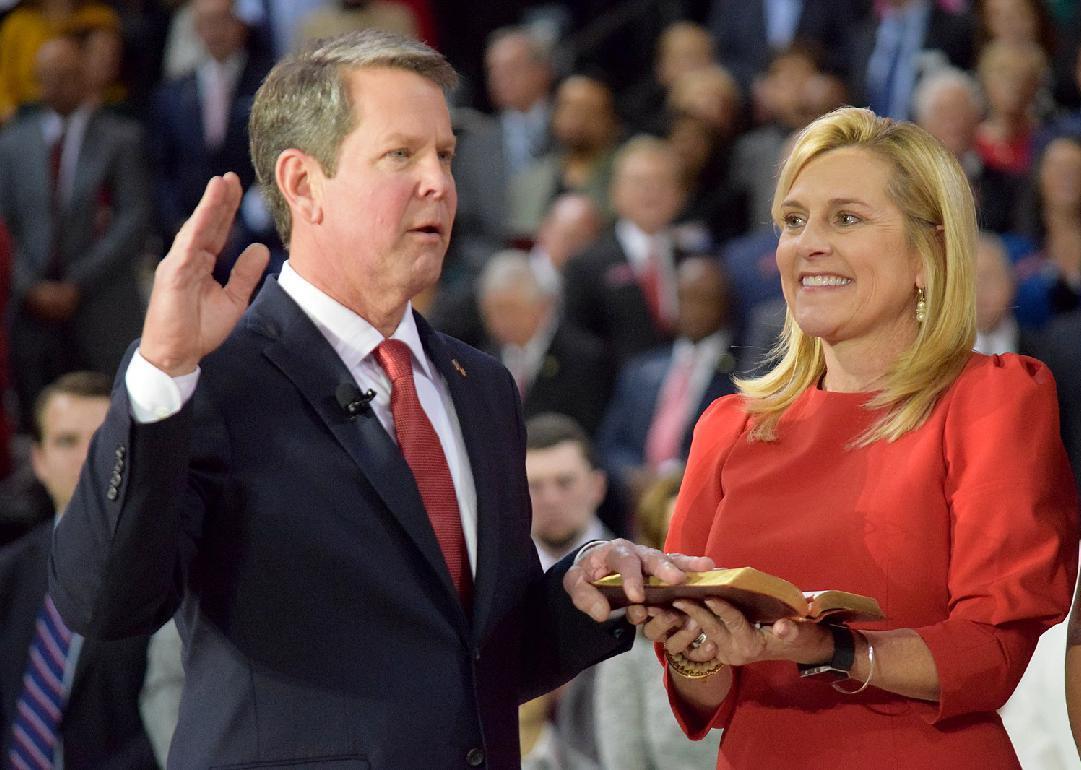
Georgia National Guard // Wikimedia Commons
Georgia Gov. Brian Kemp owns a small real estate investment and property management business called Kemp Properties, and he was previously the president of the Athens Area Home Builders Association. From 2003 to 2007, he served as a state senator and ran to be state agriculture commissioner in 2006 but lost the primary election. He served as the secretary of state of Georgia from 2010 to 2018, when he won the gubernatorial election.
You may also like: The history of voting in the United States
RONEN ZILBERMAN // Getty Images
Hawaii Governor David Ige speeks during a press conference
Gov. David Ige spent 18 years working for GTE Hawaiian Tel, a telecommunications company. He earned an MBA in decision sciences at the University of Hawaii Manoa and eventually devoted a 34-year career to electrical engineering. But in 1985, he was selected by the Hawaiian governor to fill a vacant seat in the state’s House of Representatives, which kicked off his political career.
You may also like: The history of voting in the United States
JIM WATSON // Getty Images
Governor Brad Little speaks at the White House
After graduating college, Idaho Gov. Brad Little returned home to his family’s ranch and eventually expanded into the business of livestock production. In the 1990s, Little served as president of the Idaho Wool Growers Association and as chair of the American Sheep Industry’s Public Lands Committee before selling his sheep business. In 2001, he was appointed by the Idaho governor to serve in a vacant state senate seat.
You may also like: The history of voting in the United States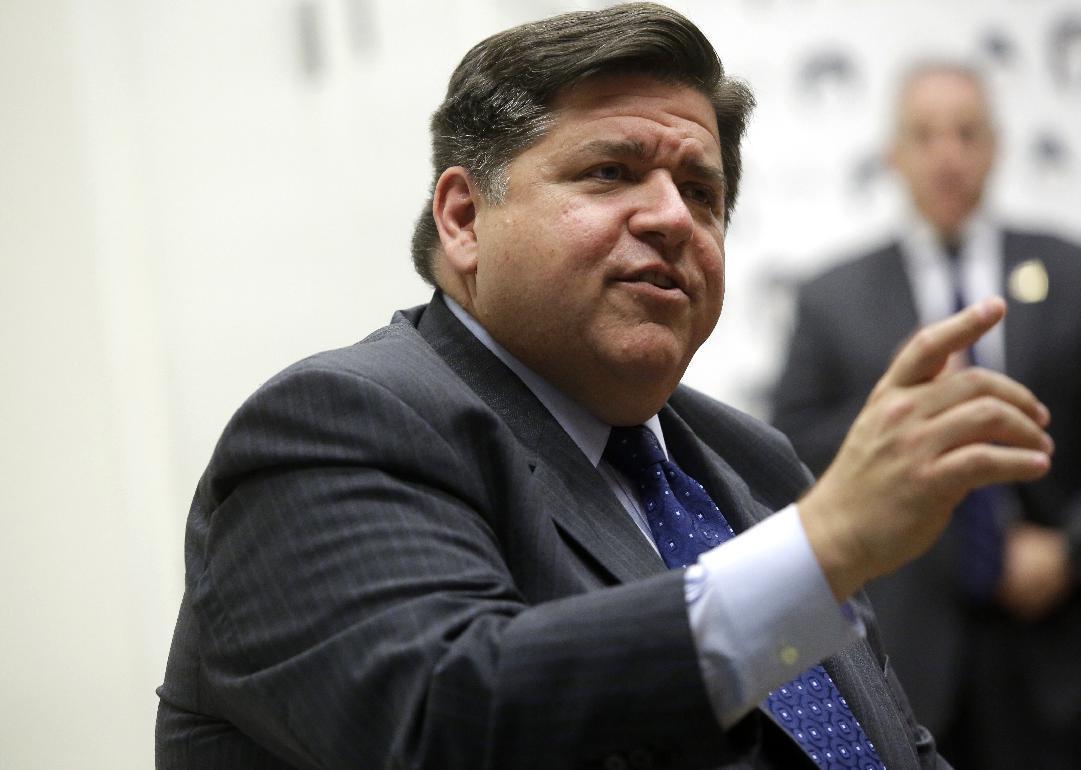
Joshua Lott // Getty Images
Illinois Gov. J.B. Pritzker was a leader in the creation and construction of the Illinois Holocaust Museum and Education Center as a descendant of Jewish refugees from Europe. Before being elected governor, Pritzker also founded an organization called 1871, a small business incubator that fosters the growth of entrepreneurs and their various ventures. In 2014, he organized the White House Summit on Early Childhood Education.
You may also like: The history of voting in the United States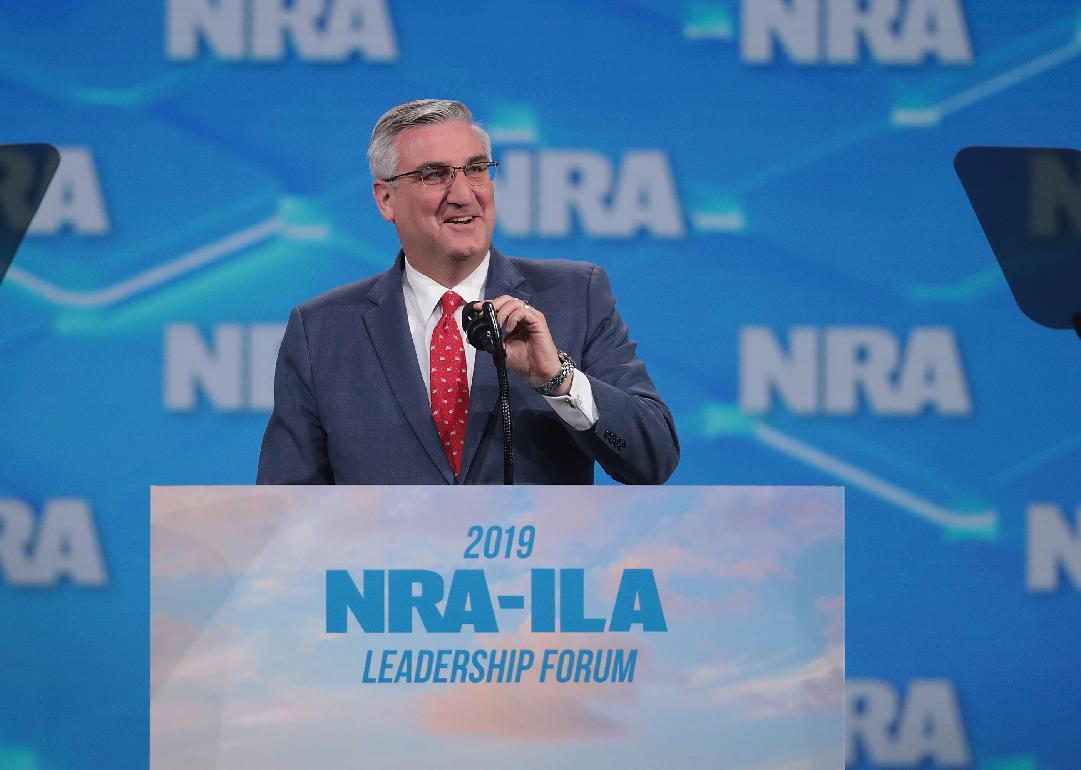
Scott Olson // Getty Images
Although Indiana Gov. Eric Holcomb earned his college degree in U.S. history, he’s spent most of his career working in the political realm. He worked as a campaign manager and district director for Republican congressman John Hostettler in the late 1990s and early aughts, and then a campaign manager and deputy chief of staff for Gov. Mitch Daniels between 2003 and 2011. In 2015, he decided to run for the U.S. Senate but quit the race when then-Gov. Mike Pence asked him to be Indiana’s lieutenant governor.
You may also like: The history of voting in the United States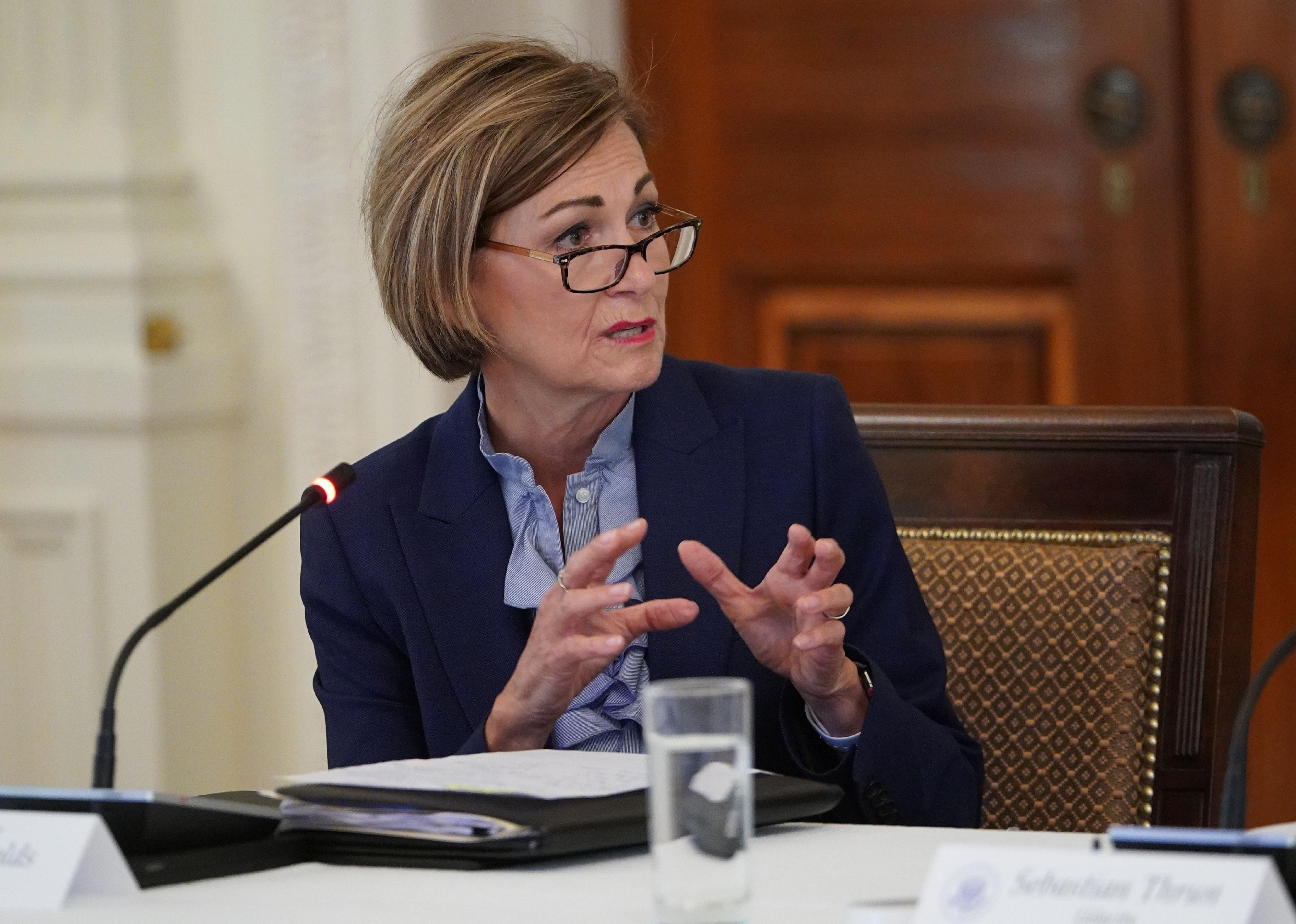
MANDEL NGAN // Getty Images
Iowa Governor Kim Reynolds speaks during an American Workforce Policy Advisory Board Meeting
Iowa Gov. Kim Reynolds’ first job was as an assistant to an independent pharmacist, followed by a role as a motor vehicles clerk in the Clarke County Treasurer’s Office. Not even four years later, she was elected county treasurer, launching her political career. She spent 14 years in the treasurer’s office overall before she ran for state senate.
You may also like: The history of voting in the United States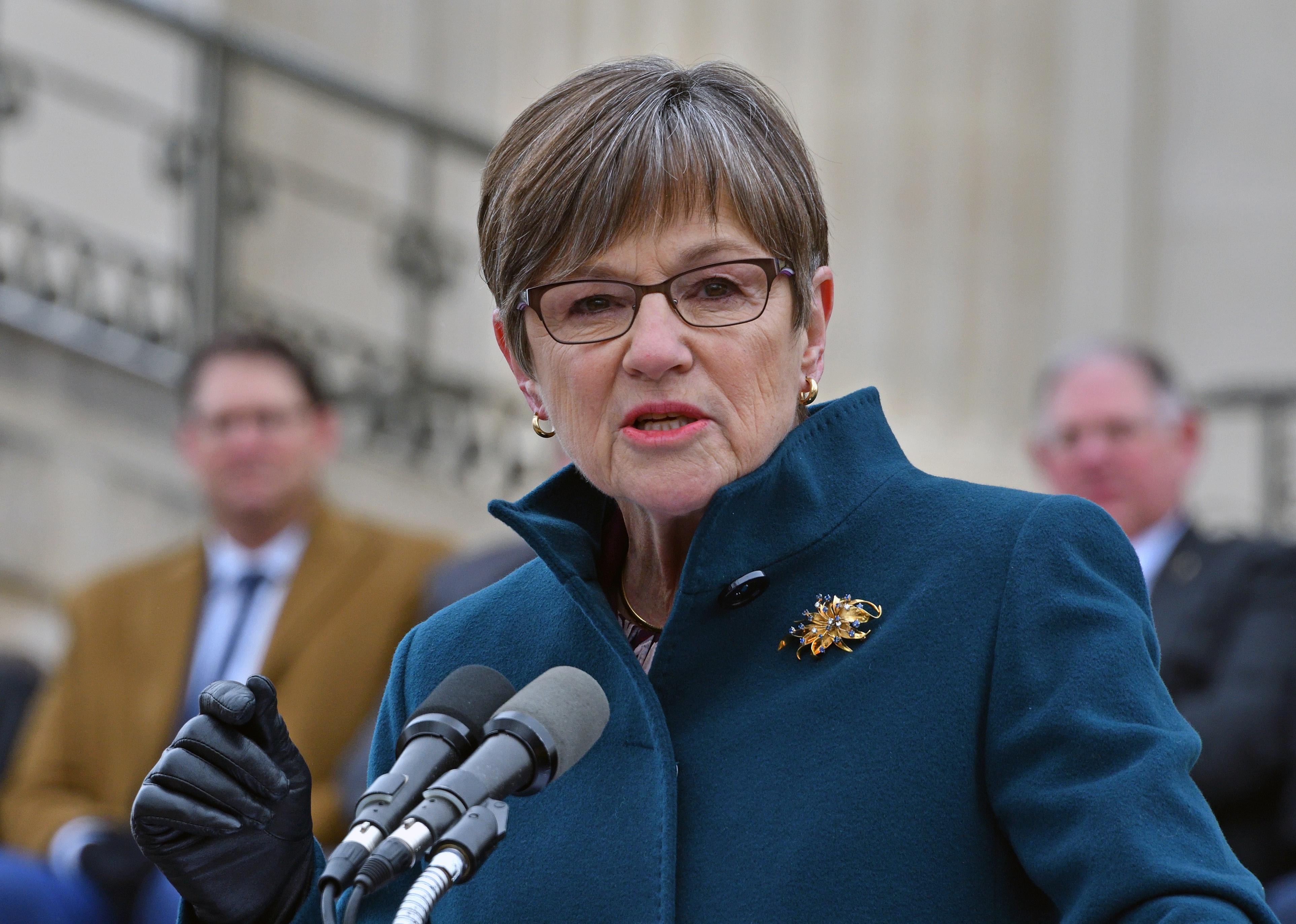
Mark Reinstein // Getty Images
Kansas Governor Laura Kelly delivers her inaugural speech
Kansas Gov. Laura Kelly was a real-life Leslie Knope, heading the Kansas Recreation and Park Association before she ran for the state senate and eventually the governor’s mansion. But prior to politics, she worked at a children’s psychiatric center and a minimum-security prison for boys, putting her degree in psychology to use.
You may also like: The history of voting in the United States
Jon Cherry // Getty Images
Andy Beshear speaks onstage at a summit in Lexington
Andy Beshear spent the early days of his legal career in Washington D.C. at a large international firm. But he eventually moved back home to Kentucky, where he worked as a lawyer until he ran for attorney general in 2015. He won that election and stayed in office until he ran for governor of Kentucky, an office his father Steve Beshear also held from 2007 to 2015.
You may also like: The history of voting in the United States
Paras Griffin // Getty Images
Governor John Bel Edwards speaks onstage
Louisiana Gov. John Bel Edwards entered the military as a second lieutenant in the U.S. Army after graduating from West Point in 1988. He eventually retired from the Army as a captain. Upon returning home, he went to law school and opened a civil law practice in his rural hometown of Amite, Louisiana. In 2008, he was elected to the Louisiana House of Representatives.
You may also like: The history of voting in the United States
Portland Press Herald // Getty Images
Gov. Janet Mills speaks during the Democratic State Convention
The first woman governor of Maine, Janet T. Mills began her career as a diner waitress and newspaper delivery girl. Upon graduating law school, she rose through the ranks of the Maine legal system as an assistant attorney general, district attorney, and eventually attorney general. She also co-founded the Maine Women’s Lobby to help victims of domestic violence and served four terms in the Maine House of Representatives.
You may also like: The history of voting in the United States
Scott Eisen // Getty Images
Maryland Gov. Larry Hogan had never held elected office before winning the gubernatorial race in the state in 2014. Over his 25-year career, he worked to build up and create small businesses. He also created Change Maryland, the largest nonpartisan grassroots citizen organization in the state, which works to instill fiscal responsibility and accountability.
You may also like: The history of voting in the United States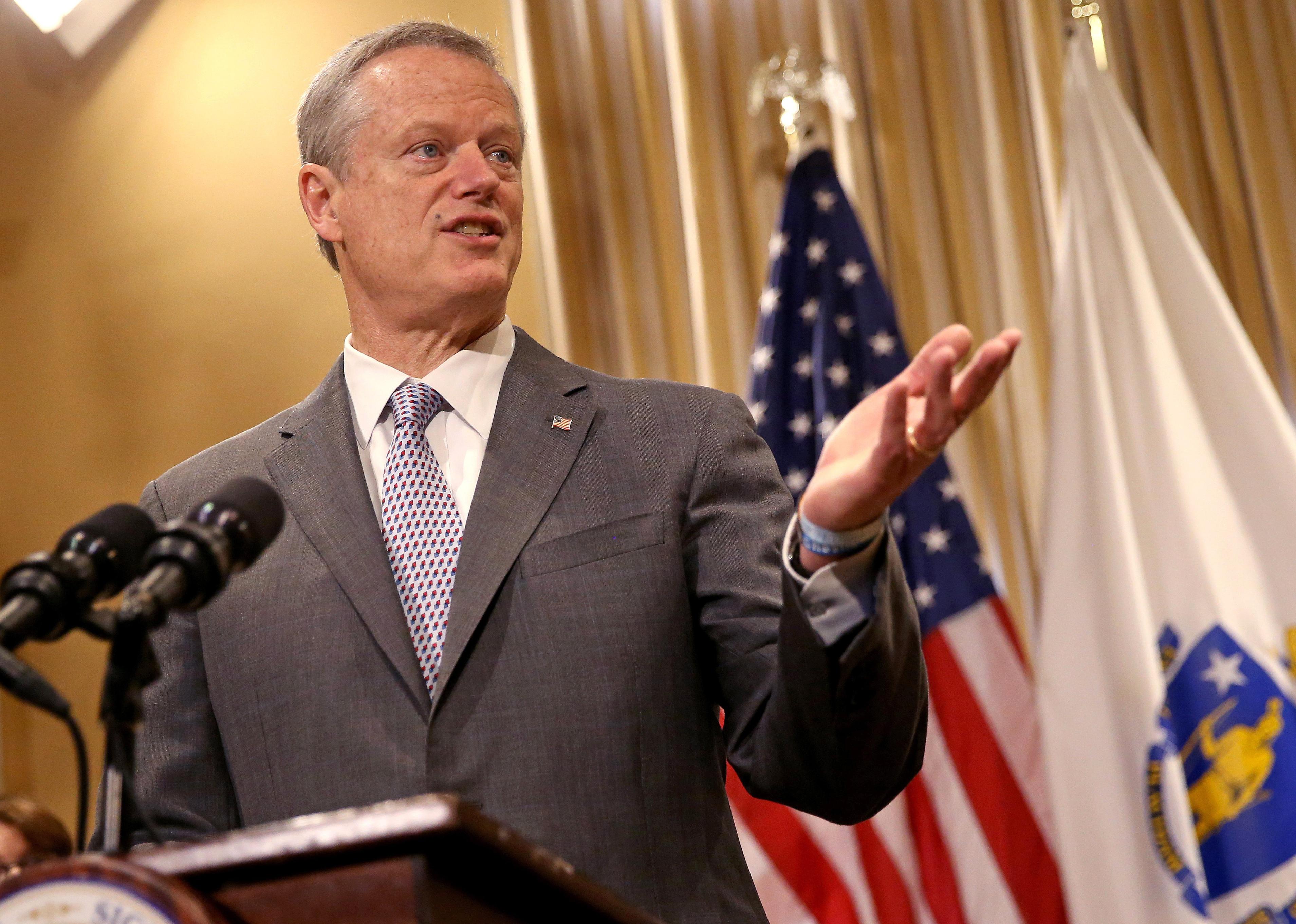
Matt Stone // Getty Images
Governor Charlie Baker speaks at a press conference
Charlie Baker has bounced between business and politics for most of his career. After finishing his education with an MBA, he soon caught the eye of then-Gov. Bill Weld, who offered him a place in his cabinet. He would also serve in the cabinet of the next governor, Paul Cellucci, before exiting state politics for the health care industry. He was the CEO of Harvard Pilgrim Health Care for several years but started dipping his toe back into politics with a spot on the Swampscott board of selectmen. He ran for governor in 2010 and lost but won the next time he ran in 2014.
You may also like: The history of voting in the United States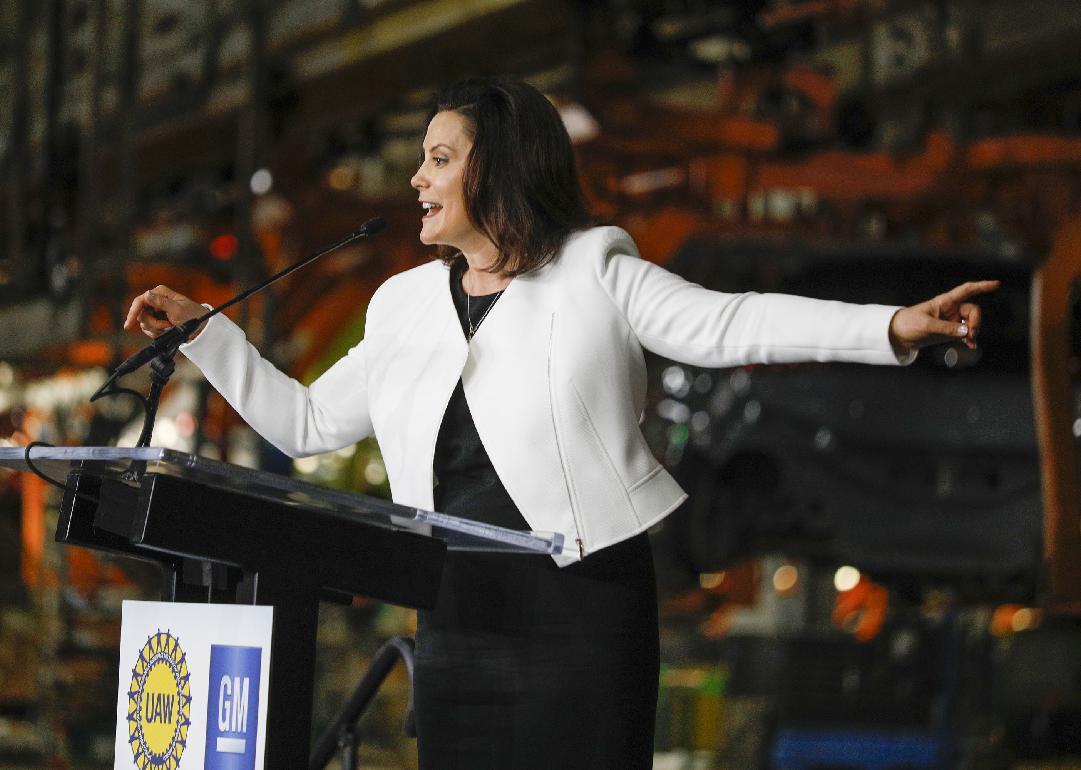
Bill Pugliano // Getty Images
Michigan Gov. Gretchen Whitmer entered the workforce at age 15 with a job at Burlingame Lumber, and also worked early on at Target and the Royal Fork Buffet. In 2016, she became a prosecutor for Ingraham County, where she established a new domestic violence and sexual assault unit. Later, she taught at the University of Michigan and Michigan State University.
You may also like: The history of voting in the United States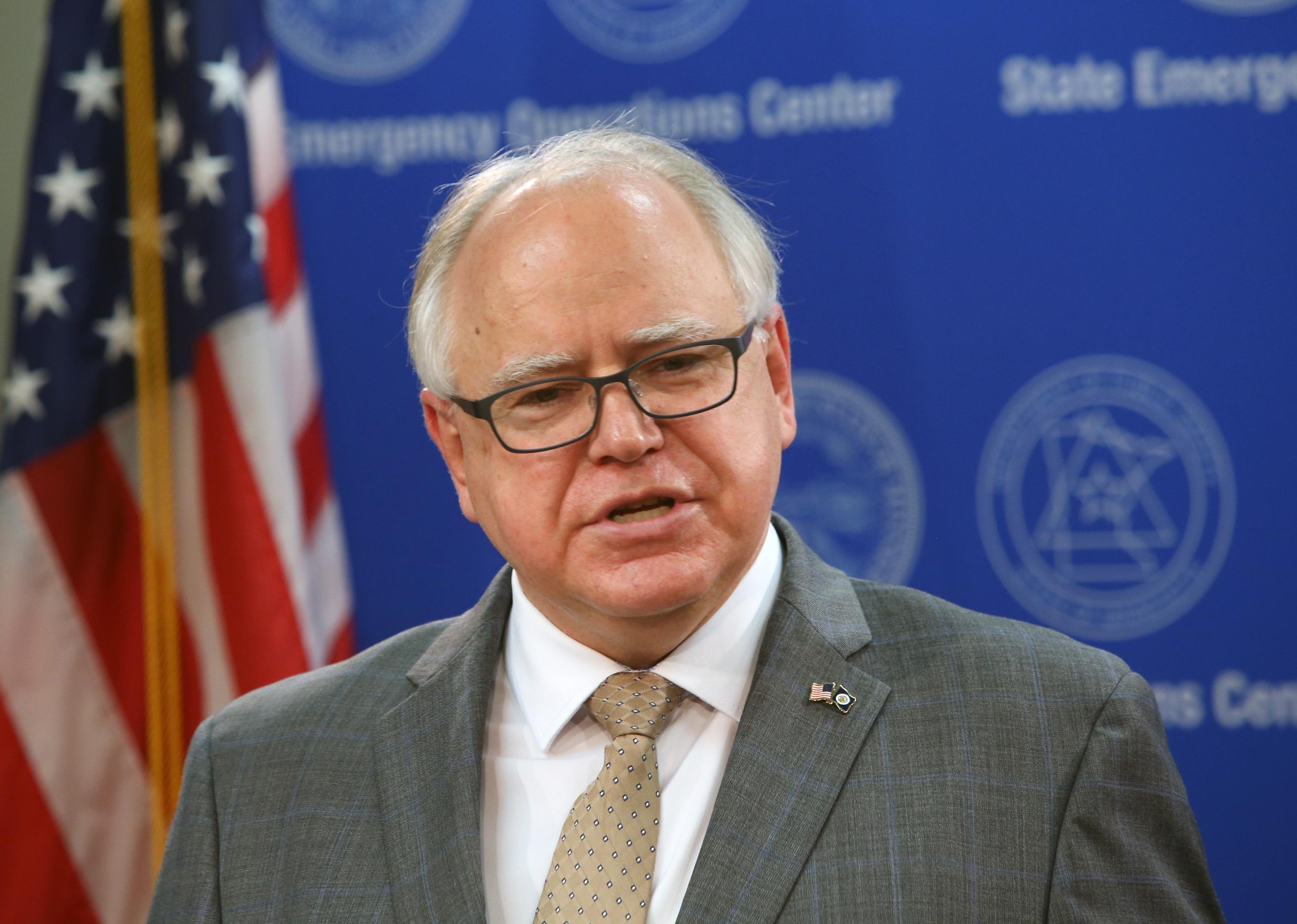
Scott Olson // Getty Images
Governor Tim Walz speaks to the press
Upon graduating from Chadron State College in 1989, Minnesota Gov. Tim Walz taught high schoolers in China, an opportunity provided by Harvard University. After returning home, Walz served in the Army National Guard. In 1996, he accepted a position teaching social studies in Mankato, where he also coached football. Walz was elected to the U.S. House of Representatives in 2006, representing Minnesota’s first congressional district.
You may also like: The history of voting in the United States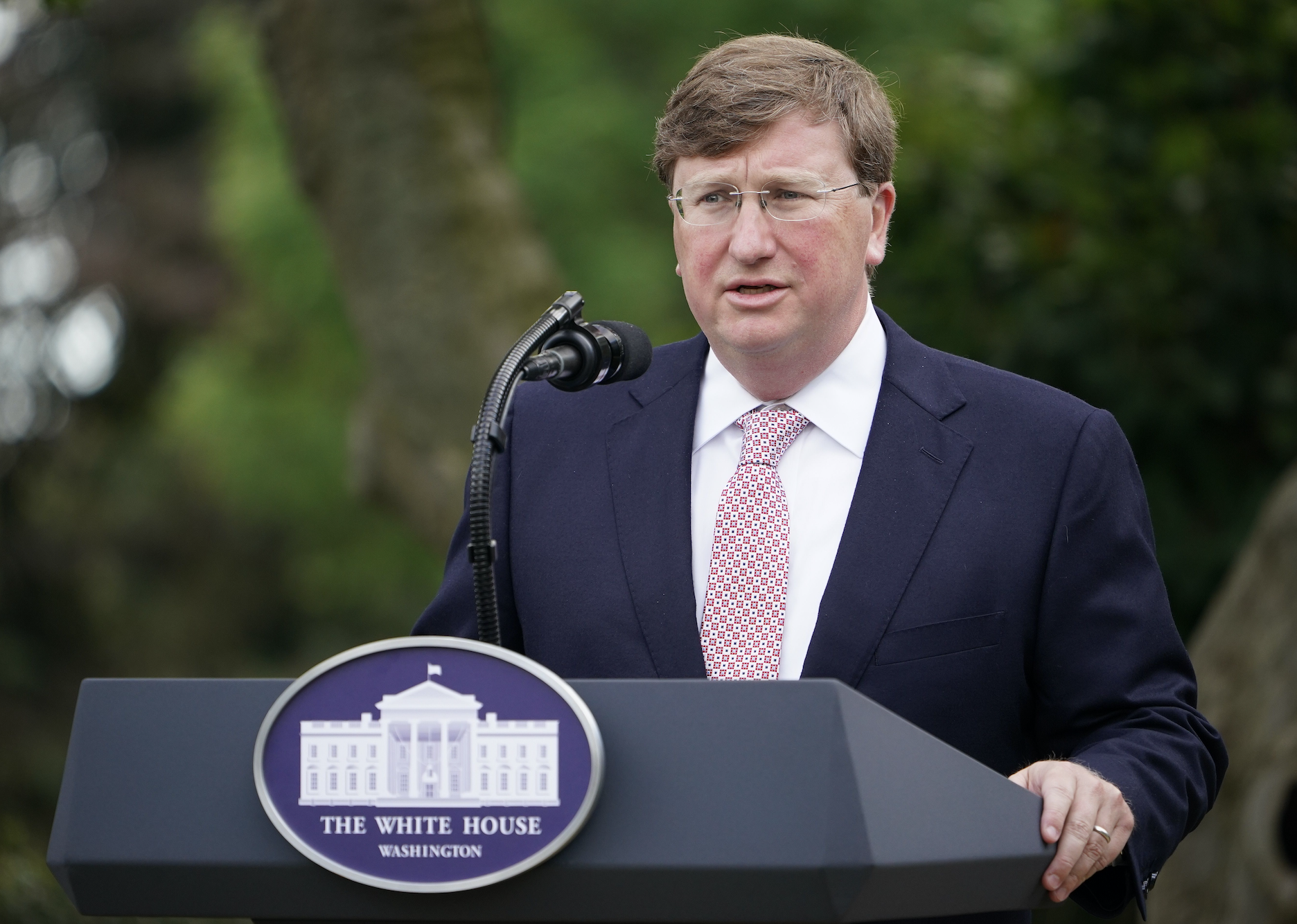
MANDEL NGAN // Getty Images
Mississippi Gov. Tate Reeves speaks on Covid-19 testing in the Rose Garden
Before assuming office as governor of Mississippi, Tate Reeves was just a numbers guy. He earned an economics degree from Millsaps College and a Chartered Financial Analyst certification, which allowed him to work for several banks before he ran for Mississippi treasurer in 2003. His win made him the youngest state treasurer in the U.S. and helped launch him into another victory as lieutenant governor in 2011.
You may also like: The history of voting in the United States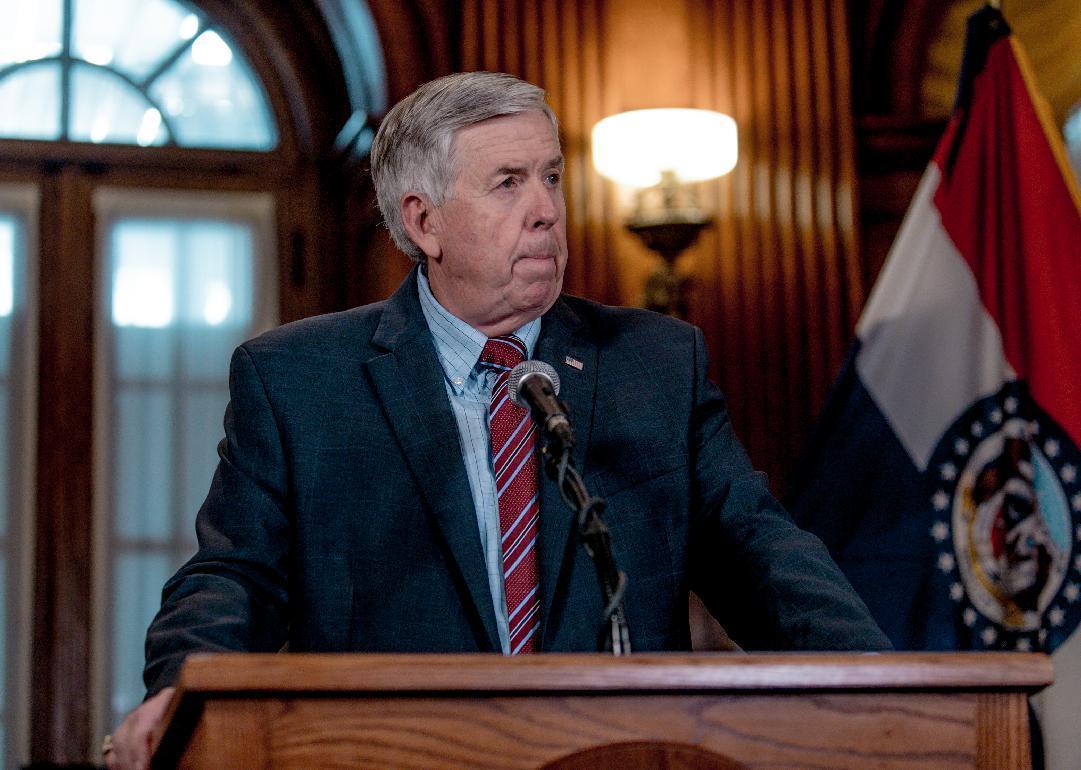
Jacob Moscovitch // Getty Images
Missouri Gov. Mike Parson was raised on a farm, and remains a farmer today, operating a cow and calf farm in Bolivar. Parson is also a small business owner, a veteran of the U.S. Army, and the former sheriff of Polk County. He began his political career in the Missouri General Assembly and went on to serve as the state’s 47th lieutenant governor.
You may also like: The history of voting in the United States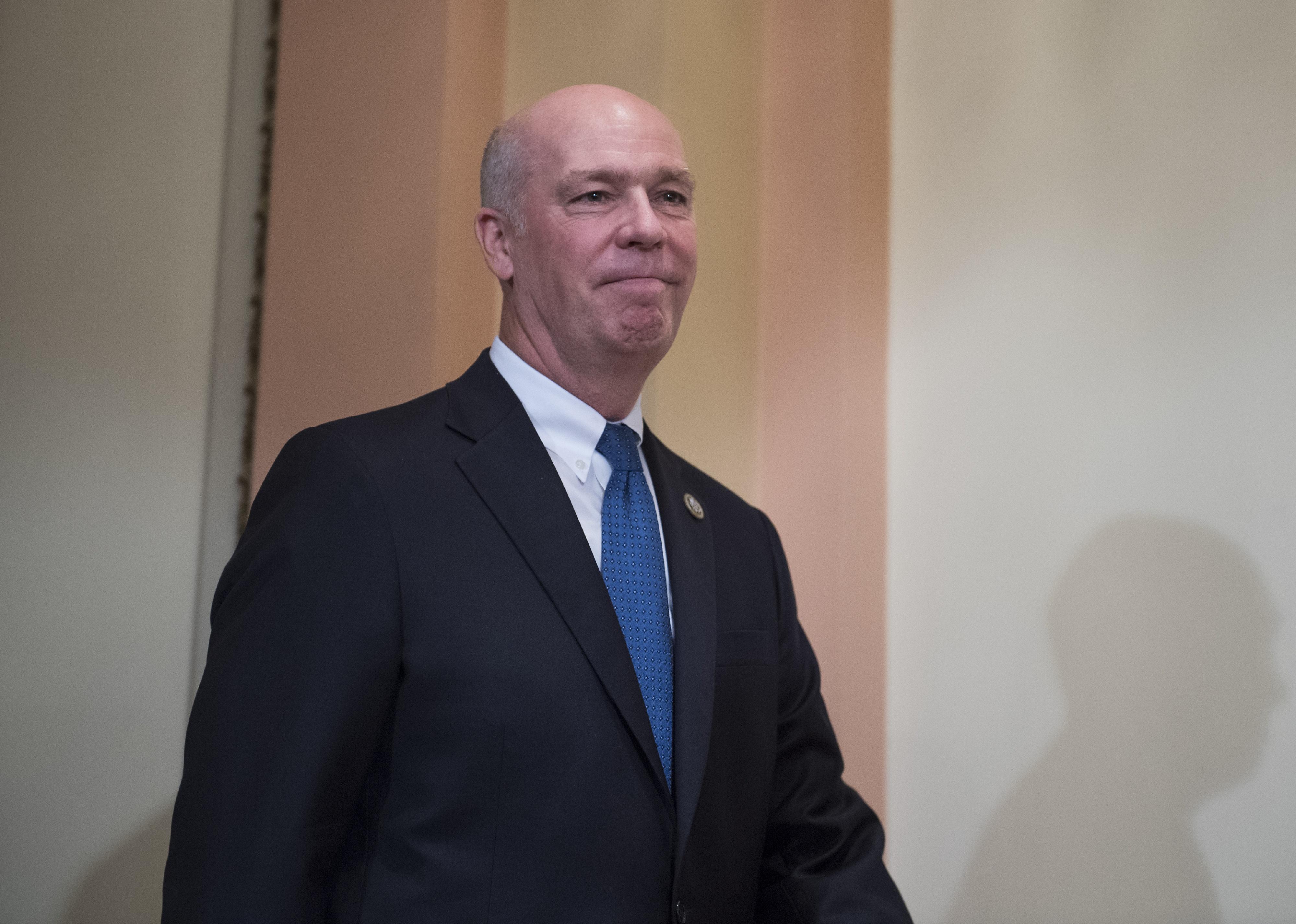
Tom Williams // Getty Images
Greg Gianforte arrives for a swearing in ceremony in the Capitol
The founder of five different startups, Greg Gianforte is probably best known for RightNow Technologies, which grew into the largest commercial employer for the town of Bozeman, Montana. He also gained national infamy during his 2017 congressional campaign, when he attacked a Guardian journalist on the campaign trail. He still won that race, and reelection the following year.
You may also like: The history of voting in the United States
MIKE THEILER // Getty Images
Nebraska Governor Pete Ricketts speaks to the Conservative Political Action Conference
After earning his master’s degree from the University of Chicago, Nebraska Gov. Pete Ricketts returned home to work for Union Pacific. He later took a job as a customer representative for his family’s business, which would eventually become known as Ameritrade. He rose within the company, all the way up to chief operating officer and president. Ricketts also founded Drakon, a company that supports entrepreneurs, and sat on the board of the Chicago Cubs.
You may also like: The history of voting in the United States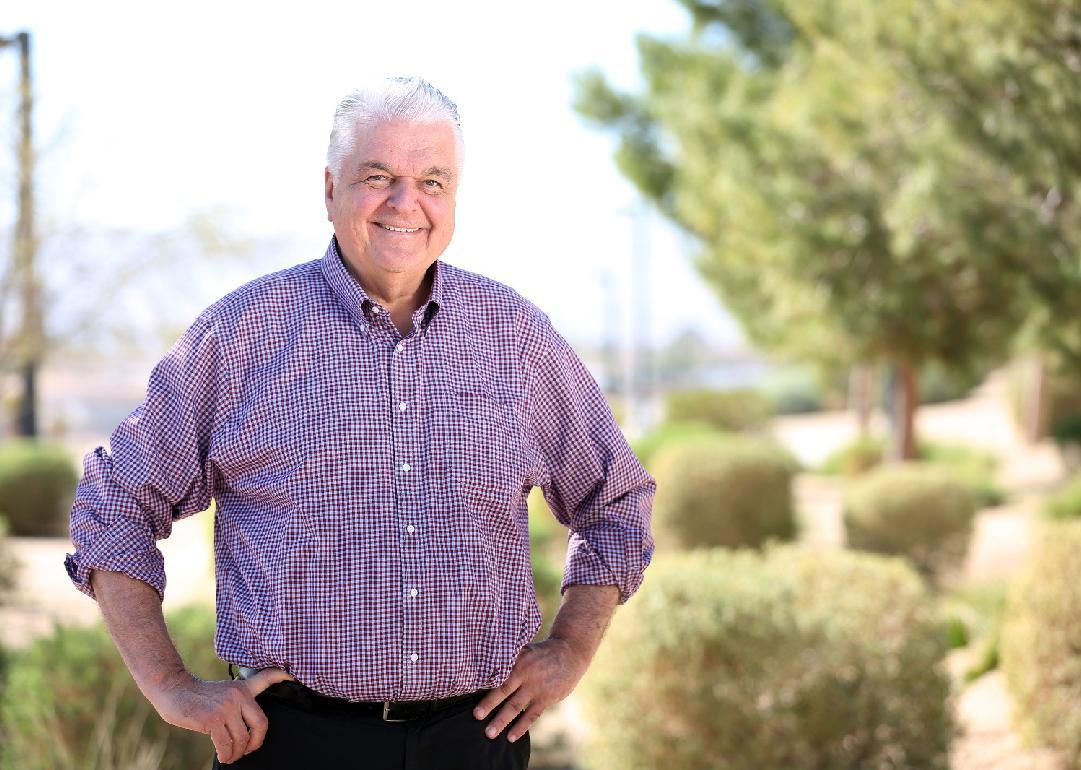
Erik Gloege // Wikimedia Commons
Nevada Gov. Steve Sisolak founded his own communications business in Las Vegas before entering public service. He also served on the Nevada Board of Regents for 10 years before he was elected to the Clark County Commission, where he worked as chairman and maintained the county’s budget during the financial crisis.
You may also like: The history of voting in the United States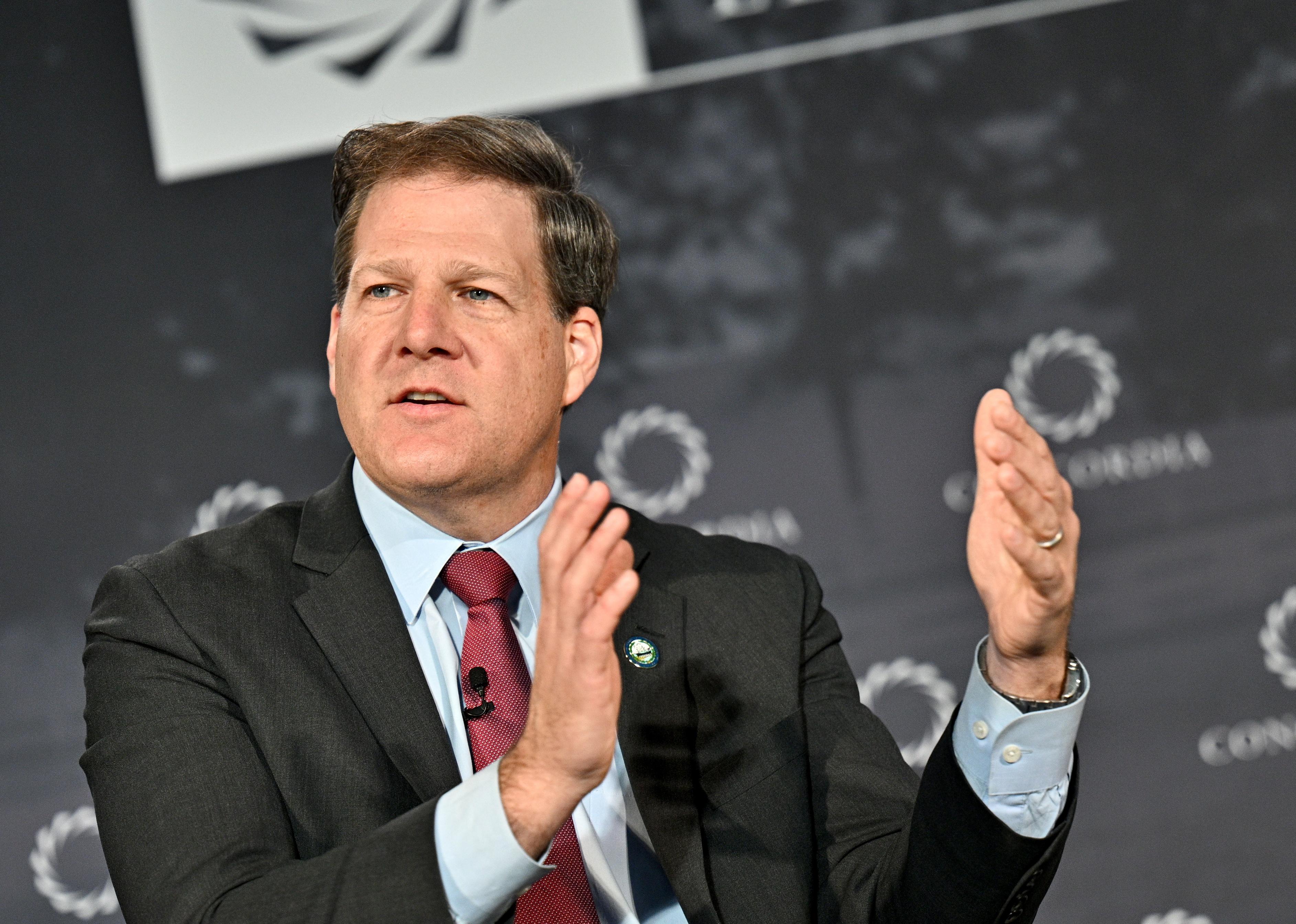
Jon Cherry // Getty Images
Chris Sununu, Governor, State of New Hampshire speaks onstage
Harnessing his passion for the environment, New Hampshire Gov. Chris Sununu embarked on a 10-year career as an environmental engineer, where he helped orchestrate the cleanup of hazardous waste sites. In 2010, while serving as the CEO of the Waterville Valley Resort, he was tasked with a vast expansion of the resort in tandem with the United States Forest Service. Sununu then went on to serve three terms on the New Hampshire Executive Council.
You may also like: The history of voting in the United States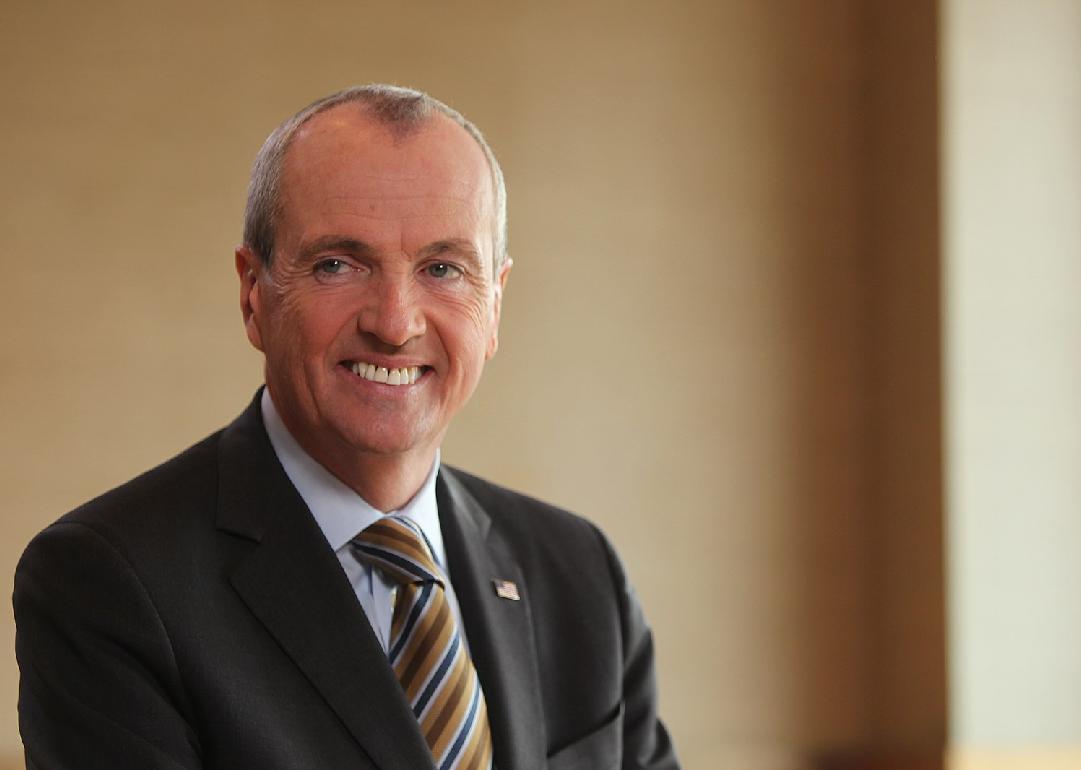
Phil Murphy // Wikimedia Commons
New Jersey Gov. Phil Murphy began his career working on behalf of survivors of domestic violence and eventually became New Jersey’s representative on the board of the National Association for the Advancement of Colored People. He also served as the finance chair of the Democratic National Committee. In 2009, President Barack Obama nominated Murphy to serve as the U.S. ambassador to Germany. When he returned home in 2013, Murphy and his wife created New Start New Jersey to boost the state’s economy.
You may also like: The history of voting in the United States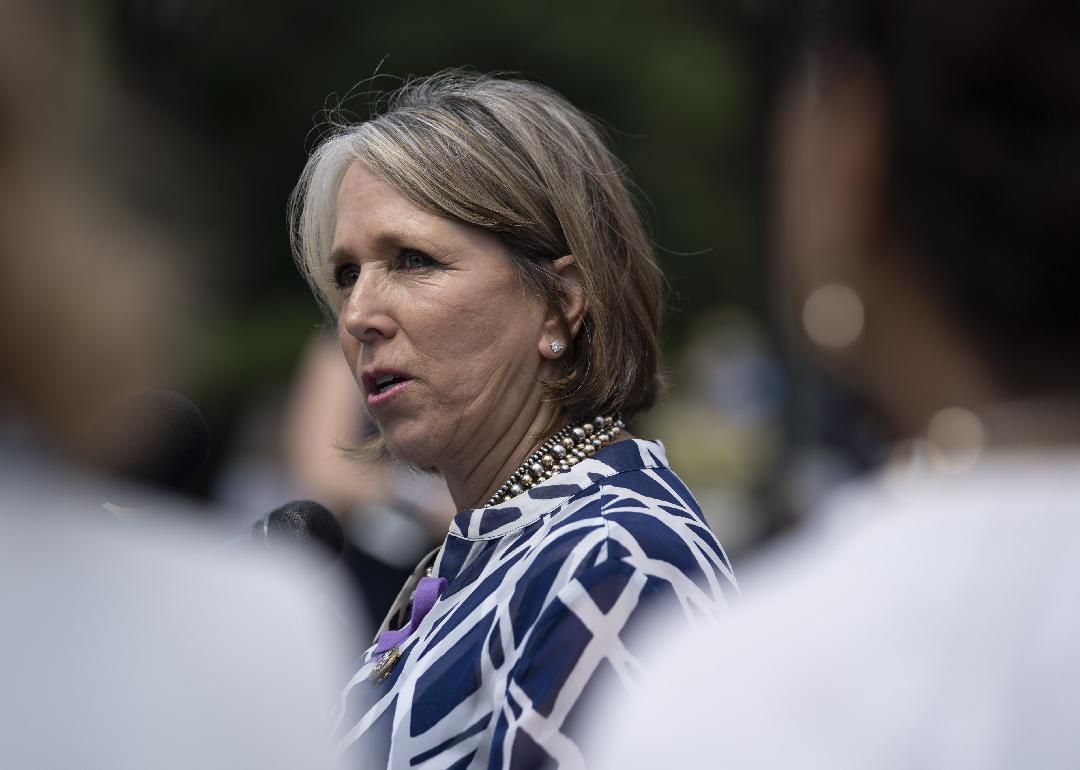
Toya Sarno Jordan // Getty Images
After graduating with a law degree from the University of New Mexico, Gov. Michelle Lujan Grisham worked as an attorney for the Lawyer Referral for the Elderly Program of the State Bar of New Mexico and then co-founded the Delta Consulting Group. As she transitioned to the public sector, she served as the Bernalillo County commissioner and was appointed chief of the New Mexico Department of Health. From 2013 until she was elected governor, Lujan Grisham served in the U.S. House of Representatives, where she chaired the Congressional Hispanic Caucus.
You may also like: The history of voting in the United States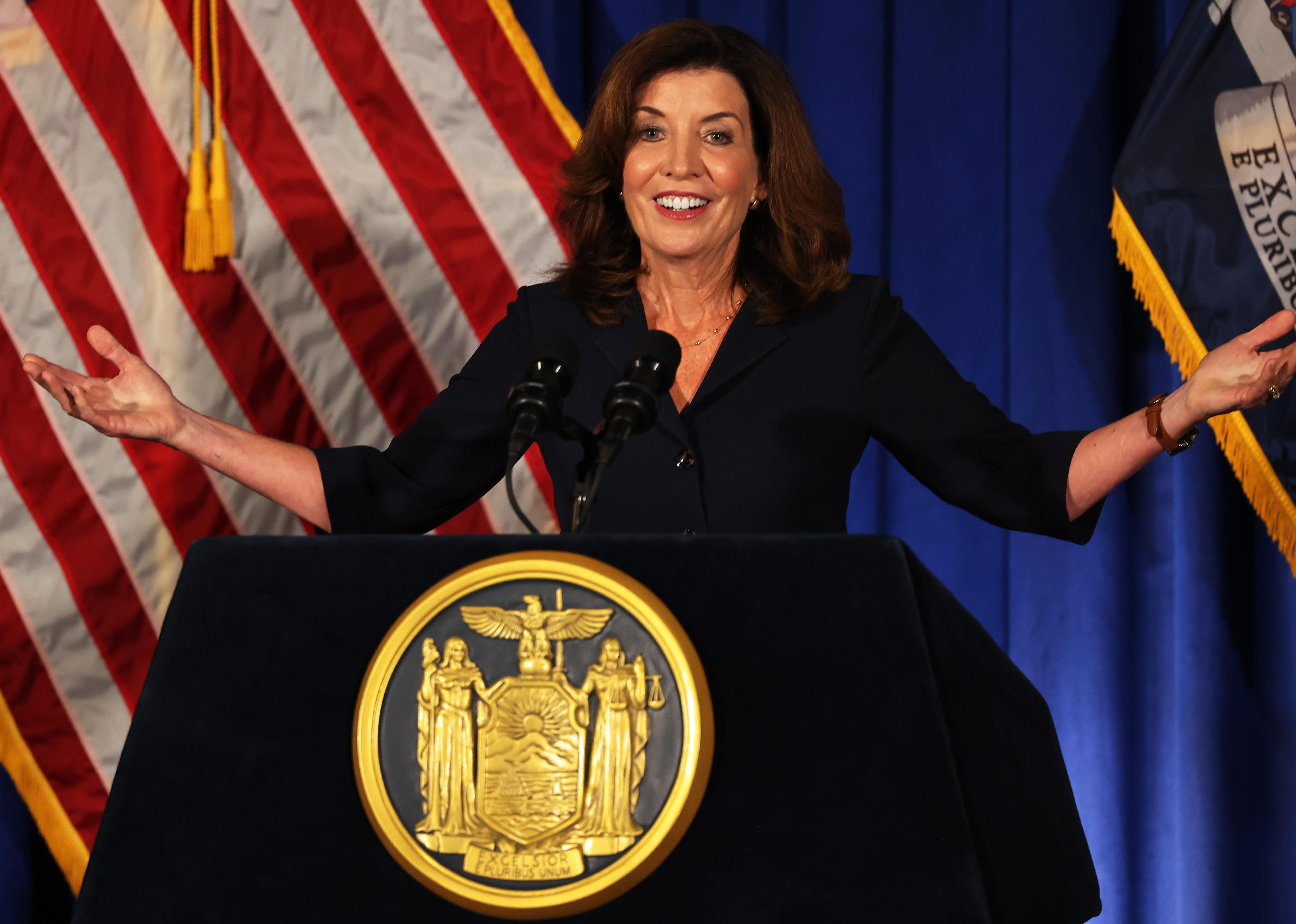
Michael M. Santiago // Getty Images
Gov. Kathy Hochul speaks during a press conference
After then-Gov. Andrew Cuomo resigned in 2021, his lieutenant governor, Kathy Hochul, assumed office. The first woman governor of New York was originally a lawyer by trade, serving as legal counsel to Sen. Daniel Patrick Moynihan and Rep. John LaFalce. She made the switch to politics as a Hamburg, New York town board member and Erie County clerk. A term in the U.S. House of Representatives followed before Hochul became lieutenant governor of New York.
You may also like: The history of voting in the United States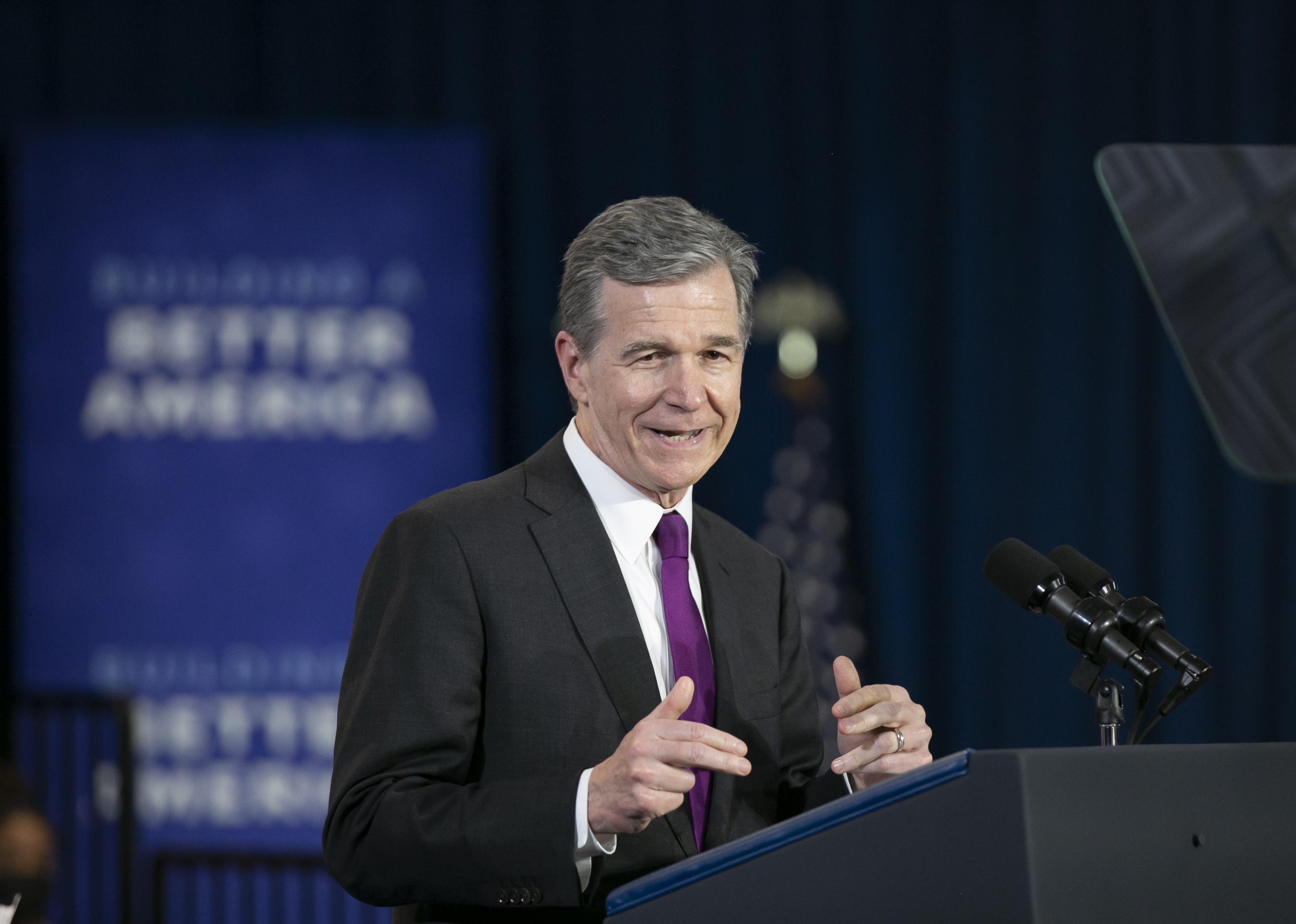
Allison Joyce // Getty Images
North Carolina Governor Roy Cooper speaks onstage
North Carolina Gov. Roy Cooper practiced law in Nash County after passing the bar while teaching Sunday school and tutoring students. In 2000, he was elected as attorney general of North Carolina, focusing particularly on consumer protection and cracking down on predatory lenders. He also served in the North Carolina House and Senate.
You may also like: The history of voting in the United States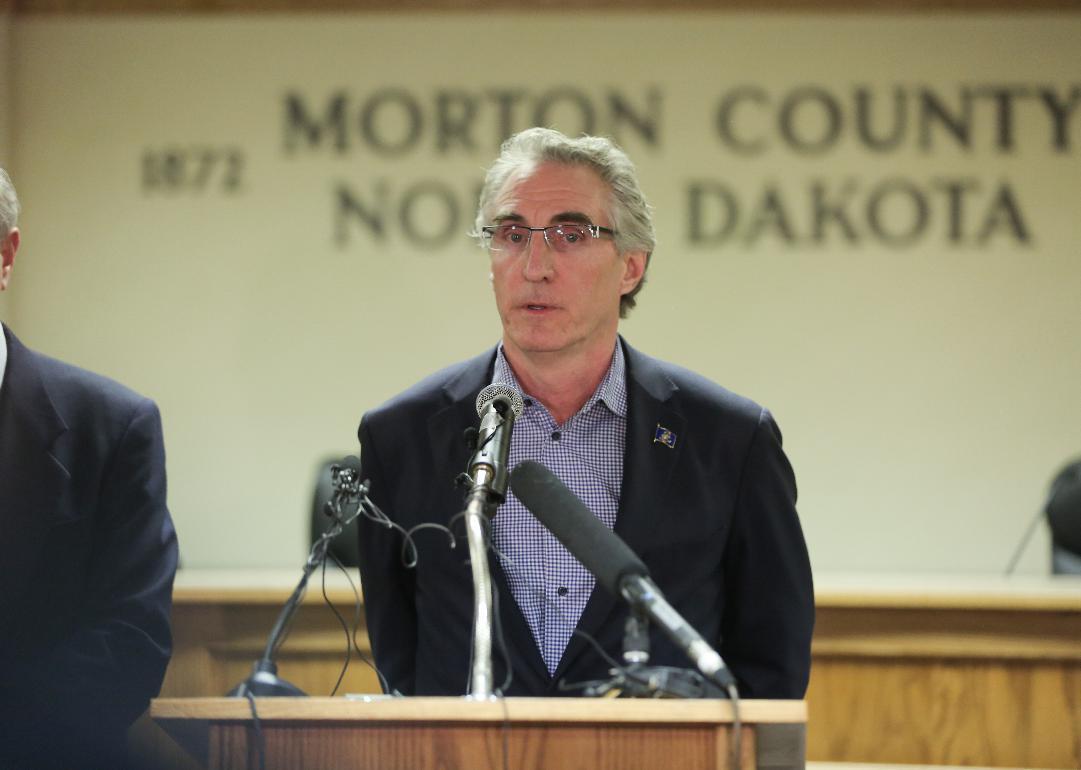
Stephen Yang // Getty Images
North Dakota Gov. Doug Burgum launched Great Plains Software in 1983 in his home state, and as CEO of the company, led it through its initial public offering and eventual acquisition by Microsoft. He stayed at Microsoft as senior vice president until 2007. Burgum also founded a real estate development firm called Kilbourne Group, as well as Arthur Ventures, a venture capital firm that invests in software companies. His gubernatorial run was his first foray into public office.
You may also like: The history of voting in the United States
Gregory Shamus // Getty Images
Ohio Governor Mike DeWine speaks to the crowd during the Solheim Cup Opening Ceremony
A native of Yellow Springs, Mike DeWine first worked for his family’s seed company loading seed bags onto truck beds and inspecting wheat fields for optimum growth. He later attended law school and became the prosecutor for Greene County. Terms in both houses of U.S. Congress followed, as well as eight years as the attorney general of Ohio.
You may also like: The history of voting in the United States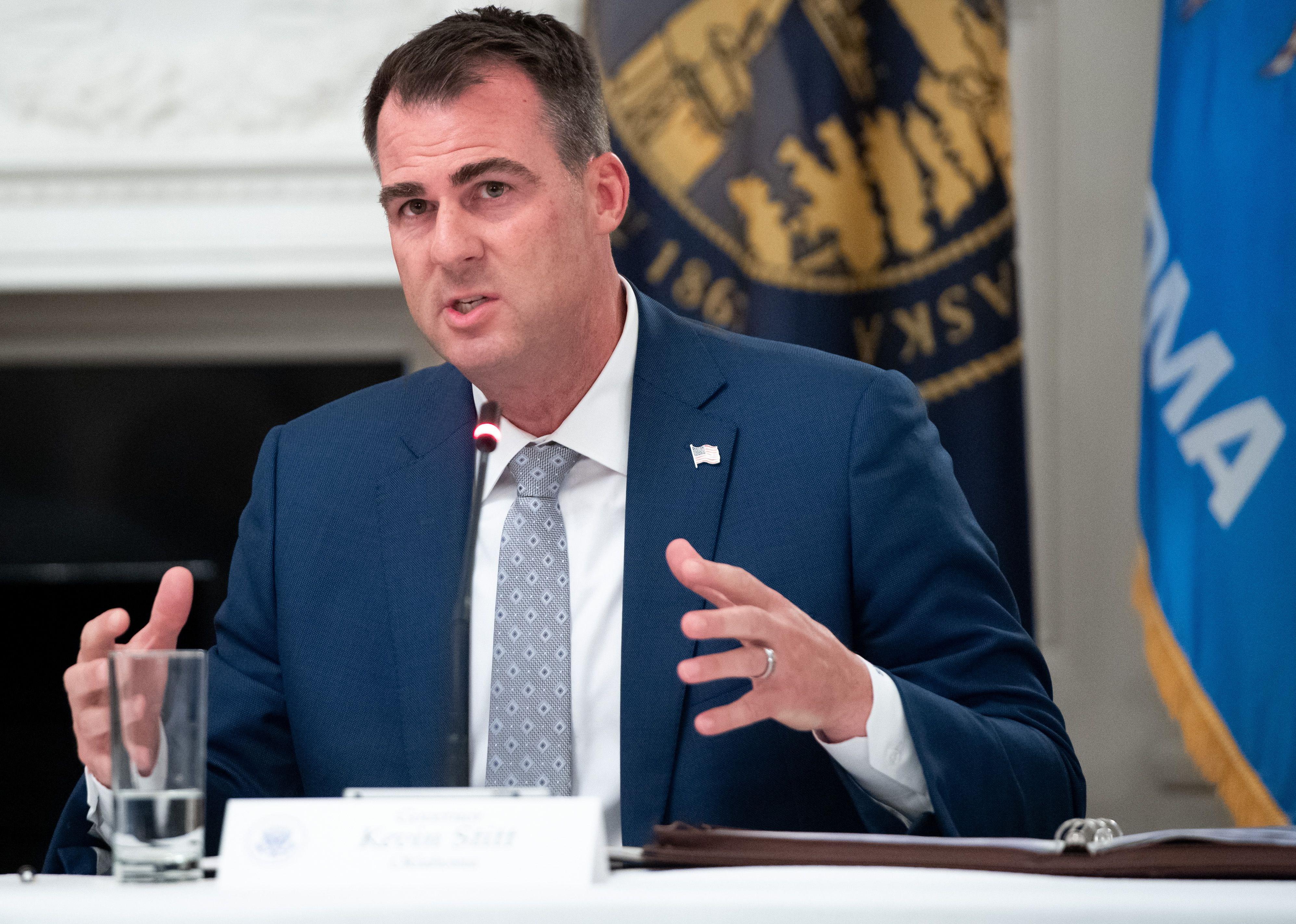
SAUL LOEB // Getty Images
Oklahoma Governor Kevin Stitt speaks during a roundtable discussion
With just $1,000, Oklahoma Gov. Kevin Stitt founded Gateway Mortgage in 2000, which has grown into a nationwide mortgage company with offices in 42 states. While still in college, Stitt earned money for his tuition by going door-to-door selling books with Southwestern Advantage. He campaigned for governor on his business expertise, promising to end “politics as usual” in Oklahoma.
You may also like: The history of voting in the United States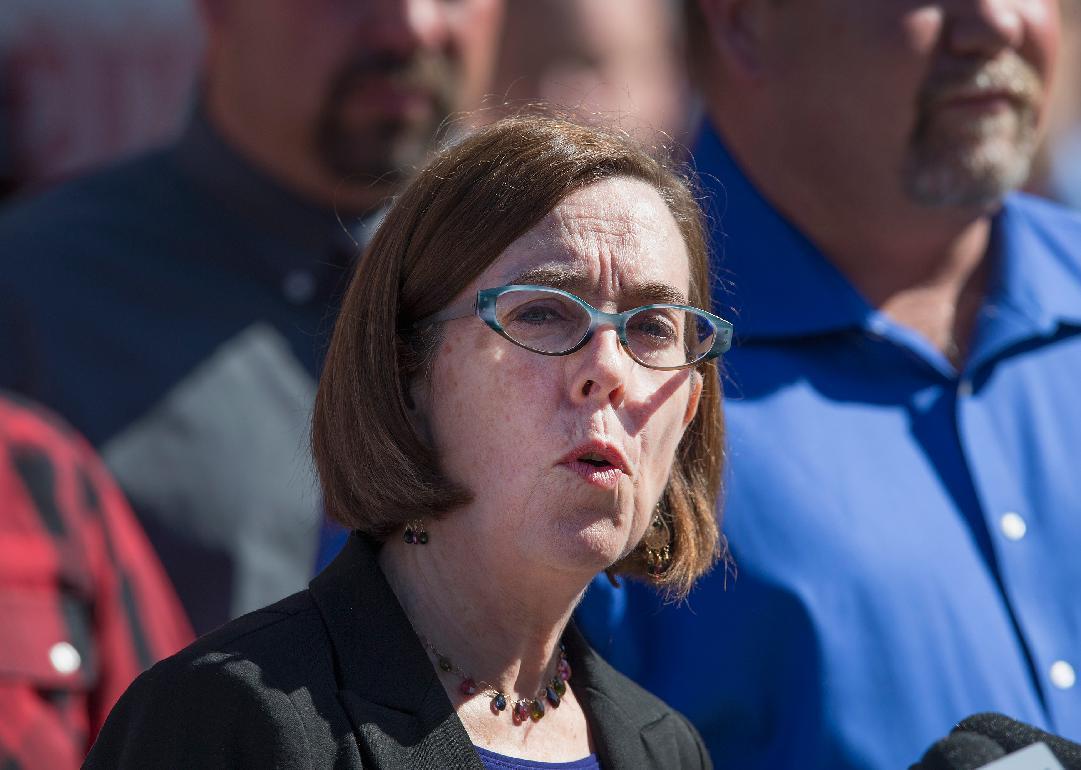
Scott Olson // Getty Images
Kate Brown, Oregon’s 38th governor, started her career as a family law attorney and later worked with the Juvenile Rights Project and co-founded the Oregon Women’s Health & Wellness Alliance. Brown also taught at Portland State University. In 2004, Brown became the first woman to serve as Oregon’s Senate Majority Leader, the culmination of 17 years representing Oregonians in the state legislature. From 2009 to 2015, she was Oregon’s secretary of state.
You may also like: The history of voting in the United States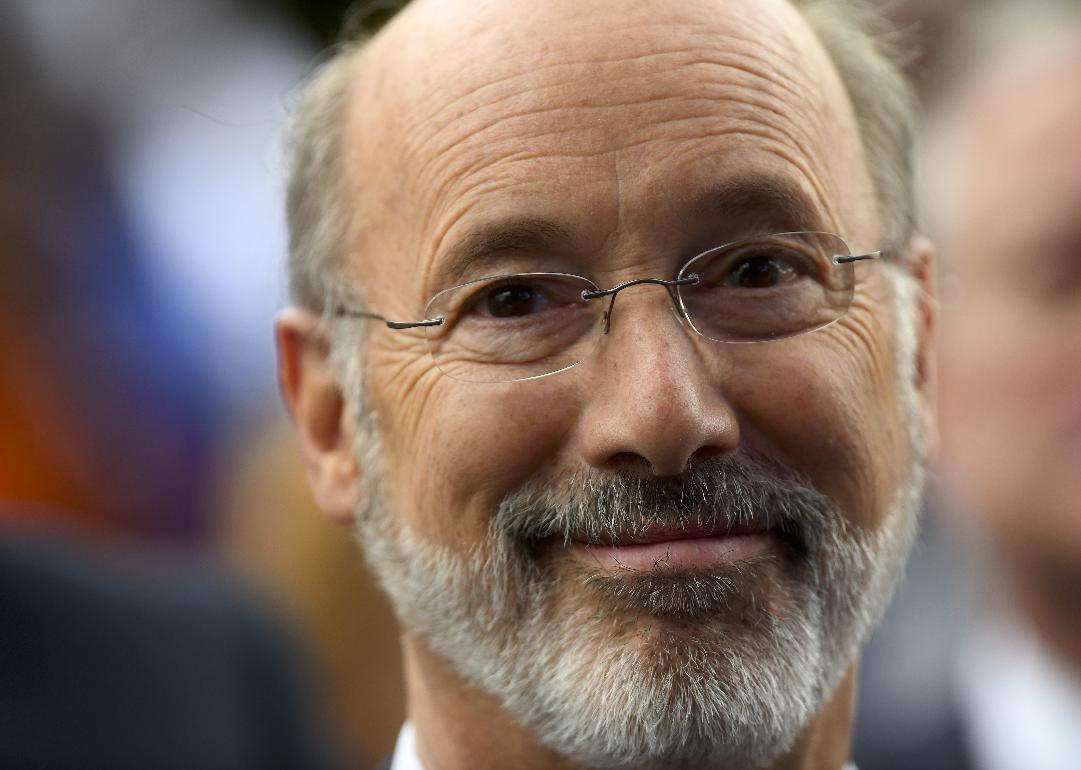
Mark Makela // Getty Images
In 1985, Gov. Tom Wolf bought the Wolf Organization, a company that distributes lumber and construction products, with his cousins. Over 25 years, the company had more than quintupled in size, but Wolf sold it in 2006 when he became Pennsylvania’s secretary of revenue. However, he returned to the company in 2009 during the recession and led the group out of bankruptcy.
You may also like: The history of voting in the United States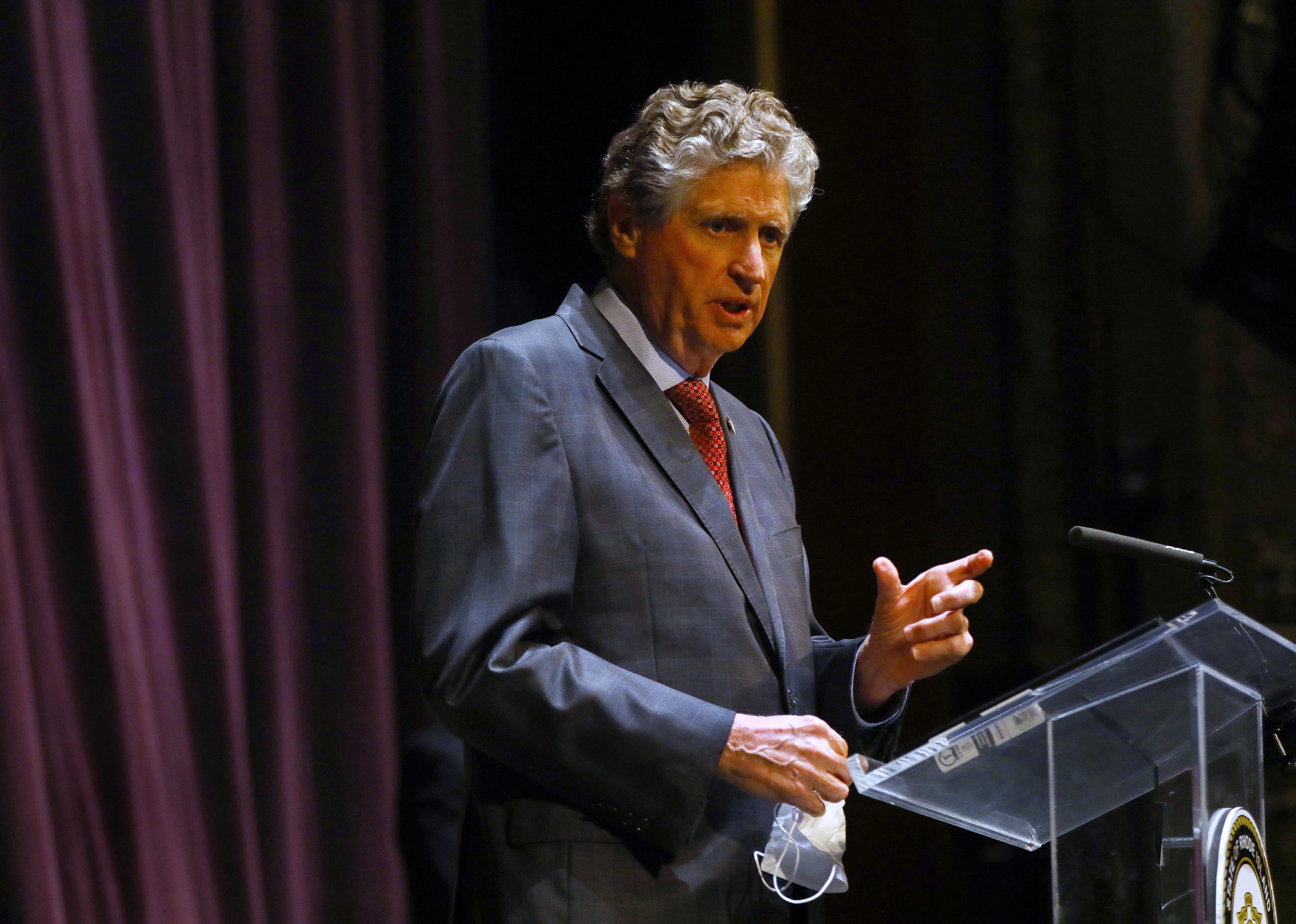
Boston Globe // Getty Images
Governor Dan McKee speaks during a press conference
Small business owner and basketball coach were just a few of the titles Dan McKee held before becoming governor of Rhode Island. He launched his political career in Cumberland, where he served on the town council and later became mayor. He was elected lieutenant governor of Rhode Island in 2014.
You may also like: The history of voting in the United States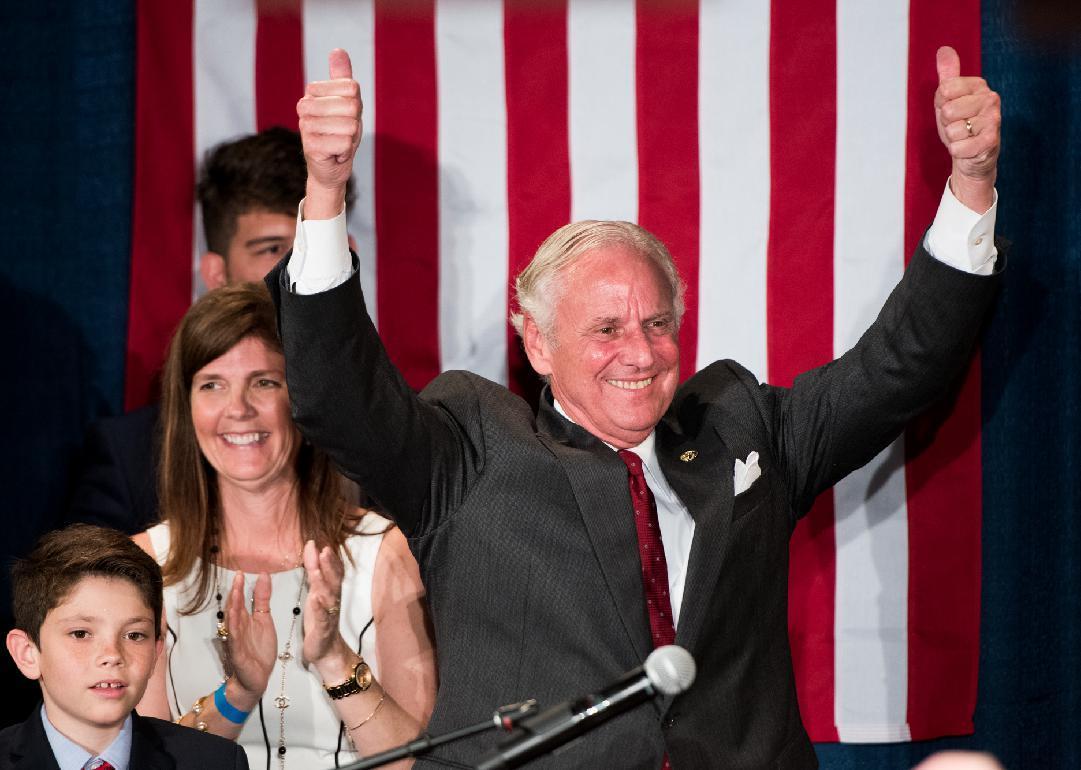
Sean Rayford // Getty Images
After graduating from the University of South Carolina, Gov. Henry McMaster served in the U.S. Army Reserves until 1975, after which he began his career in law. McMaster was the first U.S. attorney appointed by President Ronald Reagan and served as chairman of the South Carolina Republican Party from 1993 to 2002. He was also elected lieutenant governor, focusing his attention on services for seniors.
You may also like: The history of voting in the United States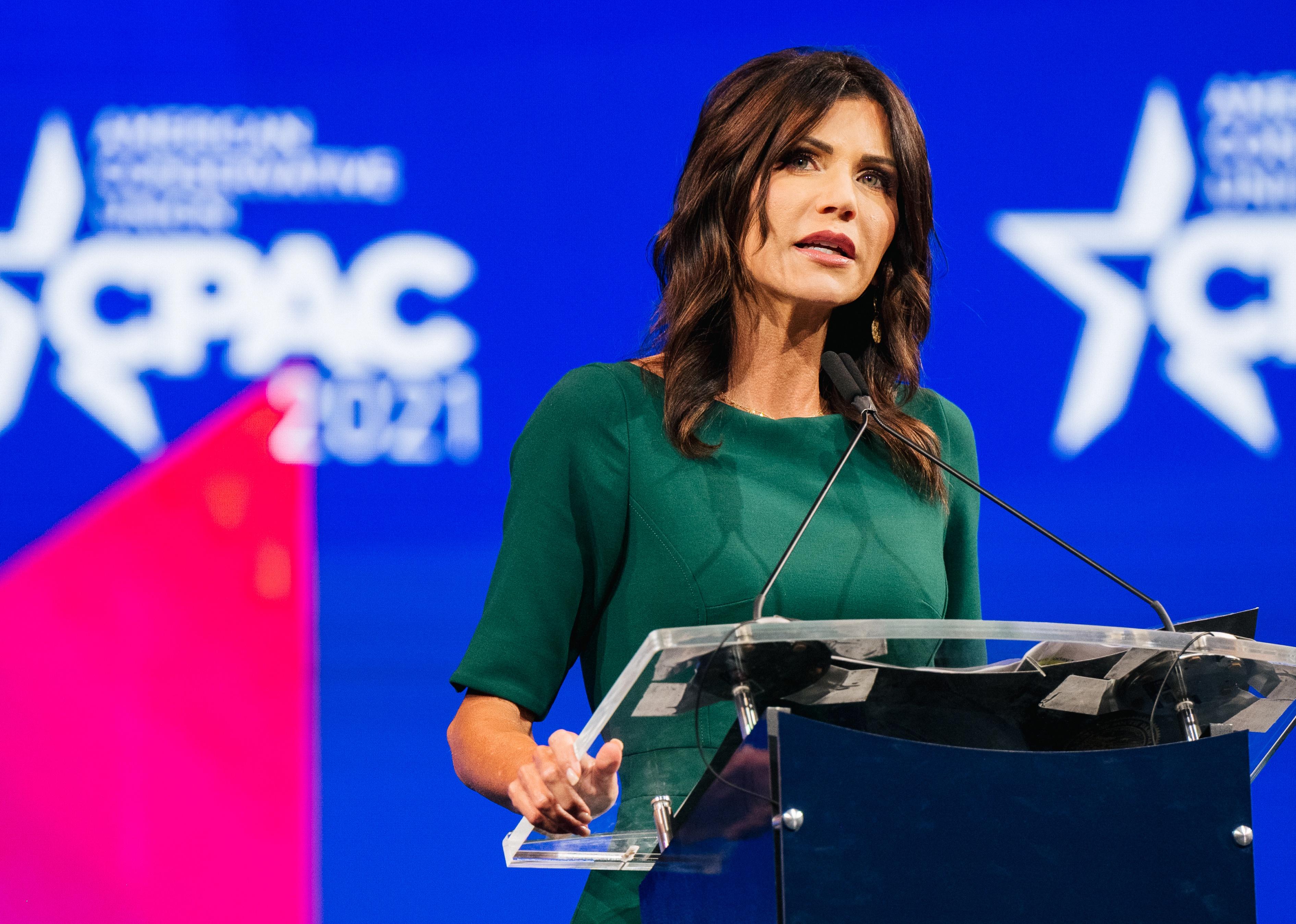
Brandon Bell // Getty Images
South Dakota Gov. Kristi Noem speaks during the Conservative Political Action Conference
Gov. Kristi Noem ran her family’s farm before entering the political arena in 2006. Starting with a seat on the South Dakota House of Representatives, she rose to the national level with a successful U.S. House of Representatives race in 2010. Her constituents reelected her three more times before she ran for governor.
You may also like: The history of voting in the United States
Jason Kempin // Getty Images
Tennessee Governor Bill Lee attends the grand opening at the National Museum of African American Music
Tennessee Gov. Bill Lee returned home after graduating college to work for the Lee Company, a family business that his grandfather had started to provide mechanical construction services. Lee eventually became president of the company in 1992 and also served as chair of the Tennessee Higher Education Commission.
You may also like: The history of voting in the United States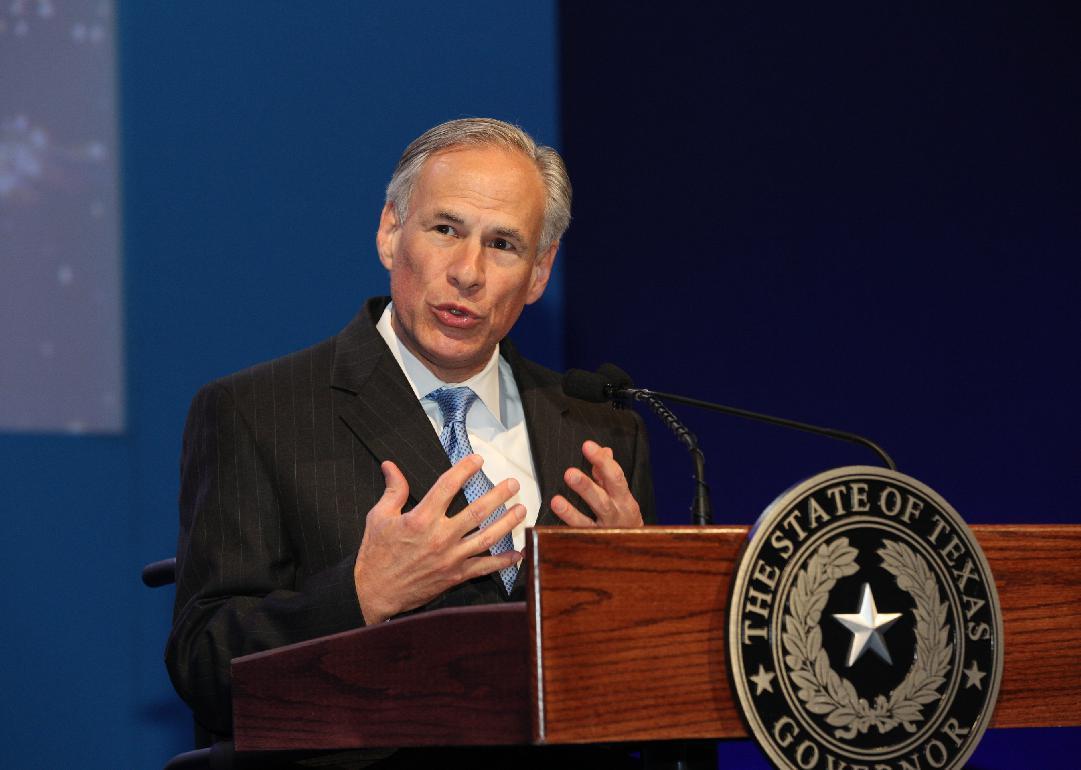
Creative Commons // Wikimedia Commons
Texas Gov. Greg Abbott began his career working for a law firm in the private sector, but became politically active in 1993 when he was named a state trial judge. Then-Gov. George W. Bush appointed Abbott to the Texas State Supreme Court where he served for a number of years. After leaving, he returned to the private sector as an attorney before launching a successful bid for Texas attorney general.
You may also like: The history of voting in the United States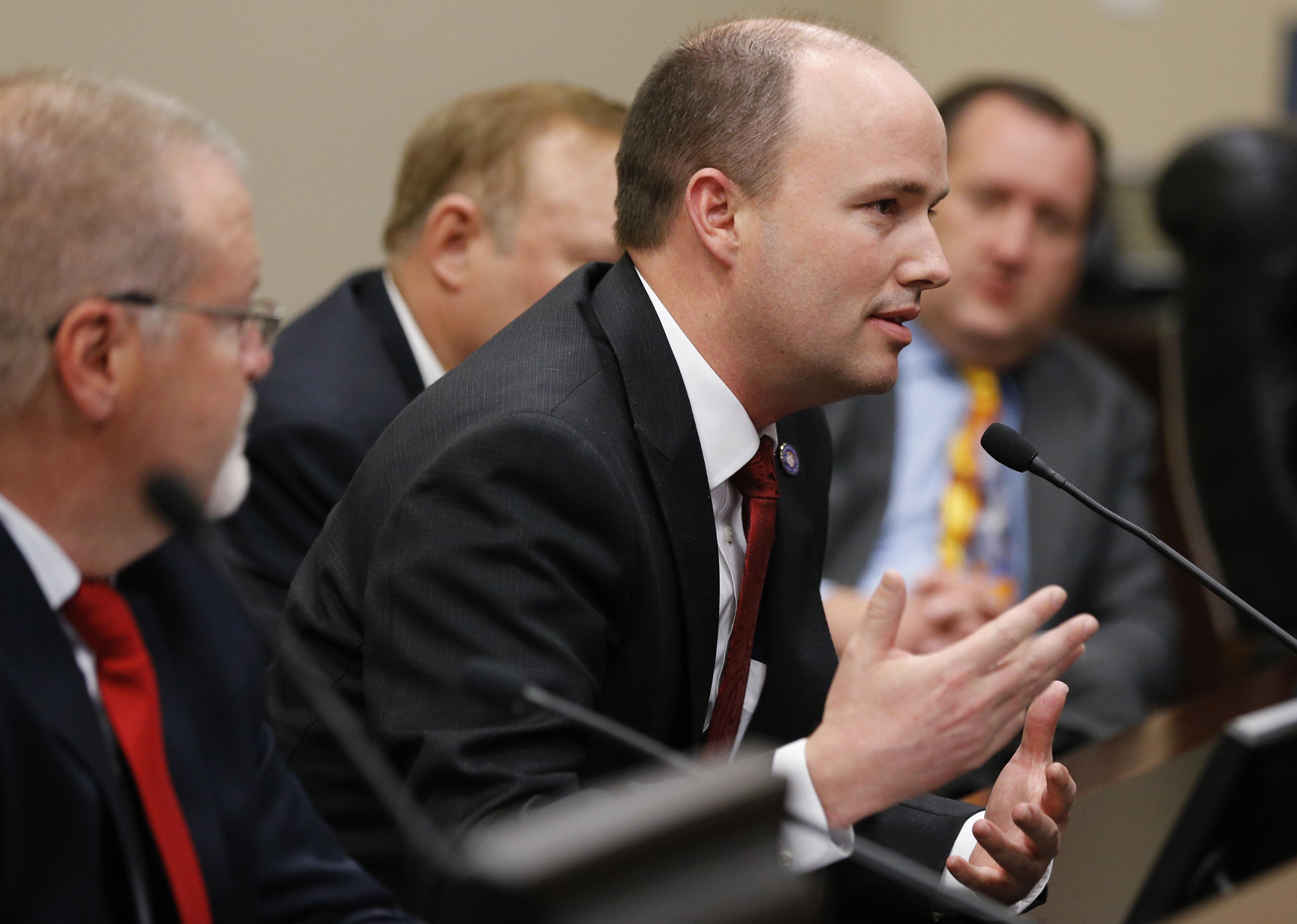
George Frey // Getty Images
Governor Spencer Cox speaks at a hearing
After finishing his law degree at Washington and Lee University, Gov. Spencer Cox took a job with a law firm in Salt Lake City. Politics came next, as he went from city councilman to Utah’s lieutenant governor in the span of a decade.
You may also like: The history of voting in the United States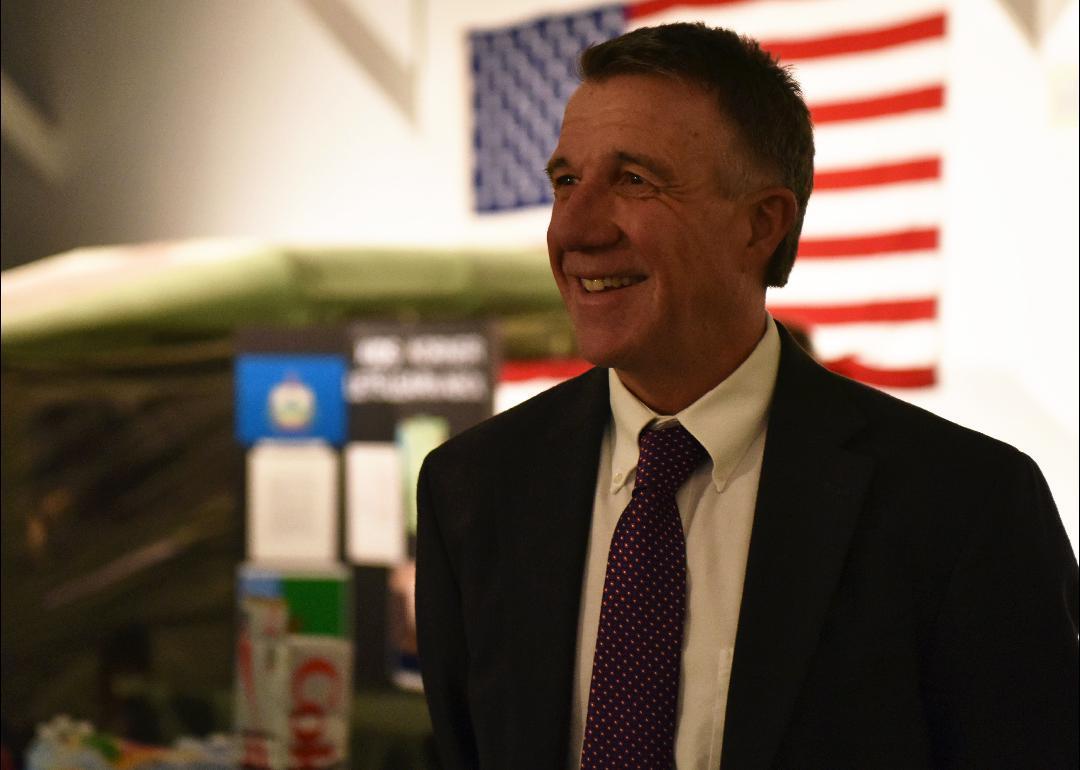
Chief National Guard Bureau // Wikimedia Commons
Vermont Gov. Phil Scott started his first business—a boat rental and lawn mowing service—at age 18. A few years later, he opened a motorcycle shop and then went on to work for Dubois Construction, where he climbed his way up the ladder. Scott and his cousin eventually bought the company, and the experience inspired him to run for Vermont Senate in 2000. In 2005, he started the Wheels for Warmth program, which uses old tire donations to fund heating fuel assistance programs.
You may also like: The history of voting in the United States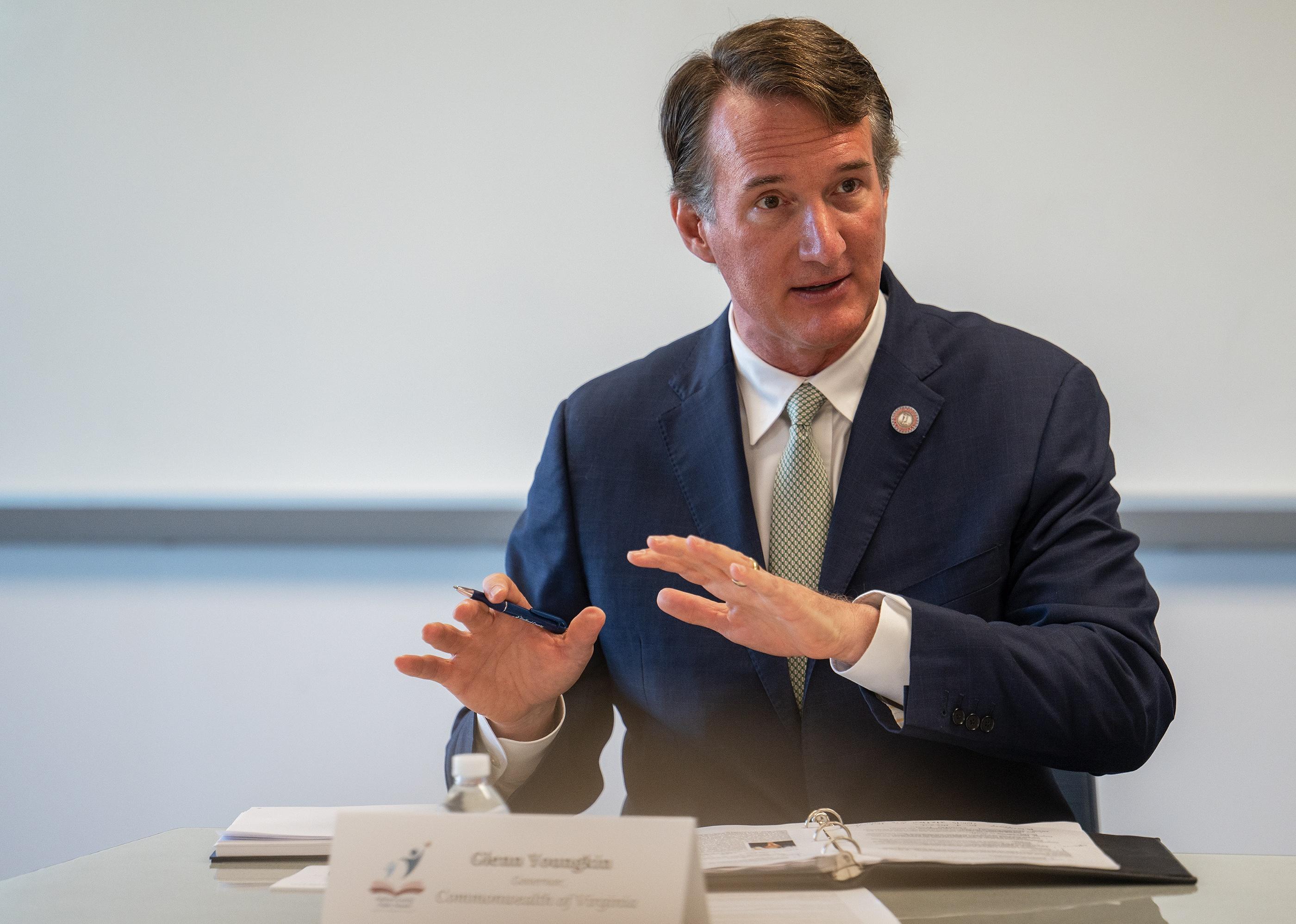
The Washington Post // Getty Images
Gov. Glenn Youngkin participates in a round table discussion
The bulk of Glenn Youngkin’s post-collegiate career was spent at the Carlyle Group, an investment firm based in Washington D.C. He was co-CEO when he stepped down to run for governor of Virginia, largely self-funding his first political race. Apart from money management and politics, Youngkin also briefly dabbled in food service as a dish washer and fry cook for a Virginia Beach diner as a kid.
You may also like: The history of voting in the United States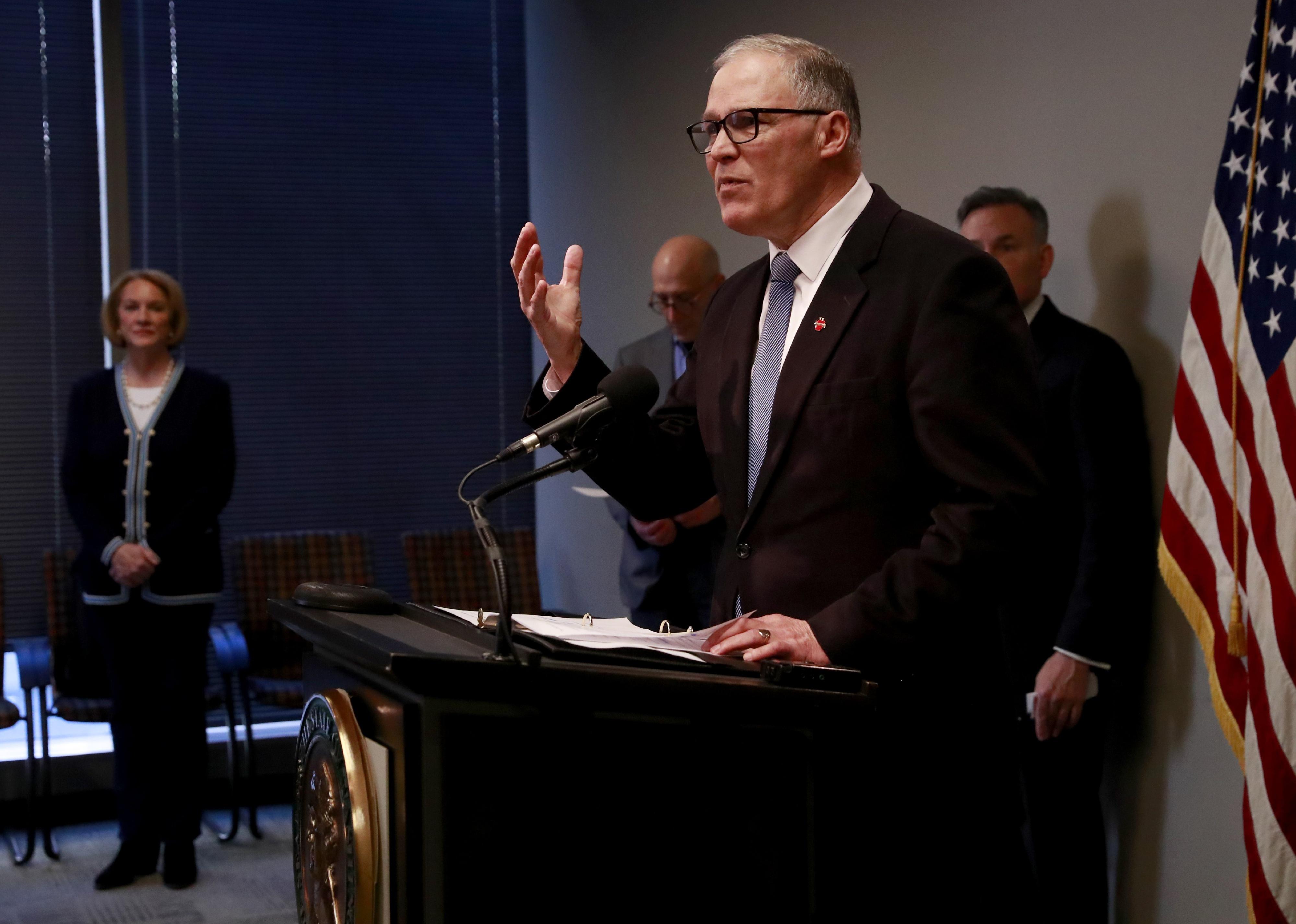
Erika Schultz-Pool // Getty Images
Washington state governor Jay Inslee talks at a press conference
Washington Gov. Jay Inslee first worked as a private attorney and city prosecutor in Selah and became politically active two years later when he was elected to the Washington State House of Representatives. In 1992, he won a race for the U.S. House of Representatives but was defeated after just one term. From 1997 to 1998, he was a regional director for the Department of Health and Human Services, before winning another congressional race.
You may also like: The history of voting in the United States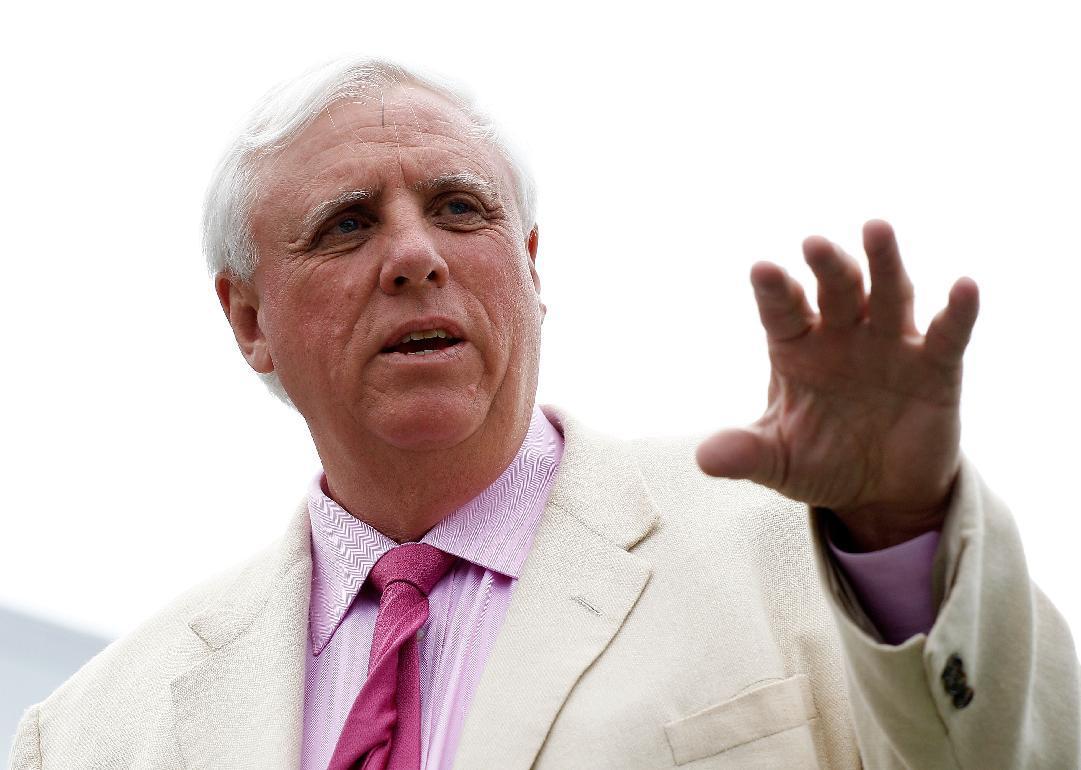
Scott Halleran // Getty Images
After joining his family’s business in 1976, West Virginia Gov. Jim Justice launched Justice Family Farms in Monroe County, which ballooned into Justice Farming Operations. The company today farms more than 50,000 acres of soybeans, corn, and wheat. In 1993, Justice became the president and CEO of Bluestone Industries Inc. and Bluestone Coal Corp. He later rescued The Greenbrier resort from bankruptcy amid the financial crisis.
You may also like: The history of voting in the United States
MANDEL NGAN // Getty Images
Governor Tony Evers speaks during the Milwaukee Area Labor Council’s annual Laborfest
Wisconsin Gov. Tony Evers’ first job was teaching science in Baraboo and he furthered his career as an educator when he became a high school principal. Later, Evers became a school district administrator and the state’s deputy superintendent. In 2009, he was elected the Wisconsin superintendent of public instruction, a title he held until 2019.
You may also like: The history of voting in the United States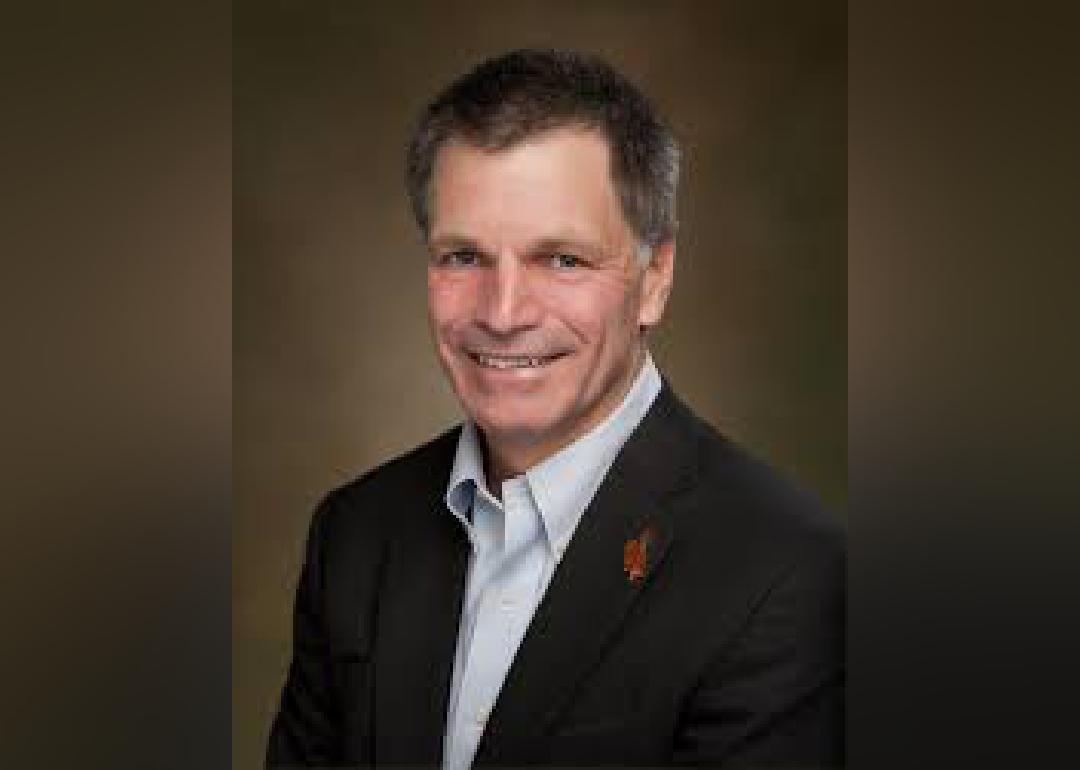
Creative Commons // Wikimedia Commons
Since graduating college, Wyoming Gov. Mark Gordon has been a rancher—even to this day with the help of his wife, Jennie. Gordon also launched several small businesses early in his career focused on outdoor recreation and tourism, before working in the oil and gas industry. From 2008 to 2012, Gordon served on the board of the Federal Reserve Bank of Kansas City and was appointed Wyoming state treasurer in 2012.
You may also like: The history of voting in the United States
News Channel 3 is committed to providing a forum for civil and constructive conversation.
Please keep your comments respectful and relevant. You can review our Community Guidelines by clicking here
If you would like to share a story idea, please submit it here.
Terms of Service | Privacy Policy | Community Guidelines
KESQ-TV FCC Public File |
KPSP-TV FCC Public File |
KDFX-TV FCC Public File |
EEO Report | FCC Applications | Do Not Sell My Personal Information
Daily News Headlines
Morning Forecast
Breaking News
Severe Weather
Contests & Promotions
Coronavirus Updates
Accessibility Tools
I drive music inspiration from experiences – Spenta – Vanguard
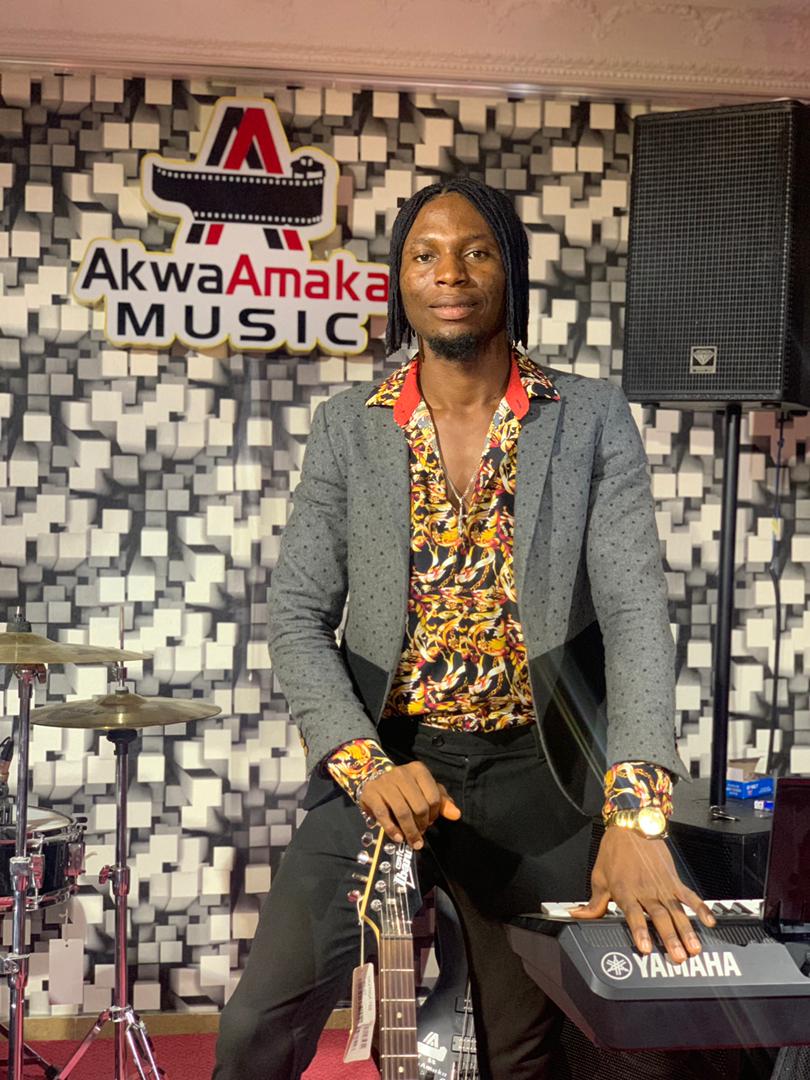
Fast rising Nigerian artiste Adaoji Ifeanyi Kingsley with the stage name Spenta is all set to release his first art project, an Extended Play titled Glory to Glory.
“I believe the songs on the EP will shake the Nigerian music industry. Asun, Hakuna Matata, Bambialla and Uto. Before the EP, Hakuna Matata will drop first in a few days time,” he said in a recent interview.
Spenta who under Akwaamaka music started his official music journey as a producer, says he derives inspirations from happenings around him. He further narrated his how music journey.
“I drive inspiration from experiences; mine and that of others. When I hear a story, I try to put words together to express how I feel about the situation. I started my music career from the church. I was a choir boy. I can handle all major music instrument. However, to upgrade myself, I went to Daylight music academy. I believe music is spiritual and the Nigerian music industry is really going places. I’m hopeful to work or collaborate with any artist who my sound aligns with. I’m happy to be a part of Akwaamaka music. The CEO of the label is my father and mentor in the industry,” he noted.
Speaking on the reasons he signed Spenta, the Founder of Akwaamaka music, High Chief Stanley Chukuwudi Obodoagwu, said, “I believe he is among the best. I have been with Spenta for years as a producer, he understands music; he writes, sings and producers. He is all in one. Akwaamaka Productions Limited is a multifaceted business entity focused on media, entertainment, music production, event planning and management.”
RELATED NEWS
Forest Festival memorabilia and mythology | News, Sports, Jobs – The Inter-Mountain
Sep 17, 2022
The public is invited to see early Forest Festival memorabilia at Historic Kump House Sunday afternoons (3-5 p.m.) from Sept. 18 through Oct. 23.
Folks are welcome to stop by, learn about early festivals, see how things have changed, and think how they have stayed the same.
There is no doubt in my mind that the origins of our festival were rooted in the wonderment of autumnal beauty of the West Virginia woods. We human beings are trapped in time, but we can transcend our limitations through memory and imagination. Now once again the minions of the nine Greek muses have been at work in the creative minds of Forest Festival planners here in town.
The aroma of burning meat grease near the barbecue stand on Fourth Street is a sensuous sign that the ancient urge to celebrate the autumn stirs the hearts of Elkins citizens annually. Just as surely as the pleasure of smelling the sacrificial lambs would win favor with of Zeus, visitors are drawn to Elkins to see the burning oranges, golden yellows, and berry reds that radiate through the leaves in October when the sun hits the hills just right.
After Queen Sylvia’s Coronation in the early days of the Forest Festival, there was always a spectacular pageant fit to entertain a queen and her court. There they sat on the reviewing stand wearing fine velvets in the sweltering sunlight or dripping rain to watch local actors strut and fret upon the stage. All the dramatic talent in Elkins was enlisted to make the pageant meaningful.
One early pageant reenacted the myth of the rape of Persephone. This Forest Festival event took place well before my time, but the legend was handed down by my mother.
Her handsome brother, Cy Kump played the part of Hades. He was supposed to drive a team of real horses around the amphitheater to pick up Persephone who was innocently collecting narcissus flowers by the stage. However, the horses of Hades would not stop in the amphitheater. They did not follow their stage direction when Cy Kump urged them to “Halt.”
Soon Hades and his horse went whirling around the stage again while the band played exciting theme music one more time until Cy could circle the stage again, pluck poor Persephone, and take her to the underworld.
According to the myth, when Hades carried Persephone away with him and kept her in the land of the dead, this abduction enraged her mother, Demeter.
As the goddess of growing things, Demeter controlled weather for the production of grain, and according to the myth, she was so distraught by the loss of her daughter that she neglected to keep the earth warm. Finally, Demeter made a deal with Hades that he must bring Persephone back from the underworld each spring explaining why warmer weather returns and the seasons change every year.
Today’s breaking news and more in your inbox
The public is invited to see early Forest Festival memorabilia at Historic Kump House Sunday afternoons (3-5 p.m.) …
Our communities, our state and our nation need strong leaders, and Davis & Elkins College is committed to …
A French politician has ignited a fracas, or should I say, contretemps, over men barbecuing meat. Lest you think …
“All political lives, unless they are cut off at midstream at a happy juncture, end in failure, because that is …
As the saying goes, “no good deed goes unpunished.” A recent good deed has turned into an internet meme in a …
Today’s breaking news and more in your inbox
Copyright © The Intermountain | https://www.theintermountain.com | 520 Railroad Ave., Elkins, WV 26241 | 304-636-2121
Manson Meridian Singers welcome new season, new director | News, Sports, Jobs – Fort Dodge Messenger
Sep 17, 2022
Andrea Christians
MANSON — The Manson Meridian Singers are ushering in a new season with a new director – and invite all new and returning members to join them for a fun year of making music together.
Andrea Christians, of Pocahontas, will be leading the group through its 51st season, with Trish Mernka, of Rockwell City, continuing as accompanist.
Christians is a Luther College graduate with a master’s degree in music education from the University of Northern Iowa. She has taught music for 24 years and is currently the 7-12 principal at Pocahontas Area Community Schools. She and her husband Clint have four children: Cale, Cooper, Caroline and Caitlyn.
“I am excited to lead this group of talented singers who have become our friends as we have sung with them for the last couple years,” said Christians.
Christians says this year’s production will feature an upbeat and fun look at love with lots of musical variety.
Rehearsals for the upcoming season will begin at 7 p.m. on Thursday, Sept. 29, in the Manson Northwest Webster High School band room, and are open to anyone who loves to sing. The group includes members from Manson and several surrounding communities, including Fort Dodge, Rockwell City, Pocahontas and more.
Most rehearsals will be on Thursdays, but will occasionally vary. Rehearsals will run from 7 to 9 p.m. A complete schedule will be available at the first rehearsal.
This year’s shows are set for Saturday, Feb. 11, and Sunday, Feb. 12, in the Manson Northwest Webster Kate Toben Auditorium.
For more information, contact Kym Sutter at 712-469-3666 or Shelly Block at 712-210-4659.
Today’s breaking news and more in your inbox
Holy Trinity Church, 2501 Sixth Ave. N., is holding a Blue Mass at 9:20 a.m. Friday, dedicated to first responders …
Comedia Musica Players will conduct auditions for its fall production of the musical “9 to 5 — The Musical” …
Today’s breaking news and more in your inbox
Copyright © Messenger News | https://www.messengernews.net | 713 Central Ave., Fort Dodge, IA 50501 | 515-573-2141
Inventory – Lefsetz Letter
That’s what they call concert tickets. You put up a show, and the tickets are inventory. And all summer the talk has been about Springsteen tickets, flex-priced, going for four figures, but the rest of the shows?
Live Nation, a public company, has produced fantastic figures. Business has been beyond healthy, but going forward?
My eye caught this article on the front page of today’s “Wall Street Journal”:
“From Shortage to Glut: Scotts Miracle-Gro Is Buried in Fertilizer – Scotts ramped up production during the pandemic, then consumers shifted and retailers slashed orders, leaving a pile of inventory. It’s now trying to dig its way out.”: https://on.wsj.com/3RRr3fI
This story has been in the business press for a couple of months now. How these companies produced so much product and the public didn’t want to buy it.
There are various factors. People were stuck at home during the pandemic and now they’re not. I’m sure you’ve read about the disaster Peleton has become. Not that it wasn’t predictable. If you don’t have an idle exercise machine in your house you’ve never bought one, and many haven’t! People are excited at first, then their interest wanes, and then they don’t even realize they’ve stopped. They take a day off, and then two, and then they’re out of the routine and they’ve got a new clothes rack. I mean how big a market was there for Peleton to begin with? Look at all the publicity about GoPro. Like everybody needed one. Now the stock is off 90%. Give the company credit, it’s moving into services, but…it’ll never reach the heights of the dreams of investors. Then again, professional investors get in on the ground floor and can make a profit on the spread long before the hoi polloi realize their mistake.
So, there’s too much clothing, there seems to be too much of everything but cars. The companies couldn’t meet demand, they ramped up production and then found out people were no longer interested. Is the same thing going to happen in the concert business?
Here’s the relevant passage from the WSJ article:
“Versions of this story are playing out across business sectors, where makers of everything from clothing to kitchen appliances have gone from trying to catch up to demand to buckling under the weight of their own inventory, in a matter of weeks. Now many companies are cutting jobs, idling plants and working to undo many of the other steps they took to ensure they would have enough products to sell.”
In a matter of weeks!
If you’re an insider, you know that the past year has been an up and down one in terms of ticket sales. What I mean is they’re moving, then they’re not, then they are again… Are we ready for a slowdown?
There’s another article I read today:
“Is there room for yet another major music festival in SoCal? Primavera Sound is about to find out”: https://lat.ms/3qH8aQK
The “Los Angeles Times” is famous for switching headlines, if you Google, the headline is: “Primavera Sound debuts in L.A. amid shaky festival market – Launching any music festival is risky, but between inflation and an oversaturated market, the upcoming L.A. edition of Primavera Sound faces…”
Headwinds, because I wasn’t even aware of it! And awareness is the first hurdle.
Then there’s the bill, the price and the location.
If you read this story, you’ll find the true story insiders also know, that a lot of festivals canceled for stated reasons were really pulled down because they couldn’t move tickets. A festival is an investment, for both the promoter and the attendee. Not only is the question how many we need, but the price. Festival costs are high for the public, even ones that don’t require lodging and long distance transportation, I mean how much are you going to pay to stand with the unwashed for days?
Historically, certain acts are recession-proof. Most definitely the ones who have hot records right now. Then you’ve got the superstars… But the superstars have been around, many people have seen them already. As for the smaller acts, moving up to larger buildings, who are not guaranteed sellouts…their hard core fans need to see them, but everybody else can pass when it’s deemed too expensive.
And like with the products the WSJ is talking about, there was an absence, now there’s a glut. There were no shows, now there are too many. And many of the tickets were sold before the pandemic, those shows are playing now, so the future?
Does not look so bright, you do not have to wear shades.
As for prices… In the LAT article it references that people are waiting for costs to come down! Below face value, when scalpers, whether they’re professional or amateur, need to get rid of THEIR inventory!
Concerts are all about disposable income. Concert prices keep going up, if for no other reason than costs are going up. Is there a point at which people stay home? I think there is. I’m not saying the business becomes a dumpster fire, I’m just saying some people will be hurt.
And the concert business is opaque, almost all show business is. They don’t want you to know, because it’s all about image with talent.
And there are no guarantees, concert promoters don’t know, they’re always taking risk. And they certainly don’t know what is going to happen after the first of the year.
And the response to the LAT writer is L.A. is a walkup town. No, historically that is not true. However, urban acts historically do more walkup business. In truth, the public is guarded. The mania is gone. People have blown their wad, they’ve got no idea what’s down the pike for them either. Inflation bounced back, mortgages went to 6%. If you have any money, you’re scared, if you’ve got none…
By: bob | 2022/09/16 | Live Shows – Music Business | Trackback | Comments [RSS 2.0]
The Lefsetz Letter is powered by WordPress, Jeffry Weicher Productions
& equiX. Copyright © 2021 The Lefsetz Letter. All rights reserved.
Kelsey Theatre Kicks off 50th Anniversary Season With The Must-See Musical ‘Once,’ Weekends September 23 Through October 2 – MCCC News
West Windsor – “Once,” winner of eight Tony Awards including Best Musical and winner of a Grammy Award for Best Musical Theater Album, will kick off Kelsey Theatre’s 2022-2023 season. The romantic musical drama runs weekends from September 23 through October 2. Kelsey Theatre is located on the Mercer County Community College campus, 1200 Old Trenton Road in West Windsor.
“This joyously uplifting musical strikes an unforgettable chord in audiences and speaks to the power of music to connect us all,” said M. Kitty Getlik, artistic director of Kelsey Theatre. “I cannot think of a better show to open Kelsey Theatre’s 50th anniversary season. The really neat thing is that the cast also serves as the orchestra and every cast member not only acts, but sings and plays a musical instrument.”
Presented by Playful Theatre, “Once” is a story about the life of an Irish musician and a Czech immigrant who connect over their shared passion for music on the streets of Dublin. Over the course of one fateful week, an unexpected friendship and collaboration quickly evolves into a powerful but complicated romance, accentuated by the inviting, emotional score. The show features original songs from the critically acclaimed film, including “Falling Slowly.”
The cast features Danielle Bradley of Ewing as Emcee, Lilli Brown of Robbinsville as Girl; Aimee Ferenz of Pitman as Ex-Girlfriend; Michael Gilch of Asbury Park as Svec, Bryan Hill of Pennington as Guy, Jim Morris as Da, Daniel Mucha as Eamon, Rich Phillips as Billy and Joan Schubin as Baruska, all from Hamilton; Amanda Santos as Reza and Mina Schneider as Ivonka, both from Lawrence; Christopher Singh of Bordentown as Bank Manager; Aidan Stallworth-Glitz of Ewing as Andrej; and Francois Suhr of Hightstown in the ensemble.
The show is directed by Frank Ferrara and the music is directed by Shannon Ferrara of West Windsor.
Other members of the production team include: Assistant Music Director Mike Gilch of Asbury Park, Producer Nancy Scharf of Yardley, Pennsylvania, Producer Suzanne Smith of Fallsington, Pennsylvania, Stage Manager Ruth Kresge of Yardley, Pennsylvania and Producer Hilary Leboff of Langhorne, Pennsylvania.
Performance Dates
Friday, Sept. 23 at 8 p.m.
Saturday, Sept. 24 at 8 p.m.
Sunday, Sept. 25 at 2 p.m.
Friday, Sept. 30 at 8 p.m.
Saturday, Oct. 1 at 8 p.m.
Sunday, Oct. 2 at 2 p.m.
Tickets
Tickets are $24 and may be purchased online at KelseyTheatre.org or by calling the Kelsey Box Office at 609-570-3333.
Kelsey Theatre is wheelchair accessible and free parking is available next to the building. Assisted listening devices are available upon request. For a complete listing of events, visit the Kelsey website at www.KelseyTheatre.org.
Please note: Masks are recommended but not required while in the theater.
- – – – - - – – – – – – – – – – – – – – – –
“At Kelsey Theatre, we have pledged to take active steps in creating true diversity, equity and inclusion in our productions through systemic policy change and individual accountability — aiming to foster an inclusive environment for people of all races, genders, nationalities, creeds, sexual orientation, socio-economic status and abilities.” –The Kelsey Team
Visit Kelsey Theatre
Current News
MCCC Home Page

Kelsey Theatre kicks off its 50th Anniversary season with the acclaimed musical “Once.” The show runs weekends from September 23 through October 2, 2022. Kelsey Theatre is located on the Mercer County Community College campus, 1200 Old Trenton Road in West Windsor. Tickets may be purchased online at KelseyTheatre.org or by calling the Kelsey Box Office at 609-570-3333. (Pictured above from left: Bryan Hill, Lilli Brown and Mini Schneider.) Photo credit: Lauren Kamps

“Once” is a story about the life of an Irish musician and a Czech immigrant who connect over their shared passion for music on the streets of Dublin. The show is directed by Frank Ferrara and the music is directed by Shannon Ferrara of West Windsor. (Pictured above: Francois Suhr of Hightstown.) Photo credit: Lauren Kamps

Cast members rehearse for Playful Theatre’s production of the musical, “Once.” (Pictured above from left: Shannon Ferrera, Dan Mucha, Francois Suhr, Aimee Ferenz, Amanda Santos, Aiden Stallworth-Glitz.) Photo credit: Lauren Kamps)
Taylor Swift Confirms Jack Antonoff as Producer on ‘Midnights’ in New Behind-the-Scenes Look – Variety
Variety Print Plus Subscriber
Variety Print Plus Subscriber
Variety Print Plus Subscriber
Variety Print Plus Subscriber
Variety Print Plus Subscriber
By Ethan Shanfeld
Jack Antonoff, who has produced some of Taylor Swift’s most popular songs, from “Out of the Woods” to “Lover,” and who shared her album of the year Grammy for 2020’s “Folklore,” returns for her upcoming album “Midnights,” out Oct. 21.
Antonoff appears prominently in a new behind-the-scenes video posted to Swift’s Instagram, with the caption: “The making of ‘Midnights.’” In the clip, the pair are seen working on music in Antonoff’s studio for Swift’s next record, playing keyboards and MIDI controllers while Swift cuts vocal takes.
An uncredited song snippet with the lyric, “It’s just the life you lead, but it’s yours,” soundtracks the video, but it’s unclear whether this is original material being teased, as the voices seems to be male. Meanwhile, a shot of Swift walking through a snowstorm indicates she and her co-pilot have been working on “Midnights” for a while. Another clip showcases test pressings of differently colored vinyl records, presumably the ones Swift put on sale in her web store for a limited time over Labor Day weekend.
While details are limited on “Midnights,” Swift announced she would be releasing a new album last month during her climactic speech at the MTV Video Music Awards, as she accepted an award for video of the year. At 12 a.m. ET that night, the singer-songwriter revealed the album’s title and art. There will be 13 tracks, but the song titles have not been made public yet. Earlier this week, the Target chain announced it would be exclusively offering a CD edition with three bonus tracks — again, with no titles revealed (although two of the three will be remixes).
Antonoff began working with Swift on 2014’s “1989” album and has been a close collaborator on all of her many releases since, including the bonus material on her re-recorded “Taylor’s Versions” of her earlier albums, “Fearless” and “Red.” One of the most active and successful producers of the past decade, he has also worked extensively with Lana Del Rey, St. Vincent, Lorde, the Chicks, Clairo and others, as well as fronting his own band, Bleachers.
Antonoff shared production duties on Swift’s last two albums of all-new material, “Folklore” and “Evermore,” with Aaron Dessner. But the sole presence of Antonoff in the new making-of video would seem to raise the possibility that he may be the sole co-producer for “Midnights.”
Watch the full video below:
A post shared by Taylor Swift (@taylorswift)
A Variety and iHeartRadio Podcast
The Business of Entertainment