MARY LOUISE KELLY, HOST:
Just north of Seattle near the shores of Puget Sound sits an empty warehouse in Mukilteo, Wash.
CHRIS HOWARD: We used to have 10 shipping containers here. There were empty containers back here, customers and clients coming for visits.
KELLY: Chris Howard used to work in that warehouse with more than a dozen other engineers and researchers for an American company called UniEnergy. The name is still on the sign out front. They were building a battery – not just any battery, something called a vanadium redox flow battery. It was about the size of a refrigerator. And Howard and the rest of the employees thought it was going to change the world.
HOWARD: It was more than a job. It was a lot of blood, sweat and tears into developing a product that we were really excited about and really proud of.
KELLY: Unlike batteries in cell phones, even cars, these batteries could charge and discharge energy for as long as 30 years. And this particular design seemed to hold enough energy to power a house. Researchers pictured people plunking them down next to their air conditioners, attaching solar panels to them, and everyone living happily ever after off the grid.
HOWARD: It was beyond promise. We were seeing it functioning as designed, as expected.
KELLY: They thought the batteries would be the next great American success story. That is not what happened. Today, that warehouse sits, shuttered, empty. All the employees who worked there were laid off. And those batteries, they are now being made at a factory in northeastern China. CONSIDER THIS – cutting edge technology developed in an American national lab, paid for with American tax dollars, was given away to a Chinese company. Using internal government documents, an NPR investigation tells the story for the very first time and shows how the U.S. may have lost the next big thing to China yet again.
(SOUNDBITE OF MUSIC)
KELLY: From NPR, I’m Mary Louise Kelly. It’s Tuesday, August 9.
It’s CONSIDER THIS from NPR. It’s a favorite promise of politicians – keep manufacturing jobs and technology in America.
(SOUNDBITE OF ARCHIVED RECORDING)
BARACK OBAMA: Thank you. Please, everybody, have a seat.
KELLY: Let’s go back to Feb. 22, 2011. It was a Tuesday, and then-President Barack Obama was in Cleveland, Ohio.
(SOUNDBITE OF ARCHIVED RECORDING)
OBAMA: The world wants American goods, and my administration is going to go to bat for America’s businesses around the world. You should know that.
(APPLAUSE)
KELLY: After shouting out LCD screens and fiber optic cables, Obama turned to an up and coming technology that seemed to show promise.
(SOUNDBITE OF ARCHIVED RECORDING)
OBAMA: And I have no idea what this is – vanadium redox fuel cells.
(LAUGHTER)
OBAMA: That’s one of the coolest things I’ve ever said out loud.
(LAUGHTER)
KELLY: Researchers at the federal government’s Pacific Northwest National Lab surely would have agreed. For the past five years, they had been developing vanadium redox technology, getting it ready for commercial use. And this came at a time when the Obama administration was making a major push to reinvigorate American manufacturing.
(SOUNDBITE OF ARCHIVED RECORDING)
OBAMA: So we have a huge opportunity at this moment to bring manufacturing back, but we have to seize it.
KELLY: That’s Obama at his State of the Union address the following year, 2012.
(SOUNDBITE OF ARCHIVED RECORDING)
OBAMA: Tonight, my message to business leaders is simple. Ask yourselves what you can do to bring jobs back to your country, and your country will do everything we can to help you succeed.
(APPLAUSE)
KELLY: That same year, UniEnergy Technologies was founded with a license to make the vanadium redox flow batteries developed at the National Lab. And as the company grew, claims about supporting American technology and manufacturing kept coming from the White House, regardless of which president lived there.
(SOUNDBITE OF ARCHIVED RECORDING)
DONALD TRUMP: We’re bringing manufacturing back to the United States big league. We’re reducing taxes.
KELLY: It was a particular fixation for Donald Trump during his time in office.
(SOUNDBITE OF ARCHIVED RECORDING)
TRUMP: I remember when I was growing up, I’d see made in America all over the place – a little bit made in the USA – but made in America. Everything had made in America. And we’re starting that again. And it’s happening again, as you know. We’re here today…
KELLY: And Trump’s successor would pick up that baton, too.
(SOUNDBITE OF ARCHIVED RECORDING)
PRESIDENT JOE BIDEN: And if we think we’re not in a race, well, guess what? Take a look at China. Take a look at China.
KELLY: President Biden last summer at a Mack Trucks facility in Pennsylvania.
(SOUNDBITE OF ARCHIVED RECORDING)
BIDEN: It’s a straightforward solution – support and grow more American-based companies.
(SOUNDBITE OF MUSIC)
KELLY: And yet, it was the federal government itself that let those cutting edge batteries slip away. NPR’s Laura Sullivan and Courtney Flatt from Public Radio’s Northwest News Network will pick up the story from here with their investigation into how vanadium redox flow batteries ended up being made in a factory in China.
LAURA SULLIVAN, BYLINE: The Chinese company didn’t steal this technology. It was given to them by the U.S. Department of Energy. An NPR investigation found the department allowed the technology and jobs to move overseas, violating its own licensing rules while failing to intervene on behalf of U.S. workers in multiple instances according to internal department emails. Now, China is forging ahead, investing millions into this cutting edge green technology that was supposed to help keep the U.S. and its economy out front.
JOANNE SKIEVASKI: It just is mind-boggling.
SULLIVAN: Joanne Skievaski is the vice president of finance for a U.S. company called Forever Energy that has been trying to get a license from the department to make the batteries here for more than a year.
SKIEVASKI: This is technology made from taxpayer dollars. It was invented by a national lab. And it’s deployed in China, and it’s held in China. To say it’s frustrating is an understatement.
SULLIVAN: Department of Energy officials declined NPR’s request for an interview and wouldn’t explain how technology that cost U.S. taxpayers $15 million ended up in China. But after NPR sent department officials detailed questions laying out the timeline of events, officials terminated the license it gave to the Chinese company. In a statement, officials said the department, quote, “takes American manufacturing obligations extremely seriously” and is now, quote, “undertaking an internal review of the licensing of vanadium battery technology.” The story of how this happened begins where the battery was born, three hours southwest of Seattle, in the basement of a government lab called the Pacific Northwest National Laboratory, where Courtney went to visit.
COURTNEY FLATT, BYLINE: Safety goggles on.
VINCE SPRENKLE: Yep.
FLATT: Vince Sprenkle works with energy storage here at the lab.
SPRENKLE: We’re going to go down into the redox flow battery lab.
FLATT: It was down here in 2006 that more than two dozen scientists began to suspect that a special mix of acid and electrolyte could hold unusual amounts of energy without degrading. They turned out to be right.
Do you feel kind of, like, on the cutting edge of learning about these batteries?
SPRENKLE: Yeah, we are. I mean, I think we’ve got one of the leading research groups in the country and probably the world in this technology.
FLATT: It’s because of this leading edge that when a success happens, the lab encourages scientists to go out and see if they can make and sell the inventions in the real world. The lab and the U.S. government still hold the patents because American taxpayers paid for the research. But the Department of Energy licenses the patents to scientists and companies willing to take a shot.
In this case, it took six years and millions of taxpayer dollars to discover the perfect battery recipe. Gary Yang was the lead scientist, and he was excited to see if he could make them. In 2012, he left the lab with the license in hand and started UniEnergy Technologies at the warehouse in Mukilteo, Washington.
GARY YANG: I left the lab – total legal process – and start UniEnergy Technology (ph) in Washington state.
FLATT: He hired engineers and researchers, but then he ran into trouble. He says he couldn’t find any U.S. investors.
YANG: I talked to almost all major investment bank. None of them invest in battery.
FLATT: So he turned to a Chinese businessman and a company called Dalian Rongke Power and its parent company, which agreed to invest and even help manufacture the batteries. And so began a slow shift. First, Chris Howard said, it was just some parts. Ultimately, it was the whole process.
HOWARD: Manufacturing was subsequently shifted to our sister company in China, and they would take on that role.
FLATT: In 2017, Yang and UniEnergy formalized the situation and gave Rongke Power an official sublicense, allowing the company to make the batteries.
SULLIVAN: So here’s the thing – companies can choose to manufacture in China, but in this case, Yang’s original license clearly says on page six, he has to sell batteries in the United States, and those batteries have to be, quote, “substantially manufactured” here. Yang acknowledges he didn’t do that. He was mostly selling batteries in China, and the batteries he did sell here were largely made in China. But he says in all those years, the department never raised any concerns or intervened.
Then, in 2019, Chris Howard said he and the other engineers were called to a conference room. Supervisors told them they, too, would have to go to China to work there for four months at a time at Rongke Power.
HOWARD: And that was set to be increased on the premise that there were certain government programs, Chinese government programs, that would support funding efforts. So it was unclear, certainly to myself and some of the other engineers, what the plan was.
SULLIVAN: In a statement, the department said that license monitoring is a priority and that a review of this case is underway – all of which brings us to Yang. Yang was born in China, but he is a U.S. citizen and got his Ph.D. at the University of Connecticut. He says he wanted to manufacture here, but at the time, China was doing more to encourage battery production. And he told us China could do it better.
YANG: In this field – manufacturing, engineering – China ahead of U.S.
SULLIVAN: China is ahead of the U.S.
YANG: They’re ahead of U.S. – many wouldn’t believe, engineering wise, ahead.
SULLIVAN: He says, far from helping China, the Chinese engineers were helping his U.S. employees. But you can see in several news reports at the time, it was helping China. The Chinese government launched several large demonstration projects and announced millions in funding.
FLATT: As things began to take off in China, here in the States, Yang was once again in financial trouble. So he made a decision that would again keep the technology from staying in the U.S. He transferred the license from UniEnergy to a company called Vanadis.
ROELOF PLATENKAMP: Vanadis is based in the Netherlands, and we will set up the holding company in Switzerland.
FLATT: Roelof Platenkamp is Vanadis’s founding partner. Platenkamp told NPR the company’s plan was to continue making the batteries in China and then set up a factory in Germany and eventually maybe the U.S. He says he has to manufacture in Europe because the European Union has strict rules about these things.
PLATENKAMP: I have to be a European company – yeah – or certainly a non-Chinese company in Europe.
FLATT: But the United States has these rules, too. And any transfer of a U.S. government license needs U.S. government approval.
SULLIVAN: Which Yang apparently had no trouble getting. We looked at department emails and found that last summer, on July 7, one of the top officials at UniEnergy wrote to a government manager at the Department of Energy Lab in Washington, saying they were going to make a deal with Vanadis. We believe they have the right blend of technical expertise, the official wrote. The manager wrote back that he would need confirmation. A second employee sent confirmation an hour and a half later, and the license was transferred.
Now, if anyone from the lab or the Department of Energy during that hour and a half thought to check whether Vanadis was an American company or whether it intended to manufacture in the United States is unclear. Even Vanadis’s website says it plans to make the batteries in China. Department of Energy officials told us they take all license transfer seriously and have recently closed significant loopholes. But they acknowledge their efforts rely to some extent on, quote, “good faith disclosures” by the companies, which means if companies like UniEnergy don’t say anything, the U.S. government may never know. It’s a problem government investigators found has been going on for years. In 2018, the Government Accountability Office found the department lacked resources to properly monitor its licenses, was relying on antiquated computer systems and didn’t have consistent policies across its labs.
FLATT: It was an American company, Forever Energy, that actually read the vanadium battery license and raised a red flag more than a year ago. Joanne Skievaski and others there say they repeatedly warned department officials that the UniEnergy license was not in compliance. Officials repeatedly told them it was.
SKIEVASKI: How is it that the national lab did not require U.S. manufacturing? Not only is it a violation of the license, it’s a violation to our country.
FLATT: Skievaski hopes that now that the department has revoked the license, Forever Energy will get a chance. They’re hoping to open a factory in Louisiana.
SKIEVASKI: We are ready to go with this technology.
SULLIVAN: Skievaski told us it will be hard at this point for any American company to catch up. Industry trade reports list Dalian Rongke Power as the No. 1 manufacturer of vanadium flow batteries worldwide. And the bigger question looming over all of this is whether China will stop making the batteries once an American company is granted the right to start making them.
FLATT: That may be unlikely. Chinese news reports announced this summer that China is about to bring online one of the largest battery farms in the world, hoping to set new records for energy output. The reports say the entire battery farm is built out of vanadium redux flow batteries.
(SOUNDBITE OF MUSIC)
KELLY: That was Courtney Flatt from public radio’s Northwest News Network along with NPR’s Laura Sullivan. You can read their entire investigation at npr.org.
(SOUNDBITE OF MUSIC)
KELLY: It’s CONSIDER THIS from NPR. I’m Mary Louise Kelly.
Copyright © 2022 NPR. All rights reserved. Visit our website terms of use and permissions pages at www.npr.org for further information.
NPR transcripts are created on a rush deadline by an NPR contractor. This text may not be in its final form and may be updated or revised in the future. Accuracy and availability may vary. The authoritative record of NPR’s programming is the audio record.
Sponsor Message
Become an NPR sponsor
Cutting-edge American technology given away to Chinese company : Consider This from NPR – NPR
Get to know CCM's incoming faculty members and new unit heads – University of Cincinnati
UC’s College-Conservatory of Music will welcome six new full-time faculty members to its roster of distinguished performing and media arts experts this fall. In addition, the college is also welcoming five current faculty members into new leadership roles for 2022-23.
The six newest members of CCM’s faculty will begin their appointments on Aug. 15, 2022. Those faculty members are:
513-556-5803
[email protected]
513-556-2696
[email protected]
513-556-3442
[email protected]
513-556-6017
[email protected]
513-556-3442
[email protected]
513-556-3442
[email protected]
The following current CCM faculty members have recently assumed new roles:
513-556-3737
[email protected]
513-556-5803
[email protected]
513-556-9530
[email protected]
513-556-6046
[email protected]
312-882-5647
[email protected]
Learn more about CCM’s divisional and departmental leadership here.
At CCM, tomorrow’s arts luminaries work with today’s industry leaders. More than 150 internationally recognized faculty members work with students from around the world. With a 7:1 student-to-faculty ratio, CCM students receive personalized mentorship from professors who guide their individual scholarly, creative, musical, performing and teaching growth.
Who are our faculty members? CCM professors are Grammy, Emmy and Tony Award-winning performers and designers, ASCAP and BMI Award-winning songwriters and composers, Naumburg Gold Medalists and Fulbright Scholars. They are members of major American orchestras, as well as directors and conductors for the world’s leading opera houses and summer festivals. They are researchers, educators, choreographers, filmmakers and playwrights, as well as experts on health and wellness for artists. They have published widely-used textbooks, performed at the White House and produced multimedia for US presidents. They have been featured on major broadcasts like Good Morning America, the Today Show, the Tonight Show, the BBC Proms and Sesame Street, to mention just a few of their accomplishments.
At the University of Cincinnati, we realize the impact our teaching, research, artistry and service can have on our community and the world. So, we don’t wait for change to happen. We break boundaries, boldly imagine and create what’s Next. To us, today’s possibilities spark tomorrow’s reality. That’s why we are leading urban public universities into a new era of innovation and impact, and that’s how we are defining Next for the performing and media arts.
We’re about engaging people and ideas – and transforming the world.
We are UC. Welcome to what’s Next.
Featured image at top: The exterior of CCM’s Patricia Corbett Theater. Photo/UC Creative + Brand
Rebecca Butts | Assistant Public Information Officer | UC College-Conservatory of Music
[email protected] | 513-556-2675
August 2, 2022
The Cincinnati Symphony Orchestra (CSO) and the UC College-Conservatory of Music (CCM) are proud to announce recent successes of their CSO/CCM Diversity Fellowship program. Established in 2015 and launched with a grant from The Mellon Foundation, the nationally-recognized program amplifies and supports extraordinary young string players from populations historically underrepresented in American orchestras through a specialized, two-year graduate degree-level education, professional development and mainstage performance opportunities with the Cincinnati Symphony Orchestra. Four CSO/CCM Diversity Fellows have obtained full-time positions with major American orchestras for the 2022-23 season; additional Diversity Fellows successes include careers in music education, social change and orchestral administration.
August 1, 2022
UC College-Conservatory of Music Costume Design and Technology student Brittanie McKenna Travis shares her experience as an intern at the Television Academy Foundation
August 1, 2022
CCM Prep at the University of Cincinnati College-Conservatory of Music offers a wide variety of programs in music dance, and theatre arts for arts enthusiasts of all ages and abilities — including classes for children, teens, adults and students preparing for a future in the performing arts.
University of Cincinnati
2600 Clifton Ave.
Cincinnati, OH 45220
513-556-0000
UC Tools
About Us
University of Cincinnati | 2600 Clifton Ave. | Cincinnati, OH 45221 | ph: 513-556-6000
Alerts | Clery and HEOA Notice | Notice of Non-Discrimination | eAccessibility Concern | Privacy Statement | Free Speech | Copyright Information
© 2020 University of Cincinnati
University of Cincinnati
2600 Clifton Ave.
Cincinnati, OH 45220
513-556-0000
© 2020 University of Cincinnati
Shambhala Music Festival Was an Extraordinary Experience – EDM Identity
Shambhala Music Festival this year was an incredible experience and worth the three years it took to come back to fruition. To give an accurate review of this year’s Shambhala, you must know what Shambhala encompasses. Shambhala music festival is a 3-day festival at the Salmo River Ranch in the gorgeous forests of British Columbia.
Though it’s advertised as a three-day festival, attendees can arrive as early as Tuesday, leave as late as the following Tuesday, and most do. This is an excellent way for attendees to beat the line traffic getting in, meet their neighbors, and decompress and sleep after the festival to prepare to drive home. Music starts Thursday, but sound camps throughout the campgrounds go all hours. Having been unable to attend Shambhala since 2019, I was excited to make my way back to the festival – and I was impressed by the experience.
Even with all the additional days to enter, it’s been anywhere from three to upwards of 16 hours with only one available entrance. In 2019, arriving at the early hour of 7am still had us waiting six hours to enter. This year, an additional entry was added for staff which maybe cut the line down but not by as much as you would think. Though many Shambhala veterans have mastered the best times to try and enter, other first-timers this year mentioned wait times ranging from two to nine hours. Issues were credited to new software and being short-staffed.
That being said, although Shambhala was understaffed this year, they held it together incredibly well. The staff was very attentive, and even though medical crews were picking up extra shifts, every call was handled with care and alertness. I truly commend the Shambhala staff and volunteers for holding together what could have been a problematic disaster. The shortage was barely noticeable while being in attendance, and all in all, the event was handled smoothly.
From the incredible lasers at the Pagoda stage to the intense bass at the AMP stage, absolutely nothing was lackluster. Everywhere you turned, there was some sort of fascinating piece to look at or explore. For example, inside the festival grounds, there was a treasure hunt that I followed. We would stumble upon a box and a QR code next to it.
That QR code led to a personality quiz that ended with a riddle. The answer to the puzzle would unlock the box, which had little trinkets to take, and then the next riddle would lead you to the next box. Ultimately, the final box contained Shambhala merchandise! This treasure hunt was a great way for us to interact and meet other attendees also trying to figure out the riddle.
At each stage, there was an art exhibit walk-through that contained some of the most remarkable pieces of art I’ve ever seen. One notable piece interacted with an app on your phone, which, when held up to the painting, made it slightly 3-D and made the painting move and transform like a trippy scenic clip.
Shambhala is superb in creating areas around the event grounds and near stages that ideally offer places to sit or lay down and still enjoy the music and production. One of my favorite hangout spots was sitting in the bench areas out by the Grove stage and hanging by the beachside of the Salmo River, listening to the Living Room stage.
I made it my mission to try every single vendor at least once, and some of the standouts for me were the warm ricotta balls, a great snack at the end of the night when it was colder, and the cold salad wraps, perfect for the sweltering sunny day. One of the better parts of the food vendors here compared to other festivals is that the portion sizes are larger; therefore, you get more bang for your buck.
The only concern I had with the meal amenities was that the food was only sold within the festival grounds, which was a bit of a walk for attendees out in further camping areas. In the future, it would be nice to see more of a camper’s “lounge/vendor” area, where attendees could grab a coffee, food, or merchandise closer to the festival grounds.
While some don’t enjoy this rule, I find that it creates the best atmosphere. Being someone that attends many festivals which sell and allow alcohol, I’ve seen that it can create disruptive and sloppy attendees and, in some cases, dangerous; when people mix alcohol with other substances. Rarely did I see any attendees being rude or unable to function. It was so refreshing to have a high-spirited and loving crowd around at Shambhala instead of seeing people passed out everywhere.
It was so fun seeing the buzzing excitement pulsing every time someone mentioned the return of Shambhala after three years. Additionally, A Hundred Drums gave a standout performance on Thursday, flowing through a tantalizing groove of heavy, deep bass that entranced the crowd and connected to the heart of Shambhala.
Trapeze artists, flow artists, and an incredible vocalist came together to put on a 45-minute complete show unveiling the new, upgraded stage. The artists of Le Cirque de la Nuit gave one of the best performances I have seen, adding elements of fire, heights, swords, and heavy structural objects while performing to a custom score by Hollywood composer Zain Effendi. The unveil showed the replacement of the old geodesic structure with a new updated dojo-inspired stage design.
Having become renowned for his past performances at the festival, it made sense for Excision to christen the newly developed stage with a performance. He delivered one of the best classic sets I have seen from him in a while, reminiscent of his earlier years. The energy level from him and the crowd was unmatched as he cycled through multiple genres and had every single person jumping and dancing.
This included the spectacular visual array CloZee brought to the Pagoda while blessing us with a new unreleased track she had with Ganja White Night. The Sponges and Defunk brought funky vibes to the Fractal Forest, while the DNB Girls Takeover threw down in an epic three-hour showdown. Additionally, Deathpact unveiled on Sunday that the mysterious artist is actually two artists, leaving attendees with more questions than answers on who they could be.
This year, the Shambhala antics were a highlight for me. Some of these moments include seeing a sporadic, fun lightsaber fight ensue in the food market, volunteering to teach a silly water aerobics class in the river, and seeing random dance circles pop up with someone towing a prominent speaker around.
Starting from the first day of attendance, I befriended neighbors around my campsite and created friends I will continue to hold in my heart. A crew of Canadian Shambhala veterans welcomed us into their inner circle and were adamant about showing us around new artists and spending time including us in their ventures.
From hanging out on a giant ducky in the middle of the river to watching one of their friends, Metafloor, absolutely crush it with some deep, bass-heavy beats at the Cedar Lounge, complete with their own dancing pole and gumball machine, this crew truly embodies the spirit of Shambhala. We even participated in their group’s themed outfits created by their merchandise line Swerve Supply Co.
A notable moment for many attendees was the number of animals in attendance. I’m not talking about service animals; this one is aimed at the farm animals. Starting Friday night, the cows in a nearby fenced-off pen managed to escape and roam around the campground tents. Though the cows were harmless, animals such as wild turkeys and bears, which are known to be more aggressive, were also roaming the campgrounds.
As the ‘farmily’ expands, a few logistical items can be reviewed to improve future experiences. Water stations this year were few and far between, as many of them were rarely full over the weekend. Many attendees in the ShambaLodging had to go inside the festival grounds even to get water. Additionally, the water stations were not distinctively marked within the grounds, and for newcomers, they proved challenging to find, especially as the heat levels rose.
Shambhala has proven time and time again that it truly is a safe and loving place that brings in not just an array of exquisite music but also the community festivals first began with. If you haven’t been yet, I strongly recommend it; you won’t regret the experience and the friends you make.
Website | Facebook | Twitter | Instagram | SoundCloud | YouTube
MBE Aug. 8: 808 and celebrate, chill yer bones, get down with new MJ Nebreda – KCRW
The date is August eighth (8/8), so you know we’re celebrating the prolific 808 drum machine! This device transformed music production in the ‘80s, and today can be instantly recognized in everything from underground beats to mainstream hits. Click play immediately for the instrumental version of Snoop’s “Drop It Like It’s Hot,” and stick around to listen out for that very special kick drum sound throughout the show. Cool points await you for your efforts.
Lean into the unexpected with us via “Bone Marrow Stem Cell” from Berlin-based duo EASTER, comprised of writer Stix Omar and producer Maximilian Boss. Equal parts intriguing and terrifying.
Plus, Miami based, Caracas born MJ Nebreda is back with dance floor ready, genre-blending Latin-infused sounds off of her recently released EP “Sin Pensar.” We’re excited about this young artist on the rise, who you may recognize from Ambar Lucid’s MBE visit last month.
Ready to get this week officially started? You’ve come to the right place.
More from Morning Becomes Eclectic
Latest
Anne Litt shares her take on the week in KCRW music.
Featured
Get the latest from KCRW in your inbox 3x a week.
Digital Media Production Software Market Is Booming Worldwide | Acquia, Apple, Brightcove Inc. – Shanghaiist – Shanghaiist
“
California (United States) – The updated report on the Digital Media Production Software market gives a precise analysis of the value chain assessment for the review period of 2022 to 2029. The research includes an exhaustive evaluation of the administration of the key market companies and their revenue-generating business strategies to drive sustainable business. The Service industry report further enlists the market shortcomings, stability, growth drivers, restraining factors, opportunities for the projected timeframe.
Digital media production is the process by which digital files such as videos, music, images, and video games are created, encoded, and distributed using computer hardware and software. The global digital media production software market is expected to register substantial growth in the near future, driven by increased demand for online video games, rising ICT expenditures, and growth in demand for game design. Web sites.
Get Sample Report with Latest Industry Trends Analysis:
https://www.a2zmarketresearch.com/sample-request/659741
Some of the Top companies Influencing this Market include:
Acquia, Apple, Brightcove Inc., CSG International, DNN Corporation, Ephox Corporation, Fiksu Inc., Google Inc., IBM Corporation, Oracle Corporation, .
The Global Digital Media Production Software market is expected to register a notable market expansion of XX% during the review period owing to the largest market value in 2020. The market study provides a measure of the effectiveness of the product, real-time Digital Media Production Software market scenario, along custom ease. The study further offers market analysis, strategies and planning, R & D landscape, target audience management, market potential, due diligence, and competitive landscape.
Global Digital Media Production Software Market Segmentation:
Market Segmentation: By Type
Digital Content Creation
Digital Content Management
Interactive TV
Market Segmentation: By Application
Digital Advertising
Online Games
E-learning
Others
Scope of the report:
A thorough analysis of statistics about the current as well as emerging trends offers clarity regarding the Digital Media Production Software market dynamics. The report includes Porter’s Five Forces to analyze the prominence of various features such as the understanding of both the suppliers and customers, risks posed by various agents, the strength of competition, and promising emerging businesspersons to understand a valuable resource. Also, the report spans the Digital Media Production Software research data of various companies, benefits, gross margin, strategic decisions of the worldwide market, and more through tables, charts, and infographics.
The Digital Media Production Software report highlights an all-inclusive assessment of the revenue generated by the various segments across different regions for the forecast period, 2022 to 2029. To leverage business owners, gain a thorough understanding of the current momentum, the Digital Media Production Software research taps hard to find data on aspects including but not limited to demand and supply, distribution channel, and technology upgrades. Principally, the determination of strict government policies and regulations and government initiatives building the growth of the Digital Media Production Software market offers knowledge of what is in store for the business owners in the upcoming years.
Get Up to 30% Discount on the first purchase of this report @:
https://www.a2zmarketresearch.com/discount/659741
Geographic analysis
The global Digital Media Production Software market has been spread across North America, Europe, Asia-Pacific, the Middle East and Africa, and the rest of the world.
COVID-19 Impact Analysis
The pandemic of COVID-19 has emerged in lockdown across regions, line limitations, and breakdown of transportation organizations. Furthermore, the financial vulnerability Digital Media Production Software Market is a lot higher than past flare-ups like the extreme intense respiratory condition (SARS), avian influenza, pig influenza, bird influenza, and Ebola, inferable from the rising number of contaminated individuals and the vulnerability about the finish of the crisis. With the rapid rising cases, the worldwide Digital Media Production Software refreshments market is getting influenced from multiple points of view.
The accessibility of the labor force is by all accounts disturbing the inventory network of the worldwide Digital Media Production Software drinks market as the lockdown and the spread of the infection are pushing individuals to remain inside. The presentation of the Digital Media Production Software makers and the transportation of the products are associated. If the assembling movement is stopped, transportation and, likewise, the store network additionally stops. The stacking and dumping of the items, i.e., crude materials and results (fixings), which require a ton of labor, is likewise vigorously affected because of the pandemic. From the assembling plant entryway to the stockroom or from the distribution center to the end clients, i.e., application ventures, the whole Digital Media Production Software inventory network is seriously compromised because of the episode.
The research provides answers to the following key questions:
Buy Exclusive Report: https://www.a2zmarketresearch.com/checkout
If you have any special requirements, please let us know and we will offer you the report as you want.
About A2Z Market Research:
The A2Z Market Research library provides syndication reports from market researchers around the world. Ready-to-buy syndication Market research studies will help you find the most relevant business intelligence.
Our Research Analyst Provides business insights and market research reports for large and small businesses.
The company helps clients build business policies and grow in that market area. A2Z Market Research is not only interested in industry reports dealing with telecommunications, healthcare, pharmaceuticals, financial services, energy, technology, real estate, logistics, F & B, media, etc. but also your company data, country profiles, trends, information and analysis on the sector of your interest.
Contact Us:
Roger Smith
1887 WHITNEY MESA DR HENDERSON, NV 89014
[email protected]
+1 775 237 4157
Analog Corner #266: SME: Stirred, Not Shaken – Stereophile Magazine
In our little corner of the business world, we’ve recently seen, at VPI Industries and Wilson Audio Specialties, successful handoffs of company leadership that didn’t involve anyone’s death, and one still in progress at Basis Audio that, sadly and surprisingly, has.
The death, in 2006, of Alastair Robertson-Aikman, at age 82,1 presented special challenges to SME, the British company he’d founded in 1946 under the name Scale Model Equipment Company, Ltd. (SMEC). AR-A, as he was called by friends and staff, was a perfectionist and, it would be neither unfair nor unkind to say, a control freak. He was also an avid model railroader. SMEC began by making scale-model automobiles and trains, but by the mid-1950s had moved into precision engineering and manufacturing for various industries, including office equipment, automobiles (Rolls-Royce), and aircraft (Hawker/BAe). AR-A even invented and manufactured the Pak Rak—a chrome-plated toast rack designed to collapse like an accordion.
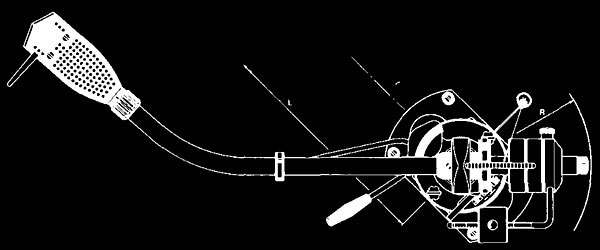
Robertson-Aikman was also a dedicated audio enthusiast. Unhappy with the tonearms available in 1958, he designed and built his own. Percy Wilson, then editor of Gramophone, encouraged AR-A to make and sell the arm, and in September 1959, SME began production on the model 3009 and 3012 Precision Pick-Up Arms. By December, SME was making 25 arms a week, and by the early 1960s, tonearms had become its most important product (footnote 1). SME’s arm design quickly became an industry standard, and, through its many iterations, remained in production into the 21st century. In total, over a million of them were sold.
The model-car business began to falter in the late 1950s, and in August 1960 SME got out, dumping and destroying, on AR-A’s orders, much of its production drawings, manufacturing jigs, and car kits—even the Pak Rak.

By 1961, SME had outgrown its original factory on Charlton Street, in Steyning, West Sussex, and moved around the corner to its current headquarters, on Mill Street. The company’s name was changed to SME Ltd. But sales of the arms continued to, um, pick up, necessitating the opening, in the mid-1970s, of another factory, this one on Elm Grove Lane, for metal casting and plastic molding. In 1979, SME again ran out of space, and added a floor and other improvements to the Mill Street building.
The CD Challenge, the New Tonearm’s Success
With the introduction of the Compact Disc, tough times began for SME, which in 1982 sold the Elm Grove Lane factory to an upstart speaker maker named Bowers & Wilkins. In 1984 SME announced the Series V prototype arm. With its tapered, pressure–die-cast armtube of magnesium alloy, the Series V was revolutionary, the state of the art, and thus deserved SME’s marketing slogan: “the best tonearm in the world.” The production version cost $1750, equivalent to about $4142 today. Despite the great success of the CD, in 1991 SME launched its first turntable, the Model 30. The combination of the Series V arm and Model 30 ‘table put SME at the top of the analog heap.

At about that time, AR-A’s son Cameron joined SME and began moving the company back into the lucrative business of contract precision engineering. SME’s expertise proved attractive to the aeronautical, aerospace, and medical industries, and the business again flourished. Manufacturing returned to the Charlton Street location, which had been converted to storage.
In 2006, when AR-A died, SME’s business was approximately 70% contract precision engineering and 30% audio. That didn’t stop them from launching that year the Model 20/12 turntable, designed to work with the 12″ version of the Series V tonearm.
Cameron Robertson-Aikman assumed control of the company and ran it for the next decade, during which SME launched the Model 15, which I consider to be among the company’s best-sounding turntables. Nonetheless, it became obvious to many observers that SME was falling behind—in terms of product innovation, marketing, and lack of visibility at shows—just as analog was again accelerating.
The Cadence Group and the New SME, Ltd.
In 2016, the Cadence Group, headed by industrialist and lifelong audiophile Ajay Shirke, assumed control of SME, Ltd. Cadence had previously acquired stakes in Spendor and Siltech. Shirke, a native of Pune, India, now lives in the UK, and ventured into audio more than two decades ago, manufacturing and distributing electrostatic speakers and hybrid tube amplifiers. But his real job is as an industrialist/builder.

Shirke named as CEO of SME Stuart McNeilis, who spent 30 years in aeronautical engineering. The two met while McNeilis worked for Hawker Aircraft, a maker of private planes. I met McNeilis at last January’s Consumer Electronics Show, in Las Vegas, at Siltech and Crystal Cable’s semiannual dinner for audio executives and journalists (their other dinner each year is held in May, at High End, in Munich). At the time, I didn’t know that Cadence had invested in Siltech and Crystal and had bought SME, so when I found myself seated next to McNeilis, who introduced himself as SME’s new CEO, I thought it an excellent coincidence. No doubt we were the beneficiaries of matchmaking by Crystal Cable’s CEO, Gabi van der Kley-Rijnveld.
McNeilis and I had a lot to talk about. I’d visited SME twice, once when AR-A was still alive—we’d spun vinyl in his incredible sound room—and I’d reviewed many of their products. McNeilis was engaging and quick-witted, and we got on well. He told me that SME would exhibit at Munich High End in May 2017, and that it would be SME’s first audio show in 27 years. Clearly, a new SME was in the works (footnote 2).
At High End, SME had a large, prominent booth on the main floor of the convention center, with a really big display case that looked like a giant iPhone and contained a few new SME accessories designed by McNeilis. To the left of the case was an imposing black-and-white photo of a young Alastair Robertson-Aikman, and to the right, displayed on a long shelf, was an assortment of current SME turntables, some with new bling accents of gold or silver, as well as a red SME 15 that was a real crowd pleaser. Yes, we were looking at mere cosmetic changes, but McNeilis had then been CEO for only a few months.

In a pod that was part of SME’s booth was one of the best-sounding systems I heard at High End 2017. A Model 30 turntable sat on a massive one-off (for now) stand, a version of which I’d seen during a 2014 visit to SME, accompanied by Acoustic Sounds and Analogue Productions’ two Chads: founder and CEO Kassem and chief audio specialist Stelly. The electronics were from Nagra, speakers from YG Acoustics. I first met Ajay Shirke there and played for him a test pressing of a reissue of Duke Ellington’s Masterpieces by Ellington (LP, Columbia/Analogue Productions AAPJ 4418). He loved it. But then, everyone loves that record. If there’s one album everyone must own, regardless of musical tastes, it would be this one—but preferably in the more recent 45rpm edition. McNeilis and Shirke invited me to again visit the SME factory, but as I’d been there only three years before, I filed the invitation away.
- Log in or register to post comments
 COMMENTS

So glad you enjoyed your trip to our beautiful county, fellow Mikey ! I’m lucky enough to live in a bit of a hifi hotspot. Whilst much manufacturing goes on overseas, we still have SME, B&W, Harbeth, Spendor, Exposure and Bespoke with HQ”s here (I’ve forgotten another speaker maker I think) in what is still a proper rural area. You could make a half decent system from that.
Incidentally, the lack of lifts (sorry, elevators) in creaky-staired, charming historic buildings really is a regular complaint from our ever-welcome US visitors. No, I’m not making this up.

Very-few Apple shareholders want anyone but Mr. Cook leading the company. Who cares if Amazon “beat him to Alexa” – while it would be great if Apple/Cook cared about Hi-Rez audio, I’d rather be retiring in two-years – which I will, largely due to Apple gains.
As for SME – I had a Sony ‘table with an SME tonearm and a Shure V15 cartridge for years. Great stuff. Since the UK will be the first stop on the Retirement World Tour, maybe I’ll stop by there …
So glad you enjoyed your trip to our beautiful county, fellow Mikey ! I’m lucky enough to live in a bit of a hifi hotspot. Whilst much manufacturing goes on overseas, we still have SME, B&W, Harbeth, Spendor, Exposure and Bespoke with HQ”s here (I’ve forgotten another speaker maker I think) in what is still a proper rural area. You could make a half decent system from that.
Incidentally, the lack of lifts (sorry, elevators) in creaky-staired, charming historic buildings really is a regular complaint from our ever-welcome US visitors. No, I’m not making this up.
Very-few Apple shareholders want anyone but Mr. Cook leading the company. Who cares if Amazon “beat him to Alexa” – while it would be great if Apple/Cook cared about Hi-Rez audio, I’d rather be retiring in two-years – which I will, largely due to Apple gains.
As for SME – I had a Sony ‘table with an SME tonearm and a Shure V15 cartridge for years. Great stuff. Since the UK will be the first stop on the Retirement World Tour, maybe I’ll stop by there …

A Rochester native's Hollywood dreams realized | Sippican – Sippican Week

Rochester native John Whoriskey, Jr., always had dreams of being involved in a Hollywood movie, but he never thought they would come true.
But as an assistant location manager for the upcoming movie “Finestkind,’’ which was filmed in New Bedford and stars Tommy Lee Jones, Ben Foster and Jenna Ortega, he was finally able to realize that dream.
Though tight-lipped about specifics of the production, Whoriskey said that being able to work near his hometown was something he “never dreamed [he’d] be able to be a part of.”
Whoriskey worked as an assistant location manager, meaning that he was responsible for reading the script and searching for good places to film different scenes.
During filming, he “makes sure that we can put out any fires,” he said, referring to things that could ruin the vision of the script.
This can include a neighbor cutting the grass or an onlooker who gets in the way of a shot.
Whoriskey grew up in Rochester with big dreams of working in the film industry.
A former student at Old Rochester Regional High School, he said that his love of film production started during childhood when he would make “stupid little movies” with his friends.
“We were having fun and wanted to show our friends these funny things we were making,” said Whoriskey. “And then we realized, ‘Oh, this is a class too, let’s take the class.’”
He credits the film production classes at ORR with building his skills and instilling a love of film.
From there, Whoriskey pursued a degree in film at Full Sail University in Orlando, Fla.
Now in his early 30s, Whoriskey has worked in location management on films like “Black Mass’’ and “Ted’’ and on television shows like “Gotham’’ and “Dexter: New Blood.’’
Aside from working in film, Whoriskey also produces music. He moved to New York City, where he currently lives, to learn more about the music production business. His goal is to have his songs placed in films and television shows.
His latest project, a song titled “Haunted House,’’ which is releasing on streaming platforms in September, is the culmination of almost a year of work.
In it, he explores what it was like living with an ex-girlfriend while finishing out a lease on a rented apartment.
“I put out a bunch of music and I’ve sort of been doing this independent, pop and R&B project for the last better part of the decade,” said Whoriskey. “I’ve recently gotten into doing a little bit of songwriting and trying to get some music placed into TV shows and movies, ironically enough.”
Whoriskey said he often showcases his music through a YouTube series called, “Ice Cream Sundays’’ where he reviews ice cream shops with his friends, set to the soundtrack of his original music.
Ice cream holds a special place in his life, said Whoriskey, as the son of the former owners of Country Whip in Acushnet.
“[I spent] a lot of hot long summers just scooping ice cream and just really getting to know it and learning the process of how to make the soft serve, and how to scoop, and how to make the cones, and that kind of thing,” he said.
For now, Whoriskey is finished with his work on “Finestkind’’ and is currently in Utah working on an unnamed movie.
“Finestkind’’ is currently in post-production and is slated to release on Paramount+. No release date has been announced at this time.
“It was a really special movie to work on. And I’m grateful to be a part of it,” said Whoriskey. “I’m excited to see what happens when it comes out.”
KRK Rokit 10-3 G4 Series Review: The Ideal Budget Monitor For Every Professional Studio – Magnetic Magazine
KRK Rokits have become a music production and audio engineering household name. These studio monitors offer a flat frequency response, and their approachable price makes them an obvious choice for producers looking to invest in top-grade gear.
We got our hands on the KRK ROKIT 10-3 G4s in hopes of answering the age-old question of which studio monitor is the absolute perfect 'budget studio monitor.'
Sure, coming in at just under $1k for a pair, there certainly are more affordable monitors out there than the KRK Rokit G4 series. But after having these in the studio for a time now, I can say that the 10-3 model is a lifelong investment best made sooner rather than later. And while there is a ton of technical knowledge there that can break down the book-wormish qualities of these speakers, most of you only care about how these monitors will sound in your studio.
So let's dive in and get the questions you actually care about answered.
Snag a pair of these today on Sweetwater right here <<<
Out of the box, these speakers' response is as flat as possible. Earlier iterations of the KRK speakers often gave a gentle boost to the low frequencies. But this has been removed in place of a custom EQ functionality alongside a KRK Audio Tools app on your phone to calibrate them to your studio room.
Once tuned, these speakers sound simply phenomenal!
The frequency response on these monitors is much more comprehensive than most speakers, meaning you can hear what is happening in the low end without needing a subwoofer.
Moreover, the mid-range clarity is second to none, and the 10-3s offer a silky smooth mix without any harshnesses that I typically hear in other mid-field monitors. These soft sonics means you can work for longer and get better results without the risk of ear fatigue.
KRK's typical bread and butter speakers are often budget monitors and usually feel like it (which isn't necessarily bad). But these monitors are a solidified upgrade that looks, feels, and sounds like a step into the professional realm of studio monitors. They sound good right from the jump, which is essential when you've moved into the professional world of audio production.
Is Your Bedroom Studio Cramping your Style? Read Our Guide On Studio Design
The entire line on Rokit G4s come stacked with powerful features.
Many powerful features are new with this generation of monitors. So let's dive into some unique redesign qualities, characteristics, and more that help you achieve maximum sound qualities from these budget speakers.
Sure, there may be even more features tucked away in these powerhouse monitors. However, these next ones will immediately affect the sound quality in your room precisely.
The Rokit's tweeter and woofer are both made of high-quality Kevlar, creating a far more relaxed and less fatiguing monitoring experience while allowing for maximal clarity. The rigid kevlar drivers also ensure that the sound coming from the speakers experiences little to no sound distortion.
As mentioned above, the room correction technology helps you get the best quality out of these speakers. You will certainly want to rely on this onboard feature, as the speakers are flat out of the box. The unassuming control panel tucked away on the rear face of the monitors allows for complete control and adjustments of the EQ curves for the monitors. Using it alongside software such as Sonarworks provides some of the best room-correction functionality one can hope for at this price point.
The built-in brick wall limiter on these midfield monitors allows you to push the output signal without the risk of distortion or to affect the mix's dynamics. The result is a loud, dynamic, and balanced mix you are proud to show your friends and clients.
Many other speakers at this price point's waveguides are single-faceted, meaning the sweet spots on the monitors are narrow and limited. This simply does not work for most producers relying on such monitors, who often produce music in smaller, unideal rooms.
But the bowl-shaped waveguides on the KRK Rokit 10-3s offer comprehensive imaging and broad sweet spots that are ideal for imperfect studio rooms.
This benefit is made even more potent through the monitors' front-firing ports that create excellent low-end that you can feel (and hear). Overall, this makes speaker placement an absolute breeze.
Check Out How One Artist Used These Speakers On Grammy-Nominated Records
I've had the opportunity to review and test many nearfield and midfield monitors. I can confidently say these things are the best option for the price point. That being said, I understand that these may not be for everyone.
Because unless you are willing to spend thousands on top-tier monitors and invest thoroughly in your studio room, no monitors allow for more calibration and customization than these.
And sure, these monitors may be on the pricier side of what constitutes a budget monitor. These monitors are ideal for producers of all skill ranges, meaning they may be the only monitors you buy for your studio your entire career. The biggest hesitation I had when I was starting was whether I should invest a little into my monitors or if I should invest a lot. But since KRK brought this new line of studio monitors to market, this question is a non-issue.
My final verdict is that these monitors allow you to do both, getting professional-quality mixdowns at an affordable price.
Snag a pair of these today on Sweetwater right here <<<
Managing Editor at Magnetic Magazine – Former Marketing Manager at the Hyperbits Masterclass – Writer, Content Strategist, Music Producer, and Record Label Manager
Glitch-Hop Pioneer Thavius Beck Interview – PopMatters
PopMatters
Essaying the pop culture that matters since 1999
Glitch-hop pioneer Thavius Beck talks about Public Enemy, the Bomb Squad, and LEO, an album heavy with his baritone boom and pumping, catawampus beats.
Churning out works encompassing a vast range of electronic music rooted in hip-hop culture, producer and rapper Thavius Beck has been plying his trade as one of the founders of glitch-hop for 25 years. His work is varied, such that his talents have raised the interests of artists like Saul Williams and Nine Inch Nails in both the rock and hip-hop genres, seeking his production and remixing skills. When not turning knobs for a variety of musical luminaries, Beck is busily producing his protracted works of sound. With about 20 albums under his belt, he has continued to make designs on hip-hop music’s always shifting and evolving dynamic.
Beck’s aesthetic involves judicious use of electronic music in his brand of hip-hop, employing busted loops, jazzy detours, and a gothic flair to create atmospheres of buzzing panic and mounting tension. Much of this particular panache can be appreciated in his two Mush releases, Decomposition (2004) and Thru (2006). These darkly-tuned works explore breakbeat and illbient in a home base of hip-hop. Along the way, Beck has turned out some solid and challenging instrumental works, including The Most Beautiful Ugly (2012), a set of gothic hip-hop experiments, and the more soulfully burnished Cosmic Noise (2021).
The Minneapolis native, however, is in special peak form when spitting impressive lines of poetry and verse over the flows of his complex beats. Dialogue (2009) and Technol O.G. (2017) stand as some of his very best works, opting for the kind of minimalism that the rapper-producer prefers while sated with the pressure of an assaultive low-end. Beck’s latest release, LEO, a work he prefers to call a project rather than an album, follows a similar trajectory of poetry and pulse, where his baritone boom skims the even heavier boom of the pumping, catawampus beats.
Pushing the artist’s hip-hop into the more uncomfortable reaches of the dance club, where only the bravest dare to indulge in the album’s tricky rhythms, LEO offers a set of turntablist jams alongside Kraftwerkian noodling. “So Rare”, a ghettoblaster anthem, gains much mileage from its shuddering bass hook and Beck’s crisp, shouldering rhymes. On the single “Aye: Sequenced Prose”, the rapper’s lyric ribbons effortlessly around a rubberbanding bassline and scattershot beats. Then there’s the interstellar groove of “One More Revolution”, which features a striking stanza that throws the number into sharp, chiaroscuro relief: “One more revolution ‘round the sun it goes / The orbit’s like a groove, the planets like a needle / This dubplate’s made from dark matter / Cosmic turntable making star stuff scatter.”
Beck’s work in music production has taken him beyond the recording studios, as well. When not making albums, he is a professor of music, training students on Ableton Live, a musical software sequencer used in electronic music. LEO emerges in the wake of personal hardship and, as a lyricist, a longstanding writer’s block. With his latest, he extends the perimeters of his pioneering glitch-hop to encompass more emotional ambits, where the bruising beats pulse with the soul of numinous verse. The rapper-producer talks with PopMatters about his past influences and the places they have taken him musically.
You’ve recorded both instrumental albums and albums with vocals. Why do you choose to release many albums without rhyming? Or rather, why do you feel some material works better as instrumentals?
I started off rapping when I was probably eight. I remember I had to write a rap about air pollution for a school project in third grade. I still remember the verse! My biggest inspiration around that point in terms of hip-hop was Public Enemy. When I first heard “Night of the Living Baseheads” and “Black Steel in the Hour of Chaos”, I was blown away and knew what kind of sound I wanted to go for. I also appreciated that the rhymes weren’t about typically superficial topics and that Chuck D had a weird, quirky rhyme scheme. There was also Son of Bazerk, who worked with Public Enemy’s production team, the Bomb Squad. He had a weird flow that I loved too. I felt I could hear bits of it in some of Chuck’s verses.
When I moved to L.A. in 1996, I became part of a collective of MCs and beat makers called Global Phlowtations Artist Committee (GPAC). Four of us made beats, but I was probably the main producer for the three albums we did. So, even though I was rapping on stuff, I began to view myself as more of a producer. Then when I signed to Mush Records in 2003 and started releasing music under my real name, I began exploring more experimental instrumental production, doing more progressive jazz/fusion stuff with bass-heavy beats instead of doing rap albums.
In my 20s, I had this idea in my head that I shouldn’t still be rapping in my 30s and 40s and that, coupled with the way the indie electronic music scene was going at the time, it made more sense to focus on making weird beats instead of making rap albums. The big thing is, I don’t have a notebook on me writing raps all the time. I rarely write lyrics, and when I do, it’s because of some burst of inspiration or a need to get something off my chest.
So, to answer your question about not rhyming on all my albums, it’s mainly because I never looked at myself as a “rapper”. I consider myself an electronic musician. I rap when I feel the music calls for it, and as someone who grew up listening to a lot of instrumental jazz/fusion and progressive rock, I don’t always wanna hear someone rapping at me. Even if it’s me.
Your hip-hop is distinct from other rappers and producers because it seems your influences are primarily electronic musicians. Which music artists captured your imagination growing up, and why?
The funny thing is that my influences are all over the place, but the biggest single influence in doing music on my own was Public Enemy and the production work of the Bomb Squad. It all takes shape from there. My mom would play different records in the house growing up. I would hear everything from Maze to Pat Methany to Jean-Luc Ponty to Chic. So, as a young kid, my ear was already open to a wide range of sounds that had nothing to do with hip-hop. But as a child of the ’80s, I loved hip-hop, and I loved the idea of repurposing sounds to make something new by sampling.
So, back to Public Enemy. Their second album, It Takes a Nation of Millions To Hold Us Back, totally opened my mind and ears. I was also into rock and heavy metal, Rust in Peace by Megadeth being one of my favorite albums. So, the dense and heavy production of the Bomb Squad was right up my alley, and the fact that they sampled Slayer for the song “She Watch Channel Zero” still makes me smile while banging my head relentlessly! When Public Enemy’s third album, Fear of a Black Planet, came out and I first heard “Welcome to the Terrordome”, I probably listened to that song 20 times in a row, if not more – no exaggeration. That song changed my life. That beat is just a wall of sound and aggressive and chaotic and beautiful – just giving zero fucks. I saw the future when I heard that song, specifically that beat.
It was all about the melding of influences from artists like Mahavishnu Orchestra, Lenny White, Lonnie Liston Smith, Nine Inch Nails, Jungle Brothers, Wu-Tang Clan, GangStarr, A Tribe Called Quest, and Tool, but with the idea of creating something like sound collages held together by heavy beats and bass – much like what I heard from the Bomb Squad. That’s still my ethos today. I can make any sounds work as long as I can feel the bass and find the beat.
On all your albums, there is a strange interpoint between minimalism and heaviness. The beats are often minimal, but they are delivered with a low-end, bassy texture. Tell us about this particular style in your work.
Well, I don’t try to make passive music. I want the music to grab your attention and kind of force you to listen to it. I want to feel my music on a physical level, and having spent so many years in loud clubs, I know that the best way to feel the music is to give energy to the lower frequencies. I love bass. It can be delivered smoothly and soothingly; it can be a heavy burst and create an impact, it can create the sensation of riding waves, or it can be disorienting. I remember feeling nauseous in a club once because the subwoofers were so loud, and my position to them had my body reacting in odd ways. It’s powerful but subtle because not everyone has the right sound system to reproduce the bass to its full effect. You can hide elements in the sub frequencies that only appear when played on the right system.
As far as minimalism goes, that is something I have been actively working towards. Many of my beats are dense – probably too dense – and it’s hard to rap on top of a thousand conflicting sounds. So, if the purpose of the beat is to rap on it, it needs to get stripped down to make room for the vocals. It’s also fun to see how far I can get using the least amount of elements. For example, the song “Temporal Vision” off of LEO is made from a single sample cut in a few different ways. When I can pull off something like that, it’s satisfying.
What are some of the themes and ideas you are exploring on LEO?
LEO is all about creation, survival, self-empowerment, and seeing the bigger picture. My mom passed away earlier this year on her birthday, and her passing triggered a wide range of emotions, thoughts, and self-reflection that I had to deal with while still teaching multiple classes at two campuses. My mom and I had a good relationship and were on good terms. I got to tell her everything I felt I needed to, and she let me know she was proud of me. So, even though her death has been difficult and is still not easy for me, I have also felt this sense of peace. It’s hard to explain, but to make a long story short, my focus has since shifted. I feel like a different person like I’m slowly emerging from a cocoon I didn’t realize I was in all this time.
The last time I wrote a collection of raps for an album was about five years ago for a project called Technol O.G. At the time, I was really angry and frustrated, and that album reflects that. I didn’t write anything until I was hit with a major burst of inspiration that seemingly came out of nowhere. I had an idea to create and release a beat tape on my birthday. As I started going through tracks, there was a beat that I kept listening to, and I decided just to sit there and loop the track and finish writing the damn song.
It can be difficult to get back into the habit when you don’t do something for a long time. I hadn’t written a complete song in so long that the idea of doing so felt almost impossible for a few years. But this entire project is the result of seven days – five of them writing and recording the lyrics. When the inspiration hits, I’ve learned to ride the wave. LEO is the result.
Ultimately, the lyrics in LEO can be seen as an insight into how the project came to be. The project was willed into existence through me, and I just had to be open and pay attention and catch what came through my mind. At the same time, I live in this physical reality and have to pay attention to physical obstacles. So, how do you balance that and stay open enough to be a channel for positive and powerful manifestation? That’s what LEO is about.”
Burt Reynolds, ‘Deliverance’ put Georgia on the film industry’s map – CBS 46 News
ATLANTA, Ga. (CBS46) – It all began with a movie about a peaceful little whitewater rafting trip among best buds in north Georgia’s scenic mountains.
One of the first films made in Georgia, “Deliverance” was based on writer James Dickey’s debut novel of the same name. Released in 1972 and starring Burt Reynolds, Ned Beatty, Ronny Cox and Jon Voight, it was filmed in northeast Georgia communities of Clayton and Rabun County, and became a huge commercial success.
“By 1974, we had built an entire whitewater-rafting industry on the back of ‘Deliverance,’” said state Rep. Ron Stephens (R-Lyons). “The city of Covington was telling us that 75% of their tourism came from people wanting to see where ‘The Dukes of Hazzard’ and ‘In the Heat of the Night’ were made. In Savannah, people wanted to see the park bench in ‘Forrest Gump.’”
“Gov. Jimmy Carter started our office in 1973 because of ‘Deliverance,’” said Lee Thomas, deputy commissioner of the Georgia film music and digital entertainment office. “He realized this is money coming from outside the state and bringing money to a very poor part of the state, and he wanted to figure out how to get more.”
RELATED: Competition from other states increasing pressure on Georgia’s film industry
Reynolds, arguably Hollywood’s most famous leading man of his era, used Georgia in several of his later films, including “The Longest Yard” in 1974; “Gator” in 1976; “Smokey and the Bandit” in 1977; “Cannonball Run” in 1980; “Smokey and the Bandit II” in 1980; and “Sharky’s Machine” in 1981, which was filmed almost exclusively in Atlanta.
As Hollywood film costs began soaring in the 1990s, other nations began passing tax credits to lure film companies outside the U.S. Hollywood and the Motion Picture Association began lobbying Congress to provide financial incentives to spur domestic film production.
In 2004, as part of the American Jobs Creation Act, Congress included an addendum that provided immediate tax write-offs for domestic film production. That spurred states such as Georgia to provide their own tax incentive programs.
The Georgia Entertainment Industry Investment Act was passed by the General Assembly in 2005 and signed by Gov. Sonny Perdue. It provided a 10% tax credit for production companies that spent money in the state. Three years later, that tax credit was increased to 20%, and an additional 10% was tacked on for any film that included the “Made in Georgia” logo in its end credits.
Stephens is one of the few Georgia lawmakers still in office who was a co-signer of the original 2005 tax credit.
“We were in dire straits back in 2008″ before the tax credit was expanded, Stephens recalled. “We were at the height of the great recession, and we desperately needed jobs and investments. At one point, the state only had two days of operating capital.
“To Sonny Perdue’s credit, we convinced enough people to pass the tax credit plan. We had no infrastructure at the time, but we said if we invest and make a film in Georgia, we’ll give you a 20% tax credit. And if you place that Georgia peach at the end of your production, we’ll give you that extra 10%. Now, we’re a $7 billion industry”
By the numbers: Georgia film industry
Assembly Atlanta is a 135-acre mixed-use real estate complex centered around the studio industry at the former site of the General Motors plant in Doraville.
The signature component of the Assembly Atlanta development is the 43-acre Assembly Studios complex featuring soundstages, production offices, warehouse and mill buildings, studio bungalows, event space, and a parking deck. The new facilities will include multiple soundstages, production office space, warehouses and mill space, as well as parking and other necessary amenities.
Next to the Assembly Studios complex is Third Rail Studios, a movie and television production facility spanning seven acres that opened in 2016 and that Gray acquired in September 2021.
Copyright 2022 WGCL. All rights reserved.
Electric Jazz trio Lyder talk musical influences, theory and off-grid instrumentation – Inverted Audio
Inverted Audio
Inverted Audio
In a world where anyone with a laptop can become your next biggest musical fascination, and in which an avalanche of young or relatively inexperienced producers are attaining status in the global music scene with enough hard graft, it’s a continuing interest to see musicians teaming up in new and inventive ways — especially to produce music that they are not already known for.
Lyder is next up in that regard: the Münich trio is comprised of independently established artists, from the deep techno / liquid DnB musics of Lindsey Wang AKA Polygonia, to Niklas Bühler’s Hip-Hop and pedal-board saxophonist Moritz Stahl. The trio land on Jazz-O-Tech, a label that Inverted Audio has reported on recently with regard to their release of electronic/jazz hybridisation from the likes of Finnish duo Aki Himanen and Aleksi Kinnunen.
Lyder’s debut EP, ‘Vivacity‘, is a rare thing that strikes notes for both the electronically averse jazz fanatic and the jazz-averse electronica individuals, fulfilling spiritual jazz needs as equally as it grants beautiful moments of synthesised harmonics.
We spoke with the trio about some of the more unique aspects of their group, and its relatively rare composition: how do “classically trained” musicians approach their solo music-making, the nature of using acoustic or “off-grid” electronic instruments that allow for true flexibility and improvisation, and their stance on the necessity of musical theory in the modern climate of production, where all the “answers” are being thrown at musicians from thousands of YouTube creators.
Alongside this interview, we’re delighted to present a premiere of EP closer and stand-out highlight ‘Helichrysum‘, an ambient dream-walk featuring lilting sung expression by Polygonia, subtle mobile percussion and sun-licked atmospheres.
Hello — firstly, congratulations on the EP. It feels very accomplished for a debut. Can you begin by introducing yourselves, and your role within the band?
We are three artists from Munich, who love Jazz and electronic music, but each of us has a different education and skill focus. The thing that we all have in common is that we play acoustic instruments while also being electronic music producers.
Our versatile saxophonist Moritz Stahl, who has one of the coolest pedal boards we’ve encountered, has a jazz background and our pianist plus FX master Niklas Bühler is at home in the genres of Hip-Hop and House. Lindsey Wang, our vocalist and violinist who is creating most of the beats, grew up with a classical music education and is based in the genre of Deep Techno.
We don’t really have that one lead musician since we want to highlight every single member of our band. Every track that we create gives another one of us the chance to express themselves in their own way and give their own touch to that particular piece.
Besides knowing some of your other music personally, it’s very apparent on listening that you have been active musicians outside of this project. Can you talk to us briefly about those projects?
Moritz is part of many Jazz Ensembles (e.g. Ark Noir, Ralph Heidel, Jazzrausch Bigband etc), which are also electroacoustic bands, that explore mixing up both worlds of music. He also started several projects unter the pseudonym “odizouu”, under which he features his works with saxophone and effect pedals and Octatrack.
Lindsey produces and DJ’s deep techno, ambient and downtempo under the pseudonym Polygonia. Her main message is usually to represent natural motifs and thus to raise awareness for the love of nature. Niklas produces Hip-Hop and instrumental music, also with a specific focus on sound-design and special textures and timbres.
We all love to experiment with new ways of playing but also listening to music – being part of many different projects reflects that.
Now, onto Lyder. I’d like to start by asking Lindsay about her role in the group, and any sources of inspiration behind the loose, sound-as-word “lyrics” — why did you make the conscious decision to speak without words on the album? What meaning do you think can be said without explicit expression?
I produce the beats, I do a lot of sound design and I also play solo instruments in one or the other track, such as my voice (‘Sea of Thought‘) or the violin (‘Contemplation‘).
I don’t want to tell the listener what emotions they should feel at that moment. I use my vocals more like an instrument and at the same time approach the tradition of scatting. However, I use this technique in my own way and want to combine it with the sound aesthetic of electronic soundscapes. The voice is basically similar to a wind instrument and can take on very different colours and formants through various consonants and vowels.
This conveys the emotion on a meta-level and gives the listener a much wider scope for interpretation. There are already enough pieces with classically sung vocals, I quite enjoy doing this myself as well. But I find it challenging and exciting to have a strong effect on the listener without using words. That’s why I decided to use my voice in this way for this music project as well as my own solo project.
What inspired you all to take the leap into working on the album together as Lyder?
The project was initiated by Lindsey. Before founding the ensemble, she already collaborated with the label Jazz-o-Tech in terms of graphic design and music production for a longer period of time. From the very beginning of the collaboration, both parties intended to release an EP together in the context of this genre fusion.
So, she sought out suitable candidates from her circle of friends in Munich which she knew would fit together well stylistically. In the past, there have been several collaborations between Moritz Stahl’s band Ark Noir, Niklas Bühler and Lindsey Wang. In this respect, it was already clear, based on some good experiences, that the musical vision of all those involved must be a very similar one.
This album marks the beginning of a longer collaboration, which will bring many more releases in the future.
Another content-related topic which made us even more stoked to work on this together was the idea of performing sound-design focused music live in a spontaneous way.
Of course, every live performance has some spontaneity, but with electronic instruments (drum computers, Ableton push, Octatrack etc) it is harder to “really” play live in terms of being able to improvise without prepared drum kits, arrangements, patterns and parts.
The practice of playing acoustic instruments allows the player to decide in a completely different manner and tempo, which makes this way of performing a spontaneous decision much more flexible and faster compared to electronic instruments. That’s why it is really interesting to explore both – acoustic and electronic – realms. Like that, we are able to learn how to make them compatible with each other.
With each of you being established musicians in your own right, how was the process of creating the album? Did it flow well, or were there moments when someone wanted a different sound in a given moment, or to lead it somewhere else?
In the beginning, we didn’t even know what our process actually looked like. We just met in the studio and jammed together a bit. The only thing we decided beforehand was the approximate sonic mood we wanted to get into. Then we just started playing for a longer period of time and recorded it all. It was always a lot of fun, but we weren’t quite sure how the material we recorded would turn out in the end.
When we listened to it later with a little bit of distance and set up the projects with all of the elements, it became clear to us that there were a lot of great ideas and the session actually payed off. In this sense, the creative part of making music together was very easy and intuitive. The detail work at the end, where you have to pay attention to so many details in the mixing and arrangement, was of course, as with any other production, relatively time consuming.
However, this does not detract at all from the harmonious collaborative production environment of the entire EP, because in the end, we have discovered that we can actually cooperate very well with each other and that we can come to great results very quickly, despite having only a few meetings.
For each of you, as individuals, what was the biggest lesson that working in this group gave you? What will it help you with in your solo work?
The biggest lesson for us all was that we learned about the importance of recording every jam session, no matter how bad we think it is at the moment. Because with some distance, our perspective towards the material changes in a positive way. With a little editing it usually becomes very valuable and can form the foundation for a great piece.
I wanted also to ask about the overriding structure of the album. It starts with a light number before switching up into a more beat-driven piece, and on the flip side the same pattern repeats. It seems like a decision aimed at the vinyl product — is this the case, or is a more simple or complex one? How do you think the layout of tracks on an EP or LP makes (or breaks) the record?
At first, we had actually planned a different order, with ‘Frantic Circles‘ and ‘Contemplation‘ changing places on the track list. In the current order, as well as in the alternative version, an emotionally charged track with BPM variation is the welcome.
Secondly, we wanted to create additional dynamics within the EP structure and present our experimental but still melodic ambient piece before the third very energetic track. In both variations of the sequence, the harmonic piece, which in a way conveys a feeling of coming home, comes at the end of the release.
Now, finally, we have decided to change the order to the current one and put our fastest and most energetic track in second place. We wanted it to be clear right from the start, within the first two tracks, that we have a wide stylistic variety to offer and are not afraid to experiment. In this regard, we did not concern ourselves with the usual arrangement of tracks on vinyl products, but we are glad that our variant is even compatible with this.
For me, one of the richer tracks is ‘Frantic Circles’, on which you can clearly hear an influence of electronic club, particularly certain strands of less aggressive techno. I’m curious, how did you draw the line between the Lyder music and the electronic music that you produce separately? Or, is it more of a blurred line at all times?
We don’t have to worry too much about “what fits the project”, because we try to just work together iteratively on the tracks. We play/add stuff we think is cool, then we talk about the results. Everything we add comes directly from the individual cores of our artistic personalities and could have happened in a production of our own, too.
“Lyder’s sound” is then created by our interaction with each other and adapting to things that we approach differently. It’s similar to a jam session. You bring yourself to the jam and play your “own stuff” until other people in the band bring in some of their own ideas or techniques and make you adapt to the new situation. This mix of preference creates a new sound without having to conceptualise it first in a meeting.
Finally, I’d like to ask your thoughts on a broader question: there’s classical or “professional” musical training in your group. Do you think that there is a certain kind of musicality that is fading, as a result of so many producers being self-taught from similar videos and sources? Do you think that established tutelage results in the same tendency toward homogeneic sound?
We are all somewhat professionally trained musicians since childhood and encourage the playing of instruments plus the knowledge of music theory to some extend. It would be a very hard criticism to accuse modern production for being unmusical or “less smart” than for example the Rolling Stones in the ’60s.
In these times it’s easier than ever to pick up electronic music production – more competition means better producers and in the end more quality productions. The only thing that sticks out a bit is that in electronic production some people see music theory as too complicated and time consuming. But in the end it’s a big timesaver.
If you compare the mainstream music of today with the music played in the past, you will definitely notice that in both eras the uniformity of style was always commonplace at the time. In this extent, no decrease in musical quality can be observed, rather the opposite, since the internet nowadays offers a much wider range of possibilities for small artists and niche genres.
Due to the many platforms and the easy accessibility of these, a strong diversification of musical style can be found nowadays and thus a huge variety is available outside the mainstream media. This broadens the cultural knowledge of music and is a big gift to our cultural diversity.
‘Vivacity’ EP is out now via Jazz-O-Tech. Order a copy from .
TRACKLIST
1. Sea Of Thought
2. Frantic Circles
3. Contemplation
4. Helichrysum
Copyright © 2022 Inverted Audio Ltd. Privacy Policy
In order to give you the best experience, Inverted Audio uses cookies and similar technologies for performance, analytics, personalization, advertising, and to help our site function.
Inverted Audio uses cookies and similar technologies to give you a better experience, enabling things like:
– basic site functions
– ensuring secure, safe transactions
– remembering privacy and security settings
– analyzing site traffic and usage
– helping us understand the audience
– showing relevant, targeted ads on our web properties
Detailed information can be found on our Privacy Policy page.
Privacy Policy
Some of the technologies we use are necessary for critical functions like security and site integrity, account authentication, security and privacy preferences, internal site usage and maintenance data, and to make the site work correctly for browsing and transactions.
Cookies Used
These technologies are used for things like:
– personalised ads
– to limit how many times you see an ad
– to understand usage via Google Analytics
– to understand how you got to our web properties
– to ensure that we understand the audience and can provide relevant ads
We do this with social media, marketing, and analytics partners (who may have their own information they’ve collected). Saying no will not stop you from seeing our ads, but it may make them less relevant or more repetitive.
Cookies Used
Our website uses tracking software to monitor our visitors to understand how they use it. We use software provided by Google Analytics, which use cookies to track visitor usage. This software will save a cookie to your computer’s hard drive to track and monitor your engagement and use of the website, and to help identify you on future visits. It will not store, save or collect personal information.
Cookies Used
Over 100K Cars Shut From North American Production This Week Due To Chip Shortage – Slashdot
Follow Slashdot blog updates by subscribing to our blog RSS feed
The Fine Print: The following comments are owned by whoever posted them. We are not responsible for them in any way.
In that case you should buy an EV. They are far more resilient, orders of magnitude less complex, but do cost more.
EVs use twice as many semiconductors as ICEs.
That seems very unlikely. With an EV you can throw out the complex ICE management system, plus all the sensors to ensure that the component parts are working properly.
IIRC the shortage is more about two things. 1) The auto makers cancelled standing orders and are now in the back of the line for capacity reservations. 2) The chips the auto makers use are old tech and the chip makers want them to upgrade to newer tech.
https://www.motortrend.com/new… [motortrend.com]
EVs use twice as many semiconductors as ICEs.
EVs use twice as many semiconductors as ICEs.
And? Out of all the parts in an ICE car, the semiconductors are the most reliable components. Semiconductors are really amazing things because even consumer grade semiconductors can function continuously for decades before some of them begin to fail. Automotive qualified semiconductors are built to withstand some of the harshest environmental conditions that humans live in.
They do have twice as many semis on average but that’s because of all the other bullshit lumped in there, so it’s misleading. Every EV has all the shiny shit. Many ICEVs are still offered with only little bits of it. Electric motor control is way simpler than modern ICE control.
I would be surprised if the 80-90s cars had more complex engine control units than a modern EV, but the modern ones have a much harder job. They’ve got to monitor and react to a whole shedload of sensors, and make a guess at what’s h
which they won’t make. You could always import a 25yo Kei car/truck. [mitsuicoltd.com]
If I want a backup cam I can always look backwards. And there’s not much snow in California so traction control’s wasted money.
It doesn’t rain in California either? I guess that explains all the droughts.
Traction control harms snow performance, it however helps in rainy weather.
One of the first things you do around here when the road is snowy is turn off the traction control, as it will, if it is working properly, prevent your car from moving and overheat your brakes.
It doesn’t rain in California either?
It doesn’t rain in California either?
It rains a few times in the winter out here, but I’m not sure that extra few percent of traction three days a year is worth the added cost+complexity. But that’s just me/.
I’ts like getting air-conditioned seats in Alaska
If we used modern metallurgy with older design ethics to produce a wet sleeved straight six unit injected diesel with a six speed, double overdrive gearbox, you could likely meet emissions regs, get decent mileage, and have reasonably smooth operation with a fully mechanically regulated system. If you wanted to, you could literally design it to continue to run and even still shift if it’s an automatic even if the electrical system failed completely. But it would be seriously expensive to build it to last. Y
No AC, too
Pretty sure cars have had AC since the 40’s.
A very few cars had AC in the 40s.
My parents had a car in the 50s that had no air conditioning.
I bought a car in the 80s that had no air conditioning.
And if you count the car for which the air conditioning failed, which I basically only drove 2 miles each way to the train station and back, I had a car in the 2000s without air conditioning.
Cars started using chips in the 70s. You want to go back to that era? I think your memory is clouded by age or nostalgia.
Simpler, maybe. More resilient? No way. Engines and transmissions didn’t last nearly as long and those are really expensive to replace. Cars from the 70s lasted about 100k miles. They started rusting at 60k miles or before, so I hope you like replacing body panels. They had no ABS. No traction control. They weighed a ton and got awful gas mileage. Hope you like sucking in the lead from that gas. Airbags? Nope. Chances of dying in a wreck? Way higher. Regular tuneups and lube jobs are gonna cost you extra. No backup cameras. Forget anything beyond a standard FM radio.
There’s not a huge amount of that list that requires on-board chips. The big one is probably ABS. Traction control and backup cameras are luxury items for 99% of drivers. And the radio is not what we’re talking about, but a plain FM radio sounds fine to me.
There’s not a huge amount of that list that requires on-board chips.
The world of chips brought in digital engine management computers. In the 70s, they were basic things, but even then they were far better than the old distributor and carburettor systems. Then it ushered in electronic fuel injection, and then you got both a stupid increase in power and fuel economy.
If you want to see what “the past” was like, go get a flight in a light GA aircraft like a Cessna or Piper. It may be a brand new plane right o
Traction control and backup cameras are luxury items for 99% of drivers
Backup cameras have been required equipment in the U.S. since 2018.
Traction control is about much more than maximum launch acceleration (or, perversely, getting some sick peel-out). It is a safety feature like ABS that drastically improves handling during slippery conditions (rain, snow, ice, mud).
There are lots of reasons that vehicle deaths per miles traveled [google.com] has steadily decreased over the decades. (It’s about 1/3 what it was before the advent of complicated electronics in cars in the 1970s.) It sure as hell isn’t because drivers have gotten better.
Traction control and backup cameras are luxury items for 99% of drivers
Backup cameras have been required equipment in the U.S. since 2018.
Traction control and backup cameras are luxury items for 99% of drivers
Backup cameras have been required equipment in the U.S. since 2018.
Really? How bizarre.
Traction control is about much more than maximum launch acceleration (or, perversely, getting some sick peel-out). It is a safety feature like ABS that drastically improves handling during slippery conditions (rain, snow, ice, mud).
Traction control is about much more than maximum launch acceleration (or, perversely, getting some sick peel-out). It is a safety feature like ABS that drastically improves handling during slippery conditions (rain, snow, ice, mud).
I didn’t think of the acceleration thing; I thought it was just for poor conditions.
But I’m still not seeing how chips stop panels rusting or make my (manual) gearbox more reliable.
Traction control and backup cameras are luxury items for 99% of drivers
Backup cameras have been required equipment in the U.S. since 2018.
Really? How bizarre.
Traction control and backup cameras are luxury items for 99% of drivers
Backup cameras have been required equipment in the U.S. since 2018.
Really? How bizarre.
They stopped many incidents of kids getting run over since they are generally shorter than the trunk lids on your normal car, and don’t have the wisdom to not run out behind a backing car.
Traction control is about much more than maximum launch acceleration (or, perversely, getting some sick peel-out). It is a safety feature like ABS that drastically improves handling during slippery conditions (rain, snow, ice, mud).
I didn’t think of the acceleration thing; I thought it was just for poor conditions.
Traction control also helps in emergency steering conditions, even on dry pavement, as it keeps your back end from skidding out when you hard steer.
make my (manual) gearbox more reliable.
make my (manual) gearbox more reliable.
Unfortunately, it is near impossible to get those in the US, there are a few still made, but they are extremely rare, and mostly sporty cars.
And the radio is not what we’re talking about, but a plain FM radio sounds fine to me.
FM radio is about the only thing I listen to in my car.
Don’t forget carburetors! Flooding, icing, poor winter performance, etc. No one really wants to go back to them.
You got one thing dead wrong, though. Cars in the 70s and 80s were at least a couple thousand pounds lighter than cars today (fewer impact protection structures), and by the 80s during the oil crisis they got fantastic mileage, even a little better than today with our modern heavy cars. Crash test standards have made our cars much heavier now, and despite more fuel-efficient engines, our mileag
Well, fair is fair, gpp stated: They weighed a ton, and nowadays they regularly weigh 2 tons and up. I did think it somewhat strange that there’d be complaints about the older cars being too light, but here we are…
Indeed. I would pay more money for a car that was simpler and more resilient.
Indeed. I would pay more money for a car that was simpler and more resilient.
Imagine having to use a metal key and go ’round all the doors using it every time you park.
Yeah, we know – you always leave yours unlocked, right? News: Those old cars were easy to hotwire so your “simpler and more resilient” car would be a target for thieves.
It wouldn’t be more resilient anyway. Mechanically-tuned engines were a pain in the ass, didn’t last as long, and needed constant attention.
Nostalgia isn’t what you think it is.
My mothers boyfriend had a kill switch hidden inside the car so that it couldn’t be stolen
Don’t rely on chips. Bring back older models that were decently efficient but which didn’t need chips. I would rather that my car NOT rely on a chip for anything.
Don’t rely on chips. Bring back older models that were decently efficient but which didn’t need chips. I would rather that my car NOT rely on a chip for anything.
Never going to happen. How are you going to make a backup camera and display without chips? Backup camera systems are mandated by gov’t regulations ever since 2018.
Similarly, how are you going to make electric vehicles without chips? Not gonna happen. With gas being super high and rabid climate change believers pushing everybody around, I fully expect the coming “solution” to the chip shortage will be halting production of internal combustion engine vehicles in favor of saving the chips for EV’s.
Similarly, how are you going to make electric vehicles without chips?
Similarly, how are you going to make electric vehicles without chips?
The original EVs date from before 1908. I’m pretty sure we could make them without chips. Though as Tesla shows, if you don’t depend upon dinosaur(relative) chip types, you can still get the chips necessary for full operation.
You have trouble with the last sentence, don’t you?
And no, a chipless EV is still possible without concerning the firefighters too much, you just have to get creative with the charge regulator. Given the voltages and amperages involved in regulating such a large battery, I’m sure a lot of the components are the opposite of “micro”.
Chip is cheap and easy, not the only way.
The original EVs date from before 1908. I’m pretty sure we could make them without chips.
The original EVs date from before 1908. I’m pretty sure we could make them without chips.
This was your statement. And it’s a really, really stupid one. The bit about Tesla is interesting, but if you are expecting to excuse your first statement with it, well, no. You said “I’m pretty sure we could make them without chips.” So let’s look at that. You have to monitor and control battery temp, cell balancing, charging curves (you can’t just shove power into them from 0% to 100%), monitor and control discharge rates, monitor and adjust charging and range for battery wear, oh, and report rate of cha
You can make an EV without chips. It can even do regen, series hybrid, whatever. But all of that depends on highly resilient batteries that can take abuse. Read: NOT LITHIUM CELLS. So yeah, you could make a really dumb EV today, but it would also be really shitty.
On the other hand, your average hobby motor speed control does regenerative braking and traction control, so the minimum complexity is not very high.
I have to point out that it isn’t charge controller chips that we’re having a shortage of. Even lithium cells aren’t that difficult to regulate.
Hell, I’ve watched some videos of the various EV and even a sort of hybrid car from Leno’s Garage. Turn of the 20th century(IE 1900’s), and it’s a sort of hybrid car. Caveats abound, of course. It works like a diesel-electric locomotive – the engine ran a generator that provided power to an electric motor that ran the drive shaft. It even had regenerative braki
I haven’t got any information on how acceleration and regen were controlled but the couple-gear trucks [wikimedia.org] had 4WD, 4WS, regen, and could be outfitted with a generator or not. I remember reading about one case where such a truck was used to bring freight down a hill, and did about 50% of the trip back up on its regen charge. They used hub motors, too (next to the hub anyway, with a gear reduction built in – the pinion is on the motor, and the spur gear is built into the wheel.)
Turn your head, look over your shoulder, and use your mirrors. These mandated things are for lazy people. Things like ABS, passive restraints, airbags, etc. are a given but we now have sensors in the bumpers and yet people still get run over; cameras that nobody looks at aren’t going to solve anything else.
My son has a new car that reminds him to check the back seat to make sure he hasn’t left his kid strapped in the car seat. We’ve nearly reached the “Beef Supreme” level of “Idiocracy.”
I’m buying all the B [youtube.com]
Don’t rely on chips. Bring back older models that were decently efficient but which didn’t need chips. I would rather that my car NOT rely on a chip for anything.
Don’t rely on chips. Bring back older models that were decently efficient but which didn’t need chips. I would rather that my car NOT rely on a chip for anything.
You will also have to go back to headlights with incandescent bulbs, a coil and manual points for the ignition, break out your timing light for setting your ignition timing, worry about the dwell time for your points, and manually gap your spark plugs because all those things won’t be handled by your electronic ignition anymore.
Forget Oxygen sensors, fuel injection, pre-tightening seat belts, air bags, and onboard diagnostics. Get ready for manual emissions checks again.
Nope, too many features, both vital
Just as importantly, a modern fossil fuel car could never meet emissions standards without chips in it to control the engine.
Eight valves in the engine, and eight in the radio.
Dr. Freeman, I presume.
Eight valves in the engine, and eight in the radio.
Eight valves in the engine, and eight in the radio.
In the USA we call them “tubes”. Ironically, most of the factories still making vacuum tubes are in Russia, which presents its own set of problems at the moment.
Besides, if we were going to go back to using discrete components, there’s always the slightly-less-old-school transistor [youtube.com].
In the USA we call them “tubes”.
In the USA we call them “tubes”.
Ah! So that’s what Al Gore was talking about.
In the USA we call them “tubes”.
In the USA we call them “tubes”.
Partially correct. They were called “tubes” when you referred to the package design, but were still knows as “valves” when you looked at schematics. Similar to calling something an IC chip for the package, but a full-wave rectifier when you refer to what it does.
Here is a schematic from Popular Electronics 1955 where they discuss how to build your own Theremin. They talk about the five “tubes” in the design, but the schematic lists them as V1 – V5. https://www.antiqueradio.org/p… [antiqueradio.org]
Here is an early explanation of the differences between valves and early transistors. [onlinesciencenotes.com]
This can’t happen. CAFE standards and other regulations pretty much require this. Yes, Russia was able to bring back an old Lada model, but… that is Russia. If VW brought back the old beetle or GM brought back the Corvair, the lawsuits would pile up in no time.
Aircooled engines had emissions issues. It wasn’t until the mid-70s that VW introduced a fuel injection system that could mitigate most of the emissions issues that were being regulated at the time. CAFE wasn’t the issue, it was things like NOX and unburned hydrocarbons that were the big problem. If you were to compare a VW bug from 1977 to 1970 it was astonishing what they put on the car to keep it legal. During those years there was a lot of creative engineering manifesting into things like air pumps, th
It should be possible as long as you don’t mind a less efficient engine or need safety features like airbags or anti lock brakes.
Don’t rely on chips. Bring back older models that were decently efficient but which didn’t need chips.
Don’t rely on chips. Bring back older models that were decently efficient but which didn’t need chips.
They would be unable to meet efficiency standards. Also, completely redesigning the cars to not use any chips is idiotic. All they need to do is redesign the part to use a different chip.
Your suggestion is asinine at best.
You cannot eliminate chips. That’s genuinely one step from saying we need to go back to horse-and-buggy days.
However, manufacturers could certainly rationalize and simplify their designs. Just as a small example: One option on a new car we are buying is to have a camera-and-screen combination in place of each of the side mirrors. The camera is in the position of the mirror (outside the car), and the screen is just inside the car. What possible benefit does this bring? Instead of your mirror icing up, it w
There are already many places making carburetors all over the world.
https://en.wikipedia.org/wiki/List_of_carburetor_manufacturers [wikipedia.org]
Don’t rely on chips. Bring back older models that were decently efficient but which didn’t need chips. I would rather that my car NOT rely on a chip for anything. Newer models require them, so maybe return to making some older “heritage” (to use a buzzword for old) models for folks who like to listen to “heritage” music. Do you like music from the 70’s? Now you can drive a car from then too!
Tooling up a vehicle manufacturing line costs on-the-order-of a Billion Dollars. That’s roughly equivalent to what
Don’t rely on chips. Bring back older models that were decently efficient but which didn’t need chips. I would rather that my car NOT rely on a chip for anything. Newer models require them, so maybe return to making some older “heritage” (to use a buzzword for old) models for folks who like to listen to “heritage” music. Do you like music from the 70’s? Now you can drive a car from then too!
Don’t rely on chips. Bring back older models that were decently efficient but which didn’t need chips. I would rather that my car NOT rely on a chip for anything. Newer models require them, so maybe return to making some older “heritage” (to use a buzzword for old) models for folks who like to listen to “heritage” music. Do you like music from the 70’s? Now you can drive a car from then too!
That would take years. No one makes ECU-less engines in that kind of volume. Or anything, any more. It would probably be 10 years before we could ramp up and re-tool the production of parts to make analog cars again, and that energy would be better spent actually solving the chip problem.
Well, that would mean to go back to 1960’s models.
Cars have had chips in them since the 1960s, so if they start making Rambler’s again, I’m in.
What car had ICs in the 1960s? An Apollo moon buggy?!
According to this [idgconnect.com], all sorts of cars starting in the late 60s. [chipsetc.com] It was for things like automatic transmissions and fuel injection.
1968, Volkswagon with their D-Jetronic, which was an electronically controlled fuel injection system.
Note that a “computer” doesn’t necessarily use chips. I only see discrete transistors in the D-Jetronic:
https://www.thesamba.com/vw/ga… [thesamba.com]
From the article: “Volkswagen introduces the first consumer vehicle available with a computer – a transistorized, electronically-controlled, fuel injection system.”
It sounds like a classic “Well, actchewally” kind of argument, but there are massive differences between a discrete transistor and an IC.
China, a larger car market than the US, is losing FEWER vehicles due to this shortage. Even though the same vehicles are made in the same way in both countries.
China, a larger car market than the US, is losing FEWER vehicles due to this shortage. Even though the same vehicles are made in the same way in both countries.
Incorrect. American car companies did this to themselves. When covid-19 hit, they shutdown production and cancelled their orders for chips because they don’t warehouse parts. However, when they opened up again and reordered their chips, they were at the back of the queue. To make things worse, TSMC started moving away from large fab processes because they aren’t as profitable. This caused a bit of a panic and everything getting bought up. The result is a long lead time to get the part they need while most warehouses have been cleared out. They could get around this by modifying their designs but the only car company that seemed to do this was Tesla. I don’t know what Chinese companies did but American car companies only have themselves to blame for have zero preparation for supply chain interruptions.
Just-In-Time manufacturing is cost efficient when it works and very expensive when it fails.
I believe there is some kind of industry-wide list of “approved” chips or something where the big car makers like GM and Ford and whatever the hell Chrysler is called these days wont use chips outside of that list and its difficult to get the newer more available chips on that list.
As I understand it, it isn’t so much that there’s an approved chip list, it’s that they don’t do the programming for most of their own car’s functionality, outsourcing that to a few contracting companies. Kind of like Bosch, Denso, and such.
Given their requirements, said contracting companies don’t upgrade their parts, to include the computer chips, all that often. Plus, the old chips were known to work, met durability requirements(not that new chips can’t, but it has to be tested), and were cheap.
They could get around this by modifying their designs but the only car company that seemed to do this was Tesla.
They could get around this by modifying their designs but the only car company that seemed to do this was Tesla.
As I understand it, Tesla never cut production(or purchasing) by all that much, and were using newer chips in the first place. Plus, because they have extensive in-house programming abilities, basically programming their own cars from the ground up themselves, they were indeed able to “make things work” for what chips they couldn’t get.
Just-In-Time manufacturing is cost efficient when it works and very expensive when it fails.
Just-In-Time manufacturing is cost efficient when it works and very expensive when it fails.
JIT manufacturing is fine, but the problem is that the American car companies took the JIT idea that Toyota pioneered, and implemented it wrong: they made it “completely inventory-less manufacturing.” The proper implementation includes inventory for things like chips that have huge lead times on orders, or take time to switch manufacturers.
What a wonderful way to reduce the supply of cars so that Americans can be weaned from their dependence on them.
What a wonderful way to reduce the supply of cars so that Americans can be weaned from their dependence on them.
What a wonderful way to reduce the supply of cars so that Americans can be weaned from their dependence on them.
More likely they will just drive older cars for now.
are Infineon Aurix (TriCore) chips. These are mostly 20+ year old technology for vehicles with electrical systems based on the AUTOSAR stack. The automotive industry has collectively refused to move beyond this stack despite its inability to scale effectively for the demands of modern cars. There really isn’t anything these chips are doing that cannot be done with ASIL certified lockstep ARM chips, but the investment in AUTOSAR makes it a huge pain for these companies to rework their development methods and electrical architectures. They also don’t have the right kind of software engineers to handle such a transition.
Makes me wonder if some of the older fabs like NXP/Freescale/Motorola could be retooled to handle this type of work. We don’t need the latest and greatest stuff TSMC is belting out. Relegate these older CPUs to older fabs, and then maybe have the government kick automakers in the tush to see about making a standard chip for this replacement that can be done cheaply, with a high supply that can be warehoused if need be.
What would really be nice is a SoC that could be used for cars, but other projects as we
AUTOSAR – ugh. It’s a terribly over-complicated morass of expensive middleware, with thousands of pages of specifications. I know why OEMS like it – the box claims to make things super drop-in compatible.
The reality is you spend as much time “configuring” the AUTOSAR components as you would have spent writing custom code that is more efficient and actually does what you want instead of almost doing what you want and being forced to work around the accidental complexity.
That said – is it really the Infineo
Infineon recently made a process change and realized they fouled six months worth of production.
From what I’ve heard it’s a wide range of chips, particularly the older models built with larger feature sizes.
Apparently when the fabs lost a bunch of orders at the beginning of the pandemic several of them decided to take the opportunity to upgrade their assembly lines to newer, more profitable technology (=smaller feature sizes). Technology that can’t actually make the older chips, which would have to be redesigned to deliver the same robustness with smaller features (car electrical systems are hideousl
If the issue is that the process technology used to produce these old chips is disappearing as manufacturers focus on newer nodes, why not produce new chips that are compatible with the old chips (same pin-out, same functionality, same instruction set/software) but are built on process nodes that companies will actually fab?
I find this a little odd based on what I’m seeing in the computer parts market. Prices are coming down, availability is better. New products are being introduced. Heck, Steam Decks are flowing out like a river now. No, I’m not a supply chain czar, just my $.02 from what I’m seeing in the US.
There has certainly been talk about building additional 45nm or even 65nm capacity. The cost of such a fab would probably be comparable with one or two EUV patterning machines. But margins on these older chips are razor thin so it’s difficult to see how any such build would be profitable once the current backlog has been cleared. The new fab would be competing with producers who have no capital depreciation and have spent a decade optimising their process to squeeze every last die from their equipment.
A bet
There may be more comments in this discussion. Without JavaScript enabled, you might want to turn on Classic Discussion System in your preferences instead.
VR Is As Good As Psychedelics At Helping People Reach Transcendence
Climate Change Can Make Most Human Diseases Worse
Experience varies directly with equipment ruined.
New festival, CURRENTS, to take place in abandoned power plant near Berlin – DJ Mag
CURRENTS claims to be one of the first 100% carbon-neutral electronic music and performance festivals
A new electronic music festival, CURRENTS, is set to take place in an abandoned power plant south of Berlin on Saturday 8th October.
CURRENTS has been curated by Romanian music production and DJ duo Khidja, the line-up includes artists such as Suzanne Ciani, Lena Willikens (who will perform with Marylou), Dopplereffekt and Alicia Carrera.
The one-day event will run from 3pm to 1am and is located at the former E-WERK Luckenwalde, which was originally built in 1913 as a coal power station and closed down in 1989. In September 2019, Performance Electrics transformed the building into a renewable Kunststrom power station and contemporary art centre.
CURRENTS, which claims to be one of the first 100% carbon-neutral electronic music and performance festivals, will be powered by burning locally sourced waste wood chips to generate electricity.
The festival is a non-profit event with funds going to support “an international community of artists and cultural workers existentially threatened by climate change, pandemics, wars, displacement and economic inequality”.
Find out more via CURRENTS here and see the full lineup below. Tickets can be picked up from here.
Thrust Publishing Ltd, Unit 3, 30-40 Underwood Street, London, N1 7JQ, United Kingdom. Tel: +44(0)7940488008
Frank Hoffman: Happy 45th Birthday, Vermont Public Radio – vtdigger.org
By
This commentary is by Frank Hoffman, who produces audio and video content for various channels and is a fundraising consultant for nonprofits across the country. He lives at the base of Mount Ascutney, where he enjoys VPR’s strong HD signal from the mountaintop.
I know, I know, my favorite radio network is now called Vermont Public. Whether you like the branding change or not, we Vermonters need to feel proud of the many achievements this small statewide network has achieved in the last 45 years.
It is a time for celebration and personal recollection for me. VPR signed on the air on Aug. 13, 1977. I was one of the original staffers and enjoyed every minute of my seven years there. Well, almost every minute. What I remember can certainly be disputed, but even though I may not make it to the 50-year party, I can be thankful for my beginnings at VPR, which helped me throughout my professional life.
You’ll never miss a story with our daily headlines in your inbox.
As I ponder my personal celebration of this startup, I have high admiration for the people who saw that the state needed public radio and did something about it. Vermont Public TV had been on the air since 1967, and was already firmly established in the Vermont tapestry, even though for many people in southern Vermont, picking it up off air was a challenge.
The plan was that VPR was not going to be affiliated with Vermont PBS (until now), or with the University of Vermont, or the state, like many public radio stations are in this country. VPR was a “community licensee,” which carried with it the burden of raising the money needed to pay the bills and comply with FCC regulations. Hats off to the founders who had the guts and vision to bring VPR to the Green Mountains.
Qualifying for federal grant money through the Corporation for Public Broadcasting was the only way to go, and the founders were able to be part of the CPB Expansion Program. The NPR system was in a growth spurt.
I admit that getting this position at VPR was sheer luck. I was living in New York, working at the American Place Theater and workshopping a play of mine. Weekends I would escape back to my home in Tunbridge, usually by Amtrak. I wanted to be in NYC, but I really wanted to be able to work and live in Vermont.
My girlfriend at the time had clipped an ad from a newspaper that said, “Radio Producers Wanted.” I don’t think I knew what a producer was but applied anyway. I was registered with the Vermont Council on the Arts as a playwright, and the two advertised positions would be funded through the council and a Comprehensive Employment and Training Act grant. There was part of the act set aside for artists, and I think that this is how the funding happened to get producers for VPR. I’ll never forget Fonda Siegel at the council who was able to make this happen.
I applied for the position of “spoken word producer,” but at my interview I was told that position had been filled, but did I know how to read music? asked Betty Smith, the program director, who interviewed me while Ray Dilley, one of the founders and the general manager, sat back and listened. I told Betty that I read music, had played in my high school orchestra, a rock band or two, and loved music — all kinds! She nodded. Ray had picked up a call, and I thanked them both and walked out from what was my very first interview for any kind of job other than restaurant work and carpentry.
The following week I got a call from Betty saying that I got the job. All I could say was, “You picked me?” I couldn’t believe it. Later on, I learned that I was the last one on the list of interviewees of some 200 applicants for the two CETA positions. The spoken word producer hired was Frank Anthony, a poet and writer who lived in Chelsea. We made plans to commute to Windsor in Frank’s VW every day to begin our new jobs.
We had voice training, breathing exercises, and electronic training on how to run the board, tape recorders, cartridge machines, and how to read a log and deal with traffic: Tapes coming in and going out. I had the best training at VPR from Steve Robinson, the development director at the time, who had years of radio experience. He also loved pitching during the fundraising marathons and taught me a great deal that served me at the other stations where I worked.
The first show on the air I believe was the British import “The Goon Show,” followed by “Saturday Afternoon at the Opera.” You need to know that this was pre-satellite, so the programs were either sent through the mail on reel-to-reel tapes or were being fed on phone lines. “All Things Considered” and “Morning Edition” came to us that way until satellite connections happened in 1980.
I was on the air weekdays from 7 until 10 p.m., playing the few classical music recordings in the library. Oh, how I butchered the classical names of the composers and the European conductors. I didn’t know enough to be embarrassed. Steve would be listening at home and in his gentle way would educate me on the correct pronunciations. Learning by doing seemed to be how this training was going to develop.
What really sounded the best was live programming from Windsor Studios. This was not really like community radio, where producers bring to the air what they like — folks, blues, jazz, classical, poetry. We were trained to follow format, and VPR was a classical station. LPs sounded great through the new system on radios at home and in cars.
To me, this was the best job going, though the annual salary was about $8,000. There was earned vacation time, but no retirement packages. Ah, yes, the good ole days in broadcasting. It was a great time to be at VPR because there was some freedom. Freedom of ideas, or developing concepts, or taking a risk or two.
The first collaboration with NPR brought producers to Windsor to help train us in how to tell a story in audio terms. “Maple Syrup” was the first half-hour special that “All Things Considered” ran. But there were others.
I produced “Portrait of a Rural Symphony” with the Vermont Symphony Orchestra performing Aaron Copland’s “Fanfare for the Common Man” with Gov. Richard Snelling narrating. This was at Hopkins Center in Hanover, New Hampshire, and Maestro Copland was in attendance. Deborah Amos and Fred Calland worked with me to get this 15-minute piece on the network.
I also produced a two-hour special for Folk Festival USA on Canadian traditional music, and there were numerous collaborations with WGBH in Boston producing music from the White Mountains Music Festival with Gerard Schwarz and Gunther Schuller.
I also produced short features on the Jose Orozco Murals at Dartmouth and contributed performance recordings of Vermonters and visiting musicians to the long-defunct program “The Sunday Show.” And let’s not forget Midsummer, Vermont’s first statewide folk festival at Shelburne Farms.
This was just some of the work that was done in the early years that led to seven grants from the National Endowment for the Arts for my audio productions. I also served on the review panel for radio production.
After 45 years, I think it is appropriate to remember how small beginnings grow into larger opportunities. I know this was the case for me. After VPR, I went on to raise $250,000 to produce, market and host a weekly program called “U.S. Ear: The New Music Review.” This magazine program brought to the air electronic music, performance art, found-sound, criticism and commentary using a group of independent producers across the country. It won a Corporation for Public Broadcasting award for programming “innovation and audio excellence.” I met my co-producer, David Moss, a vocalist/percussionist from Marlboro who played in the VPR studios in Windsor.
There were many firsts in that studio, including the first live broadcast of the Synclavier, an electronic keyboard instrument developed by composer and electronic music pioneer Jon Appleton. I can’t forget to mention a performance on my Friday afternoon program, “Audio Files for the Compleat Eclectic,” by Allen Ginsberg and Peter Orlovsky. They sang tunes from Ginsberg’s “Birdbrain” album, read some poems, and took calls from the audience.
I was an independent producer for three years and then went on to join my old friend and mentor, Steve Robinson, in Lincoln, Nebraska, to be the assistant network manager of Nebraska Public Radio. The network was just a few years old and did some local programming, including a nightly news program. I was able to be a manager but kept my hand in producing. I won three Associated Press awards, a Gabriel Award for a series of features on child abuse and incest, and created a 12-part series of Willa Cather’s “My Antonia.”
I pitched Steve on breaking format and playing the programs back-to-back with a few musical interludes and station breaks, of course. He said yes and we had a memorable Dec. 7, 1994, radio event. Steve went on to do many of these specials at the Nebraska Public Radio Network.
I went on to be general manager of the statewide radio network in West Virginia, producers of the nationally syndicated “Mountain Stage.” Steve went on to have a stellar career as the CEO and president of WFMT in Chicago. The irony is that Ray Dilley, our old boss at Vermont Public Radio, eventually took Steve’s position at the Nebraska Public Radio Network. He passed away in Lincoln.
The second irony is that Scott Finn, the current CEO of Vermont Public (VPR and Vermont PBS), was the CEO and executive director of West Virginia Public Broadcasting, where I was the general manager of radio for five years.
I am happy that VPR has thrived for the last 45 years. In my time with public radio, creativity was key, and it was not always easy to be heard. Sound quality was also essential.
Now it seems anyone who can speak can have a podcast. Delivery of content has changed in the last four and one-half decades, and that is a good thing. I believe it’s also good to celebrate the past when appropriate and learn from one’s mistakes.
VPR gave me so much. I know the network continues and will continue to produce and deliver many creative, unique, stories. Radio succeeds in giving the listener a way to connect personally to issues and to other people. Ideas are in the air and it’s up to us to reach out and grab them and make them into radio programs, what else?
Our journalism is made possible by member donations. If you value what we do, please contribute and help keep this vital resource accessible to all.
VTDigger.org publishes 12 to 18 commentaries a week from a broad range of community sources. All commentaries must include the author’s first and last name, town of residence and a brief biography, including affiliations with political parties, lobbying or special interest groups. Authors are limited to one commentary published per month from February through May; the rest of the year, the limit is two per month, space permitting. The minimum length is 400 words, and the maximum is 850 words. We require commenters to cite sources for quotations and on a case-by-case basis we ask writers to back up assertions. We do not have the resources to fact check commentaries and reserve the right to reject opinions for matters of taste and inaccuracy. We do not publish commentaries that are endorsements of political candidates. Commentaries are voices from the community and do not represent VTDigger in any way. Please send your commentary to Tom Kearney, [email protected]
Email: [email protected]
View all Commentaries
VTDigger is now accepting letters to the editor. For information about our guidelines, and access to the letter form, please click here.
More obituaries
Don’t miss the best of VTDigger
By
By
By
More commentary
By
By
By
More politics
FHS to showcase first summer theater | News, Sports, Jobs – Fairmont Sentinel
Aug 9, 2022
ABOVE: Students rehearse “This Is Me” in the Fairmont High School Auditorium on Monday.
FAIRMONT- The theater program at Fairmont High School is in the final week of its first summer camp. The program will culminate in three variety shows on Wednesday and Thursday.
The shows are 2 pm and 7 pm on Wednesday and 7pm on Thursday. Admission is free.
Sara Gudahl is the stage director for the theater camp and one of the people who proposed it to the district earlier this year.
“At the high school almost every sport here has summer activities where (students) can work on their skills in the summertime, but theater isn’t one (activity) we’ve ever offered before. When I approached our district asking, I was pretty excited to be given the opportunity to do this,” said Gudahl.
Around a dozen students participated in the summer program with the youngest entering 8th grade and the oldest recently graduated from high school.
“My favorite thing right now is that we have such a blend. I have kids in there who’ve never been on stage yet and I have vets who’ve been here five or six years in a row. Having those older kids mentoring the younger kids, showing them what’s possible, and helping teach along the way,” said Gudahl.
The ultimate purpose of this camp was to give students an opportunity to improve their performance skills. Practices were in the form of workshops rather than traditional stage rehearsals. As a result the summer show will feature a selection of pieces from numerous musicals instead of a singular continuous show.
Altogether the performance will feature 12 songs from nine different musicals from across Broadway’s history. The decision not to perform a traditional show allowed students to work with roles they normally wouldn’t be able to engage with.
“A lot times kids are very fond of theater shows we can’t produce as a school musical. Either the licensing rights aren’t available or the difficulty of the show is just such that our high school wasn’t able to handle it,” Gudahl explained.
A majority of the songs in the show were selected by students. Five of the songs will be from “Hamilton,” the only musical from which multiple selections were chosen. Other shows featured in the performance include “The Sound of Music,” “Frozen” and “Annie Get Your Gun.”
Students in the upcoming show are typically participating in at least three pieces and everyone will receive at least one solo. All of the students will perform in the opening and closing numbers; the titular song from “Cabaret” and “This is Me” from “The Greatest Showman.”
“I just like the opportunity get to perform on stage because we get one big musical per year and then we have the smaller spring play. As a smaller group we get a lot of ‘it is you on stage’ and you just have to be the big part in the big role. You get to soak up a lot of stage time,” said Selma Bleess, a senior who’s singing a piece from “La La Land” and “Hamilton.”
Amanda Poetter is one of two students who will be playing in the show’s small pit.
“I’ve done plenty of pits in the past so when we got the email it was kind of a given that I was going to do it. Summer is the perfect time since we have so much free time,” said Poetter.
The high school’s next theater performance will be a production of “Newsies” in the fall. Gudahl hopes the theater camp will return next year. She expects the program to have an expanded scope with higher student turnout and better organization.
Today’s breaking news and more in your inbox
FAIRMONT— Ahead of the regular meeting, the Fairmont City Council held a work session on Monday to discuss the …
CEYLON — Ceylon Area Historical Society Museum will be open from 1-3 p.m. Sunday, Aug. 7, This is the last summer …
Today’s breaking news and more in your inbox
Copyright © Fairmont Sentinel | https://www.fairmontsentinel.com | 64 Downtown Plaza, Fairmont, MN 56031 | 507-235-3303
iGaming Platform Software Market Size 2022, Market Share, Industry Analysis By Future Demand, Top Key-Players, Opportunities, Revenue and Growth Rate Through 2025 – Digital Journal
Hi, what are you looking for?
By
Published
iGaming Platform Software Market Business Growth 2022-2025 Global Industry Research report covers a detailed study of the iGaming Platform Software Market size, growth, and share, trends, consumption, segments, application and Forecast 2025. iGaming Platform Software Market Report will add the analysis of the impact of COVID-19 on this industry.
Global “iGaming Platform Software Market” (2022-2025) Industry Research Report is a professional and in-depth study on the current state of the Global iGaming Platform Software industry. Moreover, research report categorizes the global iGaming Platform Software market by top players/brands, region, type and end user. This report also studies the global iGaming Platform Software market status, competition landscape, market share, growth rate, future trends, market drivers, opportunities and challenges, sales channels and distributors. Regionally, this report categorizes the production, apparent consumption, export and import of iGaming Platform Software in North America, Europe, China, Japan, Southeast Asia and India.
Get a sample PDF of the report at –https://www.researchreportsworld.com/enquiry/request-sample/17398993
The global iGaming Platform Software market is anticipated to rise at a considerable rate during the forecast period, between 2021 and 2025. In 2022, the market was growing at a steady rate and with the rising adoption of strategies by key players, the market is expected to rise over the projected horizon.
The report also tracks the latest market dynamics, such as driving factors, restraining factors, and industry news like mergers, acquisitions, and investments. Global iGaming Platform Software Market Size (value and volume), market share, growth rate by types, applications, and combines both qualitative and quantitative methods to make micro and macro forecasts in different regions or countries.
“Final Report will add the analysis of the impact of COVID-19 on this industry.”
To Understand How COVID-19 Impact is Covered in This Report. Get Sample copy of the report at–
List Of TOP KEY PLAYERS in iGaming Platform Software Market Report Covered in Chapter 13 –
The report also focuses on global major leading industry players of Global iGaming Platform Software Market Share providing information such as company profiles, product picture and specification, capacity, production, price, cost, revenue and contact information. Upstream raw materials and equipment and downstream demand analysis is also carried out. With tables and figures helping analyse worldwide Global iGaming Platform Software Market Forecast this research provides key statistics on the state of the industry and is a valuable source of guidance and direction for companies and individuals interested in the market.
Get a Sample PDF of the iGaming Platform Software Market Report 2022
The Global iGaming Platform Software Market Trends,development and marketing channels are analysed. Finally, the feasibility of new investment projects is assessed and overall research conclusions offered.
In Chapter 6, on the basis of types, the iGaming Platform Software Market from 2015 to 2025 is primarily split into:
In Chapter 7, on the basis of applications, the iGaming Platform Software Market from 2015 to 2025 covers:
Enquire before purchasing this report –https://www.researchreportsworld.com/enquiry/pre-order-enquiry/17398993
Some of the key questions answered in this report:
Major regions covered in the report:
Purchase this report (Price 3360 USD for single user license) –https://www.researchreportsworld.com/purchase/17398993
Major Points from Table of Contents:
1 iGaming Platform Software Market – Research Scope
1.1 Study Goals
1.2 Market Definition and Scope
1.3 Key Market Segments
1.4 Study and Forecasting Years
2 iGaming Platform Software Market – Research Methodology
2.1 Methodology
2.2 Research Data Source
2.2.1 Secondary Data
2.2.2 Primary Data
2.2.3 Market Size Estimation
2.2.4 Legal Disclaimer
3 iGaming Platform Software Market Forces
3.1 Global iGaming Platform Software Market Size
3.2 Top Impacting Factors (PESTEL Analysis)
3.2.1 Political Factors
3.2.2 Economic Factors
3.2.3 Social Factors
3.2.4 Technological Factors
3.2.5 Environmental Factors
3.2.6 Legal Factors
3.3 Industry Trend Analysis
3.4 Industry Trends Under COVID-19
3.4.1 Risk Assessment on COVID-19
3.4.2 Assessment of the Overall Impact of COVID-19 on the Industry
3.4.3 Pre COVID-19 and Post COVID-19 Market Scenario
3.5 Industry Risk Assessment
4 iGaming Platform Software Market – By Geography
4.1 Global iGaming Platform Software Market Value and Market Share by Regions
4.1.1 Global iGaming Platform Software Value ($) by Region (2015-2020)
4.1.2 Global iGaming Platform Software Value Market Share by Regions (2015-2020)
4.2 Global iGaming Platform Software Market Production and Market Share by Major Countries
4.2.1 Global iGaming Platform Software Production by Major Countries (2015-2020)
4.2.2 Global iGaming Platform Software Production Market Share by Major Countries (2015-2020)
4.3 Global iGaming Platform Software Market Consumption and Market Share by Regions
4.3.1 Global iGaming Platform Software Consumption by Regions (2015-2020)
4.3.2 Global iGaming Platform Software Consumption Market Share by Regions (2015-2020)
5 iGaming Platform Software Market – By Trade Statistics
5.1 Global iGaming Platform Software Export and Import
5.2 United States iGaming Platform Software Export and Import (2015-2020)
5.3 Europe iGaming Platform Software Export and Import (2015-2020)
5.4 China iGaming Platform Software Export and Import (2015-2020)
5.5 Japan iGaming Platform Software Export and Import (2015-2020)
5.6 India iGaming Platform Software Export and Import (2015-2020)
5.7 …
6 iGaming Platform Software Market – By Type
6.1 Global iGaming Platform Software Production and Market Share by Types (2015-2020)
6.1.1 Global iGaming Platform Software Production by Types (2015-2020)
6.1.2 Global iGaming Platform Software Production Market Share by Types (2015-2020)
6.2 Global iGaming Platform Software Value and Market Share by Types (2015-2020)
6.2.1 Global iGaming Platform Software Value by Types (2015-2020)
6.2.2 Global iGaming Platform Software Value Market Share by Types (2015-2020)
6.3 Global iGaming Platform Software Production, Price and Growth Rate of On Premiere (2015-2020)
6.4 Global iGaming Platform Software Production, Price and Growth Rate of Cloud-Based (2015-2020)
7 iGaming Platform Software Market – By Application
7.1 Global iGaming Platform Software Consumption and Market Share by Applications (2015-2020)
7.1.1 Global iGaming Platform Software Consumption by Applications (2015-2020)
7.1.2 Global iGaming Platform Software Consumption Market Share by Applications (2015-2020)
7.2 Global iGaming Platform Software Consumption and Growth Rate of Mobiles (2015-2020)
7.3 Global iGaming Platform Software Consumption and Growth Rate of Gaming Consoles (2015-2020)
7.4 Global iGaming Platform Software Consumption and Growth Rate of PC (2015-2020)
8 North America iGaming Platform Software Market
8.1 North America iGaming Platform Software Market Size
8.2 United States iGaming Platform Software Market Size
8.3 Canada iGaming Platform Software Market Size
8.4 Mexico iGaming Platform Software Market Size
8.5 The Influence of COVID-19 on North America Market
…………Continued
Browse complete table of contents at –https://www.researchreportsworld.com/TOC/17398993#TOC
About Us:
Research Reports Worldis the credible source for gaining the market reports that will provide you with the lead your business needs. At Research Reports World, our objective is providing a platform for many top-notch market research firms worldwide to publish their research reports, as well as helping the decision makers in finding most suitable market research solutions under one roof. Our aim is to provide the best solution that matches the exact customer requirements. This drives us to provide you with custom or syndicated research reports.
Contact Us:
Research Reports World
Phone:
US(+1) 424 253 0807
UK(+44) 203 239 8187
Email:[email protected]
Website:https://www.researchreportsworld.com/
Our Other Reports:
Aircraft Ground Support Equipment Market Size 2022, Global Industry Share, Growth, Segments, Revenue, Manufacturers and 2028 Forecast Research Report
Niacinamide for Cosmetics Market 2022 Worldwide Industry Size, Share, Gross Margin, Trend, Future Demand, Analysis by Top Leading Player and Forecast till 2028
Barcode Printer Market Share, Size 2022, Worldwide Impact of COVID-19 on Industry, Business Revenue, Future Plans, Top Key Players, Business Opportunities, Forecast to 2028
Global Electric Railcar Movers Market Size 2022-2028, Share, Trend, Business Growth, Top Key Players Update, Business Statistics and Research Methodology | Top Countries Data
Agricultural Micronutrients Market 2022-Industry Size, Share, Growth Factors, Top Leaders, Development Strategy, Future Trends, Historical Analysis, Competitive Landscape and Regional Forecast 2028
Music Microphone Market 2022 Global Industry Size, Outlook, Share, Demand, Manufacturers and 2028 Forecast
Press Release Distributed by The Express Wire
To view the original version on The Express Wire visit iGaming Platform Software Market Size 2022, Market Share, Industry Analysis By Future Demand, Top Key-Players, Opportunities, Revenue and Growth Rate Through 2025
All eyes are now on the release this week of US July inflation data, which is expected to show a slight slowdown from June.
After more than a year, aviation giant Boeing will be allowed to resume deliveries of its 787 Dreamliner aircraft.
Fashion innovator Issey Miyake shook up Parisian style with his highly wearable avant-garde designs.
Renting in New York has long been a struggle, but recently costs have skyrocketed, jumping an average 20.4 percent in the second quarter.
COPYRIGHT © 1998 – 2022 DIGITAL JOURNAL INC. Digital Journal is not responsible for the content of external sites. Read more about our external linking.
Cross-class interactions in America play a big role in upward mobility. : The Indicator from Planet Money – NPR
The Indicator NPR hide caption
SYLVIE DOUGLIS, BYLINE: NPR.
(SOUNDBITE OF DROP ELECTRIC’S “WAKING UP TO THE FIRE”)
GREG ROSALSKY, HOST:
Like most gyms, InnerCity Weightlifting in Boston offers one-on-one training sessions for people to shed pounds and get ripped. But behind the dumbbells and the treadmills is a deeper purpose. The gym is a nonprofit founded with the mission of providing opportunities to people at risk of poverty and incarceration and helping them forge friendships with wealthier people who might be able to give them a helping hand.
DARIAN WOODS, HOST:
InnerCity Weightlifting does this by recruiting people who are economically disadvantaged, often fresh out of prison. And it offers them a pathway to become trainers and then pairs these trainers with well-to-do clients. And its founder, Jon Feinman, says that they’re seeing amazing results with this model.
JON FEINMAN: Personal training does create this really unique setting that allows for those power dynamics to flip, for those really genuine relationships to form because the value is going both ways, and I think that really transcends a lot.
ROSALSKY: It’s no secret that it pays to have friends in high places or gym clients in high places, but a new groundbreaking research project substantiates this in a profound way. It shows that relationships that cross class lines are crucial for low-income folks to climb the economic ladder.
This is THE INDICATOR FROM PLANET MONEY. I’m Greg Rosalsky.
WOODS: And I’m Darian Woods. Today on the show – why cross-class friendships are so crucial for achieving the American dream.
(SOUNDBITE OF MUSIC)
ROSALSKY: The Harvard economist Raj Chetty is, like, the closest thing we have to LeBron James in the econ world.
RAJ CHETTY: Hey, Greg. How are you doing?
ROSALSKY: Hey. Good, how are you?
I mean, he’s kind of a superstar. He crunches these gigantic data sets and offers compelling evidence to fix some of America’s most stubborn economic problems.
WOODS: And some years back, Raj Chetty and his team published this detailed interactive map of America. It was based on extensive work analyzing millions of IRS tax records, and it shows the likelihood of kids climbing out of poverty in every zip code in the country. They called it the Opportunity Atlas.
ROSALSKY: Ever since they built this map, Raj and his collaborators have been trying to figure out why it looks the way it does. Why is it that kids in places like the diverse D.C. suburb of Silver Spring, Md., have a much better shot of rising out of poverty than kids in places like Little Rock, Ark.?
CHETTY: And so the big question is, why is the American dream more alive in some places than others? And along the way, lots of folks talked about the idea that social capital, or who your friends with, who you’re interacting with, might be an important factor.
WOODS: Social capital – that generally refers to the value of our relationships with our family, with our friends, our broader community. Sociologists and political scientists have long found that these relationships matter a lot for our well-being. But which types of relationships might give us a boost economically, and how do you clearly and precisely measure that?
CHETTY: Lots of people have thought hard about these issues well before us and have just been hampered by a lack of data.
ROSALSKY: But now Raj and his team have found a solution – Facebook data. I mean, who knows more about your social network than the ultimate social network? In a pair of new studies published in the journal Nature, Raj and his team use Facebook data as a proxy to measure people’s real-world relationships.
CHETTY: Who would have thought 15 years ago that you’d be able to see 20 billion friendships and understand how people are interacting with each other?
WOODS: Raj and his team came up with various ways to measure social capital using data from Facebook. And they find that there is one particular measure that has a huge power in explaining upward mobility, and they call it economic connectedness. And that’s the rate that low-income folks are friends with high-income folks.
ROSALSKY: Raj and his team find that it’s the exact places that have more connections between low-income and high-income folks that have much greater rates of upward mobility. And they provide evidence that these cross-class relationships are the very reason why low-income folks are much more likely to climb the economic ladder.
CHETTY: So now, you know, you might ask, but what about the quality of schools? What about racial segregation? What about levels of inequality? There are many other variables for which you can do a similar analysis. And what we basically show is the economic connectedness variable continues to have very high explanatory power, even when you control for all those things.
ROSALSKY: Raj and his team don’t have direct evidence to explain exactly what it is about having more connections between high- and low-income folks that causes greater rates of upward mobility. Maybe it’s because high-income people serve as role models or help their low-income friends get jobs. Maybe it’s because high-income people shape their friends’ aspirations or self-presentation or norms or behavior.
WOODS: But what Raj was able to document is that if you plop a kid from a disadvantaged background into a community with more economic connectedness, their income in adulthood will be, on average, 20% higher. It’s huge.
CHETTY: Social interaction across class lines is a key factor that predicts upward mobility out of poverty.
ROSALSKY: But there’s a problem. Raj and his team find that there are many communities across America that just aren’t very connected across class lines.
WOODS: In a second study, Raj and his team looked at why. They find it boils down to two main things – first of all, exposure.
ROSALSKY: Exposure just means how much lower-income folks are interacting with higher-income folks in an area. Do they live in a mixed-income neighborhood where they’re able to bump into higher-income folks at, like, the supermarket or their schools or churches or rec centers?
WOODS: But Raj says that cross-class encounters are not enough to form relationships. Even if these groups do encounter each other, there’s a tendency for them to not necessarily become friends. Raj calls this friending bias – you know, the people who kind of stay in their own cliques.
ROSALSKY: Raj says there are some settings where this friending bias is really high. One prime example is people’s neighborhoods. Like, I don’t know, Darian. Like, when you’re walking down the street in New York City, like, are you saying hi to everybody?
WOODS: No. Maybe I should. But no, I don’t.
ROSALSKY: Anyway, there are other settings where friendships really thrive – for example, churches, mosques and synagogues.
CHETTY: So it seems like something about the relationships people form in religious groups as opposed to neighborhoods – which shows that the settings, the structure of the institutions in which we’re meeting people might be the key factor that governs bias, not just preferences that people have.
WOODS: In other words, friending bias can be overcome. Raj says that what institutions can do really matters for forging cross-class friendships. So they had a look at high schools across the country, and some are really cliquey. And we’re not just talking about jocks and nerds and freaks and geeks. We’re talking about how wealthy or not wealthy your parents are.
ROSALSKY: For example, schools with multiple cafeterias often see richer kids go to one cafeteria and poorer kids go to another. Raj and his team say there are real things that schools and other institutions can do to encourage more diverse social circles.
WOODS: Yeah. Like, maybe just have one cafeteria or, like, pizza Fridays where all kinds of different kids all come together.
ROSALSKY: Raj says there’s much the government could do to revitalize the American dream, like building affordable housing in high-income areas or helping low-income kids go to high-income schools and thinking deliberately about how to foster friendships in various places. But what’s also exciting about this new research project is it points to practical steps we can make in our own communities to make a difference.
WOODS: Steps like the one taken by InnerCity Weightlifting in Boston – Raj and his colleagues actually shout out this nonprofit gym at the end of one of their new papers. And this gym has been operating for over a decade. And the founder, Jon Feinman, says that it is showing a lot of signs of success. Like, there’s much lower rates of recidivism and higher rates of upward economic mobility for its trainers.
FEINMAN: But to me, honestly, the biggest successes we see in this organization – it’s those day-to-day interactions. It’s our trainers having conversations with someone who they might not otherwise cross paths with and vice versa, that person now having a genuine friend who can advance them as just a human being, never mind their fitness goals, but as a citizen in this society.
ROSALSKY: Jon says one of their trainers bought a house with his earnings. One is now building houses for his former clients. Another uses gym connections to help them navigate electrician school. They’ve even had clients pay for their trainers’ kids to go to summer camp with their own kids – not bad for a gym.
WOODS: The show is produced by Corey Bridges with engineering from Robert Rodriguez. It was fact-checked by Kathryn Yang. Viet Le is our senior producer. Kate Concannon edits the show. And THE INDICATOR is a production of NPR.
Copyright © 2022 NPR. All rights reserved. Visit our website terms of use and permissions pages at www.npr.org for further information.
NPR transcripts are created on a rush deadline by an NPR contractor. This text may not be in its final form and may be updated or revised in the future. Accuracy and availability may vary. The authoritative record of NPR’s programming is the audio record.
Sponsor Message
Become an NPR sponsor
The Best Podcast Studio Production Console for Beginners – Spacelab
Are you interested in podcasting? If so, you need to invest in a good podcast studio production console. This is the piece of equipment that will allow you to record, edit, and produce your podcasts. There are many different consoles on the market, but we believe that the Rode podcaster pro is the best option for beginners. In this blog post, we will go over the importance of having a good podcast studio production console andd also explain why we think this console is so great, and provide some tips on how to use it.
What is a podcast studio production console and what does it do?
Podcast production consoles, also known as mixing boards or mixer boards, are one of the key pieces of equipment used in podcasting. Podcast consoles allow podcasters to control the levels of various audio sources, such as microphones and sound effects, and mix them together to create a finished product.
There are a variety of different types of podcast production consoles on the market, ranging from small, portable units designed for use with laptops to large-scale professional models with dozens of inputs and outputs. And while most podcast production consoles serve essentially the same purpose – allowing you to mix multiple audio sources – there can be significant differences in features and functionality between different models.
How do I know which one is right for me and my needs as a beginner podcaster?
There are a few things you need to consider when choosing a production console for your podcast studio. First, how many people will be using the console? Second, what type of content will you be producing? Third, what is your budget?
If you’re just starting out and have a limited budget, I would recommend looking for a smaller console that is geared towards solo producers. If you’re planning on producing content with multiple voices or guests, you’ll need a larger console with more inputs. Likewise, if you’re producing predominantly voice-only content, then you don’t need as many features as someone who produces music-heavy podcasts.
What are the different features to look for when choosing a console for your podcasting studio setup, and why are they important to you as a beginner podcaster?
When choosing a console for your podcasting studio setup, there are a few things you’ll want to keep in mind.
One of the most important factors is the number of audio inputs and outputs. This will determine how many microphones or other devices you can plug into the console at once. Most consoles have between two and eight inputs, so make sure to pick one that will accommodate your needs.
Another key feature to look for is channel processing. This allows you to tweak the sound of each individual input before it’s broadcast, which can be helpful in achieving a more consistent tone across all your episodes. Some consoles also include built-in effects processors, which can add some extra flair to your show.
What are the features of the Rode podcaster pro console?
The Rode podcaster pro console is a great piece of equipment for anyone looking to start podcasting. It has a number of features that make it an ideal choice for podcasters, including:
– A built-in analog compressor that ensures a consistent level of sound quality across all your recordings
– A zero-latency headphone output so you can monitor your recordings in real-time
– An XLR input that allows you to connect professional microphones directly to the console
– A USB port that lets you easily transfer your recordings to your computer for editing and publishing
What makes the Rode podcaster pro console one of the best on the market for beginners?
The Rode Podcaster Pro Console is one of the best on the market for beginners because it has a number of features that make it easy to use.
First, the console is very simple to set up. You just plug in the power cord and the microphone, and you’re good to go. Second, the console has a wealth of features that make it easy to customize your recordings. You can adjust the levels of your recording, add effects, and even change the tone of your voice. Finally, the console is very affordable compared to other consoles on the market. This makes it a great option for budget-minded beginners.
How to use the Rode podcaster pro console and get the most out of it?
The Rode Podcaster Pro Console is a powerful and versatile audio production tool. Here are some tips on how to get the most out of it:
– The console has a number of input and output options, so be sure to familiarize yourself with them before starting your project
– The console’s built-in compressor can help you achieve professional-sounding results without having to use external compression software
– The console’s EQ can be used to enhance or reduce certain frequencies in your audio signal. Experiment with different settings until you find one that works best for your project
– Be sure to monitor your audio levels while recording; if they get too high or too low, the resulting recordings will sound distorted
This is a sponsored post by DJ City. More podcast and DJ gear can be found here: www.djcity.com.au
Singer Mona Patel released a powerful song of hope and healing – RadioandMusic.com
MUMBAI: Mona Patel is an Indian-Australian Singer-Songwriter and Music Producer, currently residing in Perth, best known for her tracks ‘Dream Guy’ and ‘Take Me Home’. An artist redefining the pop genre with her unique production skills and lyrical tenacity released yet another incredible single called ‘Hope To Heal’. An English one-vocal track ‘Hope to Heal’ follows the exceptional response to her last three singles, which have attracted numerous Spotify streams and substantial online support from all over the globe.
The hypnotic vocalist captures listeners with her novelty, through its pristine production, enchanting melody, and raw vocal elements which are rare in today’s pop sphere. Listening to this track, you can see her absolute love of story-telling come through strongly. The singer uses lyrics such as ‘Grab your jumper and hold it tight, cause it gets you right through the night’ painting a powerful visual representation for the listener through her song. The lyrics highlight the traumatic journey the world has endured throughout the two-year pandemic. Mona lyrically conveys her faith in the power of the greater good – ‘we hope to heal from all the pain’
Mona explains “I just wanted to write a song of hope, and communicate a healing message. My aim was to transcend the listener into my world and let them hear my thoughts and feel my emotions through my music. The world has been in such incredible turmoil in the past two years, and this song was my way of allowing the listener to understand and empathize with that perspective”
Mona, having produced the track herself, expertly combines orchestral elements in the composition, selecting the strings instruments to be at the forefront of the composition. The string instruments used are; violins, viola, cello, and double bass are all harmonized throughout to support the main vocal, to convey an uplifting message of hope, and of better times to come.
“Music has always been such a pivotal part of my life since I was a child. It has uplifted me, comforted me, encouraged me, and inspired me. I am driven to share my passion for music, songwriting, and production, with the world. I want people to feel what I feel. It’s that mutual empathy”, says Mona Patel.
The emerging artist has training in contemporary jazz vocals and is also a Music Production graduate from SAE Perth. Mona has also voyaged extensively all over the world since she was a child, using her transglobal experience now to leave her legacy and create her mark. Her study in human rights and commercial law has afforded the singer the ability to navigate the music industry’s complex world of contracts and legalities and understand her rights as a musical artist.
Her vision for her music and its impact has always been clear. “All I want to do is make people feel alive, the same way I do when I hear a great song,” say’s Mona.
The song ‘Hope to Heal’ released on the 5th of August (Friday) reveals a side of Mona unseen until now. The song is both passionate, and raw, all the while holding a powerful message that the world needs to take note of.
Hope To Heal: https://open.spotify.com/album/1ZsnOAGZnnbZMDlkgnFcyg?si=Q2zV9v-xR5CCjK6…
MUMBAI: Sony Entertainment Talent Ventures India (SETVI) has signed their first ever virtual talent, the celebrated international popstar -Polar, exclusively in India.
MUMBAI: From the combined lethal forces of Kristian Capuozzolo (bass/vocals), Rob Favotto (guitar) and Nate Barnes (drums) was born Burn The Highway, a high-energy powerhouse that can power large cities.
MUMBAI: New World Order returns to its happy hunting grounds for its 4th edition. Keeping with our philosophy to mingle genres, fans and their audiences NEW WORLD ORDER brings you a night with genre-defining, experimental composers.
MUMBAI: On 15th May this year, Might Delete Later posted her artist phone number on socials, allowing anyone to record a message, which could then be used in one of her upcoming productions. In just three hours, the inbox was full with a mix of intimate, fun and some not so fun messages.
MUMBAI: The Midnight return with brand-new single ‘Brooklyn. Friday. Love.’, out 3rd August on Counter Records. A playful ode to the hip New York borough from which it takes its name, ‘Brooklyn. Friday. Love.’ is an anthemic, infectious pop track.
MUMBAI: Asiaville and Spotify announced a strategic collaboration to discover and educate the nexread more
MUMBAI: Mirchi, India’s no.read more
MUMBAI: 93.5 RED FM, India’s leading private radio and entertainment network announced the returread more
MUMBAI: 9X Media’s Chief Business Officer Punit Pandey has decided to move on after a long stint read more
MUMBAI: Academic Heights Public School, the award-winning secondary school chain, offers a Shark read more
MUMBAI: Duncan Laurence’s breakout single ‘Arcade’ captured the world’s attention in a remarkable journey, the epic song now having over 10.7…read more
MUMBAI: Asia’s award winning largest Gen Z network, Viral Fission has announced the 1st edition of COLLIDE, touted to be one of the biggest festival…read more
MUMBAI: In the wake of the release of their debut self titled album in 2021, Gilligan Moss have returned with their first single of a new chapter. “…read more
MUMBAI: New World Order returns to its happy hunting grounds for its 4th edition. Keeping with our philosophy to mingle genres, fans and their…read more
MUMBAI: From the combined lethal forces of Kristian Capuozzolo (bass/vocals), Rob Favotto (guitar) and Nate Barnes (drums) was born Burn The Highway…read more
Get the best of RnM and RnM biz, plus stories across the web. It will be delivered for free to your inbox.
Cast and Creative Team Announced For NO PLACE TO GO at Signature Theatre – Broadway World
Get local news, offers & more…
Signature Theatre has announced the cast and creative team for the musical No Place to Go, written by Ethan Lipton with music composed by Ethan Lipton, Eben Levy, Ian M. Riggs, and Vito Dieterle. No Place to Go is directed by Signature’s Artistic Director Matthew Gardiner (Signature’s She Loves Me, RENT) and will star Bobby Smith (Signature’s She Loves Me, Grand Hotel). Ian M. Riggs (The Public Theater‘s No Place to Go, Broadway’s Mean Girls) is the production’s Music Director and Arranger. Performances run August 30 – October 16, 2022 in Signature’s ARK Theatre. Tickets are available at SigTheatre.org.
“Signature is excited to open our season with No Place to Go, an irreverent and moving musical about a man faced with losing his job after 10 years of corporate loyalty,” said Artistic Director Matthew Gardiner. “This show is for anyone who has been unable to fall asleep at night worried that the bottom is going to fall out of the safe cocoon they’ve built. Alongside witty and impassioned songs, our central character narrates the events that led to his unemployment. Hilarious and heartfelt, Ethan Lipton has crafted a show that resonates powerfully today. I am thrilled that audiences will experience the DC premiere of this intelligent musical alongside a tour-de-force performance from one of the DMV’s finest actors, Bobby Smith.”
“Ten years after my bandmates and I premiered No Place to Go at The Public Theater, I’m thrilled that Signature is producing the show with DC-area performers (including our bassist Ian M. Riggs),” said writer and composer Ethan Lipton. “This show tells the story of someone who is struggling to adapt to a changing world. It’s about the dignity of work and the cultural cost of treating people as if they’re disposable. It’s also a musical that puts music and off-kilter comedy at its center, and I couldn’t be more excited to see Bobby, Matthew and company give it new life at Signature Theatre.”
In No Place to Go, a dedicated corporate “information refiner” has learned that his company is moving to a cheaper, but very (very) remote, location and taking the jobs with it. Backed by a jazz band, this permanent part-timer must decide whether to go and uproot his family’s life or embark on an unknown venture. Sardonic wit merges with clever jazz, blues and bluegrass music for an irreverent capitalist critique of the personal cost of doing business. In addition to Bobby Smith, the cast for No Place to Go includes Tom Lagana (Signature’s Chess, The Kennedy Center’s Little Shop of Horrors) as Jonah/Guitar, Ian M. Riggs (The Public Theater‘s No Place to Go, Broadway’s Mean Girls) as Duke/Bass & Guitar, and Grant Langford (Signature’s Ain’t Misbehavin’, ArtCentric’s Technicolor) as Sal/Saxophone.
The creative team for No Place to Go includes Scenic Design by Paige Hathaway (Signature’s The Upstairs Department, Round House Theatre’s The Curious Incident of the Dog in the Night-Time), Costume Design by Frederick P. Deeben (Signature’s Midnight at The Never Get, PCPA Theaterfest’s Oklahoma!), Lighting Design by Max Doolittle (Olney Theatre Center’s Hedwig and the Angry Inch, Studio Theatre’s Every Brilliant Thing), and Sound Design by Matt Rowe (Signature’s Miss Saigon, Olney Theatre Center’s A.D. 16). Signature Casting is by Jorge Acevedo. Joey Blakely is the Production Stage Manager, Erica Feidelseit is the Production Assistant, and Chris Royal is the copyist.
New Play BETTY BLUM Opens This Month In Bethesda
FANTASTAGIRL AND THE MATH MONSTER is Now Playing at Adventure Theatre
Steve Martin & Martin Short & More Lead DC’s August Top Picks
Cast Announced For THE OUTSIDER at The Keegan Theatre
Hot stories


Shonda Rhimes Breaks Her Silence on BRIDGERTON Musical Lawsuit
Review: AMERICAN PROPHET: FREDERICK DOUGLASS IN HIS OWN WORDS Premieres at Arena Stage
Photos: Go Inside The Kennedy Center’s BRIDGERTON Musical Concert
Photos: First Look at AMERICAN PROPHET: FREDERICK DOGLASS IN HIS OWN WORDS at Arena Stage
BroadwayWorld TV


TICKET CENTRAL
This Week’s HOT Shows
 NEXT BWW EVENTS STREAM


News + special offers for Broadway Shows
Washington, DC SHOWS
Recommended for You
Sign-Up for Washington, DC News
Follow Us
BWW Sister Sites
Apps