Blog

Older Adults Treated with Surgery for Lumbar Spinal Stenosis | JPR – Dove Medical Press

Javascript is currently disabled in your browser. Several features of this site will not function whilst javascript is disabled.
open access to scientific and medical research
Monthly downloads/views
From submission to first editorial decision.
From editorial acceptance to publication.
*Business days (Mon-Fri)
The above percentage of manuscripts have been rejected in the last 12 months.
Papers Published
Open access peer-reviewed scientific and medical journals.
Learn more
Dove Medical Press is a member of the OAI.
Learn more
Bulk reprints for the pharmaceutical industry.
Learn more
We offer real benefits to our authors, including fast-track processing of papers.
Learn more
Register your specific details and specific drugs of interest and we will match the information you provide to articles from our extensive database and email PDF copies to you promptly.
Learn more
Back to Journals » Journal of Pain Research » Volume 15
Authors Higuchi D , Kondo Y , Watanabe Y , Miki T 
Received 18 March 2022
Accepted for publication 11 June 2022
Published 30 June 2022 Volume 2022:15 Pages 1845—1854
DOI https://doi.org/10.2147/JPR.S366378
Checked for plagiarism Yes
Review by Single anonymous peer review
Peer reviewer comments 3
Editor who approved publication: Dr Alaa Abd-Elsayed
Daisuke Higuchi,1,2 Yu Kondo,3 Yuta Watanabe,3 Takahiro Miki3

1Department of Physical Therapy, Faculty of Healthcare, Takasaki University of Health and Welfare, Takasaki, Gunma, Japan; 2Department of Rehabilitation, Harunaso Hospital, Takasaki, Gunma, Japan; 3Department of Rehabilitation, Sapporo Maruyama Orthopedic Hospital, Sapporo, Hokkaido, Japan

Correspondence: Daisuke Higuchi, Department of Physical Therapy, Faculty of Healthcare, Takasaki University of Health and Welfare, 501 Nakaorui-machi, Takasaki-shi, Gunma, 370-0033, Japan, Tel +81-27-352-1291, Fax +81-27-352-1985, Email [email protected]

Purpose: This study aimed to determine whether kinesiophobia mediates the relationship between low back pain (LBP), leg pain (LP), and leg dysesthesia (LD) and health-related quality of life (HRQOL) among Japanese individuals aged 65 years old and older treated with surgery for lumbar spinal stenosis (LSS).
Patients and Methods: Data collection for this study took place between October 2019 and August 2020 at two Japanese medical facilities. Eligibility criteria for participants in this study were individuals aged 65 years or older and those who had undergone surgery for LSS at least more than one year ago. A self-administered questionnaire assessed the intensity of LBP, LP, and LD (numerical rating scale: NRS), HRQOL (EuroQol-5 Dimension-5 Levels: EQ-5D-5L), and kinesiophobia (Tampa Scale for Kinesiophobia-17 items: TSK-17). Mediation analysis using sex as a control variable was conducted.
Results: Complete responses were obtained from 238 of 431 individuals (73.1 ± 5.1 years; 135 males and 103 females). The mediating effect of NRS scores for LBP, LP, and LD to EQ-5D-5L index on TSK-17 score was significant, respectively (LBP: − 0.007 [95% confidence interval − 0.012, − 0.004], p = 0.000; LP and LD: − 0.007 [− 0.011, − 0.004], p = 0.000). The strength of the association between NRS scores and EQ-5D-5L index decreased when the mediating effect of TSK-17 score (LBP: β = − 0.698 [− 0.792, − 0.603], p = 0.000 to β = − 0.616 [− 0.707, − 0.524], p = 0.000; LP: β = − 0.629 [− 0.729, − 0.529], p = 0.000 to β = − 0.539 [− 0.638, − 0.440], p = 0.000; LD: β = − 0.568 [− 0.675, − 0.460], p = 0.000 to β = − 0.482 [− 0.586, − 0.378], p = 0.000). The mediating effect of TSK score was greater in females than males.
Conclusion: Kinophobia partially mediated the relationship between LBP, LP and LD, and HRQOL in Japanese aged 65 years and older after lumbar surgery. The mediating effect differed by sex.

Keywords: pain, kinesiophobia, health-related quality of life, sex differences, lumbar spinal stenosis

Lumbar spinal stenosis (LSS) is one of the more frequently diagnosed conditions in people over the age of 65 years,1 as its prevalence increases from 20.0% in those under 40 years of age to 47.2% in those 60–69 years of age.2 Surgery for LSS is often indicated in people over 65 years of age,3 but approximately 30% of patients are reported to have leg pain (LP) or dysesthesia, which is an unpleasant abnormal sensation, 2 years postoperatively,4 and 23% of LSS patients are reported to require medication to control pain or dysesthesia 21 months postoperatively.5 The health-related quality of life (HRQOL) of individuals over 65 years of age undergoing lumbar surgery is poorer in those with pain than in those without pain.6 Consequently, measures are needed to improve the HRQOL in this population group.
In addition to pain, the perception of pain, eg, kinesiophobia, also plays a role in the health status of an individual as expressed by the fear-avoidance model (FAM) model.7 Strong kinesiophobia has been reported to be associated with severe pain and low HRQOL.8–10 In addition, kinesiophobia is a mediating variable between pain and disability, that is, pain influences disability via kinesiophobia.11,12 Our study hypothesis was that kinesiophobia mediates the relationship between pain, dysesthesia, and HRQOL, even in people over 65 years of age after lumbar surgery.
Mediation analysis, which uses multiple regression analysis, has been used to prove the mediation effect of kinesiophobia.11,13 Control variables can be added to the mediation analysis. It was preferred to include sex into the mediation model as a control variable in this study, because there exist sex differences for pain intensity12 and psychological and cognitive factors,14,15 and also in the association between kinesiophobia and low back pain (LBP)16 and motor function.17 Mediation analysis with sex as a control variable may contribute to a better understanding of the relationship between kinesiophobia and pain, dysesthesia, and HRQOL. Hence, the purpose of this study was to determine whether kinesiophobia acts as a mediating variable between chronic pain, dysesthesia, and HRQOL in individuals over 65 years of age that underwent surgery for LSS over a year ago, and whether the mediating effect of kinesiophobia, if present, differs by sex through mediation analysis. We postulated that if kinesiophobia mediates between pain and dysesthesia and HRQOL in people over 65 years of age after lumbar spine surgery, this study will contribute to strengthening the clinical implications of a kinesiophobia-focused approach.
This was a cross-sectional observational study that utilized a questionnaire survey. Questionnaires were mailed between October 2019 and August 2020. The study was an extension of a previously published study18 and approved by the Ethical Review Committees of Sapporo Maruyama Orthopedic Hospital and Harunaso Hospital (approval numbers: 000025 and 190105, respectively). The study was conducted in accordance with the Declaration of Helsinki of 1975, as revised in 1983.
In addition to the questionnaire, we mailed the research description, consent form for research participation, and consent withdrawal form to the participants. The questionnaire required the respondents to provide their names to facilitate matching the questionnaire with the medical records of the hospitals. The intention to participate in the study was confirmed via the consent form. As stated in the research description, the research data were deleted if a withdrawal form was submitted even after completion of the questionnaire.
The sample size for the mediation analysis, which is desirable for any effect size, was 250 or more, according to simulations by Lachowicz et al.19 The completion and response rates were estimated at 85% and 70%, respectively; thus, the number of questionnaires sent out was set at 420 or more.
The participants were selected according to the following criteria: aged 65 years or older, diagnosed with LSS and lumbar disc herniation or degenerative slipped lumbar spine at Sapporo Maruyama Orthopedic Hospital and Harunaso Hospital, and had undergone surgery from December 2015 to August 2019, at least more than one year ago. Certified spine surgeons diagnosed the patient’s condition based on clinical and radiological findings. In this study, LSS was defined as “any type of narrowing of the spinal canal, nerve root canals [or tunnels], or intervertebral foramina”, as defined by Arnoldi et al.20 Herniated disc and spondylolisthesis of the lumbar spine were considered as subtypes of LSS. We mailed the questionnaire to 431 older adults, excluding five whose addresses were unknown at the time of the survey and one who had passed away.
Information concerning age, sex, and surgical method were examined from participants’ medical records. The days after surgery were defined as the number of days from the date of surgery to the date of response to the questionnaire. Surgical procedures were classified into two categories: decompression only and decompression with fixation.
The intensities of LBP, LP, and leg dysesthesia (LD), which persisted after surgery, were investigated using an 11-point numerical rating scale (NRS), where 0 points was defined as “no pain (dysesthesia)” and 10 points as “intolerable pain (dysesthesia).” The participants reported the average intensity of their pain/dysesthesia over the previous month. The validity of NRS as a scale for assessing intensity of pain and dysesthesia has already been confirmed.21,22
The EuroQol-5 Dimension-5 Levels (EQ-5D-5L),23 a self-rated assessment tool, was used to evaluate HRQOL. The use of EQ-5D-5L has been validated in stroke24 and hip/knee osteoarthritis.25 The EQ-5D-5L consists of five questions (mobility, self-care, usual activities, pain/discomfort and anxiety/depression) with five levels of responses for each question. For the domains of mobility, self-care, and usual activities, the difficulties in walking, dressing and washing oneself, and work, housework, and family/leisure activities are graded (from no problem to unable). For the pain/discomfort and anxiety/depression domains, they are graded by degree (none to extremely). The EQ-5D-5L index value was determined by the combination of the responses to each of the five questions. The EQ-5D-5L index value ranged from 0 to 1, with 0 representing “a state as bad as being dead” and 1 representing “full health”.26
Seventeen items version of the Tampa Scale for Kinesiophobia (TSK-17) was developed by Miller et al27 and translated into Japanese in 2013.28 It consists of 17 items. For example, the first item is, “I’m afraid that I might injure myself if I exercise”, and the second item is, “If I were to try to overcome it, my pain would increase.” Four options, from “strongly disagree (1 point)” to “strongly agree (4 points)”, are provided for each question. The TSK-17 score is the sum of the 17 item scores and ranges from 17 to 68 points. Higher scores represent stronger kinesiophobia. The internal consistency and convergent validity of the Japanese version of TSK-17 have already been confirmed.29
The investigated parameters were statistically analyzed for the different sexes using the Welch test, followed by a mediation analysis. The explanatory variables were the NRS score for LBP, LP, and LD. Three models were created with LBP, LP, and LD, each, as explanatory variables, because intensity of back pain, lower extremity pain, and dysesthesia is not always consistent with preoperative status or postoperative course.22,30 The objective variable was the EQ-5D-5L index, the mediator variable was the TSK-17 score, and the control variable was sex (0: male, 1: female). The mediation analysis procedure was divided into the following four steps based on a previous study (Figure 1).11,13

Figure 1 Three mediation models including sex, which is the control variable.

Abbreviations: EQ-5D-5L, EuroQol-5 Dimension-5 Levels; TSK-17, Tampa Scale for Kinesiophobia-17 items version; XC, Interaction term between pain; dysesthesia, and sex; MC, interaction term between TSK-17 and sex.

Figure 1 Three mediation models including sex, which is the control variable.
Abbreviations: EQ-5D-5L, EuroQol-5 Dimension-5 Levels; TSK-17, Tampa Scale for Kinesiophobia-17 items version; XC, Interaction term between pain; dysesthesia, and sex; MC, interaction term between TSK-17 and sex.
Step 1 was the confirmation of the significance of the path from explanatory variables to the objective variable (pass C). A multiple regression analysis was conducted to include the explanatory variables as NRS scores of LBP (model A), LP (model B), and LD (model C), sex and the interaction term (NRS scores and sex), and the objective variable as EQ-5D-5L index.
Step 2 was the confirmation of the significance of the path from the explanatory variables to the mediating variable (pass A). A multiple regression analysis was conducted with the explanatory variables as NRS scores, sex, and interaction terms, and the objective variable was the TSK-17 score.
Step 3 was the confirmation of the significance of the path from the mediating variable to the objective variable when controlled for explanatory variables (pass B), and the decrease in the strength of the path from the explanatory variable to the objective variable when controlled for mediating variables (pass C’). Multiple regression analysis was conducted with NRS scores, TSK-17 score, sex, and two interaction terms (NRS scores and sex, TSK-17 score, and sex) as explanatory variables and EQ-5D-5L index as the objective variable.
A simple slope test was added as a post hoc test if a significant interaction was observed in Steps 1 to 3. The simple slope test is used to evaluate the effect of the interaction by substituting the values obtained by adding and subtracting one standard deviation (SD) of the variables with which there was an interaction.31
Step 4 was the estimation of indirect effects (Pass a*b). The bootstrap method32 was used to estimate the indirect effect, and the 95% confidence interval was calculated. The sample size for the bootstrap method was 5000. The sample generation method was nonparametric. The bias correction method was used for estimating the confidence interval. The explanatory variables were centered in all multiple regression analyses to avoid multicollinearity. HAD version 1733 was used for all analyses, and the statistical significance level was set at a risk rate of 5%.
Of the 431 people who were mailed the questionnaire, 322 (74.7%) responded, among whom 249 (57.8%) completed all items. Six individuals who had undergone another spinal surgery, four individuals who had undergone surgery or complained of severe pain in the lower extremity joints, and one individual with severe rheumatoid arthritis were excluded, resulting in the analysis of 238 individuals (55.2%) (73.1 ± 5.1 [65–91] years; 135 male, 103 female; 735.6 ± 317.9 [380–1531] days; 73 for decompression only, 165 for decompression with fixation) (Figure 2). Table 1 summarizes the comorbidities of the study participants.

Table 1 Comorbidities of the Study Participants

Figure 2 Flowchart of participant selection.

Table 1 Comorbidities of the Study Participants
Figure 2 Flowchart of participant selection.
Comparison of the parametric values between the sexes is summarized in Table 2. LBP, LP, and LD did not differ significantly between the sexes (LBP: t(192.05) = −0.900, p = 0.369; LP: t(204.53) = −1.342, p = 0.181; LD: t(196.62) = −1.210, p = 0.228). However, the EQ-5D-5L scores were significantly lower and the TSK-17 scores were significantly higher for female participants than that for the male participants (EQ-5D-5L: t(217.47) = 2.468, p = 0.014; TSK-17: t(233.92) = −2.175, p = 0.031).

Table 2 Comparison of the Parametric Values Between the Sexes

Table 3 Standardized Partial Regression Coefficients for EQ-5D-5L at the Third Step of Mediation Analysis

Table 2 Comparison of the Parametric Values Between the Sexes
Table 3 Standardized Partial Regression Coefficients for EQ-5D-5L at the Third Step of Mediation Analysis
In all models of LBP, LP, and LD, a significant negative association with EQ-5D-5L and a significant positive association with TSK-17 were identified in Step 1 and Step 2, respectively (EQ-5D-5L: β = −0.698 [95% confidence interval −0.792, −0.603], p = 0.000, β = −0.629 [−0.729, −0.529], p = 0.000, and β = −0.568 [−0.675, −0.460], p = 0.000, for models of LBP, LP, and LD, respectively; TSK-17: β = 0.293 [0.167, 0.418], p = 0.000, β = 0.321 [0.198, 0.443], p = 0.000, and β = 0.290 [0.165, 0.414], p = 0.000, for models of LBP, LP, and LD, respectively). In Step 3, we conducted a multiple regression analysis by adding TSK-17 to LBP, LP, and LD and found that TSK-17 was independently associated to EQ-5D-5L in all LBP, LP, and LD models (β = −0.289 [−0.381, −0.197], p = 0.000, β = −0.293 [−0.393, −0.192], p = 0.000, β = −0.331 [−0.435, −0.288], p = 0.000, respectively). Furthermore, given the association of TSK-17 with EQ-5D-5L, the strength of the association of LBP, LP, and LD with EQ-5D-5L decreased, but the association remained significant (β = −0.698 [−0.792, −0.603], p = 0.000 to β = −0.616 [−0.707, −0.524], p = 0.000, β = −0.629 [−0.729, −0.529], p = 0.000 to β = −0.539 [−0.638, −0.440], p = 0.000, β = −0.568 [−0.675, −0.460], p = 0.000, β = −0.482 [−0.586, −0.378], p = 0.000, for models of LBP, LP, and LD, respectively) (Table 3). The indirect effects (mediating effects of TSK-17 between LBP, LP, and LD to EQ-5D-5L) were significant in all three models (−.007 [−0. 012, −0. 004], −0.007 [−0.011, −0. 004, −0.007 [−0. 011, −0. 004], respectively]). Therefore, partial mediation models of TSK-17 were established through a series of analyses.
In Step 2, though not significant, sex tended to be positively associated with TSK-17 (LBP: β = 0.120 [−0.002, 0.242], p = 0.055; LP: β = 0.110 [−0.012, 0.231], p = 0.076; LD: β = 0.116 [−0.006, 0.238], p = 0.063), regardless of LBP, LP, and LD. There was no significant interaction between LBP (β = 0.035 [−0.160, 0.090], p = 0.585), LP (β = 0.049 [−0.171, 0.073], p = 0.430), and LD (β = 0.108 [−0.232, 0.016], p = 0.088) and sex. In addition, sex was not significantly associated with EQ-5D-5L (LBP: β = −0.082 [−0.169, 0.004], p = 0.063; LP: β = −0.071 [−0.165, 0.023], p = 139; LD: β = −0.073 [−0.171, 0.026], p = 0.146), regardless of LBP, LP, or LD. However, the interactions between LBP and sex (β = 0.153 [0.061, 0.245], p = 0.001) and LP and sex (β = 0. 107 [0.009, 0.206], p = 0.033) were significant (Table 3). According to the simple slope test, the model with +1 SD (this model corresponds to females) showed weaker associations of LBP and LP with EQ-5D-5L than the model with −1 SD (this model corresponds to males), resulting in relatively stronger associations of TSK-17 with EQ-5D-5L (Figure 3).

Figure 3 Interaction between low back pain and sex in Model 1 (simple slope test).

Abbreviations: EQ-5D-5L, EuroQol-5 Dimension-5 Levels; LBP, Low back pain; LP, leg pain; SD, standard deviation.

Notes: n = 238. Sex was assigned values that were subtracted by one SD in the −1 SD models; the model suggests males. Sex was assigned values plus one standard deviation in the +1 SD model; the model suggests females.

Figure 3 Interaction between low back pain and sex in Model 1 (simple slope test).
Abbreviations: EQ-5D-5L, EuroQol-5 Dimension-5 Levels; LBP, Low back pain; LP, leg pain; SD, standard deviation.
Notes: n = 238. Sex was assigned values that were subtracted by one SD in the −1 SD models; the model suggests males. Sex was assigned values plus one standard deviation in the +1 SD model; the model suggests females.
The purpose of this study was to determine whether kinesiophobia acts as a mediating variable in the association between chronic pain/dysesthesia and HRQOL in Japanese individuals aged 65 years and older undergoing surgery for LSS and whether sex affects the relationship between chronic pain/dysesthesia, kinesiophobia, and HRQOL.
There were no significant sex differences in the intensity of LBP, LP, and LD in Japanese individuals aged 65 years and older undergoing back surgery. In the Introduction, it was mentioned that the prevalence and intensity of chronic pain is higher among females than among males,14 but other reports have stated that there is no such difference.34 The lack of significant findings in this study could be because the intensity of pain and dysesthesia persisting for over a year after surgery for LSS was weaker than that in other studies on postoperative pain,35,36 which resulted in a small difference in scores between men and women and no statistically detectable difference. Gerbershagen et al37 conducted a similar study. Considering the findings of this study in light of those of previous studies, there is a need to conduct additional research by subgrouping people with chronic pain based on pain type, background disease, and time period.
The intensity of LBP, LP, and LD in Japanese individuals aged 65 years and older undergoing back surgery in this study was weak, but the EQ-5D-5L index was lower than those reported for the general older population in Hong Kong.38 In particular, the HRQOL of women was lower than that of men. Laghousi et al39 found that female survivors of colorectal cancer had a lower HRQOL than males, which they attributed to their lower tolerance for physical and emotional stress. In addition, in a comprehensive review of sex differences in chronic pain, it was noted that women reported lower activities of daily living and higher levels of anxiety than men,40 both of which are components of the EQ-5D-5L, the HRQOL scale used in this study. Additionally, the association between kinesiophobia and anxiety has been shown in patients undergoing cardiac rehabilitation,41 which may explain why kinesiophobia was also stronger in women with high anxiety tendencies.
The relationship between kinesiophobia and pain or HRQOL has been previously demonstrated.8–10 The present study showed a pattern of strong LBP, LP, and LD leading to strong kinesiophobia, and furthermore, strong kinesiophobia leading to low HRQOL using mediation analysis. The result reinforces the validity of the FAM and the transactional model proposed by Lazarus et al,42 a model wherein the stress response is not directly attributed to the cause of stress; rather, the stress response occurs through cognitive processing of the cause of stress, including coping strategies. Kinesiophobia may be a significant factor that can explain HRQOL in people with pain and dysesthesia regardless of health state or age because kinesiophobia was a mediator in not only people with obesity and whiplash injury but also in individuals aged 65 years and older that underwent lumbar surgery. Pain perception such as catastrophizing43 and pain self-efficacy44 as well as kinesiophobia have been reported to mediate the relationship between pain and psychosomatic states. It is not clear whether these concepts of pain perception measures overlap or differ. Further research is needed to examine how the experience of pain is cognitively processed.
The mediated pathway from pain and dysesthesia to HRQOL via kinesiophobia was significant, and the direct path from pain and dysesthesia to HRQOL remained significant, indicating that the three models examined in this study were partial mediation models. Therefore, both the intensity of pain and dysesthesia, and kinesiophobia and dysesthesia are involved in determining HRQOL. Systematic reviews have identified kinesiophobia and pain as determinants of quality of life in people with chronic low back pain,45 supporting the fact that the direct effect of LBP, LP and LD on HRQOL remained significant in this study.
In all three models examined, there was no significant interaction between pain/dysesthesia and sex in the path from pain and dysesthesia to kinesiophobia. However, regardless of the intensity of pain and dysesthesia, females’ kinesiophobia tended to be consistently stronger than that of males, although there was no significant effect of sex alone. It has been reported that females tend to be more anxious than males and that this anxiety increases pain sensitivity.46 As an extension of this finding, in a comparative study by La Touche et al,47 in which people with chronic LBP were divided into two groups according to their self-efficacy, the group with low self-efficacy had a higher proportion of females as well as higher levels of kinesiophobia and catastrophizing than the group with high self-efficacy. This finding is consistent with the framework that catastrophizing is a cause of kinesiophobia.48 Therefore, the negative association of females with kinesiophobia in this study may be an indication that females are more likely to perceive pain irrationally than males and, consequently, have a higher degree of kinesiophobia.
There was a significant interaction between LBP, LP, and sex in the path from pain to HRQOL. As a result of the simple slope test, the standardized partial regression coefficients for LBP and LP after controlling for the effect of kinesiophobia were lower in the model with the sex variable one SD higher (this model corresponded to females) than in the model with the sex variable one SD lower (this model corresponded to males). These findings indicate that the association between pain intensity and HRQOL was reduced, and the association of kinesiophobia was relatively stronger in females than in males. Thus, the results demonstrate the strength of the influence of psychosocial factors on HRQOL in females. Since bio-psycho-social factors are dynamically related to chronic pain,46 it is not surprising that the relative influence of pain intensity and cognition of pain on HRQOL changes in the context of sex.
In addition, females with LBP or LP tended to have a lower HRQOL than males. It has been reported that mental health is associated with social participation (participation in neighborhood associations, sports, hobby groups, etc.) among older Japanese females only.49 A study in Turkey,50 a country with a patriarchal culture, comparing females with developmental hip dysplasia who underwent total hip arthroplasty with those who declined the surgery, found significant improvements in HRQOL, particularly in social functioning and mental health after surgery. These reports suggest that even if the intensity of pain is low in females, their HRQOL may be reduced when pain or problems associated with pain limit their performance of societal roles, including homemaking.
This study showed that kinesiophobia, an aspect of pain perception, as well as the intensity of persistent postoperative pain and dysesthesia, independently influences HRQOL in older Japanese adults undergoing back surgery, suggesting that an approach that takes the influence of psychosocial and biological factors in chronic pain into account44 may be effective in older Japanese adults undergoing back surgery. Furthermore, it is important to note that the relationship between pain and dysesthesia, kinesiophobia, and HRQOL was found to differ by sex in the mediation models, signifying the need to develop approaches to improve HRQOL in males and females.
However, three major limitations of this study must be considered. This was a cross-sectional observational study, and the causal relationships assumed in this study were based on previous findings. To obtain strong evidence of causal relationships, longitudinal data are needed. In addition, the findings of this study were obtained from data collected two years ago from only two hospitals in Japan, on individuals aged 65 years or older who underwent lumbar surgery. It is difficult to generalize the findings of this study to the current global population over 65 years of age, and follow-up studies in various population groups are needed to confirm the stability of the findings of this study. Lastly, kinesiophobia is an aspect of the cognitive appraisal of pain and catastrophizing,43,51 while self-efficacy44,52,53 is representative of cognitive appraisals other than kinesiophobia. It is important to examine the relationship between these cognitive factors to clarify the process of cognitive appraisals of pain and dysesthesia.
This study demonstrated that kinesiophobia partially mediated the relationship between pain and dysesthesia and health-related quality of life among Japanese individuals aged 65 years and older who had undergone surgery for lumbar spinal stenosis more than one year ago. Furthermore, low back pain, leg pain, and dysesthesia had a greater impact on HRQOL in males, whereas kinesiophobia had a greater impact in females. The need to develop different approaches after lumbar spine surgery for males and females is suggested.
We would like to express our deepest gratitude to Ms. Abigail Anjali (Editage) for proofreading the English text. This work was supported by JSPS KAKENHI [Grant Number JP19K11201].
The authors report no conflicts of interest in this work.
1. Kalff R, Ewald C, Waschke A, Gobisch L, Hopf C. Degenerative lumbar spinal stenosis in older people: current treatment options. Dtsch Arztebl Int. 2013;110(37):613–623. doi:10.3238/arztebl.2013.0613
2. Kalichman L, Cole R, Kim DH, et al. Spinal stenosis prevalence and association with symptoms: the Framingham Study. Spine J. 2009;9(7):545–550. doi:10.1016/j.spinee.2009.03.005
3. Lurie J, Tomkins-Lane C. Management of lumbar spinal stenosis. BMJ. 2016;352:h6234. doi:10.1136/bmj.h6234
4. Hara N, Oka H, Yamazaki T, et al. Predictors of residual symptoms in lower extremities after decompression surgery on lumbar spinal stenosis. Eur Spine J. 2010;19(11):1849–1854. doi:10.1007/s00586-010-1374-1
5. Kasukawa Y, Miyakoshi N, Kobayashi T, et al. Limaprost or pregabalin: preoperative and postoperative medication for pain due to lumbar spinal stenosis. Pain Pract. 2018;18(5):625–630. doi:10.1111/papr.12653
6. Higuchi D. Influence of chronic pain on perceived health status and physical activity in elderly people after lumbar surgery. Top Geriat Rehabil. 2018;34(2):118–123. doi:10.1097/TGR.0000000000000180
7. Vlaeyen JWS, Linton SJ. Fear-avoidance and its consequences in chronic musculoskeletal pain: a state of the art. Pain. 2000;85(3):317–332. doi:10.1016/S0304-3959(99)00242-0
8. Luque-Suarez A, Martinez-Calderon J, Falla D. Role of kinesiophobia on pain, disability and quality of life in people suffering from chronic musculoskeletal pain: a systematic review. Br J Sports Med. 2019;53(9):554–559. doi:10.1136/bjsports-2017-098673
9. Wood DW, Haig AJ, Yamakawa KSJ. Fear of movement/(re)injury and activity avoidance in persons with neurogenic versus vascular claudication. Spine J. 2012;12(4):292–300. doi:10.1016/j.spinee.2012.02.015
10. Comachio J, Magalhães MO, Campos Carvalho e Silva AP, Marques,AP. A cross-sectional study of associations between kinesiophobia, pain, disability, and quality of life in patients with chronic low back pain. Adv Rheumatol. 2018;58(1):8. doi:10.1186/s42358-018-0011-2
11. Varallo G, Scarpina F, Giusti EM, et al. Does kinesiophobia mediate the relationship between pain intensity and disability in individuals with chronic low-back pain and obesity? Brain Sci. 2021;11(6):684. doi:10.3390/brainsci11060684
12. Kamper SJ, Maher CG, Menezes Costa LDC, McAuley JH, Hush M, Sterling M. Does fear of movement mediate the relationship between pain intensity and disability in patients following whiplash injury? A prospective longitudinal study. Pain. 2012;153(1):113–119. doi:10.1016/j.pain.2011.09.023
13. Marshall PWM, Schabrun S, Knox MF. Physical activity and the mediating effect of fear, depression, anxiety, and catastrophizing on pain related disability in people with chronic low back pain. PLoS One. 2017;12(7):e0180788. doi:10.1371/journal.pone.0180788
14. Jiménez-Trujillo I, López-De-Andrés A, Del Barrio JL, Hernández-Barrera V, Valero-de-Bernabé M, Jiménez-García R. Gender differences in the prevalence and characteristics of pain in Spain: report from a population-based study. Pain Med. 2019;20(12):2349–2359. doi:10.1093/pm/pnz004
15. Ho ST, Lin TC, Yeh CC, et al. Gender differences in depression and sex hormones among patients receiving long-term opioid treatment for chronic noncancer pain in Taiwan- A multicenter cross-sectional study. Int J Environ Res Public Health. 2021;18(15):7837. doi:10.3390/ijerph18157837
16. Kreddig N, Hasenbring MI. Pain anxiety and fear of (re)injury in patients with chronic back pain: sex as a moderator. Scand J Pain. 2017;16:105–111. doi:10.1016/j.sjpain.2017.03.009
17. Ozcan Kahraman B, Kahraman T, Kalemci O, Salik Sengul Y. Gender differences in postural control in people with nonspecific chronic low back pain. Gait Posture. 2018;64:147–151. doi:10.1016/j.gaitpost.2018.06.026
18. Higuchi D, Watanabe Y, Kondo Y, Miki T. New factor structure of the Tampa scale for kinesiophobia in older Japanese adults after lumbar surgery. J Pain Res. 2021;14:601–612. doi:10.2147/JPR.S277568
19. Lachowicz MJ, Preacher KJ, Kelley K. A novel measure of effect size for mediation analysis. Psychol Methods. 2018;23(2):244–261. doi:10.1037/met0000165
20. Arnoldi CC, Brodsky AE, Cauchoix J, et al. Lumbar spinal stenosis and nerve root entrapment syndromes. Definition and classification. Clin Orthop Relat Res. 1976;115(115):4–5.
21. Alghadir AH, Anwer S, Iqbal A, Iqbal ZA. Test–retest reliability, validity, and minimum detectable change of visual analog, numerical rating, and verbal rating scales for measurement of osteoarthritic knee pain. J Pain Res. 2018;11:851–856. doi:10.2147/JPR.S158847
22. Ogura Y, Takahashi Y, Kitagawa T, et al. Impact of leg numbness on patient satisfaction following decompression surgery for lumbar spinal stenosis. J Clin Neurosci. 2021;93:112–115. doi:10.1016/j.jocn.2021.09.018
23. Herdman M, Gudex C, Lloyd A, et al. Development and preliminary testing of the new five-level version of EQ-5D (EQ-5D-5L). Qual Life Res. 2011;20(10):1727–1736. doi:10.1007/s11136-011-9903-x
24. Golicki D, Niewada M, Buczek J, et al. Validity of EQ-5D-5L in stroke. Qual Life Res. 2015;24(4):845–850. doi:10.1007/s11136-014-0834-1
25. Bilbao A, García-Pérez L, Arenaza JC, et al. Psychometric properties of the EQ-5D-5L in patients with Hip or knee osteoarthritis: reliability, validity and responsiveness. Qual Life Res. 2018;27(11):2897–2908. doi:10.1007/s11136-018-1929-x
26. EuroQol Research Foundation. Terminology. Available from: https://euroqol.org/support/terminology/. Accessed June 3, 2020.
27. Miller RP, Kori SH, Todd DD. The Tampa Scale: a measure of kinesiophobia. Clin J Pain. 1991;7(1):51–52. doi:10.1097/00002508-199103000-00053
28. Matsudaira K, Inuzuka K, Kikuchi N, et al. Nihongo-ban Tampa Scale for Kinesiophobia (TSK-J) no kaihatsu: gengotekidatousei wo tanposhita honyakuban no sakusei [Development of a Japanese version of the Tampa Scale for Kinesiophobia (TSK-J): translation and linguistic validation]. Rinsho seikei geka. 2013;48(1):13–19. doi:10.11477/mf.1408102566
29. Kikuchi N, Matsudaira K, Sawada T, Oka H. Psychometric properties of the Japanese version of the Tampa Scale for Kinesiophobia (TSK-J) in patients with whiplash neck injury pain and/or low back pain. J Orthop Sci. 2015;20(6):985–992. doi:10.1007/s00776-015-0751-3
30. Sigmundsson FG, Jönsson B, Strömqvist B. Impact of pain on function and health related quality of life in lumbar spinal stenosis. A register study of 14,821 patients. Spine. 2013;38(15):E937–45. doi:10.1097/BRS.0b013e3182955989
31. Liu X, Yang S, Yao Z. Silent counterattack: the impact of workplace bullying on employee silence. Front Psychol. 2020;11:572236. doi:10.3389/fpsyg.2020.572236
32. Zhang Y, Dong S, Fang W, Chai X, Mei J, Fan X. Self-efficacy for self-regulation and fear of failure as mediators between self-esteem and academic procrastination among undergraduates in health professions. Adv Health Sci Educ Theory Pract. 2018;23(4):817–830. doi:10.1007/s10459-018-9832-3
33. Shimizu H. Furi no toukei bunseki sofuto HAD: kinou no shoukai to toukei gakusyu, kyouiku, kenkyu jissen ni okeru riyou houhou no teian [An introduction to the statistical free software HAD: suggestions to improve teaching, learning and practice data analysis]. J Media Inf Commun. 2016;1:59–73.
34. Meyer-Frießem CH, Attal N, Baron R, et al. Pain thresholds and intensities of CRPS type I and neuropathic pain in respect to sex. Eur J Pain. 2020;24(6):1058–1071. doi:10.1002/ejp.1550
35. Campos HLM, Liebano RE, Lima CA, Perracini MR. Multidimensional investigation of chronic pain experience and physical functioning following Hip fracture surgery: clinical implications. Br J Pain. 2020;14(1):5–13. doi:10.1177/2049463719861994
36. Saporito A, Aguirre J, Borgeat A, et al. Persistent postdischarge pain and chronic postoperative pain after breast cancer surgery under general anesthesia and single-shot paravertebral block: incidence, characteristics and impact on quality of life and healthcare costs. J Pain Res. 2019;12:1193–1199. doi:10.2147/JPR.S195702
37. Gerbershagen HJ, Pogatzki-Zahn E, Aduckathil S, et al. Procedure-specific risk factor analysis for the development of severe postoperative pain. Anesthesiology. 2014;120(5):1237–1245. doi:10.1097/ALN.0000000000000108
38. Wong EL, Cheung AW, Wong AY, Xu RH, Ramos-Goñi JM, Rivero-Arias O. Normative profile of health-related quality of life for Hong Kong general population using preference-based instrument EQ-5D-5L. Value Health. 2019;22(8):916–924. doi:10.1016/j.jval.2019.02.014
39. Laghousi D, Jafari E, Nikbakht H, Nasiri B, Shamshirgaran M, Aminisani N. Gender differences in health-related quality of life among patients with colorectal cancer. J Gastrointest Oncol. 2019;10(3):453–461. doi:10.21037/jgo.2019.02.04
40. Fillingim RB, King CD, Ribeiro-Dasilva MC, Rahim-Williams B, Riley JL III. Sex, gender, and pain: a review of recent clinical and experimental findings. J Pain. 2009;10(5):447–485. doi:10.1016/j.jpain.2008.12.001
41. Keessen P, den Uijl I, Visser B, et al. Fear of movement in patients attending cardiac rehabilitation: a validation study. J Rehabil Med. 2020;52(2):jrm00021. doi:10.2340/16501977-2653
42. Lazarus RS, Folkman S. Stress, Appraisal, and Coping. New York: Springer Publishing Company; 1984.
43. Cheng ST, Leung CMC, Chan KL, et al. The relationship of self-efficacy to catastrophizing and depressive symptoms in community-dwelling older adults with chronic pain: a moderated mediation model. PLoS One. 2018;13(9):e0203964. doi:10.1371/journal.pone.0203964
44. Martinez-Calderon J, Zamora-Campos C, Navarro-Ledesma S, Luque-Suarez A. The role of self-efficacy on the prognosis of chronic musculoskeletal pain: a systematic review. J Pain. 2018;19(1):10–34. doi:10.1016/j.jpain.2017.08.008
45. Tom AA, Rajkumar E, John R, George AJ. Determinants of quality of life in individuals with chronic low back pain: a systematic review. Health Psychol Behav Med. 2022;10(1):124–144. doi:10.1080/21642850.2021.2022487
46. Meints SM, Edwards RR. Evaluating psychosocial contributions to chronic pain outcomes. Prog Neuropsychopharmacol Biol Psychiatry. 2018;87(Pt B):168–182. doi:10.1016/j.pnpbp.2018.01.017
47. La Touche R, Grande-Alonso M, Arnes-Prieto P, Paris-Alemany A. How does self-efficacy influence pain perception, postural stability and range of motion in individuals with chronic low back pain? Pain Phys. 2019;22(1):E1–E13. doi:10.36076/ppj/2019.22.E1
48. Leeuw M, Goossens ME, Linton SJ, Crombez G, Boersma K, Vlaeyen JWS. The fear-avoidance model of musculoskeletal pain: current state of scientific evidence. J Behav Med. 2007;30(1):77–94. doi:10.1007/s10865-006-9085-0
49. Takagi D, Kondo K, Kawachi I. Social participation and mental health: moderating effects of gender, social role and rurality. BMC Public Health. 2013;13:701. doi:10.1186/1471-2458-13-701
50. Mutlu T, Daşar U, Bicimoglu A. Does THA improve social status among Turkish women with developmental dysplasia of the Hip? Clin Orthop Relat Res. 2018;476(9):1696–1703. doi:10.1097/CORR.0000000000000403
51. Lee H, Hübscher M, Moseley GL, et al. How does pain lead to disability? A systematic review and meta-analysis of mediation studies in people with back and neck pain. Pain. 2015;156(6):988–997. doi:10.1097/j.pain.0000000000000146
52. Pedrero-Martin Y, Falla D, Martinez-Calderon J, Liew BXW, Scutari M, Luque-Suarez A. Self-efficacy beliefs mediate the association between pain intensity and pain interference in acute/subacute whiplash-associated disorders. Eur Spine J. 2021;30(6):1689–1698. doi:10.1007/s00586-021-06731-5
53. Grasaas E, Helseth S, Fegran L, Stinson J, Småstuen M, Haraldstad K. Health-related quality of life in adolescents with persistent pain and the mediating role of self-efficacy: a cross-sectional study. Health Qual Life Outcomes. 2020;18(1):19. doi:10.1186/s12955-020-1273-z
Creative Commons License This work is published and licensed by Dove Medical Press Limited. The full terms of this license are available at https://www.dovepress.com/terms.php and incorporate the Creative Commons Attribution – Non Commercial (unported, v3.0) License. By accessing the work you hereby accept the Terms. Non-commercial uses of the work are permitted without any further permission from Dove Medical Press Limited, provided the work is properly attributed. For permission for commercial use of this work, please see paragraphs 4.2 and 5 of our Terms.
Contact Us   •  Privacy Policy   •  Associations & Partners   •  Testimonials   •  Terms & Conditions   •  Recommend this site •  Top
Contact Us  •  Privacy Policy
© Copyright 2022  •  Dove Press Ltd   •  software development by maffey.com • Web Design by Adhesion
The opinions expressed in all articles published here are those of the specific author(s), and do not necessarily reflect the views of Dove Medical Press Ltd or any of its employees.
Dove Medical Press is part of Taylor & Francis Group, the Academic Publishing Division of Informa PLC
Copyright 2017 Informa PLC. All rights reserved. This site is owned and operated by Informa PLC ( “Informa”) whose registered office is 5 Howick Place, London SW1P 1WG. Registered in England and Wales. Number 3099067. UK VAT Group: GB 365 4626 36
In order to provide our website visitors and registered users with a service tailored to their individual preferences we use cookies to analyse visitor traffic and personalise content. You can learn about our use of cookies by reading our Privacy Policy. We also retain data in relation to our visitors and registered users for internal purposes and for sharing information with our business partners. You can learn about what data of yours we retain, how it is processed, who it is shared with and your right to have your data deleted by reading our Privacy Policy.
If you agree to our use of cookies and the contents of our Privacy Policy please click ‘accept’.

source

Myrtle Beach Safari owner featured in ‘Tiger King’ released from jail on $250K bond – WMBF

FLORENCE COUNTY, S.C. (WMBF) – The Myrtle Beach man who appeared in the popular Netflix series, “Tiger King” has bonded out of jail after being behind bars for nearly a month. was granted bond Monday for allegedly laundering money.
The $250,000 bond for Doc Antle was formally executed on Tuesday. Jail records from J. Reuben Long Detention Center show he was released at 5:18 p.m.
Antle, the owner of Myrtle Beach Safari, has been in jail since June 3, when he was arrested by the FBI on federal money laundering charges.
The basic bond conditions the judge set include, but are not limited to, the following:
Federal prosecutors argued that Antle would be a flight risk if he was granted bond.
Antle is also facing a pair of new animal trafficking charges out of Virginia, with an extradition warrant out for his arrest.
He’s also facing a number of similar charges in the state, but was released on bond. The Commonwealth’s Attorney’s Office said Antle is now in violation of that bond and wants him extradited to Virginia if he is released in South Carolina.
RELATED COVERAGE:
An FBI agent previously testified that Antle and two other men laundered over $505,000 by creating a fake business called Socastee Landscaping to make the transactions seem legitimate. An audio recording was also played of a conversation Antle had with an FBI informant about how to obtain fake social security cards.
A previously unsealed criminal complaint also detailed how the proceeds were part of an operation to smuggle illegal immigrants across the Mexican border into the United States.
Stay with WMBF News for updates.
Copyright 2022 WMBF. All rights reserved.

source

Mystery rocket that smashed into the moon left 2 craters, NASA says – Livescience.com

Live Science is supported by its audience. When you purchase through links on our site, we may earn an affiliate commission. Here’s why you can trust us
By published
Some astronomers say the object was a Chinese rocket launched in 2014.
NASA has photographed the crash site of the mysterious rocket that smashed into the far side of the moon in March, and the unidentified spacecraft left behind a weird double crater that has scientists puzzled.
Images of the crash site were taken by NASA’s Lunar Reconnaissance Orbiter (LRO) on May 25 and released on June 24. The photos show that the wayward debris (the origins of which are still contested) somehow punched out two overlapping craters when it smashed into the far side of the moon traveling at roughly 5,770 mph (9,290 km/h). 
The unexpected dual craters add an extra layer of strangeness to a mystery that has confounded space watchers since January, when Bill Gray, a U.S. astronomer and developer of software that tracks near-Earth objects, predicted that the orbiting piece of space junk would hit the moon’s far side in a matter of months, Live Science previously reported. When Gray first spotted the debris, he suggested that it was the second stage of a Falcon X rocket launched by Elon Musk’s SpaceX in 2015. But later observations and analysis of orbital data hinted that the object was the spent upper stage of China’s Chang’e 5-T1 rocket, a spacecraft (named after the Chinese moon goddess) which launched in 2014. Chinese officials, however, disagreed, claiming that this rocket’s upper stage burned up in Earth’s atmosphere years ago. 
Related: 5 strange, cool things we’ve recently learned about the moon
To date, at least 47 NASA rocket bodies have crashed into the moon, according to Arizona State University, but “the double crater was unexpected,” NASA wrote in a statement. “No other rocket body impacts on the Moon created double craters.”
Although scientists were unable to directly observe the moment of impact, experts predicted that the discarded rocket stage struck the lunar surface at Hertzsprung crater on the moon’s far side, on March 4 at 7:25 a.m. EST (12:25 GMT). Observations from the LRO show the two indentations on the lunar surface — the eastern crater measures 59 feet (18 meters) wide, while the western crater measures 52.5 feet (16 m) across. If NASA’s LRO had been positioned to capture images of the impact, it would have likely documented a plume of lunar dust erupt hundreds of miles high.
Scientists are still hypothesizing about what could have created the two craters. One possibility is that the craters were formed by a piece of debris  that had two large masses at each end — although this scenario would be unusual, NASA representatives said.
“Typically a spent rocket has mass concentrated at the motor end; the rest of the rocket stage mainly consists of an empty fuel tank,” according to the statement. A Long March 3C rocket launched Chang'e 5 T1, China's first round-trip uncrewed moon mission, from Xichang Satellite Launch Center in October 2014.Is it really Chang’e 5-T1’s booster?
As the rocket booster is likely to have totally disintegrated upon impact, it’s uncertain if investigating the craters will provide any big clues to its controversial origin. But some astronomers think they have most of the mystery figured out already. Gray wrote on his blog soon after the images were released that the object is “quite conclusively identified as the Chang’e 5-T1 booster.”
“I’m fairly convinced that there’s no way it can be anything else,” Gray told Live Science. “At this point, we rarely get anything quite this certain.”
Gray made his first prediction that the controversial debris would collide with the moon after it was spotted tumbling through space in March 2015. The object (assigned the temporary name WE0913A) was first glimpsed by the Catalina Sky Survey, an array of telescopes near Tucson, Arizona that scans our cosmic neighborhood for dangerous asteroids that could smash into Earth. However, WE0913A wasn’t orbiting the sun, like an asteroid would, but was orbiting Earth instead. Gray suspected that the object was human-made.
After initially misidentifying the mystery trash as a SpaceX Falcon 9 rocket, Gray went back to the data to find that another spacecraft was a near match for the trajectory of the moon-bound debris: the upper stage of China’s Chang’e 5-T1 mission, which launched in October 2014 as part of a preliminary mission to send a test capsule to the moon and back.
Chinese foreign ministry officials denied that the space junk is theirs, insisting that the Chang’e 5 rocket already burned up on its return trip to Earth in 2014. But U.S. experts contested this claim, suggesting that Chinese officials could be mixing up the 2014 rocket with a similarly designated rocket from a 2020 mission, and that the former is what hit the moon. On March 1, the U.S. Department of Defense’s Space Command, which tracks low-Earth orbit space junk, released a statement saying that China’s 2014 rocket never deorbited.
Gray believes his orbital data, which is a near-perfect match to the Chinese rocket’s initial trajectory, is conclusive.
“It’s on the orbit that an awful lot of lunar missions take; its inclination means that, in the past, it was headed out over China; it was going east in the way Chinese lunar missions do; and its estimated launch time falls within 20 minutes of the Chang’e 5-T1 rocket,” Gray said.
—Crash! 10 biggest impact craters on Earth
—Voyager to Mars rover: NASA’s 10 greatest innovations
— Interstellar space travel: 7 futuristic spacecraft to explore the cosmos
An amateur radio satellite (or “cubesat”) was attached to the Chang’e 5-T1 for the first 19 days of its flight, and the trajectory data sent back from that satellite matches the rocket debris’ current trajectory perfectly, according to Gray. Others have also identified important clues that support Gray’s conclusion; NASA Jet Propulsion Laboratory’s Center for Near Earth Object Studies confirmed Gray’s analysis of the orbital data, and a University of Arizona team identified the rocket as part of the Chang’e 5-T1 mission by analyzing the light spectrum reflected by paint on the crashed debris.
Although this is the first piece of space junk to unintentionally collide with the moon, it isn’t the first time a human-made satellite has crashed there. In 2009, NASA’s Lunar Crater Observation and Sensing Satellite was deliberately fired into the moon’s south pole at 5,600 mph (9,000 km/h), unleashing a plume that enabled scientists to detect the chemical signatures of water ice. NASA also disposed of the Apollo programme Saturn V rockets by hurling them at the moon.
Gray said the confusion surrounding the object’s identity highlights a real need for space-faring agencies and private companies everywhere to develop better procedures for tracking the rockets they send into deep space (which would also keep such objects from being mistaken for Earth-threatening asteroids).
“From my selfish standpoint, it would help us to track asteroids better,” Gray said. “The care that’s given to low-Earth orbit satellites has not been applied to those in high-Earth orbits because people figured it really doesn’t matter. My hope is that, with the U.S. now considering a return to the moon and other countries sending stuff there too, that attitude might change.”
Originally published on Live Science.
Ben Turner is a U.K. based staff writer at Live Science. He covers physics and astronomy, among other topics like tech and climate change. He graduated from University College London with a degree in particle physics before training as a journalist. When he’s not writing, Ben enjoys reading literature, playing the guitar and embarrassing himself with chess.
Stay up to date on the latest science news by signing up for our Essentials newsletter.
Thank you for signing up to Live Science. You will receive a verification email shortly.
There was a problem. Please refresh the page and try again.
Live Science is part of Future US Inc, an international media group and leading digital publisher. Visit our corporate site (opens in new tab).
© Future US, Inc. Full 7th Floor, 130 West 42nd Street, New York, NY 10036.

source

Casey MQ and Petal Supply Stay up All Night on 'Telephone Light' – Papermag

At the very start of the pandemic, while most of us were still trying to figure out which Netflix show to binge, Casey MQ got hard at work co-organizing Club Quarantine, a queer Zoom rave series that featured DJ sets from the likes of Charli XCX, who infamously had a pull so strong that it flooded their Zoom meeting all the way to capacity, causing a literal lockdown and screeching the floodgates of attendees to a hault.

As COVID restrictions kept becoming incessantly extended, Casey MQ put the finishing touches on his debut album, babycasey, from his home in Toronto, releasing it later in August of that year. The LP fused his musical training as a classical pianist with his electronic bubblegum pop sensibilities as hyperpop was just starting to break into larger cultural conversations, creating for a timeless project that couldn’t have been made in any other time period.

Now, Casey MQ is coming out of quarantine with “Telephone Light,” a bouncy and lighthearted banger that dances on top of fluttering synths, calling back to the angelic sounds he established on babycasey, but mixing them with hard and metallic pop drums. It all comes with a 2022 update that places some of the biggest faces to come out of the quarantine hyperpop scene — umru and Petal Supply — at the forefront of the collaboration process.

umru is assisting on production, with Petal Supply from 909 Worldwide lending her cutesy vocals to sing about the gratification and struggles of long distance relationships. Petal Supply and Casey MQ are trying to keep the love flowing through texts and the internet, as the night starts to wind down and the allure of letting their eyelids shut keeps getting stronger and stronger — something that feels just as relevant in a post-pandemic world as it felt in peak lockdown.

In light of the new release, PAPER talked to Casey MQ about his collaboration process, accomplishments this past year and plans for the coming year, below.

How did you and Petal Supply get to collaborating?

At some point when I was living in Toronto, I found out Petal was moving there from her hometown. I remember the week that I knew she was moving: I was spending the week with Cecile Believe in Toronto on music. During one of our sessions we messaged Petal to have dinner, and for all of us to meet and hang out. We ended up working altogether on some music that evening and since then stayed in touch.

What was the actual collaboration process like for “Telephone Light”?

Petal and I got into the studio one day and I had the production already started for what would become “Telephone Light.” We immediately connected on the topic of long distance relationships and collectively thought it would be great to put that into a song. We both have varying experiences on the way a relationship like that can feel and it was great to freely integrate that to create the song. We were honestly having a blast in the studio and it brought out such a cute result.

“Telephone Light” features a distorted pop 808 pattern, placing you and Petal Supply into a familiar yet completely new sonic wheelhouse. How did that production choice come into the picture?

I made the production for “Telephone Light” as my babycasey album was being mixed and completed at the top of 2020. It stayed in a folder for a while as I continued on with other things and explorations. I tried various versions of the song over the beat because I was so interested in that keyboard loop. It really wasn’t until I worked with Petal on the song that I was able to find new meaning for it and suddenly it felt like an appropriate song to release — especially for the summer on the beach or something [laughs].

What was also great was to collab with umru for this. He added some great details and textures on various instruments that helped give the song even more dimension. I like that it has a nod to music I love, while also seeing how that language fits into some things I’ve been experimenting with.

What was it like getting to work on “Highest Building” off the new Flume album earlier this year?

Really fun. I worked with Mary Lou on the lyrics for that song. We worked together to hone in some of the lyrical ideas she had started to come up with. It was a great experience.

“Telephone Light” marks your first release of 2022. Is there anything bigger planned for Casey MQ in the coming year?

I’m currently working on finishing a new album. It’s a departure from my previous album and singles, and I’m super excited to introduce that when the time comes. I have been living in Los Angeles for the last bit working with a bunch of amazing artists while also continuing to sculpt what will be that next album. I can’t wait.

Photo courtesy of Casey MQ

As COVID restrictions kept becoming incessantly extended, Casey MQ put the finishing touches on his debut album, babycasey, from his home in Toronto, releasing it later in August of that year. The LP fused his musical training as a classical pianist with his electronic bubblegum pop sensibilities as hyperpop was just starting to break into larger cultural conversations, creating for a timeless project that couldn’t have been made in any other time period.
Now, Casey MQ is coming out of quarantine with “Telephone Light,” a bouncy and lighthearted banger that dances on top of fluttering synths, calling back to the angelic sounds he established on babycasey, but mixing them with hard and metallic pop drums. It all comes with a 2022 update that places some of the biggest faces to come out of the quarantine hyperpop scene — umru and Petal Supply — at the forefront of the collaboration process.
umru is assisting on production, with Petal Supply from 909 Worldwide lending her cutesy vocals to sing about the gratification and struggles of long distance relationships. Petal Supply and Casey MQ are trying to keep the love flowing through texts and the internet, as the night starts to wind down and the allure of letting their eyelids shut keeps getting stronger and stronger — something that feels just as relevant in a post-pandemic world as it felt in peak lockdown.
In light of the new release, PAPER talked to Casey MQ about his collaboration process, accomplishments this past year and plans for the coming year, below.
How did you and Petal Supply get to collaborating?

At some point when I was living in Toronto, I found out Petal was moving there from her hometown. I remember the week that I knew she was moving: I was spending the week with Cecile Believe in Toronto on music. During one of our sessions we messaged Petal to have dinner, and for all of us to meet and hang out. We ended up working altogether on some music that evening and since then stayed in touch.
What was the actual collaboration process like for “Telephone Light”?

Petal and I got into the studio one day and I had the production already started for what would become “Telephone Light.” We immediately connected on the topic of long distance relationships and collectively thought it would be great to put that into a song. We both have varying experiences on the way a relationship like that can feel and it was great to freely integrate that to create the song. We were honestly having a blast in the studio and it brought out such a cute result.
“Telephone Light” features a distorted pop 808 pattern, placing you and Petal Supply into a familiar yet completely new sonic wheelhouse. How did that production choice come into the picture?

I made the production for “Telephone Light” as my babycasey album was being mixed and completed at the top of 2020. It stayed in a folder for a while as I continued on with other things and explorations. I tried various versions of the song over the beat because I was so interested in that keyboard loop. It really wasn’t until I worked with Petal on the song that I was able to find new meaning for it and suddenly it felt like an appropriate song to release — especially for the summer on the beach or something [laughs].
What was also great was to collab with umru for this. He added some great details and textures on various instruments that helped give the song even more dimension. I like that it has a nod to music I love, while also seeing how that language fits into some things I’ve been experimenting with.
What was it like getting to work on “Highest Building” off the new Flume album earlier this year?

Really fun. I worked with Mary Lou on the lyrics for that song. We worked together to hone in some of the lyrical ideas she had started to come up with. It was a great experience.
“Telephone Light” marks your first release of 2022. Is there anything bigger planned for Casey MQ in the coming year?

I’m currently working on finishing a new album. It’s a departure from my previous album and singles, and I’m super excited to introduce that when the time comes. I have been living in Los Angeles for the last bit working with a bunch of amazing artists while also continuing to sculpt what will be that next album. I can’t wait.
Photo courtesy of Casey MQ

source

What are the best microphones for DSLR cameras? – WSYR

WSYR
Please enter a search term.
by: Charlie Fripp, BestReviews Staff
Posted:
Updated:
by: Charlie Fripp, BestReviews Staff
Posted:
Updated:
Mobile phones let everybody have a camera in their pocket to quickly capture photos or record short videos. But while the technology has advanced at a blistering pace, mobile gadgets can’t keep up with a traditional digital camera.
Digital single-lens reflex cameras are not only excellent photography tools, they are also amazing for videos. But there is an obvious drawback. The factory-fitted microphone is often of poor quality, susceptible to the slightest breezes or just failing to record the full audio spectrum.
If you’re serious about the sounds that go with your sights, then you must add a DSLR microphone to your photography arsenal. But which microphone is the best for you? 
A significant factor in choosing the right DSLR microphone is what you want to record. There are different kinds of microphones for various situations, and if you don’t use the appropriate mic, the audio won’t be great.
You might have a certain microphone in mind, but you’ll be quickly disappointed if it doesn’t fit on your camera. The mounting where a flash goes is called the hot shoe, and that is where the microphone will attach to your camera — if it supports it.
Not all microphones use the hot shoe, but it’s a convenient spot, ensuring that the mic and the camera’s lens are always focused on the same object. Other microphones connect to the camera through a 3.5-millimeter jack. But if you need the hot shoe for lighting at night, you’ll need to make a different plan for the microphone, such as a hot shoe extender or adapter.
Some microphones use the mount for positioning only and don’t draw power through the plate. This is called a cold shoe.
Just like your camera and flash battery, your microphone needs a power source. Look for a mic with a built-in battery that supports your shooting style. Ensure that you can easily recharge it or change batteries when needed. 
Keep in mind that some microphones can draw power directly from the camera, which drains its battery faster than usual. One thing to note is that condenser microphones require a power source, while dynamic microphones don’t. 
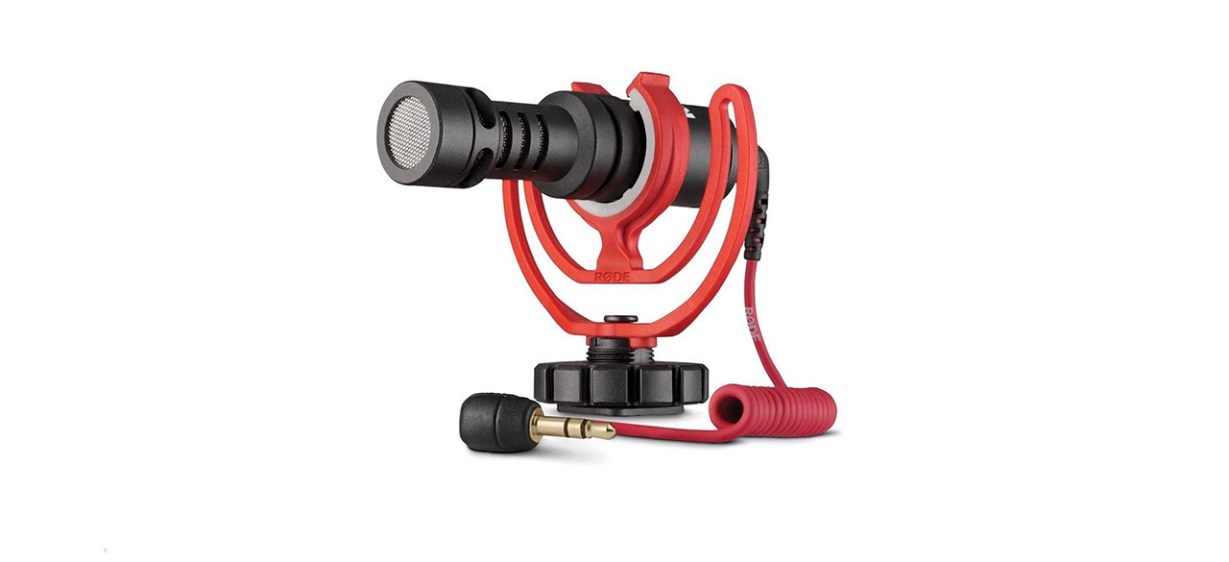
Rode VideoMicro Compact On-Camera Microphone with Rycote Lyre Shock Mount
This shotgun mic is one of the most compact around, as it is only 3 inches long and weighs just over an ounce. It draws power directly from the camera and comes with a Rycote Lyre shock mount and a deluxe furry windshield that keeps out wind noise. Sold by Amazon
Movo VXR10 Universal Video Microphone with Shock Mount
Mounted on the DSLR’s hot shoe, this shotgun unidirectional microphone doesn’t require a separate battery source. It’s perfect for capturing audio in most situations and comes with a windshield, carrying case and a 3.5-millimeter cable. Sold by Amazon
Comica CVM-VM20 Shotgun Microphone
It is easy to keep track of battery usage with this shotgun mic. It has an OLED display for power monitoring and levels of the built-in battery. It has a 10-level adjustable gain knob and the battery can last for around 60 hours on standby. Sold by Amazon
D Debra Audio Series UHF Wireless Lavalier Microphone
Perfect for recording audio during an interview or speech, this lavalier microphone connects to a DSLR camera through a wireless transmitter. It has 30 channels to minimize interference, an LED display to monitor battery levels and comes with lapel clips. Sold by Amazon
Shure VP83 LensHopper Camera-Mounted Condenser Microphone
This condenser microphone screws onto a DSLR through the hot shoe mount, and the battery lasts for about 125 hours. It’s excellent at recording audio that is directly in front of it, and it comes with a windshield. Sold by Amazon
Takstar SGC-598 Photography Interview Shotgun Microphone
Great for interviews, this high-sensitivity condenser microphone has a cardioid unidirectional pickup. It focuses on audio straight ahead and rejects any sounds from the surroundings. The replaceable battery lasts for up to 100 hours and it comes with a padded windshield. Sold by Amazon
Saramonic WM4CA Professional Portable Wireless VHF Handheld Microphone System
The handheld microphone connects wirelessly to the DSLR camera through a VHF transmitter, which has a range of 200 feet. The transmitter has a detachable antenna that can rotate 360 degrees for the best signal. The microphone has a manual on/off switch. Sold by Amazon
Maono Clip-on Lapel Mic with Omnidirectional Condenser
To get up close and personal with your audio, this lavalier microphone easily clips onto a collar. It connects to the DSLR camera through a 3.5-millimeter cable, which is also compatible with mobile phones. It comes with a small windshield, two batteries and a carry pouch. Sold by Amazon
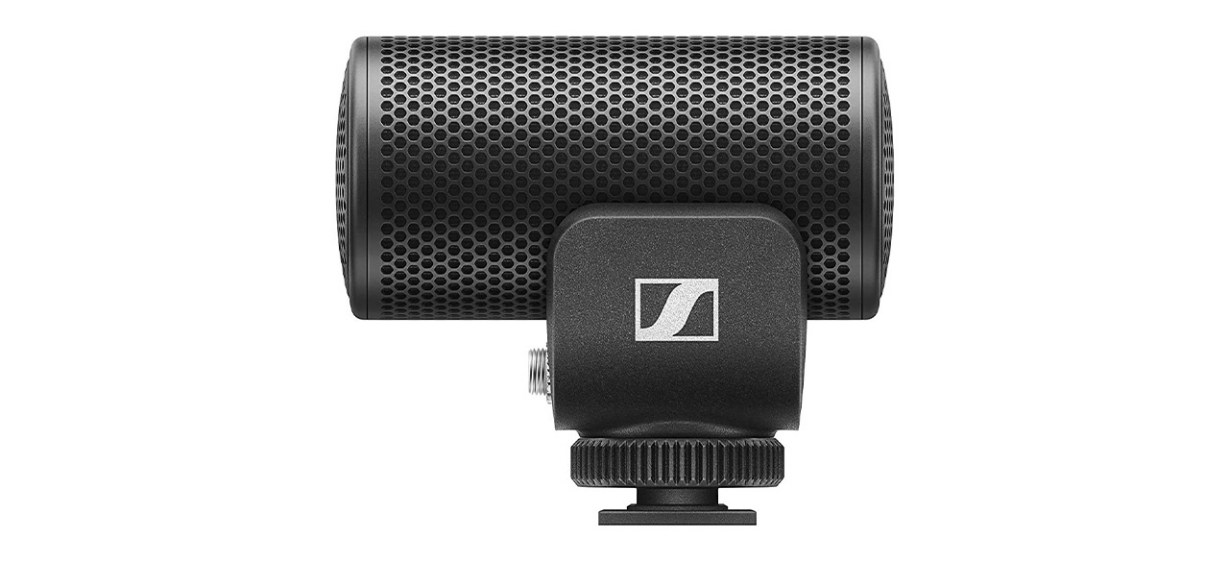
Sennheiser Professional MKE 200 Directional On-Camera Microphone
An excellent option for professional audio recording, this directional microphone from Sennheiser connects to a DSLR and mobile devices through a 3.5-millimeter cable. It has built-in wind protection and an internal suspension mount to minimize handling noise. It doesn’t have a battery and works on a cold shoe instead. Sold by Amazon
Want to shop the best products at the best prices? Check out Daily Deals from BestReviews.
Sign up here to receive the BestReviews weekly newsletter for useful advice on new products and noteworthy deals. 
Charlie Fripp writes for BestReviews. BestReviews has helped millions of consumers simplify their purchasing decisions, saving them time and money.
 
Copyright 2022 BestReviews, a Nexstar company. All rights reserved.

source

Audio captured Douglas County school board members give ultimatum to former superintendent: “We don’t want to make this super public” – The Denver Post

Digital Replica Edition
Sign up for Newsletters and Alerts

Sign up for Newsletters and Alerts
Digital Replica Edition
Trending:
The president and vice president of Douglas County’s school board told former superintendent Corey Wise that if he did not resign within a matter of days, the board’s newly-elected members would fire him for cause, according to an audio recording of the Jan. 28 meeting.
The audio was filed in district court Wednesday as part of the lawsuit Highlands Ranch resident Robert Marshall filed against the Board of Education, alleging the four majority members on the school board decided to replace Wise after holding a series of private one-on-one discussions that violated the state’s open records law. Mike Peterson and Christy Williams “communicated that decision” to Wise during the January meeting, the latest documents filed in the case allege.
“We don’t want to make this horrible, we don’t want to make this super public but we are prepared to do that if that’s the direction in which it has to go,” said  Williams, vice president of the board, can be heard telling Wise in the recording.
Earlier this year, three members of the school board — Susan Meek, Elizabeth Hanson and David Ray — held a hastily-scheduled public meeting in which they said Williams and board president Peterson had issued an ultimatum to Wise to resign or be voted out. They alleged that in doing so their colleagues — who they have repeatedly clashed with over district policies — violated the state’s open meeting law.
Four days later, Wise was fired without cause in a contentious public meeting that drew national attention and sparked student protests at multiple Douglas County School District schools. The vote was led by the four conservative members — Peterson, Williams, Becky Myers and Kaylee Winegar — who gained the board’s majority following last year’s election.
Wise was replaced by Erin Kane, who previously served as interim superintendent in 2016. Kane was asked to apply for the superintendent job by Peterson weeks before the job opening was posted.
The audio of the meeting between Wise, Peterson and Williams is notable in that the two board members have denied making a decision about the former superintendent’s future until voting to fire him during the public meeting on Feb. 4
“No decision was made about the superintendent until the fourth (of February),” Peterson testified during a hearing in February regarding the open-meetings lawsuit. 
Williams also testified that she didn’t make a decision “until I voted.” But she acknowledged that during the January meeting, the only options offered to Wise were resignation, retirement or termination.
But in the audio, Williams can be heard telling Wise that she thought the four board members had “a pretty good case” to fire the superintendent.
“I feel like there’s probably been a lot of things happening behind the scenes to work against the four of us,” she told him, adding, “Meetings have occurred that probably shouldn’t have occurred without at least (Peterson) knowing. I know a lot of things that happened…we believe we have enough for cause. That’s not the direction we want to go.”
But, Peterson added, the directors prepared to go in that direction if it had to, saying he had spoken to attorney Will Trachman the night before about Wise’s contract. (Wise had noted in the meeting that his contract wasn’t set to expire for another two years.)
Peterson told Wise they wanted him to decide by Tuesday, Feb. 1 on whether to resign.
“If not, if you call us Monday and you say, “No Mike, I don’t think I’d like to resign, I’d like to move forward with termination”, then we can get to a special meeting,” Peterson said.
The audio “shows, indisputably, that Peterson perjured himself when he testified under oath in an open court proceeding,” said Marshall, who filed the lawsuit against the board, in an email.
A spokeswoman for Douglas County School District could not immediately be reached for comment.
Wise has filed a state and federal discrimination complaint against the school district and four of its members, alleging he was unlawfully fired because he advocated for students with disabilities and students of color. He alleged in the complaint that he was terminated because he supported students and employees wearing masks in schools during the pandemic and because of his role in implementing the district’s equity policy.
Sign up for Newsletters and Alerts
We invite you to use our commenting platform to engage in insightful conversations about issues in our community. We reserve the right at all times to remove any information or materials that are unlawful, threatening, abusive, libelous, defamatory, obscene, vulgar, pornographic, profane, indecent or otherwise objectionable to us, and to disclose any information necessary to satisfy the law, regulation, or government request. We might permanently block any user who abuses these conditions. As of June 15, 2022, comments on DenverPost.com are powered by Viafoura, and you may need to log in again to begin commenting. Read more about our new commenting system here. If you need help or are having issues with your commenting account, please email us at [email protected].
Copyright © 2022 MediaNews Group

source

Master gardeners give back by nourishing community – WWNY

Cornell Cooperative Extension’s master gardener program is nationwide, in every county. It teaches gardeners, provides for the community — and more.
WATERTOWN, New York (WWNY) – “This is a Cornell Cooperatie Extension garden for growing produce that we donate to the Urban Mission’s food bank,” master gardener Laura Oakes said. “We have a whole litany of different vegetables, everything from tomatoes, kohlrabi. We have herbs, different fruits. I’m working on strawberries right now.”
For the past six years, volunteers have been seeding, weeding, planting, and plucking hundreds of pounds of produce for the Watertown community.
“Each year we improve, and my goal is we want to raise 2,000 pounds this year, which is a lot,” Mission Garden founder Dennis Crowley said, “but so far, we’re doing really well.”
That’s because these aren’t just any gardeners. They’re master gardeners.
“The master gardener is a fairly intensive course that’s been developed by the Cornell Cooperative Extension,” Carmelita Britton said. “As a master gardener you are expected to give back. Yes, we want you to use that information for your own private garden, but the expectation is that you give back to your community.”
The program also invites Fort Drum soldiers to volunteer so they can pursue careers in agriculture after the Army.
“I’ve always been interested in agriculture, and I happened to stumble upon a flyer from the farm ops,” said Spc. Alicia Ortiz. “There’s a lot of different opportunities out here so it’s an amazing program.”
“The mission is to bring knowledge to the community so the community can have more resources to feed and to nourish in their own ways,” Britton said.
Nourishing the mind, nourishing the environment, and nourishing those who may not otherwise have access to fresh produce.
“I just get satisfaction out of helping people and seeing people eat healthy,” Crowley said.
Cornell Cooperative offers the master gardener program every few years, if you’re interested in joining. If you’re interested in enjoying some of those delicious fruits and veggies, contact the Watertown Urban Mission, where fresh food arrives daily.
Copyright 2022 WWNY. All rights reserved.

source

EQ Declines, How Business Leaders Can Leverage AI to Turn the Tides – Unite.AI

Updated
 on
By
Over the past 50 years, emotional intelligence has declined globally. A 2018 ScienceAlert article by Peter Dockrill notes, “An analysis of some 730,000 results by the Ragnar Frisch Center for Economic Research in Norway reveals that the Flynn effect hit its peak for people born during the mid-1970s and has significantly declined ever since.” In other words, our EQ and IQ have been negatively impacted in our current world of technology – the rise of social media, always-on computing and an experience that neglects emotion.
Artificial intelligence has the potential to help humans improve not only their IQ, but their EQ as
well. However, vital components of human communication are often excluded when it comes to
technology, leading to a frustrating user experience, loss of valuable insights, premature or
uninformed decision making and ultimately a lower emotional awareness.
“We have a lot of neurons in our brain for social interactions. We’re born with some of those skills, and then we learn more. It makes sense to use technology to connect to our social brains, not just our analytical brains.” Stanford Professor Erik Brynjolfsson said. “Just like we can understand speech and machines can communicate in speech, we also understand and communicate with humor and other kinds of emotions. And machines that can speak that language — the language of emotions — are going to have better, more effective interactions with us.”
With the 4th Industrial Revolution in our wake, AI technology is learning to detect and interpret
verbal and non-verbal human emotional indicators such as tone, facial expressions and body
language. Algorithms have significantly improved due to advances in emotion detection, NLP, sentiment analysis, machine learning, and a greater combination with linguistics and psychology.
Voice AI technology alone has already made its way into billions of end users’ hands through
innovations like Alexa, Siri, and Google Assistant. The voice technology industry is projected to
grow to a staggering $55B by 2026. With all these existing technologies at our fingertips, why
are we still getting frustrated when our messages are not heard?
The answer is simpler than we think. Existing technologies, are in essence, tone-deaf. They lack the ability to recognize the emotions behind our words. While our commands might be heard, our tone is not.
We may have incredible voice technologies that recognize and interpret the meaning behind
language and word choice, but we have also created machines that are missing part of the
picture. Words only make up 7% of human communication. Whereas tone of voice is the
number one passive indicator of what someone is thinking and accounts for nearly 40% of
human communication. A figure too high to ignore.
A new frontier of emotional understanding has arrived in the form of tonal analytics. Tone is
quickly becoming a standard necessity for automated analyses and the future of voice
communication. Voice is everywhere and conversational AI is growing exponentially. Tone, like
voice, is everywhere; however, tone is largely untapped. Tone of voice is needed to bridge the
gap between humans and machines. By incorporating tonal AI with other forms of conversational AI, such as text and body language software, a more comprehensive emotional understanding is generated. Together these technologies intelligently connect all facets of complex and unstructured data to paint a clearer picture of human communication.
Uniphore, a conversational AI unicorn, provides a customer service platform to improve corporate conversations across calls centers to through the sales process. Uniphore’s technology leverages voice AI, computer vision and tonal emotion. Today, the firm is valued at $2.5 billion with over $620 million in funding and is rapidly expanding internationally. Co-Founder, Umesh Sachdev, noted the importance of conversational intelligence, “Understanding conversations and the data and insights derived from them is essential to every business.” Conversations are only understood when all factors – word choice, body language, facial expressions and tone of voice – are taken into consideration.
Other, more medically-targeted voice AI companies, leverage the nuances in voice to help diagnose patients suffering from different diseases. Sonde Health analyzes vocal biomarkers to identify patients with Parkinson’s disease faster than ever before, allowing for quicker treatment. At CompanionMX, a phone application can help identify patients with depression by analyzing vocal patterns. The data generated builds a well-rounded concept of a patient’s mental state and the app format makes the technology more accessible to end users.
In the world of finance, startup Helios Life Enterprises is translating tonal nuances of executives’ voices into actionable insights to advance how investors make decisions. During earnings calls and other audio or video events, executives distribute a substantial amount of important information via speech. The tone of voice is a channel that leaks emotional information and it is extremely difficult to hide this. Helios is rapidly attracting attention in the finance industry due to its differentiated focus and the fact that it is the only company that generates tonal analytics of executives (more than 4K US equities). Helios accounts for those crucial tonal components necessary to being understood and has created an entirely new channel of insights within the alternative data space ($143.31 billion by 2030).
From call centers to sales to medicine to finance, the use cases for tone are endless and the
question has become: how will tonal insights shape new industries and change existing ones?
As artificial intelligence develops a higher EQ via tonal insights, it is vital that leaders consider
how the technology will play a role in their firms and industries at large.
Interventional Radiology Is Ripe for AI Disruption – Thought Leaders
Sean is the Co-Founder & CEO at Helios Life Enterprises, a platform that brings artificial intelligences to the world of financial equity traders and researchers.
Interventional Radiology Is Ripe for AI Disruption – Thought Leaders
How Human Genome Sequencing & Deep Learning (AI) Can Revolutionize Personalized Healthcare
Planning, PoC, and Production of an Successful AI-Driven Enterprise Solution
Laying the Groundwork for AML 2022: Shifting Attention to Entity-Centric Detection
Five Reasons Why AI Algorithms Can Be Difficult to Implement in Operational Management
Artificial Intelligence Is the Next Step for Smart Homes
Advertiser Disclosure: Unite.AI is committed to rigorous editorial standards to provide our readers with accurate information and news. We may receive compensation when you click on links to products we reviewed.
Copyright © 2021 Unite.AI

source

US to increase military presence in Europe – The Washington Post

US to increase military presence in Europe  The Washington Post
source

Implementing mixed nursing care teams in intensive care units during COVID‐19: A rapid qualitative descriptive study – Wiley

Implementing mixed nursing care teams in intensive care units during COVID‐19: A rapid qualitative descriptive study  Wiley
source

X-ray finds 109 live animals in women's luggage at Bangkok airport, Thai officials say – CNN

source

Xtrapol8 enables automatic elucidation of low-occupancy intermediate-states in crystallographic studies | Communications Biology – Nature.com

Thank you for visiting nature.com. You are using a browser version with limited support for CSS. To obtain the best experience, we recommend you use a more up to date browser (or turn off compatibility mode in Internet Explorer). In the meantime, to ensure continued support, we are displaying the site without styles and JavaScript.
Advertisement
Communications Biology volume 5, Article number: 640 (2022)
Metrics details
Unstable states studied in kinetic, time-resolved and ligand-based crystallography are often characterized by a low occupancy, which hinders structure determination by conventional methods. To automatically extract structural information pertaining to these states, we developed Xtrapol8, a program which (i) applies various flavors of Bayesian-statistics weighting to generate the most informative Fourier difference maps; (ii) determines the occupancy of the intermediate states by use of methods hitherto not available; (iii) calculates extrapolated structure factors using the various proposed formalisms while handling the issue of negative structure factor amplitudes, and (iv) refines the corresponding structures in real and reciprocal-space. The use of Xtrapol8 could accelerate data processing in kinetic and time-resolved crystallographic studies, and as well foster the identification of drug-targetable states in ligand-based crystallography.
Once reserved to a handful of proteins and specialized laboratories, time-resolved and kinetic crystallography (TRX, KX) are on the verge of widespread adoption. This momentum is owed mostly to the advent of room-temperature serial crystallography, pioneered at X-ray free electron lasers (XFEL)1 yet swiftly implemented at synchrotrons where ease of access and a larger user-base hold promise for groundbreaking studies2. A main limitation of TRX and KX remains that full occupancy of the triggered state is hardly ever attained in the crystalline macromolecule, resulting in co-existence with the reference state. Low occupancy may also poison data collected from crystalline ligand-protein complexes, obscuring ligand identification and conformational changes undergone by the protein upon binding.
Based on the assumption that structure factor phases hardly vary upon reaction initiation and progression, and provided that the two datasets are isomorphous, the calculation of Fourier difference electron density maps is a convenient means to highlight the largest structural differences between a reference and a triggered state dataset3,4:
This assumption holds true for the vast majority of TRX and KX experiments, where only limited conformational changes are observed, and as well for binding of a small molecule to a crystalline protein. It may further remain an acceptable approximation for larger structural changes in which a substantial number of atoms in the unit cell are involved, provided that the isomorphism between the two dataset remains high5 (e.g., ref. 6). The information content of Fourier difference maps can be improved by Bayesian-statistics weighting of structure factor amplitude (SFA) differences7,8, yet these maps can be featureless when structural changes or the triggered-state occupancy are small, or if a mixture of triggered states accumulates9, whose overlaying positive and negative difference peaks cancel each other. Furthermore, Fourier difference maps may allow modeling of the triggered state structure, but not its refinement, limiting both insights and reproducibility. By use of extrapolation methods, whereby SFA differences are inversely scaled to the occupancy of the triggered state and summed with reference SFAs, the hypothetical SFAs for the triggered state present at full occupancy can be estimated, enabling both refinement of the triggered state structure, and to identify potential co-existing intermediate states:
where α is the reciprocal occupancy of the triggered state (α = 1/occupancy) and w a potential weighting factor. With the advent of serial crystallography, and the consequential blooming of TRX studies, the demand for extrapolation methods has risen, but these remain obscure to the vast majority of crystallographers for three main reasons. Firstly, the chosen occupancy is determined but hardly ever justified in absence of methods to estimate the triggered state occupancy based on crystallographic data only. Secondly, each lab resorting to structure factor extrapolation makes use of its own library of custom-written scripts, generally assembled over years of practice in TRX and KX, making results not easily reproducible. Thirdly, various flavors of extrapolation exist whereby users have the possibility to exploit Bayesian-statistics to downweigh SFA difference outliers, refine phases from the reference state structure against extrapolated SFAs (ESFAs), and recalculate the figure of merit of these phases prior to generation of extrapolated maps. Here, we introduce Xtrapol8, a new software aimed at resolving these issues, and discuss its design and usage. Briefly, provided a triggered state dataset, and a reference dataset and model, Xtrapol8 firstly calculates a weighted Fourier difference electron density map to unbiasedly visualize differences between the reference and triggered state. Secondly, Xtrapol8 computes optionally-weighted ESFAs, and carries out real-space and reciprocal-space refinements in an automated fashion. Finally, Xtrapol8 provides estimates of the triggered state occupancy via two independent methods hitherto not available. The difference-map method estimates the occupancy based on difference electron density maps, whereas the distance-analysis method relies on the automatically refined (reciprocal-space and realspace) structures. We showcase Xtrapol8’s utility by application to recently published KX data collected on the photoconvertible fluorescent protein mEos4b10. In the Supplementary Information we further evaluate the versatility of Xtrapol8 by revisiting a variety of previously-published challenging TRX or KX studies.
Written in python, Xtrapol8 requires only the CCP411 and Phenix12 suites to run. Only standard packages and the cctbx toolbox13 are used, which are automatically loaded from the phenix.python environment. This facilitates usage as well as transfer between laboratory computers and data collection centers (XFELs, synchrotrons). Fig. 1 shows Xtrapol8’s overall outline and recommended usage. The minimal required input are two data files in mtz or mmcif format, associated to the reference (ground, native, apoprotein) and the triggered (derivative, ligand-bound, intermediate, excited) state, respectively; a model associated to the reference state in pdb or mmcif format; additional files required for proper handling of ligands (such as crystallographic information files, or custom modification files), and a list of possible occupancies for the triggered state (Fig. 1). Depending on the user’s experience, many additional parameters can be adjusted including resolution cutoffs, scaling parameters, weighting schemes, and parameters for difference map exploration or structure refinement.
Xtrapol8 roadmap. The four main steps followed by Xtrapol8 are depicted in blue. User input are highlighted by yellow boxes, with obligatory input further highlighted in bold. Steps specific to the ‘fast-and-furious’ (default options: q-weighting of difference map and ESFAs, rescue of negative ESFAs using the truncate method, occupancy determination based on the difference-map method; additional step 5: refinement in both reciprocal-space and real-space at the automatically determined occupancy) and ‘calm-and-curious’ modes are boxed in purple and green, respectively.
Xtrapol8 takes four main steps when run in the ‘calm-and-curious’ mode (Fig. 1): (1) Reading of input files and quality assessment, and preparation of the files needed for the next steps; (2) Calculation of the optionally-weighted Fourier difference map, integration of peaks and assignment to reference model atoms; (3) Calculation of ESFAs using a variety of formalisms for a user-defined range of possible occupancies, integration of peaks in the extrapolated difference maps and assignment to reference model atoms, and optional automatic structure refinements; (4) Estimation of the triggered state occupancy and assignment of the most likely ESFAs and electron density maps for the triggered state structure. The program can also be run in a ‘fast-and-furious’ mode, in which the refinements in steps 3 are omitted and only performed in a fifth additional step at the automatically determined occupancy of the triggered state. In the ‘Fo-Fo map only’ mode, only the first and second step are carried out.
Xtrapol8 can be controlled through the command line or via a graphical user interface (XtrapolG8) written in wxPython as a frontend to the command-line version. The ‘Configure’ tab features three input panels arranged according to the different steps (Input/Output, FoFo/Extrapolation, Refinement) with a selection of options and parameters that are hidden/shown depending on the user-selected expertise level and Xtrapol8 mode (Fo-Fo map only, fast-and-furious, calm-and-curious; Fig. 2, Supplementary Figs. 1–4). The ‘Results’ tab also consists of three panels. The first panel shows the progression of the Xtrapol8 run by tailing the log file. The second panel displays the general output figures, e.g., the plots of Riso and CCiso (see below) as a function of resolution, of the fraction of negative ESFAs as a function of intermediate state occupancy, or the results of the occupancy determinations and refinements (Supplementary Fig. 5a). The last panel shows plots specific to a given type of ESFAs and occupancy, accessible through two dropdown menus, e.g., the plots of the number of negative ESFAs or of ESFA signal-to-noise ratio as a function of resolution. Coot can be directly opened from XtrapolG8 and will load the Fourier difference and extrapolated maps, and the refinements’ output (Supplementary Fig. 5b, c). For the automatically determined occupancy, an all-atom distance difference matrix is also computed between the refined extrapolated-structure and the reference model, whereby the plotted value for each residue corresponds to the sum of the changes in distance for all constitutive atoms.
Panel of the GUI in which the user can alter the options concerning the Fourier difference maps and ESFAs, with zoom-in on some input fields. Details on all input and output tabs and panels is provided in Supplementary Figs. 1–5.
The input data files should contain merged data in the form of SFAs or intensities (Supplementary Methods). In the case where only the latter are available, they will be converted into SFAs using the French-Wilson algorithm14 in truncate (CCP4)15. Afterwards, pointless15 will be run to verify consistent indexing between the triggered and reference datasets, and if needed, will be used to reindex the triggered dataset in respect to the reference dataset. The two datasets are then trimmed so as to retain only reflections present in both sets of observed data and lying within the optionally user-defined resolution limits. In the case where no resolution limit is defined, the program will use all data present in the input data files.
Prior to difference map and ESFA calculations, the model-derived calculated SFAs are scaled anisotropically to the reference data using mmtbx.fmodel16,17 while scaling of the triggered to the reference data is performed anisotropically or isotropically by scaleit11. At this step, statistical indicators informing on the isomorphism between the input data sets are calculated, which inform users on the probability that both sensible Fourier difference maps and ESFAs can be calculated. Specifically, the R-factor (Riso) between the two datasets is calculated using:
where ({F}_{{{{{{rm{obs}}}}}}}^{{{{{{rm{reference}}}}}}}) and ({F}_{{{{{{rm{obs}}}}}}}^{{{{{{rm{triggered}}}}}}}) are the SFAs of the reference and triggered states, respectively. An overall Riso value lower than 0.10 indicates strong isomorphism between the two data sets, but values up to 0.25 can still lead to useful difference and extrapolated electron density maps4. The isomorphism-indicating correlation coefficient (cciso) is calculated using:
On the assumption that the structural differences between the reference and triggered state(s) are small—i.e., only a few specific atoms change position, with no rotation or translation of the molecule in the unit cell—the phases of the triggered and the reference states hardly differ, which enables investigators to extract information on the triggered state by calculation of a Fourier difference map (Eq. 1). A simple subtraction between the two sets of SFAs gives a similar weight to all of them, regardless of their measurement precision. Ursby and Bourgeois7 suggested the use of q-weighting, whereby the magnitude of the difference between SFAs and the relative errors on their measurements are used to downweigh unlikely SFA differences. The use of Bayesian statistics to improve Fourier difference maps was also proposed by Terwilliger and Berendzen18. Later, Ren et al. introduced a simpler weighting scheme8, to which we refer to as k-weighting in analogy to q-weighting. In Xtrapol8, the user has the choice to calculate q-weighted, k-weighted or non-weighted Fourier difference maps, but the default is set to q-weighting. In the k-weighting scheme, the extent to which outliers are downweighed can be adjusted by an additional parameter, that has been set to 0.0519 or 1.08,20 depending on reports, with the first one being the default in Xtrapol8.
An important feature of Xtrapol8 is the map-explorer module, which will search for peaks in difference maps, integrate and assign them to the closest reference model atom within a given radius, and generate an unbiased list of residues whose positions change relative to those in the reference model. Based on this list, the residues with the highest integrated peak volumes can be used to evaluate the occupancy of the triggered state in a later stage of the program. The stringency in the selection of difference peaks can be adjusted—not only in terms of the maximal and minimal heights for peak selection and integration, respectively, but as well in terms of Z-score filtering and search radius. Default values for first three parameters are ± 4 r.m.s.d., ± 3 r.m.s.d. and 2, while the search radius is defaulted to the highest resolution.
Extrapolated structure factor amplitudes are estimates of the SFAs that the triggered state would have given rise to if it had been present at full occupancy in the crystal. The general formula for calculating ESFAs is presented in Eq. 2. The weighting factor w and the Fadditional term have found different interpretations in the literature, explaining that various extrapolation approaches exist. Firstly, Fadditional was initially derived from the reference model (i.e., ({F}_{{{{{{rm{model}}}}}}}^{{{{{{rm{reference}}}}}}}) or ({F}_{{{{{{rm{calc}}}}}}}^{{{{{{rm{reference}}}}}}}) depending on whether or not bulk-solvent modeling is included)18, but use of measured reference state SFAs (({F}_{{{{{{rm{obs}}}}}}}^{{{{{{rm{reference}}}}}}})) was later put forward by Genick and co-workers5,21. Whether the ({F}_{{{{{{rm{obs}}}}}}}^{{{{{{rm{reference}}}}}}}) should be preferred to ({F}_{{{{{{rm{model}}}}}}}^{{{{{{rm{reference}}}}}}}) is still under debate22, illustrating that it likely depends on the experimental case. Secondly, one can question whether or not the q/k-weighting scheme used in Fourier difference map calculations to reduce the weight of uncertain SFA differences should also be applied in the calculation of ESFAs (weighting factor w)23,24,25, leading to yet another nuance. Finally and perhaps more subtly, initial extrapolated electron density maps are being calculated using the phases of the reference model, but the associated figure of merit (m) can be chosen to represent the phase agreement between the ESFAs and reference state model, or originate from the reference state5,21. As the latter has been proposed by Genick et al.5, we refer to these as the (q/k)Fgenick ESFA type. Overall, this leads to nine different types of ESFAs and corresponding extrapolated maps (Table 1), reflecting the variety of approaches that have been followed depending on the experimental case and laboratory since introduction of extrapolation methods.
The parameter α is inversely related to the occupancy of the triggered state, but its correct value remains unknown until occupancy determination has been carried out. Two methods are available in Xtrapol8 to estimate the triggered state occupancy, either based on the raw extrapolated maps or on the refined extrapolated models. Hence, extrapolated SFAs, maps and models are calculated for each of the user-supplied occupancy values, and occupancy determination is performed at the end of the Xtrapol8 run. By default, and in the fast-and-furious mode, only the qFextr type of ESFAs is calculated. Nevertheless, all nine types of ESFAs—or a subset thereof—can be calculated in a single run in the calm-and-curious mode, leading to a maximum of 9 independent occupancy estimations by each of the two occupancy determination methods—or 18 estimates.
For each occupancy, extrapolated SFAs and map coefficients are used in three subsequent refinement steps. Firstly, a reciprocal-space refinement of the reference state input model is carried out against the ESFAs, allowing to account for small changes in atomic positions and thereby ameliorate the phases and associated figure of merit m, which in turn will result in clearer mFextrapolated − DFcalc and 2mFextrapolated − DFcalc electron density maps. The latter and the corresponding refined model are then used in automatic real-space refinement, enabling to model conformational changes too large to have been accounted for by reciprocal-space refinement. In addition, real-space refinement of the reference model is also carried out against the initial extrapolated electron density map (calculated before reciprocal-space refinement and update of phases and figure of merits), which offers an unbiased view of the information content in the extrapolated data. The user has the possibility to perform these automatic reciprocal-space and real-space refinement using either phenix.refine26 and phenix.real_space_refinement27 or refmac28 and coot29, respectively. An important limitation in streamlining the refinement steps is that they are performed starting from the reference model, which may or may not be adequate to accurately refine the triggered state. With the exception of waters, which can be automatically updated during reciprocal-space refinement when using phenix.refine, no atoms can be removed or added during the Xtrapol8 run. For this reason, it is advisable that automatic refinement is not carried out in studies where covalent bonds are being formed or broken, or if the detection and localization of a ligand is of interest. At the command line, the automatic refinement steps can be disabled by setting the refinement.run_refinement parameter to “False”. When using the graphical user interface XtrapolG8, users need to un-check the “Perform refinement with” option in the Refinement panel of the Configure tab.
Density modification can aid in meliorating the phase information and cleaning up the electron density maps, offering a better base for real-space refinement. Regardless of the suites of programs used for reciprocal-space and real-space refinement, density modification is performed using the CCP4 program dm11. We indeed found that this program is generally unsensitive to the often non-ideal distribution of ESFAs and their standard deviations.
An often-overlooked issue in structure factor extrapolation is the presence of negative ESFAs. Their origin lies in large negative values of the weighted difference amplitudes (first term in Eq. 2) that cannot be compensated by the additional amplitude term (second term in Eq. 2). For a small occupancy, and thus a large α-value, the percentage of negative ESFAs can become large, which will result in decreasing the true completeness (i.e., the completeness of the positive reflections only) below a critical value of 90%. Indeed, negative SFAs are not handled by refinement programs so that the refinement is carried out against incomplete data, resulting in weak electron density maps and non-converging refinement. In Xtrapol8, we propose different approaches to correct for this issue. In the first approach, the negative reflections are removed, on the ground that the error in the measurements of the associated reflections is too large to lead to a reliable estimate5. However, rejecting these may strongly alter the resulting extrapolated maps while biasing the result toward the positive difference amplitudes. In the second approach, the artificial negative reflections are set to zero, under the assumption that true values of these physically-impossible negative ESFAs are weak, but this treatment implies losing important information on their relative strength14 and again biasing the result toward the positive amplitudes. In the third approach, the negative ESFAs can be replaced by their corresponding values in either the observed (left({F}_{{{{{{rm{obs}}}}}}}^{{{{{{rm{reference}}}}}}}right)) or calculated (left({F}_{{{{{{rm{model}}}}}}}^{{{{{{rm{reference}}}}}}}right)) reference datasets, under the assumption that the strong negative difference amplitude is a consequence of measurement errors in ({F}_{{{{{{rm{obs}}}}}}}^{{{{{{rm{triggered}}}}}}}) and that the triggered state closely resembles the reference state. Predictably, however, this approach will bias results towards the reference state, which can lead to an unreliable occupancy estimate and alteration of the extrapolated maps. Importantly, usage of this option should mirror the ESFA-calculation strategy (Table 1), i.e., negative ESFAs should be replaced with ({F}_{{{{{{rm{obs}}}}}}}^{{{{{{rm{reference}}}}}}}) in the case where (q/k)Fextr and (q/k)Fgenick ESFAs are used, but with ({F}_{{{{{{rm{model}}}}}}}^{{{{{{rm{reference}}}}}}}) when ESFAs are calculated using the (q/k)Fextr,calc method. Finally, just as with intensities originating from a diffraction experiment with a fully occupied crystal, also the extrapolated intensities, calculated as the square of the ESFAs multiplied by their initial sign, are supposed to follow the Wilson distributions30. Structure factors can be re-calculated from the extrapolated intensities by the use of an algorithm taking the French-Wilson algorithm14 into account, e.g., truncate15. This approach yields the lowest Rwork and Rfree values in reciprocal-space refinement and the most defined electron density around atoms in the model—as judged by higher CCmask and CCvolume after real-space refinement—hence it is the default. This option has yet the drawback that all structure factors are being re-calculated, not just the negative ones. Hence, in cases where negative ESFAs amount to less than 5 % of all ESFAs, other strategies may become preferable.
Determination of the occupancy of the triggered state is one of the main features of Xtrapol8. Indeed, the ESFAs vary as the occupancy changes (Eq. 2), hence incorrect estimation of the occupancy could lead to under- or overrefinement of structural features in the triggered state. Xtrapol8 features two complementary methods for the occupancy estimation, both fully based on the X-ray data without any external assumption or prior knowledge about the triggered state, and with only minimal expectations on the behavior of the structure factors and map coefficients. Both methods can make use of all atoms in the asymmetric unit; of atoms displaying the strongest peaks in the Fourier difference map (as identified by map-explorer); or of a user-defined selection of residues, ligands and waters.
The first method, the difference-map method, relies on the analysis of the initial extrapolated difference map, i.e., that obtained before refinement of the structure (mFextrapolated,occ − DFcalc; last column in Table 1). When calculated using the correct reciprocal-space occupancy (α) value, this map strongly resembles the Fourier difference map, with positive and negative peaks pointing to appearing and disappearing features with respect to the reference model, respectively. Peaks in the mFextrapolated,occ − DFcalc maps grow in height as the reciprocal occupancy α increases towards the correct value, and then decrease upon further augmentation of α due to an increase in the map noise level. The occupancy that yields the extrapolated difference map with the highest signal-to-noise (S/N) ratio is retained as the most probable one. In practice, we first integrate all peaks in the difference map; use the sum of the integrated absolute values of all peaks as a measure of the noise level in the map (N); utilize a Z-scoring approach to single out the most significant peaks and use the sum of their integrated absolute values as a measure of the signal level in the map (S); plot the normalized S/N ratio as a function of α; and pick as the correct occupancy that for which S/N is maximized.
The difference-map method is most closely related to the experimental data. However, it only provides solid results when the Fourier difference map, and thus the extrapolated difference maps, contains features that can be clearly distinguished from noise. In cases where this condition is not fulfilled, the peaks in the Fourier and mFextrapolated,occ − DFcalc maps are small, hence the occupancy determination based on the maximization of the S/N ratio may fail. This might happen when multiple species occupy the same site and reduce each other’s signal, or if it was not possible to collect enough data for the reference or triggered state. In such cases, users are advised to check if the default parameters used for the analysis—i.e., maximal and minimal heights for peak selection and integration, and Z-score filtering—are not too stringent for their data, and re-run the analysis using slightly modified parameters.
If occupancy determination by the difference-map method nonetheless fails, users can still rely on the distance-analysis method, which estimates the occupancy based on the evolution of differences in interatomic distances between the reference model and the models automatically refined at increasing α values. Indeed, we found empirically that atoms which undergo positional changes in the triggered state move from their initial position in the reference model to their final position in the extrapolated structures with a sigmoidal dependence—i.e., after a slow increment, the distance difference increases steadily with α and then levels at a plateau value indicating that only noise is being added to the maps upon further increasing α. Thus, an estimate of the α value can be extracted by (1) fitting a sigmoid to the distance changes in function of α for each pair of atoms (i, j) (d(i, j) = f(α)); (2) extracting αi,j as the α-value closest to the point where those shifts are 99% of the plateau; and (3) plotting the distribution of αi,j and retaining the average 〈αi,j〉 and maximum in the distribution (Supplementary Methods). Inasmuch as that the difference signal contributes systematically to the ESFAs (as opposed to noise), the distance-analysis method will provide a reliable estimate of the occupancy—even in cases where the difference signal is too weak to visually standout in the Fourier difference map.
In the default ‘calm-and-curious’ mode, Xtrapol8 performs calculations in the most thorough way possible. For rapid data evaluation (e.g., during data collection) or to estimate the parameters for a next run, calculations can be expedited using the ‘fast-and-furious’ mode. In this mode, default parameters will be used for most arguments, i.e., only the q-weighted Fourier difference map, and ESFAs and map coefficients of the qFextr type will be calculated (Table 1), and refinements will only be performed at the occupancy estimated by the difference-map method (Fig. 1, steps 1–5). As a consequence, occupancy determination using the distance-analysis method is not possible in the ‘fast-and-furious’ mode. As most of the Xtrapol8 runtime is occupied by the refinement steps, this mode reduces the overall runtime greatly, allowing crystallographers in the midst of an experiment to take decisions swiftly. Xtrapol8 can also be run in a ‘Fo-Fo map only’ mode in cases where users only need to calculate a Fourier difference map (Fig. 1, steps 1-2).
The output of an Xtrapol8 run is stored in a directory whose name can either be defined by the user or automatically called ‘Xtrapol8’. This directory will contain the Fourier difference map, a log file, a Pymol session, and various figures meant to help in the evaluation of data quality and interpretation of results (Supplementary Fig. 6). The log file contains the most important information, such as statistics on the input files, the location of output files, the number of negative ESFAs and the results of the occupancy estimation. A subdirectory is created for each tested occupancy value, with the name indicative of whether ESFAs were q-weighted, k-weighted or not weighted. These subdirectories will contain the ESFAs as well as the results from refinements. For each type of ESFAs, a coot session is provided in the subdirectory corresponding to the estimated occupancy.
The main ambivalence with extrapolation is that in order to calculate the most plausible set of ESFAs, the occupancy must be known. However, occupancy estimations based on X-ray data can only be carried out after the initial extrapolated electron density maps (difference-map method) or refined extrapolated models (distance-analysis method) have been produced. Therefore, the scheme outlined in Fig. 3 is advised to obtain optimal results in the shortest time. Running Xtrapol8 in the ‘calm-and-curious’ mode with improper settings would indeed result in a waste of (computation) time, notably when the program is used to monitor the progress and success of an experiment. Most appropriate is therefore that users run Xtrapol8 in the ‘Fo-Fo only’ or ‘fast-and-furious’ mode until good parameters are found. A first good sign is that scaling statistics look reasonable, i.e., Riso (Eq. 3) and CCiso (Eq. 4) display decent values (Riso < 0.20; CCiso > 0.80) even in the highest resolution shell (Riso < 0.40; CCiso > 0.60). In the case they are not, users should check their data processing and merging statistics and the unit cell parameters of the reference and triggered datasets in order to increase their chances of getting useful results.
Suggested workflow for efficient usage of Xtrapol8. Users are advised to first run the program in the ‘Fo-Fo map only’ mode in order to evaluate the height of peaks in the difference Fourier map. Secondly, it is recommended to run Xtrapol8 in ‘fast-and-furious’ mode (purple boxes) to obtain a crude estimate of the occupancy based on the difference-map method, and a first characterization of the triggered state structure. Finer exploration can then be carried out using the ‘calm-and-curious’ mode (green boxes), which will refine the occupancy determination based on the difference-map method, produce refined structures for all tested occupancies and ESFA strategies, and enable orthogonal occupancy determination by the distance-analysis method. Evaluation criteria are shown in blue, user actions are depicted in yellow.
Ideally, the Fourier difference map should cover specific residues (e.g., active sites residues) and the 2mFextrapolated − DFcalc electron density maps should be of acceptable quality (i.e., cover all atoms in the model without breaks in the electron density nor spurious peaks in the solvent channels). It may be, however, that no peaks are visible in the Fourier difference maps, in which case users should proceed with extrapolation so as to verify whether or not information is present in the 2mFextrapolated − DFcalc and mFextrapolated − DFcalc electron density maps. When this is not the case, the scaling parameters and resolution boundaries may need to be altered.
Finding the correct occupancy of the triggered state may require optimization. If features in the Fourier difference map are clear, the default difference-map method with preset parameters should provide proper results for the estimated occupancy. A wider range of possible occupancies should be tried, and parameters for the map-explorer altered if no clear maximum emerges in the plot of mFextrapolated,occ − DFcalc S/N ratios as a function of α. Features in the difference maps may be genuinely weak, in which case the difference-map analysis will not allow to discriminate between tested occupancy values, yet the distance-analysis method may offer solace. This method however relies on the real-space refined models, and thus requires to run Xtrapol8 in the ‘calm-and-curious’ mode. Alternatively, users that have already run Xtrapol8 in the ‘fast-and-furious’ mode can use the refiner.py script (Supplementary Methods) to refine models and apply the distance-analysis method – either starting from the reference model or a manually-modified model. Additional details concerning the optimization of the results can be found in the Supplementary Methods.
The green-to-red photoconversion of mEos4b is the basis of its usage as a marker in photo-activated localization microscopy (PALM). Yet the existence of reversible dark-states, which form upon excitation of the red-emitting state, has long limited its application in single-particle-tracking (spt) PALM. Based on KX experiments, whereby crystalline mEos4b in the green-emitting state was first slowly converted to the red-emitting state and then illuminated by a 561-nm laser before freeze-trapping, a long-lived dark state was identified whose characterization enabled the design of a new data collection scheme suited for the recording of long tracks in spt-PALM31. In the reference (red-on) and triggered (red-off) datasets, two and three states co-exist, respectively, illustrating how complex investigated structural dynamics may be in TRX and KX studies (Fig. 4a).
The models in cyan and green are mEos4b in the red-on and red-off state, respectively, as downloaded from the PDB (PDB entry 6GP0 and 6GP1, with the only difference that features of green mEos4b were omitted) with the chromophore indicated in yellow (reference state, a, b) and magenta (triggered state, d–e). a traditional 2mFobs − DFcalc electron density after rigid body refinement of the red-on state model in the red-off data indicates the absence of signal for the red-off state. b q-weighted Fourier difference map (({F}_{{{{{{rm{obs}}}}}}}^{{{{{{rm{red}}}}}}-{{{{{rm{off}}}}}}}-{F}_{{{{{{rm{obs}}}}}}}^{{{{{{rm{red}}}}}}-{{{{{rm{on}}}}}}})) superposed on the red-on model. c the difference-map method maximizes the information content of extrapolated difference maps and estimates the occupancy to be 0.325 (magenta dashed line). d–e Initial q-weighted 2mFextrapolated − DFcalc (d) and mFextrapolated − DFcalc (e) electron density maps calculated for an occupancy of 0.325 superposed on the red-off model. f The distance-analysis method, which approximates the correct occupancy by fitting a sigmoid to the evolution of interatomic distances as a function of all tested occupancies and then retrieves the occupancy value for which 99% of the plateau is reached, returns an occupancy estimate of 0.380.
We first ran Xtrapol8 in the ‘Fo-Fo map only’ mode to ascertain both isomorphism of the data and occurrence of conformational changes in the triggered dataset. The isomorphism between the reference (PDB entry 6GP0) and triggered dataset (PDB entry 6GP1) is high, with an overall Riso of 0.106 (highest resolution shell Riso= 0.261; 2.5% increase in unit cell volume; Supplementary Fig. 7a). The q-weighted Fourier difference map (({F}_{{{{{{rm{obs}}}}}}}^{{{{{{rm{red}}}}}}-{{{{{rm{off}}}}}}}-{F}_{{{{{{rm{obs}}}}}}}^{{{{{{rm{red}}}}}}-{{{{{rm{on}}}}}}})) shows strong features on the chromophore and surrounding residues up to a resolution of 1.5 Å (Fig. 4b). Running Xtrapol8 in the ‘fast-and-furious’ mode, we tested eight occupancies in the 0.1–0.7 range. Occupancy estimation using the difference-map method pointed to the triggered state (red-off) displaying an occupancy between 0.3 and 0.4 (Supplementary Fig. 7b). Altogether, Fourier difference map calculation, estimation of the occupancy and production of reciprocal and real-space models of the triggered state took 20 min on a mid-range laptop.
Subsequently, Xtrapol8 was run in the ‘calm-and-curious’ mode. By testing 25 occupancies, the final occupancy was determined to be 0.325 (Fig. 4c) using the difference-map method. The initial extrapolated mFextrapolated-DFcalc and 2mFextrapolated-DFcalc map confirmed the occurrence of large structural changes in the chromophore and surrounding residues (Fig. 4d, e). Some of these could not be modeled automatically during reciprocal and real-space refinements, requiring manual intervention to model chromophore isomerization and accompanying conformational changes. The final triggered state model was characterized by Rwork/Rfree and CCmask values of 20.91/23.81% and 91.48%, respectively (compared to values of 15.55/19.00 and 94.67 %, respectively, for mEos4b in the reference red-on state)31. Similar results were obtained when other types of ESFAs and weighting schemes were used (Table 1; Supplementary Figs. 8, 9). Electron density features were only less pronounced in the case of (q/k)Fgenick extrapolated maps5 or k-weighted extrapolated maps with a high k-scale outlier rejection factor. This observation suggests that recalculating figures of merit for each set of ESFAs benefits extraction of structural features for the triggered states, enabling the observation of lower occupancy structural changes. The use of maximum likelihood weighted maps is also likely beneficial, as it allows one to take into account not only errors on phases (mref or m) but also those on the measurement and estimation of SFAs (D). Specific to mEos4b, similar results were obtained with all possible treatments of negative ESFAs implemented in Xtrapol8, i.e., when they were rejected, set to 0, replaced by ({F}_{{{{{{rm{obs}}}}}}}^{{{{{{rm{reference}}}}}}}) or ({F}_{{{{{{rm{calc}}}}}}}^{{{{{{rm{reference}}}}}}}), or rescued by use of the truncate method (Supplementary Figs. 10, 11). This is likely due to their low amount in ESFAs calculated for an occupancy of 0.325 (ranging from 3.0 to 11.2% depending on the ESFA calculation strategy).
The manually-modified triggered state model was finally subjected to automatic reciprocal and real-space refinements against all sets of ESFAs and maps calculated for different occupancies, respectively, enabling the performance of the distance-analysis method for occupancy estimation to be verified. To this end we used the refiner.py script (Supplementary Methods), which allows the relaunching of all refinements and offers the possibility to run the distance-analysis method based on the refined models. The occupancy was thereby estimated to be 0.38 (Fig. 4f), offering orthogonal confirmation for the occupancy determined by the difference-map method. The distance-analysis method was hardly sensitive to the number of atoms used for the estimation, yielding similar results when either all protein atoms or exclusively atoms with strong difference map peaks were used.
In the Supplementary Results and Discussion sections, we revisit other TRX, KX and ligand-binding studies that required high-end expertise in crystallography and extensive data processing, yet could be addressed within hours by use of Xtrapol8 (Fig. 5, Supplementary Figs. 12–24). We show in at least two cases (see rsEGFP2 and Shoot-and-Trap test cases) that superior results could have been obtained by the use of Xtrapol8, and how beneficial the proper handling of negative ESFAs can be for modeling and refinement. By enabling automatic elucidation of low-occupancy intermediate states, thereby minimizing the time required to extract meaningful results, Xtrapol8 may accelerate discoveries in TRX, KX and ligand-binding studies. Additionally, it should benefit systematicity and reproducibility of extrapolated map calculation and triggered state structure refinement.
In the Supporting results and discussion, we evaluate the versatility and performance of Xtrapol8 by revisiting other time-resolved (TRX), kinetic (KX) and ligand-binding crystallographic studies. For each case the Fourier difference map superposed on the reference state (with carbon atoms of the proteins and ligands colored in cyan and yellow, respectively) and extrapolated electron density map superposed on the triggered state model (with carbon atoms of the proteins and ligands colored in green and magenta, respectively) are shown. a A temperature-dependent KX study was conducted on the covalent complex of acetylcholinesterase with a non-hydrolysable substrate analog, whereby X-rays were used to radiolytically cleave bonds, including disulfide bridges and the bond tethering the substrate analog to the catalytic serine35. By use of extrapolation, deeper insights could be obtained revealing two binding poses for the radiolytically produced carbocholine product, trapping of CO2 from radiolysis of buried acidic residues. b A TR-SFX study was conducted on the reversibly fluorescent protein rsEGFP2 with aim to determine the structure of the excited state that preludes isomerization and off-to-on fluorescence switching24. Xtrapol8 allowed obtaining similar results as published earlier for the 1 ps time delay dataset. In the Supplementary results and discussion, we show that Xtrapol8 further allows extending the results obtained at the 3 ps time delay. c Comparison of the performance of PanDDA and Xtrapol8 in revealing the electron density of a small compound in a fragment-screening study (BAZ2BA-538)36,37.
We here introduced Xtrapol8, a software aimed at standardizing Fourier difference map calculation and application of extrapolation methods. Unique to Xtrapol8 is that it tackles a variety of issues related to Fourier difference maps and extrapolation methods, most notably the need to (i) weight structural observations to maximize the information contents of difference SFAs; (ii) rescue negative ESFAs which can result in sub-optimal refinement and electron density maps; and (iii) determine the triggered state occupancy based solely on X-ray data. As Xtrapol8 offers the possibility to calculate all types of ESFAs at once, and to compare results, it should increase reproducibility while allowing users to make informed decisions as to the method best suited for their project. A level of customization is offered on most important parameters, but defaults are carefully set and Xtrapol8 can be run from the command line or via a GUI, so that adequate results are within reach for experienced and novice users.
We applied Xtrapol8 on several sets of published TRX, KX and ligand-binding data. These examples were run using Phenix12 v.1.19 and the associated cctbx modules32, CCP411 v.7.1 and Coot 0.8.9 or 0.9.4, unless stated differently. Figures were prepared using Pymol 2.533.
Additional methods concerning the refiner.py script and details covering data handling and quality assessment, good user’s practice and occupancy determination are provided in the Supplementary Methods section.
Bayesian weighting of difference SFAs and ESFAs (q/k-weighting) is performed as described in ref. 7 and ref. 8. To find the highest peaks in the difference maps (difference-map method), a Z-scoring approach is applied to the selected peaks if they follow a normal distribution (α = 0.05), otherwise all selected peaks are used for occupancy determination. For the distance-analysis occupancy estimation method, only those distances are maintained that are within the 2-6 Å range and to which a logistic function (frac{L}{1,+,{e}^{-kleft(alpha -{alpha }_{0}right)-1}}) (with L being the maximum value, k the steepness and α0 the α -value of the sigmoidal inflection point) can be fitted with an R2 of at least 0.95 and a χ2 of 0.5, and with boundaries set to allow for an occupancy of the triggered state between 1 and the maximum sampled occupancy.
Further information on research design is available in the Nature Research Reporting Summary linked to this article.
The data and models used during the current study were downloaded from the Protein Data Bank for the following entries: 6GP0 (https://doi.org/10.2210/pdb6gp0/pdb), 6GP1 (https://doi.org/10.2210/pdb6gp1/pdb), 5DTX (https://doi.org/10.2210/pdb5dtx/pdb), 5DTY (https://doi.org/10.2210/pdb5dty/pdb), 5O8A (https://doi.org/10.2210/pdb5o8a/pdb), 2VJA (https://doi.org/10.2210/pdb2vja/pdb) and 2VJB (https://doi.org/10.2210/pdb2vjb/pdb). The BAZ2BA dataset was downloaded from Zenodo (https://doi.org/10.5281/zenodo.48768).
The code and user manual are available at https://github.com/ElkeDeZitter/Xtrapol8, under MIT license34. Xtrapol8 makes use of the ccp411 and Phenix12 crystallographic suites, as well as the cctbx modules32 which are available upon Phenix installation.
Brändén, G. & Neutze, R. Advances and challenges in time-resolved macromolecular crystallography. Science. 373, eaba0954 (2021).
Article  Google Scholar 
Pearson, A. R. & Mehrabi, P. Serial synchrotron crystallography for time-resolved structural biology. Curr. Opin. Struct. Biol. 65, 168–174 (2020).
CAS  Article  Google Scholar 
Fermi, G., Perutz, M. F., Dickinson, L. C. & Chien, J. C. Structure of human deoxy cobalt haemoglobin. J. Mol. Biol. 155, 495–505 (1982).
CAS  Article  Google Scholar 
Rould, M. A. & Carter, C. W. Jr Isomorphous difference methods. Methods Enzymol. 374, 145–163 (2003).
CAS  Article  Google Scholar 
Genick, U. K. Structure-factor extrapolation using the scalar approximation: theory, applications and limitations. Acta Crystallogr. D. Biol. Crystallogr. 63, 1029–1041 (2007).
CAS  Article  Google Scholar 
Mous, S. et al. Dynamics and mechanism of a light-driven chloride pump. Science 375, 845–851 (2022).
CAS  Article  Google Scholar 
Ursby, T. & Bourgeois, D. Improved estimation of structure-factor difference amplitudes from poorly accurate data. Acta Crystallogr. Sect. A 53, 564–575 (1997).
Article  Google Scholar 
Ren, Z. et al. A molecular movie at 1.8 A resolution displays the photocycle of photoactive yellow protein, a eubacterial blue-light receptor, from nanoseconds to seconds. Biochemistry 40, 13788–13801 (2001).
CAS  Article  Google Scholar 
Lang, P. T. et al. Automated electron-density sampling reveals widespread conformational polymorphism in proteins. Protein Sci. 19, 1420–1431 (2010).
CAS  Article  Google Scholar 
Paez-Segala, M. G. et al. Fixation-resistant photoactivatable fluorescent proteins for CLEM. Nat. Methods 12, 215–218 (2015).
CAS  Article  Google Scholar 
Winn, M. D. et al. Overview of the CCP4 suite and current developments. Acta Crystallogr. D. Biol. Crystallogr. 67, 235–242 (2011).
CAS  Article  Google Scholar 
Liebschner, D. et al. Macromolecular structure determination using X-rays, neutrons and electrons: recent developments in Phenix. Acta Crystallogr. D. Struct. Biol. 75, 861–877 (2019).
CAS  Article  Google Scholar 
Brünger, A. T. et al. Crystallography & NMR system: a new software suite for macromolecular structure determination. Acta Crystallogr. D. Biol. Crystallogr. 54, 905–921 (1998).
Article  Google Scholar 
French, S. & Wilson, K. On the treatment of negative intensity observations. Acta Crystallogr. A 34, 517–525 (1978).
Article  Google Scholar 
Evans, P. R. & Murshudov, G. N. How good are my data and what is the resolution? Acta Crystallogr. D. Biol. Crystallogr. 69, 1204–1214 (2013).
CAS  Article  Google Scholar 
Afonine, P. V., Grosse-Kunstleve, R. W., Adams, P. D. & Urzhumtsev, A. Bulk-solvent and overall scaling revisited: faster calculations, improved results. Acta Crystallogr. D. Biol. Crystallogr. 69, 625–634 (2013).
CAS  Article  Google Scholar 
Grosse-Kunstleve, R. W. & Adams, P. D. On the handling of atomic anisotropic displacement parameters. J. Appl. Crystallogr. 35, 477–480 (2002).
CAS  Article  Google Scholar 
Terwilliger, T. C. & Berendzen, J. Difference refinement: obtaining differences between two related structures. Acta Crystallogr. D. Biol. Crystallogr. 51, 609–618 (1995).
CAS  Article  Google Scholar 
Greisman, J. B., Dalton, K. M. & Hekstra, D. R. reciprocalspaceship: a Python library for crystallographic data analysis. J. Appl. Crystallogr. 54, 1521–1529 (2021).
CAS  Article  Google Scholar 
Schmidt, M., Graber, T., Henning, R. & Srajer, V. Five-dimensional crystallography. Acta Crystallogr. A 66, 198–206 (2010).
CAS  Article  Google Scholar 
Genick, U. K. et al. Structure of a protein photocycle intermediate by millisecond time-resolved crystallography. Science 275, 1471–1475 (1997).
CAS  Article  Google Scholar 
Yun, J. H. et al. Early-stage dynamics of chloride ion–pumping rhodopsin revealed by a femtosecond X-ray laser. Proc. Natl Acad. Sci. USA 118, e2020486118 (2021).
CAS  Article  Google Scholar 
Colletier, J. P. et al. Use of a ‘caged’ analogue to study the traffic of choline within acetylcholinesterase by kinetic crystallography. Acta Crystallogr. Sect. D. Biol. Crystallogr. 63, 1115–1128 (2007).
CAS  Article  Google Scholar 
Coquelle, N. et al. Chromophore twisting in the excited state of a photoswitchable fluorescent protein captured by time-resolved serial femtosecond crystallography. Nat. Chem. 10, 31–37 (2018).
CAS  Article  Google Scholar 
Terwilliger, T. C. & Berendzen, J. Bayesian difference refinement. Acta Crystallogr. D. Biol. Crystallogr. 52, 1004–1011 (1996).
CAS  Article  Google Scholar 
Afonine, P. V. et al. Towards automated crystallographic structure refinement with phenix. refine. Acta Crystallogr. D. 68, 352–367 (2012).
CAS  Article  Google Scholar 
Afonine, P. V. et al. Real-space refinement in PHENIX for cryo-EM and crystallography. Acta Crystallogr. D. Struct. Biol. 74, 531–544 (2018).
CAS  Article  Google Scholar 
Murshudov, G. N. et al. REFMAC5 for the refinement of macromolecular crystal structures. Acta Crystallogr. D. Biol. Crystallogr. 67, 355–367 (2011).
CAS  Article  Google Scholar 
Emsley, P., Lohkamp, B., Scott, W. G. & Cowtan, K. Features and development of Coot. Acta Crystallogr. D. Biol. Crystallogr. 66, 486–501 (2010).
CAS  Article  Google Scholar 
Wilson, A. J. C. The probability distribution of X-ray intensities. Acta Crystallogr. 2, 318–321 (1949).
Article  Google Scholar 
De Zitter, E. et al. Mechanistic investigation of mEos4b reveals a strategy to reduce track interruptions in sptPALM. Nat. Methods 16, 707–710 (2019).
Article  Google Scholar 
Grosse-Kunstleve, R. W., Sauter, N. K., Moriarty, N. W. & Adams, P. D. The Computational Crystallography Toolbox: crystallographic algorithms in a reusable software framework. J. Appl. Crystallogr. 35, 126–136 (2002).
CAS  Article  Google Scholar 
Schrödinger, L. The PyMOL Molecular Graphics System, Version~2.5. Schrödinger, LLC.
De Zitter, E., Coquelle, N., Oeser, P., Barends, T. R. M. & Colletier, J.-P. Xtrapol8: v0.9.5-beta. https://doi.org/10.5281/ZENODO.6560832 (2022).
Colletier, J. P. et al. Shoot-and-trap: Use of specific x-ray damage to study structural protein dynamics by temperature-controlled cryo-crystallography. Proc. Natl Acad. Sci. USA 105, 11742–11747 (2008).
CAS  Article  Google Scholar 
Pearce, N. M. et al. A multi-crystal method for extracting obscured crystallographic states from conventionally uninterpretable electron density. Nat. Commun. 8, 15123 (2017).
Article  Google Scholar 
Pearce, N. M., Bradley, A., Marsden, B. D. & von Delft, F. PanDDA analysis of BAZ2B screened against Zenobia Fragment Library https://doi.org/10.5281/ZENODO.48768 (2016).
Download references
We thank all beta-testers of Xtrapol8. We are grateful to Dominique Bourgeois, Martin Weik, Ilme Schlichting and Kyprianos Hadjjidemetriou for continuous support and stimulating discussions. IBS acknowledges integration into the Interdisciplinary Research Institute of Grenoble (IRIG, CEA). This work was supported by the Agence Nationale de la Recherche (grants ANR-17-CE11-0018-01 and ANR-2018-CE11-0005-02 to J.-P.C.).
Univ. Grenoble Alpes, CEA, CNRS, Institut de Biologie Structurale, 38000, Grenoble, France
Elke De Zitter, Paula Oeser & Jacques-Philippe Colletier
European Synchrotron Radiation Facility (ESRF), BP 220, 38043, Grenoble, France
Nicolas Coquelle
Max-Planck-Institut für medizinische Forschung, Jahnstrasse 29, 69120, Heidelberg, Germany
Thomas R. M. Barends
You can also search for this author in PubMed Google Scholar
J.-P.C. designed the project; E.D.Z. wrote the Xtrapol8 python code, with contributed bash scripts and python modules from N.C., P.O., T.R.M.B. and J.-P.C.; N.C. wrote the Xtrapol8 graphical user interface python code, with inputs from E.D.Z. and J.-P.C.; E.D.Z. and J.-P.C. performed and analyzed case studies; E.D.Z. and J.-P.C. wrote the paper.
Correspondence to Jacques-Philippe Colletier.
The authors declare no competing interests.
Communications Biology thanks Nicholas Pearce and the other, anonymous reviewer(s) for their contribution to the peer review of this work. Primary Handling Editor: Gene Chong.
Publisher’s note Springer Nature remains neutral with regard to jurisdictional claims in published maps and institutional affiliations.
Open Access This article is licensed under a Creative Commons Attribution 4.0 International License, which permits use, sharing, adaptation, distribution and reproduction in any medium or format, as long as you give appropriate credit to the original author(s) and the source, provide a link to the Creative Commons license, and indicate if changes were made. The images or other third party material in this article are included in the article’s Creative Commons license, unless indicated otherwise in a credit line to the material. If material is not included in the article’s Creative Commons license and your intended use is not permitted by statutory regulation or exceeds the permitted use, you will need to obtain permission directly from the copyright holder. To view a copy of this license, visit http://creativecommons.org/licenses/by/4.0/.
Reprints and Permissions
De Zitter, E., Coquelle, N., Oeser, P. et al. Xtrapol8 enables automatic elucidation of low-occupancy intermediate-states in crystallographic studies. Commun Biol 5, 640 (2022). https://doi.org/10.1038/s42003-022-03575-7
Download citation
Received:
Accepted:
Published:
DOI: https://doi.org/10.1038/s42003-022-03575-7
Anyone you share the following link with will be able to read this content:
Sorry, a shareable link is not currently available for this article.

Provided by the Springer Nature SharedIt content-sharing initiative
By submitting a comment you agree to abide by our Terms and Community Guidelines. If you find something abusive or that does not comply with our terms or guidelines please flag it as inappropriate.
Advertisement
Advanced search
Communications Biology (Commun Biol) ISSN 2399-3642 (online)
© 2022 Springer Nature Limited
Sign up for the Nature Briefing newsletter — what matters in science, free to your inbox daily.

source

🌱 Task Force Proposal + Principal Retires + Gateway Project Update – Patch

Hello, everybody! It’s Kristen, your host of the Dunedin Daily — back in your inbox with all of the latest news.

First, today’s weather:
A heavy t-storm in the p.m. High: 89 Low: 80.
Our local sponsors have some great stuff to offer:
Want to see your business featured in this spot? Click here to get started.
Here are the top three stories in Dunedin today:
From our sponsor:
Are you a Dunedin resident looking for an investment alternative to the stock market?
Bloomberg recently asked experts where they’d invest $100,000 right now, and many of them had the same answer: fine art.
Thinking you can’t afford a Picasso? Well in 2012, Congress passed the JOBS Act, which allowed for the securitization of artwork. A company called built the largest platform for buying and selling art securities. In the past, you could only buy shares of companies like Apple, but with this investing app, you can unlock this powerful investment.
Meaning, you can invest in shares of million-dollar artwork. And in uncertain times, it turns out, fine art may be a wise investment. Here’s why:
To learn more, visit , where Dunedin Daily readers can skip the waitlist.
See important Reg A Disclosures
Dunedin Daily Pic of the Day:


Thank you Jim Hughes for submitting your photo of your pup Penny taken at the Honeymoon Island dog beach!
Want to see your Dunedin photo here? Submit it to [email protected] for consideration! Please confirm in the email that you own the rights to the photo, and that Patch has permission to republish it.

Today in Dunedin:

From my notebook:
More from our sponsors — thanks for supporting local news!
Featured businesses:
Events:
For sale:
Alrighty, you’re all good for today! See you tomorrow for another update.


Get more local news delivered straight to your inbox. Sign up for free Patch newsletters and alerts.

source

Waterfront South Tampa apartments sold for $132.8M – Tampa Bay Times

A 689-unit apartment complex in South Tampa sold for $132.8 million last week, according to Hillsborough County records.
Dallas real estate investment firm Lurin purchased The Cove On The Bay at 4003 S West Shore Blvd. from New York-based Gamma Real Estate on June 21. The sale was facilitated by commercial real estate firm Berkadia.
The waterfront complex offers studio, one- and two-bedroom apartments and a range of amenities, including three swimming pools, a fishing pier and a kayak launch. Rent runs between $1,561 and $1,714 for a 495-square-foot studio and $2,430 to $2,767 for an 872-square-foot, two-bedroom, two-bathroom, according to the Cove on the Bay’s website.
“The Cove represents a unique opportunity to acquire a value-add community with an irreplaceable waterfront location in South Tampa,” Jason Stanton, senior managing director for Berkadia, said in a statement. “The new owner has plans to renovate units and enhance the property’s amenity package.”
According to the company’s website, Lurin owns three other apartments in the area — Elements on Third and Milo Bayside in St. Petersburg and The Delmar in Tampa.
Real Estate Reporter
This site no longer supports your current browser. Please use a modern and up-to-date browser version for the best experience.
Chrome — Firefox — Safari — Edge

source

Man gets prison for abuse – Coeur d'Alene Press

Cook
COEUR d’ALENE — A man who “tortured” a family through physical and psychological abuse will spend up to 20 years behind bars.
Travis A. Cook, 44, of St. Maries, pleaded guilty earlier this year to two counts of injury to a child, as well as to domestic battery in the presence of a child, aggravated assault and attempted strangulation, all felonies.
He also pleaded guilty to a misdemeanor count of injury to a child.
First District Judge Barbara Duggan sentenced Cook on Tuesday to 20 years in prison for the numerous offenses, with seven years fixed and the remaining time indeterminate.
That means Cook will be eligible for parole in about seven years.
The charges stem from December 2021, when the Kootenai County Sheriff’s Office responded to a report that Cook had spanked a crying baby hard enough to bruise.
A witness provided police with photos of the child’s injuries, as well as an audio recording that depicted Cook attacking another child.
Police said “horrifying screaming” was audible in the recording.
Evidence of other offenses surfaced after Cook’s arrest on the initial charges.
A teen boy described to police multiple instances when Cook attempted to drown him, holding him down in a partially filled bathtub and forcing his head into a bucket of water.
Cook once slapped the boy hard enough to perforate his eardrum. He repeatedly put the boy in chokeholds and punched him with a closed fist.
A girl said Cook choked her multiple times. She described experiencing tunnel vision, saying she feared she would lose consciousness and never wake up.
Prior to sentencing, a woman told the court that her life changed for the better in December, when police arrested Cook.
“I found the courage to call the police and shed light on the darkness we had lived in for many years,” she said.
She wept as she told the court about the decade of abuse she endured.
Cook slapped and punched her, kicked her, spat on her and repeatedly choked her to unconsciousness, all while blaming her for the violence he meted out.
He threatened her with a gun many times, she said, and once shot at her head while they were in a moving vehicle.
She hid her injuries with makeup and avoided seeking medical care for fear that others would discover the abuse.
“All this while being told he is a Christian and the Holy Spirit is telling him about me,” she said.
Cook reportedly “weaponized” the Bible’s teachings, using his Christian faith to manipulate his victims and control them through fear.
He once reportedly forced a victim to write a letter saying she was “a liar and an unrepentant sinner,” which their pastor read aloud to the congregation.
“He took religion to another level and used it to dominate,” said prosecutor Rebecca Perez.
Perez said Cook’s conduct was “terrifying.”
“This is the worst domestic violence case I’ve ever seen,” she said. “He tortured this family for years.”
Cook sobbed as he addressed the court, expressing “sorrow and disgust” for his actions.
“It just tears me apart each day,” he said.
Cook reportedly never denied the abuse allegations and refused to consider pleading not guilty.
“I just wanted to come clean from the start,” he said.
Before handing down the sentence, Judge Duggan noted that Cook’s victims endured “years of pain, suffering and a complete absence of mercy.”
Duggan said the severity of Cook’s abuse made prison the only appropriate sentence.
“Your victims have shown remarkable resilience,” she said.
If you or someone you know is experiencing domestic violence or sexual abuse, call Safe Passage Violence Prevention Center’s 24-hour hotline: 208-664-9303.
twitter
facebook
LinkedIn
Email
copyright © 2022 Terms of Use | Privacy Policy 215 N. 2nd St. Coeur d’Alene, ID 83814
208-664-8176

source

Bloomingdale's Launches Exclusive AQUA x Studio 189 Collection – PR Newswire

Searching for your content…
In-Language News
Contact Us
888-776-0942
from 8 AM – 10 PM ET
News provided by
Jun 29, 2022, 09:00 ET
Share this article
The summer capsule collection, called "AKUA", features Studio 189’s artisan-produced fabrics to debut at The Surf Lodge
[LINK TO DOWNLOAD EDITORIAL & BTS IMAGES HERE]
NEW YORK, June 29, 2022 /PRNewswire/ — Bloomingdale’s today announces AQUA x Studio 189, a limited-edition collaboration between the retailer’s best-selling exclusive brand and the artisan-produced fashion luxury lifestyle brand and social enterprise co-founded by luxury executive and educator Abrima Erwiah and actress and activist Rosario Dawson. The collection features vibrant hand-dyed prints produced by Studio 189 artisans in Ghana in vibrant summer-ready styles including dresses, tops, skirts, and swimwear – all designed to be mixed and matched. The AQUA x Studio 189 collection launches on July 1 at Bloomingdale’s stores nationwide and on Bloomingdales.com. Bloomingdale’s will host celebrations at The Surf Lodge in Montauk, N.Y., from June 29 to July 4, with special integrations across the property, including the premiere of AQUA x Studio 189 collection in the boutique. View and shop the AQUA x Studio 189 collection here.
"By partnering with AQUA on this collection, we’re able to celebrate the work of our artisans on a whole new level," said Abrima Erwiah, Studio 189 co-founder. "The special hand-batiked prints that were created exclusively for this collaboration resulted in Studio 189’s largest single fabric order to date, which grants us the opportunity to present the craftsmanship of our artisans to a broader audience. It’s an accessible collection that embraces joy with vibrant and tropical designs fitting for the summer season." 
"We’re delighted to have had the opportunity to collaborate with Studio 189 on this beautiful collection," says Denise Magid, Executive Vice President and General Merchandise Manager for Ready-to-Wear, Center Core, Concessions and Bloomingdale’s Outlets.  "As a brand that works with artisanal communities that specialize in various traditional craftsmanship techniques, Studio 189 brings bold, inspired new looks to our beloved and best-selling AQUA portfolio this summer."
The AQUA x Studio 189 collection entitled "AKUA" was born on a Wednesday during New York Fashion Week after Bloomingdale’s Creative Director of AQUA Erica Ruff Hatfield contacted designer Abrima Erwiah to collaborate following Studio 189’s SS2022 Runway Show. "In Ghana, we are named after the days of the week. For example, Abrima is Nzema for Tuesday born. I felt very moved by this idea of birthing a new project "AKUA" when I was contacted by Bloomingdale’s and AQUA," says Erwiah. Akua is an Akan female name for a girl child born on Wednesday and is derived from deities. Akua is said to be a champion for the cause of others. Erwiah continued, "This was fitting because the goal of this collaboration was to allow Studio 189 to create more work for the communities we serve in Africa. We were able to produce more than 20,000 yards of hand-made fabric and activate rural communities that really need the work especially considering the effects of the pandemic and rising prices. This was also our first time producing in Asia which is where AQUA produces. We learned new ways of working via skills transfer from AQUA’s family-run factory that is based in LA, Korea and China. This was a true collaboration in every way. The team we worked with has been spectacular and have helped us to achieve our mission in providing jobs, to empowering women in disenfranchised communities, and to support education and skills training."
The AQUA x Studio 189 collection features vibrant prints produced by Studio 189 artisans using the art of hand-batiking. This art form starts with patterns carved into wood or sponge that are dipped into hot wax and stamped onto cloth. This cloth is dipped into hand-mixed dyes and then the wax is removed to unveil the finished design.
A total of 11 different hand-batiked prints were created exclusively for this collection, including palm leaves and pineapple motifs, each designed in bright, vivid color palettes. The summer styles can be worn on their own or mixed and matched with one another, with ready-to-wear pieces spanning halter maxi dresses, ruffled tiered skirts, miniskirts and more. The collection also marks the first-ever AQUA swim collaboration with one and two-piece swimsuits and that can be paired with the ready-to-wear styles for a beach to bar look. AQUA x Studio 189 has 17 apparel pieces and 8 swim styles ranging from $48 to $198.
AQUA is a contemporary, trend-driven brand available exclusively at Bloomingdale’s stores and online at Bloomingdales.com. Each season, AQUA features of-the-moment ready-to-wear apparel and accessories for a stylish head-to-toe look at an approachable price point. The brand has previously partnered with cultural figures and top brands, including Pendleton, Scout the City, Mary Katrantzou, Zendaya, Helen Owen, Mary Lawless Lee, Yigal Azrouël, Maddie & Tae, Zadig & Voltaire and Madeleine Thompson.
Bloomingdale’s will celebrate the AQUA x Studio 189 collection at The Surf Lodge over the 4th of July holiday weekend with integrations throughout the property. The Surf Lodge boutique will be the first to offer the AQUA x Studio 189 collection, which will be available June 29 – July 4. Continuing the celebration at The Surf Lodge, Bloomingdale’s will also be hosting a private dinner with guests of honor Studio 189 co-founders Abrima Erwiah and Rosario Dawson, and special musical performances.
Visit Bloomingdales.com here and your nearest Bloomingdale’s store to shop the full AQUA x Studio 189 collection starting Friday, July 1.
Bloomingdale’s is America’s only nationwide, full-line, upscale department store.  A division of Macy’s, Inc., it currently operates 33 Bloomingdale’s stores and 21 Bloomingdale’s, The Outlet Stores, in California, Connecticut, Florida, Georgia, Hawaii, Illinois, Maryland, Massachusetts, New Hampshire, New Jersey, New York, Pennsylvania, Texas, and Virginia, along with 1 Bloomie’s location in Virginia. In addition, Bloomingdale’s has an international presence with a location in Dubai. Founded in 1872, the iconic retailer is celebrating its 150th anniversary this year.  Be sure to follow @bloomingdales on social media, become a Loyallist, and for more information, or to shop any time, visit www.bloomingdales.com
Co-founded by Rosario Dawson and Abrima Erwiah, is an artisan produced fashion lifestyle brand and social enterprise that has recently been a recipient of the prestigious CFDA/VOGUE fashion fund grant and has also won the CFDA Lexus Fashion Initiative for Sustainability. The brand is made in Africa and produces African and African-inspired content and clothing. The brand currently operates a store in Accra (Ghana), an ecommerce site, a manufacturing facility in Accra, and supports various community led projects in Africa and in the USA. Studio 189 works with artisanal communities that specialize in various traditional craftsmanship techniques including natural plant based dye indigo, hand-batik, kente weaving and more. Studio 189 focuses on empowerment, creating jobs and supporting education and skills training. Studio 189 is the recipient of various awards including the prestigious FIT Changemaker Award, the Cooper Hewitt Smithsonian Emerging Designer Award and the Martin Luther King Jr Social Justice award from Upenn. The first collection launched on February 14th 2013 in honor of One Billion Rising. The mission took shape following a trip with Eve Ensler’s V-Day and Dr. Mukwege’s Panzi Hospital in February 2011, through Kenya, Burundi and Rwanda to Bukavu in the Democratic Republic of Congo for the opening of the City of Joy.
SOURCE Bloomingdale’s
Cision Distribution 888-776-0942
from 8 AM – 9 PM ET

source

How Sync Jobs Are Creating New Opportunities for Artists – Digital Music News


The following comes from Soundstripe, a company DMN is proud to be partnering with.
This is especially true for anyone looking to turn music into a full-time job. Making a career out of music (either as a performer, songwriter, or producer) has never felt more possible.
But these tools aren’t limited to just you. They’re resources anyone can access, download, and use. So while you are empowered and equipped to improve your work, so is everyone else. This increase in competition has made it harder than ever to land paying gigs, get more downloads, and attract new listeners.
However, there are some new things that have opened doors for every musician to monetize their work. One of the most interesting ones is sync work. And since music licensing is a convoluted and complicated process, let’s look at what sync licensing is and how it can become a new source of revenue for you.
sync jobs soundstripe
It’s not unusual to assume that licensing your music is an easy process. However, each type of music license covers a different medium; obviously our topic of discussion today is synchronization or sync licenses, which gives permission for someone to use your music in a video project. 
We won’t get too specific since most musicians are already familiar with this. Suffice to say that people who work in video (whether it’s YouTube, films, or advertising) need great music, and that means sync licenses are as much a part of video production as editing footage.
Think about it this way: For a lot of artists, working with music licensing companies can provide recurring revenue and jobs — in other words, the things that can lead to a more stable and reliable career for musicians. No more odd jobs or last-minute gigs. Just writing great music, licensing it out to a partner you trust, and making money for your hard work.
It sounds like a perfect world, but for many artists and producers, it’s becoming a reality.
We’ve spent a lot of time so far hyping up sync licensing, but let’s pair that with a splash of cold water: Devoting yourself to sync licensing work is not a get-rich-quick scheme. You won’t have the first track you submit get accepted, land top placement in a popular playlist, get licensed by Apple for their next AirPods ad, and turn into a $50,000 royalty check overnight.
Sync licensing (like basically any other path to success in the music industry) is a long-term challenge. Yes, licensing your music with an established library can provide an extra source of income, but in most cases that’s not going to be enough for you to quit your job or start turning down other gigs.

It’s a good reminder that someone can find enough sync work to help them achieve their dreams as a musician. But it’s equally important to know that your work will be competing with other talented artists and producers, and carving out a niche for yourself in a royalty free music library can be just as tough as finding a place in your local community’s music scene.
With that being said, there are a few starting points for anyone interested in finding sync jobs.
I mentioned that the market for royalty free music companies is growing — that means there are a lot of different websites, libraries, and companies out there. But submitting your acoustic folk work to 20 different places won’t do you any good if half of them only accept ambient electronic music, right?
Start doing research on the best music licensing companies. Look up YouTube content creators and see where they get their music. Find an active online community (like one of the many music-centric subreddits) and see what licensing options people are talking about. All of these will help you find different places and get an idea of what sort of music each library is known for.
You might read this subtopic and assume that I mean you need to write whatever kind of music is currently popular. That might help you, but the truth is that there is demand for every kind of music, which means there are music licensing companies for every genre.
However, it may mean you’ll need to adjust some things in your creative process. Maybe you’ll need to start creating stem tracks as a way to provide a greater variety. Or maybe how you mix your music needs some tweaking to target a specific audience.
sync jobs soundstripe
If you’re serious about finding sync jobs, there’s a good chance you’ll want to polish and perfect the tracks you’ve already made (or adjust your writing, producing, mixing, and mastering processes for all future tracks). 
In some cases, you may need to contract someone to get some support. That could even mean hiring an engineer or producer to check out some tracks and give feedback — after all, anything you can do to improve your music could be the difference between having your choice of licensing companies to work with…or receiving a handful of rejection emails.
Because in reality, that’s the case for your entire career. Sync jobs are creating opportunities for musicians and producers in every genre…but turning these opportunities into reliable sources of income will take time and dedication. 
These three steps are suggestions to help you get started and explore the different possibilities out there for you. Hopefully you’ll get familiar with sync licensing, understand how to find libraries, and choose whether or not this is something that works for where you’re at in your career as a musician.
Drew Gula is the senior content editor at Soundstripe, a company that provides creators and businesses with resources like royalty free music and music for commercials.
sync jobs

source

Riot details Master Yi, Taliyah, Elise, and other champ buffs coming to League in Patch 12.13 – Dot Esports

Over a dozen champions are receiving buffs in the update.
Many champions are set to receive buffs with Patch 12.12b and 12.13 in League of Legends, lead designer Matt “Phroxzon” Leung-Harrison revealed on social media, with others champions, like Bel’Veth and Wukong, taking on nerfs.
The champions that will receive the most significant buffs include Taliyah, who has been featuring among the lowest win rates in the game for weeks, Katarina, and Elise.
12.12b (Thursday) and 12.13. We're targeting non-burst buffs for burst oriented champs (which will increase burst some amount on account of snowballing a bit more). Gwen changes lower W, E uptime and hit R burst. Sivir changes aim to give her more moments of personal power. pic.twitter.com/G9BbtdjjYZ
Related: Seraphine has a whopping 56 percent win rate as bottom lane carry in League Patch 12.12
But Master Yi will be at the center of the balance update, as previously announced by the devs. He is to receive numerous buffs to put it back in the spotlight.
These buffs aim to make Master Yi shine more in ranked, especially in Platinum ranks and above, where he has among the worst pick and win rates, according to stats site U.GG.
In addition, Renekton is getting a buff, as well as Evelynn, Kled, Karthus, Galio, Vex, Olaf Jungle, Shaco, Caitlyn, and Leona.
League‘s patch 12.12b is expected to be introduced to the live servers on June 30, while Patch 12.13 will on July 13.
© 2021 Dot Esports

source

Lil Mav: An Up-and-Coming Hip Hop Producer from The Bronx – KAZI. Magazine

KAZI MAGAZINE
Lil Mav is a young hip-hop producer from the Bronx, New York, making a big name in the music industry. His music is unique and has a broad creative range. His love for music began at a young age, and he enjoys making songs with both melodic and energetic qualities.
Lil Mav started production when he was only 16 years old, and he quickly mastered the DAW (Digital Audio Workstation) FL Studio. It wasn’t long before he created beats that caught the attention of some of the biggest names in hip-hop!
Lil Mav – An Explosive New York Hip-Hop Producer
Some of his major inspirations include legends like Lil Wayne, T-Pain, Drake, and Chief Keef. He began creating music using FL Studio when he was 16 years old. It was only a matter of time until he fell in love with the program and started producing beats that would quickly pique the interest of some of hip-hop’s biggest names.
Lil Mav’s career as a songwriter and industry personality is exploding, with his YouTube channel having over 10.6K subscribers and more than a million views on his videos. 
Anyone who’s followed the career of Lil Mav knows that he’s a producer who isn’t afraid to take risks. His work with Kanye West on the hit record “City of Gods” is a perfect example of his willingness to push boundaries. The track, which features Fivio Foreign and Alicia Keys, landed on both Kanye West’s “Donda 2” and Fivio’s debut album “B.I.B.L.E,” and quickly went Gold. Lil Mav’s tunes also charted at #43 on the Billboard Hot 100 and at #9 on the Billboard Hot 200, indicating that he has a large mainstream popularity. Lil Mav is undoubtedly one of the most exciting producers working today, thanks to his innovative style and ability to capture listeners’ attention.
Musical Milestones Achieved by Lil Mav
At only 22 years old, Lil Mav has already accomplished more than most producers twice his age. In 2022, he had his first gold record and charted on Billboard for the first time. He is also projected to win a Grammy at the 2023 Grammy Awards. While these are all impressive feats, they are just the beginning for this young producer. With his unique blend of creative talent and business acumen, there is no doubt that Lil Mav will continue to make waves in the music industry for years to come.
Future Endeavors
This year, Mav is focusing on collaborating with more artists. His work with some huge names in the music industry has given him the exposure he needs to return to the scene with more determination than ever before. His production has taken new heights and raised the bar. His fans are unique, and his talent is undeniable. Mav is ready to take on the world and provide his supporters with the best music possible.
Check out Lil Mav’s music and follow him on social media to stay up-to-date on all his latest releases.
Instagram, Youtube and Twitter.

Your email address will not be published.


Kazi Magazine is one of the fastest growing online entertainment and hip-hop digital media companies based in New York specializing in online promotions, new music growth, artist development, and much more. Recently, through many years of hard work we have successfully been able to be major players in the blogging and digital industry.

source

Xbox Head Defends Bethesda In Wake Of Crunch Allegations – Kotaku

Advertisement
At an all-hands meeting on Thursday, Xbox addressed the growing employee concerns about labor conditions at Bethesda Game Studios and its parent company, ZeniMax. Matt Booty, head of Xbox Game Studios, said he was “confident” that the studio was not crunching, and that it was “unfair” to attribute crunch culture to only Bethesda.
In a Q&A, Booty was asked to address the Kotaku report from earlier this month which documented troubled working conditions at Bethesda and ZeniMax during the development of Fallout 76. He said that Xbox took crunch reports about its studios “seriously,” but added, “The challenge with a lot of these articles is that they look backwards, sometimes pretty far back in time.” While Kotaku’s report mentioned that crunch occurred on older productions such as Skyrim, it mainly addressed the crunch that took place in 2018 on Fallout 76.
Kotaku was able to independently verify the contents of this meeting by viewing a recorded video.
“Crunch culture is…if you go back 10 years ago, it’s a little unfair to put that on one studio,” said Booty. “It was just part of the industry. I don’t say that to justify it, I’m just saying it was part of the culture of the industry. I literally slept under my desk early in my career. And we looked at that like a badge of honor.”
Booty said that the working conditions detailed in the report were in the past. “I know from talking to Bethesda leadership that we do not have a situation where people are crunching and we’ve got this bullying atmosphere…I’m confident about that.”
32" 4K display
Delivers 240Hz with 1ms response time for incredibly smooth gameplay. The Quantum Matrix Technology, HDR 2000, and UHD resolution all work together to create a crystal clear picture. The Matte display reduces glare helping keep your eyes focused on the action in front of you.
He acknowledged that crunch could still take place without his knowledge, and said that employees needed to trust in Xbox’s internal processes. He said that Xbox’s human resources department would be willing to listen to employee concerns, and that all studios had support groups for individual disciplines. “There’s avenues for them to report that anonymously back to us that goes through HR,” Booty said. “We have to rely on those independent systems of checks and balances.”
Since the Xbox HR department is employed by Xbox, it could hardly be considered an “independent” entity.
The Xbox head said that overtime should only be kept to personal excitement and passion, and not a mandatory aspect of production scheduling. However, many ZeniMax testers who weren’t explicitly mandated to crunch had still worked overtime out of social and professional peer pressure. The crunch Kotaku documented took place before Xbox acquired ZeniMax and Bethesda. But the report noted that post-acquisition, Xbox had allegedly been a “hands-off” owner that typically did not make sweeping changes at newly acquired studios. At this week’s all-hands, Booty did not mention what actions Xbox would take if studios behaved in a way that did not align with his stated stance against crunch.
Kotaku reached out for comment to Matt Booty, Xbox, and ZeniMax, but did not receive a response at the time of publication.
Earlier this month, Kotaku published a report about the crushing working conditions behind the development of Bethesda’s multiplayer, open-world RPG Fallout 76. QA testers reported that they had worked 10-hour days, six days a week under precarious financial circumstances. They claimed that managers on the project had coerced them into working unsustainable amounts of overtime, which allegedly led many developers to quit the company. Former Bethesda employees said that Xbox took a hands-off approach to managing ZeniMax once the acquisition closed, frustrating workers who’d hoped that Microsoft would improve their employment benefits.
ZeniMax wasn’t the only Xbox-owned studio that allegedly received relative autonomy from the publisher. Former employees at Undead Labs also claimed that Xbox took a “hands-off” approach after acquiring that game studio. While it may seem good that the publisher is allowing acquired studios some operational freedoms, sources at Undead Labs worried that such permissiveness “allowed dysfunction to fester.”
As of early June, Microsoft has taken more overt public stances on game development labor. Last month, Xbox CEO Phil Spencer promised to recognize the Raven Software union once the Xbox acquisition of Activision Blizzard finalized. On June 2, Microsoft announced that it was willing to “collaborate” with labor organizations. While Microsoft certainly has to abide by local labor laws, the public statement holds the company publicly accountable for working with unions in good faith. Unlike an HR department, an employee union would actually constitute an independent entity from Xbox Game Studios.
However, Xbox has chosen not to publicly comment on the working conditions at ZeniMax Media since Kotaku’s report was initially published.
“As an employee what I’m taking away from this is that he’s saying to go through HR,” an anonymous Xbox employee told Kotaku. “And we know how that worked out at Blizzard.”
 

source

‹ Previous Next ›