Blog

Design and optimization of wall-climbing robot impeller by genetic algorithm based on computational fluid dynamics and kriging model | Scientific Reports – Nature.com

Thank you for visiting nature.com. You are using a browser version with limited support for CSS. To obtain the best experience, we recommend you use a more up to date browser (or turn off compatibility mode in Internet Explorer). In the meantime, to ensure continued support, we are displaying the site without styles and JavaScript.
Advertisement
Scientific Reports volume 12, Article number: 9571 (2022)
Metrics details
In recent years, wall-climbing robots have begun to replace manual work at heights to reduce economic losses and casualties caused by working at heights. This paper designs a negative pressure adsorption type wall-climbing robot and analyzes the internal fluid movement state of its negative pressure device and the force analysis of the robot when it is adsorbed and balanced. Furthermore, through the experimental prototype, the influence of wall material, robot pose, negative pressure cavity shape and sealing method on the adsorption performance of the wall-climbing robot is explored. The computational fluid dynamics simulation (CFD) simulation method and experimental results are used to verify each other, which proves the correctness of the simulation results. Based on the Kriging surrogate model, the functional relationship between the impeller blade outlet angle, the impeller inlet diameter, the number of blades as the design variables, the negative pressure as the dependent variable was established, and the genetic algorithm (GA) was used to optimize it. Compared with the original design, the optimized design results of impeller parameters have increased the negative pressure value from 3534.75 to 4491.19 Pa, an increase of 27.06%.
With the continuous development of industrial transformation and upgrading and urban modernization, the demand for aerial work in ships, bridges, construction, fire protection, and nuclear energy is also increasing. The future development trend for wall-climbing robots is to replace manual work at heights1,2,3,4. Gu designed a wall-climbing robot suitable for aircraft fuselage inspection, whose pneumatic system consists of suction cups and cylinder controls5. Vega-Heredia has designed a modular window exterior cleaning wall-climbing robot that can transition from one window panel to another6. To perform radiation measurements in the high-risk nuclear power plant area instead of a dedicated person, Kim proposed a robot to achieve autonomous driving and climb walls7. Stable adsorption capacity is a necessary condition for wall-climbing robots to work efficiently. The main adsorption methods of wall-climbing robots are divided into negative pressure adsorption8,9,10, magnetic adsorption11,12, bionic adsorption13,14, and electrostatic adsorption15,16. Among them, negative pressure adsorption technology research is relatively mature, and the scope of application is broad and not limited by wall materials. Research on the adsorption device of the wall-climbing robot is beneficial to improve the robot’s safety performance and operational efficiency and reduce the economic loss and operation risk.
In 1966, A. NISHI et al. designed a wall-climbing robot with a large suction cup as a negative pressure adsorption device. They analyzed the matching of suction cup negative pressure with the performance of the fan. Experiments proved that it could move on a flat wall surface. In 1986, the second-generation prototype was designed, and the safety conditions of the negative pressure device were tested17,18,19. Since then, there have been more and more developments and designs of wall-climbing robots with negative pressure adsorption20,21. Liu introduced a wall-climbing robot composed of a vacuum adsorption system and an attachment belt. According to its adsorption principle, a kinematic and dynamic model was established. Under different pressure differential conditions, the vacuum cavity leaked and separated when the robot was adsorbed. The relationship between the ground clearance, the larger the clearance, the greater the air leakage22. In order to improve the obstacle-climbing ability of wall-climbing robots, there are more and more researches on rotating-flow negative pressure adsorption devices. Zhao measured the suction characteristics of the suction unit and studied the influence of the wall roughness and shape on the adsorption performance23. Amakawa developed a wall-climbing robot attached to the fuselage of an aircraft based on negative pressure technology. Through basic experiments and calculation of the adsorption force, the relationship between the adsorption force generated by the centrifugal fan and the size of the adsorption part, the number of revolutions of the centrifugal fan, the leakage area, and the characteristics of the centrifugal fan and the influence of the curved surface on the suction force are revealed24,25. Computational fluid dynamics simulation (CFD) and other methods can be used to analyze, improve and optimize the adsorption device more conveniently26. Chen studied the blade vortex’s theoretical model, modeled the rotating blade’s height, analyzed the secondary flow of the blade by the CFD method, and proposed a blade design method based on the characteristics of the motor27. Fallah performed numerical calculations and CFD analysis on the wall-climbing robot designed by his vortex current adsorption to obtain the optimal data and designed a new negative pressure cavity structure28. The vortex flow device can form negative air pressure and is also suitable for other fluids. Zhu introduced an electrically-driven underwater whirlpool suction device. The experiments and CFD calculations show that the suction increases quadratically with the increase of speed. Moreover, as the gap increases, the suction first increases and then decreases29. Koo gave the static and aerodynamic models of the adsorption mechanism and analyzed them, which provided a basis for design and control30. Using a gas pressure sensor to monitor the pressure value in the negative pressure cavity and keeping the pressure in the negative pressure cavity constant can improve the stability of the wall-climbing robot when it moves31.
The main contributions of this paper are as follows:
In this paper, an experimental prototype of negative pressure adsorption wall-climbing robot is designed. The parameters that affect the adsorption performance of wall-climbing robots are studied, such as wall materials, robot pose, negative pressure cavity shape and sealing method.
A new optimization method is proposed for the impeller. The sample points required for the kriging model were obtained by CFD simulation. A surrogate model between impeller parameters and negative pressure values was established using the kriging model. The impeller parameters are optimized based on the genetic algorithm, which improves the adsorption capacity of the robot.
The rest of this article is organized as follows. In “Analysis of fluid state and adsorption conditions” section, the motion state of the fluid in the adsorption device of the wall-climbing robot is analyzed, and the adsorption condition equation is established. In “Adsorption method of wall-climbing robot” section, a prototype of a wall-climbing robot with negative pressure adsorption is designed. In “Prototype experiment and CFD simulation verification” section, the parameters that affect the adsorption performance of the wall-climbing robot are experimentally studied. The CFD method is used for simulation and mutual verification with experiments. In addition, in “Optimized design of impeller” section, the critical components of the impeller are optimized based on the kriging method and GA, and the optimization effect is verified by CFD simulation. Finally, the conclusion is given in “Conclusion” section.
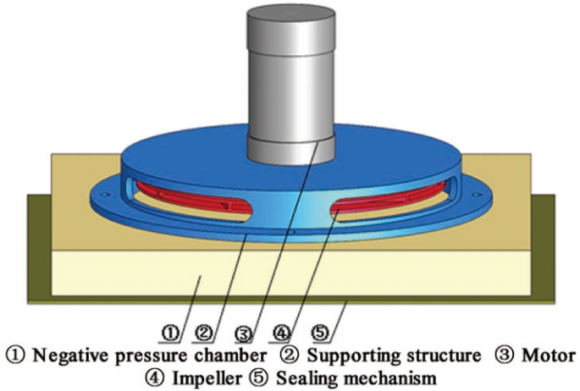
Negative pressure adsorption means that the pressure in a part of the area is lower than the atmospheric pressure. The relatively high-pressure atmosphere flows to the negative pressure area, thereby generating a specific force. If the negative pressure is too small, it will not absorb, resulting in slippage or even falling; when the negative pressure is too enormous, it will make the robot challenging to move and increase the robot’s power consumption. Figure 1 shows the components of the negative pressure mechanism of the wall-climbing robot. The motor drives the impeller to rotate at high speed to generate centrifugal force. The impeller draws the gas in the negative pressure cavity, thereby forming a negative pressure in the cavity. The function of the sealing device is to reduce air leakage.
Composition of negative pressure system of wall-climbing robot.
When analyzing the fluid between the sealing method and the wall gap, the Reynolds number ({varvec{Re}}) must first be used to determine whether the fluid flow is laminar or turbulent. When (user2{Re < }2320), the fluid motion was laminar; then (user2{Re > }2320), the fluid motion was turbulent32.
The calculation formula of Reynolds number ({varvec{Re}}) is:
where (v) is the average flow velocity of the fluid; (d_{k}) is the hydraulic diameter of the flow section; (eta) is the kinematic viscosity of the fluid, and (eta { = }mu /rho), (mu) is the dynamic viscosity of the fluid, (rho) is the density of the fluid, at room temperature, (eta { = }1.57 times 10^{ – 5} {text{ m}}^{{2}} {text{/s}}).
According to the similar principle, the hydraulic diameter of non-standard structure pipeline can be calculated by the following formula33
Among them, (A) is the cross-sectional area of the flow; (S) is the sum of the inner and outer perimeters of the flow.
The negative pressure cavity structure of the negative pressure adsorption type wall-climbing robot has a rectangle and a circle, and the structures are shown in Fig. 2a and b, respectively.
Structure model of negative pressure cavity.
As shown in Fig. 2a, for the rectangular negative pressure cavity, the hydraulic diameter (d_{ks}) between the sealing device and the wall gap (delta) is:
Among them, (l_{1}) is the dimension of the negative pressure cavity in the (y) direction; (l_{2}) is the dimension of the negative pressure cavity in the (x) direction; (a) is the side length of the sealing method.
Take (a = 0.1l_{1} = 0.1l_{2}), then formula (3) can be simplified to (d_{ks} approx 0.2l_{1}), considering that the wall-climbing robot is generally small in size, taking (l_{1} le 0.5{text{ m}}), then the rectangular negative pressure cavity (d_{ks} le 0.1{text{ m}}^{{ – 1}}), the flow velocity between the sealing method and the wall gap is very low, taking (v le 0.1{text{ m/s}}). From Eq. (1), the Reynolds number ({varvec{Re}}_{{varvec{s}}} le 637 < 2320) of the rectangular negative pressure cavity can be obtained. Therefore, the flow of fluid between the sealing method of the rectangular negative pressure cavity and the gap in the wall is laminar flow.
In the same way, the hydraulic diameter (d_{kc}) of the circular negative pressure cavity is:
Therefore ({varvec{Re}}_{c} le 637 < 2320), the flow between the sealing method of the fluid-shaped negative pressure cavity and the gap in the wall is also laminar.
Since the air velocity entering the negative pressure cavity through the gap between the sealing method and the wall is shallow and laminar, the Navier–Stokes equation (N–S equation) can be obtained:
Among them, (rho_{air}) is the density of air, at room temperature (20 °C), its value is 1.20 kg/m3; (u) is the fluid velocity, and its components in the (x), (y) and (z) directions are (u_{x}), (u_{y}) and (u_{z}) respectively, (nabla) is the gradient symbol; p is the pressure between the sealing device and the wall gap (delta); (mu_{air}) is the dynamic viscosity of the air, at room temperature (20 °C), its value is (0.0183 times 10^{ – 3}) Pa·s; (f) is the unit mass force, and its components in the (x), (y) and (z) directions are (f_{x}), (f_{y}) and (f_{z}) respectively.
Assuming that all the air particles in the gap are moving in parallel and straight lines, the speed (u) has nothing to do with (x), (y) direction, that is (u = uleft( z right))34.
Choose the (y) axis direction as the air movement direction, only (u_{y}) non-zero and (partial u/partial y = 0), (u_{x}) and (u_{z}) are both 0, the N-S equation in the and directions is
Then the pressure (p) has nothing to do with (x), (z), that is (p = pleft( y right));
Assuming that the air in the gap is not compressible, there are:
Substituting Eqs. (6) and (7) into Eq. (5), we can get:
Performing quadratic integration on formula (8) can be obtained:
Among them, C and D are integral constants, and the boundary conditions are:
Substituting Eq. (10) into Eq. (9), we can get:
The air flow (q) into the negative pressure cavity through the gap is
Among them, (p_{0}) is the standard atmospheric pressure value, which is 101.325 kPa; (p_{1}) is the internal pressure of the negative pressure cavity of the wall-climbing robot, and the pressure distribution in the gap is shown in Fig. 3.
Pressure distribution in the gap.
It can be seen from Fig. 3 that the air pressure outside the negative pressure cavity is (p_{0}), and the pressure becomes (p_{1}), after passing through the gap, resulting in a linear pressure distribution with a pressure difference of (Delta p = p_{0} – p_{1}), then the resultant force (F_{delta }) of the atmospheric pressure acting on the sealing method is:
The pressure (F_{p}) inside the negative pressure cavity is:
Make:
The result is:
It is assumed that the supporting force of the wall acting on the robot is borne by the four rollers on both sides of the track, yoz is the wall, the z-axis is the forward direction of the robot, and the x-axis is perpendicular to the wall. Figure 4 shows the force analysis diagram of the wall-climbing robot in any posture. Among them, (N_{1}), (N_{2}), (N_{3}) and (N_{4}) are the pressure of the wall on the left front wheel, left rear wheel, right front wheel and right rear wheel of the wall-climbing robot respectively; (F_{f1}), (F_{f2}), (F_{f3}) and (F_{f4}) are the static friction forces of the wall on the left front wheel, left rear wheel, right front wheel and right rear wheel of the wall-climbing robot, respectively, (F_{f1} = mu_{1} N_{1}), (F_{f2} = mu_{1} N_{2}), (F_{f3} = mu_{1} N_{3}) and (F_{f4} = mu_{1} N_{4}).
Force analysis of wall-climbing robot at any posture.
(mu_{1}) is the static friction coefficient between the wall and each wheel of the wall-climbing robot; (G) is the gravity of the wall-climbing robot, and its magnitude is (G = mg); (m) is the mass of the wall-climbing robot; (g) is the acceleration of gravity; (H) is the distance between the center of gravity of the wall-climbing robot and the wall; (L) is the distance between the front and rear wheels of the robot; (B) is the gauge of the two crawlers of the wall-climbing robot; (theta) is the angle between the gravity and the orientation of the body.
The robot is balanced by forces in the x and z directions and moments around the two outermost rollers. The dynamic equation of the wall-climbing robot in any posture is:
From Eq. (17), it can be seen that under the condition of any pose of the wall-climbing robot body, the differential pressure (F_{p}) is:
In order to ensure the normal work of the wall-climbing robot, it needs (N_{3}) to be greater than 0, which can be obtained from Eq. (18). Under the condition of any posture of the robot body, the adsorption condition of the wall-climbing robot is:
Table 1 shows the basic parameters of the designed wall-climbing robot.
We need to design the appropriate blade size according to the load requirements of the robot. Therefore, the load quality of the robot in Table 1 refer to the pre-assumed impeller design conditions. The structure of the impeller plays a vital role in the size of the negative pressure. The main parameters of the impeller include impeller inlet diameter (D_{0}), blade inlet diameter (D_{1}), impeller outlet diameter (D_{2}), blade inlet size (b_{1}), blade outlet size (b_{2}), blade inlet geometric angle (beta_{1A}) and blade outlet geometric angle (beta_{2A})35, as shown in Fig. 5.
Main parameters of impeller.
According to the minimum adsorption pressure under the adsorption equilibrium condition and the parameter design method of the impeller, the main parameters of the impeller can be obtained as shown in Table 236, the three-dimensional model of the impeller established according to the impeller parameters is shown in Fig. 6a, and the wall-climbing robot model is shown in Fig. 6b. The closed impeller consists of a wheel cover, blades, and a wheel disc. The closed structure reduces internal leakage losses, so the working efficiency is higher than that of open and semi-open impellers, suitable for high-pressure situations.
Wall-climbing robot and its impeller model.
The actual object designed according to the above-mentioned three-dimensional model parameters of the wall-climbing robot is shown in Fig. 7. The support structure between the impeller and the motor is made of high-strength nylon glass fibre 3D printing, which can support the motor and prevent the impeller from eccentricity during operation. The ground clearance of the negative pressure cavity can be adjusted by replacing the studs of different lengths in the crawler structure. The influence of different ground clearance of the negative pressure cavity on the adsorption performance of the wall-climbing robot can be adjusted be analyzed. The main structure of the negative pressure cavity is made of high-strength acrylic plate material, which ensures the structural strength of the negative pressure cavity and facilitates manufacturing. The sealing device uses the sealing top produced by the 3 M company, which can reduce air leakage and achieve stable air pressure in the negative pressure cavity. The air pressure sensor is arranged for real-time measurement of the pressure inside the negative pressure cavity.
Experimental prototype of wall-climbing robot.
In order to control variables and avoid accidental errors, the speed of the driving motor of the impeller during the experiment is 8000 r/min. Furthermore, all the working condition experiments are repeated three times, and the final experimental value obtained is the average of the three experimental results.
In order to explore the adsorption performance of the wall-climbing robot when adsorbing on different wall materials, three different wall materials were used to conduct adsorption experiments. As shown in Fig. 8, the robot is adsorbed on the lime wall, the PVC (Poly Vinyl Chloride) wall and the ordinary corrugated box wall. The walls of lime, PVC and corrugated boxes have obvious grades in terms of hardness and surface roughness, and can have obvious contrast effects. In addition, it is easier to experiment with walls of these three materials in a laboratory environment.
Experiments on different wall materials.
The experiment measured that the negative pressure value on the lime wall is 3351.24 Pa, the negative pressure value on the PVC wall surface is 3880.0 Pa, and the negative pressure value on the ordinary corrugated box wall surface is 4404.36 Pa. When the suction device of the robot is working, under the action of negative pressure, both the PVC material wall and the ordinary corrugated box wall are deformed. The deformation of the corrugated paper wall is more significant than that of the PVC material surface, which causes the gap between the negative pressure cavity and the wall to shrink. The air leakage between the gaps is reduced, thereby increasing the negative pressure value. At the same time, the lime wall surface has almost no deformation, and the gap between the negative pressure cavity and the wall surface has no noticeable change, so the negative pressure value is the smallest. When the wall deformation is not considered, the wall material has little effect on the adsorption performance.
Figure 9 shows the experimental results when the robot is adsorbed on the same lime wall in three different orientations, including three different robot orientations: vertical, inclined 45°, and horizontal. According to experiments, the negative pressure values of the wall-climbing robot in the three states are 3531.24 Pa, 3557.76 Pa, and 3578.16 Pa, respectively. The difference between the three experimental conditions is negligible. It can be considered that the posture of the wall-climbing robot adsorbed on the wall is opposite. The negative pressure value has no effect.
Three orientations of the robot.
To compare the effects of different negative pressure cavity shapes on the adsorption performance, a circular negative pressure cavity (0.05 m2) with the same area as the rectangular negative pressure cavity was used for adsorption performance experiments. Figure 10 shows the experiment of a wall-climbing robot in which the circular negative pressure cavity is adsorbed on the lime wall. The experiments were carried out with three robot orientations consistent with the rectangular negative pressure device to control the variables to reduce the influence of other factors on adsorption. Table 3 lists the negative pressure values of two different cavity types. It can be seen that compared with the rectangular negative pressure cavity, the performance of the circular negative pressure cavity is better because the gas flowability of the circular negative pressure cavity is better.
Circular negative pressure cavity and experiment.
Two different negative pressure cavity sealing methods are shown in Fig. 11. The sealing method is shown in Fig. 11a used a sealing skirt to surround the bottom of the negative pressure cavity. The sealing method is shown in Fig. 11b is based on the first seal and then adds a layer to the bottom of the negative pressure cavity. The sealing skirt reduces the ground clearance of the robot. Two sealing methods are used to conduct experiments with the robot body upright. The experimental results are: the negative pressure value of the first sealing method is 3531.24 Pa, and the negative pressure value of the second sealing method is 3720.96 Pa. It can be seen that the second sealing method reduces the air leakage flow when the robot is adsorbing and increases the negative pressure value by 5.4%. Therefore, a reasonable sealing structure is a key to the regular operation of the wall-climbing robot’s adsorption device.
Two sealing methods.
In summary, when designing the suction device of the wall-climbing robot, it is essential to consider the shape of the negative pressure cavity and the structure of the sealing method to improve the suction performance of the wall-climbing robot.
In order to compare and analyze the experimental results, the CFD method is used to simulate and analyze the fluid movement inside the negative pressure device when the wall-climbing robot is working. The grid division of the fluid domain of the negative pressure device is shown in Fig. 12. The fluid domain mesh of the negative pressure device is mainly composed of tetrahedral and hexahedral mesh. The tetrahedral mesh is primarily located in the impeller fluid domain mesh. The hexahedral mesh is mainly located in the fluid domain mesh in the negative pressure cavity.
Grid division of negative pressure device.
Figure 13 shows the simulated stress cloud diagram of the impeller and the negative pressure cavity. Figure 13a and b, respectively, are the static pressure cloud diagram and the absolute pressure cloud diagram of the negative pressure cavity. The two stress distributions are the same because the static pressure (p_{sta}) in Fluent refers to the difference between the absolute pressure (p_{abs}) and the operating pressure (p_{ope}). The operating pressure set in the simulation is the standard atmospheric pressure 101,325 Pa. The pressure value in the static pressure cloud chart is negative, as shown in Fig. 13a. The negative pressure value is about 3500 Pa. The static pressure cloud diagram of the impeller fluid domain is shown in Fig. 13c. The maximum negative pressure is 19.8 Pa, near the outlet of the impeller fluid domain; the minimum is − 4183.3 Pa, near the impeller inlet. The dynamic pressure cloud diagram of the fluid domain of the negative pressure cavity is shown in Fig. 13d. The dynamic pressure (p_{dyn}) is a physical quantity related to the speed, and its specific expression is:
Pressure cloud diagram of impeller and negative pressure cavity.
From Eq. (20), it can be seen that the dynamic pressure is proportional to the quadratic of the fluid velocity. Because the fluid velocity in the negative pressure cavity is relatively slow, and the overall dynamic pressure is relatively small.
The impeller’s dynamic pressure cloud diagram and velocity cloud diagram are shown in Fig. 13e and f, respectively. They are mainly divided into the impeller inlet area, the impeller outlet area, and the transition area between the two. The inlet area is characterized by low dynamic pressure and low flow velocity. In the simulation, the inlet dynamic pressure and velocity are almost 0; the outlet area has high dynamic pressure and high flow velocity. The maximum outlet dynamic pressure is 3380 Pa, and the outlet velocity is 83.1 m/s. As shown in Fig. 13, the transition area of the impeller is between the inlet and the outlet. The dynamic pressure and velocity values in the transition region are not constant. The dynamic pressure value in the transition zone is between the inlet and outlet. The same goes for the velocity values in the transition area.
The total pressure cloud diagram of the fluid area of the negative pressure device is shown in Fig. 13g and h, respectively. The calculation formula of the total pressure (p_{tot}) in the Fluent is:
That is, the total pressure is the sum of static pressure and dynamic pressure. It can be seen from Fig. 13g that the total pressure is negative, about 3500 Pa, which is consistent with the static pressure of the negative pressure cavity. It can be seen from Fig. 13h that the impeller negative pressure cavity is divided into three areas: the impeller inlet area with a smaller total pressure, the impeller outlet area with enormous dynamic pressure, and the total pressure are between the transition zone between the inlet and the outlet. It can be seen that for fluids with low flow rates, static pressure plays a significant role in total pressure; for fluids with relatively high flow rates, dynamic pressure plays a significant role in total pressure.
The change of the negative pressure value at the inlet of the fluid domain of the negative pressure device is shown in Fig. 14. When the number of iteration steps is 1, the calculated inlet negative pressure value is 1072.03 Pa, and then the negative pressure value rises rapidly. When the number of iteration steps is about 50, the negative pressure value reaches a stable state, 3534.75 Pa.
Negative pressure value of negative pressure device.
Under the same conditions, multiple simulations were performed on the fluid domain of the negative pressure device, thereby reducing accidental errors caused by the simulation and calculating the negative pressure value of the negative pressure cavity. The simulation results are shown in Table 4:
Table 5 lists the negative pressure values of the experimental results and CFD simulation results, and the simulation results are averaged at 3534.75 Pa. For the standard sealing method, the simulation results are consistent with the experimental results, and the error is only 0.23%, which proves the correctness of the simulation calculation results; for the thickened sealing method, the error between the simulation and the experimental results is 5.12%, which is within an acceptable range within. In summary, CFD simulation and actual experiment have a good fit, and CFD simulation can be used instead of experiment.
For an impeller whose outlet is discharged toward the atmosphere, its total pressure equals the total inlet pressure. Table 6 compares the total pressure of the three types of impellers. The first method is to calculate the total pressure difference between the outlet and the inlet of the impeller; the second method is to calculate the total inlet pressure; the third method is to measure it through experiments.
The comparison shows that the total pressure values obtained by the three methods are not much different, which shows that the CFD simulation results are consistent with the experimental results. However, there is a big gap between the actual total pressure of the impeller and the total design pressure of the impeller. The first is because the surface of the impeller and the blades are relatively rough, and the friction with the air during rapid rotation causes a pressure drop. Second, the design of the impeller is based on an empirical formula. In the process, many parameters are selected based on experience. There is a particular error, which causes a large gap between the total pressure of the impeller and the actual one.
The shape of the blade, the size of the inlet of the impeller and the number of blades have an important influence on the performance of the impeller. Therefore, the blade outlet angle, the impeller inlet diameter, and the number of blades are selected as design variables. Table 7 shows the value ranges of the three design variables.
Before optimizing the impeller parameters, it is necessary to design them and establish a three-dimensional model for CFD simulation. In order to reduce the number of tests, a specific test method is usually selected for experimental design, which can achieve the expected results in a short time. The BOX design method is a response surface design method proposed by Box and Behnken in 1960 for three or more influencing factors37.
In order to select appropriate test sample points, the Design-Expert software is used for the relevant design of the BOX method. The Design-Expert software is software specially used for test design and related data analysis. When using it for data analysis, the primary process is as shown in Fig. 1538,39,40. Table 8 shows the sample points generated by the Design-Expert software, with three influencing factors and one dependent variable.
Design-Expert software flow chart.
Since there is no apparent functional relationship between the negative pressure value p of the impeller evaluation index and the design variables of the impeller, the Kriging model is used to establish the mathematical model of the impeller parameters. The kriging model is a mathematical model with high calculation accuracy, small calculation amount, and short calculation time, which is very suitable for application in optimization. Simpson41 and others have proved that the Kriging model has the characteristics of unbiased estimation and nonlinear approximation of sample points. Therefore, the Kriging model is an ideal model for the nonlinear model of the impeller42.
The Kriging model is a parameter difference method composed of polynomials and random process parts:
Among them, (yleft( {mathbf{x}} right)) is an unknown function of interest to the experimenter, (fleft( {mathbf{x}} right) = left[ {f_{1} left( {mathbf{x}} right),f_{2} left( {mathbf{x}} right),…,f_{n} left( {mathbf{x}} right)} right]^{T}) is a function of (x), (beta = left[ {beta_{1} ,beta_{2} ,…,beta_{n} } right]^{T}) is a correlation coefficient, (Zleft( {mathbf{x}} right)) is a random error function with a mean value of 0, and a variance of not 0, that is:
And its covariance is:
Among them, R (left( {{mathbf{x}}^{i} ,{mathbf{x}}^{j} } right)) is a (n times n) correlation matrix that is symmetrical along the diagonal, and ({mathbf{R}}left( {{mathbf{x}}^{i} ,{mathbf{x}}^{j} } right)) is the correlation function between any two observation points (x^{i}) and (x^{j}) on the diagonal elements. The related function ({mathbf{R}}left( {{mathbf{x}}^{i} ,{mathbf{x}}^{j} } right)) is:
Among them, N is the number of design variables, (theta_{k}) is an unknown related parameter, (x_{k}^{i}) and (x_{k}^{j}) are the k-th component of the observation points (x^{i}) and (x^{j}) respectively. The estimated value (hat{y}(x^{*} )) at the unknown point (x^{*}) is:
where (y = left[ {y_{1} ,y_{2} ,…,y_{n} } right]^{T}) is the response value of (fleft( x right)). When (fleft( x right)) is a constant, p is a column vector containing components (n_{0}), and:
By maximizing the following expression, the maximum likelihood estimate (theta_{k}) in the equation can be obtained:
Use the sample data in Table 8 to establish a kriging surrogate model between impeller design parameters and negative pressure values. The negative pressure value corresponding to the original design parameters is predicted using the established kriging model and compared with the original data. The comparison results are shown in Table 9. The predicted value of negative pressure value of the kriging model is 3498.55 Pa, and the error with the simulation result is only 1.02%, which proves the correctness of the impeller kriging model.
Genetic algorithm (GA) is an optimization algorithm based on the evolutionary theory of “natural selection by nature, survival of the fittest.” It mainly involves operations such as selection, crossover, and mutation. The higher the fitness of the individual, the greater the probability of reproducing offspring. On the contrary, if the individual’s fitness is low, the probability of reproducing offspring is low, or even weeding out offspring without reproducing. Therefore, the optimal generation can be obtained through such continuous genetic optimization43.
According to the CFD simulation results, the negative pressure value p of the negative pressure cavity is selected as the evaluation index of the impeller parameters. The larger the negative pressure value, the better, so the objective function of impeller optimization can be expressed as:
Using GA to optimize the design of the established optimization model, the value of the objective function and the optimization process of the three design variables are shown in Fig. 16.
Optimization of objective function and design variables.
It can be seen from Fig. 16 that the convergence value of the objective function is − 4491.19, the convergence value of the blade outlet angle is 54.55°, the convergence value of the impeller inlet diameter is 67.43 mm, and the convergence value of the number of blades Z is 18. The optimized result is the same as the original design. The comparison is shown in the Table 10. Compared with the original design, the negative pressure value has been increased from 3534.75 Pa to 4491.19 Pa, increasing 27.06%. Therefore, the optimized design results of the impeller parameters are: the blade outlet angle is 54.55°, the impeller inlet diameter is 67.43 mm, and the number of blades Z is 18. Under this set of parameters, the corresponding negative pressure value is 4491.19 Pa.
This paper takes the negative pressure adsorption wall-climbing robot as the research object. Through CFD simulation and prototype experiment, the influence of wall material, adsorption position, shape of the negative pressure cavity and sealing method on the adsorption performance of the wall-climbing robot is studied, and it is based on Kriging. The model and genetic algorithm optimize the parameters of the impeller in the adsorption device, and the following conclusions are obtained:
Without considering the deformation of the wall surface, the wall material has little effect on the adsorption performance.
By comparing the negative pressure value when the robot is adsorbed in three different poses, it can be considered that the posture of the wall-climbing robot does not affect the negative pressure value.
The shape and sealing method of the negative pressure cavity have an essential impact on the adsorption performance of the wall-climbing robot. By changing the structure of the sealing edge and the structure of the negative pressure cavity, the adsorption capacity can be improved.
The experiment verifies the correctness of the CFD simulation model. The method of obtaining sample points based on CFD model simulation is more stable and saves time. Compared with the original design, the impeller parameters optimized based on the kriging method and GA have increased the negative pressure value from 3534.75 to 4491.19 Pa, an increase of 27.06%.
All data are available in the main text or the supplementary materials.
Seo, T., Jeon, Y., Park, C. & Kim, J. Survey on glass and facade-cleaning robots: Climbing mechanisms, cleaning methods, and applications. Int. J. Precis. Eng. Manufacturing-Green Technol. 6, 367–376 (2019).
Article  Google Scholar 
Feng, X. B. et al. Application of a wall-climbing, welding robot in ship automatic welding. J. Coast. Res. 106(SI), 609–613 (2020).
Article  Google Scholar 
Vu, L. A. et al. Reinforcement learning-based optimal complete water-blasting for autonomous ship hull corrosion cleaning system. Ocean Eng. 220, 108477 (2021).
Article  Google Scholar 
Schmidt, D. & Berns, K. Climbing robots for maintenance and inspections of vertical structures A survey of design aspects and technologies. Robot. Auton. Syst. 61, 1288–1305 (2013).
Article  Google Scholar 
Gu, J. Y., Wang, C. Q. & Wu, X. W. Self-adjusted adsorption strategy for an aircraft skin inspection robot. J. Mech. Sci. Technol. 32, 2867–2875 (2018).
Article  Google Scholar 
Vega-Heredia, M. et al. Design and modelling of a modular window cleaning robot. Autom. Constr. 103, 268–278 (2019).
Article  Google Scholar 
Kim, D., Kim, Y. S., Noh, K., Jang, M. & Kim, S. Wall climbing robot with active sealing for radiation safety of nuclear power plants. Nucl. Sci. Eng. 194, 1162–1174 (2020).
Article  Google Scholar 
Kim, S. H. & Jeong, Y. S. Mobile image sensors for object detection using color segmentation. Cluster Comput. J. Netw. Softw. Tools Appl. 16, 757–763 (2013).
Google Scholar 
Qian, Z. Y., Zhao, Y. Z., Fu, Z. & Cao, Q. X. Design and realization of a non-actuated glass-curtain wall-cleaning robot prototype with dual suction cups. Int. J. Adv. Manuf. Technol. 30, 147–155 (2006).
Article  Google Scholar 
Kim, T., Kim, H. S. & Kim, J. Position-based impedance control for force tracking of a wall-cleaning unit. Int. J. Precis. Eng. Manuf. 17, 323–329 (2016).
Article  Google Scholar 
Chen, Z. et al. Programmable Transformation and Controllable Locomotion of Magnetoactive Soft Materials with 3D-Patterned Magnetization. ACS Appl. Mater. Interfaces. 12, 58179–58190 (2020).
CAS  Article  Google Scholar 
Kim, J. H., Park, S. M., Kim, J. H. & Lee, J. Y. Design and experimental implementation of easily detachable permanent magnet reluctance wheel for wall-climbing mobile robot. J. Magn. 15, 128–131 (2010).
Article  Google Scholar 
Chen, R., Fu, L. L., Qiu, Y. L., Song, R. Z. & Jin, Y. A gecko-inspired wall-climbing robot based on vibration suction mechanism. Proc. Inst. Mech. Eng. Part C J. Mech. Eng. Sci. 233, 7132–7143 (2019).
Article  Google Scholar 
He, B. et al. Wet adhesion iInspired bionic climbing robot. IEEE-Asme Trans. Mechatron. 19, 312–320 (2014).
Article  Google Scholar 
Chen, R., Huang, Y. & Tang, Q. An analytical model for electrostatic adhesive dynamics on dielectric substrates. J. Adhes. Sci. Technol. 31, 1229–1250 (2017).
CAS  Article  Google Scholar 
Sabermand, V., Ghorbanirezaei, S. & Hojjat, Y. Testing the application of Free Flapping Foils (FFF) as a method to improve adhesion in an electrostatic wall-climbing robot. J. Adhes. Sci. Technol. 33, 2579–2594 (2019).
CAS  Article  Google Scholar 
Nishi, A., Wakasugi, Y. & Watanabe, K. Design of a robot capable of moving on a vertical wall. Adv. Robot. 1, 33–45 (1986).
Article  Google Scholar 
Nishi, A. Development of wall-climbing robots. Comput. Electr. Eng. 22, 123–149 (1996).
Article  Google Scholar 
Nishi, A., Wakasugi, Y. & Watanabe, K. Design of a robot capable of moving on a vertical wall. Adv. Robot. 1, 33–45 (2012).
Article  Google Scholar 
Shujah, A. et al. Design and implementation of semi-autonomous wall climbing robot using vacuum suction adhesion. In 2019 IEEE 17th World Symposium on Applied Machine Intelligence and Informatics, Herlany, SLOVAKIA. 275–279 (2019).
Chashchukhin, V., Knyazkov, D., Knyazkov, M. & Nunuparov, A. Determining orientation of the aerodynamically adhesive wall climbing robot. In 2017 22nd International Conference on Methods and Models in Automation and Robotics, Miedzyzdroje, POLAND. 1007–1012 (2017).
Liu, J. F. et al. Analysis and optimization of the wall-climbing robot with an adsorption system and adhesive belts. Int. J. Adv. Robot. Syst. 17(3), 1729881420926409 (2020).
Google Scholar 
Zhao, J. H., Li, X. & Bai, J. Experimental study of vortex suction unit-based wall-climbing robot on walls with various surface conditions. Proc. Inst. Mech. Eng. Part C J. Mech. Eng. Sci. 232, 3977–3991 (2018).
Article  Google Scholar 
Amakawa, T., Yamaguchi, T., Yamada, Y. & Nakamura, T. Development of an adhesion unit for a traveling-wave-type, omnidirectional wall-climbing robot in airplane body inspection. In 2017 IEEE International Conference on Advanced Intelligent Mechatronics, Munich, GERMANY. 291–296 (2017).
Amakawa, T., Yamaguchi, T., Yamada, Y. & Nakamura, T. Proposing an adhesion unit for a traveling-wave-type, omnidirectional wall-climbing robot in airplane body inspection applications. In 2017 IEEE International Conference on Mechatronics, Gippsland, AUSTRALIA. 178–183 (2017).
Ali, N., Zafar, U., Ahmad, S., Iqbal, J. & Khan, Z. H. LizBOT Design and prototyping of a wireless controlled wall climbing surveillance robot. In 2017 International Conference on Communication Technologies, Rawalpindi, PAKISTAN. 210–215 (2017).
Chen, N. N., Shi, K. G. & Li, X. Theoretical and experimental study and design method of blade height of a rotational-flow suction unit in a wall-climbing robot. J. Mech. Robot. Trans. Asme 12, 1–17 (2020).
CAS  Google Scholar 
Fallah, A., Rezasoltani, M., Riasi, A. & Moradi, H. Numerical analysis of a non-contact surface adhesion system based on vortex cup for wall climbing robots. Sci. Iran. 22, 1904–1910 (2015).
Google Scholar 
Zhu, Y. W., Zhou, R. G., Yang, G., Zhu, Y. Q. & Hu, D. A. Experimental and numerical study of the adsorption performance of a vortex suction device using water-swirling flow. Sci. China-Technol. Sci. 63, 931–942 (2020).
ADS  CAS  Article  Google Scholar 
Koo, I. M. et al. Development of wall climbing robot system by using impeller type adhesion mechanism. J. Intell. Rob. Syst. 72, 57–72 (2013).
Article  Google Scholar 
Andriani, N., Maulida, M. D., Aniroh, Y. a. & Alfafa, M. F. Pressure control of a wheeled wall climbing robot using proporsional controller. In Proceedings of 2016 International Conference on Information and Communication Technology and Systems, Surabaya, INDONESIA. 124–128 (2016).
Li, W. K. Engineering Fluid Mechanics. (University of Science and Technology of China Press, 2007).
Ping, Y. Engineering Fluid Mechanics. (Science Press, 2015).
Zhang, M. Y., Jing, S. R. & Li, G. J. Advanced Engineering Fluid Mechanics. (Press of the Ministry of Higher Education, 2006).
De, C. X. Centrifugal Fan. (Chemical Industry Press, 2007).
Tai, S. J. Practical Technical Manual of Ventilator. (Mechanical Industry Press, 2005).
Box, G. & Behnken, D. Some new three level designs for the study of quantitative variables. Technometrics 2, 455–475 (1960).
MathSciNet  Article  Google Scholar 
Alben, K. T. Design, analyze, and optimize with design-expert – Design-expert 6.0.6. Anal. Chem. 74, 222A-223A (2002).
CAS  Article  Google Scholar 
Wu, H., Ou, Z. W., Mo, J. C., Liu, J. M. & Yang, K. H. Optimization of soil stabilizer composition based on design-expert design software. Agro Food Ind. Hi-Tech 28, 1335–1339 (2017).
Google Scholar 
Rezic, I. Prediction of the surface tension of surfactant mixtures for detergent formulation using Design Expert software. Monatsh. Chem. 142, 1219–1225 (2011).
CAS  Article  Google Scholar 
Simpson, T. W., Poplinski, J. D., Koch, P. N. & Allen, J. K. Metamodels for Computer-based Engineering Design: Survey and recommendations. Eng. Comput. 17, 129–150 (2001).
Article  Google Scholar 
Sun, K. K., Wang, G. Q. & Lu, Y. P. Optimization method of bevel gear on genetic algorithm and discrete element. Eksploatacja I Niezawodnosc-Maintenance and Reliability 21, 186–196 (2019).
Article  Google Scholar 
Zhang, G., Wang, G., Li, X. & Ren, Y. Global optimization of reliability design for large ball mill gear transmission based on the Kriging model and genetic algorithm. Mech. Mach. Theory 69, 321–336 (2013).
Article  Google Scholar 
Download references
This work was funded by the Science and Technology Development Fund, Macau SAR (SKL-IOTSC-2018–2020) and the Shanxi Science and Technology Major Project (Grant No. 20191101014).
School of Mechanical and Aerospace Engineering, Jilin University, Changchun, 130025, China
Yi Fang, Da Cui, Qiushi Bi, Ruihua Jiang & Chuliang Yan
State Key Laboratory of Internet of Things for Smart City and Department of Electrical and Computer Engineering, University of Macau, Macao, 999078, China
Shuai Wang
You can also search for this author in PubMed Google Scholar
Author contributions: Conceptualization: Y.F., S.W., D.C. Methodology: Y.F., S.W., D.C. Investigation: Y.F., S.W., Q.B., D.C., R.J., C.Y. Funding acquisition: S.W., Q.B. Project administration: S.W., Q.B., C.Y. Supervision: S.W., Q.B., C.Y. Writing – original draft: Y.F., D.C.,R.J. Writing – review and editing: Y.F., S.W., Q.B., D.C., C.Y. All authors reviewed the manuscript.
Correspondence to Shuai Wang or Da Cui.
The authors declare no competing interests.
Springer Nature remains neutral with regard to jurisdictional claims in published maps and institutional affiliations.
Open Access This article is licensed under a Creative Commons Attribution 4.0 International License, which permits use, sharing, adaptation, distribution and reproduction in any medium or format, as long as you give appropriate credit to the original author(s) and the source, provide a link to the Creative Commons licence, and indicate if changes were made. The images or other third party material in this article are included in the article’s Creative Commons licence, unless indicated otherwise in a credit line to the material. If material is not included in the article’s Creative Commons licence and your intended use is not permitted by statutory regulation or exceeds the permitted use, you will need to obtain permission directly from the copyright holder. To view a copy of this licence, visit http://creativecommons.org/licenses/by/4.0/.
Reprints and Permissions
Fang, Y., Wang, S., Cui, D. et al. Design and optimization of wall-climbing robot impeller by genetic algorithm based on computational fluid dynamics and kriging model. Sci Rep 12, 9571 (2022). https://doi.org/10.1038/s41598-022-13784-z
Download citation
Received:
Accepted:
Published:
DOI: https://doi.org/10.1038/s41598-022-13784-z
Anyone you share the following link with will be able to read this content:
Sorry, a shareable link is not currently available for this article.

Provided by the Springer Nature SharedIt content-sharing initiative
By submitting a comment you agree to abide by our Terms and Community Guidelines. If you find something abusive or that does not comply with our terms or guidelines please flag it as inappropriate.
Advertisement
Advanced search
Scientific Reports (Sci Rep) ISSN 2045-2322 (online)
© 2022 Springer Nature Limited
Sign up for the Nature Briefing newsletter — what matters in science, free to your inbox daily.
source

Mixing Masterclass: Secrets of the Mix with Chris Lord-Alge

Exclusive Interview With Australian Breakout Talent Tom Santa – UFO Network

Check out our interview below and connect with Tom Santa on social media platforms! UFO Network continues to go from strength to strength as the most in-depth and global EDM source for everything electronic dance music related. With an audience in over 125 countries, we are fast becoming a valued and trusted source for electronic dance music news, reviews, interviews and features for DJs, Artists and Labels alike.
Hey Tom, thanks for chatting with us today! Tell us about the first track that put you on the map in the electronic scene and the journey since. How did you get started?
I was playing drums at 13 and one day my sister showed me a video of her at Falls Festival and that got me inspired to try writing dance music. So I got a copy of FL studio and just started mucking around with it. Kinda started taking it a bit more seriously after some of my soundcloud tunes started picking up traction. It’s been crazy to see Rainfall connecting around the world – never really expect much of it, so it’s been nuts.
Tell us about your latest project ‘Rainfall.’ What was the creative process like?
I moved outta home with two of my best mates into a flat – my housemate showed me stormzy’s version of Rainfall and to listen to the last 30 seconds which was Mary Mary Shackles – I just thought I’d try put a beat behind it and that was the start of Rainfall.
Watch the visualizer for ‘Rainfall’ on YouTube

The visualizer for this release is sick! We see that you and your mates make the most outta life What is life like ‘down under’ and what are your favorite local clubs or Gigs?
It’s good fun, it’s relaxed and everyone is happy. Don’t really have a favourite club, just like going around and changing it up every now and again – melbourne is full of great nightlife.
Tell us something that your fans don’t know about you?
I have 4 tattoos.
What single night out has been most memorable for you as a DJ and producer?
Running my own event down in Lorne – heaps of mates showed up to a venue that isn’t normally known for late night parties and it was pretty out of control.
Give us the name of one track that never gets old for you no matter how many times you listen to it?
GTA San Andreas theme song for sure.
What would you say would be your dream collaboration and why?
There’s a few – would love to work with Curbi, PAX, Micheal Bibi, Dom Dolla or Torren Foot. All their production is sick or someone like Skrillex who is just an OG and has insane skillset.
If you could play any festival or land any gig, what would it be and why?
Bootshaus in germany. Just looks insane from all the videos I’ve seen. If it’s Festival I’d locally love to play Beyond The Valley because it’s my home country and it’s a sick event.
How do you get a song started? Tell us about your production and creative process that’s involved. Do you get “producer’s block?”
I’ve got producer block right now haha. I usually get food and eat then start working – ya gotta feed yourself. I always start off arranging around a vocal, then get a feel for the sections I want to make – then work to transitioning all the parts together – then add in all the details.
What projects do you currently have in the works and what can we, as well as your fans, expect from you in 2022?
Always writing new tunes, working on the next stuff now – starting to plan out what my shows and touring will look like over the next year and just having fun with it for now.
The relationship between a DJ and the audience is a fragile one – how do you see the balance between giving your audience what they want and treating them to something new?
I just come in with a clean sheet especially in a club setting, judging what the DJ before is playing and seeing what the crowd is reacting like and then I go from there.
Tom Santa Exclusive Interview
Listen to ‘Rainfall’ on Spotify

Connect with Tom Santa on Social Media
Instagram | Soundcloud
Tom Santa Exclusive Interview Rainfall


© Copyright – UFO Network 2022
Call Us – Sweden: +46709423867                Call Us – South Africa: +27845784248

source

Why You Should Pre-Order The 2022 Mercedes-Benz EQB – HotCars

Close this window
Get Hotcars Premium. Start your free trial today
A quirky electric SUV, the EQB arrives this summer as the third vehicle in Mercedes’ EQ sub-brand of EVs.
One of the renowned and trusted companies in the world of automobiles, Mercedes-Benz, has once again added a new member, the EQB, to its electric family. The EQB is a 2022 electric SUV that comes in two variants: the EQB 300 4matic and the EQB 350 4matic.
Mercedes brought its "A-game," entering the EV game with the EQ family. Despite this, there were complaints about its last model, the EQC. Would it be a great choice to preorder the EQB? Well, the choice is yours, but there are some details about the car that'll help with your selection.
Out of curiosity, a number of people want to know what difference it makes to drive the EQB and what Mercedes did to make sure the car turns out better. Without a doubt, the EQB has some important improvements.
Let's start with its external features, which have the least changes. Although the changes on the exterior are not too much, the little changes made are very effective in bringing out the beauty in this new electric SUV. The most noticeable feature is its raised window lines at the rear section of the glass, which nicely accentuates the flare of the rear wheel arches. The chrome split on the black trim is just on the bottom of this, which brings out its beauty.
All other external features on the EQB are similar to those found on other Mercedes EQs. It has aerodynamically optimized alloy wheels, light bars extending across the car's width, and diffuser strikes on the outside that help clean up the air flowing underneath the car. Overall, there's no single bother about its looks. It has beautiful external features and looks just as cool as what any EQ should look like.
Related: Why We Love The 2022 BMW X2
Mercedes designs on their new generation cars are really spot on. The interior of the 2022 Mercedes-Benz EQB SUV is nothing short of this; it has just what you'd expect in a luxury car. It has nice soft leather trims and seats with microfiber in the middle to give the right grip you need. The third row of seats is optional, but this might prove useful for children alone.
Mercedes' Latest MBUX allows the car to optimize every drive. It offers a touchscreen, keyword activation, and steering wheel control for its audio and navigation system. It has a 10.25-inch-wide screen with different options. Android Auto and Apple CarPlay will also come standard on the car.
For the UK-bound EQBs, there's an addition of wood trim on the door panels and dashes, giving it a cool look. Ambient lighting comes as standard throughout the cabin and the turbine vents.
Apart from its backseat, which could be a little cramped, comfort on the EQB is guaranteed.
Both versions of the EQB use the same battery; a 66.5 kWh lithium-ion battery. This is connected to its two electric motors, making it an all-wheel drive. The EQB 300 has a 225 horsepower electric motor that produces 288 pound-foot of torque, while the EQB 350 has a 288 horsepower electric motor that produces 324 pound-foot of torque.
The major disadvantage of its engine placement is the cutting down of its cargo space. However, folding down both passenger seats can substantially increase this cargo space. When this is done, this gives a total capacity of 1,710 liters, which is more than that on the EQC.
The EQB comes with two charging cables, one for domestic sockets and the other for higher-powered AC outlets. Mercedes has yet to publish official details about its charging speed and driving range. However, it has rapid DC charging, meaning it can charge up to 110 kilowatts and deliver up to 10 to 80% top-up in just 30 minutes. With the new "Mercedes me" system, owners of this vehicle are entitled to free 30 minutes fast charges at any Electrify America locations for a period of 2 years.
Related: Everything That You Need To Know About The Electric Mercedes-Benz EQS SUV
A common complaint drivers had about the EQA is its light mass which makes it dance around curves. This is an important aspect that Mercedes worked on. Placing the battery on the floor improved its center of gravity, making the car more stable and safer to drive around curves. This makes the SUV more pleasurable to drive for fun. Other factors, such as easy handling, top-notch infotainment system, extra cargo space, and an additional row of seats, make the EQB desirable.
This new and gorgeous electric car could be yours with a starting price of $54,500 for the EQB 300. The EQB 350 variant, however, has a starting price of $58,050. For a full upgrade, buyers should expect an additional $2,250 and $1,500 for EQB 300 and EQB 350, respectively. Upgrades include a panoramic sunroof, a surround-view camera system, and a Burmester premium sound system.
Overall, Mercedes' new EQB is much easier to handle, fun to drive, and has a lot of what you can do both in and outside the car.
.
OLUWAFEMI Joshua loves to explore the history of the automobile industry and the role of automobiles in popular culture and film.

source

Metro Nashville leaders seek to expand entertainment industry – Axios

Nashville
Axios Nashville is an Axios company.
Metro has squandered the last decade's progress of collaboration with Nashville's growing entertainment industry, city officials say, leading to a series of new proposals to get back on track.
Why it matters: New problems swirl around Nashville's creative community. A lack of affordable housing for musicians and a preservation crisis putting music venues and recording studios in danger of redevelopment are perhaps the two biggest challenges.
Flashback: In 2009, then-Mayor Karl Dean created the Music City Music Council, an advisory panel of top executives and artists. It was a first-of-its-kind effort for Metro to partner with the music industry on economic development.
Driving the news: In his recent budget proposal, Mayor John Cooper included a division — which would begin as one staff member — within his office to focus on entertainment industry issues.
State of play: Cooper's administration plans to convene a retreat for a few dozen music industry professionals to solicit feedback on policies the city should pursue to address these issues.
What she's saying: "It's really important to have a city, state and industry relationship. That's really how we can affect change," Styles tells Axios. "We're not harnessing this the way we should. We're leaving money on the table."
What we're watching: There is disagreement on the best path forward. Styles wants the commission she's proposing to be a standalone agency, pointing to the struggles the music council faced after mayoral turnover.
Get more local stories in your inbox with Axios Nashville.
Support local journalism by becoming a member.
Learn more
No stories could be found
Get a free daily digest of the most important news in your backyard with Axios Nashville.
Support local journalism by becoming a member.
Learn more
Copyright Axios Media, 2022

source

APD: Man killed by officers in May called 911, heard and saw people who weren’t there – KXAN.com

APD: Man killed by officers in May called 911, heard and saw people who weren’t there  KXAN.com
source

Hartford Library wants you to check out The Beat, its new local music archive – Hartford Courant

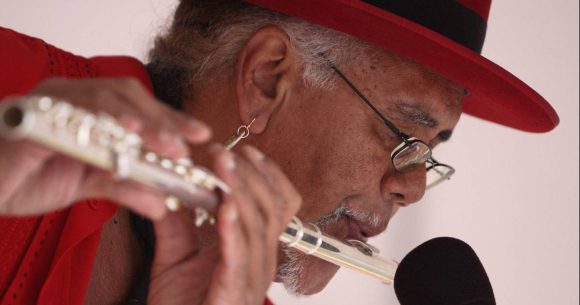
Lee Mixashawn Rozie is among the five inaugural artists in the new “The Beat” local music archive created by Hartford Public Library. The albums stream for free on The Beat’s website, or can be downloaded with a Hartford library card. (Courtesy Hartford Public Library )
Hartford Public Library has created The Beat, a new archive of local music, curated by professionals, that can be played online by anyone with an internet connection. People with Hartford library cards can download the albums.
The collection is being built gradually. Only a handful of albums have been uploaded to the new thebeathartford.co site launched by the library this week. Twice a year, 20 more albums will be added during the winter/spring and summer/fall seasons.
Nygel White, the library’s program production and engagement coordinator, helped design the site in conjunction with Rabble MUSICat, a Wisconsin-based software development company that specializes in new programs and formats for libraries.
The inaugural albums are:
That initial grouping is heavy on hip-hop and jazz, but White says The Beat is “open to any Hartford music. We’ve already had submissions of dancehall, R&B and folk.”
Submissions are being sought to complete the first batch of 20 albums. The submission deadline for this initial period is July 5. The curators will take a couple of weeks to make selections, and the albums will be uploaded to the site by the end of July.
Only albums produced within the last five years are eligible, and only one album by a musical act can is considered in any one selection period.
The artists selected must be from “the greater Hartford area, those who have a major impact on the Hartford music scene,” White says. The specific requirement on The Beat’s FAQ page is that artists are “currently performing and/or based in the Greater Hartford area.”
The initial group of curators includes jazz-inspired visual artist Andres Chaparro, The Bushnell’s vice president of education and community relations Yolande Spears, longtime local jazz booster Maurice D. Robertson of WWUH-FM, and the Hartford Jazz Society and musician/writer/producer June Archer of Eleven28 Entertainment.
There’s nothing slapdash about the site, which couldn’t be more respectful of the artists it selects. There are separate pages for the albums and for the biographic info on the artists who created those albums. Links to the musicians’ websites or social media are included, and some even have ways to contribute money directly to the artists through PayPal or cash.app.
White hopes to add a page of Hartford music history to the site.
White created the short video promo that appears on The Beat’s home page, featuring one of the inaugural artists, Ghazi Omair. White says The Beat is the first local music archive at Hartford Public Library (not counting some hard-to-get-at items in the Hartford History Center area).
“It’s a first for the library, and may be a first for Connecticut.”
When an album is chosen, the artist receives a $250 honorarium, which also represents a licensing agreement for the library to post and share the music. Funding for the project currently comes out of the library budget.
Only albums are allowed into the collection, White explains, partly due to the way the collection sets up licensing fee and honoraria, but also because of the desire to promote “a body of work” from each artist rather than a single song. The main idea, White says, is “an example of new initiatives and new visions, to amplify and empower local creative voices of Hartford.”
One of the project’s partnerships is with The Bushnell, which may lead to live concert opportunities for some of the artists.
Given its exclusivity and curatorial heft, inclusion in the collection is an honor. White is designing a graphic similar to the wreath-like awards symbols you see on the packaging for prize-winning films so that artists chosen by The Beat can promote themselves.
“From the beginning of this project,” White says, “the feedback I’ve gotten from the artists is ‘Oh, this is great; this is cool!’”
Christopher Arnott can be reached at [email protected].
Copyright © 2021, Hartford Courant

source

Neneh Cherry Interview: Biggie, Gorillaz, The Slits, & More – Stereogum

The Number Ones
Footnotes
Album Of The Week
Counting Down
Juergen Teller
Juergen Teller
Today, genre fluidity is a pretty much a given in pop music. But Neneh Cherry was light years ahead of her time when she released her 1989 debut album, Raw Like Sushi, which featured lead single “Buffalo Stance,” a Grammy-nominated feminist proclamation melding hip-hop, electronica, and dance. At the time, Cherry earned immediate comparisons to Madonna and Prince, and legions of artists would become inspired by how she tinkered with pop framework: from trip-hop pioneers Massive Attack to fellow Swede Robyn to Lorde, Sia, and M.I.A. Read More ›

2022 Innovator: Stoke Collaboration Room, Sarasota – Business Observer

The Observer Media Group Inc. respects your privacy and values the relationship we have with you. We use technology to collect information that helps us enhance your experience and our products and services. The cookies we use help us understand what information and advertising are most useful and valuable. Please take a moment to review our Cookie Policy and Privacy Policy. By clicking “Accept,” you agree to our use of cookies and similar technologies.
Hybrid schedules, where employees come into work a few days out of the week and work remotely the rest, are all the rage these days. But what about hybrid video conferencing? 
That's the newest new thing, courtesy of the Stoke Collaboration Room in Sarasota. It's designed to host eight people in-person and 64 additional remotely. Sarasota-based Real Digital Media, in partnership with its sister company, X2O Media, debuted the room about four months ago during a soft launch. The room is inside Real Digital Media's office, at 1800 2nd Street, Suite 104, in downtown Sarasota. 
“A lot of times, the people who have to lead presentations or training or conduct a class, they get Zoom fatigue,” Jason Broom, VP of marketing at Real Digital Media, says. “They don’t feel like they’re getting engagement.”
“The whole point of the room is to feel authentic engagement with the people who are remote,” he adds. 
The technological components of the room include a large format touch display screen, remote presenter display that allows remote attendees to present to the room, a motion tracking camera and an audio receiver in the ceiling. The room provides four camera angles to allow for smooth transitions and full range of motion. 
If at some point, a remote attendee switches to another tab or screen on their computer, an icon will appear alerting the in-person attendees or presenter that person is, perhaps, a little distracted. “It’s not really to narc on someone, but it’s to give the presenter an idea of who is really paying attention,” Broom says. 
The original idea for the room was to create a multipurpose room that could be used as a classroom, boardroom, training center, meeting room or situation room. For example, if a large company wanted to bring 50 employees to a conference room somewhere to train them on a new product, the employer would be looking at airline tickets, hotel rooms and possible food costs. Now, Broom says, they can just rent the Stoke room for a couple of hours, have the engagement they’re looking for and save money in the process. 
“Obviously, face-to-face is still very powerful for people,” Broom acknowledges, “but (so is) being able to quickly bring together 64 people and have a training session on a new product or HR guideline.”
Aside from immersive camera angles, the room is designed for content sharing from both in-room and remote participants, as well as annotation where every participant can share ideas on the same board. 
The 17-by-25-foot room room can be configured into different layouts depending on the use, including a typical conference room, modular conference room, modular studio and a classroom layout. It can be rented out for two-hour, four-hour and eight-hour sessions. The two-hour session costs $1,000, four hours is $1,800 and the all-day session is $3,200. 
 
“People have a predefined idea of what this is,” Broom says of the challenges he’s afraid the company will have. “If people are thinking they want video conferencing, this is not it. The challenge is not selling them on the room, but selling them off of video conferencing.”
In addressing this, Broom points to the annotation elements as well as the ability to create a tiny conference center. “There’s no scalable limits,” he says. 
Broom adds that the goal of the room is to provide an authentic experience. “They come into the room and get energized,” he says of the feedback thus far. He notes remote participants will still have a remote experience, albeit a deeper one with the number of camera angles in the room.  
“When (the presenter is) sitting, hunched over their desk at home trying to lead whatever presentation they’re giving, they don’t know who’s watching,” he says. “When they get energized, the people remotely get energized because (the presenter is) getting to act and use their hands.” 
The other hurdle is figuring out if the collaboration room is worth the $1,000 for two hours compared to a free 30-minute Zoom call. Broom expects this to mainly impact smaller companies interested in using the room rather than large corporations.  
 
The first-year goal is to get clients in to test the room.
Since it’s more of a side business under the parent entities, Broom says he and the team have time to figure out how to make it successful. So for now, they’re taking a slow roll to introducing it to the public. They’re currently trying to get the word out to local clients within an hour’s reach of the room. "We’re just trying to get people out to experience it first,” he says. 
While Broom says three years is pretty far out to think about from a technology standpoint, he does hope they’ll be able to expand it nationwide by then. Another possibility is franchising. 
For now, Broom says the feedback has been positive as guests can “see its potential.”
“The room,” he says, “should sell itself.” 

Read more about the region's 2022 innovators:
The innovator’s dilemma: Should companies be quick or correct?
Unchecked intellectual property issues can thwart innovation
 
View the discussion thread.
USPS Periodicals Permit
ISSN# 2325-8195
as required for Public Notices per F.S. 50.011

source

How to Land Your First Job in the Music Industry – Billboard

Whether you’re a recent graduate or looking for a new career path, ZipRecruiter is a great resource to find executive assistant jobs and other entry-level positions to break into the music industry.
By Latifah Muhammad
editor
All products and services featured are independently chosen by editors. However, Billboard may receive a commission on orders placed through its retail links, and the retailer may receive certain auditable data for accounting purposes.
This article is sponsored content.
Have you always wanted to work in the music industry? The good news: There are plenty of jobs out there, but combing through countless job postings and sending out numerous résumés and cover letters can be an exhausting process.
Thankfully, ZipRecruiter makes things a little easier by offering a user-friendly interface for job seekers and recruiters.
From working at a record label to music journalism, the job options for music lovers are seemingly endless. And what better place to look than the top employment marketplace in the country? For those unfamiliar with ZipRecruiter, the job search site is designed to forge meaningful connections between job seekers and employers.
The website and app make it easy for job seekers to comb through tens of thousands of listings by narrowing the search to different categories such as trending job titles, job type (full-time, part-time, remote, contract, etc.), job categories, cities and companies.

Related

Before you get started with your search, it’s good to outline which sector of the music industry interests you most. And don’t worry: There’s nothing wrong with having multiple options on your list.
For your résumé, make sure that you have the four essentials listed: contact information, work experience, education and relevant skills.
Whether you’re looking for entry-level positions or for those with experience, your new job could be just one click away. Some of the music industry jobs that you can find on ZipRecruiter include product management/marketing, assistant manager, A&R coordinator, copyrights manager, production analyst, junior accountant, music coordinator, music production assistant, social media manager and several executive assistant jobs and internships.
An executive assistant or administrative assistant position is probably one of the easier ways to get your foot in the door without needing too much experience, if any at all. Salaries may vary depending on the company and location, but the national average rate for an executive assistant is  $37,979 a year.
Thinking about being a music instructor? The annual salary for music teachers is $56,312 a year, according to ZipRecruiter.
More than 110 million job seekers and 2.8 million businesses have used ZipRecruiter — the No. 1 hiring site in the country and the No. 1 job search app for iOS and Android.
ZipRecruiter makes it easier for you to find work by empowering you with the necessary tools to help you stand out and secure your dream job with help from resources like a personal recruiter and AI technology that analyzes billions of user interactions to help improve your job search.

ZipRecruiter also tracks down relevant job opportunities that you can receive directly to your inbox and proactively pitches job seekers to hiring managers at top companies. Plus, you’ll get status updates along the way.
What are you waiting for? Click here to join ZipRecruiter.
Get weekly rundowns straight to your inbox
A daily briefing on what matters in the music industry
Send us a tip using our anonymous form.
A daily briefing on what matters in the music industry
Send us a tip using our anonymous form.
Billboard is a part of Penske Media Corporation. © 2022 Billboard Media, LLC. All Rights Reserved.

source

Master technician offers DIY ways to improve fuel mileage amid rising prices – KSAT San Antonio

The KSAT 12 News Team provides a look at local, regional, statewide and national news events and the latest information on local traffic and weather issues.
See the complete list
LIVE
Patty Santos, Reporter
Gavin Nesbitt, Photojournalist
Published: 
Updated: 
Patty Santos, Reporter
Gavin Nesbitt, Photojournalist
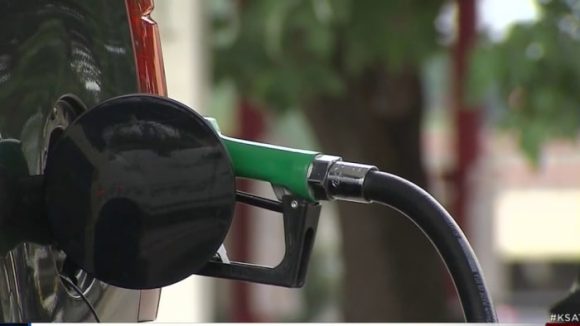
SAN ANTONIO – Increasing your gas mileage is a must as fuel prices continue to rise. A Texas mechanic is offering some inexpensive and easy do-it-yourself ways to save a little money.
Jeff Buckley is a Texas master technician and member of the Automotive Service Association, a group that represents professionals in the automotive repair industry through education.
He said he knows everyone’s looking to get more miles out of their fuel tanks, so he offers tips on his social media channels to help his followers.
Buckley said a tire alignment and proper tire pressure are the basic ways to start saving.
“You want the proper amount of air on the tire. It’s easier to roll. When it’s easier to roll, you’re going to get a little better mileage,” he said.
The recommended amount of air is printed on a sticker on the door of the vehicle, and printed on the tire. He says it’s important to know if the tires on the vehicle are the original from the manufacturer or if they have been replaced by bigger or smaller tires. He says it’s also important that people remember heat can cause the air pressure to drop.
Buckley said it’s crucial to stay on top of your vehicle maintenance, which means getting oil changes and investing in a fuel or engine cleaner or stabilizer that you can purchase at an auto parts store.
“If you keep the fuel good, then we’re going to get the better mileage,” Buckley said.
Clean your trunk from clutter. Any extras that weigh your vehicle down will make it work harder to go, wasting more fuel.
Consider changing your driving habits. Speeding, braking or taking off too quickly from a stoplight can waste more fuel.
ALSO ON KSAT.COM
What’s fueling high gas prices? KSAT Explains
Gas soars 33 cents in a week, $5 per gallon ‘not impossible’
How are increased gas prices affecting your life? Take our 10-question survey
Copyright 2022 by KSAT – All rights reserved.
Patty Santos joined the KSAT 12 News team in July 2017. She has a proven track record of reporting on hard-hitting news that affects the community.
email
twitter
Gavin Nesbitt is a photojournalist and video editor who joined KSAT in September 2021. He has traveled across the great state of Texas to film, conduct interviews and edit many major news stories, including the White Settlement church shooting, Hurricane Hanna, 2020 presidential campaigns, Texas border coverage and the Spurs.
email
If you need help with the Public File, call 210-351-1241.
Copyright © 2022 KSAT.com is managed by Graham Digital and pubished by Graham Media Group, a division of Graham Holdings.

source

Listen: Lauren Boebert was confronted by GOP colleague on Jan. 6 — and it was caught on tape – msnNOW

By Bob Brigham
CNN continues to air new audio that has never before been broadcast publicly on the eve of the first prime-time hearing by the House Select Committee Investigating the Jan. 6 Attack on the U.S. Capitol.
The network has been playing audio obtained by New York Times reporters Jonathan Martin and Alexander Burns while researching their book This Will Not Pass: Trump, Biden, and the Battle for America’s Future.
First they released audio by Rep. Debbie Lesko (R-AZ) warning Republicans needed a “safety plan” because MAGA supporters of Donald Trump would “go nuts” if the GOP failed to overturn the 2020 election.
They also released new audio featuring House GOP Leader Kevin McCarthy (R-CA).
Late on Friday, Martin and Burns released audio of Rep. Jaime Herrera Beutler (R-WA) criticizing Rep. Lauren Boebert (R-CO) for tweeting out logistical information as the riot was unfolding.
“Is it true that you were live tweeting from the floor our location the people on the outside as we were being attacked, Lauren?” Beutler asked.
“Umm, yes,” Boebert admitted. “Those tweets did go out and that was something that was live and public information. It was broadcast live.”
“So don’t ask us about security if you’re telling the attackers where we’re at,” Beutler replied. “I yield back.”
Listen below or at this link.

source

Lunar Software's 'ROUTINE' Back With New Trailer – Bloody Disgusting

‘Family Dinner’ Tribeca Review – The Easter Holiday Brings Slow-Burn Psychological Torment
‘Duke Nukem’ Movie in the Works at Legendary Entertainment!
Danny Boyle’s ‘Sunshine’ 15 Years Later – A Shining Example of Cosmic Horror Done Right
‘The Blood Spattered Bride’: Politics and Vampirism Intersect in Francoist Spanish Cult Film [Horrors Elsewhere]
Head Back to ‘Sleepy Hollow’ With Brand New Paramount Movie Being Directed by Lindsey Beer!
Netflix Announces New ‘Castlevania’ Animated Series in ‘Castlevania: Nocturne’! [Trailer]
“The Boys” Season 4 Has Been Ordered Up by Amazon!
First Look at Pedro Pascal and Bella Ramsey in ‘The Last of Us’ HBO Series [Image]
Robert Englund Reflects on “Freddy’s Nightmares” and What Went Wrong With the Series [Exclusive]
Adventure Sci-fi Series “Paper Girls” Reveals New Images and Release Date
‘Family Dinner’ Tribeca Review – The Easter Holiday Brings Slow-Burn Psychological Torment
‘Huesera’ Tribeca Review – A Folktale Transforms Modern Maternal Fears Into a Nightmare
‘The Righteous’ Review – A Slow-Burn Religious Thriller That’ll Creep Under Your Skin
‘Jurassic World Dominion’ Review – The Trilogy Ends with a Tired Whimper
‘Swallowed’ Overlook Review – Carter Smith’s Return to Body Horror Struggles With Tonal Shift
Danny Boyle’s ‘Sunshine’ 15 Years Later – A Shining Example of Cosmic Horror Done Right
‘The Blood Spattered Bride’: Politics and Vampirism Intersect in Francoist Spanish Cult Film [Horrors Elsewhere]
‘Alligator’: Remembering the Brilliant ‘Jaws’ Satire from 1980
‘Diablo Immortal’ First Impressions – The Good and Bad of the New Mobile Game
Thirteen Stephen King Short Stories Every King Fan Should Read
Ghostbusters Day: Bloody Disgusting’s Vanessa Decker Reports from “Ecto-Fest” 2022! [Video]
Become a DJ, Face a Slasher in Horror Adventure Game ‘Killer Frequency’ [Trailer]
‘Metal: Hellsinger’ Screams for Vengeance This September, Demo Available Now [Trailer]
Mars Holds Terrifying Secrets in ‘Fort Solis’ [Trailer]
‘Layers of Fears’ Unveiled for Early 2023 Release [Trailer]
Netflix Announces New ‘Castlevania’ Animated Series in ‘Castlevania: Nocturne’! [Trailer]
Become a DJ, Face a Slasher in Horror Adventure Game ‘Killer Frequency’ [Trailer]
‘Army of Darkness’ Map Coming to ‘Evil Dead: The Game’ This Summer!
‘Metal: Hellsinger’ Screams for Vengeance This September, Demo Available Now [Trailer]
David Arquette Wants a ‘Scream’ Video Game from Supermassive
Published
on
By
Thought to have been lost to development hell, Lunar Software has brought back their first-person sci-fi horror game ROUTINE, thanks to publisher Raw Fury. The game re-emerged during the Summer Game Fest, complete with a new trailer.
For those not in the know, Lunar Software’s ROUTINE takes place on an abandoned Lunar base designed around an 80’s vision of the future. Curious exploration turns into a need for survival when the lunar base goes completely quiet. Searching for answers puts you face to face with an enemy who is certain the main threat is you.
Even more awesome is that ROUTINE will feature music by Mick Gordon of DOOM 2016 fame.
While no release date has been announced, ROUTINE will be headed to PC via Steam, Xbox One, Xbox Series , and the Xbox Game Pass.

https://twitter.com/RawFury/status/1534969094293835799
Writer/Artist/Gamer from the Great White North. I try not to be boring.
Become a DJ, Face a Slasher in Horror Adventure Game ‘Killer Frequency’ [Trailer]
‘Metal: Hellsinger’ Screams for Vengeance This September, Demo Available Now [Trailer]
Mars Holds Terrifying Secrets in ‘Fort Solis’ [Trailer]
Published
on
By
As was expected, Castlevania is officially returning to Netflix in a new series. Announced during Netflix Geeked Week, Castlevania: Nocturne is now in production, and as some fans have expected Richter Belmont is taking over from Trevor as the latest of the Belmont clan to suit up for vampire hunting.
Led by showrunner Kevin Kolde and Creator/Writer Clive Bradley, Castlevania: Nocturne is being produced by Project 51 Productions with production services provided by Powerhouse Animation. No date has been announced for the series, but it’s definitely not out of the question for Alucard, Maria Renard and Dracula to show up in the series.

Copyright © 2021 Bloody Disgusting, LLC

source

Minneapolis: July 7 to July 8 – W M – TypePad

« Mess Esque at 7th Street Entry, Minneapolis (09 June 2022) | Main | R.I.P. Julee Cruise – David (Twin Peaks) Lynch, The B-52’s singer / collaborator »
|

Feed You can follow this conversation by subscribing to the comment feed for this post.
Posted by:  | 
This is only a preview. Your comment has not yet been posted.
The letters and numbers you entered did not match the image. Please try again.
As a final step before posting your comment, enter the letters and numbers you see in the image below. This prevents automated programs from posting comments.
Having trouble reading this image? View an alternate.
Working...
(URLs automatically linked.)
Your Information
(Name and email address are required. Email address will not be displayed with the comment.)


Please enable JavaScript if you would like to comment on this blog.

source

19 live music concerts and events happening in Tampa Bay this weekend – Creative Loafing Tampa

By and on Thu, Jun 9, 2022 at 1:42 pm
Subscribe now to get the latest news delivered right to your inbox.
We welcome readers to submit letters regarding articles and content in Creative Loafing Tampa Bay. Letters should be a minimum of 150 words, refer to content that has appeared on Creative Loafing Tampa Bay, and must include the writer’s full name, address, and phone number for verification purposes. No attachments will be considered. Writers of letters selected for publication will be notified via email. Letters may be edited and shortened for space.
Email us at [email protected]
Heavy metal legend Lamb God brings monster fall tour to Tampa
By Ray Roa
New ’80s Italo disco-inspired Tampa band Offerings will open for Gene Loves Jezebel next week
By Ray Roa
Jam scene supergroup plays free Dunedin concert this weekend
By Ray Roa
Jazz and soul legend Gregory Porter plays St. Petersburg on Friday
By Ray Roa
Review: Joan Jett and the Blackhearts bring tweaked nostalgia schtick to Tampa’s Hard Rock Live
By Josh Bradley
View more issues
Read our sister publications
633 N. Franklin Street, Suite 735
Tampa, FL 33602

source

Fall River theater teacher retires after 36 years – Fall River Herald News

FALL RIVER — After more than 30 years spent teaching music and theater at B.M.C. Durfee High School, Gary Bigelow has finally reached his curtain call.
“It means something to me, that I’ve spent my whole life doing things I like getting out of bed for,” he said.
Bigelow is retiring this month after 36 years at the high school as a teacher, not including two years as a substitute teacher and, before that, four years as a student at the original Durfee building on Rock Street.
For decades, he’s been a mainstay of the school’s theater program, where he worked alongside his wife Jane Bigelow before she retired in 2014.
Bigelow started at Durfee teaching chorus, music theory and a theater workshop. About 30 years ago, he began teaching a musical production class, in part as a way for students without access to their own instruments to still study music. The program is still going strong, with plans now underway to start teaching it in the middle schools. He still teaches music production alongside technical theater classes, which he developed the curriculum for, on top of directing the school’s annual winter musical and spring theater competition teams.
Southcoast Wonders:Why do Fall River area homes have Virgin Mary statues in bathtubs?
Durfee’s art department has a close-knit group of educators, and Bigelow is the glue that holds them together, said Jackie Francisco, the school’s director of fine and performing Arts.
“He’s like the Papa Bear of the Team,” she said.
In all his years at the school, Bigelow has never stopped learning new things, Francisco said. In just one recent example, he jumped into learning how to use the Promethean interactive boards and new Mac computers in the new Durfee, which they didn’t have in the old building, during his last year on the job.
He’s pushed for the department to have the best technology and tools, to help train students to actually work in the theater and music industries when they graduate. He even worked with the architecture team that designed the new Durfee to guide the design of the performing arts wing.
“Without Gary, you wouldn’t have the attention to detail that you see in that auditorium,” Francisco said.
Getting creative to fill equipment needs:Gary Bigelow saw a need in his classroom. Here’s what he did.
His work has paid off. Bigelow has seen students go on to work as stage managers, actors, musicians, music and theater teachers, and more. One former student worked as a writer for Drew Carey and another read scripts for Jim Henson, he said.
He never gets tired of seeing former students go on to be teachers, including some in Fall River, and having people he taught come back to visit him as parents during parent-teacher conferences.
“The kids keep you going. And you learn so much,” he said. “They talk about teachers teaching, but what I’ve always loved is the learning.”
One of his former students has formed an especially compelling connection with the Bigelows; Jane is set to soon receive a kidney transplant from her.
“It just really means a lot,” Bigelow said.
Governor in Fall River:Baker and Polito stop in Fall River to promote $3.5 billion economic development bill
Why has Bigelow been able to connect with his students so much? Encouraging their creative expression goes a long way, he said. An over-focus on testing can lead to too much emphasis being placed on finding the correct answers. Instead, he tries to push students to try new things without worrying about right or wrong.
“I don’t want them to be afraid to be creative,” he said.
Respecting students is also key. Lots of people push a platitude that kids can do anything, but they don’t always mean it, Bigelow said.
He means it.
“I think kids get short-changed,” he said. “People underestimate kids. They underestimate their talent, their abilities.”
Audrey Cooney can be reached at [email protected]. Support local journalism by purchasing a digital or print subscription to The Herald News today.

source

🌱 New Fire Rescue Logos + Citizen Survey Results + Juneteenth – Patch

Hello all! I’m here with your fresh copy of the Dunedin Daily on this lovely Friday morning. Here’s all the local news you need to know right now.
First, today’s weather:
Some sun with a thunderstorm. High: 87 Low: 80.
Shoutout to the awesome local businesses who keep this newsletter running:
Click here to get your business featured in this spot.
Here are the top five stories in Dunedin today:
From our sponsor:
Are you a Dunedin resident looking for an investment alternative to the stock market?
Bloomberg recently asked experts where they’d invest $100,000 right now, and many of them had the same answer: fine art.
Thinking you can’t afford a Picasso? Well in 2012, Congress passed the JOBS Act, which allowed for the securitization of artwork. A company called built the largest platform for buying and selling art securities. In the past, you could only buy shares of companies like Apple, but with this investing app, you can unlock this powerful investment.
Meaning, you can invest in shares of million-dollar artwork. And in uncertain times, it turns out, fine art may be a wise investment. Here’s why:
To learn more, visit , where Dunedin Daily readers can skip the waitlist.
See important Reg A Disclosures
Today in Dunedin:
From my notebook:
More from our sponsors — thanks for supporting local news!
Featured businesses:
Events:
Announcements:
For sale:
Now you’re in the loop and ready to start this Friday off right! I’ll see you around.


Get more local news delivered straight to your inbox. Sign up for free Patch newsletters and alerts.

source

Heard v. Depp trial was not just a media spectacle – it provided an opportunity to discuss the nuances of intimate partner violence – The Conversation

Associate Professor of Criminology and Criminal Justice, The University of Texas at San Antonio
Kellie Lynch does not work for, consult, own shares in or receive funding from any company or organization that would benefit from this article, and has disclosed no relevant affiliations beyond their academic appointment.
View all partners
Strip away the celebrity intrigue and media frenzy, and the high-profile court battle between actors Johnny Depp and Amber Heard involved issues painfully familiar to many women and men across America.
The civil defamation case, which ended on June 1, 2022 with a jury ruling largely in favor of Depp, centered around discussion of intimate partner violence. IPV is experienced by an estimated 6.6 million women and 5.8 million men each year in the U.S.
Depp filed the libel lawsuit against Heard after she wrote an op-ed in The Washington Post describing her experience as a “public figure representing domestic violence.” A jury found that Heard had defamed Depp and awarded the American actor in excess of US$10 million in damages. Meanwhile Heard was awarded $2 million in a counterclaim after the jury found that she was defamed by one of Depp’s legal representatives.
As a scholar and someone who cares about expanding public understanding of the complex dynamics of IPV, I have mixed views over the high-profile nature of the Depp v. Heard trial.
The spotlight afforded an opportunity to openly discuss the nuances of IPV that are often overlooked and perhaps may empower some victims to feel less alone. However, many have consumed the trial as a form of entertainment, exposing a tendency of online observers to armchair-label the parties involved either as the “real” victim or perpetrator of abuse.
Away from the Depp v. Heard trial, IPV is experienced and perpetrated by both women and men across the world. Research suggests that around 1 in 4 women and 1 in 10 men in the U.S. have experienced IPV with some form of negative impact, be that fear, concern for their safety or injury.
Further, the occurrence and consequences of IPV have been exacerbated during the COVID-19 pandemic as a result of isolation and financial insecurity.
While some IPV will be unidirectional, meaning only one partner inflicts violence on the other, the jury of the Depp v. Heard trial heard evidence that each had been violent toward the other during their relationship.
The type of behavior alleged is what experts describe as bidirectional violence, and it is quite common in certain cases of IPV.
Indeed, a 2012 review of published studies measuring bidirectional versus unidirectional violence in relationships found that, on average, nearly 3 in 5 occurrences of IPV were bidirectional in nature.
Bidirectional violence is typically defined as instances in which a person reports both perpetrating and being the victim of violence.
Notably, it does not imply that the frequency, severity, motivation and consequences of the violence are the same between partners. Further, the term bidirectional violence is not synonymous with the notion of “mutual abuse” – a controversial term that arose during testimony in the Depp-Heard trial.
The term “abuse” implies a power imbalance between partners. It would entail one partner utilizing the power differentiation to control, threaten and intimidate the other partner.
As such, the idea of “mutual abuse” does not make sense in the context of how many experts conceptualize IPV in heterosexual relationships, as there is unlikely to be a mutual power imbalance. While IPV may, and often does, involve abusive behavior, it is problematic to label a relationship as mutually abusive even if both partners are both violent toward each other, as one partner may be violent in response to the other partner’s abuse.
Allegations of violence and substance use on both sides during the Depp-Heard trial painted a troubling picture of what occurred in their relationship. An audio recording used in the trial depicted Depp’s apparent concern that he couldn’t take any more “physical abuse on each other” after Heard admitted to hitting him. Heard, meanwhile, testified that she hit Depp “reactively” while Depp hit her “proactively.”
This brings up another important point. To accurately measure and understand the nuances of IPV, one must consider the context under which the violence occurs.
For example, are both parties instigating the violence, or is one party acting in self-defense? Is the violence part of a repeated pattern of other abusive behavior?
Experts describe multiple types of IPV that involve different characteristics and patterns regarding how often women and men perpetrate such violence.
For example, “coercive controlling violence” – which is also referred to as “intimate terrorism” – is a type of IPV more commonly perpetrated by men than women, wherein one partner – the primary abuser – perpetrates coercive control over the other – the victim.
The goal of coercive control is to strip a victim of autonomy. It can involve both physical and nonphysical abuse tactics centered around fear, intimidation and degradation. For example, an abuser may restrict a victim’s access to credit and debit cards to exert financial control. Or they may limit a victim’s access to the outside world through monitoring or taking their phone.
However, coercive control is not present in all types of IPV. “Situational couple violence” is another form of IPV, characterized as conflict that escalates into physical violence. The violence can range from what is classified as minor, for example slapping, to severe, such as choking.
This type of IPV is perpetrated by women and men at similar rates, research shows.
Much of the research surrounding IPV is limited to heterosexual couples. There is evidence that both coercive control and situational couple violence are found in same-sex IPV. But it is unclear from current research how issues of power, control and situational violence as they play out in same-sex relationships conform to and diverge from heteronormative relationships.
Outside of any courtroom people should be aware of the powerful impact IPV has on those who experience it.
Every day victims are silenced, dehumanized and, in the most extreme cases, murdered by their abusers. Over half of all female homicides in the U.S. involves an intimate partner – compared with about 5% of male homicides – and an abuser’s controlling behavior toward the victim is among the strongest risk factors for intimate partner femicide.
Meanwhile, IPV remains a significant problem for men, yet many men are left without the same resources as women and face unique stigma when seeking help.
Write an article and join a growing community of more than 147,500 academics and researchers from 4,389 institutions.
Register now
Copyright © 2010–2022, The Conversation US, Inc.

source

These 50 Black Directors Influenced The Culture, And The World, And I'm Here To Give Them Their Roses – BuzzFeed

These 50 Black Directors Influenced The Culture, And The World, And I’m Here To Give Them Their Roses  BuzzFeed
source

What you need to know about Saturday's Kenny Chesney concert in Pittsburgh – Pittsburgh Post-Gazette

source

‹ Previous Next ›