Music / Feature By Issy Packer, Friday Nov 18, 2022 Recently graduated from dBs Institute, Izzy Fielding AKA DJ Oppidan is already represented by a management agency and has been touring all over Europe throughout autumn. “I’m really fucking tired,” she laughs down the phone. ” I played in Poland a couple of weeks ago, I’ve played in Austria recently. I’ve been kind of darting around the UK as well. I’ve just been making music and playing a lot,” she tells Bristol24/7. Izzy moved to Bristol, from North London, to study music production and sound engineering at dBs. Get the top Bristol stories emailed directly to you – choose the news you want and when you want it Deciding between Leeds and Bristol, it seemed Bristol was the obvious choice. “I was looking for an excuse to move to Bristol, because all my friends lived here,” she says. One of the rising names on the UK Garage scene, her UKG bootleg of Adam F’s DnB classic Circles has garnered the attention of Disclosure and Conducta.
“I started making music when I was 12, I started dabbling with Logic [software]. But I was burning CDs, of me singing and playing the guitar, when I was about nine and selling them at school”, Izzy explains. Since then, she hasn’t looked back. Her unique production style, blending 2-step with 4×4 NUKG and bass influences got the attention of Sammy Virji whose management team got in touch with Izzy and offered to also represent her. “Sammy saw my name through my music and then my soon-to-be manager got in contact with me. She has all the people that I admired when I was younger, so I just sort of went with it and then over time, we’ve developed quite a good relationship.” It’s no surprise that Izzy’s music is being touted across several different labels: “I have a couple of tracks that are released on Kiwi records. And then a release on Night Bass, which is an American label. “I’ve had like a couple of other labels that want to get involved with me but I’m not really like entirely sure if I’m going to go there yet. But other than that, most of my stuff is self released so I can kind of just pick and choose what I want and when it goes out.” Izzy has been DJ’ing across Europe and UK sinced graduating from dBs As well as touring and releasing music, Izzy also runs garage, jungle and 140 nights with Anais Jan (who we spoke to for our first dBs feature). “We do one a year because we’re pretty busy but we do it in like September/October time,” Izzy tells us. “The last one did alright, we didn’t make much money from it. I think freshers seem quite confused by it. “I think there’s not as much of a push for the dance side of things for freshers because of Covid. I’ve noticed that I see loads of freshers in places like Pryzm now. So it wasn’t very busy which was a bit of a shame.” Izzy records and produces most of her tracks in a separate space in town which, when she’s not performing live, she spends most of her time doing. “If I’m not sleeping or spending time with my girlfriend, then I’m here.” The hard work is clearly paying off and Oppidan is certainly one to keep your eyes on. All photos: courtesy of Izzy Fielding Read next: Listen to the latest Bristol24/7 Behind the Headlines podcast:
Commencement speeches are similar to wedding speeches in that the bar for “good,” let alone “excellent,” is almost impossibly high. As a result, most are quickly forgotten. Yet, author, NPR critic, and Emerson College professor Tim Riley ʼ85E (MM) was fortunate enough to hear two memorable speeches at the same commencement—both at the University of Rochester when graduating from the Eastman School of Music. The history of Rochester is not only found in texts and photographs. It speaks and moves. It marches, sings, performs, inaugurates, and commences. This exhibition puts it on display in audio and visual recordings from the 1920s to the present. Attendees of Rochester’s 1985 commencement ceremony enjoyed a lineup of speakers that included Nobel Peace Prize–winner Archbishop Desmond Tutu, Grammy Award–winner Chuck Mangione, groundbreaking anthropologist Elizabeth Colson, and then-Governor of New York State Mario Cuomo. But in the end, Riley left with the words of Tutu and Cuomo reverberating in his head. Riley found the speeches by Tutu and Cuomo so thoroughly memorable and affecting that in May, almost 40 years later, he contacted Rochester’s alumni office in search of recordings. Lingering effects of the pandemic, the current state of political discourse, and seeing his sons have their graduations had him reflecting on that point in his life. “I remember feeling like the world was in a perilous place the day I got my master’s degree,” says Riley. “Hearing both of those really interesting, prominent moral leaders of our time was incredibly moving and meaningful, and they held out a kind of hope beyond us.” Eventually, Riley’s inquiry made its way to Melissa Mead, the John M. and Barbara Keil University Archivist and Rochester Collections Librarian, who was happy to share digitized, isolated clips of the speeches. Mead has since made it easier for people to experience or revisit the University’s past with a new University Archives exhibition. In Silent Sounds, Invisible Images, various media formats are used to reanimate the University’s recorded history. The exhibit, which has a physical presence in Rush Rhees Library’s Great Hall, brings Rochester’s past to life through audio and video recordings from occasions as grand as a commencement or inauguration, to everyday moments like WRUR station identifications. The idea for the exhibit was not a product of inspiration as much as a request. Since 2015, Ming-Lun Lee, an associate professor of electrical and computer engineering at Rochester, has brought his students into the Department of Rare Books, Special Collections, and Preservation for his audio music engineering course Revolutions in Sound. In a session on obsolete media (think Super-8 film and Betacam), Mead had pulled and displayed close to 40 different audio and video formats from collections across the University. “Ming-Lun looked at all the materials and said, ‘You know, you should do an exhibit,’” she remembers. But building the display was easier in theory than in execution. Silent Sounds, Invisible Images is the first exhibit of its kind for the University of Rochester Libraries. “It was quite complex,” says Mead. “You can’t just put a 16-inch LP in a case and walk away. The whole point is to make these silent objects speak. So, anything with sound and video needs to be captioned, and if it’s just audio, it needs to be transcribed.” The first step—digitizing the materials—was already taken. For the last 20 years, Mead and her colleagues have overseen the digitization process, which has itself evolved as technologies have changed and improved. Many of the challenges came later when it was time to select the formats and content to display and creating a companion website that links the physical exhibit to the recordings via QR codes. Astronaut Ed Gibson ʼ59 speaks with Don Lyon, a University communication staff member, about his recently completed mission with Skylab 3. (University of Rochester photo / Department of Rare Books, Special Collections, and Preservation) Additionally, preserving all this recorded history takes funding. Since 2005, support has been provided by the University and River Campus Libraries, the New York State Department of Education Conservation and Preservation Program, donors to the Living History Project for Oral History, and the John M. and Barbara Keil Endowment Fund. “This is a different way to explore our past,” Mead says. “Our exhibits are always a way for us to say, ‘Look at all this amazing history in our archives.’ Fortunately, the technology is available to make it possible.” Silent Sounds, Invisible Images has a lot to offer, not only in its variety but also in duration—some recordings are more than an hour long. So, consider these perspectives from curator Mead and alumnus Riley when choosing a starting point. “Building the River Campus” Length: 50 minutes The River Campus’s construction from 1927 to 1930 was captured on two reels of 16mm film. Work was extensively captured in photographs, but the footage—including aerial scenes and the dedication—offers a greater sense of what it was like to be part of that project. “It’s silent footage, but it’s fantastic,” says Mead. “Of course, you see the campus grounds being dug up and buildings being constructed. You also see what the campus looked like when it opened and how raw, but also how wonderful and open it was.” President Rush Rhees breaks ground for the University of Rochester’s River Campus in 1927. (University of Rochester photo / Department of Rare Books, Special Collections, and Preservation) “The Douglass Lectures” Length: 180–270 minutes In 1967, the University commemorated the 150th anniversary of Frederick Douglass’s birth with a lecture series. There are eight lectures from Black men who were leaders in their fields. Each lecture is about an hour and a half, so this is a serious (but worthwhile) time commitment. Mead highly recommends listening to all eight, but for those who only want to listen to a couple, she suggests the recordings of historian John Hope Franklin and Whitney Young, a civil rights leader and head of the National Urban League. “I’m just blown away by these,” says Mead of the lectures. “These men are among the top high-fliers, high-achievers of their time. The series was intended as a venue for them to share their stories and the challenges and obstacles they faced and how they overcame them, went around them, and went through them. I’d love to hear from anyone who attended the lectures.” “A Giant Leap for Meliora-Kind” Length: 28 minutes Don Lyon, who joined the University in 1952 as the director of television and radio, created a biweekly program called “University Open House” to bring Rochester’s people and research to the community. One of Lyon’s guests was astronaut Ed Gibson ʼ59, a member of the Skylab 3 crew, who had just completed the longest mission in space. “It starts with this great line from Gibson, where he’s defining the mission’s objective,” Mead says. “He says it was to ‘Look up. Look down. And look within.’ And it’s interesting to think about that perspective along with the audience because it was the first time the footage from space was being broadcast anywhere.” “Best. Commencement. Addresses. Ever.” Length: 32 minutes While the exhibit touts all four addresses of the 1985 Commencement ceremony, the time length noted here refers to the duration of the speeches given by Tutu (9 minutes) and Cuomo (23 minutes). What’s important to note about this particular commencement is that South Africa was still under Apartheid, giving additional weight to Tutu’s presence on campus. “We felt like we had won the lottery,” says Riley. “We were all aware of the unresolved conflict and trauma in his country. So, to have this world-class figure come to our institution, at that time, was very meaningful, and we felt very flattered.” Locally, Cuomo was also a prominent figure whose charisma, political savvy, and talent as a speaker were all on display. “Whatever that X-factor is, he had it,” says Riley on Cuomo, “and it was manifest that day. It was clearly not a speech he was giving 100 times a week. It was a speech for this particular event. And you felt elevated by his presence. That was the best possible kind of commencement speech.” Rockin’ and rollin’ at the Palestra Musical giants from Simon & Garfunkel, Ray Charles, and the Grateful Dead to Bonnie Raitt and Bruce Springsteen have played at Rochester’s iconic gymnasium. Wilson Commons, designed by I.M. Pei, remains a centerpiece of campus life Over several decades, Wilson Commons has become a place to study, eat, dance, play billiards or violin, put out a newspaper, and even stage a student protest or two. Wormholes and stains add to backstory of medieval manuscript’s acquisition The 700-year-old manuscript is the first in a new University of Rochester library collection that honors historian Richard Kaeuper.
Director Simon Lupton and Jake McBride of Animind Studios describe how they created a new music video for Face it Alone, Queen’s “lost song” that’s been sweeping the globe this autumn. Written by: Tom May
Home • Music Production • Best Audio Mixer For Streaming (2023): Livestreaming Audio Mixers That Actually Cut It! Our reviews are based on extensive research, community driven DJ surveys and, when possible, hands-on testing of the DJ gear. Each time you make a purchase through one of our independently-chosen links, we will receive a percentage of the proceeds. Today we take a deep look into the world of the best audio mixer for streaming units. With more and more people showing an interest in streaming, it only makes sense that, for those new DJs out there, streaming is a great option for garnering a fanbase quickly and organically. Of course, while many things are the same on the streaming side of things, there are also a lot of differences. Probably the biggest difference is the type of equipment and streaming software you need. Unlike live performances, where you simply need equipment good enough to play out to the crowd, streaming requires key devices so that the music you’re playing gets to the online audience listening. Pumping out to your home studio isn’t going to cut it. While most of the devices will likely need an overhaul, the area that most immediately should be changed is the audio mixer. As these are going to be used to make sure you’ve properly presented your sound to the listeners, making sure this is good should be your top priority. In this guide, we’ll go over some of the top available audio mixers for streaming units as well as some of the key considerations you should have when it comes to deciding what audio mixer for streaming works best for you. The MAONO Audio Mixer is our best audio mixer for streaming option for those that want to take their live streams to the next level. It’s also super intuitive, allowing just about any DJ the ability to dramatically improve the delivery of their performance, especially in the competitive streaming world. Below, we’ll take the time to check out some of the best audio interfaces and best audio mixers currently on the market while also giving you some tips on what to expect and look out for when getting the audio mixing equipment that’s right for you.
Starting things off with our best Audio Mixer For Streaming, a fan favorite, the MAONO Audio Mixer is a great option for those that want to take their live streams to the next stage professionally. To do this, they use comprehensive audio mixers for streaming that offers complete control over any included vocals, as well as music or sound effects. In addition, the MAONO comes with an included condenser microphone, meaning that, if nothing else, you can get started streaming or setting up a podcast almost instantly right out of the box. What you’ll notice pretty early on is that, while it offers a pretty wide range of things, the MAONO audio mixer for streaming is pretty easy to put together and use. Not only that, but it’s also fairly intuitive, allowing just about any DJ the ability to dramatically up their current status, especially while in the streaming world. From a feature-based standpoint, the MAONO comes with quite a few perks that certainly help offer up a professional level of experience. Things like high-end equalization, noise reduction, and various special effects all help to create an immersive experience for anyone listening. The one downside is that, despite being a great option for most people, if you’ve been around for long enough and have already developed your skills as a DJ or a streamer (or both), the MAONO audio mixer can potentially be a bit on the simplistic side. Still, for all that it offers both DJs and streamers alike, it’s certainly worth just about any person’s serious consideration. Read this next: 6 Best DJ Mixers for Beginners If there are two things you should know about the GoXLR Audio Mixer, it’s that it’s a costly device but due to it’s seamless audio mixing capabilities it’s worth every penny. Seen as a truly remarkable device that does just about anything and everything you’d ever need in an audio mixer for streaming, the GoXLR is perfect for just about any mixing you need. That can be DJ streaming online, DJ performances live, or music production in your home studio. The audio mixer comes with a cool LED-backlit control pad that is perfect for the Twitch streaming crowd. Meanwhile, its sound quality was definitively made with professional-grade quality in mind. It holds upwards of 4 channels and offers an extensive amount of versatility, ranging from microphones to external power sources, to instruments and other DJ equipment. The GOXLR offers a +48V phantom power for mics entirely on battery charge alone, which is incredibly impressive when you think about it. In terms of the device’s audio interface, the GoXLR sports a user-friendly setup that comes with an assortment of different buttons and switches, each with its functionality and each able to work without having to pause and interrupt the music-listening experience for everyone. This means you can use pretty much any of the pitch, echo, and reverb features without slowing down or skipping a beat. The GoXLR’s audio mixer for live streaming setup is made from motorized faders that allow you to maintain control over all of the different channels, ranging from things like the music sound levels to your mic itself, to your audio and so much more. Seriously, just about anything you’ve connected to your mixer can be controlled directly from the four different channels and their motorized faders. There is even the ability to customize your voice when using a mic due to some of the included Voice FX features that are built into the audio mixer itself. These features allow you to produce an entirely different sound and voice. In terms of the audio mixer’s physical breakdown, the GoXLR is very much ideal when it comes to durability and longevity. Whereas many other audio mixers are made from hardened plastic, much of the GoXLR uses a metal PVC jacket housing alongside an immensely strong and durable material to hold everything else in place. This ultimately means that little can damage it unless pushed to destroy it. Even still, depending on the fall, it is fine even then! Read this next: 16 Best DJ Mixers: Top Picks While not quite on the same level as some of the other options on this list, the Pyle Professional Audio Mixer is the perfect entry point for people that need something that’s plenty good without breaking the bank. A great, competitively-priced option, the Pyle Professional works to combine solid performance with affordability. While it doesn’t beat out some of the premium and top-level options, that doesn’t mean it’s not worth anyone’s time. The Pyle Professional is a beginner’s mixer through and through. It offers a convenient and hassle-free experience that crosses both live performances as well as online streaming. It comes with Bluetooth capabilities, meaning you potentially don’t even need to be tied to any device to operate. Not only that, but the mixer can stream music directly from other platforms, like Spotify, TIDAL, or Apple Music. In terms of its EQ abilities, the mixer offers a +48V Phantom Power with a 3-band EQ that goes across all available channels. This is in addition to reduced external noise emissions as well as higher quality sound and overall usability. From a physical perspective, the Pyle Professional Audio Mixer for streaming is incredibly slim and lightweight, making it easy to take with you if your performance stage is set to change, you plan to stream live, or you want something small enough not to get in the way of the rest of your devices. The only real downside I’ve found with this mixer is that it can stand to be a bit more accessible for absolute beginners. While most of the things available aren’t too difficult for anyone with even a general understanding of DJing, audio mixing, EQ leveling, or just online streaming, if you’ve never done any of these things (even a little), then it could take a bit longer to get into the swing of things. With that said, it’s still a great option for beginners and doesn’t take too long even for those newbies to get into the swing of things after a bit of practice.
Read this next: Can I DJ On Facebook? (Facebook Music Streaming and Live Rules EXPLAINED) If the three options above aren’t well-suited to you, there are still a host of quality best Audio Mixer For Streaming picks to choose from. Our team also highlighted the following options for those in search of a fantastic audio mixer. The first of the two Pyle-brand audio digital mixers is a fantastic budget audio mixer. The Pyle 8-Channel Bluetooth Studio Audio Mixers work to offer a professional audio mixer for streaming to the field at an incredible value for money, all while being largely affordable and reasonably priced. The Pyle 8-Channel Mixer is an incredible find with 8 separate channels available. The audio mixer comes with an included sound card which can be used to connect with your computer, working with either Mac or PC. This means that, in addition to being great for DJ performances (live or streaming), the Pyle 8-Channel Mixer can be used for podcast shows, radio DJing, and even full live bands! From a connection-based standpoint, the Plye-8 Channel audio mixing Mixer comes with several options. The first is entirely cable-free, via Bluetooth compatibility. In addition, the mixer comes with an output port that is 2 1/4 inches as well as four XLR microphone input ports. To round things off, there is also a headphone jack, two quarter-inch mono inputs, and stereo inputs respectively. The audio mixer is surprisingly quite user-friendly and intuitive, with an audio interface that works well for just about any streamer, DJ, or music performer that needs to sort their sounds regardless of their current or existing skills. Simply put, while it comes with a lot, it’s neither overwhelming nor difficult to master. If you’re just starting, you’ll know enough to produce good music, and if you’re suitably experienced, you’ll be able to produce professional music. Lastly, the audio mixer comes with several LED indicator lights that are used to help in navigating its different parts, especially during the night or in low levels of light (such as in a nightclub or bar). The Plye-8 Channel Mixer also has rotary knobs that are used to easily adjust various parts of a track, including its frequency, volume, or the overall balance between channels. The Plye-8 Channel Mixer is pretty awesome in terms of what it offers compared to what you’re going to pay. It is a bit bulky, yes, but outside of that, this mixer is something of a steal.
Read this next: IK Multimedia iRig Stream (A Streaming N0-brainer!) Last but certainly not least, the Behringer Xenyx Premium Audio Mixer is easily one of the most impressive mixers available, whether you’re an avid streamer or a live DJ performer. While it’s probably a bit too much for those just starting, this mixer can easily raise and elevate any experienced DJ looking to get to the next level. The Behringer Xenyx was created specifically to grant performers a wide variety of different audio controls that went far beyond just the standard options. Here, they were given very advanced and professional-grade features to present themselves as something serious. As an example, the Behringer Xenyx comes with four studio-level compressors, each controllable from a single knob, ensuring a higher-quality audio experience that is ultimately more authentic and noteworthy. The mixer also uses a Neo-classic 3-band EQ level set. This grants performer the ability to easily put out a warm tonality. In addition, DJs also have access to studio-level audio quality no matter where they are or what nature of crowd they’re dealing with. If you thought that was all, there’s even more. In addition to everything else, the Behringer Xenyx comes with an FX process that includes 16 different customizable presets that can be made to best suit whatever setup you and your audience may be interested in at that time. This can range from the flanger, chorus, or pitch, to the delay, reverb, or function parameters. This can all be reached purely through the settings menu for convenience. For those that expected this to be the most expensive option available, the Behringer Xenyx exceeds those expectations as well. Not only does it offer a wide plethora of different features and listed benefits, but it does all of this at a fraction of the cost one would expect. There are many existing audio mixers on the market that cost considerably more than the Behringer Xenyx while offering substantially less. Again, this may not be the most ideal option for someone that’s just gotten into streaming or DJing, as the number of included features can easily be overwhelming. That said, if you’re already experienced in the area (or just want a mixer you can grow into) there isn’t a ton that is quite a match to everything this mixer is offering.
Read this next: How To Livestream DJ Sets In A Few Easy Steps Now that we’ve had a chance to go over many of the top audio mixers available that are the most ideal for streaming, you now have several options in front of you. If, however, you feel you need something outside of these five options, you must know what factors make up a quality audio mixer for streaming. For example, the general build and durability of a live streaming audio mixer aren’t quite as important as an audio mixer meant for live performances since you have fewer chances of damaging it through the travel process or with any foreign or unexpected scenarios, something very prevalent for DJs that regularly perform at different locations. The only areas that you need to focus on and consider are the mixer’s Build, Features, and ultimate Price Point.While everything outside of those points is great bonuses, those three points are what will make or break your DJ experience while streaming. First things first, you’re going to need to decide what the overall build of your audio mixer should be. While this can certainly just be how it looks, what the materials are, or what the overall quality and durability are, the reality of the situation is that you need something which will do all of these things and more. Things like material and durability are fairly explanatory. These areas revolve significantly around a device’s ultimate ability to withstand constant wear and tear without falling apart. You must get something as durable as possible while also being made of materials that are as good as possible. Since most audio mixer units are made with plastic, you ideally want to make sure the plastic has some level of fortitude to it as well as overall heft. Outside of those factors, however, you also want to consider the audio mixer’s size as well as the number of channels that it can be open to. The size of an audio mixer is interesting as it largely depends on what you are looking for as well as the amount of space you have available to you. For many, considering the size can be a bit of a curve ball since most would either assume it doesn’t matter or that the bigger option is always the better. In truth, it does depend on your situation. For people in smaller setups, or who don’t know enough to warrant a full-sized rig, getting a particularly large audio mixer can be a bit silly. Large audio mixers can take up a fair amount of space and will generally be more advanced while having a higher cost to them. On the other hand, if you’re someone that has a large space or knows enough about audio mixing that you need the entirety of what the advanced audio mixers have to offer, you must use something on the larger side. In addition, you may also want to think about how you plan on performing. If it’s live streaming solely from your home studio that’s one thing. If, on the other hand, you plan to constantly be on the go, live streaming, and traveling simultaneously, getting a smaller and more travel-friendly option will be a much better option. Even if you have a large studio base, only focusing on that area when you also plan to travel can be very exhausting since larger audio mixers can be a serious hassle to travel around with. In addition to the size, you also want to consider how many channels your audio mixer should have. Like the size, this is something many people don’t really consider or otherwise strongly take for granted. Simply put, a channel directly translates to a specific sound port that funnels through the audio mixer before going out to the speakers (or in this case, your streamer audio). Generally, most standard audio mixers are going to have around two channels available. The smaller options may have only one channel while the larger and more advanced ones can have four or eight, with larger ones still having even more channels on top of that. For the vast majority of streamers, you’re going to need the standard of either two or four. Since you’re likely going to connect to your mic as well as some other device or platform, I suggest strongly considering a 4-channel audio mixer, especially if you have any experience performing or streaming in the past. After you’ve gone over the type of build you want for your audio mixers, the next big area of focus should be the type of included features. Unlike other DJ devices, like turntables or DJ controllers, an audio mixer isn’t going to have a ton of different features added to it since its main job is simply to shift between the different channels. One of the few featured areas that should be a point of focus for you is the audio mixer’s ability to equalize. If you’re someone that has done any live streaming in the past, it’s probably a given that a good equalizer is pretty much a necessity when it comes to audio mixing and streaming. It essentially makes sure that your sounds are properly leveled out. While this generally means not having too harsh and competing sounds when it comes to living music or DJ performances, in the world of streaming, it’s often as simple as just making sure your audience can hear your voice over everything else. While all audio mixers have some level of EQ leveling, they can vary from device to device. Some of the more premium options will include options for adjusting the treble and bass while standard or basic options may not. If you’re just starting, it may not be super important that you get a fully rigged audio mixer. equalizer setup. On the other hand, if you’ve been a streamer for a while, getting a more professional and advanced option may do much to boost the sound quality and listening experience of your audience. Lastly is the price point you’re ultimately willing to pay. While this could technically be the first thing, having an initial idea of the type of audio mixer you’re interested in should be the most important thing, with a focus on your budget coming after. This way you can determine your ideal interest and work with that in mind when looking for things within your price range. I will say that for serious people, it’s ideal to seriously consider giving yourself around $100 to $150 of wiggle room. If you can’t, fair enough. However, you’d be surprised just how close an ideal setup can be if you aren’t so strict with the upper limit. Most standard audio mixers go between the prices of $150 and around $500 or more. Those closer to the $500 range are generally going to be the more advanced options whereas those around the $100-150 area are generally meant for people that are just starting.
Our top pick for the best audio mixer for streaming is the MAONO Audio Mixer. Audio mixers and the best audio mixer software for live streaming are essential parts of the DJ and music-producing field. The fact of the matter is that, if you want to produce some stellar sounds, you’re going to need a good mixer. While this may not be quite as serious when going into the live-streaming field, it is still a vital part and not something you can overlook or ignore. By understanding the importance of a quality audio mixer, their differences in features and price range, as well as what to be aware of when searching for your own, you can make sure your next stream performance is truly phenomenal.
Dexter has worked in the music business since the early 1990s. He has been a keen tech writer for many years and is still regularly involved in promoting prominent electronic music events in Ibiza and the UK. Dexter also specializes in managing and growing digital marketing platforms for leading international DJs, event brands, and venues. He relocated to Croatia from Ibiza six years ago but has continued his industry involvement whilst living on the electronic music party Island of Pag. Alongside music, Dexter is a cat nut and a through-and-through family man! Your email address will not be published.Required fields are marked *
A board of education in Yamaguchi Prefecture has apologized that a junior high school student has become unable to attend school since hearing what teachers in a staff room discussed about students. The conversation was recorded accidentally on a learning tablet. The board of education in Iwakuni City on Thursday apologized over the incident. The board explained that a teacher at a public junior high school in the city noticed after class on October 31 that several students had forgotten to take their learning tablets home. The teacher decided to keep the tablets overnight on a desk in the teachers' room. What the teacher did not realize was that one of the tablets had its audio recording function left on. The tablet recorded the conversations among teachers, without any of them being aware. The next day, the teacher returned this tablet and all the other ones to the students. The student whose tablet had accidentally made the recording realized that the teachers talked about student guidance and other personal information or their feelings about specific students. The student sent the audio recording to a number of classmates. The board of education said that one of the students who found out what the teachers were talking about has stopped attending school since early this month. One of the teachers who took part in the recorded conversation has also become unable to come to work. Officials at the junior high have visited the homes of all the students who shared the audio recording, or whose names were mentioned in the recording, and apologized. The school has deleted the recording since then. Moriyama Toshiharu of the Iwakuni City's Board of Education said at a news conference on Thursday that an accidental recording like this could occur at any school. He said he will step up efforts to ensure that teachers understand how to use learning tablets properly.
Advertisement By Debra Kamin When a couple realized they could afford a down payment on a four-bedroom apartment for themselves and their young son, they focused their search on H.D.F.C. co-ops, an appealing yet vexing option for many middle-income home buyers. Here’s what they found. For more than two decades, Saul Robbins and Susan Fulwiler lived in the New York City equivalent of a golden cage — a rent-stabilized one-bedroom apartment in the Manhattan Valley neighborhood on the Upper West Side that was too small for their family, but too affordable to leave. Mr. Robbins, an artist and photography professor, craved space for an at-home studio. Ms. Fulwiler, a self-employed development consultant, wanted an office she could call her own. And both yearned for a place with a second bathroom, on a higher floor and with better natural light. When their son, Theodore, now 6, entered the picture, the squeeze became a crush. Rather than sacrifice their living and dining space, the couple opted to cram his bed into the sole bedroom, next to theirs. Still, with 900 square feet at a monthly cost of $1,625, they considered themselves lucky. [Did you recently buy or rent a home? We want to hear from you. Email: [email protected]] “By New York City standards, it was a very large apartment,” said Ms. Fulwiler, 56. And yet, they were always flirting with the idea of an upgrade, browsing online listings and tucking money into savings. It was mostly stops and starts. “We looked and looked and looked a bit more,” said Mr. Robbins, 61, who grew up in San Francisco in one of the city’s classic Victorian townhomes. “It becomes a little addictive. But we would always come back to this place.” They were limited by geography, too: Most of Ms. Fulwiler’s clients are on the Upper West Side; Theodore, now in the second grade, loves his elementary school on the Upper West Side; and Mr. Robbins teaches at several universities around Manhattan. But in late 2019, the couple realized that after saving for 20 years, they could potentially afford a down payment on a two-bedroom, two-bath apartment if they limited their search to co-ops designated as Housing Development Fund Corporation (H.D.F.C.) buildings. There are about 1,100 H.D.F.C. co-ops in New York City, and they make up a unique piece of the city’s affordable-housing puzzle: The homes are priced below market rate, and management fees skew low. But while buyers are subject to strict income caps, they must also have enough equity to qualify for a purchase, making the apartments an appealing yet vexing option for many. “The biggest challenge is, as middle-class people, you make too much money to get into the programs and not enough money to write a check for what you need,” said JoLinda Ruth Cogen, a broker with eXp Realty who assisted Mr. Robbins and Ms. Fulwiler in their search. “H.D.F.C. is essentially to make housing affordable for people. And to keep trust-fund babies away.” Throughout the pandemic, the couple scoured H.D.F.C. condos across the Upper West Side. Among the properties they considered: No. 1 Classic Six in Harlem This apartment with about 1,500 square feet, on the third floor of a turn-of-the-century building across from Marcus Garvey Park, was big on space and charm — Mr. Robbins especially loved the original wood wainscoting. There were picture windows in the living room, and four bedrooms meant ample space for everyone. There was only one bathroom, and the couple would need to reserve some budget for potential long-term upkeep. The asking price was $799,000, with monthly maintenance of about $1,200. No. 2 Upper West Side Brownstone Sitting on a pretty tree-lined street steps from Central Park, this four-bedroom, one-and-a-half bath, floor-through unit in a 1910 brownstone had good light in front and back, and good energy. The high ceilings and big eat-in kitchen were a plus. The climb to the fourth floor and the relatively tight space compared with other properties at the same price were a minus. The asking price was $885,000, with about $900 in monthly maintenance. No. 3 City Views in South Harlem Located on the fifth floor of a prewar elevator building just north of Central Park, this four-bedroom, one-and-a-half-bath unit had sunlight pouring through its 13 windows. The primary bedroom had bay windows with eastern views, and the eat-in kitchen was ready for entertaining. There were exposed pipes and an outdated electrical system, so they knew they’d have to budget for renovations. The asking price was $900,000, with a low monthly maintenance bill of about $715. Find out what happened next by answering these two questions: Which Would You Choose? Classic Six in Harlem Upper West Side Brownstone City Views in South Harlem Which Did They Buy? Classic Six in Harlem Upper West Side Brownstone City Views in South Harlem An earlier version of this article incorrectly stated how much money Susan Fulwiler and Saul Robbins offered for their new apartment. It was $904,500, not $904,000. Also, an earlier photo caption misidentified the status of the family’s previous apartment. It was rent-stabilized, not rent-controlled. A New Plan: After a mouse infestation at her West Village rental, a single mother needed a better home for her family, which includes a son with autism. Could she find it downtown? A Comfortable Pied-à-Terre: A couple based in the Catskills could afford up to $400,000 for a place to stay when in the city. Here are the options they found. Converted Industrial Spaces: After an impulsive move from California, a New York newcomer tested her $1.8 million budget in Manhattan’s loft-filled neighborhoods. An Upper-West-Side Romance: After college, Lily Kaplan watched her friends leave the neighborhood in favor of cheaper rents. She stuck it out, and found a studio she loves. Advertisement
Hi, what are you looking for? What Do DJs Use to Make Music? Lexini Blanco Is Taking the Entertainment and Music Industries by Storm How To Become a Roadie How To Become a Nightclub Security Officer How to Become a Cocktail Server Ivan Brooks Drops Self Love Centered Track “I Love Me” Fast Rising Rapper LilTonyRose Is Not Afraid of Being Different T.A.Y. Releases Brand New Single “Na Na” Everything You Need to Know about Chris Pop, the US-Based Independent Artist From Solo Hits to Celebrity Collabs: Artist Daje Shows She Can Do It All EDM News EDM News EDM News EDM News EDM News EDM News EDM News EDM News EDM News EDM News By Published The music and entertainment industries are two of the most competitive and highly saturated fields, making it harder to cement your spot. But this hasn’t stopped Lexini Blanco from reaching the top in these two industries. In just a few years, Lexini has broken into the music and entertainment industries and worked with industry bigwigs and legends like Snoop Dogg. Lexini has a song featuring Snoop Dogg, “Stack Up.” She has also worked with Layzie Bone, Art Laboe, Tracy T, J Stone Gunplay, and DJ Scream.
Her unique music style and sound have helped her reach the top, with many praising her work. Lexini has close to 2,000 monthly listeners on Spotify. Her songs have over 500K streams, with one of her latest singlesgarnering 24K listens. Lexini’s sound is different. She creates music that comes from the heart and that everyone can relate to. She is using art as a tool for social change and inspiration. Lexini shares bits of her story and highlights issues affecting society. Lexinisays her goal is to create a better space for young people where they can seek shelter. She is showing creators and entrepreneurs that it is possible to reach your goals—you just need to work hard, believe in yourself, and stay focused. Lexini has encountered different challenges in life. But she has at no point given up on her dream, which has helped her get to where she is. She has overcome the various challenges she’s faced by having great people around her, great mentors, and a management team who keeps her focused and pushing forward. Through her music, she hopes to be the support system that others need, giving them the hope that they, too, can achieve their goals. Lexinihas had the opportunity to perform in various states in the US. She has done a solo tour, starting in Arizona and Texas and ending in Miami. Lexini had several sold-out shows on this tour. Her shows sold out at the Santa Ana Observatory and Novo in Los Angeles. She was also part of the DUB show tour, where she performed alongside YG, O.T Genesis, Kid Ink, and many others. As a SAG-AFTRA actress, Lexini features in the movie Bodied, directed by Joseph Khan and produced by Eminem. In the film, Lexini played Tanya, which she says was a great experience. Lexini acted alongside other rappers and learned more about the entertainment and music industry. As she continues to build her brand, Lexini says she aims to create more music that fans can relate to and that she has a lot of produced music she is waiting to release. Lexini is also working on another tour. She recently launched her clothing brand and is now looking to start other business ventures, such as her own makeup brand and perfume line.
Advertisement. Scroll to continue reading.
Lexini Blanco has managed to break into two competitive industries as an independent creator. Her distinct style has helped her gain worldwide recognition. Her advice to up-and-coming artists is to invest in their brands and believe in themselves.
What is going on dance music nation? We are so happy to bring you only the BEST in up and coming music, and today…
A playreading of “Skin,” Studio Art Tour is back, Nutcracker to bow at Kay White Hall, and more. Playreading of “Skin” At 7 p.m. on Monday, Nov. 21, Vashon Repertory Theatre’s (VRT) Incubator Play reading series will presents two stories in “Skin”— one historical fact, the other contemporary fiction. The true story is that of Jeoly, a young man from the Philippines, who was kidnapped and enslaved by a British captor who paraded him about as a freak, due to his intricate tribal tattoos. The play’s intention is to investigate the colonization of tattoos as an art form. After Jeoly’s death, in his early 20s, from contracting a disease from which he had no immunity, his skin was preserved and displayed in a British history museum, so the public could look at his tattoos — a gruesome display credited with giving Western sailors the idea of receiving tattoos.
Playwright Anamaria Guerzon weaves Jeoly’s tragic story with that of a young Filipino girl, applying for a tattoo internship today.
VRT’s reading of “Skin” is directed by Zenaida Smith and stars Taylor Melville, Ayo Tushinde, Graham Arthur Blair, Chad Sommerville, Eloisa Cardona, and Minki Bai. Vashon Rep’s Incubator Series of new plays is curated by island playwright Trista Baldwin. All readings are at Vashon Center for the Arts and admission is pay-what-you-can, with a suggested donation of $10.
Studio Art Tour is back The 2022 Vashon Island Holiday Art Studio Tour will be held from 10 a.m. to 4 p.m. Saturdays and Sundays, Dec. 3-4 and 10-11 — a long-anticipated return to an island tradition which has been on hiatus for the past years, due to COVID restrictions.
The tour is a free, self-guided event, produced by Vashon Island Visual Artists, a membership organization that provides a range of services and opportunities for local artists. A detailed map and full-color guide to the tour, showing all participating studios, is available at vivartists.com. The tour got its start in the 1970s as a way to support local artists and offer islanders and visitors an opportunity to shop locally during the holiday season. This year’s tour includes 38 stops, at studios and local galleries presenting fiber art, glass, jewelry, candles, pottery, tile and mosaic art, photography, sculpture, prints, paintings, and more. Hardware Store Gallery Ilse and Hartmut Reimnitz are showing their artwork at The Hardware Store Restaurant Gallery throughout the month of November. The couple has lived for more than 40 years on Vashon Island, and have opened their studio, Reimnitz Studio One Family’s Art, every year for the island’s Studio Art Tour on Vashon — a tradition they will continue during this year’s Holiday tour. Nutcracker to bow at Kay White Hall A holiday tradition at VCA, “The Nutcracker” ballet has been celebrated by islanders every holiday season for decades. Vashon Center for Dance will once again present the beloved ballet for all ages, at 7 p.m. Thursday and Friday, Dec. 1 and 2, and at 3 p.m. Saturday and Sunday, Dec. 3 and 4. Find out more and purchase tickets at vashoncenterforthearts.org. Joseph Keckler to perform Joseph Keckler, a singer, writer and multimedia creator, will perform a concert at 7:30 Friday, Dec. 9, at Vashon Center for the Arts. Kicker performs both absurdist operatic monologues and eerie, emotive ballads, often zeroing in on moments of daily life and spinning them as underworld voyages. His performances have been presented by the NPR Tiny Desk concert series, Lincoln Center, the Centre Pompidou, in Paris, and on multiple occasions by Fusebox. His first collection, “Dragon at the Edge of a Flat World,” was published in 2018 by Turtle Point Press. This year, he is an artist in residence at Dartmouth College and the Ringling Museum of Art. He is currently working on films, a new video series, and recordings. Purchase tickets and find out more at vashoncenterforthearts.org. Sign Up He loved to create, which is why he focused on one-of-a-kind pieces of furniture. A playreading of “Skin,” Studio Art Tour is back, Nutcracker to bow at Kay White Hall, and more. The book also describes skills essential to creating change on a smaller scale — even within a small community.
Following a breakout year, the Yorkshire-born musician and DJ is now leading the charge for a new generation of ravers. NME pulls up a pew and raises a toast to the rising star in her east London local “Gettttttt outta my pub!” Nia Archives has gone full Peggy Mitchell. Standing behind the bar of her east London local, The Eleanor Arms, she’s channelling Albert Square’s formidable landlady as she pulls a pint of stout. Given that Nia spent much of lockdown rewatching old episodes of Eastenders on iPlayer, she’s seemingly studied hard for the role. The pub’s actual landlord responds in kind: on the jukebox, he cues up the soap’s pounding theme tune to a roar of laughter. As the Guv’nor leading the charge of British dance music right now, Nia can, seemingly, get away with anything. We’re here to shoot the 22-year-old’s debut NME cover feature following her astonishing breakout year: one that’s been packed full of globe-trotting DJ sets, and even a gong or two. But it’s the humble pub where she wanted to bring NME for today’s shoot to highlight her “dual British and Jamaican heritage”, which is further emphasised by the Union Jack tee she rocks during our shoot. “There’s definitely crossovers between Caribbean and British culture,” she says. “Maybe you wouldn’t think of someone like me who likes to go and sit in the pub… but I definitely do.”
Credit: Don Brodie for NME
Walking into the space while the doors are still locked to the drinking public, it’s a classic pub experience: a squidgy carpet can be felt underfoot, while satirical cartoons and historical artefacts – including an eye-catching emerald bust of Mahavira, the supreme preacher of Jainism, that was collected during the landlord’s travels around the world – adorn the walls. Motown music, meanwhile, plays on a loop on the overheard speakers. Being in a charming and characterful boozer like this when it’s empty is an almost haunting experience: without being overwhelmed by the aroma of Dragon Stout and cacophonic cackles of the cheery punters, it’s a bit of a ghost town. It’s certainly at odds with the rowdy, riotous year that Nia has had. Following the release of her ‘Forbidden Feelingz’ EP in February, she picked up Best Producer at the BandLab NME Awards 2022 a month later. It was with her acceptance speech during the latter where she highlighted her mission: “It doesn’t matter who you are, it doesn’t matter where you come from: you can do whatever you like and you can make something of yourself.” “Without jungle, you wouldn’t have drum’n’bass, you wouldn’t have garage, grime or drill” The aforementioned EP’s titular highlight, as well as the melodic ‘Luv Like’ and naughty raver ‘18 & Over’, affirmed just how worthy she was of the acclaim. A summer full of live dates, including Glastonbury, Reading & Leeds and Notting Hill Carnival, followed. When she wasn’t behind the decks in clubs and fields across the land and beyond, she was releasing floorfillers like the skippy Watch The Ride collaboration ‘Mash Up The Dance’ and the funky Brazilian-tinged banger ‘Baianá’, while remixes and collaborations with PinkPantheress, Mall Grab and Danny L Harle were also thrown in for good measure. 2022 will be wrapped up with her latest single ‘So Tell Me’, an ambient jungle track that pushes her sound to its outer edges.
Put simply: Nia has serious clout now. Her first NME cover also comes as an opportunity, she says, to recruit an entire POC crew behind the camera, all the way down from photographer to stylist: “I think it’s not something you always get to see. I haven’t really had the opportunity to do something like this. People of colour need to take up space and have that representation.” The Bradford-born, Leeds-raised polymath is not only intent on bringing jungle music back to the mainstream, she wants to reclaim the dance and electronic scene from its current white-washed, gentrified ways. Being “a Black woman making Black music”, it’s important for Nia to not only be that representation for Black dance music fans across the world, but to use her power behind-the-scenes to bring about further progression. “I’ve never really made music for anyone else but myself. I am just my biggest fan” Her contemporaries Nova Twins and WILLOW have done similar in the rock scene, the latter saying recently how she wants to “continue the legacy” of the Black stars who came before her. Now Nia wants to do the same: “I want to be that representation of generations of Black women in jungle and dance music.” It’s important, then, that Nia can do it all authentically: she’s a singer, songwriter, producer and visual artist. Letting Nia creatively direct our NME cover shoot was a no-brainer: “I am involved in everything because the more I do, the more me it is,” she explains. “Without great art, videos, music, production and lyrics, I don’t think any of it would work. I really love getting ideas in my brain to come alive.”
Credit: Don Brodie for NME
Nia was born in Bradford and raised in Leeds, places commonly overlooked by the London-centric UK dance music scene. Growing up, Nia benefited from the prevalent dub and electronic scenes that were already established in Leeds by her fellow Afro-Caribbeans: in the ‘80s, DJ crews like the Ital Rockers and Iration Steppas made Leeds home to some of the best raves where all types of electronic music were welcome. Her parents would go to – and sometimes host – massive backyard parties, and it was here that she could hear an amalgamation of electronic sounds, as well as reggae and other Jamaican genres. Nia was further inspired by her early love of pop artists like Amy Winehouse and Rihanna, whose 2005 debut ‘Music Of The Sun’ was the first album she ever bought. They were a startling contrast to the sounds playing around the house, as well as the gospel music she heard during her Pentecostal church’s lengthy services. “I’m not religious at all, I had to go along with my family. But I loved listening to gospel music at church for like an hour,” she says. “It was the thing that opened me up to hearing harmonies. It was my real introduction to music.”
Nia Archives on the cover of NME
Nia moved to Manchester by herself at the age of 16, and the rich musical foundation established in Leeds followed her. In a bid to find her own tribe, Nia would hop on the mic at parties to show off her singing chops. It was here that she’d be exposed to new music, DJs and sounds; a way to network into the local music scene. “I used to pick up the mic because I didn’t know anyone,” she says. “We used to have house parties and someone would be rapping, and that’s how I fell into making music.” It inspired Nia to begin working on her own music: “I enjoyed freestyling, but I was more so [into] singing. I was working with a bunch of producers, and it was going badly.” They screwed with her time and vision, so Nia took control: “I don’t think people care as much about what you’re doing as you care about it – they were messing me around, so I was just like, ‘Fuck this’ and did my own thing. I got a crap version of [producing software] Logic and just taught myself how to make beats.” “The new music is less ravey, but this is where I’m at in my life” This DIY spirit, as well as her burgeoning musical knowledge, permeates Nia’s current work. ‘Baianá’ boasts a samba-inspired beat sampled from the Brazilian music ensemble Barbatuques’ track of the same name. A masterful mix of genres, Nia is already well on her way to emulating two of her heroes, Brazilian stars DJ Patife and DJ Marky. “They were the original samba-jungle pioneers,” she says. “It felt natural to me to make that kind of music. It just gives me this feeling I can’t describe – I love the way that it makes me feel when I listen to it.” Jungle music, however, has always been underappreciated in the UK, Nia says. This is despite the fact that you can hear the scene’s influence in so many of today’s pop newcomers, who heavily draw from garage and drum‘n’bass-style basslines: Piri & Tommy, PinkPantheress and Venbee to name a few. It’s not a case of the genre making a comeback, Nia says, but that “jungle has always been around” and is finally being spotlighted fairly.
Credit: Don Brodie for NME
“It’s always been a strong sound of the underground,” she says. “Without jungle, you wouldn’t have drum’n’bass, you wouldn’t have garage, grime or drill. We wouldn’t have all these amazing musicians that we love without the blueprint that is jungle.” This blueprint was created by Black pioneers, notably women who may not be as widely known compared to household names like General Levy, Shy FX and Goldie. Older, fundamental British genres like jungle haven’t been documented as extensively as others due to them being considered “street music”, to pinch a term from Nia, and its accepted spokespeople were mostly men.
That’s something that Nia is intent on changing. While guest-hosting Blackout Radio on Apple Music in June, she aimed to boost and pay homage to the Black women who paved the way for her own journey by inviting DJ Flight, a legendary jungle pioneer and personal mentor, and SHERELLE, the speed-raving DJ and producer of the moment, onto her panel. They touched upon the topic of tokenism, a nagging fear for many people of colour: “I quite enjoyed us talking about tokenism on line-ups,” Nia says. “Quite often on line-ups, promoters could be trying to diversify their line-ups. But at some point or other, we’ve been the only Black women on a line-up, and it feels more like a checkbox than an actual pick.” Despite this increased representation, there is still considerable work to be done. During her first-ever headline Boiler Room set in October, a security guard charged up to the decks to speak to her at the climax of her set. Because they couldn’t hear each other, he then cut the music entirely, bringing the room to a standstill. “Dance music has had a problem with creating a safe space for women” She describes that moment now as “horrible” and “an aggressive and intimidating experience”. Once footage of the encounter went viral, Nia was glad that “people can see that intimidation still happens, and when people complain about the issues within the dance community, it’s not just them moaning”. Nia adds: “It’s not the first time that that situation has happened. I’ve never been stopped mid-set before, but I’ve definitely gone to a club, got to the door and then the bouncer wouldn’t let you in because they don’t believe you’re the DJ. They forget that it’s just pressing a button and playing tunes. Women DJ, and Black women DJ as well. Dance music has had kind of a problem with creating a safe space for women.”
Credit: Don Brodie for NME
As Nia charges ahead undaunted, so does her new music and overall approach. New single ‘So Tell Me’ dwells on atmospheric piano chords and muted guitar strums alongside her signature jungle bassline; it’s as contemplative and fleshed-out as anything she’s ever done. “I think each of my projects have been timestamps of my life,” she says. “Musically, I’ve just grown up and I’ve had to mature since last year. I don’t think I was immature, but I’ve really grown up this year.” Awards, packed-out shows and endless industry hype: in less certain hands, the attention could be overwhelming; destructive, even. But Nia is keeping level-headed. “I don’t see myself as successful, genuinely,” she says. “I don’t see it that way, because I’m always thinking about what’s next. I don’t ever want to be content. If I’m content with what I’m doing, then I’ve got nothing that I want to work towards – I’m always that hungry and willing to do more.”
The best stereo EQ processors for mixdown and mastering. · Source: Peter Palmer / Unsplash The mixdown stage is a crucial aspect of the recording process, as you finalize your productions for release. We’re taking a look at some of the best stereo EQ units that provide control over your master bus. Hardware of this nature is not cheap, but it’s still far more affordable than the original vintage designs from the 50s, 60s, and 70s. It’s also available in formats like 500-series, which is more compact and even offers portability for live sound environments. While some parametric EQ designs are based on well-known classics, others might borrow a feature or two with the aim to innovate and create a tool more relevant in the context of modern audio production. The Elysia Xfilter Qube offers an affordable solution for adding an extremely high-quality parametric EQ stage onto your mix bus. It provides two parametric peaking filter bands with narrow Q switches and two shelving filters with resonant cut switches. All four bands are active, but there is an additional passive filter for adding a gentle high-frequency shine at 12 kHz. Overall, Xfilter is geared toward current music production practices and is also available in a 500-series module, a rack-mountable unit, and a mastering edition. Elysia Xfilter Qube Elysia xfilter qube As the name suggests, the Drawmer 1974 is a stereo parametric EQ inspired by the designs of the 1970s. Apart from the vintage sound, you get a very flexible four-band EQ that can be used at any stage of the recording process. The two mid-range bands have variable Q controls, and there are additional high and low-cut filters to really focus the scope of the frequency range you’re working with. A great choice if you’re looking for a classic-styled but affordable EQ. Drawmer 1974 Drawmer 1974 The IGS Audio Rubber Bands ME is a great choice for mixdown and mastering. While Pultec-style EQs are more limited than fully parametric EQs in many ways, they force you to take a more hands-on approach which can make you a better engineer in time. The controls allow you to select individual frequencies for attenuation and boosting in both your high and low range, which adds versatility. In addition, you can also control the bandwidth of the high-frequency filter just like the original Pultec. IGS Rubber Bands Mastering Edition. IGS Audio Rubber Bands 500 Mastering EQ The UltraViolet EQ is the perfect companion to the SSL bus compressor. Derived from the EQ section on the SSL Fusion processor, you get a selection of controls for shaping your mix. For starters, this includes two cut filters with four selectable bands, two peaking filters, and an additional LP filter. The main parametric controls are the two variable mid-bands, which also have useful focus switches. This function narrows the Q-factor and increases the gain range, allowing you to make even more precise adjustments. SSL UltraViolet EQ SSL 500-Series UltraViolet EQ The WesAudio Hyperion does everything you’d expect in a pro-grade hardware EQ and then some. Apart from its extensive parametric controls, it’s also a Mid/Side processor which makes things far more interesting. In addition, when used in conjunction with the Titan 500-series rack, you get complete digital control from within your DAW including presets and automation. The only drawback is these are manufacturer-specific features. WESAudio Hyperion WES Audio Hyperion Which stereo EQ processors do you use on your master bus? Please let us know in the comments! Videos: By loading the video, you agree to YouTube’s privacy policy. Learn more Load video
By loading the video, you agree to YouTube’s privacy policy. Learn more Load video
By loading the video, you agree to YouTube’s privacy policy. Learn more Load video
By loading the video, you agree to YouTube’s privacy policy. Learn more Load video
Note: This article contains affiliate links that help us fund our site. Don’t worry: the price for you always stays the same! If you buy something through these links, we will receive a small commission. Thank you for your support! How do you like this post? Your email address will not be published.Required fields are marked *
· perfect for the J.C. Whitney synth aficionado; put LED’s on everything. where’s the smoke machine? · Braids in a box. · It should be mentioned in this piece that Dave Smith designed the Trigon-6, it’s not a Focusrite / Novation design.
Before hip-hop became a global cultural phenomenon, the genre emerged at a 1973 block party in the South Bronx. DJ Kool Herc had organized the party for members of his apartment building, word of the event spread borough-wide and it quickly set the precedent for a recurring community gathering. DJs would set up turntables right on the pavement, using two copies of the same record to mix, layer and scratch beats. Over these funk and soul-inspired sounds, spectators laid down cardboard for dancing and the DJs shouted out to engage the crowd, a routine that became known as MCing. In the ensuing few years, MCs placed greater emphasis on rhyme and rhythm, and by the late 1980s, hip-hop had entered its golden era, led by a vanguard of rapper-tastemakers such as LL Cool J, Slick Rick and Biz Markie. Fifty years after Kool Herc’s block party, hip-hop has paved the way for modern music production techniques, spawned countless rap subgenres — from Southern crunk to Brooklyn drill — and cemented its place among a mainstream listenership. The genre is continuously evolving too, thanks to the rise of social media and streaming platforms, enabling virtually anyone to make and distribute music. With vinyl and print media gradually becoming antiquated, so much of hip-hop culture now exists exclusively online, but Rocky Bucano, director of the forthcoming Universal Hip Hop Museum (UHHM), has made it his mission to preserve the physical artifacts of hip-hop history. Slated to open its doors in 2024, the Bronx-set UHHM is a first-of-its-kind institution that will trace the legacy and progress of hip-hop back to its roots in New York. Hypebeast spoke to the former record executive turned museum director about the genesis of the UHHM, the process of assembling its collection of over 30,000 artifacts and his vision for the culture moving forward. What made you initially want to become involved with the project, and how did the concept of devoting an entire museum to hip-hop history first come about? Hip-hop has always been part of my DNA. I’ve been involved in the culture from the very beginning. I had my own record label, Strong City Records, during the golden era of hip-hop and I’ve worked with so many unsung heroes from the time, like DJ Hollywood, Eddie Cheeba and Lovebug Starski. Hip-hop music has impacted communities all around the world. It’s now the number one most-listened-to music on the planet. Not having a permanent repository — a permanent space to celebrate this amazing culture — was a travesty. There was a need for an institution to recognize the great accomplishments of many of the artists who have created the culture. Over the past half-century, hip-hop’s influence has permeated fashion, film, technology and politics. I imagine narrowing all that down to the confines of a museum is a complex task. Can you describe the process of assembling the museum’s collection of artifacts? Our collection is growing on a day-to-day basis. We have a warehouse out in Newark, New Jersey, where we’re storing all of our artifacts. People are donating everything from magazines to CDs to vinyl albums. We have outfits, we have studio equipment. [New York recording studio] Hit Factory even donated one of their main consoles that was used by so many iconic artists to record their albums. Our curators have assembled an amazing collection that goes back to the very beginning when hip-hop was not even called hip-hop. A collection of hip-hop memorabilia of this scale and scope has never been organized for public consumption. How does one begin to go about sourcing and organizing these artifacts? It’s about really understanding what artifacts are important, what artifacts are required to make sure that the history, stories and people who have contributed to this history are celebrated in the most authentic way. But more importantly, it’s all about making sure that the history is properly documented so that the storyline — who started it, where it started, how it started, where it is today, how it has impacted our communities, how it has impacted fashion and politics and social media and technology — charts a clear through line from day one to where we are today. We specifically look for memorabilia and artifacts that help us tell that story, whether it’s flyers, cassette tapes, magazine covers, newspaper articles or films and videos. Whatever the asset is, we analyze it to see where it fits into the overall scheme of the museum’s storytelling and then digitize it in a digital asset management system. Critics often accuse hip-hop of glorifying drug use or violence. Recently, rap lyrics have even been used as evidence against artists in criminal trials. Do you envision the museum having the potential to sway the public’s perception of the genre? One of the main objectives of the museum is to educate, inspire and promote a greater understanding of what hip-hop is. Many people have, like you said, a misconception of hip-hop just being about misogynistic stuff and violence — stuff they see happening on the dark side of hip-hop culture — but hip-hop has always been about peace, unity, love and having fun. In the early days of the culture’s emergence in the Bronx, hip-hop started with gangs wanting to figure out how to stop violence and come together and form a more peaceful way to coexist. It became this culture that was really about celebrating unity and giving voice to the voiceless. Yes, there are some things in hip-hop that are contrary to what I just said. Something people may say is, ‘oh, hip-hop is damaging to today’s youth.’ That’s something the museum will try to help inform on and redirect the narrative so that people understand that this is music built on love and peace, not violence. Through educational programs, cultural programs, and its network and resources, the UHHM will be at the center of creating a stronger narrative around the beauty of hip-hop and how it has empowered people all around the world as opposed to creating a disenfranchised community.
2022 Hypebeast Limited. All Rights Reserved. Terms & ConditionsPrivacy Policy HYPEBEAST® is a registered trademark of Hypebeast Hong Kong Ltd.
Gain access to exclusive interviews with industry creatives, think pieces, trend forecasts, guides and more. We charge advertisers instead of our readers. Support us by whitelisting our site. Whitelist Us Already whitelisted us? Refresh page
At the New York Fed, our mission is to make the U.S. economy stronger and the financial system more stable for all segments of society. We do this by executing monetary policy, providing financial services, supervising banks and conducting research and providing expertise on issues that impact the nation and communities we serve. Introducing the New York Innovation Center: Delivering a central bank innovation execution Do you have a Freedom of Information request? Learn how to submit it. Learn about the history of the New York Fed and central banking in the United States through articles, speeches, photos and video. Our economists engage in scholarly research and policy-oriented analysis on a wide range of important issues. The mission of the Applied Macroeconomics and Econometrics Center (AMEC) is to provide intellectual leadership in the central banking community in the fields of macro and applied econometrics. The Center for Microeconomic Data offers wide-ranging data and analysis on the finances and economic expectations of U.S. households.
The monthly Empire State Manufacturing Survey tracks the sentiment of New York State manufacturing executives regarding business conditions. This ongoing Liberty Street Economics series analyzes disparities in economic and policy outcomes by race, gender, age, region, income, and other factors. As part of our core mission, we supervise and regulate financial institutions in the Second District. Our primary objective is to maintain a safe and competitive U.S. and global banking system. The Governance & Culture Reform hub is designed to foster discussion about corporate governance and the reform of culture and behavior in the financial services industry. Need to file a report with the New York Fed? Here are all of the forms, instructions and other information related to regulatory and statistical reporting in one spot. The New York Fed works to protect consumers as well as provides information and resources on how to avoid and report specific scams. The Federal Reserve Bank of New York works to promote sound and well-functioning financial systems and markets through its provision of industry and payment services, advancement of infrastructure reform in key markets and training and educational support to international institutions. The New York Fed provides a wide range of payment services for financial institutions and the U.S. government. The New York Fed offers the Central Banking Seminar and several specialized courses for central bankers and financial supervisors. The New York Fed has been working with tri-party repo market participants to make changes to improve the resiliency of the market to financial stress. We are connecting emerging solutions with funding in three areas—health, household financial stability, and climate—to improve life for underserved communities. Learn more by reading our strategy.
The Economic Inequality & Equitable Growth hub is a collection of research, analysis and convenings to help better understand economic inequality.
The Governance & Culture Reform hub is designed to foster discussion about corporate governance and the reform of culture and behavior in the financial services industry. Good morning, everyone. We are excited to have you back in person at the New York Fed for the annual U.S. Treasury Market Conference. You may have noticed that our auditorium has gotten a new look since you were last here. I hope you’ll find it a comfortable space since we have a very busy day ahead. The Last Time (LIBOR’s Version) The topic of today’s conference is resiliency in the U.S. Treasury market. Before I speak about that, I’d be remiss if I did not take this opportunity—hopefully for the last time—to remind everyone that we are entering the final stretch of the transition away from the London Interbank Offered Rate (LIBOR). I’m pleased to report that the transition has been extremely successful so far, thanks to the significant and coordinated efforts from stakeholders across the globe. A special shout-out to the Alternative Reference Rates Committee (ARRC) for its outstanding work and dedication in guiding the move off of U.S. dollar LIBOR and promoting the adoption of more robust rates like the Secured Overnight Financing Rate (SOFR). They proved that LIBOR was far from irreplaceable. But there’s still more work to do. Over the next several months, the industry’s focus needs to be on the remediation of legacy contracts well before the cessation of LIBOR, so we don’t have a last-minute rush. Once we complete this final stretch of the transition, we can say good riddance to LIBOR. Even when the transition from LIBOR is complete, the ARRC’s work will continue to shape the future. The ARRC has laid out best practices for the use of reference rates grounded in overnight SOFR.1 Importantly, this envisages only limited use of term SOFR, which doesn’t share overnight SOFR’s foundation in the deep and robust Treasury financing markets. It’s incredibly important that financial institutions consistently act in ways that are aligned with these best practices so that we don’t have to come back and clean up another mess. Unlike with Star Trek, the last thing anyone wants to watch is the sequel, “LIBOR: The Next Generation.” The LIBOR transition is tangible proof of what can be accomplished when all stakeholders—public and private—work together and persevere, against all odds. That sense of purpose, collaboration, and accomplishment gives me hope for the main topic of the conference today: Treasury market resilience. And yes, there is much work to be done. Before I go on, here’s a reminder that you know all too well I cannot leave behind—and that’s the usual disclaimer that the views I express are mine alone and do not necessarily reflect those of the Federal Open Market Committee (FOMC) or anyone else in the Federal Reserve System. Well-Functioning Markets and Monetary Policy I’ve long made the case that a well-functioning U.S. Treasury market is critical to our economy, and, in fact, the entire world.2, 3 But now, I’d like to take it a step further to explain how critically important a resilient financial system—and especially a resilient U.S. Treasury market—is for monetary policy. In the current environment of high global inflation, central banks around the world have been taking strong, decisive actions to restore price stability. Restoring price stability is of paramount importance because it is the foundation of sustained economic and financial stability. Price stability is not an either/or, it’s a must have. For monetary policy to be most effective, financial markets must function properly. Monetary policy influences the economy by affecting financial conditions, with the Treasury market at the center of it all. If the Treasury market isn’t functioning well, it can impede the transmission of monetary policy to the economy. The Great Debate These issues recall a longstanding debate over what should be done when there is a trade-off between monetary policy and financial stability goals. In the decade before the pandemic, this debate occurred in the context of inflation running persistently below the FOMC’s long-run 2 percent target.4 On one side, there were those who argued that an extended period of accommodative policy aimed at boosting inflation would contribute to a buildup of asset prices, leverage, and risk-taking that would ultimately undermine financial stability. They concluded that policy should lean against the wind of financial stability risks, even at some cost to achieving the price stability goal. On the other side, I and others have argued that using monetary policy to address longer-term financial stability considerations could come at a high cost in terms of current economic activity and could also undermine credibility in the central bank’s long-run inflation goal. For example, based on the estimated effects of monetary policy on GDP and house prices, using monetary policy alone to fully deflate the housing bubble that preceded the global financial crisis would have caused a decline in output much larger than the one that occurred during the recession of 2007-09.5 Today we are seeing this debate resurface, but in a very different economic reality. Some now argue that there is again a trade-off between price stability and financial stability goals, but this time it is because large and rapid shifts in monetary policy may contribute to stresses and expose vulnerabilities in global financial markets. Investors and financial institutions need to adjust to a rapidly changing and highly uncertain environment. And heightened uncertainty can add to market volatility, resulting in diminished market liquidity. But these debates about trade-offs expose a basic problem. Everyone is familiar with the idea of a “jack of all trades.” Using monetary policy to mitigate financial stability vulnerabilities can lead to unfavorable outcomes for the economy. Monetary policy should not try to be a jack of all trades and a master of none. There must be a better way. Fortunately, there is. Instead of looking at this as a problem of choosing the point on an unfavorable trade-off curve, we must look for ways to shift the curve by enhancing the resilience of the financial system. The value of this approach to building resilience was demonstrated by the global efforts to strengthen the banking system following the global financial crisis. Despite the economic disruptions caused by COVID-19 and Russia’s war on Ukraine, the banking system has functioned well, serving as a source of strength for the economy, not a weak link. Alternative Solutions, Prudent Results As monetary policymakers, we need to count on well-functioning markets that promote financial stability as we pursue our price stability and maximum employment goals. So, what can be done to enhance financial stability? At the Federal Reserve, we have instituted changes over the past few years that support market functioning in times of stress. In 2021, the FOMC introduced the Standing Repo Facility and the FIMA Repo Facility.6 These standing facilities are priced such that they are not used often in normal times but remain ready to provide liquidity as needed should funding pressures arise. We also must continue to prioritize having a robust financial system, and that starts with the most core market of all: the U.S. Treasury market. The Inter-Agency Working Group for Treasury Market Surveillance is doing just that. Ahead of today’s conference, the group published a progress report around its work to enhance the resilience of the U.S. Treasury market, which I strongly encourage everyone to read.7 The report emphasizes progress made on the proposed expansion of central clearing, enhancements to data collection and transparency, and the potential for evolution in market structure. It’s also important to recognize that the world is not static. The Treasury market has increased enormously over the past quarter century, and the key players have changed significantly. And the rest of the financial system continues to evolve, with nonbank financial institutions (NBFIs) playing an increasingly important role. The Financial Stability Board has been actively engaged in this space, assessing global trends and risks through a monitoring exercise and developing policy recommendations to strengthen oversight and regulation.8 Here at the New York Fed, we too are deepening our expertise and monitoring of NBFIs. But this is not just a job for the official sector. Just like the successful public-private collaboration that is moving the world off of LIBOR, the private sector must do its part to enhance resilience as well. It means constructively and actively engaging in improving the resilience of the Treasury market and related markets. It also means planning to build resiliency for episodes of volatility that can impair market liquidity, and preparing for periods that have less certain funding, such as at year-end. And it means being a source of strength to the financial system and the economy, not a weak link. Conclusion Debates around financial stability and monetary policy have been longstanding and have tended to focus on unfavorable trade-offs. Central banks must avoid being a jack of all trades and master of none. The time is now to find solutions that strengthen our financial system without compromising our monetary policy goals. These issues are complex, but the need for meaningful progress on strengthening the resilience of core financial markets is clear. 1 Alternative Reference Rates Committee, ARRC Best Practice Recommendations Related to Scope of Use of the Term Rate, last updated May 4, 2022. 2 John C. Williams, A Solution to Every Puzzle, Remarks at the 2020 U.S. Treasury Market Conference (via videoconference) (September 29, 2020). 3 John C. Williams, Preparing for the Unknown, Remarks at the 2021 U.S. Treasury Market Conference (via videoconference) (November 17, 2021). 4 John C. Williams, Financial Stability and Monetary Policy: Happy Marriage or Untenable Union?, Presentation to the Deutsche Bundesbank Conference, Eltville am Rhein, Germany (June 5, 2014). 5 John C. Williams, 2015. Measuring Monetary Policy’s Effect on House Prices, FRBSF Economic Letter, no. 2015-28, Federal Reserve Bank of San Francisco. 6 Board of Governors of the Federal Reserve System, Statement Regarding Repurchase Agreement Arrangements, July 28, 2021. 7 Inter-Agency Working Group for Treasury Market Surveillance, Enhancing the Resilience of the U.S. Treasury Market: 2022 Staff Progress Report, November 10, 2022. 8 Financial Stability Board, Non-Bank Financial Intermediation, as updated November 10, 2022.


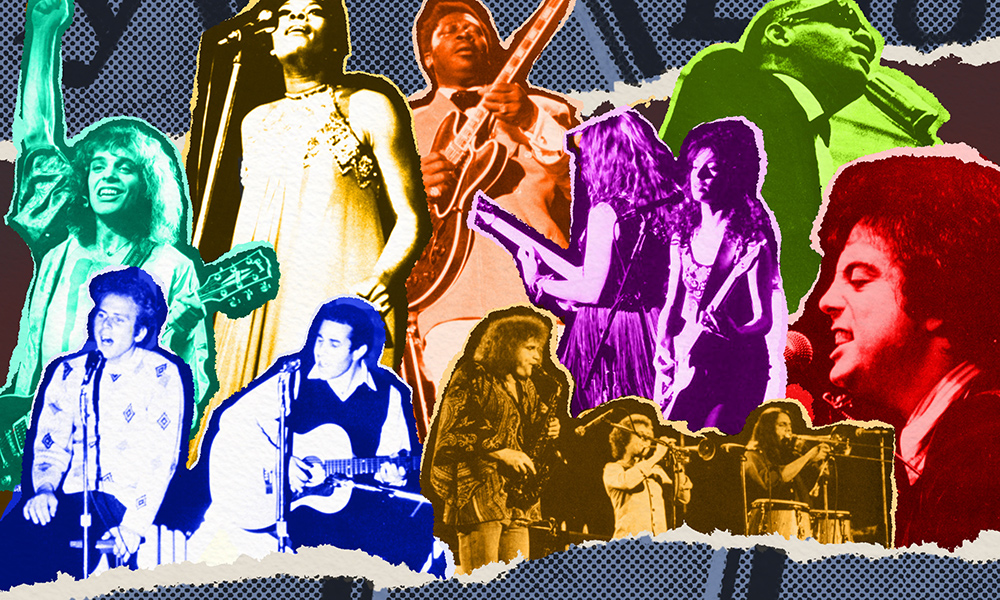 Rockin’ and rollin’ at the Palestra
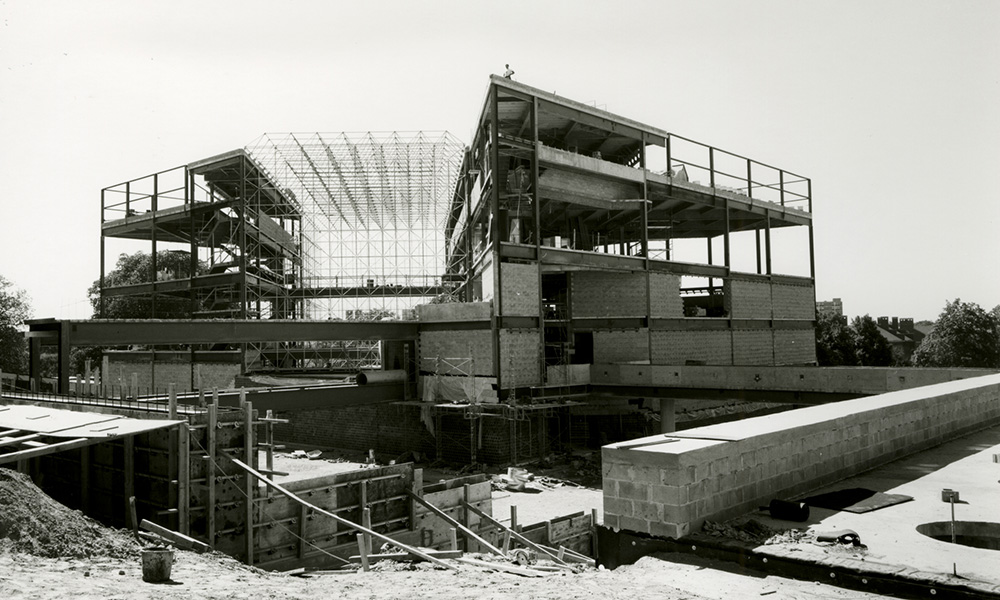 Wilson Commons, designed by I.M. Pei, remains a centerpiece of campus life
 Wormholes and stains add to backstory of medieval manuscript’s acquisition


