Watch CBS News
By Scott MacFarlane
/ CBS News
The FBI search of a former president’s residence and the National Archives request for the Justice Department to investigate the removal of records to Mar-a-Lago are unprecedented. But a review by CBS News reveals a long — and, at times daring — history of the theft or disappearance of records belonging to the National Archives.
Some of the cases triggered federal prosecutions against historians, collectors and National Archives insiders.
The thefts of valuable historic artifacts and papers — ranging from military dog tags of a Tuskegee Airman to an audio recording of Babe Ruth — led to formal investigations by the National Archives, and later the U.S. Justice Department. The cases include theft by researchers who, at first, sought to review the records in-person at National Archives facilities.
Prosecutors alleged the cases were deliberate attempts to steal, and potentially profit, from unique historical artifacts which belong to the U.S. government.
“From the outside, it might seem like a simple mistake to take an item from the Archives. But it’s hard to say you don’t know the obligations when you handle National Archives records,” said University of Maryland law school professor Michael Greenberger, a former U.S. Department of Justice attorney.
Greenberger said the theft of archives artifacts is a “very big deal and taken very seriously.”
Court records reviewed by CBS News show, in 2018, a Maryland researcher pleaded guilty to a federal theft charge for taking items from the National Archives records facility in College Park, Maryland. In his plea agreement, Antonin DeHays acknowledged he “stole at least 291 U.S. servicemen dog tags and at least 134 other records from National Archives at College Park. Some of these dog tags bore evidence of damage, such as dents and charring due to fire sustained during the crashes.”
His plea agreement said, among other items, DeHays took “two dog tags, one silver and one brass, assigned to a downed Tuskegee Airman, who died when his fighter plane crashed in Germany on Sept. 22, 1944.” He also acknowledged he “gave the brass dog tag to a military aviation museum in exchange for the opportunity to sit inside a Spitfire airplane.”
In court filings, prosecutors said DeHays stole items worth an estimated $45,000 in value, then resold them for approximately $43,175 in return. A judge sentenced DeHays to nearly one year in prison. He was released in 2019. In a court order last year, a federal judge mandated DeHays make monthly $250 payments to reimburse the federal government.
In 2012, a former National Archives employee pleaded guilty to embezzlement related to a scheme to sell historically significant sound recording discs on eBay that he stole from the National Archives. Prosecutors said investigators seized thousands of sound recordings from the home of Leslie Waffen of Maryland.
According to his signed plea agreement, Waffen acknowledges selling on eBay “an original master copy of a Babe Ruth voice recording, which captures Ruth hunting on Dec. 10, 1937.” It fetched $34.74.
Waffen was a longtime employee of the agency. According to prosecutors, Waffen was employed by the Archives from 1969 to 2010, serving as chief of the Motion Picture, Sounds and Video Recording Branch of the Special Media Archives Services Division in later years. He was sentenced to 18 months in prison.
In 2015, Samuel Morison of Crofton, Maryland pleaded guilty to a federal theft charge for stealing historical records related to his grandfather, who was a military servicemember. According to the Justice Department, “Morison allegedly offered to sell records relating to Rear Admiral Morison’s work during World War II to the owner of a bookstore, who subsequently agreed to take possession of the records, place them on consignment through his shop, and sell them using eBay.”
Morison was sentenced to probation.
“Everything the National Archives holds is a piece of history, so they need to continually protect those items from being stolen,” said Kel McClanahan, a Washington, D.C. attorney specializing in national security law.
McClanahan said there is a potential black market and monetary value to items belonging to the Archives because of the unique nature of each artifact. “It offers a unique sort of bragging rights for someone,” he said.
Investigations into stolen or missing artifacts are often spearheaded or handled by the National Archives and Records Administration office of Inspector General. A series of agency reports reviewed by CBS News show the inspector general received a range of tips in recent months, including the suspected on-line auction of artifacts and documents belonging to former President Franklin Roosevelt. A report issued in March 2021 said, “Two of the documents were drafts of speeches, and the third document was an inventory of President Roosevelt’s stamp collection.”
One of the most notorious thieves of national historical artifacts was Barry Landau, who was also one of the leading collectors of presidential memorabilia. In 2013, he was convicted of the single largest theft of historic artifacts in the U.S. That year, CBS News’ “60 Minutes” reported on his exploits, noting that Landau had stolen thousands of items, including hundreds of documents signed by some of the most famous names in history: George Washington, Thomas Jefferson, Francis Scott Key, Marie Antoinette, Voltaire. He’d taken them from museums and libraries all over the country. Among the items was the original copy of Roosevelt’s 1937 inaugural address, the one he read on Inauguration Day.
Former Deputy Attorney General Rod Rosenstein, who in 2013 was the U.S. attorney in Maryland, led the prosecution against Landau. He told “60 Minutes,” “It was a rainy day. In fact, the reading copy of the speech, the document the president read from that day was waterlogged. And you can see that on the document that we seized from Mr. Landau.” Landau was sentenced to seven years and prison, and upon release, he was to to be banned from visiting “museums, libraries or any other places where documents are deposited,” Rosenstein said.
In a March 2020 report, the inspector general noted that “five World War II-era photographic prints from NARA’s collection were discovered for sale at a public auction house. The (investigators) stopped the auction, obtained the prints, and determined they were part of NARA’s archival collection of Dorothea Lange.”
In one of the highest profile theft cases in National Archives history, former Clinton administration national security adviser Sandy Berger pleaded guilty to unlawfully removing and retaining classified documents. He was fined $50,000, ordered to perform 100 hours of community service and was barred from access to classified material for three years.
According to his guilty plea, Berger acknowledged reviewing documents at the National Archives in summer 2003, then concealed and removed a set of documents.
The Justice Department, in an April 2005 announcement of the guilty plea, said, “Berger, who possessed a United States government security clearance and was aware of the laws and rules regarding classified documents, knew he was not authorized to remove the classified documents from the Archives.” Berger died in 2015.
The National Archives and its Office of Inspector General did not respond to requests for comment.
First published on August 22, 2022 / 6:00 AM
© 2022 CBS Interactive Inc. All Rights Reserved.
Copyright ©2022 CBS Interactive Inc. All rights reserved.
Not a "simple mistake": Previous cases of missing documents at the National Archives – CBS News
Spatial Announces “Spatial Studio 101,” a Creator Curriculum For Immersive 3D-Sounds Design Tool, Spatial Studio – Business Wire
Spatial’s creator curriculum program is in partnership with Conservatory of Recording Arts & Sciences (CRAS) to grow immersive audio engineering and design talent
SCOTTSDALE, Ariz.–(BUSINESS WIRE)–Spatial, the award-winning immersive audio company and software service, announced the Spatial Inside program composed of educational resources and Spatial Studio 101, a curriculum for audio engineers seeking to unlock the next frontier of immersive sound design.
Spatial Studio 101 is Spatial’s foundational curriculum that offers creators a course that teaches core principles of Spatial Studio, the real time editing environment for designing immersive sonic experiences.
To deepen the pool of qualified immersive audio design talent, Spatial partnered with the Conservatory of Recording Arts & Sciences, (CRAS) one of the top-rated audio engineering and music production schools. The partnership with CRAS enrolls audio engineers and creatives seeking to diversify their skillset and unlock commercial work opportunities with Spatial’s leading customers and clients.
“With Spatial Studio 101, the goal was to ease any level audio engineer into Spatial Studio and help guide students to be creative – it’s about inspiring people towards creativity. The beauty of Spatial is there’s no hard set of steps to make something that sounds good, we drafted something that inspires”. – Robert Brock, CRAS’ Director of Education and Core Technologies, Apple Distinguished Educator and author of Spatial Studio 101.
Spatial boasts one of the most advanced immersive audio software platforms in existence, offering near-limitless layering of sounds across dozens of audio channels. The technology enables active immersive audio experiences that react to real-time environmental changes, creating truly unique sound experiences from person to person. Immersive audio has already been widely touted as the next big thing in music, film and television, with Spatial’s advanced software leading the charge into real world interactive soundscapes.
For more information about Spatial or to register for Spatial Inside and Studio 101 visit: spatialinc.com/creators.
About Spatial
Spatial is redefining the human experience by creating virtual soundscapes where you work, play and stay. Spatial’s technology is flexible, powerful and scalable, breaking down traditional audio barriers. Serving customers in corporate, retail, theme parks, museums, hotels, estate entertainment and more, Spatial is taking audio to a new level and allowing creators to unleash their creative soundscapes. Spatial’s team and demo locations are located in Emeryville, California and Scottsdale, Arizona. Led by experienced leaders from Apple, Nest, LucasArts and Disney and backed by DBL Partners, BITKRAFT Ventures, National Geographic Society, The Kraft Group, Marquee Sports Holdings, WS Development and others, Spatial is poised to reimagine immersive human experiences and entertainment. To Learn more, visit spatialinc.com or follow us on Instagram, Twitter or LinkedIn.
Spatial Reality, Spatial Studio and Spatial Control are trademarks of SpatialX Inc. All other trademarks are property of their respective holders.
About The Conservatory of Recording Arts & Sciences
The Conservatory of Recording Arts & Sciences reflects the nature of the institution – “to conserve, enhance, improve and promote the artistic and technical skills of audio recording by preparing students to enter the business as qualified audio recording engineers.” The curriculum and equipment are constantly being updated to keep pace with the rapid advancements in the music and sound recording industries.
CRAS — The Conservatory of Recording Arts & Sciences is licensed by the Arizona State Board for Private Postsecondary Education, and is accredited by the Accrediting Commission of Career Schools and Colleges (ACCSC). ACCSC is listed by the U.S. Department of Education as a nationally recognized accrediting agency under the Provision of Chapter 33, Title 38, US Code and subsequent legislation.
Press:
[email protected]
Spatial partners with CRAS for "Spatial Studio 101" curriculum, empowering audio pros with skills for immersive sound design.
Press:
[email protected]
Star Wars Knights of the Old Republic Remake (KOTOR) Changes Studio – Bloomberg
Bloomberg Daybreak Middle East. Live from Dubai, connecting Asian markets to the European opens. The show will focus on global macro issues with a middle eastern context, provide expert analysis of major market moving stories and speak with the biggest newsmakers in the region.
Simulcast of Bloomberg Television
Series focused young entrepreneurs making their mark
BlackRock, UBS Among Funds Slashing Exposure to China Property
Surviving Energy Bills Forces Drastic Steps by UK Businesses
Tesla, Nio Suspend EV Charging Services as China Power Cuts Bite
Labor Department Probes Troubled Travel Startup Pollen Over Missed Paychecks
Twitter Faces Legal, Political Peril in Whistle-Blower Case
India Sacks 3 Officers for Firing Accidental Missile to Pakistan
The Economic Challenges Awaiting Angola’s Next Leader
Australia Wants to Boost Indonesia FDI With Pension Fund Savings
Toll Brothers Home Orders Sink 60% as Rates Hit Luxury Buyers
Anne Heche Laid to Rest At Historic Hollywood Cemetery
Justin Lower Lost PGA Tour Card, LIV Might Help Get It Back
The UK’s Rental Market Crisis Has Been Years in the Making
Banning Russian Travelers Won’t Help Win the War in Ukraine
Is That Trump Photo Real? Free AI Tools Come With Risks
Good Luck Finding a Seat in That Fancy Airport Lounge
A ‘Tsunami of Shutoffs’: 20 Million US Homes Are Behind on Energy Bills
Elon Musk’s Many Korean Fans Have Built a $15 Billion Tesla Stake
Abortion Funds Sue to Block Criminal Charges as Texas Ban Set to Take Effect
Former Louisville Cop Pleads Guilty to Conspiracy Charge in Breonna Taylor Case
Liberia’s Top Judge Is a Woman for First Time in 19 Years
Drought Threatens China’s Harvest When World Can Least Afford It
Japan to Consider Building Next-Gen Nuclear Plants, Nikkei Says
For 2-Wheel Commuters in LA, ‘Bikepooling’ Brings Safety in Numbers
London’s Elizabeth Line to Finally Link Heathrow to the West End
Red Lights at Hong Kong Crosswalks Are Helping Phone Zombies Cross the Street
Rising Ether Prices Spark Liquidity Crisis at NFT Lender BendDAO
Crypto Lender Celsius Accuses Former Money Manager of Theft
Bitcoin Stuck in Narrow Range as Traders Brace for Jackson Hole
The high-profile remake of Knights of the Old Republic will go to Saber Interactive in Eastern Europe.
Star Wars – Knights of the Old Republic was released in 2003.
Jason Schreier
The highly anticipated remake of the video game Star Wars Knights of the Old Republic has a new developer after a bumpy ride.
The project, formerly in development at Austin, Texas-based Aspyr Media, is now being led by one of Saber Interactive’s Eastern European studios, according to a person familiar with the change who asked not to be identified because the details are private. Both developers are owned by the Swedish company Embracer Group AB, which obliquely referenced the pivot in a public statement last week. A representative for Embracer didn’t immediately have a comment.
Hans Zimmer shares his studio secrets in an interview with UA Audio – We Rave You
In an interview with UA Audio, Composer Hans Zimmer opened up about his studio secrets. He explained his workflow, discussed the gear he uses, and detailed how he writes scores such as the soundtrack to the 2014 film Interstellar. Surely one of the most prolific and recognized movie score writers we have known, Zimmer was among the first to combine electronic and digitally made music with orchestral sounds. Starting as a recording engineer and synth programmer in London, Zimmer quickly came into contact with Stanley Myers, who taught him how to write movie scores. The first big production he worked on was “Rain Man”, and with Lion King, Pirates of the Caribbean, Interstellar, and Gladiator also on his CV, it’s safe to say that his footprint in Hollywood and the music community is undeniable.
We know the man’s work, but what kind of plugins and gear does he use to put it all together? For his DAW, he uses Cubase/Nuendo in combination with a Euphonix System 5 console and 1 UAD-2 Quad interface. All his gear is portable- Zimmer and his team don’t work just in one studio. He notes, “the way we work here is that we have three studios on the go. We have my room, we have the other programmers` rooms, and everybody has sort of the same outfit.”
| ARTURIA FX Collection 3 + V Collection 9 Giveaway – Click here to checkout
One of the plugins he states has made his life easier is the dbx 160 Compressor. The actual hardware was his long time go-to drum compressor; with the plugin, he gets the same effect on the go. Zimmer is also a big fan of his 24-channel Neve Console 1081, and Neve in general- he puts the brand’s plugins on every channel.
Universal Audio being one of the leaders in the plugin emulation world, it’s little surprise that the composer favors the Roland RE-201 Space Echo. He goes so far as to call it his “bread and butter”. All in all, Zimmer uses UA Audio gear in every production, going so far as to state that their gear is beyond what everybody else is doing right now.
Read the full interview from Hans Zimmer and UA Audio by clicking the button below!
Read next: Popular streamer xQc tries FL Studio, Production
Image credits: Victor R. Ruiz
Clear Path Ensemble: Solar Eclipse – Jazz Journal
New Zealanders aim to fuse the ‘expansive and astral elements of electric jazz [Weather Report], with an introspective dynamic [1970s ECM]’
Clear Path Ensemble are based in New Zealand and have strong overtones of jazz-fusion band Weather Report. From electric jazz to ambient, experimental, house and funk, they take a DIY, jam-session approach towards composition; band members seem to cherry-pick from a vast array of influences.
Also citing inspiration by the 1970s ECM catalogue, the ensemble claims to channel the “expansive and astral elements of electric jazz, with an introspective dynamic”. At times the music is fused with catchy synth hooks, smooth basslines and shuffling beats, while other tracks seamlessly morph into moody electronic soundscapes.
Led by percussionist Cory Champion, the band released their eponymous debut album with HHV in 2020, followed by a headline performance at the 2021 Wellington Jazz Festival. It had been Champion’s ambition to record this album traditionally (i.e., perhaps in a conventional analogue studio) but was swayed to record it electronically because “electronic music production techniques are (now) fully integrated in the recording and production of great new contemporary music”. That is a moot point, and many recording engineers and producers would beg to differ. Nonetheless, high-quality (non-studio) digital recording is now available to musicians at a fraction of the cost and for many it has been a liberating and career-changing opportunity.
Paradoxically, this is a modern-retro album. The recording quality is very now, but the music remains deeply rooted in the 1970s. It is probably a good example of what is currently referred to as “nu jazz”. Essentially, it is a blending of the improvisation and harmonic concepts typically found in jazz with funk, electronica and improvisation. I could have listened to this album in the 1970s and I can happily listen to it today.
Discography
Kihi; Drumatix; Revolutions; Absolvo; Interlock; Solar Eclipse; Sunrise Motif; Plasma Plaza; Talking To Water; Tennis Ball (32.58)
Cory Champion (pc); Details of other musicians not supplied. The Carvery Studio, London, 2022.
Soundway Records SNDWLP154
About Jazz Journal
Advertise with Jazz Journal
Email the editor
Get email alerts
Jazz Journal contributors
Privacy and cookie policy
Request a Jazz Journal review
Sponsored content
Subscribe
Terms & conditions
The old Jazz Journal website
Unlock an article
© Unless otherwise indicated, all content copyright Jazz Journal 1948-2022. All rights reserved.
Top 12 reasons to visit the VIU Nanaimo campus library – Vancouver Island University News
As a university student, one of the most important areas you’ll want to get familiar with is the library. University libraries play a key role in enhancing your learning experience, ensuring you have the materials, resources and services you need to succeed.
Did you know the Nanaimo campus library is visited more than 500,000 times by members of the VIU community each year? The space includes:
The building is also home to other key support services such as the VIU Writing Centre, IT Technology Support and the Centre for Innovation and Excellence in Learning. Want to learn more about this incredible space? Library staff share 12 things you may or may not know about the Nanaimo campus library:
You can access the Nanaimo campus library any day at any time with your VIU ID card, which includes access to computer stations, printers, library collections and more. You can also get your VIU ID card at the library. Follow these step-by-step directions to order your card.
For students with children, a new 2SLGBTQ+ and feeding-friendly Family Space on the third floor includes a children’s book collection from the Vancouver Island Regional Library.
Inside the library you can hang out, take a study break and chat with other students at the Wellness Lounge. VIU’s Wellness Peers run the lounge and are there to answer questions or chat. There’s also free tea and hot chocolate, colouring pages, fidgets, therapy dogs during select times and much more.
Have questions about your assignments and want some research help? Reach out to the library’s Research Help service, available through online live chat, one-on-one Zoom appointments and email.
The library has a large equipment collection, including DSLR cameras, GoPros, audio recorders, microphones, laptops, projectors, SAD lamps and more! Take a look at our equipment booking tool to find all that you might need for your next project or assignment.
It is one of the top study spots at VIU’s Nanaimo campus and it’s always ready to welcome you. The library’s fourth floor features comfortable and varied seating with unmatched views of the surrounding ocean and mountains to help inspire your study session – or give you a nice visual break. You can also relax in the third-floor entrance lounge by the fireplace and soak in that “home away from home” feeling.
Need a quiet space to join your next Zoom class? Recording a podcast for your next assignment? We’ve got you covered with individual use study rooms and audio video recording labs that can be booked at our Nanaimo and Cowichan campus libraries.
At the library’s Language in the Library sessions, VIU community members can come and join in Hul’q’umi’num’ learning and story sharing. Everyone welcome! Snacks are provided. Visit the Language in the Library page for more information.
Everyone has that one favourite spot on campus they consider to be the perfect secret study spot. For staff in the Nanaimo campus library, it’s the computer lab on the fifth floor! Open from 9 am to 8 pm, here you can find an optimal study space with many available computer stations and breathtaking views of the Nanaimo campus.
The VIU Library has a board game collection for those moments when you need a study break. Come borrow a board game to play with your friends! Check out games like Catan, Code Names, Scrabble or Taboo! Find out more.
Two beautiful murals were installed by Snuneymuxw First Nation artist Eliot White-Hill, Kwulasultun at the fireplace and in the family space. Drawing upon traditional Coast Salish style and imagery, the installation is “an expression of the traditional flow of knowledge and teachings from generation to generation.” Read more about the artist’s works.
One of our favourite things about the library is its proximity to Starbucks, which means you can grab a much-needed caffeine break at any point to get you through those long study sessions. You can find the Starbucks right beside the main library entrance.
Have any library-related questions? Contact us!
Got an article idea for the blog? Email [email protected].
Need more information?
Want to talk to someone about specific questions?
Ready to join us at VIU?
Manley’s Magical Chinook MC/MM Phono Preamplifier – AnalogPlanet.com

The Manley Chinook phono preamplifier is one of the most highly regarded, favorably reviewed phono stages on the market. A true hi-fi bargain in audiophile terms — a veritable giant killer, you might even say — we think it’s a perfect candidate for an AnalogPlanet review.
First up, I wanted to hear/review as many phono stages as possible, using my Tavish Audio Design Adagio, Luxman EQ-500, and Sutherland Little Loco phono stages for comparison. (For the record, the latter two are on loan.) I checked out a handful of new phono stages as seen in recent AnalogPlanet and Stereophile show coverage — but, to a fault, they were unavailable for further reportage. Enter Kevin Deal of Upscale Audio, one of the hardest-working, most enthusiastic hi-fi distributors in the States. When he offered up the Manley Chinook for review, we eagerly accepted.
The Manley Chinook is as plain a black box as exists in the world of phono stages. The front plate includes the Manley logo, Chinook derivation, and a blue-lit, LED pushbutton to power the unit. (In case you’re wondering — the Chinook doesn’t completely power down; it goes into sleep mode.) Its aluminum casework sports a crosshatched, mesh ventilation scheme. On the Chinook’s backside, you’ll find an IEC power receptacle, two pairs of Manley Teflon gold-plated RCA jacks for input and output, and a row of small dip switches that accommodate loading for MM and MC cartridges. Internally, low and high gain switches enable settings from 45dB to 60dB. “Typically,” states the manual, “45dB is for moving-magnet cartridges, and the 60dB setting is for moving-coil. Your Chinook comes factory set for 45dB gain.”
What are the differences between the Manley Chinook, which retails for $2,899, and its newer SE Edition (also $2,899), you may ask? “The standard Chinook has 45db and 60dB of gain, and a purple-ish faceplate,” Kevin Deal explained via email. “The Chinook SE has 45, 50, 60, and 65dB of gain, black or silver faceplate (along with standard color), and upgraded Gold Lion 6922 tubes that have been specially selected through testing as well as by ear and cryogenically treated.”
I used low-output MC carts for this Chinook review, including an Ortofon SPU GE Classic MkII (0.2mV) and a Pure Fidelity Stratos (.45mV). I activated the 60dB gain bump available from two switches inside the Chinook, which produced excellent results.
The California-designed-and-manufactured Chinook offers tons of loading options via its back-panel dip switch array, making choice of resistive loading for my MC carts a breeze. Input impedance is enabled by user-selectable resistor values of 50, 100, 200, 400, and 800 ohms. There are 32 possible loading scenarios in total.
Furthermore, “Input Termination Capacitance: 3-position user-selectable capacitor values of 50pF, 100pF, and 200pF yield resultant combinations of: 50, 100, 150, 200, 250, 300, and 350pF,” according to the manual. “Use these settings typically for Moving Magnet (MM) cartridges. Default Input Impedance: 47k Ohms, with no other DIP switches selected. Use this setting typically for Moving Magnet (MM) cartridges.”
A tubed phono stage, the Chinook employs two 6922 tubes (gain stage) and two more 6922s (output stage). 6DJ8, 7308, ECC88 types may be substituted, if tube rolling is your thing.
Power Up, and Listen On
On power up, the Chinook’s output jacks mute for 45 seconds. “Automatic mute circuit allows tubes to warm up and circuitry to settle,” notes the manual. “At power down, output jacks are immediately muted.”
Though you can use a SUT with the Chinook, I plugged in my carts — solo, as it were — to hear direct differences between the Manley and my in-house phono stages.
As the Chinook has been extensively reviewed elsewhere, I won’t get into the weeds of its build quality — which is exceptional, by the way — and instead will focus on its sound in my reviewer’s system, including the aforementioned phono stages. Turntables utilized for this review included Pure Fidelity Harmony and Thorens TD 1500 ’tables, joined to Ayre EX-8 or Parasound Halo 6 Hint integrated amplifiers, and DeVore Fidelity O/96 loudspeakers.
Straight out of the box, the Chinook exhibited a grand sense of orderliness and spaciousness — a very coherent, wide-open, and frequency-neutral phono stage. The Chinook may use tubes, but its neutrality is first rate. The Chinook presented a large, deep soundstage with excellent ambient cues and precisely focused images. It produced a large soundstage, similar to the Luxman EQ-500, another giant soundstage-producing machine. With the RSD release of Steely Dan’s Two Against Nature (Giant Records 603497849093), the Chinook drew deep low notes from bass drum and electric bass, which gilded my ears with excellent weight, robust tone, and visceral textures, though not as viscous (nor as wooly) as my Tavish Audio Design Adagio. (This review isn’t unfolding chronologically, per se, as I began comparison listening with the Luxman, followed by the Manley; then came the Tavish.)
The tubed Luxman EQ-500 is one of the most feature-rich phono stages available, with inputs for three turntables, on-the-fly adjustment dials for gain, impedance, capacitance, and choice of MM or MC cartridges. No dip switches required. Also available, toggle switches for phase, low and high cut, balanced or unbalanced inputs, mono/stereo, and a switch labeled “articulator.”
The Luxman reproduced the treated piano discourses of Nils Frahm’s Felt (Erased Tapes Records ERATP033LP) with strong left-to-right separation and layering, with a consistent focus on upper-mid to treble frequencies — snare drums, airy ambient space, and prattling treated noises had a dazzling, burnished quality. The Luxman is a refined machine, leaving nothing to the imagination. Its resolution of ambient information aided its huge soundstage capabilities. Its rendering of Frahm’s treated piano was visceral, at times sounding like two seashells rubbed together.
Spaghetti western trio Kruangbin’s Mordechai (Dead Oceans DOC193LP) also benefitted from the Luxman’s delicacy and shading, the album’s gently played snare drum popping with just the right degree of light-wristed attack. The Luxman also rendered deep bass synth notes, as on dance duo Tosca’s Osam (!K7 Records K7411LP). The Luxman’s large stage was weighted by Tosca’s plentiful, at times, ominous synth bass tones, with touchable textures. (No, this isn’t a Luxman review, but it’s the Chinook’s competition in this review; that’s what it’s up against.)
The Luxman could occasionally sound less full or corporeal, as on ZZ Top’s Tres Hombres (London Records XPS 631), with Billy Gibbons’ guitars on the band’s signature track “La Grange” sounding smallish and faint. Instruments on Steely Dan’s Everything Must Go (Reprise Records 603497849109) sounded crisp and tight — but, occasionally, I heard more surface than body. The EQ-500 is a detail-retrieval king, has a humongous soundstage, a clear midrange, a healthy low-end, and gobs of air and atmosphere, as heard to great effect on “Trane’s Blues” from Workin’ With The Miles Davis Quintet (Prestige PRLP 7166). The EQ-500 excelled at classical and jazz, acoustic instruments beautifully portrayed.
The Manley Chinook was more like the EQ-500 than not, especially in its rendering of soundstage width and depth. But it dug deeper in midrange and bass, “Trane’s Blues” resounding with more natural high-hat and cymbal body, more distinct and slightly weightier upright bass, and a tad more immediacy overall. The Chinook didn’t separate instruments as well as the Luxman and had less interior definition, but it bettered the EQ-500 in top-to-bottom coherency and overall sense of flow. It played Steely Dan’s “Green Book” (also from the aforementioned Everything Must Go) with impressive rhythm section weight albeit on a smaller soundstage, with silkier guitars and better attack and weight from drummer Keith Carlock’s bass drum.
The Manley was more laid-back than the Luxman and generally sounded creamier, with better low-end punch and weight overall. Where the Luxman was intricate and detailed, the Manley was more fleshed out. In that regard, the Chinook was similar to my Tavish Audio Design Adagio phono stage.
Speaking of, the Tavish Audio Design Adagio is an all-tube affair (three 5751, two 6267/EF86, one 12AU7A), with a separate solid-state power supply, and front-mounted dials for capacitance and resistance. It’s easy to operate, and there’s no denying its rich tube sound. It has the largest, most bloom-adorned soundstage of any phono stage I have in house, and it excels in saturated tone and low-end weight, but is nowhere as detailed, resolute, or coherent as either the Manley or the Luxman. The Tavish didn’t play “Trane’s Blues” as dramatically or dynamically as the Manley and had less bass drive. Its rendering of “Green Book” also lacked the punch and excitement of the Manley, which had more snap, drive, and tension.
The Manley strikes a good balance between all these preamplifiers, providing the flow and warmth of tubes with the coherency of the best solid state. (Unfortunately, I couldn’t compare the Chinook to the Sutherland Little Loco phono preamp, as I am currently without a low impedance, low output MC cart, a must for use with the very fine Little Loco.)
Conclusion
The Manley Chinook deserves all the praise it’s received by the audiophile press cognoscenti. At $2,899, it’s admittedly not cheap — but it’s worth saving up for. Its excellent coherency, neutrality, and resolution is balanced by excellent overall tone, spaciousness, and ability to sound very, good, no matter the genre of music. The giant killer lives!
For more information, head to the official Manley site. If you want to order a Chinook, go here to find a dealer near you.
Author bio: Former musician, former artist, and former legal wastrel Ken Micallef has written numerous hi-fi equipment reviews for Stereophile and AnalogPlanet, and his byline has also appeared within Mojo, Electronic Musician, and The Grammys. You can also find him at YouTube (Ken Micallef Jazz Vinyl Audiophile).
- Log in or register to post comments
…but the Chinook has a big response jump at high frequencies.
https://www.hifinews.com/content/manley-chinook-phono-preamplifier-lab-r…
Otherwise an excellent phono preamp, and more affordable than many Manley products.
the Manley works without a step-up transformer for even low MC’s. Like they have done in the 60’s. My experience is, this is the best way to play low MC’s. Fully amplified by tubes.
Google Pixel Buds Pro Review: They Did It – Droid Life
We may earn a commission when you click links to retailers and purchase goods. More info.
Time really can fly when it’s the summer, product events keep popping off, travel happens, and everywhere you turn there’s another device to add to the review list. I mention all of that because we gave you our “first listen” thoughts on the Google Pixel Buds Pro almost a full month ago. I have no idea where the past several weeks went, but I can imagine some of you want to get those final thoughts on whether or not Google really nailed it with their most expensive earbuds to date.
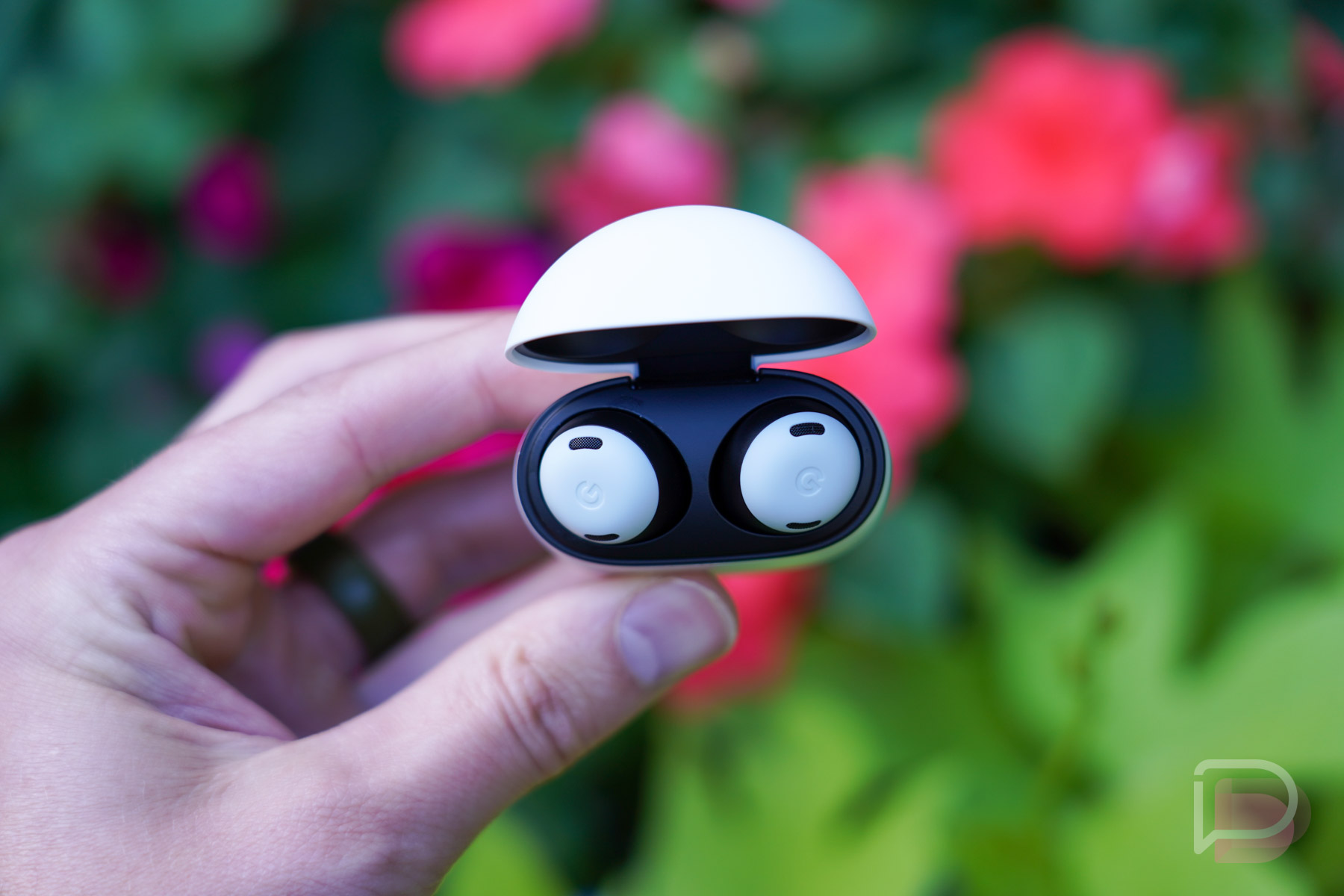
To quickly recap, the Pixel Buds Pro are Google’s latest earbuds and first true wireless earbuds with Active Noise Cancellation (ANC). They also happen to be quite expensive at $199.99. They come in four colors: Charcoal, Lemongrass, Coral, and Fog.
Google rates these new Pixel Buds Pro has having up to 31 hours of battery life with ANC off and up to 20 hours with it on, thanks to the extra charge you’ll get from the battery in the case. During a single listening session, that should mean 11 hours (ANC off) or 7 hours (ANC on) of use.
Each bud features touch controls with swipes of forward or backward (volume up or down), single/double/triple taps, and a long-press or touch & hold. Nothing can be customized outside of the touch & hold, where you can set that action to either toggle Google Assistant or ANC settings. These settings can be different on each bud.![]()
The included case has wireless charging and also charges via USB-C port. The connection to your phone or computer is via Bluetooth 5.0, there’s IPX4 water resistance in the buds (IPX2 in the case), and 3 microphones with wind-blocking mesh covers to help with your conversations. You also get access to a Pixel Buds app that lets you control those touch controls I mentioned, turn on or off the smart Volume EQ setting, access Multipoint and Audio Switch toggles, and more.
Finally, the ANC options include ANC on or off as well as a Transparency mode. This mode tries to amplify noise in the world in real-time to help you, you know, cross the street safely or carry on a conversation from someone in the room with you.
For this review period, I’ve used two different pairs of the Pixel Buds Pro, the Charcoal pair that Google sent me to test and a Fog pair that I purchased to use going forward. For the first week or two I used the Charcoal pair and have since been on the Fog pair. There are no differences in the two other than the external color. They have the same case, same sets of features, and to my ears, sound the same.
How they fit
I’m going to poach from my “first listen” here and say that I still think these sound pretty phenomenal. Again, though, Google’s Pixel Buds all seem to fit my ears perfectly out of the box and that doesn’t change with the Pixel Buds Pro. The sound and fit experience may differ for you, but I couldn’t really have asked for a better out-of-box start.
That fit, which doesn’t use any sort of wing tips (it does come with difference sizes of ear tips), magically squeeze into my ears and rarely wiggle or budge. I’ve worked out in the gym, taken them for runs, used them in my office, and done outside housework and haven’t had a bud fall out yet. I really don’t think I could move in any other ways to get them to fallout unless I tried hanging upside or something. I’m not going to do that – I’m old and would hurt myself.![]()
If there’s a negative to how the Pixel Buds Pro fit, it’s probably in their overall size. These are big ol’ buds, which I get because of the ANC and batteries, but they are beefy. Previous Pixel Buds all had this lightness to them that allowed me to wear them for extended periods of time without any fatigue. Over several weeks now, I’ve certainly experienced some ear fatigue after extended listens (an hour or more). I may be able to get more used to their size with daily lengthy listens or their weight and bulk may always give me some problems. Tough to know just yet.
So while the Pixel Buds Pro fit like a glove out of the box and don’t budge no matter what I’m doing when wearing them, they are a bit heavy and bulky in my ears. They may sound great, but wearing them for hours on end could be tiring.
Speaking of how they sound…
Several weeks into this test and my thoughts on how the Pixel Buds Pro sound basically match what I said out of the gate. In case you missed it, here’s the big part of that initial listen:
There is a smooth, deepness to the bass that really holds up in satisfying ways that most true wireless earbuds can’t. Highs have a richness and clarity that’s intoxicating. There’s an excitement when you throw a big booming song at the Buds Pro. Yes, I ran my typical test of The Weeknd’s “High For This” and these passed with flying colors. I threw a bunch of Labrinth and his wild digital beats and heavy bass at them, once again coming away happy. I brought out Jeff Buckley for the first time in a while to try and feel that emotion and your boy is tearing up now. OK, that’s a bit much. Old Caamp, after overplaying it the past two years, sounded fresh again. This is head-filling sound at its best.
I’ve since added the whiny awfulness that is old Dashboard Confessional “Unplugged,” Ray LaMontagne, Ghostface Killah, and more at these Buds Pro and my takeway remains that I love the sound. If I want clear rawness, soulful elegance, or one of the greatest rappers of all time to bless my ears, I’d happily reach for the Pixel Buds Pro and turn on ANC. Nothing sounds phony or too digital or like the ANC is distorting sound in unflattering ways that an algorithm thinks you might enjoy.
For sessions where I want richly pleasant audio and the outside world to disappear a bit, I’ll probably continue to use the Pixel Buds Pro going forward. I’m thinking about when in my office or on an airplane or the couch at night while my wife consumes Virgin River and I need a way to remain present in spirit, I’ll use these. For a more active experience, like when out on a run, I think the weight and size might keep these away from my ears and I’ll probably go back to my cheap Pixel Buds A on occasions.![]()
Other things I like
What could use some work?
As mentioned above, I already bought a pair and plan to use the Pixel Buds Pro when I need a high-end audio experience in wireless form. And while they worked just fine during my workouts or runs or when on-the-go, the weight and beefiness of them was a bit tiring at times. However, I’ll continue to test in those situations to see if my ears will get used to them, because the sound is quite lovely and I’d rather not go back to the lower-end Pixel Buds A sound, even if those do fit lighter.
For you, the questions probably start at what your budget is. At $199, these are not cheap. You do get a lot of the high-end features you would expect at $200, along with ongoing software support. They also clock in $30 cheaper than Samsung’s new Galaxy Buds 2 Pro. My ears love these and for the price, I think they are worth it.
Revel Communities Opens Scottsdale Senior Living Communities – Multi-Housing News
The Wolff Co.’s Revel Communities has announced the completion of Revel Scottsdale and Revel Legacy in Scottsdale, Ariz. The senior living properties are the company’s first two in Arizona, while also marking the 12th and 13th Revel locations since the launching of the brand in 2018.
Revel Scottsdale is a 157-unit community, offering studio, one- and two-bedroom apartments, along with two-bedroom cottage floorplans and guest suites. Common-area amenities include a clubhouse, a fitness center, a media lounge, an outdoor saltwater swimming pool, spa centers, creative studios and community activities such as art and cooking classes.
The garden-style property is situated close to the Camelback Mountains, within 4.1 miles from Old town Scottsdale, 6.3 miles from Arizona Falls, 9.8 miles from the McDowell Mountains and near multiple dining and retail venues.
Located at the intersection N. Pima Road and Legacy Blvd., Revel Legacy is a 169-unit community offering studio, one- and two-bedroom apartments, along with two-bedroom cottage floorplans and guest suites. Units are equipped with quartz countertops and GE stainless steel appliances. Common-area amenities include a restaurant, a bar, a swimming pool and a spa center, as well as a club room, a fitness center and a dog park.
The property is situated across Arizona 101 Loop, 2.2 miles from Westworld of Scottsdale, 6 miles from Scottsdale Memorial Hospital, 6.7 miles from Desert Ridge Marketplace and close to the Scottsdale Sports complex and McDowell Mountains.
The two senior living communities are situated within 9.1 miles from each other. Through its Revel Travel Club and Revel Seasonal Residences programs, Revel offers seniors a wellness-focused living experience that also includes the opportunity for a three- or six-month stay at any Revel community in a furnished apartment.
Revel Communities’ portfolio now expands across the Western U.S., in Colorado, Idaho, California and Arizona. Earlier this year, the company completed its first independent living community in Southern California, Revel Palm Desert, a 163-unit senior living property with interiors designed by Private Label International.
The latest multifamily news, delivered every morning.
Like what you’re reading? Subscribe for free. Subscribe
© 2022 – Multi-Housing News Online
You must be logged in to post a comment.
This Bluetooth-Enabled Record Player Is a Mid-Range Collector’s Dream – VICE UK
I owe my records an apology. In the 15 or so years that I’ve been collecting, my attention span for them has ranged from hyper-fixated mama bear, making sure every LP is swaddled in a protective sleeve and out of the sunlight, to that of a negligent guardian, ignoring the needs of a collection that is probably my largest financial asset (next to the $23 in my Acorns account). You see, I recently learned that I’ve also been spinning my precious bébés on sub-par record players, slowly killing them over time just like Teri Hatcher’s character did to her neighbor in season seven of Desperate Housewives.
In a recent VICE interview with Kris Byerly of Amoeba Music, I was given all the deets on the best and worst record players on the market, and learned that my dinky portable turntable doesn’t cut the mustard for sound and a steady belt. “The honest answer [is that] maybe that there isn’t a good record player for every budget,” Byerly explained, “but there is a record player for most budgets.” Granted, when I began buying records in my teens, I barely had enough fun money to ball-out at Claire’s—let alone buy a swish turntable set-up. Sometimes, you just have to blast your bops, and for the beginning/casual collector, there’s nothing wrong with buying a novelty, aesthetic record player that makes your heart sing. But now, I’m ready to really start caring for my collection with a record player that spins my LPs with a smooth and steady rotation.
Out of all the record player brands on the web, one kept popping up again (and again) with glowing reviews: Audio-Technica. The brand’s turntables received consistent praise from Amazon reviewers—and from Byerly himself—for the range, quality, and affordability of its line, which includes the Bluetooth-enabled AT-LP60XBT turntable. At just under $200, the AT-LP60XBT promised great sound, a fully automatic wireless belt drive (the little belt that spins your player’s platter), and the ability to connect to my own wireless speakers. I was smitten.
The following are my honest notes on the AT-LP60XBT, from unboxing through assembly and including my sound quality assessment. I’m lazy and pretty tech-inept, so there will be no complicated jargon—just a sincere appraisal on whether or not it slaps.
My AT-LP60XBT arrived swiftly, and was very well-packaged. It was so lightweight that, for a moment, I wondered if I had the wrong box or had become magically buff overnight. Sadly, the latter wasn’t the case; Audio-Technica is just really good at making sure their products can survive an ass-whooping in the mail.
Photo by the Author
When you’re about to have a baby, you buy a crib. When you’re about to get a record player, you make sure you get the right table, so I prepped by ordering this $75 Crosley stand for my living room. It might not be able to hold all of my records, but it does put a solid 25 or so on display. It also took five minutes to assemble, and was the perfect size to serve as a pedestal for my turntable.
There isn’t much to assemble with the AT-LP60XBT, which I consider a blessing. Every part slid into place like butter, and when the moment came to connect to my Alexa speaker, all I had to do was push a button for two seconds, and say, “Alexa, pair.” Within moments, I was enjoying the sounds of John Denver’s Christmas album with The Muppets like a first-time listener. If you’re someone who gets intimidated by the prospect of setting up a turntable, fret not: this one is idiot-proof.
One of the things Byerly praised about Audio-Technica was “the quality of amplification [that] comes into play” that results from solid construction, and a steady belt loop that won’t warp your sound (or records) over time. At some point, I would like to shell-out for some Sonos speakers or a set-up that’s a little more intense, but for the time being, my Alexa’s speaker is pretty powerful and did the trick just fine. The quality of the playback is crystaline, and I think my ears actually perked-up like a cartoon character when I started hearing new layers of the familiar sounds on my favorite albums; all of Mort Garson’s Moog chops were extra sparkly, and The Carter Family’s vibrato, more defined than ever. Not to get too corny, but it reminded me of the first time I got a pair of prescription eyeglasses and thought, Damn, so that’s how the world’s supposed to look.
Photo by the Author
I started collecting records in high school, so my collection feels like a sonorous scrapbook of all the places, people, and moments I’ve loved over the years. The way I see it, you wouldn’t buy a scrapbook that screws up your photos over time, so why would you settle for a record player that gives you anything less than a steady, sparkling listening experience? Audio-Technica saved my records from the fate of a wonky belt and a scratch-prone needle, but it also reignited my love of collecting in a way that made me feel like a teen again.
Not much. Again, everything is very well-packaged and labeled with this turntable, but I did have to watch this YouTube tutorial to make sure I didn’t screw anything up in the assembly process (which took about 10 minutes, because I’m cautious AF), such as hooking the belt in place on the turntable.
Do you have an emotional connection to your vinyl collection? Have you been spinning your LPs on dinky portable turntables for years, and are in the market for an affordable upgrade? Audio-Technica's LP60XBT is an excellent record player for mid- to serious-level collectors, because it’s easy to put together, connects to your own speakers (either by Bluetooth or a provided cable), and brings a surprising amount of sound definition to your favorite albums.
I used to think that complicated turntable set-ups were a must for a better listening experience, but the LP60XBT made it easier than ever to turn on, tune in, and drop into the sounds of my favorite artists without the hassle (or price tag) of an overly-intricate system. For the love of your first Bowie album, smash that order button to start pampering your ears, and your beloved records.
The Audio-Technica AT-LP60XBT turntable is available for purchase on Amazon, Audio-Technica, and B&H.
The Rec Room staff independently selected all of the stuff featured in this story. Want more reviews, recommendations, and red-hot deals? Sign up for our newsletter.
By signing up, you agree to the Terms of Use and Privacy Policy & to receive electronic communications from Vice Media Group, which may include marketing promotions, advertisements and sponsored content.
Image-Line FL Studio – Review 2022 – PCMag UK
We review products independently, but we may earn affiliate commissions from buying links on this page. Terms of use.
Image-Line’s FL Studio, known affectionately by long-term fans as FruityLoops (the app’s original name, when it debuted in 1998), has matured into a powerful digital audio workstation (DAW). Although it’s still clearly geared for electronic music production “in the box,” as opposed to recording live musicians playing acoustic instruments, you can record or create just about any kind of audio project with it. If your memory of FL Studio is closer to its roots—when the Belgian company’s audio editing app looked more like a 1980s Amiga tracker than a proper DAW—prepare to be amazed at how far the program has come. Just know that it caters to step sequencer and pattern-based playlist fans more than those expecting a more linear multitrack recording experience.
FL Studio is available in four versions. Fruity ($99) is entirely for in-the-box music production and lacks the ability to record or manipulate audio clips. It does include a good selection of synths and effect plug-ins, though, as well as automation support, the step sequencer, the piano roll, and the event editor. Producer ($199) adds the ability to record with microphones and edit or pitch audio clips, as well as the Sytrus synth. Signature ($299), the version I tested, adds the NewTone pitch correction and time editor, the full version of the DirectWave sampler, the slick Harmless additive and subtractive synth, a video player, and a few additional guitar and drum plug-ins. The All Plugins Bundle ($899) brings in a number of typically extra-cost Image-Line synths, like Poizone, Ogun, Morphine, and the physical modeling-based Sakura for unique string-instrument sounds.
Regardless of which version you purchase, you get free lifetime updates from Image-Line—and that includes full number revisions as well as point updates. That’s an amazing benefit; not only do other manufacturers expect you to pony up upgrade fees at least every couple of years, but several have moved to subscription and/or membership-type plans that siphon money out of your account every single month for continued support. Considering Image-Line has been around for 28 years, chances are good it won’t go out of business tomorrow, either.
The program is an 887MB download for PC and a 1.07GB download for macOS. FL Studio now includes enhanced Apple Silicon support, with the ability to run VST and AU plugins via a process bridge while remaining native on M1 processors. For this review, I tested FL Studio 20.9.1 Signature Edition on a MacBook Pro 16-inch (2021, M1 Pro) system with 16GB RAM and a 1TB SSD, along with a second-generation Focusrite Scarlett 6i6 audio interface and a Nextar Impact GX61 MIDI controller.
In testing, the Mac version looked and worked identically to the PC version, which I’ve previously reviewed in some of its earlier iterations. The only issue I found is that FL Studio 20.9 still doesn’t follow Mac interface conventions; for example, you have to close all the pop-up dialogs with an X in the top right corner. Not a huge problem.
FL Studio’s vector-based is sharp and easy to read despite its complexity, especially on Retina-class monitors. The UI is fully scalable, even across multiple displays. It also supports multitouch; with an appropriate touch-screen monitor on a PC, you can use it as a live physical mixing board and move multiple faders simultaneously.
Starting from the left side, the Browser contains all of your presets, instruments, audio clips, project files, and other assorted material to work with. The Channel Rack contains whatever sound generators are in use in the current project. The Pattern list shows all of the clips in use. The Playlist serves as the main arranging window and looks a lot like the view in other DAWs. You can also bring up the piano roll and step sequencer, both of which let you edit more closely. A standout feature: The piano roll lets you move and re-pitch a sample just by dragging, as if it were a MIDI synth. The mixing console and meter bridge view can be set to multiple sizes. You can adjust the borders of or hide any of these windows as you see fit.
New tracks can be created from a number of basic templates; the Channel Rack, in some of the default templates, auto-populates with a basic 909-style kick, snare, claps, and hi-hats. The program also makes a point of automatically strapping a limiter across the master bus in some cases to get your mix levels pumping (but not clipping) immediately, at the risk of causing fainting spells in some professional mastering studios.
There are plenty of nice touches in the interface. When it moves, the song position marker glows as if it were backlit. Open up the 3x OSC (three-oscillator) synth and you’ll see its knobs all move to reset itself automatically. The meter bridge responds to incoming audio with analog-like precision. It all looks quite sharp.
The way each project works is as a collection of patterns—beginning with Pattern 1, which you can find underneath the transport. You can start a song just by clicking on the 16th-note step sequencer buttons to lay down notes, or by right-clicking the channel and choosing Fill in Steps to speed up the process. To add a new sound, select Plugin Preset > Generator, and drag the one you want into the Channel Rack, either over an existing channel or after adding a new one first.
To record from a MIDI keyboard instead, click the Record button, and then choose Everything at the bottom of the dialog box asking what you want to record. When you’re done, CTRL-Q quantizes the notes you recorded in that pattern. As you create new patterns, you drop them into the Playlist, where you can then duplicate them, or zap them with the right button if you change your mind. It’s easy to cut and paste notes, drag them around, adjust their size, and so on; the pattern automatically lengthens and snaps to make building longer ones a quick process. As you work, you can alternate between Song mode, to hear everything, or Pattern mode, to focus on and develop individual patterns.
Most of this is easy enough to grasp, but there are a few odd interface conventions. For example, don’t be fooled by the single Undo and Redo options in the Edit menu drop-down; the real undo history is hidden in the Browser, or you can bring it up by hitting CTRL-ALT-Z. And while the interface contains a lot of small, obscure icons, no tooltips seem to appear when you hover over them. Instead, look up and to the top left, where a small window displays the purpose of each element of the interface as you pass the cursor over it. There’s no score editor, so you’ll need something else if you prefer working with music notation.
Once you get acclimated, it’s very easy to get things going by creating patterns and painting them on the screen, laying down new material with the left mouse button, and removing it with the right button. You’ll need that right mouse button for other common tasks as well, like opening projects from the Browser, which is an unusual quirk (double-clicking the project name does nothing). If you’re coming from a more normal DAW like Pro Tools, FL Studio will take some getting used to. But if you’re new to digital audio workstations, you just might intuit how to use FL Studio more quickly than other apps.
Audio recording is improved in version 20.9, with new input modes, Playlist track controls, and monitoring options. You still record audio from a microphone or instrument input in either of two ways—into the Edison recorder, which lets you manipulate samples, but isn’t ideal for acoustic instruments or long vocal takes; or into an audio clip, which is easier to place on the timeline and which finally gets a mixer channel automatically. The first way is convoluted and geared more toward the 1990s sampler mentality of vocal snippets for EDM than for, say, recording a live band, but the second comes closer to that of a more mainstream DAW now. If you live and breathe FL Studio, you can probably work around these limitations, and 20.9 adds 64-bit sample lengths, which means you’ll never run into any practical recording limits. (It’s certainly not like an old Akai rack-mounted sampler in that regard!) Still, a program like Cockos Reaper or Pro Tools is more suited for the task.
On the plus side, there are now many options for freezing tracks, including bouncing pattern clips to audio, consolidating playlist clips, and rendering takes into a single audio clip—both for reducing CPU load and also just committing to some decisions and opening up your project for further experimentation. Plug-in delay compensation includes both auto and manual delay compensation, and you can set wet/dry mixer effects compensation and metronome compensation, so you shouldn’t encounter any timing issues.
Most of the included instruments are fun to play and tweak but are generally a bit simplistic, and in some cases, outdated. The program’s relatively small download size signals this right away, of course; you can’t expect 75GB piano multisamples with a program that clocks in at under a gigabyte for the full download.
The flip side is that with some work, you can make FL Studio sound quite good thanks to its easy automation and manipulation. A lot of the synth presets bundled with FL Studio seem to be high-passed (drums and bass excepted), which makes mixing dance music that much easier and clearer. For example, there aren’t a lot of full-frequency, giant pads and synth stabs that sound impressive soloed, but are virtually impossible to sit in a mix correctly without heavy EQ carving. The master bus limiter acts quickly, too, with no perceptible latency, if you do decide to leave it enabled while working.
Some plug-in highlights: The new Destructor (introduced in 20.6, and expanded in later point revisions) offers new ways to add grit to your sounds and adds amp simulations in a nifty guitar-pedal-like UI. There’s also an instrument tuner now (finally!). FPC is an Akai MPC2000 stand-in that lets you drag samples to the pads on the screen. Effector gives you easy effects timed to grid divisions. You can control the size as well as the rhythm division, and it also has a filter you can adjust on the matrix; right-click to create an automation clip and adjust the sound over time. Soundgoodizer (I wonder what it does?) boosts any of four frequency ranges (cryptically labeled A, B, C, and D, but it’s really bass through treble); you can turn up the dial to get as much soundgoodizing as you want. You can also install additional third-party plug-ins, and put them on an additional drive instead of your SSD to conserve space.
One way to speed up the process is to create presets of favorite generators and settings. That includes menus and submenus in the browser; you can set it up so that you go right to the sound subcategory you want every single time. You can even set a preset up as pictures of the plug-ins that you just drag into your project. This works especially well when you’re using third-party plug-ins. You can do this kind of thing in other DAWs like Logic, by saving them in the Library or as Channel Strips, but it’s particularly intuitive here.
Mixing is easier than before, now that channels are automatically assigned the way they are in other DAWs. Some new mixing tools over the past few point revisions include a time-warping editor that lets you quantize audio and add groove shuffling (Producer Edition and up), a new Pitch Shifter, a JUNO-like Vintage Chorus Effect, and updates to Flex and the Patcher tool.
Automation clips appear on their own tracks, which is also different than how most DAWs work, but in a good way. The visible clips make it easy to make your songs breathe, ebb, and flow organically. For example, you can duplicate automation clips, make a single edit that affects both of them simultaneously, or select Make Unique on a given clip so that you can start with existing automation and then make changes to it. Because the automation clips are separate and easy to generate, you can lay one down for everything automatically, and then make visible moves and edits as you listen back to the song. The automation isn’t hidden away in a separate view that’s more difficult to work with. FL Studio also now has the ability to merge automation clips, which is something I wish every DAW had.
For fun and quite possibly profit, a new ZgameEditor Visualizer mixes stock photography with YouTube, Instagram, and Facebook templates to create music videos, complete with the ability to control DMX stage devices including lights, lasers, smoke machines, and strobes. I am not cool enough to test this feature properly, but it certainly looked neat. Finally, you can now backup projects to the cloud and export them directly to SoundCloud.
While there are some clear limitations, you can produce exceptional work using just FL Studio. The many preloaded demo songs sound every bit as polished and engaging as you’d expect from finished masters, and each one is created entirely within FL Studio. There are dozens of such demo tracks included; stepping through them is a great way to learn what’s possible with the program, and you can break each one down by its individual pieces to get your own ideas for sounds. We’re happy to say we’re bumping FL Studio’s rating up to 4 stars this time around because of the myriad improvements Image-Line has made to its audio recording, mixer routing, and other key features, all while retaining FL Studio’s unique, polished workflow and stellar sound quality.
PCMag.com is a leading authority on technology, delivering lab-based, independent reviews of the latest products and services. Our expert industry analysis and practical solutions help you make better buying decisions and get more from technology.
PCMag is obsessed with culture and tech, offering smart, spirited coverage of the products and innovations that shape our connected lives and the digital trends that keep us talking.
WonderBus Festival to feature Duran Duran, Lorde, Lumineers – The Columbus Dispatch
For the first time in its three-year history in Columbus, The WonderBus Music & Arts Festival will be a three-day event.
Hosted at CAS, 2540 Olentangy River Road, the festival will begin at 6 p.m. Friday featuring Duran Duran as the headlining act at 9:30 p.m., and the concert lineup will continue Saturday and Sunday. Lorde will headline the event on Saturday, with what Denny Young of Elevation Group, said was “the biggest and most extravagant production we’ve ever had.” On Sunday, the Lumineers will wrap up the final day.
In addition to a powerful entertainment lineup, the festival also has a focus on raising money for mental health awareness and research. In fact, Friday was added to the schedule this year as a day dedicated to raising money for mental health.
As part of the festival’s “I Believe” campaign, a portion of the proceeds from Friday will benefit The Ohio State University Wexner Medical Center and Nationwide Children’s Hospital.
“We felt stronger and better than ever that we are making a real difference in the community, that we partnered with outstanding organizations, and music is the great uniter in people,” Young said. “At a music festival, we are all in it together. Now we are destigmatizing mental health issues. You may have issues but that doesn’t make you a weird person or uncommon, it just is what it is. There’s help available.”
Music, music and more music is in store for the event. Interested in attending? Here’s who is perfoming and when throughout the weekend.
Kenny Chesney gave fans 90-minutes of hits punctuated by a duet with Carly Pearce
The festival gates will open at 6 p.m. Friday, and at noon Saturday and Sunday.
Numerous well-known acts will be performing. Here’s a breakdown of each day.
Friday’s acts:
Saturday’s acts
Sunday’s acts
More: Kendrick Lamar concert reviewKendrick Lamar captivates Columbus audience
Young said they have more than 20 vendors for the festival including vegetarian, vegan and gluten-free options.
Admission: Three-day tickets cost $199, plus fees; two-day admission tickets cost $159; single-day tickets cost $99. Students, military or first responders can get a single-day ticket for $50 through the WonderBus website.
For more information about tickets visit www.wonderbusfest.com.
If you want guaranteed parking for the weekend or for a specific day, you can purchase parking tickets online at www.wonderbusfest.com for $35 per day.
[email protected]; Twitter: @cj_teague
Passion Economy Unicorn Epidemic Sound's Founder On How They're Soundtracking The Internet – Forbes
Oscar Höglund, CEO and Co-founder of Epidemic Sound
“I envision someday getting an ice cream with my granddaughter. And she says, ‘So your generation basically invented the Internet. What was your contribution?” –Oscar Höglund, Epidemic Sound Co-founder
The moment you walk into the Epidemic Sounds studio, you know it’s a special place. Like a music studio, it hums with creativity; but there’s something unique about it. Maybe it’s the feeling of a large group of creatives working together. Maybe it’s just the attitude that pervades the place, clearly displayed in lights that spell out, “Bad music kills good video.”
It’s an apt way to sum up the role of Epidemic Sound, an innovative Swedish-based music platform driven by one exciting vision: to soundtrack the Internet. It is this vision which has made Epidemic Sound a tech unicorn and one of the original trailblazers of the passion economy.
Epidemic Sound serves as a marketplace connecting stories with the music that can bring them to life. According to co-founder Oscar Höglund, driving their work is the belief that “music and stories are tied together in exactly the same way as flavor is tied to food”. Music is the language of emotions. It brings up memories and moments in our lives as nothing else can. And it’s precisely this power that Epidemic Sound harnesses for the use of content creators.
Oscar continues to explain that Epidemic Sound exists in that sweet spot where the passion of creativity and the pragmatism of business intersect. This is the intersection in which musicians and other creatives can earn a living by doing what they love.
Epidemic Sound solves the two major problems of the music industry: the logistical difficulty of adding music to stories, and the obstacles that musicians face in securing their fair share of royalties. These problems date back to the year 2008 when Epidemic Sound was in its infancy, linear television was the main channel for creators, and an Internet suite had to be plugged into your computer.
The platform has disrupted the industry by purchasing the rights for music content, and then sharing it with a huge pool of distributors, content creators, and potential fans. Musicians are then allocated a share of the payout.
Creators on Epicdemic Sound supply their tracks to a catalogue on the marketplace
In contrast to the historic infrastructure of the music industry, Epidemic Sound has the ability to acquire a huge catalog of music to share with end users. They can also connect musicians with billions of storytellers. The compensation for musicians is obviously another important aspect of this industry disruption. A subset of music gets picked up by fans, and Epidemic Sound splits the royalties evenly 50/50 with music creators. They pay an upfront fee of USD 1,200-6,000 per track when acquiring the rights to a track, and their creators earn over $50,000 on average per year with top earners making more than $200,000 annually. Additionally, there is a bonus pool that is distributed proportionally among creators based on the popularity among users. In 2022, the bonus is set at $2 million but will grow as the business grows.
This model is unique in an industry which traditionally split royalties in a multitude of directions, awarding a share of the profit to every individual who participated in the music’s creation and production. Leaving music creators with only a small fragment of royalties for themselves.
But with this new model, all that is changing.
Gustaf Lundberg Toresson: I guess you could say that Epidemic Sound has been around since the Dark Ages of the Passion Economy, the very beginning. But even before that, how did you get started?
Oscar Höglund: Well, I often joke that I’m probably the least musical person at the office. You could say that I play the guitar in self-defense. I think that’s important, because we all have different skill sets. We’re good at different things. You need to be good at the trade before you dive in; it’s almost a prerequisite. One thing I learned by working as a management consultant is that it’s incredibly powerful to have a pool of different people with different skills and backgrounds. If you bring something unique to the table, it really makes you feel good, it gives your brain a shot of endorphins. My work with an American management firm was pivotal, because I got a look at the level of ambition out there. I learned what the world expects in order to succeed on a global scale. But I also saw the challenges. We were all pretty much the same.
I saw the value of a culture of ferocious learning which was important. But I was looking for progress and evolution, and consultancy seemed like more of the same. I took a lot of the learning with me, and did some soul-searching. I met with tons of people in different industries, and eventually ran into a punk rocker from the north of Sweden. We were quite different. He was running a TV production company, so I joined him. I took a huge salary cut, but I stumbled upon something I really loved: the passion economy. I was the only person in the room who was good with numbers, while everyone around me was ten times more creative than I was. I stumbled onto the world of storytelling, and just fell in love with it. We did a lot of shows which were incredibly popular, and suddenly I was working in a context that mattered, stitching together stories. All of these experiences helped me along the way.
Lundberg Toresson: After helping the punk rocker, what did you do next?
Höglund: In the early days, there was a term that people used back then: “multimedia.” So when people asked me what I did, I would say, “I’m responsible for multimedia.” And that pretty much meant everything that wasn’t linear TV media. It really didn’t exist back then, and it was my role to kind of figure out the future of storytelling. That started out small, but I immediately fell in love with it. There’s something alluring about it. At the heart of the passion economy is the understanding of financial structures, which mixes with the other side of the equation: cultural ambiguity and success, the idea of fandom. All bets are off; things go viral and then everything changes. Everything inverts. That was very appealing to me. When we started Epidemic Sound, back in 2008, the Internet was very text-centric. And we stumbled upon problems that needed to be solved. There were five co-founders, all from different backgrounds, but we all gravitated to storytelling. We knew the importance of adding music to content, but the whole system was broken. It was horrendous. The historic infrastructure just wasn’t working. We’ve solved this problem by taking an opposing view to the current system, putting together a catalog that works for end users.
An Epidemic Sound music studio
Lundberg Toresson: Let’s say I was a passionate music creator with a guitar or turntables, but without the connections and not being well-known. Would I have been able to live on that income in 2009?
Höglund: The short answer is no. In 2008 or 2009, the industry wasn’t set up to support a large base of music creators. The world was more binary back then. Your song was a hit or it wasn’t. There were also massive shifts taking place, like the rise of streaming services, playlists becoming more important, and the demise of physical albums.
Around this time, you had many music creators who weren’t being paid upfront, were being promised royalties, and albums were less relevant. This situation was difficult to navigate. When we entered the scene, no one was paying upfront. Music creators often didn’t have colleagues and worked in isolation.
That’s something we set out to address. The way we did it was wildly provocative at the time because of the understanding back that creators should hold on to their rights for dear life. To many creators, your rights represented a precursor for the success you wanted. We analyzed that and came up with different logic. We think music creators have two fundamental desires.
One, you want to spread your music to as many people as possible. You want to create things so people enjoy them, and distribution is important to that goal. Second, you want to be able to support yourself. If your songs achieve commercial success, you should be rewarded.
“It’s a game changer with the freedom and being able to live on my passion” – Dajana, musician and … [+]
Lundberg Toresson: Many people probably haven’t heard of ES. But let’s say that if you’re a Youtuber, you might use Epidemic Sound in every video?
Höglund: Yes. We soundtrack over 1.5 billion streams daily on Youtube.
Lundberg Toresson: On top of that you add other medias, e.g. Tiktok?
Höglund: Tiktok, Facebook, television broadcasts, physical locations etc. We’re very serious about trying to soundtrack the entire world. The first job is to soundtrack the Internet, because that’s the “unlock.” That’s the big problem to solve, because building a cultural infrastructure and reimagining the business model for storytellers and creators. Getting all of that right is important.
We can’t rely on historic cultural infrastructure because it was built for a different time. The Internet offers a more decentralized way to interact and distribute content, so we’ve had to re-engineer everything. We’re twelve years in! We’re an overnight success that has taken a decade to build.
Lundberg Toresson: I’ve heard it said that if you want to work in music tech, move to Stockholm. It’s been compared to the Silicon Valley of the music tech industry. What is your personal feeling about that?
Höglund: I think it’s accurate. We have a lot of music history in Sweden; it’s as if we have superpowers in a few specific areas. There’s a huge sense of camaraderie there, and a sense that people want to pay it forward. You can share knowledge online, get help, get recommendations. The companies that succeed quickly become very large, and they want to help others. I’ve been helped many times simply by calling people who have done this ahead of me. We all hire from and recommend to one another. Being a Swede definitely opens doors. All the data points and signals point to the fact that if you’re a Swede, you will do well.
The Epidemic Sound platform
Lundberg Toresson: So if I’m a creator, how much money can I make?
Höglund: Once you get to scale, something incredible happens. For example, if you soundtrack 70% of YouTubers, in addition to Facebook, TikTok, and other platforms, you leave a huge footprint. It spreads, and we can see the download metrics. If you’re a creator, you’d send us a few samples. Of course, we do get tens of thousands of tracks, and the tolerance for variance with music is very low. With photos, all you have to do is swipe right or swipe left, but music has to be much more precise. If you’re talented, we give you a commission up front to write a track. Then a subset of viewers will find it and say, “That’s amazing.” So you get multiple revenue streams, and potentially could make thousands, tens of thousands, or hundreds of thousands.
Lundberg Toresson: In 2021, you raised $450 million at a $1.4 billion valuation and reached unicorn status. What are you going to use that money for?
Höglund: To sum it up in one word – friction. We’re dedicated to soundtracking the entire world, and starting off with the Internet gives us a very clear target. There’s a lot of friction involved: technical friction, commercial friction, payment friction, language friction, and cultural friction. We’ve done an excellent job of tracking the Western hemisphere.
But now it’s about reducing friction across all these disciplines. We’ll have to use our entire toolbox to get there. There are new product questions, content questions, distribution questions, leverage questions, etc.
We raised a lot of money, but we’ve forged relationships we trust with people who know the space, positioned to help us, challenge our thinking, and support us as necessary. The money will help us scale and address these friction questions, but our partners also help us see the bigger picture.
Lundberg Toresson: So what’s next?
Höglund: Our vision is to soundtrack the Internet, and it’s huge. Right now, we’re only serving about one-third of the world’s population. Everything has been launched in English, but only one-third of the world’s population speaks English. We just launched in Spain, and we’re upping our roster every quarter. We know we have to keep doing what got us here, but we also have to do more. We’re driving the passion economy, and that’s the canvas of a really interesting ecosystem.
The conversation has been edited and condensed for clarity.
For updates and more stories, visit @gltore
CROOW Named Top 10 Most Innovative Companies to Watch in 2022 – EIN News
There were 1,380 press releases posted in the last 24 hours and 220,943 in the last 365 days.
Tampa Bay Startup Recognized by CXO Outlook
TAMPA, FL, USA, August 23, 2022 /EINPresswire.com/ — CROOW has been named one of the top 10 most innovative companies to watch in 2022 by CXO Outlook. Headquartered in Tampa Bay, CROOW’s collaboration platform streamlines creative and video production. CROOW unifies projects, assets, and deliverables into one platform through smart workflows and advanced tools.
A global, independent publication for C-Suite employees all around the world, CXO Outlook publishes insightful stories, ideas, and reports to inform readers and track the pulse of the business world. This innovation list is an annual compilation posted by CXO Outlook, recognizing top technology companies that convert insights and ideas into business leading solutions.
CROOW has been featured because its project management and workflow based solution is designed as the next generation of software that enables companies to break through barriers and accelerate growth in the fast growing sector of video. The Company’s flagship product, CROOW Studio offers studio quality video at a fraction of the cost. After launching in Tampa Bay, CROOW has expanded its video production work from the Tampa Bay area into the Philadelphia and Atlanta metropolitan areas, with additional markets on deck.
“What makes CROOW’s innovation journey unique is that our products have been honed in on the creative and production industries from a software perspective, while maintaining empathy for the creative process,” said CROOW CEO David Capece, “We are setting the technology standard at the leading edge of video production.”
CXO Outlook’s recognition is the latest distinction for CROOW, which has been previously recognized as a Top 100 Startup and named one of the Top 10 Collaboration Technology Solutions Providers.
About CROOW
CROOW is a rapidly growing software company with a platform built to empower collaboration in creative and video. CROOW has smart workflows and efficient tools paired with collaboration to connect teams and independent talent in order to get work done profitably in the gig economy. The company’s flagship product, CROOW Studio, is disrupting the video marketing industry as it provides studio-quality video to companies and brands while leveraging software, workflow, and template libraries to reduce nearly 70% of the costs. For more information, visit CROOW.com.
Ryan O’Neil
CROOW
+1 914.334.2519
email us here
You just read:
EIN Presswire’s priority is source transparency. We do not allow opaque clients, and our editors try to be careful about weeding out false and misleading content. As a user, if you see something we have missed, please do bring it to our attention. Your help is welcome. EIN Presswire, Everyone’s Internet News Presswire™, tries to define some of the boundaries that are reasonable in today’s world. Please see our Editorial Guidelines for more information.
Follow EIN Presswire
© 1995-2022 Newsmatics Inc. dba EIN Presswire
All Right Reserved.
Florida girl's book tells story of mother's immigration plight – The Ledger
DAVENPORT — When Estela Juarez returned to school recently to begin eighth grade, she could tell her friends that she spent her summer making trips to the beach, exercising with her mom and caring for her pet turtle.
Oh, and recording an audio version of her first book.
“Until Someone Listens,” a picture book based on writings by the 13-year-old Davenport resident, will be issued Sept. 13 by Roaring Brook Press, an imprint of Macmillan. The 40-page book depicts the plight of Estela’s mother, Alejandra Juarez, an undocumented immigrant who was deported in 2018, from a child’s emotional perspective.
Juarez, 43, was allowed to return last year on humanitarian parole through U.S. Citizenship and Immigration Services and received a one-year extension in May.
The cover of the book, illustrated by Teresa Martinez, shows a cartoon version of Estela in shorts, a pink T-shirt and sneakers, standing defiantly as she speaks toward a phalanx of microphones and recorders held by unseen media members. The image symbolizes the attention Estela has drawn for her public advocacy on behalf of her mother, the wife of a Marine Corps veteran.
A subtitle reads, “A Story About Borders, Family, and One Girl’s Mission.”
“Some see people like my mom as ugly weeds that need to be plucked out of the dirt,” Estela writes in the book, co-written with an adult, Lissette Norman. “But they’re not weeds. They’re wildflowers, all with pretty shapes and colors, each one a different kind of beauty.”
The book, printed in both English and Spanish editions, derives from written ruminations Estela began keeping at age 8, during the process of her mother’s deportation in 2018.
“I think it was beautiful, the finished product of the book,” Estela said at her family’s Davenport home. “I think the illustrator did a great job.”
Alejandra Juarez’s story has become familiar through media reports in recent years. A native of Mexico, she illegally crossed the southern border into the United States at age 18 and was soon apprehended. Customs and Border Patrol agents gave her the options of going to a detention center or being released if she signed paperwork.
Juarez said she didn’t read English well enough to understand that by signing she had waived any future right to citizenship or a U.S. visa. She was taken back to Mexico and soon crossed back into the United States.
Juarez married Cuauthemos “Temo” Juarez, a former Marine and a U.S. citizen. They settled in Davenport and had two daughters, Pamela — now 20 — and Estela.
After being cited in a 2013 traffic stop, Juarez was ordered to report twice a year to an immigration office, but as someone with no criminal record she was not considered a priority for deportation during the Obama Administration.
After his election in 2016, President Donald Trump adopted a “zero-tolerance” policy on undocumented immigrants and Juarez was placed on a deportation list. Despite the pleas of her family and the efforts of U.S. Rep. Darren Soto, D-Kissimmee, on her behalf, Juarez left for Mexico on Aug. 3, 2018.
Estela soon joined her mother in Merida, Mexico, while her father and sister remained in Florida. Estela returned to Davenport in spring 2020, as the COVID-19 pandemic emerged.
‘It’s not like I can just relax’:Davenport woman gets one-year reprieve on deportation
‘It felt like a miracle’:Alejandra Juarez returns to US 3 years after being forced back to Mexico
‘I’m praying a lot’:Veteran’s wife seeks ‘miracle’ to avoid deportation
Alejandra Juarez gained renewed attention when she was featured in the 2019 Netflix documentary “Living Undocumented.” That yielded an invitation for Estela to record a segment broadcast during the virtual Democratic National Convention the following summer.
“The offer kind of came out of the blue to be on the National Democratic Convention,” Estela said. “I didn’t really know about it until I was actually on it. I didn’t know it was going to be that big, but I’m very thankful that I was on it.”
In the segment recorded in her bedroom, Estela read a statement addressed to Trump, who was then president. Noting that her father had voted for Trump in 2016, Estela said the president’s immigration policies had torn her family apart.
Soon after the convention, the Juarez family began hearing from major publishing companies.
“From what I’ve been told, multiple publishers saw it, and eventually we had to come down to one decision,” Estela said. “It was multiple publishers that have reached out because they saw the letter at the National Democratic Convention, and that’s how I got the offer.”
She added: “It was really unexpected, but obviously I was really excited when I got the offer. I didn’t even know that somebody my age could get a book, but it was a blessing.”
Macmillan, one of the “big five” publishers, assigned the book to Roaring Book Press, an imprint specializing in books for young readers. The publisher matched Estela with a ghost writer, Lissette Norman, and with Martinez, an illustrator based in Mexico.
Roaring Book Press said the volume is intended for children ages 4 through 8.
“My colleagues at Macmillan Children’s Publishing Group and I were immediately impressed by how Estela, who was 8 at the time her mother was deported, found power in her voice and felt she could — and should — make sure she was heard,” Connie Hsu, Editorial Director for Roaring Brook Press, said by email. “As book lovers, we were also touched to discover that books like John Lewis’ ‘March’ motivated Estela to take action and make change for herself and others.”
Hsu added: “We hope that like the books Estela read, young readers will also feel empowered to speak out when they see injustice. We also hope that families undergoing the same hardship of deportation and unfair immigration policies will find solace and hope in ‘Until Someone Listens,’ and that those new to this story will find empathy for Estela and her family and maybe even be inspired to support her mother’s cause.”
“Until Someone Listens,” told from Estela’s perspective, conveys a sentimental version of Alejandra Juarez’s experiences. In describing her mother’s journey to “the other side of the river,” Estela doesn’t mention immigration laws or Alejandra’s initial capture by border agents.
Estela reveals that her mother attended high school after arriving in the United States, later working as a waitress and aspiring to become a lawyer.
Beginning with the cover illustration, Martinez uses the motif of a hummingbird to represent Estela. The girl said that her father affectionately nicknamed her “colibri,” Spanish for hummingbird, when she was small because of her energetic tendencies, which she said mirrored those of her mother.
The Juarez family’s late dog, Spot, also appears in some of the illustrations.
‘You can still achieve’:Mulberry High School grad from migrant family headed to prestigious university on scholarship
‘These are proud people’:Lakeland couple help displaced Afghans in New Mexico
The book depicts the day when “a man from the government” came to the Juarez home and told Alejandra she would have to return to Mexico. Martinez depicts a 4-year-old Estela staring in fright from the dining room table with the official looming as an ominous shadow against a wall behind her.
“From then on, I never left her side,” Estela writes. “I was afraid to know a world without her in it.”
The book documents Estela’s growing activism, with illustrations showing her writing letters to members of Congress and the president and speaking at a lectern. The story ends with Alejandra Juarez still in Mexico and Estela imagining her returning to her family, like a hummingbird flying back.
Estela recorded an audio version of the book at a studio in Orlando.
Macmillan promoted “Until Someone Listens” with a prominent display at the American Library Association Conference and Exhibition in Washington, D.C. The School Library Journal Picture Book Palooza, a virtual event held in July, included a segment titled “Speaking Up, Changing the World,” in which Stephanie Ramirez of the Equal Justice Center in Texas moderated a discussion of Estela’s book.
The book has also drawn attention from the website Latina Moms.
Alejandra Juarez said that Estela has received invitations to other publishing events but has declined most of them, partly out of security concerns after the school shooting in Uvalde, Texas.
Estela has already received a substantial advance on the book’s expected royalties. Her parents gave her a portion of the money, which she used mostly to buy clothes. The majority of the payment went into her college fund.
Money aside, Estela hopes her family might profit from the book by the attention it could bring to her mother’s plight.
“I think it could (help), if the right people read it, or if enough people read it,” she said. “I’m hoping they can make changes in the immigration law and help not just my family, but other family members or military families.”
Estela said she is at work on a follow-up project, a “chapter book” that would describe her family’s experiences in deeper detail. Though college is still five years away, Estela already has a future vocation in mind.
“Seeing how immigration laws have affected my family and other families, it’s really got me thinking about what I want to be because time goes really fast,” she said, speaking with hummingbird rapidity. “And I want to be an immigration lawyer to help other families. Because even after all this time, like, the immigration laws haven’t changed very much. And so I want to — even if the immigration laws don’t change at all, I can be there to do my best to help other families.”
THE BOOK: “Until Someone Listens,” by Estela Juarez with Lissette Norman, illustrated by Teresa Martinez, published by Macmillan.
PUBLISHING: Sept. 13
HOW TO PURCHASE: early orders at Amazon and bookstores; hardcopy $18.99, digital audio $1.99.
Gary White can be reached at [email protected] or 863-802-7518. Follow on Twitter @garywhite13.
Announcing the Launch of One-Of-A-Kind Music Memorabilia and Rare Studio Gear Marketplace, ANALOGr – Yahoo Finance
Auction items include Radiohead’s “OK Computer” drum kit, many personal items from The Beatles, studio gear from mega producers, Al Schmitt & Michael Beinhorn, and instruments from Jerry Garcia
Los Angeles, California–(Newsfile Corp. – August 22, 2022) – ANALOGr, rare studio gear and one-of-a-kind music memorabilia marketplace dedicated to archiving and telling the fantastic stories of historically valuable musical items, is announcing its launch today. ANALOGr was developed to address and resolve several legacy issues in the auction and music memorabilia spaces, namely: unreasonable buyer fees and consignor costs, unfair power imbalances, and the frequent “volume over quality” ethos.
ANALOGr
To view an enhanced version of this graphic, please visit:
https://images.newsfilecorp.com/files/8723/134466_d9f7543d94b27bf5_001full.jpg
“As collectors first, we worked alongside artists and some of the largest music collectors in the world to create ANALOGr,” says Thomas Scriven, the Founder and CEO of ANALOGr. “We listened to their previous experiences at other auction houses and built a better system for major collectors that we all trust. Likened to asset managers, we are in long-term partnerships with our collectors and their collections with a focus on archival preservation. The ANALOGr platform provides the most flexible and collaborative scenario for buyers and sellers through public and private offerings, timed sales events, monetized exhibits, NFTs, and fractional ownership. We understand emerging technology as a sales solution and create options for our clients on an item by item basis.”
ANALOGr provides access to a highly curated collection of music-related assets from some of pop culture’s most important moments. The easy-to-use platform contains a diverse selection of rare, one-of-a-kind studio gear and memorabilia that anyone can view and bid on. All items available on the ANALOGr platform are sold without any buyer premium fees. Once a consignor has chosen the winning bid for a given item, the auction closes and the item along with its updated provenance records are delivered to the buyer. The ANALOGr marketplace has handled over $3 million in sales through word of mouth alone, with 95 percent of sales being completed without any timed element and for up to 30 percent less cost than competitors.
Unlike typical auction houses that are driven by commissions from timed auctions, ANALOGr is aligned with the consignor in maximizing value through true collaboration in the editorial, reserve pricing, sales channel, and final say on the acceptance of all winning bids. In exchange for ANALOGr’s services (including travel, storage, insurance, shipping, packing, photography, video production, editorial, sales events, marketing and PR) consignors pay a flat percentage.
The company’s mission is to tell the story of each item through its owner’s passionate relationship with it, which is evidenced by the thorough records and detailed descriptions included in every listing. A fundamental component of this mission is to act as historical archivists of musical items, chronicling each piece’s unique journey in order to show the world the true story of these amazing artifacts. The ANALOGr team acts as an advocate for the inclusion of consignors and dedicates every resource to providing a truly boutique concierge service.
“Every picture tells a story, as does every instrument, machine, vinyl, outfit, or keepsake,” adds Francis Porter, the co-founder and COO of ANALOGr. “Capturing the essential stories reverberating from these objects through investigation, verification, and production is our north star. Beyond just authenticating, our approach creates more value for our consignors by focusing on the emotional gravity of these historic items associated with pop culture’s iconic moments.”
ANALOGr’s founding team possesses a wealth of relevant experience:
Thomas Scriven – An avid collector of historic recording gear and music memorabilia, Scriven has several world records in the category of music at auction. Scriven holds several patents as a technology company founder and has worked as a Manager and A&R in the music business.
Francis Porter – With a background in production and technology, Porter taps on his career experience for ANALOGr by combining the storytelling of production with the end user focus of technology. Porter has won awards as a documentarian, founded a Substance Use Disorder intervention platform, and worked with leading technologists in product management.
There are currently 800 one-of-a-kind items available on ANALOGr, notable among them:
Radiohead’s “OK Computer” Premier drum kit signed by all members
Randy Rhoads “Lost” prototype Jackson RR3 Guitar featured in Guitar World (2007/2022)
John Lennon’s childhood desk and chair
First Neve “80 Series” recording console (hand-built by Rupert Neve in 1968) which recorded Soundgarden’s “Superunknown” and many Michael Beinhorn productions. Serial #67123
Assorted stage cabinets from Grateful Dead’s “Wall of Sound“
All items can be viewed and bid on at ANALOGr.com.
ANALOGr differs from the traditional memorabilia and auction spaces through its enhanced priority on managing the assets of its collectors with a long term approach, as well as through the flexibility and collaboration it offers consignors over the sales process.
Due to the company’s unparalleled selection of iconic items, the enhanced collaboration and control afforded to its consignors, and its unwavering dedication to the comprehensive archiving and chronicling of the stories and history of these important musical artifacts, ANALOGr is revolutionizing the auction and memorabilia spaces while providing a markedly improved service for music memorabilia and studio gear owners, collectors, and enthusiasts.
###
About ANALOGr
ANALOGr is the destination for highly curated, music-related assets of pop culture’s most important moments. ANALOGr partners with the world’s leading artists, collectors, and estates to tell the inside stories of their unobtainium. We travel the globe in search of these one-of-a-kind artifacts to present them to the world. Our platform connects artists, collectors, and fans with a mutual love for the iconic assets of music history. ANALOGr is dedicated to the comprehensive archival and chronicling of some of music’s most amazing stories.
For more information, please contact:
Priscilla Vento
Founder & CEO | 30 Miles North
[email protected]
To view the source version of this press release, please visit https://www.newsfilecorp.com/release/134466
HBO Max scrapped more upcoming content as Warner Bros. Discovery continues to effort cost cuts under its new corporate structure.
Yahoo Finance anchors discuss Twitter CEO Parag Agrawal’s response to a recent whistleblower letter.
Warner Bros. Discover has said for a while that it plans to create at least $3 billion in run rate synergy from its merger.
Legal reporter Alexis Keenan outlines how security and user data information alleged by a whistleblower will impact Twitter's lawsuit against Tesla CEO Elon Musk.
Berenzweig Leonard, LLP, Managing Partner Seth Berenzweig joins Yahoo Finance Live to discuss the ongoing lawsuit between Twitter and Tesla CEO Elon Musk.
John Oliver took a couple of jabs at HBO Max on Sunday’s Last Week Tonight — which, of course, airs on HBO. The comments come two weeks after he criticized parent Warner Bros. Discovery for its decision to not release Batgirl. Sources told The Hollywood Reporter that CEO David Zaslav opted to shelve the project […]
More like Bleak TV, amirite? The seismic Warner Bros. Discovery merger has made for one bloody brutal summer in the television biz, with buzzy series both old, new and upcoming getting unceremoniously scrapped in the name of corporate belt-tightening (or, in the words of John Oliver, “to appease Wall Street”). While HBO Max has been […]
Esteemed Vogue photographer Annie Leibovitz is under fire again for her latest portraits of a Black woman. Last week, the former Rolling Stone journalist shared her pictures of Ketanji Brown Jackson—who made history by becoming the first Black woman on the Supreme Court—posing by the Lincoln Memorial in Washington, D.C.
Disney+ Day will be filled with premieres, celebrations, and special events, including these fan-favorite films returning to theaters.
Warner Bros. Discovery Inc. said it would shop the projects elsewhere amid the company’s streaming overhaul
Meghan teamed up with friend Serena Williams to release the first episode of her Spotify podcast, 'Archetypes.'
Mark Zuckerberg's expansive social media company is testing yet another feature that first premiered on a fledgling social media app.
Nicolas Cage sported a bold new look in a selfie shared via Twitter on Monday
One of the worst business models is trying to revive the brand with a more sustainable strategy. You know how this movie will end.
Meta, formerly Facebook, has officially rolled out what it's calling Meta accounts and Meta Horizon Profiles. The global launch will be gradual, but both “accounts” are to be used in place of the personal social media account logins — Facebook and Instagram — once used to log in to the company's virtual reality (VR) system. Users, new and old, of Meta's VR devices, will be required to sign up for a Meta account to log in and access the metaverse.
MoviePass is back. MoviePass Inc. sent an email with the subject line “MoviePass Relaunch Announcement” to its subscribers on Monday morning, saying that the subscription-based cinema ticketing platform would return on Sept. 5, which is Labor Day in the U.S. “So many of you have called, emailed and even stopped me on the street to show that you still had your original MoviePass card and talk about how much you loved the service,” Stacy Spikes, CEO of MoviePass, said in the announcement.
Dragon season is almost upon us as the highly anticipated Game of Thrones prequel House of the Dragon is set to drop on 22 August in the UK.
Anger over the "ugly, racist and spooky" images leads to illustrators and publishers being sacked.
"A couple of weeks ago, we had like a two-week break off the tour and I went on a motherf***ing bender, bro," Lee told the crowd. "I got f***ing sideways as f*** and got naked and posted pictures of my d***."
The 'Game of Thrones' spin-off premiered last night.
Live chat: CU Buffs beat writer Brian Howell (Aug. 22, 2022) – BuffZone
Sign up for email newsletters
BuffZone.com beat writer Brian Howell takes your questions and leads discussion about CU sports at 2 p.m. MT.
We invite you to use our commenting platform to engage in insightful conversations about issues in our community. We reserve the right at all times to remove any information or materials that are unlawful, threatening, abusive, libelous, defamatory, obscene, vulgar, pornographic, profane, indecent or otherwise objectionable to us, and to disclose any information necessary to satisfy the law, regulation, or government request. We might permanently block any user who abuses these conditions.
Sign up for email newsletters
Copyright © 2022 MediaNews Group
The best things to do around Sarasota for Aug. 25-31 – Your Observer
The Observer Media Group Inc. respects your privacy and values the relationship we have with you. We use technology to collect information that helps us enhance your experience and our products and services. The cookies we use help us understand what information and advertising are most useful and valuable. Please take a moment to review our Cookie Policy and Privacy Policy. By clicking “Accept,” you agree to our use of cookies and similar technologies.
The Jersey Tenors Part II
9 p.m. at FST's Goldstein Cabaret, 1239 Palm Ave.
$37.50
Visit FloridaStudioTheatre.org.
They're a tough ticket. But they're staying longer due to popular demand. The Jersey Tenors Part II have taken Florida Studio Theatre by storm, and they'll keep crooning through September 18. They'll sing opera classics mashed up with rock staples, and since they're from New Jersey, you can count on a little Bon Jovi.
Al Ernst
7 p.m. at McCurdy’s Comedy Theatre, 1923 Ringling Blvd.
$25
Visit McCurdysComedy.com
He may have made you laugh at sea or on your couch. Al Ernst's bio boasts that he has been named the Carnival Cruise Lines "Entertainer of the Year," and he's toured the country for 15 years. Ernst prides himself on being a clean comic, and he pledges to make you laugh without excessive use of profanity.
'Metadata: Rethinking Photography from the 21st Century'
10 a.m. to 5 p.m. at John & Mable Ringling Museum of Art, 5401 Bay Shore Road
Free with Museum Admission
Visit Ringling.org.
It's your last chance to see this photography exhibit, which opened up in March and will close down on Aug. 28. The exhibit features works from international photographers over the last decade, and it seeks to better understand the information behind indelible images.
'Music’s Masterpieces'
6 p.m. at Sarasota Opera House, 61 N. Pineapple Ave.
$5, registration required
Visit HermitageArtistRetreat.org.
Documentarian and Hermitage Fellow Hilan Warshaw will bring you the stories behind some of classical music's most famous compositions and composers. Warshaw has sought to breathe new life into the legends of operatic creators like Wagner, Schoenberg, Berg, Bach and Mahler, and he'll share excerpts from his films as part of his Hermitage lecture.
Vinay Desai with Shankh Lahiri
8 p.m. at Fogartyville, 525 Kumquat Court
$20 members, $22 non-members, $10 students
Visit WSLR.org/Fogartyville
Sure, you've heard of the sitar. But what do you know about the santoor? This 100-stringed instrument has its origins in the valleys of Kashmir, and Vinay Desai will explore its sounds as part of this performance. The sounds of the santoor will be supplemented by the tabla, a pair of drums that have served as the principal percussion in Hindustani classical music for hundreds of years.
Katrina Coombs: 'I M(O)ther'
11 a.m. to 5 p.m. at Sarasota Art Museum, 1001 S. Tamiami Trail
Free with museum admission
Visit SarasotaArtMuseum.org.
Katrina Coombs doesn't just want you to appreciate her art and handiwork. She wants you to think about the role of women in traditional and contemporary society. This Jamaica-based fiber artist wove by hand many of the pieces in this Sarasota Art Museum exhibit and she's managed to distill her experience as a woman in the modern world in terms both spiritual and sensual.
Rum Tasting & Tour
1 p.m. at Siesta Key Rum, 2212 Industrial Blvd.
Free
Call 388-1234.
The St. Armands Key Lutheran Church will toast the end of summer, and the public is invited to sip along with them.
'We're Doomed'
7:30 p.m. at FST's Bowne's Lab, 1265 First St.
$12-$15
Visit FloridaStudioTheatre.org.
You get to choose your own disaster, and the talented practitioners of Florida Studio Theatre's improv troupe will live it out for you. "We're Doomed" is an improvised disaster movie that starts out with the audience choosing a suitable title. The cast will take whatever you throw at them and they'll find a way to make it funny, and they'll do it in a way that makes you appreciate the many shapes a disaster movie has taken over the last few decades.
Featured Artist for August: Larry Paul
10 a.m. to 5 p.m. at Island Gallery West, 5368 Gulf Dr., Holmes Beach
Free with museum admission
Visit IslandGalleryWest.com.
Island Gallery West is preparing for a changing of the art. This is the final week to take in the work of painter Larry Paul, who celebrates the bright vistas of life on Anna Maria Island. Shirley Rush Dean will be the gallery's featured artist for September, and the walls will undergo a transformation to make room for her work.
'Flora imaginaria'
10 a.m. to 5 p.m. Selby Gardens, 1534 Mound St.
Free with museum admission
Visit Selby.org.
We've all done it. You see a beautiful flower bursting with color and beauty and you feel like you need to take a photo of it. But what you might not realize is that instinct has existed as long as the field of photography. William A. Ewing literally wrote the book on the history of flowers in photography, and he's come back decades later to re-assess the field since he studied it. You'll see work from international artists of great renown produced through many different methods, and you'll see them both inside and outside. The exhibit runs through Sept. 25.
Yoga in the Park
5 p.m. in St. Armands Circle Park, 1 St. Armands Circle
Free
Visit StArmandsCircleAssoc.com.
Outdoor yoga class led by Liana Sheintal Bryant. The St. Armands Circle Business Improvement District is offering the class for free, but bring a mat, water and towel.
Quick and Easy Because You're Busy
6 p.m. at Publix Aprons Cooking School, 2875 University Parkway
$55
Visit ApronsCookingSchool.Publix.com.
This hands-on cooking class is dedicated to the people who don't think they have the time to make something delicious. The chefs at Publix Aprons Cooking School will show you how you can make things like a simple beef stroganoff, smoky sausage and cheesy vegetable skillet bake, a crunchy chicken salad and a shredded pork, corn and garlic potato bowl. Bring your best attitude and your appetite, because you'll be not just cooking but eating.
Open Bar Comedy
7 p.m. at McCurdy's Comedy Theatre, 1923 Ringling Blvd.
$25
Visit McCurdysComedy.com
Comedians Kris Shaw, Miguel Colon and Sal Demilio won't just be speaking to the McCurdy's Comedy crowd; they'll be speaking to posterity. These shows are being recorded for OpenBarComedy.com and will be released later this year on a variety of platforms.
Join the Neighborhood! Our 100% local content helps strengthen our communities by delivering news and information that is relevant to our readers. Support independent local journalism by joining the Observer’s new membership program — The Newsies — a group of like-minded community citizens, like you. Be a Newsie.
View the discussion thread.
Verified Audit
1101 Fifth Ave. Ste, 270 San Rafael, CA 94901
(415) 461-6006
www.verifiedaudit.com
Douglaston Begins Leasing Manhattan High-Rise – Multi-Housing News
Douglaston Development has commenced the leasing of 3Eleven, a 60-story, 938-unit mixed-income rental community located at 601 W. 29th St., in Manhattan’s Chelsea district. The firm developed the $600 million project alongside Ares Management Corp. The building’s construction was subject to a $415 million loan, according to Yardi Matrix data.
The opening of 3Eleven marks Douglaston’s second New York City project completion this year, following its topping out of a 188-unit affordable senior housing community in the Bronx, which is expected to be ready for use in 2023.
READ ALSO: Why Building Affordable Housing in NYC Has Rarely Been More Difficult
Construction of 3Eleven began in 2019 and finished in 2021, and is the largest multifamily project in Manhattan, according to a 2022 Yardi Matrix report. It includes 703 market rate apartments, as well as 235 affordable units. A mix of studio, one- and two-bedroom units are available for lease, with move-ins scheduled to begin in the fall. The building includes 60,00 square feet of amenity spaces, including lounges, co-working offices, a fitness center, a pool and roof decks.
Additionally, the building includes 15,000 square feet of retail space, serving both the building’s residents and the larger Chelsea and Hudson Yards communities. Its location in Manhattan’s West Chelsea neighborhood gives it quick access to many nearby sites including The High Line and Hudson River Greenway, in addition to many more restaurants, shops and cultural attractions.
After experiencing a flight of residents and many other disruptions over the past two years, Manhattan’s multifamily sector has seen struggles. According to a 2021 New York City Housing and Vacancy Survey, nearly a third of renters in the city spend more than 50 percent of their income on rent, amidst both inflation and high interest rates.
Understanding these trends, Douglaston Development CEO Jed Resnick told Multi-Housing News, “As New York City continues growing coming out of the pandemic, we as a city and a region need to be increasingly aggressive in developing housing options for households at all income levels. That means we need more affordable housing and more market-rate housing, too.”
The latest multifamily news, delivered every morning.
Like what you’re reading? Subscribe for free. Subscribe
© 2022 – Multi-Housing News Online
You must be logged in to post a comment.