Juheun fine-tunes the synth cuts that add impact and energy to his records.
Juheun's production prowess in the studio has landed him releases on powerhouse labels in the techno scene. As he rides the high of releases on labels such as Octopus Records and Set About, the iconic American-Korean techno producer Juheun announces his return to Simina Grigoriu's Kuukou Records.
Hearing this record, it's impossible not to wonder how he created the soaring soundscapes and impactful synth cuts throughout the record.
This is why we invited him on to share his favorite plugins for techno production, all of which he used extensively in his latest single.
Juheun's latest single, 'Instant Communication,' is six and a half minutes of three-dimensional wizardry.
The slow and evolving textures of this rolling techno club-wrecker slowly drift in and out of frame from every angle imaginable, transporting the listener to a world of Juheun's creation. The cascade of sounds and synths is pockmarked by hard cuts and abrupt blasts of noise to jolt you back into its synthetic frenzy.
It's truly no wonder why so many of Juheun's favorite plugins for techno production all affect the stereo field of the song; this producer is a damn genius at stereo imaging, which makes me all the more excited to see how he uses these powerful plugins.
This ones is a must for anyone looking to get that massive rumble under your kick drum! I first came across this plug-in through a friend of mine who recommended it after hearing one of my demos a few years back. Before this, I would use all sorts of techniques with separate EQs, distortion, side chain, and reverb to try and get the same sound and result I was searching for in some of my favorite tracks.
It's a magical plugin that lets you basically save loads of time while giving you that big peak time rumble you’ve been searching for. You can hear it in my track ‘Spacetime’.
I mostly use it with my kick drum channel and render out an audio loop that I throw on a separate audio channel in my kick/bass group within Ableton.
If you really dial in the settings, you can get a really nice rumble bass that works with your kick drum for a nice push-and-pull feeling in your track. You’re not just limited with the kick drum either, you can throw this thing on snares and high hats as well.
Snag This Plugin Here
Thermal is a dope distortion plugin made by the company Output which also makes some monitor speakers as well as a handful of other plugins like Substance and Exhale.
Thermal is one of those plugins that can pretty much go on everything. It’s like ketchup and mustard lol. It's a multi-band distortion plugin that encourages you to play with it while it's affecting whatever sound you throw it on.
Anytime I feel like a sound is just a bit lackluster, or if I’m trying to beef a sound up so it’s more in your face and exciting, I grab Thermal. In my record ‘M87’ you can hear the plugin working on the main melodic synth lead that kicks in during the first break and continues on for the rest of the track.
Snag This Plugin Here
So here’s a plugin I’ve been using for years, since version 1. It’s one of the most crucial FREE plugins you will ever use! iZotope is known for making some of the best mixing and mastering plugins and tools to ever be available as a plugin.
If you know iZotope then you know everything they make is quality. Using an Audio Imager on your projects is a must if you're looking to visualize the spatial location of the sounds coming from your speakers or headphones. Once your track starts to build many layers and things start to get complex within the mix, using a plugin like Ozone Imager not only can give you a better visual representation of the sounds in your project, but it has the ability to actually separate and widens your individual tracks within the mix.
This also goes for the reverse if you're trying to really tighten things down to MONO like your bass and kick drums. This goes beyond just panning things left to right, think of it more as a tool to control your sounds within a 3D space.
I often use the plugin to bring sounds forward in the mix by giving it a bit more width to add some extra spice and excitement. I use it on synths, drums, and even percussion and FX sounds like risers and white noise. You can hear it do its thing on my record ‘Arrival’ on the crazy Sub37 lead during the breakdowns.
I don’t think a track leaves my studio without this plugin, it's on everything, and its FREE!
Snag All The Ozone Bundles Here
Speaking of stereo, panning, and must-have plugins, it’s not always about the third-party plugins either. Ableton Live is known as one of the most in-demand production DAWS out there, and the tools it provides for something as basic as panning can really help bring life to your productions.
The Auto Pan audio effect within Ableton Live gives you the ability to automate the left and right panning of any audio track based on the LFO you set within the effect.
With the ability to sync the LFO to the beat, or freely to the Hz, auto pan lets you rhythmically pan the sound from the left to the right speaker.
When you use it on things like closed hats and shakers, you can really add an extra bit of movement and rhythm to your track. It’s not just limited to things like drums though, try using it on things like white noise during build-ups, or even reverbs and filters for some added spice. Just like the Ozone Imager, Auto Pan is a go-to on every one of my productions.
Hear it in my track ‘Trajectory’ during the build-up when I pan the siren synth right before the drop.
When it comes to cheap and inexpensive plugins and tools for your arsenal, Kick Start is a must-have.
Originally developed in conjunction with Nicky Romero and the guys over at Cableguys, this plugin is as simple as it gets. Side chaining is a technique that’s been around since the early days of audio recording but is a mainstay in electronic music where the kick drum is one of the most important elements when it comes to dance music. Kick Start is basically just a side chain plugin without the ghost kick.
Gone are the days of having to use compressors with a separate channel triggering the compressor with a ghost kick. Instead, it’s synced to the BPM and ducks the volume of the audio on whatever channel you throw it on based off of some simple parameters like mix and curves. If you’re still looking for some control over the rhythm of the side chain, you can still trigger it with any audio source within the project. The plugin even has the ability to dial in the frequency so the side chain is only affecting the lows in your bass line.
Finally, the Kick Start has a clean and straightforward UI with a nice audio visualizer so you can drag the curve to fit the sound you're pushing through it. I use this thing on my bass channel but also things like pads and even effects like reverb. You can hear it being used in my releases such ‘Digital High’ and ‘Gamma’.
Snag This Plugin Here
Managing Editor at Magnetic Magazine – Former Marketing Manager at the Hyperbits Masterclass – Writer, Content Strategist, Music Producer, and Record Label Manager
The Best Plugins For Producing Techno: Juheun Shares His Favorite Plugins – Magnetic Magazine
Artist ProdigysPicks Shares His Story Through His Music – EDM Sauce
Hi, what are you looking for?
Kim Sane Doesn’t Miss a Beat!
How To Become a Club Promoter
How Did Aaron Carter Die? Singer Dead at 34
How to Become a Tour Photographer
How To Become a Music Publicist
Ebb & “Flow 2” With MC David J`s Most Recent Drop
Raymond Revel Drops Positive Retro Record “Take a Break”
Ty Shaja Renee Unleashes Her Inner Hot Girl Swag With Upcoming Album “Goat Status”
Hiddenhillsforever Gives Us Meaningful R&B Record, ‘Westwood Village’
Artist ProdigysPicks Shares His Story Through His Music
New Music Sponsored Up and Coming
New Music
New Music
New Music
New Music
New Music
New Music
New Music
New Music
Album Release New Music
By
Published
Music is a unique experience for everyone of us. Music speaks to something more profound about our identity and pinnacles, a pressing conviction of our entire existence. ProdigysPicksshares.
“I want them to be able to vibe and chill to my music. take the stress/edge off their day. that’s why I love the music I make., but the best way to make music for me is to make the song in the studio and get to work on the song after the vocals are there too. It’s kind of like a pop music mentality.” says ProdigysPicks.
As you might know, the music world is highly ambitious, and it takes a certain altitude of devotion to riding the tide. ProdigysPicks means business when showcasing that kind of loyalty in his craft. His sheer persistence is transparent, and he’s been committed to furthering his brand credibility by showcasing his success working alongside his fellow Producers. In addition, he’s teamed up with several notable figures in the music industry.
ProdigysPicks strives to be an artist that can keep up with the trends without compromising his values.
Paying tribute to his roots is something he’s been brought up with and is one of the critical ingredients to the success of his influence. Fans look for ways to bond with the artist beyond the music, and this is an ambition that ProdigysPicks performs remarkably well. If anything, the music scene has become hyper-saturated. Since many labels push new artists monthly, producers need to pay special attention to crafting their records to remain nuanced and prominent within a fast-paced music industry.
Even though these past few years were a setback for many artists, ProdigysPicks has been pushing a positive outlook since day one. He leveraged this season to harness his craft to expand his ever-growing catalog for 2022. Inevitably, ProdigysPicks is a game-changer, a surefire talent that is quickly seizing attention, and one thing is for sure; his star power will keep rising.
To Kickoff off the end of 2022 ProdigysPicks has announced that he will be releasing a new album in December. His loyal fans are awaiting the drop and ProdigysPicks looks to end the year on a high note with another successful album drop.
Music is a journey of the mind. At least, that’s how Hong Kong-born musician, producer, and songwriter, Cameron Williamson, aka zenxienz, sees it. Growing…
Miami Music Week is here once again, people from all over the country and the world come to Miami for unforgettable day/ pool parties…
What is going on dance music nation? We are so happy to bring you only the BEST in up and coming music, and today…
Copyright © EDM Sauce
EDM Sauce is reader-supported. We may earn a commission through products purchased using links on this page. Learn more about our process here.
350+ Sessions from PanelPicker Added to the 2023 SXSW Conference – sxsw.com
By Jordan Roberts
10/25/2022
Film News Interactive Music
Announcements
Conference
PanelPicker
SHARE THIS
Announcing over 350 sessions curated from our global community and spanning the world’s of tech, film, music, and beyond, each of which will ignite conversation and collaboration at SXSW 2023. (Cue the cinematic score and commence your programming journey into 2023: A SXSW Odyssey.)
Over the last few months we’ve sorted through thousands of entries via PanelPicker®. In fact, this season saw a 50% increase in proposals from last year. From community votes to Evaluator Committee and SXSW Staff input, the Conference programming slate has arrived — a key part of the premium content set for this year’s event.
“We’re excited to host so many innovative thinkers across many different pursuits and professions,” said Hugh Forrest, SXSW Co-President and Chief Programming Officer. “The staff has selected the best of the best from thousands of speaking proposals with a unifying theme of extraordinary creative thinking and exceptional creative solutions. We can’t wait to showcase all of these amazing sessions next spring in Austin.”
Today’s sessions are made up of top-level speakers from notable companies, universities, and creative industries including Blackbird.AI, Grammarly, Cheddar, Duolingo, Reddit, Meow Wolf, Google, Sony Pictures, Epic Games, The Walt Disney Company, Indeed, McKinsey, LEGO Group, Shopify, IBM, Spotify, Accenture, Warner Music, Wizards of the Coast, MIT Mobility Initiative, Partnership on AI, Axios, and many more.
To help you dip your toes in this Texas-sized pool of new programming, browse session highlights across our 25 Conference tracks below. For the bold explorers, dive right into the SXSW Schedule for a look at all confirmed programming.
Register early to access this stellar lineup at a great 2023 rate. We’ve only just begun — stay tuned for more announcements all season long.
March 10-14 | This programming focuses on long-range, big-picture thinking, with topics that range from quantum breakthroughs and interplanetary expeditions to life-extension research and novel applications of scientific discoveries.
View Track Sessions
March 10-14 | Examine the current and future thinking on strategies to engage audiences through traditional, digital and experiential marketing practices. These sessions are geared towards agencies and organizations that want to better understand new ways of connecting with their communities.
View Track Sessions
March 10-12 | Explore the opportunities and challenges that cannabis businesses face today, while taking a deep dive into the companies, ideas and products that will drive the industry forward over the coming years.
View Track Sessions
March 10-13 | Some of the world’s most forward-thinking voices gather to discuss programs and policy directions, as well as current political realities. This programming also covers activism and strategy for effecting change in the face of the destruction of political norms.
View Track Sessions
March 10-13 | Programming in the Climate Change track covers the consequences of soaring temperatures and rising oceans, while also showcasing the most promising efforts on mitigating the effects of global warming.
View Track Sessions
March 10-14 | Explore the creative process behind film and episodic content, with an emphasis on the collaborative nature of the medium. Topics in this track include casting, sound design, editing, and screenwriting, as well as virtual production and the use of game engines in the filmmaking process.
View Track Sessions
March 13-17 | Highlighting how humanities, arts and relationships help individuals and communities share their unique experiences, the Culture track includes fashion, dance, visual arts, sexuality, libraries, museums, and literature.
View Track Sessions
March 10-14 | Learn how top designers, developers, artists and creatives build our physical, digital and virtual worlds with purposeful intent. Design track programming underscores how design thinking helps society achieve our most important goals.
View Track Sessions
March 10-12 | Explore the problems and solutions of energy production and delivery at every scale, and how new approaches can improve access and equity for communities.
View Track Sessions
March 10-14 | Take a look at the current state and upcoming trends in film and television, viewed through the independent lens of SXSW. Focusing on the business side of the industry, these sessions will cover distribution, financing, representation, and the ever-changing nature of film and television.
View Track Sessions
March 10-12 | Digest the ways that technology and policy can be leveraged to change how food can be grown, distributed, cooked, and experienced in healthier and more sustainable ways.
View Track Sessions
March 12-14 | With a focus on the game industry’s continued ascent as a dominant entertainment platform, this programming will emphasize how music content and other media is increasingly migrating to these systems, as well as examine how other societal changes are reflected in what we play.
View Track Sessions
March 10-13 | Addressing how technological and social changes are impacting one of the world’s largest industries, the Health & MedTech content will cover everything from patient-centric care and biohacking to health equity and drone-assisted organ transplants.
View Track Sessions
March 13-15 | Analyze the many changes in our systems of commerce that are a direct result of the recession, the pandemic, the rise and fall of crypto, Russia’s invasion of Ukraine and other disruptions in our current world.
View Track Sessions
March 10-12 | Spotlighting the trends driving change, this programming covers the current media landscape, the need for societal changes to be reflected in the people who populate the newsroom, and the impact of new technologies such as artificial intelligence and deepfakes.
View Track Sessions
March 13-17 | From virtual pop stars to next-generation streaming services, technology has re-invented the way we create, discover, distribute and experience music. Music & Tech sessions showcase the promise and potential pitfalls of these innovations and trends.
View Track Sessions
March 13-17 | Whether you’re an emerging artist or someone who has spent years in one of the many fields that are part of this ever-changing business landscape, this programming will provide valuable guidance and insights into enhancing your position in the music industry.
View Track Sessions
March 10-12 | As therapeutic applications of psychedelics gain more traction in the mainstream consciousness, explore how breakthrough research and a growing business environment will impact the future applications of these novel and traditional drugs.
View Track Sessions
March 11-13 | Tackle the breakthroughs in technology, biometrics, data analysis, fan experiences and media that promise to reshape this global industry.
View Track Sessions
March 10-13 | The brightest new entrepreneurial ideas can come from anything, anyone, and anywhere. The Startups track covers the unexpected founders, funders, business plans, revenue models, success stories and epic fails that make up the addictive experience of launching a new venture.
View Track Sessions
March 10-15 | Featuring the people, platforms, software, hardware and virtual systems that are driving the world’s next wave of change, these sessions balance exciting discoveries against a world that has grown more skeptical about the benefits of the digital revolution.
View Track Sessions
March 14-17 | Recent and upcoming technological advances are radically transforming the way we get from here to there. While electric vehicles are a major focus of this track, sessions will also examine the evolution of autonomous, new aviation breakthroughs, and the most exciting new ideas in micro-mobility.
View Track Sessions
March 13-17 | Lockdowns and travel restrictions reaffirmed how important it is for us to discover new surroundings. The Travel & Leisure track uncovers the destinations and new ways of experiencing them that have become increasingly popular, as well as the challenges the industry continues to face.
View Track Sessions
March 10-14 | The pandemic accelerated radical transformations in the way we work. This track focuses on how we continue to move forward, the societal impacts of the evolving workplace, and the changing relationship between employees and employers.
View Track Sessions
March 12-14 | Covering the most exciting immersive experience breakthroughs from virtual and augmented realities to the intertwining of worlds through the metaverse, this content navigates the potential of these mind-bending technologies.
View Track Sessions
Explore all confirmed Conference programming and more on the SXSW Schedule to help you customize your own list of must-see events.
Register to attend SXSW 2023 to celebrate the convergence of the tech, film, television, and music industries across a variety of programming formats and special events from March 10-19 in Austin, TX.
SXSW registrants get primary entry to the respective Conference tracks and events of their badge type as well as Convergence tracks, Exhibitions, and Comedy Festival showcases. Plus, enjoy secondary access to other Conference tracks and festival programming.
Take the Badge Quiz to select the Conference tracks and Festivals that most interest you to discover which badge and arrival date best fits your needs.
Keep up with us on Twitter, LinkedIn, Instagram, Facebook, and TikTok.
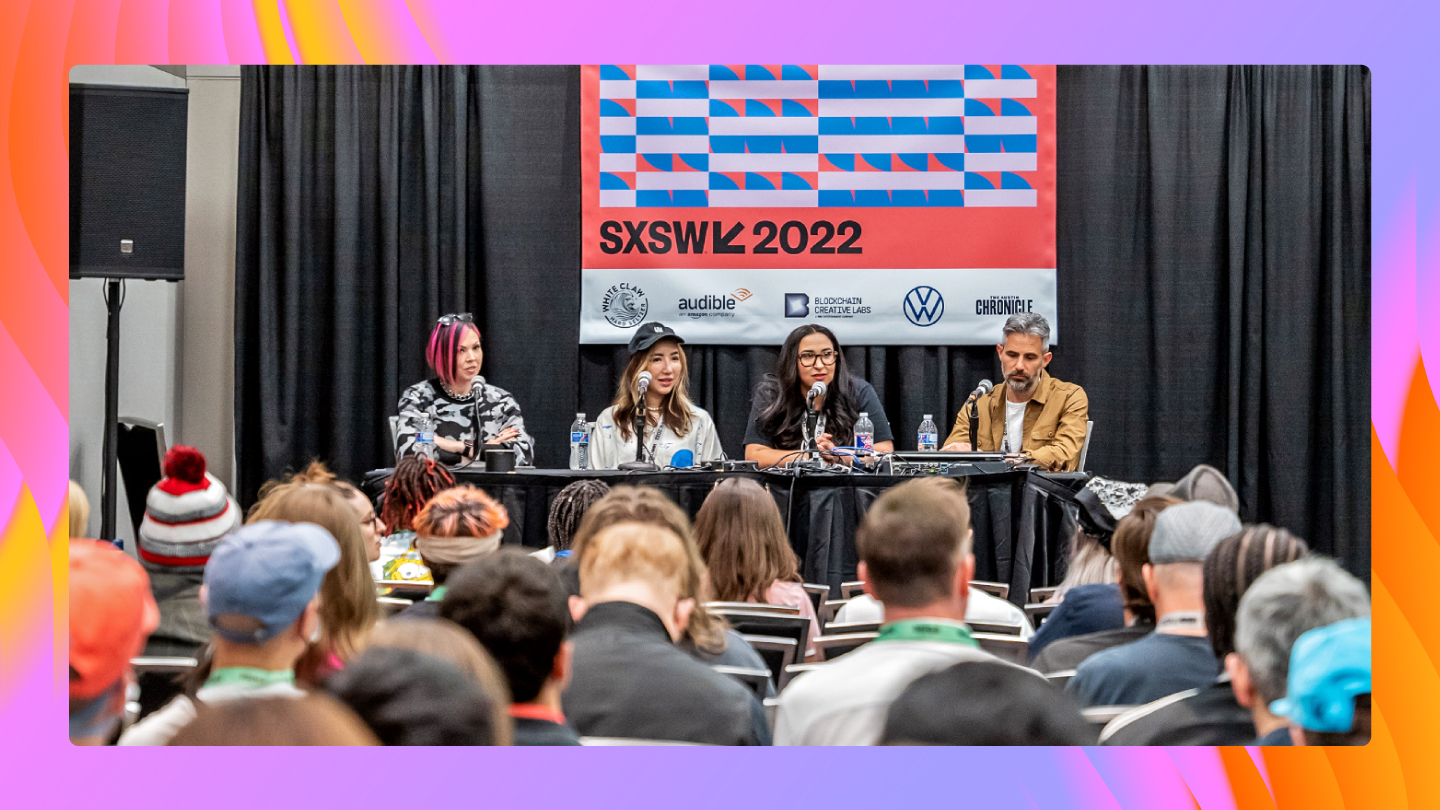
The Bedroom Music Producer Takeover – SXSW 2022 – Photo by Melissa Bordeau
By Jordan Roberts
10/25/2022
SHARE THIS
Sign up to receive the latest announcements, tips, networking invitations and more.
©2021-2022 SXSW, LLC. SXSW®, SXSW EDU®, and South by Southwest® are trademarks owned by SXSW, LLC. Any unauthorized use of these names, or variations of these names, is a violation of state, federal, and international trademark laws.
Privacy Policy | Trademark Guidelines | Terms of Use | Copyright Notice
2023 Overview
2023 Overview
2023 Overview
2023 Overview
2023 Overview
Classics Flash Sale: save 89% off 3 SSL plugins – gearnews.com – Gearnews
· Source: Solid State Logic
Solid State Logic launched a “Classics Flash Sale” where 3 of its audio plugins are briefly discounted. There’s still plenty of time to secure SSL Native Bus Compressor 2, Native X-EQ 2, or Native FlexVerb at just EUR/USD 35 each. Fill out that collection!
The manufacturer and participating retailers, such as our affiliate partner Thomann, are knocking up to 89% off the price of 3 SSL Native plug-ins. These are Native Bus Compressor 2, Native X-EQ 2, and Native FlexVerb.
A forever favourite of producers, the SSL Bus Compressor’s simple interface and powerful punch make the gold standard of bus compression. The plug-in version offers several features not available on the original hardware, such as dry/wet signal blending and a side-chain high-pass filter to clear up low-end pumping. The famous SSL Bus Compressor and its incarnates is how mixes are glued together to become one.
SSL Native Bus Compressor 2 Download
Native X-EQ 2 is SSL’s flexible 24-band EQ plug-in designed for an open and transparent sound. It also offers 17 different EQ types and filter shapes. Each band can be switched between bell, shelf, low pass, or high-pass filter types. Classic and customisable EQ shapes are available for each band, alongside new spatial processing options, band soloing, and the classic ‘Parallel’ mode for simulating the character of old parallel passive EQ units.
SSL Native X-EQ 2 Download
FlexVerb is a versatile reverb plug-in meant to quickly deliver a professional mix-ready sound. The split interface lets you combine the natural body and tone of early room reflections with the richness of expansive reverb tails. It also features a 6-band EQ, High and Low Pass Filters, 3-band reverb time multipliers, and an input side-chain compressor.
SSL Native FlexVerb Download
Buy from Thomann *
SSL plug-ins work under macOS 10.12 Sierra to macOS 11 Big Sur (Apple Silicon not yet supported, Rosetta 2 is compatible) in 64-bit only AU, VST2, VST3, and AAX Native formats. Windows 7 to Windows 10 are also supported in VST 2, VST3, and AAX Native formats. A free iLok account is required for authorisation.
* This article contains affiliate links to help us fund Gearnews. If you buy something through these links, we will receive a commission. Don’t worry, the price for you always stays the same. Thank you for your support!
How do you like this post?
Your email address will not be published.
· I highly recommend visiting a professional studio in your city and finding out for yourself. It’s not something that can be accurately explained in 100 words, especially since monitoring mostly comes …
· “…active speakers project sound in a different way to passives. So keep that in mind.” Whoa there… this deserves at least a little bit of elaboration. Especially since it’s likely most of…
· I’ve had this for a month or so and it’s quite nice. Even more voices would be great of course. I have to disagree a bit about editing in it. Don’t be scared off. Sure, it’s not upfront …
Tuesday Tunes: Darrell Chism and Eddie Moore – KCUR
Music is so much more than just the words to songs. It’s the aesthetic, the personality and the beat.
Kansas City native Darrell Chism has taken a dive into every aspect of the music industry, while Texas native Eddie Moore has made Kansas City a place to display his talents.
Darrell Chism is a music producer, audio engineer and rapper. He’s been doing music for almost 10 years, but didn’t take it seriously until five years ago.
“I’m a producer first and then I found out I can rap a little bit,” he said. “So, I said let me do both of these just because early in your career you don’t have a lot of people to rap over your beat, so your like might as well do it myself,” Chism said.
Chism discovered his love for producing after his brother-in-law gave him a free copy of FL STUDIO, a music production software program. He’d always been told to stop drumming on the table, and after learning how to use the software he knew making beats was something he needed to do.
Eddie Moore is a keyboardist, bandleader, producer and owner of Tribe Studios. Moore got started playing piano around the age four or five. When he talks about the early days of playing piano, he reflects on how his mom didn’t really have a choice of whether to play.
“She was a vocalist, so she knew that success and music and playing piano was important,” he said. “I think she looked up to Herbie Hancock and his classical background. So therefore I took classical lessons,” Moore said.
Late last month, Moore released “Intuition”, his first solo album after 10 years and one he’s been looking forward to since the pandemic.
Eddie Moore isn’t stopping at making music. He’s dedicated to educating people about how to be independent musicians. At his Tribe Studios, there’s an incubator offering a space for musicians to have live rehearsals, recordings and streaming sessions.
Sneak Peek: Check out This New Luxury Home in Lido Shores – Sarasota
Sarasota Magazine
1255 N. Gulfstream Avenue, Suite 101, Sarasota, FL 34236
Phone: (941) 487-1100
By Kim Doleatto
Zephyr House’s back area.
Photography by Courtesy Photo
The main home and guest home.
Photography by Courtesy Photo
Kitchen
Photography by Courtesy Photo
Seating and dining area
Photography by Courtesy Photo
Seating area
Photography by Courtesy Photo
Aerial view of the Zephyr House.
Photography by Courtesy Photo
The waterfront home has a private dock.
Photography by Courtesy Photo
The front of the home on Bowdoin Circle in Lido Shores.
Photography by Courtesy Photo
Views of the city skyline and Ringling Bridge.
Photography by Courtesy Photo
Lido Shores is a home gawker’s dream, dotted with modern homes in both today’s styke and the iconic midcentury style of the Sarasota School of Architecture. In fact, the neighborhood continues to be a main destination for Architecture Sarasota’s three-day annual MOD Weekend, coming up this weekend, where design lovers can stroll through iconic homes such as the Zigzag, Umbrella and Hiss Studio houses.
These classic gems are interspersed among other styles, like this palatial address that fetched $11.5 million earlier this year. But the Sarasota School tradition continues with a new generation of spectacular homes, like Zephyr House. It’s currently under construction and is on the market for $12.5 million–a little more of a deal than the home next door, also being built, that’s listed for $14 million. Two more luxury homes in the neighborhood are also in the works.
While the homes of the Sarasota School will be preserved for their history and role in the post-World War II style, the new crop being built might prove that memories of Hurricane Ian evacuation zones are quickly blurring. The Zephyr House—yep, when they cost more than $10 million, they get a name—will encompass some of the same elements of the Sarasota School, like seamless transitions between indoors and out, clean horizontal lines, a flat roof, floor-to-ceiling glass walls, and broad overhangs for providing shade. Unlike the original Sarasota School homes built before today’s hurricane safety codes, though, Zephyr House will be able to withstand storm surges with built-in generators, solar energy and backup systems that can be repaired remotely.
As for the look, “The owner’s vision for the home was to have a warm, tropical, feeling with organic touches in a monochromatic scheme to keep it light, airy and bright. That’s our typical aesthetic,” says local architect Steffani Drass, founder of TROP Architecture.
The challenge was the skinnier lot size. “It’s eastern facing so we had to get the overhangs right to catch the sun and sculpt the spaces around the natural light and bring it in,” Drass says, which according to the renderings, was a success.
Owners Pam and Chris Ontiveros bought the previous home at 448 Bowdoin Circle, which was midcentury modern in style, for $3.4 million in 2021 but tore it down after some consideration.
“We debated because we like the midcentury style and wondered if we should renovate, but there were so many things that it needed—like all new plumbing, electrical and roof structures,” says Pam. “It needed to start over. But we used a lot of the flow the original house had and incorporated a similar footprint with the new build.”
It’s not an uncommon conclusion homebuyers come to. The majority of the Sarasota School of Architecture homes in Lido Shores are on the interior roads; many on the water have been demolished over the years to make way for larger homes—eespecially since waterfront land is rarely a humble location, and most of the original homes were barely over 2,000 square feet. Zephyr House will span almost 5,000 square feet and have six bedrooms and five bathrooms, plus an almost 1,000-square-foot guest house. Since accessory dwelling units were recently OK’d by the City of Sarasota, they’ve picked up in popularity, says the home’s builder, Steve Murray of Murray Homes.
The Ontiveros, who split their time between Illinois, where they own a tennis club and Sarasota, had renovated homes before but never built a $10 million-plus home—or even built from scratch.
“We’ve traveled a lot and thought of hotels we liked. In Europe, we saw many modern homes since they’re so far ahead of us when it comes to that look,” Chris says. “Being in Sarasota and Longboat Key, a lot of the architecture is from the 1990s or before. It’s nice but dated. But we also wanted to keep the Sarasota style in mind as we incorporated the new features.
What older homes also lacked, he says, was a city skyline view. “In the ’50s you couldn’t see the Ringling Bridge or the cityscape,” he says. “Now the view has an urban flair.” The the massive cantilever off the main bedroom of Zephyr House is the perfect perch from which to contemplate it.
Zephyr House has organic touches like knotwood gates, imported from Australia, and shellcrete floors—which offer a smooth, matte finish concrete with shells that spans both inside and out, creating seamless transitions. The floor was inspired by terrazzo, often used in Sarasota School homes. The wood inside the home is white oak for a beachy feeling, reminiscent of the color of sand. A Zen garden will mark the entrance. But one of Pam’s favorite places is outside the home on the dock, “where I can just watch nature–dolphins, manatees and jumping fish. It’s really peaceful there,” she says.
Bev Murray, the real estate agent representing the couple in the sale, is seeing inquiries come in from people who were at first looking toward Naples. Those inquiries “were scuppered by Ian,” she says. Otherwise, it’s been “a good mix of interest from people in and out of town.”
Murray Homes, the builder also spearheading two more nearby luxury homes on Lido Shores, expects the Zephyr Home to be done by the spring of 2024.
One added bonus for the homebuyer is that they’ll be able to rent the Ontiveros’ three-bedroom Longboat Key condo at the Longboat Key Club while Zephyr House is being finished. “Even though they have to wait for the house to be built, the buyers don’t have to wait to be down here enjoying the sunshine,” says Bev.
But that’s if the Ontiveros can let go of such a dreamy home.
Interested? Contact Bev Murray of Berkshire Hathaway Homeservices Florida Realty, at (941) 225-7355.
Anthony Burgess translation of Molière’s The Miser comes to light for first time – The Guardian
The A Clockwork Orange author’s translation – complete with recording – hailed as significant literary discovery
Beyond his satirical novel A Clockwork Orange, Anthony Burgess’s masterpieces include his translation of Cyrano de Bergerac, Edmond Rostand’s tragic-romantic farce. Now, 29 years after his death, his complete translation of another French classic, The Miser, Molière’s comic satire on greed, has come to light for the first time and is being described as a significant literary discovery.
Miser! Miser! is a complete translation of L’Avare (The Miser) of 1668 – one of Molière’s best-known plays – that Burgess wrote in the early 1990s, yet it has never been performed or published. But now it could finally be staged as it will published for the first time in a forthcoming book.
To the astonishment of academics, there is even a previously unheard recording of Burgess himself reading the entire play. Both have emerged from the archives of the International Anthony Burgess Foundation, an educational charity in Manchester, where he was born in 1917. Its holdings are so vast that they have yet to be fully catalogued.
Burgess made his name as a satirical novelist with A Clockwork Orange, a dystopian portrayal of drugs, music and juvenile violence admired for its exploration of moral questions and its linguistic originality.
Andrew Biswell, the foundation’s director and professor of English at Manchester Metropolitan University, told the Guardian: “The Molière translation and audio recording are all new material from the archive, none of which has appeared in any public forum. The discovery of Miser! Miser! is a major literary event, which is made even more fascinating by having the opportunity to hear Burgess himself reading it aloud.”
He added: “These audio recordings underline the importance of the spoken word to Burgess’s practice as a writer. I believe that he made these recordings because he wanted to listen back to them, test his words on the ear and make revisions accordingly. In one of his critical books about James Joyce, he claims that the best way to understand Joyce’s work is to read it aloud.”
One theory is that it was commissioned by Terry Hands for the Royal Shakespeare Company (RSC) following a successful collaboration on Cyrano de Bergerac. Burgess’s rhyming translation, acclaimed as a modern classic, was staged by the RSC in 1985 with Derek Jacobi in the lead role, and later revived in a production starring Antony Sher.
Hands died in 2020 and the RSC did not have any record of a Molière commission, Biswell said, noting that Burgess conveyed the voices of the different characters “very entertainingly” in the recording.
They include the miser Harpagon, who wants his daughter Elise to marry a wealthy old man, Anselme, although she is in love with the impoverished Valère. Harpagon in turn wants a young bride for himself, the impoverished Mariane, although his son Cléante loves her.
In Burgess’s translation, Jacques the servant gives Harpagon some hard truths about what people think of him: “The only names they call you by are penny-pinching villain, skinflint and bloody miser.”
Biswell said that Miser! Miser! is unusual as a translation because the original play is written in prose, whereas much of Burgess’s version is written in verse: “It’s not consistently rhymed all the way through. It tends to be the more aristocratic characters who speak in verse. The servants speak in prose.”
Sign up to First Edition
Archie Bland and Nimo Omer take you through the top stories and what they mean, free every weekday morning
He described Burgess as a gifted linguist and a brilliant translator: “Although he is best known as the creator of a new slang based on Russian in A Clockwork Orange, translating work for the theatre was always an important part of his creative work. In a literary career spanning nearly 40 years, he translated a variety of stage plays from French, Russian and Ancient Greek.”
The play will be published in May by Salamander Street, an independent publisher based in Bristol.
Biswell said: “I hope that we will soon see a professional stage production of this splendidly actable version of Molière’s comedy.”
After Years in Limbo, Finding a Place of Her Own – The New York Times
After Years in Limbo, Finding a Place of Her Own The New York Times
source
Trump Special Master Asked to Rule on Pardons, Privilege to Speed Review – Bloomberg
Bloomberg Daybreak Europe. Live from London, tracking the breaking and top business news stories in the lead-up to the opening of European markets.
Overnight on Wall Street is morning in Europe. Bloomberg Daybreak Europe, anchored live from London, tracks breaking news in Europe and around the world. Markets never sleep, and neither does Bloomberg News. Monitor your investments 24 hours a day, around the clock from around the globe.
Restaurateur Mario Carbone shows us his path from teenaged line chef on Northern Blvd, Queens to NYC dining upstart to global culinary kingpin.
Vietnam Looks to Assist Fuel Market to Ease Gasoline Shortages
‘Grave of the Fireflies’ Candy Maker Goes Bust as Costs Soar
South Korea Jobless Rate Remains Low in Sign of Resilience
Bank of England Chief Economist Suggests Pandemic QE a Mistake
Swiss Workers Face Sharpest Loss in Real Wages in 80 Years
Cathay Pacific Appoints Ronald Lam as CEO to Lead Revival
A Tiny Lab Finds Danger on Drugstore Shelves While the FDA Lags Behind
Microsoft’s Cloud Sparks Complaint to EU by Amazon-Linked Group
KKR, GIP Near Deal for Vodafone’s $15 Billion Tower Unit
Nintendo Sinks 7% After Cutting Switch Sales Forecast
Democrat Kuster Wins Re-Election in New Hampshire House Race
NJ Republican Kean Ousts Democrat Malinowski in House Contest
Musk Sells $3.95 Billion of Tesla Stock After Buying Twitter
SEC’s WhatsApp Probe Reaches Into Private Equity With Apollo, Carlyle, KKR
Why You Should Go on First Dates While Traveling Abroad
Nintendo Counting on Forays Beyond Video Games to Boost Fans
The Drama’s Back in Crypto, and Nobody’s Happy About It
Ron DeSantis Has Moved Florida From Purple to Red
Netanyahu’s Win and a Simmering Intifada Set Path for Annexation
A Wageflation Hangover Is Coming for European Companies
The Soccer-Inspired Sport Drawing Beckham, Messi and Neymar
Credit Suisse Spinoff Asks If World Needs a New Investment Bank
Here Are the Politicians Who Made History on US Election Day 2022
Abortion Rights Backed by Voters in Michigan, Kentucky, Vermont
COP27 Latest: AllianceBernstein Joins Net-Zero Finance Coalition
Fitting Emerging Markets Into the Climate Puzzle
At COP27, Building Emissions Loom Larger
One of World’s Priciest Cities Turbocharges Affordable Housing
Mayor: Student Dies After Shooting in Seattle High School
Explainer: How Binance and FTX Sent Shockwaves Through the Crypto World
Coinbase CEO Says Trading Activity Rising, No Plan to Buy FTX US
Crypto Retail Investors Rattled as Binance Moves to Acquire FTX
The court-ordered review of thousands of documents seized from Donald Trump’s Florida home by the FBI can be streamlined if five “global issues” are quickly resolved, a judge was told.
Key areas of disagreement include whether the former president had authority to convert presidential records to personal ones during and after his term, and if pardon request documents received while he was president belong to him or the government, lawyers for Trump and the Justice Department said in a joint filing Wednesday.
FSU receives most 2022 Florida TaxWatch Awards of any state university – Florida State News
Florida State University
FSU | Florida State University News
Florida State University News
The Official News Source of Florida State University
Home / News / University News /
By: Anna Prentiss | Published: | 11:17 am | SHARE: 

Florida State University employees representing teams, centers, offices and departments throughout the university this year claimed 18 Florida TaxWatch Productivity Awards, the most by any institution in the State University System.
The Florida TaxWatch Productivity Awards recognize and reward state employees and workgroups who find ways to improve services, increase efficiencies and save Florida taxpayers millions of dollars each year.
“FSU is the No. 1 university with the best and most productivity awards,” said Dominic Calabro, president and CEO of Florida Tax Watch. “This is a one-of-a-kind program that recognizes, rewards and replicates excellence in state government.”
FSU’s winners were honored for their award-winning solutions and productivity improvements for state government during an awards ceremony Tuesday, Nov. 1.
This year, Florida TaxWatch will present approximately 148 awards to thousands of individual employees and large teams from 17 state agencies and four universities across Florida, including FSU. The organization says that in total, its efforts will save taxpayers over $818 million, contributing to an estimated $12 billion in total savings since the Productivity Awards program was established.
Florida TaxWatch, an independent nonpartisan nonprofit government watchdog and taxpayer research institute, says it aims to serve as the eyes and ears of Florida taxpayers and to help promote stewardship of taxpayers’ money.
“We are definitely aware of the talented faculty and staff that we have at the institution, but it’s always exciting and affirming when someone outside the university recognizes all the hard work that our faculty and staff are doing to make sure we’re efficient and effective in everything we do,” said Renisha Gibbs, associate vice president for human resources and Finance and Administration chief of staff.
FSU’s winners are listed below, along with their projected tax savings.
“I think it translates into a good-quality educational product for the students,” Gibbs said. “That’s why we’re here, to make sure that we are educating our students. We are really excited and proud of the work we’re doing with them, and when we’re doing our work efficiently and effectively, that translates into a good experience for our students.”
For more information, visit floridataxwatch.org.
Rabieh Razzouk, director of the Learning Systems Institute and director of the Florida Center for Research in STEM
Estimated Cost Savings: $3,750,000
Created an online portal to facilitate the state’s instructional materials adoption process and communicate the information to all stakeholders in an efficient and time-saving method. The portal manages the process from registering vendors, accepting bids, processing all bids through the state’s multi-step review process, and dissemination of information to the public, schools and school districts, and to teachers within tools such as CPALMS and the CMAP curriculum planner. Teachers now can select the book they use, and all the information they need for teaching is automatically inserted in their plans based on what and when they are teaching a topic.
Rosey Murton, Chief Procurement Officer
Mitchell Jermyn, Senior Procurement Systems Analyst
Geneva Miller, Procurement Systems Analyst
To-Há Tang, Systems Administrator
Estimated Cost Savings: $95,879
From 2020-2021, the FSU Procurement Services department implemented an eProcurement warehouse catalog to streamline and distribute COVID-19 supplies for faculty, staff and students across campus. The sourcing effort and implementation of a warehouse during the pandemic when PPE resources were scarce was a significant challenge. Swift mobilization of technology and resource acquisition efforts were executed, and maximum savings were negotiated and achieved from suppliers in a very volatile marketplace.
Beth Brenneis, Program Director, Chief Financial Officer of International Programs
Erica Brooks, Application Developer of International Programs
Louis Wright, Senior Accounting Specialist
Charles Stratton, Manager of Information Technology Administration Partnership Program
Gina Mathis (Deceased)
Estimated Cost Savings: $336,287
Moved all International Programs Fees to the central online FSU Accounts Receivable System, which allowed payments to be made by students and their families at any time day or night. Previously, payments were received in the International Programs physical offices by mail, in person in the International Programs offices or by calling the International Programs Office with credit card information provided over the phone.
Mitch Gans, Data Center Manager
Estimated Cost Savings: $7,600
In July 2020, FSU purchased a new chiller from Trane for the Sliger Data Center cooling. This chiller replaced an 18-year-old unit for which a multi-year maintenance contract was in place with Engineered Cooling Services (ECS). Mitch Gans discovered that the new chiller included a 10-year maintenance service, so we incurred double maintenance costs. Mitch worked with ECS Senior Account Executive Brooks Brandewie to renegotiate the contract. As a result, he saved Florida State University $23,492.00 over the next three years by being proactive.
Elizabeth Swiman, Director of Sustainability
Laurie Whetstone, Buildings Manager of Research Foundation
Willie Wiggins, Assistant Director of Solid Waste & Recycling
Arnel Bacani, Director of Building Services
Implemented campus-wide standardized trash and recycling system. Reduced operational funding over the course of multiple years has led to re-thinking operational efficiencies accelerated by COVID: Reduced contact between individuals – custodial workers no longer enter individual offices to complete desk-side servicing of individual trash cans. Increased time available to disinfect shared spaces. Increased recycling rates – a single decision point makes it easier for people to make the best choice for waste disposal. Decreased plastic bags needed to line the thousands of bins and trash cans across campus – this reduces waste and leads to significant cost savings.
Mitch Gans, Data Center Manager
Will Hill, Assistant Director of RIDER Center
Kev Sullivan, Green Office Advocate
In March 2021, Mitch Gans with the Research Computing Center, Will Hill with the FAMU-FSU College of Engineering’s Resilient Infrastructure and Disaster Response (RIDER) Center, and Kev Sullivan with the Center for Information Management and Educational Services at the Sliger Building formed the Sustainable Green Team, and achieved Green Office certification for their individual organizations and the entire building, making Sliger the first Green Office Certified building at FSU. They also implemented a new recycling program that for the first time enables participating campus organizations to prevent plastic drink can rings from being sent to the Landfill.
Jill Flees, Director for The Graduation Planning & Strategies Office
Angela Rivera, Graduation Specialist
Joe O’Shea, Associate Provost and Dean of Undergraduate Studies
Estimated Cost Savings: $16,888,999
Families around Florida plan and save for college as a four-year experience. But what if getting a bachelor’s degree took only three years? FSU’s redesigned Degree in Three program shows that it is possible. FSU works with incoming students to design and support a three-year FSU experience, without sacrificing educational quality. Graduating in three years reduces state and taxpayer costs and allows students to start their careers one year earlier. Since 2016, the program has grown over 100% with continued momentum, allowing an additional 346 students to graduate within three years for a total annual cost savings estimate of $16,889,000.
Nariman Nusserwanji, Utilities Control Engineer
Estimated Cost Savings: $199,000
Nariman Nusserwanji designed and implemented a proprietary occupancy related optimization program to substantially reduce electrical energy and the CO2 footprint at FSU. Immense data collection since 2019 laid the foundation to achieve this daunting mission. This process relies on metered Measurement and Verification rather than less reliable simulated vendor programs. Metered savings are occurring at a daily rate of 3,815 KWH or 1,392,475 KWH annually. These numbers are projected to increase dramatically as additional buildings are progressively added.
Carrie Pettus, Founding Executive Director of the Institute for Justice Research & Development
Amberly Prykhodko, Director of Clinical and Professional Services
Nancy Revell, Institute for Justice Research & Development (role unspecified)
Janeen Piotrowski, Institute for Justice Research & Development (role unspecified)
Kerensa Lockwood, Director of Research Implementation for the Institute of Justice Research and Development
Estimated Cost Savings: $19,800
Law enforcement officers are exposed to frequent violence and suffering on the job. When compared to the public, officers are five times more likely to develop depression and post-traumatic stress disorder (PTSD) and have an 82% higher risk for suicide. Post-traumatic mental health symptoms negatively impact officers’ job performance and families. IJRD developed “Resiliency Behind the Badge,” an online training curriculum providing a framework for understanding trauma, mind/body processes and PTSD. We partnered with the Florida Sheriff Association’s Training Institute to provide free access to members, helping officers learn techniques to utilize safer coping behaviors in moments of stress at work and home.
Daniel Sheets, Associate Director of Facilities
Jeremy Tharpe, Assistant Director of Facilities
Chris Kimbrel, Maintenance Supervisor of Facilities
Steve Fryman, Key Shop Supervisor
Estimated Cost Savings: $75,000
In order to decrease costs and improve the efficiency of service, the Housing Key Shop was combined with the Facilities Maintenance Key Shop. The combined shop operates with two fewer locksmiths, which lowers the cost for key repair, cutting and distribution services. Service levels were maintained or improved.
James Stephens, Executive Director of Campus Utilities and Management
Susana Arias, Product Manager of Utilities Control Engineer (doesn’t work here anymore)
Desiree Caceres, UX Project Lead of Facilities
Luis Villamil, Facilities Engineer (doesn’t work here anymore)
Don Pittman, Technology Systems Specialist
Estimated Cost Savings: $96,000
The existing supervisory software system for our building automation systems (BAS) has been discontinued. The BAS system operates all campus buildings and provides information for the technicians and users to monitor conditions. The cost to migrate to the new system was estimated at more than $3,000 per building. The Desigo Migration Team was formed and completed the software and graphics update, replacing the expense of an external contractor.
Phil Gleason, Studio Manager of Master Craftsman
William “Rick” Humphrey, Sign Shop Technician
Eric Pierce, Cabinet Maker of Maintenance
Mark Dickson, Master Craftsman Studio artist
Estimated Cost Savings: $120,000
From April 2020 through 2021, FSU’s Master Craftsman Studio, which creates original artwork for Florida State University and other public and private entities, refocused its staff, expertise and equipment to design and produce personal protective equipment (PPE) — medical-grade face masks, face shields and plexiglass partitions — to meet the urgent needs within the FSU community and medical facilities in the surrounding area. The Studio’s staff produced and distributed PPE at a fraction of the cost of commercially available products.
Heather Bishop, Assistant Dean of Community College Relations and Student Advising Systems
Robin Haggins, Director of Transfer Student Services
Michael Hart, Academic Mapping Coordinator
Joe O’Shea, Associate Provost and Dean of Undergraduate Studies
Estimated Cost Savings: $11,874,700
The 2+2 pathways to transfer from a community college to university are supposed to be efficient and maximize cost savings for students. But in practice, the pathways are often riddled with inefficiencies because students at community colleges do not take a course schedule that is specifically aligned with university degree requirements. These practices result in costly extensions of students’ time in higher education. FSU’s Proactive Mapping and Advising Initiative addresses these challenges directly, providing community college students with tailored academic pathways and support. The initiative will result in faster degree completion for students and significant future cost savings.
Taylor Gomez, Assistant Registrar of University Registrar
Justin Beck, Enrollment Management Specialist of University Registrar
Vivian Hayes, Enrollment Management Specialist of University Registrar
Robby Willis, Enrollment Management Specialist of University Registrar
Megan Benson, Director of Enrollment Management Operations
Estimated Cost Savings: $4,600
This nomination highlights changes implemented to the Florida State University commencement ceremonies over the past year to accomplish a return to an in-person ceremony while maintaining CDC guidelines for social distancing and safety resulting from the COVID-19 pandemic. Spring 2021 commencement was the first in-person commencement since December 2019, and the typical commencement schedule was expanded to include additional ceremonies, allowing for fewer people at a time in the venue. To further accomplish social distancing regulations, the flow of individuals at the event was changed to maintain the social distancing guidelines. These changes were necessary due to the COVID-19 pandemic but resulted in efficiencies that have been adopted as permanent changes.
Tim Brown, Assistant Vice President of Northwest Regional Data Center
Julia Cunningham, Assistant Director of Financial Services for Northwest Regional Data Center (NWRDC)
Dianna Norwood, Director of Administrative Service for NWRDC
Mary Sanders, Business Analyst for NWRDC
Don Wilde, Customer Relations Manager for NWRDC
Estimated Cost Savings: $6,229,400
Through the establishment of strategic vendor relationships and successful contract negotiations, the team solidified the success of NWRDC’s Partnership Program. This program allows state customers to benefit from exclusive discounts on IT products and services, ensuring the lowest pricing available. Additional benefits include the ability to purchase directly from NWRDC without expending staff time and resources in lengthy solicitation processes. Through the team’s efforts, NWRDC has saved the state millions of dollars annually on mainframe, cybersecurity, facility, cloud and end-user support services.
Gary Chismar, Technical Manager
Estimated Cost Savings: $45,173
This project leveraged scheduling software to loop through a configuration set-up table for processing Financial Aid. A new scripting program reduced set-up time from one week to under 10 minutes each term. Since Financial has several of these each term, set-up time for all processes was reduced from about one month’s FTE time to about one-half hour. Risk was eliminated as the financial aid team now submits the set-up process in the form of an Excel spreadsheet. The data is then imported into our scheduling software (Automic) and is ready to run.
Summer Toomey, Assistant Director of Graduate School Enrollment
Estimated Cost Savings: $78,453
The Graduate Enrollment Team designed and implemented a centralized process “First Read Rules” that has decreased significant hours worked by the departments on application processing, the timeframe of application review, and has played a critical role in increased graduate enrollment. In this process, the team batch-identifies complete applications from incomplete applications, timestamps the date of completion and moves those applications into an easily identifiable “complete” bin for the departments. This batch process simultaneously alerts over 125 departments to recognize and process the complete applications for committee/department review. In addition, the team developed automated communication and messaging to applicants informing them of the whereabouts of their application in the process, further reducing workload for departments.
Rick Burnette, Associate Provost for Strategy and Analytics and Interim CIO
Estimated Cost Savings: $26,000
The Florida State University ITS Student Application Services (SAS) team collaborated with campus offices to deliver 16 automated forms and workflows to enhance day-to-day business processes. We have improved user experience, refined data accuracy, increased business process efficiencies, ensured secure document transmission and maximized staff and student time. We leveraged delivered functionality and existing customizations within our student information system (SIS) to request parent/delegate documentation and coupled those with innovative solutions to verify capture of the correct elements upon submission, ensuring the form routes appropriately for review, based on criteria defined for each form and workflow.
News Topics
Multimedia
About FSU
For Journalists
© Florida State University
Tallahassee, FL 32306
Pravin's master plan to sell SOEs – IOL
Wednesday, November 9, 2022
Written by
Mzilikazi Wa AfrikaSetumo Stone
Public Enterprises Minister Pravin Gordhan, who is being accused of targeting black executives at SOEs to push them out and sell the institution’s assets. Picture: Courtney Africa
Published Nov 6, 2022
Written by
Mzilikazi Wa AfrikaSetumo Stone
Share
PUBLIC Enterprises Minister Pravin Gordhan allegedly has a well-orchestrated plan to frustrate and elbow out top government executives and officials to weaken state-owned enterprises so they can be sold for a song to his cronies.
Gordhan’s latest verbal tirade against a top executive in the government-owned arms manufacturing company Denel Dynamics was caught on tape and was heard by The Sunday Independent this week.
Denel Dynamics CEO Sello Ntsihlele believes he is Gordhan’s next target in the bid to weaken the state-owned arms manufacturer so it can be sold piece by piece. Ntshihlele has submitted four grievance claims in a matter of a month, and one of them is against Gordhan.
Ntshihlele claims Gordhan verbally attacked him on August 24, and said this was a clear “abuse of power” by the minister which could not be allowed to go unchallenged. In an audio recording heard by The Sunday Independent this week, Gordhan can be heard lashing out at Ntsihlele, saying he “must leave the company and allow us to run the business and cannot continue to draw a salary and continue to behave like this”.
Gordhan was triggered by allegations that Ntsihlele had told Denel’s trade union stakeholders in a meeting that the company’s board was “useless”.
“Forget about reckless trading – this is reckless management,” said Gordhan in the audio recording.
In his employee grievance letter, Ntsihlele said: “My view is that these threatening remarks by the minister and other senior officials in Denel and the (Department of Public Enterprises) constitute intimidation and abuse of power on their part – as it essentially encourages those under their influence to victimise me.”
He said Gordhan’s “attacks on me started just when I arrived at the (virtual) meeting“. Ntsihlele added: ”He could not wait to launch an attack on me, as he started this even before I could sit down.“
He continued: “The directed attacks were further revealed by the minister’s comments about me not involving Aeronautics people on our UAE trip, suggesting that he has been in other conversations about the issues in Denel and he has taken sides – against me”.
In a previous grievance Ntsihlele filed on 5 August, he complained to former Denel interim group CEO William Hlakoane that the CEO of Denel Aerostructures Mike Kgobe and the executive manager of engineering and continued airworthiness Shalan Chetty allegedly shared and discussed “sensitive client and proprietary information belonging to Denel and specifically Denel Dynamics” with a competitor or competitors in the UAE “without being mandated to or getting approval“.
“We believe their involvement constitutes a serious transgression, with detrimental consequences for the business of Denel Dynamics and Denel as a whole,” Ntsihlele said.
He said that “as CEO of Denel Dynamics I am legally obligated to fulfil the responsibilities assigned to me using the powers bestowed upon me by the board“. Ntsihlele went on to say: ”This includes managing the overall operations of the organisation as well as managing company strategy.“
As it stood, he said, “my ability to fulfil this role effectively and ethically is being hampered and interfered with by the actions of certain individuals within Denel“.
As a remedy, he wanted “Kgobe and Chetty and their associate [to] be instructed to stop these activities”. He also asked for an investigation into the circumstances that led these discussions to be conducted. In addition, he asked for a “disciplinary enquiry into the conduct of Messrs Kgobe and Chetty (to) be held”.
The Sunday Independent learnt that in total Ntsihlele had filed four employee grievances concerning Hlakoane, whose term of office ended in August. Company policy required that employee grievances be attended to within five days, the publication heard. Last week Denel spokesperson Pam Malinda told City Press that the company could not comment on the merits of Ntsihlele’s grievances, and that the matter was still subject to internal processes in terms of the company’s disciplinary code and grievance procedure.
Public enterprises spokesperson Richard Mantu told the publication that Gordhan refuted Ntsihlele’s allegations with the contempt they deserved, adding: “Denel was one of the SOEs impacted by state capture, as evidenced in the Zondo Commission report. The minister and the department won’t be deterred or distracted from confronting corruption and maladministration at Denel.“
A person sympathetic to Gordhan said the allegations against him were not new and had been following him for ever “without any basis”. The person said Gordhan was doing his best to turn Denel around, including securing more than R3 billion recapitalisation from Treasury, appointing a new board, and approving the new strategy for sustainability. There is no basis to the allegations, the person said.
One senior executive, who asked not to be named for fear of reprisals, yesterday said Gordhan only targeted black executives “to build a narrative that blacks are incompetent”.
“The minister only targets black executives and can’t do the same thing at Eskom because those in charge of the power utility are white,” one senior executive said.
The source added that Gordhan had frustrated Phakamile Radebe while he was Eskom executive, but failed to lift a finger over André de Ruyter and Jan Oberholzer, who had the worst track record.
“Radebe was frustrated and forced to resign from Eskom, and he was doing far better than De Ruyter and Oberholzer,” he said.
The executive added that the list of all black executives and officials that had been allegedly targeted by Gordhan in his quest to implement his “master plan to sell the SOEs” is endless.
“The plan is to weaken the SOEs, underfund them, and get rid of the top executives so it can be easy to sell them for a song to his cronies.”
Ntshihlele told The Sunday Independent this week that he was also being “targeted” by Gordhan. Before Rabede was forced out at Eskom, Gordhan started with former SAA chief executive Vuyani Jarana, who was forced to resign less than two years into the job, allegedly after he was “frustrated” by the minister.
SAA was sold for R51 in February this year to Takatso Consortium, which was allegedly “hand-picked by the minister in an irregular and unlawful manner”.
Gordhan’s hand in the sale of the SAA deal was exposed by suspended Department of Public Enterprises director-general Kgathatso Tlhakudi, who also lodged a grievance against the minister last week.
Tlhakudi claims in his court papers that Gordhan suspended him when he “started seeing me as an obstacle to the programme that he was embarking on of disposing of state-owned enterprises and their assets in a fraudulent and corrupt manner”.
Tlhakudi last week wrote a protected disclosure letter to Speaker of Parliament Nosiviwe Mapisa-Nqakula and President Cyril Ramaphosa asking them to investigate Gordhan for corruption.
Tlhakudi also believes he is one of the black executives who are targeted by Gordhan to weaken the SOEs to sell them for a song to “a few privileged individuals who were favoured by the minister in an irregular manner”.
Tlhakudi told the chairperson of his disciplinary hearing, Advocate Rataga Ramawele SC, last Friday that Gordhan allegedly has a “master plan to sell the SOE to his cronies”.
In his protected disclosure letter to Mapisa-Nqakula and Ramaphosa, Tlhakudi said the sale of SAA was “ill-conceived”.
“The SAA transaction was now, in my considered view, a template for how the rest of the SOE portfolio was intended to be disposed (of) to the detriment of the South African citizens, who are the ultimate shareholder of the state-owned assets,” the letter states.
Sunday Independent
Related Topics:
Share
Independent Online, popularly known as IOL, is one of South Africa’s leading news and information websites bringing millions of readers breaking news and updates on Politics, Current Affairs, Business, Lifestyle, Entertainment, Travel, Sport, Motoring and Technology. Read more
© 2022 Independent Online and affiliated companies. All rights reserved.
Powerball ticket sold in California snags record $2.04B win – News 13 Orlando
Get the best experience and stay connected to your community with our Spectrum News app. Learn More
Continue in Browser
Get hyperlocal forecasts, radar and weather alerts.
Please enter a valid zipcode.
Save
DES MOINES, Iowa (AP) — Someone who bought a Powerball ticket in California has won a record $2.04 billion Powerball jackpot after more than three months without anyone hitting the top prize.
The winning numbers drawn Tuesday morning at the Florida Lottery draw studio in Tallahassee were: white balls 10, 33, 41, 47 and 56, and the red Powerball was 10.
The jackpot ticket was sold at Joe’s Service Center in Altadena, northeast of Los Angeles. A voicemail left for Joe’s Service Center was not immediately returned.
The jackpot was by far the largest lottery jackpot ever won, topping the previous record $1.586 billion prize won by three Powerball ticketholders in 2016.
The Multi-State Lottery Association said Monday night’s scheduled drawing was delayed by nearly 10 hours until Tuesday because a participating lottery had issues processing sales.
The jackpot was initially reported as an estimated $1.9 billion on Monday, but the prize was increased to $2.04 billion Tuesday morning after updated calculations.
The jackpot is more than $400 million larger than the previous record jackpot. Only four previous jackpots have topped $1 billion, but none of those are close to the current prize, which started at $20 million back on Aug. 6 and over three winless months has grown ever more massive. No one has won the jackpot since Aug. 3.
The problems in holding a drawing Monday night were blamed on one participating lottery’s inability to process its sales data.
“Powerball requires all 48 participating lotteries to submit their sales and play data prior to the winning numbers being selected. Once Powerball receives the outstanding submission, the drawing can proceed,” the Multi-State Lottery Association said in a statement.
Nearly three hours after the scheduled 10:59 p.m. EST Monday drawing, the association told The Associated Press: “It’s against our policy to name the lottery that is experiencing the delay.” Later on Tuesday morning, the association said in a new statement that Powerball was “in communication with the lottery throughout the night as it works to resolve the issue.”
Terry Rich, a former director of the Iowa Lottery who also served on the Powerball board, said the delay was likely due to a two-part verification system of ticket sales that makes use of an outside vendor to ensure all is in order before the game’s numbers are drawn.
“Each state must verify through a dual process that all of the sales and dollars match before the Multi-State Lottery Association can do the draw,” said Rich, who headed the Iowa Lottery for 10 years and was president of the North American Lottery Association. “This is a state-by-state procedure, which separates the whole process and has been very effective.”
Rich said state lotteries deal with similar problems several times a year but the delays usually don’t attract much attention because the potential jackpots are far less than was up for grabs this week.
The winning numbers and recorded video of the drawing were posted to the Powerball’s YouTube channel.
The $2.04 billion prize is for a winner who chooses an annuity, paid annually over 29 years. Nearly all winners instead opt for cash, which was valued at $997.6 million.
The odds of winning the jackpot are 1 in 292.2 million.
The game is played in 45 states, as well as Washington, D.C., Puerto Rico and the U.S. Virgin Islands.
NVIDIA NVENC AV1 Encoder Support Added To FFmpeg, Achieves Nearly 100% Improvement Over HEVC – Wccftech
FFmpeg, a video processing command tool widely used, has begun support for NVIDIA’s NVENC AV1 video encoder. Early reviews have discussed the performance benefit of lesser bit rates, but in surprising news outperforms the standard HEVC encoding (H.265) by as much as one hundred percent.
This revelation is excellent news for OBS users. OBS Studio, one of the leading streaming software titles free for users, recently signed AMD to its Diamond Tier sponsors, which shares equal status with NVIDIA and their GeForce RTX 40 series GPUs. AMD announced its partnership with OBS during last Friday’s AMD RDNA 3 reveal. AMD is also slated to offer Intel’s AV1 support, continually gaining ground every month since its launch.
The encoder seems to be trading blows with hevc_nvenc. In terms of quality at low bitrate cbr settings, it seems to outperform it even. It produces fewer artifacts and the ones it does produce are less jarring to my perception.
At higher bitrates I had a hard time finding differences between the two encoders in terms of subjective visual quality.
Using the ‘slow’ preset, av1_nvenc outperformed hevc_nvenc in terms of encoding speed by 75% to 100% while performing above tests.
Needless to say, it always massively outperformed h264_nvenc in terms of quality for a given bitrate, while also being slightly faster.
— Timo Rothenpieler, author of the recent avcodec/nvenc: add AV1 encoding support for FFmpeg
Almost every current and previous graphics card have offered support for AV1 decoding. Intel first introduced the AV1 decoding in their newest Arc series GPUs. Encoding, on the other hand, has recently been adopted into mainstream video codecs. AV1 encoding allows for better and more efficient acceleration on contemporary graphics cards. It is not the only choice available for users with hardware that sport decoding availability for streaming platforms like Twitch, but with the rapid growth of the AV1 video codec, AMD, Intel, and NVIDIA are each working diligently to be the main focus for consumers to choose their hardware over competitors.
News Sources: VideoCardz, Phoronix
Subscribe to get an everyday digest of the latest technology news in your inbox
© 2022 WCCF TECH INC. All rights reserved.
Some posts on wccftech.com may contain affiliate links. We are a participant in the Amazon Services LLC Associates Program, an affiliate advertising program designed to provide a means for sites to earn advertising fees by advertising and linking to amazon.com
© 2022 WCCF TECH INC. All rights reserved.
You need to login to use this feature.
Texas Dance Music Producer Debuts Electrifying Studio Album, Nuclear – Digital Journal
Hi, what are you looking for?
By
Published
HOUSTON, TX – November 8, 2022 – Houston-based dance music producer, Vernon Johnson, has exploded onto the music scene with the launch of his electrifying dance music album, Nuclear.
Fuelled by his desire to create music people can feel, Johnson began producing music 9 years ago, starting with FL Studio 9 on his family’s old Dell computer. What started out as a hobby quickly developed into a way of life for Johnson, who is diagnosed with an anxiety disorder. Overtime, he discovered that music was the only outlet that allowed him to express himself clearly without limitations. Johnson draws inspiration from all genres, which he credits to the vast number of cultures he was exposed to during high school.
Nuclear, a production of Vernon Music, is Johnson’s first studio album and features 17 fresh, hard hitting tracks from the dance music maestro. Each tune is laced with compelling, thrilling melodies that are hard to resist. Among the titles featured on the album are: What You Want, Call Out, Cosmic, Quarantine Wild Love and The Chemist. What You Want is one of the most popular songs on the album. It features a quick tempo dance beat, dotted with scintillating vocals. The song starts with high energy and maintains the energy throughout. The electronic pop, rave music, dance track is mesmerizing, and will hook listeners from start to finish.
Already, Johnson’s album is making waves in the dance music arena. Professional Guitarist, Zachary L. raved about What You Want track. He wrote: “What You Want is a very polished track. The production value is extremely high, and easy to listen to. Vernon keeps the energy at a nearly critical level to ensure there isn’t a single dull moment. This track is perfect for a rave, dance party, or just for putting some energy into your night.”
Although Nuclear is Johnson’s debut album, the professionalism, creativity and magnetism of the tracks gives no indication to his expertise. When asked about the motivation for creating the album, Johnson explained: “I wanted to release something attention-grabbing as my first project and to also bring some creativity and positivity out of the crazy times we’re in and have been in.”
Aside from helping to get the dance on at raves and dance parties, the tracks on nuclear will make an ideal accompaniment to HIIT workouts. Nuclear is available for download on all music streaming platforms including, Spotify, SoundCloud, Amazon and YouTube.
For further information about the album, visit https://vernonmusic.com.
Media Contact
Company Name: Vernon Music
Contact Person: Vernon Johnson
Email: Send Email
Country: United States
Website: https://vernonmusic.com
We’re seeing the severe compounding effects of growing climate risks and armed conflict.
The flagship division of Renault’s reorganisation is Ampere – Copyright AFP/File Kirill KUDRYAVTSEVTaimaz SZIRNIKSFrench automaker Renault will pitch investors Tuesday on its planned green…
Climate deniers looking to block action and “greenwashing” companies could have free rein on Twitter after Elon Musk’s takeover.
Adidas joins rivals such as Nike and German neighbour Puma in closing its stores in Russia – Copyright AFP/File Alastair PikeAdidas on Tuesday named…
COPYRIGHT © 1998 – 2022 DIGITAL JOURNAL INC. Sitemaps: XML / News . Digital Journal is not responsible for the content of external sites. Read more about our external linking.
What is a synthesizer? How does it make a sound? Synthesis for beginners – RouteNote
While electronic music makes extensive use of synthesizers, they have crept into other genres and even made whole new ones.
But how do synthesizers make a sound? And how can you harness that technology and make your own sounds In truth, there are a number of types of synthesis which we’ll show later on.
We’re discussing the common components you’ll find on all synthesizers In this synthesizer tutorial. Once you’ve finished reading, you’ll be clued up on all things synthesis & sound design.
In addition to the rising trend of sampling, synthesizers are a huge component of music production. So, how do synthesizers work?
A synthesizer is a musical instrument that you can use to design your own sounds. Analog synthesizers utilize electrical current to generate sound while digital and software synthesizers use binary code and algorithms.
Synthesizers are called so because we use them to synthesize (create) sounds. And different methods of synthesis utilize different strategies of sound design, and some like granular synthesis require a specific type of synth.
With that said, all synthesizers share common modules & parameters which you can use to create a new sound from an audio signal.
Aside from the many knobs, ports, and cables, the majority of synthesizers utilize a keyboard that makes it much easier to play your sounds. As a result, you can interact with your sounds across multiple octaves and see where it sounds best.
In fact, by Googling “hardware synthesizer” you’ll get a tonne of results with keyboard synthesizers. For instance, you’ll find keyboards on some more basic synthesizers like the Korg Minilogue…
And you’ll find keyboards on more advanced synthesizers like the Novation Summit or the Arturia MiniFreak. As a result, keyboard synthesizers make playing your sounds far easier you don’t need to get too technical to have fun!
But how do you interact with a synthesizer that doesn’t have a keyboard?
Thankfully, many synthesizers utilize 5-DIN MIDI ports. In short, DIN MIDI ports allow you to connect multiple pieces of electronic music gear into one signal chain!
As a result, you can connect a DIN MIDI-enabled synth to a MIDI keyboard controller and play your sounds that way!
Unfortunately, not all MIDI keyboard controls utilize ports though – especially entry-level keyboards. So if you’re buying a synth with no key bed, make sure you get a MIDI keyboard controller with DIN MIDI ports if you want to play your sounds across a keyboard.
Software synthesizers (soft synths) are computer software programs that use binary code and algorithms to generate sound. Soft synths rely on the CPU and RAM of a computer to function, and they’re fantastic options for anyone looking to start making their own sounds.
Thanks to this digital revolution, you can download software emulations of vintage hardware like the Oberheim OB-X in addition to new synth products!
Furthermore, Serum by Xfer Records is probably the most recognizable software synthesizer. This wavetable synthesizer has been the go-to soft synth for many electronic music producers for years.
That’s because soft synths like Serum are more accessible than hardware synths. The price tag is so much smaller, and some software synths are free!
In fact, I’m using a free synthesizer for the purpose of demonstrating different synth modules in this article! I’m using Vital – it’s a fantastic software synthesizer that gives Serum a serious run for its money.
I strongly recommend downloading this synthesizer right now via its free tier below. It’s not essential, of course, but it’s a great soft synth for easily creating simple or complex sounds. It’s available as a VST and AU plugin, so download it now!
There are five types of synthesis commonly used in music production today:
While these synthesis techniques differ massively, they all utilize the same synthesizer modules albeit in different ways.
Analog, digital, and software synthesizers may differ in shape and size but they always utilize some main modules. These include:
A signal oscillator generates a signal with a consistent tone, and many synths have multiple oscillators that you can stack on top of one another for a bigger sound.
Then, you can use LFOs and envelopes to modulate a plethora of parameters. For example, you can modulate the pitch of the oscillators with an envelope while modulating its phase with an LFO. It would take me a while to list every parameter you can modulate with LFOs and envelopes, but you get the idea.
And synsth always offer at least one filter. As a result, you can filter out unwanted frequencies from your sound. And you can apply an envelope or LFO to the filters to create even more movement!
Though different synthesizers function a little differently for different types of synthesis, all use these modules to generate and manipulate sound.
An oscillator generates a waveform that cycles between its positive and negative amplitudes (signal strengths) extremely quickly. And each time the waveform oscillates between its positive and negative amplitudes it completes one cycle.
Think of an oscillator as a guitar string if that’s a little too much jargon. In practice, oscillating signals cycle between positive and negative amplitude values just as guitar strings vibrate back and forth once plucked.
As the signal oscillates you’ll hear the sound of the waveform loaded into the oscillator. One cycle of the waveform would be too quick to be audible, so the waveform oscillates repeatedly so you hear a constant tone.
As a result, the oscillating signal is the full sound of a waveform with all of its natural characteristics like its dynamic range and harmonics.
Furthermore, there are four common oscillator waveforms which we’ll cover in detail shortly. Each has a different shape, so each oscillates between its minimum and maximum amplitudes differently.
As a result, the shape of these oscillating waveforms goes a long way in determining the tone of your final sound.
If that wasn’t enough, the minimum and maximum amplitude values change depending on the oscillating waveform too!
However, our ears can only hear oscillation cycles between 20 – 20,000 per second because 20 Hz – 20 kHz is the range of human hearing. In other words, a lower rate of oscillation means the pitch of the waveform will be lower.
So the oscillation rate determines the frequency of the waveform while its shape determines the tone. For instance, pressing the E note in the 4th octave and gradually moving up the E major scale increases the oscillation rate with each successive note.
But doing so with a square wave oscillator just wouldn’t sound as bright as a sawtooth oscillator would…
There are four main types of oscillator waveforms that synthesizers use. These are:
A sine wave is a pure tone, meaning it’s a waveform with no additional harmonics
The edges of a sine wave are smooth with no jagged corners. Consequently, sine waves offer a smooth and pretty mellow tone that you can use to emulate the sound of tube instruments like flutes or create pads and basses too.
From one extreme to another – the sawtooth waveform is the most harmonic oscillator.
A sawtooth wave is named so because it looks like the teeth on a chainsaw. They have a pleasant buzz sound as a result – the strongest buzz of all the common oscillators, in fact. And this is why they’re great for creating strong leads.
The additional harmonics of sawtooth waveforms sit at even intervals, and they get progressively quieter at each interval. If the fundamental frequency is 200 Hz, the harmonics sit at 400 Hz, 600 Hz, and so on.
Square waves are also rich in harmonics with a pleasant buzzy sound. Though they’re not as bright as a sawtooth, they’re certainly not as mellow as a sine wave either.
Looking at their dramatic shape, you can see the sudden drop from positive to negative in amplitude. Square waves earn themselves the name “pulse waves“ because they fluctuate between their positive and negative amplitudes so suddenly.
They’re unique waveforms because their harmonics repeat at every second oscillation cycle too. And each harmonic interval is a third as low in amplitude as the previous interval too!
The harmonics of square waves sit at odd intervals. So a square wave at 100 Hz has harmonic intervals at 300 Hz, 500 Hz, and 700 Hz, etc. Moreover, each harmonic decreases in amplitude at different rates, thus affecting the wave shape differently each time.
Square wave oscillators are great for creating ghost notes, 8-bit sounds arpeggios, and even wind instruments thanks to their hollow sound.
Finally, we have triangle waveforms.
In terms of harmonics, they sit somewhere between square and sine waves
Their harmonics sit at odd multiples above fundamental but their harmonic amplitudes drop off dramatically faster than those of square waves!
Therefore, the triangle waveform isn’t as buzzy as a square wave but they’re not as smooth as a sine wave either. They sound much clearer than square waves and much brighter than sine waves, and that’s why they’re great for creating “breathy” sounds like ghost notes, pads, and so on.
No natural sound or instrument has as pure a tone as a sine wave.
For example, any musical note would sound the same whether it was produced by a piano, a guitar, or a saxophone if this were the case. So what gives each of these instruments its unique sound is the harmonic overtones that their build produces.
In practice, a hammer striking a tight piano string sounds different from the vibration of guitar strings resonating in its body, which also sounds different from how sound resonates in the brass housing of a saxophone.
Put simply, all instruments and sound sources produce a combination of overlapping waveforms based on their build. And this includes organic structures like the human throat!
These overlapping waveforms are called harmonic overtones, or just harmonics, and the tone of a sound depends on the source producing it.
The example above presents the harmonics overtones of a triangle waveform where the fundamental is the note of C 3 (approximately 260 Hz).
The dominant frequency – the biggest spike on the left – is the fundamental note (frequency) of C 3. And every spike to the right (harmonic overtones) adds character and tone/timbre to the sound.
In summary, while the fundamental frequency is the pure tone of a sound, harmonic overtones are what make it unique.
ADSR envelopes (Attack, Decay, Sustain, Release) let you modulate the amplitude of your sound and much more.
Giving your sound shape dictates how the sound will behave once you trigger it, so you’d manipulate the ADSR envelope based on the type of sound you want to make (pluck, pad, bass, drone, etc.).
Adding movement and shape to your signal in this way is possible via modulation – and ADSR envelopes are one type of modulation. As we have alluded to, you can add movement to more parameters than just the amplitude of the signal too.
ADSR envelopes utilize four main parameters to control how the envelope behaves when triggered: Attack, Decay, Sustain, and Release
Attack is the first phase of the envelope and it determines the time your signal takes to reach its peak amplitude.
Different sounds require different attack settings. For example, bass sounds, drums, and heavy-hitting leads typically have extremely quick attack times. In contrast, a pad and other soft sounds have slower attack times.
Not found in all ADSR envelopes (that being why we don’t call them AHDSR envelopes) Hold maintains the peak amplitude after the attack phase.
In practice, the hold parameter is great for shaping long-sustaining sounds like pads and drones before even reaching for the sustain setting.
Additionally, a fast attack and a bit of hold allow for an impactful bass sound too. And once the Hold phrase ends, the amplitude begins to decay.
As the name suggests, Decay determines how subtle or abruptly the amplitude of the signal drops from its peak level over time before the sustain phase kicks in.
Utilizing this transition from attack to sustain means you can create intricate movement within your signal. While a sudden decay drop creates a pulsing motion, a gradual decay offers a gentle attenuation.
For example, you can create a pluck sound with a fast attack (with no hold) and a fast decay. Alternatively, you can create a softer sound with longer attack and decay settings.
Sustain maintains the amplitude level that the signal reaches at the end of the decay phase.
Longer envelopes require you to hold a note down so it can complete its full cycle. And holding a note down for longer than the envelope lasts then the amplitude of the envelope will remain at the sustain level until you release the key.
So the sustain phrase begins at the amplitude point that your decay phrase ends. In addition to a bit of hold, pad sounds and other long sounds make use of a longer sustain time.
Finally, Release lets you decide how long your sound takes to reach silence once you release the key. Put simply, a longer release time will give your signal a longer fade-out.
As we discussed earlier, many synths feature multiple ADSR envelopes that you can map to almost every parameter such as pitch, phase, frequency (oscillator rate), and so on for a multitude of results!
Low Frequency Oscillators (LFOs) and signal oscillators aren’t really that different. They both oscillate in the same manner, but an LFO – as the name suggests – oscillates a lot slower. So slow, in fact, that you can hear the oscillation.
“Low frequency” is described as somewhere below the threshold of human hearing which is 20 Hz (20 cycles per second). In short, LFOs are repeating waveforms that oscillate at slower rates and apply modulation to a parameter rather than output a signal.
Like envelopes, LFOs can modulate almost any synth parameter. But in contrast to envelopes which cycle through only once, LFOs repeat their cycles.
The one and only job of an LFO is to transition between its minimum and maximum amplitude values while modulating parameters as a result. And the best part is you have full control over how fast this cycle happens!
LFO rate determines the speed (or rate) of oscillation. While signal oscillators oscillate at least 20 times per second, LFOs can oscillate just once over the course of five minutes!
But the speed of an LFO is relative to the length of musical bars. Here is a list of standard oscillator rates that you will find when you use an oscillator:
2/1 – 8 beats (2 bars)
1/1 – 4 beats (1 bar)
1/2 – 2 beats (half a bar)
1/4 – 1 beat (a quarter of a bar)
1/8 – half of a beat (an eighth of a bar)
1/16 – a quarter of a beat (a sixteenth of a bar)
The number on the left of the ratio shows how many bars one cycle of the LFO will play out for while the figure on the right shows how many times the LFO will repeat in a bar.
In practice, you can set your LFO to oscillate either once or up to sixty four times in a bar. Alternatively, you can set it to oscillate once across two bars, three, four, and so on.
Moreover, you can synchronize the speed of your LFO with the tempo of your project before using the “LFO Rate” control to adjust its speed.
Ultimately, the rate of oscillation that you use will depend on the type of movement you want for your sound. A softer sound calls for a lower rate while an aggressive sound will utilize a faster one.
LFO waveforms constantly repeat by default. How fast they repeat depends on the rate, but the shape of the movement is set by the LFO waveform. Like ADSR envelopes, the shape of the L:FO wave dictaes how the LFO will modulate a parameter.
The most common waveforms are sine, triangle, sawtooth, and square just like signal oscillators. But digital and many software synthesizers like Serum and Vital offer a lot more hybrid LFO wave shapes!
As a result, you can create sounds with a lot of complex movement occurring across numerous settings.
You can control how much impact your LFO has on the parameters it’s mapped to too. After all, once you’ve set your rate and LFO waveform you may find your LFO is applying too much modulation.
And this is why intensity control – otherwise known as Amount or Smooth – is a very handy tool. As you may have guessed, this parameter gives you control over whether the LFO applies dramatic or subtle modulation.
Some synth LFOs even have a built-in envelope too. These inner envelopes allow you to add even more shape and character by modulating LFO parameters like the delay and decay times.
Some synthesizers, especially software synths, let you change the behavior of LFOs with different modes that adjust how they behave. The three common modes you’ll find are:
Trigger: LFO begins its cycle when you play a note, stops when you release the note, and re-triggers when you press another note.
Sync: Synchronises the LFO to your DAW tempo, and the modulation stops when you release a key and starts in the same place when you press another.
Envelope: The LFO will behave as an ADSR envelope where the modulation cycle only occurs once when you press a note.
Meanwhile, Loop Point & Loop Hold present two different looping options.
Loop Point tells the LFO to restart its cycle from a specified point – rather than the beginning of its cycle – after its first cycle.
Loop Hold, on the other hand, will loop the LFO cycle up until a specified point and won’t go any further in the cycle. So it’ll begin at the start of the modulation cycle and restart its cycle when it reaches the loop point you set.
In Vital, you can set your loop point and loop hold timestamps with the phase offset bar we have highlighted below.
Take note that when in Trigger mode the phase offset bar tells the LFO where in the LFO to begin the modulation cycle each time you trigger the LFO.
Some LFOs even offer polyphonic LFOs as opposed to monophonic LFOs.
A monophonic LFO means that every note is sent to the same LFO while a polyphonic LFO means that each note has its own LFO. In short, polyphonic LFOs make it possible to trigger multiple LFOs at one time.
The final synth parameter we’ll look at is a tool for both cleaning up and applying more movement to your sound.
Synth filters let you cut frequencies out from your sound. Though you can clean a sound up with filters, you can modulate the cut-off frequency and even the shape of the filter and add serious movement to your sound too.
The shape of a filter curve (its slope) defines how abruptly any frequencies not in the “pass” band (in orange) will be filtered out.
The standard slopes you’ll see on most filters are 6dB, 12dB, 18dB, and 24dB. These figures represent how much attenuation occurs per octave to any frequencies that aren’t in the pass band.
If you were to apply an 18dB high pass filter to your sound while playing the note of F5, frequencies in the octave below (F4) are attenuated by 18dB while frequencies an octave below that (F3) are attenuated by 36dB, and so on.
In short, filters attenuate by multiples with each octave. A 12dB low pass filter on F5 attenuates the next octave (F6) by 12dB, F7 by 24 dB, F8 by 36dB, etc.
Synth filters are a tool for refining your sound. In practice, we use them to get rid of harsh or muddy frequencies and polish our signal while using them to accentuate movement.
Filters are made up of three main controls: frequency cut off, resonance, and filter slope.
Cut off determines the target/center frequency around which your filter works around. However, you may find that some frequencies refer to cutoff as “frequency”.
Resonance is a level of emphasis you can apply to the frequencies around your target frequency.
Slope sets the steepness of your filter type. A steeper slope applies more abrupt filtering while a gentle slope applies more gradual filtering.
Different sounds occupy different spaces in the frequency spectrum and so require different filters. The most common filter types are:
A high pass filter removes frequency groups in the low end of your sound.
If you had your cutoff set to 500 Hz, any frequencies below the cutoff are cut. As you shift the cutoff up or down, the filter will cut more or fewer frequencies respectively.
A high-pass filter is great for cleaning up any muddiness in your low end. For example, a sound with unnecessary frequency content below 100 Hz can be cleaned up with a high pass filter.
In contrast, a low pass filter cuts any frequencies above your cutoff point. A high pass and low pass filter work in exactly the same way, just at opposite ends of the scale.
As the opposite of a high pass filter, a low pass filter cleans up any signals with harmonic content in the high end.
A band-cut filter filters out a specific group of frequencies between two frequency points. Removing some body from a pad can make room for more instruments, and a band cut filter will do the trick.
Best used on background elements like pads, a band cut filter can create a lot of space in a mix with instruments that are overpowering.
As well as clearing space, band-cut filters are fantastic for creating movement. For instance, you can automate the cut-off points over time if you want your pad to be more prominent in some phrases than others.
Bandpass filters work in the exact opposite way to a band-cut filter.
A bandpass filter allows you to define a frequency range and cut all frequencies around that band. However, you’re more likely to use a bandpass filter on a live recording or even a sample rather than a synth.
Next, we have notch filters. A notch filter is exactly the same as a band cut filter, but it cuts a much smaller group of frequencies with a far narrower bandwidth.
Notch filters are fantastic post-processing tools for removing specific frequencies from a sound. You can use these to tidy up any sound you can think of – especially complex sounds with lots going on.
If there’s a nasty resonant frequency or a frequency band that’s not hitting that sweet spot then a notch filter can simply get rid of it.
Finally, we have comb filters. These are essentially a series of notch filters, and the name derives from the final shape of a chain of notch filters that looks like the teeth on a comb.
Comb filters are commonly associated with flangers, and they’re a great effect when looking to add a level of aggressive harshness to any sound.
Comb filtering occurs naturally when duplicates of the same sound reach your ears or a microphone with a tiny bit of delay in between their arrival times. In fact, this delay can be up to 15ms–20ms! But if the delay breaches this threshold our ears perceive the following sound as an echo or delayed signal.
Some frequencies cancel each other out while others emphasize one another. What frequencies are affected depends on the amount of delay there is, but it’s this frequency cutting and boosting that give this filter type its comb look.
Okay, now you know about the main modules and controls you’ll find on a synthesizer. To finish the article off, we should talk about the two common types of synthesizers: monophonic and polyphonic synthesizers.
Monophonic synths output only one “voice” at a time, meaning you can only play one note at a time. In other words, pressing a note cuts the previous note off.
Monophonic synthesizers are fantastic for creating sounds that sit in the center of the stereo image like bass, percussion, and drum sounds. But they’re by no means limited to these types of sounds!
A monophonic synth sound packs a powerful character that is hard to replicate on a polyphonic instrument. This is why monophonic synths are very desirable for creating bass sounds.
Synthesizers were largely the same when they first hit the market. Analog circuitry and control voltages powered them all because it was pretty expensive to build hardware capable of routing multiple voices through its signal chain.
And that’s why the explosion of polyphonic synths owes its thanks to the age of digital audio! Digital and software synthesizers don’t require complicated circuitry – just streamlined binary code and chipboards!
In short, polyphonic synths have multiple voices so you can play more than one note at once. Therefore, monophonic and polyphonic synthesizers present two different playing styles.
You can only press one note at a time with a monophonic synthesizer while you can play a polyphonic synthesizer as you would a keyboard. However, many digital synths actually utilize both monophonic and polyphonic modes.
Anyway, polyphonic synthesizers are great for pad sounds, synth chords, melodies, and aggressive leads too!
Thanks to digital audio, the synthesizer has evolved to become a staple instrument in home and professional music production studios. Software synthesizers allow anyone with a taste for sound design to get started, and the hardware synths of today have a lot more capabilities than early analog synths.
Now you know how synthesizers make sound, and you should be feeling confident in how to use a synthesizer yourself.
As for the rising trend of sampling, don’t miss the video below to see how you can easily chop samples in Ableton Live!
Browse hundreds of thousands of royalty-free sounds right now on RouteNote Create and download one-shots, loops, FX & full sample packs from top producers.
Now that we’ve explored everything synthesizer, here’s a big list of synthesizer terminology just for you!
ADSR: Attack, decay, sustain, and release.
Amplitude: The volume of a waveform which is the height of a waveform represented on an oscilloscope (click here in case you don’t know what that is).
Analog: An analog circuit is an electronic circuit that uses a continuously variable signal. The term “analog” describes the proportional relationship between a signal and a voltage/current that represents the signal.
Arpeggiator: Arpeggios are broken chords – where the notes of the chord are broken up and played in sequence. A broken C Major chord would entail the notes of C, E and G played in sequence – like strumming out each string on each guitar string in sequence rather than one quick flourish.
Attack: How long it takes for the sound to go from silence to its amplitude peak. A longer attack time means your signal will gradually increase in amplitude rather than immediately start at its peak amplitude.
Attenuation: A method of reducing the amplitude of a signal – reducing its volume.
Frequency Band: A group of frequencies within a specific band where multiple bands make up the threshold of human hearing (20 Hz – 20 kHz) on an EQ and other tools.
Band Pass Filter: A filter that allows only the selected frequencies to pass through while cutting the frequencies around the band.
Bandwidth: The width of a frequency band. A bigger bandwidth includes more frequencies in the band.
Bank: Rather than a coin slot in your synth, a bank refers to a group of patches on MIDI instruments or modular synths.
Bass: The bandwidth of low (bass) frequencies between 20 Hz to 300 Hz.
Chorus: An effect that plays multiple copies of a signal that are slightly out of time – creating a new tone. Compare a solo singer singing the same note as a choir of singers.
Clock: A clock creates consistent timing that you can connect your hardware synth and external gear to and keep in sync with one another
Cutoff: This controls what frequencies a filter or effect plugin affects. A high pass filter with a cutoff of 2000 Hz will cut all frequencies below 2000 Hz.
Control Voltage (CV): CV controls parameters in an analog synth. Use CV to adjust oscillators (VCOs), filters (VCFs), and envelopes (VCEs).
Decay: The time your signal takes to attenuate in amplitude after you trigger the signal.
Delay (modulation parameter): The time it takes for your modulator to kick in after you trigger the signal.
Delay (effect): Creates copies of your signal that playback with a delay between them and the original signal. It comes in many different forms, find out more here.
Digital: This refers to a synth module or whole hardware unit that operates on digital processors and binary data.
Distortion: Distortion adds additional harmonics/overtones that are mathematically higher than the fundamental frequency of the note played.
Dynamic Range: The difference between the loudest and quietest points of a signal
Envelope: A filter that determines the amplitude of your signal, but you can map them to many synth parameters. An ADSR only has one cycle.
Equalization: Referred to simply as EQ’ing, equalization is the fine-tuning, cutting/boosting, and adjusting of frequencies within a sound. EQs are filters with multiple frequency bands that allow us to edit the tone of a signal.
Eurorack: A standardized modular synthesizer format that uses compact, 3.5mm mono jacks and cables for patching signals and set width/height module dimensions. To find out more, head here.
Filter: Filters are tools for removing unwanted frequencies and defining the shape of your synth sound.
Gain: The level of a signal at the input stage.
Gate: Gates are tools for “muting” sounds that are too quiet. By determining a threshold your signal(s) must breach, you can determine what sounds should remain silent while others play. If you set a threshold of -10dB, any signal not matching that level remains silent.
Harmonics: Additional frequencies at even or odd intervals equal to the fundamental frequency of a signal.
High Pass Filter: A filter that cuts frequencies below the cutoff while keeping those above it.
Low Frequency Oscillator: LFOs are oscillators that can cycle slower than 20Hz per second. We use LFOs to modulate synth parameters rather than generate signals.
Low Pass Filter: A filter that cuts frequencies above the cutoff while keeping those below it.
MIDI: Stands for Musical Instrument Digital Interface. MIDI is a digital system that allows you to control your softsynth and DAW parameters with a hardware keyboard/pad/knob-based interface.
Modulation: Describes automated changes in a signal. You can modulate most elements of an audio signal to define its output and how it travels.
Module: Hardware units that make up modular synth. You can find out more about what these modules can be and how they work here.
Noise: Noise is an audio signal with no fundamental/dominant frequency. You can simulate white, brown, and pink noise in synthesizers.
Octave: The number of intervals between frequencies in separate octaves. On your keyboard, you can play C in octave 4 and C in octave 5 – and they are a whole octave apart.
Oscillator: Generate waveforms. Defining the shape of these waveforms has a huge impact on the sound you produce from a synthesizer.
Oscillations: The number of times an oscillator repeats its cycle per second. A higher oscillation rate generates a signal of high pitch.
Panning: The position of a signal in a stereo field with left and right channels.
Patch: A pre-programmed sound made from oscillators/samples, customized and saved as a preset on a synthesizer. The name comes from manually patching cables together and creating a sound.
Pitch: The frequency of a soundwave. The higher the frequency the higher the pitch of the sound will be to the ear.
Polyphony: The number of voices that a synth can play at a time. A monophonic synth can play only one voice, a paraphonic and duophonic synth both play 2 voices but work differently from one another. A polyphonic synth simply refers to multiple-voiced synthesizers.
Portamento: Sweeps the pitch up or down between two notes when played one after the other.
Pulse Width: The time difference between the 50% amplitudes of the rising and falling edges of a soundwave.
Quantization: Lines a signal up to the closest increment in a specified range. Most commonly used when referring to rhythm and aligning notes up in time with a rhythmic grid.
Release: Defines the time taken for a sound to reach silence after you release a key.
Resonance: Boosts the frequencies around the cutoff in a filter. Use this to emphasize harmonics around the cutoff.
Sample: Can be both a sound bite from a larger piece of audio or the larger audio itself. You can use a sample as is or manipulate it.
Sequencer: Creates musical patterns which you can repeat and create beats and melodies.
Sine Wave: The most basic of the waveforms. A sine wave is the pure tone of a frequency.
Square Wave: A waveform with sudden changes jumps between its minimum and maximum amplitude values, creating a shape with near right angles. The harmonics of a square waveform repeat at every second oscillation cycle. Each harmonic interval is a third as low in amplitude as the previous interval.
Sustain: The level that your signal maintains when you hold a note.
Tempo: The speed of your track in any given project.
Threshold: The level a signal must breach before a given effect like a compressor kicks in.
Timbre: The tonal character of a sound that isn’t related to its pitch or intensity. You can also refer to this as the tone color or tone quality.
Treble: The bandwidth of high-end frequencies between 5kHz and 20kHz.
Tremolo: A modulation effect that impacts the volume of a signal.
Triangle Wave: Waveforms with a linear rise and fall that give it a triangular shape.
Trigger: The method we use to activate a module or synthesizer’s sound via pressing a note on your keyboard.
Velocity: The power/loudness of a note – represents the dynamic attack of a trigger.
Vibrato: Effects the pitch of a tone and gives your signal a warbling effect.
Voice: The sound created by an oscillator or a group of oscillators together.
Volume: The level of your signal at the output stage.
Waveform: The visual display of a soundwave.
Your email address will not be published. Required fields are marked *
Sign up to our newsletter and make sure you don’t miss a thing!
Hit enter to search or ESC to close.
REVIEW: I booked a 2-bedroom villa at Disney World for $1,500 + photos – Insider
As a travel planner at Marvelous Mouse Travels, I know picking where to stay is the first of many stressful choices for a Disney vacation.
Recently, my family visited Disney World with another family, and we all wanted to stay together.
We chose a two-bedroom villa at Saratoga Springs, and it was perfect for what we needed.
Saratoga Springs Resort — which is modeled after the historic city in New York — is an equestrian-themed, Victorian-style hotel with over 1,200 guestrooms.
It’s one of the resorts in walking proximity to Disney Springs, the property’s shopping, dining, and entertainment district.
Guests can choose from studio, one-bedroom, two-bedroom, and three-bedroom villa units. The resort also has unique Treehouse Villas that can accommodate up to nine guests.
The High Rock Spring pool features waterfalls, zero-depth entry, and a slide built into the rocks. Young children can enjoy the Donald Duck splash play area.
The Paddock pool has a waterslide and a horseshoe-shaped whirlpool spa. Small children can splash in the aquatic play area with two small waterslides.
Three other leisure pools, each with a whirlpool spa, are located near the Treehouse Villas, Congress Park, and the Grandstand.
Our kids loved the Paddock pool, and we spent a number of afternoons there.
Typical fare includes sandwiches, salads, and burgers, as well as plenty of poolside drinks.
Our favorites were the shrimp tacos, bacon-cheddar cheeseburger, and fried-chicken sandwich.
The Banana Cabana was my favorite umbrella drink. It’s made with Cruzan mango rum, Parrot Bay coconut rum, Bols crème de banana, orange juice, and pineapple juice.
The Chip and Dale Cafe is a snack stand at the nearby golf course, and the Backstretch Pool Bar serves typical American classics.
The Turf Club Lounge and On the Rocks both offer bar service, and the Turf Club Bar and Grille offers sit-down table service for dinner. Some popular menu items include the filet mignon and salmon, in addition to a wide range of children’s options.
The resort also has a quick-service restaurant, the Artist’s Palette, with grab-and-go options for breakfast, lunch, and dinner. We liked the pizza, pulled-pork sandwich, and turkey club.
The entire resort has been undergoing renovations in recent years, and I enjoyed the new theming and decor in the fresh, updated space.
Our villa had a full kitchen, a living room, and a dining area in addition to two bedrooms and two bathrooms.
There was even a washer/dryer in the living area if we needed to do any laundry during our trip.
We also had a nice patio that looked out onto the beautiful grounds.
The first bedroom had a king bed, and the second bedroom had two queens.
The living area had a sofa sleeper that could accommodate two and an additional child-size pull-down bed.
The king bedroom had an attached bathroom with double sinks, a bathtub, a shower, and a toilet, and the other bedroom had an attached bathroom with a sink, shower, and toilet.
Having two bathrooms was great for a group of eight getting ready every morning.
Since we had a full kitchen, we ordered groceries to the room for breakfast, snacks, and evening drinks.
We ate breakfast in the room every morning, brought water and snacks to the park, and even threw in a couple of pizzas one night when we got back late and hungry. All of that saved us a lot of time and money.
The adults also sat on the patio for a glass of beer or wine some of the nights. It was a great way to relax after a long day at the parks.
Being close to the pool and a bus stop helped limit our walking throughout the day.
Saratoga Springs offers bus transportation to all four theme parks and Disney Springs. It’s also possible to walk over to Disney Springs.
If you’re going to frequent the shopping, dining, and entertainment district often during your stay, it’s a great resort option for you since it’s so close.
Our villa ended up costing $1,500 a night, which was shared between our two families.
Some may think the resort isn’t as exciting as some of Disney’s other offerings, but it was the perfect spot for our families on this trip.
Having more space to spend time with our group, staying in a recently renovated villa, and having a full kitchen made this a great choice for us. Plus, the proximity to Disney Springs didn’t hurt.
Read next
How to become a composer for film and TV – Los Angeles Times
For moviegoers of a certain age, there is one musical snippet even more famous than the four opening notes of Beethoven’s Fifth Symphony: the deep, bowed strings that announce the arrival of Bruce, the great white shark in “Jaws.”
Nothing demonstrates the power of a movie or television show’s original music better than composer John Williams’ theme, which cranks up the audience’s anxiety long before the aquatic killing machine breaks the surface. It also shows how directors and composers work together to engage and move audiences on an emotional level.
Most of the time, a score isn’t as palpable a trigger as it is in “Jaws.” It may be working in the background to help set or subtly shift the mood; it may hint that trouble is coming or that problems have, at last, been resolved. The signals the music sends, though, all reflect deliberate choices made by the composer and the rest of the creative team.
Genevieve Vincent, whose credits include “The Broken Hearts Gallery” and the rebooted “Fantasy Island” TV series, says the process starts with the composer “creating a special musical language for the film or TV show with which to articulate the tone.” That language may have to evoke the time and place of the action, as well as the personality traits of the characters.
Zach Robinson, who writes the music for the TV series “Cobra Kai” with his frequent collaborator Leo Birenberg, said composers develop a toolbox of sorts over time, filled with specific chords or instruments that map well to certain cinematic moments. “There’s only so many combinations that you can do,” Robinson said. “As you do this more often, you find the puzzle pieces that fit.”
But a composer does much more for a production than just write music. As the head of the department responsible for the “underscore” — the original music that plays throughout, often in the background — the composer has to record demos of the music proposed for every scene, revise them repeatedly in response to input from the director (among others), then hire musicians, book studio time and oversee the recording of the final version.
So if you’re a musician who loves to help other people tell their stories, and if you’re fluent in both music technology and project management, composing for film or TV may be the job for you. As with seemingly every other job in the entertainment industry, though, it takes years of work to get to the point where you can be a full-time composer.
The Times spoke with eight film and TV composers — Vincent, Robinson, Birenberg, Chanda Dancy, Amie Doherty, Ian Hultquist, Lachi, Stephen Letnes and Michael Yezerski — about the work and how to get started. Here are their insights.
Do you have big Hollywood dreams? This article is part of a series on starting and building entertainment industry careers. Read on.
More coverage
Inside the business of entertainment
The Wide Shot brings you news, analysis and insights on everything from streaming wars to production — and what it all means for the future.
You may occasionally receive promotional content from the Los Angeles Times.
Every pro interviewed for this story grew up studying at least one instrument, likepiano, clarinet, violin or saxophone. Not having training in an instrument, Yezerski said, “sets you back a long way.” But given the advances in music software, he added, “it’s very clear that a laptop or an iPad or even a phone is an instrument. As long as you have a few years under your belt mastering that, you’re probably on your way to being a composer.”
At least half of the composers interviewed also are, or once were, performing musicians — Vincent is in darkDARK, Dancy used to be in Modern Time Machines, Lachi continues to release dance music tracks, and Hultquist was in the indie pop band Passion Pit. Others, though, said they gravitated toward composing because they didn’t like to play live.
It goes without saying that a composer needs to be musically creative and capable of writing in multiple different styles. It will help if you enjoy tinkering with sounds and are curious about instruments and music technology, Vincent said. And it’s a really good thing if you enjoy developing new skills, she added, because the job involves a lot of that.
But you also need to be able to produce on demand, not just when inspiration strikes. As Birenberg put it, good film composers “have trained their creative skills to work like a faucet.”
Doherty said the composer’s work typically begins by joining a “spotting session” with the filmmaker, producers, music supervisor and sound designer to decide where the score should come in for each scene and how prominent it should be. Often the film will have a “temp” score put together by a music editor, which Doherty said she likes to use as starting point for discerning what the director wants.
But most of the work of a composer doesn’t involve, you know, composing. “Writing the actual music is really only about 10% of the job,” said Letnes, whose most recent score is for the documentary “Surpassing Sight.”
Explained Lachi, “You’re also a manager. So you’ve got to manage the budget. For the most part, you are the one bringing in the day players, negotiating the rates, trying to figure out the scheduling. … There’s just so many moving parts.”
Because of those other duties, Robinson said, you have to be good at managing the workflow — knowing how much time each part of the process is likely to take, then keeping the writing and recording process on schedule.
And like many below-the-line jobs in Hollywood, a composer needs to be extremely collaborative and team-oriented.
“I’m in a service industry,” Vincent said. “I’m in the arts, but I’m making something for someone else.”
“Even the studio heads will come and listen to the score,” said Dancy, whose credits include the music for Sony Pictures’ new film “Devotion.” “Everyone listens, and everyone has an opinion.”
“This job is not writing music,” Birenberg said. “This job is rewriting music. … If you want to just write music, go write concert music, because that’s not what this stuff is.”
Communication skills are vital, and particularly the ability to understand what a director or showrunner is asking for in a scene. “We often say, ‘What’s the note behind the note?’ What is it that they’re asking for?” Yezerski said.
It also helps to have a thick skin because you’ll get a lot of criticism. But it’s never personal, Dancy said. “It’s literally all about the project.”
Company Town
A music supervisor combines the skills of a disc jockey and a negotiator to help pull together the soundtrack of a film or TV show.
Typically, would-be composers make many incremental moves to gain connections, experience and credits.
A common path is to work as an assistant to an in-demand composer, learning every aspect of the workflow. Even then, though, you’ll need to pursue opportunities to write music for smaller projects in your free time.
Robinson and Birenberg, for example, both worked for Christophe Beck, the composer on “Frozen” and a dizzying variety of other film and TV projects. “Working for any type of composer who does projects of that magnitude is the best kind of master class,” Robinson said.
Although film school can be helpful, it “doesn’t teach you anything about all the logistical aspects of doing film music,” Birenberg said. And unless you watch someone writing music to picture again and again, “you’d really be extremely clueless.”
But that’s not the only way in. Dancy, for example, said she decided not to become a composer’s assistant because “it was a lot more of a boys’ club than it is now.” And not just a boys’ club — a white boys’ club.
So for about 10 years, she wrote music for her friends’ student films and short films, then their first features. “It just built from there,” she said, but added, “It took a long, long time.”
To make ends meet, she held jobs at Activision (“I played videogames on the late shift, and I composed music during the day”), at a friend’s sound design company, and at a company that checked films for digital errors. “It was these really low-stakes, cool jobs that didn’t drain my soul.”
Many of the pros said that friends and fellow students from their college networks provided key opportunities to compose scores. “It is kind of a community, and you rise together in a lot of ways,” said Doherty. For example, she met Leah Dennis and Alvin Wee through a Berklee College of Music alumni group soon after they all had moved to Los Angeles. Years later, Dennis was her music editor and Wee her score mixer on the TV series “She-Hulk: Attorney at Law.”
Company Town
Despite their increasingly important role in curating music for TV shows and movies, music supervisors say they aren’t getting the pay and benefits shared by their unionized peers in Hollywood.
Working on friends’ and fellow students’ films helps composers address what Doherty called a Catch-22: It’s hard to get hired without film credits, but you can’t get credits if you haven’t worked on anything.
There’s also the DIY route.
Letnes, who like Lachi is legally blind, said he wanted to study composition at Concordia College, but “some professors would not teach me because I could not read sheet music.” After initially giving up on the idea of writing film scores, he taught himself the tools of the trade by studying film composers’ YouTube videos. Then he tapped into the network of friends he’d made at Concordia to start lining up jobs as a composer, beginning with young students’ films and gradually working his way up. (Concordia, by the way, honored Letnes last year as a distinguished young alumnus.)
Hultquist said that the amount of good instruction on YouTube has “really kind of exploded” in recent years. As examples, he pointed to the YouTube videos by Spitfire Audio, a company that sells sound libraries, and Dutch composer Tom Holkenborg (also known as Junkie XL). “All that stuff was not quite there when I started,” Hultquist said, “but now, literally, you can learn a ton from YouTube.”
A handful of organizations have launched programs to help new composers find their footing in the industry. All three major performing rights organizations offer or contribute to fellowships: Broadcast Music, Inc., has four, the American Society of Composers, Authors and Publishers Foundation has one and SESAC supports New Music USA’s Reel Change Film Fund, a grant program that helps composers on low-budget productions polish their work. NBC Universal also runs a two-year program called the Universal Composers Initiative for composers from diverse, global backgrounds.
There’s also a group that helps promote and develop female film and TV composers: the Alliance for Women Film Composers. For the cost of an annual membership fee ($30 for students, $50 for professionals), women gain a listing in the organization’s directory and “access to events, workshops, newsletters, festival brunches at Sundance and Tribeca, and networking opportunities,” the group’s website says.
And for composers of color, there’s the Composers Diversity Collective, a group founded by Michael Abels, the African American composer whose work includes the scores for Jordan Peele’s three horror films. George Shaw, a Taiwanese American composer who does the collective’s publicity, said the group has been holding virtual mixers with studio executives and monthly get-togethers to connect new composers with senior mentors, among other efforts to promote its members.
Composers with disabilities can also join Recording Artists and Music Professionals with Disabilities, an organization launched by Lachi to promote inclusion and advocate for accessibility in the music industry. Roughly twice a month, Lachi said, RAMPD holds “Water Cooler” sessions on Discord for members to interact and share performances.
Company Town
There’s a growing demand for people who can create sonic atmospheres for everything from a mobile phone app to a feature film. Here are some tips for how to get started.
Besides a composer’s assistant, there are many potential rungs on the ladder leading up to the composer’s perch.
Orchestrators translate a composer’s demo into parts for the various instruments to play — Doherty did that for a few years while attending festivals, networking and “scoring anything I could get my hands on.” Copyists convert the orchestration into sheet music that session musicians can easily read and perform.
Recording sessions for the score may involve a music coordinator, a conductor, engineers, a producer and a mixer, among others. Composers may also bring in contractors such as Joy Music House, which have a staff of people who can provide a full range of help, from writing music to hiring an orchestra.
Vincent, who studied composition and film scoring at Berklee College of Music in Boston, put in time with a series of music houses that wrote for commercials. That’s where she learned “the sausage factory-type stuff that you don’t think about when you’re studying music,” Vincent said; those skills came in handy when she started composing for film.
Similarly, Lachi got a job at a dance music agency as a vocalist and songwriter. That gave her the chance to show people her talents as an instrumentalist, a vocal arranger and a composer, which created more opportunities, she said.
And once you’re a composer, other doors open up. Composers have gone on to earn credits as producers, executive producers and even directors.
“Now that you’re really part of the industry, you can diversify, essentially,” Dancy said. “And I think it’s important to do that because I think it makes you a better artist and it expands your network.”
Company Town
For many people who pursue entertainment as a career, it takes years to get yourself to where you are making money from your creative work. For making money in the meantime, there’s always waiting tables. But more and more people are turning to platforms like TikTok, Twitch and Patreon.
Unlike most other filmmaking pros, composers are not unionized (but not for lack of trying). That means there is no union pay scale to provide a wage floor on productions with union contracts.
Nor are there standard fees, Doherty said, but instead a “crazy wide range” of them. The fee for a project is negotiated with the studio or the producers, and it may be an “all-in” amount, meaning that it will have to cover the cost of the session musicians, the recording studio and anything else involved in delivering the finished score.
“I would say for the first few years, I was barely scraping minimum wage,” she said. “I always thought it was an investment in myself.”
Hultquist said that on a lot of his early films, he’d be paid $10,000, but at least half of that would go to expenses and much of the rest he’d spend upgrading his studio. “Then it might be another two or three months” before another job came in. The last few years have been considerably better, he said, but added, “I still have scary days.”
Making matters worse, Robinson and Birenberg said, the budget for music is often set after every other aspect of the production takes its share. “There’s not a ton of negotiating you can do,” Robinson said. “By the time you get the call,” Birenberg added, “all the money’s been spent.”
It typically takes five to 10 years of writing scores before a composer is earning enough to make a living, the pros said. Having a lot of savings or another job, or both, is crucial.
Ultimately, you need an experienced agent, Dancy said. “There’s no way I can roll in and say to these big studio heads, ‘I should be paid this,’” she said.
One thing that can help make up for a low fee is the royalties that composers can collect each time their film or TV show is aired publicly, when the soundtrack plays on streaming services and when soundtrack CDs are sold. But the copyrights involved are complicated, and the studio or producers involved may hire a composer on a work-for-hire basis with no royalties due.
And just as streaming services have increased the demand for composers’ services, they have eroded the royalty checks composers collect, Robinson said. “Streaming calculations of royalties are nowhere near parity with a network TV show,” he said.
Company Town
It’s a very tough field to succeed in, and connections are vital to getting started. Having a background in music and dance helps.
Yezerski, who wrote the music for the “Pickman’s Model,” episode of “Guillermo del Toro’s Cabinet of Curiosities,” said that the biggest change is diversity and inclusion. “There’s a hunger and desire for composers of all backgrounds to share not only their lives, but their musical backgrounds with the world,” he said.
Still, Letnes said, real change in storytelling perspective comes only when filmmakers hire the people whose perspectives have been excluded. That’s why, he said, he has started working as a producer as well as a composer — so he could hire more people with disabilities.
“A lot of people didn’t want to give a bigger budget for a big orchestra for someone who in their head doesn’t look like a composer,” said Dancy, who describes herself as “a 5-foot-3 Black woman with long hair that kind of looks like an elf.” The solution in her case was to just keep chipping away. “For me, the body of work just became undeniable at some point.”
Lachi said there’s also a wider range of works that need original music, including video and computer games, apps and conferences. For example, she said, she’s been hired to write “walk-on music” for conference speakers — little jingles that would play as they made their way on stage.
Another major change is the vast improvement in digital musical tools, which are also far less expensive than they were 25 years ago. “I think that now you really, really can make a choice to make a score [on a computer], without live instruments, and it will sound really great,” Yezerski said.
That change has lowered the barrier to entry into composing for film and TV. “Nowadays, you can spend a few thousand, get yourself a working studio and you can [record a] demo,” Yezerski said.
It’s also much easier to share your compositions with potential employers, thanks to music streaming services such as Spotify.
Dancy said she used to have to hand out CDs of her work, which wasn’t very effective because “nobody listens to CDs.” But now, Spotify’s algorithms will put her work next to well-known composers’ scores, and that proximity has paid off. “Literally, I got a call from a huge producer who was listening to my music on Spotify,” she said.
Similarly, social media platforms make it possible to connect with composers around the world. Hultquist said he met a lot of people that way, “being friendly, trying not to be too aggressive.”
Company Town
A guide to becoming a film editor in Hollywood.
“People who tell young and upcoming composers that you don’t need to know anything about classical composition, I think that’s doing a disservice. It’s closing extra doors of opportunity,” Dancy said.
There’s a place for scores built on guitars or other non-orchestral instruments, she said. But it’s still crucial for a composer to understand “what an orchestra sounds like, and how to make them sound like that. Because an orchestra can sound like a Vivaldi: Spring, and it can also literally sound like an air raid horn.”
“I can’t overemphasize the value of formal music education,” Yezerski said. Understanding music history and how styles have evolved is a prerequisite for this job, given the “huge variety of styles” you’re often required to write in, he said.
Vincent rejects the idea that composers shouldn’t do anything for free, because sometimes it’s worth helping someone who can’t afford to pay for your services in order to develop the relationship. “If they don’t have the money, maybe they will on their next project,” she said.
That doesn’t mean working for free on a studio project or a film with a decent budget, however. And “you have to be careful,” Vincent said. “This business is really snaky.”
Nor should you take a job that underpays just for the sake of the exposure, Lachi said. “Exposure is not something you can write on your rent check and hand to your landlord. … It will never do what you think it will do,” she said.
Company Town
The first step in your Hollywood career shouldn’t be paying L.A. rent. Here’s how to take your first steps toward a career in the entertainment industry, according to experts.
Learn how films are made. “As a composer, it’s easy to stay in your composing cave,” Dancy said. “But it’s really important to get out there and be part of the filmmaking process itself.”
As you work your way up, take jobs that will help you network. “Try to put yourself in professional situations that are in the circle of film music,” Birenberg said. That proximity will eventually give you opportunities to show your skills. “At some point or another,” he said, “you’re all musicians and you have a lot in common, and things need to get done.”
Get familiar with digital audio workstations, the computer programs that serve as digital recording studios. Hultquist said you should know any one of them inside and out while being familiar with the other major brands.
Don’t try to impress people with a demo that sounds like John Williams. “John Williams exists,” Robinson said. “I’m more interested in hearing what you can do with no budget,” especially the music you can create from found sounds, he said.
“Go deep on your own style,” Vincent said. “Spend as much time writing music for yourself as you can so you know what your musical language and your style is.”
Don’t give up. “It can be really, really hard at times, especially if you don’t have a big financial pad to fall back on, like I didn’t,” Vincent said. “You have to grow accustomed to being uncomfortable. If you’re very risk averse, maybe this isn’t the job for you.”
“Whenever someone says no, they didn’t finish the sentence,” Lachi said. “Every ‘no’ just means ‘not yet.’”
Live a well-rounded life. Robinson said that he doesn’t subscribe to the notion that “you have to grind it out every day, no weekends, no time with friends.” To keep the creative juices flowing, he said, “you need the time to recharge your brain.”
“People like people who are human. You’re not just the music-composing robot,” Dancy said. “You have your own story and your own perspective and your own life lens. So live it.”
Company Town
Send the L.A. Times your questions about breaking into and working in the entertainment industry.
Inside the business of entertainment
The Wide Shot brings you news, analysis and insights on everything from streaming wars to production — and what it all means for the future.
You may occasionally receive promotional content from the Los Angeles Times.
Follow Us
Jon Healey is currently senior editor on the Utility Journalism team, which tries to help readers solve problems, answer questions and make big decisions about life in and around Los Angeles. He was an opinion writer and editor for The Times from mid-2005 until August 2021, and reported on technology news from 2000 to mid-2005.
Company Town
Subscribe for unlimited access
Follow Us
Nothing Ear Stick review – GSMArena.com news – GSMArena.com
Login
Prasad 05 November 2022
Nothing Headphones
The Ear Stick are Nothing’s newest wireless earbuds and only the company’s third product so far. The Ear Stick are as much of a fashion product as a tech product, with a stunning rotating case design in what has become the company’s trademarked transparent plastic.
The Ear Stick are meant to be an alternative to the previously launched Nothing Ear 1. While the Ear 1 have a more common in-ear design, the Ear Stick use the older half in-ear design like the AirPods. As such, they also lack features like active noise cancellation and transparency mode.
What they gain instead is a much longer battery life, larger drivers, improved antenna design, custom EQ, and better noise reduction for calls. And of course, that sweet new case design. All for $99, which slots in below the recently price-bumped $149 Ear 1.
The Nothing Ear Stick have one of the most unique designs I have seen, not just for a pair of earbuds but for any tech product in recent times. We see the same use of transparent plastics for the design as the Ear 1 but while the Ear 1 applied the transparent materials to a more traditional TWS case design, the Ear Stick creates something completely unconventional out of it.
The design of the Ear Stick case is based on your average lipstick. You turn the bottom of the tube while holding up the top and the earbuds swing into view. The case turns both ways and can be spun infinitely in either direction.
The main receptacle for the earbuds also houses the battery and the rest of the electronics for the case and is covered by a tubular transparent plastic shell with an opening on one side. The transparent plastic ensures the earbuds are always in view regardless of whether they are “open” or “closed”.
The transparent plastic shell also extends to the bottom of the case, which houses a red plastic module that contains the USB-C charging port. Next to it is a silver button that visibly extends out from the main body of the case. The button sits flush with the bottom of the case so as to not get pressed accidentally, which also makes it harder to press intentionally.
The mechanics of the spinning cover are well-designed. There is a satisfying fluidity to the motion and the mechanism snaps in place when it reaches the end of its travel. You could spin it for hours and not get tired of it.
The transparent cover for the case is made entirely out of glossy plastic. The white portion on the inside has a matte finish with a fine dotted texture that makes it easy to grip and slide if you want to open it one-handed.
As attractive as the case design is — and it is very attractive — there are several issues with it. The case does not seal at all when closed, leaving it open to dust, debris, and worst of all, hair. It’s very easy to find random bits of hair or dust inside the case and once it gets in there it can only get out on its own, as there’s very little you can do from the outside but stare at it.
The lack of a seal means the case is also not water-resistant, even though the earbuds themselves are.
The glossy exterior of the case is also easy to cover in fingerprints and smudges, and although they are not easy to see, you know they are there. The case also becomes quite slippery when covered in oils or sweat from your hands, and becomes difficult to open. The plastics also get scratched quite easily and will not hold up well over time, especially if they perpetually live inside your bag or purse.
Finally, the tubular nature of the case means it can only stand up vertically. If you put it sideways, there is a very real danger of it just rolling away. And even though it is volumetrically smaller than, say, the Ear 1 case, it is thicker and sticks out more in your pocket. There’s a joke here about a three-inch tube in your pocket but I refuse to make it.
While the downsides are notable, it is easy to look past them simply because of how unique and interesting the design is. I’m not sure how well the moving parts will age and the clear plastics have already started to scratch but in my mind, the design will always remain fresh and timeless.
Compared to the case itself, the earbuds seem less interesting, probably because we have seen this design before on the Ear 1. But even though they may seem similar at first, the Ear Stick earbuds are very different from the Ear 1.
The most notable difference is the most obvious one; the Ear Stick buds have a half in-ear design as opposed to the in-ear design of the Ear 1 buds. This means they sit just outside your ear canals rather than inside them.
This style of design has mostly gone out of fashion these days, largely because of how categorically worse it is compared to the in-ear design. The in-ear design offers a better, more secure fit, better sound isolation, and most importantly, a better environment for the smaller drivers to do their thing. In comparison, the half in-ear design has to have a one-size fits all approach, can just fall out if they don’t fit well, have the noise isolation equivalent of covering someone else’s ears, and make the drivers deal with basically an infinite amount of air as there is no seal.
The only products keeping this archaic design alive are Apple’s AirPods and the only reason they sell is that they are the cheapest AirPods you can get, not because they are good. It’s a design that should have been left behind in the 20th century along with cassette players, and the four people who still claim to prefer it need to get with the times.
Aside from this rather large downgrade, the earbuds on the Ear Stick are just as cool-looking as those on the Ear 1. In fact, they are a bit cooler because they now employ more reliable controls that require you to squeeze the stems rather than just tap. The antennae have been moved further away from the face to make the connection more stable. The driver inside is also larger, although just by a millimeter. The rest of the design is just as clean as on the Ear 1 but the transparency is still limited to just the stalks and you cannot see inside the driver chamber.
The Ear Stick currently come only in white but at this point, it’s easy to guess that there will be a black version sometime in the future.
The Ear Stick are moderately comfortable pair of earbuds. While comfort can be a subjective topic, it is especially subjective when it comes to half in-ear style earbuds. These will either fit you well or not at all. For me, they do fit well as they seem to be roughly the same size as the AirPods, which also fit me well.
However, just because they fit you doesn’t mean they will be comfortable. While in-ear earbuds primarily anchor to your ears using the soft tips and the seal inside the ear canal, the half in-ear buds have to exert pressure on the walls of your concha to secure themselves and they do this with hard plastic. This causes your entire inner ear to feel a bit sore after a couple of hours of use, which was my experience as well with the Ear Stick.
And that’s if the earbuds fit you. There will be plenty of people for whom the earbuds will simply fall out and at that point, you may as well return the product.
The Nothing Ear Stick support the new Nothing X app, which is an updated version of the previous Ear 1 app with unified support for all current and future Nothing audio products. The app is available on Android and iOS.
The Nothing X app features a slightly updated design with a few more features. From the main screen, you can see the battery percentages for the earbuds and the case. You can also go into the equalizer or the control settings.
The equalizer setting for the Ear Stick has four presets as well as a three-band custom EQ. The EQ is visualized in a rather odd round pattern as if the audio spectrum is a circle rather than a flat line. You have to choose one of the EQ presets and there is no option to disable it completely. For my testing, I chose to use the default Balanced preset as it seemed to act as the ‘flat’ profile as there was no discernible difference between it and the custom preset to zero values.
One interesting thing about this app is that the custom EQ is only available for the Ear Stick and disappears if you pair the older Ear 1. All you get are the four presets that were available before in the older Ear 1 app. Why the cheaper Ear Stick has a custom EQ and the $50 more expensive Ear 1 doesn’t is a mystery.
Nothing X app
The control customization allows you to change the bindings for the double press, triple press, press and hold, and double press and hold gestures for either earbud. You can choose from skipping tracks, voice assistant, or adjusting the volume. The single press is always bound to play/pause. While the press gestures work better than the tapping on the Ear 1, the stems on the earbuds are a rather small target to find on your ears.
Other features in the app include disabling in-ear detection, a low latency mode for gaming, a Find My Earbuds feature, and the ability to update the firmware.
If you have a Nothing Phone 1, all of these options are built into the Bluetooth settings, so you don’t need to download the app. You can also access many of the features from quick settings.
In terms of software stability, the Ear Stick performed very well. This was a major issue on the Ear 1, which had several bugs even months after launch. The Ear Stick are inherently simpler so that may also be why things are working better this time around. The app is also well-designed (aside from the silly circular EQ) and easy to use.
Audio quality
The Ear Stick have a single 12.6mm dynamic driver on either side. They support SBC and AAC codecs over Bluetooth 5.2.
The Ear Stick have a very upper-midrange, treble-forward sound that makes them sound aggressively bright. This, coupled with the lack of a fleshed-out low-end, makes the overall tonality quite tinny and reedy at times.
The low-end response from the drivers is weak. This is to be expected from a half in-ear design although Nothing did claim to have solved this with the software-based ‘Bass Lock Technology’. Whatever it’s supposed to do, it’s not doing very well.
Speaking purely from a reference level perspective, the low-end lacks most of the rumble and warmth present in recordings. You get a milquetoast punch and slam with a hint of rumble but it’s lacking in depth and sounds hollow. Maxing out the bass EQ adds a bit more energy to the low end but it sounds somewhat disjointed from the rest of the sound. It also pushes the driver to its limit, which can introduce some distortion in bass-heavy tracks.
The mid-range, unencumbered by the low-end, has a lot of presence in the mix. The lower mids do sound a bit hollow but the upper mids can be quite forceful, almost to the point of being aggressive. Unfortunately, the mid-range has rather disappointing timbral characteristics, as a lot of the vocals and instruments have a somewhat nasal, metallic timbre and lack their natural warmth and tonality.
A lot of this bright, metallic energy is carried into the lower treble as well, which can also be quite aggressive and in your face. It does create an artificial sense of a higher resolution, more detailed sound but you don’t necessarily want all details blasting at you at all times, especially when they have a tendency to sound tinny. After a while, I found myself skipping the brighter tracks in my playlists because of how fatiguing they could get to listen to.
The upper treble isn’t as bright and in fact, rolls off fairly quickly. This does result in a somewhat dark high-end, which lacks some of the air and brilliance at the top end.
The overall sound has a tendency to sound somewhat one-dimensional, as most of the energy is focused in the upper mids and lower treble ranges, with the opposite ends of the spectrum taking a backseat in the mix. You get the distinct impression of listening to a rather small set of computer speakers, which often have a very limited frequency response, rather than a set of floor-standing speakers with multiple drivers covering the entire frequency spectrum.
With the half in-ear design, the bass was never going to be a strong point of the sound, so I can see why Nothing chose to have a mid and treble-forward sound so the speakers at least have some personality. However, it is quite an acquired taste and one that may not find many suitors. And this is coming from someone who generally prefers bright-sounding speakers.
On a technical level, the Ear Stick perform okay. The sound does seem quite lively and detailed due to the bright tuning, so you don’t get the same dark, boxed-in feeling you get from most Bluetooth earbuds. The imaging is somewhat odd, as the sound seems to be coming from a plane located just behind your head rather than in front of it. The soundstage also feels artificially inflated, with somewhat stretched stereo separation that sounds like the speakers are placed further apart in the room than they should be.
Overall, the audio quality on the Ear Stick was disappointing. While it can sound passable with some content, it feels compromised mostly due to the decision to have a half in-ear design. The funny thing is that the sound is better in some ways than the Ear 1 but since the Ear 1 have an in-ear design, they sound better overall. It would be interesting to see the same drivers with the same tuning inside an in-ear design.
Microphone
The Ear Stick have decent microphone quality. There is some of that telltale clipping toward the end of sentences as the noise reduction algorithm rushes in to silence the background noise but the overall voice quality is quite adequate for voice calls.
In noisy environments, such as next to a running sink, the earbuds struggle to maintain clarity in the voice and the background noise splashes through a fair bit. This is something the more premium products on the market are a lot better at.
Latency
The Ear Stick have an okay latency performance. When used with an Android or iOS smartphone for watching video, there is essentially zero lag as the phone will automatically delay the video to sync with the sound.
This does not, however, work when watching videos from a PC. I measured close to 300ms delay when watching videos from a Windows PC, which is extremely noticeable.
The delay is also present when playing games on a phone, which cannot do the same audio syncing trick for obvious reasons. For that, you will have to enable the low latency option from the Nothing X app, which does bring down the latency to a more tolerable level. If you are on a Nothing Phone 1, this mode is automatically enabled when you launch a game.
Connectivity
The connectivity performance on the Ear Stick was mostly good. Aside from very few minor pauses while playing music, the connection was otherwise quite stable and reliable.
The Ear Stick have a rated battery life of 7 hours of continuous audio playback. In my testing, the earbuds ran for 6 hours and 50 minutes continuously, which is pretty close to the official claim and a good result overall.
Nothing also claims 2 hours of playback after a 10-minute charge. I found this claim to be quite accurate, as the earbuds played for exactly 2 hours in my testing.
The Nothing Ear Stick are an attractive and ingeniously designed product. There’s no one that I showed them to that wasn’t immediately fascinated by their design and I can see a lot of people purchasing them simply because of the way they look.
They also have good battery life, reliable and well-designed software experience, and decent call quality.
The earbuds are let down by the decision to have a half in-ear design. Fit and comfort are bound to be an issue for many with this one-size-fits-all solution as it lacks the flexibility of in-ear variants. Audio quality is also unimpressive, with a thin, overly bright sound that lacks the balance and warmth of good in-ear models.
At $99, the Nothing Ear Stick prioritize form over function. If you are absolutely smitten by their looks and do not care how well they fit or sound then it’s not an especially large sum of money to part with to have a cool-looking fidget spinner in your pocket. But if audio quality and comfort are a priority then are a ton of other options on the market right now.
I really want to like these. Pei ok'd OnePlus's 1st two iterations of their buds and they're meh, at best. not very hopeful and this review reeks of roses.
"The only products keeping this archaic design alive are Apple's AirPods and the only reason they sell is that they are the cheapest AirPods you can get, not because they are good. It's a design that should have been left behind in the…
Just bought Soundcore Space A40 with 100 dollars. Very good mid range pair with natural sound and long battery life. Also have a high end pair Jabra Elite 85t. Superb model that costs 230 dollars without sales and discounts. Also have two low end pai…
Phone finder
All brands Rumor mill
Home News Reviews Compare Coverage Glossary FAQ RSS feed
Youtube Facebook Twitter Instagram
© 2000-2022 GSMArena.com Mobile version Android app Tools Contact us Merch store Privacy Terms of use
Stock Market Today: Dow, S&P Live Updates for Oct. 26 – Bloomberg
Bloomberg Daybreak Middle East. Live from Dubai, connecting Asian markets to the European opens. The show will focus on global macro issues with a middle eastern context, provide expert analysis of major market moving stories and speak with the biggest newsmakers in the region.
Simulcast of Bloomberg Television
Follow Bloomberg reporters as they uncover some of the biggest financial crimes of the modern era. This documentary-style series follows investigative journalists as they uncover the truth
Top JPMorgan Asean Fund Has Indonesia, Banks as 2023 Picks
Morgan Stanley Cuts China Annual Inflow Estimate as Risks Mount
South Korea Jobless Rate Remains Low in Sign of Resilience
Bank of England Chief Economist Suggests Pandemic QE a Mistake
Swiss Workers Face Sharpest Loss in Real Wages in 80 Years
Musk’s Wealth Hits 2022 Low in 48% Plunge From $340 Billion Peak
Disney Profit Misses Estimates as Streaming Costs Rise, Ad Sales Soften
Twitter Users Say Their Blocks on Musk’s Account Were Lifted
Disney Profit Misses Estimates as Streaming Costs Rise, Ad Sales Soften
NASA Moon Rocket Sits on Launchpad as Likely Hurricane Looms
Hochul Beats GOP Challenge to Win New York Governor Race
Republican Governor Kemp Wins Re-Election in Georgia, Beating Abrams
Musk Sells $3.95 Billion of Tesla Stock After Buying Twitter
SEC’s WhatsApp Probe Reaches Into Private Equity With Apollo, Carlyle, KKR
Georgia Is New CFP No. 1, Followed By Ohio St, Michigan, TCU
Jeff Cook, Co-founder of Country Band Alabama, Dies At 73
Buying a Lottery Ticket Isn’t (Always) a Waste of Money
For Singapore, a Global Slowdown Is Another Planet
What We Learned From the 2022 Campaign
The Soccer-Inspired Sport Drawing Beckham, Messi and Neymar
Credit Suisse Spinoff Asks If World Needs a New Investment Bank
Will the No. 2 Movie Theater Chain Find a Happy Ending?
Every State in the US Has Finally Sent a Woman to Congress
Democrat Wes Moore to Be First Black Governor of Maryland
China Delivers Blow to Climate With New Building Emissions Deadline
Top-Performing Singapore Firm Accused of Greenwashing in India Coal Sale
Mayor: Student Dies After Shooting in Seattle High School
NYC’s Private Schools See Enrollment Drop for Third Year
Here Are the Most Consequential State and Local Ballot Measures
Coinbase CEO Says Trading Activity Rising, No Plan to Buy FTX US
Crypto Retail Investors Rattled as Binance Moves to Acquire FTX
Crypto Billionaires’ Brawl Triggers Contagion Fears in Markets